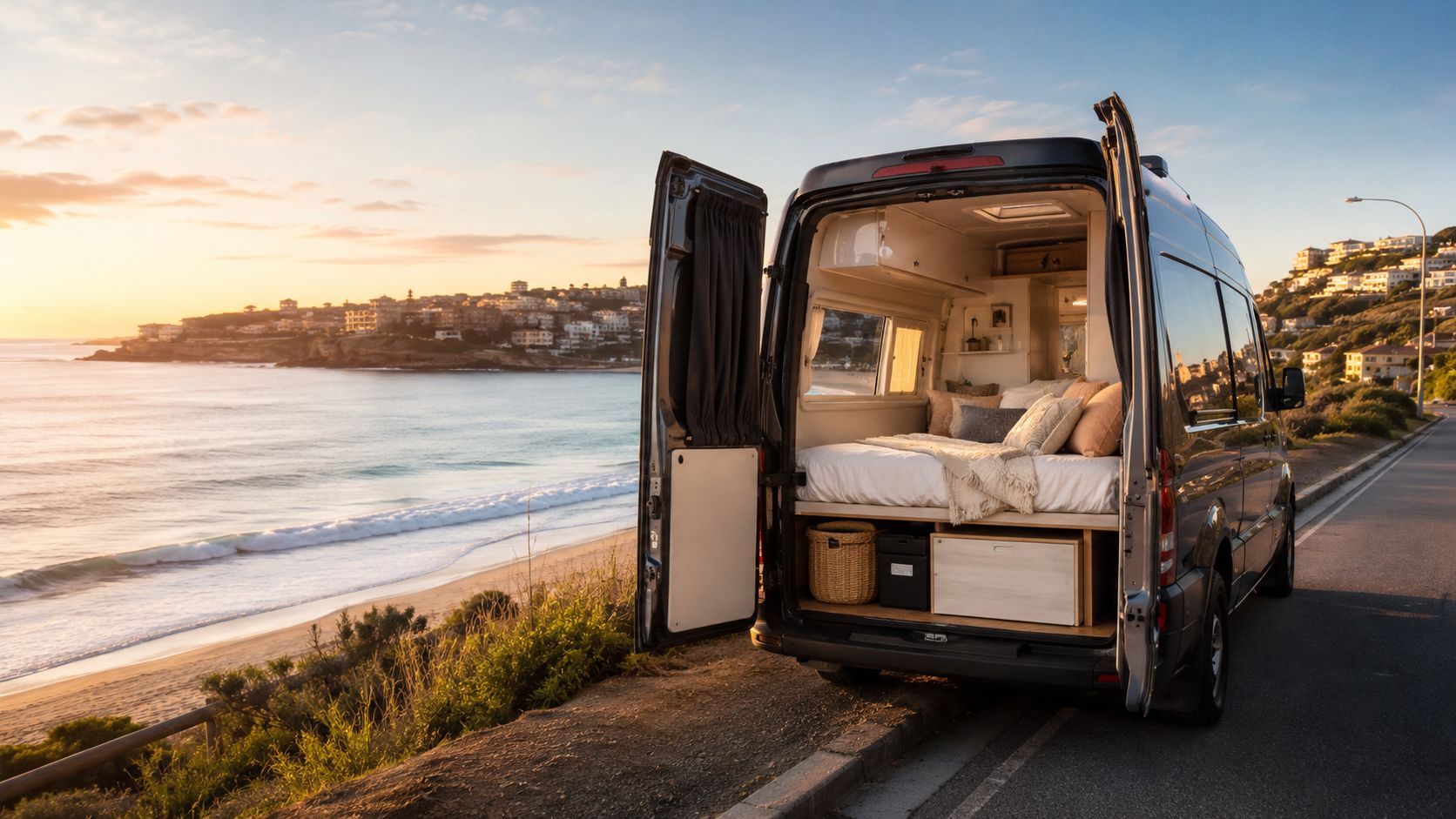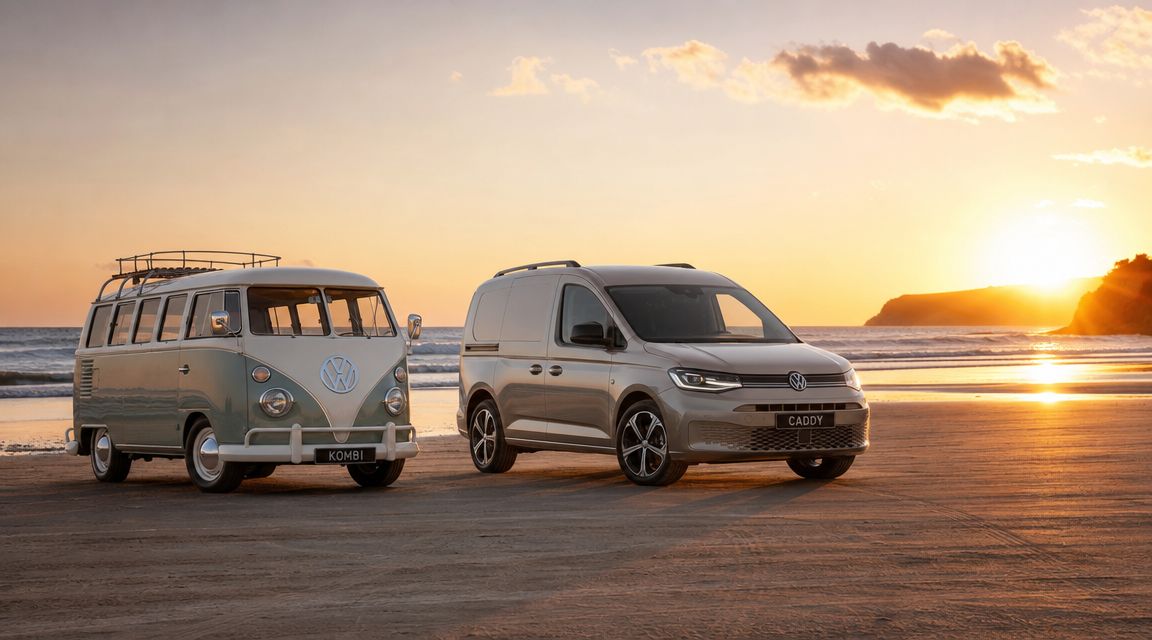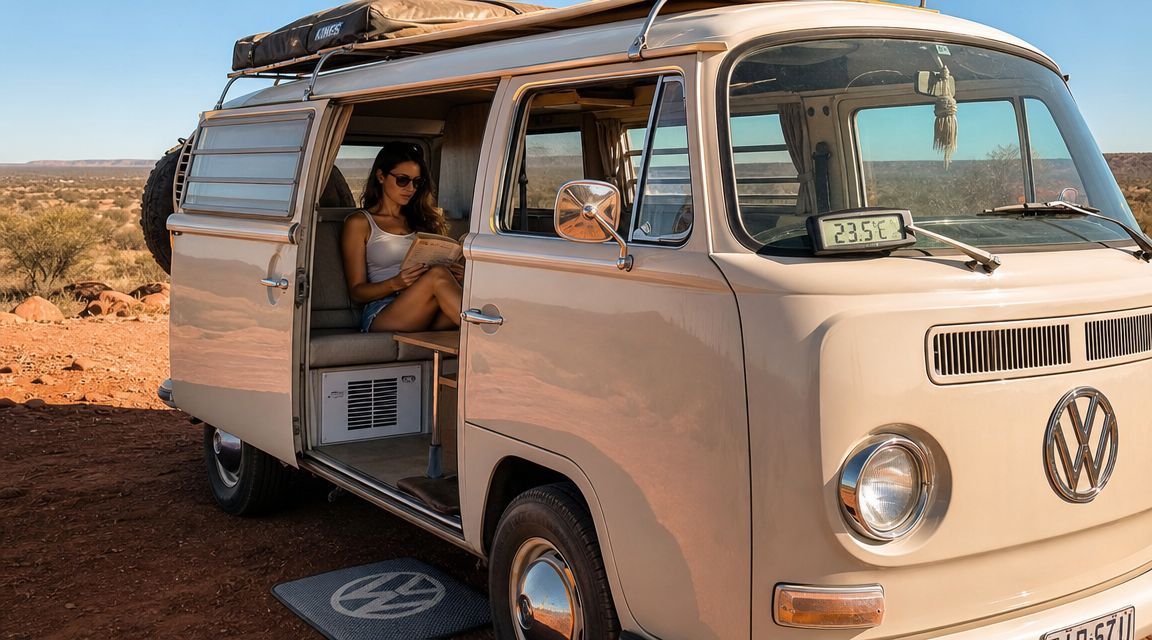

I’ve stood beside plenty of Kombis at Aussie shows where the paint gleamed, the curtains looked perfect, and the owner conceded the first cold night inside felt like sleeping in an empty Milo tin. That’s the bit newcomers don’t see until the keys are in their hand and the sun drops.
The Dream vs Reality of Life in a Tin Can
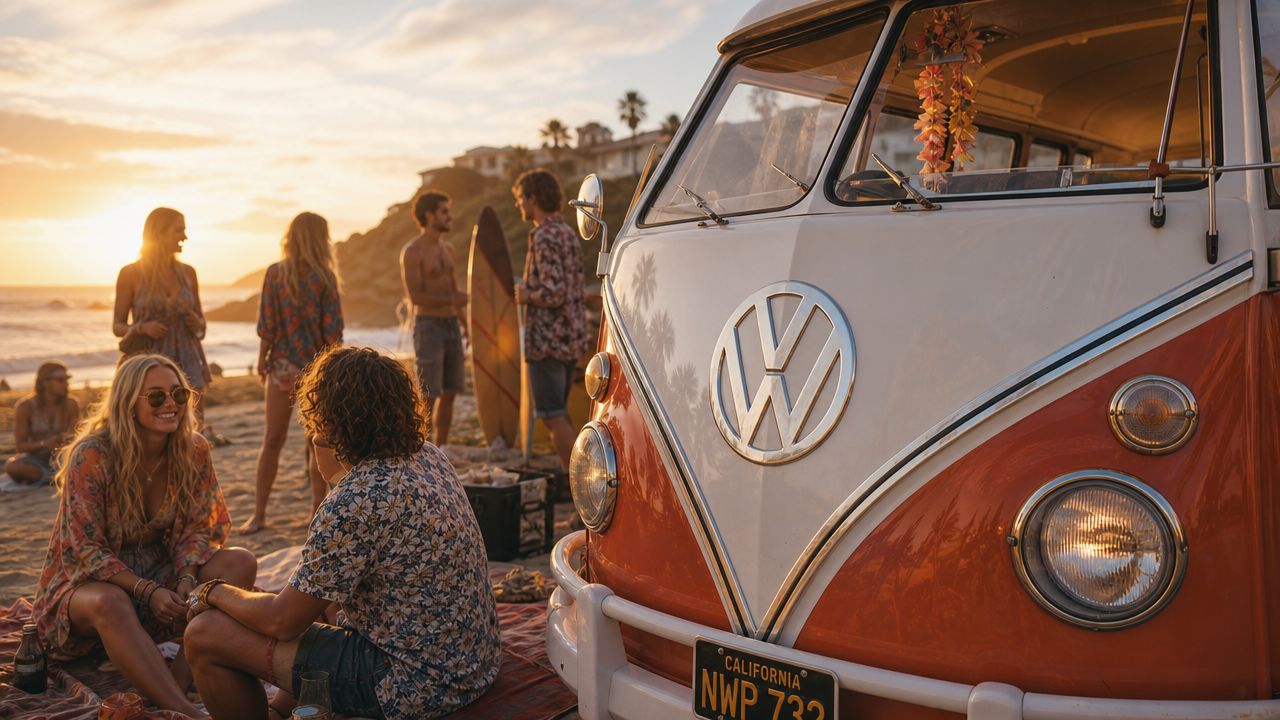
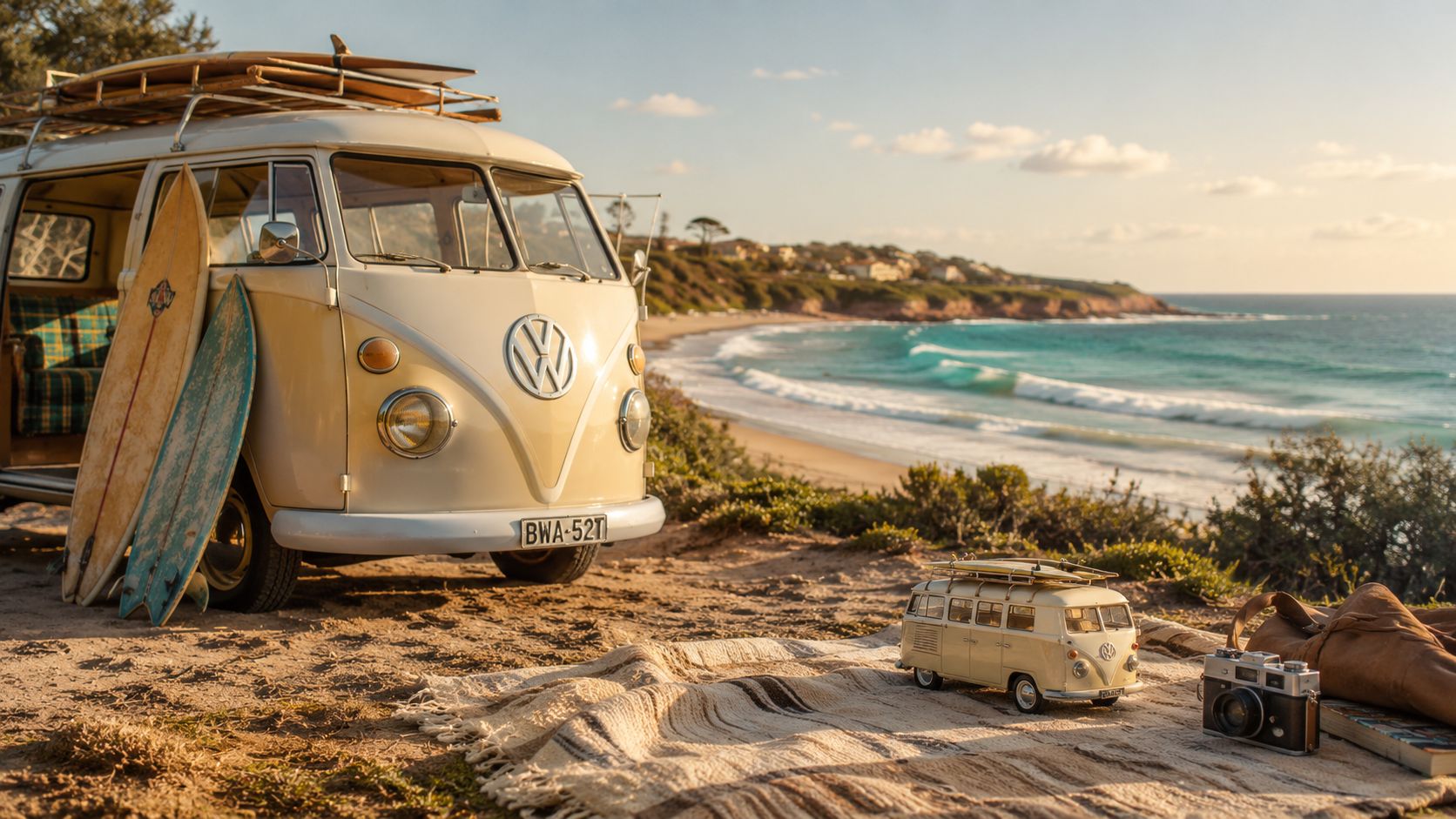
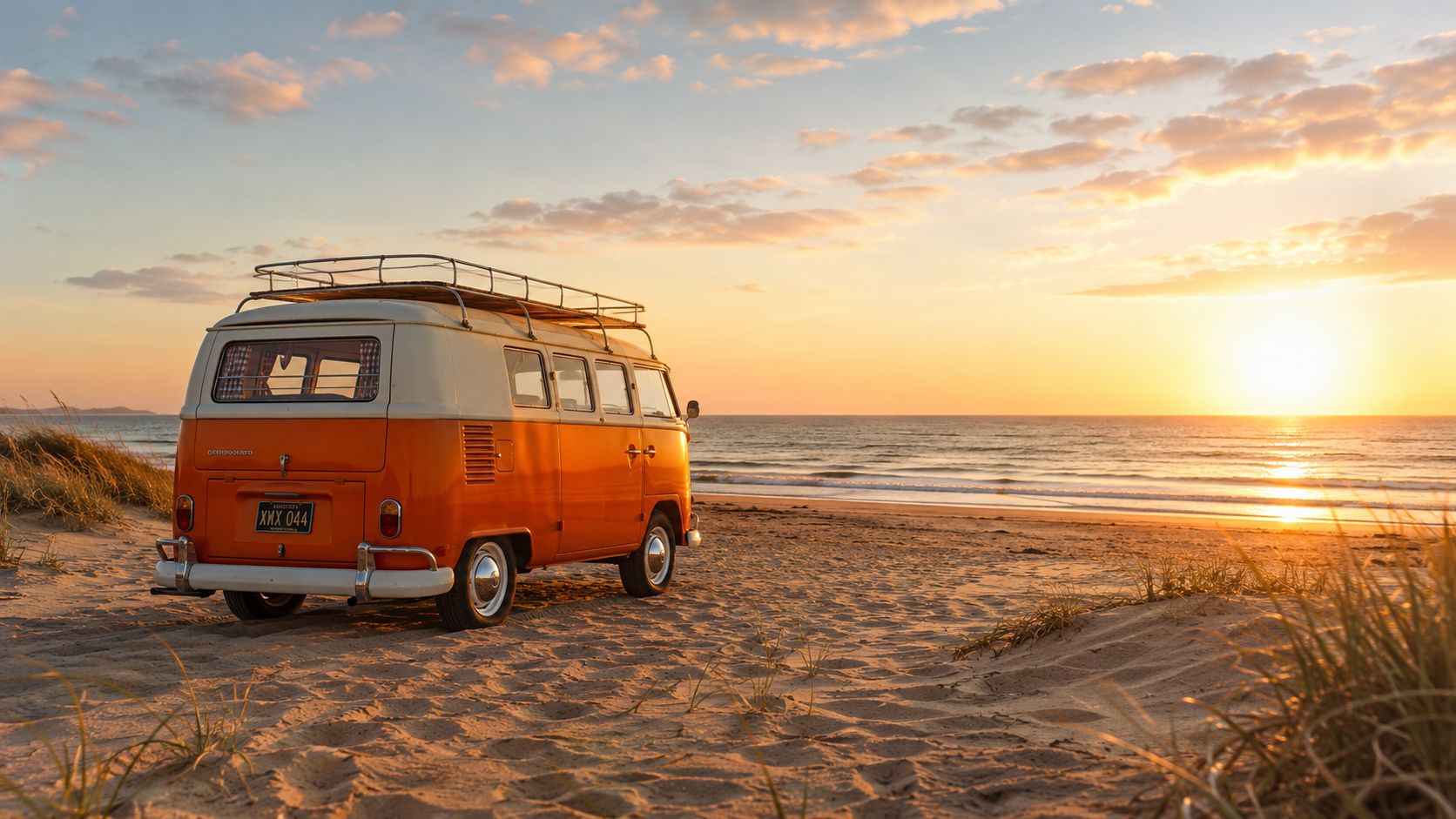
A Kombi parked by the beach still does something to people. You hear the gulls, smell salt in the air, slide the door open, and for a moment it feels like every old surf film and family road trip memory has rolled into one little bus. That’s the dream that pulls so many of us in.
Then reality taps you on the shoulder. The same steel body that looks so charming in a car park at dawn can feel icy after sunset in the south, and by mid-afternoon it can hold heat like a camp oven. If you’re hunting for a van for conversion, that’s worth thinking about before you buy curtains, cushions, or a cute enamel kettle.
The beach fantasy meets the first rough night
I remember one mate with a tidy split-screen who’d built the inside beautifully. Timber trim, surfboard rack, period-correct touches. First winter weekend away, he rang me laughing through chattering teeth and said, “Turns out style doesn’t keep your feet warm.”
That’s the thing with insulation for van builds. It sounds technical, a bit dry, almost like something you’ll sort out later. But in a Kombi, it decides whether you’re making tea in comfort or wiping condensation from every panel before breakfast.
A classic VW can be a rolling daydream in the car park and a hard lesson by midnight if the shell is still bare metal.
Why this matters more in Australia
Australia gives your van every test in the book. Coastal humidity, inland heat, frosty mornings down south. A setup that feels fine on a sunny Sunday drive can feel miserable on an overnight trip when the weather turns.
That’s why insulation isn’t just a builder’s detail. It’s what turns an old tin can into a place you want to wake up in. For many of us, that matters as much as getting the right wheels or finding the perfect original badge.
Why Your Classic VW Deserves the Best Insulation
Classic Volkswagens have enormous charm, but they don’t hide their weaknesses. Those broad steel panels, those lovely windows, the curved ribs and cavities, they all make a vintage bus feel airy and iconic. They also make temperature control much harder than most first-time owners expect.
A useful reality check comes from FarOutRide’s insulation guide, which notes that a 2022 study highlighted uninsulated VW Transporters can lose up to 70% of their interior heat within 30 minutes in 5°C conditions. If you’ve spent a winter night in Victoria or inland New South Wales, you don’t need much help believing that.
Thin steel has character, not comfort
A Kombi body is basically a collection of thin metal panels with style for days and thermal manners of a biscuit tin. Metal carries heat and cold very efficiently, so the shell itself becomes part of the problem. Builders call that thermal bridging. Owners just call it “why is that panel freezing?”
The ribs and frame members do it too. You can insulate the cavities, but if exposed metal still connects inside to outside, temperature sneaks through the structure. That’s why good insulation for van projects is never just about stuffing fluffy material into empty spaces.
Condensation is the quiet villain
The other troublemaker is moisture. Cook inside. Breathe overnight. Bring in wet towels or salty gear. On a cool surface, that moisture turns into beads of water. In an old Volkswagen, those beads don’t just annoy you. They can sit against hidden seams and start the long, miserable path toward rust.
That’s what makes insulation a preservation job as much as a comfort upgrade.
Bodywork protection keeps water from settling on cold interior steel.
Interior longevity helps timber panels, trims, and fabrics stay healthier.
Driving comfort improves because the van feels less echoey and less harsh.
Seasonal freedom means you’re not limited to only the mildest weekends.
Practical rule: If you love your VW enough to wax the paint and chase rust spots early, you should care just as much about what’s happening behind the wall panels.
The collector’s mindset applies here too
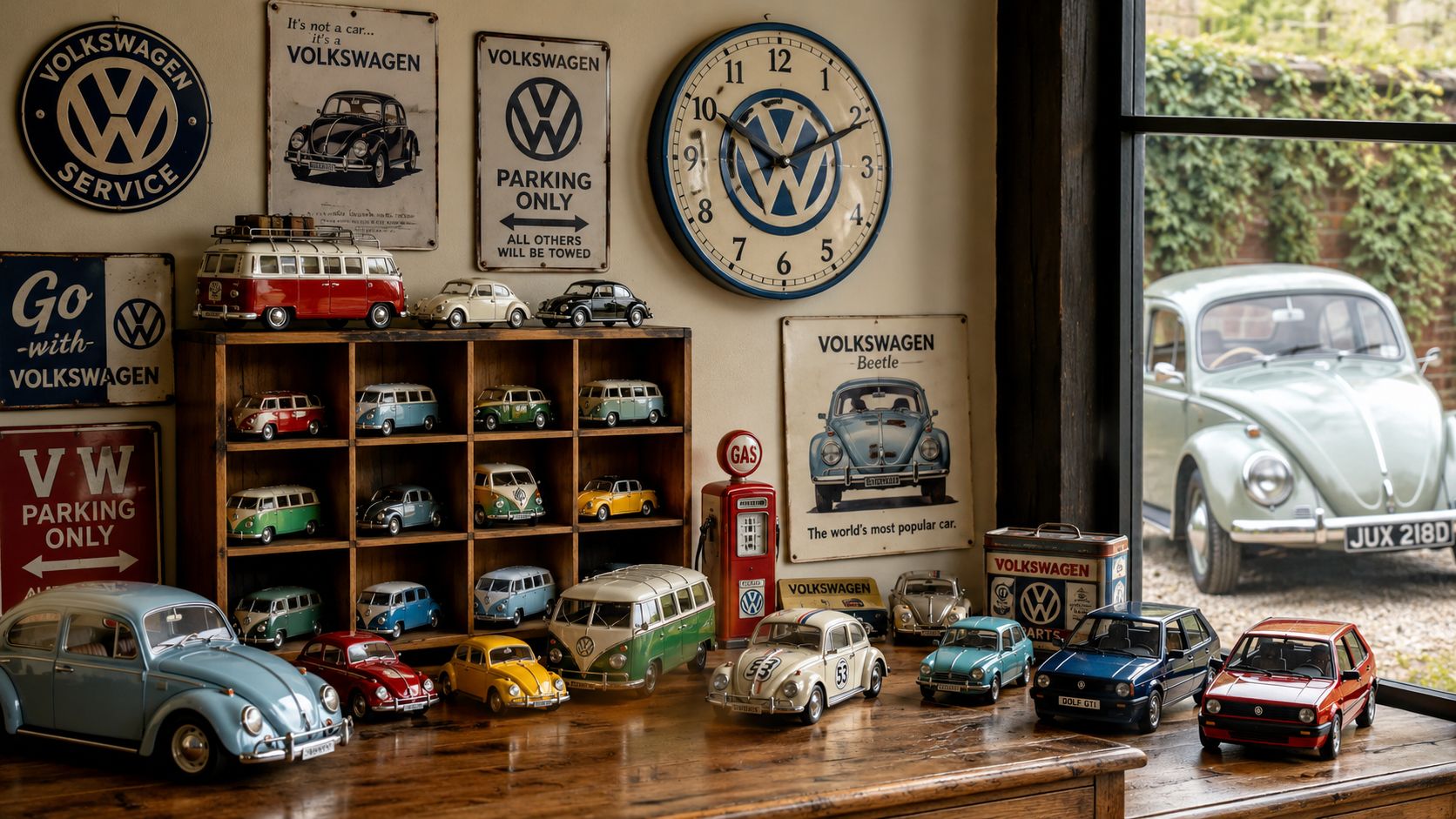
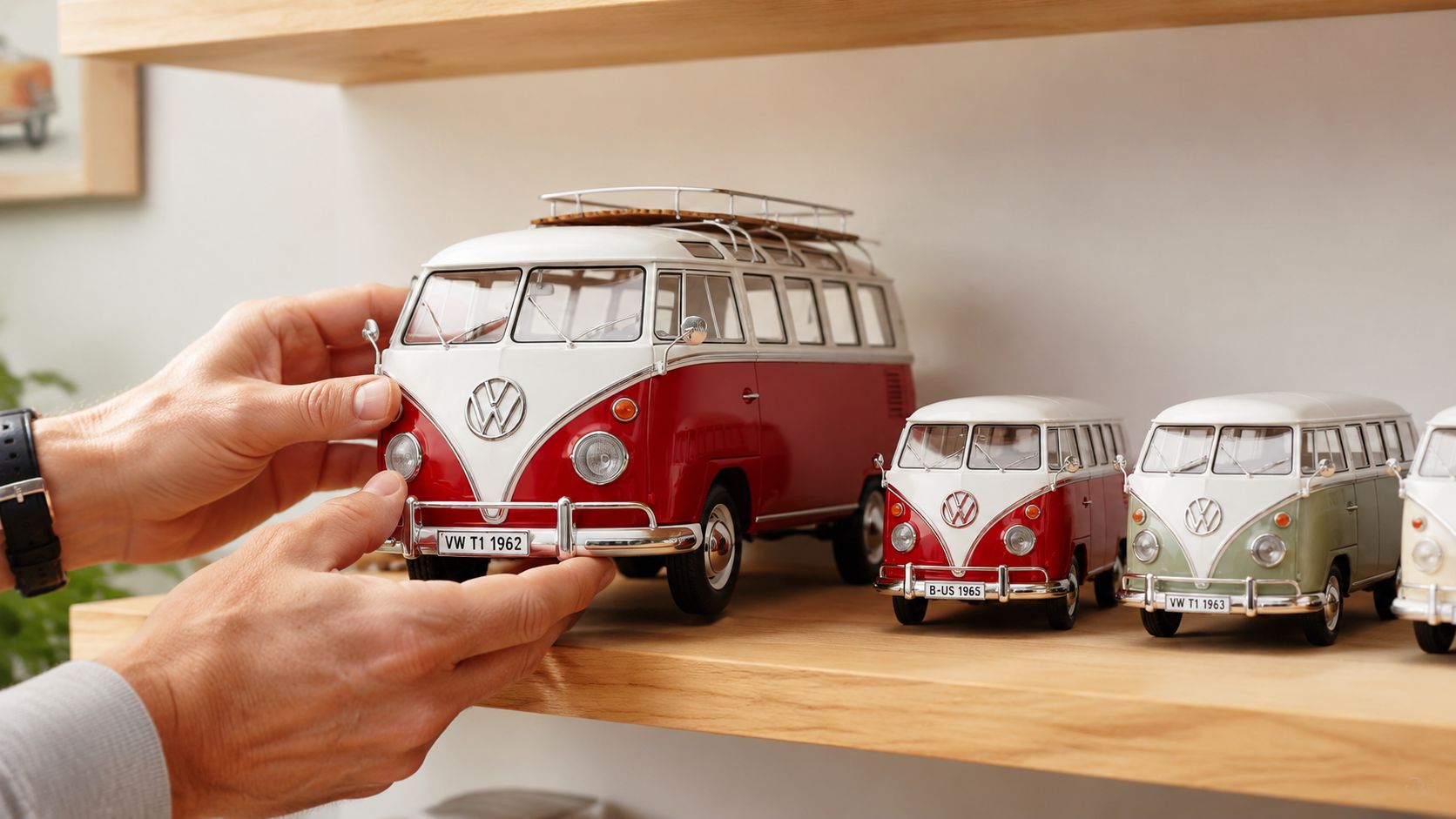
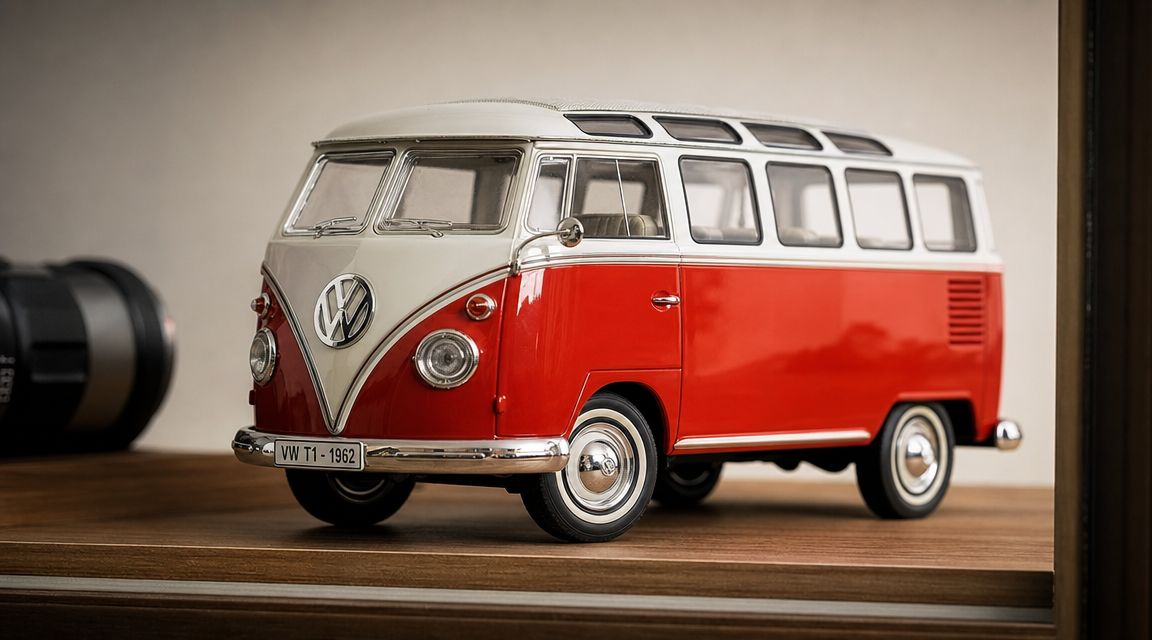
Anyone who restores or collects old Volkswagens understands preservation. You don’t leave diecast models in harsh sun, and you don’t ignore moisture in a real Kombi. Proper insulation respects the vehicle’s age, its design, and its future.
It also lets you enjoy the very features that make a Samba or split-screen special. More glass, more light, more atmosphere. You just stop paying for that atmosphere with cold toes and damp bedding.
Your Top Insulation Choices for an Aussie Dub
Not every material suits every van, and that’s where people get tangled up. One owner wants a touring setup for mixed climates. Another wants a beach cruiser that can handle a blazing car park at lunch. A third wants something natural and simple that feels right in an old-school build.
For a classic VW, I’d narrow the field to three familiar characters.
The modern hero
3M Thinsulate SM600L has become a favourite because it’s light, flexible, and easier to work around Kombi curves than many rigid products. Campervan HQ’s guide notes that 3M Thinsulate SM600L offers an R-value of 5.45 per inch and is hydrophobic, resisting moisture absorption by over 90%, which is a big plus in humid coastal conditions.
That hydrophobic behaviour matters in old vans. If material hangs onto moisture, your wall cavities can become a hidden headache. Thinsulate’s flexibility also helps in those awkward corners and ribs where classic VW bodies rarely give you a square, simple surface.
If you’re building a touring Volkswagen Transporter camper style setup and want a strong all-rounder, this is often the easiest place to start.
The natural classic
Wool has a lovely fit with VW culture. It feels old-world, honest, and a bit closer to the handcrafted spirit many Kombi owners love. The verified background for this topic also notes Havelock wool has R-4 per inch performance in testing referenced there, and many owners like the natural feel and sound absorption wool brings.
Still, wool asks for care. In a humid van, especially one with patchy ventilation or old seals, moisture management becomes part of the job. I like wool for owners who are thoughtful about airflow and who want a material that matches a heritage-minded build.
The smart shield
For raw Aussie sun, reflective insulation earns its place. DIYvan’s Low-E Reflective Foam Core product page states that Low-E Reflective Foam Core Insulation reflects 97% of radiant heat. That makes it especially useful as a first layer against hot metal panels.
It isn’t the whole answer on its own for most vans, but as part of a layered setup it’s clever. Bond it to metal first, then add a bulk insulation layer over it. That’s a practical move for hot regions where radiant heat is the enemy before you’ve even parked long enough to boil the billy.
Aussie Van Insulation at a Glance
Material
Best For
Pros
Cons
3M Thinsulate SM600L
Mixed-climate touring builds
Flexible, moisture-resistant, light, easy around curves
Costs more than basic options
Wool
Heritage-style builds and owners who like natural materials
Natural feel, good fit with classic builds, useful sound softening
Needs thoughtful moisture management
Low-E Reflective Foam Core
Hot-climate vans and layered systems
Strong radiant heat control, handy first layer on metal
Usually works best paired with another insulation material
Pick the material for your travel style, not for forum bragging rights. A coastal weekender and a year-round tourer don't need exactly the same answer.
The R-Value Riddle and Beating Condensation
R-value sounds more mysterious than it is. It's akin to the tog rating on your doona. The higher it is, the better that material resists heat moving through it. It’s a useful guide, but it isn’t the whole story in a van full of windows, steel ribs, door gaps, and odd-shaped cavities.
In a classic VW, the battle isn’t just “how warm is the insulation?” It’s also “where can heat sneak past it?” That’s why two vans with similar materials can feel very different in real life.
Why condensation sneaks up on Kombi owners
Condensation starts in ordinary ways. You boil pasta. Breathe through the night. Come back from a swim with damp towels. Warm moist air meets cooler metal, and the van starts sweating from the inside.
That’s bad enough on visible panels. It’s worse when moisture forms behind trim, around wheel arches, or inside doors where you don’t notice it straight away.
A sensible approach includes:
Covering broad metal areas well so warm interior air meets fewer cold surfaces.
Paying attention to doors and wheel wells because they’re easy to overlook.
Using a reflective layer where it suits the climate to help block heat transfer at the shell.
Keeping airflow in mind so moisture doesn’t linger after cooking or sleeping.
The floor dilemma in low-roof Volkswagens
Floor insulation sounds sensible until you sit inside a low-roof VW and realise every millimetre matters. Create Your Own Road Show’s guide points out that for height-constrained VW Samba Bus conversions, where the standard interior height is only 1.2-1.4m, adding 50mm of floor insulation can be a major compromise, and that some builders in milder climates choose thinner cork or just a reflective barrier to preserve headroom.
That’s a very Kombi-specific problem. In a taller modern van, you can throw insulation at the floor and carry on. In a Samba or older bus, you feel that lost height every time you bend, sit, or shuffle across the cabin.
Don’t insulate the floor by habit. Decide based on your climate, your height, and how you actually use the van.
A Weekend Warrior's Installation Guide
At a swap meet in Ballarat a few winters back, a bloke with a tidy Dove Blue splitty told me his bus always felt damp by Sunday morning, no matter how many blankets they packed. He had good insulation stacked in the shed, but the metal behind his panels was still wearing old glue, dust, and a few freckles of rust. That was the actual beginning of the job. Not the shopping. The prep.
Start with clean metal and a clear plan
Pull the interior back and look carefully at what the old bus is telling you. Surface rust around a window lip, brittle adhesive on the roof, grime tucked into the ribs. Fix that first. A Kombi hides nothing for long, and any trouble you cover up today usually returns on the first cold trip away.
Then slow down and map the shell before you cut a single piece. Roof first, then side panels, doors, wheel arches, and all those curved little sections that make classic Volkswagens lovely to admire and awkward to line neatly. Cardboard templates help. So does marking each piece before the backing comes off.
For many Australian builds, a reflective first layer against the metal is a common way to handle summer heat, followed by a bulk insulation layer to soften temperature swings and road noise. That approach suits the old VW spirit well. You are not just chasing comfort. You are giving thin, echoing steel a kinder life.
Small habits make the finish neater
The owners who end up pleased with the result usually keep to a few simple habits:
Test fit every section dry first so the shape is right before adhesive turns it into a wrestling match.
Use a fresh blade often because clean cuts sit better around ribs, corners, and window frames.
Work one panel at a time so you keep the layout tidy and avoid wasting material.
Follow the adhesive instructions closely if you’re using products such as 3M 90 spray. Letting it tack off properly makes placement far easier.
One more trick. Leave drain paths, factory holes, and service access clear. The neatest install in the world becomes a headache if a door cannot drain or a panel has to be torn apart later to reach wiring.
Take your time around curves and ribs. A Kombi rewards care, and it absolutely exposes shortcuts.
If you want to watch someone working through the process visually, this walkthrough helps show the rhythm of the job.
Make it yours
A respectable insulation job does not ask for a fancy workshop. It asks for a free weekend, clean hands, patience, and the willingness to peel a piece back and trim it properly instead of pretending it will do.
That part matters more in a classic VW than in a newer van. These buses carry memory. Family holidays, long coastal runs, the smell of warm vinyl, little diecast models on a shelf that started the obsession years earlier. Fitting insulation carefully is part workshop task, part preservation. You are looking after the shell, yes, but you are also protecting the feeling that made you want the van in the first place.
When the panels go back on and everything sits right, you feel it straight away. The bus seems more settled. More finished. Like it is ready for another few decades of stories.
Stay Warm Stay Cool and Keep the Dream Rolling
A well-insulated Kombi feels different. The van settles down. It holds comfort better. It sounds calmer. You stop thinking so much about the weather and start thinking about where to pull up for the night.
That’s why insulation for van life isn’t just a technical chore. In a classic Volkswagen, it’s part comfort upgrade, part preservation work, part love letter to the vehicle itself. You’re not only making weekends easier. You’re protecting steel, trim, and all the small details that give an old bus its soul.
The best result is freedom
The right setup depends on how you travel. Some owners need a layered system for mixed conditions. Some need a radiant shield for hot coastal runs. Some will happily trade a little thermal performance to keep precious headroom in a low-roof bus.
What matters is that the van suits your life. Not someone else’s build thread. Not a fashion trend. Yours.
For more inspiration on the way Australians shape the road-going VW dream, have a look at van life in Australia. It’s a good reminder that these vehicles still do what they’ve always done best. They carry stories.
Why the effort is worth it
Every classic VW asks something of its owner. Time, patience, and a sense of humour help. Insulation is one of the jobs that gives back immediately. The first cool night you stay dry and comfortable, or the first hot afternoon when the interior doesn’t feel punishing, you’ll know where the effort went.
That’s when the dream stops being just a nice-looking bus and starts becoming a proper home on wheels.
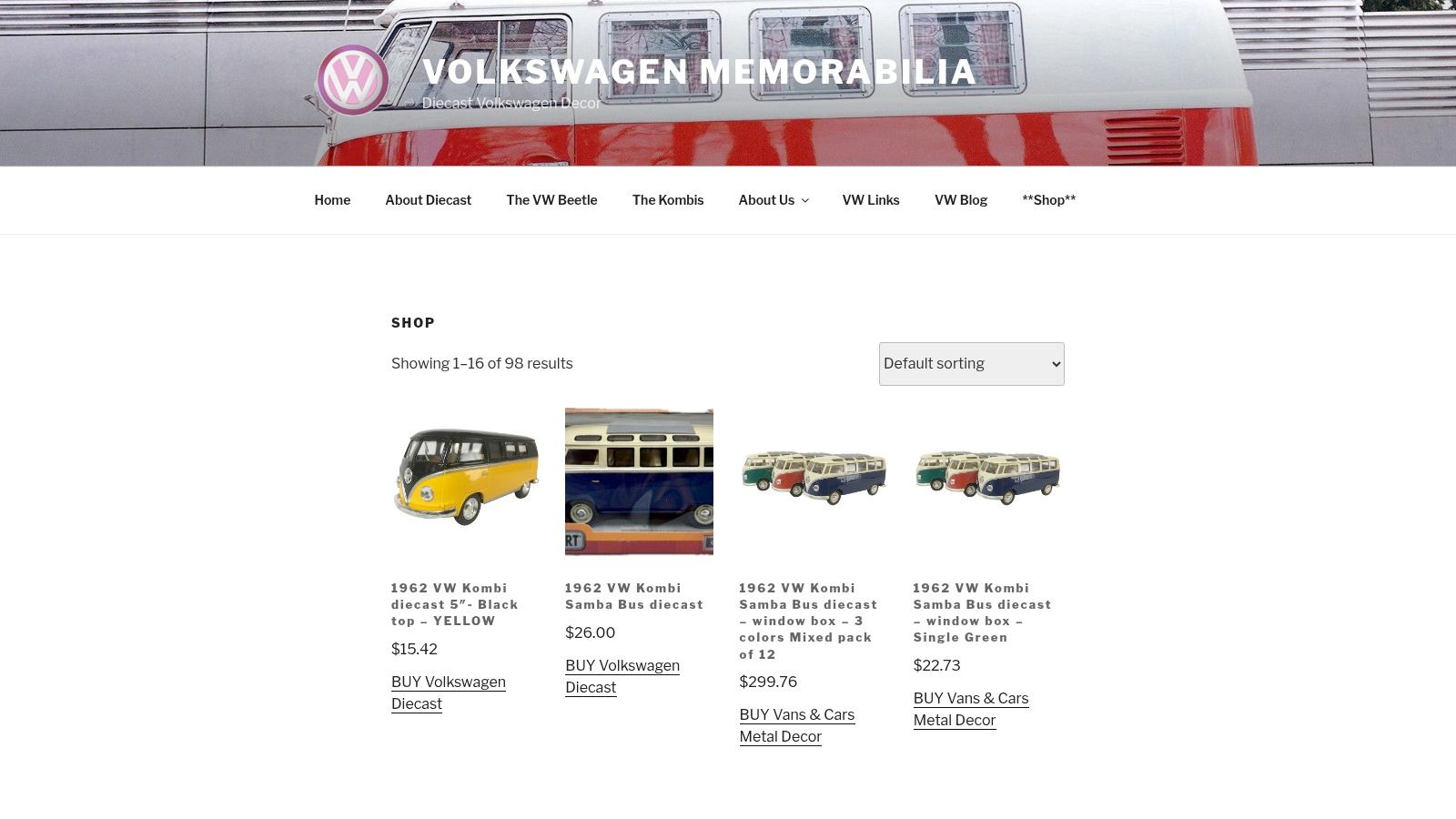
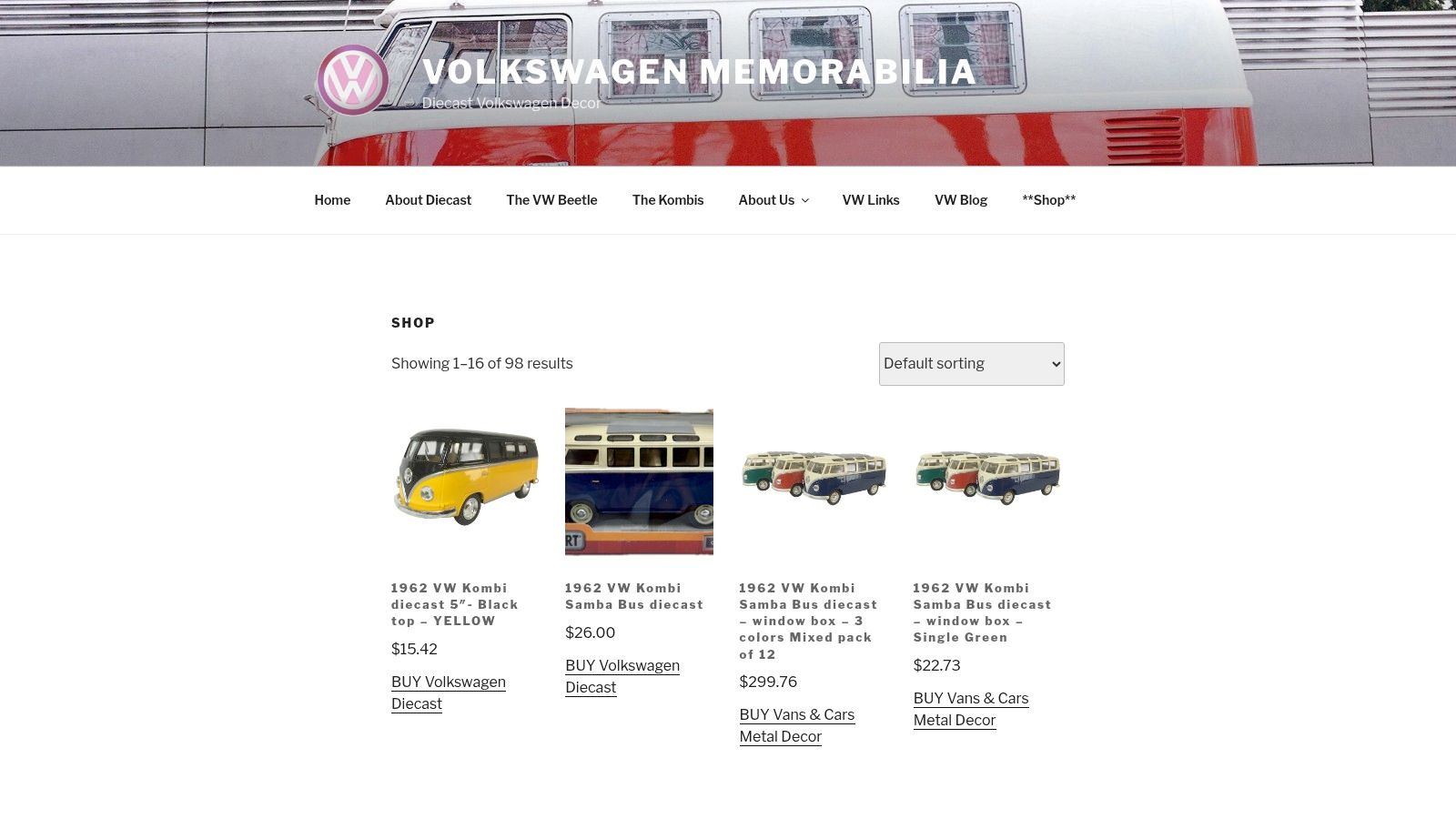
If you love the Kombi spirit in full size and miniature, have a browse through Volkswagen Memorabilia. It’s a lovely spot to find licensed VW-themed gifts, classic diecast models, and display-worthy pieces that celebrate the same heritage we all chase on the road. For Australian enthusiasts, there’s the added comfort of local stock and fast shipping, which makes it easy to pick up a Kombi or Beetle model while you plan the next trip in your full-size vehicle.
You’re probably in that familiar spot right now. The shed door is open, the kettle’s gone lukewarm, and your Volkswagen is sitting there with one missing piece between “nearly done” and “back on the road”. Maybe it’s a Beetle waiting on a trim clip that nobody seems to list properly. Maybe it’s a Kombi with a door handle that looks right in the photo and turns out wrong in the hand. Maybe it’s a newer Amarok that needs the correct service parts without the usual guesswork.
That’s the core of volkswagen parts australia. It isn’t just buying bits. It’s the hunt, the decoding, the yarns swapped at club meets, and the little win you get when the right part finally clicks into place.
For a lot of us, that hunt doesn’t stop with the full-size car. It follows us onto workshop shelves, office desks, and lounge room displays too. The same eye that notices the proper mirror shape on a Splitty also notices when a diecast Samba Bus gets the stance just right. That’s part of the Volkswagen story in Australia. We keep them running, and we keep their spirit close.
That Unmistakable Feeling of Owning a VW
A mate of mine once spent half a Saturday chasing a rattly interior noise in an old Beetle. He was convinced the whole dash had to come out. Turned out to be one tiny loose fitting behind the trim, but by then the radio was on, the garage smelled of polish and old rubber, and three neighbours had wandered over for a stickybeak. That’s owning a VW in Australia. Even the small jobs become stories.
There’s a particular feeling you get with these cars. A Kombi parked nose-first to the beach. A Beetle cooling in the driveway after a Sunday run. A Golf GTI with that tidy, no-fuss solidity only a Volkswagen seems to do properly. They all feel like characters. They’ve got habits, quirks, and a way of getting under your skin.
The parts hunt is part of the romance
Nobody falls for a VW because it’s anonymous. You fall for the shape, the sound, the memories, and the way strangers start conversations at servo stops. Then the practical side arrives. You need a seal, a switch, a badge, a hinge, or the exact bit of trim that matches what the factory intended.
That’s when experience starts to matter.
Old Volkswagens reward patience. Rush the parts search and you usually buy the same thing twice.
In Australia, that search has its own flavour. Coastal air is hard on metal. Country miles are hard on wear items. Sun is hard on rubber, vinyl, and plastics. The right part isn’t just about fit. It’s about how that part will live in Australian conditions once you bolt it on.
The garage and the display shelf aren’t far apart
If you’ve ever restored a Kombi, you’ll know how often you pause to study details. Where the trim line sits. How the wheel finish should look. Whether the dash knobs are right for the era. That same instinct is why so many owners end up collecting VW pieces beyond the car itself.
A good model Beetle or Samba Bus isn’t separate from the hobby. It’s an extension of it. It keeps the story going when the tools are packed away and the garage light’s off.
How to Speak Fluent Volkswagen Part Numbers
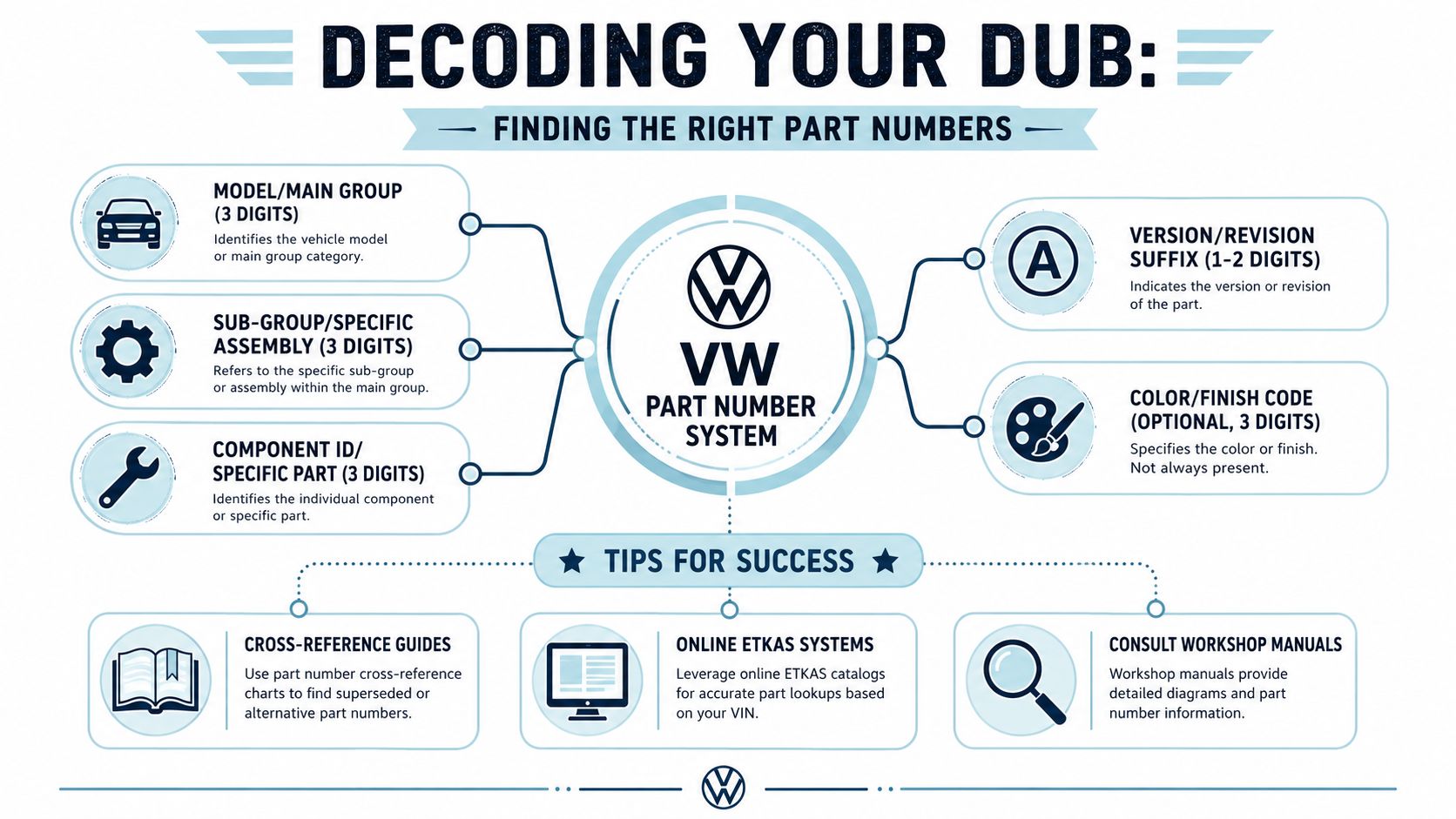
If VW part numbers have ever looked like secret code, don’t worry. They’re not random. Think of them like a postcode for car parts. Each section narrows the part down until you’re looking at one exact item, not a rough guess.
The basics are well established in the Club VeeDub guide to VW part numbers. Volkswagen uses a standardised 9 to 10 digit format, such as 171 819 047A. The first three digits identify the model, the fourth digit marks the main group, and the ending can show a revision or modification.
Breaking down the code
Here’s the easy way to read one:
Part number section
What it usually tells you
Why it matters
First three digits
Model or unit code
Helps match the part to the right vehicle family
Fourth digit
Main group
Tells you the major area, such as body or interior
Fifth and sixth digits
Subgroup
Narrows the search to a specific assembly
Last digits
Consecutive part number
Identifies the exact part itself
Final letter
Modification code
Can show a revision or update
That fourth digit matters more than many people realise. In the example from Club VeeDub, “8” indicates Body and Interior. If you’re searching trim, handles, seals, dash parts, or panels, this helps you stop wandering through the wrong catalogue section.
Left and right can catch you out
One of the handiest tricks is knowing that the consecutive numbers can indicate left or right-hand fitment. In Australia, that matters even more because we’re dealing with right-hand-drive cars and all the little fitment differences that come with them.
A mirror, hinge, or trim piece might look identical in a listing photo. It often isn’t.
Practical rule: Never order a left or right-specific VW part by appearance alone. Check the number first, then check the car.
Why suffix letters deserve respect
That final letter can seem small, but it can save a headache. The optional tenth character often shows a modification. That might mean a later revision, a slight design tweak, or a different finish. If you’re restoring a classic, that suffix can be the difference between “close enough” and “spot on”.
For Australian owners, this matters with anything exposed to salt air, sun, or repeated use. A later version of a part often exists because the earlier one had a weakness.
A quick workshop habit worth keeping
Before you order anything, write down:
The full part number from the old part if it’s legible
The model and year of the vehicle
Which side the part belongs on
Any suffix letter at the end
A photo of the mounting points for your own reference
That little checklist beats memory every time.
Your Go-To Map for VW Parts Across Australia
A mate of mine in Newcastle spent three weekends chasing a sliding-door roller for his Bay Window. The first seller swore it would fit. The second sent one from a different year. The third was an old club bloke who said, “Bring the busted one over.” Ten minutes in his shed, with a coffee going cold on the bench, the right part turned up in a tobacco tin beside a pile of old rego labels and a 1:64 Kombi model still in its blister pack. That is how VW parts hunting often works in Australia. Half detective work, half community, and a little bit of nostalgia every time.
Finding good volkswagen parts australia sources comes down to knowing which door to knock on for which job. A service item for a Golf, a proper German Beetle trim ring, and a Kombi latch with the right wear and stampings usually live in three different worlds.
Dealership parts counters
For newer Volkswagens, the dealer parts counter still earns its place. You walk in with the VIN, the part gets traced through the local catalogue, and you leave with far less guesswork than you would from a generic listing online. That scale translates to better support.
Best for:
Modern Volkswagens needing exact replacement parts
Warranty-sensitive jobs
Owners who want OE fit and finish
Less ideal for:
obscure used trim
bargain hunting
some niche classic odds and ends
Specialist VW parts suppliers
The specialist shops are where experience saves money. These suppliers know the little production changes that trip people up. They know which Beetle seal sits correctly, which Type 3 switch is close but wrong, and which “fits all” listing belongs in the bin.
You hear it in the language straight away. “Is it German-built?” “Early or late?” “Push-button or trigger handle?” Those questions can save you from buying the same part twice.
For air-cooled owners, these businesses often feel like part workshop, part archive. They keep cars on the road, but they also keep stories alive. The same owner chasing bonnet hinges for a Squareback is often the one collecting dealer brochures, enamel signs, or a little fleet of diecast buses at home. It is all the same instinct. Preserve the shape, the details, the feeling.
Wreckers and donor cars
A wrecking yard can still hand you the best find of the month. Used original German parts often beat shiny reproductions for fit, finish, and character. Handles, brackets, seat frames, vents, and odd bits of interior trim are classic wreckers territory.
Go in prepared:
Take your tools so you can compare old and new on the spot
Inspect mounting points for cracks, rust, and old repairs
Look past dirt but don’t ignore distortion
Check whether the part has been modified by a previous owner
The best donor parts feel right in your hand. You can see the age, the weight, the way the stamping was done. Anyone who has matched a survivor part to an old diecast model on the shelf knows the satisfaction. The tiny details are the whole point.
Online marketplaces
eBay, Gumtree, forums, and enthusiast classifieds can reward patience. They can also drain it. Good sellers show the part number, clear photos, and the car it came from. Rough sellers give you one blurry photo and a sentence like “should fit most VW.”
Ask for:
the full part number
clear close-up photos
confirmation of the model it came from
details of any repairs or damage
If the seller dodges those questions, keep scrolling.
Clubs and the VW community
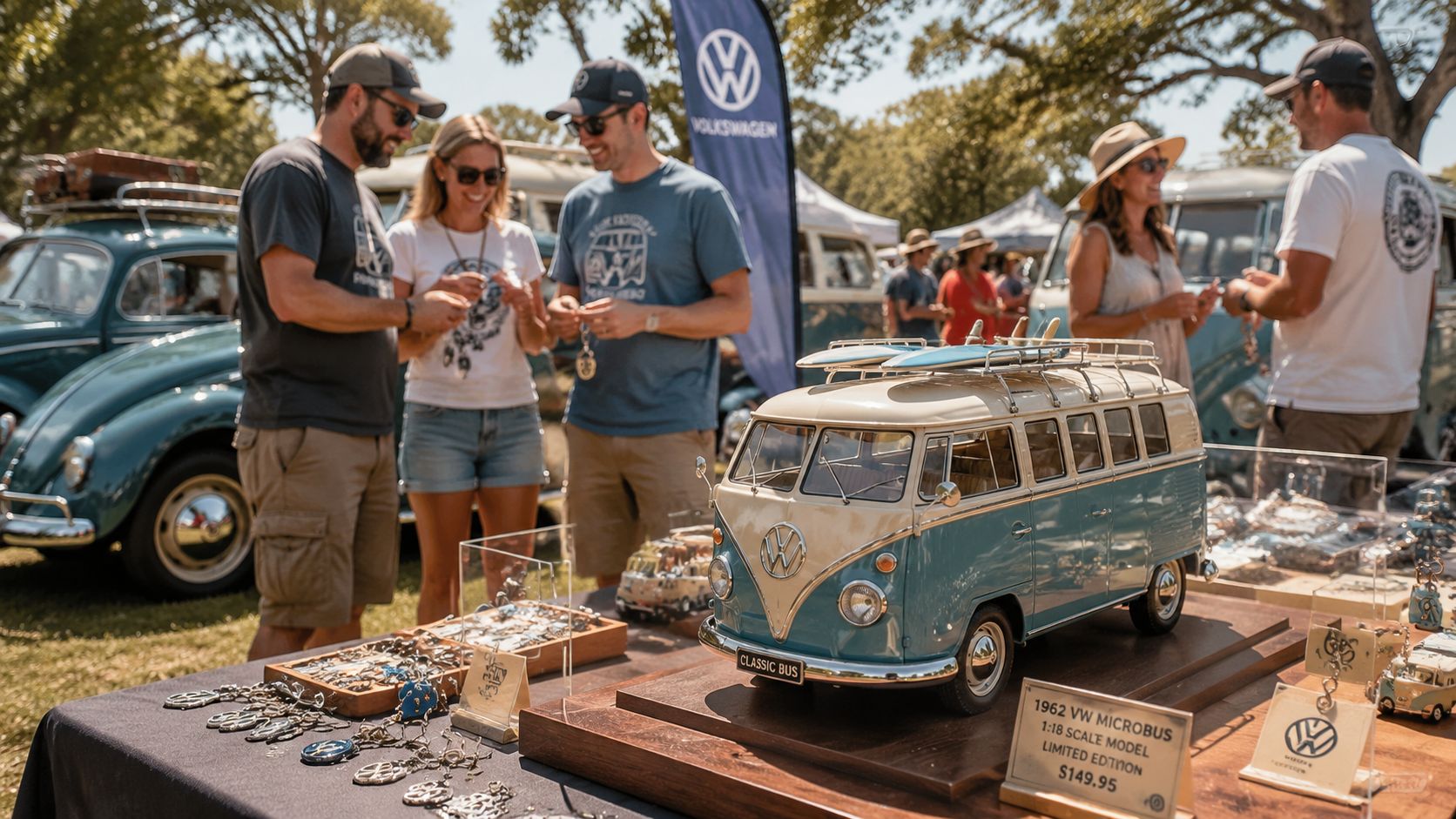
The best parts in Australia often move privately through club circles, swap meets, and late-night messages between owners. Someone knows a bloke in Ballarat breaking a Superbug. Someone else has a shelf of early Kombi hardware wrapped in newspaper from 1998. Many coveted finds never reach public listings.
That community side is part of what makes the hobby stick. One person is hunting a fuel flap hinge. Another is chasing an old service sign or adding a Volkswagen bus camper inspiration piece to the collection in the shed. Mechanical parts and memorabilia feed the same obsession. You are not only keeping a VW alive. You are keeping its world intact.
The best VW parts source in Australia is often a person with a good memory, a crowded shed, and a shelf full of stories.
Genuine vs Aftermarket The Great VW Parts Debate
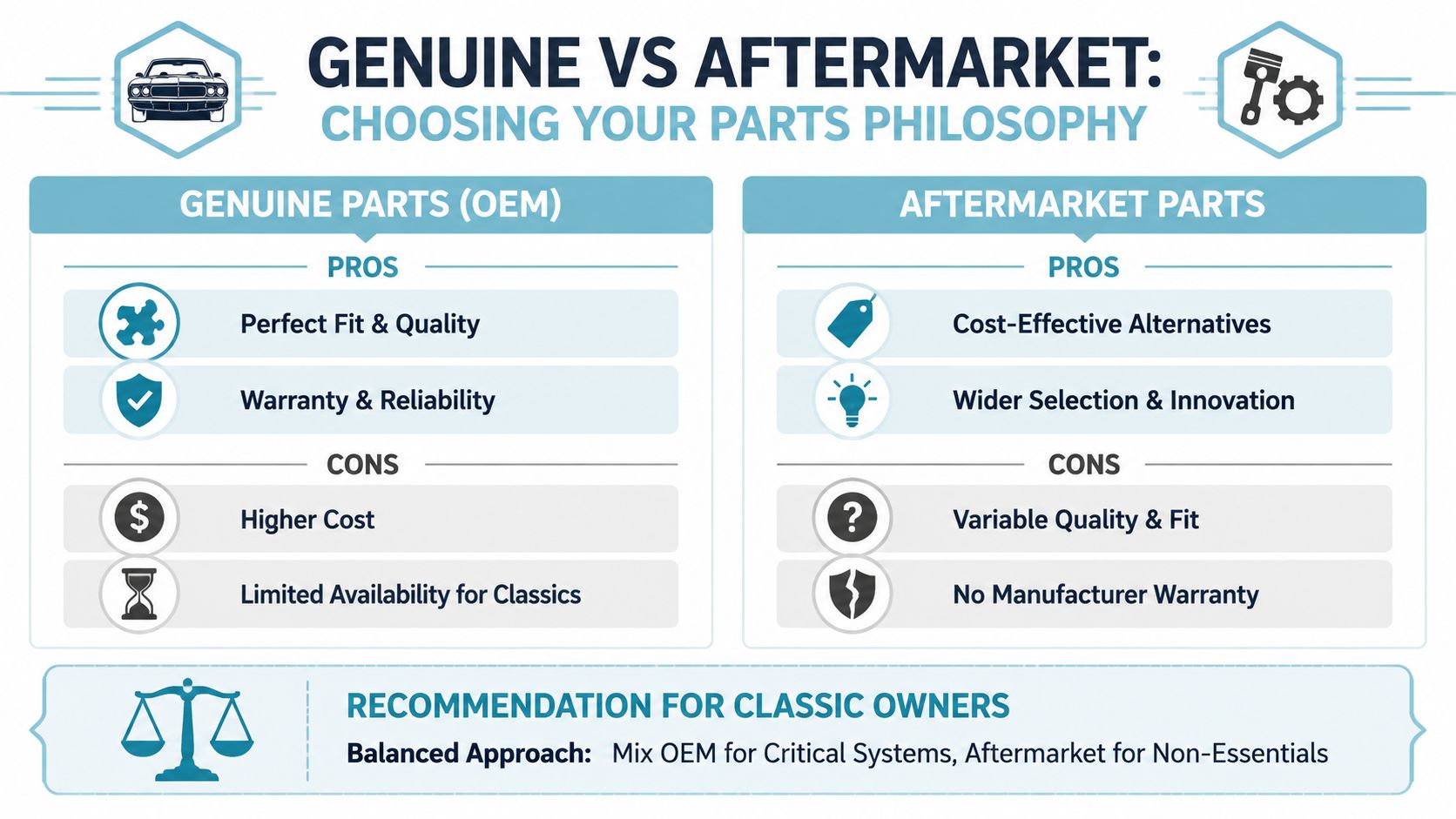
There’s no single right answer here. The right choice depends on the car, the job, and what sort of owner you are. A concours Beetle, a beach-run Kombi, and a hard-working daily driver won’t all make the same call.
Volkswagen’s own genuine parts offering in Australia comes with a clear advantage. According to Volkswagen Australia Genuine Parts information, Volkswagen Genuine Parts® carry a 2-year unlimited kilometre warranty when installed by an authorised technician.
When genuine makes the most sense
Use genuine parts when failure would ruin your weekend or your engine. That includes core mechanical items, sensitive sensors, major cooling parts, and anything that affects safety or proper system operation.
For newer cars, genuine often saves time. The fit is right, the catalogue trail is clear, and if something goes wrong you’ve got a cleaner path to support.
When aftermarket earns its keep
A quality aftermarket part can be perfectly sensible. Plenty of owners use aftermarket for consumables, cosmetic items, and non-critical bits where originality isn’t the top priority. If the supplier is reputable and the part is known to fit properly, it can be a smart move.
That’s especially true on daily drivers. Not every old Golf or Beetle needs concours-correct everything.
For a visual rundown of the thinking behind parts choices, this video is worth a look:
The sensible enthusiast approach
Most seasoned VW owners don’t live at one extreme. They mix and match.
Engine and safety first: Buy the best part you can justify.
Trim and nice-to-haves second: Balance budget with originality.
Rare old parts: If you find a solid used original, grab it.
Buy cheap twice and you usually spend more than buying right once.
Restoration Gold for Classic Beetles and Kombis
You see it at swap meets all the time. One Beetle rolls in wearing thin original paint, stone chips on the nose, and a driver’s seat that has carried three generations. Another arrives fresh from a full rebuild, every rubber replaced, every trim piece sitting straight. Both can stop you in your tracks if the work feels honest to the car.
A mate of mine spent half a winter sorting a Kombi rear hatch. He could have lived with a gap that looked fine from five metres away. He didn’t. He kept adjusting hinges, seals, and latch position until it shut with that familiar VW thunk. The first time it clicked home properly, the whole bus felt right again. That is the sort of victory classic Volkswagen people remember.
Start with the parts already telling the story
Before you fill a cart with replacements, pull the original bits off carefully and inspect them like artefacts. Old German handles, seat frames, latches, screws, catches, and trim often respond well to cleaning, plating, straightening, or a patient afternoon at the bench.
You save money, yes, but that is only part of it.
You also keep the car’s memory intact. A worn window winder or an original latch carries the same quiet charm as an old dealership brochure or a diecast Beetle on the garage shelf. The parts hunt and the collecting habit come from the same place. Respect for the details.
Use Australia’s VW network to your advantage
As noted earlier, Volkswagen has a serious footprint in Australia. For classic owners, that does not mean every air-cooled bracket or early Kombi trim clip is waiting in a local warehouse. It does mean the brand has a substantial local infrastructure around it, and that infrastructure is valuable when chasing parts pathways, references, old dealer knowledge, and compatible later pieces.
If your project is a Beetle and you are sorting through what is correct for a Type 1, these VW Type 1 parts references are handy for training your eye before you buy.
That matters most when a car has been “fixed” by five previous owners. A 1960s Beetle can pick up later lights, mixed fasteners, the wrong switches, and trim from entirely different years. Good restoration work often starts by spotting what should not be there.
The details that lift a restoration
Some choices shape the whole character of the car:
Patina or repaint Honest paint with good metal underneath can suit a Beetle or Kombi better than a glossy finish that erases its life.
Interior finishes Vinyl grain, seat piping, door cards, and colour tone decide whether the cabin feels period-correct or vaguely off.
Brightwork and trim Chrome needs restraint. Too perfect can look colder than the rest of the vehicle.
Hardware and fasteners Simple Volkswagens leave nowhere to hide. Wrong screws and odd clips stand out fast.
A classic Volkswagen does not need perfection. It needs the right feel.
Keep a reference on the shelf as well as the bench
Plenty of owners do this without making a fuss about it. A well-made Beetle or Kombi model sits near the tools while the actual car is in pieces. One glance can settle an argument in your own head about stance, wheel style, trim layout, or how much visual weight a bumper should carry.
That little model is not a substitute for factory literature. It is a reminder of what made you fall for the shape in the first place. In a proper VW garage, the spares shelf and the memorabilia shelf usually belong to the same story.
From Car Parts to Collectibles The Enthusiast's Corner
There comes a point in every VW obsession where the parts shelf stops being enough. You want something that celebrates the shape, not just the spanner work. That’s where collectibles step in.
Australia’s VW parts scene mostly serves the mechanical side. According to this look at the gap in the local market from V Dubs R Us, suppliers heavily focus on functional spares, while memorabilia and collectible parts remain underserved. That rings true for anyone who’s searched for proper display pieces, retro accessories, or a faithful little Kombi for the bookshelf and ended up knee-deep in mechanical listings.
Why collectors and restorers often become the same person
It makes sense, really. The same owner who cares about the right hubcap profile on a real Beetle will care about the right window layout on a model Samba Bus. Collecting isn’t a separate hobby for a lot of VW people. It’s another expression of the same affection.
A few collectible categories fit naturally beside restoration life:
Diecast Beetles and Kombis for desk, garage, or study displays
Workshop-inspired decor that keeps the VW mood alive indoors
Gift pieces for birthdays, Father’s Day, retirements, or club prizes
Beachy VW items that suit the surf-and-coast side of Kombi culture
For people who love that crossover between motoring nostalgia and home style, pieces like Volkswagen-themed dashboard cover decor show how the visual language of old VWs can carry into everyday spaces.
A few display ideas that work
Space
What suits it
Garage shelf
Kombi diecast, old manuals, cleaned original parts
Coastal VW decor, Samba Bus piece, understated retro touches
The nice thing about collectibles is that they hold the feeling of the car even when the car’s under a cover, waiting on the next job.
Your VW Parts Questions Answered
Can I still get parts for newer Volkswagens in Australia?
Yes. Volkswagen Australia’s parts network supports current models as well as enthusiast favourites. Commercial vehicles are part of that picture too, not just passenger cars.
What about Amarok parts specifically?
They’re well supported within the same broader network. The Amarok reached 8,400 units in 2024, and that demand sits behind the same catalogue of nearly 300,000 Genuine Parts, as reported by GoAuto’s market insight on Volkswagen Australia.
Are VW clubs worth joining just for parts?
Absolutely. Even if you never buy a part directly through a club member, the advice alone is worth it. Clubs help you avoid bad buys, identify correct pieces, and meet the people who know where the hidden stock lives.
Should I restore with all genuine parts?
Not always. For critical components, genuine often makes sense. For trim, older used parts, or budget-minded jobs, a careful mix can be the smarter path.
Owning a Volkswagen in Australia has never been just about transport. It’s about memory, identity, community, and the quiet satisfaction of getting the details right. Whether you’re chasing a genuine replacement part, reviving a tired Beetle, keeping a Kombi honest, or looking for something that captures the old VW magic, you’re part of a bigger story every time you go searching.
If that VW feeling follows you out of the garage and into the rest of your life, have a look at Volkswagen Memorabilia. It’s a warm, distinctly Australian shop for VW-themed gifts, diecast models, and coastal decor, with plenty to delight Beetle lovers, Kombi fans, collectors, and gift buyers who want something with real character.
You can almost see the scene already. A warm northerly is rolling over the dunes, the esky is rattling in the back, and somewhere near the surf club a fibreglass body catches the sun like a lolly wrapper. Then comes that familiar air-cooled chatter. Not polished concours perfection. Not a garage queen. Just a cheerful little machine built for beach runs, fish and chips, and that feeling that the whole weekend is still in front of you.
That’s why the vw beach buggy still gets people smiling at shows across Australia. It isn’t only the shape, or the Beetle mechanicals underneath, or even the surf-culture nostalgia. It’s the way the buggy turns memory into something you can touch. For some people that means owning an original. For plenty of us, it means collecting the next best thing, whether that’s a licensed diecast, a shelf display, or coastal décor that carries the same sunny spirit.
The Enduring Spirit of Sun Sand and Volkswagen
At a Surf Show & Shine, you’ll always spot the crowd around the buggy first. Kids point at the open bodywork. Older blokes lean in and start yarns about mates who had one in the day. Someone always says they nearly bought one once. Someone else reckons they should have kept theirs.
That reaction says everything.
A vw beach buggy was never just transport. In the Aussie imagination, it became part of a whole summer rhythm. Early mornings with wax on the board. Salt drying on the seats. Sandy feet you gave up trying to clean off. It stood for freedom in a way few cars ever have.
Why the feeling lasts
The buggy’s magic comes from a few simple things working together:
Open-air fun with none of the stiffness of a formal classic car.
Volkswagen familiarity that makes it instantly lovable to Beetle and Kombi fans.
Beach-town personality that feels right at home in Australia.
A handmade spirit that reminds you real enthusiasts built these things to be used.
Some classics impress you. A beach buggy invites you in.
That’s also why so many collectors drift toward miniatures and display pieces. You might not have room for a full-sized buggy in the shed. You might not want the hassle of finding the right one. But you can still keep that same mood alive on a desk, in a display cabinet, or in a lounge room styled with surfy Volkswagen charm.
From machine to memory
A Beetle makes people nostalgic. A Kombi makes them grin. A beach buggy does something slightly different. It brings out stories. It gets people talking about summer holidays, road trips, beach car parks, and the loose, happy side of motoring that’s easy to miss now.
That’s what makes it such a strong collector theme. You’re not only collecting a vehicle. You’re collecting a mood.
From Beetle Bones to Beach King An Aussie Icon's Story
The clever bit about the beach buggy was always its simplicity. Take dependable Volkswagen underpinnings, strip away the heavy factory body, and fit a lightweight fibreglass shell that looked like it belonged near the surf. Suddenly the humble Beetle became something playful, cheeky, and distinctly outdoorsy.
Australia didn’t just borrow that formula. We made it our own.
The Manta Ray and the Melbourne connection
One of the great local stories is the Manta Ray, a Melbourne-built buggy that emerged in the late 1960s. According to the Club VW archive on the Manta Ray, it was built from the floor pan of a 1966 VW 1300 Beetle and wore a fibreglass top shaped to resemble a manta ray. That’s such an Australian bit of ingenuity. Practical Volkswagen bones underneath, beach-ready personality on top.
It wasn’t only about looks, either. The same archival account notes performance testing of 0 to 50 mph (80 km/h) in 10 seconds, using the standard Beetle engine, plus very modest running costs that helped make the buggy appealing to enthusiasts. Weekly insurance averaged $1.04 for registration and third-party cover, servicing was listed at 66c weekly, and petrol use averaged 37 mpg (7.6 L/100 km) in city driving in that period’s reporting.
Those details matter because they explain why the buggy caught on. It felt exciting, but it still came from sensible Volkswagen roots.
Why Beetle underpinnings mattered
The Beetle chassis gave buggy builders three big advantages.
Feature
Why enthusiasts loved it
VW floor pan base
It provided a familiar starting point for a custom body
Air-cooled mechanicals
Owners already knew the character and quirks of VW running gear
Lightweight fibreglass body
It gave the buggy its lively, beachy feel
A lot of the buggy’s charm came from contrast. The Beetle was humble and dependable. The buggy was carefree and extroverted. Put them together and you had something that looked half hot-rod, half surf craft.
Practical rule: The best Australian buggy stories start with ordinary Volkswagen parts and end with something unforgettable.
There was a trade-off, of course. Early models had some shortcomings, including poor stock 1200 brakes and weak chassis handling in some builds, as the archival material notes. That’s part of the story too. These weren’t sterile showroom exercises. They were enthusiast creations, full of character, trial and error, and local know-how.
For readers who love the off-road side of VW culture as much as the beach side, the VW Baja Bug story sits in a similar lane of creative Volkswagen reinvention.
Surf culture gave it a soul
The reason the Manta Ray still matters isn’t just the engineering. It’s what the vehicle represented in Australia. Coastal freedom. Informal style. Affordable fun. A car you could imagine parked outside a fibro shack near the beach, board leaning against the wall, zinc on the nose, tide coming in.
A moving picture says a lot about that spirit, and this old footage captures the fibreglass-and-VW magic nicely.
The vw beach buggy became an icon because it fit Australia’s rhythm so neatly. It was relaxed, inventive, and unpretentious. That same mix is exactly why people still chase them, talk about them, and collect anything connected to them.
More Than a Toy The Art of Collecting VW Memorabilia
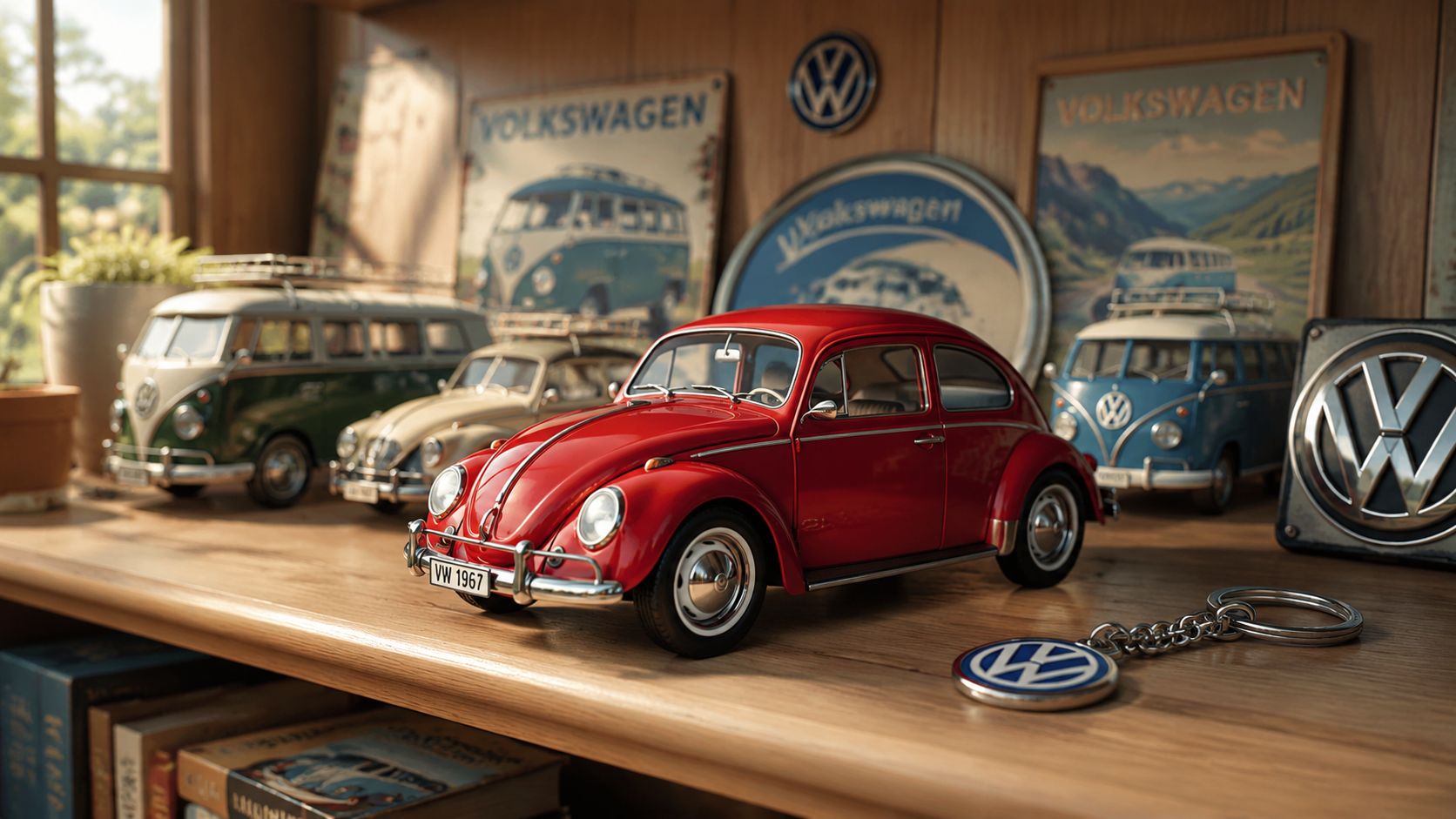
A good diecast doesn’t sit on a shelf like a toy left behind from childhood. It holds a story in miniature. If you’ve ever stopped in front of a well-made Volkswagen model and studied the stance, the paint, the tiny wheels, and the way it instantly brought back a family car or an old road trip, you already know that.
Collectors don’t chase these pieces because they’re childish. They chase them because they’re specific.
Why authenticity matters
The buggy market has a challenge. Search results show both original late-1960s builds and modern reproductions, but there’s little clear guidance on how to separate authenticity from imitation or how to judge collectibility, as discussed in this commentary on vintage versus modern buggy confusion. That uncertainty is frustrating when you’re looking at a full-sized purchase.
For memorabilia, there’s a cleaner path. Officially licensed products matter because they follow the original vehicle’s design language and heritage more closely. That gives the piece more credibility as a collectible and makes it more satisfying to live with long term.
If the real car world is full of grey areas, licensed memorabilia gives collectors a firmer footing.
Choosing the right scale for your shelf
Different collectors want different experiences. Scale is where the hobby becomes personal.
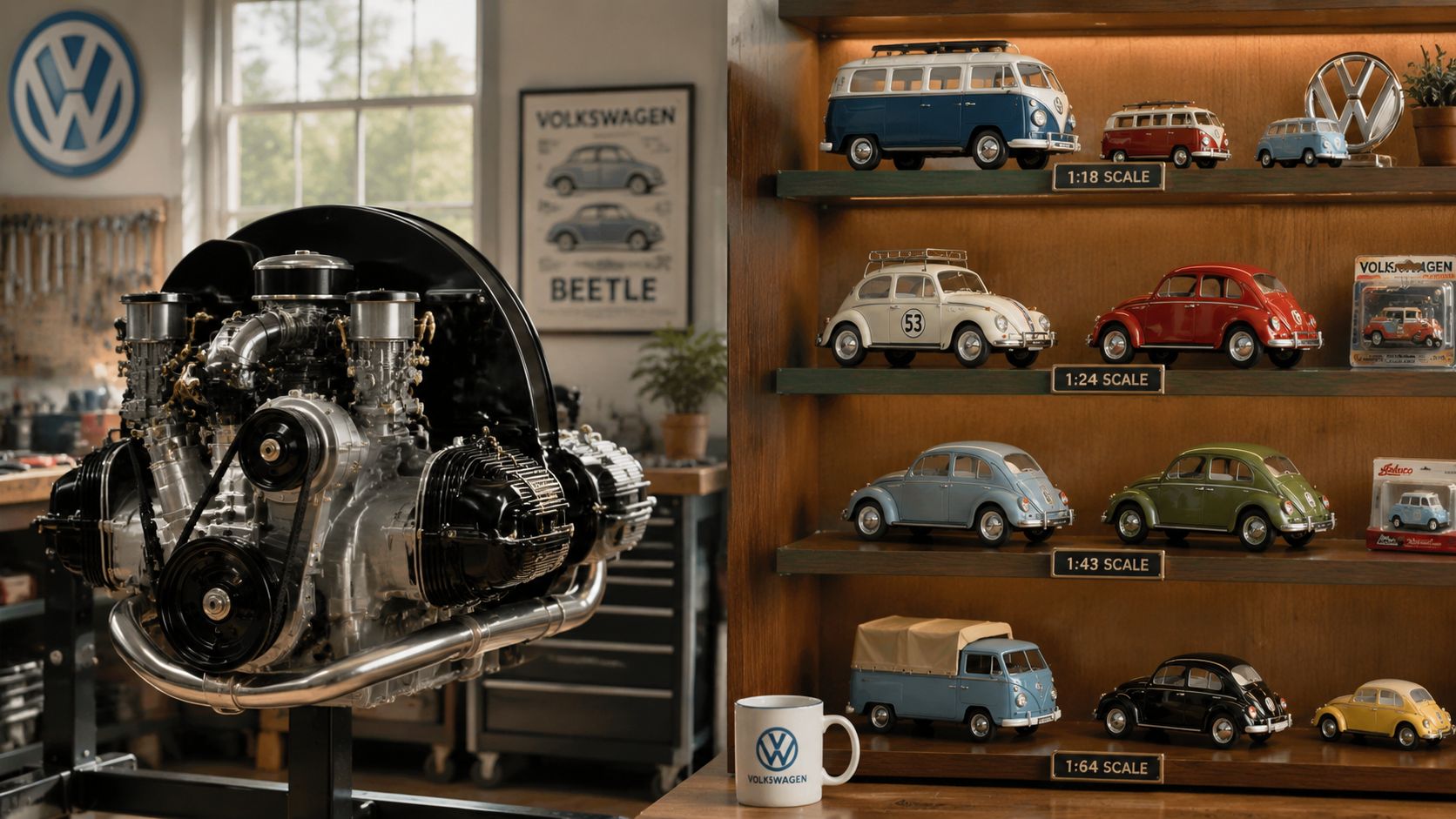
1:18 scale suits the detail-lover who wants doors, trim lines, interior features, and a proper display presence.
1:24 scale often lands in the sweet spot for everyday collecting. Big enough to enjoy, compact enough to display in a row.
Smaller scales work well when you want a themed collection rather than a single hero piece.
The trick is not to ask which scale is best in general. Ask which scale fits your room, your display style, and the way you enjoy looking at models.
What makes a piece feel special
Collectors usually respond to the same qualities, even if they describe them differently:
Faithful proportions that look right at a glance.
Clean paintwork with tidy finishing around edges and trim.
Character that captures the Volkswagen mood, not just the silhouette.
Display harmony so a Beetle, Kombi, or buggy can sit together without clashing.
That’s why a shelf of Volkswagen miniatures can feel almost like a tiny museum of motoring joy. One model recalls surf culture. Another recalls family holidays. Another nails the shape so perfectly you can’t stop looking at it.
Collecting is less about quantity than connection. The best pieces earn their place because they mean something.
Your Guide to Building a Classic Collection
Real beach buggies have moved beyond quirky old fun into proper collector territory. The market tracked by The Classic Valuer’s Volkswagen beach buggy data shows 52 units publicly sold, a median price of approximately AU$15,500, an 81% sell-through rate since 2020, and a top recorded sale of about AU$92,000. That doesn’t mean every memorabilia piece becomes an investment story. It does show the buggy’s cultural weight has held up.
If you collect thoughtfully, your display starts to feel connected to something bigger than décor.
What to check before you buy
A seasoned collector usually slows down and looks for a handful of things.
Proportions first. If the roofline, wheel placement, or body shape feels off, you’ll notice it every time you walk past.
Paint next. Look for even coverage, consistent colour, and tidy edges.
Small details matter. Wheels, lights, trim, and interior treatment often separate an average piece from one you’ll keep for years.
Licensing and maker reputation. These help you avoid generic lookalikes that never quite capture the original charm.
A model doesn’t need to be flashy. It needs to feel right.
A simple collector’s checklist
Checkpoint
What to look for
Body shape
Clean lines and recognisable Volkswagen character
Finish
Smooth paint and neat assembly
Theme fit
Works with your existing Beetle, Kombi, or surf-themed display
Authenticity
Official licensing where available
Display value
Worth seeing every day, not just storing away
For collectors wanting to browse models in one place, the Volkswagen model cars range is a handy category to compare styles and display ideas.
Collector’s note: Buy the model you’ll still enjoy in a year, not the one that only looks exciting for five minutes.
Display like a curator, not a hoarder
The easiest mistake is lining everything up on one dusty shelf and hoping for the best. A stronger display tells a story.
Try one of these approaches:
Beach scene grouping with a buggy, a Kombi, and coastal accents in sandy or white tones.
Volkswagen timeline showing Beetle to bus to buggy as a design evolution.
Colour-led display where bright beach hues become the theme.
Single hero piece under glass or on a clean timber shelf with breathing room around it.
Good collecting is organised editing. Leave space around the best pieces and they’ll do more work for you visually.
Think in themes, not only in items
A classic collection usually gets stronger when it has a point of view. Maybe yours is all about surf culture. Maybe it’s Australian Volkswagen nostalgia. Maybe you just love cheerful utility vehicles with personality.
Once you know your angle, choosing gets easier. You stop buying random pieces and start building a collection with shape, rhythm, and emotional pull.
Bringing the Beach Vibe Home With Coastal VW Decor
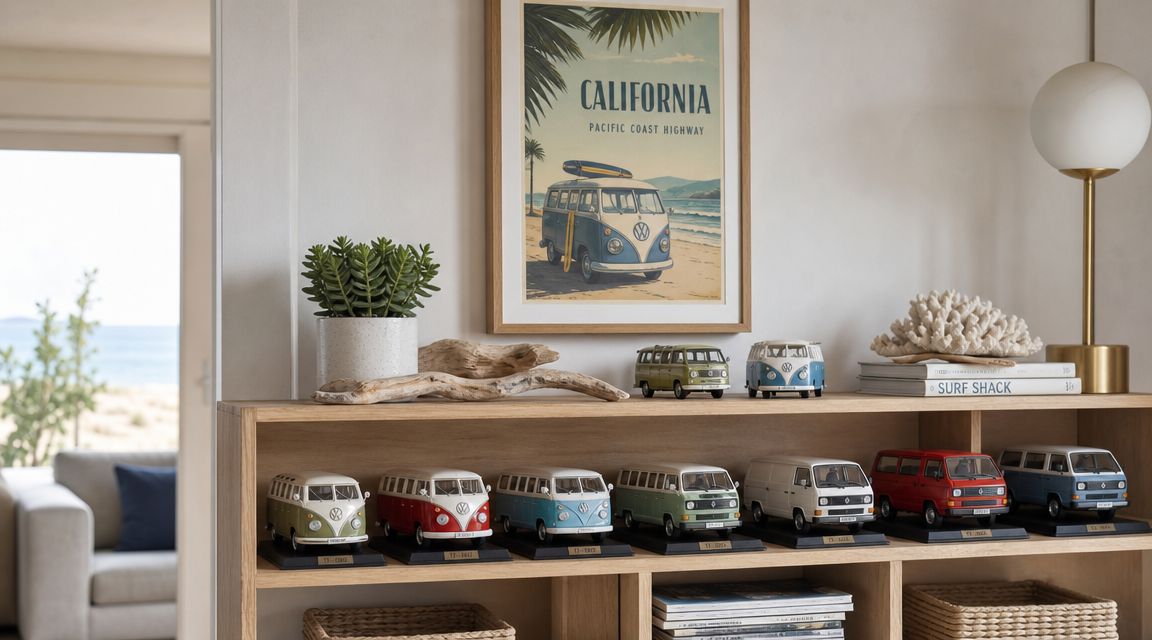
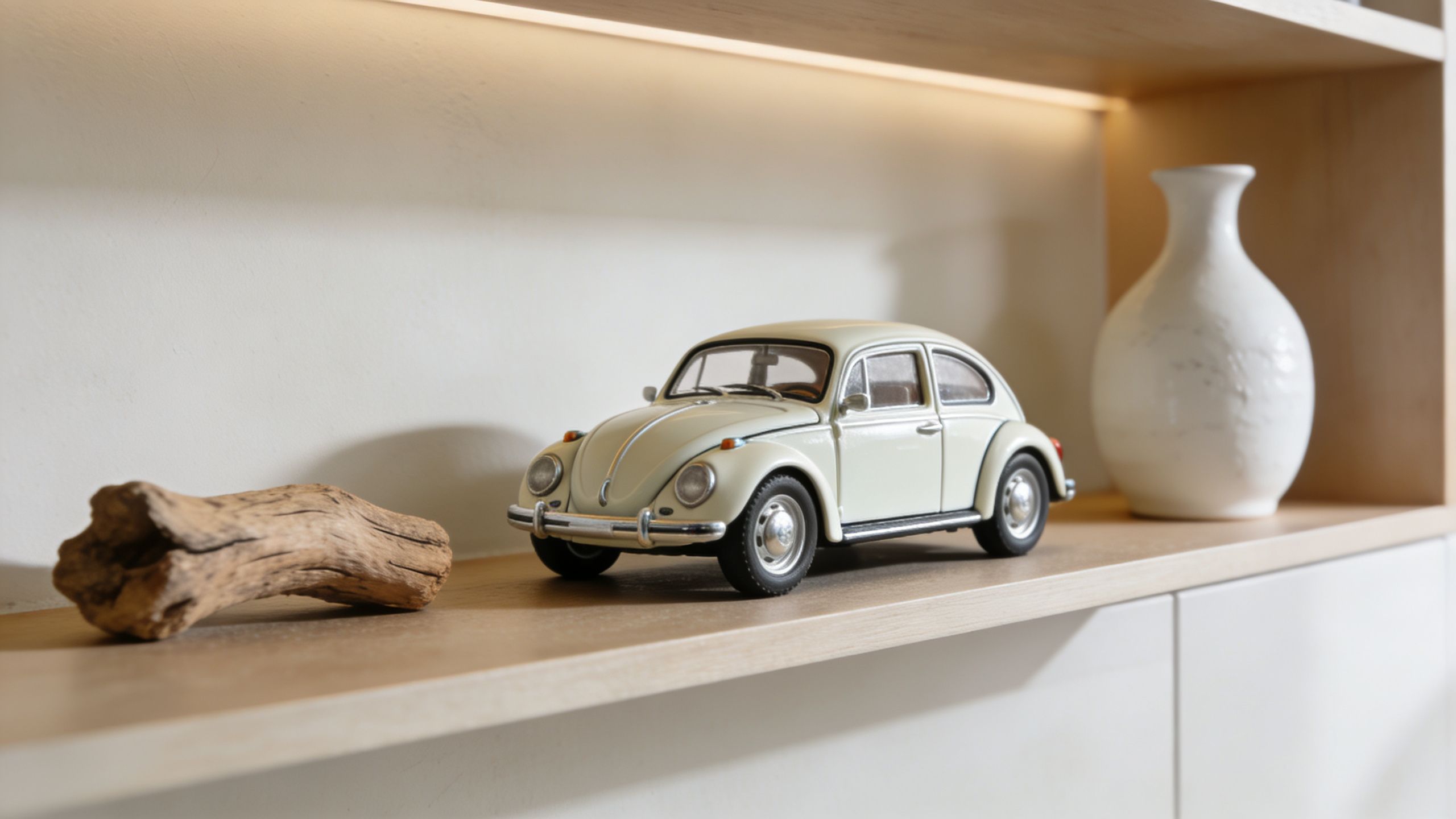
One of the nicest displays I’ve seen wasn’t in a garage at all. It was in a bright coastal sitting room with weathered timber, white walls, a soft blue throw, and one little Volkswagen model parked on a shelf as if it had just rolled in from the foreshore. That single piece changed the room. It turned beach styling into a story.
That’s the appeal of VW décor when it’s done well. It doesn’t shout. It smiles.
Styling a room around the buggy spirit
You don’t need a full buggy body in the shed to enjoy the look and mood it represents. A relaxed room can carry the same cues:
Playful colour pops drawn from beach umbrellas, surfboards, and classic VW paintwork
Rounded shapes that echo Beetle and Kombi forms
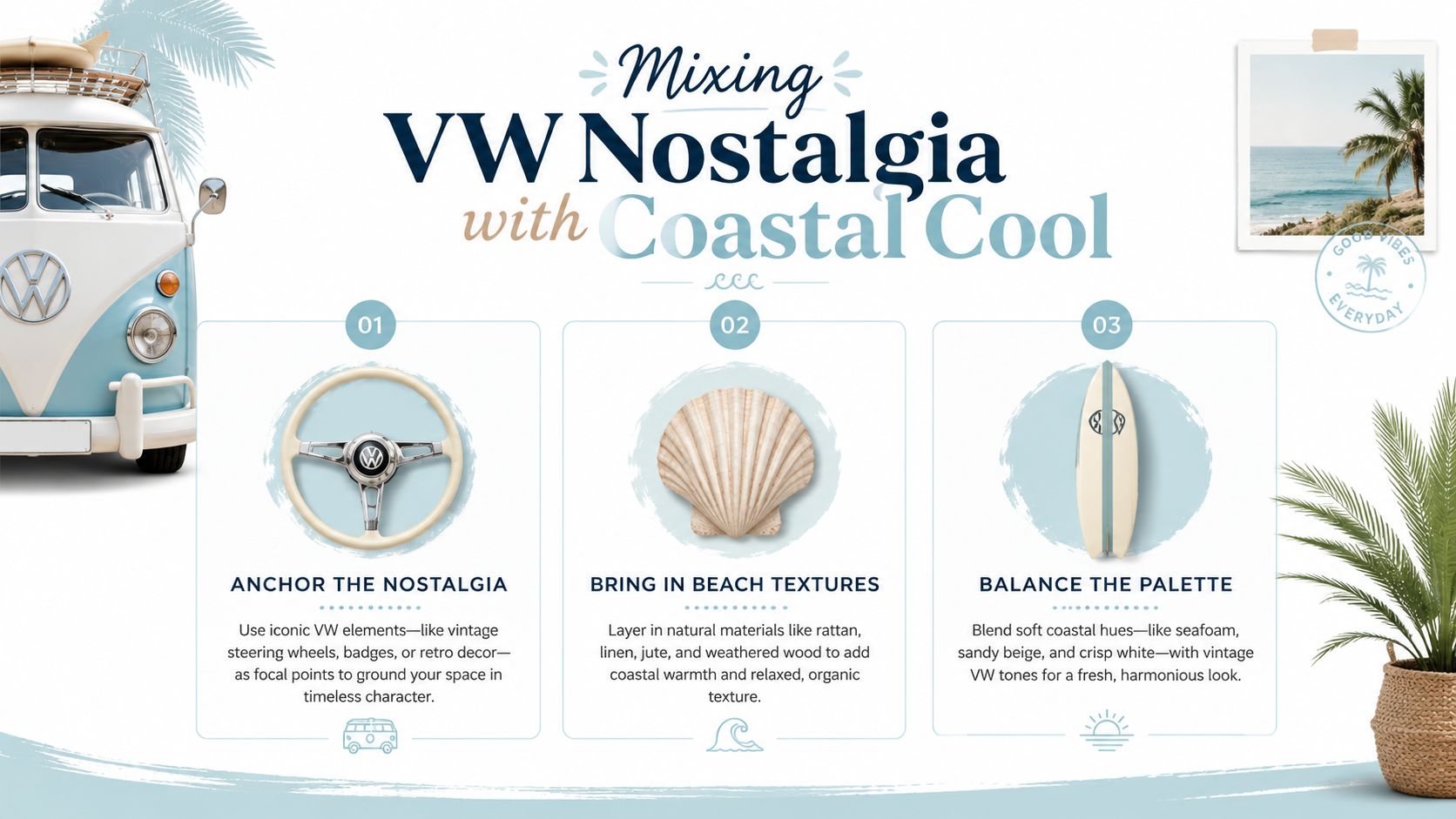
Natural textures like timber, rattan, linen, and weathered finishes
One or two standout VW pieces rather than a crowded novelty display
A toy beach buggy on a shelf beside shells, framed family beach photos, and a vintage-style van can do more emotionally than a room full of unrelated expensive objects.
The practical appeal of décor over a full build
There’s also a very Australian reason some enthusiasts turn to memorabilia and décor rather than a real project. Available research points to a major information gap around Australian pricing, import availability, and regulatory compliance for VW beach buggy kits, making the dream build far less straightforward for local fans, as noted in this discussion of beach buggy kit uncertainty. For many people, that puts the project in the too-hard basket.
Décor and collectibles offer a direct, regulation-free way to enjoy the same lifestyle cues at home.
A room can carry the beach buggy mood without a registration form, import drama, or a half-finished chassis under a tarp.
For inspiration on mixing surfy pieces with furniture and home styling, these coastal home décor ideas are a useful jumping-off point.
A few combinations that work beautifully
Some pairings just click.
Setting
VW-inspired touch
Living room shelf
A Beetle or beach buggy model beside driftwood and framed holiday photos
Entry console
A Kombi-themed piece that sets the tone the moment guests walk in
Study or office
One licensed diecast as a compact burst of colour and nostalgia
Guest room
Coastal décor with a subtle Volkswagen accent for a laid-back holiday feel
The key is restraint. Let each item have room. When the styling is clean, the Volkswagen pieces feel intentional rather than kitschy.
Make it personal
The best home displays usually reflect a real memory. Maybe your dad had a Beetle. Maybe you honeymooned in a Kombi. Maybe the beach buggy is the dream car you never quite bought. That personal thread is what turns décor into something warmer.
A home with a little Volkswagen soul in it feels lived-in, cheerful, and unmistakably Australian by the coast.
The Perfect Find For The VW Fan In Your Life
Gift shopping gets easier when you stop thinking in categories and start thinking in personalities. The VW fan in your life usually gives themselves away pretty quickly.
For the dedicated collector, a licensed model is hard to beat. They’ll notice shape, finish, and authenticity straight away, and they’ll appreciate something that sits properly alongside the rest of their display. If they already love buses and classic vans, it’s worth browsing the wider shop collection of Volkswagen gifts and diecast.
For the home stylist, look beyond the display cabinet. Coastal Volkswagen décor, framed accents, or metal wall pieces suit someone who wants the vibe of classic motoring woven into the house rather than concentrated in one shelf.
For the nostalgic dad, uncle, or old mate who “used to have one just like it”, go with something that sparks a story. A Beetle model or surfy Volkswagen piece often lands better than a generic present because it connects to memory, not just taste.
For the last-minute buyer, local stock matters. Buying from an Australian importer with stock on hand makes life simpler when you need a present without the long wait and uncertainty of overseas ordering. That’s especially handy around birthdays, Father’s Day, Christmas, or a club event gift exchange.
A good VW gift doesn’t feel random. It feels recognised.
Keep the Good Vibes Rolling
The vw beach buggy has always been bigger than its parts. Beetle floor pan. Fibreglass body. Sand, salt, and sunshine in the mix. Yet somehow all of that became a symbol of easy-going Australian fun that still turns heads decades later.
That’s why collecting around the buggy makes so much sense. A well-made model, a thoughtful display, or a coastal room with a touch of Volkswagen character keeps that spirit close, even if the original lives only in memory or on the wish list.
You don’t need a full garage build to be part of the story. You just need an eye for the pieces that carry the feeling forward.
If you’re ready to bring some of that sunshine home, have a look through Volkswagen Memorabilia. You’ll find licensed VW diecast, gift ideas, and coastal-inspired pieces that celebrate classic Volkswagen charm with local Australian stock and fast shipping.
You’re probably here because a simple job turned into a proper VW scavenger hunt.
Maybe it started with a Beetle door handle that didn’t quite line up. Maybe your Kombi needs a seal, a badge, a trim clip, or that one maddening little bracket everyone swears is “easy to get”. Then three tabs become thirty, one seller says the part fits everything from a Bug to a Bus, another says “check number first”, and suddenly you’re wondering whether sourcing vw parts australia is meant to feel like archaeology.
It can feel that way. But after enough swap meets, shed clear-outs, late-night catalogue sessions, and hard lessons with left-hand-drive parts that should never have come near an Australian car, you realise there’s a pattern to it. Once you understand the families of parts, how VW numbers its components, where Australians find good stock, and when importing makes sense, the whole thing becomes less of a headache and more of a rewarding puzzle.
That’s the charm of old Volkswagens. Every part has a story. Every correct piece brings the car closer to itself again.
Decoding the VW Parts Universe OEM Aftermarket and NOS
The first confusion usually hits before you’ve even bought anything. A seller says it’s genuine. Another says OEM. Another says aftermarket but “just as good”. Then someone at a club meet starts talking about NOS like they’ve found pirate gold.
They’re talking about three different families of parts, and knowing the difference saves money, time, and arguments in the shed.
Genuine parts feel like factory fresh
Genuine Volkswagen Parts are the closest thing to buying the part as Volkswagen intended for the car. In Australia, genuine parts sourced through official channels come with a 2-year unlimited kilometre warranty, which gives plenty of owners peace of mind when the job is too important to gamble on, especially for braking, suspension, sealing, or engine service items, as noted on Volkswagen Australia’s genuine parts information.
That doesn’t mean every project needs genuine everything. But when fitment matters, genuine parts usually remove the guesswork. You’re paying for consistency, correct engineering, and less mucking around with “close enough”.
Aftermarket parts can be the smart buy
Aftermarket parts are made outside Volkswagen’s official supply chain. That sounds risky to newcomers, but it doesn’t automatically mean poor quality. Some aftermarket options are sensible buys, especially for consumables, maintenance parts, or components where a trusted alternative is easier to source than genuine stock.
The trick is to separate the reputable option from the bargain-bin disappointment. In Australia, it’s wise to check whether imported aftermarket parts comply with Australian Design Rules, especially for safety-related items. If they don’t, you can end up with roadworthiness issues, insurance trouble, or a part that doesn’t belong on the car.
New Old Stock, or NOS, is the stuff that gets old VW people grinning. It’s an original part made in the period, never used, often left sitting on a shelf for years. Sometimes decades. If you’re restoring a car and want proper period details, NOS can be magic.
It can also be a trap if you buy with your heart instead of your eyes.
Rubber hardens. Packaging lies. “New” doesn’t always mean “ready to fit”. An NOS seal or bush might be historically correct and still be the wrong choice for a car that’s driven.
Practical rule: Use genuine or quality aftermarket for function. Use NOS where originality matters and the material condition still makes sense.
A lot of owners end up mixing all three. Genuine for the critical bits, aftermarket for practical maintenance, NOS for those little finishing touches that make the car feel right. That’s often the sweet spot.
If your project centres on a Beetle or early Bug platform, it helps to browse a category built around the model itself, not just generic listings. A focused starting point like VW Type 1 parts can help you think in model families before you think in part listings.
What usually confuses people first
Most mistakes happen because buyers chase the lowest price before they’ve decided the goal of the build.
Ask yourself these questions first:
Is this a driver or a show car? A daily-driven Beetle needs dependable function before concours perfection.
Is authenticity part of the value? For a period-correct Kombi restoration, the right trim, handles, and finishes matter more.
Will the part affect safety or legality? Brakes, steering, seatbelt hardware, and suspension deserve extra caution.
Do you need it now or can you wait? Some parts are easy to source locally in aftermarket form, while genuine or NOS can take patience.
That one decision changes the whole search. Once you know which family of part you’re chasing, the next step is finding the exact number that belongs to your car.
Your VWs Fingerprint Finding the Right Part Number
Ask any long-time VW owner what separates a smooth parts order from a miserable one and you’ll hear the same answer. Part number first.
Volkswagen’s numbering system looks cryptic at first glance, but it’s not random. It’s your car’s fingerprint. Once you can read it, you stop guessing and start ordering with confidence.
How the nine-digit code works
According to Club VW’s guide to Volkswagen part numbers, the Volkswagen part numbering system uses a nine-digit code, sometimes followed by a modification letter. The key point for Australian buyers is right at the front of the number. Digits 1 to 3 denote the model, and odd numbers indicate left-hand drive while even numbers indicate right-hand drive.
That matters here because Australian cars are right-hand drive. Get that wrong and you can end up with parts that physically bolt on badly, interfere with mounting points, or are unsuitable for local vehicle layout.
In Australia, left-hand-drive and right-hand-drive confusion isn’t a minor catalogue error. It can lead to steering, mounting, and compliance headaches.
Club VW also explains the rest of the code in useful chunks:
Digits 1 to 3 identify the model or unit code
Digit 4 shows the main group
Digits 5 and 6 narrow it to a subgroup
Digits 7 to 9 identify the specific part
A final letter can show a revision or modification
Once you know that, the code starts to read less like gibberish and more like a map reference.
Five ways to find the right number
Most owners don’t need to decode everything from scratch. They need a repeatable method.
Start with the old part If the original component is still on the car, clean it carefully and look for stamped or cast numbers. This is often the quickest lead, especially on metal components.
Check the VIN and build details Build year, model variation, and mechanical specification can all change fitment. Beetles and Kombis may look similar across nearby years, but one small production change can shift the correct part.
Use ETKA or an equivalent catalogue ETKA is the proper parts catalogue many VW enthusiasts rely on to cross-reference numbers. It helps confirm supersessions and model-specific changes.
Match engine and gearbox codes For powertrain parts, broad model description isn’t enough. Engine and transmission codes often decide whether the part fits.
Confirm against Australian specification If the seller is overseas, ask them to confirm the number rather than just the model name. “Fits Beetle” is not the same as “fits your Australian right-hand-drive Beetle”.
The easiest mistake to make
Newcomers often search by model name alone. That’s how you end up with a part that fits a Beetle in a general sense, but not your Beetle.
A practical example is a handle, mirror mount, dash fitting, or steering-related piece. It may look identical in photos, yet differ because of side orientation or right-hand-drive layout. That’s why catalogues and old club references still matter.
If you’re chasing bug-specific items, it helps to keep your browsing narrow and model-led. A collection like Volkswagen Beetle parts is useful because it keeps your attention on Beetle-compatible categories while you verify the exact part number elsewhere.
A simple order of operations
When I’m helping someone at a show who’s overwhelmed, I tell them to do it in this order:
Step
What to do
Why it matters
First
Identify the exact model and year
Similar cars can use different parts
Second
Photograph the old part and any markings
Saves memory-based mistakes
Third
Check catalogue references
Confirms supersessions and variations
Fourth
Verify RHD compatibility
Critical for Australian cars
Fifth
Ask the seller to repeat the number in writing
Creates a clear record before purchase
“If the seller can’t give you a part number, they’re asking you to buy hope.”
That sounds blunt, but it’s true. Hope doesn’t fit a Kombi. Numbers do.
Sourcing Your Parts Locally The Great Aussie VW Hunt
Finding parts in Australia has always been half logistics, half community. One day it’s a specialist who knows every seal profile by eye. The next it’s a retired club member pulling a dusty box from a shelf and saying, “I knew I kept that for a reason.”
That’s part of the joy. It’s not just shopping. It’s the hunt.
Australia gives VW owners a decent base to work from. The local automotive aftermarket was estimated at $8,820 million in 2023, and Australia’s registered vehicle fleet reached 18.9 million, which helps sustain suppliers, wreckers, clubs, and all the side networks enthusiasts rely on, according to the Australia automotive parts country commercial guide.
The specialist supplier
The best specialist suppliers save you from expensive mistakes because they understand the difference between “sort of fits” and “fits properly”. They know which reproduction seals are too fat, which trim clips crack, and which parts should never be ordered without checking chassis details.
When you ring a good specialist, have these ready:
Your exact model details so they’re not guessing from a broad description
The part number if you have it because this speeds everything up
Photos of the old item especially if the car has had previous-owner modifications
A clear goal such as daily use, original restoration, or roadworthy repair
The better your question, the better the answer.
Wreckers and swap meets still matter
Modern online catalogues are handy, but old Volkswagens still reward old-fashioned searching. Wrecking yards, swap meets, and club events can turn up original hardware, brackets, trims, and obscure bits that don’t even make it into neat online stock lists.
The catch is condition. Learn to inspect before you get excited.
Look for:
Cracks and fatigue on handles, mounts, and brackets
Rust in hidden edges not just on visible surfaces
Thread condition on bolts, studs, and captive nuts
Signs of previous repairs such as welds, filler, or drilled holes
A used original German part can be better than a poor reproduction. But only if it’s still sound.
Here’s a helpful look at the kind of hands-on VW culture that keeps the scene going:
Clubs are where the real shortcuts live
If you’re not in a VW club yet, you’re making the hunt harder than it needs to be. Club members know who has stock, who rebuilds what, who hoards Type 3 bits, and who’s got a shed full of Kombi trim they swear they’ll sort through one day.
That local knowledge beats endless scrolling.
Club wisdom: Ask for the person, not just the part. In the VW world, the right contact often matters as much as the right catalogue.
You’ll also hear the unwritten truths. Which supplier packs well. Which one labels accurately. Which one is lovely to deal with but slow on email. That sort of advice isn’t flashy, but it’s gold.
Why local often wins
Buying local in the vw parts australia market has a few practical advantages that never go out of style:
Local source
Why owners like it
Australian specialist shops
Easier communication, familiar with RHD cars
Clubs and members
Honest knowledge, rare spare parts, community trust
Swap meets and shows
Chance to inspect parts in person
Wreckers and salvage
Original pieces that reproductions can’t match
You also avoid the heartbreak of waiting weeks for something from overseas only to find it’s wrong, damaged, or built for another market. Local buying won’t solve everything, but it makes a lot of jobs easier and a lot of restorations more enjoyable.
Bringing It Home Importing Parts and Navigating Compliance
You finally find the part after weeks of searching. It is sitting in a warehouse in California, or on a shelf in Wolfsburg, or in the spare room of a seller in the UK who swears it fits your year perfectly. That moment feels like victory. Then the actual work starts.
Importing can save a restoration. It can also turn a tidy plan into an expensive lesson if you buy on hope instead of proof.
When importing makes sense
Overseas buying usually earns its place when the job is too specific for the local market. Rare trim, odd interior hardware, country-specific lenses, and period-correct finishes often fall into that category. Collectors know the feeling well. Sometimes the right piece is not just a spare part. It is the missing detail that makes the car feel whole, the same way a proper brochure, badge, or model car completes a memorabilia shelf.
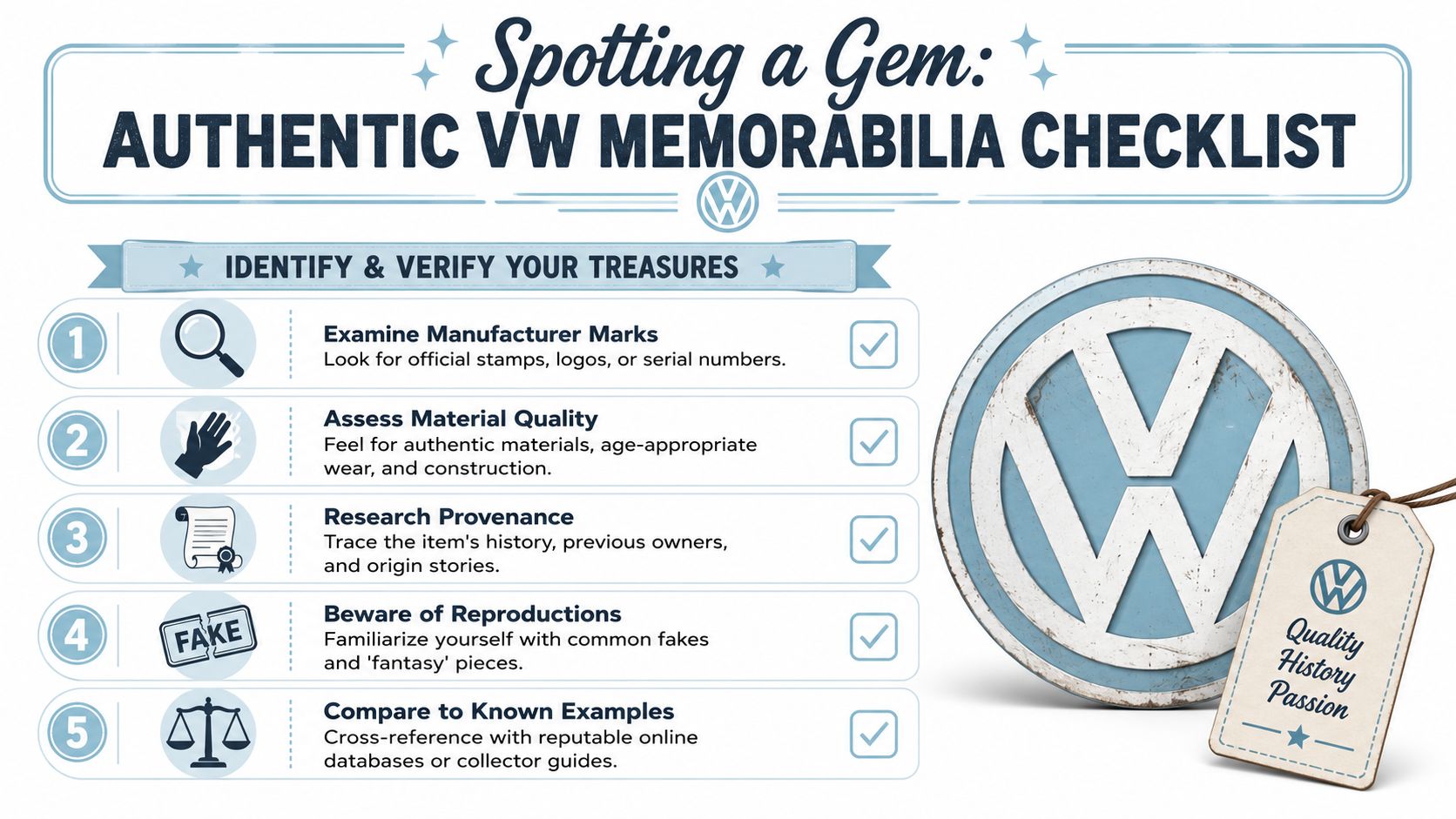
That collector's instinct can be useful here, as long as you keep it disciplined. A careful buyer treats an imported part the way a serious collector treats a rare item. You check markings, provenance, condition, and whether it is exactly correct for the year and model, not merely close.
Part numbers matter more once a parcel is crossing oceans.
Compliance matters more than excitement
A part can look perfect in photos and still be wrong for an Australian car. That matters most with anything tied to safety, roadworthiness, or insurance. Imported aftermarket parts should be checked against Australian requirements if they affect braking, steering, suspension, lighting, seat belts, mounting points, or other regulated systems.
Volkswagen Australia says Genuine Volkswagen Parts bought through its official Australian network come with a 2-year unlimited kilometre warranty. Private overseas purchases usually do not give you that kind of backup, and returning a bad part across borders can cost more than the savings that tempted you in the first place.
That is the value equation many owners only learn after one wrong order.
If the part affects how the car stops, steers, lights the road, or protects passengers, treat exact fit and clear compliance as required, not optional.
The traps that catch eager buyers
The biggest problems are rarely dramatic. They are the small mismatches that stall a project for months. A left-hand-drive switch panel. A lens with the wrong markings. A reproduction rubber seal that looks right on the bench but fights the body opening like it was made for another car entirely.
Early Volkswagens are especially good at teaching humility. Mid-year changes, export-market differences, and previous-owner modifications can all confuse the trail. A 1967 Beetle is a famous example of this sort of mischief, but almost every model line has its own trouble spots.
A practical importing filter
Before you send money overseas, run through this short check:
Match the part number to your car's chassis range, year, and model
Confirm right-hand-drive suitability if the part relates to controls, trim, or visibility
Ask for clear photos of stamps, labels, casting numbers, and wear
Check freight costs, return terms, and import duties before paying
Be stricter with safety-related parts than with decorative or collectible items
Compare the overseas bargain with local genuine supply, especially when warranty support could save you later
Decor items, badges, books, signs, and display pieces usually carry less risk. Mechanical parts do not. That is where the collector's eye and the restorer's discipline need to work together.
The best importers are methodical. They buy with enthusiasm, but they verify like a sceptic.
Beyond the Spanner The Collector's Spirit and Your VW's Story
You finally find the right badge for the decklid, set it on the bench, and pause for a second longer than expected. Next to it sits an old brochure, a tiny diecast Kombi, and a photo of the car as it looked when you dragged it home. That little scene explains something every long-term VW owner learns sooner or later. Restoring the car and collecting the story around it are parts of the same hobby.
That is why the hunt for vw parts australia often grows beyond bolts, seals, and trim.
Restoring and collecting belong together
A clear gap exists in the market here. People looking for Kombi decor, Beetle display pieces, or workshop-themed VW gifts often end up sifting through pure parts listings, even though many enthusiasts want both sides of the hobby under one roof.
That overlap is easy to understand if you have ever lived with an old Volkswagen project. A car in pieces can test your patience. A model on the shelf, a period sign on the wall, or one of these VW dashboard-themed display pieces keeps the car present in your life while the full-size version waits for its next round of work.
Collectors and restorers are usually chasing the same thing. Connection.
A diecast Beetle or Kombi helps in practical ways too:
It keeps enthusiasm alive during the slow months of cleaning, waiting, and reordering
It gives you a visual reference when you are still settling on colour, trim, or stance
It invites family into the story because a shelf piece is easier to enjoy than a discussion about door scrapers and chassis numbers
It marks progress so the project feels like part of the home, not just a machine stalled in the shed
The project deserves a place in the house too
Old VW hands have been doing this forever. We saved brochures from swap meets, stacked old workshop manuals, hung dealer signs, and kept worn badges that were too full of history to throw away. Plenty of us had a tiny bus or Beetle sitting above the vice long before anyone called it curation.
That habit matters because restoration can be slow, expensive, and occasionally maddening. Memorabilia gives the project a heartbeat when the car itself cannot move. It works like a campfire around the main event. People gather around it, ask questions, share memories, and suddenly the project stops being a pile of jobs and starts feeling like a story again.
The restoration starts long before the spanners hit the bench. It starts when the car takes up room in your memory, your plans, and your shelves.
Why memorabilia makes such good VW gifts
Some VW enthusiasts do not own the full-sized car. Some sold one years ago and still miss it. Some grew up riding in a Beetle or watching a Kombi pull into a caravan park every summer. For them, memorabilia is not filler. It is a manageable, lasting way to keep hold of the feeling.
That is also why gifts in this corner of the hobby tend to mean so much. A thoughtful model, sign, or display piece says you understand the person's taste, their memories, and the shape that never quite left their mind.
The collector's spirit sits inside every good restoration. One side sources the right parts. The other keeps the romance alive while the work gets done.
Your Essential Checklists for Buying VW Parts
By the time you’re ready to buy, excitement can undo all your careful thinking. A seller sounds convincing, photos look decent, and you want the job moving. That’s exactly when a checklist earns its keep.
Save these to your phone. Better yet, print them and keep them in the glovebox or workshop.
The restorer's pre-purchase checklist
Use this when you’re buying a single part for your own car.
Confirm the exact part number. Don’t rely on model name alone. Match the number to your vehicle’s year, variant, and Australian right-hand-drive setup.
Ask for photos of markings and all sides. Stamps, casting numbers, wear points, and mounting tabs tell you more than a polished hero shot.
Check whether the part is genuine, aftermarket, or NOS. Sellers often blur these lines. Make them be specific.
Look at material condition, not just appearance. Rubber, plastic, and plated finishes can age badly even when unused.
Ask what car it came off if it’s used. “Fits Beetle” is too vague.
Get return terms in writing before you pay, especially for imported or hard-to-find parts.
Pause on safety-critical items. If the part affects braking, steering, mounting, restraints, or suspension, be stricter than usual.
The retailer's sourcing sheet
If you buy for resale, gifts, workshop stock, or display ranges, the questions shift a bit.
Check
Why it matters
Authenticity and licensing
Especially important for themed collectibles and branded items
Consistency across multiple units
Mixed quality creates headaches for returns and reputation
Packaging quality
Matters for shipped goods and gift buyers
Supplier communication
If there’s a stock issue, clear answers matter fast
Category fit
Make sure the item suits your audience, whether that’s restorers, collectors, or decor buyers
A useful example is adjacent display stock. If you’re building a VW-themed retail or workshop corner, practical accessories can sit alongside collectibles and decor. Items such as automotive dashboard covers can help shape a display or themed range, provided you’re clear about whether you’re selling function, style, or both.
The final sense-check
Before you hit buy, ask one last question.
Does this part solve the actual problem, or am I buying it because I’m tired of searching?
That one question has saved plenty of us from boxes full of “nearly right” parts.
Frequently Asked Questions for the Aussie VW Enthusiast
How do I handle parts shipping to regional Australia
You find the right part at last, click through to checkout, and then the surprise arrives. Freight.
Regional buyers learn this early. Delivery to remote parts of NT or QLD often takes 5 to 7 days or more, and heavy-item shipping can run upwards of $20, according to VAGPARTS and the regional delivery reality for VW parts in Australia. That matters because a bargain bumper bracket or wheel drum can stop looking like a bargain once freight joins the bill.
The fix is simple, but it takes discipline. Ask for packed dimensions before you pay, confirm the courier being used, and bundle small service items into one order where you can. Old hands treat freight like part of the restoration, not an afterthought. Collectors do the same with rare brochures, badges, and model cars. The hunt only works when the whole cost makes sense.
Is genuine always better than aftermarket
Genuine parts usually give you the best shot at correct fit, especially on cars that have already lived a few different lives. A Beetle or Kombi that has been repaired over decades can be full of little surprises, so factory-spec parts often save time and swearing.
Good aftermarket parts still have their place. They can suit cosmetic items, trim pieces, and everyday maintenance jobs if the supplier knows the product well and states fitment clearly. The trick is to match the part to the job. A reproduction interior knob is one thing. A brake component asks far more of your trust.
What’s the easiest way to avoid buying the wrong part
Start with the part number.
That number is your VW’s fingerprint. Model names help, year ranges help, and photos help, but the part number cuts through a lot of confusion. It also keeps you grounded when a seller claims one item fits a long list of cars.
Check right-hand-drive compatibility, confirm any chassis or engine-code break points, and ask the seller to verify the number in writing before you buy. If they hesitate, slow the process down. A cheap wrong part usually costs more than a dear correct one once return freight and lost workshop time get involved.
How can I spot a poor-quality reproduction
Poor reproductions usually give themselves away if you know where to look. Rough casting, thin chrome, soft fasteners, missing markings, and vague fitment claims are common warning signs. So are listings that claim one part suits nearly every Beetle, Bus, or Golf variation under the sun.
Precise sellers tend to be better sellers. They will tell you measurements, production years, left or right fitment, and whether a part suits Australian-delivered cars or imported variants. That same eye for detail is what separates a meaningful piece of VW memorabilia from a generic trinket. Real enthusiasts notice accuracy.
Should I buy used original parts over new reproduction parts
Used original German parts can be the smarter buy, especially if the original piece was built from better material than the modern reproduction. Plenty of club members have fitted a clean second-hand latch, hinge, or switch and found it works better than a brand-new copy.
Condition decides everything. Check for corrosion, fatigue, cracks, worn threads, and old repairs. Rubber, seals, and other perishable materials need extra caution because age can beat originality. The best restorations, and the best collections, come from choosing pieces with a story and enough life left in them to justify bringing them home.
If you love the hunt as much as the finished result, have a look at Volkswagen Memorabilia. It’s a local Australian shop focused on VW-themed gifts, diecast models, and coastal decor that speaks directly to Beetle and Kombi fans. If your shed project has spilled into your office, lounge room, or gift list, it’s a lovely place to find officially inspired pieces that keep the Volkswagen story going long after the tools are put away.
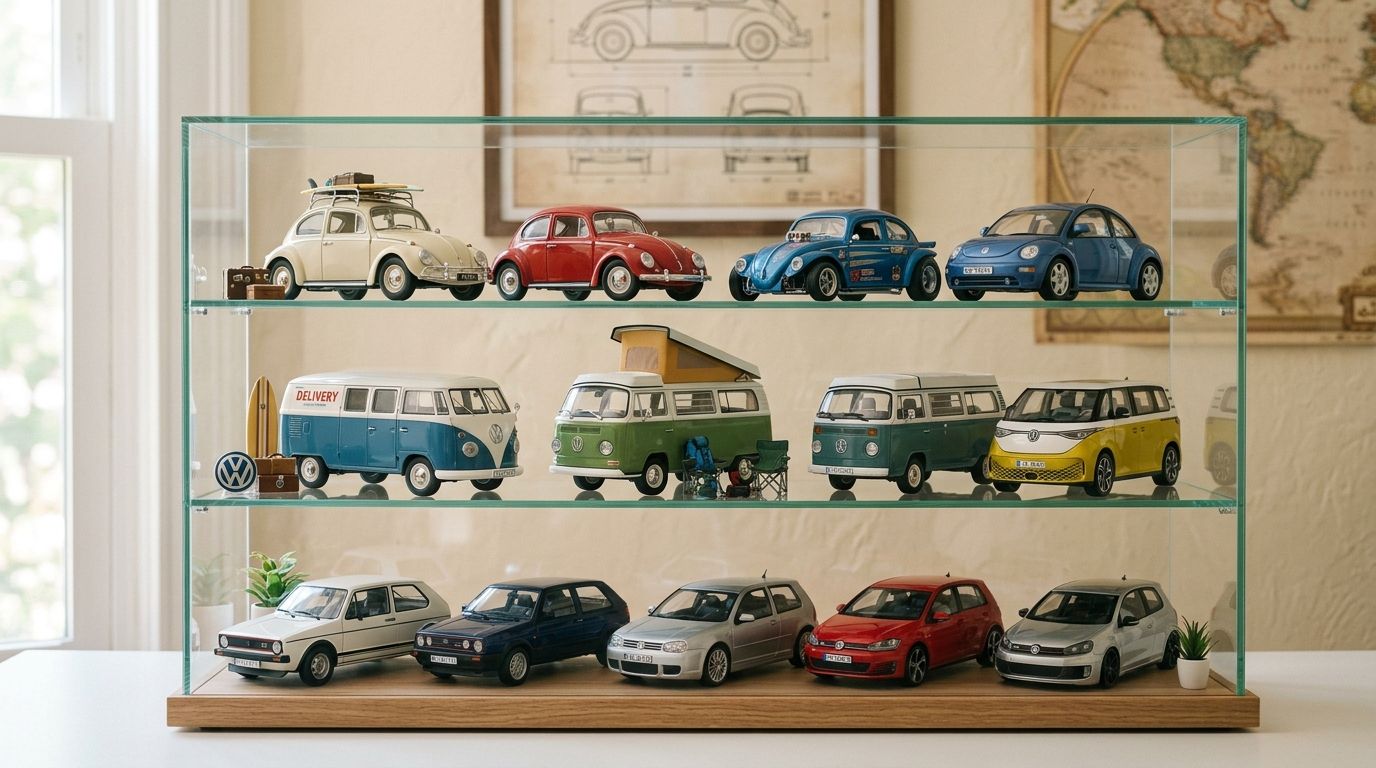
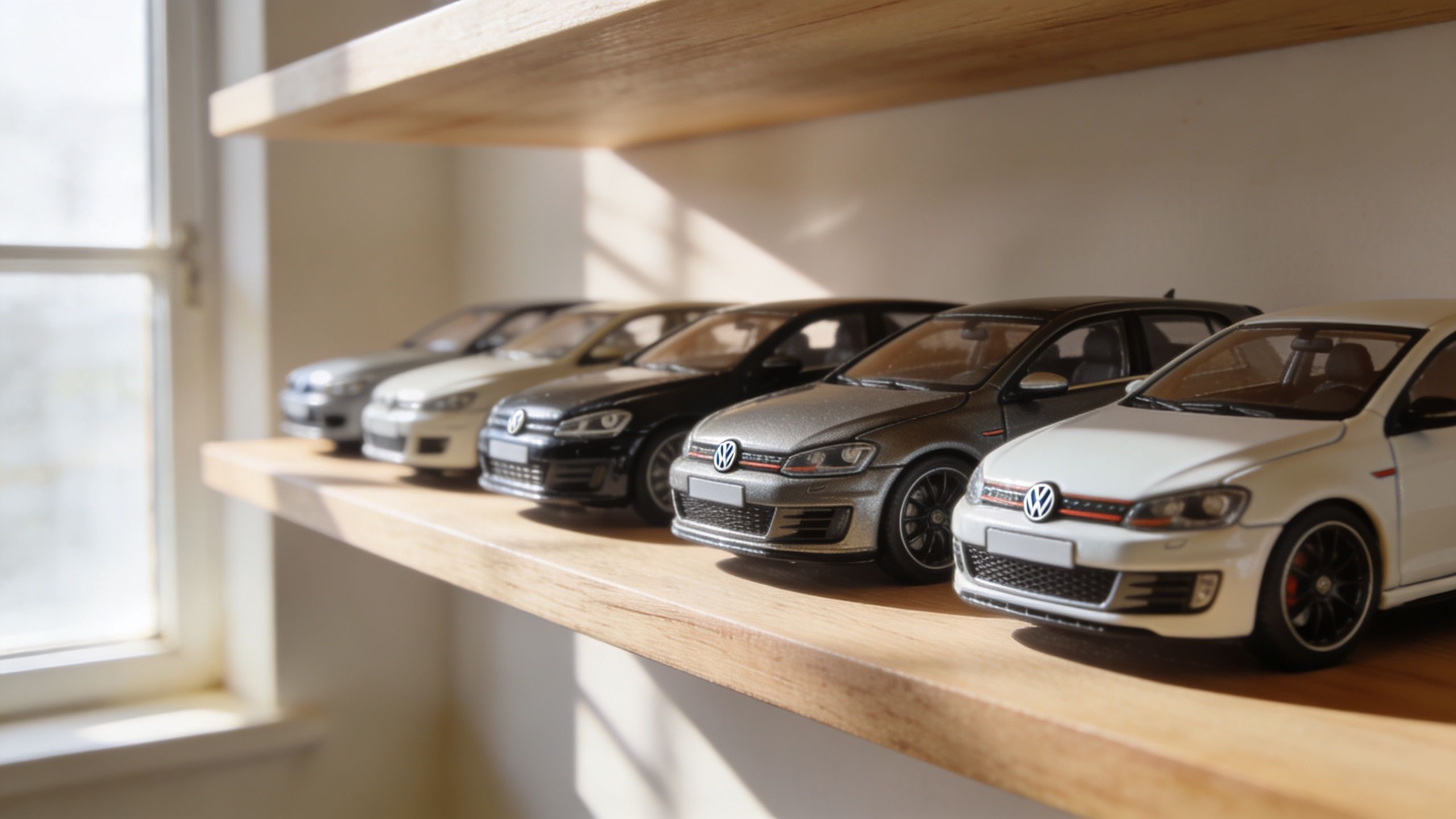
You know that moment when you stand back from your shelf, coffee in hand, and admire the little fleet you’ve built over the years? A tidy Beetle with those rounded guards. A bright Kombi that still feels like summer on wheels. Maybe a Samba Bus parked proudly in the centre like it owns the mantel. The models are right. The memories are right. But the display still feels a touch flat.
I had that feeling after a Show n Shine weekend, looking at a sun-faded surf photo, a couple of diecast VWs, and a bare bit of shelf timber that needed some soul. Not more clutter. Just atmosphere. Something that softened the edges and gave the whole corner that relaxed beach-house calm we all secretly want, whether we live near the coast or not.
That’s where white candle holders sneak in and do their best work. They don’t fight the colours of your Kombi. They don’t steal attention from a classic Beetle silhouette. They sit there, adding shape, light, and that breezy coastal mood that feels right at home beside old Vee-Dub memories.
Setting the Scene for Your Prized Collection
A mate of mine keeps a cream shelf above an old sideboard. On it sits a blue-and-white Kombi model, a weathered photo from a camping trip up the coast, and a stack of workshop manuals he refuses to throw out. It already had heart. What changed the whole look was adding two white candle holders at different heights, one smooth and one slightly rustic, to frame the display without boxing it in.
The effect was simple. The white surfaces bounced a bit more light around the shelf, the diecast paint looked richer, and the whole arrangement felt like it belonged together. It stopped looking like a few nice objects lined up after a clean-up and started feeling like a story.
A display that feels lived in
Classic Volkswagen displays work best when they suggest a life around the vehicle. A Kombi isn’t just a van. It’s road trips, surfboards, servo pies, and maps folded the wrong way. A Beetle isn’t just a shape. It’s first cars, family photos, and that unmistakable bonnet catching afternoon sun.
White candle holders help because they create breathing room. They act like the pale trim in an old beach shack. Quiet, tidy, and full of character without demanding applause.
A few styling cues make that shelf feel more natural:
Use uneven heights so the eye moves across the display instead of stopping at one hero piece.
Keep white tones soft rather than stark when you want a warmer nostalgic look.
Pair with timber, shells, or old books so the setup doesn’t drift into showroom-cold territory.
Practical rule: If your model car is the memory, the candle holder should be the backdrop.
If you like the idea of blending collectibles with home styling, a browse through vintage home accessories can spark plenty of display ideas without turning the room into a theme park.
Why this small touch works so well
White candle holders bring order without making things feel fussy. That matters when you’re displaying VW pieces, because the cars already have personality. Too many bold décor items and the whole shelf starts arguing with itself.
A clean white holder settles things down. It gives your collection the same feeling a well-detailed Beetle has after a wash. Calm. Crisp. Ready for a proper look.
Why White is the Perfect Colour for a VW Theme
White makes sense in a VW setting for the same reason white walls work in a surf club or a weatherboard beach house. It lets the good stuff breathe. The chrome on a Beetle catches it. The two-tone paint on a Kombi pops against it. Even a faded old postcard or a retro enamel sign looks sharper when there’s a bit of white nearby.
In Australian décor, that instinct has become mainstream. Reporting on interior trends and product mix notes that neutral-toned decorative items account for roughly 35 to 40% of decorative centrepiece sales, with white consistently the top colour choice. The same reporting says white ceramic and glass candle holders made up 42% of Adairs’ candle-holder SKUs in 2021 to 2022, promoted as “versatile” and “coastal-friendly.”
That wording says a lot. Versatile means it works with your bright Flower Power bus and your understated grey oval-window Beetle. Coastal-friendly means it carries that easy Australian beach mood without trying too hard.
White feels like the road trip itself
Think about the colours wrapped up in old VW memories here in Australia.
There’s white foam on the shoreline at first light. White sun glare off the bonnet during a long run north. White painted fibro shacks, salt-stained fences, and old milk bars near caravan parks. White belongs to the scene already. It doesn’t need to be forced in.
That’s why white candle holders feel right beside a Kombi. They echo the world the van belongs to.
White lets the cars do the talking
Collectors sometimes worry that white will feel plain. It won’t, if the rest of the display has shape and texture. White is a canvas. It gives the model room to sing.
A bright red Beetle looks more vivid against white. A pastel Kombi looks more relaxed. A cream-and-blue Samba suddenly feels like it’s parked outside a beachside café.
Here’s where white earns its keep:
Display element
What white does
Bright diecast Kombi
Tones down visual noise and lets paintwork stand out
Chrome details on Beetles
Reflects light softly and highlights curves
Coastal props like shells or driftwood
Ties them together without becoming overly nautical
Bookshelves or mantels
Keeps the whole setup feeling tidy and airy
It suits both old-school and minimal spaces
Not every VW enthusiast wants a room full of loud retro colour. Some of us like the memorabilia tucked into a cleaner, more grown-up interior. White candle holders bridge both worlds. They work with a surfy corner full of texture, and they work with a modern shelf that only carries a few chosen pieces.
White isn’t the star of the display. It’s the light hitting the star.
That’s why this colour keeps turning up in beach-inspired styling and nostalgic collections alike. It gives a display polish without sanding away its personality.
Choosing the Right Holder Material and Finish
Picking a white candle holder is a bit like choosing wheels for a project car. The wrong choice isn’t always bad. It just sends the display in a different direction. Material changes mood, maintenance, and how comfortable you’ll feel placing it near your prized models.
Ceramic for a clean classic look
Ceramic white candle holders suit neat shelves, modern sideboards, and anyone who loves a display that feels organised. They’re easy on the eye and they don’t bring too much texture into the mix.
If your diecast collection includes polished Beetles or display-ready Samba models with crisp paint lines, ceramic usually behaves well. It adds shape without visual fuss.
Best suited to:
Minimal interiors where you want the model’s colour to carry the scene
Bookshelves and office displays that need a tidy, refined finish
Collectors who prefer easy care and don’t want a heavily distressed look
Whitewashed wood for that beach-run warmth
This is the one that feels most like bare feet on a timber floor after a morning surf check. Whitewashed wood has grain, softness, and a bit of that weathered personality VW people tend to love.
A particularly useful option in coastal homes is whitewashed mango wood. Product information on whitewashed mango wood pillar holders notes that the lime-based whitewash creates a breathable finish that reduces mould growth risk by 20 to 30% compared with sealed varnishes. The same material notes that mango wood has a Janka hardness of 1,070 lbf, which gives it greater stability than pine.
That’s handy if your place gets sticky in summer or your display sits in a coastal room that always seems to hold a bit of salt air.
Workshop-style tip: If your display includes driftwood, shells, or vintage surf pieces, whitewashed wood usually looks like it was always meant to be there.
Glass for light and brightness
White glass holders bring a brighter feel. They suit shelves that get morning sun and displays where you want reflection and sparkle, not rustic texture. They’re especially good when the surrounding décor is already timber-heavy and needs a lighter counterpoint.
Glass can also make a smaller shelf feel less crowded because it doesn’t carry as much visual weight. The eye passes through it more easily.
A quick comparison
Material
Best mood
Good match for VW display
Main consideration
Ceramic
Sleek and orderly
Beetles, clean-lined shelves, office nooks
Can feel formal if everything else is too polished
Whitewashed wood
Coastal and nostalgic
Kombis, surf themes, rustic consoles
Texture is the feature, so keep nearby pieces simple
Don’t stop at the base material. The finish changes everything.
A gloss white ceramic holder feels sharp and contemporary. A chalky or matte finish feels softer. Distressed whitewash adds old beach-house charm. Smooth glass feels lighter and more decorative.
When in doubt, match the finish to the story you want your VW display to tell. Restored and polished. Sun-faded and surfy. Or somewhere comfortably in between.
Matching Holders to Candles and Diecast Models
Scale matters. You wouldn’t park a giant plastic palm tree next to a beautifully detailed Beetle and call it balanced. Candle holders work the same way. The right size supports the model. The wrong size swallows it whole.
If you’ve got a modest diecast setup on a shelf, keep the holder slightly lower than the visual high point of the main model unless you’re deliberately framing it. That usually keeps the car as the hero.
Getting the proportions right
A small white tealight holder can guide the eye toward a compact Beetle model. A taller pillar holder works better when the display includes a larger Kombi or when the candle holder sits to one side as an anchor.
Try these pairings:
Low tealight holders beside smaller diecast pieces when you want a tidy, runway-like line of light
Medium holders with taper candles near books and framed photos for a more nostalgic shelf scene
Chunkier pillar holders beside larger vans or centre displays where the vehicle has enough presence to hold its own
One trick that works well is grouping rather than mirroring. Two holders of different heights often look more natural than a perfectly symmetrical pair.
Flame, heat, and common sense
Any display with collectibles needs a bit of care. Plastic parts, paper tags, dry timber, and boxed models don’t belong too close to an open flame. If you love the look of a real candle, give the holder clear space around it and keep the model slightly offset rather than tucked right beside the flame.
For a safer material choice, borosilicate glass white candle holders are worth noting. The material data says their coefficient of thermal expansion is lower than soda-lime glass, and that this reduces shatter risk by 70% when exposed to candle heat.
That doesn’t mean you can forget the basics. It just means the holder itself is better suited to heat changes.
Keep open flame as décor, not drama. If the setup feels crowded, switch to flameless candles and keep the ambience.
A few practical habits go a long way:
Leave breathing space between the candle holder and any boxed collectible or paper item.
Check stability first on narrow mantels or shelves that wobble when someone walks past.
Use LED candles if the display lives in a busy family room or near curtains.
Avoid oversized candles that tower over the model and pull all the focus.
If you’re styling around collectible vehicles, browsing Volkswagen model cars can help you judge scale and silhouette before you commit to a display layout.
Styling Your VW Sanctuary with Coastal and Retro Ideas
Some displays look bought. The best ones look gathered over time. A trip here, a market find there, an old photo from the glovebox, a diecast you couldn’t leave behind. White candle holders fit beautifully into that kind of setup because they connect all the odd pieces without making the arrangement feel staged.
The classic coastal Kombi corner
This look belongs on a console table, hallway shelf, or sunny living room nook. Start with a Kombi model in beachy colours. Add one whitewashed holder, one smoother white holder, and then bring in a few natural pieces like shell fragments, driftwood, or a shallow bowl of sand-toned stones.
The point isn’t to build a literal beach scene. It’s to hint at one. Let the holder shapes echo the vertical lines of old fence posts or jetty pylons, while the Kombi carries the story.
A setup like this works best when you keep the palette narrow:
White and off-white for calm
Faded blue or sea-glass green through the model or a small accent
Natural timber and shell tones to stop it feeling too sterile
The retro Beetle bookshelf display
This one feels more grown-up. Less surf shack, more favourite reading corner with a whiff of petrol nostalgia. Slide a classic Beetle model between a few stacked books, then place a pair of slim white candle holders on one side. Add a small framed black-and-white photo or an old club badge if you’ve got one.
Here, white candle holders act almost like bookends with personality. They bring shape and rhythm without crowding the shelf.
A bookshelf display works when every piece has a little air around it. If objects are touching all over the place, the nostalgia gets lost in the noise.
The flower power centrepiece
For a dining table or occasional table, go more playful. A bright Samba Bus or Kombi in the middle, fresh flowers nearby, and a ring of small white tealight holders around the edge creates a cheerful retro scene without tipping into kitsch.
The reason this works is contrast. White holds the structure together while the flowers and vehicle bring the fun. You get colour, but the display still feels tidy enough for an adult home.
A useful way to think about these three looks is this:
Style
Best VW star
White holder style
Extra touches
Coastal Kombi corner
Surfy Kombi or van
Whitewashed or matte white
Shells, driftwood, pale rope textures
Retro Beetle bookshelf
Classic Beetle
Slim ceramic or glass
Books, framed photo, club keepsake
Flower power centrepiece
Bright Samba or Kombi
Tealight holders in white
Fresh flowers, colourful napery
The shared thread is restraint. Let the model hold the memory. Let the white candle holders shape the mood.
Easy DIY Projects for a Personal Touch
VW people are makers by nature. Even if you’re not rebuilding carbies in the shed, you probably enjoy tinkering, adjusting, and giving things your own spin. That’s exactly why simple DIY work suits white candle holders so well. They’re easy to personalise without ruining the clean look that makes them useful.
Add subtle VW-inspired detail
Take a plain ceramic or timber holder and give it one small nod to the hobby. A thin stripe in a classic Kombi blue. A tiny daisy motif for a Flower Power feel. A neat pinline around the base in red, cream, or mustard.
Keep it restrained. The charm is in the suggestion, not in turning the holder into a billboard.
Good beginner ideas include:
A fine painted ring around the lip or base
Mini retro decals used sparingly on one side
A distressed white finish rubbed back lightly on timber for a weathered beach look
Build a shared display base
One of the easiest projects is making a simple timber tray or base that holds both the candle holders and the diecast model together. It keeps the arrangement unified and makes it easy to move when you’re dusting or restyling the shelf.
Use reclaimed timber if you like a more relaxed finish. Paint it white, wash it back, or leave some raw timber showing through. Then place a small model and two holders together so the whole thing feels like one display piece rather than three separate objects.
A few coastal accents from shell wall art can also help if you want the finished setup to lean more beach-house than workshop.
Keep the project fun, not perfect
The best DIY décor for VW collectors has a bit of personality in it. A brushstroke that isn’t dead straight. A rubbed-back edge. A hand-painted detail that feels human. That imperfection often suits old Volkswagens better than factory-perfect gloss.
Small-maker advice: If the holder starts looking too busy, stop. White space is part of the design.
That’s true on shelves, and it’s true in the garage too.
The Perfect Gift for a Fellow VW Fan
Some gifts feel like a last-minute servo run. Others make the recipient grin before they’ve even opened the box properly. A diecast Volkswagen model paired with a well-chosen white candle holder sits firmly in the second category. It says you know what they love, but you’ve also thought about how they live with it.
A whitewashed timber holder paired with a Kombi suits the person who talks about road trips, beaches, and old camping stories. A sleeker white ceramic holder beside a Beetle model feels right for someone whose study or office shelf is neat, curated, and full of quiet nostalgia. A glass holder with a bright little van works well for gift buyers who want something cheerful and display-ready.
Why this pairing lands so well
It works because the gift doesn’t stop at the collectible. It helps create the setting for the collectible. Plenty of enthusiasts already have shelves full of treasured pieces. What they often don’t have is the little styling touch that makes those pieces feel finished.
That’s where white candle holders shine. They’re practical, attractive, and easy to blend into different homes. They suit beachy interiors, cleaner modern spaces, and retro corners with equal ease.
A thoughtful gift pairing might include:
A coastal-style holder with a Kombi model for the relaxed surf-culture fan
A slim white ceramic piece with a Beetle model for a more classic, understated look
A small cluster of white tealight holders with a colourful Samba for someone who loves entertaining and centrepieces
Buying local makes gifting easier
For Australian buyers, local stock matters. If you’re shopping for a birthday, Father’s Day, Christmas, or a surprise for a VW mate before the next club meet, it helps to buy from an Australian importer with local support and fast shipping. You’re not left guessing about delivery timing, and you’re dealing with people who understand the local scene.
That matters even more when the gift is specific. VW fans tend to notice details. Licensed models, good presentation, and a bit of display inspiration go a long way.
The nicest part of this whole idea is that it feels personal without becoming overblown. A simple white candle holder. A classic Volkswagen model. Together they tell a bigger story about travel, memory, and home.
If you’re ready to style your own shelf or find a gift that’ll mean something, have a look through Volkswagen Memorabilia. You’ll find officially licensed VW collectibles, coastal décor, local Australian stock, and plenty of inspiration for building a display around your favourite Beetles, Kombis, and Samba Buses.
Salt spray on the windscreen, boards rattling on the roof, a kettle whistling on a camp stove beside the van. That’s how kombi life australia lives in the mind of a lot of us. Not as a museum piece, but as a moving little home pointed at the next beach.
The Enduring Call of the Open Road
A mate of mine still talks about a dawn run up the coast in an old VW bus, the kind of drive where every stop becomes part of the story. Coffee from a servo cup, sandy thongs by the sliding door, wax on the dash, and a long wait for the sun to burn the mist off the headland. The van was slow, a bit noisy, and absolutely perfect.
That’s the heart of kombi life australia. It isn’t about hurrying. It’s about stretching a trip so there’s room for surf checks, fish and chips, roadside yarns, and the odd detour because somebody said there’s a quiet break around the next bend.
What’s lovely is that this picture isn’t just nostalgia. There’s a real, modern community still chasing that same feeling. The Van and Bus Life Survey by Nomads Around Australia found that 47% of van-lifers drive vans, with 77% based on the East Coast. The same survey found the community is primarily aged 25 to 34, and 74% earn under $50,000 annually, which says a lot about the low-cost, freedom-first pull of the lifestyle.
The road still attracts the same kind of dreamer
Some people come to it through surfing. Others through camping, photography, fishing, markets, music festivals, or a simple desire to wake up somewhere beautiful. The Kombi sits right in the middle of all that because it has always felt friendly. Not flashy. Not distant. Just open-hearted.
You see that spirit in the little habits Kombi owners share:
Keeping things simple: A folding chair, a small stove, a good torch, and room for wet towels matters more than luxury.
Making do creatively: Old crates become storage, curtains become privacy, and a shelf becomes a breakfast bench.
Travelling for the feeling: The destination matters, but the stop at the bakery and the lookout with no name often matter more.
Campfire truth: The best Kombi trips are rarely the most organised ones.
Why the culture still resonates
The Kombi has always carried more than people and gear. It carries mood. Pull up in one and the whole scene changes. Strangers smile. Other VW owners wave. Someone usually has a story about one their parents had, or one they wish they’d never sold.
That emotional pull is exactly why memorabilia has such a strong place in this world. For plenty of enthusiasts, collecting a diecast Samba Bus or styling a shelf with VW pieces isn’t separate from the road-going dream. It’s another way of holding onto it. A little reminder of beach runs, campsite chatter, and the sound of an air-cooled engine settling after a long day.
How the Kombi Became an Australian Icon
Long before it became a symbol of beach towns and freedom, the Kombi earned its keep by being useful. That’s worth remembering. The Volkswagen Type 2 wasn’t loved because it tried to be glamorous. It became beloved because it worked hard, carried plenty, and asked for very little fuss in return.
In Australia, that practical streak mattered. Distances were long, weekends were outdoors, and plenty of people wanted one vehicle that could haul mates, gear, and groceries without carrying itself like a precious thing. The Kombi fit right in.
From workhorse to weekend legend
Ask older VW people about the first time they noticed Kombis becoming part of coastal life and the stories sound similar. A board poking out the back. Curtains in the windows. Somebody sleeping in it after a late gig or an early surf. It didn’t take much for the van to move from tradie duty to lifestyle hero.
By the 1970s, the Kombi had become a staple for surfing and road trips along Australia’s east and west coasts, with room for boards and mates and enough charm to feel like part of the adventure. That’s a big reason the shape still lands so strongly today. It reminds people of a looser, saltier, less polished Australia.
Why surfers and travellers took to it
It wasn’t one thing. It was a combination that hit the sweet spot.
Feature
Why it mattered on Aussie trips
Spacious interior
Easier to throw in boards, swags, chairs, eskies, and spare clothes
Mechanical simplicity
Owners could tinker, patch, and maintain them without turning every issue into a drama
Friendly design
Rounded lines and a big glasshouse gave it personality no boxy van could match
Social layout
People gathered around a Kombi naturally, whether at a beach car park or camp ground
A Kombi also invited custom touches in a way few vehicles did. Curtains, roof racks, bedding platforms, stickers, timber cabinets, painted panels. Every owner seemed to leave a fingerprint on it.
The Kombi became iconic because it gave ordinary people a way to live a little bigger on a small budget.
The Australian version of the dream
The Australian take on Kombi culture has always had its own flavour. Less autobahn, more headland. Less city chic, more sun-faded stickers and sandy floor mats. The local myth isn’t about pristine chrome under perfect lights. It’s about driving north with no fixed timetable, finding a van parked beside spinifex or surf, and knowing somebody inside is probably boiling water for tea.
That’s also why so many collectors are drawn to the surf-inspired, flower-power, and camper-style versions of VW models. They’re not only buying a miniature vehicle. They’re buying a tiny scene from Australian memory.
Heritage that still shapes what people love now
Even modern VW camper builds carry the old Kombi idea forward. Owners still want versatility, comfort, and the ability to head from weekday errands to a coastal weekend without changing vehicles. The details may be newer, but the instinct is old. Make it yours. Make it capable. Make it ready for the next trip.
That’s what keeps the Kombi from becoming a static classic. Plenty of historic cars are admired. The Kombi is different. People want to use it, talk about it, display it, photograph it, gift it, and build rooms around it.
For enthusiasts, that heritage matters when choosing memorabilia too. The pieces with the strongest pull are usually the ones that capture that lived-in spirit. A Samba Bus with bright paint. A surfy bus with character. A Beetle parked beside it on a shelf like the family car that followed the van down the coast.
The Vibrant World of Australian VW Events
Walk into a good VW meet in Australia and you’ll notice the mood before you notice the cars. People aren’t only inspecting vehicles. They’re swapping parts stories, sharing advice, comparing road-trip memories, and pointing out the little touches that make one bus different from the next.
That’s why events like Volksfest, VW Nationals, local Show & Shine gatherings, and smaller club meets matter so much. They keep kombi life australia from turning into private nostalgia. They make it social. You can arrive knowing nobody and leave with three new contacts, a note about a parts supplier, and a dozen photos of vans you’d love to recreate in miniature at home.
What these gatherings feel like
The best events have a lovely mix of polish and imperfection. One Kombi will be restored so neatly it looks ready for a brochure. The next will wear its age proudly, with camping gear tucked inside and a few honest marks from years on the road.
You also get a full cross-section of the VW world:
Restorers bringing buses and Beetles back to original glory
Custom builders adding camping setups, wheels, racks, and touring gear
Families introducing kids to the cars they grew up around
Collectors hunting inspiration for the next diecast or display piece
Why the community stays strong
VW culture has always rewarded conversation. These cars and vans have character, and character invites stories. At a show, somebody will explain how they tracked down the right trim, someone else will open a sliding door to reveal a clever camping fit-out, and another owner will tell you exactly where the van first took them after restoration.
That community spirit carries into modern conversions too. Comfort upgrades are still part of the adventure mindset, not a rejection of it. For instance, the Horizon Roof imported by KombiLife Australia adds 1.9m of headroom and improves ventilation by 30%, which can lower internal temperatures by 5 to 7°C in hot Australian summers. It’s a modern answer to an old Kombi question. How do you stay out longer and travel better?
From show field to screen shelf
A lot of collectors build their display style from what they’ve seen at events. One person falls for factory-correct cream and red paint. Another leans into bright flower-power buses. Someone else goes all in on surf racks, patina, and beach props around their models.
This kind of footage captures that mood well:
Practical rule: If you’re heading to a VW event, bring a camera, a notebook, and comfortable shoes. You’ll spot display ideas, colour combinations, and model references you’d never think of at home.
What to pay attention to at a VW show
Instead of trying to see everything at once, focus on the details people often miss.
Look for
Why it’s useful
Roof racks and accessories
They give you ideas for styling diecast displays with a real road-trip feel
Interior fit-outs
Great inspiration for shelf themes and camper model choices
Paint combinations
Helpful when choosing colours that suit a coastal room
Signwriting and decals
They often become the most memorable part of a bus, even in miniature
The beauty of Australian VW events is that they welcome every kind of enthusiast. You don’t need to own a full-size Kombi to belong there. If you love the history, the shape, and the stories, you’re already part of the crowd.
Your Guide to Collecting VW Diecast Memorabilia
There’s a moment when collecting stops being casual and starts becoming personal. It might happen when you spot a miniature Samba Bus in the same two-tone paint as the van your uncle drove. Or when you find a flower-power Kombi that looks exactly right on a shelf beside old surf photos. That’s when diecast stops being a trinket and becomes a memory holder.
For newcomers, the easiest way to begin is to collect with a point of view. Don’t buy everything. Buy what stirs something. A classic 1962 Kombi. A Samba Bus with windows all around. A Beetle that balances out the display. A surfy van with the right colour and attitude.
Start with one theme
A focused collection looks stronger and feels more satisfying than a random pile of nice things. You’re building a little world, not filling empty space.
Classic Volkswagen pairing: One or two Kombis with a Beetle model for contrast
Colour-led display: Cream and blue, red and white, pastel tones, or bright flower-power pieces
Era-based collecting: Early buses, later camper styles, then modern VW van interpretations
If you’re just starting, browsing a dedicated collection of Volkswagen model cars helps you see the range clearly and decide what kind of collector you want to be.
Understanding diecast scales
Scale is where many buyers hesitate, but it’s simpler than it sounds. Think of scale as the model’s personality in your room.
Larger scales for centrepieces
A 1:18 model has real presence. It suits a desk, bookshelf end, sideboard, or display cabinet where you want one hero piece to do the talking. On a coastal console table, a detailed Kombi in this size can carry a whole display by itself.
Mid-sized scales for flexible styling
A 1:24 model is often the sweet spot. Big enough to show off shape and detail, small enough to fit neatly into shared displays with books, framed photos, or shells and driftwood.
Smaller scales for grouped scenes
Scales like 1:32, 1:43, or 1:64 work beautifully when you want several vehicles together. They let you create a miniature convoy, a show field vibe, or a shelf that tells more than one story.
What makes a model worth buying
Not every VW model has the same magic. The good ones tend to get the essentials right.
What to check
Why it matters
Licensed branding
It helps ensure the proportions and details feel true to the original
Paint finish
Clean colour application lifts the whole display
Window and trim detail
Samba-style buses especially rely on crisp glazing and trim lines
Wheels and stance
A model can have lovely paint and still look wrong if it sits awkwardly
Packaging condition
Important if you collect boxed pieces or buy gifts
Buy the model you’ll still enjoy looking at after the novelty wears off. Detail matters, but character matters more.
Good first pieces for a Kombi fan
If you’re building around kombi life australia, a few types of model nearly always work.
1962 Kombi models: They capture the shape many people picture first when they think of classic VW van culture.
Samba Bus diecast: Extra windows and that unmistakable silhouette make these display favourites.
Flower Power editions: These bring in the counter-culture side of the story and suit bright coastal interiors.
Surf-themed vans: Ideal if your collection leans toward beach heritage rather than factory purity.
Volkswagen Beetle models: They add variety and help tell the broader VW story on the same shelf.
Displaying without cluttering
A diecast collection looks best when it can breathe. One strong model often beats five crammed together.
Try this simple display formula:
Choose a lead piece such as a Kombi Samba Bus.
Add one supporting item like a smaller Beetle or surf accessory.
Use texture around it with timber, linen, or coastal elements.
Leave space so the eye lands on the vehicle first.
A shelf should feel like a parking spot, not peak-hour traffic.
Buying locally makes the hobby easier
For Australian collectors, local stock removes a lot of the usual friction. You’re not waiting on vague overseas timelines or guessing whether a gift will arrive in time. Fast local shipping also matters when you’re buying fragile display pieces, especially around birthdays and Christmas.
There’s another benefit too. Australian-focused sellers often understand the specific appeal of coastal VW culture here. They know why surfy buses, Samba models, and nostalgic colourways resonate so strongly in local homes and collections.
A collector’s mindset that lasts
The most enjoyable collections aren’t always the biggest. They’re the ones built with affection and a bit of patience. Start with the bus that reminds you of a road trip. Add a Beetle that feels right. Build a shelf that reflects your version of VW life.
That way, each piece earns its place.
Bringing Coastal VW Charm Into Your Home
Some homes have a room that reflects who lives there. A weathered board near the door. Framed beach prints. Salt-softened colours. A model Kombi on a shelf that catches afternoon light. That mix works so well because VW memorabilia doesn’t feel forced in a coastal space. It belongs there.
The trick is to style with restraint. You want the room to nod to the Kombi lifestyle, not shout over everything else.
Build one strong focal point
A larger Kombi model works beautifully as a centrepiece on a console, open shelf, or side table. Give it a little breathing room and pair it with objects that echo the road and the coast. A framed beach photo, a small ceramic vessel, or a few shells are often enough.
For inspiration on mixing automotive nostalgia with relaxed interiors, these coastal home décor ideas are a handy starting point.
Use colour the way old Kombis do
Classic VW colours are part of their charm. Soft blues, creams, reds, whites, and the occasional brighter pop all work well in Australian coastal interiors.
Try styling by palette:
Blue and white: Clean, beachy, timeless
Cream and red: More retro, warmer, slightly bolder
Pastels: Relaxed and playful, especially with flower-power pieces
Natural neutrals: Let the diecast paint become the colour feature in the room
Shelf ideas that don’t feel busy
A good shelf tells a story at a glance. Not a novel. Just enough to suggest a life well travelled.
Shelf style
What to include
Surf shack corner
Kombi model, small framed wave print, piece of driftwood
Family nostalgia shelf
VW diecast, old holiday photo, vintage map or postcard
Clean coastal look
Blue-and-white bus, white ceramics, a succulent
Christmas variation
VW model with seasonal coastal ornaments in summer colours
Keep your display at eye level if you want guests to notice the detail. Lower shelves often turn lovely models into background noise.
Make memorabilia feel lived with
The nicest displays usually include something personal. A photo from a road trip. A market postcard. A beach stone from a family holiday. These details stop the space from feeling like a shop window.
That matters with VW pieces because the emotional pull is such a big part of their charm. A Kombi model isn’t only decorative. It often points back to a memory, a person, or a version of freedom people still carry around.
If you’re styling a study, rumpus room, guest room, or beach house, VW memorabilia can anchor the space without dominating it. One shelf, one tray, or one corner is enough. Done well, it feels effortless.
Navigating the Realities of Full-Time Kombi Life
The romantic side of van travel is real. So are the headaches. Anyone giving a full account of kombi life australia should say both in the same breath.
The dream usually looks simple from the outside. Park near the beach, cook by the van, wake up somewhere pretty, repeat. But full-time living in a van brings paperwork, registration questions, insurance issues, and the kind of rules that can catch people off guard.
The part people don’t post about
One little-discussed reality is regulation. According to this discussion of recent van life reforms, some states now require a fixed abode for vehicle registration, and insurance premiums for nomadic vehicles can be up to 35% higher because insurers see them as higher risk.
That changes the picture fast. A van that feels like freedom on Friday can become an administrative puzzle by Monday.
A steadier way to approach the lifestyle
If you’re serious about full-time or long-term van living, go in with your eyes open. Romance helps you choose the life. Preparation helps you keep it.
A sensible checklist looks like this:
Check registration requirements early: Don’t assume one state treats mobile living the same as another.
Ask insurers direct questions: Be clear about how the vehicle is used, where it’s kept, and whether it’s modified.
Keep records organised: Store receipts, modification details, and policy documents where you can access them quickly.
Separate travel fantasy from legal reality: Loving the idea of van life doesn’t remove compliance obligations.
The best van setup in the world won’t save you from bad paperwork.
This side of Kombi culture isn’t as photogenic, but it matters. It protects your investment, your travels, and your peace of mind. If anything, facing these realities makes the lifestyle feel more authentic. The people who stay on the road longest are usually the ones who sort the practicalities before they become problems.
Your Road to Kombi Life Starts Here
Kombi culture has always been bigger than one vehicle. It’s a way of seeing travel, design, memory, and community. Some people live it on the road. Some restore old buses in the shed. Some spend Sunday mornings at VW shows. Others bring it home through a carefully chosen diecast Samba Bus, a Beetle model, or a coastal shelf that carries the whole mood of an Australian surf trip.
That’s the beauty of kombi life australia. There isn’t one doorway into it. You might start with a real van, or you might start with a miniature one on your desk. Both count.
If you’re keen to bring a little of that legend into your own space, it’s worth exploring a curated range of buses, Beetles, and camper-inspired pieces that capture its authentic charm. Collectors, gift buyers, and nostalgic VW fans can browse everything from diecast models to décor inspired by the open road through this Volkswagen bus camper collection. Buying from an Australian specialist also makes life easier, with local stock and faster shipping for pieces you prefer to have in your hands, not stuck in limbo.
Frequently Asked Questions
What makes a Kombi different from a Samba Bus
A Kombi is the broader van family people often mean when they talk about classic Volkswagen buses. A Samba Bus usually refers to the more distinctive, window-rich version that collectors love for its bright, airy look and iconic profile.
What’s the best diecast scale for beginners
A mid-sized model is often the easiest place to begin because it balances detail and display flexibility. If you want one statement piece, go larger. If you want several vehicles on one shelf, choose smaller scales.
Should I collect boxed models or display them open
That depends on what you enjoy most. Boxed collecting suits people who value packaging and gift condition. Open display suits people who want the model to become part of a room or themed shelf.
Are VW models good gifts for non-collectors
Yes, especially if the recipient has a personal link to Kombis, Beetles, surfing, road trips, or retro design. A well-chosen VW model often lands as both décor and memory.
Can home décor and diecast work together
Absolutely. VW diecast looks especially good with coastal, nautical, vintage, and beach-house styling because the colours and stories naturally overlap.
If you’re ready to find your own piece of the legend, browse Volkswagen Memorabilia for officially licensed VW diecast, Kombi and Beetle gifts, and coastal décor that captures the spirit of the open road. It’s a great place for Australian enthusiasts to shop local, enjoy fast shipping, and pick pieces that feel right at home in a collection, a gift box, or a beach-inspired room.
You know the scene. The Kombi’s parked nose-first toward the water, the esky’s sweating in the shade, and someone’s balancing a surfboard against a dune fence while a line of old Beetles catches the morning light. Then the sun climbs, the glare bounces off chrome and sand, and suddenly that throw-on hat you grabbed from the back seat matters a lot more than you thought.
A good straw beach hat has always belonged in that kind of day. Not as a fashion extra, but as part of the ritual. Same as sunnies on the dash, a beach towel over the back seat, and salt drying on the windows after a run up the coast. It carries a certain easy-going confidence. It says you came for the drive, stayed for the water, and don’t mind if lunch turns into sunset.
For VW people, that feeling lands especially well. Old Volkswagens have never been about rushing. They’re about the long way round, the scenic pull-over, the grin from strangers at servo stops. A straw hat fits that same rhythm. It’s practical, yes, but it also has character. The crease in the crown, the brim softening with wear, the bit of sand that never quite leaves. Those details tell their own road-trip story.
The Enduring Vibe of the Straw Beach Hat
One of the nicest things about a straw beach hat is that it doesn’t try too hard. It settles into a life. You toss it onto the passenger seat of a Beetle, hang it from a Kombi hook, wear it on a boardwalk, then spot it later at home and remember that one cracking weekend by the sea.
That sense of ease has deep roots. Straw hats began as practical wear in farming life, then shifted into fashion by the 17th and 18th centuries, when they became symbols of elegance among European upper classes. Later, the industry surged in 19th-century America, and the Panama hat’s reputation lifted again after President Theodore Roosevelt wore one in 1906, helping turn straw hats from labouring gear into luxury beachwear, as noted in the history of straw hats.
A hat with miles in it
You can feel that long history in the better styles today. A raffia hat feels relaxed and beachy. Wheat straw has that classic holiday postcard mood. Toquilla-style weaves carry a slightly dressier note, the sort of thing that suits a linen shirt, polished sandals, and a slow walk past the foreshore markets.
What matters most isn’t only the material. It’s the personality the hat brings with it.
For lazy coastal drives. A softer, wider brim looks right at home with loose shirts, sun-faded denim, and a van packed for the day.
For tidy retro style. Cleaner lines and a sharper crown pair beautifully with old-school tailoring and classic car-meet polish.
For everyday beach use. A straightforward woven hat with a bit of structure feels natural, unfussy, and ready to be worn hard.
A straw beach hat works best when it looks like it’s already part of your summer, not something borrowed for a photo.
Why VW folk get it
Classic Volkswagens and straw hats share a quiet trick. They both started with function and ended up becoming style markers. Neither needed hype. People gave them meaning through use.
That’s why a straw beach hat feels so right around air-cooled culture in Australia. It belongs beside surfboards, camp chairs, faded maps, and the sort of beach run where nobody’s checking the time. You wear one because the day asks for it. The style follows naturally.
Finding Your Perfect Shape for Sun and Style
Hat shopping gets easier once you stop asking, “What’s trendy?” and start asking, “What kind of day is this hat joining?” That’s the true test. A hat for wandering a Sunday market is different from one you’ll wear all afternoon beside the water.
Straw hats have moved through all sorts of social meanings over time. In Switzerland, straw hat production became the country’s largest export industry in the mid-19th century, after developing from cottage craft into a fashionable trade. By the 18th century, straw hats had shaken off their rough-working image and become elite accessories, as described by the Swiss National Museum’s look at straw hat history. That blend of utility and style still shapes what we choose now.
Match the shape to your vibe
Some hats feel like a split-screen with certain old VWs.
Hat shape
Best for
Style mood
Wide brim
Long beach days, markets, outdoor events
Relaxed, classic, sun-smart
Fedora
Casual lunches, car meets, everyday wear
Crisp, retro, a little more polished
Panama style
Warm-weather dressing, smarter coastal looks
Light, refined, holiday-ready
Straw bucket
Active afternoons, easy packing, youthful looks
Laid-back, practical, playful
A simple way to choose
If you’re not sure where to start, use this test.
Look at your usual clothes If you live in tees, boardies, linen shirts, and old trainers, a stiff formal hat may feel costume-y. Go for something easier and softer.
Think about your face shape Rounder faces often suit a bit more crown height or angular structure. Longer faces usually balance nicely with flatter crowns or medium-width brims. If your features are strong, cleaner hat lines often look spot on.
Decide how much attitude you want A boater says vintage charm. A fedora says tidy confidence. A lifeguard-style straw hat says you’re here for sun, salt, and zero fuss.
Practical rule: if you put it on and instantly start adjusting your outfit to “make it work”, it’s probably the wrong hat.
Four common personalities
The cruiser This is your Panama or fedora wearer. Think neat shirt, well-kept Kombi, maybe a café stop before the beach.
The beach regular A wide-brimmed straw hat suits this person beautifully. More shade, less worry, all-day wear.
The retro romantic A boater or structured brim can look brilliant with vintage-inspired clothes and a bit of old-world flair.
The active weekender A straw bucket or secure-fitting casual style keeps things simple when you’re moving around, setting up chairs, or chasing kids between the sand and the car park.
The right shape should feel like a mate, not a challenge. Comfortable on your head, easy with your clothes, and believable with the life you lead.
The Nitty Gritty of Sun Safety and Sizing
In Australia, a straw beach hat can’t just look good. It has to earn its place. Harsh light, reflected glare off sand and water, and long days outdoors mean style alone won’t cut it.
The key point is simple. Not all straw weaves protect you equally. Loose-weave natural fibres can let UV through the gaps, while tighter constructions offer better coverage. The Australian Cancer Council recommendation highlighted in this guide to brim length and sun protection points to UPF 50+ rated, tightly woven fabrics for maximum sun safety. The same guidance notes that UV indices in Australia can exceed 14, and a 3 to 4 inch brim is recommended for full coverage of the face, neck, and ears.
What to check before you buy
The quickest test is the old hold-it-up-to-the-light trick. If lots of light comes through, lots of UV can too. If the weave looks dense and the shade feels solid, you’re on safer ground.
Here’s what to inspect:
Weave density The tighter the weave, the better. Decorative hats often look lovely on a shelf but don’t offer the same practical cover outdoors.
Brim width A skimpy brim might shade your forehead but leave your ears and neck working overtime.
Under-brim coverage Reflected light matters at the beach. A hat that shades well from above but ignores bounce-back glare isn’t doing the full job.
Fit under movement If a sea breeze can lift it with one gust, you’ll spend the day chasing it.
Brim width in plain terms
A lot of confusion disappears once you compare brim sizes directly.
Brim width
What it generally covers
2 to 3 inches
Basic face coverage, but lower neck and ear tips can stay exposed
3 to 4 inches
More complete cover for face, neck, and ears
4 to 5 inches
Adds extra shade that can reach toward the shoulders
If you spend hours at a car show, beach picnic, or swap meet, the middle band is often the sweet spot. It gives real coverage without feeling theatrical.
Loose weave is the giveaway. If you can see strong daylight through the hat, the sun can likely see you too.
Getting the size right
A good fit keeps the hat comfortable and useful. Too loose, and the first gust sends it skittering under a Kombi. Too tight, and you’ll ditch it before morning tea.
Use this easy method:
Grab a soft tape measure If you don’t have one, use a string and measure that against a ruler.
Wrap it around your head Place it above your ears and across the middle of your forehead, where the hat will sit.
Keep it level Don’t angle it up at the back or let it dip too low at the front.
Check the feel A proper fit is snug enough to stay put, but not tight. One useful fitting guide says the hat should allow roughly one finger between the brim area and the top of the ear.
Best features for long beach and car-show days
Some design details make a big difference once you wear the hat for hours.
Structured brim helps maintain shade rather than flopping into your eyes.
Breathable construction keeps the hat wearable through hot stretches.
Mouldable shape is handy because some tightly braided materials sit neatly and adapt to the wearer’s head.
Sun safety gear should never feel like an afterthought. In an Australian summer, the right straw beach hat is part of the plan, same as water, shade breaks, and sunscreen.
Your VW Road Trip Companion Care Guide
A straw hat cops a fair bit on the road. It gets jammed beside towels, brushed by sandy shoulders, and occasionally ends up under a denim jacket in the back of a packed van. Treat it properly and it’ll travel for ages with character intact.
Packing it without wrecking the shape
If you’re loading up for a coastal run, don’t flatten the hat under bags and call it good. Give the crown some support.
Stuff the crown softly with tees, bathers, or a light singlet.
Pack around the brim, not on top of it.
Keep heavy gear elsewhere. Tools, shoes, and food boxes don’t belong near the hat.
For longer trips, I like the idea of treating it like one more road-trip essential, right alongside the beach-read stack and camera. If you’re in the mood for more travel inspiration, the relaxed stories around van life in Australia tap into that same easy rhythm.
Cleaning after sand, dust, and salt
Most of the time, a straw beach hat only needs a gentle approach.
Use a soft brush or dry cloth first. That lifts dust and fine sand without grinding it into the weave. If you’ve picked up a salty mark or grubby patch, dab lightly with a slightly damp cloth and let it dry naturally in shade.
Never soak a straw hat unless the maker clearly says it can handle it. Too much water can warp the shape and stiffen the fibres oddly as they dry.
Storing it between outings
Hats age better when they’re stored with the brim supported. A shelf, a hook that doesn’t pinch the crown, or a roomy top cupboard all work. The back parcel tray of a hot car for days on end doesn’t.
A road-trip hat should look lived-in, not trashed. There’s a difference.
Styling Your Hat with True VW Heritage
By ten in the morning at a beachside VW meet, you can usually spot the pairings that work. A sun-faded Kombi rolls in with wax on the roof racks, and its owner steps out in a wide-brim straw hat, loose linen, and sandals dusted with sand from the servo stop. Half an hour later, a tidy Beetle parks beside it, all curved guards and polished hubcaps, and the hat choice shifts too. Cleaner brim. Sharper shape. Same sun. Different story.
A straw beach hat works best when it suits the character of the car as much as the outfit. That is the sweet spot for VW people. You are not only getting dressed for the weather. You are carrying a bit of the Kombi or Beetle spirit with you, whether you are heading for the foreshore, the markets, or a Sunday cars-and-coffee.
The Kombi beach-day look
The classic Kombi mood calls for ease. A broader brim, a softer weave, and a hat that looks right with a shirt thrown on over swimmers usually feels more honest than anything too crisp. It suits faded paint, old surf stickers, and that cheerful slightly ramshackle charm Kombis wear so well.
Pair it with:
a loose linen or cotton shirt
worn shorts or boardies
leather sandals or canvas slip-ons
sun-bleached colours like cream, rust, sea blue, or olive
That same relaxed coastal flavour carries beautifully into the house. A shelf styled with beach maps, shells, and pieces from a coastal vintage home accessories collection picks up the same woven, sunlit feel as the hat itself.
The Beetle with polished charm
A Beetle often asks for a neater line. Not stiff. Just tidier. A Panama shape or a fedora-style straw hat sits nicely with the Beetle's rounded body and tidy proportions, especially if your car has clean paint, bright chrome, and that proud looked-after glow.
A simple recipe works well here. Choose a hat with a defined crown, a band that echoes your shirt or shoes, and an outfit with a bit of structure. Camp-collar shirts, smart shorts, retro sunnies, and simple leather sandals all sit comfortably in that space.
A short visual break says it better than words:
Small style pairings that work
The best combinations usually feel casual and lived-in, like they came together over years of beach runs and swap meets rather than five minutes in front of a mirror.
Hat style
VW mood
Easy pairing
Wide-brim straw
Surf-ready Kombi
Boardies, oversized shirt, casual slides
Panama style
Tidy classic Beetle
Linen shirt, chino shorts, simple leather sandals
Boater-inspired straw
Vintage show-day display
Light dress or crisp shirt, retro sunnies
Straw bucket
Playful weekend cruiser
Tee, shorts, canvas sneakers
The trick is to echo the car's character. Rounded and carefree for a Kombi. Neat and cheerful for a Beetle. A hat does that aptly.
Bring the same mood to your shelf
This part always gets a grin from longtime VW owners. The hat does not stop working when you walk through the front door. Its natural straw tone, woven texture, and beach-trip feel can tie your personal style to the things you collect, especially if your bookshelf or garage display already carries a bit of road-trip nostalgia.
A Kombi display with postcards, old route maps, and a van model in surf colours feels more complete when the room carries those same cues. A Beetle shelf with cleaner lines and brighter paint pops nicely against natural textures nearby. That is where the whole VW heritage idea comes together. Your hat, your car, and your display all speak the same sunny language.
From Beach Day to Bookshelf Display
A straw beach hat doesn’t have to disappear into a cupboard after summer. If it has good shape and a bit of personality, it can do double duty as décor. That’s especially true in homes where coastal style and classic VW nostalgia already live happily together.
Turn a hat into part of the room
A wall hook, a timber peg, or a framed corner vignette can make a hat feel intentional rather than forgotten. The trick is to style it like a memory, not a storage solution.
Try one of these combinations:
Road-trip nook Hang the hat above a small shelf with maps, shells, and a favourite van photo.
Beach-corner display Pair the hat with soft blue or sandy neutral tones, then add one or two VW pieces rather than overfilling the space.
Entryway story Set the hat near a basket for keys and sunnies so the whole area feels ready for the next day out.
For homes already leaning into seaside details, browsing vintage home accessories can spark ideas for tying the look together without making it feel themed to death.
Why it works so well
A straw hat brings texture. That’s the secret. Metal model cars, glass frames, painted signs, and polished surfaces all benefit from something woven and sun-worn nearby. It softens the display and adds that relaxed beach tone that many VW lovers naturally lean toward.
It also makes the collection feel lived with. Not museum-stiff. More like a home that has stories in it.
The Perfect Gift for the VW Fanatic
Buying for a VW enthusiast can be surprisingly tricky. Plenty already have the tools, the shirts, the books, or the garage bits they want. A straw beach hat works because it taps into the lifestyle around the cars, not just the cars themselves.
It’s practical, personal, and easy to build into a thoughtful set. A neat Panama-style straw hat with a classic Kombi model suits someone who loves polished vintage charm. A wider beach hat paired with a surfy van piece feels spot on for the coastal dreamer who’d happily spend every spare weekend near the water.
A gift like that says you understand the whole picture. Not just what they drive or collect, but the mood they love. If you’re hunting for ideas that feel less generic and more tuned to that passion, unique gifts for car lovers is a useful place to browse.
The nicest gifts tell a story. For a VW person, straw hat plus classic model plus beach-day spirit is a pretty good one.
Your Burning Hat Questions Answered
Can a straw beach hat be stylish and still practical?
Absolutely. The sweet spot is a hat with enough structure to hold its shade and enough personality to suit your clothes. If it looks good but leaves you squinting and shifting around in the sun, it’s not doing the full job.
Are all straw hats good for Australian sun?
No. Weave matters a lot. A loose decorative weave may feel breezy, but it can allow more light through. For beach use, look for tighter construction and real coverage rather than choosing on looks alone.
What brim should I choose for all-day wear?
For long outdoor sessions, a broader brim tends to be the more sensible pick. As covered earlier, the best all-round zone for full coverage is the mid-width range rather than a skimpy fashion brim.
Do straw hats suit blokes as well as sheilas?
Without question. The trick is shape and confidence. A cleaner fedora or Panama-style hat often suits a sharper casual look, while a broader straw hat works brilliantly with laid-back beach gear.
Can I wear one at a car show without looking overdressed?
Yes, if the rest of your outfit stays easy. Tee, short-sleeve shirt, chino shorts, denim, simple footwear. Let the hat be part of the day, not the whole performance.
A good hat should look like you’d wear it again next weekend, not only for one posed afternoon.
What if my hat gets bent in the car?
Start gently. Reshape it by hand, support the crown, and let it rest in a cool dry spot. Don’t force hard folds back all at once. Straw responds better to patience than panic.
Is a straw beach hat worth keeping on display?
Definitely, especially if it has texture, shape, and memories attached to it. The best personal items often become the best décor because they already mean something to you.
If this yarn has you thinking about the beach, the open road, and the sort of shelf display that makes you smile every time you walk past it, have a browse through Volkswagen Memorabilia. It’s a top spot for licensed VW-themed gifts, diecast favourites, and coastal-inspired pieces that suit the classic Volkswagen lifestyle beautifully, with local Australian stock and friendly service to make choosing easy.
You know the moment. You’ve parked the Kombi on the grass, the esky’s open, a few old hands are leaning over the engine bay, and somebody says, “Still sounds healthy, mate.” That little comment lands differently when you’ve spent years keeping an old Volkswagen on the road.
Classic VWs have a heartbeat all their own. A Beetle’s chatter at idle, a Kombi’s warm hum on a coastal run, that familiar mechanical soundtrack that instantly sends you back to family holidays, surf trips, and long country drives with the quarter windows cracked open. In Australia, that soundtrack also comes with a challenge. Heat, dust, stop-start traffic, and long distances all ask a lot of engines that were designed in a different era.
That’s where liqui moly ceratec gets interesting. Not as a magic trick. Not as a cure-all. More like a thoughtful bit of modern protection for old machinery that still deserves to run sweet.
That Unmistakable Sound Protecting Your VW's Heartbeat
A classic Volkswagen never sounds sterile. That’s part of the charm. Even a tidy Beetle with a careful owner still talks to you through the fan shroud, valves, gearbox, and exhaust note.
The problem is knowing the difference between healthy old-school character and wear slowly creeping in. Plenty of Aussie VW owners have had that quiet worry on a summer drive. The oil’s fresh, the tune feels right, but you still wonder how much protection those ageing internals really have when the day gets hot and the road gets long.
Why old engines need a bit of modern help
Classic Beetles and Kombis aren’t museum pieces to most of us. They’re driven. They sit in traffic. They head to shows. They do beach runs. They spend time in sheds, then get fired up again for a weekend cruise.
That means a lot of starts, heat cycles, and mechanical contact inside engines that may already have years of wear behind them. Good oil matters. Sensible maintenance matters more. But some owners also want an added layer of insurance.
Keep the nostalgia. Improve the protection.
That’s the appeal of liqui moly ceratec. Liqui Moly says it provides protection for up to 50,000 kilometres (30,000 miles), tied to a long history in friction modifiers dating back to the company’s founding in 1957, as outlined in the Liqui Moly company history.
Preserving more than an engine
For a lot of us, engine care isn’t only mechanical. It’s emotional. The same reason someone polishes the hubcaps properly or hunts down the right trim clips is the reason they care about internal wear. These cars carry memories.
A neat diecast Samba on a shelf looks brilliant. A real one rumbling happily down the coast is even better. If there’s a product that helps protect that experience, it’s worth understanding properly.
Unpacking the Blue Bottle What is Liqui Moly Cera Tec?
On a practical level, liqui moly ceratec is an oil additive made to reduce friction and wear inside an engine. You pour it into the oil, and it travels with that oil to the parts of the engine that live under the hardest contact.
For classic Volkswagen owners, that matters because our engines are asked to do old-school work in very Australian conditions. A Beetle heading inland on a hot day, or a Kombi sitting in slow holiday traffic with camping gear in the back, puts plenty of stress on ageing metal surfaces. Good oil is still the foundation. Cera Tec is an extra layer of protection working alongside it.
So what is actually in the bottle?
Liqui Moly describes Cera Tec as a micro-ceramic solid lubricant suspension based on hexagonal boron nitride. The particles are extremely fine, small enough to circulate with the oil rather than sitting uselessly in the sump.
That technical description can sound heavier than it needs to. The simple version is that it is made to help protect metal surfaces in the spots where oil film gets worked hardest. That makes it easier to understand why long-distance drivers, weekend cruisers, and owners of rebuilt air-cooled engines keep talking about it around the club stand.
What Cera Tec is, and what it is not
A lot of confusion starts because additives get lumped together as if they all do the same job. Cera Tec has a narrower role than that.
It is:
A wear-reduction and friction-reduction additive
Used with engine oil, not instead of it
Relevant to owners who want added protection during heat, load, and repeated use
It is not:
A substitute for the right oil grade
A cure for worn bearings, low compression, or mechanical damage
A cleaner for an engine full of sludge and neglect
That distinction matters with old Volkswagens. If your Beetle has a tired bottom end, no bottle will rebuild it. If your Kombi is healthy and well maintained, though, an additive like this can appeal for the same reason people fit head temp gauges or pay attention to valve clearances. It is about looking after what you have before trouble starts.
Why it gets attention in the VW crowd
Classic VW people notice small changes. We hear the idle at the lights. We feel the shifter buzz. We can tell when an engine sounds relaxed on the run home from a show at Ballarat or up the coast from Sydney.
That is why Cera Tec interests this crowd. It speaks to owners who do not treat these cars as disposable transport. They are preserving machines with stories attached, from sun-faded Beetles to beautifully restored split-window Kombis, and they want every sensible bit of protection they can get.
In that sense, the blue bottle is less about chasing miracles and more about helping an old engine live an easier life.
The Science of Smoothness How Cera Tec Protects Your Engine
A healthy VW engine has its own music. You hear it in the even idle of a Beetle at the lights and in the steady hum of a Kombi settling into a long highway stretch. What Cera Tec aims to do is help that music stay clean by reducing the tiny metal-on-metal scuffing that builds wear over time.
The trick sits at a level you cannot see with the naked eye. Metal parts that look polished are still rough under magnification. Their surfaces are full of microscopic peaks and hollows. As pistons, cam followers, bearings, and other loaded parts move through hot oil, those little high spots can brush against each other. That contact creates friction, heat, and gradual wear.
What the ceramic part is actually doing
Cera Tec uses very fine ceramic material suspended in the oil. The technical term can sound heavy, but the working idea is simple enough. The additive is designed to settle onto heavily loaded metal surfaces and create a low-friction boundary layer where rubbing would otherwise be harsher.
A useful comparison is a stack of playing cards on a picnic table at a VW meet. Push down on the stack and the cards can still slide across one another with less resistance than two rough surfaces scraping together. In similar fashion, the ceramic structure helps parts move with less direct metal contact in those pressure points where engine wear often starts.
That matters in an older Volkswagen because these engines tell on themselves. A little extra friction can show up as a harsher mechanical note, a fussier feel when hot, or a sense that the engine is working harder than it should on a long summer run.
How the protection works in practice
The process is fairly straightforward.
You add it to fresh engine oil. The additive circulates through the oil system during normal running.
It reaches the surfaces under load. Those are the contact areas dealing with pressure, sliding motion, and heat.
A protective layer forms where it is needed most. The goal is to reduce direct rubbing between metal parts.
Less direct contact means less friction and wear. That can help the engine feel freer and sound calmer over time.
For owners who spend weekends hunting down the right Volkswagen Beetle parts for a careful restoration, this idea makes sense. You are not chasing magic. You are reducing stress in the places that age an engine over time.
The filter question, answered plainly
Classic VW owners are right to be cautious here. If a product contains particles, the first question is obvious. Will it clog a filter or create problems in oil galleries?
Cera Tec is formulated as a very fine additive for use with engine oil, not as a gritty powder floating around the sump. As noted earlier, the particle size is extremely small, which is why enthusiasts interested in oil pressure and long-term wear do not treat it like an abrasive. In plain terms, it is made to work with the oil film, not fight it.
That distinction matters even more in Australia. Air-cooled Volkswagens often spend their lives in heat, dust, stop-start traffic, and long country drives between shows. Under those conditions, anything that helps preserve a stable, low-friction oil film in loaded areas has an obvious appeal.
What “smooth” usually feels like in an old VW
Smoothness in a classic Volkswagen is not luxury-car silence. It is subtler than that, and seasoned owners know the difference straight away.
It can mean a steadier idle at the servo after a hot run. It can mean less mechanical edge through the middle of the rev range. It can mean the engine feels less busy on a warm drive home with a headwind and camping gear in the back.
That is why people talk about this product in ordinary workshop language. They say the engine sounds happier, feels less strained, and settles into its work more easily. For a Beetle or Kombi that still has many Australian road trips ahead of it, that kind of smoothness is not a gimmick. It is the feeling of an old flat-four being treated with a bit of mechanical sympathy.
Why Your Classic Beetle or Kombi Engine Will Love Cera Tec
You can feel it halfway home from a summer show. The Kombi is loaded with chairs, a spare fan belt, and a box of swap-meet treasures. The road is hot, the wind is up, and that faithful flat-four is being asked to keep pulling hour after hour. In Australia, that kind of use is normal for an old VW, and it explains why careful owners look for sensible ways to reduce wear without changing the character of the engine they love.
The air-cooled question nobody answers properly
A lot of Cera Tec advice is written for modern cars with water cooling, tighter packaging, and a very different driving life. That leaves classic Beetle and Kombi owners filling in the blanks themselves. If you own an air-cooled Volkswagen, you are not just buying an oil additive. You are deciding whether it suits an engine design that talks back through every tick, hum, and valve-train note.
That caution is part of the culture. Australian VW owners have usually learned the hard way that broad car advice does not always fit an old flat-four. A product can sound good on paper and still leave questions about summer highway runs, dusty regional roads, long periods between drives, or an engine built decades ago with service history that reads like a mystery novel.
Why classics are strong candidates
Older Beetle and Kombi engines often spend more time in the conditions where extra film strength and wear protection sound appealing.
They see repeated start-ups after sitting. They work hard in warm weather. They carry age in their bearings, cam surfaces, rings, and valve gear, even when they are well maintained. A fresh rebuild can benefit from careful lubrication choices, and a seasoned engine with plenty of honest kilometres can benefit too.
The easiest way to think about it is this. A modern hatchback often hides small mechanical roughness behind insulation and computer control. An old Volkswagen does not. It lets you hear and feel the state of the engine more clearly, which is why small improvements in the way it runs can matter so much to the owner.
The Aussie driving factor
Australia adds its own layer. Heat thins patience and punishes machinery. Dust finds its way into everything. Long distances turn a casual Sunday drive into sustained running at load, especially in a Kombi that pushes a lot of air and never pretends to be aerodynamic.
For an air-cooled VW, that matters. These engines rely heavily on stable lubrication while dealing with heat soak, traffic, and steady cruising in conditions that can be far harsher than the average overseas guide assumes. If you have ever driven a Beetle across town on a 35-degree day and then sat listening at idle, you already know how much confidence comes from an engine that sounds settled rather than tired.
Smoother operation matters more in an old VW
Smoothness in a classic Volkswagen is a preservation benefit as much as a comfort benefit. A sweeter-running engine tends to feel less stressed, and that changes the whole experience of driving the car. The gear changes feel kinder. The cabin feels calmer. You stop chasing every little noise because the engine has a more relaxed, even tone.
That matters for owners who see these cars as more than transport. A tidy Beetle or well-loved Kombi often carries family history, show memories, and the kind of charm that makes strangers wander over for a chat at the bakery or servo. Looking after the engine is part of looking after the whole story.
It suits the owner who thinks long term
Cera Tec tends to appeal to the same owner who keeps valve adjustments on schedule, listens for changes after every service, and would rather prevent wear than talk about it after a failure. It fits a maintenance mindset built on mechanical sympathy.
That same mindset usually extends beyond oil choice. If you are planning the next stage of maintenance or a proper tidy-up, having a reliable source for Volkswagen Beetle parts for long-term restoration and upkeep makes just as much sense. Additives are one piece of the puzzle. Good parts, careful servicing, and patient ownership are the rest.
Where people often get stuck
The sticking point is usually not whether wear protection sounds useful. It is whether a broadly marketed product really suits a specialist old engine. That is a fair question.
For many classic VW owners, the appeal of Cera Tec comes from that middle ground. It is not a magic fix for poor tuning, worn-out components, or skipped oil changes. It is a supporting measure for engines that are already being cared for properly. In a classic Beetle or Kombi living through Australian heat, dust, and long drives, that can be reason enough to give it a serious look.
A Simple Guide to Using Cera Tec in Your VW
Using liqui moly ceratec is refreshingly straightforward. No special tools, no mystery ritual, and no need to overthink it if your engine is otherwise healthy and your oil change routine is sorted.
The key fact to know is this. A 300 ml can treats up to 5 litres of oil, and the product is described as self-mixing with long-term efficacy for up to 50,000 km, according to the technical specification summary for Cera Tec. For many classic Volkswagens, that dosage sits neatly within the sort of oil capacity owners are already working with.
Best time to add it
The cleanest way to use Cera Tec is during an oil change. That gives the additive fresh oil to work with and avoids mixing it into tired oil that’s already due for replacement.
If you’re doing the job at home, keep it simple:
warm the engine first
drain the old oil
replace the filter or clean the screen as required for your setup
refill with your chosen oil
shake the bottle well
add the Cera Tec
Cera Tec application at a glance
Step
Action
Pro Tip
1
Warm the engine
A warm engine helps the old oil drain more completely
2
Drain old oil
Let it finish properly rather than rushing the job
3
Service the filter or screen
Match the process to your engine’s setup
4
Add fresh oil
Use the oil grade you already trust for your VW
5
Shake and add Cera Tec
Pour it in after the fresh oil
6
Run the engine
Let it circulate, then check the oil level again
Don’t overcomplicate the dosage
A lot of owners talk themselves into confusion here. They start converting bottle size, sump volume, and leftover oil as if they’re launching a rocket.
The practical rule is easy. One can is sized to treat up to five litres. For many classic VW applications, that’s right in the zone. If you’re running an unusual setup, a bigger sump, or an engine build with different oil capacity, check your actual oil fill first and work from there.
To see the process in action, this clip gives a useful visual reference:
A few workshop-style pointers
Add it to fresh oil, not oil that’s at the end of its life.
A few more habits help:
Shake the bottle well: You want the contents evenly mixed before pouring.
Add it after refilling with oil: That makes it easier to judge the final level properly.
Check the dipstick again after running the engine: Let everything circulate, then confirm the level.
Stick to your normal service discipline: Cera Tec supports good maintenance. It doesn’t replace it.
If you enjoy doing your own servicing, keeping a stash of trusted VW Type 1 parts alongside filters, gaskets, and ignition basics makes life easier too. The less last-minute scrambling before a weekend run, the better.
Keeping It Safe and Genuine Important Considerations
A classic VW engine is a bit like an old family record player. Treat it with clean, compatible gear and it sings. Feed it the wrong stuff, or buy from a dodgy source, and the sweet note turns rough in a hurry.
That mindset suits Australian Beetle and Kombi owners better than blind faith in any additive. Our cars deal with hot summer runs, dust, stop-start traffic, and long country stretches where an air-cooled engine works hard for every kilometre. Cera Tec can be a helpful layer of protection, but only if the basics are right and the product in the bottle is genuine.
What matters more than brochure talk
Liqui Moly presents Cera Tec as a wear-reducing oil additive built around micro-ceramic solids and chemical friction modifiers. The useful takeaway for a classic VW owner is simple. It was designed to support lubrication, not to perform miracles.
That distinction matters. If your Kombi has low oil pressure, a nasty bottom-end knock, or years of neglected servicing, no additive is going to rescue it. A healthy or sensibly rebuilt engine is where a product like this makes the most sense, especially one that sees regular highway runs across warm Australian roads.
Common questions from air-cooled VW owners
Will it work with my oil?
Liqui Moly states that Cera Tec mixes with standard motor oils. That helps because classic VW owners often choose oil based on climate, bearing clearances, and how tired or fresh the engine is.
Still, use some judgment. If you already have a setup your engine loves, stick with the oil grade and service routine that have proven themselves over time. Cera Tec should fit into that routine, not replace your thinking.
Will it clog galleries or settle in the sump?
That fear comes up a lot, especially with older engines that have seen decades of use. The product is intended for oil system circulation, so the concern is less about normal use and more about engine condition. If the inside of the engine is full of sludge or debris, the answer is not a bottle. The answer is cleaning up the underlying problem.
Can it replace proper maintenance?
No.
Valve adjustments, ignition timing, oil changes, leak checks, and cooling tin in place still do the heavy lifting. Any seasoned VW owner at a car show will tell you the same thing while leaning on a sun-faded Beetle with a grin. The engines that last are usually the ones cared for consistently, not the ones treated with shortcuts.
Buy carefully and buy genuine
This part catches people out. If you decide to use Cera Tec, get it from a trusted seller with proper stock handling. Counterfeit fluids, old shelf stock, or poorly stored bottles are the last thing you want going into an engine that may already be running with tight tolerances, old seals, and hard-earned oil pressure.
Buying local also makes life easier for Australian enthusiasts. You get faster delivery, clearer support, and a better shot at receiving fresh, genuine product. It is the same logic many of us use when checking bodywork before buying a project. A careful look at a VW campervan rust inspection guide for Australian buyers can save you grief later, and the same careful approach applies to what goes into the crankcase.
A cherished Beetle or Kombi rewards patience. Choose parts and fluids the way you would choose a donor engine or an original badge at a swap meet. With a sharp eye, a bit of restraint, and good maintenance habits, you give that old flat-four its best chance of keeping that unmistakable VW heartbeat alive on Aussie roads.
The first time a newcomer asked me about vw type 1 parts, we were leaning over a pale blue Beetle at a weekend show, flat whites in hand, while its owner rummaged through the boot for a loose badge he’d been hunting for months. He didn’t start by asking about horsepower or paint codes. He pointed at a tiny trim piece and said, “How do you even know what’s right on these things?”
Introduction The Heartbeat of the Beetle
That’s the Beetle in a nutshell. It pulls you in with a shape you’ve known your whole life, then keeps you there with details. The little hum from the rear, the upright windscreen, the smell of old vinyl and warm paint in the sun. A Volkswagen Type 1 isn’t just transport. It’s memory on wheels.
For a lot of us in Australia, the Beetle sits somewhere between family history and hobby. One bloke remembers mum driving one to the beach. Another has spent years chasing the right decklid, the right taillights, the right engine tin. Someone else doesn’t own a full-size Bug at all, but has a shelf lined with beautifully made diecast models because that rounded silhouette still means freedom, simplicity and good times.
The Beetle's charm is that it makes sense once you stop being intimidated by it. Its major systems are honest and readable. The engine is the heart. The chassis is the backbone. The body is the face everybody falls for. The electrical system is the nervous system that keeps the whole thing awake. Once you see the car that way, the world of vw type 1 parts stops looking like a jumble of numbers and old catalogue pages.
Practical rule: If you can name the system a part belongs to, you’re already halfway to finding the right replacement or spotting whether a model car captures the real thing properly.
That matters whether you’re rebuilding a driver, restoring a show car, or choosing a miniature Beetle that respects the original. The more you understand the car’s mechanical soul, the more every proper badge, wheel, bumper and engine detail means something.
Decoding the Bug Understanding Major VW Type 1 Systems
At a club meet in country Victoria, a young bloke once parked his newly bought Beetle beside a row of polished cars and asked why everyone kept crouching near the back wheels, peering under guards and lifting decklids. Within ten minutes, three owners had shown him more than he had learned in months of scrolling classifieds. One pointed out the engine tin. Another tapped the pan and said, “Start there before you fall in love with shiny paint.” A third picked up a diecast model from a swap table and showed how the wrong bumper and taillights gave away the wrong year straight away.
That is the charm of a Type 1. It reveals itself quickly if you know where to look.
The engine gives the Beetle its voice, its smell, and half its personality. Open the rear lid and you are looking at a layout that rewards curiosity. No water hoses snaking everywhere. No radiator cluttering the nose. Just a compact air-cooled flat-four and the pieces that keep it alive.
A few names come up again and again at swap meets and in workshop talk:
Carburettor meters fuel and air.
Distributor sends spark at the right moment.
Pushrods and valve gear open and close the engine’s breathing passages.
Crankcase forms the main housing.
Flywheel helps the engine carry its momentum smoothly.
The drivetrain sits close by and takes that power to the road. Clutch parts, gearbox mounts, axle components and transmission internals all shape how the car feels leaving the lights or climbing a hill. If a Beetle shudders, baulks at gear changes, or clunks on take-off, experienced owners usually start here.
For collectors, this matters too. A detailed model with the right engine layout, air cleaner, pulley arrangement and exhaust style feels far more convincing on the shelf because it respects what made the full-size car special in the first place.
Chassis and suspension
Under every Beetle is the pan. It carries the body, supports the running gear and tells you a lot about whether a car is a cheerful project or a wallet-emptying rescue. Australian cars deserve especially careful checking here because coastal air, wet carpets and old repairs have claimed plenty of floorpans over the years.
The suspension is simple, but simple does not mean careless. Front-end wear changes the steering feel quickly. Rear suspension condition affects ride height, cornering attitude and how settled the car feels with that engine weight hanging out the back.
Area
What it does
Parts you’ll hear about
Pan
Supports body and running gear
floor sections, mounting points
Front suspension
Controls ride and steering feel
arms, bushes, shocks
Rear suspension
Carries the engine and manages weight
spring plates, mounts, shocks
Brakes and wheels
Stops and plants the car
drums, backing plates, wheel hardware
A straight, solid chassis makes every other decision easier. It also gives scale model collectors a sharper eye. Once you know how a Beetle sits when the suspension is right, you start noticing whether a diecast car has the proper stance or looks oddly nose-high.
Body and interior
The Bug's allure is undeniable to many. One glance at a good set of guards, the curve of the bonnet, the shape of the decklid, and you understand why people collect these cars in full size and miniature alike.
Body parts tell the story of year changes, local tastes and old repairs. Bumpers, lights, door handles, badges, hubcaps and trim can place a Beetle in its proper era, or expose a life spent borrowing bits from whatever was available. In Australia, that story often includes practical fixes from decades ago, when keeping the family Bug on the road mattered more than matching every detail to the brochure.
A tidy Beetle usually wins you over with the little things first. The trim sits straight. The shut lines look honest. The seats, wheel and dash feel like they belong together.
That same eye helps when you are buying memorabilia. A model car that gets the body pressings, wheels and brightwork right captures the genuine article properly, not just the rough silhouette.
Electrical and ancillary parts
The wiring on a Beetle can look intimidating until you spend an hour with it. Then it starts to feel refreshingly plain. Battery, starter, charging system, ignition, switches, lamps and a handful of connections. That is the network keeping the car alert.
Old Volkswagens often teach electrical lessons the memorable way. A faint headlight. A starter that clicks on a hot afternoon. Wipers slowing to a crawl in the rain. Problems like these often trace back to earth points, tired switches, brittle wires or a charging issue rather than some mysterious failure.
Patience helps more than fancy tools here.
Owners who understand the electrical side tend to buy better parts, diagnose faults faster and spot when a restored car has been cosmetically freshened but mechanically ignored.
Reading the car as a whole
The best Beetle people I know do not look at parts as isolated objects. They read the car in systems. Engine. Chassis. Body. Electrical. Once you can do that, a swap-meet table full of mixed vw type 1 parts stops looking like scrap and starts making sense.
That is also the meeting point between restoration and collecting. The restorer wants a Bug that drives, fits and lasts. The memorabilia collector wants a model, sign, brochure or display piece that rings true to the original car. Both are chasing the same thing in the end. A clearer picture of what this little Volkswagen was, and why it still gets under your skin.
The Collector's Rosetta Stone VW Part Numbers and Year Changes
A bloke at a Sydney swap meet once held up a decklid handle and swore it was right for any Beetle. An older club member beside him smiled, turned it over, read the number, and politely explained that it belonged to a later car than the one parked in front of us. The young buyer saved his cash, bought the right piece an hour later, and learned one of the great Beetle lessons. Part numbers are not bookkeeping. They are the language of the car.
Reading the code without losing your mind
Volkswagen gave its parts numbers a logic that starts to feel reassuring once you have handled enough greasy tins, switches, brackets and trim. The opening digits point you toward the model family. On Beetle parts, you will often see 111, 113 or other Type 1 prefixes. After that, the number usually leads you into a parts group, so the code begins to hint at whether you are looking at engine hardware, gearbox pieces, brake components or body fittings.
That matters at a market stall, in a shed, and even while scrolling late-night classifieds. A seller might describe something as "Bug only" because it looks close enough. The number often tells a stricter story. It can reveal that a piece came from a different year, a different engine generation, or another Volkswagen entirely.
You start seeing patterns after a while. Early engine pieces carry clues from the 36hp and 40hp years. Later numbers often reflect the shift into the 1300, 1500 and 1600 era, where Volkswagen shared some design thinking across models and changed details that catch out new owners. A pushrod, tinware screw, carburettor fitting or switch bezel can seem interchangeable until the code says otherwise.
For restorers, that saves money and frustration. For collectors, it sharpens the eye. If you own a diecast Oval or a neatly restored 1967 sedan, the right details are what give it honesty.
Year changes that shape the car’s identity
A Beetle can fool you from ten paces.
I have seen tidy cars wearing the wrong taillights, later bumpers on earlier guards, and interiors that looked handsome until you noticed the steering wheel belonged to another decade. Nothing was unusable. Much of it bolted straight on. Yet the car felt slightly out of tune, like a cover band hitting the notes but missing the swing.
That is why year changes matter so much in Type 1 circles. The rear window shape tells one chapter of the story. Lights, bumpers and decklids tell another. Door furniture, dash layout and seat frames carry their own little timeline. Each change marks Volkswagen's slow evolution from spare post-war people's car to the Beetle many Australians grew up with.
A quick check list helps when you are sizing up a car, a part, or even a model on a shelf:
Rear window style sets the era at a glance.
Headlights, taillights and bumpers often reveal whether the body matches its claimed year.
Decklids, guards and exterior trim are common swap points because they fit across more than one period.
Steering wheels, dashboards and seats shape the whole character of the cabin.
That same eye helps diecast collectors avoid the usual disappointments. A miniature meant to represent an early 1960s Beetle should carry early 1960s cues, not a mash-up of later wheels, brightwork and lamps. The best replicas feel right because somebody cared about the same details a restorer cares about.
OEM, NOS and reproduction in plain English
At club meets around Australia, this conversation never gets old. One owner waves a dusty factory box like treasure. Another says the reproduction part worked perfectly. A third mutters that he fitted three cheap versions before finding one that lined up.
The terms are simple enough once you strip away the jargon.
Type
Best for
Trade-off
OEM
Factory-spec fit and feel
Can be harder to find
NOS
Unused period stock for original cars and serious collectors
Age and storage still matter
Reproduction
Keeping cars on the road when originals are scarce
Quality varies from excellent to disappointing
OEM parts are the benchmark many owners use when they want a Beetle to shut, steer, run or fit the way Volkswagen intended.
NOS, or New Old Stock, carries a special thrill. You open an old box, smell the paper and preservative, and for a moment you are back in a dealership parts department. Still, old stock is still old. Rubber hardens. Chrome can suffer. Paint and packaging can hide a rough life on the shelf.
Reproduction parts keep the hobby alive, especially here in Australia where local supply can be patchy and freight can turn a small purchase into a serious decision. Some reproduction pieces are excellent and save a project. Others need trimming, fettling or a second attempt. Old hands usually spend their money carefully on structural, mechanical and safety-related items, then relax a little on minor trim.
Workshop wisdom: Buy quality for the jobs that punish you for doing them twice.
Why this matters to collectors too
The bridge between the workshop and the display cabinet is shorter than it looks.
A person restoring a Brunswick Blue Beetle and a person hunting the perfect 1:18 model are chasing the same thing. They both want the car's character to ring true. The right wheel style, the proper badge, the correct year of bumper, the shape of the rear lamps. Those details are how a Beetle keeps its identity.
That is part of the Beetle's soul, especially in Australia where local memories matter as much as factory facts. Maybe your reference point is a family Bug that spent summers down the coast. Maybe it is a dealer brochure from Melbourne, a service sticker from Adelaide, or a diecast model that matches the car your grandfather drove in Perth. Once you can read part numbers and year changes, those objects stop being generic Volkswagen things. They become pieces of one very specific story.
OEM Repro or NOS Navigating the World of Type 1 Parts
Every Beetle tells you what sort of life it’s had. One car has a soft, original feel with old German metal still doing its job. Another has lived through decades of budget fixes, aftermarket improvisation and one owner who clearly believed a hammer was a precision tool. That’s where the parts question gets real.
A local Bug I know well started as a tidy driver with a smoky engine and a gearbox mount that had seen better days. Its owner wasn’t building a museum piece. He wanted a reliable Sunday runner that still felt like a Beetle. So every purchase became a balancing act between authenticity, availability and common sense.
The purist path and the practical path
For structural or core mechanical pieces, many owners still prefer original-spec parts when they can get them. A genuine crankcase, for example, carries a certain confidence because it’s what the engine’s design was born around. But not every original component is waiting on a shelf in mint condition, and not every project needs concours purity.
Reproduction parts can be the difference between a stalled project and a finished car. The trick is knowing where compromise is safe and where it becomes expensive later. Cheap cosmetic trim might only annoy you. Poor internal engine parts can ruin a weekend and an engine together.
Engine choices that change the whole personality
Type 1 engines live and die by correct matching. Displacement comes from bore and stroke working together, and common configurations include 1600cc, 1641cc and 1776cc. Crankshaft matching matters because the wrong combination can cause engine damage. The same source also notes that builders weigh original VW crankcases against aftermarket alternatives, and some builds use specs such as 8 dowel pin counterweight crankshafts. That foundation is outlined in this VW Type 1 bore and stroke engine size guide.
That sounds technical until you see it play out in the shed. A stockish engine usually suits an owner who wants easy manners, a familiar feel and less fuss. A larger combination can wake the car up, but only if the rest of the build respects the geometry and the parts work together.
A Beetle’s common aches and the parts choices behind them
Here, stories from old cars become useful.
The tired commuter Beetle often wants sensible reliability parts. Good ignition pieces, sound fuel delivery parts, proper mounts and carefully matched internals.
The sentimental family Bug usually rewards restraint. Keep the driving character intact, repair what’s worn, and avoid upgrades that erase its personality.
The weekend toy gives you more freedom. You might accept a few non-original choices if they improve drivability and don’t upset the car’s balance.
One owner I know chased NOS anything he could find, then switched to selected reproduction parts for the jobs nobody sees and the items he needed quickly. Another went the other way. He started cheap, got burned on fit and finish, then rebuilt sections properly with better quality pieces.
The right answer isn’t a slogan. It depends on whether you value period correctness, day-to-day reliability, or simply getting the car back into the sunlight.
A simple buying filter
If you’re stuck, use this order of priority:
Safety first. Brakes, steering and structural hardware deserve quality over convenience.
Core engine internals next. If it means splitting the engine again later, don’t gamble.
Fit-sensitive body parts after that. Badly made panels and trim create endless frustration.
Minor cosmetic items last. These are easier to revisit when better examples turn up.
This is also where collectors can learn something from restorers. When you know how much care goes into choosing a real crankcase, mount or trim piece, you start appreciating why an accurate miniature with the right details feels special. It reflects decisions that mattered on the actual car.
Trouble in Paradise Common Failures and Must Do Maintenance
The Beetle is tough, but it isn’t magic. Leave one sitting, ignore its warning signs, or trust ancient rubber and wiring just because the car still starts, and it’ll eventually remind you that simplicity still needs care.
Rust never sleeps
Ask any long-time owner where to look first and the answer usually comes fast. Heater channels, under the battery, and the spare wheel well. Those spots cop moisture, neglect and years of “it’ll be right” storage.
What matters is not just spotting rust, but understanding what it means:
Heater channels affect structure as well as comfort.
Battery tray corrosion can spread further than it first appears.
Spare wheel well rust often hints at front-end water ingress or past repairs.
A shiny Beetle can still hide nasty surprises in these places. Tap, inspect, torch in hand. Don’t let glossy paint do the talking.
The lumpy idle and the lazy start
A Beetle that won’t settle into a smooth idle often needs basic honesty before exotic diagnosis. Check ignition condition, fuel delivery and carburettor tune. Many rough runners don’t need heroics. They need patient adjustment and parts that aren’t half-worn.
Electrical gremlins also love old Volkswagens. A weak connection, tired switch, poor earth or charging issue can turn a cheerful little Bug into a stubborn one. The car usually gives clues. Dim lights, slow cranking and random cut-outs rarely arrive unannounced.
A Beetle rewards methodical owners. Change one thing at a time, test, and listen to what the car is telling you.
Maintenance that keeps a Type 1 sweet
There are jobs every owner should either learn or understand well enough to discuss with a mechanic.
Job
Why it matters
Typical parts involved
Valve adjustment
Keeps the engine breathing properly
rocker gear hardware, gaskets
Ignition service
Helps starting and running
plugs, leads, distributor items
Fuel system checks
Reduces leaks and poor running
hoses, clamps, carburettor service parts
Brake inspection
Keeps the car safe and predictable
shoes, cylinders, hoses, hardware
A collector’s eye gets sharper too. If you understand what proper engine tin, plug leads, badges or lights should look like on an authentic vehicle, you’ll judge models and memorabilia differently. The details stop being decoration. They become evidence.
Why real parts knowledge improves collecting
A lot of people treat restoration and collecting as separate hobbies. I don’t think they are. They’re two ways of paying attention.
When you’ve spent time learning what a correct decklid handle looks like, or why a wheel style belongs to a certain era, you’ll spot that same truth in miniature. You’ll notice when a model captures a Beetle’s stance properly. You’ll care whether the trim matches the year. Your shelf becomes a little more informed, and a lot more satisfying.
Beyond the Engine Bay Collecting and Displaying VW Heritage
I watched a young bloke at a Sydney cars and coffee pick up an old VW bonnet badge once. He turned it over in his hands longer than he spent looking at the engines. The chrome was tired, the pins were worn, and it had the kind of scratches you only get from years of washing, polishing and daily use. His father was beside him talking carburettors, but the son kept coming back to that badge. He could see the car in it.
That is part of the Beetle’s magic. A Type 1 lives in its little details as much as its mechanicals. The bonnet badge. The hubcap with the proper dome. The trim that catches low afternoon light in a way no modern hatch ever seems to manage.
Among VW people, those pieces create a natural meeting point between the restorer chasing correct parts and the collector building a shelf full of memories. One wants the right emblem for a car. The other wants the same emblem because it carries the shape, era and feeling of the Beetle into a study, garage or living room. In Australia, where family Bugs, beach trips and local club runs sit so close to the culture, that overlap feels especially strong.
The parts that tell stories
A rocker cover can be spotless and still say very little. An original badge or trim strip often says plenty.
Exterior pieces age where everyone can see them. Sun dulls them. Hands polish the high spots. Road grit leaves its little marks. If you have ever found an old dealer badge in a swap meet box, you know the feeling. You are not just buying metal. You are holding a clue to where that Beetle lived and who cared about it.
That is why home and garage displays work best when they borrow from real cars instead of looking like generic retro decor. A shelf with an original emblem, a period brochure and one well-chosen diecast Beetle has more heart than a dozen random ornaments. The same appeal runs through vintage home accessories for VW-themed spaces, especially if you want your display to feel like a tribute rather than a catalogue.
Why diecast gets better when you know the real car
The best Beetle models are convincing for the same reason a good restoration is convincing. The details are right.
A collector who knows Type 1 parts will spot the difference straight away. The wrong bumpers can throw off the whole year. Wheels can date a model in seconds. Window shapes, trim lines, taillights and badges all matter. A diecast Beetle is small, but the judgement behind it is not.
That makes collecting more satisfying in a very practical way:
Year-correct details stand out once you know what belongs on an early car and what belongs on a later one.
Trim and emblem pieces carry more weight because they are part of the Beetle’s identity, not just decoration.
Stance matters more because the Bug has a look that is cheerful, upright and unmistakably its own.
Collectors who start with one Beetle often branch into the wider VW family as their eye sharpens. Australian shelves are full of little stories like that. A Bug from childhood. A Kombi from a surf trip. A panel van that looks like one a local electrician drove in the 1970s.
For a closer look at why those details matter to enthusiasts, this short video captures the kind of visual affection VW people have always had for the marque.
Displaying the collection with a bit of soul
The best displays I have seen were never the biggest. They were the most personal.
One club member in Melbourne keeps a small oval-window diecast next to the hubcap from his first Beetle. Another has framed a dealer plate surround above a shelf of Australian-delivered VW models. Both displays work because they connect object to memory.
A few habits help:
Pair real and miniature pieces so the shelf reflects both the actual car and the memory of it.
Group items by era because early and late Beetles speak in different visual accents.
Use wall space well with signs, framed prints and small objects arranged like a tidy garage corner.
Let one piece lead whether that is a rare badge, a crisp diecast, or a model of a Kombi every local enthusiast recognises.
A good display makes the Beetle feel present, even when the car is parked somewhere else.
That is the pleasure of this side of the hobby. The greasy-knuckled restorer and the memorabilia collector are often chasing the same thing. They both want to keep the Beetle’s character alive, whether it sits on jack stands in the shed or in perfect miniature on a shelf.
Your Local Workshop Sourcing VW Parts and Memorabilia in Australia
Australian VW culture has its own flavour. You see it at Volksfest, at the VW Nationals, and in the way people chat around a car here. There’s less posing, more storytelling. Someone always knows where a car came from, who painted it, or which family had it before.
That local passion has deep roots. Volkswagen assembly in Australia started in 1954 at the Clayton plant in Melbourne, and the operation produced over 100,000 Beetles by the 1960s. The same historical overview notes that over 200,000 Type 1 vehicles were imported or assembled locally over the years, which helps explain why the Beetle still feels so embedded in Australian enthusiast life. That history is outlined in Heritage Parts Centre’s history of the VW Beetle.
Why buying locally matters
Anyone in Australia who’s ordered niche VW gear from overseas knows the feeling. You wait. You hope the photos were honest. You cross your fingers about shipping damage, customs surprises and whether the item will look the way it did on the screen.
Local sourcing takes a lot of that stress out of the hobby. It usually means clearer communication, easier support and a better feel for what Australian buyers want. That matters just as much for memorabilia as it does for practical parts, especially if you’re buying a gift or trying to complete a themed display before an event.
If your interest leans toward decorative and collectible pieces inspired by real Beetle details, a category like Volkswagen Beetle parts can make browsing simpler because it keeps the visual language of the Type 1 together in one place.
Practical checks before you buy
A few habits save disappointment:
Check the year feel. Even decorative items and models should suit the era you love most.
Read the finish closely. Chrome, paint tone and trim style are often what separate average from memorable.
Think about display context. A shelf piece for a study may differ from what you’d choose for a garage or gift.
Buy with a story in mind. The best piece is usually the one that connects to a real memory, car or period.
For Australian enthusiasts, that local connection counts for a lot. We’re not just buying objects. We’re keeping a long-running conversation alive, one that started on local roads decades ago and still turns heads every time a Beetle rolls into a sunny car park.
Conclusion Keep the Passion Rolling
The beauty of the Beetle is that it welcomes all kinds. The hands-on restorer chasing the correct mount or pushrod. The nostalgic owner preserving family history. The collector who wants a Volkswagen Beetle model that gets the details right. It’s all part of the same affection for one of the world’s most recognisable cars.
Learn the right parts, and the car opens up. Learn the visual details, and every badge, trim piece and diecast replica gains meaning. That’s how the passion keeps rolling.
If this article has stirred up your love for classic Volkswagens, have a look through Volkswagen Memorabilia for licensed VW-themed diecast models, collectible gifts and display pieces that celebrate the Beetle, Kombi and the wider VW story with an Australian touch.
A bloke rolled into a coastal VW meet near me in a sea-blue classic Kombi just as the morning sun hit the chrome. Ten minutes later, the whole circle had shifted to one question about its electric descendant. What’s the volkswagen id buzz australia price, and is it worth it for people who love the badge, not just the brochure?
The Buzz is Back An Enthusiast's Intro to the ID.Buzz
At a VW show, you can spot the moment it happens. Someone opens a phone, flicks to a photo of the new ID.Buzz, and the circle tightens. One old hand starts talking about road trips in a tired bay-window camper. Another points at the two-tone paint and says it has the same cheeky charm as the buses parked on the grass behind us. Then someone asks the practical question every enthusiast eventually gets to. What does it cost in Australia, and does that number still feel like a Volkswagen?
That question hits differently with this van. The ID.Buzz carries the same warm, upright silhouette that made generations of Kombis feel friendly before you even turned a wheel. The glassy cabin, the short nose, the bright colours. They tap straight into memory. If you have ever spent a Sunday polishing a Beetle, arguing split-screen versus bay-window, or hunting down a mint diecast Samba at a swap meet, you already know why this model has people grinning.
The price matters because heritage matters. A new people mover can be judged on seats, range, and finance repayments alone. The ID.Buzz brings another layer. Buyers are weighing a modern EV against decades of affection for the badge, the shape, and the stories attached to it.
That is why this guide takes the enthusiast route.
For plenty of VW fans, the dollars only make sense once you place the new bus beside the old dream. A classic Kombi asks for patience, storage space, and a forgiving mechanic. The ID.Buzz asks for a much bigger upfront spend, but it also offers factory warranty, everyday usability, and the rare feeling that Volkswagen has built a modern van with one eye on its own family album. If you enjoy comparing eras, this look at the Crafter camper and Kombi comparison shows how VW vans have kept changing shape while holding onto the same travel-first spirit.
The local pricing story has added to the interest. Early reactions focused on how ambitious the launch figures felt for loyal VW buyers. Later adjustments made more people stop and look again, especially those who loved the idea of an electric Kombi but could not quite square the romance with the first sticker price.
The ID.Buzz feels like the van that finally lets nostalgia and daily driving share the same garage.
That is also why collectors have taken to it so quickly. Every time Volkswagen releases a van with this much character, the shelves start filling with miniature versions. The actual car becomes a conversation piece. The diecast becomes the thing you bring home while you decide whether the full-size one belongs in your driveway.
Understanding the Official ID.Buzz Price Tag
At the local VW meet near Sandown, the loudest price debate was not about the GTX. It was about the Pro SWB. One old Kombi owner ran his hand along the Buzz’s two-tone flank, smiled, and said it looked like the first modern VW van priced close enough to move from poster dream to family spreadsheet.
That sums up the Australian ID.Buzz story rather well. The early numbers sparked plenty of chatter, then the revised local pricing gave enthusiasts a second reason to walk back into the showroom and take a proper look.
The 2026 starting prices at a glance
Here’s the range in plain terms.
Model Variant
Seats / Type
RRP (from)
Key Feature
ID.Buzz Cargo
Cargo van
$69,990
Practical work-focused variant
ID.Buzz Pro SWB
5 seats
$75,990
Short-wheelbase passenger model
ID.Buzz Pro LWB
7 seats
$80,990
More family-friendly cabin space
ID.Buzz GTX LWB
Performance passenger model
$104,990
Top-spec range flagship
Those figures matter, but the true enthusiast conversation sits just underneath them. Which version feels most like the spiritual heir to the old bus?
For plenty of VW fans, it is not the range-topper. The Cargo has that stripped-back honesty. The Pro SWB carries the neat proportions that echo the classic silhouette. The Pro LWB makes the strongest case for buyers who want the nostalgia hit without giving up family duty. Price, in that sense, becomes part of personality.
If you like tracing that family resemblance across generations, this Crafter camper and Kombi comparison gives useful context for how Volkswagen’s vans have shifted from simple workhorses to lifestyle icons.
Collector’s lens: The best buy in a VW range is often the one that captures the right era, shape, and feeling, then fits real life well enough to be enjoyed often.
Why the revised pricing got attention
Volkswagen’s local adjustments changed the mood around the Buzz. Buyers who had admired it from afar started treating it less like a design statement and more like an actual purchase.
That shift matters in Australia. A Buzz is never judged only against other EVs. It gets measured against family wagons, people movers, classic van projects, and the emotional value of owning something with proper VW blood in it. A lower sticker makes that emotional calculation much easier.
Options can reshape the number quickly
The RRP is only the starting point, especially with a vehicle this tied to style and nostalgia.
Two-tone paint adds a noticeable premium. Metallic paint and the panoramic sunroof push the total higher again. Those choices are easy to understand if you have ever hunted down the exact diecast Kombi in the right colour split, with the right wheels, and the right trim. Enthusiasts rarely want the van in its most anonymous form.
That is why the official price tag deserves a careful read. On paper, it is a list of variants and starting figures. In practice, it is a menu of personalities, and every extra you choose nudges the Buzz closer to the one you have been picturing since the first concept photos landed.
Calculating Your Real Drive-Away Price
The showroom figure is the headline. The drive-away figure is the lived reality.
Anyone who collects knows the feeling. You spot a beautiful model online, then remember postage, display gear, and maybe a case to keep the dust off. Buying an ID.Buzz works the same way, just with much bigger numbers and more official paperwork.
What gets added on top
Your drive-away cost usually includes several layers beyond the advertised RRP:
Stamp duty based on your state or territory rules.
Registration for getting the vehicle legally on the road.
CTP insurance where it applies as part of registration arrangements.
Dealer delivery for preparing and supplying the vehicle.
Options and accessories such as the two-tone paint many buyers will want for that classic VW look.
Why two buyers can pay different final prices
The Australian market gets a bit more nuanced. National offers can make pricing look neat and uniform, but local conditions still matter. A buyer in a metro area may get a different final package from someone in a regional centre, even when the headline campaign looks identical.
Carexpert’s report on the later price cuts notes that national drive-away offers can obscure regional differences, and that dealer flexibility remains a key variable worth exploring.
That means it’s smart to ask specific questions, not just broad ones.
The questions worth asking the dealer
Before you sign anything, ask for a written breakdown that separates each cost. That keeps the conversation clear and stops the final figure feeling mysterious.
Ask for itemisation so you can see the base vehicle price apart from on-road costs.
Ask about local stock because a ready-to-deliver vehicle may differ from a factory order in colour and option mix.
Ask how options affect tax position if you’re near any threshold-sensitive pricing.
Ask whether the offer is drive-away in your postcode rather than assuming the national ad tells the full story.
Practical rule: Don’t compare one Buzz with another using only the advertised headline. Compare the signed drive-away figure, the options fitted, and your location.
For enthusiasts, the most dangerous extra is usually cosmetic. That gorgeous two-tone paint taps straight into decades of Kombi nostalgia, and resisting it won’t be easy.
How Government Incentives Can Lower Your Cost
At a VW meet in Brisbane last summer, one bloke spent half an hour admiring the two-tone ID.Buzz and another half doing novated-lease maths on his phone. That is the true Australian Buzz conversation. Heart first, spreadsheet second.
For buyers who can salary package through work, the volkswagen id buzz australia price can look very different from the figure on the windscreen. Volkswagen’s local pricing has put key Pro variants in reach of the current Fringe Benefits Tax exemption for eligible EVs under the fuel-efficient Luxury Car Tax threshold, which can change the ownership equation in a meaningful way.
The tax break enthusiasts keep talking about
The basic idea is simple. If your chosen ID.Buzz qualifies for the EV FBT exemption through a novated lease, part of the cost is treated more favourably for tax purposes than a typical petrol family mover.
That matters because the Buzz is not an impulse buy. It is the kind of vehicle people justify the way they justify a beautifully restored split-window Kombi or a shelf full of rare diecast buses. The dollars have to feel right, not just the design.
As noted earlier, the Pro models were priced with that threshold in mind. Stay within the eligible limits and the tax treatment can be far kinder than many first-time buyers expect. Load up too many options and the sums can shift quickly.
Where buyers can get caught
The trap is usually not the model itself. It is the extras.
Metallic paint, a panoramic roof, or a few tempting comfort options can push the price higher and affect eligibility, depending on how your lease is structured and what counts toward the threshold at the time you order. A dealer can tell you the list price. Your salary packaging provider should confirm how the packaged vehicle is assessed before you sign.
That is the moment to slow down and check the build sheet line by line.
Who gets the biggest benefit
A few buyers should pay especially close attention:
Employees with access to novated leasing through their workplace
Families cross-shopping the Buzz against petrol people movers
Long-time VW fans who want the nostalgia hit, but still need the monthly numbers to feel sensible
Collectors tend to understand this instinct better than anyone. You might happily pay more for the perfect old-school Kombi model in the right colourway, but you still want to know whether the premium is justified. The same mindset applies here. If the modern electric bus gets the tax treatment you want, the jump from dream garage to driveway can feel far less intimidating.
And if the new electric era has you looking at the wider VW story, the Volkswagen ID.4 and the brand’s broader EV direction also help explain why so many enthusiasts are treating the ID.Buzz as both a practical buy and the next chapter in a collection.
If your chosen Buzz sits close to the threshold, the option list deserves as much attention as the badge on the tailgate.
That may sound dry beside all the retro charm, but it is part of the fun for VW tragics. We have always balanced emotion with detail, whether we are hunting an original Samba, comparing hubcaps at a swap meet, or figuring out how to bring the electric Kombi home without overspending.
Estimating Your Running and Charging Costs
A mate from our local VW club took his new-school Buzz out for a Sunday coffee run a few weeks after years of driving an old air-cooled bus. The funny part was not the silence. It was the habit. He still glanced toward the servo on the corner before remembering he would top up at home that night instead.
That small change says a lot about ID.Buzz ownership in Australia. The spending does not vanish. It shifts into a pattern that feels calmer, easier to budget for, and a bit more like charging your phone than feeding a thirsty people mover.
A cost you can pin down early
One ownership figure is refreshingly clear. Chasing Cars’ ID. Buzz review notes that Volkswagen offers a capped-price servicing plan of $1,450 for six years or 90,000km.
For buyers used to older Volkswagens, that predictability feels almost strange. Anyone who has chased a mystery rattle through a classic Kombi or hunted parts before a club run will appreciate having at least one line of the ownership budget mapped out from day one.
Where the real difference shows up
Charging costs depend on how you live with the van.
A Buzz that sleeps in a garage with home charging access will usually feel cheaper and more convenient to run than one relying heavily on public chargers. Add rooftop solar to the mix and the equation gets even more appealing for families who can charge during the day or overnight on favourable electricity rates.
Public charging still matters, especially for weekends away, school holiday runs, and those long coastal drives where a Kombi has always felt most at home. As noted earlier in the article, the ID.Buzz supports fast DC charging, so road-trip stops can be practical rather than painful.
The ownership costs that deserve a proper look
The monthly picture usually comes down to a handful of variables:
Home charging setup, especially if you need equipment installed
Electricity tariff, including off-peak rates or solar use
Public charging habits on longer trips
Insurance premiums, which can vary sharply by suburb and driver profile
Tyres and general wear items, because the Buzz is still a sizeable family vehicle
Battery health over the long term, which matters more if you plan to keep it for many years
Collectors will recognise the mindset. Buying the model is only part of the story. Ultimately, the question is what ownership feels like over time, whether that is preserving a classic Type 2 or deciding if the modern electric bus suits your routine.
Here’s a walkaround video that helps bring the practical EV van experience to life:
The smartest way to judge ID.Buzz running costs is to compare your own habits. Daily kilometres, charging access, and trip patterns matter far more than a generic estimate.
More Than a Van It Is an Inspiration for Collectors
The most charming thing about the ID.Buzz might be what it does after you’ve parked it. It sends your mind wandering back through the whole Volkswagen story.
One minute you’re looking at a modern electric van in two-tone paint. The next you’re remembering a split-window bus from a club display, a faded beach photo from childhood, or a little diecast Beetle that sat on your desk for years. That’s the deeper appeal. The Buzz doesn’t erase the classics. It makes you appreciate them more.
Why the new Buzz sparks old memories
Collectors are wired to notice continuity. The shape of the roofline, the cheerful face, the colour combinations, the way one generation nods to another. The ID.Buzz is full of those details.
That’s why so many enthusiasts respond to it with both curiosity and affection. Even if they’re not buying this particular model tomorrow, they start revisiting the classics in their own way.
A shelf that once held only a Beetle model suddenly feels like it needs a Kombi beside it. A collection focused on older buses now seems incomplete without something that hints at the electric future.
The collector’s version of ownership
For plenty of VW fans, collecting is how the passion becomes tangible. You might not have room for another full-size project vehicle. You might not be ready to order a new van. But you can still build a story in miniature.
That’s where the ID.Buzz has an oddly powerful role. It acts like a bridge piece.
For Kombi lovers, it refreshes interest in classic Samba Bus styling.
For Beetle fans, it reminds you how Volkswagen has always balanced friendliness with function.
For gift buyers, it makes VW memorabilia feel current again, not just nostalgic.
A good collection doesn’t freeze the past. It shows the line from then to now.
Why heritage still matters when the drivetrain changes
Some enthusiasts hesitate around EVs because the sound, feel, and rituals are different. That’s understandable. Yet heritage was never only about engines. It was about design, community, utility, and personality.
The ID.Buzz still carries those things. It still invites conversation at shows. It still makes people smile. It still connects generations of owners who might otherwise have little in common except a shared affection for the VW shape.
And that, for a collector, is gold. Not monetary gold. Storytelling gold.
Your Top Questions About Buying an ID.Buzz
There are always a few practical questions that come up after the first wave of excitement. Here are the ones most VW fans tend to ask.
Is the Australian price the same everywhere
Not always. National drive-away campaigns can make it look that way, but local dealer flexibility and regional conditions can still affect the final figure. It’s worth checking the full written quote for your postcode and dealer.
Which model feels most like the spiritual successor to a classic Kombi
That’s subjective, but many enthusiasts are drawn to the passenger Pro models because they lean hardest into the people-moving, lifestyle-friendly character that made the original bus so beloved. The Cargo has charm too, especially if you love the practical side of VW vans.
Are the options worth it
They can be, especially if the appearance matters to you. The two-tone paint is the obvious emotional choice because it taps directly into old-school Kombi flavour. Just be careful if you’re structuring the purchase around tax-sensitive pricing.
Is the real cost more than the advertised RRP
Yes. The advertised RRP is only the starting point. On-road costs, dealer delivery, registration, insurance, and any options all shape the final figure.
Does it make sense if I’m comparing it with a petrol people mover
It can, but the answer depends on how you’ll buy it and how you’ll use it. Buyers using novated leasing may see a very different ownership picture from someone paying outright. Running costs also depend on whether you mostly charge at home or rely on public charging.
Should enthusiasts wait for more deals
Some buyers will. The Australian market has already seen meaningful price adjustments, so plenty of careful shoppers will keep a close eye on timing and dealer stock. If you’re not in a hurry, patience can be part of the strategy.
Start Your Volkswagen Journey Today
The volkswagen id buzz australia price tells an interesting story. On paper, it’s a premium modern EV van. In practice, it’s also a heritage piece, a family mover, a business tool, and for many of us, the first new Volkswagen in a long time that tugs at old Kombi heartstrings.
The smart way to read the price is to look beyond the headline. The revised RRPs changed the conversation. Drive-away costs still matter. Incentives can make a major difference for the right buyer. Running costs deserve proper thought, not guesswork. And if you care about VW history, some of the value sits in that hard-to-measure sense of continuity between the original bus and this electric reboot.
That’s why the ID.Buzz has captured so much attention in Australian VW circles. It isn’t just selling transport. It’s reviving a feeling.
If you love the broader VW lifestyle, this kind of modern-versus-classic conversation sits beautifully alongside the old road-trip spirit captured in van life stories from around Australia. The inherent joy of the badge has always been bigger than one vehicle.
Whether you’re pricing a full-size ID.Buzz or enjoying what it represents, you’re part of a long, colourful Volkswagen tradition that still has plenty of road ahead.
If the new Buzz has you daydreaming about Kombis, Beetles, and everything in between, have a look at Volkswagen Memorabilia. It’s a lovely place to find officially licensed VW-themed gifts, diecast models, and collectible pieces that let you enjoy the Volkswagen story at home, on your shelf, or as a gift for another fan.
I once spent a whole Saturday at a swap meet chasing one tiny Beetle part. Not a door, not an engine lid, just the right little switch for a mid-sixties dash, and when it finally turned up in a dusty tray under a trestle table, it felt like striking gold.
That’s the funny magic of volkswagen beetle parts. You start by looking for something practical, then somewhere between the coffee van, the old blokes swapping stories, and the familiar shape of a Bug nose peeking from behind a stall, you realise you’re not only fixing a car. You’re keeping a memory alive.
That Feeling When You Find the Perfect Part
Every Beetle owner knows the difference between buying a part and finding a part. Buying is quick. Finding has a story attached to it.
At Aussie VW gatherings, the best moments often happen away from the polished show paint. They happen beside boxes of used trim, around the back of a shed, or in a wrecker’s yard where a forgotten Bug still has one useful piece left on it. Someone says, “Have a look in that crate, mate,” and suddenly you’re holding the exact semaphore lens, heater knob, or hubcap clip you’ve been chasing for months.
That’s why Beetle restoration gets under your skin. The car is simple enough to understand, but varied enough to keep you humble. Two parts can look nearly identical on the bench and still be wrong for your car. A bumper bracket might sit a touch differently. A carburettor might suit one engine but not another. A tail light housing might fit the guard but not match the year.
Why the hunt matters in Australia
The Australian experience adds its own flavour. We’ve had imported cars, local dealer histories, mixed parts streams, and plenty of old Bugs that have lived hard lives near salt, sun, and rough roads. That means your Beetle may not match a generic overseas guide perfectly.
A local owner often learns fast that the best answers come from three places:
Club knowledge: People who’ve owned the same year, same body style, or same engine setup.
Old parts stashes: Garages, farm sheds, swap meets, and specialist VW wreckers.
Careful identification: Knowing exactly what your car is before you spend money.
Practical rule: Never buy a Beetle part just because it “looks about right”. On a Bug, close can still mean wrong.
The lovely part is that this learning curve is half the fun. You begin to notice details other people miss. The curve of a guard. The shape of a tail light. The difference between a six-volt and twelve-volt component. Once that happens, every Beetle becomes a conversation.
And that same eye for detail changes how you see memorabilia too. A well-made model Beetle or Kombi stops being just décor. You start noticing whether the wheels suit the era, whether the trim lines feel right, whether the colour captures that sunny, carefree VW spirit.
A part is never just a part
A bonnet handle can remind someone of their first car. An oil-bath air cleaner can bring back memories of helping Dad in the driveway. A set of proper rubber seals can mean the difference between a car that feels tired and one that feels loved again.
That’s the charm of the Bug. It turns practical jobs into personal stories.
A Friendly Tour of Your Beetle's Major Systems
You can learn a lot about a Beetle just by standing behind one at a car show while the owner lifts the decklid. Someone points at a bit of tin, another person talks about a stubborn clutch cable, and before long the whole car stops feeling mysterious. It starts feeling logical. That’s one reason these little VWs get under your skin.
If you’re new to volkswagen beetle parts, it helps to see the Bug as a set of honest, hard-working systems. Each one has a job. Each one leaves clues when something’s off. Once you know the main players, parts catalogues and swap-meet tables become much easier to read.
At the back sits the Beetle’s trademark air-cooled flat-four. It’s compact, simple, and full of personality. On many earlier Australian cars, especially ones that have stayed close to factory form, you’ll come across small-capacity engines such as the 1192cc unit used in period Beetles. Specifications varied by year and market, which matters in Australia because local cars, CKD assembly, imports, and decades of engine swaps have left plenty of Bugs with mixed identities.
The important bit for a beginner is this. A Beetle engine does not rely on water and a radiator to control temperature. It relies on airflow, and that means all the cooling pieces need to be there and need to fit properly. Fan shroud, cylinder tins, engine bay seals, breast plate tin, air cleaner. They are working parts, not decoration.
A missing rubber seal or the wrong bit of tinware can upset cooling in the same way a missing roof tile lets rain into a house. The car may still run, but it won’t be happy for long.
A few engine parts turn up again and again in conversations with owners:
Carburettor: mixes fuel and air for the engine
Distributor and ignition parts: trigger the spark
Generator or alternator: keeps the battery charged
Fan shroud and tinware: guide cooling air to the hot spots
Air cleaner: helps keep dust out, which matters on dry Australian roads
That last point catches plenty of people out. An inland country car that has spent years on dusty roads can wear its engine differently from a coastal car, and a Bug that has lived near salt air may have rusty cooling tins even if the engine itself still feels strong.
Gearbox, clutch, and driveline
The Beetle sends power to the rear wheels through a manual transaxle. Gearbox and differential share one housing, which keeps the layout neat and compact. It’s clever in a plain-spoken, Volkswagen sort of way.
Between the engine and gearbox sits the clutch. The clutch works like a handshake between the two. When that handshake is clean, the Bug pulls away with that familiar cheerful chug. When it isn’t, you’ll feel shuddering, hear complaints during gear changes, or find the pedal suddenly feels heavy or odd.
Common parts in this area include:
Clutch disc and pressure plate
Clutch cable
Bowden tube
Gearbox mounts
Shifter bushings and coupler
Australian owners often meet another wrinkle here. A Beetle registered as one year may carry a gearbox, engine, or clutch setup from another, especially if it has been kept going with used parts from wrecker’s yards or club spares over the decades. That isn’t a problem by itself. It just means you check what is fitted before ordering anything.
Suspension, brakes, electrics, and body
The suspension gives the Beetle much of its character. Torsion bars do the springing work, and the result is a ride that feels different from many modern cars. A healthy Beetle feels light on its feet. A tired one starts to wander, knock, or bounce in a way that tells you bushes, ball joints, link pins, or dampers want attention.
Brakes and electrics are where year-to-year differences often become expensive. Six-volt and twelve-volt cars use different components, and Australian-delivered or Australian-complied cars do not always line up neatly with the assumptions in American or British guides. Tail lights, semaphores on very early cars, indicator setups, switches, starter arrangements, and even small wiring details can vary. Local club members and marque specialists are worth their weight in gold here because they’ve seen the odd combinations before.
Then there’s the body and chassis. The Beetle’s separate platform chassis and body shell make repairs possible in a way many modern cars aren’t, but rust still needs a sober look. Floor pans, heater channels, battery tray, front apron, spare wheel well, and body mounts all matter. If those areas are weak, doors may fit poorly, seals may never sit right, and the whole car can feel tired no matter how shiny the paint looks.
Here’s a simple way to sort the car in your head:
System
What it does
Common parts people chase
Engine
Makes power and controls heat
Carburettor, tinware, seals, gaskets
Transaxle
Sends power to the rear wheels
Clutch parts, mounts, bushings
Suspension
Supports the car and manages movement
Torsion components, bushes, pins
Brakes
Slows and stops the car
Shoes, wheel cylinders, hoses, hardware
Electrics
Starts, charges, lights, and signals
Bulbs, switches, regulators, wiring
Body and chassis
Holds everything in shape
Floor pans, seals, trim, channels
Once you start sorting a Beetle this way, the parts hunt becomes much less foggy. You stop seeing a jumble of old metal and rubber. You start seeing a series of small jobs, each one bringing the car closer to the cheerful, familiar Bug you remember. And if you collect Beetle models too, you’ll notice the same thing there. The right wheels, the right stance, the right trim. The charm lives in the details.
Identifying Your Beetle's Unique DNA
The most expensive Beetle part is the wrong one.
That sounds harsh, but it’s true. Plenty of owners have bought a beautiful bit of trim, a fresh mechanical component, or a reproduction seal kit, only to discover it doesn’t suit their Bug. In Australia, that risk gets sharper because many cars have lived layered lives. Imported, repaired, swapped, rebuilt, titled oddly, or assembled from mixed origins.
When I’m helping someone identify a Beetle, I usually start with three things. Not paint colour. Not whatever year the seller says. These three:
The chassis VIN
The body cues
The engine type fitted now
The chassis VIN is your anchor because the body and engine may have changed over time. On Australian-imported cars, that VIN is typically stamped on the frame tunnel under the rear seat. It’s the clearest starting point when the car’s paperwork and appearance don’t quite agree.
Then come the visual clues. Beetles evolved gently, not dramatically, so the changes can be subtle. Window sizes grew. Dash layouts changed. Tail lights shifted shape. Headlights, bumpers, and front indicators all tell part of the story.
The engine adds another layer. A car may have left the factory with one engine family and now carry something else entirely. That doesn’t make it bad. It just means you must separate what the car is from what engine is in it now.
Why an Australian '67 might want '66 parts
This is one of those classic bugbears that causes head-scratching at swap meets. Some Australian 1966-67 cars are titled as '67, yet need earlier parts in key areas. The verified guidance states that some 1966-67 models titled as '67 require specific '66 parts for their 1131cc engines.
That’s why old hands keep asking, “What’s the chassis number?” before they answer a parts question. They’re not being fussy. They’re trying to save you from buying twice.
Check the car first, the paperwork second, and the seller’s memory third.
Quick Beetle Identification Guide 1954-1976 AU Models
Model Year(s)
Key Visual Cue
Common Engine
Electrical System
1954-1959
Smaller rear window styles on earlier cars, early body details
Early smaller-capacity engines
Often 6-volt
1960-1965
Larger glass area than earlier cars, evolving dash and trim details
1200-class engines common
Often 6-volt
1966-1967
Transitional styling, details vary and some cars blur year lines in AU
1131cc or later engine depending on car
Changeover period, verify before buying
1968-1970
Later lights and trim cues, many cars with larger engines
1500 or 1600 often seen
Commonly 12-volt
1971-1976
Later front-end and body details, especially on Super Beetle variants
1600 commonly seen
12-volt
That table is a guide, not a verdict. Beetles are famous for mixing eras through repairs and upgrades.
Visual details worth training your eye on
At a glance, these cues can narrow things down fast:
Rear window shape: Early split and oval-window cars are easy to spot. Later cars open up visually.
Tail lights: Small early styles feel delicate. Later units are larger and more safety-minded.
Dashboard layout: Metal dash details, switch placement, and trim treatments can hint at era.
Bumpers and overriders: Useful clues, though many have been swapped.
Front suspension type: Super Beetles stand apart here, which helps when ordering front-end parts.
A clever habit is taking your own photo set before ordering. Capture the VIN, engine bay, front suspension, dashboard, tail lights, wheels, and underbody. That way, when a seller asks a question you didn’t expect, you’ve got evidence in your pocket.
When body, chassis, and engine don’t match
Many Bugs have become hybrids over the decades. That’s not unusual in Australia. Owners repaired rust with whatever shell sections they could find. Engines got upgraded. Gearboxes were swapped. Electrical systems were converted.
When that happens, sort the parts hunt into categories:
Chassis-based parts such as pan-related hardware and some structural items
Body-based parts such as guards, seals, lights, and trim
Engine-based parts such as carburettor, tinware, ignition, and exhaust
Conversion-based parts if the car has been updated from its original setup
That little bit of detective work saves grief later.
The Restoration Priority List Common Wear Items
I have watched plenty of fresh Beetle owners fall in love with the wrong end of the job. They spot a lovely set of hubcaps, dream about colour charts, then discover the brake hoses are older than the Bee Gees reunion rumours.
That is the Beetle lesson. Start with what keeps the car safe, straight, and dry.
A shiny Bug with tired structure works like a surf shack with rusted stumps. It can still charm you from the road, but once you know what is hiding underneath, the romance changes.
Start with safety and structure
The Beetle is simple, which is part of its magic. That simplicity also makes the weak points fairly predictable. On Australian cars, especially ones that have lived near the coast or sat outside through hard summers, the first money usually belongs under the body and behind the wheels.
Put your effort here first:
Brakes first: Shoes, wheel cylinders, flexible hoses, master cylinder, and the small springs and clips that people forget. If the car does not stop straight and cleanly, nothing else matters yet.
Rust in the pan and body next: Floor pans, heater channels, battery tray areas, and body mounts deserve a careful poke, not just a quick glance.
Steering and suspension after that: Worn bushes, ball joints or link pins, tie rod ends, dampers, and the steering coupler can make a Beetle wander like a shopping trolley with one crooked wheel.
Rubber seals next: Door seals, quarter window rubbers, bonnet and boot seals, and engine bay seals protect the work you have already paid for.
Cosmetics last: Paint, trim, and brightwork are far more satisfying once the car feels solid on the road.
Workshop habit: If a part affects stopping, steering, or structure, move it to the top of the shopping list.
That order saves money as well as frustration. A tidy respray can wait. Rust repair hidden under fresh paint usually cannot.
The common wear items most owners meet early
Age acts as the mechanic here. Even a well-loved Beetle will ask for certain parts sooner or later, and Australian conditions add their own little twists. Sun cooks rubber. Dust sneaks past tired seals. Cars that spent years in paddock sheds or suburban carports often need the same handful of fixes before they feel trustworthy again.
Area
Parts that commonly need attention
Why they matter
Brakes
Shoes, hoses, cylinders, hardware
Safe, confident stopping
Chassis
Floor pans, mounts, rust repair sections
Structural integrity
Suspension
Bushes, pins, dampers, steering coupler
Predictable handling
Driveline
Clutch cable, mounts, shifter bushings
Smooth shifting and take-off
Weather sealing
Door seals, bonnet seal, window rubbers
Keeps water and dust out
Engine service items
Plugs, belts, filters, gaskets
Reliability and tune
If you are new to Beetles, a few of those items deserve plain-English explanation.
The steering coupler is a small disc in the steering system, but it has an outsized effect on feel. When it perishes, the steering can feel vague and slightly spooky. Shifter bushings are another classic. When they wear out, first gear starts playing hide-and-seek. Engine bay seals look humble, yet they help keep hot air out of the engine’s cooling path, which matters a lot in an air-cooled car.
For cars with cracked or sun-damaged interiors, even trim choices can support a practical restoration. A proper vintage Volkswagen dashboard cover can tidy the cabin while you hunt for the right long-term dash solution.
This is a useful visual reminder of the sort of maintenance bits and wear items that often land on the bench during a Beetle refresh:
Good bones beat pretty paint
Australian restorers learn this early. The car that looks a bit scruffy but has a solid pan, decent heater channels, and honest mechanicals is usually the better buy than the glossy one with hidden sins.
Rust repair comes before cosmetics every time. Soft floors, crunchy channels, sagging door gaps, and a body that does not sit square on the pan are not little details. They shape everything else, from how the doors shut to how confident you feel at 90 km/h on a country road.
Then come the driving basics. Fresh brake parts, tight steering, and suspension bushes in good nick will not turn a Beetle into a sports car, but they do make it feel settled, willing, and cheerful. That is the feeling people remember. It is also the feeling diecast collectors chase in miniature. The right stance, the right wheels, the right trim. You can tell when the bones are right.
A Beetle does not need perfection. It needs honesty, and a priority list that respects how these funny little cars were built to be used.
The Great Aussie Parts Hunt Sourcing Your Spares
A Beetle part found in Australia often comes with a story. You hear about a bloke in Geelong with a shelf of early semaphores, then a club mate in Newcastle says the better pair is sitting in a biscuit tin at an old workshop out west. By the time the part reaches your bench, you have learned something about the car, the people around it, and the way Beetle ownership still runs on conversation as much as catalogues.
That is the Aussie parts hunt.
Overseas guides often make it sound as if every Beetle owner has easy access to endless shelves of stock. Here, the job is a bit more hands-on. You might buy service items from a supplier in one state, chase a used German hinge from a wrecker's yard in another, and ask your local VW club whether the reproduction switch you found fits an Australian-delivered car.
The four places that usually turn up the goods
A smart search spreads across a few channels, because each one solves a different problem.
Specialist VW wreckers and long-running workshops These places are brilliant for used original parts, fiddly hardware, and the odd little pieces that never seem to appear in neat online listings. Walk in with photos and part numbers if you can. A good operator often recognises the part before you finish your sentence.
VW clubs, swap meets, and Facebook groups with real local knowledge Australian club networks are still one of the best ways to find honest advice. You learn who rebuilds carbies properly, who has a stash of late-model guards, and which reproduction door handle is worth buying.
Established online suppliers These are handy for brake parts, seals, tune-up gear, cables, and other regular maintenance items. They save time, especially if your Beetle is a driver and you need it back on the road rather than sitting on stands while you chase one perfect old-stock piece.
Importers and sellers who understand Australian paperwork This matters more than new owners expect. If a shipment includes natural materials, grime, or poor paperwork, customs or biosecurity checks can slow everything down. Buying local stock, or using a seller who already handles importing properly, often saves a lot of mucking about.
Interior parts deserve a careful eye too, especially if you are trying to keep the cabin looking period-correct while sorting bigger jobs. These vintage Volkswagen dashboard cover ideas can help you decide what suits the character of the car.
Why Australian buyers need to be a bit more careful
Distance changes the whole equation. Freight is dearer, returns are slower, and the wrong part can sit in a box for weeks before you realise it was listed for a US-market Beetle with different fittings.
Australian-delivered cars can also have their own quirks. Depending on year and assembly details, you may run into differences in lighting, trim, safety equipment, and other market-specific items. That is why chassis numbers, engine numbers, and clear photos matter so much. Ordering by guesswork is like buying shoes by colour alone. Close is not the same as right.
A local seller who knows AU-spec cars can save you from that trap. So can club members who have already fought the same battle.
OEM, NOS, or reproduction?
Newcomers often get tangled here, so let’s keep it plain.
OEM-style parts follow the original factory pattern and are usually made by a recognised manufacturer or to a known specification.
NOS, or new old stock, means older unused parts from the period. They often fit beautifully, but age still matters, especially with rubber.
Reproduction parts are newly made replacements. Some are excellent. Some need trimming, tweaking, or patience.
I treat it like choosing timber for a deck repair. If the piece carries the weight, faces the weather, or sits where everyone can see it, quality matters more. On a Beetle, visible trim, switches, handles, and safety-related parts deserve extra care. A hidden bracket gives you more freedom.
A buying checklist that saves headaches
Before you hand over money, stop and check a few basics:
What year and spec is the car, exactly? Check VIN, body style, engine, and 6-volt or 12-volt setup.
Is the part for an Australian-delivered Beetle or an imported model? Ask directly.
Do I want original appearance, easy function, or both? That answer shapes the whole search.
Can the seller show clear photos, measurements, or part numbers? Good sellers do this without fuss.
If it is used, what condition are the threads, chrome, rubber, and mounting points in?
If it is coming from overseas, am I prepared for delays, inspection, or return hassles?
Half the success comes from knowing what to ask.
The other half comes from patience. That is part of the Beetle's charm in Australia. You do not always get the right part in one click. You find it through sheds, swap meets, workshop shelves, and quiet tips from people who have loved these cars for decades. And when the piece finally turns up, whether it is a real semaphore lens or the perfect tiny detail on a diecast model, it feels earned.
From Real Steel to Diecast Dreams Celebrating the Bug
At a country swap meet in Victoria a few summers back, I watched a bloke spend twenty minutes smiling at a tiny Beetle on a trestle table. He had grease under his nails, sun on his neck, and the look of someone who had spent half his life chasing the right parts through wrecker's yards and club chatter. He picked up the model, turned it in the light, and laughed because the taillights were right for the year.
That is what a real Beetle teaches you.
Once you have wrestled with rusty bumper bolts, cleaned years of dust from an air cleaner, or compared Australian-spec details against imported parts, your eye changes. You stop seeing a diecast as a generic old car. You start spotting whether the stance looks honest, whether the wheel style suits the era, and whether the little trim pieces respect the shape that made the Bug so lovable in the first place.
A good model works like a memory you can park on a shelf.
The full-size Beetle and the miniature one speak the same language. Rounded guards. Cheerful posture. Small details that tell you a story if you know how to read them. For Australian enthusiasts, that story often includes local clues that overseas guides skip past. A car sold here might carry details that differ from the US or UK examples people see online, so a collector who has spent time around Australian Beetles often notices authenticity faster.
That is part of the fun. Restoring sharpens your eye. Collecting rewards it.
Why restorers often become fussy collectors
Time in the shed teaches you to notice the details that give a Beetle its personality:
whether the wheel trim matches the model year
whether the paint colour feels true to the period
whether roof racks, surfboards, flowers, or interior touches suit the car's character
whether a Beetle or Kombi model captures the sun-faded, beach-holiday feel many Australian VW fans grew up with
A diecast piece becomes more satisfying once you know what you are looking at. It is no longer just a cute desk ornament. It is a little celebration of panel shapes, trim choices, road-trip memories, family photos, and all those Saturdays spent hunting the right part instead of settling for the wrong one.
That is why something like the 1967 Volkswagen Beetle Flower Power with Surfboard can feel so charming. It nods to the playful side of Beetle culture without losing the shape people fell in love with. If you want more of that familiar Bug silhouette lined up on a shelf, the full Beetles collection is a pleasure to browse.
If your taste runs beyond the Beetle, there is plenty of VW nostalgia in miniature:
VW Kombi diecast options for Australian collectors
More Volkswagen-themed collectibles and gifts are covered in the main shop range noted earlier.
A full-size car gives you the stories. The model lets you keep them in view, even when the garage door is shut and the tools are back on the pegboard.
Your VW Journey Starts Here
A Beetle teaches patience, observation, and a certain cheerful stubbornness. You learn to ask better questions, to trust the VIN over assumptions, and to fix the parts that matter before chasing the shiny bits.
That’s part of why the VW community remains such a pleasure in Australia. People will help if they can. They’ll point you toward a better supplier, tell you when a part number looks off, and celebrate with you when a long-idle Bug finally fires up and settles into that familiar air-cooled chatter.
If you’re restoring one, take your time and enjoy the wins. If you’re still dreaming about owning one, start learning the details now. Every part you recognise and every year cue you spot will make the journey easier later.
And if you love the shape, the colour, the nostalgia, and the surf-and-sun character that classic Volkswagens carry so well, there’s joy in collecting that heritage too. The Bug has always been more than transport. It’s a little piece of optimism on wheels.
Frequently Asked Questions about VW Beetle Parts
Are volkswagen beetle parts still easy to get in Australia
Many common service and restoration parts are still available, especially for the popular air-cooled years. The trick isn’t only availability. It’s correct fit. The right part for your exact car can take more effort than a generic listing suggests, especially if your Beetle has had engine, body, or electrical changes over the years.
What should I check before ordering any part
Start with the basics:
VIN details: Confirm the chassis number from the car itself.
Engine setup: Identify what engine is fitted now, not only what the car may have left the factory with.
Electrical system: Make sure you know whether the car is running six-volt or twelve-volt equipment.
Photos of the existing part: This helps when comparing brackets, connectors, and mounting points.
If the seller can’t answer fitment questions clearly, pause before buying.
Are German parts better than Brazilian or Mexican parts
Not automatically, but many owners prefer original German parts for fit, finish, and consistency when they can find them. Brazilian and Mexican parts can be perfectly serviceable depending on the component and manufacturer. The better question is whether the specific part is well made and correct for your car.
For visible trim, many enthusiasts chase original or higher-grade items. For service parts, reliability and fit often matter more than country of origin alone.
Should I buy used, NOS, or reproduction parts
It depends on the job.
A used original bracket or switch can be better than a poor reproduction. NOS can be wonderful when it has aged well and suits your car exactly. Reproduction parts are often the most practical path for seals, brake items, and common maintenance needs, provided you buy from a reputable seller.
Why do some Australian Beetles seem different from overseas guides
Because many Australian cars don’t line up neatly with one market’s catalogue logic. Import histories, local assembly influences, repairs, and decades of owner modifications mean your Beetle may carry a mix of features. That’s why local knowledge is so valuable.
What’s the safest first spend on a newly acquired Beetle
Put your first money into braking, steering, tyres, structure, and basic service items. If the car can’t stop straight, steer predictably, and stay structurally sound, cosmetic spending can wait.
A tidy Beetle that feels unsafe won’t get driven. A mechanically honest Beetle gets enjoyed.
How do I avoid disappointment when buying parts online
Use a short method:
Ask for clear photos
Confirm measurements or part markings where relevant
Compare against your own car
Check return terms before payment
Buy from sellers who understand old Volkswagens, not just general auto stock
Is collecting VW models worthwhile if I don’t own a real Beetle
Absolutely. Plenty of people start with the nostalgia and later fall for the actual cars. A good model captures the same shape, warmth, and personality that made the full-size Beetle beloved in the first place.
If the Beetle’s charm has got under your skin, Volkswagen Memorabilia is a lovely place to keep that feeling close. You’ll find officially licensed VW-themed gifts, diecast models, and collectible pieces that celebrate the same heritage, colour, and character that make classic Volkswagens so hard to forget.
I still remember pulling up at a quiet stretch of coast in an old Kombi, side door open, wax on the board, kettle rattling on a little camp stove. The waves rolled in, gulls carried on, and from the fibro beach shack next door came that light clink of shell wind chimes, the sort of sound that makes a whole afternoon feel slower in the best possible way.
The Soundtrack to Freedom and Salty Air
That sound belongs to a certain Australian memory. You park the van crooked in the sand, kick off your thongs, and everything sharp about the week drops away. Salt sits in the air, sunscreen and seaweed mix together, and somewhere nearby a string of shells taps softly against itself in the breeze.
For a lot of VW people, that’s the core charm of beach culture. It isn’t only the vehicle. It’s the whole scene around it. A weathered esky. Faded stripes on a deck chair. A surfboard with a few honest dings. A VW travel van surf van piece on a shelf can spark the same feeling, especially when the rest of the room carries that coastal note.
Why shell wind chimes fit the Kombi spirit
Shell wind chimes don’t shout for attention. They work the same way a classic Kombi does when it’s parked among modern cars. They bring character without needing polish or fuss.
They sound natural: softer than metal, more like surf shack ambience than garden-centre clang.
They age well: a bit of weathering often makes them look more at home, not less.
They carry memory: one gentle rattle can bring back beach runs, early starts, and sandy floor mats.
Shell wind chimes feel like the audio version of a Kombi window open on a summer afternoon.
That’s why they work so well in homes, sheds, patios, and display corners built around old Volkswagens. They keep the coastal mood alive after the engine’s off and the boards are stacked away.
More Than Decoration The History and Soul of Shell Chimes
Shell wind chimes have far older roots than is commonly known. They weren’t dreamt up as a cute coastal accessory for a verandah. They began as practical objects with a job to do, and that gives them a bit of soul.
Archaeological remains in South East Asia show wind chimes made from bone, wood, bamboo, and shells dating back to approximately 3000 BC, and farmers in places such as Bali used them to ward off birds from crops while also believing they could repel evil spirits, according to the history outlined by Wind Chimes Australia. That’s a cracking origin story for something now hanging beside beach towels and old surf photos.
Practical first, symbolic second
The best objects usually start with use. Think of a Kombi. It became beloved because it was useful before it became iconic. Shell wind chimes followed a similar path.
Early shell chimes served two purposes:
Field work: they created enough movement and sound to unsettle birds around food crops.
Spiritual protection: communities also treated the sound as a barrier against bad energy or unwelcome spirits.
Those two threads still cling to shell chimes today. Even now, people don’t only hang them because they look good. They hang them because they change a space. A doorway feels calmer. A patio feels inhabited. A corner of the house feels less still.
Why that history suits Australian coastal living
Australian coastal style has always borrowed from what works in wind, sun, and salt. Shells, timber, rope, and washed-out colours aren’t trends here. They make sense. They belong.
That’s also why shell-based décor sits naturally alongside textured pieces such as shell wall art. Both have that collected, weathered, slightly sun-faded charm that makes a room feel lived in rather than staged.
Practical rule: when an object has both history and function, it tends to outlast fashion.
There’s also something fitting about shell chimes finding a home in Australian beach culture. They connect the sea, the breeze, and everyday life. For VW enthusiasts, that same connection matters. The old cars we love aren’t just machines. They’re tied to roads, campsites, board racks, beach car parks, and whole eras of living.
The object becomes part of the ritual
A shell wind chime isn’t just there to fill a hook on the verandah. It marks a threshold. You hear it when someone steps onto the porch. You hear it when the afternoon change comes through. You hear it when the weather turns.
That ritual quality is what makes it more than decoration. It does what all the best memorabilia and home pieces do. It turns atmosphere into something tangible.
Finding Your Coastal Tune Shell Types and Chime Styles
Choosing shell wind chimes gets easier when you stop thinking only about looks and start thinking about sound. Different shells create different moods, just as different VW models create different reactions. A bright Beetle has one personality. A two-tone Samba has another. Shells do the same job in audio form.
A useful starting point is the material itself. Tuned shell wind chimes using Australian-sourced capiz and ringtop cowrie shells can achieve pentatonic scale precision, capiz shells can produce sustained tones lasting up to 4 seconds, and denser cockle shells can create frequencies between 800-1200 Hz for a soft, cascading “ocean whisper” effect, as described on the capiz and cowrie shell chime reference.
What each shell sounds like
Here’s the short version if you’re picking by ear rather than by label.
Shell type
Sound character
Best suited to
Capiz
Light, airy, tinkling
Indoor corners, windows, sheltered balconies
Cockle
Softer cascading note
Coastal patios, relaxed outdoor nooks
Cowrie
More rounded and percussive
Spots with a little more breeze
Mixed shell blends
Varied and textured
Beachy displays with a handmade feel
If you’re drawn to translucency and movement, capiz is hard to beat. It catches the light beautifully and gives off a finer sound. If you prefer something earthier, cockle and cowrie styles tend to feel more grounded.
Style matters as much as shell
The frame and layout change the effect just as much as the shell itself. A big cascading design moves differently from a spare, minimalist one.
Classic cascading chimes suit verandahs, pergolas, and leafy corners where you want visible movement.
Driftwood-topped designs feel rougher and more surf-shack. They pair well with timber, cane, and old beach signage.
Minimalist shell strands work better in apartments or tighter spaces where constant movement could get busy.
A breezy Queenslander verandah can handle a fuller chime with more strands. A sheltered Sydney balcony often suits something quieter and shorter. If the space already has a lot going on, cane furniture, patterned cushions, stacked mags, surf prints, keep the chime simple.
Pick the shell wind chime the way you’d pick a stereo for a shed. Don’t ask only how it looks. Ask how it will sound in that exact space.
That one decision usually separates a lovely coastal detail from a chime that ends up in a drawer after a week.
Styling Your Space A VW Shrine Meets Coastal Cool
A mate of mine on the Central Coast keeps a little shelf by the back door of his weatherboard house. On it sits a faded blue Kombi model, a sun-bleached surf photo, and a shell wind chime that catches the breeze every time the screen door swings open. The whole corner feels like an old summer run up the coast. You can almost hear thongs on timber boards and a van door sliding shut before first light.
That is the look to chase. Bring your VW pieces into the coastal styling so the room carries the same easy spirit as a Kombi parked near the dunes. Shell wind chimes help because they soften the hard edges of metal, enamel, and glass, and they add a bit of movement that makes a display feel lived in.
The surf shack shelf
The easiest setup starts with restraint and a good eye for mood. A couple of Kombi diecast models in sun-faded colours, timber or painted-white shelving, and a driftwood-and-shell chime nearby will usually do it. It should feel collected over a few beach holidays, not bought in one hit on a Saturday afternoon.
Pieces that suit this look include Kombi diecast models, early Samba Bus memorabilia, and other classic Volkswagen collectibles you already have on hand.
Keep the palette dusty and salt-washed. Soft aqua, chalky white, faded red, sea-glass blue, sandy beige. Natural shell chimes sit especially well here because they look at home beside cane, old timber, and anything with a bit of wear.
The flower-power corner
A Beetle display carries a different kind of memory. Less surf club car park, more road trip to a market with a tape deck full of old tunes and flowers painted on the quarter window.
Pair a bright Beetle model with a lighter shell chime that has a little shimmer and rounder shapes. The link is visual and emotional at once. Curves, colour, and a playful feel.
Display mood
VW piece to pair
Chime style
Flower-power fun
Volkswagen Beetle model
Capiz or mixed shell strands
Retro road-trip
Diecast Kombi
Driftwood and shell cluster
Collector’s wall shelf
Volkswagen diecast models
Smaller, tidy shell chime
Give the shelf some breathing room
The best displays leave space around the hero piece. A classic VW has too much character to be crowded by ten other things fighting for attention.
A simple formula works well:
Pick the star. A Beetle, a Samba Bus, or one favourite model with real personality.
Add one beach texture. Shell, rope, driftwood, or a coral-look accent.
Repeat a colour once. If the van has a red stripe or aqua roof, echo that nearby.
Let air sit between pieces. The arrangement will feel calmer, and the shapes read properly.
If the shelf already has bold colours or old signs, choose a quieter shell wind chime. The room should feel relaxed, like a shady spot outside a surf shack, not a swap-meet trestle table.
Let the patio carry the same story
Some of the best VW styling happens just outside the house. A covered patio, a few chairs, an old surf shot on the wall, and a small cabinet with a couple of favourite models can feel like an extension of the garage and driveway. Add a shell chime near the seating area and the whole space starts to sound the part too.
That connection is what makes this style work. The Kombi life was never only about the vehicle. It was morning coffee from an enamel mug, sandy towels on the line, and chasing the coast whenever the weather looked kind. Bring that same feeling into the house, and your VW collection stops looking like storage and starts feeling like a life well remembered.
Placement Care and Making Your Own Chime
A good shell wind chime can sound dreamy in one spot and annoying in another. Placement does most of the work. You want enough breeze for movement, but not so much exposure that the thing chatters all day or cops a hammering from sun and salt.
Where to hang shell wind chimes
The sweetest spots are usually transitional places. Near a window that catches an afternoon breeze. On a covered porch. At the edge of a pergola. Beside a doorway that opens toward the coast.
A few placement rules help:
Shelter matters: under cover lasts longer than full exposure.
Head height is pleasant: the sound sits around you instead of above you.
Avoid constant wind tunnels: corners between walls can make even soft chimes too busy.
Test before fixing: hang it temporarily for a few days and listen at different times.
Caring for them in Australian conditions
Salt air can be rough on thread, knots, and drilled points. Harsh sun can make some materials brittle. The answer isn’t fussing over them every week. It’s giving them a quick check now and then.
Use a soft cloth to remove grime, untangle strands before knots tighten, and bring delicate chimes under cover if wild weather is rolling through. If a strand starts to wear, replace it before the shells drop and chip.
A shell wind chime should sound relaxed, not stressed. If it’s clattering nonstop, move it before it wears out early.
Making your own with local shells
DIY shell wind chimes suit VW people because we already like tinkering. We don’t mind spending an hour adjusting something small if the end result feels personal.
There’s also a strong reason to go local with materials. A key issue often missed is legal, sustainable sourcing. The Australian shell craft compliance note says 40% of intercepted shell crafts at borders were non-compliant, and it also notes that 65% of AU Etsy searches for “shell wind chimes” seek “local made” options. Local alternatives such as pipi or cockle shells, as promoted by Indigenous craft groups, make far more sense for an Australian DIY project.
A simple DIY approach
You don’t need a workshop full of gear. Just patience and a light hand.
Gather a base Driftwood works beautifully. So does a smooth branch or a simple timber ring.
Choose a small shell mix Pipi or cockle shells create an honest local feel. Keep the selection balanced rather than perfect.
Use weather-friendly cord Nylon or similar outdoor-safe line tends to hold up better than flimsy craft thread.
Space the strands unevenly Uneven lengths usually give a more natural sound and stop the whole piece looking too rigid.
Hang it somewhere protected first Listen for a few days. Trim, shorten, or separate strands if the sound is too dense.
A handmade shell wind chime beside your VW shelf or patio chair has something shop-bought pieces can’t fake. It carries your own beach, your own trip, your own afternoon.
The Perfect Gift for Your Favourite VW Enthusiast
The best gifts for VW people usually do one thing well. They show you understand the life around the vehicle, not just the badge on the nose.
A diecast Kombi on its own is a solid present. A shell wind chime on its own is thoughtful. Put them together properly and the gift starts telling a story. It says beach mornings, old road maps, wax in the glovebox, sun-faded towels, and that dream of one more run up the coast.
A gift pack that feels personal
One of the nicest combinations is a Kombi or Samba Bus diecast paired with a soft-sounding shell chime in coastal tones. Wrap it in plain kraft paper, tuck in a handwritten note, and add a tag that nods to a favourite beach, a first road trip, or the old family van they still talk about.
That combination works because the two pieces do different jobs:
the diecast model anchors the VW nostalgia
the shell wind chime brings in atmosphere and home style
the packaging and note turn the whole thing into a memory, not just a purchase
Matching the gift to the person
Not every VW enthusiast wants the same vibe. Some lean collector-clean and organised. Others want their place to feel like a casual surf hideaway.
Here’s a simple approach:
Recipient type
Better model choice
Better shell chime choice
Kombi dreamer
Samba Bus or surf van
Driftwood or mixed shell
Beetle lover
Bright Beetle diecast
Capiz or lighter shell strands
Home stylist
Neutral VW display piece
Soft white or natural shell chime
If you’re buying for someone who already has shelves full of models, add the shell chime. It gives the collection a setting and a mood.
Why it lands so well
Unboxing matters. The little clink of shells before the tissue paper’s even off. The glimpse of a Beetle roof or Samba windows under wrapping. That’s the sort of present people keep talking about after the birthday or Christmas lunch is over.
It’s also a smart option for gift buyers who want something warmer than another generic car-themed mug or stubby holder. A model plus a shell wind chime feels considered. It respects the VW passion while adding a bit of coastal calm to the home.
Bringing the Sound of the Coast Home
A shell wind chime does something a lot of décor can’t. It adds sound to the memory. Long after the Kombi is parked, the board is rinsed off, and the esky is back in the shed, that soft rattle in the breeze keeps the coastal mood alive.
That’s why it suits classic Volkswagen life so well. Both are tied to freedom, simplicity, and a certain Australian way of slowing down without trying too hard. One sits in the driveway or on the display shelf. The other hangs nearby and gives the whole scene its soundtrack.
If your place already leans beachy, shell wind chimes will finish it off. If your shelves are full of old Volkswagens, they’ll connect the collection to the lifestyle behind it.
Your Shell Wind Chime Questions Answered
One of the blokes at a summer VW meet in Torquay told me his shell chime sounded perfect for two days, then turned into a tangled fishing net after a stiff sea breeze. Another had hung one on a unit balcony beside a row of surfboards and worried the neighbours would hear every clack before sunrise. These are the questions people ask once the chime is up and the novelty wears off.
Quick FAQ Guide
Question
Quick Answer
How do I untangle a badly knotted shell chime?
Lay it flat first, separate one strand at a time, and start at the top knot instead of tugging from the bottom.
Are shell wind chimes too noisy for apartment balconies?
Usually no, if you choose a lighter design with fewer strands and hang it in a sheltered spot.
What’s the safest way to clean capiz shells?
Wipe them with a soft dry or slightly damp cloth. Skip harsh scrubbing, because delicate shells mark easily.
Can shell wind chimes do anything beyond sounding nice?
Yes. In several coastal and farming traditions, shell and wind chimes were used to add movement and sound around gardens and crops, and they were also valued for their ceremonial and protective meaning.
A stubborn tangle is easier to sort while the chime is hanging from a hook. Gravity helps the strands fall into place, and you can see which cord is crossing the others instead of wrestling the whole lot in your hands.
Small balconies suit quieter chimes. Fewer shells, shorter drops, and a spot out of the strongest gusts will give you a soft rattle instead of an all-day clatter that feels more pub beer garden than relaxed beach shack.
Give it a quick once-over now and then.
Dust on the shells, salt on the knots, and sun on the cord can wear a chime down faster than people expect, especially near the coast. A simple wipe and a fast knot check every so often usually keeps it sounding right and saves you from restringing the whole thing later.
Start with the quietest shell wind chime that suits your space. You can always move it into a breezier corner later, but a too-noisy spot gets old quickly.
If you’d like to pair that coastal sound with something for the shelf, Volkswagen Memorabilia is a terrific place to browse. You’ll find VW-themed gifts, beach-inspired décor, and classic diecast favourites that suit everything from a laid-back surf nook to a proper collector’s display. It’s a great spot to explore if you’re after VW Kombi diecast Australia pieces, a Volkswagen Beetle model, or thoughtful VW memorabilia collectibles that bring the whole lifestyle together.
You pull into a local Show & Shine early, before the crowd thickens. The Beetle next to you wears fresh paint, polished hubcaps, and the sort of stance that tells you its owner has spent plenty of late nights in the shed. Then the owner opens the door, sunlight spills across the cabin, and there it is. A dash top gone chalky. A crack starting near the speaker grille. Another old VW copping the slow punishment of Australian sun.
That’s the bit non-enthusiasts don’t always understand. On a classic Volkswagen, the dashboard isn’t just trim. It’s part of the whole feeling. You grip the wheel, glance across that simple horizontal line, and you’re right back in beach trips, servo stops, and family runs in a bus that smelled faintly of warm vinyl and salt air. When the dash starts to fade or split, it feels personal.
For years, automotive dashboard covers were treated like an afterthought. A practical little accessory. Nothing exciting. But if you own a Beetle, Kombi, or Samba Bus in Australia, you learn pretty quickly that a good dash cover is less “extra” and more “quiet hero”. It protects one of the most visible surfaces in the cabin, softens glare when the light gets harsh, and can make an ageing interior feel looked after again.
For classic VW owners, there’s another wrinkle. Generic advice usually talks about modern cars with flatter dashboards and easier fitment. It doesn’t talk much about old Beetles with curves in all the wrong places for a universal mat, or Kombis with wide dash layouts that show every ripple if the cover isn’t cut properly. That gap matters, because vintage Volkswagens need more than a one-size-fits-most answer.
That Heart-Sinking Moment A Sunny Day and a Cracked Dash
The moment usually arrives when everything else looks right.
You’ve washed the Bug on a Friday night. The chrome trim is sparkling. Maybe the Kombi’s got the striped chairs in the back and the esky packed for a coastal run. Then morning light hits the windscreen, and the dashboard tells the truth. Not loudly. Just enough to spoil the mood. A faded patch above the instrument binnacle. A hairline crack that wasn’t there last summer. Vinyl that’s starting to look tired instead of proud.
I’ve seen it happen at swap meets and club mornings all over. One mate with a tidy Beetle had done the hard bits already. Mechanicals sorted, paint looking sweet, seats retrimmed with real care. But every time someone leaned in for a look, their eyes dropped straight to the dash. That top surface had gone from supple to brittle, and no amount of polish could hide it.
Why it stings more in a classic VW
A modern car can carry a few cosmetic sins without changing the vibe too much. Old Volkswagens are different. Their cabins are so simple that every visible surface counts. The dash is always in the frame.
That’s why automotive dashboard covers make sense in this world. Not because they’re flashy, but because they’re protective in the most old-school way possible. They shield what you can’t easily replace, and they do it without asking you to alter the character of the car.
A classic VW interior doesn’t need gimmicks. It needs protection that respects the shape and spirit of the original cabin.
A cover isn’t admitting defeat
Some owners resist the idea because they think a dash cover means covering up a problem. I don’t see it that way. On a survivor car, it’s preservation. On a restored car, it’s insurance. On a driver, it’s common sense.
If your Beetle or Bus still has a good original dash, protect it before the damage starts. If it’s already marked, a well-chosen cover can tidy the look while giving the old material a break from heat and sun. Either way, you’re not taking something away from the car. You’re helping it stay itself for longer.
Why Your Classic VW is Crying Out for a Dash Cover
Australia is beautiful on paintwork in the morning and brutal on interiors by afternoon. That’s the plain truth. A classic VW might love a sunny run down the coast, but the dashboard pays for it.
According to Shevron’s guide to dashboard covers, vehicles in Australia face 3,000-3,500 hours of sunlight annually, and quality dashboard covers can block up to 99% of UV rays. The same source says multi-layer constructions can reduce dashboard surface temperatures by 20-30°C and can help extend material lifespan by 5-7 years under real-world AU conditions.
That isn’t a small gain for a car with old vinyl, old glue, and old plastics.
The three enemies sitting on your windscreen line
What hurts a classic VW dashboard most usually comes down to three things:
UV exposure Sunlight dries out surfaces over time. On older dashboards, that often shows up as fading first, then cracking.
Heat soak Anyone who’s climbed into a parked Beetle in January knows how fierce cabin heat can get. Once that heat builds up day after day, the dash material can start to warp, harden, or pull away.
Windscreen glare Even if your dash isn’t damaged yet, a shiny surface can reflect back onto the windscreen. On bright days, that glare gets tiring fast.
Why a cover earns its keep
A quality dash cover tackles all three problems at once. It acts like a sacrificial layer, taking the punishment before the original dash does. That matters in old Volkswagens because replacement parts for the exact look and fit you want aren’t always sitting on a shelf waiting for you.
Here’s the practical view:
Threat to the dash
What the cover does
Why a VW owner should care
UV
Shields the original surface
Helps preserve colour and texture
Heat
Buffers and disperses surface heat
Reduces stress on ageing materials
Glare
Adds a more matte top layer
Makes driving more comfortable
Practical rule: If you’d use a car cover to protect paint, use a dash cover to protect the cabin. The dashboard takes just as much punishment, only from the inside.
It’s not only about concours cars
Some owners hear “preservation” and think this only applies to garage queens. It doesn’t. The cars that need help most are often the ones doing real duty. Beach runs. Sunday coffee runs. Club days. School pick-up in a tidy old Bug if you’re lucky enough to live that life.
Automotive dashboard covers suit that kind of use because they’re simple. No drama, no major modification, no need to reinvent the interior. Just one sensible layer between the Aussie sun and one of the most vulnerable parts of your cabin.
Choosing the Right Material for Your Bug or Bus
Material choice changes the whole feel of the car. It also changes how the cover behaves on hot days, under glare, and after months of use. If you’re choosing automotive dashboard covers for a classic Volkswagen, don’t just ask what’s available. Ask what suits the personality of the car.
A clean, understated Beetle often suits something different from a surfy Kombi with roof racks and period stickers. The best material is the one that protects the dash and still looks like it belongs there.
Carpet for the old-school practical owner
Carpet-style covers are the workhorses. They look honest, sit unassumingly in the cabin, and usually feel most at home in a driver-grade classic. If your VW gets used often, this is a strong place to start.
According to DashProtecPH’s discussion of dashboard cover materials, high-quality dash covers can include heat-resistant thermal foam layers and non-reflective matte surfaces that reduce glare by 40-60%. The same source says carpet-style covers can outperform vinyl by 25% in abrasion resistance.
That lines up nicely with what VW owners tend to value in a practical interior. Carpet doesn’t shout. It just gets on with the job.
Velour for a softer custom look
Velour sits in a different lane. It has a slightly more plush finish, and it can make an old cabin feel a touch richer without looking out of place. If your Beetle has a carefully restored interior and you want the dash cover to blend in rather than look utilitarian, velour can be a lovely fit.
It also tends to suit owners who enjoy a more refined aesthetic inside the cabin. Think less commercial van, more cherished club car.
Suede-look for a modern edge
Suede-look materials appeal to owners who want a cleaner, more contemporary presentation. On the right VW, especially one with subtle custom touches, they can look terrific. They’re especially appealing if glare reduction is high on your list.
The trade-off is that they usually ask for a bit more careful cleaning and attention. Nothing dramatic, but enough that you’ll want to treat them as a visible trim piece rather than a rough-and-ready utility item.
A quick way to decide
If you’re stuck, this comparison helps:
Material
Best suited to
Cabin feel
Carpet
Daily-driven Beetles and Kombis
Period-friendly, hardy
Velour
Restored interiors and club cars
Softer, dressier
Suede-look
Tasteful customs and neat drivers
Modern, low-glare
For many owners, carpet remains the safest all-rounder. It’s durable, forgiving, and visually at ease in an old Volkswagen. Velour is great if you want a slightly more refined finish. Suede-look works when the rest of the interior supports it.
If you’re already browsing other VW-inspired accessories and display pieces, it’s worth keeping the overall aesthetic in mind while you explore the main VW collection. The best choices usually feel consistent, not forced.
The Art of the Perfect Fit for Vintage Volkswagens
Fitment is where generic advice falls apart.
A lot of dashboard cover marketing sounds fine until you try laying one over a Beetle dash with its soft curves, raised details, and quirky proportions. The same goes for a Kombi, where a broad dash can reveal every wrinkle, every misplaced vent cut-out, and every edge that doesn’t quite sit down properly.
That frustration isn’t in your head. A 2025 CarsGuide survey referenced via Covercraft found that 28% of Aussie classic car owners prioritise interior protection but are blocked by fitment issues. The same reference notes over 50 unanswered queries on Australian forums in 2025 asking for custom options for curved Beetle and Samba Bus dashboards.
Universal rarely means vintage-friendly
A universal cover can work in a pinch on some modern dashboards because the shapes are flatter and the tolerances are less obvious. Vintage Volkswagens punish lazy fitment. They just do.
Look at the common options:
Universal covers Cheap and easy to find. Usually the riskiest option for a Beetle or Bus because the shape is too generic.
Semi-custom covers Better, but still dependent on broad templates. These can suit some owners if the dash shape is simple enough.
Full-custom covers Best option when you care about edge shape, vent placement, gauge clearance, and an overall tidy appearance.
What to check before you buy
When you’re assessing a listing, slow down and read the specifics. Good fitment details matter more than salesy language.
Look for:
Exact model and year references “Volkswagen Beetle” isn’t enough on its own. You want the listing to be clear about year range and body style.
Vent and accessory cut-outs Demister vents, speaker openings, sensor cut-outs, and any retrofitted gauges should be considered.
Photos showing the cover installed on a similar dash Flat lay photos won’t tell you much about edge behaviour.
For visual inspiration on how interior details shape the mood of a vintage bus, this Volkswagen Transporter camper interior collection is a good reminder that fit and finish affect the whole experience, not just one panel.
Safety matters as much as neatness
The old “it’ll do” attitude can catch people out. A poorly fitting cover can obstruct vents or sit awkwardly around instrument clusters. In later classics or retrofitted setups, owners should be especially careful around any added accessories or equipment.
Here’s a helpful visual if you’re comparing fit styles and install approaches:
Buy for the shape of your dash, not the convenience of the listing. A vintage VW will expose shortcuts immediately.
Installation and Care Tips from the Paddock
Fitting a dash cover isn’t hard, but old Volkswagens reward patience. Rushing the job usually leads to lifted corners, crooked alignment, or Velcro that lets go once the cabin warms up.
Start with a clean dashboard. Dust, old silicone dressings, and greasy residue are the enemy of a neat installation.
A simple Saturday arvo fitting routine
This is the method I’d suggest to any mate in the garage:
Dry-fit first Lay the cover on the dash before peeling anything. Check vent cut-outs, speaker areas, and edge alignment.
Clean the contact points Use a gentle interior-safe cleaner and a microfibre cloth. Let the dash dry fully before attaching Velcro tabs.
Anchor the centre first Get the middle sitting correctly, then work outward. That helps prevent the cover from creeping sideways.
Press and leave it alone for a bit Give the adhesive time to bond properly. Don’t keep lifting and re-sticking unless you have to.
If you like seeing how dashboard accessories can integrate neatly into a VW cabin, this VW Caddy Maxi dashboard accessory example shows how much cleaner a cabin feels when the dash area is thoughtfully styled.
How to deal with wrinkles and movement
Fresh out of the packaging, some covers arrive with light creases. That’s normal. Lay them flat, install them carefully, and let time help the fabric relax into shape. A bit of warmth in the cabin can help the material settle, but don’t force it.
If the cover slips, the cause is usually one of three things:
Dirty mounting surface Old dressing products can stop adhesive tabs bonding well.
Misaligned first placement If the centre is off, the edges often lift later.
The wrong cover shape Sometimes the problem isn’t installation. It’s poor fitment from the start.
Garage note: Clean less aggressively than you think. On original VW vinyl, a gentle wipe is smarter than soaking the surface with harsh products.
Ongoing care without fuss
Carpet covers generally like a light vacuum. Velour benefits from a softer brush or a careful once-over with a lint roller. Suede-look materials prefer a gentler hand again. Avoid saturating any of them.
The aim isn’t perfection. It’s consistency. A quick clean now and then keeps the cover looking tidy and stops dust from turning the top of your dash into a faded-looking strip across the cabin.
Styling Your Cockpit The Ultimate VW Memorabilia Stage
A good dash cover protects the car. A great one also frames the cabin properly.
That’s the part enthusiasts enjoy most once the practical decision is made. The dashboard becomes the visual base note of the interior. Get the colour and texture right, and suddenly the steering wheel, chrome trim, gauges, and all those little period details look sharper.
A Beetle story in small details
I once saw a tidy Beetle at a club day with a plain dark dash cover that matched the rest of the cabin beautifully. Nothing loud. Nothing custom for the sake of it. But because the top line of the dashboard was calm and non-reflective, the painted glovebox surround and bright trim stood out more. The whole interior looked intentional.
That’s the trick. A dash cover shouldn’t fight the car. It should make the rest of the cockpit easier to appreciate.
Pairing the cover with your VW vibe
Different interiors call for different styling choices:
Original-minded restorations Stick with understated tones and textures that don’t jar against factory-style trim.
Surfy Kombis and beachy buses A practical, matte cover can give the cabin a relaxed look that suits striped fabrics, timber touches, and coastal accessories.
Neat custom builds A smoother finish can tie in nicely with retrimmed seats and carefully chosen steering wheels.
If your taste spills beyond the car and into your shed, office, or home display, the same thinking works there too. A neat, nostalgic VW scene often comes together best when the backdrop isn’t busy. That’s true in the cabin and just as true when browsing VW-themed vintage home accessories.
The dashboard as a display mindset
No, I’m not suggesting you clutter the dash with bits and pieces. Quite the opposite. The lesson from memorabilia collecting applies here. A good display gives each object room to shine. A good dashboard cover does the same for the interior.
Think about what you want people to notice when they lean into the window of your Beetle or Bus. The wheel? The gauge cluster? The painted metal? The period radio? A calm, well-fitted dash cover helps direct the eye to those features instead of to faded vinyl or a spiderweb crack.
That’s why automotive dashboard covers belong in the wider VW lifestyle. They’re practical, yes. But they also help the car tell its story properly.
Your Questions Answered From the VW Show and Shine
Can a dash cover hide an already cracked dashboard
Usually, yes. It won’t repair the original material underneath, but it can make the cabin look much tidier and stop your eye being drawn straight to the damage. The better the fit, the better the result.
Are dash covers worth it on a weekend-only VW
Absolutely. Weekend cars often spend long periods parked, and that can be rough on interiors if they’re sitting in light or heat. Even limited-use classics benefit from protection.
What about later VWs with added accessories or retrofitted gear
Check the cut-outs carefully before buying. If your car has added gauges, sensors, or other cabin modifications, a generic cover may create more frustration than value. In those cases, model-specific fitment matters even more.
Will a dash cover look out of place in a restored interior
Not if you choose the material and colour well. A good one should feel like part of the car, not something tossed on top of it. Carpet often suits period cabins nicely, while velour or suede-look can work in more refined interiors.
Can I remove one later without drama
Most quality covers are designed to be removable, especially those fitted with adhesive-backed tabs rather than permanent fasteners. The key is to install them on a clean surface and avoid cheap adhesives or rough handling.
Is this only for owners chasing show points
Not at all. Plenty of people fit automotive dashboard covers because they drive their Volkswagens. They want the cabin to stay neat, reduce glare, and avoid more damage. That’s practical ownership, not fussiness.
If you love the look and spirit of classic Volkswagens, Volkswagen Memorabilia is well worth a browse. You’ll find locally stocked VW-themed gifts, diecast favourites, and coastal-inspired pieces that suit collectors, restorers, and anyone who can’t walk past a Beetle or Kombi without smiling. Whether you’re after a nostalgic present, a display piece for the shed, or something special to celebrate the VW lifestyle, it’s a lovely Australian shop to keep on your radar.
You know the moment. You’re standing in a shop, or scrolling late at night, trying to buy for someone who can spot a split-window at fifty metres, argue about wheel trims over a sausage roll, and still remembers the smell of hot vinyl in an old Beetle. A generic car mug won’t cut it. Neither will another keyring.
The best unique gifts for car lovers aren’t random motoring bits. They carry a story. They bring back a road trip, a family Kombi, a first project car, or the memory of seeing a line of Beetles parked nose-to-tail at a local show.
At a Show & Shine, you can see it happen in real time. One bloke leans over a diecast Kombi and says, “My old man had one in that colour.” Another points to a Beetle and starts talking about beach runs, surfboards, and long summer afternoons. That’s why Volkswagen memorabilia works so well as a gift. It isn’t just shelf filler. It taps into memory, design, and a whole slice of Australian car culture.
Finding Unique Gifts for Car Lovers in Australia
A mate of mine had this exact problem before Christmas. He needed a present for his brother, the sort of fellow who already had the tools, the books, the caps, and a garage full of opinions. Every idea felt flat until he stopped thinking about “car accessories” and started thinking about what car story mattered to him most.
That changed everything.
His brother wasn’t just into cars in a broad sense. He loved Volkswagens. Old Beetles. Sunny-window Kombis. The rounded lines, the cheeky face, the way a VW can look friendly even when it’s parked still. Once you narrow the gift to that emotional centre, the search gets easier. A well-chosen Volkswagen model car collection makes more sense than ten generic gadgets ever will.
Why the right gift feels personal
A memorable gift usually does one of three things:
Brings back a real memory like a first car, a family holiday, or a childhood ride.
Reflects the person’s taste such as surf culture, retro styling, or classic European design.
Gives them something they’ll keep instead of something they’ll toss in a drawer.
That’s the sweet spot with VW pieces. They’re instantly recognisable, even to people who aren’t deep in the hobby. A Beetle doesn’t need an introduction. A Kombi doesn’t need explaining. They already mean something.
A good gift says, “I know what you love.” A great one says, “I know why you love it.”
Why Volkswagen keeps coming up
Volkswagen has that rare mix of design charm and cultural weight. In Australia, the Beetle and Kombi weren’t just transport. They became part of everyday life, especially along the coast. They turned up at beaches, campsites, festivals, driveways, and car club meets. That’s why VW-themed gifts often feel warmer and more thoughtful than generic motoring merch.
If you’re shopping for a collector, a restorer, or someone who just smiles every time they see a Kombi, you’re not buying a thing. You’re buying a little piece of a life they already care about.
More Than Metal The Enduring Legacy of VW in Australia
The story starts in Melbourne. The first Beetles landed on Australian shores in December 1954, and from there the little car took off. According to Car and Driver’s gift guide reference, Australia has over 35,000 active Volkswagen enthusiasts across 120 clubs as of 2025, and the Beetle had reached 300,000 units sold by 1975. That kind of staying power doesn’t happen by accident.
You still feel that history when you walk through a club display. The Beetle crowd tends to gather around the details. Badges, paint codes, trims, wheels, year changes. Then you drift toward the Kombis and the mood shifts. People start telling road-trip stories. Someone mentions surfboards on the roof. Someone else remembers sleeping in the back on a coastal run.
From humble import to national favourite
The Beetle earned affection because it looked different from everything else on the road. Rounded. Honest. Friendly. It didn’t have to posture. It just got on with it, and generations of Australians took to it.
The Kombi added another layer. It wasn’t only practical. It represented a slower, freer kind of motoring. Load your gear, gather your mates, point it toward the coast, and see where the day ends. That’s a strong image, and it still sticks.
For anyone styling a retro room or hunting for Volkswagen diecast models for sale, that emotional pull matters. A miniature Samba Bus isn’t just a van in scale form. It’s a symbol of a lifestyle people still admire.
Why clubs keep the spirit alive
VW culture in Australia isn’t tucked away. It’s visible, social, and welcoming. Club meets, local cruises, swap days, and big public events all keep the cars in front of people and the stories in circulation. That’s one reason memorabilia has such a loyal audience. The objects connect to a living community, not a forgotten brand chapter.
A lot of enthusiasts also have a soft spot for wagons and vans because they carry so much personality. If you’ve ever spent time around Type 2 fans, you’ll know how quickly one conversation about roof racks turns into an hour of stories. That same affection explains the appeal of pieces inspired by the classic VW station wagon and van style that collectors like to display at home.
Some marques inspire admiration. Volkswagen often inspires affection. That’s a different kind of loyalty.
What makes VW gifts land so well
For a gift buyer, this history solves a big problem. You’re not guessing. You’re choosing from a world with clear emotional anchors:
VW icon
What it tends to evoke
Why it works as a gift
Beetle
Charm, first-car memories, classic design
Easy to recognise and display
Kombi
Surf culture, travel, freedom, beach life
Great for coastal and retro styling
Samba Bus
Collectability, nostalgia, colourful personality
Strong shelf presence and conversation value
That’s why VW-themed presents often feel more thoughtful than standard motoring gifts. They already carry decades of meaning before the wrapping paper goes on.
Your Guide to Volkswagen Memorabilia Collectibles
Some gifts are made to use. Others are made to keep. Volkswagen memorabilia sits in that second camp, especially when the piece suits the recipient’s style and space. If you’re choosing between a diecast model, wall décor, or a beachy display piece, it helps to think about how they’ll live with it day to day.
There’s also a distinctly Australian angle here. As noted in Good Housekeeping’s gift guide reference, demand for VW-specific memorabilia gifts in Australia is rising among coastal enthusiasts, and many gift guides miss the connection between VW heritage and beach or nautical décor. That’s a missed opportunity, because Kombis and coastal styling belong together beautifully.
Diecast models that feel like proper collectibles
A good diecast model has presence. You pick it up and notice the shape first, then the finer details. Windows, paint, trim lines, wheels, stance. A licensed VW model should feel like a tribute to the original, not a rough cartoon of it.
Collectors often focus on familiar heroes:
1962 VW Kombi
Samba Bus variants
Volkswagen Beetle models
Flower Power editions
Surf-themed vans
Some buyers want accuracy. Others want colour and personality. Both approaches are valid. A shelf with a crisp Beetle and a bright Kombi side by side often tells a better story than a row of identical pieces.
Scale matters more than many buyers expect
If the recipient is already a collector, scale is worth checking before you buy. Even if they aren’t strict about it, matching the scale of pieces on a shelf makes a display look more deliberate.
Here’s a quick comparison:
Scale
Feel on display
Typical appeal
1:18
Bigger, more detailed, stronger centrepiece
Serious collectors and desk displays
1:24
Easier to place on shelves, balanced size
Casual collectors and gift buyers
Smaller novelty scales
Fun accents, lighter visual footprint
Stocking fillers and mixed displays
Collector’s rule: If they already display one scale prominently, buy to match it unless you know they want a standout centrepiece.
Retro metal décor for garage, bar, or living room
Not every VW lover wants another model car. Some want atmosphere. That’s where metal signs, wall plaques, and vintage-style decorative pieces come in. They work especially well in garages, home bars, workshops, and alfresco spaces.
The trick is choosing art that suits the room rather than shouting over it. A bright Kombi sign fits a fun beachy corner. A weathered Beetle piece can look spot-on in a more muted vintage setup. If you’re after styling ideas beyond shelf collectibles, coastal-friendly vintage home accessories can help tie the whole look together.
Coastal styling is the quiet winner
VW memorabilia can be more than a collector’s hobby; in the right setting, it becomes part of the home. Think of a pale timber shelf, a blue-and-white vase, a small stack of travel books, and a diecast Kombi parked neatly beside a shell or framed beach photo. That works because the Kombi already belongs to that visual world.
A few combinations that tend to look right in Australian homes:
Kombi plus driftwood tones for a relaxed beach-house feel
Samba Bus plus white frames for a lighter coastal wall arrangement
Flower Power variant plus coloured glass for a playful retro nook
Beetle model plus old holiday photos for a nostalgic hallway shelf
Small gifts can still have weight
You don’t need a huge centrepiece to give something memorable. Fridge magnets, compact décor items, and smaller display pieces often work well when the recipient already has a crowded shelf or limited space. The point isn’t size. It’s recognition.
The best memorabilia usually prompts a story within a few seconds. If it does that, it’s done its job.
How to Pick the Right VW Gift for Them
Buying for a car lover gets easier once you stop asking, “What’s a good gift?” and start asking, “What sort of VW person are they?” The answer usually tells you where to look.
Some people love precision. Some love nostalgia. Some want their hobby in the house, not the garage. Choose for the person, not just the badge.
The diecast collector
You’ll know this type straight away. They notice scale, packaging, model year, and whether the colour feels right. If they already collect, don’t buy blindly. Have a quick look at their shelves first.
For this person, the safest strong options are:
A Beetle or Kombi in a scale they already collect
A Samba Bus variant with distinctive livery
A model that matches a car they once owned or admired
Collectors often enjoy the hunt as much as the item. That means your thought process matters. If you can say, “I picked this because it matches your other models,” you’ve probably nailed it.
The classic car restorer
Restorers are practical people, but they’re sentimental in a very specific way. They appreciate reference points, design details, and pieces that reflect the car accurately. A good model can sit on a bench, office shelf, or bookcase and keep the project spirit alive between garage sessions.
This is also the sort of person who may appreciate useful tech. An OBD II Bluetooth diagnostic scanner can make a smart gift because it plugs into a vehicle’s diagnostic port, reads real-time engine data, and works with compatible apps such as Torque Pro and Car Scanner ELM OBD2, as described in MotorTrend’s guide to gifts for car lovers. It’s especially appealing to enthusiasts who like understanding what the car is doing, not just driving it.
Buy decorative gifts for their passion. Buy diagnostic tools for their process.
The home decorator with a VW heart
This person may love Volkswagens without wanting the house to feel like a workshop. They want pieces that blend in. Softer colours. A little retro charm. Maybe a Kombi on a shelf next to books and beach finds, rather than a wall plastered with logos.
For them, think in combinations rather than single objects:
Recipient style
Better gift direction
Why it works
Coastal home lover
Kombi model with beachy décor feel
Feels relaxed and lived-in
Retro colour fan
Flower Power or surfy van piece
Adds personality without needing a full collection
Minimalist collector
One clean Beetle model
Neat display, strong shape, no clutter
The nostalgic family gift
Sometimes the right present isn’t for a hardcore collector at all. It’s for a parent, sibling, or partner who has a VW memory. Maybe they learned to drive in a Beetle. Maybe they camped in a Kombi. Maybe they had a neighbour with one parked under a carport for years.
Those gifts work best when they echo a memory:
Match the vehicle type first
Then get as close as possible on colour or era
Keep the presentation simple so the story stands out
A small card explaining why you chose it often means as much as the gift itself.
A quick decision checklist
Before you buy, run through these questions:
Do they collect, decorate, or tinker?
Are they more Beetle or Kombi?
Would they prefer one standout piece or a smaller accent?
Will it live in a study, lounge room, garage, or office?
Are they sentimental about a specific model year, colour, or style?
If you can answer three of those clearly, you’re already close to the right gift.
Bringing Your VW Passion into Your Home
A well-chosen VW piece shouldn’t end up hidden in a cupboard. Half the fun is living with it. The right display turns a collectible into part of the room.
Build one shelf with a clear theme
The easiest mistake is trying to show everything at once. A better approach is giving one shelf a proper identity. A Beetle shelf might use black-and-white photos, older books, and more muted tones. A Kombi shelf can lean coastal with pale timber, shells, or framed beach prints.
Keep some breathing room around the model. If every centimetre is filled, the details disappear.
Use height and texture
A display comes alive when objects sit at different levels. Put a diecast model on a small plinth or stack of books. Lean a sign or framed print behind it. Add one natural texture, like timber, rattan, or ceramic, so the metal and paint don’t feel too cold.
A few combinations work especially well:
Diecast Kombi plus white frame plus shell accent
Beetle model plus vintage book stack
Metal décor plus smaller desk model below
Seasonal VW piece mixed into a Christmas or summer display
Don’t decorate around the collectible as if it’s fragile museum stock. Style it as part of the room so it feels owned and enjoyed.
Care matters if you want it looking sharp
Collectibles age well when they’re treated properly. Dust is the obvious enemy, but sunlight can be just as rough on colour over time. Keep painted pieces out of harsh direct sun where possible, especially in bright rooms.
A simple care routine works best:
Dust gently with a soft dry cloth or soft brush
Avoid damp storage in sheds or garages
Keep original packaging if the recipient values collectability
Handle by the base rather than delicate mirrors or trim
Let the gift tell a story
The nicest displays usually reveal something about the owner. A Kombi beside a beach holiday photo. A Beetle model near an old registration plate or travel postcard. These little pairings make the room feel personal.
That’s the charm of VW memorabilia. It doesn’t just say “I like cars.” It says what kind of life and memories sit behind that love.
Shopping Tips for Authentic Volkswagen Diecast Models
When you’re buying a gift, authenticity matters. It affects the finish, the detailing, and how the item feels in the hand. A licensed model usually looks more convincing because the proportions, badging, and overall presentation have been treated with proper care.
There’s strong interest in this area too. According to Consumer Reports’ gift guide reference, online searches in Australia for 1962 VW Kombi and Samba Bus diecast gifts have risen 40%, with demand focused on nostalgic collectibles priced under AUD 50.
What to check before you buy
A few details separate a proper collectible from a disappointing impulse buy:
Licensing details on the product listing or packaging
Clear model naming such as Beetle, Kombi, or Samba Bus
Crisp photos showing paint, trim, and proportions
Scale information if the recipient already collects by size
Condition notes if packaging matters to them
If a listing is vague, has poor images, or skips basic product details, treat that as a warning sign.
Why buying local helps
For Australian buyers, local stock makes the whole process easier. You can shop with more confidence when shipping is faster, support is nearby, and you’re not guessing how long a parcel will drift around in transit.
That matters even more when you’re buying for a birthday, Christmas, Father’s Day, or a club mate’s retirement gift. A present that arrives on time is already a better present.
Price isn’t the whole story
Affordable gifts can still feel thoughtful. In fact, many of the most appealing VW-themed pieces are smaller collectibles that land emotionally because they’re specific, not because they’re expensive.
Use this simple guide:
If they value…
Prioritise…
Accuracy
Licensing, model name, scale
Display impact
Colour, size, shelf presence
Nostalgia
Era, body style, surf or retro theme
Convenience
Local stock and straightforward delivery
Buying tip: If you’re unsure, choose the model with the strongest story connection. Sentiment usually beats technical perfection for gift giving.
Share the Ride A Gift That Goes the Extra Mile
The best gifts for car lovers don’t just fill space. They spark memories, start conversations, and keep a favourite chapter of motoring culture close at hand. That’s especially true with Volkswagen pieces. A Beetle brings instant charm. A Kombi carries that sun-faded surf spirit Australians still adore. A well-chosen model or décor piece can feel surprisingly personal.
If you’re trying to find unique gifts for car lovers in Australia, lean toward something with meaning. Think about the car they talk about most, the era they love, or the room where the piece will live. That’s usually where the right answer is hiding.
A great VW gift doesn’t shout. It smiles back from the shelf and reminds them why they fell in love with these cars in the first place.
Your VW Gift Questions Answered
What’s the difference between 1:18 and 1:24 diecast models?
The short answer is size and presence. 1:18 models are usually larger and often suit collectors who want more visual detail. 1:24 models are easier to place on shelves and make excellent gifts when space is limited.
Scale
Approx. Length (Beetle)
Typical Features
Best For
1:18
Larger display size
More prominent detailing, stronger shelf presence
Dedicated collectors, centrepiece displays
1:24
Medium display size
Balanced detail and easier placement
Gift buyers, casual collectors, office shelves
Are VW diecast models toys or collectibles?
Many are bought as collectibles first. Some are sturdy enough to handle gently, but licensed diecast pieces are usually better treated as display items, especially if the buyer cares about condition, paint finish, or packaging.
How do I know if a Volkswagen model is officially licensed?
Check the listing and packaging for clear licensing information and proper model naming. Good sellers usually show this plainly. If the product photos are vague or the wording feels generic, it’s worth being cautious.
What makes a VW gift feel more personal?
Matching the gift to a memory helps most. Choose a Beetle if they talk about family motoring stories or classic curves. Choose a Kombi or Samba Bus if they love surf culture, road trips, or coastal décor.
Can VW memorabilia work in a normal home, not just a garage?
Absolutely. Kombi and Beetle pieces work especially well in retro, coastal, and relaxed interiors. A single model on a shelf, sideboard, or home office desk can look stylish without turning the whole room into a car display.
If you’re ready to find a gift with a bit of heart behind it, have a look through Volkswagen Memorabilia. You’ll find licensed VW-themed diecast models, Kombi and Beetle collectibles, and coastal-inspired décor that suits Australian homes, with local stock and friendly support to make gift shopping easier.
A faded orange Kombi rolled past me near the coast one summer morning, boards on the roof and that familiar flat-four chatter in the background. Half the crowd turned their heads, and the other half smiled like they’d just remembered an old mate.
That’s the charm of Volkswagen model cars. A small Beetle on a shelf or a tiny Samba Bus in a cabinet can carry the same feeling as the actual vehicle: road trips, surf checks, family photos, first cars, and the sort of design you recognise from a mile away.
Holding a Piece of History in Your Hands
At a local show, you’ll often see it happen. Someone leans over a display table, spots a little pastel Kombi or a tidy Beetle in diecast, and suddenly they’re telling a story. It might be about learning to drive in Mum’s Bug, or chasing summer in a van that smelt faintly of salt, vinyl, and hot engine tin.
That’s why collecting volkswagen model cars feels different from collecting just any miniature. These aren’t only objects. They’re memory triggers.
The shelf that starts the yarns
A fellow enthusiast once showed me a small lounge room display with three VWs lined up on a timber shelf. A cream Beetle. A bright Kombi. A later Golf tucked in beside them. Nothing fancy, just clean lines, good light, and enough space around each piece to let the shapes breathe.
Every model had a reason for being there.
The Beetle reminded him of his dad’s old runabout.
The Kombi stood in for years of beach holidays.
The Golf marked the car he drove when life got busier, but the VW habit never left.
That’s the appeal. A collection doesn’t have to be huge to matter. One well-chosen model can say more than a packed shelf full of random pieces.
Collector’s truth: the best model in your cabinet is usually the one tied to a real memory.
Why miniatures hit so hard
Volkswagen design has always had a knack for sticking in your mind. The rounded Beetle roofline, the cheerful face of a split-screen van, the tidy confidence of a GTI. In miniature form, those details become even more lovable because you can hold them, turn them in the light, and notice things you’d walk past on a full-size car.
That’s part of the fun for Australian collectors. We don’t just admire the car. We place it in our own story. A diecast Beetle can evoke a country drive. A Kombi can turn a shelf into a tiny reminder of freedom, sun, and sand.
More than a hobby
Some people start with a gift. Others buy one model after seeing a real car at a meet. Before long, they’re looking for a matching colour, a favourite era, or the van they wish they’d never sold.
The hobby grows naturally because it feels personal. You’re not chasing numbers for the sake of it. You’re building a small, visible history of what these cars mean to you.
And if you’re the sort of person who slows down for an old VW rumbling through town, you already understand the appeal. A miniature lets you keep that feeling close, long after the show field empties and everyone heads home.
The Magic in Miniature Understanding Volkswagen Model Cars
If you’re new to collecting, the first thing to know is simple. Not all model cars are built the same, and that’s a good thing. Some are made to be centrepiece display items. Others are perfect for a bookshelf, desk, or a growing line-up of favourites.
The sweet spot is finding the size and finish that suits the way you want to collect.
Getting your head around scale
Scale tells you how much smaller the model is than the actual vehicle. Once you’ve seen a few side by side, it clicks quickly.
A handy way to think about common sizes:
Scale
What it feels like
Best for
1:18
Big enough to show off on its own
Statement display pieces
1:43
Compact, but still detailed
Shelves, cabinets, varied collections
1:64
Small and easy to group
Dioramas, desk displays, mixed themes
The infographic above gives a useful visual guide to 1:18, 1:43, and 1:64, including example VW models, approximate size, and typical price ranges.
Choosing the scale that suits your style
Some collectors love a larger piece they can inspect up close. A 1:18 Beetle often has the presence of a proper display object. It suits a study, living room shelf, or a cabinet where the curves and chrome can catch the light.
Others prefer variety. A 1:43 collection lets you line up different eras of Volkswagen without needing a whole wall of space. You can place a Beetle beside a Kombi, a Golf, and something more unusual without the display feeling crowded.
Then there’s 1:64, the playful scale. These are brilliant if you enjoy building little scenes, arranging beachy displays, or collecting lots of Volkswagens without overthinking it.
Small scale doesn’t mean small charm. Some of the happiest collections I’ve seen were built from modest little models grouped with care.
Diecast metal, plastic, and why finish matters
When people talk about diecast, they usually mean a model with a metal body. That gives the car a satisfying weight in the hand and often a more premium feel on display. Plastic parts still play a role, especially in mirrors, interiors, underbody details, and trim.
What matters most isn’t just the material. It’s the execution.
Look for:
Clean paintwork with even colour and tidy edges
Crisp trim detail around lights, windows, and badges
Proportions that feel right when you view the model from the front and side
Neat wheels and tyres that suit the era of the vehicle
A lovely model doesn’t have to be the biggest or the flashiest. It just has to capture the character of the actual car.
Why official licensing matters
For Volkswagen fans, officially licensed products are worth seeking out. They tend to honour the shape, branding, and visual details that made the original car special. That’s important when you’re collecting a Beetle or Kombi that means something to you personally.
A licensed model usually gives you more confidence in the basics:
Body shape accuracy
Authentic badging
Era-correct styling cues
A finish that feels considered rather than generic
That’s especially important if you’re buying a gift. Even a casual VW lover can spot when a model captures the spirit of the actual vehicle, and when it misses by a mile.
Legends of the Road The History of Our Favourite VWs
At a swap meet by the coast a few summers back, an old bloke in a faded Sunraysia cap picked up a tiny cream-and-blue Kombi, turned it over in his palm, and laughed. He said it looked exactly like the van his mates packed with boards and sleeping bags for a run up the New South Wales coast in 1974. A minute later, another collector wandered over, spotted a red Beetle on the same table, and started telling a story about learning to drive in one outside Newcastle.
That is how these little Volkswagens work. They stir up real roads, real holidays, real people.
The Beetle that settled into Australian life
The Beetle, or Type 1, began in Germany before the Second World War and grew into one of the best-known cars ever built. Its simple rear-engined layout, rounded body, and stubborn reliability suited Australian conditions beautifully, from city errands to long country drives, as outlined in the Volkswagen marque history.
In Australia, the Beetle stopped being just an import and became part of the scenery. It turned up in family photos, outside weatherboard shops, at beachside caravan parks, and under gum trees with picnic rugs spread nearby. That familiar presence explains why collectors still reach for Beetle models first. The car already lives in memory before it ever lands in a display cabinet.
Why Beetles still look right in miniature
Some cars lose their charm when they shrink. The Beetle does the opposite.
Its curved roofline, upright guards, and friendly face hold together at almost any scale, so even a modest diecast can carry the character of the original. In a coastal home, a pastel Beetle looks easy and natural beside pale timber, woven textures, old travel postcards, or a shelf of shells and holiday snapshots. It has that sun-warmed, lived-in feel that suits Australian beach-house styling without trying too hard.
Collectors often favour 1960s Beetles for this reason. They bring back surf culture, simple family motoring, and the cheerful practicality that made the Bug feel welcome almost anywhere.
The Kombi that promised a better weekend
If the Beetle belonged to everyday life, the Kombi belonged to escape. It was the van parked near the dunes, the one with sandy thongs by the door and a kettle rattling in the back. Around Australia’s coast, it became tied to camping trips, market runs, road journeys, and that lovely sense that the day could stretch out a bit longer.
That warmth carries straight into miniature. A well-made Kombi model does more than mark a chapter in motoring history. It brings a whole scene with it.
One of the nicest examples is the travel-inspired van style that recalls long beach drives and holiday miles. The VW travel van collectible style suits that mood beautifully, especially if you are styling a shelf in a breezy coastal room or adding character to a holiday house nook.
Later, the Kombi took on a bigger role in popular culture. Music festivals, surf towns, handmade curtains, road maps folded in the glovebox. Those associations matter to collectors because they make even a small diecast feel full of life.
The overlooked heroes that deserve a spot
The Beetle and Kombi get the applause, and fair enough, but some of the most interesting Volkswagen model cars are the ones collectors overlook at first glance.
The Samba Bus is one. Those extra windows and two-tone paint schemes give it real presence on display, especially near framed beach prints or stacked vintage motoring books. A Type 3 can be another quiet favourite, particularly for collectors who like the less obvious corners of VW history. Even a later Golf can tell an honest family story in a collection where the brand spans generations instead of stopping in the air-cooled years.
These models add texture. They stop a display from feeling predictable.
Why the backstory changes the way you collect
A Beetle model means more when you know it mirrors a car that once sat in thousands of Australian driveways. A Kombi means more when you can almost hear the esky sliding across the floor and smell salt on the breeze. The story behind the model gives the object its weight.
That is also what makes Volkswagen model cars so enjoyable to style at home. You are not just lining up tiny vehicles. You are building a little memory wall. A soft blue Kombi on a white shelf can echo the coast. A bright Beetle tucked beside an old holiday photo can make the whole corner feel personal.
If you want a little moving backdrop while you browse the history and shapes of these classics, this clip fits the mood nicely.
A few classics that keep turning up in collections
Certain themes appear again and again, usually because they connect to a real memory or suit the way people live with their models at home.
The first-love Beetle Chosen because it matches a family car, a first set of driving lessons, or the Bug someone always promised themselves.
The beach-run Kombi A natural fit for coastal homes, holiday cottages, or shelves styled with a relaxed Australian seaside feel.
The Samba showpiece Picked for colour, shape, and sheer presence. It often becomes the model visitors notice first.
The unexpected later VW A Golf or another newer model that rounds out the family story and gives the collection a broader timeline.
The best collections usually start with a grin. Then they gather history, one little Volkswagen at a time.
Starting Your Collection How to Buy Diecast VW Models
Buying your first diecast VW can be simple, but it helps to know what separates a keeper from a quick impulse buy. The easiest approach is to slow down and inspect the model the way you’d inspect a real classic. Stand back first. Then move in close.
If the shape feels right immediately, you’re usually onto something good.
Start with the body and paint
The paint tells you plenty. On a quality model, colour should look even across the panels, and trim lines should appear sharp rather than fuzzy. Two-tone Kombis are especially good at exposing sloppy work, so they’re a useful test case.
Check these points first:
Panel finish should look smooth under natural light
Window trim should sit cleanly against the body
Badges and lights should appear centred and tidy
Wheel stance should look natural, not crooked or toy-like
A Beetle can forgive a lot because the shape is so charming, but poor paint or awkward wheels will still pull you out of the illusion.
Then look at the details that create character
A good diecast doesn’t need every opening panel to be enjoyable, but details do matter. Mirrors, steering wheel shape, dashboard layout, seat pattern, and even the way the bumpers sit can tell you whether the maker really cared.
Some collectors love opening doors, bonnets, or boots because they add a sense of interaction. Others prefer sealed models with cleaner lines. Neither camp is wrong. It comes down to what you enjoy seeing on display.
One category that often appeals to collectors who like modern performance VWs is the Golf GTI Mk6 diecast range. It’s a good example of how later models can still carry strong personality in miniature.
Practical rule: buy the model you’ll want to look at often, not the one that only sounds impressive on paper.
A simple buyer’s checklist
When you’re comparing Volkswagen diecast models for sale, use this quick guide:
What to inspect
What you want to see
Why it matters
Shape
Strong proportions and correct stance
Captures the real car’s personality
Paint
Even colour and neat separation lines
Makes the model feel premium
Interior
Visible steering wheel, seats, dash detail
Adds realism up close
Wheels
Era-appropriate style and tidy fitment
Avoids the toy-like look
Licensing
Officially licensed branding
Improves authenticity
Why buying locally suits Australian collectors
For Australians, local stock has practical advantages. You can browse with more confidence, avoid the headache of waiting on overseas delivery, and skip the worry of surprise import issues turning a simple purchase into a drawn-out nuisance.
It also helps when you’re buying a gift and need it within a reasonable timeframe. A local retailer can make the whole experience feel less risky and more enjoyable, especially if you want support from someone who understands the VW scene here.
Buy with a theme in mind
Collections feel stronger when they have a thread running through them. That theme could be anything:
Your family VW history
Classic coastal vans
A shelf of Beetles through the decades
Hot hatches and GTIs
Only blue-and-white models for a beach-house palette
That last point matters more than people think. If you’re styling a home as well as building a collection, colour and mood are part of the decision. A model that suits your space will get admired far more often than one tucked away in a box.
Beyond the Beetle Exploring Rare and Unique VWs
Every VW crowd has that moment when someone mentions a model you hardly ever see in the wild. Heads tilt. Phones come out. The conversation shifts from familiar classics to the oddballs and holy grails.
That’s where collecting gets even more interesting.
The Brazilian gems many Australians never meet
Among the most fascinating rare Volkswagens are the Brazil-exclusive cars that lived outside the usual Beetle-and-Kombi spotlight. The SP2 is a beauty of that world. Low, sporty, and distinctly different, it looks like the sort of car that should’ve become globally famous, yet it remained wonderfully obscure.
For Australian collectors, that scarcity adds to the intrigue. A noted gap remains in local content around these rare imports, particularly the SP2, and fewer than 1,000 are believed to survive globally, which helps explain why enthusiasts are so drawn to high-quality replicas of these overlooked classics, according to this look at rare Volkswagen models such as the SP2.
Why rare models make brilliant diecasts
Most of us won’t stumble across an SP2 at the shops or see a Brasilia parked at the local servo. That’s exactly why a model version has such appeal. It puts a hard-to-find chapter of Volkswagen history right in front of you.
Rare-model collecting has its own flavour:
It sparks conversation because not everyone recognises the car straight away
It widens your collection beyond the obvious fan favourites
It lets you celebrate design variety within the VW family
A rare diecast can also stop a display from becoming too predictable. A row of Beetles is lovely. A Beetle beside a Kombi and an SP2 is a story.
The lesser-known Volkswagens often become the pieces seasoned collectors talk about longest.
Building personality into a collection
The smartest collections usually mix familiarity with surprise. You want one or two models that everyone loves instantly, then one that makes people lean in and ask, “What’s that?”
That’s the role of the unusual VW. It gives your shelf a twist.
If you’re shopping with that idea in mind, keep an eye out for:
Regional oddities that weren’t common in Australia
Body styles outside the usual lineup
Colours and trims that show a different side of VW design
Models with a real backstory, even if the average person hasn’t heard of them
That little element of discovery is one of the great pleasures of collecting. You’re not only preserving the icons. You’re rescuing the side stories too.
The Curator's Corner Caring For and Styling Your Collection
A Volkswagen model looks best when it feels considered. Not hidden, not cluttered, and not left to fade in a harsh patch of sun. A well-kept collection has a calmness to it. You can tell the owner enjoys the cars, but also respects them.
That matters whether you own one Samba Bus or a whole shelf of Beetles.
Keeping your models tidy and bright
Dust is the quiet enemy of diecast displays. It settles into window rubbers, wheel spokes, roof gutters, and all the little places that make a model look crisp when they’re clean.
A simple care routine goes a long way:
Use a soft brush for regular dusting, especially around mirrors and trim
Handle with clean hands so paint and clear parts stay looking fresh
Avoid direct sunlight because long exposure can dull colour over time
Store boxes carefully if you like keeping original packaging for future display changes
If a model has delicate pieces, resist the urge to over-handle it. A shelf favourite can still be enjoyed without being picked up every afternoon.
For collectors who want to improve how they maintain and present special pieces, guides focused on collectible care and vintage home accessories are useful for thinking beyond the purchase itself.
Styling volkswagen model cars in a coastal Australian home
The hobby finds its particular enjoyment. Volkswagen shapes suit coastal interiors beautifully because they already carry a relaxed, outdoor spirit. A Kombi naturally belongs near pale timber, white walls, ocean tones, and anything with a breezy holiday feel.
You don’t need a dedicated display room either. A few thoughtful placements can make the collection feel part of the home rather than separate from it.
Try these ideas:
Shelf vignette Place a blue or white Kombi beside driftwood, a framed beach photo, and a small stack of travel books.
Console accent Use a classic Beetle on an entry console to add warmth to a neat Hamptons-style space.
Cabinet grouping Gather three smaller VWs in similar tones for a more organised, gallery-like effect.
Study desk character A GTI or later-model Volkswagen can bring a touch of personality to a clean workspace.
Matching model type to room mood
Different VWs give off different energy. That’s worth using to your advantage.
Model type
Display mood
Best setting
Classic Beetle
Friendly, nostalgic, soft-edged
Living room, study, hallway
Kombi or Samba
Relaxed, beachy, adventurous
Coastal shelves, holiday homes
Golf or GTI
Crisp, sporty, modern
Office, den, minimalist spaces
Rare VW
Curated, conversational, distinctive
Glass cabinet, feature shelf
Less clutter, more story
A common mistake is trying to show every piece at once. The better approach is to give your favourites breathing room. One Kombi beside a shell, a book, and a framed print will usually look stronger than six cars packed wheel-to-wheel.
Rotate models seasonally if you like. Bring the surfy vans forward in summer. Give the Beetles centre stage when you want a softer vintage feel. That kind of movement keeps the display alive.
A collection becomes décor when each model has space to tell its own story.
Let the collection reflect you
The most memorable displays aren’t the most expensive ones. They’re the ones that reveal a person’s taste. Maybe you love white-and-blue coastal pieces. Maybe your thing is bright flower-power vans. Maybe every car on the shelf has to connect to a chapter of your life.
That’s what turns a collection into curation. You’re not merely storing miniature cars. You’re shaping a corner of home around memory, design, and the easy-going spirit that made Volkswagen culture so beloved in the first place.
The Perfect Present Finding a Gift for a VW Lover
A Volkswagen model car makes a good gift because it feels personal without being overcomplicated. Even if the person already has a shed, a project car, or a shelf full of automotive bits and pieces, a well-chosen VW miniature still lands nicely.
The trick is matching the model to the person, not just the badge.
Gift ideas by personality
For the practical gift buyer, this is usually the easiest way to decide.
For the hands-on restorer Choose a model that resembles the car they own, owned, or are forever talking about finishing one day. Familiar body shape matters more than flashy packaging.
For the surfie or beach-house dreamer A Kombi or Samba Bus suits the mood perfectly. It feels relaxed, cheerful, and very at home among coastal décor.
For the nostalgia seeker Go for a classic Beetle. It’s the model most likely to trigger stories straight away.
For the performance fan A Golf GTI or another sportier Volkswagen gives the gift a sharper edge.
Gifts that feel a bit more thoughtful
Sometimes the best present isn’t the biggest model. It’s the one that shows you noticed the recipient’s taste.
A few reliable approaches:
Match their colour palette if they’re into home styling as much as cars
Pick a model with display presence if they already have a dedicated shelf or office space
Choose a rare or unusual VW if they know the classics and enjoy something less expected
If you’re buying for someone just starting out, a small mixed selection can work nicely because it gives them a sense of variety from the start. If they’re already a serious collector, a more detailed centrepiece model often feels more special.
When in doubt, choose the car with the story
People remember gifts that connect to a real memory. The Beetle their parents drove. The Kombi they always wanted to road-trip in. The GTI they reckon was peak hot hatch.
That’s why buy diecast Kombi and Volkswagen Beetle model searches are so common among gift buyers. They’re not only looking for a miniature car. They’re looking for recognition.
A well-picked VW model says, “I know what you love.” That’s why it works.
Start Your VW Journey Today
A single VW model can change the feel of a room.
A turquoise Kombi on a white shelf brings a bit of Bondi into a study. A weathered-look Beetle beside a stack of surf books can turn an ordinary corner table into something that feels personal, sun-warmed, and lived in. For collectors, that first piece often starts there. With a car that suits the home as much as the heart.
If you’re ready to find that Beetle, Kombi, Samba Bus, or gift-worthy VW piece that brings the memories flooding back, have a browse through Volkswagen Memorabilia. It’s a local Australian shop focused on VW-themed diecast, gifts, and coastal-inspired décor, with local stock and fast shipping that make collecting a whole lot easier.
A mate of mine keeps a faded blue split-screen Kombi model on the shelf above his entry table, right beside a bowl of collected shells and a weathered bit of driftwood. You walk in, catch that little scene in the morning light, and suddenly the whole house feels like a summer road trip up the coast.
That’s the magic of coastal home accessories when they’re done with heart. Not showroom-perfect. Not stiff. Just relaxed, sun-warmed, and full of stories that smell faintly of salt, old vinyl seats, and beach towels drying on the fence.
Bringing the Aussie Beach Vibe Home
You know the feeling. A classic Kombi is parked near the surf club, nose pointed toward the sea, boards on top, side windows catching the glare of a big summer afternoon. Even standing still, it looks like it’s about to head off on some carefree run up the coast.
That’s why the beach look lands so naturally in Australian homes. It isn’t just a decorating style. It’s memory. It’s weekends away, fish and chips on the bonnet, sand in the footwells, and that lovely mix of simplicity and freedom old Volkswagens seem to carry with them better than any other vehicle.
Australia gives that feeling a pretty solid foundation in everyday life. With a 25,760 km coastline and more than 85% of the population living within 50 km of the coast, beach living shapes how many Australians think about home, according to this coastal market overview citing Australian Bureau of Statistics data. No wonder so many of us lean toward interiors that feel open, breezy, and tied to the shore.
The houses that feel like holidays
Some homes get the coastal mood wrong because they chase props instead of atmosphere. They load up on anchors, signs, and novelty bits, then wonder why the room feels like a themed café.
The houses that get it right usually do something quieter.
They use pieces with a backstory. A shell picked up on a family trip. A rattan chair found second-hand. A little Beetle model that reminds you of your first car.
They leave breathing room. Coastal style likes space around objects, the same way a beach looks better with open sand than a crowded car park.
They mix clean surfaces with worn character. White walls, sun-bleached timber, soft linen, and one or two nostalgic pieces can do more than a room full of accessories.
Coastal style works best when the room feels lived in, not staged. A well-placed object with meaning always beats a shelf full of filler.
That’s why VW pieces fit so beautifully into this world. They already carry that road-to-the-waterline spirit. A Kombi, a Beetle, a Samba Bus. These aren’t random collectibles. They’re little symbols of movement, adventure, and unhurried days.
A beach house mood without living on the beach
You don’t need a home at Noosa or Byron to bring in this look. A suburban lounge room, a unit balcony, even a study can pick up that same easygoing tone with the right coastal home accessories and a few thoughtful nods to surf culture.
If you want ideas that lean into that mix of sea air and VW nostalgia, this collection of coastal home decor ideas is a good place to spark the imagination.
What Exactly Is the Coastal Look Anyway
The easiest way to think about the coastal look is this. It’s like bottling up a good beach day and spreading it around your house.
Not the loud bit. Not the crowded esplanade. The softer part. Pale sand, washed timber, white cotton, sea-glass blues, a bit of rope texture, and light moving across the room as if a sea breeze has just come through.
It’s a feeling before it’s a formula
Aussie coastal style isn’t meant to be too polished. It’s more relaxed than formal Hamptons decor, and it’s far less fussy than a lot of imported “beach house” looks that feel designed for magazines instead of real life.
Crisp symmetry, sharper contrast, more decorative styling
That’s why this style suits VW lovers so well. Classic Volkswagens have never been about flash. They’re charming because they feel honest. Useful. A bit playful. They carry stories in their paint and shape.
The colours are borrowed from the shoreline
A good coastal palette usually starts with what you’d see standing on the sand.
Whites and creams for surf foam, cotton curtains, painted timber
Soft blues for shallow water and clear sky
Driftwood greys for weathered boards and jetty timber
Sandy beige and oat tones for warmth
Sea greens in small touches if a room needs freshness
The trick is not to use every “beachy” thing at once. A room doesn’t need to shout seaside. It just needs to suggest it.
It should feel easy, not over-decorated
If you’re a collector, this matters. The coastal look gives your treasured objects room to breathe. That means a diecast Kombi can sit on a shelf and read as part of the home, not as clutter.
Practical rule: if an item looks like it belongs near a stack of surf books, a woven basket, or a framed beach print, it’ll usually sit comfortably in a coastal room.
A shell, a lantern, a woven tray, a simple photo frame, a little white Beetle model. Separately they’re just objects. Together they create atmosphere.
That’s the heart of it. Coastal home accessories aren’t there to prove you like the beach. They’re there to make the place feel calmer, lighter, and more connected to the kind of life many of us already love.
Choosing Your Colours and Materials
A coastal room lives or dies by its surfaces. Colour sets the mood, but texture does the heavy lifting. If the materials feel synthetic, shiny, or too slick, the whole thing can lose that easy beachside charm.
The strongest coastal spaces usually start with a quiet base. White walls, chalky finishes, pale timber, natural fibres, and fabrics that look better slightly rumpled than perfectly pressed.
Start with a sun-faded palette
The safest move is to build from light neutrals and add colour in smaller doses. White or warm off-white gives you that airy foundation, then you can layer sandy taupes, soft blue, and the occasional sea-glass green.
If you’ve got a bright VW piece in mind, such as a cheerful Kombi or a flower-power Beetle model, this sort of restrained palette helps it sing without taking over the room.
A handy way to think about the colour balance is below:
Base element
Best coastal direction
Walls
Warm white, soft white, very pale grey
Furniture
Whitewashed timber, light oak, cane, rattan
Textiles
Oatmeal, cream, stone, faded blue
Accent pieces
Navy in moderation, sea-glass tones, weathered metal
Natural fibres earn their place
Coastal home accessories are practical, not just pretty. Baskets, rugs, woven trays, linen cushions, and cotton throws all soften a room and bring in that beach-house ease.
Rugs are a good example. In coastal regions, high-grade jute rugs with a density over 1200 g/m² retain 85-90% of their tensile strength after simulated 5-year sunlight exposure, according to this guide to coastal decor materials. That matters in bright Australian homes where sun can punish weaker materials.
So if you’re choosing between a natural-fibre rug and a cheap glossy synthetic one, the natural option often makes more sense for both look and wear.
A coastal room should age gracefully. Faded timber, softened linen, and a natural-fibre rug often look better with time than materials that start peeling or glaring under strong light.
Choose pieces that can handle real life
Beach-inspired interiors work best when they aren’t precious. You want materials that can cope with sandy feet, open windows, and everyday use.
A simple checklist helps:
For seating, go for slipcovers, cotton, linen blends, or woven textures that don’t look stressed if they pick up a bit of life.
For storage, think cane-front cabinets, open timber shelves, and baskets that hide the loose bits without feeling heavy.
For accessories, favour ceramic, glass, rope, shell, timber, and metal with a slightly weathered finish.
VW memorabilia slots neatly into this material mix when you place it against the right backdrop. A little diecast bus on a chunky timber console feels intentional. The same piece on a glossy black shelf can feel disconnected.
Let contrast come from texture, not clutter
One of the nicest coastal combinations is rough against smooth. Try a woven mat under a painted side table, or a glazed shell dish next to dry driftwood. That sort of contrast keeps a room interesting without forcing it.
For VW fans, this opens up lovely display opportunities. A miniature Beetle beside a stack of old travel books. A Kombi against beadboard or pale timber. A surf van model on a tray with coral tones and glass. The palette stays calm, and the personality comes through in the details.
The Perfect Wave Adding the VW Memorabilia Twist
A coastal room with no nod to surf culture can still be lovely. But if you grew up spotting Kombis outside beaches, markets, and point breaks, it can feel like something’s missing.
The old VW van belongs in the Australian coastal imagination. It’s part vehicle, part postcard. Add one thoughtfully to a room, and suddenly the styling has a proper story.
Why the Kombi works so well indoors
The shape helps. Rounded lines, cheerful proportions, big windows, painted panels. A classic Kombi or Samba Bus already carries the same friendliness as coastal decor. It doesn’t fight the room. It loosens it up.
There’s also a real appetite for this crossover. A 2025 Australian Volkswagen Beetle Club survey found 28% of coastal residents incorporate diecast models into home displays, highlighting a niche blend of retro car culture and beach-inspired decor, as noted in this article discussing coastal-retro fusion.
That rings true because the pairing feels natural. Surf culture and Volkswagens have shared the same visual language for decades. Freedom, utility, colour, and fun.
Treat memorabilia like design, not storage
The biggest mistake collectors make is displaying every favourite at once. That can work in a dedicated hobby room, but in a lounge or bedroom it usually feels crowded.
A better approach is to style VW pieces the same way you’d style ceramics or books.
Use one hero piece on a shelf or console. A Kombi model can do the visual work of a sculpture.
Build around colour. White, pale blue, cream, and muted red often sit well with coastal palettes.
Group by mood, not by category. A small van model beside a shell dish and a framed beach photo tells a stronger story than four unrelated collectibles lined up in a row.
Repeat shapes softly. Rounded vases, curved bowls, and the soft lines of a Beetle work together beautifully.
A diecast Kombi doesn’t have to look like a collector’s item. In the right setting, it reads as a tiny piece of surf history.
If you like that broader crossover between retro motoring and beach-house styling, this curation of vintage home accessories shows how well the two worlds can sit together.
The best VW pieces for coastal styling
Not every collectible suits every room. Some pieces feel too dark, too busy, or too mechanical for the softer coastal look.
These usually work best:
VW item
Why it suits coastal decor
Kombi and Samba Bus diecast models
They echo surf culture and have a playful silhouette
Classic Beetle models in white or softer tones
Rounded shape fits relaxed, nostalgic interiors
VW wall art with beach or travel themes
Adds story without needing shelf space
Small decorative metal pieces
Bring contrast when the room has lots of soft texture
A good coastal room doesn’t need a lot of VW memorabilia. It just needs the right piece in the right place. Much like pinstriping on an old Beetle, a small touch, done properly, changes the whole feel.
A Room-by-Room Tour for Coastal VW Fans
Last summer, I walked into a mate’s beach house on the South Coast and knew within seconds he was one of us. Not because there was a giant VW sign shouting from the wall. It was quieter than that. A sun-faded Kombi diecast sat on a stack of surf books beside a shell bowl, and the whole room felt like a long drive to Bells with the windows down. That’s the trick in a coastal home. The Volkswagen pieces should feel lived with, not lined up like a swap-meet stall.
The living room feels best with one focal point
The lounge usually carries the story of the house. If you’ve got a white sofa, sandy timber, and a few woven textures already doing the heavy lifting, one well-placed VW piece can pull the whole scene together.
A low coffee table works beautifully for this. Try a woven tray, a couple of travel books, and a single Kombi or Samba Bus model with enough detail to catch the eye when someone sits down with a cuppa. Open shelving can do the same job. A shell accent, a pale vase, one framed print, and a bus model often reads better than a shelf packed tight with collectibles.
The key is restraint. A Kombi in the living room should feel like part of the holiday mood, like an old board strapped to the roof rack outside.
A home office can show more of your motoring side
The study has room for a bit more personality. That’s often the spot where a brighter Beetle works. On a desk corner, it brings a flash of colour against timber, linen, and soft coastal blues. On a bookshelf, a Kombi tucked between travel guides and old car mags feels personal rather than decorative for decoration’s sake.
I’ve seen this done especially well with smaller displays that break up the straight lines of a work setup:
Spot
VW idea
Coastal pairing
Desk corner
Beetle model
Coral-toned notebook, timber pen tray
Bookshelf
Samba Bus diecast
Small shell, pale ceramic, travel titles
Wall ledge
VW print or plaque
Driftwood frame, soft blue accents
If you want a little wall interest without turning the room into a garage, coastal shell wall art pairs nicely with a modest VW display and keeps the mood beachy.
The bedroom likes the quieter side of nostalgia
Bedrooms suit the softer VW touches. A white or pastel Beetle on a bedside table can look right at home next to a linen-shaded lamp and a stack of books you keep meaning to finish. A small Kombi on a dresser gives off that road-trip feeling without making the room too busy.
Framed VW imagery can work here too, but keep it sparse. One beach-themed print above a chest of drawers usually feels calmer than a whole gallery wall of badges, logos, and number plates.
Small pieces shine here.
Entryways and hall tables set the tone fast
The front hall is like the first glimpse of a tidy engine bay at a car show. You know straight away whether the owner cares about the details.
A compact Kombi model beside a key bowl, a shell accent, and a family beach photo tells a lovely little story before anyone gets past the doorway. It says this house belongs to people who love the coast, love the road, and probably slow down for old Volkswagens.
Metal decor can work in these tighter spots too, especially if you’ve got a narrow wall or a small nook that needs height rather than more tabletop clutter. Keep it simple and the whole space feels relaxed.
Covered outdoor spaces can take a playful turn
A sheltered patio or enclosed veranda can carry more of that surf-club energy. This is a good place for a bus model with a beachy colourway, a VW-inspired wall piece, or a nostalgic sign that nods to road trips up the coast.
Outdoor styling still needs a light hand. A wicker chair, striped cushion, side table, and one classic Volkswagen accent usually does the job. Too many themed pieces and the area starts to feel like a souvenir shop instead of a spot for an afternoon drink after a swim.
If you’ve already found a favourite VW display piece earlier in the article, this covered outdoor corner can be the perfect home for it, especially if the rest of the space stays breezy and understated.
Finding and Caring For Your Coastal Treasures
Buying coastal home accessories is the fun part. Keeping them looking good near the coast is where a bit of know-how pays off.
Salt, humidity, and strong light don’t care whether something is decorative or collectible. They’ll wear down finishes, dull metals, and make cheap materials show their weakness fast. That’s why it helps to choose carefully from the start, especially if you’re buying VW pieces you want to keep on display.
What to look for when buying
Collectors usually know the thrill of finding something that looks right in a photo, then feels flimsy when it arrives. For home styling, quality matters even more because the item has to work visually and physically in the room.
A simple buying checklist helps:
Licensed detail matters. A properly finished VW model usually looks cleaner and sits more proudly in a styled display.
Paint and trim should feel deliberate. If colours are muddy or decals look rushed, the piece won’t enhance a room.
Weight is often a clue. A solid diecast model generally feels more display-worthy than a very light novelty item.
Choose local stock when you can. An Australian seller usually makes the process smoother, especially if you want faster shipping and easier support.
For broader coastal styling, wall pieces can help anchor the look without taking up shelf space. This collection of shell wall art shows how a beach theme can stay tasteful rather than kitschy.
Metal choices matter near salt air
If you live near the ocean, hardware and decorative fittings need extra thought. In salt-laden coastal conditions, solid bronze hardware can outlast brass by 3-5 times, retaining 95% of its structural integrity after 10 years of simulated exposure, thanks to its protective oxide patina, according to this coastal hardware guide.
That’s useful beyond door handles. If you’re selecting hooks, knobs, frames, or accent hardware around your displays, bronze is the smarter long-term choice for many coastal homes.
Choose materials that can age with dignity. In beachside interiors, a finish that develops character is often better than one that tries to stay shiny forever.
Caring for diecast and decor without fuss
You don’t need a museum routine. You just need consistency.
Dust lightly and often Use a soft cloth or gentle brush rather than anything abrasive.
Keep prized models out of harsh direct sun Bright rooms are lovely, but permanent beam-on-the-shelf exposure can be rough on finishes over time.
Wipe salty residue from nearby surfaces If windows stay open to sea air, shelving and frames may need a quick freshen-up now and then.
Rotate displays This keeps rooms fresh and gives favourite pieces a rest from the brightest spots.
Local stock is worth mentioning here too. If you’re buying gifts or collecting for your own home, dealing with an Australian importer often means less waiting, less uncertainty, and easier help if you’ve got a question about what will suit your space.
Styling Your Space Through the Seasons
A good coastal interior doesn’t need a full reset every few months. It just needs a few subtle changes so the house keeps pace with the weather and the mood of the year.
Summer is the obvious one. This is the season for crisp whites, brighter blues, shell textures, striped cushions, and the more playful side of VW styling. A surf-inspired Kombi model looks right at home beside a stack of holiday reads or on a coffee table with a woven tray and sea-glass tones.
Summer and the warmer months
Keep things light and easy.
Swap in breezier textiles like lighter throws and pale cushion covers
Bring out brighter VW pieces that feel cheerful and road-trip ready
Use glass, shell, and rope textures to reflect the season’s freshness
Winter and cooler weather
Coastal style can still work beautifully in the colder months if you warm the edges. Think chunkier knits, deeper oat and stone tones, weathered timber, and softer lighting. In this context, a classic Beetle can sometimes suit the room better than a brightly coloured surf van.
The beach mood doesn’t disappear in winter. It just becomes quieter and more tucked in.
Season
Coastal shift
VW accent idea
Summer
Crisper whites, brighter blues, more open styling
Kombi or Samba Bus with surf feel
Cooler months
Warmer neutrals, layered textiles, softer light
Classic Beetle in calmer tones
Festive season
Coastal whites, touches of sparkle, shell details
VW-themed Christmas decorations
Christmas can still feel coastal
For VW fans, festive styling is a fun chance to lean into personality without losing the room’s overall look. A coastal Christmas tree can carry shell ornaments, sandy tones, and VW-themed decorations in a way that feels playful rather than overdone.
A Kombi ornament, a little Beetle among natural textures, or beach-inspired festive accents can keep the whole home consistent. The trick is to treat Christmas pieces the same way you treat everything else in coastal decor. Fewer, better, and chosen for mood.
Your Coastal Decor Questions Answered
A mate of mine on the Central Coast keeps a pale timber shelf above his record player. On it sits one cream ceramic bowl, a stack of sun-faded surf mags, and a little blue Kombi diecast no bigger than his hand. The room feels coastal before you even clock the model. Then you spot that tiny van and the whole space picks up that old road-trip magic, like a memory of salt on the wind and boards strapped to the roof.
That’s usually the trick people are chasing. A home that feels breezy and relaxed, with enough Volkswagen character to make it personal.
What’s the best diecast scale for shelf displays
Start with the shelf depth and what else lives there. A larger Kombi or Beetle suits a console, coffee table, or a single open shelf where it can hold the scene on its own. Smaller scales are better if you’re styling around beach finds, books, framed photos, or a coral-coloured vase.
If you want the display to feel calm, let one model lead and keep the supporting pieces low and textural.
How do I keep a VW collection from looking cluttered
One Gold Coast family solved this beautifully by splitting their collection by mood. The brighter surf Kombis went in the living room with timber, linen, and ocean prints. The quieter Beetles, mostly in softer tones, ended up in a study with old maps and worn books. Same passion, different corners of the house.
That approach works because each room gets a clear story. Rotate pieces instead of putting every favourite out at once, and mix the models with baskets, ceramics, glass, or framed beach photos so the collection feels curated.
Which VW model suits a coastal theme best
The Kombi usually wins the room. It carries all that surf-club, beach-car-park, summer-holiday nostalgia Australians know straight away, especially in soft blues, whites, or sun-washed pastels.
A classic Beetle has a different charm. It’s a little neater, a little gentler, and often suits calmer coastal spaces where you want a nod to vintage motoring without making the display too playful.
I’m buying a gift for a VW fan. Where should I start
Start with the memory, not the object.
If they talk about camping trips, beach runs, or chasing old Kombis at weekend markets, a display-worthy van model makes sense. If they once owned a Beetle, or their parents did, a Beetle model often lands with more heart. The best gifts feel like someone noticed the story behind the car, not just the badge.
For these pieces, Volkswagen Memorabilia is a brilliant spot to browse. You’ll find licensed diecast favourites, decor pieces, and gift-ready options with local Australian stock and fast shipping.
Can coastal decor work if I don’t live near the sea
Absolutely. Some of the most convincing coastal homes sit nowhere near the beach. They get the feeling right through washed timber, natural fibres, airy colours, and a few objects that suggest a life spent outdoors.
A small Kombi on a hallway shelf, a framed beach photo, and a woven tray can do more than a room full of obvious seaside signs.
What should I avoid when mixing VW memorabilia with beach styling
Too many novelty pieces in one spot will flatten the effect. If every shelf has a sign, a model car, a shell, and a bright accessory fighting for attention, the room starts to feel like a souvenir shop.
Keep the base simple. Let the coastal materials set the mood, then use one or two Volkswagen pieces to bring in personality and that free-spirited old-school charm Beetles and Kombis do so well.
Saturday morning. The sun’s already warming the bonnet of a tidy old Beetle in the showgrounds, someone’s got a camp chair out beside a pastel Kombi, and the smell of coffee is drifting past polished hubcaps and folding tables full of parts, badges, and diecast treasures. You’ve had that feeling before. A bit of salt in the air, a bit of surf music in your head, and that quiet thought that the best parts of coastal Australia aren’t flashy at all. They’re easy, faded, sunlit, and full of stories.
That’s exactly what a good coastal living room should feel like.
Not a theme park version with rope knots everywhere and a random anchor on the wall. I mean a room that feels like the drive home from the beach in an old VW. Sandy feet. Windows cracked open. A board strapped overhead. A favourite song on. Maybe a little 1:18 Samba Bus on the shelf that reminds you of every road trip you wish you’d taken sooner.
Bringing the Beach and the Bug Indoors
A mate of mine on the NSW coast did this beautifully without making his lounge room look like a surf shop. He started with what he already loved. White walls that caught the morning light. A worn timber coffee table that looked better with every mark. One blue armchair. Then he added the pieces that meant something to him: an old beach photo from a family trip, a tray of shells his kids insisted on keeping, and a miniature Kombi in retro colours parked on a floating shelf above the telly.
The room didn’t scream “coastal styling”. It just felt coastal.
That’s why this look works so well in Australia. According to House Beautiful’s coastal design trends reference, over 85% of Australians live within 50 km of the coast, and coastal-themed renovations account for 22% of all interior updates in beachside suburbs, with average spending at AUD 12,500 per project. The same source ties the look back to the 1970s surf boom, which is probably why it feels so natural to pair it with classic Volkswagen culture.
What the room is really trying to capture
A coastal living room isn’t about copying a catalogue. It’s about bottling a familiar Aussie rhythm.
Lightness: Rooms should feel open, not stuffed with furniture.
Ease: People should be able to flop down after a swim without worrying they’re in a museum.
Memory: The best spaces hold objects that mean something, whether that’s driftwood, family beach snaps, or a VW Bus model that takes you straight back to the open road.
Coastal styling works best when it feels collected over time, not bought all at once.
The VW connection feels natural
Kombis and beach life belong together in the Australian imagination. You don’t need to force the link. It’s already there in surf history, road trips, roadside fish and chips, and those long summer drives where the trip mattered as much as the destination.
So if you’ve been wanting a coastal living room that feels more personal than generic seaside décor, start with that. Build a room around the feeling of freedom your favourite VW gives you. The beach supplies the calm. The Bug or Kombi supplies the character.
Building Your Coastal Colour Palette
The easiest way to get this look right is to start with the colours you’d see on a beach drive. Not just “blue and white” as a vague idea. Think bleached sand, cloudy sky, sea glass, old timber boardwalks, and sun-faded paint on a well-loved van.
A strong coastal living room usually begins with a quiet base. Soft whites. Sandy beige. Driftwood grey. Then you bring in colour carefully, the same way a classic VW paint shade wakes up a line-up at a car show.
Start with the calm colours
There’s a reason these shades never go out of style. A 2024 University of Sydney study referenced here found that coastal-inspired interiors using blue-white-sand colour schemes can lower reported stress levels by up to 34%, and the same reference notes these palettes appear in 62% of Sydney’s eastern suburbs homes.
That tells you something many decorators forget. The palette isn’t only pretty. It changes how the room feels to live in.
Use this simple approach:
Colour family
Best use in the room
VW-inspired twist
Sandy whites
Walls, larger sofas, curtains
Keeps the room feeling airy around brighter collectables
Ocean blues
Cushions, artwork, rugs
Echoes surf culture without getting too nautical
Driftwood greys
Timber finishes, shelving, occasional chairs
Helps diecast displays feel grounded
Sun-washed accents
Small décor pieces only
Think muted orange, sea green, or mustard drawn from classic VW paintwork
Add personality from classic VW colours
At this stage, the room sheds its generic appearance.
A sea green note can come from a vase, a throw, or a framed print near a shelf of Beetle models. A burnt orange cushion can nod to a road-trip Westfalia without taking over the room. A soft yellow can lift a corner the way an old Samba Bus does in real life. You don’t need much.
Practical rule: Keep your big pieces neutral, then let Volkswagen colours appear in small, movable layers.
That way, if you add a bright diecast model or metal sign later, it looks intentional rather than crowded.
Avoid the “souvenir shop” trap
If every item is blue, white, and shell-shaped, the room gets tired fast. Coastal living rooms have more depth when the palette includes faded, earthy tones too. Timber, woven fibres, chalky ceramics, and old metal all help.
If you’d like more inspiration for combining beach tones with vintage vehicle character, this roundup of coastal home décor ideas is a handy jumping-off point.
The trick is balance. Let the room whisper “beach house”, then let one or two VW references tell the story.
Choosing Furniture for a Relaxed Layout
Furniture makes or breaks this style. You can have the right colours and the nicest accessories in the world, but if the room is blocked up with bulky pieces and awkward angles, it won’t feel coastal. It’ll just feel busy.
The best coastal living room layout gives people permission to settle in. That means generous seating, open walking paths, and tables that don’t feel too formal to use.
Choose pieces that sit lightly in the room
A deep sofa in a pale fabric often does the heavy lifting. It becomes the place everyone gravitates to after a swim, during Sunday arvo cricket, or while talking rubbish about which year made the best Kombi front end.
Pair that with lighter-looking pieces:
Rattan or woven occasional chairs: They keep the room from feeling too square.
Natural timber coffee tables: Better if the finish is matte or slightly weathered.
Slim entertainment units: You want storage, but not a giant visual block.
Open side tables: Airier than thick, dark furniture.
The key isn’t matching sets. In fact, matching too much can make the space feel staged. A coastal room should feel assembled the way a good garage is. Useful, personal, and a little bit relaxed around the edges.
Arrange for conversation, not just the television
One of the most common mistakes is pushing every seat hard against the walls. That leaves a dead zone in the middle and kills the warm, gathered feeling. Pull the seating inward a little. Let the coffee table become the anchor.
A simple layout often works best:
Area
Better choice
Why it suits a coastal living room
Main seating
One comfortable sofa
Creates a calm visual base
Secondary seating
Two lighter chairs
Adds flexibility and openness
Centre
Natural wood coffee table
Gives room for books, trays, or a featured model
Corner
Floor lamp or plant
Softens edges without clutter
If you can walk through the room without weaving around furniture, you’re usually on the right track.
Let your future display pieces breathe
This matters more than people realise. If you know you want a shelf of Beetle models, a framed VW sign, or a standout Samba Bus on the coffee table, don’t fill every surface before those pieces arrive.
Leave a little negative space. It makes special objects feel curated. A floating shelf with one polished Kombi model and a small ceramic bowl often has more impact than a packed bookcase full of bits and pieces.
That’s the same logic restorers use with a classic car. Every detail shines more when it isn’t fighting ten others for attention.
Layering Textures and Natural Light
A coastal living room can look flat if everything is smooth and pale. Texture is what gives it soul. It’s the difference between a room that looks nice in a photo and one that makes you want to kick off your thongs and stay for another coffee.
Start with fabric that has a bit of visual softness. Linen-look curtains, a woven rug, cotton cushion covers, a knitted throw over the sofa arm. These layers help the room feel lived in, not clinical.
Texture should feel a bit imperfect
The best coastal rooms borrow from the natural messiness of the shore. Weathered timber. Basket weave. Slightly nubby fabric. Ceramic finishes that aren’t perfectly glossy. Those surfaces bounce light differently and stop the room from becoming one long stretch of flat beige.
Try combining:
A woven rug under a timber coffee table
Soft curtains that move easily with the breeze
A rougher basket or tray to hold remotes, books, or coasters
One chunkier throw for evening warmth and visual contrast
A room with all light, smooth finishes can feel cold. A room with mixed textures feels settled.
Use daylight like part of the décor
Natural light is one of the great heroes of coastal styling. Keep window treatments light enough to let brightness through. Avoid heavy, dark drapes that make the room feel boxed in. If privacy matters, choose a soft layer that filters sunlight instead of blocking it.
At night, you want the opposite mood. Warm pools of light. A floor lamp beside the sofa. A table lamp near a reading chair. A gentle glow that makes white walls feel creamy instead of stark.
Evening lighting should feel like the last light on the beach. Soft, warm, and easy on the eyes.
Keep surfaces calm
Texture does the work, so you don’t need every object to shout. A timber bowl, a stack of books, a simple framed coastal print, maybe a smooth pebble or shell collected on holiday. These small touches foster atmosphere.
And that quietness matters, because it gives your Volkswagen pieces the right stage later on. A colourful diecast model stands out beautifully when the materials around it feel natural and restrained.
Styling Your Volkswagen Memorabilia with Pride
Here, the room becomes yours.
Plenty of guides can tell you to buy a striped cushion, add some coral, and call it coastal. Very few tell you what to do if the object you really love is a classic VW Samba Bus, a Beetle model in seafoam green, or a metal wall piece that reminds you of old beach-town servo signs. That’s the fun bit.
A Surfing Australia survey and home décor trend reference notes that over 60% of surfers associate retro VW vans with the coastal lifestyle, and the same reference reports a 25% rise in VW-themed home décor sales in coastal NSW and QLD regions. That lines up with what plenty of enthusiasts already know in their bones. The Kombi isn’t separate from Australian beach culture. It’s right in the middle of it.
Treat models like sculpture
A licensed diecast model shouldn’t be hidden away like an afterthought. If you’ve got a well-finished Kombi or Beetle, style it the way you’d style a ceramic piece or a small artwork.
Good spots include:
Coffee table centrepiece: One larger model on a tray with a book and a small bowl.
Floating shelf display: A single Samba Bus beside a coastal print or framed photo.
Console table feature: Great for an entry-adjacent living room where the model becomes a conversation starter.
The most effective approach is restraint. One standout model on a clean surface often looks more premium than six lined up wheel-to-wheel.
Build little stories, not clutter piles
A coastal living room looks best when display pieces relate to each other. A retro Kombi model beside sea glass, a smooth pebble, and a pale timber frame feels considered. The same model shoved between random candles and spare keys doesn’t.
Try one of these combinations:
Display spot
VW item
Coastal pairing
Shelf
Flower Power Kombi
Sea glass, shell, white ceramic vase
Coffee table
1962 VW Samba Bus diecast
Large beach book, timber tray
Wall niche
Beetle model
Framed surf photo, small driftwood piece
Sideboard
VW metal sign or frame
Rattan basket, soft lamp, neutral bowl
If you lean more decorative than collector-focused, these wall accents for the living room can help tie a display area together without making it look overdone.
Mix scales with purpose
Scale matters. A larger model reads as a hero piece. Smaller ones work better grouped or tucked into shelves. If your room is already full of visual detail, choose one larger item. If the room is quite minimal, a short row of smaller Beetles can add rhythm without overpowering the space.
A good display should make a guest smile first, then lean in for a closer look.
That’s exactly what old VWs do in practice too.
Lean into surf history, not clichés
The strongest Volkswagen coastal styling usually nods to surf culture rather than obvious nautical themes. That means weathered finishes, sun-washed colours, old road-trip energy, and pieces that feel like they’ve travelled.
You might use:
a pastel Kombi model on a pale oak shelf
a framed black-and-white beach photo
one metal VW sign with a slightly vintage feel
a stack of magazines or books about classic cars, surfing, or road travel
What you probably don’t need is a room full of anchors, fish netting, or novelty signs about beach rules.
The old Kombi already brings enough story with it.
Make the display feel grown-up
This matters if you’re sharing the room with a partner, family, or if you want the space to feel polished rather than kitschy. Keep the palette controlled. Repeat one or two accent colours from the memorabilia elsewhere in the room. Choose shelves and frames that suit the furniture. Dust the pieces and give them breathing room.
Done well, VW memorabilia doesn’t look like a hobby that invaded the lounge. It looks like design with personality.
Your Shopping Checklist and Sourcing Tips
Once you know the mood you’re after, shopping gets much easier. You’re not just buying “beachy stuff”. You’re choosing a few foundational pieces, then adding layers that hold up to real Australian conditions.
That last part matters. Sun, humidity, and salty air can be rough on interiors, especially in coastal areas.
Your coastal living room checklist
Use this as a practical starting point when you’re planning the room.
A soft neutral base: White, sand, or drift-toned walls and a main sofa in a calm shade.
Natural-looking furniture: Timber, rattan, or woven details that lighten the room visually.
Layered textiles: Curtains, rug, cushions, and a throw with enough variation to avoid flatness.
One hero VW piece: A Kombi or Beetle model that can anchor a table or shelf.
Supporting décor: Shells, pebbles, beach photos, ceramics, or framed prints with restraint.
Warm evening lighting: Lamps that soften the room after sunset.
Display surfaces: Shelves, trays, or sideboards with enough empty space around collectables.
Buy for coastal conditions, not only for looks
A CSIRO-related climate note referenced here says Australia’s humid climates can run 40% higher in humidity than global averages, and the same reference points to durable metal accents like VW diecast models and fridge magnets as a mould-proof, long-lasting alternative to fabrics that degrade more quickly.
That’s worth remembering when you’re tempted by delicate or high-maintenance materials.
A simple rule of thumb:
Item type
Better for humid coastal homes
Use with care
Accent décor
Metal, ceramic, sealed timber
Untreated soft materials
Collectables
Diecast models, framed pieces
Fragile fabrics in direct sun
Storage
Baskets with airflow, open shelving
Overstuffed enclosed corners
Soft furnishings
Practical, easy-care fabrics
Anything that traps moisture easily
Know where to save and where to spend
Save on trend-driven bits. Cushions, small vases, and decorative bowls can change with the seasons. Spend more carefully on the sofa, occasional chairs, and the display pieces you’ll keep for years.
If you’re hunting for character pieces, vintage-inspired options in vintage home accessories can help pull the room together without forcing it.
For VW collectors in Australia, buying from a local importer has obvious advantages too. Local stock means less waiting, easier support, and a better sense of what suits Australian homes and gifting occasions. That matters when you’re after licensed memorabilia and you want it to arrive quickly, especially if it’s meant for a birthday, Father’s Day, or a shelf you’ve finally decided to style properly.
Frequently Asked Questions
How do I stop a coastal living room from looking too themed
Keep the bigger pieces quiet and let the personality come from a few smaller items. Choose natural materials, restrained colours, and one or two memorable accents. A single Kombi model or VW wall piece has far more impact than filling the room with beach clichés.
What’s the best place to display a VW Kombi diecast model
A coffee table, floating shelf, console, or open bookcase works well. The main thing is visibility and breathing room. If the model is special, don’t bury it among everyday clutter. Give it a clear backdrop so the shape and colour stand out.
Which VW model scale suits a living room best
Larger scales usually suit coffee tables and sideboards because they read more like sculpture. Smaller scales work well on bookshelves, in wall niches, or grouped on a ledge. If you’re unsure, match the model to the distance from which it’ll be viewed. Bigger for a focal point, smaller for close-up shelves.
Dust is easier to manage when each model has a defined display spot instead of being scattered around the room.
Can I mix VW memorabilia with Hamptons or mid-century furniture
Yes, as long as you manage colour and proportion. Hamptons pieces can work if the room stays relaxed and not overly formal. Mid-century furniture often pairs beautifully with Volkswagen memorabilia because both share clean lines and a sense of retro optimism. Keep the palette cohesive and the result feels intentional.
How do I clean diecast models in a coastal home
Use a soft, dry cloth or a very gentle detailing brush for dust. Keep them out of direct harsh sun where possible. Avoid soaking them or using strong cleaners. If a model sits in a room that gets regular sea breeze, a light, consistent dusting is better than letting residue build up.
How many VW pieces should I put in one coastal living room
Less than you think. Start with one hero item and one supporting piece. Live with that for a while. If the room still feels sparse, add another. Collecting and styling both work better when they grow gradually.
Can a Volkswagen Beetle model work in a beach-inspired room, or is a Kombi better
Both work. A Kombi leans more obviously into surf-road-trip nostalgia. A Beetle can bring a sweeter, more compact note, especially on shelves, side tables, or grouped displays. Choose the one that means something to you. Personal connection always looks better than trend-chasing.
If you’re ready to turn that beach-and-bus feeling into something you can enjoy every day, have a look at Volkswagen Memorabilia. It’s a great spot for licensed VW gifts, surfy diecast models, coastal accents, and display pieces that suit Australian homes, with local stock and fast shipping that make collecting a whole lot easier.
The esky’s packed, the prawns are chilling, and the nor’easter is already pushing that salty air through the house before lunch. Your tree’s up, but something feels off. The fake snow, the velvet red bows, the whole northern winter routine. It looks nice enough, sure, but it doesn’t feel like an Aussie Christmas. Not if your best December memories involve sand on the thongs, a faded beach towel on the back seat, and a classic Kombi parked nose-first toward the water.
That’s where coastal christmas decorations come into their own. They suit the season we live in. Sun on the deck. Seafood on the table. Kids running around with wet hair. And if you’re the sort of person who grins every time you spot an old Beetle or a two-tone Samba Bus at a car show, there’s a ripper way to bring that same easy-going surf spirit into your festive setup.
A beachy Christmas with a VW twist doesn’t need to look kitschy or overdone. Done well, it feels personal. A bit nostalgic. A bit salty. A bit like the best summer road trips rolled into one. Think driftwood, rope, sea-glass colours, and a carefully placed Kombi model that looks right at home among shells and soft lights.
Embrace a Sun-Kissed Aussie Christmas
Last summer, a mate of mine swapped out the usual tinsel overload for a low timber table on the patio, a bowl of mangoes, a few bits of washed driftwood, and a little retro van display beside the salads. By late arvo, with the cicadas going and the sky turning that soft gold over the coast, the whole setup looked less like “Christmas theme” and more like his family’s story.
That’s the magic of coastal christmas decorations in Australia. They don’t fight the season. They lean into it. Salt, sun, timber, faded blues, sandy whites, and those cheerful little details that make summer Christmases here feel completely our own.
If your home already has that breezy beach-house feel, or you’re chasing ideas with a bit more surf culture baked in, these coastal home decor ideas are a handy place to spark the mood before you pull the decorations out of storage.
Why it feels right here
In Australia, this style lands so naturally because over 90% of the population lives within 50km of the sea, and 67% of coastal holidaymakers in NSW and Victoria preferred an “Aussie beach Christmas” theme in a 2023 survey, according to Statista’s Christmas decorations market overview.
That coastal pull shows up in how we decorate. We’re not trying to recreate a white Christmas. We’re styling for verandahs, open windows, outdoor lunches, and homes where a sandy colour palette makes more sense than fake frost.
Practical rule: If a decoration looks like it belongs beside sunscreen, a striped umbrella, and an old surf wagon, you’re on the right track.
Where the VW spirit fits
Classic Volkswagens slot into this look beautifully because they already carry that feeling of freedom and summer travel. A Beetle in a sunny colour. A Kombi with surf vibes. A Samba Bus parked among shells, jute, and soft blue ornaments. It doesn’t need much to tell a whole story.
That’s what makes this style so fun. You’re not just decorating a room. You’re building a little scene that feels like Australia at Christmas, with a touch of old-school VW soul.
Finding Your Coastal Christmas Style
Not every coastal setup looks the same, and that’s a good thing. Some homes suit crisp whites and polished glass. Others look best with rope, weathered timber, and bits that feel like they’ve spent a few summers by the water. If you’re adding VW pieces into the mix, your style choice matters because it changes which model, colours, and materials will feel natural rather than plonked in as an afterthought.
Three looks that work
Some people want their Christmas display to feel neat and bright, almost like a seaside hotel lobby. Others want it to feel like a beach shack that’s hosted years of Boxing Day lunches and a few surfboards leaning against the fence.
The retro surf look sits smack in the sweet spot for VW fans. It gives you permission to use bolder colours, mix old with new, and let a Kombi or Beetle become part of the decorating story instead of hiding it in a cabinet.
Start with what your place already gives you. If your lounge room has light walls, woven textures, and simple furniture, Hamptons or Beachcomber will slide in easily. If you’ve already got old signs, surf prints, records, or garage-style shelving, retro surf is your mate.
A quick way to lock it in:
Look at your everyday colours. If your home lives in neutrals, don’t suddenly force neon into every corner.
Pick your hero object first. For VW lovers, that might be a Kombi diecast, a Samba Bus, or a Beetle model.
Match materials to mood. Glossy finishes feel polished. Rope and timber feel lived-in.
Choose one festive accent. Blue baubles, shell garlands, or striped ribbon is enough when the base style is strong.
The best themed Christmas displays don’t look “themed” at all. They look like the home owner has taste, memories, and a bit of character.
Why Retro Surf Shack wins plenty of hearts
This one’s especially good fun because it feels very Australian without trying too hard. It’s the style that suits old surf mags on the coffee table, a faded beach sign near the entry, and a little VW van nestled in among the decorations like it just rolled back from the coast.
It’s also forgiving. A polished look can feel stiff if one detail is off. Retro surf gets better with a little imperfection. That sun-faded, road-trip energy is the point.
The Perfect Palette and Natural Materials
Colour does most of the heavy lifting in coastal christmas decorations. Before you hang a single ornament, the palette tells people whether your Christmas feels calm, playful, rustic, or bright enough to echo an old beach van parked outside the servo in 1978.
Colours that feel like an Aussie December
The strongest coastal palettes usually start with the beach itself. Sandy white. Dune beige. Soft ocean blue. Seafoam green. Then you add a little life with coral, sunshine yellow, or a classic red accent that reminds you of an old Kombi door or a surf sticker that’s seen a bit of sun.
Those softer base colours matter because they let your feature pieces stand out. If you’ve got a bright VW model in the display, the neutral backdrop gives it room to shine without turning the room into a toy shelf.
A good working mix looks like this:
Base tones with sand, white, cream, and weathered timber
Cool notes in pale blue, turquoise, or sea-glass green
Warm pops from coral, red, or yellow used sparingly
Metal touches kept subtle with brushed finishes or clear glass
Materials that bring the look together
Texture is what stops coastal style from looking flat. A shell on its own can feel random. A shell beside jute rope, sun-bleached wood, linen, and matte glass suddenly feels deliberate.
For that reason, the best materials are usually the simplest ones. Driftwood has shape and history. Sea glass catches the light softly. Rope adds structure. Woven fibres stop everything from feeling too shiny or precious. If you do use shells or starfish, use them lightly and thoughtfully.
A bright diecast van works well here because it acts like a small burst of personality among all those calm materials. A red Kombi against driftwood and white linen is one of those combinations that just works.
A palette test you can do in five minutes
Grab four things from around the house and put them together on the table:
something neutral
something textured
something glossy or reflective
your VW piece
If they already look like they belong together, that’s your palette. If the model looks lost, either tone down the background or choose a different vehicle colour.
Coastal styling works best when the room feels layered, not crowded.
Creating Your Ultimate Coastal Christmas Tree
The tree is still the heart of the whole setup. You can keep a traditional green tree and dress it with beachy details, or you can go full coastal and build something a bit more original from driftwood. Both can look brilliant. The trick is choosing the version that suits your space and your patience level a week before Christmas.
Two strong options
A traditional tree gives you fullness, height, and that familiar festive glow. It’s the easier choice if you’ve got kids who love hanging ornaments or if the tree sits in the main living area and needs that classic shape.
A driftwood tree has more personality. It feels handcrafted, lighter, and far more in tune with a coastal room. It also gives your VW models and nautical ornaments more visual room because the whole structure is less dense.
Why driftwood works so well
According to The Yellow Spectacles guide to a coastal Christmas, driftwood from Australian beaches is 30-50% lighter than inland wood but strong enough to support 5-10 kg of ornaments. The same source recommends a pyramidal form secured with jute rope, which can reduce plastic ornament use by 25% compared to traditional trees. It also notes that a 1:43 scale VW Kombi diecast model weighing around 150g works beautifully as a topper.
That’s practical, not just pretty. Lighter timber is easier to stack, hang, and reposition. Jute rope looks right with the style and keeps the whole thing feeling natural.
A simple driftwood tree build
If you want a DIY project for a sunny weekend, this is a ripper one.
Start with your shape. Lay the longest pieces at the bottom and work upward to a narrow top.
Tie as you go. Use jute rope to secure each piece rather than relying on glue alone.
Keep the centre open. A little negative space helps lights sparkle through it.
Seal if needed. If the wood will live near strong sun or open windows, a coastal-friendly varnish helps it last.
Add the hero piece last. Your Kombi topper or best ornament goes on when the structure is locked in.
If you’d like extra texture nearby, coastal accents like shell wall art can help tie the tree area into the rest of the room without cluttering the branches.
How to use VW models on the tree
Smaller diecast pieces work best as focal ornaments rather than filler. A 1:43 Kombi can sit proudly at the top or near the upper third of the tree. Slightly larger models are better tucked into the base, set on a small crate, or displayed beside the tree as part of a scene.
Try this arrangement:
a hero VW near eye level
blue or clear ornaments spaced around it
rope or net-style garland used lightly
warm white or soft blue LEDs
one unusual topper, such as the little Kombi or a starfish if the tree is traditional
It's a chance for collectors to have a bit of fun. The tree doesn’t have to be all shells and white baubles. It can nod to road trips, surf beaches, and the old-school freedom that classic Volkswagens still represent.
Deck the Halls with VW and Nautical Charm
Once the tree’s sorted, the genuine charm comes from the smaller moments around the house. The mantel. The dining table. The bookshelf that usually holds magazines and now gets a festive little makeover. These spots are where coastal christmas decorations start feeling lived in rather than staged.
The mantel scene
One of the best displays I’ve seen used a low driftwood garland across the mantel, with blue baubles tucked in and a bright little Samba Bus parked at one end as though it had just rolled in from the beach. A couple of shells, some soft lights, and a glass float or two did the rest. It looked relaxed, not fussy.
If you’re styling the wall around that area as well, a look through living room wall accents can help you keep the festive pieces connected to the room’s everyday look.
Glass floats and a retro van are a cracking pair
According to Cottage Fever’s coastal Christmas decor article, vintage glass fishing floats used by Australian fishing fleets make standout ornaments because their borosilicate glass resists corrosion in salty air. The same source advises interspersing 6-12 floats amid garlands to reduce synthetic decor by 40%, and notes they pair especially well with Flower Power VW Samba Bus models.
That combo works because both pieces carry history. The float brings a working-coast feel. The Flower Power van brings colour, nostalgia, and that carefree road-trip energy.
A good coastal vignette should feel found, not forced.
Table, shelves, and sideboards
For the Christmas table, use one standout piece in the centre and keep the rest low. A larger model vehicle can anchor the setting, while tea lights, linen, and a few shells or sprigs of coastal greenery soften the edges. You want guests to notice it, smile, and still be able to pass the prawns.
Smaller displays work well in threes:
A shelf trio with a VW model, a knot of rope, and a single glass float
A side table cluster with a candle, a shell bowl, and a Beetle model
An entry vignette with driftwood, a small van, and a simple festive sign
The trick is restraint. One VW piece per vignette is usually enough. Let it be the hero.
Make each room feel connected
Use repeated materials, not repeated objects. If there’s jute on the tree, bring jute to the table. If there’s sea-glass blue in the lounge room, carry that into the hallway with a bauble bowl or a ribbon detail. That way the house feels cohesive, and the VW pieces feel like part of a story rather than random collectables dropped around the place.
Crafting Your Own Coastal VW Christmas Accents
There’s something very VW about making things with your own hands. Anyone who’s spent a Sunday tinkering in the shed or cleaning up a model display gets it. A few homemade touches give your Christmas setup more character, and they don’t need to be complicated.
A shell and rope garland
This one suits a doorway, shelf edge, or the front of a buffet.
You’ll need jute or soft rope, a selection of ethically sourced shells or reclaimed decorative pieces, and a few timber beads if you want extra texture. Space the shells unevenly. That looks more natural than trying to make every gap identical. Tie loops at the ends and let the line sag a little rather than pulling it drum-tight.
The reason this works is movement. Rope softens hard edges in a room, and shells catch light without screaming for attention.
Sand-filled baubles with a mini road-trip feel
Clear baubles are perfect if you want that beach memory bottled up. Add a little clean sand, a few tiny shells, and one tiny paper tag with a handwritten beach name or holiday message. Keep it simple. Too much inside and it starts looking busy.
A few fun message ideas:
Christmas by the coast
Surf, sun, and seafood
Kombi season
Salty air, festive cheer
Give an old model a coastal refresh
If you’ve got an inexpensive older Beetle model that’s already a bit rough around the edges, it can become a fun craft project. Repaint it in a soft seafoam, sandy cream, or faded surf blue. Keep the finish slightly weathered if you want more shack-style charm.
Do it lightly. The idea isn’t to ruin a good collectable. It’s to create one playful accent piece that matches your summer display.
Sometimes the homemade item becomes the piece everyone talks about, because it has a story attached to it.
Message-in-a-bottle mantel detail
Take a clear bottle, add a little sand, a short rolled note, and maybe a strip of faded fabric tied around the neck. The note could be a Christmas wish, a family tradition, or the name of a favourite beach. Place it beside a model van and suddenly the whole vignette feels like a tiny travel tale.
DIY accents work best when they support your main display, not compete with it. Pick one or two projects and do them well.
A Sustainable Christmas The VW Way
A lot of coastal Christmas inspiration looks lovely at first glance, but there’s often a blind spot in it. People talk about collecting shells, starfish, and driftwood without much thought for where those materials come from or what happens when everyone does the same thing every season.
That’s why a more careful approach makes sense. According to My 100 Year Old Home’s beach Christmas tree ideas discussion, current coastal Christmas content often overlooks the environmental impact of sourcing natural materials. It highlights an opportunity to focus on durable, reusable decor like high-quality VW diecast collectibles as a more sustainable way to create the look while avoiding overharvesting and reducing holiday waste.
Buy once and use it for years
That idea lands well with collectors because it’s already how many of us think. A good diecast model isn’t disposable. You don’t buy it for one December and toss it in January. You bring it out each year, style it differently, and enjoy it again.
That’s a far better fit for coastal decorating than a pile of brittle plastic trinkets or random beach finds gathered without much care.
Better choices for a beach-inspired setup
A sustainable coastal display can still feel warm and full of personality:
Choose reusable hero pieces such as quality model vehicles, glass ornaments, and sturdy rope garlands
Use upcycled containers like old crates, tins, or timber trays for display bases
Borrow the colours of the coast rather than stripping the coast itself
Store things properly so they last for many Christmases
A classic Kombi or Beetle used as seasonal decor also carries emotional value. That matters. People keep sentimental pieces. They repair them, protect them, and pass them on. That’s a much better story than seasonal clutter.
Storing Your Coastal and VW Treasures for Next Year
When the leftovers are gone and the Boxing Day sun is belting down, it’s tempting to throw everything back into a tub and call it a day. Fair enough. But a little care now saves a lot of heartbreak next year, especially if your display includes delicate coastal pieces and treasured VW models.
Clean before you pack
Dust your diecast models with a soft, dry cloth or a very gentle detailing brush. Don’t scrub painted surfaces. If a shell or glass float has picked up grime or salt, wipe it down lightly and let it dry fully before boxing it up. Driftwood needs the same treatment. No moisture. No shortcuts.
Pack by material, not by room
People often come unstuck. They toss rope, metal, shells, lights, and models together, then wonder why things come out scratched or tangled.
Try this instead:
Models first. Store them in original boxes if you’ve still got them, or wrap them individually.
Glass separately. Fishing floats and baubles need padding and their own section.
Natural materials aired and dry. Shells, timber, and woven pieces must be completely dry before sealing.
Lights bundled loosely. Wind them neatly so they don’t become a summer arvo headache next year.
Label for the display you actually use
Don’t just write “Christmas” on the tub. Label it “Tree”, “Mantel”, “Table”, or “VW coastal display”. Future you will be very grateful when December gets busy again.
A well-stored collection turns decorating into a pleasure instead of a rummage. And if this year has convinced you that a beachy setup with classic Volkswagen charm is the way to go, keep the best pieces together so the tradition gets easier to rebuild each summer.
If you’re ready to build a coastal Christmas display with proper retro soul, have a browse through Volkswagen Memorabilia. It’s a great spot for officially licensed VW-themed gifts, diecast models, and beach-inspired pieces that suit Aussie homes, with local stock and fast shipping from an Australian importer. Whether you’re hunting for a classic Kombi, a colourful Samba Bus, or a gift for a VW tragic who’d rather see surf vibes than fake snow, you’ll find pieces worth bringing out year after year.
A mate of mine still tells the story of spotting a mustard-yellow Beetle cresting the rise near the coast, roof rack loaded, boards strapped down, engine buzzing like a stubborn lawn mower that refused to quit. Before he saw the badge, he knew the shape. Every VW tragic does.
That Unmistakable Shape on the Horizon
Summer and a 1970s volkswagen beetle belong together in the Aussie imagination. You can almost hear it before it rolls into view. That flat-four chatter, that whiff of warm oil, the little bounce over a patchy country road, and the driver with one elbow out the window like the whole day is theirs.
For plenty of Australians, the Beetle wasn’t some exotic museum piece. It was the car in the driveway, the cheap runabout parked by the milk bar, the little bug that made beach trips feel bigger than they were. A trip to the coast in one had its own rhythm. Windows cracked open. Vinyl seats hot enough to remind you it was January. A surfboard tied on with rope that looked one knot away from disaster.
The Beetle as a lifestyle car
The clever thing about the Beetle was that it fit into all sorts of lives. Uni students loved them because they were approachable. Young families squeezed into them because they had to. Surfers adopted them because they looked right beside the sand and salt and sun-faded fibro shacks.
Some cars become popular. The Beetle became familiar, and that’s a different kind of love.
Even now, when one rolls into a local showground among polished Falcons and burbling Monaros, people drift toward it with a grin. They remember the sound. They remember a relative who owned one. They remember learning to drive in one and stalling it half a dozen times before they got the hang of the clutch.
Why the memory sticks
Part of it is the shape, of course. Nothing else quite sits on the road like a Beetle. Rounded guards, upright stance, bonnet like a simple pencil line. No aggression. No fuss. It’s a design that still feels cheerful.
That’s why the 1970s cars matter so much. They sit at the point where the old Beetle spirit still felt intact, but the cars had grown into better long-distance companions for Australian roads. They weren’t just cute. They were useful, durable, and woven into the backdrop of daily life.
The Beetle's Golden Era Down Under
A mate of mine still talks about the 1973 Beetle his mum bought in Newcastle. Nothing flash. Marina blue, cracked basket-weave seats, a faint whiff of warm oil after a long run. Yet in the family photo albums it keeps turning up like an extra relative, parked outside school gates, beside fibro holiday shacks, and nose-out in a muddy country showground. That was the Beetle in Australia during the early 1970s. It stopped being an odd little European car and became part of the scenery.
That rise mattered because Australia was still strongly loyal to local cars. Holdens, Fords and Valiants owned the sales charts and the family driveway. For a small German design to win a proper following here, especially outside the capitals, it had to fit everyday life. The Beetle did.
Why it clicked here
Part of the answer was timing. Imported cars became easier to buy in the early 70s, and the Beetle arrived with a reputation already built. It was cheap enough for young couples, simple enough for handy owners, and cheerful enough that people forgave its quirks. If you were living in a beach suburb, a country town, or a narrow inner-city street, a Beetle made sense in a way a bigger sedan sometimes didn’t.
You still hear the same stories at swap meets. First-year apprentices bought tired ones and kept them alive with second-hand parts. Teachers used them as everyday commuters. Surf clubs had one member who always turned up in a Bug with wax on the parcel shelf and sand in the floorpan seams.
That last bit matters in Australia. Our cars age differently here. Salt air in coastal towns, hot sun on rubber seals, and rust creeping into heater channels and under battery trays gave Beetle ownership a local flavour all its own. That is part of why surviving cars now feel so personal. Every solid shell on the show field has beaten the odds a little.
A global icon, seen through an Australian windscreen
In February 1972, the Beetle passed the Ford Model T as the world’s most-produced car. Australian owners felt that achievement in a very grounded way. Their little runabout, the one idling outside the milk bar or rattling into a caravan park, belonged to one of the great motoring stories.
That global fame fed local enthusiasm. Clubs grew. Wreckers learned which bits to keep on the shelf. Kids ended up with tin toys and diecast Beetles that matched the actual one parked in the carport. Plenty of collectors still start that way now. They buy a 1:18 in the same colour as Dad’s old 1300, then before long they are hunting bonnet badges and workshop manuals for the full-size car too.
The Australian flavour of Beetle devotion
The 70s Beetle suited the Australian idea of freedom. It was modest, game for a road trip, and happy to be used. Owners packed tents in the front boot, tied boards to roof racks, and accepted that a hard summer drive might leave everyone a bit dusty and smiling. No one bought one to make a statement. The statement happened anyway.
That is why this decade feels like the Beetle’s golden patch here. The cars were still common enough to be daily transport, but distinctive enough to build memories around. Today, whether you are chasing an honest survivor or a diecast replica in the right period colour, you are really chasing that same feeling. A small, round car that somehow carried half a country’s weekend stories.
An Aussie Spotter's Guide to 70s Beetles
Walk through any VW meet and you’ll hear it within minutes. “Is that a Standard or a Super?” Then three blokes lean in, squint at the windscreen, and start pointing at tail-lights like they’re discussing fine art.
That’s half the fun. The 1970s Beetle changed in small but noticeable ways, and once you know what to look for, you’ll start picking them from across a car park.
Start with the glass and stance
The quickest clue is often the windscreen. Early 70s cars keep more of that traditional Beetle look with a flatter screen. The Super Beetle line, especially later on, is easier to pick once you’ve seen that more upright, curved windscreen.
Then look at the nose and overall posture. Supers often seem a little different in front, and experienced owners will usually spot them before they’re close enough to read a badge.
Tail-lights tell plenty
For many enthusiasts, the rear end is where identification gets easiest. Earlier 70s cars wear smaller, more delicate tail-lights. Later cars move toward the bigger style that owners often call elephant’s foot tail-lights.
Engine lid vents also changed through the decade, so the rear view gives away more than many newcomers realise.
Practical rule: If you’re unsure, walk around the car once before asking the owner what it is. Windscreen, tail-lights, vents, then badges.
Standard vs Super in plain English
A Standard Beetle is the one many people imagine straight away. It holds onto the classic silhouette and simpler feel. A Super Beetle adds changes that were meant to modernise the driving experience and practicality, including the more distinctive windscreen shape on later versions.
That distinction matters for real cars and for collectors buying models. If you’re hunting miniature versions, details like the right windscreen shape or correct tail-light style can make the difference between a charming shelf piece and one that doesn’t quite ring true.
If your taste leans toward the offbeat, custom side of VW culture, the old Baja scene is worth a look too. This VW Baja Bug feature captures that dirt-road spirit beautifully.
More upright curved windscreen on later examples, larger front luggage area, distinct front-end feel
1973-1977
Later Standard
Larger “elephant’s foot” tail-lights, wider engine lid vents
Late 1970s
Final Editions
Special trim touches, distinctive factory colour and interior combinations on some cars
A few easy spotting habits at shows
You don’t need to memorise every production quirk to sound like an old hand. Try these instead:
Check the rear first. Tail-lights and engine lid vents often narrow it down fast.
Step to the side. The windscreen profile becomes clearer from an angle.
Look for consistency. A car with later lights but earlier trim might have been restored with whatever parts were available.
Ask about delivery history. Australian-delivered details matter, especially if originality is part of the appeal.
What collectors should notice too
Diecast collectors can use the exact same spotter’s guide. If you’re buying a Volkswagen Beetle model, don’t just focus on paint colour. Check whether the maker got the tail-lights right, whether the screen shape matches the variant, and whether the trim suits the year.
That’s where collecting becomes more satisfying. You’re not just buying a cute miniature. You’re choosing a tiny version of a very specific car from a very specific moment.
Under the Bonnet and On the Road
A mate of mine from Newcastle still talks about the first time he pointed his yellow 1974 Beetle north out of Sydney at dawn. No radio worth trusting, a warm vinyl seat, that busy little flat-four thrum behind him, and a glovebox full of spare fuses and a fan belt. By modern standards, it was slow. From the driver’s seat, it felt alive.
That’s the trick with a 70s Beetle. The appeal starts with the sound and the rhythm. Turn the key and the engine settles into that familiar air-cooled chatter. Ease out the clutch, keep your shifts tidy, and the car gets into a groove that suits old highways, suburban errands, and Sunday runs to a cars-and-coffee meet.
Most Australian 70s Bugs you’ll come across use the later air-cooled flat-four, a popular choice, especially the 1600. On paper, the figures are modest. On the road, a healthy car feels eager because it weighs little, the controls are direct, and you can hear every change in revs from just behind your back. It teaches you to carry momentum, plan overtakes early, and drive with a bit of sympathy.
Super Beetles add their own flavour. Around town, the front end feels different from a standard Beetle, and plenty of owners notice the extra luggage room straight away. On rougher suburban roads, though, any 70s Beetle tells the truth about its condition very quickly. A tight car feels cheerful. A tired one wanders, shimmies, and asks for attention.
That’s often where Australian ownership gets real.
A Beetle that has spent years near the coast can still sound sweet while hiding all sorts of age-related annoyances. Oil mist around the engine is common. So are brittle wires, lazy indicator stalks, tired door seals, and heaters that promise more than they deliver. None of that is unusual in an old VW. What matters is whether the car has been serviced by someone who understands air-cooled habits, not just modern car routines.
A few gremlins come up again and again:
Oil leaks and oil seepage. Many old flat-fours sweat a little. Fresh drips on the driveway or oil flung around the engine bay deserve a closer look.
Electrical faults. Poor earths, ageing fuse boxes, and decades-old wiring can cause flickering lights or intermittent starting trouble.
Carburettor tune issues. A Beetle that stumbles off idle or smells overly rich often needs patient tuning, not guesswork.
Heat and ventilation complaints. In winter, weak heating usually points to missing parts, tired seals, or problems further down the system.
Front-end wear. If the steering feels vague, parts up front may be tired, especially on cars that have done plenty of country kilometres.
The old hands listen before they diagnose. A change in tappet noise, a new vibration through the gear lever, or a flat spot on acceleration usually gives you a clue long before the car leaves you stranded.
That mechanical honesty is a big part of the bond. A 1970s Beetle asks you to participate. You smell the fuel, hear the valves, notice the way a crosswind nudges the body on an open road. Even a short drive to Bunnings can feel like an outing.
Collectors of diecast Beetles chase the same feeling in miniature. The best little replicas capture more than the shape. They get the stance right, the ride height right, the narrow tyres, the simple cabin, even the slightly nose-up look some real cars carry. If you’ve spent time with an Australian-delivered Bug, you start noticing whether a model looks like a car ready for a run to the servo or a polished showpiece that never sees rain.
That’s why this part of Beetle ownership sticks. The actual car gives you the sound, smell, and mechanical quirks. The diecast version lets you keep a tiny piece of that experience on the shelf when the full-size one is waiting for its next tune-up.
Buying and Restoring a 70s Bug in Australia
If you’re shopping for a 1970s Beetle in Australia, don’t let shiny paint hypnotise you. Crawl underneath. Bring a torch. Get your hands dirty. Rust can turn a cheerful little Bug into a wallet-emptying saga very quickly.
The Australian wrinkle is climate. Coastal air, beach use, and years of moisture trapped where it shouldn’t be have made corrosion the first thing sensible buyers check. Enthusiast forum surveys suggest up to 80% of surviving Australian 1970s Beetles need floorpan replacement due to beach proximity, with underbody pans and heater channels named as key danger areas in this Beetle rust discussion on YouTube.
The rust spots that matter most
The places that hurt most are usually the places you don’t notice in a flattering online listing. Pans can look passable until you tap them. Heater channels can hide ugly surprises. Battery areas can corrode unnoticed until the damage spreads.
When you inspect one, pay close attention to:
Floorpans. Look for patches, weak metal, fresh underseal hiding rough work, or obvious replacement sections.
Heater channels. These are structural. Trouble here isn’t cosmetic.
Battery tray area. Acid and moisture can do nasty work over time.
Bottoms of doors and guards. Not always catastrophic, but often a clue to how the whole shell has lived.
Questions worth asking the seller
A good inspection starts before you even see the car. Ask direct questions and listen for direct answers.
Has it lived near the coast? A beach-town life sounds romantic until you’re welding half the shell.
What metalwork has been done? “Restored” can mean anything from careful panel work to rough patching.
Who did the repairs? Receipts and photos matter.
Are the rubber seals new? Fresh seals can help, but they can also distract from deeper issues if the shell wasn’t sorted first.
Buy the body first. Mechanical parts can usually be fixed more easily than major structural rust.
Restoration in Australia needs local thinking
Generic overseas advice often misses the local context. A Beetle restored for a dry inland climate isn’t facing the same life as one that will live near the coast. Owners here need to think about moisture, storage, and proper rust prevention from the outset.
This short walkaround is a handy companion before you inspect a car in person:
A sensible buying mindset
The smartest buyers aren’t the ones who fall for the cheapest ad. They’re the ones who realise a dearer car with solid metal can save endless grief later.
A cautious approach usually looks like this:
Inspect the shell before discussing accessories.
Prioritise structural integrity over fresh cosmetics.
Budget emotionally as well as financially. Restorations test your patience.
Accept that some “bargains” are parts cars wearing a nice grin.
If a car is rough but honest, that can still be a wonderful starting point. If it’s shiny and evasive, walk away.
From Paddock Find to Prized Possession
Here’s the surprise that catches plenty of newcomers. In Australia, the car that gets all the chatter isn’t always the one bringing the stronger money. The market has a soft spot for the simpler, more traditional-looking Beetle.
According to Australian market notes discussed at SuperBeetles.com, clean standard 1600cc 1970s Beetles fetch AUD 15,000 to AUD 22,000, while 1303 Super Beetles sit around AUD 12,000 to AUD 18,000. That bucks the assumption that the “more advanced” Super automatically wins.
Why Standard Beetles often edge ahead
The answer is as emotional as it is practical. Many buyers prefer the Standard because it looks more like the Beetle they remember in family photos. It also carries a reputation for simpler maintenance, which matters when you’re buying a classic to enjoy rather than analyse in the shed every second weekend.
There’s another factor too. Survivor cars have a pull all their own. An honest Beetle with original trim, correct badging, and a lived-in feel can be more appealing than one restored into something over-finished and a bit sterile.
What makes one desirable
Collectors usually start with the same handful of questions:
Is it original in the right places? Dash, seats, lights, wheels, trim, and badges all matter.
Does it have documentation? Old papers, service history, and delivery details help the story.
Has it been modified tastefully, or just modified? There’s a difference.
Does the car feel coherent? A Beetle with mixed-year parts can still be lovely, but it won’t appeal to every buyer.
The most desirable cars often feel honest. They don’t need to shout.
Patina versus perfection
Not every Beetle has to look like a concours queen to be cherished. Plenty of enthusiasts now gravitate toward cars that wear their years openly. Sun-softened paint, a tidy original interior, and a few age marks can feel more authentic than a full nut-and-bolt finish.
That thinking spills into memorabilia too. The collector who loves a survivor Beetle often loves a miniature with period-correct colours, surf flavour, or a touch of personality rather than something too glossy and generic. It’s the same instinct that draws people toward old Kombi pieces when they want to buy diecast Kombi collectibles alongside Beetle items.
The best paddock finds aren’t always the rarest. They’re the ones with enough truth left in them to tell a story.
Celebrating the Bug in Miniature
Not everyone has the shed space, time, or patience for a full-size Beetle. That’s where diecast collecting becomes such a joy. You still get the curves, the colour, the nostalgia, and the character, just without lying on cold concrete wondering why a stubborn bolt hates you.
A good Volkswagen Beetle model scratches the same itch as the actual vehicle. You notice the roofline. You check the wheel style. You admire the paint. You start comparing one era to another and before long you’ve got a shelf full of Bugs and a plan for one more.
Picking a scale that suits your style
Different collectors want different experiences.
Larger scales suit people who love details like trim, cabin treatment, and accurate stance.
Mid-size pieces work well for desk displays and mixed collections.
Smaller models are great if you want a whole lineup that tells the story of VW design over time.
The trick isn’t chasing size for its own sake. It’s matching the model to the reason you’re collecting.
What makes a miniature feel right
A quality licensed model should capture the spirit of the car, not just the badge. For a 1970s Beetle, that often means looking closely at:
Body shape
Screen profile
Tail-light style
Period-correct colour schemes
Clean paint and trim application
If your display leans beachy or surf-inspired, coastal styling around the models can work beautifully. Natural textures, pale timber, and a few carefully chosen décor pieces help a Beetle collection feel lived with rather than just stored. Something like seashell wall art for a coastal VW-themed display can tie that whole mood together without turning the room into a theme park.
The real-car link is the best part
This is what makes Beetle diecast more than a casual hobby. Every miniature can stand in for a real memory. Maybe it matches the colour your aunt drove. Maybe it echoes the Bug you nearly bought. Maybe it’s the perfect tiny version of the beach-runner you’re restoring slowly in the garage.
That emotional connection is why Volkswagen diecast models for sale still pull people in. They’re easy to gift, easy to display, and easy to love, but they also carry proper enthusiast value when the details are right.
For plenty of collectors, the shelf becomes a little private car show. No rego. No rust. Just the enduring charm of the Bug in miniature.
Keeping the Beetle Spirit Alive
A 1970s Beetle still speaks to people because it offers something modern cars rarely do. Simplicity. Character. A sense that driving can feel light-hearted rather than managed by screens and warning chimes.
In Australia, that appeal picks up an extra layer. The Beetle belongs to beach towns, road trips, suburban memories, and the sort of weekends where the destination mattered less than the drive itself. It’s why a rough-but-loved Bug can draw a crowd faster than a far more expensive classic.
If you own one, preserving it properly matters. If you’re hunting one, patience matters. If you collect the miniature versions, detail matters. All three paths come from the same place, which is affection for a design that never stopped looking friendly.
Go to a local show. Chat with owners. Learn the differences between a Standard and a Super. Hunt for a model that matches the one you remember. Keep your eyes open on the road, because every now and then you’ll still see that unmistakable rounded silhouette bobbing along and making people smile.
That’s the Beetle magic. It never needed to be the fastest car in the car park. It just had to be itself.
Frequently Asked Questions
Question
Answer
Are 1970s Beetles good first classics?
Yes, if you buy carefully. They’re approachable and full of character, but body condition matters enormously. Rust can turn a simple purchase into a major restoration.
What’s the biggest thing to check on an Australian car?
Rust underneath. Floorpans, heater channels, and the battery area deserve close inspection before you worry about paint or accessories.
Is a Standard Beetle better than a Super Beetle?
“Better” depends on what you value. Many Australian buyers prefer the Standard for its classic look and simpler ownership feel, while some drivers enjoy the Super’s differences.
Are survivor cars worth considering?
Absolutely. A tidy, honest survivor can be more appealing than a heavily restored car with mixed details, especially if originality matters to you.
What should I look for in a Beetle diecast model?
Start with shape accuracy. Then check trim, lights, stance, and whether the model matches the era you want to represent. Licensed pieces usually feel more convincing in the details.
Do diecast Beetles make good gifts?
They do, especially for VW fans, restorers, and anyone with old family memories tied to the Bug. They’re personal without being hard to display.
If you’d like to bring some of that Beetle nostalgia home, have a wander through Volkswagen Memorabilia. It’s a top spot for licensed VW-themed diecast, gifts, and coastal-inspired pieces, with local Australian stock and fast shipping that makes collecting a whole lot easier.
G'day, mate! If you've ever dreamt of hitting the open road, chasing the sun with everything you own packed neatly in the back, chances are a Volkswagen was part of that picture. For many of us, that dream was painted in the classic shape of a Kombi or a Beetle, chugging along to the soundtrack of freedom. The Volkswagen Crafter camper is the brilliant evolution of that dream, built for the realities of modern Aussie touring. It captures that same adventurous spirit but adds the space, power, and reliability we need for exploring this massive country of ours today.
Why the Crafter Is Australia’s Modern Kombi
For decades, the Aussie road trip was inseparable from VW. We grew up with the unmistakable sound of an air-cooled Beetle, or watched a classic Kombi, loaded to the gills with surfboards and happy campers, cruise past on its way to the coast. These vehicles weren't just transport; they were a symbol of a laid-back lifestyle, a huge part of our car culture, and the source of countless memories.
That spirit is alive and well, mate, but it's adapted. While our love for the classics is timeless—and you can see it in every VW Kombi diecast Australia model we collect—today's adventures often demand a bit more. We want to go further, stay out longer, and bring a few more of life's comforts along for the ride. The Volkswagen Crafter camper answers that call, carrying the torch passed down from its famous ancestors.
It’s built for crossing the Nullarbor or cruising the Great Ocean Road with genuine comfort. The Crafter isn't just another van; it's the next chapter in the VW story for a new generation of travellers, a bit like seeing a beautifully restored Samba Bus next to its proud modern cousin at Volksfest.
It provides a solid, dependable base that keeps the VW soul while delivering on:
Generous Space: Enough room for a proper bed, a functional kitchenette, and ample storage—things that were a real luxury in a classic Kombi.
Modern Reliability: A powerful, efficient engine designed to handle tough Australian conditions, from city traffic to remote outback roads.
Unmatched Comfort: A smooth and quiet ride that makes long-distance driving a pleasure, not an endurance test.
The Crafter doesn't replace the Kombi; it honours its heritage. It’s the perfect choice for the VW fan who cherishes the idea of exploration but needs more than a classic van can offer. If you're looking at a mid-size option, our guide to the Volkswagen Transporter camper is a great resource. But for those with bigger plans, the Crafter is the ultimate blank canvas for the modern Australian adventure.
Choosing Your Canvas for the Perfect Build
Alright, let's get down to brass tacks—picking the right Volkswagen Crafter to be the foundation of your dream home on wheels. This is probably the biggest decision you'll make. Think of it like a painter choosing a canvas, or a collector deciding between a 1:18 or 1:24 scale model; the base you start with dictates everything that comes after.
Here in Australia, we're mainly dealing with the second-generation Crafter, which has been on our roads since 2017. These vans come in a few different sizes, and you'd be surprised how a few extra centimetres can completely transform your layout possibilities. It's the difference between a cosy weekender and a proper rig built for the long haul.
Size Matters: Your Crafter Options
The first things you’ll need to decide on are the wheelbase length and the roof height. Nailing this choice from the get-go will save you a world of headaches down the track.
Medium Wheelbase (MWB): Coming in at around 6 metres long, the MWB is a brilliant all-rounder. It’s nimble enough to navigate city streets and squeeze into regular parking spots, yet it still offers enough space for a comfortable build, including a fixed bed and a neat kitchenette.
Long Wheelbase (LWB): Stretching out to nearly 7 metres, the LWB is for those who crave maximum living space. That extra metre unlocks a whole new world of layouts. Suddenly, a dedicated internal shower and toilet, a bigger kitchen, or even a 'garage' space for your bikes and surfboards becomes a real possibility.
High Roof vs. Super High Roof: The majority of Crafters you'll find in Australia come with the High Roof. This gives you about 1.96 metres of internal headroom, which is plenty for most folks to stand up straight. The Super High Roof is a rarer find, but it adds another 20 centimetres of height, creating a wonderfully open and airy feel inside.
To help you visualise these differences, here's a quick breakdown of the common Crafter dimensions.
Volkswagen Crafter Dimensions at a Glance
Model
Wheelbase (mm)
Vehicle Length (mm)
Load Compartment Length (mm)
Roof Height
Load Compartment Height (mm)
MWB
3,640
5,986
3,450
High
1,961
LWB
4,490
6,836
4,300
High
1,961
LWB
4,490
6,836
4,300
Super High
2,196
Choosing the right size is all about balancing interior living space with the van's external footprint and manoeuvrability. Think about where you plan to take it and what you absolutely need inside.
Drivetrain Decisions: FWD, RWD, or 4MOTION
Next up, you’ll need to think about how your van gets its power to the road. This decision really comes down to the kind of adventures you have in mind.
The Front-Wheel Drive (FWD) models are excellent for fuel economy and have a slightly lower load floor, which can make the build-out a little easier. For heavy-duty conversions or if you plan on towing, the traditional Rear-Wheel Drive (RWD) is a workhorse.
But for the ultimate Aussie explorer, the 4MOTION all-wheel-drive system is the undisputed champion. It gives you the confidence to tackle everything from sandy beach tracks to corrugated outback roads. If you're still weighing up your options, check out our guide on finding the perfect van for conversion.
The Crafter isn't just popular; it's become the spiritual successor to the classic Kombi for a new generation of adventurers.
As you can see, while the spirit of adventure remains the same, the Crafter brings a level of modern comfort, space, and capability that opens up a whole new world of travel.
Professional Fit-Out or DIY Conversion
Alright, so the Crafter is sitting in the driveway, gleaming in the Aussie sun. Now for the big decision: how do you turn that big, empty van into your dream camper? You’ve got two main roads you can go down—handing it over to a professional fit-out company or taking on a full DIY conversion yourself.
Think of it as the difference between a top-notch restaurant meal and cooking your own feast from scratch. One gets you a perfect result with no fuss, while the other is a hands-on creative process. Both are great, just very different experiences.
The Professional Path
Going with a professional conversion company is the most direct route to getting out on the road. These workshops have built hundreds of vans. They know what they're doing when it comes to everything from tricky 12V electrics to compliant plumbing systems.
Turn-Key Adventure: Your van is handed over completely finished, tested, and ready for its first trip. Just pack your gear and go.
Guaranteed Quality: Any good builder provides a warranty on their work, which gives you real peace of mind when you're far from home.
Resale Value: A professional build from a known company almost always holds its value better. Future buyers know they're getting a quality, safe vehicle.
The main trade-offs, of course, are the cost and the level of personalisation. You can customise things, but you’re usually starting from one of their proven designs. It's the perfect option if your number one goal is to start exploring fast, without the headache of managing a massive project.
The Hands-On DIY Journey
The other path is the DIY build. This is where you become the creator, tapping right into that classic VW spirit of making something your own—the same drive that had people customising Beetles and Kombis for decades.
The DIY Volkswagen Crafter camper build is a true labour of love. It’s about more than just building a van; it's about pouring your own personality and creativity into every square metre, creating a space that is uniquely yours, just like a beautifully restored Volkswagen Beetle model.
This route requires a lot of your time, a decent set of skills (or the patience to learn them!), and a good deal of persistence. You’ll be spending weekends covered in sawdust and silicone, trying to get your head around Australian Design Rules and learning more about wiring than you ever thought possible.
But the payoff is huge. You get total creative freedom over every single detail, from the style of your cabinets to where you want each light switch. By doing the work yourself, you can also save a significant amount of money. For the VW fan who enjoys a good project, there’s nothing quite like the satisfaction of driving a camper you built with your own two hands.
Designing Your Dream Crafter Layout
Right, now for the part everyone daydreams about. You’ve got this huge, empty Volkswagen Crafter, and it’s basically a blank canvas for your perfect home on wheels. This is your chance to bring those road-trip fantasies to life, but staring into that cavernous space can feel a bit daunting.
Let's break down some of the most popular layouts to get the ideas flowing.
The very first – and biggest – decision you need to make revolves around the bed. It’s the largest item in the build, and the choice you make here will pretty much define how the rest of your living space functions. You're not just building a van; you’re designing a bedroom, kitchen, and lounge all in one.
To Fix or to Convert That Is the Question
When it comes to the sleeping setup in a Crafter, you'll find builders generally fall into two camps. Each has its pros and cons, and the right choice really comes down to how you plan to travel.
The Fixed Bed: This is all about convenience. A permanent, full-time bed at the back of the van means zero setup after a long day behind the wheel. You just pull up, kill the engine, and you’re ready to crash. This setup also creates a massive, dedicated storage area underneath—a 'garage' that’s perfect for stashing bikes, surfboards, and all your camping gear.
The Convertible Bed: This layout prioritises flexibility and daytime living space. During the day, you have a proper dinette with a table for meals, work, or just watching the world go by. At night, it all converts into your bed. It makes a Medium Wheelbase Crafter feel incredibly roomy, but the trade-off is the daily ritual of making and unmaking your bed.
Popular Crafter Floorplans
Once you’ve locked in your bed style, the other pieces of the puzzle start to fall into place. The real goal is to create a layout that feels natural for your lifestyle, whether you're cooking up a storm or stuck inside on a rainy afternoon.
Your layout isn't just about fitting everything in; it’s about creating flow. Think about how you’ll move around the space—from making a morning coffee to grabbing your gear for a hike. A good design makes daily life on the road feel effortless and intuitive.
Here are a few of the tried-and-true layouts that work wonders in a Crafter:
East-West Fixed Bed: This involves running the bed across the width of the van. It's a brilliant way to save a huge amount of floor space, which you can then use for a bigger kitchen or a separate seating area. It’s a fantastic option, though taller folks might find it a bit snug unless they install flare pods.
North-South Fixed Bed: Here, the bed runs along the length of the van. This gives you the luxury of a full-length queen or even king-size bed but takes up more of your precious van real estate. It’s a very common choice in Long Wheelbase Crafters where supreme sleeping comfort is the top priority.
L-Shaped Lounge: This is a convertible layout with a comfortable L-shaped couch that pulls out to form a bed. It creates a wonderfully social, open-plan living area—perfect for having a few mates over at the campsite.
Don't rush this step. Get a pen and paper, sketch out your ideas, and spend hours looking at other builds for inspiration. Try to imagine yourself actually using the space day-to-day. It’s this planning phase that transforms a simple Volkswagen Crafter camper into your own personal sanctuary on wheels.
A Primer on Essential Campervan Systems
A bare Volkswagen Crafter is a magnificent blank canvas, but it’s the systems you build inside that transform it into a proper home on wheels. Getting your head around the essentials can feel like a lot at first, but it’s actually more straightforward than you might think. Let’s break down the four core systems that really bring a Crafter to life.
Think of these as the van’s vital organs. Each one is crucial for keeping you safe, comfortable, and self-sufficient on the great Aussie open road. Getting a basic feel for how they work is key, whether you’re handing your van over to a pro builder or tackling the fit-out yourself.
The Electrical System: The Heart and Veins
Your electrical setup is the absolute heart of the van, pumping power to all your creature comforts. It’s what keeps the lights on, your phone charged, the fridge cold, and maybe even a laptop running if you need to get a bit of work done from somewhere beautiful.
At its core, a typical van electrical system will have:
Solar Panels: These are your power plants, quietly turning that glorious Aussie sunshine into usable electricity.
Batteries: This is your power storage. Usually deep-cycle AGM or lithium batteries, they hold onto the energy your solar panels collect so you can use it day and night.
Inverter/Charger: This bit of kit is the brains of the operation. It converts the 12V DC power from your batteries into the 240V AC power you need for household appliances. It also lets you charge your batteries when you’re plugged into the grid at a caravan park.
The Water System: The Van's Lifeline
Next up is your plumbing—the van’s lifeline. A decent water system means you can have a wash, do the dishes, and have fresh drinking water on tap, no matter how far off the beaten track you are.
It’s generally made up of two key parts:
Fresh Water Tank: This holds all your clean, drinkable water. The size you’ll need really depends on how long you want to be able to stay off-grid between refills.
Grey Water Tank: This is where all the wastewater from your sink and shower collects. Most national parks and responsible camping guides now require you to be fully self-contained, which means capturing all your grey water.
Insulation and Ventilation: The Doona and the Lungs
Finally, let’s talk about keeping things comfortable inside. Insulation is basically your van’s doona—it keeps you warm on those freezing outback nights and helps keep the heat out during a scorching summer day. It also does a brilliant job of deadening road noise.
Proper insulation is non-negotiable in Australia. It's the single biggest factor in making your Volkswagen Crafter camper liveable year-round, from the Snowy Mountains to the Top End.
But insulation is only half the battle; you also need good ventilation. Think of it as the van's lungs. A simple roof fan is absolutely essential for pulling out hot, stale air and—most importantly—preventing condensation from building up. Without one, you’ll wake up to a very damp van, which is a fast track to mould problems.
Together, these two systems are what make your Crafter a true, all-weather sanctuary.
Budgeting Your Build and Buying a Used Camper
Alright, let's talk about the dollars and cents of bringing your Volkswagen Crafter camper dream to life. It’s incredibly easy to get swept up in the stunning builds you see online, but a solid budget is your best mate on this journey, keeping your plans grounded and achievable.
The final cost really comes down to two big-ticket items: the van itself and the fit-out. A brand-new Crafter costs a pretty penny but gives you a full warranty and that unbeatable new-van smell. A used Crafter, on the other hand, is a brilliant way to get on the road for less, as long as you know exactly what you’re looking for.
Estimating Your Volkswagen Crafter Camper Costs
The figures can swing pretty dramatically depending on your choices, but here’s a rough guide to help you start budgeting in Australia:
Used Base Vehicle (2017+): Expect to find a decent one for $40,000 to $65,000. The price will vary based on its age, kilometres, and overall condition.
DIY Conversion: If you’re handy on the tools, a really solid DIY build can be pulled off for $20,000 to $40,000. This covers everything from your insulation and solar right through to the fridge and cabinetry.
Professional Fit-Out: Getting the pros to handle it will cost anywhere from $60,000 to $100,000+ on top of the vehicle's price. You’re paying for their expertise, a quicker turnaround, and a warranty on the work.
What does that all mean? A finished Volkswagen Crafter camper can start from around $60,000 for a smart DIY project on a second-hand van, climbing up to $165,000+ for a top-of-the-line professional conversion on a new 4MOTION model.
Checklist for Buying a Second-Hand Crafter Camper
Found a used camper that looks the goods? Brilliant. Before you hand over your hard-earned cash, though, you need to give it a proper going-over. A pre-purchase inspection is always money well spent, but you can spot a lot yourself with a keen eye.
Buying a used camper is like buying two things at once: a vehicle and a small house. You need to inspect both with equal care to avoid inheriting someone else’s problems.
Mechanical Inspection
Service History: Always ask for the logbook. A complete and consistent service history is the best sign of a well-looked-after engine.
Engine & Drivetrain: Check for any warning lights on the dash. Listen for odd knocks or rattles and have a look underneath for any signs of oil leaks.
Tyres & Brakes: Uneven wear on the tyres can point to alignment problems. And don’t forget to check the condition of the brake pads and discs.
Conversion Inspection
Water Leaks: This is a big one. Meticulously check around all the windows, fans, and seams for any water stains or damp smells. A leak can be a deal-breaker.
Electrical System: Get a full tour of the system. Was it professionally installed? Are there proper circuit breakers and fuses? Test every single light and power point.
Build Quality: Open and close every drawer, cupboard, and door. How do the finishes look? Does the whole build feel solid, or does it rattle and feel a bit flimsy?
Taking your time here will help you make a smart investment. If you're just starting your search, have a look through our overview of VW campervans for sale to get a better feel for the market.
Crafter Camper Questions Answered
When you're close to getting on the road in your Volkswagen Crafter camper, a few final questions usually pop up. Here are the straight answers to the common queries we get from Crafter owners.
Driving Requirements and Running Costs
Do you need a special licence? For most Volkswagen Crafter camper builds, your standard car licence is all that's required. The vehicle's Gross Vehicle Mass (GVM) just needs to stay under 4.5 tonnes. This is a limit that nearly all conversions, even a Long Wheelbase Crafter, will comfortably sit beneath.
Beyond fuel, there are a few key running costs to factor into your budget.
Insurance: Comprehensive campervan insurance is a must. Plan for somewhere between $1,200 to $2,500 annually, based on your van's value and driving record.
Servicing: To keep your Crafter running smoothly, a regular service is essential. Set aside about $600 to $900 for a standard yearly service.
Registration: This is a fixed annual cost that varies depending on your state.
Insurance and Legal Considerations
Insuring a custom campervan build is different from a standard car. You must find a policy that specifically covers campervan conversions and all their contents. Make sure you declare every modification to your insurer.
Proper insurance protects your whole project. It’s not just about the van itself, but also the thousands of dollars and countless hours invested in the build. It's a small price for total peace of mind.
Finally, your conversion must be legally compliant. In Australia, any gas or 240V electrical work has to be certified by a licensed professional. Keeping these compliance certificates is vital for insurance and, more importantly, for your safety.
A few more common questions often come up as people plan their Crafter build and life on the road. We've put together some quick answers in the table below.
Frequently Asked Questions
Question
Answer
What's the best Crafter model for a camper?
The LWB (Long Wheelbase) high-roof model is the most popular choice. It offers the best balance of driving comfort and ample living space for a full-featured conversion.
Can I legally live in my van full-time in Australia?
Yes, but regulations vary between local councils. It's important to be aware of local laws regarding overnight parking and camping to avoid fines.
How long does a DIY camper conversion take?
This varies widely! A simple build might take a few weekends, while a complex, full-featured conversion can take anywhere from 6 to 12 months of dedicated work.
Is a diesel heater necessary?
For anyone travelling in cooler climates or during winter, a diesel heater is strongly recommended. It provides dry, efficient heat and makes the van liveable year-round.
Hopefully, these answers clear up any final details as you get ready for your own Crafter adventures.
Ready to celebrate your love for all things Volkswagen? From planning your next big adventure to finding the perfect gift, Volkswagen Memorabilia is your go-to spot for everything that captures the VW spirit. We're an Aussie importer with local stock, which means fast shipping right to your door. Browse our full collection of VW memorabilia collectibles and bring a piece of the journey home.
Some bedrooms look fine on paper and still feel dead once you step into them. You’ve got the bed, a couple of tables, maybe a nice lamp, and yet the room says nothing about how you live.
That’s the spot plenty of VW lovers end up in. The garage, shed, or display cabinet carries all the personality. The bedroom gets the leftovers. If your best memories involve a Kombi run up the coast, a Beetle parked near the surf, or rummaging through swap meets for the right bit of VW nostalgia, there’s no reason your sleeping space should feel like a generic furniture showroom.
Coastal bedroom decor works brilliantly for that lifestyle because it already shares the same spirit. It’s relaxed, sun-washed, practical, and a little nostalgic. Add Volkswagen character carefully and the room starts to feel less like a styled set and more like a proper retreat you’d want to wake up in.
Bringing the Aussie Coast and Classic VWs Indoors
A lot of blokes and collectors I know have the same instinct at first. They try to “theme” the room. A surfboard in the corner, a few model vans on every shelf, maybe some bold stripes, and suddenly the place feels more like a beach kiosk than a bedroom.
That’s the wrong turn.
The better approach is to treat the room like an old beach shack that’s been lived in for years by someone who happens to love Volkswagens. The coast comes first. The VW story comes through the details.
Start with the feeling, not the collectables
Think about the rooms that stay with you after a road trip. They aren’t packed with “stuff”. They’re light, breezy, and easy to be in. Salt in the air, sun on the floorboards, maybe linen curtains moving with the breeze.
That’s the mood worth chasing.
For coastal bedroom decor, I always come back to a few essentials:
Light has to lead. If the room feels heavy, the whole coastal idea falls over.
Natural materials matter more than novelty. Timber, linen, jute, rattan. They do more lifting than any themed accessory.
VW pieces should look curated. One great Samba Bus model on a shelf beats a dozen random bits spread across every surface.
A good coastal VW bedroom should feel restful first and personal second. If it works the other way around, sleep suffers and the room feels busy.
Where the VW side fits naturally
Classic Volkswagens already belong in coastal spaces. Kombis, especially, sit comfortably with Australian surf culture, beach parking lots, old holiday towns, and that slow-road feeling we all know. Beetles work too, particularly in rooms that lean vintage rather than nautical.
The sweet spot is simple. Use coastal bedroom decor as the shell, then let your Volkswagen history show up in ways that feel collected over time. A framed old rally photo. A diecast bus on a floating shelf. A faded print with surf tones that picks up the room’s palette.
That’s how you bring the Aussie coast and classic VWs indoors without making the room feel forced.
Nailing the Coastal Colour Palette
Colour does most of the heavy lifting in coastal bedroom decor. Get it right and even a basic room starts feeling open and calm. Get it wrong and no amount of linen or driftwood will save it.
In Australia, coastal style isn’t some niche look. It reflects how a lot of us live. With 85% of Australians living within 50 km of the coast, coastal decor has become a dominant trend, and a 2023 Domain Home Trends Report found that 78% of coastal bedroom makeovers used soft neutral palettes while 67% used light timber furniture (A Blissful Nest).
Build the room from the beach inward
The best palette usually starts with what you’d see standing on an Aussie shoreline.
Palette zone
What it should feel like
Best use in the room
Soft whites
Clean, airy, sunlit
Walls, ceiling, larger bedding pieces
Sandy beiges
Warm, grounded, easy
Rugs, throws, cushions, timber pairings
Muted blues
Calm, coastal, not shouty
Accent cushions, art, one statement piece
Coastal greens
Subtle and natural
Small accessories, prints, occasional upholstery
If you want the room to feel bigger, keep the walls in soft white or oyster-toned neutrals. If the room gets harsh afternoon light, a sandy beige or pale greyed white can soften the glare without losing the coastal look.
Don’t make every blue “beach blue”
It's common for people to overcook it. They paint a wall bright navy, add striped bedding, and suddenly the room drifts into pub-bathroom territory.
Muted blue works better than loud blue in a bedroom. Think sea haze, weathered paint, or faded denim. It gives the coastal cue without dominating the room.
For VW fans, this is also where you can sneak in personality. Instead of forcing primary colours everywhere, pull an accent from a vintage Kombi or Beetle in a restrained way:
Sea green works well in a ceramic lamp base or a framed print.
Burnt orange can lift a cushion or small artwork if the room is otherwise very neutral.
Cream and pastel blue suit older VW styling beautifully and sit naturally with coastal tones.
Practical rule: Choose one base neutral, one timber tone, and no more than two accent colours. That keeps the room collected rather than scattered.
A smart way to test your scheme
Before you buy anything big, gather your colours in one spot. Paint swatches, bedding fabric, a timber sample, even a photo of the VW model you want to display. Lay them together in morning and evening light.
That simple test stops a lot of expensive mistakes.
If you want more inspiration for balancing beach tones with vintage character, this guide on coastal home decor colour palette ideas is a handy place to keep the visual direction tight.
Furnishing Your Coastal VW Retreat
Furniture decides whether your room feels like a breezy coastal escape or just a pale room with beach colours. The bones matter.
Heavy dark suites usually fight the whole idea. Glossy modern pieces can feel cold. Coastal bedroom decor works best when the furniture has texture, softness, and a bit of visual breathing room.
Pick one hero piece first
Most often, that’s the bed.
A rattan headboard, woven bed frame, or simple light-timber bed gives you an instant coastal anchor. Once that’s in place, the rest of the room gets easier to judge. If the bed looks too formal or too bulky, everything around it has to work harder.
A few bed styles that usually work well:
Rattan headboards bring texture without adding visual weight.
Whitewashed timber frames suit rooms that need brightness.
Simple oak or pine beds keep things grounded and don’t compete with memorabilia.
Bedside tables should support, not steal the show. Open-leg designs or lightly built timber pieces tend to keep the room airy. Chunky matching suites can flatten the whole look.
Texture beats decoration
One of the strongest practical lessons in coastal bedroom decor is that texture often matters more than accessories. Australian interior designers report a 92% success rate for jute or sisal rugs in coastal zones for humidity resistance, and a benchmark of 70% texture layering using materials such as jute, linen, and reclaimed timber is linked to the most serene results (Shine Rugs).
That tells you something useful. You don’t need heaps of “coastal” ornaments if the room already feels right underfoot and in the hand.
What works and what usually doesn’t
Here’s the trade-off in plain terms.
Choice
Usually works
Usually fails
Bed material
Rattan, pine, light oak
Dark heavy hardwood with ornate detailing
Storage
Simple drawers, open shelving, light finishes
Bulky glossy suites
Rug
Jute or sisal for texture and practicality
Plush synthetic pile in humid spaces
Chair or bench
Cane, linen, or washed timber
Chrome-heavy or ultra-modern pieces
Keep the furniture relaxed
The room shouldn’t look like every item came from the same page of a catalogue. Coastal rooms feel more believable when the pieces are slightly mixed. Maybe the bed is woven, the drawers are painted timber, and the bedside lamps bring in ceramic or cane.
That mismatch is healthy when the colours stay controlled.
A useful check is to stand at the doorway and look at the furniture as a group. If every piece shouts for attention, strip one thing back. If everything disappears, add one textured item with stronger presence, often the headboard or rug.
The room needs enough texture to feel layered, but not so many feature pieces that your eye has nowhere to rest.
For VW collectors, this matters even more. If the furniture is already loud, your diecast models and framed memorabilia won’t read as thoughtful details. They’ll just become more clutter.
Adding The VW Touch That Tells Your Story
This is the bit that separates a generic coastal room from one that actually belongs to you.
The mistake is thinking every Volkswagen item you own deserves a place in the bedroom. It doesn’t. A bedroom isn’t a swap-meet stall. The strongest coastal bedroom decor with VW influence uses fewer pieces and gives them room to breathe.
There’s a real appetite for this crossover. A Jan 2026 Houzz AU poll found that 62% of coastal decor seekers wanted retro car motifs but couldn’t find suitable ideas, and Google Trends AU data showed a 35% rise in “retro van art” searches from 2025 to 2026 (Houzz coastal bedroom ideas).
Treat diecast models like display pieces, not toys
A good diecast Kombi or Beetle can carry a shelf on its own if you style around it properly.
Try a small vignette rather than a row of models. One Samba Bus model, one stack of books, one natural object like driftwood or coral-inspired decor, and one plant. That’s usually enough.
A few combinations that work especially well:
Surf shelf. A Kombi model in soft vintage tones, weathered timber behind it, and one framed beach photo.
Collector’s bedside display. A single Beetle model on a book stack with a ceramic lamp and no extra clutter.
Floating shelf trio. One VW diecast, one shell or stone object, one small artwork.
The restraint is the style.
Match the model to the room mood
Not every VW piece suits every coastal bedroom.
VW item
Best room style
1962 Samba Bus diecast
Relaxed surf-shack coastal rooms
Flower Power Kombi model
More playful, retro coastal spaces
Classic Beetle model
Vintage coastal bedrooms with softer tones
VW blueprint or print
Cleaner, more pared-back rooms
If your room is calm and neutral, a colourful Kombi can become the feature. If the room already has a few stronger accents, use a cream, white, or pale blue model instead.
Use wall art with more care than you think
Framed VW prints can work beautifully in coastal bedroom decor, but scale matters. One medium print over a dresser often lands better than a whole gallery wall.
Old ad reproductions, surf trip photography, registration plates with patina, and blueprint-style art all tend to feel more grown-up than novelty signs. Keep the frames simple. Timber, white, or muted black usually sits best.
For readers who want to pull together retro accents with home styling pieces, these vintage home accessories show the sort of direction that suits this look without pushing it into kitsch.
A quick bit of moving inspiration always helps spark ideas:
The shelf test I always recommend
Before drilling holes or spreading models around, place your chosen VW items on the bed and remove half of them. Then remove one more.
What’s left is usually closer to the right answer.
If every piece has a story, the room feels personal. If every piece is visible at once, the stories blur together.
That’s the whole point. Your bedroom should hint at years of beach drives, car shows, restorations, and collecting. It shouldn’t scream them all at once.
Layering Textiles and Lighting for That Holiday Feel
A room can have the right paint and furniture and still feel a bit flat. Textiles and lighting fix that. They’re what turn a styled room into one you genuinely want to crawl into each evening.
Keep fabrics breathable and unfussy
For bedding, natural fibres nearly always win. Linen has that slightly rumpled look that suits coastal bedroom decor perfectly. Cotton works well too, especially if you prefer a cleaner finish.
The layered look doesn’t need much:
Base bedding in white, sand, or soft blue
One textured throw across the foot of the bed
Two or three cushions with different weaves rather than loud prints
A rug with natural character to stop the room feeling bare
The common trap is over-patterning. Once you’ve got a textured bedhead, a rug, and VW display pieces in the room, bold stripes and busy tropical prints can tip everything into noise.
Curtains should soften the room, not block it off
Heavy drapes fight the whole coastal idea unless you absolutely need full blackout. Sheer linen or light cotton curtains let daylight filter through and make the room feel more alive.
The effect is less about drama and more about atmosphere. Soft filtered light is what gives coastal bedrooms that easy holiday quality.
If you’re into mixing boho softness with beach tones, these boho style room ideas can help with layering without losing the clean coastal base.
Light the room in zones
One ceiling light rarely does the job well in a bedroom. It’s too harsh, and it flattens all the nice texture you’ve added.
Try this instead:
Area
Best lighting approach
Why it works
Bedside
Warm lamp with ceramic, woven, or timber base
Makes the room feel settled at night
Reading corner
Floor lamp or table lamp
Adds a second pool of light
Overall room
Soft overhead fitting
Useful when needed, not the main mood setter
A woven shade, ceramic lamp base, or timber lamp works especially well because it repeats the materials already in the room.
Soft light makes texture visible. Harsh light wipes it out.
That’s one of the biggest differences between a room that feels like a retreat and one that feels like a spare room with decent furniture.
Conclusion Your Coastal Escape Awaits
A well-done coastal bedroom decor scheme doesn’t need to be fancy. It just needs to feel honest. Light colours, natural materials, breathable fabrics, and a few carefully chosen VW touches can turn an ordinary room into something with real character.
That’s the charm of this look for Volkswagen enthusiasts. It connects two things that already belong together in Australia. Beach living and old VWs both carry that relaxed, slightly nostalgic spirit. Put them together with a bit of discipline and the room starts telling your story without looking staged.
If you’re reworking your own space, keep the order simple. Start with colour. Choose furniture with texture. Layer the bedding and lighting. Then bring in the Volkswagen pieces that mean something to you.
The final result should feel like your own beach escape. Calm enough for sleep. Personal enough to make you smile every time you walk in.
FAQ Your Quick Questions Answered
How can I use coastal bedroom decor in a small bedroom
Keep the palette light and the furniture visually open. White or sandy walls help the room feel less boxed in. Floating shelves work better than bulky cabinets if you want to display a Kombi or Beetle model without eating floor space.
Mirrors can help too, especially opposite a window or beside a dresser, because they bounce light around the room.
What are some budget-friendly coastal styling ideas
You don’t need a big spend to get the look moving. Repaint an old bedside table in a soft coastal shade. Hunt for second-hand rattan, cane, or light timber pieces. Frame your own beach photos or old VW event snaps rather than buying expensive art.
A lot of coastal character comes from texture, not price. New pillow covers, a natural fibre rug, and better curtains can shift the room fast.
How do I protect diecast models in a coastal environment
Humidity is the thing to watch near the coast. If you’ve got valuable or sentimental diecast pieces, a glass-fronted cabinet is the safest option because it reduces dust and moisture exposure.
If you prefer open shelving, make sure the room is well ventilated and keep the display away from damp corners or direct salt-heavy airflow. A soft brush for regular dusting helps, and discreet moisture absorbers can be useful behind shelves or inside cabinets.
How much VW memorabilia is too much for a bedroom
When the room starts feeling like a display room instead of a place to rest, you’ve gone too far. Most bedrooms benefit from a few standout pieces rather than a full collection dump.
Choose the models or prints with the strongest story and rotate the rest seasonally if you like.
If you’re ready to finish the room with the right pieces, have a look through Volkswagen Memorabilia. It’s a great spot for licensed VW diecast, Kombi and Beetle collectibles, and beach-friendly decor accents that suit this laid-back Australian look. Local stock and fast shipping make it easier to style the room without waiting ages, and the range suits both serious collectors and anyone after a thoughtful VW-themed gift.
A mate rolled into a local VW meet in an ID.4 while the rest of us were still admiring a row of Beetles with their lids popped and a tidy splitty parked near the sausage sizzle. Nobody said much at first. Then the circle slowly formed, just like it always does around any Volkswagen that sparks a bit of curiosity.
The New VW Cousin Arrives at the Family BBQ
At a classic VW gathering in Australia, you can usually tell the tribes at a glance. Beetle people crouch near bumpers and badges. Kombi people talk camping setups, surf trips and old roadside fixes. Then a vw id 4 glides in, and the mood changes from nostalgia to investigation.
One bloke squints at the nose and says it looks friendly enough. Another walks straight to the rear, as if the absence of an exhaust might explain everything. Someone asks where the motor is. Someone else asks whether it still feels like a Volkswagen, which is the core question underneath all the others.
The awkward first handshake
Classic VW people aren't hard to please, but we are hard to fool. We know the difference between a car that wears the badge and one that carries the spirit.
That spirit has never been only about the engine note. It’s been about clever packaging, approachable design, practicality, and the sense that ordinary people could build a life around the thing.
The Beetle did that. The Kombi did that in a completely different shape. So when the ID.4 arrives, it doesn’t enter the conversation as a gadget. It enters as family under review.
Some cars impress from a spec sheet. Volkswagens usually win you over by becoming part of your weekends.
Why this question matters to collectors too
If you collect VW models, posters, wall art or old dealer pieces, you’re not only collecting metal and paint. You’re collecting chapters.
The air-cooled chapter is beloved because it feels settled in history. The electric chapter feels different because we’re still living through it. That can make people hesitant.
Still, there’s something exciting about seeing a new branch grow from an old tree. The ID.4 doesn’t have to be a Beetle reborn. It only has to answer a simpler question. Does it belong at the same table?
So What Is the VW ID 4 Anyway
The easiest way to explain the vw id 4 to a classic VW fan is this. It’s Volkswagen trying to build a people’s car for the electric age.
Not a tiny city pod. Not an exotic science project. A practical family Volkswagen that regular drivers can live with day to day.
Less mystery, more mission
For old-school enthusiasts, new model names can sound like appliance labels. “ID.4” doesn’t have the immediate warmth of “Beetle” or “Kombi”. But the idea behind it is familiar.
Volkswagen has always been strongest when it builds cars that fit into normal life. School runs. Coastal drives. Weekend errands. A boot full of gear. Mates in the back. That’s the lane the ID.4 is aiming for, only with batteries instead of pistons.
The Australian-market ID.4 Pro 4MOTION gives a good snapshot of how VW has shaped that mission for local conditions. It uses a dual-motor all-wheel-drive setup that delivers 195 kW, can tow up to 1,000 kg, and has a WLTP range of 512 km from a 77 kWh battery, according to Volkswagen’s technical data for the ID.4.
What those numbers mean in normal person language
You don’t need to become an EV tragic to understand what matters here.
All-wheel drive matters because plenty of Australian driving isn’t perfect bitumen in ideal weather. Wet coastal roads, gravel pull-offs and country trips all reward stable traction.
Towing matters because Volkswagens have always been lifestyle vehicles, not just commuter boxes.
Range matters because Australians think in distances differently. A car that feels fine in a dense city can feel very different once the map stretches out.
Here’s the simple version:
What classic fans care about
How the ID.4 answers it
Is it practical?
Yes, it’s built as a usable family VW
Can it handle Aussie conditions?
The Pro 4MOTION is aimed squarely at that job
Is it just tech for tech’s sake?
No, the useful bits are there to make everyday driving easier
The family resemblance is philosophical
The Beetle made sense in its own era because it was simple, useful and widely accessible in spirit. The ID.4 tries to do something similar for a time when emissions rules, charging habits and new technology are all part of the motoring world.
That doesn’t mean every classic fan will fall in love with it instantly. Fair enough.
But if you judge Volkswagens by their role in people’s lives, not just by the soundtrack from the tailpipe, the ID.4 starts to make more sense.
Tracing the VW Design DNA from Beetle to ID 4
Most VW people notice shape before they notice specification. That’s why the design question matters so much. If a Volkswagen doesn’t feel right in the eye, the rest of the sales pitch doesn’t get very far.
The surprise with the ID.4 is that, once you stop looking for exact old cues, the family line starts to show itself.
Friendly faces, then and now
A Beetle’s face was never aggressive. It was open, round and oddly cheerful. That friendliness became part of the brand’s emotional signature.
The ID.4 translates that idea into modern form. It doesn’t copy the Beetle. It softens the stance, smooths the front, and avoids the angry, over-styled look that dates so many new cars.
If you’ve spent time around old Volkswagens, you already know this design instinct. A VW usually looks like it wants to join in, not start a fight.
For a reminder of how that warmth is baked into the brand, it’s worth revisiting the story of the VW Beetle.com.au/the-vw-beetle/).
Honest curves and useful space
The Beetle’s shape came from engineering needs, but people loved it because it felt organic. The Kombi did the same in a more upright way. It wasn’t pretty in a delicate sense. It was beautiful because every bit of it served a purpose.
The ID.4 follows that same principle more than many people realise.
Aerodynamic shape: Its body looks rounded and efficient rather than fussy.
Cabin-first thinking: Like the best VWs, it prioritises people and cargo over dramatic bonnet theatre.
Straightforward identity: You can tell what it is meant to do just by looking at it.
Practical rule: Don’t ask whether the ID.4 looks like a Beetle. Ask whether it follows the same design values.
Why collectors care about this stuff
Collectors don’t just respond to age. They respond to continuity.
That’s why an early Beetle, a late Bay Kombi and a tidy Golf can all sit comfortably in one collection. They speak the same language in different accents. The ID.4 starts to earn its place when you see it that way.
Not as a break in the story, but as another interpretation of VW’s long-running talent for making practical cars feel warm and human.
A Fair Dinkum Look at ID 4 Ownership in Australia
If you’re talking about owning a vw id 4 in Australia, the cheerful club-chat version only gets you so far. So let’s speak plainly.
The car may suit local driving in theory, but ownership isn’t just about what the brochure says. It’s about charging access, software behaviour, service support and whether fixes arrive when owners need them.
The local view matters more than overseas chatter
A lot of online discussion about the ID.4 gets drowned out by US-based recall talk and American ownership stories. That’s useful background, but it doesn’t always answer the questions an Australian buyer has on a real trip or in a real service queue.
A more grounded takeaway comes from local reporting. This Australia-focused look at VW ID.4 problems notes that Australian owners have raised concerns about infotainment freezes and slower software update rollouts, and that local consumer surveys placed VW EVs below average for charging reliability in 2025.
That’s not the same thing as saying the car is a disaster. It means buyers should keep their eyes open and ask local questions, not just import overseas opinions.
What a classic VW owner will likely ask first
A long-time Volkswagen enthusiast tends to look at ownership through a slightly different lens. The questions are often practical and a bit sceptical.
Can I trust it on distance runs? This matters more in Australia because gaps between charging options can shape the whole trip.
If software plays up, who sorts it? Old VWs had mechanical quirks. New ones can have digital quirks, which feel less charming when they interrupt the drive.
Will support improve quickly enough? A new platform needs confidence from service networks as much as from drivers.
The same instinct that makes someone check engine numbers on an old Beetle also makes them ask sharp questions about battery support, recalls and software updates on an EV.
Reliability is now part of the VW story too
That may sound unromantic, but it’s honest. Nobody buys into Volkswagen heritage so they can spend weekends chasing unresolved faults.
The practical buyer may even compare this with the familiarity of a later performance hatch such as the Volkswagen Golf Mk 7, where the ownership conversation feels more established and less experimental.
Buy the badge for love if you like, but buy the platform with your eyes open.
For Australian enthusiasts, that balance is the whole game. Admire the ambition. Enjoy the design. Just make sure the local ownership picture suits the way you drive.
From the Paddock to the Display Shelf
Collectors know the feeling. You pick up a diecast Kombi, feel the weight in your hand, spot the two-tone paint and tiny trim details, and suddenly a whole era comes rushing back.
That’s the magic of memorabilia. It shrinks a big story into something you can hold.
Why the ID.4 belongs in a collector’s headspace
A lot of collections stop at the point where nostalgia feels safest. Oval Beetles. Samba buses. Surf vans. Dealer tins. Old signs.
That makes sense. Those pieces already carry historical glow.
But a living collection should also mark turning points. The ID.4 represents one of those moments. It’s not important because it’s electric on its own. It’s important because it marks Volkswagen trying to carry its core identity into a different age.
That makes it collectable in a very particular way. Not old-school classic. Future heritage.
New today, significant tomorrow
If you line up a classic Beetle, a flower-power bus and a modern EV model, the contrast tells a stronger story than any single piece on its own. You can see the arc of the brand.
Some collectors love perfect era consistency. Others enjoy the tension between old and new. The ID.4 works best in the second kind of display because it asks a question every visitor wants to answer. Does this still feel like a VW?
A moving visual helps with that conversation too.
How to think about collecting the electric chapter
Try treating the ID.4 less like a rival to your classic pieces and more like a bookmark in the larger Volkswagen timeline.
As a milestone: It captures the moment VW committed publicly to a new kind of family car.
As a conversation starter: People who ignore another Beetle variant may stop dead at a modern EV model in a classic display.
As a complement: Old and new sharpen each other when shown together.
That’s the quiet thrill of collecting. You’re not just buying objects. You’re curating the moments when a brand changed direction and still tried to stay itself.
Displaying Your Whole VW Family Story
A shelf full of random models can be nice. A shelf that tells a story is better.
The trick is to group your pieces by idea, not just by colour or size. Volkswagen history gives you plenty of themes to work with, and the vw id 4 can fit surprisingly well when the display has a narrative.
Theme one through time
Call this one The People’s Car Through Time.
Start with a classic Beetle model as the foundation. Add a later family favourite, then finish with a modern electric VW piece. The point isn’t identical styling. The point is showing how Volkswagen kept revisiting the same mission in different decades.
A clean backdrop helps. If you prefer a coastal or beach-house look around the shelf, a textured accent like seashell wall art can soften the display without stealing attention from the vehicles.
Theme two surf and utility
This setup leans hard into Australian VW culture.
Use a Kombi or Samba bus as the hero piece, then add a modern VW that speaks to weekend practicality in a fresh way. That contrast works because both vehicles suggest movement, gear, family and the road ahead.
Flower Power Volkswagen pieces for a brighter shelf
Theme three old soul, new chapter
Some displays work best with contrast kept simple.
Shelf level
Suggested story
Top
A standout classic Beetle or Samba Bus
Middle
Supporting pieces like signage, smaller diecast, or period décor
Bottom
A modern VW item to represent the current chapter
A collection feels richer when it shows where Volkswagen has been and where it’s heading.
Keep spacing generous. Let one piece breathe beside the next. The ID.4 idea works best when it isn’t crowded. It needs room to act as the new voice in an old choir.
Answering Your Questions About the ID 4 and Collectibles
Is the ID.4 iconic yet
Not in the way the Beetle or Kombi is. Those cars earned their place over decades of use, memory and cultural presence.
The ID.4’s importance is different for now. It matters because it marks a shift in the Volkswagen story. That kind of significance can turn into icon status later, but only time decides that.
Why aren’t there as many ID.4 collectibles as Kombi models
Collectors love repetition with variation, and no Volkswagen has delivered that better than the Kombi. It suits endless paint schemes, travel themes and nostalgic scenes.
The ID.4 is newer, and the market around it is still maturing. That usually means fewer licensed variations, fewer display traditions and less built-in nostalgia. For some collectors, that scarcity is exactly what makes the early pieces interesting.
Does the production shift change its future classic potential
It certainly adds intrigue. A key question for collectors is how production changes affect long-term value, availability and confidence.
On one hand, uncertainty can cool enthusiasm in the short term. On the other, unusual moments in a model’s life often become part of what later makes it historically interesting.
Should a classic VW collector pay attention now or wait
Pay attention now. You don’t have to rush into every new model or collectible, but it’s worth noticing the pieces that mark a real turning point.
The smart collector doesn’t only chase what is already adored. They also notice what may become meaningful once the dust settles.
Welcoming the Future Without Forgetting the Past
By the end of that car-show chat, the ID.4 usually has a few people won over, or at least thinking harder. Not because it sounds like an old Beetle or smells like warm oil after a summer drive. It doesn’t.
It gets a hearing because the deeper Volkswagen values are still there. Practical design. Everyday usefulness. A sense that the car is meant to fit into ordinary lives, not sit on a pedestal.
That’s why the vw id 4 doesn’t need to replace the classics. It only needs to take its seat in the family. The Beetle will always be the old charmer. The Kombi will always be the free spirit. The ID.4 may become the quiet modern cousin who turns up differently, but still belongs.
And for enthusiasts, that’s enough. The story keeps going. The badge still means something. The chapter changes, but the book is the same.
If you’d like to celebrate every era of the marque, from air-cooled legends to the next electric chapter, have a browse through Volkswagen Memorabilia. You’ll find licensed VW-themed diecast, gifts and display pieces that help tell the whole family story, whether your heart belongs to a Beetle, a Kombi, or the new generation finding its place beside them.
A silver Caddy Maxi rolls into an Aussie beachside meet on Friday arvo with trade tubs still tucked behind the second row, a surfboard on the roof, and a tiny vintage VW on the dash. By Sunday, the same van is hauling folding chairs, a picnic rug, and a couple of diecast treasures headed for a shelf back home.
More Than Just a Van The Soul of the Caddy Maxi
There’s a reason the vw caddy maxi gets smiles from people who usually save their biggest affection for Beetles and Kombis. It does the same old Volkswagen trick. It turns usefulness into personality.
One owner uses it all week for work, then gives it a quick clean before heading to the coast with the family. Another keeps one as a tidy people mover, then starts adding touches that make it feel like a modern tribute to the classic VW road-trip spirit. Same van. Different lives.
Why enthusiasts warm to it
The Caddy Maxi isn’t trying to be glamorous. That’s part of its charm.
It has the quiet confidence of a vehicle built to earn its keep, then hang around long enough to become part of family stories. You see that in the way owners talk about them. Not as appliances, but as mates.
A few things make that bond easy to understand:
It fits real life: School drop-off, market runs, tool bags, camping tubs, beach umbrellas. It absorbs everyday clutter without complaint.
It feels like a VW: There’s a straight-backed honesty to it. Practical shape. Sensible packaging. A sense that someone thought carefully about how people use a vehicle.
It invites personal touches: Roof racks, subtle wheels, retro decals, a surfy interior theme, or a tiny model van on the dash. Owners love making them their own.
The best Volkswagens don’t just carry gear. They carry habits, memories, and little rituals.
A modern classic in the family tree
The Caddy Maxi sits in an interesting spot in Volkswagen history. It’s newer than the icons, but it carries the same spirit that made the Beetle and Kombi so beloved in Australia.
That spirit isn’t about nostalgia alone. It’s about freedom through clever design. A VW that works hard during the week and opens up your weekend feels instantly familiar to anyone who’s ever loved a Kombi parked beside the water or a Beetle loaded for a day out.
That’s why the Maxi has such a loyal following. It’s not merely bigger than a standard Caddy. It has a bigger emotional footprint too. It’s the van you notice at a show because it tells two stories at once. One about function. One about expression.
From Humble Ute to Modern Legend The Caddy Story
At plenty of Australian VW meets, the moment that gets a grin is not always a split-window Kombi or a tidy Beetle. Sometimes it is a Caddy Maxi with ladder racks still fitted, faded trade stickers on the back doors, and a little diecast version of the same van sitting on the dash. That is the Caddy story in one glance. A working Volkswagen that somehow became collectible.
The family line starts in 1979, when the Caddy began life as a Golf-based pickup, as Volkswagen notes in its Caddy production milestone release. That origin still matters because it explains the attitude baked into every later version. The Caddy was shaped by jobs that had to be done, gear that had to be carried, and owners who judged a vehicle by whether it earned its keep.
The long road to the Maxi
As the years rolled on, the Caddy moved well beyond its ute roots. By the time the Maxi arrived with the third generation, the formula had changed from simple load-hauler to long-wheelbase all-rounder. Production in Poznań helped give the model a clear identity inside the Volkswagen range, with the factory building Caddys for markets around the world over the years, including the longer-body versions that found such an easy home in Australia.
You can see why the Maxi struck a chord here. One owner uses it through the week for tools and stock, then spends Saturday morning hosing sand from the cargo mat after a run down the coast. Another fits retro stripes, steel-look wheels, and a timber storage setup in the back, turning a practical van into something that feels like a modern nod to old VW touring culture.
That is where the Maxi became more than a commercial vehicle. It became a blank canvas.
A VW with two lives
What makes the Caddy Maxi interesting in the Volkswagen family is not just its size. It is the way it carries two identities without strain. It can be a reliable workhorse on Friday and a tiny adventure rig by Sunday afternoon. For collectors and enthusiasts, that shift is part of the appeal. The same machine can belong in a trade fleet, a camper build thread, or a display shelf in 1:18 scale.
A quick timeline shows how the personality developed:
Era
What changed
Why it matters to enthusiasts
1979
Caddy begins as a Golf-based pickup
Establishes the workhorse DNA
Third generation
Caddy Maxi arrives as the longer-body version
Opens the door to family use, touring, and camper ideas
Poznań production era
Manufacturing centred in Poland
Gives the model a strong production identity and global reach
Current generation from 2020
Broader body styles and configurations
Expands the ways owners can personalise and use the van
That journey explains why the Maxi now sits comfortably in conversations about VW memorabilia. It has history, purpose, and character. It also looks right at home in the kinds of spaces enthusiasts build around their vehicles, from garage shelves lined with diecast vans to beach-house walls dressed with old signs and coastal décor.
For anyone drawn to Volkswagens that carry the spirit of travel as much as the gear itself, the Maxi fits neatly into the tradition explored in this feature on the Volkswagen travel van. Different shape, different era, same instinct. Pack light, head for the coast, and bring back a story worth keeping.
Caddy vs Caddy Maxi Whats the Difference
Ask around at any meet and someone will say it: “I know the Maxi is bigger, but how much bigger?”
The answer is simple. You feel the difference in the wheelbase, the cabin flexibility, and the way the longer body turns the van from handy into seriously versatile.
The shape of the extra space
Volkswagen’s published model history notes that the Caddy Maxi offers load capacities of up to 4.2m³, compared with 3.2m³ for the standard Caddy, in its discussion of the model line and its role in production over the years. That’s the key practical jump.
In people-mover form, the Maxi also stretches far enough to become a proper family all-rounder. A historical summary of the model’s development notes the Caddy Maxi Life at 4,875 mm in length with a 3,002 mm wheelbase, seating for seven passengers, and over 500 litres of boot space even with all seats in place.
Side by side in plain English
Here’s the difference most owners notice:
Standard Caddy: Easier if your life is mostly urban errands, lighter loads, and tighter parking habits.
Caddy Maxi: Better if you’re carrying longer gear, adding extra passengers, or dreaming about weekend conversion ideas.
Maxi Life: The sweet spot for families who want van practicality without jumping to a much larger people mover.
Quick rule: If you regularly think, “I wish I had just a bit more room,” you’re probably a Maxi person.
Which one suits which owner
Driver type
Standard Caddy
Caddy Maxi
Solo tradie with light kit
Good fit
Better if gear keeps growing
Family with kids and sports gear
Can work
Usually the easier answer
Collector hauling display pieces or market finds
Tight for bulky loads
More forgiving
Weekend camper dreamer
Possible, but compact
Much better base
The standard Caddy is clever. The Maxi is generous.
That’s a key distinction. It gives you room to be a little less strict about what comes along. Extra chairs. An esky. A box of swap-meet finds. A surf mat. The dog. A display stand you forgot to measure. Volkswagen fans know that freedom matters as much as the dimensions themselves.
The Caddy Maxi at Work and at Play
By Friday arvo at a local VW meet, you can usually spot the Caddy Maxi owners without asking. One backs in with a ladder rack still on the roof and red dust around the sills. Another rolls up with a couple of boards, a folding chair, and a hand-painted sticker in the rear window. Same van. Two lives.
That split personality is a big part of the Maxi’s charm. It earns its keep during the week, then slips into family-hauler or beach-run duty without looking out of place. For collectors, that versatility is half the romance. A working van carries tools, kids, and camping gear. The diecast version sits on a shelf beside old VW signs and coastal décor, preserving that same everyday magic in miniature.
Weekday workhorse
Tradespeople took to the Caddy Maxi because it does the boring jobs well. The longer body means timber, conduit, display gear, and stacked tubs fit with less shuffling around at every stop. You load it once, close the doors, and get on with the day.
The 2019 Caddy Maxi panel van offered up to 761kg of payload, 1500kg braked towing capacity, 4.2m³ of load volume, and a 12.2m turning circle, according to this 2019 Caddy Maxi specification listing. Those figures help explain why so many Australian owners treated it like a compact mobile storeroom rather than just a small van.
A cabinetmaker sees one kind of value in that. A market stall holder sees another. Collectors do too. A Maxi is handy for hauling framed prints, swap-meet finds, boxes of brochures, or the kind of fragile Volkswagen memorabilia that never seems to fit neatly in a regular wagon.
And it still behaves itself in town.
That matters more than brochures ever capture. Plenty of vans can carry gear. Fewer feel civilised threading through suburban streets, ducking into tight industrial units, then parking near the bakery on the way home.
Weekend family van
Come Saturday, the same Maxi often looks completely different. The tools are out. In go the beach bag, the esky, a pram, a cricket bat, and somebody’s sandy thongs tossed near the door.
That’s where the van shape starts to feel less commercial and more generous. Wide openings make loading easy, the cabin layout suits busy family life, and the whole thing has a straightforward honesty that a lot of overstyled people movers never quite manage. Parents who buy one for practical reasons often end up keeping it because it becomes part of family routine. School drop-off, Bunnings run, holiday packing, then a Sunday cars-and-coffee stop on the way back from the coast.
Some owners even start eyeing up a van for conversion ideas after a few weekends away, because the Maxi already feels like a vehicle that wants to do more than one job.
Why enthusiasts get attached
The Caddy Maxi attracts a mixed crowd because it leaves room for personality. One owner keeps it plain and hardworking, steel wheels and all. Another adds retro stripes, period-style accessories, or just enough camper flavour to hint at old Kombi spirit. Neither approach feels wrong.
That is the sweet spot. The Maxi works hard enough to earn respect, but it also invites affection.
You see it at shows all the time. Someone points to a weathered work van and talks about the miles it covered for their business. A few metres away, another owner is hunting down a diecast Caddy Maxi to match the silver one parked on the grass. In both cases, the van has become more than transport. It has become part of a personal VW story.
The Perfect Base for Your Dream Camper Van
One of the nicest sights at any VW gathering is a Caddy Maxi that’s been gently transformed. Not overdone. Just thoughtful. A bed platform, tidy storage, maybe a subtle curtain setup, and enough personality to hint at classic Kombi spirit without pretending to be one.
Why the Maxi works so well
The Caddy Maxi appeals to camper dreamers because it feels achievable. It isn’t as bulky or intimidating as a full-size van, but it still has enough room to become a proper micro-camper with character.
In Australia, high-mileage Caddy Maxis may sell for around AU$8k-12k, and post-conversion values can jump by 25% in the retro van market, a trend linked in the source to a 12% rise in van-based holidays, according to this Australian Caddy Maxi camper conversion discussion.
That makes the Maxi interesting in a way many older enthusiast vehicles aren’t. It can still be an affordable entry point, yet it rewards care and imagination.
The kind of build people do
The dream usually starts small.
A mattress test. A removable storage box. A weekend away to see what works. Then the ideas multiply. Better ventilation. A compact kitchen module. A retro stripe outside. Suddenly the van has become part getaway pod, part design project.
A few common directions suit the Maxi especially well:
Minimalist sleeper build: Bed platform, tubs underneath, simple privacy screens.
Retro-inspired camper: Cream accents, heritage-style touches, and styling that nods to older VW vans.
Dual-purpose fit-out: Leave enough flexibility to switch between daily driving and overnighters.
For anyone drawn to the conversion path, this take on choosing a van for conversion captures that same appeal. The best builds aren’t always the biggest. They’re the ones that fit your habits.
Inspiration on screen
A walk-through helps you see how these compact camper ideas come together in practice.
Practical insight: The best Caddy Maxi camper conversions don’t chase luxury first. They solve sleeping, storage, airflow, and quick setup.
That philosophy feels very Volkswagen. Functional. Friendly. Full of possibility.
Buying and Owning a Caddy Maxi in Australia
A bloke at a Sunday meet in Newcastle once opened the back of his Caddy Maxi to show two very different lives in one van. On Friday, it carried ladders, sample cases, and work boots. By Saturday morning, the tools were out, the rear space held a tidy camp setup, and a little diecast VW sat on the dash like a good-luck charm for the trip up the coast. That is the Australian Caddy Maxi experience in a nutshell. Practical first, personal straight after.
Buying one locally starts with honesty about what sort of VW this is. The Caddy Maxi suits long highway stretches, city errands, family duties, and hobby gear with very little fuss. It also asks for a proper budget. A recent Australian 2025 Caddy Maxi Life TDI320 review video lists the new model at AU$59,225 before on-road costs, with 90kW, 320Nm, and official fuel use of 5.5L/100km.
Those numbers matter on Australian roads. You feel the value less in a spec sheet than in the way a Maxi settles into real use. School run on Monday. Bunnings stop on Wednesday. Boards, bikes, or camping tubs on the weekend.
The running costs deserve the same clear-eyed approach. The same review notes roughly AU$800 a year for NSW registration and about AU$1,200 a year for full coverage insurance. Buyers who plan well tend to enjoy these vans more, because the ownership story stays pleasant after the first burst of excitement fades.
A sensible shopping list looks like this:
Choose the right role: Family mover, light work van, weekend escape pod, or a mix of all three.
Budget beyond the driveway price: Registration, insurance, servicing, and fuel shape the experience every month.
Check your layout needs: Extra length is only useful if you will use the seats, cargo room, or sleeping space.
Buy with your future in mind: Many Australian owners end up adding storage systems, camping gear, or subtle retro touches.
That last point is where the Caddy Maxi becomes more than transport. Owners rarely leave them completely alone. A neat set of tubs in the back turns into a drawer system. Plain steel practicality turns into a van with heritage stripes, coastal colours, or a cabin styled with the same care as a display shelf at home. If that lifestyle appeals, this guide to van life in Australia with a practical, compact setup fits how many Maxi owners use their vans.
The smartest Australian buyers usually treat the Caddy Maxi like a long-term member of the VW family. Part workhorse. Part memory maker. Part blank canvas. That mix is a big reason these vans earn affection well beyond their job description.
The Collector’s Corner Styling and Memorabilia
At some point, love for the physical van spills indoors. That’s the collector’s instinct. You start by admiring your Caddy Maxi in the driveway, then you want a shelf, a cabinet, or a corner of the house that carries the same feeling.
Styling the van with heritage in mind
The nicest Caddy Maxi builds often borrow lightly from older Volkswagens rather than copying them outright. A hint of retro works better than costume.
Kombi nods: Period-inspired striping or heritage-style accessories that reference the older vans without overdoing it.
Collector’s restraint: One or two signature touches often feel more timeless than a long list of accessories.
A small dashboard model, a tasteful decal, or colour-matched storage boxes can make the cabin feel curated rather than cluttered.
Building a display that matches the van
Diecast collecting fits beautifully here. A Caddy Maxi owner rarely loves just one chapter of VW history. The fun comes from seeing the lineage together.
A great display often combines:
Display piece
What it adds
Caddy-related item
The modern, practical VW story
Kombi Samba Bus diecast
Iconic travel and beach culture
Volkswagen Beetle model
Rounded classic charm
Coastal décor accents
The relaxed Australian setting
For collectors searching for VW Kombi diecast Australia, Volkswagen Beetle model, buy diecast Kombi, or Volkswagen diecast models for sale, the best shelves usually tell a story rather than chasing strict uniformity.
A few effective display ideas:
Pair a modern van piece with a classic Samba Bus for a then-and-now contrast.
Add beach-inspired décor so the display feels like a memory, not just storage.
Group by mood instead of by scale if you want the setup to feel more personal.
Keep licensed pieces front and centre. They tend to carry the design details enthusiasts care about.
A good VW display should feel like a parked-up convoy. Different eras. Same spirit.
That’s also why the Caddy Maxi belongs in memorabilia conversations more than some people expect. It represents the practical side of Volkswagen passion. Not every icon needs split windows and chrome trim. Some earn their place through years of carrying people, gear, and stories.
Your Caddy Maxi Questions Answered
Is an older Caddy Maxi a future classic
A few months back at a Sunday meet near the coast, one of the busiest vans in the row was a silver early Caddy Maxi with faded surf shop stickers still on the rear glass. Its owner had used it for plumbing jobs during the week, school runs after that, then turned it into a simple weekender with a fold-out bed and striped canvas curtains. People kept stopping at it because the van had a life you could read from ten steps away.
That is usually how future classics begin. Condition matters, but character matters too. A Caddy Maxi with honest history, original details, factory wheels or period accessories, and a clear story of how it was used has far more pull than a tired van with nothing left to say. The models collectors tend to remember are the ones that show the Caddy Maxi doing what it does best: working hard, carrying family, and becoming part of someone’s routine.
What’s the best diecast scale to start with if I love the Caddy and classic VWs
Start with the story you want on the shelf.
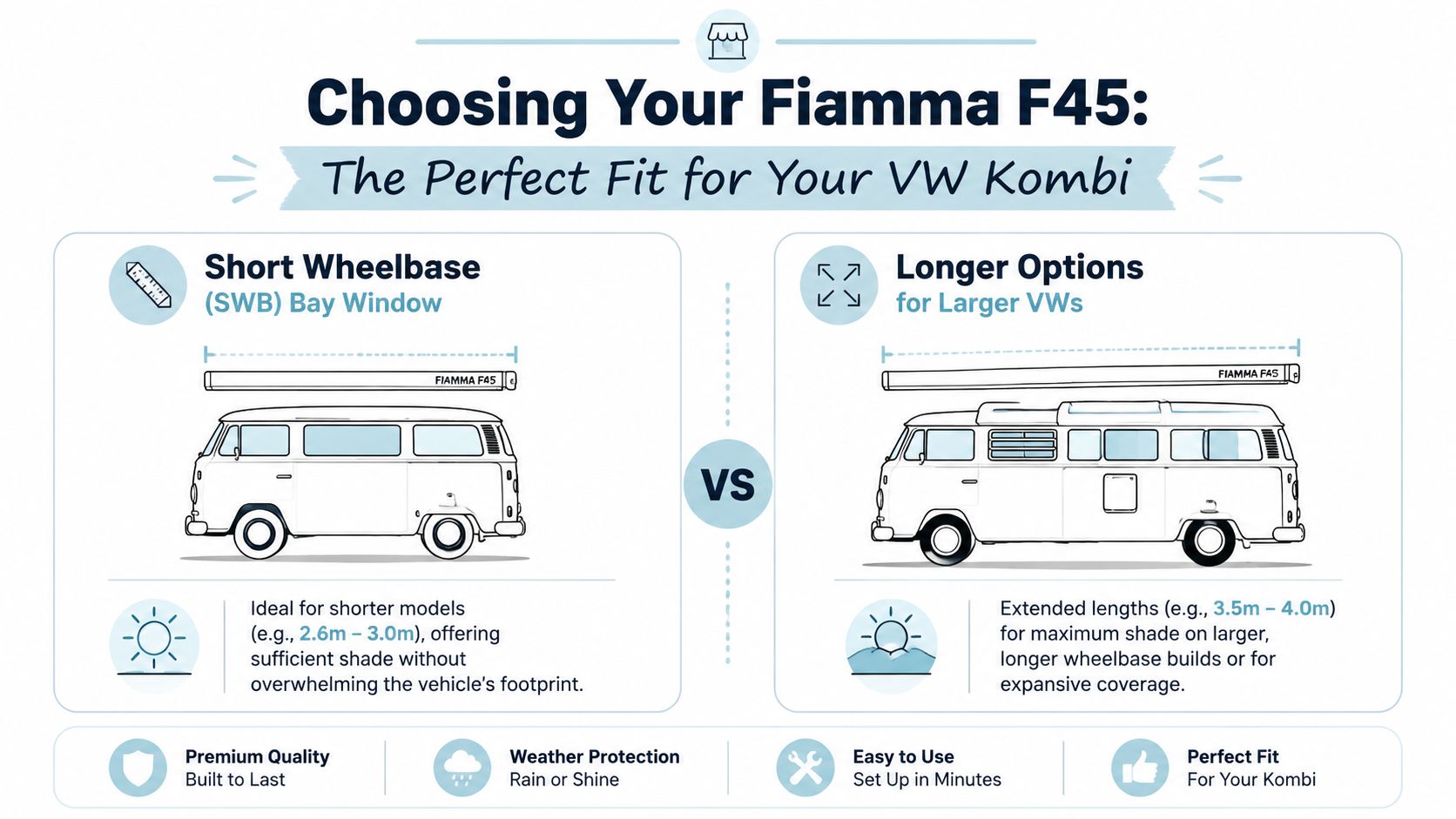
If you want one hero piece beside a framed beach photo or a bit of coastal décor, a larger scale usually gives you more of the details enthusiasts notice first. Headlights, grille shape, wheel design, the stance. If your plan is to line up a Caddy Maxi with a Beetle, a Kombi, and maybe a panel van from another era, a smaller scale makes that convoy easier to build without taking over the whole room.
A good trick collectors use is to let the Caddy Maxi set the tone. A clean white van suits a crisp workshop-style display. A camper-inspired version looks right at home with timber, faded blues, and old holiday snapshots. The scale matters, but the mood of the display is often what makes people smile first.
Why buy licensed VW memorabilia from an Australian importer
Because collectors here know the small frustrations too well. A model looks perfect online, then arrives weeks later with a crushed box, the wrong trim, or packaging that has done a lap of the globe.
Buying local gives you a better shot at getting the version you wanted, especially if you care about box condition, right-hand-drive appeal, or giving the piece as a gift. It also suits the way Australian VW enthusiasts often collect. A diecast Kombi for the study, a Beetle for the office shelf, a Caddy Maxi model for the garage workbench, all without the long wait and customs guesswork that can take the shine off the purchase.
Does the Caddy Maxi really fit the broader VW enthusiast world
It already does. You can see it every time a line of old and new Volkswagens parks up together and somebody wanders past the shiny classics to ask about the Maxi with the awning, roof racks, or retro wheels.
The Caddy Maxi carries a different kind of Volkswagen romance. Less chrome, more use. Less Sunday-only nostalgia, more everyday memory. For plenty of owners, that is exactly why it earns a place beside Beetles and Kombis, and why it has started to appear in collections, model displays, and garage décor with real affection rather than as an afterthought.
If the vw caddy maxi has sparked that familiar Volkswagen feeling, have a look through Volkswagen Memorabilia for licensed diecast models, Kombi and Beetle favourites, VW memorabilia collectibles, and coastal-inspired display pieces. It’s a lovely spot for Australian enthusiasts who want local stock, fast shipping, and gifts or collectibles that keep the VW story going long after the van’s parked.
A mate rolled into Volksfest one year in a tidy Polo GTI, parked between a split-window Kombi and a chrome-smiled Beetle, and half the crowd wandered over before the engine had even settled. That’s the thing about the vw polo gti. It’s the little car in the family photo that somehow steals your attention.
The Little Car with a Big Heart
You don’t have to own one to get it.
Maybe you first noticed a Polo GTI slipping through suburban traffic with that sharp, planted stance. Maybe it was sitting low on its wheels outside a café, looking far more serious than its footprint suggested. Or maybe you heard one leave a roundabout with that familiar Volkswagen urgency and thought, “That’s no ordinary Polo.”
That reaction matters, because the Polo GTI has always lived in an interesting corner of the VW story. It doesn’t carry the same long-shadow folklore as a Beetle. It doesn’t wear the beach-born charm of a Kombi. What it does have is a different sort of pull. It feels like the clever one in the family. Compact, quick, and just cheeky enough.
Why the Polo GTI gets under your skin
The appeal isn’t only speed. It’s proportion.
A good hot hatch looks ready before it moves, and the Polo GTI has often nailed that. Short overhangs, a squat posture, and that unmistakable GTI promise that says daily commuter on paper, mischief after dark in practice. It’s the kind of car that makes an ordinary run for milk feel like you took the long way home on purpose.
Some Volkswagens charm you with nostalgia. The Polo GTI wins you over by making everyday driving feel alive.
At VW gatherings across Australia, that counts for plenty. Enthusiasts who spend weekends polishing a ’60s Beetle or hunting down a rare Kombi badge still nod with respect when a neat GTI rolls in. The badge carries weight. The size just makes it more fun.
A small Volkswagen with a proper place in the family
That’s why the Polo GTI deserves a yarn of its own.
Its story is part performance history, part practical ownership tale, and part collector’s dream. For some fans, it’s a car they drive. For others, it’s a model they display beside a Samba Bus and a classic Beetle. Either way, it belongs in the broader Volkswagen conversation.
A Pocket Rocket Through Time The Polo GTI Generations
The Polo GTI didn’t become a legend in one hit. It earned it in stages, one jump in power and character at a time.
Volkswagen’s GTI philosophy reaches back more than half a century, with the original Golf GTI debuting in 1976 with respectable power for its time, and the Polo GTI became part of that wider tradition when Volkswagen expanded the GTI badge beyond the Golf. When the Polo GTI officially launched in 1995, it arrived in a limited batch of 3,000 units, which gave it a slightly special, insiders-only feel from the outset, as noted on Volkswagen UK’s 50 years of GTI history page.
The early spark
There was an earlier spark before that official launch. The Polo GTI story reaches back to 1980, when a performance-flavoured Polo appeared with a 1.3-litre engine delivering 81 horsepower, according to Premium Components’ Polo GTI history overview. It was small, modest, and a hint of what the badge could become.
A notable revival came in 1995. Volkswagen fitted a 1.6-litre inline-four with 120 horsepower, which was a 48% increase over that 1980 car, using the same source above. That wasn’t just a spec-sheet bump. It changed the attitude of the car.
Suddenly, the Polo GTI wasn’t a warm hatch with sporty intent. It was starting to feel like a proper GTI.
When turbo power changed everything
The next leap gave the Polo GTI its sharper voice.
In 1999, Volkswagen introduced a 1.8-litre turbocharged engine producing 150 horsepower, a further 25% increase over the 1995 version, again documented by Premium Components. That step matters because it’s where the car started to match its badge with proper urgency. Turbo power gave the Polo GTI a stronger mid-range shove and a more modern hot hatch personality.
By 2006, the fourth-generation Polo GTI held close to that level with power comparable to its predecessor from its 1.8-litre turbocharged engine. It showed that Volkswagen wasn’t only chasing bigger numbers. It was balancing power with better fuel use and reduced emissions, while keeping the car’s essential point intact.
Then came another key moment. The 2010 fifth-generation Polo GTI reached 180 horsepower, which represented a 22% increase from the previous generation, according to the same Premium Components history. By then, nobody could dismiss the Polo GTI as the smaller sibling to the Golf GTI. It had become a serious performance hatch in its own right.
The special editions enthusiasts remember
Some models become conversation pieces even among people who already know the range well. The 2006 Polo GTI Cup Edition is one of those cars.
Volkswagen tuned it to 180 PS and gave it 17-inch wheels and larger 312mm front disc brakes. It also cut the 0-100 km/h time to 7.5 seconds compared with the standard model’s 8.2 seconds, an improvement of about 8.5%, as recorded by Volkswagen UK in its GTI heritage feature.
That sort of variant is catnip for enthusiasts. It’s the one people point at in photos, the one they mention over a coffee, the one they wish they’d bought when prices were kinder.
Collector’s note: Special GTI variants often become the cars fans remember most vividly, because they freeze a moment when Volkswagen leaned harder into the hot hatch brief.
If your affection for the GTI badge stretches beyond the Polo, there’s plenty of kinship with icons like the Golf GTI Mk 6, which shows how the broader GTI design language carried across different sizes and eras.
Where the story heads next
The Polo GTI story isn’t standing still either.
Volkswagen has announced that the electric ID.Polo GTI will have its world premiere in 2026, according to Volkswagen UK’s GTI heritage page. That matters because it signals a new chapter for the GTI badge. The hardware may change, but the intent stays familiar. Everyday usability, sharp responses, and driving pleasure in a compact package.
The Polo GTI has always been the small member of the GTI clan. It just never thought small.
Under The Bonnet What Makes The Aussie GTI Tick
Open the conversation on a modern Australian Polo GTI and people usually start with one thing. The engine.
And fair enough. The local car gets a 2.0-litre TSI turbocharged four-cylinder petrol engine making 147 kW and 320 Nm, paired with a 6-speed DSG dual-clutch automatic transmission, as listed on the Volkswagen Australia Polo GTI model page. That’s a stout package for a small front-wheel-drive hatch.
Why those numbers matter on the road
Specs can look tidy on paper and still feel flat in the seat. The Polo GTI avoids that because its torque arrives early.
Peak torque is available at low engine speeds, which is why the car feels eager without needing a dramatic build-up. Around town, that means clean step-off from lights and easy overtaking gaps. On a back road, it means you lean on the throttle and the car answers quickly instead of making you wait.
Volkswagen says the Australian car can run 0-100 km/h in 6.8 seconds. For a compact hatch with front-wheel drive, that’s properly brisk. The favorable power-to-weight ratio helps explain why the car feels punchy rather than merely quick on paper.
The clever bit in corners
Straight-line pace only gets a GTI halfway there. The other half is how it behaves when the road turns ugly, shiny, or interesting.
The Polo GTI sold here uses XDL electronic differential lock, which relies on brake-based torque vectoring to reduce understeer. In plain language, when the front end starts to push wide, the system helps tuck the car back into line. That makes the front axle feel more disciplined in quick corners and more confident in wet conditions.
Practical rule: In a front-wheel-drive hot hatch, usable grip matters as much as headline power. The Polo GTI’s XDL setup is one reason the car feels more sorted than nervous.
That’s one of those features enthusiasts appreciate more the longer they live with the car. It isn’t pub-talk glamour. It’s the hardware behaviour you notice when a greasy roundabout or damp country bend appears without warning.
VW Polo GTI generations at a glance
Not every generation maps neatly into Australian kW figures or local acceleration data, so the cleanest way to compare them is to note what’s confirmed and leave the gaps honest.
Generation (Years)
Engine
Power (kW)
0-100 km/h (approx.)
Early concept era (1980)
1.3-litre
Not stated in verified local kW data
Not stated
Revitalised official launch (1995)
1.6-litre
Not stated in verified local kW data
Not stated
Turbo turning point (1999)
1.8-litre turbo
Not stated in verified local kW data
Not stated
Fourth generation (2006)
1.8-litre turbo
Not stated in verified local kW data
Not stated
Fifth generation (2010)
Engine details noted earlier in article history
Not stated in verified local kW data
Not stated
Current Australian model
2.0-litre TSI
147 kW
6.8 sec
That table tells its own story. Earlier Polo GTIs built the legend, but the current Australian car is the one with the clearest, most complete local specification picture.
The gearbox’s part in the character
The 6-speed DSG matters more than some people admit.
A good dual-clutch gearbox changes the flavour of a hot hatch. In the Polo GTI, it helps the car feel polished in weekday traffic and sharp when you’re driving with intent. You get the ease of a two-pedal setup in the city, then quick shifts when the road opens up.
For Australian buyers, that combination is part of the car’s charm. It can crawl through commuter traffic on Monday and still feel like a proper GTI on Sunday morning.
For daily drivers: The DSG keeps the car easy to live with in stop-start traffic.
For spirited runs: Quick gear changes help the engine stay in its sweet spot.
For mixed conditions: The broad torque spread and XDL setup work together, so the car feels composed rather than frantic.
The result is a modern vw polo gti that doesn’t need excuses. It’s quick, tidy, and engineered to make sense on Australian roads, not just on a brochure.
More Than Just a Car Why We Love The Little GTI
A Polo GTI makes sense in your head. That’s not why people fall for it.
They fall for it because it feels a bit mischievous. It’s the hatch that can sit unobtrusively in a shopping centre car park, then light up a favourite stretch of road on the way home. That split personality is pure GTI. You don’t need a huge footprint or a dramatic bodykit to know there’s fun tucked into it.
The charm is in the balance
Some performance cars ask you to make compromises before you’ve even turned the key. The Polo GTI doesn’t go looking for applause like that.
It offers the old hot hatch promise in a modern wrapper. One car, several jobs. Commute. Coast road. Weekend errand. Quick blast with no destination. The joy is that it can do all of them without feeling like it’s wearing the wrong shoes.
That said, it isn’t perfect as an Australian daily. The modern car’s lowered suspension by 15mm, its larger size compared with older versions, practical fuel use around 7L/100km, and a 4-star ANCAP rating in the 2025 update are all points noted in this Autotrader review discussing the new Polo GTI’s practical issues. For some buyers, especially families, those details matter.
Why enthusiasts still make room for it
Even with those caveats, people keep loving the thing because the character survives.
The Polo GTI still feels like a car built by people who understand that driving shouldn’t be reduced to transport. There’s a neatness to it. A compact confidence. It’s less about drama and more about response.
You forgive a lot in a car when it keeps making you smile on roads you know by heart.
That’s why it fits so naturally into the wider Volkswagen scene. A lot of VW culture isn’t about raw numbers. It’s about personality. It’s why someone who adores a patina Kombi or keeps a shelf of Beetle tin signs can still feel drawn to a sharp little GTI.
A car that suits more than the driveway
The Polo GTI also appeals to people who like their cars to spill into the rest of life.
The same owner who parks a GTI in the garage often wants that Volkswagen flavour in a study, workshop, or beach-house nook. Old rally posters. Enamel signs. Model cars. A few thoughtful pieces from a collection of vintage home accessories can carry that mood indoors without turning the room into a showroom.
That says a lot about the Polo GTI. It isn’t only transport. It becomes part of how people express their taste in Volkswagens.
And that, more than any spec, explains why the little GTI stays loved.
Collecting The Legend From Driveway to Display Shelf
A full-size Polo GTI isn’t the only way to enjoy the car. For plenty of enthusiasts, the next best thing sits on a shelf at eye level, catching the light just right.
That leap from driveway to display shelf makes perfect sense. The same details that make the full-size car appealing, stance, proportion, grille treatment, wheel design, all translate beautifully into diecast. A good model doesn’t just remind you of the car. It preserves a moment in the GTI story.
Choosing your first model
Collectors often start with the car they own, the car they had, or the car they still dream about.
With the Polo GTI, scale matters. A larger model gives you more visual detail. A smaller one makes it easier to build a line-up that includes a Beetle, a Samba Bus, and a Golf GTI without needing another bookshelf.
A few simple rules help:
If you want detail: Go for a larger scale where wheel design, interior trim, and badging are easier to appreciate.
If you want a broad Volkswagen family display: Mid-sized or smaller scales let you mix eras and body styles more easily.
If you’re buying as a gift: Pick a colour or generation that matches the recipient’s own car or favourite period of VW history.
What quality collectors look for
A strong diecast model earns attention before you even read the box.
Look closely at panel lines, ride height, wheel finish, and whether the front end captures the GTI expression properly. On a Polo GTI, the little things do the heavy lifting. If the stance is off, the whole model feels flat.
Collectors also tend to value officially licensed pieces because they usually carry more accurate proportions and cleaner detailing. That matters if your shelf includes icons like a Beetle or Kombi and you want the Polo GTI to look like it belongs beside them.
A good model car should feel right from across the room and get better when you step closer.
Collecting with the full-size car in mind
There’s another reason Polo GTI models appeal. They’re easier to live with than the full-size equivalent.
For anyone considering ownership, long-term reliability deserves a clear-eyed look. Australian data is limited, but overseas owner reports and local RACV data suggest post-warranty maintenance can average $1,200 annually, which is about 20% above its class average, and the EA888 engine can be prone to carbon buildup in stop-start city driving common in Sydney and Melbourne, as summarised in this discussion of Polo GTI long-term ownership concerns.
That doesn’t spoil the car. It means the collectible version has its own charm. A diecast Polo GTI lets you enjoy the design, the heritage, and the badge without workshop bookings entering the conversation.
Building a display that feels personal
The best VW displays tell a story rather than ticking boxes.
You might group your shelf by body style, with a Beetle, a Kombi, and a Polo GTI showing how Volkswagen changed across generations. You might build it around colour. Or maybe you lean into an Australian coastal mood, where sporty hatchbacks sit beside surf-themed vans and beachy décor.
That kind of display pairs naturally with textured home pieces such as seashell wall art, especially if your collection lives in a study, rumpus room, or holiday house with a relaxed surf-club feel.
For many enthusiasts, that’s the sweet spot. The full-size car inspires the collection, and the collection keeps the feeling alive every day.
Show Off Your Passion VW Gift and Display Ideas
The best VW collections don’t feel cluttered. They feel curated.
A single Polo GTI model on a desk can look smart enough on its own. Add a framed print, a mug, and one or two carefully chosen Volkswagen pieces, and suddenly you’ve got a corner of the house that says exactly what you’re into without shouting.
Display ideas that work at home
A Polo GTI model suits more places than you might think.
On a bookshelf, it adds a sharper, modern note among older Volkswagens. In a study, it works well beside motoring books or framed event photos from Volksfest and VW Nationals. In a garage office, it becomes a neat tribute to the daily driver outside.
A few display themes tend to work especially well:
The GTI shelf: Pair a Polo GTI with a Golf GTI model, a keyring, and a period brochure-style print.
The VW family line-up: Set a Beetle, Kombi, and Polo GTI together to show the range of Volkswagen design.
The coastal corner: Mix VW pieces with beach-inspired décor, white tones, and natural textures for a relaxed Australian feel.
Gift ideas for different kinds of fans
Not every Volkswagen fan wants the same thing.
Some love model accuracy and will study wheel designs for ages. Others just want a piece that reminds them of their first car, their dad’s Kombi, or that one GTI they still regret selling.
That’s why VW-themed gifts work best when they match the person’s connection to the brand.
For the driver: Choose a Polo GTI or Golf GTI model that reflects the car they own or admire.
For the nostalgia lover: A classic Beetle or Kombi often lands beautifully because it taps memory first.
For the home decorator: Pick display-friendly pieces that blend into a study, living room, or beach-house shelf.
For the hard-to-buy-for mate: A small licensed VW collectible usually feels personal without being over the top.
Keep the display tidy and intentional
A display gets stronger when you give each piece room to breathe.
Use height variation. Group by era or colour. Let one centrepiece lead and keep the supporting pieces restrained. That’s often the difference between “nice collection” and “that looks fantastic”.
A Polo GTI model works especially well as a contrast piece. Put it near curvier classics like Beetles and early Kombis, and its sharper lines stand out. Place it among modern GTIs, and it becomes part of a performance story.
The most memorable VW displays feel lived-in, not staged. They reflect what the owner loves, not what a catalogue told them to buy.
That’s also why VW memorabilia makes such good gifting. It carries history, design, and personality in a form that people can live with.
Your Guide To Owning A Piece of The GTI Legend
The Polo GTI offers two kinds of pleasure. One lives in the driver’s seat. The other sits happily on a shelf.
If you’re thinking about the full-size car, buy with your eyes open. The badge carries genuine hot hatch pedigree, and the Australian model brings strong performance and smart engineering. At the same time, practical ownership deserves a careful look, especially once warranty cover is gone and running costs start to matter more than launch-day excitement.
If you’re drawn to the collectible side, the barrier is much lower and the enjoyment is immediate. A well-chosen model captures the same stance, spirit, and Volkswagen character that makes the full-size car special. It also fits beautifully into a broader collection that might include a Beetle, a Kombi Samba Bus, or a Golf GTI.
A simple way to decide
Ask yourself what part of the Polo GTI story you want to hold onto most.
The driving experience: Look at the full-size car with a practical ownership mindset.
The design and heritage: Start with a licensed diecast model.
The broader VW passion: Build a display that places the Polo GTI inside the larger Volkswagen family.
That’s the beauty of this little GTI. You don’t have to choose only one way to enjoy it. You can chase the keys, the model, the memories, or all three.
Frequently Asked Questions for Polo GTI Fans
Is the vw polo gti a proper GTI or just a smaller warm hatch
It’s a proper GTI in spirit and history. The badge wasn’t thrown on casually. The Polo GTI grew through performance steps over time and became Volkswagen’s compact expression of the same GTI philosophy enthusiasts already knew from the Golf.
Is a Polo GTI a good fit for Australian daily driving
For many drivers, yes. It blends compact size with lively performance and an easy automatic transmission. The trade-off is that modern versions can feel less tiny and tossable than older small hatches, and practical details like ride firmness, parking ease, and family priorities deserve thought before buying.
Should I buy the full-size car or collect the model
That depends on what part of the experience matters most to you. If you want the drive, the full-size car delivers the full GTI character. If you love the design, the badge, and the heritage but want a simpler path, a diecast model is a satisfying and lower-fuss way in.
What’s the best diecast scale for a beginner
Start with the scale that suits your space. If you want one hero piece for a desk or shelf, a larger scale often shows the details better. If you’re planning a broader Volkswagen collection with Beetles, Kombis, and GTIs together, a smaller scale can be easier to display neatly.
What should I look for in a quality Polo GTI model
Check the stance first. Then look at wheel design, paint finish, panel gaps, and whether the front end captures the GTI look properly. Licensed models are often a smart place to begin because they usually get the proportions and badging right.
Does the Polo GTI belong in a collection with classic Volkswagens
Absolutely. In fact, that contrast is part of the fun. A modern Polo GTI beside a Beetle or Samba Bus shows just how broad the Volkswagen story is. One shelf can hold nostalgia, utility, and performance all at once.
Where can Australian VW fans connect with other enthusiasts
Car shows, owners’ meets, club runs, and events like Volksfest are still the heart of it. They’re where people swap stories, compare cars, and often inspire each other’s collecting as much as their driving.
If the Polo GTI has sparked your interest, the easiest next step is to bring a piece of that Volkswagen character home. Volkswagen Memorabilia is a local Australian shop with VW-themed gifts, diecast models, and display pieces that suit collectors, classic car fans, and gift buyers alike. Whether you’re hunting for a GTI-inspired shelf piece, a Kombi Samba Bus diecast, a classic Beetle model, or coastal décor with VW spirit, you’ll find local stock, friendly support, and fast Australian shipping that makes collecting far easier.
You’re probably looking around your lounge or spare room right now, seeing a few bits you love, a few bits you’ve outgrown, and a shelf or two that could do with more soul. Maybe there’s a surf print on one wall, a stack of old magazines on the floor, and a little VW model still in its box because you haven’t found the right spot for it yet.
That’s where boho style room ideas get interesting for Aussie VW lovers. A good boho room doesn’t feel staged. It feels collected. Like a Kombi that’s picked up stickers, stories, sand, and road-trip memories over time. The best spaces carry that same spirit. Relaxed, layered, a bit nostalgic, and unmistakably personal.
Crafting Your Ultimate VW-Inspired Boho Haven
A mate of mine on the coast had a living room that looked fine on paper. Beige sofa, tidy shelves, coffee table in the middle. Nothing wrong with it. But it had no heartbeat. Then he started bringing in the pieces that meant something to him. A faded road-trip photo from Lennox, a timber tray from a market, a ceramic bowl full of shells, and a little Kombi model that reminded him of the van his uncle drove up the east coast in the 70s.
The room changed straight away. Not because it got trendier, but because it got a story.
Why boho suits VW lovers so well
Boho style has always had a rebel streak. Its roots go back to 19th-century Paris, and in Australia it found real traction during the 1960s counterculture era, peaking at the 1973 Aquarius Festival in Nimbin. That heritage still shows up in today’s homes. Boho-styled properties in Byron Bay sold 28% faster in 2023, tying earthy tones and global patterns to that same free-spirited past, as noted in this background on the origins of boho chic design style.
That’s probably why it pairs so naturally with classic Volkswagens. Beetles and Kombis already carry the language of freedom, travel, and design with character. A boho room gives those ideas a place to live indoors.
Start with memory, not matching
If you want your room to feel authentic, don’t begin by asking what “goes together.” Ask what belongs together in your life.
Try building from a few anchors:
A VW piece with meaning. A Beetle model in a colour you grew up with, or a Kombi that reminds you of surf trips.
One coastal reference. Shells, driftwood, a framed beach snap, or a striped cushion that feels salt-washed.
One handmade texture. Woven wall art, linen, cane, rattan, or rough timber.
One travel-like object. An old map, market basket, vintage tray, or a weathered stool.
A boho room works best when each object feels found, not ordered as part of a matching set.
That’s the secret. You’re not decorating a showroom. You’re building a room that feels like a permanent holiday, with a little engine note of VW nostalgia humming underneath it.
Building Your Boho Base with Colour and Texture
The room needs a backdrop before the memorabilia goes in. If the base is right, even a small diecast Kombi on a shelf looks intentional. If the base is off, the whole thing can feel busy in a hurry.
Start with the wall colour
Warm white is your best mate here. It gives you breathing room and lets timber, rattan, plants, textiles, and VW pieces stand out without fighting each other. In Australian homes, TLC Interiors notes that starting with warm white walls helps reduce colour overload errors by 60%, and the broader layered approach with natural materials and textiles reached a 92% satisfaction rate in their examples of boho styling. You can read that guidance in TLC Interiors’ piece on how to create a boho living room.
A warm white wall also handles changing light better through the day. Morning sun softens it. Late arvo light warms it up. That matters if you want the room to feel calm rather than stark.
Build the palette like a beach drive
You don’t need a strict formula, but it helps to think in layers.
Layer
What to use
How it feels
Base
Warm white, oat, sand, soft beige
Airy and open
Grounding tones
Terracotta, tobacco, muted rust, weathered timber
Earthy and settled
Coastal lift
Soft blue, sea-glass green, faded stripe
Fresh without turning nautical
Accent
Mustard, olive, clay, sun-faded orange
Lived-in and personal
If you already own colourful VW pieces, keep the room palette quieter. That way your memorabilia becomes part of the rhythm of the room, not visual noise.
Layer texture in the right order
Texture is where boho style room ideas come alive. The easiest way to get it wrong is adding everything at once. The easiest way to get it right is layering from the floor up.
Floor first. Start with a jute or woven rug. If you’ve got timber or timber-look flooring, even better.
Seating next. Add linen, cotton, or boucle through cushions and throws.
Natural materials after that. Rattan chair, cane cabinet, timber side table.
Wall softness last. A woven hanging, framed print, or textile piece.
Practical rule: If every surface is textured, nothing stands out. Leave some plain space so the tactile pieces can do their job.
A simple room might only need one rug, two throws, and a textured chair to feel grounded. You don’t need to pile on ten cushions and a dozen patterns.
One useful shortcut
When you’re stuck, pick one visual lane and follow it. Mine is “sun-faded coastal road trip.” That keeps decisions easy. Soft neutrals, honest materials, and a touch of retro colour.
For wall finishing touches, I love looking at pieces that bring in that same laid-back mood, especially VW-inspired art that feels right at home with woven textures and soft tones. This kind of boho wall art gives you that relaxed personality without making the room feel themed.
Choosing Furniture for That Lived-In Boho Feel
Furniture sets can kill the mood fast. A real boho room looks like it came together over years, not one Saturday at a chain store. The trick is choosing pieces that feel easy, useful, and a little imperfect.
Think loungey, low, and open
Your sofa shouldn’t feel formal. It should invite someone to kick off their thongs, lean back, and talk about the first time they saw a split-screen Kombi at a beach show.
Look for pieces with these qualities:
Low profile seating. Sofas and chairs that sit a bit lower feel more relaxed.
Rounded edges. Curves soften the room and stop it feeling boxy.
Space underneath or around them. Air flow matters. A room packed wall to wall feels heavy.
A good boho setup often works better with one proper sofa, one character chair, and a movable stool or ottoman than a fully matching suite.
Mix eras, not chaos
The furniture should look gathered, but still speak the same language. A modern cream sofa can sit beautifully beside a second-hand timber coffee table. A bentwood chair can work with a newer sideboard if the tones feel related.
This quick comparison helps.
Better choice
Why it works
Timber coffee table with marks and grain
Adds history and texture
Cane or rattan occasional chair
Lightens the room visually
Storage ottoman in a neutral fabric
Keeps clutter down
Vintage side table with simple lines
Brings charm without fuss
Harder to style
Why it fights the look
Glossy matching furniture suite
Feels too uniform
Bulky recliners dominating the room
Makes flow awkward
Overly ornate dark furniture
Can drag the room down
Too many tiny side tables
Creates visual clutter
Arrange for conversation
The most inviting rooms don’t point everything at the television. They allow for a yarn, a coffee, or a browse through old photos and model cars.
Try this layout logic:
Angle a chair slightly inward instead of pushing it flat against the wall.
Keep a reachable surface near each seat for mugs, books, or a small collectible.
Leave walking space so the room feels breezy.
Use a rug to pull pieces together rather than relying on furniture to touch.
If someone can sit down and instantly know where to put their drink, the room already feels more welcoming.
Add one piece that feels collected
Every boho room needs one object that doesn’t look mass-produced. Maybe it’s a weathered bench at the end of the bed. Maybe it’s a carved stool. Maybe it’s a tray you picked up years ago and nearly forgot about.
That same collected feel works well with nostalgic decor too. If you like vintage-inspired styling beyond diecast pieces, these kinds of vintage home accessories are a handy reference point for what blends naturally with timber, cane, old prints, and coastal textures.
Bringing Your VW and Coastal Passion Inside
With these elements, the room stops looking like “nice boho decor” and starts looking like your place.
Lots of boho rooms have rattan, plants, and woven baskets. Not many have a shelf where a little Kombi sits beside sea glass and a sun-faded surf photo. That combination is what gives the room a pulse.
A useful clue that this fusion is gaining traction comes from the decor angle around VW styling in boho spaces. Searches for “boho VW kombi decor Australia” rose 180% year-over-year, and 40% of coastal homeowners were reported as seeking “surfy” decor, which makes VW pieces a natural fit for the emerging coastal boho look, as outlined in this decor reference on boho bedroom ideas.
Use memorabilia as decor, not filler
A diecast model looks best when it’s treated like a design object, not just stored in the room.
A few strong ways to style VW pieces:
Coffee table centre. A Kombi model on a stack of books or a timber tray.
Low shelf grouping. Two or three Beetles spaced out with pottery or shells.
Desk or console accent. One standout model beside a lamp and framed photo.
Glass-front cabinet. Great if you collect, but still want the room to feel calm.
The key is restraint. One model with room around it has more presence than five jammed together.
Match colour stories
If your room leans sandy and neutral, cream, pale blue, muted red, or pastel VW models tend to sit naturally. If the room has more terracotta and rust, richer colours can work, but it still helps to repeat that colour somewhere else. A cushion, book spine, print, or ceramic piece can tie it all together.
Here’s an easy pairing guide.
VW piece
Pair it with
Cream or white Kombi
Jute, driftwood, linen, shell tones
Blue Beetle model
Washed stripe, sea-glass accents, pale oak
Flower Power van
Neutral sofa, simple pottery, macramé
Red vintage VW accent
Rust cushion, clay pot, warm timber
Bring in the coast without going full theme room
A coastal boho room shouldn’t feel like a surf shop exploded in it. Keep the references subtle.
The best coastal companions for VW decor
Framed beach photography with lots of sky and space
Vintage-style surfboard leaned in a corner or mounted
Glass jars with shells or sea glass
Rope, cane, washed timber, and sandy textiles
Old travel prints or road-trip photos
Coastal style works best when it whispers. The VW pieces can do the talking.
One of my favourite looks is a long low shelf with a Kombi model at one end, a stack of travel books in the middle, and a little cluster of coral-toned ceramics at the other. It feels coastal. It feels nostalgic. It doesn’t feel forced.
Where to place hero pieces
If you’ve got a standout item, give it breathing room.
Entry console if you want the room to set the tone straight away
Living room shelf at seated eye level so people notice it
Bedroom dresser for a softer, more personal version of the same idea
Home office shelf if your workspace needs more personality
For more ideas that blend surfy styling, relaxed textures, and nostalgic touches, this collection of coastal home decor ideas is useful for spotting combinations that feel natural rather than overly themed.
Easy DIY Projects for a Personalised Boho Vibe
Some of the best boho rooms have a few rough edges in the right places. That’s not bad styling. That’s character. A handmade shelf, a painted pot, or a framed road-trip photo often does more for a room than another expensive decor piece.
There’s also a practical side for Aussie homes near the coast. In harsh coastal climates, 62% of homeowners report decor fading within a year, and metal withstands humidity 90% better than some natural materials in the cited CSIRO comparison, which is why metal VW diecast accents make sense in these settings. That summary appears in this climate-focused decor reference from House Beautiful’s boho living room designs page.
Three DIYs that suit the look
Reclaimed timber display shelf
Grab a simple piece of reclaimed timber, sand it lightly, and mount it on basic brackets. Don’t over-finish it. A little grain and age helps.
Use it for:
One diecast Kombi
A small framed print
A trailing plant or shell jar
That mix gives the shelf balance. Hard, soft, living.
Road-trip gallery wall
Print a few favourite VW or beach travel photos in different sizes. Add an old postcard, a simple line drawing, or a vintage ad style print if you’ve got one.
Keep the frames mismatched but related. Timber, white, black, or brass can all work if they don’t compete too much.
Start your gallery wall on the floor first. Shuffle the arrangement until one larger piece anchors the group.
Painted terracotta planters
Terracotta pots are cheap, forgiving, and perfectly boho. Paint only the lower half, or add a rough stripe in muted tones like clay, cream, or dusty blue. They look best when they’re not too neat.
A handmade planter beside a metal VW model is a great contrast. Earthy and industrial. Soft and solid.
If you want a simple visual guide for a handmade accent, this one’s worth a look before you start:
Protecting your favourite pieces near the coast
Salt air and bright sun can be rough on decor. You don’t need to panic, but you do need to be a bit smart.
Keep prized pieces out of direct afternoon sun if possible.
Dust metal diecasts gently and regularly so salt and grime don’t sit on the surface.
Use trays or shelves to keep collectibles off damp windowsills.
Rotate lighter textiles and prints if one side of the room gets hammered by sun.
A room like this should feel relaxed, not precious. Durable materials help. That’s why small metal VW accents work so nicely in a coastal boho setup. They hold their own while still bringing charm.
Your Road Map to a Dream Boho Room Starts Here
The best boho style room ideas don’t come from copying a catalogue lounge straight down to the last cushion. They come from building a room that reflects what you love. Timber with a few marks. Textiles that invite you to sink in. Coastal colours that feel sun-washed. A VW piece or two that sparks a story every time someone notices them.
That’s also why this look suits Australian VW fans so well. The style already values freedom, collecting, travel, and personality. Classic Volkswagens carry all of that naturally. Bring the two together and the room starts to feel less decorated and more lived.
If you’re still unsure where to begin, keep it simple.
Your first weekend plan
Step
What to do
Saturday morning
Clear the room and remove anything that feels generic or bulky
Saturday afternoon
Set your base with a rug, throws, and a calmer colour story
Sunday morning
Rearrange seating so the room feels social, not stiff
Sunday afternoon
Style one shelf, table, or console with VW and coastal pieces
That’s enough to change the mood of the room.
What makes it work long term
A strong boho room keeps evolving. You might add a Beetle model after a car show, a framed photo from your next beach run, or a little market find that somehow fits perfectly beside your Kombi shelf. That slow build is part of the charm.
You don’t need perfection. You need connection.
So trust your eye. Keep the palette relaxed. Let texture do the heavy lifting. Give your favourite VW pieces proper space. Before long, the room won’t just look good. It’ll feel like home, with a bit of highway freedom parked right in the middle of it.
If you’re ready to finish the room with pieces that suit the vibe, have a look at Volkswagen Memorabilia. It’s a ripper spot for licensed VW-themed gifts, diecast models, coastal decor, and nostalgic accents, with local Australian stock and fast shipping that makes styling your space a whole lot easier.
You’re probably here because a vw baja bug has got under your skin.
Maybe you saw one years ago parked near the dunes with salt on the guards and a surfboard leaning nearby. Maybe you’ve got an old Beetle in the shed and keep wondering whether it wants to become something wilder. Or maybe you just love the look of those lifted, cut-away Bugs and want a diecast version for the shelf above your workbench.
Whatever brought you in, the Baja Bug has a way of doing that. It takes the familiar, friendly shape of a Volkswagen Beetle and gives it a rebellious streak. It still feels like a VW. It just looks ready to leave the bitumen behind.
The Roar of Freedom and the Smell of Salt Air
A Baja Bug makes sense the moment you hear one.
That air-cooled thrum bounces differently when the car sits higher, wears chunky tyres, and looks like it would rather chase a sandy track than sit politely in traffic. On an Aussie beach road or a dusty bush run, it has a kind of cheerful defiance about it.
The charm starts with contrast. A standard Beetle is rounded, tidy, almost humble. A Baja Bug keeps that soul but adds attitude. The guards are cut back. The stance rises. The wheels look ready for ruts and washouts. Even standing still, it feels like motion.
Why people fall for them
Some classics impress you with chrome and polish. The Baja Bug wins people over another way.
It looks honest: Nothing on a Baja Bug feels fussy. Every visible change suggests use.
It invites adventure: You don’t need to know every mechanical detail to understand what it wants to do.
It carries nostalgia: For many Australian VW fans, it taps into beach culture, shed-built projects, and old-school weekends away.
It suits collectors too: Even in miniature, the shape is unmistakable. A good Volkswagen Beetle model in Baja trim brings that whole mood onto a shelf.
A Baja Bug is one of those rare cars that feels playful and tough at the same time.
At a car show, it’s often the one people lean in to inspect. Kids spot the raised suspension. Old hands look for clever fabrication. VW tragics start swapping stories about beach runs, broken mounts, fibreglass front ends, and the one they nearly bought years ago.
That’s the magic of it. The vw baja bug isn’t just a modified Beetle. It’s a rolling expression of freedom, ingenuity, and the idea that a simple little car can go a very long way with the right spirit.
From Dusty Mexican Trails to a Global Legend
The Baja Bug didn’t begin as a styling exercise. It came from people asking a practical question. How do you make a humble Beetle survive rough country and keep going?
The answer appeared in the harsh conditions of off-road racing.
Where the story really starts
The first Baja Bug in competitive racing history was pioneered by Californian cartoonist Dave Deal, who entered a modified Volkswagen Beetle in the inaugural Mexican 1000 rally in 1968 in Baja California. That event stretched for over 830 miles, and it showed just how adaptable the Beetle could be when prepared for rough terrain, according to the Baja Bug history summary on Wikipedia.
That matters because it gave the car a proper proving ground. The Beetle wasn’t being turned into an off-roader in theory. It was being tested where suspension travel, clearance, durability and simplicity genuinely mattered.
Why the Beetle was such a strong base
The Beetle had a few natural advantages that made this transformation possible.
First, it was light. A lighter car has an easier time on rough surfaces than a heavy one that sinks, crashes and drags itself through every obstacle.
Second, it was simple. That air-cooled layout and straightforward mechanical design made the Beetle easier to adapt than many more complicated vehicles of the time.
Third, it had a shape and structure that encouraged experimentation. Builders could trim bodywork, lift the stance and reinforce key areas without losing the basic identity of the car.
How racing shaped the formula
The early race builds established the recipe that people still recognise today:
Lift it up: Extra ground clearance helped the Bug clear rocks, ruts and soft terrain.
Trim what gets in the way: Cutting fenders and other vulnerable panels gave the wheels room to move.
Strengthen the weak points: Rough tracks punish frames, mounts and suspension components.
Keep the VW spirit: Even modified examples still relied on the Beetle’s core layout.
That same development path fed directly into SCORE International Class 11 rules, which require a stock VW chassis with modifications focused on increased ground clearance and frame strength, as noted in that same historical reference.
The Baja Bug became iconic because the changes were driven by need, not fashion.
Why the idea spread so widely
Once enthusiasts saw what a Beetle could do off-road, the concept travelled fast.
You didn’t need a factory team or a huge budget to understand the appeal. A common little Volkswagen could be transformed into something that looked rugged, purposeful and full of personality. That made it irresistible to racers, home builders and dreamers alike.
And that is why the Baja Bug still grabs attention today. Its origin story is not polished or corporate. It was born in dust, necessity and a bit of cheeky creativity.
The Anatomy of a True Off-Road Rebel
A proper Baja Bug has a look you can spot from across a paddock. It sits taller, shows more tyre, and wears fewer frills. But the best part is this. Most of those visual cues exist for a reason.
If you already love the classic Beetle shape, a Baja version can seem a bit rough on first glance. Then you realise every cut and every bolt-on piece is part of a practical off-road mindset. It’s the same kind of hands-on ingenuity that made the standard Beetle beloved in the first place. If you want a refresher on that original DNA, the story behind the VW Beetle helps explain why the platform works so well.
Body cuts that do more than look tough
The trimmed bodywork is often the first feature people notice.
Cut-away front and rear guards open up space around the tyres. That extra room matters when the suspension moves through bumps, dips and uneven ground. Many builds also replace steel panels with fibreglass pieces, which can simplify repairs and sharpen that unmistakable Baja silhouette.
The visual result is dramatic. The practical benefit is clearance.
Suspension and ride height
A Baja Bug needs to sit up properly. If it doesn’t, it just looks like a Beetle in costume.
Lifted suspension gives the car more room underneath and helps it cope with rough tracks, sandy approaches and rocky sections. The geometry, shocks and general setup vary from build to build, but the aim is always similar. Keep the underbody safer and let the wheels work over bad surfaces.
Here’s where people often get confused. A lift is not only about making the car taller. It’s about letting it travel and recover better when the ground gets ugly.
The exposed rear and engine character
Many Baja Bugs run with an exposed or partly exposed engine area.
That stripped-back rear end removes vulnerable bodywork and makes the car’s mechanical heart part of the visual theatre. You’ll often see a raised exhaust, commonly called a stinger, pointing proudly skyward. It looks wild because it is wild, but it also fits the no-nonsense spirit of these builds.
If a standard Beetle hides its hardworking bits, a Baja Bug puts them on show.
Tyres, wheels and protection
Chunkier off-road tyres are central to the whole package. They help with grip on loose surfaces and instantly change the personality of the car.
Then come the supporting pieces:
Roll cages: added for safety and chassis support
Skid protection: useful when terrain gets rough underneath
Reinforced bumpers: handy on cars built for actual use
Lighting upgrades: common on cars meant for trails or events
How to tell a real Baja-inspired build from a cosmetic one
Some cars wear Baja styling. Others were built with off-road use in mind.
A more serious build usually shows thought in the places casual viewers miss:
Feature
Cosmetic build
Purpose-built build
Stance
Mildly raised for appearance
Lifted with usable clearance
Bodywork
Trimmed for style
Cut to improve wheel travel and clearance
Tyres
Road-biased look
Off-road tread chosen for terrain
Protection
Minimal
Cage, guards, or underbody protection often present
Overall feel
Custom Beetle
Off-road Beetle with intent
That difference is part of the appeal. A vw baja bug is not one single formula. It’s a family of builds, all orbiting the same idea. Take a Beetle. Keep the soul. Make it fearless.
The Baja Bug Down Under An Aussie Icon
Australia was always going to warm to the Baja Bug.
We understand cars that are a bit scrappy, a bit clever, and ready for conditions that don’t flatter delicate machinery. Sand, scrub, corrugations, salty air, old beach roads. A lifted Beetle with a sense of humour fits right in.
Why it found a home here
The Baja Bug suits the local VW spirit because Australians tend to put their own spin on things. We respect originality, sure, but we also admire a practical build that solves real problems.
That’s part of why the scene has held on. In Australian VW enthusiast circles, Baja Bugs remain a lively niche, with median sale prices reaching AU$25,000 in 2026 auctions. The Volkswagen Club of Australia records over 500 registered Baja conversions since 1990, making up 12% of air-cooled VW off-road entries in national events, while 70% of Australian builds use aftermarket lift kits from Brisbane suppliers, according to The Classic Valuer’s Baja Bug market page.
Those figures tell you this is not some forgotten subculture. It’s a real slice of Australian VW life.
The Aussie flavour of the build
What makes an Australian Baja Bug feel local is often the atmosphere around it.
You see these cars linked with surf culture, coastal cruising, regional meets, dusty paddocks and friendly club talk. They share garage space, at least spiritually, with beach vans and road-trip Volkswagens. That same easygoing vibe is a big reason many enthusiasts also love the style of the VW travel van, even though the experience behind the wheel is completely different.
A Kombi says slow adventure. A Baja Bug says noisy mischief.
Why Australian enthusiasts ask different questions
American Baja content often focuses on desert builds, big fabrication projects and parts sources based overseas. Australian owners and buyers usually have a different set of concerns.
They want to know things like:
Will this pass local roadworthy requirements?
Has salt exposure already done damage to the shell?
Can I still get sensible parts without endless waiting?
Was this built for our conditions, or copied from a US look?
That local lens matters. A Baja Bug in Australia is not just a copy of a Californian idea. It has been adapted to our roads, our registration realities, and our coastal lifestyle.
The Australian Baja scene has always felt hands-on. Less posing, more practical tinkering.
That’s a big reason the vw baja bug still turns heads here. It isn’t precious. It’s personal.
Collecting the Legend Baja Bug Diecast Models
Not everyone has the shed space, budget, patience, or registration appetite for a real Baja Bug. That’s where collecting becomes such a joy.
A good diecast captures the same stance, the same cheeky attitude, and the same visual punch that makes the full-sized car so memorable. For plenty of enthusiasts, collecting is not the backup plan. It’s part of the hobby.
In Australia, interest is clearly there. Google Trends AU data shows “Baja Bug model” searches are up 45% in 2025-2026, linked to retro surf events, and the same source notes that this demand is underserved by guides because most existing content focuses on full-size cars rather than 1:18 or 1:24 replicas, as discussed in this Baja Bug memorabilia trend reference.
Choosing the right scale
Scale is where new collectors often hesitate. The best choice depends on how you want to enjoy the model.
Some people want a centrepiece with lots of visual detail. Others want a neat row of VWs on a shelf in the study, garage or rumpus room.
Not every model gives the same satisfaction once it’s in your hands.
A strong Baja Bug diecast usually gets the essentials right:
The stance: It should sit with purpose. Too low, and the whole character disappears.
Body shape: The cut guards and Baja proportions need to look intentional, not cartoonish.
Wheel and tyre choice: These matter more than many collectors realise.
Paint and finish: Baja models can be bright, dusty-looking, race-inspired or beachy, but the finish should feel consistent.
Licensed presentation: For many collectors, officially licensed Volkswagen styling adds confidence and display value.
If you also collect buses and Beetles, you'll find the hobby gets fun here. A Baja Bug can sit beside a neat Volkswagen Beetle model, a clean street Beetle, or a row of VW Kombi diecast Australia favourites and instantly add contrast to the lineup.
Display pieces versus play pieces
Some collectors want boxed condition. Others want open-display charm.
Neither approach is wrong. It just changes what matters.
If the model will live on a shelf, focus on silhouette, stance and finish. If it will be handled often, durability matters more. Some people even create little display themes with surf signs, timber shelving, or retro service-station touches.
A few home display ideas sit nicely alongside broader vintage home accessories, especially if your style leans coastal, garage-inspired or mid-century relaxed.
Here’s a video that captures the energy many collectors love in Baja-themed Volkswagen models and builds.
A simple way to start a Baja collection
If you’re just getting into it, don’t overcomplicate the first purchase.
Try this approach:
Pick one scale and stick with it first. Your shelves will look more organised.
Choose one anchor piece. Let that be your hero car.
Build around a theme. Off-road, surf, racing, or classic Beetle evolution all work well.
Mix carefully. One Baja Bug beside cleaner VW road cars often looks better than a shelf full of near-duplicates.
A great collection doesn’t have to be huge. It just needs a point of view.
That’s why Baja models are so satisfying. They tell a story at a glance.
Styling Your Passion Display and Gift Ideas
A Baja Bug model deserves better than being shoved next to spare keys and old receipts on a crowded shelf.
If you’re going to collect, style it properly. These models have character. Give them a setting that helps that personality come through.
Display ideas that feel lived-in
A Baja Bug sits beautifully in spaces that already have warmth and texture.
Timber shelving works well because it softens the mechanical feel of the model. A surf print nearby, an old road sign, or a weathered photo frame can turn one diecast into a small scene rather than a random object.
Some collectors prefer tidy symmetry. Others go for a looser display that feels like a memory board from a shed near the coast. The Baja Bug suits the second style particularly well.
Try combinations like these:
Coffee table feature: One larger model on a tray with a motoring book and a small coastal accent
Garage shelf lineup: Baja Bug beside a standard Beetle and a Kombi for contrast
Home office corner: A compact model near framed event photos or vintage-style art
Workshop wall shelf: Pair the model with old tools or VW-themed tin signs
Creating a themed corner
Themed displays work best when they stay simple.
A “beach run” setup might include sandy tones, timber, and one or two blue accents. A “show and shine” arrangement could lean cleaner, with acrylic risers and stronger lighting. A “race-bred” display might include posters, number plates, and workshop textures.
The point is not to overfill the space. Give the Baja shape room to breathe.
The best displays make the model feel discovered, not crammed in.
Why Baja Bug memorabilia makes such a good gift
Gift buyers often struggle because car people can be picky. Fair enough too.
A Baja Bug collectible solves that problem rather neatly. It offers personality without requiring the recipient to commit to a full restoration project, a pile of spare parts, or another thing to register and maintain.
It works especially well for:
Long-time VW owners who appreciate Beetle history
Surf culture fans who love the beachy, rebellious vibe
Collectors of Volkswagen diecast models for sale who want something less ordinary
People styling a garage, office, bar area or holiday house with classic motoring touches
A Baja Bug model also has a conversational quality that a more formal collectible sometimes lacks. People smile when they see one. They usually have a story, or wish they did.
Keep it cohesive
If you’re adding one as a gift or to your own shelf, think about the wider display.
A Baja Bug often looks strongest when paired with pieces that support the mood rather than copy it. Natural textures, retro colours, clean lighting and a bit of breathing space do more than piling on every VW item you own.
That balance is what turns memorabilia into décor.
Your Guide to Owning a Piece of the Legend
Owning a real Baja Bug in Australia can be immensely rewarding. It can also test your patience if you rush in.
The first thing to look at is the shell. Rust changes everything on an old Beetle, especially if the car has lived near the coast or spent years as a half-finished project. After that, look closely at the quality of the modifications. A tidy Baja-inspired car is one thing. A poorly planned build is another.
What catches buyers out in Australia
Registration and compliance are where many dreamers get a rude surprise.
For Australian enthusiasts, lifted suspensions and shortened fenders need to satisfy Australian Design Rules and VSB14, and this is a frequent sticking point during roadworthy certification for the 150,000+ classic VWs imported annually, as noted in this Australian Baja compliance discussion.
That’s why a real-world buying checklist should include:
Rust inspection: floors, lower sections, and hidden repair areas
Modification quality: suspension, mounts, body cuts, wiring and safety equipment
Paperwork: engineering and roadworthy history where applicable
Intended use: road cruiser, event toy, display piece, or project base
For many enthusiasts, the smarter first move is to enjoy the legend in miniature while learning what style they love most. A diecast model gives you the shape, the colour, the history and the mood, without the workshop bills or compliance headaches.
If the vw baja bug has stirred up that old Volkswagen feeling, Volkswagen Memorabilia is a lovely place to keep the passion going. You’ll find locally stocked VW-themed gifts, diecast models, and coastal display pieces that suit collectors, classic car lovers, and gift buyers alike. It’s an easy way to bring a bit of Baja spirit, Beetle nostalgia, or Kombi charm into your home, with the bonus of Australian service and fast local shipping.
A sun-faded Kombi rolled past me on the Great Ocean Road one bright morning, white roof, coloured body, surfboard up top, windows open to the salt air. Everyone turned to look, not because it was loud or flashy, but because a vw travel van still carries the kind of magic modern traffic rarely does.
That feeling is why these vans never really left us. They just changed shape, from road-trip companion to restoration dream to diecast treasure on a shelf.
The Enduring Call of the Open Road
I still reckon the best place to understand a Kombi is not in a museum. It is out in the sun, parked near the coast, with sandy thongs on the grass beside it and someone leaning inside for a thermos or an old wax tin.
The old van does not need to say much. Its shape says enough. Short nose. Friendly face. Plenty of glass. Room for boards, picnic gear, mates, and a plan that only gets clearer once the road starts unwinding.
Along Australian coastlines, the vw travel van became more than transport. It became a backdrop to first camping trips, surf weekends, market runs, music festivals, and long drives where nobody minded arriving late. That is also why so many people who may never own a full-size Kombi still feel drawn to the shape, the colours, and the story behind it.
A lot of enthusiasts first fall in love with the idea before they ever touch the metal. They spot a split-screen at a local show. They hear stories from a parent who once slept in one near Byron. Or they stumble across old van-life nostalgia like this look at van life in Australia, and suddenly the appeal clicks.
Why this van still gets under your skin
Some classics impress you with speed. The Kombi wins people over differently.
It feels welcoming. The face of an old VW van looks cheerful, almost human.
It invites a slower pace. You do not think about lap times. You think about coast roads and bakery stops.
It suits Australian memories. Beaches, road trips, hand-painted signs, and a bit of harmless chaos all fit the Kombi beautifully.
A classic VW van does not just remind people of travel. It reminds them of the kind of travel where the journey was the whole point.
That is why the Kombi sits in such a sweet spot. It is practical history, surf culture, design icon, and memory machine all at once.
From Wolfsburg to Wollongong The History of the VW Van
At a country show near Wollongong a few summers back, an old fellow stood beside a dove-blue Kombi and tapped the bonnet with a grin. He said his dad used one for work during the week, then packed the kids in on Friday and headed for the coast. That is the magic of the VW van story. It began in Germany as a practical little hauler and ended up stitched into Australian family lore, then later into the shelves and display cabinets of collectors who wanted to keep a piece of that feeling.
The first spark came in 1947, when Dutch importer Ben Pon sketched a simple van after seeing motorised trolleys at the Wolfsburg factory. That sketch became the Type 2 Transporter, and the first production example rolled off the line on March 8, 1950, in dove blue, with output starting at 10 vehicles per day before rising quickly, as noted in this history of the Volkswagen Type 2 Transporter.
The early years that shaped the legend
What made that first Transporter special was not flash or speed. It was usefulness. A baker could run deliveries in one. A tradie could load tools in another. A growing family could fit everyone inside and point the nose toward a holiday park.
Volkswagen saw demand build fast in those first years, and by October 9, 1951, the company had delivered its 100,000th Transporter. For a van born from a factory-floor sketch, that was a mighty result.
Collectors still chase those early details because they tell the whole story at a glance. The split windscreen, the upright nose, the uncluttered sides, the friendly face. A full-size Kombi turns heads at a servo. A good diecast version does much the same on a study shelf. The shape carries history beautifully.
Why Australia took to it so naturally
The T1, later nicknamed the Splittie, reached Australia in the early 1950s and settled in quickly. It suited the places Australians went. Beach towns. Country roads. Busy suburban trades. Long weekends that started with an esky, a map, and a bit of optimism.
Here, the van earned its stripes through everyday use before it became an object of nostalgia. Builders used them. Families holidayed in them. Local travellers adapted them for sleeping, cooking, and hauling gear. That lived-in history is part of why the VW van now has such strong appeal as memorabilia. People are not collecting a random old vehicle. They are collecting a memory of movement.
The camper side of the story grew early too. Westfalia conversions began in 1951, helping turn the humble Transporter into a machine for roaming. Australian owners and coachbuilders soon put their own spin on the idea with practical interiors and touring setups suited to local conditions. For readers who enjoy that chapter, this look at Volkswagen Transporter camper history is a lovely rabbit hole.
The upgrades that helped it cross long Australian miles
A van does not become beloved in Australia by looking pretty in a brochure. It has to cope with distance.
In 1954, engine displacement increased, helping reliability on longer trips. Production also moved to Hannover that year, opening the door to broader production and more body styles. Those changes mattered here. Australian owners needed a van that could handle work on Monday and a proper run out of town once the weekend arrived.
By then, the Kombi had already become more than transport. It was a working vehicle, a holiday companion, and, years later, a collectible shape people wanted to own in any form they could find, full-size, restored, weathered, or cast in miniature.
Milestone
Why enthusiasts still care
1947 sketch by Ben Pon
It shows the van began as a clever, human-scale idea
1950 production launch
This marks the birth of the production VW travel van
1951 100,000th delivery
Proof that the design connected early and fast
1954 upgrades and Hannover move
Better durability and broader model variety
Early Australian imports
The start of the Kombi’s local identity
The Kombi gave Australians something rare. A vehicle useful enough for ordinary life and charming enough to become a treasured model long after the original vans had parked up.
Icons of an Era Notable VW Van Models
I still remember a fellow at a car show in Kiama holding a tiny blue-and-white Samba in one hand and pointing to the full-size Kombi he had parked under a gum tree with the other. Same paint break. Same little roof windows. Same grin. That is the magic of the VW travel van story. These machines live twice, first on the road, then on the shelf.
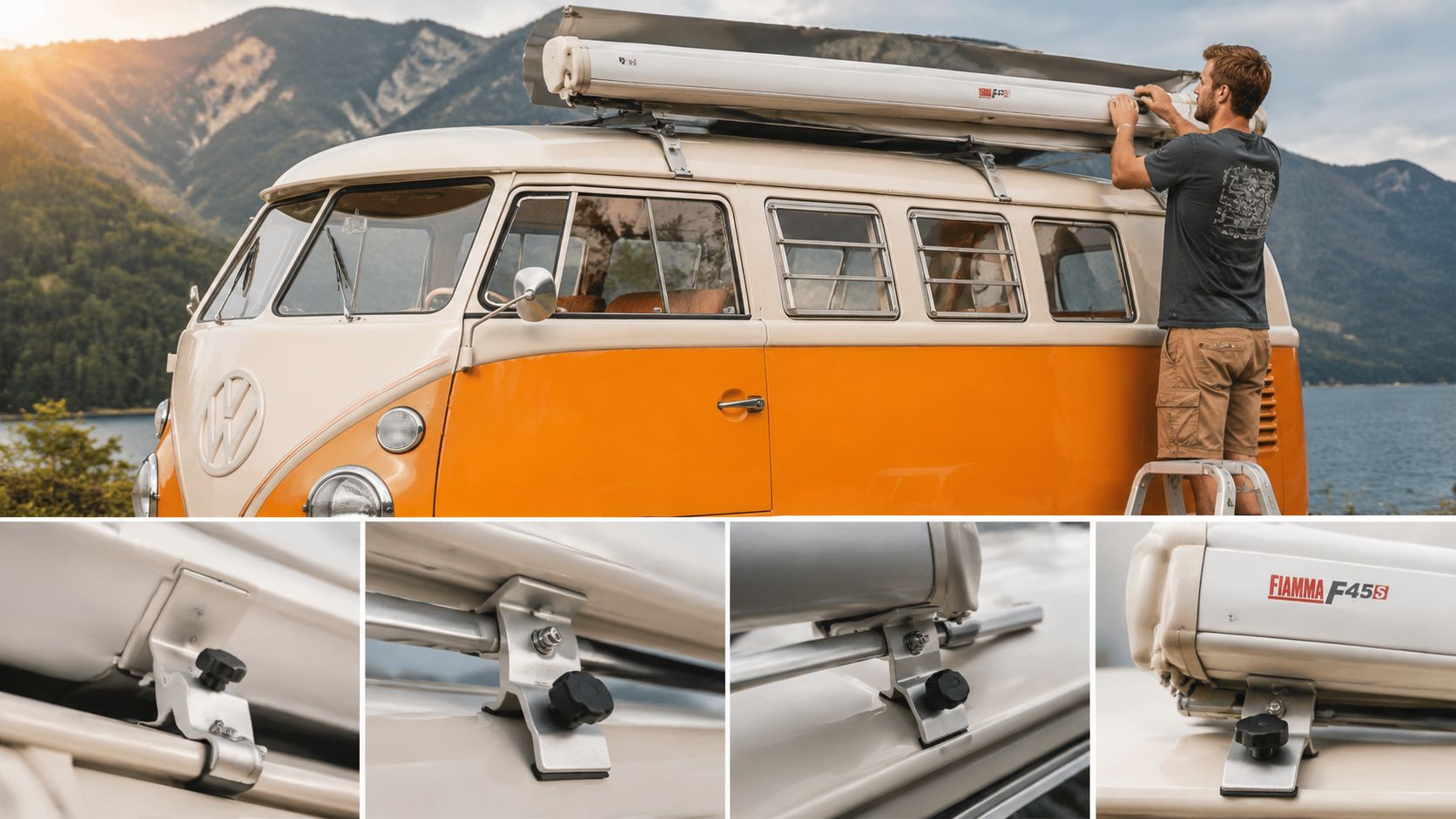
A few models always draw the crowd. The T1 Splittie has that friendly face everybody knows. The Samba Bus brings the sparkle and showroom glamour. The Westfalia-style camper carries the dream of waking up near the beach with the kettle on and the back doors open to the sea.
By 1967, more than 1.2 million T1 units had been produced globally since 1950, a measure of just how far the shape had travelled from German factory floors to Australian roads and, later, to collectors’ cabinets, as described in this history of the VW camper van.
The T1 Splittie
The T1 Splittie looks cheerful even standing still. Its split windscreen, centre bar, and neat V-shaped nose give it a face that no other van quite matches.
That mattered in Australia. Plenty of early vans began life as workers. They hauled tools, bread trays, parts, camping gear, whatever the week demanded. Then a new owner would fit curtains, toss in a mattress, and head north or south as soon as summer arrived. That working-to-wandering life is part of why the Splittie feels so honest. It earned its legend.
Collectors love it for the same reason. In miniature, the silhouette is unmistakable from across the room. Even a small diecast captures the upright nose, simple body sides, and that wonderful split screen.
The Samba Bus
If the Splittie is the people’s hero, the Samba Bus is the show pony that still turns heads before the bonnet on anything else has even clicked shut.
The skylight windows and deluxe trim give it a sense of occasion. You can almost see a family rolling along the Princes Highway, kids peering out the roof glass, picnic basket rattling in the back. On the modern collectors’ table, those same details make the Samba irresistible. Two-tone paint, polished trim, and the famous 23-window arrangement give model makers plenty to work with.
That is why a Samba often becomes the centrepiece. A shelf full of diecast Volkswagens looks good. A shelf with a Samba in the middle looks finished.
The Westfalia-inspired camper
The Westfalia-inspired camper changed the van from transport into a travelling little home. Fold-out tables, compact storage, a place to sleep. Suddenly the trip mattered as much as the destination.
That idea landed beautifully in Australia, where long coastal runs and casual weekends away suited the Kombi’s unhurried pace. Plenty of local vans were not factory Westfalias, of course, but they borrowed the spirit. Timber cupboards built by hand. A little stove wedged in neatly. Curtains sewn by someone’s mum or nan. Every conversion told a personal story, and that same character is what makes camper diecasts so appealing now.
A good camper model does more than show a body shell. It brings back the whole ritual of travel.
Later in the article, there is a useful visual reminder of how these shapes translate so well into miniature collecting.
Why these models became collecting favourites
Collectors usually chase the vans that tell their story in a single glance.
Model
Signature feature
Why collectors love it
T1 Splittie
Split windscreen
The clearest early Kombi shape
Samba Bus
Deluxe window layout
Rich detail and strong display presence
Westfalia-inspired camper
Home-on-wheels concept
Captures the feeling of the trip itself
The best diecast pieces carry more than paint and proportions. They hold memories of surf checks, roadside brekkies, and long Australian miles. For plenty of enthusiasts, that is the bridge between owning a real VW van and keeping a little piece of the journey close at hand.
More Than a Van A Symbol of Aussie Surf Culture
Dawn at Bells Beach used to have its own little procession. Salt in the air, sand already warming underfoot, and a line of Kombis rolling into the car park with boards strapped high and wax melting softly on the dash. One might be pastel blue with sun-faded curtains. Another would wear primer on one door and a hand-painted surf club sticker on the rear hatch. Before the first set arrived, the vans had already told half the story.
That is how the Kombi found its place here. Australians did not need convincing. The van suited a coastal life built around long drives, cheap weekends, and a loose plan that could change with the swell.
Why surfers and travellers made it their own
At the beach, a Kombi was never just transport. It was changing room, gear locker, lunch spot, and sometimes the bed for the night if the session ran long and the camp ground was full. You could hose the sand out later, stack a couple of mals on the roof, and point the nose toward the next break without much fuss.
That usefulness gave the van character, and character turned into culture.
You saw it in the details. Timber racks knocked together in a suburban shed. Old tea towels hung as curtains. Stickers from Wollongong, Byron, Torquay, Margaret River. A Beetle might have been the fun little runabout, but the Kombi was the mate who brought everyone along. It became part of the scenery at surf comps, beach car parks, and lazy holiday runs up the coast.
Plenty of that feeling still lives on at Australian shows and swap meets. Owners talk about their vans the way surfers talk about a favourite board. Every dent has a place name attached. Every respray hides another chapter. If you want a good example of how that affection carries into collecting, the stories behind classic VW diecast models and memorabilia make the connection plain enough.
The community behind the romance
Anyone who has spent time around old Volkswagens knows the romance comes with skinned knuckles and patient waiting. A bloke in Newcastle might spend months chasing the right indicator housing. Someone in Geelong might find the missing trim piece only after a call from another owner who remembered a dusty box at the back of a wrecking shed. That is the true heartbeat of the scene. People helping people keep these vans on the road.
The surf link matters because it gave the Kombi its most recognisable Australian image. The simpler reason it lasted is this: It welcomed a certain kind of person. The easy-going traveller. The surfer who packed light. The family happy to trade speed for stories.
That same affection explains why the Kombi shrinks so well into a collectible. A diecast Splittie with a roof rack and two-tone paint does more than copy sheet metal. It captures a whole Australian memory. Beach towels on the line, boards rattling overhead, and the long scenic road home with the windows open.
Building Your Collection A Guide to VW Diecast Models
Most of us do not have the shed space, budget, or patience for a fleet of full-size Volkswagens. Diecast collecting solves that neatly. You still get the shape, the colour, the nostalgia, and the grin every time you walk past the display.
There is another reason diecast resonates so strongly with Kombi fans. Even though the 2024 Volkswagen Transporter Base delivers 250 Nm of torque, collector passion still leans toward the original air-cooled vans because nostalgia and design heritage carry more weight in memorabilia than modern performance figures, as outlined in this 2024 Volkswagen Transporter Base review.
What makes a VW diecast model worth buying
Not every miniature earns a spot in the cabinet. Some look toy-like. Others capture the soul of the vehicle itself.
A good collector piece usually gets these things right:
Licensed shape accuracy. The nose, roofline, windows, and stance should look unmistakably Volkswagen.
Clean paintwork. Two-tone Kombis and Beetles need crisp separation, not fuzzy edges.
Useful detail. Roof racks, bumpers, wheels, mirrors, and interior colours should feel considered.
Character. A Samba should look deluxe. A surfy van should have charm, not clutter.
For newcomers, reading a bit more about diecast collecting basics helps make the first purchases more satisfying.
Choosing between Kombi and Beetle models
A lot of collectors think they must choose one lane. You really do not.
The best small collections often mix body styles because each model brings a different mood.
Style
Best for
Display personality
Kombi or Samba Bus
Coastal, surf, van-life themes
Relaxed, social, colourful
Volkswagen Beetle model
Classic motoring nostalgia
Friendly, iconic, timeless
Camper conversion models
Travel storytelling displays
Adventure-focused and playful
If you want a centrepiece, a 1962 VW Kombi or Samba Bus replica is hard to beat. If you want an easy entry point, a Beetle often fits smaller shelves and desks beautifully.
How to start without overthinking it
Collectors usually do better when they buy with a theme in mind. Random purchases can be fun, but a theme gives your display personality.
Three easy approaches work well:
Go by era Build around early classics. Splittie, Samba, Beetle, and a flower-power style van make a cohesive vintage set.
Go by colour Coastal palettes look great in a home office or living room. Cream, blue, red, mint, and orange all suit VW shapes.
Go by story Pick pieces that remind you of travel. A camper van, a surf van, a Beetle for town days, maybe a bus with a roof rack to tie it together.
The best collection is not the biggest one. It is the one that looks like your own memories and tastes.
What to inspect before you click buy
Inspect before you click buy. Practical buying advice saves disappointment.
Look closely at windows and trim. Poorly fitted clear plastic or wonky chrome can spoil an otherwise nice model.
Check wheel stance. A Kombi should sit square and balanced.
Review scale and shelf space. Larger scales bring more detail, but they need room to breathe.
Choose local stock when you can. Australian buyers usually prefer avoiding the uncertainty that can come with overseas sourcing, especially for gifts or time-sensitive purchases.
Display ideas that make the collection sing
You do not need a giant cabinet to make Volkswagen diecast models for sale look brilliant at home.
Try these:
A coastal shelf with a Kombi, a small framed beach print, and a piece of driftwood.
A desk setup anchored by a Volkswagen Beetle model for a daily hit of colour and nostalgia.
A mixed-scale cabinet where a larger Samba takes centre stage and smaller vans support it.
A gift corner where boxed models stay pristine until birthdays or Father’s Day roll around.
Some collectors chase rarity. Others chase feeling. With VW pieces, feeling often wins, and rightly so.
Beyond the Garage Styling Your Home with VW Charm
A Volkswagen-inspired home does not need to look like a workshop. In fact, the best VW decor usually works because it feels lived-in, relaxed, and personal.
A well-chosen Kombi model can do more than fill space on a shelf. It can set the tone for the whole room. The colours bring warmth. The shape adds softness. The nostalgia makes the space feel welcoming rather than staged.
Where VW pieces work best
Living rooms and home offices are obvious spots, but they are not the only ones.
A hallway console can carry a bright little Samba and instantly make the house feel friendlier. A study shelf can use a Beetle model as a splash of colour among books and frames. Guest rooms suit VW decor especially well because the theme feels cheerful without demanding too much attention.
Pairing VW style with coastal decor
The Kombi and the Australian coast are old mates, so the styling connection feels natural.
Try pairing VW memorabilia with:
Weathered textures such as timber, woven baskets, or whitewashed surfaces
Beachy accents like shells, soft blues, sandy neutrals, and framed seaside prints
Retro touches including old travel tins, simple ceramic vases, or vintage-look signs
A bright red or two-tone van can work as the hero piece, while softer decor around it keeps everything balanced.
Why diecast works as decor
A diecast model has an advantage over larger themed decor. It tells the story quickly and cleanly.
One quality piece on a shelf can suggest travel, design history, surf culture, and personal memory all in a glance. That makes it ideal for people who love Volkswagen heritage but still want a tidy, stylish home.
A classic VW model earns its place in a room because it is both object and conversation starter.
Metal wall art and other vehicle-inspired decor can support that look nicely, but the miniature van often does the emotional heavy lifting. It is small, but it carries a big story.
Your VW Journey Starts Here
The Kombi’s journey began with a factory sketch and ended up woven into road trips, surf memories, restoration sheds, show grounds, and collectors’ shelves. Few vehicles travel that far in meaning.
The vw travel van still resonates because it joins useful design with optimism. It looks approachable. It invites adventure. It reminds people that travel does not have to be rushed to be worthwhile.
For some enthusiasts, that journey means chasing a full-size project. For others, it means finding the perfect VW Kombi diecast Australia collectors talk about, or tracking down a Volkswagen Beetle model that brightens a desk or display shelf. Both paths are part of the same affection for Volkswagen shape, history, and spirit.
If you have ever paused at a split-screen at a show, smiled at a Samba rolling past, or searched late at night for Volkswagen diecast models for sale, you already know the pull. The story sticks.
Sometimes owning the dream at full scale is not the point. Sometimes holding a beautifully made version of it in your hand is enough to keep the road alive.
Your VW Van Questions Answered
A bloke at a swap meet in Ballarat once held up a tiny two-tone Kombi and laughed, “Cheaper than restoring the one I sold in 1998, and a lot easier to dust.” That is the heart of these questions. For some Australians, the VW travel van is a machine with sun-faded paint and surf wax in the floor grooves. For others, it is a beautifully made diecast model on a shelf, keeping the same dream alive in smaller form.
What does “vw travel van” usually mean in Australia
In Australian VW circles, “vw travel van” usually points to the Volkswagen Type 2 family. People use it for Kombis, campers, beach vans, and road-trip buses in general. Depending on who is telling the story, it might mean a split-screen T1, a deluxe Samba, or a later camper fitted out for weekends up the coast.
Why is the Samba Bus so collectable
The Samba wins hearts quickly. Those extra skylight windows, the two-tone paint, and that cheerful face give it the sort of presence that stops people in their tracks at shows.
It also carries a bigger story. The Samba came to represent scenic drives, family holidays, surf checks, and the golden age of unhurried travel. In diecast form, all those little visual touches, window lines, trim, roof details, make it one of the most satisfying VW models to collect.
Is a diecast Kombi a good gift for a VW fan
Yes. It suits longtime collectors, former Kombi owners, Beetle lovers, and anyone who wants a dash of vintage VW character at home or in the office.
A full-size van asks for shed space, time, money, and patience. A licensed diecast Kombi gives the same grin in a package small enough for a bookshelf. That is a big part of its charm.
Is restoring a real Kombi easy in Australia
Restoring an original Kombi can be rewarding, but easy is not the word many owners would use. Rust repair, missing trim, specialist parts, and labour bills can turn a simple plan into a long-haul project.
That gap between dream and reality is one reason memorabilia matters. A good model car lets someone celebrate the shape, colour, and memories of a beloved van without spending years chasing panels and seals.
Are classic petrol VW vans still better than the ID. Buzz for rough outback touring
That depends on the trip, the support available, and what you expect from the vehicle. The linked ID. Buzz camper review covering the Australian reliability angle presents the review author’s view that the ID. Buzz camper suits sealed-road touring and lighter adventure use more naturally than hard, remote outback travel.
Classic petrol VW vans have their own limits, of course, but their old-school mechanical simplicity is part of why so many enthusiasts still romanticise the T1 and T2. That affection carries straight into the collectibles market, where the older vans remain the stars of display cases and gift tables.
What should a beginner collect first
Start with the one that makes you stop scrolling.
For plenty of collectors, that is a Samba in cream and red, or a surf-themed Kombi that looks like it belongs outside a weatherboard beach shack. For others, the first spark comes from a Beetle that reminds them of a parent, a first car, or a family holiday photo. Buy the model that stirs a memory first, then pay attention to build quality, scale, and licensing.
If you are ready to bring that road-trip spirit home, explore Volkswagen Memorabilia for officially licensed VW-themed gifts, Kombi and Samba Bus diecast models, Beetle collectibles, and coastal decor that suits Australian enthusiasts, collectors, and gift buyers alike. Local stock and friendly support make it an easy place to find a piece that feels like your own little slice of VW history.
G'day, fellow travellers! Close your eyes for a sec and picture it: the warm sun, the salty air, and the gentle sound of waves washing ashore. That’s the exact feeling shell wall art channels right into your home. It’s about taking those natural, beautiful elements from the coast and using them to tell a story of sun-drenched days and relaxed Aussie adventures.
Bring the Beach Home with Shell Wall Art
There’s a special kind of magic in bringing a piece of the coastline indoors. It’s a feeling that hits home for anyone who treasures the freedom of the open road—that moment you pull up your Kombi to a quiet beach, roll the windows down, and just listen to the ocean. Shell wall art isn’t just decor; it’s a snapshot of that very feeling.
Think of it as capturing a bit of that nostalgia and freedom. A single, striking piece of shell art can instantly become the heart of a room, catching the eye and sparking stories. It's a celebration of that laid-back lifestyle we love, where weekends are meant for chasing the horizon, combing the beach for little treasures, and making memories.
For those of us with a soft spot for the iconic design of a classic VW, shell art beautifully marries our two great loves. The organic, imperfect shapes of seashells create a stunning natural contrast against the slick, clean lines of a diecast model collection. It’s the perfect bridge between our passion for the road and our connection to the sea, helping to build a space that feels deeply personal and full of adventure.
It’s a way to ensure that even when you’re not at the beach, a piece of the beach is always with you, reminding you of the sun, salt, and endless horizons. This is a core idea behind many of our favourite coastal home decor ideas.
The real appeal of shell wall art is its power to evoke a specific mood. Whether it's one large, intricate piece or a scattered collection of smaller shells, each one carries the spirit of where it came from.
Sparks Nostalgia: It brings back fond memories of family holidays, long walks on the sand, and those perfect, lazy summer afternoons.
Adds Natural Texture: Shells introduce organic shapes and fascinating textures that can soften a space, making it feel warmer and more inviting.
Creates a Calming Vibe: That link to the ocean has a naturally soothing effect, which is perfect for creating a truly relaxing atmosphere in your home.
At the end of the day, using shell wall art is all about crafting a home that tells your unique story. It’s a way to honour a life filled with freedom, adventure, and a genuine love for Australia’s natural beauty. It's the perfect companion to the spirit of Volkswagen, complementing the heritage and freedom that a classic Beetle or Kombi stands for, and turning your house into a true sanctuary.
G'day, fellow travellers and collectors! When you hear “shell wall art,” you might picture the classic, handmade stuff from a beachside shack. We love those, but the world of shell decor is as big as the Aussie coastline. It's not just one style; it’s a whole range of looks that can bring that salty-air vibe home.
Let’s start with the heart of it all: the genuine, handcrafted pieces. These are the ones with a real story, often made from real cowries, scallops, and even starfish. Artisans might arrange them into mosaics or set them on weathered timber or woven seagrass. They have a raw, natural feel, like you've brought a piece of the beach right inside.
But it doesn't stop there. Shell decor now fits all sorts of styles, from modern to retro. It's about finding what works for you and your passions, whether that’s the ocean or the rumble of a classic flat-four engine.
Handcrafted and Natural Pieces
This is the classic style of shell art. It’s all about the real texture and beauty of the shells themselves.
Shell Mosaics: These are big, impactful pieces. Hundreds of shells are carefully placed to create a pattern. A large, round cowrie shell mosaic is a great focal point over a mantelpiece or bed.
Driftwood and Shell Combos: Artists often take sun-bleached driftwood and add shells to create rustic, one-of-a-kind wall hangings. They look rugged and delicate at the same time.
Juju Hats and Wreaths: These circular pieces, often made with shells and feathers, add a lot of texture and a bohemian look to a room.
People have used shells in art for hundreds of thousands of years. These handcrafted pieces are part of that long tradition. The appeal of a shell is timeless, a fact you can see by looking into ancient shell carvings.
Modern and Interpretive Styles
If your home is more contemporary or you want to mix coastal vibes with other themes, modern shell art has some great options. These pieces take the idea of a shell and rework it in new ways.
This is a good way to get a beachy feel without being too literal. It lets you add that coastal touch alongside other things you love, like a display of your treasured Volkswagen Beetle model cars.
For example, you could find:
Sleek Metal Wall Art: Think of a big, stylised nautilus shell made from brushed gold or matte black metal. It’s a sharp-looking nod to the coast that fits well in a modern living room.
Abstract Prints: Artists use shell shapes and colours to create nice abstract paintings and prints. You might see watercolour swirls in ocean blues and sandy beiges or bold, graphic spirals.
Vintage-Style Posters: This is where the VW love clicks. Picture a retro art print with a classic Splitty parked at the beach, with some subtle shell designs. It’s a great way to mix the nostalgia of VW culture with the chill vibe of the coast, especially if you're a fan of our Kombi Samba Bus diecast models.
Picking the right piece of shell wall art for your home is a bit like finding the perfect spot to park your Kombi at a show—it just needs to feel right. You're not just plugging a gap on a wall; you're choosing something that resonates with you and adds to the story of your space.
Let’s run through how to pick a piece with confidence, making sure it looks like it was always meant to be there.
You’re looking for art that works with your home's character, creating a room that feels thoughtfully put together yet still relaxed and personal. Just like you probably wouldn't put racing stripes on a classic Beetle, you want your art to enhance its surroundings, not fight them.
Considering Size And Scale
First thing’s first: how much space have you got to play with? The size of your shell art can completely change the vibe of a room. Are you going for a big, bold statement or just a subtle whisper of the coast?
Large Statement Pieces: Have a huge, empty wall over the sofa or bed? A single, large shell mosaic or a big metal shell sculpture can become an instant focal point. It anchors the whole room, drawing the eye and setting a clear coastal tone—think of it as the main event, like a beautifully restored Samba Bus at Volksfest.
Gallery Walls: If you've got a collection of smaller treasures, grouping them is a great way to make an impact. A gallery wall mixing different shell art, small prints, and maybe even a photo of your own VW down by the sea can tell a brilliant story. They work especially well in hallways, studies, or bedrooms.
Small Accents: Sometimes, a small touch is all you need. A single, nicely framed shell or a small driftwood piece can bring a hint of the beach to a bookshelf or a cosy corner without taking over.
Matching Colour And Texture
Alright, let's talk about colour. Your shell art needs to harmonise with the decor you already have. The good news is that shells come in a naturally beautiful palette that’s pretty easy to work with.
You can either match your art to your current colours or use it to throw in a bit of contrast. The sandy neutrals, creamy whites, and soft greys you find in most shells look great in almost any setting. On the other hand, the vibrant blues of abalone or the deep tones of certain mussels can add a splash of life to a more neutral room.
This infographic gives a good breakdown of the two main directions you can take with shell decor.
As you can see, there's a clear split between the rustic, authentic feel and the more sleek, modern take. It’s a good starting point for figuring out which style suits your home best.
Texture is just as important as colour. The rough, organic feel of real shells can soften a room that has a lot of smooth, modern surfaces. On the flip side, a polished metal shell sculpture can add a bit of sleekness to a more rustic, textured space. It’s all about creating a nice balance.
"The art and the interior need to complement one another, not fight or match. It’s more important, though, that the art connects with you, rather than just fitting the house. The place to put it will come.”
That's really the key takeaway—at the end of the day, you have to love the piece. If a piece of shell art reminds you of a perfect day cruising down the coast, it’s probably the right one for you, no matter what the 'rules' say. It’s all about building a collection of things you love, from your favourite VW memorabilia collectibles to art that captures the Aussie seaside spirit.
Alright, this is where the real fun starts. You've picked out the perfect piece of shell wall art, and now it's time to get it playing nicely with the rest of your decor. So, how do you bring together the freedom of the open road and the calm of the coast without it looking like a total mess? It’s simpler than you might think.
The idea isn’t to create a themed room you’d find in a cheap motel. It's about letting your passions live side-by-side. Your home tells a story—your story. The VW models, the shell art, the old photos… they're all souvenirs from the journey.
By creating visual links and little narratives around your space, you can build a home that feels both personal and pulled-together, celebrating your love for coastal vibes and classic Volkswagens. Let's look at how to pull it off.
Creating Cohesive Corners and Vignettes
Instead of scattering your favourite pieces all over the house, try grouping them into small "scenes" or vignettes. This technique gives the eye a focal point and tells a much more compelling story. It’s like parking all the best Kombis together at a Show & Shine—the collective impact is huge.
Picture a dedicated 'Surf's Up' corner in your living room. You could hang a big shell mosaic or a surfboard-shaped sign on the wall. Underneath, on a simple floating shelf, you could line up a few prized Kombi Samba Bus diecast models—maybe a classic woody wagon or a surf-themed van. Throw in a couple of smaller shell pieces and a framed beach photo, and you've got a perfect nod to surf culture right there.
Here are a few more ideas to get you started:
The Collector’s Shelf: An intricate, white cowrie shell mosaic makes a brilliant backdrop for a neat row of colourful diecast Volkswagen Beetle models. The organic, bumpy texture of the shells really makes the smooth, painted lines of the cars stand out.
The Hallway Gallery: Mix and match. Create a gallery wall that combines different styles of shell art with sharp, black-and-white photos of classic VWs. The contrast between the natural, flowing shapes of the shells and the clean, mechanical beauty of the cars is fantastic.
The Reading Nook: Find a quiet corner and set up a comfy armchair. On the wall, hang a piece of driftwood and shell art. On a small side table, you can have a stack of car mags and a single, beautifully detailed 1:18 scale model. It's the perfect spot to get away from it all.
Playing With Colour and Contrast
Colour is your best friend for tying different themes together. The classic coastal palette—think crisp whites, sandy beiges, and every shade of blue imaginable—is the perfect neutral backdrop. It lets your more colourful pieces do all the talking.
Just imagine how a vibrant, "Flower Power" diecast van pops against a calm, white wall. The colours just sing. That clean, breezy feel of nautical decor lets the bold personality of your VW memorabilia take centre stage, so don't be afraid to use that contrast.
A good rule of thumb is that art should connect with you personally before it has to "match" the room. This is especially true when you're blending styles. If you love both the coastal and VW aesthetic, making them work together is just part of the fun.
You can also borrow colours from your VW models and weave them into your coastal pieces. Got a stunning sea-green Kombi model? Look for shell art with hints of that same green, or simply add a cushion in a similar shade to a nearby chair. These little connections create harmony. For more ideas, our guide on wall accents for the living room has some great visual inspiration you can borrow from.
At the end of the day, styling your home is about surrounding yourself with things that make you happy. It's about creating a space that feels like it could only belong to you. By blending the raw, natural beauty of shell wall art with the iconic charm of Volkswagen culture, you’re not just decorating—you’re telling your own story of adventure and freedom.
Simple Care Tips for Your Shell Decorations
Just like you wouldn't leave your classic Kombi out in the rain with the top down, your shell art deserves a bit of TLC. A little care goes a long way in keeping these pieces looking as fresh as the day you got them, ensuring they bring that coastal vibe to your space for years to come.
For the most part, a simple, gentle dusting is all your shell art needs. Think of it like a quick polish before a car show. Because shell mosaics and natural arrangements can be delicate, you'll want to skip the harsh sprays or cloths. A soft paintbrush or a can of compressed air (held at a distance) works wonders for getting into those little nooks and crannies without risking any damage.
Cleaning Different Materials
If you need to do a bit more than just dusting, your approach will change depending on the material. The key is to always be gentle, especially with those handcrafted pieces that mean the most.
Real Shells: Has your piece made of real shells lost a bit of its lustre? Just use a slightly damp cloth with a tiny drop of mild soap. Wipe it down gently, then immediately pat it dry with a clean, soft cloth to get it shining again.
Metal Shell Art: For metalwork, a quick wipe with a dry microfibre cloth is usually all it takes. If you find a stubborn spot, a damp cloth will do the trick, but make sure you dry it completely to prevent any rust or water marks from forming.
Wooden Pieces: If your shell art is mounted on or includes wood, stick to a light dusting. It's best to avoid water and cleaning solutions entirely, as they can cause the wood to warp or lose its colour.
Placement Is Everything
Believe it or not, where you hang your shell wall art is just as important as how you clean it. The two biggest culprits to watch out for are direct sunlight and high humidity.
Just as you’d park a vintage car in the shade to protect the paintwork, think about where your art will live. Constant, direct sunlight can cause the beautiful, natural colours of shells to fade over time.
High-humidity spots, like a bathroom without great ventilation, can also be tough on your decor. It can make the shells brittle and damage any wood or fabric elements. A living room, bedroom, or hallway is a much safer environment for your pieces to thrive. It’s interesting how much thought goes into this; you can even find market research on how Aussies care for their coastal decor. To learn more about the stories behind collecting, check out the insights on theartssociety.org.
With just a little bit of attention, your shell decorations will stay looking incredible. They'll continue to serve as a brilliant reminder of coastal drives and salty air—the perfect companion to your passion for VW memorabilia collectibles.
DIY Shell Art Projects for VW Enthusiasts
For those of us who enjoy a hands-on project—much like tinkering with a classic Beetle on a weekend—creating your own decor offers a unique satisfaction. There’s something special about making a piece with your own two hands, especially when it’s filled with memories from your favourite Aussie beaches.
The best part of any DIY project is that it becomes a small part of your story. Every shell can be a reminder of a specific road trip down the coast or a perfect afternoon spent with family. It’s the ultimate way to personalise your space, blending a love for the sea with that unmistakable VW spirit. If you're keen to make your own shell wall art, here are a couple of great ideas to get you started.
Project Idea: Custom Shell Photo Frame
This is a fantastic starter project that’s both simple and incredibly meaningful. The goal is to create a unique frame for a cherished photo—maybe one of your Kombi parked up at Byron Bay, or the family gathered around the Beetle on a camping trip.
Here’s what you’ll need:
A Plain Wooden Photo Frame: Any size works, but an 8×10 is a good starting point.
A Collection of Small Shells: Use a mix of colours and shapes you’ve gathered over time.
Strong Craft Glue: A clear-drying glue will give you the best finish.
Optional Sealer: A clear acrylic spray can add a bit of shine and protection.
Begin by laying out your shells on the frame to plan your design. Once you’re happy with the arrangement, glue them down one by one. After it dries completely, insert your favourite photo, and you’ll have a piece of art that’s 100% you.
Project Idea: VW or Surf-Themed Shell Letters
This project makes a bigger statement and is perfect for a feature wall. You can customise plain wooden letters from a craft shop to spell out a word that resonates—'SURF' is a classic, but 'VW' or 'KOMBI' would look just as legendary.
The process is similar to the photo frame. Just arrange and glue your shells to cover the surface of the wooden letters. This is a great chance to get creative with patterns, perhaps making waves with smaller shells or using larger, unique ones as focal points. When mounted on the wall, they create an immediate coastal, retro vibe that’s full of personality.
The most rewarding part of any DIY project is that it carries your own personal touch. No two pieces will ever be the same, just like no two classic VWs have the exact same story.
These projects are about more than just making something decorative; they're about building another layer of character into your home. Each creation becomes a talking point and a reminder of good times and salty air. For more ideas on how to blend these themes, have a look at our curated selection of seashell wall art that captures this very spirit.
FAQ: Your Shell Wall Art Questions Answered
Got a few questions about mixing that classic coastal charm with your VW passion? Good. You're in the right place. It's a common thing we see – you love the freedom of the open road and the chilled-out vibe of the beach, so why wouldn't you want your home to reflect that? Let's get into some of the questions we hear all the time.
How Do I Securely Hang Heavy Shell Art?
This is a smart question, especially when you’ve found a stunning, large-scale shell mosaic that has a bit of weight to it. The last thing you want is for it to take a dive. For anything with some real heft, forget about a single nail. Your best bet is to find a stud in the wall and use a proper screw or a heavy-duty picture hook that’s rated for the piece’s weight.
But what if a stud isn't right where you need it? No dramas. A plasterboard anchor is your new best friend. These little gadgets expand behind the plasterboard, creating a much stronger anchor point. You can grab them from any hardware shop, and they’ll let you rest easy knowing your new treasure is secure.
Can I Use Shell Decor in a Room That Isn’t Fully Beach-Themed?
Of course you can! In fact, that's one of the best ways to do it. Think of shell wall art as a personal accent, not part of a strict theme. It's just like placing a favourite diecast model on a bookshelf—it’s a nod to what you love, a piece that tells a story.
A single, well-chosen shell piece can introduce a fantastic organic texture to any room, whether your style is modern, rustic, or a bit of everything. The trick is to treat it as you would any other piece of art. If you connect with it, it belongs. It’ll sit perfectly alongside your collection of VW memorabilia collectibles, adding another layer of your personality to the space.
As any good collector knows: “It’s more important, though, that the art connects with you, rather than just fitting the house. The place to put it will come.”
Where Can I Find Quality Shell Art That Complements VW Memorabilia?
The goal is to find pieces that echo that same retro, free-spirited feel of your VW collectibles. You want art that feels authentic, not mass-produced. Local artisan markets and little shops in coastal towns are goldmines for finding unique, handcrafted treasures.
For a more curated approach, we’ve hand-picked a collection of coastal and shell wall art designed specifically with the VW enthusiast in mind. Each piece is chosen to capture that laid-back, adventurous vibe that looks right at home next to everything from a diecast Beetle to a classic Kombi model. Because we're a local Aussie importer, you can be sure of fast shipping and quality gear that's already on our shores.
I once set a little cream Kombi diecast on a shelf and realised the shelf was doing it no favours. The van looked ready for a beach run to Lennox, but the wall behind it looked like a waiting room in Parramatta.
More Than Just a Wall The Soul of a VW-Inspired Floral Display
A good flower wall decor piece does more than fill blank space. It gives your memorabilia a setting, a mood, a bit of road-trip magic.
That matters if you’re the sort of person who sees a Beetle and remembers who drove one, where it broke down, or which mate painted daisies on the side of a Kombi in the seventies. A floral backdrop taps into that same feeling. It softens the room, adds colour, and makes the display feel lived in rather than lined up like stock on a shelf.
Why flower walls feel right beside classic Volkswagens
The link isn’t forced. It’s baked into the culture.
The Waratah has been New South Wales’ state emblem since 1962, and flower wall decor in Australia sits inside a much older floral art tradition. By the 1970s, when Flower Power rolled through surf hubs like Byron Bay, floral decals and retro prints were right at home beside Kombis, beach towels, and salt-crusted longboards. Cultural archives cited in this history of flower arranging in Australia note that sales of retro floral prints increased by 35% during 1969 to 1974, and the same source says the Australian home decor market for botanical wall art now exceeds AUD 250 million yearly.
That history gives flower wall decor a bit of backbone. It is not just pretty filler. It belongs here.
A display should tell a story
The best setups feel like a scene from a life you know.
A pale blue Beetle model in front of native-inspired blooms can feel like a Sunday drive down the coast. A bright Samba Bus against orange, pink, and cream florals can bring back markets, records, and the old flower-child spirit without trying too hard. Even a modest shelf can start to feel like a little stage set.
Tip: If your collection has one hero piece, build the wall to support that model’s colour and character rather than fighting for attention.
I’ve always liked displays that feel collected over time. A flower wall helps with that. It lets the car stay the hero while the background carries the atmosphere, a bit like a good photo from a show field where the sky, grass, and people all make the car look better.
Planning Your Vibe Flower Power Hippy or Sun-Kissed Coastal
Before you buy a single stem, decide what sort of story the wall should tell. If you skip this bit, you end up with a mishmash of colours that looks more craft cupboard than curated corner.
I reckon most VW-inspired flower wall decor lands in one of two camps. The first is bright and cheeky. The second is breezy and beachy. Both work. The trick is matching the wall to the personality of your room and your collection.
The Flower Power look
This is the full-colour option. Think hot pink, orange, cream, yellow, and soft purple with plenty of movement.
It suits a cheerful Kombi display, especially if your favourite model has that playful seventies energy. A bold floral wall behind a classic van can feel like an old festival poster come to life. The colours don’t have to be random. Pick a few repeating tones from the vehicle itself and let the flowers echo them.
This style works best if you already lean retro in your home decor. Timber shelves, old cameras, vintage signs, and sun-faded prints sit nicely with it.
The Sun-Kissed Coastal look
This one feels more Noosa shack than Nimbin market.
Use softer tones, sandy neutrals, muted whites, eucalyptus greens, and native-inspired textures. The result is calmer, which is handy if you want the display to sit naturally in a lounge room, hallway, or study without shouting over everything else. If you like layered beach styling, a browse through this boho wall art collection can help you pin down the mood.
A coastal flower wall decor setup suits cream, pale blue, sage, and white VW pieces beautifully. It also works with surf memorabilia, driftwood, or small framed beach prints.
A quick way to choose your direction
Use this simple check before you commit.
Vibe
Best match
Colours
Best room feel
Flower Power
Bright Kombis, retro signs, playful shelves
Pink, orange, yellow, cream
Lively, nostalgic
Sun-Kissed Coastal
Beetles, surf pieces, natural textures
White, sand, green, soft blush
Relaxed, airy
Three decisions that save headaches later
Start with the hero item: Choose the model, print, or object that matters most. Everything else should support it.
Look at your wall in daylight: A colour that feels soft in the shop can look muddy at home.
Measure the visual footprint: Mark the intended wall area with painter’s tape first. It helps you see whether you need a full backdrop or just a framed floral zone behind shelves.
Key takeaway: The strongest flower wall decor doesn’t begin with flowers. It begins with mood, colour, and the one VW piece you want everyone to notice first.
Building Your Masterpiece A Guide to DIY and Ready-Made Walls
Some people love a weekend project. Others would rather skip straight to the fun bit and start styling. Both paths are fair dinkum.
If you want to build your own flower wall decor, you need a base that can handle the job, flowers that won’t look tired in coastal conditions, and enough density to stop the whole thing looking patchy. If you’d rather buy ready-made panels, the game shifts from making to choosing well.
The DIY route for hands-on VW fans
The verified Australian guidance is refreshingly practical. Use marine-grade plywood (12mm thick) or EVA foam boards as your base. For flowers, choose UV-resistant faux silk flowers and allow AUD 200 to AUD 800 for sourcing. For a lush finish, calculate 200 to 300 roses per square metre. Assembly uses industrial hot glue and zip ties, and the process can take 12 to 24 hours, according to this Australian DIY flower wall guide from Boxwood Rose.
That all sounds a bit workshop-heavy, but it’s straightforward when broken down.
Step one choosing the base
Marine-grade ply makes sense if the finished wall will live somewhere with coastal humidity, changing temperatures, or regular handling. EVA foam is lighter and easier to move, which can be handy if you’re renting or rearranging displays.
If your flower wall decor is going behind a low shelf of diecast models, lighter can be better. If it is a freestanding statement piece or a larger panel, sturdier is often worth the extra effort.
Step two sourcing flowers that hold up
Many home projects falter at this stage. The flowers need to look convincing from a few steps back and survive ordinary Australian conditions.
The same Boxwood Rose source notes that AU event planners report 75% success for DIY walls, but common pitfalls include using non-UV resistant flowers in high humidity and underestimating costs, which can push budgets up by 30% without bulk purchasing. That means the bargain bunch that looks fine in a packet may not stay schmick once it’s on the wall.
A practical mix works best:
Background greens: Build a base with leafy texture first.
Mid-layer fillers: Add smaller blooms or soft texture to stop gaps.
Focal flowers: Place your showy blooms where the eye naturally lands.
Step three building the panel
Lay the board flat. Start with the broadest greenery and work inward.
Then add shape. Keep stepping back every so often. A flower wall decor panel looks better when colours are repeated in loose clusters rather than placed in strict rows. Think balance, not symmetry.
Tip: Build denser around the centre if the wall will frame a single shelf or hero object. That keeps the visual weight where the eye already wants to go.
Step four checking the finish
Before you hang anything, inspect the edges. Sparse edges are the giveaway of a rushed build.
Tuck in small stems to hide the board, trim anything awkward, and test how the panel looks in the room’s natural light. If the blooms swallow your VW pieces whole, pull back a little from the centre zone so the memorabilia can breathe.
The ready-made route for quicker results
Not everyone wants glue strings on the kitchen bench for two days. Ready-made flower wall panels can be a ripper option if you value speed and neatness.
What matters is not brand hype. It’s construction.
Look for panels with believable colour variation, flexible backing that joins cleanly, and enough depth to avoid that flat plastic-grid look. Connect a couple of panels on the floor before mounting so you can check whether the joins disappear from normal viewing distance.
A coastal scene can look even more cohesive if the florals sit near other natural textures. For example, a floral backdrop paired with pieces in this seashell wall art coastal decor style creates a softer beach-house feel than florals alone.
DIY or ready-made at a glance
Option
Best for
Strengths
Watch for
DIY flower wall
Tinkerers, custom sizing, colour control
Custom look, hands-on fun
Time, hidden costs, flower quality
Ready-made panels
Fast styling, cleaner install, less mess
Quick setup, consistent finish
Panel joins, flat texture, generic colour mixes
A ready-made panel suits collectors who already spend their spare time tinkering with shelves, lighting, and display cabinets. Save the effort for styling, and let the backdrop do its job without becoming a project of its own.
Installation Tips Getting Your Wall Show-Ready
The build can be brilliant, but a crooked or wobbly install will undo the lot. Hanging flower wall decor properly is what makes it look intentional rather than temporary.
Get the position right before lifting
Mark the area on the wall first. Painter’s tape is your mate here.
Stand back from the room’s usual viewing angle and check the height against your shelves, console, or display cabinet. A flower wall sitting too high can make your memorabilia feel disconnected. Too low, and the whole scene feels cramped.
If you’re centring the wall behind a shelf, find the midpoint of both the shelf and the panel. Tiny measuring errors are obvious once flowers and diecast models are in place.
Choose a fixing method that suits the weight
A lightweight panel may work with lighter-duty hardware or a freestanding frame. A heavier build needs a more solid approach, especially if you used ply.
Good installation habits are simple:
Check the wall type: Plasterboard, brick, and timber all need different hardware.
Spread the load: Two fixing points sit better than one.
Protect the flowers while lifting: Hold from the base or frame, not from the blooms.
Tip: If you rent, consider mounting the panel to a freestanding support rather than directly to the wall. You still get the backdrop without turning bond cleaning into a drama.
This short video gives a useful visual feel for mounting and handling the panel during installation.
Final checks make it look professional
Once it’s up, fluff the flowers. Transport and handling can press some blooms flat.
Then check the edges, the level, and the sightline from the doorway. The wall should support your display the moment someone enters the room. If something feels off, it usually needs a small shift, not a full redo.
Styling the Scene Bringing Your VW Memorabilia to Life
The fun starts now. The wall is up, the room feels different, and now your VW pieces need to look like they belong there.
I like to style flower wall decor in little vignettes rather than one long line of objects. A vignette gives each model a role. One becomes the hero. One adds scale. One adds a wink of personality.
A shelf scene that feels like a road trip memory
A cream or pastel Kombi works beautifully on a floating shelf in front of a softer floral wall. Add one weathered object beside it, perhaps driftwood, a tiny camera, or a framed beach snapshot, and the display starts to feel like a memory rather than a product lineup.
If the wall is bright and playful, a Flower Power van can carry the scene. If the floral backdrop is coastal and muted, a Beetle with clean lines can be the calm centre of attention. The point is contrast. Let the flowers create atmosphere while the vehicle provides shape and identity.
For collectors who enjoy layering home pieces around their display, a browse through vintage home accessories can spark ideas for companion objects with the right retro character.
Use depth so everything does not flatten out
A common mistake is putting every item on one narrow shelf and calling it done. That turns the whole display into a straight line.
Try this instead:
Front layer: The hero diecast model.
Middle layer: A small frame, shell, timber block, or compact ornament.
Back layer: The flower wall itself, carrying colour and texture.
You can also stagger shelf depths if you have the space. A slightly deeper lower shelf and a shallower upper shelf give the eye somewhere to travel.
Lighting changes everything
A display can look ordinary at noon and magic after dinner with the right lamp. Warm side lighting picks up the curves of a Beetle and the windows of a Samba Bus far better than harsh overhead light.
If your flower wall decor has texture, side light will also create gentle shadows in the petals. That makes the whole setup feel richer without adding clutter.
Key takeaway: Treat the arrangement like a tiny film set. The VW model is the lead actor. Every flower, shelf, and prop should support its scene.
Two easy vignette formulas
Style
What to place
Why it works
Coastal shelf
Kombi, driftwood, small beach print
Relaxed, airy, natural
Retro colour pop
Flower Power van, old camera, bright florals
Playful, nostalgic, bold
A well-styled flower wall decor display does not need dozens of objects. It needs restraint, rhythm, and one unmistakable star.
Keeping Your Display Looking Schmick Maintenance and Care
Once the wall is in and styled, maintenance is a light-touch job. That’s good news if you’d rather spend your weekends at a show-and-shine than dusting petals.
Simple habits that help
Dust lightly and often: A soft duster, cool hairdryer setting, or gentle puff of air helps stop buildup settling deep into the blooms.
Keep it out of harsh direct sun: Bright windows can fade colour over time, especially in rooms that cop strong afternoon light.
Check the fixings now and then: If the panel shifts, tighten or adjust before it starts leaning.
Spot clean gently: If one bloom gets marked, dab it carefully rather than scrubbing the whole panel.
Watch the room, not just the wall
Humidity, heat, and airflow all affect how flower wall decor holds up visually. If the panel starts looking flattened, reshape a few blooms by hand and rotate small companion items on the shelf to keep the display fresh.
A little care keeps the whole scene looking deliberate rather than dusty.
Frequently Asked Questions
Question
Answer
Is DIY flower wall decor worth it for a memorabilia display?
Yes, if you want control over colour, size, and mood. DIY suits collectors who enjoy making the display as much as owning the pieces on it. If you’d rather get to the styling stage quickly, ready-made panels are the easier path.
What flowers look best with VW displays?
That depends on the vibe. Bright, playful blooms suit Flower Power and festival-inspired setups. Softer whites, greens, and native-inspired textures work better for coastal or surf-styled displays. The best choice is the one that supports the vehicle without visually swallowing it.
Can flower wall decor work in a smaller room?
Absolutely. You do not need a full wall. A framed floral panel behind one shelf or a compact vertical section beside a cabinet can be enough to change the feel of the room. Smaller spaces benefit from tighter colour palettes and fewer props.
How do I stop the wall from looking too busy?
Limit the number of competing colours, keep one VW model as the hero, and give the eye a place to rest. Negative space matters. If every inch is filled with flowers, signs, shells, and models, the display loses its focal point.
Is flower wall decor too feminine for a VW room?
Not at all. In a VW-inspired setting, florals read as nostalgia, surf culture, festival history, and Australian coastal style. Pair the wall with timber, metal, vintage cameras, or old motoring pieces and it feels balanced rather than fussy.
If you’re ready to turn that blank wall into a proper VW-inspired scene, have a stickybeak at Volkswagen Memorabilia. You’ll find locally stocked VW diecast, coastal decor, and gift ideas that suit collectors, Kombi lovers, and anyone chasing that laid-back beach-and-bus feel, with the bonus of fast Australian shipping and friendly local support.
G'day, mate! There's something truly special about the shape of a classic Volkswagen, isn't there? Whether it's the friendly curve of a Beetle or the adventurous silhouette of a Kombi, these icons are more than just cars—they're time machines. They take us straight back to sun-drenched road trips, salty air, and the incredible feeling of freedom.
For many of us, that passion doesn't just stop at the driveway. It finds a home on our shelves, in our display cabinets, and on our desks. This is the wonderful world of collecting Volkswagen diecast models—a way to hold a piece of that history and nostalgia right in the palm of your hand. It's about celebrating timeless design and the memories that go with it.
More Than Just a Toy: The Enduring Magic of VW Models
There’s a certain magic to collecting Volkswagen diecast models, a true staple for enthusiasts from the sunny Gold Coast to the winding roads of Tassie. It's not just about gathering miniature cars; it’s about capturing the soul of our sun-drenched road trip culture.
This hobby feels more relevant than ever, mixing cherished nostalgia with the sharp, detailed craftsmanship of modern models. Each one tells a story, sparking memories of family holidays in the Kombi or the proud moment you first turned the key in your very own Bug.
A Tradition Rooted In Aussie Car Culture
The appeal of VW memorabilia runs deep. It has woven itself into the fabric of our passion since the first Beetles rolled onto Australian soil in 1954. Historical records show that by the 1960s, German-made Schuco and Corgi models were already prized possessions for young fans, mirroring the cars they saw on the streets.
It’s a tradition that’s still going strong. A recent collectors' survey revealed that 28% of classic car enthusiasts own diecast models of their favourite vehicles, with VWs making up a huge 62% of these collections. This popularity lines up with a 35% increase in licensed VW model sales reported between 2022 and 2026, proving this classic hobby is well and truly firing on all cylinders.
A Volkswagen diecast model is more than just a miniature; it’s a tangible piece of automotive history, a reminder of groundbreaking design and the spirit of adventure, creating a passionate, nostalgic mood in any room.
Capturing The Free-Spirited Vibe
This automotive passion perfectly captures that laid-back, free-spirited vibe of classic Volkswagen culture. Just picture it: a vintage Kombi parked up at Byron Bay, surfboard on the roof. It’s a scene that embodies freedom, adventure, and a real connection to the open road.
This shared spirit makes collecting VW memorabilia so rewarding. When you display these models, you're not just decorating; you're curating a space that celebrates a lifestyle. It’s about creating a home that feels uniquely you, full of personality and stories. For more inspiration on blending these styles, have a look at our guide on coastal home decor ideas.
Now, get ready to turn those miniature marvels into a stunning collection. Let’s dive into what makes a great diecast model and how you can build a collection that feels personal, valuable, and full of that unmistakable VW charm.
Starting Your VW Diecast Collection
Alright, every great collection begins with that first special model. This is where the real fun starts—hunting down the Beetles and Kombis that will make up your unique display. Whether you're a seasoned collector or just starting out, finding your models is the very first step in bringing your passion to life.
One of the first decisions you'll make is what to focus on. There's a whole world of VW models out there, so let's get you pointed in the right direction.
Deciding What to Collect
Let's break down some popular approaches to help you figure out what's best for you.
Collection Focus
Pros
Cons
Best For
By Model (e.g., Kombi only)
– Creates a deep, specialised collection. – Easier to become an expert in one area. – Looks fantastic displayed together.
– Can be challenging to find rare variations. – Might miss out on other cool VWs.
– Die-hard fans of a specific model, like the Kombi Samba Bus or classic Beetle.
By Scale (e.g., 1:18 only)
– Uniform size makes for a stunning, neat display. – Great for comparing different models side-by-side.
– Storage space can be an issue with larger scales. – Some models aren't available in all scales.
– Collectors who value a polished, cohesive look and have dedicated display space.
By Theme (e.g., Surf Culture)
– Tells a fantastic visual story. – Allows for a lot of creativity and variety. – Fun to hunt for models with specific liveries.
– Can be harder to define the scope. – May require mixing different brands and scales.
– Storytellers who love the culture around VWs as much as the cars themselves.
Ultimately, there's no wrong answer here. Many of the best collections actually use a mix of both—a core of beautiful 1:18 scale Kombis, complemented by a few quirky Beetle models.
A Tip from Experience: If you're just starting, pick a model that you have a real connection to. Maybe it was your first car, or the Kombi your family had. Starting with something personal makes the hunt so much more rewarding. And always go for officially licensed products—the quality and accuracy are worlds apart.
Beyond the Standard: Adding Character to Your Collection
To create something with real personality, you need to think past just the standard releases. Mixing in other related items gives your collection incredible depth and tells a richer story.
Limited Editions: These are the gems. Manufacturers often release special runs with unique colour schemes or liveries. They're highly sought-after and a real talking point.
Diorama Accessories: Think miniature surfboards, tiny camping sets, or even figures. Adding these around your models can bring a scene to life, especially for a Samba Bus set up for a day at the beach.
Vintage Catalogues & Boxes: Don't throw out the packaging! A display of vintage-style boxes behind your models looks brilliant and adds a layer of historical context.
Themed Variations: Look for models with unique paint jobs, like the Flower Power buses or movie-themed Beetles. They add a pop of colour and fun to your shelves.
The Right Way to Buy: What to Look For
Once you know what you're after, you need to know how to spot a quality model. Using a trusted local supplier is what makes the difference between getting a genuine, top-quality piece and a cheap knock-off.
First, look at the details. An officially licensed model will have crisp logos, accurate paint colours, and well-fitting parts.
For a collector, the box is almost as important as the car. A mint-condition box adds significant value. When buying from an Aussie importer like us, you know the stock is local, shipping is fast, and your model will arrive safely without a long overseas journey.
Our love for VWs in Australia really took off in the 1960s, hand-in-hand with the surf culture boom on the Gold Coast. Now, it's a huge part of our national identity. A 2025 report showed that VW memorabilia is a $4.5 million segment of Australia's collector market. With a big focus on authenticity, about 85% of serious collectors now insist on officially licensed models. This has been a wonderful outcome for specialist importers and the 1.2 million Aussies who own a classic VW or are part of the club scene. If you're interested, you can take a look at the fascinating history of seashells in art and décor to see just how a collecting passion can evolve over time.
Designing And Assembling Your Display
So, you've started to gather some brilliant VW models. This is where the real fun begins. It's time to turn that collection of diecast icons into a display that’s completely unique to you. You don’t need to be a professional curator for this; the best displays come from just playing around with what you've got.
Before you finalise the spot, start by arranging your models on a table or shelf. Think of this as a 'dry run'. It’s your chance to see how different scales, colours, and models work together. Move things around, swap a 1:24 scale for a 1:18, and just get a feel for the balance of the collection.
Finding Your Display Groove
There are no hard and fast rules here, but a few classic approaches can get the ideas flowing. What sort of vibe are you going for? Something neat and orderly like a museum, or a more dynamic, story-driven scene?
By Timeline or Evolution: This style gives you a really cool historical look. You could line up Beetles from different eras to show how the design changed, or display a Type 1 Transporter next to a T2 Kombi. It's a great way to showcase the brand's journey.
Themed Diorama: This is all about creating a mini-world. You could set up a beach scene with a few Kombis, mini surfboards, and a sandy base. It feels much more organic and dynamic.
Colour-Coordinated: If you want to make a big visual statement, try grouping by colour. This involves arranging your models in a gradient or in blocks of similar colours. The visual impact you get from this is incredible.
Here's my best tip: quickly sketch your idea on paper or, even better, snap a photo on your phone once you have an arrangement you like. It gives you something to look back on when you start setting up your final display, so you don't forget that moment of inspiration.
Once you’ve settled on a layout you love, you can start making it permanent. The trick is to work methodically. Begin by placing your biggest, most important models. These are the anchors for your whole display.
With the main pieces locked in, you can start filling in the gaps with medium-scale models or other memorabilia. This is how you build up layers and create depth. Don’t worry about overlapping them a little—it adds a nice, natural 3D effect.
The Art Of Curation And Display
Working with a display cabinet can get tricky, but a few simple tricks help. Always go for good lighting. LED strip lights are brilliant as they don't produce much heat. For your bigger models, place them at eye level. For the smaller, 1:43 scale ones, acrylic risers are the way to go so they don't get lost at the back.
As you build, you'll probably spot some small, awkward gaps. That’s totally normal. These are perfect spots to add some character with smaller models, keyrings, or even framed photos of real VWs. It's these finishing touches that really pull the display together.
If a model doesn't look right, don't be afraid to move it. A collection is a living thing. Just gently pick it up, wipe the spot, and have another go. Every great display is a bit of trial and error.
Many of these ideas work for other creative projects too. You can find more inspiration in our guide to boho wall art. With a bit of patience, you’ll have a brilliant display that tells its own VW story.
Styling Your Collection With A Classic VW Vibe
Right, your collection is growing and it looks absolutely brilliant. Now for the fun part—finding the perfect home for it and styling the space around it to really make it sing. This is where you can start blending your diecast models with that iconic, free-wheeling Volkswagen spirit.
Your new model deserves to be the star of the show, but pairing it with the right elements can elevate the entire room. Think of it as curating a little corner of your home that tells a bigger story. A story of open roads, legendary design, and classic Aussie adventures.
Creating A Display With Personality
A single model is lovely on its own, but grouping it with other items creates a dynamic feature that really draws the eye. It's a fantastic way to combine your diecast collection with other treasured VW memorabilia and automotive bits and pieces you've collected.
The trick is to find a common thread to tie it all together. This could be a shared colour palette—think classic VW blues, cream whites, and pops of retro orange—or a consistent theme. You could build a display shelf that feels like a snapshot from the perfect road trip.
Mix Your Media: Don’t just display models. Combine your diecast car with vintage-style prints of VW ads, a small, round mirror to mimic a hubcap, and maybe even a rustic timber sign with a VW logo.
Vary The Scales: A mix of large 1:18, medium 1:24, and small 1:43 models is what creates visual interest. Try placing your main "hero" model slightly off-centre and building the other elements around it.
Use Floating Shelves: Adding a narrow shelf is a total game-changer. It gives you a spot for 3D objects and is perfect for creating a timeline or themed row of cars.
Here’s a top tip I've learned over the years: Before you drill a single hole, trace the footprint of each model onto paper. Cut them out, and use painter’s tape to stick them to the shelf. You can move them around effortlessly until the balance feels just right. It saves a lot of headaches!
Infusing The Classic VW Spirit
This is where the magic really happens. Placing a few carefully chosen Volkswagen models together instantly injects that nostalgic, adventurous vibe. It’s a brilliant nod to the surf and road trip culture that's so intertwined with these cars.
Imagine a classic 1962 VW Kombi diecast model sitting on that floating shelf. It immediately brings to mind a surf safari, the van packed with boards and heading for the coast. The combination of the iconic lines of the Kombi and maybe a smaller Beetle model next to it is just fantastic.
For a splash of retro fun, you could add a Flower Power Samba Bus model. Its vibrant colours can bring a playful, cheerful energy to the whole display. It’s all about creating these small vignettes that spark joy and tell a story. You can find more ideas for accessorising your spaces in our guide to wall accents for the living room.
Get The Lighting And Colours Right
Finally, think about the environment. The right lighting can make the intricate details of your diecast models pop. If you can, position your display where it will catch some natural light. For the evenings, a dedicated display cabinet with built-in LED lighting is the ultimate goal.
When it comes to wall colours, you can’t go wrong with classic garage or workshop tones. Think cool greys, muted blues, or a crisp white that lets the colours of the models stand out. These shades provide a clean, uncluttered backdrop that allows your curated collection to truly shine.
And this trend is more than just a passing fancy. Market stats show VW diecast is a booming niche in Australia's $2.8 billion collectibles industry. In Victoria and South Australia alone, sales of Kombi models jumped by 41% between 2021-2025. A 2025 survey we ran revealed 32% of our customers pair different VW models together for themed gifts, reinforcing that beloved road trip and surf culture appeal. With modern diecast models being incredibly durable, they are a heartfelt addition to any home or garage.
Keeping Your Diecast VWs Looking Showroom-Ready
So you've put in the effort and built a truly stunning collection of VW models. Fantastic. Now, let's chat about how to make sure they stay looking as fresh as the day they rolled out of the box. Keeping your diecast collection in top nick is actually quite simple, but it’s these little things that will preserve their showroom shine and value for years to come.
Just like with our treasured 1:1 cars, dust is the number one enemy. Models have so many little nooks and crannies where it loves to settle. Thankfully, you don't need any harsh chemicals to fight it off – just a gentle touch and the right tools.
A Gentle Approach to Cleaning
The golden rule here is to be gentle. After all the time you spent finding that perfect model, the last thing you want is to snap off a wing mirror. A light, regular dusting is your best friend for preventing any serious buildup.
My favourite method involves using a very soft-bristled brush. A clean, dry makeup brush or a small, soft artist's paintbrush works a treat. You just lightly flick it over the surface to lift away any dust, giving you plenty of control around those more fragile parts like antennas or roof racks.
For a quicker, no-contact clean, a can of compressed air is another brilliant option. Just hold it about 20-30 centimetres away from the model and use short, sharp bursts to blow the dust clean. This is especially handy for getting into those really tight spots inside the cabin without touching a thing.
Handling Minor Repairs and Touch-Ups
No matter how careful we are, a small part might come loose now and then, especially if you're moving your collection around. Don't panic—it's usually a quick and simple fix. I find it helps to have a small "repair kit" ready to go so you can sort it out in minutes.
What to keep in your repair kit:
Good quality model glue: A small tube of clear plastic cement or a thick gel super glue is ideal. They create a solid bond without being messy or runny.
Tweezers: Absolutely invaluable for placing tiny parts like windscreen wipers or badges exactly where you need them.
A few spare parts: It’s always smart to hold onto any extra bits that come with a model. If a mirror ever goes missing, you might have a perfect match on hand.
To stick a part back on, just apply a tiny dot of glue to the model and press the part firmly into place for a moment. If you can, it's best to let it dry completely without being disturbed. This helps gravity do its job and ensures a really secure bond.
A little tip I've learned from my own models: before the glue fully cures, take a step back and check the part from a few different angles. Make sure it’s sitting just right and looks straight. It’s far easier to adjust it in that first minute than to try and fix it later!
Choosing the Perfect Spot to Display Your Collection
Where you decide to display your diecast masterpieces plays a huge part in keeping them safe for the long haul. The wrong environment can unfortunately cause damage over time, so picking the right spot is just as important as cleaning.
Try to avoid displaying your models somewhere with high humidity, like a non-airconditioned garage. Constant moisture in the air can tarnish chrome parts and might even damage the boxes.
Direct sunlight is another one to be wary of. Just as it can fade the paint on a classic car, prolonged exposure to harsh UV rays can cause the beautiful, rich colours of your models to fade and can make plastic parts brittle. A spot with plenty of bright, indirect light is always the best choice, and a glass display cabinet is even better.
Finally, think about foot traffic. I’d advise against putting them on a low shelf in a hallway where they're likely to get bumped or knocked about. Giving them a safe home in a cabinet or on a high shelf ensures your collection will remain a cherished feature, bringing back those brilliant VW memories for many years.
Your VW Diecast Questions Answered
Got a couple of questions rattling around before you get started? Good. It's always smart to have all your ducks in a row. I've pulled together some of the most common queries I hear from fellow VW lovers and diecast collectors to help you get going with confidence.
Think of it as a quick chat at a car show—making sure you've got everything you need for a smooth collecting journey.
What's the Best Scale for a New Collector?
For a balance of impressive detail and manageable size, you can't go past 1:24 scale. These models have great presence, often with opening doors and bonnets, but they don't take up as much room as the larger 1:18s. It's a fantastic starting point. If space is tight, 1:43 scale offers the widest variety of models and is very space-efficient.
When it comes to building a serious collection, 1:18 scale is the holy grail for many. The detail is incredible, and they make a real statement. Just be ready to dedicate some serious shelf space!
Can I Get the Kids Involved in Collecting?
Absolutely! This is a brilliant hobby for the whole family. It's a fantastic way to share your passion and teach them about automotive history, bringing back that feeling of a classic family road trip.
To keep it fun and safe for everyone, start them off with sturdier, less detailed models from brands like Welly or Maisto. They're well-made but more robust for little hands. Keep a close eye on them, of course, but let them enjoy the process of 'parking' their cars. For the high-end, delicate models, it's probably best to keep them on a higher shelf until the kids are a bit older.
It’s really all about sharing the passion. The collection becomes a memento not just of the cars, but of the time you spent together—a bit like the stories behind every sticker on a well-loved Kombi.
How Should I Look After the Boxes?
For serious collectors, the box is part of the value! Keeping them in good shape is key to making sure your collection holds its worth.
The best method is to store them flat in a cool, dry place away from sunlight. Plastic storage tubs are great for keeping them safe from dust and moisture. Some collectors even use special plastic protectors, similar to what you'd see for action figures. If you choose to display your models in-box, keep them out of direct sun to prevent the colours on the packaging from fading.
What Are Some Creative Ways to Display My Models?
The display is what really ties it all together, and it can completely change the vibe of your collection.
Here are a few ideas I've used before:
The Garage Scene: For a look that feels authentic, try setting up your models on shelving in the garage or man cave. A simple glass-fronted cabinet works wonders, giving the models presence while protecting them from dust.
Classic & Clean: You can never go wrong with a classic white or light-washed wood shelf. It really leans into that clean, showroom feel without stealing the show from the models themselves.
Road Trip Diorama: If you want to get creative, you can create a border on a shelf. Try using black tape to create 'roads' for the models to sit on, or for a really cool surf touch, add a backdrop of a beach scene.
Ready to find the perfect VW model to start or grow your collection? Here at vwmemorabilia.com.au, we're proud Aussie importers with a fantastic range of licensed diecast Kombis and Beetles that bring that classic Aussie road trip spirit home. Find the perfect model to complete your display today.
More than just a van, the van Volkswagen camper is a true blue symbol of freedom and the laid-back Aussie way of life. G'day! If you're anything like us, just the sight of a classic Kombi cruising down a coastal road brings a massive smile to your face. These legendary vans have taken countless surfers, families, and explorers on unforgettable trips, from sun-drenched beaches to the rugged outback.
They represent a simpler time, a bit of nostalgia, and the pure, unadulterated joy of hitting the open road.
The Volkswagen Camper Van: An Icon of Aussie Freedom
Anyone who's been to a Volksfest or a local car show knows there’s a special kind of magic to the classic VW camper, especially the mighty Kombi. It captures that unique mix of nostalgia for the ‘60s surf scene and a deep appreciation for simple, timeless design.
It’s the smell of salt in the air, the unmistakable rumble of an old air-cooled engine, and the sight of that friendly, rounded shape heading for the horizon. It's not just about transport, mate; it’s about the memories made along the way. The Kombi, in particular, is woven into our culture—a beloved part of Australia's story of sun, sand, and adventure.
From Road Trips to Room Décor
While many of us dream of owning a road-tripping classic, that same passion has created a vibrant world for collectors. The spirit of the Volkswagen camper van is captured perfectly in high-quality memorabilia. It’s a brilliant way for us to keep that feeling of freedom close, even when we’re not on the road.
The great thing about collecting is how it connects us to the design and history we love. A well-made diecast model isn’t just a toy; it’s a miniature piece of automotive history you can hold in your hands.
This passion fits beautifully into our homes, too. A carefully chosen 1962 VW Kombi Samba Bus diecast model on a shelf or some vintage-style wall art can bring that retro, coastal colour into any room. It's about celebrating a lifestyle, not just a vehicle.
Here at VW Memorabilia, we're fellow Aussie enthusiasts and local importers who just get it. We make sure every piece of VW memorabilia and collectibles we sell is officially licensed and has that authentic spirit you're looking for. Everything is stocked right here in Australia for fast, local shipping, helping you celebrate the VW legend every single day.
A Road Trip Through VW Camper History
The story of the van Volkswagen camper is one you can almost hear—the gentle rumble of an air-cooled engine, the sound of waves crashing, and the endless promise of the open road. It’s an Aussie legend, and it's a yarn worth spinning. Let's take a look back at the golden years that cemented this van's iconic status.
It all started with the one and only Type 2 (T1), the van every enthusiast knows simply as the ‘Splittie’. Born from post-war German ingenuity, its cheerful, simple design found its true calling when it hit Australian shores in the 1960s, right as surf culture was exploding.
The Legendary Splittie and the Samba Bus
If you close your eyes and picture a classic VW camper, chances are it’s a Splittie. That split-screen windscreen, the oversized VW badge, and the friendly v-shaped front end are pure automotive poetry. They arrived on our shores seemingly purpose-built for adventure and quickly became the vehicle of choice for surfers chasing the next perfect wave.
The absolute pinnacle of the Splittie range has to be the Samba Bus. It was the luxury model of its time, decked out with those gorgeous skylight windows and a massive, full-length fabric sunroof. The Samba was made for pulling up to the beach, rolling back the roof, and soaking in the Aussie sun. Finding a real one today is a serious treasure hunt, which is why collectors absolutely adore detailed diecast models that capture that same magic.
The Splittie isn’t just a van; it’s a time machine. It whisks you back to a simpler era of freedom, community, and endless summers, a feeling captured in every single one of its classic curves.
The Kombi’s rise wasn't just a trend; it was a full-blown cultural movement. After arriving here in the mid-1950s, its popularity exploded with the '60s surf boom. By 1964, over 5,000 VW Transporters had been imported, with camper conversions making up a huge 25% of sales. As the hippie movement took hold, those numbers shot up—between 1967 and 1972, imports doubled to around 10,000 vans a year as young Aussies pointed their noses toward Byron Bay and Noosa.
You can really see the evolution in that timeline, from the rounded, nostalgic Splittie to the more practical, angular vans that followed.
Cruising into the 70s with the Bay Window
As the swinging sixties made way for the seventies, VW knew it was time for an update. The Type 2 (T2) 'Bay Window' rolled out in late 1967, earning its nickname from the huge, single-piece curved windscreen that replaced the famous split screen.
This was more than just a facelift; it was a smart evolution. The Bay Window was roomier, had better visibility, and featured updated mechanics that made it a far more reliable partner for those big Aussie road trips. This was the van you could confidently pack for a massive trek from Perth to Sydney without crossing your fingers and toes.
A few key upgrades made the Bay an instant hit with families and long-distance travellers:
A More Powerful Engine: It had a bit more grunt for climbing hills—a welcome change for anyone who's ever been stuck crawling up an incline behind an old Splittie.
Improved Suspension: The new setup delivered a much smoother ride, turning marathon drives into comfortable cruises instead of bone-rattling ordeals.
More Interior Space: Its slightly boxier body and higher roofline created more room for sleeping, cooking, and stashing gear—all essential for life on the road.
The Bay Window kept all the friendly character of its older sibling but added a healthy dose of practicality. It truly cemented the camper's place in the hearts of Aussie adventurers, perfectly suiting a generation ready to explore every last corner of this country. You can dive deeper into this lifestyle in our guide to the Volkswagen travel van.
The Modern Era of Volkswagen Campers
While our hearts will always have a soft spot for the classic Splitties and Bays, the adventure certainly didn't end in the seventies. The story of the van Volkswagen camper just kept rolling on, adapting to new times while holding onto that free-spirited core we all love.
As we headed into the 1980s, the design language started to shift. The friendly, rounded curves gave way to something a bit more modern and angular.
Enter the Type 2 (T3), which many of us know affectionately as the 'Vanagon'. With its sharper lines and bigger windows, the T3 dragged the beloved camper into a new decade. It was roomier inside and had a few more creature comforts, but the real game-changer for Aussie adventurers was the Syncro model.
Conquering the Outback with the T3 Syncro
The T3 Syncro was a genuine trailblazer. Volkswagen teamed up with Austrian specialists Steyr-Daimler-Puch to fit it with a brilliant four-wheel-drive system. This wasn't just some afterthought; it was a seriously tough 4WD setup that turned the humble camper into a proper off-road explorer.
Suddenly, those rugged tracks leading to hidden beaches and remote bush campsites were well within reach. The Syncro was perfectly suited to Australia’s tough-as-nails terrain.
Serious Off-Road Capability: It could handle sand, mud, and corrugated roads that would leave a standard two-wheel-drive van spinning its wheels.
More Powerful Engines: Later models got the water-cooled 'Wasserboxer' engines, giving them more reliable power for those long-haul trips up the coast.
Classic Pop-Top Freedom: It still had the iconic pop-top roof, so you could venture further afield without giving up that classic, sleep-under-the-stars camper experience.
The T3 Syncro was the perfect bridge between old-school charm and modern capability. It’s no wonder they have such a massive following today, especially among folks who love getting properly off the beaten track.
Down under, the VW camper van truly became a coastal icon in the 1970s, fitting right in with Australia's laid-back beach lifestyle. The T2 Bay Window, introduced here in 1968, was even adapted for our harsh conditions. By 1975, Aussies had bought over 15,000 of them, making up 20% of all light commercial imports that decade, according to FCAI stats. At the legendary 1971 Aquarius Festival in Nimbin, an estimated 2,000 VW campers rolled in — that was 60% of all vehicles there, sparking a van life revolution. You can dive deeper into this story with this fascinating history of the VW campervan.
The Sophisticated Campers of Today
Fast forward to today, and Volkswagen has continued to refine the camper van concept. This evolution brought us the much-loved Transporter series (T4, T5, T6) and, eventually, the luxurious Volkswagen California. These aren't just vans with a mattress in the back; they're fully integrated mobile homes designed from the ground up for comfort, convenience, and style.
The modern VW California is a testament to how far the camper has come. It takes the original promise of freedom and wraps it in a package of modern technology and comfort that Ben Pon could only have dreamed of.
Today’s California models—like the Beach, Coast, and Ocean—are packed with features that make life on the road incredibly easy. We're talking about integrated kitchens with gas cookers, clever driver-assist technologies, and smart interior layouts with two sliding doors for total flexibility. They even have digital control panels for managing everything from the heating to the electric pop-top roof.
They might look a world away from the classics, but the spirit is exactly the same: a reliable, cleverly designed vehicle that gives you the freedom to just get out and explore. In their own way, they honour the legacy of the original van Volkswagen camper by making adventure accessible to a whole new generation of road-trippers.
Your Guide to Collecting VW Camper Diecast Models
Let's be honest, while owning a full-sized classic VW is the dream for many of us, it’s not always practical. But you can still capture that timeless charm—in stunning detail—right in the palm of your hand. For so many enthusiasts, collecting diecast models is the perfect way to dive into a lifelong passion for these vans. It's a fantastic hobby that connects you to the history and spirit of these iconic vehicles, no garage required.
So, where do you even begin? The world of diecast collecting can feel a bit full-on at first, with all the different scales, brands, and details to consider. Think of this as a friendly chat, like you’d have with a mate at a car show, to get you started on a collection that brings a smile to your face.
Cracking the Code on Diecast Scales
The first thing you’ll bump into is the scale, which is just a simple way of describing the model's size compared to the real deal. Getting your head around the common scales helps you figure out what’s right for your space and your collecting goals.
1:18 Scale: This is the big kahuna. These large, impressive models are absolutely packed with detail—we’re talking opening doors, bonnets, and even tiny engine bays. They make for a jaw-dropping centrepiece on any shelf.
1:24 Scale: A brilliant middle ground. Models in 1:24 scale have a fantastic balance of intricate detail and manageable size. They're big enough to show off all the cool features but small enough that you can build a decent collection without needing a whole new room.
1:43 Scale: This is a true classic and probably the most popular scale for serious collectors. It lets you display a huge variety of models in a small space, making it easy to line up the whole history of the VW camper side-by-side.
1:64 Scale: Think Matchbox or Hot Wheels. These little guys are affordable, fun, and the perfect excuse to build a massive collection. They might have less fine detail, but they’ve got a nostalgic charm all their own.
If you’re just getting your feet wet, the 1:24 and 1:43 scales are a fantastic place to start. They offer a superb collecting experience, letting you appreciate the finer points without the big footprint of the 1:18 models.
What to Look for in a Quality Licensed Model
You’ll quickly realise that not all diecast models are created equal. To make sure you’re getting a genuine collector’s piece, always look for officially licensed products. It’s your guarantee that the model was made with Volkswagen’s blessing and held to a high standard of accuracy.
A great licensed model isn't just a tiny car; it’s a faithful tribute. It nails the authentic colours, the correct badges, and all the little interior details that make you feel like you’re looking at the real van, just shrunk down.
When you’re looking to buy diecast Kombi models, here’s what separates the good from the great:
Factory-Accurate Paint: Does the colour match a real VW paint code from that era? The best models will perfectly replicate the exact shades, especially those iconic two-tone schemes on a Splittie.
Intricate Interior Details: Take a peek inside. Can you spot the tiny gear stick, the patterns on the seats, or a miniature steering wheel with the proper VW logo? Those are the signs of a premium model.
Authentic Wheels and Tyres: The wheels should look right for the era, right down to the hubcaps. Some high-end models even feature real rubber tyres for that extra touch of realism.
Crisp Badges and Logos: The Volkswagen emblem and any model scripts should be clean, sharp, and placed exactly where they belong.
A real standout for any collection is a 1962 VW Kombi Samba Bus diecast model. A quality version will have all 21 windows, the fabric-look sunroof, and that gorgeous two-tone paint job recreated perfectly. It’s a definite must-have.
The Perk of Buying from a Local Aussie Importer
When you’re ready to add a new piece to your collection, where you buy from really does matter. A quick search for "VW Kombi diecast Australia" will throw up plenty of options, but choosing a local Aussie importer like us here at VW Memorabilia has some real perks.
First off, you get your models faster. No more waiting weeks on end for international shipping to clear customs. All our Volkswagen diecast models for sale are stocked right here in Australia, so you can have your new pride and joy on display in days, not months.
Plus, you’re supporting a local, family-run business packed with fellow VW lovers! It’s all about that friendly, community spirit that makes the VW scene so special.
Styling Your Home with VW Memorabilia
That feeling you get from a van Volkswagen camper isn’t just for the open road. It's a whole vibe—that sun-drenched, laid-back coastal feeling. And the best part? You can bring that same energy right into your home. Your love for all things VW doesn't have to be parked in the garage; it can be a source of joy and unique style in your living space every single day.
This isn't about sterile, cookie-cutter decorating. It's about creating a home that tells a story—your story. It’s all about weaving your passion for classic automotive design into a warm, inviting style. A beautifully made diecast model or a piece of retro wall art does so much more than just fill an empty spot; it sparks conversations and brings back great memories.
Making Your Diecast Models the Star
A quality diecast model, like a detailed VW Kombi diecast from Australia, is really a miniature work of art. It deserves to be shown off! Don’t just hide it on a shelf somewhere; make it a real feature piece. A stunning model can instantly inject character and a splash of retro colour into any room.
Here are a few simple ideas to get you thinking:
The Bookshelf Centrepiece: Pop a striking 1:18 or 1:24 scale model right on a main bookshelf. Sit it between your favourite books and a couple of small potted plants to create a cool little scene that naturally draws the eye.
The Home Office Companion: What’s better than a little reminder of freedom sitting on your desk to get you through the workday? A smaller 1:43 scale model of a classic Volkswagen Beetle model is perfect for adding personality without hogging your workspace.
The Hallway Welcome: Greet your guests with a bit of VW charm. A narrow shelf in the entryway with a lineup of colourful Beetle models or a classic Samba Bus is a brilliant way to make a fun first impression.
Think of your diecast model as more than a collectible. It’s a miniature sculpture that stands for adventure, freedom, and timeless style. When you give it pride of place, it lifts the mood of the entire room.
This way, your collection becomes an active part of your home's look, celebrating your passion in a way that’s both stylish and deeply personal.
Creating a Cohesive Coastal Vibe
The VW camper and the Aussie beach scene go hand in hand, which makes it the perfect match for coastal or nautical-themed decor. The real trick is to blend your VW memorabilia with other elements to create a look that feels genuinely relaxed, not just cluttered.
First up, think about your colour palette. Sandy whites, soft blues, and driftwood greys create the perfect backdrop for the vibrant pop of colour from a red or turquoise diecast Kombi. You can have a look through our collection of vintage home accessories for some inspiration on how to mix and match.
Look for other items that have that same nostalgic, simple feel. A vintage-style metal sign with a classic VW ad looks fantastic hanging next to a rustic photo frame holding a picture of your favourite beach. You can also mix in subtle nautical touches, like rope-wrapped vases or decorative starfish, to round out the look. The goal is to create a space that feels like a permanent holiday—a breezy, personal retreat that celebrates the things you love.
Your VW Camper Questions Answered
Still got a few questions buzzing around your head like a happy little air-cooled engine? You’ve come to the right place, mate. This is where we tackle some of the most common queries we hear from fellow enthusiasts about the iconic Volkswagen camper, collecting memorabilia, and the vibrant culture that surrounds it all.
Think of it as our friendly chat over a cuppa at Volksfest. Whether you're a seasoned collector with a cabinet full of treasures or just kicking off your journey into the world of VW, we're here to share our passion and help you along the way.
How Much Is a Classic VW Camper Worth in Australia?
This is the million-dollar question—well, not quite, but prices are certainly climbing! The market for classic VW campers in Australia is hotter than a tin roof in a Queensland summer. A van's value really comes down to the model, its condition, and how original it is.
The last decade has seen an explosion in the classic VW camper scene here. The VW Camper Club Australia logged 25,000 active classic registrations in 2023, a staggering 200% rise since 2010. A huge 45% of these are the iconic 1950-79 models used for coastal camping.
Auction houses like Pickles are reporting average sale prices for restored Splitties hitting AUD 75,000 in 2026—that’s a 250% increase from AUD 25,000 back in 2015. A clean T2 Bay isn't far behind, fetching around AUD 55,000. You can get a great feel for the history and the celebration of 70 years of the VW Campervan to understand the enduring love for these vans.
Which VW Camper Model Is Best for Collecting?
Ah, another cracking question! "Best" is always in the eye of the beholder, but a few fan favourites really stand out that every collector dreams of getting their hands on.
The Splittie (T1): This is the original icon. Any Splittie is a prize, but the absolute holy grail is the Samba Bus with its signature skylight windows and fabric sunroof. A detailed 1:24 or 1:18 scale Samba makes for a true centrepiece in any collection.
The Bay Window (T2): For so many of us, this is the van that represents the great Aussie road trip. Keep an eye out for models with classic '70s paint colours or camper-specific details like a pop-top roof.
The T3 Syncro: For those who love a bit of adventure, a diecast T3 Syncro represents the rugged, off-road evolution of the camper. They're a bit rarer to find but a fantastic addition to the shelf.

At the end of the day, the best model to collect is the one that puts a smile on your face. It might be a model of a Volkswagen Beetle model that reminds you of your first car, or a Kombi that looks just like one you spotted on a holiday.
What’s the Difference Between a Kombi and a Camper?
This one trips a few people up, but it's pretty simple once you break it down. Just think of it like this:
"Kombi" is the nickname for the van itself—the Volkswagen Type 2. A "Camper" is what you turn it into!
"Kombi" is just short for the German Kombinationskraftwagen, which translates to "combination vehicle." It was cleverly designed to carry both passengers and cargo. A camper, on the other hand, is a Kombi that has been fitted out with all the camping essentials like a bed, cupboards, and sometimes a small kitchen. You could buy a basic Kombi, and a third-party company (like Westfalia in Europe or local Aussie converters) would work their magic.
So, while every VW camper is a Kombi, not every Kombi is a camper. Simple as that.
Can You Still Use a Classic VW Camper for Trips Today?
Absolutely! That’s what they were built for, after all. All across Australia, you’ll find dedicated owners keeping these classics on the road, heading to the beach, music festivals like VW Nationals, and local Show & Shine events. Owning a classic does demand a bit more love and attention than a modern car—you have to get comfortable with their quirks and a much slower pace.
But that’s all part of the charm! The key is regular maintenance and becoming part of the community. There are fantastic clubs and online groups full of knowledgeable people who are always happy to share advice on keeping your classic van Volkswagen camper running sweetly. For those of us who prefer to admire them from home, a stunningly accurate diecast VW Kombi is the next best thing!
Ready to celebrate the spirit of the open road? At Volkswagen Memorabilia, we’re fellow enthusiasts passionate about bringing you the best licensed diecast models and coastal décor. Explore our collection and find the perfect piece to fuel your passion.
G'day, mate! Is there anything more iconic than a classic Volkswagen travel van cruising along the Aussie coast? For so many of us, it’s more than just a vehicle—it’s a rolling piece of our history, a symbol of freedom, and the heart of a thousand sun-bleached memories. From the original Split-Screen Kombi to the modern vans still hitting the road, these legends have a special spot in Australia's heart, forever tied to our laid-back lifestyle.
A True Aussie Legend
Say "Volkswagen travel van" and you can almost smell the salt in the air, can't ya? You’re picturing a sun-drenched beach, a couple of longboards propped up against a classic Kombi, and nothing but the open road ahead. It’s an image that's as Aussie as a sausage sizzle. This van isn't just a hunk of metal; it’s a feeling, a memory, and a dream all rolled into one beautifully simple package.
For yonks, these vans were the trusty sidekicks for surfers, families, and adventurers making their way up and down our incredible coastlines. They were simple, practical, and just perfect for chasing the next wave or finding that secret campsite. They helped create the stories our parents and grandparents still yarn about today.
From Wolfsburg to Our Shores
Our national love affair with the Kombi kicked off when the Volkswagen Type 2 Transporter first landed on our shores in the mid-1950s. By 1957, we'd already brought over 1,200 of them. Fast forward to the early 1960s, and we were buying more than 5,000 every single year! That’s a massive 300% increase in just a few short years, proving just how much we Aussies fell for its rugged charm. You can get the full story on the Kombi's early days and see its global journey.
This rich history is exactly why we're all so passionate about collecting them now. Getting your hands on a piece of this legacy, whether it’s a fully restored van parked in the shed or a detailed Kombi Samba Bus diecast model on the shelf, is about connecting with that original spirit of adventure.
It’s about holding onto a design that screams freedom, simplicity, and the pure fun of the trip itself. Every curve on a classic VW tells a story of endless bitumen and sun-bleached summers.
So whether you’re tinkering with a '62 Splitty in the garage, lining up your colourful Volkswagen Beetle models on a shelf, or just daydreaming of your next coastal getaway, the Volkswagen travel van is an icon that’s here to stay. It’s a legacy of freedom we’re proud to be a part of.
The Classic Kombi Generations
There's a reason your head turns when a classic Kombi rumbles past. It’s not just a van; it’s a rolling piece of history, and for us Aussies, it's the symbol of the ultimate road trip. Let's have a chinwag about the two models that started it all.
First up is the legendary Type 2 (T1), which everyone knows and loves as the ‘Splitty’. Built from 1950 to 1967, this is the original. You can spot one a mile off thanks to its iconic split front windscreen and big, friendly VW badge. The design was brilliantly simple, with a small, air-cooled engine chugging away in the back.
This was the van that defined the Aussie surfari. Mates would chuck their boards on the roof, pile in, and chase the swell up the coast. Because they were so mechanically basic, you could practically fix them with a shifter and some good old-fashioned ingenuity, making them the perfect companion for an off-the-grid adventure. That raw, no-fuss freedom is exactly why an original Splitty is such a prized collector's item today.
This timeline shows just how fast the VW travel van went from a curious import to a true-blue Aussie icon.
You can see how quickly the Kombi became part of the scenery, cementing its place in our beach and road-trip culture in just a few short years.
The Bay Window Takes Over
As the flower-power sixties rolled into the seventies, the Kombi got an update. The Type 2 (T2), or ‘Bay Window’, arrived in 1968 and quickly became the go-to family camper. The biggest change was ditching the split windscreen for a single, large, curved one—the ‘bay window’—giving you a brilliant, wide-open view of the road.
The Bay Window was a bit more grown-up. It rode smoother and had a few more creature comforts, which made it the perfect base for camper conversions. This is when the pop-top really took off in Australia. Local companies got to work turning these vans into little homes on wheels, fitting them out with fold-down beds, kitchenettes, and those famous pop-top roofs for extra headroom.
The 1970s Bay Window VW Kombi became the signature vehicle of our relaxed, coastal way of life. At their peak in 1972, a whopping 12,346 units were imported in that year alone.
By 1975, over 50,000 had been sold in Australia, and it’s estimated that a massive 40% of them were converted into campers by local businesses. These days, an original in good nick can be worth around AUD 65,000, and a great custom paint job can add even more to its value.
Whether you’re a fan of the pioneering Splitty or the classic family Bay, these two vans are true blue Aussie legends. If you want to get into the nitty-gritty of the different models, check out our detailed guide to the Volkswagen Type 2 Kombi.
The Modern Adventurer: T4, T5 and T6 Vans
The adventure didn't stop with the Bay Window, of course. It just got a whole lot more comfortable. While the classic air-cooled engines have a special place in all our hearts, the Volkswagen travel van kept evolving, shifting to front-engine, water-cooled generations that ushered in a new era for Aussie explorers.
It all kicked off with the T4 Transporter back in the '90s. This was the van that really changed the game, bringing a level of reliability and safety that the older models, charming as they were, just couldn't match.
The "van life" spirit was still there, but now it was wrapped in a package you could easily drive every day. The days of tinkering on the side of the road started to fade; these modern vans were built for long, hassle-free journeys up the coast.
The Rise of the T5 and T6
For today's Aussie adventurers, the true modern heroes are the T5 and T6 Transporter models. You’ll see them everywhere, from the popular Multivan to the factory-kitted California camper.
They perfectly blend everyday practicality with weekend freedom. Think of it as the ultimate two-for-one vehicle: a sensible people-mover during the week that transforms into a fully-fledged home-on-wheels come Friday arvo.
What makes these modern vans so special is that they honour the VW legacy. They still represent that same feeling of freedom and escape, but now with the added perks of modern tech, better fuel efficiency, and creature comforts like air con.
The VW Transporter T5 and T6 have completely re-energised Australia's camper market. For instance, the T6 Multivan recently snapped up 28% of the premium van segment with 4,872 sales.
Since 2010, over 35,000 T5/T6 models have hit our roads, and an impressive 62% of those now feature pop-top conversions from local Aussie outfitters. And with the T6's turbo diesel engine averaging just 7.5L/100km, those long coastal road trips are more affordable than ever. You can dive deeper into the evolution of these commercial vehicles and their history on the VW Group site.
A Modern Take on a Classic Vibe
These newer models are proof that the soul of the Volkswagen travel van is alive and well. Families can now experience the same joy of a coastal road trip their parents did, but in a van that’s safer, more reliable, and packed with all the mod-cons.
It’s the perfect middle ground for anyone who wants that nostalgic nod to the past without giving up the conveniences of today. This enduring appeal is exactly why our range of Volkswagen diecast models for sale now proudly features these newer generations right alongside the timeless classics.
A Guide to Collecting VW Diecast Models
You don't need a massive garage to own a whole fleet of classic VWs. For so many of us, the thrill of collecting diecast models is just as rewarding as owning the real thing! It’s a brilliant way to celebrate the long history of the Volkswagen travel van, letting you hold a piece of that iconic design right in the palm of your hand.
Building a collection is all about passion. It’s that feeling you get when you spot a perfect replica of a van you once owned, or finally track down a miniature of the one you’ve always dreamed of. Whether you’re just kicking things off or you’re a seasoned collector, the world of VW memorabilia is absolutely packed with fantastic finds.
Choosing Your Scale
One of the first things you’ll realise is that diecast models come in different "scales". This simply refers to how big the model is compared to the actual vehicle. Each scale offers something a little different, and the right one for you really comes down to what you value most—incredible detail, a wide variety, or simply the fun of collecting.
A quick comparison to help you choose the right diecast model scale for your collection, whether you're after detail, variety, or display flexibility.
Perfect if you want one or two stunning models to be a real centrepiece.
1:24
17 – 19 cm
The "sweet spot" with great detail but a more manageable size and price for a growing collection.
Our top pick for most collectors. It feels substantial and looks brilliant on a shelf.
1:43
10 – 12 cm
Building a diverse collection of different models and years without needing huge amounts of space.
Great for creating a visual timeline of the VW van's evolution on a single shelf.
1:64
7 – 8 cm
Maximum variety and affordability. These are the classic "matchbox" size cars many of us grew up with.
Ideal for collectors who want to own dozens of different colours and styles.
While the big 1:18 scale models are absolute showstoppers, we find they can be a bit tricky to display if you plan on having more than a few. On the other hand, the smaller 1:43 and 1:64 models are fantastic for amassing a huge variety of vans.
For many collectors, the 1:24 scale just hits the sweet spot. It provides that satisfying, weighty feel and visible detail you want, while still being practical enough to collect multiple models. It's the perfect scale to appreciate the beautiful lines of a 1962 Kombi Samba Bus diecast.
What to Look for in a Quality Model
When you’re ready to add a new diecast Kombi to your family, you want to be sure you’re getting a quality piece. Our best advice? Always look for officially licensed products. This is your guarantee that the model is an accurate, faithful reproduction that’s been given the tick of approval by Volkswagen itself.
Pay attention to the little things that bring a model to life: the quality of the paint job, the crispness of the decals, and the accuracy of the tiny features like mirrors and bumpers. A top-notch model will capture the unique personality of the Volkswagen travel van, making it a true collector’s item you’ll be proud to own.
If you’re keen to dive deeper into the nuts and bolts of it all, you can learn more about diecast models in our detailed guide. Being based right here in Australia, we make sure you get genuine, locally stocked models with fast shipping, so you can start enjoying your new collectible sooner.
Bringing The VW Vibe Into Your Home Decor
Your passion for the Volkswagen travel van doesn’t have to stay parked in the garage. It’s easy to bring that classic, adventurous feeling right into your home, blending the van's iconic style with a relaxed coastal aesthetic that feels like a permanent holiday.
This isn’t about creating a museum. It's about adding tasteful touches that bring you joy. When you pair your favourite VW memorabilia collectibles with natural textures and a sun-faded colour palette, you create a look that's both nostalgic and stylish. It’s where a love for classic vehicles meets that laid-back Aussie home design we all love.
Styling With Diecast Models
Your diecast collection is more than just a hobby—it's a goldmine of unique decor pieces. These little works of art are perfect for setting up charming scenes that tell a story. Don't hide them away; let them be part of the view.
Make It a Focal Point: A single, highly detailed 1962 Kombi Samba Bus diecast model looks fantastic on a floating shelf or sitting on your desk. Its unique shape and retro charm are a natural conversation starter.
A Pop of Colour: Try lining up a few colourful Volkswagen Beetle models along a mantelpiece or a wide windowsill. Mixing and matching different colours creates a vibrant, eye-catching display.
Bookshelf Stories: Tuck a classic Volkswagen travel van model in amongst your books. A surf-themed Kombi placed next to a stack of novels and a small pot plant creates a cool little scene that feels personal and thoughtfully arranged.
Treat each diecast model like it's a small sculpture. A well-made Volkswagen diecast has a presence all its own, adding a splash of colour and a bit of history to any corner of a room.
Creating a Coastal VW Atmosphere
To really nail that sun-drenched, beach holiday vibe, you need to think about the other decor elements that will sit alongside your VW pieces. The aim is a relaxed, cohesive style that feels effortless.
Think about textures and colours that remind you of the coast. Natural materials like light-coloured wood, rattan, and linen are perfect. Pair them with a colour scheme of sandy whites, ocean blues, and soft seafoam greens. This creates a calm, beautiful backdrop for your VW memorabilia to stand out.
You can also bring in other themed items, like retro wall art featuring old VW ads or surf posters to tie it all together. For some great ideas, check out our range of vintage home accessories that go perfectly with VW decor.
By combining your passion for the Volkswagen van with some simple styling, your home can become a personal retreat that celebrates freedom, adventure, and timeless design.
Your Volkswagen Travel Van Questions Answered
Still got a few questions about the classic VW bus? Good on ya. Here are some of the common ones we get from fellow collectors and enthusiasts.
What Is The Difference Between A Kombi A Samba And A Transporter
It's a common question, mate! They're all part of the Volkswagen Type 2 family, but here’s the breakdown.
‘Transporter’ is the official model name for the entire series. Think of it as the family name.
‘Kombi’ is the classic Aussie nickname we all use. It generally refers to the passenger or cargo versions of the Transporter.
The ‘Samba’, or Deluxe Microbus, is the top-of-the-line model. You'll know it by all the extra windows in the roof – either 21 or 23 of them – plus a massive fabric sunroof. It's the one most prized by collectors for a good reason!
What Makes The 1962 Volkswagen Travel Van So Special
The 1962 model is the absolute heart of the classic ‘Splitty’ era. It has that iconic V-shaped front end and the split windscreen that defined the look of Aussie surf culture.
For us collectors, the 1962 Kombi Samba Bus diecast models are a must-have. They capture that free-wheeling spirit perfectly in a detailed replica, making them a true cornerstone for any collection.
How Do I Care For My Diecast VW Models
Keeping your models looking brand new is simple if you follow a few tips.
Display them in a closed cabinet to keep the dust off and away from direct sunlight, which can fade the paint colour over time.
Use a soft makeup brush or a can of compressed air for light dusting.
Avoid water or any chemical cleaners. They’ll damage the paint finish and delicate decals.
Always handle them with care, especially around small parts like wing mirrors and windscreen wipers.
At VW Memorabilia, we’re just as passionate about this stuff as you are. As a local Aussie importer, we bring you the best, officially licensed collectibles with fast, local shipping on all our genuine diecast Kombi and Beetle models. Start or grow your collection today by exploring our handpicked range. C'mon, have a stickybeak at the shop: https://vwmemorabilia.com.au/shop/.
Picture this, mate: you're cruising down the coast, sun on your face, windows down, with nothing but the open road ahead. That's the great Aussie dream, and for so many of us, it has that iconic VW badge right on the front. If you've ever found yourself daydreaming about a classic Kombi, this guide is for you. It's like having a chat with a fellow enthusiast at a sunny car show, all about turning that dream into a reality that's parked right in your driveway.
Let's walk through everything you need to know about finding VW campervans for sale, from a classic Splittie to a modern weekender.
Your Adventure Starts With the Right VW Campervan
The love for the Kombi runs deep in our Aussie blood. It’s more than just a van; it’s a symbol of freedom, salty coastal drives, and a way of life that brings a massive community together at events like Volksfest and the VW Nationals. It’s a feeling of pure, unadulterated joy.
Before you dive headfirst into the classifieds, it’s worth taking a moment to really soak in the heritage. A brilliant way to do that is to get your hands on some proper VW memorabilia collectibles. Holding a classic Kombi Samba Bus diecast model in your hands… it really connects you to the history and the beautiful, timeless design you’re about to become a part of. It’s like holding a tiny piece of the dream.
Why Is Now a Great Time to Look?
If you feel like you're seeing more classic VWs on the road lately, you're not wrong! The market for VW campervans in Australia has been absolutely humming for the last few years, fired up by a huge swing back to local travel as we all started exploring our own incredible backyard again.
This rediscovery of the Aussie road trip has really shaken up the market in the best way.
Soaring Demand: Back in 2020, as folks looked for new ways to holiday at home, campervan sales more than doubled in just a year.
A Healthy Market: Fast forward to 2026, and you’ll find online marketplaces buzzing with used VW Transporter and California models. It’s not uncommon to see well over a thousand VW campers for sale at any one time.
Prices for Everyone: This means there's a van for almost any budget, with prices starting around $25,000 for a solid T3 project and heading north of $120,000 for a perfectly restored T2 Splittie that’ll make you weep with joy.
All this energy makes it a fantastic time to find VW campervans for sale. The market is buzzing with options that tap right into that classic, adventurous spirit—the same spirit captured in collectibles like the timeless 1962 VW Kombi diecast models.
Getting to Know the VW Campervan Family
Choosing a VW camper is a bit like picking a favourite band—every era has its own unique character and a legion of devoted fans. When you start looking at VW campervans for sale, you'll quickly realise you're not just buying a vehicle; you're buying into a piece of living history. From the iconic first generation to the comforts of today, let's meet the family.
Getting a feel for this evolution is part of the fun. A great way to appreciate the history is by exploring the details on a smaller scale, like with a classic 1:18 scale Kombi Samba Bus. It’s a fantastic way to connect with the lineage before you find your own life-sized adventure wagon.
The Icon: T1 Transporter 'Splittie' (1950–1967)
This is it. The one that started a global movement. The T1 is the undisputed king of cool, instantly recognisable by its split front windscreen and that big, friendly VW badge. It’s pure 1960s nostalgia on four wheels.
If you find a T1 for sale in Australia, you're looking at a genuine piece of automotive history. Their rarity and timeless appeal mean they command high prices. Owning one is less about getting somewhere fast and more about enjoying every single kilometre with a massive smile on your face.
The "Splittie" isn't just a van; it's a statement. It represents a simpler time of peace, love, and open-road freedom that still resonates with enthusiasts today. It’s the origin story of the entire van life movement.
The Surfer's Favourite: T2 Transporter 'Bay Window' (1967–1979)
When the Splittie passed the baton, the T2—or "Bay Window"—ran with it, becoming the go-to surf bus of the 70s. It traded the split screen for a single, curved panoramic windscreen (the 'bay'), giving drivers a better view and a more modern look for the time.
You only have to look at the sales figures to see how much Aussies fell in love with this model. After the T1, demand for the T2 absolutely exploded. Imports surged by a massive 200% to over 20,000 units a year as our surf culture boomed, cementing the Bay's place in our coastal identity.
For many, the T2 is the perfect sweet spot. It’s more affordable and easier to drive than a T1, but it still has all the vintage charm you could ever want for a weekend away or a local Show & Shine.
The Practical Classic: T3 Transporter 'Wedge' (1979–1992)
As the 80s rolled in, so did the T3. Affectionately nicknamed the "Wedge" for its sharper, more angular lines, this van was a huge leap forward in space and comfort. It was the last of the rear-engine VWs, cleverly bridging the gap between the old air-cooled classics and the water-cooled vans that followed.
T3s are known for their roomy interiors and smoother ride, making them a fantastic and often affordable entry point into VW camper ownership. They're incredibly versatile, and the many Syncro (4WD) models still out there prove their mettle on rugged Aussie tracks to this day.
The Modern Adventurers: T4, T5, and T6 (1990–Present)
From the T4 onwards, Volkswagen moved the engine to the front. This change created the reliable workhorses and comfortable, capable campers we know today. These models deliver modern performance, safety, and reliability that make long-distance touring an absolute pleasure.
If you want a van that can pull double duty as a daily driver during the week and an adventure machine on the weekends, this is the era you'll be exploring.
The whole campervan market, from classic to modern, has seen a huge surge in interest recently. This is driven by a new generation of adventurers who appreciate both nostalgia and reliability.
This trend shows that prices are on the rise across the board. No matter which model captures your heart, it’s an investment in a lifestyle. You can find more tips on looking after your pride and joy in our dedicated guide for the Volkswagen Transporter camper.
VW Campervan Generations At a Glance
Feeling a bit overwhelmed by the choices? Don't be, mate. Here's a quick cheat sheet to help you tell your Splitties from your Wedges at a glance.
Model (Nickname)
Production Years
Key Feature
Best For
T1 (Splittie)
1950–1967
Split front windscreen
The purist wanting the ultimate classic icon
T2 (Bay Window)
1967–1979
Single curved windscreen
Vintage charm with better drivability
T3 (Wedge)
1979–1992
Angular, '80s boxy shape
An affordable and practical entry into classic VW life
T4/T5/T6
1990–Present
Modern front-engine design
Reliability and comfort for daily driving and touring
Each generation has its own story to tell. The fun part is deciding which one you want to be a part of.
Understanding VW Campervan Prices in Australia
Alright, let's talk money. Dreaming of a classic Kombi is one thing, but setting a realistic budget is how you actually get the keys in your hand. The price for a VW campervan for sale in Australia can vary dramatically, and it all comes down to a few key factors: the model, its age, condition, and the interior fit-out.
Much like a rare piece of Volkswagen memorabilia, say a stunning Volkswagen Beetle model, the value is tied directly to its history and how well it's been preserved. A perfect, all-original camper will always fetch a premium, but there are plenty of great vans out there that won't break the bank.
What Shapes the Price Tag?
As you start your search, you'll notice a massive spread in asking prices. It really helps to know exactly what you’re paying for.
Model & Rarity: A T1 'Splittie', particularly a sought-after 21- or 23-window Samba model, is the peak for collectors and commands a top-tier price. A T2 'Bay Window' is generally more affordable, and a T3 'Wedge' can be a brilliant, budget-friendly way into the classic VW world.
Condition: This is the big one. A van that needs a complete, bare-metal restoration might seem cheap upfront, but it will require a huge investment in both time and cash. At the other end, a fully restored, rust-free van ready for a car show will have the highest price tag.
Interior Fit-Out: Is it an empty van ready for you to customise, or does it have a complete camper setup with a pop-top roof, kitchenette, and bed? A quality, professional fit-out from a known brand like Westfalia adds serious value.
A Realistic Look at Aussie Market Prices
To give you a general idea, here’s a rough guide to what you can expect to pay for VW campervans for sale in Australia. Remember, these are just ballpark figures, so always do your own research.
Project Vans ($5,000 – $20,000): These are vans that need a lot of work. They’re a great choice if you know your way around a welder and want the satisfaction of a full restoration project.
Running & Roadworthy ($20,000 – $45,000): In this price range, you’ll find vans that are mechanically solid and ready for the road, though they might have a few cosmetic issues or an older interior. You can often find a good T3 or a tidy T2 here.
Excellent Condition ($45,000 – $80,000+): These are the turn-key adventurers. They have usually had major restoration work, feature a great interior, and are ready for a big trip tomorrow.
Show-Stoppers & Rare Models ($80,000 – $150,000+): This is the territory of immaculate, professionally restored Splitties and other rare, collectible models that are genuine investments.
An Investment in Adventure
One of the best things about owning a VW camper is how well they hold their value. A normal car starts losing money the second you drive it away, but a well-kept classic VW is a completely different beast. It's heart, not just metal.
Value retention is a huge benefit of VW campers. Data from the Australian market shows a modern VW California can hold onto 95% of its value after one year and still be worth 82% of its original price after three years—far outperforming typical SUVs. You can discover more on VW campervan value retention here.
This strong value retention, coupled with a growing national demand, means finding a good camper isn't just buying a vehicle—it's an investment in future adventures that’s likely to pay you back. As you can see, the value of these vans is tied to a rich history, which you can explore further in our guide to the Volkswagen bus camper for sale.
Your Essential Pre-Purchase Inspection Checklist
Alright, you’ve found a promising VW campervan for sale, and it looks like a pearler in the photos. Now for the moment of truth: getting up close and personal. This is more than just kicking the tyres; it's about knowing exactly what to look for past the shiny paint and groovy curtains.
Don't feel out of your depth! We'll walk you through a simple checklist, focusing on the big three: Rust, Mechanicals, and Electrics. With a bit of know-how, you can inspect a van with confidence and dodge any nasty surprises down the road.
Bodywork and the Hunt for Rust
Rust is the arch-nemesis of any classic vehicle, especially one that’s spent its life cruising the Aussie coast. A fresh lick of paint can hide a world of hurt, so it’s time to play detective. Be sure to bring a small magnet and a torch.
Gutters: Carefully run your fingers along the roof gutters. This is a classic spot for water to pool and for rust to take hold.
Wheel Arches: Check the inner and outer lips of all the wheel arches. You’re feeling for any bubbling or roughness under the paint.
Sills: The long panels right below the doors are prime real estate for rust. Use your magnet here—if it doesn't stick firmly, it’s probably because it’s sitting on a thick layer of body filler, not steel.
Window Seals: Gently press around the windscreen and rear window seals. Any soft spots or visible rust can signal a tricky and expensive repair job.
Pro Tip: Don't be shy about getting on your hands and knees. Slide underneath and point your torch at the chassis rails and floor pans. A bit of surface rust is often part of the territory, but any actual holes or flaky, crumbling metal are massive red flags.
Engine and Gearbox Check
You don't need to be a qualified mechanic, but you do need to trust your senses. A healthy VW engine has a personality and a sound all its own.
Before you even turn the key, have a good look in the engine bay for any obvious oil leaks. A bit of road grime on an old motor is completely normal, but fresh, dark drips on the ground beneath it point to active leaks that will need fixing.
When you start the engine from cold, just listen.
Does it fire up easily, or does it cough and splutter into life?
Listen for any loud, rhythmic knocking or rattling sounds coming from the engine.
Let it idle for a few minutes and watch the exhaust. A little puff of smoke on start-up is usually fine, but a continuous stream of blue smoke (burning oil) or white smoke (coolant) points to much bigger problems.
On the test drive, get a feel for the gearbox. Shifting gears should be relatively smooth, without any loud grinding or the shifter popping out of gear on its own.
Interior and Electrics
Now for the fun bit—flicking all the switches and seeing how the living space actually works. Systematically go through and test every single thing you can find.
Lights: Check the headlights (both high and low beam), indicators, brake lights, and all the interior lights.
Wipers and Horn: They seem simple, but they’re non-negotiable for a roadworthy certificate.
Gauges: Watch the fuel gauge and speedometer on your test drive to make sure they’re giving a sensible reading.
Camping Gear: If it has a pop-top, get the owner to show you how it works. Test the fridge, flick on the water pump, and plug something into the 12V outlets.
This is also your chance to judge the quality of the camper fit-out. Open and shut every cupboard door. Lie down on the bed. Does it all feel solid and well-made, or a bit flimsy and tacked together? The condition of the interior speaks volumes about how the van has been loved over the years.
Paperwork and History
Never, ever underestimate the power of a well-kept folder of receipts. Ask the owner if you can see the vehicle's service history. A big stack of invoices showing regular maintenance is a fantastic sign of a cherished van.
Check that the Vehicle Identification Number (VIN) stamped on the van matches the number on the registration papers.
Do the same for the engine number; make sure it matches what’s listed on the rego.
Ask about the current registration status and when it was last issued with a Roadworthy Certificate (RWC).
A seller who has kept meticulous records is almost always someone who has taken great care of their vehicle. Following this checklist will give you the confidence to make a smart decision and get you one step closer to that dream Aussie road trip.
Project Van or Ready-to-Roll Camper?
It’s the first big question every would-be VW owner asks themselves when looking at VW campervans for sale: Do I find a pristine, ready-to-go camper, or do I take on a promising project? Both paths lead to adventure, but they offer completely different journeys to get there. The right choice depends entirely on your personality, your skills, and what you truly want out of the experience.
This crossroads is a familiar one in our world. It's like choosing between a perfect, out-of-the-box Volkswagen diecast model and the rewarding task of restoring a vintage find. Both are born from the same passion, just expressed in different ways.
The Appeal of the Ready-to-Roll Camper
A turn-key van is all about one thing: instant freedom. You can literally pick up the keys on a Friday morning and be watching the sunset from a new postcode by Saturday. This is the way to go if your time is precious and your main goal is to start exploring right away.
Here’s what you get with a ready-to-roll van:
Immediate Use: Forget about long waits at the mechanic or weekends spent covered in grease. Your adventures start the moment you drive away.
Predictable Costs: The upfront cost is higher, no doubt. But you have a much clearer idea of your total investment, without the worry of surprise repair bills lurking down the road.
Proven Setup: The interior is already built, tested, and ready for life on the road. You’re buying a layout that works, avoiding the trial and error of a custom build.
The Romance of the Project Van
And then there's the project van. It might be a bit rusty and unloved, but it’s brimming with potential. This is the path for the dreamers, the tinkerers, and anyone who wants a van that is 100% theirs, inside and out.
The pull of a project is hard to resist:
Lower Initial Cost: A van needing work will always be cheaper to buy upfront. This makes ownership much more accessible if you’re working with a smaller initial budget.
Total Customisation: Every single choice is yours. From the paint colour to the kitchen layout and the fabric on the cushions, you can build the exact camper you've always pictured.
Deeper Connection: The blood, sweat, and maybe a few tears you pour into a restoration forges a bond like no other. It stops being just a van; it becomes your van.
Choosing a project van is a commitment not just to a vehicle, but to a journey of learning and creation. The skills you'll pick up and the stories you'll tell will last a lifetime, long after the last coat of paint has dried.
Ultimately, the best choice comes down to your budget, your timeline, and how hands-on you want to be. If you're leaning towards a full restoration, checking out a bare-bones van for conversion can give you a great starting point for inspiration. Whether you buy it done or build it yourself, the destination is the same: unforgettable adventures on the open road.
You've Bought It! Now, Let's Hit the Road
Right, you’ve done it. You’ve poked and prodded, done the deal, and now you’re standing in front of your very own VW camper. The feeling is electric, isn't it? But before you chuck the surfboard in and set the GPS for the coast, there are a few final bits of paperwork to sort out to make it officially yours.
Getting the admin right from the get-go is the key to a stress-free first journey. Trust me, it’s worth the small effort now to ensure your first drive is all smiles.
Making It Official, Aussie-Style
The last hurdle in buying any vehicle down under is the ownership transfer. The exact process changes a bit from state to state, so your first port of call should always be your local transport authority’s website for the latest rules.
Generally speaking, here’s what you’ll be dealing with:
Registration (Rego) Transfer: The seller will give you the signed transfer forms. It’s then on you to get them lodged, pay the transfer fee, and cover the stamp duty.
Roadworthy Certificate (RWC): In most states, it’s the seller’s job to supply a current RWC (or a Safety Certificate) to prove the van is safe. Unless you're tackling a ground-up restoration project, you really don't want to buy a van without one.
Proof of Purchase: Make sure you get a proper receipt. It doesn't have to be fancy, but it absolutely must have the date, the final price, the van's details (VIN and rego number), plus the names and signatures of both you and the seller.
Once those forms are in and the keys are in your hand, that’s it—welcome to the club! It’s a moment worth savouring. You're not just a vehicle owner; you're the custodian of a legend.
Your First Weekend of Freedom
With the serious stuff out of the way, the real fun begins. That first trip, no matter how small, is something you’ll never forget.
Here’s how to make it a great one:
Plan a "Shakedown" Trip: Don't go halfway across the country just yet. Pick a local caravan park or a favourite nearby spot for a night or two. This is your chance to test everything—the pop-top, the fridge, how the bed sets up—without the pressure of being miles from home. It's all about learning your new rig.
Join the Community: Hop onto social media and find your local VW club. Honestly, this is the single best resource for brilliant advice, finding parts, and hearing about upcoming shows and coffee runs with people who just get it.
Make It Your Own: Now’s the time to add those personal touches. A cool, retro metal decor sign for the interior? Or maybe a little Volkswagen Beetle model on the dash for good luck? It’s these little things that start turning your van into a proper travel companion for the adventures ahead.
FAQ: Your Top VW Camper Questions Answered
Got questions? You're not alone. Buying a VW camper is a big step, and it's natural to have a few things you're wondering about. Here are some of the most common questions we get from people looking at VW campervans for sale in Australia.
How Much Does It Cost to Insure a Classic VW Campervan in Australia?
Insurance costs can vary quite a bit, mate. It really comes down to the model, its agreed value, your driving record, and even your postcode. For the classics (anything made before 1990), you'll almost always find the best rates with a specialist classic car insurer.
As a ballpark figure, you could be looking at annual premiums anywhere from $500 to $1,500. The best thing you can do is get a few quotes before you even think about buying a van. That way, you can build the real cost into your budget without any nasty surprises.
Can I Use a VW Campervan As My Daily Driver?
You absolutely can, but just know it's a lifestyle choice! A modern T5 or T6 drives much like a car and can handle the daily school run or commute without a fuss.
An older air-cooled van like a Splitty or a Bay Window is a whole different beast. It's a more… authentic experience. We’re talking no power steering, a slower pace, and a genuine feel for the road. Plenty of die-hards drive them every day, but we seriously recommend test-driving one in your usual traffic to see if that vintage charm works for your daily grind.
What Are the Most Common Mechanical Issues to Look Out For?
With the classic air-cooled vans (T1, T2, and early T3s), you'll often be dealing with little oil leaks and keeping the carburettor tuned. But the real enemy, hands down, is rust. Always, always check the wheel arches, sills, and that spot right under the windscreen seal—they're notorious trouble spots.
For the later water-cooled T4s and T5s, you need to see solid proof that the timing belt and water pump have been serviced on schedule. That's a critical job you simply can't afford to have fail on you.
Is It Better to Buy a Pop-Top or a Tin-Top Camper?
This one is all about how you see yourself using the van. A pop-top roof is fantastic for that extra headroom to stand up and cook. Plus, it usually adds an extra bed up top, which is a massive win for families. The trade-off? You've got canvas and lifting gear that need looking after.
A "tin-top"—a van with a standard solid roof—is simpler, more discreet, and has fewer places to spring a leak. They can feel a bit more compact inside, but they're a great, no-fuss option. Just think about how often you'll really need to stand up straight inside the van before you make the call.
Your campervan is your personal space for adventure, and getting the layout right is key. Whether you're a pop-top enthusiast or a tin-top purist, the goal is the same: creating a comfortable basecamp for making memories on the road.
Choosing between them is a classic debate in the VW community, and honestly, there's no right answer—only what’s right for you.
At vwmemorabilia.com.au, we're here for every part of your VW journey. We live and breathe this stuff. While you're on the hunt for the real deal, why not get inspired by browsing our massive collection of perfectly detailed VW Kombi diecast Australia models? As Australia's go-to importer, we've got a fantastic range in stock and ready for fast local shipping. They’re a brilliant way to keep the dream alive on your desk or shelf, and a perfect gift for the VW lover in your life. Happy hunting
G'day, mate! Picture this: the open road, the sun glinting off your dashboard as you cruise Australia’s stunning coastline or venture deep into the rugged outback. For decades, one vehicle has been the ultimate symbol of this freedom—the Volkswagen Transporter camper. This guide is for all of us who get a little buzz seeing one on the road, a deep dive into what makes the Transporter a true Aussie icon, a classic piece of rolling history that’s both your home and your adventure vehicle.
The Enduring Legend of the Volkswagen Transporter Camper
There's a unique magic to the Volkswagen Transporter camper, isn't there? It’s more than just a van; it's a promise of adventure, a canvas for your personality, and a connection to a community that spans generations. Here in Australia, it’s a core part of our culture, right up there with beach days and backyard barbies.
Think of this guide as your starting point, like chatting with a mate at Volksfest. We're here to explore its incredible journey from a humble workhorse to the ultimate symbol of freedom for today’s van life enthusiast.
From Humble Beginnings to Aussie Icon
The story began with a beautifully simple concept in the late 1940s. The original Type 2, which we all affectionately call the 'Splittie' for its split windscreen, was first designed as a practical and reliable work van. It wasn't long, however, before clever folks realised its true potential. With a bit of creative thinking, this box on wheels could be turned into a mobile home.
Today, that spirit of ingenuity is still alive and kicking, even as the technology has leapt ahead. The Transporter is still the go-to for those who hear the call of the open road. It's a vehicle that connects generations, from the surf trips of the 1960s to modern off-grid adventures powered by solar.
The Transporter's special appeal comes from its unique blend of practicality and personality. You can use it for daily tasks during the week and escape to a remote national park on the weekend. This versatility is what has cemented its status as an enduring legend.
More Than a Vehicle, A Way of Life
Owning a Volkswagen Transporter camper gives you a backstage pass to a passionate and welcoming community. It means swapping stories at a VW car show, sharing a knowing nod with another Transporter owner on the highway, and trading tips on the best hidden campsites.
This guide will cover everything you need to know about the Transporter experience.
The Model History: A nostalgic journey through the generations, from the iconic T1 to the modern T6.
Buying and Building: An exploration of your options, from purchasing a pre-built camper to starting a DIY conversion.
Essential Features: A breakdown of typical layouts and must-have components for life on the road.
Styling Your Ride: Inspiration and ideas for personalising your camper, including celebrating its heritage with classic VW memorabilia collectibles.
A Trip Through Time: The Generations of the Transporter
Every great family has a story, and the Volkswagen Transporter family tree is an absolute ripper. It’s a tale filled with classic designs, clever engineering, and a whole lot of Aussie spirit. So, let's wind back the clock for a nostalgic road trip through the generations of this incredible Volkswagen Transporter camper.
Each model brought something new to the party, building on the legacy of its predecessor while carving out its own place in our hearts and on our roads. From the original icon to the modern workhorse, this is the story of how a humble van became a legend.
The T1 ‘Splittie’ (1950–1967): The Original Icon
This is the one that started it all. Affectionately known as the 'Splittie' for its split front windscreen, the T1 is the unmistakable face of the 1960s counter-culture. With its charming, almost-smiling V-shaped front and that classic air-cooled engine chugging away in the back, it was the ultimate symbol of freedom and adventure.
Its bare-bones interior was a blank canvas, just waiting for owners to create their own rolling homes. For many Aussies, the Splittie wasn't just a vehicle; it was a ticket to explore our stunning coastlines, a key part of the booming surf scene, and a truly beloved member of the family. Its simple mechanics meant you could often fix it on the side of the road with a basic toolkit and a bit of know-how.
The T2 ‘Bay Window’ (1967–1979): A Roomier Ride
As the swinging sixties gave way to the seventies, the Transporter evolved. The T2, or 'Bay Window', swapped the split screen for a large, single curved windscreen, which gave you a much better view of the road ahead. It was a bit bigger, a touch more powerful, and a whole lot more comfortable than its older sibling.
The Bay also introduced creature comforts like improved suspension and the option of an automatic gearbox, making it a far more capable tourer for those long Aussie road trips. It quickly became a fixture at campsites and surf breaks from Bells Beach to Byron Bay, cementing the Volkswagen Transporter camper as the go-to ride for a generation of adventurers.
The T3 ‘Vanagon’ (1979–1992): The Boxy But Brilliant Classic
The T3, also known as the Vanagon in some markets, marked a real design shift. It traded the classic curves for a distinctly boxier, more angular shape, which meant heaps more interior space. This was a game-changer for camper conversions, allowing for more ambitious and comfortable layouts than ever before.
Early T3s kept the air-cooled engine, but later models introduced water-cooled engines, offering better performance and reliability for tackling Australia’s vast distances. It was a brilliant bridge between the classic era and the modern Transporters we know today, still loved for its rugged charm and practicality.
For a quick look at how these vans stack up over the years, check out the table below.
Volkswagen Transporter Generations at a Glance
Generation (Nickname)
Production Years
Key Feature
Aussie Cultural Impact
T1 (Splittie)
1950–1967
Iconic split windscreen
The original surf bus and symbol of 60s freedom.
T2 (Bay Window)
1967–1979
Single curved windscreen
A more comfortable tourer that dominated coastal campsites.
T3 (Vanagon)
1979–1992
Boxy shape, more space
The practical choice that opened up bigger conversion potential.
T4
1990–2003
Front-engine, FWD design
Revolutionised interior layouts with its flat floor.
T5
2003–2015
Efficient TDI engines
The modern van-lifer's choice for reliability and comfort.
T6 / T6.1
2015–Present
Advanced tech & driver aids
A refined, car-like experience with classic van DNA.
Each model clearly builds on the last, adding new features while keeping that essential Transporter spirit alive and well.
The T4, T5, and T6: The Modern Era
The T4 (1990–2003) was a massive leap forward. Volkswagen moved the engine to the front and switched to front-wheel drive, a move that created a completely flat floor throughout the van and totally revolutionised campervan design possibilities.
The T5 (2003–2015) refined this winning formula. It introduced powerful and efficient TDI diesel engines, advanced safety features, and a much more car-like driving experience. It quickly became the darling of the modern van life movement in Australia, offering the perfect blend of reliability and comfort for DIY builders and professional converters alike.
The T6 and T6.1 (2015–present) have continued this evolution, packing in the latest technology, driver aids, and even more refinement. They are sophisticated, comfortable, and incredibly capable, yet they still carry that unmistakable Transporter DNA.
The love for these vans has deep roots down under. In 1954, the Volkswagen Transporter debuted in Australia, winning us over with its ruggedness—perfect for our outback roads and coastal adventures. While its UK launch that same year saw only 786 units sold, our passion for practical, versatile vehicles meant our love affair with the Kombi was a story of steady growth. Thousands were exported here by the early 1960s to meet the demand from our farmers, surfers, and budding campervan converters. You can dive deeper into the early days and read more about the VW camper van's history on justkampers.com.
Each generation tells a part of a larger story—one of freedom, travel, and community. Whether you're drawn to the vintage appeal of a Splittie or the modern comforts of a T6, you’re part of a legacy that has been roaming Australia’s highways and backroads for over 70 years.
Finding or Building Your Dream Transporter Camper
So, you've decided a Volkswagen Transporter camper is for you. Good on ya! The next big choice is how to get one. You have two main paths: buying a pre-converted camper that's ready to go, or building your own from a base van.
Buying a finished camper is the fast-track option. It’s professionally built and ready for immediate adventures. Building your own is a custom project where you control every detail, creating a van that is uniquely yours.
Both options have their merits, depending on your budget, timeframe, and how hands-on you want to be.
The Turn-Key Option: Buying a Pre-Converted Camper
A professionally converted camper offers the massive benefit of being adventure-ready from day one. Here in Australia, the market includes factory-built models and brilliant custom versions from local specialists.
Factory-Built (e.g., VW California): The premium option, built by Volkswagen themselves. The fit and finish are exceptional, with all components designed to work together seamlessly. Expect a higher price tag.
Professional Australian Converters (e.g., Trakka): These local companies have decades of experience building campers for Aussie conditions. Their vans are tough, practical, and often feature incredibly smart layouts.
When inspecting a used camper, check the fundamentals. Review the service history, inspect for rust around wheel arches and window seals, and test drive it to check the engine and gearbox. Test every single camper component, including the pop-top roof, fridge, water pump, and all electricals.
The DIY Adventure: Building Your Own
Building a Volkswagen Transporter camper yourself is a seriously rewarding project that gives you total creative control over the final layout. The first step is to choose a good quality base van.
The T5 generation (2003–2015) is a super popular choice for conversions in Australia. It was a bestseller, with over 150,000 units registered locally by 2020. During this time, the VW California model became a huge hit, making up 25% of all campervan sales in 2010. Many T5s were fitted out by Aussie converters like Trakka, adding pop-top roofs, kitchens, and solar systems ideal for touring.
Your choice of base van is a key decision. A high-roof "hi-top" gives you permanent standing height. A standard van with a pop-top is more discreet and can access underground parking.
With your van sourced, the conversion involves several key stages:
Insulation and Sound Deadening: Essential for comfort in Australia’s climate and for reducing road noise.
Pop-Top Roof: A major upgrade that adds a second bed and valuable headroom.
Layout and Cabinetry: This is your chance to design the interior, from a classic side-kitchen layout to a fully custom setup.
12V Electrical System: The heart of your off-grid capability, powering lights, the fridge, and charging points. A solid system is crucial for freedom on the road.
Owning a Volkswagen Transporter camper is a real labour of love. Like any good relationship, it needs a bit of attention to keep it happy. The good news is, a bit of regular care is all it takes to make sure your van is always ready for that next trip up the coast or out into the bush.
Whether you've got a classic air-cooled Kombi or a modern TDI, you need to understand its unique needs. These vans are more than just vehicles; they have their own personalities and quirks.
Classic vs Modern Maintenance
The work needed to keep a classic T1, T2, or T3 running is worlds apart from a modern T5 or T6. Think of them as different generations of the same family—they share a bloodline, but have completely different needs.
An older air-cooled Transporter, for example, is a much simpler machine. You’ll get to know these jobs pretty well:
Regular Oil Checks: The old engines are famous for leaving their mark. Checking oil levels often isn't just a suggestion, it's essential.
Carburettor Tuning: A well-tuned carby is the secret to a happy engine. It's a rewarding skill to learn how to dial it in just right.
Valve Adjustments: This is a routine job that keeps the engine running smoothly and is a key part of classic VW ownership.
The modern TDI Transporters (T4, T5, and T6) are far more complex. They’re incredibly reliable, but they come with service needs that often require specialist tools and diagnostic gear.
A few things to keep on your radar include:
EGR Valves: These emissions parts can get clogged with carbon over time. They'll need a clean or a replacement to keep the engine breathing properly.
Dual-Mass Flywheels (DMFs): If you've got a manual, the DMF can wear out. You’ll notice it as a rattle or vibration when using the clutch.
Timing Belt/Water Pump: This is non-negotiable. Stick to the replacement schedule (usually around 100,000 km) to avoid catastrophic engine failure.
Finding a Mechanic You Trust
While you can do plenty of checks yourself, every Transporter owner needs a good mechanic. The best you can find is a specialist who lives and breathes VWs. They know the quirks of each generation and can spot a problem long before it becomes a major headache.
A good VW mechanic doesn't just fix what’s broken—they help you look after your van for the long haul. They get the history and will work with you to keep it safe and on the road.
Don’t just head to any old workshop. Your best bet is to ask for recommendations from local VW clubs or online forums. That community connection is one of the best investments you can make for your van's health.
Pre-Trip Checks for Peace of Mind
Before any big trip, a quick "pre-flight" check can save you a world of hassle. It only takes five minutes and gives you the confidence that your van is as ready as you are.
Fluids: Check your engine oil, coolant, and windscreen washer fluid.
Tyres: Look at the pressure (don't forget the spare!) and check for wear or damage.
Lights: Do a quick walk-around. Are all your headlights, taillights, and indicators working?
Wipers: Make sure the blades are in good nick and clear the screen without smearing.
Listen: When you first start it up, just listen. Any new or strange noises are worth a quick look before you hit the highway.
This simple routine is a great way to stay in tune with your Volkswagen Transporter camper and make sure the only thing you have to worry about is the beautiful Aussie road ahead.
Styling Your Rolling Home with VW Memorabilia
Alright, you’ve got the van sorted. Now for the fun bit—making it feel like yours. Your Volkswagen Transporter camper isn't just a way to get from A to B; it's your home on wheels, a blank canvas waiting for a splash of personality.
This is about more than just chucking a few cushions in. It’s about creating a space that captures the spirit of the VW legacy and your own love for the open road. It's that feeling you get when you slide the door open to a view of the beach, and the inside of your van feels just as good as the outside.
Celebrate the Heritage with Diecast Models
A brilliant way to honour the brand's history is with a few well-placed diecast models. These aren't just toys; they’re little metal tributes to decades of iconic design.
Think about a classic 1:24 scale 1962 Kombi diecast model sitting on the dash, its bright colour catching the sunrise. Or maybe a few tiny Beetles arranged on a shelf above the bed. They’re fantastic conversation starters and a cool, constant nod to the history you’re now a part of.
These models are more than just decoration. They’re a tribute to the road-tripping soul of Volkswagen. A miniature Samba Bus on your kitchenette bench is the perfect homage.
They neatly connect your modern T6 to the pioneering spirit of the original Splitties that first forged the tracks for adventurers like us.
Create a Coastal Vibe
For so many of us in Australia, van life and the coast go hand in hand. Bringing that laid-back, beach shack vibe inside your Transporter is a great way to keep that holiday feeling rolling, no matter where you've parked up for the night. The look is light, breezy, and full of character.
Here are a few simple ideas to get you going:
Nautical Photo Frames: What better way to display your favourite travel snaps? It’s a great method for keeping those top memories in sight.
Quirky Fridge Magnets: That 12V fridge door is prime real estate! Cover it in fun VW or beach-themed magnets to stick up postcards and reminders.
Vintage-Style Metal Signs: A retro surf sign or a ‘Flower Power’ plaque screwed to a cabinet door adds an instant hit of nostalgic charm.
You can find all sorts of affordable bits and pieces to build a look that’s all you. For a bit more inspiration, have a look at our collection of vintage home accessories, which are perfect for adding character to a small space.
At the end of the day, styling your Volkswagen Transporter camper is about filling it with things that make you happy. It’s about weaving together the story of your van, your adventures, and your place in the VW community into a space that feels perfectly, and uniquely, you.
Why the Transporter Remains Australia's Favourite Campervan
What makes the Volkswagen Transporter the absolute go-to for Aussie adventurers? It’s not just a van. From coastal highways to the red dirt of the outback, it’s a true cultural icon and a rolling ticket to freedom.
It's the ultimate all-rounder. Use it for the school run and weekly shops, then come Friday afternoon, it’s your escape pod for a weekend away. That do-it-all nature is what makes the Volkswagen Transporter camper such a special part of our motoring history, connecting generations of Aussies with the great outdoors.
An Unbeatable Legacy Down Under
The numbers don't lie. Since the 70s, these vans have defined Aussie camper culture. There are over 300,000 registered across the country, making up a massive 35% of all camper conversions.
Even back in the T3 era during the mid-80s surfing boom, sales were through the roof. Today, pre-loved Transporters still outsell their closest rivals by a huge 2:1 margin. This deep-rooted history is why they’re still the undisputed choice for any adventure. You can read more about the rich history of the VW van on rvshare.com.
This legacy goes beyond sales figures; it’s about a shared spirit. It’s that feeling you get when you see another VW on the road and exchange a friendly wave. To dive deeper into this culture, check out our guide on the essence of van life in Australia.
It’s a connection forged over decades of shared adventures, passed down from one generation to the next. The Transporter isn't just a van; it’s a cherished member of the family.
Your passion for this iconic vehicle deserves to be celebrated. As Australia’s premier destination for officially licensed Volkswagen memorabilia, we invite you to explore our incredible collection. We’re Aussie importers with local stock, so you can find the perfect piece of VW history for your own collection and get it shipped fast. It’s the ideal way to keep that spirit of adventure alive, even when you’re not on the road.
Volkswagen Transporter Camper FAQ
Got a few questions about kicking off your Volkswagen Transporter camper journey? You're not the only one! It's a big, exciting world out there. Here are some quick, clear answers to the most common queries we get from fellow enthusiasts.
What is the Best Transporter Model for a First-Time Camper Owner?
That’s a great question, mate! For first-time owners after a sweet spot between modern reliability, comfort, and a reasonable budget, the T5 generation (2003–2015) is hard to go past.
These vans have tough, efficient TDI engines, a car-like feel on the road, and a massive community for parts and advice. They are modern enough to be dependable for long trips, but they’ve been around long enough that good, pre-loved examples are accessible. Plus, their flat-floor design makes them a fantastic base for a DIY conversion if you go down that track.
How Much Should I Budget for a Decent DIY Camper Conversion?
The cost of a DIY camper conversion can vary wildly, a bit like asking, "how long is a piece of string?" Still, you can definitely make a solid plan. A basic setup with a bed, some storage, and simple electrics might start from $5,000 to $10,000, assuming you already have the van.
A more comprehensive build with insulation, a pop-top roof, a quality 12V system with a fridge, and custom cabinetry can quickly climb to $20,000–$40,000+.
Our best tip? Budget for each stage of the build separately (electrics, insulation, cabinetry, plumbing) and always add a 10-15% contingency. Unexpected costs always pop up!
Are Older Air-Cooled VW Campers Reliable for Long Trips Around Australia?
Absolutely, with a bit of a reality check! An air-cooled classic like a Splittie or Bay Window can definitely tackle a lap of Australia—plenty have done it. It’s just a different kind of travel.
Pace: You won’t be doing 110 km/h up hills. These trips are all about taking it slow and savouring the journey.
Maintenance: You need to be comfortable with basic mechanics or have a good budget for specialist repairs. Regular checks for oil and tuning are part of the deal.
Simplicity: Their simple design is a huge plus. Many issues can be fixed on the roadside with a basic toolkit and a little know-how.
With proper preparation and a go-slow attitude, a classic VW camper makes for an unforgettable adventure.
What Are the Key Differences Between a Transporter, a Caravelle, and a Multivan?
This often confuses people! They all share the same base van but are kitted out for different jobs:
Transporter: This is the workhorse. It’s the base commercial panel van, perfect for tradies or as a blank canvas for a custom Volkswagen Transporter camper conversion.
Caravelle: Think of this as a people-mover or minibus. It's designed to carry up to nine people in comfort, with more windows and interior trim than a Transporter.
Multivan: This is the luxury version. It has a premium interior with features like swivelling seats, a fold-out table, and high-end finishes, designed as a versatile family vehicle.
At vwmemorabilia.com.au, we share your passion for the entire Volkswagen family, from the hard-working Transporter to the iconic Beetle. As proud Aussie importers with local stock and fast shipping, we’re the best place to find your next treasure. Find the perfect VW Kombi diecast model in Australia to complement your van or home, and keep the spirit of the road alive.
G'day mate! Let's have a yarn about a car that truly captured the hearts of Aussie drivers – the Volkswagen Golf Mk7. This wasn't just another hatchback; it was a game-changer. A car defined by its sharp German engineering, a surprisingly premium feel, and beautifully balanced performance. The Mk7 really set a new standard for small cars when it launched, and it's no surprise it's still a massive favourite among enthusiasts today.
The Volkswagen Golf Mk7 Arrives Down Under
Picture it: early 2013. The Aussie car scene was buzzing. A new player had just landed on our shores, and it wasn’t just another hatchback—it was a declaration of intent. The Volkswagen Golf Mk7 had finally arrived, carrying a mountain of hype and VW’s bold ambition to completely shake up the small car market.
This wasn't just a simple facelift of the much-loved Mk6. It was a complete, ground-up reinvention. Built on the then-brand-new MQB platform, the Mk7 promised to be lighter, stronger, and far more efficient. For Aussie VW fans, it felt like the future had landed. The car was sharper, more refined, and packed with tech you'd normally only realise was missing from your car after seeing it in a much pricier European sedan.
The excitement wasn't just bubbling up in enthusiast forums, either. Volkswagen Group Australia had massive plans, setting its sights on winning over thousands of new owners. This launch was more than just a car release; it was a cultural moment. It was a sign that top-tier German engineering was suddenly within reach for a lot more people.
Setting The Sales Pace
The initial demand was absolutely electric. Volkswagen Group Australia aimed high, setting a bold target to sell between 19,000 and 22,000 cars in its first year alone. The early sales figures proved this wasn't just wishful thinking.
An incredible 60% year-on-year surge was clocked in the first quarter, with 1,560 cars finding homes in January, 1,780 in February, and another 1,250 in March. This flying start was even more impressive considering some early supply chain issues from the main factory in Wolfsburg, which only made that first batch of Mk7s feel even more special.
Of course, the performance models were always going to be a huge part of the Mk7 story in Australia. Right from the get-go, the legendary GTI and the all-wheel-drive Golf R were expected to account for at least 15% of all sales. It just goes to show how much performance is baked into the Golf’s DNA and how much we Aussies love a proper hot hatch.
A Modern Classic Is Born
That initial wave of enthusiasm perfectly set the stage for the Mk7’s lasting legacy. It wasn't just a sales hit; it was a car that genuinely connected with people. It was stylish enough for the city grind, practical enough for a weekend getaway, and—in GTI or R trim—more than thrilling enough for a proper blast on a winding country road.
The arrival of the Mk7 wasn't just about a new model. It was about recapturing that promise of freedom and fun that defined the classic Beetles and Kombis before it. It perfectly fused that cherished heritage with modern-day performance.
This unique blend of practicality and passion is exactly what makes the Mk7 a modern classic. Even years on, it’s a car that still turns heads and rewards its driver every single time. It’s this specific moment in Aussie VW history that makes collecting memorabilia from this era so special. Owning a detailed diecast model of an early Golf Mk7, like the beautiful Volkswagen Beetle models we stock, is like holding a piece of that original excitement in your hands.
This design philosophy—practical, stylish, and fun—is a common thread in VW’s history. You can see a similar spirit in our tribute to the classic Volkswagen station wagon models.
Decoding The Mk7 Trims And Model Years
Alright, let's get down to the nitty-gritty. Choosing a Volkswagen Golf Mk7 comes down to understanding the different personalities in the lineup. Each model, from the base workhorse to the tech-loaded tourer, was built with a specific driver in mind. Getting to grips with the Australian range is the key to finding the perfect one for you.
The Mk7 family tree in Australia is quite diverse. Each branch offers that same core VW engineering excellence, just packaged slightly differently. It all starts with the humble, yet brilliant, entry-level models.
The Core Model Range
The range kicked off with the 90TSI base model, the entry point into Mk7 ownership from 2013 to 2017. This was the trusty, no-frills option. It gave you everything that made the Mk7 great—a superb chassis, a quality interior, and that solid VW feel—without the extra bells and whistles. A genuinely brilliant hatchback for the daily grind.
One step up was the 90TSI Comfortline. For many Aussie buyers, this trim was the sweet spot. It built on the base model's solid foundation by adding a welcome layer of creature comforts. Things like alloy wheels, dual-zone climate control, and nicer interior finishes made it a much more pleasant place to be day-to-day. It was the sensible all-rounder.
At the top of the standard range, you had the 103TSI Highline. This was the one for buyers who wanted a more premium, almost executive experience. It came loaded with more features, a punchier engine, and luxury touches like Alcantara seats and advanced driver aids. A practical hatch with a definite touch of class.
Volkswagen’s strategy for the Mk7 relied on this broad spread of trims to capture different buyers, from the budget-conscious to the luxury-focused.
As you can see, VW's plan wasn't just about pure sales numbers. It was also about ensuring a healthy mix of higher-margin models, including the GTI and R, to make the whole program a success.
The Mk7.5 Facelift And Tech Upgrades
In mid-2017, Volkswagen rolled out the Mk7.5 facelift, a clever refresh for the whole lineup. The update was more about smart refinement than a complete overhaul. On the outside, the cars got sharper bumpers and modern LED lighting, but the biggest changes were found inside the cabin.
The key upgrades were:
New Standard Engine: The old 90TSI and 103TSI engines were retired. In their place, a more powerful and efficient 110TSI engine became the standard for the Trendline, Comfortline, and Highline models.
Upgraded Infotainment: The old systems made way for larger, glass-fronted touchscreens. Crucially, these new units came with Apple CarPlay and Android Auto as standard.
Digital Dash: Higher-spec models, especially the Highline and the performance variants, could now be optioned with the fantastic Active Info Display. This fully digital instrument cluster made the old analogue dials feel instantly dated.
The Mk7.5 felt like Volkswagen had paid attention to owner feedback. They took an already great car and just made it better. The updated tech, especially the new infotainment and digital dash, was a huge draw that kept the Golf feeling fresh against its rivals.
To help you navigate the used market, this table breaks down the core Australian models available throughout the Mk7’s life cycle.
Volkswagen Golf Mk7 Australian Trim Comparison (2013-2020)
The driver who wants premium features without the performance price tag.
Trendline (Mk7.5)
1.4L Turbo Petrol (110kW)
Replaced the base 90TSI with a better engine and more standard kit.
The entry-point for the updated Mk7.5 range.
This gives you a good starting point for figuring out which model ticks the right boxes for your needs and budget.
What’s Powering The Mk7?
Let's be honest, the true heart and soul of any great Volkswagen lies right there under the bonnet. For the Mk7 Golf, the range of engines on offer was nothing short of a masterclass in modern German engineering. It's time to get our hands a little greasy and chat about what really makes these brilliant little hatches tick. While it’s easy to admire the Mk7's sharp lines, understanding its powerplants is what truly connects you to the drive.
For most models, the story revolves around VW’s exceptional TSI petrol engines. Early on, we had the punchy 1.4-litre 90TSI and 92TSI units. These small-capacity turbo engines were a genuine revelation, giving you zippy performance that was perfect for darting through city streets, all while sipping fuel at a rate that could make a diesel owner look twice.
Then, when the Mk7.5 facelift rolled around, the standard engine got a brilliant upgrade to the even more refined 110TSI. This quickly became the default for the Trendline, Comfortline, and Highline models. It offered a noticeable boost in power and smoothness, cementing the Golf's reputation as a properly premium daily driver.
The Petrol Powerhouses
The real genius of the TSI engines is just how versatile they are. They’re quiet and incredibly frugal when you're just cruising along. But the moment you put your foot down, the turbo spools up and delivers a surprising shove of acceleration. It’s this fantastic dual personality that made them so loved by Aussie drivers.
92TSI: Found in the early base and Comfortline models, this little engine offered 92kW and a healthy 200Nm of torque. It was the perfect entry point, proving you didn't need a massive engine to have an engaging drive.
110TSI: As the star of the Mk7.5 update, this engine pushed power up to 110kW and torque to a very useful 250Nm. It felt more muscular right across the rev range, making highway overtaking effortless and city driving an absolute breeze.
For those of us doing big kilometres on country roads, VW also offered the TDI diesel engines. Famous for their immense low-down torque and incredible fuel efficiency on long hauls, they were a very sensible choice for long-distance commuters. While they weren't as popular as their petrol siblings, they offered a different flavour of performance—a relaxed, muscular surge that was deeply satisfying out on the open road.
The Legendary Performance Engines
Of course, no chat about Golf engines is complete without paying respect to the icons. This is where the real magic happens, where you can feel the engineering passion truly shining through.
The Mk7 GTI was powered by the now-legendary 2.0-litre turbocharged EA888 engine. This motor is a modern classic, celebrated for its incredible responsiveness, its willingness to rev, and its fantastic soundtrack. It delivered thrilling performance that was perfectly accessible for daily driving—a quality that has defined the GTI for decades. To see what makes this icon so special, you can explore our breakdown of the Golf GTI's impressive performance figures.
At the absolute peak of the mountain sat the Golf R. It took the GTI’s brilliant 2.0-litre engine and turned absolutely everything up to eleven, then paired it with a sophisticated 4MOTION all-wheel-drive system. The result was staggering, all-weather performance that could humble genuine sports cars.
It’s this deep dedication to engineering excellence, from the wonderfully efficient 110TSI all the way to the powerhouse in the Golf R, that makes the Mk7 so special. Appreciating this mechanical art is what drives us to collect memorabilia. A finely detailed diecast model of a GTI or a Golf R isn't just a toy; it’s a tribute to the incredible heart beating inside the real thing, much like the iconic VW Kombi Samba Bus diecast models that celebrate their own legendary engines.
Celebrating The GTI And Golf R Performance Icons
For so many of us VW fans, the story of any Golf generation really kicks off with two little acronyms: GTI and R. While the standard models are fantastic cars in their own right, these are the ones that get your pulse pounding. They’re the high-performance heroes of the Mk7 family, the cars that became instant legends on Aussie roads.
You can’t talk about hot hatches without talking about the GTI. The Mk7 wasn’t just a faster Golf; it was the ultimate all-rounder. It was the car you could happily potter around in all week and then, come the weekend, throw down a winding mountain road with a massive grin on your face. It perfectly nailed that “one car to do it all” philosophy.
Volkswagen took the already brilliant Mk7 chassis and dialled everything up to eleven. The steering felt sharper, the engine more eager, the whole experience just more alive. With its classic red pinstripe across the grille and those iconic tartan seats, it was a complete package that hinted at its performance without shouting about it.
The Golf R: An Everyday Supercar Killer
Then you have the other side of the performance coin: the mighty Golf R. If the GTI was the sharp, agile athlete, the Golf R was the undisputed heavyweight champion. It didn't just bend the hot hatch rules; it ripped them up, delivering performance that could genuinely embarrass supercars costing two or three times the price.
The secret sauce was its brilliant 4MOTION all-wheel-drive system. This gave the Golf R an almost physics-defying level of grip, letting it claw its way out of corners and launch from a standstill with an addictive ferocity. It turned the humble Golf into a true all-weather weapon, equally at home on a wet, slippery road as it was on a sun-baked racetrack.
The Golf R wasn't just fast for a hatchback—it was ferociously quick, full stop. It was the absolute pinnacle of the Mk7 platform, a showcase of Volkswagen’s engineering packed into a practical, five-door body.
The demand for these cars down under was simply off the charts. The Golf R, especially the Mk7 and 7.5, became a cult classic almost overnight. For years, supply couldn't come close to meeting the number of Aussies desperate to own one, creating long waitlists and a real sense of exclusivity. This scarcity just cemented its legendary status.
Capturing The Performance Legacy
Having a diecast model of a Mk7 GTI or Golf R on your shelf is more than just collecting. It’s a nod to this incredible era of performance. It’s a way to celebrate the cars that pushed the limits and captured the hearts of enthusiasts everywhere.
Whether you admire the GTI’s perfect balance or the R’s sheer, brutal dominance, these models represent the soul of the Mk7 performance story. And if you’re curious about where it all began, our look at the classic Golf GTI Mk6 is a great way to explore its celebrated history.
Keeping Your Mk7 Happy: A Real-World Guide
Right then, let's talk about keeping your Mk7 happy. Owning one of these is an absolute joy, but like any brilliant piece of German engineering, it needs a bit of understanding and care to truly shine. Think of it less as a list of chores and more like getting the inside scoop from a mate who’s spent years under the bonnet of these things.
This isn't about scaring you with a list of things that might go wrong. It’s the opposite. This is about empowerment. We're going to walk through the well-known quirks and common jobs, drawing on years of real-world feedback from owners and the mechanics who know these cars inside and out. A little bit of proactive TLC goes a long way to ensuring every drive is a good one.
Water Pump and Thermostat Housing
If you've spent any time on a VW forum, you've seen this one come up. A lot. The water pump and the thermostat housing it connects to are easily the most-discussed weak point on the whole platform. They’re often made of a polymer composite that, after thousands of heat cycles, can get brittle and decide it’s had enough.
The usual tell-tale sign is a slow coolant leak that you can’t quite pin down. You might catch a whiff of that distinct, sweet coolant smell after a spirited drive, or maybe you'll spot a small, colourful puddle under the front of the car. It's a known issue across the entire EA888 engine family, so you’re in good company.
What to look for:
Keep an eye on your coolant reservoir. A quick glance every couple of weeks when the engine is cold is all it takes.
If you spot a leak, don’t ignore it. Get it checked out by a specialist. A small weep can turn into a major headache if left alone.
Smart money is on replacing the water pump and thermostat housing together. They live in the same spot, so doing both at once saves a heap on labour down the track.
Getting to Grips With the DSG Gearbox
That Direct-Shift Gearbox (DSG) is a masterpiece, isn’t it? The shifts are lightning-quick, and it’s fantastic for fuel economy. But it’s not a traditional automatic, and it needs a specific kind of love to stay healthy. The single most important thing you can do is stick to its service schedule religiously.
For most Mk7s with the wet-clutch DSG (that’s the DQ250 and DQ381 in the GTI and R), this means a full fluid and filter service every 60,000 kilometres. This is not optional. Seriously, skipping this service is the quickest way to turn a brilliant gearbox into a very expensive paperweight.
You might also notice some quirks at low speeds – a bit of a hesitation or a slight 'clunk' as it engages. That’s often just the nature of a dual-clutch system finding its feet. However, if you ever feel a serious shudder or the revs flaring without the car accelerating, get it looked at immediately.
Little Tech and Interior Gremlins
For a car packed with so much tech, the Mk7 is remarkably solid. But like any modern car, little electronic bugs and interior noises can pop up from time to time. These are rarely serious, but they're good to know about.
Infotainment Glitches: Every now and then, the main screen might freeze up or go blank. Before you panic, try a simple reset—just press and hold the power button for about 10 seconds until the VW logo reappears. That fixes it 99% of the time.
Rattles and Buzzes: Over time, you might notice a small rattle from a door card or a buzz from the dashboard trim on certain road surfaces. It's a common trait in many modern cars, and thankfully, they're usually easy to hunt down and silence with a little bit of felt tape.
To help you stay on top of things, here’s a quick-glance table for some of the most common checks and potential issues for Aussie owners.
Mk7 Maintenance Checklist and Common Issues
Component
Potential Issue
Recommended Action / Check Interval
Water Pump / Thermostat
Coolant leaks (puddles, sweet smell)
Visual inspection every month. Replace if leaking.
DSG Gearbox
Shuddering, slipping, harsh shifts
Fluid & filter change every 60,000 km (for wet-clutch units).
PCV Valve
Rough idle, whistling noise, oil leaks
Inspect at each service. A common failure point on EA888 engines.
Carbon Buildup
Loss of power, poor fuel economy
On direct-injection engines. Consider walnut blasting every 80,000-100,000 km.
Infotainment System
Screen freezes or becomes unresponsive
Perform a soft reset (hold power button for 10 seconds).
Sunroof Drains
Water leaking into the cabin
Check and clear drains annually to prevent blockages.
Interior Trim
Minor rattles from dashboard or doors
Usually a simple DIY fix with felt tape.
"The secret to a long and happy life with a Golf Mk7 isn't about worrying about what might break. It’s about respecting the engineering. Follow the service book, listen to what the car is telling you, and you'll be rewarded with one of the most rewarding drives on the road."
At the end of the day, don’t let this list put you off. The Mk7 Golf is a fundamentally tough and brilliantly put-together car. With an attentive owner and some basic preventative maintenance, it will deliver thousands upon thousands of kilometres of fun, reliable motoring. It’s earned its modern classic status for a reason.
How To Buy The Best Used Golf Mk7 In Australia
So, you've decided to pull the trigger on a Golf Mk7. Fantastic choice. Hunting for a clean example on the Aussie used market is half the fun, and with a little inside knowledge, you can land yourself an absolute pearler. Think of this as your pre-purchase checklist—a mate's guide to separating the gems from the duds.
First things first: the most crucial part of the car isn't under the bonnet, it's in the glovebox. A complete, stamped logbook is non-negotiable. You’re looking for consistent oil changes and, for DSG models, proof the gearbox was serviced every 60,000 kilometres. Honestly, this is the number one sign of a well-loved car.
Key Inspection Points
When you’re kicking the tyres, don't be shy. Get in there and have a proper look. Even if you're getting a professional pre-purchase inspection later (and you absolutely should), these quick checks will help you weed out the bad ones from the get-go.
Check for Coolant Leaks: Pop the bonnet and scan around the coolant reservoir and under the engine. You're looking for any tell-tale pink or purple stains. The water pump and thermostat housing are known weak points, so even a hint of a leak gives you serious bargaining power.
Test the Tech: Hop in the driver's seat and play with every button. Is the infotainment screen responsive? Does your phone pair with Bluetooth and Apple CarPlay/Android Auto without a fuss? Check the steering wheel controls, too.
Listen for Noises: On the test drive, kill the radio and just listen. Tune your ears for any clunks from the suspension over bumps or weird whines from the engine bay. A healthy Golf should feel smooth and quiet.
Understanding Price and Value
What's a fair dinkum price? Here in Australia, a used Mk7’s value is a mix of its kilometres, model year, and trim level. It’s no surprise that a late-model Mk7.5 Highline with low kms will fetch a higher price than an early, high-mileage 90TSI.
There's a reason the Golf Mk7 holds its value so well. The timeless design, premium-feeling interior, and brilliant driving dynamics keep it in high demand, even as buyers flock to SUVs. It’s a testament to a car that just gets it right.
Even with the SUV craze, the Golf has shown incredible staying power. Data on Australian Volkswagen Golf Mk7 sales highlights its enduring appeal, bucking trends that have seen other passenger cars fall away. You can dig into more insights on the Golf's performance in the Aussie market over at goauto.com.au.
Ultimately, buying a used Golf Mk7 comes down to finding a car that’s been looked after. Prioritise that flawless service history above all else, get a professional to sign off on it, and you’ll be rewarded with one of the best all-rounders ever built. And once it's proudly parked in your driveway, you can celebrate by adding a perfect little Volkswagen diecast model to your desk—a mini tribute to your new pride and joy.
Your Golf Mk7 Questions Answered
The Volkswagen Golf Mk7 is a modern legend, and over the years we've heard just about every question you can think of at car shows and club meets. We’ve pulled together some of the most common ones to give you clear, straightforward answers for your own VW journey.
Is The Volkswagen Golf Mk7 A Reliable Car?
Yes, it certainly can be. A well-maintained Mk7 is a genuinely reliable car. Like any German-engineered machine, though, you can't skip the servicing. Sticking to the recommended schedule is the key to a happy ownership experience.
The well-known weak spots, like the water pump or the DSG mechatronics, are all thoroughly documented. A car with a solid service history will almost certainly have had these checked or sorted out already. It’s a tough platform that really shines when it's looked after.
What Is The Difference Between The Golf Mk7 And Mk7.5?
The Mk7.5 is the facelifted version of the Mk7 that landed in Australia around mid-2017. The changes were mostly about bringing the tech and styling up to date. From the outside, you’ll spot the Mk7.5 by its sharper front and rear bumpers and the sleeker, more advanced LED lights.
The real difference is inside. The Mk7.5 got a much bigger and better ‘Discover Pro’ infotainment screen, plus the option of the brilliant Active Info Display (the digital cockpit). The engine in the base model also got a nice bump, going from the 92TSI to the punchier 110TSI.
Which Mk7 Model Is The Best To Buy?
Honestly, the 'best' Mk7 really comes down to what you want to do with it. If you need a brilliant all-rounder, a Mk7.5 110TSI in Highline trim gives you an awesome mix of modern tech, performance, and fuel economy. For those chasing pure, unadulterated performance, the all-wheel-drive Golf R is the undisputed king of the lineup.
For that perfect sweet spot of daily driving fun and iconic hot hatch character, though, the GTI is a timeless choice that never fails to satisfy. No matter what, always put a car with a perfect service history at the very top of your list.
Whichever model you land on, you’re getting a fantastic piece of Volkswagen history.
Once you've found the perfect Golf, why not celebrate your new ride with something from Volkswagen Memorabilia? As a proud Aussie importer, we have local stock ready for fast shipping. Our shop is stocked with high-quality, officially licensed diecast models that perfectly capture the spirit of your favourite VW. Take a look at our collection of Volkswagen diecast models for sale and find the ideal tribute for your desk or garage.
So, you've got the bug. The dream of owning a classic Volkswagen bus camper is a powerful one, and if you're here, you're already on the right track. Finding the perfect bus is all about knowing which models suit your style, where to look beyond the usual suspects, and what to check for before you hand over your hard-earned cash.
Chasing the Dream of a VW Camper
That iconic image of a classic VW Bus parked up at a sun-drenched Aussie beach? It’s a feeling we all know. It’s not just a van; it’s a symbol of freedom, of adventure, and of a life less ordinary that still pulls on our heartstrings.
For years, these campers have been a core part of the Australian story. They’ve carried us on surf trips down the coast, taken our families on unforgettable holidays, and become a ticket to escape the daily grind. It's always been about the journey itself, the stories you gather, and the memories you create. This shared love has created one of the best enthusiast communities you could ever hope to join.
A National Passion That's Still Growing
And that love affair is only getting stronger. The dream of hitting the open road has never been bigger in Australia. The number of registered campervans skyrocketed from 55,757 in 2014 to an incredible 97,701 by 2024. That's a 75.2% jump, and it’s put these iconic buses right back in the spotlight.
This boom is part of a huge national movement. The whole recreational vehicle scene was valued at $27.1 billion by 2022, and the classic VW camper holds a special, nostalgic place for anyone who loves our coasts. The growing popularity means it’s a fantastic time to begin your search, with a thriving community and more resources than ever before. The spirit of adventure is well and truly alive.
For so many of us, owning a VW Bus is that ultimate pipe dream. It’s the simple idea of packing a bag, turning the key, and just seeing where the road takes you, flower power curtains and all.
Getting there is an adventure in itself. You'll need to:
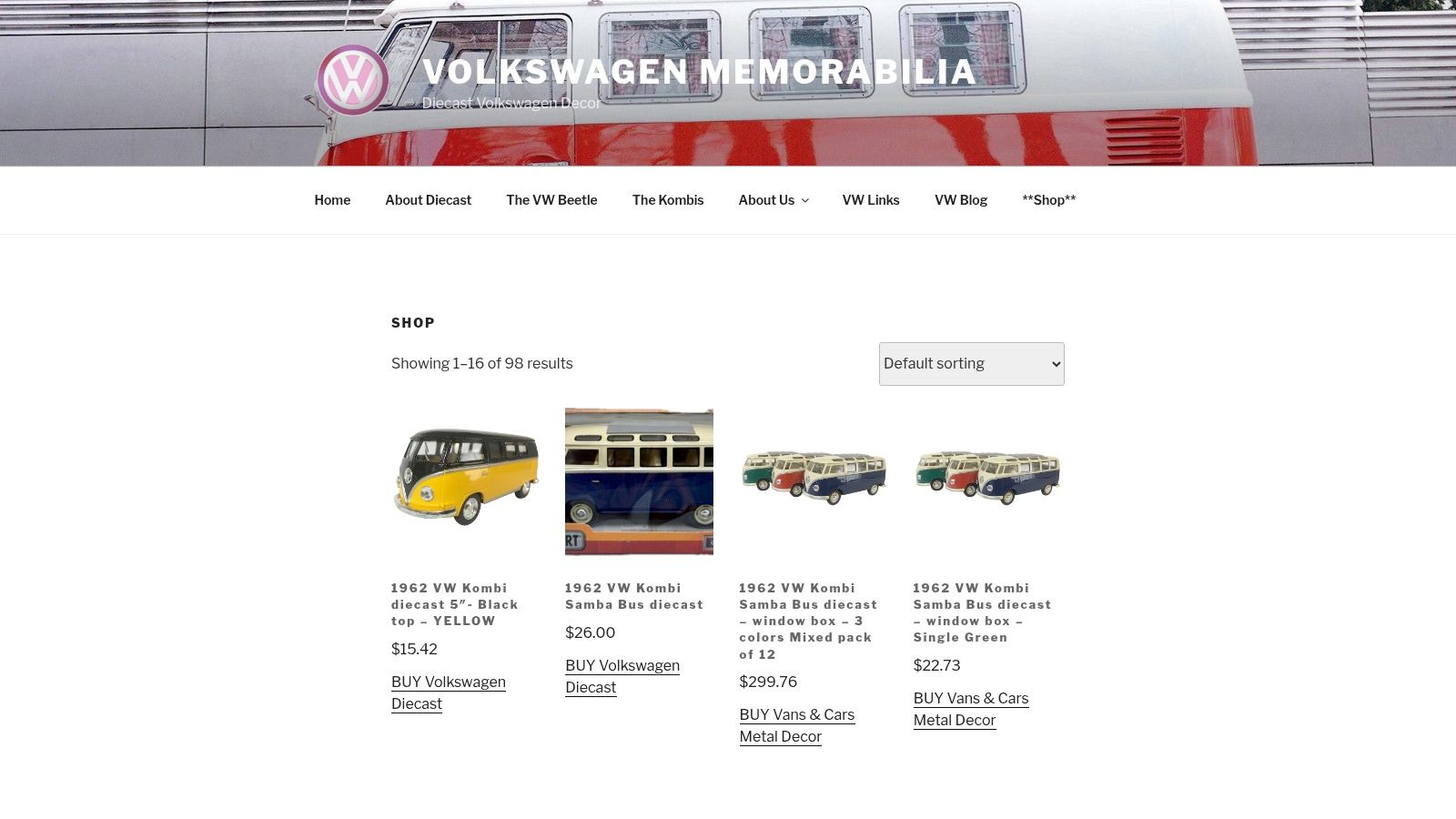
Get to know the different models and their unique quirks.
Figure out where to find well-loved campers from people you can trust.
Learn what to look for so you don't end up with a money pit.
Think of this guide as your friendly co-pilot. We're here to help you navigate the whole process with the confidence of someone who's been there and done that. We’ll cover everything you need to find, inspect, and finally buy your own piece of automotive history. To get in the right headspace, check out our piece on the soul of van life in Australia and what makes it so special.
Choosing the Right VW Bus Generation for Your Adventure
So, you've decided to take the plunge. Fantastic. But which Volkswagen bus is the one for you? It's a bit like picking a travel mate for a trip up the coast—each one has its own vibe, its own strengths, and its own set of lovable quirks.
Let’s run through the main players. Think of this as a quick chat at a car show, helping you figure out which classic VW camper best fits your dream. Picking the right one is the very first step, and honestly, it’s one of the most exciting parts of the whole journey.
This flowchart gets right to the heart of it. If you’ve got a love for adventure and that timeless vintage style, then a classic camper is already calling your name.
As you can see, if that sounds like you, you're in the right place. Now, let’s find your perfect match.
To give you a quick overview, here's a look at the most popular generations side-by-side.
VW Bus Generations At a Glance
Generation
Nickname
Production Years
Key Features
Best For
T1
Splittie
1950–1967
Split front windscreen, large VW badge, iconic V-shape front.
Collectors, weekend shows, and die-hard enthusiasts.
T2
Bay Window
1967–1979
Single curved windscreen, more interior space, improved engine.
Classic road-trips, family adventures, and usable vintage charm.
Long-distance touring, practical camping, and first-time owners.
Each of these has a dedicated following, and for good reason. Now let's get into the details of what makes each one special.
The T1 'Splittie' (1950–1967): The Icon
When you close your eyes and picture a classic VW Bus, this is almost certainly it. The T1 Type 2, or the 'Splittie' as it’s universally known, is defined by its split front windscreen and that massive VW emblem on the nose. It's the original surf bus, the poster child for a whole generation, and a guaranteed head-turner.
Owning a Splittie is a true labour of love. They ooze vintage charm like nothing else and easily command the highest prices, especially the famous 21-window Samba models.
Pros: Unbeatable retro style, highest collector value, the absolute heart of VW culture.
Cons: The most expensive to buy and restore, slower on the road, and their simple mechanics demand a more hands-on approach.
Price Guide: A project bus can start around $25,000, but a fully restored, show-quality Splittie can soar well past $100,000.
A Splittie is for the dedicated purist—someone who wants a prized collector's item for weekend cruises and car shows. It’s less about doing a lap of Australia and more about owning and preserving a beautiful piece of motoring history.
The T2 'Bay Window' (1967–1979): The Reliable Road-Tripper
Next in line is the T2, nicknamed the 'Bay Window' because it swapped the split screen for a large, single, curved windscreen. This is the model that truly brought the campervan dream to the masses. It’s noticeably more practical than a Splittie, with a bit more power, better brakes, and a comfier ride.
The T2 really hits the sweet spot between classic looks and genuine usability. It’s the go-to choice for so many adventurers and families who want to actually get out there and explore.
The Bay Window is the quintessential Aussie road-trip machine. It has enough of that old-school cool to turn heads, but it’s reliable enough to take you from Byron Bay to the Great Ocean Road without too much fuss.
You'll find two main versions. The 'Early Bay' (1967-1971) has its low front indicators and rounded bumpers, while the 'Late Bay' (1972-1979) sits a bit higher and features a more modern engine layout, making it slightly easier to work on.
The T3 'Vanagon' (1979–1992): The Modern Classic
Enter the T3, or Vanagon. This generation marked a shift to a more modern, angular, and boxy design. While it might lack some of the rounded charm of its predecessors, it more than makes up for it in sheer practicality and comfort. These were the first buses to offer options like water-cooled engines, power steering, and even all-wheel drive on the legendary 'Syncro' models.
For many, the T3 is a brilliant and affordable gateway into VW camper ownership. It’s roomier, more comfortable on long drives, and generally easier to live with. Don’t let the '80s styling fool you; these vans are incredibly capable and have a fiercely loyal following.
Pros: More affordable, spacious, and comfortable for long-distance travel. Parts are generally easy to find and well-supported.
Cons: The boxy aesthetic isn't for every classic purist, and they don't have the same iconic look as a Splittie or Bay.
Price Guide: You can find a T3 project for under $10,000, with good, road-ready campers typically sitting in the $20,000 to $40,000 range.
Ultimately, choosing your bus comes down to you. It's about finding the one that speaks to your sense of adventure and fits how you plan to use it. And while you’re planning the big purchase, you can always start small. A beautifully crafted VW Kombi Samba Bus diecast model on your desk is the perfect bit of inspiration to keep the dream alive.
Where to Find Your Dream Volkswagen Bus Camper for Sale
You’ve decided on the generation, and now the search begins. Finding a quality Volkswagen bus camper for sale requires looking in the right places, and the best ones are not always the most obvious.
While standard online classifieds are a starting point, the most sought-after buses are often found within the dedicated VW enthusiast community. Here is where to focus your search efforts.
Online Marketplaces: The Starting Line
The major Australian online classifieds offer the widest initial selection. These platforms provide a national overview of what is available, from restoration projects to immaculate, road-ready campers.
Carsales: As Australia’s largest vehicle marketplace, it’s a reliable place to gauge the market. We recommend setting up alerts for specific models like "VW Kombi" or "T3 camper" to receive notifications for new listings.
Gumtree: A great source for private sales where you can uncover genuine bargains. Gumtree is also a good spot to find project buses and unique owner-built conversions not always listed on mainstream sites.
Facebook Marketplace: Now a major centre for classic car sales. The volume is significant, so you will need to be methodical in your search to filter through the listings.
When using these sites, prioritise listings with extensive photos and clear, detailed descriptions. Vague advertisements are a potential warning sign. A passionate owner will be proud of their bus and will provide a thorough history of the work completed.
Community Hubs: Where the Best Buses Hide
Here is an insider tip: the best-maintained campers frequently change hands privately within the VW community, never reaching the open market. This is where you find buses with well-documented histories from owners who truly understand them.
Tapping into the VW club scene is like getting a backstage pass. You'll hear about campers for sale before anyone else, get honest advice from seasoned owners, and connect with people who share your passion.
Consider these community-focused avenues:
Dedicated VW Forums: Websites like The DUB GUM and Aussie Vee Dubbers are invaluable resources. Their "For Sale" sections are monitored by the community, which holds sellers to a high standard of transparency.
Owner Clubs and Social Media Groups: Search Facebook for groups such as "Kombi Club Australia" or "VW T3 Australia". Owners often post their buses for sale to fellow members first before advertising elsewhere.
VW Shows and 'Show & Shine' Events: Nothing replaces an in-person inspection. Events like Volksfest, the VW Nationals, or local club meetings are ideal for networking. Owners often place a "For Sale" sign in the window, allowing you to discuss the vehicle directly and inspect it on the spot.
Engaging with the community is about more than just a transaction; it's an entry into a network of knowledgeable enthusiasts. If you are thinking about a custom build, our guide on selecting a van for conversion offers additional expert advice.
Your Essential Pre-Purchase Inspection Checklist
Alright, this is where the rubber really meets the road. It’s incredibly easy to get swept up in the romance of a classic Kombi, but a smart buy is one you make with your head, not just your heart. Think of this as a checklist from a mate who's been there, helping you figure out if that Volkswagen bus camper for sale is your dream ride or a money pit in disguise.
Working through a bus systematically gives you the power to either confidently walk away from a dud or put in a fair offer on a gem. We’ll go over the non-negotiable checks to help you sidestep those nasty, expensive surprises down the track.
Step 1: Hunt for Rust, the Silent Killer
Before you even pop the engine lid, you need to become a rust detective. Hands down, rust is the number one enemy of these old VWs and the most expensive problem you can face. A quick, cheap paint job can hide a world of hurt, so it’s on you to look deeper.
Be sure to bring a small torch and a magnet. Slide the magnet over all the usual trouble spots; if it suddenly loses its grip, you’ve likely found a thick patch of body filler covering up some dodgy repair work.
Here’s where you need to focus your attention:
Under the Mats: Don't be shy. Pull up every single floor mat, both in the driver's cab and throughout the living space. You’re looking for any sign of corrosion, dampness, or questionable repairs on the floor pans.
Wheel Arches & Sills: These areas get pelted with road grime and water. Get right down on the ground and have a good, long look at them from every angle.
Gutters: Those rain gutters running along the roofline are notorious for trapping moisture and rusting out from the inside. Keep an eye out for bubbling paint or any tell-tale brown streaks.
Window and Door Seals: Carefully peel back the rubber seals around the windows and doors to inspect the metal underneath. Water loves to pool here and start its dirty work.
Battery Tray: Over the years, a leaky battery can easily chew through the metal tray and the floor beneath it. Give this area a very thorough inspection.
Don’t get distracted by a fresh coat of shiny paint. Look closely for tiny bubbles or a ‘crinkly’ texture, particularly along the bottom 15 centimetres of the van. That’s a classic sign of rust brewing just below the surface.
Step 2: Get a Feel for the Engine and Mechanicals
Now it’s time to check the heart of the machine. You don’t need to be a qualified mechanic, but knowing the basic things to look and listen for is crucial. The air-cooled engines in these buses have their own unique character and sound.
If you can, try to start the bus from cold. A healthy engine should kick over without too much fuss. Let it idle and listen carefully for any loud knocking or rattling. A bit of tappet noise is pretty standard for these motors, but anything more dramatic is a serious red flag.
With the engine running, have a look for:
Oil Leaks: A few drips are part of the charm with these old girls, but if you see significant pools forming on the ground, it points to worn seals that will definitely need sorting.
Exhaust Smoke: Take a look at what’s coming out of the exhaust. A little puff of black smoke when it first fires up is generally fine, but constant blue smoke is bad news—it means the engine is burning oil, a sign of expensive internal wear.
Gearbox: On your test drive, pay close attention to the gear changes. It should shift smoothly without any awful crunching sounds. If it’s hard to find a gear, you could be looking at anything from worn linkages to a major gearbox problem.
Step 3: Check the Electrics and Camper Interior
Hop inside and start flicking every switch you can find. The electrical systems are fairly basic, but you’ll want to make sure the essentials are working. Check the headlights, indicators, windscreen wipers, and of course, the horn.
Next, turn your focus to the camper-specific gear. The condition of the interior tells you a huge amount about how the bus has been treated over its life.
Pop-Top Roof: If it has one, make sure you operate it. Does it go up and down without a fight? Check the canvas for any mould, mildew, or rips. A new pop-top canvas can be a surprisingly pricey job.
Cabinetry and Upholstery: Open every cupboard and drawer. See how the original fit-out has held up. Is the upholstery badly torn or stained? While it might seem cosmetic, a full re-trim can really blow the budget.
Appliances: If the bus is kitted out with a fridge, sink, or stove, ask the owner if they’re in working order. If possible, test them yourself.
And finally, always, always ask to see the paperwork. Double-check that the Vehicle Identification Number (VIN) on the registration papers matches the number stamped on the van’s chassis. This simple check confirms you’re looking at the right vehicle and can save you from a world of bureaucratic pain. Taking your time here will ensure your VW adventure gets off to a dream start, not a nightmarish one.

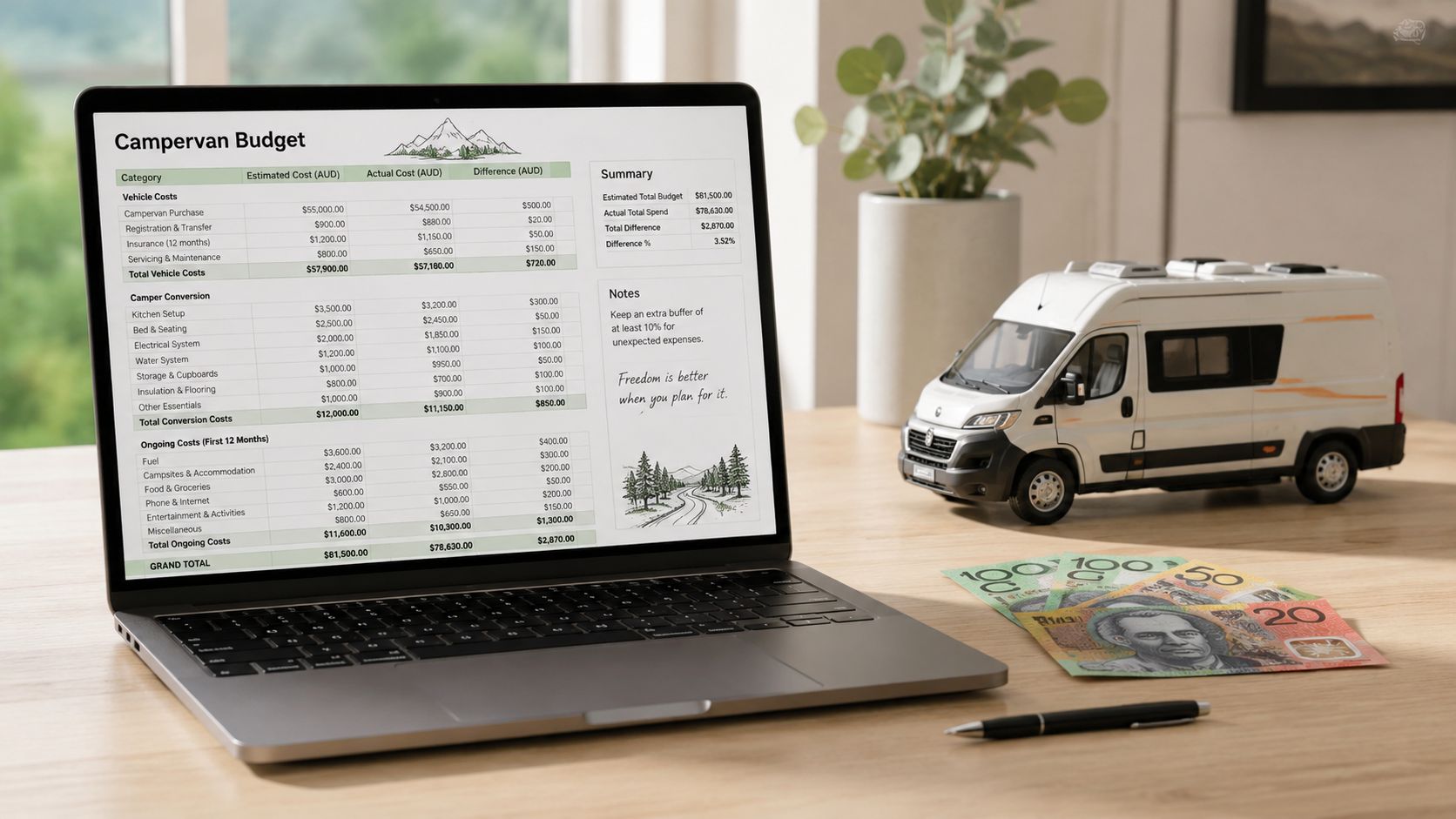
Budgeting for a Bus: The Real Costs of Ownership
Alright, you’ve found the one. It’s got the right look, the right feel, and you can already picture yourself cruising down the coast. Before you get swept away, let's have a real yarn about what happens after you’ve paid for it. The price tag on a Volkswagen bus camper for sale is just the start of your journey, not the whole road trip.
Getting your head around the full financial picture is the best way to make sure your dream of hitting the open road stays a dream, and doesn't turn into a financial headache. Let's pull back the curtain on the real costs of owning one of these classic beauties here in Australia, so you can plan properly.
The Upfront Costs Beyond the Purchase Price
That moment you shake hands on a price is a massive buzz, but that number isn't the final one to leave your bank account. A few other immediate costs will pop up straight away.
Stamp Duty: This is the government's slice of the pie, a tax on the vehicle's sale price. How much you pay depends on your state and the bus's value, but there’s no getting around it.
Registration: You can't legally drive your new home on wheels without it being registered. This is an annual fee that gets you your plates and keeps you on the right side of the law.
Specialised Insurance: Forget a standard car policy; it simply won't do. You need specialised classic vehicle insurance. These policies usually work on an "agreed value," where you and the insurer decide on the bus's true worth. It’s peace of mind, ensuring you're properly covered if something goes wrong.
These initial bits and pieces can easily add a few thousand dollars to your purchase, so make sure you’ve got that cash ready to go.
Ongoing Running and Maintenance Costs
Once the bus is officially yours, a new set of costs roll in—the ones that keep it humming along happily. These aren't one-offs, but the regular rhythm of keeping a vintage machine on the road.
First up, fuel. Let's be blunt: these old air-cooled engines were never built for today’s fuel economy. They’re thirsty beasts, no doubt about it. But the smiles-per-gallon are completely off the charts.
Then there’s the upkeep. A classic VW needs a bit more regular TLC than your modern daily driver. You'll want to budget for:
Regular Servicing: Get ready for more frequent oil changes and check-ups. It pays to find a mechanic who really knows their way around air-cooled VWs.
The "Just in Case" Fund: Old cars have character, and sometimes that character includes a few unexpected hiccups. Tucking away a couple of thousand dollars in a repair fund is one of the smartest things you can do.
Think of it like this: you’re not just buying a van; you’re becoming the caretaker of a little piece of history. A bit of ongoing love and money is what keeps that history alive and rolling.
The Big One: Restoration Costs
Finally, we need to talk about restoration. A lot of the buses you'll see for sale are rolling projects, and how much you spend here can vary wildly. It all comes down to how much work is needed and how perfect you want the end result to be.
Mechanical Refresh ($5,000 – $15,000): This sort of money will get the engine, brakes, and suspension solid and dependable. It’s about making it a reliable driver, not a show winner.
Cosmetic & Mechanical ($20,000 – $40,000): Here you’re covering the mechanical work plus tackling rust, laying down a fresh coat of paint, and giving the interior a proper tidy-up.
Full Nut-and-Bolt Restoration ($50,000+): This is the whole shebang. The bus is stripped back to bare metal for a finish that’s often better than when it left the factory. It's a massive undertaking, but the final product is a genuine masterpiece.
Knowing these costs doesn't take any of the magic away. It just makes you a smarter, more prepared owner. It means your VW adventure can kick off with pure excitement, not a surprise bill.
Celebrating the VW Icon Through Collectible Memorabilia
Owning a full-sized Volkswagen bus is the big dream, but it's not always a practical one. That doesn't mean the passion has to sit on the back burner. The spirit of the VW bus is just as much about celebrating its iconic design as it is about hitting the open road.
This is where collecting comes in. For many enthusiasts, a perfectly detailed diecast model is the next best thing. It’s a way to appreciate the classic lines and heritage of these vehicles right on your own shelf, keeping the dream alive with a colourful reminder of the VW community.
Your Home for VW Memorabilia in Australia
We get it because we're enthusiasts, too. Here at vwmemorabilia.com.au, we've sourced a huge range of collectibles for fellow VW fans. As a local Australian importer, we stock officially licensed VW memorabilia collectibles right here, so you get your gear quickly without the long international shipping delays.
Our online shop is a treasure trove for anyone looking to add to their collection or find the perfect gift. We have everything from stunning, highly detailed 1:18 scale models to the more compact 1:24 scale versions that are perfect for starting out. These aren't just toys; they’re miniature pieces of VW history. You'll find everything from the legendary VW Kombi Samba Bus diecast models to classic Beetle replicas that capture the feel of the originals.
Collecting diecast models is about more than just owning tiny cars. It's about building a personal display of automotive art that tells a story. Each model represents a piece of the VW legacy you can hold in your hand.
Tips for Starting Your VW Collection
Building a collection is a great way to stay connected to the VW culture, especially when you're between road trips. If you're looking to get started, here are a few simple tips:
Find Your Focus: Decide which models you love most. Are you a fan of the classic Split-Screen Kombi, or do you prefer the timeless Beetle? Focusing on a specific model, colour, or era can give your collection a great, cohesive look.
Create a Great Display: Don't hide your models away. A dedicated shelf, a glass cabinet, or even a simple diorama can turn your collection into a fantastic feature for your home or office.
The Perfect Gift: If you're searching for a gift for a VW lover, a high-quality diecast model is a personal and thoughtful present that's guaranteed to be a hit.
Diving into the world of Volkswagen diecast models for sale is a brilliant way to keep your passion for these vehicles burning bright. It’s a hobby that brings a lot of joy and celebrates the enduring magic of the VW brand every single day.
A Few Common Questions About Buying a VW Camper
Jumping into the world of classic VWs is an absolute thrill, but it's totally normal to have a few questions buzzing around. We get asked these all the time, so here are some straight-up answers to help you on your journey.
What’s the Go with Insuring a Classic VW Camper in Australia?
The cost of insuring a classic VW camper can be a bit of a "how long is a piece of string" question. It really hinges on the agreed value you and the insurer decide on for your bus, your own driving record, and even where you park it at night. Generally, you can expect to budget anywhere from $400 to over $1,000 a year for a proper classic car policy. It's well worth it, as these policies protect your investment with an agreed value, which is miles better than a standard car policy.
Can I Actually Use a VW Bus as My Daily Car?
Ah, the dream! While it sounds brilliant, using a vintage Kombi for the daily grind isn't the most practical idea. These old beauties lack modern safety features, the air conditioning is a wound-down window, and power steering is, well, you. They thrive on a bit of hands-on care and are far better suited for creating memories on weekend escapes and epic road trips, not so much the stop-start traffic on the way to work.
What's the Difference Between a Kombi and a Samba?
Great question, and one that gets to the heart of VW lore! Think of 'Kombi' as the family name for the entire VW Type 2 lineup. The 'Samba Bus', however, is a very specific, top-of-the-line model that truly gets collectors' hearts racing.
You'll know a Samba when you see one. They're famous for their incredible 21 or 23 windows, including the iconic little skylight windows that line the roof, and a massive canvas sunroof perfect for sunny days. It’s this distinctive look that makes them one of the most sought-after and valuable VWs on the planet.
Are Parts for Old VW Buses Hard to Find in Australia?
You’d be surprised! Thanks to an incredible global community and some brilliant specialist suppliers right here in Australia, getting parts is easier than you might think. Of course, tracking down a super-rare piece of original trim for a 1950s Splittie can be a bit of a treasure hunt. But for most of the crucial mechanical bits for T1 and T2 buses, the parts are out there. This fantastic support network is what keeps these classic campers on the road for us all to enjoy.
Here at VW Memorabilia, we're just as passionate about these amazing vans as you are. Whether you're chasing the real deal or starting a collection of your own, we’re here to help you celebrate the VW spirit. Check out our full range of officially licensed diecast models and memorabilia to bring a bit of that magic home.