

You know the scene. You've nudged the Kombi into a cracking spot by the beach, kettle's ready, chairs are out, and the old bus is looking every bit as good as it did in your head on the drive up. Then the Aussie sun starts leaning on you. Hard. Suddenly that dreamy patch beside the van feels less like a lounge and more like a frying pan.
That's where a good wind out awning changes the whole mood.
For VW people, this isn't just about shade. It's about making the van feel complete. A Kombi already has charm for days, but an awning turns that charm into a proper outdoor room. You get a cool place for a flat white, a spot to kick off sandy thongs, and somewhere to sit back and admire those classic lines without squinting into the glare. It's one of those upgrades that feels practical on paper and magical in real life.
That Instant-Shade Feeling Your Kombi Deserves
I've always thought the best van setups have a bit of theatre to them. You roll in, pop open the door, and within minutes the whole campsite or beach car park feels like home. A wind out awning is a big part of that. It creates that instant-shade feeling every Kombi deserves.
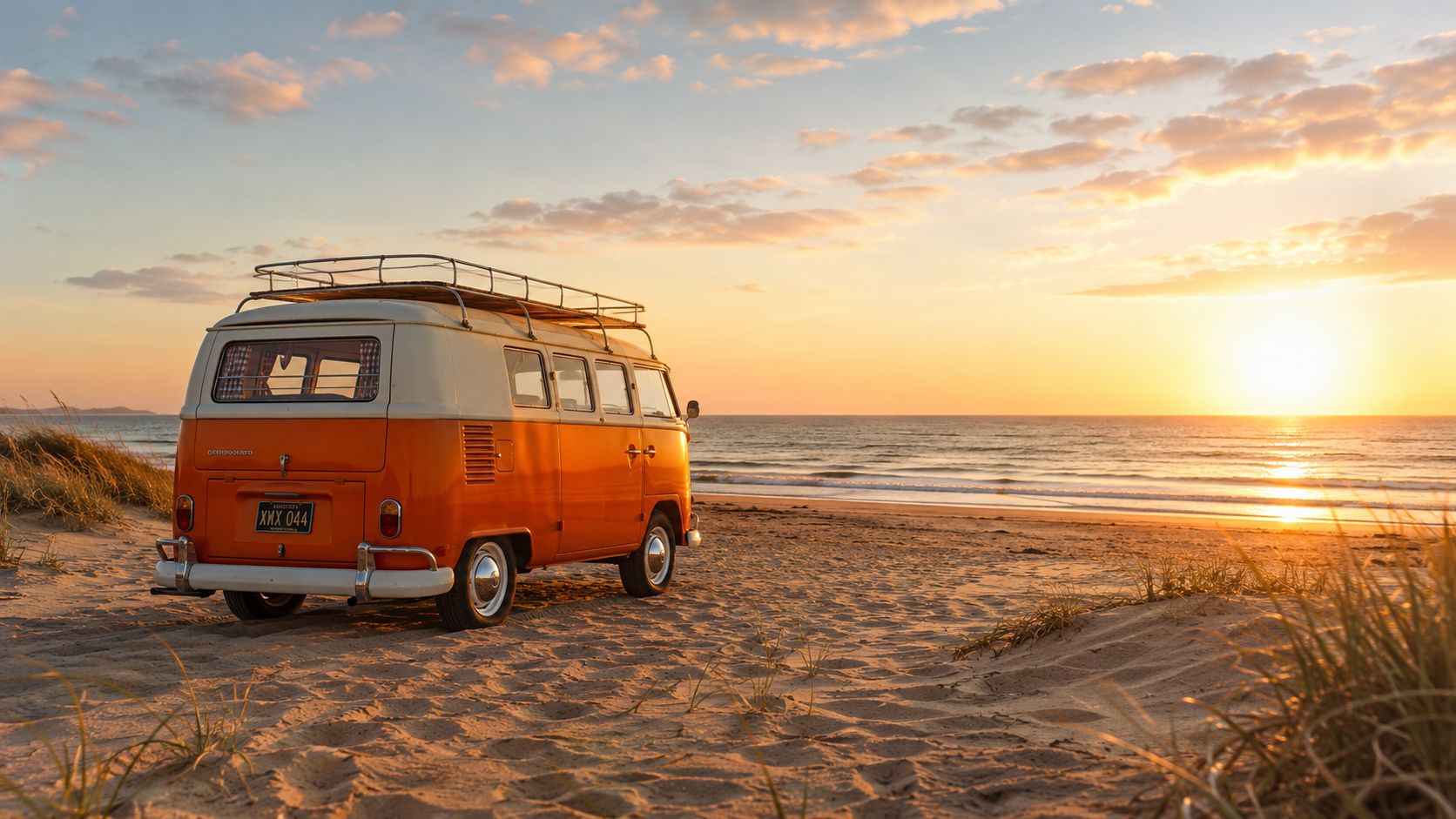
A classic VW has never been about rushing. It's about the slow approach. Pulling up near the dunes. Sliding the door open. Letting the salt air in. But comfort matters too, especially in Australia where the sun can make the side of a van feel like a hotplate before lunch.
Why it feels so right on a VW
A wind out awning suits the whole Kombi spirit because it's simple and social. You're not wrestling with ropes and tarps while everyone else heads for a swim. You're creating a little verandah off the side of the van.
A few things make it such a natural fit:
- It expands your living space so the van feels bigger without changing its footprint.
- It keeps the setup relaxed because you can get shade quickly and start enjoying the spot.
- It complements the lifestyle of beach runs, weekend markets, surf checks, and lazy afternoons.
A Kombi parked without shade still looks good. A Kombi parked with a tidy awning looks lived in, loved, and ready for a proper weekend.
More than gear
Many readers misunderstand this point. They think an awning is just a camping accessory. It's not. On a VW camper, it becomes part of the atmosphere. It frames the van. It softens the setup. It gives you that old-school touring feel that so many of us are chasing when we keep these beauties on the road.
And when you get the right one, it doesn't look bolted on as an afterthought. It looks like the missing piece.
What Exactly Is a Wind Out Awning
The easiest way to think about a wind out awning is this. It's a retractable shelter mounted to the side of your van. A bit like a clever roof extension, it stays neatly packed away when you're driving and rolls or folds out when you stop.
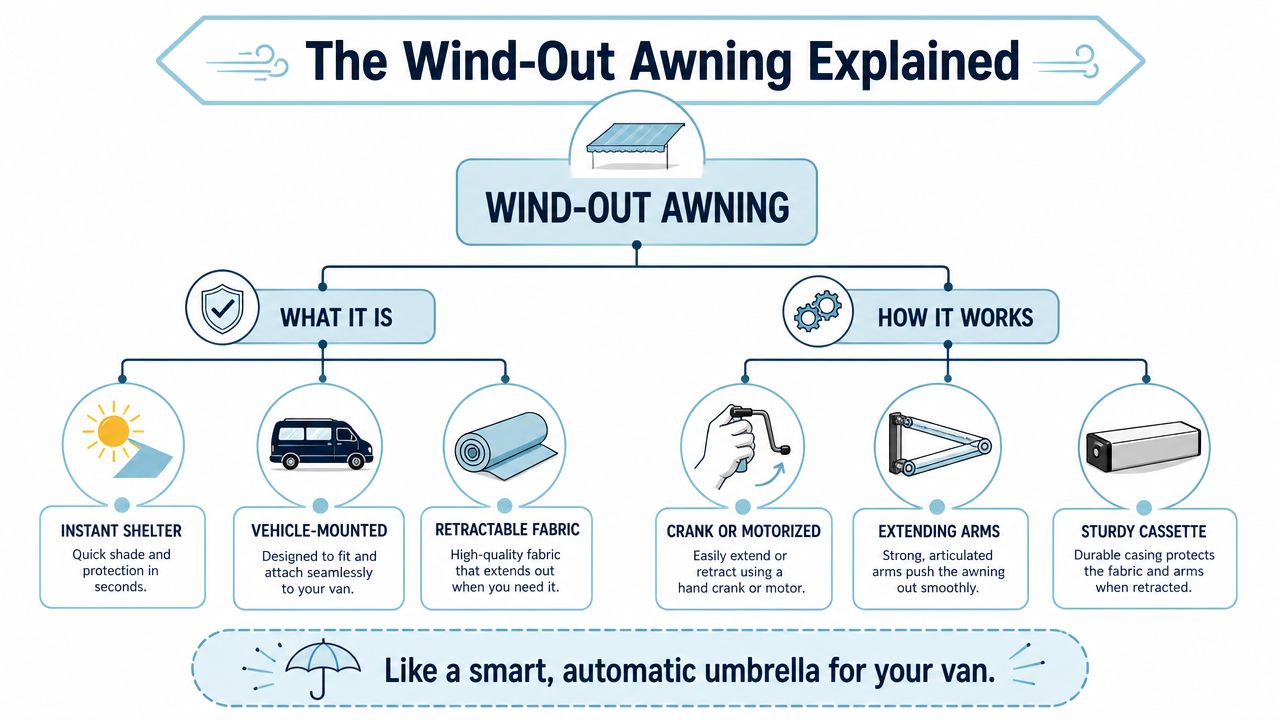
That's why so many camper owners love them. They're faster and tidier than mucking about with a loose tarp, and they're far less cumbersome than setting up a full annex every time you pull over for lunch.
The three main parts
Once you know the basic bits, awning talk stops sounding mysterious.
| Part | What it does | Why it matters |
|---|---|---|
| Cassette or housing | Holds the awning when it's packed away | Protects the fabric and keeps the van looking neat |
| Folding arms | Swing out and support the canopy | Give the awning its shape and tension |
| Fabric panel | Creates the shaded area | This is the part doing the hard work against sun and breeze |
Some systems use a crank handle. Others use a motor. On a classic VW, many owners lean toward manual because it's straightforward and keeps things simple. On newer campers, electric can feel very civilised.
What makes it different from old-school setups
If you've ever fought a flapping tarp in a sea breeze, you already know the answer. A wind out awning is about convenience and repeatability. You stop. You set it up. You enjoy your day. Then you pack it away without stuffing metres of fabric into a bag.
People also confuse wind out awnings with drive-away awnings. They're not the same thing. A wind out awning stays attached to the van as a shade canopy. A drive-away setup usually creates a larger enclosed room and can stand on its own when the van moves away.
Simple test: if it feels like a built-in side verandah for your van, you're probably looking at a wind out awning.
Choosing the Perfect Awning for Your VW
The best awning for a VW isn't always the biggest or flashiest one. It's the one that looks right on the van, suits the way you travel, and doesn't spoil the character that made you fall in love with the bus in the first place.
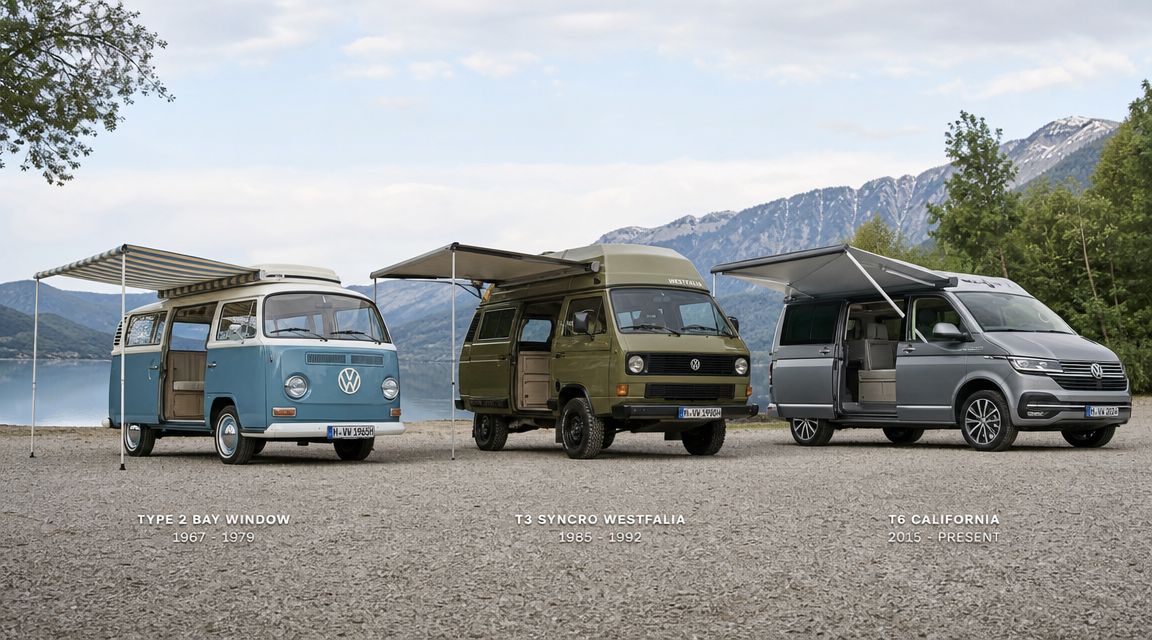
A split-screen Kombi, a bay window, a T3, and a modern Transporter all wear accessories differently. The proportions matter. So does the mounting method. A tidy setup should feel sympathetic to the shape of the van, not like something borrowed from a tradesman's box trailer.
Match the awning to the van's shape
Classic VW campers have soft curves and strong visual rhythm. A bulky awning case can upset that balance if it's oversized. A more proportionate unit usually looks better, especially on earlier vans where every line is on show.
Think about these points before you buy:
- Length and balance. The awning should complement the body, not dominate it.
- Projection and use. More shade is lovely, but only if it still feels manageable when you pull up in tighter spots.
- Visual weight. Slimmer housings often suit older vans better than chunky modern-looking ones.
For many VW owners, taste matters as much as hardware.
Manual or electric
Classic vans and modern vans ask different things from an awning.
| Type | Best for | Trade-off |
|---|---|---|
| Manual wind out awning | Vintage Kombis, simple touring setups | Takes a bit more effort, but keeps things uncomplicated |
| Electric awning | Newer campers with stronger electrical support | Convenient, but can feel less in tune with a classic bus |
If your Kombi is already a hands-on machine, a manual awning usually feels natural. You're already used to doing things with a bit of ritual. That's part of the fun.
A look at VW van accessories for touring and styling can also help you think about how the awning fits into the whole setup, not just as a standalone add-on.
Mounting without ruining the vibe
Plenty of owners hesitate at this stage, and fair enough. Nobody wants to mess with a beloved roofline.
Common mounting approaches include:
- Gutter-rail style mounting, often favoured on older vans because it can work with existing structure and preserve the classic profile.
- Roof-rack based mounting, which can suit campers already carrying racks or touring gear.
- More permanent bracket setups, which may suit some builds but need careful thought on appearance and installation quality.
Later on, it helps to see moving parts in action before buying. This sort of walk-through makes the setup easier to visualise.
The best VW awning setups look like they belong to the van. If the awning fights the body shape, you'll notice it every time you walk up with a coffee in hand.
A Ripper Weekend Install and Care Guide
Installing a wind out awning can be a satisfying weekend job if you're organised and patient. It's one of those tasks that goes smoothly when you slow down, measure twice, and grab a mate for the lifting.
For most owners, the trick isn't muscle. It's planning. You want the brackets in the right place, the load supported properly, and the awning sitting level so it opens cleanly.
The install mindset
Start with the van on level ground and lay out every component before touching a drill or spanner. Read the mounting instructions closely and check how the awning clears doors, pop-tops, racks, and any trim.
A sensible order looks like this:
- Mock up the position with the awning held where it will sit.
- Mark bracket points carefully so the unit won't sit skew-whiff.
- Lift with help because these units are awkward, even when they're not outrageously heavy.
- Seal any drilled points properly so water doesn't creep in later.
If you're unsure about the structural side, it's worth speaking to someone who understands old Volkswagens and body mounting points. A browse through Volkswagen parts in Australia can also help you think more broadly about keeping the whole van properly sorted as you upgrade it.
Care that saves grief
The golden rule is simple. Don't treat an awning like a permanent patio roof. It's a convenient shelter, not something to leave out and forget.
Use these habits:
- Brush off sand and debris before winding it in.
- Let the fabric dry fully whenever possible so you don't trap moisture and invite mould.
- Check the arms and brackets now and then for looseness or obvious wear.
The biggest care issue in Australia is wind. Australian caravan awning guidance notes that light winds up to 20 to 25 km/h are generally fine, while awnings should be retracted once winds move above 40 km/h to help avoid torn fabric and costly frame damage. If you're camped near the coast, don't wait until the canvas starts snapping around. Pack it away early.
Styling Your Setup for Maximum Beach Vibes
Once the awning is sorted, the fun starts, transforming your Kombi setup from practical to feeling like your own little beachside kingdom. The awning becomes the roof. Everything under it becomes part of the mood.
Some people go for surf shack. Others lean into vintage camping. A few of us can't resist a bit of nautical colour and a chair that looks like it belongs in a 1970s holiday snap.
Build a setup with character
Start with the essentials that make the space welcoming rather than cluttered.
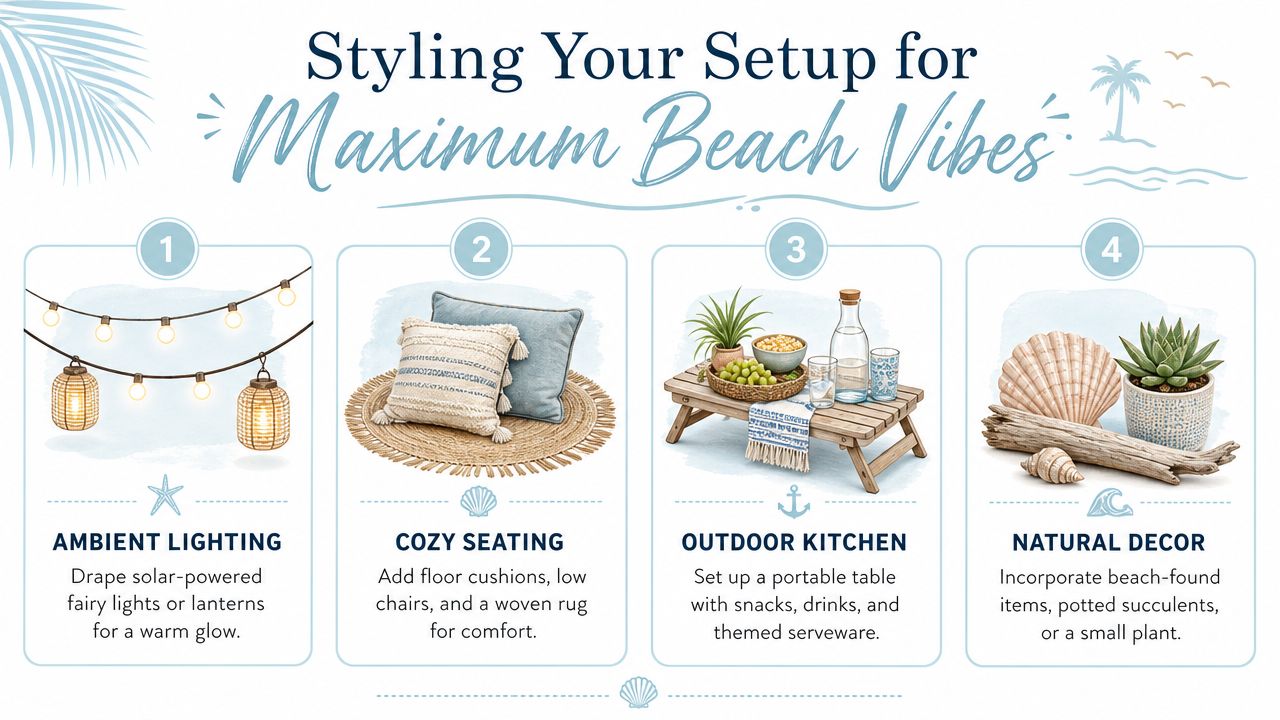
A strong beachy setup often includes:
- Low, comfy seating such as folding camp chairs, deck chairs, or a simple woven mat with cushions
- Warm lighting like battery lanterns or discreet string lights for those late arvo chats
- A compact table for mugs, snacks, maps, and the all-important enamel kettle
- A few soft decorative touches that don't look overdone
Colour and texture matter
A classic VW already brings plenty of visual charm, so the gear around it should support that rather than compete with it. Creams, faded blues, sandy neutrals, muted greens, and cheerful retro stripes all sit nicely beside a Kombi.
Think in layers:
| Style choice | Works well with | Overall feel |
|---|---|---|
| Retro stripes | Bay windows and colourful campers | Playful and nostalgic |
| Neutral canvas tones | Cream, white, or pastel vans | Calm and coastal |
| Nautical accents | Blue and white combinations | Beach-house character |
If you enjoy carrying the same aesthetic from van life into home life, these coastal home décor ideas can spark a few ideas for colour palettes and styling touches that feel right at home under an awning too.
A tidy awning setup doesn't need much. One rug, two good chairs, a lantern, and the right view can do the whole job.
Keep it authentic
The nicest setups always feel lived in, not staged. Leave room for the practical stuff. Wet towels. A board bag. A crate of groceries. A pair of sandy thongs shoved under the table. That's what makes a Kombi campsite feel real.
And if your van has a bit of patina, lean into it. A spotless showroom look isn't the only kind of beauty in the VW world.
Troubleshooting Common Gremlins and Quick Fixes
Even a good awning has the odd grumble. Most issues are minor, and they're usually easier to sort than people think.
When things don't feel right
If the awning won't retract smoothly, stop forcing it. Check for grit, leaves, or bits of debris in the housing or along the moving joints. A rough feel often means something simple is interfering with the mechanism.
If the fabric looks a bit baggy, inspect whether the awning is sitting level and whether the arms are extending evenly. Sagging can also come from packing it away damp and letting the material lose its tidy set.
A quick problem-solution list helps:
- Awning feels jerky. Look for dirt in the moving parts and any visible misalignment.
- Fabric flutters too easily. Check setup tension and ask whether conditions are already too breezy.
- One side sits lower. Inspect mounting points and arm extension for uneven travel.
The gremlin that really matters
Wind damage is the one that catches owners out. It often starts before anything dramatic appears to happen. Helioscreen's awning guidance says the practical benchmark for most wind out awnings is to retract them before winds exceed 32 to 40 km/h, roughly Beaufort force 5, because aerodynamic drag can trigger fabric flutter and put stress on the arms.
That matters because the damage isn't always instant. The awning can cop repeated loading, flexing, and fluttering before you notice a twisted arm or torn panel. If it's getting noisy, twitchy, or hard to trust, that's your sign to wind it in.
Your Wind Out Awning Questions Answered
Can I leave my awning out at the beach all afternoon?
That depends less on your plans and more on the weather pattern. Guidance discussing unpredictable coastal conditions points out that in Australia the bigger issue isn't only average wind speed. It's rapid shifts, coastal gusts, and afternoon sea breezes. The safest habit is to watch Bureau of Meteorology forecasts, especially gust forecasts, and retract the awning before conditions turn.
Do I need a professional installer?
Not always. Plenty of owners can handle a careful install at home. But if you're dealing with a rare classic, unusual brackets, bodywork concerns, or you don't trust yourself around mounting points, paying for skilled installation can be money well spent.
Can I add walls or extra screens later?
Often, yes. Many owners build up their setup over time with privacy screens, side panels, or separate shelter options. The key is keeping the awning's primary job in mind. Fast shade first. Extras second.
Is a wind out awning worth it for short trips?
Absolutely, if you use the van for beach days, markets, picnics, or overnighters. The value is in how often it improves the stop, not how long the trip lasts. Even a lunch break feels more civilised with a patch of shade beside the bus.
If the VW lifestyle is part of your world, Volkswagen Memorabilia is well worth a look. It's a lovely spot for VW-themed gifts, coastal décor, and officially licensed diecast pieces that celebrate the same Kombi and Beetle spirit that makes a great awning setup feel so special. If you'd like to add a little more Volkswagen character to your shed, display shelf, or beach-house nook, have a browse through the shop.