

The odds are good you've got a cup of tea or coffee nearby, a few tabs open, and half an eye on that one model or van you've been meaning to add to the collection. Maybe there's a Beetle on the shelf above the desk. Maybe an old Kombi photo lives on your phone from a Volksfest morning years ago. And maybe, lately, the one that keeps tugging at your imagination isn't a split-window classic at all, but a Volkswagen California Beach parked nose-first toward the sea.
That's easy to understand in Australia.
You can almost feel the routine. Boards packed. Fridge sorted. Salt in the air before you've even turned off the highway. The California Beach belongs to that lovely stretch between practical family wagon and freedom machine. It's modern, yes, but it carries the same spirit that made generations of VW people fall for Beetles, Kombis and Samba Buses in the first place. For collectors, that matters. We're never only collecting metal and paint. We're collecting a feeling.
The Call of the Open Road
A mate of mine turned up to a Sunday show on the coast a while back in a tidy Beetle, pale blue, sun visor, the lot. Parked two rows over was a white California Beach with the roof up, camp chairs out, kettle on. Funny thing was, both cars drew the same sort of crowd. People smiled at the Beetle because it carried memories. They smiled at the Beach because it looked like it was about to make new ones.
That's the magic of it.
The VW California Beach taps straight into a familiar Aussie daydream. A couple of free days. A run up the coast. Sleeping close to the surf. Waking with the side door open to a stripe of morning light. It doesn't matter whether you grew up around air-cooled Volkswagens or only came to VW later through Transporters and modern campers. The appeal lands in the same spot. Freedom, simplicity and that sense that the good part of life might only be a few kilometres away.
Some vehicles are admired. Others make people start planning trips in their head before they've even walked around them once.
Collectors understand that instinct better than most. A model isn't only a replica. It's a way to keep that open-road feeling on the shelf, on the desk, or tucked into a coastal display at home when the work week is doing its best to get in the way.
What Exactly Is a VW California Beach
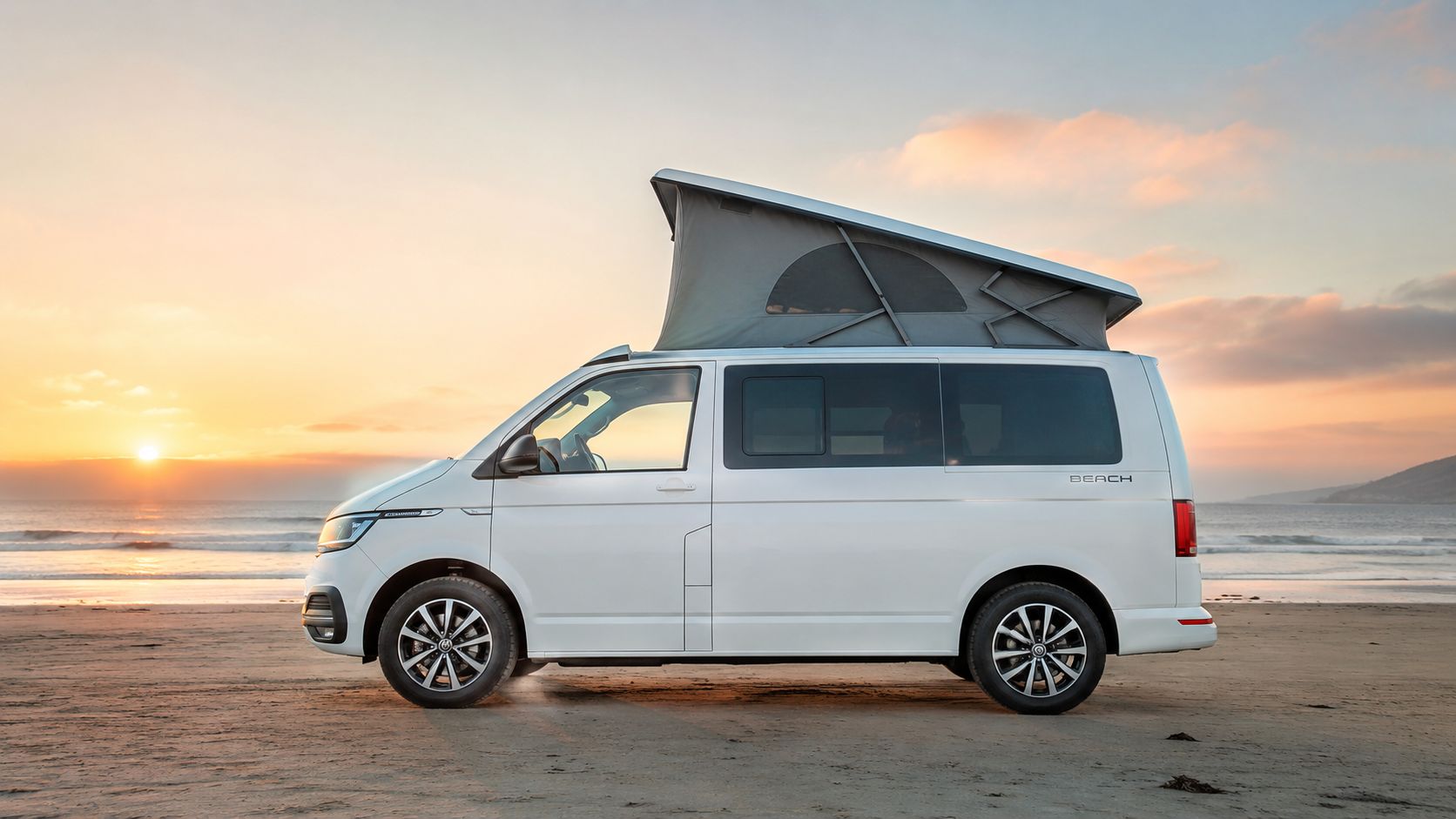
You spot the difference the first time you see one being used properly. At a surf car park near Torquay, a California Beach can look like an everyday VW van right up until the roof goes up, the rear seats fold flat, and someone slides out the camp table while the tea boils. That's the Beach in a nutshell. It carries the manners of a sensible daily driver, but it always seems ready for a night by the water.
The California Beach belongs to Volkswagen's factory-built camper line, which grew out of the old idea that a van could be clever, compact and pleasant to live with for a weekend. Volkswagen Commercial Vehicles traces the California story back to the late 1980s in its own California model history. For collectors, that factory origin matters. The details tend to be tidier, the layouts more resolved, and the whole thing feels like a proper chapter in VW history rather than an aftermarket conversion.
The essentials that make it a Beach
A California Beach is the lighter-footed member of the California family. It keeps the camper identity, especially the pop-up roof and convertible sleeping space, but avoids the heavier built-in fit-out you'd expect in more loaded variants. That gives it a very different feel from a large motorhome. Around town, it still behaves like something you'd happily park at the shops.
Australian examples are commonly associated with Volkswagen's 2.0-litre diesel drivetrains and the safety and comfort gear expected of a modern passenger vehicle. The broader shape of the van matters just as much as the numbers. Good visibility, a sensible footprint, and seating that can be reworked for passengers, boards, bags or bedding are what make people warm to it so quickly.
A few traits give the Beach its character:
- Pop-up roof: Low enough for everyday use, tall enough to create proper camper atmosphere once you're set up.
- Flexible cabin: Rear seating and sleeping arrangements can be adapted around family trips, solo escapes or a market run.
- Weekend-ready layout: It suits short stays and spontaneous travel without feeling overbuilt.
That balance is a big part of the appeal. Owners get a van they can live with during the week and still point toward the coast on Friday afternoon.
How it differs from Coast and Ocean
The Beach usually sits at the simpler end of the California line. Coast and Ocean models are more heavily equipped for full camping duty, with a stronger focus on built-in furniture, kitchen gear and a more residential feel inside. The Beach keeps things lighter and more open, which plenty of VW people prefer. It leaves room for wetsuits, kids, fishing gear, fold-up chairs and all the odd bits that come with real trips.
Volkswagen Australia's California 6.1 brochure outlines that practical touring brief, including the diesel and DSG combination offered locally. On the road, that translates to easy cruising and relaxed long-distance manners rather than fussy camper theatrics.
That's also why the Beach makes such a satisfying subject for collectors. It captures a modern version of the old Volkswagen promise. Smart use of space, honest utility, and freedom packed into a familiar shape. If that side of VW culture speaks to you, this VW travel van feature taps into the same spirit in miniature form, the kind you can park on a shelf when an actual trip has to wait.
Practical rule: The California Beach suits people who want one Volkswagen that can handle daily duties, weekend escapes and the occasional long coastal run without any fuss.
More Than a Van The California Beach Dream
You see it at places like Torquay or Crescent Head just after sunrise. Side door open. Boards leaning nearby. Someone's boiling the billy while the kids hunt for thongs in the sand. The California Beach fits that scene so naturally that it stops feeling like a vehicle and starts feeling like part of the trip itself.
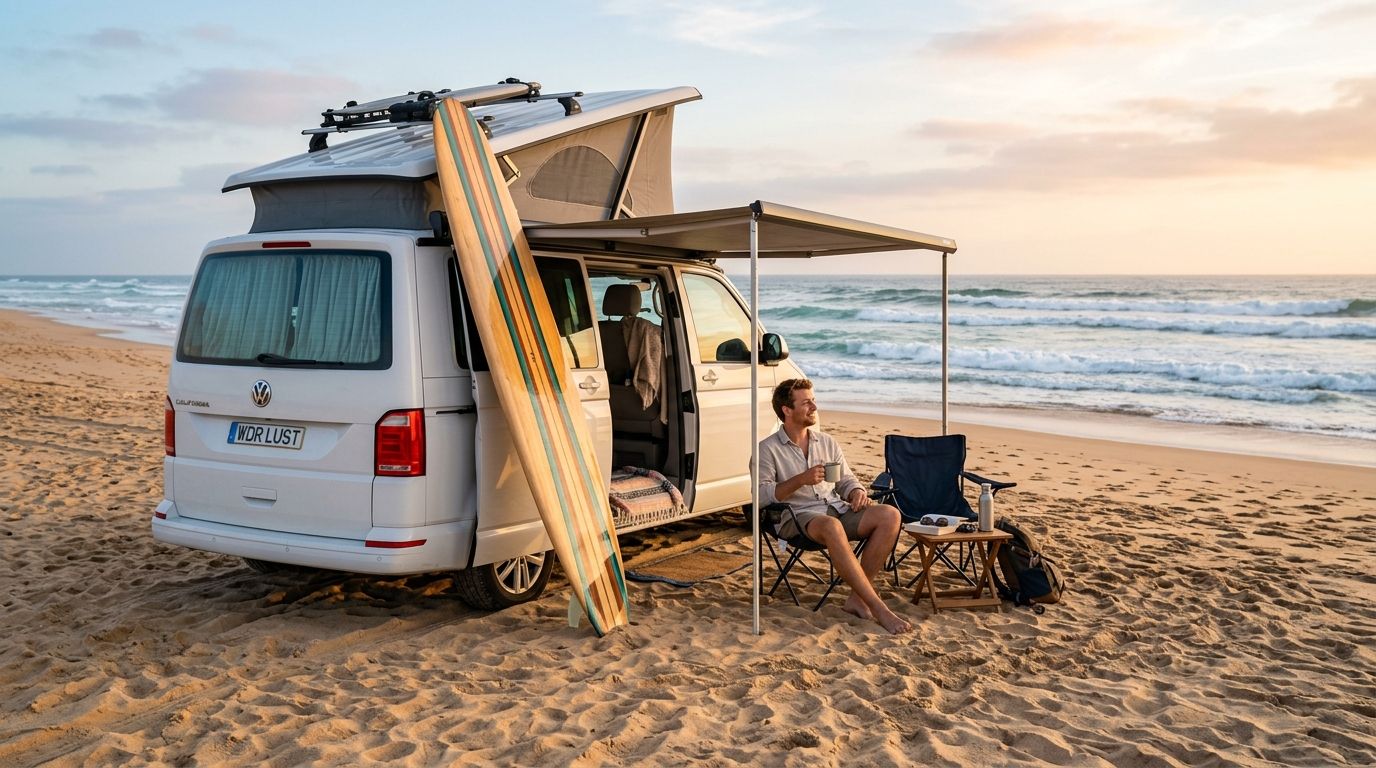
That is why people connect with it so quickly. The Beach carries a very old Volkswagen idea into modern life. Pack lightly, head for the coast, and let the day unfold without much ceremony. You can feel the family resemblance to earlier VW campers, but the charm comes from how usable it is now, in real Australian weekends, not in some polished brochure fantasy.
A mate of mine in Newcastle uses his California Beach exactly that way. During the week it handles errands and family duties. On Friday arvo he throws in a cooler, two camp chairs and a couple of fishing rods, then points it north. No grand production. No long checklist. That easy rhythm is what gives the van its staying power with enthusiasts.
Why enthusiasts connect with it
Collectors tend to fall for vehicles that already carry a lived-in story. The California Beach has one. It is easy to picture the details because they are familiar. Damp towels over the seat. Salt on the floor mats. A servo coffee going cold in the cupholder somewhere between home and the next headland.
That makes it different from a van admired only for spec sheets or rarity. The Beach has emotional mileage. It reminds long-time VW people of what made the old buses special in the first place. Freedom, usefulness, and a cabin that invites people to pile in and go.
A short film often says that mood better than specs can:
The miniature makes sense because the dream is real
That is also why the California Beach has such a natural place in a collection. It does not sit on a shelf as a random modern van. It carries the same spirit that made people treasure Beetles, Kombis and old dealership signs. In miniature, the story becomes portable. You bring a bit of that coastal, lightly packed freedom into the study, the garage, or the lounge room cabinet.
For plenty of collectors, that is the sweet spot. The full-size van represents the life they want more of. The model keeps that feeling close at hand between trips. If you are building out that side of the hobby, a curated range of Volkswagen model cars for collectors makes it easier to tie the modern California Beach back to the older VW legends it grew from.
A model earns shelf space when the full-size original already lives vividly in your head.
That is why the California Beach looks right at home beside a Samba Bus diecast or an old Beetle tin sign. Same family. Different chapter. This one just happens to come with surf wax, camp mugs and the promise of an early start up the coast.
Capturing the Vibe Collecting VW Diecast Models
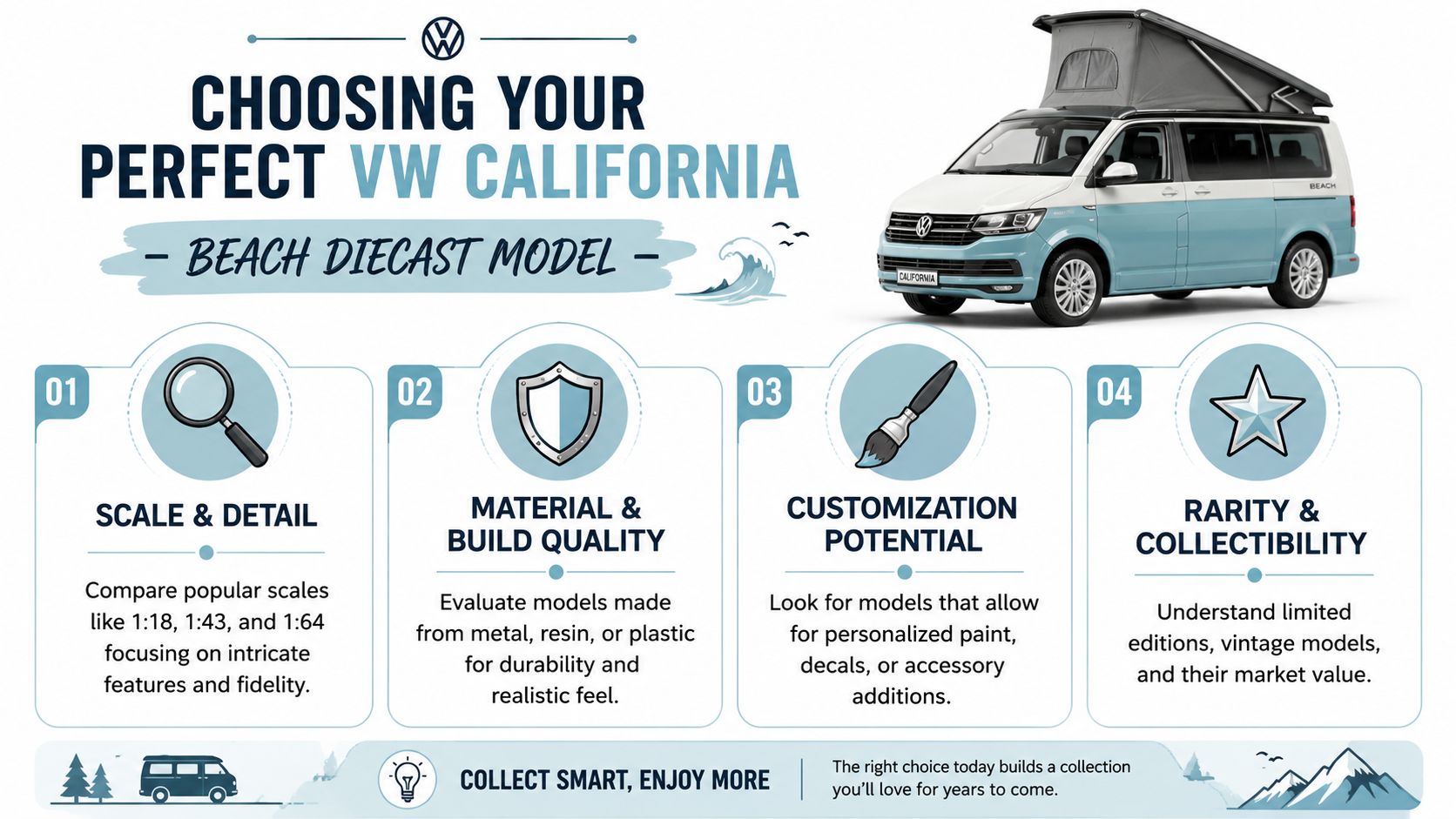
Once you start looking for a California Beach in miniature, you realise something collectors have known for years. Scale changes the experience. A model isn't just smaller. It tells the story differently depending on its size, finish and detail.
Scale changes where the model lives
A 1:18 model tends to suit a proper display shelf or cabinet. It gives designers room to include more visible cabin detail, wheel finish and trim touches. A 1:24 often feels right on a desk, sideboard or mixed VW shelf where space matters. Smaller scales can work brilliantly in grouped displays, especially if you like creating a broader Volkswagen scene with Beetles, Kombis and service vehicles together.
Here's a simple collector's view:
| Scale | Best use | What collectors usually enjoy |
|---|---|---|
| 1:18 | Main display cabinet | Bigger visual presence and more detail |
| 1:24 | Desk, bookshelf, gift display | Nice balance of size and convenience |
| Smaller scales | Multi-model scenes | Easy to group by era, colour or theme |
What to look for in a quality VW model
The California Beach suits diecast especially well because its whole design philosophy is about practical details. Its manual pop-up roof, fold-out kitchen and multi-functional sofa layout echo the simplicity and space-efficiency of classic Kombi campers, which is part of why it resonates with Australian VW fans, as noted in this Automotive World California Beach piece.
When you're choosing a model, check for:
- Licensed proportions: The roofline, window shape and stance should look right from a few steps back.
- Interior cues: Even when the cabin detail is subtle, you want signs of the camper layout rather than a generic van interior.
- Paint and trim quality: White, silver and two-tone VW schemes need crisp separation and clean finish.
- Purposeful display value: Ask whether it works solo or alongside older icons like a Beetle or Samba Bus.
Collectors building a broader Volkswagen shelf can browse different Volkswagen model cars to compare eras and styles side by side.
A California Beach model works best in a family of VWs
A lone California Beach model looks smart. Pair it with a Beetle and a classic Kombi, and the shelf starts telling a story. You can trace Volkswagen's design language from rounded optimism to practical touring culture. That's where collecting becomes more satisfying than buying alone.
Collector's note: Don't chase size alone. Chase character. The right model is the one that still makes you grin after the novelty wears off.
If you're searching terms like VW Kombi diecast Australia, Volkswagen Beetle model, buy diecast Kombi, or Volkswagen diecast models for sale, that's usually what you're after without even saying it. Not just inventory. Personality.
Styling Your Slice of Coastal Freedom
The most enjoyable displays don't look accidental. They look lived with. A California Beach model gives you a great centrepiece because the van already suggests a setting. Coastline. Campground. Garage shelf with maps and old rally stickers. You've got options beyond lining it up in a glass case and calling it done.
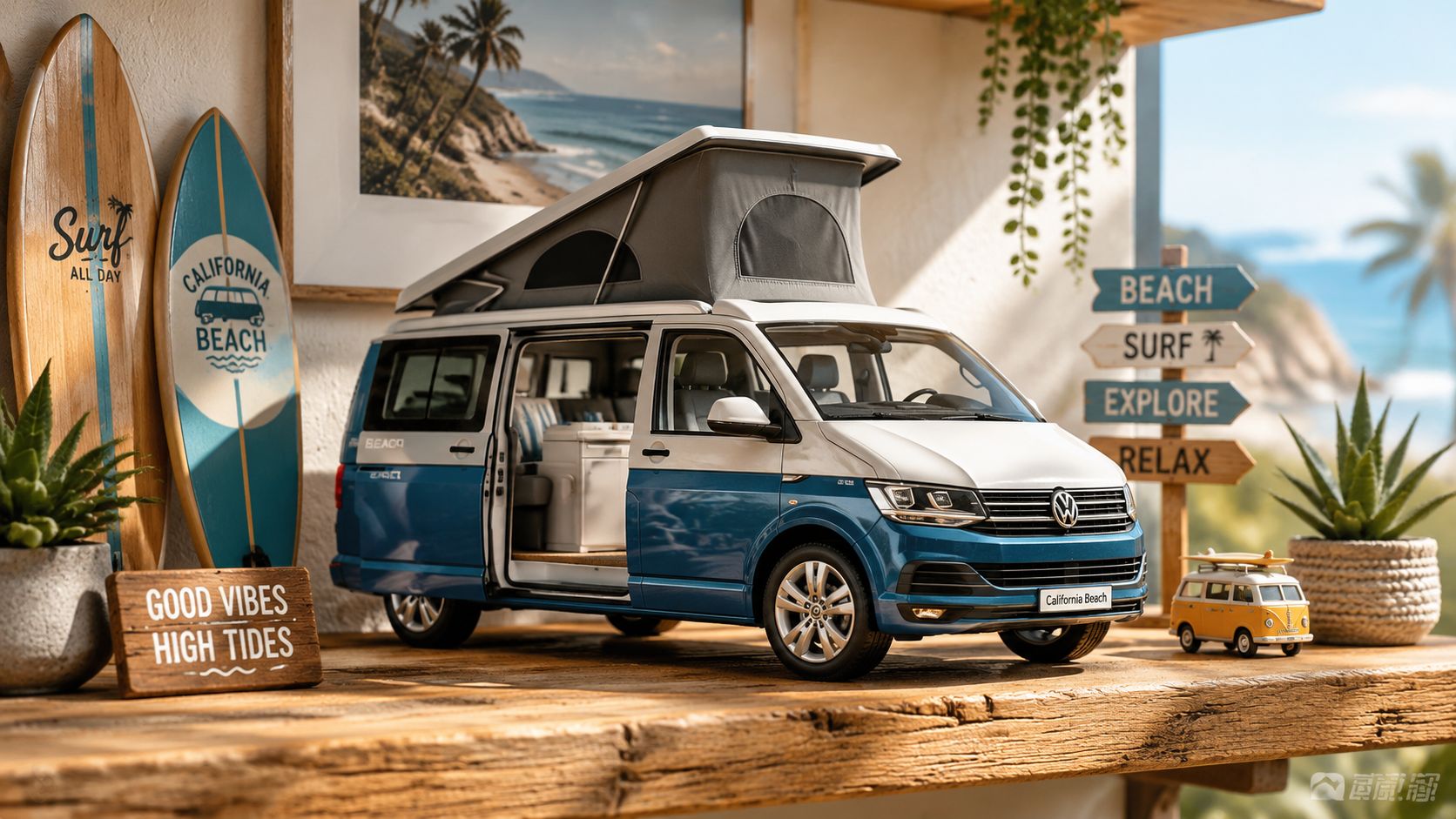
Build a display that feels like a place
California Beach has a wheelbase around 3.12 m and a turning circle of about 12 m, which helps explain why it feels at home in tight coastal towns and compact camping spots, according to this Volkswagen California dimensions brochure. That real-world nimbleness gives you a useful clue for display styling. The best scenes for it usually feel compact and practical, not oversized and theatrical.
A few ideas work particularly well:
- Bookshelf campsite: Use a timber shelf, a small framed beach print, and a single model van angled as if it has just rolled into a tight camping bay.
- Coffee table vignette: Pair the model with a motoring book, enamel mug and a small tray so it reads as part of the room rather than a toy on furniture.
- Gallery wall anchor: Add the van beneath old surf photos, Kombi art or travel postcards so it links VW heritage to coastal living.
Great gift ideas for VW people
The California Beach also makes sense as a gift because it speaks to more than one kind of enthusiast. It suits the collector who loves modern VWs, the Kombi fan who appreciates the lineage, and the home decorator who wants one piece with personality.
This mix tends to work well:
- For the diehard collector: A detailed van model paired with a Beetle or Samba Bus from another era.
- For the home stylist: A model plus coastal décor accents that carry the same relaxed beach feel.
- For the nostalgic gift buyer: A piece that says “weekends away” without needing a whole garage to enjoy it.
If you like building out a room around that idea, coastal vintage home accessories can help the display feel intentional rather than crowded.
Keep it neat, not busy
A California Beach model carries more visual information than a simple sedan. Roof, glass, body height, camping cues. Give it room. One strong model with breathing space usually looks better than five packed tightly together.
Leave enough empty space around a camper model so the eye can enjoy the shape. That space does part of the storytelling.
That's especially true if your shelf already includes VW memorabilia collectibles from different decades. The Beach is at its best when it looks ready to head off for the weekend.
Start Your Volkswagen Collection Today
The California Beach speaks to something old in VW culture and something fresh at the same time. It keeps the Volkswagen habit of clever packaging and everyday usefulness, but it wraps that into a vehicle made for beach runs, long weekends and family escapes. For collectors, that makes it unusually satisfying. You're not only admiring a modern van. You're following a line that runs from Beetles and Kombis right through to today's camper life.
That's why a California Beach model belongs so naturally in an Australian VW collection. It complements a classic Volkswagen Beetle model. It sits comfortably beside a Samba Bus. It brings a newer kind of nostalgia into the cabinet, the sort tied to surf trips, national park campgrounds and that familiar thought of leaving early to beat the traffic out of town.
If you're choosing your next piece, go for the one that matches how you enjoy the hobby. Big statement model for the cabinet. Smaller van for the desk. Coastal display piece for the lounge. Gift for the mate who still slows down every time an old Kombi passes.
The best collections don't arrive fully formed. They grow the same way road-trip plans do. One good choice, then another, then a whole story before you know it.
If you're ready to bring that California Beach spirit home, have a look at Volkswagen Memorabilia. It's an Australian store with local stock, fast shipping and a friendly team that knows why these vehicles matter. You'll find officially inspired VW gifts, coastal décor and collectible models that sit beautifully alongside classics like Kombis, Samba Buses and Beetles. It's a lovely place to start, or grow, your own Volkswagen journey.