


There's nothing quite like the dream of hitting the open road in a van you've built with your own hands. G'day! Choosing the right van for conversion is where it all begins, and the best one is simply the one that fits your travel plans, budget, and skills—whether that’s a modern workhorse or a classic VW Kombi with a story to tell.
The Dream of Van Life and Finding Your Perfect Rig
For us, it all comes back to a love for the classic VW Kombi and the freedom it has always represented. The whole #vanlife movement really just taps into that same spirit—a simpler way to get out and explore this amazing country of ours.
A van isn't just a vehicle; it’s a blank canvas for your own adventure. It’s waiting for your ideas, your hard work, and your personality. Whether you’re dreaming of waking up to the surf or finding a quiet spot in the outback, it all starts with finding the right base for your build.
Why We Love the Journey
Many of us got our start with a passion for classic Volkswagens. The iconic shape of a Beetle or the friendly face of a Splitty Kombi just sparked something—a connection to great design and the freedom of the road. That very same passion is what drives the van conversion community today. It's about:
- Building something that's yours: Every piece of wood you cut and every light you wire makes the van a part of you.
- The freedom to just go: Knowing you can pack up and head off wherever you please is an incredible feeling.
- Being part of a community: You’re joining a massive group of fellow travellers, from weekend builders to full-time nomads.
This desire for self-contained travel has absolutely exploded. Here in Australia, campervan registrations have more than doubled in two decades, jumping from 40,000 vehicles in 2004 to a projected 98,000 by 2026. It just goes to show that building a van is a massive lifestyle choice for tens of thousands of Aussies. You can dig into more data on campervan ownership trends to see just how big the movement has become.
This guide is for every Aussie with that dream—whether you’re a seasoned restorer with a classic Kombi Samba Bus diecast model for inspiration, or just starting to wonder what’s possible. Let's find the perfect van to get your adventure started.
Choosing Your Canvas: Van Types for Conversion
Alright, this is where the fun really begins. Picking your van is easily the biggest decision you'll make, and it sets the tone for your entire build and every adventure that follows. Think of it like a painter choosing a canvas – the size and shape will dictate everything you can create on it.
Your choice of van directly impacts your floor plan, your budget, and even the simple act of finding a park. To help you find the right fit, let’s break down the most common types you’ll spot on Aussie roads, each with its own personality and potential.
Panel Vans: The Versatile All-Rounder
Panel vans are the trusty workhorses of Australia and a brilliant starting point for many first-time builders. You see them everywhere—think Toyota HiAce, Hyundai iLoad, and the modern VW Transporter. Their popularity is a huge advantage when you need to find spare parts or a mechanic who knows their way around the engine.
They are the ultimate blank slate. That boxy, empty cargo area is just waiting for you to bring your ideas to life. Because they’re so common as trade vehicles, they also have a fantastic ‘stealth’ factor, letting you blend right into a city street without screaming “campervan!”
This makes them perfect for:
- Weekend warriors who need a reliable daily driver during the week.
- Solo travellers or couples happy with a more compact living area.
- Stealth campers who want to fly under the radar in urban spots.
The main trade-off? Headroom. Most standard panel vans won’t let an average-height person stand up straight. This means you'll be sitting or crouching inside, which is something to seriously think about if you're planning longer trips.
High-Roof Vans: Your Studio Apartment on Wheels
If being able to stand up is a non-negotiable for you, then a high-roof van is the only way to go. These are the giants of the van world—like the Mercedes-Benz Sprinter, Ford Transit High Roof, and Fiat Ducato. Honestly, stepping inside one feels less like a van and more like a small studio apartment.
The ability to stand up fully changes everything. It makes cooking, changing clothes, and just hanging out inside on a rainy day a completely different experience. You’re building a home, not just a place to sleep.
That extra vertical space opens up a whole world of layout possibilities. You can build a fixed high bed with a massive ‘garage’ underneath for bikes and gear, or even find room to install a small shower. Of course, all that size comes with its own challenges. They can be much trickier to park, forget about underground car parks, and they are definitely less "stealthy". For those drawn to this spacious feel but with a love for the classics, the original campers set the standard. You can trace this design DNA back by exploring the history of the Volkswagen Type 2 Kombi and see where it all started.
High-roof vans are ideal for:
- Full-time van lifers who need a comfortable and spacious living area.
- Taller folks who don’t want to spend their entire trip hunched over.
- Adventurers with bulky gear like surfboards, mountain bikes, or climbing equipment.
To help you weigh it all up, here’s a quick comparison of the most common van types.
Comparing Popular Van Types for Your Conversion
Here's a quick look at the pros and cons of common van types to help you decide which is the right starting point for your build.
| Van Type | Best For | Pros | Cons |
|---|---|---|---|
| Panel Van | Weekend trips, stealth camping, and daily driving. | Affordable, easy to drive/park, very discreet, great fuel economy. | Not enough headroom to stand, limited layout options due to space. |
| High-Roof Van | Full-time living, long-term travel, and tall people. | Full standing room, tons of layout flexibility, feels like a home. | Harder to park, can't access low-clearance areas, less fuel-efficient. |
| Camper-Specific | Those wanting a ready-made or semi-converted base. | Often come with pop-tops, windows, and insulation installed. | Can be more expensive, less of a "blank canvas" for custom builds. |
| Classic VW Van | Nostalgic travellers, VW enthusiasts, and unique builds. | Iconic style, strong community, surprisingly versatile layouts. | Older mechanics, can be prone to rust, requires more maintenance. |
Ultimately, choosing a van is less about specs and more about feel.
In the end, the best van is the one that gets you excited for the journey ahead. Close your eyes and picture your life on the road. Are you parked up in a bustling city or waking up to a remote coastline? Are you travelling for a week or for a year? Your answers will point you toward the perfect canvas for your own adventure.
Alright, let's get this done. You've picked out your dream van, and it's easy to get swept up in the romance of it all. But before you hand over any cash for your future van for conversion, it's time for a reality check.
Think of it less like a date and more like a pre-purchase home inspection. This step is absolutely critical to make sure you're not buying a beautiful-looking money pit that will cause you endless headaches down the road. You don't need to be a top-level mechanic, but you do need to know the right questions to ask and where to look.
This simple flowchart can help you decide between a smaller, nimbler van and a larger, more liveable one based on how you plan to travel.
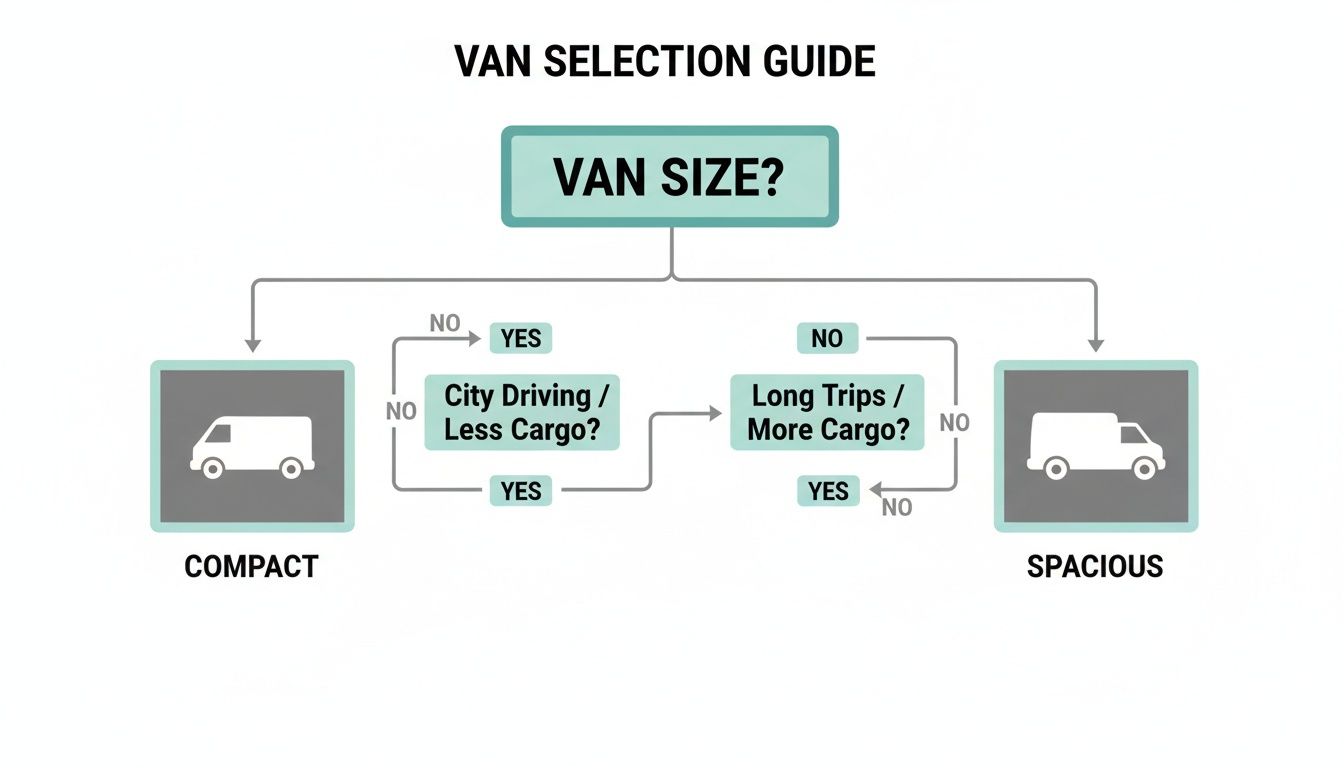
As you can see, a compact van is brilliant for zipping around town and weekend getaways, whereas a more spacious rig is almost essential for those long-haul adventures where comfort is king.
The Mechanical Deep Dive
Let's be blunt: the mechanical condition is everything. A shiny coat of paint can easily hide some serious, deal-breaking problems underneath.
Your number one enemy is rust. Get on your hands and knees and check everywhere. Look in the wheel arches, under the door seals, pull up the floor mats in the cab, and get right under the van to inspect the chassis. A bit of surface rust can often be treated, but if you find deep, flaky rust that has eaten right through the metal, it's best to walk away.
Once you’ve given it the rust check, it’s time to look at the guts of the van:
- The Engine: Pop the bonnet and look for obvious oil leaks. When you start it up, listen for any weird knocking, clunking, or rattling noises.
- Service History: A well-kept logbook with stamps and a folder full of receipts is a fantastic sign. It shows the van has been looked after and gives you a clear picture of what's been fixed or replaced.
- Tyres: Check the tread. If the tyres are worn unevenly, it could signal an alignment or suspension issue, which can be an expensive fix.
Never just take the seller's word for it. If you feel out of your depth, spend a few hundred dollars on a pre-purchase inspection. A good mechanic will spot things you’d never notice and can save you thousands in the long run.
Fuel and Drivetrain Decisions
The old petrol vs. diesel argument is a classic, but for van life, diesel usually comes out on top. Diesel engines generally provide better fuel economy on long trips and deliver more torque, which is a huge help when you're hauling the weight of a full conversion. Modern petrols are getting better, but a solid diesel is hard to beat for this kind of work.
Next up is the drivetrain. The vast majority of vans are Rear-Wheel Drive (2WD), and for most people, that's perfectly fine. It'll get you down sealed roads and into most campsites without any trouble.
But if you dream of chasing snow, launching a boat, or exploring muddy forest tracks, you should seriously consider an All-Wheel Drive (AWD) or a full Four-Wheel Drive (4WD). They’re harder to find and will cost you more, but that extra traction can be the difference between a great story and a call to a tow truck.
Understanding Your Load Limits
This is one of the most important but most frequently ignored numbers on a van: the payload capacity. It sounds technical, but it’s simply the legal maximum weight your van can carry. That includes you, your passengers, your build materials, your water, your fuel—everything.
Treat it like a strict budget. Every piece of timber, every battery, every litre of water, and even your collection of favourite VW memorabilia collectibles adds up. Going over your payload isn't just illegal; it's dangerous. It puts a massive strain on the engine, brakes, and suspension. You'll find this number on the van's compliance plate (usually inside the driver's door) or in the owner's manual. Know this number before you even think about buying a single sheet of plywood.
Embracing the Iconic Volkswagen Legacy
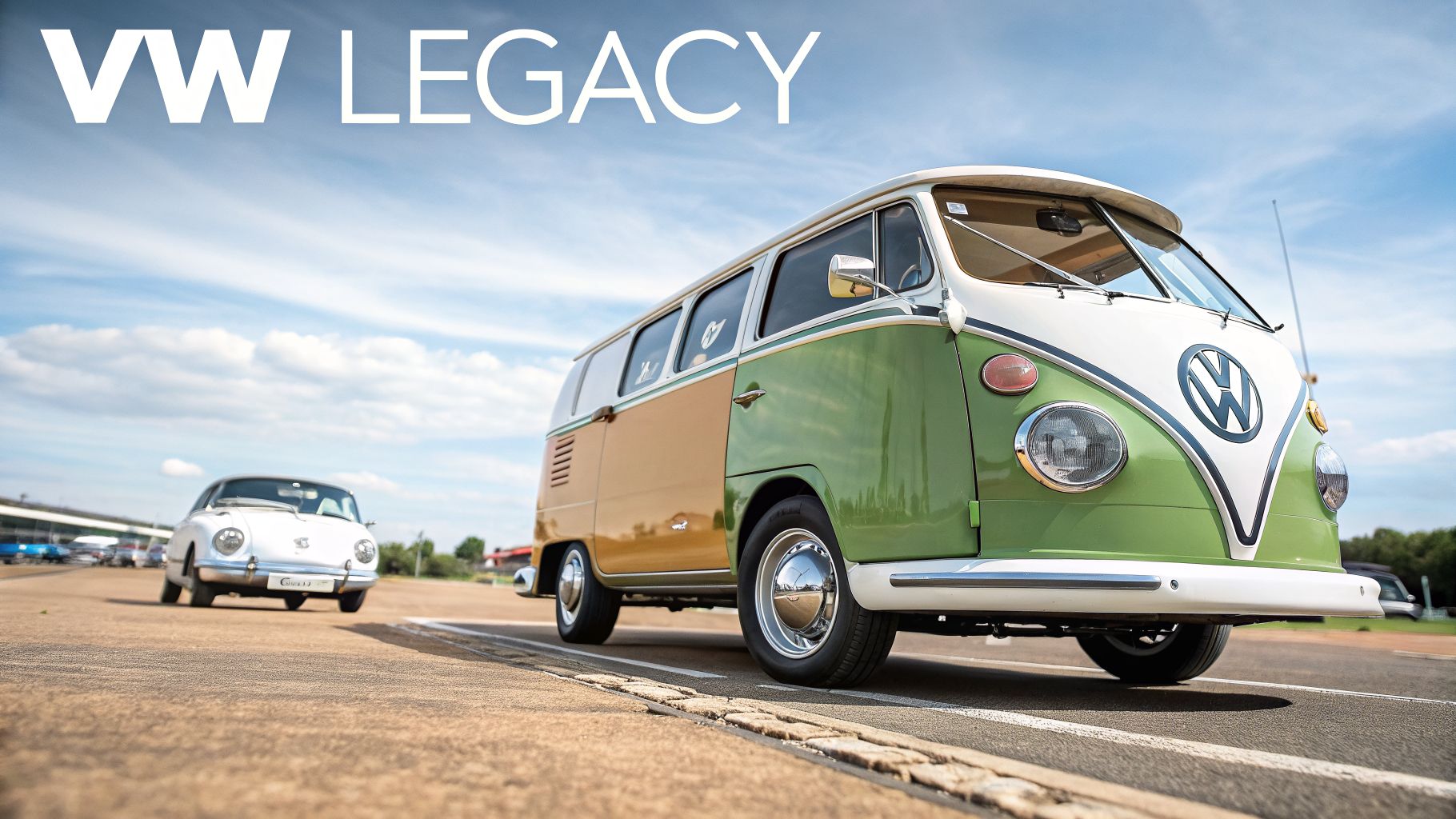
When you picture a van for conversion, chances are you’re thinking of a Volkswagen. It’s the one that started it all. Long before #vanlife, the Kombi was the true symbol of freedom and chasing the sun along the Aussie coast. For many, this is where the dream begins.
Choosing a VW isn’t just a practical decision; you’re buying into a legacy. There’s a special kind of magic in the friendly face of a Splitty and the unmistakable rumble of an air-cooled engine that modern vans just can’t copy.
The Original Adventure Machine: The Classic Kombi
Let’s be honest, the idea of converting a vintage Kombi is the ultimate dream. The style is unmatched. Pull into a campsite in a classic Type 2, and everyone wants to have a chat.
Of course, owning an icon comes with its own unique set of challenges.
- The Body: These vans are decades old. Finding one without rust is your biggest hurdle. You have to look past the shiny paint and check the wheel arches, sills, and under the floors.
- The Mechanics: The air-cooled engines are simple to work on and parts are easy to find. But they need more regular attention than a modern diesel. You’ll need to be comfortable with basic maintenance or have a good specialist mechanic on speed dial.
- The Project: A classic VW build is a labour of love. It takes patience. The reward, however, is a home on wheels with more character than anything else on the road.
Modern VWs: The Best of Both Worlds
If vintage maintenance seems a bit daunting, you can still join the VW family. Modern Volkswagens like the Transporter and the larger Crafter offer a brilliant mix of that famous heritage with the reliability you need for long-haul touring.
These vans give you a solid platform to build on, but they still carry that special VW DNA. Volkswagen's dominance in this space is no accident. The original Kombi production started on March 8, 1950, leading to around 5 million buses over forty years. Today, that legacy is so strong that the first 150 units of the latest California camper sold out instantly in Australia.
A modern VW gives you peace of mind. You get the badge and a vehicle that starts every time, so you can focus on the adventure, not the mechanics.
Bringing the VW Vibe into Any Build
No matter what van you end up with, you can always bring that classic Volkswagen spirit into your design.
Start with a retro colour palette. Think classic two-tone paint jobs in sea blue, pale yellow, or sage green. Inside, use natural timber cladding and simple white cabinetry to capture that timeless feel. For a closer look at classic layouts, check out our guide on Kombi camper history.
The best way to tie it all together is to celebrate the heritage. A beautifully detailed model on your dashboard is more than just decoration; it’s a tribute to the van that inspired it all.
Planning Your Conversion Budget Timeline and Layout
With the van selected, the next stage is planning. This is where you map out the transformation from an empty vehicle into a functional mobile home, focusing on your budget, timeline, and layout.
It's a more common project than many think. An Australian survey found that 68% of people completed their own van conversions, showing just how achievable a DIY build is. You can see more details in the full insights from the Aussie van life survey.
Setting a Realistic Budget
Your budget will define the scope of your conversion, from the materials and appliances you choose to the final finishes. A spreadsheet is the best way to track your expected costs.
Group your expenses into clear categories:
- The Big Three: These are the core systems of Insulation, Electrics, and Plumbing.
- The Build: Includes all structural components like timber for framing, wall panels, flooring, and cabinetry.
- Appliances: Your fridge, cooktop, fans, and other essential hardware.
- Finishes: The final touches that complete the look, such as paint, fabrics, handles, and decorative items like a classic Volkswagen Beetle model.
Always factor in a contingency fund of 10-15% of your total budget. Unforeseen expenses are common in any build, and this buffer prevents stress and delays.
Creating a Practical Timeline
The time required for a conversion depends on your available hours, skill level, and the complexity of the design.
That same survey showed that 58% of builders finished their projects in six months or less. A basic build with a bed and storage might only take a few weekends, whereas a complex fit-out with a full kitchen and solar could take several months.
Designing Your Perfect Layout
Before starting the build, take detailed measurements of your van's interior. Use paper and a pencil to sketch out potential layouts.
Spend time in the empty space to get a feel for how you will move around. Consider your daily routines and design a floor plan that supports them, ensuring a natural flow between sleeping, cooking, and living areas. This is your opportunity to create a space built specifically for your needs.
Introducing the Big Three Conversion Systems
A successful campervan conversion relies on three foundational systems. Getting these right is essential for comfort and function.
Insulation for Climate Control: Insulation is your first priority for managing interior temperature. It protects against Australia's hot sun and cool nights, keeps the van warm in winter, and helps dampen road noise.
Electrics for Off-Grid Power: The electrical system is the heart of your mobile setup, powering lights, refrigeration, and devices. This can range from a simple auxiliary battery to a comprehensive rooftop solar array, determining your capacity for off-grid living.
Plumbing for Water on the Go: Onboard water is a major convenience. A basic system consists of a freshwater tank for drinking and washing, a sink, and a grey water tank for waste. This allows for self-sufficient camping.
Finishing Your Build and Starting Your Adventure
The last of the sawdust is swept up, the final screw is tightened, and your van for conversion is now a home. It’s an incredible feeling, isn’t it? But before you throw your gear in and chase the sunset, a few last-minute jobs will make sure your adventure starts without a hitch.
All that planning, budgeting, and hard work was for this very moment. Every little challenge you pushed through has led to the freedom of the open road. Now it's just a matter of sorting the paperwork so you can get out there.
Making It Official
Your build isn't truly finished until the government says it is. Depending on how much you’ve changed, you may need to get your van’s classification updated.
- Registration Updates: Here in Australia, if you’ve fitted permanent features like a bed and kitchen or altered the number of seats, your van will likely need to be re-registered from a commercial vehicle to a campervan. It’s best to check with your state’s transport authority for their specific rules.
- Insurance: Don’t just assume your old policy has you covered. You'll need a specialised campervan or motorhome insurance policy. This covers not just the vehicle, but also the value you’ve added through the conversion and everything inside it. Be completely upfront with your insurer about every modification.
The Unwritten Rules of the Road
With your home now on wheels, you’ve joined a brilliant community. Being a good neighbour on the road is easy, and it ensures we are all welcome wherever we park up. It really just comes down to responsible camping—leaving no trace, respecting local bylaws, and putting a few dollars into the small towns you pass through.
After months of effort, finally seeing your vision come to life is something special. The journey from an empty steel box to a rolling home is an achievement that connects you to a long line of adventurers and dreamers.
As you map out that first trip, take a second to honour the build itself. A small memento on the dash can be a great way to capture the spirit of your newfound freedom. Many builders we know love having a detailed diecast model, a little nod to the classic heritage that inspired their own journey. Whether you're celebrating a classic Kombi or your brand-new rig, you can find the perfect piece in our extensive range of VW van accessories and models.
Welcome to the club. The road is waiting for you.
Your Van Conversion Questions Answered
We get a lot of questions from people starting out. Here are a few of the most common ones we see from aspiring van builders around Australia.
What Is the Best Van for a Stealth Camper Conversion?
For stealth camping, a panel van is your best option. Models like the Toyota HiAce, Ford Transit Custom, or a modern cousin to a classic Volkswagen Beetle model, the VW Transporter, are excellent choices. They look like regular work vehicles, which means they blend into city environments and don't attract the attention that a high-roof campervan would.
How Much Does a DIY Van Conversion Cost in Australia?
The final cost depends entirely on your build quality and the materials you choose.
- A basic build using mostly second-hand or reclaimed materials can cost under $5,000.
- A mid-range conversion with a solar power setup, quality insulation, and a proper kitchen generally falls between $10,000 and $25,000.
- For a high-end, professional-style finish with custom cabinets, an internal shower, and advanced electrical work, the cost can be $40,000 or more.
Do I Need to Get My Van Conversion Certified or Engineered?
This depends on the modifications you make. Major changes almost always need to be signed off by a professional to be legal on Australian roads.
Before you begin building, always check the specific requirements with your state’s transport authority. Modifications like adding or removing seats, installing 240V electrical systems, or fitting gas appliances will require certification from a licensed engineer.
Getting this sorted out from the start will prevent major issues later. It makes sure your van is safe, fully legal, and ready for the road.
Looking for something to complete your new setup? At Volkswagen Memorabilia, we have unique pieces to celebrate your build. From diecast models to classic décor, find the perfect item to keep the inspiration going at https://vwmemorabilia.com.au.