

A mate rolled into a local VW meet in an ID.4 while the rest of us were still admiring a row of Beetles with their lids popped and a tidy splitty parked near the sausage sizzle. Nobody said much at first. Then the circle slowly formed, just like it always does around any Volkswagen that sparks a bit of curiosity.
The New VW Cousin Arrives at the Family BBQ
At a classic VW gathering in Australia, you can usually tell the tribes at a glance. Beetle people crouch near bumpers and badges. Kombi people talk camping setups, surf trips and old roadside fixes. Then a vw id 4 glides in, and the mood changes from nostalgia to investigation.
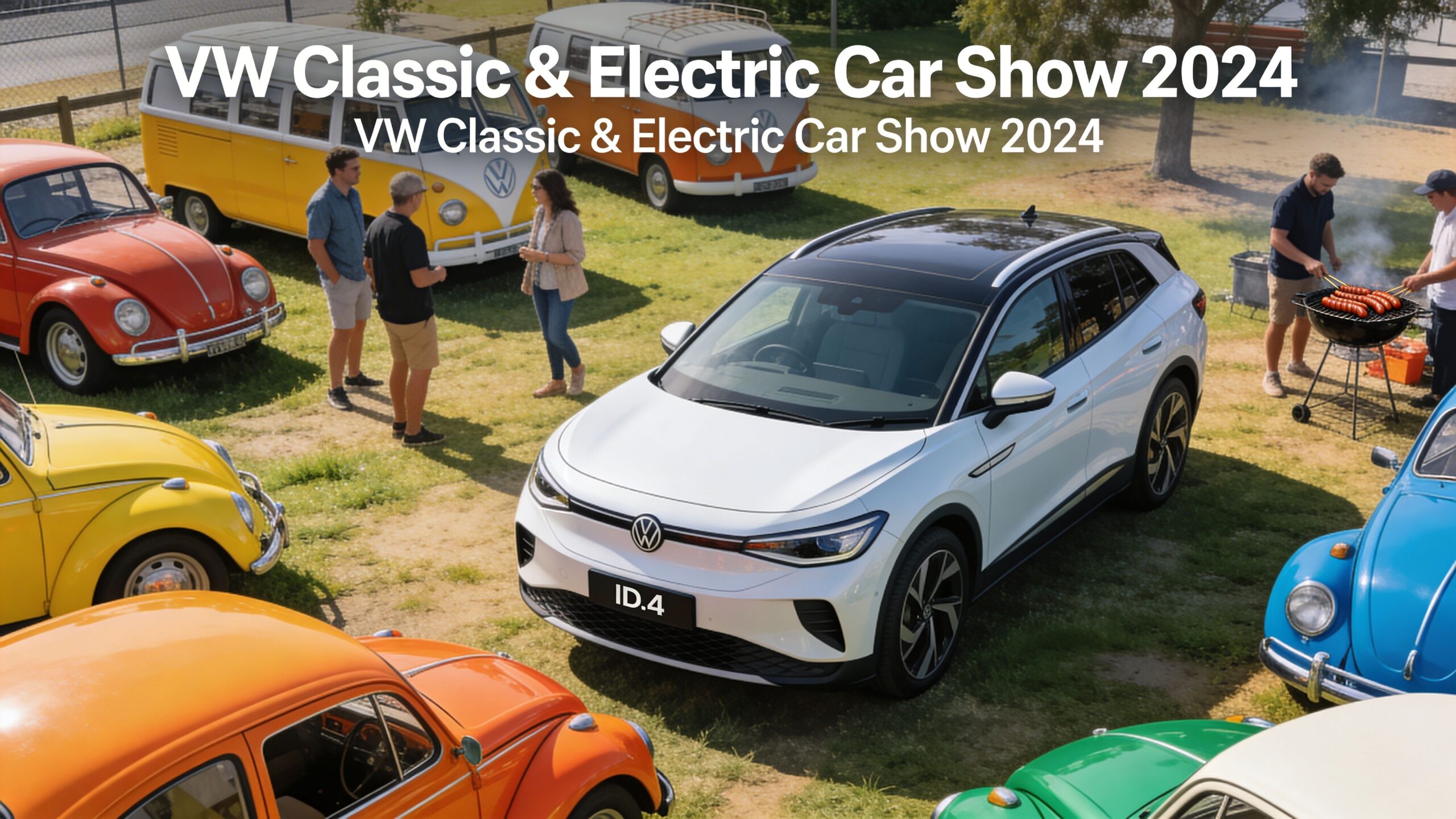
One bloke squints at the nose and says it looks friendly enough. Another walks straight to the rear, as if the absence of an exhaust might explain everything. Someone asks where the motor is. Someone else asks whether it still feels like a Volkswagen, which is the core question underneath all the others.
The awkward first handshake
Classic VW people aren't hard to please, but we are hard to fool. We know the difference between a car that wears the badge and one that carries the spirit.
That spirit has never been only about the engine note. It’s been about clever packaging, approachable design, practicality, and the sense that ordinary people could build a life around the thing.
The Beetle did that. The Kombi did that in a completely different shape. So when the ID.4 arrives, it doesn’t enter the conversation as a gadget. It enters as family under review.
Some cars impress from a spec sheet. Volkswagens usually win you over by becoming part of your weekends.
Why this question matters to collectors too
If you collect VW models, posters, wall art or old dealer pieces, you’re not only collecting metal and paint. You’re collecting chapters.
The air-cooled chapter is beloved because it feels settled in history. The electric chapter feels different because we’re still living through it. That can make people hesitant.
Still, there’s something exciting about seeing a new branch grow from an old tree. The ID.4 doesn’t have to be a Beetle reborn. It only has to answer a simpler question. Does it belong at the same table?
So What Is the VW ID 4 Anyway
The easiest way to explain the vw id 4 to a classic VW fan is this. It’s Volkswagen trying to build a people’s car for the electric age.
Not a tiny city pod. Not an exotic science project. A practical family Volkswagen that regular drivers can live with day to day.
Less mystery, more mission
For old-school enthusiasts, new model names can sound like appliance labels. “ID.4” doesn’t have the immediate warmth of “Beetle” or “Kombi”. But the idea behind it is familiar.
Volkswagen has always been strongest when it builds cars that fit into normal life. School runs. Coastal drives. Weekend errands. A boot full of gear. Mates in the back. That’s the lane the ID.4 is aiming for, only with batteries instead of pistons.
The Australian-market ID.4 Pro 4MOTION gives a good snapshot of how VW has shaped that mission for local conditions. It uses a dual-motor all-wheel-drive setup that delivers 195 kW, can tow up to 1,000 kg, and has a WLTP range of 512 km from a 77 kWh battery, according to Volkswagen’s technical data for the ID.4.
What those numbers mean in normal person language
You don’t need to become an EV tragic to understand what matters here.
- All-wheel drive matters because plenty of Australian driving isn’t perfect bitumen in ideal weather. Wet coastal roads, gravel pull-offs and country trips all reward stable traction.
- Towing matters because Volkswagens have always been lifestyle vehicles, not just commuter boxes.
- Range matters because Australians think in distances differently. A car that feels fine in a dense city can feel very different once the map stretches out.
Here’s the simple version:
| What classic fans care about | How the ID.4 answers it |
|---|---|
| Is it practical? | Yes, it’s built as a usable family VW |
| Can it handle Aussie conditions? | The Pro 4MOTION is aimed squarely at that job |
| Is it just tech for tech’s sake? | No, the useful bits are there to make everyday driving easier |
The family resemblance is philosophical
The Beetle made sense in its own era because it was simple, useful and widely accessible in spirit. The ID.4 tries to do something similar for a time when emissions rules, charging habits and new technology are all part of the motoring world.
That doesn’t mean every classic fan will fall in love with it instantly. Fair enough.
But if you judge Volkswagens by their role in people’s lives, not just by the soundtrack from the tailpipe, the ID.4 starts to make more sense.
Tracing the VW Design DNA from Beetle to ID 4
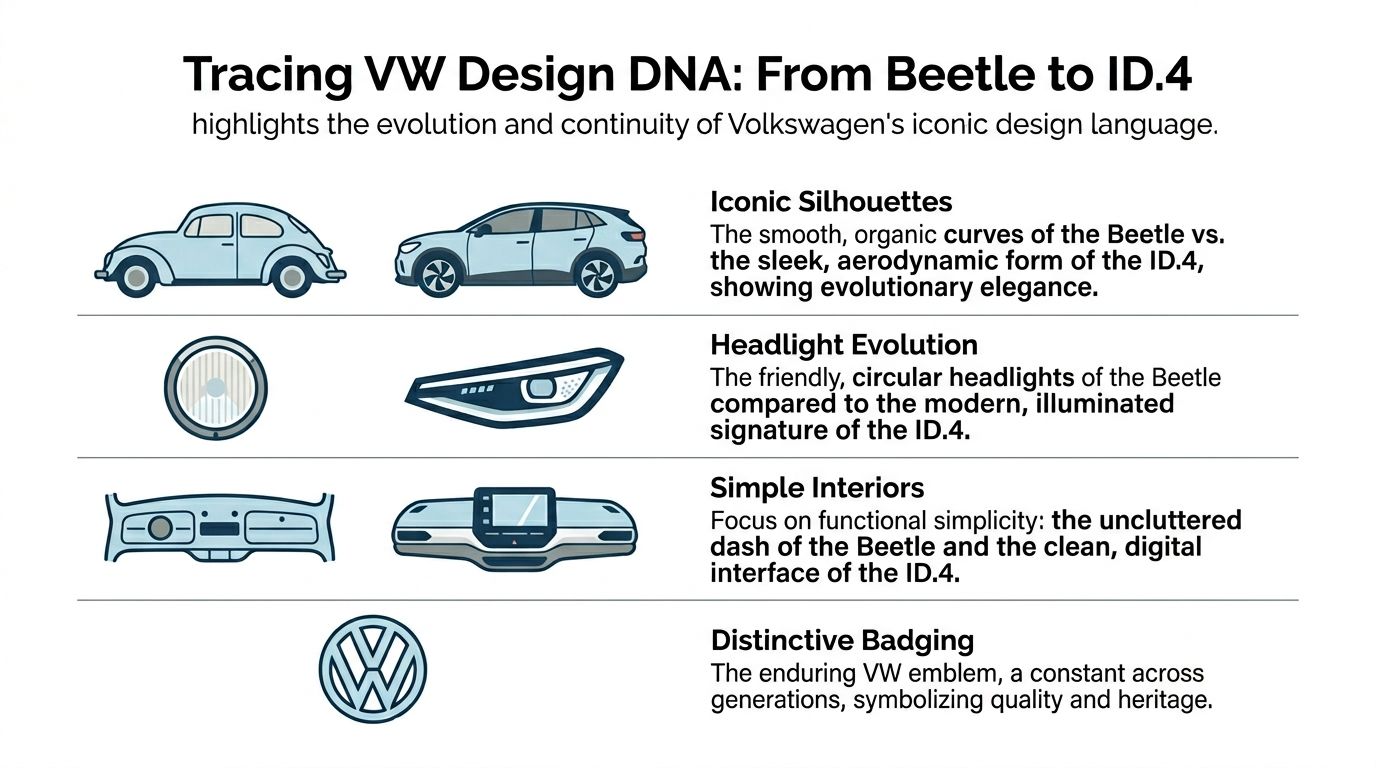
Most VW people notice shape before they notice specification. That’s why the design question matters so much. If a Volkswagen doesn’t feel right in the eye, the rest of the sales pitch doesn’t get very far.
The surprise with the ID.4 is that, once you stop looking for exact old cues, the family line starts to show itself.
Friendly faces, then and now
A Beetle’s face was never aggressive. It was open, round and oddly cheerful. That friendliness became part of the brand’s emotional signature.
The ID.4 translates that idea into modern form. It doesn’t copy the Beetle. It softens the stance, smooths the front, and avoids the angry, over-styled look that dates so many new cars.
If you’ve spent time around old Volkswagens, you already know this design instinct. A VW usually looks like it wants to join in, not start a fight.
For a reminder of how that warmth is baked into the brand, it’s worth revisiting the story of the VW Beetle.com.au/the-vw-beetle/).
Honest curves and useful space
The Beetle’s shape came from engineering needs, but people loved it because it felt organic. The Kombi did the same in a more upright way. It wasn’t pretty in a delicate sense. It was beautiful because every bit of it served a purpose.
The ID.4 follows that same principle more than many people realise.
- Aerodynamic shape: Its body looks rounded and efficient rather than fussy.
- Cabin-first thinking: Like the best VWs, it prioritises people and cargo over dramatic bonnet theatre.
- Straightforward identity: You can tell what it is meant to do just by looking at it.
A design comparison at a glance
| VW trait | Beetle and Kombi expression | ID.4 expression |
|---|---|---|
| Friendly visual character | Round lamps, soft surfaces, approachable face | Smooth lighting signatures, gentle front-end treatment |
| Space efficiency | Compact outside, clever room inside | EV layout supports a roomy, open feel |
| Honest purpose | Form follows use | Modern form shaped by practicality and efficiency |
Practical rule: Don’t ask whether the ID.4 looks like a Beetle. Ask whether it follows the same design values.
Why collectors care about this stuff
Collectors don’t just respond to age. They respond to continuity.
That’s why an early Beetle, a late Bay Kombi and a tidy Golf can all sit comfortably in one collection. They speak the same language in different accents. The ID.4 starts to earn its place when you see it that way.
Not as a break in the story, but as another interpretation of VW’s long-running talent for making practical cars feel warm and human.
A Fair Dinkum Look at ID 4 Ownership in Australia
If you’re talking about owning a vw id 4 in Australia, the cheerful club-chat version only gets you so far. So let’s speak plainly.
The car may suit local driving in theory, but ownership isn’t just about what the brochure says. It’s about charging access, software behaviour, service support and whether fixes arrive when owners need them.
The local view matters more than overseas chatter
A lot of online discussion about the ID.4 gets drowned out by US-based recall talk and American ownership stories. That’s useful background, but it doesn’t always answer the questions an Australian buyer has on a real trip or in a real service queue.
A more grounded takeaway comes from local reporting. This Australia-focused look at VW ID.4 problems notes that Australian owners have raised concerns about infotainment freezes and slower software update rollouts, and that local consumer surveys placed VW EVs below average for charging reliability in 2025.
That’s not the same thing as saying the car is a disaster. It means buyers should keep their eyes open and ask local questions, not just import overseas opinions.
What a classic VW owner will likely ask first
A long-time Volkswagen enthusiast tends to look at ownership through a slightly different lens. The questions are often practical and a bit sceptical.
- Can I trust it on distance runs? This matters more in Australia because gaps between charging options can shape the whole trip.
- If software plays up, who sorts it? Old VWs had mechanical quirks. New ones can have digital quirks, which feel less charming when they interrupt the drive.
- Will support improve quickly enough? A new platform needs confidence from service networks as much as from drivers.
The same instinct that makes someone check engine numbers on an old Beetle also makes them ask sharp questions about battery support, recalls and software updates on an EV.
Reliability is now part of the VW story too
That may sound unromantic, but it’s honest. Nobody buys into Volkswagen heritage so they can spend weekends chasing unresolved faults.
The practical buyer may even compare this with the familiarity of a later performance hatch such as the Volkswagen Golf Mk 7, where the ownership conversation feels more established and less experimental.
Buy the badge for love if you like, but buy the platform with your eyes open.
For Australian enthusiasts, that balance is the whole game. Admire the ambition. Enjoy the design. Just make sure the local ownership picture suits the way you drive.
From the Paddock to the Display Shelf
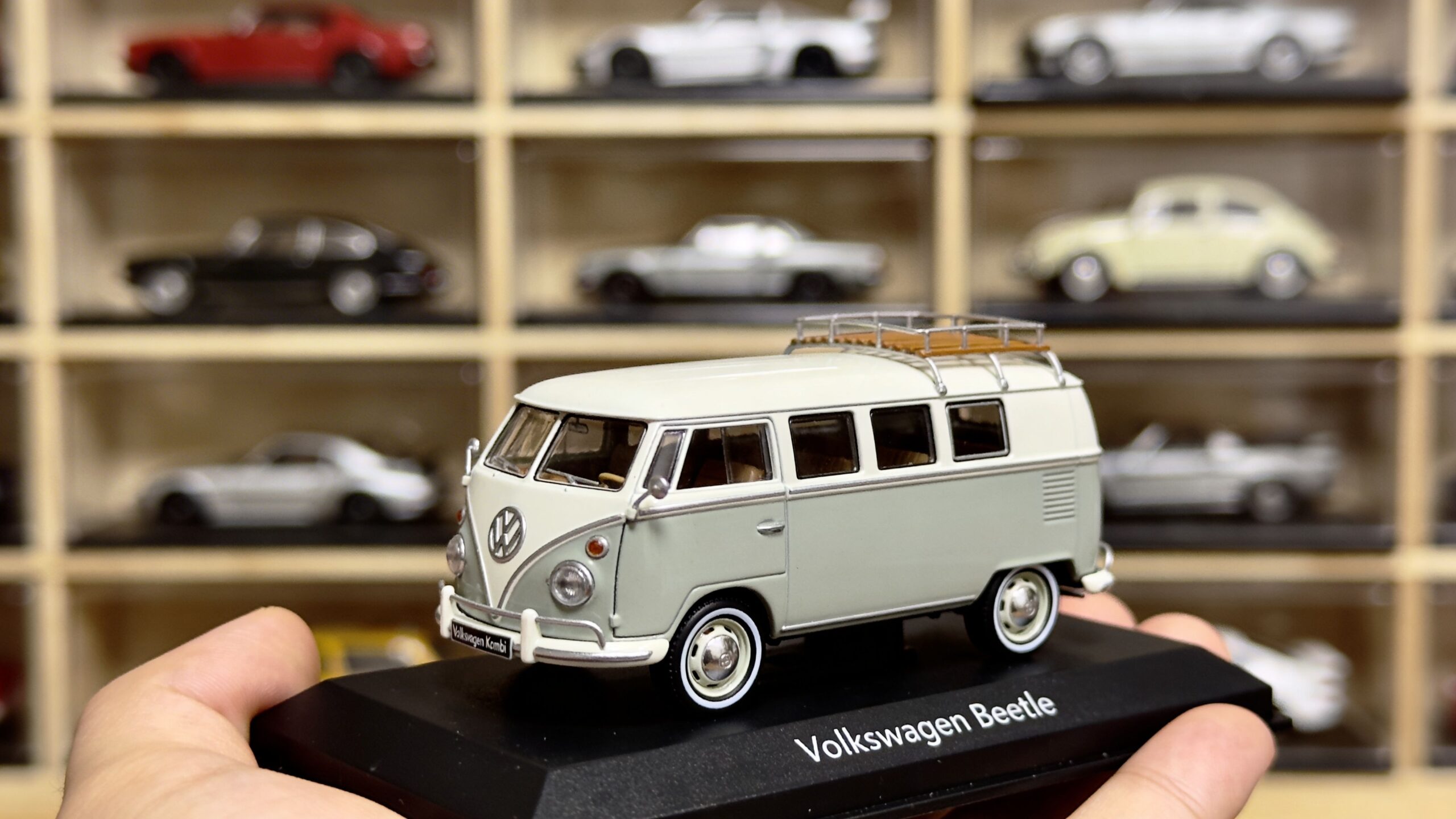
Collectors know the feeling. You pick up a diecast Kombi, feel the weight in your hand, spot the two-tone paint and tiny trim details, and suddenly a whole era comes rushing back.
That’s the magic of memorabilia. It shrinks a big story into something you can hold.
Why the ID.4 belongs in a collector’s headspace
A lot of collections stop at the point where nostalgia feels safest. Oval Beetles. Samba buses. Surf vans. Dealer tins. Old signs.
That makes sense. Those pieces already carry historical glow.
But a living collection should also mark turning points. The ID.4 represents one of those moments. It’s not important because it’s electric on its own. It’s important because it marks Volkswagen trying to carry its core identity into a different age.
That makes it collectable in a very particular way. Not old-school classic. Future heritage.
New today, significant tomorrow
If you line up a classic Beetle, a flower-power bus and a modern EV model, the contrast tells a stronger story than any single piece on its own. You can see the arc of the brand.
Some collectors love perfect era consistency. Others enjoy the tension between old and new. The ID.4 works best in the second kind of display because it asks a question every visitor wants to answer. Does this still feel like a VW?
A moving visual helps with that conversation too.
How to think about collecting the electric chapter
Try treating the ID.4 less like a rival to your classic pieces and more like a bookmark in the larger Volkswagen timeline.
- As a milestone: It captures the moment VW committed publicly to a new kind of family car.
- As a conversation starter: People who ignore another Beetle variant may stop dead at a modern EV model in a classic display.
- As a complement: Old and new sharpen each other when shown together.
That’s the quiet thrill of collecting. You’re not just buying objects. You’re curating the moments when a brand changed direction and still tried to stay itself.
Displaying Your Whole VW Family Story
A shelf full of random models can be nice. A shelf that tells a story is better.
The trick is to group your pieces by idea, not just by colour or size. Volkswagen history gives you plenty of themes to work with, and the vw id 4 can fit surprisingly well when the display has a narrative.
Theme one through time
Call this one The People’s Car Through Time.
Start with a classic Beetle model as the foundation. Add a later family favourite, then finish with a modern electric VW piece. The point isn’t identical styling. The point is showing how Volkswagen kept revisiting the same mission in different decades.
A clean backdrop helps. If you prefer a coastal or beach-house look around the shelf, a textured accent like seashell wall art can soften the display without stealing attention from the vehicles.
Theme two surf and utility
This setup leans hard into Australian VW culture.
Use a Kombi or Samba bus as the hero piece, then add a modern VW that speaks to weekend practicality in a fresh way. That contrast works because both vehicles suggest movement, gear, family and the road ahead.
Good pieces to browse for this style include:
- Volkswagen diecast models for sale
- VW Kombi diecast Australia picks
- Volkswagen Beetle model collectibles
- Buy diecast Kombi styles in colourful variants
- VW memorabilia collectibles with a bus focus
- Classic Samba-inspired display pieces
- Flower Power Volkswagen pieces for a brighter shelf
Theme three old soul, new chapter
Some displays work best with contrast kept simple.
| Shelf level | Suggested story |
|---|---|
| Top | A standout classic Beetle or Samba Bus |
| Middle | Supporting pieces like signage, smaller diecast, or period décor |
| Bottom | A modern VW item to represent the current chapter |
A collection feels richer when it shows where Volkswagen has been and where it’s heading.
Keep spacing generous. Let one piece breathe beside the next. The ID.4 idea works best when it isn’t crowded. It needs room to act as the new voice in an old choir.
Answering Your Questions About the ID 4 and Collectibles
Is the ID.4 iconic yet
Not in the way the Beetle or Kombi is. Those cars earned their place over decades of use, memory and cultural presence.
The ID.4’s importance is different for now. It matters because it marks a shift in the Volkswagen story. That kind of significance can turn into icon status later, but only time decides that.
Why aren’t there as many ID.4 collectibles as Kombi models
Collectors love repetition with variation, and no Volkswagen has delivered that better than the Kombi. It suits endless paint schemes, travel themes and nostalgic scenes.
The ID.4 is newer, and the market around it is still maturing. That usually means fewer licensed variations, fewer display traditions and less built-in nostalgia. For some collectors, that scarcity is exactly what makes the early pieces interesting.
Does the production shift change its future classic potential
It certainly adds intrigue. A key question for collectors is how production changes affect long-term value, availability and confidence.
According to this report discussing VW’s production shift and Australian used-market movement, right-hand-drive ID.4 imports for Australia continue, while used ID.4 prices in Australia dropped 12% in Q1 2026 amid recall news. That creates a mixed picture.
On one hand, uncertainty can cool enthusiasm in the short term. On the other, unusual moments in a model’s life often become part of what later makes it historically interesting.
Should a classic VW collector pay attention now or wait
Pay attention now. You don’t have to rush into every new model or collectible, but it’s worth noticing the pieces that mark a real turning point.
The smart collector doesn’t only chase what is already adored. They also notice what may become meaningful once the dust settles.
Welcoming the Future Without Forgetting the Past
By the end of that car-show chat, the ID.4 usually has a few people won over, or at least thinking harder. Not because it sounds like an old Beetle or smells like warm oil after a summer drive. It doesn’t.
It gets a hearing because the deeper Volkswagen values are still there. Practical design. Everyday usefulness. A sense that the car is meant to fit into ordinary lives, not sit on a pedestal.
That’s why the vw id 4 doesn’t need to replace the classics. It only needs to take its seat in the family. The Beetle will always be the old charmer. The Kombi will always be the free spirit. The ID.4 may become the quiet modern cousin who turns up differently, but still belongs.
And for enthusiasts, that’s enough. The story keeps going. The badge still means something. The chapter changes, but the book is the same.
If you’d like to celebrate every era of the marque, from air-cooled legends to the next electric chapter, have a browse through Volkswagen Memorabilia. You’ll find licensed VW-themed diecast, gifts and display pieces that help tell the whole family story, whether your heart belongs to a Beetle, a Kombi, or the new generation finding its place beside them.