


You've probably done it yourself. You bring home a cracking little Beetle or Samba Bus, set it on a shelf, step back, and think, that looks brilliant. A few weeks later there's a film of dust on the roofline, a fingerprint on the side window, and the once-crisp finish doesn't feel quite as special.
That's where proper display cases for models earn their keep.
For VW collectors, a case isn't just storage. It's part protection, part presentation, and part respect for the story that model carries. Whether it's a neat 1:43 Beetle that reminds you of your first car or a larger Kombi that captures every chrome strip and two-tone panel, the right case keeps the details sharp and the nostalgia intact.
More Than a Box Protecting Your Prized VWs
There's a real pleasure in holding a fresh diecast VW model. You notice the shape of the guards, the little badge work, the paint, the windows, the stance. That feeling is exactly why a case matters. If the model means something to you, protecting it shouldn't be an afterthought.
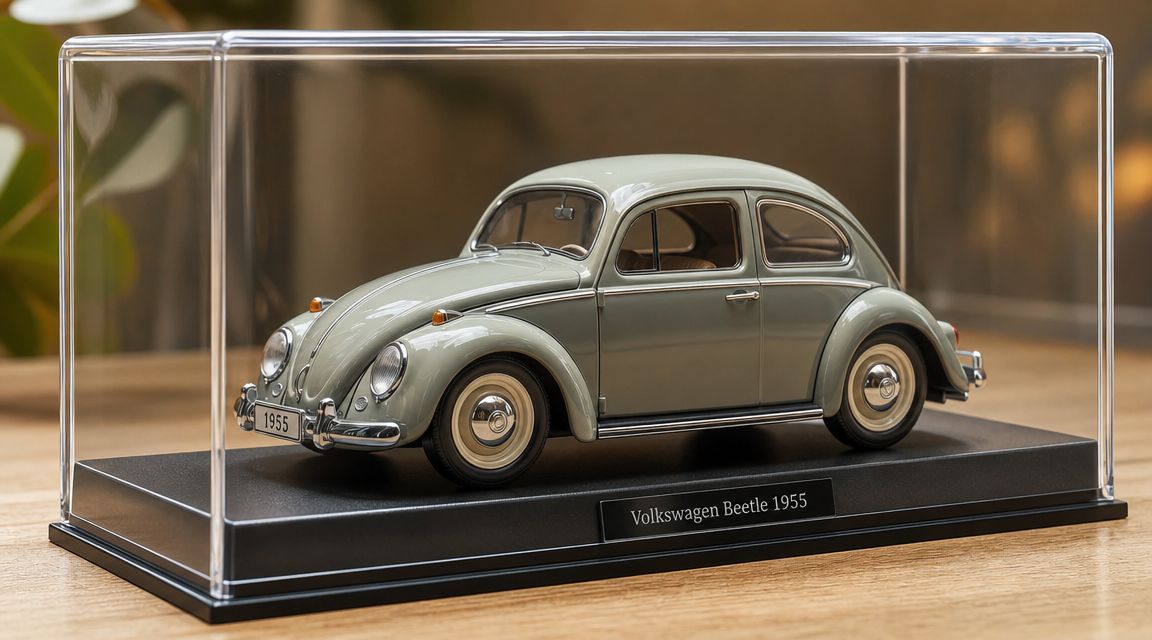
Dust is the obvious enemy, but it's not the only one. Sunlight, accidental bumps, moisture in the air, and plain old handling all chip away at a model over time. Decals can fade, paint can lose its punch, and delicate bits like mirrors and roof accessories can cop damage just from being moved around too often.
Why museum thinking matters at home
Australian collectors can learn a lot from conservation practice. In Australia, heritage institutions like the National Museum of Australia display objects in sealed cases with controlled lighting, often as low as 50 lux for highly light-sensitive materials, to reduce deterioration, as noted in this overview of display case conservation practice. That same principle applies beautifully to diecast Volkswagens, because paints, plastics, adhesives, and decals don't enjoy heat, dust, or harsh light any more than museum objects do.
Practical rule: If a model is worth displaying, it's worth separating from the room around it.
That doesn't mean every collector needs a museum-grade cabinet in the lounge. It means the logic is sound. A sealed or semi-enclosed case with a clear front, stable base, and sensible lighting will usually protect a model far better than open shelving ever will.
Why open shelves often disappoint
Open shelves look tidy for about five minutes. Then the cleaning starts. If you've ever tried dusting around aerials, mirrors, gutter lines, roof racks, or tiny trim pieces on a Kombi, you already know how risky that is.
A decent case helps with all of this:
- Less dust build-up means less cleaning and less touching.
- Better physical protection keeps models safer from pets, kids, elbows, and general household chaos.
- A cleaner visual frame makes the model look intentional, like a proper display piece rather than a toy parked on furniture.
If you want a few practical basics on ongoing upkeep, the collectible care advice is worth a look. Good care starts long before anything needs repairing.
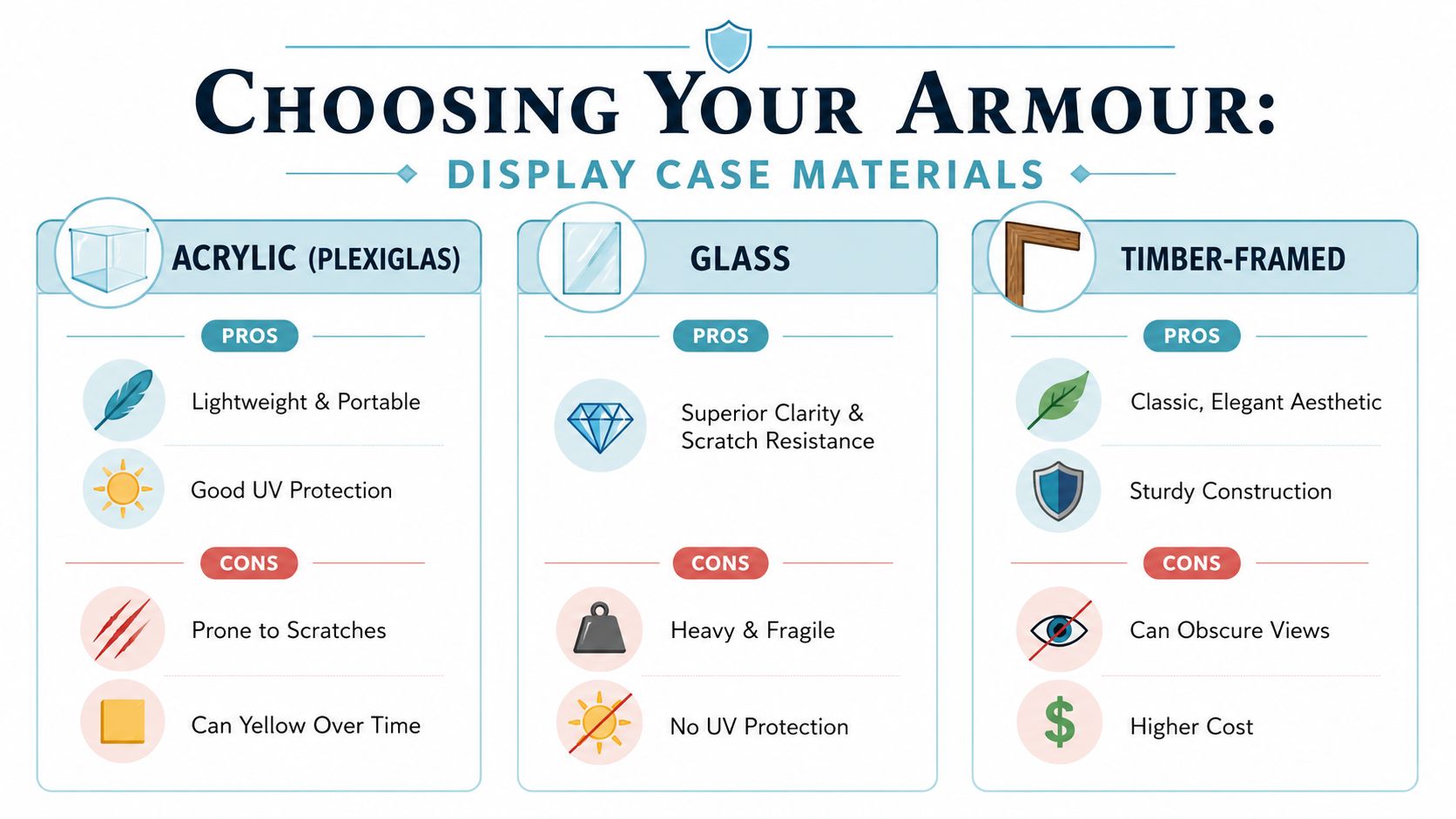
Choosing Your Armour Acrylic Glass or Timber
Material choice changes both the look and the day-to-day reality of your display. Some collectors chase the clean, almost invisible look of acrylic. Others love the heft and clarity of glass. Then there's timber-framed cabinetry, which can make a collection feel like part of the room rather than something added to it.
Acrylic for everyday collectors
Acrylic is popular for good reason. It's lighter than glass, easier to move, and usually safer if the case is going into a family room, office, or shop where it might get bumped. For smaller VW displays, that lower weight makes a big difference when you're rearranging shelves or carrying a case to a club display.
It also suits the way many collectors buy and display models in Australia, where centimetre-based sizing and lightweight clear enclosures are common. The downside is familiar. Acrylic can scratch, and cheaper panels can lose their crisp look over time.
Glass for a sharper finish
Glass has a classic feel. It's harder to scratch in normal use and often gives a more premium look, especially in a cabinet with good lighting and a dark base. A glass case around a detailed Beetle can look superb on a sideboard or in a study.
The trade-off is weight and fragility. It's less forgiving to move, less ideal around active kids or pets, and if something goes wrong, it goes wrong more dramatically than acrylic.
In Australian homes, the acrylic-versus-glass decision matters because UV exposure and coastal conditions can affect plastics, decals, and paint finishes, a gap many generic buying guides leave unanswered, as noted in this display case buying guide.
Timber-framed cases for furniture-style display
Timber-framed cases work best when you want the display to feel permanent. They suit a study, lounge, or hallway where the case becomes part of the room's character. For classic VW collections, timber can bring in that warm vintage note that pairs nicely with cream, pastel, or two-tone models.
A few things to weigh up:
- Acrylic works well if you want lighter handling and a simple modern look.
- Glass suits collectors who value scratch resistance and visual crispness.
- Timber-framed cases shine when aesthetics matter as much as protection.
What doesn't work so well is choosing purely by looks. A beautiful case placed in a hot sunny room is still a poor choice. Material and location have to work together.
Getting the Size Right for Your Favourite VW Models
Most case-buying mistakes happen here. People look at the outside measurements, think it should be fine, and only realise the problem when a mirror touches the wall or the roofline sits too close to the top panel.
Internal clearance is what matters.
Custom case guidance recommends defining the object's internal dimensions first, then working out material, wall thickness, base, and access details from there. For diecast VWs, that's the difference between a model sitting safely and a model under pressure from a case that looked big enough from the outside.
Measure the model, not the shelf
Start with the model itself. Measure the longest, widest, and tallest points, including mirrors, roof racks, lights, or any accessory that protrudes. For many VW pieces, those are the bits that catch first.
A good rule of thumb is to add 1 to 2 cm of clearance around the model's length, width, and height. For a typical 1:18 VW model that's about 25 cm long, that extra space helps stop mirrors or accessories touching the sides and reduces handling damage, as noted in this model display sizing guide.
Tight cases rarely look premium. They look like the model was squeezed in as an afterthought.
A simple way to size a case
Use this order and you'll avoid most of the headaches:
- Measure the actual model including fragile bits.
- Add clearance so nothing sits hard against the walls.
- Allow for the base if the case includes one.
- Think about access because a case that's awkward to open will lead to rough handling.
- Check the internal dimensions only, not the cabinet's outside footprint.
Here's a practical quick guide for common VW diecast scales.
| Model Scale | Typical VW Model | Recommended Minimum Internal Case Size (cm) |
|---|---|---|
| 1:18 | Beetle or Kombi with detailed mirrors and trim | Model dimensions plus at least 1 to 2 cm clearance on length, width, and height |
| 1:24 | Beetle coupe or Kombi bus | Model dimensions plus at least 1 to 2 cm clearance on length, width, and height |
| 1:43 | Classic Beetle, Type 2, or Samba Bus | Model dimensions plus at least 1 to 2 cm clearance on length, width, and height |
| 1:64 | Small Beetle or micro display grouping | Model dimensions plus at least 1 to 2 cm clearance on length, width, and height |
Collectors browsing different scales can compare what suits their shelves in the Volkswagen model cars collection. It makes planning mixed displays much easier if you know whether you want one standout 1:18 hero piece or a row of smaller classics.
What works in real displays
A 1:18 Kombi Samba Bus usually looks best with a little breathing room. That extra space makes room for a label, a neat plinth, or just a cleaner view around the body. It also makes the case feel deliberate rather than cramped.
What doesn't work is buying a generic cube because the numbers seemed close. Cases should fit the model. Not the other way around.
Lighting and Mounting to Make Your Models Pop
A great VW model can disappear under bad lighting. You lose the curve of a Beetle bonnet, the split in a Samba windscreen, the sparkle in chrome, and the depth in two-tone paint. Good display cases for models don't just protect. They stage the model properly.
Plan the light before you build the case
Many home setups go off track. People buy a case first, then try to stick lighting in afterwards. The better approach is to design construction and lighting together.
For the best results, integrated LED strips with diffusers should be considered from the start, because the lighting type, colour temperature, wiring path, and power location all affect frame depth and access. In enclosed acrylic cases, a 12V supply and diffused LEDs help keep heat low and reduce glare on glossy paint and chrome, as shown in this LED display case build example.
Mounting choices change the whole mood
A black base can make bright Kombi colours jump out. A mirrored base shows off underbody detail and gives a bit of that show-and-shine drama. Timber plinths add warmth and suit vintage displays, especially if you like older Beetles and buses in cream, red, pale blue, or surfy pastel shades.
A few setups collectors tend to like:
- Freestanding single-model cases for one hero piece on a desk or sideboard.
- Wall-mounted displays when floor or shelf space is tight.
- Tiered cabinets if you're arranging several scales and want easy viewing.
Soft, diffused light flatters diecast better than harsh direct light every single time.
The goal isn't to blast the model with brightness. It's to reveal the lines, trim, and colour without glare bouncing back at you.
Styling a Collection with VW Heart and Soul
This is the fun bit. Once the protection and fit are sorted, the case becomes a little stage for your VW story. A display should say something about why you collect, not just what you own.
Display ideas that feel personal
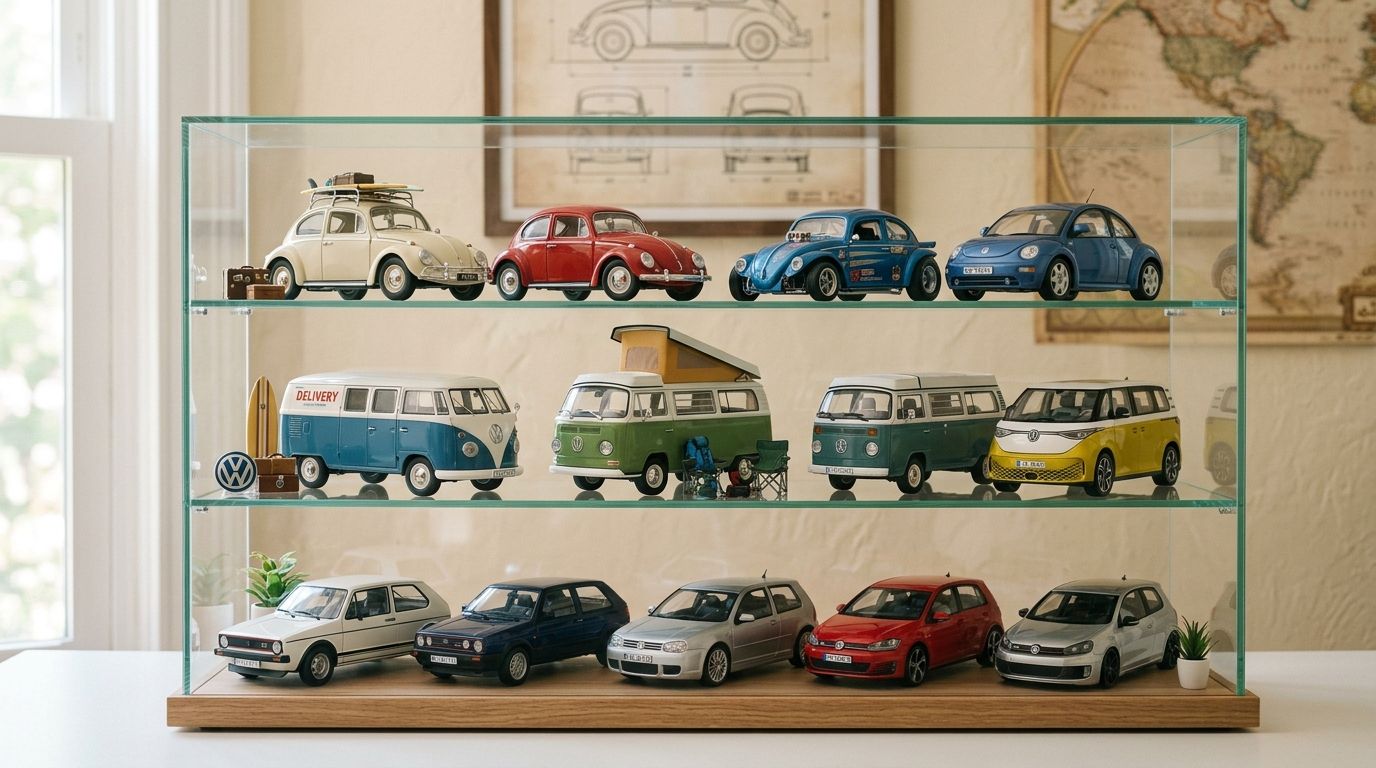
A lovely approach is to group by mood rather than scale. A shelf of surf-themed Kombis, beachy colours, and relaxed coastal styling has a completely different feel from a tidy row of Beetles arranged by decade or paint colour.
You might try:
- Through the decades with early Beetles through to later classics.
- Surf culture styling with Kombis, buses, and relaxed coastal props.
- Colour grouping so creams, blues, reds, or flower-power finishes work together visually.
Let the collection tell a story
Some of the best displays aren't the biggest. They're the ones with a theme. A single Flower Power Beetle beside a couple of bright Kombis can say more than a crowded shelf of unrelated pieces.
If you want to blend VW collecting into your room styling, the home decoration range can spark ideas for tying diecast displays into a broader coastal or vintage setup. That's especially handy if your collection lives in the lounge rather than a dedicated hobby room.
Keep props simple. The star should still be the Volkswagen.
Frequently Asked Questions
How do I clean an acrylic case without scratching it?
Use a very soft microfibre cloth and clean gently. Don't scrub dry dust around the surface, because that's when fine scratching happens. Light pressure and patience beat aggressive wiping every time.
Can I stack display cases?
You can, but only if the lower case is stable, flat, and built to carry the weight. Heavy stacking on flimsy acrylic tops is asking for trouble. If you want a vertical display, a proper cabinet or shelf system is usually the safer option.
What if dust still gets inside the case?
That's normal with cases that aren't fully sealed. Open the case carefully, remove the model by its sturdier points, and clean both the base and the inside panels before putting it back. The less often you do this, the better.
Is a bigger case always better?
No. Too much empty space can make the model look lost. You want enough clearance for safety and viewing, but not so much that the case overwhelms the car.
Should I display my best model in a sunny room?
It's better not to. Even a beautiful bright room can be rough on paint, decals, and plastics over time. Choose a spot with stable conditions and indirect light if you can.
Are wall-mounted cases good for VW diecast?
They can be excellent if they're properly fixed and sized for the model. They suit smaller spaces well and can turn a hallway or study wall into a tidy gallery of Beetles and Kombis.
If you're ready to give your collection the kind of home it deserves, Volkswagen Memorabilia is a great place to browse officially licensed VW-inspired pieces, from diecast classics to display-worthy home décor. It's especially handy for Australian collectors who want local stock, quick shipping, and a range that understands the charm of Beetles, Kombis, Samba Buses, and the whole laid-back VW spirit.