

There's a familiar moment in every classic VW owner's life. You're crouched behind the Beetle or Kombi with a cuppa in hand, listening to that air-cooled note settle into its idle, and you spot it. A tired muffler seam, a patch of surface rust, maybe a tailpipe that's seen one coastal drive too many.
That's usually when the stainless steel exhaust pipe question comes up.
For Australian VW owners, it isn't just about noise or shine. It's about keeping an old favourite on the road through sea air, condensation, stop-start traffic, and the odd wet winter run to a show. The right exhaust can make a classic feel sorted. The wrong one can become a repeating job that steals time from the fun bits.
That Unmistakable Sound and an Aussie Icon's Future
A classic Volkswagen has its own soundtrack. A Beetle at idle has that cheerful, mechanical chatter underneath the exhaust note. A Kombi has a broader, more relaxed burble that feels made for beach roads, camping gear, and a slow roll into the showgrounds.
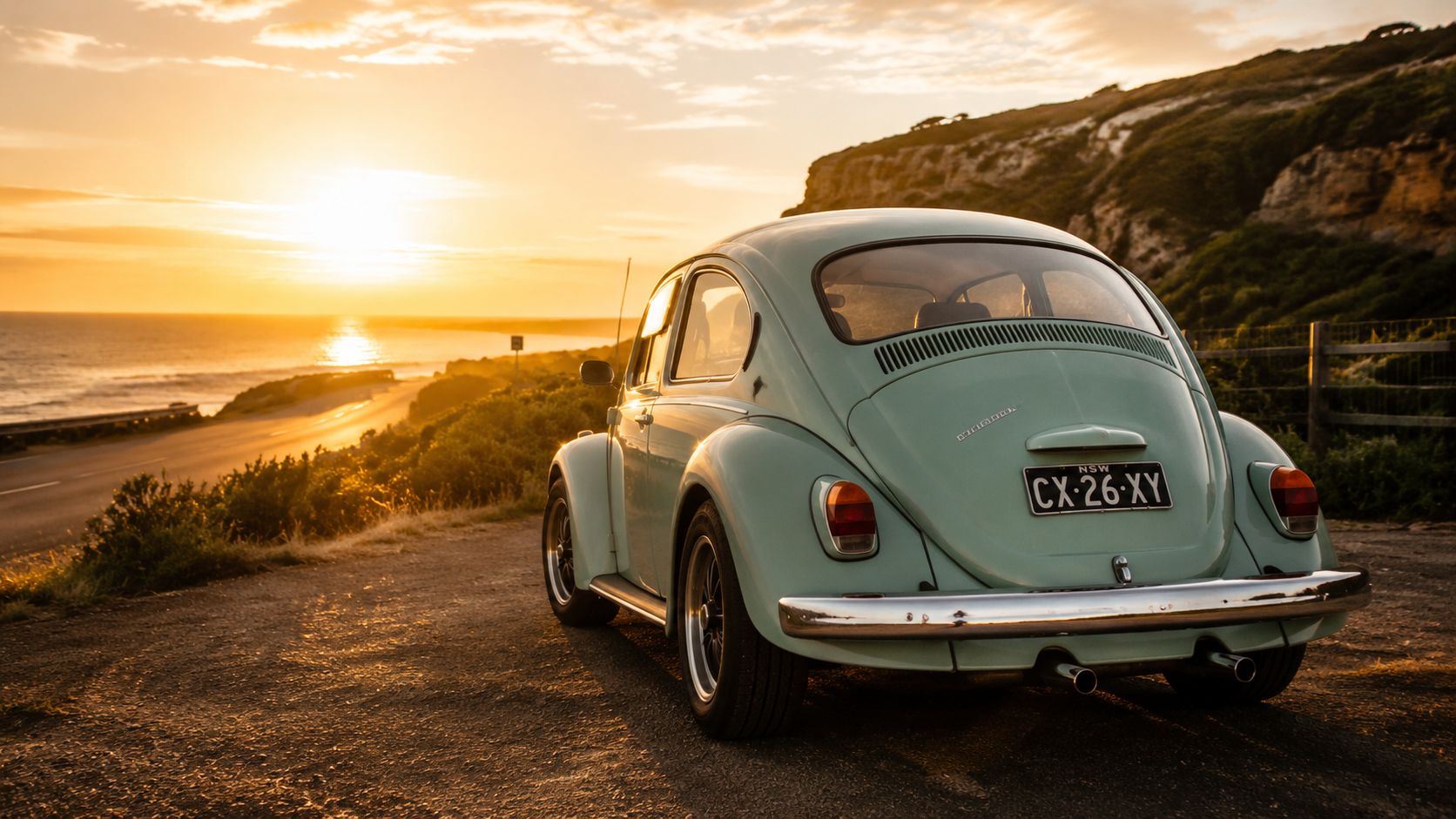
In Australia, that romance always meets reality. Salt in the air near the coast, moisture trapped in a system that doesn't fully heat through on short trips, and years of use all work against ordinary exhaust steel. That's why stainless matters so much for our old Volkswagens. It isn't a flashy modern indulgence. It's one of the practical choices that helps preserve an icon.
If you enjoy full-size cars, there's usually a shelf, study, or display cabinet nearby that carries the same affection. A tidy garage with a proper exhaust fitted to the car often sits alongside a few VW memorabilia collectibles and diecast models that keep the passion alive between drives.
Keep a classic VW reliable and you'll drive it more. Drive it more and you'll care even more about the details.
Why this choice feels bigger than a part swap
An exhaust on a vintage Volkswagen does three jobs at once. It manages heat and gases, shapes the sound of the car, and changes how the whole rear end looks when you're parked up at a meet. On an air-cooled VW, it's never just hidden plumbing.
That's why owners fuss over it. A stainless setup says you're planning ahead. You want fewer rust dramas, fewer ugly repairs, and a car that still looks right when the decklid is up and people start peering in.
Why Go Stainless For Your Classic VW
A classic VW in Australia asks a lot from an exhaust. One weekend it is cruising the coast with salt in the air. The next it is parked for a fortnight, holding condensation in the muffler and pipes. Mild steel copes with that for a while, then the rust starts showing at the seams, the flanges, and the spots you cannot see until the system is off the car.
That is a key advantage of stainless. It lasts longer in the sort of use old Beetles and Kombis typically experience, and it keeps the car tidier underneath while doing it.
The up-front price is higher, so the decision comes down to how you use the car. For a budget freshen-up on something you plan to move on soon, plain steel can still make sense. For a keeper, a regular driver, or a Kombi that sees camping trips and coastal roads, stainless usually saves repeat work, extra labour, and that annoying cycle of patching one rotten section after another.
What you get for the extra spend
Stainless earns its keep in a few very practical ways.
- Better resistance to rust in heat, moisture, and salty Australian air
- Less maintenance grief over the years, especially on cars that are not driven daily
- A cleaner appearance around the rear apron, heater boxes, and tailpipe area
- More confidence buying once instead of replacing the same type of system again
That last point matters more than plenty of owners admit. On an old VW, every exhaust swap means clamps, gaskets, studs, seized hardware, and the chance of finding another small problem while you are in there. Fewer replacements means fewer chances to disturb parts that have behaved themselves for years.
A stainless system also suits the way many enthusiasts treat these cars. The full-size Beetle lives in the garage, the diecast version sits on the shelf, and both represent the same instinct. Buy good gear, keep it looking right, and enjoy it for the long haul. If you are comparing options through a supplier that lists VW exhaust and restoration parts in Australia, it is worth checking how clearly the material and build details are described before you hit buy.
What stainless will not fix
Material alone does not make an exhaust good.
It will not solve poor fitment, stop a badly tuned engine from running hot, or turn a droning system into something pleasant on a highway run. Pipe routing, flange quality, muffler design, and how well the system matches a 1200 Beetle or a later Kombi all matter just as much.
Plenty of owners go astray at that point. They hear “stainless” and assume every setup is top shelf. Some are excellent. Some are shiny, thin, awkward to fit, and disappointing once the novelty wears off.
Buy stainless for longevity. Choose the actual exhaust design for sound, clearance, and the way your VW gets used.
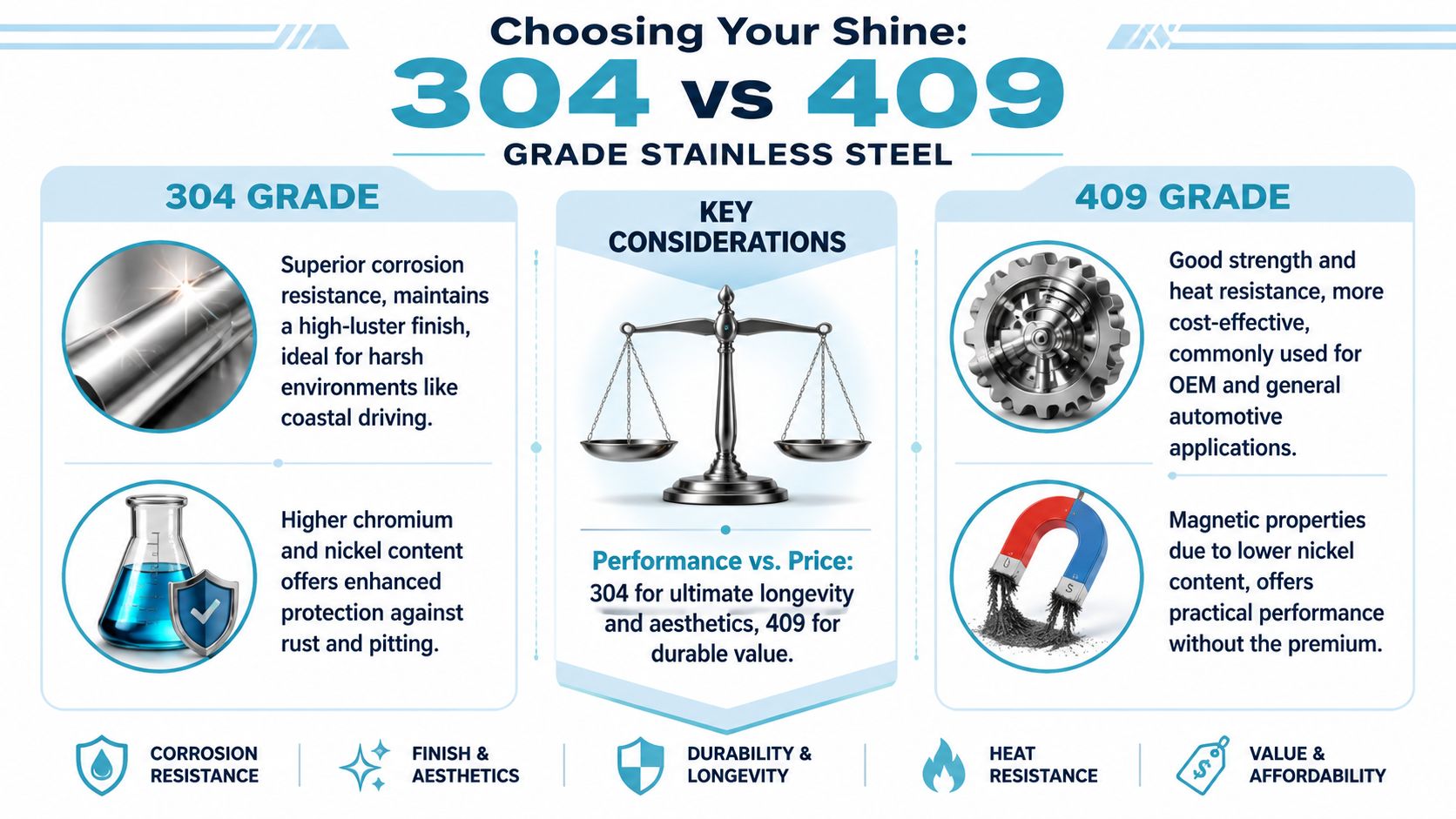
Choosing Your Shine 304 vs 409 Grade Steel
For Australian classic VW owners, this choice usually comes down to how the car lives. A dry-garage Beetle that sees Sunday runs asks different things of an exhaust than a Kombi parked near the coast, loaded for a camping trip, and washed off in the driveway after a salty weekend.
409 and 304 are both stainless, but they age differently. 409 is the practical grade used on plenty of factory-style systems because it handles heat cycles well and keeps the price sensible. 304 costs more, stays brighter for longer, and does a better job resisting the surface staining and corrosion that can make an older exhaust look tired before its time.
If you are comparing systems through an Australian VW parts supplier, check how clearly the material is listed in the VW exhaust and restoration parts catalogue. Plenty of listings say “stainless” and stop there. That is not enough if you care about finish, lifespan, or value.
The quick comparison
| Grade | Best suited to | What it's like |
|---|---|---|
| 409 stainless | Regular drivers, tidy restorations, sensible budgets | Heat-tolerant, durable, usually dulls and discolours with age |
| 304 stainless | Premium builds, coastal use, show-minded owners | Better corrosion resistance, brighter finish, higher price |
Where each grade makes sense
409 suits a driver. It will not keep that fresh-polished look for long, and it can develop a brownish surface tint, but that does not mean it is failing. On a Beetle that gets used properly, that trade-off is often perfectly fair. Spend less on the pipework, keep money aside for heater boxes, carb tuning, or the next set of tyres.
304 suits the owner who wants longevity and appearance together. If the car lives near the beach, sits for long stretches, or goes to shows where people end up crouched behind it discussing welds and tailpipe finish, 304 earns its keep. It is also the grade that tends to match the mindset of collectors who care about the full picture. The car in the shed, the diecast Kombi on the shelf, the old rally badge on the wall. It all speaks to looking after details.
What works in the real world
On a weekend Beetle in inland Australia, 409 is often enough. On a Kombi that sees sea air, wet campsites, and more grime thrown at the underside, I would spend the extra money on 304 and be done with it.
The trick is buying for the life your VW leads, not the one promised by a shiny product photo. 409 is honest and useful. 304 holds its looks better and asks for fewer compromises.
Getting the Right Fit For Your Beetle or Kombi
Material is only half the story. A stainless steel exhaust pipe can be beautifully made and still feel wrong on the car if the sizing, layout, or muffler choice doesn't suit an air-cooled engine.
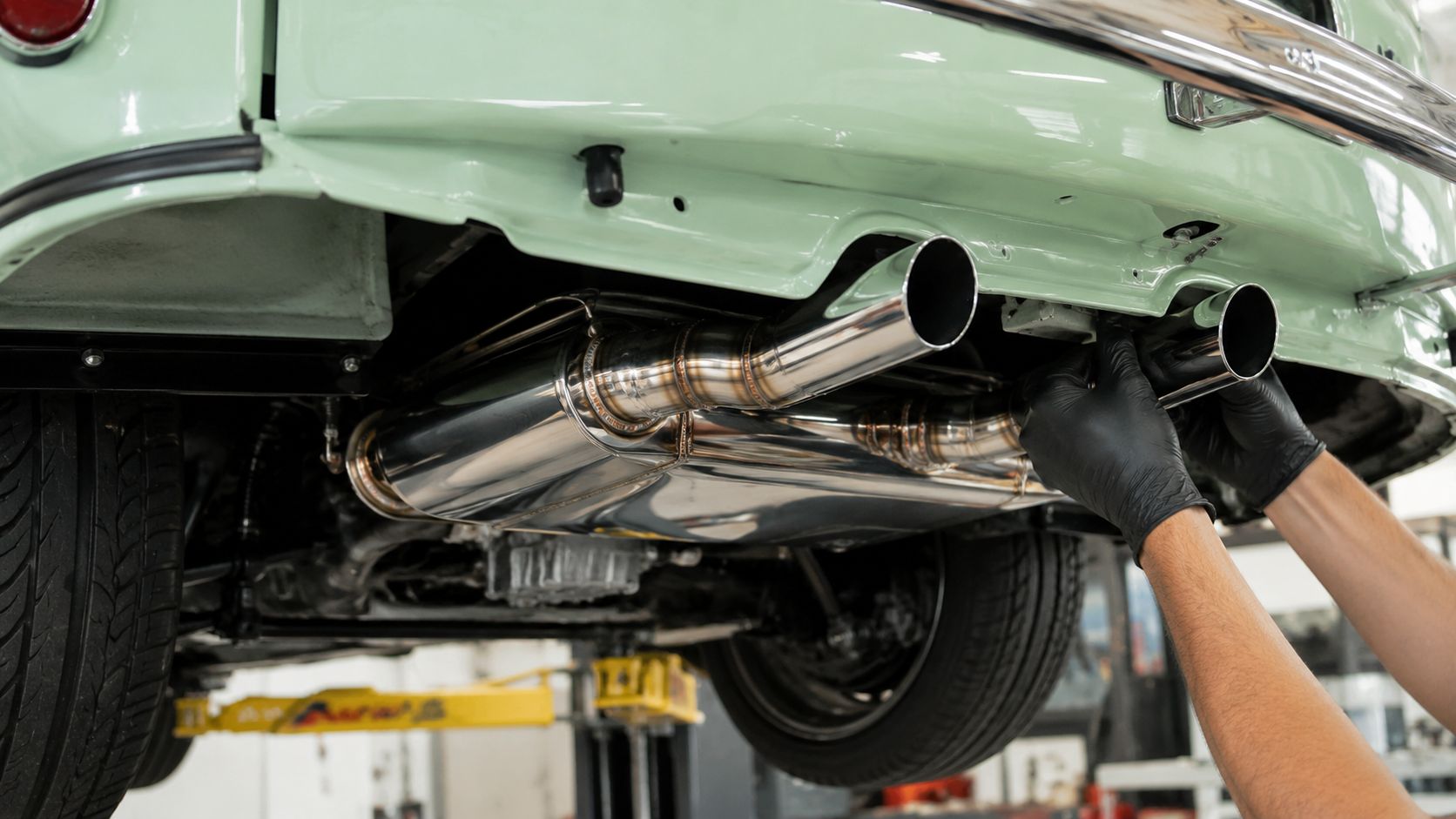
Classic Volkswagens reward balance. Too restrictive and the engine feels strangled. Too large and you can lose that tidy, responsive feel that makes a small-capacity flat-four such fun. Pipe dimensions are standardised by outside diameter and wall thickness under ASME B36.19, and Engineering ToolBox's stainless pipe dimensional reference notes that 16-gauge stainless tubing is commonly specified at 0.065 inch wall. That's useful in exhaust fabrication because it preserves strength through bends without giving away too much internal diameter.
If you're matching parts to a specific project, the Volkswagen Beetle parts collection is a handy way to compare model-relevant hardware and styling cues before you buy.
Beetle fitment thoughts
A Beetle usually likes an exhaust that keeps velocity up and doesn't upset the engine's manners. For a near-stock or mildly warmed-over setup, a quiet pack style system often suits the car's character better than something oversized and boomy.
Look for three things:
- Flange alignment matters more than catalogue promises. If the header and heater box joins are under tension before tightening, the system will fight you from day one.
- Ground clearance is critical on lowered cars. A pretty collector isn't much use if it scrapes on every driveway.
- Tailpipe exit position changes the whole rear view. On a Beetle, a pipe that sits crooked will annoy you every time you walk up to the car.
Kombi and Type 2 considerations
A Kombi carries more weight, sees more touring, and often spends more time loaded. Exhaust design needs to suit that use. A setup that sounds cheeky on a Beetle can drone in a bus.
This walk-through gives a useful look at under-car access and how space can disappear quickly around the rear of an older vehicle.
For Kombis, I'd be fussy about:
- Heat and clearance around the rear apron
- How the system sits near towing or camping gear
- Whether the muffler layout supports a relaxed cruising tone
There's a funny overlap here with collecting diecast. The same owner who notices whether a 1:24 Beetle model has the right bumper shape will definitely notice whether an exhaust tip sits wonky under the actual car.
Installation Tips and Keeping Your Exhaust Gleaming
Stainless still deserves proper installation. A rushed fit-up with poor alignment, contaminated welds, or cheap mixed hardware can spoil a good system.
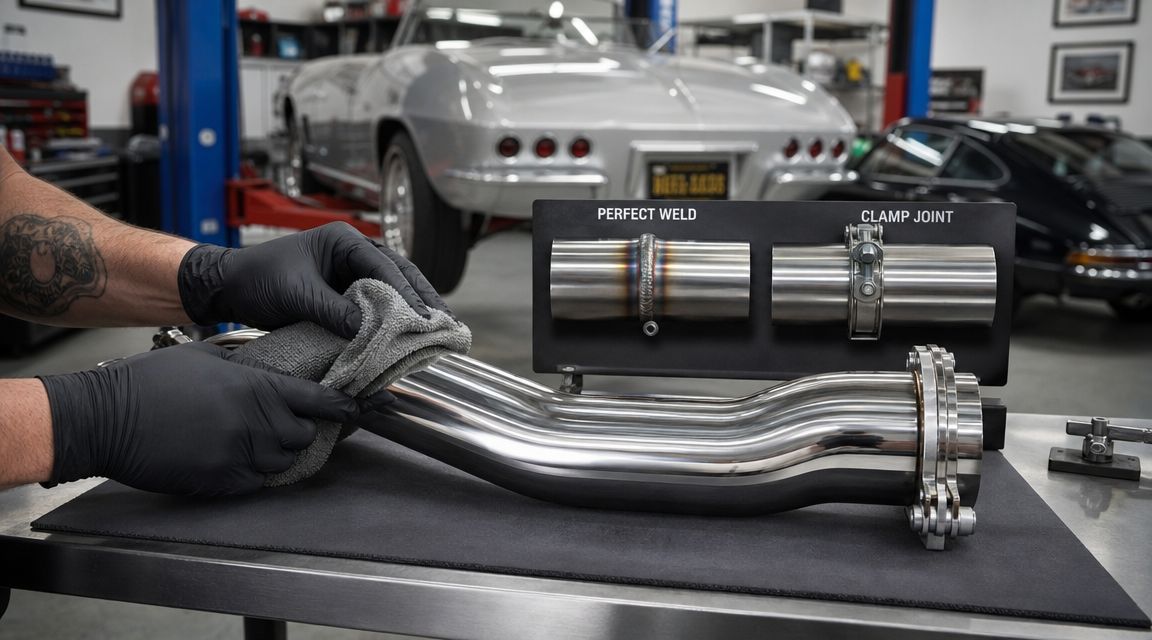
For owners in coastal Australia, the long-life argument is strong. One supplier reference in the verified data states that quality stainless exhaust tubing can last 10 to 12 times longer than low-carbon steel tubing, and it also notes that 316 is preferred where chloride exposure is higher because molybdenum improves resistance to pitting and crevice corrosion in marine conditions, as outlined in Octal's stainless steel pipe and tube specification page. You won't see 316 in every classic VW exhaust conversation, but it's useful to know why some marine-adjacent applications favour it.
Welding or clamping
A properly welded system is usually the cleaner, more permanent answer. It tends to seal better and looks more integrated. But clamps still have a place, especially for home mechanics who want serviceability.
- Choose welding if you want the neatest result and have access to a workshop that understands stainless prep.
- Choose clamps if the system may need to come apart again, or if you're test-fitting a custom arrangement.
- Avoid mixing bargain hardware with a quality stainless system. Ordinary fasteners often become the weak link.
Ask the shop whether they regularly work with stainless exhausts, not just exhausts in general.
Keeping the finish tidy
Stainless changes colour with heat. A light golden or straw hue near hotter sections is normal and not a sign that something's gone wrong. The visible tips are what most owners like to keep polished.
A simple care routine works well:
- Wipe off fingerprints and residue after fitting, especially on polished sections.
- Rinse road grime and salty spray from the underside if the car lives near the coast.
- Polish the visible outlets if you want that fresh-fitted look before a club run or Nationals weekend.
If you're sourcing air-cooled hardware, exhaust-related bits, or restoration items, VW Type 1 parts are worth comparing with your existing setup so the whole rear-end package works together.
The Final Touch The Look and Sound of a Legend
A stainless exhaust is one of those upgrades that earns its keep every time you start the car. You hear it first, then you see it. The note is cleaner, the rear end looks more finished, and the whole Volkswagen feels better cared for.
That's the core appeal. It isn't just corrosion resistance, although in Australia that matters a lot. It's the sense that the car is ready for another early run, another show field, another chat with someone who had one years ago and still smiles when they hear that flat-four thrum.
For Beetles and Kombis, details carry emotion. The right exhaust note, the right tailpipe angle, the right glint of metal under the bumper. It's the same instinct that makes people collect a diecast Samba or a faithful little Beetle model for the shelf. We love these machines in full size and miniature because they hold memories, style, and a bit of freedom.
If your garage, shelf, or gift list could use a bit more Volkswagen charm, have a browse through Volkswagen Memorabilia. You'll find licensed VW diecast models, Kombi and Beetle pieces, and collectable memorabilia that suit the same passion that keeps actual cars rolling.