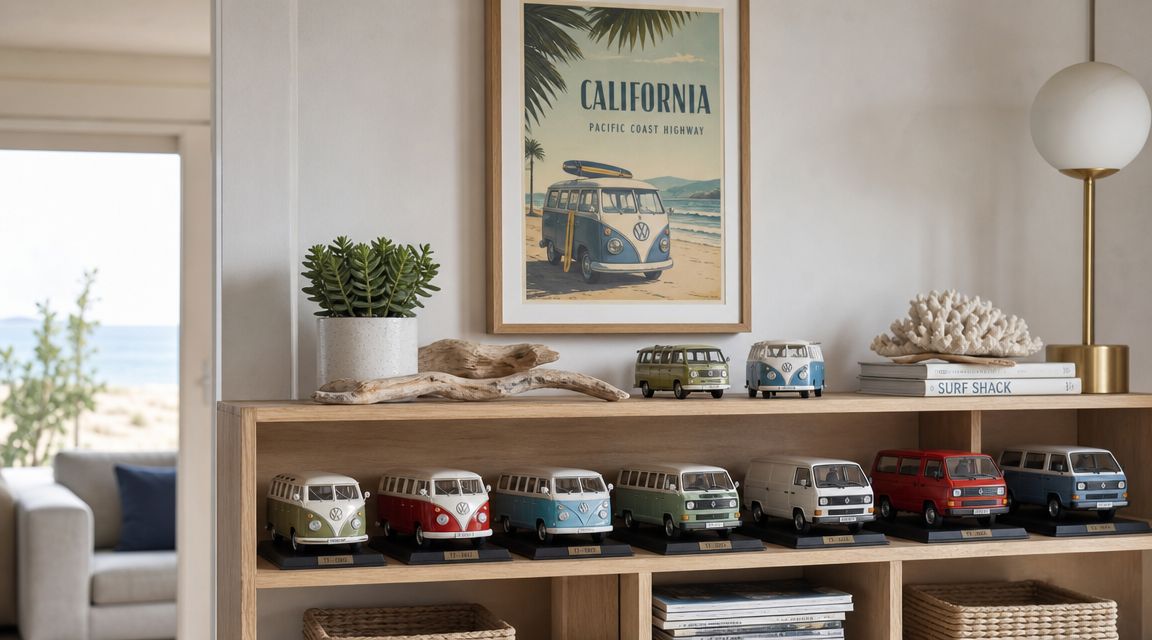

Diecast Models Australia: A Collector’s VW Guide

A few summers ago, I watched a sun-faded Kombi roll into a beachside car meet with salt on the paint and boards on the roof. Half the crowd smiled before the engine even stopped, because in Australia a VW like that doesn't just arrive, it brings a whole bundle of memories with it.

The Magic of Holding a Memory in Your Hands

There's something wonderfully familiar about a classic Volkswagen on an Australian road. A Beetle buzzing along a coastal strip. A Kombi parked near the dunes with sandy thongs by the door. For a lot of us, these aren't just old vehicles. They're little pieces of freedom, family holidays, surf culture, first cars, and stories told over a folding chair at a car show.

That's why diecast collecting grabs people so quickly. A good model doesn't feel like a random shelf item. It feels like a memory you can hold. For VW fans, that feeling runs deep because the Kombi and Beetle have such a strong place in local culture.

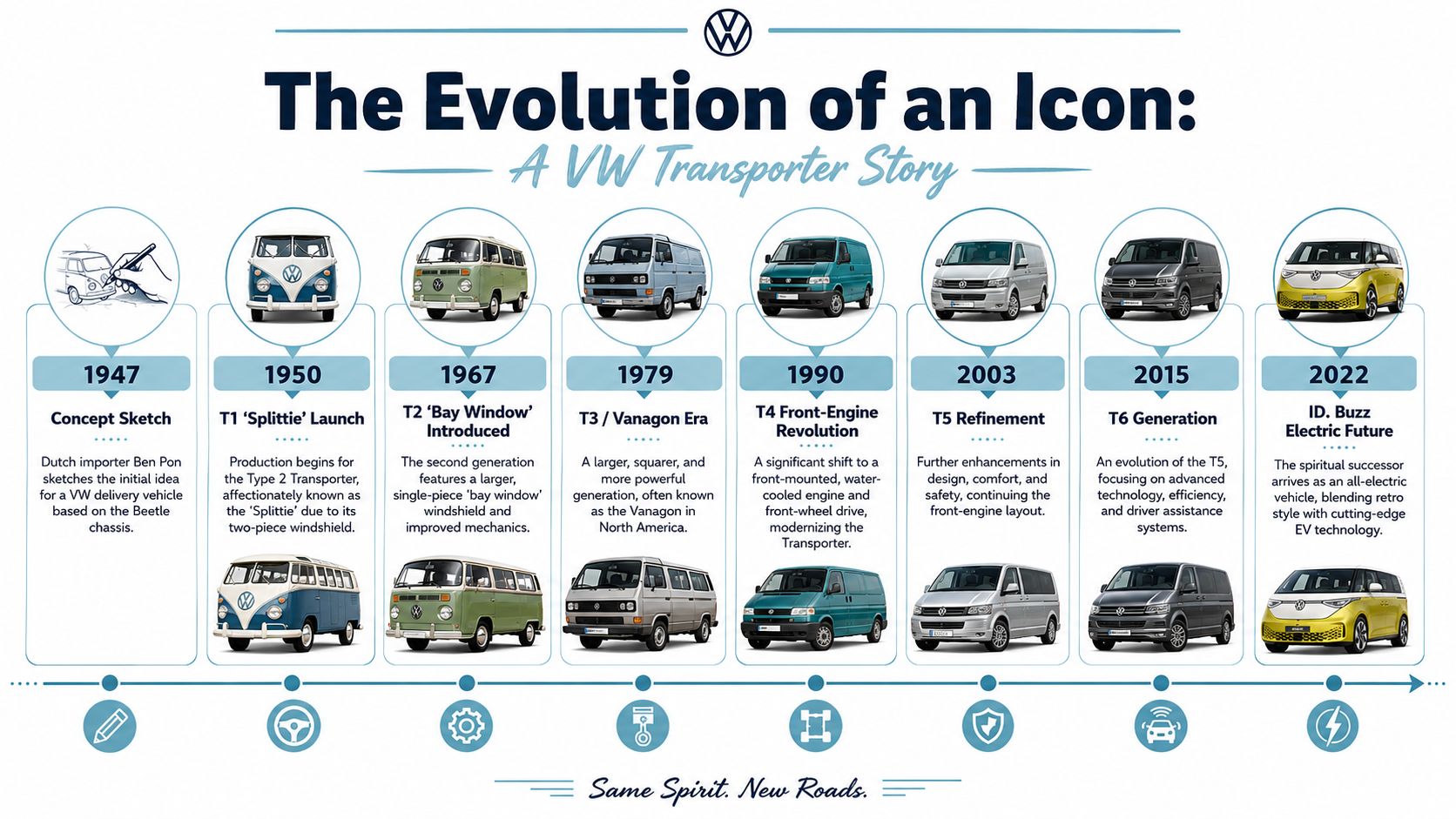
The Kombi's story started long before it became an Aussie icon. The iconic Volkswagen Kombi (Type 2) originated in 1949 when Dutch businessman Ben Pon sketched the first prototype after observing VW utility vans, leading to its official debut in 1950 and its eventual status as an Australian cult classic, as noted by Volkswagen Australia's Kombi history.
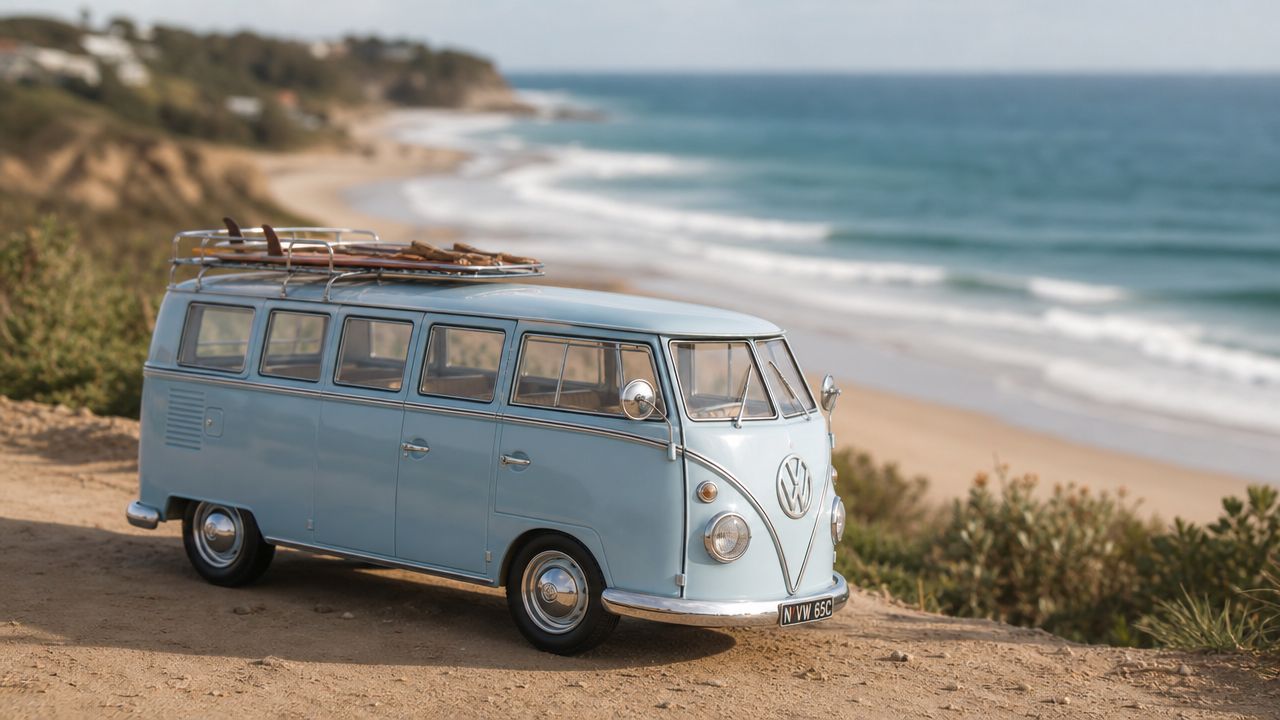
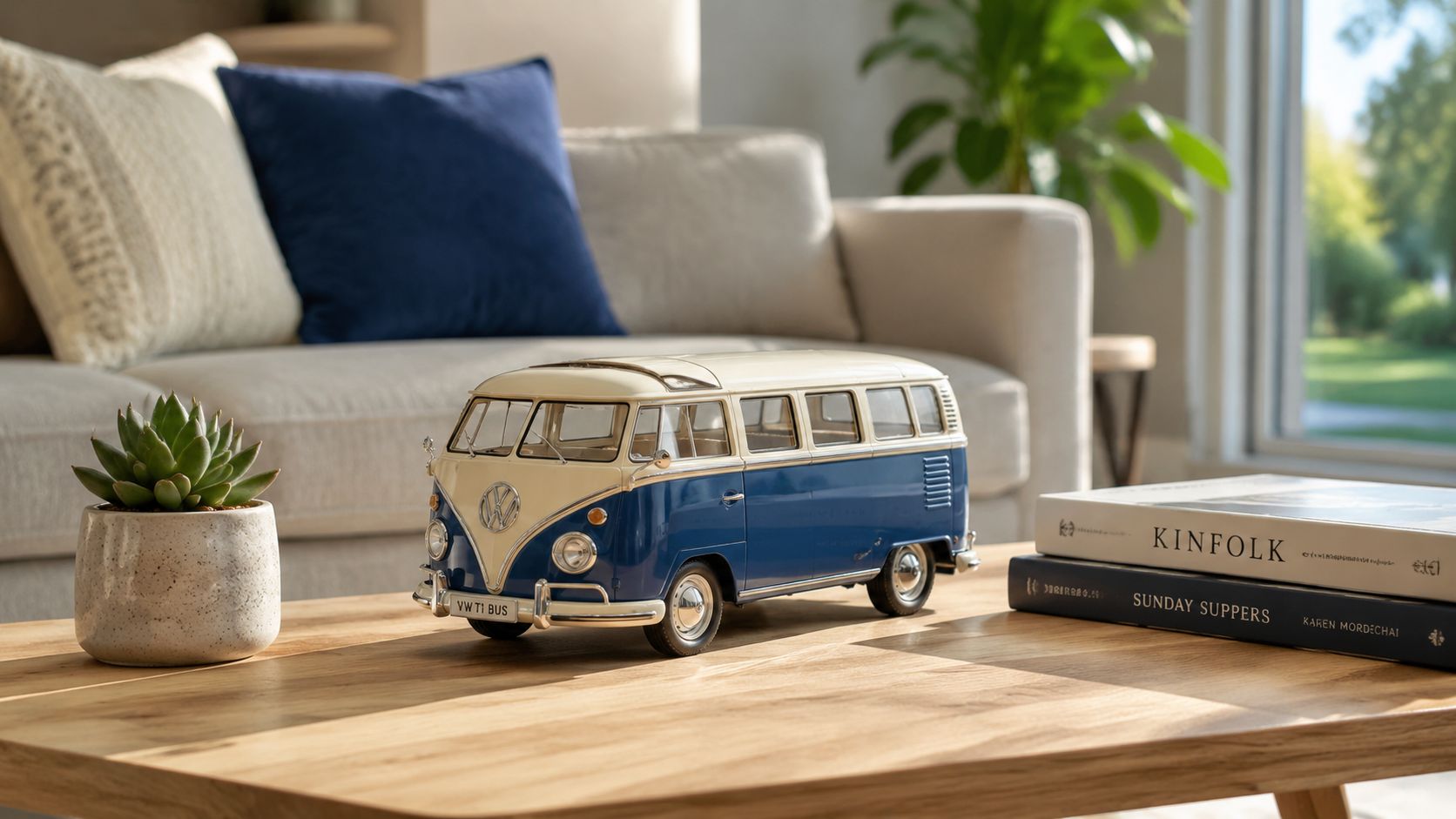
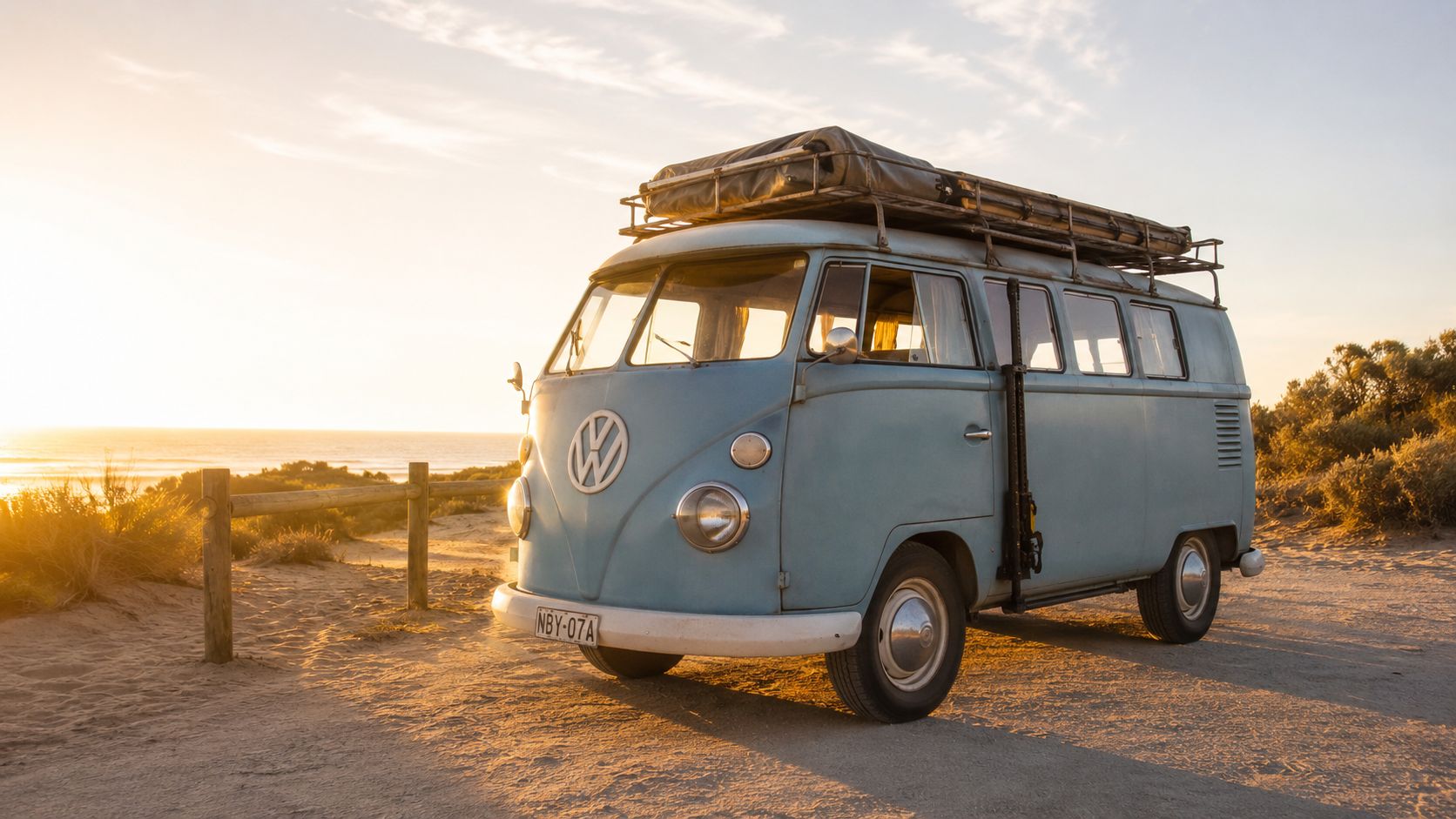
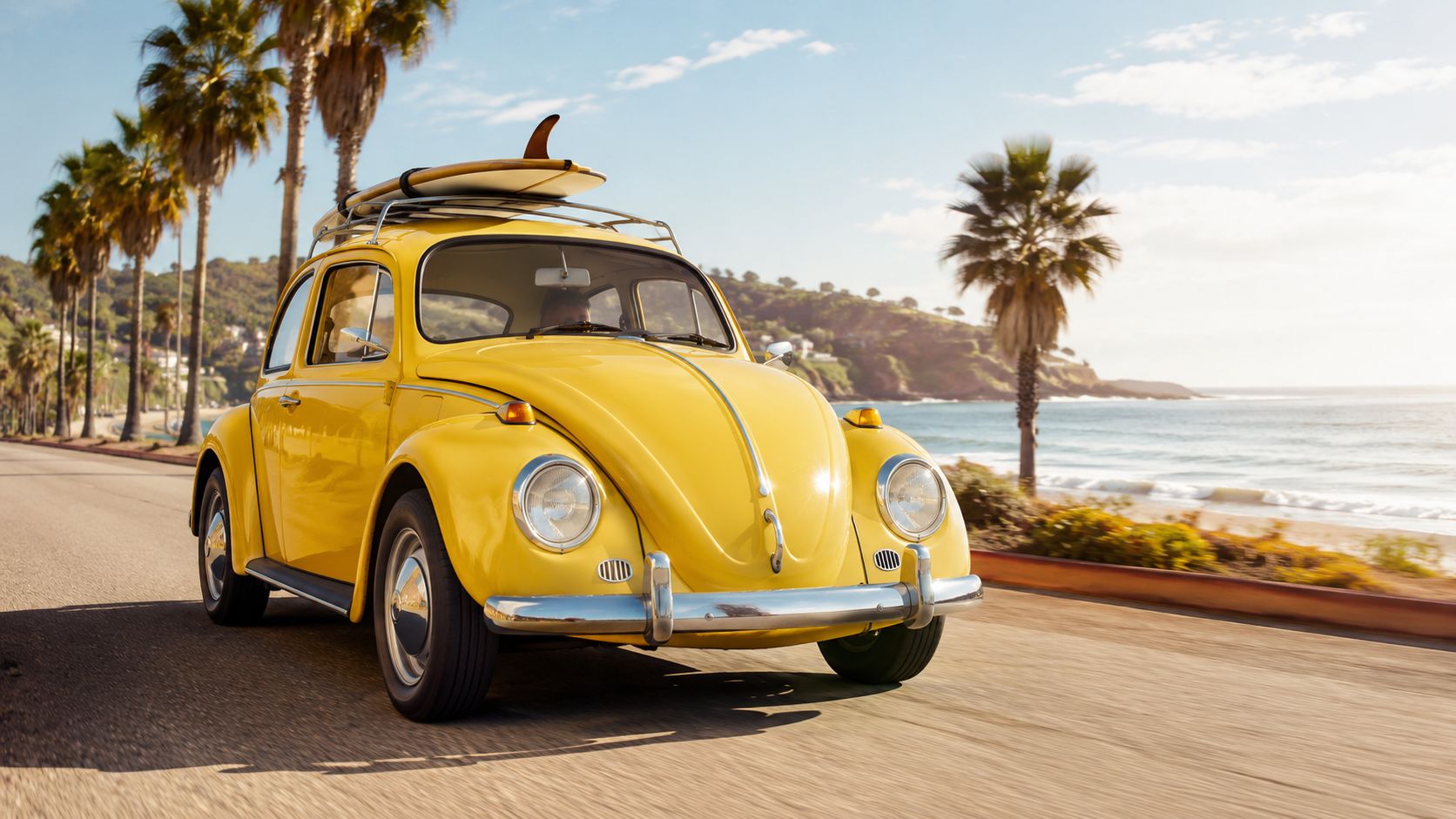
A miniature light blue Volkswagen T1 bus model parked on a cliff overlooking a sandy beach.

Why VW models feel different

Some marques inspire admiration. Volkswagens often inspire affection. That's a different thing entirely.

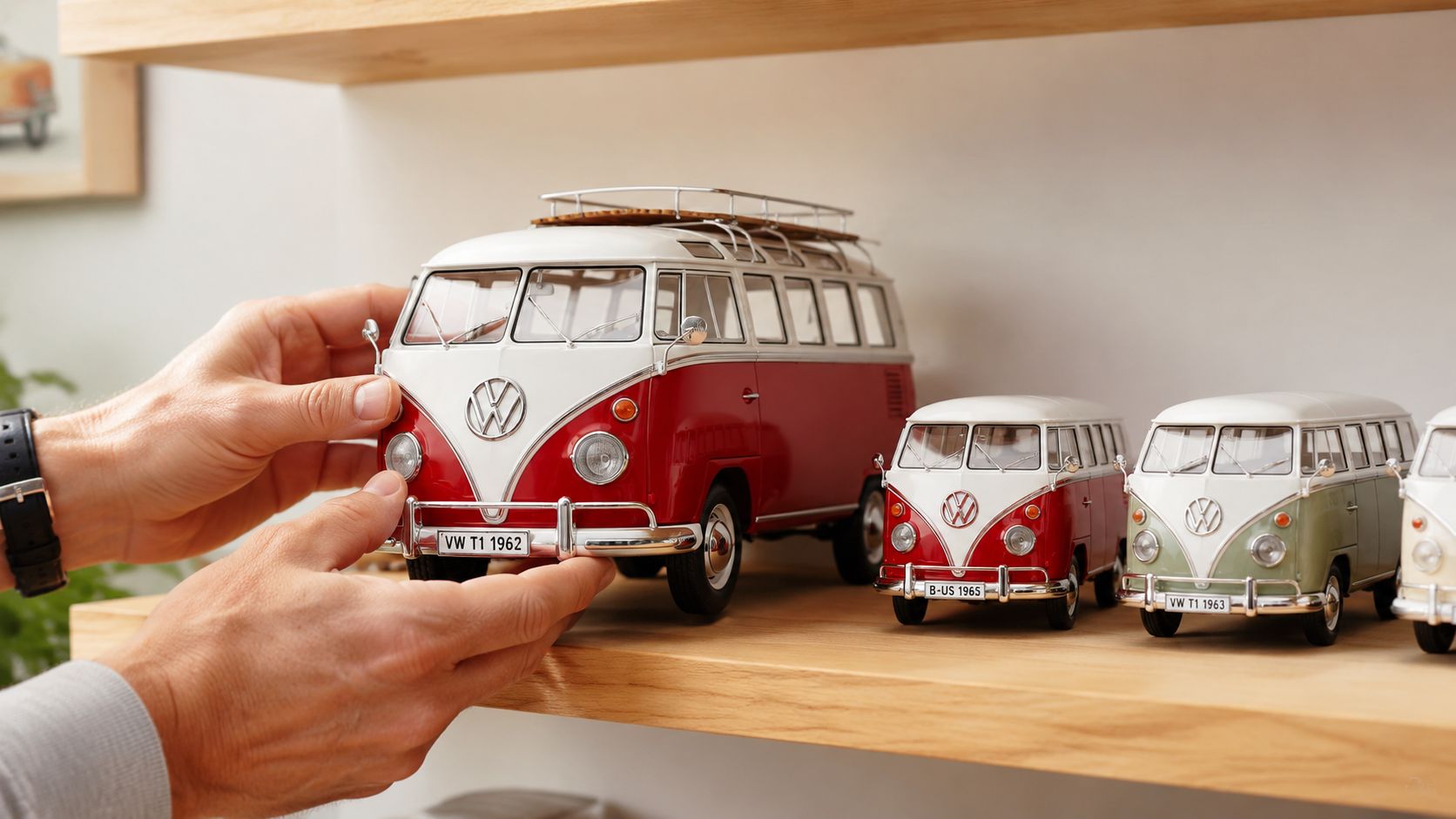
A diecast Samba Bus with tiny windows and bright paint can remind one collector of a real van they restored years ago. A simple Volkswagen Beetle model can remind another of a parent learning to drive. Even gift buyers who've never collected before often pick a Kombi because it instantly says summer, adventure, and easy-going style.

A well-made model car can do what a photograph sometimes can't. It gives memory weight, shape, and presence.

Why this hobby keeps growing in Australia

The local appetite for collecting is getting stronger. The Australia Diecast Model Car Market is projected to reach sales revenue of $245.6 Million by 2030, growing at a 5.2% CAGR between 2026 and 2030, reflecting strong collector demand and cultural interest, according to Cognitive Market Research's diecast model car market report.

For anyone exploring diecast models in Australia, that growth tells you something important. You're not wandering into a tiny niche. You're joining a lively hobby with plenty of fellow enthusiasts, from seasoned Volkswagen restorers to people looking for the right VW memorabilia collectibles for a birthday, Father's Day, or a home office shelf.

Your Guide to Diecast Scales and Brands

If you're new to collecting, scale is usually the first thing that causes confusion. The numbers look technical, but the idea is simple. A 1:18 model means the car is eighteen times smaller than its full-size counterpart. A 1:24 is smaller still. The second number gets bigger as the model gets smaller.

Consider photo prints as an analogy. A larger print shows more detail and has more presence on the wall. A larger-scale diecast does much the same on a shelf.
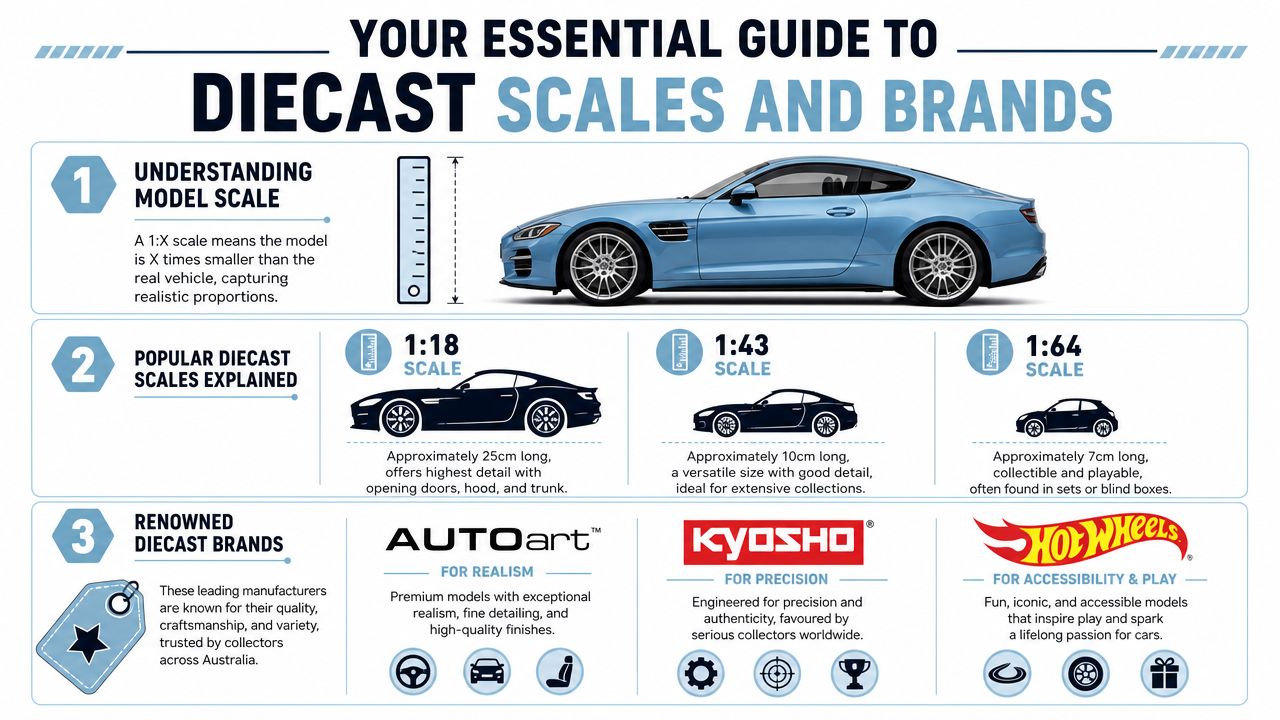
An infographic guide explaining diecast model scales and popular collector brands for hobbyists in Australia.

Why 1:18 gets so much attention

In local collecting circles, 1:18 is the most popular diecast model size among Australian collectors, driven by stronger demand and higher market activity that sustains meaningful price appreciation and trading volume, according to this Australian diecast valuation post.

That popularity makes sense when you've held one. A good 1:18 Kombi or Beetle has room for the little details collectors love, such as interior trim, badges, wheel design, and opening parts. It feels substantial without becoming awkward to display.

A quick scale comparison

Scale What it feels like Best for
1:18 Bigger presence, stronger detail Feature pieces, gifting, close-up display
1:24 A handy middle ground Home shelves, desk displays, relaxed collecting
1:43 Compact and easy to line up Wider collections in smaller spaces
1:64 Tiny and playful Casual collecting, sets, pocket-money fun

What to look for in a brand

Brand matters, but not only because of the logo on the box. It matters because different makers chase different goals.

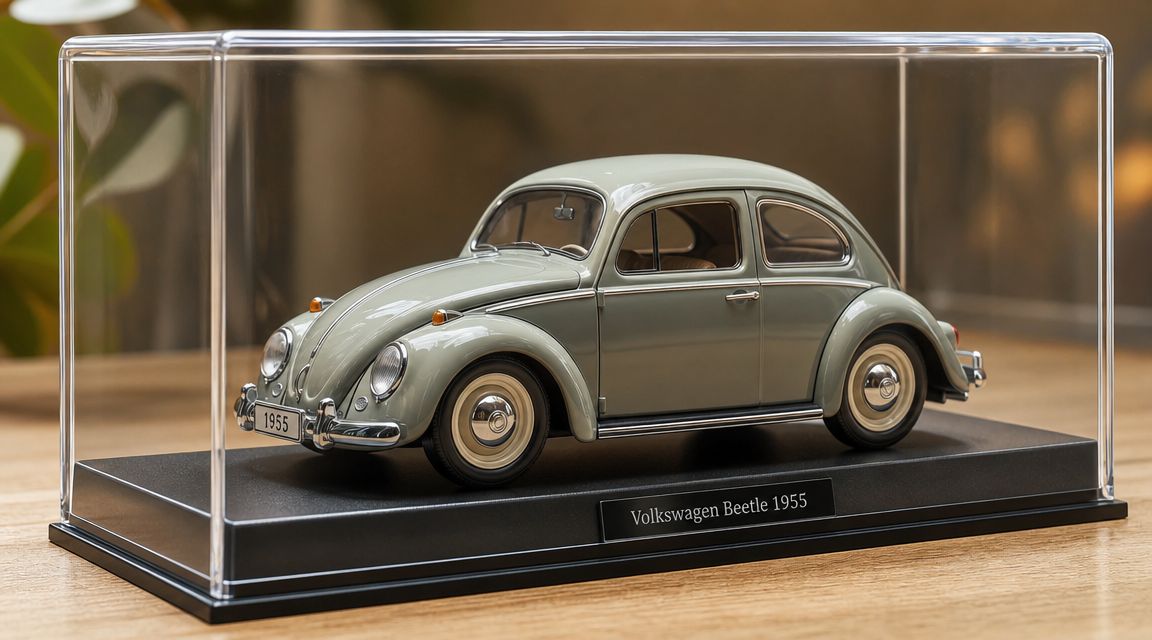
  • Licensed accuracy: If you want a proper Volkswagen Beetle model, start with officially licensed products. They're more likely to get proportions, badging, and trim right.
  • Material quality: Better diecast pieces often use zinc alloy construction and feel solid in the hand.
  • Functional detail: Opening doors, tidy hinges, removable parts, and clean paint lines usually separate a collectible from a simple toy.
  • Model focus: Some brands lean into realism, while others favour affordability or playful design.

For VW fans, this becomes especially obvious with a VW Kombi diecast Australia search. One model may be charming but basic. Another may show off split-screen details, a more convincing cabin, and neater exterior finishing.

A beginner rule that saves regret

Practical rule: Buy the scale that suits your display space first, then compare brands within that size.

That approach stops a common mistake. New collectors often buy by impulse, then realise the model doesn't fit their cabinet, desk, or room style. If you want a more detailed primer on the basics, this guide on what a diecast model car is gives a straightforward overview before you start comparing specific Volkswagens.

Where to Find Your Next VW Diecast Model in Australia

Buying diecast in Australia is half practicality, half treasure hunt. Some collectors love the chase of finding a hidden gem in person. Others would rather compare options online with a cup of tea and a clear return policy.

Both approaches work. The trick is knowing what each one does well.
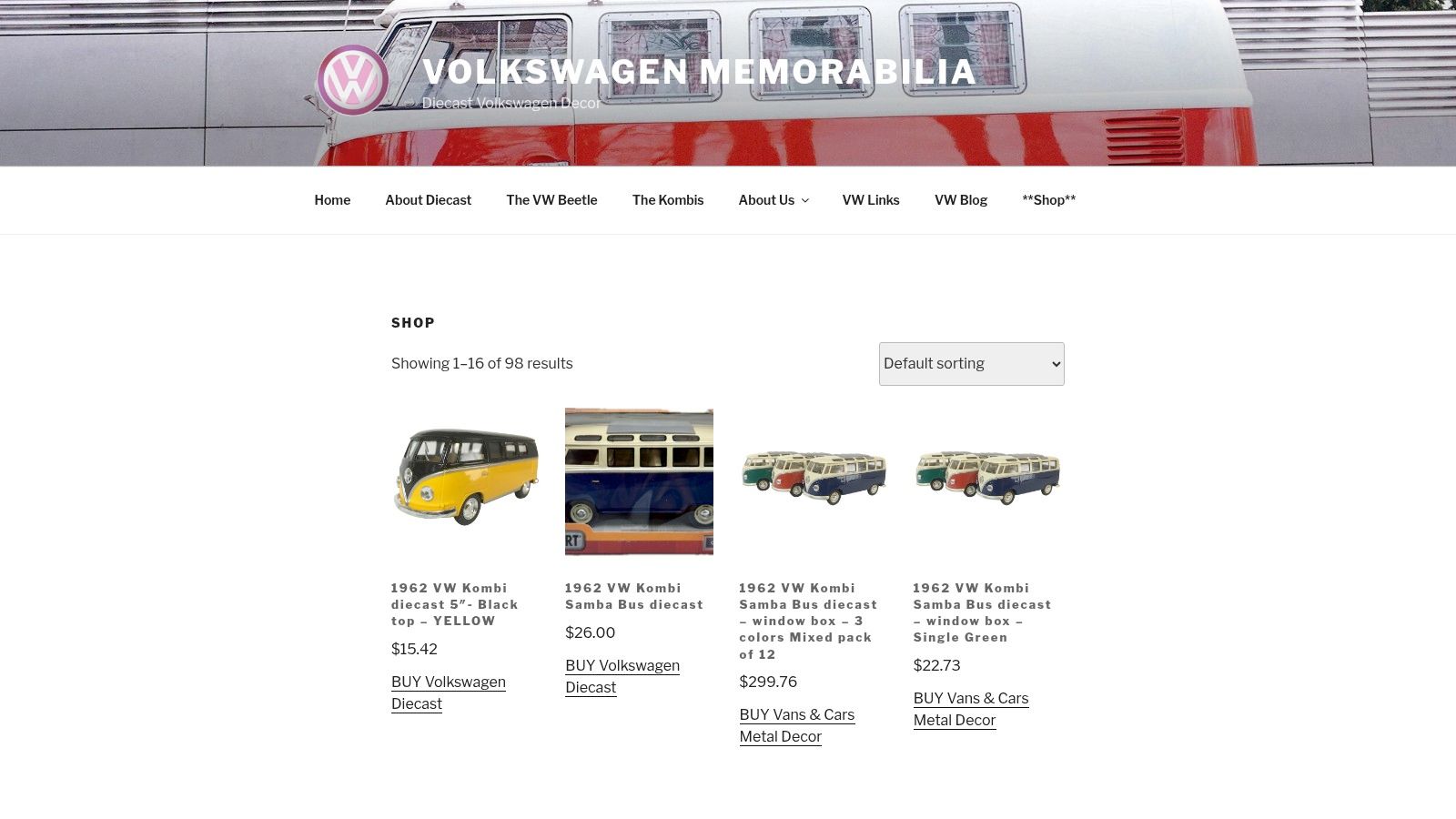
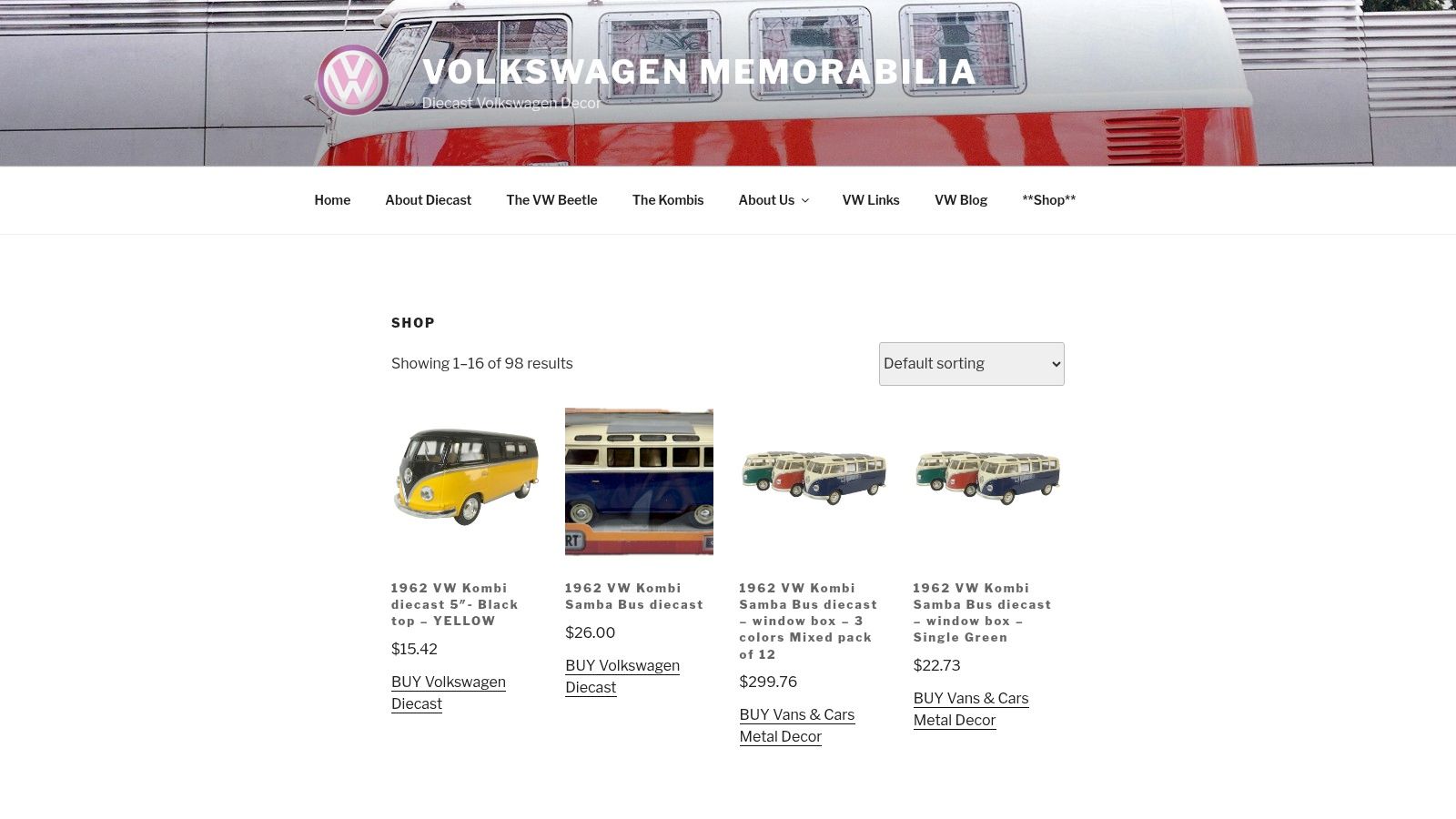
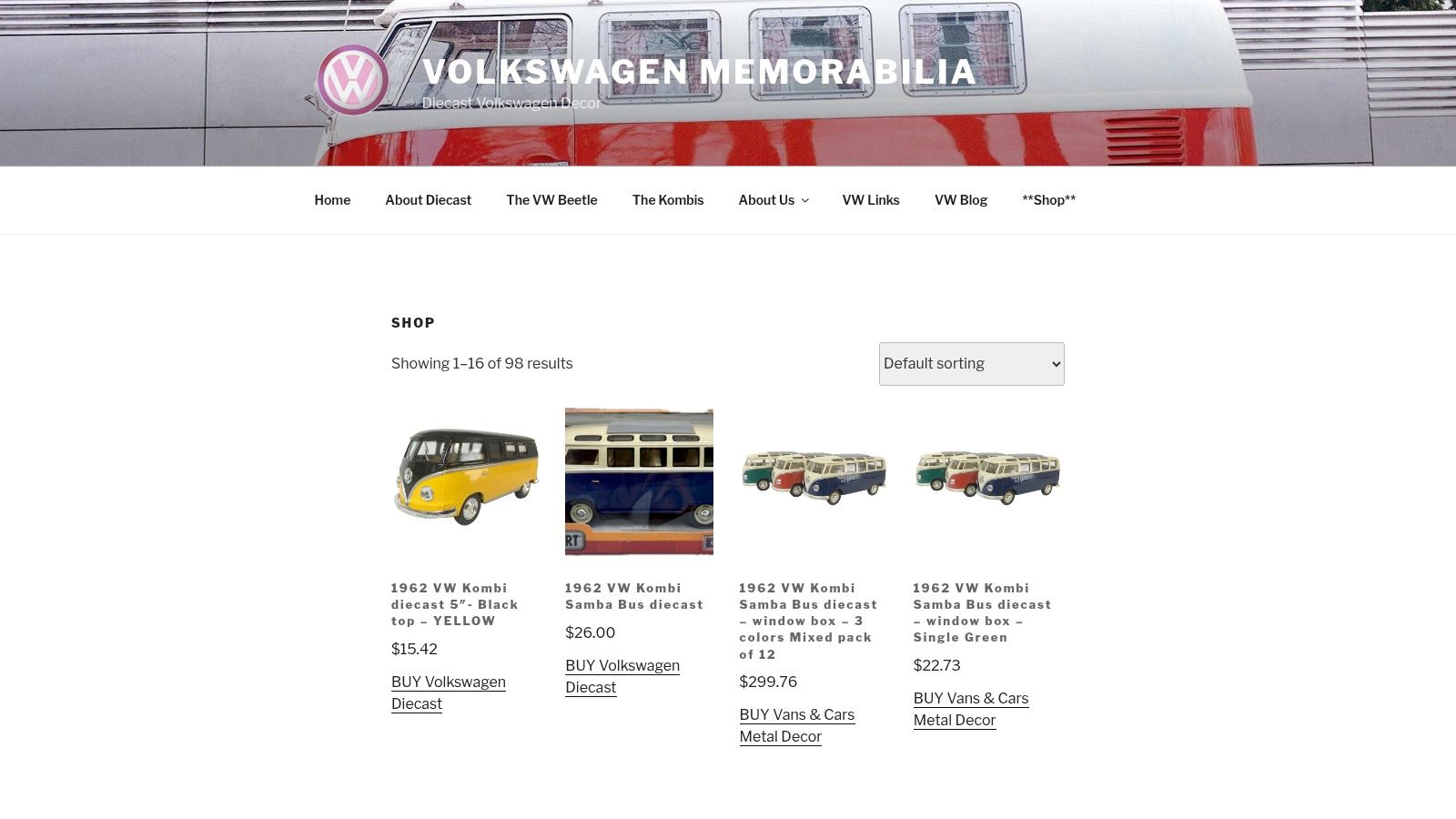
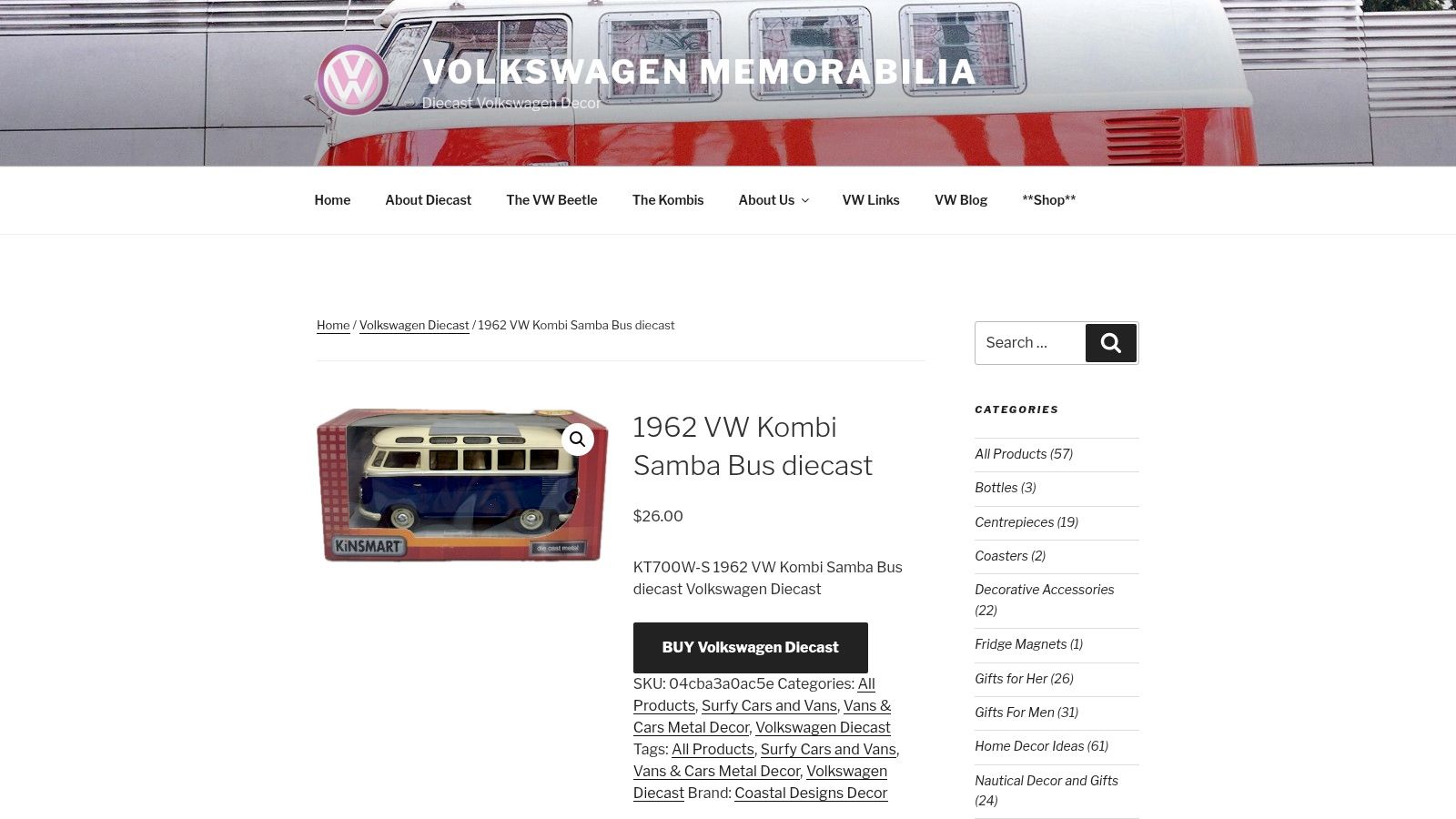
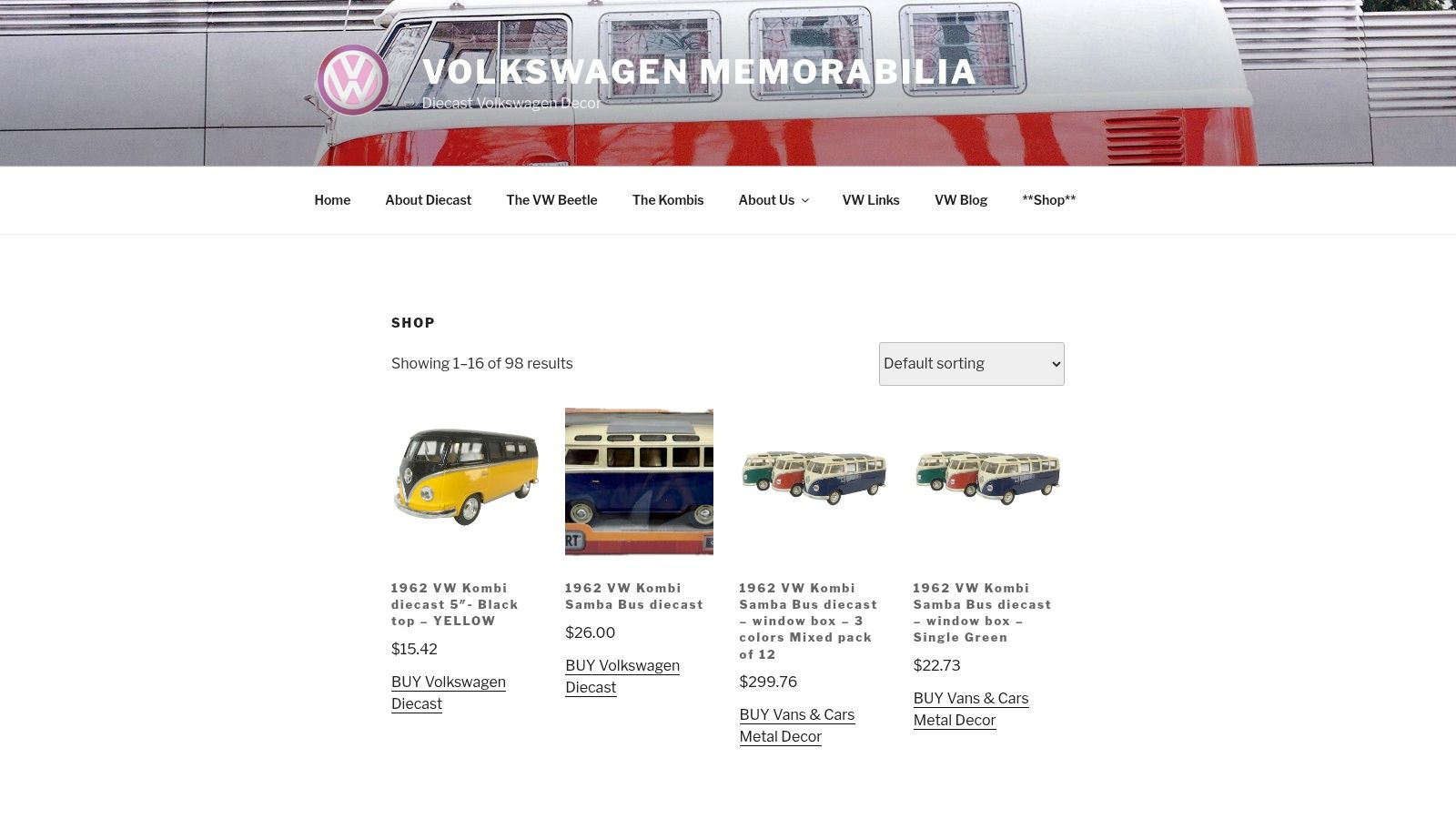
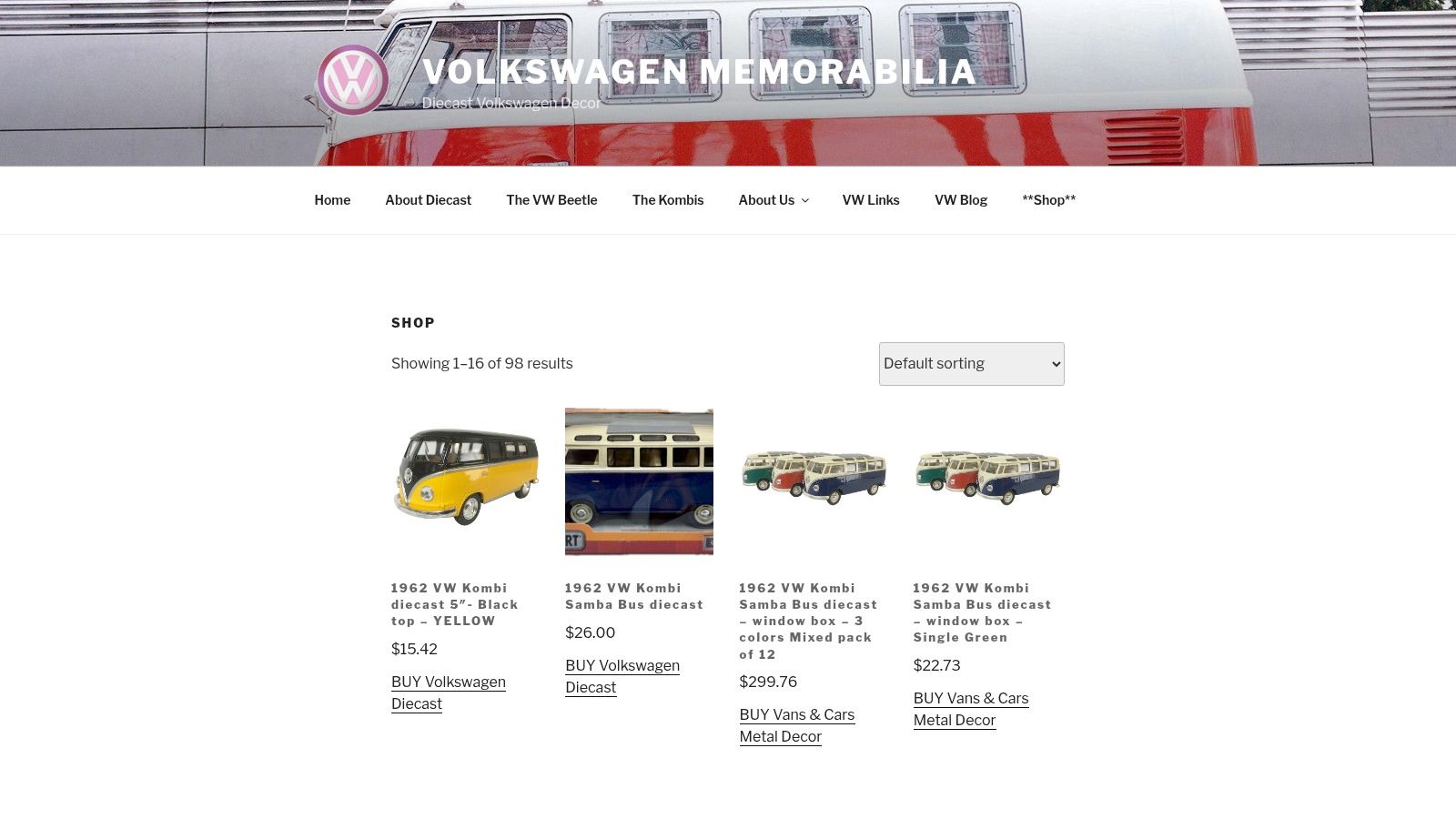
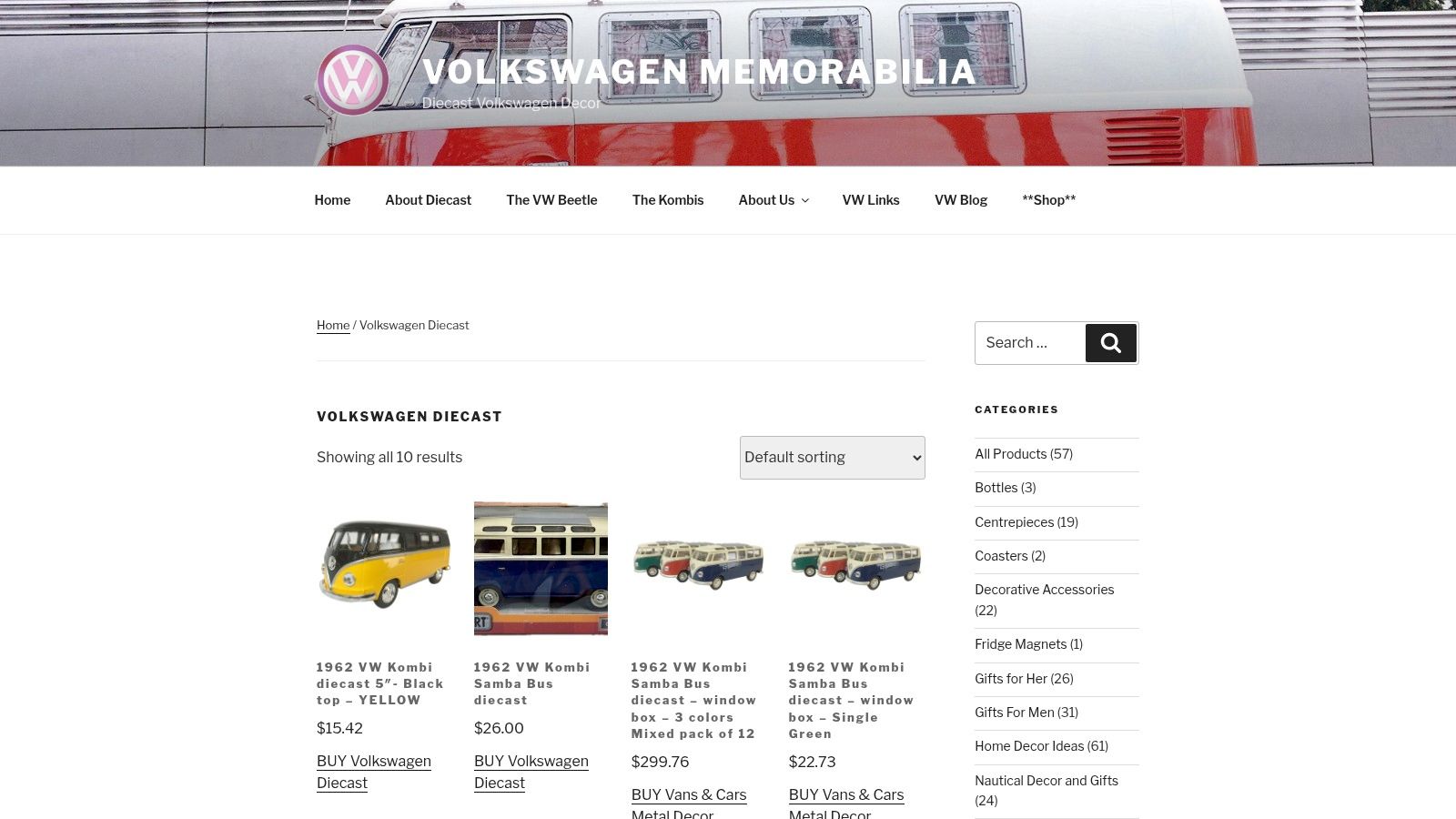
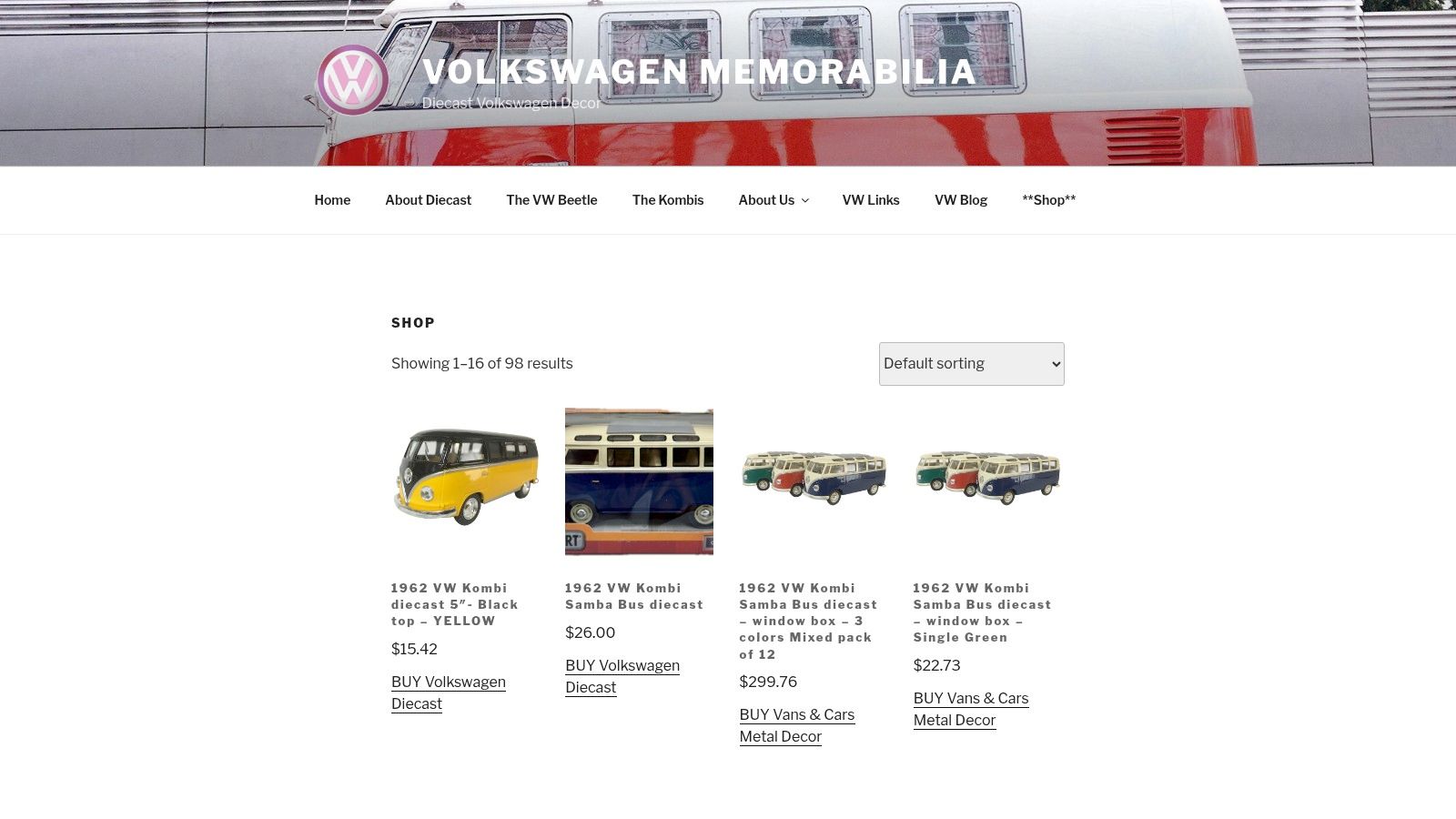
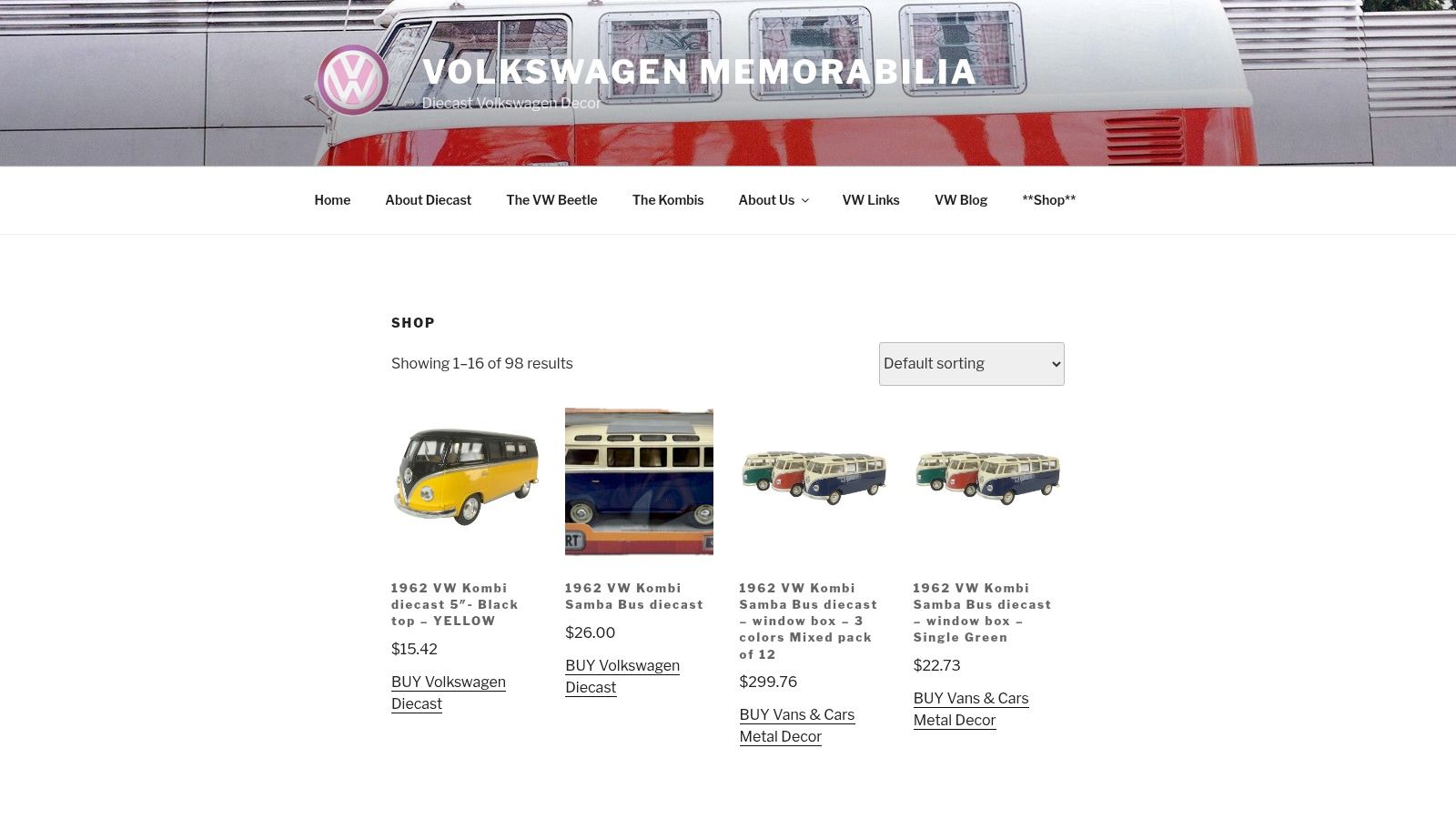
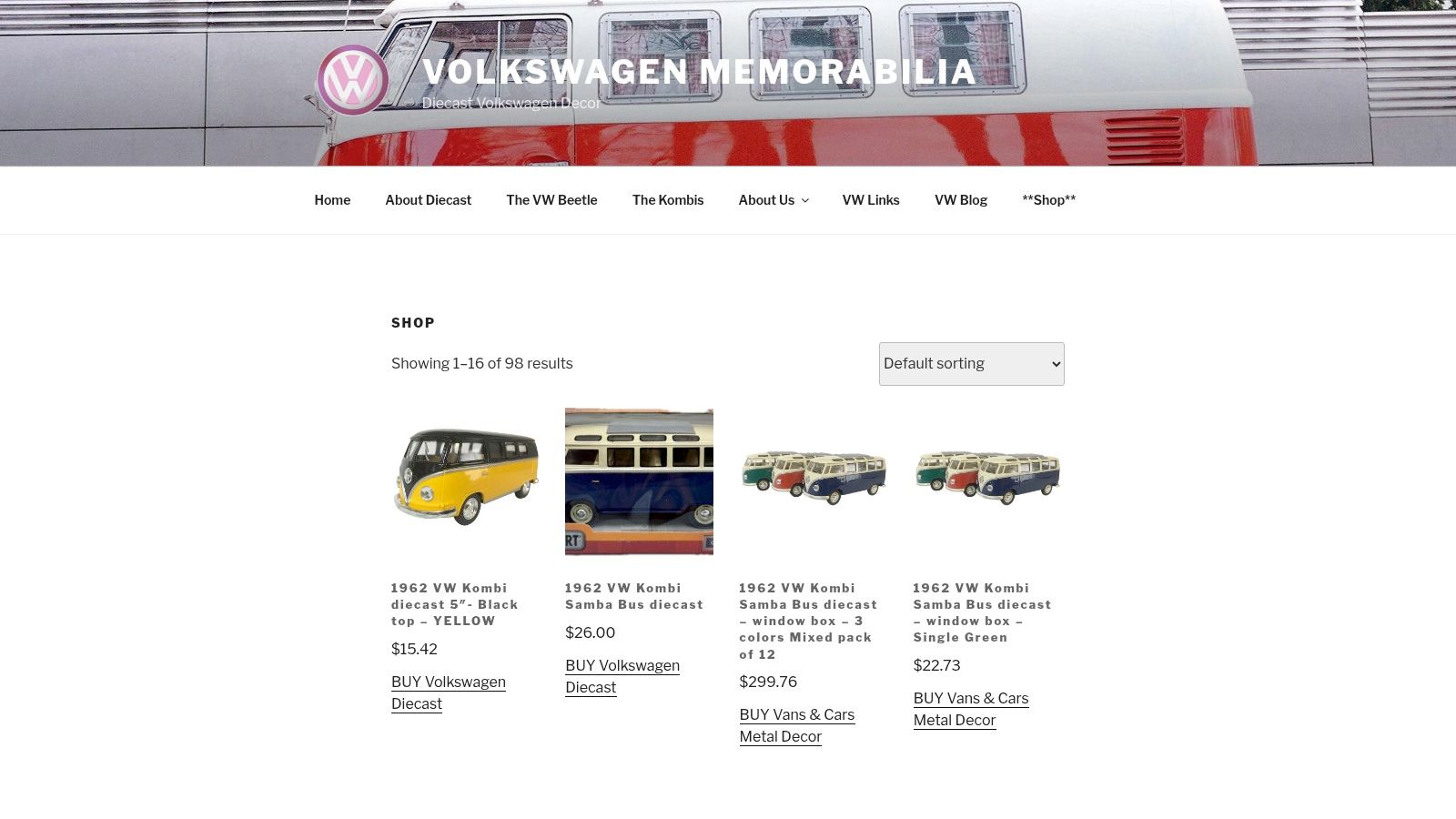
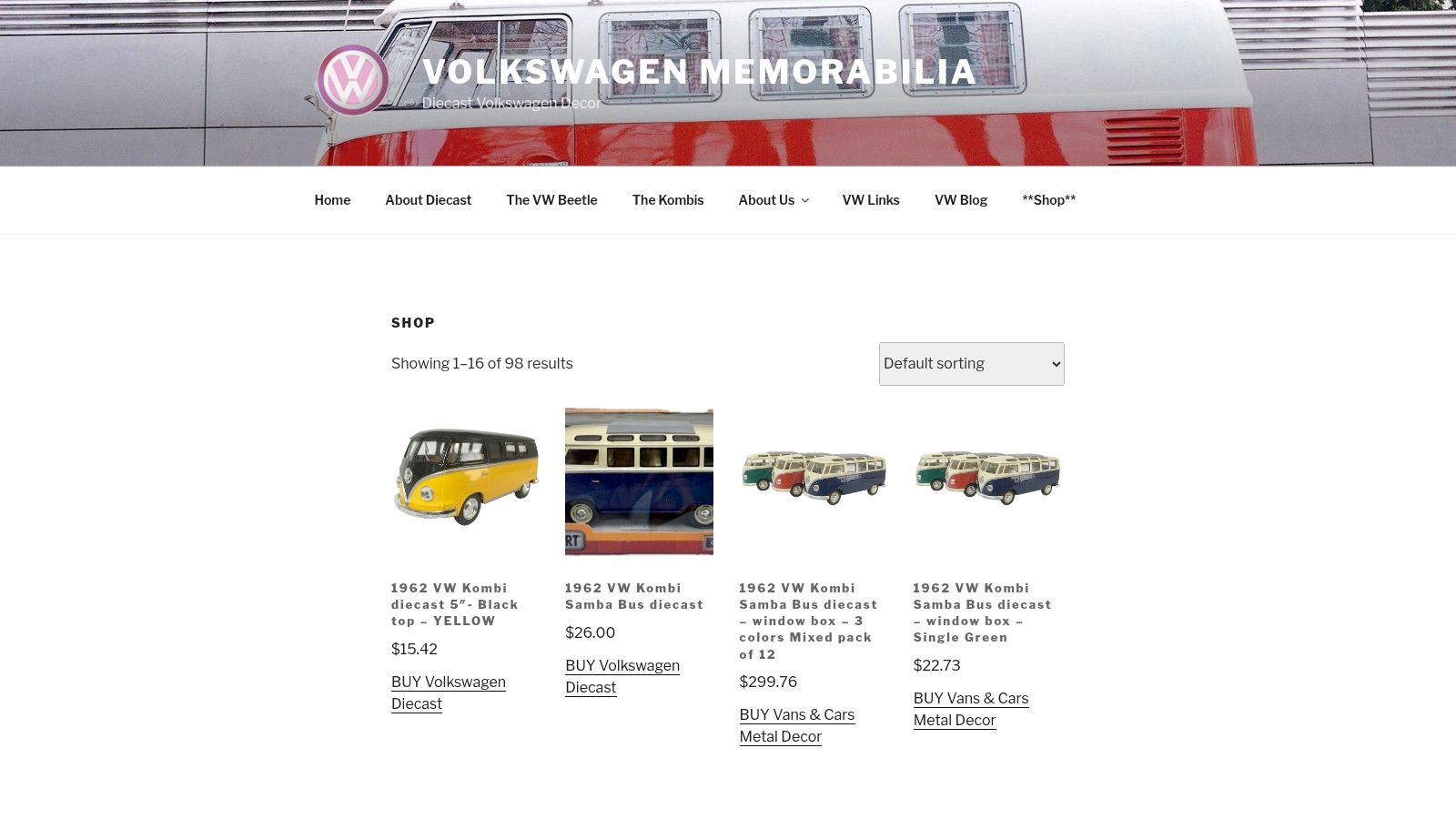
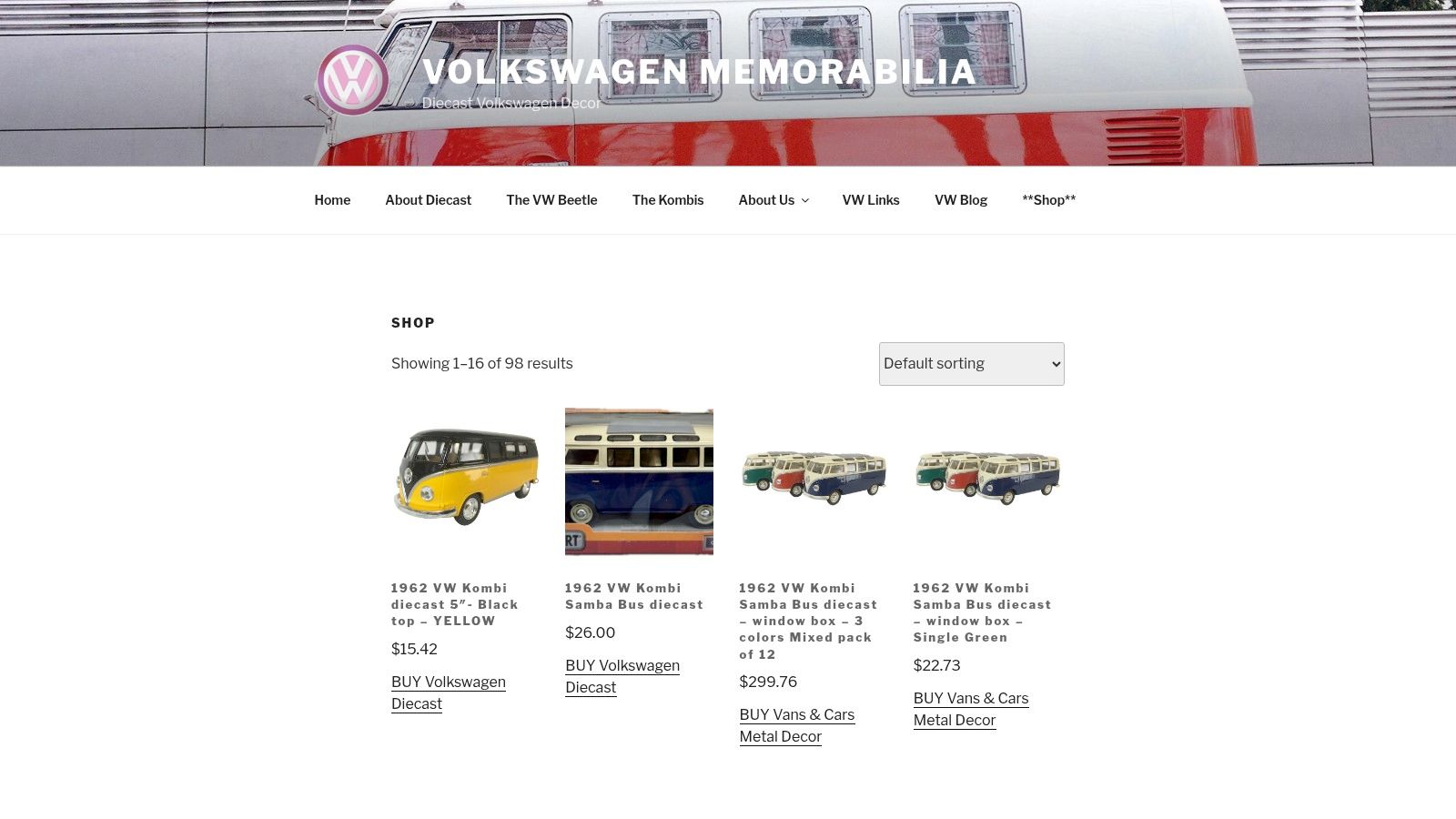
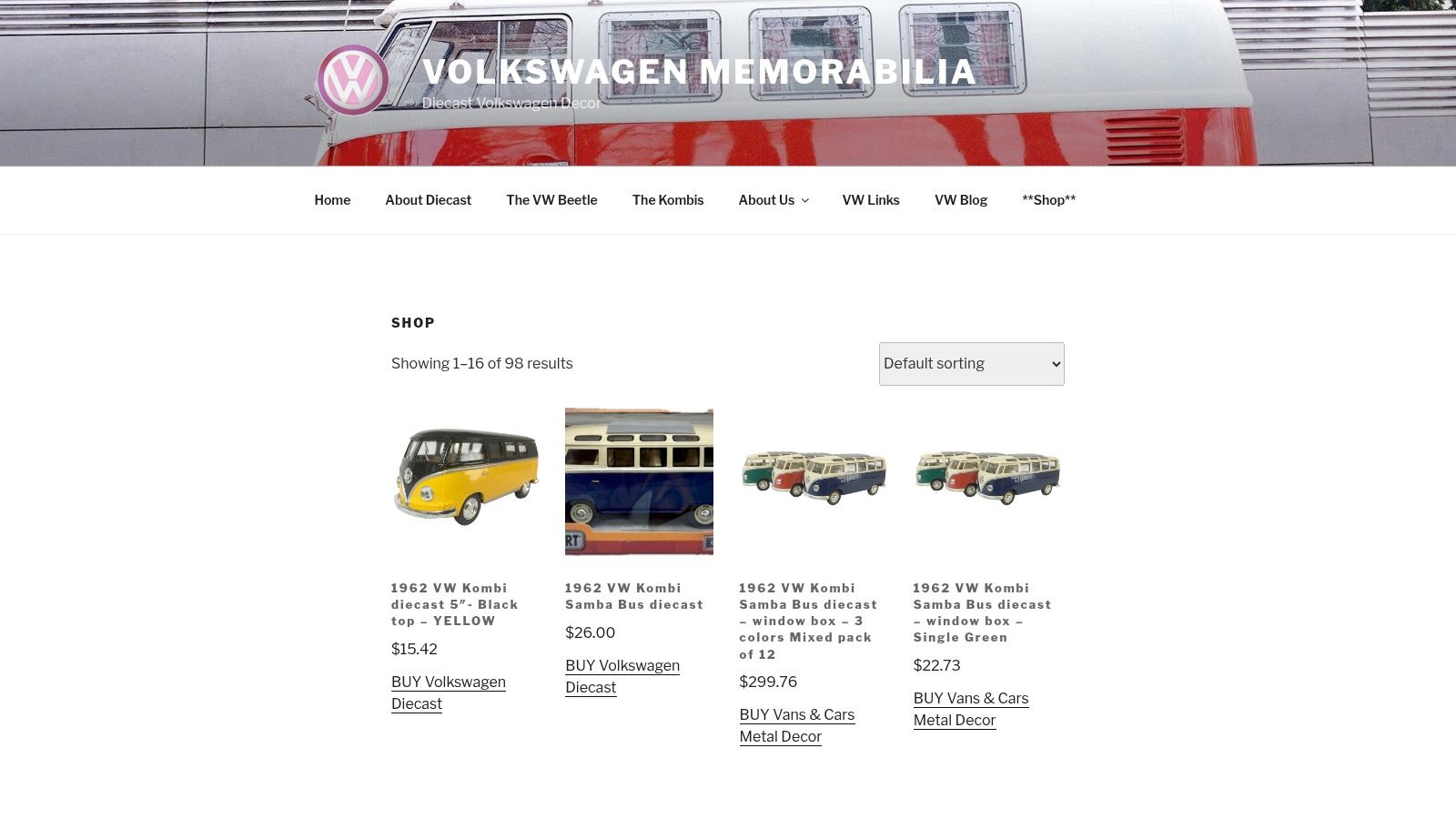
Screenshot from https://vwmemorabilia.com.au/shop/

The joy of buying in person

Physical hobby shops, swap meets, and VW events can be brilliant places to buy. You get the box in your hands, you can check the paint, and sometimes you'll find older pieces that never appear in a standard online catalogue.

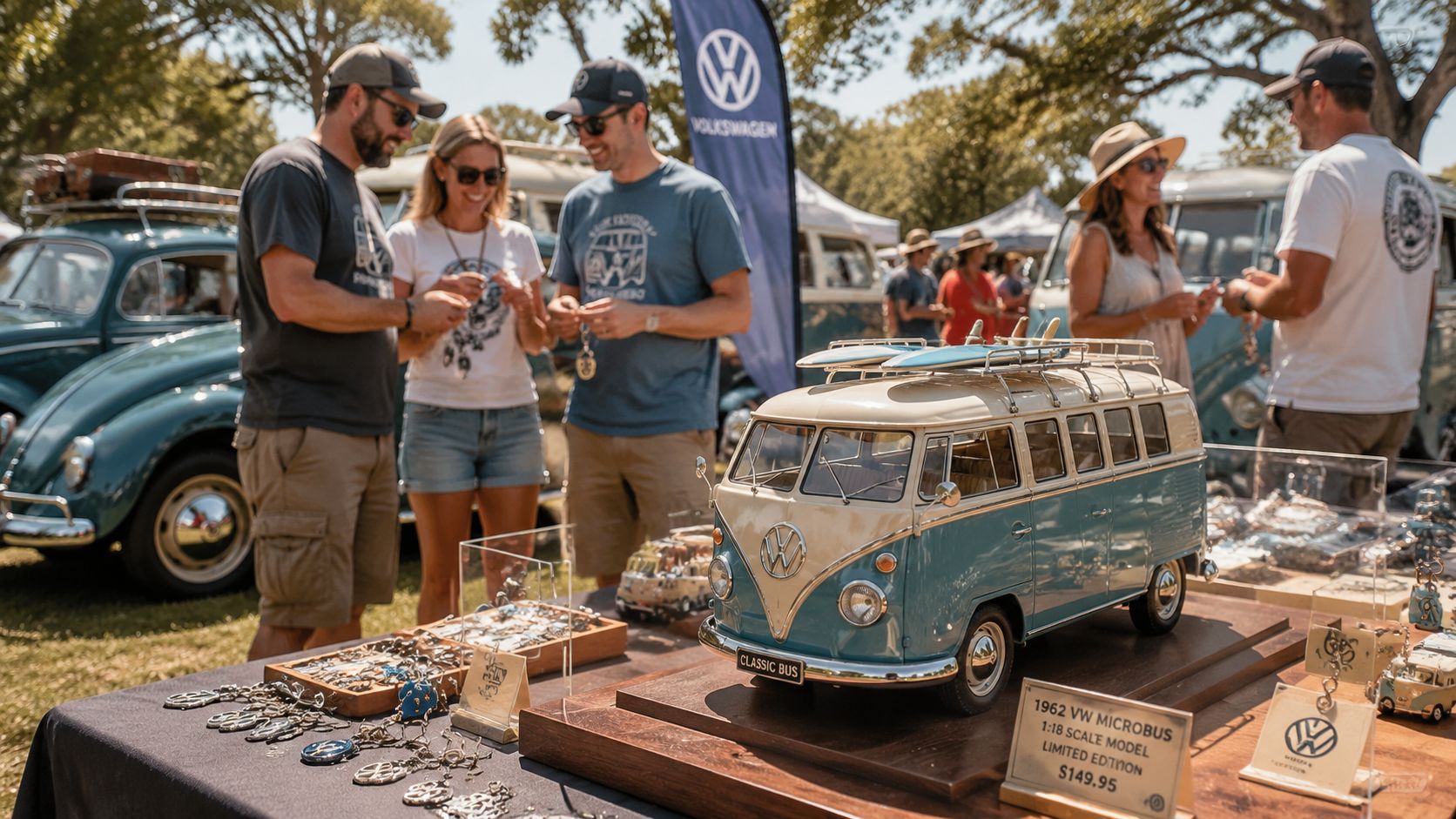
Events like Volksfest or VW Nationals can be especially fun because you're already surrounded by people who understand why a particular Kombi roofline or Beetle wheel style matters. The atmosphere helps. A model bought at a great show often carries the memory of that day with it.

Still, there are trade-offs.

  • Selection varies: A local stall may have one lovely Samba Bus and nothing else in your preferred scale.
  • Condition can be mixed: Sun-faded boxes, missing mirrors, or vague model history can turn a bargain into a gamble.
  • Prices are harder to compare: At an event, you often decide on the spot.

What online shopping does better

Online stores make comparison much easier. You can check body styles, colours, scale, and stock without driving across town. That matters as the local hobby expands. As noted earlier, Australia's diecast market is on a clear growth path, and that usually means more buyers trying to source the same sought-after pieces.

For people searching Volkswagen diecast models for sale, online buying also helps with one very practical issue. You can slow down and inspect listing photos. That gives you a better shot at spotting whether the model is licensed, whether the detailing is crisp, and whether the seller understands what they're offering.

Why buying from an Australian importer helps

Local stock becomes especially valuable. An Australian importer can remove a lot of the friction that comes with overseas ordering.

Buying route Main advantage Main caution
Car shows and swap meets You can inspect the item in person Limited choice and variable condition
General marketplaces Wide range of sellers Authenticity and consistency can be patchy
Australian specialist stores Local stock and simpler shipping Range depends on the shop's focus
Overseas sellers Access to unusual releases Slower delivery and more uncertainty

If you're trying to buy diecast Kombi models without the usual hassles, local stock means fewer surprises. Shipping is generally faster, support is easier to reach, and you're not left guessing about customs issues or waiting weeks to learn whether the item matches the photos.

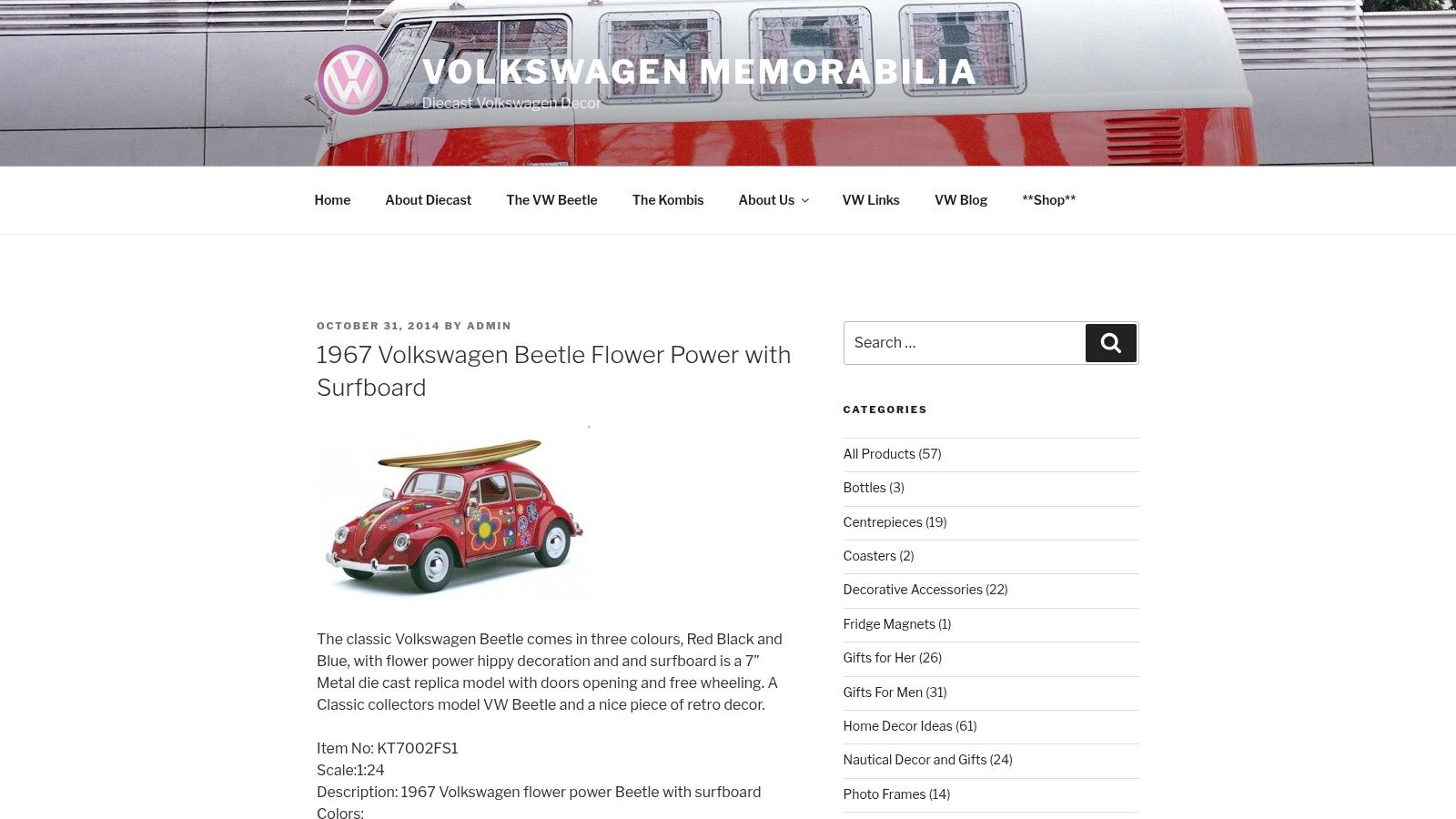
One option is the 1962 Volkswagen Kombi Flower Power classic bus with surfboard, which shows the kind of beachy, nostalgic styling many Australian collectors and gift buyers look for. It sits nicely at the meeting point between classic VW heritage and the relaxed surf aesthetic that makes Kombi memorabilia so appealing here.

Choosing the right place to buy

A simple way to decide is to match the purchase to your goal.

  • For a gift: A local specialist website is often the easiest path because sizing, style, and condition are clearer.
  • For a serious collector piece: In-person inspection or detailed specialist listings usually beat casual marketplace browsing.
  • For a fun shelf model: You've got more flexibility, so colour and character might matter as much as rarity.

Spotting a Gem How to Check for Quality and Authenticity

Not every diecast Volkswagen deserves shelf space. Some are cheerful little toys, and there's nothing wrong with that. But if you're collecting rather than buying a novelty, quality and authenticity matter a great deal more than a cheap price tag.

That's particularly important in Australia because authentication is a pressing need for enthusiasts as global data shows Asia Pacific is the fastest-growing region for automotive diecast, yet local resources often lack guides to distinguish premium brands from budget or counterfeit models, according to Research and Markets' model vehicle coverage.

Start with the licence

The first question is simple. Is it officially licensed by Volkswagen?

Licensed products are more likely to show the right body shape, model naming, badges, and trim. On a Kombi or Samba Bus, those details make a huge difference. If the front end looks slightly off or the proportions feel clumsy, collectors notice immediately.

Learn the signs of a better model

You don't need to be an expert restorer to tell the difference between a proper collectible and a forgettable knock-off. A careful look usually tells the story.

  • Check the casting: Better models tend to feel solid and balanced, not tinny or flimsy.
  • Inspect paint lines: Look where colours meet around windows, doors, and trim.
  • Study the windows and lights: Cloudy plastic, poor fit, or obvious glue marks usually suggest lower quality.
  • Look inside: Seats, dash detail, steering wheel shape, and interior colour all help separate premium work from generic moulding.
  • Examine moving parts: Opening doors or panels should align neatly and close properly.

If the wheels sit oddly, the logos look vague, and the interior is little more than a plastic blob, it's probably not the collectible you hoped for.

Online photos can tell you plenty

When you can't inspect a model in person, use the listing images like a checklist. Zoom in on front badges, panel gaps, and wheel detail. Check whether the seller shows the box, the underside, and close-ups of the cabin.

A seller who only shows one distant photo often leaves too many questions unanswered. A better listing usually includes multiple angles and clear product naming. That won't guarantee quality, but it gives you more to work with.

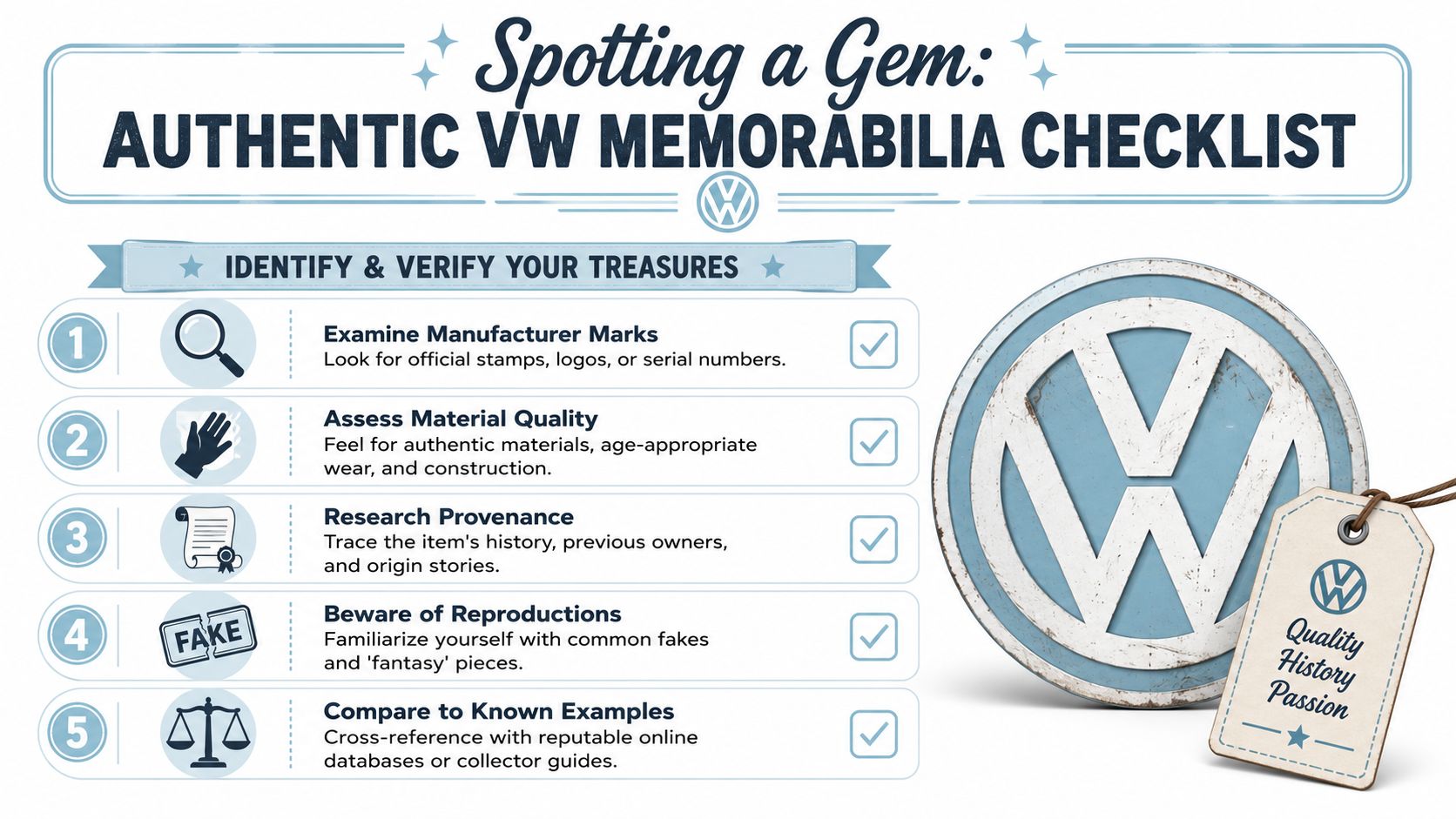
A simple authenticity checklist

Before you buy, ask yourself:

  1. Does the model name match the body style?
  2. Is Volkswagen branding presented clearly and consistently?
  3. Do the proportions look true to the original vehicle?
  4. Are there clear close-up photos of key details?
  5. Is the finish clean enough for a collector display?

For popular VW subjects, especially Beetles and Kombis, the safest mindset is this. Buy fewer pieces, but buy better ones. A shelf with three licensed, well-finished models usually brings more long-term pleasure than a crowded row of compromises.

Caring for Your Collection Display and Storage Ideas

Once you've found a model you love, the next job is keeping it looking the part. Dust, direct sun, rough handling, and damp storage can take the sparkle out of even a lovely little VW.

A few simple habits make a big difference.
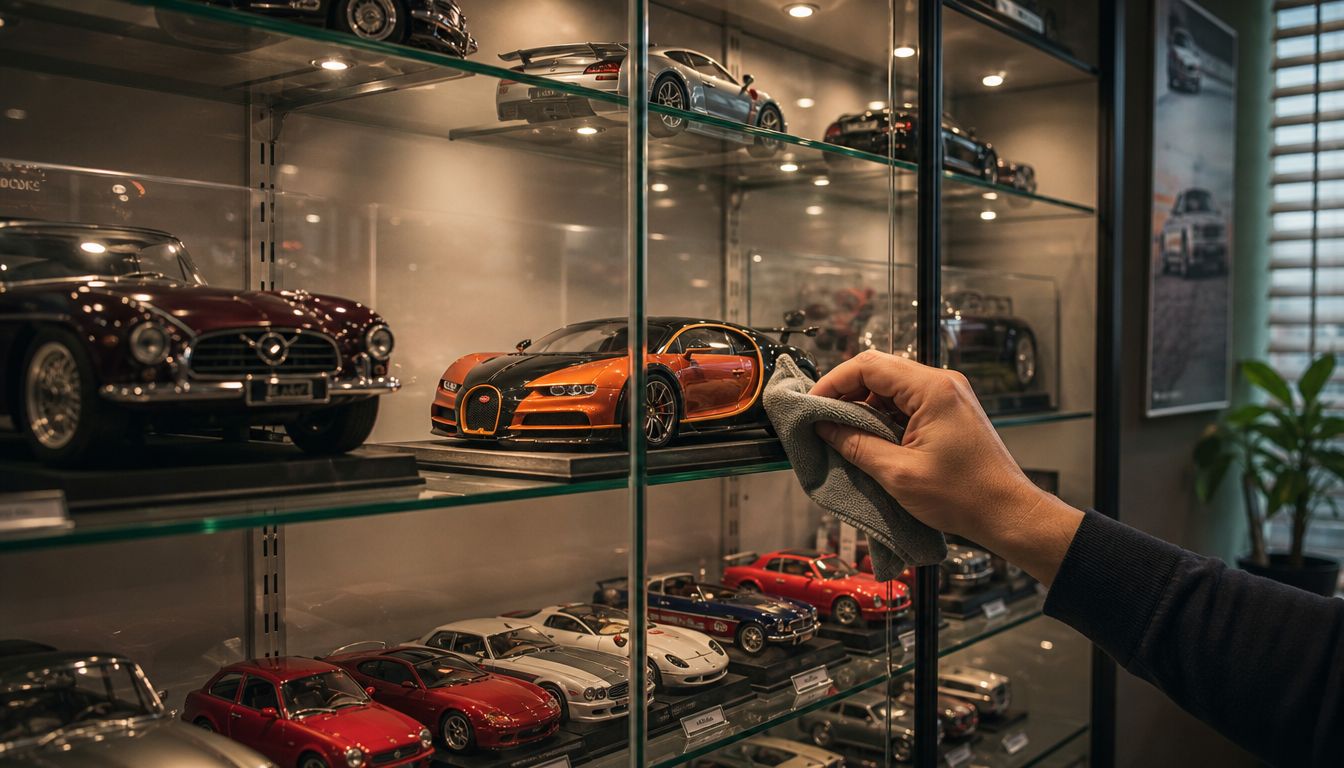
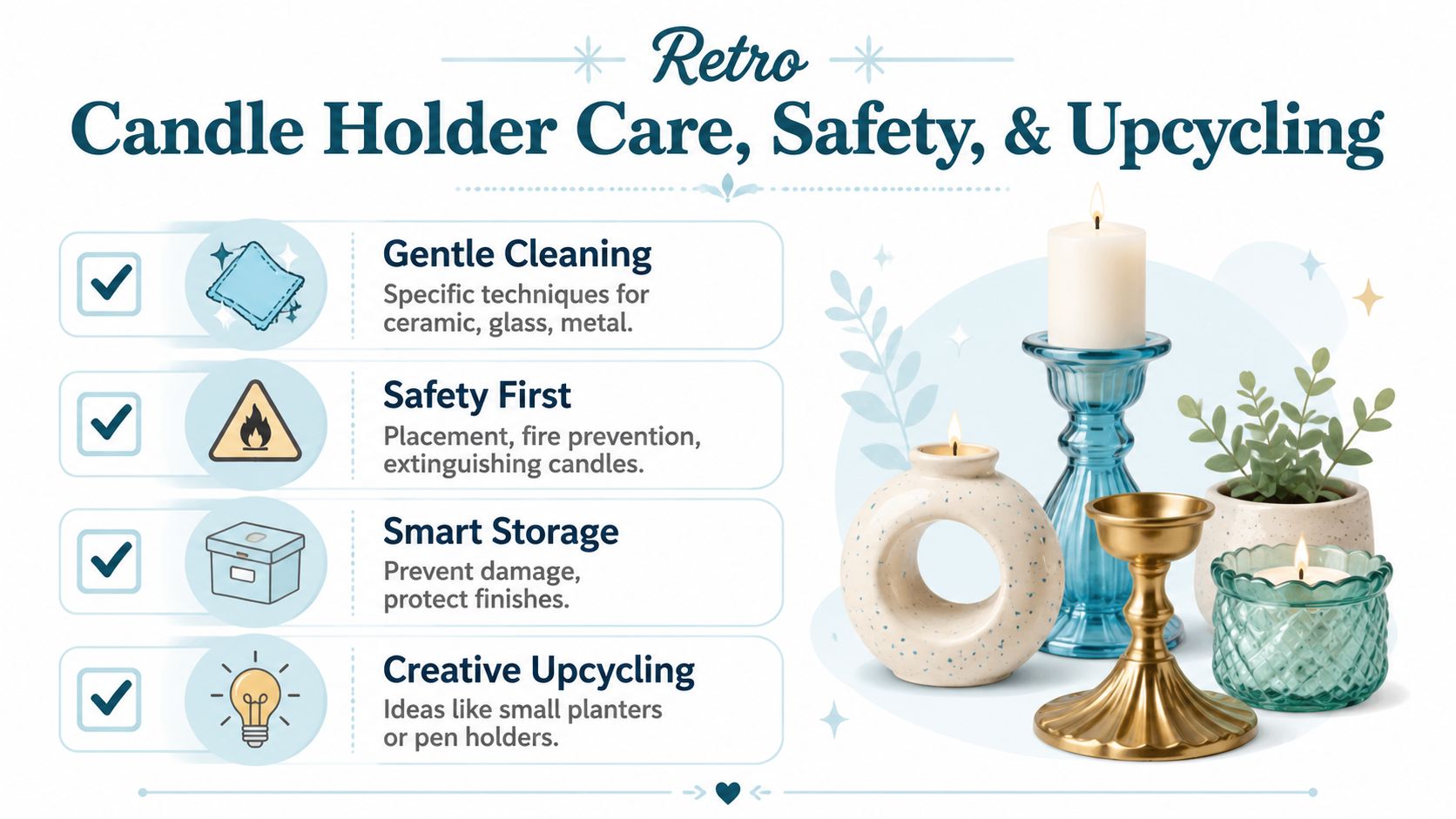
A person cleaning a high-quality diecast sports car model displayed inside a glass cabinet collection.

Everyday care that protects the finish

The easiest mistake is placing a model in a sunny spot because it looks great there at first. Bright light can dull colours over time, and dust settles quickly on roofs, mirrors, and window edges.

For most collectors, a better routine looks like this:

  • Keep it out of harsh sun: Indirect light is much kinder to paint and decals.
  • Dust gently: Use a soft brush or microfibre cloth rather than anything abrasive.
  • Handle by the base when possible: Mirrors, roof racks, and doors are often the first parts to suffer.
  • Store the box if you have room: Original packaging can be helpful for protection and resale.

Display ideas with a bit of personality

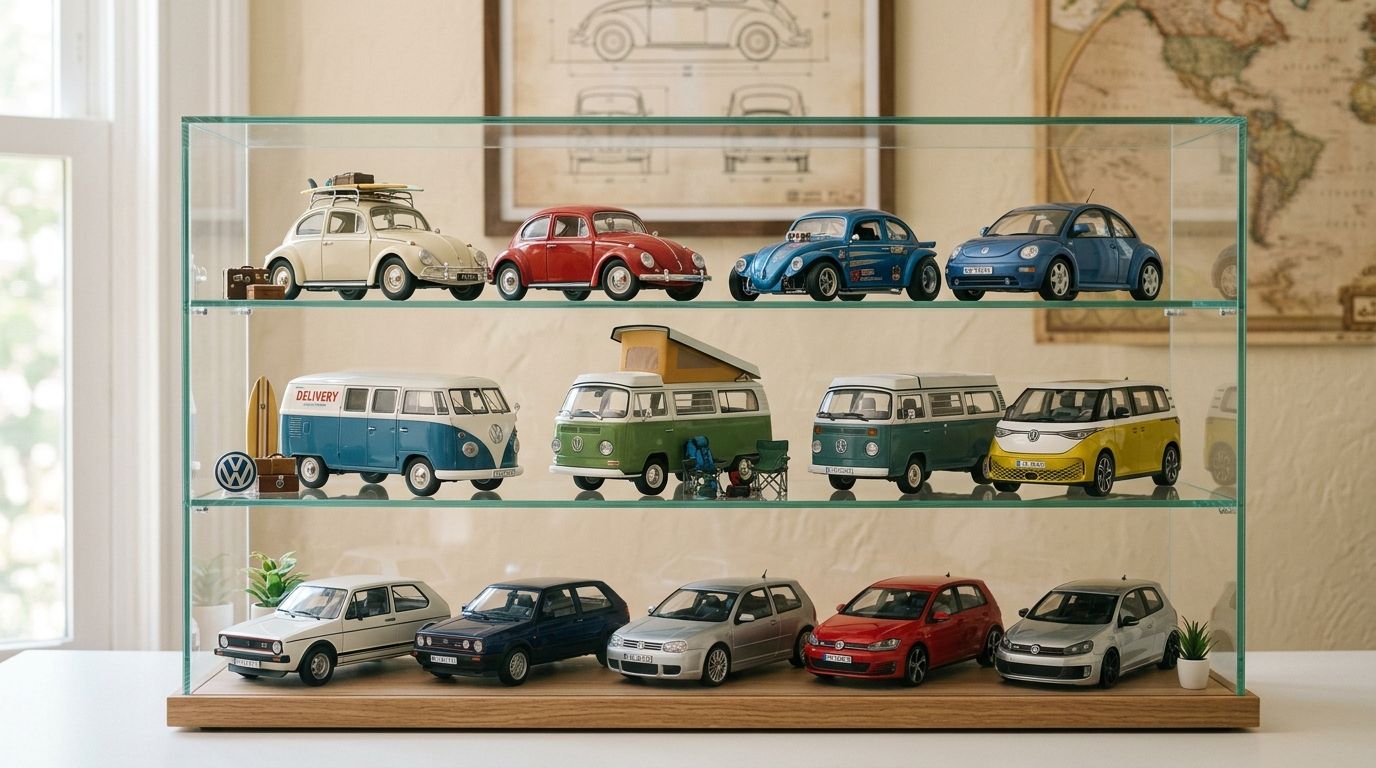
VW models suit more than one style of display. A polished cabinet works beautifully, but so does a relaxed, themed shelf that reflects the life those vehicles represent.

Display style Works well with Overall feel
Coastal shelf Kombis, surf-themed buses, pale timber Easy-going and beachy
Retro garage nook Beetles, signs, workshop-style décor Mechanical and nostalgic
Glass cabinet Licensed collector pieces Clean and organised
Desk display One standout bus or Beetle Personal and conversational

A coastal arrangement is especially fun with VWs. A Flower Power bus, a surfboard accessory, a bit of white décor, and a touch of beach texture can turn a simple shelf into a scene.

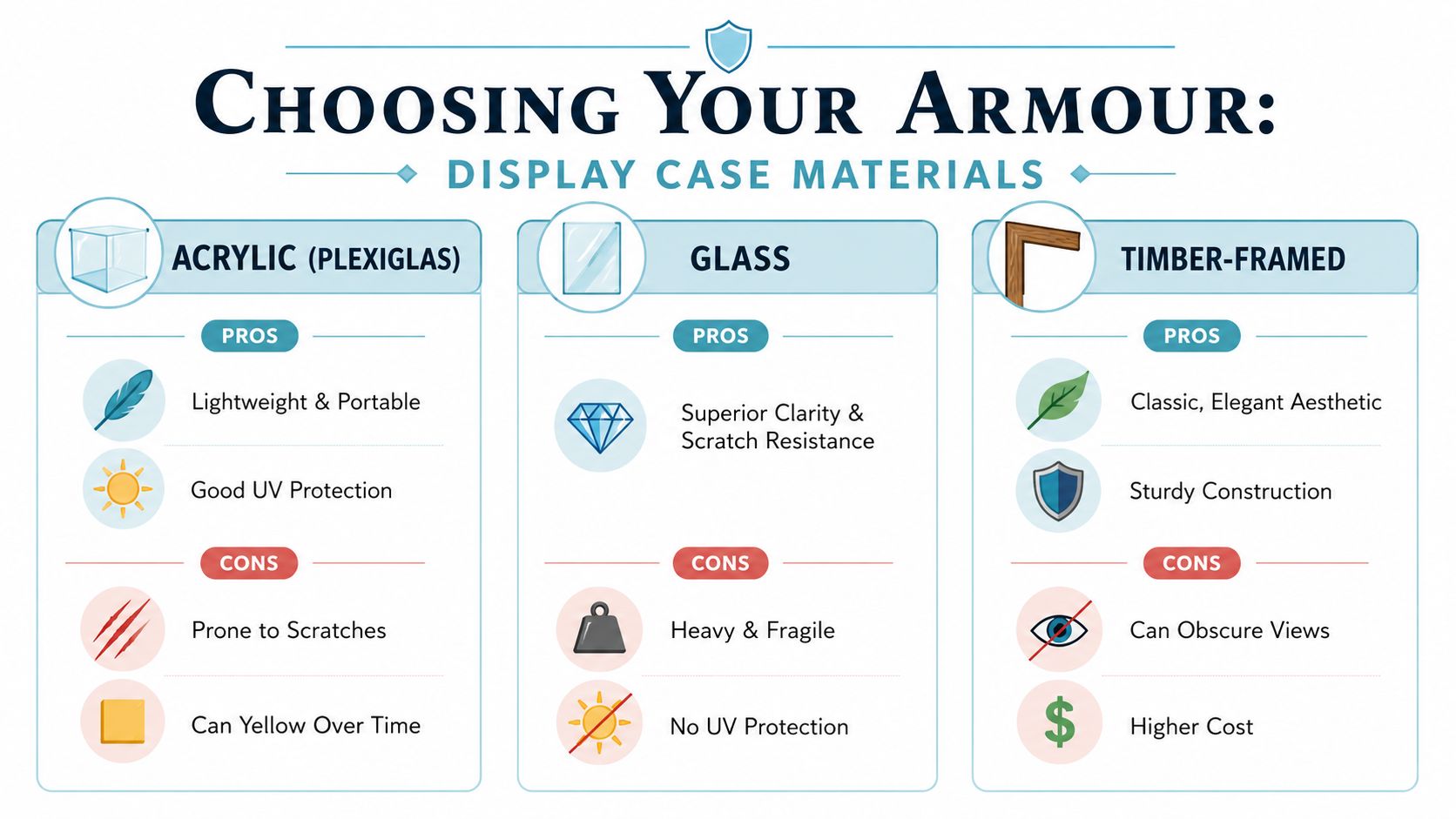
For collectors who want a tidier setup, these display cases for models are a practical way to cut down on dust while letting the details stay visible.

Cleaning technique matters

Collector habit: Clean less often, but clean carefully.

Frequent rough wiping causes more harm than patient, gentle dusting. If your model has opening doors or removable parts, move slowly and support the body while you inspect or clean it.

This video gives a handy visual sense of careful model handling and display care:

When storage becomes important

If your collection rotates with the seasons, use a dry cupboard and avoid stacking loose models together. Soft wrapping and stable shelves are far safer than tossing several pieces into one box. It's a simple step, but it helps preserve mirrors, paint, and presentation.

Joining the Aussie VW and Diecast Community

Collecting gets even better once you stop doing it alone. A shelf of Volkswagens at home is lovely, but the hobby really comes alive when you talk to people who know why a split-screen bus sparks debate, or why one Beetle colour instantly reminds them of childhood holidays.

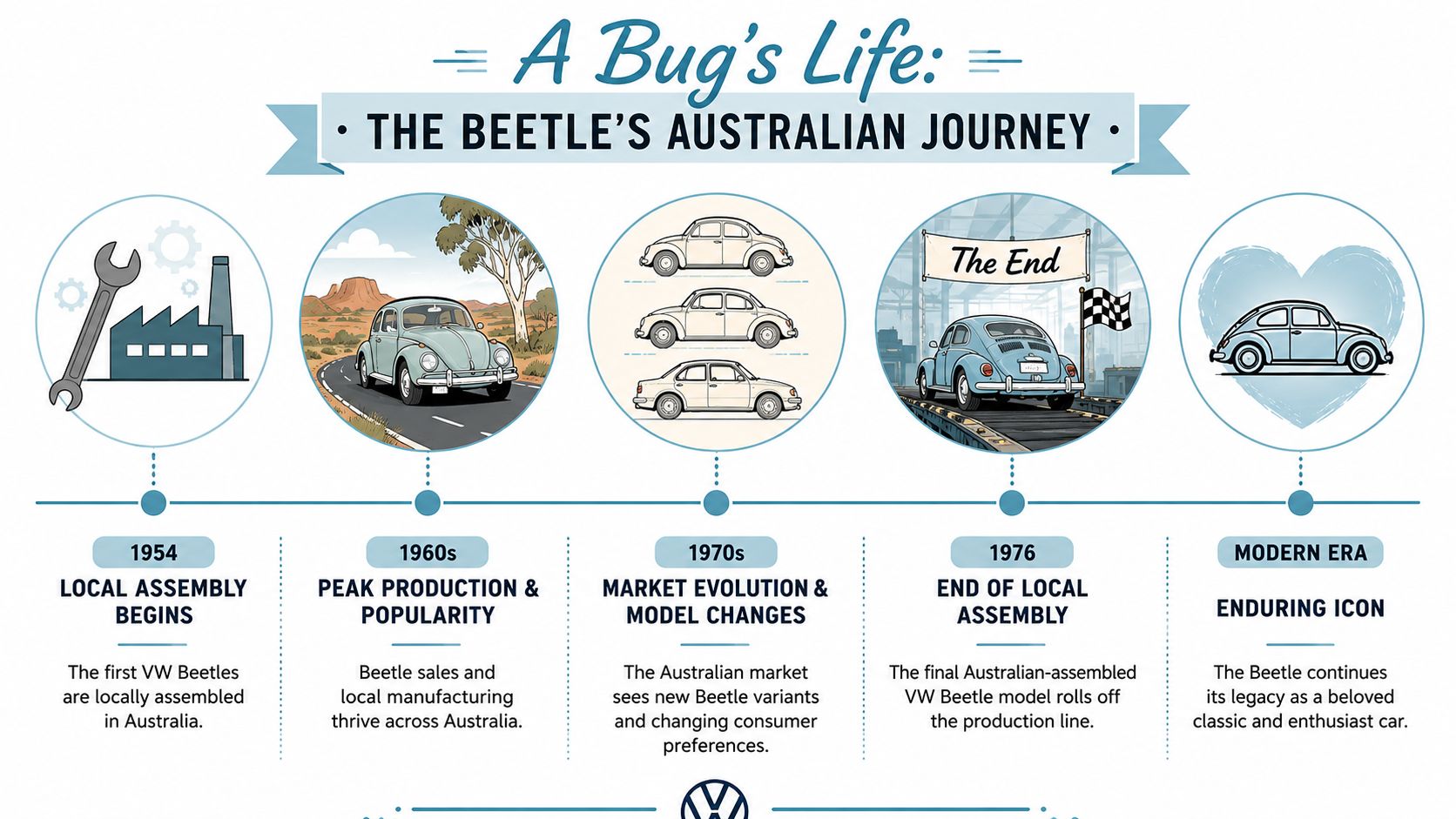
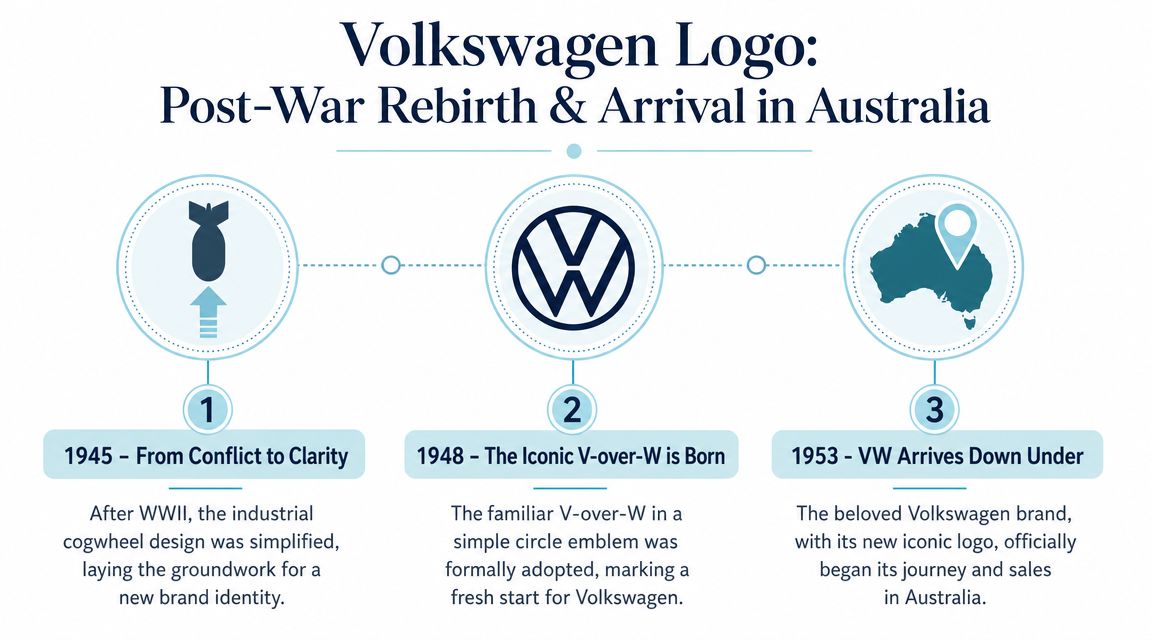
Volkswagen has had a long runway in this country. Volkswagen sales officially began in Australia in 1953, marking the start of the brand's deep cultural presence in the country that fuels the passion for collecting today, as outlined by Shannons Club's look at the Volkswagen Beetle in Australia.

Where enthusiasts tend to gather

Some collectors find their people at major car events. Others do it from the lounge room through online groups, collector pages, and enthusiast forums. Both are worthwhile because the hobby has two sides. There's the object itself, and there's the conversation around it.

Places worth keeping an eye on include:

  • Volksfest and VW Nationals: Good for seeing real cars, meeting owners, and spotting memorabilia stalls.
  • Facebook collector groups: Handy for model identification, swap discussions, and honest opinions on new releases.
  • Classic car clubs: Often full of people who appreciate both the full-size vehicle and the miniature version.
  • Special interest communities: Kombi fans, Beetle restorers, and surf-culture collectors each bring a slightly different angle.

Why community improves your buying eye

Talking with other collectors sharpens your judgement faster than scrolling alone. You start to recognise which finishes look right, which body styles are often mislabelled, and which models people repeatedly mention with affection.

You also realise something comforting. Most collectors started exactly where you might be now, with one bus, one Beetle, or one gift purchase that unexpectedly turned into a hobby.

A few questions new collectors often ask

Is a VW model only for serious collectors

Not at all. Plenty of people buy one model because it reminds them of a car they owned, a surf trip, or a family story. That's a perfectly good reason to start.

Are Kombis more popular than Beetles

They each attract a slightly different kind of affection. Kombis often bring in surf, travel, and coastal nostalgia. Beetles tend to spark memories of everyday life, first cars, and classic design.

Should I collect one scale only

If you like a neat, unified display, sticking to one scale helps. If you're collecting for joy rather than symmetry, mixing scales is completely fine.

What makes a good gift for a VW fan

A licensed Kombi or Beetle model with a design that matches their taste usually lands well. Some people love classic factory looks. Others grin at playful surfy colourways.

The best part of diecast collecting in Australia is that it sits at the crossroads of motoring history, home display, and shared memory. It's practical enough for the detail-minded collector, and sentimental enough for the person who just wants one lovely Volkswagen on the shelf.


If you're ready to start or add to your collection, have a browse through Volkswagen Memorabilia for licensed VW-themed diecast models, Kombi and Beetle designs, and display-friendly pieces that suit Australian collectors, gift buyers, and anyone who can't resist a bit of classic Volkswagen charm.

VW Caddy Maxi Kombi for Sale: Your 2026 Buying Guide

You're probably doing what plenty of VW people do on a Sunday arvo. Coffee in hand, tabs open, searching for a VW Caddy Maxi Kombi for sale while half-dreaming about beach runs, market mornings, and that first overnight trip where everything just works. Not a full-size camper. Not a fragile classic that needs a trailer and a prayer. Just a sensible Volkswagen with enough Kombi spirit to make everyday life feel a bit more like a holiday.

That's the sweet spot the Caddy Maxi hits in Australia. It's the van for the person who grew up loving Splittys and Samba Buses, but also likes air-conditioning, easy parking, and a diesel that's built to do real work. One mate brings his polished Beetle to the show field. Another rolls up in a weathered Bay Window with surf stickers on the glass. Then someone arrives in a clean Caddy Maxi, tailgate up, camp chair out, kettle on. Different era, same tribe.

The charm of the old Volkswagen world still matters. In Australia, the first-generation Volkswagen Kombi was produced from the 1950s until 1967, and that local history helped turn the Kombi into a symbol of surf culture and road-trip freedom, as noted in this history of the Volkswagen Kombi van. That's why so many buyers aren't just shopping for transport. They're buying into a lifestyle that stretches from real vans to shelves full of licensed diecast and garage memorabilia.

The Modern Kombi Dream A Caddy Maxi Awaits

You see it at a beachside car park in Byron. A Splitty gets the cameras. A tidy Bay Window gets the nods. Then a silver Caddy Maxi rolls in with two kids in the back, boards on the roof, a camp table in the tailgate, and enough room left over for the dog. By the time the kettle is on, you understand why so many Australian buyers end up here.

The Caddy Maxi carries the part of the Kombi story that still fits real life. It suits the school run, the hardware store, the early surf check, and the long haul up the coast without asking you to become a part-time mechanic. That matters if you love old Volkswagens but want to spend your weekends driving them, not lying under them.

A lot of people hunting for a VW Caddy Maxi Kombi for sale are chasing that balance. They grew up with posters of Samba Buses, or maybe a parent had a Beetle, and now they want something with the same friendly Volkswagen character in a shape that works every day. The Maxi earns its keep here. The extra length gives bikes, prams, camping tubs, and market gear proper space, so the cabin feels settled instead of packed to the roof.

That extra room also explains why the Caddy keeps popping up in conversations about practical camper builds. A well-bought example can become a smart weekender, but Australian buyers need to keep an eye on conversion costs, engineering shortcuts, and home-built fit-outs that look neat in photos and cost a bomb to sort later. If that side of ownership is already on your mind, this guide to a VW Caddy van camper setup gives a good sense of how the platform fits into the wider VW lifestyle.

There is a strong emotional thread running through all of this. Australians still put serious value on classic Kombis. One locally delivered 1960 Volkswagen Kombi Samba Bus brought $202,000 at auction in Melbourne, as reported by Shannons Club and detailed later in this guide. The point is not that a Caddy Maxi belongs in the same collector bracket. The point is that the badge still means something here, from a concours bus to a daily driver with sandy floor mats.

That is the modern Kombi dream in a nutshell. You get the Volkswagen spirit, the upright view out, the useful boxy shape, and the freedom to throw gear in the back and go. Then, if you are the sort of VW tragic who keeps diecast models on the shelf at home, the Caddy slots neatly into that bigger story too. It is transport, yes, but it is also membership in the same old tribe.

Finding Your Dream Caddy Maxi in Australia

Start broad, then get picky. The Australian market can look simple at first glance, but Caddy listings often blur the line between commercial vans, passenger models, and camper conversions.

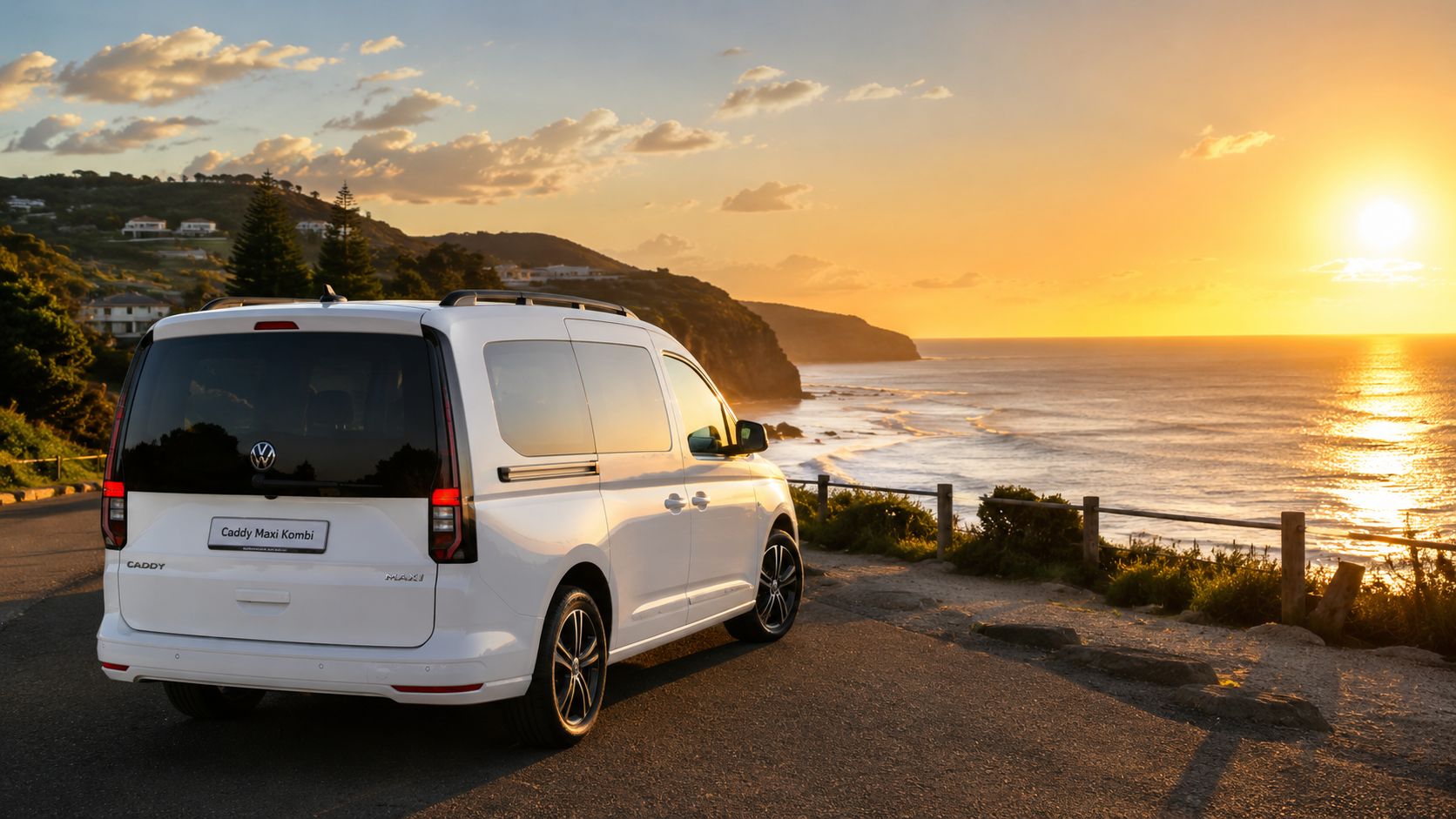
A white Volkswagen Caddy Maxi Kombi parked on a scenic coastal road during a beautiful golden sunset.

A realistic budget helps straight away. A 2025 Volkswagen Caddy Maxi can start from around $48,060 in Australia, and it measures 4,500 mm long with an 11.4-metre turning circle, which explains why it feels tidy around town for something so useful, according to Carexpert's Volkswagen Caddy pricing and dimensions.

Where to search beyond the obvious

Carsales and dealer stock are the first stop, but the best vans often surface through enthusiast circles before they hit the big listing sites. VW clubs, local Facebook groups, and word-of-mouth at events can be gold, especially if you're chasing a cared-for example rather than a hard-worked fleet van.

Try a mix of these:

  • Dealer-used stock: Ex-fleet or trade-in vans can be worth a look if they've been serviced properly.
  • VW owner groups: Owners often share details the ad forgot, including what the van's been used for.
  • Independent specialists: Some workshops know which vans have had thoughtful conversions and which ones have been stitched together.
  • Lifestyle-focused pages: If you're considering a light camper setup, browse inspiration like this VW Caddy van camper guide to sharpen your eye for useful layouts.

Know your Caddy language

A lot of confusion comes from badges and body styles. “Cargo” usually points to a commercial van. “Kombi” tends to mean a people-friendly setup with extra seating and windows. “Maxi” means the longer body, which is usually what buyers want if touring, family duties, or conversion plans are part of the brief.

Here's a simple way to sort your shortlist:

Model type Best suited to What to watch
Standard Caddy Daily urban use, lighter loads Less room if you plan to camp or carry bulkier gear
Caddy Maxi Touring, family use, flexible storage Make sure the extra space hasn't been wasted on a poor conversion
Cargo Trade work, gear hauling Commercial wear can be heavier than the photos suggest
Passenger or Kombi-style setup Mixed lifestyle use Check seat configuration and compliance if modified

If you want a moving look at the shape and feel of the van, this walkaround helps bring the Caddy Maxi into focus before you inspect one in person.

A buyer's filter that saves time

Don't just search by price. Search by intended life. If the van needs to carry family, camping gear, and maybe a dog, be ruthless about rear access, seat setup, and evidence of careful ownership. A shiny ad can hide a tired van. A plain ad from a fussy owner can hide a gem.

Practical rule: Buy the van that fits your weekends as well as your workdays. That's where the Caddy Maxi earns its keep.

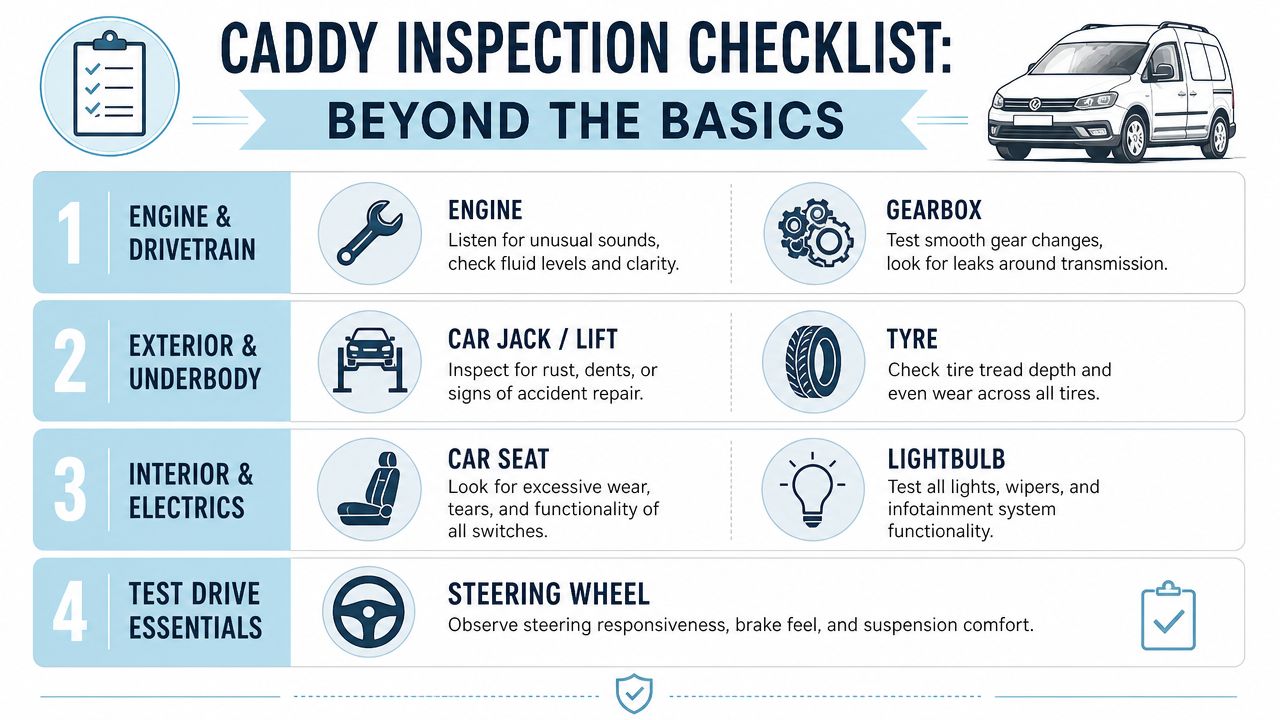
Your Caddy Inspection Checklist Beyond the Basics

A mate in Byron bought a silver Caddy Maxi that looked perfect in the listing. Clean seats, tidy paint, cute little camp setup in the back. On inspection day, the story changed fast. The sliding door roller grated, the rear floor felt damp under the mat, and one peek underneath showed flaky surface rust starting around a poorly finished fit-out. That is the sort of van that teaches you to slow down.

A Caddy inspection checklist infographic detailing engine, exterior, interior, and test drive checks for vehicle maintenance.

The Caddy Maxi can be a brilliant Australian all-rounder. Plenty run the 2.0 TDI diesel, and it suits the longer body well if the van has been serviced properly. The catch is hidden cost. Compliance work, rust repair, and fixing rough camper conversions can run into thousands, so your inspection needs to go further than a quick walk around with the seller chatting in your ear.

Under the bonnet and underneath the van

Start with a cold engine if the seller allows it. A warm engine hides plenty. You want a clean start, steady idle, and no plume of smoke hanging around longer than it should.

Then get your knees dirty. Look under the front lip, along the sills, around jacking points, and near the rear floor. Beach air, wet camping gear, and badly sealed accessories can all leave their mark on an Australian van.

Check these areas closely:

  • Engine behaviour: Listen for rattles on startup, feel for vibration at idle, and check for warning lights that disappear a bit too conveniently.
  • Gearbox feel: A manual should engage cleanly. A DSG should shift without jerks, hesitation, or a thunk into gear.
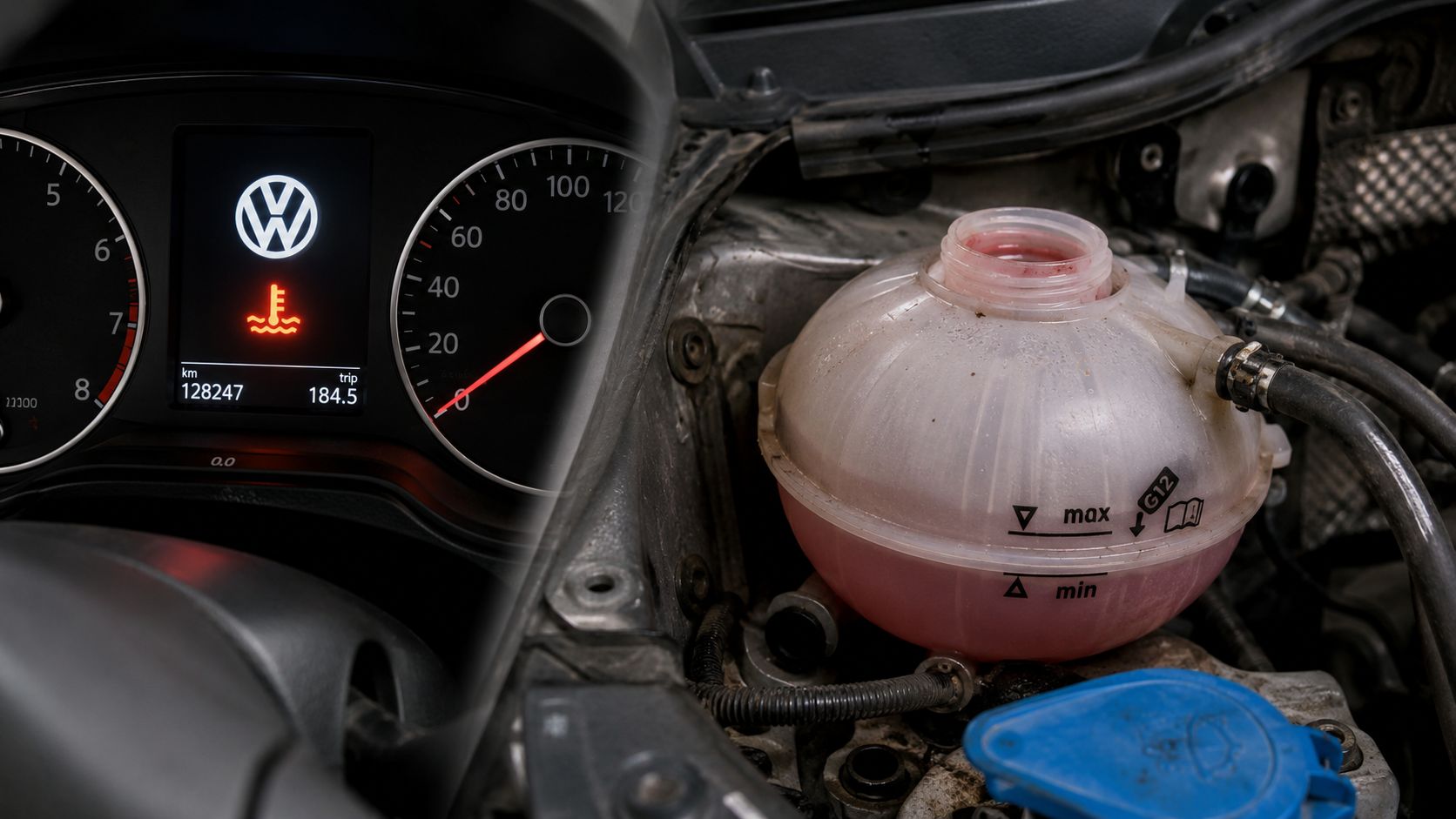
  • Leaks and residue: Scan around the engine, gearbox, intercooler hoses, and undertray area for oil mist, fresh drips, or coolant staining.
  • Tyre wear: Feathering, inner-edge wear, or mismatched tyres can point to suspension wear, poor alignment, or a harder life than the ad suggests.
  • Suspension and underbody: Bushes, shocks, exhaust hangers, and scraped underbody sections tell you how the van has been treated.

The conversion traps that catch people out

This is the part many buyers get wrong, especially if they have one eye on road trips and another on the shelf of VW models at home. A real Caddy and a diecast one can both look spot on from three metres away. Only one can hide dodgy wiring behind a timber panel.

A “ready camper” setup needs the same scrutiny as the vehicle itself. Check seat mounts, extra batteries, inverters, USB outlets, flooring, insulation, and any cut panels around windows or vents. If the seller says, “Previous owner did that,” ask what paperwork backs it up. In Australia, the neatest-looking conversion can still sting you later if the work was never finished properly or does not line up with compliance requirements in your state.

A tidy folder of records helps here. Even a small habit like keeping notes in a Volkswagen service book themed collectible says something about how an owner thinks. You are looking for that same care in the van.

Cabin checks people rush

The inside usually gives the game away before the mechanicals do. A family Caddy with honest wear feels different from an ex-tradie van that has spent years hauling tools and getting slammed shut ten times a day.

Take your time with the cabin.

  1. Seats and rails
    Slide, fold, lift, and latch every seat. If it is a Kombi with aftermarket seating, inspect the mounting points and surrounding floor closely.

  2. Switches and electrics
    Test windows, mirrors, lights, wipers, air conditioning, infotainment, charging points, and any added camping electrics.

  3. Water ingress signs
    Lift mats, press into the rear corners, check window seals, and trust your nose. Damp carpet always has a cause.

  4. Load area condition
    Scratches are normal. Patch repairs, random bolt holes, cracked trims, and fresh carpet over rough metalwork deserve questions.

What a good test drive feels like

A sorted Caddy Maxi feels settled. It should track straight, brake evenly, and stay composed over rough patches instead of bouncing or crashing through them. On a tight turn, listen for clunks from the front end. On a clear stretch, ease off the wheel for a moment and see if it pulls.

Drive it at suburban speed first, then on a faster road if you can. A van that feels fine around the block can still reveal wind noise, transmission hesitation, or tired suspension once it stretches its legs.

And if the seller keeps talking, ask for a minute of quiet. The van has plenty to say on its own.

Making an Offer and Navigating Aussie Paperwork

Buying well isn't just about spotting a good van. It's also about finishing the deal cleanly, with no loose ends waiting for you after the handshake.

Keep the final steps boring

Boring is good here. Before money changes hands, confirm identity, registration details, and ownership status. Ask direct questions and match the answers to the documents in front of you. If the seller gets slippery about paperwork, walk away politely.

A few habits make this easier:

  • Run a PPSR check: It helps confirm there isn't money owing or a write-off history hanging over the vehicle.
  • Check the roadworthy rules in your state: A certificate matters, but it doesn't replace your own inspection.
  • Confirm registration transfer steps early: Each state handles timing and forms a bit differently.
  • Keep receipts and messages: Save everything, even if the deal feels friendly and informal.

Negotiation that fits the VW community spirit

You don't need to smash a seller to get a fair deal. Most VW people respect a buyer who's prepared, calm, and honest. If you've found faults, name them clearly. If the van has good history and presents well, recognise that too.

A respectful offer usually lands better when you can point to specifics:

What you found How to raise it
Cosmetic wear Mention it as future tidy-up cost, not a moral failing
Missing service records Ask for a sharper price because uncertainty has value
Questionable conversion work Treat it as risk, because you may need to redo it
Good history and careful ownership Say so. Sellers respond well when buyers notice effort

Buy with your head, but don't leave your manners at home. The VW scene in Australia is smaller than it looks.

If you're also daydreaming about the broader Volkswagen van world while you shop, browsing a page like Kombi for sale can remind you how wide the VW family tree really is, from practical vans to dream garage classics.

The final handover

On collection day, take your time. Get the spare key, books, receipts, wheel lock, and anything included in the sale. Pair your phone later. First, make sure the basics are in your hands.

Then drive home the long way.

The Caddy Maxi vs Its Classic VW Cousins

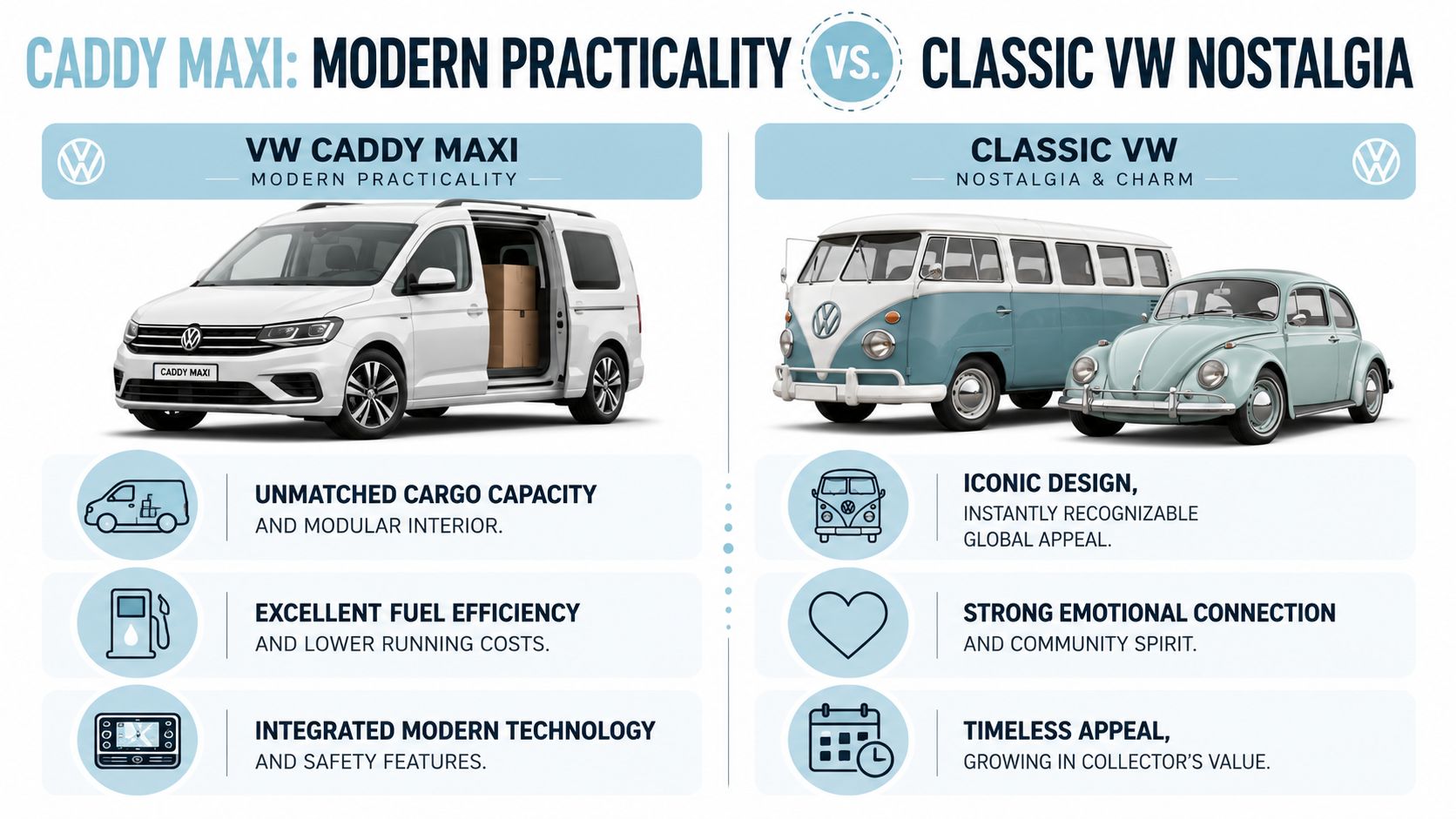
Saturday morning in Byron Bay, a white Caddy Maxi pulls up beside a split-window Kombi at the markets. One has child seats, surf wax in the door pocket, and a boot full of camping gear. The other has everyone crouching for photos before the owner has even switched it off. That little scene explains the whole VW family better than any brochure ever could.

A comparison infographic featuring a modern white VW Caddy Maxi alongside a classic VW camper and beetle.

The Caddy Maxi earns its place with use. It handles the school run on Monday, the Bunnings dash on Wednesday, and a run down the coast on the weekend without turning every outing into a mechanical gamble. For plenty of Australian buyers, that matters more than romance by the second month of ownership.

The classics live in a different part of the heart. They bring ritual, shape, and history. Early Type 2 production was tiny, which helps explain why collectors still chase them so hard. Heritage Parts Centre notes that in 1949, only 8 Volkswagen Type 2 vehicles were built globally for the year, made up of 6 panel vans, 1 Kombi, and 1 Microbus, according to Heritage Parts Centre's Type 2 history.

Practicality versus pure nostalgia

A Caddy Maxi suits the owner who wants one Volkswagen to do the lot. You can load bikes, friends, tools, or camping gear and still expect decent manners in traffic and on the highway. That is a big part of the modern Kombi dream in Australia. You stay in the VW world without signing up for constant tinkering.

A classic Kombi, Beetle, or Samba gives back something less practical and more personal. The steering wheel feels different. The smells are different. Even the way people smile at traffic lights is different.

That is why the decision is rarely about which one is better. It is about which chapter of VW life you are in.

A side-by-side view

VW type Best quality Trade-off
Caddy Maxi Everyday usability, comfort, flexibility Less of the old-school visual theatre
Classic Kombi Heritage, charm, club appeal More upkeep, more compromise
Beetle Simple joy, unmistakable style Not the same cargo or touring versatility
Samba Bus Collector icon status A dream garage piece for many enthusiasts, but not an easy daily choice

There is an Aussie reality here too. A classic van that looks affordable at first glance can hide expensive conversion rework, rust repair, missing trim, and engineering headaches. A Caddy Maxi usually keeps those surprises in check, while still giving you the badge, the community, and the excuse to park beside older Volkswagens at a meet and feel part of the same story.

Classic buyers and diecast collectors often chase the same thing. They want a shape they can keep close. Listings on sites like Carsales show that older models can still appear at entry-level prices, while the best examples sit in a very different bracket. That spread is part of the appeal. You can join the VW lifestyle with a usable modern van, then collect the icons in smaller form while you decide whether a full classic project belongs in your future.

A smart VW garage in Australia often starts with the Caddy you can use and grows into the classics you admire, whether they live under a carport or on a shelf.

Why diecast belongs in this story

That collector streak makes perfect sense once you have owned a Volkswagen. You notice the roofline of a Samba, the stubby stance of a Beetle, the honest shape of an early Kombi. A diecast version keeps that connection alive without the cost, storage worries, or workshop bills.

The Caddy Maxi sits neatly in that broader VW journey. It is the van that gets you to the beach, to the swap meet, and home again. The classic cousin, even if it only lives in miniature for now, keeps the older dream in view.

Celebrate Your New VW With the Collector's Spirit

Once you've found the right van, something shifts. It stops being a search and starts being ownership. You begin noticing other Volkswagens more keenly. You wave at Kombis. You park carefully. You start collecting little bits of VW life without even meaning to.

That collector's instinct has always sat beside real-world ownership. Some people restore a Beetle. Some hunt vintage brochures. Some line up licensed buses and Beetles in 1:18 and 1:24 scale on the office shelf because the shapes make them smile at the end of a long day. It's all part of the same culture.

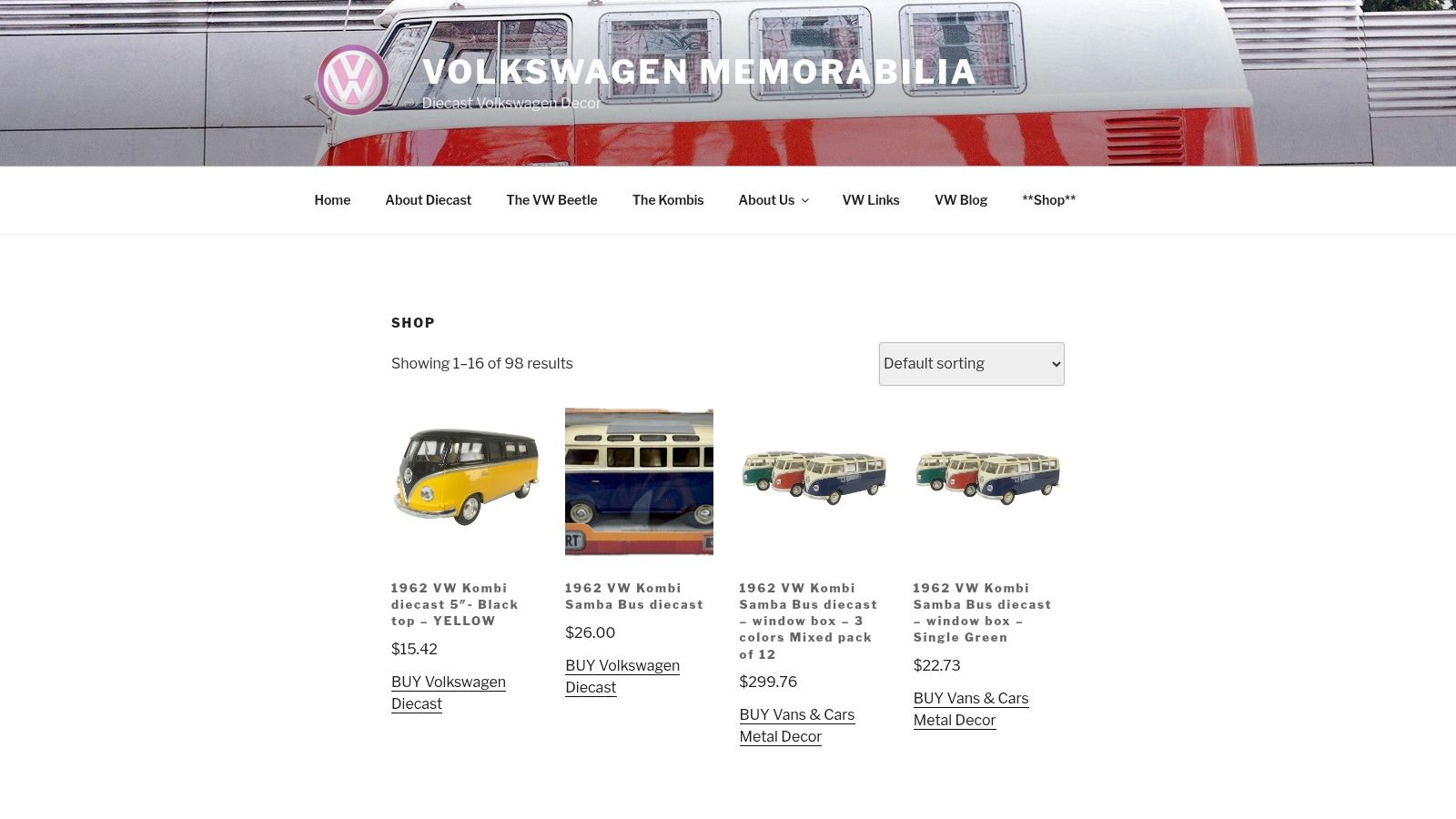
Screenshot from https://vwmemorabilia.com.au/shop/

Small objects, big memories

A real van gives you stories. A diecast model lets you keep them in sight. That's why VW Kombi diecast Australia, Volkswagen Beetle model, buy diecast Kombi, VW memorabilia collectibles, and Volkswagen diecast models for sale all feel connected rather than separate. They serve the same affection from different angles.

If you're choosing pieces for a display, gift, or garage corner, a few categories always feel right:

  • Classic Kombi and Samba Bus diecast: Ideal if your heart still leans toward the old buses.
  • Beetle models: Perfect for rounding out a collection with another all-time Volkswagen icon.
  • Mixed display pieces: Great for a shelf that tells the whole story, from workhorse vans to surfy classics.
  • Gift-ready memorabilia: Handy when the VW fan in your life already has the tools and the T-shirts.

FAQ for buyers and collectors

Is the Caddy Maxi a good modern stand-in for the Kombi spirit

Yes. Not because it looks the same, but because it supports the same kind of life. It's useful, compact enough for real roads, and still feels like a Volkswagen with purpose.

Should I buy a converted van or build my own

That depends on the quality of the conversion. A poor conversion can create compliance and repair headaches, so careful inspection matters more than the sales pitch.

Why do diecast models appeal to real VW owners

Because they carry the same design language and history in a form you can keep close. For many enthusiasts, collecting is another way of enjoying the brand.

Are local Australian shops better for collectors

Often, yes. Local stock is simpler for gifts, easier for support, and generally a nicer experience when you want your item without a long wait.


If your new van has sparked that familiar Volkswagen feeling, have a wander through Volkswagen Memorabilia. It's a terrific place to find licensed VW pieces that suit the same lifestyle, from the main shop to Volkswagen diecast picks, Kombi-inspired collectibles, classic Samba Bus styles, and Beetle-themed gift ideas. Local Australian stock, friendly service, and fast shipping make it easy to celebrate your Caddy Maxi with a little piece of VW history for the shelf, desk, or dashboard.

Camper Van Awnings: Your Complete Guide for VW Kombis

You're probably in that familiar spot right now. The van's packed, the kettle's rattling in the cupboard, and you're staring at a stretch of Australian coast or bush thinking, “A bit of shade out the side of the Kombi would make this perfect.”

That's where camper van awnings stop being an accessory and start feeling like part of the trip itself. They turn a parking space into a little front porch. Suddenly there's somewhere to kick off sandy thongs, lean back with a cuppa, and watch the afternoon slide by while the old VW cools down beside you.

For Kombi people, that feeling runs deeper than convenience. It's tied up in why these vans still pull at us after all these years, and why the right setup matters so much when you're chasing simple, sun-drenched weekends in a classic Volkswagen.

That Instant Verandah Feeling

I still reckon one of the best sights in motoring is a Kombi pulled up by the water with an awning stretched out like a little beachside verandah. Not fancy. Not overdone. Just enough shelter for two camp chairs, an enamel table, and a pair of salt-stiff towels drying in the breeze.

That scene fits the Kombi perfectly because the Kombi has always been more than transport. The Volkswagen Kombi's story in Australia starts in 1950, and by the 1960s it had become the “hippie van”, tied to freedom, counterculture, and adventure across late 60s and 70s Australian life. That's exactly why so many of us still smile when we hear an air-cooled engine burble into a showground.

An awning carries that same spirit. It says you're not rushing off in five minutes. You're staying long enough to make lunch, trade stories, and watch people wander over for a yarn about the first Beetle or Bay Window they ever owned.

Why the awning matters so much

A classic VW cabin is full of charm, but no one's pretending it's sprawling. Once you add bags, an eski, spare parts, and the usual road trip clutter, a bit of outside shelter changes everything. The van feels bigger without losing its cosy character.

A good awning doesn't just give you shade. It gives your Kombi a front room.

That's the bit many first-time owners don't realise. The best camper van awnings don't fight the VW lifestyle. They extend it. Morning coffee happens outside. Wet gear stays outside. Mates gather outside. The van remains the heart of camp, but the awning makes it liveable in that laid-back Aussie way we all chase.

The memory-maker beside the van

At any VW meet, you'll spot it straight away. One Kombi has an awning up and people gravitate there. Kids duck in and out. Someone's fiddling with a surfboard rack. Somebody else is telling a story that starts with, “Back in ’76…”

That's why this stuff matters. Awnings aren't only about fabric and poles. They're about creating the sort of setup that makes a classic Volkswagen feel like home.

Choosing Your Perfect Shady Spot

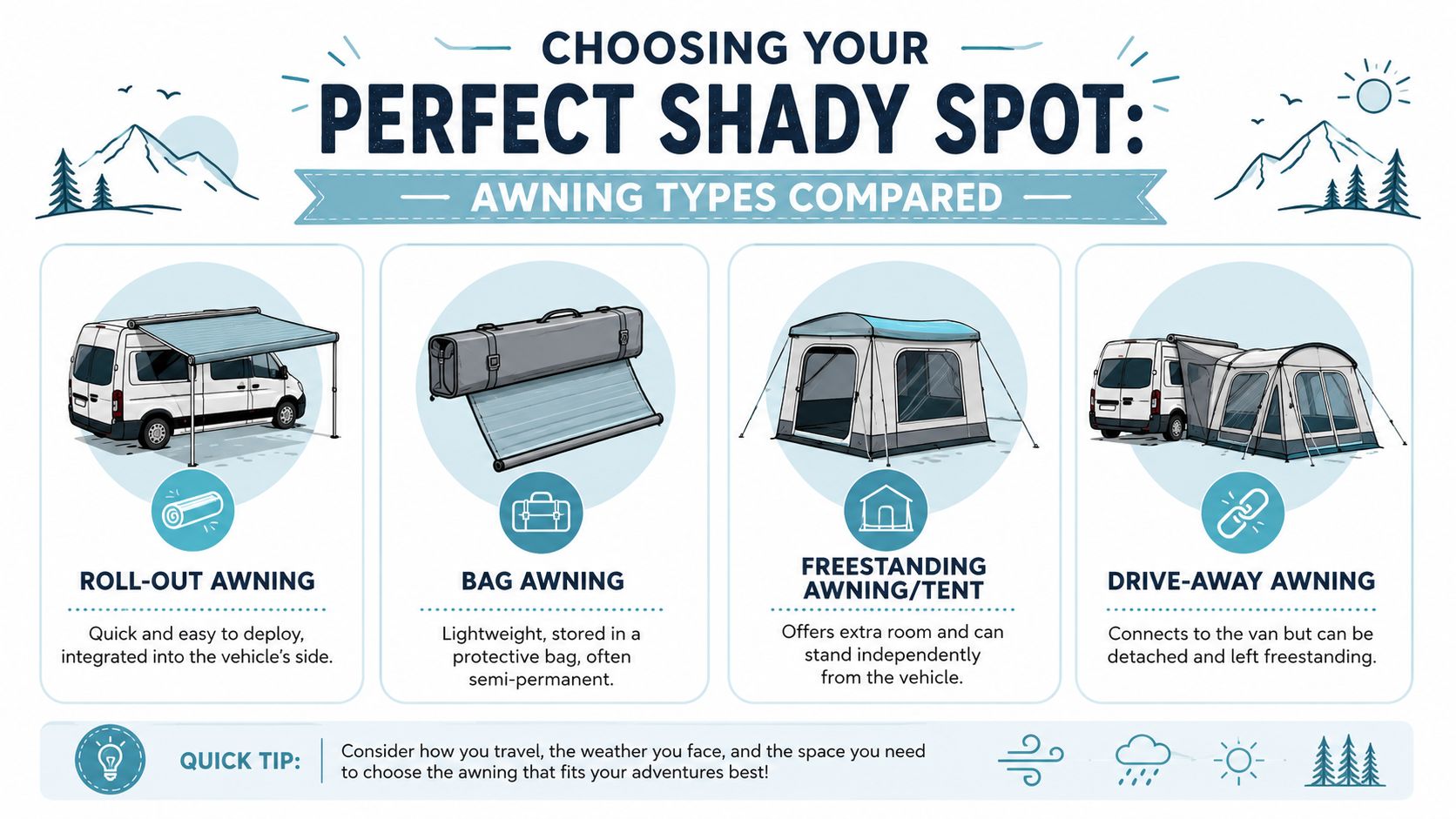
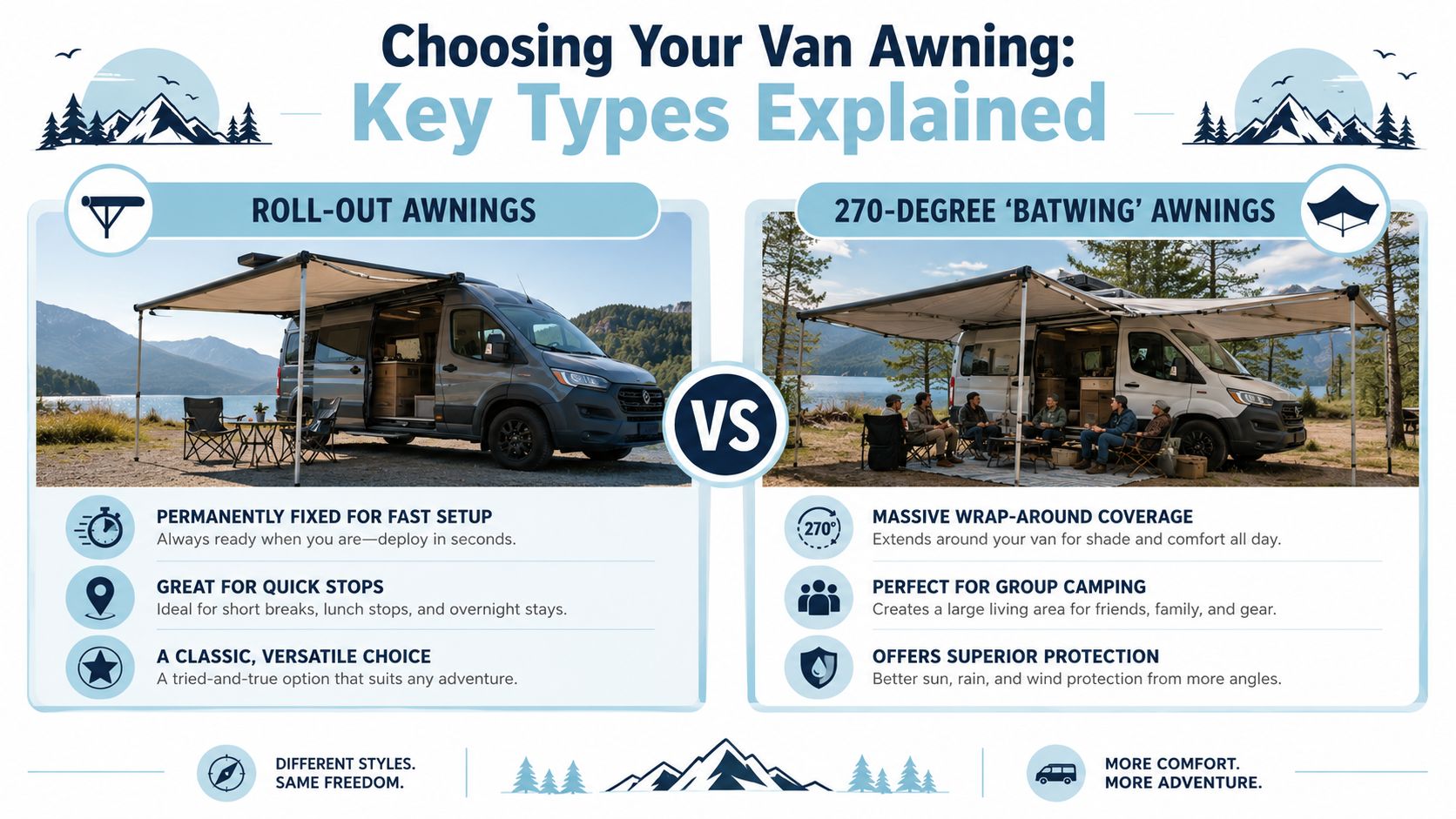
Some awnings are made for quick roadside tea stops. Others suit a longer camp where you want proper living space. The trick is matching the awning to how you typically travel, not how you imagine you travel on your most organised day.

In Australia, the biggest names are Fiamma, Dometic, Carefree, and Aussie Traveller, and they lead the market across roll-out, box, bag, and inflatable styles built for our UV-heavy conditions and changing winds, according to RV Daily's guide to caravan and motorhome awnings.

An infographic comparing four types of camper van awnings including roll-out, bag, freestanding, and drive-away designs.

Four common styles on Aussie roads

Type Best for What it feels like in use
Roll-out awning Quick stops and simple touring Like a sturdy window blind for your van. Fast, neat, and easy to live with.
Bag awning Lightweight classic setups A softer, old-school option that suits period-style vans nicely.
Freestanding awning or tent Longer stays Gives you a separate zone for gear, chairs, or extra shelter.
Drive-away awning Campers who base themselves in one spot Lets you leave the awning standing while you take the van out.

How to choose without overthinking it

If your weekends are usually one-nighters, a roll-out makes a lot of sense. You pull in, wind it out, and you've got instant shade without turning arrival into a project.

If you like your Kombi looking period-correct, a bag awning has real charm. It doesn't feel as sleek as a cassette unit, but it suits older vans beautifully and keeps the visual style relaxed and classic.

If your trips involve staying put for a few days, cooking outside, or giving the family a bit more breathing room, freestanding and drive-away setups start looking very attractive. They create a proper camp footprint instead of just a strip of shade.

Practical rule: Buy for your most common trip, not your most ambitious holiday.

What different owners usually prefer

A simple way to think about it:

  • Solo cruiser in a Bay Window. A roll-out is often the sweet spot.
  • Couple doing beach weekends. Bag awning or roll-out, depending on whether style or speed matters more.
  • Family with a bus full of gear. Freestanding shelter gives you room to breathe.
  • Campground base-camp traveller. Drive-away design earns its keep.

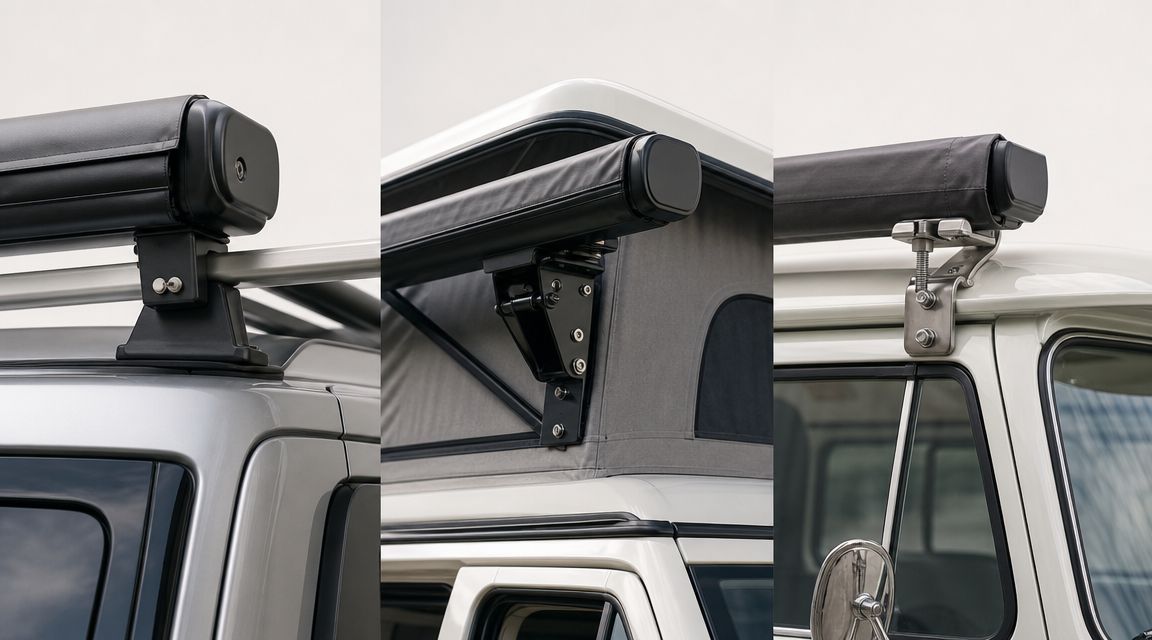
One more thing matters. Fit. A brilliant awning that doesn't suit your van's rails, gutters, or body shape becomes a headache fast. That's especially true for old Splitties and Bays, where owners usually want secure mounting without turning the body into Swiss cheese.

Will It Fit My Splitty Or Bay Window

You pull into a grassy spot at Busselton, kettle still warm from the drive down, and the first thing you notice is the wind tugging at anything loose. That is usually the moment a Kombi owner stops caring about brochure words and starts asking the key question. How does this awning attach to my van without upsetting old paint, bent gutters, or a carefully kept original body?

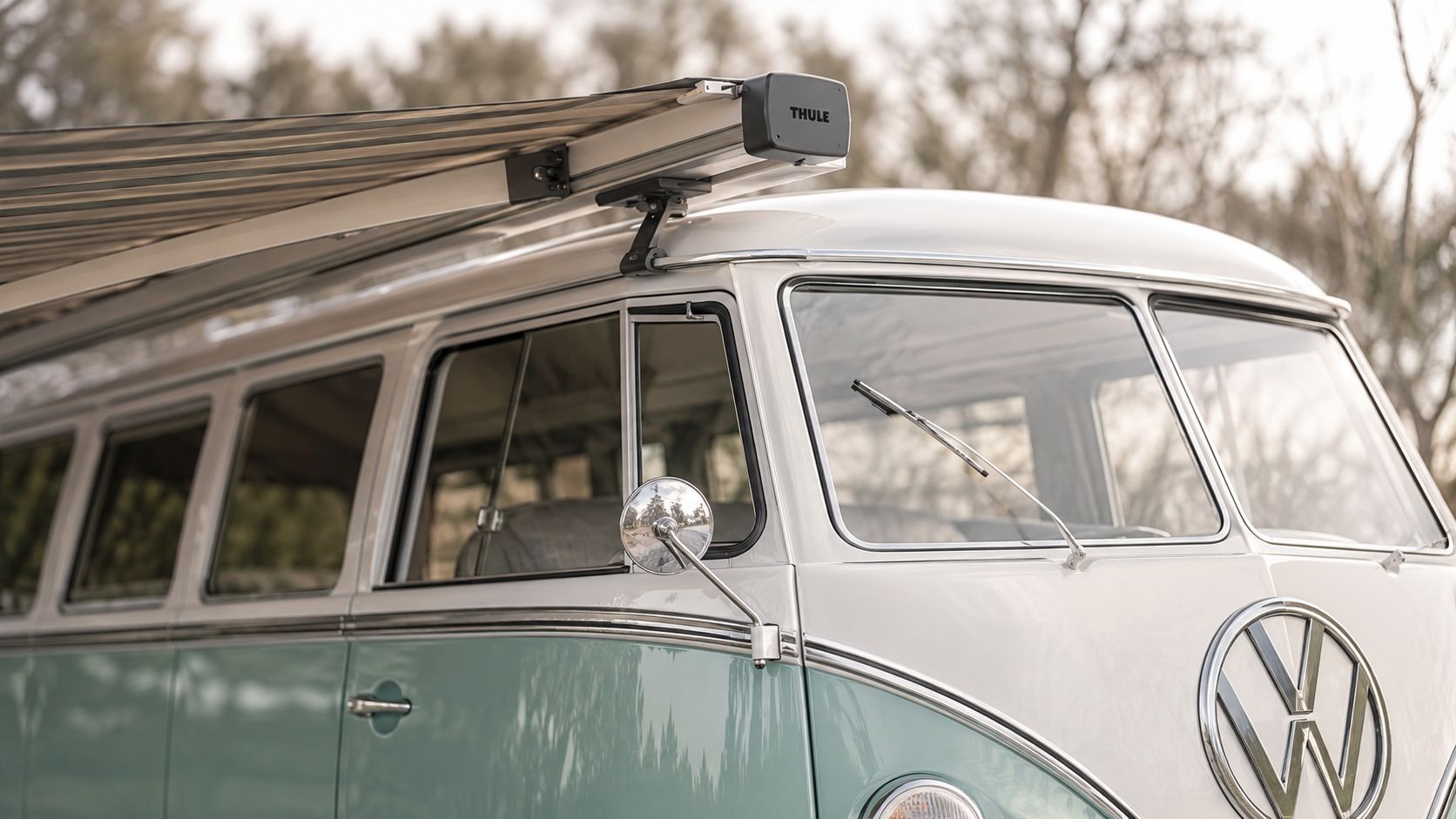
A close-up view of a vintage white and light blue Volkswagen camper van with a Thule awning.

On a classic VW, fit is about more than width on a spec sheet. A Splitty, a Bay, and a later Transporter all carry their awnings a bit differently, and old buses often have their own little quirks after decades of repairs, restorations, and beach runs. Gutters might be deeper on one side, doors may sit slightly proud, and some vans wear fresh paint that you will not want rubbed raw by a poor clamp.

The attachment setup many VW owners end up happiest with uses a kador strip and figure of 8 channel. In plain English, the beaded kador edge slides into an awning rail or channel, then the figure of 8 piece joins that edge to the awning itself. It is a tidy system, especially for owners who want something secure but still kind to an older body.

What usually suits each VW

A Split-screen Kombi deserves a close look at the gutter before you buy anything. Early vans can vary more than people expect, particularly if they have had roof work over the years. Measure both the depth and the shape, not just the length.

A Bay Window often plays nicely with gutter-mounted setups. Plenty of Bay owners like them because they keep the van looking right and avoid turning a weekend shade solution into a permanent body modification.

A later Transporter usually gives you more straightforward mounting options thanks to rails and model-specific hardware.

A Samba or freshly restored show bus calls for the gentlest approach of the lot. Reversible fittings and paint-safe contact points are the ones worth chasing.

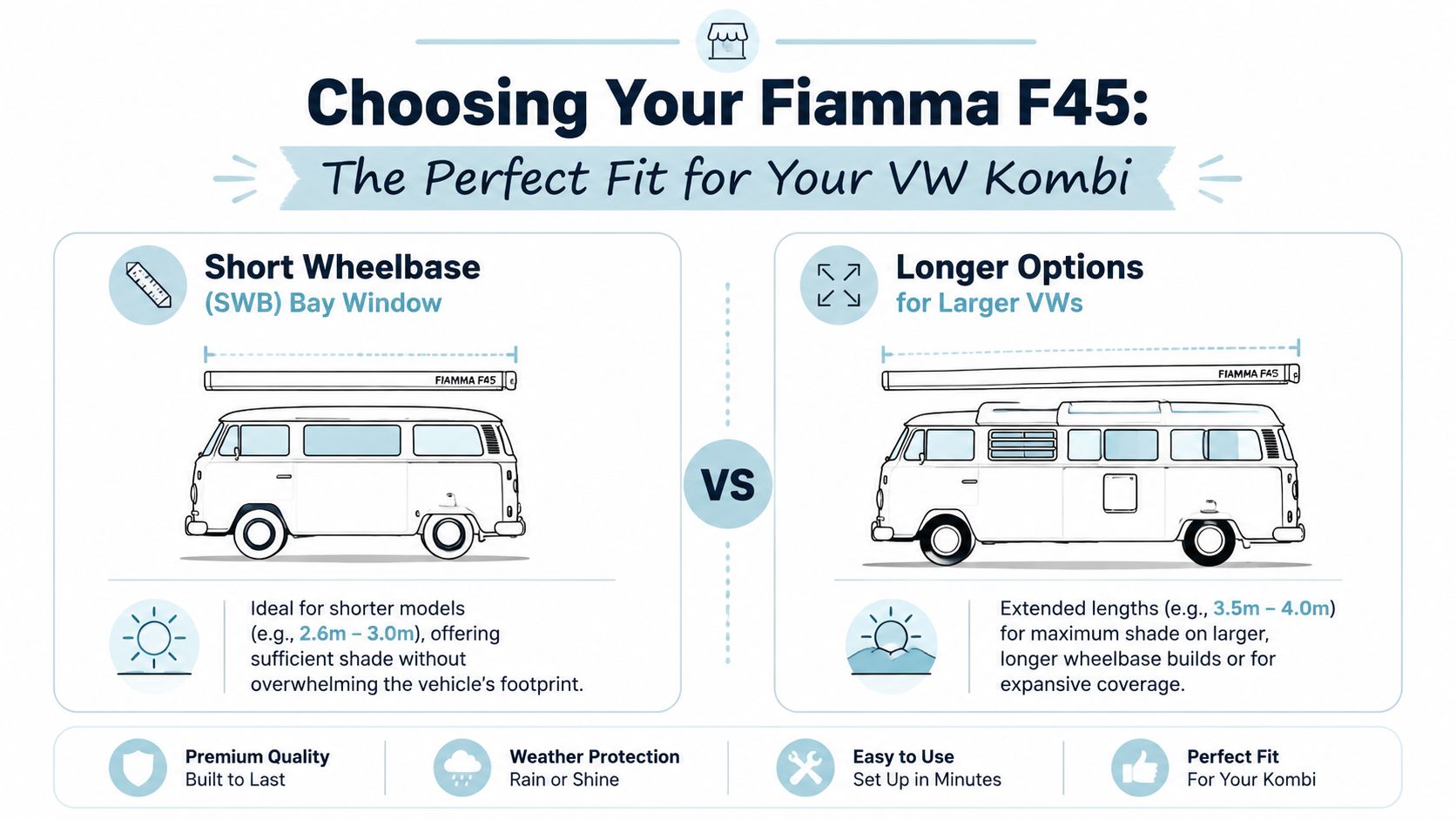
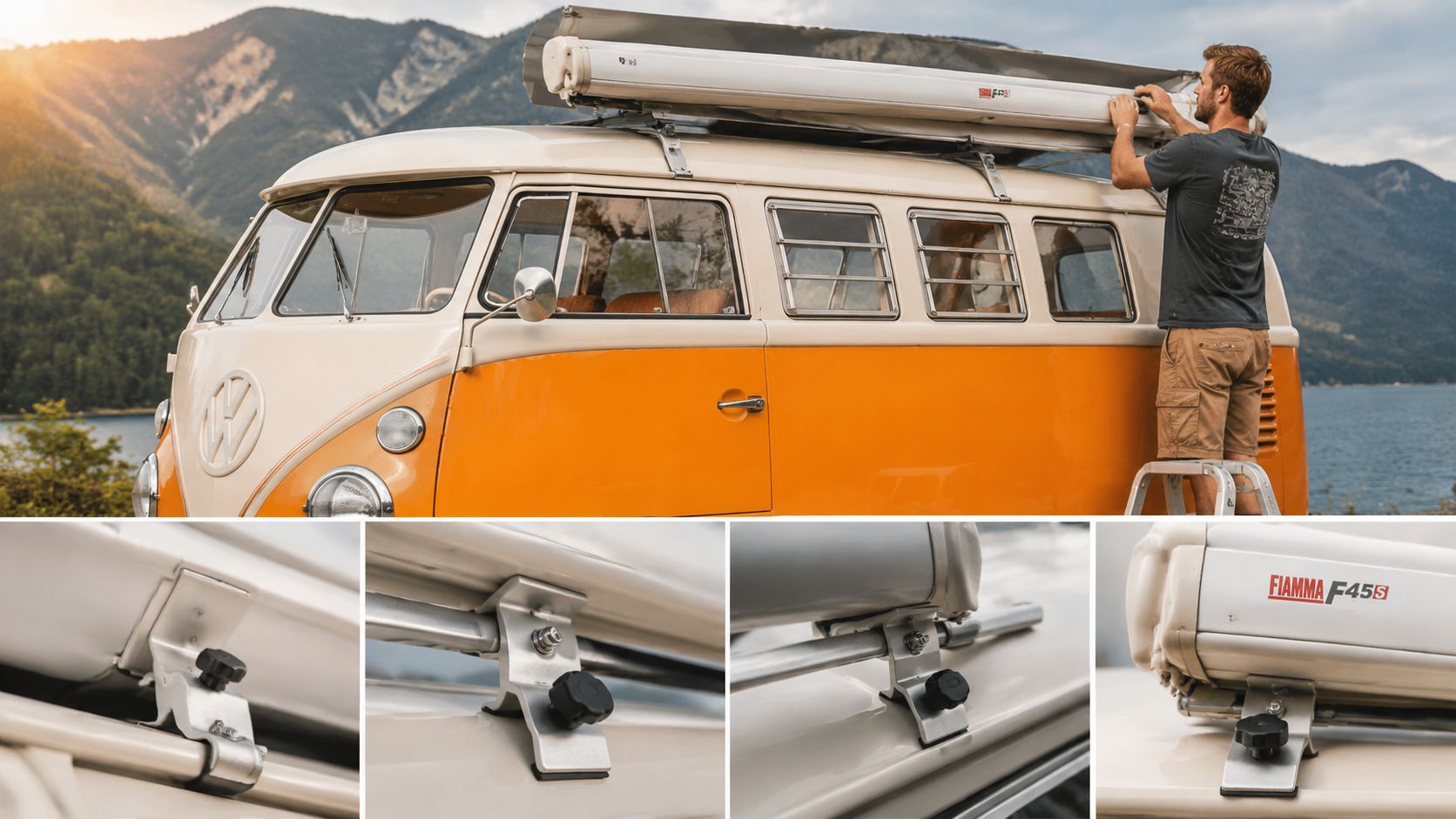
If you want to see what a popular side-mounted option looks like on a VW body, the Fiamma F45 awning for Volkswagen campervans is a handy reference.

The bit owners forget until camp is set

Door clearance.

I have seen lovely old buses set up with plenty of shade, only for the owner to realise the side door now catches fabric, straps, or hardware every time someone reaches for the tea tin. On a camper, that gets annoying fast. Check how the awning sits when the door is fully open, and make sure the attachment method does not turn normal van life into a shuffle.

For vans with deep gutters, a figure of 8 channel can often clip on neatly. For shallower gutters, a pole and clamp kit may give a safer, steadier hold. Either way, take a tape measure to the van itself. Do not trust memory, and do not assume every Bay or Splitty matches the next one parked beside it at the show.

A moving visual helps if you're still trying to picture how all these parts come together.

Fit first, fabric second. If the mounting does not suit your Kombi, the awning will never feel right.

Sizing It Up For Sun and Salty Air

At Inverloch one summer, a mate rolled in with a tidy Bay and a bargain awning that looked the part in the morning. By mid-arvo, the fabric had gone limp in the heat, the fittings were already showing a dusty bloom from salt air, and everyone had shuffled their chairs back under the van's skinny strip of shade. That was the day he learned what plenty of VW owners learn the hard way. Aussie sun and coastal air sort the good gear from the cheap stuff very quickly.

Awnings live a rough life here. They cop harsh UV, hot gusts off the beach, and salt that creeps into hinges, screws, and brackets while you are busy putting the billy on. Size matters, but material matters just as much.

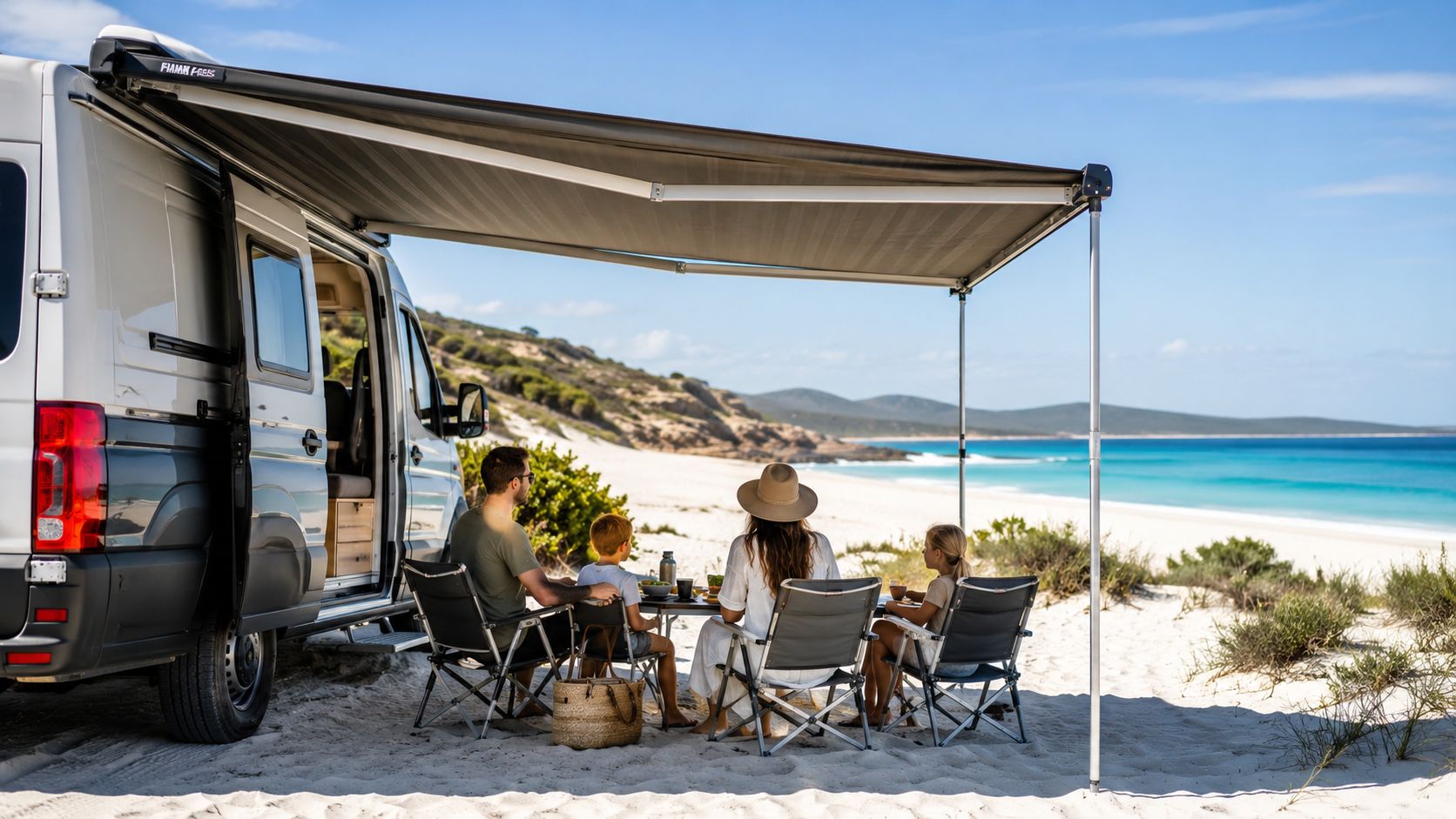
A family of four enjoys a picnic lunch under the shade of a camper van awning on a beach.

What a good size looks like on an old VW

On a Splitty or Bay, a compact awning often feels better balanced than an oversized one that sticks out like a patio bolted to a surf shack. For quick overnight stops, enough cover for two chairs, the kettle, and a small table is usually plenty. If your weekends tend to turn into long, lazy camp sessions with kids, mates, or a camp kitchen spread out under the side door, the extra width starts to earn its keep.

The trick is matching the awning to how you camp. Solo tourers usually appreciate something lighter and easier to wrestle into place. Families parked up near the coast for three nights straight will usually forgive a bit more bulk if it buys proper shade and room to move.

If you want a feel for the proportions many owners like, these wind-out awning options for Volkswagen campervans show the sort of coverage that suits a classic VW without dwarfing it.

Sun, salt, and the bits that wear out first

Coastal camping is where weak hardware gets exposed. The first signs are usually small. A bit of staining on a bracket, a sticky hinge, a fastener that no longer looks happy. Leave it long enough and setup gets annoying, pack-down gets rougher, and the whole thing starts feeling tired before its time.

Aluminium frames generally cope better than cheaper steel parts in salty air, especially if the finish is decent. Fabric wants proper UV resistance too, because strong sun does more than make shade important. It also dries, fades, and weakens cloth over seasons of use. Dense fabric often feels steadier and more reassuring, though it can add weight and take up a bit more room in the van.

A quick buyer's comparison

Priority Better choice
Beach use Corrosion-resistant frame and UV-rated fabric
Frequent solo touring Lighter awning with easy handling
Long family stays Larger covered area for chairs, cooking, and gear
Classic VW aesthetics Proportions that suit the van and do not overpower it

One good rule has never let me down. Buy for the worst day, not the best one. A pretty awning looks lovely on the grass at a car show, but a Kombi awning in Australia earns its stripes in hard sun, sea breeze, and a campsite full of sand.

A No Fuss Guide To Getting It Up

The first setup always feels like a bit of theatre. You've got the awning out, someone's offering advice they definitely haven't tested, and the pegs are rolling under the van. Then you do it properly once and realise it's much easier than it looked.

In Australia, Achtung Camper's awning guide puts single-person setup for the basic configuration at 3–5 minutes, using a strap extension system where straps go over the roof and tension down to ground pegs. That sounds about right when the gear suits the van and you're not fighting the wind.

The simple setup flow

  1. Attach the awning properly
    Slide or secure the awning into its channel or mounting point before you tension anything. A rushed start usually causes the fiddly bits later.

  2. Pull the straps over the roof
    That strap system earns its keep. It keeps the setup controlled and manageable, even if you're on your own.

  3. Extend to the ground and peg out
    Tension matters. Too loose and the fabric sags. Too tight and you'll make adjustments harder than they need to be.

The wind-out awning options for Volkswagen campervans give you a good feel for the sort of setup many VW owners prefer when ease and speed are high on the list.

One rookie mistake worth avoiding

Don't peg where the sliding door wants to travel.

It sounds obvious until you're tired, hungry, and trying to beat the weather. Ground pegs should sit far enough away from the van that doors can open freely and nobody catches a foot on a strap every five minutes.

A tidy setup routine

  • Park with intention. Give yourself room on the awning side.
  • Face the van sensibly. Think about wind and shade before you deploy.
  • Peg wide, not messy. Clean lines are safer and easier to live with.
  • Check tension after a few minutes. Fabric can settle once it's opened up.

Once you've done it a couple of times, setting up an awning becomes part of arriving. It's as natural as popping the kettle on.

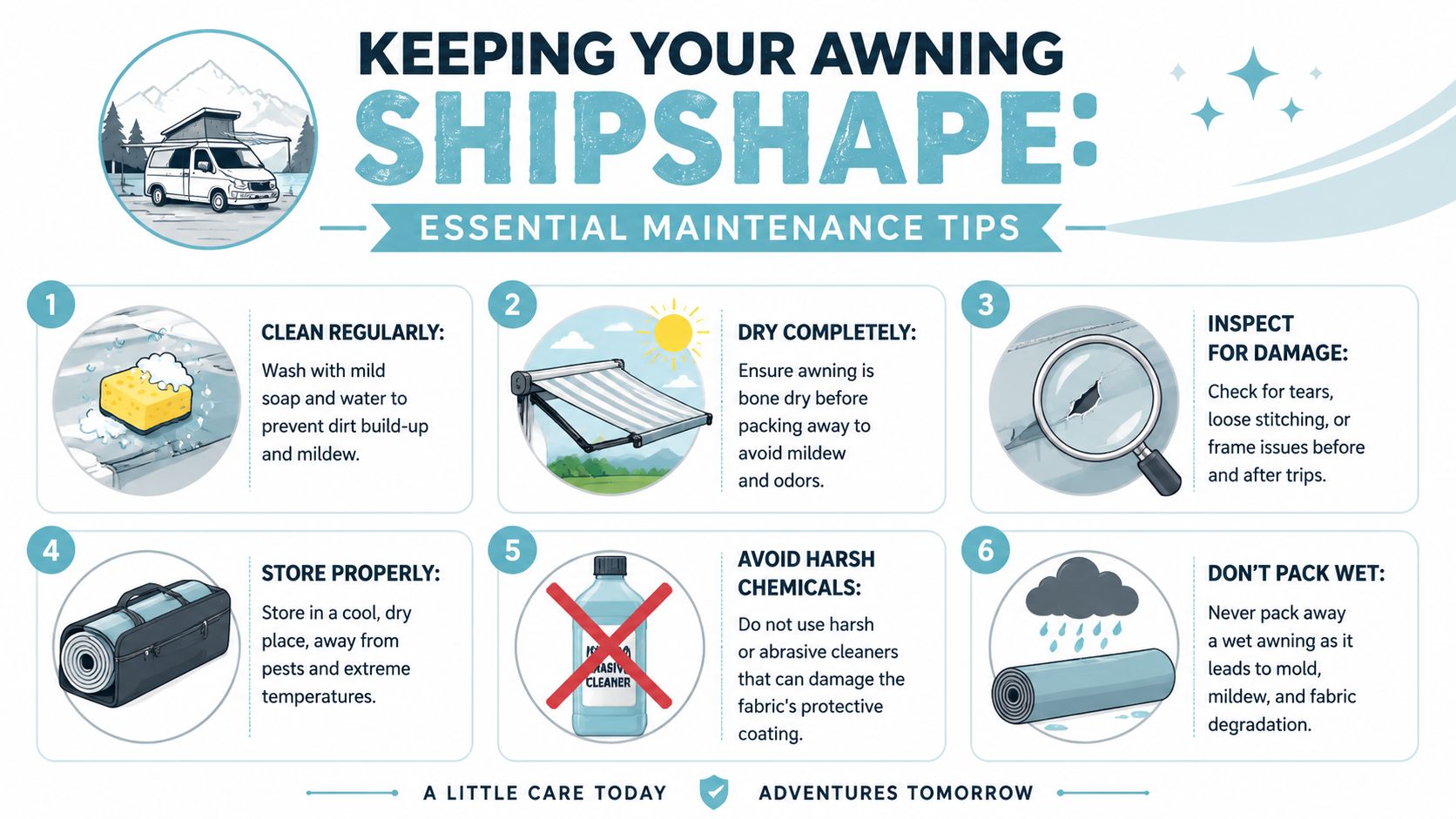
Keeping Your Awning Shipshape

Awnings cop plenty. Dusty showgrounds, salt breeze, sudden rain, and that one pack-up where you promise yourself you'll dry it later. If you want yours to last, maintenance can't be an afterthought.

The big insider trick is drainage pitch. Plenty of owners know they should lower one side in rain, but not enough realise how important the angle really is. Carefree's awning guidance points to an optimal 10–15° tilt for heavy Australian monsoon-style rain. The same source says a flat setup increases water retention by 40% in tropical climates, and 60% of technician-reported awning failures come from mould rather than wind damage.

An infographic titled Keeping Your Awning Shipshape providing six essential maintenance tips for camper van awnings.

The maintenance habits that actually matter

That drainage pitch alone can save you grief. Water pooling stretches fabric, encourages mould, and adds load where you don't want it.

Then there are the basics, which sound dull until you've had to scrub out mildew or replace worn gear.

  • Wash off salt and grime after coastal trips.
  • Dry the awning completely before packing it away.
  • Inspect stitching, clamps, and frame points before the next run.
  • Store it clean and dry so you're not opening a musty mess next time.

Wind noise and fabric fatigue

Rain isn't the only enemy. Flapping fabric wears out faster and makes a peaceful campsite sound like a loose yacht sail. Achtung Camper notes that Anti-Flap Kits are standard inclusions for Australian-made awnings such as Queensland-made examples, using curved bars and tensioning hardware to reduce flutter and protect the vinyl fabric during frequent gusts.

That's one of those accessories owners often skip until they've had one noisy, windy night and changed their tune.

A practical care checklist

After each trip Before the next trip
Rinse off salt Check for mould spots
Air dry fully Inspect pegs and straps
Brush off debris Look over rails or channels
Roll or pack neatly Test moving parts

Workshop wisdom: Most awnings don't fail in dramatic fashion. They get neglected in small, fixable ways until one wet weekend finishes the job.

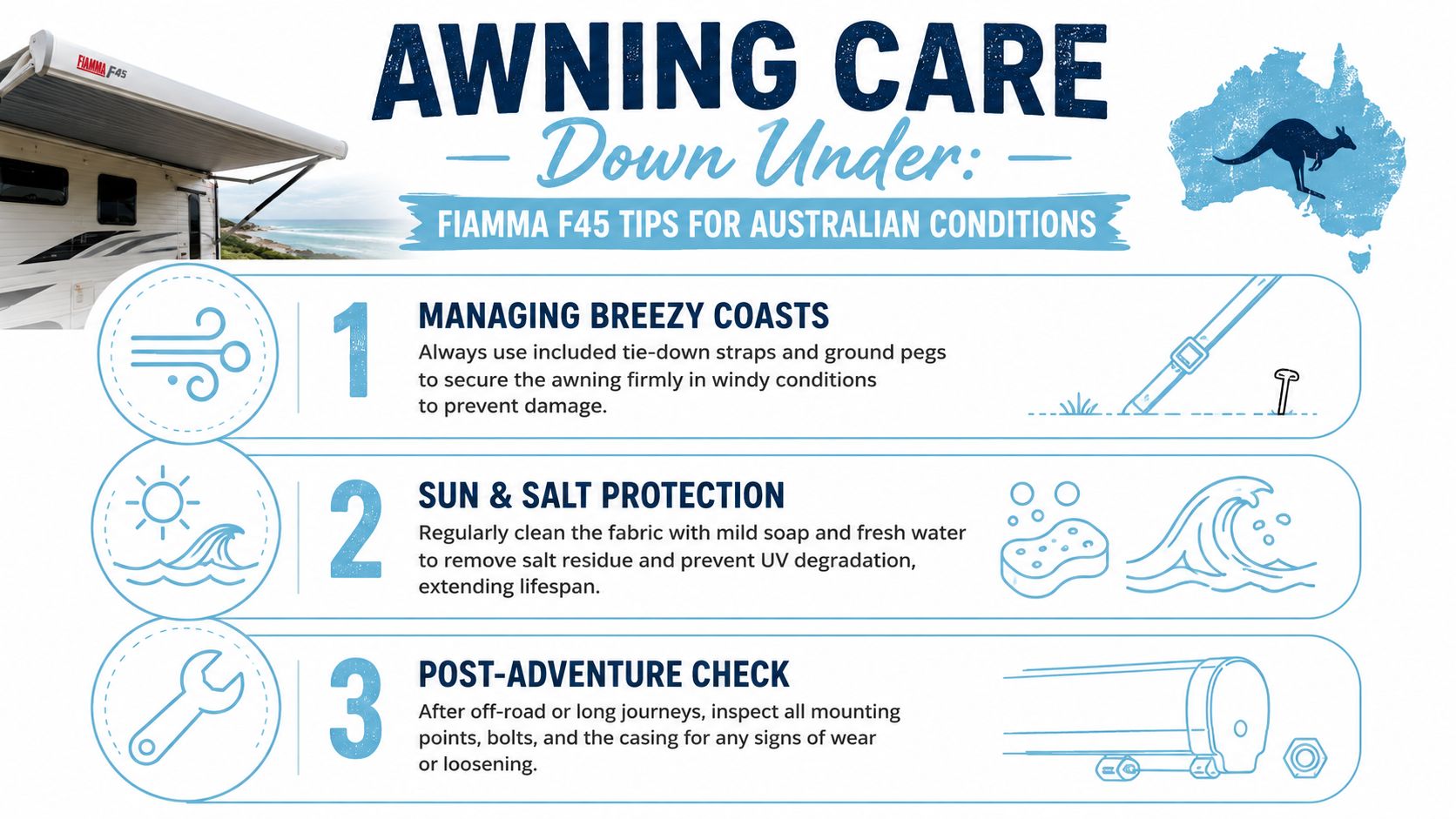
If you want a VW-specific reference point for upkeep, the Fiamma F45 awning maintenance guide is a handy place to compare your cleaning and care routine.

Your VW Awning Buying Checklist

Last summer at a meet-up near Torquay, a mate rolled in with a lovely Bay Window and a bargain awning still in the box. By lunch, the van looked the part, but the awning legs were fighting the slope, the fabric sat too low over the slider, and the sea breeze had everyone grabbing cups before they skittered off across the grass. Same bus, same sun, very different afternoon once he swapped to a setup that suited how he camps and where he parks.

That is the checklist worth using. Not the glossy catalogue version. The practical one you run through with a cup of tea in hand, picturing your own Splitty or Bay by the beach, out west in harsh sun, or tucked into a shady holiday park.

The checklist I'd use before spending a cent

  • How do you use the van?
    A quick one-nighter down the coast suits a simple awning you can throw up fast. A week away with the family usually calls for more covered space and a bit more structure.

  • Will it suit your particular VW?
    A Splitty, a Bay, and a later camper can all need slightly different mounting gear. Check the gutters, door clearance, roofline, and any existing rails before you buy.

  • Does the shade match Australian conditions?
    Strong sun changes the equation here. Fabric that holds up in mild weather overseas can feel ordinary after a run of bright days in an Aussie summer.

  • How will it cope near the coast?
    Salt air gets into everything. Frame finish, fittings, and hardware quality matter a lot more if your best trips involve sand, sea spray, and fish and chips in the car park.

  • Can you put it up without turning camp setup into a project?
    The best awning is the one you will use often. If it takes too long, needs too many hands, or always ends in muttering, it will stay packed away.

  • Does it leave room for the way you live around the van?
    Make sure you can still move easily through the side door, set up a table, and shuffle a couple of camp chairs under cover without feeling cramped.

  • Will you still be happy owning it after a few trips?
    A good awning needs basic care and a bit of common sense. Buy one you can clean, dry, pack, and inspect without making a fuss of it.

The VW owner's final gut check

A good awning makes the van feel settled within minutes. The kettle goes on. Wet towels get a place to hang. Someone pulls out a camp chair, and all at once the old bus feels less like transport and more like home for the weekend.

That matters with a classic Volkswagen because these vehicles already ask for a bit of patience and affection. Your awning should add to the pleasure, not pile on more jobs. It should suit the lines of the bus, cope with our hard sun, and stand up to those breezy foreshore camps that look calm until late afternoon.

If you are still torn between two options, pick the one you can see yourself using on an ordinary trip, not just on a perfect one. Practical always wins in the long run.

FAQ

Which awning type suits a classic Kombi best

For plenty of owners, a roll-out or bag awning gives the nicest mix of ease, appearance, and day-to-day usefulness. The better choice comes down to your mounting points and whether you stay put for a night or a week.

Can I fit an awning without drilling into my VW

Often, yes. Gutter-mounted systems and kador-style setups can be a tidy option for owners who want to avoid altering original bodywork.

Are camper van awnings worth it for short trips

Yes. Even a modest awning gives you quick shade, a dry patch for the camp stove, and somewhere pleasant to sit when the sun is belting down.

What matters most for Australian conditions

UV resistance, hardware that copes with salt air, and a setup that stays manageable when the weather changes quickly.

Do awnings suit Beetles too

Not in the same way they suit Kombis and campervans. Beetle owners usually enjoy that touring spirit through club days, displays, and collectible pieces rather than vehicle-mounted camping setups.

If the camper van life has you daydreaming even when the Kombi's parked at home, have a browse through Volkswagen Memorabilia. It's a cracking Australian shop for licensed VW collectibles, with local stock and fast shipping that suits collectors and gift buyers alike. You'll find Volkswagen diecast models for sale that celebrate the same charm discussed here, with plenty to suit Kombi and Beetle fans who like a little Wolfsburg soul on the shelf as well as in the driveway.

Living Room Wall Hangings a VW & Coastal Style Guide

That blank wall above the sofa can be surprisingly hard to crack. You know the one. The couch is in, the rug's down, maybe there's a surfy lamp in the corner and a shelf full of little VW treasures, but the wall still looks like it's waiting for something with a bit of soul.

For a lot of us, that “something” isn't generic décor from a big box shop. It's a framed Beetle print, a metal Kombi sign, a small shelf with a licensed Samba Bus diecast, or a laid-back mix of coastal tones that feels right at home after a morning at a car meet and an arvo by the water. Good living room wall hangings don't just fill space. They tell your story.

That's why a VW-themed approach works so well in Aussie homes. Volkswagen has a rich history down under, officially starting sales in 1953 and assembling the iconic Beetle from Knocked Down kits at the Clayton, Victoria factory from 1954 until 1976, as noted in this Shannons history of Volkswagen in Australia. If you love classic Volkswagens, you're not decorating around a fad. You're putting a bit of motoring heritage on the wall.

Turn That Blank Wall Into a VW Story

A bare living room wall often feels bigger than it is. The room can be comfortable and still seem unfinished, a bit like a tidy Beetle shell before the badges, trim, and proper wheels go on. The structure is there, but the character hasn't arrived yet.

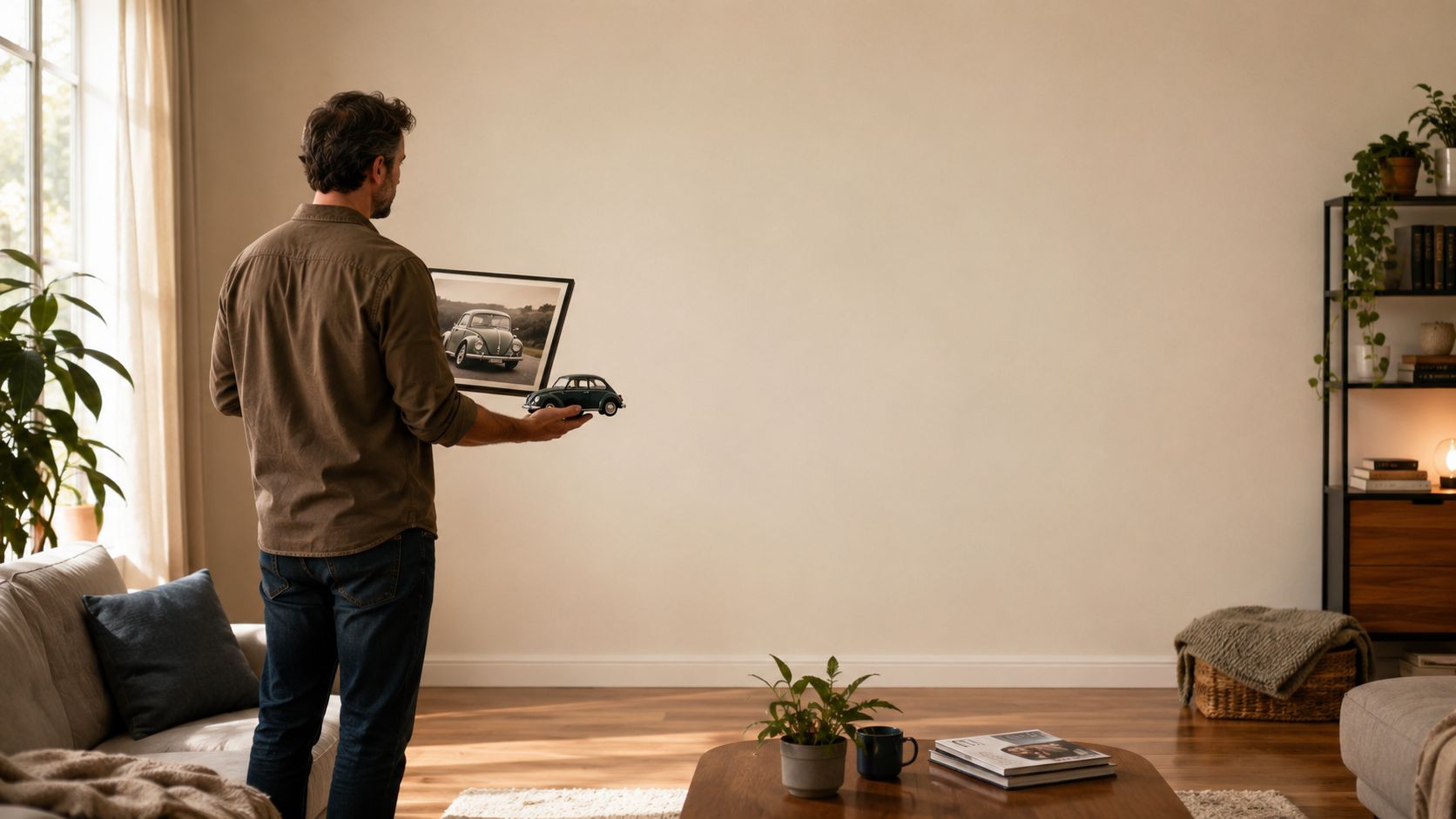
A man holds a framed picture and a miniature toy car while standing in a minimalist living room.

That's where living room wall hangings can do their best work. They anchor the seating area, soften a big stretch of plasterboard, and give visitors something to notice straight away. If that piece also nods to your first Kombi trip, your diecast collection, or the old Beetle your family had years ago, even better.

Start with the memory, not the frame

The easiest mistake is shopping by colour first and meaning second. A better method is to ask what you want the wall to say.

Maybe it says:

  • Road-trip nostalgia with a framed print of a split-window Kombi and faded beach tones
  • Collector pride with a neat row of licensed diecast models displayed on slim picture ledges
  • Australian coastal ease through sandy neutrals, weathered timber, and hints of surf culture
  • Classic VW history with one hero piece centred above the sofa and a few supporting objects nearby

Good wall décor should feel like part of the room, not something stuck on after the fact.

Why VW themes suit coastal interiors

Classic Volkswagens already carry that relaxed spirit. A Beetle brings curves, charm, and simplicity. A Kombi leans naturally into freedom, adventure, and beach-town energy. Put those cues beside white walls, pale timber, rattan textures, or ocean blues, and the whole room starts to feel coherent without looking over-styled.

That's the sweet spot. Not a shrine. Not a showroom. Just a living room that reflects what you love.

Choosing Pieces With a VW & Coastal Vibe

The best walls usually mix more than one type of object. A single framed print can look great, but a room gets more personality when you blend flat art, small display pieces, and a few materials with texture.

The Kombi is especially useful as a decorating theme because its story already carries so much feeling. The iconic Volkswagen Kombi (Type 2) concept was first presented by Dutch pioneer Ben Pon to Volkswagen in 1949, sparking the creation of a vehicle closely tied to freedom and adventure, as shown on Volkswagen Australia's Kombi history page.

Screenshot from https://vwmemorabilia.com.au/shop/

What works on the wall

You don't need to stop at framed prints. Some of the most inviting living room wall hangings use a layered mix.

  • Framed Volkswagen artwork. Think Beetle side profiles, Kombi beach scenes, old-style motoring posters, or surf-inspired illustrations.
  • Metal wall signs. These bring a bit of garage character and pair well with timber, linen, and coastal whites.
  • Small floating shelves or picture ledges. Handy for licensed diecast pieces, especially if you want to rotate displays now and then.
  • Shadow box frames. Great for smaller memorabilia, such as a special miniature, a badge-style piece, or a compact themed arrangement.
  • Coastal companions. Shell tones, driftwood finishes, woven textures, and soft blue-green accents stop the display from feeling too heavy.

A simple way to combine both styles

Try this formula if you're stuck:

  1. Pick one VW hero piece. A Kombi Samba Bus image, a Volkswagen Beetle model display, or a surf-themed sign.
  2. Add one coastal texture. Timber, rope, woven matting, or a washed frame finish.
  3. Keep the palette relaxed. White, sea blue, sandy beige, faded red, and sun-worn green all play nicely together.
  4. Repeat one motif. Curves, chrome, beach colour, or vintage type.

If you want more inspiration for the overall look, this guide to coastal home décor ideas gives you a handy visual direction.

Which VW pieces suit which mood

Style you want VW piece to start with Best room feel
Beachy and bright Kombi Samba Bus artwork or surf van sign Relaxed, sunny, casual
Vintage and nostalgic Beetle print or retro dealer-style art Warm, story-rich, classic
Collector display Licensed diecast on ledges or in shadow boxes Organised, personal, curated
Playful and colourful Flower Power van piece or mixed miniatures Fun, conversational, light-hearted

Getting the Scale and Size Just Right

Scale is what makes a wall look polished instead of accidental. You can choose a beautiful piece, hang it carefully, and still feel something's off if the size doesn't relate to the furniture underneath.

Consider hubcaps on a classic VW. The details matter, but they still have to fit the car. Wall art works the same way.

A graphic comparing good and poor scale for wall hangings above living room furniture pieces.

The easiest sizing rule to remember

For living room wall hangings above a sofa, professional guidance in Australia says the artwork should span 60% to 75% of the sofa's total width. That rule helps avoid the floating look that happens when the art is too narrow for the furniture beneath it. The same Australian guide also notes a 2/3 rule as a practical shorthand for statement pieces and grouped arrangements above furniture, as outlined in this room-by-room wall art size guide.

Practical rule: If the wall piece looks tiny compared with the sofa, don't measure the wall first. Measure the furniture.

What that looks like in real life

A long sofa needs art with some visual presence. That could be one large framed Kombi print, two coordinated coastal-VW pieces treated as one arrangement, or a compact gallery grouping that reads as a single unit.

A smaller sofa can carry one medium piece well, especially if the frame has enough visual weight. Thin little prints above broad furniture rarely look intentional.

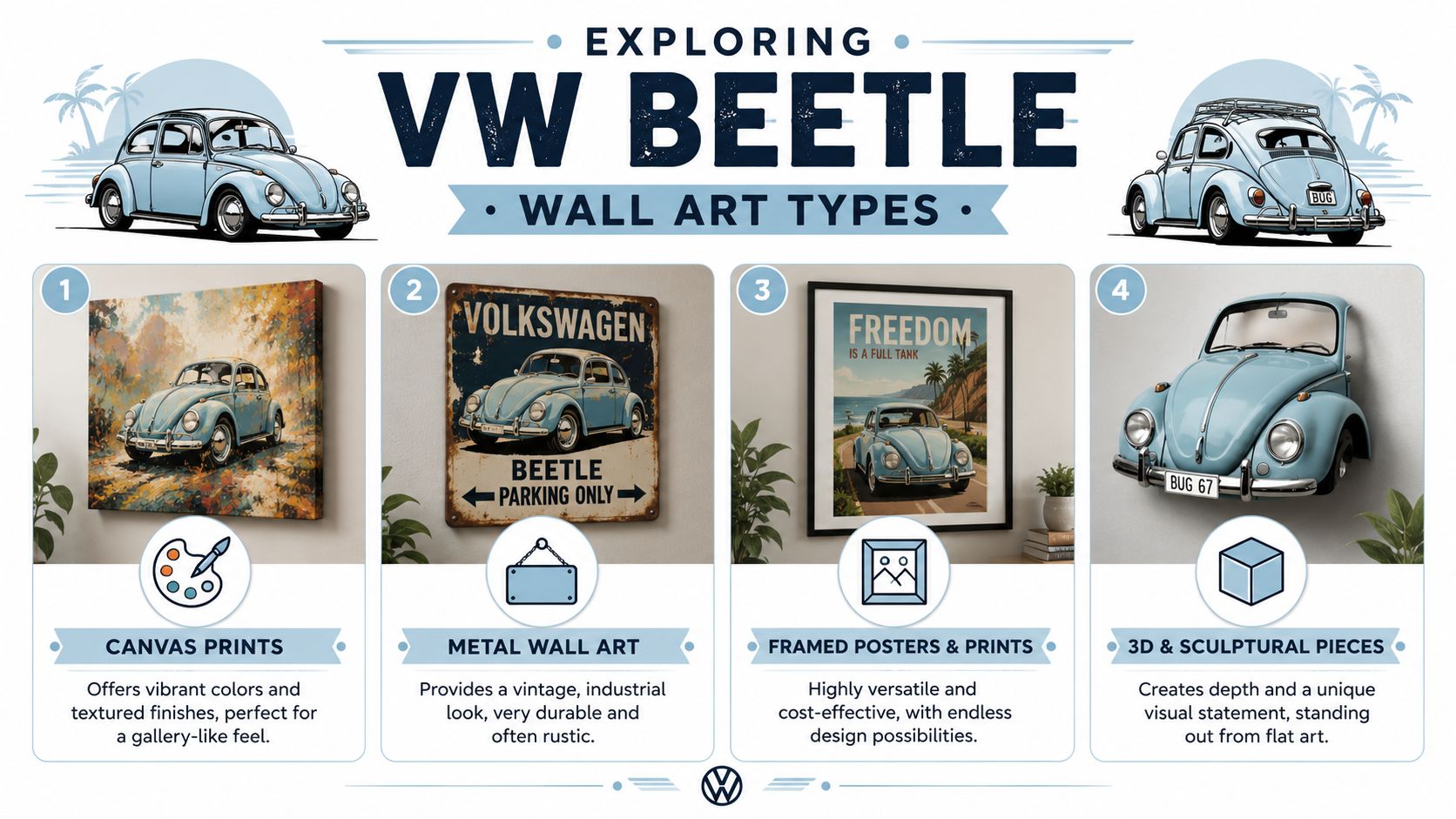
For Beetle fans, a dedicated VW Beetle wall art collection streamlines the process. It helps you compare options that already suit the theme, so you can focus on proportion and placement instead of starting from scratch.

A quick gut check before buying

Ask yourself these three questions:

  • Does it relate to the sofa? If not, it may feel adrift.
  • Will it still read from across the room? Fine detail can disappear in a larger living area.
  • Does it suit the wall shape? Wide walls usually prefer wider arrangements.

If you're torn between slightly too small and slightly too big, bigger usually looks more deliberate.

The Art of Placement Hang It Like a Pro

Once the size is sorted, placement becomes much less mysterious. Most hanging mistakes come from one of two things. Art goes too high, or it sits too far from the furniture beneath it.

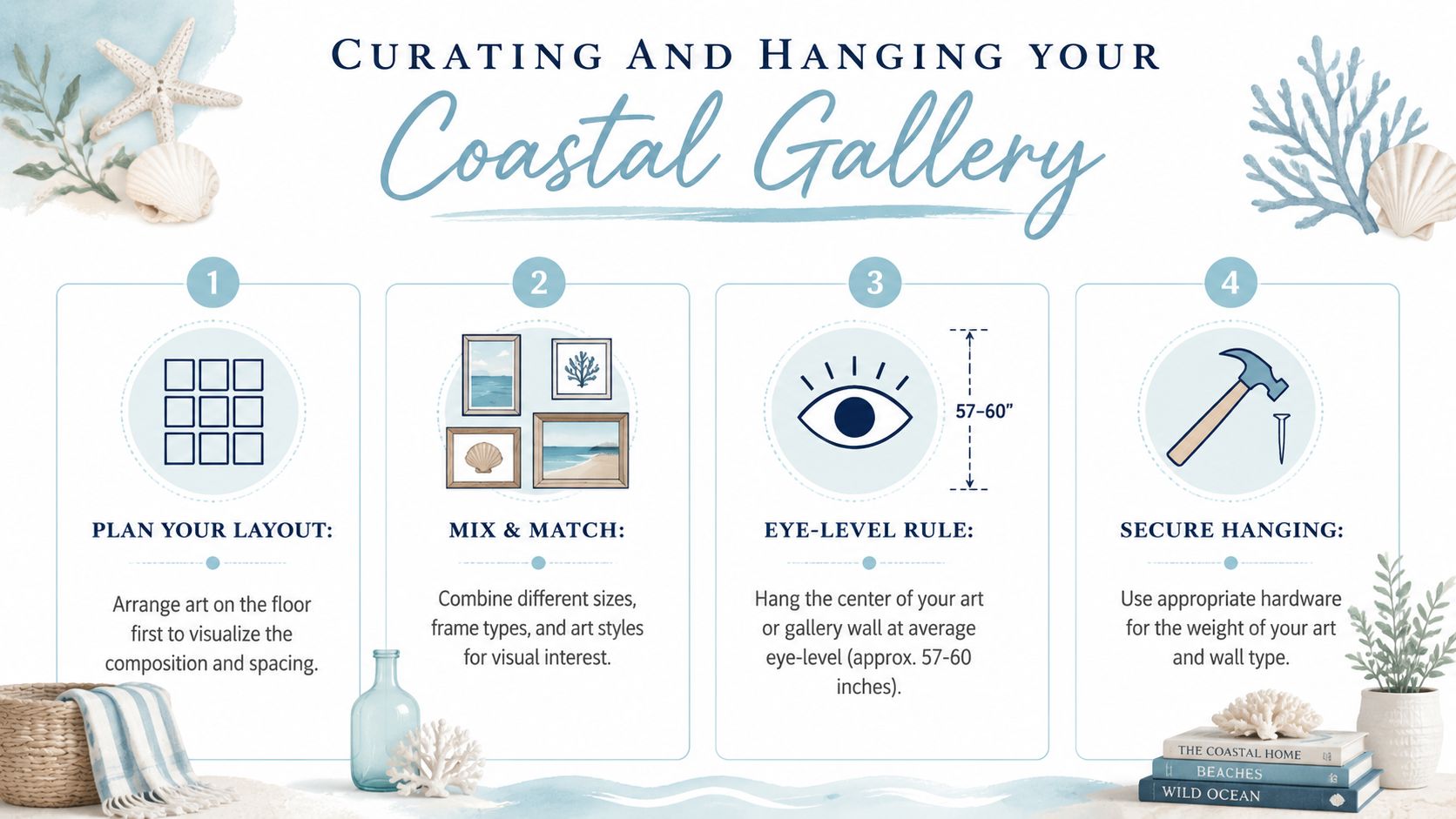
Australian interior design standards suggest hanging art with its centre at 152 cm from the floor. When you're hanging above furniture, the bottom of the frame should sit 15 to 25 cm above the piece to create a visual link, according to this Australian wall art placement guide.

The centre-point rule

For a single piece on an open wall, use the 152 cm centre height as your starting point. That puts the artwork around natural eye level and helps the room feel settled.

If you've ever walked into a room and felt like the art was hovering near the ceiling, that's usually the problem. The piece wasn't anchored to where people see it.

Above a sofa is different

When art sits over seating, the sofa becomes part of the composition. That's why the 15 to 25 cm gap matters so much. It creates a connection between the furniture and the hanging above it.

Too high, and the art looks detached. Too low, and it can feel cramped.

A quick method that works well:

  • Measure the sofa width first
  • Confirm the artwork suits the width, as covered earlier
  • Mark the sofa centre on the wall
  • Hang the piece so the bottom edge lands 15 to 25 cm above the backrest
  • Step back and check from both seated and standing positions

Stand on the opposite side of the room before you commit. A wall can feel balanced up close and awkward from the seat where you actually relax.

Creating a Cracking VW-Themed Gallery Wall

A gallery wall is perfect for collectors because it lets you tell a bigger story. One frame can celebrate a favourite model. A gallery can show your whole VW personality, from Beetle nostalgia to Kombi surf culture to a few coastal touches that make the room feel easy and lived-in.

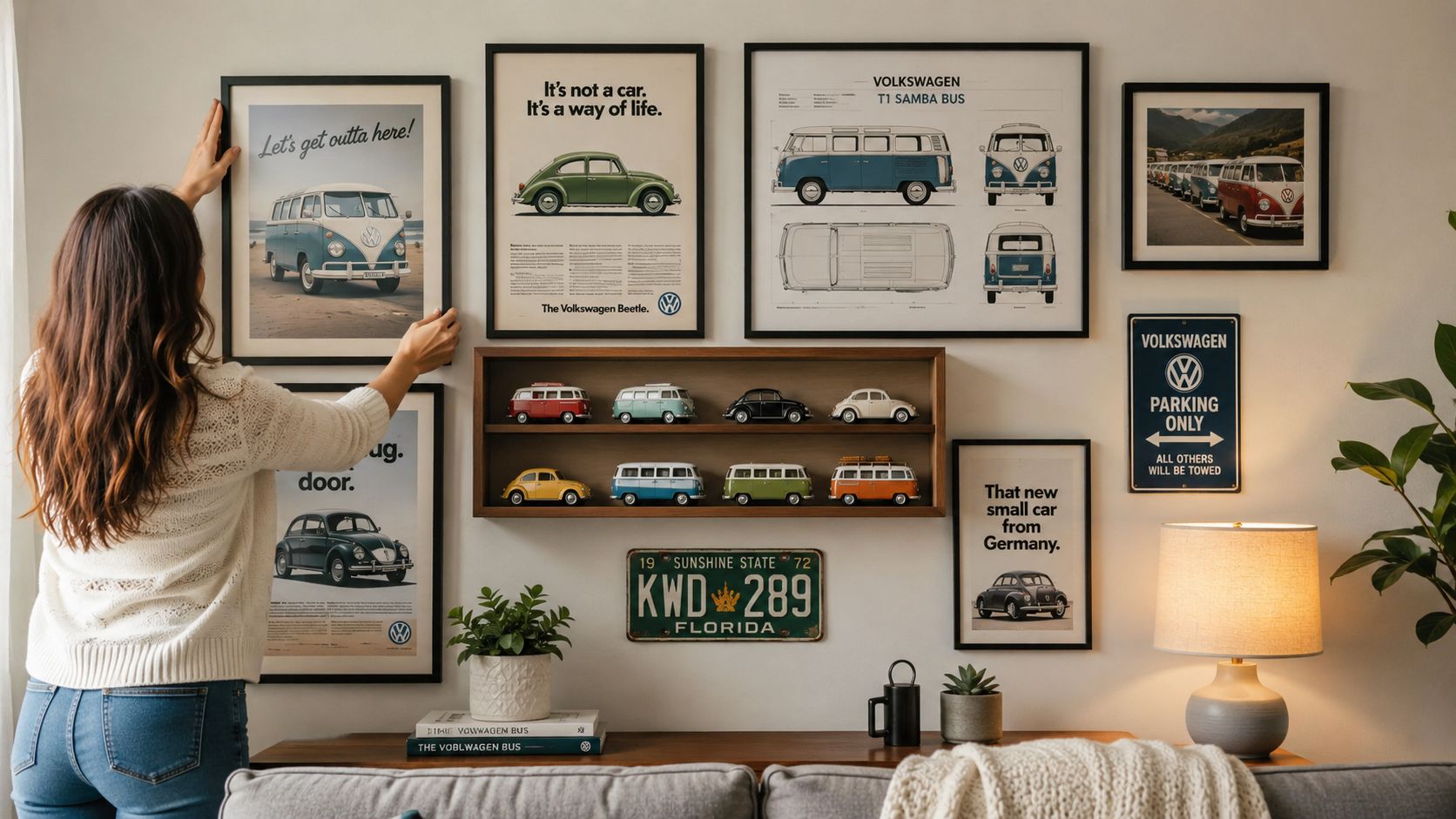
A woman hanging Volkswagen themed wall art and displaying die-cast model cars in a cozy living room.

Build it on the floor first

Before you put a single hook in the wall, lay everything out on the floor. That lets you shuffle frame sizes, test colours, and work out where the visual weight sits.

For gallery walls, treat the whole group as one piece. The combined width should be 60% to 75% of the furniture beneath it, and spacing between frames should stay consistent at 5 to 8 cm to keep the arrangement visually calm, as explained in the Australian placement guide noted earlier.

Mix media, but keep one thing consistent

A great VW gallery wall doesn't have to be all prints. In fact, it's often better when it isn't.

Try combining:

  • A large anchor print with a Kombi or Beetle theme
  • Two or three smaller framed photos from shows, road trips, or restorations
  • A small metal sign for texture
  • A slim shelf holding a licensed diecast model
  • One coastal element such as a weathered timber frame or beach-toned artwork

The consistency can come from frame colour, subject matter, or palette. Black frames feel crisp. Timber feels more beachy. White frames lighten things up.

For more layout inspiration, this coastal boho gallery wall guide is useful if you want the collection to feel curated rather than crowded.

A good sequence for hanging

  1. Put the biggest piece down first in your floor layout.
  2. Add medium pieces around it.
  3. Fill gaps with smaller works or objects.
  4. Check that the outer edge of the whole grouping still suits the furniture below.
  5. Keep frame spacing even. Don't eyeball this part too casually.

This walkthrough can help if you want to see a gallery arrangement come together in motion.

A gallery wall should look collected, not chaotic. If every piece is shouting, none of them get heard.

Your Wall Your Story Now Go For It

The nicest living room wall hangings are the ones that feel personal the moment you walk in. They suit the room, they sit at the right height, and they say something real about the people who live there.

If you remember only a few things, make it these. Choose pieces you'd still love even if nobody commented on them. Make sure the scale relates to the sofa or wall area. Hang them with intention, not guesswork. And if you've got a few favourite VW pieces, don't hide them away in cupboards when they could be part of the room every day.

A classic Volkswagen theme works beautifully in Australian living rooms because it carries warmth, history, and that easy coastal spirit so many of us love. A Beetle print can bring charm. A Kombi display can loosen the room up. A gallery wall can turn a plain lounge into a proper conversation starter.

You don't need a designer's budget or a giant house to make it work. You just need a clear idea, a tape measure, and a bit of confidence.

A Few More Questions Answered

Some decorating questions only pop up when you've already started hanging things. Fair enough too. Real homes have odd proportions, high ceilings, kids, sunlight, and all the little quirks that don't show up in perfect showroom photos.

One common issue in Australia is ceiling height. A significant challenge for Australian homeowners is adapting wall art placement for high ceilings, with 68% reporting their art feels “too low” because many guides focus only on standard 2.4 m ceilings, according to this article on wall décor ideas in Australian homes.

Quick FAQ Guide

Question Answer
How do I handle high ceilings in the living room? Don't automatically push the art higher just because the ceiling is tall. Keep the arrangement visually connected to the furniture and the part of the room where people sit and look.
Can diecast models be part of living room wall hangings? Yes. Use slim shelves, enclosed shadow boxes, or ledges so the models feel displayed rather than perched.
Should all my frames match? Not necessarily. Matching frames look neat, but mixed frames can work well if the colour palette or subject matter stays consistent.
What if my wall art feels too small? Group pieces together so they read as one larger arrangement, or swap to a wider hero piece that better suits the furniture below.
How do I keep memorabilia looking tidy, not cluttered? Limit the number of colours, repeat one material, and give each item breathing room. Crowding is usually the issue, not the objects themselves.
Is direct sun a problem for wall displays? It can be. If possible, keep framed prints, paint finishes, and collectible displays out of harsh direct sunlight to help preserve colour and surfaces.

One smart approach for unusual pieces

If you've got something a bit different, such as a metal badge-style piece, a small sign, or a miniature that matters to you, use a shadow box or ledge instead of forcing it into a standard frame setup. That keeps the display feeling intentional.

For collectors who like to rotate displays

Seasonal rotation works well in living rooms. You might show beachy Kombi pieces in warmer months, then bring in richer colours or a more heritage-heavy Beetle mix later on. That keeps the wall fresh without needing a complete redo.


If you're ready to bring a bit of VW charm into your lounge room, have a browse through Volkswagen Memorabilia. It's a handy spot for officially licensed Volkswagen diecast, VW-themed gifts, and coastal décor pieces that suit Australian homes, with the added bonus of local stock and fast shipping from an Australian specialist that gets the hobby.

G13 Coolant VW: Your 2026 Guide to G12 & Mixing Rules

You're probably here because you've popped the bonnet, stared at that coolant bottle, and thought, “Righto, is this G13 stuff the right one for my VW?” That's a fair question. Volkswagen coolant names can feel like a raffle ticket, especially when you've got a cherished Beetle, a tidy Golf, or a Kombi that means more to you than most modern cars ever could.

For a lot of Aussie VW owners, maintenance isn't just a chore. It's part of the relationship. You hear it in the engine note, feel it in the steering, and spot it in the little habits each car develops over time. That's true whether you're keeping a daily driver happy or preserving a weekend classic that turns heads at every servo stop.

The Heartbeat of Your Beloved VW

There's a certain feeling only a Volkswagen gives you. Windows down, sun out, the road unwinding ahead, and that familiar sense that the trip matters just as much as the destination. A Beetle does it. A Kombi absolutely does it. Even a newer VW still carries a bit of that same spirit.

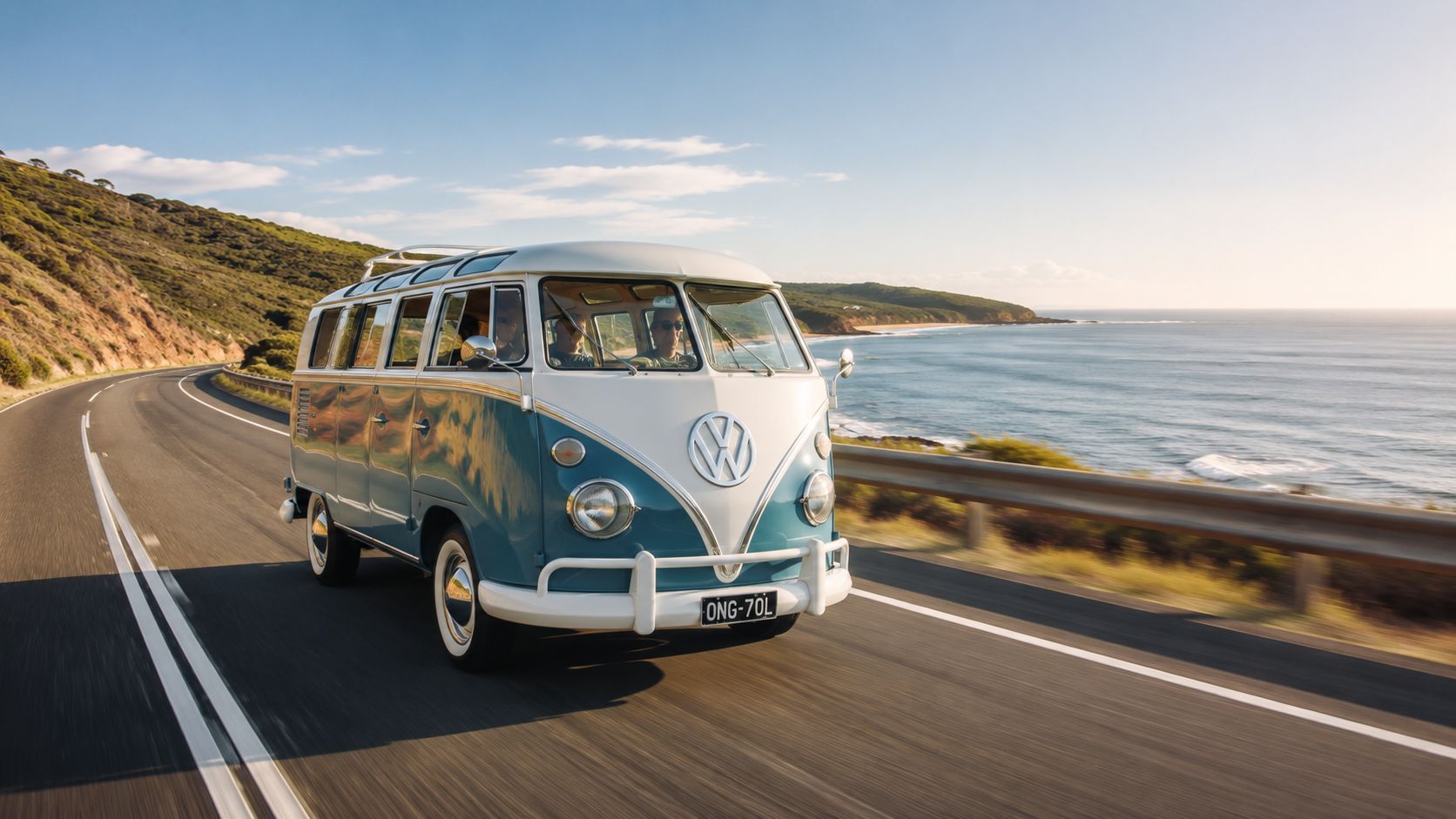
A vintage blue and white Volkswagen bus driving along a scenic coastal road during a bright day.

Volkswagen's roots in Australia run deep. Volkswagen assembled Knocked Down kits of the Beetle in a factory located in Clayton, Victoria from 1954 until 1976, producing a unique Australian model known as the “Clayton” that used parts from both the Beetle and Kombi, as noted in this history note on the Clayton-built VW. That kind of local story is part of why so many of us feel connected to the badge.

Why coolant matters to the bigger story

Looking after your VW is part of preserving that heritage. Coolant might not be as glamorous as polished hubcaps or a two-tone paint job, but it keeps the engine stable when the weather turns fierce and traffic turns ugly. Get it right, and your car stays happy. Get it wrong, and small issues can snowball.

Workshop wisdom: The best-maintained VWs are usually owned by people who pay attention to the simple stuff before it becomes expensive stuff.

That same eye for detail is what draws people to old service records, model histories, and memorabilia. If you love the backstory as much as the drive, a genuine Volkswagen service book keepsake is the sort of thing that feels right at home next to your keys and garage shelf.

Real care beats guesswork

A lot of coolant trouble starts with guesswork. Someone tops up with “something close enough”, or follows a generic online tip that doesn't match their VW's actual spec. That's where understanding G13 coolant in a VW becomes more than a technical detail. It's just good ownership.

What Exactly Is This G13 Coolant

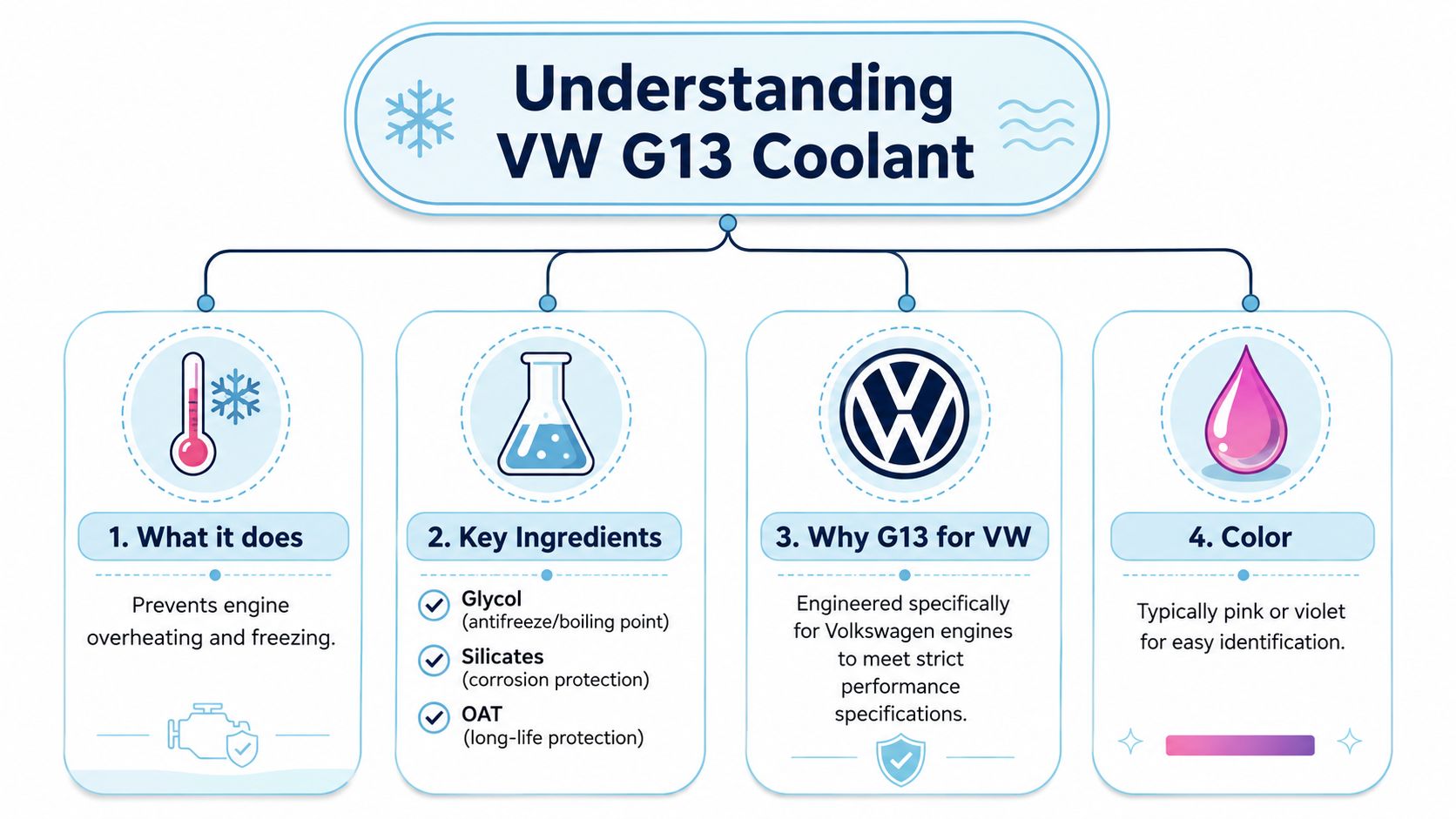
You're at the parts counter, the bottle says G13, it's violet, and suddenly a simple coolant top-up feels more fiddly than choosing the right hubcaps for a Beetle resto. Fair question. G13 is Volkswagen's own coolant specification, and the spec matters more than the colour on the label.

At its job, coolant does two things. It manages engine temperature, and it helps protect the inside of the cooling system from corrosion. In a VW, those jobs need to happen across a mix of metals, seals, hoses, and passages that were designed with a specific coolant chemistry in mind. That is why grabbing any pink or purple bottle off the shelf can turn into a costly guess.

What makes G13 different

G13 coolant became the VW standard for many later vehicles and is known for using glycerin in its formula. In plain English, it was developed as a newer alternative to earlier VW coolant types while still giving strong protection inside the cooling system.

An infographic titled Understanding VW G13 Coolant explaining its function, ingredients, performance, and distinctive pink color.

You'll usually spot it by its violet colour, but colour is only a clue. The definitive sign is the approval on the bottle. If your VW calls for G13, look for VW TL 774-J on the container. That is the bit that tells you the coolant matches the factory spec, not just the marketing on the front label.

For owners who enjoy getting the right bits for their car, the same way you'd chase the correct badge or trim for a scale model shelf display, checking proper VW parts and coolant specs in Australia is part of doing the job properly.

Why VW specified it

G13 was designed to suit the materials used in many newer VW cooling systems, including lightweight alloys that need the right corrosion protection. That matters because modern Volkswagens pack a lot into a tight engine bay, and the cooling system has to stay clean and stable over time, especially in Aussie heat.

This is also where some owners of older favourites get caught out. A modern Golf, Passat, or Tiguan may require G13, while an older VW may have been built around a different coolant spec altogether. If you love the brand from full-size Kombis to diecast shelf pieces, this is one of those details that separates careful ownership from guesswork.

Where people get tripped up

The biggest trap is trusting the shade instead of the specification. Two bottles can look nearly identical and still use different chemistry.

A quick check keeps you out of strife:

  • Read the approval code on the bottle: Look for VW TL 774-J if your vehicle calls for G13.
  • Check your handbook or coolant reservoir label: VW usually tells you the required spec clearly.
  • Match the coolant to the car, not the bottle colour: Violet does not automatically mean correct.
  • Be extra careful with older VWs: Age, previous repairs, and past top-ups can leave a mixed history in the system.

G13 is a Volkswagen coolant specification, not just a purple liquid. Treat it like any proper VW part. The label and approval matter more than the look.

G13 vs The G12 Family A Simple Guide

Plenty of VW owners hit this point and hesitate. You spot G12, G12+, G12++, G13, and G12 EVO on the shelf, and a simple coolant buy suddenly feels like reading the fine print on a rare parts box at a swap meet.

The names sound like close cousins because they are from the same VW coolant family. The catch is that family members do not all get along once they are mixed in the same system.

The mixing rule that matters most

A common mistake for Australian owners is assuming G13 works with every older G12 version. It does not. This Champion Lubes note on G13 compatibility explains that G13 is backward compatible with G12++ but not compatible with G12+.

That single detail saves a lot of grief.

If you top up the wrong spec, you are not just taking a punt on colour or branding. You are mixing chemistries that may not protect the system the way VW intended. On an older car with an unknown service history, that is a bit like fitting the wrong gasket because it looked close enough in the packet. It might hold for a while, but you would not bet your favourite Kombi on it.

VW Coolant Compatibility Chart

Coolant Spec Colour Base Mix with G13?
G12 not specified here glycol-based older family Avoid
G12+ not specified here older G12 family No
G12++ not specified here later G12 family Yes
G13 violet glycerin-based same spec
G12 EVO not specified here newer alternative for some post-2020 models Check vehicle requirement before use

A plain-English way to read that chart

Here is the simple version. G12++ and G13 can generally live together. G12+ and G13 should not. If your car already has G13 in the expansion tank, do not assume any bottle with "G12" on it is close enough.

That is where owners of older Beetles, Golfs, and Kombis with mixed maintenance histories can get caught. A previous owner may have topped it up with whatever was handy, and now you are trying to decode years of shortcuts. If you are sorting parts as carefully as you curate your shelf of classic VW diecasts, the same rule applies here. Details matter. A helpful VW parts guide for Australian owners can make the broader maintenance side easier when labels and superseded part specs start getting messy.

What about G12 EVO

G12 EVO adds another wrinkle to the story. VW introduced it for some newer models, so owners around the later model-year transition can see conflicting advice if they rely on bottle names alone.

The safe approach is dead simple. Check the exact coolant spec listed for your model year and engine, then buy to that approval rather than the family name. That keeps your real VW running sweet, and it is the same mindset that makes collecting VW memorabilia fun too. The joy is in knowing the details, not guessing at them.

Signs Your VW Needs Some Coolant TLC

Your VW usually gives you a few hints before coolant trouble turns serious. The trick is noticing them early and not brushing them off as one of those “old car things”.

A car dashboard displaying a coolant temperature warning light next to a Volkswagen engine coolant reservoir tank.

What to watch for

A low coolant level in the reservoir is one of the clearest signs. If it's sitting near or below the MIN line when the engine is cold, it deserves attention. Murky or odd-looking coolant can also suggest the system needs a closer look.

Then there are the signs you notice after a drive:

  • Warning lights: The temperature light on the dash is your car asking for help.
  • Sweet smell: That can point to a coolant leak.
  • Puddles under the car: Especially if they appear regularly in the same spot.
  • Running hotter than usual: Even without a warning light, a change in behaviour matters.

A quick owner check

Pop the bonnet only when the engine is cold. Check the reservoir level and have a look at the colour and clarity. If anything seems off, don't just keep topping it up forever. Repeated loss usually means there's a leak or another issue behind it.

This short video gives a handy visual reference for what owners are usually checking around the reservoir and warning signs:

If your VW keeps asking for coolant, the job isn't to become faster at topping up. The job is finding out where it's going.

How to Safely Top Up or Change Your Coolant

You've just rolled back into the driveway after a Sunday run, the engine's ticking as it cools, and the reservoir level looks a touch low. That's the moment to slow down and do the job properly, not have a crack at it while everything is still hot and pressurised.

Coolant work is a bit like caring for a good diecast model on the shelf. Rush it, use the wrong stuff, or force parts that should be handled gently, and you can turn a simple tidy-up into damage you didn't need.

Safe top-up routine

For a basic top-up, patience is your best tool. Wait until the engine is completely cold. A hot cooling system can spit boiling coolant with enough force to ruin your day.

Then work through it in order:

  1. Park on level ground. That gives you an honest reading at the reservoir.
  2. Check the coolant spec on the bottle and your VW requirements. Colour alone is a dodgy guide.
  3. Look at the reservoir before adding anything. If the level is only slightly under the mark and the coolant still looks clean, a top-up is usually straightforward.
  4. Add the correct coolant slowly. Bring it back to the proper line, not above it.
  5. Refit the cap firmly. After that, monitor the level over the next few drives.

Keep it simple. If the level drops again soon after, the mission has changed from topping up to finding the cause.

When a full change makes more sense

A full coolant change is the smarter call when the fluid looks contaminated, the service history is a mystery, or someone has added the wrong type at some point. Hoping mixed coolant will sort itself out is a classic way to create more work later.

Draining and refilling sounds easy on paper, but VWs can trap air in the system if the refill process isn't done properly. Air pockets act like empty spots in the engine's cooling jacket. The coolant can't carry heat away evenly, and temperatures can climb in ways that catch owners off guard.

That's why plenty of enthusiasts are happy doing checks and top-ups at home, then hand the full flush to a workshop that knows Volkswagens well.

A good rule of thumb

Here's the practical split:

  • Low level, correct coolant, clean reservoir: A careful top-up is usually fine.
  • Unknown coolant already in the system: Identify it before adding anything.
  • Mixed or suspect coolant: Book a flush and refill.
  • Coolant keeps disappearing: Track down the leak first.

If you're in that maintenance headspace already, it can also be handy to read this fuel system cleaner guide for VW owners. Same idea, really. Small preventative jobs help keep an old favourite running sweet.

Know when to call in a specialist

There's real satisfaction in lifting the bonnet and doing the simple jobs yourself. That hands-on connection is part of VW ownership, especially if you're the sort of person who can talk Beetles, Golfs, and Kombis for hours at a showground coffee cart.

But no one gets extra points for guessing with coolant. If you're unsure about the spec, the refill method, or whether the system has been bled properly, get a trusted mechanic involved. A careful workshop bill beats cooking an engine, and it keeps your real VW ready for the road while the miniature one on the shelf keeps telling the same story at home.

Keep the Passion Alive On and Off the Road

You finish a coolant check on Saturday morning, wipe your hands, and hear that familiar VW tick as the engine settles. That little moment is part of the joy. Looking after a Volkswagen has always been more than basic maintenance. It is how owners keep the story going for the next cruise, club meet, or beach run.

That story has deep roots. The Kombi (Type 2) grew into a cultural icon during its later generations, and in Australia it became tied to surf trips, road adventures, and that easy-going VW spirit, as outlined in this history of the Volkswagen Kombi. You can still feel it at any showground. A tidy Kombi or Beetle rolls in, heads turn, and suddenly everyone has a memory to share.

Screenshot from https://vwmemorabilia.com.au/shop/1962-vw-kombi-samba-bus-diecast/

That is why the practical side and the nostalgic side fit together so well.

Keeping the right coolant in your real VW protects the engine that carries your family, your mates, and your memories. A well-made model on the shelf does something different. It keeps the shape, colour, and character of the marque close by when the car is tucked in the shed. One is workshop care. The other is a reminder of why you bothered learning any of this stuff in the first place.

Quick answers owners often ask

Can I mix G13 with G12+?
Best not to assume. Check your owner's manual or confirm the approved spec for your exact VW before mixing any coolant types.

Is G13 the same as any purple coolant?
No. Colour helps identify coolant, but the VW approval matters far more than what it looks like in the bottle.

Should every older VW switch to G13?
No. Older Volkswagens can have different material and system requirements, so it pays to match the coolant to the car, not the trend.

Is G13 still relevant for many Australian VWs?
Yes, for plenty of later-model Volkswagens. Your engine code, build year, and service information should always have the final say.

If you enjoy the hands-on side of VW ownership and the history that comes with it, a good diecast piece can scratch the same itch between drives. Have a look at Volkswagen Memorabilia if you fancy a Beetle, Kombi, or Samba Bus on the shelf to match the one in your heart.

VW Beetle Models: Ultimate Guide to History & Collectibles

A mate of mine once spotted a pale blue Beetle rolling past the esplanade with a surfboard on the roof, and the whole car park turned to look. Nobody asked what year it was at first. They just smiled, because some cars do that.

Remember Your First Beetle Sighting

For plenty of us, the first proper Beetle memory isn't from a museum or a buyer's guide. It's from the road. A rounded bonnet catching the afternoon light, a cheery engine note, maybe a driver with one arm out the window and a grin that says the trip matters as much as the destination.

A vintage light blue Volkswagen Beetle with a surfboard on its roof driving along a coastal road.

That image has become part of Australian car culture. It's why a Beetle parked outside a milk bar still draws a crowd, and why a tidy Bug at a Sunday meet can spark ten different stories at once. One person remembers learning to drive in one. Another remembers family holidays. Someone else remembers seeing one with flowers on the dash and a board strapped on top, heading for the beach.

There's also a fresh layer to that nostalgia. The cultural narrative behind the 1967 VW Beetle's resurgence in Brisbane and Melbourne is a growing local trend, with locals sharing stories of reviving neglected cars, and that renewed affection lines up with stronger interest in retro diecast pieces and coastal décor that feature Beetle styling, as seen in this Australian VW community discussion.

Some cars become transport. A Beetle becomes a memory keeper.

Why the little Bug still lands so well

The Beetle works on two levels at once. It's approachable enough for a casual fan, but the deeper you go, the more detail you find. Local-market trim quirks, different engines, year-specific bits, Australian-only touches. That's where the hobby really opens up.

That's also why collecting Volkswagen Beetle models feels so satisfying. A diecast Beetle isn't just a small car on a shelf. It can be the beach cruiser you saw as a kid, the one your uncle restored in the shed, or the exact shape you still scan for every time you pass a classic car show.

The shelf version of a real feeling

Miniatures let you hold onto the part that matters most. The curves. The colour. The surf vibe. The simple joy of seeing a Bug and instantly feeling lighter.

If you've ever slowed down to admire one at the lights, you already understand why VW Beetle models have such pull.

A Bugs Life The Beetles Journey in Australia

At plenty of Aussie shows, the story starts the same way. Someone points at a tidy mid-sixties Bug, smiles, and says, “Ours had different bumpers.” That small memory says a lot. Australia gave the Beetle its own local character, and those differences still matter when you are trying to match a real car from memory with the right diecast on the shelf.

Australia's chapter began with CKD assembly in the mid-1950s and ran through to the final Australian-assembled Type 1 at Clayton, Victoria, in the mid-1970s, as outlined in this history of the Volkswagen Beetle.

An infographic timeline illustrating the history and evolution of the Volkswagen Beetle in Australia from 1954 onwards.

That long local run is why an Australian Beetle can feel slightly “off” if you compare it with a British or American guidebook. The shape is familiar, sure, but the details often aren't. Trim, engines, electrical setup, and market positioning all took their own path here.

A good early example comes from Volkswagen Australia's own Beetle history. It notes that early Australian-market Type 1 cars used a smaller-output air-cooled engine, which gave local Bugs a gentler, less hurried character on the road than some overseas buyers expected. You can read that background in Volkswagen Australia's Beetle history.

That personality carries into collecting. A miniature Beetle only really clicks for an Aussie collector when it resembles the car they remember from the school pick-up, the beach carpark, or a neighbour's driveway in Geelong or Newcastle.

How Australian Beetles became collector clues

By the middle of the sixties, local differences had become the sort of details enthusiasts love arguing over beside the bonnet. Shannons notes that the Australian-market 1965 Beetle used a 1300cc engine, and that 1967 Australian Bugs were sold with 1300 or 1500 engines while staying on a 6-volt electrical system, according to this Shannons Club feature on the Volkswagen Beetle.

For restorers, those are handy facts. For diecast collectors, they are even more useful because they help explain why a generic overseas model can look close but still miss the mark.

That is especially true once you get into the Australian Deluxe and Custom variations of 1966 and 1967. Those cars are part of the memory bank for many local collectors, and they are exactly the sort of variations that can make one shelf model feel “right” and another feel like a near miss. If your heart is set on the later classic shape, this 1970s Volkswagen Beetle collectible shows how strongly those familiar lines still translate into miniature form.

A few local milestones worth keeping in mind

  • Local assembly gave Australian Beetles their own production story and helped create the market-specific versions enthusiasts still chase.
  • Local tuning and equipment choices meant Aussie Bugs did not always match overseas specifications, even when the body style looked similar at first glance.
  • The end of assembly at Clayton closed the factory chapter, but it also fixed those Australian variations in time, which is why collectors still search for replicas that match local memories rather than global averages.

That is the charm of the Australian Beetle story. The car stayed recognisably a Beetle, but the version we knew here picked up its own accent. For anyone collecting VW Beetle models, that local accent is often the difference between a nice miniature and the one that instantly takes you back.

The Different Beetles Youll Spot Down Under

If there's one area where Aussie collectors get caught out, it's the 1966 and 1967 Beetle variants. At a glance, they can seem close enough. Park them side by side and the local-market clues start talking.

Three classic vintage Volkswagen Beetle cars in light blue, cream, and red parked in front of a garage.

The key point is simple, but it's often glossed over in global guides. Australian Deluxe models in 1966 and 1967 featured “Towel rail” bumpers, while the Custom models had blades, a distinction highlighted in this discussion of Australian Beetle trim differences. For anyone checking authenticity, that's not trivia. It's a core identifier.

The trim detail that changes everything

Collectors often focus on paint, wheels, and badges first. Fair enough. But bumper style can be the clue that sorts an accurate restoration from a muddled one.

Here's the quick read:

  • Deluxe: Look for Towel rail bumpers on Australian 1966 and 1967 cars.
  • Custom: Look for blade bumpers in those same years.
  • Collector takeaway: If a diecast or restored car mixes those cues, it may not match the Australian-market version it claims to represent.

A good example of how Beetle styling carried forward in collectible form is this 1970s Volkswagen Beetle model, which shows how strongly period details influence what collectors choose to display.

Why this matters for diecast buyers

A miniature can be beautifully painted and still feel wrong if the trim doesn't match the car in your memory. That's especially true for Australians chasing a specific family car, a car-show favourite, or a suburb-by-suburb memory from the sixties and seventies.

Plenty of diecast buyers aren't hunting for a generic Beetle. They want their Beetle. The one that used to sit in a driveway in Geelong, Brisbane, Newcastle, or Adelaide. That's where local identification knowledge becomes useful, because it lets you judge a model with more confidence.

For a closer look at Beetle styling in motion, this walkaround helps sharpen the eye:

When you know the bumper story, Australian VW Beetle models suddenly become much easier to read.

From Full Size to Your Shelf Collecting VW Beetle Models

The jump from real cars to diecast usually starts with recognition. You spot a model and think, “That's the one.” Then the practical questions arrive. Which scale suits your shelf? How much detail do you want? Do you want a display piece, a gift, or the start of a proper collection?

The first thing I tell new collectors is to buy with your eyes, then confirm with your head. If a model captures the spirit of the car you remember, that matters. After that, check the quality, the finish, and whether it's an officially licensed piece rather than a vague imitation.

Choosing the right scale

Scale changes the whole experience. A larger model gives you presence and detail. A smaller one is easier to group into a themed display with multiple Beetles, Kombis, and buses.

Here's a simple guide.

Scale Average Length Best For Detail Level
1:18 Larger display format Feature shelves, desk centrepieces, collectors who want presence High
1:24 Mid-sized display format Home décor, gift giving, balanced detail and footprint Strong
1:32 Compact display format Group displays, smaller shelves, mixed VW collections Moderate

If you're browsing across different formats, the Volkswagen model cars collection is a useful place to compare what feels right for your space and taste.

What quality looks like in a Beetle model

A good diecast Volkswagen Beetle model usually gets the basics right before the fancy bits.

  • Body shape first: The roofline, guards, and stance should feel unmistakably Beetle from across the room.
  • Trim accuracy matters: On Australian-inspired models, bumper style and period cues can make or break the illusion.
  • Paint and finish: Clean lines, tidy chrome-style detailing, and a colour that suits the era all help.
  • Licensed presentation: Officially licensed pieces tend to feel more considered in both design and packaging.

Collector's note: The best model isn't always the biggest one. It's the one that still makes you smile after the novelty wears off.

Matching the model to the memory

Some collectors chase showroom neatness. Others prefer surf-themed cars, flower-power colourways, or display pieces that echo coastal living. Beetles are brilliant for this because the car has always moved between worlds. Daily transport, beach runabout, rally oddball, restored classic, pop-culture icon.

That flexibility makes VW Beetle models easy to fold into a broader display too. A Beetle can sit happily beside a Kombi, a Samba Bus, or other VW memorabilia collectibles without looking out of place.

Top Tips for the Aspiring Beetle Collector

A strong collection doesn't need to start big. It needs to start with a point of view. The most enjoyable shelves usually say something about the person who built them, whether that's “classic Australian Bugs,” “surf-themed Volkswagens,” or “every Beetle that reminds me of childhood road trips.”

That's why collecting feels so accessible. You don't need a dedicated showroom. A bookshelf, a study nook, or a coastal-style living room cabinet can do the job beautifully if it's arranged with a bit of care.

Build a collection with a theme

Try choosing one angle and following it for a while.

  • Year-led collecting: Focus on one era, such as mid-sixties or seventies Beetles.
  • Lifestyle-led collecting: Surfboards, flower-power styling, beachy colours, and sunny display settings work especially well with Beetle pieces.
  • Family-memory collecting: Recreate the cars you grew up with, or the ones your parents and grandparents still talk about.

If you're new to the hobby, this guide on what a diecast Volkswagen Beetle model car is is a handy grounding point before you start refining your taste.

Display and care without fuss

Collectors sometimes overcomplicate this part. You don't need a museum method. You need consistency.

  • Keep dust under control: A soft cloth or gentle duster goes a long way.
  • Give each piece room: Beetles have shape. Let those curves breathe instead of cramming models bumper-to-bumper.
  • Use décor intentionally: Timber shelves, white walls, and coastal accents suit VW displays beautifully.

A Beetle model works best when it looks like it belongs in the room, not when it's hidden away like something too precious to enjoy.

Buy slower and enjoy more

The hobby becomes richer when each piece earns its place. Rather than grabbing every model you see, pause and ask a few simple questions:

  1. Does it match the era or style I'm collecting?
  2. Does it remind me of a real Beetle I know or remember?
  3. Will I still enjoy seeing it on the shelf next month?

That small pause usually leads to a stronger, more personal collection.

Bringing a Beetle Home The Perfect VW Gift

The best VW gifts usually land because they feel personal. Not expensive for the sake of it, and not flashy. Just right. A Beetle model can do that in a heartbeat, especially when the recipient already has a story tied to the car.

I've seen this play out often with birthdays and Christmas gifts. Someone spends ages talking about an old Bug they once owned, or the one their parents had near the beach, and then a small boxed model turns up that brings the whole thing flooding back. It's not just décor. It's recognition.

Why the surf-themed Beetle works so well

Among the most cheerful examples is the 1967 Volkswagen Beetle with a surfboard in 1:24 scale, a classic collector's piece and a popular retro décor item that reflects the Beetle's close connection with Australian surf culture, as shown in this 1967 VW Beetle Flower Power Surfboard model.

Screenshot from https://vwmemorabilia.com.au/shop/

That sort of gift works because it carries more than one mood at once. It says classic VW. It says summer. It says Australia. And if the person you're buying for also loves buses and vans, the same charm carries straight across to VW Kombi diecast Australia favourites and Samba Bus pieces.

A few gift ideas that rarely miss

  • For the nostalgic driver: Pick a Beetle colour or era that echoes a car they once owned.
  • For the beach-house decorator: A surf-themed Beetle sits naturally with coastal styling.
  • For the broader VW fan: Pair a Beetle with a Kombi or Samba Bus for a fuller display story.

If you're buying from an Australian importer, the practical advantages are clear too. Local stock, fast shipping, and straightforward support make gift shopping much easier, especially when you want the model to arrive without fuss.

FAQ

Which VW Beetle models are most confusing for Australian collectors?

The Australian 1966 and 1967 Custom and Deluxe variants create plenty of confusion. Deluxe cars had Towel rail bumpers, while Custom models used blade bumpers, a local-market distinction that catches people out.

Were Australian Beetles different from US versions?

Yes. Australian-market Beetles had local differences in engines, trim, and specification. That's one reason overseas guides don't always line up neatly with the cars Australians remember.

What should I look for in a Volkswagen Beetle model?

Start with shape, stance, trim accuracy, and overall finish. If you're chasing an Australian memory, period-correct details matter more than flashy packaging.

Is a Beetle diecast a good gift for non-collectors?

Absolutely. Beetles carry such strong nostalgia that even people who don't think of themselves as collectors often love receiving one, especially if it matches a memory or suits a coastal décor style.

Are Beetles the only classic VW worth collecting?

Not at all. Beetles are often the gateway, but many collectors branch into Kombis, Samba Buses, and broader VW memorabilia collectibles once the display starts taking shape.


If you're ready to find a Beetle that looks like the one from your memories, or you want a Kombi or Samba Bus to round out the shelf, have a browse through Volkswagen Memorabilia. It's a great spot for officially licensed VW pieces, local stock, fast shipping, and the kind of selection that makes building a proper collection feel easy and fun.

Best Tent for Car Boot: Your 2026 Aussie Guide

The kombi's packed, the boards are tied down, and there's that familiar little rattle from somewhere behind the back seat that only an old VW owner could call charming. You've parked up near the coast, salt in the air, sun still warm on the duco, and the only question left is where you're sleeping when the light drops out. That's where a good tent for car boot earns its keep.

For a lot of Aussie VW people, camping gear isn't separate from the car. It becomes part of the whole ritual. The drive in. The kettle on. Sandy feet. Wetsuits hanging off a door. A hatch or tailgate shelter feels right in that world because it keeps things simple. You pull up, open the back, and your car becomes the heart of camp.

The Freedom of a Home on Wheels

I've always loved how a Volkswagen can make an ordinary weekend feel like a proper escape. A Beetle does it one way, all charm and cheek. A Kombi does it another, like it was born to carry boards, mates, and bad decisions involving one more beach track before dark.

A vintage orange Volkswagen bus parked on a beach with a pop-up tent attached for camping.

A mate of mine rolls up to surf comps in an old bus that looks like it's lived three different lives. By the time everyone else is fiddling with freestanding tents, he's already got the kettle boiling and a sheltered spot out the back for damp towels, bags, and the usual pile of beach gear. That's the appeal. A tent off the rear of the car doesn't just give you more room. It extends the feeling that your VW is already home base.

There's a long thread of that idea running through VW history. The old bus was never just transport. It was social. Practical. Relaxed. The 1965 VW Deluxe Micro Bus “Samba” was renowned for its 23 windows and giant sunroof, a design built around the need for a compact, comfortable, and efficient micro-bus in a form people hadn't really seen before, as noted in this look at the 1965 VW Deluxe Micro Bus Samba.

Why the idea suits VW life

A car boot tent makes sense for the same reason the Kombi still turns heads. It mixes usefulness with personality.

  • You stay connected to your gear without trudging back and forth through a campsite.
  • You get a change room and shade spot right where you need it after a swim or surf.
  • You keep the camp compact, which suits weekenders who'd rather drive than build a small suburb out of poles and guy ropes.

The best camping setups don't feel separate from the car. They feel like a natural extension of it.

If you're deep into the road-trip side of the hobby, there's a good yarn in this piece on VW van life in Australia. It captures that same easy, rolling freedom that makes a rear tent such a neat fit for an old Dub.

What Exactly Is a Car Boot Tent

A car boot tent is basically a mobile annexe. It attaches to the rear of your vehicle and turns the open boot or tailgate area into sheltered living space. Instead of pitching a separate tent and keeping your car off to the side, you join the two together.

A comparison chart showing the benefits of a car boot tent versus a traditional standalone camping tent.

That's the main difference. A regular tent stands on its own. A boot tent uses the car as part of the setup. For beach days, markets, overnight stops, and casual touring, that can feel far less fussy.

Two common styles you'll see

Some rear tents are full enclosures. They create a proper room at the back of the car, handy for sleeping, changing, or keeping chairs and bags out of the weather. Others work more like an awning with walls, giving you cover and airflow without trying to become a second bedroom.

A practical way to think about it is this:

Style Best for Feel at camp
Full rear enclosure Overnight trips, family space, privacy Like adding a room
Rear awning shelter Day stops, shade, quick overnighters Like adding a verandah

Where they sit against rooftop tents

Rooftop tents have their own charm, especially if you like being up high. In Australia, some rooftop tents feature UPF 50-plus UV stability and double-stitched waterproof seams, and carsales.com.au's guide to rooftop tents notes that hardshell designs are more compact and durable, while softshell versions often give you a bigger bed and a lower buy-in, though they're usually slower to set up. The catch is obvious for classic VW owners. You must never exceed the roof load maximum.

That's why a boot tent often lands in the sweet spot. You don't load up the roof, you don't climb a ladder at midnight, and you still gain usable shelter.

Size and practicality

Some hatchback-style rear tents are built with a waterproof rating of 1500mm to 2000mm and dimensions around 300x150x210cm, with room to comfortably suit 4 to 6 people and fit many SUVs and vans, according to this rear hatchback tent product listing.

Practical rule: If your camping style is more “pull up and relax” than “build camp for an hour,” a rear tent usually makes more sense than a more complicated system.

If you like comparing styles before buying, this guide on van awning comparisons is a handy reference point.

Will It Fit My Bug or Bus

Classic VW owners get cautious, and rightly so. “Universal fit” sounds lovely on a product page, but a Beetle isn't shaped like a modern SUV, and a Kombi has its own lines, hinges, and quirks.

A person placing a black organizer bag into the trunk of a vintage beige Volkswagen Beetle car.

Start with the opening, not the badge

Measure the actual rear opening first. Don't begin with model names or assumptions. Grab a tape and check:

  1. Width across the opening at the widest usable point.
  2. Height from the ground to the top edge where the tent sleeve or attachment will sit.
  3. Clearance around bumpers, spare wheels, ladders, or racks that could interrupt a seal.

A classic Beetle owner may find the boot shape makes a full rear enclosure awkward. A Kombi or later hatch-style VW usually gives you a friendlier opening for this kind of gear.

Protect the paint and old trim

The thing nobody wants is campsite convenience at the cost of scratched original paint or tired rubbers. If your VW still wears older trim, test every contact point before a full trip. Soft cloth barriers, careful strap routing, and avoiding abrasive movement matter more on a vintage vehicle than on a late-model daily.

Some owners prefer attachment systems that avoid heavy tension across painted edges. Others are happy with straps so long as they can control where the load sits. The answer depends on your vehicle, not the marketing copy.

Here's a useful walk-through to keep in mind when you're visualising fit and setup on the car:

A quick fit checklist for old Volkswagens

  • For Beetles: Check whether the tent expects a wide hatch opening. Many do.
  • For Kombis and vans: Look closely at hatch height and how the fabric seals around corners.
  • For modified cars: Roof racks, rear bars, or custom lights can interrupt a neat fit.
  • For restored originals: Prioritise gentle contact points over absolute speed.

A “universal” tent can still be the wrong tent if your rear opening is narrow, highly curved, or precious enough that you won't relax once it's attached.

Key Features for the Perfect Coastal Getaway

Not all rear tents handle Australian beach camping the same way. A calm inland overnight is one thing. A breezy, damp coastal site after a hot day is another entirely.

A light blue tent attached to a car trunk on a beach showing essential features.

Weather protection that actually matters

Fabric quality is where a lot of cheap gear gives itself away. You want material that stands up to sun, shower, and repeated packing. Rooftop tent specs offer a useful benchmark here, with some Australian models featuring UPF 50-plus UV stability and double-stitched waterproof seams for durability in local conditions, as covered earlier in the rooftop tent reference.

For a rear tent, the principle's the same. The more punishment your weekends dish out, the more those build details matter.

Fast setup and stable attachment

One of the smarter modern developments is magnetic attachment. Some tailgate tents use a continuous magnetic strip, and this design can cut assembly time by approximately 40% compared with strap systems while remaining stable in winds up to 45 km/h, according to this tailgate tent field-test video.

That's a genuine quality-of-life feature. Less mucking around in a car park. Less flapping fabric while you sort poles. More time getting the camp chair out.

The shortlist I'd use near the coast

Feature Why it matters on a VW trip
UV-resistant fabric Better for exposed beachside camps
Waterproof seams Less stress when weather turns
Mesh openings Helps the tent feel liveable
Simple attachment Useful for quick stops and late arrivals
Solid frame and tie-downs Better manners in coastal wind

Good camping gear should disappear into the background. If you're thinking about it all night, it's not doing its job.

A buyer's eye, not a browser's eye

When you inspect a tent for car boot use, don't just ask whether it fits. Ask how it behaves. Does the fabric look like it can handle repeated folding? Do the poles feel like they belong outdoors? Do the openings give you enough control over airflow?

That's the same instinct collectors use when judging a licensed VW piece. Finish, detail, construction, and longevity always show its true quality.

Setup Pack-Down and Care Tips

A boot tent should be one of the easiest bits of gear you own. If setup feels like a wrestling match, something's off. Usually it's either the site, the sequence, or trying to rush before the car is parked square.

The easy setup rhythm

Start by parking as level as you can. Open the rear, lay the tent out behind the car, and identify the points that contact paint, trim, or glass before you tension anything. Build slowly the first few times. Familiarity is what makes a fast setup look easy.

A calm routine helps:

  • Position first: Face the rear away from the strongest wind if you can.
  • Attach lightly: Get the tent sitting in place before tightening every strap or point.
  • Raise structure next: Poles and shape come after alignment, not before.
  • Tension last: Fine-tune once the whole shelter is standing properly.

Pack-down without regrets

The biggest mistake is stuffing damp fabric away and promising yourself you'll sort it later. You won't enjoy the surprise. Dry it fully before storage whenever possible, then fold it with the attachment points tucked neatly so they don't rub or snag on the next trip.

Cleaning doesn't need to be dramatic. Brush out sand, wipe grime off contact areas, and inspect seams and stress points after each decent run. It's comparable to caring for old VW paint. Gentle attention beats heroic repair.

If a trip ends with wet gear, unpack it at home the same day. Future you will be grateful.

A few habits that save gear

  • Use a ground check: Clear shells, sticks, and sharp rubbish before setup.
  • Mind the duco: Don't drag wet, sandy fabric across paint.
  • Store loosely if you can: Crushed gear ages faster.
  • Borrow smart ideas: Some of the same practical thinking behind a Fiamma F45 awning applies here. Clean mounting areas, avoid rushed pack-downs, and keep moving parts and fabric dry.

FAQ for the Aussie VW Adventurer

Can I keep the boot closed for security

Usually, no. That's one of the most frustrating compromises with this style of camping. Most car boot tents need the boot or tailgate open to work, which leaves gear more exposed than many travellers like. It's a real concern in Australia, where 68% of camper survey respondents cited theft as a top issue during multi-day trips, and closed-boot solutions remain rare, as discussed in this community discussion on car tents that don't require an open boot.

If security sits high on your list, look hard at how much of your setup depends on leaving valuables in the car overnight. In practice, many owners shift important items forward into the cabin, keep the rear area tidy, and choose campgrounds with good visibility rather than total seclusion.

What about condensation on humid coastal nights

It's one of the classic pain points. The trick is airflow. If your tent has mesh panels, use them early rather than waiting until things feel clammy. Wet towels, damp wetsuits, and cooking too close to the sleeping area all make it worse.

The awkward bit is that the common workaround, opening things up further, can reduce privacy and make security feel shakier. That's why ventilation design matters so much when you're choosing gear in the first place.

Is a rear tent better for a Kombi than a Beetle

In most cases, a Kombi or hatch-style VW gives you an easier platform because the rear opening is more naturally suited to annex-style camping. A Beetle can still be part of a brilliant camp setup, but you may lean more toward awning-style shelter or simpler shade rather than a big enclosed rear room.

That doesn't make one more “VW” than the other. It just means the body shape steers the setup.

How do I make the campsite feel more Volkswagen

This is the fun bit. Keep it tasteful. A striped chair, a tidy enamel mug, a surf towel over the line, maybe a little nod to the cars you love back home. Plenty of people bring a favourite Kombi or Beetle diecast along for the dashboard or camp table, not because they need to, but because that's the whole point of the hobby. The car, the trip, the memory, the object. It all joins up.

The best VW campsites don't look staged. They just feel like the owner brought their world along for the weekend.

Is a tent for car boot use worth it for short trips

If you do quick overnighters, dawn surf missions, show weekends, or casual coastal runs, yes, it can be one of the handiest pieces of kit you buy. It's especially good when you want shelter without turning the trip into a full camping expedition.

The value isn't only in sleeping space. It's in convenience. Shade while you change. Cover while you sort gear. A dry spot when the weather turns ordinary.


Volkswagen lovers know the best gear does more than serve a purpose. It carries a bit of story with it. If you'd like to bring that same spirit into your home, shed, office, or gift list, have a look through Volkswagen Memorabilia. It's a local Australian shop with VW-themed gifts, licensed diecast favourites, Kombi and Beetle pieces, and the kind of stock that suits collectors who appreciate local stock and fast shipping without the fuss. If your weekends revolve around old Volkswagens, surf culture, and nostalgia, you'll feel right at home there.

Camping Utensil Sets: Your 2026 Aussie Road Trip Guide

The morning usually starts the same way. Salt in the air, kettle just starting to mutter on the camp stove, and the Kombi side door open to that lovely little world you've packed with care. Not crammed. Curated. Towel rolled tight, enamel mugs nested properly, tea bags where you can grab them half asleep, and a camping utensil set tucked where it won't rattle the whole way up the coast.

If you've ever chased a sunrise out of a Beetle boot or cooked brekkie from the back of a Type 2, you already know the small gear matters more than people think. A dodgy spoon, a knife that bends, or tongs that vanish into the cutlery drawer chaos can turn a relaxed camp meal into a grumble. The right kit keeps the vibe intact. That matters when the road is the point.

The Joy of a Perfectly Packed Kombi

A Kombi has a way of teaching you discipline without making it feel like work. Every item has to earn its place. You learn fast that the things you touch every day matter most. The mug. The torch. The tea towel. The camping utensil set.

I remember a beach run up the New South Wales coast in an old two-tone bus, the sort of trip where the destination kept changing because the weather was too good to ignore. One mate brought a flimsy drawerful of mismatched cutlery wrapped in a supermarket bag. I had a compact roll with the proper basics, a serving spoon, a decent knife, a spatula that could flip a fritter without folding in half, and tongs long enough to save my knuckles from the pan. By the second camp breakfast, everyone knew which setup felt like home.

A vintage green camper van parked by a serene lake at sunset, featuring a curated camping utensil set.

That little ritual is becoming more familiar all over the country. In 2025, caravan and camping trips in Australia, including glamping, increased by 14%, with Australians taking a total of 17.3 million caravan and camping trips, according to Tourism Research Australia's caravan and camping data. More people are getting outdoors, and more of them are realising camp cooking works best when your gear is sorted before the wheels start turning.

Packing for comfort, not clutter

A classic VW doesn't reward overpacking. It rewards intention.

  • Keep daily-use gear together: Your utensil set should live near the stove, not buried under bedding.
  • Pack for the meal you cook: If you make pasta, eggs, snags, toasties, and salads, pack for those jobs.
  • Use your van like a tiny kitchen: A good layout saves time and keeps the camp mood easy.

Camp rule: If you need it at every stop, it deserves a fixed home.

A tidy van feels better to drive and better to live in. If you're refining that setup, this van fit-out planning checklist is handy for getting the essentials in the right order before your next trip.

Beyond the Spork What Is a Camping Utensil Set

A spork is fine if you're hiking light and dinner comes from a pouch. That's not how most VW road-trippers cook. A proper camping utensil set is less about surviving and more about eating well by the beach, at a bush stop, or at a meet-up where someone always says, “Throw another onion on.”

For van life, a useful set usually covers two jobs. First, personal eating tools. Second, cooking and serving tools. If it only handles one, you'll still end up rummaging through odd bits and pieces.

What belongs in a proper road kit

The best camping utensil set for a Kombi or Beetle trip usually includes a mix like this:

  • Eating pieces: Fork, spoon, knife, and a mug or bowl setup that nests neatly.
  • Cooking tools: Spatula, tongs, serving spoon, prep knife.
  • Problem-solvers: Bottle opener, can opener, corkscrew, and something for turning food over a hot plate.
  • Storage: A roll, pouch, or compact box that stops metal-on-metal chatter.

That last bit matters more than people think. In a van, every loose item develops a soundtrack. The wrong storage turns a scenic drive into a percussion session.

Why van campers need more than a backpacker kit

Backpackers strip things back because weight rules everything. VW travellers have a bit more room, so the better question is whether a piece earns its space. A full-size spatula often earns it. So do proper tongs.

The nicest camp meals happen when your tools feel familiar enough to use without thinking.

A camping utensil set should make your mobile kitchen feel settled. Not fancy. Not overloaded. Just ready. When you can make breakfast one-handed while balancing a mug of tea in the other, you've packed well.

Choosing Your Utensil Material for Aussie Adventures

Material changes everything once you leave the driveway. It affects how your gear feels in the hand, how it copes with heat, and how long it lasts after beach runs, dusty inland stops, and damp mornings near the water.

A comparison chart outlining the pros and cons of different camping utensil materials including stainless steel, titanium, bamboo, and plastic.

The coastal factor is where many buyers get caught. Most camping utensil content fails to separate normal wear from real durability in Australian conditions. 68% of Australian campers report replacing their utensil sets annually due to corrosion from coastal salt and heat, as noted in Cranky Croc's discussion of camp kitchen utensil considerations. If your VW weekends usually end with sandy feet and salty windows, material deserves a proper look.

Camping Utensil Material Comparison

Material Pros Cons Best For
Stainless steel Durable, easy to clean, familiar feel Heavier, can get hot fast Regular road trips and general camp cooking
Titanium Very light, strong for its weight Higher cost, can feel less solid in use Minimalist packers and serious lightweight travellers
Bamboo or wood Retro look, gentle on non-stick cookware Holds odours, needs more care Relaxed camp setups with a natural, coastal feel
Recycled plastics Light and budget-friendly Less durable, heat sensitive Backup kits, casual use, or very simple meals

How each material suits VW travel

Stainless steel feels right in a classic setup because it's dependable. It washes up easily and suits campers who cook often. If your style is more “park by the dunes and fry something proper”, stainless is usually the safe choice.

Titanium suits travellers who love compact, efficient packing. It's especially appealing if your Beetle has very little spare room or you just enjoy finely made gear. The trade-off is cost. Some Australian camping utensil sets range from about $2 for a simple spoon to $30 for premium titanium spoon and fork sets, while a mid-range set noted by Outdoor Life sits at $22 with a 4.6 out of 5.0 rating, according to Outdoor Life's guide to the best camping utensils.

Bamboo and wood have undeniable charm. They look good on a striped towel beside the van and feel perfect for the retro crowd. They do ask more of you, though. Dry them well and don't treat them like something you can forget in a damp tub overnight.

Recycled plastics have their place, mostly as a second kit, a picnic backup, or something for easy snacks rather than serious cooking.

Material test: If your trips lean coastal, choose for salt, heat, and cleaning ease first. Style comes second.

Must-Have Features for the VW Adventurer

The right features matter more than clever marketing. On the road, practical design wins. You notice it when you're parked at a windy headland trying to make dinner before dark.

A camping utensil set featuring a fork, spoon, knife, and multi-tool on a rustic wooden table inside a van.

A tidy storage roll is high on my list. Corrugated roads and old VW cabins don't forgive loose gear. If your fork, knife, and opener all knock together in one tin, you'll hear them all day. A proper pouch or box also means you can lift the whole set from van shelf to picnic table in one move.

Full-size tools beat novelty combos

Compact multi-tools look brilliant in the shop. They don't always shine when you're cooking for more than one person. Only 22% of Australian campers use compact multi-utensil sets for week-long tent trips because they lack the prep efficiency of full spatulas, knives, and can openers needed for shared meals, as discussed in this Australian camping conversation on Reddit.

That lines up with what plenty of road-trippers already know. A combined spoon-fork-knife gadget can be handy for lunch. It's not much fun when you're trying to prep veg, open a tin, flip fish, and serve a group.

Look for these features:

  • Secure storage: Rolls and boxes stop rattles and keep drawers organised.
  • Real handles: Full-grip tools are easier to use when your hands are wet or sandy.
  • Useful extras: Can opener, bottle opener, and serving spoon save you from packing duplicates.
  • Easy cleaning: Smooth surfaces and simple joins are kinder at wash-up time.

Construction matters when gear gets used hard

If you cook often, pay attention to how pieces are built. The Front Runner Camp Kitchen Utensil Set is one example built with triple-riveted composite handles and full-size stainless steel blades, a design intended to prevent handle detachment under repeated torque stress. One retailer description notes this addresses a failure point seen in 15% of non-riveted consumer sets under Australian field testing conditions, with the riveted design increasing shear strength by approximately 40%, according to Roof Racks Galore's Front Runner product page.

That's the sort of detail you appreciate halfway through a trip, not at the checkout.

For a quick visual on camp kitchen essentials, this clip gives a decent sense of what practical setup looks like in a compact space.

Easy Packing and Cleaning Tips on the Road

Camp kitchen order doesn't come from buying more stuff. It comes from repeating a few good habits until they're automatic. Old Kombi owners know that once clutter starts, it spreads from the sink tub to the bed shelf in about ten minutes.

A simple routine that works

I like to wash in stages. Scrape first, rinse second, proper wash last. That keeps greasy water under control and stops your clean spoon ending up in yesterday's bacon film.

A few habits make life easier:

  • Pack by use, not by type: Keep cooking utensils with the stove gear, not with eating cutlery.
  • Dry before stowing: Even a little trapped moisture can leave things musty by the next stop.
  • Use a mesh bag or open roll: Airflow helps when you've washed up late and hit the road early.
  • Do a reset each evening: Two minutes of putting everything back saves a messy breakfast.

Wash-up is part of camp comfort. Do it before you sit down for the night and tomorrow starts better.

Keep the kit legal, clean, and easy to access

Storage also depends on where you stop and how you set up. If you're moving around Australia in a van, it helps to understand local expectations around overnight stays, camp behaviour, and how much gear you really want outside at any one time. This guide to van life Australia camping rules is useful for planning a setup that stays simple and respectful.

One more tip. Give every utensil a home you can reach without unpacking half the van. The best road setups aren't glamorous. They're calm.

Style Your Kit for Coastal and Retro Trips

Late afternoon at Crescent Head, the kettle is rattling on the stove, salt is still drying on the windscreen, and someone reaches into the cutlery roll for a fork that looks like it belongs in the van. That little detail changes the whole mood. In a Kombi, the camp kitchen is part of the scene, same as the striped towel on the door and the sandy thongs under the step.

A utensil set does more than help with dinner. It becomes part of the character of the trip. Stainless steel has that clean, old-school look that suits a silver Beetle or a tidy white Kombi. Bamboo handles bring in a weathered beach-shack feel. Bright retro colours suit vans with flower decals, vinyl coolers, and chairs that have seen thirty summers up and down the coast.

Let the Kombi story shape the mood

Part of the charm has always been that mix of useful and beautiful. On the official Kombi history page from Volkswagen Australia, the story begins with Ben Pon's sketch and the early Type 2 production that followed. That heritage still shows up every time a Kombi owner packs practical gear that also feels full of personality.

That is why some camp setups just look right straight away.

  • Classic silver and cream: Stainless utensils, a canvas or neutral roll, enamel mugs, plain napkins.
  • Coastal surf trip: Bamboo servers, faded blue or sea-glass tones, striped tea towels, timber boards.
  • Playful retro weekender: Colourful handles, patterned plates, sunny mugs, old folding chairs beside the van.

Screenshot from https://vwmemorabilia.com.au/shop/

Bring the same eye to your display at home

I have always liked the way road gear follows you home. A neat cutlery roll in the van often sits beside a shelf with maps, a tiny Kombi model, and a photo from some windy breakfast stop near the water. The same taste is at work in both places.

If your place has that beachy, retro VW feel, these coastal home decor ideas are worth a look. They suit the kind of home where an enamel mug, a surf print, and a little blue bus on the shelf all make perfect sense together.

A well-styled camp kit keeps the trip going long after you have parked the van.

The same eye for detail shows up in searches for VW Kombi diecast Australia, Volkswagen Beetle model, buy diecast Kombi, VW memorabilia collectibles, and Volkswagen diecast models for sale. People who care about a good-looking camp drawer usually care about the shelf in the garage or the corner of the lounge room too.

If your road-trip style spills over into the garage, office, or living room, Volkswagen Memorabilia is well worth a look. It's a strong local option for Australian VW enthusiasts who want licensed pieces with local stock and fast shipping, whether you're after a Kombi Samba Bus diecast, a classic Volkswagen Beetle model, or VW memorabilia that matches the easygoing spirit of life on the road. You can browse the range in the shop and find pieces that feel right at home beside a classic bus, a beach map, and a properly packed camp kitchen.

Coastal Boho Wall Art: A Sun-Kissed Styling Guide

You know the feeling. You've come home from a beach run, kicked off your thongs at the door, and looked around the lounge thinking it still doesn't carry that same loose, sun-faded calm you get near the coast. The room's fine. It's tidy enough. But it doesn't feel like salty air, old road trips, market finds, and a weekend parked beside the surf in a faithful old Kombi.

That's where coastal boho wall art earns its keep.

Done well, it doesn't look like a theme. It looks lived in. It feels like a home with stories in it, the sort of place where a woven hanging can sit happily beside a weathered beach print, and where a small nod to classic Volkswagen life feels completely at home rather than bolted on for effect.

For plenty of us, that sweet spot is the main challenge. You want the relaxed beach-house mood, but you don't want a wall that looks like a souvenir shop. You want warmth, texture, and personality. Maybe even a little Surf Safari nostalgia. The good news is that coastal boho gives you room to do exactly that, whether you live two streets from the water or a long inland drive away.

Bringing That Sun-Soaked Vibe Into Your Home

A lot of people start with colour and get stuck there. They think coastal means blue cushions, a shell print, maybe a bit of driftwood, and job done. But the rooms that really work don't start with objects. They start with a feeling.

Think of the homes that stay with you after a weekend away. The ones with soft light, timber that looks slightly weathered, art that feels collected rather than ordered in one hit, and little details that hint at road trips, beach mornings, and family history. That's the spirit coastal boho wall art should bring into a room.

For VW lovers, that idea lands naturally. A classic Beetle or Kombi has never just been transport. It's memory, freedom, and design rolled into one. That same energy translates beautifully into interiors when you resist the urge to make every piece shout “beach” or “retro”. A room works better when it suggests a coastal life rather than spelling it out.

A helpful way to frame it is this: your wall art should feel like a personal album, not a styling checklist.

Coastal boho works best when the room feels collected over time, a bit like a well-loved VW that carries its history proudly.

That might mean a quiet shoreline print, a woven wall hanging from natural fibres, an old photo from a surf trip, or a subtle vintage automotive accent tucked among softer textures. If you're chasing ideas that tie beach living to classic VW nostalgia, these coastal home decor ideas are a good place to spark the look without drifting into cliché.

What the vibe actually looks like

  • Relaxed, not rigid. Straight lines and perfect symmetry can make the room feel showroom-stiff.
  • Personal, not generic. Pieces should say something about where you've been and what you love.
  • Layered, not overloaded. The best walls have breathing room.
  • Nostalgic, not novelty. A nod to surf culture or a vintage Kombi is plenty. Ten of them is a theme park.

That balance is what gives coastal boho wall art its charm. It's less about matching decor and more about building a space that feels as easy-going as a Sunday Volkswagen meet by the water.

The Building Blocks of Coastal Boho Style

Coastal boho has a clear backbone. If you get the bones right, the room feels natural even before the art goes up. The strongest approach in Australia follows a simple layering method described in this Australian coastal boho wall art style guide: start with seagrass, raffia, jute, and driftwood, then add ocean elements like shells, coral, and sea glass, build over that with mushroom greys, warm stones, bleached woods, and pearl whites, and finish with touches of coral, aqua, or sea glass green spread through the space.

An infographic detailing the three building blocks of coastal boho style: color palette, textural harmony, and natural elements.

Start with colour that looks sun-washed

The best palette is quieter than many people expect. Bright nautical blue can push a room into holiday-rental territory fast. Coastal boho usually feels stronger when the foundation is neutral and a bit dusty.

A good working palette includes:

  • Mushroom and stone tones for softness
  • Bleached timber shades to echo weathered coastal materials
  • Pearl whites and warm creams to bounce light around
  • Aqua, coral, or sea-glass green as accents rather than dominant blocks

Since wall art rarely hangs in isolation, the colours in your prints, frames, fibres, and shelves all talk to each other. If the base palette is too loud, every added piece has to fight for attention.

Lean into texture before pattern

Texture is what keeps coastal boho from feeling flat. It also stops a neutral room from becoming dull. On a practical level, that means choosing surfaces and materials that catch light differently across the day.

Try mixing:

Element What it adds What to avoid
Woven fibres Warmth and movement Too many similar weaves together
Timber frames Structure and grounding High-gloss finishes
Linen or cotton art surrounds Softness Heavy synthetic shine
Driftwood and natural pieces Organic character Polished, overworked “beach” props

Practical rule: if every piece is smooth, printed, and framed, the wall will feel one-note. Add at least one tactile element.

That's one reason boho style room ideas often feel more inviting when they include mixed materials rather than only framed prints.

Use natural elements with restraint

Shells, coral forms, and sea glass can be beautiful. They can also tip a room straight into over-themed territory if they're used like costume jewellery. One or two natural references usually do more than a whole wall of obvious seaside motifs.

Think in layers instead of labels. A driftwood-framed print says more than a print of a giant shell. A raffia hanging beside a soft beach photograph gives you coastal mood without having to announce it.

Choosing Wall Art That Tells Your Story

The smartest coastal boho wall art choices begin with one strong anchor piece. Not seven medium-sized maybes. One hero piece gives the room direction, then the supporting pieces can build mood around it.

That hero might be a quiet coastal photograph, a large neutral abstract with sandy tones, or even a print that nods to road-trip nostalgia, like a classic Kombi parked near dunes at sunrise. If it means something to you, it will outlast trend-driven art every time.

A woman admiring a coastal-themed gallery wall featuring landscape art and neutral decor in a beach house.

Why mixed media usually wins

The broader market is moving toward more personalised decorating. The Australia-New Zealand wall art market is projected to grow at a 6.1% CAGR from 2025 to 2035, and while canvas and digital prints remain dominant, macramé and fabric tapestries hold an estimated 18 to 20% share in 2024, which points to an ongoing appetite for tactile boho pieces, according to wall art market analysis from Future Market Insights.

That tracks with what works in real rooms. Prints bring imagery and scale. Textiles bring softness. Sculptural pieces add shadow and depth. When you combine all three, the wall feels far more settled and intentional.

A useful formula is:

  • One hero piece that sets the mood
  • Two to four supporting items in different sizes
  • At least one textured piece such as macramé, a woven hanging, or fabric art
  • One grounding element like timber shelving or a natural frame

Scale matters more than people think

A tiny artwork on a big wall rarely looks thoughtful. It usually looks temporary. On the flip side, oversized art in a tight room can swamp everything around it.

Use this quick guide:

Room situation Better choice
Wide sofa wall One large piece or a broad mixed-media arrangement
Small reading nook A pair or trio of smaller works
Entry wall Tall vertical art or a slim layered grouping
Bedroom above bed Soft, wider pieces with gentle contrast

Buy the piece that fits the wall, not just the one that looks good in your hand or on your phone screen.

The other key test is emotional. If the art could hang in anyone's beach house, it may not be the right piece. Coastal boho wall art lands best when it feels a bit personal, a bit imperfect, and tied to your own version of the coast.

Add Nostalgic Charm with a VW Twist

This is where things get fun.

A coastal boho space can carry classic Volkswagen details beautifully, but only if you style them like memories rather than merchandise. The aim isn't to build a “VW room”. It's to let old Kombi and Beetle cues sit inside a broader coastal story, the same way a surfboard or vintage market find might.

Australian interior design discussion around the Gold Coast mood makes that pretty clear. 68% of renters and homeowners in coastal Australian regions reject generic coastal art, preferring subtle colour pops and natural textures that feel lived-in rather than staged, as noted in this Gold Coast mood styling discussion. That's exactly the right lens for adding Volkswagen character. Keep it subtle. Keep it textured. Keep it real.

Screenshot from https://vwmemorabilia.com.au/shop/

What works in a Surf Safari look

A vintage VW element works best when it feels earned. Good examples include a licensed Kombi Samba Bus diecast displayed on a floating shelf beside coral-toned books, a framed photograph of a real Beetle from a family trip, or a retro metal sign paired with softer woven textures so the whole arrangement doesn't go hard and shiny.

Try these combinations:

  • A 1:24 Kombi on a timber shelf with a small shell dish and a linen-backed frame
  • A Beetle photo in a natural timber frame mixed into a neutral gallery wall
  • Retro VW metal decor balanced with raffia, jute, or macramé
  • Surf-inspired VW colour accents used sparingly through cushions, ceramics, or matting

If you like this crossover between coastal styling and motoring nostalgia, these living room wall accents with a relaxed VW feel show how the pieces can sit naturally in a home.

What doesn't work

The common mistake is stacking too many obvious references together. A wall with surfboard art, wave signs, shell garlands, blue-and-white stripes, three Kombi prints, and a “beach life” slogan doesn't feel relaxed. It feels crowded and overly literal.

A better rule is to let one VW item play the lead and let the others whisper.

A classic Kombi has enough personality on its own. It doesn't need a chorus line of matching props around it.

That's also why licensed pieces matter. They tend to have cleaner proportions and better detail, which helps them read as collectable objects rather than novelty filler. For readers searching terms like VW Kombi diecast Australia, Volkswagen Beetle model, or buy diecast Kombi, that distinction makes a big difference when the piece is part of your home styling rather than tucked in a display cabinet.

Curating and Hanging Your Coastal Gallery

Once you've picked the pieces, the last job is making them sit together properly. Good gallery walls look effortless, but they're usually planned with care. In Australian coastal boho projects, 87% of professional installations use mixed-media gallery walls, and 45% of installation failures come from improper mounting of natural material sculptures, according to Australian coastal boho installation benchmark data.

A four-step infographic guide on how to curate and hang a coastal themed gallery wall.

Build the layout on the floor first

Set everything out before you touch the wall. This saves a lot of unnecessary patching and helps you spot visual clashes early.

A practical order looks like this:

  1. Place the hero piece first and decide what it anchors.
  2. Add supporting works around it with varied shapes and sizes.
  3. Put textured pieces slightly off-centre so the wall doesn't feel too rigid.
  4. Step back and check breathing room between items.

Keep spacing generous

Crowding is the fast lane to a messy result. Natural materials need a bit of air around them, especially woven hangings and small sculptural pieces. If items are too close, the texture gets lost and the whole arrangement feels tense.

A mixed gallery often looks best when it includes:

  • Framed art for structure
  • Woven or fabric elements for softness
  • One small sculptural object for depth
  • A shelf or ledge if you want to rotate smaller accents over time

Hang with the right hardware

This part matters more than the styling. Driftwood, coral-inspired pieces, and mounted memorabilia can behave differently from standard frames. If the fixings aren't suited to the material and wall type, they can twist, drop, or pull away.

Worth remembering: organic materials often need more secure mounting than people expect, especially if they're uneven in shape or weight.

The final check is simple. Does the wall feel airy, personal, and a little nostalgic? If yes, you've nailed it. If it feels busy, themed, or overly matched, remove one or two obvious pieces and let the stronger ones breathe.


If you're ready to bring that laid-back Surf Safari mood home, Volkswagen Memorabilia is a cracking place to start. You'll find officially licensed VW memorabilia collectibles, coastal-friendly decor, and standout pieces for anyone looking for Volkswagen diecast models for sale, a Volkswagen Beetle model, or a proper VW Kombi diecast Australia display piece. The local stock and fast Australian shipping make it easy to style your space without the long wait, whether you're adding a subtle Samba Bus accent to a gallery wall or picking up a gift for the VW fan who already talks Kombis over every cuppa.

Fraser Island Maps: A VW Fan’s Guide to K’gari

You're probably doing it right now. Tabs open. Ferry timings on one screen, a weather app on the other, and a half-formed daydream in your head where a classic Kombi hums its way north, boards the barge, and rolls onto K'gari with a surf rod, an esky, and nowhere urgent to be.

That dream has proper Aussie road-trip magic in it. Salt in the air. Sand on the floor mats. A faded map folded into the glovebox beside old servo receipts. For a lot of us VW tragics, that feeling is baked into the shape of the vehicle itself. The rounded nose, the simple dash, the idea that the trip matters just as much as the destination.

K'gari sharpens that dream. It's wild, beautiful, and not especially forgiving if you bluff your way through the planning. That's where good Fraser Island maps stop being a nice extra and become part of the adventure kit, right up there with tyre pressure know-how and common sense.

The Great K'gari Dream and Your Trusty Co-Pilot

A mate of mine keeps a small Kombi model on his workshop shelf beside a box of old spark plugs and a sun-faded photo from a camping trip up the coast. Every time I see it, I think of the same thing. The old VW promise. Pack light, leave early, follow the coastline, and trust the vehicle to carry the story.

That spirit goes way back. The original Volkswagen Kombi (Type 2) was first introduced in 1950, launching an icon of light commercial vehicles that became a symbol of freedom and adventure in the Australian fleet and beyond, as noted in this history of the Volkswagen Kombi.

K'gari feels like the destination that spirit was built for. Not because it's easy, but because it rewards people who love the journey. You can almost hear the old air-cooled soundtrack in your head while planning it, even if your actual island vehicle ends up being something far more modern and sand-ready.

The road-trip dream needs a plan

The romantic version of the trip is simple. Throw a bag in the back, point north, and sort it out as you go.

K'gari doesn't play by those rules.

Soft inland sand, changing access, beach runs that depend on timing, and safety obligations around wildlife all mean your map becomes your quiet co-pilot. It tells you where the track bends, where the campsite sits, where the day can go pear-shaped, and where the magic lives.

Good adventures feel spontaneous. Safe ones are usually well planned.

That's why I always think of maps the same way I think of old VW ownership. The carefree feeling only works because someone paid attention to the details first.

If you enjoy that whole coastal freedom vibe, the old-school travel romance is alive and well in van life Australia stories. The mood is familiar. The difference with K'gari is that your dream trip starts with knowing exactly what map you'll trust when the tracks stop feeling obvious.

Why Your Phone Map Won't Cut It on the Sand Tracks

A phone map is fine for finding a bakery in a country town. It's not enough for K'gari.

That's not snobbery. It's the same logic as using the right oil in a Beetle or the right parts in a restoration. Generic tools work in generic conditions. K'gari isn't generic.

Stretching 123 km in length and covering 166,000 hectares, K'gari (Fraser Island) is the world's largest sand island, a vast terrain where navigation requires more than just a standard GPS, according to this Fraser Island map overview.

A hand holding a smartphone showing a no signal map error on a beach next to a vehicle.

Sand tracks aren't suburban streets

Phone apps tend to treat roads as fixed things. K'gari tracks don't always behave like that. A route can look straightforward on a broad consumer map and feel very different once you're bouncing through soft sand, reading side tracks, or trying to work out whether that turn is the right one.

The problem isn't only signal. It's context.

A proper island map gives you the sort of detail that matters in real driving conditions:

  • Track identity: Is this a main inland route or a softer connecting section?
  • Practical landmarks: You need more than a blue dot. You need camp zones, creek crossings, lakes, and known access points.
  • Decision support: Specialised maps help you judge the route before you're committed to it.

Generic navigation can make a simple day hard

A lot of travellers assume the beach will be the easy bit and the inland sections will sort themselves out. That's backwards thinking. On K'gari, a casual wrong turn can chew up time, fuel, and confidence fast.

I think of it the same way I think of an outback glovebox kit in an old VW. You wouldn't head bush with only guesswork and optimism. You'd pack what fits the terrain.

That same road-trip mindset is captured nicely in this Australian outback map feature. It's the same lesson in a different setting. A map isn't décor. It's gear.

A phone tells you where you are. A purpose-built map helps you decide whether you should be there at all.

Respect the island and the trip gets better

The funny thing is that proper prep doesn't make the journey feel less adventurous. It makes it more enjoyable. You stop second-guessing every turn and start noticing the good stuff. The colours in the sand. The odd silence between patches of scrub. The relief of rolling into camp with enough daylight left for a cuppa.

That's why Fraser Island maps matter so much. They don't kill the romance. They protect it.

Your K'gari Map Toolkit From Paper to Pixels

The best setup isn't one map. It's a small toolkit, with each piece doing a different job.

That's familiar territory for VW people. A diecast collector doesn't confuse a shelf-piece Samba Bus with a pocket-sized Beetle. Same badge, different purpose. K'gari navigation works the same way. One map gives you broad orientation, another gives track detail, and another helps with local rules on the ground.

The definitive topographic map for Fraser Island is produced by Hema Maps at a 1:130,000 scale, featuring GPS-surveyed 4WD tracks that have been field-checked by the Hema Map Patrol to ensure accuracy and safety, as described on the Hema Fraser Island map listing.

An infographic titled Your K'gari Map Toolkit showing physical, digital, satellite, and local signage map resources.

The paper map that earns its keep

The Hema map is the one I'd want folded in the door pocket.

It's practical, readable, and built for the job. On an island where battery life, glare, and wet fingers can all become annoyances, paper still has a lot going for it. You can spread it across the bonnet, trace a route with one finger, and get everybody in the vehicle looking at the same plan.

What makes it valuable isn't nostalgia. It's reliability.

The digital layer that helps in real time

Offline digital maps add convenience. A moving position marker can be a gift when tracks branch, visibility drops, or fatigue creeps in late in the day.

The trick is using digital tools as a support act, not the whole show. Download what you need before you leave the mainland. Check that the map data is available offline. Then carry charging gear and a backup plan.

A simple way to think about it:

Tool Best use Weak spot
Paper topographic map Big-picture route planning and backup No live position marker
Offline map app On-track confirmation and quick checks Battery and device dependence
Local signage Immediate warnings and site rules Limited area coverage
Satellite view General orientation Not enough detail on its own

The official map you shouldn't ignore

There's another map category people sometimes treat as secondary, and that's a mistake. Official park material matters because it reflects current management priorities on the island, especially around camping, access, and wildlife safety.

Some of the most useful information isn't glamorous. It's the note near a zone. The fence symbol. The warning panel you skimmed the first time and then wish you'd studied properly later.

Practical rule: Carry one map for navigation and another for rules, zones, and safety notices. They solve different problems.

Local advice is part of the toolkit too

The smartest travellers on K'gari don't act like the map is the final word. They use it alongside current advice from the barge, rangers, accommodation desks, and posted signs.

That mix of old-school and modern feels very VW, really. A classic shape with a sensible upgrade. The spirit stays the same. The reliability gets better.

If you're building your own Fraser Island maps toolkit, keep it simple:

  • Start with a trusted topographic map: This is the backbone.
  • Add an offline app: Good for confirming your position.
  • Use official park material: Especially for camps, restrictions, and safety obligations.
  • Listen locally: Conditions on the day matter as much as planning at home.

How to Read the Signs and Sandy Tracks

Owning the map isn't the same as understanding it. K'gari has its own language, and once you learn it, the island feels much less mysterious.

The first time an individual studies a specialised island map, they often look for the big-ticket spots. Lake McKenzie. Eli Creek. The famous beach run. Fair enough. But the experienced driver's eye goes somewhere else first. Track type, junction logic, access notes, and where one decision commits you to another.

An elderly man pointing at a map of Fraser Island while planning a trip in a vehicle.

Read the route before the destination

That sounds obvious, but it's where plenty of planning goes soft. People choose a landmark first and only later realise the route includes slow inland work, beach timing, or a combination of both.

When I look at Fraser Island maps, I try to answer four questions before I care about scenery:

  1. How do I enter and exit the route?
  2. What kind of track am I committing to?
  3. What are the obvious bailout points if plans change?
  4. What rules apply where I stop?

That approach isn't glamorous. It is effective.

What the important symbols are really telling you

Different map makers use slightly different styling, but the important cues are consistent enough to learn.

  • Main beach routes: These tend to be visually obvious, but they still demand judgment.
  • Inland connector tracks: These deserve closer attention. They can turn a short-looking hop into a proper slog.
  • Camping areas and facilities: Mark these early so you're not making late decisions when everyone's tired.
  • Safety and restricted areas: Don't skim past them. They often shape the whole day.

A map legend is a bit like an old VW workshop manual. Boring until it suddenly saves you.

Signs on the island matter as much as lines on paper

A common mistake is treating on-ground signage as confirmation only. On K'gari, signs can change the meaning of your plan. They tell you what's happening where your printed map can't update itself.

That's why I always tell people to pause at intersections, information boards, and access signs rather than just glancing at them through the windscreen.

You don't read K'gari once at home. You keep reading it all day.

Track-reading habits worth building

Here, confidence grows. Not from bravado, but from routine.

Habit Why it helps
Stop and orient the map properly Reduces wrong turns at busy junctions
Mark likely lunch or rest points Prevents rushed choices later
Note camp zones early Helps you avoid hunting for options when daylight fades
Cross-check signs with your plan Keeps you aligned with current conditions

There's a nice parallel here with classic VW driving. You learn the quirks. You stop fighting them. Then the whole machine starts making sense.

If you like mechanical planning as much as trip planning, the mindset isn't far off what's covered in this high-lift jack bracket installation guide. Read carefully, understand the parts, and things work better when the pressure comes on.

The Digital Co-Pilot Your Best Apps and GPS Options

The modern answer isn't paper versus digital. It's paper plus digital.

That's the sweet spot. A paper map gives you perspective. An offline app gives you confidence at the fork in the track when everyone in the cabin suddenly has an opinion.

What digital tools do well

Offline map apps are excellent for confirming where you are in relation to the route you planned. They're quick, visual, and handy when you don't want to unfold a large paper sheet in the wind.

Satellite imagery can help with broad orientation too. It gives you a feel for shape and surroundings. What it doesn't do well is replace a proper track map built for 4WD travel.

A dedicated GPS unit can also make sense if you prefer a device that's built to stay mounted, powered, and visible all day. That's especially appealing if your phone is also handling photos, messages, and booking confirmations.

What still matters before you board the barge

Digital convenience only works if you've prepared it properly. The main jobs are simple:

  • Download the maps in full: Don't assume they'll cache what you need.
  • Check the app while still on the mainland: Open the relevant area and make sure it works offline.
  • Pack charging options: Cables, battery pack, in-car power.
  • Keep a paper backup: If a screen dies, the day doesn't need to.

Digital tools are a co-pilot. Don't give them the keys.

A VW-friendly way to think about it

If you've ever fitted a discreet modern stereo into a classic Kombi, you already understand the philosophy. The upgrade doesn't ruin the character. It supports the experience.

That's exactly how digital navigation should feel on K'gari. Use the convenience. Keep the analogue backbone. Let each tool do what it does best.

For those interested in items such as VW Kombi diecast Australia, Volkswagen Beetle model, buy diecast Kombi, VW memorabilia collectibles, or Volkswagen diecast models for sale, there's a similar principle in collecting too. The best collections balance looks, authenticity, and usefulness. A trip kit should do the same.

Map to Memory Planning Your Unforgettable K'gari Trip

A map becomes exciting when it stops being paper and starts becoming a story.

You can see that shift at the kitchen table. Someone circles a lake, someone else points to a beach run, and suddenly the trip has shape. Morning ferry. Inland turn-off. Lunch spot. Camp by late afternoon. The route starts to feel real.

Screenshot from https://vwmemorabilia.com.au/shop/

The weekend warrior run

This is the trip for people who want a proper taste without trying to conquer the island in one hit.

You arrive with a clear plan, use your main map to identify a sensible inland route to a central highlight, and keep your day conservative. One major destination, one secondary stop, and plenty of breathing room. The joy here is not trying to cram every famous name into one daylight window.

What makes this style work is restraint. You leave enough margin for delays, pauses, and those moments where everybody wants to get out and stare at the place.

The relaxed multi-day escape

A longer stay changes the tone completely. You can build your route in layers, with one day focused on central inland experiences, another on beach travel and scenic stops, and another on slower exploration around camp and nearby points of interest.

Your map toolkit really earns its keep. Paper for planning the overall rhythm. Offline navigation for day-to-day checks. Signage and official safety information for what's happening on the ground.

One issue still catches people out. A critical gap in current resources is the lack of guides that integrate offline map navigation with real-time dingo safety protocols, a significant issue given that up to 40% of visitors report encounters and new protocols for K'gari are often poorly mapped, according to the K'gari parks map material.

That means your itinerary shouldn't only answer where you'll drive. It should answer how you'll behave when you stop.

  • At camp: Know the zone and the rules before arrival.
  • At lakes and picnic areas: Read local notices instead of relying on memory.
  • Around food and gear: Treat wildlife safety as part of route planning, not an afterthought.

Here's a bit of moving inspiration before wheels hit the sand:

The non-driver's version still deserves a proper plan

Not everybody heads over in their own 4WD. Some travellers join guided transport or organise the day around access to major attractions without self-driving.

That doesn't make maps irrelevant. It makes them more useful in a different way. You use them to understand where you're going, what the day can realistically include, and how each stop relates to the wider island. You become a better passenger, a calmer traveller, and a smarter planner.

The best map doesn't just get you there. It helps you remember why each stop mattered.

Years later, that's what sticks. The route line. The lake turn-off. The sandy note scribbled in the margin. It's the same reason people keep old registration papers, faded touring stickers, and tiny VW models on shelves. They're reminders that freedom is sweetest when you can still trace the road back.

Your Adventure Awaits Grab Your Map and Go

K'gari rewards the kind of traveller who loves both freedom and preparation. That's why it sits so neatly beside the old Volkswagen spirit. The dream is open-road simplicity. However, the best trips come from caring about the details.

Good Fraser Island maps give you that edge. They help you choose the right toolkit, read the track properly, combine paper with digital backup, and shape a trip that feels loose and memorable without being careless.

That's the sweet spot. Sand in the tyres, confidence in the plan, and enough room in the day for the unexpected good stuff.

If you're heading over soon, get your maps sorted before the ferry ramp drops. Learn the symbols. Respect the signs. Build an itinerary that leaves margin for weather, wildlife, and the little detours that make the story worth retelling over a cold one later.

And if the trip is still a dream for now, that's alright too. Half the pleasure has always been in the planning.


When you want to keep that road-trip feeling alive at home, have a look through Volkswagen Memorabilia. It's a lovely spot for VW fans, collectors, and gift buyers chasing licensed pieces with real character, from classic Kombi and Samba Bus diecast to Beetle-inspired keepsakes, all backed by local Australian stock and fast shipping.

Home Decor Presents for the Ultimate VW Fan

You're probably in that all-too-familiar spot right now. Birthday coming up, housewarming on the calendar, maybe Christmas creeping closer than you'd like, and the person you're buying for already seems to have every tool, every shirt, and every “practical” thing under the sun. But they light up the second they spot a tidy old Beetle, a two-tone Kombi, or a Samba Bus parked on the grass at a local show.

That's when ordinary gifts fall flat.

For a VW fan, the best home decor presents aren't random fillers for a shelf. They're reminders of road trips, panel vans by the beach, family photos with a Beetle in the driveway, or that one Sunday spent walking row after row of polished classics with a coffee in hand. A well-chosen Volkswagen piece can sit in a lounge room, office, or hallway and subtly say, “I know what you love.”

More Than a Gift It Is a Piece of History

A mate of mine once spent weeks trying to buy a present for his dad. The bloke had restored cars, owned shelves full of manuals, and could spot the difference between a Beetle bumper and a Superbug bumper from half a car park away. Socks were out. Bunnings voucher was too lazy. Another mug was never going to cut it.

What worked was a vintage-style Volkswagen model for the study. Not because it filled a gap on a shelf, but because it brought a story back into the room. His dad saw it and started talking about the first VW he remembered in Australia, the shape of the guards, the simple lines, the feeling those cars gave people. That's the magic with the right home decor presents. They don't just decorate a room. They start conversations.

A person unwrapping a gift box containing a miniature light blue vintage Volkswagen Beetle car model.

The wider category is growing too. The Australian home decor market reached USD 16.1 Million in 2025 and is projected to reach USD 21.6 Million by 2034, according to IMARC Group's Australia home decor market outlook. That tells you plenty of Australians are choosing gifts and keepsakes that belong in the home, not just in a drawer.

Why VW pieces land differently

Some gifts say “that'll do.” Volkswagen-themed decor says something more personal.

  • It carries design history. A Beetle silhouette is recognisable in a heartbeat.
  • It suits lived-in spaces. A Kombi model works in a study, lounge, hallway console, or coastal holiday house.
  • It bridges hobby and home. That's why so many people gravitate to vintage home accessories with a story behind them.

A good gift doesn't interrupt someone's home. It settles into it and makes the room feel more like theirs.

Decoding the VW Fan Your Guide to Gifting

Not every Volkswagen lover wants the same thing. One person wants exact trim detail and authentic lines. Another wants a reminder of beach runs, old family cars, or the carefree look of a bright Kombi parked by the water. Getting the gift right starts with knowing which kind of fan you're buying for.

The connection runs deep in Australia. The Volkswagen Beetle was formally introduced to the Australian market in 1953, with local assembly beginning at Clayton in Victoria the following year, as noted in the Volkswagen Beetle history entry. That long local history is part of why VW gifts can feel so personal here. These aren't foreign curiosities. They're woven into Australian motoring memory.

A Volkswagen gifting guide infographic categorizing VW fans into four types with recommended gift ideas for each.

The four VW gift personalities

Fan type What they care about Home decor present that fits
The Purist Collector Accurate proportions, licensing, historic models A detailed Beetle or Kombi diecast displayed in a study or cabinet
The Nostalgia Seeker Memories, retro charm, old-school design VW wall art, framed pieces, retro-style decor accents
The Daily Driver Enthusiast Everyday VW identity, subtle style Desk accessories, smaller display models, practical memorabilia
The Customizer or Tinkerer Workshop spirit, individuality, model details Model kits, metal decor, unusual display pieces

How to read the clues

If they stop at every diecast table during a show, they're probably the Purist Collector. They'll notice scale, body shape, badging, windows, trim, and whether the model feels true to the original car.

If they tell stories that start with “we used to pile into Dad's Kombi”, that's the Nostalgia Seeker. They usually love gifts that feel warm and familiar, not clinical or overly technical.

Then there's the Daily Driver Enthusiast. This person might own a modern VW, still wave at old Kombis, and likes the brand as part of daily life. Their ideal gift often works best on a desk, a bookshelf, or a sideboard.

Finally, the Customizer or Tinkerer enjoys personality. They appreciate quirky colourways, surf styling, workshop-inspired displays, and pieces that don't feel too formal.

Collector's rule: If the recipient talks about “licensed” models, don't guess. Quality and authenticity matter more than size.

Choosing the Perfect Volkswagen Model

Plenty of gift buyers get stuck at this point. The model looks good in the photo, but is it too big, too small, too playful, or too serious for the person receiving it? The easiest way to sort it is to look at three things. Scale, licensing, and theme.

Screenshot from https://vwmemorabilia.com.au/shop/

Start with scale

Scale changes how a gift lives in the home.

  • 1:18 scale suits the fan who wants presence and detail. It works beautifully on a cabinet, desk, or dedicated display shelf.
  • 1:24 scale is a sweet spot for many homes. Big enough to admire, small enough to style easily.
  • 1:32 scale is ideal when you want a tasteful accent for a bookshelf, office, or bedside table.

If you're buying a VW Kombi diecast Australia collectors would happily display, scale isn't just a measurement. It shapes the whole feel of the gift.

Only buy licensed when detail matters

Officially licensed pieces tend to feel more satisfying in the hand and more convincing in a room. The shape is cleaner, the finish feels intentional, and the model usually stands up better as a decor piece instead of reading like a toy.

That matters with iconic vehicles. A Volkswagen Beetle earned its reputation for toughness far beyond suburban streets. In 1963, a Beetle donated by the manufacturer became the first production car to operate in Antarctica, where its air-cooled engine handled the extreme cold, according to the Old Antarctic Explorers post on the 1963 Beetle. When a car carries that kind of legend, a flimsy imitation feels a bit off.

Match the model to the room

Some quick pairings help:

  • Classic Beetle model for retro studies, home offices, and reading nooks
  • 1962 Kombi Samba Bus for relaxed coastal rooms and holiday homes
  • Flower Power Kombi for colourful interiors with a bit of fun
  • Black Top or neutral-toned vans for cleaner, minimalist styling

If you're shopping for a Volkswagen Beetle model or want to buy diecast Kombi pieces as home decor presents, pick the one that already looks like it belongs in their house.

Styling VW Decor Beyond the Bookshelf

The best VW decor doesn't need a glass cabinet and a “do not touch” sign. It can sit naturally in the home and still feel special. That's the difference between a collectible that stays boxed and one that becomes part of everyday life.

A classic blue and cream toy Volkswagen T1 bus model sits on a wooden coffee table near books.

Research into the Psychology of Home notes that surrounding yourself with personal objects such as photos and cherished mementos offers emotional grounding and can ease isolation, as discussed in Suzie Anderson Home's piece on cosy Australian winter decor. That's a strong reason to treat VW memorabilia as more than filler. The right object can make a room feel familiar, owned, and loved.

Coastal homes and Kombi spirit

A cream-and-blue Kombi model on a coffee table has a way of softening a room. Set it near stacked books, a timber tray, and a few beachy textures, and it feels right at home. In spaces with light timber, whites, sandy tones, or sea-inspired accents, a bus model brings personality without breaking the calm.

That's why coastal styling works so well with VW wall accents for the living room. The old bus shape already carries beach culture, road trips, and easy weekends.

Retro rooms and Beetle charm

A Beetle model belongs in retro spaces almost automatically. Think sideboard, record player nearby, framed print above, maybe a warm lamp in the corner. You don't need a huge collection. One well-placed piece can do the job.

Try this arrangement:

  • On a hallway console with a small bowl for keys and a framed family photo
  • In a home office as a desk accent beside notebooks and a vintage-style lamp
  • On open shelving mixed with books, a small plant, and one other nostalgic object

Personal objects work best when they're visible in daily life, not hidden away where nobody sees them.

Minimalist spaces still have room for VW character

A minimalist home doesn't mean empty shelves and zero personality. It just means every piece has to earn its place. A single black, white, or muted-tone Volkswagen model can add shape and story without cluttering the room.

For the recipient who likes cleaner interiors, choose:

Interior style Best VW decor choice Why it works
Coastal Two-tone Kombi or Samba Bus Echoes beach culture and relaxed colour palettes
Retro Bright Beetle or Flower Power bus Picks up vintage colour and nostalgia
Minimalist Neutral Beetle or dark-finish van Adds sculptural form without visual noise

The Finishing Touches Budget and Presentation

A thoughtful VW gift doesn't have to be the biggest box under the tree. Some of the most successful home decor presents are smaller pieces chosen with care and wrapped like they matter.

The trick is to match the scale of the gift to the way the person lives. Someone in a unit or apartment may love a compact model for a shelf or desk. Someone with a garage bar, home office, or dedicated display area might enjoy a larger feature piece.

Build a gift that feels curated

A diecast model on its own can be excellent. Paired well, it feels even more considered.

A few combinations work nicely:

  • For a coastal VW fan. Pair a Kombi model with a nautical accent or beach-inspired fridge magnet.
  • For a home office. Match a Beetle model with a photo frame or tidy desk accessory.
  • For a nostalgic gift. Add a handwritten note about a shared road trip, family car, or favourite show memory.

That last bit matters. The object is the anchor, but the story gives it weight.

Wrap it in a way they'll keep

Presentation is part of the gift, especially for decor pieces. A reusable bag, a neat gift box, or a tray they can keep is often better than layers of throwaway wrap.

A 2024 Australia Institute survey found that 65% of Australians re-use gift bags, which makes reusable presentation a practical choice as well as a sustainable one, according to the Australia Institute's Christmas gift survey article.

Presentation tip: If the packaging can become part of the home, it stops being waste and starts being part of the gift.

Quick questions people ask

Is a smaller model less impressive?
Not at all. In many homes, a smaller piece is easier to style and enjoy every day.

Should I choose a Beetle or a Kombi?
Pick the one that matches their personality and interior style. Beetles suit retro and classic spaces. Kombis lean naturally coastal and relaxed.

Do home decor presents need to match the room exactly?
Close is good enough. The best gifts bring a bit of the person into the room, not just the room into the gift.

Your Go-To for VW Gifts in Australia

When you boil it down, the strongest home decor presents do two jobs at once. They look good in the home, and they mean something to the person who receives them. Volkswagen memorabilia does that beautifully because it carries design, memory, and identity in one tidy package.

That's especially true for Australian buyers. Buying locally means you can choose gifts with confidence, avoid the drag of long overseas waits, and pick from stock that's already here. For collectors and gift buyers alike, local stock and fast shipping can make all the difference when an occasion sneaks up on you.

If you're looking for Volkswagen diecast models for sale, classic Beetle pieces, coastal accents, or VW memorabilia collectibles that feel at home in an Australian lounge room, study, or beach house, it helps to start with a specialist range rather than trawling generic marketplaces. A focused collection makes it easier to find something that suits the recipient's style, whether that's retro, coastal, or pared-back.

For those hunting a present with real personality, unique VW gifts in Australia make the search a lot more enjoyable. You're not just buying an object. You're giving a nod to a passion that's lasted generations.


If you're ready to find a gift that feels personal, practical, and full of VW character, have a look through Volkswagen Memorabilia. You'll find licensed diecast models, Kombi and Beetle favourites, and home-friendly pieces that suit coastal, retro, and minimalist spaces, all backed by local Australian stock, fast shipping, and people who get the VW community.

Shell Necklace Gold: A Guide to Sun-Kissed Coastal Style

The sun's dropping behind the dunes, the kettle's rattling on a little camp stove, and a tidy old Kombi is parked nose-out to the water as if it might roll straight into tomorrow. Someone's got sand on their thongs, someone else is arguing about split-screen mirrors, and on the dashboard, catching the last orange light, sits a small gold shell necklace.

That little detail says a lot. It says beach runs and servo coffees. It says weathered surf maps in the glovebox and salt in the air vents. It says your style doesn't need to shout when the car already does most of the talking.

For plenty of VW folk, that's exactly the charm of shell necklace gold. It isn't flashy in the wrong way. It feels sun-warmed, easy, and a bit nostalgic. The same way a Beetle's curve or a Samba's roofline feels right without needing an explanation.

The Perfect Accessory for Your Coastal Road Trip

A few weeks back, I watched a couple pull in to a beachside meet in a classic Type 2 just as the sky turned pink. The Kombi had that honest look. Not over-restored, not precious, just loved. Faded paint, tidy wheels, timber esky in the back, and a shell necklace with a gold finish hanging from the rear-view mirror until one of them slipped it on before wandering down to the sand.

That's the sort of moment this style belongs to. Not a velvet box in a city apartment. A warm evening, sea breeze through the quarter windows, and a piece of jewellery that looks like it came along for the ride.

A gold seashell necklace resting on the dashboard of a vintage car parked overlooking a coastal sunset.

There's local pride folded into that feeling too. Australian assembly of the Volkswagen Type 2 began around 1955 using German-pressed CKD kits, which marked the start of local manufacturing for the Kombi in Australia, as noted in this history of the VW Type 2 in Australia. That matters because the Kombi isn't just a borrowed icon here. It became part of our own roads, beaches, and family stories.

Why it suits the VW crowd

A gold shell necklace works with the same relaxed confidence that makes an old Volkswagen so appealing.

  • It feels coastal. Shell shapes belong beside surfboards, beach towels, and sun-faded paint.
  • It carries a retro note. Gold catches the light in a way that feels vintage rather than trendy when the design stays simple.
  • It travels well stylistically. You can wear it with a worn tee at a car show or with a linen shirt at sunset drinks.

The best accessories for classic-car life look like they've got stories in them already.

For anyone who loves that open-road mood, the broader van life in Australia scene makes the connection obvious. The necklace isn't separate from the lifestyle. It belongs to it.

One small piece, one strong mood

A Beetle owner might lean into playful colour and a surfy look. A Kombi devotee might prefer something a bit earthier, a bit more road-trip ready. Either way, shell necklace gold lands neatly in the middle of coastal and classic.

It doesn't compete with the car. It echoes it.

The Enduring Allure of a Gold Shell Necklace

The appeal starts with contrast. A shell is organic, shaped by sea and sand. Gold brings polish, warmth, and that faint old-school glow that feels right against sun-touched skin. Put them together and you get something that feels both easy-going and considered.

That's why the look keeps turning up wherever coastal style settles in. It has texture. It has memory. It feels like something found, kept, and worn again.

The deeper Australian connection

In Australia, shell adornment has a history that deserves respect. Shell necklace-making is the oldest continuing cultural practice in Tasmania, dating back over 1,000 years, and it remains a significant tradition for Tasmanian Aboriginal women who hand down the skills through generations, as described by the Australian Museum's overview of Tasmanian Aboriginal shell necklaces.

That gives the modern shell necklace more weight than a passing fashion craze. It sits within a much longer human story of coastal materials, skilled hands, and personal adornment.

Practical rule: Respect the cultural roots of shell necklaces, then choose modern fashion pieces with a clearer eye for what they represent aesthetically.

Why gold changes the mood

A plain shell strand can lean surf shack or market-stall casual. Add gold and the tone shifts.

It becomes easier to wear with more than swimmers and a singlet. Gold lets the shell move into everyday dressing without losing that beach-born spirit. That's why it works just as well at a Sunday car show as it does at a dinner after a long drive down the coast.

A few reasons people keep coming back to the look:

  1. It softens vintage outfits. Old denim, canvas jackets, and broken-in shirts all benefit from one refined detail.
  2. It warms neutral colours. Cream, white, tan, faded blue, and olive all sit beautifully beside gold.
  3. It feels personal. Shell shapes are less formal than standard pendants, so the piece comes across as lived-in rather than staged.

Old soul, modern wear

For VW enthusiasts, that old-meets-new balance is familiar territory. It's the same instinct that makes someone pair a restored Beetle with weathered luggage, or a clean Samba with a hand-thrown ceramic mug on the camping shelf. You're not chasing perfect polish. You're building character.

That's where shell necklace gold really shines. It keeps the sea in the story while adding a touch of Sunday-best.

Understanding Gold Types for Your Necklace

Jewellery terms can get murky fast, a bit like sellers calling every old bus “rare” when what they really mean is “needs work.” With necklaces, the key question is simple. What exactly is gold here?

A gold-plated necklace is a bit like a lovely paint job on a classic car. It can look brilliant, but it needs care. Solid gold is closer to the underlying body material. It's built into the piece itself.

Gold Necklace Types at a Glance

Gold Type Composition Durability (for beach life) Price Point
Solid gold Gold alloy throughout the piece Best choice for regular wear in a coastal lifestyle Highest
Gold-filled Base metal bonded with a thicker gold layer Often a more durable middle-ground for frequent wear Mid to higher
Gold vermeil Gold over sterling silver Better suited to careful wear than rough beach use Mid
Gold-plated Thin gold layer over base metal Best for occasional wear and drier conditions Lower

Solid gold for the long haul

One useful real-world example is Malakai the Label's Sun Shell Necklace in 18k Gold, which is described as being made from solid 18k gold, not plated, and aligned with Australian requirements where 18k means at least 75% gold to qualify as solid gold in the cited product information on the Sun Shell Necklace in 18k Gold. If you want the shell look without the usual worries that come with surface finishes, this is the benchmark kind of construction to look for.

For someone who lives near the coast, wears jewellery often, and doesn't want to fuss much, solid gold is the easy answer if the budget allows. It's the equivalent of buying the better base vehicle first, then enjoying it for years.

Where plating fits in

Gold-plated shell necklaces still have a place. Plenty of them look terrific, especially for holidays, weekends, events, or that occasional beach-meet outfit. You just need the right expectations.

A plated piece is for the person who wants the look first and doesn't mind a bit of maintenance. That's not a flaw. It's just honest buying.

  • Choose plated if you like variety, rotate your jewellery, or want an accessible entry point into the style.
  • Choose solid gold if you'll wear it often and you'd rather buy once than baby the piece.
  • Choose carefully finished mid-range options if you want a balance of appearance and practicality.

If you'd hesitate to leave a fresh paint job under a harsh coastal sky every day, treat a plated necklace with the same caution.

What to check before buying

When you're standing at the figurative parts counter deciding what's worth your money, focus on these details:

  • Read the metal description. “Gold tone” and “gold plated” are not the same as solid gold.
  • Check the shell style and setting. A delicate shell needs a secure mount if you plan to wear it on the move.
  • Match the material to your lifestyle. A necklace for beach weekends needs a different level of resilience than one for dinners out.

The smartest buy isn't always the most expensive one. It's the one that suits how you live.

Choosing the Perfect Shell and Design

Shell shape changes everything. Two necklaces can both be gold, both be coastal, and still tell completely different stories. One feels barefoot and bohemian. Another looks neat enough to wear with a collared shirt and a tidy pair of chinos at a Sunday brunch before the convoy heads to the showgrounds.

That's why the shell matters as much as the metal. It sets the personality of the piece in the same way wheel choice changes the whole stance of a Beetle.

Matching shell type to your vibe

A guide on selecting shell gold necklaces, featuring shell types like cowrie, scallop, and conch with finish options.

A shell necklace doesn't need to be loud to have character. The shape does most of the work.

Cowrie for the free-spirited look

Cowrie shells have a relaxed, wandering quality. They suit layered outfits, loose shirts, woven hats, old denim, and that road-trip energy that feels right beside a camper-fit Kombi.

If your taste runs toward surf stickers, sun-faded interiors, and markets by the foreshore, cowrie tends to fit naturally.

Scallop for classic coastal polish

Scallop shapes feel balanced and familiar. They've got a bit more elegance without losing the beach connection. For anyone who likes cleaner lines, simpler clothing, and subtle accessories, this is a strong pick.

A scallop pendant can work beautifully with a more curated coastal room as well. If you're into that wider beach-house aesthetic, shell wall art inspiration shows how shell motifs carry through décor just as easily as jewellery.

Conch for statement energy

Conch-inspired pieces usually come with more visual drama. They're for the person whose VW style leans expressive. Maybe that means bold prints, maybe it means a louder colour palette, maybe it means a car that's impossible to miss in the lineup.

They're still coastal. Just with a bit more theatre.

Pendant or strand

After the shell type, the next choice is structure.

  • Single pendant. Cleaner, easier to style, and often the better option if you want one signature piece.
  • Small shell strand. More casual, more layered, and ideal for a distinctly beachy look.
  • Mixed-material design. Good if you like a shell motif but want the necklace to feel more refined than surf-shop casual.

Finish matters too

The same shell shape can swing in different directions depending on the gold finish.

A polished finish catches light and reads more traditional. A matte finish feels softer and more contemporary. Neither is better. It depends on whether your look is more Sunday show-and-shine or more windswept campsite by the dunes.

Choose the shell the same way you'd choose trim on an old Volkswagen. Go for the one that looks like you.

How to Style Your Necklace the VW Way

A shell necklace gold piece works best when it feels integrated, not added on at the last minute. The trick is to wear it like part of your routine. Same way your favourite cap, old sunglasses, or patina'd keyring becomes part of the whole picture.

The styling sweet spot for VW people is simple. Let the necklace support the mood your car already sets.

A person holds a delicate gold shell necklace inside a vintage Volkswagen car with a map nearby.

At the car show

At Volksfest-style gatherings, less usually looks better. A shell pendant over a plain tee, open overshirt, and well-worn jeans gives you that easy coastal note without turning your outfit into a costume.

If the necklace is gold-plated, consistency of finish matters. One useful benchmark from manufacturing comes from the 2023 AP Statistics Exam, which uses a quality-control example where the mean amount of gold applied is 300 mg with a standard deviation of 5 mg for a properly operating process, as shown in the AP Statistics exam question. You don't need to become a metallurgist, but it's a reminder that finish quality isn't magic. Good-looking plating depends on controlled production.

On the road trip

In this scenario, the style really makes sense. A shell necklace peeking from a linen shirt or soft cotton tee looks right at home with maps, sandy floor mats, and a thermos rolling around behind the seats.

For that broader laid-back look, boho-style room ideas capture the same visual language many VW lovers already gravitate to. Natural textures, soft colours, a touch of the beach. The necklace is the wearable version.

Wear the piece the same way you pack a classic VW for a weekend away. Keep only what adds to the feeling.

Three easy outfit formulas

Here are three combinations that work without much fuss:

  • Beach meet morning
    White tee, overshirt, shorts, canvas sneakers, simple shell pendant. Casual, tidy, and sun-ready.

  • Sunset by the Kombi
    Linen shirt, rolled sleeves, relaxed trousers, sandals or boots, slightly warmer gold finish. This is the look for photos taken leaning against the bus after the last swim.

  • Everyday Beetle runabout
    Knit polo or faded graphic tee, jeans, light jacket, small shell necklace worn close to the collarbone. Easy enough for errands, coffee, or a local cruise.

Why it works so well with classic Volkswagens

Classic VWs already carry a sense of freedom. Rounded shapes, practical cabins, cheerful colours, and that familiar promise that the best part of the day might still be just over the next headland. Shell jewellery taps into the same emotional territory.

It's not trying to be formal. It's trying to feel alive.

Caring for Your Sun-Kissed Treasure

The biggest mistake with shell jewellery is treating it like it can live through anything. It can't. Shell jewellery is popular for beachwear, but prolonged water exposure can damage it, and that risk is worse for gold-plated pieces that can lose their finish in seawater or humidity, as discussed in this piece on shell jewellery and water exposure.

That means a little discipline goes a long way, especially in Australia where salt, sweat, sunscreen, and humid air all turn up at once.

Keep it simple

  • Take it off before swimming. Saltwater and long soaking sessions are hard on shell and plating.
  • Wipe it after wear. A soft dry cloth helps remove skin oils, sunscreen, and moisture.
  • Store it out of damp air. Don't leave it on the dash, in the bathroom, or tossed in a beach bag overnight.
  • Be realistic about plated pieces. They're best treated like a favourite fair-weather accessory, not an indestructible daily tool.

The long-view approach

If the necklace means something to you, treat it the same way you treat a cherished old Volkswagen. Regular care, sensible use, and a bit of respect for the material will keep it looking good far longer.

That's the charm of shell necklace gold. It carries a hint of sea spray, sunshine, and open-road freedom in one small piece. Worn well, it feels less like jewellery and more like a souvenir from the life you already love.


If that blend of coastal nostalgia and classic VW spirit feels like home, have a wander through Volkswagen Memorabilia. It's a ripper spot for licensed VW-themed gifts, diecast favourites, and beachy décor that suits Kombi lovers, Beetle fans, and anyone building a relaxed Australian display with local stock and fast shipping in mind.

Bohemian Chic Home Decor: A VW Lover’s Guide

You're probably in that familiar spot right now. There's a shelf with a Kombi model you love, a few beach finds from past trips, maybe a cane chair, maybe a surf photo, and the room still doesn't feel joined up. It's got good bones, but not that relaxed, sun-warmed personality you get from a tidy old Beetle at a Sunday meet or a pastel Kombi parked near the dunes.

That's where bohemian chic home decor works beautifully for VW people. Not the overdone version with clutter in every corner. The good version. Collected, easy, full of story, and a little bit nostalgic. The sort of room that feels like it belongs to someone who'd happily talk split screens, road trips, surf checks and old number plates over a cuppa.

For Australian homes, especially coastal ones and compact urban spaces, the trick isn't copying a global boho look. It's shaping one around our light, our climate, and that classic Volkswagen sense of freedom. A home can carry the same spirit as a Kombi roadie. Open, personal, and never too polished.

What is Bohemian Chic The Aussie VW Way

Bohemian chic started long before festival cushions and macramé became the default shorthand. The style has a documented historical lineage spanning over 200 years, originating in France shortly after the French Revolution in 1789, and the term was codified in the 19th century, linked to the nomadic artists and writers of 1800s Paris who rejected conventional lifestyles, as noted in Robern's history of bohemian interior design.

That origin matters because it explains why boho still feels right at home with Volkswagen culture. Both have that same anti-stuffy streak. A classic Kombi has never been about rigid formality. It's about travel, mates, memory, character, and making something personal.

A cozy bohemian chic living room featuring a surfboard, light wood furniture, and a vintage Volkswagen van.

The feeling matters more than the formula

Aussie VW-flavoured boho usually starts with a simple scene. Think white walls warmed by timber, a worn leather strap on an old bag hung by the door, a surfboard leaning in the corner, a shelf with a Beetle model, and a mix of pieces that look found rather than ordered in one hit.

That's the key difference between a room with soul and a room that just follows a trend.

Boho works best when the space looks lived in, not staged. A good Kombi has a few stories in the paint. A good room should too.

What it looks like in practice

The most convincing version of bohemian chic home decor for VW lovers usually blends three influences:

  • Coastal ease with breezy materials, sun-faded colours and a casual layout
  • Vintage character through older furniture, patina, flea market finds and framed motoring nostalgia
  • Volkswagen personality with tasteful nods to Beetles, Kombis and Samba Buses instead of turning the room into a themed garage

If you want more inspiration for pulling that relaxed mix together, these boho style room ideas for VW-inspired spaces are a strong starting point.

A room like this doesn't need matching everything. It needs a point of view. If your idea of a good weekend includes old Volkswagens, a beach run, and a stop for coffee on the foreshore, your home style already has its brief.

Choosing Your Boho Colour Palette and Materials

Most boho rooms go wrong at the start. People throw in rust, mustard, teal, woven baskets, printed cushions and a vintage lamp, then wonder why the room feels noisy. Colour needs a pecking order.

In Australian boho chic decor, the palette prioritises soft, neutral base tones like white or beige for 60 to 70% of the space, with smaller accents in bold colours like turquoise or deep red for 10 to 20%, which helps the style stay balanced, according to L'Antic Colonial's boho chic home decor guide.

A boho coastal interior design guide outlining a colour palette and natural materials for home decor.

Start with the Kombi-friendly base

If you want a room to feel coastal and VW-inspired, begin with the colours you'd see around an old beachside van setup.

Area Best direction Why it works
Walls and large furniture Warm white, sand, beige, soft grey Gives the eye a place to rest
Mid-level accents Sea blue, eucalyptus green, terracotta Brings in coast and bush without looking sharp
Small highlights Mustard, faded red, brass, turquoise Adds character without taking over

A good shortcut is to think of the body colour of a classic Kombi, the tone of sun-bleached canvas, and the colour of weathered timber on a coastal boardwalk. Those references sit together naturally.

Pick materials that feel right in Australia

Boho without texture is flat. But texture doesn't mean piling in random woven bits. It means choosing materials with a clear job.

  • Natural fibres like cotton and linen soften a room and suit our climate better than heavy, fussy fabrics.
  • Rattan and cane bring that beach-house looseness, especially on occasional chairs, lamp shades or storage.
  • Timber should feel a little honest. Reclaimed, brushed, or lightly worn timber works harder than shiny formal finishes.
  • Metal accents in brass or muted gold add warmth, especially beside creamy neutrals.

For more room-specific inspiration, these coastal home decor ideas with beachy VW character show how those tones and textures can sit together without looking forced.

Practical rule: If the palette reminds you of sand, sea, gum leaves, terracotta pots and vintage Volkswagen paint, you're on the right track.

Layering Textiles for That Lived In Vibe

Textiles are where boho goes from nice to inviting. This is the part that makes someone sink into the couch, kick shoes off, and stay longer than they planned. It's also the part frequently overdone.

A 2024 Interior Design Australia study found a 92% success rate in creating a “warm and inviting” atmosphere by layering 3 to 5 distinct textile textures. The same study found 68% of failed attempts came from pattern overload caused by mixing too many incompatible patterns without a consistent colour anchor.

A cozy bedroom with textured beige linens, a knitted throw, and patterned earth-toned accent pillows.

Work from the floor up

The easiest way to build textile depth is to move upward in layers instead of buying soft furnishings at random.

  1. Begin with a grounding rug
    A jute-look or natural-fibre rug gives the room its first hit of texture. Keep the tone warm and fairly plain if other pieces will carry more pattern.

  2. Add one relaxed throw
    Drape it rather than folding it sharply. Cotton slub, light wool, or linen blends all work well in that slightly undone coastal style.

  3. Use cushions in mixed surfaces
    Mix weave, knot, fringe, embroidery or soft print. Keep at least one colour repeated across the set so the group feels related.

  4. Finish with wall softness
    A macramé hanging, textile art piece, or even a faded beach towel framed well can soften hard walls and keep the room from feeling too stiff.

Keep one thing calm

The room needs an anchor. If the rug has a strong pattern, keep the cushions quieter. If the cushions are lively, let the throw and wall hanging stay plain.

One bold print is charming. Three unrelated ones start arguing with each other.

This walkthrough gives a useful visual sense of how layered boho softness comes together in real rooms.

What works and what doesn't

  • Works well
    Cream bedding with a knitted throw, faded rust cushion, woven bench seat, and one patterned lumbar cushion

  • Usually fails
    Loud rug, loud doona cover, loud cushions, shiny synthetic throw, and no repeating colour to settle the whole lot

The lived-in look isn't messy. It's layered with restraint. Think of an old Kombi interior done right. Timber, fabric, a bit of wear, and nothing screaming for attention.

Furnishing and Decorating with VW Personality

Furniture gives boho structure, but the personality comes from what you place around it. VW lovers possess a distinct advantage here. You've already got a visual language to draw from. Rounded forms, vintage enamel, surf nostalgia, two-tone colour, chrome details, old travel energy. Those cues sit naturally in a boho room when they're handled with a light touch.

According to a 2023 report by the Australian Institute of Interior Design, using a 70% vintage to 30% new furniture ratio can maximise authenticity scores by 88% in a boho-styled space, strengthening its storytelling value.

A cozy bohemian chic living room featuring a wooden console table, a cream chair, and vintage decor.

Why old pieces do the heavy lifting

A proper boho room needs some age in it. Not fake distressing. Real age, or at least pieces that carry authentic texture and imperfection. That might be a market stool, a weathered console, an older rattan chair, or a timber coffee table with proper marks in it.

Then the newer items can support the room. A fresh lamp, a clean sofa, a neat side table, or tidy shelving helps stop the space from feeling too loose.

Where VW pieces belong

Volkswagen collectibles work best when they're treated as design objects with personal meaning.

A Volkswagen Beetle model looks terrific on a stack of books, especially beside travel photography or a small ceramic pot. A VW Kombi diecast Australia collector piece suits an open shelf, desk, or entry console where it reads as part of the room's story. If you're looking to buy diecast Kombi pieces for styling, choose colours that echo the room rather than fight it.

Here's a simple way to place them:

  • Shelf styling
    Use one Kombi Samba Bus diecast beside books, a small shell or coral piece, and a framed coastal print.

  • Desk or study corner
    A Beetle model adds personality without dominating the space, especially in a room that already has timber, leather and warm neutrals.

  • Hall table focal point
    Larger metal VW decor can anchor an entry if the rest of the table is kept spare.

For styling options that suit this look, VW-themed home decoration items can sit neatly within a relaxed coastal interior.

“The boho aesthetic thrives on imperfection and narrative. Each piece should tell a story, whether from a local flea market or a family heirloom.”

A quick furnishing mix that usually lands well

Piece type Better choice Avoid
Sofa Simple neutral upholstery Busy print as the biggest item
Coffee table Timber with age or texture Glossy formal finish
Accent decor One or two VW memorabilia collectibles Too many novelty car items in one spot
Seating Cane, leather, low relaxed profiles Bulky suites with no visual lightness

With bohemian chic, home decor becomes personal. The room stops being generic and starts sounding like you.

Boho on a Budget and Coastal VW Touches

You don't need a full reset to get this look going. In fact, boho usually improves when it's built slowly. A room gains more charm from one market find, one better throw, and one well-placed VW accent than from a rushed weekend shop.

That gradual approach matters even more in coastal Australia. AU-specific research from 2024 indicates that 68% of coastal homes in NSW and Queensland face high humidity challenges that accelerate degradation of natural fibres like rattan and jute, making material choice critical for longevity.

Spend where wear matters

If you live near the coast, don't blow the budget on delicate fibres in the hardest-working spots. Use your natural materials where they'll age gracefully, then be practical elsewhere.

  • For rugs and baskets choose pieces that can handle moisture or are easy to rotate out seasonally.
  • For cushions and throws favour breathable covers that won't feel heavy in warmer months.
  • For decor accents metal, glass, sealed timber, and framed pieces often outlast softer woven items in humid rooms.

Small VW and coastal details that add a lot

The easiest way to work VW style into bohemian chic home decor is through small accents with a bit of charm.

Try a mix like this:

  • A diecast Samba Bus on a shelf beside a shell, postcard, or beach stone
  • A fridge magnet cluster that keeps the kitchen playful without becoming kitsch
  • A small metal car model on a study desk or hallway niche
  • A coastal photo frame with a snap from Volksfest, VW Nationals, or an old family beach trip in the Kombi
  • A modest centrepiece that blends nautical texture with vintage motoring personality

Budget moves that still feel thoughtful

A few low-cost changes often do more than one expensive statement piece:

Budget move Why it helps
Re-cover tired cushions in sandy or faded coastal tones Fast lift without changing furniture
Repaint a side table in a chalky neutral Creates a calmer base for layered decor
Group collectibles instead of scattering them Makes even small items feel intentional
Use one shelf for Volkswagen diecast models for sale Turns collecting into display rather than clutter

If the room feels busy, remove half the objects and keep the ones with a story. That rule nearly always improves a boho space.


If you're ready to bring that easy coastal Volkswagen spirit into your place, have a look at Volkswagen Memorabilia. It's a handy local source for VW memorabilia collectibles, licensed diecast favourites, coastal accents, and gift-worthy pieces that suit shelves, studies, beach houses and Kombi-loving living rooms. Buying from an Australian importer means local stock and fast shipping, which makes life easier when you've finally found the right Volkswagen Beetle model, want to buy diecast Kombi pieces without waiting ages, or need Volkswagen diecast models for sale for a present before the next show weekend.

High Lift Jack Bracket Guide for Your VW Adventure

A lot of VW owners hit the same moment. The van's packed, the esky's cold, the surf's up, and then you stop and realise your recovery gear plan is still a bit optimistic. On a classic Kombi or Beetle, carrying a jack isn't just about having the tool. It's about where on earth you mount the thing without chewing up bodywork, upsetting weight balance, or ending up with a rattly lump of steel hanging off a vehicle you've spent years bringing back to life.

That's where a good high lift jack bracket earns its keep. Not as some macho bolt-on for a bush truck, but as a practical bit of kit for VW people who actively use their cars. Old Volkswagens reward simple, thoughtful upgrades. They punish lazy mounting points, cheap hardware, and “she'll be right” measuring. If you're fitting one for beach runs, camping trips, paddock access, or a long country loop, the bracket matters just as much as the jack.

From the Bush to the Beach Your VW's Ticket to Freedom

A classic Volkswagen always makes a trip feel bigger than it is. A quick run down the coast turns into a story. A dusty inland detour becomes the bit everyone talks about at the next cars-and-coffee meet. That's part of the magic. But the other part is preparation, because an old Bus or Beetle can still get bogged, still cop a flat, and still leave you needing a safe way to lift, shift, or recover.

A vintage light blue Volkswagen bus parked on a sandy beach during a beautiful golden sunset.

I've always liked the VW approach to adventure. It's less about brute force and more about ingenuity. A Kombi with a sensible rack, decent tyres, and recovery gear mounted properly often gets used more confidently than a heavily modified rig that's overdone and underdriven. That confidence matters when you're on corrugations, edging onto soft sand, or poking around a coastal track before sundown.

Practical rule: Recovery gear only helps if you can reach it quickly and trust it to stay put.

That's why a high lift jack bracket isn't just a holder. It's part of the vehicle's touring setup. It keeps the jack accessible, stops it becoming a loose projectile, and lets you free cabin or cargo space for the stuff that makes an old Volkswagen pleasant to travel in. On a camper Bus, that might be bedding and cooking gear. On a Beetle, it might be the difference between a tidy luggage area and total chaos.

There's also a mindset shift here. Once your recovery gear has a proper home, you start travelling like someone who expects to solve problems, not just hope they won't happen. That suits the old VW spirit down to the ground. These cars were built around making the most of modest means and smart design.

If your Kombi life leans more road trip than rock crawling, there's good inspiration in this look at van life in Australia. It taps into the same idea. Freedom feels better when the practical stuff is sorted.

Why classic VWs need extra thought

A modern 4WD often gives you obvious hard points. A Kombi or Beetle doesn't. Thin panels, ageing gutters, custom bumpers, engine lids, old repairs, and mixed aftermarket parts all complicate the job.

That means the bracket choice has to match the vehicle, not the other way around.

  • A beach-going Kombi needs corrosion resistance and a mount that won't shake loose on washboard roads.
  • A Baja Bug can sometimes use a stronger external mounting point, but only if the bar work is structural.
  • A restored Beetle often benefits from a less intrusive solution, because preserving clean body lines and paint matters too.

Choosing the Right Bracket for Your Rig

Not all brackets suit a Volkswagen, and not all mounting styles suit the way Volkswagens get used in Australia. Some are ideal for a lifted Baja with custom bars. Others make more sense on a tidy Kombi with a roof platform. The trick is matching the bracket to your body style, your travel habits, and how much fabrication you're happy to do.

A graphic showing three types of high lift jack mounts for Volkswagen vehicles: bumper, roof rack, and spare tire.

The three mounting styles most VW owners consider

Mount style Where it suits best Main upside Main trade-off
Bumper or bar mount Baja Bugs, custom bar setups, reinforced rear carriers Fast access and easy visual checks Only works if the bar is genuinely strong
Roof rack mount Kombis, T3s, touring setups with platform racks Keeps the jack out of the way and saves cabin room Raises weight higher on the vehicle
Spare tyre or rear mount Vans with custom rear carriers Good space efficiency and balanced access Needs careful swing-away or door clearance planning

A lot of people start with the idea of a bumper mount because it looks tough. Fair enough. But on a classic VW, appearance counts for less than structure. Factory bumper mounts and decorative bars often aren't the place for heavy kit unless they've been engineered or reinforced properly.

Roof mounting is often the cleanest option on a Kombi. It keeps mud and gear out of the cabin and leaves the rear area free for camping bits. Rear mounts can also work brilliantly, especially on custom setups, but they live or die by the quality of the carrier behind them.

Materials and coatings that actually matter

For Australian conditions, I lean toward coated steel hardware over bargain light-duty gear. The reason is simple. Beach air, road spray, and humidity expose weaknesses fast. Manufacturing specifications for the Leitner Designs bracket confirm it uses powder-coated steel with zinc-plated hardware, a combination that suits coastal and high-moisture conditions well, as outlined on the Leitner Designs Hi-Lift Jack Bracket product page.

Cheap finishes usually fail before the bracket itself does. Rust starts in the hardware, then stains the mount, then spreads into the vehicle where it contacts the metal.

That doesn't mean every VW needs a heavy-duty off-the-shelf system. A custom bracket can be the best answer when you've got a non-standard roof rack, unusual rear carrier, or an old bus with previous modifications. But custom only works if the builder understands load paths, reinforcement, and corrosion prevention. A dodgy one-off can be worse than no bracket at all.

Off-the-shelf or custom build

Use this test before you buy anything.

  • Choose off-the-shelf if your vehicle already has a compatible platform, rack, or carrier and you want a cleaner install.
  • Choose custom if your Kombi or Beetle has unusual dimensions, handmade bars, or a roof setup that standard clamps won't fit.
  • Walk away if the bracket relies on thin sheet metal alone, unfavorable mechanical advantage, or “just snug it up” fastening.

If you're already deep into the practical side of keeping a vintage VW on the road, the broader scene around VW parts in Australia is worth a look too. It helps put bracket choices in context with the rest of a usable touring build.

Scouting the Best Mounting Spots on Your VW

Volkswagen owners can't copy a generic 4WD mounting guide and call it done. The body structures are different, the weight distribution is different, and many old buses and Beetles have already had decades of repairs, tweaks, and accessory holes drilled into them. Before you touch a drill, find the strongest honest mounting spot on the vehicle you've got.

A black Hi-Lift jack mounted to the rear exterior of a vintage sage green Volkswagen bus.

Roof platform setups on Kombis and T3s

If your van runs a proper roof platform, this is usually the most straightforward external option. The key phrase there is proper. A decorative basket or tired old gutter rack isn't the same thing as a well-supported platform system.

Yakima's bracket is designed to mount on the perimeter of the LockNLoad platform, which gives a specific mechanical interface and keeps the jack accessible while freeing space for larger tools, as shown in this Yakima LockNLoad Hi-Lift bracket demonstration. That sort of purpose-built fitment is what you want on a touring VW. Less guesswork, fewer weird clamp angles, and cleaner weight management.

Rear carriers and reinforced bars

A custom rear carrier can be excellent on a Kombi because it keeps the jack low enough to reach without climbing on tyres or sliders. It can also tuck the weight close to the back of the vehicle instead of hanging it off a roof line.

But there's a catch. The carrier needs to be tied into something substantial, not just skin panels or thin brackets.

Look for these signs of a good rear mount:

  • Backed mounting plates behind the visible bracket.
  • Short force path so the jack isn't bouncing far from the mounting structure.
  • Clear engine access on rear-engined Volkswagens.
  • No fouling with barn doors, tailgates, or spare wheel movement.

Spots I'd avoid on most classic VWs

Some places tempt people because they're easy to reach with a drill. Easy isn't the same as smart.

  • Thin side panels on buses without reinforcement
  • Old rain gutters with unknown rust history
  • Engine lids and hatch skins
  • Factory bumpers that look solid but aren't meant for this sort of side load

If the panel flexes when you lean on it by hand, it's not a proper home for a jack bracket.

A quick placement checklist

  1. Check the metal condition. Existing rust, filler, or old repairs rule out plenty of locations.
  2. Think about access in mud or sand. A jack you can't remove quickly is decorative, not practical.
  3. Keep centre of gravity sensible. High and far-outboard mounting changes how the VW feels.
  4. Test opening paths. Doors, hatches, pop-tops, and spare wheels still need to work.

Your Toolkit and Pre-Flight Checklist

The neat installs nearly always start the same way. The owner laid everything out first, checked the vehicle twice, and didn't improvise with random hardware from the bottom drawer. A high lift jack bracket install on a classic VW should feel more like careful restoration work than backyard guessing.

The tools worth having on the bench

You don't need a machine shop, but you do need the right basics.

  • Torque wrench. This is the one people skip, then regret. Proper clamping force matters on a vibrating old vehicle.
  • Socket set and ring spanners sized to your chosen hardware.
  • Drill and sharp bits suitable for steel.
  • Centre punch for accurate hole starts on painted or curved surfaces.
  • Tape measure and straight edge so the mount sits square.
  • Deburring tool or round file to clean fresh holes.
  • Rust-proof primer, touch-up paint, and sealant for every drilled edge.

A soft pencil or paint marker also helps more than you'd think. On old VWs, accurate marking saves a lot of colourful language.

The hardware I'd insist on

For most installs, I'd want high-tensile bolts, matching washers, and nyloc nuts or another locking arrangement that won't loosen with vibration. Backing plates are often the unsung heroes. They spread load across a wider area and stop the bracket from concentrating stress into one patch of metal.

If you're carrying other touring gear as well, decent fastening gear matters across the board. Even something as simple as proper tie-down ratchet gear helps keep the whole setup organised and less likely to shift around.

Workshop note: The bracket is only as good as the hardware clamping it to the vehicle.

Pre-flight checks before the first hole

Run through this before drilling:

  • Confirm the bracket clears all moving panels
  • Inspect both sides of the mounting area for wiring, trim, fuel vapour lines, or hidden reinforcement
  • Dry-fit the jack to the bracket so you know its actual size and reach
  • Check corrosion risk if the vehicle lives near the beach
  • Decide on anti-rattle measures now, not after the first noisy trip

This bit isn't glamorous, but it's where a tidy install is won.

A Step-by-Step Guide to a Pro Installation

Once you've chosen a proper location and laid out the tools, the install itself is straightforward if you stay methodical. Most problems come from rushing alignment, drilling crookedly, or tightening by feel instead of specification.

A three-step instructional checklist illustration for installing a high-lift jack bracket on a vehicle.

Phase one getting the surface ready

Start with a clean, dry mounting surface. Dirt under the bracket can throw the alignment off, trap moisture, and scratch paint as the bracket settles. If you're mounting to a rack or bar, remove oxidation and make sure the contact area sits flat.

Where the install uses a T-slot style mount on a steel bar, proper alignment matters. On AU-spec brush bar setups, successful installs begin with accurate alignment to the bar section before any final fastening. The same principle applies on VW rack tubes and custom carriers. Square first, tighten second.

Phase two mark drill and protect

Mark all holes with the bracket clamped in position. Use a centre punch so the drill bit doesn't skate across paint. Drill a pilot hole first, then step up to the final size rather than forcing one big bit through in one go.

After drilling, clean the hole edges and seal the exposed metal. This matters even more on a coastal Kombi that sees salt air, beach spray, or humid storage. Bare edges are where rust gets its first bite.

A sensible sequence looks like this:

  1. Clamp and test-fit with the jack in place.
  2. Punch the centres accurately.
  3. Drill pilot holes and re-check alignment.
  4. Open to final size only when everything still lines up.
  5. Prime, paint, and seal every fresh edge.

Phase three bolt up with reinforcement

Improper mounting can derail many backyard projects. Don't bolt directly through thin bodywork without a backing plate where one is needed. Spread the load, keep washers flat, and make sure the bracket isn't twisting as you tighten.

Field data from the Australian Off-Road Association indicates that 92% of successful installations in the AU region avoid inadequate torque settings, and that same issue accounts for 68% of bracket failures during extreme off-road use. That verified data is included in the AUORA figures provided for this topic. The lesson is plain enough. Torque isn't fussy workshop theatre. It's the difference between a mount that stays put and one that starts moving.

Tighten in stages. Snug everything evenly, check alignment, then bring the fasteners up to the specified torque with the wrench.

Final security checks before loading the jack

Before the jack goes on for good, inspect the mount from every angle.

Check What you're looking for
Bracket sitting flat No visible rocking or gap at contact points
Backing plates seated No distortion or pulling into body metal
Hardware alignment Bolts straight, washers flat, threads clean
Sealant coverage Every drilled edge and exposed contact point protected

If anything looks forced, remove it and sort it. A bracket should look deliberate, not persuaded.

Finishing Touches for a Rattle-Free Ride

A freshly mounted bracket can still be annoying if the job stops at “it's bolted on”. The proper finish is what makes the setup feel sorted. That means security, anti-rattle control, and a habit of checking it before and after rough trips.

A good bracket should hold the jack firmly enough that it doesn't chatter over corrugations or shift when the van leans. Verified product specifications note that high-lift jack brackets are engineered to support static loads over 1,360 kg, and some use wing-nut fastening systems that prevent rattling during travel at speeds up to 100 km/h. Those details are listed on the C4 Fabrication horizontal Hi-Lift bracket specifications. For a VW owner, that's the benchmark mindset. Secure enough that the mount stays quiet and predictable on real roads.

What actually stops the noise

The biggest culprit is movement between metal parts. Not dramatic movement. Tiny repeated movement.

Use a mix of these:

  • Wing-nut or clamping hardware that keeps steady pressure on the jack body
  • Rubber isolators or contact pads where the jack touches metal
  • A handle restraint so the jack handle can't bounce
  • Padlock-ready mounting points if your bracket supports them

If the handle isn't restrained, it'll often be the first thing you hear.

A silent mount usually means a safe mount. Noise is often your first warning that something's loosening.

Theft prevention and maintenance

A high lift jack looks useful because it is useful. That also makes it attractive to thieves. If your bracket includes padlock holes, use them. If it doesn't, add a sensible secondary lock through a secure part of the bracket or carrier without compromising removal in an emergency.

Then keep the maintenance simple:

  • After rough trips check for bolt movement and chipped coating
  • After beach use rinse salt off the bracket, jack, and hardware
  • Every so often remove the jack and inspect hidden contact areas
  • At the first hint of rust clean and touch it up before it spreads

The old Volkswagen trick has always been the same. Small jobs done early save major grief later. That applies to recovery gear as much as engine tins and window seals.


If you're a true enthusiast and want that same laid-back VW spirit back at home, have a wander through Volkswagen Memorabilia. It's a top spot for officially licensed VW-themed gifts, collectible display pieces, and diecast favourites that suit any shed, office, or lounge room. If Kombis are your weakness, you can browse the main shop, check out the cheerful Volkswagen diecast collection, or go straight to pieces that capture the classic bus shape so well, including a 1962 VW Kombi diecast model, a colourful Flower Power Kombi model, and the always-popular Samba Bus diecast options. For Beetle fans, there are also plenty of Volkswagen Beetle model picks ready to round out a collection. Local stock and fast Australian shipping make it easy to buy with confidence, whether you're after a gift or adding another favourite to your own shelf.

VW California Beach: An Aussie Collector’s Guide

The odds are good you've got a cup of tea or coffee nearby, a few tabs open, and half an eye on that one model or van you've been meaning to add to the collection. Maybe there's a Beetle on the shelf above the desk. Maybe an old Kombi photo lives on your phone from a Volksfest morning years ago. And maybe, lately, the one that keeps tugging at your imagination isn't a split-window classic at all, but a Volkswagen California Beach parked nose-first toward the sea.

That's easy to understand in Australia.

You can almost feel the routine. Boards packed. Fridge sorted. Salt in the air before you've even turned off the highway. The California Beach belongs to that lovely stretch between practical family wagon and freedom machine. It's modern, yes, but it carries the same spirit that made generations of VW people fall for Beetles, Kombis and Samba Buses in the first place. For collectors, that matters. We're never only collecting metal and paint. We're collecting a feeling.

The Call of the Open Road

A mate of mine turned up to a Sunday show on the coast a while back in a tidy Beetle, pale blue, sun visor, the lot. Parked two rows over was a white California Beach with the roof up, camp chairs out, kettle on. Funny thing was, both cars drew the same sort of crowd. People smiled at the Beetle because it carried memories. They smiled at the Beach because it looked like it was about to make new ones.

That's the magic of it.

The VW California Beach taps straight into a familiar Aussie daydream. A couple of free days. A run up the coast. Sleeping close to the surf. Waking with the side door open to a stripe of morning light. It doesn't matter whether you grew up around air-cooled Volkswagens or only came to VW later through Transporters and modern campers. The appeal lands in the same spot. Freedom, simplicity and that sense that the good part of life might only be a few kilometres away.

Some vehicles are admired. Others make people start planning trips in their head before they've even walked around them once.

Collectors understand that instinct better than most. A model isn't only a replica. It's a way to keep that open-road feeling on the shelf, on the desk, or tucked into a coastal display at home when the work week is doing its best to get in the way.

What Exactly Is a VW California Beach

You spot the difference the first time you see one being used properly. At a surf car park near Torquay, a California Beach can look like an everyday VW van right up until the roof goes up, the rear seats fold flat, and someone slides out the camp table while the tea boils. That's the Beach in a nutshell. It carries the manners of a sensible daily driver, but it always seems ready for a night by the water.

The California Beach belongs to Volkswagen's factory-built camper line, which grew out of the old idea that a van could be clever, compact and pleasant to live with for a weekend. Volkswagen Commercial Vehicles traces the California story back to the late 1980s in its own California model history. For collectors, that factory origin matters. The details tend to be tidier, the layouts more resolved, and the whole thing feels like a proper chapter in VW history rather than an aftermarket conversion.

A white Volkswagen California Beach camper van parked on a sandy beach during a beautiful sunset.

The essentials that make it a Beach

A California Beach is the lighter-footed member of the California family. It keeps the camper identity, especially the pop-up roof and convertible sleeping space, but avoids the heavier built-in fit-out you'd expect in more loaded variants. That gives it a very different feel from a large motorhome. Around town, it still behaves like something you'd happily park at the shops.

Australian examples are commonly associated with Volkswagen's 2.0-litre diesel drivetrains and the safety and comfort gear expected of a modern passenger vehicle. The broader shape of the van matters just as much as the numbers. Good visibility, a sensible footprint, and seating that can be reworked for passengers, boards, bags or bedding are what make people warm to it so quickly.

A few traits give the Beach its character:

  • Pop-up roof: Low enough for everyday use, tall enough to create proper camper atmosphere once you're set up.
  • Flexible cabin: Rear seating and sleeping arrangements can be adapted around family trips, solo escapes or a market run.
  • Weekend-ready layout: It suits short stays and spontaneous travel without feeling overbuilt.

That balance is a big part of the appeal. Owners get a van they can live with during the week and still point toward the coast on Friday afternoon.

How it differs from Coast and Ocean

The Beach usually sits at the simpler end of the California line. Coast and Ocean models are more heavily equipped for full camping duty, with a stronger focus on built-in furniture, kitchen gear and a more residential feel inside. The Beach keeps things lighter and more open, which plenty of VW people prefer. It leaves room for wetsuits, kids, fishing gear, fold-up chairs and all the odd bits that come with real trips.

Volkswagen Australia's California 6.1 brochure outlines that practical touring brief, including the diesel and DSG combination offered locally. On the road, that translates to easy cruising and relaxed long-distance manners rather than fussy camper theatrics.

That's also why the Beach makes such a satisfying subject for collectors. It captures a modern version of the old Volkswagen promise. Smart use of space, honest utility, and freedom packed into a familiar shape. If that side of VW culture speaks to you, this VW travel van feature taps into the same spirit in miniature form, the kind you can park on a shelf when an actual trip has to wait.

Practical rule: The California Beach suits people who want one Volkswagen that can handle daily duties, weekend escapes and the occasional long coastal run without any fuss.

More Than a Van The California Beach Dream

You see it at places like Torquay or Crescent Head just after sunrise. Side door open. Boards leaning nearby. Someone's boiling the billy while the kids hunt for thongs in the sand. The California Beach fits that scene so naturally that it stops feeling like a vehicle and starts feeling like part of the trip itself.

A man relaxing by his white VW California camper van on a sunny beach with a surfboard.

That is why people connect with it so quickly. The Beach carries a very old Volkswagen idea into modern life. Pack lightly, head for the coast, and let the day unfold without much ceremony. You can feel the family resemblance to earlier VW campers, but the charm comes from how usable it is now, in real Australian weekends, not in some polished brochure fantasy.

A mate of mine in Newcastle uses his California Beach exactly that way. During the week it handles errands and family duties. On Friday arvo he throws in a cooler, two camp chairs and a couple of fishing rods, then points it north. No grand production. No long checklist. That easy rhythm is what gives the van its staying power with enthusiasts.

Why enthusiasts connect with it

Collectors tend to fall for vehicles that already carry a lived-in story. The California Beach has one. It is easy to picture the details because they are familiar. Damp towels over the seat. Salt on the floor mats. A servo coffee going cold in the cupholder somewhere between home and the next headland.

That makes it different from a van admired only for spec sheets or rarity. The Beach has emotional mileage. It reminds long-time VW people of what made the old buses special in the first place. Freedom, usefulness, and a cabin that invites people to pile in and go.

A short film often says that mood better than specs can:

The miniature makes sense because the dream is real

That is also why the California Beach has such a natural place in a collection. It does not sit on a shelf as a random modern van. It carries the same spirit that made people treasure Beetles, Kombis and old dealership signs. In miniature, the story becomes portable. You bring a bit of that coastal, lightly packed freedom into the study, the garage, or the lounge room cabinet.

For plenty of collectors, that is the sweet spot. The full-size van represents the life they want more of. The model keeps that feeling close at hand between trips. If you are building out that side of the hobby, a curated range of Volkswagen model cars for collectors makes it easier to tie the modern California Beach back to the older VW legends it grew from.

A model earns shelf space when the full-size original already lives vividly in your head.

That is why the California Beach looks right at home beside a Samba Bus diecast or an old Beetle tin sign. Same family. Different chapter. This one just happens to come with surf wax, camp mugs and the promise of an early start up the coast.

Capturing the Vibe Collecting VW Diecast Models

Once you start looking for a California Beach in miniature, you realise something collectors have known for years. Scale changes the experience. A model isn't just smaller. It tells the story differently depending on its size, finish and detail.

An infographic titled Choosing Your Perfect VW California Beach Diecast Model, highlighting four key considerations for collectors.

Scale changes where the model lives

A 1:18 model tends to suit a proper display shelf or cabinet. It gives designers room to include more visible cabin detail, wheel finish and trim touches. A 1:24 often feels right on a desk, sideboard or mixed VW shelf where space matters. Smaller scales can work brilliantly in grouped displays, especially if you like creating a broader Volkswagen scene with Beetles, Kombis and service vehicles together.

Here's a simple collector's view:

Scale Best use What collectors usually enjoy
1:18 Main display cabinet Bigger visual presence and more detail
1:24 Desk, bookshelf, gift display Nice balance of size and convenience
Smaller scales Multi-model scenes Easy to group by era, colour or theme

What to look for in a quality VW model

The California Beach suits diecast especially well because its whole design philosophy is about practical details. Its manual pop-up roof, fold-out kitchen and multi-functional sofa layout echo the simplicity and space-efficiency of classic Kombi campers, which is part of why it resonates with Australian VW fans, as noted in this Automotive World California Beach piece.

When you're choosing a model, check for:

  • Licensed proportions: The roofline, window shape and stance should look right from a few steps back.
  • Interior cues: Even when the cabin detail is subtle, you want signs of the camper layout rather than a generic van interior.
  • Paint and trim quality: White, silver and two-tone VW schemes need crisp separation and clean finish.
  • Purposeful display value: Ask whether it works solo or alongside older icons like a Beetle or Samba Bus.

Collectors building a broader Volkswagen shelf can browse different Volkswagen model cars to compare eras and styles side by side.

A California Beach model works best in a family of VWs

A lone California Beach model looks smart. Pair it with a Beetle and a classic Kombi, and the shelf starts telling a story. You can trace Volkswagen's design language from rounded optimism to practical touring culture. That's where collecting becomes more satisfying than buying alone.

Collector's note: Don't chase size alone. Chase character. The right model is the one that still makes you grin after the novelty wears off.

If you're searching terms like VW Kombi diecast Australia, Volkswagen Beetle model, buy diecast Kombi, or Volkswagen diecast models for sale, that's usually what you're after without even saying it. Not just inventory. Personality.

Styling Your Slice of Coastal Freedom

The most enjoyable displays don't look accidental. They look lived with. A California Beach model gives you a great centrepiece because the van already suggests a setting. Coastline. Campground. Garage shelf with maps and old rally stickers. You've got options beyond lining it up in a glass case and calling it done.

Screenshot from https://vwmemorabilia.com.au/shop/

Build a display that feels like a place

California Beach has a wheelbase around 3.12 m and a turning circle of about 12 m, which helps explain why it feels at home in tight coastal towns and compact camping spots, according to this Volkswagen California dimensions brochure. That real-world nimbleness gives you a useful clue for display styling. The best scenes for it usually feel compact and practical, not oversized and theatrical.

A few ideas work particularly well:

  • Bookshelf campsite: Use a timber shelf, a small framed beach print, and a single model van angled as if it has just rolled into a tight camping bay.
  • Coffee table vignette: Pair the model with a motoring book, enamel mug and a small tray so it reads as part of the room rather than a toy on furniture.
  • Gallery wall anchor: Add the van beneath old surf photos, Kombi art or travel postcards so it links VW heritage to coastal living.

Great gift ideas for VW people

The California Beach also makes sense as a gift because it speaks to more than one kind of enthusiast. It suits the collector who loves modern VWs, the Kombi fan who appreciates the lineage, and the home decorator who wants one piece with personality.

This mix tends to work well:

  • For the diehard collector: A detailed van model paired with a Beetle or Samba Bus from another era.
  • For the home stylist: A model plus coastal décor accents that carry the same relaxed beach feel.
  • For the nostalgic gift buyer: A piece that says “weekends away” without needing a whole garage to enjoy it.

If you like building out a room around that idea, coastal vintage home accessories can help the display feel intentional rather than crowded.

Keep it neat, not busy

A California Beach model carries more visual information than a simple sedan. Roof, glass, body height, camping cues. Give it room. One strong model with breathing space usually looks better than five packed tightly together.

Leave enough empty space around a camper model so the eye can enjoy the shape. That space does part of the storytelling.

That's especially true if your shelf already includes VW memorabilia collectibles from different decades. The Beach is at its best when it looks ready to head off for the weekend.

Start Your Volkswagen Collection Today

The California Beach speaks to something old in VW culture and something fresh at the same time. It keeps the Volkswagen habit of clever packaging and everyday usefulness, but it wraps that into a vehicle made for beach runs, long weekends and family escapes. For collectors, that makes it unusually satisfying. You're not only admiring a modern van. You're following a line that runs from Beetles and Kombis right through to today's camper life.

That's why a California Beach model belongs so naturally in an Australian VW collection. It complements a classic Volkswagen Beetle model. It sits comfortably beside a Samba Bus. It brings a newer kind of nostalgia into the cabinet, the sort tied to surf trips, national park campgrounds and that familiar thought of leaving early to beat the traffic out of town.

If you're choosing your next piece, go for the one that matches how you enjoy the hobby. Big statement model for the cabinet. Smaller van for the desk. Coastal display piece for the lounge. Gift for the mate who still slows down every time an old Kombi passes.

The best collections don't arrive fully formed. They grow the same way road-trip plans do. One good choice, then another, then a whole story before you know it.


If you're ready to bring that California Beach spirit home, have a look at Volkswagen Memorabilia. It's an Australian store with local stock, fast shipping and a friendly team that knows why these vehicles matter. You'll find officially inspired VW gifts, coastal décor and collectible models that sit beautifully alongside classics like Kombis, Samba Buses and Beetles. It's a lovely place to start, or grow, your own Volkswagen journey.

Karmann Ghia for Sale: An Aussie Buyer’s Guide (2026)

You're probably here because you've seen one. Maybe parked outside a bakery on a Sunday run, maybe gliding past at a coastal meet, maybe tucked into the corner of a shed in an online listing with just enough promise to get your heart going. A Karmann Ghia does that. It stops sensible thinking for a moment and replaces it with curves, chrome, and the idea that life might be better with an old VW in the garage.

That feeling is real. So is the risk.

For Australian buyers, searching for a Karmann Ghia for sale isn't like hunting down a tidy Beetle with plenty of local options. Ghias sit in a narrower lane. Stock is thin, condition varies wildly, and the difference between a lovely weekend classic and a wallet-emptying project often hides under fresh paint and cheerful ad copy. The trick is to stay excited without getting carried away.

That Karmann Ghia Dream

The Karmann Ghia has always been the stylish one in the Volkswagen family. The Beetle is honest and lovable. The Kombi is all freedom and beach-town spirit. The Ghia is the one that looks like it should be parked outside a cinema in a pressed shirt and sunglasses.

A vibrant red Volkswagen Karmann Ghia driving along a scenic coastal road during a beautiful golden sunset.

That's part of why people fall so hard for them. You don't need to know every chassis detail to realise the shape is special. It has that handmade, coachbuilt feel, even when it's sitting on familiar Volkswagen underpinnings. For plenty of Aussie enthusiasts, the Ghia is the car that bridges two passions at once. Air-cooled VW simplicity and Italian-flavoured style.

The production span helps keep that dream alive. The Type 14 Karmann Ghia coupe was produced from 1955 to 1974, with the convertible running from 1957, which means buyers can chase everything from early low-light cars to later 1600cc versions with their own personality, as outlined in the Volkswagen Karmann Ghia production history.

A Ghia rarely wins people over with a spec sheet. It wins them over the second they see the roofline.

Why Australian buyers still chase them

Australia's VW crowd has always had a soft spot for the less common models. A Ghia at a show draws a different sort of attention. People lean in. They ask what year it is. They walk around it twice.

That's why the hunt matters almost as much as the purchase. A lot of buyers start with the full-size car, then build out the rest of the obsession through books, signs, old brochures, and vintage Volkswagen memorabilia that keeps the spark alive while they search.

The dream is good. The plan matters more

A Karmann Ghia can absolutely be a joyful classic. But the cars that stay joyful are usually bought by people who know what they're looking at, what they're willing to fix, and when to walk away. Romance gets you interested. Discipline gets you the right car.

Where to Find Your Dream Ghia in Australia

Finding a Karmann Ghia in Australia takes patience more than anything else. You won't always have the luxury of comparing five similar cars in the same week. Often it's one local listing, one restored import, and a rumour from a club member who knows a bloke with one under a cover.

Public listings reflect that scarcity. Public listings show very limited Karmann Ghia inventory in Australia at any given time, reflecting global rarity. This makes it crucial for buyers to decide whether to wait for a local listing, pay a premium for a restored car, or even consider importing, as seen in broader Volkswagen Karmann Ghia market listings on Autotrader Classics.

The three search paths that usually work

Most Australian buyers end up working through a mix of these:

  • Public classifieds. Mainstream listing sites are the easiest place to set alerts and monitor asking prices. They're useful for getting a feel for presentation, restoration quality, and how sellers describe rust repair or originality. The downside is simple. Good cars don't always stay public for long.
  • VW clubs and event networks. Within these networks, some of the best leads appear before they're advertised broadly. Owners often prefer to sell to another enthusiast who understands the car. If you attend local meets, VW Nationals, or marque club gatherings, say you're looking. People remember.
  • Specialist dealers and import channels. These can save time if you want a sorted car and you're happy to pay accordingly. The trade-off is that a polished sales presentation can distract from the same old issues underneath.

Local car, imported car, or wait

That's the decision often grappled with.

A local car gives you the advantage of seeing it in person, checking paperwork more easily, and understanding its Australian history. An imported car may offer more choice, especially if you want a particular year or body style, but it adds another layer of scrutiny around compliance, repairs, and what was done before it reached our shores.

Search rule: Don't look for the cheapest Ghia. Look for the clearest story.

A practical search strategy

If I were helping a mate start fresh, I'd keep it simple:

  1. Set alerts broadly for Karmann Ghia, VW Ghia, and common misspellings.
  2. Tell club members what you want. Coupe or convertible, project or driver, early or late.
  3. Ask for underside photos early. That saves wasted travel.
  4. Keep a fallback interest alive, whether that's a Kombi or another air-cooled model, because long searches can test your patience. Plenty of enthusiasts scratch that itch with other classics such as the cars featured in Kombi for sale listings and stories.

The buyers who do best usually stay visible, stay patient, and don't panic-buy the first shiny one.

The Critical Inspection A Guide to Avoiding Heartbreak

Good intentions often meet reality. If a seller says, “It just needs a few small things,” assume nothing until you've checked the shell properly. On a Karmann Ghia, body corrosion is the issue that decides whether you've found a keeper or adopted a long-term metalwork bill.

Experts consistently point buyers to the body first. Experts stress a full body inspection, focusing on sills, the spare-wheel well, battery area, and nose cone. Rust and poor previous repairs are the costliest faults to correct, and a structurally sound shell is far harder to source in Australia than serviceable mechanical parts, according to this VW Karmann Ghia buying guide from Californian Classics.

A comprehensive pre-purchase inspection checklist for a vintage Volkswagen Karmann Ghia classic car buyer.

Rust first, mechanicals second

Volkswagen mechanical parts are usually the easier side of the equation. Engines, brakes, electrics, and trim headaches can all be annoying, but hidden corrosion in a Ghia shell is what changes the whole economics of the car.

Use a methodical routine:

  • Start with panel fit. Look at bonnet, boot, and door gaps. If they're wildly inconsistent, ask why.
  • Bring a small magnet. It's a simple way to sniff out heavy filler in lower panels and repaired nose sections.
  • Lift carpets and mats. Don't admire them. Move them.
  • Get underneath the car. If you can't get underneath, you can't inspect it properly.
  • Look behind the dashboard if the seller allows it. Tired wiring often follows years of moisture and neglect.

Poor rust repair is worse than honest rust. At least honest rust tells you what you're buying.

The spots that deserve your full attention

Some areas matter more than others. These deserve extra time.

Area to Check What to Look For Red Flag
Sills Bubbling paint, uneven seams, signs of patch sections Thick filler, soft spots, crude welding
Floor pans Moisture under carpet, replacement pan quality Fresh coating hiding rough joins
Spare-wheel well Ripples, rust in seams, accident repair Distorted metal or fresh underseal
Battery area Corrosion, acid damage, patch repairs Holes, thin metal, sloppy plating
Nose cone Filler, impact damage, poor contour Magnet won't stick, odd panel shape
Underbody joins Chassis-to-floor welding quality Messy welds, misalignment, visible shortcuts

A sensible inspection flow

I like a front-to-back routine because it stops excitement taking over.

  1. Walk the car slowly in natural light.
  2. Check lower body lines at a slight angle.
  3. Open and close everything. Doors, bonnet, boot.
  4. Inspect under carpets and under the car.
  5. Only then move to engine, brakes, and electrics.

The reason is simple. You can service a tired engine. You can sort wiring. You can rebuild brakes. But if the shell is rotten and the previous repairs were poor, you're starting in a hole.

Don't let presentation fool you

Some Ghias photograph beautifully and still make no sense as purchases. Fresh paint, whitewalls, shiny hubcaps, and a neat interior can create a false sense of security. If the car comes with records, old photos, and even period paperwork, that helps build confidence. For many VW people, original documents are part of the car's story, which is why pieces like an old Volkswagen service book still resonate so strongly.

A clean shell beats a glamorous ad every time.

Decoding the Price Tag What Is a Ghia Worth?

The hardest part of pricing a Karmann Ghia in Australia is that there often isn't a neat local ladder of comparable sales sitting in front of you. So buyers end up leaning on international benchmarks, then adjusting mentally for rarity, condition, and what it takes to get a car sorted here.

The range is enormous. Global market data shows a huge price spread. While the average sale price is around US$24,088, recorded sales range from a US$3,000 project car to a US$123,200 concours-quality convertible. This shows that condition and rarity create a price range of more than 30x, so judging a car on its own merits is important, based on Karmann Ghia market data and listings at Cars.com.

What actually drives value

This isn't a model where one badge automatically guarantees a figure. Price usually follows a handful of practical factors:

  • Body style. Convertibles tend to attract stronger money than coupes when they're done well.
  • Year and specification. Early low-light cars sit in a different desirability bracket from later examples.
  • Body integrity. Rust-free or well-documented rust repair changes the conversation immediately.
  • Originality. Correct trim, proper details, and a coherent history matter.
  • Restoration quality. There's a huge difference between tidy cosmetics and metalwork done properly.

Why asking prices can mislead

A seller might look at a rare shape and assume rarity alone carries the number. It doesn't. Buyers pay for confidence. If the car has clear photos of the underside, sensible panel gaps, records of work, and evidence that it hasn't been patched in all the wrong places, it's easier to justify stronger money.

If it's vague, shiny, and thin on history, caution is worth more than enthusiasm.

Buy the best body and the clearest paperwork you can afford. That choice usually feels expensive only once.

A practical way to judge an ad

When you're comparing a Karmann Ghia for sale, ask yourself four things:

  1. What is the shell telling me?
  2. Does the history support the seller's story?
  3. Is the restoration old enough to reveal its quality?
  4. Would I still like this car if the paint lost its shine?

That last question matters more than people think. A good Ghia still looks right when you ignore the polish and study the fundamentals.

Sealing the Deal Paperwork and Getting It Home

Once you've found the right car, the mood changes quickly. Excitement goes up, but this is the moment to stay calm and finish properly. A deal only feels good if the paperwork, transport, and first-month costs all line up.

A hand reaching for a set of vintage Volkswagen Karmann Ghia keys lying on a California title document.

The key reality for Australian buyers is bigger than the purchase price. The true cost of owning a classic in Australia goes far beyond the asking price. Buyers must factor in state-specific registration and safety requirements, compliance costs for imports, and immediate roadworthy expenses, which are rarely detailed in a 'for sale' listing, as noted in this overview of Karmann Ghia ownership considerations.

Paperwork that deserves a slow read

Don't rush this bit because everyone's smiling and keen to shake hands.

Check these carefully:

  • Registration details. Make sure the seller's paperwork matches the car in front of you.
  • Identification details. Verify VIN and any other identifying information against documents and tags.
  • Service and restoration records. Even a folder of old receipts helps establish a believable history.
  • Import-related documentation if the car came from overseas. You want the paper trail to make sense.

If anything feels muddled, stop and ask. Honest sellers usually don't mind sensible questions.

Negotiation works better when it stays factual

Classic car negotiation doesn't need to become theatre. If you've found rust concerns, missing trim, suspect tyres, or electrical faults, put them on the table plainly. You're not trying to “win.” You're trying to arrive at a fair number that reflects the car in its actual condition.

That approach tends to work better with enthusiasts than hard-nosed haggling.

A quick visual refresher on old VW buying can help settle the nerves before money changes hands.

Getting it home without drama

Transport is its own decision.

If the car is interstate and unregistered, professional transport often saves stress. If it's roadworthy and close enough, a careful drive home can be unforgettable, but only if you've already checked the basics and accepted that an old VW may still have opinions about modern traffic.

Budget mentally for immediate first jobs too:

  • Tyres if age or condition is questionable
  • A thorough service
  • Brake inspection
  • Insurance
  • Any roadworthy items picked up during transfer or registration

The handover isn't the end of the buying process. It's the start of ownership.

Can't Swing a Full-Size Ghia? Start Your Collection Here

Not everyone is in the right season of life for a classic car. Some people don't have the shed space. Some don't want a welding project. Some just know that if they buy a Ghia needing work, it'll sit under a cover while life gets in the way.

That doesn't mean the passion has to wait.

A detailed blue Volkswagen Karmann Ghia model car displayed on a white shelf with a VW logo.

The smart Plan B for VW fans

There's a lot to like about collecting licensed VW memorabilia when a full-size car isn't practical:

  • You still get the design. The curves, colours, badges, and details are part of the appeal.
  • You skip the rust and paperwork. No inspections, no registration line, no hidden body filler.
  • It fits the hobby beautifully. Shelves, office displays, workshop corners, and gift collections all work.

A diecast Beetle or Kombi can scratch the same nostalgic itch that sends people searching for a Karmann Ghia for sale in the first place. For some collectors, that turns into a display of several classic VW eras rather than one major car project.

A collectible can keep the dream alive

That's especially true if you love the wider Volkswagen world, not just one model. A shelf with a Beetle, a Samba Bus, and a surfy van still tells a story about why these vehicles matter. One Australian option in that lane is Volkswagen Memorabilia, which carries VW-themed diecast models, gifts, and display pieces that suit collectors who want the look and nostalgia without taking on a full restoration.

Owning the dream at scale is still owning a piece of it.

Your VW Adventure Awaits

A Karmann Ghia rewards patience. The right one feels special before you even turn the key, but getting there means staying level-headed when a pretty car tries to talk you into ignoring the hard bits. Search widely. Inspect ruthlessly. Read the paperwork slowly. Budget for the costs that don't appear in the ad.

Do that, and the whole experience becomes far more enjoyable.

And if the full-size car isn't the right move just yet, that's fine too. The VW world has always been bigger than one vehicle in one driveway. It lives in the stories, the club chats, the garage signs, the old brochures, and the scaled-down models that remind you why you fell for these machines in the first place. However you join in, you're part of the same warm, slightly obsessed community.


If you'd like to bring some of that classic VW spirit home, browse the officially licensed models and gifts at Volkswagen Memorabilia. It's a handy Australian source for VW diecast, memorabilia, and display pieces, with local stock that suits collectors, gift buyers, and enthusiasts who want a little Volkswagen charm on the shelf while the search for a classic car continues.

Your Jute Table Runner Guide for Coastal & VW Style

You know the feeling. You've come home from a Sunday cruise in the Beetle, the salt's still in the air, and the house feels a bit too ordinary after a morning full of old Volkswagens, surf talk and sun-faded paint. That's usually when little styling choices matter most. A jute table runner is one of those simple pieces that can pull the whole room toward that relaxed coastal-VW mood without trying too hard.

It works because it feels honest. Jute has that natural, earthy texture that sits comfortably with timber, white crockery, faded blues, old maps, beach finds, and a diecast Kombi or Beetle that deserves more than a dusty shelf. It isn't just decoration either. Used well, it gives the table a visual centre and a practical layer for everyday styling.

Bringing the Open Road Vibe to Your Table

A lot of VW lovers want their homes to feel like their favourite cars look. Relaxed. Character-filled. A bit nostalgic. Not polished within an inch of their life. That's where a jute runner earns its keep.

At an Aussie car show, you'll often see the same mix of textures that works beautifully at home. Cream paint on a Kombi. Worn timber on a market stall. Canvas chairs. Old enamel mugs. A jute table runner fits straight into that world because it brings in natural texture without stealing the show.

A rustic wooden dining table featuring a jute runner, antique car model, world map frame, and plant.

Many people wonder if a jute runner is purely a table accessory or a functional decor layer. The answer is both, especially in Australian coastal and natural-texture interiors, where the trick is making it feel elegant rather than overly rustic, as noted in Target's jute runner styling context.

Why it suits the VW crowd

A runner like this has the same appeal as a classic Kombi interior. It's unfussy, tactile, and full of personality. On a dining table it can frame a casual lunch. On a sideboard it can sit under a lamp, a framed beach photo, and a small model car display. On a coffee table it softens harder surfaces and gives scattered pieces a sense of purpose.

A good example is a simple timber dining table with a jute runner down the centre, white plates, blue glassware, and one favourite VW model as the talking piece. That setup feels collected, not staged.

Jute works best when you let it be the quiet base layer. The hero should be the story you build on top of it.

If you're after more ideas that tie table styling into relaxed automotive nostalgia, this guide to VW-inspired dining table decor is a handy place to keep the mood cohesive.

Choosing Your Perfect Jute Table Runner

A good jute runner should fit the table the way a set of period-correct rims fits an old Beetle. Right proportion, right texture, no fuss. Get that balance wrong and even a lovely coastal setup starts to look awkward.

An infographic showing four steps for choosing the perfect jute table runner, including size, texture, and care.

Start with size

Size decides whether the runner feels relaxed and intentional or like it was bought in a hurry on the way home from the markets.

Curated Events notes that table runners have a long history and that common widths usually sit between about 25 cm and 48 cm, with 35 cm often working well as a practical middle ground for everyday tables in modern homes, according to Curated Events' guide to table runner dimensions and history.

In practice, the best width depends on how you use the table. A family dining table needs breathing room for plates, glasses, and serving bowls. A hallway console or sideboard can handle a wider runner because it is mostly being viewed, not worked around. If you are styling a laid-back surf-coast look, these coastal home decor ideas help you judge how much texture the space can carry before it starts feeling heavy.

A simple buying check helps:

  • For dining tables: leave enough exposed tabletop on both sides so the runner frames the setting instead of swallowing it.
  • For sideboards: a slightly wider piece can look more grounded under lamps, vases, or framed beach prints.
  • For coffee tables: keep the drop tidy and controlled so it does not catch on knees, magazines, or the remote.

Compare the common jute looks

The weave changes the whole mood. Some runners suit a clean white-weatherboard dining room. Others belong in a more rugged setting with aged timber, striped linen, and a Kombi model parked in the middle of the story.

Style Best for Watch for
Flat woven Cleaner coastal or modern settings Can feel a bit flat if the room already lacks texture
Braided Relaxed beach-house tablescapes Textured edges usually show wear sooner
Chunkier weave Decorative layers on consoles or sideboards Uneven surfaces can make delicate glassware wobble

Flat woven styles usually suit Beetle fans who like things neat, simple, and classic. Braided and chunkier weaves have more of that old Kombi spirit. Casual, sun-worn, and full of character. Neither is better. The right one depends on whether you want your table to feel crisp or collected.

What quality looks like

The best runners do not need to shout. You can usually spot a decent one by how straight it sits and how controlled the edges look straight out of the packet.

Check these details before buying:

  • Finished edges: they help keep fraying from becoming the first thing you notice.
  • Even weave tension: loose or baggy sections tend to age badly.
  • A straight shape: a runner that twists or wanders will always look untidy on the table.
  • Clear care instructions: natural fibre needs sensible maintenance, not rough treatment.

I treat jute the same way I'd treat original trim in a classic VW. A bit of variation gives it charm. Sloppiness is another matter.

Practical rule: if a jute runner already looks shaggy or misshapen when it's new, it will look worse after a few lunches, a couple of candle nights, and one enthusiastic pass of a serving platter.

Creating Your Coastal Kombi Tablescape

The fun begins. A coastal Kombi table should feel like an early start at the beach with boards on the roof, not a themed restaurant trying too hard. Jute gives you the sandy base. Everything else should feel breezy and a little sun-worn.

A coastal-themed dining table centerpiece with a miniature Volkswagen van, tiny surfboards, and decorative seashells on a runner.

Build the base like a beach track

Lay the runner down the centre of the table and let the texture do its work. Then layer in contrast. Crisp white plates sharpen the look. Soft blue napkins or placemats pull in the sea. If the table is darker timber, the jute will warm it up straight away.

What usually works best is restraint. One or two coastal notes beat a pile of shells and rope every time.

A good mix is:

  • White ceramics: they keep the setting fresh and uncluttered.
  • Faded blue linens: enough colour to suggest the coast without becoming nautical cliché.
  • Natural pieces: driftwood, a few shells, or a woven tray.
  • Glass or clear candle holders: they stop the centre from feeling heavy.

Make the Kombi the hero

The centrepiece should have personality. A miniature VW Kombi or Samba Bus fits the mood beautifully because the shape is playful, iconic, and instantly tied to beach culture. Place it in the middle of the runner, then keep the supporting pieces low so the model remains the focal point.

The best coastal tablescapes usually have one object that sparks conversation. In a VW-loving home, that's often the Kombi.

Put the most characterful piece in the centre, then style around it as if you're parking at the perfect campsite. Leave breathing room.

There's a big difference between decorative and useful styling here. If you're setting the table for lunch, keep the centre narrow and low. If it's a sideboard or hallway console, you can build out the scene with a framed beach print, a bowl of shells, and stacked books.

For a room that leans into surf nostalgia, this collection of coastal home decor ideas with a VW twist shows how to carry the same mood beyond the dining table.

What works and what doesn't

Here's the honest bit.

Works well

  • Low centrepieces: people can still talk across the table.
  • Soft colour palettes: sand, white, pale blue, weathered timber.
  • One hero collectible: it feels intentional.

Doesn't work

  • Too many novelty items: the table starts to look like a souvenir shelf.
  • Heavy dark accessories: they fight the airy coastal feel.
  • Messy layering: jute already has texture, so it doesn't need visual chaos on top.

Styling a Nostalgic Volkswagen Beetle Setting

If the Kombi look is all surf and sea breeze, the Beetle version is a bit more playful. Think flower-market energy, old road-trip snapshots, and that cheerful, rounded shape that still makes people smile. A jute table runner suits this style because its earthy tone balances brighter retro colours.

A festive dining table decorated with a hippie-themed jute table runner, a yellow toy car, and floral plates.

Lean into colour without losing balance

Start with the runner, then bring in sunny shades through napkins, small plates, or flowers. Mustard, burnt orange, soft yellow, and muted avocado can all work if you keep the rest grounded. The jute stops those colours from drifting into costume territory.

A Beetle tablescape often looks best with a slightly lighter touch than people expect. One vase of daisies. A ceramic jug. A classic Beetle model in cream, yellow, or red. That's enough to get the nostalgic feel across.

Try this combination:

Element Best choice
Base texture Natural jute runner
Accent colour Yellow, orange, or warm white
Centrepiece Vintage-style Beetle model
Supporting detail Small florals or retro crockery

Add a small DIY detail

If you like custom touches, this is one place where a tiny bit of craft can work. Use a simple stencil and fabric-safe paint to add a small peace sign, daisy, or subtle stripe at each end of the runner. Keep it light. The charm comes from restraint, not from turning the whole runner into a mural.

The best version of this idea is almost hidden. You notice it when you lean in, the same way you notice a period-correct badge on an old Beetle.

If you want to pair a table setup like this with other display pieces around the home, these VW-themed home decoration items can help keep the room feeling connected rather than random.

Keeping Your Jute Runner Looking Great

A jute runner suits the relaxed, salt-air look beautifully, but it asks for a bit more care than cotton or linen. That is the bargain. You get that sandy, natural texture that feels right at home with shell-white plates, faded blues, and old VW charm, and in return you treat it gently.

I handle jute much like I would an original Kombi parcel shelf. Use it, enjoy it, but do not soak it and expect it to stay pristine.

How to deal with spills

Speed matters more than force. If someone sloshes a bit of rosé or drops dressing during lunch, blot it straight away with a clean white cloth. Press lightly. Rubbing pushes the spill deeper into the fibre and roughs up the weave.

Use only a small amount of moisture if the mark needs more help. A barely damp cloth usually does the job better than a wet one. Then leave the runner flat or hanging in a well-ventilated spot until it is properly dry.

Skip the hairdryer and skip direct sun for long stretches. Fast heat can make natural fibres stiff or uneven.

Routine care that actually works

Day-to-day upkeep stays simple:

  • Shake out dust and crumbs outside
  • Use a soft brush or the upholstery attachment on a vacuum for loose debris
  • Roll it for storage instead of folding it
  • Keep it away from repeated dampness, especially on outdoor tables near sea air or splashy pools
  • Rotate it now and then if one end gets more sun or heavier serving wear

Jute tends to age well if you respect what it is. It is a plant fibre, not a wipe-clean plastic surface.

One more practical point. If your table gets a real workout with kids' painting, seafood feasts, or regular outdoor entertaining, swap the jute runner out for those occasions and bring it back for drier meals. That keeps the look without forcing the material into jobs it does not enjoy.

A good jute runner should gather character the way an old Beetle does. A little softness, a bit of lived-in charm, and no obvious abuse.

FAQ Your Jute Runner Questions Answered

Can I use a jute table runner outdoors

Yes, but only with care. A covered patio table is usually the better option. Jute doesn't enjoy repeated exposure to moisture, and damp conditions can shorten its good looks.

My new runner smells earthy. Is that normal

It can be. Jute is a natural plant fibre, so a fresh, earthy scent isn't unusual. Airing it out in a dry, shaded spot usually helps. I wouldn't spray it heavily with fragranced products.

How do I flatten a runner after unrolling it

Lay it flat and give it time. If the ends are lifting, place a few light books along the length for a while. Don't soak it or hit it with strong heat.

Is a jute runner too rustic for a modern coastal home

Not if you style it with cleaner pieces around it. Jute brings texture. White ceramics, pale linens, and simple glassware keep the overall look elegant.


If your table styling naturally spills into your shelves, sideboards, and display corners, Volkswagen Memorabilia is well worth a look. It's a great Australian spot for VW-themed gifts, diecast models, and coastal decor pieces that suit Kombi and Beetle lovers who want their home to carry that same open-road spirit.

Choose Your Perfect Throw Blanket for Bed

Saturday arvo, the garage door's open, the kettle's just clicked off, and there's still a trace of salt on your thongs from the morning beach run. Your old Beetle is cooling in the drive, or maybe your shelf of Kombi diecasts is catching the sun through the bedroom window. Either way, you look at the bed and realise something's missing. Not another bulky blanket. Not a full bedding overhaul. Just one piece that gives the room a bit of soul.

That's where a throw blanket for bed starts to make sense.

It's a bit like the pinstripe on a classic VW or the roof rack on a well-loved Kombi. It won't change the bones of the thing, but it changes the feeling. A bed with a good throw at the foot looks more lived-in, more collected, more like it belongs to someone who loves good design and good stories. For VW people, that matters. We've always had a soft spot for objects that do more than one job. Useful, good-looking, and packed with character.

Bring the Open Road Feeling Home

A mate of mine keeps his guest room simple. White quilt, timber bedside, one faded surfing photo from a road trip up the coast years ago. Nice room, but it didn't really say much. Then he tossed a soft sea-green throw across the end of the bed, slightly off-centre, and suddenly the whole space felt like a weekend in a Kombi at Crescent Head. Relaxed. Sun-washed. Easy.

That's the charm of a throw blanket for bed. It doesn't shout. It hints. It says this room belongs to someone who likes weathered signwriting, old dashboards, and those long drives where the windows are down and the map doesn't matter much.

Why the feeling matters

Classic Volkswagens have always carried more than people. They carry mood. A Beetle can feel cheerful just sitting still. A Kombi can make a driveway feel like the start of a holiday. Bringing that same spirit indoors means choosing pieces that feel collected rather than overdesigned.

A throw works beautifully here because it adds:

  • Warmth without heaviness for evenings when the air turns cool
  • Texture that softens the room against timber, metal, or plain bedding
  • Colour that nods to VW style like surf blues, retro orange, olive, cream, or sandy neutrals

Practical rule: If your bedroom already has the basics sorted, a throw is often the quickest way to shift it from plain to personal.

If your style leans beachy, vintage, or road-trip nostalgic, a few ideas from these coastal home decor ideas can help tie the whole room together without losing that laid-back Australian feel.

A small detail with real personality

The best rooms don't feel like they came straight out of a catalogue. They feel like someone's been somewhere. A throw at the foot of the bed can echo an old Kombi's paintwork, the colours of a surfboard, or the sun-faded vinyl of a family car you still remember from childhood.

That's what makes this more than a decorating move. It's memory, translated into fabric.

What Exactly Is a Throw Blanket Anyway

A throw blanket gets mistaken for a standard bed blanket all the time, and that's where people end up disappointed. They order one, spread it over the bed, and wonder why it looks more like a styling layer than a full sleeping blanket. That's because it is a styling layer.

A cozy bedroom scene featuring a textured sage green sherpa throw blanket draped over a beige bed.

In Australia, a standard throw blanket is typically around 127 x 152 cm, which is 50 x 60 inches, and it's designed for decorative layering on a bed or sofa rather than full sleeping coverage, as noted in this throw blanket size guide.

Think of it like a styling accessory

A throw on a bed is a bit like a period-correct sun visor on a Beetle. It adds charm, colour, and personality, but it isn't the main structure doing the heavy lifting. Your doona, quilt, or proper bed blanket handles the full-bed job. The throw comes in later and makes the whole thing look finished.

Here's the simple split:

Item Main job Best use on a bed
Throw blanket Accent and light warmth Foot of bed, corner drape, layered styling
Bed blanket Full coverage for sleeping Across the whole mattress area

When a throw works best

There are a few moments where a throw blanket for bed really earns its place:

  • At the foot of the bed when the room needs texture
  • Folded in thirds for a tidy, precise look
  • Draped loosely on one corner if you want that relaxed, beach-house feel
  • Pulled over your legs during a read before lights out

A throw isn't there to replace your main bedding. It's there to make the bed feel inviting before anyone even sits on it.

That's why it suits VW-inspired interiors so well. Good VW design has never been about excess. It's about clever details, practical beauty, and a bit of personality in the finish.

Choosing Your Perfect Road Trip Companion

Choosing a throw blanket for bed feels a lot like packing for a coastal run in an old Kombi. You don't just grab the first thing in reach. You think about weather, comfort, and how much room you've got. The right throw depends on two things more than anything else. Material and how you want it to sit on the bed.

An infographic titled Choosing Your Perfect Road Trip Companion comparing blanket materials and sizes for travel.

Material matters in Australian homes

Some throws are there mostly for looks. Others are pleasant enough to use every night while you wind down with a magazine or a late cuppa. Guides on throw construction describe them as commonly single-layer and lightweight, with 200 to 300 GSM fabrics suited to summer or decorative layering, while heavier throws sit above 400 GSM in a buyer's guide referenced in this overview of throw blanket construction.

That gives you a practical way to think about them:

  • Cotton or similar breathable weaves suit warmer rooms and easy layering
  • Heavier, denser throws feel cosier in cooler weather but can look bulky on smaller beds
  • Soft synthetics and blended fabrics are often easy-care, which matters if the throw gets regular use

Size up the look, not the mattress

This is the part many shoppers skip. A throw looks best when it's treated as an accent. One sizing guide notes that a standard throw is about 50 x 60 inches, while a Queen blanket is typically 90 x 96 inches, which makes the difference in purpose pretty clear in this bed blanket versus throw comparison.

Here's a handy way to choose by bed size:

Bed size Best throw approach
Single Fold once lengthways and place across the lower third
Queen Try a wider fold at the foot so it doesn't get visually lost
King Use the throw as a deliberate accent on one side or corner

Buyer's note: If you want full sleeping coverage, buy a bed blanket. If you want a room to feel more polished and more personal, buy a throw.

The best choice isn't the biggest or fluffiest one. It's the one that suits your room's climate, your bedding colours, and the kind of mood you want when you walk in.

Styling Your Bed the Volkswagen Way

Now for the fun part: A throw blanket for bed can lean surfy, retro, rugged, or softly nostalgic depending on colour and placement. The trick is to style it with the same confidence you'd use picking wheels for a Beetle or curtains for a split-screen Kombi. It should suit the shape and the story.

An infographic comparing two bedroom styling themes: Coastal Kombi Vibes and Desert Wanderer Retreat with Volkswagen vehicles.

Coastal Kombi vibes

This look feels like a parked van near the dunes with wax on the board and sea air in the curtains. Keep the bedding light and easy. White, sand, pale blue, seafoam, and washed timber tones all work beautifully.

Try these styling moves:

  • Choose airy textures like linen-look fabric, waffle weaves, or lighter cotton blends
  • Fold the throw neatly at the foot so the bed still feels crisp
  • Add natural accessories like ceramic, driftwood tones, or a weathered lamp base

For more ideas in that breezy direction, these coastal bedroom decor inspirations fit the mood nicely.

Classic Beetle and retro wanderer energy

If your taste runs to bolder colours, this one's a beauty. Think burnt orange, olive, mustard, cream, or faded red. These shades have that old-school VW feel without turning the room into a theme set.

A throw in a stronger tone can do the heavy visual work when the rest of the bed stays neutral. Styling guides often focus on the look of a throw by folding or tucking it into place, which underlines that its main role is decorative rather than full coverage, as shown in this bed styling video demonstration.

A few placement options work especially well:

  1. The casual drape. Good for soft, relaxed bedrooms with a beachy feel.
  2. The tidy fold. Better for cleaner lines and a more organised look.
  3. The corner tuck. Great when you want the throw to feel intentional, not accidental.

If the bed already has plenty going on, keep the throw simple. If the bedding is plain, let the throw bring the personality.

More Than a Blanket A Piece of Memorabilia

For plenty of VW lovers, the bedroom isn't separate from the hobby. It's part of the whole world of it. The shelf of diecasts, the framed rally print, the old badge in a shadow box, the surf photo from a road trip in a mate's bay window. In that sort of room, a throw doesn't sit there as just bedding. It becomes part of the collection.

Screenshot from https://vwmemorabilia.com.au/

Use it beyond the bed

A throw can anchor a whole display if you use it thoughtfully. Fold one beneath a row of model Kombis on a shelf and suddenly the setup feels softer and more considered. Drape one over an armchair in the corner with a stack of motoring books and it becomes a reading nook with a bit of character.

Some of the nicest uses are the least obvious:

  • Shelf backdrop for diecast displays, especially with muted or coastal colours
  • Chair layer in a study or spare room with VW books and framed prints
  • Bench cover in a garage retreat or hobby room where comfort matters as much as atmosphere

A few vintage home accessories can help complete that collected look if you're building a space that feels nostalgic rather than overly matched.

Why memorabilia works better when it's livable

The best VW-inspired rooms don't look like museums. They look like a place where someone spends time. A throw helps bridge that gap. It softens the harder pieces. It gives visual warmth to metal, glass, and timber. It also keeps the room from feeling too display-driven.

Material choices matter here too. Product assortments increasingly highlight polyester styles, eco-friendly blends, and recycled cotton or recycled polyester options, with practical differences in comfort, washability, and sustainability noted in this throw product example with material notes.

That's useful if your VW room doubles as a real bedroom, guest space, or quiet corner. You're not only choosing a look. You're choosing how easy the piece will be to live with.

Keeping Your Throw in Show Ready Condition

A good throw should age like a classic VW interior that's been looked after. Not fussy. Not precious. Just cared for properly so it keeps its colour, shape, and softness. If you use your throw blanket for bed often, a little routine care goes a long way.

Simple care habits that help

Start with the label, always. Different fibres behave differently in the wash, and that matters if your throw is part of everyday use rather than occasional styling.

A few sensible habits make the biggest difference:

  • Shake it out weekly to stop dust settling deep into the fibres
  • Fold it properly between uses instead of scrunching it at the foot of the bed
  • Wash gently when needed so the texture doesn't lose its appeal
  • Keep it dry before storing especially in coastal homes where damp air can linger

Match care to the way you live

If your bedroom runs warm most of the year, lighter throws are usually easier to wash and faster to dry. If the throw lives in a guest room or styling-first space, you can be a little more relaxed about wash frequency and focus on keeping its shape tidy.

Here are the questions people usually ask.

FAQ

Can I use a throw as my main blanket?

You can use it for extra warmth on top of your regular bedding, but it's better treated as an accent or light layer than your main full-bed blanket.

What's the best throw material for hot Aussie summers?

Breathable, lighter-feeling fabrics usually make more sense in warm rooms. If easy care matters most, machine-washable options are often the practical pick.

Are recycled or blended throws worth considering?

They can be, especially if you want a balance of softness, easier maintenance, and a more thoughtful materials mix.

How do I stop a throw from looking messy on the bed?

Fold it with intention. A neat rectangle across the foot looks precise. A single-corner drape looks more relaxed. Both work when they're done deliberately.

Where can I find other VW décor to match?

Look for pieces that share the same mood rather than trying to match every colour exactly. Coastal accents, retro prints, diecasts, and vintage-inspired objects usually sit together better than overly themed décor.


If you'd like to bring that relaxed Beetle-and-Kombi spirit into your space, have a browse through Volkswagen Memorabilia. It's a great spot for officially inspired VW gifts, diecast favourites, and coastal home décor that feels right at home in an Australian beachy, nostalgic setup. With local stock and fast shipping, it's an easy way to add a little open-road character to your home.

What Is a Diecast Model Car: Your 2026 Collector’s Guide

A diecast model car is a miniature metal replica made by forcing molten metal into a precision mould, and common collector scales run from 1/18 down to 1/64. In plain terms, it's a small car you can hold in your hand, but when it's done well, it still carries the shape, character, and spirit of the original machine.

If you're standing in the shed, staring at a classic Beetle photo, or you've just spotted a tiny Kombi in a shop window and felt that little tug of memory, you already understand the appeal. A good diecast doesn't just look like a car. It brings back road trips, surf racks, Sunday markets, and the sound of an old VW engine on a bright Australian morning.

For plenty of us, that's where the collecting starts. Not with investment talk or display cases. Just with one model that feels familiar. A cream Beetle like your mum used to drive. A two-tone Samba Bus that reminds you of beach holidays. A little metal memory that somehow feels bigger than its size.

More Than a Toy What Makes a Diecast Car Special

The first time you pick up a nicely made little VW, you notice the weight before anything else. It doesn't feel like a throwaway trinket. It feels solid. The curved guards, the tiny bumpers, the cheerful face of a Kombi. That's why diecast has always lived in that lovely space between toy and keepsake.

A miniature light green 1967 Volkswagen Beetle diecast model car sitting on a rustic wooden shelf.

A diecast model car is a miniature vehicle replica made by forcing molten metal into a precision mould. That simple process is what gives the body its crisp shape and lets makers repeat it accurately across a whole production run. If you'd like a plain-English backgrounder, this guide on about diecast collecting is a handy place to start.

Why collectors get attached to them

A plastic toy might remind you of a car. A diecast often feels closer to a tribute.

That's especially true with classic Volkswagens. The Beetle and Kombi were never just transport in Australia. They were surf wagons, first cars, family runabouts, project builds, and festival favourites. Shrink one down into metal and you haven't lost the charm. You've concentrated it.

Some collectibles sit on a shelf. A diecast VW often sits in your life story.

A hobby with real history

This isn't some recent fad dressed up as nostalgia. According to the history outlined by ModelCars.com's diecast background article, the category has roots in the early 1900s, with diecast model cars as we know them today taking shape in the early 20th century after the technique was adapted for miniatures following World War I. In the hobby's commercial story, Meccano Ltd. launched early diecast vehicles in the 1930s, and Matchbox began in 1947, with its 1–75 series named because it always had 75 different vehicles in the range.

That history matters because it explains why people don't talk about diecast the same way they talk about ordinary toys. Collectors see these models as little pieces of motoring culture. For VW fans, that means a tiny Beetle can hold the same design magic as the full-sized car parked on the grass at a show.

From Molten Metal to Miniature Icon How a VW Diecast Is Born

A diecast model starts life in a much more industrial way than one might expect. Before there's shiny paint or a split-screen windscreen, there's heat, metal, tooling, and a mould built to capture the shape properly.

An infographic detailing the eight-step manufacturing process of creating a Volkswagen diecast model car.

The basic process in plain English

It involves repeatedly making the same tiny sculpture, yet with far greater precision than a handmade toy.

  1. The body is designed so the proportions look right.
  2. A mould is created to capture those shapes.
  3. Molten metal is forced into that mould under pressure.
  4. The casting is trimmed and refined so rough edges are removed.
  5. Parts are added, including wheels, glazing, interior pieces, and trim.
  6. Paint and printed details go on to bring the model to life.

According to AUTOBarn Model's guide to diecast realism and larger scales, this production method supports accurate body shells and fine exterior features, plus functional details such as opening doors, hoods, trunks, working suspension, and realistic interiors.

Why some models feel more premium

The finish is where a model either sings or falls flat. A great VW diecast has clean paint, tidy window fitment, straight wheels, and little touches that make you grin when you spot them. Door handles that look right. A dashboard that doesn't feel like an afterthought. A stance that matches the car's character.

Practical rule: If the body shape is wrong, no amount of shiny paint will save the model.

There's also a straightforward trade-off in the hobby. Larger, hand-finished models usually cost more because they use more material and labour, while smaller scales stay affordable and easier to stock, ship, and display. That's one reason you'll see collectors mix formats. One hero-piece on the shelf, then a row of smaller Beetles and Kombis for variety.

Speaking the Lingo A Guide to Diecast Scales

If you're new to collecting, scale can sound more confusing than it is. Once you know the trick, it becomes simple. In diecast, the smaller denominator means the larger model. So a 1:18 Kombi is bigger than a 1:64 Kombi.

For VW fans, scale shapes the whole collecting experience. A big model gives you presence and detail. A small one gives you variety and easier storage. This Volkswagen model cars scale guide makes that easier to visualise if you want to compare sizes before buying.

What the numbers feel like in real life

According to this diecast scale size guide, a 1:18 model is typically about 9 to 12 inches (25 to 30 cm) long, while 1:64 models are about 2.5 to 5 inches long. For Australian collectors, that matters because 1:18 works beautifully as a showcase piece, while 1:64 is the practical favourite when space, shipping volume, and mixed collections matter more.

Scale Approx. Length (Kombi) Best For
1:18 about 25 to 30 cm Feature display pieces with more visible detail
1:24 mid-sized shelf display A balanced choice for desks, gifts, and casual collectors
1:43 compact collector display Traditional display cabinets and classic collector setups
1:64 about 2.5 to 5 inches Building a broader collection without filling the house

A simple way to choose

  • Want one centrepiece? Go larger and let it own the shelf.
  • Buying a gift? A mid-sized Beetle usually feels substantial without demanding too much space.
  • Planning a whole VW lineup? Smaller scales make it easier to collect different colours and body styles.

Starting Your VW Collection What to Look For

The smartest collectors don't start by asking, “What's cheapest?” They ask, “What feels right in the hand, and what will still make me smile in a year?” That question usually leads to better models.

A person holds a grey diecast VW Beetle model car while using a magnifying glass to inspect it.

In Australia, people often talk about diecast through the lens of collecting and valuation rather than factory output. Scale, rarity, and condition shape how a model is judged. The market itself is commercially significant too. Warwick & Warwick's diecast guide notes that the global automotive diecast scale model market was estimated at USD 3,695.6 million in 2025 and projected to reach USD 5,385.1 million by 2034, which is a projection that points to sustained collector demand.

The signs of a quality model

When you inspect a Beetle or Kombi, slow down and look closely.

  • Body shape: Does the silhouette feel true to the actual VW?
  • Paint finish: Look for even colour and tidy edges around windows and trim.
  • Printed details: Badges, lights, and number plate graphics should look sharp, not fuzzy.
  • Moving parts: If the model includes opening panels, they should fit neatly.
  • Tyres and stance: A VW should sit properly. If it looks awkward on the shelf, you'll notice every time.

A short walkaround can help train your eye:

Why licensing matters

A licensed model usually feels more trustworthy because the maker has had to respect the actual vehicle's identity. For a Volkswagen collector, that matters. The charm of a Beetle isn't generic. The lines, proportions, colours, and little signature details are what make it a Beetle.

Buy the model that tells a story you recognise. That's the one you'll keep reaching for.

Collectors also keep an eye on condition. A boxed model in clean shape generally appeals more than one with bent mirrors, rubbed paint, or missing trim. Even if you're not collecting for value, condition protects the pleasure of owning it.

Buying Your First VW Diecast in Australia

The easiest first purchase is the one that matches your taste straight away. If you love surf culture, a Kombi with a breezy coastal feel will probably grab you first. If your heart belongs to rounded guards and cheerful simplicity, a classic Beetle is hard to beat.

Screenshot from https://vwmemorabilia.com.au/product-category/volkswagen-diecast/

If you're browsing for a starting point, this collection of Volkswagen model cars shows the sort of variety that makes the hobby fun, from Beetles to Kombis and Samba-style favourites.

Diecast versus resin or plastic

One of the most useful buying questions isn't about colour or era. It's about material.

According to Hobbyco's guide to diecast versus model kits, diecast models are made using metal alloys, which gives them weight and durability and can allow for opening parts. Resin models are often lighter, more brittle, and commonly have sealed bodies. That makes diecast the better fit for collectors who want a model that feels sturdy and interactive.

Here's the practical version:

  • Choose diecast if you like weight, durability, and moving parts.
  • Choose resin if your priority is display detail and you don't mind a more delicate model.
  • Choose a plastic kit if you enjoy building and painting rather than buying a finished piece.

A local buyer's checklist

Buying in Australia comes with a few everyday advantages when the seller holds local stock. Delivery is usually simpler. Support is easier to reach. You're also dealing with people who understand the local VW crowd, from show-day collectors to gift buyers hunting for the right Kombi.

Use this quick checklist before you hit buy:

  • Match the model to the person: A desk gift needs a different scale from a cabinet centrepiece.
  • Check the photos closely: Look for clear shots of the body, interior, wheels, and packaging.
  • Read the description for features: Opening doors, surfboards, roof racks, or display plinths all change the feel of the piece.
  • Think about where it will live: Shelf, office, workshop, display cabinet, or man cave.

A first diecast doesn't need to be rare to be special. It just needs to feel like your Volkswagen.

Your Diecast Questions Answered

How should I clean a diecast model car?

Use a soft dry cloth or a gentle duster for regular care. For awkward corners around mirrors, roof racks, or window trims, a soft brush helps lift dust without scratching paint. Keep models out of harsh direct sunlight if you want the finish and decals to stay looking fresh.

Dust them lightly and often. Aggressive cleaning usually does more harm than good.

Are diecast cars for kids or collectors?

Some are perfectly fine as playful display pieces, but many detailed models are better treated as collectibles. Small parts, fine mirrors, opening panels, and delicate trim mean a nicely finished Beetle or Kombi is often best for older kids, adult fans, or anyone who'll handle it carefully.

What's the best scale for a gift?

Think about where the gift will go. A larger scale suits someone who has a shelf or cabinet ready for it. A smaller scale works beautifully for an office, bookshelf, or collector who enjoys lining up several VWs together. If you know the recipient loves one specific real-world VW, matching the body style often matters more than chasing the biggest model.

How do I display a collection properly?

Enclosed cabinets are brilliant because they cut dust and let the colours pop. Open shelving works too, especially if you group models by theme, such as Beetles on one shelf and Kombis on another. Some collectors like to create little scenes with signs, surfboards, or garage-style backdrops so the models feel part of a story.

What makes a diecast model car feel valuable?

Not just price. Collectors usually care about condition, rarity, scale, accuracy, and emotional pull. A model can be modestly priced and still become a favourite because it reminds you of a real car, a family trip, or a chapter of your life.


If you're ready to find a model that brings those VW memories back, have a look through Volkswagen Memorabilia. It's a great spot to browse licensed Volkswagen diecast models, from Beetles to Kombis and Samba Bus favourites, with local Australian stock, friendly support, and pieces that suit collectors, gift buyers, and anyone who just wants a little bit of classic VW spirit on the shelf.

Vintage Volkswagen Memorabilia: Collector’s Guide 2026

You're probably here because something small has already hooked you. Maybe it was an old Beetle badge in a market tray, a sun-faded brochure tucked into a glovebox, or a little Kombi model on a shelf that somehow carried the smell of summer holidays, servo pies, and beach car parks. That's how it starts for a lot of us. Not with a grand investment plan. Just with that familiar Volkswagen feeling.

That Volkswagen Feeling

I still reckon some of the strongest memories in Australian motoring live nowhere near a trophy cabinet. They live in ordinary moments. A pastel Kombi parked near the surf. A Beetle buzzing into a country town on a hot afternoon. A row of old VWs at a local show while someone leans over an engine bay and another person argues, cheerfully, about hubcaps.

A woman driving a vintage orange Volkswagen bus along a coastal highway with a golden retriever.

That's why vintage Volkswagen memorabilia matters. It isn't just stuff. It's a shortcut back to a particular sound, shape, or season of life. One collector keeps a dealer keyring beside his restored Bug. Another frames an original poster in the rumpus room. Someone else starts with a diecast Samba Bus and ends up building a whole shelf around it.

If you're chasing your first piece, or trying to sort the genuine gems from the random retro knock-offs, a bit of practical know-how goes a long way.

More Than Just Models A World of VW Collectibles

Last summer at a VW meet on the NSW coast, a bloke beside me passed over a sun-faded dealer brochure from the 1960s. It wasn't rare in the museum-piece sense. The fold lines were soft, the corners were a bit knocked about, and it still stopped people in their tracks. Three minutes later, another collector pulled a little Kombi sign out of a tote bag and suddenly half the table was talking about old camping trips, beach runs, and the first Beetle their family owned.

That's how this hobby usually grows in Australia. It starts with a model car for the shelf, then somehow turns into workshop literature, badges, old showroom bits, framed prints, surf-style wall art, and those cheeky little homewares that suit a shed, rumpus room, or beach house perfectly.

Volkswagen has had a proper place in Australian car culture for decades, so the memorabilia tied to it often feels familiar straight away. The colours, the dealer graphics, the beach-town mood, the rounded shapes of a Beetle or Kombi. They all land differently here because they belong to real memories, not just imported nostalgia.

What counts as memorabilia

The range is wider than plenty of newcomers expect:

  • Miniatures and diecast pieces for collectors who want the look of a Beetle, Kombi, or Bus in a cabinet rather than a garage.
  • Dealer and workshop items such as brochures, manuals, badges, keyrings, and promotional pieces from the showroom era.
  • Display and home pieces that borrow from surf culture, road trips, service stations, and classic VW colour palettes.
  • Smaller giftable collectables like magnets, signs, ornaments, and shelf decor that still carry that old-school Volkswagen charm.
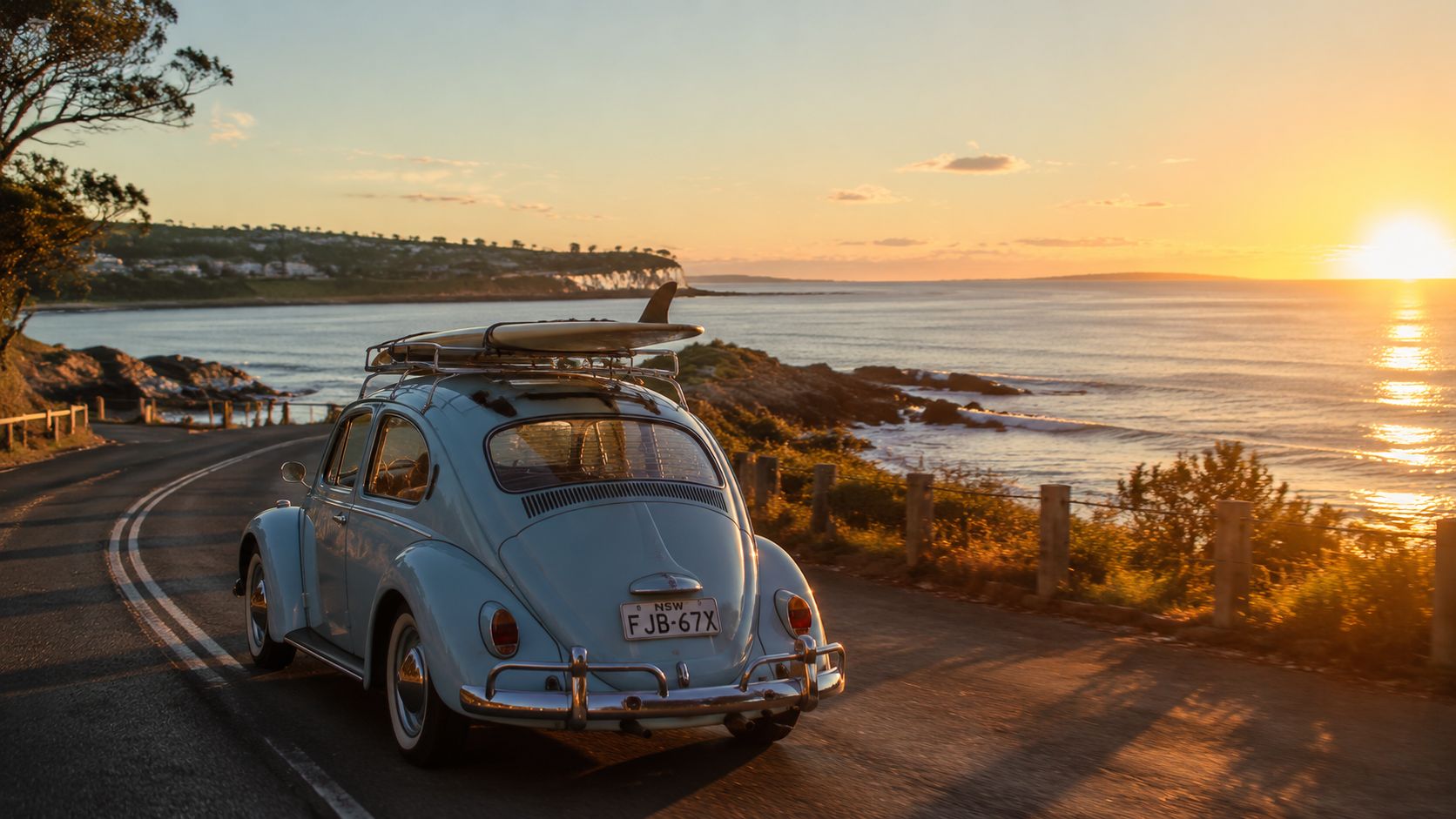
A good collection usually has a bit of personality to it.

One Perth collector I know focuses on anything that looks like it belongs near the coast. Kombi wall plaques, retro signs, muted blues and creams, timber-framed pieces with that holiday-house feel. Another mate in regional Victoria only buys paper goods and workshop items. His shelves are full of brochures, service booklets, and old dealer ephemera, and the whole display feels like stepping into a country dealership in 1972.

If you're still working out your lane, start by looking at the categories that pull you in twice. The piece you go back to is usually the clue. For plenty of people, that first step is a shelf-ready model, and a look through these Volkswagen model cars can help you figure out whether you're drawn to Beetles, Kombis, buses, or the smaller details that come after.

The Collector's Garage Iconic Types of VW Memorabilia

Some collect what fits in a cabinet. Others collect what belongs on a wall. The smartest move is to choose a lane that matches your budget, your space, and the kind of VW story you want to tell.

Diecast Models A World in Miniature

Diecast is where many Australian collectors begin, and for good reason. It's accessible, display-friendly, and satisfying in a way only a properly shaped little Kombi can be. If you're searching for VW Kombi diecast Australia or trying to buy diecast Kombi pieces locally, scale is the first thing to understand.

Quick Guide to Diecast Model Scales
Scale Typical Size (Kombi) Level of Detail Best For
1:18 Large display piece High Feature shelves, office display, serious collectors
1:24 Mid-sized display piece Balanced Most home collectors, gift buyers
Smaller scales Compact shelf item Simpler Mixed displays, stocking fillers, desk pieces

A 1:18 model tends to feel like the hero piece. You notice the curves, trim, windows, and stance from across the room. A 1:24 piece is often the sweet spot for people who want detail without sacrificing shelf space. Smaller scales are ideal when you want variety, colour, or a whole lineup of Kombis and Beetles in one cabinet.

If you're comparing options, the range of Volkswagen model cars makes those differences easier to picture.

Coastal and Home Décor The Surfy Vibe

Not every collector wants a cabinet full of models. Plenty of VW fans want their hobby to blend into the house, the holiday shack, or the covered patio.

That's where Kombi wall pieces, beach-themed décor, metal signs, and relaxed coastal styling come in. They don't need to be museum-grade to feel right. A faded aqua van silhouette, a retro surfboard motif, or a playful Beetle print can give a room that old-road-trip warmth without turning it into a workshop.

This category works especially well for gift buyers. It says, “I know what you love,” without requiring the recipient to know chassis codes or trim years.

Paper Ephemera and Rare Finds

This is the lane where collecting gets wonderfully particular. Paper goods and original promotional pieces carry a kind of quiet authority. You can often see the era in the typography, printing method, paper stock, and layout before you even read the words.

The most sought-after pieces are often dealer brochures, original advertising posters, and factory accessories, because they carry serial-era printing details and model-year specificity that are harder to fake than decorative reproductions, as reflected in this VW memorabilia collector market reference.

A few things are worth keeping in mind:

  • Brochures reward close looking. Printer marks, period fonts, and market-specific details often matter more than bright colours.
  • Posters need condition and context. Pinholes, folds, and backing can affect how desirable they feel to the next collector.
  • Accessories tell a car-specific story. A small factory item linked to the right model year can mean more than a generic “retro VW” piece.

Spotting a Gem How to Identify Authentic Memorabilia

Authenticity is where enthusiasm meets homework. Plenty of items look old. Far fewer belong to the period, model, or market the seller claims.

For modern collectables, the first pass is straightforward. Look for official Volkswagen licensing, clean manufacturing marks, proper packaging, and consistent branding. A good licensed model usually feels deliberate. The proportions are sorted, the logos are clean, and the finish doesn't rely on fake distressing to sell the nostalgia.

An infographic checklist for identifying authentic vintage Volkswagen memorabilia with five tips and a VW logo.

Vintage items need a sharper eye.

What to check first

  • Manufacturer marks matter. Turn the item over. Check the edges, back, base, staples, fasteners, and print margins.
  • Materials should make sense for the era. Paper, inks, metal weight, and finish often tell you more than the artwork.
  • Wear should look honest. Sun fade, shelf wear, and ageing usually appear unevenly. Artificial distressing often looks too neat.

Practical rule: If an item's condition, colours, and story all feel a little too perfect, slow down and verify before you buy.

For Australian-market pieces

For serious collectors, one of the most useful ways to verify memorabilia tied to Australian-market Volkswagens is to cross-check details against M-code data and chassis numbers. Archives such as TheSamba's VW technical information can help separate factory-issued accessories from later reproductions.

That matters most with items claimed to belong to a specific Beetle, Kombi, or model year. If a badge, brochure, accessory, or dealer item doesn't line up with period-correct coding or production details, the warning light should come on.

A good companion read is this guide to Volkswagen logo history. Logo changes won't authenticate everything on their own, but they can help you spot obvious mismatches fast.

What's It Worth Understanding Value and Price

Value in VW collecting usually comes down to four things. Originality, condition, provenance, and desirability. Age alone doesn't do the heavy lifting.

A cracked old sign with clear dealer history can be more compelling than a cleaner piece with no story. A simple brochure can outshine a flashy repro if it has the right print details and model-year fit. And a licensed diecast model in tidy condition can make more practical sense than a bulky item that's expensive to ship and awkward to display.

One reason small-format pieces are worth a serious look right now is changing buying behaviour in Australia. There's growing collector demand for smaller, high-affect purchases, which makes compact memorabilia such as diecast Kombis, wall art, and fridge magnets a smart buy for gift-givers and new collectors, as noted in this Australian collector demand reference.

A sensible way to think about price

  • Buy for appeal first. If you'd still like it even if values never changed, you're probably on safer ground.
  • Pay attention to category. Giftable pieces move differently from workshop parts or obscure accessories.
  • Don't ignore display value. A piece that fits nicely into everyday life often gets enjoyed more than a rare item hidden in a box.

The best-value piece isn't always the rarest one. It's often the item you can verify, display, and enjoy without fuss.

Caring For and Sourcing Your VW Treasures

A mate of mine brought a lovely little diecast Splitty to a meet in Newcastle. Bright two-tone paint, tidy trim, the lot. Six months later it had gone chalky on one side because it lived on a windowsill cop the afternoon sun. Another bloke stored old dealer brochures in the shed near the beach and ended up with curled corners, foxing, and that damp-paper smell you never quite get rid of.

A red vintage Volkswagen Beetle toy model sits on a wooden shelf next to bus models.

That's how collections get knocked around in Australia. Sun, salt air, dust, and heat do more damage than age if you're not paying attention.

Easy care habits that help

  • Keep sunlight off display pieces. UV fades paint, paper stock, and printed tin signs faster than many collectors expect.
  • Watch the room, not just the shelf. Garages, sleepouts, and beachside homes can swing from dry heat to damp air in no time.
  • Handle paper and gloss items with clean hands. Finger marks show up quickly on plastic windows, chrome-effect trim, and brochure covers.
  • Give each piece some space. Metal décor and boxed models get rub marks and corner wear when they're packed in tight.
  • Use enclosed storage for favourites. A few well-chosen display cases for models save a lot of dusting and stop the accidental bump that chips a mirror or bumper.

Paper items deserve extra care. If you've found an Australian dealer flyer, registration wallet, or period accessory sheet, store it flat, out of direct light, and away from sheds or spare rooms that get muggy in summer.

Where Australians find good pieces

The best finds still turn up where VW people gather. Swap meets, club runs, Shannons-style auctions, and local shows let you pick things up, turn them over, and ask the owner where they got them. That matters with Australian-market memorabilia because local dealer stickers, distributor branding, and old shop labels can tell you far more than an online title ever will.

You also start noticing patterns after a while. Coastal décor and giftable shelf pieces move quickly because they suit beach houses, garages, and home bars. Small diecast Kombis keep pulling in buyers too, partly because they're easy to post, easy to display, and easy to give. If a seller has three “rare” examples of the same item, all with identical ageing, slow down and inspect the print quality, fixings, base marks, and packaging before you hand over cash.

Local online sellers have their place as well. Buying within Australia can make life simpler if you want smaller VW-themed diecast, décor, or gifts without gambling on rough packing, long waits, or surprise import costs. Volkswagen Memorabilia is one local option collectors use for those kinds of display pieces.

If you like seeing how collectors style and display similar models, this clip is worth a look before you rearrange your shelves:

Share the Love and Find Your Perfect Piece

A mate of mine bought a tiny diecast Kombi for his brother one summer at a swap. Nothing fancy. Just the right colour, the right roofline, and a surfboard on top that looked close enough to the old bus they drove up the coast in the late 90s. It ended up on a workshop shelf, then beside the bar fridge, and now it is the piece everyone points at first.

That is usually how a good VW collection grows in Australia. One piece with a real connection. Then another.

The strongest collections I see at shows are built around memory and taste, not just rarity. A Beetle wall sign for the shed. A dealer badge from an Australian delivery car. A Kombi tin plate that fits a beach house without trying too hard. If you are buying for yourself, pick the item you will still enjoy looking at after the novelty wears off. If you are buying for someone else, go for the clue that ties back to their story: the model they owned, the colour they still talk about, or the shape they always slow down for in the car park.

Gifts work well here because VW memorabilia does not need a lecture to be appreciated. A shelf-sized diecast, a garage sign, or a small coastal piece can feel right at home on day one. As noted earlier, Volkswagen Memorabilia is one of the local places collectors use when they want Australian-stock display pieces and easy gift options without overcomplicating the hunt.

Frequently Asked Questions

Is diecast a good place to start with vintage Volkswagen memorabilia?

Yes. Diecast is easy to display, easier to store than larger items, and gives you a feel for the designs you're most drawn to. Many collectors start with a Kombi or Beetle model before moving into posters, badges, or original paper pieces.

How can I tell if a VW item is vintage or just retro-style?

Check the marks, materials, and construction. Real vintage pieces usually show period-correct printing, ageing, and manufacturing details. Retro-style décor can still be fun to own, but it shouldn't be priced or described like an original.

What makes Australian VW memorabilia a bit trickier?

Australian buyers often have to work harder to confirm whether an item was sold or used in the local market, rather than brought in later. Provenance matters more than many sellers admit.

What makes a good VW gift for someone who doesn't already collect?

Start small. A licensed Kombi diecast, wall piece, magnet, or shelf-friendly Beetle model usually lands well because it carries the nostalgia without needing specialist knowledge.


If you're in the mood to find a piece that feels like your kind of Volkswagen story, take a look through Volkswagen Memorabilia. You might only be after a simple gift or a tidy diecast Kombi, but that's often how a proper collection begins.

Unique VW Gifts Australia: Best Ideas for Enthusiasts

You're probably here because you've got a birthday, Christmas, Father's Day, anniversary, or “just because” gift to sort out for someone who lights up every time they spot a Beetle or slows down for a Kombi at the servo. And if that sounds familiar, you already know the tricky bit. A Volkswagen fan usually doesn't want any old car-themed present. They want something that feels like their VW story.

That's why the best unique VW gifts aren't random novelty buys. They connect to a memory, a model, a colour scheme, a surf trip, a garage project, or that one classic shape they've loved for years. In Australia especially, VW culture has its own flavour. It leans into beach roads, road trips, shed displays, collector shelves, and that easygoing mix of nostalgia and practicality that suits old Volkswagens so well.

Your Guide to Nailing the Perfect VW Gift

I've seen it happen plenty of times at car shows. Someone walks past a row of stalls, spots a little Kombi model or an old-school Beetle sign, and suddenly they're telling you about the first VW they rode in as a kid. That's the magic of it. You're not buying “merch”. You're buying a small trigger for a big memory.

A crowd of people browsing unique Volkswagen merchandise and miniature bus models at a sunny outdoor car show.

For Australians, the strongest picks usually come back to the classics. The Beetle and Kombi aren't just old vehicles. They're part of family albums, surf-town style, garage culture, and collectible design. The Beetle's appeal runs especially deep because it stayed in production for 65 years from 1938 to 2003, a remarkably long model history that helps explain why Beetle-themed gifts still click with both collectors and casual fans alike, as noted in Volkswagen Group key figures and history notes.

A great VW gift should make the person say, “That's so me,” not just, “That's nice.”

A lot of gift guides miss that. They toss in generic mugs, caps, and keyrings without asking how the person integrates their VW passion into their lifestyle. An Aussie collector might want a shelf-ready diecast model. A beach-house decorator might prefer a Kombi piece that suits coastal styling. A practical daily driver owner might appreciate something useful that still carries that unmistakable VW look.

That's where thoughtful shopping makes all the difference. If you start with the person, not the product, you'll land on a gift that feels personal.

Decoding Your VW Enthusiast For Gift Success

The easiest way to choose from all the unique VW gifts out there is to work out what kind of enthusiast you're buying for. Not every Volkswagen fan collects the same things, and that's where people get stuck. They know the recipient loves VWs, but they don't know whether to buy a model car, wall décor, accessories, or something more practical.

An infographic titled Decoding Your VW Enthusiast categorizing Volkswagen fans into four distinct types for gift selection.

The Purist Collector

This person notices details. They care about shape, era, paintwork, trim, and whether a model feels faithful to the original vehicle. If they stop at swap meets to inspect old signs or spend ages arranging shelves, go for display-worthy pieces.

Good fits include:

  • Licensed diecast models that look right from every angle
  • Model-specific gifts tied to icons like the Beetle, Kombi, or Samba Bus
  • Garage or shelf décor with a vintage finish rather than flashy novelty styling

The Daily Driver

Some VW fans aren't building a museum at home. They just love the brand and want that affection woven into everyday life. They're often the easiest to buy for if you stay practical.

Look for items such as:

  • Keyrings or compact accessories they'll use every day
  • Subtle branded pieces for desk, home office, or garage
  • Useful homewares that still carry the VW personality

The Adventure Seeker

You know this type. They love Kombis, beach roads, camping vibes, surf culture, and anything that hints at open-road freedom. They're drawn to gifts that feel ready for weekends away.

A few strong directions are:

  • Campervan-themed bags and carry gear
  • Kombi décor for a coastal home or holiday shack
  • Travel-friendly accessories that don't just sit on a shelf

The Nostalgia Lover

This buyer isn't always a technical car person. They may adore the look and feel of old Volkswagens. They love retro colours, curved lines, old travel energy, and objects that spark stories.

Practical rule: If they talk more about memories than mechanics, buy for feeling first and accuracy second.

For them, choose gifts with warmth and presence. Think Beetle ornaments, retro signage, classic van artwork, or display pieces that instantly read “Volkswagen” without needing a collector's explanation.

Exploring the Best VW Memorabilia Collectibles

Some gifts are fun for a day. Others become part of the house, the garage, or the collection for years. That second category is where VW memorabilia shines, especially when you focus on pieces with a clear model connection and a bit of authenticity behind them.

A rustic collection of vintage Volkswagen diecast models, signs, and decor displayed on a wooden shelf.

One reason there's so much choice is that this isn't a tiny niche. Some specialist retailers offer 700+ Campervan gifts, which tells you the VW gift market has real depth. Within that world, the 1962 VW Kombi and Samba Bus keep showing up as cornerstone collectibles because buyers strongly associate them with 1960s surf culture and road-trip nostalgia, as shown by the range highlighted at Campervan Gift's Volkswagen collection.

Diecast models that carry the room

If you want a gift that feels special the moment it's unwrapped, start with diecast. A well-chosen model does two jobs at once. It celebrates the vehicle itself, and it gives the recipient something they can display straight away.

Popular directions include:

  • Kombi and Samba Bus models for fans of surf, travel, and classic van styling
  • Volkswagen Beetle models for anyone drawn to rounded shapes and timeless design
  • Mixed display sets for buyers who want an instant shelf story rather than a single piece

For Australian shoppers, this is often where searches like VW Kombi diecast Australia, buy diecast Kombi, and Volkswagen diecast models for sale begin to make sense. You're not just buying a toy. You're choosing a miniature piece of design history.

Beyond diecast and into décor

The other smart move is to think past the collector cabinet. Some of the most successful unique VW gifts are pieces people can live with, especially in garages, studies, beach homes, and entertainment areas.

A few standouts are:

  • Metal wall signs for sheds, bars, and workshop corners
  • Retro home accents that suit coastal, vintage, or surf-inspired interiors
  • Small display objects that sit neatly on desks, bookshelves, or sideboards

If you're styling a room as well as buying a present, the vintage home accessories collection is the kind of category worth browsing because it helps you think in terms of mood, not just product type.

For a closer look at the visual charm that keeps these models popular, this video is a handy watch:

Why licensed pieces matter

Collectors often ask what separates a memorable VW gift from a forgettable one. The answer is usually in the finish, proportions, and overall feel. Officially licensed products tend to look more considered. The model lines feel closer to the actual car, and the branding doesn't look slapped on as an afterthought.

That matters whether you're buying a Volkswagen Beetle model for a desk or a Kombi piece for a lounge-room shelf. A gift feels more personal when the recipient can tell you chose something with care.

Finding Unique VW Gifts For Every Budget

You don't need a giant budget to buy something that lands well. Some of the best VW gifts are small, useful, and full of character. Others are centrepiece presents that become the first thing people notice in a room.

An infographic displaying various Volkswagen themed gift ideas categorized by price range for VW car enthusiasts.

Small gifts that still feel thoughtful

A compact gift works brilliantly when you know the person loves Volkswagens but you're not sure which model or display style they prefer. Keyrings are a strong example because they're practical, giftable, and still collectible. A VW T1 Bus or Campervan keyring can be made from zinc-aluminium alloy with nickel plating, which improves corrosion resistance and finish quality for something handled every day, according to product details shown in the Brisa Volkswagen gadgets range.

That makes smaller pieces ideal for:

  • Secret Santa or Kris Kringle style gifting
  • Add-on presents paired with a card or model
  • Low-risk buys when you're still learning the person's taste

The sweet spot for birthdays and special occasions

Many gift buyers feel most comfortable with options that move beyond trinkets. You can choose something with more visual impact, such as a display model, wall décor piece, or themed homeware item.

If you want ideas that overlap with broader motoring presents, the guide to unique gifts for car lovers is useful because it helps narrow down whether your recipient leans toward display, décor, or daily-use accessories.

Premium pieces for the diehard fan

At the higher end, focus on gifts with presence. A large-scale diecast model, a carefully chosen set, or a statement décor item can become a long-term favourite. These suit milestone birthdays, retirement gifts, or one of those occasions where “good enough” just won't cut it.

Buy the piece they'll keep, not the piece they'll politely thank you for.

If you're torn between several mid-range items and one stronger premium piece, the premium option often wins for serious VW fans. It feels more deliberate, and that's what people remember.

Styling and Displaying Your VW Collection

A cracking VW gift deserves more than being shoved on top of a bookshelf next to old manuals and loose sunglasses. Display changes everything. It turns memorabilia into part of the home.

Build a shelf with a story

The easiest display mistake is mixing everything together without any theme. A better approach is to group by model, mood, or colour. One shelf might be all Beetles. Another could lean into Kombi and Samba Bus pieces with coastal colours, weathered timber, or old travel vibes.

Try this:

  • Keep heights varied so smaller models don't disappear behind larger décor
  • Use warm lighting to bring out paintwork, chrome, and contours
  • Leave breathing room between hero items so each one gets noticed

Bring VW style into coastal spaces

Volkswagen collectibles fit surprisingly well into Australian beach-house styling because the shapes and colours already carry that easygoing travel energy. Pairing a Kombi model with driftwood tones, nautical accents, or soft blue-and-white décor can make the whole setting feel intentional rather than cluttered.

A practical gift can also become part of that visual story. A Volkswagen T1 camper-style bag made from lightweight, water-resistant 600D material with capacity up to 30 litres is a good example of memorabilia that works in daily life as well as display, as described in Bachman Volkswagen's gift ideas. That sort of item suits Australian travel and coastal living because it handles everyday carry while still looking properly on-theme.

If a piece can move from shelf to road trip without feeling out of place, you've chosen well.

Metal signs also do plenty of heavy lifting in garages and entertaining spaces. One sign above a workbench or beside a bar fridge can anchor the whole room.

Your Guide to Buying VW Diecast Models In Australia

Buying locally makes life easier. That's especially true when you're purchasing a gift and don't want delivery uncertainty or awkward surprises. An Australian-based seller can usually offer local stock, faster dispatch, and support in your own time zone, which matters when a birthday is closing in or you want a quick answer before ordering.

When you're comparing sellers, look for three things:

  • Officially licensed Volkswagen products, so the design and branding feel authentic
  • Clear product categories, which make it easier to compare Beetle, Kombi, and décor options
  • Visible contact details and local support, because real help beats chasing replies across time zones

If your focus is model cars, the Volkswagen model cars collection is one straightforward place to compare diecast options by style and display appeal. Volkswagen Memorabilia is one Australian online store that carries VW-themed gifts, diecast models, and coastal décor, which makes it relevant for buyers who want both collector pieces and home styling items in one browse.

The simple rule is this. Buy the most specific gift you can, from the most reliable local source you can find. That's usually what turns a decent present into a memorable one.

Frequently Asked Questions About VW Gifts

Are VW gifts only for serious collectors

Not at all. Plenty of Volkswagen-themed gifts suit casual fans, nostalgic buyers, and people who love the look of a Beetle or Kombi.

What makes a VW gift feel more personal

Model choice matters most. If they love Beetles, don't buy a random van item. If they've got a coastal style at home, lean into Kombi or camper-themed décor.

Is licensed memorabilia worth it

Usually, yes. Licensed products tend to have better proportions, branding, and finish, which makes them nicer to give and display.

What's a safe choice if I'm unsure

A compact accessory, small décor piece, or a classic VW model in a recognisable style is usually a safe start.

Can VW gifts be practical as well as decorative

Yes. Bags, keyrings, and smaller accessories often work well because they combine everyday use with VW character.


If you're hunting for a gift that feels thoughtful, collectible, and right at home in an Australian VW-loving household, have a browse through Volkswagen Memorabilia. You'll find licensed diecast models, VW memorabilia collectibles, and coastal-inspired pieces that suit everyone from shelf collectors to Kombi dreamers.

Van Fit Out Your VW: A Nostalgic Aussie Guide

A mate once dragged me over to a sun-faded Kombi at a country swap meet, pointed at the rust bubbles and said, “She's rough, but can't you already see the road trips?” He was right. A classic VW doesn't ask for a quick fit-out. It asks for patience, taste, and a bit of stubborn affection.

Dreaming of the Open Road in Your Classic VW

There's something different about planning a van fit out in a classic Volkswagen. A modern van can feel like a blank shell. A Kombi already has a personality before you pick up a tape measure. The curved panels, the smell of old trim, the view through that split-style glass. It all pushes you toward a build that feels less like manufacturing and more like stewardship.

Aussies haven't fallen out of love with these old buses either. By 2024, over 2,800 restored and converted VW Kombis are actively registered in Australia, and the average price for a fully fitted-out vintage model has risen to AUD $85,000 according to Volkswagen Memorabilia's VW collection and reference page. That tells you plenty. People aren't just preserving them for Sunday shows. They're building them to use, to travel, and to keep a bit of the old surf-touring spirit alive.

Why a Kombi fit-out feels different

A classic VW build rewards restraint. What works in a tall modern cargo van often looks clumsy in a Kombi. Heavy overhead lockers, chunky square cabinetry, or oversized appliances can rob the cabin of the very charm that made you buy the van in the first place.

A good vintage-focused van fit out usually leans on three things:

  • Light touch design that respects the original lines
  • Practical comfort for weekends, coastal runs, and short touring
  • Period character with modern reliability subtly incorporated

A Kombi looks happiest when the fit-out feels like it belongs there, not like it's been forced into submission by a kitchen catalogue.

The romance is real, but so is the work

Plenty of people start with the dream of striped canvas chairs, enamel mugs, and a sunrise at Crescent Head. That's the fun bit. The true craft sits underneath. You've got to think about access to the engine bay, airflow in hot weather, compact storage, and how every added piece changes the way an old VW drives.

That's why the best van fit out projects begin with honesty. Be honest about how you'll use it. Be honest about how much work you can do yourself. And be honest about whether you're building a showpiece, a weekender, or a proper little tourer with some red dust in its future.

The Heart of the Matter Planning Your Perfect Layout

The smartest van fit out decisions happen before the first cut. In a classic VW, layout planning isn't just about comfort. It decides whether the van feels airy and nimble, or cramped and awkward.

A van fit out planning checklist infographic showing six essential steps for converting a camper van.

If you're pricing the job in Australia, brace yourself early. The median fit-out cost is AUD $45,000 for a full DIY build and up to AUD $95,000 for professional installations, as noted in this Australian VW reference page. That doesn't mean every build has to hit those numbers, but it does mean “I'll just throw a simple camper interior in” often turns out to be optimistic.

Start with use, not furniture

Ask the van a blunt question. What is it for?

Use case What matters most What usually gets sacrificed
Weekend beach trips Fast setup, easy bedding, simple storage Full kitchen complexity
Show-and-shine cruiser Period-correct materials, neat finishing Maximum utility
Touring weekender Power, water, organised gear access Open floor space

In a Kombi, every decision multiplies. A wider bed can steal walkway space. A fixed cabinet can make engine access annoying. Tall storage can make the cabin feel lower than it already is.

Sketch with real limits in mind

Classic VWs don't forgive sloppy measuring. The walls curve. The corners taper. The floor isn't always as true as you'd like. Cardboard templates help, painter's tape on the floor helps even more, and a scale model can be a surprisingly handy way to think through proportions before you commit to timber.

A useful planning checklist looks like this:

  1. Decide the sleeping setup. Rock-and-roll bed, fold-out platform, or simple bench-bed.
  2. Protect service access. Don't trap yourself with a pretty cabinet you have to remove for routine maintenance.
  3. Map heavy items low. Batteries, water, and dense gear should stay down low and close to the centre.
  4. Leave breathing room. A Kombi with a little open space feels twice as pleasant as one packed to the roof.

Practical rule: If a layout looks brilliant on paper but makes it hard to open, service, or clean the van, it's not brilliant yet.

Budget and payload need to talk to each other

Cost and weight are tied together more than most first-time builders realise. Premium finishes can still be heavy. Budget materials can also be heavy. The best result usually comes from choosing fewer things, but choosing them well.

Many van fit out plans go off track. Builders think in features instead of trade-offs. A second battery sounds great. So does a bigger water tank. So does extra storage. Before long, the van carries too much gear for the way it was meant to move.

Building the Bones Insulation Panelling and Flooring

Once the layout is settled, the shell work begins. This stage doesn't get the glamour of cabinetry or the buzz of wiring up lights, but it shapes how the van feels every single day.

In Australia, heat control matters. A classic VW has plenty of glass, plenty of metal, and not much mercy on a hot day. The goal with insulation isn't to turn the van into a thermos. It's to reduce radiant heat, soften temperature swings, and cut a bit of road noise without piling in unnecessary weight.

Insulation that suits an old VW

Keep it light and keep it tidy. Bulky layers can fight the Kombi's curves and make panel fitment frustrating. Thin, well-fitted insulation works better than stuffing every void with material that traps moisture or pushes trim out of shape.

Focus on these habits:

  • Clean and treat metal first. Surface rust hidden behind insulation only gets uglier with time.
  • Fit to the body shape. Small neat sections usually sit better than oversized pieces forced into corners.
  • Avoid overbuilding. Extra layers sound clever until they cost space and add weight.

A classic bus rewards neatness more than excess.

Panelling that respects the curve

Thin timber veneers can look brilliant in a Kombi, especially if you're chasing that warm, retro cabin feel. Modern lightweight boards can also work well if you want a cleaner finish and easier maintenance. Either way, template everything first. Old VW interiors rarely match side to side as neatly as you hope.

If you're choosing materials, insulation ideas for van projects can help spark finish direction, especially if you like that balance of practicality and nostalgia.

Flooring that doesn't fight the build

Flooring cops sand, wet thongs, muddy shoes, and cooking spills. It needs to be tough, easy to wipe down, and not too thick. In a Kombi, every millimetre of floor build-up affects headroom and the fit of cabinetry.

A simple comparison helps:

  • Vinyl flooring is easy to clean and suits practical touring builds.
  • Timber-look finishes bring warmth but need careful sealing.
  • Rubber-style surfaces are handy in harder-use vans, though they can feel less vintage.

The best floor is usually the one you don't worry about. If you're constantly babying it, it's probably the wrong choice for a road-going van.

The Big Three Electrics Plumbing and Gas

This is the part that scares people, and fair enough. Electrics, plumbing, and gas are where a van fit out stops being decorative and starts becoming a working system.

An organized utility wall inside a camper van displaying electrical, plumbing, and gas systems.

The best habit here is simple. Build in stages and test each stage before you hide it. According to this build-order guide for van conversions, a key benchmark is to run electrical cabling with proper wire sizing and protection after installing windows but before closing up panels. The same guide notes that small conductors are typically 1.5–6 mm², medium 10–35 mm², and large 50 mm²+. It also recommends copper pipe with brass compression fittings for gas systems, plus leak testing before use.

Electrics that stay simple and serviceable

A classic VW doesn't need a spaceship control panel. Most owners are better served by a modest, tidy setup that supports lighting, charging, a fridge if fitted, and maybe a fan or pump.

A few practical truths:

  • Run wires before panelling goes on. Retrofitting later is miserable.
  • Protect every connection. Proper crimps, heat-shrink, and strain relief matter.
  • Label circuits while you can still see them. Future-you will be grateful.
  • Keep heavy electrical gear low. That helps both access and vehicle balance.

If you're comparing storage and power options, a slimline lithium battery setup shows the kind of compact form factor many builders like for tight spaces.

Poor electrical work rarely announces itself on day one. It turns up later as voltage drop, hot connections, and maddening faults hidden behind finished walls.

Plumbing that matches the van

Plumbing in a Kombi works best when it's simple. Small tanks, short hose runs, easy drain access, and components you can reach without dismantling half the interior. Fancy systems often create more trouble than comfort in a compact vintage bus.

Good plumbing design usually means:

  • Fresh and grey water are easy to remove
  • The pump is accessible
  • The sink depth suits the cabinet below
  • Nothing blocks routine cleaning

That's the difference between a van you use often and a van you avoid because every little job feels fiddly.

A visual walkthrough helps when you're mapping services behind cabinets and panels:

Gas needs a stricter mindset

Gas is where cheerful DIY confidence needs a leash. If you're fitting a cooker or heater, treat the system like a regulated installation, not a casual weekend add-on. Copper pipe, brass compression fittings, proper support, and leak testing are the baseline, not the deluxe version.

The common failure isn't usually one dramatic blunder. It's a chain of smaller workmanship errors. A poor crimp here, a chafed wire there, an untested joint tucked behind a cupboard. That's why the cleanest van fit out builds tend to look almost boring behind the panels. Everything is sized, clipped, protected, and checked.

Staying Safe and Legal on Aussie Roads

A beautiful van that can't stay registered or insured is a very expensive shed ornament. That's why legal compliance has to sit inside the build from day one, not get bolted on later as paperwork.

In Australia, the practical gap isn't enthusiasm. It's understanding how modifications affect road legality. Seating changes, electrical installs, gas work, weight, anchorage points, and structural changes all interact with rules that can affect whether the vehicle remains roadworthy and insurable. The broader compliance discussion around VSB 14 and state or territory registration rules is often skipped in mainstream van content, even though it directly shapes what you can legally drive.

Weight is not a rough estimate

For Australian builds, one rule stands above the rest. A van fit out must comply with the manufacturer's weight ratings, including GVWR and GAWR, and builders should weigh the vehicle before and after conversion to ensure it remains registrable and insurable, as explained in this weight compliance guide.

That process matters because the final load includes more than cabinetry. It includes fluids, occupants, fixed equipment, and whatever gear you throw in for the trip. The same guide gives a practical benchmark of a 5,500 lb curb-weight van with about 1,800 lb of conversion payload, which shows how quickly available carrying capacity can disappear before water, fuel, passengers, and luggage are added.

The legal mindset that saves projects

You don't need to become an engineer overnight. You do need to stop thinking of payload and compliance as background admin.

Use this approach:

  • Check ratings early. Read the plate and understand the limits before buying materials.
  • Track additions as you build. Batteries, water, cabinetry, roof loads, and storage all add up.
  • Think about axle loads, not just total mass. Poor distribution can ruin handling.
  • Ask legal questions before cutting metal. Reversing a bad modification is far harder than planning properly.

The roadworthy van isn't the one with the most features. It's the one you can confidently register, insure, and drive across the country without a knot in your stomach.

The Fun Part Furniture Finishing and Nostalgic Styling

After the measuring, wiring, sealing, and legal homework, the soul goes in. Furniture gives the van its rhythm. The finishing touches give it its memory.

A well-sorted Kombi interior doesn't need much. A lightweight bench that doubles as storage, a bed base that's easy to lift, a small table that stows neatly, and joinery that doesn't shout over the van's original charm. Rounded edges always seem to suit these buses better than hard square forms.
A cozy, sunlit wooden camper van interior featuring a kitchen, seating area, and a bed overlooking the ocean.

Styling that feels right in a VW

The nicest classic interiors usually borrow from beach houses, old surf wagons, and honest camping gear. Think warm timber tones, muted colours, tidy curtains, simple hardware, and materials that age gracefully instead of trying to look perfect forever.

A few touches work especially well:

  • A small feature shelf for favourite VW diecast pieces or travel keepsakes
  • Vintage-style metal signs used sparingly, not plastered on every wall
  • Striped or canvas textiles that nod to old coastal camping
  • Soft warm lighting instead of harsh blue-white LEDs

Keep the furniture lighter than your ambitions

Many lovely plans tend to accumulate too much weight. Thick timber, oversized drawers, and household-style fittings can turn a nimble old bus into a sluggish one. Build furniture like boat joinery, not suburban kitchen cabinetry. Light, strong, multi-use, and easy to service.

The best part of a classic VW van fit out is that it doesn't need to be perfect to feel special. It just needs to feel lived in, cared for, and ready for another dawn run up the coast.


If you love the look and history of classic Volkswagens, Volkswagen Memorabilia is a lovely place to keep that passion going off the road as well as on it. You'll find VW memorabilia collectibles, nostalgic gifts, and display-worthy pieces for enthusiasts who adore the brand's heritage, including options that suit those seeking VW Kombi diecast Australia, a Volkswagen Beetle model, or a place to buy diecast Kombi favourites with local Australian stock and fast shipping.

Retro Candle Holders: VW-Themed Decor Guide

The other afternoon I was standing beside a tidy Beetle at a sunny local meet, coffee in hand, chatting with a bloke who'd nailed that hard-to-define vintage feel at home. Not with a full garage fit-out or a museum-grade man cave. Just a shelf, a small timber sideboard, a couple of diecast Kombis, and an old metal candle holder that looked like it had seen a few road trips of its own.

That's the charm of retro candle holders. They work like the right accessory on a classic VW. A small detail, but it changes the whole mood. Put one beside a surfy Kombi model or a neat Beetle display and suddenly the room feels less like a storage spot and more like a story.

If you're already the sort of person who slows down for a split-screen Kombi or spots a Beetle shape from half a car park away, you already get it. Home styling isn't about chasing trends. It's about bringing that same freedom, warmth and character indoors.

Introduction Light a Vibe Not Just a Candle

A classic VW has a way of turning ordinary moments into memorable ones. A Kombi parked near the beach at sunset. A Beetle rumbling into a weekend show. A Samba Bus with that unmistakable silhouette catching the light. Those scenes stick with you because they feel easy, honest and full of personality.

That same feeling can live in a corner of your home. Not in a forced, theme-park sort of way. More like a well-loved shelf, a coffee table, or a dining nook where a few carefully chosen pieces do the talking. A retro candle holder is brilliant for this because it brings warmth, shape and age into the mix without trying too hard.

A cozy, sunlit van interior featuring a warm candle on a wooden table overlooking the ocean.

I've seen this work best when the display feels lived-in. A brass holder near a Beetle model. A coloured glass piece beside a Kombi. A weathered tray under both. It's the home version of getting the wheels, paint and stance just right on an old Volkswagen. None of the parts need to shout. They just need to belong together.

A retro corner at home works the same way a good VW display does at a show. The details carry the feeling.

What Exactly Makes a Candle Holder Retro

The word retro gets tossed around a lot, but with candle holders it usually points to pieces that borrow their character from earlier design eras. For VW fans, that's handy territory, because the same decades that gave us much-loved Beetles and Kombis also shaped plenty of home décor with colour, utility and bold silhouette.

There's also a deeper lineage behind the look. Decorative candle holders aren't some recent styling trick. As Britannica's history of the candlestick notes, candlesticks were used in churches before the Norman Conquest, and by the 13th century large hanging holders of wood or iron were common. So even when you buy a “retro” piece today, you're tapping into a design tradition that runs back centuries.

An infographic detailing the design elements of retro candle holders, including bold colors, organic shapes, and materials.

The shapes that feel right

Retro holders usually look confident from across the room. You'll notice:

  • Rounded forms that feel soft and playful
  • Chunkier stems or bases instead of fussy ornament
  • Practical handles or trays that hint at utility
  • Simple geometry that pairs well with mid-century furniture and garage-style shelving

That last point matters for VW displays. A Beetle has curves. A Kombi has clean panels and iconic windows. Retro holders often echo one side of that language, either soft and organic or neatly functional.

The colours and finishes that sell the mood

If a candle holder feels right with a vintage Volkswagen scene, colour is usually part of the reason. Think amber glass, mustard, sea-green, cream enamel, smoky brown, polished brass or painted metal with a bit of age on it.

Those tones work because they don't compete with memorabilia. They frame it.

Practical rule: If the holder grabs more attention than your diecast model, it's probably the wrong piece for that shelf.

Why VW lovers tend to like them

Retro décor and classic Volkswagens share a certain honesty. Neither needs to be over-designed. Both were shaped by usefulness, but they still ended up charming.

That's why retro candle holders don't feel random in a VW-inspired room. They carry the same spirit. A bit nostalgic. A bit practical. A bit cheeky. Just enough age and colour to make the space feel like yours.

Choosing Your Vibe Common Retro Materials

Materials do most of the storytelling. Before you worry about colour or placement, pick the material that matches the sort of VW mood you want in the room.

Glass for the coastal cruise feel

Coloured glass holders suit the laid-back side of VW culture. If your shelves lean beachy, with Kombis, surf prints and pale timber, glass gives off that easy sunset glow. Amber feels warm and nostalgic. Green and blue can nod toward sea and sky without becoming kitschy.

Glass also works well when you want the diecast model to stay the hero. It adds atmosphere without visual weight.

Ceramic for a more playful corner

Ceramic holders tend to feel handmade, cheerful and slightly bohemian. If you love flower-power liveries, bright kombi artwork, or shelves with a bit of festival spirit, ceramic fits naturally.

Some are glossy and bold. Others are earthy and muted. Either way, they add softness that balances metal model cars nicely.

Brass and enamel for the workshop-meets-camper look

If your taste runs more toward tool rolls, old maps, garage cabinets and road-trip gear, brass and enamelled metal are hard to beat. They've got that practical streak classic VW people tend to appreciate.

Mid-century Australian design often favoured durability. A typical 1960s retro holder might be made of sheet steel with an enamel coating, featuring a 13 cm diameter and a 2.5 cm candle receptacle, which gives you a useful benchmark when sizing a piece for a shelf or console. In humid coastal climates, those enamel finishes can chip, so it's smart to inspect rims, edges and handles before buying vintage.

A simple way to test the look is to compare a rugged holder with the softer styling in these white candle holders. The contrast helps you decide whether your space wants workshop toughness or cleaner coastal calm.

Material Best VW styling mood What to check
Glass Coastal Kombi, beach shack, shelf glow Chips, cloudiness, wobble
Ceramic Flower-power, colourful display, relaxed lounge Hairline cracks, glaze wear
Brass Beetle study, garage-chic, warmer tones Uneven base, heavy wax build-up
Enamelled steel Camper, utility, mid-century vibe Chipping around edge and handle

Styling Retro Holders with Your VW Memorabilia

The fun begins. A good display doesn't need loads of stuff. It needs a clear mood and a few pieces that speak the same language.

Screenshot from https://vwmemorabilia.com.au/shop/

Coastal Kombi cruise

Start with a blue, aqua or sea-green glass holder. Put it on a timber tray or pale shelf. Then place a Kombi diecast nearby, not directly beside it, but offset so the candle holder acts like a soft visual anchor rather than a prop.

The trick is spacing. Leave a little breathing room. Add one natural texture, maybe a shell, driftwood piece or woven coaster, and stop there. Too many beach cues and it turns into a souvenir shop.

For a broader look at arranging these kinds of scenes on dining and living surfaces, the ideas in dining table décor are handy because they focus on layered but uncluttered styling.

Flower power freedom

This look suits bright ceramic holders, especially in rounded or slightly quirky shapes. Pair them with a colourful Samba Bus or a bus model with cheerful graphics. Keep the holder low and chunky if the diecast has a lot of visual detail, so the eye doesn't have to work too hard.

Try this three-part setup:

  • Centre piece with one colourful bus model as the hero
  • Side accent using a ceramic holder in a contrasting but friendly colour
  • Grounding layer with a book, timber riser or shallow tray underneath

The result should feel upbeat, not crowded.

Don't match everything exactly. Retro style usually looks better when colours rhyme rather than repeat.

A quick visual break helps here if you're collecting for display as much as for nostalgia:

Beetle in the workshop

For a darker shelf, study nook or garage-inspired room, go with brass or older-looking metal. A single holder beside a Volkswagen Beetle model can feel spot on, especially if the base has a bit of age and the Beetle has clean paintwork. That contrast is gold.

A few simple combinations work well:

  • Polished Beetle plus aged brass for a refined vintage look
  • Cream Beetle plus blackened metal for a mechanic's bench feel
  • Surf Beetle plus enamel tray holder for a road-trip corner with character

If you're shopping for pieces to build that scene, browse Volkswagen diecast models for sale and focus on one hero vehicle first. The holder should support the story, not become the story.

A quick shelf formula that works

If you ever feel stuck, use this balance:

Element Role in the display
Diecast VW model Hero piece
Retro candle holder Warmth and shape
Base or tray Pulls the grouping together
One extra object Texture or personal meaning

That's enough for most shelves, sideboards and desks.

Sourcing Your Retro Treasures

The hunt is half the fun. Op-shops, vintage markets, salvage spots and online listings all turn up interesting pieces, and some of the best finds are the ones with a bit of wear and a believable past.

Price can vary wildly depending on who wants the piece, what condition it's in, and how rare it is. Historical buying guidance also shows the market is broad. Some holders can cost only “a couple of bucks” to “a few thousand” dollars depending on condition, rarity and audience, which helps explain why they've stayed relevant as collectible décor over time.

What to inspect before you buy

When you turn a holder over, the base tells you plenty. In Australia, materials and maker's marks are strong clues to value. A decorative piece bought for looks might be around $100, while a hallmarked sterling silver holder from the 1920s to 1940s can be worth over $450 AUD. Marks such as ST or 925, or a manufacturer's name under the base, can lift interest and value.

Use this as a practical check list:

  • Look underneath for maker's marks, hallmarks and stamped names
  • Check the rim and socket for distortion if it's meant for taper candles
  • Feel for wobble on a flat surface before you hand over cash
  • Watch for bad alterations if someone has heavily changed the original form

Mixing found vintage with themed décor

A good room rarely comes from one source. A market find might give you the age and texture, while your VW pieces provide the identity.

That's where surrounding décor matters. A metal sign, a beachy tray, or a small automotive accent can help the candle holder sit naturally with your collection. For that broader layer, vintage home accessories can give you companion pieces that support the look without pretending to be antique.

I'd also keep an eye on non-candle items that behave like display tools. A small metal car accent or coastal home object can frame a holder nicely, especially if you're building a shelf around VW memorabilia rather than around the candle itself.

Care Safety and Clever Upcycling

A retro holder only earns its place if it's safe to use. Older pieces can look solid but still wobble, lean, or conduct heat in ways that don't suit modern living. Australian safety guidance for candles is straightforward. Use a stable, heat-resistant holder, keep flames away from flammable items like curtains, and never leave a lit candle unattended, especially with vintage pieces that may not meet current stability expectations, as noted in this Australian candle safety guidance.

An infographic detailing care, safety, and upcycling ideas for various vintage style candle holders.

Easy care that respects age

Use the gentlest approach first. Let wax cool, then lift it carefully rather than scraping hard at the finish. With older brass or enamel, a bit of patina often looks better than an over-cleaned shine.

Vintage charm doesn't need to be polished out of a piece to make it presentable.

Upcycling ideas that still feel VW

Not every old holder has to stay in active candle duty. If a piece feels unstable, repurpose it.

  • Desk use as a pen holder if the cup is wide enough
  • Shelf accent as part of a diecast display without lighting it
  • Small dried-flower vessel in a Beetle-themed reading nook
  • Tray element beside coastal VW décor and model buses

If you've got a holder with personality but questionable balance, giving it a non-flame job is often the smarter move.

Conclusion Your Home Your Vibe

The best retro candle holders do what the best Volkswagen displays do. They tell a story without needing a speech. A bit of brass, glass, ceramic or enamel can shift a room from ordinary to personal, especially when it sits beside a Kombi or Beetle model that already means something to you.

Build the room the same way you'd build a good collection. Piece by piece. Choose objects with shape, warmth and history. Keep what feels right, leave what doesn't, and let the whole setup reflect your version of the VW life.


If you're ready to bring that mood together, have a browse through Volkswagen Memorabilia. It's a practical place to find VW-themed pieces that work beautifully with retro candle holders, especially if you're after diecast Kombis, Beetles, and coastal-style décor from local Australian stock with straightforward shipping.

VW Beetle Wall Art: A Guide for Aussie Collectors

A mate of mine once hung a Beetle silhouette above the bench in his garage, and the whole room changed. It stopped feeling like storage and started feeling like a little shrine to road trips, surf checks, and the kind of old Volkswagen memories that stick in your bones.

More Than Just a Car It Is an Icon on Your Wall

You know that feeling when a classic Bug rolls past and you spot it before you've even properly looked up? It's the roofline, the rounded guards, that friendly shape. Even in shadow, it's unmistakable.

That's why Volkswagen Beetle wall art works so well. The Beetle isn't just another old car with a fan base. It was built from 1938 to 2003, a run of 65 years, and more than 21.5 million were produced across 20 locations worldwide, according to the Volkswagen Beetle history summary. That long life gave the car a rare kind of visual staying power. People know the silhouette instantly, whether they grew up around air-cooled cars, saw one parked near the beach, or just remember playing slug bug as kids.

A vibrant yellow vintage Volkswagen Beetle driving along a coastal road with a surfboard on the roof.

Why the Beetle shape means something

A Falcon can look tough. A Monaro can look heroic. A Beetle looks personal. It carries nostalgia without trying too hard, which is exactly what you want on a wall at home.

That matters if you're choosing art for a lounge room, hallway, workshop, beach house, or even a home office. Good VW Beetle wall art doesn't just fill a blank patch of plasterboard. It tells visitors what you love, and it does it without needing a big speech.

The best car art feels recognised before it's examined.

If you're drawn to the story behind the Bug as much as the look of it, it's worth dipping into this VW Beetle history guide. It adds another layer to the art, because once you know the shape's journey, the piece on your wall starts to feel less like décor and more like heritage.

Exploring the Main Types of VW Beetle Wall Art

Some Beetle wall pieces feel like they belong in a clean coastal living room. Others belong above a tool chest with old number plates nearby. The trick is matching the material to the mood.

An infographic showing four different types of VW Beetle themed wall art for home decor.

Metal art for bold shape and lasting presence

If you want the Beetle's outline to do the heavy lifting, metal wall art is usually the standout. In Australia, a common specification for this style is 2 mm laser-cut steel with a powder-coated matte finish, as shown in this Beetle metal wall art product example. That detail matters in real homes. A sturdier panel hangs with more confidence, and powder coating is useful in coastal areas where moisture and salt can be rough on finishes.

A black or matte-coated Beetle silhouette can look schmick above a sofa, in an entryway, or over a workbench. It feels graphic, tidy, and grown-up.

Practical rule: If you want one large statement piece, metal usually reads cleaner than a busy print.

Framed prints and posters for character

Framed prints suit homes where you want more than just the outline. Maybe it's a surfy Flower Power Bug, an old workshop-style illustration, or a photograph with faded retro tones. This format gives you more freedom with colour.

Here's where framing makes the difference between tasteful and tacky. A simple timber, black, or white frame usually lets the Beetle artwork breathe. Overly distressed frames can push the whole thing into novelty territory unless the room already leans hard into vintage garage style.

Canvas for a softer gallery look

Canvas works best when you want the Beetle to feel artistic rather than collectible. It's less mechanical, less shiny, and often easier to blend into a living room with linen, timber, and soft coastal colours.

It won't always have the crisp edge of metal, but that's the point. Canvas can make a classic VW feel less like a sign and more like a memory.

3D and sculptural displays

This is the fun category. Some people hang a Beetle-inspired sculptural piece. Others build a mini wall display around shelves, signs, and small automotive objects. If you've got a few diecast models or beachy accessories nearby, the wall art becomes part of a bigger scene instead of a solo act.

A quick comparison helps:

Type Best for Feels like
Metal wall art Statement walls, garages, coastal homes Crisp, architectural, durable
Framed print Living rooms, hallways, offices Personal, versatile, easy to style
Canvas Softer interiors, beach houses Relaxed, artistic, warm
3D display Collector corners, shelves, feature nooks Layered, playful, conversation-starting

Choosing the Right Piece for Your Aussie Home

One of the biggest headaches isn't loving Beetle art. It's finding a piece that suits your wall and doesn't look like generic filler bought in a rush.

That problem comes up a lot with oversized pieces. Public discussion around larger Volkswagen wall art in Australia is surprisingly thin, with most of it sitting in DIY chats or one-off examples rather than practical buying guidance on materials, sizing, and mounting for home use, as reflected in this community discussion about oversized VW wall art. In plain English, plenty of people want the big hero piece, but there isn't much clear advice on how to do it properly.

A modern living room featuring a framed VW Beetle wall art print hanging above a beige sofa.

Think wall first and art second

A Beetle piece over a sofa does a different job from one in a hallway or garage. In a lounge room, you want balance. In a workshop, you can get away with more attitude.

Use this quick decision guide:

  • For a large blank wall: Choose one confident piece with breathing room around it.
  • For a hallway: Go smaller and more deliberate, or create a sequence of related prints.
  • For a study or office: Pick art with cleaner lines and less visual noise.
  • For a garage or shed: Tin signs and metal silhouettes can handle a rougher setting.

Don't let size become a guess

Oversized VW Beetle wall art can look brilliant, but only if it has enough visual weight for the space. A tiny print on a broad wall looks lost. A huge dark piece on a narrow wall can feel cramped.

That's why many collectors sketch the wall first. Tape out the shape. Stand back. Look at it from the doorway and from the seat you use most. You'll realise quickly whether the Bug should be the star or part of a group.

If the wall art is meant to anchor the room, it should look intentional from the first glance through the door.

For homes with a beachy or vintage lean, this kind of planning pairs well with broader vintage home accessories ideas. The wall art shouldn't feel dropped in. It should feel like it belongs with the furniture, timber tones, and other pieces you already love.

A simple placement matrix

Room Best approach Common mistake
Living room One feature piece above furniture Hanging it too high
Entryway Narrow framed print or small metal silhouette Choosing something too busy
Garage Bold metal or sign-style art Treating it like indoor gallery art
Beach house Light, airy print with coastal tones Going too novelty-heavy

Styling Your Bug with Coastal and Retro Décor

The difference between cool nostalgia and kitsch usually comes down to restraint. The Beetle already carries a strong personality, so the room around it should support it, not compete with it.

Screenshot from https://vwmemorabilia.com.au/1967-vw-beetle-flower-power-surfboard/

Recent commentary around Beetle art often celebrates the car as a creative canvas, but it rarely helps people decide how to make that look tasteful in a modern home. That gap is part of what makes VW Beetle wall art tricky for Australian interiors. You want heritage, not a room that feels like a theme café. That tension is noted in this discussion of Beetles as artistic objects and canvases.

The coastal recipe

In a coastal room, Beetle wall art works best when it feels sun-faded and easygoing. Think white walls, pale timbers, woven textures, soft blues, sandy neutrals, and one Beetle piece that nods to surf culture without shouting.

A framed print of a surfboard-toting Beetle, or a simple silhouette in matte metal, usually sits nicely with that look. Add too many signs, slogans, and novelty accessories, and the room loses its calm.

Try this combination:

  • Wall art: A Beetle print with open space around it
  • Furniture: Light timber or white finishes
  • Accent pieces: A small shell, driftwood, or beach-inspired object nearby
  • Colour palette: Keep it breezy and limited

If that's your lane, these coastal home décor ideas line up beautifully with the Bug's laid-back character.

The retro recipe

Retro styling gives you a bit more licence. Here, the Beetle can lean into mustard, teal, burnt orange, avocado, or mid-century furniture shapes. The key is choosing one or two retro notes, not turning the whole room into a costume.

A Beetle artwork with period colours can sit above a record cabinet, sideboard, or reading chair. Nearby, a diecast model or a small VW collectible on a shelf can echo the wall piece without overdoing it.

For a little inspiration in motion, this clip captures the spirit many enthusiasts are chasing with vintage VW styling.

How to avoid the kitsch trap

Most rooms go wrong in one of three ways:

  • Too many Beetles at once: One strong feature beats a dozen competing references.
  • Too much fake distressing: Let the Volkswagen design bring the history. The room doesn't need forced nostalgia everywhere.
  • No contrast: Pair car art with natural materials so it feels grounded.

Choose one nostalgic note and let it sing. Don't build a whole brass band around it.

Installation Care and Displaying Diecast Models

Hanging the piece well matters almost as much as choosing it. A beautiful Bug silhouette loses its magic fast if it sits crooked or feels flimsy on the wall.

Hanging it securely

For plasterboard, use hardware suited to the piece and the wall. For brick or masonry, use the correct anchor and take the time to mark everything carefully before drilling. If you're hanging metal art, keep it level and allow enough clearance around it so the shape reads cleanly.

A few practical habits help:

  • Check the surface: Old walls can behave differently from new ones.
  • Test the viewing height: The Beetle should sit where people naturally see it, not too close to the ceiling.
  • Mind reflected light: Glossy framed prints can catch windows and lamps in annoying ways.

Caring for metal and framed pieces

Powder-coated metal is a smart choice in humid or coastal spots, but it still benefits from a gentle wipe-down now and then. Skip harsh cleaners. A soft cloth is usually enough for regular care.

Framed prints and posters need slightly different attention. Keep them away from direct moisture, and watch rooms that cop strong afternoon sun if fading is a concern.

Turning diecast models into 3D wall art

Collectors are sure to have some fun. A Beetle print on the wall and a few Volkswagen diecast models below it can create a layered display that feels more personal than wall art alone.

Three display ideas work especially well:

  • Floating shelf pairing: Hang the art above, then place a Beetle or Kombi diecast model underneath.
  • Colour echo: Match the model's colour to a tone in the artwork.
  • Timeline display: Use a shelf to show different VW styles and let the wall piece act as the visual headline.

That approach works brilliantly for anyone who loves the look of a Volkswagen Beetle model, or is already into VW Kombi diecast Australia collecting.

The Perfect Gift for the VW Fan in Your Life

If you're buying for a VW tragic, wall art is one of those gifts that can land beautifully when you get the tone right. It says you know what they're into, but it also gives them something they'll live with every day.

The safe path is simple. Think about the room first, then the style of the person. Some people want clean metal art above a sofa. Others want a framed surfy Beetle print for the shack, the garage, or the pool room. If they already collect models, a wall piece that works with their shelf display can feel especially thoughtful.

A quick gift checklist helps:

  • Know their style: Coastal, retro, workshop, or minimalist
  • Choose the right format: Metal, framed print, canvas, or a display combo
  • Think about placement: Home office, lounge, garage, hallway
  • Keep it authentic: Aim for heritage and personality, not novelty overload

That same thinking applies if you're shopping for VW memorabilia collectibles, a buy diecast Kombi gift, or Volkswagen diecast models for sale as part of a bigger present. The best gifts feel curated, not random.

A Beetle on the wall isn't just decoration. For the right person, it's a memory trigger. It's summer air through quarter windows, the sound of an old flat-four, and the grin that still comes when a classic Bug rumbles by.


If you're hunting for a present or building out your own VW-themed corner at home, Volkswagen Memorabilia is well worth a look. It's an Australian store with local stock, fast shipping, and a range that suits both collectors and gift buyers, from diecast Beetles and Kombis to beachy home décor pieces that work beautifully in a relaxed Aussie setup. If you love officially licensed-style VW spirit, coastal styling, and pieces that feel chosen rather than churned out, it's a top spot to start.

Fiamma F45 Awning: Kombi Setup Guide 2026

You know the moment. You've finally pulled the Kombi in beside the coast, kettle's on, camp chair's out, and the side of the van is glowing in that late-morning sun. The paint looks right, the wheels sit just so, and the whole rig feels like the road trip machine you'd pictured while tinkering in the shed. Then the heat starts leaning on you, and you realise what's missing. Not another sticker. Not a cooler. A proper patch of shade.

That's where the Fiamma F45 awning earns its keep. On a classic VW camper, it doesn't feel like a bolt-on afterthought. It feels like the final piece that turns a nice old bus into a proper touring setup. You notice it at shows, too. One Kombi has the surfboards and striped chairs. Another has the neat side cassette tucked along the flank, ready to roll out for lunch, kids, dogs, or a lazy afternoon with the door open and sandals kicked off.

If you've spent any time around the old-school VW crowd, you'll know the best builds aren't always the flashiest. They're the ones that feel lived in. The ones that make you want to go somewhere. That same easy-going spirit runs through Kombi life in Australia, where the van is part transport, part memory machine, part excuse to keep chasing sun and salt air.

The Perfect Shade for Your Classic Dub

A mate of mine rolled into a beachside campground in a tidy Bay Window, two-tone paint catching the light, roof packed for a weekend away. He had the chairs, the stove, the enamel mugs, the whole scene sorted. By lunchtime, though, everyone else had drifted under whatever shade they could find, while he was doing that awkward half-sit in the van doorway trying to dodge the sun.

Next trip, he turned up with a Fiamma F45 awning fitted. Same van. Same mugs. Totally different camp.

Suddenly the side of the Kombi became the hangout spot. The awning gave the van a front porch feeling. Kids parked themselves under it with snacks, adults stood there yarning about engines and paint codes, and the whole setup looked complete in a way that's hard to explain unless you've spent years around classic Volkswagens.

Why it suits the Kombi spirit

A classic VW isn't only about getting from A to B. It's about how you arrive, how long you stay, and whether the van makes people smile when they wander past. The F45S works in that world because it keeps the shape of the vehicle tidy when packed away, then opens up the living space when you're ready to stop.

A good camper setup doesn't shout. It just makes the day easier.

For Australian owners, that matters. A Kombi here often does double duty. It's the Sunday show car, the family nostalgia project, and the weekender that heads for the coast or the bush. An awning that feels neat on the vehicle and practical at camp lands right in the sweet spot.

More than gear on the side of a van

The best old VWs tell a story. Some stories happen on the road. Some happen on the shelf back home, in the form of memorabilia, photos, and little reminders of the life you're building around the hobby. That's why classic VW culture has always stretched beyond the driveway. It follows you home.

What Is the Fiamma F45 Awning Anyway

The simplest way to explain it is this. A Fiamma F45 awning is a side-mounted cassette awning that stays housed in its own slim case when you're driving, then winds out when you're parked. On a Kombi or campervan, that means you keep a clean side profile instead of wrestling with loose poles and fabric bags.

The version most VW owners talk about is the F45S. Fiamma describes it as its “ingenious and compact awning of Italian design,” and third-party guides widely regard it as the most popular choice in the F45 family for wall or rack mounting common on campervans, as shown on the official Fiamma F45S page.

If you've seen one fitted neatly along the side of a van, that popularity makes sense straight away.

The cassette is the clever bit

When the awning is packed away, the fabric and mechanism sit inside the cassette. That matters on a classic VW because the vehicle already has enough visual character. You don't want a clumsy-looking add-on ruining the line of the roof or the side panel.

A cassette awning suits old Volkswagens for a few practical reasons:

  • It stays tidy on the road. No flapping covers, no loose storage bag.
  • It's quick to deploy when you pull up for lunch or an overnight stop.
  • It suits wall or rack mounting, which is why it's so often seen on campervan conversions.
  • It looks integrated rather than improvised.

If you want a plain-English overview of how this style works on vans generally, have a look at this guide to a wind-out awning.

Why enthusiasts keep coming back to it

The F45S has become a benchmark because it answers a very old camper problem neatly. You want shelter, but you don't want to turn your van into a clunky caravan annex on wheels. The F45S gives you shade in a format that still suits a vehicle people care about visually.

Practical rule: On a classic VW, any accessory has to earn its place twice. It needs to work well, and it needs to look right.

That's a big reason the Fiamma F45 awning stays on the shortlist for Kombi owners who are fussy about both.

Choosing the Right F45 for Your VW Kombi

The name can throw people at first. You'd be forgiven for thinking every F45 awning must be the same size, but that isn't how the range works now. Fiamma's own model explanation says the old F45 naming originally reflected a 4.5-metre size class before becoming a model family identifier, and the modern F45S line includes options such as a 3.0-metre version for shorter-wheelbase vans, as explained in this Fiamma model history video.

That bit of history is handy because it clears up a common misunderstanding. The badge stayed. The range broadened.

A comparison guide for choosing the right size Fiamma F45 awning for Short Wheelbase and longer VW Kombi campervans.

What size feels right on an old VW

On a shorter classic camper, a 3.0-metre F45S makes a lot of sense. It gives useful shade without making the van look top-heavy or out of proportion. That's especially appealing on compact builds and many classic VW campervans in Australia where the charm comes from tidy dimensions, not excess.

Longer vans can carry a longer awning more comfortably, particularly if the goal is broader coverage across the side living area.

VW setup What usually matters most F45 thinking
Shorter classic camper Keeping the van balanced visually A shorter F45S can look cleaner and still give solid shade
Longer camper build Covering door area and camp space A longer unit can better suit the extra body length
Show-focused restoration Preserving original character The cassette should look neat and not dominate the body
Touring-focused van Day-to-day usability Prioritise practical coverage near the main side opening

Match the van, not just the catalogue

The trap is buying by model name alone. Kombis vary. Some have roof racks, some have pop-top arrangements, some are set up for beach weekends, others for long inland runs. The right awning is the one that suits your body length, your layout, and how you use the van.

A few things to eyeball before choosing:

  • Your side opening area. You want shade where you cook, sit, and climb in and out.
  • The van's proportions. A classic bus can look awkward if the cassette is visually too dominant.
  • Mounting method. Side wall and rack setups each influence what feels natural on the vehicle.
  • Colour pairing. Case and fabric choice can either blend in subtly or stand out against classic paint.

A lot of owners do this mentally with a miniature first. You look at a model Kombi on the shelf, study the side profile, then step outside and do the same with the actual vehicle. It's not a bad habit. The iconic slab sides of an early bus are part of the whole appeal, whether you're staring at the actual vehicle or a 1962 VW Kombi bus diecast.

Getting It Mounted on Your Classic VW

The fitting question is where many owners get nervous, and fair enough. With a classic VW, nobody wants to make a mess of good bodywork. The comforting part is that the main issue usually isn't the awning itself. It's the combination of bracket choice, van shape, door movement, and install quality.

A man installs a Fiamma F45S awning on a vintage orange and white Volkswagen bus by a lake.

Some setups use roof racks or vehicle-specific mounts. Others do involve drilling, depending on the vehicle and hardware. That's why it pays to decide on the mounting approach before you ever pick up a tool.

Check the doors before anything else

A key installation challenge is making sure the awning sits high enough to avoid interfering with the vehicle's doors. Installation guidance often stresses checking the door's opening arc before finalising bracket position, which is especially important on VW vans with large sliding doors, as shown in this F45S installation walkthrough.

That one point saves a lot of grief.

If your sliding door or front door needs room to swing, the awning can't just go where it looks best at first glance. It has to live where the vehicle can still function properly. Open everything. Check clearances on level ground. Then think about how the body might sit at a campsite that isn't perfectly flat.

A sensible Kombi-first checklist

Before fitting a Fiamma F45 awning, work through these basics:

  • Door clearance first. Open the sliding door and any relevant front doors through their full arc.
  • Bracket type next. Decide whether your setup suits rack mounting, wall mounting, or a vehicle-specific adapter.
  • Height matters. Higher placement can help with door clearance and headroom under the awning.
  • Respect the bodywork. If you're trying to avoid unnecessary drilling, plan around the hardware that suits your van best.
  • Use the right mounting gear. Generic guesses are where trouble begins.

For owners comparing bracket options and fitment ideas, these awning vehicle mounts for vans are a useful reference point.

A good visual helps before you commit to hardware:

Mounting an awning on a classic VW is less about bravery and more about patience. Measure, open the doors, step back, and only then lock in the bracket position.

Keep it usable, not just pretty

The nicest install is the one that disappears into the shape of the van until you need it. On a Kombi, that usually means the cassette follows the side cleanly, the door still works properly, and the awning covers the area you'll use at camp.

That's the sweet spot. Good form, good function, no regrets.

Using and Caring for Your Awning in Australia

Australia is kind to campers and tough on gear. Sun, dust, salt air, sudden gusts off the coast, and the odd rough road all have a say in how your awning ages. A Fiamma F45 awning can handle regular touring well, but the way you use it matters just as much as the way you fit it.

One of the best practical tips isn't flashy at all. When the awning is out, don't force the support arms perfectly straight. Fiamma's usage guidance recommends leaving a slight bend in the support arms so they can absorb gusts instead of passing the full load into the mounting points, as noted on the official F45S product guidance.

That little bit of geometry matters more than most first-time owners realise.

A helpful infographic outlining three essential care and maintenance tips for Fiamma F45 awnings in Australia.

What to do at camp

Australian conditions reward good habits. If the breeze is freshening, treat the awning with respect.

  • Peg the support feet properly. Don't leave the legs loose on hard ground and hope for the best.
  • Use tie-downs when conditions call for it. Awnings are brilliant shade devices, not storm shelters.
  • Watch the arm position. That slight bend helps reduce stress through the structure.
  • Retract early if the weather turns. Caution beats repair work every time.

Store the awning dry when you can, and don't wait for obvious damage before checking how everything feels.

Keeping it tidy after the trip

Care isn't complicated, but it's worth doing regularly, especially after coastal runs. Salt residue, road grime, and dust all build up if you leave them there.

A simple routine works well:

  1. Brush off loose dirt before winding it away.
  2. Clean exposed surfaces with mild soap and fresh water when needed.
  3. Let fabric dry before long storage where possible.
  4. Check mounts and casing after rough roads or windy trips.

Manual living suits classic vans

There's something fitting about a manual awning on a classic Volkswagen. It slows the setup down in a good way. You park, wind it out, settle the legs, step back, and suddenly your old bus has a shady side room ready for lunch, cards, or a brew.

That's half the charm. It's not only about shelter. It's part of the ritual.
Is the Fiamma F45 Worth It for Your Build

If your Kombi mostly does short local runs and you rarely spend time outside the van once you arrive, you might not feel the need straight away. But if your classic VW is built around weekends away, club events, beach stops, and proper campground living, the Fiamma F45 awning makes a very convincing case for itself.

It suits the shape of a campervan. It's strongly associated with wall-mounted touring setups. And it has the kind of neat, established design that feels at home on a vehicle people care about. That matters when the van is both transport and passion project.

The honest trade-off

There is a trade-off, of course. An awning is an investment in usability, not only appearance. You're adding hardware, planning fitment carefully, and committing to one more thing to maintain well. For many owners, though, the payoff is immediate the first time they stop somewhere hot and realise the side of the van has become the best seat in camp.

Here's the short version:

Worth it if you… Maybe wait if you…
Tour regularly in your Kombi Mostly drive to shows and head home
Want shade without a bulky setup Prefer the van to stay completely bare outside
Care about neat, integrated accessories Don't want to think about mounts or maintenance
Use the side of the van as living space Rarely sit outside once parked

Screenshot from https://vwmemorabilia.com.au/shop/

A classic VW build is never only about the destination. It's about the shape, the memories, the little details that make the whole thing feel like yours. The F45 is one of those details. Not essential for every owner, but for the right build, it feels exactly right.

If you're still building the full-size dream, there's another way to keep that Kombi spirit close every day.

Frequently Asked Questions

Is the Fiamma F45 awning a wall-mounted awning

Yes. The F45S is a side- or wall-mounted awning, which is one of the reasons it's so often associated with campervans and motorhomes built for compact touring use, as covered in the earlier model-history section.

What does F45 actually mean

Historically, the F45 name originally referred to a 4.5-metre size class before becoming a model family name. Today, the range includes different sizes, including a 3.0-metre option mentioned earlier.

Is the F45S a good fit for a classic VW Kombi

It can be, especially if your Kombi is used for touring and camping. The key is not assuming universal fit. You need to consider body shape, bracket options, rack availability, and door clearance.

Can I fit one without drilling

Sometimes, depending on the vehicle and the mounting hardware available. Some setups use racks or vehicle-specific mounts, while others may require drilling. The safest answer is to judge it by the exact van and bracket system, not by general forum chatter.

What's the biggest mistake owners make when using one

A common practical mistake is treating the awning like it should be locked dead straight and left unsupported in breezy conditions. As noted earlier, leaving a slight bend in the support arms and securing the setup properly helps reduce stress on the structure.


If you love the classic VW lifestyle, have a look through Volkswagen Memorabilia. It's a great spot to keep the passion alive with VW memorabilia collectibles, from Kombi and Beetle pieces to shelf-friendly favourites for anyone hunting VW Kombi diecast Australia, a Volkswagen Beetle model, or wanting to buy diecast Kombi gifts from local stock with fast Australian shipping. Check out their range of diecast Kombi and Beetle models in the online shop.

Map Australian Outback: Ultimate VW Road Trip 2026 Guide

The sun had just dropped behind the scrub when an old Kombi rolled into camp, red dust up the flanks and a kettle rattling somewhere in the back. One look at that silhouette against the glowing horizon, and every bloke and sheila by the fire knew the same thing. Some vehicles suit the Outback, but a classic Volkswagen belongs to the dream of it.

The Call of the Red Dirt Your VW Outback Dream

There's a particular kind of longing that hits VW people harder than most. It starts with a photo from years ago, maybe a faded family slide of a Beetle outside a roadhouse, or a memory of a Kombi parked near the beach with boards on top and half a life packed inside. Then one day the dream shifts inland, past the coast, towards that huge red heart of the country.

A vintage Volkswagen bus driving on a dusty red road through the vast Australian outback at sunset.

I've met VW owners who talk about the Outback the way others talk about the ocean. Almost reverently. One keeps a notebook in his glovebox filled with route ideas from Adelaide northward. Another has never driven beyond the ranges, but he's already chosen the dashboard mascot for the trip and knows exactly where he wants to pull up for his first camp under the stars.

That's the pull of trying to map the Australian Outback as a Volkswagen pilgrimage rather than a mere holiday. It isn't just about getting from one pin on a map to another. It's about that slow, mechanical rhythm of an air-cooled classic, the smell of warm dust at dusk, and the way a long road strips life back to simple things.

Why the dream sticks

For VW enthusiasts, the Outback speaks the same language as an old Kombi. It values patience, character, and a bit of cheerful stubbornness. You don't rush either one. You settle in, listen closely, and enjoy the journey for what it is.

The best classic VW trips aren't measured by speed. They're measured by the stories you tell when you get home.

The Outback and the Kombi A Legendary Pairing

A classic Kombi and the Outback make sense together because both sit deep in the Australian imagination. One is humble, practical and full of charm. The other is vast, remote and impossible to forget. Put them together and the trip becomes more than transport. It becomes folklore in motion.
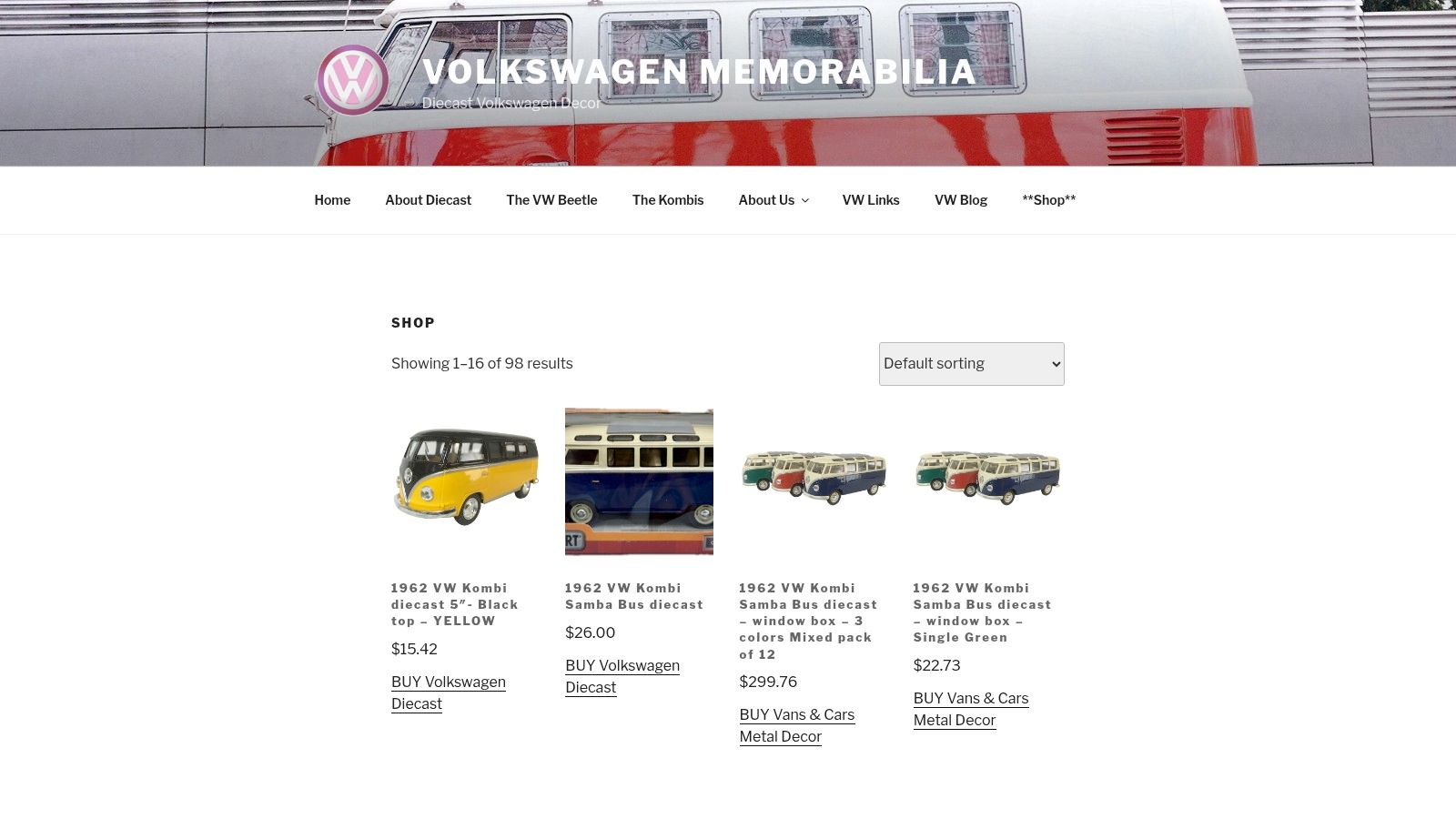
The Outback is about 5.6 million square kilometres, which is over two-thirds of the continent, and it's home to only around 700,000 people according to EBSCO's overview of the Australian Outback. That scale changes how you think about a drive. In a modern car, you can be tempted to tick off distances. In a Kombi, you naturally lean into the land and let the country set the pace.

Why a Kombi fits the mood

A Kombi doesn't pretend to be a luxury tourer. That's part of the appeal. It invites you to travel lighter, notice more, and enjoy every servo stop, every waving local, every long sunrise start.

The old VW spirit also suits the social side of Outback travel. People walk over when they see one. They ask what year it is. They tell you about the Beetle their mum had, or the Kombi they took up north in their twenties. The vehicle opens conversations before the billy even boils.

For many fans, that sense of lifestyle is already part of the appeal of Kombi life in Australia. The Outback turns that lifestyle up to full volume.

Solitude with soul

This is the other reason the pairing works. The Outback offers genuine space. Not curated quiet. Real quiet. Long gaps between towns, wide skies, and roads where your thoughts finally catch up with you.

A Kombi belongs in that setting because it has personality. It feels companionable. You don't just drive it. You share the road with it.

Charting Your Course Understanding the Outback Map

The first mistake people make when they search for a map Australian Outback journey is assuming the Outback is one big red blob in the middle. It isn't. The term is geographically fuzzy, stretching across tropical, semi-arid and arid areas and covering roughly 70% of the Australian continent, as explained by Students of History's Australian Outback geography summary.

An infographic map detailing the five distinct regions of the Australian Outback with descriptions and illustrations.

That matters because the map you carry in your head shapes the trip you plan. If you think it's all desert, you'll miss the variety. If you understand it as a broad inland region with different personalities, route planning gets easier and far more exciting.

Read the map by region, not stereotype

A better way to map the Australian Outback is to sort it by feel.

Region type What it feels like on the road Why it matters for planning
Red Centre Big horizons, red earth, iconic inland scenery Best for travellers chasing classic postcard Outback country
Top End Tropical atmosphere, changing seasons, greener country Conditions can shift quickly, so route timing matters
Channel Country Open plains, cattle country, remote roads Distances and service gaps shape each day's run
Flinders and ranges country Ancient landforms, dramatic ridges, historic tracks Great for scenic detours and slower touring
Mining and station corridors Workhorse roads linking practical destinations Fuel, road surface, and closures become key map details

Anchor towns make the huge country feel manageable

When a map feels overwhelming, I like to think in anchor points rather than whole regions. Alice Springs is one of those. Coober Pedy is another, with its famous underground character and mining history. Birdsville has that mythic ring road-trippers love, even before you've seen the pub or the dust coming off the track into town.

Practical rule: Don't plan an Outback route as one heroic line. Plan it as a string of reliable anchor points with sensible daily decisions in between.

That's also why so many Australian road-trippers fall for van life in Australia. The map becomes less intimidating when you break it into places with their own stories, fuel, food, camps and character.

Iconic Outback Journeys Fit for a Classic VW

The best Outback drives feel like chapters in one long campfire yarn. You remember them by colour, by sound, by the state of the tea towel on the dashboard, and by the way the road changed your mood.

Australia's settlement has long hugged the shoreline. The National Archives of Australia notes that almost 90% of Australians live within 50 kilometres of the sea. Inland, the roads connect a much sparser chain of mining towns, pastoral stations and remote Indigenous communities. That's why these routes feel so different from a coastal cruise.

The Stuart Highway run

This is the grand spine. The sort of route that makes even a short stretch feel epic. In a classic VW, the Stuart isn't about hammering north. It's about watching the country unfold from dry southern country towards the centre and beyond.

The beauty of the Stuart is its rhythm. Roadhouse, long straight, mirage, fuel stop, another stretch of horizon. If you've ever wanted the full meditative side of Kombi travel, it comes alive along the Stuart.

The road to Coober Pedy

Some towns feel invented by dreamers and survivors. Coober Pedy is one of them. Driving in, you get that marvellous sense that the country has toughened everyone who stayed.

For a VW enthusiast, this route has a lovely contrast. Your old van carries its own oddball history, then suddenly it's parked in a place where dugouts, opal stories and red dirt all look perfectly normal together.

The Birdsville kind of dream

Even people who haven't done it talk about Birdsville as if they nearly have. That's the charm. It represents the edge of remoteness in the Australian imagination.

A run towards Birdsville suits travellers who enjoy preparing carefully, reading the road, and respecting the country. It feels less like ordinary touring and more like joining a long tradition of inland wanderers.

Your Adventure Toolkit Maps Tech and Kombi Prep

The romantic version of an Outback trip is stars, dust and camp ovens. The practical version is map layers, backup systems and checking the old VW before you leave the driveway. You need both.

Interior view from the driver's seat of a vintage Volkswagen bus driving through the Australian Outback.

Map quality changes sharply once you leave the well-travelled corridors. HERE notes that seasoned travellers rely on specialist Outback maps showing fuel stops, sealed versus unsealed roads, and seasonal closures. That kind of detail isn't a nice extra. It's part of staying safe.

Build a navigation stack

If I were setting up a classic VW for a proper Outback run, I wouldn't trust a single app or one folded map in the door pocket.

  • Paper overview map: Gives you the big picture fast when phone screens feel too small.
  • Specialist Outback map: Better for road surface changes, fuel planning and closure awareness.
  • Offline digital mapping: Handy when reception disappears and you still need bearings.
  • Written trip notes: Old-school, but brilliant. Distances blur when you're tired.

A lot of VW owners also fit touring gear for longer stops and self-sufficiency. If your setup includes auxiliary power for camp lighting or charging essentials, something like a Slimline Lithium Battery 200 Ah fits the practical touring side of the adventure.

Prep the Kombi for reliability, not bravado

You don't need to turn a Kombi into a desert racer. You need to make it dependable.

Check the basics properly before any remote drive:

  • Cooling and engine health: Listen for what's changed, not just what's broken.
  • Tyres and spares: Outback roads punish neglected rubber.
  • Fuel planning: Know your stops before you're hoping for one.
  • Tools and belts: Carry the bits old Volkswagens are known to ask for.
  • Brakes and steering: Confidence matters more than speed out there.

Bring redundancy. One map system can fail. One part can rattle loose. One assumption can ruin the day.

For a bit of inspiration before the wheels start rolling, this old-school driving footage captures the mood nicely.

Small touches make the trip feel personal

I know more than one traveller who brings a diecast Kombi for the dashboard or camp table photo at each stop. It sounds silly until you see the picture later. Then it becomes part of the ritual. Tiny van, huge country, same grin every time.

Keep the Adventure Alive Your VW Memorabilia Collection

The funny thing about a great road trip is that it keeps travelling with you after you've unpacked. A bit of red dust hides in the floor mats. A fuel receipt turns up in a jacket pocket. Someone asks about the trip and suddenly you're back there, talking about dawn starts and the colour of the sky outside camp.

That's why memorabilia feels right for Volkswagen people. It isn't clutter when it connects to a memory. A VW Kombi diecast Australia display can bring back a camp near the centre. A Volkswagen Beetle model on the shelf can remind you of the first classic you ever loved.

Screenshot from https://vwmemorabilia.com.au/shop/

What to collect after the trip

Some enthusiasts like to mark a journey with one special piece. Others build a little display that tells the whole story.

  • A Kombi Samba Bus diecast: Perfect if the dream vehicle was a bus, even if your real trip happened in something else.
  • A Beetle model: Great for collectors with older family memories tied to VW road travel.
  • Mixed display pieces: Ideal if you like a shelf that feels more like a scene than a lineup.

The best collections work like a good route map. They don't just show objects. They show where you've been.

Frequently Asked Questions About VW Outback Adventures

Can you take a classic Kombi into the Outback

Yes, but only if you're honest about the vehicle's condition and your route. Some roads suit a carefully prepared classic far better than others. A sealed or well-known touring corridor is a very different proposition from a rough remote track. The smart move is to match the dream to the Kombi you have.

Is a paper map still worth carrying

Absolutely. Screens are brilliant until they aren't. A paper map helps with the big picture, route alternatives and quick discussions around a camp table. For anyone trying to map the Australian Outback properly, paper is still part of the toolkit.

What matters most on an Outback map

Look for the details that affect decisions on the day. Fuel stops, whether roads are sealed or unsealed, possible closures, and the distance between useful services all matter more than decorative landmark icons.

Is the Outback all one kind of landscape

No. That's one of the biggest misunderstandings. Different inland regions have different climates, road conditions and travel rhythms, so route planning should reflect the country you'll cross, not the postcard version of it.

What should a VW enthusiast pack besides the obvious mechanical gear

A decent torch, good trip notes, plenty of patience, and something that makes the trip feel like yours. For some people that's a camera. For others it's a camp mug that's been on every run for years. If you're one of us, it might also be a little diecast Kombi riding shotgun on the dash.


If the road-trip bug has bitten and you'd like something to keep that VW spirit alive at home, have a wander through Volkswagen Memorabilia. It's a lovely spot to find Volkswagen diecast models for sale, from Kombi and Samba favourites to classic Beetle pieces, with local Australian stock and friendly service that suits collectors, gift buyers and lifelong VW fans alike.

Your VW-Themed Kids Travel Journal Guide

You're probably in that familiar pre-trip scramble right now. The snacks are half packed, someone's looking for a charger, and the kids are already asking whether they can bring one more toy car into the back seat. If your family road trips have ever involved a sun-faded Kombi, a cheerful Beetle, or just a deep love for old Volkswagens, there's a lovely little tradition worth adding to the glovebox. A kids travel journal.

Not the stiff, schoolish kind that feels like homework on holidays. I mean the sort of journal that catches the small things families actually remember later. The servo stop with the best vanilla slice. The yellow Beetle spotted outside a bakery in a country town. The way your child drew the family Kombi with wheels far too big and somehow got its personality exactly right.

For VW-loving families, a kids travel journal can become more than a diary. It becomes a rolling scrapbook of family stories, motoring nostalgia, and the odd bit of road dust pressed between pages. If you do it well, it feels less like a task and more like an heirloom in the making.

Capturing Road Trip Memories The VW Way

A classic VW trip has its own rhythm. You notice things differently. The drive feels slower in the best possible sense, and the journey matters as much as the destination. Kids pick up on that. They notice the split-screen van in the next lane, the surfboard on the roof rack, the sticker-covered rear window at the caravan park.

That's why a kids travel journal works so well in a VW family. It gives children a place to hold onto those tiny moments before they disappear into the blur of school terms and everyday life. Instead of asking, “Did you have fun?” weeks later, you get their version of the trip as it happened. Drawn, scribbled, stickered, and slightly sticky from a melted lolly.

A journal also suits the spirit of old Volkswagens. These cars have always invited storytelling. Families name them, wave at other owners, and build traditions around them. If your weekends already lean toward scenic drives and van life in Australia, adding a notebook to the routine feels natural.

Keep the first entry simple. Ask your child to draw the car, write where you're heading, and add one thing they hope to see on the trip.

The trick is to treat the journal like part of the adventure kit. It belongs beside the map, the sunnies, and the bag of snacks. Once kids realise it's their own record of the trip, not a parent-managed project, they usually bring far more personality to it than any adult ever could.

Choosing the Perfect Journal for Your Little Explorer

Some families do best with a neat, pre-made travel journal. Others are happier with a plain notebook and a fistful of stickers. Both work. The best choice depends less on trends and more on how your child likes to make things.

A happy young girl pointing at an open journal on a wooden table with a toy van.

Store-bought or DIY

A ready-made journal can be handy for shorter holidays. The prompts are already there, which helps children who freeze when faced with a blank page. If your trip is a long weekend away or a school holiday run up the coast, that structure can keep things moving.

A DIY journal gives you more room to match the child. One kid might want lined pages and daily notes. Another might want thick paper for drawings, ticket stubs, and leaves picked up at a picnic stop. A scrapbook, exercise book, display book, or spiral notebook can all become a strong kids travel journal.

Here's a quick way to decide:

Journal type Best for Watch out for
Pre-made prompt journal Kids who like guidance Can feel repetitive over a longer trip
Plain notebook Kids who want freedom May need parent suggestions to get started
Scrapbook or art pad Kids who draw more than they write Bulkier to pack
Binder with sleeves Families collecting maps, tickets, postcards Less convenient on the move

Why it's worth doing

There's a practical upside too. In Australia, an age-appropriate travel journal directly supports the national curriculum. Foundation to Year 2 students are expected to produce short imaginative and informative texts, while Years 3 to 6 build more detailed descriptions. That makes journaling a practical literacy exercise aligned with national educational standards across more than seven years of schooling, as outlined in this Australian curriculum travel journal overview.

So if you're weighing up whether this is just another holiday activity, it isn't. It's memory-keeping with real educational value.

What usually works best

For most VW family trips, the sweet spot is a sturdy notebook with a bit of flexibility.

  • Choose a tough cover so it survives beach bags, seat pockets, and the general chaos of family travel.
  • Leave room for keepsakes such as bakery receipts, park maps, ferry tickets, or a pressed gum leaf.
  • Pick paper that suits the child. Some like lined pages. Others need blank paper for sketches of Beetles and Kombis.

If the journal looks inviting and feels easy to use, kids are far more likely to keep reaching for it.

Page Prompts and Ideas for Every Age

A good kids travel journal shouldn't expect every child to respond the same way. Some kids narrate every detail of the day. Some draw one excellent picture and call it done. Some are tired, wriggly, or not interested in writing full sentences after a long drive.

An infographic titled Journey's Canvas illustrating three age-appropriate travel journal categories for children and teenagers.

Little Co-Pilots Ages 3 to 5

At this age, think visual and playful. You're not aiming for polished writing. You're building the habit of noticing.

Try pages like these:

  • Draw the day's favourite vehicle. Was it your Kombi, a tractor, or a bright old Beetle parked near the beach?
  • Sticker map page. Put one sticker where you slept, one where you stopped for lunch, and one where you saw something exciting.
  • My trip colours. Ask them to draw the colours they saw that day. Sea blue, red dirt, silver van, yellow sun.

A child who can only manage labels can still make a brilliant journal page.

Junior Cruisers Ages 6 to 9

This is the golden age for prompts. Kids in this range usually like a bit of structure, but they also want room to personalise things.

A few favourites:

  • Today we drove to…
  • The funniest thing that happened was…
  • I saw a VW that looked like…
  • Best snack of the day
  • What I'd tell a friend about this place

These children often enjoy collecting evidence. Let them tape in a postcard, draw the campsite, or rank the day's lunch stop.

A short entry done happily is better than a perfect page that never gets finished.

Road Trip Reporters 10 Plus

Older kids usually respond better when the journal respects their voice. They don't want babyish prompts. They want options.

Give them pages such as:

  • A one-paragraph review of the day's best stop
  • A sketch-and-caption spread of an interesting vehicle
  • A “three things I noticed” page
  • A reflection on what felt different about this town, road, or beach

If they're into photography, let them plan pages around printed snapshots later. A kids travel journal for an older child can feel more like a zine, field notebook, or travel log.

Making it work for reluctant writers

Some children don't want to write much at all, and that's fine. A key challenge is adapting journals for mixed-age families or reluctant writers. Practical alternatives include stickers, voice notes, and photo captions instead of full sentences, which can help pre-readers, kids with limited handwriting stamina, or children who engage better through different formats, as explored in this travel journaling adaptation guide.

Use that freedom well:

  • Photo-only pages with one caption underneath
  • Voice note QR ideas if you print a code later and stick it in
  • Sticker stories where children sequence the day with images
  • Fill-in prompts instead of open-ended writing

The best journal is the one your child will keep using.

Weaving in That Classic VW Magic

One family I know has a habit that I absolutely love. Every time they stop somewhere memorable, the kids take out a tiny diecast Kombi and set it on a rock, picnic table, or lookout rail for a quick photo. By the end of the trip, their journal is full of little “model on location” scenes. A miniature van at the Big Banana. A tiny Beetle beside a weathered jetty. A Samba Bus balanced carefully near a thermos and two lamingtons.

That's the sort of detail that turns a regular notebook into family motoring history.

Screenshot from https://vwmemorabilia.com.au/shop/

Pages that feel properly VW

A VW-themed kids travel journal doesn't need to be complicated. It just needs a recurring thread.

You could add:

  • Kombi Kount pages where kids tally every Kombi they spot
  • Beetle Bingo with colours, roof racks, stickers, and surfboards
  • Number plate hunts beside sketches of interesting Volkswagens
  • Favourite car of the day with a quick drawing and where it was seen

For families who travel often, this becomes a lovely ritual. Australians took 119.4 million domestic overnight trips in the year to June 2024, and those trips averaged about 3.2 nights, which means there are plenty of natural chances to build a recurring journaling tradition over time, according to these ABS travel figures referenced here.

Small rituals make the book memorable

If your trip already has a VW flavour, lean into it. Add a page for the best roadside photo of the family car. Let the kids draw your dashboard. Save a little spot for sketches of hubcaps, headlights, or the steering wheel badge.

Some families also enjoy pairing the journal with inspiration from VW travel van stories, especially when they're planning coastal drives or weekend camping loops.

The more specific the page, the more vivid the memory later. “Saw a car” fades fast. “Blue Kombi outside the bakery in Bellingen” sticks.

A pocket for the good stuff

At the back of the journal, tape in an envelope or paper pocket. That's where the treasures go.

Think beyond the usual tickets. Include a beach permit, a pressed flower from a picnic stop, a postcard from a country town, or a printed photo of a favourite diecast model that travelled along for the ride. Kids love having a place for the bits adults might otherwise throw away. Years later, those scraps are often the first things everyone reaches for.

Packing and Preserving Your Road Trip Story

The best journals are easy to use while the trip is happening. If the supplies are buried under jumpers and bathers, nobody will bother. Keep it compact and ready.

A child packing a clear travel pouch with a journal, colored pencils, and a toy car for a trip.

Build a simple car kit

A zip pouch or small tin is plenty. You don't need an art studio in the back seat.

Pack these basics:

  • Journal and pencil case with coloured pencils rather than textas, which are less likely to dry out or leak
  • Glue stick for tickets, wrappers, and postcards
  • Child-safe scissors if your kids are old enough to manage them
  • A few stickers for low-energy journaling days
  • A small clip or elastic band to keep loose pages tidy

Keep the whole lot in one place so it can be handed back quickly at a café, campsite, or ferry terminal.

Save the fragile bits properly

Once you're home, don't leave the finished journal in a heap with beach towels and charging cables. Give it the same respect you'd give any keepsake.

A few smart finishing touches help:

After the trip Why it helps
Slide delicate items into clear sleeves Protects tickets, flowers, and thin paper
Add dates to loose photos before sticking them in Makes memories easier to place later
Store the journal upright on a shelf Prevents bent corners and crushed pages
Keep it near family memorabilia Encourages people to revisit it

If you like displaying family mementos, a favourite photo from the trip can sit nicely beside the journal in something like this standing beach-themed photo frame. It's a simple way to turn the finished book into part of the home, not something hidden away in a cupboard.

Let it become part of the collection

For VW enthusiasts, that final step matters. A kids travel journal can sit beautifully near model cars, rally souvenirs, old rego plates, or beachy motoring bits and pieces. It becomes one more object with a story attached. Not bought for a shelf, but earned on the road.

Your Next Adventure Awaits

A kids travel journal's charm is that it catches family life before it slips past. Not the polished version. The genuine one. Crumbs on the seat. Wind in the car park. A child's lopsided sketch of a Beetle they swear was the best thing they saw all day.

That feels especially right for families who love Volkswagens. These cars have always carried more than luggage. They carry rituals, jokes, nicknames, and stories repeated at every barbecue and car show. A journal gives the next generation a way to join in, in their own handwriting and their own style.

You don't need a perfect trip, a perfect notebook, or children who adore writing. You just need a small habit. A few pages during the drive. A sketch at lunch. A ticket glued in before bed. Over time, those pages build something much richer than a holiday record.

When your child pulls that journal off the shelf years later, they won't just remember where you went. They'll remember how it felt to go there with you.


If you'd like to add a bit more VW character to your family's next journal, have a browse through Volkswagen Memorabilia. It's a great spot for VW memorabilia collectibles, licensed diecast favourites, and gift ideas that suit a Beetle or Kombi-loving household. For Australian buyers, local stock and fast shipping make it easier to grab those finishing touches before the next road trip rolls around.

A Classic VW Stainless Steel Exhaust Pipe Guide

There's a familiar moment in every classic VW owner's life. You're crouched behind the Beetle or Kombi with a cuppa in hand, listening to that air-cooled note settle into its idle, and you spot it. A tired muffler seam, a patch of surface rust, maybe a tailpipe that's seen one coastal drive too many.

That's usually when the stainless steel exhaust pipe question comes up.

For Australian VW owners, it isn't just about noise or shine. It's about keeping an old favourite on the road through sea air, condensation, stop-start traffic, and the odd wet winter run to a show. The right exhaust can make a classic feel sorted. The wrong one can become a repeating job that steals time from the fun bits.

That Unmistakable Sound and an Aussie Icon's Future

A classic Volkswagen has its own soundtrack. A Beetle at idle has that cheerful, mechanical chatter underneath the exhaust note. A Kombi has a broader, more relaxed burble that feels made for beach roads, camping gear, and a slow roll into the showgrounds.

A vintage light blue Volkswagen Beetle parked on a coastal road during a beautiful golden sunset.

In Australia, that romance always meets reality. Salt in the air near the coast, moisture trapped in a system that doesn't fully heat through on short trips, and years of use all work against ordinary exhaust steel. That's why stainless matters so much for our old Volkswagens. It isn't a flashy modern indulgence. It's one of the practical choices that helps preserve an icon.

If you enjoy full-size cars, there's usually a shelf, study, or display cabinet nearby that carries the same affection. A tidy garage with a proper exhaust fitted to the car often sits alongside a few VW memorabilia collectibles and diecast models that keep the passion alive between drives.

Keep a classic VW reliable and you'll drive it more. Drive it more and you'll care even more about the details.

Why this choice feels bigger than a part swap

An exhaust on a vintage Volkswagen does three jobs at once. It manages heat and gases, shapes the sound of the car, and changes how the whole rear end looks when you're parked up at a meet. On an air-cooled VW, it's never just hidden plumbing.

That's why owners fuss over it. A stainless setup says you're planning ahead. You want fewer rust dramas, fewer ugly repairs, and a car that still looks right when the decklid is up and people start peering in.

Why Go Stainless For Your Classic VW

A classic VW in Australia asks a lot from an exhaust. One weekend it is cruising the coast with salt in the air. The next it is parked for a fortnight, holding condensation in the muffler and pipes. Mild steel copes with that for a while, then the rust starts showing at the seams, the flanges, and the spots you cannot see until the system is off the car.

That is a key advantage of stainless. It lasts longer in the sort of use old Beetles and Kombis typically experience, and it keeps the car tidier underneath while doing it.

The up-front price is higher, so the decision comes down to how you use the car. For a budget freshen-up on something you plan to move on soon, plain steel can still make sense. For a keeper, a regular driver, or a Kombi that sees camping trips and coastal roads, stainless usually saves repeat work, extra labour, and that annoying cycle of patching one rotten section after another.

What you get for the extra spend

Stainless earns its keep in a few very practical ways.

  • Better resistance to rust in heat, moisture, and salty Australian air
  • Less maintenance grief over the years, especially on cars that are not driven daily
  • A cleaner appearance around the rear apron, heater boxes, and tailpipe area
  • More confidence buying once instead of replacing the same type of system again

That last point matters more than plenty of owners admit. On an old VW, every exhaust swap means clamps, gaskets, studs, seized hardware, and the chance of finding another small problem while you are in there. Fewer replacements means fewer chances to disturb parts that have behaved themselves for years.

A stainless system also suits the way many enthusiasts treat these cars. The full-size Beetle lives in the garage, the diecast version sits on the shelf, and both represent the same instinct. Buy good gear, keep it looking right, and enjoy it for the long haul. If you are comparing options through a supplier that lists VW exhaust and restoration parts in Australia, it is worth checking how clearly the material and build details are described before you hit buy.

What stainless will not fix

Material alone does not make an exhaust good.

It will not solve poor fitment, stop a badly tuned engine from running hot, or turn a droning system into something pleasant on a highway run. Pipe routing, flange quality, muffler design, and how well the system matches a 1200 Beetle or a later Kombi all matter just as much.

Plenty of owners go astray at that point. They hear “stainless” and assume every setup is top shelf. Some are excellent. Some are shiny, thin, awkward to fit, and disappointing once the novelty wears off.

Buy stainless for longevity. Choose the actual exhaust design for sound, clearance, and the way your VW gets used.

Choosing Your Shine 304 vs 409 Grade Steel

For Australian classic VW owners, this choice usually comes down to how the car lives. A dry-garage Beetle that sees Sunday runs asks different things of an exhaust than a Kombi parked near the coast, loaded for a camping trip, and washed off in the driveway after a salty weekend.

409 and 304 are both stainless, but they age differently. 409 is the practical grade used on plenty of factory-style systems because it handles heat cycles well and keeps the price sensible. 304 costs more, stays brighter for longer, and does a better job resisting the surface staining and corrosion that can make an older exhaust look tired before its time.

A comparison chart explaining the differences between 304 and 409 grade stainless steel for automotive applications.

If you are comparing systems through an Australian VW parts supplier, check how clearly the material is listed in the VW exhaust and restoration parts catalogue. Plenty of listings say “stainless” and stop there. That is not enough if you care about finish, lifespan, or value.

The quick comparison

Grade Best suited to What it's like
409 stainless Regular drivers, tidy restorations, sensible budgets Heat-tolerant, durable, usually dulls and discolours with age
304 stainless Premium builds, coastal use, show-minded owners Better corrosion resistance, brighter finish, higher price

Where each grade makes sense

409 suits a driver. It will not keep that fresh-polished look for long, and it can develop a brownish surface tint, but that does not mean it is failing. On a Beetle that gets used properly, that trade-off is often perfectly fair. Spend less on the pipework, keep money aside for heater boxes, carb tuning, or the next set of tyres.

304 suits the owner who wants longevity and appearance together. If the car lives near the beach, sits for long stretches, or goes to shows where people end up crouched behind it discussing welds and tailpipe finish, 304 earns its keep. It is also the grade that tends to match the mindset of collectors who care about the full picture. The car in the shed, the diecast Kombi on the shelf, the old rally badge on the wall. It all speaks to looking after details.

What works in the real world

On a weekend Beetle in inland Australia, 409 is often enough. On a Kombi that sees sea air, wet campsites, and more grime thrown at the underside, I would spend the extra money on 304 and be done with it.

The trick is buying for the life your VW leads, not the one promised by a shiny product photo. 409 is honest and useful. 304 holds its looks better and asks for fewer compromises.

Getting the Right Fit For Your Beetle or Kombi

Material is only half the story. A stainless steel exhaust pipe can be beautifully made and still feel wrong on the car if the sizing, layout, or muffler choice doesn't suit an air-cooled engine.

A mechanic wearing black protective gloves installs a shiny stainless steel exhaust system under a vintage green car.

Classic Volkswagens reward balance. Too restrictive and the engine feels strangled. Too large and you can lose that tidy, responsive feel that makes a small-capacity flat-four such fun. Pipe dimensions are standardised by outside diameter and wall thickness under ASME B36.19, and Engineering ToolBox's stainless pipe dimensional reference notes that 16-gauge stainless tubing is commonly specified at 0.065 inch wall. That's useful in exhaust fabrication because it preserves strength through bends without giving away too much internal diameter.

If you're matching parts to a specific project, the Volkswagen Beetle parts collection is a handy way to compare model-relevant hardware and styling cues before you buy.

Beetle fitment thoughts

A Beetle usually likes an exhaust that keeps velocity up and doesn't upset the engine's manners. For a near-stock or mildly warmed-over setup, a quiet pack style system often suits the car's character better than something oversized and boomy.

Look for three things:

  • Flange alignment matters more than catalogue promises. If the header and heater box joins are under tension before tightening, the system will fight you from day one.
  • Ground clearance is critical on lowered cars. A pretty collector isn't much use if it scrapes on every driveway.
  • Tailpipe exit position changes the whole rear view. On a Beetle, a pipe that sits crooked will annoy you every time you walk up to the car.

Kombi and Type 2 considerations

A Kombi carries more weight, sees more touring, and often spends more time loaded. Exhaust design needs to suit that use. A setup that sounds cheeky on a Beetle can drone in a bus.

This walk-through gives a useful look at under-car access and how space can disappear quickly around the rear of an older vehicle.

For Kombis, I'd be fussy about:

  1. Heat and clearance around the rear apron
  2. How the system sits near towing or camping gear
  3. Whether the muffler layout supports a relaxed cruising tone

There's a funny overlap here with collecting diecast. The same owner who notices whether a 1:24 Beetle model has the right bumper shape will definitely notice whether an exhaust tip sits wonky under the actual car.

Installation Tips and Keeping Your Exhaust Gleaming

Stainless still deserves proper installation. A rushed fit-up with poor alignment, contaminated welds, or cheap mixed hardware can spoil a good system.

A person with black gloves wiping a polished stainless steel exhaust pipe in an automotive workshop.

For owners in coastal Australia, the long-life argument is strong. One supplier reference in the verified data states that quality stainless exhaust tubing can last 10 to 12 times longer than low-carbon steel tubing, and it also notes that 316 is preferred where chloride exposure is higher because molybdenum improves resistance to pitting and crevice corrosion in marine conditions, as outlined in Octal's stainless steel pipe and tube specification page. You won't see 316 in every classic VW exhaust conversation, but it's useful to know why some marine-adjacent applications favour it.

Welding or clamping

A properly welded system is usually the cleaner, more permanent answer. It tends to seal better and looks more integrated. But clamps still have a place, especially for home mechanics who want serviceability.

  • Choose welding if you want the neatest result and have access to a workshop that understands stainless prep.
  • Choose clamps if the system may need to come apart again, or if you're test-fitting a custom arrangement.
  • Avoid mixing bargain hardware with a quality stainless system. Ordinary fasteners often become the weak link.

Ask the shop whether they regularly work with stainless exhausts, not just exhausts in general.

Keeping the finish tidy

Stainless changes colour with heat. A light golden or straw hue near hotter sections is normal and not a sign that something's gone wrong. The visible tips are what most owners like to keep polished.

A simple care routine works well:

  • Wipe off fingerprints and residue after fitting, especially on polished sections.
  • Rinse road grime and salty spray from the underside if the car lives near the coast.
  • Polish the visible outlets if you want that fresh-fitted look before a club run or Nationals weekend.

If you're sourcing air-cooled hardware, exhaust-related bits, or restoration items, VW Type 1 parts are worth comparing with your existing setup so the whole rear-end package works together.

The Final Touch The Look and Sound of a Legend

A stainless exhaust is one of those upgrades that earns its keep every time you start the car. You hear it first, then you see it. The note is cleaner, the rear end looks more finished, and the whole Volkswagen feels better cared for.

That's the core appeal. It isn't just corrosion resistance, although in Australia that matters a lot. It's the sense that the car is ready for another early run, another show field, another chat with someone who had one years ago and still smiles when they hear that flat-four thrum.

For Beetles and Kombis, details carry emotion. The right exhaust note, the right tailpipe angle, the right glint of metal under the bumper. It's the same instinct that makes people collect a diecast Samba or a faithful little Beetle model for the shelf. We love these machines in full size and miniature because they hold memories, style, and a bit of freedom.


If your garage, shelf, or gift list could use a bit more Volkswagen charm, have a browse through Volkswagen Memorabilia. You'll find licensed VW diecast models, Kombi and Beetle pieces, and collectable memorabilia that suit the same passion that keeps actual cars rolling.

Display Cases for Models: Your Ultimate Collector’s Guide

You've probably done it yourself. You bring home a cracking little Beetle or Samba Bus, set it on a shelf, step back, and think, that looks brilliant. A few weeks later there's a film of dust on the roofline, a fingerprint on the side window, and the once-crisp finish doesn't feel quite as special.

That's where proper display cases for models earn their keep.

For VW collectors, a case isn't just storage. It's part protection, part presentation, and part respect for the story that model carries. Whether it's a neat 1:43 Beetle that reminds you of your first car or a larger Kombi that captures every chrome strip and two-tone panel, the right case keeps the details sharp and the nostalgia intact.

More Than a Box Protecting Your Prized VWs

There's a real pleasure in holding a fresh diecast VW model. You notice the shape of the guards, the little badge work, the paint, the windows, the stance. That feeling is exactly why a case matters. If the model means something to you, protecting it shouldn't be an afterthought.

A 1955 Volkswagen Beetle die-cast model car displayed inside a protective clear plastic case on a wooden surface.

Dust is the obvious enemy, but it's not the only one. Sunlight, accidental bumps, moisture in the air, and plain old handling all chip away at a model over time. Decals can fade, paint can lose its punch, and delicate bits like mirrors and roof accessories can cop damage just from being moved around too often.

Why museum thinking matters at home

Australian collectors can learn a lot from conservation practice. In Australia, heritage institutions like the National Museum of Australia display objects in sealed cases with controlled lighting, often as low as 50 lux for highly light-sensitive materials, to reduce deterioration, as noted in this overview of display case conservation practice. That same principle applies beautifully to diecast Volkswagens, because paints, plastics, adhesives, and decals don't enjoy heat, dust, or harsh light any more than museum objects do.

Practical rule: If a model is worth displaying, it's worth separating from the room around it.

That doesn't mean every collector needs a museum-grade cabinet in the lounge. It means the logic is sound. A sealed or semi-enclosed case with a clear front, stable base, and sensible lighting will usually protect a model far better than open shelving ever will.

Why open shelves often disappoint

Open shelves look tidy for about five minutes. Then the cleaning starts. If you've ever tried dusting around aerials, mirrors, gutter lines, roof racks, or tiny trim pieces on a Kombi, you already know how risky that is.

A decent case helps with all of this:

  • Less dust build-up means less cleaning and less touching.
  • Better physical protection keeps models safer from pets, kids, elbows, and general household chaos.
  • A cleaner visual frame makes the model look intentional, like a proper display piece rather than a toy parked on furniture.

If you want a few practical basics on ongoing upkeep, the collectible care advice is worth a look. Good care starts long before anything needs repairing.

Choosing Your Armour Acrylic Glass or Timber

Material choice changes both the look and the day-to-day reality of your display. Some collectors chase the clean, almost invisible look of acrylic. Others love the heft and clarity of glass. Then there's timber-framed cabinetry, which can make a collection feel like part of the room rather than something added to it.

A comparison chart outlining the pros and cons of acrylic, glass, and timber-framed display case materials.

Acrylic for everyday collectors

Acrylic is popular for good reason. It's lighter than glass, easier to move, and usually safer if the case is going into a family room, office, or shop where it might get bumped. For smaller VW displays, that lower weight makes a big difference when you're rearranging shelves or carrying a case to a club display.

It also suits the way many collectors buy and display models in Australia, where centimetre-based sizing and lightweight clear enclosures are common. The downside is familiar. Acrylic can scratch, and cheaper panels can lose their crisp look over time.

Glass for a sharper finish

Glass has a classic feel. It's harder to scratch in normal use and often gives a more premium look, especially in a cabinet with good lighting and a dark base. A glass case around a detailed Beetle can look superb on a sideboard or in a study.

The trade-off is weight and fragility. It's less forgiving to move, less ideal around active kids or pets, and if something goes wrong, it goes wrong more dramatically than acrylic.

In Australian homes, the acrylic-versus-glass decision matters because UV exposure and coastal conditions can affect plastics, decals, and paint finishes, a gap many generic buying guides leave unanswered, as noted in this display case buying guide.

Timber-framed cases for furniture-style display

Timber-framed cases work best when you want the display to feel permanent. They suit a study, lounge, or hallway where the case becomes part of the room's character. For classic VW collections, timber can bring in that warm vintage note that pairs nicely with cream, pastel, or two-tone models.

A few things to weigh up:

  • Acrylic works well if you want lighter handling and a simple modern look.
  • Glass suits collectors who value scratch resistance and visual crispness.
  • Timber-framed cases shine when aesthetics matter as much as protection.

What doesn't work so well is choosing purely by looks. A beautiful case placed in a hot sunny room is still a poor choice. Material and location have to work together.

Getting the Size Right for Your Favourite VW Models

Most case-buying mistakes happen here. People look at the outside measurements, think it should be fine, and only realise the problem when a mirror touches the wall or the roofline sits too close to the top panel.

Internal clearance is what matters.

Custom case guidance recommends defining the object's internal dimensions first, then working out material, wall thickness, base, and access details from there. For diecast VWs, that's the difference between a model sitting safely and a model under pressure from a case that looked big enough from the outside.

Measure the model, not the shelf

Start with the model itself. Measure the longest, widest, and tallest points, including mirrors, roof racks, lights, or any accessory that protrudes. For many VW pieces, those are the bits that catch first.

A good rule of thumb is to add 1 to 2 cm of clearance around the model's length, width, and height. For a typical 1:18 VW model that's about 25 cm long, that extra space helps stop mirrors or accessories touching the sides and reduces handling damage, as noted in this model display sizing guide.

Tight cases rarely look premium. They look like the model was squeezed in as an afterthought.

A simple way to size a case

Use this order and you'll avoid most of the headaches:

  1. Measure the actual model including fragile bits.
  2. Add clearance so nothing sits hard against the walls.
  3. Allow for the base if the case includes one.
  4. Think about access because a case that's awkward to open will lead to rough handling.
  5. Check the internal dimensions only, not the cabinet's outside footprint.

Here's a practical quick guide for common VW diecast scales.

Model Scale Typical VW Model Recommended Minimum Internal Case Size (cm)
1:18 Beetle or Kombi with detailed mirrors and trim Model dimensions plus at least 1 to 2 cm clearance on length, width, and height
1:24 Beetle coupe or Kombi bus Model dimensions plus at least 1 to 2 cm clearance on length, width, and height
1:43 Classic Beetle, Type 2, or Samba Bus Model dimensions plus at least 1 to 2 cm clearance on length, width, and height
1:64 Small Beetle or micro display grouping Model dimensions plus at least 1 to 2 cm clearance on length, width, and height

Collectors browsing different scales can compare what suits their shelves in the Volkswagen model cars collection. It makes planning mixed displays much easier if you know whether you want one standout 1:18 hero piece or a row of smaller classics.

What works in real displays

A 1:18 Kombi Samba Bus usually looks best with a little breathing room. That extra space makes room for a label, a neat plinth, or just a cleaner view around the body. It also makes the case feel deliberate rather than cramped.

What doesn't work is buying a generic cube because the numbers seemed close. Cases should fit the model. Not the other way around.

Lighting and Mounting to Make Your Models Pop

A great VW model can disappear under bad lighting. You lose the curve of a Beetle bonnet, the split in a Samba windscreen, the sparkle in chrome, and the depth in two-tone paint. Good display cases for models don't just protect. They stage the model properly.

Screenshot from https://vwmemorabilia.com.au/shop/

Plan the light before you build the case

Many home setups go off track. People buy a case first, then try to stick lighting in afterwards. The better approach is to design construction and lighting together.

For the best results, integrated LED strips with diffusers should be considered from the start, because the lighting type, colour temperature, wiring path, and power location all affect frame depth and access. In enclosed acrylic cases, a 12V supply and diffused LEDs help keep heat low and reduce glare on glossy paint and chrome, as shown in this LED display case build example.

Mounting choices change the whole mood

A black base can make bright Kombi colours jump out. A mirrored base shows off underbody detail and gives a bit of that show-and-shine drama. Timber plinths add warmth and suit vintage displays, especially if you like older Beetles and buses in cream, red, pale blue, or surfy pastel shades.

A few setups collectors tend to like:

  • Freestanding single-model cases for one hero piece on a desk or sideboard.
  • Wall-mounted displays when floor or shelf space is tight.
  • Tiered cabinets if you're arranging several scales and want easy viewing.

Soft, diffused light flatters diecast better than harsh direct light every single time.

The goal isn't to blast the model with brightness. It's to reveal the lines, trim, and colour without glare bouncing back at you.

Styling a Collection with VW Heart and Soul

This is the fun bit. Once the protection and fit are sorted, the case becomes a little stage for your VW story. A display should say something about why you collect, not just what you own.

A glass display case containing a collection of miniature Volkswagen toy cars on three different shelves.

Display ideas that feel personal

A lovely approach is to group by mood rather than scale. A shelf of surf-themed Kombis, beachy colours, and relaxed coastal styling has a completely different feel from a tidy row of Beetles arranged by decade or paint colour.

You might try:

  • Through the decades with early Beetles through to later classics.
  • Surf culture styling with Kombis, buses, and relaxed coastal props.
  • Colour grouping so creams, blues, reds, or flower-power finishes work together visually.

Let the collection tell a story

Some of the best displays aren't the biggest. They're the ones with a theme. A single Flower Power Beetle beside a couple of bright Kombis can say more than a crowded shelf of unrelated pieces.

If you want to blend VW collecting into your room styling, the home decoration range can spark ideas for tying diecast displays into a broader coastal or vintage setup. That's especially handy if your collection lives in the lounge rather than a dedicated hobby room.

Keep props simple. The star should still be the Volkswagen.

Frequently Asked Questions

How do I clean an acrylic case without scratching it?

Use a very soft microfibre cloth and clean gently. Don't scrub dry dust around the surface, because that's when fine scratching happens. Light pressure and patience beat aggressive wiping every time.

Can I stack display cases?

You can, but only if the lower case is stable, flat, and built to carry the weight. Heavy stacking on flimsy acrylic tops is asking for trouble. If you want a vertical display, a proper cabinet or shelf system is usually the safer option.

What if dust still gets inside the case?

That's normal with cases that aren't fully sealed. Open the case carefully, remove the model by its sturdier points, and clean both the base and the inside panels before putting it back. The less often you do this, the better.

Is a bigger case always better?

No. Too much empty space can make the model look lost. You want enough clearance for safety and viewing, but not so much that the case overwhelms the car.

Should I display my best model in a sunny room?

It's better not to. Even a beautiful bright room can be rough on paint, decals, and plastics over time. Choose a spot with stable conditions and indirect light if you can.

Are wall-mounted cases good for VW diecast?

They can be excellent if they're properly fixed and sized for the model. They suit smaller spaces well and can turn a hallway or study wall into a tidy gallery of Beetles and Kombis.


If you're ready to give your collection the kind of home it deserves, Volkswagen Memorabilia is a great place to browse officially licensed VW-inspired pieces, from diecast classics to display-worthy home décor. It's especially handy for Australian collectors who want local stock, quick shipping, and a range that understands the charm of Beetles, Kombis, Samba Buses, and the whole laid-back VW spirit.

Cool Your Kombi: How to Install a Fan in Roof

The day usually starts beautifully. Boards on the roof, kettle rattling in the back, salt still drying on your shoulders after a morning swim. Then the sun climbs, the breeze drops off, and your classic VW turns into a shiny little pizza oven. You slide the Kombi door open hoping for relief, and all you get is a face full of trapped heat and that familiar warm-vinyl whiff every old bus owner knows by heart.

That's the moment a lot of us start thinking about a fan in roof setup. Not because we want to modernise the soul out of an old Dub, but because we want to use it more. Longer weekends. Better sleep at the beach. Less of that sticky, restless feeling when the van should be your retreat, not your punishment.

A well-chosen roof fan can feel less like a modification and more like good stewardship. Same old Volkswagen spirit. Same freedom. Just a bit more airflow and a lot less sweating through your singlet.

That Feeling of a Hot Tin Roof

Last summer at a coastal meet, a mate parked his bay-window Kombi under what looked like decent shade. By lunchtime, the shade had shifted, the metal roof had soaked up the heat, and stepping inside felt like opening an oven door. His little pedestal fan barely moved the air. Another bloke nearby had a subtle roof vent and fan setup in his camper, and when he cracked the side window, you could feel the stale air leave.

That difference sticks with you.

A classic VW doesn't hide much. Thin panels, broad glass, plenty of sunshine pouring in. That's part of the charm. It's also why a warm afternoon can turn the cabin into a sweatbox, especially if you're camped up, making a cuppa, or trying to kip after a dawn patrol.
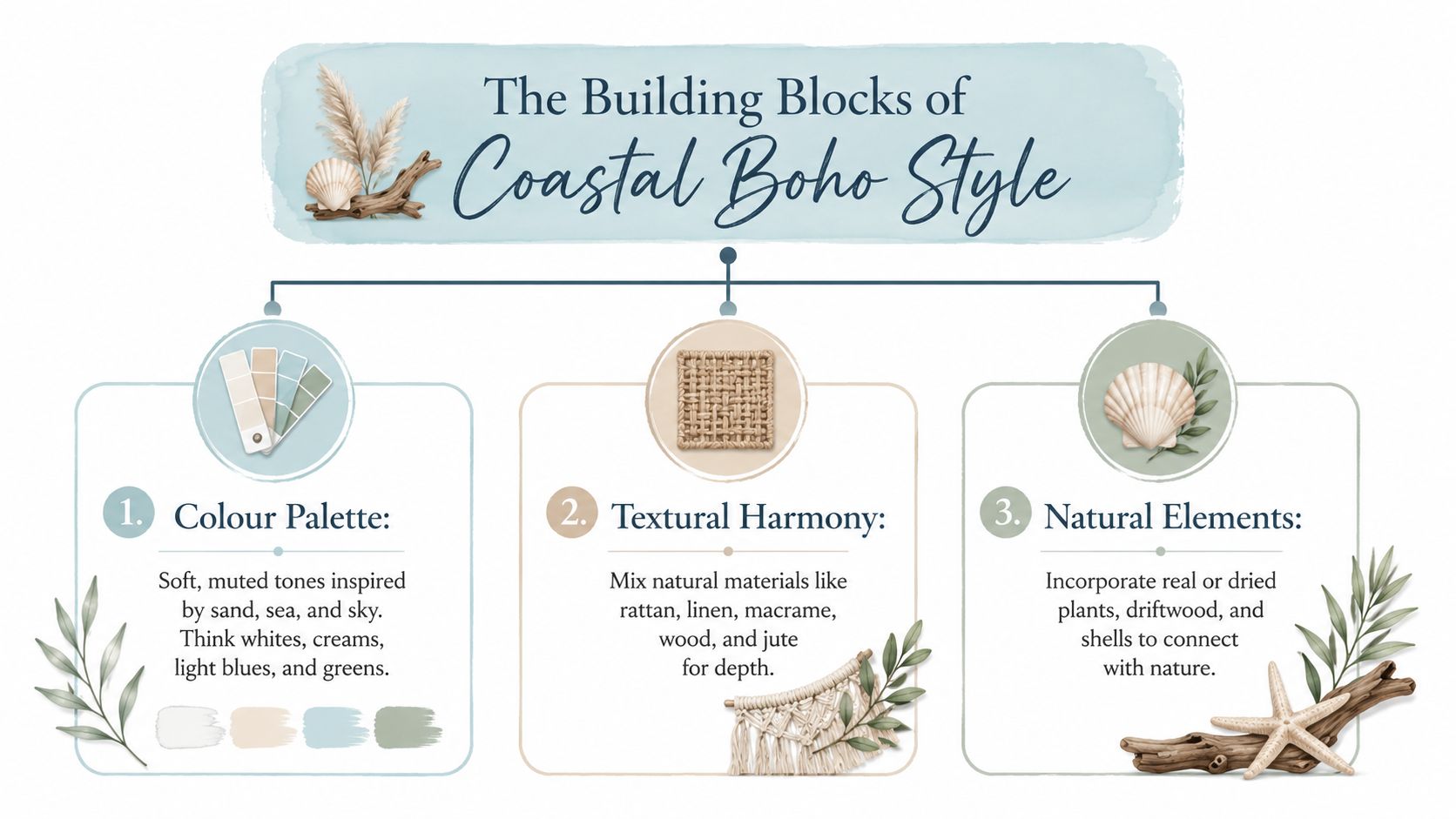
A person with short hair sitting in a vintage van holding a small handheld folding paper fan.

When comfort changes the trip

The best upgrades in an old Volkswagen are the ones that help you stay on the road without changing why you bought it in the first place. A fan in roof setup does exactly that. It doesn't turn your Kombi into a modern motorhome. It just gives the van a way to breathe when the air inside feels tired and heavy.

You notice it in small moments:

  • After a surf your towel dries instead of going musty in a corner.
  • At bedtime the cabin feels liveable instead of stale.
  • At sunrise you wake up fresher, not damp and grumpy.

Some upgrades are about horsepower. This one's about staying one more night by the water.

That's why roof fans have earned such a loyal following among campers and tourers. They help the van work with the weather instead of copping it square in the face.

Why Your Classic Dub Needs to Breathe

Heat is only half the story. The bigger reason many old VW owners look into a fan in roof setup is preservation.

Every classic Dub carries its age in quiet places. Under trim. Around window rubbers. In timber cabinetry. Behind wall linings. Warm air and trapped moisture love those hidden spots, and they don't care how tidy your restoration is.
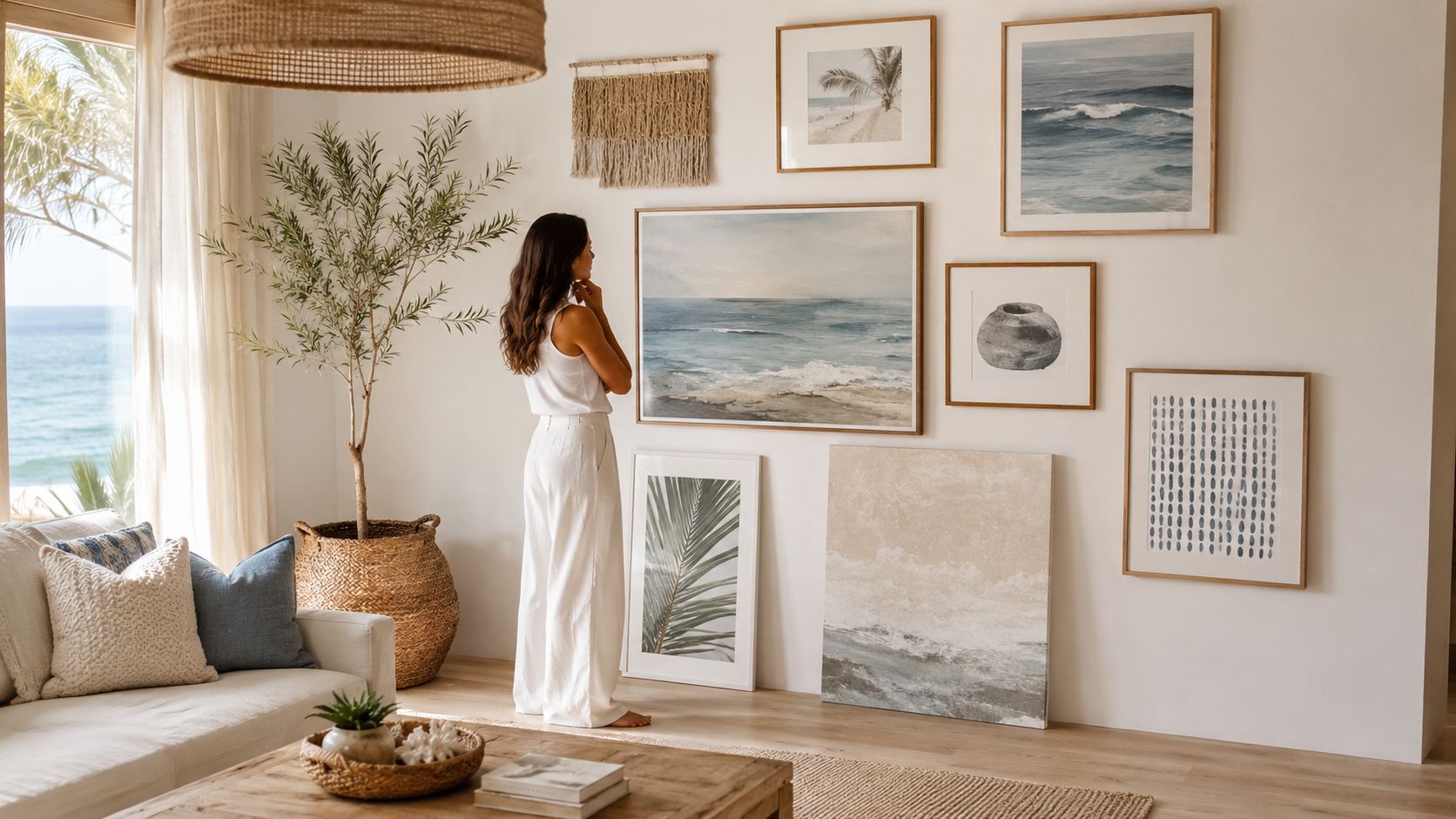
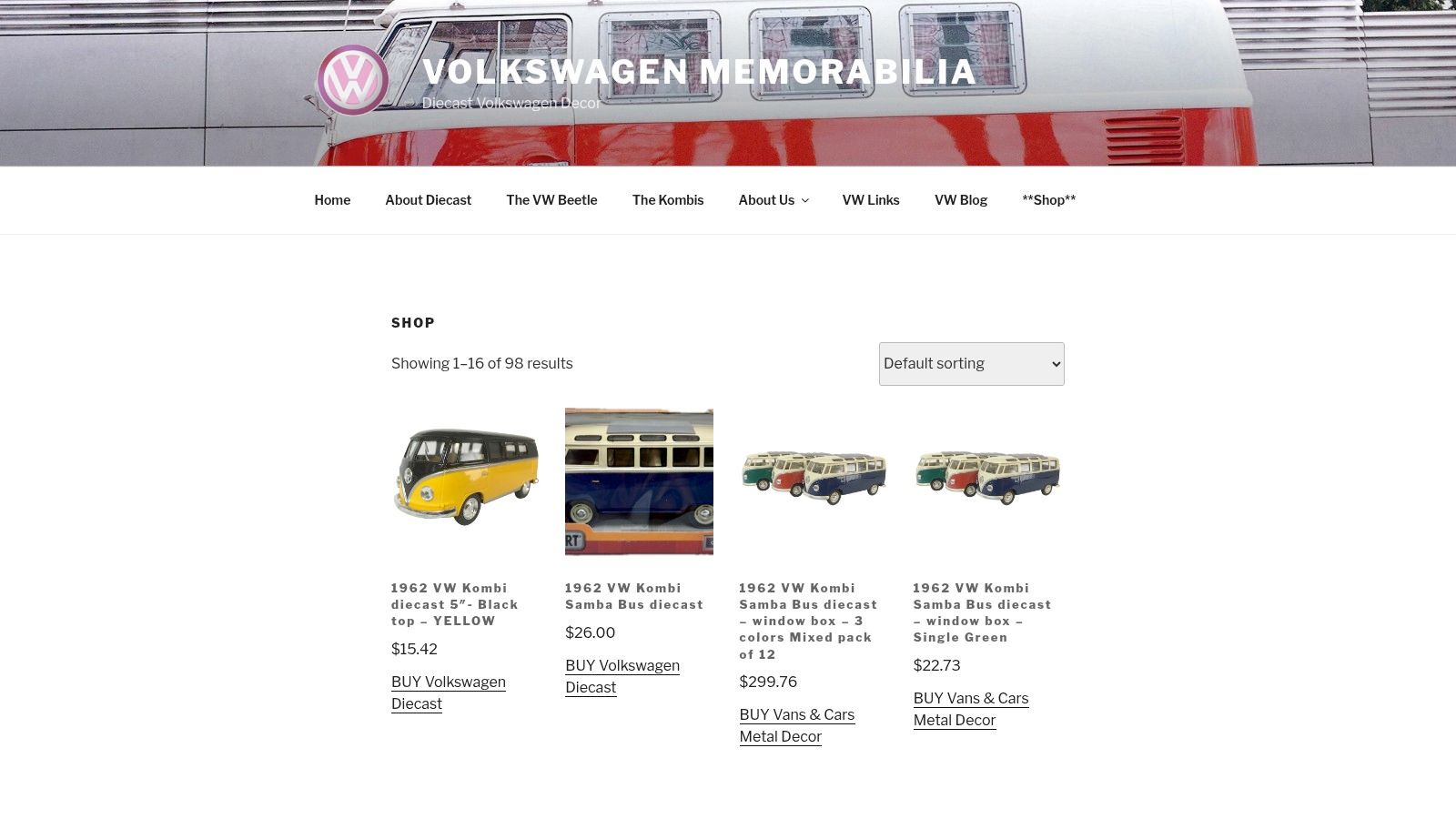
Heat, moisture and the old metal box problem

A metal-bodied camper parked in Australian conditions can hold heat long after the sun drops. Add two people sleeping inside, maybe a kettle on in the morning, maybe wet bathers hanging from a hook, and the air gets muggy fast. That moisture settles where you don't want it.

Condensation isn't just annoying on glass. Over time, it can encourage mouldy smells, damp fabrics and the kind of creeping corrosion that makes old-vehicle ownership more expensive and less fun.

If you've already worked on van insulation ideas for campers, you'll know insulation and ventilation belong in the same conversation. One helps slow heat transfer. The other helps move stale, damp air out before it hangs around too long.

A fan isn't the whole answer

Ventilation has long been treated as a measurable part of building design, not a decorative extra. Historic standards discussed roof-space ventilation in terms like 1/300 of roof area, and modern code guidance still works within measurable ranges such as 1/150 to 1/600, with the 2021 International Residential Code recommending 1/150 as a minimum, as outlined in this attic ventilation history and code overview. The useful lesson for a van owner is simple. Airflow works best when it's planned, not guessed.

That same logic applies to a Kombi or camper conversion. A roof fan only shines when fresh air has a sensible path in and stale air has a clear path out.

What good airflow protects

Concern What poor ventilation does What better airflow helps with
Cabin comfort Traps hot, heavy air Clears built-up warmth
Overnight camping Leaves windows wet by morning Helps reduce lingering condensation
Interior materials Holds dampness in fabrics and timber Keeps the cabin drier
Long-term care Encourages musty smells in hidden corners Supports a healthier interior environment

Choosing the Right Fan for Your Vee-Dub

Not every fan suits every Volkswagen. A split-screen weekend cruiser, a pop-top camper and a Beetle-based custom all ask for different things. What looks tidy on one roof can look like a backyard afterthought on another.

That's why choosing a fan in roof setup is part practical decision, part visual judgement.

An infographic showing four different types of roof fans for Volkswagen camper vans to improve air circulation.

The main fan styles

Some owners want simple airflow and barely any visual fuss. Others want stronger extraction for sleeping, cooking and humid nights. If you've ever looked at a modern 12 volt air conditioner for camper setups, you'll know how quickly power use and hardware bulk can escalate. Roof fans sit in a much friendlier middle ground.

Here's the practical comparison.

Fan type Best for What VW owners usually like Watch-outs
Compact roof vent Smaller campers, subtle builds Low profile, simple look Modest airflow
High-flow reversible fan Full camper interiors Can pull air out or bring air in More visible on the roof
Multi-speed electric fan Frequent overnighters Better control over noise and comfort Needs thoughtful wiring
Solar vent fan Daytime passive-style use Appeals to off-grid campers Depends on sun and placement
Wind-driven vent Vintage-minded owners No draw on electrics, simple idea Limited control

What matters more than the brochure

Noise matters. If the fan sounds like an old workshop extractor, it'll spoil the mood faster than mosquitoes. You want enough movement to clear the cabin, but not so much racket that you can't hear the surf or the rain on the roof.

Looks matter too. A clean bay-window roofline is part of the whole romance. On some buses, a low-profile vent suits the shape beautifully. On others, a chunky lid can feel out of character.

Practical rule: If you hesitate every time you look at the fan from ten metres away, it's probably the wrong one for your van.

A note on airflow and size

For powered roof and attic fans, one engineering rule used in building science is 0.5 CFM per square foot of attic space for every 2 feet of peak attic height, which is described as enough for at least 15 complete air exchanges per hour. The same guidance gives an example of a 1,500 ft² attic with 4 ft peak height needing about 1,500 CFM, as explained in this fan sizing guide.

You wouldn't copy those attic numbers straight onto a Kombi roof. It's still a handy reminder that fan size should match volume. Too small and the air never really turns over. Too big and you can end up with unnecessary noise, more electrical demand and a roof unit that looks oversized for a compact classic.

Planning Your Fan in Roof Installation

Cutting into a classic VW roof can make even seasoned tinkerers go quiet for a minute. Fair enough too. You're not drilling a shelf in the shed. You're altering one of the most visible panels on the whole vehicle.

That's why planning matters more than bravado.

A person measuring a circle drawn on the roof of a vintage Volkswagen bus toy model.

Start with placement, not tools

On a Kombi, the best location is usually the spot that gives clear airflow through the cabin without interfering with structural ribs, pop-top hardware, roof racks or interior cabinetry. On a camper fit-out, think about where heat and moisture collect. Above the sleeping area and galley often makes sense, but only if the roof section can support the fan and seal properly.

If your van has a camper van pop top layout, placement becomes even more specific. You need room for lift mechanisms, canvas movement and whatever bed base or trim lives underneath.

A good checklist before any cutting starts:

  • Map the roof shape. Find ribs, crown, seams and any existing fittings.
  • Check inside first. Cupboards, lights and wiring can kill a good plan fast.
  • Think about use. Sleeping airflow, cooking extraction and wet gear drying don't always need the same position.

Balanced airflow matters

A fan can't pull out air properly if replacement air has nowhere sensible to come from. Building-science guidance is blunt on this point. If an exhaust fan runs without enough intake vent area, it can create negative pressure, struggle to work efficiently, and pull air from places you don't want, as noted in this ventilation guidance from PNNL.

For a van, that usually means one simple habit. Crack a window or create a planned low-level inlet so the fan isn't fighting a sealed metal box.

Open path in, open path out. That's the whole game.

The same guidance also warns that fan performance depends on intake and exhaust being balanced, and discusses moisture control targets in roof assemblies. Again, a house roof isn't a Kombi, but the principle carries over beautifully. Don't just install extraction. Design airflow.

Wiring and weatherproofing

A roof fan on a classic VW should respect the electrical system it's joining. If you've got a leisure battery or house battery setup, that's usually the cleanest home for it. Keep wiring tidy, fused correctly and routed where vibration and sharp edges won't chew through insulation over time.

Waterproofing is the other place you don't take shortcuts. The seal has to cope with sun, movement, rain and age. Good preparation, correct sealant for automotive use and careful fastening matter more than speed.

A short visual walk-through can help you picture the job before you commit:

Know when to hand it over

Some owners are brilliant with timber cabinetry, 12V wiring and tidy trim work. Some would rather drive to the next swap meet than cut steel overhead with a jigsaw. Both approaches are fine.

Call a professional if any of these ring true:

  • Your roof is rare or freshly restored and you can't stomach the risk of a mistake.
  • You're unsure about sealing around curves, ribs or a pop-top opening.
  • Your wiring is already crowded and you don't want electrical gremlins before your next trip.

More Than a Fan It Is a Lifestyle

Once the fan's in and working properly, the change doesn't feel dramatic in a flashy way. It feels generous. The van stays pleasant for longer. The cabin air feels fresher in the morning. That hidden little beach camp suddenly seems like a place you can linger.

And that's what makes the upgrade so VW in spirit.

Classic Volkswagen ownership has always been about thoughtful compromises. You accept the quirks because they're part of the charm, then you make careful improvements that let you enjoy the machine more often. A fan in roof setup fits that tradition nicely. It respects the old bus while making room for modern comfort.

The history behind the idea

Roof-mounted ventilation didn't begin as a lifestyle accessory. Ventilation history includes a manually cranked wooden fan called a blowing wheel in the House of Commons in London, noted as just over two metres in diameter, and later electrically driven extract-air fans in a Stockholm apartment block in 1931. The same history says mechanical ventilation had its real breakthrough in apartment blocks just over 20 years later, especially those three or more storeys high, according to Swegon's history of ventilation technology. That progression explains why roof fans are usually best thought of as part of a whole airflow plan, not just a spinning gadget bolted up top.

That same mentality suits a classic VW beautifully. Consider the whole cabin. How air enters. How it exits. How the van feels after a long day on the road.

Screenshot from https://vwmemorabilia.com.au/shop/

Why these little upgrades matter

Some people personalise their Dub with wheels and stance. Some do it with plaid curtains, timber shelving or a better camp kitchen. Ventilation belongs in the same family of choices. It's practical, yes, but it also says something about how you use the van. Not as a museum piece. As a companion.

Your Top Questions Answered

Will a roof fan hurt originality or resale

It depends on the vehicle and the buyer. If you've got a highly original survivor, any roof cut is a serious decision. If you've got a camper that already wears thoughtful touring upgrades, a neat and well-finished fan can feel consistent with the van's purpose. Clean workmanship matters more than the idea itself.

If originality keeps you up at night, look hard at reversible ventilation options first. If you do go ahead, keep documentation, parts notes and photos of the work.

Can I run a roof fan overnight

Usually, yes, if your electrical setup is planned properly. The key isn't bravado. It's knowing what battery supports the fan and how the van is used. Many classic VW owners prefer to run camping accessories from a separate leisure battery rather than lean on the starting battery.

The smartest setup is the one that leaves you with airflow at midnight and confidence at dawn.

Do I still need to crack a window

Yes, in most cases that's the sensible move. Public advice often focuses on putting the fan near the highest point and making sure intake ventilation exists, but the more nuanced question is whether a powered fan should be used at all in a given climate and build style. Some installer guidance prefers ridge-style passive ventilation unless a fan is needed, and warns that powered solutions can create moisture problems if the broader assembly is already insulated and sealed, as discussed in this commentary on powered attic fans and climate context.

For a camper, the lesson is straightforward. Don't assume more hardware automatically means better camping. Match the fan to how your van breathes.

Are solar or thermostat-controlled fans worth considering

Sometimes they are. One gap in a lot of roof-fan advice is the lack of discussion around operating cost, maintenance and how often controlled fans run. Some installer guidance notes that certain units include thermostat and humidistat controls, which shifts the primary question from “can I fit one?” to “how will it behave over time?”, as raised in this discussion about roof-fan cost and control trade-offs.

That's especially relevant in Australia, where conditions swing from dry inland heat to humid coastal nights. The best choice isn't always the biggest fan or the fanciest one. It's the one that suits your camping habits, roof layout and tolerance for maintenance.

Is a giant RV fan overkill for a Kombi

Often, yes. A Kombi's cabin is compact compared with a large modern RV. Big hardware can look clumsy, draw more power and dominate the roofline. Most classic VW owners are happier with a unit that matches the van's scale and keeps the silhouette tidy.


If your love of Volkswagens extends from the driveway to the display shelf, have a look at Volkswagen Memorabilia. It's a ripper spot for officially inspired VW gifts, coastal-style collectibles and diecast favourites that celebrate the same Kombi and Beetle spirit we chase on the road. Whether you're after a shelf-worthy Samba Bus, a thoughtful present for a VW tragic, or locally stocked pieces with fast Australian shipping, you'll find plenty to like in the shop.

The Ultimate Guide to VW Memorabilia for Aussie Collectors in 2026

G'day mate! There's a special kind of magic that comes with owning a piece of Volkswagen history, isn't there? Whether it's the gentle curve of a Beetle's roof or the unmistakable friendly face of a Kombi, these aren't just cars; they're rolling icons of freedom, adventure, and good times. And what better way to celebrate that spirit than with a beautifully crafted diecast model sitting on your shelf?

Here at Volkswagen Memorabilia, we're just as obsessed as you are. We live and breathe the heritage of these German classics, and we've made it our mission to bring the very best, officially licensed VW diecast models right here to Australia. So grab a cuppa, pull up a chair, and let's chat about what makes these miniature marvels so special and how to start or grow your own collection.

Why We All Have a Soft Spot for Classic VWs

For so many of us Aussies, the love for VW runs deep. Maybe you grew up with family holidays packed into a Kombi, heading up the coast for a surf. Perhaps your first car was a trusty old Beetle that never let you down. Or maybe you've just always admired their timeless design and the sense of community that surrounds them.

From the sandy tracks of Fraser Island to the bustling streets of Melbourne, these vehicles are part of our national story. They represent a simpler time, a spirit of adventure, and an engineering philosophy that was built to last. It’s this rich history and emotional connection that make collecting Volkswagen diecast models so rewarding. Each little model is a tribute, a piece of nostalgia you can hold in your hand.

More Than Just a Model Car

Collecting VW memorabilia is about so much more than just having a few toy cars. It’s a way to connect with the brand's incredible history and the culture that grew up around it.

  • A Nod to Nostalgia: Every diecast Volkswagen Beetle model or Kombi replica is a little time machine, sparking memories of road trips, car shows like the VW Nationals, and that feeling of hitting the open road.
  • An Appreciation for Design: These models celebrate the iconic designs that changed the automotive world forever. The clever, rear-engine layout of the Beetle, the practicality of the Type 2 Transporter—it's all there, perfectly captured in miniature.
  • Joining a Community: Being a collector connects you with a passionate community of fellow enthusiasts. It’s a tribe that shares stories, trades models, and celebrates a shared love for all things VW.

This guide is your roadmap to the wonderful world of VW diecast collecting. We’ll explore the different scales, highlight some must-have models, and give you some handy tips for displaying your collection with pride. Let’s dive in!

Getting Started: Understanding Scales and Models

When you first start looking to buy diecast Kombi models or Beetle replicas, one of the first things you'll notice is all the different scales. It can seem a bit confusing, but it's actually pretty simple once you get the hang of it. The scale is just a ratio that tells you how the size of the model compares to the real thing.

Getting to know the popular scales is the key to building a collection you'll love. Each one offers a different level of detail, takes up a different amount of space, and suits different budgets.

1:18 Scale: The King of Detail

If you're a stickler for detail, the 1:18 scale is where the magic really happens. These are the big boys of the diecast world, often measuring around 25 centimetres long. At this size, manufacturers can go all-out with features.

Think opening doors, bonnets, and engine lids. You’ll find detailed interiors with tiny dashboards, moving steering wheels, and even little fabric seatbelts. The engines are often beautifully replicated, making these models a joy to inspect up close. They're perfect as a stunning centrepiece for your collection. Our range of 1:18 scale Kombi Samba Bus diecast models are a fantastic example of this incredible craftsmanship.

A comparison infographic showing roll-out awnings versus 270-degree batwing awnings for camper van camping setups.

1:24 Scale: The Perfect Balance

The 1:24 scale is a brilliant all-rounder and one of the most popular choices for collectors. These models strike a fantastic balance between size, detail, and price. They’re large enough to feature plenty of accurate details—like opening doors and well-modelled interiors—but they don't take up as much shelf space as their 1:18 counterparts.

This scale offers a massive variety of models, from classic Split-Window Kombis to Herbie the Love Bug. It’s a great scale to start with if you want to build a diverse collection that showcases different eras of VW history.

1:43 and 1:64 Scale: Small but Mighty

Don’t underestimate the smaller scales! Models in 1:43 and 1:64 (similar to the classic Matchbox car size) are perfect for collectors with limited space or those who want to build a huge fleet of vehicles.

While they might not have the opening parts of the larger scales, the quality of modern small-scale models is incredible. You'll be amazed at the sharp paintwork, authentic logos, and realistic wheels. They’re a fantastic and affordable way to collect dozens of different variations, from police Beetles to ambulance Kombis.

No matter which scale you choose, the goal is the same: to find models that make you smile. Whether it’s one magnificent 1:18 scale model or a whole fleet of 1:64s, it’s all about celebrating the cars you love.

Tips for Building and Displaying Your Collection

Alright, so you've caught the bug and started bringing a few models home. Brilliant! Now comes one of the most enjoyable parts: deciding how to display your collection. A well-displayed collection doesn't just look great; it tells a story and turns your passion into a genuine feature of your home or office.

Showing off your VW memorabilia collectibles is a personal thing, but here are a few ideas that we've seen work a treat at car shows and in fellow collectors' homes.

From Bookshelf to Bespoke Cabinet

The way you display your models can be as simple or as elaborate as you like. The most important thing is to keep them safe and dust-free.

  • Enclosed Display Cases: This is the gold standard for a reason. A glass-front cabinet protects your precious models from dust and accidental bumps while letting you admire them from every angle. You can find them in all shapes and sizes to fit your space.
  • Wall-Mounted Shelves: Floating shelves can create a really modern, clean look. Try arranging your models chronologically to show the evolution of the Beetle, or group them by colour for a vibrant, eye-catching display.
  • Themed Dioramas: Feeling creative? Why not build a small diorama? A little model garage scene, a beachfront campsite for your Kombi, or a classic street scene can bring your collection to life. It’s a fantastic way to add personality.

A composite image showing three different mounting methods for vehicle roof awnings on various van models.

Why Buy Licensed Models in Australia?

When you’re looking for Volkswagen diecast models for sale, you'll see the term "officially licensed" pop up a lot. This is a really important mark of quality.

An officially licensed product means the manufacturer has been given the green light by Volkswagen AG themselves. It means the model has been designed with access to the original plans and archives, ensuring it’s an accurate and faithful representation of the real car. It’s your guarantee that you’re buying a quality, authentic collectible, not a cheap knock-off.

As a dedicated Australian importer, we take care of all the sourcing for you. We work directly with the world’s best licensed manufacturers to ensure you get top-notch models. Plus, buying locally from us means you get fast, reliable shipping from Aussie stock, and you’re supporting a local business that shares your passion. No more waiting weeks for overseas parcels or dealing with dodgy international sellers!

Whether you’re just starting out or you’re a seasoned collector, remember that every model has a story. Pick the ones that speak to you, display them with pride, and enjoy the journey of building a collection that’s uniquely yours.

The Most Iconic VW Models to Collect

Right, let's get to the fun part: the cars themselves! While every VW has its charm, there are a few absolute legends of the lineup that are must-haves for any serious collector. These are the models that defined an era and captured the hearts of millions. Getting your hands on a quality diecast version of these icons is a real thrill.

First and foremost, you have the two titans of the VW world: the Beetle and the Kombi. No collection feels complete without them, and the sheer variety of models available is mind-boggling.

The People's Car: The Volkswagen Beetle

The Type 1 Beetle is where it all began. It’s one of the most recognisable car shapes on the planet. From the early "split-window" models of the 1940s to the final Ultima Edición from 2003, the Beetle’s story is a collector’s dream.

You can trace its entire evolution through diecast models. Look out for different variations like the stylish Karmann-built Cabriolet, the legendary "Herbie" movie car, or the rugged Baja Bug racers. A beautifully detailed Volkswagen Beetle model is the perfect cornerstone for any collection.

The Free Spirit: The VW Kombi (Type 2)

If the Beetle was the people’s car, the Kombi was the people’s adventurer. It’s the undisputed symbol of freedom, road trips, and counter-culture. From the original "Splitty" (T1) to the later "Bay Window" (T2) and beyond, the Kombi has a special place in Aussie hearts.

The variety for collectors is incredible. You'll find everything from basic panel vans to the magnificent, window-filled Kombi Samba Bus diecast models. These are often considered the holy grail for collectors, with their two-tone paint, sunroof, and skylight windows. They perfectly capture the charm and optimism of the 1950s and 60s.

Iconic Model Comparison: Beetle vs. Kombi Samba

Feature Classic VW Beetle VW Kombi Samba Bus
Nickname The "Bug" "Splitty," "Microbus"
Iconic Feature Rear engine, curved shape Split windscreen, 21 or 23 windows
Cultural Impact Affordable, reliable transport Symbol of adventure and surf culture
Diecast Appeal Classic design, huge variety Two-tone colours, detailed interior
Best For Celebrating VW's origins Capturing the spirit of freedom
Find Them Here Volkswagen Beetle models Kombi Samba Bus models

At the end of the day, you can’t go wrong with either. Most collectors end up with a healthy mix of both!

Comparison of waterproof grey vinyl and breathable poly-cotton canvas fabric samples for van awnings on a wooden surface.

Beyond these two giants, don't forget other classics like the elegant Karmann Ghia, the practical Type 3 "Squareback," or even the quirky Type 181 "Thing." Building a collection is a journey of discovery, and there's always another fascinating piece of VW history to add to your shelf.

Looking After Your VW Memorabilia

Your collection is an investment, not just in money, but in passion and time. Looking after your models properly will ensure they stay looking factory-fresh for years, preserving their beauty and value. Luckily, caring for diecast models is pretty straightforward.

The biggest enemies of a pristine collection are dust, sunlight, and fingerprints. A little bit of regular, gentle care is all it takes to keep them at bay.

The Golden Rules of Diecast Care

If you only remember a few things, make them these. It’s the secret to keeping your models looking as good as the day you got them.

1. Keep Them Out of Direct Sunlight: This is the most important rule of all. The sun's UV rays are brutal and can cause the paint to fade and plastic parts to become brittle over time. A shady spot away from a window is always best.

2. Dust Gently and Regularly: Dust is inevitable, but getting it off is easy. A soft makeup brush or a can of compressed air (used from a distance) is perfect for getting into all the little nooks and crannies without scratching the paint or breaking off delicate parts like mirrors.

3. Handle with Care: When you do pick up your models, try to hold them by the chassis or roof rather than the delicate bits. The oils from your fingers can tarnish the paint over time. Some serious collectors even wear cotton gloves!

"Think of each model as a miniature classic car. You wouldn't leave your real Kombi out in the sun to bake or let it get covered in dust. A few minutes of care here and there is all it takes to protect your passion project and ensure it brings you joy for decades."

By following these simple tips, you’ll not only keep your collection looking spectacular, but you’ll also be protecting its long-term value. It’s a small effort that pays off in a big way.

Common Questions from VW Collectors

As you dive deeper into the world of VW collecting, a few questions always pop up. Here are some quick answers to help you on your journey.

What is the Best Scale to Start Collecting?

For most new collectors, the 1:24 scale is a fantastic starting point. It offers a great balance of detail, size, and affordability. You'll find a massive range of models available, from classic Beetles to Kombis, allowing you to build a diverse collection without needing a huge amount of space.

Are My Old VW Models Worth Anything?

They could be! The value of vintage diecast models depends on their age, rarity, condition, and whether you still have the original box. Models from the 1960s and 70s from brands like Corgi, Dinky, or Matchbox can be quite valuable, especially if they are in mint, boxed condition. The best way to get an idea is to check online auction sites for recent sale prices of similar models.

How Can I Tell if a Model is Officially Licensed?

Look for the official Volkswagen "VW" logo on the packaging. The box will usually state "Officially Licensed by Volkswagen" or something similar. This is your assurance that the model is an accurate, high-quality replica that has been approved by VW. All the models we sell at Volkswagen Memorabilia are 100% officially licensed products.

Where is the Best Place to Buy VW Diecast Models in Australia?

For the best range of licensed, high-quality VW Kombi diecast Australia and Beetle models, a specialist retailer is your best bet. Here at vwmemorabilia.com.au, we are an Australian-owned and operated importer. This means all our stock is located here in Australia, ensuring fast shipping, easy returns, and friendly local service. You get the world's best models without the hassle of international shipping.


At Volkswagen Memorabilia, we're more than just a shop; we're a hub for fellow enthusiasts. We share your passion for the incredible history and timeless design of these amazing vehicles. As you continue to build your collection, we invite you to browse our curated range of diecast models and memorabilia. Explore our full range of VW treasures today!

Transporter Combi Van: A Collector’s Guide to a VW Icon

A few summers back, I was parked near the coast with a coffee in hand when an old Kombi rolled past, boards on the roof and salt on the paint. Half the people nearby turned to look, and every one of them smiled.

That's the thing about the transporter combi van. It isn't just transport. It's memory, workhorse, road trip, surf wagon, family hauler, and for a lot of us, the shape that started a lifelong VW obsession.

That Feeling of Freedom When a Kombi Drives By

You know the scene. Early sun, a beach car park, kids kicking a footy, someone unpacking an esky, and then a VW van glides through with that unmistakable nose and cheerful stance. Even people who don't know a T1 from a T6 recognise the vibe straight away.

In Australia, the Kombi feeling has always been tied to movement. Not rush. Not commuting. Real movement. Heading up the coast, carrying mates to a market, loading tools on Friday and camping gear on Saturday. The transporter combi van became part of that rhythm because it fit real life so well.

I've spoken to owners at shows who remember them in completely different ways. One bloke remembers his dad's van full of ladders and paint tins during the week. Another remembers sitting on the rear bench with sandy feet after surf lessons. Same vehicle family, same basic idea. Different stories layered into the same silhouette.

That's why the Transporter matters. It's a van, yes, but it's also one of those rare Volkswagens that feels equally at home in a workshop driveway, a holiday park, or a collector's display cabinet.

Some vehicles get admired. A Kombi gets remembered.

A Journey Through Time The VW Transporter Story

The Transporter story starts with a simple VW truth. If you build something honest and useful, people find all sorts of beautiful reasons to love it. What began as a practical van evolved into a whole family of shapes and personalities, from bare-bones load carriers to cheerful people movers.

The earliest generations still define the iconic look associated with the term “Kombi”. The T1, often nicknamed the Splitty, has that charming split windscreen and rounded face that feels almost hand-drawn. The T2 Bay Window softened the same friendly idea into a wider, more open look. Later generations became squarer, smarter, and more modern, but they never lost the Transporter's core brief. Carry people, carry gear, and do it without fuss.

A timeline infographic detailing the evolution of the Volkswagen Transporter van from 1947 to 2022.

Why Australia Took to It

Australia has always had room for vehicles that can do more than one job. That helps explain why the Transporter became such a familiar sight here. The line has been on sale for more than 70 years and is widely described as the best-selling van in history, with over 12 million units sold worldwide according to the Volkswagen Transporter history overview.

That sort of long run matters. It means the van wasn't a fad or a niche curiosity. It became a benchmark. The same broad Transporter family has included panel van, kombi, window van and shuttle body styles, which is a big reason Australians kept finding new uses for it over the decades. If you collect miniature VWs, that long bloodline is part of the appeal too. You can see the family resemblance from one era to the next in a way few vehicle lines manage. It's part of what makes browsing classic Volkswagen Transporter camper pieces so satisfying.

More Than Counterculture

People often talk about the Kombi as a symbol of freedom, and fair enough. But that's only half the story. The other half is graft.

These vans earned their place because they worked. Tradies used them. Families toured in them. Beachside businesses packed them with gear. Support crews used them because a good van doesn't care whether you're hauling camping chairs or equipment boxes. That practical backbone is exactly why the romance has lasted.

What Exactly Makes a Transporter a Combi

A lot of people use “Kombi” as shorthand for any classic VW van, but the word matters. Combi comes from the idea of combination. Not full cargo van. Not full passenger bus. A transporter combi van sits right in the sweet spot between the two.

A panel van is mostly about load space. A microbus leans hard into carrying people. The Combi is the clever middle child. It gives you seats where you need them and usable cargo room behind them. That's why it has always suited Australian owners who don't live in neat little categories.

The Real Magic Is the Layout

Modern Kombi specifications show the same logic that made the format famous in the first place. In Volkswagen's Kombi material, the second row uses three individual seats, and reconfiguring them can create up to 4,343 litres of storage space according to the Volkswagen Kombi specification page. That one detail says a lot.

You can read that spec sheet in a very human way:

  • For a tradie: seats for the crew on the way to site, room for gear on the way back
  • For a surf run: people in the cabin, wetsuits and boards stowed without turning the trip into chaos
  • For a family weekend: enough flexibility that nobody has to choose between bringing passengers or bringing half the holiday setup

Practical rule: If a van can switch roles without drama, owners keep it longer and talk about it more fondly.

That's the heart of the Combi idea. It doesn't ask you to own one vehicle for work and another for fun. It tries to cover both with one shape and a bit of clever packaging.

Why the Name Still Means Something

Even if you're mainly into diecast and memorabilia, understanding the Combi helps you spot why some models carry more emotional weight than others. A van that was designed to do a bit of everything naturally ends up in more family photos, more road trip stories, and more workshop memories.

That's why the transporter combi van has never been just a trim level to enthusiasts. It's a way of using a Volkswagen.

From Splitty to Samba Identifying the Icons

Collectors tend to fall for details first. A roofline. A window shape. The curve of the front badge panel. With classic VW vans, a few visual cues tell you almost everything.

A blue Volkswagen panel van and a yellow Volkswagen Samba bus parked side by side outdoors.

The T1 Splitty is the easy one to spot. Two-piece windscreen. Rounded body. A front end that looks friendly even standing still. The T2 Bay Window keeps the classic proportions but swaps in a larger single-piece windscreen, giving the face a more open look. Then there's the Samba, which takes the early bus formula and adds the sort of glass-heavy style that makes collectors go weak at the knees.

The Spotter's Guide

Feature T1 (1950–1967) 'Splitty' T2 (1967–1979) 'Bay Window'
Windscreen Split into two panes Single large bay window
Overall feel More rounded and early post-war charm Slightly broader, more open-faced look
Collector appeal Deep nostalgia and iconic silhouette Strong road-trip character and classic surf culture presence
Common reaction at shows People crowd around the front end People imagine loading it for a weekend away

The Samba sits in a special place because it captures the playful side of VW design so well. More glass, more light, more theatre. It feels celebratory before the engine even turns over.

Why These Variants Matter Beyond Looks

Classic shapes get the posters and the diecast releases, but the practical side still matters. For Australian buyers looking at a real-world Kombi format, payload and towing change depending on model and powertrain. Volkswagen material for TDI Kombi variants notes up to 1.28-tonne maximum payload and up to 2.8 tonnes towing capacity, with lower figures for BEV versions, as shown in the Transporter brochure.

That trade-off is part of the Kombi story. Add seats, and you shape the van around people. Prioritise load, and you shape it around work. The smartest owners always knew that, and the smartest collectors appreciate it too. These weren't pretty shells. They were proper working Volkswagens.

For a closer feel of why the early buses still charm people so much, this video is a nice little companion while you read.

Why the Samba Owns Shelf Space

If you're choosing one diecast to represent the whole VW bus legend, a Samba is hard to beat. The windows, the roof treatment, the bright period colours, the sense of occasion. It turns a shelf into a story.

That's exactly why so many collectors start with a Volkswagen Samba Bus diecast model. Even in miniature, the design does what the van did. It draws people in.

Bringing the Legend Home Collecting VW Diecast Models

Owning a real Kombi is a dream for some people and a full-time project for others. Owning a good diecast is much simpler. You still get the shape, the paint, the history, and that lovely little jolt every time you walk past the shelf.

A person holds a red and white Volkswagen T1 model van on a wooden shelf with other models.

The appeal isn't just nostalgia. It's design appreciation. Modern Transporter variants still carry the practical DNA that made the old vans so beloved, with fuel consumption as low as 6.9 L/100 km and payloads over 1,000 kg in current-era examples, as outlined in the CarsGuide Transporter overview. Collectors see that lineage in miniature. The best models don't feel like random toy vans. They feel like scaled-down members of a long-running family.

What to Look For in a Good VW Model

A decent diecast tells the truth about the vehicle. That's what separates a shelf piece from a throwaway novelty.

  • Licensed design: Officially licensed models usually get the proportions, badging, and trim details right
  • Period-correct colour: Two-tone paint on a T1 or a bright surfy finish on a later bus can completely change the feel
  • Display purpose: Some people want a clean collector piece. Others want something cheerful for a desk, a gift box, or a beach-house shelf

If you're starting out, it helps to browse a proper category rather than one-off listings scattered around the internet. The Volkswagen model cars collection is one example of a dedicated category where you can compare styles more easily.

Easy Picks for Different Collectors

Some collectors want strict classic accuracy. Others want fun.

  • A 1962-style Kombi bus model suits the purist who loves early lines and two-tone charm
  • A Samba Bus diecast works beautifully if you want the most instantly recognisable bus shape
  • A Flower Power Beetle adds colour and a softer counterculture note alongside your vans
  • Mixed displays with both a VW Kombi diecast Australia range feel and a Volkswagen Beetle model selection can tell the whole story of the brand in one cabinet

Buy the model that reminds you of a person, a trip, or a colour scheme first. The “perfect” collection usually starts with a memory, not a checklist.

For Australian buyers, local stock matters too. Faster shipping, easier support, and less waiting around all make collecting more enjoyable, especially when you're buying a gift or finishing off a display before an event.

Styling Your Space with VW Nostalgia and Coastal Charm

A good VW model shouldn't disappear into clutter. Give it a little room and it starts doing what a real Kombi does. It sets a mood.

A wooden shelf displays several miniature Volkswagen Transporter Combi van models under a California coastal wall print.

I've seen some terrific home setups over the years, and the best ones rarely look expensive or overthought. They look personal. A small shelf with a Kombi, a framed beach print, and a weathered timber finish can say more than a giant cabinet packed tight with models.

Display Ideas That Actually Work

  • Coastal shelf: Pair a Kombi diecast with a surf-themed print, pale timber, and a small shell or driftwood accent
  • Office corner: A Beetle or Samba on the desk adds character without turning the room into a showroom
  • Gift vignette: A model van, a card, and a simple display stand can make a thoughtful present feel properly considered

Keep the Story Cohesive

Choose one mood and stay with it. If your van is bright and beachy, support it with coastal décor. If it's a more classic red-and-cream bus, lean into retro tones and old travel energy. The point isn't to make your home look like a museum. It's to create little pockets of feeling.

For people who enjoy mixing vehicle collectibles with beach-house styling, browsing vintage home accessories can help tie the display together without it feeling forced.

A Few Small Styling Tips

Leave breathing room around the model. A Kombi has character in its shape, and crowded shelves hide it.

Try raising one model on a small stand or stacked book. Use warm light rather than harsh white light. If you've got more than one VW piece, vary the heights so the display feels relaxed rather than lined up like stock on a store rack.

And if you've got kids or grandkids who are fascinated by the little vans, place one lower down where it can spark a conversation. Half the fun of VW memorabilia is the stories it starts.

FAQ

Is a Kombi the same as a Transporter?

Not exactly. Transporter is the broader vehicle line, while Kombi refers to the combination-style layout that blends passenger seating with cargo space.

What makes a Samba different from a regular bus?

A Samba is prized for its distinctive window-heavy style and its special visual character. It's one of the most recognisable and collectable classic VW bus variants.

Why do collectors love the Splitty so much?

The split windscreen, rounded body, and early VW charm give it a look that's instantly identifiable. Even people who aren't deep into VW history tend to recognise it.

Are diecast VW models worth buying if I'll never own a real Kombi?

Absolutely. For plenty of enthusiasts, diecast is the practical way to enjoy the design, heritage, and nostalgia without the cost and upkeep of a full-sized classic.

What should I buy first if I'm new to VW memorabilia?

Start with the model that means something to you. For many people, that's a Samba Bus, an early Kombi, or a Beetle in a colour they remember from childhood.


If you're ready to bring a bit of that VW spirit into your home, have a look through Volkswagen Memorabilia. You'll find licensed VW diecast, Kombi and Beetle favourites, and coastal-inspired pieces that suit collectors, gift buyers, and anyone who still smiles when a Kombi drives by.

Your Guide to the Tie Down Ratchet for VW Lovers

You know that feeling. You've found the part you've been chasing for months at a swap meet, or finally picked up a boxed Samba Bus model that still has crisp corners and unfaded artwork, and the excitement lasts right up until you look at your boot, your trailer, or the back seat and think, “Right. How do I get this home without turning it into a cautionary tale?”

That's where a good tie down ratchet earns its keep. Not as glamorous as a period-correct roof rack or as charming as a split-screen bus, but every bit as important when you're hauling something you care about.

For VW people, this stuff matters more than most. We don't just move cargo. We move memories, rare finds, restored panels, market treasures, and little pieces of history.

That Heart-in-Mouth Moment Getting Your Treasure Home

A lot of us have done the optimistic load-up. A Beetle bumper wrapped in an old blanket. A roof rack balanced “just for the drive home”. A crate of parts shoved behind the front seats of a Kombi with the quiet hope that nothing rolls, rubs, or chips.

It usually starts well. You score the item, have a yarn with the seller, grab a coffee, and then reality kicks in. The roads home aren't smooth, braking isn't gentle, and even a short trip can be enough to let something slide, tip, or knock against a painted surface.

That's why the humble tie down ratchet belongs in the same mental category as a decent tool roll and a fire extinguisher. It's not exciting until the moment you need it, and then it's the difference between a clean arrival and a very ordinary afternoon.

A mate once described it perfectly at a car show. Buying the part is the thrill. Getting it home safely is the true skill.

Practical rule: If the item would upset you to see scratched, crushed, or shifted on the first corner, secure it properly before you leave the car park.

This applies whether you're hauling a full-size panel or something smaller and sentimental. The same careful thinking that protects a vintage door card also protects a boxed diecast piece or a rare garage sign. Even aspirational browsing can trigger the transport question. One minute you're admiring a dreamy Volkswagen bus camper for sale, the next you're thinking about roof racks, trailers, and what gear you trust to hold precious cargo still.

Why VW enthusiasts need a different mindset

Classic VW bits aren't always shaped nicely. A bonnet catches wind. A bumper can swing. A boxed model can crush at the corners long before the contents are damaged. The load might not be especially heavy, but it can still be awkward, delicate, or impossible to replace.

That's why “she'll be right” doesn't cut it. Good restraint isn't just about brute strength. It's about matching the strap, the shape, and the pressure to the item in front of you.

Choosing the Right Strap for the Job

Walk into any hardware aisle and it's easy to feel a bit lost. Hooks, loops, colours, widths, handles. Some look tiny enough for a carton, others look ready for a machinery trailer. The trick is to ignore the noise and look for one thing first. Working Load Limit, or WLL.

A man stands in a store looking at a wall display of various colorful ratchet tie-down straps.

In Australia, that rating is the number that matters in practical use. According to this guide to understanding working load limits, a 1-inch (25 mm) strap is often rated around 500 lb to 1,100 lb WLL, or about 225 to 500 kg, while heavier 2-inch to 4-inch straps can handle from 3,335 lb up to 5,670 lb, or about 1,500 to 2,500 kg.

WLL first, not breaking strength

This catches plenty of people out. They see a bigger number on the packet and assume that's the safe number to work with. It isn't.

The safer way to choose a tie down ratchet is to read the tag and use the WLL. That's the practical capacity you're selecting for. Breaking strength sounds impressive, but it's not the figure you should use when deciding whether the strap suits the load.

A simple VW-friendly way to choose

Here's the way I'd sort common jobs.

Job Best strap approach Why it works
Box of diecast models in a plastic tub Light-duty ratchet with gentle tension Stops sliding without crushing packaging
Loose VW magazines, banners, or soft display gear Endless or loop-style restraint Better for bundling, less metal hardware near delicate edges
Panels, wheels, heavier parts Wider strap with clearly marked WLL Spreads load better and gives more restraint confidence
Trailered mechanical bits Heavier-duty ratchet and sound anchor points More control over tension and movement

What to inspect before you buy

Not all straps feel the same in the hand, and that matters.

  • Read the tag: If the WLL isn't easy to identify, put it back.
  • Check the webbing: You want flat, tidy webbing that doesn't feel cheap or fuzzy straight off the shelf.
  • Look at the hardware: Hooks and ratchet bodies should feel solid, not flimsy.
  • Match the gear to the job: Bigger isn't always better. A heavy strap on a delicate box can be as clumsy as using vice grips for trim clips.

If you're also sourcing restoration gear, trim pieces, or transport odds and ends, it helps to think about restraint gear the same way you think about buying from a solid VW parts Australia specialist. The right item for the job saves grief later.

Buy straps the way you buy spanners. The size and quality matter less in theory than they do on the day something expensive is in your care.

The Art of a Perfect Ratchet Technique

A tie down ratchet isn't hard to use, but there is a right sequence, and getting that sequence wrong is where most frustration starts.

A pair of hands feeding a gray tie down strap through the metal axle of a ratchet mechanism.

The correct process is clearly laid out in this ratchet strap how-to guide. Open the ratchet, thread the webbing through the mandrel, pull the slack through by hand, pump the handle until taut, then close the ratchet fully so the pawls lock. That same guide notes that incorrect threading is the most common reason for failure.

The sequence that works

Use this rhythm every time:

  1. Open the ratchet fully so the slot in the mandrel is accessible.
  2. Feed the webbing through the mandrel from the correct side.
  3. Pull almost all slack out by hand before you start ratcheting.
  4. Pump the handle until the load is secure and stable.
  5. Close the ratchet completely so the mechanism locks properly.

Most mistakes happen before the tightening even starts. If the strap is threaded the wrong way, the mechanism won't tension properly. If you leave too much slack in, you end up winding a mess onto the mandrel.

Taut is enough

The goal isn't to flatten the cargo into submission. The goal is to stop movement.

That matters with VW gear because lots of our favourite items don't like point pressure. Fibreglass parts, old cardboard packaging, polished trim, and even some reproduction pieces can mark or deform if you get carried away with the handle.

Here's a visual refresher if you prefer seeing the motion in real time.

Keep the webbing flat

The strap should sit flat across the load. No twists. No bunching. No awkward rub points if you can help it.

A flat strap spreads pressure better and behaves more predictably on the road.

That's one of those little habits that separates a secure load from one that starts fine and gets ugly after a few roundabouts.

A Bit of Simple Maths for Total Peace of Mind

This is the part that sounds more technical than it is. The rule worth remembering is the aggregate working load limit. That means the combined WLL of the straps in the system must be enough for the load you're securing.

The benchmark given in this comprehensive guide to ratchet straps is straightforward. The aggregate WLL of your tie-downs must be at least half the mass of the load. For a 2,000 kg load, you need a combined WLL of at least 1,000 kg across all straps.

A safety infographic guide for cargo securement outlining the five steps to calculate aggregate working load limits.

How to think about it without overcomplicating things

Say you're hauling a substantial pile of VW bits on a trailer. Don't look at one strap and hope for the best. Look at every strap you're using, read each WLL tag, and add them together.

Then ask one question. Does that total meet the minimum requirement for the load?

That's the basic discipline. It turns cargo restraint from guesswork into a quick check.

A field checklist that actually helps

  • Identify the load mass: Know what you're really carrying, not what you reckon it probably weighs.
  • Read the strap tags: Use the WLL on the tag, not the larger breaking-strength figure.
  • Add the strap capacities together: You're assessing the whole restraint system.
  • Build in practicality: More restraint points can give better control of movement and better redundancy.
  • Check strap path and alignment: A strong strap doesn't help much if it's badly positioned.

More straps can do more than add capacity. They can stop rotation, reduce shifting, and give you options if the load shape is awkward.

For VW folk, that last bit matters. A stack of boxed parts behaves differently from a single engine case. A roof rack behaves differently from a wheel set. Good maths gets you legal and sensible. Good placement gets you home happy.

Common Blunders That'll Break Your Heart (and Your Gear)

The ugly stories are usually boring in hindsight. Nobody says, “I lost that rare bit because of some exotic engineering failure.” It's usually something simple. A twisted strap. Too much tension. The wrong style of tie down ratchet for the shape being carried.

Screenshot from https://vwmemorabilia.com.au/shop/

The mistakes that show up again and again

  • Over-tightening the strap: This is the heartbreak move. Too much force can crush cartons, stress fragile parts, and mark painted or plated surfaces.
  • Letting the strap twist: Twists create poor contact and can increase rubbing on edges.
  • Using hook-style straps for awkward bundling: Hooks are brilliant when you've got suitable anchor points. They're less helpful when the item itself needs to be wrapped and held neatly.
  • Ignoring loose ends: Flapping webbing can abrade, distract, and generally make a tidy job look rushed.

Endless loop straps deserve more love

One of the most useful alternatives for collectors and classic car owners is the endless loop style. According to Tegral's guide to endless ratchet tie downs, for irregular loads or bundling items where anchor points are limited, endless loop ratchet straps are often a better choice than standard hooked straps, especially where you want to avoid damage to delicate or awkwardly shaped collectibles.

That's a proper niche solution for VW people. Think bundled magazines, framed signs, stacked swap-meet finds, or a storage tub full of fragile memorabilia. An endless loop lets you secure the load to itself without introducing extra hook hardware where it isn't welcome.

What works better in practice

A hooked strap suits a trailer anchor point. An endless loop suits a bundle.

A wide strap helps with heavier, broad items. A smaller strap helps when you need control, not brute force.

The best restraint setup is the one that secures the load without becoming the thing that damages it.

That's the line to remember when you're tempted to just give the ratchet “one more click”.

Your Ultimate VW Transport Checklist

This is the sort of list worth keeping in the glovebox, especially if your weekends involve swap meets, surfboards, club runs, or the occasional lucky find that won't fit where you planned.

Before you drive off

  • Protect painted surfaces: Put a soft cloth, towel, or other non-abrasive barrier anywhere a strap or hook might touch paint, chrome, or trim.
  • Stabilise boxed models first: If you're transporting diecast, place boxed pieces inside a larger tub or crate so the strap secures the container, not the packaging itself.
  • Wrap unboxed collectibles properly: Bubble wrap and divided storage beat loose placement every time.
  • Check anchor points: Strong straps are only half the equation. The point they connect to matters just as much.

On the vehicle

Some loads need downward pressure. Others need anti-movement support more than compression.

Surf gear on a Beetle roof rack is a classic example. The straps should hold the board to the rack securely, but not so tightly that you stress the board or create odd pressure points. Likewise, a crate of memorabilia in the back of a Kombi should be prevented from sliding, not crushed into the floor.

After the first stretch of road

Loads settle. Blankets compress. Boxes shift that tiny bit. Webbing beds in.

So stop and check.

  • Recheck tension: A quick retension after the first few kilometres can make a big difference.
  • Look for rub points: If the strap has moved onto an edge, fix it before it becomes damage.
  • Secure loose tails: Tidy webbing now means less flap and less wear later.

If your trip is part of a bigger roadie, beach run, or show weekend, the same mindset carries over nicely to the broader van life Australia habit. Pack carefully, secure thoughtfully, and make the journey part of the enjoyment instead of a stress test for your gear.

Quick VW-specific checklist

Item Best habit
Painted panels Use soft protection under contact points
Boxed diecast Strap the storage tub, not the box
Unboxed models Wrap and separate before loading
Roof-rack gear Firm restraint, no over-tightening
Swap-meet bundles Consider endless loop straps for awkward shapes

A tie down ratchet isn't complicated, but it rewards care. Read the WLL tag. Thread it properly. Tighten it sensibly. Match the strap style to the item. Do those things and you'll spend more time enjoying the find than worrying about the drive home.


If you love the VW world as much as the drive itself, have a look through Volkswagen Memorabilia. It's a great spot for officially inspired VW-themed gifts, diecast models, Kombi favourites, Beetle pieces, and display-worthy collectibles with local Australian stock and friendly service. If you're hunting for a thoughtful present or the next gem for your own shelf, it's well worth a browse.

Quality VW Replacement Parts for Beetle & Kombi

The first time I dragged home an old VW, it looked more hopeful than healthy. Faded paint, a cabin full of warm vinyl smell, and that unmistakable promise that one day it would be rolling down the coast again.

That's the thing about old Volkswagens. Hunting for VW replacement parts isn't just maintenance. It's part of the romance, part detective work, part treasure hunt, and part love letter to a machine that has outlived trends, fashions, and more than a few family stories.

The Dream in the Driveway Starting Your VW Journey

A classic Beetle or Kombi rarely arrives in perfect nick. More often, it turns up with a few borrowed bits, a few mysteries, and a lot of character. Maybe the doors shut with that familiar metallic click, but the seals are tired. Maybe the engine runs, but the tinware doesn't quite match. Maybe someone fitted parts from another market years ago because they wanted to keep it on the road.

That's not failure. That's the start of the VW journey.

For plenty of Australian enthusiasts, the joy sits right in that middle ground between “barn find” and “fully sorted cruiser”. You clean the dust off the badge, make a list, and slowly realise that every part tells a story. A worn steering wheel says this car was driven. A patched seat says somebody loved it enough to repair it. An oddball indicator assembly says some previous owner got creative on a Sunday afternoon.

Old Volkswagens invite you in. They don't ask for perfection first.

What restoration really feels like

Restoring an old Dub isn't always glamorous. Some days it's just comparing rubber trims, chasing thread sizes, or trying to work out why a bracket is close, but not quite right. Still, those are the moments that teach you the car.

The search for VW replacement parts becomes more enjoyable when you treat it as a process of getting to know your car, rather than a rush to finish it. That matters for classic Beetles, Kombis, and early Golfs especially, because Australian-delivered cars can have their own quirks, and many have been repaired over the years with whatever was available at the time.

A better mindset for parts hunting

A good restoration mindset usually looks like this:

  • Start with safety items first. Brakes, steering, tyres, and anything that affects control deserve careful attention.
  • Accept that originality and practicality sometimes pull in different directions. A showroom-style restoration has different needs from a beach-run Kombi that still gets used.
  • Keep notes as you go. Part numbers, build details, and photos of removed parts will save you headaches later.

When you approach VW replacement parts this way, the job feels less like a chore and more like bringing a legend back into focus.

Decoding Your Dub Finding the Right Part Numbers

The most common mistake in any VW restoration is buying too early. Before you spend a cent, you need to identify the exact part. That sounds obvious, but many owners come unstuck on this point, especially with older Australian-delivered cars that may have mixed-market parts fitted over time.

Volkswagen's parts identification system has been in use since the 1930s, and modern VW part numbers can be decoded through ETKA, the official electronic parts catalogue for the VAG group. Independent buyers and businesses can also use partslink24, an online ETKA equivalent available for about £30 per month, which can identify the exact parts fitted to a vehicle by VIN. That matters locally because VIN-based lookup is the standard way to verify fitment for imported and mixed-fleet VW models in Australia, as explained in this guide to VW part numbers and ETKA access.

An infographic titled Decoding Your Dub explaining the Volkswagen part number system components and success tips.

Why older Australian VWs confuse people

A lot of catalogues list parts by model and year, which sounds helpful until you discover that older VW ownership is rarely that tidy. Existing Australian content rarely explains how to match parts to older Australian-delivered models using VIN-based lookup systems that non-technicians can use. Many catalogues assume you already know the correct chassis code, such as Type 1 or T2, and don't clearly translate Australian VIN prefixes or build dates into the right part path, which creates a practical gap for enthusiasts, as noted in this discussion of the Australian VW fitment knowledge gap.

That's why “it's a 1970s Beetle” often isn't enough information. You need to know what the car is, not just what the seller called it.

A simple way to narrow it down

Use this order when you're identifying VW replacement parts:

  1. Read the plate first. Check the VIN plate, chassis stamping, and any build tags you can still find.
  2. Match the chassis family. Type 1, T2, and later Golf generations matter because VW grouped parts around platforms and assemblies.
  3. Inspect the old part itself. Many original components still carry factory markings or part numbers.
  4. Check build-date changes. Mid-year changes can catch you out, especially on trim, lights, switches, and running gear.
  5. Cross-check before buying. If the catalogue entry and the removed part disagree, pause and verify.

Practical rule: Never order from model name alone if the car has had decades of repairs, imports, or owner modifications.

A model-specific reference can also help when you're sorting Beetle-era parts. If you're working through identification for classic Bug components, the Volkswagen Beetle parts guide is a handy starting point for familiar terminology and common categories.

What a part number is really telling you

Think of a VW part number as a map, not just a label. It usually points to the model family, the assembly group, the specific component, and sometimes a later revision. That's why one small letter change at the end can mean a part looks similar but won't fit properly.

For old VWs, that detail saves money and frustration. It's the difference between bolting something on in ten minutes and discovering your “correct” part is just close enough to waste a whole Saturday.

Genuine vs Aftermarket Choosing Your Parts Philosophy

Every VW owner ends up here sooner or later. Do you hold out for genuine parts, or do you fit aftermarket where it makes sense? There isn't one perfect answer, but there is a sensible way to think about it.

Volkswagen's official position is clear. Recycled, salvaged, aftermarket, and reconditioned parts are not authorised for repair of Volkswagen vehicles, including safety-related components, according to Volkswagen's recycled-parts policy statement.pdf). For classic owners, that doesn't magically make every aftermarket part bad, but it does underline why exact OEM part numbers and careful supplier choice matter.

A comparison infographic detailing the pros and cons of genuine OEM car parts versus aftermarket car parts.

When genuine parts make the most sense

If you're working on braking components, steering pieces, engine internals, or anything load-bearing, genuine parts have a strong case. Fitment tends to be more predictable, and for a factory-faithful restoration they help preserve the character of the car.

They also matter when originality is part of the joy. If you're restoring a Beetle to look and feel as close as possible to how it left the showroom, genuine trim, badges, lenses, and switchgear carry a certain satisfaction that's hard to fake.

When aftermarket can be a smart move

Not every aftermarket part is a compromise. Some are practical. For non-critical items like mats, cosmetic trim, or certain service parts, a reputable aftermarket supplier can keep your project moving without draining the restoration fund.

Use a balanced filter:

  • Choose OEM for critical systems. Safety and precision matter most here.
  • Use trusted aftermarket for non-essential parts. Especially when genuine stock is scarce for classics.
  • Avoid mystery listings. If the seller can't explain fitment, provenance, or manufacturer details, keep scrolling.

If you're comparing options locally, the Volkswagen parts Australia collection reflects the kind of broad category language many enthusiasts use when they begin researching what they need.

Buy the best part you can verify, not the cheapest part you can click on.

Your Aussie Sourcing Map Where to Buy VW Parts

Buying VW replacement parts in Australia often means using more than one channel. The best results usually come from mixing specialist suppliers, local wreckers, club contacts, and your own records of what has already worked on the car.

A collection of vintage Volkswagen automotive parts and a classic model beetle car on a wooden workbench

The four places enthusiasts keep returning to

Specialist VW suppliers are usually the easiest place to start. They understand the language of chassis families, revisions, and superseded parts. That alone can save a lot of back-and-forth.

Local wreckers can still be gold. They're especially useful for hard trim, brackets, glass hardware, and those strange little original pieces that never seem important until you need one. The trick is to arrive prepared with photos, measurements, and your old part in hand if possible.

Clubs and enthusiast circles remain one of the best sources for obscure knowledge. Someone has already solved the problem you're facing. They may know which parts interchange, which repro items fit poorly, or which supplier still has old stock on the shelf.

Online marketplaces are the wild west. Sometimes they're brilliant. Sometimes they're a box of disappointment.

How to spot trouble before you buy

Independent parts-qualification guidance for Volkswagen recommends checking for factory-marked components and warns that suspiciously low pricing, poor packaging, and branding errors are common signs of counterfeit parts. Those faults can lead to fitment issues and compromise installation integrity, according to this Volkswagen genuine-parts identification guide.

Use a quick screening checklist:

  • Inspect markings. Factory marks and clean finishing are reassuring signs.
  • Study the packaging. Smudges, sloppy print, and branding mistakes should put you on alert.
  • Question bargain pricing. A part that's far cheaper than expected deserves extra scrutiny.
  • Check fit surfaces and threads. Burrs, rough edges, or poor machining can create installation problems.

The VW parts Australia page shows the kinds of searches many local buyers make when they're beginning their sourcing run and trying to sort broad needs into the right category.

A useful walkaround on used parts and workshop buying habits sits below.

A practical Aussie strategy

Don't rely on one seller for everything. Source safety items conservatively, hunt rare trim patiently, and use community knowledge whenever the catalogue gets muddy.

That's often how a solid restoration comes together in Australia. Not in one giant order, but through steady, careful buying. One correct hinge, one proper lens, one hard-to-find badge at a time.

From the Road to the Shelf Celebrating the VW Legacy

For a lot of us, the affection doesn't stop once the garage door closes. The same lines that make a Kombi charming on the road also make it beautiful on a shelf, on a desk, or in a display cabinet near the workshop bench.

A workshop display featuring a VW engine, scale model cars on wooden shelves, and Volkswagen branding.

A good diecast model does something clever. It captures the shape and spirit of the actual vehicle without the oily hands, late-night parts searches, or long waits for that final trim clip. If you've ever restored a Beetle or hunted VW replacement parts for a Kombi, a quality scale model feels less like décor and more like a tribute.

Why collectors and restorers overlap so naturally

Restorers tend to notice details. Window lines. Wheel style. Roof treatment. Interior layout. That's exactly why so many VW enthusiasts drift into collecting licensed models. They appreciate accuracy.

A well-made Volkswagen Beetle model or a carefully finished Samba Bus lets you celebrate the vehicle's design even when your real project is still up on stands. It's also a lovely way to remember the cars you once owned, the ones you learned to drive in, or the Kombi your family piled into for beach trips years ago.

Some VWs live in the driveway. Others live in memory. A good model gives both a place to stay.

For many enthusiasts, collecting becomes a companion hobby to restoration. One keeps your hands busy. The other keeps the story visible.

A Guide to Collecting VW Diecast Models

If you're new to collecting, start with the model that stirs something in you. Maybe it's a split-window Kombi, a flower-power Beetle, or a tidy little bus in surf colours. If you love the shape, you'll enjoy the display far more than if you buy purely by spec.

Picking the right scale

Different scales suit different spaces and personalities.

  • 1:18 models usually suit collectors who love presence and detail. They make a strong centrepiece in a study, workshop, or living room shelf.
  • 1:24 models hit a sweet spot for many buyers. They offer visible detail without demanding too much room.
  • Smaller scales are great if you want a grouped display of several generations, colours, or body styles.

What to look for in a quality model

A strong licensed model usually gets the basics right first. The proportions look correct. The paint feels right for the era. The interior doesn't look like an afterthought.

Look for features such as:

  • Official licensing. This is a good sign that the model respects the original design.
  • Clean finishing. Paint lines, trim detail, and glazing should look crisp.
  • Era-appropriate styling. Wheels, roof windows, and body treatment should match the version being represented.

If you're browsing for VW Kombi diecast Australia options or a Volkswagen Beetle model, local stock makes the process much easier. An Australian importer offers the practical advantage of local availability and fast shipping, which is especially handy for gifts or when you're building a themed display without waiting on overseas fulfilment.

A nice way to begin is with one signature piece and one playful companion. A tidy Samba Bus paired with a bright Beetle can tell the whole VW story in miniature. It's also why collectors often search phrases like buy diecast Kombi, VW memorabilia collectibles, and Volkswagen diecast models for sale when they're narrowing down their next shelf favourite.

Frequently Asked Questions for VW Fans

Question Answer
How do I avoid buying the wrong VW replacement parts? Start with the VIN, chassis family, and any markings on the old part. Don't rely on model name alone, especially with older cars that may have mixed parts.
Are aftermarket VW parts always a bad idea? No. The key is choosing reputable suppliers and being much stricter with safety-critical parts than with cosmetic or non-essential items.
What's the best first diecast model to buy? Pick the VW you already love. A Beetle or Kombi with personal meaning will always feel more special than a random “collector's” choice.
Is local Australian stock worth it for collectors? Yes. It usually means simpler ordering, easier support, and faster delivery for gifts or display projects.

If you love the world behind VW replacement parts, the road stories, and the shapes that never go out of style, have a look at Volkswagen Memorabilia. It's a lovely Australian spot to find officially licensed VW-themed gifts, classic Beetle and Kombi diecast models, and display pieces that keep the spirit of these cars alive long after the engine cools.

Volkswagen Golf Mk3: An Aussie Enthusiast’s Guide

A mate rolled into a Sydney cars-and-coffee meet in a tidy Mk3 Golf a while back, and half the crowd smiled before he'd even shut the door. Not because it was the rarest thing there, but because it felt familiar. Like a proper slice of the Australian nineties that had somehow survived school runs, beach air, and too many cheap stereos.

The Golf That Grew Up The Mk3 Arrives Down Under

The Volkswagen Golf Mk3 was the Golf that stopped feeling like a simple, cheeky hatch and started feeling like a grown-up small car. You can see it in the shape straight away. The Mk2's sharper lines gave way to softer, rounder surfacing, and on Australian roads that mattered. It looked more refined parked outside a terrace in Sydney, but it still had enough of that compact Volkswagen stance to look right at home in a suburban driveway or lined up on grass at a club day.

Volkswagen launched the Mk3 in August 1991, and it wasn't some fringe experiment. Volkswagen's own history notes that 4.83 million Mk3s were built, and that the generation coincided with the build of the 15 millionth Golf, which tells you exactly why the shape still rings bells for so many enthusiasts today, including here in Australia where it became a fixture in the imported VW market of the era (Volkswagen UK Golf Mk3 history).

Why it clicked in Australia

The Mk3 landed at just the right time. Australian buyers were warming to small European hatchbacks that felt a bit more substantial, a bit more polished, and less tinny than earlier budget cars. The Golf already had the badge recognition. The Mk3 added a more mature look and a cabin vibe that felt like Volkswagen was chasing everyday comfort, not just economy.

At local meets, that's still the charm. A clean Mk3 isn't trying too hard. It bridges old-school VW culture and newer water-cooled fandom nicely. Park one beside a Beetle, a Kombi and a later GTI, and it makes sense of the whole family line.
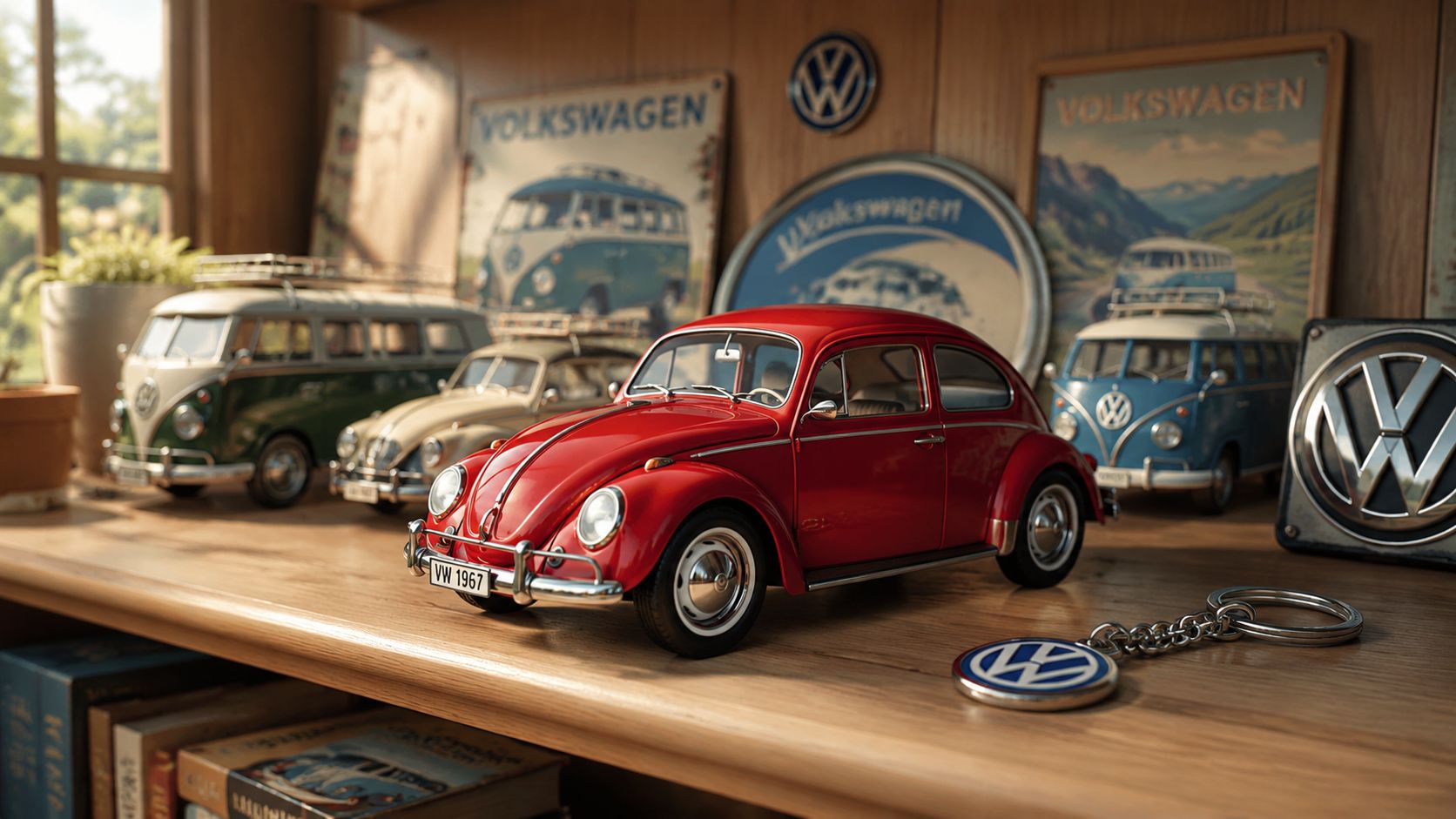
It's the Golf you buy when you want a classic Volkswagen feel without needing everyone to understand why a boxy old hatch matters.

There's also a strong nostalgia link for collectors. If your shelf already has later GTI pieces, something like this Golf GTI Mk 6 collectible makes a neat visual reminder of where the hot hatch story kept heading after the Mk3 helped move the Golf into a more modern era.

The feel of a survivor

Talk to owners at Volksfest or the VW Nationals and you'll hear the same sort of yarn. Someone's parents had one. Someone learnt to drive in one. Someone still regrets selling a VR6. The Mk3 carries that sort of memory well. It's common enough to be relatable, but old enough now to feel special.

Decoding the Lineup Aussie Models and Engines

If you're standing in front of a Volkswagen Golf Mk3 at an Aussie meet and trying to work out what you're looking at, the easiest thing to remember is this. We got a broader, more interesting spread than many people realise.

Volkswagen positioned the Mk3 as a bit of a pioneer. It was the first Golf with front airbags from 1992, the first Golf to house the VR6 six-cylinder engine, and Volkswagen also identifies the generation as the first Golf with the TDI diesel in 1993, side airbags in 1996, and standard ABS across all Golf models from September 1996 (Volkswagen Newsroom on the Golf Mk3).

What you're likely to see locally

Australian enthusiasts tend to bump into a mix of sensible daily-driver specs and a few halo cars.

VW Golf Mk3 Australian Model Snapshot
Model Typical Engine Key Feature Best For
CL 1.4 or 1.8 Simple entry point, less complicated ownership feel Newcomers wanting a base car
GL 1.8 A bit more equipment and everyday comfort Drivers after a relaxed weekend classic
GTI 1.8L or 2.0L Sporting badge, stronger enthusiast following Buyers chasing the sweet spot
VR6 2.8L Six-cylinder character and top-tier presence Enthusiasts wanting the headline car
Diesel variants 1.9 diesel Economy-minded period option Fans of unusual surviving examples

Independent enthusiast coverage notes that the Australian-market Mk3 range included 1.4, 1.8, 2.0 GTI, 2.8 VR6 and 1.9 diesel variants, while broader Mk3 technical coverage places the generation's overall output spread from 27 hp to 190 hp across global versions (Classics World Mk3 buyer's guide).

The ones enthusiasts talk about

The GTI is usually where the conversation gets warm. It's got enough sporting flavour to feel special, but it doesn't always carry the same complexity or expectation as a VR6.


Then there's the VR6. Even people who aren't deep into Mk3 lore know that badge. It gave the Mk3 an identity that separated it from being just a softer, safer Golf. It became the car people remembered from magazine covers, late-night freeway runs, and that one bloke in the club who always had a proper grin after a tunnel pull.

Practical rule: If you want the broadest mix of usability, familiarity, and club support, start your search with the GTI. If you want theatre, start listening for a VR6.

The Ownership Reality Common Issues and Fixes

A Volkswagen Golf Mk3 can be a lovely thing to own in Australia, but only if you're honest about what age does to any nineties hatch. Ignore the weak spots and you'll buy someone else's deferred maintenance. Learn them properly and the car becomes far less intimidating.

An infographic detailing common maintenance issues and repair tips for a green Volkswagen Golf Mk3 hatchback.

Rust is the big Australian filter

The biggest thing I'd tell any local buyer is to get low, get your hands dirty, and inspect the shell with patience. Generic overseas advice often mentions rust, but here the climate changes the urgency. Heritage Parts Centre notes known Mk3 corrosion areas including the front wings, sills, tailgate and windscreen surround, and the Australian angle matters because coastal salt exposure and trapped moisture make rust move faster than many newcomers expect (Heritage Parts Centre Golf Mk3 buying guide).

That means a shiny red car in photos can still hide trouble under trims, around seals, or in moisture traps. Beachside storage, humid garages, and old repair work all matter.

The usual age-related irritations

The Mk3 also cops the normal old-car grumbles:

  • Interior trim fatigue often shows up as brittle plastics and worn switchgear.
  • Headliner sag is common and annoying rather than catastrophic.
  • Electrical gremlins can pop up around windows, locks, and cabin convenience items.
  • Water leaks need attention early, because moisture inside the cabin rarely stays a small issue for long.

None of that should scare you off. It just changes how you inspect the car.

Buy body condition first. Mechanical faults usually announce themselves. Hidden rust often waits until you've already fallen in love.

What a sensible owner does

A smart Mk3 owner in Australia usually follows a simple pattern.

  • Check the drains and seals before the wet season, especially if the car lives outside.
  • Remove trapped moisture fast if carpets ever feel damp.
  • Treat bubbling paint seriously around the windscreen, arches and tailgate.
  • Keep expectations realistic. You're not maintaining a new hatch. You're preserving a classic.

If you enjoy seeing how the Golf evolved after the Mk3 era, a later-generation piece like the Volkswagen Golf Mk 7 collectible makes a fun side-by-side reference point on the shelf while your real project sits in the shed.

Your Project Car Perfecting and Personalising Your Golf

The Mk3's appeal as a project car comes from something simple. It still feels attainable. You don't need concours ambitions to enjoy one, and you don't need to chase the kind of attention an early Mk1 or Mk2 now attracts. That makes it a friendly entry point for Australian enthusiasts who want to restore, lightly modify, or just tidy up a usable classic.

RL Project Parts notes that the Mk3 has often been overlooked beside the Mk2, but interest has grown as earlier Golfs became expensive. It also argues that, for Australian enthusiasts, a well-maintained GTI often gives the best balance of classic fun, parts availability, and reasonable running costs for a weekend car (RL Project Parts Mk3 owner's guide).

Choosing the right base car

A CL or GL can make sense if you love the shape and want a straightforward VW to improve gradually. You're less likely to feel guilty about subtle changes, and you can put your budget into bodywork and mechanical sorting.

A GTI is often the sweet spot. It already has the identity most buyers want, and when you finish one properly it still feels true to itself.

A VR6 is the romantic choice. It's the one people remember and the one that tends to spark the longest conversations at meets. But romance and project budgeting don't always get along.

What works well on a Mk3

Good Mk3 projects usually stay close to the era and the platform's strengths.

  • Wheels and stance can transform the car without changing its character.
  • Interior refresh work often gives more satisfaction than flashy mods. A clean cabin makes the whole car feel loved again.
  • Sympathetic restoration suits the Mk3 especially well. Fresh trims, tidy paint, sorted electrics and period-correct details go a long way.
  • Variant choice matters. If you want to drive often, the GTI is often easier to justify. If you want an event car with a bigger story, the VR6 keeps calling.

The best Mk3 projects don't look forced. They look like someone cared enough to finish the details.

That's why many owners personalise in layers. First the rust. Then the cabin. Then wheels, suspension, and all the little bits that make the car feel like yours.

From the Road to the Shelf The Joy of Collecting

A bloke rolled into a Cars and Coffee in Parramatta a few winters back in a tidy Mk3 GL, dark green, factory wheel trims still on it, interior as clean as a church hall. He parked, grabbed his flat white, and then opened the hatch to pull out a little display case. Inside sat a diecast Mk3 in almost the same colour, plus an old dealer brochure with that very '90s VW photography we all remember. More people drifted over to that shelf-in-a-box than to half the modified cars on the row. That told me something. Mk3 ownership rarely stops at the driveway.

A miniature Volkswagen Golf Mk3 model car displayed on a base, with a full-sized version in the background.

The Mk3 suits collecting because its story feels close to home in Australia. Plenty of us knew one as a family hatch, a uni car, a first VW, or the water-cooled shape that started showing up at local meets before the scene got polished and expensive. In Sydney, Melbourne, Brisbane and down the coast, these cars lived ordinary lives first. That gives the memorabilia real warmth. A shelf piece is not only about rarity. It is about memory.

Why the shelf matters

A good collectible holds onto the parts of ownership that disappear with time. The exact shade of your old car. The dealer literature you threw out during a house move. The keyring from a long-gone service department. Even the dream of the VR6 that slipped away to another buyer in Newcastle while you were still arranging a trailer.

The broader VW collecting world opens up nicely from the Mk3. Many Aussie owners start with Golf pieces, then add older air-cooled icons or a later GTI to show how their taste changed over the years. For readers who enjoy licensed VW pieces, Volkswagen Memorabilia's shop carries Volkswagen-themed diecast and collectibles, including the sort of Kombi and Beetle items that sit naturally beside Golf memorabilia in a home display.

There is practical value in it too. Old brochures, dealer folders and period accessories can help you chase the right trim, wheel, or interior detail while sorting a project. A shelf can be sentimental and useful at the same time, especially alongside a stash of VW parts sources in Australia that keeps the project car on the road.

Building a display with character

The best Mk3 displays feel personal, not crowded.

  • Match your own car with the closest colour, wheel style, and trim you can find.
  • Build an Australian story with local dealer material, old rego items, show passes, or photos from VW meets by the beach.
  • Mix eras carefully so the Mk3 stays the hero, with one or two supporting pieces from the Beetle, Kombi, or later GTI world.
  • Use memorabilia as a memory board for cars sold, cars missed, and cars still on the wish list.

A small shelf often says more than a packed cabinet. One Mk3 model, a period brochure, and a photo from a club run through the Royal National Park can carry more feeling than twenty random collectibles lined up in perfect rows.

There's a lovely little reminder of that wider enthusiasm in moving form too.

That is the charm of Mk3 collecting. The car on the road gives you the smells, sounds and little mechanical rituals. The bits on the shelf keep the story alive on the days you cannot drive it, and in the years after one particular Golf has left the garage.

An Aussie Buyer's Checklist Finding a Good One

If you're heading out to inspect a Volkswagen Golf Mk3 in Australia, go in with a cool head and a sharp torch. Charm matters, but structure matters more. A tidy Mk3 GTI can still be a practical classic because the commonly cited spec pairs 115 hp from the 2.0-litre engine with a compact 4020 mm length, though fuel economy of about 24 mpg combined means buyers now choose it more for driving feel than thrift (Wikipedia overview of the Volkswagen Golf Mk3).

The inspection walk-around

Start outside and stay methodical.

  1. Check the rust-prone zones first
    Look carefully at the front wings, sills, tailgate edges, wheel arches, and around the windscreen. If the seller keeps steering you away from one corner of the car, spend more time there.

  2. Read the paint with your eyes and fingertips
    Mismatched colour, uneven reflections, or thick paint edges can suggest past repairs. That doesn't automatically kill the deal, but you want honesty and evidence of proper work.

  3. Inspect trims and moisture traps
    Old plastic trim can hide dirt, moisture and the start of corrosion. Lift seals gently where appropriate and look for bubbling or staining.

Cabin and mechanical checks

Inside the car, the Mk3 tells on itself quickly.

  • Test every switch. Windows, locks, fans and lights should all be tried.
  • Smell the cabin. Damp odour can point to leaks and hidden water ingress.
  • Check seat wear and trim condition. A scruffy interior doesn't always mean a bad car, but it often hints at a casual owner.
  • Watch the headliner. If it's sagging, budget time and effort for a proper fix.

Under the bonnet, aim for signs of care rather than miracle cleanliness. You want consistency. Old hoses, rushed wiring, and random aftermarket shortcuts usually mean more sorting later.

Take your time on the body and cabin. Most buyers rush because they want to hear it run. The expensive surprises often sit still.

The road test and paperwork

On the drive, listen for suspension knocks, feel for straight braking, and note whether the car feels settled or tired. A good Mk3 should still feel compact and easy to place on the road.

Then check the paperwork.

  • Look for service history that shows regular attention rather than long blank gaps.
  • Ask about import or compliance details if the car's history seems unusual.
  • Think about intended use. Daily occasional classic, weekend toy, or long-term project all point to different buys.
  • Use local parts reality as part of the decision. If you're planning a restoration, browsing VW parts options in Australia can help you understand what ownership support looks like before you commit.

A good Mk3 isn't just the cheapest one you can find. It's the one with the straightest story.


If the Volkswagen Golf Mk3 has you feeling nostalgic for the broader VW world, have a wander through Volkswagen Memorabilia. It's a handy local spot to find licensed VW-themed diecast, Kombi and Beetle collectibles, and shelf-worthy memorabilia that suits a garage office, display cabinet, or gift for the Volkswagen fan in your life.