
Dent Removal Auto: A VW Fan’s Guide to a Flawless Finish

You roll into a Sunday meet with the Beetle washed, tyres dressed, chrome catching the morning light, and there it is. A small dent on the guard. Maybe it happened in a crowded car park. Maybe a loose door at the servo kissed the panel when you weren't looking. However it got there, that little mark can feel bigger than it is.

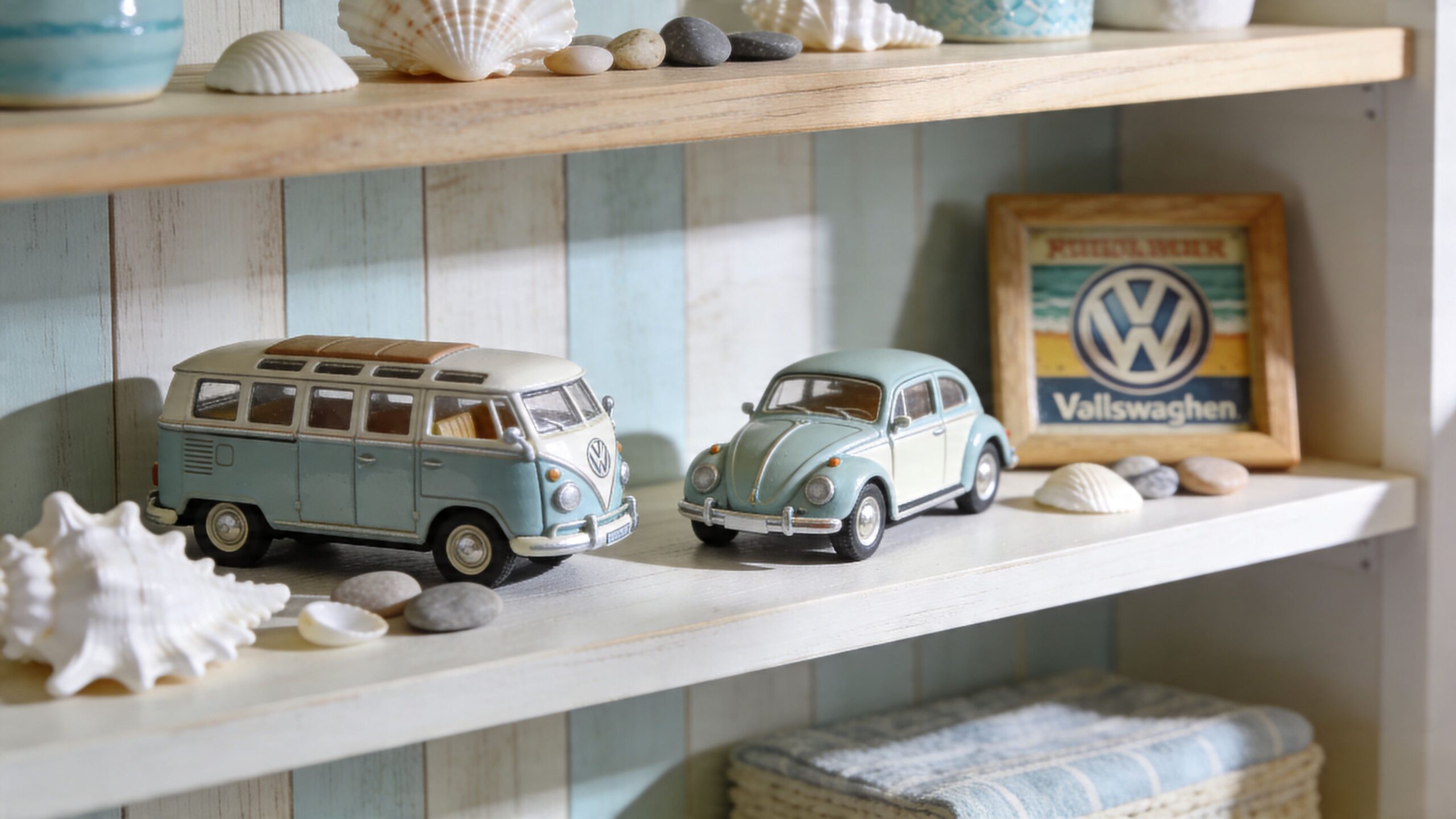
Anyone who's loved an old Volkswagen knows the feeling. These cars carry stories in their curves. The Beetle's rounded guards and the Kombi's broad sides aren't just sheet metal. They're memory, effort, and pride. Getting a dent sorted isn't vanity. It's part of keeping the magic alive, the same way a flawless miniature on the shelf reminds you what made you fall in love with the original in the first place.

That Heart-Sinking Moment the First Ding Appears

A dent has a way of stealing your eye. You stop seeing the whole car and start seeing only the blemish. On a tidy Beetle, one little ding on a front guard can feel like a shout. On a Kombi, a ripple on a long side panel seems to catch every reflection at once.

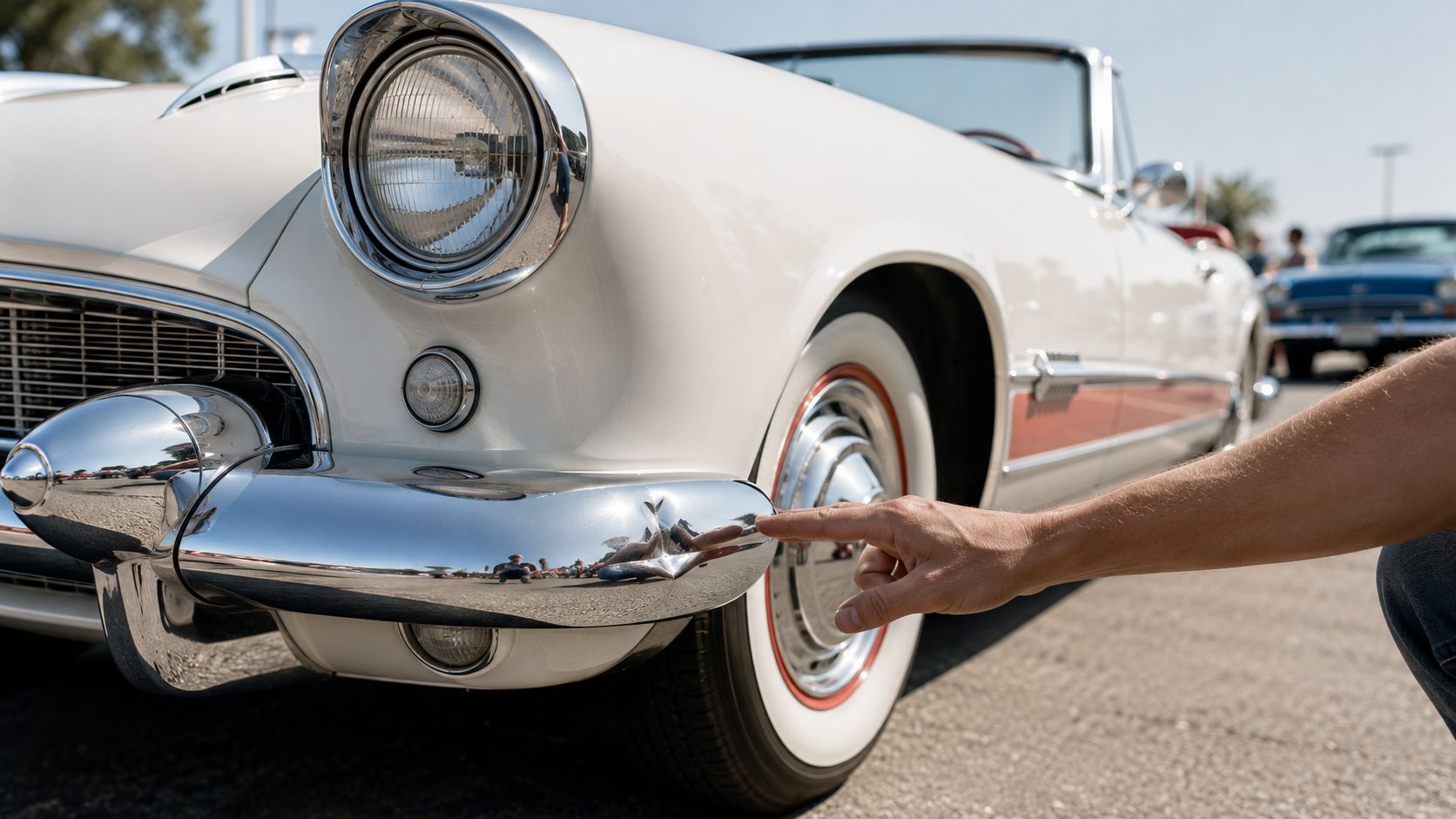
A person pointing to a small dent on the shiny chrome bumper of a vintage white car.

The good news is that a first ding isn't the end of the romance. It's usually the moment you start learning your car in detail. You begin to notice where the metal is forgiving, where access is tight, and why factory paint matters so much on a classic VW.

Why this matters more on an old Volkswagen

Classic Volkswagens wear their shape plainly. A Beetle doesn't hide panel imperfections behind sharp modern creases. A Kombi's sides are a big canvas. That means careful dent removal auto work can make a dramatic difference, but rushed work can leave a panel looking worse in certain light.

Practical rule: Treat the dent like a preservation job, not a shortcut repair.

A lot of owners jump straight for a gadget. Better to pause, make a cup of tea, and inspect the panel properly. A smooth shallow ding is one thing. A sharp crease with damaged paint is another beast altogether. The smartest enthusiasts know that patience at the start saves regret later.

And there's something satisfying about the whole ritual. You're not just fixing metal. You're restoring the line that made a Beetle charming and a Kombi iconic.

Assessing the Blemish on Your Beauty

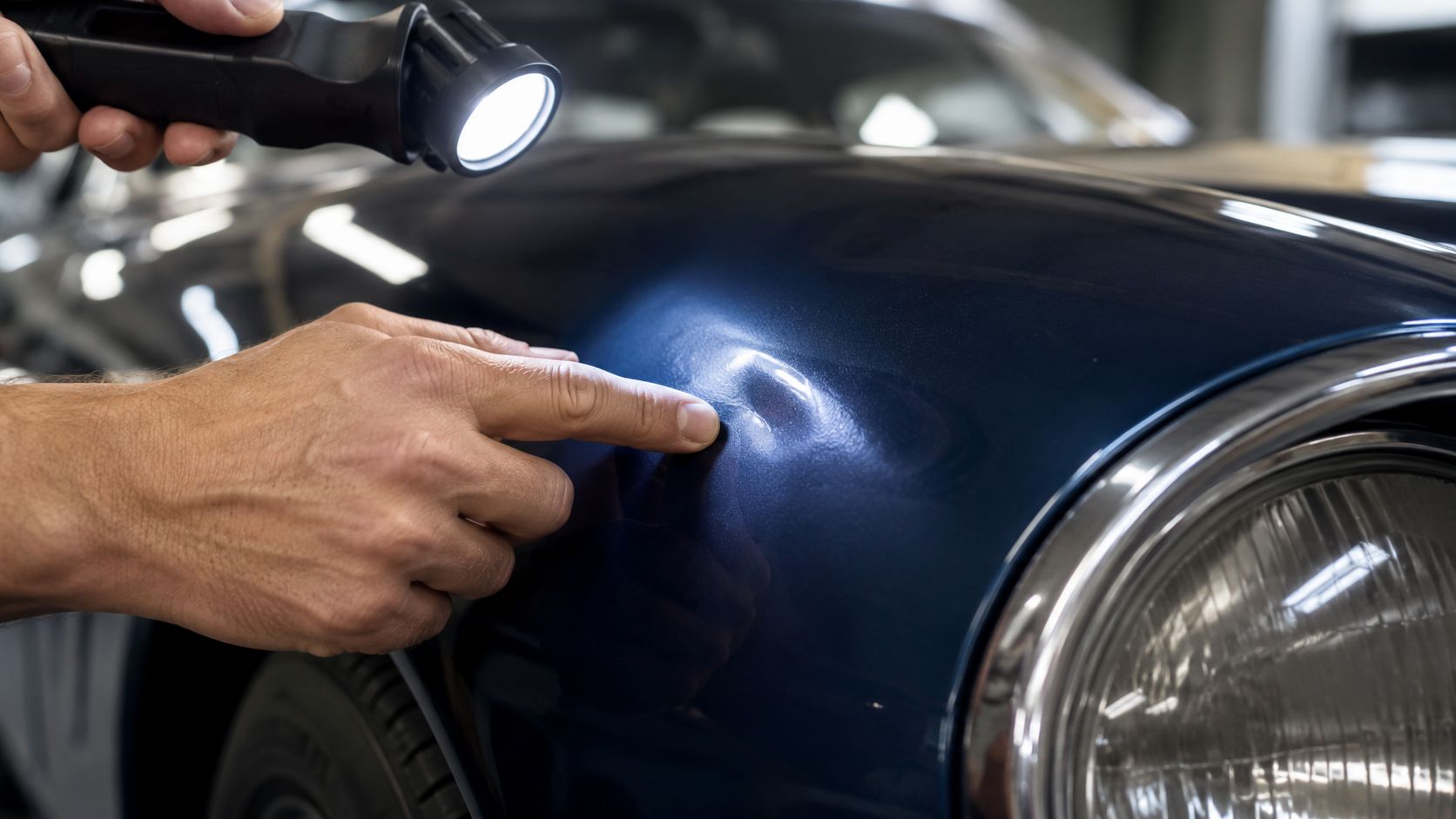
Before any pulling, heating, or poking starts, you need to read the story of the dent. The panel usually tells you exactly what happened if you look closely enough. Stand the car where light runs across the surface and move your head side to side. Reflections reveal depth better than a quick glance ever will.

A technician inspecting a small dent on the hood of a blue car using a flashlight.

What to check first

Start with the paint. That's the make-or-break test.

A definitive benchmark for failure is any dent accompanied by cracked, chipped, or compromised paint, because Paintless Dent Removal addresses only the metal substrate and cannot restore surface paint integrity, as noted in this Carsales guide on DIY dent removal.

Then look at the shape. A smooth, rounded depression is usually kinder to deal with than a sharp crease. Body lines also matter. If the dent sits on the crisp edge of a panel, the repair becomes more delicate because the metal has been stretched and folded into a stronger shape there.

A simple inspection checklist

  • Paint condition. If you see chips, fractures, or paint lifting, stop thinking paintless.
  • Dent shape. Rounded dings are friendlier than pointed creases.
  • Panel location. Flat open metal is easier than edges, swages, or tight corners.
  • Rear access. If you can reach behind the panel, your options improve.
  • Reflection test. Use a torch or inspection light and watch how the lines bend.

Once you've looked over the panel, it helps to see how technicians approach the same problem in practice.

Reading the dent like a VW person

Beetle owners get good at this quickly. The rounded guards can turn a small dent into a visual nuisance because the light rolls so beautifully over them. Kombi owners face the opposite issue. Flat side panels make even shallow damage visible from metres away.

If the metal looks softly pushed in and the paint still looks healthy, you may have a worthwhile DIY candidate.

That doesn't mean every home fix will work. It means the panel has given you permission to proceed carefully.

Your Garage Toolkit for DIY Dent Removal

A decent home dent removal auto setup doesn't need to look like a body shop. What matters is choosing the right method for the right dent, and knowing when a tool's helping or when it's starting to bully the metal.

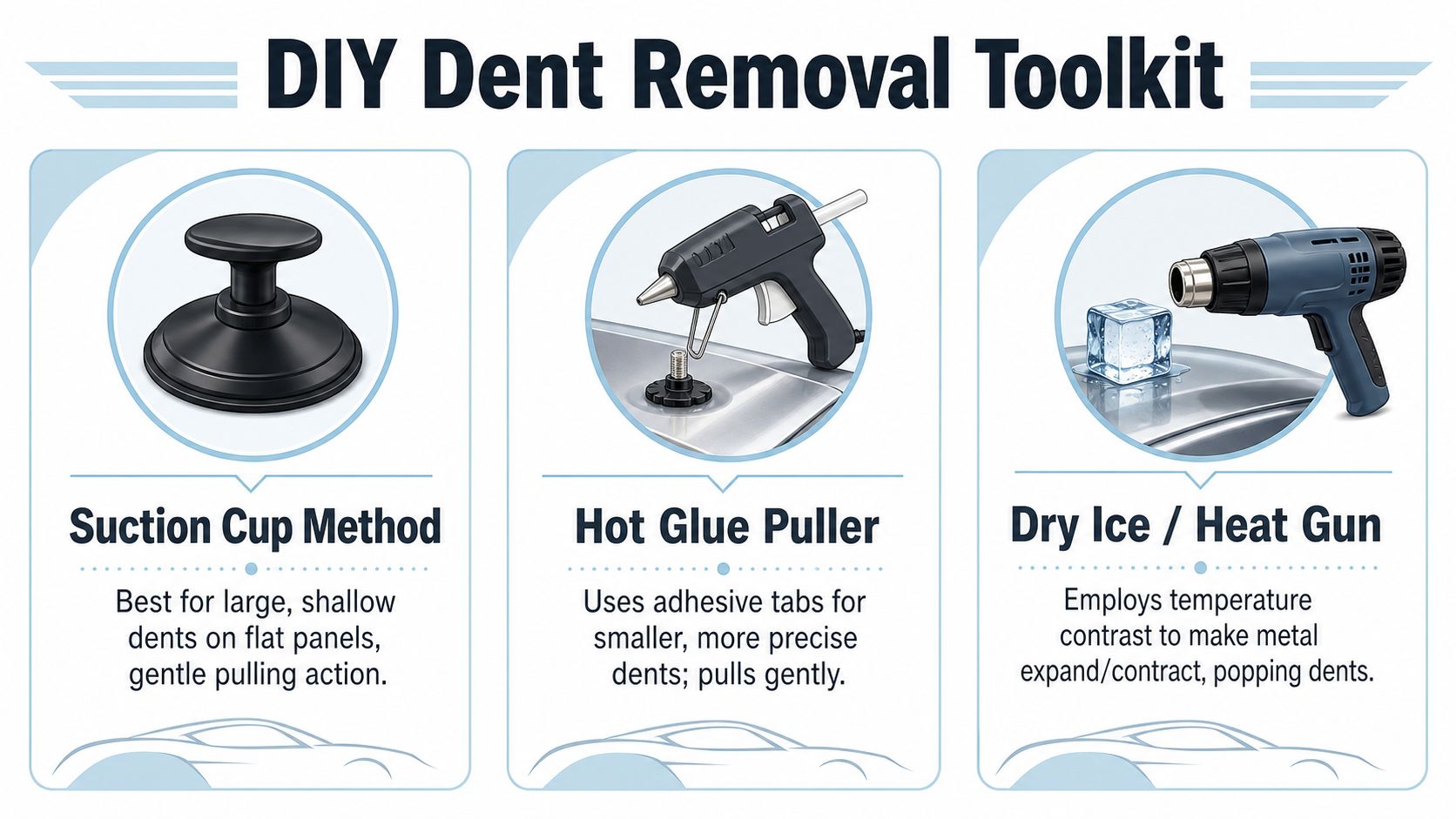
An infographic showing three DIY dent removal methods for cars using suction cups, glue, and temperature contrast.

The three methods most owners try

Method Best use Why it can work Why to be cautious
Suction cup puller Large, shallow dents on flatter panels Pulls evenly without adhesives Won't do much on sharp or tight dents
Heat and cold contrast Very mild surface distortions Metal expands and contracts with temperature change Results are inconsistent and paint needs care
Glue pull kit Smaller dents where rear access is limited Targets the centre with a tab and controlled pull Too much force can raise a high spot

Suction cup puller

This is the friendliest starting point for many DIYers. If a dent is broad and shallow, especially on a flatter area of a Kombi or a less curved section of a Beetle, a suction puller can sometimes coax the panel outward without drama.

Use a clean surface. Any dust trapped under the cup weakens the seal. Wetting the cup slightly can help it grab. Then pull steadily rather than yanking like you're starting a mower.

It's a blunt instrument, though. If the dent has a centre point or sits near an edge, you'll often get very little movement.

Heat and cold contrast

This old shed trick has been around for ages. The idea is simple. Warm the panel, then introduce cold so the metal contracts and may move back toward shape. Owners usually use a hairdryer rather than anything more aggressive.

The catch is consistency. Sometimes nothing happens. Sometimes the panel shifts a little. Sometimes the result is too subtle to notice unless you knew exactly where to look. It's best seen as a gentle experiment for very minor marks, not a guaranteed fix.

Workshop note: Be gentle with heat on older paint. The goal is warmth, not punishment.

Glue pull kit

When you can't reach behind the panel, glue pulling is the method most closely associated with paintless repair. It needs a steadier hand than social media clips make it seem.

For dents lacking rear access, a glue pull is used. You heat glue until drizzling, apply it to a tab, press onto the dent, wait 30–60 seconds, then pull gently with a slide hammer using a quick tap to avoid creating high spots, as described in this paintless dent technique guide.

A few practical habits make a difference:

  • Match the tab to the dent. Too large and you pull too much area. Too small and you over-focus the force.
  • Watch the reflections. Stop after each pull and inspect. Don't chase perfection blindly.
  • Work gradually. Several light attempts beat one heroic tug.
  • Know when to quit. If the panel starts rising around the dent, you're creating trouble.

If you're also tracking down trim pieces, clips, or other bits while tidying a project car, it's worth bookmarking VW parts in Australia for broader restoration inspiration alongside your panel work.

What belongs in a sensible starter kit

  • A small suction puller for broad shallow dings.
  • A hairdryer for mild temperature-contrast attempts.
  • A basic glue pull kit with tabs in different sizes.
  • Microfibre cloths because dirt on the panel ruins good judgment.
  • A torch or inspection light so you can read reflections clearly.

The trick isn't owning every tool. It's stopping before enthusiasm outruns skill.

The Classic VW Touch for Beetles and Kombis

A Beetle and a Kombi ask for different hands. I learned that years ago helping a mate with a door ding on a cream Beetle, then later fussing over a ripple on a splitty's side panel before a local show. Same family badge. Completely different personalities in steel.

The Beetle rewards finesse. Its curves mean the panel often needs tiny, patient corrections because a slight distortion becomes obvious as light slides over the guard. A Kombi is more about broad visual harmony. You're usually trying to make a larger flat area read cleanly again from a few steps back.

Where each model tends to test you

  • Beetle guards can be deceptively tricky because their rounded form magnifies poor finishing.
  • Beetle doors may offer useful access once trim is removed, but old clips and cards deserve care.
  • Kombi sides give you room to work visually, though large flat areas show waviness fast.
  • Kombi interior panelling can sometimes provide useful access routes if you remove pieces carefully.

In the Australian market, the passenger van variant of the Type 2 was specifically marketed as the VW Kombi, a name that became synonymous with our local surf and road trip culture, as noted in this history of the VW Kombi in Australia.

That's why panel care feels personal on these vans. A Kombi isn't just transport. It's picnic rugs, boards on the roof, and salt in the air.

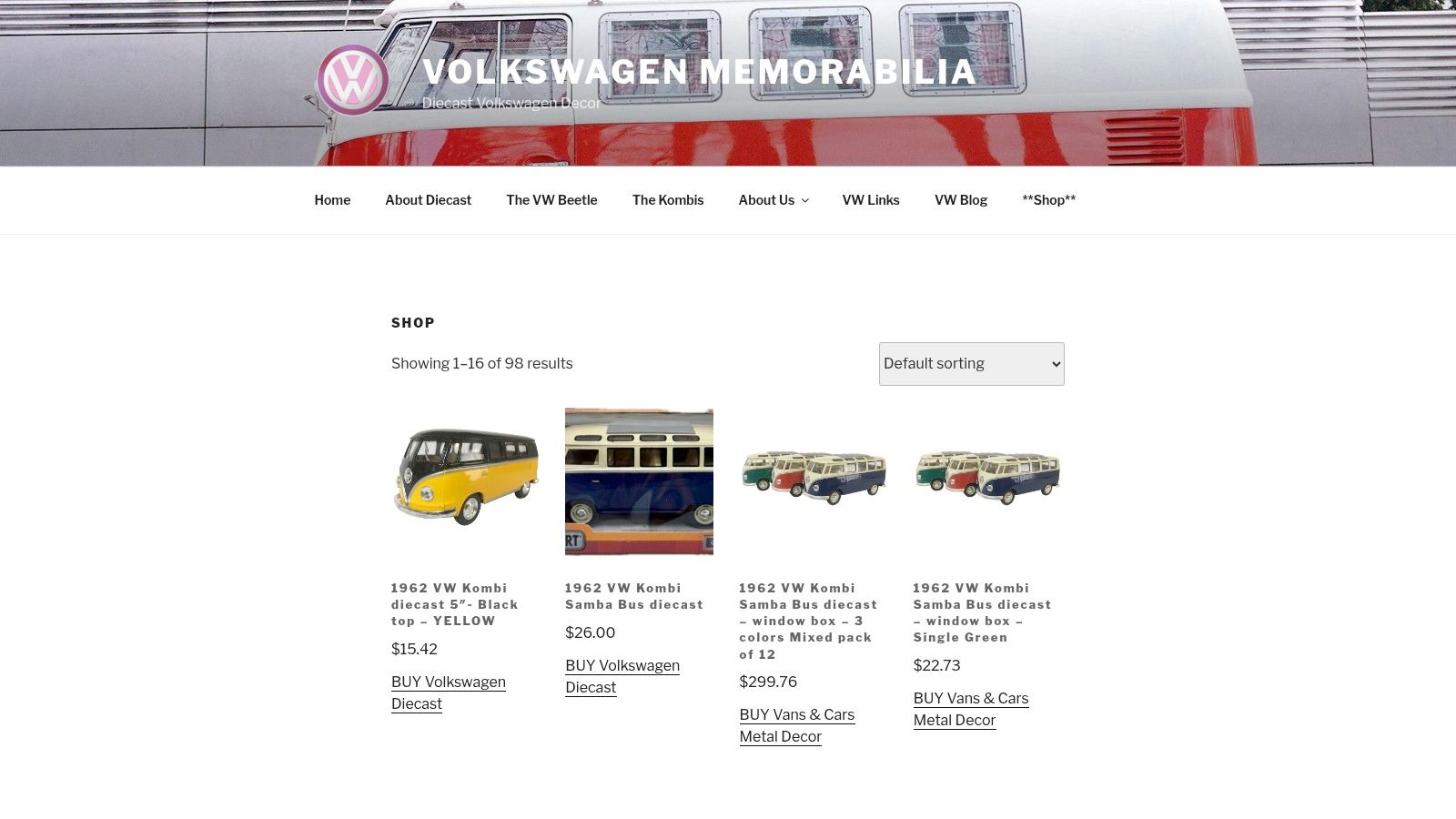
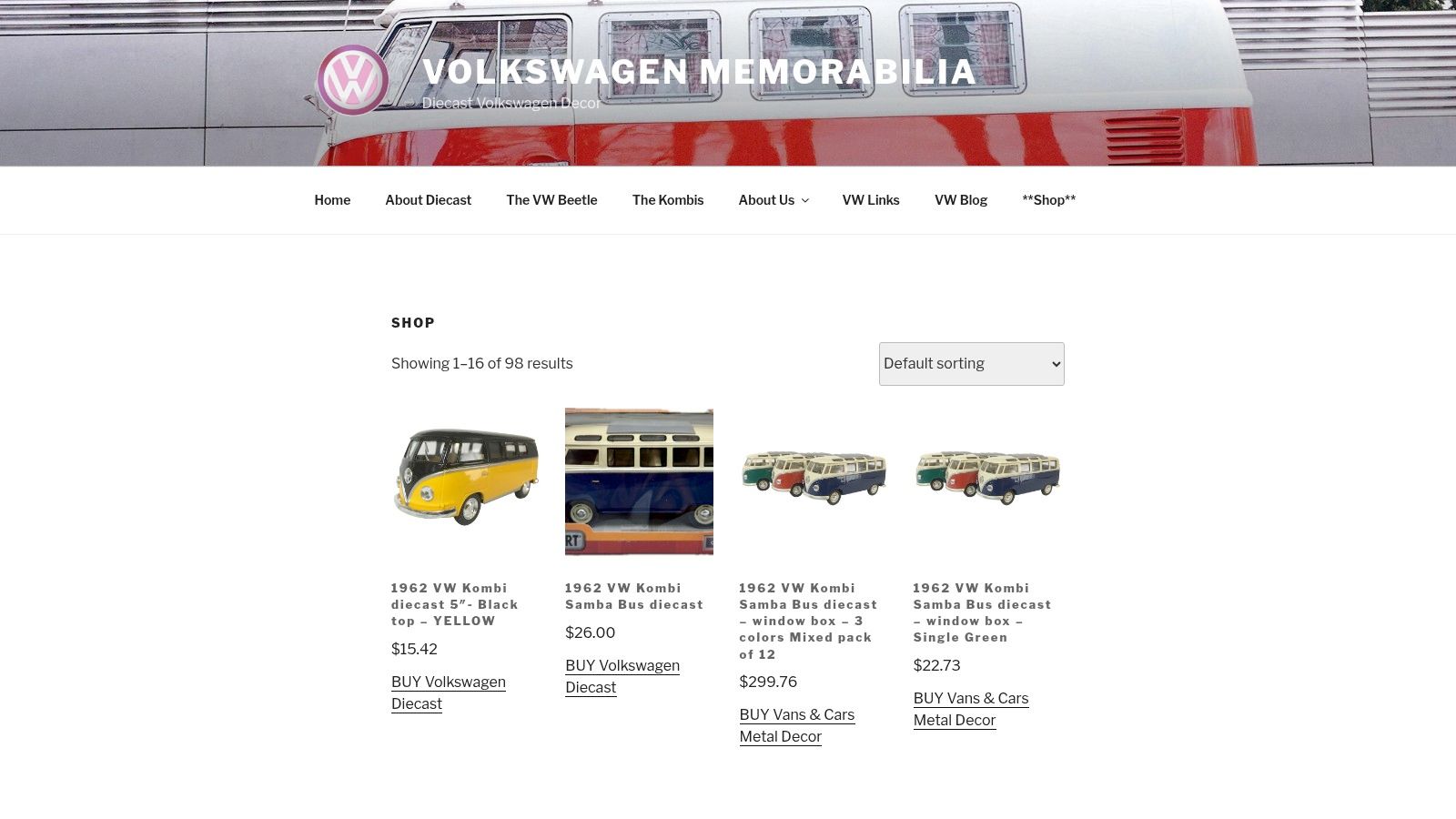
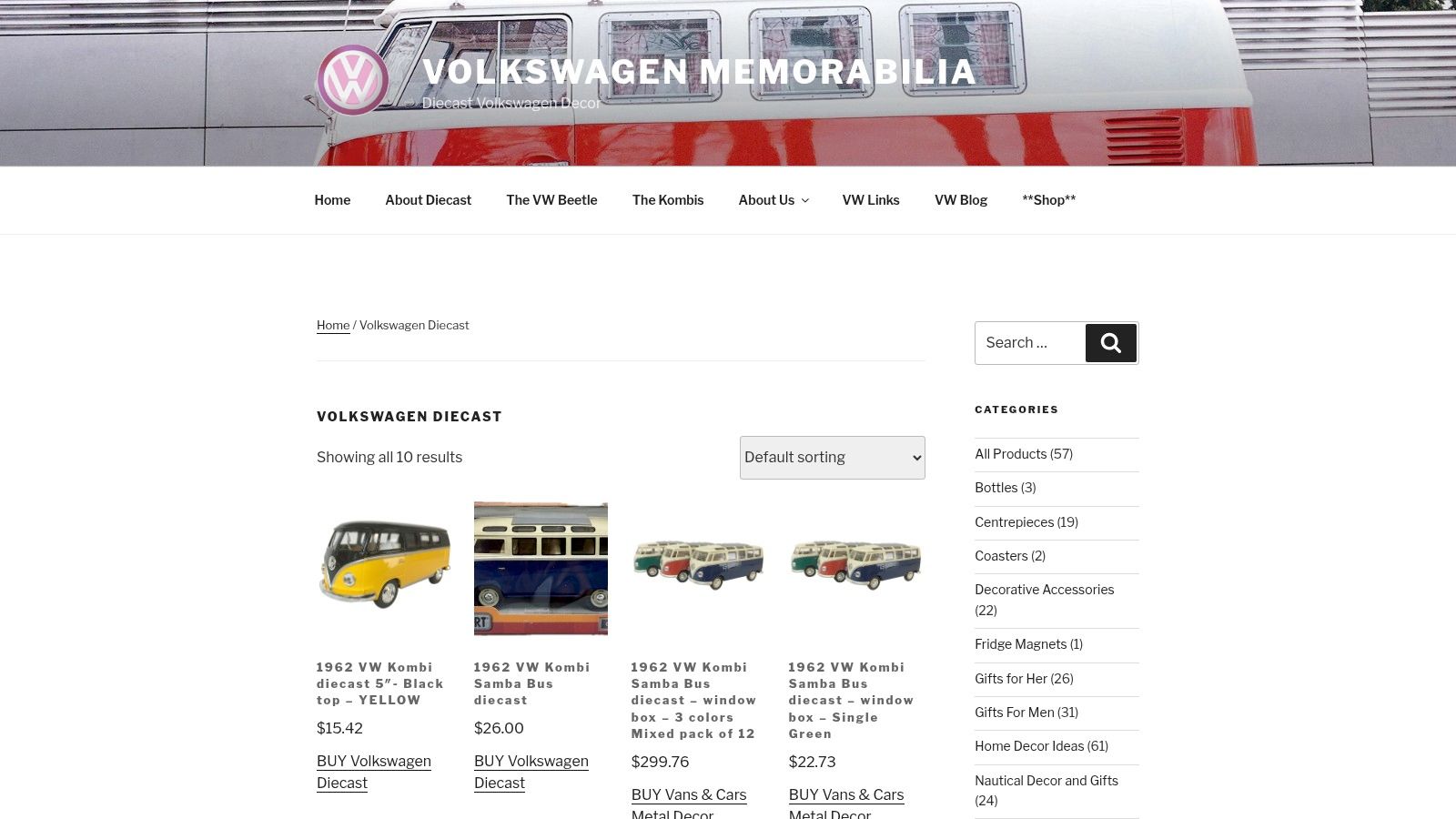
Screenshot from https://vwmemorabilia.com.au/shop/

A well-finished Beetle panel has the same satisfaction as seeing the proportions captured perfectly in miniature. That's part of the charm behind old-school collecting. The same rounded bonnet, the same cheerful stance, the same silhouette that made you stop and smile. If you enjoy tracing those details from full-size car to model form, Volkswagen Beetle parts inspiration is a useful rabbit hole to wander down.

When to Call a Pro for Your Pride and Joy

Smart enthusiasts don't prove anything by forcing a bad DIY repair. They protect the car. That means recognising the jobs that need a technician with proper PDR tools, lighting, and experience.

Professional help makes sense when the dent sits on a body line, has a sharp crease, or leaves you unsure whether the metal has stretched too far. It also makes sense if your first attempts have started to make the reflection look uneven. High spots are easy to create and annoying to undo.

In Australia, professional Paintless Dent Repair for a single panel typically costs between $150 and $250 AUD, while conventional methods can range from $800 to $2,000+ AUD and take days instead of hours, according to this Australian dent repair cost guide.

That's a strong argument for calling a pro early on the right job. You preserve the factory finish, avoid filler and repainting where possible, and save yourself the misery of turning a tidy little ding into a bigger panel drama.

A good repair isn't the one you did yourself. It's the one that leaves the car looking right.

Keeping That Shine and Celebrating the Legend

Once the dent's sorted, step back and check the panel in natural light. Wash the area properly, use a gentle polish if appropriate for the finish, and compare reflections from several angles. A repair that looks perfect under garage lighting can tell a different story in afternoon sun.

Prevention matters too. Leave extra room in car parks. Be picky about where you park at shows. On a Kombi, think about the long flank catching wandering doors. On a Beetle, remember those lovely guards sit where bumps are easy to notice. If you're freshening the whole look of the car, details such as car rim powder coating options can complement panel care beautifully.

A few habits worth keeping

  • Clean before inspecting. Dust can disguise a dent or mimic one.
  • Use light, not guesswork. Reflections tell the truth.
  • Respect original paint. Preserving factory finish is often the ultimate win.
  • Keep perspective. These cars are meant to be enjoyed, not hidden away in fear.

There's a lovely connection between repairing a real Volkswagen and admiring a licensed diecast one on a shelf. Both come down to shape, finish, and affection for the design. You're keeping a piece of motoring history looking the way it deserves to look, whether it lives in the garage, on the road to the coast, or in a display cabinet beside old rally badges and surfy postcards.


If keeping a Beetle or Kombi looking its best is part of how you celebrate the marque, it's worth taking that same care indoors too. Browse the officially inspired collection at Volkswagen Memorabilia, where Australian VW fans can find local stock, fast shipping, and a warm mix of diecast models, gifts, and nostalgic pieces that keep the spirit of the classic Volkswagen alive long after the garage door closes.

Volkswagen ID. Buzz: Australia Guide 2026

A bloke rolled into a sunny VW meet in a faded Bay Window, and two spaces over sat a bright ID. Buzz with kids climbing in and out like it was already part of the family. That's the moment the penny drops. The story never stopped, it just changed soundtrack.

The Electric Kombi We Have All Been Waiting For

If you grew up around Volkswagens in Australia, you already know the silhouette. A Kombi parked near the surf. A Beetle tucked under a gum tree at a country show. A Samba Bus on a poster wall, promising a freer sort of life than the Monday morning commute.

The reason the Volkswagen ID. Buzz lands so warmly here isn't just that it's new. It's that plenty of us have spent years hoping Volkswagen would build a proper spiritual successor to the old bus. Not a cold appliance. Not a cynical retro badge. Something with the same generous face, the same sense of occasion, and the same invitation to gather your mates, your family, or your dogs and just head for the coast.

At Aussie shows, that feeling is easy to spot. The classic owners lean in for a proper look. The younger crowd realise they're seeing a van that speaks both languages at once. One is memory. The other is tomorrow.

The ID. Buzz feels less like a replacement for the Kombi and more like a reunion with an old friend who's learned a few new tricks.

That's why the buzz around the Buzz matters. It's not only a car launch. It's a cultural handover from split screens and air-cooled fan shrouds to batteries, silent cruising, and a fresh generation of Volkswagen fans who'll collect this chapter just as lovingly as the old ones.

A Legend Reimagined The Story Behind the ID Buzz

Volkswagen's place in Australia goes back further than plenty of people realise. Volkswagens were first imported to Australia in late 1953 and commenced official sales in early 1954, which marked the brand's formal local arrival before assembly began, as noted in Australian Volkswagen history records.

That matters because the Kombi didn't become beloved here by accident. It became part of the furniture. It hauled boards, tools, camping gear, market stock, and whole friend groups. It wasn't precious. It was useful, cheerful and unmistakably Volkswagen.

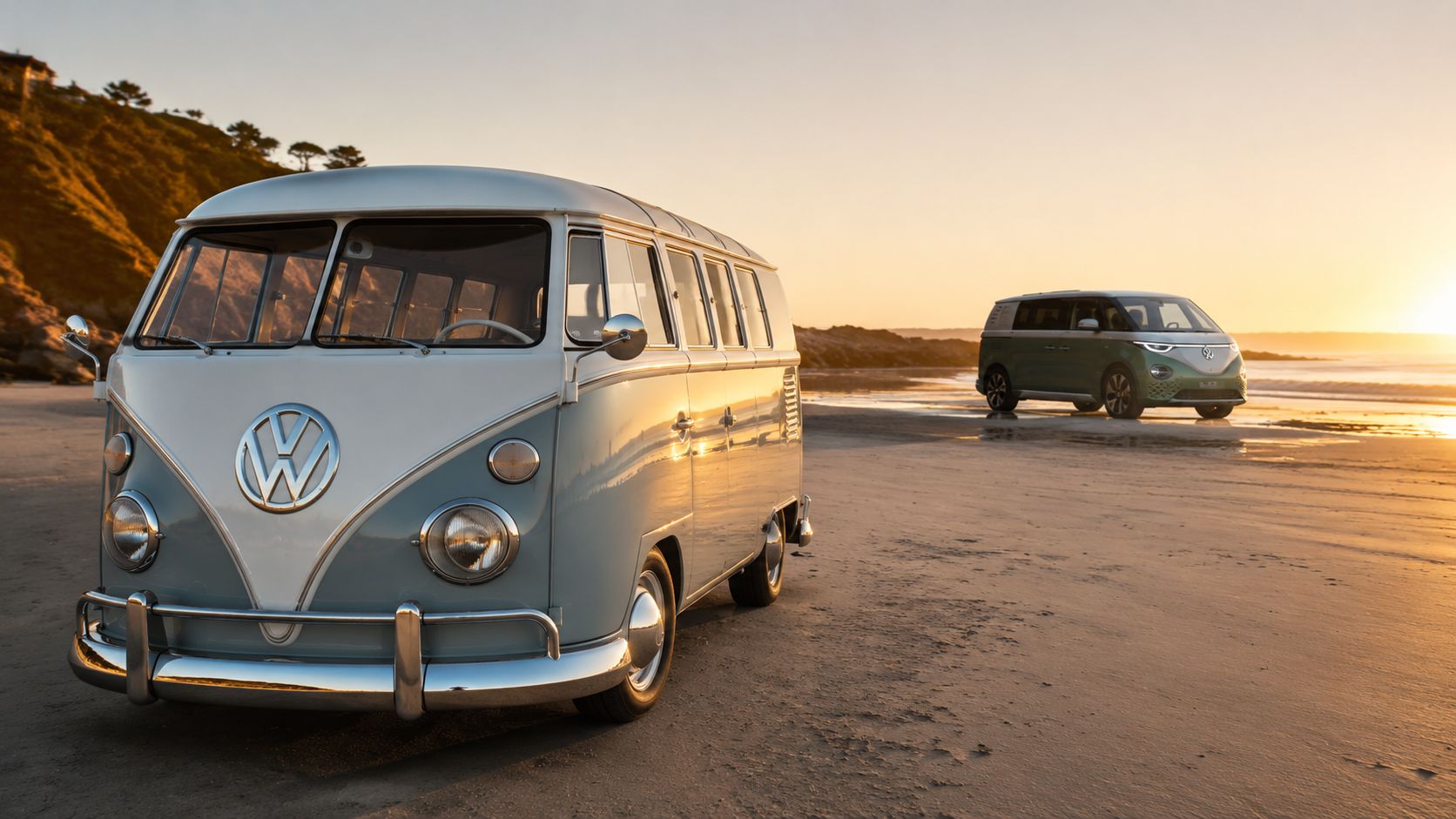
A vintage light blue Volkswagen bus parked on a beach with a modern green ID Buzz behind it.

The design cues old fans spot straight away

Stand in front of an ID. Buzz and the family resemblance jumps out before anyone mentions platforms or battery packs. The friendly face is there. The broad stance is there. So is that visual lightness people love in the old vans.

A few touches do the heavy lifting:

  • The V-shaped front recalls the classic Type 2 nose without pretending it's still the 1960s.
  • Two-tone colour schemes bring back the playful spirit that made old Kombis feel more like companions than transport.
  • The cab-forward look keeps that sense of sitting up front, looking out at the world rather than being buried in it.

More evolution than imitation

That's why the ID. Buzz works. It doesn't copy the old van panel by panel. It translates the idea. The old Kombi was honest about its era, and the ID. Buzz is honest about this one.

You can sense that long thread of intent in the shape. It feels like Volkswagen finally stopped flirting with the notion of a reborn Kombi and built one capable of a real Australian life, from suburban school runs to coast road weekends.

The Electric Heartbeat ID Buzz Specs and Performance

The clever bit about the Volkswagen ID. Buzz is that its tech doesn't need to feel intimidating. Think of it the same way you'd think about the old Kombi's mechanical personality. Back then, enthusiasts learned the engine note and the rhythm of the gearbox. Now, you learn battery range, charging habits, and how beautifully smooth an electric motor feels in traffic.

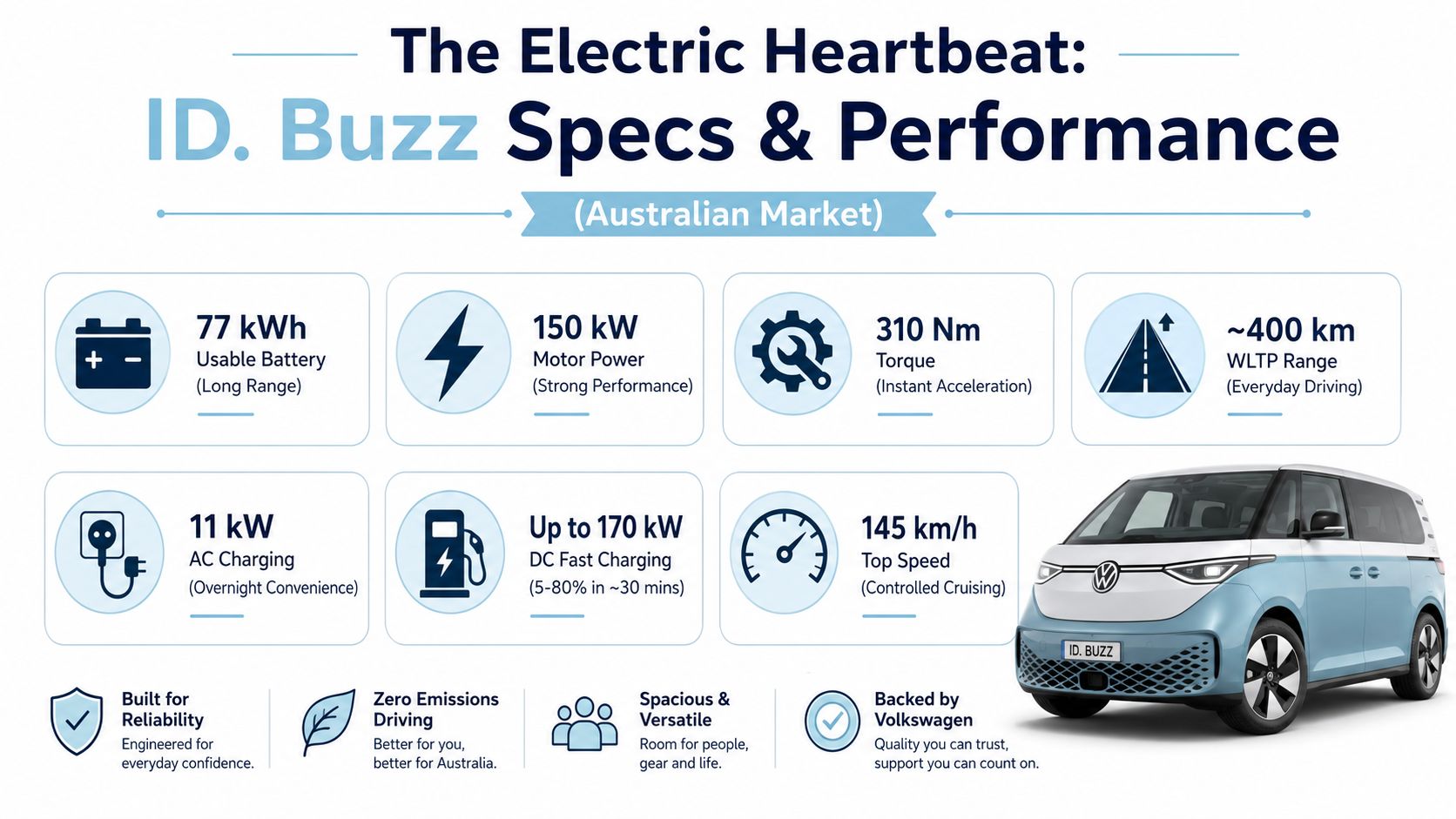
For Australia, the core numbers are straightforward. The ID. Buzz uses a 77kWh lithium-ion battery, sends 150kW to a rear-mounted electric motor, offers a WLTP-tested range of up to 450km, and comes with Volkswagen Australia's 5-year, unlimited kilometre warranty, according to the official Volkswagen Australia ID. Buzz model page. If you want a broader local look at the electric van conversation, this guide to electric van Australia adds useful context.

An infographic detailing the technical specifications and performance features of the Volkswagen ID. Buzz electric vehicle.

What those numbers feel like on the road

The easiest way to understand 150kW is this. You press the pedal, and the van moves with clean, immediate shove rather than building power with revs and noise. Around town, that suits the ID. Buzz brilliantly. Pulling away from lights feels effortless, and the quietness changes the whole mood in the cabin.

The up to 450km WLTP range is equally easy to frame in real life. For many owners, that's the kind of figure that covers daily driving for days at a time, then asks for a recharge when it suits your routine rather than when the vehicle starts nagging you every afternoon.

Practical rule: Treat battery size like a fuel tank and range like the distance you can expect in the right conditions. Driving style, load, weather, and road speed all shape the real outcome.

Why the warranty matters

Volkswagen's 5-year, unlimited kilometre warranty brings the sort of reassurance family buyers and long-distance drivers want. It takes some of the unknowns out of the shift from combustion to electric. If you're keen on the idea but wary of making the jump, that warranty is one of the friendliest parts of the whole package.

The result is a van that feels less like a gadget and more like a modern touring companion. It's easy to operate, easy to understand, and still has enough character to feel special every time you walk up to it.

Find Your Perfect Buzz Australian Models and Pricing

The local line-up makes decent sense. Australian buyers can choose a five-seat short-wheelbase version or a seven-seat long-wheelbase version, which means the ID. Buzz can lean either family runabout or people-mover depending on how you want to use it.

Pricing changed the conversation in a big way. Following price cuts of up to $12,000, the five-seat ID. Buzz Pro now starts at $79,990 drive-away and the seven-seat LWB sits at $84,990 drive-away, and that shift helped triple interest and lift December 2025 sales to 108 units, according to Drive's Australian ID. Buzz sales report. Buyers comparing local offers may also find this breakdown of Volkswagen ID. Buzz Australia price handy.

Volkswagen ID. Buzz Australian Models at a Glance (2026)

Feature ID. Buzz Pro (SWB) ID. Buzz Pro (LWB)
Seating 5 seats 7 seats
Wheelbase Short-wheelbase Long-wheelbase
Drive-away price $79,990 $84,990
Best suited to Smaller families, urban use, weekend touring Larger families, extra passenger flexibility

Why the pricing shift matters

This isn't only about shaving money off the sticker. It changes who can realistically consider one. The ID. Buzz went from being something people admired from a distance to something more buyers could pencil into the family spreadsheet.

And the sales movement gives that story some weight. A model that recorded 108 unit sales in December 2025, after a slower start earlier in the year, looks like a vehicle finding its audience rather than fading as a curiosity. That matters if you're the sort of buyer who likes knowing your quirky choice is also gaining local traction.

A simple way to think about it is this:

  • Choose SWB if you want the tidier footprint and don't regularly need the extra row.
  • Choose LWB if your life involves more passengers, more flexibility, or a bit more people-moving duty.
  • Watch the market closely because the recent adjustment shows Volkswagen is serious about giving the model a stronger foothold here.

Old Soul New Body ID Buzz vs Classic Kombis

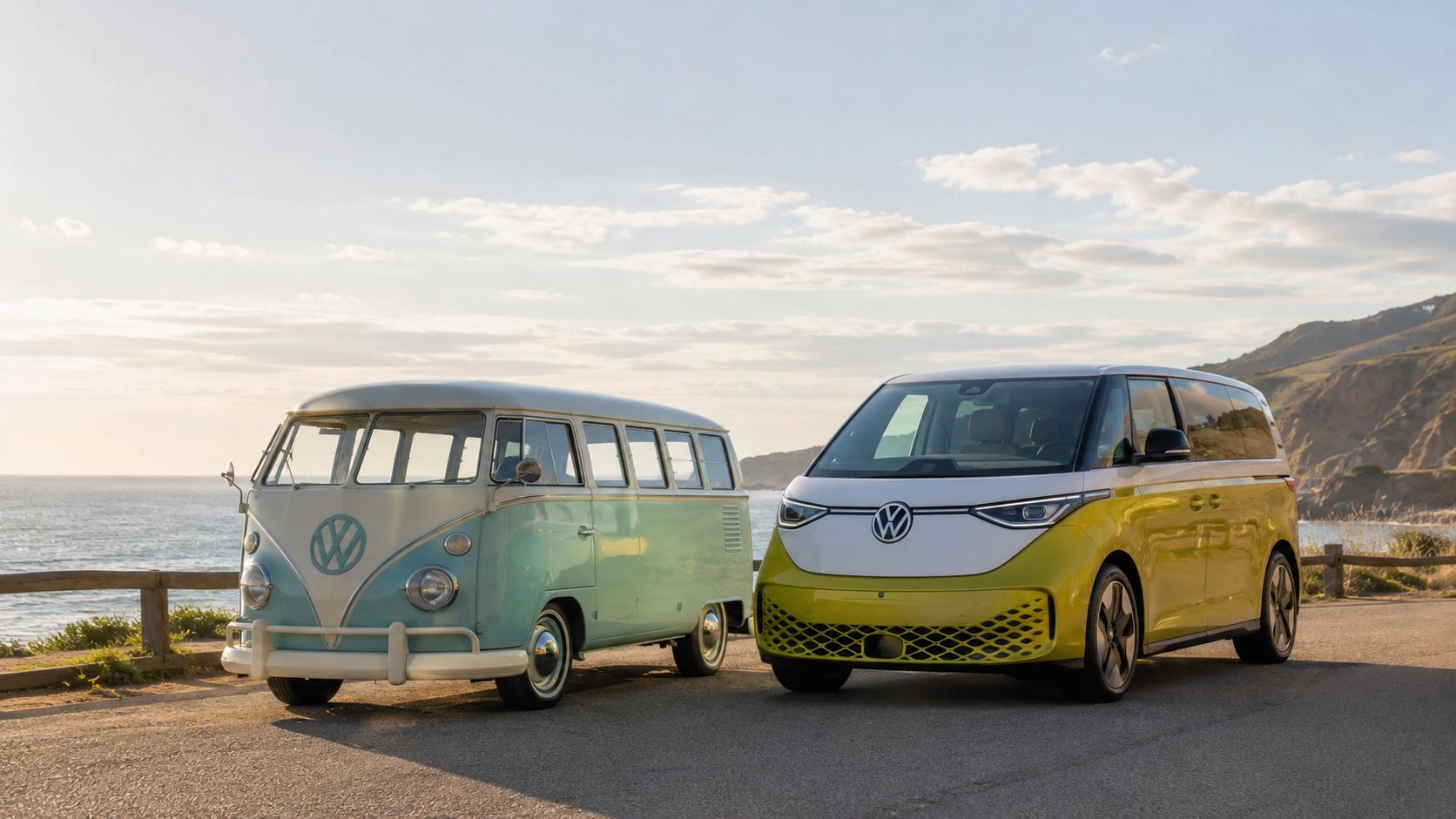
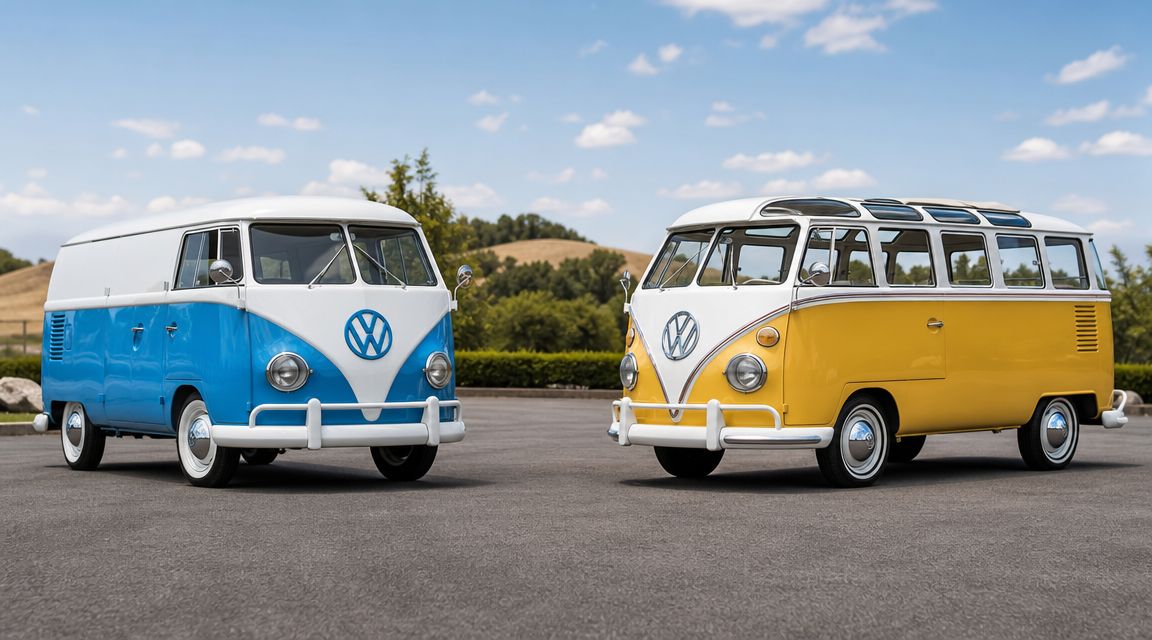
A classic light blue and white Volkswagen van parked next to a modern yellow and white ID. Buzz electric van.

No one who loves old Volkswagens needs to be told that a classic Kombi has its own heartbeat. The steering talks back. The cabin smells like old vinyl, warm metal and adventure. The engine doesn't hum politely. It chatters and works for its living.

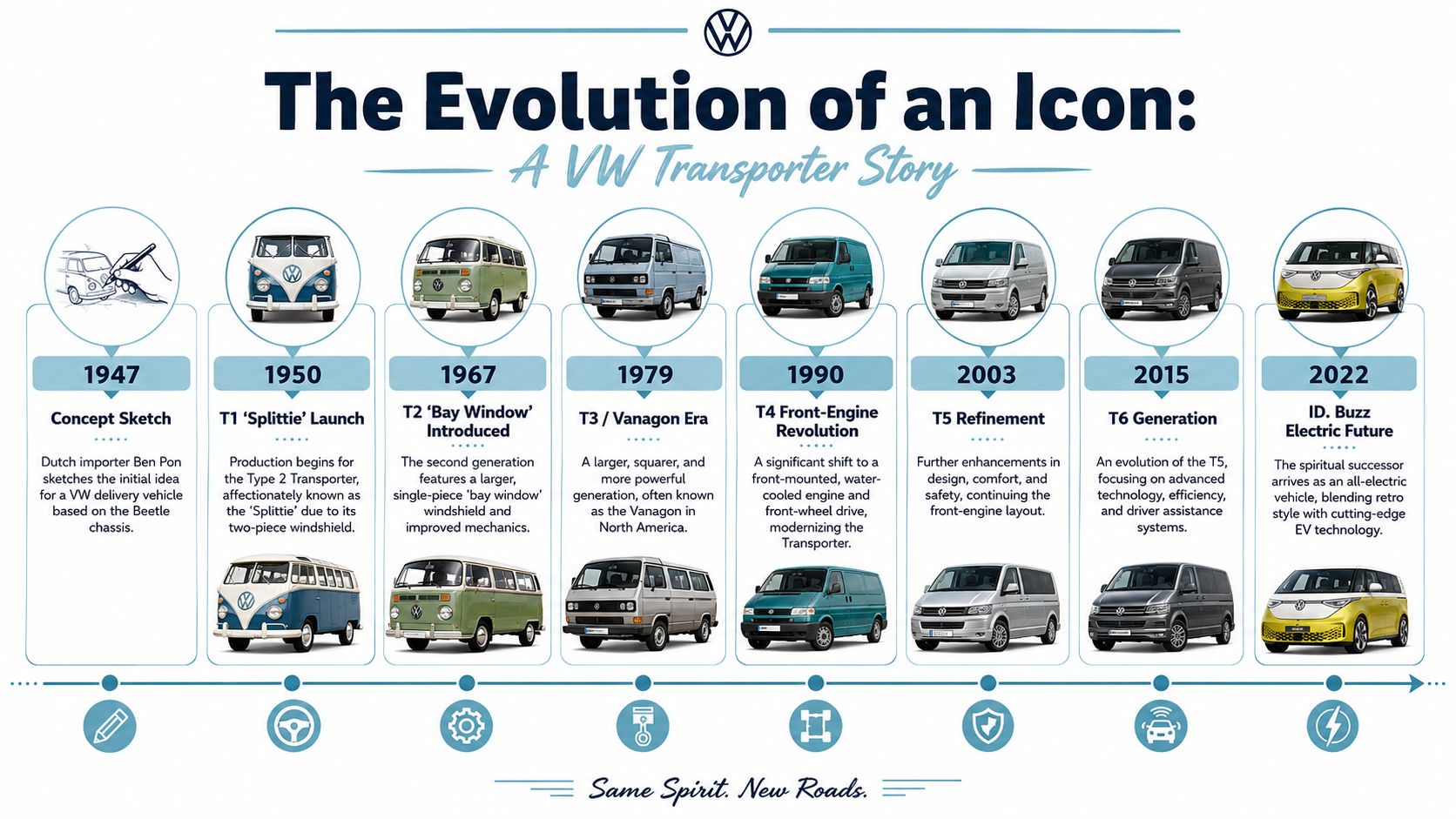
The historical line is part of that affection. The second-generation Volkswagen Kombi entered production in 1967, the third-generation followed in 1979, and later the line gave way to the Transporter and Caravelle in Australia, as outlined in this history of the Volkswagen Kombi van.

Same spirit, different soundtrack

The ID. Buzz doesn't try to recreate the mechanical theatre of an old bus. It captures the social side instead. You still sit high. You still get that broad, airy view. You still feel like the vehicle wants to be part of a trip rather than merely complete one.

That's the true bridge between generations. A classic Kombi makes every drive feel slightly ceremonial because it asks something of you. The ID. Buzz makes every drive feel easy, but still memorable, because it keeps that warm, open-hearted sense of occasion.

For a moving side-by-side impression, this clip shows the family connection from another angle.

A Splitty, a Bay, and an ID. Buzz all answer the same question in different accents: how do you make travel feel cheerful?

If you're a purist, you won't confuse them. You shouldn't. But if you love what Kombis have always represented, freedom, friendliness, and a touch of playfulness, the lineage is easy to see.

Living the Dream What to Expect Owning an ID Buzz

Owning an ID. Buzz in Australia looks best when you're realistic from day one. Home charging is the quiet hero because it turns the van into something you top up while you sleep or while the house is already switched on and humming along. Public charging is still useful, especially on longer runs, but the easiest ownership rhythm starts at home.

The most useful reality check comes from other owners. Australian owners have reported that real-world range can fall to around 300 km in cold weather, especially if they're sticking to the recommended 80% daily charging limit, which is worth remembering in southern-state winters compared with the official range figure, based on owner discussion in this Australian ID. Buzz community post. If you like the idea of eventually turning the modern van dream into a touring lifestyle, the idea-rich world of the ID Buzz camper is easy to get lost in.

Everyday habits that make ownership easier

A few habits help quickly:

  • Charge around your week rather than waiting for the battery to get low.
  • Expect winter variation if you live in Melbourne, Canberra, Hobart, or colder inland pockets.
  • Use the official service rhythm to keep ownership simple. Volkswagen Australia specifies service intervals every 30,000km or 24 months on the local ID. Buzz range, as noted earlier from the official model information.

Honest expectations make happy owners

The ID. Buzz establishes trust because it doesn't need fantasy to be appealing. For many households, a realistic winter estimate and a simple home-charging routine are enough to make the van feel easy.

In mild conditions, range worries fade quickly. In colder weather, planning matters more than optimism.

That sort of honesty is good for buyers and good for the broader VW community. The old Kombi crowd has always respected practical knowledge, and the electric era deserves the same straight talk.

Start Your Collection The ID Buzz and VW Memorabilia

Every time Volkswagen launches a vehicle that stirs emotion, collectors respond almost instinctively. The ID. Buzz feels made for that response because it sits at such a lovely meeting point. It's recognisably linked to the classic vans people already treasure, yet distinct enough to deserve its own place in a display cabinet.

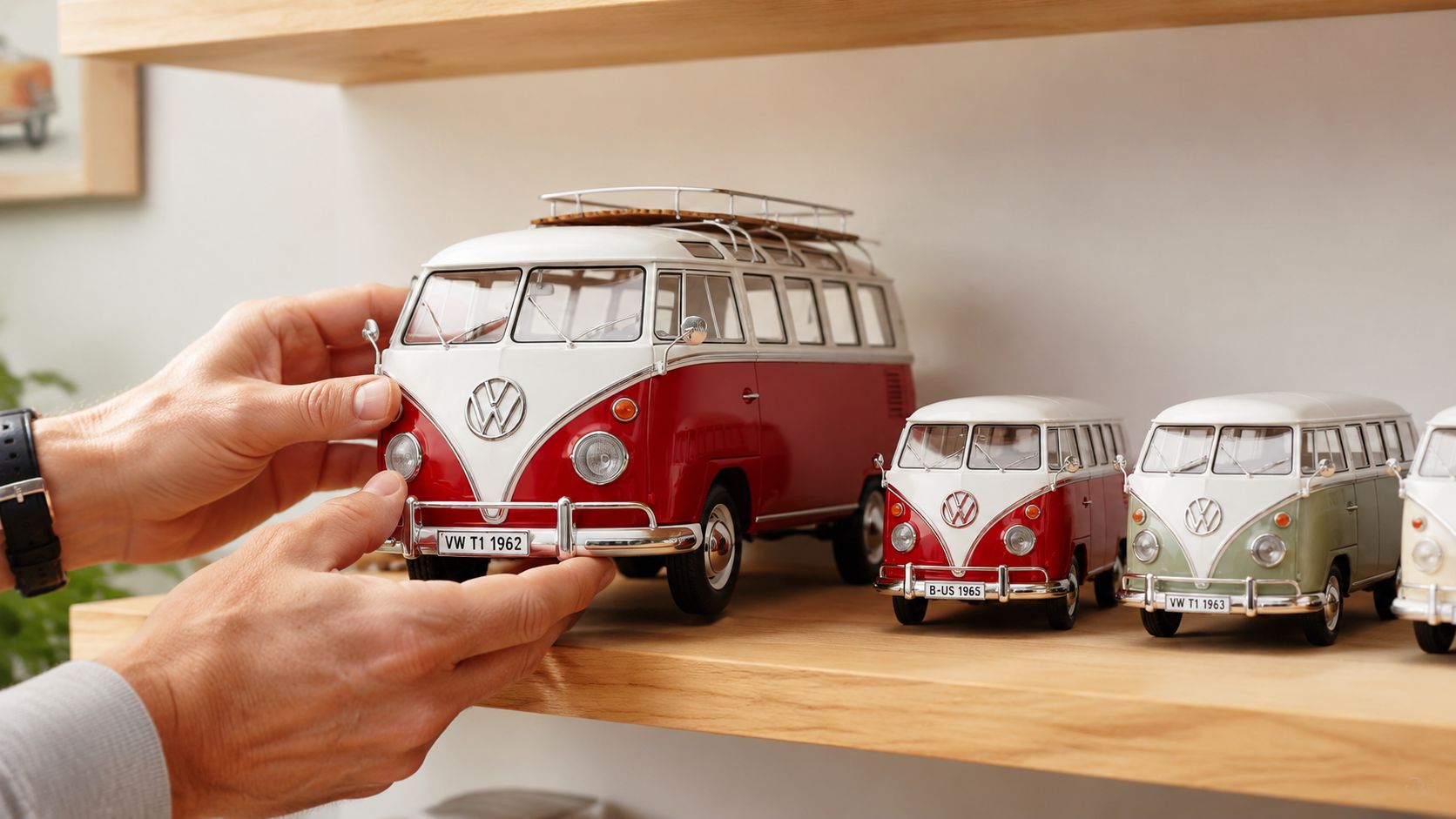
For collectors, that opens up a fun way to tell the whole Volkswagen story on a shelf. You might line up a classic Beetle model beside a 1962-style Samba Bus diecast, then finish the row with an ID. Buzz to show how the design language travelled from rear-engine simplicity to electric modernism.

Screenshot from https://vwmemorabilia.com.au/product-category/volkswagen-diecast/

Display ideas that feel personal

Collectors don't need giant rooms or museum budgets. A strong display usually comes down to theme.

  • Timeline shelf with Beetle, early Kombi, Bay Window and ID. Buzz in order.
  • Beachy corner display using surf-themed VW pieces, pale timber shelving and coastal décor.
  • Gift pairing where a licensed Volkswagen Beetle model sits with a Kombi diecast for a birthday or Father's Day present.

What to look for when buying

If you're shopping for VW Kombi diecast Australia, Volkswagen Beetle model pieces, or newer Volkswagen diecast models for sale, a few basics matter most:

  • Licensed branding matters because it gives the piece proper credibility for long-term collecting.
  • Finish and paint detail can make a modestly sized model feel premium.
  • Local stock is a genuine advantage for Australian buyers who want faster shipping and easier support.
  • A balanced collection often looks better than chasing one era only. Old and new Volkswagens play brilliantly together.

That's the charming twist with the ID. Buzz. It isn't only a new car. It's already part of the memorabilia story, joining the Beetles and Kombis that have filled cabinets, workshops and study shelves for years.

FAQ

Is the Volkswagen ID. Buzz sold in more than one Australian body style?

Yes. Australian buyers can choose a five-seat short-wheelbase version and a seven-seat long-wheelbase version, as covered in the local pricing section above.

What's the official Australian range figure for the ID. Buzz?

Volkswagen Australia lists the ID. Buzz with a WLTP-tested maximum range of up to 450km on the official local model page linked earlier.

Does real-world range always match the WLTP figure?

Not always. Owner reports in Australia suggest colder weather and an 80% daily charging limit can bring practical range closer to around 300 km in winter conditions.

How often does the ID. Buzz need servicing in Australia?

Volkswagen Australia specifies 30,000km or 24 months service intervals for the local ID. Buzz range.

Why does the ID. Buzz matter to collectors?

Because it bridges eras beautifully. It gives collectors a modern electric chapter that still belongs naturally beside classic Kombi and Beetle memorabilia.


If the Volkswagen ID. Buzz has you feeling keen to celebrate both the old-school classics and the electric future, have a wander through Volkswagen Memorabilia. It's a terrific Australian source for licensed VW memorabilia collectibles, from Kombi Samba Bus diecast and Beetle models to gift-worthy display pieces, with the local-stock advantage of fast shipping and friendly support for Aussie collectors.

Fraser Island Maps: A VW Fan’s Guide to K’gari

You're probably doing it right now. Tabs open. Ferry timings on one screen, a weather app on the other, and a half-formed daydream in your head where a classic Kombi hums its way north, boards the barge, and rolls onto K'gari with a surf rod, an esky, and nowhere urgent to be.

That dream has proper Aussie road-trip magic in it. Salt in the air. Sand on the floor mats. A faded map folded into the glovebox beside old servo receipts. For a lot of us VW tragics, that feeling is baked into the shape of the vehicle itself. The rounded nose, the simple dash, the idea that the trip matters just as much as the destination.

K'gari sharpens that dream. It's wild, beautiful, and not especially forgiving if you bluff your way through the planning. That's where good Fraser Island maps stop being a nice extra and become part of the adventure kit, right up there with tyre pressure know-how and common sense.

The Great K'gari Dream and Your Trusty Co-Pilot

A mate of mine keeps a small Kombi model on his workshop shelf beside a box of old spark plugs and a sun-faded photo from a camping trip up the coast. Every time I see it, I think of the same thing. The old VW promise. Pack light, leave early, follow the coastline, and trust the vehicle to carry the story.

That spirit goes way back. The original Volkswagen Kombi (Type 2) was first introduced in 1950, launching an icon of light commercial vehicles that became a symbol of freedom and adventure in the Australian fleet and beyond, as noted in this history of the Volkswagen Kombi.

K'gari feels like the destination that spirit was built for. Not because it's easy, but because it rewards people who love the journey. You can almost hear the old air-cooled soundtrack in your head while planning it, even if your actual island vehicle ends up being something far more modern and sand-ready.

The road-trip dream needs a plan

The romantic version of the trip is simple. Throw a bag in the back, point north, and sort it out as you go.

K'gari doesn't play by those rules.

Soft inland sand, changing access, beach runs that depend on timing, and safety obligations around wildlife all mean your map becomes your quiet co-pilot. It tells you where the track bends, where the campsite sits, where the day can go pear-shaped, and where the magic lives.

Good adventures feel spontaneous. Safe ones are usually well planned.

That's why I always think of maps the same way I think of old VW ownership. The carefree feeling only works because someone paid attention to the details first.

If you enjoy that whole coastal freedom vibe, the old-school travel romance is alive and well in van life Australia stories. The mood is familiar. The difference with K'gari is that your dream trip starts with knowing exactly what map you'll trust when the tracks stop feeling obvious.

Why Your Phone Map Won't Cut It on the Sand Tracks

A phone map is fine for finding a bakery in a country town. It's not enough for K'gari.

That's not snobbery. It's the same logic as using the right oil in a Beetle or the right parts in a restoration. Generic tools work in generic conditions. K'gari isn't generic.

Stretching 123 km in length and covering 166,000 hectares, K'gari (Fraser Island) is the world's largest sand island, a vast terrain where navigation requires more than just a standard GPS, according to this Fraser Island map overview.

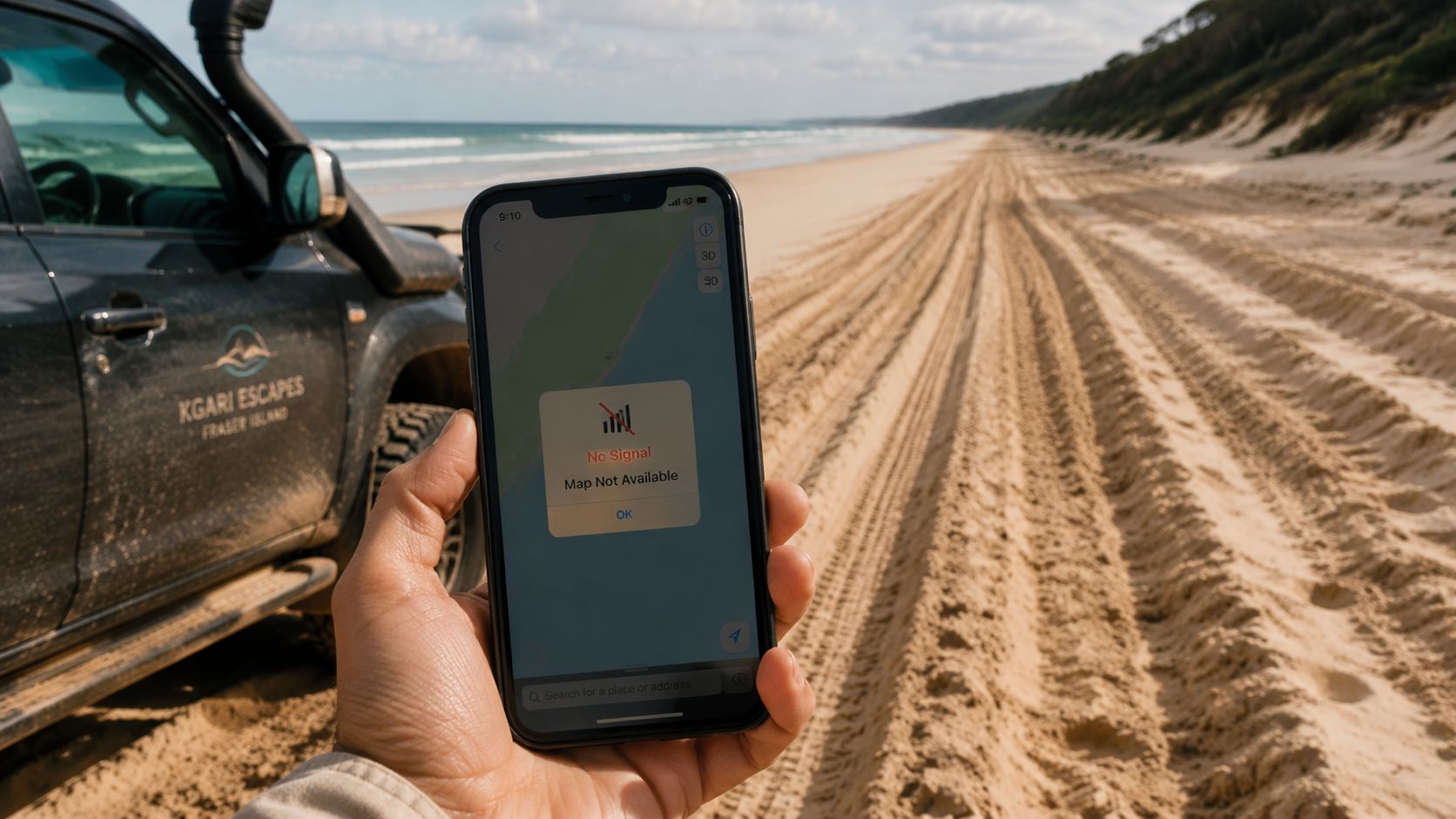
A hand holding a smartphone showing a no signal map error on a beach next to a vehicle.

Sand tracks aren't suburban streets

Phone apps tend to treat roads as fixed things. K'gari tracks don't always behave like that. A route can look straightforward on a broad consumer map and feel very different once you're bouncing through soft sand, reading side tracks, or trying to work out whether that turn is the right one.

The problem isn't only signal. It's context.

A proper island map gives you the sort of detail that matters in real driving conditions:

  • Track identity: Is this a main inland route or a softer connecting section?
  • Practical landmarks: You need more than a blue dot. You need camp zones, creek crossings, lakes, and known access points.
  • Decision support: Specialised maps help you judge the route before you're committed to it.

Generic navigation can make a simple day hard

A lot of travellers assume the beach will be the easy bit and the inland sections will sort themselves out. That's backwards thinking. On K'gari, a casual wrong turn can chew up time, fuel, and confidence fast.

I think of it the same way I think of an outback glovebox kit in an old VW. You wouldn't head bush with only guesswork and optimism. You'd pack what fits the terrain.

That same road-trip mindset is captured nicely in this Australian outback map feature. It's the same lesson in a different setting. A map isn't décor. It's gear.

A phone tells you where you are. A purpose-built map helps you decide whether you should be there at all.

Respect the island and the trip gets better

The funny thing is that proper prep doesn't make the journey feel less adventurous. It makes it more enjoyable. You stop second-guessing every turn and start noticing the good stuff. The colours in the sand. The odd silence between patches of scrub. The relief of rolling into camp with enough daylight left for a cuppa.

That's why Fraser Island maps matter so much. They don't kill the romance. They protect it.

Your K'gari Map Toolkit From Paper to Pixels

The best setup isn't one map. It's a small toolkit, with each piece doing a different job.

That's familiar territory for VW people. A diecast collector doesn't confuse a shelf-piece Samba Bus with a pocket-sized Beetle. Same badge, different purpose. K'gari navigation works the same way. One map gives you broad orientation, another gives track detail, and another helps with local rules on the ground.

The definitive topographic map for Fraser Island is produced by Hema Maps at a 1:130,000 scale, featuring GPS-surveyed 4WD tracks that have been field-checked by the Hema Map Patrol to ensure accuracy and safety, as described on the Hema Fraser Island map listing.

An infographic titled Your K'gari Map Toolkit showing physical, digital, satellite, and local signage map resources.

The paper map that earns its keep

The Hema map is the one I'd want folded in the door pocket.

It's practical, readable, and built for the job. On an island where battery life, glare, and wet fingers can all become annoyances, paper still has a lot going for it. You can spread it across the bonnet, trace a route with one finger, and get everybody in the vehicle looking at the same plan.

What makes it valuable isn't nostalgia. It's reliability.

The digital layer that helps in real time

Offline digital maps add convenience. A moving position marker can be a gift when tracks branch, visibility drops, or fatigue creeps in late in the day.

The trick is using digital tools as a support act, not the whole show. Download what you need before you leave the mainland. Check that the map data is available offline. Then carry charging gear and a backup plan.

A simple way to think about it:

Tool Best use Weak spot
Paper topographic map Big-picture route planning and backup No live position marker
Offline map app On-track confirmation and quick checks Battery and device dependence
Local signage Immediate warnings and site rules Limited area coverage
Satellite view General orientation Not enough detail on its own

The official map you shouldn't ignore

There's another map category people sometimes treat as secondary, and that's a mistake. Official park material matters because it reflects current management priorities on the island, especially around camping, access, and wildlife safety.

Some of the most useful information isn't glamorous. It's the note near a zone. The fence symbol. The warning panel you skimmed the first time and then wish you'd studied properly later.

Practical rule: Carry one map for navigation and another for rules, zones, and safety notices. They solve different problems.

Local advice is part of the toolkit too

The smartest travellers on K'gari don't act like the map is the final word. They use it alongside current advice from the barge, rangers, accommodation desks, and posted signs.

That mix of old-school and modern feels very VW, really. A classic shape with a sensible upgrade. The spirit stays the same. The reliability gets better.

If you're building your own Fraser Island maps toolkit, keep it simple:

  • Start with a trusted topographic map: This is the backbone.
  • Add an offline app: Good for confirming your position.
  • Use official park material: Especially for camps, restrictions, and safety obligations.
  • Listen locally: Conditions on the day matter as much as planning at home.

How to Read the Signs and Sandy Tracks

Owning the map isn't the same as understanding it. K'gari has its own language, and once you learn it, the island feels much less mysterious.

The first time an individual studies a specialised island map, they often look for the big-ticket spots. Lake McKenzie. Eli Creek. The famous beach run. Fair enough. But the experienced driver's eye goes somewhere else first. Track type, junction logic, access notes, and where one decision commits you to another.

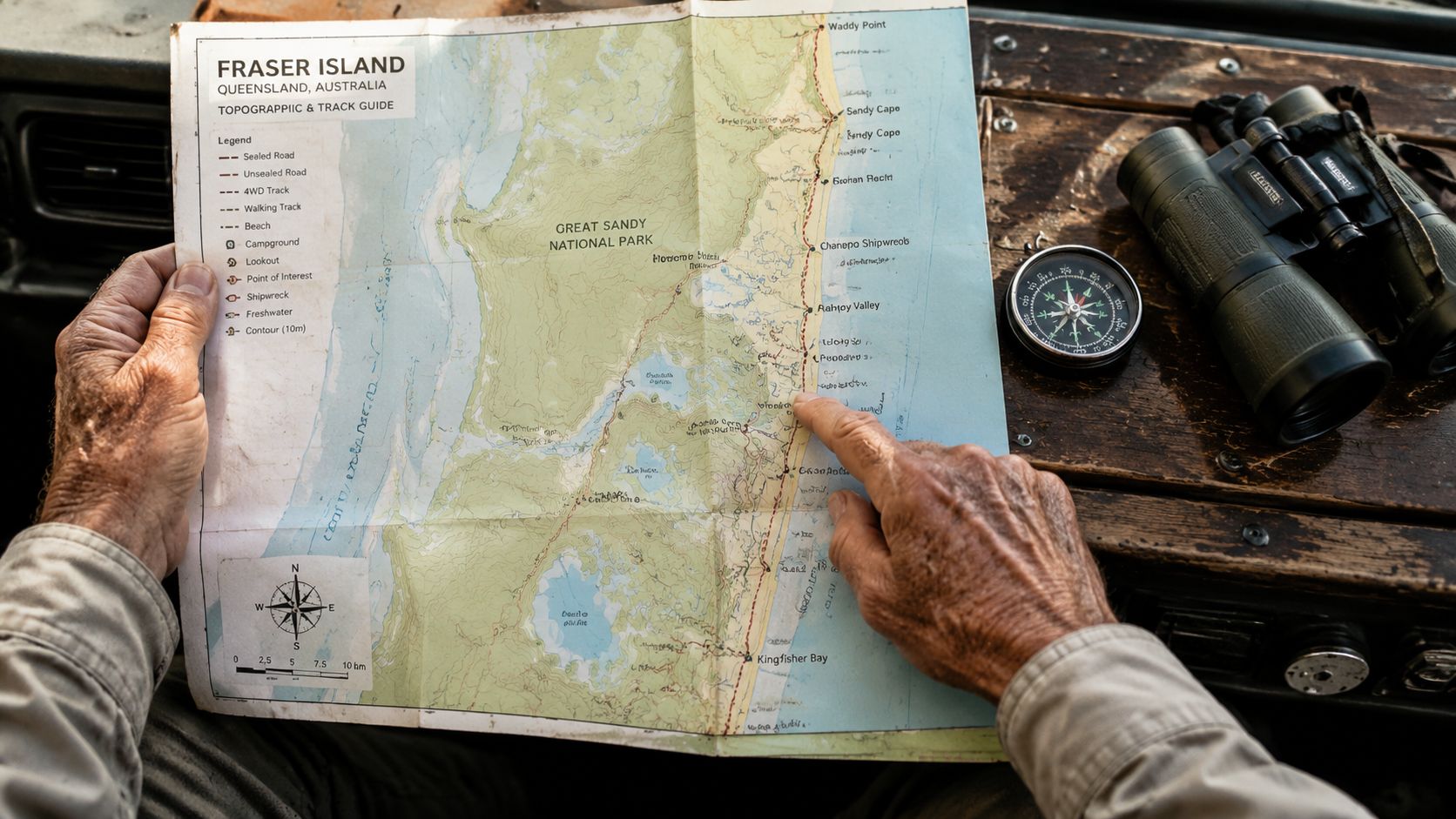
An elderly man pointing at a map of Fraser Island while planning a trip in a vehicle.

Read the route before the destination

That sounds obvious, but it's where plenty of planning goes soft. People choose a landmark first and only later realise the route includes slow inland work, beach timing, or a combination of both.

When I look at Fraser Island maps, I try to answer four questions before I care about scenery:

  1. How do I enter and exit the route?
  2. What kind of track am I committing to?
  3. What are the obvious bailout points if plans change?
  4. What rules apply where I stop?

That approach isn't glamorous. It is effective.

What the important symbols are really telling you

Different map makers use slightly different styling, but the important cues are consistent enough to learn.

  • Main beach routes: These tend to be visually obvious, but they still demand judgment.
  • Inland connector tracks: These deserve closer attention. They can turn a short-looking hop into a proper slog.
  • Camping areas and facilities: Mark these early so you're not making late decisions when everyone's tired.
  • Safety and restricted areas: Don't skim past them. They often shape the whole day.

A map legend is a bit like an old VW workshop manual. Boring until it suddenly saves you.

Signs on the island matter as much as lines on paper

A common mistake is treating on-ground signage as confirmation only. On K'gari, signs can change the meaning of your plan. They tell you what's happening where your printed map can't update itself.

That's why I always tell people to pause at intersections, information boards, and access signs rather than just glancing at them through the windscreen.

You don't read K'gari once at home. You keep reading it all day.

Track-reading habits worth building

Here, confidence grows. Not from bravado, but from routine.

Habit Why it helps
Stop and orient the map properly Reduces wrong turns at busy junctions
Mark likely lunch or rest points Prevents rushed choices later
Note camp zones early Helps you avoid hunting for options when daylight fades
Cross-check signs with your plan Keeps you aligned with current conditions

There's a nice parallel here with classic VW driving. You learn the quirks. You stop fighting them. Then the whole machine starts making sense.

If you like mechanical planning as much as trip planning, the mindset isn't far off what's covered in this high-lift jack bracket installation guide. Read carefully, understand the parts, and things work better when the pressure comes on.

The Digital Co-Pilot Your Best Apps and GPS Options

The modern answer isn't paper versus digital. It's paper plus digital.

That's the sweet spot. A paper map gives you perspective. An offline app gives you confidence at the fork in the track when everyone in the cabin suddenly has an opinion.

What digital tools do well

Offline map apps are excellent for confirming where you are in relation to the route you planned. They're quick, visual, and handy when you don't want to unfold a large paper sheet in the wind.

Satellite imagery can help with broad orientation too. It gives you a feel for shape and surroundings. What it doesn't do well is replace a proper track map built for 4WD travel.

A dedicated GPS unit can also make sense if you prefer a device that's built to stay mounted, powered, and visible all day. That's especially appealing if your phone is also handling photos, messages, and booking confirmations.

What still matters before you board the barge

Digital convenience only works if you've prepared it properly. The main jobs are simple:

  • Download the maps in full: Don't assume they'll cache what you need.
  • Check the app while still on the mainland: Open the relevant area and make sure it works offline.
  • Pack charging options: Cables, battery pack, in-car power.
  • Keep a paper backup: If a screen dies, the day doesn't need to.

Digital tools are a co-pilot. Don't give them the keys.

A VW-friendly way to think about it

If you've ever fitted a discreet modern stereo into a classic Kombi, you already understand the philosophy. The upgrade doesn't ruin the character. It supports the experience.

That's exactly how digital navigation should feel on K'gari. Use the convenience. Keep the analogue backbone. Let each tool do what it does best.

For those interested in items such as VW Kombi diecast Australia, Volkswagen Beetle model, buy diecast Kombi, VW memorabilia collectibles, or Volkswagen diecast models for sale, there's a similar principle in collecting too. The best collections balance looks, authenticity, and usefulness. A trip kit should do the same.

Map to Memory Planning Your Unforgettable K'gari Trip

A map becomes exciting when it stops being paper and starts becoming a story.

You can see that shift at the kitchen table. Someone circles a lake, someone else points to a beach run, and suddenly the trip has shape. Morning ferry. Inland turn-off. Lunch spot. Camp by late afternoon. The route starts to feel real.

Screenshot from https://vwmemorabilia.com.au/shop/

The weekend warrior run

This is the trip for people who want a proper taste without trying to conquer the island in one hit.

You arrive with a clear plan, use your main map to identify a sensible inland route to a central highlight, and keep your day conservative. One major destination, one secondary stop, and plenty of breathing room. The joy here is not trying to cram every famous name into one daylight window.

What makes this style work is restraint. You leave enough margin for delays, pauses, and those moments where everybody wants to get out and stare at the place.

The relaxed multi-day escape

A longer stay changes the tone completely. You can build your route in layers, with one day focused on central inland experiences, another on beach travel and scenic stops, and another on slower exploration around camp and nearby points of interest.

Your map toolkit really earns its keep. Paper for planning the overall rhythm. Offline navigation for day-to-day checks. Signage and official safety information for what's happening on the ground.

One issue still catches people out. A critical gap in current resources is the lack of guides that integrate offline map navigation with real-time dingo safety protocols, a significant issue given that up to 40% of visitors report encounters and new protocols for K'gari are often poorly mapped, according to the K'gari parks map material.

That means your itinerary shouldn't only answer where you'll drive. It should answer how you'll behave when you stop.

  • At camp: Know the zone and the rules before arrival.
  • At lakes and picnic areas: Read local notices instead of relying on memory.
  • Around food and gear: Treat wildlife safety as part of route planning, not an afterthought.

Here's a bit of moving inspiration before wheels hit the sand:

The non-driver's version still deserves a proper plan

Not everybody heads over in their own 4WD. Some travellers join guided transport or organise the day around access to major attractions without self-driving.

That doesn't make maps irrelevant. It makes them more useful in a different way. You use them to understand where you're going, what the day can realistically include, and how each stop relates to the wider island. You become a better passenger, a calmer traveller, and a smarter planner.

The best map doesn't just get you there. It helps you remember why each stop mattered.

Years later, that's what sticks. The route line. The lake turn-off. The sandy note scribbled in the margin. It's the same reason people keep old registration papers, faded touring stickers, and tiny VW models on shelves. They're reminders that freedom is sweetest when you can still trace the road back.

Your Adventure Awaits Grab Your Map and Go

K'gari rewards the kind of traveller who loves both freedom and preparation. That's why it sits so neatly beside the old Volkswagen spirit. The dream is open-road simplicity. However, the best trips come from caring about the details.

Good Fraser Island maps give you that edge. They help you choose the right toolkit, read the track properly, combine paper with digital backup, and shape a trip that feels loose and memorable without being careless.

That's the sweet spot. Sand in the tyres, confidence in the plan, and enough room in the day for the unexpected good stuff.

If you're heading over soon, get your maps sorted before the ferry ramp drops. Learn the symbols. Respect the signs. Build an itinerary that leaves margin for weather, wildlife, and the little detours that make the story worth retelling over a cold one later.

And if the trip is still a dream for now, that's alright too. Half the pleasure has always been in the planning.


When you want to keep that road-trip feeling alive at home, have a look through Volkswagen Memorabilia. It's a lovely spot for VW fans, collectors, and gift buyers chasing licensed pieces with real character, from classic Kombi and Samba Bus diecast to Beetle-inspired keepsakes, all backed by local Australian stock and fast shipping.

Home Decor Presents for the Ultimate VW Fan

You're probably in that all-too-familiar spot right now. Birthday coming up, housewarming on the calendar, maybe Christmas creeping closer than you'd like, and the person you're buying for already seems to have every tool, every shirt, and every “practical” thing under the sun. But they light up the second they spot a tidy old Beetle, a two-tone Kombi, or a Samba Bus parked on the grass at a local show.

That's when ordinary gifts fall flat.

For a VW fan, the best home decor presents aren't random fillers for a shelf. They're reminders of road trips, panel vans by the beach, family photos with a Beetle in the driveway, or that one Sunday spent walking row after row of polished classics with a coffee in hand. A well-chosen Volkswagen piece can sit in a lounge room, office, or hallway and subtly say, “I know what you love.”

More Than a Gift It Is a Piece of History

A mate of mine once spent weeks trying to buy a present for his dad. The bloke had restored cars, owned shelves full of manuals, and could spot the difference between a Beetle bumper and a Superbug bumper from half a car park away. Socks were out. Bunnings voucher was too lazy. Another mug was never going to cut it.

What worked was a vintage-style Volkswagen model for the study. Not because it filled a gap on a shelf, but because it brought a story back into the room. His dad saw it and started talking about the first VW he remembered in Australia, the shape of the guards, the simple lines, the feeling those cars gave people. That's the magic with the right home decor presents. They don't just decorate a room. They start conversations.

A person unwrapping a gift box containing a miniature light blue vintage Volkswagen Beetle car model.

The wider category is growing too. The Australian home decor market reached USD 16.1 Million in 2025 and is projected to reach USD 21.6 Million by 2034, according to IMARC Group's Australia home decor market outlook. That tells you plenty of Australians are choosing gifts and keepsakes that belong in the home, not just in a drawer.

Why VW pieces land differently

Some gifts say “that'll do.” Volkswagen-themed decor says something more personal.

  • It carries design history. A Beetle silhouette is recognisable in a heartbeat.
  • It suits lived-in spaces. A Kombi model works in a study, lounge, hallway console, or coastal holiday house.
  • It bridges hobby and home. That's why so many people gravitate to vintage home accessories with a story behind them.

A good gift doesn't interrupt someone's home. It settles into it and makes the room feel more like theirs.

Decoding the VW Fan Your Guide to Gifting

Not every Volkswagen lover wants the same thing. One person wants exact trim detail and authentic lines. Another wants a reminder of beach runs, old family cars, or the carefree look of a bright Kombi parked by the water. Getting the gift right starts with knowing which kind of fan you're buying for.

The connection runs deep in Australia. The Volkswagen Beetle was formally introduced to the Australian market in 1953, with local assembly beginning at Clayton in Victoria the following year, as noted in the Volkswagen Beetle history entry. That long local history is part of why VW gifts can feel so personal here. These aren't foreign curiosities. They're woven into Australian motoring memory.

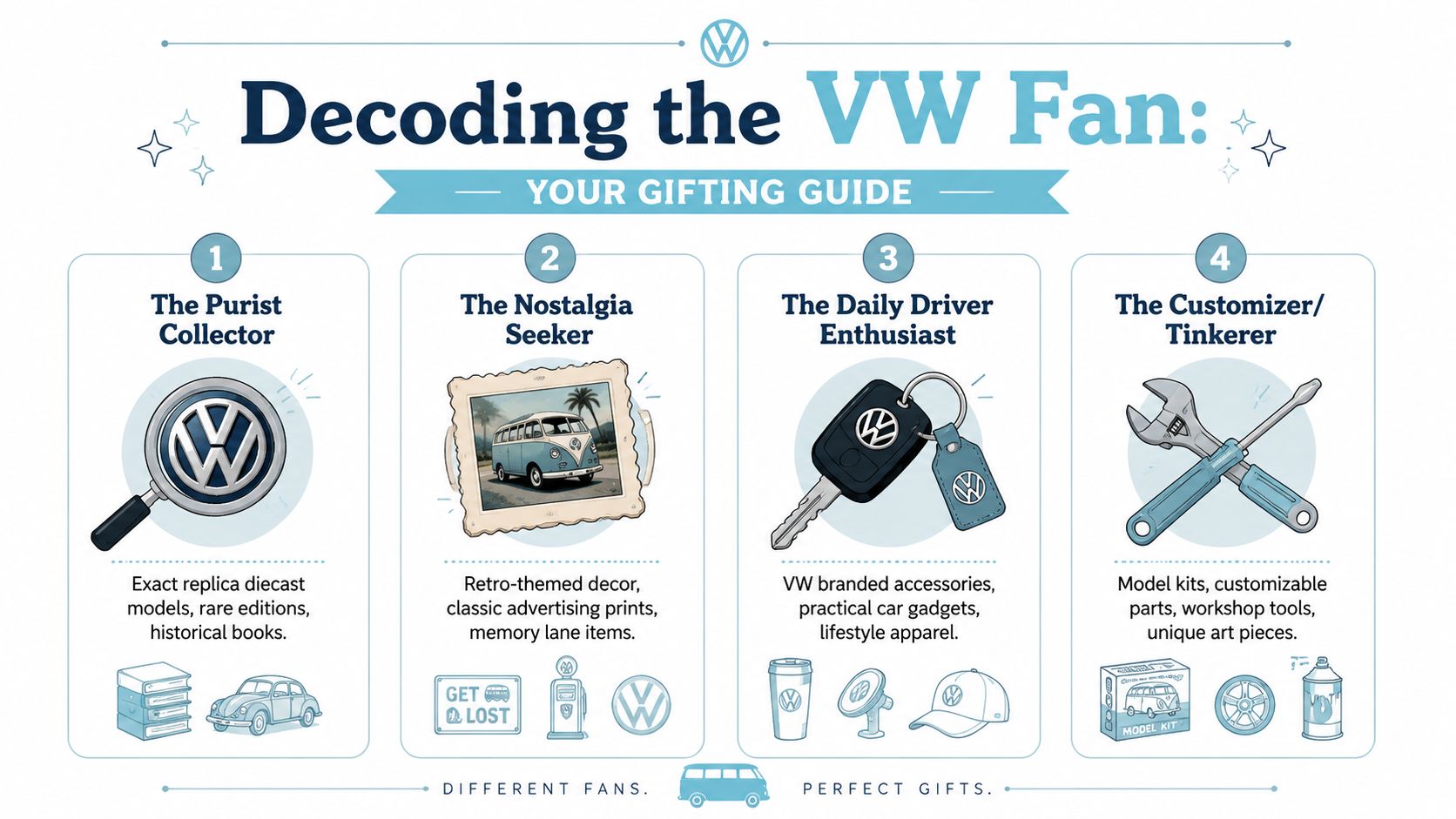
A Volkswagen gifting guide infographic categorizing VW fans into four types with recommended gift ideas for each.

The four VW gift personalities

Fan type What they care about Home decor present that fits
The Purist Collector Accurate proportions, licensing, historic models A detailed Beetle or Kombi diecast displayed in a study or cabinet
The Nostalgia Seeker Memories, retro charm, old-school design VW wall art, framed pieces, retro-style decor accents
The Daily Driver Enthusiast Everyday VW identity, subtle style Desk accessories, smaller display models, practical memorabilia
The Customizer or Tinkerer Workshop spirit, individuality, model details Model kits, metal decor, unusual display pieces

How to read the clues

If they stop at every diecast table during a show, they're probably the Purist Collector. They'll notice scale, body shape, badging, windows, trim, and whether the model feels true to the original car.

If they tell stories that start with “we used to pile into Dad's Kombi”, that's the Nostalgia Seeker. They usually love gifts that feel warm and familiar, not clinical or overly technical.

Then there's the Daily Driver Enthusiast. This person might own a modern VW, still wave at old Kombis, and likes the brand as part of daily life. Their ideal gift often works best on a desk, a bookshelf, or a sideboard.

Finally, the Customizer or Tinkerer enjoys personality. They appreciate quirky colourways, surf styling, workshop-inspired displays, and pieces that don't feel too formal.

Collector's rule: If the recipient talks about “licensed” models, don't guess. Quality and authenticity matter more than size.

Choosing the Perfect Volkswagen Model

Plenty of gift buyers get stuck at this point. The model looks good in the photo, but is it too big, too small, too playful, or too serious for the person receiving it? The easiest way to sort it is to look at three things. Scale, licensing, and theme.

Screenshot from https://vwmemorabilia.com.au/shop/

Start with scale

Scale changes how a gift lives in the home.

  • 1:18 scale suits the fan who wants presence and detail. It works beautifully on a cabinet, desk, or dedicated display shelf.
  • 1:24 scale is a sweet spot for many homes. Big enough to admire, small enough to style easily.
  • 1:32 scale is ideal when you want a tasteful accent for a bookshelf, office, or bedside table.

If you're buying a VW Kombi diecast Australia collectors would happily display, scale isn't just a measurement. It shapes the whole feel of the gift.

Only buy licensed when detail matters

Officially licensed pieces tend to feel more satisfying in the hand and more convincing in a room. The shape is cleaner, the finish feels intentional, and the model usually stands up better as a decor piece instead of reading like a toy.

That matters with iconic vehicles. A Volkswagen Beetle earned its reputation for toughness far beyond suburban streets. In 1963, a Beetle donated by the manufacturer became the first production car to operate in Antarctica, where its air-cooled engine handled the extreme cold, according to the Old Antarctic Explorers post on the 1963 Beetle. When a car carries that kind of legend, a flimsy imitation feels a bit off.

Match the model to the room

Some quick pairings help:

  • Classic Beetle model for retro studies, home offices, and reading nooks
  • 1962 Kombi Samba Bus for relaxed coastal rooms and holiday homes
  • Flower Power Kombi for colourful interiors with a bit of fun
  • Black Top or neutral-toned vans for cleaner, minimalist styling

If you're shopping for a Volkswagen Beetle model or want to buy diecast Kombi pieces as home decor presents, pick the one that already looks like it belongs in their house.

Styling VW Decor Beyond the Bookshelf

The best VW decor doesn't need a glass cabinet and a “do not touch” sign. It can sit naturally in the home and still feel special. That's the difference between a collectible that stays boxed and one that becomes part of everyday life.

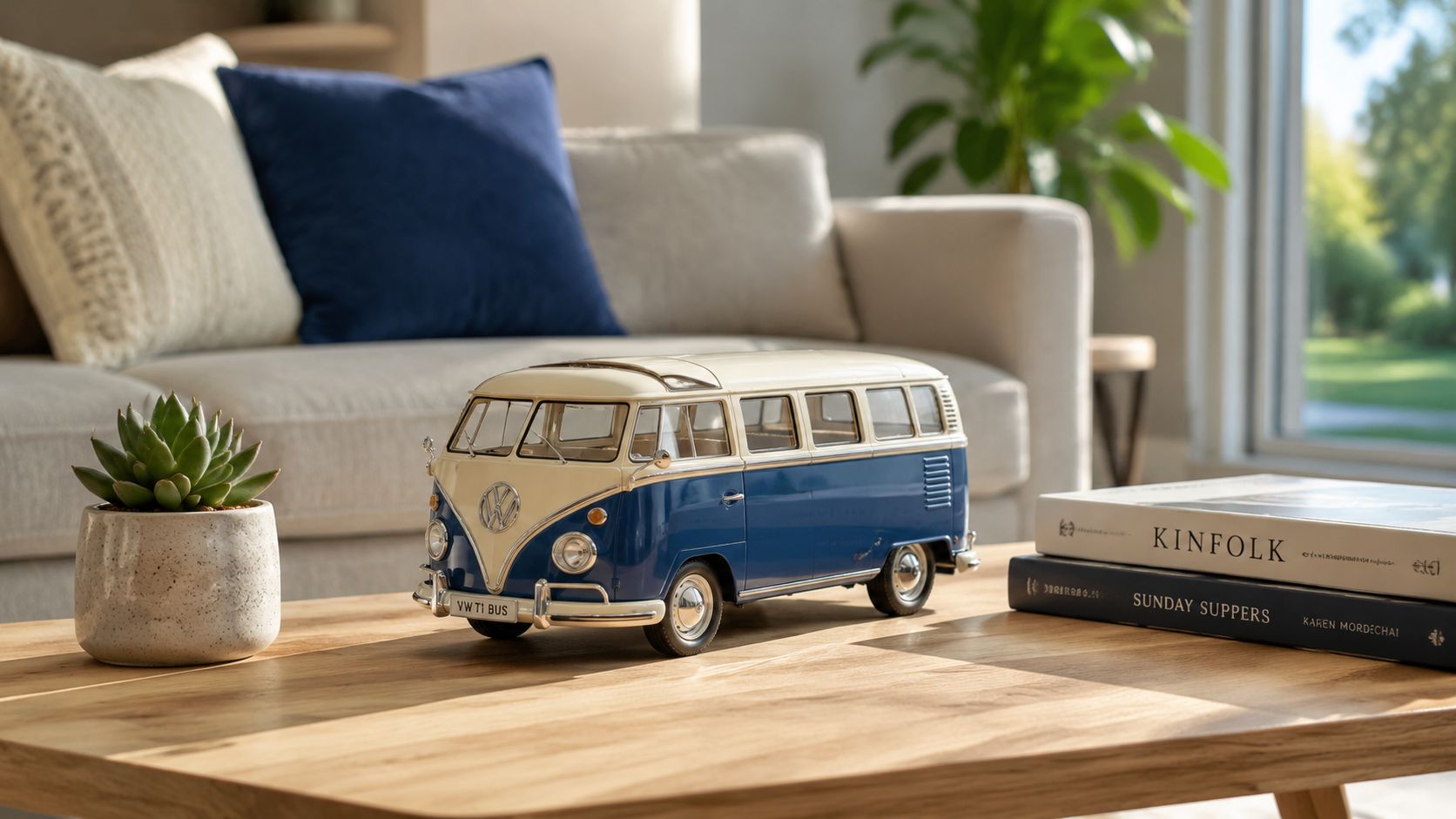
A classic blue and cream toy Volkswagen T1 bus model sits on a wooden coffee table near books.

Research into the Psychology of Home notes that surrounding yourself with personal objects such as photos and cherished mementos offers emotional grounding and can ease isolation, as discussed in Suzie Anderson Home's piece on cosy Australian winter decor. That's a strong reason to treat VW memorabilia as more than filler. The right object can make a room feel familiar, owned, and loved.

Coastal homes and Kombi spirit

A cream-and-blue Kombi model on a coffee table has a way of softening a room. Set it near stacked books, a timber tray, and a few beachy textures, and it feels right at home. In spaces with light timber, whites, sandy tones, or sea-inspired accents, a bus model brings personality without breaking the calm.

That's why coastal styling works so well with VW wall accents for the living room. The old bus shape already carries beach culture, road trips, and easy weekends.

Retro rooms and Beetle charm

A Beetle model belongs in retro spaces almost automatically. Think sideboard, record player nearby, framed print above, maybe a warm lamp in the corner. You don't need a huge collection. One well-placed piece can do the job.

Try this arrangement:

  • On a hallway console with a small bowl for keys and a framed family photo
  • In a home office as a desk accent beside notebooks and a vintage-style lamp
  • On open shelving mixed with books, a small plant, and one other nostalgic object

Personal objects work best when they're visible in daily life, not hidden away where nobody sees them.

Minimalist spaces still have room for VW character

A minimalist home doesn't mean empty shelves and zero personality. It just means every piece has to earn its place. A single black, white, or muted-tone Volkswagen model can add shape and story without cluttering the room.

For the recipient who likes cleaner interiors, choose:

Interior style Best VW decor choice Why it works
Coastal Two-tone Kombi or Samba Bus Echoes beach culture and relaxed colour palettes
Retro Bright Beetle or Flower Power bus Picks up vintage colour and nostalgia
Minimalist Neutral Beetle or dark-finish van Adds sculptural form without visual noise

The Finishing Touches Budget and Presentation

A thoughtful VW gift doesn't have to be the biggest box under the tree. Some of the most successful home decor presents are smaller pieces chosen with care and wrapped like they matter.

The trick is to match the scale of the gift to the way the person lives. Someone in a unit or apartment may love a compact model for a shelf or desk. Someone with a garage bar, home office, or dedicated display area might enjoy a larger feature piece.

Build a gift that feels curated

A diecast model on its own can be excellent. Paired well, it feels even more considered.

A few combinations work nicely:

  • For a coastal VW fan. Pair a Kombi model with a nautical accent or beach-inspired fridge magnet.
  • For a home office. Match a Beetle model with a photo frame or tidy desk accessory.
  • For a nostalgic gift. Add a handwritten note about a shared road trip, family car, or favourite show memory.

That last bit matters. The object is the anchor, but the story gives it weight.

Wrap it in a way they'll keep

Presentation is part of the gift, especially for decor pieces. A reusable bag, a neat gift box, or a tray they can keep is often better than layers of throwaway wrap.

A 2024 Australia Institute survey found that 65% of Australians re-use gift bags, which makes reusable presentation a practical choice as well as a sustainable one, according to the Australia Institute's Christmas gift survey article.

Presentation tip: If the packaging can become part of the home, it stops being waste and starts being part of the gift.

Quick questions people ask

Is a smaller model less impressive?
Not at all. In many homes, a smaller piece is easier to style and enjoy every day.

Should I choose a Beetle or a Kombi?
Pick the one that matches their personality and interior style. Beetles suit retro and classic spaces. Kombis lean naturally coastal and relaxed.

Do home decor presents need to match the room exactly?
Close is good enough. The best gifts bring a bit of the person into the room, not just the room into the gift.

Your Go-To for VW Gifts in Australia

When you boil it down, the strongest home decor presents do two jobs at once. They look good in the home, and they mean something to the person who receives them. Volkswagen memorabilia does that beautifully because it carries design, memory, and identity in one tidy package.

That's especially true for Australian buyers. Buying locally means you can choose gifts with confidence, avoid the drag of long overseas waits, and pick from stock that's already here. For collectors and gift buyers alike, local stock and fast shipping can make all the difference when an occasion sneaks up on you.

If you're looking for Volkswagen diecast models for sale, classic Beetle pieces, coastal accents, or VW memorabilia collectibles that feel at home in an Australian lounge room, study, or beach house, it helps to start with a specialist range rather than trawling generic marketplaces. A focused collection makes it easier to find something that suits the recipient's style, whether that's retro, coastal, or pared-back.

For those hunting a present with real personality, unique VW gifts in Australia make the search a lot more enjoyable. You're not just buying an object. You're giving a nod to a passion that's lasted generations.


If you're ready to find a gift that feels personal, practical, and full of VW character, have a look through Volkswagen Memorabilia. You'll find licensed diecast models, Kombi and Beetle favourites, and home-friendly pieces that suit coastal, retro, and minimalist spaces, all backed by local Australian stock, fast shipping, and people who get the VW community.

VW California Beach: An Aussie Collector’s Guide

The odds are good you've got a cup of tea or coffee nearby, a few tabs open, and half an eye on that one model or van you've been meaning to add to the collection. Maybe there's a Beetle on the shelf above the desk. Maybe an old Kombi photo lives on your phone from a Volksfest morning years ago. And maybe, lately, the one that keeps tugging at your imagination isn't a split-window classic at all, but a Volkswagen California Beach parked nose-first toward the sea.

That's easy to understand in Australia.

You can almost feel the routine. Boards packed. Fridge sorted. Salt in the air before you've even turned off the highway. The California Beach belongs to that lovely stretch between practical family wagon and freedom machine. It's modern, yes, but it carries the same spirit that made generations of VW people fall for Beetles, Kombis and Samba Buses in the first place. For collectors, that matters. We're never only collecting metal and paint. We're collecting a feeling.

The Call of the Open Road

A mate of mine turned up to a Sunday show on the coast a while back in a tidy Beetle, pale blue, sun visor, the lot. Parked two rows over was a white California Beach with the roof up, camp chairs out, kettle on. Funny thing was, both cars drew the same sort of crowd. People smiled at the Beetle because it carried memories. They smiled at the Beach because it looked like it was about to make new ones.

That's the magic of it.

The VW California Beach taps straight into a familiar Aussie daydream. A couple of free days. A run up the coast. Sleeping close to the surf. Waking with the side door open to a stripe of morning light. It doesn't matter whether you grew up around air-cooled Volkswagens or only came to VW later through Transporters and modern campers. The appeal lands in the same spot. Freedom, simplicity and that sense that the good part of life might only be a few kilometres away.

Some vehicles are admired. Others make people start planning trips in their head before they've even walked around them once.

Collectors understand that instinct better than most. A model isn't only a replica. It's a way to keep that open-road feeling on the shelf, on the desk, or tucked into a coastal display at home when the work week is doing its best to get in the way.

What Exactly Is a VW California Beach

You spot the difference the first time you see one being used properly. At a surf car park near Torquay, a California Beach can look like an everyday VW van right up until the roof goes up, the rear seats fold flat, and someone slides out the camp table while the tea boils. That's the Beach in a nutshell. It carries the manners of a sensible daily driver, but it always seems ready for a night by the water.

The California Beach belongs to Volkswagen's factory-built camper line, which grew out of the old idea that a van could be clever, compact and pleasant to live with for a weekend. Volkswagen Commercial Vehicles traces the California story back to the late 1980s in its own California model history. For collectors, that factory origin matters. The details tend to be tidier, the layouts more resolved, and the whole thing feels like a proper chapter in VW history rather than an aftermarket conversion.

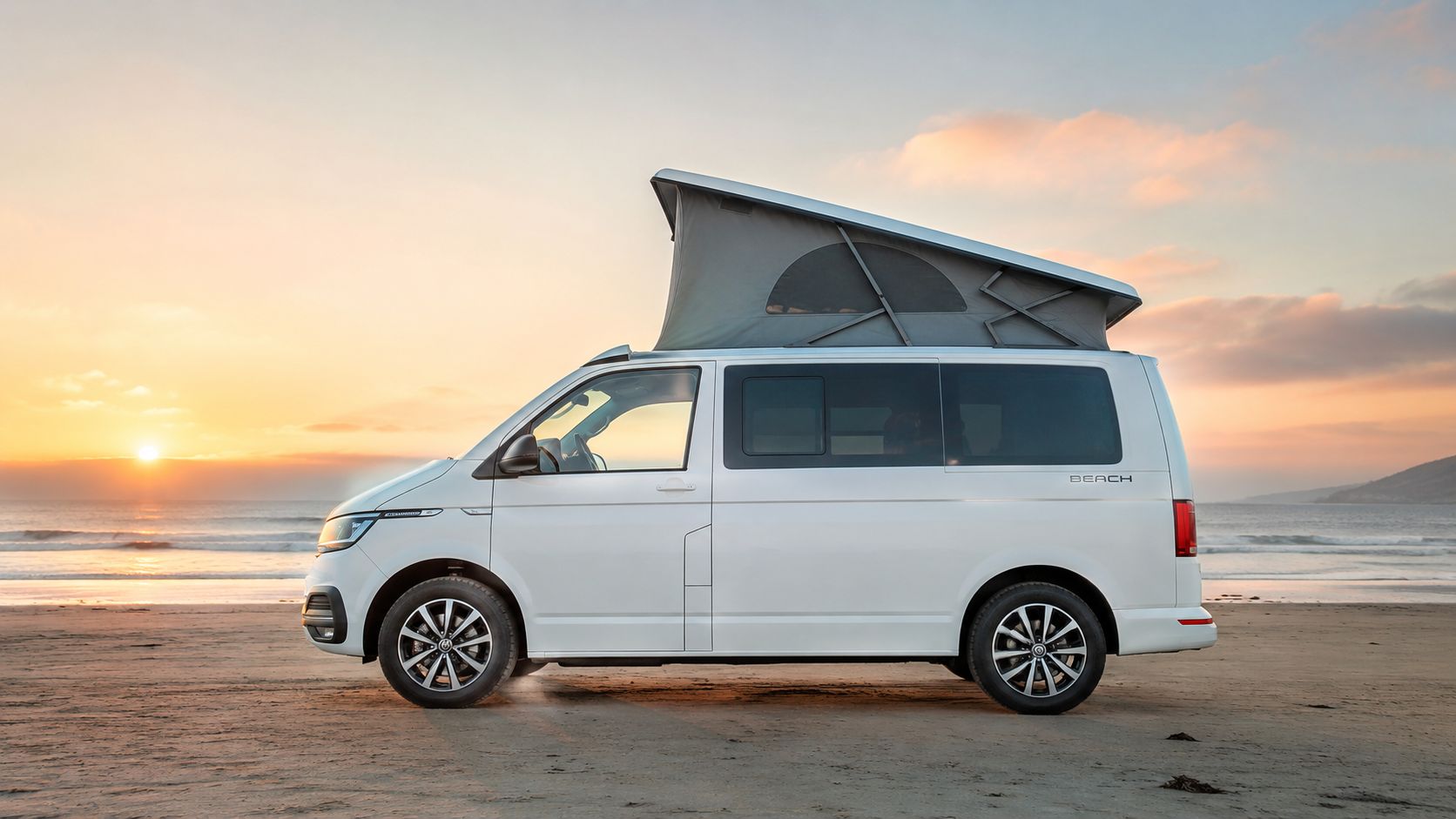
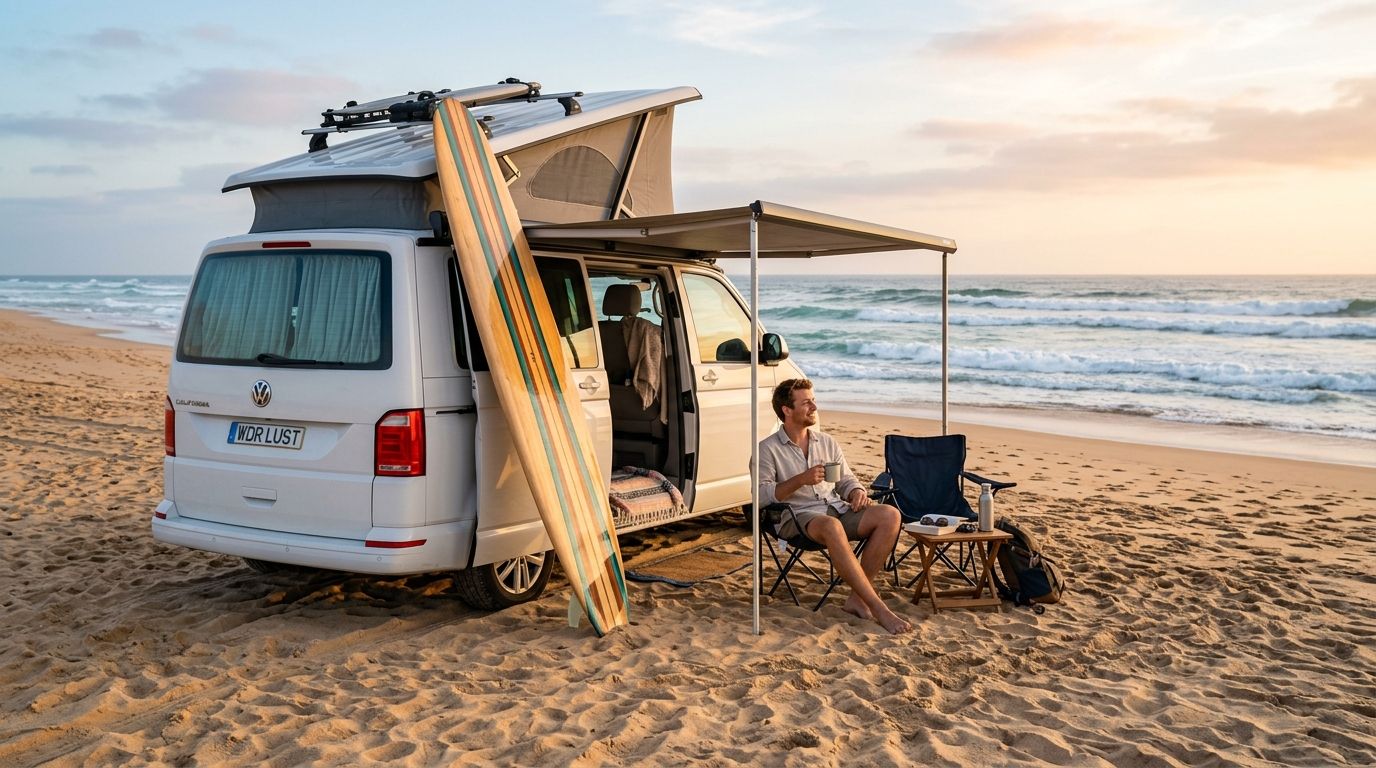
A white Volkswagen California Beach camper van parked on a sandy beach during a beautiful sunset.

The essentials that make it a Beach

A California Beach is the lighter-footed member of the California family. It keeps the camper identity, especially the pop-up roof and convertible sleeping space, but avoids the heavier built-in fit-out you'd expect in more loaded variants. That gives it a very different feel from a large motorhome. Around town, it still behaves like something you'd happily park at the shops.

Australian examples are commonly associated with Volkswagen's 2.0-litre diesel drivetrains and the safety and comfort gear expected of a modern passenger vehicle. The broader shape of the van matters just as much as the numbers. Good visibility, a sensible footprint, and seating that can be reworked for passengers, boards, bags or bedding are what make people warm to it so quickly.

A few traits give the Beach its character:

  • Pop-up roof: Low enough for everyday use, tall enough to create proper camper atmosphere once you're set up.
  • Flexible cabin: Rear seating and sleeping arrangements can be adapted around family trips, solo escapes or a market run.
  • Weekend-ready layout: It suits short stays and spontaneous travel without feeling overbuilt.

That balance is a big part of the appeal. Owners get a van they can live with during the week and still point toward the coast on Friday afternoon.

How it differs from Coast and Ocean

The Beach usually sits at the simpler end of the California line. Coast and Ocean models are more heavily equipped for full camping duty, with a stronger focus on built-in furniture, kitchen gear and a more residential feel inside. The Beach keeps things lighter and more open, which plenty of VW people prefer. It leaves room for wetsuits, kids, fishing gear, fold-up chairs and all the odd bits that come with real trips.

Volkswagen Australia's California 6.1 brochure outlines that practical touring brief, including the diesel and DSG combination offered locally. On the road, that translates to easy cruising and relaxed long-distance manners rather than fussy camper theatrics.

That's also why the Beach makes such a satisfying subject for collectors. It captures a modern version of the old Volkswagen promise. Smart use of space, honest utility, and freedom packed into a familiar shape. If that side of VW culture speaks to you, this VW travel van feature taps into the same spirit in miniature form, the kind you can park on a shelf when an actual trip has to wait.

Practical rule: The California Beach suits people who want one Volkswagen that can handle daily duties, weekend escapes and the occasional long coastal run without any fuss.

More Than a Van The California Beach Dream

You see it at places like Torquay or Crescent Head just after sunrise. Side door open. Boards leaning nearby. Someone's boiling the billy while the kids hunt for thongs in the sand. The California Beach fits that scene so naturally that it stops feeling like a vehicle and starts feeling like part of the trip itself.

A man relaxing by his white VW California camper van on a sunny beach with a surfboard.

That is why people connect with it so quickly. The Beach carries a very old Volkswagen idea into modern life. Pack lightly, head for the coast, and let the day unfold without much ceremony. You can feel the family resemblance to earlier VW campers, but the charm comes from how usable it is now, in real Australian weekends, not in some polished brochure fantasy.

A mate of mine in Newcastle uses his California Beach exactly that way. During the week it handles errands and family duties. On Friday arvo he throws in a cooler, two camp chairs and a couple of fishing rods, then points it north. No grand production. No long checklist. That easy rhythm is what gives the van its staying power with enthusiasts.

Why enthusiasts connect with it

Collectors tend to fall for vehicles that already carry a lived-in story. The California Beach has one. It is easy to picture the details because they are familiar. Damp towels over the seat. Salt on the floor mats. A servo coffee going cold in the cupholder somewhere between home and the next headland.

That makes it different from a van admired only for spec sheets or rarity. The Beach has emotional mileage. It reminds long-time VW people of what made the old buses special in the first place. Freedom, usefulness, and a cabin that invites people to pile in and go.

A short film often says that mood better than specs can:

The miniature makes sense because the dream is real

That is also why the California Beach has such a natural place in a collection. It does not sit on a shelf as a random modern van. It carries the same spirit that made people treasure Beetles, Kombis and old dealership signs. In miniature, the story becomes portable. You bring a bit of that coastal, lightly packed freedom into the study, the garage, or the lounge room cabinet.

For plenty of collectors, that is the sweet spot. The full-size van represents the life they want more of. The model keeps that feeling close at hand between trips. If you are building out that side of the hobby, a curated range of Volkswagen model cars for collectors makes it easier to tie the modern California Beach back to the older VW legends it grew from.

A model earns shelf space when the full-size original already lives vividly in your head.

That is why the California Beach looks right at home beside a Samba Bus diecast or an old Beetle tin sign. Same family. Different chapter. This one just happens to come with surf wax, camp mugs and the promise of an early start up the coast.

Capturing the Vibe Collecting VW Diecast Models

Once you start looking for a California Beach in miniature, you realise something collectors have known for years. Scale changes the experience. A model isn't just smaller. It tells the story differently depending on its size, finish and detail.

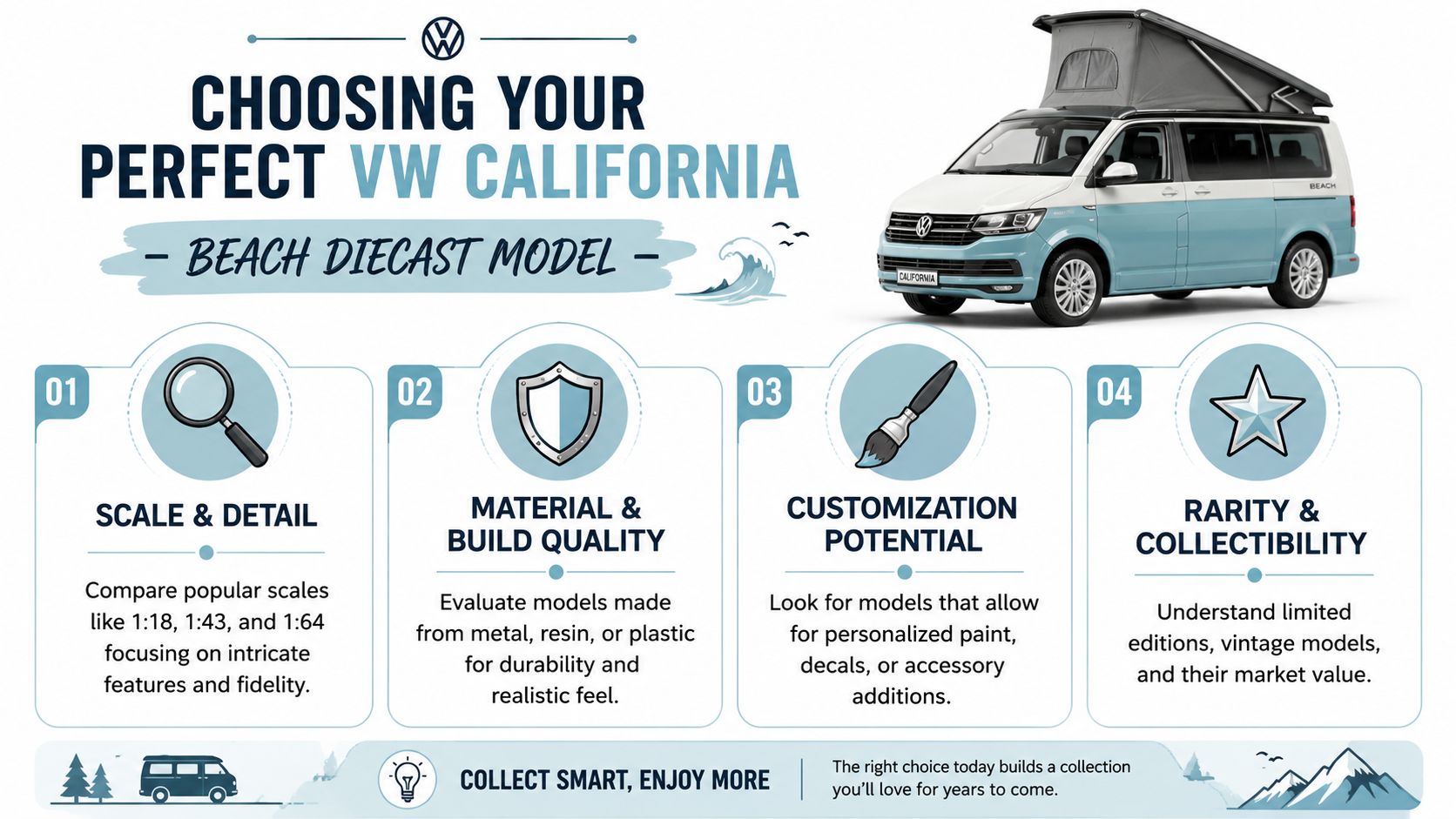
An infographic titled Choosing Your Perfect VW California Beach Diecast Model, highlighting four key considerations for collectors.

Scale changes where the model lives

A 1:18 model tends to suit a proper display shelf or cabinet. It gives designers room to include more visible cabin detail, wheel finish and trim touches. A 1:24 often feels right on a desk, sideboard or mixed VW shelf where space matters. Smaller scales can work brilliantly in grouped displays, especially if you like creating a broader Volkswagen scene with Beetles, Kombis and service vehicles together.

Here's a simple collector's view:

Scale Best use What collectors usually enjoy
1:18 Main display cabinet Bigger visual presence and more detail
1:24 Desk, bookshelf, gift display Nice balance of size and convenience
Smaller scales Multi-model scenes Easy to group by era, colour or theme

What to look for in a quality VW model

The California Beach suits diecast especially well because its whole design philosophy is about practical details. Its manual pop-up roof, fold-out kitchen and multi-functional sofa layout echo the simplicity and space-efficiency of classic Kombi campers, which is part of why it resonates with Australian VW fans, as noted in this Automotive World California Beach piece.

When you're choosing a model, check for:

  • Licensed proportions: The roofline, window shape and stance should look right from a few steps back.
  • Interior cues: Even when the cabin detail is subtle, you want signs of the camper layout rather than a generic van interior.
  • Paint and trim quality: White, silver and two-tone VW schemes need crisp separation and clean finish.
  • Purposeful display value: Ask whether it works solo or alongside older icons like a Beetle or Samba Bus.

Collectors building a broader Volkswagen shelf can browse different Volkswagen model cars to compare eras and styles side by side.

A California Beach model works best in a family of VWs

A lone California Beach model looks smart. Pair it with a Beetle and a classic Kombi, and the shelf starts telling a story. You can trace Volkswagen's design language from rounded optimism to practical touring culture. That's where collecting becomes more satisfying than buying alone.

Collector's note: Don't chase size alone. Chase character. The right model is the one that still makes you grin after the novelty wears off.

If you're searching terms like VW Kombi diecast Australia, Volkswagen Beetle model, buy diecast Kombi, or Volkswagen diecast models for sale, that's usually what you're after without even saying it. Not just inventory. Personality.

Styling Your Slice of Coastal Freedom

The most enjoyable displays don't look accidental. They look lived with. A California Beach model gives you a great centrepiece because the van already suggests a setting. Coastline. Campground. Garage shelf with maps and old rally stickers. You've got options beyond lining it up in a glass case and calling it done.

Screenshot from https://vwmemorabilia.com.au/shop/

Build a display that feels like a place

California Beach has a wheelbase around 3.12 m and a turning circle of about 12 m, which helps explain why it feels at home in tight coastal towns and compact camping spots, according to this Volkswagen California dimensions brochure. That real-world nimbleness gives you a useful clue for display styling. The best scenes for it usually feel compact and practical, not oversized and theatrical.

A few ideas work particularly well:

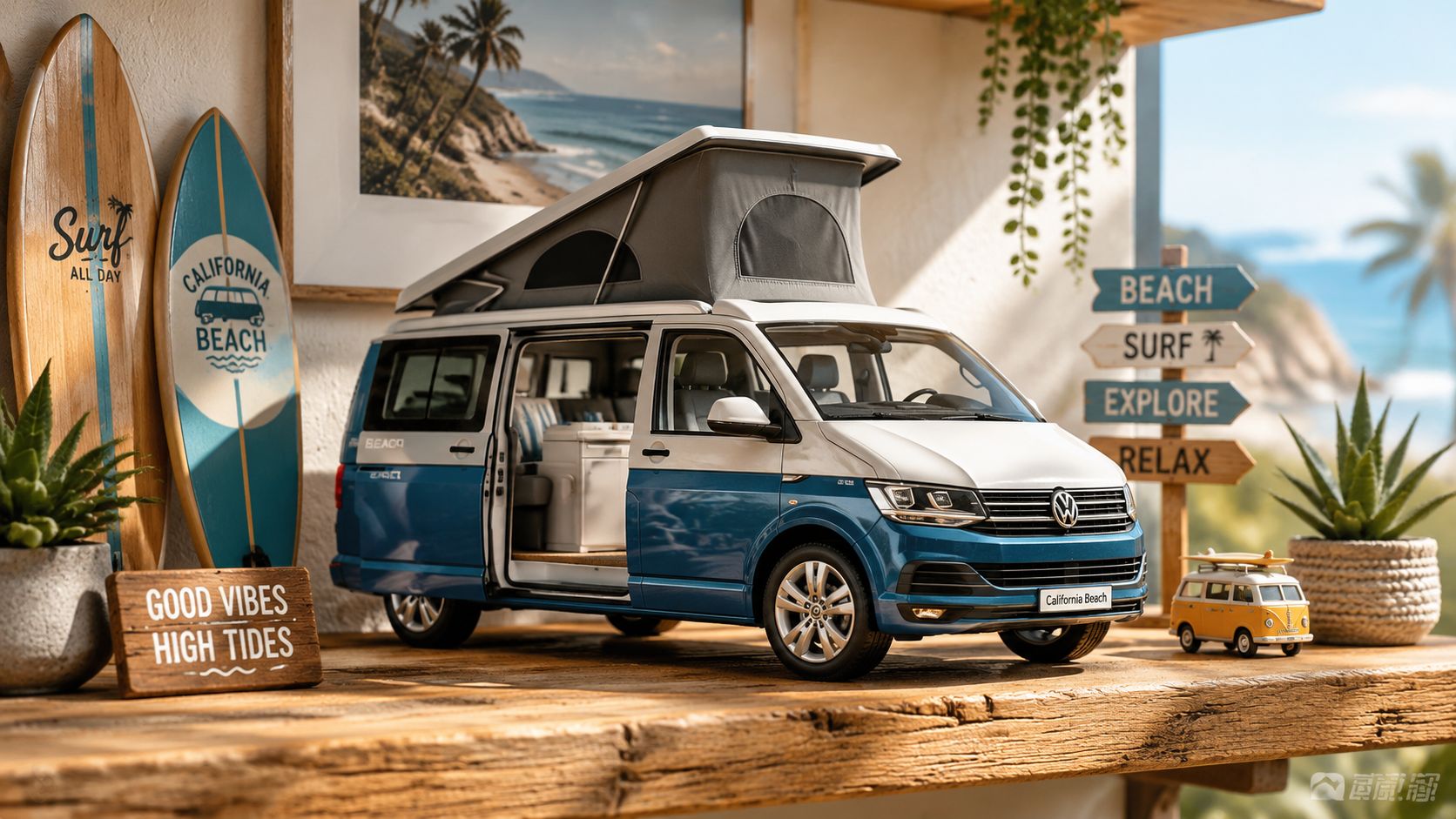
  • Bookshelf campsite: Use a timber shelf, a small framed beach print, and a single model van angled as if it has just rolled into a tight camping bay.
  • Coffee table vignette: Pair the model with a motoring book, enamel mug and a small tray so it reads as part of the room rather than a toy on furniture.
  • Gallery wall anchor: Add the van beneath old surf photos, Kombi art or travel postcards so it links VW heritage to coastal living.

Great gift ideas for VW people

The California Beach also makes sense as a gift because it speaks to more than one kind of enthusiast. It suits the collector who loves modern VWs, the Kombi fan who appreciates the lineage, and the home decorator who wants one piece with personality.

This mix tends to work well:

  • For the diehard collector: A detailed van model paired with a Beetle or Samba Bus from another era.
  • For the home stylist: A model plus coastal décor accents that carry the same relaxed beach feel.
  • For the nostalgic gift buyer: A piece that says “weekends away” without needing a whole garage to enjoy it.

If you like building out a room around that idea, coastal vintage home accessories can help the display feel intentional rather than crowded.

Keep it neat, not busy

A California Beach model carries more visual information than a simple sedan. Roof, glass, body height, camping cues. Give it room. One strong model with breathing space usually looks better than five packed tightly together.

Leave enough empty space around a camper model so the eye can enjoy the shape. That space does part of the storytelling.

That's especially true if your shelf already includes VW memorabilia collectibles from different decades. The Beach is at its best when it looks ready to head off for the weekend.

Start Your Volkswagen Collection Today

The California Beach speaks to something old in VW culture and something fresh at the same time. It keeps the Volkswagen habit of clever packaging and everyday usefulness, but it wraps that into a vehicle made for beach runs, long weekends and family escapes. For collectors, that makes it unusually satisfying. You're not only admiring a modern van. You're following a line that runs from Beetles and Kombis right through to today's camper life.

That's why a California Beach model belongs so naturally in an Australian VW collection. It complements a classic Volkswagen Beetle model. It sits comfortably beside a Samba Bus. It brings a newer kind of nostalgia into the cabinet, the sort tied to surf trips, national park campgrounds and that familiar thought of leaving early to beat the traffic out of town.

If you're choosing your next piece, go for the one that matches how you enjoy the hobby. Big statement model for the cabinet. Smaller van for the desk. Coastal display piece for the lounge. Gift for the mate who still slows down every time an old Kombi passes.

The best collections don't arrive fully formed. They grow the same way road-trip plans do. One good choice, then another, then a whole story before you know it.


If you're ready to bring that California Beach spirit home, have a look at Volkswagen Memorabilia. It's an Australian store with local stock, fast shipping and a friendly team that knows why these vehicles matter. You'll find officially inspired VW gifts, coastal décor and collectible models that sit beautifully alongside classics like Kombis, Samba Buses and Beetles. It's a lovely place to start, or grow, your own Volkswagen journey.

What Is a Diecast Model Car: Your 2026 Collector’s Guide

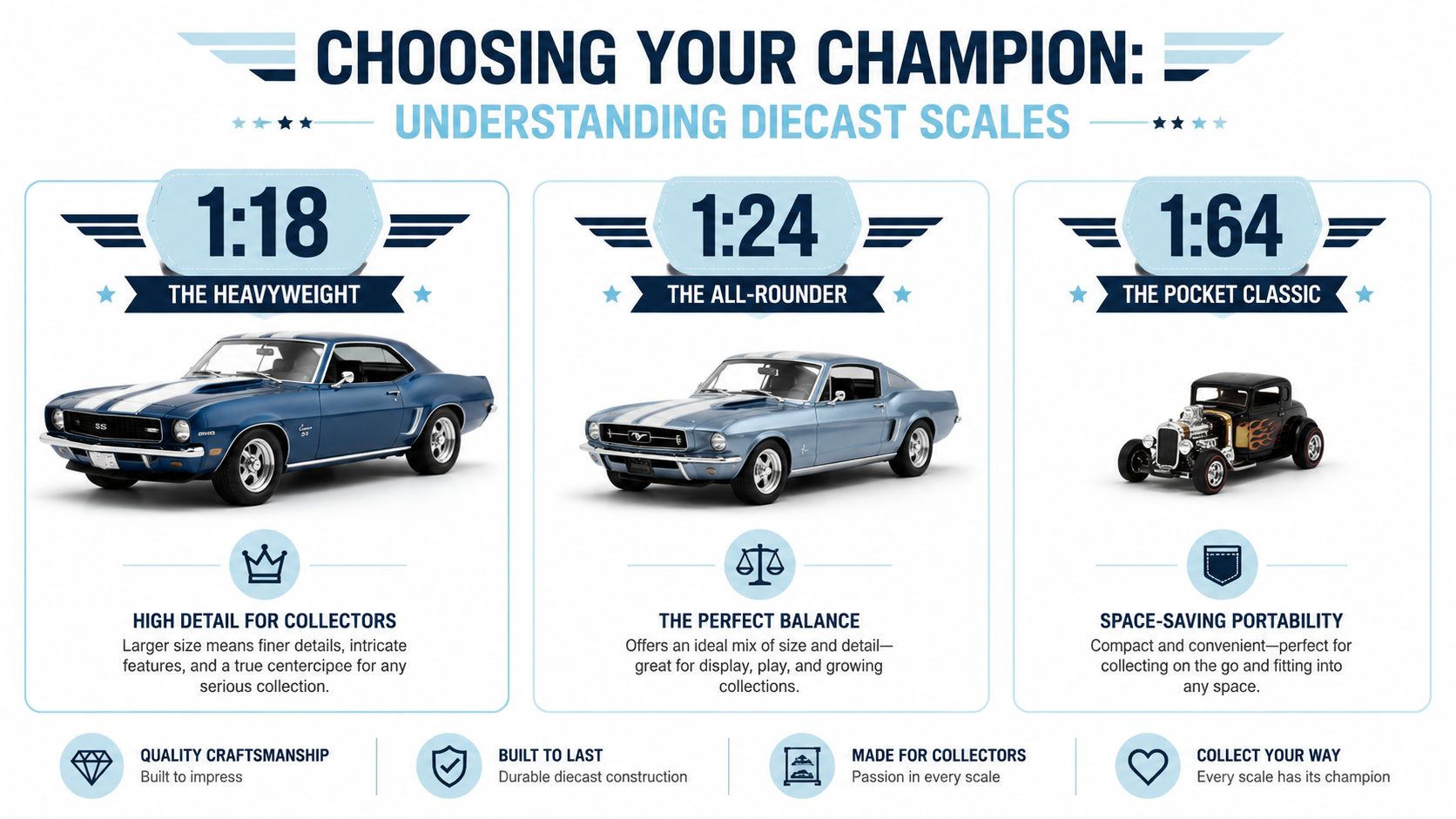
A diecast model car is a miniature metal replica made by forcing molten metal into a precision mould, and common collector scales run from 1/18 down to 1/64. In plain terms, it's a small car you can hold in your hand, but when it's done well, it still carries the shape, character, and spirit of the original machine.

If you're standing in the shed, staring at a classic Beetle photo, or you've just spotted a tiny Kombi in a shop window and felt that little tug of memory, you already understand the appeal. A good diecast doesn't just look like a car. It brings back road trips, surf racks, Sunday markets, and the sound of an old VW engine on a bright Australian morning.

For plenty of us, that's where the collecting starts. Not with investment talk or display cases. Just with one model that feels familiar. A cream Beetle like your mum used to drive. A two-tone Samba Bus that reminds you of beach holidays. A little metal memory that somehow feels bigger than its size.

More Than a Toy What Makes a Diecast Car Special

The first time you pick up a nicely made little VW, you notice the weight before anything else. It doesn't feel like a throwaway trinket. It feels solid. The curved guards, the tiny bumpers, the cheerful face of a Kombi. That's why diecast has always lived in that lovely space between toy and keepsake.

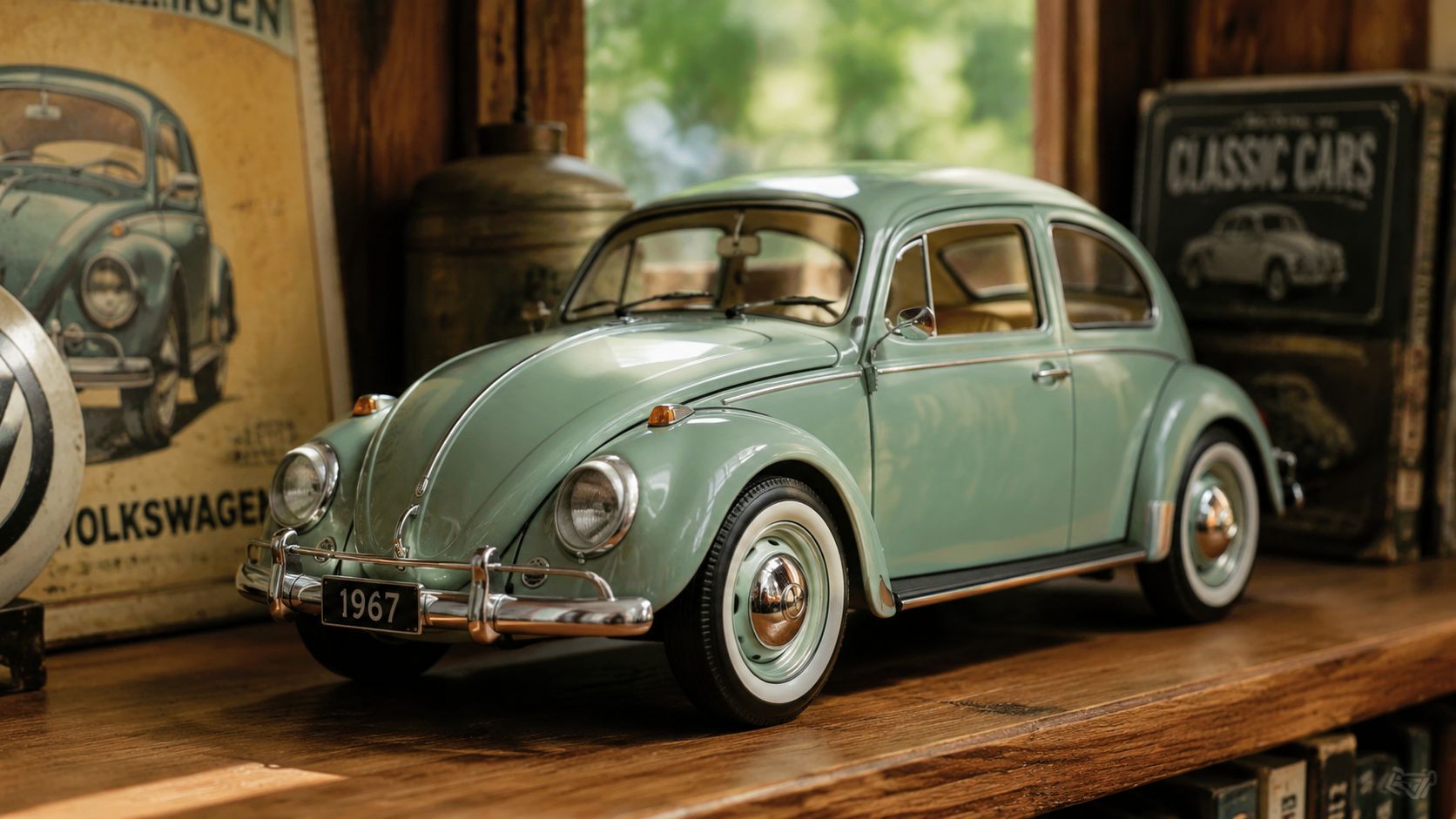
A miniature light green 1967 Volkswagen Beetle diecast model car sitting on a rustic wooden shelf.

A diecast model car is a miniature vehicle replica made by forcing molten metal into a precision mould. That simple process is what gives the body its crisp shape and lets makers repeat it accurately across a whole production run. If you'd like a plain-English backgrounder, this guide on about diecast collecting is a handy place to start.

Why collectors get attached to them

A plastic toy might remind you of a car. A diecast often feels closer to a tribute.

That's especially true with classic Volkswagens. The Beetle and Kombi were never just transport in Australia. They were surf wagons, first cars, family runabouts, project builds, and festival favourites. Shrink one down into metal and you haven't lost the charm. You've concentrated it.

Some collectibles sit on a shelf. A diecast VW often sits in your life story.

A hobby with real history

This isn't some recent fad dressed up as nostalgia. According to the history outlined by ModelCars.com's diecast background article, the category has roots in the early 1900s, with diecast model cars as we know them today taking shape in the early 20th century after the technique was adapted for miniatures following World War I. In the hobby's commercial story, Meccano Ltd. launched early diecast vehicles in the 1930s, and Matchbox began in 1947, with its 1–75 series named because it always had 75 different vehicles in the range.

That history matters because it explains why people don't talk about diecast the same way they talk about ordinary toys. Collectors see these models as little pieces of motoring culture. For VW fans, that means a tiny Beetle can hold the same design magic as the full-sized car parked on the grass at a show.

From Molten Metal to Miniature Icon How a VW Diecast Is Born

A diecast model starts life in a much more industrial way than one might expect. Before there's shiny paint or a split-screen windscreen, there's heat, metal, tooling, and a mould built to capture the shape properly.

An infographic detailing the eight-step manufacturing process of creating a Volkswagen diecast model car.

The basic process in plain English

It involves repeatedly making the same tiny sculpture, yet with far greater precision than a handmade toy.

  1. The body is designed so the proportions look right.
  2. A mould is created to capture those shapes.
  3. Molten metal is forced into that mould under pressure.
  4. The casting is trimmed and refined so rough edges are removed.
  5. Parts are added, including wheels, glazing, interior pieces, and trim.
  6. Paint and printed details go on to bring the model to life.

According to AUTOBarn Model's guide to diecast realism and larger scales, this production method supports accurate body shells and fine exterior features, plus functional details such as opening doors, hoods, trunks, working suspension, and realistic interiors.

Why some models feel more premium

The finish is where a model either sings or falls flat. A great VW diecast has clean paint, tidy window fitment, straight wheels, and little touches that make you grin when you spot them. Door handles that look right. A dashboard that doesn't feel like an afterthought. A stance that matches the car's character.

Practical rule: If the body shape is wrong, no amount of shiny paint will save the model.

There's also a straightforward trade-off in the hobby. Larger, hand-finished models usually cost more because they use more material and labour, while smaller scales stay affordable and easier to stock, ship, and display. That's one reason you'll see collectors mix formats. One hero-piece on the shelf, then a row of smaller Beetles and Kombis for variety.

Speaking the Lingo A Guide to Diecast Scales

If you're new to collecting, scale can sound more confusing than it is. Once you know the trick, it becomes simple. In diecast, the smaller denominator means the larger model. So a 1:18 Kombi is bigger than a 1:64 Kombi.

For VW fans, scale shapes the whole collecting experience. A big model gives you presence and detail. A small one gives you variety and easier storage. This Volkswagen model cars scale guide makes that easier to visualise if you want to compare sizes before buying.

What the numbers feel like in real life

According to this diecast scale size guide, a 1:18 model is typically about 9 to 12 inches (25 to 30 cm) long, while 1:64 models are about 2.5 to 5 inches long. For Australian collectors, that matters because 1:18 works beautifully as a showcase piece, while 1:64 is the practical favourite when space, shipping volume, and mixed collections matter more.

Scale Approx. Length (Kombi) Best For
1:18 about 25 to 30 cm Feature display pieces with more visible detail
1:24 mid-sized shelf display A balanced choice for desks, gifts, and casual collectors
1:43 compact collector display Traditional display cabinets and classic collector setups
1:64 about 2.5 to 5 inches Building a broader collection without filling the house

A simple way to choose

  • Want one centrepiece? Go larger and let it own the shelf.
  • Buying a gift? A mid-sized Beetle usually feels substantial without demanding too much space.
  • Planning a whole VW lineup? Smaller scales make it easier to collect different colours and body styles.

Starting Your VW Collection What to Look For

The smartest collectors don't start by asking, “What's cheapest?” They ask, “What feels right in the hand, and what will still make me smile in a year?” That question usually leads to better models.

A person holds a grey diecast VW Beetle model car while using a magnifying glass to inspect it.

In Australia, people often talk about diecast through the lens of collecting and valuation rather than factory output. Scale, rarity, and condition shape how a model is judged. The market itself is commercially significant too. Warwick & Warwick's diecast guide notes that the global automotive diecast scale model market was estimated at USD 3,695.6 million in 2025 and projected to reach USD 5,385.1 million by 2034, which is a projection that points to sustained collector demand.

The signs of a quality model

When you inspect a Beetle or Kombi, slow down and look closely.

  • Body shape: Does the silhouette feel true to the actual VW?
  • Paint finish: Look for even colour and tidy edges around windows and trim.
  • Printed details: Badges, lights, and number plate graphics should look sharp, not fuzzy.
  • Moving parts: If the model includes opening panels, they should fit neatly.
  • Tyres and stance: A VW should sit properly. If it looks awkward on the shelf, you'll notice every time.

A short walkaround can help train your eye:

Why licensing matters

A licensed model usually feels more trustworthy because the maker has had to respect the actual vehicle's identity. For a Volkswagen collector, that matters. The charm of a Beetle isn't generic. The lines, proportions, colours, and little signature details are what make it a Beetle.

Buy the model that tells a story you recognise. That's the one you'll keep reaching for.

Collectors also keep an eye on condition. A boxed model in clean shape generally appeals more than one with bent mirrors, rubbed paint, or missing trim. Even if you're not collecting for value, condition protects the pleasure of owning it.

Buying Your First VW Diecast in Australia

The easiest first purchase is the one that matches your taste straight away. If you love surf culture, a Kombi with a breezy coastal feel will probably grab you first. If your heart belongs to rounded guards and cheerful simplicity, a classic Beetle is hard to beat.

Screenshot from https://vwmemorabilia.com.au/product-category/volkswagen-diecast/

If you're browsing for a starting point, this collection of Volkswagen model cars shows the sort of variety that makes the hobby fun, from Beetles to Kombis and Samba-style favourites.

Diecast versus resin or plastic

One of the most useful buying questions isn't about colour or era. It's about material.

According to Hobbyco's guide to diecast versus model kits, diecast models are made using metal alloys, which gives them weight and durability and can allow for opening parts. Resin models are often lighter, more brittle, and commonly have sealed bodies. That makes diecast the better fit for collectors who want a model that feels sturdy and interactive.

Here's the practical version:

  • Choose diecast if you like weight, durability, and moving parts.
  • Choose resin if your priority is display detail and you don't mind a more delicate model.
  • Choose a plastic kit if you enjoy building and painting rather than buying a finished piece.

A local buyer's checklist

Buying in Australia comes with a few everyday advantages when the seller holds local stock. Delivery is usually simpler. Support is easier to reach. You're also dealing with people who understand the local VW crowd, from show-day collectors to gift buyers hunting for the right Kombi.

Use this quick checklist before you hit buy:

  • Match the model to the person: A desk gift needs a different scale from a cabinet centrepiece.
  • Check the photos closely: Look for clear shots of the body, interior, wheels, and packaging.
  • Read the description for features: Opening doors, surfboards, roof racks, or display plinths all change the feel of the piece.
  • Think about where it will live: Shelf, office, workshop, display cabinet, or man cave.

A first diecast doesn't need to be rare to be special. It just needs to feel like your Volkswagen.

Your Diecast Questions Answered

How should I clean a diecast model car?

Use a soft dry cloth or a gentle duster for regular care. For awkward corners around mirrors, roof racks, or window trims, a soft brush helps lift dust without scratching paint. Keep models out of harsh direct sunlight if you want the finish and decals to stay looking fresh.

Dust them lightly and often. Aggressive cleaning usually does more harm than good.

Are diecast cars for kids or collectors?

Some are perfectly fine as playful display pieces, but many detailed models are better treated as collectibles. Small parts, fine mirrors, opening panels, and delicate trim mean a nicely finished Beetle or Kombi is often best for older kids, adult fans, or anyone who'll handle it carefully.

What's the best scale for a gift?

Think about where the gift will go. A larger scale suits someone who has a shelf or cabinet ready for it. A smaller scale works beautifully for an office, bookshelf, or collector who enjoys lining up several VWs together. If you know the recipient loves one specific real-world VW, matching the body style often matters more than chasing the biggest model.

How do I display a collection properly?

Enclosed cabinets are brilliant because they cut dust and let the colours pop. Open shelving works too, especially if you group models by theme, such as Beetles on one shelf and Kombis on another. Some collectors like to create little scenes with signs, surfboards, or garage-style backdrops so the models feel part of a story.

What makes a diecast model car feel valuable?

Not just price. Collectors usually care about condition, rarity, scale, accuracy, and emotional pull. A model can be modestly priced and still become a favourite because it reminds you of a real car, a family trip, or a chapter of your life.


If you're ready to find a model that brings those VW memories back, have a look through Volkswagen Memorabilia. It's a great spot to browse licensed Volkswagen diecast models, from Beetles to Kombis and Samba Bus favourites, with local Australian stock, friendly support, and pieces that suit collectors, gift buyers, and anyone who just wants a little bit of classic VW spirit on the shelf.

Vintage Volkswagen Memorabilia: Collector’s Guide 2026

You're probably here because something small has already hooked you. Maybe it was an old Beetle badge in a market tray, a sun-faded brochure tucked into a glovebox, or a little Kombi model on a shelf that somehow carried the smell of summer holidays, servo pies, and beach car parks. That's how it starts for a lot of us. Not with a grand investment plan. Just with that familiar Volkswagen feeling.

That Volkswagen Feeling

I still reckon some of the strongest memories in Australian motoring live nowhere near a trophy cabinet. They live in ordinary moments. A pastel Kombi parked near the surf. A Beetle buzzing into a country town on a hot afternoon. A row of old VWs at a local show while someone leans over an engine bay and another person argues, cheerfully, about hubcaps.

A woman driving a vintage orange Volkswagen bus along a coastal highway with a golden retriever.

That's why vintage Volkswagen memorabilia matters. It isn't just stuff. It's a shortcut back to a particular sound, shape, or season of life. One collector keeps a dealer keyring beside his restored Bug. Another frames an original poster in the rumpus room. Someone else starts with a diecast Samba Bus and ends up building a whole shelf around it.

If you're chasing your first piece, or trying to sort the genuine gems from the random retro knock-offs, a bit of practical know-how goes a long way.

More Than Just Models A World of VW Collectibles

Last summer at a VW meet on the NSW coast, a bloke beside me passed over a sun-faded dealer brochure from the 1960s. It wasn't rare in the museum-piece sense. The fold lines were soft, the corners were a bit knocked about, and it still stopped people in their tracks. Three minutes later, another collector pulled a little Kombi sign out of a tote bag and suddenly half the table was talking about old camping trips, beach runs, and the first Beetle their family owned.

That's how this hobby usually grows in Australia. It starts with a model car for the shelf, then somehow turns into workshop literature, badges, old showroom bits, framed prints, surf-style wall art, and those cheeky little homewares that suit a shed, rumpus room, or beach house perfectly.

Volkswagen has had a proper place in Australian car culture for decades, so the memorabilia tied to it often feels familiar straight away. The colours, the dealer graphics, the beach-town mood, the rounded shapes of a Beetle or Kombi. They all land differently here because they belong to real memories, not just imported nostalgia.

What counts as memorabilia

The range is wider than plenty of newcomers expect:

  • Miniatures and diecast pieces for collectors who want the look of a Beetle, Kombi, or Bus in a cabinet rather than a garage.
  • Dealer and workshop items such as brochures, manuals, badges, keyrings, and promotional pieces from the showroom era.
  • Display and home pieces that borrow from surf culture, road trips, service stations, and classic VW colour palettes.
  • Smaller giftable collectables like magnets, signs, ornaments, and shelf decor that still carry that old-school Volkswagen charm.

A good collection usually has a bit of personality to it.

One Perth collector I know focuses on anything that looks like it belongs near the coast. Kombi wall plaques, retro signs, muted blues and creams, timber-framed pieces with that holiday-house feel. Another mate in regional Victoria only buys paper goods and workshop items. His shelves are full of brochures, service booklets, and old dealer ephemera, and the whole display feels like stepping into a country dealership in 1972.

If you're still working out your lane, start by looking at the categories that pull you in twice. The piece you go back to is usually the clue. For plenty of people, that first step is a shelf-ready model, and a look through these Volkswagen model cars can help you figure out whether you're drawn to Beetles, Kombis, buses, or the smaller details that come after.

The Collector's Garage Iconic Types of VW Memorabilia

Some collect what fits in a cabinet. Others collect what belongs on a wall. The smartest move is to choose a lane that matches your budget, your space, and the kind of VW story you want to tell.

Diecast Models A World in Miniature

Diecast is where many Australian collectors begin, and for good reason. It's accessible, display-friendly, and satisfying in a way only a properly shaped little Kombi can be. If you're searching for VW Kombi diecast Australia or trying to buy diecast Kombi pieces locally, scale is the first thing to understand.

Quick Guide to Diecast Model Scales
Scale Typical Size (Kombi) Level of Detail Best For
1:18 Large display piece High Feature shelves, office display, serious collectors
1:24 Mid-sized display piece Balanced Most home collectors, gift buyers
Smaller scales Compact shelf item Simpler Mixed displays, stocking fillers, desk pieces

A 1:18 model tends to feel like the hero piece. You notice the curves, trim, windows, and stance from across the room. A 1:24 piece is often the sweet spot for people who want detail without sacrificing shelf space. Smaller scales are ideal when you want variety, colour, or a whole lineup of Kombis and Beetles in one cabinet.

If you're comparing options, the range of Volkswagen model cars makes those differences easier to picture.

Coastal and Home Décor The Surfy Vibe

Not every collector wants a cabinet full of models. Plenty of VW fans want their hobby to blend into the house, the holiday shack, or the covered patio.

That's where Kombi wall pieces, beach-themed décor, metal signs, and relaxed coastal styling come in. They don't need to be museum-grade to feel right. A faded aqua van silhouette, a retro surfboard motif, or a playful Beetle print can give a room that old-road-trip warmth without turning it into a workshop.

This category works especially well for gift buyers. It says, “I know what you love,” without requiring the recipient to know chassis codes or trim years.

Paper Ephemera and Rare Finds

This is the lane where collecting gets wonderfully particular. Paper goods and original promotional pieces carry a kind of quiet authority. You can often see the era in the typography, printing method, paper stock, and layout before you even read the words.

The most sought-after pieces are often dealer brochures, original advertising posters, and factory accessories, because they carry serial-era printing details and model-year specificity that are harder to fake than decorative reproductions, as reflected in this VW memorabilia collector market reference.

A few things are worth keeping in mind:

  • Brochures reward close looking. Printer marks, period fonts, and market-specific details often matter more than bright colours.
  • Posters need condition and context. Pinholes, folds, and backing can affect how desirable they feel to the next collector.
  • Accessories tell a car-specific story. A small factory item linked to the right model year can mean more than a generic “retro VW” piece.

Spotting a Gem How to Identify Authentic Memorabilia

Authenticity is where enthusiasm meets homework. Plenty of items look old. Far fewer belong to the period, model, or market the seller claims.

For modern collectables, the first pass is straightforward. Look for official Volkswagen licensing, clean manufacturing marks, proper packaging, and consistent branding. A good licensed model usually feels deliberate. The proportions are sorted, the logos are clean, and the finish doesn't rely on fake distressing to sell the nostalgia.

An infographic checklist for identifying authentic vintage Volkswagen memorabilia with five tips and a VW logo.

Vintage items need a sharper eye.

What to check first

  • Manufacturer marks matter. Turn the item over. Check the edges, back, base, staples, fasteners, and print margins.
  • Materials should make sense for the era. Paper, inks, metal weight, and finish often tell you more than the artwork.
  • Wear should look honest. Sun fade, shelf wear, and ageing usually appear unevenly. Artificial distressing often looks too neat.

Practical rule: If an item's condition, colours, and story all feel a little too perfect, slow down and verify before you buy.

For Australian-market pieces

For serious collectors, one of the most useful ways to verify memorabilia tied to Australian-market Volkswagens is to cross-check details against M-code data and chassis numbers. Archives such as TheSamba's VW technical information can help separate factory-issued accessories from later reproductions.

That matters most with items claimed to belong to a specific Beetle, Kombi, or model year. If a badge, brochure, accessory, or dealer item doesn't line up with period-correct coding or production details, the warning light should come on.

A good companion read is this guide to Volkswagen logo history. Logo changes won't authenticate everything on their own, but they can help you spot obvious mismatches fast.

What's It Worth Understanding Value and Price

Value in VW collecting usually comes down to four things. Originality, condition, provenance, and desirability. Age alone doesn't do the heavy lifting.

A cracked old sign with clear dealer history can be more compelling than a cleaner piece with no story. A simple brochure can outshine a flashy repro if it has the right print details and model-year fit. And a licensed diecast model in tidy condition can make more practical sense than a bulky item that's expensive to ship and awkward to display.

One reason small-format pieces are worth a serious look right now is changing buying behaviour in Australia. There's growing collector demand for smaller, high-affect purchases, which makes compact memorabilia such as diecast Kombis, wall art, and fridge magnets a smart buy for gift-givers and new collectors, as noted in this Australian collector demand reference.

A sensible way to think about price

  • Buy for appeal first. If you'd still like it even if values never changed, you're probably on safer ground.
  • Pay attention to category. Giftable pieces move differently from workshop parts or obscure accessories.
  • Don't ignore display value. A piece that fits nicely into everyday life often gets enjoyed more than a rare item hidden in a box.

The best-value piece isn't always the rarest one. It's often the item you can verify, display, and enjoy without fuss.

Caring For and Sourcing Your VW Treasures

A mate of mine brought a lovely little diecast Splitty to a meet in Newcastle. Bright two-tone paint, tidy trim, the lot. Six months later it had gone chalky on one side because it lived on a windowsill cop the afternoon sun. Another bloke stored old dealer brochures in the shed near the beach and ended up with curled corners, foxing, and that damp-paper smell you never quite get rid of.

A red vintage Volkswagen Beetle toy model sits on a wooden shelf next to bus models.

That's how collections get knocked around in Australia. Sun, salt air, dust, and heat do more damage than age if you're not paying attention.

Easy care habits that help

  • Keep sunlight off display pieces. UV fades paint, paper stock, and printed tin signs faster than many collectors expect.
  • Watch the room, not just the shelf. Garages, sleepouts, and beachside homes can swing from dry heat to damp air in no time.
  • Handle paper and gloss items with clean hands. Finger marks show up quickly on plastic windows, chrome-effect trim, and brochure covers.
  • Give each piece some space. Metal décor and boxed models get rub marks and corner wear when they're packed in tight.
  • Use enclosed storage for favourites. A few well-chosen display cases for models save a lot of dusting and stop the accidental bump that chips a mirror or bumper.

Paper items deserve extra care. If you've found an Australian dealer flyer, registration wallet, or period accessory sheet, store it flat, out of direct light, and away from sheds or spare rooms that get muggy in summer.

Where Australians find good pieces

The best finds still turn up where VW people gather. Swap meets, club runs, Shannons-style auctions, and local shows let you pick things up, turn them over, and ask the owner where they got them. That matters with Australian-market memorabilia because local dealer stickers, distributor branding, and old shop labels can tell you far more than an online title ever will.

You also start noticing patterns after a while. Coastal décor and giftable shelf pieces move quickly because they suit beach houses, garages, and home bars. Small diecast Kombis keep pulling in buyers too, partly because they're easy to post, easy to display, and easy to give. If a seller has three “rare” examples of the same item, all with identical ageing, slow down and inspect the print quality, fixings, base marks, and packaging before you hand over cash.

Local online sellers have their place as well. Buying within Australia can make life simpler if you want smaller VW-themed diecast, décor, or gifts without gambling on rough packing, long waits, or surprise import costs. Volkswagen Memorabilia is one local option collectors use for those kinds of display pieces.

If you like seeing how collectors style and display similar models, this clip is worth a look before you rearrange your shelves:

Share the Love and Find Your Perfect Piece

A mate of mine bought a tiny diecast Kombi for his brother one summer at a swap. Nothing fancy. Just the right colour, the right roofline, and a surfboard on top that looked close enough to the old bus they drove up the coast in the late 90s. It ended up on a workshop shelf, then beside the bar fridge, and now it is the piece everyone points at first.

That is usually how a good VW collection grows in Australia. One piece with a real connection. Then another.

The strongest collections I see at shows are built around memory and taste, not just rarity. A Beetle wall sign for the shed. A dealer badge from an Australian delivery car. A Kombi tin plate that fits a beach house without trying too hard. If you are buying for yourself, pick the item you will still enjoy looking at after the novelty wears off. If you are buying for someone else, go for the clue that ties back to their story: the model they owned, the colour they still talk about, or the shape they always slow down for in the car park.

Gifts work well here because VW memorabilia does not need a lecture to be appreciated. A shelf-sized diecast, a garage sign, or a small coastal piece can feel right at home on day one. As noted earlier, Volkswagen Memorabilia is one of the local places collectors use when they want Australian-stock display pieces and easy gift options without overcomplicating the hunt.

Frequently Asked Questions

Is diecast a good place to start with vintage Volkswagen memorabilia?

Yes. Diecast is easy to display, easier to store than larger items, and gives you a feel for the designs you're most drawn to. Many collectors start with a Kombi or Beetle model before moving into posters, badges, or original paper pieces.

How can I tell if a VW item is vintage or just retro-style?

Check the marks, materials, and construction. Real vintage pieces usually show period-correct printing, ageing, and manufacturing details. Retro-style décor can still be fun to own, but it shouldn't be priced or described like an original.

What makes Australian VW memorabilia a bit trickier?

Australian buyers often have to work harder to confirm whether an item was sold or used in the local market, rather than brought in later. Provenance matters more than many sellers admit.

What makes a good VW gift for someone who doesn't already collect?

Start small. A licensed Kombi diecast, wall piece, magnet, or shelf-friendly Beetle model usually lands well because it carries the nostalgia without needing specialist knowledge.


If you're in the mood to find a piece that feels like your kind of Volkswagen story, take a look through Volkswagen Memorabilia. You might only be after a simple gift or a tidy diecast Kombi, but that's often how a proper collection begins.

Unique VW Gifts Australia: Best Ideas for Enthusiasts

You're probably here because you've got a birthday, Christmas, Father's Day, anniversary, or “just because” gift to sort out for someone who lights up every time they spot a Beetle or slows down for a Kombi at the servo. And if that sounds familiar, you already know the tricky bit. A Volkswagen fan usually doesn't want any old car-themed present. They want something that feels like their VW story.

That's why the best unique VW gifts aren't random novelty buys. They connect to a memory, a model, a colour scheme, a surf trip, a garage project, or that one classic shape they've loved for years. In Australia especially, VW culture has its own flavour. It leans into beach roads, road trips, shed displays, collector shelves, and that easygoing mix of nostalgia and practicality that suits old Volkswagens so well.

Your Guide to Nailing the Perfect VW Gift

I've seen it happen plenty of times at car shows. Someone walks past a row of stalls, spots a little Kombi model or an old-school Beetle sign, and suddenly they're telling you about the first VW they rode in as a kid. That's the magic of it. You're not buying “merch”. You're buying a small trigger for a big memory.

A crowd of people browsing unique Volkswagen merchandise and miniature bus models at a sunny outdoor car show.

For Australians, the strongest picks usually come back to the classics. The Beetle and Kombi aren't just old vehicles. They're part of family albums, surf-town style, garage culture, and collectible design. The Beetle's appeal runs especially deep because it stayed in production for 65 years from 1938 to 2003, a remarkably long model history that helps explain why Beetle-themed gifts still click with both collectors and casual fans alike, as noted in Volkswagen Group key figures and history notes.

A great VW gift should make the person say, “That's so me,” not just, “That's nice.”

A lot of gift guides miss that. They toss in generic mugs, caps, and keyrings without asking how the person integrates their VW passion into their lifestyle. An Aussie collector might want a shelf-ready diecast model. A beach-house decorator might prefer a Kombi piece that suits coastal styling. A practical daily driver owner might appreciate something useful that still carries that unmistakable VW look.

That's where thoughtful shopping makes all the difference. If you start with the person, not the product, you'll land on a gift that feels personal.

Decoding Your VW Enthusiast For Gift Success

The easiest way to choose from all the unique VW gifts out there is to work out what kind of enthusiast you're buying for. Not every Volkswagen fan collects the same things, and that's where people get stuck. They know the recipient loves VWs, but they don't know whether to buy a model car, wall décor, accessories, or something more practical.

An infographic titled Decoding Your VW Enthusiast categorizing Volkswagen fans into four distinct types for gift selection.

The Purist Collector

This person notices details. They care about shape, era, paintwork, trim, and whether a model feels faithful to the original vehicle. If they stop at swap meets to inspect old signs or spend ages arranging shelves, go for display-worthy pieces.

Good fits include:

  • Licensed diecast models that look right from every angle
  • Model-specific gifts tied to icons like the Beetle, Kombi, or Samba Bus
  • Garage or shelf décor with a vintage finish rather than flashy novelty styling

The Daily Driver

Some VW fans aren't building a museum at home. They just love the brand and want that affection woven into everyday life. They're often the easiest to buy for if you stay practical.

Look for items such as:

  • Keyrings or compact accessories they'll use every day
  • Subtle branded pieces for desk, home office, or garage
  • Useful homewares that still carry the VW personality

The Adventure Seeker

You know this type. They love Kombis, beach roads, camping vibes, surf culture, and anything that hints at open-road freedom. They're drawn to gifts that feel ready for weekends away.

A few strong directions are:

  • Campervan-themed bags and carry gear
  • Kombi décor for a coastal home or holiday shack
  • Travel-friendly accessories that don't just sit on a shelf

The Nostalgia Lover

This buyer isn't always a technical car person. They may adore the look and feel of old Volkswagens. They love retro colours, curved lines, old travel energy, and objects that spark stories.

Practical rule: If they talk more about memories than mechanics, buy for feeling first and accuracy second.

For them, choose gifts with warmth and presence. Think Beetle ornaments, retro signage, classic van artwork, or display pieces that instantly read “Volkswagen” without needing a collector's explanation.

Exploring the Best VW Memorabilia Collectibles

Some gifts are fun for a day. Others become part of the house, the garage, or the collection for years. That second category is where VW memorabilia shines, especially when you focus on pieces with a clear model connection and a bit of authenticity behind them.

A rustic collection of vintage Volkswagen diecast models, signs, and decor displayed on a wooden shelf.

One reason there's so much choice is that this isn't a tiny niche. Some specialist retailers offer 700+ Campervan gifts, which tells you the VW gift market has real depth. Within that world, the 1962 VW Kombi and Samba Bus keep showing up as cornerstone collectibles because buyers strongly associate them with 1960s surf culture and road-trip nostalgia, as shown by the range highlighted at Campervan Gift's Volkswagen collection.

Diecast models that carry the room

If you want a gift that feels special the moment it's unwrapped, start with diecast. A well-chosen model does two jobs at once. It celebrates the vehicle itself, and it gives the recipient something they can display straight away.

Popular directions include:

  • Kombi and Samba Bus models for fans of surf, travel, and classic van styling
  • Volkswagen Beetle models for anyone drawn to rounded shapes and timeless design
  • Mixed display sets for buyers who want an instant shelf story rather than a single piece

For Australian shoppers, this is often where searches like VW Kombi diecast Australia, buy diecast Kombi, and Volkswagen diecast models for sale begin to make sense. You're not just buying a toy. You're choosing a miniature piece of design history.

Beyond diecast and into décor

The other smart move is to think past the collector cabinet. Some of the most successful unique VW gifts are pieces people can live with, especially in garages, studies, beach homes, and entertainment areas.

A few standouts are:

  • Metal wall signs for sheds, bars, and workshop corners
  • Retro home accents that suit coastal, vintage, or surf-inspired interiors
  • Small display objects that sit neatly on desks, bookshelves, or sideboards

If you're styling a room as well as buying a present, the vintage home accessories collection is the kind of category worth browsing because it helps you think in terms of mood, not just product type.

For a closer look at the visual charm that keeps these models popular, this video is a handy watch:

Why licensed pieces matter

Collectors often ask what separates a memorable VW gift from a forgettable one. The answer is usually in the finish, proportions, and overall feel. Officially licensed products tend to look more considered. The model lines feel closer to the actual car, and the branding doesn't look slapped on as an afterthought.

That matters whether you're buying a Volkswagen Beetle model for a desk or a Kombi piece for a lounge-room shelf. A gift feels more personal when the recipient can tell you chose something with care.

Finding Unique VW Gifts For Every Budget

You don't need a giant budget to buy something that lands well. Some of the best VW gifts are small, useful, and full of character. Others are centrepiece presents that become the first thing people notice in a room.

An infographic displaying various Volkswagen themed gift ideas categorized by price range for VW car enthusiasts.

Small gifts that still feel thoughtful

A compact gift works brilliantly when you know the person loves Volkswagens but you're not sure which model or display style they prefer. Keyrings are a strong example because they're practical, giftable, and still collectible. A VW T1 Bus or Campervan keyring can be made from zinc-aluminium alloy with nickel plating, which improves corrosion resistance and finish quality for something handled every day, according to product details shown in the Brisa Volkswagen gadgets range.

That makes smaller pieces ideal for:

  • Secret Santa or Kris Kringle style gifting
  • Add-on presents paired with a card or model
  • Low-risk buys when you're still learning the person's taste

The sweet spot for birthdays and special occasions

Many gift buyers feel most comfortable with options that move beyond trinkets. You can choose something with more visual impact, such as a display model, wall décor piece, or themed homeware item.

If you want ideas that overlap with broader motoring presents, the guide to unique gifts for car lovers is useful because it helps narrow down whether your recipient leans toward display, décor, or daily-use accessories.

Premium pieces for the diehard fan

At the higher end, focus on gifts with presence. A large-scale diecast model, a carefully chosen set, or a statement décor item can become a long-term favourite. These suit milestone birthdays, retirement gifts, or one of those occasions where “good enough” just won't cut it.

Buy the piece they'll keep, not the piece they'll politely thank you for.

If you're torn between several mid-range items and one stronger premium piece, the premium option often wins for serious VW fans. It feels more deliberate, and that's what people remember.

Styling and Displaying Your VW Collection

A cracking VW gift deserves more than being shoved on top of a bookshelf next to old manuals and loose sunglasses. Display changes everything. It turns memorabilia into part of the home.

Build a shelf with a story

The easiest display mistake is mixing everything together without any theme. A better approach is to group by model, mood, or colour. One shelf might be all Beetles. Another could lean into Kombi and Samba Bus pieces with coastal colours, weathered timber, or old travel vibes.

Try this:

  • Keep heights varied so smaller models don't disappear behind larger décor
  • Use warm lighting to bring out paintwork, chrome, and contours
  • Leave breathing room between hero items so each one gets noticed

Bring VW style into coastal spaces

Volkswagen collectibles fit surprisingly well into Australian beach-house styling because the shapes and colours already carry that easygoing travel energy. Pairing a Kombi model with driftwood tones, nautical accents, or soft blue-and-white décor can make the whole setting feel intentional rather than cluttered.

A practical gift can also become part of that visual story. A Volkswagen T1 camper-style bag made from lightweight, water-resistant 600D material with capacity up to 30 litres is a good example of memorabilia that works in daily life as well as display, as described in Bachman Volkswagen's gift ideas. That sort of item suits Australian travel and coastal living because it handles everyday carry while still looking properly on-theme.

If a piece can move from shelf to road trip without feeling out of place, you've chosen well.

Metal signs also do plenty of heavy lifting in garages and entertaining spaces. One sign above a workbench or beside a bar fridge can anchor the whole room.

Your Guide to Buying VW Diecast Models In Australia

Buying locally makes life easier. That's especially true when you're purchasing a gift and don't want delivery uncertainty or awkward surprises. An Australian-based seller can usually offer local stock, faster dispatch, and support in your own time zone, which matters when a birthday is closing in or you want a quick answer before ordering.

When you're comparing sellers, look for three things:

  • Officially licensed Volkswagen products, so the design and branding feel authentic
  • Clear product categories, which make it easier to compare Beetle, Kombi, and décor options
  • Visible contact details and local support, because real help beats chasing replies across time zones

If your focus is model cars, the Volkswagen model cars collection is one straightforward place to compare diecast options by style and display appeal. Volkswagen Memorabilia is one Australian online store that carries VW-themed gifts, diecast models, and coastal décor, which makes it relevant for buyers who want both collector pieces and home styling items in one browse.

The simple rule is this. Buy the most specific gift you can, from the most reliable local source you can find. That's usually what turns a decent present into a memorable one.

Frequently Asked Questions About VW Gifts

Are VW gifts only for serious collectors

Not at all. Plenty of Volkswagen-themed gifts suit casual fans, nostalgic buyers, and people who love the look of a Beetle or Kombi.

What makes a VW gift feel more personal

Model choice matters most. If they love Beetles, don't buy a random van item. If they've got a coastal style at home, lean into Kombi or camper-themed décor.

Is licensed memorabilia worth it

Usually, yes. Licensed products tend to have better proportions, branding, and finish, which makes them nicer to give and display.

What's a safe choice if I'm unsure

A compact accessory, small décor piece, or a classic VW model in a recognisable style is usually a safe start.

Can VW gifts be practical as well as decorative

Yes. Bags, keyrings, and smaller accessories often work well because they combine everyday use with VW character.


If you're hunting for a gift that feels thoughtful, collectible, and right at home in an Australian VW-loving household, have a browse through Volkswagen Memorabilia. You'll find licensed diecast models, VW memorabilia collectibles, and coastal-inspired pieces that suit everyone from shelf collectors to Kombi dreamers.

Transporter Combi Van: A Collector’s Guide to a VW Icon

A few summers back, I was parked near the coast with a coffee in hand when an old Kombi rolled past, boards on the roof and salt on the paint. Half the people nearby turned to look, and every one of them smiled.

That's the thing about the transporter combi van. It isn't just transport. It's memory, workhorse, road trip, surf wagon, family hauler, and for a lot of us, the shape that started a lifelong VW obsession.

That Feeling of Freedom When a Kombi Drives By

You know the scene. Early sun, a beach car park, kids kicking a footy, someone unpacking an esky, and then a VW van glides through with that unmistakable nose and cheerful stance. Even people who don't know a T1 from a T6 recognise the vibe straight away.

In Australia, the Kombi feeling has always been tied to movement. Not rush. Not commuting. Real movement. Heading up the coast, carrying mates to a market, loading tools on Friday and camping gear on Saturday. The transporter combi van became part of that rhythm because it fit real life so well.

I've spoken to owners at shows who remember them in completely different ways. One bloke remembers his dad's van full of ladders and paint tins during the week. Another remembers sitting on the rear bench with sandy feet after surf lessons. Same vehicle family, same basic idea. Different stories layered into the same silhouette.

That's why the Transporter matters. It's a van, yes, but it's also one of those rare Volkswagens that feels equally at home in a workshop driveway, a holiday park, or a collector's display cabinet.

Some vehicles get admired. A Kombi gets remembered.

A Journey Through Time The VW Transporter Story

The Transporter story starts with a simple VW truth. If you build something honest and useful, people find all sorts of beautiful reasons to love it. What began as a practical van evolved into a whole family of shapes and personalities, from bare-bones load carriers to cheerful people movers.

The earliest generations still define the iconic look associated with the term “Kombi”. The T1, often nicknamed the Splitty, has that charming split windscreen and rounded face that feels almost hand-drawn. The T2 Bay Window softened the same friendly idea into a wider, more open look. Later generations became squarer, smarter, and more modern, but they never lost the Transporter's core brief. Carry people, carry gear, and do it without fuss.

A timeline infographic detailing the evolution of the Volkswagen Transporter van from 1947 to 2022.

Why Australia Took to It

Australia has always had room for vehicles that can do more than one job. That helps explain why the Transporter became such a familiar sight here. The line has been on sale for more than 70 years and is widely described as the best-selling van in history, with over 12 million units sold worldwide according to the Volkswagen Transporter history overview.

That sort of long run matters. It means the van wasn't a fad or a niche curiosity. It became a benchmark. The same broad Transporter family has included panel van, kombi, window van and shuttle body styles, which is a big reason Australians kept finding new uses for it over the decades. If you collect miniature VWs, that long bloodline is part of the appeal too. You can see the family resemblance from one era to the next in a way few vehicle lines manage. It's part of what makes browsing classic Volkswagen Transporter camper pieces so satisfying.

More Than Counterculture

People often talk about the Kombi as a symbol of freedom, and fair enough. But that's only half the story. The other half is graft.

These vans earned their place because they worked. Tradies used them. Families toured in them. Beachside businesses packed them with gear. Support crews used them because a good van doesn't care whether you're hauling camping chairs or equipment boxes. That practical backbone is exactly why the romance has lasted.

What Exactly Makes a Transporter a Combi

A lot of people use “Kombi” as shorthand for any classic VW van, but the word matters. Combi comes from the idea of combination. Not full cargo van. Not full passenger bus. A transporter combi van sits right in the sweet spot between the two.

A panel van is mostly about load space. A microbus leans hard into carrying people. The Combi is the clever middle child. It gives you seats where you need them and usable cargo room behind them. That's why it has always suited Australian owners who don't live in neat little categories.

The Real Magic Is the Layout

Modern Kombi specifications show the same logic that made the format famous in the first place. In Volkswagen's Kombi material, the second row uses three individual seats, and reconfiguring them can create up to 4,343 litres of storage space according to the Volkswagen Kombi specification page. That one detail says a lot.

You can read that spec sheet in a very human way:

  • For a tradie: seats for the crew on the way to site, room for gear on the way back
  • For a surf run: people in the cabin, wetsuits and boards stowed without turning the trip into chaos
  • For a family weekend: enough flexibility that nobody has to choose between bringing passengers or bringing half the holiday setup

Practical rule: If a van can switch roles without drama, owners keep it longer and talk about it more fondly.

That's the heart of the Combi idea. It doesn't ask you to own one vehicle for work and another for fun. It tries to cover both with one shape and a bit of clever packaging.

Why the Name Still Means Something

Even if you're mainly into diecast and memorabilia, understanding the Combi helps you spot why some models carry more emotional weight than others. A van that was designed to do a bit of everything naturally ends up in more family photos, more road trip stories, and more workshop memories.

That's why the transporter combi van has never been just a trim level to enthusiasts. It's a way of using a Volkswagen.

From Splitty to Samba Identifying the Icons

Collectors tend to fall for details first. A roofline. A window shape. The curve of the front badge panel. With classic VW vans, a few visual cues tell you almost everything.

A blue Volkswagen panel van and a yellow Volkswagen Samba bus parked side by side outdoors.

The T1 Splitty is the easy one to spot. Two-piece windscreen. Rounded body. A front end that looks friendly even standing still. The T2 Bay Window keeps the classic proportions but swaps in a larger single-piece windscreen, giving the face a more open look. Then there's the Samba, which takes the early bus formula and adds the sort of glass-heavy style that makes collectors go weak at the knees.

The Spotter's Guide

Feature T1 (1950–1967) 'Splitty' T2 (1967–1979) 'Bay Window'
Windscreen Split into two panes Single large bay window
Overall feel More rounded and early post-war charm Slightly broader, more open-faced look
Collector appeal Deep nostalgia and iconic silhouette Strong road-trip character and classic surf culture presence
Common reaction at shows People crowd around the front end People imagine loading it for a weekend away

The Samba sits in a special place because it captures the playful side of VW design so well. More glass, more light, more theatre. It feels celebratory before the engine even turns over.

Why These Variants Matter Beyond Looks

Classic shapes get the posters and the diecast releases, but the practical side still matters. For Australian buyers looking at a real-world Kombi format, payload and towing change depending on model and powertrain. Volkswagen material for TDI Kombi variants notes up to 1.28-tonne maximum payload and up to 2.8 tonnes towing capacity, with lower figures for BEV versions, as shown in the Transporter brochure.

That trade-off is part of the Kombi story. Add seats, and you shape the van around people. Prioritise load, and you shape it around work. The smartest owners always knew that, and the smartest collectors appreciate it too. These weren't pretty shells. They were proper working Volkswagens.

For a closer feel of why the early buses still charm people so much, this video is a nice little companion while you read.

Why the Samba Owns Shelf Space

If you're choosing one diecast to represent the whole VW bus legend, a Samba is hard to beat. The windows, the roof treatment, the bright period colours, the sense of occasion. It turns a shelf into a story.

That's exactly why so many collectors start with a Volkswagen Samba Bus diecast model. Even in miniature, the design does what the van did. It draws people in.

Bringing the Legend Home Collecting VW Diecast Models

Owning a real Kombi is a dream for some people and a full-time project for others. Owning a good diecast is much simpler. You still get the shape, the paint, the history, and that lovely little jolt every time you walk past the shelf.

A person holds a red and white Volkswagen T1 model van on a wooden shelf with other models.

The appeal isn't just nostalgia. It's design appreciation. Modern Transporter variants still carry the practical DNA that made the old vans so beloved, with fuel consumption as low as 6.9 L/100 km and payloads over 1,000 kg in current-era examples, as outlined in the CarsGuide Transporter overview. Collectors see that lineage in miniature. The best models don't feel like random toy vans. They feel like scaled-down members of a long-running family.

What to Look For in a Good VW Model

A decent diecast tells the truth about the vehicle. That's what separates a shelf piece from a throwaway novelty.

  • Licensed design: Officially licensed models usually get the proportions, badging, and trim details right
  • Period-correct colour: Two-tone paint on a T1 or a bright surfy finish on a later bus can completely change the feel
  • Display purpose: Some people want a clean collector piece. Others want something cheerful for a desk, a gift box, or a beach-house shelf

If you're starting out, it helps to browse a proper category rather than one-off listings scattered around the internet. The Volkswagen model cars collection is one example of a dedicated category where you can compare styles more easily.

Easy Picks for Different Collectors

Some collectors want strict classic accuracy. Others want fun.

  • A 1962-style Kombi bus model suits the purist who loves early lines and two-tone charm
  • A Samba Bus diecast works beautifully if you want the most instantly recognisable bus shape
  • A Flower Power Beetle adds colour and a softer counterculture note alongside your vans
  • Mixed displays with both a VW Kombi diecast Australia range feel and a Volkswagen Beetle model selection can tell the whole story of the brand in one cabinet

Buy the model that reminds you of a person, a trip, or a colour scheme first. The “perfect” collection usually starts with a memory, not a checklist.

For Australian buyers, local stock matters too. Faster shipping, easier support, and less waiting around all make collecting more enjoyable, especially when you're buying a gift or finishing off a display before an event.

Styling Your Space with VW Nostalgia and Coastal Charm

A good VW model shouldn't disappear into clutter. Give it a little room and it starts doing what a real Kombi does. It sets a mood.

A wooden shelf displays several miniature Volkswagen Transporter Combi van models under a California coastal wall print.

I've seen some terrific home setups over the years, and the best ones rarely look expensive or overthought. They look personal. A small shelf with a Kombi, a framed beach print, and a weathered timber finish can say more than a giant cabinet packed tight with models.

Display Ideas That Actually Work

  • Coastal shelf: Pair a Kombi diecast with a surf-themed print, pale timber, and a small shell or driftwood accent
  • Office corner: A Beetle or Samba on the desk adds character without turning the room into a showroom
  • Gift vignette: A model van, a card, and a simple display stand can make a thoughtful present feel properly considered

Keep the Story Cohesive

Choose one mood and stay with it. If your van is bright and beachy, support it with coastal décor. If it's a more classic red-and-cream bus, lean into retro tones and old travel energy. The point isn't to make your home look like a museum. It's to create little pockets of feeling.

For people who enjoy mixing vehicle collectibles with beach-house styling, browsing vintage home accessories can help tie the display together without it feeling forced.

A Few Small Styling Tips

Leave breathing room around the model. A Kombi has character in its shape, and crowded shelves hide it.

Try raising one model on a small stand or stacked book. Use warm light rather than harsh white light. If you've got more than one VW piece, vary the heights so the display feels relaxed rather than lined up like stock on a store rack.

And if you've got kids or grandkids who are fascinated by the little vans, place one lower down where it can spark a conversation. Half the fun of VW memorabilia is the stories it starts.

FAQ

Is a Kombi the same as a Transporter?

Not exactly. Transporter is the broader vehicle line, while Kombi refers to the combination-style layout that blends passenger seating with cargo space.

What makes a Samba different from a regular bus?

A Samba is prized for its distinctive window-heavy style and its special visual character. It's one of the most recognisable and collectable classic VW bus variants.

Why do collectors love the Splitty so much?

The split windscreen, rounded body, and early VW charm give it a look that's instantly identifiable. Even people who aren't deep into VW history tend to recognise it.

Are diecast VW models worth buying if I'll never own a real Kombi?

Absolutely. For plenty of enthusiasts, diecast is the practical way to enjoy the design, heritage, and nostalgia without the cost and upkeep of a full-sized classic.

What should I buy first if I'm new to VW memorabilia?

Start with the model that means something to you. For many people, that's a Samba Bus, an early Kombi, or a Beetle in a colour they remember from childhood.


If you're ready to bring a bit of that VW spirit into your home, have a look through Volkswagen Memorabilia. You'll find licensed VW diecast, Kombi and Beetle favourites, and coastal-inspired pieces that suit collectors, gift buyers, and anyone who still smiles when a Kombi drives by.

Small Camper Vans: A VW Kombi Lover’s Guide

A few summers ago, I pulled up at a coastal showground and spotted an old cream Kombi with its side door open, kettle on, salt in the air, and a tiny diecast version of the same van sitting on the dash. That little pairing said everything. For plenty of us, the dream of a small camper van lives on the road and on the shelf.

The Enduring Dream of the Little Van

There's something uniquely Australian about seeing a compact van parked above the beach, boards nearby, camp chair out, and someone leaning against the nose with a cuppa. It doesn't need to be flashy. In fact, the smaller the van, the more believable the dream feels. You can picture it doing the grocery run on Tuesday and heading up the coast on Friday.

A vintage cream-colored Volkswagen camper van parked on a coastal cliff next to a toy replica van.

That affection isn't just nostalgia talking. The broader RV scene is substantial here. In 2022, the RV manufacturing, import, and retail sector across Australia and New Zealand generated an estimated A$4.3 billion in turnover, with more than 300,000 registered RVs on Australian roads, as noted in this RV market summary. Small camper vans sit neatly inside that wider love affair because they suit how many Australians travel. They're easier to store, more comfortable to thread through towns, and often better matched to the roads and campgrounds people really use.

Why the little van still wins hearts

For VW fans, the appeal goes deeper than convenience. A compact camper promises freedom without needing a full motorhome lifestyle. It says you can keep things simple and still have a cracking weekend away.

Small vans carry a different kind of romance. They feel less like a machine you operate and more like a mate you travel with.

That's also why the culture spills so naturally into collecting. A diecast Kombi on the shelf isn't just décor. It's a small reminder of road trips imagined, road trips remembered, and the shape that made all of it feel possible. If you enjoy that beach-and-bus spirit, the old stories gathered in Kombi Life Australia will feel very familiar.

What Exactly Makes a Camper Van Small

Ask ten enthusiasts what counts as a small camper van and you'll get ten slightly different answers. One person means a van that slips into a normal parking spot without drama. Another means something modest enough to use as a second vehicle without planning every turn like a truckie.

An infographic defining the key features of small camper vans, including philosophy, dimensions, interior, and base.

The practical test is simpler than the arguments. A small camper van is the one you'd still feel happy taking to the shops, school pickup, or a suburban servo. It's not only about dimensions. It's about how lightly the van fits into ordinary life.

The everyday-driver test

Australian motorhome guidance makes that point well. People are drawn to compact campers because they're easier to drive and park, but the primary constraints are payload, water capacity, and sleeping length, especially when you want a van that can handle weekday errands and weekend camping, as explained in this Australian motorhome discussion.

That's the trade-off in plain terms. The smaller the footprint, the more carefully you have to choose what matters.

A compact build usually works best when you value:

  • Easy manoeuvring in town, at the beach, and on tighter regional roads
  • Simple overnighting with a bed, basic storage, and a compact cook-up space
  • Dual-purpose use so the van still feels useful when you're not travelling
  • Minimal fuss instead of trying to cram every home comfort into a small shell

What small usually looks like in practice

Small camper vans often share a family resemblance, even when the badges differ. You'll see clever fold-out beds, pop-tops for standing room, swivel seats, slim cabinetry, and layouts that ask one space to do several jobs.

Here's the rough mindset that separates them from larger campers:

Everyday question Small camper van answer
Can I park it without stress? Usually yes, if the build stays modest
Can I use it during the week? That's often the whole point
Does it have every comfort? Usually not, and that's by design
Is storage a compromise? Nearly always

Practical rule: If the van can still behave like a normal vehicle most of the week, you're probably in small camper van territory.

That's also why compact van bases have such a following among people planning a build. If that side of the hobby interests you, browsing van options for conversion is a pleasant rabbit hole all on its own.

The Volkswagen Legacy That Started It All

Long before social media filled up with neatly styled van interiors, Volkswagen had already given the world its most recognisable compact camper shape. For many of us, the story always comes back to the Kombi. Not because it was the only small van, but because it became the one people dreamed about.

A large vintage orange and white Volkswagen camper van next to a shelf of miniature toy vans.

The Volkswagen Type 2 debuted in 1949, and by the 1960s and 1970s it had become a fixture of Australian surf and touring culture, helping establish the enduring template for a compact van that could be both transport and accommodation, as described in this Kombi history piece. That cultural role still matters. It's one reason the Kombi remains such a strong reference point in both restoration circles and the memorabilia world.

The van that fit the Australian mood

The Kombi made sense here in a way that still feels obvious. It was compact, cheerful, and adaptable. You could load mates, boards, gear, and a sense of optimism, then head off without needing a grand plan. That mattered in a country where road trips are part ritual, part escape.

At shows, you can still hear the same stories told in different accents. Someone's uncle had one. Someone learned to clutch-start in one. Someone remembers sleeping in one near the coast with the windows cracked open and the smell of canvas and salt hanging in the air.

A good short watch captures that spirit nicely:

Why collectors never let go of the Kombi

The Type 2 wasn't merely useful. It had character from every angle. The split-screen face, the two-tone paint, the upright stance, the simple cabin. These details made the van easy to love in full size and easy to recognise in miniature.

That's why diecast Kombis never feel like random toy cars. They feel like pocket-sized pieces of cultural memory. A well-made model preserves the charm that made the Kombi iconic, whether it's a clean factory look or a flower-power livery that recalls the freewheeling side of VW life.

For collectors searching for that unmistakable shape, this curated Volkswagen camper van collection taps directly into the design language that started it all.

Styling Your Dream Ride From Road to Shelf

One of the loveliest things about Kombi culture is that nobody leaves the van entirely alone. Even owners who swear they prefer a stock look usually have a favourite stripe, rack, curtain fabric, hubcap style, or period colour combination they can talk about for ages.

That instinct carries straight across to diecast collecting. The best models don't just copy a vehicle. They preserve a mood. A split-screen bus in soft two-tone paint says one thing. A bright flower-power Samba says another. Both belong to the same family, but they tell different stories on the shelf.

Real-world style and diecast style

Here's where the connection becomes fun for collectors.

Real van styling cue What it expresses Diecast shelf appeal
Two-tone paint Classic factory-era charm Clean lines and strong display presence
Surf accessories Coastal travel spirit Adds movement and personality
Flower-power graphics Playful counter-culture energy Makes a collection feel lively
Roof windows and Samba detailing Premium period character Rewards close-up viewing

A collector who loves understated originality might lean towards a neat, classic Kombi model with tidy trim and period-correct colouring. Someone else might want the cheerful visual punch of a 1:24 scale 1962 Volkswagen Classical Samba Bus Flower Power, because it captures the brighter, freer side of VW folklore.

How to choose a model that feels personal

Don't choose only with your eyes. Choose with your memory.

  • Beach-trip nostalgia often suits a Samba Bus with airy detailing and bright colour
  • Garage-restoration admiration tends to favour cleaner, more factory-style pieces
  • Gift buying works best when the model reflects a story the recipient already loves
  • Display balance matters if you're mixing Beetles, Kombis, and coastal décor

A strong diecast model does the same job as a good old photo. It brings the feeling back fast.

If you're building a collection rather than buying a single piece, variety helps. One classic Kombi, one playful flower-power bus, and one Beetle can create a display that feels less like a product line and more like a chapter of Volkswagen history. That's part of the pleasure in collecting VW Kombi diecast Australia enthusiasts enjoy. You're not just gathering objects. You're arranging symbols of a lifestyle.
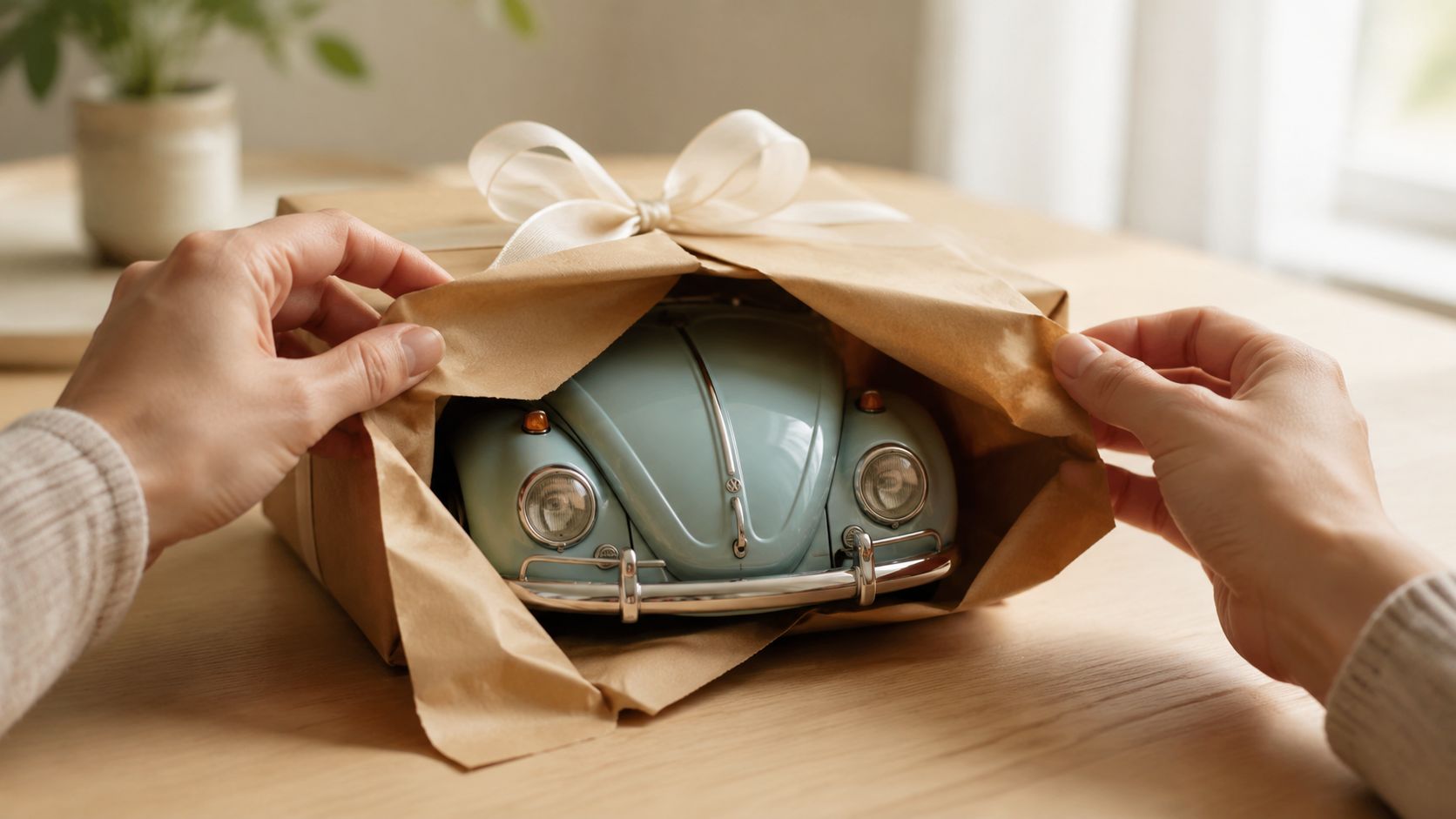
The Practicalities of Van Life and Collecting

Dreams are better when they survive first contact with reality. Anyone serious about small camper vans learns that quickly. It's easy to fall for photos of timber benchtops, pop-top roofs, and clever little cupboards. It's more useful to ask what the van can carry, how it drives when loaded, and whether the layout suits the way you travel.

In Australia, one of the biggest technical lines in the sand is 3.5 tonnes GVM. Once the van, conversion, passengers, water, batteries, and gear push beyond that point, owners may need a different licence class and heavier-vehicle registration depending on the setup, as outlined in this Australian mini-RV guide. That single limit shapes plenty of decisions. Add one luxury, and you may lose useful payload elsewhere.

Smart questions for real vans

A practical buyer usually asks these before getting carried away:

  • Rust first because cosmetic charm means little if the body needs major repair
  • Mechanic support because old Volkswagens reward owners who know the right specialists
  • Weight discipline because every battery, water tank, and cabinet choice has consequences
  • Trip style honesty because a van built for beach weekends isn't the same as one aimed at long touring

The same mindset helps collectors

Collectors face smaller stakes, but the habits are similar. Thoughtful buying beats impulse buying. Quality beats clutter. Authenticity matters.

Real van concern Collector equivalent
Mechanical condition Build quality and finish
Registration and compliance Officially licensed memorabilia
Storage space Display space at home
Ongoing maintenance Dust control and careful storage

Collector's note: If a model is going to live in your lounge, office, or workshop, display it like it matters. A clean shelf or case does more for a diecast Kombi than buying three extras and leaving them boxed in a cupboard.

Small homes can still hold a great collection. A narrow floating shelf, a bookcase bay, or a garage display above the workbench can turn a few well-chosen pieces into a proper talking point.

Start Your Own Volkswagen Adventure Today

Owning a real classic camper can be one of the great automotive adventures. It can also test your patience, budget, storage space, and willingness to chase parts on a Saturday morning. That's part of the charm, but it isn't the only way into the Volkswagen world.

For plenty of enthusiasts, the easier starting point is the shelf. A beautifully made Kombi or Beetle model lets you enjoy the design, the history, and the feeling straight away. You can study the lines, revisit the era, and build a display that reflects your taste, whether that's surfy, original, playful, or proudly nostalgic.

Good reasons to start with diecast

  • It's accessible if a full restoration or camper build isn't realistic right now
  • It still feels personal when you choose models tied to memories or favourite eras
  • It makes a brilliant gift for the VW fan who already has posters, books, or garage signs
  • It grows with you from one special model into a display with real character

There's a pleasing symmetry in it. A small camper van promises freedom in motion. The diecast version holds that same promise still, ready on a shelf, desk, or display cabinet until the next trip, the next show, or the next daydream.

If you've been meaning to buy diecast Kombi pieces, add a Volkswagen Beetle model, or find Volkswagen diecast models for sale from a local Australian source, starting with the model that makes you smile is usually the right move.


If you'd like to turn that Kombi daydream into something you can hold, browse Volkswagen Memorabilia for licensed VW-themed collectibles, including the main shop collection, classic Volkswagen diecast pieces, charming Kombi and Samba Bus models, the colourful 1962 Volkswagen Classical Samba Bus Flower Power, and a timeless Volkswagen Beetle model. Buying from an Australian importer means local stock, fast shipping, and friendly local support, which makes collecting a lot more enjoyable.

Caravan vs Campervan: A VW Enthusiast’s Guide for 2026

The sun's already warming the bitumen, someone's polished a split-window Kombi to within an inch of its life, and you're standing there with a coffee thinking the same dangerous thought a lot of Aussie VW fans have had at one time or another.

What if this summer's the one?

Not just a Sunday cruise. Not just another wander through a show-and-shine lineup. A proper road trip. Coastline, camp chair, early starts, servo pies, and that feeling you only get when the road opens up and home gets smaller in the mirror. For some people, that dream looks like a tidy little caravan tucked behind the tow car. For others, it's a campervan with the kettle, bed and esky all riding along in one neat package, very much in the spirit of the old VW Kombi.

You can see both visions at any classic car gathering. One couple is talking about setting up by the beach for a full week, unhitching, then using the car to duck into town for fish and chips. Another bloke is grinning about pulling over near a headland, sliding open the side door, and being camp-ready in minutes. Same dream. Different machine.

It's no small conversation anymore, either. In Australia, the caravan-and-camping sector hit an all-time high in 2025, with almost 938,000 registered caravans and campervans, up 32% since 2019. In the same period, Australians took 17.3 million domestic overnight caravan-and-camping trips, according to Tourism Research Australia's caravan and camping data. That tells you this lifestyle isn't some fringe hobby. It's part of the national rhythm.

For VW enthusiasts, that makes the caravan vs campervan question feel even closer to home. The old Kombi didn't just transport people. It sold the idea that the trip itself could become the destination.

Introduction

At a VW meet, you can usually spot the two tribes without anyone saying a word.

There's the crew who love the thought of setting up a proper little base camp. They're the ones picturing striped awnings, folding tables, and enough room to stretch out when the weather turns. Their dream has a caravan in it. They like the ritual of arriving, levelling, unhooking, and settling in for a few days like they've borrowed a tiny beach shack.

Then there's the mob drawn to movement. They want to roll out early, stop when the scenery looks right, and keep things loose. That's campervan energy. Very Kombi. Very surf check at dawn, toast on the stove, and no mucking around with hitches before coffee.

Both styles make sense. Both tap into the same old VW feeling of freedom, simplicity, and making memories with less fuss and more flavour. The difference is in how you want your trip to unfold. Do you want your accommodation to stay put while you explore, or do you want your whole setup to move as one?

A good choice in the caravan vs campervan debate isn't about winning an argument. It's about matching the vehicle to the kind of stories you actually want to live.

That's where things get interesting for Australian Volkswagen fans. If you've always had a soft spot for a classic Transporter, a Beetle on holiday duty, or the romance of a Samba Bus pointed toward the coast, your answer probably isn't just practical. It's emotional too.

The Great Debate What is a Caravan vs a Campervan

Before the dream gets too far ahead of the driveway, it helps to get the basics straight.

A caravan is a towable trailer. It needs a separate vehicle to pull it. A campervan is a self-contained motor vehicle with living space built in. That distinction is the heart of the whole caravan vs campervan conversation, and it shapes everything from driving feel to setup routine to what sits in your shed during the off-season. Volkswagen Australia lays out that difference clearly in its guide to caravan vs campervan.

Feature Caravan Campervan
Basic format Towable trailer Self-contained motor vehicle
What you need A separate tow vehicle One vehicle only
Living style More room to spread out Compact, integrated living
Travel style Set up camp, then unhitch Stop and go more easily
Upfront cost feel Usually lower without engine or drivetrain Higher because it includes engine and drivetrain

The Great Debate What is a Caravan vs a Campervan

The practical split

In plain English, a caravan is more like bringing a little holiday cabin with you. A campervan is more like turning the vehicle itself into the holiday cabin.

That's why people often describe caravans as roomy and campervans as nimble. Volkswagen Australia notes that caravans usually offer more space for sleeping, cooking, living, and sometimes bathing, while campervans bundle travel and accommodation together in a way that suits flexible road trips.

Where price enters the chat

Upfront price is often the first reality check. Volkswagen Australia also notes that Camper Champ reports a brand-new campervan averages around $70,000 or more in Australia, before registration, insurance, and other fees, while caravans are generally cheaper because they don't include an engine or drivetrain. That's one reason plenty of buyers start by admiring the campervan dream, then take a long second look at caravans.

If your heart already leans toward the classic van shape, the enduring appeal of a VW-style camper is easy to understand. The old-school silhouette still says adventure in a way few vehicles can, whether you're admiring an actual one or browsing a Volkswagen Transporter camper collectible.

The Driving Experience Towing vs All-in-One Cruising

Ask anyone who's done both, and they'll tell you the biggest difference shows up before you've even reached the campsite.

With a caravan, the trip begins with a bit of choreography. Mirrors adjusted. Hitch checked. Corners taken wider. Fuel stops planned with enough room to get back out again. For some drivers, that's all part of the ritual. They enjoy the deliberate pace. Others find towing a bit tense, especially in traffic, crosswinds, or cramped coastal towns where every roundabout suddenly feels personal.

How a caravan feels on the move

Towing changes your whole mindset. You drive with more patience, and you think further ahead. That can be a pleasure if you like the slower, steadier style of touring.

A caravan also gives you a lovely perk once you arrive. Unhitch it, set up camp, and your tow vehicle is free for bakery runs, beach trips, or ducking into town without packing away the annex of your life.

How a campervan feels on the road

A campervan is more spontaneous. You turn the key and go. No hitching, no reversing a trailer into a tight site, no wondering whether that tiny scenic lookout car park was a terrible idea.

That all-in-one ease is why campervans feel so close to the classic VW spirit. A good campervan invites detours. It suits the sort of traveller who sees an empty stretch of coast and thinks, yep, let's stop here for a cuppa.

Practical rule: If you want each travel day to feel lighter and more flexible, a campervan usually feels easier. If you'd rather create a stable base and explore from there, a caravan often feels more comfortable.

There is one trade-off, though. In a campervan, your transport and your home are the same thing. If you want to drive to the shops, your whole camp goes with you. In a caravan setup, the house stays put.

That's why the best answer often comes down to personality. Some people love the motion. Some love the destination.

Living Space Layouts and Lifestyle Tradeoffs

Step inside both, and the caravan vs campervan debate stops being about vehicles and starts being about how you live.

Living Space Layouts and Lifestyle Tradeoffs

A caravan tends to feel more like a small holiday unit. There's often a stronger sense of separate zones. One person can read while another makes lunch. Kids can sprawl. Wet towels and sandy shoes don't take over the entire universe in quite the same way.

A campervan is different. It rewards people who appreciate clever design. Seats transform. Tables fold away. Storage hides in places you'd never expect. You don't get excess space. You get purposeful space.

The Kombi philosophy still matters

That's one reason VW fans are so drawn to campervans. The classic Kombi was a rolling lesson in intelligent packaging. It never pretended to be huge. It just made brilliant use of what it had.

That same design spirit still charms people now. You see it in modern camper layouts, and you see it reflected in the affection people have for van-shaped memorabilia, especially pieces inspired by tidy touring setups like the Volkswagen Crafter camper collectible.

If you want a quick visual reminder of why compact camper design has such a cult following, this clip captures the appeal nicely.

Who enjoys which layout

A caravan often suits travellers who value:

  • Room to unwind: More physical separation between sleeping, dining, and lounging.
  • Longer campsite stays: Better when you're settling in for several nights.
  • Family practicality: Extra space makes shared trips easier to manage.

A campervan often suits travellers who care most about:

  • Compact efficiency: Everything has a place and a purpose.
  • Quick stopovers: Pull up, park, and start enjoying the location.
  • Adventure rhythm: More movement, less setup.

Neither layout is objectively better. One feels like a small cottage on wheels. The other feels like a beautifully organised tool for chasing the horizon.

The Real Cost of Freedom Beyond the Sticker Price

Plenty of buying guides often go a bit soft. They talk purchase price, throw in a few comments about convenience, and leave the expensive part buried in the fine print of actual ownership.

The sharper way to think about caravan vs campervan is total cost of ownership. That means not just what you pay to get one, but what you keep paying to live with it in Australia over time. As noted in this ownership-focused comparison, campervans are registered and insured as motor vehicles, while caravans add trailer registration and insurance, plus the costs tied to a suitable tow vehicle.

What a campervan owner is really paying for

A campervan wraps a lot into one package. That's convenient, but it also means the vehicle side of the equation doesn't disappear.

Think about ongoing costs like:

  • Registration and insurance: It's a motor vehicle, so those basics are part of the deal.
  • Servicing: Engine, drivetrain, and vehicle systems need regular attention.
  • Fuel use: You're moving the whole house every time you drive.
  • Depreciation: The vehicle itself carries the wear of both travel and accommodation use.

What caravan owners can overlook

A caravan can look cheaper at first glance, and in some cases it is. But the long-run math depends heavily on the tow vehicle.

A realistic caravan budget needs to consider:

  • Trailer costs: Registration and insurance still apply to the caravan itself.
  • Tow vehicle demands: Not every family car is the right match for towing duty.
  • Fuel and servicing on the tow car: Pulling a van changes how hard the vehicle works.
  • Depreciation across the setup: You may be spreading value loss across more than one asset.

Don't ask, “Which one is cheaper?” Ask, “Which one makes better sense for the way I travel, store, service, and use vehicles already in my life?”

That question matters a lot. If you already own a capable tow vehicle and enjoy longer stays, a caravan may stack up nicely. If you prefer one integrated machine and frequent short escapes, a campervan may feel cleaner and simpler even if the upfront spend is steeper.

For people who love the camper lifestyle and the old VW travel aesthetic, it's easy to understand why the category keeps such a loyal following, both on the road and among collectors browsing VW campervans for sale in model form.

Your Perfect VW Adventure Guide

Some choices are easier when you stop thinking in categories and start thinking in weekends.

Your Perfect VW Adventure Guide

The weekend wanderers

You've got a couple of days free, you like coastal roads, and half the fun is deciding on Friday morning where you'll sleep Friday night. You want less setup, more movement, and the freedom to change plans when the weather shifts.

That's campervan territory.

The whole thing suits the VW mindset beautifully. Slide into a parking spot, pop the side door, brew tea, watch the sunset. If your dream trip feels like a classic Kombi poster come to life, the campervan wins on vibe and convenience.

The school holiday base campers

Now think family mode. More bags. More snacks. More bodies. Someone wants an afternoon nap while someone else wants cards at the table and someone else is hunting for goggles.

A caravan starts to make a lot of sense here. The ability to leave the van set up and use the car separately is gold when the campsite becomes your temporary neighbourhood. You get a steadier home base and a bit more breathing room when everyone's indoors.

The festival and nostalgia crowd

This one's for the people who don't just want a holiday. They want a scene. They want bunting, camp chairs, old playlists, and a setup that feels like it belongs next to a row of Beetles and buses on a sunny oval.

A compact campervan often fits this life best. It's social, portable, and full of personality. It also captures the same spirit that makes classic VW memorabilia so appealing. The vehicle is part transport, part design statement, part memory machine.

A quick match guide

Traveller type Best fit Why it suits
Couple doing short coastal escapes Campervan Easier movement and quick setup
Family building a holiday base Caravan More space and a separate car for outings
Event-goer or festival regular Campervan Compact, social, and easy to move
Traveller who likes staying put longer Caravan Better for settling in and spreading out

There's no wrong answer here. There's only the one that matches your habits, your driveway, your budget reality, and the version of freedom you want.

FAQ Your Final Caravan vs Campervan Questions Answered

FAQ Your Final Caravan vs Campervan Questions Answered

Do I need a special licence to tow a caravan in Australia

Licence rules can vary depending on the vehicle, caravan, and state or territory requirements. Check your local road authority before buying. Don't rely on general advice from forums or social media.

Which is easier to store at home

That depends on your property and access. A caravan takes up space as a separate unit, while a campervan combines everything into one vehicle. Measure your driveway, garage access, turning area, and height clearance before you fall in love with either option.

Can I use either for longer trips

Yes, but they suit different rhythms. A caravan is often more comfortable for extended stays in one place. A campervan usually suits people who like to keep moving and don't mind living a bit more compactly.

Which one feels more like the old VW adventure spirit

For many enthusiasts, the campervan gets closest to that classic Kombi feeling of travel and home blended together. But if your ideal trip includes a settled beachside setup and day drives in the car, a caravan can still deliver plenty of charm.


If you love the road-trip dream but also love having a tangible piece of VW history at home, have a wander through Volkswagen Memorabilia. It's a brilliant place to find licensed VW-themed gifts and display pieces, from Kombi-inspired collectibles to classic Beetle favourites, with local Australian stock, fast shipping, and the sort of nostalgic charm that keeps the VW spirit alive between adventures.

The Volkswagen Service Book: More Than Just Paper

A mate of mine bought an old Beetle out of regional NSW, drove it home grinning like he'd won Tatts, then found a dog-eared Volkswagen service book tucked beside the jack. The pages smelled faintly of oil and old paper, and every stamp felt like another chapter in the car's life.

Your VW's Dog-Eared Diary in the Glovebox

You know the feeling. You open the glovebox of a Kombi or Beetle that's seen a bit of sun, a few beach runs, maybe a family holiday or two, and there it is. Not flashy. Not rare in the usual concours sense. Just a worn little booklet with scribbled dates, odometer readings, workshop stamps, and the sort of honest grime that says this VW has been used the way Volkswagens should be used.

An antique Volkswagen service coupon booklet resting inside the open glove compartment of a vintage car.

For plenty of Aussie owners, the Volkswagen service book sits somewhere between workshop paperwork and family heirloom. It tells you who cared enough to keep the car on schedule. It hints at road trips, changing hands, periods of love, and sometimes those awkward years when the poor thing sat under a tarp behind the shed.

More than maintenance paperwork

A classic VW always carries a bit of mythology around with it. The service book keeps that mythology honest. If the seller says, “She's been looked after,” the little book in the glovebox is often where the truth lives.

A tidy service record doesn't just show what was done. It shows that someone kept paying attention.

That matters whether you're eyeing off a late-model Golf, a weekend cruiser Beetle, or a Kombi that still has sand in the floor channels. A service book is part keepsake, part evidence. In the VW world, that combination is gold.

Why enthusiasts keep them forever

Collectors hold onto odd bits of VW history all the time. Old brochures, dealer keyrings, workshop manuals, number plate surrounds. A service book belongs in that same emotional category, but with one big difference. It's tied to one exact car and its real life.

If you're lucky, the entries line up like a timeline:

  • First owner pride: Early stamps that show the car was serviced right on time.
  • Years of regular use: Odometer notes that creep up steadily and make sense.
  • Care beyond cosmetics: Mentions of scheduled inspections and routine items, not just emergency fixes.

That's why old hands at a show will leaf through a service book with the same interest they'd give original paint or factory trim. It's memorabilia, sure. But it's memorabilia that can still save you grief later.

What Is a Volkswagen Service Book Really?

At its simplest, a Volkswagen service book is your car's passport. It records where the car has been, when it was serviced, and what work was carried out so there's a traceable history rather than a string of vague promises.

In Australia, a Volkswagen service book is usually tied to the manufacturer's recommended maintenance schedule, often every 12 months or 15,000 km, and the entries generally note the date, odometer reading, and work completed, which helps verify maintenance in local driving conditions according to this overview of VW service history.
An infographic explaining the components and importance of a Volkswagen service book for vehicle maintenance and history.

What you'll usually find inside

Open one up and you're not looking for poetry. You're looking for the practical stuff that builds a believable timeline.

  • Owner and vehicle details: Enough information to tie the booklet to the car.
  • Service interval checkpoints: The milestones Volkswagen expects the vehicle to meet.
  • Workshop entries: Date, odometer reading, and what was performed.
  • Stamps or repairer records: A sign that a real business touched the car, not just a backyard promise.

Some books are neatly stamped. Some have handwriting that looks like it was done leaning over a bonnet in a hurry. That's normal. What matters is whether the story hangs together.

Paper book or digital trail

Older Volkswagens often relied on a physical booklet with stamps and handwritten notes. Later models may also have dealer-entered digital records rather than only a stamped book. The format changed, but the point didn't. You still want a clear maintenance story.

Practical rule: If the service history lets you follow the car year by year without guessing, you're on solid ground.

A good service book also reflects milestone maintenance, not just oil changes. Things like brake fluid changes, air-filter replacement, and scheduled inspections help build a fuller picture of the vehicle's condition. That's why seasoned buyers don't treat the booklet as a trivial extra. They treat it as part of the car's identity.

Why That Little Book Is Worth Its Weight in Gold

A Volkswagen can look brilliant in photos and still make your wallet cry later. Fresh paint, shiny hubcaps, detailed engine bay. Lovely. But if the service history is thin, buyers get twitchy for good reason.

That little book earns its keep when money and trust are on the table. A seller with organised records usually comes across as someone who cared for the car properly, not someone who polished over problems before listing it.

The interior of a vintage green Volkswagen Beetle featuring a service logbook resting on the passenger seat.

For buyers, it calms the nerves

Say you're inspecting a used Golf in Melbourne or a Passat on the Sunshine Coast. The seller says it has “full history”. Good start. Then you open the service book and see the intervals make sense, the odometer trail is consistent, and the work notes look credible. Straight away, the conversation changes. You're no longer buying a story. You're checking a record.

For plenty of people, that's the difference between confidence and caution.

For owners, it can support warranty discussions

For Australian Volkswagen vehicles, the service book is a key warranty-support document. It should show that logbook servicing was done at the prescribed intervals by a qualified repairer, and that history is often used to diagnose faults and validate claims, especially for powertrain issues, as Volkswagen's owner materials explain through its owners manual and vehicle information portal.

That means the service book isn't just nostalgic clutter in the glovebox. It's part of the technical paper trail. If a fault turns up, service timing and recorded work can matter.

What experienced owners check first

When club members talk through a used VW, the service book often comes up before modifications or stereo gear. They want to know:

  • Was it serviced on time: Gaps can raise questions that are hard to answer later.
  • Who did the work: Dealer, specialist, or qualified independent. The key is that the records are credible.
  • Does the book match the rest of the car: A spotless booklet paired with messy supporting paperwork deserves a closer look.

If you're sorting out maintenance, parts, or period-correct odds and ends for your VW life in general, it's worth keeping a trusted bookmark to VW parts in Australia. Not because a parts page replaces good records, but because organised owners tend to keep both the car and the paperwork in shape.

From Paper Trails to Digital Records

One of the most common yarns you'll hear from newer VW owners goes something like this. “The seller said it has full history, but there's barely anything stamped in the book.” That doesn't always mean trouble. Sometimes it means the car sits in the crossover era where paper and digital records overlap.

Volkswagen moved away from relying only on the old-school stamped booklet for some later vehicles. So now you've got a mix across the fleet. Older cars may have a proper paper logbook. Newer cars may have dealer-entered digital history. Some have both, but not in a neat, obvious way.
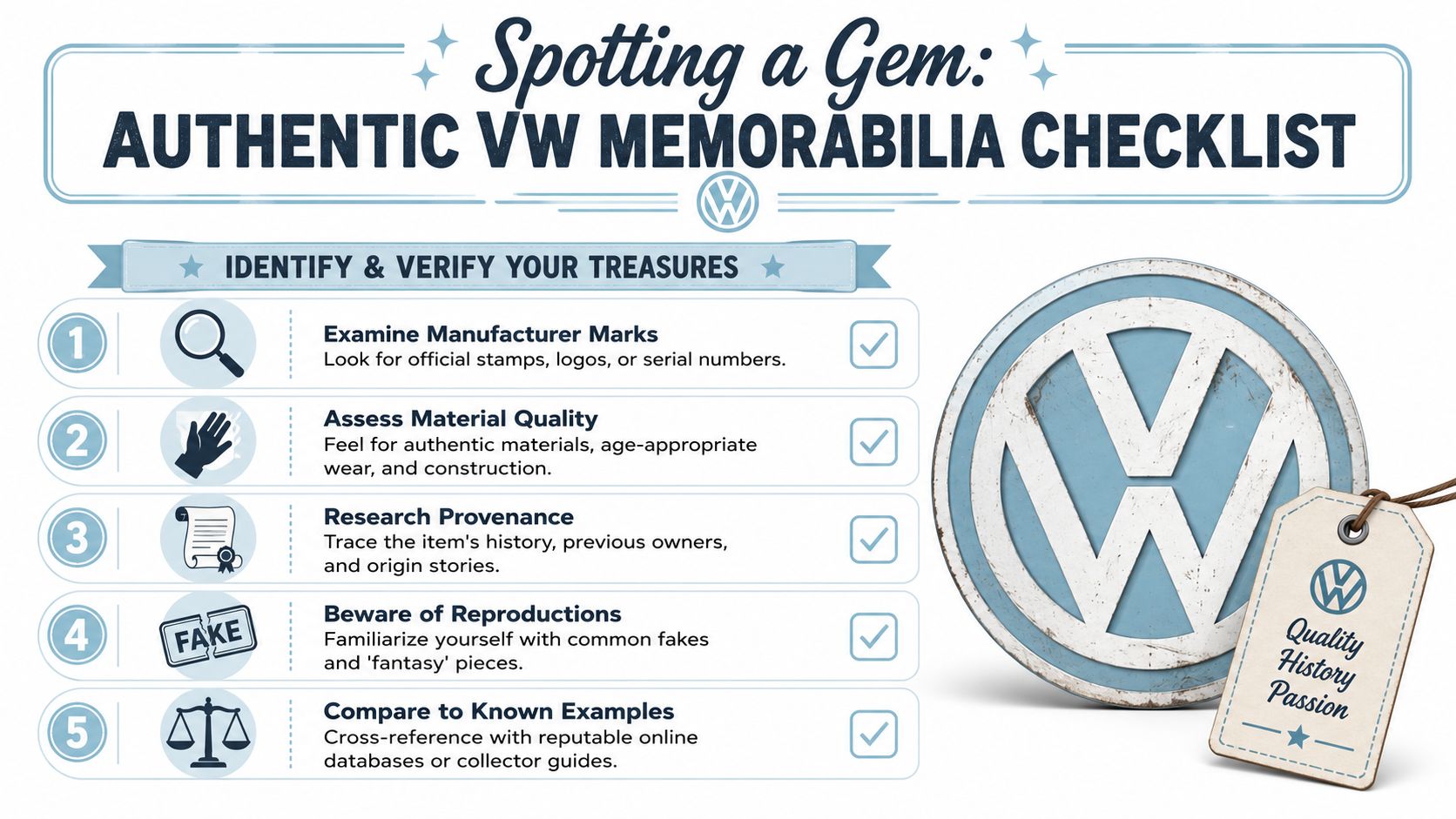
When the glovebox doesn't tell the full story

In Australia, there's often confusion about how VW paper books, dealer stamps, and digital records fit together. One of the most useful bits of guidance is this: if the book is missing or incomplete, owners can reconstruct service history through invoices and dealership records, and that evidence matters when assessing a used car's value and condition, as noted in Volkswagen contact and support guidance at Volkswagen customer support.

That's a relief for plenty of owners, because a missing booklet isn't always a disaster. Cars change hands. Booklets get lost during moves. Workshops close. Life happens.

How to rebuild the story

If you're dealing with patchy records, don't panic. Start gathering evidence that ties dates, kilometres, and work performed back to the car.

  • Pull together invoices: Old workshop bills can fill gaps even if the book is gone.
  • Call dealerships or repairers: They may be able to confirm prior servicing for that vehicle.
  • Check the handbook and VIN-linked information: That helps you match the car to the correct maintenance schedule.
  • Lay it out in order: A chronological folder often tells the story nearly as well as a stamped book.

Missing paper hurts less when the supporting paperwork is organised and believable.

That idea matters beyond buying and selling. It's part of how enthusiasts preserve a VW's story. A van halfway through a camper build, for example, still benefits from a tidy maintenance history. If you're dreaming about project life, van conversion ideas for VW lovers can be a fun rabbit hole, but even the coolest build starts with knowing the base vehicle's history.
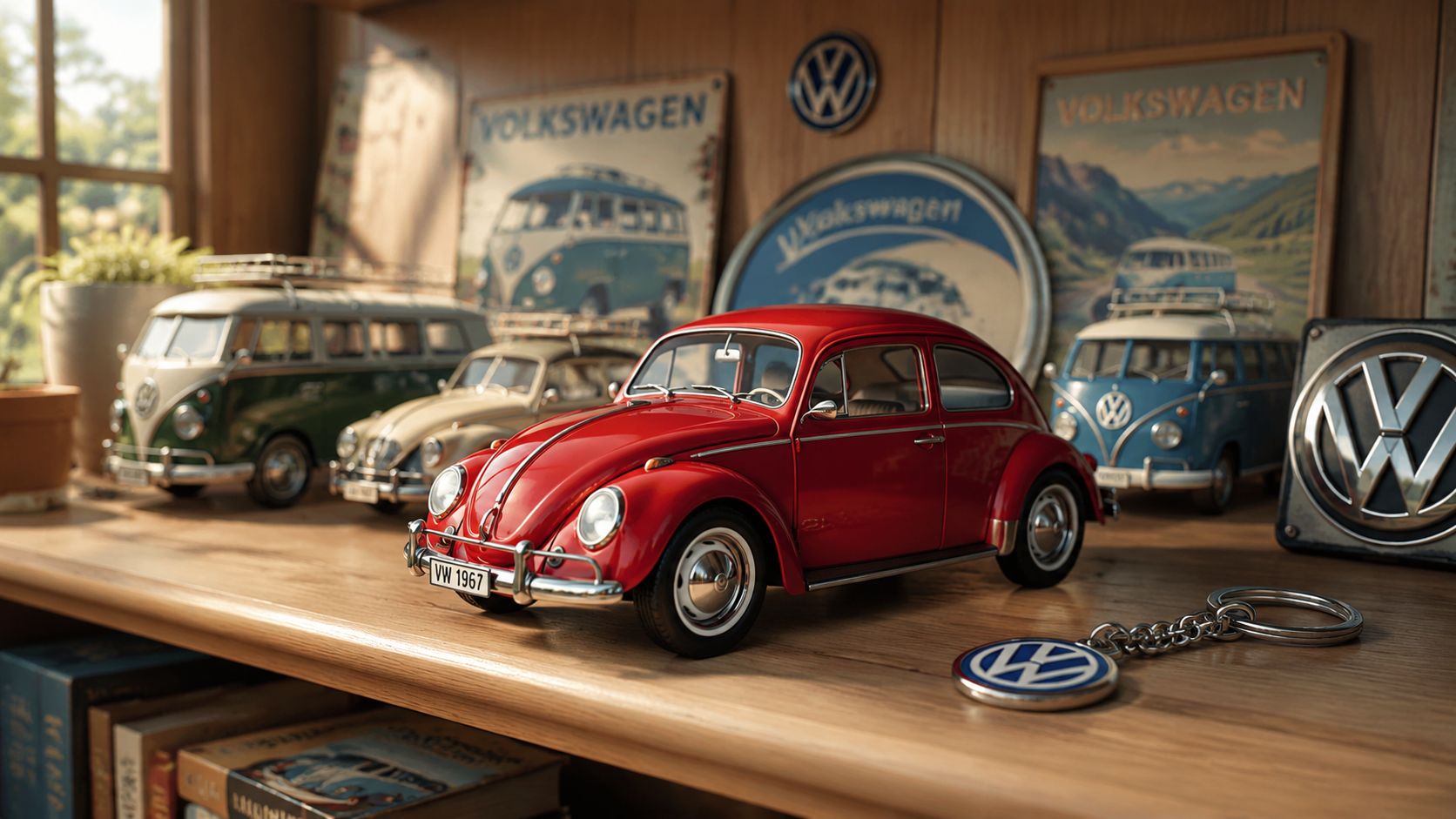

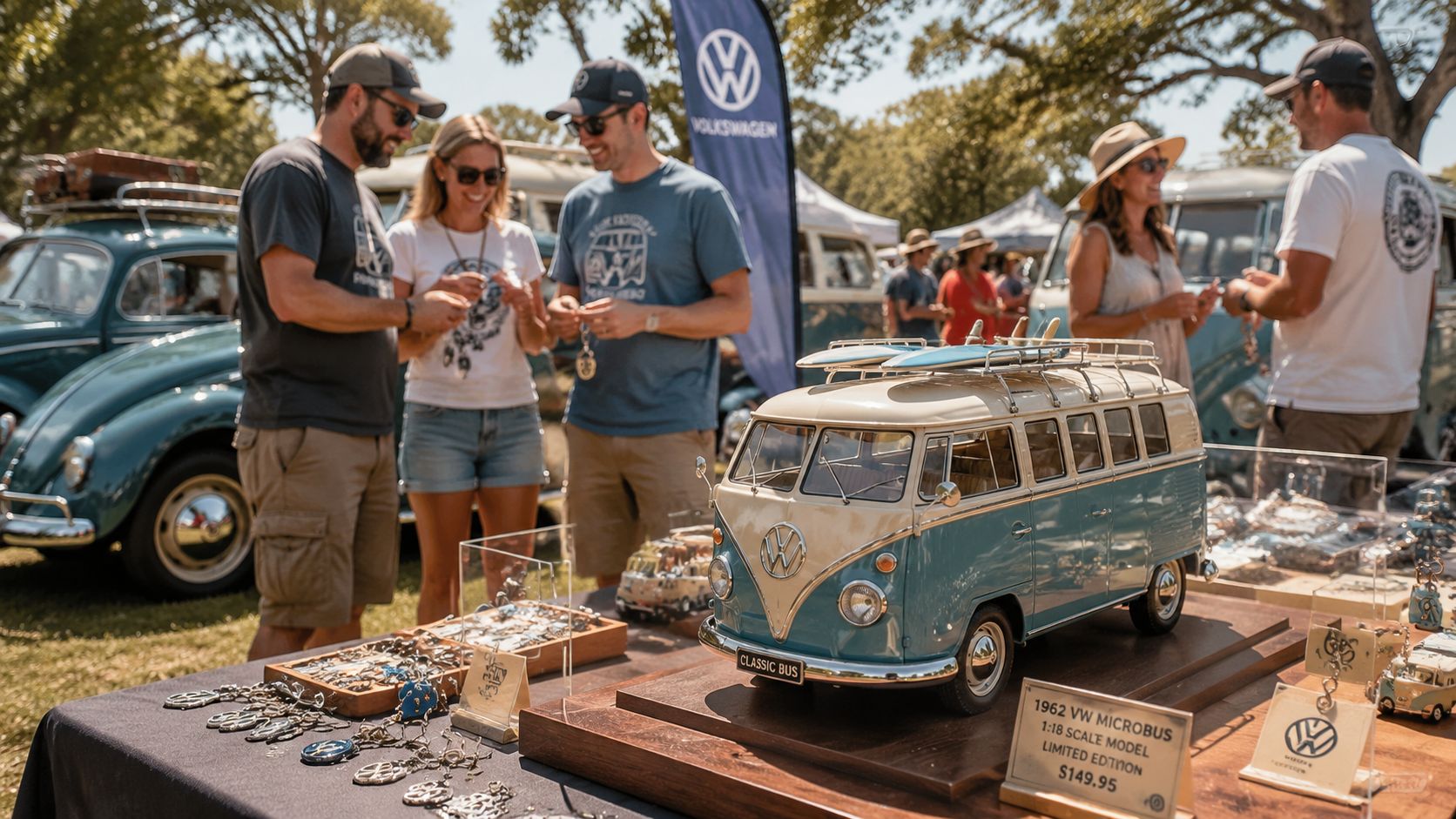
Pro Tips for Buyers Sellers and Collectors

The old hands at Volksfest get a bit sharp-eyed concerning a Volkswagen service book. It can reassure you, but it can also raise questions if the details feel off. You don't need to be suspicious of every mark on the page. You just need to read it like part of the car, not as a separate prop.

A smiling Volkswagen service representative holding an open service logbook for a customer near a car.

If you're buying

Walk in with curiosity, not just excitement. Ask to see the service book before you get too distracted by the two-tone paint or fresh retrim.

A few signs are worth checking closely:

  • Inconsistent chronology: If dates and odometer readings jump around strangely, ask why.
  • Book looks newer than the car's story: A pristine booklet in a much older vehicle isn't automatically wrong, but it deserves backup paperwork.
  • Vague entries: “Service done” tells you far less than a proper note with date, kilometres, and work carried out.

Bring the service book into the same conversation as tyres, brakes, invoices, and registration papers. It should fit the broader story.
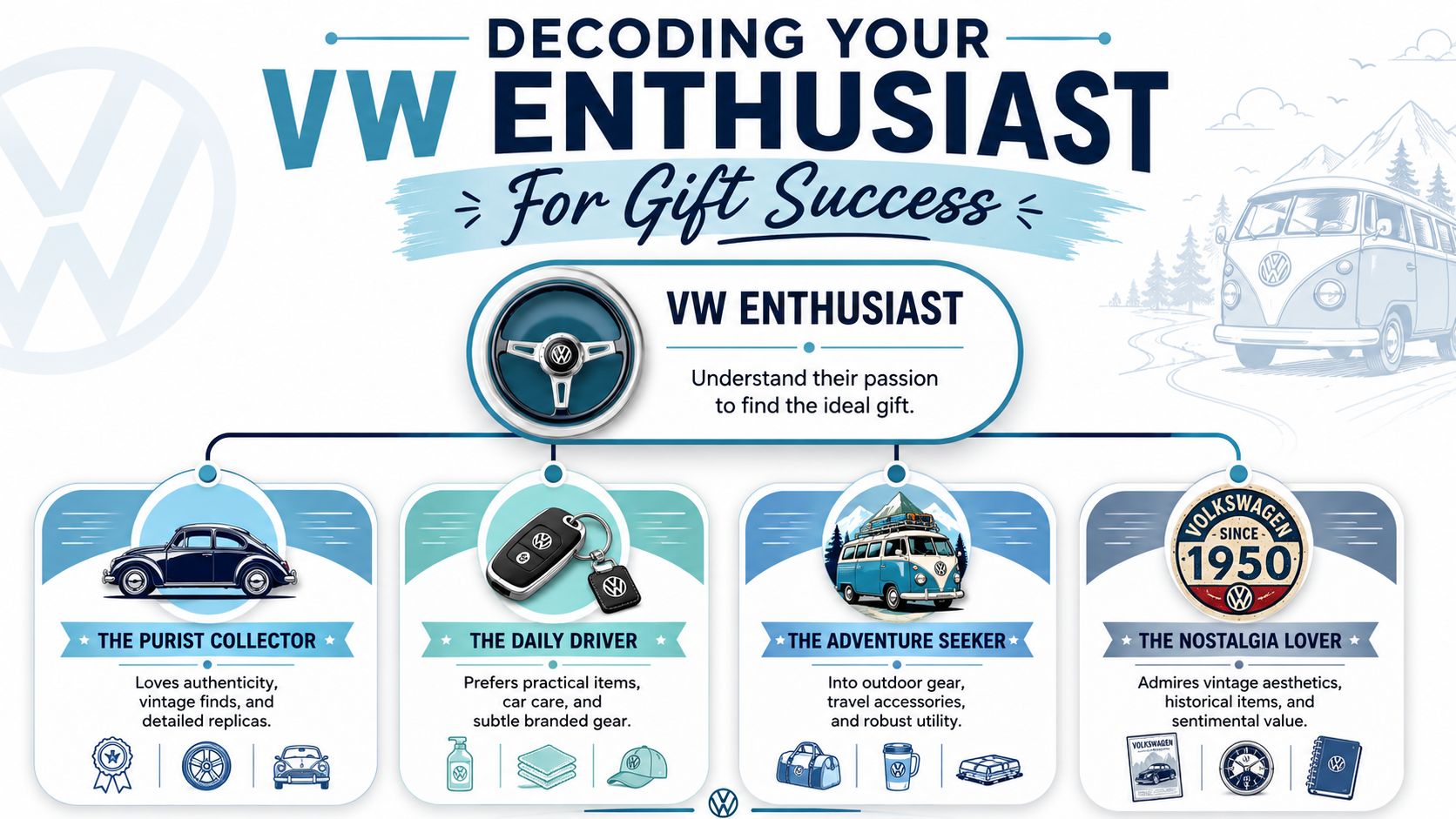
If you're selling

Present the service book like you would original manuals or factory accessories. Neat, complete, and easy to follow. Don't chuck a loose stack of receipts into a supermarket folder five minutes before the buyer arrives.

Try this:

  1. Cleanly organise the paperwork so the book, invoices, and inspection notes are together.
  2. Match entries to receipts where you can, especially if there's a gap in stamps.
  3. Be upfront about missing periods rather than hoping no one notices.

That honesty often lands better than bluffing.

If you're using an independent workshop

A lot of Aussie VW owners ask whether they must stick to the dealer network forever. The practical answer is that independent servicing can still protect the car's history when it's documented properly against the manufacturer's handbook and carried out by a qualified technician, as discussed in this independent servicing advice video.

That's good news if you've got a trusted VW specialist who knows these cars inside out.

If you're a collector at heart

Collectors understand provenance. That's why paperwork matters. The same instinct that makes someone value original brochures, dealer stickers, and period accessories also makes them value a believable service record.

And if your dream full-size bus is still somewhere over the horizon, browsing a Volkswagen bus camper can scratch that itch while you wait for the right real-world example to turn up with the right story attached.

Your Top Service Book Questions Answered

A few questions pop up again and again at swap meets, club runs, and cars-and-coffee mornings. Here's the quick-reference version.

Quick answers that save time

For specialised models like the e-Golf or hybrids, the service book matters even more because it should document specialist maintenance by trained technicians, and that record helps diagnose high-voltage faults where inspection history can be safety-critical, according to Volkswagen material reflected in this VW warranty policy document hosted by NHTSA.

Question Answer
Is a missing Volkswagen service book always a deal-breaker? No. It can be a problem, but it isn't automatically fatal if the owner can rebuild the history with invoices, workshop records, and other believable documentation.
Can I get a replacement service book? You may be able to obtain a replacement booklet for some vehicles, but a new book doesn't recreate the old history on its own. The supporting paperwork is what gives it value.
Do dealer stamps matter more than independent workshop records? Dealer stamps are familiar and easy for buyers to recognise, but qualified independent servicing with proper documentation can still support resale and compliance when it follows the handbook.
What should be recorded in the book? Date, odometer reading, and work completed are the essentials. Clear entries make the history easier to trust.
Are digital records enough for newer VWs? They can be, provided the digital history is accessible and lines up with invoices or workshop records.
Does this matter more for e-Golf and hybrid models? Yes. Those vehicles may require specialist servicing and a documented inspection cadence because high-voltage systems are safety-critical.
Why do enthusiasts treat a service book like memorabilia? Because it gives the car a personal history. It isn't just proof of maintenance. It's part of the vehicle's identity and provenance.
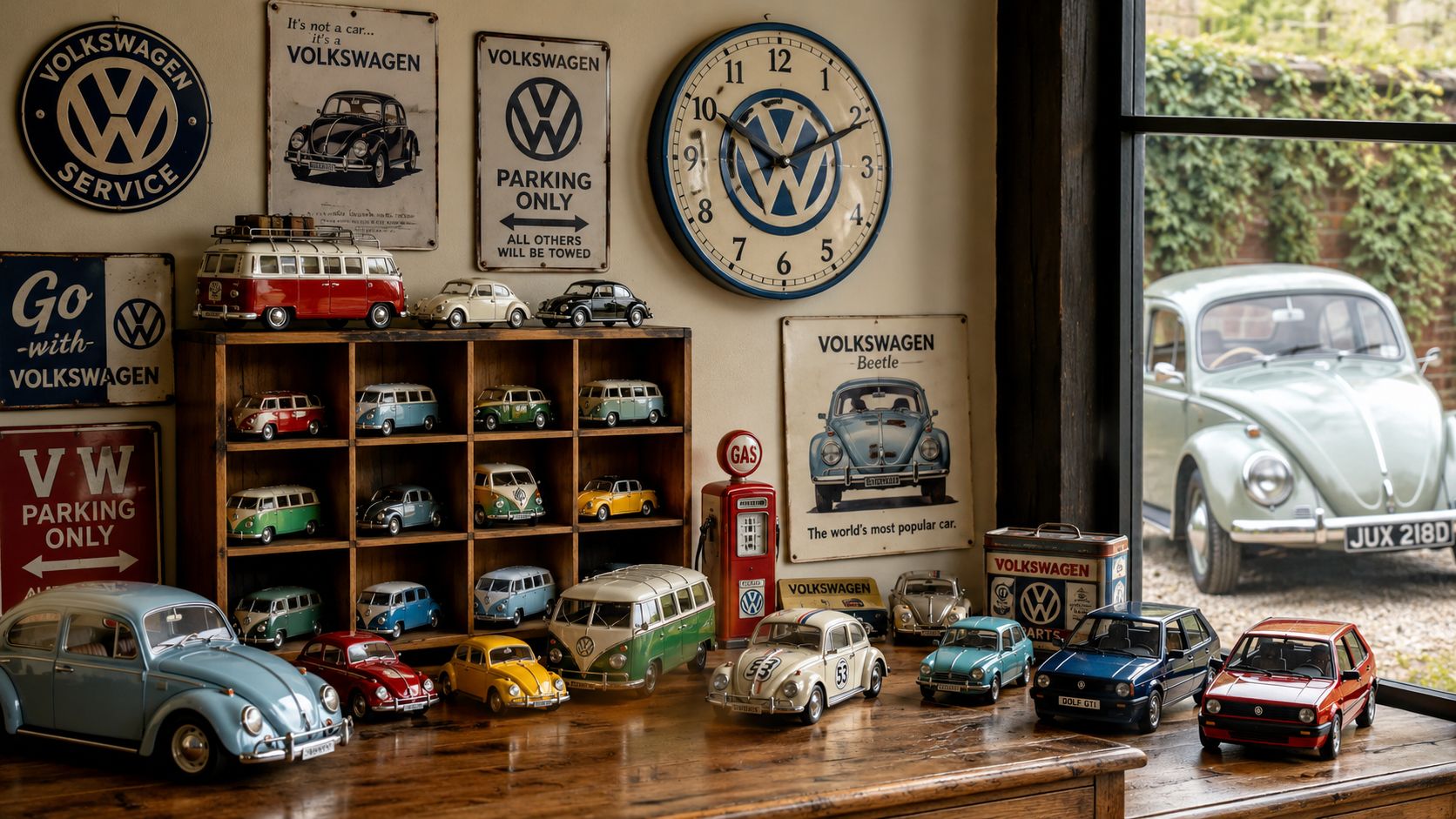
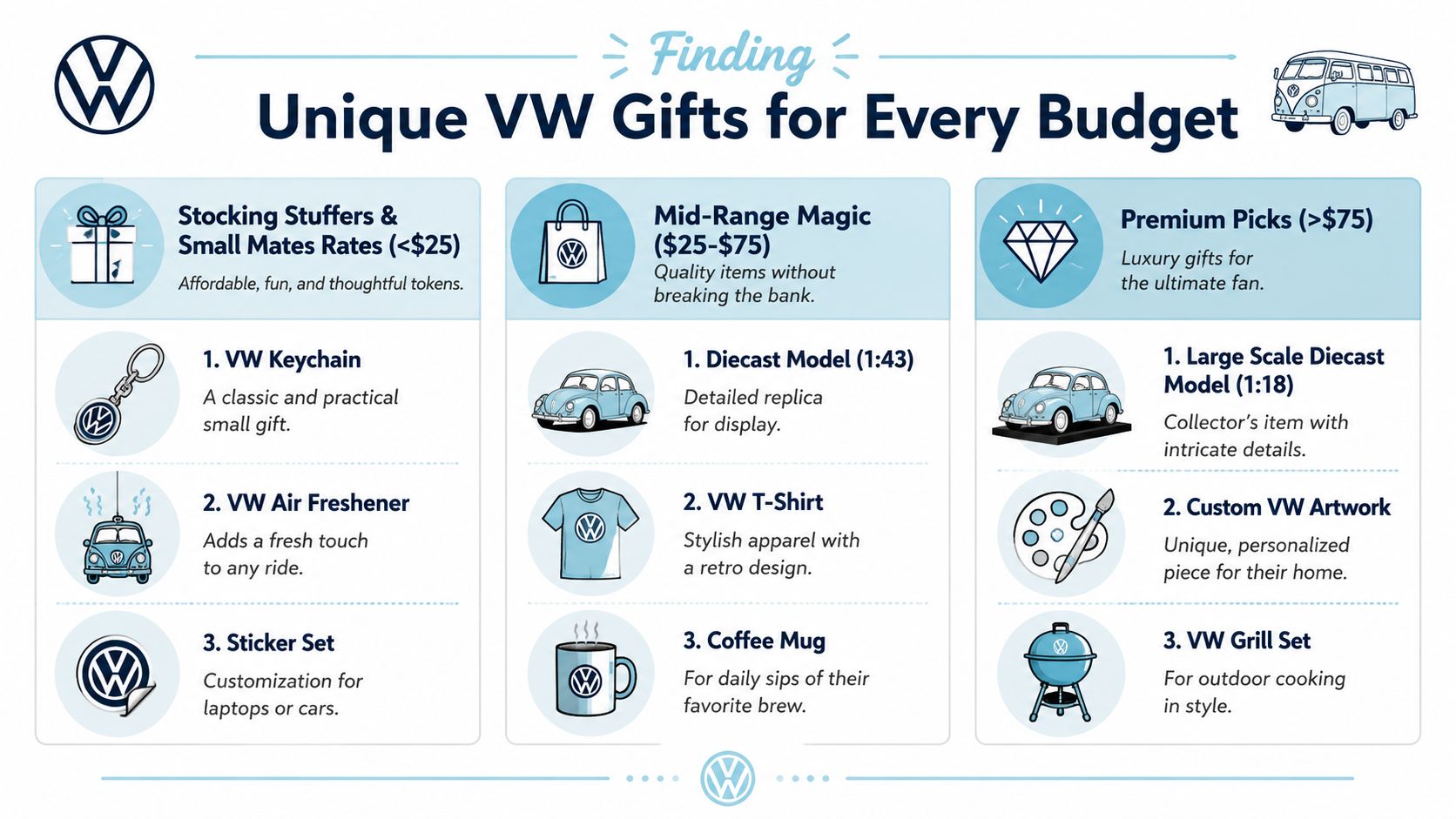
One last club-member tip

If the paperwork tells a clean, believable story, the car usually feels easier to own. Easier to service, easier to insure, easier to sell, and easier to enjoy without that nagging doubt in the back of your mind.

The best Volkswagens always seem to come with stories. The smart ones come with records too.


If you love the history behind real Volkswagens, you'll probably love the collectible side of the marque as well. Volkswagen Memorabilia is a top spot for licensed VW-themed gifts, Beetle and Kombi diecast models, and nostalgic display pieces that celebrate the same heritage we all yarn about at shows. Have a look through the shop if you're after a present, a shelf-worthy classic, or a little VW magic with local Australian stock and friendly service.

Volkswagen Kombi 2024: New Volkswagen Kombi 2026: ID. Buzz

You're probably here because someone at a cars-and-coffee, swap meet, or local VW show mentioned a “volkswagen kombi 2024” and the conversation immediately went sideways. One person meant the electric ID. Buzz. Another meant the latest Transporter. Someone else was talking about a diecast release. And the old-school purist in the corner was hoping for an air-cooled miracle.

That mix-up is completely fair. In Australia, “Kombi” still means much more than one exact badge. It means road trips, surfboards, family memories, trade vans, camping weekends, and that unmistakable shape that makes people smile before they even know why.

So let's sort it out properly, in plain English, with an Aussie enthusiast's eye. The Kombi story in 2024 isn't about one single van. It's about how the badge's spirit now lives across modern Volkswagen vans, electric nostalgia, and the collectibles that keep the legend close at hand.

The Great Kombi Comeback or Just a Rumour Mill?

At any decent VW gathering, this topic comes up fast. Someone says, “Have you seen the new Kombi?” and suddenly half the group is picturing split screens, safari windows and two-tone paint, while the other half is thinking batteries, touchscreens and LED lights.

Two men standing in front of a classic teal and white Volkswagen Kombi van at a car show.

That's the heart of the confusion. In Australia, people often use Kombi as a broad, affectionate label for Volkswagen's van family. The historic original is one thing. The current showroom reality is another. In 2024, Volkswagen Commercial Vehicles reported 404,412 global deliveries, down 4.3% year on year, while the wider Brand Group Core reported 88.26 billion euros in sales revenue and an operating result of 2.59 billion euros after restructuring pressures, according to Volkswagen's 2024 Brand Group Core results.

Why Aussies keep saying Kombi anyway

For local enthusiasts, the word isn't just about badge accuracy. It's shorthand for a whole style of VW motoring.

  • Classic fans still mean the original Type 2 and all its charm.
  • Modern buyers often mean the current van line that carries the same practical spirit.
  • Collectors might mean the models, art, and replicas that keep the old look alive.

The Kombi never really disappeared from conversation in Australia. The meaning just widened.

If you're drawn to the modern electric take on the idea, a VW ID. Buzz camper-inspired collectible shows how strongly that shape still connects old memories with new design.

The rumour versus the reality

There wasn't a surprise return of the old air-cooled Kombi in 2024. What did happen is more interesting. Volkswagen pushed the van lineage forward in two directions. One is retro-flavoured and electric. The other is practical, load-focused and work-ready. Both matter if you care about what “Kombi” means now.

What Exactly Is the Volkswagen Kombi 2024

The cleanest way to understand volkswagen kombi 2024 is to split it into three meanings people commonly use. Once you do that, the fog lifts pretty quickly.

An infographic titled What Exactly Is the Volkswagen Kombi 2024 explaining the ID. Buzz, restorations, and rumors.

Meaning one, the ID. Buzz

This is the one that grabs attention first. The ID. Buzz is the emotional heir. It looks back to the old bus shape, but it does it with a modern electric platform and a much more family-focused brief.

A key point for Australian families is usability, not just style. Volkswagen's launch material says the long-wheelbase Pro S has a second-row bench and seats up to seven passengers, while the 1st Edition AWD uses captain's chairs and seats six, according to Volkswagen's ID. Buzz launch material. The same material lists range figures of 234 miles for the rear-wheel-drive Pro S and 231 miles for the 4Motion AWD.

That sounds clear enough until you start asking real-life questions. Can it take school bags, sports gear and a pram without becoming a game of interior Tetris? That's where many headlines stop short.

Meaning two, the latest Transporter family

If you're thinking less about nostalgia and more about the direct continuation of the old Kombi's practical role, the Transporter is the direct descendant. It sits in the same workhorse-meets-lifestyle territory that Australians have long associated with the Kombi name.

A major 2024 milestone was the seventh-generation Transporter reveal at IAA Transportation 2024, detailed in Volkswagen's IAA Transporter announcement. Volkswagen said the long-wheelbase version can fit three Euro pallets, and the maximum trailer weight rises to 2.8 tonnes, up from 2.5 tonnes previously. It also added a plug-in hybrid eHybrid producing 171 kW, plus diesel engines with 310 Nm and 360 Nm torque outputs, with more torque in higher-output variants.

Meaning three, the collectible world

For plenty of enthusiasts, “Kombi 2024” doesn't mean a showroom vehicle at all. It means the latest crop of model vans, display pieces and giftable memorabilia inspired by the classic buses we all know.

That's not a lesser form of enthusiasm. For many people, it's the most realistic way to enjoy the shape, colour and heritage every day.

What people say What they usually mean
“New Kombi” The ID. Buzz
“Kombi van for work” The Transporter or Kombi/Crew Cab format
“2024 Kombi model” A diecast or memorabilia release
“I wish VW made the old one again” Rumour and wishful thinking

Practical rule: Before you judge the “new Kombi”, ask which Kombi people are actually talking about.

Meet the New Generation Vans for Aussie Roads

For Australian buyers, the choice isn't old versus new. It's which kind of new VW van suits your life.

The Transporter as the true do-everything van

The Australian-spec Transporter Kombi/Crew Cab is still the clearest modern version of the old mixed-use Kombi idea. Volkswagen Vans lists it with seating for up to 6 people, payload up to 1,078 kg, and load length up to 2,032 mm, according to Volkswagen Vans Transporter Kombi specifications.

That tells you a lot straight away. It's not pretending to be a soft lifestyle van. It's built for people who need to carry humans and gear in the same vehicle without compromise becoming the whole story.

The next-generation Transporter also launched with up to 1.33 tonnes payload, up to 2.8 tonnes towing capacity, and three new 2.0-litre TDI outputs of 81 kW, 110 kW and 125 kW, as outlined in the earlier 2024 Volkswagen commercial vehicle reporting. For Aussie use, that matters if your weekends involve a trailer, a camper, tools, boards, or a long haul where diesel practicality still makes sense.

If that modern van lane interests you, the broader idea is nicely reflected in this look at the electric van trend in Australia.

The ID. Buzz as the style-first family mover

The ID. Buzz takes a different path. It's the van for the person who loves the old bus silhouette but wants an EV with flexible seating and a more premium family feel.

An Australian review noted that the ID. Buzz includes radar cruise, lane-keeping, blind-spot warning, rear cross-traffic alert and parking sensors, but also flagged missing items such as a 360-degree camera and rear autonomous emergency braking. The same review says the ID. Buzz starts at A$59,995 before on-road costs, with destination at A$1,550, and an AWD 1st Edition at A$69,995, according to Drive's 2024 Volkswagen ID. Buzz review.

That's why Aussie buyers keep asking whether it's a true people-mover substitute or more of a design-led family EV.

A simple Aussie-minded comparison

  • Choose the Transporter if your first question is “What can it carry or tow?”
  • Choose the ID. Buzz if your first question is “Will my family love living with it every day?”
  • Choose carefully if you want one vehicle to be both a heavy-duty work van and a premium EV people mover. Those goals don't always line up neatly.

For Collectors The Best VW Diecast Models

Not everyone can bring home a full-sized van. Plenty of us scratch the itch by collecting the next best thing. And a well-made VW model can deliver a lot of joy for a lot less shed space.

A detailed model of a red and white 1962 Volkswagen T1 camper van on a wooden surface.

The beauty of diecast is that it lets you enjoy the most loved eras of VW history side by side. A split-window Samba. A cheerful Beetle. A surfy camper. Even a modern-inspired van can sit in the same display and still feel part of the same story.

What makes a Kombi model worth collecting

Collectors usually care about a few things more than flashy packaging.

  • Body shape accuracy matters first. If the roofline or window layout looks wrong, you'll spot it from across the room.
  • Licensed detailing gives a model that proper Volkswagen feel.
  • Colour and theme often decide whether a piece feels factory-clean, surf-culture fun, or properly nostalgic.
  • Display fit is practical. Some collectors want a hero piece. Others want a shelf full of mixed scales.

A good place to browse that style range is Volkswagen model cars in different themes and formats, especially if you enjoy classic Kombi and Beetle designs more than generic toy-shop pieces.

Classic shapes still win hearts

The reason Kombi diecast remains popular is simple. The old van shape has warmth. It feels friendly on a shelf in a way few vehicles do. The 23-window Samba Bus style, in particular, still has that instant “stop and have a look” quality.

A detailed VW model works best when it does more than copy a vehicle. It should bring back a memory, a road trip, or a person.

If you enjoy watching collector-style walkarounds and model appreciation, this clip suits the mood nicely.

Good collecting habits beat impulse buying

A smart collection usually grows around a theme. That theme might be classic buses, beach colours, Beetles, or a mix of old and new VW design.

Try one of these approaches:

  1. The heritage shelf
    Focus on classic Kombis and Beetles only.

  2. The coastal look
    Pick surf-inspired colours, campers and playful flower-power pieces.

  3. The timeline display
    Put early bus designs beside later interpretations so the evolution is easy to see.

  4. The giftable collection
    Smaller models, magnets and decor pieces that are easy to wrap and fun to receive.

Styling Your Life with That Kombi Cool

The Kombi has always been bigger than the vehicle itself. It's a mood. Relaxed, colourful, adventurous, a little nostalgic, and very at home in Australian coastal style.

A coastal-inspired living room with a surfboard, a cozy armchair, and a large indoor palm plant.

Easy ways to bring that feeling home

You don't need a garage queen or a full display room to enjoy VW style at home. A few well-chosen pieces can do the job.

  • Start with one focal piece such as a Kombi model or metal van decor item on a shelf or console.
  • Build around colour. Teal, cream, red, pastel tones and beachy neutrals all suit VW-inspired spaces.
  • Mix memories with memorabilia by pairing model vans with travel photos, old rally snaps or family beach shots.
  • Keep it breathable. Kombi styling works best when it feels relaxed, not crowded.

Where it works best

A Kombi-inspired look can suit more rooms than people realise.

Space What works well
Living room Statement model, framed coastal prints, subtle VW decor
Home office A neat diecast lineup and one conversation-starting hero piece
Kids' room or rumpus Colourful Beetle and Kombi models with surfy accents
Gift corner Small collectables ready for birthdays, Father's Day or Christmas

A good display feels lived-in, not staged. That's very Kombi. A bit of sunshine, a bit of colour, and something with a story behind it.

Keeping the Unstoppable Kombi Spirit Alive

So what is volkswagen kombi 2024 for an Australian enthusiast? It's not one single answer, and that's the beauty of it.

For some, it's the ID. Buzz, carrying the old bus silhouette into the electric age. For others, it's the Transporter, still doing the hard yards as a proper van with modern capability. And for plenty of us, it's also the world of collectibles and display pieces that lets the legend live on without needing a second car space at home.

That's why the Kombi still matters. It connects generations of VW fans who don't all want the same thing, but who recognise the same spirit when they see it. Freedom. Practicality. Personality. Community.

You can hear it in the chat around a show field. You can see it in a family loading up for a weekend away. And you can feel it when a tiny diecast bus on a shelf somehow brings back a whole era.

Quick answers enthusiasts often ask

Is there a brand-new old-school Kombi in 2024?

No. The modern conversation is really about the ID. Buzz and the latest Transporter family, not a revived air-cooled original.

Which modern VW is closest to the old Kombi idea?

If you mean practical, mixed-use van duty, it's the Transporter. If you mean nostalgic design with a modern electric twist, it's the ID. Buzz.

Is the ID. Buzz the better family choice?

It depends on what your family needs most. The styling and seating flexibility are attractive, but many buyers also want to weigh missing convenience and safety items noted in local review coverage.

Why do collectors still love the classic Kombi most?

Because the original shape has charm that's hard to beat. It's playful, recognisable, and tied to decades of memories.


If you'd like to bring that VW spirit home, have a look through Volkswagen Memorabilia. It's a terrific local spot for VW Kombi diecast Australia shoppers, gift buyers, and anyone chasing Volkswagen diecast models for sale, classic Beetle pieces, or coastal VW-inspired decor. With local stock and fast Australian shipping, it's an easy way to find a Kombi or Beetle collectible that feels right at home on your shelf, desk or gift table.

ID. Buzz Camper: The New Kombi Dream for Aussies

A bloke rolled up to a coastal VW meet in an old two-tone Bay, parked beside a new ID. Buzz, and for ten minutes nobody talked about horsepower. They talked about surf trips, sleeping in the back, and whether this shiny electric bus might finally be the id buzz camper Aussies have been daydreaming about for years.

The Electric Kombi We've All Been Waiting For

At any proper VW gathering in Australia, someone always says it. Usually while leaning on a Beetle guard or peering into a lovingly restored Kombi. “If Volkswagen ever made a modern bus with the right shape, I'd have one.” For years, that chat lived in the same space as garage fantasies and restoration wish lists.

Now the ID. Buzz has arrived to make that conversation real.

A blue and white Volkswagen ID. Buzz electric van parked near the beach during a beautiful sunset.

What makes the idea of an id buzz camper so compelling isn't just the badge. It's the feeling. The upright stance, the friendly face, the cabin that promises weekends away rather than school-run drudgery. For long-time VW people, it stirs the same part of the brain that lights up at the sight of a Split Screen in pastel paint or a sun-faded Bay Window loaded with boards.

Why VW fans instantly “get” the Buzz

The old Kombi earned its place in Australian life the honest way. It carried camping gear, kids, dogs, guitars, wetsuits and half-finished road trip plans. The new Buzz taps into that same spirit, even if the drivetrain is now all battery and silence.

A lot of local excitement has centred on whether it can become a proper touring machine rather than just a stylish people-mover. That's why the camper angle keeps coming up. Buyers aren't only asking what colour it comes in. They're asking if the back can sleep two, whether a weekend setup makes sense, and how close it feels to the Kombi dream.

The appeal of the ID. Buzz isn't nostalgia alone. It's nostalgia with the promise of modern comfort.

If you want the local market rundown before you start sketching bed platforms and awnings, the best starting point is this look at the Volkswagen ID. Buzz in Australia and its pricing. It grounds the dream in what's coming here.

The camper dream is back, just in a new form

This isn't the old story repeated. It's a new chapter. The original Kombi was simple and mechanical. The Buzz is tech-heavy, premium, and built for a different era. But the heart of it feels familiar. That's why so many enthusiasts are already thinking beyond factory trim and toward a life of beach runs, regional touring and clever little camping fit-outs.

From Splittie and Bay Window to Electric Buzz

The best thing about the ID. Buzz is that Volkswagen didn't pretend history didn't matter. You can see the family resemblance straight away. The broad face, the cab-forward look, the cheerful proportions. It doesn't copy the old buses line for line, but it absolutely knows where it came from.

A timeline graphic showing the history of Volkswagen vans from the 1950s T1 to the electric ID. Buzz.

In Australia, that design lineage matters more than it might for another brand. The Split Screen was the free-spirited icon. The Bay Window became part of surf culture and family holidays. Later Transporters moved the game along with more comfort and practicality. The Buzz picks up all of that memory and gives it a new language.

The shape tells the story

A classic T1 or T2 has a kind of warmth that never goes out of style. Even people who don't know model codes recognise the outline from a mile away. The ID. Buzz leans into that recognition. It's modern, yes, but still playful in a market full of blunt, anonymous SUVs.

That's why the electric version works so well for collectors too. The Buzz isn't just another new vehicle. It's a continuation of a design story that's been sitting on shelves, in sheds and in family photo albums for decades.

Why collectors care as much as drivers

If you've ever lined up a Samba Bus diecast next to a Beetle model, you already understand this. Collecting VW pieces isn't only about owning miniatures. It's about keeping the design timeline visible. You can trace the brand's personality from one era to the next.

That's especially true if you love the old bus shapes. A browse through Volkswagen camper van memorabilia and model pieces shows how naturally the Kombi has always translated into collectible form.

Here's the neat part. The ID. Buzz makes the old pieces feel current again.

VW era The vibe it carried What the Buzz keeps alive
Split Screen Pure freedom and simplicity The iconic face and cheerful presence
Bay Window Surf culture, touring, family memories Everyday adventure and relaxed style
Later Transporters Practical comfort Modern usability for longer trips
ID. Buzz Electric future Heritage without losing personality

Collecting insight: A new model only becomes meaningful when it honours what came before it. The ID. Buzz does that better than most retro-inspired cars.

What to Expect When the ID Buzz Lands in Australia

A lot of overseas coverage talks about the Buzz as if every market gets the same thing. Australia doesn't. Local buyers need to think in local specs, local pricing and local positioning.

Volkswagen Australia has confirmed the ID. Buzz as a premium electric people-mover, not a stripped-back factory camper. According to Volkswagen's technical specifications, the 2025 ID. Buzz starts at A$79,000 MSRP for the short-wheelbase Pro, while the long-wheelbase 7-seat versions are A$91,290 for the Pro, A$97,990 for the Pro 4MOTION, and A$109,900 for the GTX. The same specifications note that the 5-seat model uses a 79 kWh battery, the 7-seat versions use an 86 kWh battery, and the 7-seat vehicle length is 4,962 mm (Volkswagen technical specifications).

What those numbers mean in plain English

Volkswagen isn't launching this thing here as a bargain beach hack. It's coming in as a polished, high-value EV with family and touring duties front of mind. That changes the conversation around the id buzz camper straight away.

You're not buying a bare shell and bolting in a dream. You're starting with a premium base vehicle. For some buyers that'll be perfect. For others, it means being selective about how far they go with conversion plans.

The Aussie buyer's quick guide

  • Short-wheelbase Pro. This is the entry point at A$79,000 MSRP, with the 79 kWh battery.
  • Long-wheelbase 7-seat Pro. More room, bigger touring brief, and an 86 kWh battery.
  • Pro 4MOTION and GTX. These sit higher in the range and reinforce the premium positioning.
  • Family-first packaging. The local setup tells you Volkswagen sees the Buzz as a people-mover first.

That matters because expectations stay realistic. In Australia, the “camper” version is mostly going to come from aftermarket thinking, not a ready-made factory solution.

If you've been following the rise of battery-powered vans locally, this overview of the electric van scene in Australia gives useful context for where the Buzz sits.

Creating Your Ultimate Aussie ID Buzz Camper

The smartest way to look at an id buzz camper in Australia is as a project, not a product. The base vehicle gives you the shape, the mood and the packaging. The camping side comes from what you add, and equally, what you decide not to add.

An infographic illustrating six essential modifications for creating an ultimate Volkswagen ID. Buzz camper vehicle for touring.

Plenty of enthusiasts get carried away here. Pop-top dreams, cabinetry sketches, water systems, induction cooking, auxiliary batteries, the lot. It's fun to imagine, but Australian reality is more practical. A light, removable setup often makes more sense than a full permanent build.

Why the micro-camper approach deserves respect

In Australia, converting an ID. Buzz into a camper isn't just about layout. It's also a compliance decision. The verified guidance for local buyers is clear that changes to seating, electrical systems or gas appliances are governed by state road authorities and national standards, and that can affect registration, insurance and resale value. That's why a minimal weekend micro-camper can be the more practical path (Australian conversion compliance discussion).

That's not a compromise. For many owners, it's the sweet spot.

Practical rule: If you can remove it without drama, insure it properly, and still use the van during the week, you're probably building the right kind of camper.

A sensible Aussie setup

A good weekend-focused build usually starts with:

  • Sleeping platform. Keep it simple, flat, and easy to remove.
  • Storage boxes. Gear needs to stay organised, especially in a compact electric van.
  • Portable power. Handy for lights and devices without turning the whole vehicle into a wiring exercise.
  • Cook outside when possible. It keeps the interior clean and avoids turning a touring van into a compliance headache.
  • Shade and shelter. An awning can do more for comfort than a lot of expensive internal hardware.

A walkaround video can help you think through layout choices before committing to anything major.

Build for weekends, not fantasies

The temptation is to recreate a full campervan in miniature. But the Buzz may be better when you respect what it already is. Clean, modern, versatile. Add what supports the trip. Leave out what creates legal, insurance or usability pain.

That old Kombi spirit was never about stuffing every luxury into a van. It was about being ready to go.

The New School and the Old School VW Vibe

Drive an old Kombi up the coast and the trip has its own soundtrack. You hear the engine, feel the pace, smell a bit of oil, and learn patience whether you wanted to or not. The ID. Buzz flips that script. You glide away, the cabin feels modern, and the old bus ritual becomes something smoother and more deliberate.

Neither feeling is wrong. They're just different flavours of VW joy.

Where the Buzz suits Australian touring

For modern road trips, the Buzz brings a kind of ease classic owners will instantly recognise as valuable. Verified specifications used in local coverage show the 86 kWh battery version offers up to 293 miles, or 471 km, and that with DC fast-charging up to 200 kW, it can go from 10% to 80% in about 30 minutes on compatible chargers (ID. Buzz road trip charging and range).

That changes the rhythm of travel. You're no longer planning around carbies, hot starts and old-van temperament. You're planning around charging stops, meal breaks and route choices.

Old school versus new school

Classic Kombi ID. Buzz
Mechanical charm Silent electric cruising
Slower, more involved journeys Smoother touring flow
Character through quirks Character through design and tech
Road trip planning around age and maintenance Road trip planning around charging infrastructure

Some people will always want the chatter and smell of an air-cooled flat-four. Others will realise the VW spirit survives perfectly well in near silence.

The dividing line isn't emotion. It's what sort of adventure you want. A classic bus turns every drive into an event. The Buzz makes regular touring feel easier to repeat. For plenty of Aussie owners, that means more weekends away, not fewer.

Celebrating a New Icon in Your Collection

The funniest thing at a VW event is how quickly a brand-new model can become collectible in people's minds. The ID. Buzz is still the fresh face in the paddock, yet enthusiasts already talk about colours, trims and future diecast versions the way they talk about early Beetles or 23-window buses.

That's the surest sign Volkswagen got the shape right.

A miniature Volkswagen ID. Buzz model car painted in white and orange displayed on a metal base.

A shelf with a classic Samba, a flower-power Beetle and an ID. Buzz model tells a lovely story. It says the brand didn't stand still. It evolved, but kept enough soul that old and new still belong together. For collectors, that's half the fun.

Why the Buzz belongs beside the classics

You don't need to own the full-size vehicle to appreciate what it represents. A model does the same thing a great piece of memorabilia always does. It captures the design, the era and the feeling in a form you can live with every day.

A few display ideas work especially well:

  • Era lineup. Place a Splittie, Bay Window and ID. Buzz in sequence.
  • Colour story. Pair bright beachy tones with coastal decor for a relaxed VW corner.
  • Road trip shelf. Add surf-themed or touring-inspired pieces around the models.
  • Desk display. One modern Buzz model can spark the same grin as a garage full of memories.

The collecting side of the id buzz camper story

The id buzz camper idea isn't only about sleeping in the back of the vehicle. It's also about marking the moment VW's bus story turned electric. That's why the Buzz already feels bigger than a single vehicle launch. It feels like the next chapter in a collection many Australians have been building for years, whether that collection lives in a shed, a display cabinet or on a home office shelf.

If you love the old Kombi spirit and you're curious about where Volkswagen is heading next, the Buzz makes perfect sense. It doesn't replace the classics. It sits beside them.


If you'd like to bring that old-school and new-school VW magic into your own display, Volkswagen Memorabilia is a great place to browse licensed VW-themed diecast, Kombi favourites, Beetle models and gift-worthy collectibles, with local Australian stock and fast shipping that makes collecting a bit easier.

Panel Solar Water Heater Guide for 2026

A mate rolled into a beachside VW meet near Torquay in a sun-faded Kombi, slid open the side door, and out came a kettle, enamel mugs, and the kind of grin only an old Volkswagen seems to produce. Later that same arvo, the chat drifted from vans and road trips to rooftops and hot showers, and someone asked the surprisingly practical question: what makes a panel solar water heater work well in Australia?

That First VW Feeling

If you've ever heard an air-cooled Beetle burble into a driveway, you'll know the feeling. It's half memory, half mechanical music. One sound and suddenly you're back at a caravan park, a surf beach, or your uncle's shed with oil-stained hands and a kettle going.

That same Aussie affection for simple, durable gear is part of why solar hot water makes sense here too. Australia has a long history with solar water heating, with roots in the late 19th century and wider uptake through the 20th century as practical rooftop hot-water systems found their place in sunny detached housing, as outlined in this history of solar hot water development. The basic logic was beautifully straightforward. Dark surfaces soaked up the sun, water got warm, and clever refinements later improved storage and reduced overnight heat loss.

Why this story feels familiar

Old Volkswagens earned loyalty because they were honest machines. A panel solar water heater has a bit of that same charm. It isn't trying to be mysterious. Collector on the roof. Tank to store the heat. Pipes to move water. Controls to stop the whole lot wasting energy when conditions aren't right.

Practical rule: The best systems usually follow the simplest logic well, then add smart controls only where they solve a real problem.

That's especially true in a country where sunshine is more than scenery. It's part of daily life. If you've ever spent time dreaming about road trips and simple living through van life in Australia, you already understand the appeal of doing more with what the day gives you. Solar hot water taps into that same spirit.

A shed-chat way to think about it

This setup operates much like a classic Kombi. The idea is basic, but the good ones last because the details matter. On a solar hot water system, that means insulation, durable seals, corrosion resistance, and controls that know when to circulate heat and when to leave things alone.

That's where the story stops being nostalgic and starts being useful.

From the Highway to the Shelf Why We Collect VWs

People don't hang around old Volkswagens because they're the fastest thing on the road. They stick because these machines carry stories. The splitty parked under a gum tree at a country show. The Bug your neighbour drove for years. The Kombi that somehow made every camping trip feel bigger than it was.

Collecting follows the same instinct. Some people keep a shelf of miniature VWs. Others keep a mental shelf of practical, well-made systems they admire. A panel solar water heater fits that second category when it's done right. It has the same design satisfaction as a neat engine bay. Nothing flashy. Just parts working together with purpose.

A chrome faucet with steaming hot water flowing, powered by a rooftop solar water heater system.

The appeal of proven design

Solar hot water isn't some brand-new fad that appeared because sustainability became fashionable. Clarence Kemp's 1891 Climax heater is widely cited as the first commercial solar water heater, and by 1897 roughly one-third of homes in Pasadena had solar hot water systems, according to this historical account of solar water heating milestones. Later, William Bailey's 1910 patent improved the format with copper pipes and a separate insulated storage tank. By 1920, his company had sold over 4,000 Day and Night units, and Florida saw around 100,000 units installed before World War II in the same source.

Those details matter because they show the panel-style setup became established long before modern green marketing got hold of it.

What collectors and homeowners both appreciate

Good design sticks around when it solves a real need. In this case, that need is hot water from sunshine, using a layout that people can maintain and understand.

A few reasons the panel format still earns respect:

  • It's legible: you can follow how the system works without needing a sales brochure to decode it.
  • It's adaptable: flat collectors, storage tanks, and circulation can be configured for different homes.
  • It rewards climate fit: sunny places give it the sort of working conditions it likes.

Some technology feels disposable. Solar thermal doesn't. Its appeal comes from proven mechanics and long familiarity.

That's probably why the conversation around it feels oddly similar to a bunch of VW owners talking about old buses. People trust things that have already proven themselves in practice.

Decoding the Diecast World Scales and Details

Walk around a VW show and you'll hear people compare details most outsiders never notice. Window trim. Badge placement. Correct wheel style. Solar hot water has its own version of that. From a distance, many rooftop systems look similar. Up close, the details tell you whether you're looking at a thoughtful install or a future headache.

The parts that define a panel solar water heater

At its heart, the classic arrangement is straightforward:

  • Flat-plate collector: the roof panel that captures solar heat
  • Storage tank: where that captured heat waits until you need it
  • Circulation method: either natural thermosyphon flow or a pumped active setup
  • Controls: the brains that decide when heat transfer should happen
  • Backup heating: useful when sunlight alone won't cover demand

For Australian conditions, durability is the line between “good idea” and “good investment”. The EPA-derived solar hot water system specification calls for a minimum design life of 20 years for solar hot water systems, with 12 years for solar swimming pool heaters, in this solar hot water system specification document. That same specification also calls for selective-surface absorber plates, non-degrading thermal insulation, and ports for collector temperature sensors and electronic differential controls.

VW Diecast Model Scale Comparison

Scale Typical Length (Kombi) Level of Detail Best For
1:18 Large display size High Desks, feature shelves, close-up admiration
1:24 Mid-to-large display size Strong Balanced display and affordability
1:32 Medium Moderate Casual collectors, mixed shelves
1:64 Small, pocket-sized Compact Multi-model displays, gifts, nostalgia jars

The table is about diecast scales, sure, but the lesson carries across. Size alone doesn't tell you quality. Finish, durability, and functionality do.

What separates a robust system from a rooftop ornament

High solar irradiance and repeated heating and cooling cycles punish weak materials. Seals can fail. Insulation can degrade. Components can age fast if they weren't selected for long service.

Here's what to look for in principle:

  • Absorber quality matters: selective surfaces help collectors do their job efficiently.
  • Insulation can't be an afterthought: if it degrades, stored heat slips away.
  • Sensors and controls aren't luxury extras: they help the system behave sensibly throughout the day.
  • Maintainability counts: if a component can't be accessed or serviced easily, small faults can linger.

Workshop note: A system built for Australian sunshine must also be built for Australian heat stress. Those are not the same thing.

That's the sort of detail that doesn't show in a glossy brochure, but it absolutely shows up over the life of the system.

Building Your Dream VW Fleet

Some collectors chase every Beetle variation they can find. Others focus on one lane only. Splitties. Samba buses. Surf liveries. A good solar hot water setup deserves the same clear thinking. Don't start with “what's popular?” Start with “what suits the home, the climate, and the way hot water gets used?”

A checklist infographic outlining key factors to consider when choosing a solar hot water system.

Four good ways to think about system design

One home might suit a simple thermosyphon arrangement. Another may need active circulation and tighter control. Households differ, and that changes the best setup.

  1. Match the collector style to the site
    Roof orientation, shade, and available space influence whether a panel solar water heater will be straightforward or fiddly from day one.

  2. Plan for real usage, not ideal usage
    A home with regular morning showers, laundry, and family routines needs a system that handles practical demand patterns rather than showroom assumptions.

  3. Take summer seriously
    In parts of Australia, the challenge isn't squeezing every drop of heat out of winter. It's preventing too much summer heat, stagnation, or excess hot water production. General guidance acknowledges that steeper tilt can improve winter performance and reduce summer output, while flatter angles can boost summer gains, as discussed in this solar hot water tilt and seasonal control overview.

  4. Think beyond purchase day
    A maintainable system with sensible access and durable components often proves easier to live with than a more complicated arrangement that's hard to service.

A lot of people converting vans learn the same lesson when planning interiors. The cleverest setup on paper isn't always the nicest one to live with, which is why so many enthusiasts spend ages looking through van conversion ideas before committing to a layout.

Here's a solid visual primer before you go deeper into options:

Why hot-climate control deserves more attention

Australian summers can push systems into awkward territory if they're designed only for annual heat capture. Oversupply sounds nice until it means wasted heat, stressed components, or maintenance dramas.

Useful design responses can include:

  • Seasonal tilt decisions
  • Smarter controls
  • Collector shading
  • System draining approaches where appropriate
  • Thoughtful tank sizing
  • Backup integration

Not every home needs every strategy. But in hot, sunny regions, ignoring summer behaviour is a bit like building a show Kombi with no thought about how it handles on a long highway run.

Show Off Your Splitties and Bugs

A well-chosen system should look tidy on the roof and sensible on the spec sheet. The same goes for your collection at home. Display matters because it changes how often you enjoy the things you care about.

A modern house with solar panels and a solar water heater installed on the roof in a garden.

Display ideas that actually work

If you're showing off VW diecast, don't just line them up and hope for the best. Give them some atmosphere.

  • Floating shelves: perfect for grouping Beetles by colour or era
  • Desk feature piece: a larger Kombi model works brilliantly as a statement item
  • Bookshelf diorama: add a surfboard, a tiny road sign, or a beach postcard backdrop
  • Cabinet display: good for dust control and crisp presentation

The same visual logic applies when evaluating rooftop gear. Neat pipe runs, sensible placement, and uncluttered layout often signal that somebody thought the install through properly.

Keep colour and finish in good nick

Direct sunlight can be rough on diecast paint over time, and it can be rough on poorly chosen rooftop materials too. That's why storage and placement aren't cosmetic issues. They're preservation issues.

Keep display models out of harsh direct sun, and keep rooftop components specified for UV exposure and thermal cycling. Good looks last longer when materials match conditions.

A soft brush, microfibre cloth, and a steady hand usually do the trick for models. For solar hot water, regular inspection and sensible component choices do the equivalent job.

Frequently Asked Questions for Aussie Collectors

Is a panel solar water heater old technology or current technology?

Both, really. The idea is old, but that's part of its strength. The modern versions build on long-proven collector and storage principles rather than replacing them with something completely unfamiliar.

What control setup matters most?

For active systems, differential temperature control is a big deal. The Whole Building Design Guide explains that a delta-T controller starts the pump when the collector outlet temperature exceeds the bottom of the storage tank by about 6°C, and stops it when the gap falls to about 2°C, in this solar water heating control guide. That helps prevent pumping when useful heat transfer isn't really happening.

Why do people in hot parts of Australia worry about overheating?

Because too much heat can create its own problems. In very sunny conditions, collectors can face stagnation, excess production, and extra wear if the system isn't designed with summer behaviour in mind.

Can a properly integrated system cover much of a home's hot-water demand?

Yes, qualitatively it can make a meaningful contribution. The same Whole Building Design Guide source notes that, when correctly integrated with controls and backup heating, a system can serve up to 80% of hot-water demand in suitable conditions.

How long should a system be expected to last?

The benchmark used in the specification cited earlier is a minimum design life of 20 years for solar hot water systems. Actual service life still depends on materials, installation quality, operating conditions, and maintenance.

What should I ask before buying anything for home projects or collectibles?

Ask practical questions first:

  • Who supports it locally? Local help is easier when something needs attention.
  • Are replacement parts or matching items available? Continuity matters.
  • Will it suit the way you live? That applies to roof systems and shelf collections alike.
  • Can you maintain it without drama? If upkeep is awkward, small issues tend to get postponed.

For people who love practical fit-outs, road-trip living, and making things last, that same mindset also runs through topics like insulation for van projects.

If you're the kind of person who loves classic Volkswagens because they're honest, character-filled, and built around real-world use, you'll probably appreciate a well-designed panel solar water heater for the same reasons.


If you'd like to bring a bit more VW spirit into your shed, office, or lounge room, have a browse through Volkswagen Memorabilia. It's a ripper place to find licensed VW-themed gifts, diecast classics, and display-worthy pieces with local Australian stock and fast shipping, so you can start your own little fleet without the long overseas wait.

Your Guide to Every Electric Van Australia Offers in 2026

You might be here because you've noticed something different on Australian roads. One minute it's old-school charm, surf stickers, and memories of a Kombi by the beach. The next, you're spotting battery-powered delivery vans performing the daily grind. That's the interesting part of electric van australia right now. It sits at the meeting point of nostalgia and change.

For VW fans, that makes the topic more fun than it first appears. The same country that fell in love with Beetles and Kombis is now watching a new generation of vans arrive with charging ports instead of fuel caps. If you love the story of Volkswagen in Australia, it's worth understanding both the actual vans on the road and the miniature ones that end up proudly on the shelf.

From Aussie Roads to Your Shelf The Magic of VW

I still think a lot of us had the same early memory. A Kombi rolling past with boards on top, windows open, and that shape you could recognise from half a suburb away. Or a Beetle tucked into a city street, somehow looking cheerful even standing still.

A classic vintage Volkswagen van parked on a coastal road next to two surfboards, overlooking the ocean.

That feeling isn't accidental. Volkswagen has deep roots here. Volkswagen's Australian history in Clayton, Victoria notes that VW vehicles were assembled there from 1954 until 1976, with over 250,000 vehicles produced, including the Beetle and Kombi. That's a big reason these vehicles feel woven into Australian life rather than imported curiosities.

Why that heritage still matters

Collectors don't usually fall for diecast models because they're just small cars. They buy them because the actual vehicles meant something first. A Beetle can remind someone of a first car. A Kombi can bring back family camping trips, market runs, surf weekends, or long coastal drives.

That's also why the newer electric chapter is so interesting. Australia's electric van market is growing as part of the broader EV shift. Redline Pulse's Australia electric vans overview says the market was valued at USD 24.79 million in 2025 and is projected to reach USD 61.08 million by 2034, with 13 electric vans plus variants available in the Australian market in 2025.

Practical rule: If a vehicle has a strong story on the road, it usually becomes a stronger collectible on the shelf.

For VW enthusiasts, that link between past and present is easy to feel. The classic Kombi represents freedom. The modern electric van represents a new kind of practicality. And if you've got a soft spot for the future-facing VW side of things, the VW Buzz in Australia is part of that same conversation.

Electric vans and the old VW spirit

The vans may be changing, but the appeal hasn't vanished. Vans still mean movement, lifestyle, and personality. They still attract people who want function without giving up character.

That's why scale models remain such a satisfying hobby. You're not only collecting metal and paint. You're holding a tiny version of a much bigger story.

Choosing Your Champion Understanding Diecast Scales

Scales can confuse new collectors fast. You see 1:18, 1:24, 1:32, 1:64, and suddenly it feels like you need a maths lesson before you buy a Beetle.

The trick is simple. The second number tells you how much smaller the model is than the actual car. So a 1:24 model is twenty-four times smaller than the actual vehicle.

An infographic titled Choosing Your Champion showing three diecast car model scales: 1:18, 1:24, and 1:64.

Wikipedia's 1:24 scale guide gives a handy example. A 1:24 scale model of a 4.3-metre-long VW Beetle would be about 18 centimetres long. That's why 1:24 feels so popular. It's large enough to show off the shape and details, but still easy to display on a shelf, sideboard, or office desk.

A simple way to think about size

Here's the easy collector's version.

Scale Best for What it feels like
1:18 Detail lovers A centrepiece model
1:24 Most collectors The balanced choice
1:64 Small-space collectors Easy to group in sets

How to pick the right one

Some buyers go too big too quickly. They fall in love with one large model, then realise they don't have room for the next five. Others go too small and later wish they had more visible detail.

A better approach is to choose based on how you'll enjoy the model day to day:

  • If you want a hero piece, go larger. A bigger model often shows more interior detail and has stronger shelf presence.
  • If you want a tidy collection, 1:24 is the sweet spot for many VW fans.
  • If you want a fleet, smaller scales make it easier to group Beetles, Kombis, buses, and support vehicles together.

Smaller isn't lesser. Larger isn't always better. The right scale is the one that suits your shelf and your eye.

One more tip. If you collect because you love body shape and paintwork, 1:24 often gives you the most satisfying balance. If you collect because you want to recreate a whole little VW world, mixing scales can work beautifully as long as you stay organised.

Spotting a Ripper What to Look For in a Quality Model

Not every model deserves display space. Some are charming little toys. Some are genuine collectibles. Knowing the difference saves disappointment.

A close-up side view of a white Volkswagen Beetle miniature toy car model.

The first thing I look for is simple. Is it officially licensed by Volkswagen? If the answer is no, I usually move on.

Why licensed models matter

Volkswagen's brand and model information states that officially licensed Volkswagen models are created using original design blueprints from VW, which helps ensure details from the body curvature to the hubcap logos are accurate. For collectors, that accuracy is the whole game.

A licensed model tends to capture the little things that make a VW feel like a VW. The roofline sits properly. The front end looks right. The proportions don't feel guessed.

Your quality checklist

When you're inspecting a model, keep an eye on these points:

  • Body shape first. If the silhouette is off, no amount of shiny paint will rescue it.
  • Paint finish matters. You want even colour, tidy trim lines, and no blotchy patches.
  • Windows and lights should sit cleanly. Crooked plastic ruins the illusion fast.
  • Interior detail counts. Seats, steering wheel, dashboard, and cargo space all add life.
  • Wheels tell a story. Cheap models often get the wheels wrong before anything else.

A good model should look convincing from a metre away and rewarding up close.

The details that separate collectible from forgettable

Opening parts can be lovely, but only if they're done properly. Doors, bonnets, tailgates, roof racks, spare wheels, and surf accessories all add personality. If they feel flimsy or oversized, they can have the opposite effect.

Here's a quick look at model details in action:

A quality model should reward a slow look. You notice one detail, then another, and before long you're grinning at the tiny hubcaps.

There's a useful parallel with real electric vans too. Buyers of full-size vans have to judge trade-offs carefully. Renault Australia's Kangoo E-Tech information highlights how battery size, range, and payload can pull against one another in electric van design. Collectors face a gentler version of the same idea. You're balancing size, detail, display room, and budget.

The point is the same in both worlds. Look beyond the headline. Study the fine print.

Building Your Dream Garage From Kombis to Beetles

Some collections work because they're big. The memorable ones work because they have a point of view.

One collector might chase every Beetle variation they can find. Another might build a shelf entirely around buses and vans. Someone else might go full beach scene, with surfboards, roof racks, bright paint, and all the laid-back personality that made VW culture so beloved here.

A wooden shelf holding a collection of vintage Volkswagen Beetle and van toy models in an office.

The Kombi shelf

If you're drawn to vans first, the Samba Bus is the obvious star. Volkswagen Newsroom's history of the Samba Bus explains that the sought-after Samba, also called the Deluxe Microbus, was known for 23 windows, including eight skylight windows and a cloth sunroof. No wonder it becomes the centrepiece of so many collections.

That model gives you instant visual theatre. It has presence even before you notice the details.

A Kombi-focused shelf might include:

  • A Samba Bus as the hero piece
  • A standard panel van for contrast
  • A surf-themed variant for colour and movement
  • A camper-style model to bring in the travelling spirit

If that camping side of VW life is what hooks you, the Volkswagen Crafter camper angle is an interesting modern callback to the same van-life appeal.

The Beetle shelf

Beetle collectors often take a different path. Instead of chasing window counts and roofline variations, they lean into colours, years, trim details, and playful editions. A bright Beetle can completely change the feel of a display.

That's why a Beetle shelf often feels more personal. You might choose one because it reminds you of a family car, another because the paint is pure sixties joy, and another because it looks right beside your Kombi.

Collector's note: A small, themed collection usually looks sharper than a random pile of models, even when the random pile includes good pieces.

Build around a story, not just a product

A shelf gets stronger when each model helps tell the same story. Coastal Australia. Road-trip freedom. Workshop classics. Family nostalgia. Show-and-shine favourites. Pick one lane and your display suddenly feels curated instead of crowded.

That's also where electric van australia fits the bigger picture. The full-size market is broadening, with new vans entering local consideration and buyers comparing practicality, range, charging, and carrying ability. WhichCar's round-up of electric vans in Australia reflects that growing variety, including upcoming models and van-life possibilities. For VW lovers, it's another reminder that van culture never sits still. It changes shape.

Show Off Your Pride Displaying and Caring for Your Models

A good model shouldn't end up forgotten on a crowded shelf behind old paperwork and a faded stubby holder. Display is part of the fun.

Keep them clean and visible

Dust is the quiet enemy. It dulls paint, settles into panel gaps, and makes clear windows look tired. Use a soft brush or a gentle microfibre cloth, and go slowly around mirrors, roof racks, and small trim pieces.

If the original box is tidy, keep it. Even if you display the model loose, storing the packaging gives you options later and helps if you ever move house.

Make the display feel intentional

You don't need a museum cabinet. A simple shelf with a bit of breathing room often looks better than cramming everything together.

Try these ideas:

  • Group by theme. Keep surf vans together, Beetles together, or buses together.
  • Vary the height. A small riser at the back helps every model get seen.
  • Avoid harsh sun. Direct light can be rough on paint and packaging over time.
  • Leave space around hero pieces. A Samba or standout Beetle needs room to shine.

If you can see every model properly, you'll enjoy the collection more often.

Handle them like collectibles

Pick models up from the solid body, not the mirrors, bumpers, or opening parts. If a piece has moving doors or accessories, don't force them. Small hinges and trim details reward patience.

A collection lasts longer when routine care is easy. Clean lightly, display elegantly, and resist the urge to overpack the shelf.

Start Your Volkswagen Journey Today

The charm of electric van australia isn't only in what's new. It's in how the new chapter sits beside everything Australians already love about vans. Practicality, personality, travel, community, and that unmistakable sense of movement all still matter. The shape of the story has changed, but the spirit is familiar.

Australia's broader EV shift gives that story some real momentum. AFMA's report on Australia's EV sales growth in 2025 notes that 103,300 battery electric vehicles were sold in 2025, 53,484 plug-in hybrid electric vehicles were sold, and more than 157,000 electric vehicles were sold nationally, accounting for 13.1 percent of all new car sales for the year. It also says electric vehicles reached 16.5 percent market share of new vehicle sales by April 2025. That rising familiarity helps electric vans feel less like oddities and more like part of the normal Australian road mix.

For collectors, all of this adds another layer of enjoyment. You can appreciate the old-school magic of a Beetle or Samba Bus while keeping an eye on where vans are heading next. If modern VW curiosity has already bitten, the Volkswagen ID Buzz Australia price guide is one more interesting place to wander.

The best collections usually start small. One Beetle you love. One Kombi that reminds you of summer. One licensed model with enough detail to make you stop for a second look every time you pass it. That's enough to begin.


If you're ready to add a little VW history to your shelf, have a browse through Volkswagen Memorabilia. You'll find officially inspired VW-themed collectibles, locally stocked in Australia, with fast shipping and plenty of charm for Beetle lovers, Kombi fans, and gift buyers chasing something with real personality.

Camper Van Pop Top: The Ultimate VW Kombi Guide

You're probably here because one of two things has happened. Either you've spotted a Kombi with the roof kicked up at a show, kettle on and chairs out, and thought, “Yep, that's the life.” Or you've been eyeing off a camper van pop top for your own bus and want the honest yarn before taking the plunge.

That feeling is hard to shake once it gets you. One minute you're admiring the lines of a Type 2 in a paddock at the VW Nationals. Next minute you're mentally packing a surfboard, a billy, and enough gear for a run down the coast. The pop top sits right at the centre of that dream. Closed up, the van still looks like the friendly old VW everyone loves. Park it by the beach, lift the roof, and suddenly it becomes a tiny weekender with room to stretch, sleep, and shelter from a gusty southerly.

For Australian VW people, that's not just clever design. It's part of the folklore.

That Pop Top Dream The Heart of Every Kombi Adventure

I still reckon the pop top changes the whole mood of a trip before the engine's even cooled. You pull in late, maybe after a long run with salt on the windows and sand in your thongs, and the van is still just a van. Then someone unclips the catches, gives the roof a push, and the place transforms. No motel keys, no tent poles, no fuss.

That's why the camper van pop top has such a grip on Kombi lovers. It turns a humble bus into a proper camp companion. You can brew a cuppa without folding yourself in half, stash the kids upstairs, or sit inside while the weather does its thing outside. It feels a bit magical every time, even when you know exactly how it works.

For plenty of us, the dream starts long before ownership. It starts at shows, in old family photos, or while reading stories about Kombi life in Australia. You see a weathered bus with sun-faded stripes, a board strapped on top, and a canvas section peeking out under the roofline. Straight away, you know what sort of life that van has had, or at least the life it promises.

A good pop top doesn't just add space. It changes how you use the whole van once you've pulled up.

There's nostalgia in that, sure, but there's also plain common sense. A Kombi has never been about brute size or luxury. It's about making simple things feel like adventure. The pop top is the bit that makes that bargain work.

So What Exactly Is a Camper Van Pop Top

A camper van pop top is an extendable roof section that lifts when the van is parked. Closed, it keeps the vehicle lower and tidier for driving. Open, it creates extra headroom and usually an upper sleeping platform.

That's the plain-English version.

The two jobs it does best

Most pop tops earn their keep in two ways:

  • Standing room: You can move about inside without doing the classic Kombi hunch.
  • Extra bed space: Many layouts use the raised roof area as a sleeping loft.

That combination is why the design has lasted. A compact van still behaves like a compact van on the road, then feels far more liveable at camp. It's a neat answer to an old problem. How do you make a small van work harder without turning it into a big, awkward box?

Why owners fall for them

The best thing about a camper van pop top isn't flashy engineering. It's what it lets you do. Pull over for lunch and the van's still easy to park. Stay the night and it becomes a little two-level hideaway.

There's also something very VW about that sort of ingenuity. The van doesn't pretend to be more than it is. It just uses space brilliantly.

Practical rule: If you want a van that still feels friendly to drive and park, but more comfortable once you stop, a pop top is usually the sweet spot.

For families, couples, and anyone who likes old-school touring with a bit of comfort, that raised roof can be the difference between “we survived the weekend” and “let's do another lap next month.”

The Classic VW Pop Top A True Aussie Legend

A fella rolls into a coastal showground at dawn in a mustard T2. Salt still crusted on the boards inside, kettle rattling in the cupboard, pop top folded down for the highway. By smoko, the roof is up, the camp chair is out, and three strangers have wandered over to say the same thing. “My old man had one just like that.”

A vintage Volkswagen camper van with a pop top roof parked on a sandy beach at sunset.

When the Westy became the dream

That reaction didn't happen by accident. In Australia, the pop top Kombi arrived at the sweet spot between practicality and romance. Surf clubs, bush camps, school holiday runs up the coast. The van suited all of it, and the Westfalia name quickly became part of local camper folklore.

By the early 1970s, pop top campers had become a familiar sight here, and in 1972 Volkswagen Australia began assembling Type 2 pop top campers at Clayton in Melbourne, according to this historical overview of camper van pop top culture.

That local connection matters. It turned the pop top from an imported curiosity into something woven into the Australian VW story. These weren't vans kept under covers and wheeled out for polishing. They hauled kids to caravan parks, sat outside point breaks, and copped plenty of red dust on inland runs.

Walk around any classic VW meet and you hear the same sort of yarns. A couple who did their honeymoon in one. A family that squeezed three kids into bunks and cupboards for a lap down the Great Ocean Road. A bloke who still remembers the hiss of the old cooker before breakfast at Mallacoota.

Why that history still matters

That is why the pop top roof means more in the local scene than simple camper convenience. On a Kombi or early Bay, it marks out a van with a life story. It hints at beach towels on the parcel shelf, dog-eared road maps in the glovebox, and wet thongs left by the sliding door.

Collectors notice that straight away.

A clean original bus is always welcome, but a period-correct pop top has a different pull because it carries both Volkswagen heritage and Australian touring culture in one shape. The roofline is part of the memory. On a Samba or a well-kept camper conversion, it changes how people read the whole vehicle. Less delivery van. More holiday machine.

A short clip says plenty about the vibe these vans still carry at gatherings and on the road.

The Aussie version of freedom

Our scene gave the classic VW pop top its own flavour. European roots, sure, but Australian use shaped the legend. Long distances between towns, rough camp spots, windy beach car parks, and weekends built around fishing, surfing, and making do with what was in the cupboard.

That is why the best old pop tops never feel sterile, even after a careful restoration. They still look ready for a run up the coast.

For plenty of Kombi owners, that is the magic. A pop top VW is collectible, but it is also familiar. It reminds people of ordinary trips that became family folklore, and that is a big part of why these old buses still stop people in their tracks.

Pop Top Styles From Classic Westy to Modern Lifts

You see it at VW Nationals before you even read the windscreen cards. One Kombi pops its roof sideways like an old Westy and suddenly half a dozen grey-haired owners are swapping stories about trips to Lakes Entrance and Byron. Park beside it is a later bus with a neat wedge roof, lower and tidier when shut, built for owners who still want weekend comfort without losing the feel of driving a classic VW.

An infographic showing four common camper van pop top roof styles from classic to modern designs.

The classic shapes you'll spot around the grounds

The Westfalia side-lift is the shape plenty of Kombi fans carry around in their heads. It rises to one side, gives the bus that unmistakable camper profile, and looks right at home on a period-style restoration. Closed up, it still reads like a proper old VW. Opened up at camp, it turns a snug cabin into somewhere you can live in for a few days.

Then you've got the front-hinged or rear-hinged wedge style. These suit later conversions and owners who want a cleaner roofline when driving. They tend to feel a bit more current in use too, especially if the bus has been rebuilt for regular touring rather than concours display.

A smaller number of builds use full vertical lift roofs. They raise more evenly and give a squarer upper section, which can be handy for headroom and bed space. On a bay or splitty, though, they can look a touch less in keeping with the original lines, which matters if heritage is part of why you bought the bus in the first place.

Canvas, shell, and the feel of camp

Roof style is only half the story. The sides change the mood.

  • Canvas bellows give you that old camping rhythm. Undo the zip, hear the canvas flap a bit in the sea breeze, and the van feels connected to the campsite.
  • Hard-shell or composite tops feel neater and more enclosed when shut. They often suit owners mixing classic looks with more modern touring habits.
  • Hybrid setups sit somewhere in the middle, keeping some vintage character while borrowing newer construction ideas.

That choice says a lot about the owner. Some want the bus to feel like 1978 every time they pull into a coastal caravan park. Others want the old shape outside and a more practical setup once the kettle's on.

If you're weighing old-school charm against newer touring comfort, this Kombi and Crafter camper comparison gives handy context for how different VW camper styles suit different trips.

Matching the roof to the bus

The best-looking Kombis usually have a pop top that matches the story of the vehicle. A tidy, period-correct Westy-style roof suits a heritage-minded bus with stock wheels, plaid trim, and a folder of old rego papers. A wedge roof makes more sense on a bus that's been subtly updated for long runs up the Hume or a family lap of the coast.

That's really the trick. Choose a roof that suits how the van will be used and how you want it to be remembered.

A good pop top should feel like it belongs there, like the bus left the dealer ready for holidays. That's the difference between a conversion that gets admired in passing and one that sparks a proper yarn.

The Great Kombi Debate Pop Tops vs High Tops

Ask this around a camp kitchen and you'll get ten different answers. Some swear by the camper van pop top because it keeps the bus looking right. Others love a high top because they can stand up the second they slide the door open.

Neither camp is wrong.

Pop Top vs High Top At a Glance

Feature Pop Top High Top
Driving feel Lower profile, feels closer to a standard van Permanent extra height changes the feel on the road
Parking and storage Easier for garages and lower spaces when shut Less friendly for low car parks and some home storage
Camp setup Needs to be raised for full use Standing room is always there
Classic VW look Keeps much of the original silhouette closed Changes the roofline more permanently
Sleeping layout Often adds an upper bed area Depends on interior layout rather than lift-up roof space
Weather at camp Fabric section can feel more tent-like Solid roof gives a more enclosed feel

Why purists love the pop top

A lot of VW owners care greatly about silhouette. Fair enough too. The shape of a Kombi is half the magic. A pop top lets you keep that familiar profile while still gaining space when parked.

For many people, that's the winning argument. The van still looks like the bus they fell in love with. It just gets taller when needed.

If you enjoy reading how different camper layouts stack up, this old-versus-new conversation has a cousin in the wider VW scene too. The Crafter camper and Kombi comparison shows how strongly design and use shape owner preferences.

Why some owners choose a high top

A fixed high top suits owners who value convenience above all. No lifting, no folding canvas, no packing the roof away before moving off. You get permanent headroom and a more consistently enclosed interior.

That said, it changes the personality of the van. Some people don't mind that one bit. Others feel it loses some of the easy-going charm that makes a Kombi a Kombi.

If originality and road manners sit at the top of your list, a pop top often wins. If instant headroom matters more than roofline, a high top deserves a serious look.

The Nitty Gritty What to Know Before You Buy

At the VW Nationals, you'll always hear the same story. Someone spots a tidy old Kombi with a smart pop top, falls head over heels, hands over the cash, then finds mould in the canvas and rust creeping around the roof opening by the first wet weekend away. The dream is still there. It just pays to look past the two-tone paint and the nice photos.

A classic VW camper asks for a careful eye, especially in Australia where harsh sun, salty air, and years of patch-up repairs can leave their mark. A genuine period-style conversion has real charm, and collectors notice that straight away. A retrofit can still be a beauty, but only if the work was done properly and suits the age and character of the bus.

A close-up view of a metal scissor hinge mechanism supporting the pop-top roof on a camper van.

What to inspect with your own eyes

Start up top. Open the roof fully, stand back, and watch how it sits. A good pop top should lift cleanly, latch properly, and close without a wrestling match.

Then get fussy:

  • Canvas condition: Check for mould, brittle stitching, sun damage, and zips that fight you.
  • Seals and edges: Look for cracked rubber, old sealant, and any sign water has been sneaking in.
  • Lift mechanism: Hinges, struts, and scissor arms should move smoothly, without grinding or twisting.
  • Roof cut and finish: The opening should look neat and properly reinforced, not hacked out in someone's shed after a few beers.
  • Signs of rust: Pay close attention to gutters, roof joins, mounting points, and the corners where water likes to sit.

One bad repair up here can turn a lovely weekender into a long restoration.

The bits buyers often forget

Paperwork matters as much as paint. If the van has had a roof fitted later in life, ask who did it, when it was done, and whether there's any record of the work. Insurance can get messy if modifications were never declared, and registration questions are easier handled before money changes hands.

Weight matters too. A pop top may keep the Kombi's classic lines, but it still adds structure, bedding, and hardware up high. Pack in an awning, fridge, water, and camping gear, and an old bus can feel that load quickly on country roads and long climbs.

Storage catches people out as well. A shut pop top helps if your garage opening is tight, but you still need enough room to raise it for cleaning, drying, and the odd bit of tinkering at home.

Buy for the trips you actually take

A couple doing lazy weekends up the coast needs something very different from a family hauling kids, boards, and an esky to the river. Be honest about how you'll use it. If the van will spend more time at shows, club runs, and Sunday coffees than at remote campsites, originality and condition may matter more than squeezing in every camping extra.

That's why it helps to study a few real examples before committing. Browsing a Volkswagen bus camper for sale sharpens your eye for roof styles, fit-out quality, and the little details that separate a well-kept Kombi from an expensive headache.

Buy the Kombi that suits your weekends, your shed, and your budget. The best camper is the one you'll actually use.

More Than a Roof It's What Makes It a Collectible

The pop top is practical, yes, but that's not the whole story. Plenty of useful vehicles have come and gone without becoming beloved. The Kombi pop top stuck because it carries emotion as much as function.

A couple sits on camping chairs next to a teal and white Volkswagen camper van overlooking mountains.

Why collectors care

A pop top Kombi tells a richer story than a plain van. It hints at road trips, beach mornings, packed eskies, little gas cookers, and kids climbing into the upper bunk before dark. The roof itself becomes part of the identity.

That's why collectors and enthusiasts often respond so strongly to camper versions of the Type 2. The feature changes the whole feeling of the vehicle. It's not just transport. It's a memory machine.

From driveway icon to shelf icon

That same charm carries beautifully into miniatures and display pieces. A diecast VW bus with camping cues, surf styling, or period detail does more than mimic a shape. It captures a whole slice of the VW story.

You see it in the way people display them too. A Kombi model beside old holiday snaps. A shelf of buses in different liveries. A little line-up in the study that says more about a person's taste than any generic ornament ever could.

Some vehicles are collected for rarity. Pop top Kombis are collected for the life they represent.

That's the lovely thing about them. Whether you own a real camper van pop top, hope to own one one day, or love the look and history, the appeal lands in the same place. It's about freedom, character, and that unmistakable VW warmth.


If this yarn has you in the mood to bring a bit of that Kombi spirit home, have a wander through Volkswagen Memorabilia. It's a top spot for officially licensed VW pieces, from diecast Kombis and Beetles to gift-worthy collectibles that suit Aussie enthusiasts, collectors, and anyone chasing that classic road-trip nostalgia. With local stock and fast Australian shipping, it's an easy way to add a little VW magic to your shelf, desk, or display cabinet.

The VW Beetle Motor: A Collector’s Guide to the Icon

One of my favourite car-show moments is hearing a Beetle before I spot it. Across the grass, past the deck chairs and coffee vans, that light, busy thrum tells you exactly what's coming.

That's the charm of the vw beetle motor. It isn't just mechanical hardware. It's memory, personality, and for plenty of Aussie enthusiasts, the very heartbeat of a car that feels friendly the second it rolls in.

That Unmistakable Sound The Soul of a VW Beetle

Stand near a row of classic Volkswagens on a bright morning and you'll notice something straight away. No two cars feel exactly the same, but a Beetle always carries a certain warmth. The engine note is part sewing machine, part cheerful chatter, and completely its own thing.

That character comes from the Beetle's simple air-cooled flat-four layout. There's no radiator up front to define the car's story. The action sits at the back, tucked under that curved lid, whirring away with a kind of honest purpose. You hear the fan, the exhaust note, the slightly mechanical rhythm, and suddenly the whole car makes sense.

For Australian owners, that matters. A Beetle doesn't feel overcomplicated or precious. It feels usable. It feels like something you can park at a beach meet, drive to a club run, or spend a Sunday morning tinkering with in the shed.

Why the motor matters so much

The motor shaped the Beetle's entire identity:

  • It gave the car its sound. You can often pick an air-cooled VW out of a crowd before you even see the badge.
  • It made the car easy to understand. Open the rear lid and the layout is wonderfully direct.
  • It built loyalty. Owners who learn one Beetle engine often stay hooked for life.

Practical rule: If you want to understand any Beetle, start at the rear. The engine tells you what era the car belongs to, how it drives, and how original it really is.

That same fascination carries neatly into collecting. People don't only admire a Beetle's shape. They love the details hiding under the lid, which is why so many model-car collectors hunt for miniature Beetles with engine bays worth peeking into.

The Heart of the Bug A History of Air-Cooled Power

You can trace the Beetle's personality back to a very simple engineering brief. Volkswagen needed a compact rear-mounted engine that could be built in huge numbers, serviced without drama, and keep working in everyday conditions. That is why the Beetle motor feels so honest. Every part of it was shaped by usefulness first.

The earliest production Beetles used an air-cooled flat-four of 985cc with 22.5 horsepower, and Volkswagen's own historical record notes a top speed of about 100 km/h for those first cars in 1938, according to Volkswagen's Beetle history.
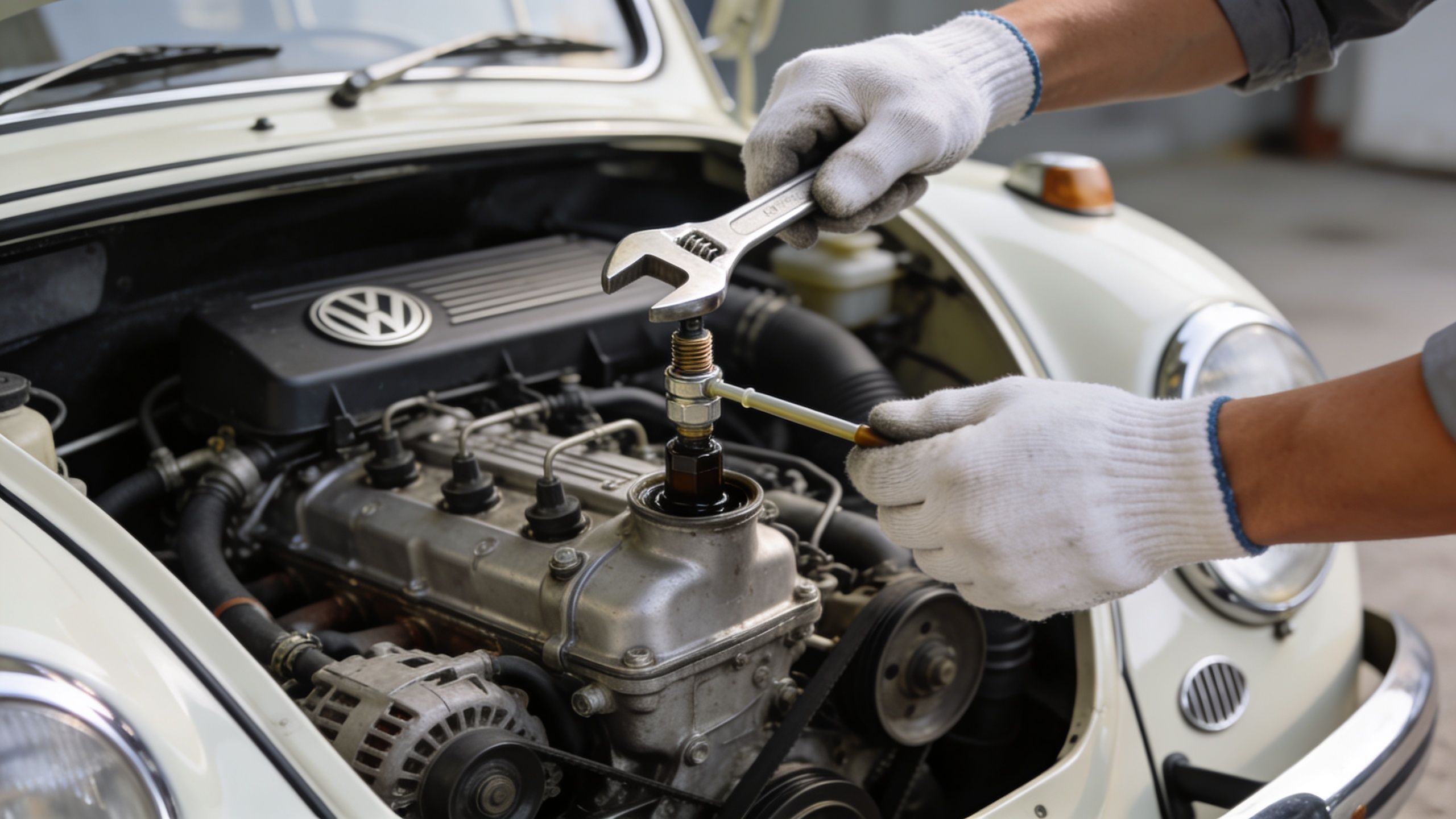
A vintage Volkswagen engine with gold accents and a large cooling fan against a gray background.

Those numbers look tiny now. In period, they made sense. The Beetle was light, and the engine was designed to pull steadily rather than sprint like a sports car. It behaved a bit like a loyal kelpie on a farm. Not flashy, always ready, and happiest when given a clear job.

How the motor grew with the Beetle

As the Beetle matured, the engine grew with it. Early wartime and post-war development led to larger versions, and by the 1950s the 1192cc engine had become one of the defining Beetle motors. Australian buyers came to know that engine well because it suited the car's whole character. It was simple, easy to service, and happy to spend years doing school runs, beach trips, and country miles.

That 36 horsepower 1200 is the point where many enthusiasts feel the Beetle found its rhythm. It gave the car enough extra urge to feel friendlier in traffic, while keeping the same basic recipe that made the flat-four so approachable in the first place.

There is a materials story here too. The crankcase used lightweight alloy construction, and later magnesium-rich cases helped keep weight down. That matters more than it first seems. Less weight hanging behind the rear axle helped the whole car feel more balanced than the raw engine figures suggest.

Then came the 1600, the motor many collectors chase

The later 1584cc engine gave the Beetle a more relaxed stride, especially in the 1970s. Horsepower figures for these engines can look confusing because different markets and years used SAE gross, SAE net, and DIN ratings, but the broad story is clear in The Autopian's explanation of Beetle horsepower ratings. The 1600 became the enthusiast favourite because it kept the Beetle feel while making the car easier to live with on faster roads.

That is also why 1600-powered cars often get plenty of attention at shows. They sit in a sweet spot between charm and usability. You still get the classic air-cooled layout, but with a bit more breathing room in everyday driving.

For owners trying to match a real car to its period details, a VW Type 1 engine identification guide helps make sense of the different engine families and codes.

Why this history matters to diecast collectors

Here is the fun part for model collectors. The changes in full-size Beetle engines often show up in miniature, and the better diecast makers know exactly which clues matter. A 36 horsepower era model should not have late dual-port style details under the lid. A 1970s Beetle model with a 1600 look should usually show the wider fan shroud and later engine-bay layout cues that collectors expect.

That makes the motor a quiet test of authenticity. Plenty of toy makers get the body shape roughly right, but the engine bay separates a generic Beetle model from one that feels properly researched. If you collect opening-engine diecasts, look for whether the miniature matches the era of the car rather than just wearing a vaguely air-cooled flat-four shape.

The actual Beetle earned its legend one engine revision at a time. The miniature world follows the same trail, just scaled down to something you can hold in your palm.

Spot The Engine How to Identify Your VW Beetle Motor

You lift the rear lid, have a stare, and then the questions start. Is it original? Is it a 1200, a 1600, or something built from mixed parts over the years? That confusion is normal, because Beetles have lived long lives and many have been repaired, upgraded, or rebuilt.

The best starting point is the engine code. If you want a handy reference for where to look and what the markings mean, this VW Type 1 engine identification guide is a useful companion.

An infographic titled Spot the Engine explaining how to identify a classic Volkswagen Beetle motor.

Start with the stamped code

On a classic Beetle motor, the stamped engine number is the closest thing you'll get to a name tag. It helps identify the engine family and often points you toward the original displacement and era.

That said, don't stop there. Many Beetles now carry replacement cases, swapped carburettors, later fan shrouds, or upgraded ignition parts. A code can tell you where the case began. The rest of the engine tells you how the story changed.

Then look at the visual clues

A few details can quickly narrow things down:

  • Single-port versus dual-port intake. A dual-port setup is a big clue you're looking at a later-style engine.
  • Generator or alternator. That often reveals whether the charging system is closer to an earlier original setup or a later update.
  • Fuel-injection hardware. On Australian late-model 1600 engines, Bosch L-Jetronic fuel injection marks a later configuration rather than the more familiar carburettor look.
  • General neatness of the installation. A tidy, era-correct bay usually suggests careful restoration. Mixed finishes and odd parts often hint at years of practical repairs.

The 1600cc engine, at 1584cc, became the key late-model unit. In Australia it was common in late Super Beetles and produced 48 hp SAE net after 1975 with Bosch L-Jetronic fuel injection, which is one reason it remains such a favourite among local enthusiasts.

If the engine code says one thing and the hardware says another, trust your eyes as much as the stampings. Beetles are survivors. They often wear parts from more than one chapter of their life.

VW Beetle Engine Identification Guide Australian Models

Displacement Engine Code Prefix Approx. Horsepower (HP) Common Years (Australia)
985cc Early engine code varies by period 22.5 hp Early imported cars from 1947 onwards
1192cc Varies by case and market 36 hp From 1954 in Australian Beetles
1584cc Varies by version 57 hp SAE gross to 60 hp in early 1970s versions; 48 hp SAE net in post-1975 Australian applications Common in late-model Australian Beetles and Super Beetles

A quick note on that table. The horsepower figures are useful, but they don't always compare cleanly because different rating methods were used over time. That's why one Beetle owner might call a 1600 a 60-horse motor and another calls it a 48-horse motor, and both can be talking about legitimate published figures from different standards.

Keeping the Legend Alive Common Fixes and Maintenance

The nicest thing about caring for a Beetle motor is that regular attention matters more than fancy tricks. These engines respond well to simple habits, done properly and done on time.

A mechanic wearing white gloves uses a wrench to work on a vintage Volkswagen Beetle engine.

If you're still building confidence, a browse through VW parts Australia can also help you get familiar with the bits owners commonly replace during routine upkeep.

The basics that matter most

Most classic Beetle headaches start with neglected maintenance rather than dramatic failures. A healthy routine usually includes:

  • Fresh oil and regular checks. Air-cooled engines rely on clean oil because oil does a lot of work in temperature control as well as lubrication.
  • Valve-clearance checks. A noisy top end or hard starting can be a clue that clearances need attention.
  • Ignition tune-ups. Old-school points, condenser, timing, and leads all need to be in decent shape.
  • Watching for leaks. Beetles often mark their territory a bit, but fresh leaks deserve a closer look.

Points and dwell still matter

This is the bit many newer owners find mysterious. On a points-style ignition system, dwell angle is the amount of time the breaker points stay closed. For classic Beetles, the specified range is 44 to 50°, and setting it correctly affects ignition timing, fuel economy, and engine performance, as explained in this dwell-angle tuning video.

That's why old hands always talk about dwell and timing together. If the dwell is wrong, you can chase timing all afternoon and still not be happy with the result.

Workshop habit: Set dwell first on a points car. Then set timing. Doing it the other way around can waste your whole morning.

A visual guide can help if you prefer seeing the process before reaching for a feeler gauge or meter.

Common symptoms owners often misread

A Beetle that's hard to start, idles poorly, or feels flat doesn't automatically need a rebuild. Start with the small stuff.

  • Rough idle can come from points adjustment, timing drift, or an air leak.
  • Oil smell in the cabin might be a leak finding its way onto hot engine parts.
  • Hesitation on acceleration often sends owners chasing carburettor problems when the ignition setup is the actual culprit.

The trick is not to panic. These motors usually reward patient, logical checks.

More Grunt Popular Upgrades and Modern Swaps

Some owners want a Beetle exactly as Wolfsburg intended. Others want a bit more urge on modern roads. Both approaches are perfectly fair, and the right choice comes down to how you use the car.

The beloved air-cooled 1600 sits in the sweet spot for many enthusiasts because it balances period feel with better flexibility than the smaller engines. It's also why plenty of performance-minded owners build on that foundation rather than starting from scratch.

Upgrades that keep the Beetle feel

Common improvements usually aim to preserve character while making the car nicer to drive:

  • Electronic ignition for less fiddling than traditional points
  • Freer-flowing exhaust setups for a livelier response and a stronger note
  • Careful carburettor tuning rather than random parts swapping
  • Stroker-style builds, with 1776cc and 1835cc being well-known choices in Beetle enthusiast circles

Those bigger builds can make the car feel more effortless, but they also move you further away from factory originality. If your Beetle is a preservation-minded car, that trade-off matters.

Swaps sound simple until the details arrive

Engine swaps are where a lot of owners hit a wall. Forum chatter often suggests some Volkswagen diesel long-blocks are interchangeable with minimal modification, with mentions that the oil pump pickup and oil pan may need swapping, but there's still a real lack of a proper compatibility matrix covering model years, installation angles, cooling differences, and Australian compliance questions, as discussed in this VW diesel forum thread about interchangeability.

That gap matters because a swap isn't only about bolting in an engine. You also have to think about fuel delivery, wiring, cooling strategy, mounts, and what the finished car will be like to register and maintain.

Originality gives a Beetle one kind of value. Usability gives it another. The smartest builds decide which one matters most before the first spanner comes out.

From Full Size to Fingertips The Motor in Miniature

A good Beetle model does more than copy the roofline. It captures the spirit of the car, and that means paying attention to the engine. If a diecast Beetle has an opening rear lid, the little motor underneath tells you very quickly whether the maker understood the original or just filled space.

That's why collectors enjoy studying Volkswagen model cars collecting almost as much as the full-size cars. The joy is in the details.

A detailed model of a Volkswagen Beetle engine displayed on a stand in front of the car.

What to look for in a great Beetle model

If you're buying for yourself or choosing a gift, pay close attention to these details:

  • Opening engine lid. This is the big one. If it opens, you can enjoy the miniature motor.
  • Correct fan-shroud shape. Even small differences change the whole look.
  • Separate carburettor and air-cleaner detail. A crisp engine bay feels far more authentic than a single moulded lump.
  • Era matching. Early cars and later 1600-based cars shouldn't all look the same underneath.

For diecast fans, the story becomes richer at this point. Once you know the difference between an early economy-focused engine and a later enthusiast-loved 1600, you start spotting those clues in miniature too. The model stops being shelf décor and starts feeling like a tiny history lesson.

Why collectors care about the engine bay

A Beetle's rear end is part of its personality, so a model that gets the engine compartment right feels complete. It also starts conversations. One person notices the engine lid props. Another spots the fan housing. Someone else starts telling a story about the family Bug they rode in as a kid.

That's when collecting becomes more than buying objects. You're collecting recognition, memory, and the little mechanical details that made the Beetle special in the first place.


If this article has stirred up memories of real Bugs, tiny engine lids, and sunny VW show days, have a look at Volkswagen Memorabilia. It's a great place to browse officially inspired VW-themed gifts, model cars, and display pieces for Australian enthusiasts who want local stock, fast shipping, and something that keeps the Beetle spirit alive at home.

Gifts for the Beach: A VW Fan’s Ultimate Guide

You’re probably here because the usual gifts for the beach feel a bit flat. Another striped towel, another shell trinket, another candle with “ocean breeze” on the label. Nice enough, sure. But if the person you’re buying for lights up at the sight of a two-tone Kombi, slows down for an old Beetle in a car park, or still talks about that perfect coastal drive like it happened yesterday, you need something with more soul.

That’s where Volkswagen nostalgia fits so naturally. In Australia, beach days and old VWs belong in the same memory box. The Kombi isn’t just transport. It’s a symbol of surfboards on the roof, sandy thongs by the sliding door, and a late arvo run to the headland with salt still in your hair. The Beetle has that same magic. Cheerful, unmistakable, and full of character before you’ve even turned a key.

The Search for Sun-Drenched Nostalgia

Last summer at a local VW meet, I watched a bloke in a faded club shirt trying to choose a present for his sister’s new beach house. He’d done the rounds already. Generic gift stores, surf shops, homewares chains. Everything looked fine, but none of it felt like her. She loved the coast, collected retro bits and pieces, and had spent half her twenties chasing waves in a Kombi that needed more optimism than mechanical sympathy.

When he found a small vintage-style VW piece, his face changed. Not because it was flashy. Because it told the right story.

A pair of hands gently holding a small vintage Volkswagen camper van toy on a sandy beach.

That’s the sweet spot with gifts for the beach. The best ones don’t just match a theme. They trigger a feeling. For VW fans, a Kombi or Beetle does that in seconds. It can sit on a shelf, on a desk, or in a holiday house and instantly bring back road trips, market mornings, surf carnivals, and those long coastal drives where no one cared what time it was.

There’s a real cultural reason this works so well in Australia. Roy Morgan’s 2022 Australian holiday destinations report found that 32.4% of Australian adults preferred beach or coastal holidays, and the ABS reported that domestic coastal tourism expenditure contributed roughly AUD 23 billion in 2019 to 2020, showing just how much beach life shapes spending and taste in leisure-related products, including décor and gift items in this coastal tourism overview.

Why the VW look belongs by the sea

Beach style can drift into the predictable. Too many anchors. Too many signs telling you to relax. A classic Volkswagen piece avoids that trap because it carries genuine history and personality.

A surfy Kombi model, a Beetle in soft coastal colours, or one of the charming vintage home accessories pieces with VW character feels personal instead of generic. It says the giver knows the recipient’s taste, not just the postcode of their holiday shack.

Gifts land better when they reflect a person’s memories, not just their décor palette.

Finding the Perfect VW Gift for Every Beach Lover

Not every beach lover wants the same thing. One mate wants a licensed diecast model he can line up next to his other classics. Another wants something fun for the bookshelf in the beach house. Someone else doesn’t want “stuff” unless it comes with a day out attached.

That’s why I like to sort gifts by personality first.

VW Gift Finder The Perfect Pick for Every Fan

Recipient Type Top Gift Ideas Why They'll Love It
The serious collector Licensed Kombi Samba Bus diecast, Beetle model, Flower Power variant They’ll appreciate shape, detail, and the way a good model captures VW history in miniature
The beach house decorator VW metal wall décor, coastal-style van display piece, retro shelf model It adds character to a room and feels more original than standard nautical décor
The surfy nostalgic mate Beach bus-themed keepsake, casual display model, playful Kombi piece It taps into that easygoing coastal spirit without feeling too formal
The hard-to-buy-for parent or partner Beetle or Kombi model paired with a beach picnic kit or coastal drive plan It combines a keepsake with shared time, which makes the gift feel thoughtful
The practical adventurer VW collectible paired with a beach-ready accessory They get the fun of memorabilia and something they’ll actually use outdoors

For the collector who notices the little details

Collectors are usually easy to spot. They’ll lift a model, turn it over, inspect the finish, and start telling you what year the actual vehicle reminds them of. For them, go for a proper display-worthy VW piece. A Samba Bus diecast or a classic Beetle model usually hits the mark because it feels substantial and timeless.

Mainstream beach gift lists rarely speak to this kind of buyer. They skim across broad categories and miss the people who collect with intent. That’s exactly why VW-themed gifts feel more considered for this crowd.

For the person who’d rather make a memory

This one matters. Roy Morgan’s 2021 to 2022 Values study found that 64% of Australians prefer experiential gifts or time-together products, which makes a paired present a smart move as summarised in this gifting trend reference.

So instead of handing over only a boxed item, pair a VW model with something shared:

  • Coastal drive voucher for a weekend run along the foreshore
  • Beach picnic kit with snacks, rug, and a map of a favourite lookout
  • Surf lesson or beachfront café booking for someone who loves getting out there

Practical rule: If they already own plenty of décor, add an experience. If they love collecting, let the VW piece be the hero.

For the relaxed stylist

Some people don’t think of themselves as collectors, but they know what they like. They want charm, colour, and something with a story behind it. A cheerful Beetle model, a beach bus display piece, or retro VW décor suits them beautifully. It’s decorative, but it still has identity.

A Breakdown of VW Beach Gift Categories

The easiest way to buy well is to think in categories. Not all VW gifts for the beach do the same job. Some belong in a cabinet. Some make a room feel warmer. Some work best as part of a themed bundle.

A Volkswagen camper van toy, a branded towel, and a mug on a shelf for beach themed gifts.

Classic diecast models

For many, it all began with diecast models. A proper diecast model has presence. You notice the body lines, the paintwork, the stance. A Kombi Samba Bus has that unmistakable silhouette, and a Beetle always seems to carry a grin even when it’s sitting still.

These pieces work especially well because they bridge two interests at once. Mainstream gift guides often miss niche collector communities, yet VW-themed pieces like vintage Kombi vans and Flower Power Beetles naturally appeal to both automotive hobbyists and beach-home decorators, as discussed in this note on underserved collector-focused beach gift ideas.

A few signs you’re choosing well:

  • Licensed detailing that feels true to the original vehicle
  • Display appeal from every angle, not just front-on
  • Colour and theme fit with a coastal home, office, or collector shelf

Coastal home and wall décor

Not every VW fan wants a cabinet full of models. Some want one statement piece that changes the feel of a room. That’s where metal décor, shelf pieces, mugs, framed accents, and surf-inspired van items come in.

A beach house entryway, a rumpus room, or even a study nook can come alive with a single VW object that carries that seaside freedom. If you’re building a themed present, a practical extra can round it out nicely. A simple addition like a straw beach hat can tie the whole coastal mood together without overpowering the main gift.

Here’s a closer look at the look and feel many collectors love:

Ready-to-go themed bundles

Some gifts feel better when they arrive as a little world of their own. A Kombi model with a beach mug. A Beetle keepsake with a coastal photo frame. A surf-van piece with small décor accents in natural tones. Volkswagen Memorabilia offers VW-themed gifts, diecast models, and coastal décor in one catalogue, which makes this kind of themed pairing straightforward for shoppers who want the beach and VW connection in one place.

A bundle works best when one item carries the story and the rest support it quietly.

Styling and Pairing Your VW Treasures

A good VW gift shouldn’t disappear into a cupboard after the wrapping paper’s gone. True fun starts when it becomes part of daily life. A Kombi on a coffee table can make a room feel warmer. A Beetle on a bookshelf can break up a run of plain frames and candles. The right piece turns a shelf into a conversation.

A miniature light blue and cream vintage Volkswagen camper van sits on a rustic wooden coffee table.

Create a small coastal scene

Try grouping a VW model with only two or three other objects. A shell, a weathered timber tray, a faded holiday photo, maybe a small bowl of collected treasures from the beach. Keep the colours soft so the vehicle shape stands out.

That’s why Kombis work so well in coastal styling. They already carry the story. You don’t need to force it.

Pair nostalgia with something useful

There’s also a strong case for mixing sentiment with practicality. Modern sand-resistant towels use tightly woven microfiber that reduces sand adhesion compared with traditional terry cloth, so pairing one with a classic VW model creates a gift bundle that feels both nostalgic and useful in this practical beach gift material guide.

A few pairings that work nicely:

  • Kombi model plus sand-resistant towel for regular beachgoers
  • Beetle display piece plus picnic hamper bits for couples who love day trips
  • Surfy VW van gift plus framed holiday photo for a new beach house

The best styling choice is often the least crowded one. Give the VW piece a bit of breathing room.

Don’t hide the gift’s personality

If the recipient loves colour, lean into it. A Flower Power style model doesn’t need apologising for. It needs a spot where it can be seen. If their home is more pared back, a cream, blue, or pastel VW piece usually slips into the room naturally while still carrying that beachy charm.

Your Smart Buying Guide for Every Occasion

Different occasions call for different scales of gift. A small “thinking of you” present can be a playful display piece or compact model. A milestone birthday or retirement gift can justify a more substantial diecast or a bundle that mixes memorabilia with something beach-ready.

Match the moment

For Father’s Day, many buyers lean toward classic models with a bit of heritage behind them. For Christmas, lighter and more decorative pieces suit beach-house styling. For a housewarming, think display items that help shape a room rather than something highly collector-focused.

A premium route is to pair a VW collectible with a practical piece of beach tech. For example, a waterproof Bluetooth speaker should have an IP67 rating for beach use, making it a sensible companion to a nostalgic VW gift for someone who spends weekends by the water according to this beach device gifting guide.

Why local stock matters

If you’re buying in Australia, local stock makes life easier. You know what’s available now. You avoid the uncertainty that can come with overseas shipping. And if you need help, local support hours are far more reassuring than a contact form vanishing into the void.

That matters most when the gift is tied to a date. Birthday, Christmas lunch, anniversary getaway, Father’s Day morning. You want confidence that the parcel will arrive in time and match what you expected.

Start Your VW Beach Adventure Today

The beauty of VW-themed gifts for the beach is that they don’t feel manufactured. They feel lived in, remembered, and passed around in stories. A Kombi reminds one person of surfboards and caravan parks. A Beetle reminds another of their first car, or an uncle who could fix anything with a spanner and a bit of patience. That’s why these gifts last. They mean something before they even leave the box.

They also suit the Australian way of living remarkably well. Beach culture here isn’t a trend. It’s part of the rhythm of weekends, holidays, and family memories. Add Volkswagen history to that, and you get a gift that feels both playful and personal.

If you’re choosing for someone who loves old VWs, coastal style, or that whole easygoing van-life spirit, follow the story rather than the category. Pick the piece that looks like it belongs in their life already. If you want a little inspiration for that broader lifestyle, the stories around van life in Australia capture exactly why these vehicles still hold such a special place in beach culture.

In the end, the right gift doesn’t just say “I bought you something”. It says “I know what makes you smile”.


If you’re ready to find a piece of sun-soaked VW nostalgia, have a browse through Volkswagen Memorabilia. You’ll find licensed diecast models, coastal-inspired décor, and gift ideas that suit collectors, beach-house stylists, and anyone who still feels a little thrill when a classic Kombi rolls by.

Your Guide to Volkswagen Model Cars & Diecast Collecting

A faded orange Kombi rolled past me near the coast one summer morning, boards on the roof and that familiar flat-four chatter in the background. Half the crowd turned their heads, and the other half smiled like they’d just remembered an old mate.

That’s the charm of Volkswagen model cars. A small Beetle on a shelf or a tiny Samba Bus in a cabinet can carry the same feeling as the actual vehicle: road trips, surf checks, family photos, first cars, and the sort of design you recognise from a mile away.

Holding a Piece of History in Your Hands

At a local show, you’ll often see it happen. Someone leans over a display table, spots a little pastel Kombi or a tidy Beetle in diecast, and suddenly they’re telling a story. It might be about learning to drive in Mum’s Bug, or chasing summer in a van that smelt faintly of salt, vinyl, and hot engine tin.

That’s why collecting volkswagen model cars feels different from collecting just any miniature. These aren’t only objects. They’re memory triggers.

The shelf that starts the yarns

A fellow enthusiast once showed me a small lounge room display with three VWs lined up on a timber shelf. A cream Beetle. A bright Kombi. A later Golf tucked in beside them. Nothing fancy, just clean lines, good light, and enough space around each piece to let the shapes breathe.

Every model had a reason for being there.

  • The Beetle reminded him of his dad’s old runabout.
  • The Kombi stood in for years of beach holidays.
  • The Golf marked the car he drove when life got busier, but the VW habit never left.

That’s the appeal. A collection doesn’t have to be huge to matter. One well-chosen model can say more than a packed shelf full of random pieces.

Collector’s truth: the best model in your cabinet is usually the one tied to a real memory.

Why miniatures hit so hard

Volkswagen design has always had a knack for sticking in your mind. The rounded Beetle roofline, the cheerful face of a split-screen van, the tidy confidence of a GTI. In miniature form, those details become even more lovable because you can hold them, turn them in the light, and notice things you’d walk past on a full-size car.

That’s part of the fun for Australian collectors. We don’t just admire the car. We place it in our own story. A diecast Beetle can evoke a country drive. A Kombi can turn a shelf into a tiny reminder of freedom, sun, and sand.

More than a hobby

Some people start with a gift. Others buy one model after seeing a real car at a meet. Before long, they’re looking for a matching colour, a favourite era, or the van they wish they’d never sold.

The hobby grows naturally because it feels personal. You’re not chasing numbers for the sake of it. You’re building a small, visible history of what these cars mean to you.

And if you’re the sort of person who slows down for an old VW rumbling through town, you already understand the appeal. A miniature lets you keep that feeling close, long after the show field empties and everyone heads home.

The Magic in Miniature Understanding Volkswagen Model Cars

If you’re new to collecting, the first thing to know is simple. Not all model cars are built the same, and that’s a good thing. Some are made to be centrepiece display items. Others are perfect for a bookshelf, desk, or a growing line-up of favourites.

The sweet spot is finding the size and finish that suits the way you want to collect.

Getting your head around scale

Scale tells you how much smaller the model is than the actual vehicle. Once you’ve seen a few side by side, it clicks quickly.

An infographic showing the three standard scales for Volkswagen collectible model cars, their features, and average prices.

A handy way to think about common sizes:

Scale What it feels like Best for
1:18 Big enough to show off on its own Statement display pieces
1:43 Compact, but still detailed Shelves, cabinets, varied collections
1:64 Small and easy to group Dioramas, desk displays, mixed themes

The infographic above gives a useful visual guide to 1:18, 1:43, and 1:64, including example VW models, approximate size, and typical price ranges.

Choosing the scale that suits your style

Some collectors love a larger piece they can inspect up close. A 1:18 Beetle often has the presence of a proper display object. It suits a study, living room shelf, or a cabinet where the curves and chrome can catch the light.

Others prefer variety. A 1:43 collection lets you line up different eras of Volkswagen without needing a whole wall of space. You can place a Beetle beside a Kombi, a Golf, and something more unusual without the display feeling crowded.

Then there’s 1:64, the playful scale. These are brilliant if you enjoy building little scenes, arranging beachy displays, or collecting lots of Volkswagens without overthinking it.

Small scale doesn’t mean small charm. Some of the happiest collections I’ve seen were built from modest little models grouped with care.

Diecast metal, plastic, and why finish matters

When people talk about diecast, they usually mean a model with a metal body. That gives the car a satisfying weight in the hand and often a more premium feel on display. Plastic parts still play a role, especially in mirrors, interiors, underbody details, and trim.

What matters most isn’t just the material. It’s the execution.

Look for:

  • Clean paintwork with even colour and tidy edges
  • Crisp trim detail around lights, windows, and badges
  • Proportions that feel right when you view the model from the front and side
  • Neat wheels and tyres that suit the era of the vehicle

A lovely model doesn’t have to be the biggest or the flashiest. It just has to capture the character of the actual car.

Why official licensing matters

For Volkswagen fans, officially licensed products are worth seeking out. They tend to honour the shape, branding, and visual details that made the original car special. That’s important when you’re collecting a Beetle or Kombi that means something to you personally.

A licensed model usually gives you more confidence in the basics:

  • Body shape accuracy
  • Authentic badging
  • Era-correct styling cues
  • A finish that feels considered rather than generic

That’s especially important if you’re buying a gift. Even a casual VW lover can spot when a model captures the spirit of the actual vehicle, and when it misses by a mile.

Legends of the Road The History of Our Favourite VWs

At a swap meet by the coast a few summers back, an old bloke in a faded Sunraysia cap picked up a tiny cream-and-blue Kombi, turned it over in his palm, and laughed. He said it looked exactly like the van his mates packed with boards and sleeping bags for a run up the New South Wales coast in 1974. A minute later, another collector wandered over, spotted a red Beetle on the same table, and started telling a story about learning to drive in one outside Newcastle.

That is how these little Volkswagens work. They stir up real roads, real holidays, real people.

A collection of vintage Volkswagen die-cast model cars including a blue van, two red Beetles, and a silver Golf.

The Beetle that settled into Australian life

The Beetle, or Type 1, began in Germany before the Second World War and grew into one of the best-known cars ever built. Its simple rear-engined layout, rounded body, and stubborn reliability suited Australian conditions beautifully, from city errands to long country drives, as outlined in the Volkswagen marque history.
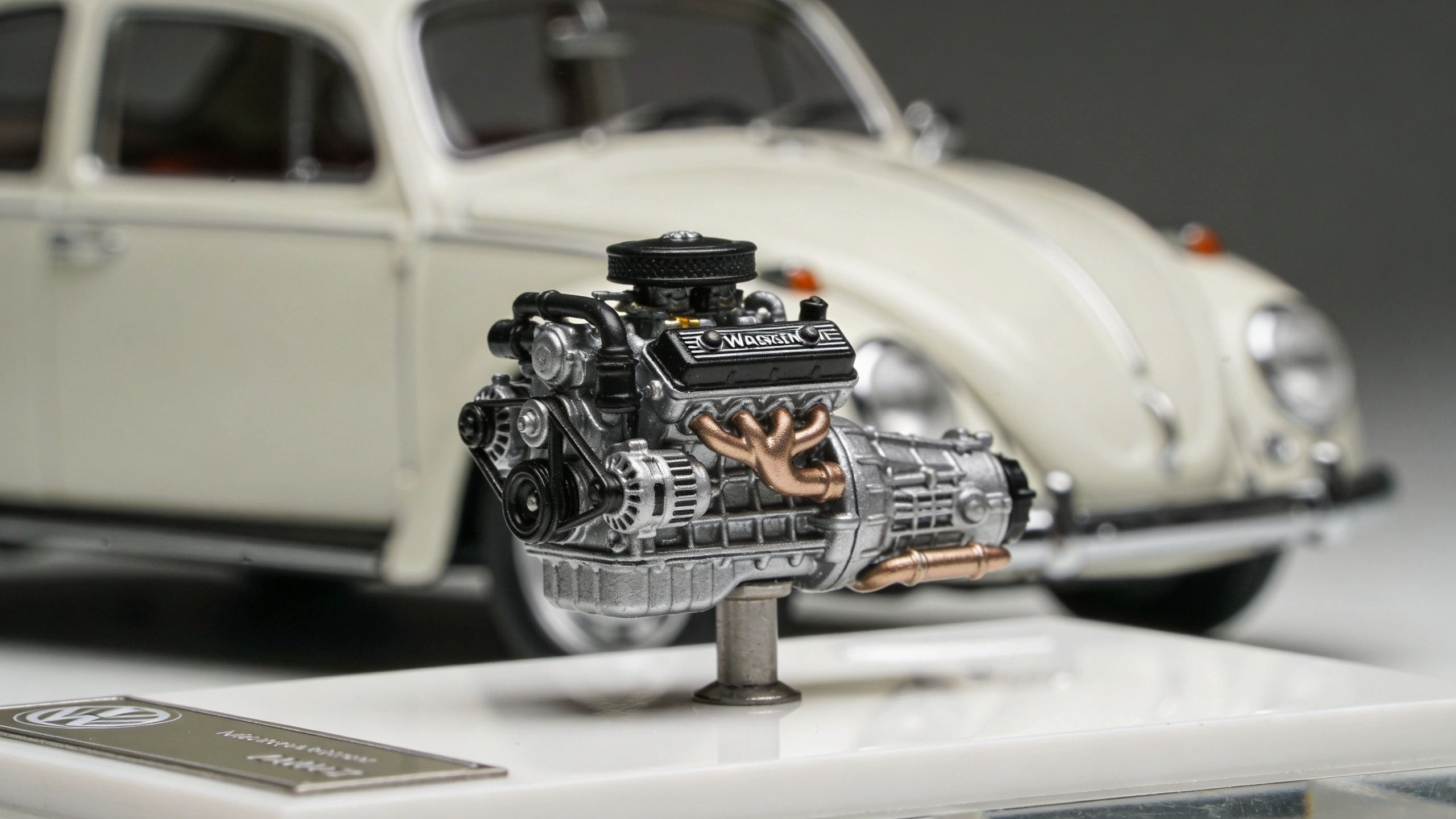
In Australia, the Beetle stopped being just an import and became part of the scenery. It turned up in family photos, outside weatherboard shops, at beachside caravan parks, and under gum trees with picnic rugs spread nearby. That familiar presence explains why collectors still reach for Beetle models first. The car already lives in memory before it ever lands in a display cabinet.

Why Beetles still look right in miniature

Some cars lose their charm when they shrink. The Beetle does the opposite.

Its curved roofline, upright guards, and friendly face hold together at almost any scale, so even a modest diecast can carry the character of the original. In a coastal home, a pastel Beetle looks easy and natural beside pale timber, woven textures, old travel postcards, or a shelf of shells and holiday snapshots. It has that sun-warmed, lived-in feel that suits Australian beach-house styling without trying too hard.

Collectors often favour 1960s Beetles for this reason. They bring back surf culture, simple family motoring, and the cheerful practicality that made the Bug feel welcome almost anywhere.

The Kombi that promised a better weekend

If the Beetle belonged to everyday life, the Kombi belonged to escape. It was the van parked near the dunes, the one with sandy thongs by the door and a kettle rattling in the back. Around Australia’s coast, it became tied to camping trips, market runs, road journeys, and that lovely sense that the day could stretch out a bit longer.

That warmth carries straight into miniature. A well-made Kombi model does more than mark a chapter in motoring history. It brings a whole scene with it.

One of the nicest examples is the travel-inspired van style that recalls long beach drives and holiday miles. The VW travel van collectible style suits that mood beautifully, especially if you are styling a shelf in a breezy coastal room or adding character to a holiday house nook.

Later, the Kombi took on a bigger role in popular culture. Music festivals, surf towns, handmade curtains, road maps folded in the glovebox. Those associations matter to collectors because they make even a small diecast feel full of life.

The overlooked heroes that deserve a spot

The Beetle and Kombi get the applause, and fair enough, but some of the most interesting Volkswagen model cars are the ones collectors overlook at first glance.

The Samba Bus is one. Those extra windows and two-tone paint schemes give it real presence on display, especially near framed beach prints or stacked vintage motoring books. A Type 3 can be another quiet favourite, particularly for collectors who like the less obvious corners of VW history. Even a later Golf can tell an honest family story in a collection where the brand spans generations instead of stopping in the air-cooled years.
These models add texture. They stop a display from feeling predictable.

Why the backstory changes the way you collect

A Beetle model means more when you know it mirrors a car that once sat in thousands of Australian driveways. A Kombi means more when you can almost hear the esky sliding across the floor and smell salt on the breeze. The story behind the model gives the object its weight.

That is also what makes Volkswagen model cars so enjoyable to style at home. You are not just lining up tiny vehicles. You are building a little memory wall. A soft blue Kombi on a white shelf can echo the coast. A bright Beetle tucked beside an old holiday photo can make the whole corner feel personal.

If you want a little moving backdrop while you browse the history and shapes of these classics, this clip fits the mood nicely.

A few classics that keep turning up in collections

Certain themes appear again and again, usually because they connect to a real memory or suit the way people live with their models at home.

  • The first-love Beetle
    Chosen because it matches a family car, a first set of driving lessons, or the Bug someone always promised themselves.

  • The beach-run Kombi
    A natural fit for coastal homes, holiday cottages, or shelves styled with a relaxed Australian seaside feel.

  • The Samba showpiece
    Picked for colour, shape, and sheer presence. It often becomes the model visitors notice first.

  • The unexpected later VW
    A Golf or another newer model that rounds out the family story and gives the collection a broader timeline.

The best collections usually start with a grin. Then they gather history, one little Volkswagen at a time.

Starting Your Collection How to Buy Diecast VW Models

Buying your first diecast VW can be simple, but it helps to know what separates a keeper from a quick impulse buy. The easiest approach is to slow down and inspect the model the way you’d inspect a real classic. Stand back first. Then move in close.

If the shape feels right immediately, you’re usually onto something good.

Start with the body and paint

A person inspects a detailed silver Volkswagen Scirocco model car with a magnifying glass in a studio.

The paint tells you plenty. On a quality model, colour should look even across the panels, and trim lines should appear sharp rather than fuzzy. Two-tone Kombis are especially good at exposing sloppy work, so they’re a useful test case.

Check these points first:

  • Panel finish should look smooth under natural light
  • Window trim should sit cleanly against the body
  • Badges and lights should appear centred and tidy
  • Wheel stance should look natural, not crooked or toy-like

A Beetle can forgive a lot because the shape is so charming, but poor paint or awkward wheels will still pull you out of the illusion.

Then look at the details that create character

A good diecast doesn’t need every opening panel to be enjoyable, but details do matter. Mirrors, steering wheel shape, dashboard layout, seat pattern, and even the way the bumpers sit can tell you whether the maker really cared.

Some collectors love opening doors, bonnets, or boots because they add a sense of interaction. Others prefer sealed models with cleaner lines. Neither camp is wrong. It comes down to what you enjoy seeing on display.

One category that often appeals to collectors who like modern performance VWs is the Golf GTI Mk6 diecast range. It’s a good example of how later models can still carry strong personality in miniature.

Practical rule: buy the model you’ll want to look at often, not the one that only sounds impressive on paper.

A simple buyer’s checklist

When you’re comparing Volkswagen diecast models for sale, use this quick guide:

What to inspect What you want to see Why it matters
Shape Strong proportions and correct stance Captures the real car’s personality
Paint Even colour and neat separation lines Makes the model feel premium
Interior Visible steering wheel, seats, dash detail Adds realism up close
Wheels Era-appropriate style and tidy fitment Avoids the toy-like look
Licensing Officially licensed branding Improves authenticity

Why buying locally suits Australian collectors

For Australians, local stock has practical advantages. You can browse with more confidence, avoid the headache of waiting on overseas delivery, and skip the worry of surprise import issues turning a simple purchase into a drawn-out nuisance.

It also helps when you’re buying a gift and need it within a reasonable timeframe. A local retailer can make the whole experience feel less risky and more enjoyable, especially if you want support from someone who understands the VW scene here.

Buy with a theme in mind

Collections feel stronger when they have a thread running through them. That theme could be anything:

  • Your family VW history
  • Classic coastal vans
  • A shelf of Beetles through the decades
  • Hot hatches and GTIs
  • Only blue-and-white models for a beach-house palette

That last point matters more than people think. If you’re styling a home as well as building a collection, colour and mood are part of the decision. A model that suits your space will get admired far more often than one tucked away in a box.

Beyond the Beetle Exploring Rare and Unique VWs

Every VW crowd has that moment when someone mentions a model you hardly ever see in the wild. Heads tilt. Phones come out. The conversation shifts from familiar classics to the oddballs and holy grails.

That’s where collecting gets even more interesting.

The Brazilian gems many Australians never meet

Among the most fascinating rare Volkswagens are the Brazil-exclusive cars that lived outside the usual Beetle-and-Kombi spotlight. The SP2 is a beauty of that world. Low, sporty, and distinctly different, it looks like the sort of car that should’ve become globally famous, yet it remained wonderfully obscure.

For Australian collectors, that scarcity adds to the intrigue. A noted gap remains in local content around these rare imports, particularly the SP2, and fewer than 1,000 are believed to survive globally, which helps explain why enthusiasts are so drawn to high-quality replicas of these overlooked classics, according to this look at rare Volkswagen models such as the SP2.

A silver Volkswagen model car displayed in a glass case with interior lighting alongside another car.

Why rare models make brilliant diecasts

Most of us won’t stumble across an SP2 at the shops or see a Brasilia parked at the local servo. That’s exactly why a model version has such appeal. It puts a hard-to-find chapter of Volkswagen history right in front of you.

Rare-model collecting has its own flavour:

  • It sparks conversation because not everyone recognises the car straight away
  • It widens your collection beyond the obvious fan favourites
  • It lets you celebrate design variety within the VW family

A rare diecast can also stop a display from becoming too predictable. A row of Beetles is lovely. A Beetle beside a Kombi and an SP2 is a story.
The lesser-known Volkswagens often become the pieces seasoned collectors talk about longest.

Building personality into a collection

The smartest collections usually mix familiarity with surprise. You want one or two models that everyone loves instantly, then one that makes people lean in and ask, “What’s that?”

That’s the role of the unusual VW. It gives your shelf a twist.

If you’re shopping with that idea in mind, keep an eye out for:

  • Regional oddities that weren’t common in Australia
  • Body styles outside the usual lineup
  • Colours and trims that show a different side of VW design
  • Models with a real backstory, even if the average person hasn’t heard of them

That little element of discovery is one of the great pleasures of collecting. You’re not only preserving the icons. You’re rescuing the side stories too.

The Curator's Corner Caring For and Styling Your Collection

A Volkswagen model looks best when it feels considered. Not hidden, not cluttered, and not left to fade in a harsh patch of sun. A well-kept collection has a calmness to it. You can tell the owner enjoys the cars, but also respects them.

That matters whether you own one Samba Bus or a whole shelf of Beetles.

Keeping your models tidy and bright

Dust is the quiet enemy of diecast displays. It settles into window rubbers, wheel spokes, roof gutters, and all the little places that make a model look crisp when they’re clean.

A simple care routine goes a long way:

  • Use a soft brush for regular dusting, especially around mirrors and trim
  • Handle with clean hands so paint and clear parts stay looking fresh
  • Avoid direct sunlight because long exposure can dull colour over time
  • Store boxes carefully if you like keeping original packaging for future display changes

If a model has delicate pieces, resist the urge to over-handle it. A shelf favourite can still be enjoyed without being picked up every afternoon.

For collectors who want to improve how they maintain and present special pieces, guides focused on collectible care and vintage home accessories are useful for thinking beyond the purchase itself.

Styling volkswagen model cars in a coastal Australian home

The hobby finds its particular enjoyment. Volkswagen shapes suit coastal interiors beautifully because they already carry a relaxed, outdoor spirit. A Kombi naturally belongs near pale timber, white walls, ocean tones, and anything with a breezy holiday feel.

You don’t need a dedicated display room either. A few thoughtful placements can make the collection feel part of the home rather than separate from it.

Try these ideas:

  • Shelf vignette
    Place a blue or white Kombi beside driftwood, a framed beach photo, and a small stack of travel books.

  • Console accent
    Use a classic Beetle on an entry console to add warmth to a neat Hamptons-style space.

  • Cabinet grouping
    Gather three smaller VWs in similar tones for a more organised, gallery-like effect.

  • Study desk character
    A GTI or later-model Volkswagen can bring a touch of personality to a clean workspace.

Matching model type to room mood

Different VWs give off different energy. That’s worth using to your advantage.

Model type Display mood Best setting
Classic Beetle Friendly, nostalgic, soft-edged Living room, study, hallway
Kombi or Samba Relaxed, beachy, adventurous Coastal shelves, holiday homes
Golf or GTI Crisp, sporty, modern Office, den, minimalist spaces
Rare VW Curated, conversational, distinctive Glass cabinet, feature shelf

Less clutter, more story

A common mistake is trying to show every piece at once. The better approach is to give your favourites breathing room. One Kombi beside a shell, a book, and a framed print will usually look stronger than six cars packed wheel-to-wheel.

Rotate models seasonally if you like. Bring the surfy vans forward in summer. Give the Beetles centre stage when you want a softer vintage feel. That kind of movement keeps the display alive.

A collection becomes décor when each model has space to tell its own story.
Let the collection reflect you

The most memorable displays aren’t the most expensive ones. They’re the ones that reveal a person’s taste. Maybe you love white-and-blue coastal pieces. Maybe your thing is bright flower-power vans. Maybe every car on the shelf has to connect to a chapter of your life.

That’s what turns a collection into curation. You’re not merely storing miniature cars. You’re shaping a corner of home around memory, design, and the easy-going spirit that made Volkswagen culture so beloved in the first place.

The Perfect Present Finding a Gift for a VW Lover

A Volkswagen model car makes a good gift because it feels personal without being overcomplicated. Even if the person already has a shed, a project car, or a shelf full of automotive bits and pieces, a well-chosen VW miniature still lands nicely.

The trick is matching the model to the person, not just the badge.

Gift ideas by personality

For the practical gift buyer, this is usually the easiest way to decide.

  • For the hands-on restorer
    Choose a model that resembles the car they own, owned, or are forever talking about finishing one day. Familiar body shape matters more than flashy packaging.

  • For the surfie or beach-house dreamer
    A Kombi or Samba Bus suits the mood perfectly. It feels relaxed, cheerful, and very at home among coastal décor.

  • For the nostalgia seeker
    Go for a classic Beetle. It’s the model most likely to trigger stories straight away.

  • For the performance fan
    A Golf GTI or another sportier Volkswagen gives the gift a sharper edge.

Gifts that feel a bit more thoughtful

Sometimes the best present isn’t the biggest model. It’s the one that shows you noticed the recipient’s taste.

A few reliable approaches:

  • Match their colour palette if they’re into home styling as much as cars
  • Pick a model with display presence if they already have a dedicated shelf or office space
  • Choose a rare or unusual VW if they know the classics and enjoy something less expected

If you’re buying for someone just starting out, a small mixed selection can work nicely because it gives them a sense of variety from the start. If they’re already a serious collector, a more detailed centrepiece model often feels more special.

When in doubt, choose the car with the story

People remember gifts that connect to a real memory. The Beetle their parents drove. The Kombi they always wanted to road-trip in. The GTI they reckon was peak hot hatch.
That’s why buy diecast Kombi and Volkswagen Beetle model searches are so common among gift buyers. They’re not only looking for a miniature car. They’re looking for recognition.

A well-picked VW model says, “I know what you love.” That’s why it works.

Start Your VW Journey Today

A single VW model can change the feel of a room.

A turquoise Kombi on a white shelf brings a bit of Bondi into a study. A weathered-look Beetle beside a stack of surf books can turn an ordinary corner table into something that feels personal, sun-warmed, and lived in. For collectors, that first piece often starts there. With a car that suits the home as much as the heart.
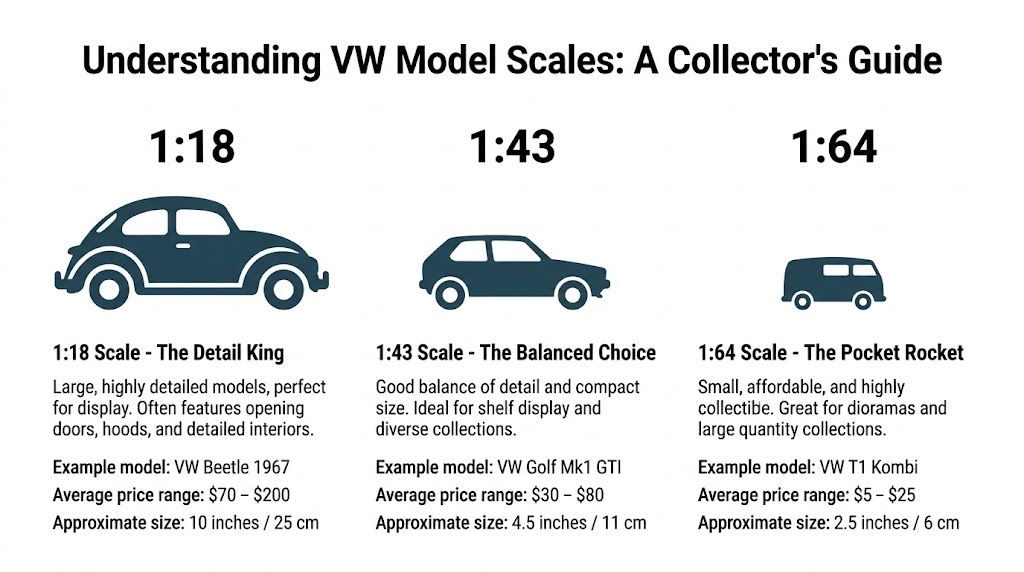
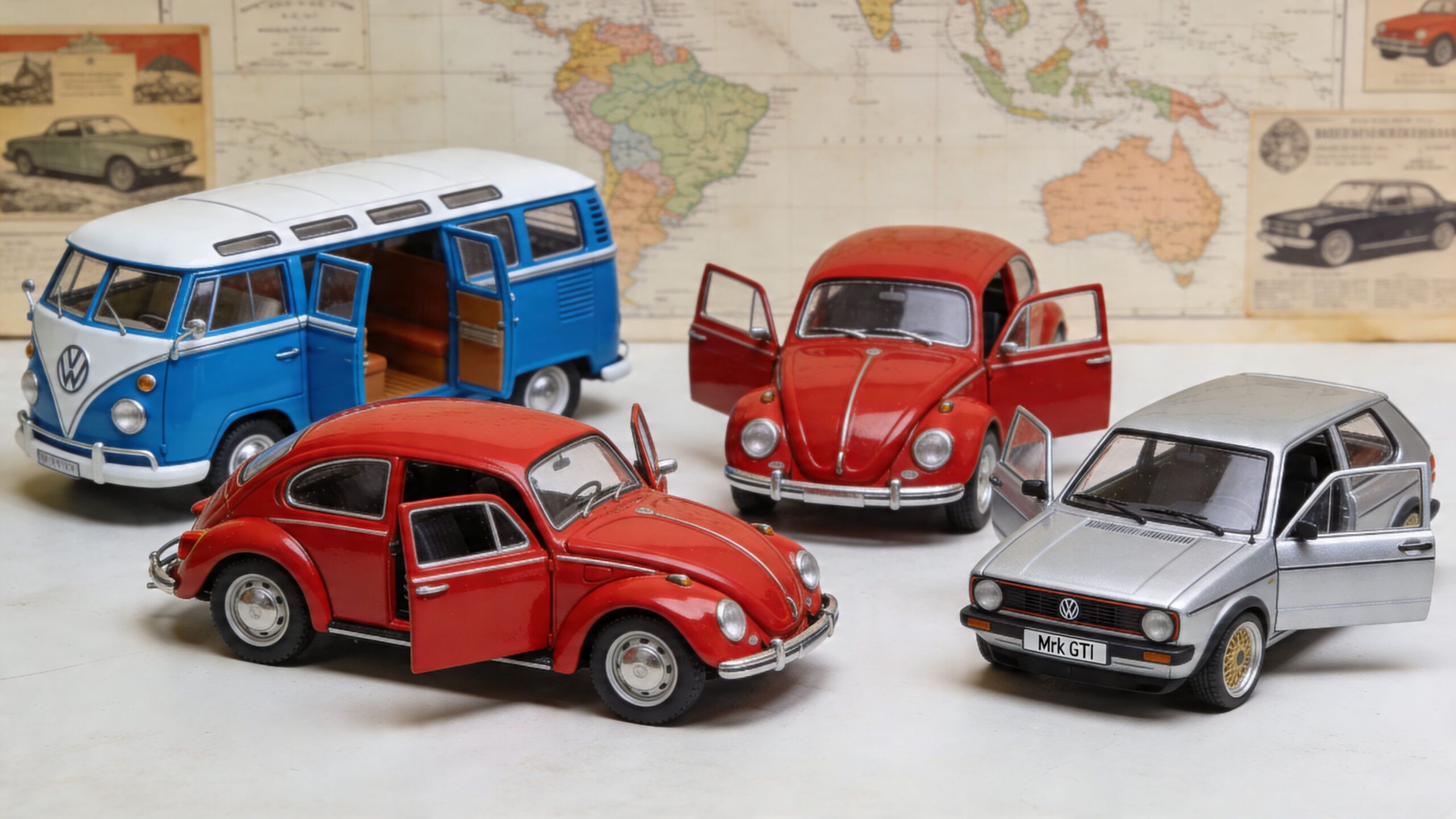
If you’re ready to find that Beetle, Kombi, Samba Bus, or gift-worthy VW piece that brings the memories flooding back, have a browse through Volkswagen Memorabilia. It’s a local Australian shop focused on VW-themed diecast, gifts, and coastal-inspired décor, with local stock and fast shipping that make collecting a whole lot easier.

Coastal Living Room: An Aussie VW Fan’s Guide

Saturday morning. The sun’s already warming the bonnet of a tidy old Beetle in the showgrounds, someone’s got a camp chair out beside a pastel Kombi, and the smell of coffee is drifting past polished hubcaps and folding tables full of parts, badges, and diecast treasures. You’ve had that feeling before. A bit of salt in the air, a bit of surf music in your head, and that quiet thought that the best parts of coastal Australia aren’t flashy at all. They’re easy, faded, sunlit, and full of stories.

That’s exactly what a good coastal living room should feel like.

Not a theme park version with rope knots everywhere and a random anchor on the wall. I mean a room that feels like the drive home from the beach in an old VW. Sandy feet. Windows cracked open. A board strapped overhead. A favourite song on. Maybe a little 1:18 Samba Bus on the shelf that reminds you of every road trip you wish you’d taken sooner.

Bringing the Beach and the Bug Indoors

A mate of mine on the NSW coast did this beautifully without making his lounge room look like a surf shop. He started with what he already loved. White walls that caught the morning light. A worn timber coffee table that looked better with every mark. One blue armchair. Then he added the pieces that meant something to him: an old beach photo from a family trip, a tray of shells his kids insisted on keeping, and a miniature Kombi in retro colours parked on a floating shelf above the telly.

The room didn’t scream “coastal styling”. It just felt coastal.

That’s why this look works so well in Australia. According to House Beautiful’s coastal design trends reference, over 85% of Australians live within 50 km of the coast, and coastal-themed renovations account for 22% of all interior updates in beachside suburbs, with average spending at AUD 12,500 per project. The same source ties the look back to the 1970s surf boom, which is probably why it feels so natural to pair it with classic Volkswagen culture.

What the room is really trying to capture

A coastal living room isn’t about copying a catalogue. It’s about bottling a familiar Aussie rhythm.

  • Lightness: Rooms should feel open, not stuffed with furniture.
  • Ease: People should be able to flop down after a swim without worrying they’re in a museum.
  • Memory: The best spaces hold objects that mean something, whether that’s driftwood, family beach snaps, or a VW Bus model that takes you straight back to the open road.

Coastal styling works best when it feels collected over time, not bought all at once.

The VW connection feels natural

Kombis and beach life belong together in the Australian imagination. You don’t need to force the link. It’s already there in surf history, road trips, roadside fish and chips, and those long summer drives where the trip mattered as much as the destination.

So if you’ve been wanting a coastal living room that feels more personal than generic seaside décor, start with that. Build a room around the feeling of freedom your favourite VW gives you. The beach supplies the calm. The Bug or Kombi supplies the character.

Building Your Coastal Colour Palette

The easiest way to get this look right is to start with the colours you’d see on a beach drive. Not just “blue and white” as a vague idea. Think bleached sand, cloudy sky, sea glass, old timber boardwalks, and sun-faded paint on a well-loved van.

A strong coastal living room usually begins with a quiet base. Soft whites. Sandy beige. Driftwood grey. Then you bring in colour carefully, the same way a classic VW paint shade wakes up a line-up at a car show.

A diagram illustrating the four main color categories for a coastal interior design color palette.

Start with the calm colours

There’s a reason these shades never go out of style. A 2024 University of Sydney study referenced here found that coastal-inspired interiors using blue-white-sand colour schemes can lower reported stress levels by up to 34%, and the same reference notes these palettes appear in 62% of Sydney’s eastern suburbs homes.

That tells you something many decorators forget. The palette isn’t only pretty. It changes how the room feels to live in.

Use this simple approach:

Colour family Best use in the room VW-inspired twist
Sandy whites Walls, larger sofas, curtains Keeps the room feeling airy around brighter collectables
Ocean blues Cushions, artwork, rugs Echoes surf culture without getting too nautical
Driftwood greys Timber finishes, shelving, occasional chairs Helps diecast displays feel grounded
Sun-washed accents Small décor pieces only Think muted orange, sea green, or mustard drawn from classic VW paintwork

Add personality from classic VW colours

At this stage, the room sheds its generic appearance.

A sea green note can come from a vase, a throw, or a framed print near a shelf of Beetle models. A burnt orange cushion can nod to a road-trip Westfalia without taking over the room. A soft yellow can lift a corner the way an old Samba Bus does in real life. You don’t need much.

Practical rule: Keep your big pieces neutral, then let Volkswagen colours appear in small, movable layers.

That way, if you add a bright diecast model or metal sign later, it looks intentional rather than crowded.

Avoid the “souvenir shop” trap

If every item is blue, white, and shell-shaped, the room gets tired fast. Coastal living rooms have more depth when the palette includes faded, earthy tones too. Timber, woven fibres, chalky ceramics, and old metal all help.

If you’d like more inspiration for combining beach tones with vintage vehicle character, this roundup of coastal home décor ideas is a handy jumping-off point.

The trick is balance. Let the room whisper “beach house”, then let one or two VW references tell the story.

Choosing Furniture for a Relaxed Layout

Furniture makes or breaks this style. You can have the right colours and the nicest accessories in the world, but if the room is blocked up with bulky pieces and awkward angles, it won’t feel coastal. It’ll just feel busy.

The best coastal living room layout gives people permission to settle in. That means generous seating, open walking paths, and tables that don’t feel too formal to use.

A bright coastal living room featuring a linen sofa, rattan chairs, and a natural wood coffee table.

Choose pieces that sit lightly in the room

A deep sofa in a pale fabric often does the heavy lifting. It becomes the place everyone gravitates to after a swim, during Sunday arvo cricket, or while talking rubbish about which year made the best Kombi front end.

Pair that with lighter-looking pieces:

  • Rattan or woven occasional chairs: They keep the room from feeling too square.
  • Natural timber coffee tables: Better if the finish is matte or slightly weathered.
  • Slim entertainment units: You want storage, but not a giant visual block.
  • Open side tables: Airier than thick, dark furniture.

The key isn’t matching sets. In fact, matching too much can make the space feel staged. A coastal room should feel assembled the way a good garage is. Useful, personal, and a little bit relaxed around the edges.

Arrange for conversation, not just the television

One of the most common mistakes is pushing every seat hard against the walls. That leaves a dead zone in the middle and kills the warm, gathered feeling. Pull the seating inward a little. Let the coffee table become the anchor.

A simple layout often works best:

Area Better choice Why it suits a coastal living room
Main seating One comfortable sofa Creates a calm visual base
Secondary seating Two lighter chairs Adds flexibility and openness
Centre Natural wood coffee table Gives room for books, trays, or a featured model
Corner Floor lamp or plant Softens edges without clutter

If you can walk through the room without weaving around furniture, you’re usually on the right track.

Let your future display pieces breathe

This matters more than people realise. If you know you want a shelf of Beetle models, a framed VW sign, or a standout Samba Bus on the coffee table, don’t fill every surface before those pieces arrive.

Leave a little negative space. It makes special objects feel curated. A floating shelf with one polished Kombi model and a small ceramic bowl often has more impact than a packed bookcase full of bits and pieces.

That’s the same logic restorers use with a classic car. Every detail shines more when it isn’t fighting ten others for attention.

Layering Textures and Natural Light

A coastal living room can look flat if everything is smooth and pale. Texture is what gives it soul. It’s the difference between a room that looks nice in a photo and one that makes you want to kick off your thongs and stay for another coffee.

Start with fabric that has a bit of visual softness. Linen-look curtains, a woven rug, cotton cushion covers, a knitted throw over the sofa arm. These layers help the room feel lived in, not clinical.

Texture should feel a bit imperfect

The best coastal rooms borrow from the natural messiness of the shore. Weathered timber. Basket weave. Slightly nubby fabric. Ceramic finishes that aren’t perfectly glossy. Those surfaces bounce light differently and stop the room from becoming one long stretch of flat beige.

Try combining:

  • A woven rug under a timber coffee table
  • Soft curtains that move easily with the breeze
  • A rougher basket or tray to hold remotes, books, or coasters
  • One chunkier throw for evening warmth and visual contrast

A room with all light, smooth finishes can feel cold. A room with mixed textures feels settled.

Use daylight like part of the décor

Natural light is one of the great heroes of coastal styling. Keep window treatments light enough to let brightness through. Avoid heavy, dark drapes that make the room feel boxed in. If privacy matters, choose a soft layer that filters sunlight instead of blocking it.

At night, you want the opposite mood. Warm pools of light. A floor lamp beside the sofa. A table lamp near a reading chair. A gentle glow that makes white walls feel creamy instead of stark.

Evening lighting should feel like the last light on the beach. Soft, warm, and easy on the eyes.

Keep surfaces calm

Texture does the work, so you don’t need every object to shout. A timber bowl, a stack of books, a simple framed coastal print, maybe a smooth pebble or shell collected on holiday. These small touches foster atmosphere.

And that quietness matters, because it gives your Volkswagen pieces the right stage later on. A colourful diecast model stands out beautifully when the materials around it feel natural and restrained.

Styling Your Volkswagen Memorabilia with Pride

Here, the room becomes yours.

Plenty of guides can tell you to buy a striped cushion, add some coral, and call it coastal. Very few tell you what to do if the object you really love is a classic VW Samba Bus, a Beetle model in seafoam green, or a metal wall piece that reminds you of old beach-town servo signs. That’s the fun bit.

A Surfing Australia survey and home décor trend reference notes that over 60% of surfers associate retro VW vans with the coastal lifestyle, and the same reference reports a 25% rise in VW-themed home décor sales in coastal NSW and QLD regions. That lines up with what plenty of enthusiasts already know in their bones. The Kombi isn’t separate from Australian beach culture. It’s right in the middle of it.

A coastal-themed shelf featuring miniature Volkswagen toy vehicles, seashells, smooth pebbles, and a VW picture frame.

Treat models like sculpture

A licensed diecast model shouldn’t be hidden away like an afterthought. If you’ve got a well-finished Kombi or Beetle, style it the way you’d style a ceramic piece or a small artwork.

Good spots include:

  • Coffee table centrepiece: One larger model on a tray with a book and a small bowl.
  • Floating shelf display: A single Samba Bus beside a coastal print or framed photo.
  • Console table feature: Great for an entry-adjacent living room where the model becomes a conversation starter.

The most effective approach is restraint. One standout model on a clean surface often looks more premium than six lined up wheel-to-wheel.

Build little stories, not clutter piles

A coastal living room looks best when display pieces relate to each other. A retro Kombi model beside sea glass, a smooth pebble, and a pale timber frame feels considered. The same model shoved between random candles and spare keys doesn’t.

Try one of these combinations:

Display spot VW item Coastal pairing
Shelf Flower Power Kombi Sea glass, shell, white ceramic vase
Coffee table 1962 VW Samba Bus diecast Large beach book, timber tray
Wall niche Beetle model Framed surf photo, small driftwood piece
Sideboard VW metal sign or frame Rattan basket, soft lamp, neutral bowl

If you lean more decorative than collector-focused, these wall accents for the living room can help tie a display area together without making it look overdone.

Mix scales with purpose

Scale matters. A larger model reads as a hero piece. Smaller ones work better grouped or tucked into shelves. If your room is already full of visual detail, choose one larger item. If the room is quite minimal, a short row of smaller Beetles can add rhythm without overpowering the space.

A good display should make a guest smile first, then lean in for a closer look.

That’s exactly what old VWs do in practice too.

Lean into surf history, not clichés

The strongest Volkswagen coastal styling usually nods to surf culture rather than obvious nautical themes. That means weathered finishes, sun-washed colours, old road-trip energy, and pieces that feel like they’ve travelled.

You might use:

  • a pastel Kombi model on a pale oak shelf
  • a framed black-and-white beach photo
  • one metal VW sign with a slightly vintage feel
  • a stack of magazines or books about classic cars, surfing, or road travel

What you probably don’t need is a room full of anchors, fish netting, or novelty signs about beach rules.

The old Kombi already brings enough story with it.

Make the display feel grown-up

This matters if you’re sharing the room with a partner, family, or if you want the space to feel polished rather than kitschy. Keep the palette controlled. Repeat one or two accent colours from the memorabilia elsewhere in the room. Choose shelves and frames that suit the furniture. Dust the pieces and give them breathing room.

Done well, VW memorabilia doesn’t look like a hobby that invaded the lounge. It looks like design with personality.

Your Shopping Checklist and Sourcing Tips

Once you know the mood you’re after, shopping gets much easier. You’re not just buying “beachy stuff”. You’re choosing a few foundational pieces, then adding layers that hold up to real Australian conditions.

That last part matters. Sun, humidity, and salty air can be rough on interiors, especially in coastal areas.

A wooden clipboard on a beach background features a checklist with linen sofa, rattan chair, VW beetle model, and sea glass decor.

Your coastal living room checklist

Use this as a practical starting point when you’re planning the room.

  • A soft neutral base: White, sand, or drift-toned walls and a main sofa in a calm shade.
  • Natural-looking furniture: Timber, rattan, or woven details that lighten the room visually.
  • Layered textiles: Curtains, rug, cushions, and a throw with enough variation to avoid flatness.
  • One hero VW piece: A Kombi or Beetle model that can anchor a table or shelf.
  • Supporting décor: Shells, pebbles, beach photos, ceramics, or framed prints with restraint.
  • Warm evening lighting: Lamps that soften the room after sunset.
  • Display surfaces: Shelves, trays, or sideboards with enough empty space around collectables.

Buy for coastal conditions, not only for looks

A CSIRO-related climate note referenced here says Australia’s humid climates can run 40% higher in humidity than global averages, and the same reference points to durable metal accents like VW diecast models and fridge magnets as a mould-proof, long-lasting alternative to fabrics that degrade more quickly.

That’s worth remembering when you’re tempted by delicate or high-maintenance materials.

A simple rule of thumb:

Item type Better for humid coastal homes Use with care
Accent décor Metal, ceramic, sealed timber Untreated soft materials
Collectables Diecast models, framed pieces Fragile fabrics in direct sun
Storage Baskets with airflow, open shelving Overstuffed enclosed corners
Soft furnishings Practical, easy-care fabrics Anything that traps moisture easily

Know where to save and where to spend

Save on trend-driven bits. Cushions, small vases, and decorative bowls can change with the seasons. Spend more carefully on the sofa, occasional chairs, and the display pieces you’ll keep for years.

If you’re hunting for character pieces, vintage-inspired options in vintage home accessories can help pull the room together without forcing it.

For VW collectors in Australia, buying from a local importer has obvious advantages too. Local stock means less waiting, easier support, and a better sense of what suits Australian homes and gifting occasions. That matters when you’re after licensed memorabilia and you want it to arrive quickly, especially if it’s meant for a birthday, Father’s Day, or a shelf you’ve finally decided to style properly.

Frequently Asked Questions

How do I stop a coastal living room from looking too themed

Keep the bigger pieces quiet and let the personality come from a few smaller items. Choose natural materials, restrained colours, and one or two memorable accents. A single Kombi model or VW wall piece has far more impact than filling the room with beach clichés.

What’s the best place to display a VW Kombi diecast model

A coffee table, floating shelf, console, or open bookcase works well. The main thing is visibility and breathing room. If the model is special, don’t bury it among everyday clutter. Give it a clear backdrop so the shape and colour stand out.

Which VW model scale suits a living room best

Larger scales usually suit coffee tables and sideboards because they read more like sculpture. Smaller scales work well on bookshelves, in wall niches, or grouped on a ledge. If you’re unsure, match the model to the distance from which it’ll be viewed. Bigger for a focal point, smaller for close-up shelves.

Dust is easier to manage when each model has a defined display spot instead of being scattered around the room.

Can I mix VW memorabilia with Hamptons or mid-century furniture

Yes, as long as you manage colour and proportion. Hamptons pieces can work if the room stays relaxed and not overly formal. Mid-century furniture often pairs beautifully with Volkswagen memorabilia because both share clean lines and a sense of retro optimism. Keep the palette cohesive and the result feels intentional.

How do I clean diecast models in a coastal home

Use a soft, dry cloth or a very gentle detailing brush for dust. Keep them out of direct harsh sun where possible. Avoid soaking them or using strong cleaners. If a model sits in a room that gets regular sea breeze, a light, consistent dusting is better than letting residue build up.

How many VW pieces should I put in one coastal living room

Less than you think. Start with one hero item and one supporting piece. Live with that for a while. If the room still feels sparse, add another. Collecting and styling both work better when they grow gradually.

Can a Volkswagen Beetle model work in a beach-inspired room, or is a Kombi better

Both work. A Kombi leans more obviously into surf-road-trip nostalgia. A Beetle can bring a sweeter, more compact note, especially on shelves, side tables, or grouped displays. Choose the one that means something to you. Personal connection always looks better than trend-chasing.


If you’re ready to turn that beach-and-bus feeling into something you can enjoy every day, have a look at Volkswagen Memorabilia. It’s a great spot for licensed VW gifts, surfy diecast models, coastal accents, and display pieces that suit Australian homes, with local stock and fast shipping that make collecting a whole lot easier.