

G'day, mate! If you've ever dreamt of hitting the open road, chasing the sun with everything you own packed neatly in the back, chances are a Volkswagen was part of that picture. For many of us, that dream was painted in the classic shape of a Kombi or a Beetle, chugging along to the soundtrack of freedom. The Volkswagen Crafter camper is the brilliant evolution of that dream, built for the realities of modern Aussie touring. It captures that same adventurous spirit but adds the space, power, and reliability we need for exploring this massive country of ours today.
Why the Crafter Is Australia’s Modern Kombi
For decades, the Aussie road trip was inseparable from VW. We grew up with the unmistakable sound of an air-cooled Beetle, or watched a classic Kombi, loaded to the gills with surfboards and happy campers, cruise past on its way to the coast. These vehicles weren't just transport; they were a symbol of a laid-back lifestyle, a huge part of our car culture, and the source of countless memories.
That spirit is alive and well, mate, but it's adapted. While our love for the classics is timeless—and you can see it in every VW Kombi diecast Australia model we collect—today's adventures often demand a bit more. We want to go further, stay out longer, and bring a few more of life's comforts along for the ride. The Volkswagen Crafter camper answers that call, carrying the torch passed down from its famous ancestors.
It’s built for crossing the Nullarbor or cruising the Great Ocean Road with genuine comfort. The Crafter isn't just another van; it's the next chapter in the VW story for a new generation of travellers, a bit like seeing a beautifully restored Samba Bus next to its proud modern cousin at Volksfest.
It provides a solid, dependable base that keeps the VW soul while delivering on:
- Generous Space: Enough room for a proper bed, a functional kitchenette, and ample storage—things that were a real luxury in a classic Kombi.
- Modern Reliability: A powerful, efficient engine designed to handle tough Australian conditions, from city traffic to remote outback roads.
- Unmatched Comfort: A smooth and quiet ride that makes long-distance driving a pleasure, not an endurance test.
The Crafter doesn't replace the Kombi; it honours its heritage. It’s the perfect choice for the VW fan who cherishes the idea of exploration but needs more than a classic van can offer. If you're looking at a mid-size option, our guide to the Volkswagen Transporter camper is a great resource. But for those with bigger plans, the Crafter is the ultimate blank canvas for the modern Australian adventure.
Choosing Your Canvas for the Perfect Build
Alright, let's get down to brass tacks—picking the right Volkswagen Crafter to be the foundation of your dream home on wheels. This is probably the biggest decision you'll make. Think of it like a painter choosing a canvas, or a collector deciding between a 1:18 or 1:24 scale model; the base you start with dictates everything that comes after.
Here in Australia, we're mainly dealing with the second-generation Crafter, which has been on our roads since 2017. These vans come in a few different sizes, and you'd be surprised how a few extra centimetres can completely transform your layout possibilities. It's the difference between a cosy weekender and a proper rig built for the long haul.
Size Matters: Your Crafter Options
The first things you’ll need to decide on are the wheelbase length and the roof height. Nailing this choice from the get-go will save you a world of headaches down the track.
- Medium Wheelbase (MWB): Coming in at around 6 metres long, the MWB is a brilliant all-rounder. It’s nimble enough to navigate city streets and squeeze into regular parking spots, yet it still offers enough space for a comfortable build, including a fixed bed and a neat kitchenette.
- Long Wheelbase (LWB): Stretching out to nearly 7 metres, the LWB is for those who crave maximum living space. That extra metre unlocks a whole new world of layouts. Suddenly, a dedicated internal shower and toilet, a bigger kitchen, or even a 'garage' space for your bikes and surfboards becomes a real possibility.
- High Roof vs. Super High Roof: The majority of Crafters you'll find in Australia come with the High Roof. This gives you about 1.96 metres of internal headroom, which is plenty for most folks to stand up straight. The Super High Roof is a rarer find, but it adds another 20 centimetres of height, creating a wonderfully open and airy feel inside.
To help you visualise these differences, here's a quick breakdown of the common Crafter dimensions.
Volkswagen Crafter Dimensions at a Glance
| Model | Wheelbase (mm) | Vehicle Length (mm) | Load Compartment Length (mm) | Roof Height | Load Compartment Height (mm) |
|---|---|---|---|---|---|
| MWB | 3,640 | 5,986 | 3,450 | High | 1,961 |
| LWB | 4,490 | 6,836 | 4,300 | High | 1,961 |
| LWB | 4,490 | 6,836 | 4,300 | Super High | 2,196 |
Choosing the right size is all about balancing interior living space with the van's external footprint and manoeuvrability. Think about where you plan to take it and what you absolutely need inside.
Drivetrain Decisions: FWD, RWD, or 4MOTION
Next up, you’ll need to think about how your van gets its power to the road. This decision really comes down to the kind of adventures you have in mind.
The Front-Wheel Drive (FWD) models are excellent for fuel economy and have a slightly lower load floor, which can make the build-out a little easier. For heavy-duty conversions or if you plan on towing, the traditional Rear-Wheel Drive (RWD) is a workhorse.
But for the ultimate Aussie explorer, the 4MOTION all-wheel-drive system is the undisputed champion. It gives you the confidence to tackle everything from sandy beach tracks to corrugated outback roads. If you're still weighing up your options, check out our guide on finding the perfect van for conversion.
The Crafter isn't just popular; it's become the spiritual successor to the classic Kombi for a new generation of adventurers.
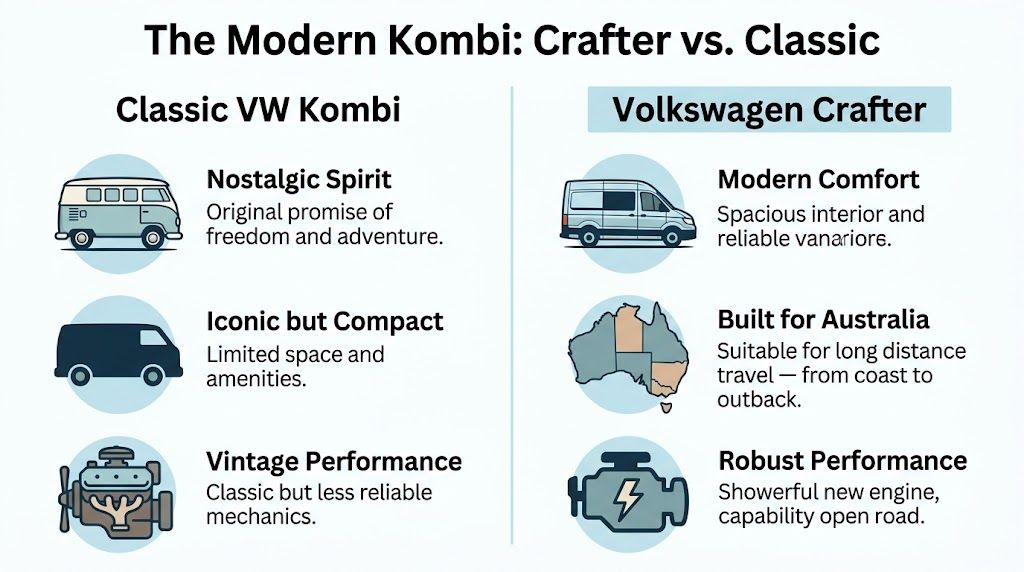
As you can see, while the spirit of adventure remains the same, the Crafter brings a level of modern comfort, space, and capability that opens up a whole new world of travel.
Professional Fit-Out or DIY Conversion
Alright, so the Crafter is sitting in the driveway, gleaming in the Aussie sun. Now for the big decision: how do you turn that big, empty van into your dream camper? You’ve got two main roads you can go down—handing it over to a professional fit-out company or taking on a full DIY conversion yourself.
Think of it as the difference between a top-notch restaurant meal and cooking your own feast from scratch. One gets you a perfect result with no fuss, while the other is a hands-on creative process. Both are great, just very different experiences.
The Professional Path
Going with a professional conversion company is the most direct route to getting out on the road. These workshops have built hundreds of vans. They know what they're doing when it comes to everything from tricky 12V electrics to compliant plumbing systems.
- Turn-Key Adventure: Your van is handed over completely finished, tested, and ready for its first trip. Just pack your gear and go.
- Guaranteed Quality: Any good builder provides a warranty on their work, which gives you real peace of mind when you're far from home.
- Resale Value: A professional build from a known company almost always holds its value better. Future buyers know they're getting a quality, safe vehicle.
The main trade-offs, of course, are the cost and the level of personalisation. You can customise things, but you’re usually starting from one of their proven designs. It's the perfect option if your number one goal is to start exploring fast, without the headache of managing a massive project.
The Hands-On DIY Journey
The other path is the DIY build. This is where you become the creator, tapping right into that classic VW spirit of making something your own—the same drive that had people customising Beetles and Kombis for decades.
The DIY Volkswagen Crafter camper build is a true labour of love. It’s about more than just building a van; it's about pouring your own personality and creativity into every square metre, creating a space that is uniquely yours, just like a beautifully restored Volkswagen Beetle model.
This route requires a lot of your time, a decent set of skills (or the patience to learn them!), and a good deal of persistence. You’ll be spending weekends covered in sawdust and silicone, trying to get your head around Australian Design Rules and learning more about wiring than you ever thought possible.
But the payoff is huge. You get total creative freedom over every single detail, from the style of your cabinets to where you want each light switch. By doing the work yourself, you can also save a significant amount of money. For the VW fan who enjoys a good project, there’s nothing quite like the satisfaction of driving a camper you built with your own two hands.
Designing Your Dream Crafter Layout
Right, now for the part everyone daydreams about. You’ve got this huge, empty Volkswagen Crafter, and it’s basically a blank canvas for your perfect home on wheels. This is your chance to bring those road-trip fantasies to life, but staring into that cavernous space can feel a bit daunting.
Let's break down some of the most popular layouts to get the ideas flowing.
The very first – and biggest – decision you need to make revolves around the bed. It’s the largest item in the build, and the choice you make here will pretty much define how the rest of your living space functions. You're not just building a van; you’re designing a bedroom, kitchen, and lounge all in one.
To Fix or to Convert That Is the Question
When it comes to the sleeping setup in a Crafter, you'll find builders generally fall into two camps. Each has its pros and cons, and the right choice really comes down to how you plan to travel.
The Fixed Bed: This is all about convenience. A permanent, full-time bed at the back of the van means zero setup after a long day behind the wheel. You just pull up, kill the engine, and you’re ready to crash. This setup also creates a massive, dedicated storage area underneath—a 'garage' that’s perfect for stashing bikes, surfboards, and all your camping gear.
The Convertible Bed: This layout prioritises flexibility and daytime living space. During the day, you have a proper dinette with a table for meals, work, or just watching the world go by. At night, it all converts into your bed. It makes a Medium Wheelbase Crafter feel incredibly roomy, but the trade-off is the daily ritual of making and unmaking your bed.
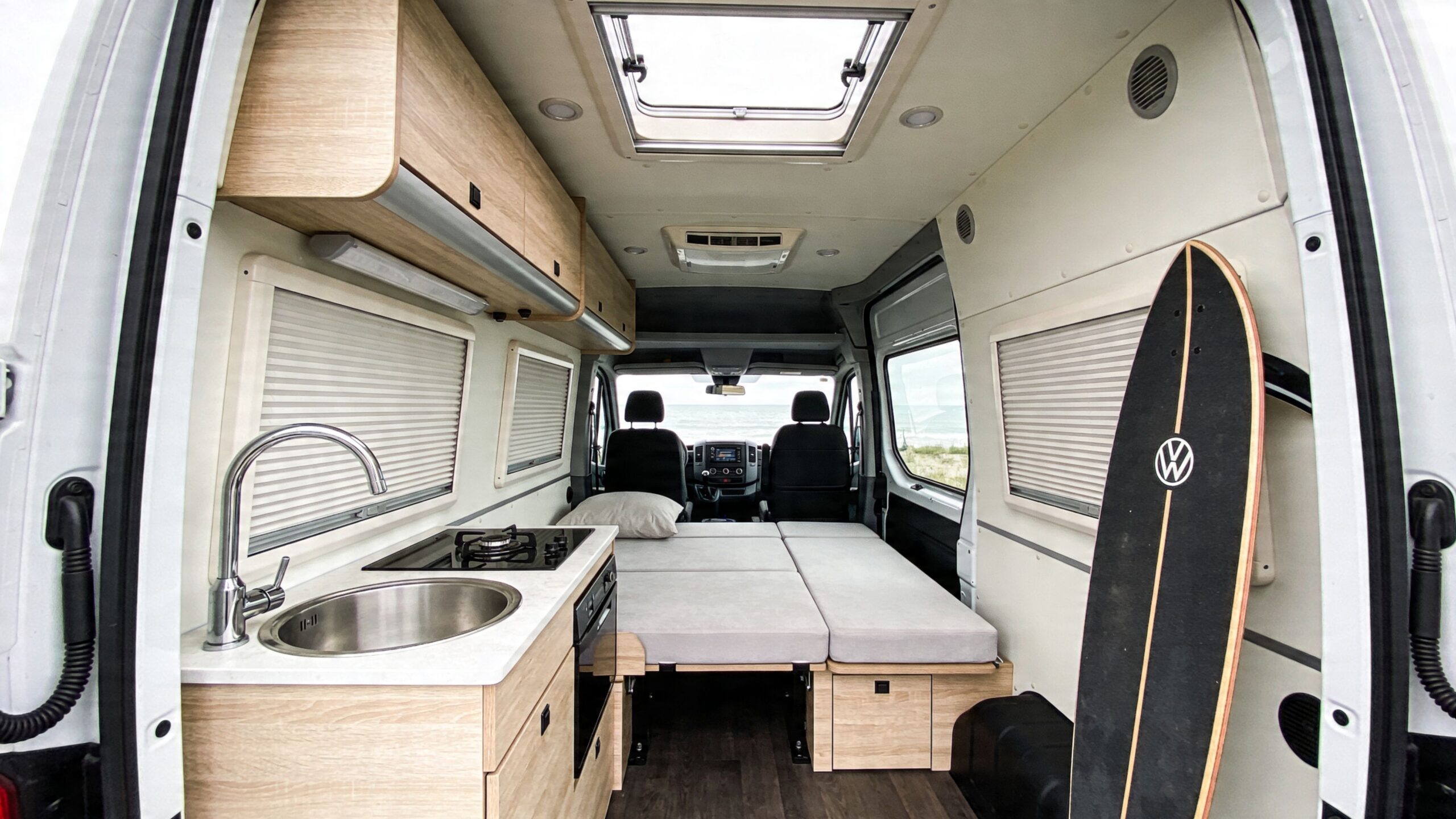
Popular Crafter Floorplans
Once you’ve locked in your bed style, the other pieces of the puzzle start to fall into place. The real goal is to create a layout that feels natural for your lifestyle, whether you're cooking up a storm or stuck inside on a rainy afternoon.
Your layout isn't just about fitting everything in; it’s about creating flow. Think about how you’ll move around the space—from making a morning coffee to grabbing your gear for a hike. A good design makes daily life on the road feel effortless and intuitive.
Here are a few of the tried-and-true layouts that work wonders in a Crafter:
- East-West Fixed Bed: This involves running the bed across the width of the van. It's a brilliant way to save a huge amount of floor space, which you can then use for a bigger kitchen or a separate seating area. It’s a fantastic option, though taller folks might find it a bit snug unless they install flare pods.
- North-South Fixed Bed: Here, the bed runs along the length of the van. This gives you the luxury of a full-length queen or even king-size bed but takes up more of your precious van real estate. It’s a very common choice in Long Wheelbase Crafters where supreme sleeping comfort is the top priority.
- L-Shaped Lounge: This is a convertible layout with a comfortable L-shaped couch that pulls out to form a bed. It creates a wonderfully social, open-plan living area—perfect for having a few mates over at the campsite.
Don't rush this step. Get a pen and paper, sketch out your ideas, and spend hours looking at other builds for inspiration. Try to imagine yourself actually using the space day-to-day. It’s this planning phase that transforms a simple Volkswagen Crafter camper into your own personal sanctuary on wheels.
A Primer on Essential Campervan Systems
A bare Volkswagen Crafter is a magnificent blank canvas, but it’s the systems you build inside that transform it into a proper home on wheels. Getting your head around the essentials can feel like a lot at first, but it’s actually more straightforward than you might think. Let’s break down the four core systems that really bring a Crafter to life.
Think of these as the van’s vital organs. Each one is crucial for keeping you safe, comfortable, and self-sufficient on the great Aussie open road. Getting a basic feel for how they work is key, whether you’re handing your van over to a pro builder or tackling the fit-out yourself.
The Electrical System: The Heart and Veins
Your electrical setup is the absolute heart of the van, pumping power to all your creature comforts. It’s what keeps the lights on, your phone charged, the fridge cold, and maybe even a laptop running if you need to get a bit of work done from somewhere beautiful.
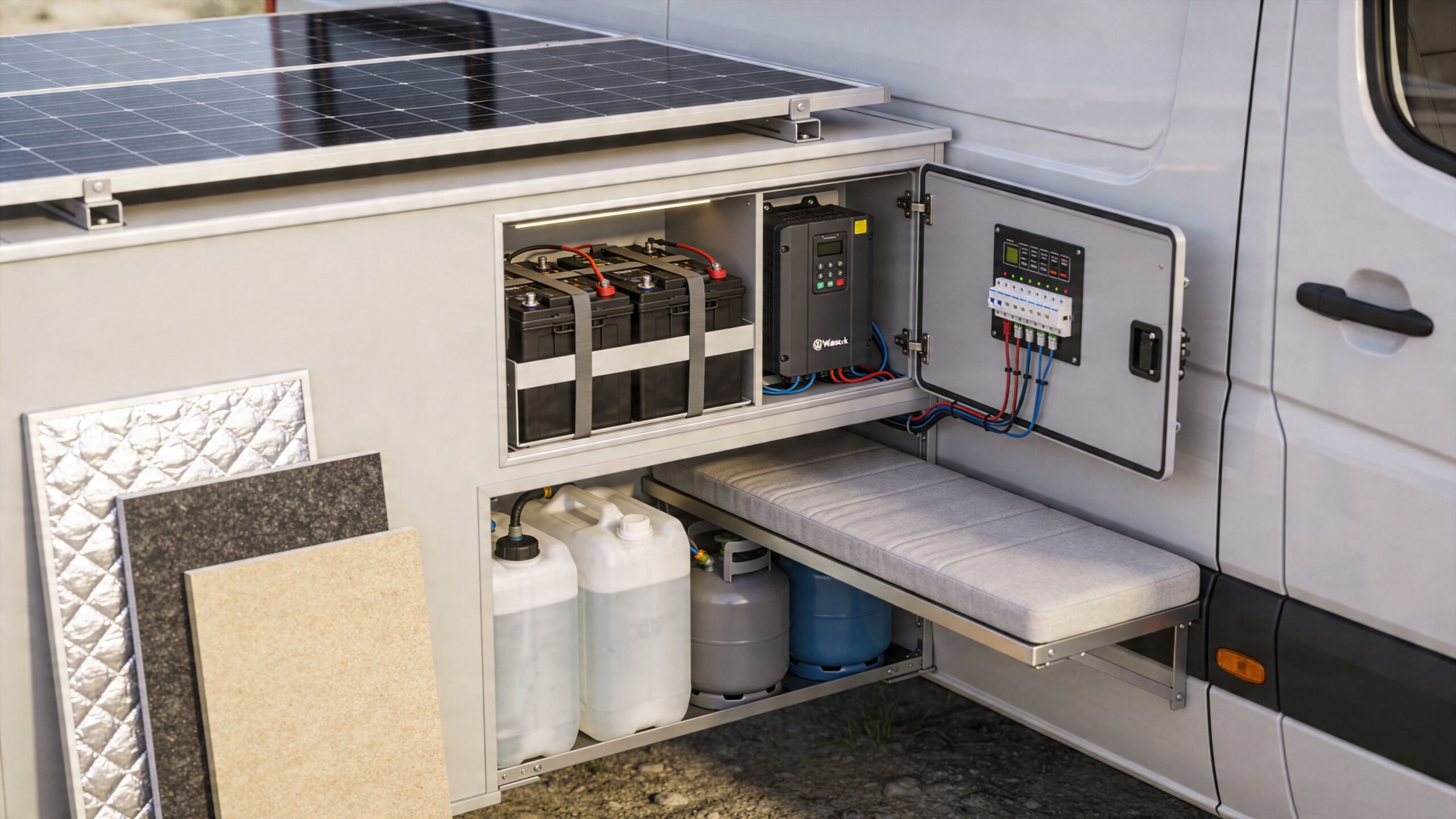
At its core, a typical van electrical system will have:
- Solar Panels: These are your power plants, quietly turning that glorious Aussie sunshine into usable electricity.
- Batteries: This is your power storage. Usually deep-cycle AGM or lithium batteries, they hold onto the energy your solar panels collect so you can use it day and night.
- Inverter/Charger: This bit of kit is the brains of the operation. It converts the 12V DC power from your batteries into the 240V AC power you need for household appliances. It also lets you charge your batteries when you’re plugged into the grid at a caravan park.
The Water System: The Van's Lifeline
Next up is your plumbing—the van’s lifeline. A decent water system means you can have a wash, do the dishes, and have fresh drinking water on tap, no matter how far off the beaten track you are.
It’s generally made up of two key parts:
- Fresh Water Tank: This holds all your clean, drinkable water. The size you’ll need really depends on how long you want to be able to stay off-grid between refills.
- Grey Water Tank: This is where all the wastewater from your sink and shower collects. Most national parks and responsible camping guides now require you to be fully self-contained, which means capturing all your grey water.
Insulation and Ventilation: The Doona and the Lungs
Finally, let’s talk about keeping things comfortable inside. Insulation is basically your van’s doona—it keeps you warm on those freezing outback nights and helps keep the heat out during a scorching summer day. It also does a brilliant job of deadening road noise.
Proper insulation is non-negotiable in Australia. It's the single biggest factor in making your Volkswagen Crafter camper liveable year-round, from the Snowy Mountains to the Top End.
But insulation is only half the battle; you also need good ventilation. Think of it as the van's lungs. A simple roof fan is absolutely essential for pulling out hot, stale air and—most importantly—preventing condensation from building up. Without one, you’ll wake up to a very damp van, which is a fast track to mould problems.
Together, these two systems are what make your Crafter a true, all-weather sanctuary.
Budgeting Your Build and Buying a Used Camper
Alright, let's talk about the dollars and cents of bringing your Volkswagen Crafter camper dream to life. It’s incredibly easy to get swept up in the stunning builds you see online, but a solid budget is your best mate on this journey, keeping your plans grounded and achievable.
The final cost really comes down to two big-ticket items: the van itself and the fit-out. A brand-new Crafter costs a pretty penny but gives you a full warranty and that unbeatable new-van smell. A used Crafter, on the other hand, is a brilliant way to get on the road for less, as long as you know exactly what you’re looking for.
Estimating Your Volkswagen Crafter Camper Costs
The figures can swing pretty dramatically depending on your choices, but here’s a rough guide to help you start budgeting in Australia:
- Used Base Vehicle (2017+): Expect to find a decent one for $40,000 to $65,000. The price will vary based on its age, kilometres, and overall condition.
- DIY Conversion: If you’re handy on the tools, a really solid DIY build can be pulled off for $20,000 to $40,000. This covers everything from your insulation and solar right through to the fridge and cabinetry.
- Professional Fit-Out: Getting the pros to handle it will cost anywhere from $60,000 to $100,000+ on top of the vehicle's price. You’re paying for their expertise, a quicker turnaround, and a warranty on the work.
What does that all mean? A finished Volkswagen Crafter camper can start from around $60,000 for a smart DIY project on a second-hand van, climbing up to $165,000+ for a top-of-the-line professional conversion on a new 4MOTION model.
Checklist for Buying a Second-Hand Crafter Camper
Found a used camper that looks the goods? Brilliant. Before you hand over your hard-earned cash, though, you need to give it a proper going-over. A pre-purchase inspection is always money well spent, but you can spot a lot yourself with a keen eye.
Buying a used camper is like buying two things at once: a vehicle and a small house. You need to inspect both with equal care to avoid inheriting someone else’s problems.
Mechanical Inspection
- Service History: Always ask for the logbook. A complete and consistent service history is the best sign of a well-looked-after engine.
- Engine & Drivetrain: Check for any warning lights on the dash. Listen for odd knocks or rattles and have a look underneath for any signs of oil leaks.
- Tyres & Brakes: Uneven wear on the tyres can point to alignment problems. And don’t forget to check the condition of the brake pads and discs.
Conversion Inspection
- Water Leaks: This is a big one. Meticulously check around all the windows, fans, and seams for any water stains or damp smells. A leak can be a deal-breaker.
- Electrical System: Get a full tour of the system. Was it professionally installed? Are there proper circuit breakers and fuses? Test every single light and power point.
- Build Quality: Open and close every drawer, cupboard, and door. How do the finishes look? Does the whole build feel solid, or does it rattle and feel a bit flimsy?
Taking your time here will help you make a smart investment. If you're just starting your search, have a look through our overview of VW campervans for sale to get a better feel for the market.
Crafter Camper Questions Answered
When you're close to getting on the road in your Volkswagen Crafter camper, a few final questions usually pop up. Here are the straight answers to the common queries we get from Crafter owners.
Driving Requirements and Running Costs
Do you need a special licence? For most Volkswagen Crafter camper builds, your standard car licence is all that's required. The vehicle's Gross Vehicle Mass (GVM) just needs to stay under 4.5 tonnes. This is a limit that nearly all conversions, even a Long Wheelbase Crafter, will comfortably sit beneath.
Beyond fuel, there are a few key running costs to factor into your budget.
- Insurance: Comprehensive campervan insurance is a must. Plan for somewhere between $1,200 to $2,500 annually, based on your van's value and driving record.
- Servicing: To keep your Crafter running smoothly, a regular service is essential. Set aside about $600 to $900 for a standard yearly service.
- Registration: This is a fixed annual cost that varies depending on your state.
Insurance and Legal Considerations
Insuring a custom campervan build is different from a standard car. You must find a policy that specifically covers campervan conversions and all their contents. Make sure you declare every modification to your insurer.
Proper insurance protects your whole project. It’s not just about the van itself, but also the thousands of dollars and countless hours invested in the build. It's a small price for total peace of mind.
Finally, your conversion must be legally compliant. In Australia, any gas or 240V electrical work has to be certified by a licensed professional. Keeping these compliance certificates is vital for insurance and, more importantly, for your safety.
A few more common questions often come up as people plan their Crafter build and life on the road. We've put together some quick answers in the table below.
Frequently Asked Questions
| Question | Answer |
|---|---|
| What's the best Crafter model for a camper? | The LWB (Long Wheelbase) high-roof model is the most popular choice. It offers the best balance of driving comfort and ample living space for a full-featured conversion. |
| Can I legally live in my van full-time in Australia? | Yes, but regulations vary between local councils. It's important to be aware of local laws regarding overnight parking and camping to avoid fines. |
| How long does a DIY camper conversion take? | This varies widely! A simple build might take a few weekends, while a complex, full-featured conversion can take anywhere from 6 to 12 months of dedicated work. |
| Is a diesel heater necessary? | For anyone travelling in cooler climates or during winter, a diesel heater is strongly recommended. It provides dry, efficient heat and makes the van liveable year-round. |
Hopefully, these answers clear up any final details as you get ready for your own Crafter adventures.
Ready to celebrate your love for all things Volkswagen? From planning your next big adventure to finding the perfect gift, Volkswagen Memorabilia is your go-to spot for everything that captures the VW spirit. We're an Aussie importer with local stock, which means fast shipping right to your door. Browse our full collection of VW memorabilia collectibles and bring a piece of the journey home.