

You might be here because you've noticed something different on Australian roads. One minute it's old-school charm, surf stickers, and memories of a Kombi by the beach. The next, you're spotting battery-powered delivery vans performing the daily grind. That's the interesting part of electric van australia right now. It sits at the meeting point of nostalgia and change.
For VW fans, that makes the topic more fun than it first appears. The same country that fell in love with Beetles and Kombis is now watching a new generation of vans arrive with charging ports instead of fuel caps. If you love the story of Volkswagen in Australia, it's worth understanding both the actual vans on the road and the miniature ones that end up proudly on the shelf.
From Aussie Roads to Your Shelf The Magic of VW
I still think a lot of us had the same early memory. A Kombi rolling past with boards on top, windows open, and that shape you could recognise from half a suburb away. Or a Beetle tucked into a city street, somehow looking cheerful even standing still.
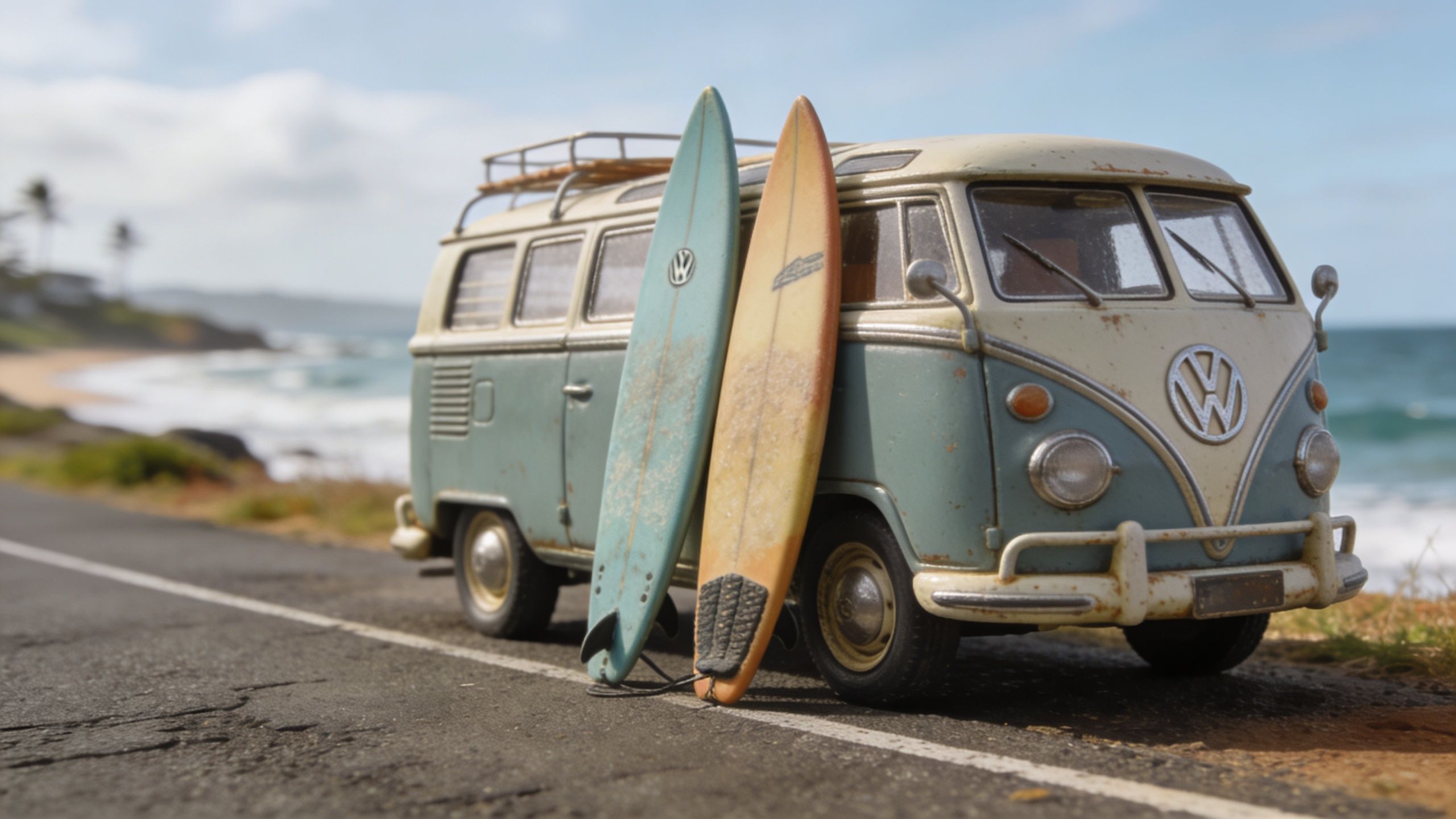
That feeling isn't accidental. Volkswagen has deep roots here. Volkswagen's Australian history in Clayton, Victoria notes that VW vehicles were assembled there from 1954 until 1976, with over 250,000 vehicles produced, including the Beetle and Kombi. That's a big reason these vehicles feel woven into Australian life rather than imported curiosities.
Why that heritage still matters
Collectors don't usually fall for diecast models because they're just small cars. They buy them because the actual vehicles meant something first. A Beetle can remind someone of a first car. A Kombi can bring back family camping trips, market runs, surf weekends, or long coastal drives.
That's also why the newer electric chapter is so interesting. Australia's electric van market is growing as part of the broader EV shift. Redline Pulse's Australia electric vans overview says the market was valued at USD 24.79 million in 2025 and is projected to reach USD 61.08 million by 2034, with 13 electric vans plus variants available in the Australian market in 2025.
Practical rule: If a vehicle has a strong story on the road, it usually becomes a stronger collectible on the shelf.
For VW enthusiasts, that link between past and present is easy to feel. The classic Kombi represents freedom. The modern electric van represents a new kind of practicality. And if you've got a soft spot for the future-facing VW side of things, the VW Buzz in Australia is part of that same conversation.
Electric vans and the old VW spirit
The vans may be changing, but the appeal hasn't vanished. Vans still mean movement, lifestyle, and personality. They still attract people who want function without giving up character.
That's why scale models remain such a satisfying hobby. You're not only collecting metal and paint. You're holding a tiny version of a much bigger story.
Choosing Your Champion Understanding Diecast Scales
Scales can confuse new collectors fast. You see 1:18, 1:24, 1:32, 1:64, and suddenly it feels like you need a maths lesson before you buy a Beetle.
The trick is simple. The second number tells you how much smaller the model is than the actual car. So a 1:24 model is twenty-four times smaller than the actual vehicle.
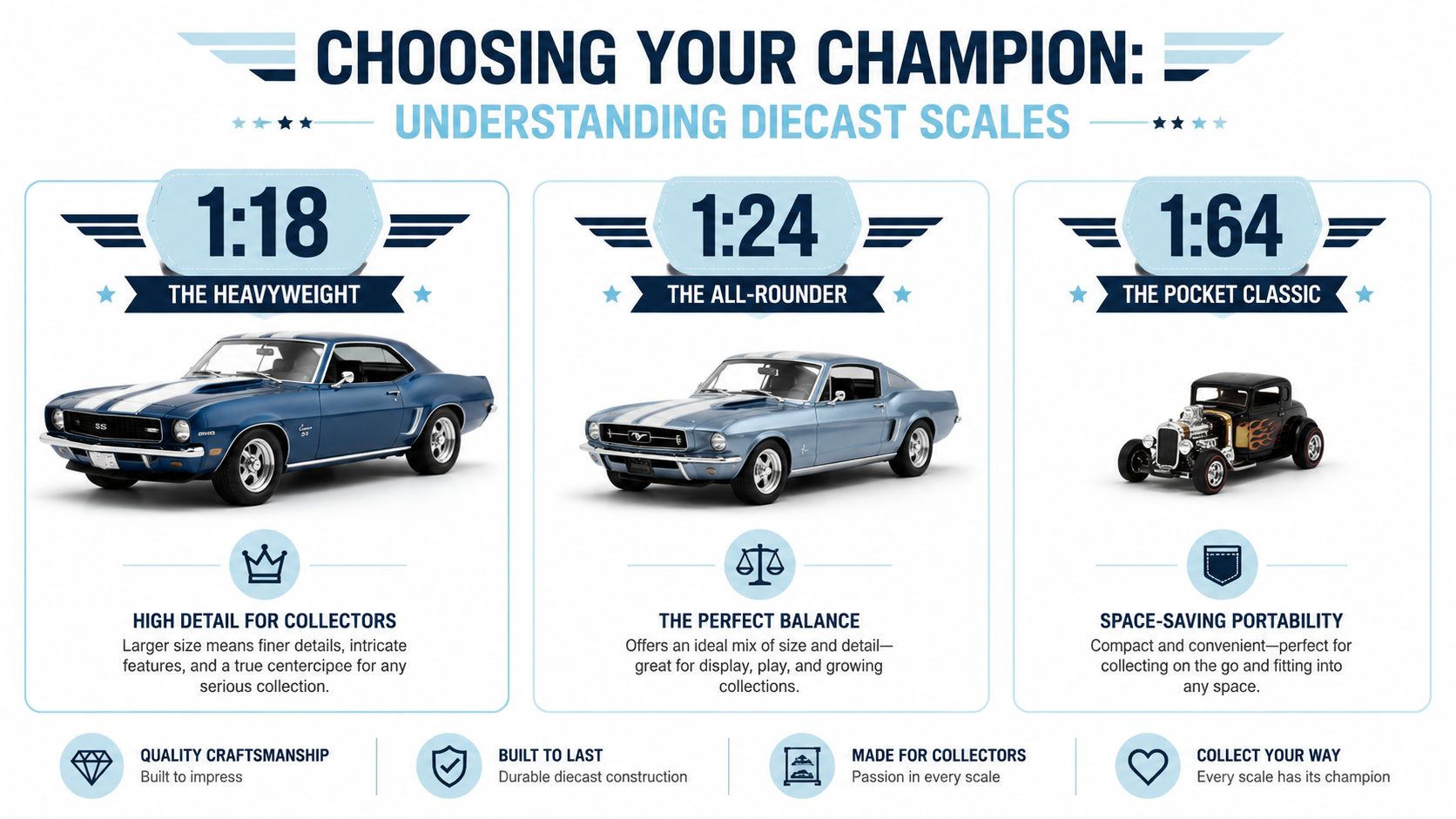
Wikipedia's 1:24 scale guide gives a handy example. A 1:24 scale model of a 4.3-metre-long VW Beetle would be about 18 centimetres long. That's why 1:24 feels so popular. It's large enough to show off the shape and details, but still easy to display on a shelf, sideboard, or office desk.
A simple way to think about size
Here's the easy collector's version.
| Scale | Best for | What it feels like |
|---|---|---|
| 1:18 | Detail lovers | A centrepiece model |
| 1:24 | Most collectors | The balanced choice |
| 1:64 | Small-space collectors | Easy to group in sets |
How to pick the right one
Some buyers go too big too quickly. They fall in love with one large model, then realise they don't have room for the next five. Others go too small and later wish they had more visible detail.
A better approach is to choose based on how you'll enjoy the model day to day:
- If you want a hero piece, go larger. A bigger model often shows more interior detail and has stronger shelf presence.
- If you want a tidy collection, 1:24 is the sweet spot for many VW fans.
- If you want a fleet, smaller scales make it easier to group Beetles, Kombis, buses, and support vehicles together.
Smaller isn't lesser. Larger isn't always better. The right scale is the one that suits your shelf and your eye.
One more tip. If you collect because you love body shape and paintwork, 1:24 often gives you the most satisfying balance. If you collect because you want to recreate a whole little VW world, mixing scales can work beautifully as long as you stay organised.
Spotting a Ripper What to Look For in a Quality Model
Not every model deserves display space. Some are charming little toys. Some are genuine collectibles. Knowing the difference saves disappointment.
The first thing I look for is simple. Is it officially licensed by Volkswagen? If the answer is no, I usually move on.
Why licensed models matter
Volkswagen's brand and model information states that officially licensed Volkswagen models are created using original design blueprints from VW, which helps ensure details from the body curvature to the hubcap logos are accurate. For collectors, that accuracy is the whole game.
A licensed model tends to capture the little things that make a VW feel like a VW. The roofline sits properly. The front end looks right. The proportions don't feel guessed.
Your quality checklist
When you're inspecting a model, keep an eye on these points:
- Body shape first. If the silhouette is off, no amount of shiny paint will rescue it.
- Paint finish matters. You want even colour, tidy trim lines, and no blotchy patches.
- Windows and lights should sit cleanly. Crooked plastic ruins the illusion fast.
- Interior detail counts. Seats, steering wheel, dashboard, and cargo space all add life.
- Wheels tell a story. Cheap models often get the wheels wrong before anything else.
A good model should look convincing from a metre away and rewarding up close.
The details that separate collectible from forgettable
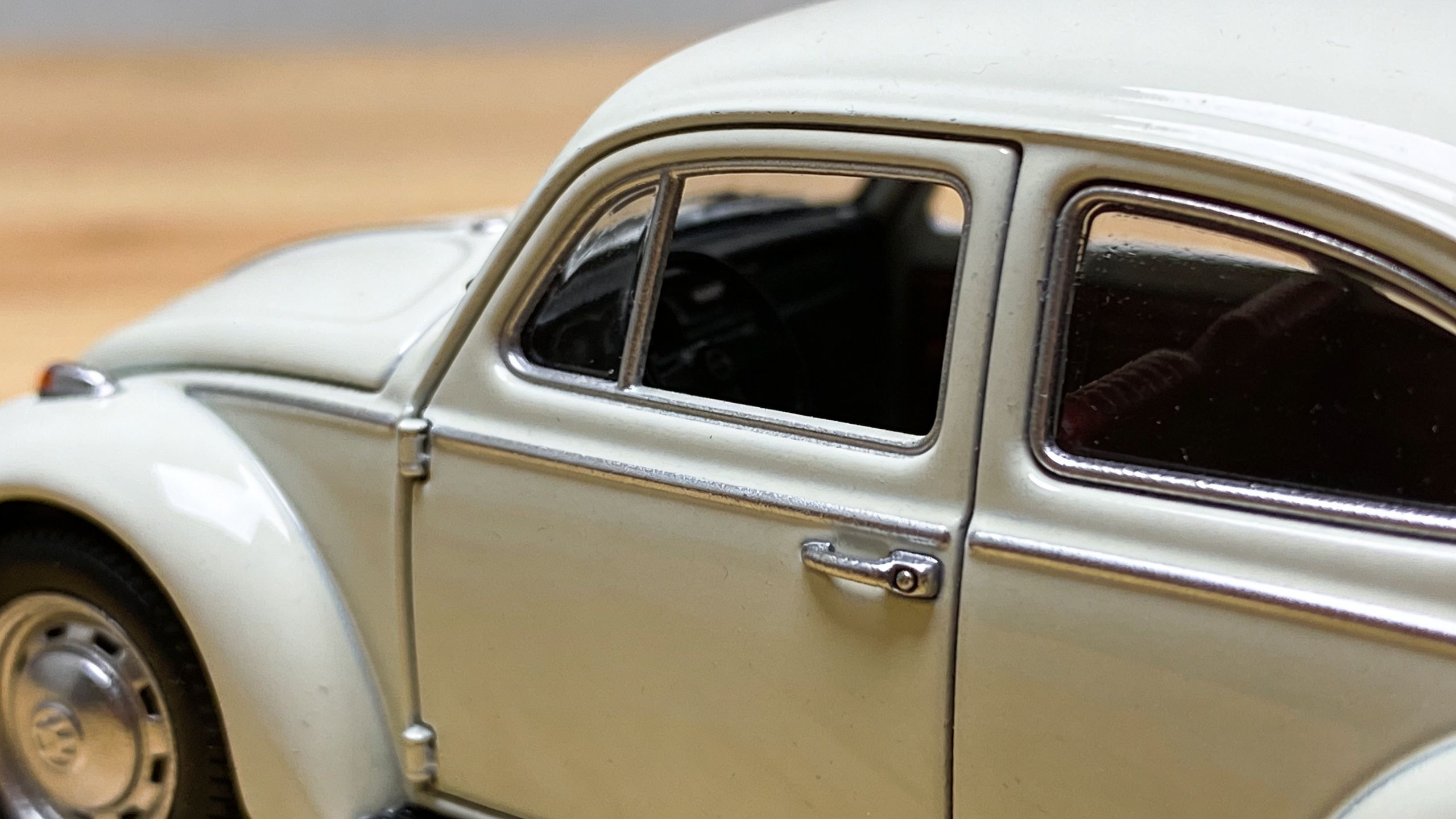
Opening parts can be lovely, but only if they're done properly. Doors, bonnets, tailgates, roof racks, spare wheels, and surf accessories all add personality. If they feel flimsy or oversized, they can have the opposite effect.
Here's a quick look at model details in action:
A quality model should reward a slow look. You notice one detail, then another, and before long you're grinning at the tiny hubcaps.
There's a useful parallel with real electric vans too. Buyers of full-size vans have to judge trade-offs carefully. Renault Australia's Kangoo E-Tech information highlights how battery size, range, and payload can pull against one another in electric van design. Collectors face a gentler version of the same idea. You're balancing size, detail, display room, and budget.
The point is the same in both worlds. Look beyond the headline. Study the fine print.
Building Your Dream Garage From Kombis to Beetles
Some collections work because they're big. The memorable ones work because they have a point of view.
One collector might chase every Beetle variation they can find. Another might build a shelf entirely around buses and vans. Someone else might go full beach scene, with surfboards, roof racks, bright paint, and all the laid-back personality that made VW culture so beloved here.
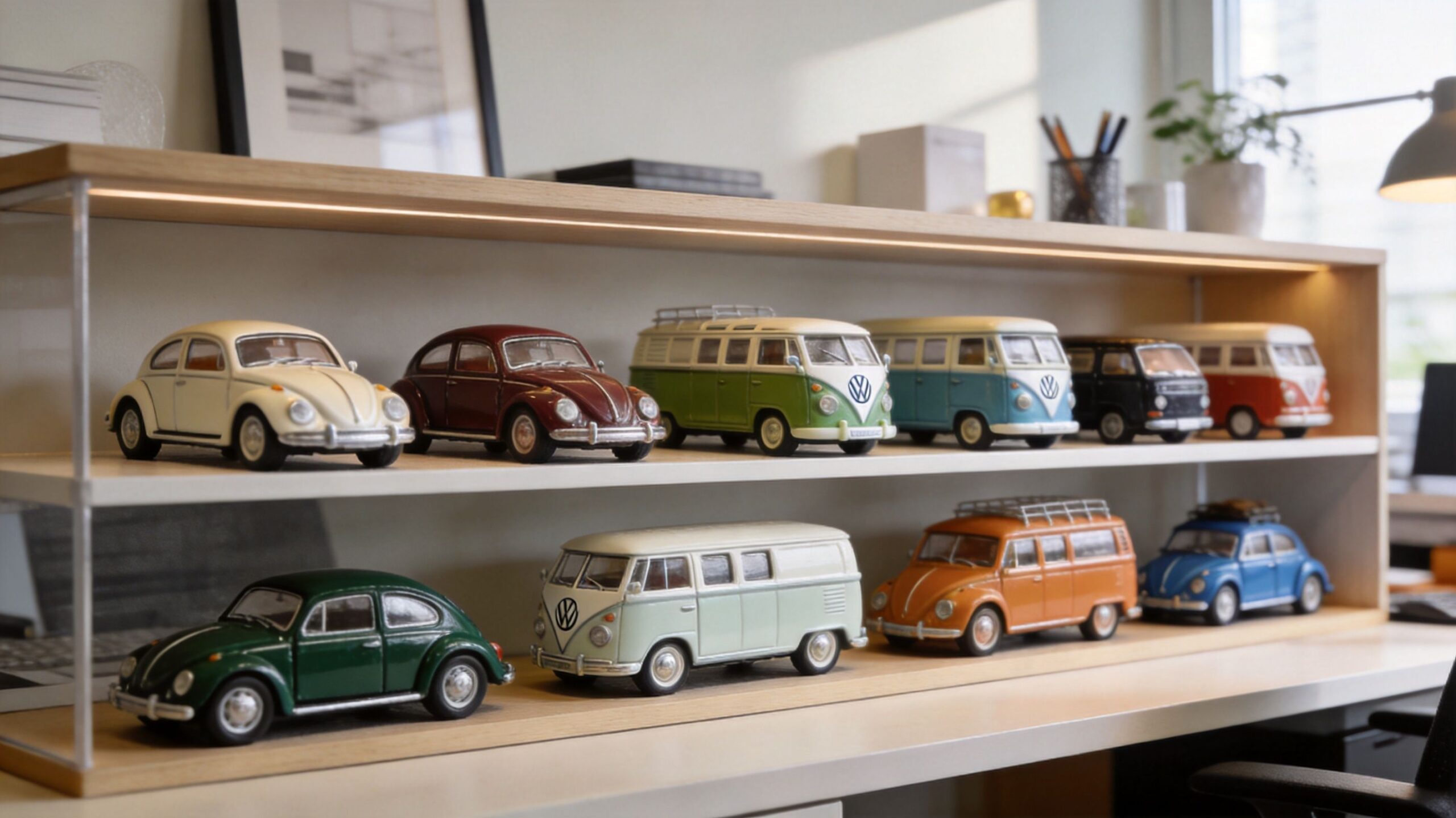
The Kombi shelf
If you're drawn to vans first, the Samba Bus is the obvious star. Volkswagen Newsroom's history of the Samba Bus explains that the sought-after Samba, also called the Deluxe Microbus, was known for 23 windows, including eight skylight windows and a cloth sunroof. No wonder it becomes the centrepiece of so many collections.
That model gives you instant visual theatre. It has presence even before you notice the details.
A Kombi-focused shelf might include:
- A Samba Bus as the hero piece
- A standard panel van for contrast
- A surf-themed variant for colour and movement
- A camper-style model to bring in the travelling spirit
If that camping side of VW life is what hooks you, the Volkswagen Crafter camper angle is an interesting modern callback to the same van-life appeal.
The Beetle shelf
Beetle collectors often take a different path. Instead of chasing window counts and roofline variations, they lean into colours, years, trim details, and playful editions. A bright Beetle can completely change the feel of a display.
That's why a Beetle shelf often feels more personal. You might choose one because it reminds you of a family car, another because the paint is pure sixties joy, and another because it looks right beside your Kombi.
Collector's note: A small, themed collection usually looks sharper than a random pile of models, even when the random pile includes good pieces.
Build around a story, not just a product
A shelf gets stronger when each model helps tell the same story. Coastal Australia. Road-trip freedom. Workshop classics. Family nostalgia. Show-and-shine favourites. Pick one lane and your display suddenly feels curated instead of crowded.
That's also where electric van australia fits the bigger picture. The full-size market is broadening, with new vans entering local consideration and buyers comparing practicality, range, charging, and carrying ability. WhichCar's round-up of electric vans in Australia reflects that growing variety, including upcoming models and van-life possibilities. For VW lovers, it's another reminder that van culture never sits still. It changes shape.
Show Off Your Pride Displaying and Caring for Your Models
A good model shouldn't end up forgotten on a crowded shelf behind old paperwork and a faded stubby holder. Display is part of the fun.
Keep them clean and visible
Dust is the quiet enemy. It dulls paint, settles into panel gaps, and makes clear windows look tired. Use a soft brush or a gentle microfibre cloth, and go slowly around mirrors, roof racks, and small trim pieces.
If the original box is tidy, keep it. Even if you display the model loose, storing the packaging gives you options later and helps if you ever move house.
Make the display feel intentional
You don't need a museum cabinet. A simple shelf with a bit of breathing room often looks better than cramming everything together.
Try these ideas:
- Group by theme. Keep surf vans together, Beetles together, or buses together.
- Vary the height. A small riser at the back helps every model get seen.
- Avoid harsh sun. Direct light can be rough on paint and packaging over time.
- Leave space around hero pieces. A Samba or standout Beetle needs room to shine.
If you can see every model properly, you'll enjoy the collection more often.
Handle them like collectibles
Pick models up from the solid body, not the mirrors, bumpers, or opening parts. If a piece has moving doors or accessories, don't force them. Small hinges and trim details reward patience.
A collection lasts longer when routine care is easy. Clean lightly, display elegantly, and resist the urge to overpack the shelf.
Start Your Volkswagen Journey Today
The charm of electric van australia isn't only in what's new. It's in how the new chapter sits beside everything Australians already love about vans. Practicality, personality, travel, community, and that unmistakable sense of movement all still matter. The shape of the story has changed, but the spirit is familiar.
Australia's broader EV shift gives that story some real momentum. AFMA's report on Australia's EV sales growth in 2025 notes that 103,300 battery electric vehicles were sold in 2025, 53,484 plug-in hybrid electric vehicles were sold, and more than 157,000 electric vehicles were sold nationally, accounting for 13.1 percent of all new car sales for the year. It also says electric vehicles reached 16.5 percent market share of new vehicle sales by April 2025. That rising familiarity helps electric vans feel less like oddities and more like part of the normal Australian road mix.
For collectors, all of this adds another layer of enjoyment. You can appreciate the old-school magic of a Beetle or Samba Bus while keeping an eye on where vans are heading next. If modern VW curiosity has already bitten, the Volkswagen ID Buzz Australia price guide is one more interesting place to wander.
The best collections usually start small. One Beetle you love. One Kombi that reminds you of summer. One licensed model with enough detail to make you stop for a second look every time you pass it. That's enough to begin.
If you're ready to add a little VW history to your shelf, have a browse through Volkswagen Memorabilia. You'll find officially inspired VW-themed collectibles, locally stocked in Australia, with fast shipping and plenty of charm for Beetle lovers, Kombi fans, and gift buyers chasing something with real personality.