

You roll into a Sunday meet with the Beetle washed, tyres dressed, chrome catching the morning light, and there it is. A small dent on the guard. Maybe it happened in a crowded car park. Maybe a loose door at the servo kissed the panel when you weren't looking. However it got there, that little mark can feel bigger than it is.
Anyone who's loved an old Volkswagen knows the feeling. These cars carry stories in their curves. The Beetle's rounded guards and the Kombi's broad sides aren't just sheet metal. They're memory, effort, and pride. Getting a dent sorted isn't vanity. It's part of keeping the magic alive, the same way a flawless miniature on the shelf reminds you what made you fall in love with the original in the first place.
That Heart-Sinking Moment the First Ding Appears
A dent has a way of stealing your eye. You stop seeing the whole car and start seeing only the blemish. On a tidy Beetle, one little ding on a front guard can feel like a shout. On a Kombi, a ripple on a long side panel seems to catch every reflection at once.
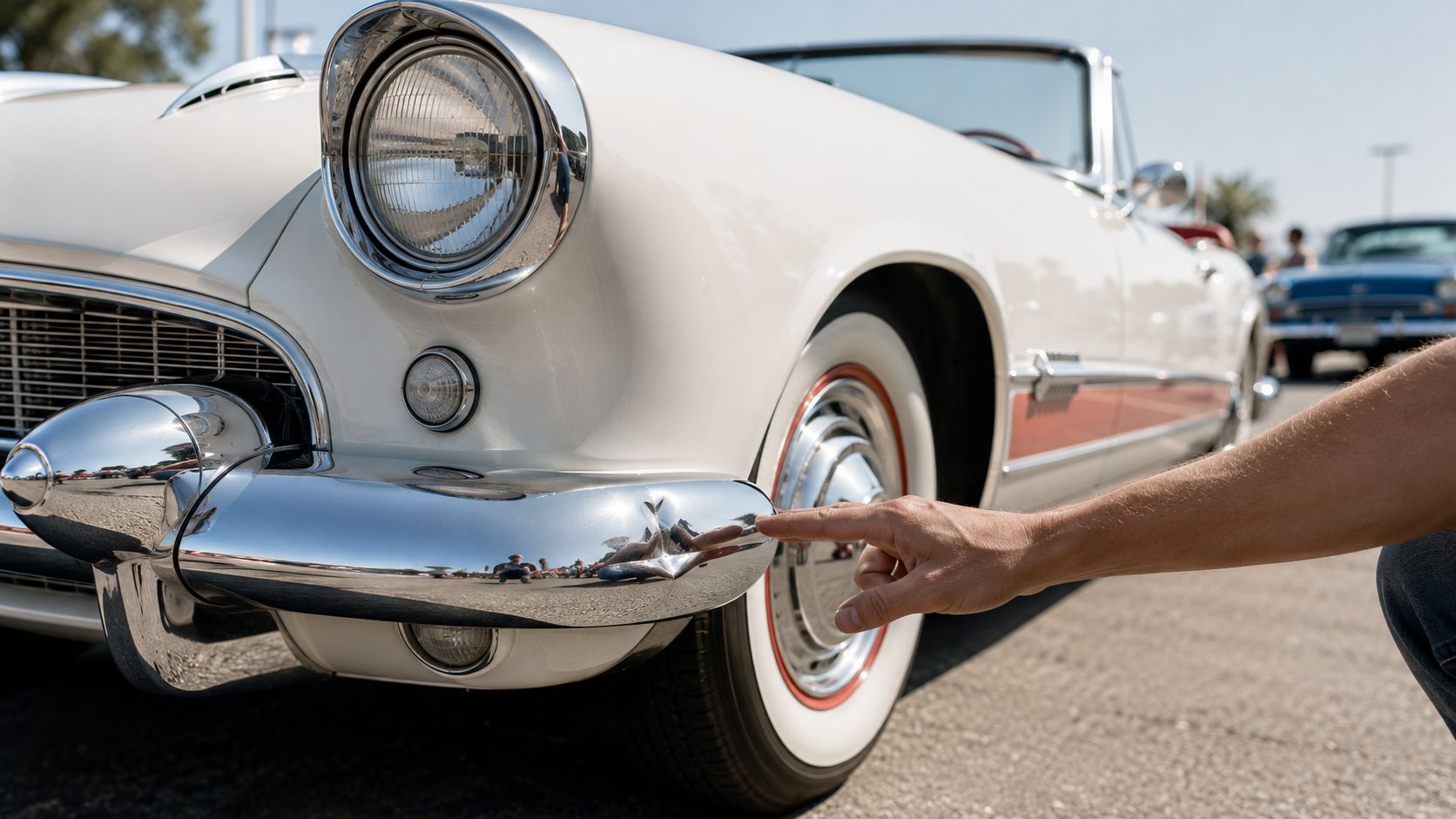
The good news is that a first ding isn't the end of the romance. It's usually the moment you start learning your car in detail. You begin to notice where the metal is forgiving, where access is tight, and why factory paint matters so much on a classic VW.
Why this matters more on an old Volkswagen
Classic Volkswagens wear their shape plainly. A Beetle doesn't hide panel imperfections behind sharp modern creases. A Kombi's sides are a big canvas. That means careful dent removal auto work can make a dramatic difference, but rushed work can leave a panel looking worse in certain light.
Practical rule: Treat the dent like a preservation job, not a shortcut repair.
A lot of owners jump straight for a gadget. Better to pause, make a cup of tea, and inspect the panel properly. A smooth shallow ding is one thing. A sharp crease with damaged paint is another beast altogether. The smartest enthusiasts know that patience at the start saves regret later.
And there's something satisfying about the whole ritual. You're not just fixing metal. You're restoring the line that made a Beetle charming and a Kombi iconic.
Assessing the Blemish on Your Beauty
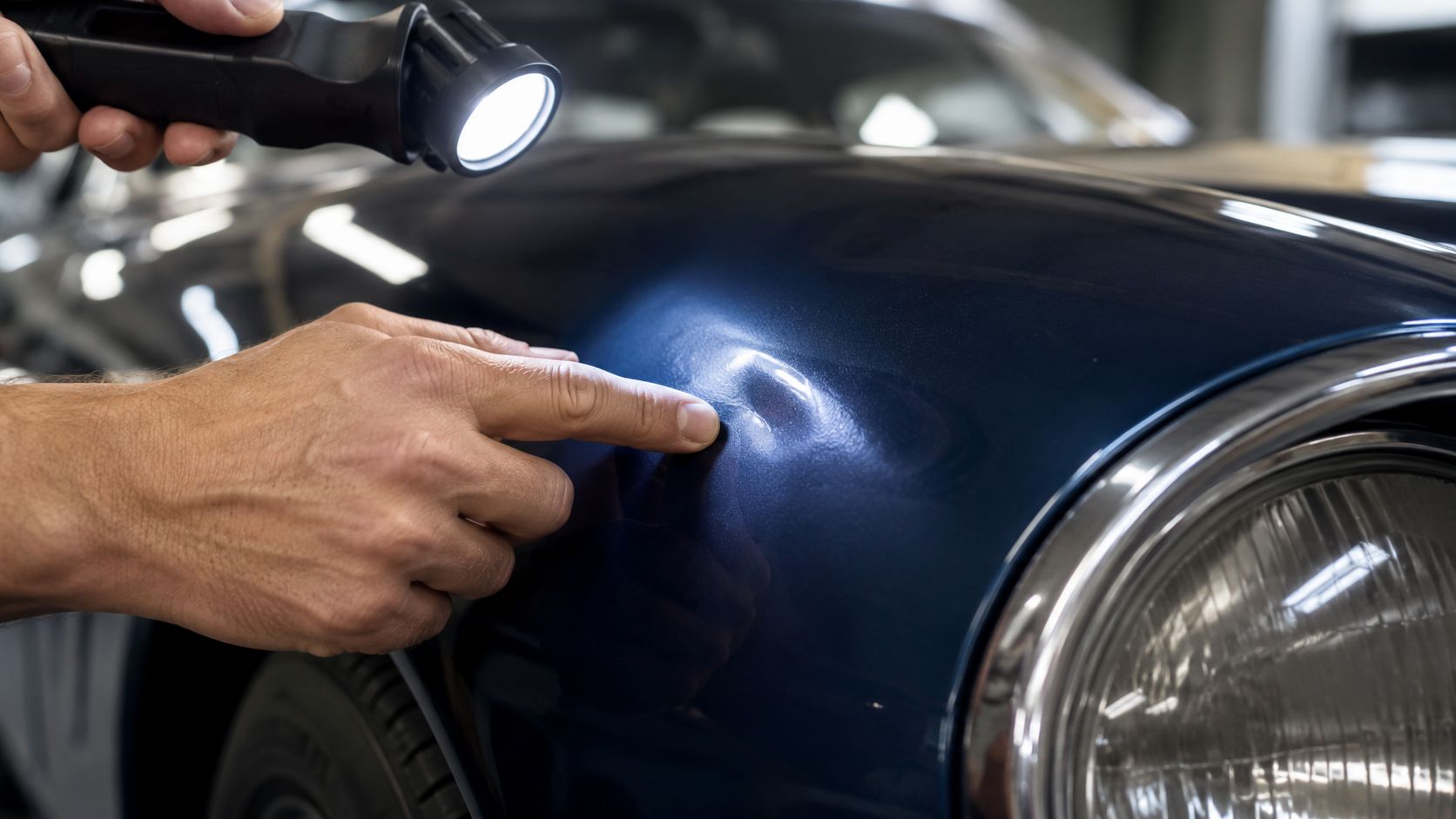
Before any pulling, heating, or poking starts, you need to read the story of the dent. The panel usually tells you exactly what happened if you look closely enough. Stand the car where light runs across the surface and move your head side to side. Reflections reveal depth better than a quick glance ever will.
What to check first
Start with the paint. That's the make-or-break test.
A definitive benchmark for failure is any dent accompanied by cracked, chipped, or compromised paint, because Paintless Dent Removal addresses only the metal substrate and cannot restore surface paint integrity, as noted in this Carsales guide on DIY dent removal.
Then look at the shape. A smooth, rounded depression is usually kinder to deal with than a sharp crease. Body lines also matter. If the dent sits on the crisp edge of a panel, the repair becomes more delicate because the metal has been stretched and folded into a stronger shape there.
A simple inspection checklist
- Paint condition. If you see chips, fractures, or paint lifting, stop thinking paintless.
- Dent shape. Rounded dings are friendlier than pointed creases.
- Panel location. Flat open metal is easier than edges, swages, or tight corners.
- Rear access. If you can reach behind the panel, your options improve.
- Reflection test. Use a torch or inspection light and watch how the lines bend.
Once you've looked over the panel, it helps to see how technicians approach the same problem in practice.
Reading the dent like a VW person
Beetle owners get good at this quickly. The rounded guards can turn a small dent into a visual nuisance because the light rolls so beautifully over them. Kombi owners face the opposite issue. Flat side panels make even shallow damage visible from metres away.
If the metal looks softly pushed in and the paint still looks healthy, you may have a worthwhile DIY candidate.
That doesn't mean every home fix will work. It means the panel has given you permission to proceed carefully.
Your Garage Toolkit for DIY Dent Removal
A decent home dent removal auto setup doesn't need to look like a body shop. What matters is choosing the right method for the right dent, and knowing when a tool's helping or when it's starting to bully the metal.
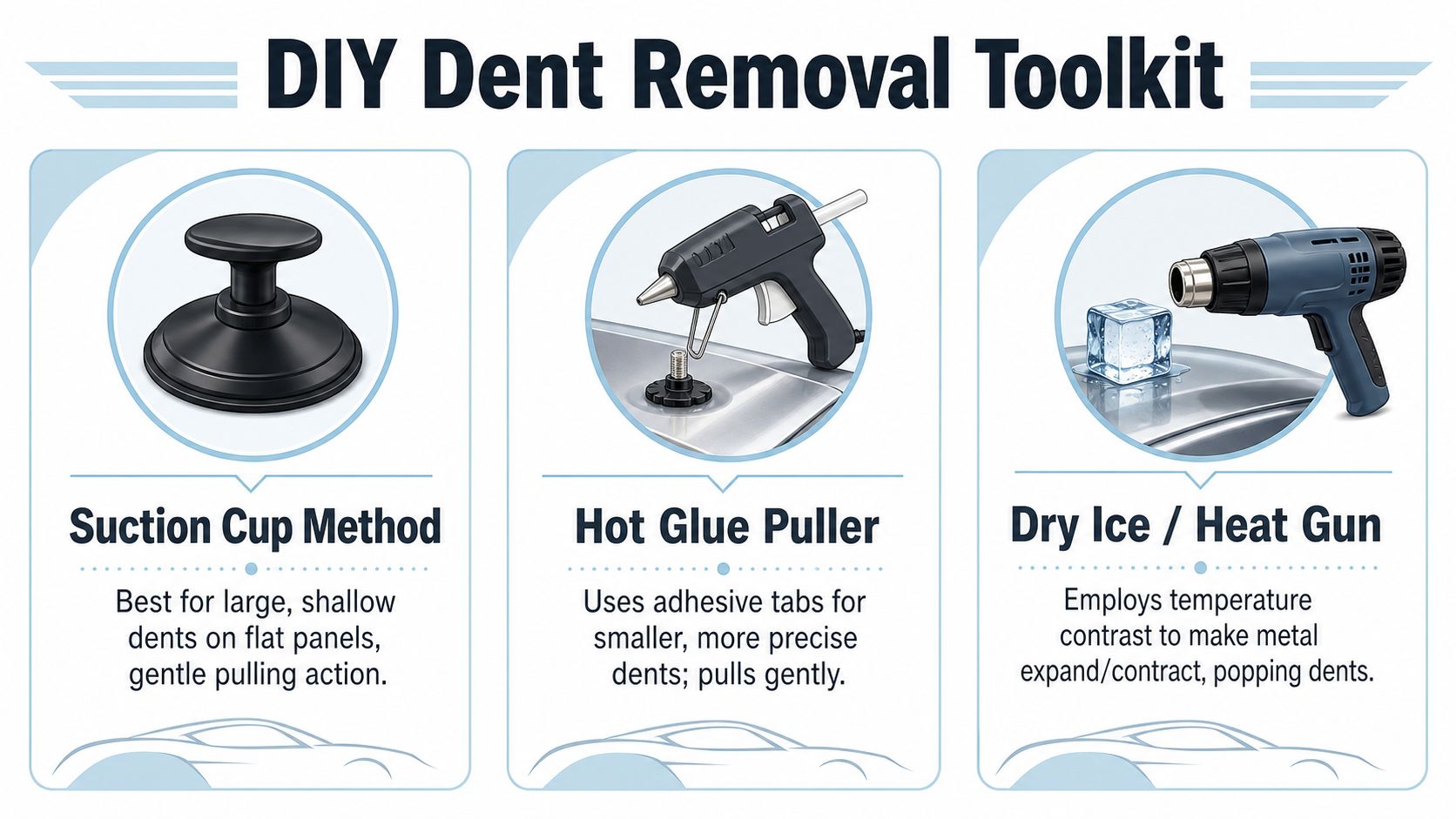
The three methods most owners try
| Method | Best use | Why it can work | Why to be cautious |
|---|---|---|---|
| Suction cup puller | Large, shallow dents on flatter panels | Pulls evenly without adhesives | Won't do much on sharp or tight dents |
| Heat and cold contrast | Very mild surface distortions | Metal expands and contracts with temperature change | Results are inconsistent and paint needs care |
| Glue pull kit | Smaller dents where rear access is limited | Targets the centre with a tab and controlled pull | Too much force can raise a high spot |
Suction cup puller
This is the friendliest starting point for many DIYers. If a dent is broad and shallow, especially on a flatter area of a Kombi or a less curved section of a Beetle, a suction puller can sometimes coax the panel outward without drama.
Use a clean surface. Any dust trapped under the cup weakens the seal. Wetting the cup slightly can help it grab. Then pull steadily rather than yanking like you're starting a mower.
It's a blunt instrument, though. If the dent has a centre point or sits near an edge, you'll often get very little movement.
Heat and cold contrast
This old shed trick has been around for ages. The idea is simple. Warm the panel, then introduce cold so the metal contracts and may move back toward shape. Owners usually use a hairdryer rather than anything more aggressive.
The catch is consistency. Sometimes nothing happens. Sometimes the panel shifts a little. Sometimes the result is too subtle to notice unless you knew exactly where to look. It's best seen as a gentle experiment for very minor marks, not a guaranteed fix.
Workshop note: Be gentle with heat on older paint. The goal is warmth, not punishment.
Glue pull kit
When you can't reach behind the panel, glue pulling is the method most closely associated with paintless repair. It needs a steadier hand than social media clips make it seem.
For dents lacking rear access, a glue pull is used. You heat glue until drizzling, apply it to a tab, press onto the dent, wait 30–60 seconds, then pull gently with a slide hammer using a quick tap to avoid creating high spots, as described in this paintless dent technique guide.
A few practical habits make a difference:
- Match the tab to the dent. Too large and you pull too much area. Too small and you over-focus the force.
- Watch the reflections. Stop after each pull and inspect. Don't chase perfection blindly.
- Work gradually. Several light attempts beat one heroic tug.
- Know when to quit. If the panel starts rising around the dent, you're creating trouble.
If you're also tracking down trim pieces, clips, or other bits while tidying a project car, it's worth bookmarking VW parts in Australia for broader restoration inspiration alongside your panel work.
What belongs in a sensible starter kit
- A small suction puller for broad shallow dings.
- A hairdryer for mild temperature-contrast attempts.
- A basic glue pull kit with tabs in different sizes.
- Microfibre cloths because dirt on the panel ruins good judgment.
- A torch or inspection light so you can read reflections clearly.
The trick isn't owning every tool. It's stopping before enthusiasm outruns skill.
The Classic VW Touch for Beetles and Kombis
A Beetle and a Kombi ask for different hands. I learned that years ago helping a mate with a door ding on a cream Beetle, then later fussing over a ripple on a splitty's side panel before a local show. Same family badge. Completely different personalities in steel.
The Beetle rewards finesse. Its curves mean the panel often needs tiny, patient corrections because a slight distortion becomes obvious as light slides over the guard. A Kombi is more about broad visual harmony. You're usually trying to make a larger flat area read cleanly again from a few steps back.
Where each model tends to test you
- Beetle guards can be deceptively tricky because their rounded form magnifies poor finishing.
- Beetle doors may offer useful access once trim is removed, but old clips and cards deserve care.
- Kombi sides give you room to work visually, though large flat areas show waviness fast.
- Kombi interior panelling can sometimes provide useful access routes if you remove pieces carefully.
In the Australian market, the passenger van variant of the Type 2 was specifically marketed as the VW Kombi, a name that became synonymous with our local surf and road trip culture, as noted in this history of the VW Kombi in Australia.
That's why panel care feels personal on these vans. A Kombi isn't just transport. It's picnic rugs, boards on the roof, and salt in the air.
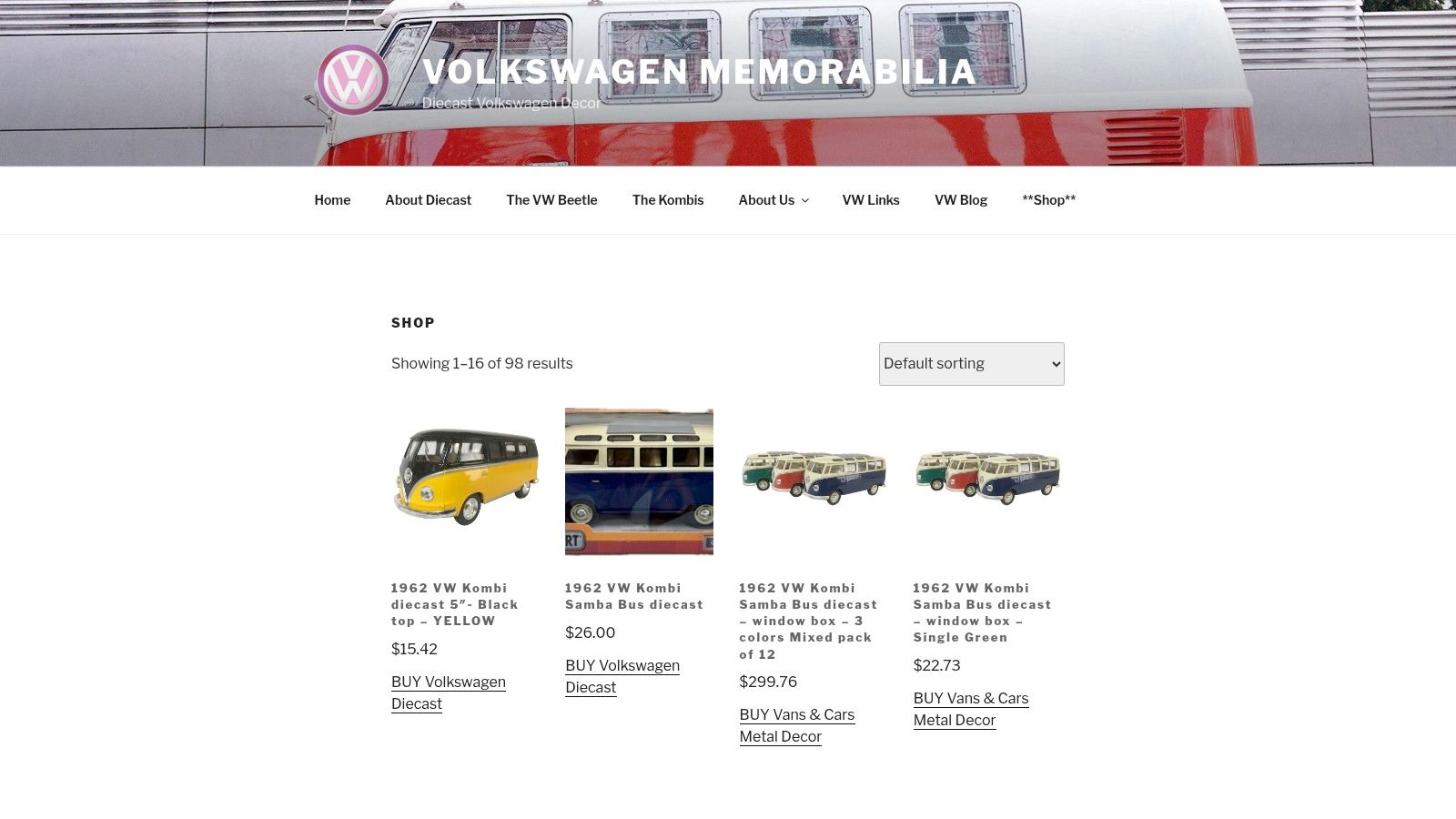
A well-finished Beetle panel has the same satisfaction as seeing the proportions captured perfectly in miniature. That's part of the charm behind old-school collecting. The same rounded bonnet, the same cheerful stance, the same silhouette that made you stop and smile. If you enjoy tracing those details from full-size car to model form, Volkswagen Beetle parts inspiration is a useful rabbit hole to wander down.
When to Call a Pro for Your Pride and Joy
Smart enthusiasts don't prove anything by forcing a bad DIY repair. They protect the car. That means recognising the jobs that need a technician with proper PDR tools, lighting, and experience.
Professional help makes sense when the dent sits on a body line, has a sharp crease, or leaves you unsure whether the metal has stretched too far. It also makes sense if your first attempts have started to make the reflection look uneven. High spots are easy to create and annoying to undo.
In Australia, professional Paintless Dent Repair for a single panel typically costs between $150 and $250 AUD, while conventional methods can range from $800 to $2,000+ AUD and take days instead of hours, according to this Australian dent repair cost guide.
That's a strong argument for calling a pro early on the right job. You preserve the factory finish, avoid filler and repainting where possible, and save yourself the misery of turning a tidy little ding into a bigger panel drama.
A good repair isn't the one you did yourself. It's the one that leaves the car looking right.
Keeping That Shine and Celebrating the Legend
Once the dent's sorted, step back and check the panel in natural light. Wash the area properly, use a gentle polish if appropriate for the finish, and compare reflections from several angles. A repair that looks perfect under garage lighting can tell a different story in afternoon sun.
Prevention matters too. Leave extra room in car parks. Be picky about where you park at shows. On a Kombi, think about the long flank catching wandering doors. On a Beetle, remember those lovely guards sit where bumps are easy to notice. If you're freshening the whole look of the car, details such as car rim powder coating options can complement panel care beautifully.
A few habits worth keeping
- Clean before inspecting. Dust can disguise a dent or mimic one.
- Use light, not guesswork. Reflections tell the truth.
- Respect original paint. Preserving factory finish is often the ultimate win.
- Keep perspective. These cars are meant to be enjoyed, not hidden away in fear.
There's a lovely connection between repairing a real Volkswagen and admiring a licensed diecast one on a shelf. Both come down to shape, finish, and affection for the design. You're keeping a piece of motoring history looking the way it deserves to look, whether it lives in the garage, on the road to the coast, or in a display cabinet beside old rally badges and surfy postcards.
If keeping a Beetle or Kombi looking its best is part of how you celebrate the marque, it's worth taking that same care indoors too. Browse the officially inspired collection at Volkswagen Memorabilia, where Australian VW fans can find local stock, fast shipping, and a warm mix of diecast models, gifts, and nostalgic pieces that keep the spirit of the classic Volkswagen alive long after the garage door closes.