


I still remember pulling up at a quiet stretch of coast in an old Kombi, side door open, wax on the board, kettle rattling on a little camp stove. The waves rolled in, gulls carried on, and from the fibro beach shack next door came that light clink of shell wind chimes, the sort of sound that makes a whole afternoon feel slower in the best possible way.
The Soundtrack to Freedom and Salty Air
That sound belongs to a certain Australian memory. You park the van crooked in the sand, kick off your thongs, and everything sharp about the week drops away. Salt sits in the air, sunscreen and seaweed mix together, and somewhere nearby a string of shells taps softly against itself in the breeze.

For a lot of VW people, that’s the core charm of beach culture. It isn’t only the vehicle. It’s the whole scene around it. A weathered esky. Faded stripes on a deck chair. A surfboard with a few honest dings. A VW travel van surf van piece on a shelf can spark the same feeling, especially when the rest of the room carries that coastal note.
Why shell wind chimes fit the Kombi spirit
Shell wind chimes don’t shout for attention. They work the same way a classic Kombi does when it’s parked among modern cars. They bring character without needing polish or fuss.
- They sound natural: softer than metal, more like surf shack ambience than garden-centre clang.
- They age well: a bit of weathering often makes them look more at home, not less.
- They carry memory: one gentle rattle can bring back beach runs, early starts, and sandy floor mats.
Shell wind chimes feel like the audio version of a Kombi window open on a summer afternoon.
That’s why they work so well in homes, sheds, patios, and display corners built around old Volkswagens. They keep the coastal mood alive after the engine’s off and the boards are stacked away.
More Than Decoration The History and Soul of Shell Chimes
Shell wind chimes have far older roots than is commonly known. They weren’t dreamt up as a cute coastal accessory for a verandah. They began as practical objects with a job to do, and that gives them a bit of soul.
Archaeological remains in South East Asia show wind chimes made from bone, wood, bamboo, and shells dating back to approximately 3000 BC, and farmers in places such as Bali used them to ward off birds from crops while also believing they could repel evil spirits, according to the history outlined by Wind Chimes Australia. That’s a cracking origin story for something now hanging beside beach towels and old surf photos.
Practical first, symbolic second
The best objects usually start with use. Think of a Kombi. It became beloved because it was useful before it became iconic. Shell wind chimes followed a similar path.
Early shell chimes served two purposes:
- Field work: they created enough movement and sound to unsettle birds around food crops.
- Spiritual protection: communities also treated the sound as a barrier against bad energy or unwelcome spirits.
Those two threads still cling to shell chimes today. Even now, people don’t only hang them because they look good. They hang them because they change a space. A doorway feels calmer. A patio feels inhabited. A corner of the house feels less still.
Why that history suits Australian coastal living
Australian coastal style has always borrowed from what works in wind, sun, and salt. Shells, timber, rope, and washed-out colours aren’t trends here. They make sense. They belong.
That’s also why shell-based décor sits naturally alongside textured pieces such as shell wall art. Both have that collected, weathered, slightly sun-faded charm that makes a room feel lived in rather than staged.
Practical rule: when an object has both history and function, it tends to outlast fashion.
There’s also something fitting about shell chimes finding a home in Australian beach culture. They connect the sea, the breeze, and everyday life. For VW enthusiasts, that same connection matters. The old cars we love aren’t just machines. They’re tied to roads, campsites, board racks, beach car parks, and whole eras of living.
The object becomes part of the ritual
A shell wind chime isn’t just there to fill a hook on the verandah. It marks a threshold. You hear it when someone steps onto the porch. You hear it when the afternoon change comes through. You hear it when the weather turns.
That ritual quality is what makes it more than decoration. It does what all the best memorabilia and home pieces do. It turns atmosphere into something tangible.
Finding Your Coastal Tune Shell Types and Chime Styles
Choosing shell wind chimes gets easier when you stop thinking only about looks and start thinking about sound. Different shells create different moods, just as different VW models create different reactions. A bright Beetle has one personality. A two-tone Samba has another. Shells do the same job in audio form.
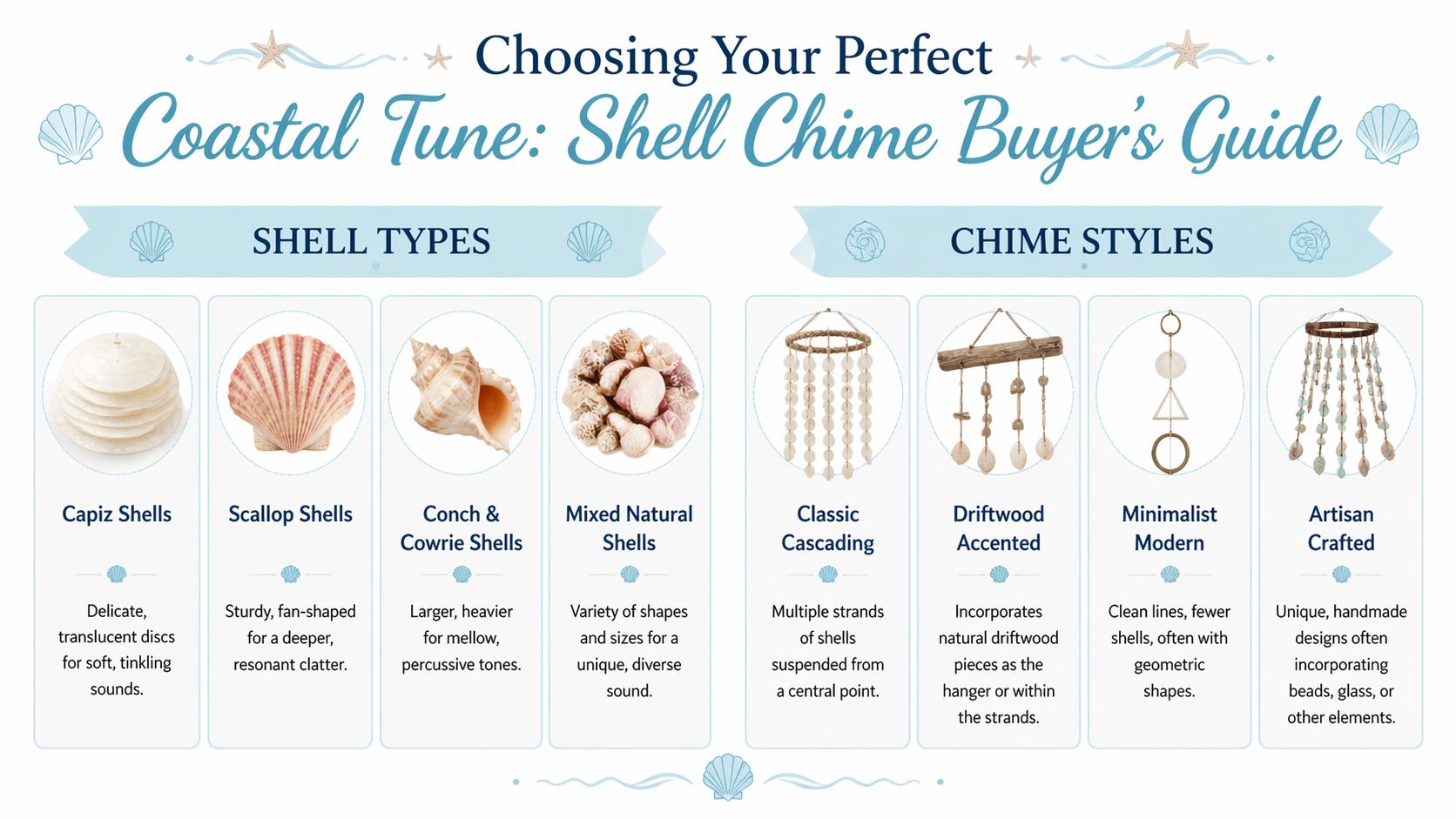
A useful starting point is the material itself. Tuned shell wind chimes using Australian-sourced capiz and ringtop cowrie shells can achieve pentatonic scale precision, capiz shells can produce sustained tones lasting up to 4 seconds, and denser cockle shells can create frequencies between 800-1200 Hz for a soft, cascading “ocean whisper” effect, as described on the capiz and cowrie shell chime reference.
What each shell sounds like
Here’s the short version if you’re picking by ear rather than by label.
| Shell type | Sound character | Best suited to |
|---|---|---|
| Capiz | Light, airy, tinkling | Indoor corners, windows, sheltered balconies |
| Cockle | Softer cascading note | Coastal patios, relaxed outdoor nooks |
| Cowrie | More rounded and percussive | Spots with a little more breeze |
| Mixed shell blends | Varied and textured | Beachy displays with a handmade feel |
If you’re drawn to translucency and movement, capiz is hard to beat. It catches the light beautifully and gives off a finer sound. If you prefer something earthier, cockle and cowrie styles tend to feel more grounded.
Style matters as much as shell
The frame and layout change the effect just as much as the shell itself. A big cascading design moves differently from a spare, minimalist one.
- Classic cascading chimes suit verandahs, pergolas, and leafy corners where you want visible movement.
- Driftwood-topped designs feel rougher and more surf-shack. They pair well with timber, cane, and old beach signage.
- Minimalist shell strands work better in apartments or tighter spaces where constant movement could get busy.
- Craft-supply pieces let you build your own balance of sound and shape, especially if you start with seashell wall art crafting supplies.
Matching sound to place
A breezy Queenslander verandah can handle a fuller chime with more strands. A sheltered Sydney balcony often suits something quieter and shorter. If the space already has a lot going on, cane furniture, patterned cushions, stacked mags, surf prints, keep the chime simple.
Pick the shell wind chime the way you’d pick a stereo for a shed. Don’t ask only how it looks. Ask how it will sound in that exact space.
That one decision usually separates a lovely coastal detail from a chime that ends up in a drawer after a week.
Styling Your Space A VW Shrine Meets Coastal Cool
A mate of mine on the Central Coast keeps a little shelf by the back door of his weatherboard house. On it sits a faded blue Kombi model, a sun-bleached surf photo, and a shell wind chime that catches the breeze every time the screen door swings open. The whole corner feels like an old summer run up the coast. You can almost hear thongs on timber boards and a van door sliding shut before first light.
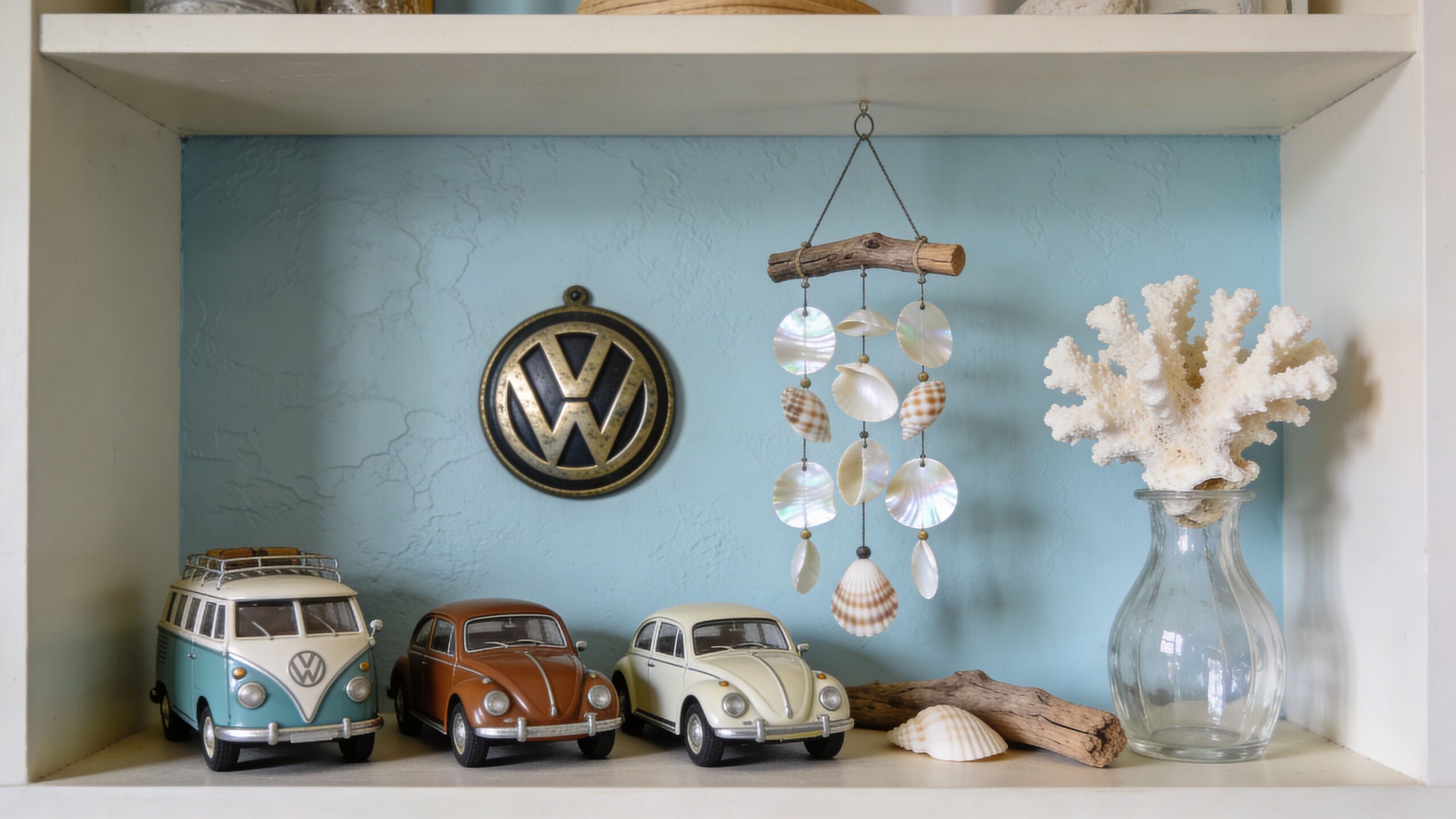
That is the look to chase. Bring your VW pieces into the coastal styling so the room carries the same easy spirit as a Kombi parked near the dunes. Shell wind chimes help because they soften the hard edges of metal, enamel, and glass, and they add a bit of movement that makes a display feel lived in.
The surf shack shelf
The easiest setup starts with restraint and a good eye for mood. A couple of Kombi diecast models in sun-faded colours, timber or painted-white shelving, and a driftwood-and-shell chime nearby will usually do it. It should feel collected over a few beach holidays, not bought in one hit on a Saturday afternoon.
Pieces that suit this look include Kombi diecast models, early Samba Bus memorabilia, and other classic Volkswagen collectibles you already have on hand.
Keep the palette dusty and salt-washed. Soft aqua, chalky white, faded red, sea-glass blue, sandy beige. Natural shell chimes sit especially well here because they look at home beside cane, old timber, and anything with a bit of wear.
The flower-power corner
A Beetle display carries a different kind of memory. Less surf club car park, more road trip to a market with a tape deck full of old tunes and flowers painted on the quarter window.
Pair a bright Beetle model with a lighter shell chime that has a little shimmer and rounder shapes. The link is visual and emotional at once. Curves, colour, and a playful feel.
| Display mood | VW piece to pair | Chime style |
|---|---|---|
| Flower-power fun | Volkswagen Beetle model | Capiz or mixed shell strands |
| Retro road-trip | Diecast Kombi | Driftwood and shell cluster |
| Collector’s wall shelf | Volkswagen diecast models | Smaller, tidy shell chime |
Give the shelf some breathing room
The best displays leave space around the hero piece. A classic VW has too much character to be crowded by ten other things fighting for attention.
A simple formula works well:
- Pick the star. A Beetle, a Samba Bus, or one favourite model with real personality.
- Add one beach texture. Shell, rope, driftwood, or a coral-look accent.
- Repeat a colour once. If the van has a red stripe or aqua roof, echo that nearby.
- Let air sit between pieces. The arrangement will feel calmer, and the shapes read properly.
If the shelf already has bold colours or old signs, choose a quieter shell wind chime. The room should feel relaxed, like a shady spot outside a surf shack, not a swap-meet trestle table.
Let the patio carry the same story
Some of the best VW styling happens just outside the house. A covered patio, a few chairs, an old surf shot on the wall, and a small cabinet with a couple of favourite models can feel like an extension of the garage and driveway. Add a shell chime near the seating area and the whole space starts to sound the part too.
That connection is what makes this style work. The Kombi life was never only about the vehicle. It was morning coffee from an enamel mug, sandy towels on the line, and chasing the coast whenever the weather looked kind. Bring that same feeling into the house, and your VW collection stops looking like storage and starts feeling like a life well remembered.
Placement Care and Making Your Own Chime
A good shell wind chime can sound dreamy in one spot and annoying in another. Placement does most of the work. You want enough breeze for movement, but not so much exposure that the thing chatters all day or cops a hammering from sun and salt.
Where to hang shell wind chimes
The sweetest spots are usually transitional places. Near a window that catches an afternoon breeze. On a covered porch. At the edge of a pergola. Beside a doorway that opens toward the coast.
A few placement rules help:
- Shelter matters: under cover lasts longer than full exposure.
- Head height is pleasant: the sound sits around you instead of above you.
- Avoid constant wind tunnels: corners between walls can make even soft chimes too busy.
- Test before fixing: hang it temporarily for a few days and listen at different times.
Caring for them in Australian conditions
Salt air can be rough on thread, knots, and drilled points. Harsh sun can make some materials brittle. The answer isn’t fussing over them every week. It’s giving them a quick check now and then.
Use a soft cloth to remove grime, untangle strands before knots tighten, and bring delicate chimes under cover if wild weather is rolling through. If a strand starts to wear, replace it before the shells drop and chip.
A shell wind chime should sound relaxed, not stressed. If it’s clattering nonstop, move it before it wears out early.
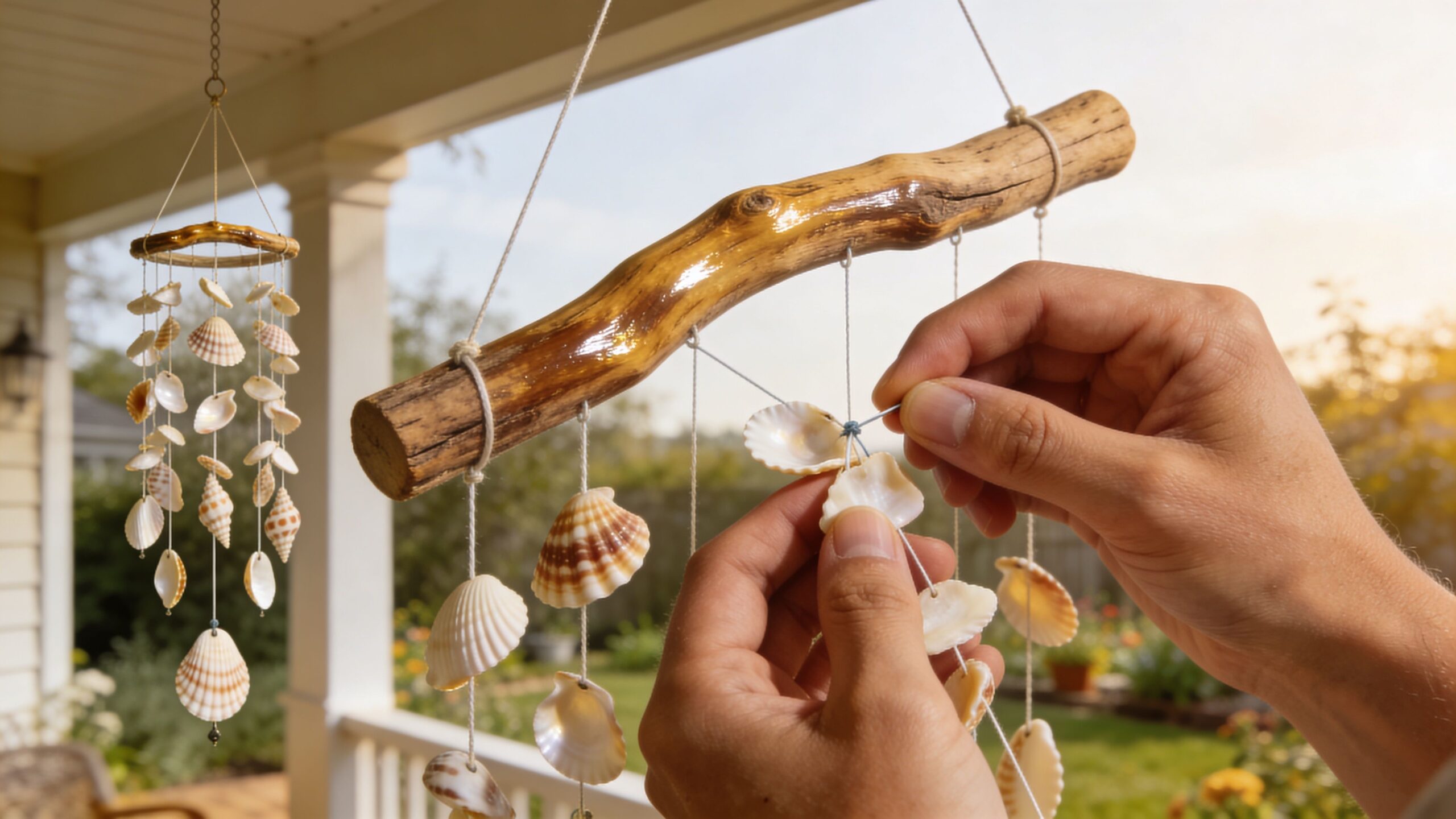
Making your own with local shells
DIY shell wind chimes suit VW people because we already like tinkering. We don’t mind spending an hour adjusting something small if the end result feels personal.
There’s also a strong reason to go local with materials. A key issue often missed is legal, sustainable sourcing. The Australian shell craft compliance note says 40% of intercepted shell crafts at borders were non-compliant, and it also notes that 65% of AU Etsy searches for “shell wind chimes” seek “local made” options. Local alternatives such as pipi or cockle shells, as promoted by Indigenous craft groups, make far more sense for an Australian DIY project.
A simple DIY approach
You don’t need a workshop full of gear. Just patience and a light hand.
Gather a base
Driftwood works beautifully. So does a smooth branch or a simple timber ring.Choose a small shell mix
Pipi or cockle shells create an honest local feel. Keep the selection balanced rather than perfect.Use weather-friendly cord
Nylon or similar outdoor-safe line tends to hold up better than flimsy craft thread.Space the strands unevenly
Uneven lengths usually give a more natural sound and stop the whole piece looking too rigid.Hang it somewhere protected first
Listen for a few days. Trim, shorten, or separate strands if the sound is too dense.
A handmade shell wind chime beside your VW shelf or patio chair has something shop-bought pieces can’t fake. It carries your own beach, your own trip, your own afternoon.
The Perfect Gift for Your Favourite VW Enthusiast
The best gifts for VW people usually do one thing well. They show you understand the life around the vehicle, not just the badge on the nose.
A diecast Kombi on its own is a solid present. A shell wind chime on its own is thoughtful. Put them together properly and the gift starts telling a story. It says beach mornings, old road maps, wax in the glovebox, sun-faded towels, and that dream of one more run up the coast.
A gift pack that feels personal
One of the nicest combinations is a Kombi or Samba Bus diecast paired with a soft-sounding shell chime in coastal tones. Wrap it in plain kraft paper, tuck in a handwritten note, and add a tag that nods to a favourite beach, a first road trip, or the old family van they still talk about.
That combination works because the two pieces do different jobs:
- the diecast model anchors the VW nostalgia
- the shell wind chime brings in atmosphere and home style
- the packaging and note turn the whole thing into a memory, not just a purchase
Matching the gift to the person
Not every VW enthusiast wants the same vibe. Some lean collector-clean and organised. Others want their place to feel like a casual surf hideaway.
Here’s a simple approach:
| Recipient type | Better model choice | Better shell chime choice |
|---|---|---|
| Kombi dreamer | Samba Bus or surf van | Driftwood or mixed shell |
| Beetle lover | Bright Beetle diecast | Capiz or lighter shell strands |
| Home stylist | Neutral VW display piece | Soft white or natural shell chime |
If you’re buying for someone who already has shelves full of models, add the shell chime. It gives the collection a setting and a mood.
Why it lands so well
Unboxing matters. The little clink of shells before the tissue paper’s even off. The glimpse of a Beetle roof or Samba windows under wrapping. That’s the sort of present people keep talking about after the birthday or Christmas lunch is over.
It’s also a smart option for gift buyers who want something warmer than another generic car-themed mug or stubby holder. A model plus a shell wind chime feels considered. It respects the VW passion while adding a bit of coastal calm to the home.
Bringing the Sound of the Coast Home
A shell wind chime does something a lot of décor can’t. It adds sound to the memory. Long after the Kombi is parked, the board is rinsed off, and the esky is back in the shed, that soft rattle in the breeze keeps the coastal mood alive.
That’s why it suits classic Volkswagen life so well. Both are tied to freedom, simplicity, and a certain Australian way of slowing down without trying too hard. One sits in the driveway or on the display shelf. The other hangs nearby and gives the whole scene its soundtrack.
If your place already leans beachy, shell wind chimes will finish it off. If your shelves are full of old Volkswagens, they’ll connect the collection to the lifestyle behind it.
Your Shell Wind Chime Questions Answered
One of the blokes at a summer VW meet in Torquay told me his shell chime sounded perfect for two days, then turned into a tangled fishing net after a stiff sea breeze. Another had hung one on a unit balcony beside a row of surfboards and worried the neighbours would hear every clack before sunrise. These are the questions people ask once the chime is up and the novelty wears off.
Quick FAQ Guide
| Question | Quick Answer |
|---|---|
| How do I untangle a badly knotted shell chime? | Lay it flat first, separate one strand at a time, and start at the top knot instead of tugging from the bottom. |
| Are shell wind chimes too noisy for apartment balconies? | Usually no, if you choose a lighter design with fewer strands and hang it in a sheltered spot. |
| What’s the safest way to clean capiz shells? | Wipe them with a soft dry or slightly damp cloth. Skip harsh scrubbing, because delicate shells mark easily. |
| Can shell wind chimes do anything beyond sounding nice? | Yes. In several coastal and farming traditions, shell and wind chimes were used to add movement and sound around gardens and crops, and they were also valued for their ceremonial and protective meaning. |
A stubborn tangle is easier to sort while the chime is hanging from a hook. Gravity helps the strands fall into place, and you can see which cord is crossing the others instead of wrestling the whole lot in your hands.
Small balconies suit quieter chimes. Fewer shells, shorter drops, and a spot out of the strongest gusts will give you a soft rattle instead of an all-day clatter that feels more pub beer garden than relaxed beach shack.
Give it a quick once-over now and then.
Dust on the shells, salt on the knots, and sun on the cord can wear a chime down faster than people expect, especially near the coast. A simple wipe and a fast knot check every so often usually keeps it sounding right and saves you from restringing the whole thing later.
Start with the quietest shell wind chime that suits your space. You can always move it into a breezier corner later, but a too-noisy spot gets old quickly.
If you’d like to pair that coastal sound with something for the shelf, Volkswagen Memorabilia is a terrific place to browse. You’ll find VW-themed gifts, beach-inspired décor, and classic diecast favourites that suit everything from a laid-back surf nook to a proper collector’s display. It’s a great spot to explore if you’re after VW Kombi diecast Australia pieces, a Volkswagen Beetle model, or thoughtful VW memorabilia collectibles that bring the whole lifestyle together.