

You pull into a local Show & Shine early, before the crowd thickens. The Beetle next to you wears fresh paint, polished hubcaps, and the sort of stance that tells you its owner has spent plenty of late nights in the shed. Then the owner opens the door, sunlight spills across the cabin, and there it is. A dash top gone chalky. A crack starting near the speaker grille. Another old VW copping the slow punishment of Australian sun.
That’s the bit non-enthusiasts don’t always understand. On a classic Volkswagen, the dashboard isn’t just trim. It’s part of the whole feeling. You grip the wheel, glance across that simple horizontal line, and you’re right back in beach trips, servo stops, and family runs in a bus that smelled faintly of warm vinyl and salt air. When the dash starts to fade or split, it feels personal.
For years, automotive dashboard covers were treated like an afterthought. A practical little accessory. Nothing exciting. But if you own a Beetle, Kombi, or Samba Bus in Australia, you learn pretty quickly that a good dash cover is less “extra” and more “quiet hero”. It protects one of the most visible surfaces in the cabin, softens glare when the light gets harsh, and can make an ageing interior feel looked after again.
For classic VW owners, there’s another wrinkle. Generic advice usually talks about modern cars with flatter dashboards and easier fitment. It doesn’t talk much about old Beetles with curves in all the wrong places for a universal mat, or Kombis with wide dash layouts that show every ripple if the cover isn’t cut properly. That gap matters, because vintage Volkswagens need more than a one-size-fits-most answer.
That Heart-Sinking Moment A Sunny Day and a Cracked Dash
The moment usually arrives when everything else looks right.
You’ve washed the Bug on a Friday night. The chrome trim is sparkling. Maybe the Kombi’s got the striped chairs in the back and the esky packed for a coastal run. Then morning light hits the windscreen, and the dashboard tells the truth. Not loudly. Just enough to spoil the mood. A faded patch above the instrument binnacle. A hairline crack that wasn’t there last summer. Vinyl that’s starting to look tired instead of proud.

I’ve seen it happen at swap meets and club mornings all over. One mate with a tidy Beetle had done the hard bits already. Mechanicals sorted, paint looking sweet, seats retrimmed with real care. But every time someone leaned in for a look, their eyes dropped straight to the dash. That top surface had gone from supple to brittle, and no amount of polish could hide it.
Why it stings more in a classic VW
A modern car can carry a few cosmetic sins without changing the vibe too much. Old Volkswagens are different. Their cabins are so simple that every visible surface counts. The dash is always in the frame.
That’s why automotive dashboard covers make sense in this world. Not because they’re flashy, but because they’re protective in the most old-school way possible. They shield what you can’t easily replace, and they do it without asking you to alter the character of the car.
A classic VW interior doesn’t need gimmicks. It needs protection that respects the shape and spirit of the original cabin.
A cover isn’t admitting defeat
Some owners resist the idea because they think a dash cover means covering up a problem. I don’t see it that way. On a survivor car, it’s preservation. On a restored car, it’s insurance. On a driver, it’s common sense.
If your Beetle or Bus still has a good original dash, protect it before the damage starts. If it’s already marked, a well-chosen cover can tidy the look while giving the old material a break from heat and sun. Either way, you’re not taking something away from the car. You’re helping it stay itself for longer.
Why Your Classic VW is Crying Out for a Dash Cover
Australia is beautiful on paintwork in the morning and brutal on interiors by afternoon. That’s the plain truth. A classic VW might love a sunny run down the coast, but the dashboard pays for it.
According to Shevron’s guide to dashboard covers, vehicles in Australia face 3,000-3,500 hours of sunlight annually, and quality dashboard covers can block up to 99% of UV rays. The same source says multi-layer constructions can reduce dashboard surface temperatures by 20-30°C and can help extend material lifespan by 5-7 years under real-world AU conditions.

That isn’t a small gain for a car with old vinyl, old glue, and old plastics.
The three enemies sitting on your windscreen line
What hurts a classic VW dashboard most usually comes down to three things:
UV exposure
Sunlight dries out surfaces over time. On older dashboards, that often shows up as fading first, then cracking.Heat soak
Anyone who’s climbed into a parked Beetle in January knows how fierce cabin heat can get. Once that heat builds up day after day, the dash material can start to warp, harden, or pull away.Windscreen glare
Even if your dash isn’t damaged yet, a shiny surface can reflect back onto the windscreen. On bright days, that glare gets tiring fast.
Why a cover earns its keep
A quality dash cover tackles all three problems at once. It acts like a sacrificial layer, taking the punishment before the original dash does. That matters in old Volkswagens because replacement parts for the exact look and fit you want aren’t always sitting on a shelf waiting for you.
Here’s the practical view:
| Threat to the dash | What the cover does | Why a VW owner should care |
|---|---|---|
| UV | Shields the original surface | Helps preserve colour and texture |
| Heat | Buffers and disperses surface heat | Reduces stress on ageing materials |
| Glare | Adds a more matte top layer | Makes driving more comfortable |
Practical rule: If you’d use a car cover to protect paint, use a dash cover to protect the cabin. The dashboard takes just as much punishment, only from the inside.
It’s not only about concours cars
Some owners hear “preservation” and think this only applies to garage queens. It doesn’t. The cars that need help most are often the ones doing real duty. Beach runs. Sunday coffee runs. Club days. School pick-up in a tidy old Bug if you’re lucky enough to live that life.
Automotive dashboard covers suit that kind of use because they’re simple. No drama, no major modification, no need to reinvent the interior. Just one sensible layer between the Aussie sun and one of the most vulnerable parts of your cabin.
Choosing the Right Material for Your Bug or Bus
Material choice changes the whole feel of the car. It also changes how the cover behaves on hot days, under glare, and after months of use. If you’re choosing automotive dashboard covers for a classic Volkswagen, don’t just ask what’s available. Ask what suits the personality of the car.
A clean, understated Beetle often suits something different from a surfy Kombi with roof racks and period stickers. The best material is the one that protects the dash and still looks like it belongs there.
Carpet for the old-school practical owner
Carpet-style covers are the workhorses. They look honest, sit unassumingly in the cabin, and usually feel most at home in a driver-grade classic. If your VW gets used often, this is a strong place to start.
According to DashProtecPH’s discussion of dashboard cover materials, high-quality dash covers can include heat-resistant thermal foam layers and non-reflective matte surfaces that reduce glare by 40-60%. The same source says carpet-style covers can outperform vinyl by 25% in abrasion resistance.
That lines up nicely with what VW owners tend to value in a practical interior. Carpet doesn’t shout. It just gets on with the job.
Velour for a softer custom look
Velour sits in a different lane. It has a slightly more plush finish, and it can make an old cabin feel a touch richer without looking out of place. If your Beetle has a carefully restored interior and you want the dash cover to blend in rather than look utilitarian, velour can be a lovely fit.
It also tends to suit owners who enjoy a more refined aesthetic inside the cabin. Think less commercial van, more cherished club car.
Suede-look for a modern edge
Suede-look materials appeal to owners who want a cleaner, more contemporary presentation. On the right VW, especially one with subtle custom touches, they can look terrific. They’re especially appealing if glare reduction is high on your list.
The trade-off is that they usually ask for a bit more careful cleaning and attention. Nothing dramatic, but enough that you’ll want to treat them as a visible trim piece rather than a rough-and-ready utility item.
A quick way to decide
If you’re stuck, this comparison helps:
| Material | Best suited to | Cabin feel |
|---|---|---|
| Carpet | Daily-driven Beetles and Kombis | Period-friendly, hardy |
| Velour | Restored interiors and club cars | Softer, dressier |
| Suede-look | Tasteful customs and neat drivers | Modern, low-glare |
For many owners, carpet remains the safest all-rounder. It’s durable, forgiving, and visually at ease in an old Volkswagen. Velour is great if you want a slightly more refined finish. Suede-look works when the rest of the interior supports it.
If you’re already browsing other VW-inspired accessories and display pieces, it’s worth keeping the overall aesthetic in mind while you explore the main VW collection. The best choices usually feel consistent, not forced.
The Art of the Perfect Fit for Vintage Volkswagens
Fitment is where generic advice falls apart.
A lot of dashboard cover marketing sounds fine until you try laying one over a Beetle dash with its soft curves, raised details, and quirky proportions. The same goes for a Kombi, where a broad dash can reveal every wrinkle, every misplaced vent cut-out, and every edge that doesn’t quite sit down properly.
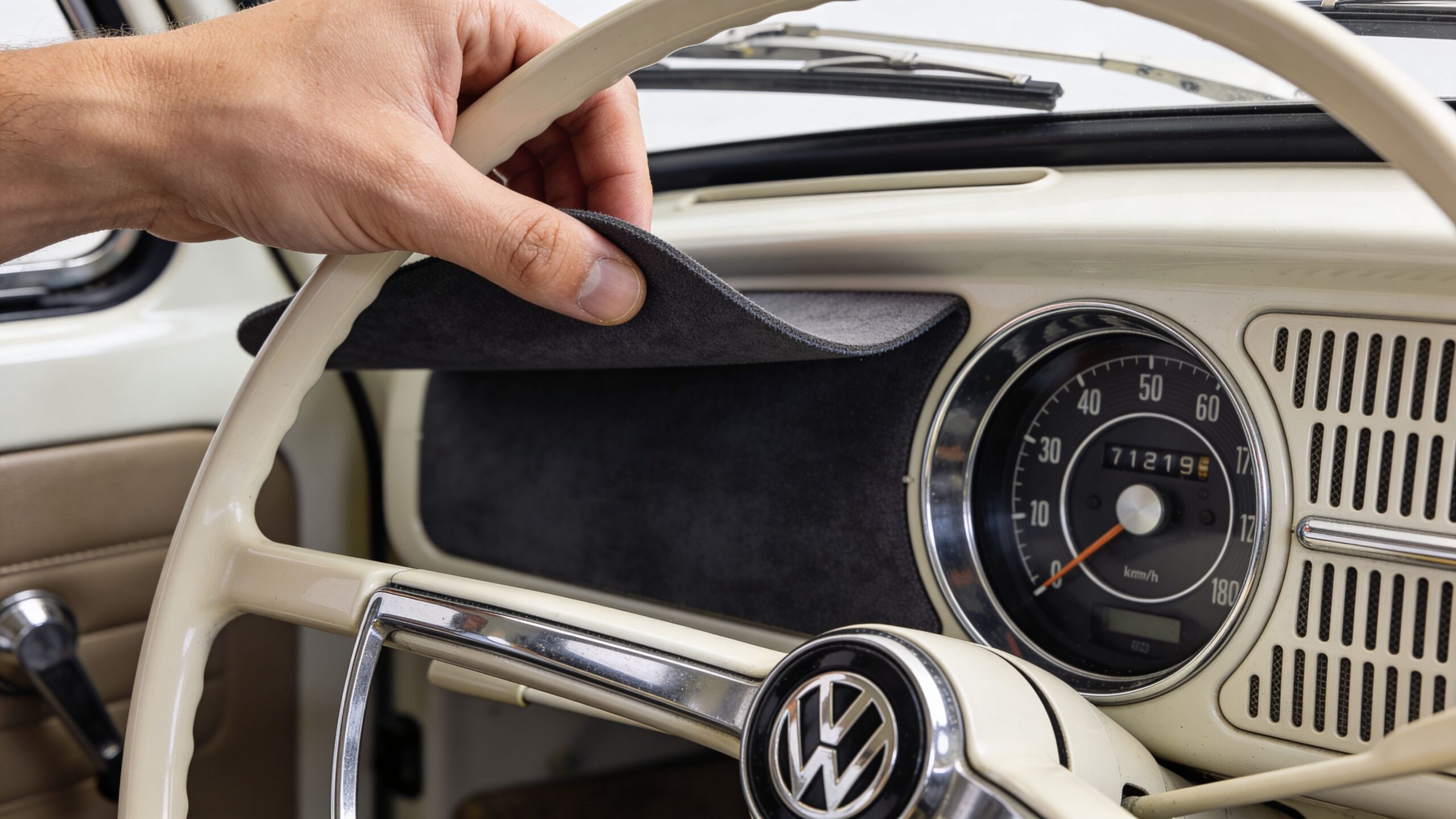
That frustration isn’t in your head. A 2025 CarsGuide survey referenced via Covercraft found that 28% of Aussie classic car owners prioritise interior protection but are blocked by fitment issues. The same reference notes over 50 unanswered queries on Australian forums in 2025 asking for custom options for curved Beetle and Samba Bus dashboards.
Universal rarely means vintage-friendly
A universal cover can work in a pinch on some modern dashboards because the shapes are flatter and the tolerances are less obvious. Vintage Volkswagens punish lazy fitment. They just do.
Look at the common options:
Universal covers
Cheap and easy to find. Usually the riskiest option for a Beetle or Bus because the shape is too generic.Semi-custom covers
Better, but still dependent on broad templates. These can suit some owners if the dash shape is simple enough.Full-custom covers
Best option when you care about edge shape, vent placement, gauge clearance, and an overall tidy appearance.
What to check before you buy
When you’re assessing a listing, slow down and read the specifics. Good fitment details matter more than salesy language.
Look for:
Exact model and year references
“Volkswagen Beetle” isn’t enough on its own. You want the listing to be clear about year range and body style.Vent and accessory cut-outs
Demister vents, speaker openings, sensor cut-outs, and any retrofitted gauges should be considered.Photos showing the cover installed on a similar dash
Flat lay photos won’t tell you much about edge behaviour.
For visual inspiration on how interior details shape the mood of a vintage bus, this Volkswagen Transporter camper interior collection is a good reminder that fit and finish affect the whole experience, not just one panel.
Safety matters as much as neatness
The old “it’ll do” attitude can catch people out. A poorly fitting cover can obstruct vents or sit awkwardly around instrument clusters. In later classics or retrofitted setups, owners should be especially careful around any added accessories or equipment.
Here’s a helpful visual if you’re comparing fit styles and install approaches:
Buy for the shape of your dash, not the convenience of the listing. A vintage VW will expose shortcuts immediately.
Installation and Care Tips from the Paddock
Fitting a dash cover isn’t hard, but old Volkswagens reward patience. Rushing the job usually leads to lifted corners, crooked alignment, or Velcro that lets go once the cabin warms up.
Start with a clean dashboard. Dust, old silicone dressings, and greasy residue are the enemy of a neat installation.
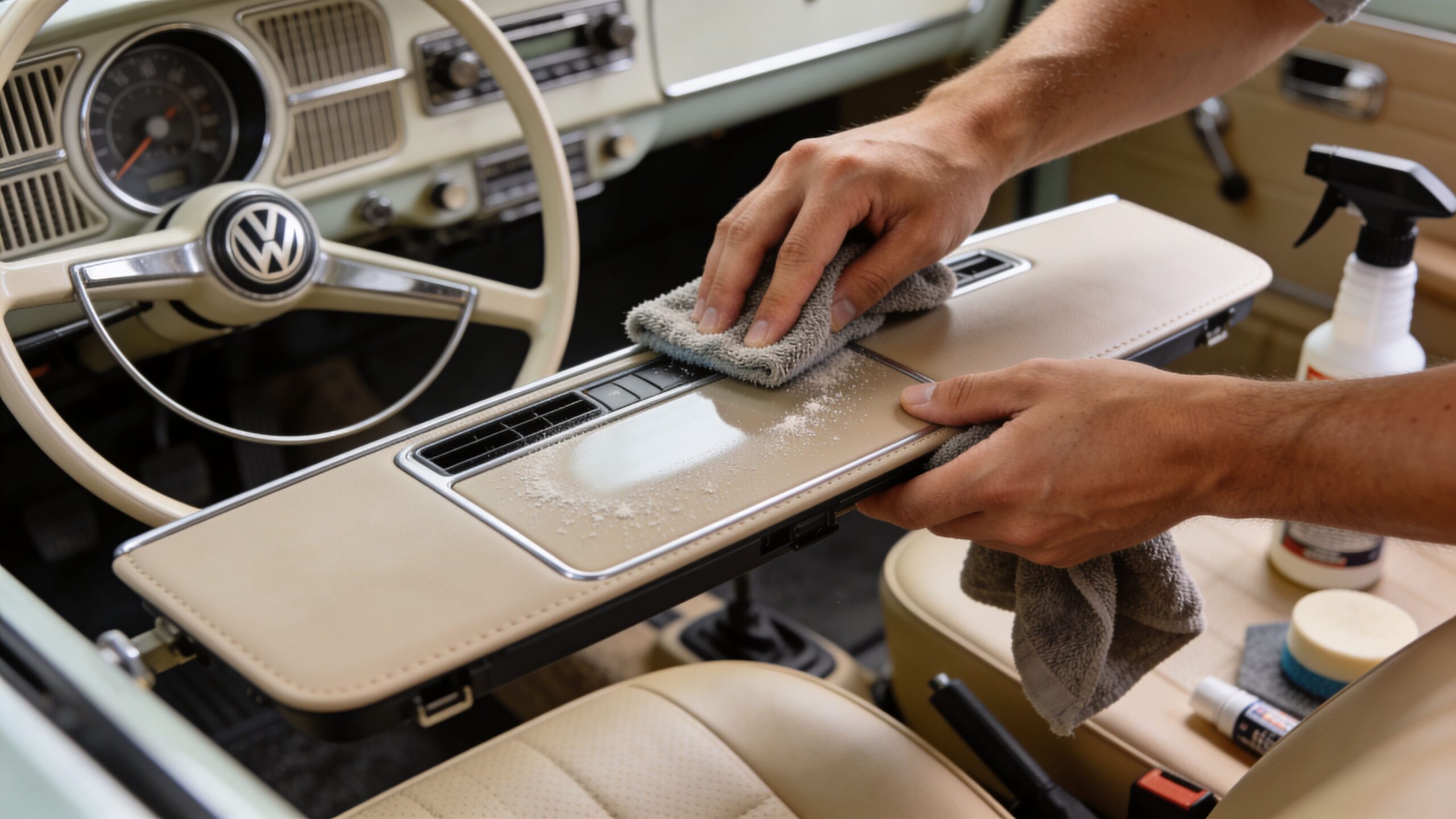
A simple Saturday arvo fitting routine
This is the method I’d suggest to any mate in the garage:
Dry-fit first
Lay the cover on the dash before peeling anything. Check vent cut-outs, speaker areas, and edge alignment.Clean the contact points
Use a gentle interior-safe cleaner and a microfibre cloth. Let the dash dry fully before attaching Velcro tabs.Anchor the centre first
Get the middle sitting correctly, then work outward. That helps prevent the cover from creeping sideways.Press and leave it alone for a bit
Give the adhesive time to bond properly. Don’t keep lifting and re-sticking unless you have to.
If you like seeing how dashboard accessories can integrate neatly into a VW cabin, this VW Caddy Maxi dashboard accessory example shows how much cleaner a cabin feels when the dash area is thoughtfully styled.
How to deal with wrinkles and movement
Fresh out of the packaging, some covers arrive with light creases. That’s normal. Lay them flat, install them carefully, and let time help the fabric relax into shape. A bit of warmth in the cabin can help the material settle, but don’t force it.
If the cover slips, the cause is usually one of three things:
Dirty mounting surface
Old dressing products can stop adhesive tabs bonding well.Misaligned first placement
If the centre is off, the edges often lift later.The wrong cover shape
Sometimes the problem isn’t installation. It’s poor fitment from the start.
Garage note: Clean less aggressively than you think. On original VW vinyl, a gentle wipe is smarter than soaking the surface with harsh products.
Ongoing care without fuss
Carpet covers generally like a light vacuum. Velour benefits from a softer brush or a careful once-over with a lint roller. Suede-look materials prefer a gentler hand again. Avoid saturating any of them.
The aim isn’t perfection. It’s consistency. A quick clean now and then keeps the cover looking tidy and stops dust from turning the top of your dash into a faded-looking strip across the cabin.
Styling Your Cockpit The Ultimate VW Memorabilia Stage
A good dash cover protects the car. A great one also frames the cabin properly.
That’s the part enthusiasts enjoy most once the practical decision is made. The dashboard becomes the visual base note of the interior. Get the colour and texture right, and suddenly the steering wheel, chrome trim, gauges, and all those little period details look sharper.
A Beetle story in small details
I once saw a tidy Beetle at a club day with a plain dark dash cover that matched the rest of the cabin beautifully. Nothing loud. Nothing custom for the sake of it. But because the top line of the dashboard was calm and non-reflective, the painted glovebox surround and bright trim stood out more. The whole interior looked intentional.
That’s the trick. A dash cover shouldn’t fight the car. It should make the rest of the cockpit easier to appreciate.
Pairing the cover with your VW vibe
Different interiors call for different styling choices:
Original-minded restorations
Stick with understated tones and textures that don’t jar against factory-style trim.Surfy Kombis and beachy buses
A practical, matte cover can give the cabin a relaxed look that suits striped fabrics, timber touches, and coastal accessories.Neat custom builds
A smoother finish can tie in nicely with retrimmed seats and carefully chosen steering wheels.
If your taste spills beyond the car and into your shed, office, or home display, the same thinking works there too. A neat, nostalgic VW scene often comes together best when the backdrop isn’t busy. That’s true in the cabin and just as true when browsing VW-themed vintage home accessories.
The dashboard as a display mindset
No, I’m not suggesting you clutter the dash with bits and pieces. Quite the opposite. The lesson from memorabilia collecting applies here. A good display gives each object room to shine. A good dashboard cover does the same for the interior.
Think about what you want people to notice when they lean into the window of your Beetle or Bus. The wheel? The gauge cluster? The painted metal? The period radio? A calm, well-fitted dash cover helps direct the eye to those features instead of to faded vinyl or a spiderweb crack.
That’s why automotive dashboard covers belong in the wider VW lifestyle. They’re practical, yes. But they also help the car tell its story properly.
Your Questions Answered From the VW Show and Shine
Can a dash cover hide an already cracked dashboard
Usually, yes. It won’t repair the original material underneath, but it can make the cabin look much tidier and stop your eye being drawn straight to the damage. The better the fit, the better the result.
Are dash covers worth it on a weekend-only VW
Absolutely. Weekend cars often spend long periods parked, and that can be rough on interiors if they’re sitting in light or heat. Even limited-use classics benefit from protection.
What about later VWs with added accessories or retrofitted gear
Check the cut-outs carefully before buying. If your car has added gauges, sensors, or other cabin modifications, a generic cover may create more frustration than value. In those cases, model-specific fitment matters even more.
Will a dash cover look out of place in a restored interior
Not if you choose the material and colour well. A good one should feel like part of the car, not something tossed on top of it. Carpet often suits period cabins nicely, while velour or suede-look can work in more refined interiors.
Can I remove one later without drama
Most quality covers are designed to be removable, especially those fitted with adhesive-backed tabs rather than permanent fasteners. The key is to install them on a clean surface and avoid cheap adhesives or rough handling.
Is this only for owners chasing show points
Not at all. Plenty of people fit automotive dashboard covers because they drive their Volkswagens. They want the cabin to stay neat, reduce glare, and avoid more damage. That’s practical ownership, not fussiness.
If you love the look and spirit of classic Volkswagens, Volkswagen Memorabilia is well worth a browse. You’ll find locally stocked VW-themed gifts, diecast favourites, and coastal-inspired pieces that suit collectors, restorers, and anyone who can’t walk past a Beetle or Kombi without smiling. Whether you’re after a nostalgic present, a display piece for the shed, or something special to celebrate the VW lifestyle, it’s a lovely Australian shop to keep on your radar.