
Your Guide to VW Home Decoration Items

You know the scene. You've come home from a Sunday run in the Beetle, there's still a bit of salt in the air from the coast, and your favourite photo from the last VW meet is sitting on your phone instead of on the wall where it belongs. The garage feels full of story. The lounge room, not so much.

That's usually where the decorating itch starts for VW people.

Not because you want your house to look like a theme park café, but because classic Volkswagens carry a kind of memory with them. A Kombi parked near the dunes. A Beetle in faded pastel paint. A dash full of sun. Those shapes, colours and little design details belong indoors just as much as they do on the road. The trick is knowing which home decoration items tell that story well, and which ones just create clutter.

Bringing the Adventure Indoors

A mate of mine has a weathered blue Kombi he only takes out on clear weekends. Inside his home, he didn't want number plates and signs everywhere. He wanted the place to feel like the same person lived there who owned the van. So he started small. One framed coastal print above a timber console. A cream Beetle model on a shelf. A bowl of shells picked up on trips up the coast. Suddenly the room made sense.

That's the sweet spot.

VW-inspired home decoration items work best when they feel lived with, not staged. A home with a classic Volkswagen connection should carry the same charm as the cars themselves. Honest materials, rounded forms, a bit of nostalgia, and enough breathing room that each piece gets noticed.

Why VW decor feels personal

A Kombi or Beetle isn't just transport. It's road trips, family stories, surf checks, first restorations, long chats at car shows, and that one part you hunted down for months. Bringing that spirit indoors means choosing pieces that remind you of movement and memory.

A good room often starts with one question. What story am I trying to tell here?

  • Beach run story. Use sandy colours, ocean blues, driftwood tones, and a Kombi print that feels sun-faded rather than loud.
  • Garage nostalgia story. Bring in metal finishes, old workshop textures, and a licensed diecast model or two with proper detail.
  • Collector story. Give your favourite pieces space. A shelf with one Beetle model and a framed photo can say more than a packed cabinet.

A room doesn't need to shout “Volkswagen” to feel unmistakably VW.

For a lot of Aussie homes, especially near the coast, that story sits beautifully beside relaxed beach style. Timber, linen, white walls and natural fibres calm the room down, while a classic Beetle or Samba Bus detail adds personality. That balance is what keeps the space cool instead of kitschy.

Decor Categories for the VW Enthusiast

The Australian market for home decoration items isn't tiny or passing. It's a serious retail category. Revenue in the Australian home décor market is projected to hit US$6.31 billion in 2026, with annual growth of 2.86%, which points to steady demand for products that personalise living spaces, including themed décor and wall accents, according to Australian home décor market projections.

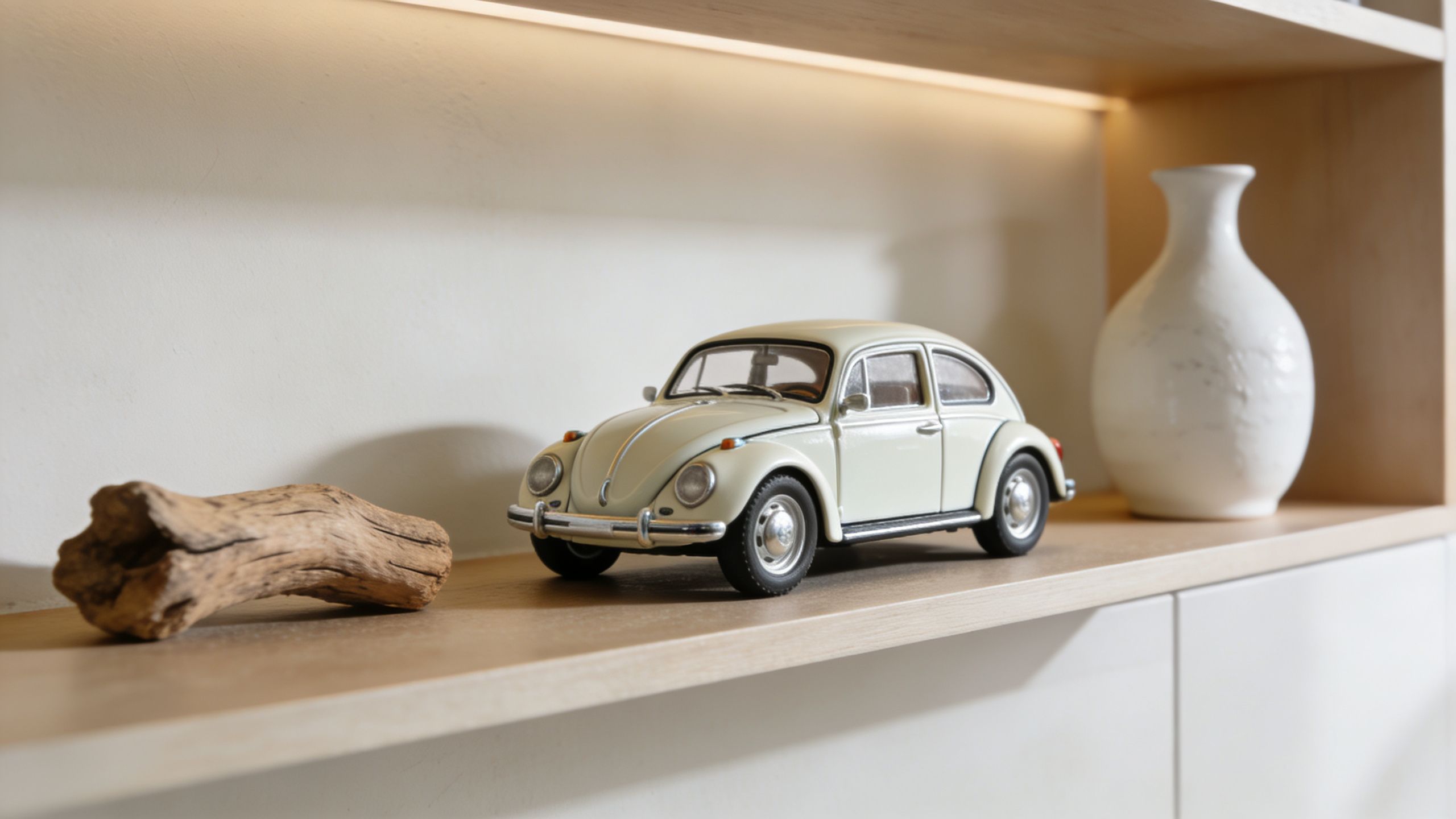
A miniature white vintage Volkswagen Beetle car model sits on a minimalist wooden shelf next to a decorative vase.

Wall art that sets the tone

Start with the walls, because they do the heavy lifting.

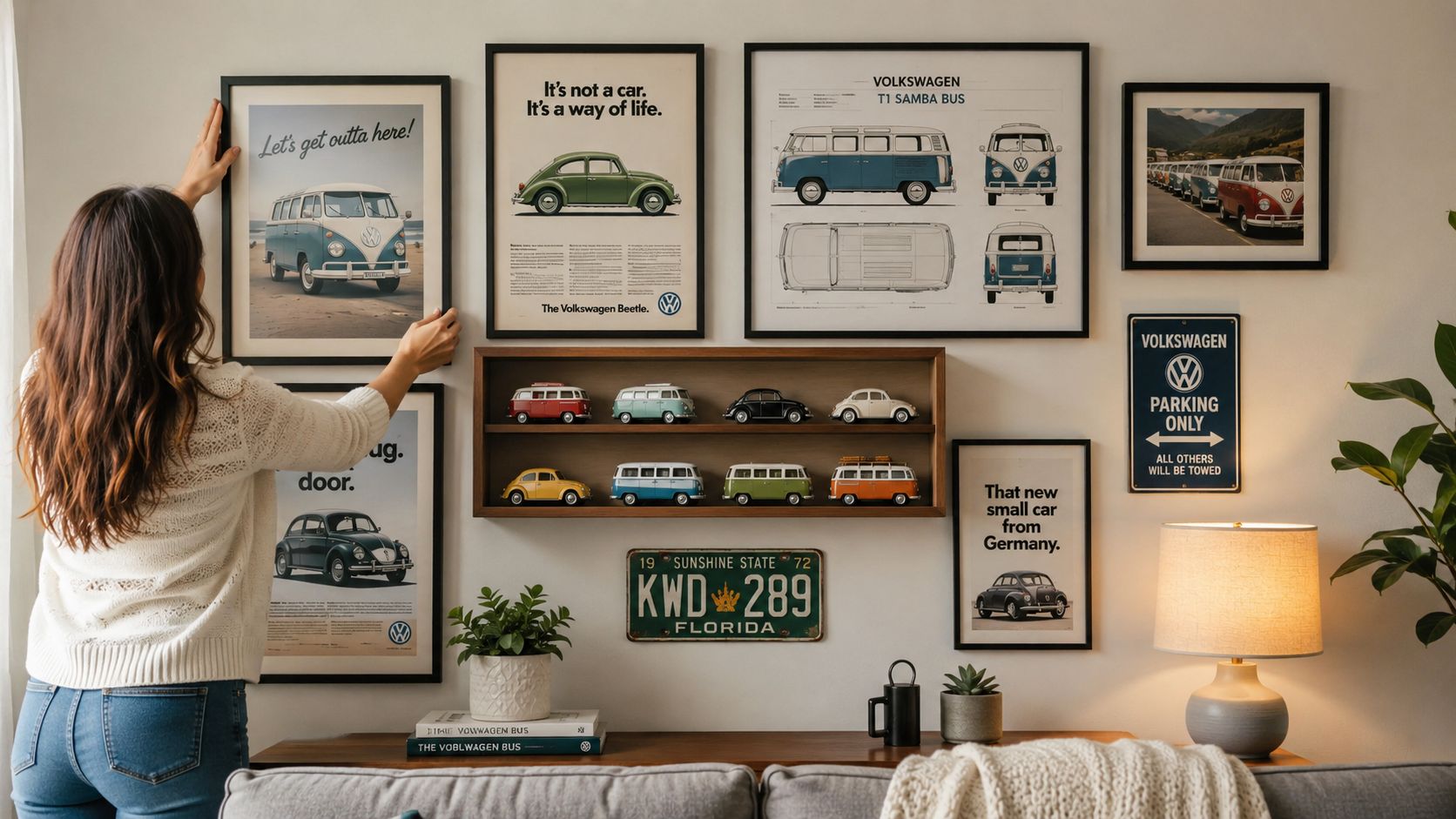
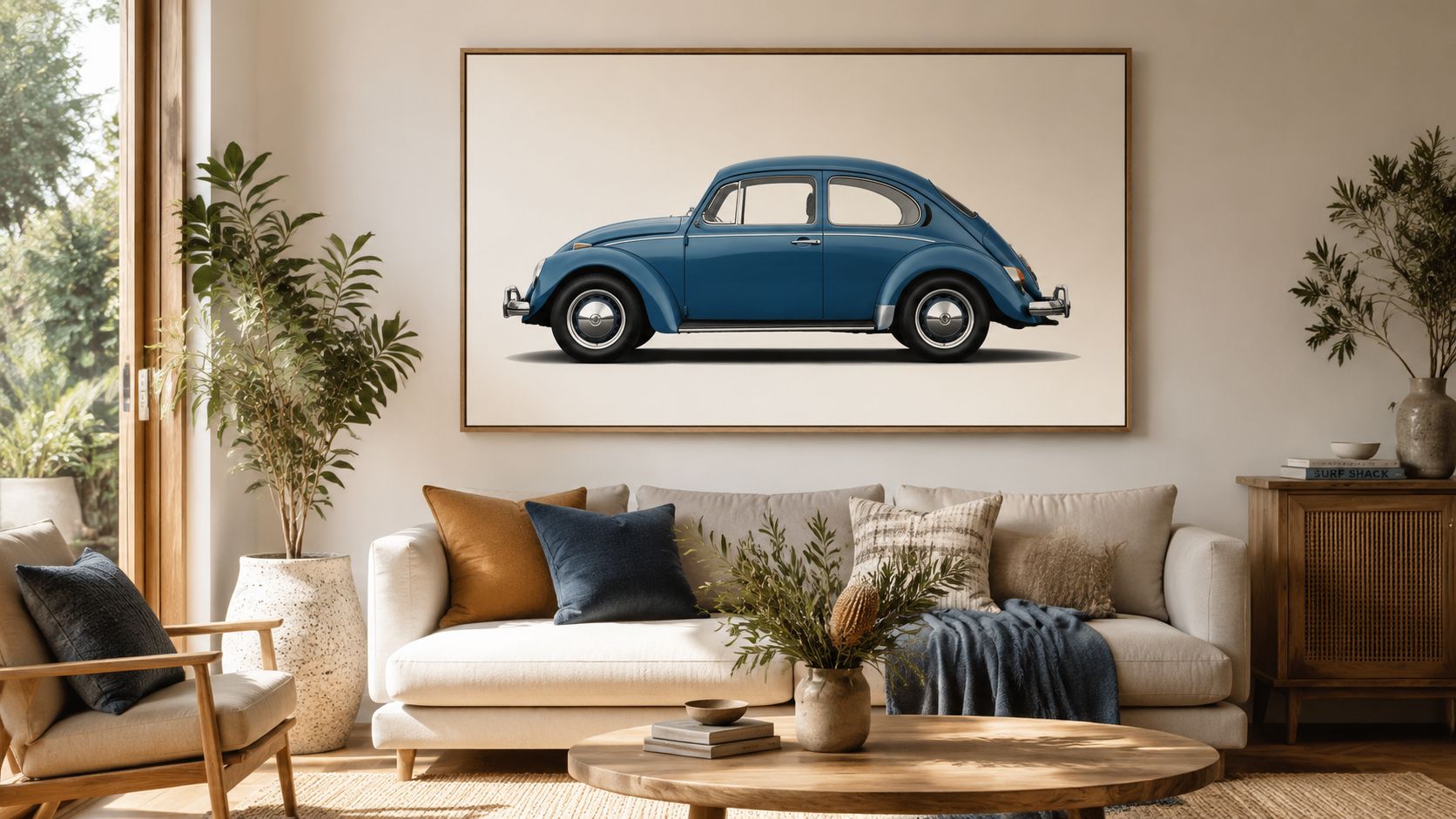
A framed print of a split-screen Kombi at the beach can anchor an entire room. So can vintage-style Volkswagen advertising artwork, surf photography, or a simple coastal scene in the same colour family as your car collection. If the room already has timber furniture and pale upholstery, wall art is often the easiest way to introduce VW character without overloading the space.

Good pairings look like this:

Room feel Wall art choice Why it works
Calm coastal lounge Soft-toned Kombi beach print Adds nostalgia without breaking the relaxed mood
Home office or study Framed Beetle artwork or garage photo Feels focused and personal
Entryway Narrow print, sign, or small framed series Gives a quick hint of the theme without crowding the space

Shelf pieces and collectible displays

Many enthusiasts already have a head start in this area. Diecast Beetles and Kombis aren't just collectibles. They're sculptural objects with colour, shape and story built in.

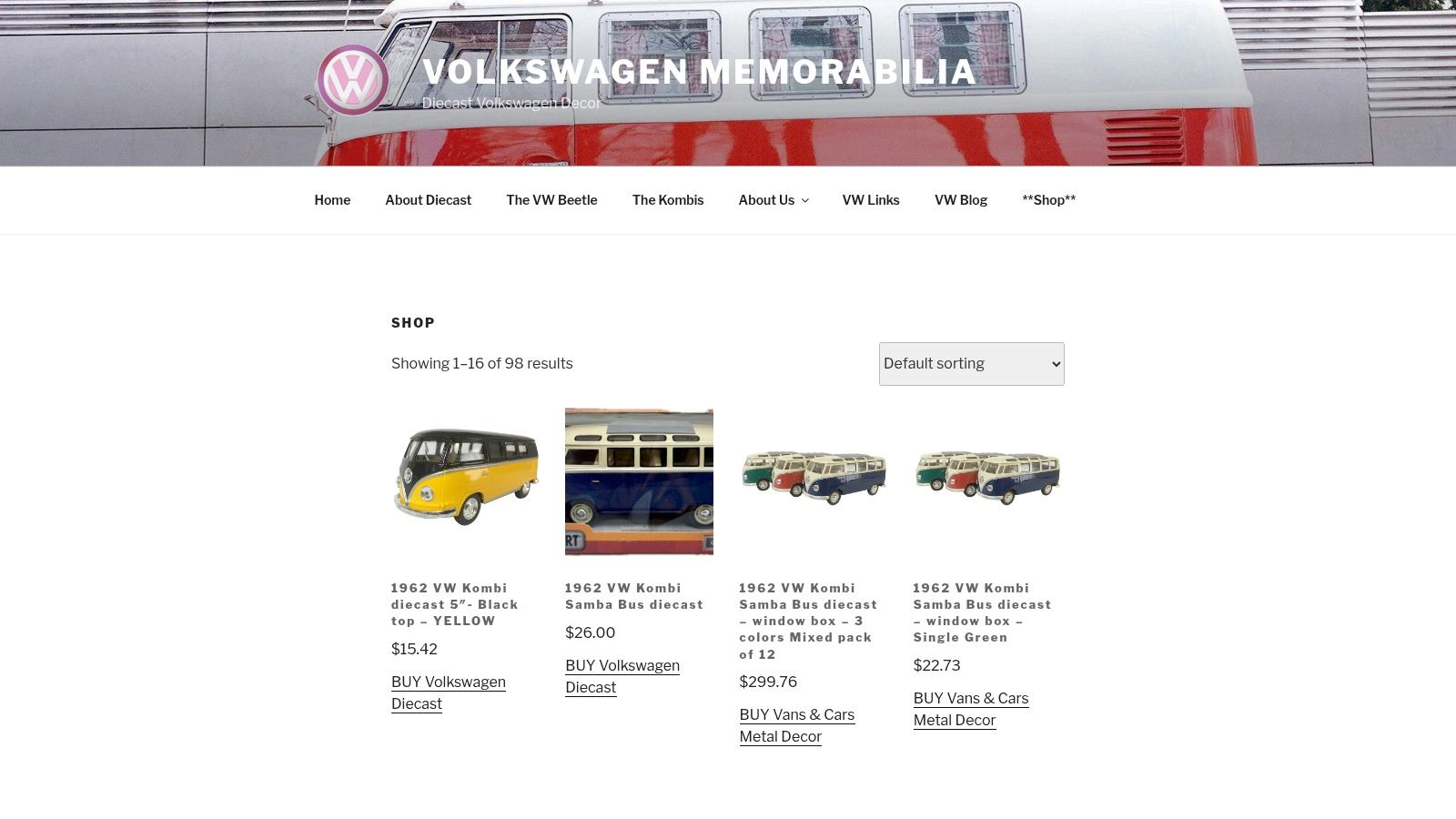
A single model on a floating shelf can do more than a handful of random ornaments. Place it beside a small stack of motoring books, a ceramic vase, or a beach stone picked up on holiday and it feels intentional. If you're after browseable options, the shop collection of VW-themed home décor gives you a sense of how these pieces can sit alongside frames, magnets and coastal accents.

Functional items with character

Some of the best home decoration items earn their place.

Think photo frames, decorative trays, tabletop pieces, small lanterns, key holders, or magnets displayed on a retro-style metal board in the kitchen. A Beach Board Photo Frame, for example, can carry both the coastal mood and the travel-memory feel that suits VW culture so well.

Use functional décor in rooms that need warmth:

  • Entry console. Tray for keys, small framed VW photo, one coastal accent.
  • Kitchen nook. Magnet display, mini model, and a timber bowl.
  • Bedroom shelf. One framed print, one Beetle model, soft textiles.

Textiles that soften the look

Hard surfaces alone can make a themed room feel like a display case. Cushions, throws and light fabrics fix that quickly.

Choose linen, cotton, jute or wicker textures in off-white, faded blue, sage, sand or sun-washed mustard. Those tones let brighter pieces, like a red Beetle model or colourful Kombi print, stand out without taking over. The room still feels like home first, collection second.

Mixing VW Nostalgia with Coastal Cool

The easiest mistake with coastal VW decorating is trying to prove the theme too hard. Anchors, surfboards, shell garlands, model vans, beach signs, navy stripes, all in one room. That's when the space starts to feel like a souvenir shop.

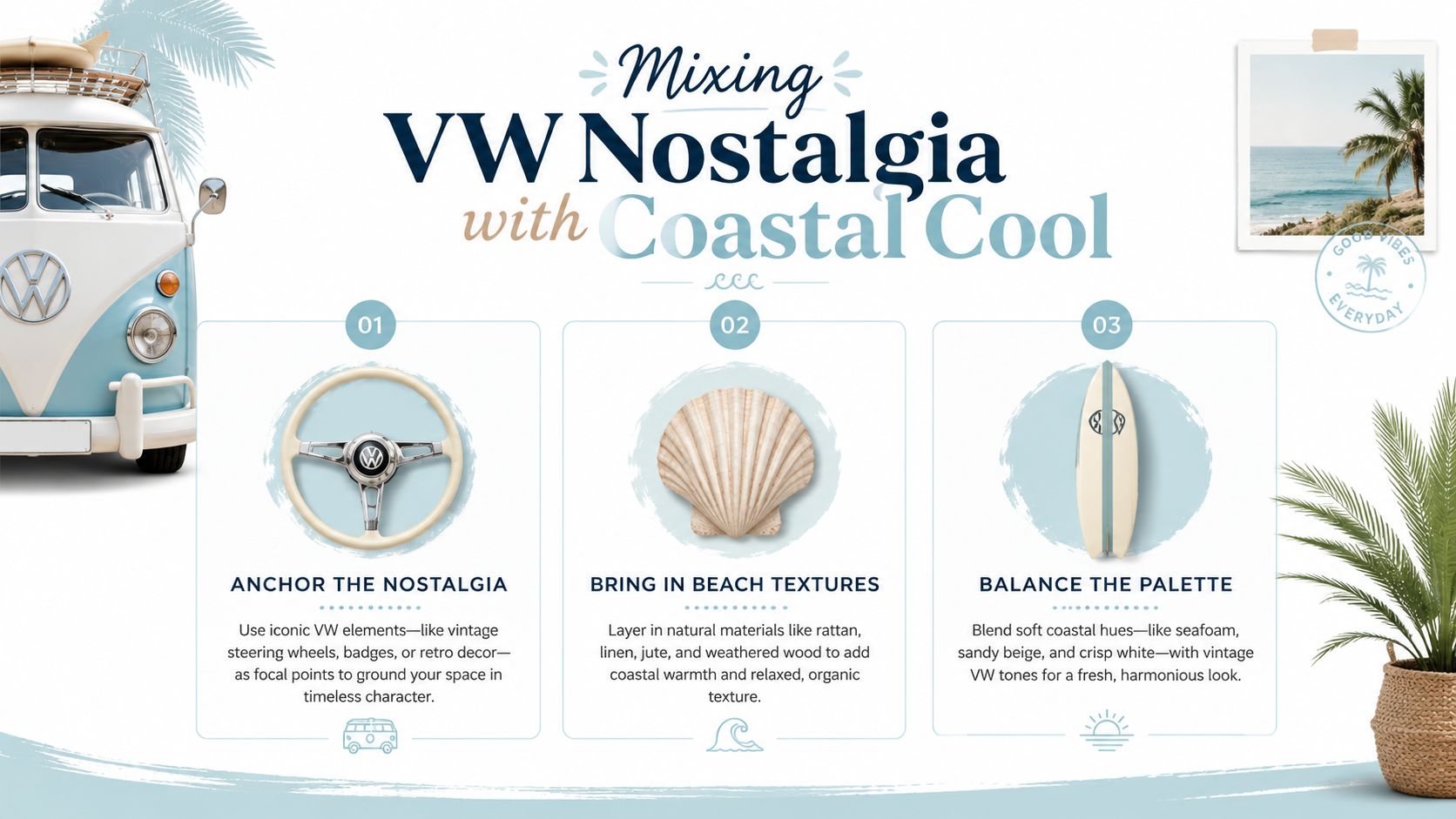
The better approach is restraint. Design guidance for coastal rooms recommends using strong nautical motifs sparingly, with one or two statement items carrying the look while smaller objects repeat the same colour and finish language for a relaxed, uncluttered result, as noted in coastal styling guidance.

A graphic design guide showing how to mix VW nostalgia with coastal cool home decoration themes.

Start with colour, not objects

Think of the room like an old Kombi paint chart parked beside the beach.

Cream, sea-glass blue, sandy beige, faded white, weathered timber, and touches of cheerful colour work beautifully. If you've got a bright yellow Beetle model or a Flower Power Kombi piece, let it be the pop against calmer surroundings. Don't ask every item in the room to compete.

A simple palette might look like this:

  • Base colours. White, oat, driftwood, pale stone
  • Coastal layer. Soft blue, muted aqua, seafoam
  • VW accent. Mustard, cherry red, pastel green, or classic cream

Mix materials like you'd style a good display stand

Metal diecast models look sharper when they sit against texture.

Weathered timber shelves, rattan baskets, linen cushions, glass vases and woven mats all soften the crisp finish of a Volkswagen model. That contrast is what gives the room depth. The model becomes part of the styling, not an afterthought dropped onto a shelf.

Styling rule: pair one smooth surface, one natural texture, and one nostalgic object in each vignette.

That could mean a cream Beetle model, a woven coaster stack, and a sea-blue glass vase on a timber sideboard. Or a framed Kombi print above a wicker chair with a neutral throw.

Let one piece lead

Every good room needs a lead singer.

In a lounge room, that might be a large Kombi canvas, a driftwood-framed coastal print, or a prominent shelf display of one special Samba Bus model. Once that piece is set, the smaller items should echo it subtly. A magnet on a side table, a frame on the shelf, a small coastal ornament. Enough repetition to create rhythm, not enough to feel crowded.

If you'd like a visual feel for that blend, the coastal living room ideas for VW fans page captures the kind of laid-back balance many collectors are chasing.

Showcasing Your VW Diecast Models

A licensed diecast model deserves better than being pushed behind a candle or lined up like supermarket stock on a dusty ledge. These pieces have shape, finish and detail. Treated properly, they become some of the strongest home decoration items in the house.

A collection of five Volkswagen model cars displayed in a neat row on a wooden shelf.

Australian households also spend meaningfully on making their homes feel personal. The average annual spend on home décor in Australia is approximately A$2,752 per household, according to household home décor spending analysis. That helps explain why collector-quality decorative accents have a real place in everyday rooms, not just hobby spaces.

Give each model a role

One Samba Bus can work as a focal object on a shelf. A Beetle can bring colour to a study desk. A pair of smaller vans can frame a stack of books. The key is to stop thinking of them as toys and start treating them like miniature industrial design pieces.

Try these display ideas:

  • Mantel road trip scene. Add one Kombi model, a framed beach postcard, and a small dish of shells.
  • Bookcase anchor. Use a larger model beside motoring books and a low plant.
  • Coffee table tray. One model only, paired with a candle holder or small coral piece.
  • Home office shelf. A Beetle model near old rally photos or workshop manuals.

For collectors building a display with purpose, the Volkswagen model cars range is the natural place to compare styles, colours and display-friendly options.

Use height and spacing

If every diecast model sits in one flat row, your eye skims past them.

Vary the levels. Put one on a stack of books. Place another inside a shallow shadow-box shelf. Let one sit under glass. Spacing matters too. A little empty room around a model gives it importance.

This video gives a nice sense of how model cars can read as display pieces rather than simple storage:

Some of the most effective displays use fewer models, not more.

That's especially true in a coastal-style home, where airiness is part of the charm.

Sourcing and Caring for Your Treasures

Buying VW-themed décor is easy. Buying pieces you'll still be happy to display years from now takes a sharper eye.

Start with licensing and finish quality. A proper Volkswagen collectible should look deliberate in its detailing, paintwork and proportions. If you're shopping locally, one practical option is vintage-inspired home accessories, where the mix of VW-themed gifts and décor gives you a clearer sense of how collector items can work in the home rather than just in a display cabinet. Local stock also makes life easier when you want faster delivery and straightforward support.

What to check before buying

  • Officially licensed cues. Look for product descriptions that clearly identify the model and branding.
  • Display value. Ask yourself if the piece works in a room, not only in a collection.
  • Material fit. Metal, timber, glass and fabric all age differently in Australian conditions.
  • Gift appeal. The best presents are specific. A Beetle fan usually knows a generic car gift when they see one.

Caring for coastal homes

Coastal decorating has one hidden challenge. Salt air.

In Australian coastal environments, decorative metals need care because airborne chlorides speed up oxidation, which matters for diecast models and other metal décor, according to coastal material guidance. In plain terms, if you live near the beach, don't leave prized models right beside open windows all summer.

A simple care routine goes a long way:

  • Dust gently with a soft dry cloth or soft brush.
  • Avoid direct sun on painted finishes and printed artwork.
  • Keep models off damp sills and away from salty airflow.
  • Rotate displays if one shelf cops harsh afternoon light.

A good VW gift works the same way a good room does. It feels personal, useful, and tied to a real memory.

Your Top VW and Coastal Decor Questions

What home decoration items work best in a rental?

Leaning art, tabletop décor, removable hooks and portable lamps are the winners. With about one-third of Australian households renting, there's a clear need for non-permanent decorating solutions, and items like leaning frames and tabletop collectibles offer strong visual impact without drilling, as noted in renter-friendly decorating guidance.

For a VW fan, that might mean:

  • Leaning framed Kombi art on a console instead of hanging it
  • Displaying diecast models on shelves, desks or sideboards
  • Using removable hooks for lightweight décor
  • Styling trays and photo frames on existing furniture

What's the best approach for a small flat or unit?

Go for fewer, better pieces. One framed print, one standout model, and one or two supporting accents usually look stronger than lots of little items. In smaller homes, breathing room is part of the design.

Which materials suit humid coastal or subtropical homes?

Choose pieces that cope better with moisture and sun. Rattan, sealed timber, glass, marine-suitable metal finishes, linen-look textiles and sturdy faux botanicals tend to make more sense than delicate untreated materials. For metal items, regular light cleaning matters more in humid coastal air.

If an item has to fight salt, sun and moisture every day, placement matters almost as much as style.

How do I stop VW décor from looking overdone?

Use one hero piece and keep the rest in support roles. If you already have a Kombi canvas, don't add five more loud statements beside it. Repeat colour and texture instead. A cream model, a weathered timber frame, a woven basket. Same language, less noise.

What makes a good VW-themed gift for someone who already has everything?

Look for pieces they can live with. A licensed Beetle model for a desk, a coastal photo frame, a decorative magnet set for the shed fridge, or a small Kombi display piece for the study usually lands better than novelty items. Think display-worthy, not disposable.


If you're ready to turn those road-trip memories into a space that feels like you, have a look through Volkswagen Memorabilia. You'll find licensed VW-themed gifts, diecast models, and coastal-inspired décor that suit collectors, gift buyers, and anyone trying to bring a bit of Beetle or Kombi spirit indoors, with local Australian stock and straightforward shipping that makes the whole process easier.

Your Guide to the Perfect Straw Beach Hat

You know the scene. The Kombi’s parked nose-first toward the water, the esky’s sweating in the shade, and someone’s balancing a surfboard against a dune fence while a line of old Beetles catches the morning light. Then the sun climbs, the glare bounces off chrome and sand, and suddenly that throw-on hat you grabbed from the back seat matters a lot more than you thought.

A good straw beach hat has always belonged in that kind of day. Not as a fashion extra, but as part of the ritual. Same as sunnies on the dash, a beach towel over the back seat, and salt drying on the windows after a run up the coast. It carries a certain easy-going confidence. It says you came for the drive, stayed for the water, and don’t mind if lunch turns into sunset.

For VW people, that feeling lands especially well. Old Volkswagens have never been about rushing. They’re about the long way round, the scenic pull-over, the grin from strangers at servo stops. A straw hat fits that same rhythm. It’s practical, yes, but it also has character. The crease in the crown, the brim softening with wear, the bit of sand that never quite leaves. Those details tell their own road-trip story.

The Enduring Vibe of the Straw Beach Hat

One of the nicest things about a straw beach hat is that it doesn’t try too hard. It settles into a life. You toss it onto the passenger seat of a Beetle, hang it from a Kombi hook, wear it on a boardwalk, then spot it later at home and remember that one cracking weekend by the sea.

A silhouette of a woman wearing a straw beach hat standing on the beach at sunset.

That sense of ease has deep roots. Straw hats began as practical wear in farming life, then shifted into fashion by the 17th and 18th centuries, when they became symbols of elegance among European upper classes. Later, the industry surged in 19th-century America, and the Panama hat’s reputation lifted again after President Theodore Roosevelt wore one in 1906, helping turn straw hats from labouring gear into luxury beachwear, as noted in the history of straw hats.

A hat with miles in it

You can feel that long history in the better styles today. A raffia hat feels relaxed and beachy. Wheat straw has that classic holiday postcard mood. Toquilla-style weaves carry a slightly dressier note, the sort of thing that suits a linen shirt, polished sandals, and a slow walk past the foreshore markets.

What matters most isn’t only the material. It’s the personality the hat brings with it.

  • For lazy coastal drives. A softer, wider brim looks right at home with loose shirts, sun-faded denim, and a van packed for the day.
  • For tidy retro style. Cleaner lines and a sharper crown pair beautifully with old-school tailoring and classic car-meet polish.
  • For everyday beach use. A straightforward woven hat with a bit of structure feels natural, unfussy, and ready to be worn hard.

A straw beach hat works best when it looks like it’s already part of your summer, not something borrowed for a photo.

Why VW folk get it

Classic Volkswagens and straw hats share a quiet trick. They both started with function and ended up becoming style markers. Neither needed hype. People gave them meaning through use.

That’s why a straw beach hat feels so right around air-cooled culture in Australia. It belongs beside surfboards, camp chairs, faded maps, and the sort of beach run where nobody’s checking the time. You wear one because the day asks for it. The style follows naturally.

Finding Your Perfect Shape for Sun and Style

Hat shopping gets easier once you stop asking, “What’s trendy?” and start asking, “What kind of day is this hat joining?” That’s the true test. A hat for wandering a Sunday market is different from one you’ll wear all afternoon beside the water.

A helpful infographic comparing four types of straw hats for style and sun protection, including descriptive summaries.

Straw hats have moved through all sorts of social meanings over time. In Switzerland, straw hat production became the country’s largest export industry in the mid-19th century, after developing from cottage craft into a fashionable trade. By the 18th century, straw hats had shaken off their rough-working image and become elite accessories, as described by the Swiss National Museum’s look at straw hat history. That blend of utility and style still shapes what we choose now.

Match the shape to your vibe

Some hats feel like a split-screen with certain old VWs.

Hat shape Best for Style mood
Wide brim Long beach days, markets, outdoor events Relaxed, classic, sun-smart
Fedora Casual lunches, car meets, everyday wear Crisp, retro, a little more polished
Panama style Warm-weather dressing, smarter coastal looks Light, refined, holiday-ready
Straw bucket Active afternoons, easy packing, youthful looks Laid-back, practical, playful

A simple way to choose

If you’re not sure where to start, use this test.

  1. Look at your usual clothes
    If you live in tees, boardies, linen shirts, and old trainers, a stiff formal hat may feel costume-y. Go for something easier and softer.

  2. Think about your face shape
    Rounder faces often suit a bit more crown height or angular structure. Longer faces usually balance nicely with flatter crowns or medium-width brims. If your features are strong, cleaner hat lines often look spot on.

  3. Decide how much attitude you want
    A boater says vintage charm. A fedora says tidy confidence. A lifeguard-style straw hat says you’re here for sun, salt, and zero fuss.

Practical rule: if you put it on and instantly start adjusting your outfit to “make it work”, it’s probably the wrong hat.

Four common personalities

  • The cruiser
    This is your Panama or fedora wearer. Think neat shirt, well-kept Kombi, maybe a café stop before the beach.

  • The beach regular
    A wide-brimmed straw hat suits this person beautifully. More shade, less worry, all-day wear.

  • The retro romantic
    A boater or structured brim can look brilliant with vintage-inspired clothes and a bit of old-world flair.

  • The active weekender
    A straw bucket or secure-fitting casual style keeps things simple when you’re moving around, setting up chairs, or chasing kids between the sand and the car park.

The right shape should feel like a mate, not a challenge. Comfortable on your head, easy with your clothes, and believable with the life you lead.

The Nitty Gritty of Sun Safety and Sizing

In Australia, a straw beach hat can’t just look good. It has to earn its place. Harsh light, reflected glare off sand and water, and long days outdoors mean style alone won’t cut it.

A mannequin head wearing a wide-brimmed straw hat with a UPF 50 ribbon on an outdoor patio.

The key point is simple. Not all straw weaves protect you equally. Loose-weave natural fibres can let UV through the gaps, while tighter constructions offer better coverage. The Australian Cancer Council recommendation highlighted in this guide to brim length and sun protection points to UPF 50+ rated, tightly woven fabrics for maximum sun safety. The same guidance notes that UV indices in Australia can exceed 14, and a 3 to 4 inch brim is recommended for full coverage of the face, neck, and ears.

What to check before you buy

The quickest test is the old hold-it-up-to-the-light trick. If lots of light comes through, lots of UV can too. If the weave looks dense and the shade feels solid, you’re on safer ground.

Here’s what to inspect:

  • Weave density
    The tighter the weave, the better. Decorative hats often look lovely on a shelf but don’t offer the same practical cover outdoors.

  • Brim width
    A skimpy brim might shade your forehead but leave your ears and neck working overtime.

  • Under-brim coverage
    Reflected light matters at the beach. A hat that shades well from above but ignores bounce-back glare isn’t doing the full job.

  • Fit under movement
    If a sea breeze can lift it with one gust, you’ll spend the day chasing it.

Brim width in plain terms

A lot of confusion disappears once you compare brim sizes directly.

Brim width What it generally covers
2 to 3 inches Basic face coverage, but lower neck and ear tips can stay exposed
3 to 4 inches More complete cover for face, neck, and ears
4 to 5 inches Adds extra shade that can reach toward the shoulders

If you spend hours at a car show, beach picnic, or swap meet, the middle band is often the sweet spot. It gives real coverage without feeling theatrical.

Loose weave is the giveaway. If you can see strong daylight through the hat, the sun can likely see you too.

Getting the size right

A good fit keeps the hat comfortable and useful. Too loose, and the first gust sends it skittering under a Kombi. Too tight, and you’ll ditch it before morning tea.

Use this easy method:

  1. Grab a soft tape measure
    If you don’t have one, use a string and measure that against a ruler.

  2. Wrap it around your head
    Place it above your ears and across the middle of your forehead, where the hat will sit.

  3. Keep it level
    Don’t angle it up at the back or let it dip too low at the front.

  4. Check the feel
    A proper fit is snug enough to stay put, but not tight. One useful fitting guide says the hat should allow roughly one finger between the brim area and the top of the ear.

Best features for long beach and car-show days

Some design details make a big difference once you wear the hat for hours.

  • Structured brim helps maintain shade rather than flopping into your eyes.
  • Breathable construction keeps the hat wearable through hot stretches.
  • Mouldable shape is handy because some tightly braided materials sit neatly and adapt to the wearer’s head.

Sun safety gear should never feel like an afterthought. In an Australian summer, the right straw beach hat is part of the plan, same as water, shade breaks, and sunscreen.

Your VW Road Trip Companion Care Guide

A straw hat cops a fair bit on the road. It gets jammed beside towels, brushed by sandy shoulders, and occasionally ends up under a denim jacket in the back of a packed van. Treat it properly and it’ll travel for ages with character intact.

Packing it without wrecking the shape

If you’re loading up for a coastal run, don’t flatten the hat under bags and call it good. Give the crown some support.

  • Stuff the crown softly with tees, bathers, or a light singlet.
  • Pack around the brim, not on top of it.
  • Keep heavy gear elsewhere. Tools, shoes, and food boxes don’t belong near the hat.

For longer trips, I like the idea of treating it like one more road-trip essential, right alongside the beach-read stack and camera. If you’re in the mood for more travel inspiration, the relaxed stories around van life in Australia tap into that same easy rhythm.

Cleaning after sand, dust, and salt

Most of the time, a straw beach hat only needs a gentle approach.

Use a soft brush or dry cloth first. That lifts dust and fine sand without grinding it into the weave. If you’ve picked up a salty mark or grubby patch, dab lightly with a slightly damp cloth and let it dry naturally in shade.

Never soak a straw hat unless the maker clearly says it can handle it. Too much water can warp the shape and stiffen the fibres oddly as they dry.

Storing it between outings

Hats age better when they’re stored with the brim supported. A shelf, a hook that doesn’t pinch the crown, or a roomy top cupboard all work. The back parcel tray of a hot car for days on end doesn’t.

A road-trip hat should look lived-in, not trashed. There’s a difference.

Styling Your Hat with True VW Heritage

By ten in the morning at a beachside VW meet, you can usually spot the pairings that work. A sun-faded Kombi rolls in with wax on the roof racks, and its owner steps out in a wide-brim straw hat, loose linen, and sandals dusted with sand from the servo stop. Half an hour later, a tidy Beetle parks beside it, all curved guards and polished hubcaps, and the hat choice shifts too. Cleaner brim. Sharper shape. Same sun. Different story.

A woman wearing a straw beach hat leaning against a vintage car with a surfboard on the beach.

A straw beach hat works best when it suits the character of the car as much as the outfit. That is the sweet spot for VW people. You are not only getting dressed for the weather. You are carrying a bit of the Kombi or Beetle spirit with you, whether you are heading for the foreshore, the markets, or a Sunday cars-and-coffee.

The Kombi beach-day look

The classic Kombi mood calls for ease. A broader brim, a softer weave, and a hat that looks right with a shirt thrown on over swimmers usually feels more honest than anything too crisp. It suits faded paint, old surf stickers, and that cheerful slightly ramshackle charm Kombis wear so well.

Pair it with:

  • a loose linen or cotton shirt
  • worn shorts or boardies
  • leather sandals or canvas slip-ons
  • sun-bleached colours like cream, rust, sea blue, or olive

That same relaxed coastal flavour carries beautifully into the house. A shelf styled with beach maps, shells, and pieces from a coastal vintage home accessories collection picks up the same woven, sunlit feel as the hat itself.

The Beetle with polished charm

A Beetle often asks for a neater line. Not stiff. Just tidier. A Panama shape or a fedora-style straw hat sits nicely with the Beetle's rounded body and tidy proportions, especially if your car has clean paint, bright chrome, and that proud looked-after glow.

A simple recipe works well here. Choose a hat with a defined crown, a band that echoes your shirt or shoes, and an outfit with a bit of structure. Camp-collar shirts, smart shorts, retro sunnies, and simple leather sandals all sit comfortably in that space.

A short visual break says it better than words:

Small style pairings that work

The best combinations usually feel casual and lived-in, like they came together over years of beach runs and swap meets rather than five minutes in front of a mirror.

Hat style VW mood Easy pairing
Wide-brim straw Surf-ready Kombi Boardies, oversized shirt, casual slides
Panama style Tidy classic Beetle Linen shirt, chino shorts, simple leather sandals
Boater-inspired straw Vintage show-day display Light dress or crisp shirt, retro sunnies
Straw bucket Playful weekend cruiser Tee, shorts, canvas sneakers

The trick is to echo the car's character. Rounded and carefree for a Kombi. Neat and cheerful for a Beetle. A hat does that aptly.

Bring the same mood to your shelf

This part always gets a grin from longtime VW owners. The hat does not stop working when you walk through the front door. Its natural straw tone, woven texture, and beach-trip feel can tie your personal style to the things you collect, especially if your bookshelf or garage display already carries a bit of road-trip nostalgia.

A Kombi display with postcards, old route maps, and a van model in surf colours feels more complete when the room carries those same cues. A Beetle shelf with cleaner lines and brighter paint pops nicely against natural textures nearby. That is where the whole VW heritage idea comes together. Your hat, your car, and your display all speak the same sunny language.

From Beach Day to Bookshelf Display

A straw beach hat doesn’t have to disappear into a cupboard after summer. If it has good shape and a bit of personality, it can do double duty as décor. That’s especially true in homes where coastal style and classic VW nostalgia already live happily together.

Turn a hat into part of the room

A wall hook, a timber peg, or a framed corner vignette can make a hat feel intentional rather than forgotten. The trick is to style it like a memory, not a storage solution.

Try one of these combinations:

  • Road-trip nook
    Hang the hat above a small shelf with maps, shells, and a favourite van photo.

  • Beach-corner display
    Pair the hat with soft blue or sandy neutral tones, then add one or two VW pieces rather than overfilling the space.

  • Entryway story
    Set the hat near a basket for keys and sunnies so the whole area feels ready for the next day out.

For homes already leaning into seaside details, browsing vintage home accessories can spark ideas for tying the look together without making it feel themed to death.

Why it works so well

A straw hat brings texture. That’s the secret. Metal model cars, glass frames, painted signs, and polished surfaces all benefit from something woven and sun-worn nearby. It softens the display and adds that relaxed beach tone that many VW lovers naturally lean toward.

It also makes the collection feel lived with. Not museum-stiff. More like a home that has stories in it.

The Perfect Gift for the VW Fanatic

Buying for a VW enthusiast can be surprisingly tricky. Plenty already have the tools, the shirts, the books, or the garage bits they want. A straw beach hat works because it taps into the lifestyle around the cars, not just the cars themselves.

It’s practical, personal, and easy to build into a thoughtful set. A neat Panama-style straw hat with a classic Kombi model suits someone who loves polished vintage charm. A wider beach hat paired with a surfy van piece feels spot on for the coastal dreamer who’d happily spend every spare weekend near the water.

A gift like that says you understand the whole picture. Not just what they drive or collect, but the mood they love. If you’re hunting for ideas that feel less generic and more tuned to that passion, unique gifts for car lovers is a useful place to browse.

The nicest gifts tell a story. For a VW person, straw hat plus classic model plus beach-day spirit is a pretty good one.

Your Burning Hat Questions Answered

Can a straw beach hat be stylish and still practical?

Absolutely. The sweet spot is a hat with enough structure to hold its shade and enough personality to suit your clothes. If it looks good but leaves you squinting and shifting around in the sun, it’s not doing the full job.

Are all straw hats good for Australian sun?

No. Weave matters a lot. A loose decorative weave may feel breezy, but it can allow more light through. For beach use, look for tighter construction and real coverage rather than choosing on looks alone.

What brim should I choose for all-day wear?

For long outdoor sessions, a broader brim tends to be the more sensible pick. As covered earlier, the best all-round zone for full coverage is the mid-width range rather than a skimpy fashion brim.

Do straw hats suit blokes as well as sheilas?

Without question. The trick is shape and confidence. A cleaner fedora or Panama-style hat often suits a sharper casual look, while a broader straw hat works brilliantly with laid-back beach gear.

Can I wear one at a car show without looking overdressed?

Yes, if the rest of your outfit stays easy. Tee, short-sleeve shirt, chino shorts, denim, simple footwear. Let the hat be part of the day, not the whole performance.

A good hat should look like you’d wear it again next weekend, not only for one posed afternoon.

What if my hat gets bent in the car?

Start gently. Reshape it by hand, support the crown, and let it rest in a cool dry spot. Don’t force hard folds back all at once. Straw responds better to patience than panic.

Is a straw beach hat worth keeping on display?

Definitely, especially if it has texture, shape, and memories attached to it. The best personal items often become the best décor because they already mean something to you.


If this yarn has you thinking about the beach, the open road, and the sort of shelf display that makes you smile every time you walk past it, have a browse through Volkswagen Memorabilia. It’s a top spot for licensed VW-themed gifts, diecast favourites, and coastal-inspired pieces that suit the classic Volkswagen lifestyle beautifully, with local Australian stock and friendly service to make choosing easy.

Shell Wind Chimes: The Sound of VW Surf Culture

I still remember pulling up at a quiet stretch of coast in an old Kombi, side door open, wax on the board, kettle rattling on a little camp stove. The waves rolled in, gulls carried on, and from the fibro beach shack next door came that light clink of shell wind chimes, the sort of sound that makes a whole afternoon feel slower in the best possible way.

The Soundtrack to Freedom and Salty Air

That sound belongs to a certain Australian memory. You park the van crooked in the sand, kick off your thongs, and everything sharp about the week drops away. Salt sits in the air, sunscreen and seaweed mix together, and somewhere nearby a string of shells taps softly against itself in the breeze.

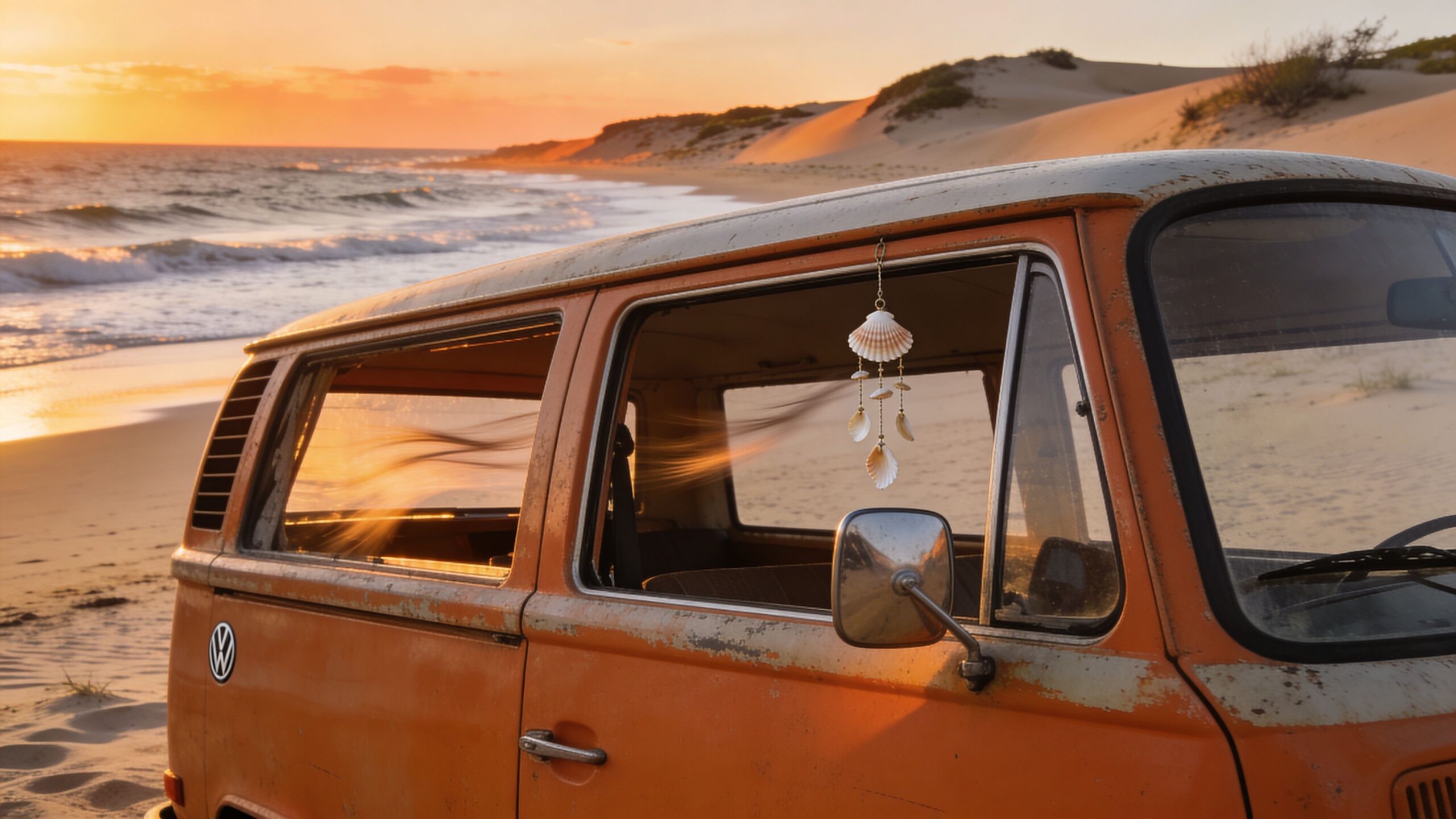
A vintage orange Volkswagen bus parked on a beach at sunset with a seashell mobile hanging inside.

For a lot of VW people, that’s the core charm of beach culture. It isn’t only the vehicle. It’s the whole scene around it. A weathered esky. Faded stripes on a deck chair. A surfboard with a few honest dings. A VW travel van surf van piece on a shelf can spark the same feeling, especially when the rest of the room carries that coastal note.

Why shell wind chimes fit the Kombi spirit

Shell wind chimes don’t shout for attention. They work the same way a classic Kombi does when it’s parked among modern cars. They bring character without needing polish or fuss.

  • They sound natural: softer than metal, more like surf shack ambience than garden-centre clang.
  • They age well: a bit of weathering often makes them look more at home, not less.
  • They carry memory: one gentle rattle can bring back beach runs, early starts, and sandy floor mats.

Shell wind chimes feel like the audio version of a Kombi window open on a summer afternoon.

That’s why they work so well in homes, sheds, patios, and display corners built around old Volkswagens. They keep the coastal mood alive after the engine’s off and the boards are stacked away.

More Than Decoration The History and Soul of Shell Chimes

Shell wind chimes have far older roots than is commonly known. They weren’t dreamt up as a cute coastal accessory for a verandah. They began as practical objects with a job to do, and that gives them a bit of soul.

Archaeological remains in South East Asia show wind chimes made from bone, wood, bamboo, and shells dating back to approximately 3000 BC, and farmers in places such as Bali used them to ward off birds from crops while also believing they could repel evil spirits, according to the history outlined by Wind Chimes Australia. That’s a cracking origin story for something now hanging beside beach towels and old surf photos.

Practical first, symbolic second

The best objects usually start with use. Think of a Kombi. It became beloved because it was useful before it became iconic. Shell wind chimes followed a similar path.

Early shell chimes served two purposes:

  • Field work: they created enough movement and sound to unsettle birds around food crops.
  • Spiritual protection: communities also treated the sound as a barrier against bad energy or unwelcome spirits.

Those two threads still cling to shell chimes today. Even now, people don’t only hang them because they look good. They hang them because they change a space. A doorway feels calmer. A patio feels inhabited. A corner of the house feels less still.

Why that history suits Australian coastal living

Australian coastal style has always borrowed from what works in wind, sun, and salt. Shells, timber, rope, and washed-out colours aren’t trends here. They make sense. They belong.

That’s also why shell-based décor sits naturally alongside textured pieces such as shell wall art. Both have that collected, weathered, slightly sun-faded charm that makes a room feel lived in rather than staged.

Practical rule: when an object has both history and function, it tends to outlast fashion.

There’s also something fitting about shell chimes finding a home in Australian beach culture. They connect the sea, the breeze, and everyday life. For VW enthusiasts, that same connection matters. The old cars we love aren’t just machines. They’re tied to roads, campsites, board racks, beach car parks, and whole eras of living.

The object becomes part of the ritual

A shell wind chime isn’t just there to fill a hook on the verandah. It marks a threshold. You hear it when someone steps onto the porch. You hear it when the afternoon change comes through. You hear it when the weather turns.

That ritual quality is what makes it more than decoration. It does what all the best memorabilia and home pieces do. It turns atmosphere into something tangible.

Finding Your Coastal Tune Shell Types and Chime Styles

Choosing shell wind chimes gets easier when you stop thinking only about looks and start thinking about sound. Different shells create different moods, just as different VW models create different reactions. A bright Beetle has one personality. A two-tone Samba has another. Shells do the same job in audio form.

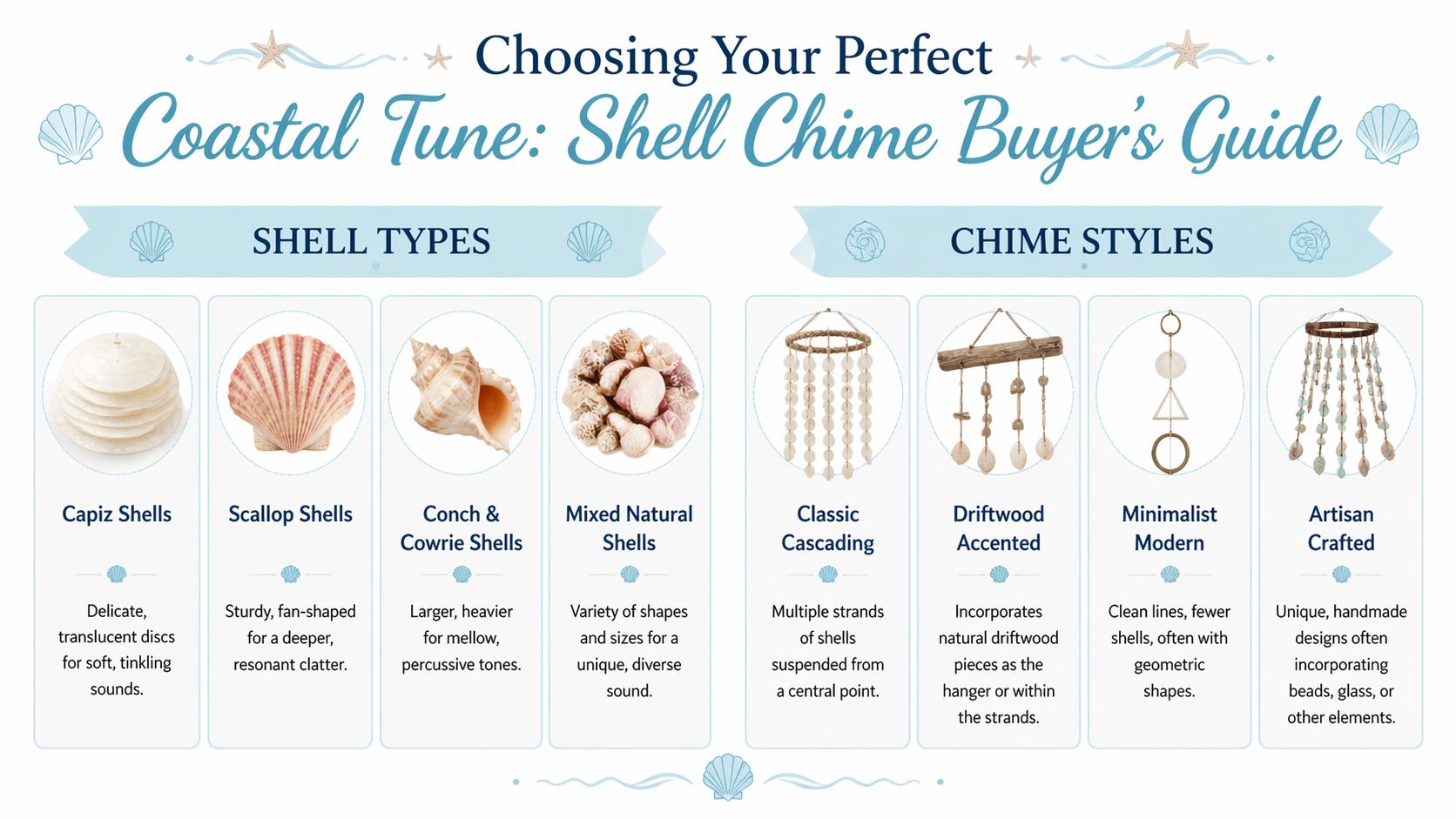
A guide titled Choosing Your Perfect Coastal Tune detailing various types of shells and wind chime styles.

A useful starting point is the material itself. Tuned shell wind chimes using Australian-sourced capiz and ringtop cowrie shells can achieve pentatonic scale precision, capiz shells can produce sustained tones lasting up to 4 seconds, and denser cockle shells can create frequencies between 800-1200 Hz for a soft, cascading “ocean whisper” effect, as described on the capiz and cowrie shell chime reference.

What each shell sounds like

Here’s the short version if you’re picking by ear rather than by label.

Shell type Sound character Best suited to
Capiz Light, airy, tinkling Indoor corners, windows, sheltered balconies
Cockle Softer cascading note Coastal patios, relaxed outdoor nooks
Cowrie More rounded and percussive Spots with a little more breeze
Mixed shell blends Varied and textured Beachy displays with a handmade feel

If you’re drawn to translucency and movement, capiz is hard to beat. It catches the light beautifully and gives off a finer sound. If you prefer something earthier, cockle and cowrie styles tend to feel more grounded.

Style matters as much as shell

The frame and layout change the effect just as much as the shell itself. A big cascading design moves differently from a spare, minimalist one.

  • Classic cascading chimes suit verandahs, pergolas, and leafy corners where you want visible movement.
  • Driftwood-topped designs feel rougher and more surf-shack. They pair well with timber, cane, and old beach signage.
  • Minimalist shell strands work better in apartments or tighter spaces where constant movement could get busy.
  • Craft-supply pieces let you build your own balance of sound and shape, especially if you start with seashell wall art crafting supplies.

Matching sound to place

A breezy Queenslander verandah can handle a fuller chime with more strands. A sheltered Sydney balcony often suits something quieter and shorter. If the space already has a lot going on, cane furniture, patterned cushions, stacked mags, surf prints, keep the chime simple.

Pick the shell wind chime the way you’d pick a stereo for a shed. Don’t ask only how it looks. Ask how it will sound in that exact space.

That one decision usually separates a lovely coastal detail from a chime that ends up in a drawer after a week.

Styling Your Space A VW Shrine Meets Coastal Cool

A mate of mine on the Central Coast keeps a little shelf by the back door of his weatherboard house. On it sits a faded blue Kombi model, a sun-bleached surf photo, and a shell wind chime that catches the breeze every time the screen door swings open. The whole corner feels like an old summer run up the coast. You can almost hear thongs on timber boards and a van door sliding shut before first light.

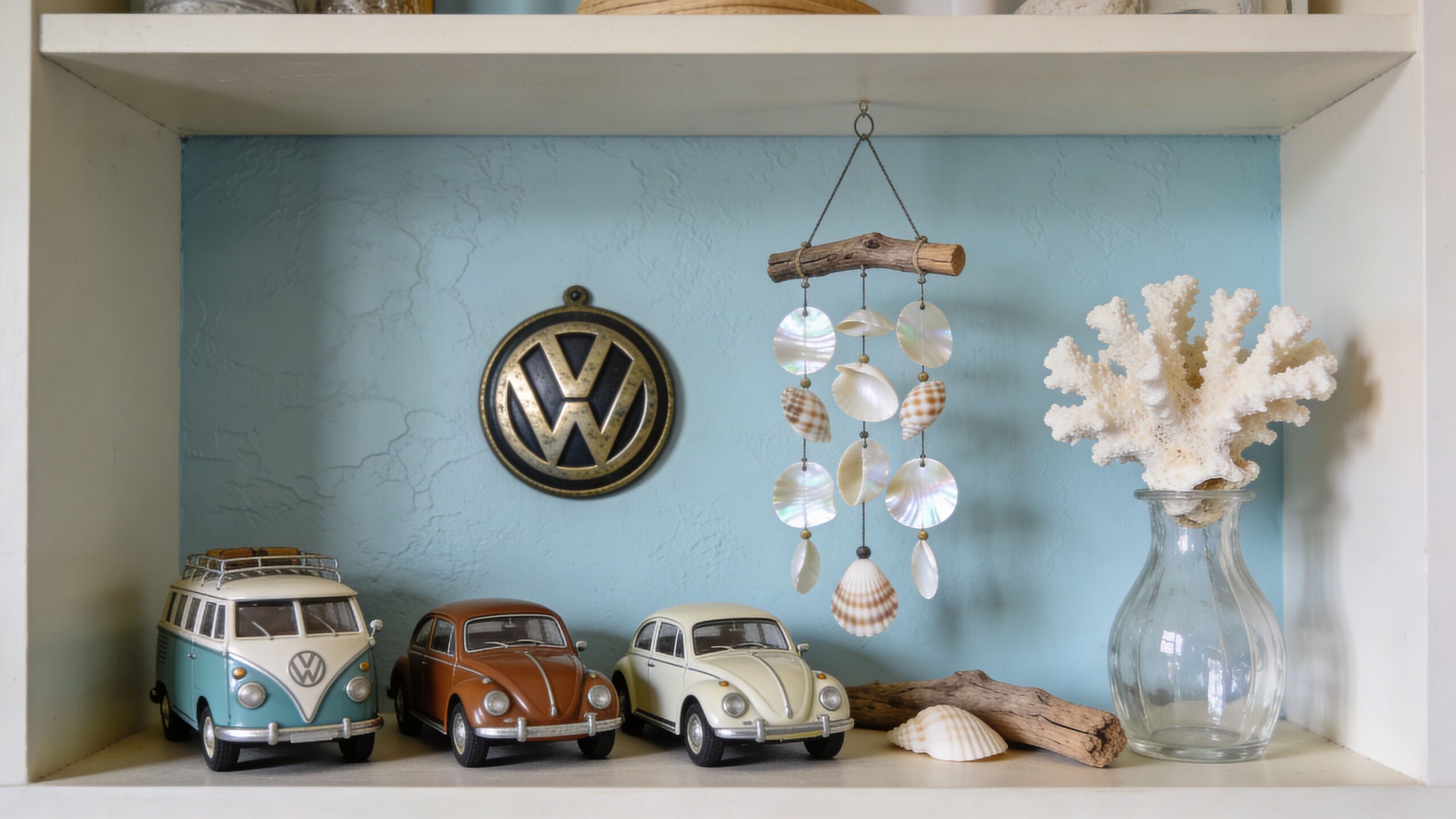
A shelf decorated with Volkswagen model cars, a shell wind chime, and a white piece of coral.

That is the look to chase. Bring your VW pieces into the coastal styling so the room carries the same easy spirit as a Kombi parked near the dunes. Shell wind chimes help because they soften the hard edges of metal, enamel, and glass, and they add a bit of movement that makes a display feel lived in.

The surf shack shelf

The easiest setup starts with restraint and a good eye for mood. A couple of Kombi diecast models in sun-faded colours, timber or painted-white shelving, and a driftwood-and-shell chime nearby will usually do it. It should feel collected over a few beach holidays, not bought in one hit on a Saturday afternoon.

Pieces that suit this look include Kombi diecast models, early Samba Bus memorabilia, and other classic Volkswagen collectibles you already have on hand.

Keep the palette dusty and salt-washed. Soft aqua, chalky white, faded red, sea-glass blue, sandy beige. Natural shell chimes sit especially well here because they look at home beside cane, old timber, and anything with a bit of wear.

The flower-power corner

A Beetle display carries a different kind of memory. Less surf club car park, more road trip to a market with a tape deck full of old tunes and flowers painted on the quarter window.

Pair a bright Beetle model with a lighter shell chime that has a little shimmer and rounder shapes. The link is visual and emotional at once. Curves, colour, and a playful feel.

Display mood VW piece to pair Chime style
Flower-power fun Volkswagen Beetle model Capiz or mixed shell strands
Retro road-trip Diecast Kombi Driftwood and shell cluster
Collector’s wall shelf Volkswagen diecast models Smaller, tidy shell chime

Give the shelf some breathing room

The best displays leave space around the hero piece. A classic VW has too much character to be crowded by ten other things fighting for attention.

A simple formula works well:

  1. Pick the star. A Beetle, a Samba Bus, or one favourite model with real personality.
  2. Add one beach texture. Shell, rope, driftwood, or a coral-look accent.
  3. Repeat a colour once. If the van has a red stripe or aqua roof, echo that nearby.
  4. Let air sit between pieces. The arrangement will feel calmer, and the shapes read properly.

If the shelf already has bold colours or old signs, choose a quieter shell wind chime. The room should feel relaxed, like a shady spot outside a surf shack, not a swap-meet trestle table.

Let the patio carry the same story

Some of the best VW styling happens just outside the house. A covered patio, a few chairs, an old surf shot on the wall, and a small cabinet with a couple of favourite models can feel like an extension of the garage and driveway. Add a shell chime near the seating area and the whole space starts to sound the part too.

That connection is what makes this style work. The Kombi life was never only about the vehicle. It was morning coffee from an enamel mug, sandy towels on the line, and chasing the coast whenever the weather looked kind. Bring that same feeling into the house, and your VW collection stops looking like storage and starts feeling like a life well remembered.

Placement Care and Making Your Own Chime

A good shell wind chime can sound dreamy in one spot and annoying in another. Placement does most of the work. You want enough breeze for movement, but not so much exposure that the thing chatters all day or cops a hammering from sun and salt.

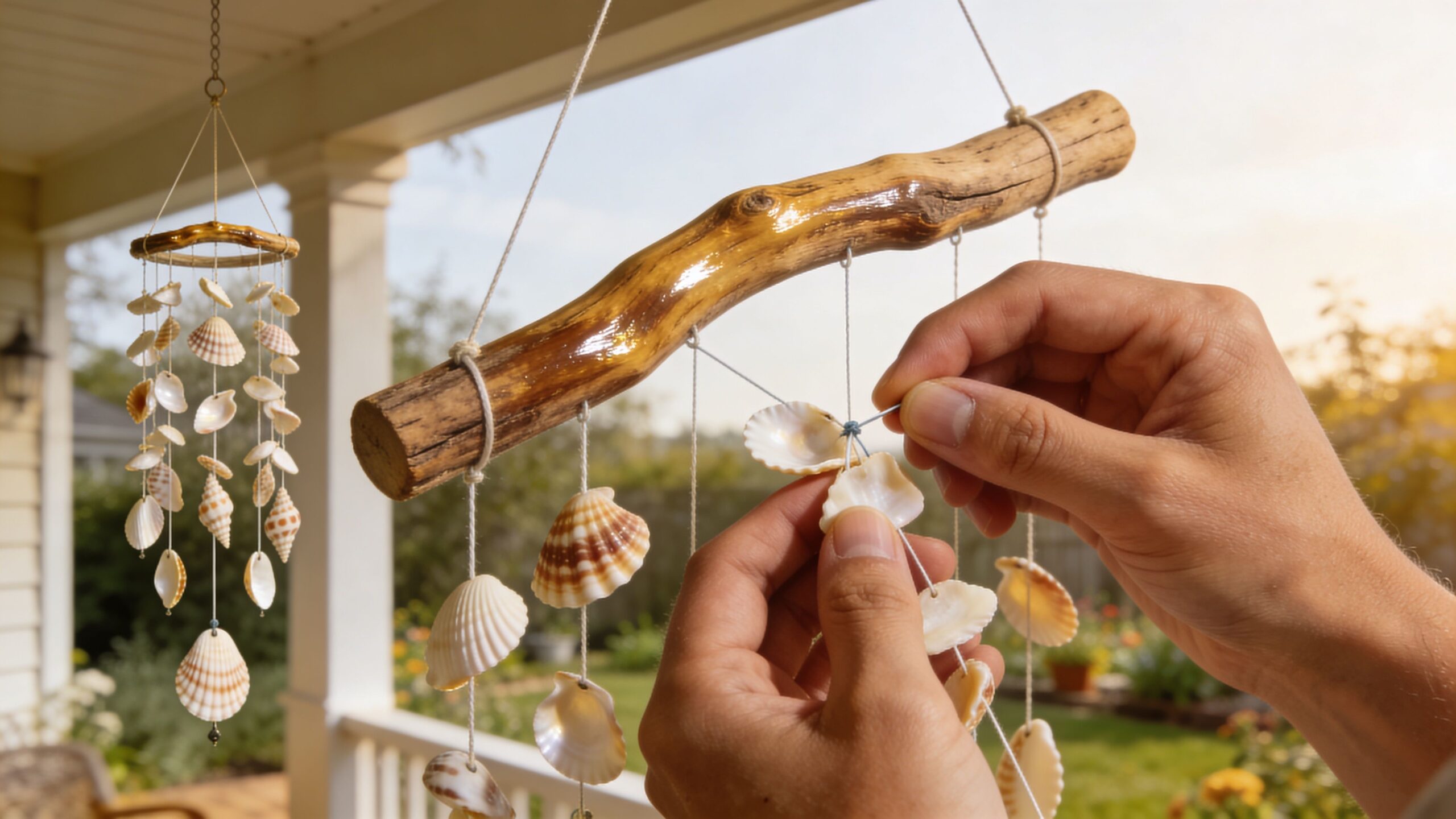
A person carefully crafting handmade seashell wind chimes on a wooden porch during a sunny day.

Where to hang shell wind chimes

The sweetest spots are usually transitional places. Near a window that catches an afternoon breeze. On a covered porch. At the edge of a pergola. Beside a doorway that opens toward the coast.

A few placement rules help:

  • Shelter matters: under cover lasts longer than full exposure.
  • Head height is pleasant: the sound sits around you instead of above you.
  • Avoid constant wind tunnels: corners between walls can make even soft chimes too busy.
  • Test before fixing: hang it temporarily for a few days and listen at different times.

Caring for them in Australian conditions

Salt air can be rough on thread, knots, and drilled points. Harsh sun can make some materials brittle. The answer isn’t fussing over them every week. It’s giving them a quick check now and then.

Use a soft cloth to remove grime, untangle strands before knots tighten, and bring delicate chimes under cover if wild weather is rolling through. If a strand starts to wear, replace it before the shells drop and chip.

A shell wind chime should sound relaxed, not stressed. If it’s clattering nonstop, move it before it wears out early.

Making your own with local shells

DIY shell wind chimes suit VW people because we already like tinkering. We don’t mind spending an hour adjusting something small if the end result feels personal.

There’s also a strong reason to go local with materials. A key issue often missed is legal, sustainable sourcing. The Australian shell craft compliance note says 40% of intercepted shell crafts at borders were non-compliant, and it also notes that 65% of AU Etsy searches for “shell wind chimes” seek “local made” options. Local alternatives such as pipi or cockle shells, as promoted by Indigenous craft groups, make far more sense for an Australian DIY project.

A simple DIY approach

You don’t need a workshop full of gear. Just patience and a light hand.

  1. Gather a base
    Driftwood works beautifully. So does a smooth branch or a simple timber ring.

  2. Choose a small shell mix
    Pipi or cockle shells create an honest local feel. Keep the selection balanced rather than perfect.

  3. Use weather-friendly cord
    Nylon or similar outdoor-safe line tends to hold up better than flimsy craft thread.

  4. Space the strands unevenly
    Uneven lengths usually give a more natural sound and stop the whole piece looking too rigid.

  5. Hang it somewhere protected first
    Listen for a few days. Trim, shorten, or separate strands if the sound is too dense.

A handmade shell wind chime beside your VW shelf or patio chair has something shop-bought pieces can’t fake. It carries your own beach, your own trip, your own afternoon.

The Perfect Gift for Your Favourite VW Enthusiast

The best gifts for VW people usually do one thing well. They show you understand the life around the vehicle, not just the badge on the nose.

A diecast Kombi on its own is a solid present. A shell wind chime on its own is thoughtful. Put them together properly and the gift starts telling a story. It says beach mornings, old road maps, wax in the glovebox, sun-faded towels, and that dream of one more run up the coast.

A gift pack that feels personal

One of the nicest combinations is a Kombi or Samba Bus diecast paired with a soft-sounding shell chime in coastal tones. Wrap it in plain kraft paper, tuck in a handwritten note, and add a tag that nods to a favourite beach, a first road trip, or the old family van they still talk about.

That combination works because the two pieces do different jobs:

  • the diecast model anchors the VW nostalgia
  • the shell wind chime brings in atmosphere and home style
  • the packaging and note turn the whole thing into a memory, not just a purchase

Matching the gift to the person

Not every VW enthusiast wants the same vibe. Some lean collector-clean and organised. Others want their place to feel like a casual surf hideaway.

Here’s a simple approach:

Recipient type Better model choice Better shell chime choice
Kombi dreamer Samba Bus or surf van Driftwood or mixed shell
Beetle lover Bright Beetle diecast Capiz or lighter shell strands
Home stylist Neutral VW display piece Soft white or natural shell chime

If you’re buying for someone who already has shelves full of models, add the shell chime. It gives the collection a setting and a mood.

Why it lands so well

Unboxing matters. The little clink of shells before the tissue paper’s even off. The glimpse of a Beetle roof or Samba windows under wrapping. That’s the sort of present people keep talking about after the birthday or Christmas lunch is over.

It’s also a smart option for gift buyers who want something warmer than another generic car-themed mug or stubby holder. A model plus a shell wind chime feels considered. It respects the VW passion while adding a bit of coastal calm to the home.

Bringing the Sound of the Coast Home

A shell wind chime does something a lot of décor can’t. It adds sound to the memory. Long after the Kombi is parked, the board is rinsed off, and the esky is back in the shed, that soft rattle in the breeze keeps the coastal mood alive.

That’s why it suits classic Volkswagen life so well. Both are tied to freedom, simplicity, and a certain Australian way of slowing down without trying too hard. One sits in the driveway or on the display shelf. The other hangs nearby and gives the whole scene its soundtrack.

If your place already leans beachy, shell wind chimes will finish it off. If your shelves are full of old Volkswagens, they’ll connect the collection to the lifestyle behind it.

Your Shell Wind Chime Questions Answered

One of the blokes at a summer VW meet in Torquay told me his shell chime sounded perfect for two days, then turned into a tangled fishing net after a stiff sea breeze. Another had hung one on a unit balcony beside a row of surfboards and worried the neighbours would hear every clack before sunrise. These are the questions people ask once the chime is up and the novelty wears off.

Quick FAQ Guide

Question Quick Answer
How do I untangle a badly knotted shell chime? Lay it flat first, separate one strand at a time, and start at the top knot instead of tugging from the bottom.
Are shell wind chimes too noisy for apartment balconies? Usually no, if you choose a lighter design with fewer strands and hang it in a sheltered spot.
What’s the safest way to clean capiz shells? Wipe them with a soft dry or slightly damp cloth. Skip harsh scrubbing, because delicate shells mark easily.
Can shell wind chimes do anything beyond sounding nice? Yes. In several coastal and farming traditions, shell and wind chimes were used to add movement and sound around gardens and crops, and they were also valued for their ceremonial and protective meaning.

A stubborn tangle is easier to sort while the chime is hanging from a hook. Gravity helps the strands fall into place, and you can see which cord is crossing the others instead of wrestling the whole lot in your hands.

Small balconies suit quieter chimes. Fewer shells, shorter drops, and a spot out of the strongest gusts will give you a soft rattle instead of an all-day clatter that feels more pub beer garden than relaxed beach shack.

Give it a quick once-over now and then.

Dust on the shells, salt on the knots, and sun on the cord can wear a chime down faster than people expect, especially near the coast. A simple wipe and a fast knot check every so often usually keeps it sounding right and saves you from restringing the whole thing later.

Start with the quietest shell wind chime that suits your space. You can always move it into a breezier corner later, but a too-noisy spot gets old quickly.

If you’d like to pair that coastal sound with something for the shelf, Volkswagen Memorabilia is a terrific place to browse. You’ll find VW-themed gifts, beach-inspired décor, and classic diecast favourites that suit everything from a laid-back surf nook to a proper collector’s display. It’s a great spot to explore if you’re after VW Kombi diecast Australia pieces, a Volkswagen Beetle model, or thoughtful VW memorabilia collectibles that bring the whole lifestyle together.

Coastal Living Room: An Aussie VW Fan’s Guide

Saturday morning. The sun’s already warming the bonnet of a tidy old Beetle in the showgrounds, someone’s got a camp chair out beside a pastel Kombi, and the smell of coffee is drifting past polished hubcaps and folding tables full of parts, badges, and diecast treasures. You’ve had that feeling before. A bit of salt in the air, a bit of surf music in your head, and that quiet thought that the best parts of coastal Australia aren’t flashy at all. They’re easy, faded, sunlit, and full of stories.

That’s exactly what a good coastal living room should feel like.

Not a theme park version with rope knots everywhere and a random anchor on the wall. I mean a room that feels like the drive home from the beach in an old VW. Sandy feet. Windows cracked open. A board strapped overhead. A favourite song on. Maybe a little 1:18 Samba Bus on the shelf that reminds you of every road trip you wish you’d taken sooner.

Bringing the Beach and the Bug Indoors

A mate of mine on the NSW coast did this beautifully without making his lounge room look like a surf shop. He started with what he already loved. White walls that caught the morning light. A worn timber coffee table that looked better with every mark. One blue armchair. Then he added the pieces that meant something to him: an old beach photo from a family trip, a tray of shells his kids insisted on keeping, and a miniature Kombi in retro colours parked on a floating shelf above the telly.

The room didn’t scream “coastal styling”. It just felt coastal.

That’s why this look works so well in Australia. According to House Beautiful’s coastal design trends reference, over 85% of Australians live within 50 km of the coast, and coastal-themed renovations account for 22% of all interior updates in beachside suburbs, with average spending at AUD 12,500 per project. The same source ties the look back to the 1970s surf boom, which is probably why it feels so natural to pair it with classic Volkswagen culture.

What the room is really trying to capture

A coastal living room isn’t about copying a catalogue. It’s about bottling a familiar Aussie rhythm.

  • Lightness: Rooms should feel open, not stuffed with furniture.
  • Ease: People should be able to flop down after a swim without worrying they’re in a museum.
  • Memory: The best spaces hold objects that mean something, whether that’s driftwood, family beach snaps, or a VW Bus model that takes you straight back to the open road.

Coastal styling works best when it feels collected over time, not bought all at once.

The VW connection feels natural

Kombis and beach life belong together in the Australian imagination. You don’t need to force the link. It’s already there in surf history, road trips, roadside fish and chips, and those long summer drives where the trip mattered as much as the destination.

So if you’ve been wanting a coastal living room that feels more personal than generic seaside décor, start with that. Build a room around the feeling of freedom your favourite VW gives you. The beach supplies the calm. The Bug or Kombi supplies the character.

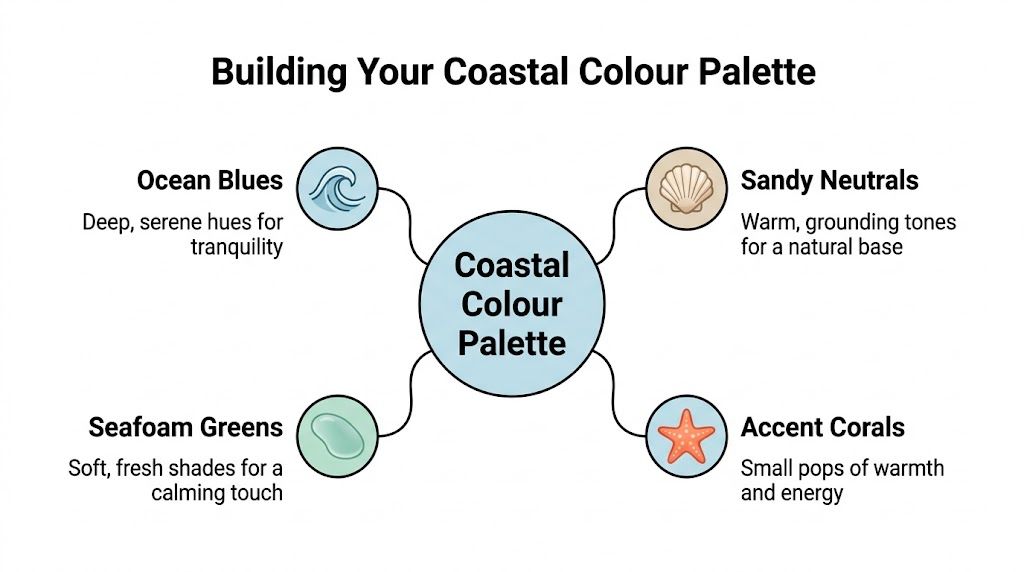
Building Your Coastal Colour Palette

The easiest way to get this look right is to start with the colours you’d see on a beach drive. Not just “blue and white” as a vague idea. Think bleached sand, cloudy sky, sea glass, old timber boardwalks, and sun-faded paint on a well-loved van.

A strong coastal living room usually begins with a quiet base. Soft whites. Sandy beige. Driftwood grey. Then you bring in colour carefully, the same way a classic VW paint shade wakes up a line-up at a car show.

A diagram illustrating the four main color categories for a coastal interior design color palette.

Start with the calm colours

There’s a reason these shades never go out of style. A 2024 University of Sydney study referenced here found that coastal-inspired interiors using blue-white-sand colour schemes can lower reported stress levels by up to 34%, and the same reference notes these palettes appear in 62% of Sydney’s eastern suburbs homes.

That tells you something many decorators forget. The palette isn’t only pretty. It changes how the room feels to live in.

Use this simple approach:

Colour family Best use in the room VW-inspired twist
Sandy whites Walls, larger sofas, curtains Keeps the room feeling airy around brighter collectables
Ocean blues Cushions, artwork, rugs Echoes surf culture without getting too nautical
Driftwood greys Timber finishes, shelving, occasional chairs Helps diecast displays feel grounded
Sun-washed accents Small décor pieces only Think muted orange, sea green, or mustard drawn from classic VW paintwork

Add personality from classic VW colours

At this stage, the room sheds its generic appearance.

A sea green note can come from a vase, a throw, or a framed print near a shelf of Beetle models. A burnt orange cushion can nod to a road-trip Westfalia without taking over the room. A soft yellow can lift a corner the way an old Samba Bus does in real life. You don’t need much.

Practical rule: Keep your big pieces neutral, then let Volkswagen colours appear in small, movable layers.

That way, if you add a bright diecast model or metal sign later, it looks intentional rather than crowded.

Avoid the “souvenir shop” trap

If every item is blue, white, and shell-shaped, the room gets tired fast. Coastal living rooms have more depth when the palette includes faded, earthy tones too. Timber, woven fibres, chalky ceramics, and old metal all help.

If you’d like more inspiration for combining beach tones with vintage vehicle character, this roundup of coastal home décor ideas is a handy jumping-off point.

The trick is balance. Let the room whisper “beach house”, then let one or two VW references tell the story.

Choosing Furniture for a Relaxed Layout

Furniture makes or breaks this style. You can have the right colours and the nicest accessories in the world, but if the room is blocked up with bulky pieces and awkward angles, it won’t feel coastal. It’ll just feel busy.

The best coastal living room layout gives people permission to settle in. That means generous seating, open walking paths, and tables that don’t feel too formal to use.

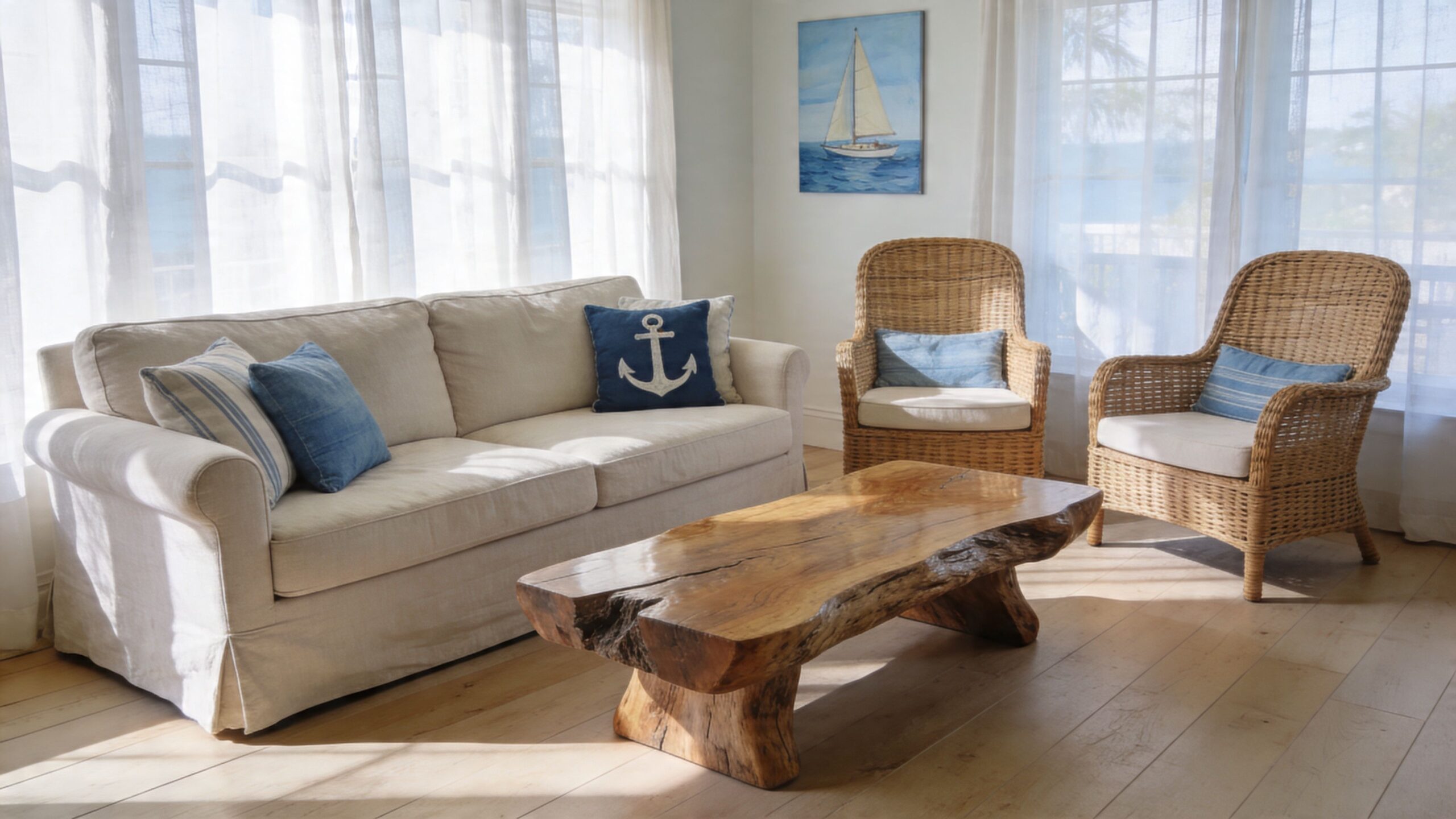
A bright coastal living room featuring a linen sofa, rattan chairs, and a natural wood coffee table.

Choose pieces that sit lightly in the room

A deep sofa in a pale fabric often does the heavy lifting. It becomes the place everyone gravitates to after a swim, during Sunday arvo cricket, or while talking rubbish about which year made the best Kombi front end.

Pair that with lighter-looking pieces:

  • Rattan or woven occasional chairs: They keep the room from feeling too square.
  • Natural timber coffee tables: Better if the finish is matte or slightly weathered.
  • Slim entertainment units: You want storage, but not a giant visual block.
  • Open side tables: Airier than thick, dark furniture.

The key isn’t matching sets. In fact, matching too much can make the space feel staged. A coastal room should feel assembled the way a good garage is. Useful, personal, and a little bit relaxed around the edges.

Arrange for conversation, not just the television

One of the most common mistakes is pushing every seat hard against the walls. That leaves a dead zone in the middle and kills the warm, gathered feeling. Pull the seating inward a little. Let the coffee table become the anchor.

A simple layout often works best:

Area Better choice Why it suits a coastal living room
Main seating One comfortable sofa Creates a calm visual base
Secondary seating Two lighter chairs Adds flexibility and openness
Centre Natural wood coffee table Gives room for books, trays, or a featured model
Corner Floor lamp or plant Softens edges without clutter

If you can walk through the room without weaving around furniture, you’re usually on the right track.

Let your future display pieces breathe

This matters more than people realise. If you know you want a shelf of Beetle models, a framed VW sign, or a standout Samba Bus on the coffee table, don’t fill every surface before those pieces arrive.

Leave a little negative space. It makes special objects feel curated. A floating shelf with one polished Kombi model and a small ceramic bowl often has more impact than a packed bookcase full of bits and pieces.

That’s the same logic restorers use with a classic car. Every detail shines more when it isn’t fighting ten others for attention.

Layering Textures and Natural Light

A coastal living room can look flat if everything is smooth and pale. Texture is what gives it soul. It’s the difference between a room that looks nice in a photo and one that makes you want to kick off your thongs and stay for another coffee.

Start with fabric that has a bit of visual softness. Linen-look curtains, a woven rug, cotton cushion covers, a knitted throw over the sofa arm. These layers help the room feel lived in, not clinical.

Texture should feel a bit imperfect

The best coastal rooms borrow from the natural messiness of the shore. Weathered timber. Basket weave. Slightly nubby fabric. Ceramic finishes that aren’t perfectly glossy. Those surfaces bounce light differently and stop the room from becoming one long stretch of flat beige.

Try combining:

  • A woven rug under a timber coffee table
  • Soft curtains that move easily with the breeze
  • A rougher basket or tray to hold remotes, books, or coasters
  • One chunkier throw for evening warmth and visual contrast

A room with all light, smooth finishes can feel cold. A room with mixed textures feels settled.

Use daylight like part of the décor

Natural light is one of the great heroes of coastal styling. Keep window treatments light enough to let brightness through. Avoid heavy, dark drapes that make the room feel boxed in. If privacy matters, choose a soft layer that filters sunlight instead of blocking it.

At night, you want the opposite mood. Warm pools of light. A floor lamp beside the sofa. A table lamp near a reading chair. A gentle glow that makes white walls feel creamy instead of stark.

Evening lighting should feel like the last light on the beach. Soft, warm, and easy on the eyes.

Keep surfaces calm

Texture does the work, so you don’t need every object to shout. A timber bowl, a stack of books, a simple framed coastal print, maybe a smooth pebble or shell collected on holiday. These small touches foster atmosphere.

And that quietness matters, because it gives your Volkswagen pieces the right stage later on. A colourful diecast model stands out beautifully when the materials around it feel natural and restrained.

Styling Your Volkswagen Memorabilia with Pride

Here, the room becomes yours.

Plenty of guides can tell you to buy a striped cushion, add some coral, and call it coastal. Very few tell you what to do if the object you really love is a classic VW Samba Bus, a Beetle model in seafoam green, or a metal wall piece that reminds you of old beach-town servo signs. That’s the fun bit.

A Surfing Australia survey and home décor trend reference notes that over 60% of surfers associate retro VW vans with the coastal lifestyle, and the same reference reports a 25% rise in VW-themed home décor sales in coastal NSW and QLD regions. That lines up with what plenty of enthusiasts already know in their bones. The Kombi isn’t separate from Australian beach culture. It’s right in the middle of it.

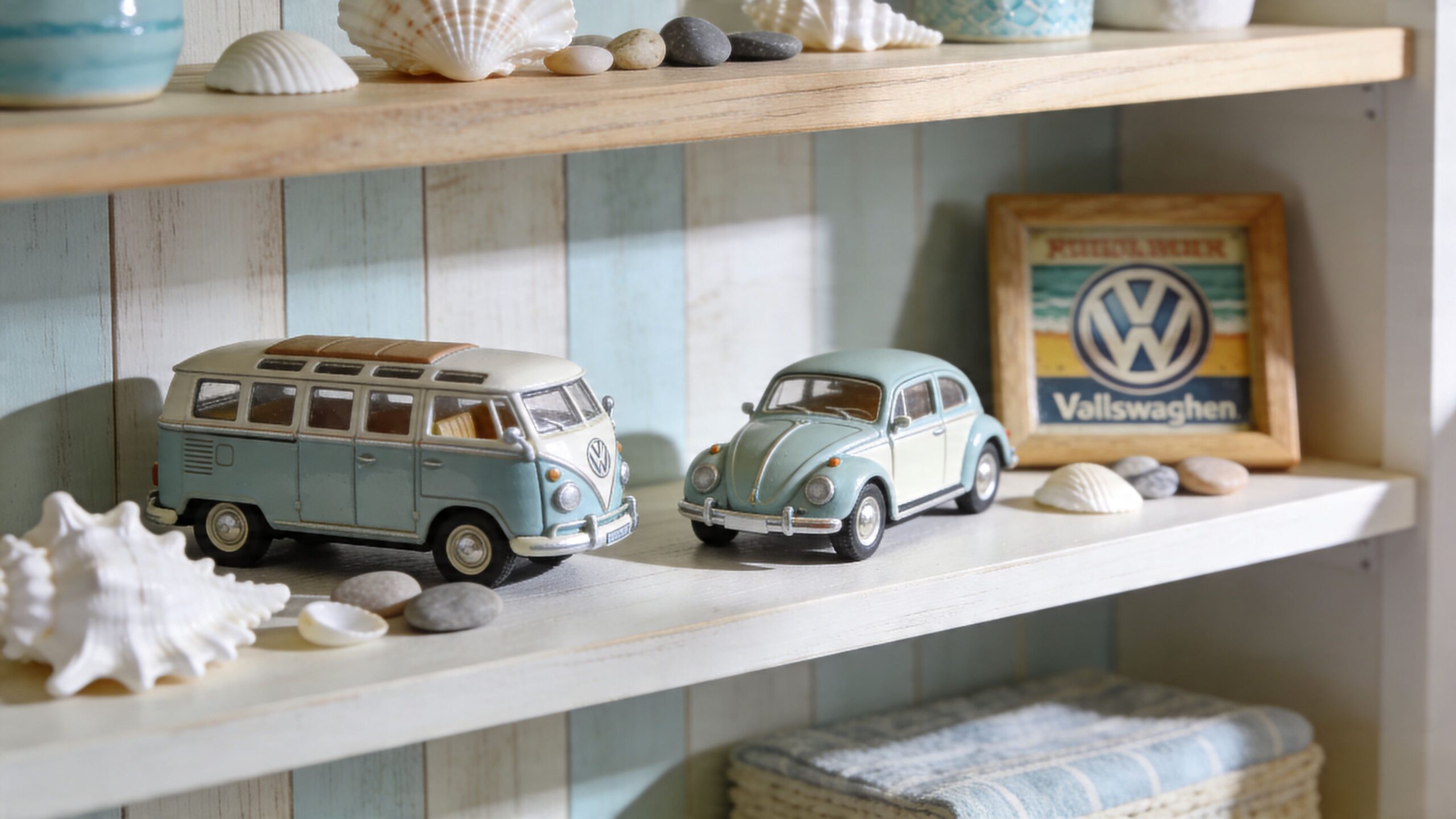
A coastal-themed shelf featuring miniature Volkswagen toy vehicles, seashells, smooth pebbles, and a VW picture frame.

Treat models like sculpture

A licensed diecast model shouldn’t be hidden away like an afterthought. If you’ve got a well-finished Kombi or Beetle, style it the way you’d style a ceramic piece or a small artwork.

Good spots include:

  • Coffee table centrepiece: One larger model on a tray with a book and a small bowl.
  • Floating shelf display: A single Samba Bus beside a coastal print or framed photo.
  • Console table feature: Great for an entry-adjacent living room where the model becomes a conversation starter.

The most effective approach is restraint. One standout model on a clean surface often looks more premium than six lined up wheel-to-wheel.

Build little stories, not clutter piles

A coastal living room looks best when display pieces relate to each other. A retro Kombi model beside sea glass, a smooth pebble, and a pale timber frame feels considered. The same model shoved between random candles and spare keys doesn’t.

Try one of these combinations:

Display spot VW item Coastal pairing
Shelf Flower Power Kombi Sea glass, shell, white ceramic vase
Coffee table 1962 VW Samba Bus diecast Large beach book, timber tray
Wall niche Beetle model Framed surf photo, small driftwood piece
Sideboard VW metal sign or frame Rattan basket, soft lamp, neutral bowl

If you lean more decorative than collector-focused, these wall accents for the living room can help tie a display area together without making it look overdone.

Mix scales with purpose

Scale matters. A larger model reads as a hero piece. Smaller ones work better grouped or tucked into shelves. If your room is already full of visual detail, choose one larger item. If the room is quite minimal, a short row of smaller Beetles can add rhythm without overpowering the space.

A good display should make a guest smile first, then lean in for a closer look.

That’s exactly what old VWs do in practice too.

Lean into surf history, not clichés

The strongest Volkswagen coastal styling usually nods to surf culture rather than obvious nautical themes. That means weathered finishes, sun-washed colours, old road-trip energy, and pieces that feel like they’ve travelled.

You might use:

  • a pastel Kombi model on a pale oak shelf
  • a framed black-and-white beach photo
  • one metal VW sign with a slightly vintage feel
  • a stack of magazines or books about classic cars, surfing, or road travel

What you probably don’t need is a room full of anchors, fish netting, or novelty signs about beach rules.

The old Kombi already brings enough story with it.

Make the display feel grown-up

This matters if you’re sharing the room with a partner, family, or if you want the space to feel polished rather than kitschy. Keep the palette controlled. Repeat one or two accent colours from the memorabilia elsewhere in the room. Choose shelves and frames that suit the furniture. Dust the pieces and give them breathing room.

Done well, VW memorabilia doesn’t look like a hobby that invaded the lounge. It looks like design with personality.

Your Shopping Checklist and Sourcing Tips

Once you know the mood you’re after, shopping gets much easier. You’re not just buying “beachy stuff”. You’re choosing a few foundational pieces, then adding layers that hold up to real Australian conditions.

That last part matters. Sun, humidity, and salty air can be rough on interiors, especially in coastal areas.

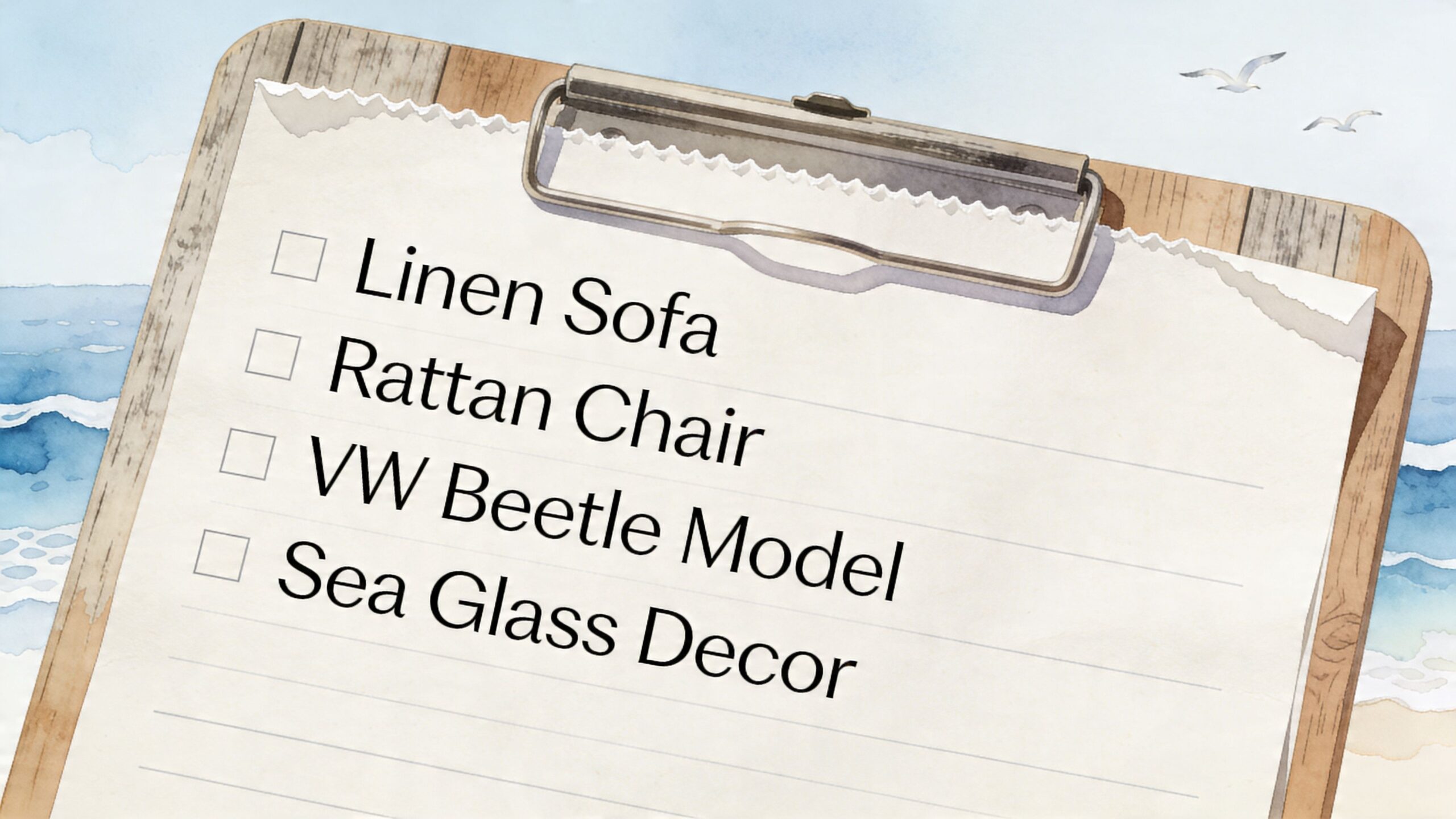
A wooden clipboard on a beach background features a checklist with linen sofa, rattan chair, VW beetle model, and sea glass decor.

Your coastal living room checklist

Use this as a practical starting point when you’re planning the room.

  • A soft neutral base: White, sand, or drift-toned walls and a main sofa in a calm shade.
  • Natural-looking furniture: Timber, rattan, or woven details that lighten the room visually.
  • Layered textiles: Curtains, rug, cushions, and a throw with enough variation to avoid flatness.
  • One hero VW piece: A Kombi or Beetle model that can anchor a table or shelf.
  • Supporting décor: Shells, pebbles, beach photos, ceramics, or framed prints with restraint.
  • Warm evening lighting: Lamps that soften the room after sunset.
  • Display surfaces: Shelves, trays, or sideboards with enough empty space around collectables.

Buy for coastal conditions, not only for looks

A CSIRO-related climate note referenced here says Australia’s humid climates can run 40% higher in humidity than global averages, and the same reference points to durable metal accents like VW diecast models and fridge magnets as a mould-proof, long-lasting alternative to fabrics that degrade more quickly.

That’s worth remembering when you’re tempted by delicate or high-maintenance materials.

A simple rule of thumb:

Item type Better for humid coastal homes Use with care
Accent décor Metal, ceramic, sealed timber Untreated soft materials
Collectables Diecast models, framed pieces Fragile fabrics in direct sun
Storage Baskets with airflow, open shelving Overstuffed enclosed corners
Soft furnishings Practical, easy-care fabrics Anything that traps moisture easily

Know where to save and where to spend

Save on trend-driven bits. Cushions, small vases, and decorative bowls can change with the seasons. Spend more carefully on the sofa, occasional chairs, and the display pieces you’ll keep for years.

If you’re hunting for character pieces, vintage-inspired options in vintage home accessories can help pull the room together without forcing it.

For VW collectors in Australia, buying from a local importer has obvious advantages too. Local stock means less waiting, easier support, and a better sense of what suits Australian homes and gifting occasions. That matters when you’re after licensed memorabilia and you want it to arrive quickly, especially if it’s meant for a birthday, Father’s Day, or a shelf you’ve finally decided to style properly.

Frequently Asked Questions

How do I stop a coastal living room from looking too themed

Keep the bigger pieces quiet and let the personality come from a few smaller items. Choose natural materials, restrained colours, and one or two memorable accents. A single Kombi model or VW wall piece has far more impact than filling the room with beach clichés.

What’s the best place to display a VW Kombi diecast model

A coffee table, floating shelf, console, or open bookcase works well. The main thing is visibility and breathing room. If the model is special, don’t bury it among everyday clutter. Give it a clear backdrop so the shape and colour stand out.

Which VW model scale suits a living room best

Larger scales usually suit coffee tables and sideboards because they read more like sculpture. Smaller scales work well on bookshelves, in wall niches, or grouped on a ledge. If you’re unsure, match the model to the distance from which it’ll be viewed. Bigger for a focal point, smaller for close-up shelves.

Dust is easier to manage when each model has a defined display spot instead of being scattered around the room.

Can I mix VW memorabilia with Hamptons or mid-century furniture

Yes, as long as you manage colour and proportion. Hamptons pieces can work if the room stays relaxed and not overly formal. Mid-century furniture often pairs beautifully with Volkswagen memorabilia because both share clean lines and a sense of retro optimism. Keep the palette cohesive and the result feels intentional.

How do I clean diecast models in a coastal home

Use a soft, dry cloth or a very gentle detailing brush for dust. Keep them out of direct harsh sun where possible. Avoid soaking them or using strong cleaners. If a model sits in a room that gets regular sea breeze, a light, consistent dusting is better than letting residue build up.

How many VW pieces should I put in one coastal living room

Less than you think. Start with one hero item and one supporting piece. Live with that for a while. If the room still feels sparse, add another. Collecting and styling both work better when they grow gradually.

Can a Volkswagen Beetle model work in a beach-inspired room, or is a Kombi better

Both work. A Kombi leans more obviously into surf-road-trip nostalgia. A Beetle can bring a sweeter, more compact note, especially on shelves, side tables, or grouped displays. Choose the one that means something to you. Personal connection always looks better than trend-chasing.


If you’re ready to turn that beach-and-bus feeling into something you can enjoy every day, have a look at Volkswagen Memorabilia. It’s a great spot for licensed VW gifts, surfy diecast models, coastal accents, and display pieces that suit Australian homes, with local stock and fast shipping that make collecting a whole lot easier.

Flower Wall Decor: A VW & Coastal Style Guide

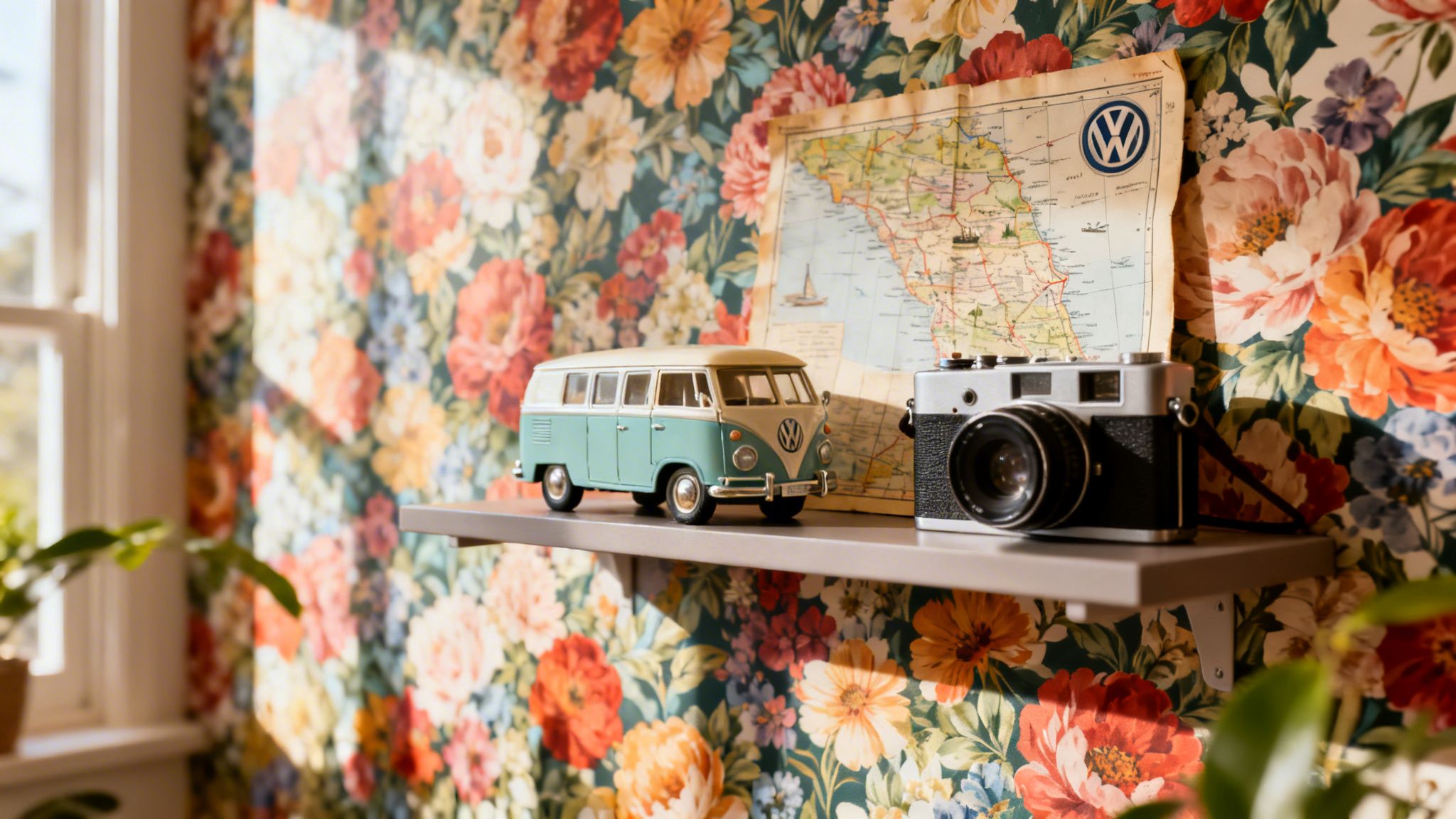
I once set a little cream Kombi diecast on a shelf and realised the shelf was doing it no favours. The van looked ready for a beach run to Lennox, but the wall behind it looked like a waiting room in Parramatta.

More Than Just a Wall The Soul of a VW-Inspired Floral Display

A good flower wall decor piece does more than fill blank space. It gives your memorabilia a setting, a mood, a bit of road-trip magic.

That matters if you’re the sort of person who sees a Beetle and remembers who drove one, where it broke down, or which mate painted daisies on the side of a Kombi in the seventies. A floral backdrop taps into that same feeling. It softens the room, adds colour, and makes the display feel lived in rather than lined up like stock on a shelf.

A vintage Volkswagen camper van filled with colorful paper flower wall decor on a scenic road.

Why flower walls feel right beside classic Volkswagens

The link isn’t forced. It’s baked into the culture.

The Waratah has been New South Wales’ state emblem since 1962, and flower wall decor in Australia sits inside a much older floral art tradition. By the 1970s, when Flower Power rolled through surf hubs like Byron Bay, floral decals and retro prints were right at home beside Kombis, beach towels, and salt-crusted longboards. Cultural archives cited in this history of flower arranging in Australia note that sales of retro floral prints increased by 35% during 1969 to 1974, and the same source says the Australian home decor market for botanical wall art now exceeds AUD 250 million yearly.

That history gives flower wall decor a bit of backbone. It is not just pretty filler. It belongs here.

A display should tell a story

The best setups feel like a scene from a life you know.

A pale blue Beetle model in front of native-inspired blooms can feel like a Sunday drive down the coast. A bright Samba Bus against orange, pink, and cream florals can bring back markets, records, and the old flower-child spirit without trying too hard. Even a modest shelf can start to feel like a little stage set.

Tip: If your collection has one hero piece, build the wall to support that model’s colour and character rather than fighting for attention.

I’ve always liked displays that feel collected over time. A flower wall helps with that. It lets the car stay the hero while the background carries the atmosphere, a bit like a good photo from a show field where the sky, grass, and people all make the car look better.

Planning Your Vibe Flower Power Hippy or Sun-Kissed Coastal

Before you buy a single stem, decide what sort of story the wall should tell. If you skip this bit, you end up with a mishmash of colours that looks more craft cupboard than curated corner.

I reckon most VW-inspired flower wall decor lands in one of two camps. The first is bright and cheeky. The second is breezy and beachy. Both work. The trick is matching the wall to the personality of your room and your collection.

The Flower Power look

This is the full-colour option. Think hot pink, orange, cream, yellow, and soft purple with plenty of movement.

It suits a cheerful Kombi display, especially if your favourite model has that playful seventies energy. A bold floral wall behind a classic van can feel like an old festival poster come to life. The colours don’t have to be random. Pick a few repeating tones from the vehicle itself and let the flowers echo them.

This style works best if you already lean retro in your home decor. Timber shelves, old cameras, vintage signs, and sun-faded prints sit nicely with it.

The Sun-Kissed Coastal look

This one feels more Noosa shack than Nimbin market.

Use softer tones, sandy neutrals, muted whites, eucalyptus greens, and native-inspired textures. The result is calmer, which is handy if you want the display to sit naturally in a lounge room, hallway, or study without shouting over everything else. If you like layered beach styling, a browse through this boho wall art collection can help you pin down the mood.

A coastal flower wall decor setup suits cream, pale blue, sage, and white VW pieces beautifully. It also works with surf memorabilia, driftwood, or small framed beach prints.

A quick way to choose your direction

Use this simple check before you commit.

Vibe Best match Colours Best room feel
Flower Power Bright Kombis, retro signs, playful shelves Pink, orange, yellow, cream Lively, nostalgic
Sun-Kissed Coastal Beetles, surf pieces, natural textures White, sand, green, soft blush Relaxed, airy

Three decisions that save headaches later

  • Start with the hero item: Choose the model, print, or object that matters most. Everything else should support it.
  • Look at your wall in daylight: A colour that feels soft in the shop can look muddy at home.
  • Measure the visual footprint: Mark the intended wall area with painter’s tape first. It helps you see whether you need a full backdrop or just a framed floral zone behind shelves.

Key takeaway: The strongest flower wall decor doesn’t begin with flowers. It begins with mood, colour, and the one VW piece you want everyone to notice first.

Building Your Masterpiece A Guide to DIY and Ready-Made Walls

Some people love a weekend project. Others would rather skip straight to the fun bit and start styling. Both paths are fair dinkum.

If you want to build your own flower wall decor, you need a base that can handle the job, flowers that won’t look tired in coastal conditions, and enough density to stop the whole thing looking patchy. If you’d rather buy ready-made panels, the game shifts from making to choosing well.

Infographic

The DIY route for hands-on VW fans

The verified Australian guidance is refreshingly practical. Use marine-grade plywood (12mm thick) or EVA foam boards as your base. For flowers, choose UV-resistant faux silk flowers and allow AUD 200 to AUD 800 for sourcing. For a lush finish, calculate 200 to 300 roses per square metre. Assembly uses industrial hot glue and zip ties, and the process can take 12 to 24 hours, according to this Australian DIY flower wall guide from Boxwood Rose.

That all sounds a bit workshop-heavy, but it’s straightforward when broken down.

Step one choosing the base

Marine-grade ply makes sense if the finished wall will live somewhere with coastal humidity, changing temperatures, or regular handling. EVA foam is lighter and easier to move, which can be handy if you’re renting or rearranging displays.

If your flower wall decor is going behind a low shelf of diecast models, lighter can be better. If it is a freestanding statement piece or a larger panel, sturdier is often worth the extra effort.

Step two sourcing flowers that hold up

Many home projects falter at this stage. The flowers need to look convincing from a few steps back and survive ordinary Australian conditions.

The same Boxwood Rose source notes that AU event planners report 75% success for DIY walls, but common pitfalls include using non-UV resistant flowers in high humidity and underestimating costs, which can push budgets up by 30% without bulk purchasing. That means the bargain bunch that looks fine in a packet may not stay schmick once it’s on the wall.

A practical mix works best:

  • Background greens: Build a base with leafy texture first.
  • Mid-layer fillers: Add smaller blooms or soft texture to stop gaps.
  • Focal flowers: Place your showy blooms where the eye naturally lands.

Step three building the panel

Lay the board flat. Start with the broadest greenery and work inward.

Then add shape. Keep stepping back every so often. A flower wall decor panel looks better when colours are repeated in loose clusters rather than placed in strict rows. Think balance, not symmetry.

Tip: Build denser around the centre if the wall will frame a single shelf or hero object. That keeps the visual weight where the eye already wants to go.

Step four checking the finish

Before you hang anything, inspect the edges. Sparse edges are the giveaway of a rushed build.

Tuck in small stems to hide the board, trim anything awkward, and test how the panel looks in the room’s natural light. If the blooms swallow your VW pieces whole, pull back a little from the centre zone so the memorabilia can breathe.

The ready-made route for quicker results

Not everyone wants glue strings on the kitchen bench for two days. Ready-made flower wall panels can be a ripper option if you value speed and neatness.

What matters is not brand hype. It’s construction.

Look for panels with believable colour variation, flexible backing that joins cleanly, and enough depth to avoid that flat plastic-grid look. Connect a couple of panels on the floor before mounting so you can check whether the joins disappear from normal viewing distance.

A coastal scene can look even more cohesive if the florals sit near other natural textures. For example, a floral backdrop paired with pieces in this seashell wall art coastal decor style creates a softer beach-house feel than florals alone.

DIY or ready-made at a glance

Option Best for Strengths Watch for
DIY flower wall Tinkerers, custom sizing, colour control Custom look, hands-on fun Time, hidden costs, flower quality
Ready-made panels Fast styling, cleaner install, less mess Quick setup, consistent finish Panel joins, flat texture, generic colour mixes

A ready-made panel suits collectors who already spend their spare time tinkering with shelves, lighting, and display cabinets. Save the effort for styling, and let the backdrop do its job without becoming a project of its own.

Installation Tips Getting Your Wall Show-Ready

The build can be brilliant, but a crooked or wobbly install will undo the lot. Hanging flower wall decor properly is what makes it look intentional rather than temporary.

A professional installer wearing work gloves attaches a lush decorative flower wall panel to a white wall.

Get the position right before lifting

Mark the area on the wall first. Painter’s tape is your mate here.

Stand back from the room’s usual viewing angle and check the height against your shelves, console, or display cabinet. A flower wall sitting too high can make your memorabilia feel disconnected. Too low, and the whole scene feels cramped.

If you’re centring the wall behind a shelf, find the midpoint of both the shelf and the panel. Tiny measuring errors are obvious once flowers and diecast models are in place.

Choose a fixing method that suits the weight

A lightweight panel may work with lighter-duty hardware or a freestanding frame. A heavier build needs a more solid approach, especially if you used ply.

Good installation habits are simple:

  • Check the wall type: Plasterboard, brick, and timber all need different hardware.
  • Spread the load: Two fixing points sit better than one.
  • Protect the flowers while lifting: Hold from the base or frame, not from the blooms.

Tip: If you rent, consider mounting the panel to a freestanding support rather than directly to the wall. You still get the backdrop without turning bond cleaning into a drama.

This short video gives a useful visual feel for mounting and handling the panel during installation.

Final checks make it look professional

Once it’s up, fluff the flowers. Transport and handling can press some blooms flat.

Then check the edges, the level, and the sightline from the doorway. The wall should support your display the moment someone enters the room. If something feels off, it usually needs a small shift, not a full redo.

Styling the Scene Bringing Your VW Memorabilia to Life

The fun starts now. The wall is up, the room feels different, and now your VW pieces need to look like they belong there.

I like to style flower wall decor in little vignettes rather than one long line of objects. A vignette gives each model a role. One becomes the hero. One adds scale. One adds a wink of personality.

A vintage toy Volkswagen van and a film camera on a shelf against a colorful floral wallpaper.

A shelf scene that feels like a road trip memory

A cream or pastel Kombi works beautifully on a floating shelf in front of a softer floral wall. Add one weathered object beside it, perhaps driftwood, a tiny camera, or a framed beach snapshot, and the display starts to feel like a memory rather than a product lineup.

If the wall is bright and playful, a Flower Power van can carry the scene. If the floral backdrop is coastal and muted, a Beetle with clean lines can be the calm centre of attention. The point is contrast. Let the flowers create atmosphere while the vehicle provides shape and identity.

For collectors who enjoy layering home pieces around their display, a browse through vintage home accessories can spark ideas for companion objects with the right retro character.

Use depth so everything does not flatten out

A common mistake is putting every item on one narrow shelf and calling it done. That turns the whole display into a straight line.

Try this instead:

  • Front layer: The hero diecast model.
  • Middle layer: A small frame, shell, timber block, or compact ornament.
  • Back layer: The flower wall itself, carrying colour and texture.

You can also stagger shelf depths if you have the space. A slightly deeper lower shelf and a shallower upper shelf give the eye somewhere to travel.

Lighting changes everything

A display can look ordinary at noon and magic after dinner with the right lamp. Warm side lighting picks up the curves of a Beetle and the windows of a Samba Bus far better than harsh overhead light.

If your flower wall decor has texture, side light will also create gentle shadows in the petals. That makes the whole setup feel richer without adding clutter.

Key takeaway: Treat the arrangement like a tiny film set. The VW model is the lead actor. Every flower, shelf, and prop should support its scene.

Two easy vignette formulas

Style What to place Why it works
Coastal shelf Kombi, driftwood, small beach print Relaxed, airy, natural
Retro colour pop Flower Power van, old camera, bright florals Playful, nostalgic, bold

A well-styled flower wall decor display does not need dozens of objects. It needs restraint, rhythm, and one unmistakable star.

Keeping Your Display Looking Schmick Maintenance and Care

Once the wall is in and styled, maintenance is a light-touch job. That’s good news if you’d rather spend your weekends at a show-and-shine than dusting petals.

Simple habits that help

  • Dust lightly and often: A soft duster, cool hairdryer setting, or gentle puff of air helps stop buildup settling deep into the blooms.
  • Keep it out of harsh direct sun: Bright windows can fade colour over time, especially in rooms that cop strong afternoon light.
  • Check the fixings now and then: If the panel shifts, tighten or adjust before it starts leaning.
  • Spot clean gently: If one bloom gets marked, dab it carefully rather than scrubbing the whole panel.

Watch the room, not just the wall

Humidity, heat, and airflow all affect how flower wall decor holds up visually. If the panel starts looking flattened, reshape a few blooms by hand and rotate small companion items on the shelf to keep the display fresh.

A little care keeps the whole scene looking deliberate rather than dusty.

Frequently Asked Questions

Question Answer
Is DIY flower wall decor worth it for a memorabilia display? Yes, if you want control over colour, size, and mood. DIY suits collectors who enjoy making the display as much as owning the pieces on it. If you’d rather get to the styling stage quickly, ready-made panels are the easier path.
What flowers look best with VW displays? That depends on the vibe. Bright, playful blooms suit Flower Power and festival-inspired setups. Softer whites, greens, and native-inspired textures work better for coastal or surf-styled displays. The best choice is the one that supports the vehicle without visually swallowing it.
Can flower wall decor work in a smaller room? Absolutely. You do not need a full wall. A framed floral panel behind one shelf or a compact vertical section beside a cabinet can be enough to change the feel of the room. Smaller spaces benefit from tighter colour palettes and fewer props.
How do I stop the wall from looking too busy? Limit the number of competing colours, keep one VW model as the hero, and give the eye a place to rest. Negative space matters. If every inch is filled with flowers, signs, shells, and models, the display loses its focal point.
Is flower wall decor too feminine for a VW room? Not at all. In a VW-inspired setting, florals read as nostalgia, surf culture, festival history, and Australian coastal style. Pair the wall with timber, metal, vintage cameras, or old motoring pieces and it feels balanced rather than fussy.

If you’re ready to turn that blank wall into a proper VW-inspired scene, have a stickybeak at Volkswagen Memorabilia. You’ll find locally stocked VW diecast, coastal decor, and gift ideas that suit collectors, Kombi lovers, and anyone chasing that laid-back beach-and-bus feel, with the bonus of fast Australian shipping and friendly local support.