


You've just plumped a fresh white toss pillow into the corner of the sofa. For a few glorious seconds, the room looks calm, bright and beautifully finished. Then the dog launches onto it, a child drags it across the floor, or late western sun reveals a mark you hadn't noticed before. That's the white-pillow story in an Australian home. The colour is elegant, but the fabric, fill, size and location decide whether it stays elegant.
White toss pillows aren't a safe default neutral. They're a deliberate purchase, one that can make a coastal room feel lighter or turn a high-traffic family sofa into a daily cleaning project. Choose them with the same care you'd give a rug or upholstered chair, especially if pets, children, strong sunlight or sea air are part of the household.
Setting the Scene With White Toss Pillows
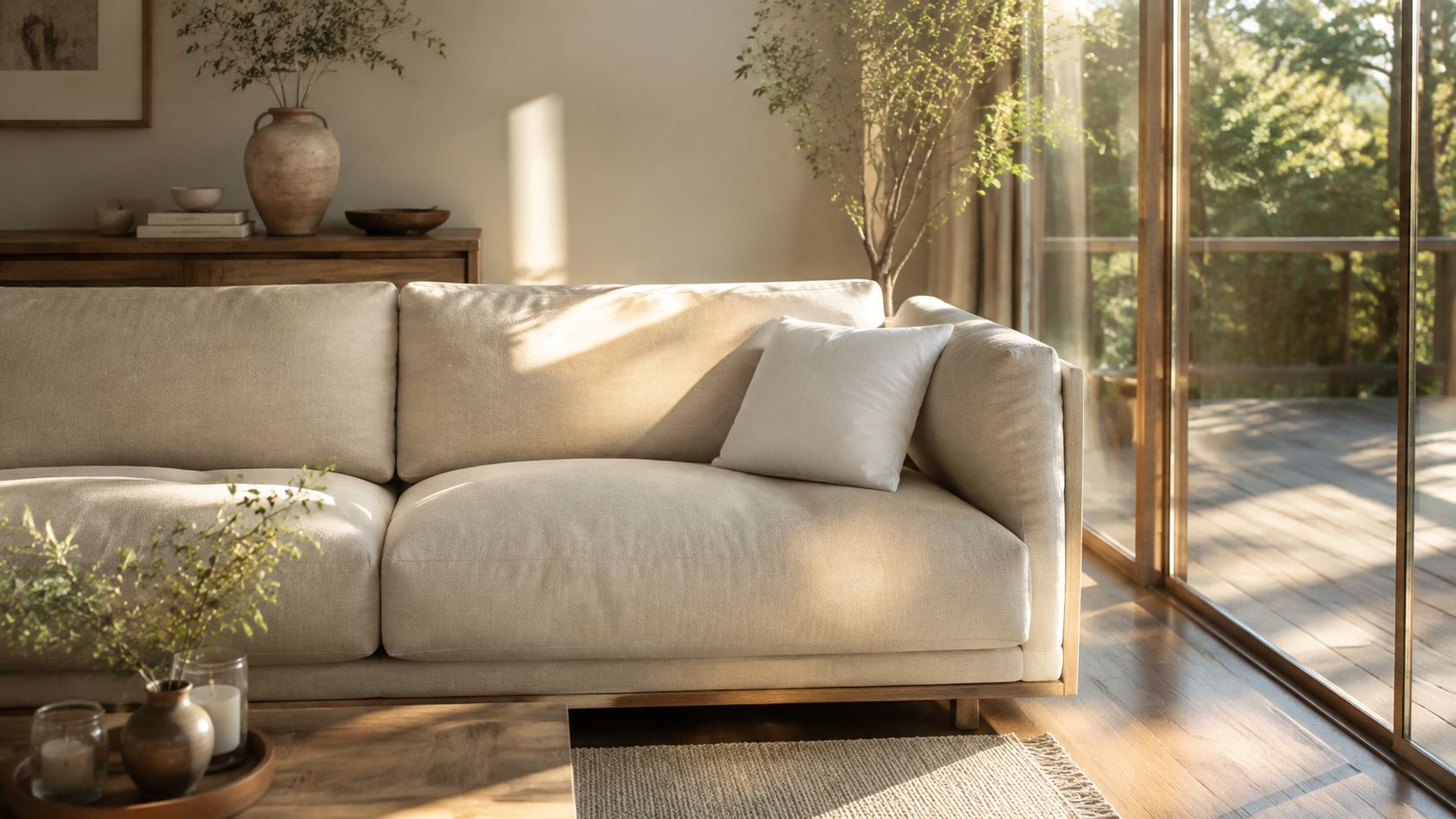
A white toss pillow can make a dark timber room feel lighter in seconds. On a neutral sofa, it adds the crisp, layered finish that suits Australian coastal, Hamptons and pared-back interiors. It also catches sunlight beautifully, which is why it appears so often in room inspiration.
Judge the pillow by its construction, not the colour label. Tightly woven cotton canvas handles daily contact differently from a loose linen blend. A removable cover gives you a practical response to coffee spills, while a fixed decorative cover belongs in a quieter spot. The insert matters too. Dense filling holds a square shape neatly; softer filling creates a relaxed slouch.
The Australian reality check
A white pillow on a protected Melbourne sofa has an easier life than one on a Queensland verandah, coastal daybed or seat beside an open fireplace. Humidity, salt air, dust, pets and direct sun all increase cleaning, fading or fabric-wear concerns.
Australia's broad commodity group 94 imports, covering furniture, bedding, cushions and similar stuffed furnishings, reached US$5.08 billion in 2023 according to trade data for Australia. The breadth of that import market gives shoppers plenty of choice, but product descriptions and care labels still require close attention.
For styling ideas, browse white home accessories, then assess each pillow by its cover, insert and location. My recommendation is straightforward: use white indoors when you can wash the cover and control the sun. For outdoor settings, choose a product specifically rated for exterior use, especially near pets, salt air or frequent rain. A washable cover matters more than finding the perfect ivory tone in a busy Australian home.
Choosing the Right Fabric and Fill
Start with the cover, not the colour swatch. A relaxed linen blend brings a coastal slub and breathable hand feel, but its natural texture can show creasing and absorb spills quickly. Cotton percale feels smoother and more tightly woven, while cotton canvas offers a sturdier face that suits everyday sofas and occasional spot cleaning.
Polyester and poly-linen blends make practical sense for budget-conscious rooms and some outdoor settings, provided the product is rated for outdoor use. They can resist casual wear better than delicate decorative fabrics, but “polyester” alone doesn't prove UV stability, mildew resistance or colourfastness. Ask for those specifications rather than assuming them.
Match the fill to the job
Feather and down give you the classic plump, mouldable cushion. They feel luxurious and can be reshaped by hand, but they need regular fluffing and aren't my first choice for a child's floor-level reading corner. Recycled PET fibre holds its shape neatly, suits vegan households and tends to dry faster after washing. High-resilience foam gives firm lumbar support, though it looks more structured and less sink-in than fibre or feather.
| Material | Feel and look | Care and durability | Best for |
|---|---|---|---|
| Linen blend cover | Relaxed, breathable and textured | Can crease and mark easily, check the care label | Coastal lounges and low-fuss bedrooms |
| Cotton percale | Smooth, cool and crisp | Tighter weave can make spot cleaning easier | Bedrooms and protected living areas |
| Cotton canvas | Substantial and sturdy | Better suited to regular handling, but still needs prompt stain care | Family sofas and armchairs |
| Polyester or poly-linen | Practical and often easy-going | Good candidate for removable covers, outdoor claims need verification | Covered alfresco areas and budget styling |
| Feather and down fill | Soft, plump and mouldable | Needs frequent reshaping | Decorative sofas and beds |
| Recycled PET fibre | Springy and relatively quick-drying | Holds shape well, follow the label | Homes wanting a vegan-friendly insert |
| High-resilience foam | Firm and supportive | Keeps a defined profile | Lumbar support and upright seating |
Australian homes also vary sharply by climate. Humid Queensland rooms need fabrics that can dry thoroughly, coastal properties need sensible salt-air care, and west-facing rooms need protection from prolonged sun. Air-conditioned interiors in Sydney and Melbourne may feel gentler, but dust still settles into pale fibres.
Sizing Up Australian Cushion Standards
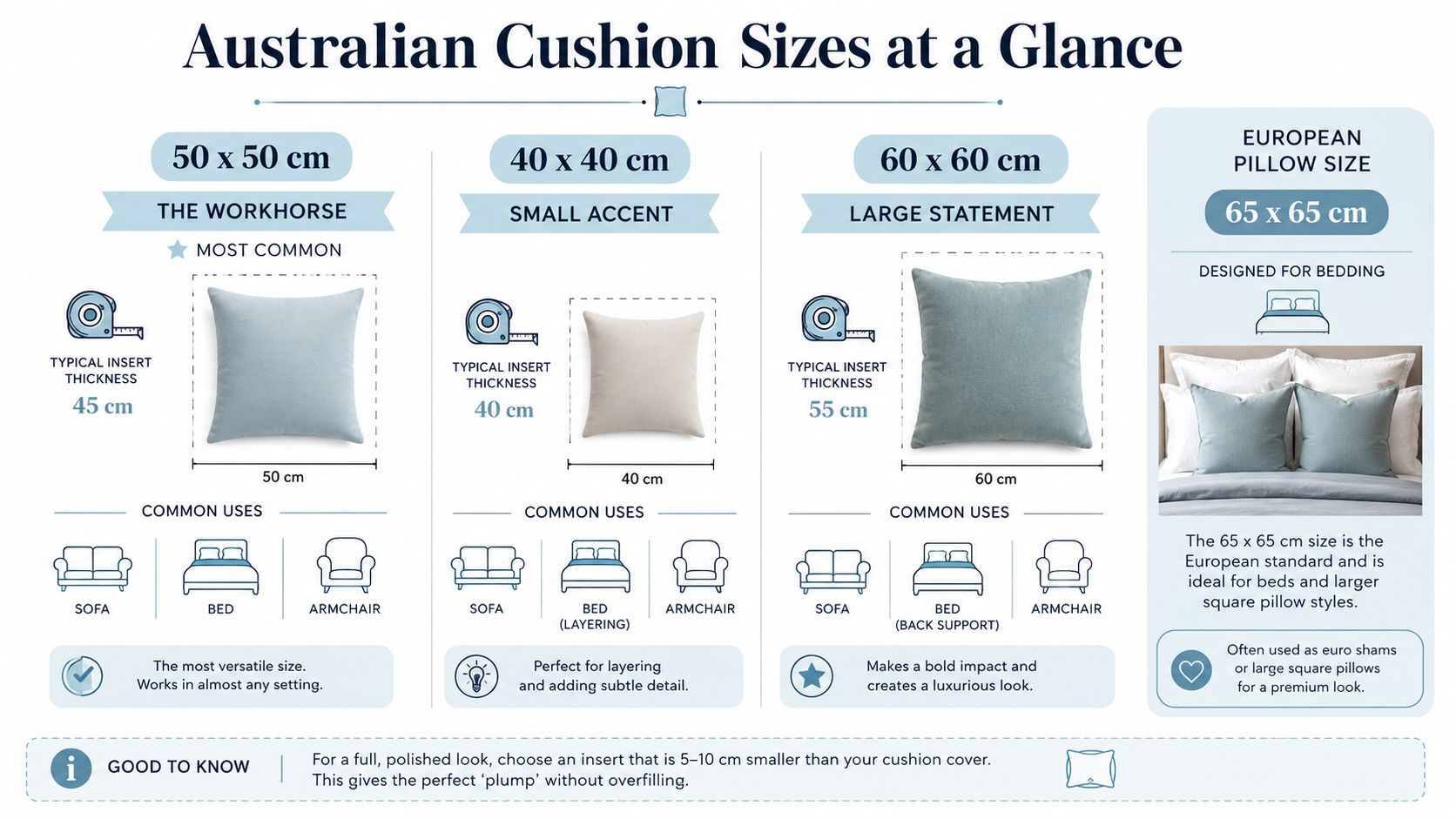
In an Australian lounge room, the 50 cm x 50 cm square is the safest starting point for a white toss pillow. It suits most sofas and beds without swallowing the seating area. Australian size guidance also lists standard bed pillows at 48 cm x 73 cm, and king pillows at 51 cm x 91 cm in this local pillow size guide. Those proportions explain why a sleeping pillow rarely gives a sofa the neat, decorative shape of a square cushion.
For a fuller cover, choose an insert slightly larger than the cover. A 5 cm increase pushes filling into the corners and gives white cotton or linen a plumper face. Match the insert more closely to the cover for a softer, relaxed finish. Do not force a firm insert into a delicate zip, and check whether the cover has shrunk before refilling it.
Pick the shape by furniture
A 60 cm x 60 cm cushion creates a generous back layer on a deep sofa or bed. It is too dominant for a narrow armchair, where a smaller square or a 40 cm x 60 cm lumbar will sit better. The increasingly common 45 cm x 45 cm size works as a front accent, particularly beside a larger square.
A 65 cm x 65 cm European pillow can provide a substantial backrest on a deep sofa or add height to a bed. Give it enough furniture behind it so the scale looks deliberate. On a shallow seat, a large pillow removes usable space and makes the arrangement feel crowded.
Practical rule: Measure the cover, measure the insert and check the furniture depth before buying. A well-filled cushion still looks wrong when its scale fights the sofa.
White cushions also need regular plumping. Australian guidance recommends fluffing to help preserve shape and extend the cushion's useful life. Over-washing or incomplete drying can leave the fill flat or lumpy, as outlined in the local pillow size guide. Pale covers make every uneven bulge obvious, so air-dry them thoroughly and reshape the insert before putting the cushion back in place.
Layering White Toss Pillows in Coastal Spaces
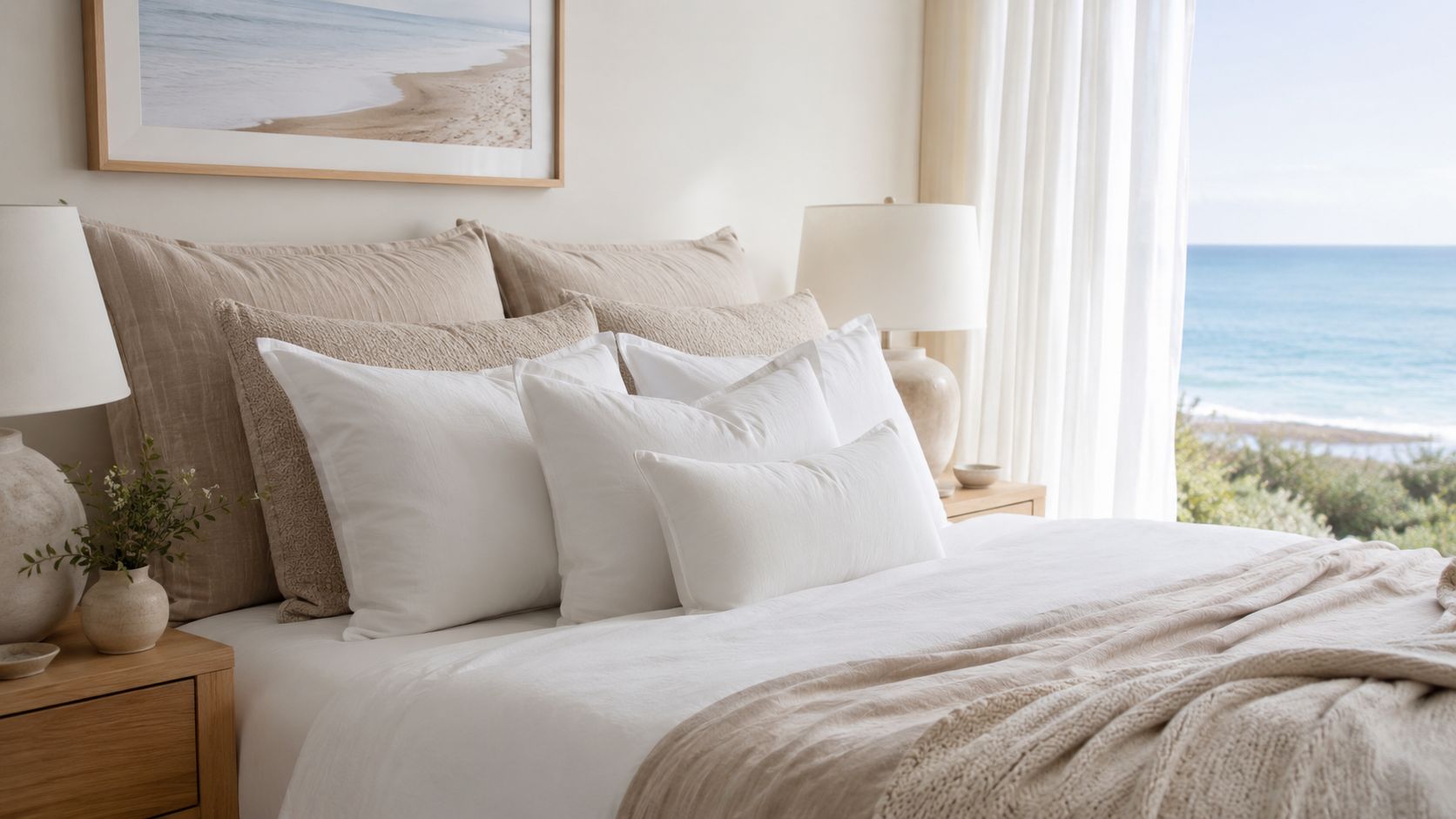
White-on-white styling needs texture or it quickly looks like a showroom waiting for furniture. Start at the back with the deepest piece, perhaps oatmeal linen or soft boucle, then move forward through smaller cushions in chalky white, milky white and ivory. The shades should sit close together, not match perfectly.
Build contrast without clutter
A useful coastal arrangement has three kinds of contrast:
- Surface contrast: Pair crisp cotton with a slubby linen, woven jute or chunky knit.
- Shape contrast: Break a row of squares with a lumbar cushion or a subtly rounded form.
- Colour contrast: Add one restrained anchor, such as a navy stripe, faded terracotta or a single black linear cushion.
A jute-backed floor cushion, woven seagrass ottoman or textured throw can do more for the room than another identical white square. These pieces give the eye somewhere to land and stop the sofa from dissolving into one pale block.
Keep the coastal look Australian
I'd avoid turning the room into a theme set. Too many anchors, shells and bold nautical motifs can make a coastal space feel staged. Subtle contrast piping, hand-stitched edges, woven surfaces and sun-washed tones read as coastal through craft rather than costume.
A white toss pillow works particularly well when it repeats one existing light element, such as a pale rug, limewashed timber or a cream bedhead. Use coastal living room inspiration as a starting point, then edit hard. One tactile layer at the back, one clean white layer in front and one small accent is often enough.
Caring for White Toss Pillows the Right Way
Treat the cover and insert as separate jobs. The cover takes the visible abuse, while the insert loses loft when it's compressed, washed aggressively or stored damp. Australian retailer guidance for polyester inserts recommends cold or warm hand washing, gentle squeezing and thorough drip drying or flat drying. One Australian care guide specifically advises hand-washing polyester inserts and warns that some inserts aren't designed for repeated washing in its cushion care guide.
A workable routine
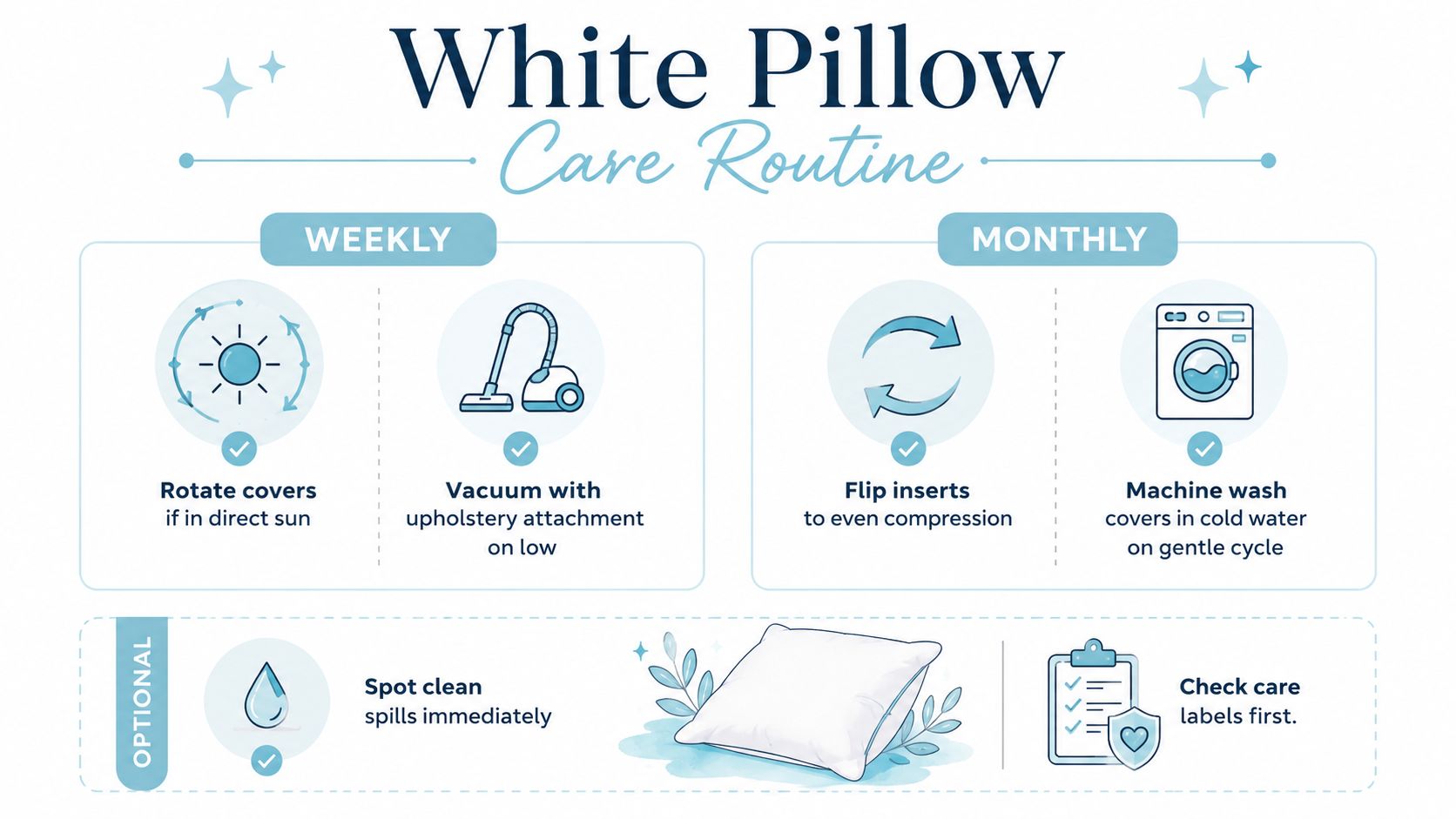
Vacuum the surface weekly on a low setting with an upholstery attachment, particularly if the cushion sits near a pet bed or open window. Rotate covers when direct sun reaches the sofa, and flip inserts regularly so one edge doesn't carry all the compression.
Spot clean spills immediately with cool water and a mild wool wash. Don't reach for chlorine bleach on linen or cotton, since it can yellow pale fibres over time. Polyester and poly-cotton covers may tolerate a gentle cold machine cycle inside a mesh bag, but the care label wins every time. Linen and heavy cotton blends often need a cool hand wash or dry cleaning.
The insert needs patience. Polyester fibre can clump or flatten under machine agitation and may suffer further damage from harsh tumble drying. Drip dry or dry flat until the centre is completely dry before putting the cover back on. Feather and down require reshaping and thorough airing, while foam should be cleaned according to its own manufacturer instructions.
The short video below demonstrates the kind of gentle handling that helps preserve a cushion's form.
A white cushion looks better for longer when dust and spills are dealt with before they settle. Pair the arrangement with a washable throw blanket for a bed or sofa, and you'll protect the most exposed surfaces without making the room feel over-managed.
When White Works and When It Doesn't
White works best where the room gives it breathing space. A well-lit living room, coastal bedroom, Hamptons-style interior or sun-protected entertaining area can use a white cushion as a reflective, calming surface. It's also useful in a minimalist bedroom, a rental being styled for sale, or a room with dark timber floors that needs a lighter visual counterpoint.
It becomes a poor choice when the cushion sits in the path of predictable mess. Toddlers with sticky hands, dogs returning from a wet walk and family rooms built around floor play will test pale fabric constantly. An open fire adds another layer of risk, while kitchen and dining nooks invite coffee, spaghetti and red wine stains.
Use this room test
Ask yourself three questions before buying:
- Who uses the space? If people lounge, eat, nap and play on the same sofa, choose removable washable covers and a forgiving weave.
- What reaches the cushion? Direct western sunlight, salty air and damp outdoor conditions need a cover and insert designed for those exposures, not just a white colourway.
- What's the styling purpose? A decorative bed cushion can be more delicate than a lumbar pillow used every evening for back support.
Outdoor use needs its own decision. The Australian outdoor decorative cushions and pillows market is projected to grow from US$1.2 billion in 2024 to US$1.99 billion by 2033, according to the cited market projection for Australia's outdoor decorative cushions and pillows category. That demand doesn't make every white cushion outdoor-ready. Look for solution-dyed fabric, removable washable covers, quick-drying construction and explicit UV and mildew guidance.
White is strongest as a controlled accent, not an automatic answer for every seat in the house.
For a verandah or coastal patio, I'd choose white only when the cushion can be brought inside, rotated or washed without drama. In a permanently exposed position, a textured mid-tone often gives you the same relaxed effect with less anxiety.
Your Quick White Toss Pillow Buying Checklist
Use this checklist before buying a white toss pillow. The right choice depends on traffic, exposure and how much maintenance your home can handle.
- Start with traffic: Match the cover to the room. Linen blend suits a relaxed, lower-contact setting, cotton canvas handles a busy sofa, and verified outdoor fabric belongs in an alfresco area.
- Read the care label: With pets or children, choose a removable cover that suits your actual cleaning routine. “Easy care” says too little on its own.
- Measure the cover: Confirm the finished cover dimensions before choosing the insert. A slightly larger insert gives a plumper, fitted face, while an equal-size insert keeps linen looking softer and more casual.
- Select the fill by purpose: Choose firm high-resilience foam for lumbar support, recycled PET fibre for a resilient vegan-friendly decorative cushion, or feather and down for a mouldable, sink-in finish.
- Check the sunlight: A west-facing room needs rotation and protection. Outdoor cushions need stated UV and mildew performance, not assumptions based on polyester content.
- Create texture: Pair at least two contrasting surfaces, such as slubby linen with chunky knit. A woven ottoman or jute detail can ground an all-white arrangement.
- Plan the recovery: Keep a spare cover or alternate cushion near food, pets or children. That small bit of organisation makes spills far easier to manage.
- Separate indoor and outdoor use: A white pillow on a covered verandah still needs proper drying after damp weather and protection from salt air. Indoor-only construction should stay indoors.
White works best as a controlled accent rather than the default for every seat. For a permanently exposed position, choose a textured mid-tone if you want a relaxed look with less cleaning and fading anxiety.
Australia's cushion and pillow market was estimated at US$478.8 million in 2024, confirming that white toss pillows sit within a substantial homewares category in the Australia cushion and pillow market overview. Broad availability still demands careful comparison. Supplier concentration in relevant furnishing articles, furniture and cushion-cover imports also makes construction, care and fit more useful buying criteria than a low price or attractive showroom styling.
For inspiration, explore a coastal-style collection and study how texture, scale and restraint keep white looking relaxed rather than fragile.
White toss pillows can give an Australian room a fresh, collected finish when the fabric and care routine suit real life. For relaxed VW-inspired gifts, coastal accents and nostalgic home décor that pair naturally with a breezy interior, visit Volkswagen Memorabilia and browse the collection. You'll find licensed Volkswagen diecast models, including Kombi and Samba Bus pieces, alongside white and beach-inspired décor for a home with plenty of character.