

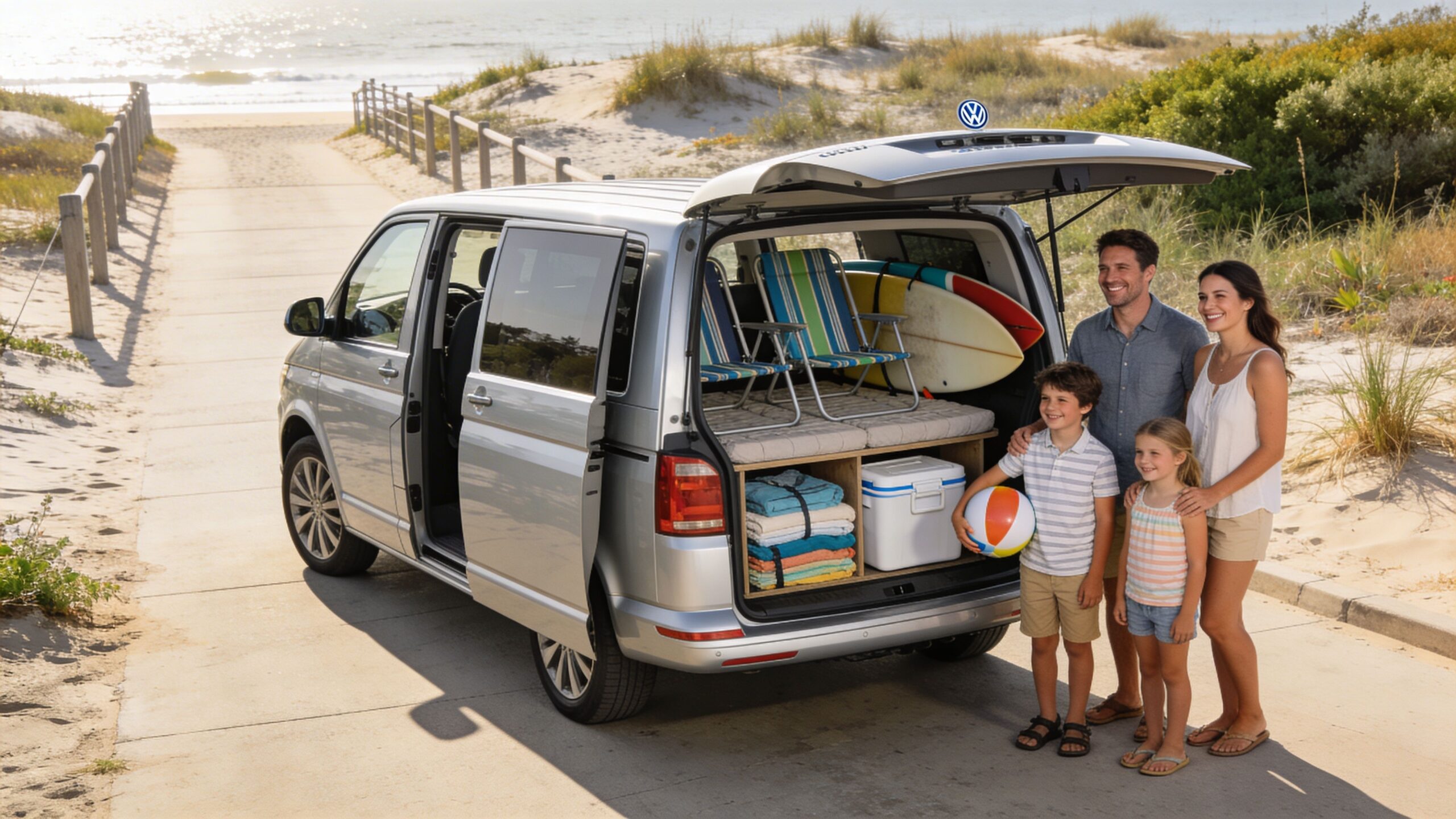
A silver Caddy Maxi rolls into an Aussie beachside meet on Friday arvo with trade tubs still tucked behind the second row, a surfboard on the roof, and a tiny vintage VW on the dash. By Sunday, the same van is hauling folding chairs, a picnic rug, and a couple of diecast treasures headed for a shelf back home.
More Than Just a Van The Soul of the Caddy Maxi
There’s a reason the vw caddy maxi gets smiles from people who usually save their biggest affection for Beetles and Kombis. It does the same old Volkswagen trick. It turns usefulness into personality.
One owner uses it all week for work, then gives it a quick clean before heading to the coast with the family. Another keeps one as a tidy people mover, then starts adding touches that make it feel like a modern tribute to the classic VW road-trip spirit. Same van. Different lives.
Why enthusiasts warm to it
The Caddy Maxi isn’t trying to be glamorous. That’s part of its charm.
It has the quiet confidence of a vehicle built to earn its keep, then hang around long enough to become part of family stories. You see that in the way owners talk about them. Not as appliances, but as mates.
A few things make that bond easy to understand:
- It fits real life: School drop-off, market runs, tool bags, camping tubs, beach umbrellas. It absorbs everyday clutter without complaint.
- It feels like a VW: There’s a straight-backed honesty to it. Practical shape. Sensible packaging. A sense that someone thought carefully about how people use a vehicle.
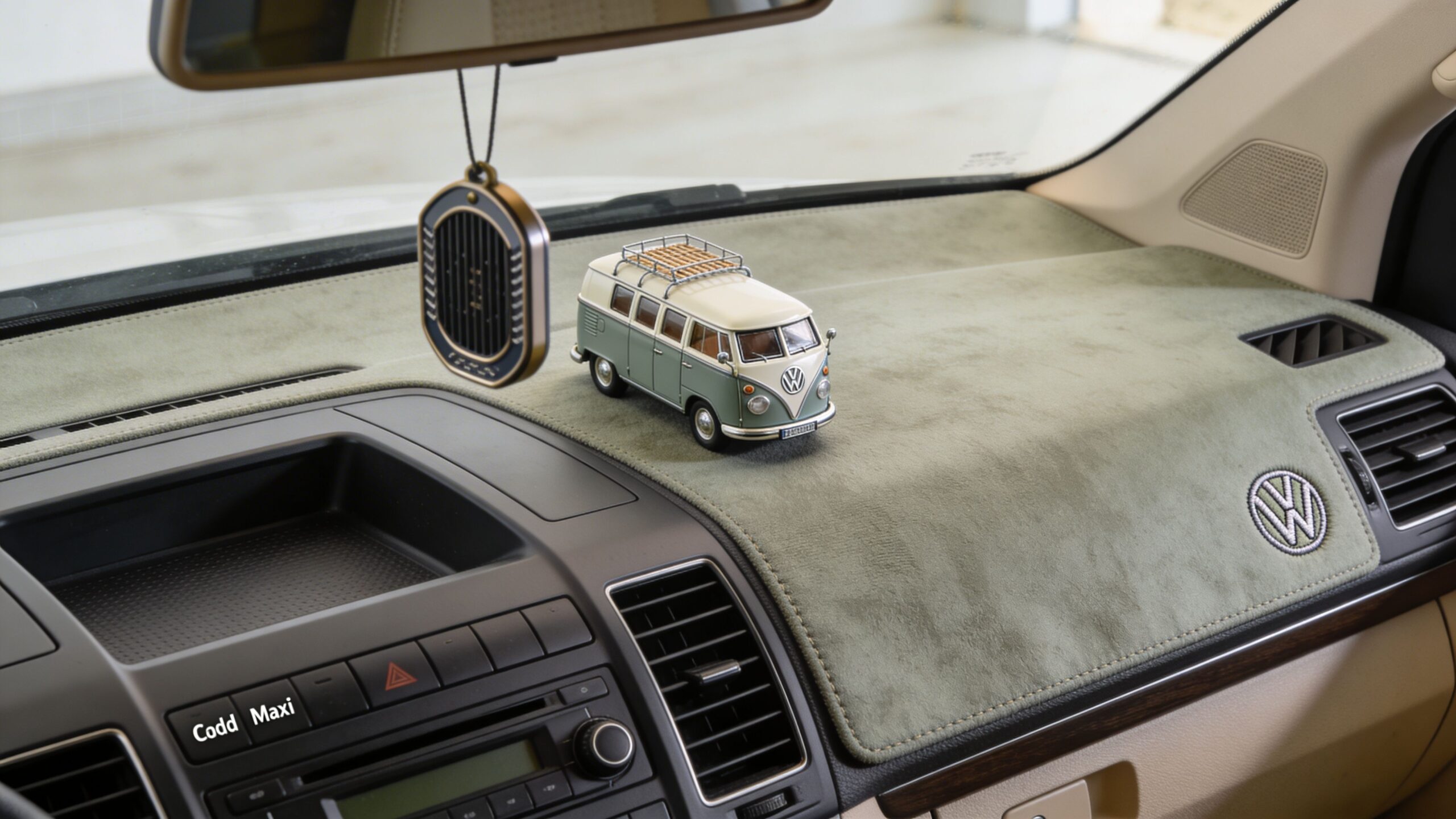
- It invites personal touches: Roof racks, subtle wheels, retro decals, a surfy interior theme, or a tiny model van on the dash. Owners love making them their own.
The best Volkswagens don’t just carry gear. They carry habits, memories, and little rituals.
A modern classic in the family tree
The Caddy Maxi sits in an interesting spot in Volkswagen history. It’s newer than the icons, but it carries the same spirit that made the Beetle and Kombi so beloved in Australia.
That spirit isn’t about nostalgia alone. It’s about freedom through clever design. A VW that works hard during the week and opens up your weekend feels instantly familiar to anyone who’s ever loved a Kombi parked beside the water or a Beetle loaded for a day out.
That’s why the Maxi has such a loyal following. It’s not merely bigger than a standard Caddy. It has a bigger emotional footprint too. It’s the van you notice at a show because it tells two stories at once. One about function. One about expression.
From Humble Ute to Modern Legend The Caddy Story
At plenty of Australian VW meets, the moment that gets a grin is not always a split-window Kombi or a tidy Beetle. Sometimes it is a Caddy Maxi with ladder racks still fitted, faded trade stickers on the back doors, and a little diecast version of the same van sitting on the dash. That is the Caddy story in one glance. A working Volkswagen that somehow became collectible.
The family line starts in 1979, when the Caddy began life as a Golf-based pickup, as Volkswagen notes in its Caddy production milestone release. That origin still matters because it explains the attitude baked into every later version. The Caddy was shaped by jobs that had to be done, gear that had to be carried, and owners who judged a vehicle by whether it earned its keep.
The long road to the Maxi
As the years rolled on, the Caddy moved well beyond its ute roots. By the time the Maxi arrived with the third generation, the formula had changed from simple load-hauler to long-wheelbase all-rounder. Production in Poznań helped give the model a clear identity inside the Volkswagen range, with the factory building Caddys for markets around the world over the years, including the longer-body versions that found such an easy home in Australia.
You can see why the Maxi struck a chord here. One owner uses it through the week for tools and stock, then spends Saturday morning hosing sand from the cargo mat after a run down the coast. Another fits retro stripes, steel-look wheels, and a timber storage setup in the back, turning a practical van into something that feels like a modern nod to old VW touring culture.
That is where the Maxi became more than a commercial vehicle. It became a blank canvas.
A VW with two lives
What makes the Caddy Maxi interesting in the Volkswagen family is not just its size. It is the way it carries two identities without strain. It can be a reliable workhorse on Friday and a tiny adventure rig by Sunday afternoon. For collectors and enthusiasts, that shift is part of the appeal. The same machine can belong in a trade fleet, a camper build thread, or a display shelf in 1:18 scale.
A quick timeline shows how the personality developed:
| Era | What changed | Why it matters to enthusiasts |
|---|---|---|
| 1979 | Caddy begins as a Golf-based pickup | Establishes the workhorse DNA |
| Third generation | Caddy Maxi arrives as the longer-body version | Opens the door to family use, touring, and camper ideas |
| Poznań production era | Manufacturing centred in Poland | Gives the model a strong production identity and global reach |
| Current generation from 2020 | Broader body styles and configurations | Expands the ways owners can personalise and use the van |
That journey explains why the Maxi now sits comfortably in conversations about VW memorabilia. It has history, purpose, and character. It also looks right at home in the kinds of spaces enthusiasts build around their vehicles, from garage shelves lined with diecast vans to beach-house walls dressed with old signs and coastal décor.
For anyone drawn to Volkswagens that carry the spirit of travel as much as the gear itself, the Maxi fits neatly into the tradition explored in this feature on the Volkswagen travel van. Different shape, different era, same instinct. Pack light, head for the coast, and bring back a story worth keeping.
Caddy vs Caddy Maxi Whats the Difference
Ask around at any meet and someone will say it: “I know the Maxi is bigger, but how much bigger?”
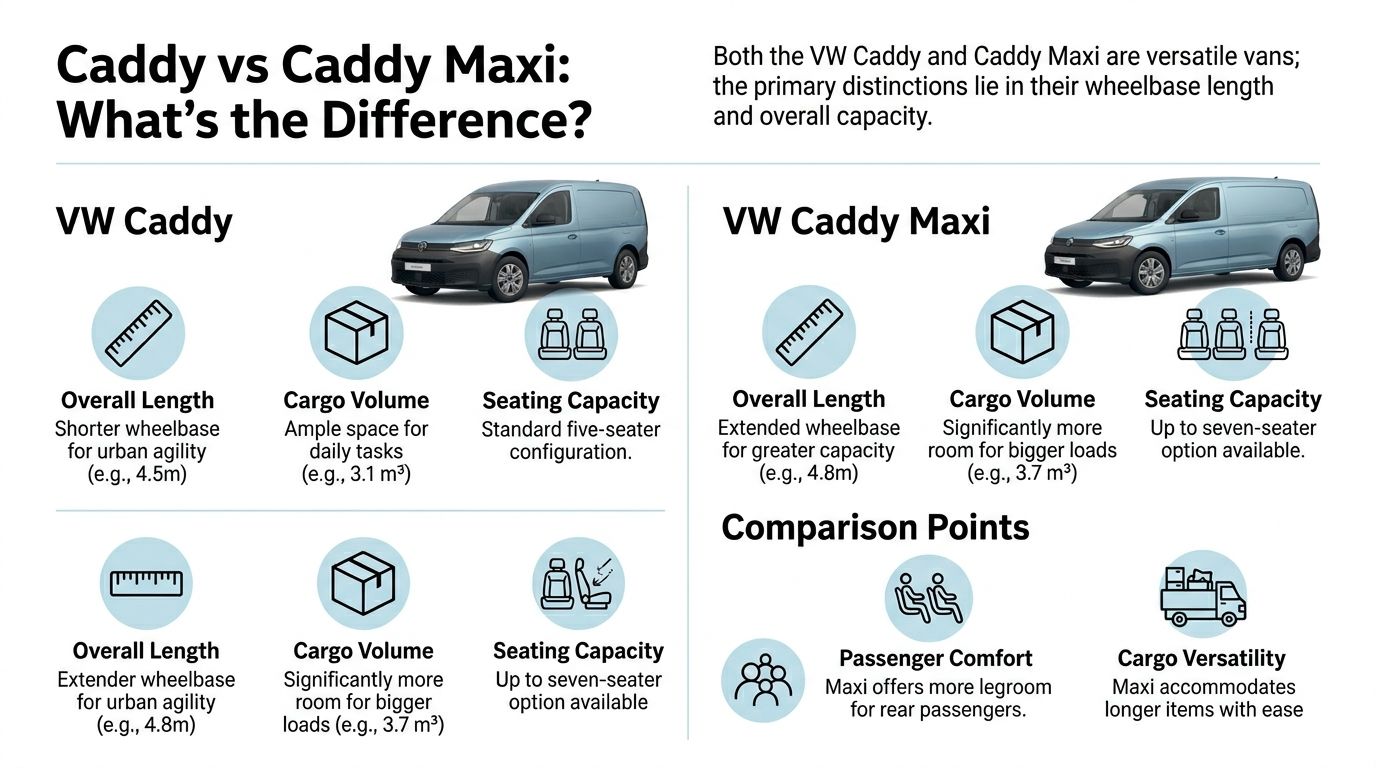
The answer is simple. You feel the difference in the wheelbase, the cabin flexibility, and the way the longer body turns the van from handy into seriously versatile.
The shape of the extra space
Volkswagen’s published model history notes that the Caddy Maxi offers load capacities of up to 4.2m³, compared with 3.2m³ for the standard Caddy, in its discussion of the model line and its role in production over the years. That’s the key practical jump.
In people-mover form, the Maxi also stretches far enough to become a proper family all-rounder. A historical summary of the model’s development notes the Caddy Maxi Life at 4,875 mm in length with a 3,002 mm wheelbase, seating for seven passengers, and over 500 litres of boot space even with all seats in place.
Side by side in plain English
Here’s the difference most owners notice:
- Standard Caddy: Easier if your life is mostly urban errands, lighter loads, and tighter parking habits.
- Caddy Maxi: Better if you’re carrying longer gear, adding extra passengers, or dreaming about weekend conversion ideas.
- Maxi Life: The sweet spot for families who want van practicality without jumping to a much larger people mover.
Quick rule: If you regularly think, “I wish I had just a bit more room,” you’re probably a Maxi person.
Which one suits which owner
| Driver type | Standard Caddy | Caddy Maxi |
|---|---|---|
| Solo tradie with light kit | Good fit | Better if gear keeps growing |
| Family with kids and sports gear | Can work | Usually the easier answer |
| Collector hauling display pieces or market finds | Tight for bulky loads | More forgiving |
| Weekend camper dreamer | Possible, but compact | Much better base |
The standard Caddy is clever. The Maxi is generous.
That’s a key distinction. It gives you room to be a little less strict about what comes along. Extra chairs. An esky. A box of swap-meet finds. A surf mat. The dog. A display stand you forgot to measure. Volkswagen fans know that freedom matters as much as the dimensions themselves.
The Caddy Maxi at Work and at Play
By Friday arvo at a local VW meet, you can usually spot the Caddy Maxi owners without asking. One backs in with a ladder rack still on the roof and red dust around the sills. Another rolls up with a couple of boards, a folding chair, and a hand-painted sticker in the rear window. Same van. Two lives.
That split personality is a big part of the Maxi’s charm. It earns its keep during the week, then slips into family-hauler or beach-run duty without looking out of place. For collectors, that versatility is half the romance. A working van carries tools, kids, and camping gear. The diecast version sits on a shelf beside old VW signs and coastal décor, preserving that same everyday magic in miniature.
Weekday workhorse
Tradespeople took to the Caddy Maxi because it does the boring jobs well. The longer body means timber, conduit, display gear, and stacked tubs fit with less shuffling around at every stop. You load it once, close the doors, and get on with the day.
The 2019 Caddy Maxi panel van offered up to 761kg of payload, 1500kg braked towing capacity, 4.2m³ of load volume, and a 12.2m turning circle, according to this 2019 Caddy Maxi specification listing. Those figures help explain why so many Australian owners treated it like a compact mobile storeroom rather than just a small van.
A cabinetmaker sees one kind of value in that. A market stall holder sees another. Collectors do too. A Maxi is handy for hauling framed prints, swap-meet finds, boxes of brochures, or the kind of fragile Volkswagen memorabilia that never seems to fit neatly in a regular wagon.
And it still behaves itself in town.
That matters more than brochures ever capture. Plenty of vans can carry gear. Fewer feel civilised threading through suburban streets, ducking into tight industrial units, then parking near the bakery on the way home.
Weekend family van
Come Saturday, the same Maxi often looks completely different. The tools are out. In go the beach bag, the esky, a pram, a cricket bat, and somebody’s sandy thongs tossed near the door.
That’s where the van shape starts to feel less commercial and more generous. Wide openings make loading easy, the cabin layout suits busy family life, and the whole thing has a straightforward honesty that a lot of overstyled people movers never quite manage. Parents who buy one for practical reasons often end up keeping it because it becomes part of family routine. School drop-off, Bunnings run, holiday packing, then a Sunday cars-and-coffee stop on the way back from the coast.
Some owners even start eyeing up a van for conversion ideas after a few weekends away, because the Maxi already feels like a vehicle that wants to do more than one job.
Why enthusiasts get attached
The Caddy Maxi attracts a mixed crowd because it leaves room for personality. One owner keeps it plain and hardworking, steel wheels and all. Another adds retro stripes, period-style accessories, or just enough camper flavour to hint at old Kombi spirit. Neither approach feels wrong.
That is the sweet spot. The Maxi works hard enough to earn respect, but it also invites affection.
You see it at shows all the time. Someone points to a weathered work van and talks about the miles it covered for their business. A few metres away, another owner is hunting down a diecast Caddy Maxi to match the silver one parked on the grass. In both cases, the van has become more than transport. It has become part of a personal VW story.
The Perfect Base for Your Dream Camper Van
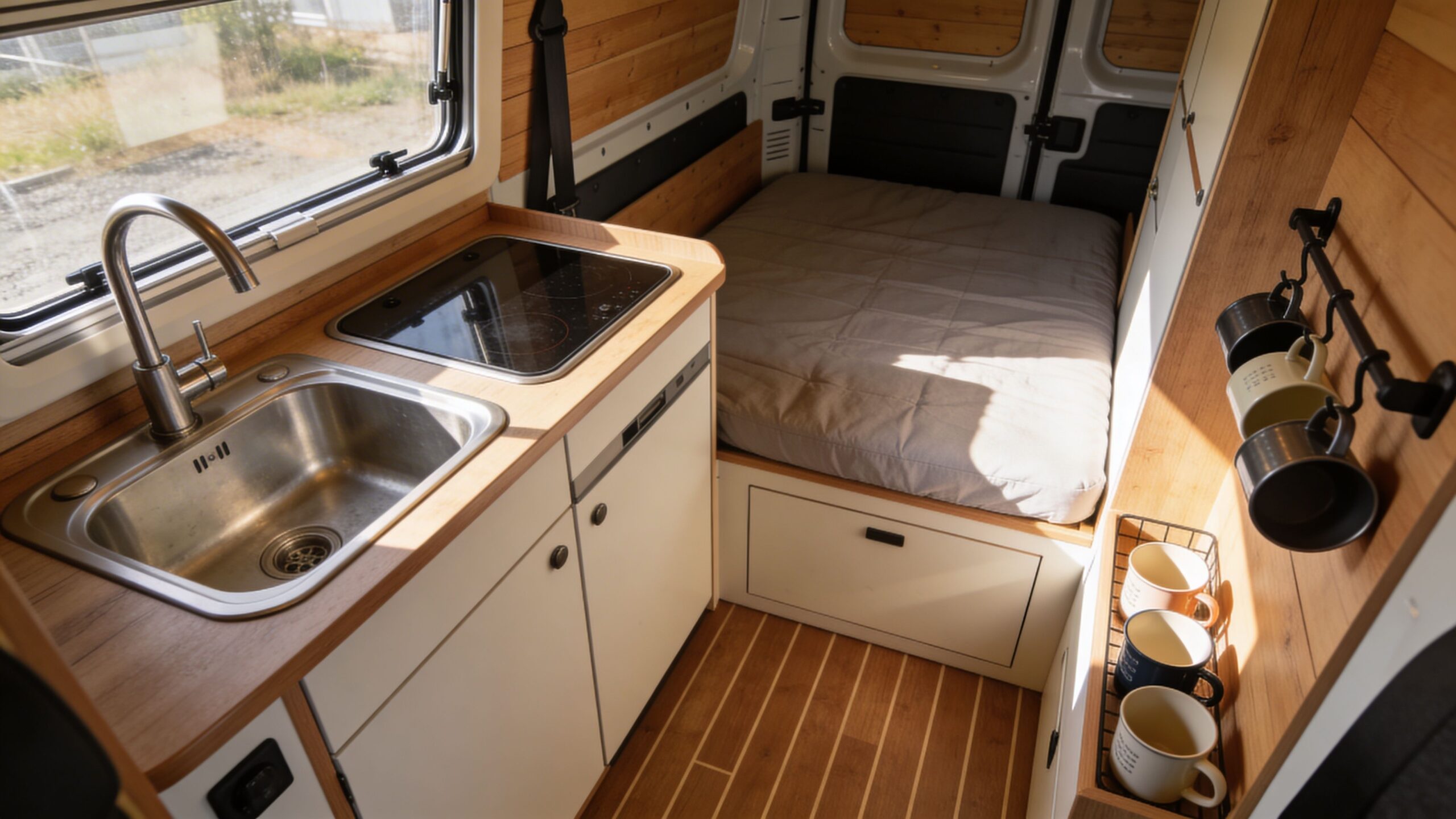
One of the nicest sights at any VW gathering is a Caddy Maxi that’s been gently transformed. Not overdone. Just thoughtful. A bed platform, tidy storage, maybe a subtle curtain setup, and enough personality to hint at classic Kombi spirit without pretending to be one.
Why the Maxi works so well
The Caddy Maxi appeals to camper dreamers because it feels achievable. It isn’t as bulky or intimidating as a full-size van, but it still has enough room to become a proper micro-camper with character.
In Australia, high-mileage Caddy Maxis may sell for around AU$8k-12k, and post-conversion values can jump by 25% in the retro van market, a trend linked in the source to a 12% rise in van-based holidays, according to this Australian Caddy Maxi camper conversion discussion.
That makes the Maxi interesting in a way many older enthusiast vehicles aren’t. It can still be an affordable entry point, yet it rewards care and imagination.
The kind of build people do
The dream usually starts small.
A mattress test. A removable storage box. A weekend away to see what works. Then the ideas multiply. Better ventilation. A compact kitchen module. A retro stripe outside. Suddenly the van has become part getaway pod, part design project.
A few common directions suit the Maxi especially well:
- Minimalist sleeper build: Bed platform, tubs underneath, simple privacy screens.
- Surf-weekend setup: Board storage, damp gear management, easy-clean floor surfaces.
- Retro-inspired camper: Cream accents, heritage-style touches, and styling that nods to older VW vans.
- Dual-purpose fit-out: Leave enough flexibility to switch between daily driving and overnighters.
For anyone drawn to the conversion path, this take on choosing a van for conversion captures that same appeal. The best builds aren’t always the biggest. They’re the ones that fit your habits.
Inspiration on screen
A walk-through helps you see how these compact camper ideas come together in practice.
Practical insight: The best Caddy Maxi camper conversions don’t chase luxury first. They solve sleeping, storage, airflow, and quick setup.
That philosophy feels very Volkswagen. Functional. Friendly. Full of possibility.
Buying and Owning a Caddy Maxi in Australia
A bloke at a Sunday meet in Newcastle once opened the back of his Caddy Maxi to show two very different lives in one van. On Friday, it carried ladders, sample cases, and work boots. By Saturday morning, the tools were out, the rear space held a tidy camp setup, and a little diecast VW sat on the dash like a good-luck charm for the trip up the coast. That is the Australian Caddy Maxi experience in a nutshell. Practical first, personal straight after.
Buying one locally starts with honesty about what sort of VW this is. The Caddy Maxi suits long highway stretches, city errands, family duties, and hobby gear with very little fuss. It also asks for a proper budget. A recent Australian 2025 Caddy Maxi Life TDI320 review video lists the new model at AU$59,225 before on-road costs, with 90kW, 320Nm, and official fuel use of 5.5L/100km.
Those numbers matter on Australian roads. You feel the value less in a spec sheet than in the way a Maxi settles into real use. School run on Monday. Bunnings stop on Wednesday. Boards, bikes, or camping tubs on the weekend.
The running costs deserve the same clear-eyed approach. The same review notes roughly AU$800 a year for NSW registration and about AU$1,200 a year for full coverage insurance. Buyers who plan well tend to enjoy these vans more, because the ownership story stays pleasant after the first burst of excitement fades.
A sensible shopping list looks like this:
- Choose the right role: Family mover, light work van, weekend escape pod, or a mix of all three.
- Budget beyond the driveway price: Registration, insurance, servicing, and fuel shape the experience every month.
- Check your layout needs: Extra length is only useful if you will use the seats, cargo room, or sleeping space.
- Buy with your future in mind: Many Australian owners end up adding storage systems, camping gear, or subtle retro touches.
That last point is where the Caddy Maxi becomes more than transport. Owners rarely leave them completely alone. A neat set of tubs in the back turns into a drawer system. Plain steel practicality turns into a van with heritage stripes, coastal colours, or a cabin styled with the same care as a display shelf at home. If that lifestyle appeals, this guide to van life in Australia with a practical, compact setup fits how many Maxi owners use their vans.
The smartest Australian buyers usually treat the Caddy Maxi like a long-term member of the VW family. Part workhorse. Part memory maker. Part blank canvas. That mix is a big reason these vans earn affection well beyond their job description.
The Collector’s Corner Styling and Memorabilia
At some point, love for the physical van spills indoors. That’s the collector’s instinct. You start by admiring your Caddy Maxi in the driveway, then you want a shelf, a cabinet, or a corner of the house that carries the same feeling.
Styling the van with heritage in mind
The nicest Caddy Maxi builds often borrow lightly from older Volkswagens rather than copying them outright. A hint of retro works better than costume.
Think in themes:
- Coastal VW look: Soft colours, surf-friendly practicality, tidy wheels, clean interior textures.
- Kombi nods: Period-inspired striping or heritage-style accessories that reference the older vans without overdoing it.
- Collector’s restraint: One or two signature touches often feel more timeless than a long list of accessories.
A small dashboard model, a tasteful decal, or colour-matched storage boxes can make the cabin feel curated rather than cluttered.
Building a display that matches the van
Diecast collecting fits beautifully here. A Caddy Maxi owner rarely loves just one chapter of VW history. The fun comes from seeing the lineage together.
A great display often combines:
| Display piece | What it adds |
|---|---|
| Caddy-related item | The modern, practical VW story |
| Kombi Samba Bus diecast | Iconic travel and beach culture |
| Volkswagen Beetle model | Rounded classic charm |
| Coastal décor accents | The relaxed Australian setting |
For collectors searching for VW Kombi diecast Australia, Volkswagen Beetle model, buy diecast Kombi, or Volkswagen diecast models for sale, the best shelves usually tell a story rather than chasing strict uniformity.
A few effective display ideas:
- Pair a modern van piece with a classic Samba Bus for a then-and-now contrast.
- Add beach-inspired décor so the display feels like a memory, not just storage.
- Group by mood instead of by scale if you want the setup to feel more personal.
- Keep licensed pieces front and centre. They tend to carry the design details enthusiasts care about.
A good VW display should feel like a parked-up convoy. Different eras. Same spirit.
That’s also why the Caddy Maxi belongs in memorabilia conversations more than some people expect. It represents the practical side of Volkswagen passion. Not every icon needs split windows and chrome trim. Some earn their place through years of carrying people, gear, and stories.
Your Caddy Maxi Questions Answered
Is an older Caddy Maxi a future classic
A few months back at a Sunday meet near the coast, one of the busiest vans in the row was a silver early Caddy Maxi with faded surf shop stickers still on the rear glass. Its owner had used it for plumbing jobs during the week, school runs after that, then turned it into a simple weekender with a fold-out bed and striped canvas curtains. People kept stopping at it because the van had a life you could read from ten steps away.
That is usually how future classics begin. Condition matters, but character matters too. A Caddy Maxi with honest history, original details, factory wheels or period accessories, and a clear story of how it was used has far more pull than a tired van with nothing left to say. The models collectors tend to remember are the ones that show the Caddy Maxi doing what it does best: working hard, carrying family, and becoming part of someone’s routine.
What’s the best diecast scale to start with if I love the Caddy and classic VWs
Start with the story you want on the shelf.
If you want one hero piece beside a framed beach photo or a bit of coastal décor, a larger scale usually gives you more of the details enthusiasts notice first. Headlights, grille shape, wheel design, the stance. If your plan is to line up a Caddy Maxi with a Beetle, a Kombi, and maybe a panel van from another era, a smaller scale makes that convoy easier to build without taking over the whole room.
A good trick collectors use is to let the Caddy Maxi set the tone. A clean white van suits a crisp workshop-style display. A camper-inspired version looks right at home with timber, faded blues, and old holiday snapshots. The scale matters, but the mood of the display is often what makes people smile first.
Why buy licensed VW memorabilia from an Australian importer
Because collectors here know the small frustrations too well. A model looks perfect online, then arrives weeks later with a crushed box, the wrong trim, or packaging that has done a lap of the globe.
Buying local gives you a better shot at getting the version you wanted, especially if you care about box condition, right-hand-drive appeal, or giving the piece as a gift. It also suits the way Australian VW enthusiasts often collect. A diecast Kombi for the study, a Beetle for the office shelf, a Caddy Maxi model for the garage workbench, all without the long wait and customs guesswork that can take the shine off the purchase.
Does the Caddy Maxi really fit the broader VW enthusiast world
It already does. You can see it every time a line of old and new Volkswagens parks up together and somebody wanders past the shiny classics to ask about the Maxi with the awning, roof racks, or retro wheels.
The Caddy Maxi carries a different kind of Volkswagen romance. Less chrome, more use. Less Sunday-only nostalgia, more everyday memory. For plenty of owners, that is exactly why it earns a place beside Beetles and Kombis, and why it has started to appear in collections, model displays, and garage décor with real affection rather than as an afterthought.
If the vw caddy maxi has sparked that familiar Volkswagen feeling, have a look through Volkswagen Memorabilia for licensed diecast models, Kombi and Beetle favourites, VW memorabilia collectibles, and coastal-inspired display pieces. It’s a lovely spot for Australian enthusiasts who want local stock, fast shipping, and gifts or collectibles that keep the VW story going long after the van’s parked.