


The kettle's still warm on the trestle table, someone's polishing a two-tone Beetle a few rows over, and you can hear that familiar chatter about tyres, trim and where the next coastal run is heading. Then somebody cracks open a drink from a little fridge tucked beside a Kombi awning, and suddenly the whole idea makes perfect sense. A 50 litre fridge isn't just another appliance. In the VW world, it's part road-trip mate, part garage companion, part style piece that earns its keep.
For plenty of Aussie VW owners, the sweet spot isn't a giant caravan fridge or a tiny lunchbox cooler. It's something compact enough to live in a Kombi setup, a shed, a workshop corner, or a beach-house bar nook, but useful enough to hold real supplies for real weekends. That's where the 50 litre size starts to feel right. Not oversized. Not ornamental. Just practical in that good, old-school way VW people tend to appreciate.
That Perfect Cold Drink on a Long, Sunny Drive
You've packed the Kombi the night before. Folding chairs behind the seat. A tool roll in the side pocket. A crate of snacks, a bit of fruit, milk for the morning brew, and something cold for the late-afternoon stop when the sun's gone honey-gold over the coast. You're not chasing luxury. You're chasing that simple pleasure that classic Volkswagens have always done so well, travelling light, but travelling well.
That's where a 50 litre fridge earns its stripes. It slips into the trip without trying to be the star of the show. It just sits there doing the sensible work, keeping the lunch cool, the drinks ready, and the day feeling sorted.

At a VW meet, you see all sorts of setups. One owner keeps a compact fridge in the garage beside shelves of parts manuals and surfboards. Another has one riding shotgun on club weekends, humming away while the convoy snakes inland. Someone else uses one at home under a bench in a memorabilia room, stocked with sparkling water and picnic bits for when mates drop by to admire the diecast display.
Practical rule: The best touring gear doesn't ask for attention. It quietly makes the day easier.
That's why this size has such appeal. A 50 litre fridge feels right at home in the VW lifestyle because it matches the rhythm of it. You want gear that's useful, tidy, and a bit charming. Something that serves the trip, the shed, or the coastal corner of the house without dominating the space. Much like a classic Volkswagen, really. Compact footprint, big personality, and always ready for one more run down the road.
Decoding the Numbers What 50 Litres Really Means
A mate of mine with a tidy late bay keeps a 50 litre fridge behind the front seats on club runs. By Saturday morning it is doing three jobs at once. Milk for the billy, sausages for lunch, and a row of cold cans for that golden hour when everyone is parked up swapping stories about roadside fixes and long-lost split screens. That is the true measure of 50 litres. Not the number on the box, but what it carries without turning your van or room into a juggling act.
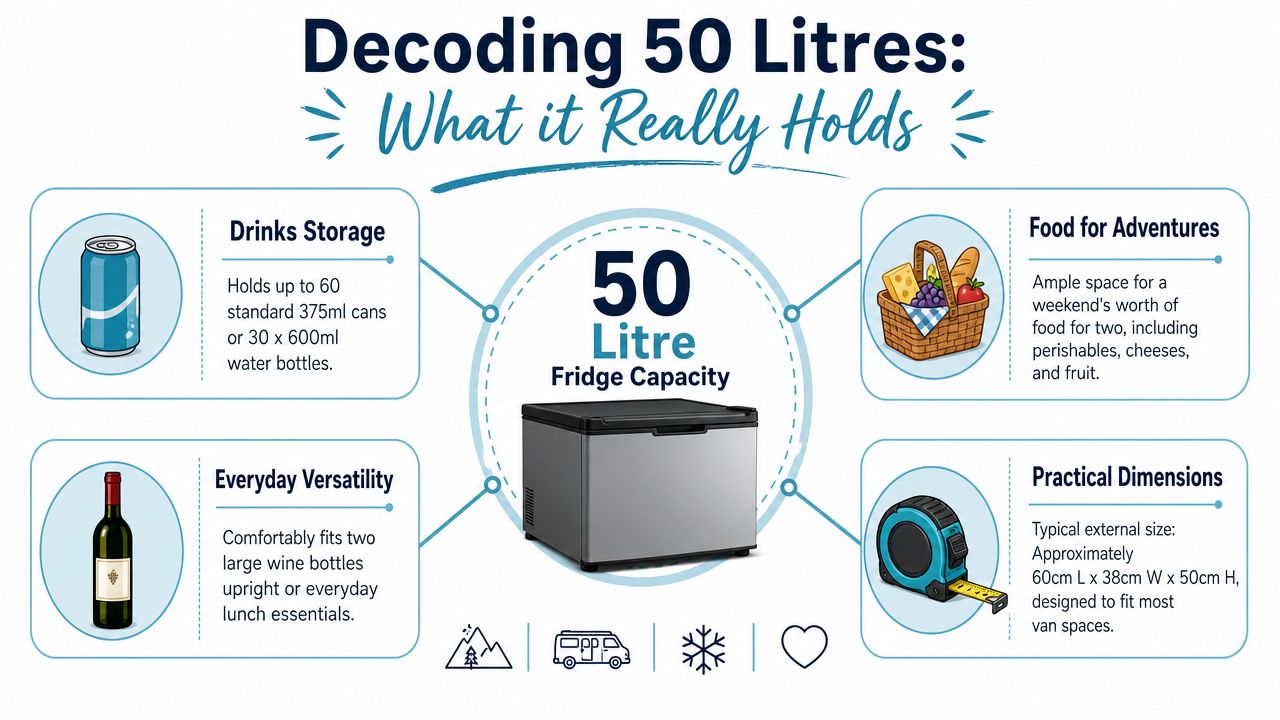
“Fifty litres” sounds precise, yet usable space always comes down to shape. A tall bottle steals room in a way a stack of cans does not. Bacon, fruit, butter, a sauce jar, and a container of potato salad all have their own awkward little footprints. Two fridges can share the same litre rating and feel completely different once you start packing for a weekend by the coast.
The easiest way to judge it is to picture an actual load you know well. For a VW run, that might mean:
- a couple of breakfast basics such as milk, eggs and butter
- lunch bits like cheese, cold cuts, salad tubs or sandwich fixings
- drinks for the road and a few extras for when the camp chairs come out
- one dinner pack, already portioned so you are not digging around at dusk
That mix tells you more than a spec label ever will.
A 50 litre unit usually sits in a sweet spot for the VW crowd because it holds enough for a proper weekend away, yet still suits the compact, clever spirit these old buses taught us to love. It also crosses over beautifully at home. The same size that works for a road trip can tuck into a rumpus room, workshop, or beachy entertaining nook without bullying the space. If you are styling that corner to match the old-school surf and Volkswagen mood, these coastal home decor ideas for a laid-back VW-inspired space can help the fridge feel like part of the scene rather than a plastic box dropped in at the last minute.
Think in loads you actually pack
Buyers often get tripped up by capacity because they picture volume, not habits. If your fridge is mostly for drinks, a can-friendly interior feels generous. If you pack marinated meat, dip tubs, yoghurt, fruit, and chunky leftovers, the same cabinet can feel tighter in a hurry.
A good test is to ask three plain questions.
- What goes in first? The staples usually tell you whether the basket or shelf layout makes sense.
- What shape are your regular items? Long bottles and square meal containers expose awkward interiors quickly.
- How often will you reach in? A fridge that stores plenty but makes you unload half of it for the butter gets old fast.
Measure with the lid open, not closed
This is the bit plenty of enthusiastic buyers skip, usually right up until the fridge arrives.
In a Kombi or camper setup, check the floor area, the swing of the lid or door, and the breathing room around the vents. In a garage or coastal-style room, do the same thing. A fridge can look spot on in a product photo and still become a nuisance if the lid hits a cupboard, the seat base, or the wall every time you want a drink.
A tape measure and five spare minutes can save a lot of grumbling later.
The practical takeaway is simple. Fifty litres is not tiny, and it is not huge. It is the kind of size that earns its keep when your life sits somewhere between weekend touring, tinkering in the shed, and setting up a home space that feels ready for friends to wander in after a day near the water. In true VW fashion, it is compact, useful, and better than it first appears once you put it to work.
Finding the Fridge for Your VW Passion or Coastal Home
A 50 litre fridge changes character depending on where you put it. In one setting, it's a rugged little touring unit. In another, it becomes part of the room.
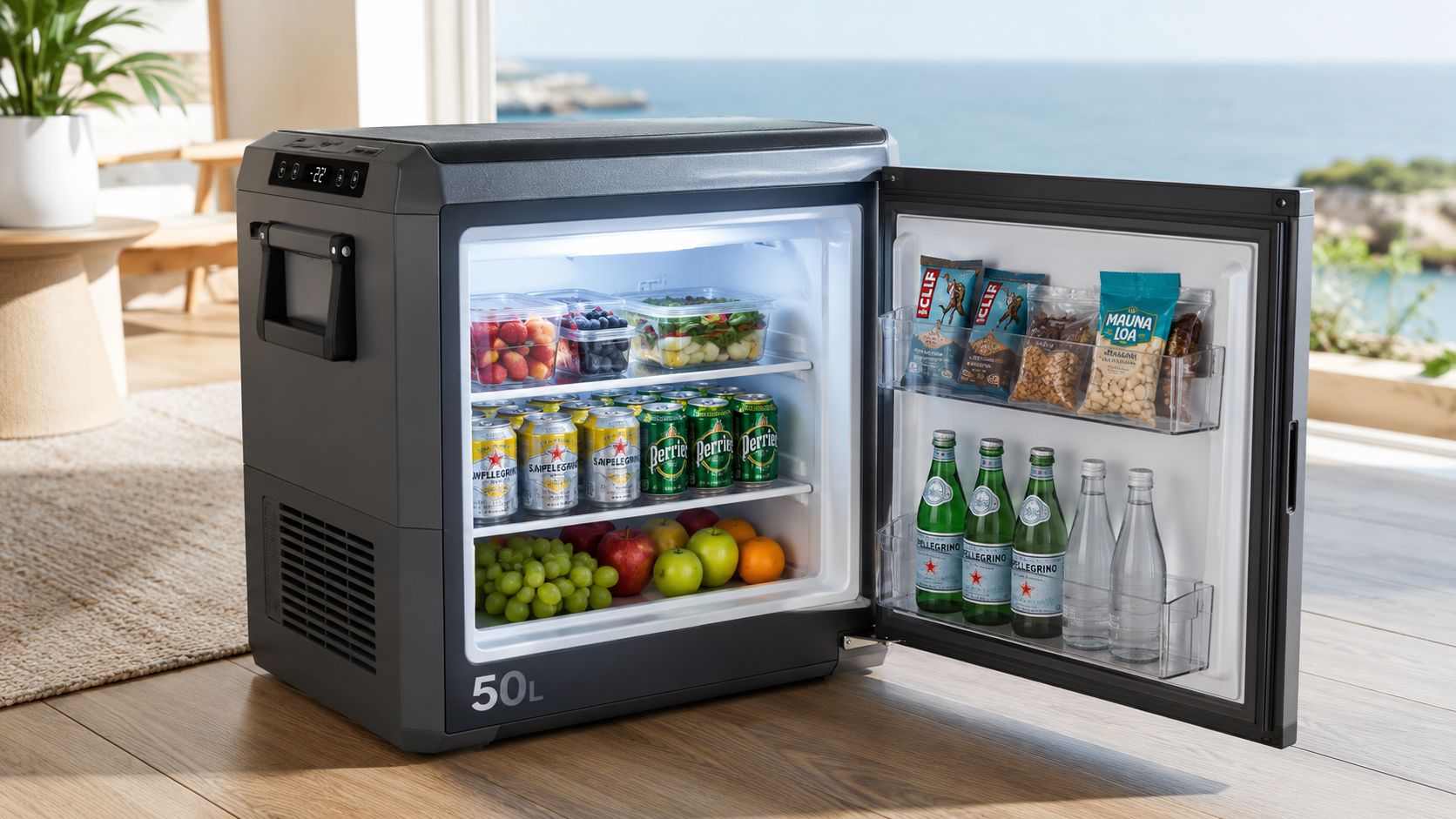
At a VW Nationals-style weekend, the right fridge is the quiet achiever near the campsite table. It's there for sandwich fixings, cold fruit after a dusty walk, and that first chilled drink when the chairs come out. In a Beetle owner's workshop, the same size fridge can tuck under a bench beside old service signs and polished hubcaps, ready for a long afternoon of tinkering.
At home, though, the brief shifts. You might want a unit that suits a surfy room, a memorabilia wall, or a bright coastal corner where pale timber, white walls and vintage VW art do the heavy lifting. In that setting, the fridge becomes part function, part atmosphere. It doesn't need to look industrial. It needs to belong.
Touring setups for the road-bound VW crowd
For travel, compressor-style portable fridges usually make the most sense. They're designed for movement, flexible power input, and proper cooling rather than just temporary chill. If your Kombi life includes markets, campsites, swap meets, and dawn starts on warm mornings, that kind of unit feels naturally suited to the job.
Things worth noticing in person include:
- Handle placement if you'll move it often
- Lid direction if it's going behind a seat or under a platform
- Tie-down points for safer travel
- Interior shape for odd items like upright bottles or pre-made meals
Home styling with a VW soul
A 50 litre fridge also works beautifully in a room built around nostalgia. Think of it sitting below framed beach prints, beside model Volkswagens, or under a shelf of old motoring books. The trick is to choose a look that complements the space instead of shouting over it.
If you're leaning into a breezy, beach-house feel, these coastal home décor ideas offer the same sort of relaxed visual cues that make a compact retro-style fridge feel right at home.
A quick walk-through can help spark ideas before you buy:
The nicest setups don't look forced. They look like the fridge was always meant to be there, whether that's beside a Kombi at a showground or in a sunlit room with salt-air character.
Understanding Cooling Tech and Energy on the Go
By mid-afternoon north of Ballina, the cab is warm, the bitumen is shimmering, and someone in the passenger seat is already asking if the ginger beer is still cold. That little moment is where cooling tech stops being brochure talk and starts mattering. In a Kombi, on a campsite, or in a coastal rumpus room that gets the western sun, a 50 litre fridge earns its keep through steady temperature control and sensible power use.
Good, better, best for real use
A simple ice cooler suits a short beach run or an afternoon cars-and-coffee meet. It keeps drinks passable for a while, but once the lid has been opened a few times and the ice starts to go, food storage becomes a gamble.
A compact household fridge suits a fixed spot far better. In a workshop lined with old VW signs, or a coastal home bar beside a stack of surf mags, it can look brilliant and do an honest job. The trouble starts when people expect that same unit to handle corrugations, angled parking, changing power sources, and hot stops along the highway.
For touring, a portable compressor fridge is usually the right tool. As noted earlier, the better ones run on vehicle power as well as mains power, and they can cool properly rather than merely taking the edge off the heat. That makes a real difference on long summer drives, especially if your VW life includes overnight stays, market runs, and show weekends where the fridge gets opened all day.
Why thermostat control matters
I have seen plenty of classic setups with gorgeous paint, tidy curtains, and a fridge full of optimism. Then dinner time rolls around and the milk is iffy, the salad is sweating, and nobody is quite sure what temperature the cabinet has been sitting at.
That guesswork is the problem.
A peer-reviewed Australian fridge temperature study found that many household refrigerators did not consistently stay at or below the advised food-safe temperature. The researchers also noted that thermostat setting played a major part, while temperature displays were uncommon. For a 50 litre fridge, that means clear controls and an easy way to check internal temperature are worth far more than flashy trim.
Heat, insulation and battery planning
A fridge behind the front seats of a Kombi works harder than one tucked into a cool laundry. Sun through the glass, frequent lid openings, warm cans dropped in after a servo stop, and a battery that is already running lights or charging phones all add up.
Good insulation in the van helps the whole setup hold its temperature with less strain. If you are sorting the travel side of the build, this guide to insulation for your van setup is a smart place to start. It will not turn an average fridge into a miracle worker, but it can help a decent unit cycle less often and recover faster after the lid has been opened.
The same logic applies at home. In a sunlit coastal room, placement matters. Keep the fridge out of direct afternoon heat, give it breathing space around the vents, and it will run quieter and more steadily while still looking right at home among your VW bits and beach-house decor.
Your Ultimate VW and Coastal Style Buying Checklist
The best 50 litre fridge is the one that fits your life twice. First in practical terms. Then in visual terms. If it nails one and misses the other, you'll notice.
Look through the VW enthusiast lens
VW people tend to buy with their heart and their hands. You want something that works, but you also want it to feel right among the rest of your gear.
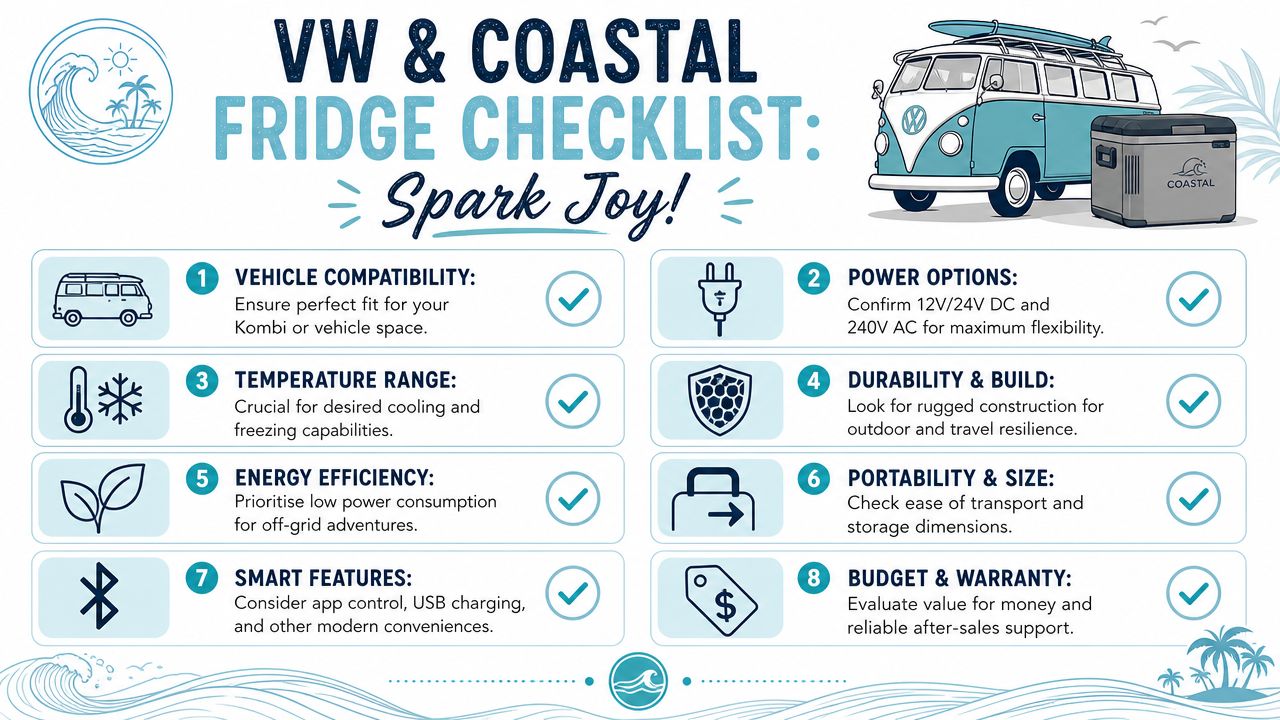
Ask yourself:
- Does it suit the vehicle? A modern square-edged unit may be practical, but does it fit the tone of your Kombi setup or garage display?
- Can you live with the finish? Matte black, white, stainless or retro colourways all send a different signal.
- Will it be moved often? Touring owners need sensible handles and rugged build more than decorative charm.
One overlooked detail is the inside layout. A dual-compartment design can sound ideal until you realise the split doesn't match your packing style.
Look through the coastal home lens
A home bar nook or memorabilia room needs a softer eye. Here, the fridge should sit happily with furniture, wall art and the room's colour palette.
A few buying cues help:
| Buying point | Why it matters |
|---|---|
| Quiet running | Better for living areas, studios and reading corners |
| Clean exterior lines | Easier to pair with coastal or retro décor |
| Door style and handle | Small design cues can make the unit feel classic or clunky |
| Interior flexibility | Helps if you switch between drinks, grazing boards and everyday bits |
The biggest trap remains usable capacity. One National Luna twin example is described as roughly 40 litres fridge + 10 litres freezer, and a related discussion notes the 50L dual-compartment model has only one compressor in that configuration, as highlighted in this National Luna 50L twin overview. That's why “50 litres” on the badge doesn't always mean a simple open box inside.
Buy for the items you actually carry, not for the round number on the carton.
If you're preparing for off-grid runs as well as style points, battery support matters too. A well-matched setup with a slimline lithium battery can make a portable fridge far more enjoyable to live with on longer escapes.
Frequently Asked Questions from Fellow Enthusiasts
A few questions come up again and again around the showgrounds and workshop bench. Here are the short answers.
Common Questions About 50L Fridges
| Question | Short Answer |
|---|---|
| Is a 50 litre fridge big enough for a Kombi weekend away? | For many couples or solo travellers, yes, if you pack thoughtfully and choose a layout that suits your food and drink mix. |
| Should I choose a fridge-only model or a fridge/freezer? | Choose based on what you carry most. A freezer function is handy for ice, frozen food, or longer trips, but it can change usable space. |
| Can I use one at home as well as on the road? | Yes, many portable units are designed to run on vehicle power and standard household power, depending on the model. |
| How do I know if the advertised 50 litres is realistic? | Check internal photos, compartment shapes, and whether dividers or compressor humps steal usable room. |
| What's the simplest way to pack it well? | Put the most-used items on top or near the front, group breakfast items together, and avoid awkward loose packaging. |
| Do I need to monitor temperature? | If you're storing food, yes. Reliable temperature control matters more than the litre number alone. |
A few workshop-tested habits
- Pre-chill before departure: Don't ask the fridge to cool everything from warm if you can avoid it.
- Pack in categories: Breakfast gear together, drinks together, dinner items together. It saves rummaging.
- Open it with purpose: Repeated lid opening lets the cold escape and makes any fridge work harder.
- Clean and dry it after trips: A tidy fridge is nicer to use and easier to trust next time.
For classic VW owners, the smartest buy is rarely the flashiest one. It's the fridge you can rely on when the day's warm, the road is long, and somebody says, “Anyone keen for a cold one?”
If you love the Volkswagen lifestyle beyond the drive itself, have a look through Volkswagen Memorabilia for officially themed gifts, diecast classics, coastal-style décor, and display pieces that bring that Kombi-and-Beetle spirit into your home, workshop, or gift list. It's a lovely spot for Australian enthusiasts who want local stock, quick shipping, and collectibles that celebrate VW heritage with real charm.