Van Volkswagen Camper: History, Models & Collecting

More than just a van, the van Volkswagen camper is a true blue symbol of freedom and the laid-back Aussie way of life. G'day! If you're anything like us, just the sight of a classic Kombi cruising down a coastal road brings a massive smile to your face. These legendary vans have taken countless surfers, families, and explorers on unforgettable trips, from sun-drenched beaches to the rugged outback.

They represent a simpler time, a bit of nostalgia, and the pure, unadulterated joy of hitting the open road.

The Volkswagen Camper Van: An Icon of Aussie Freedom

Anyone who's been to a Volksfest or a local car show knows there’s a special kind of magic to the classic VW camper, especially the mighty Kombi. It captures that unique mix of nostalgia for the ‘60s surf scene and a deep appreciation for simple, timeless design.

It’s the smell of salt in the air, the unmistakable rumble of an old air-cooled engine, and the sight of that friendly, rounded shape heading for the horizon. It's not just about transport, mate; it’s about the memories made along the way. The Kombi, in particular, is woven into our culture—a beloved part of Australia's story of sun, sand, and adventure.

From Road Trips to Room Décor

While many of us dream of owning a road-tripping classic, that same passion has created a vibrant world for collectors. The spirit of the Volkswagen camper van is captured perfectly in high-quality memorabilia. It’s a brilliant way for us to keep that feeling of freedom close, even when we’re not on the road.

The great thing about collecting is how it connects us to the design and history we love. A well-made diecast model isn’t just a toy; it’s a miniature piece of automotive history you can hold in your hands.

This passion fits beautifully into our homes, too. A carefully chosen 1962 VW Kombi Samba Bus diecast model on a shelf or some vintage-style wall art can bring that retro, coastal colour into any room. It's about celebrating a lifestyle, not just a vehicle.

Here at VW Memorabilia, we're fellow Aussie enthusiasts and local importers who just get it. We make sure every piece of VW memorabilia and collectibles we sell is officially licensed and has that authentic spirit you're looking for. Everything is stocked right here in Australia for fast, local shipping, helping you celebrate the VW legend every single day.

A Road Trip Through VW Camper History

The story of the van Volkswagen camper is one you can almost hear—the gentle rumble of an air-cooled engine, the sound of waves crashing, and the endless promise of the open road. It’s an Aussie legend, and it's a yarn worth spinning. Let's take a look back at the golden years that cemented this van's iconic status.

It all started with the one and only Type 2 (T1), the van every enthusiast knows simply as the ‘Splittie’. Born from post-war German ingenuity, its cheerful, simple design found its true calling when it hit Australian shores in the 1960s, right as surf culture was exploding.

The Legendary Splittie and the Samba Bus

If you close your eyes and picture a classic VW camper, chances are it’s a Splittie. That split-screen windscreen, the oversized VW badge, and the friendly v-shaped front end are pure automotive poetry. They arrived on our shores seemingly purpose-built for adventure and quickly became the vehicle of choice for surfers chasing the next perfect wave.

The absolute pinnacle of the Splittie range has to be the Samba Bus. It was the luxury model of its time, decked out with those gorgeous skylight windows and a massive, full-length fabric sunroof. The Samba was made for pulling up to the beach, rolling back the roof, and soaking in the Aussie sun. Finding a real one today is a serious treasure hunt, which is why collectors absolutely adore detailed diecast models that capture that same magic.

The Splittie isn’t just a van; it’s a time machine. It whisks you back to a simpler era of freedom, community, and endless summers, a feeling captured in every single one of its classic curves.

The Kombi’s rise wasn't just a trend; it was a full-blown cultural movement. After arriving here in the mid-1950s, its popularity exploded with the '60s surf boom. By 1964, over 5,000 VW Transporters had been imported, with camper conversions making up a huge 25% of sales. As the hippie movement took hold, those numbers shot up—between 1967 and 1972, imports doubled to around 10,000 vans a year as young Aussies pointed their noses toward Byron Bay and Noosa.
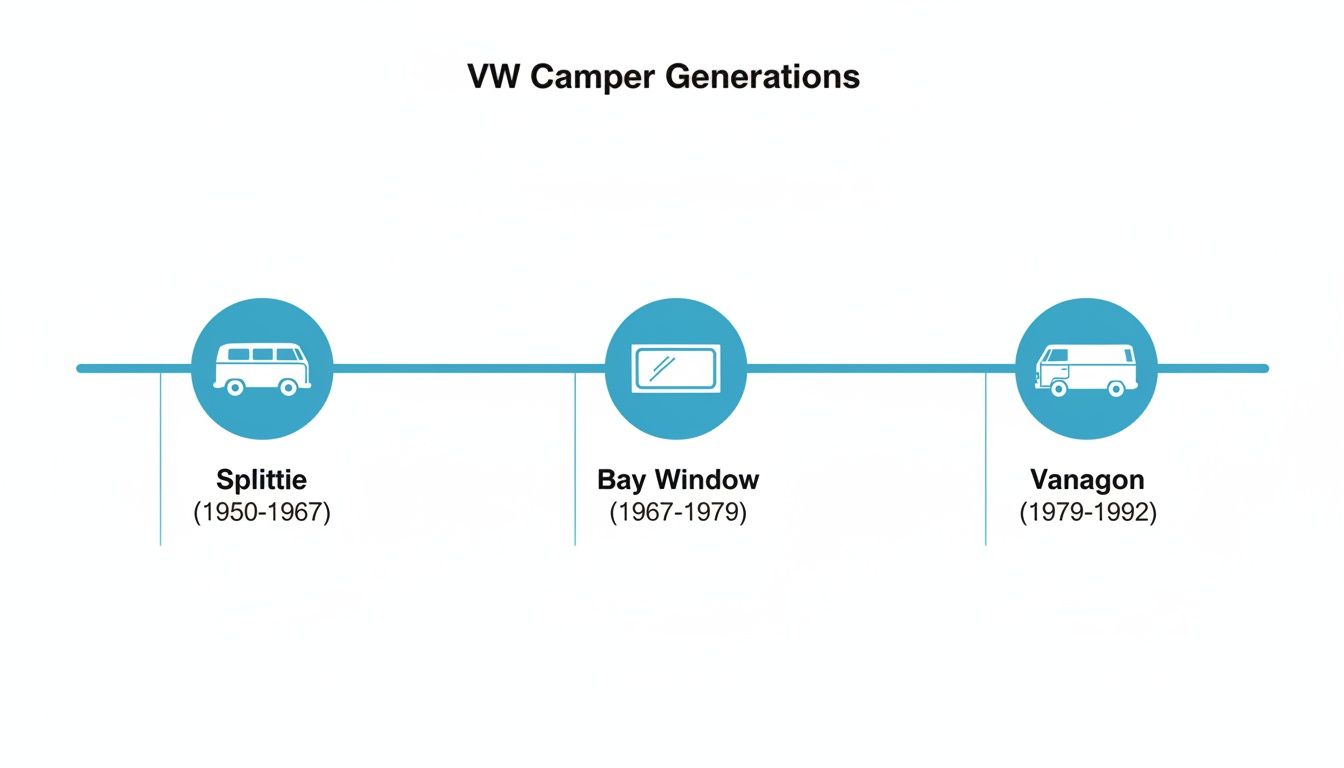
A timeline showing VW Camper generations: Splittie, Bay Window, and Vanagon, with their production years.

You can really see the evolution in that timeline, from the rounded, nostalgic Splittie to the more practical, angular vans that followed.

Cruising into the 70s with the Bay Window

As the swinging sixties made way for the seventies, VW knew it was time for an update. The Type 2 (T2) 'Bay Window' rolled out in late 1967, earning its nickname from the huge, single-piece curved windscreen that replaced the famous split screen.

This was more than just a facelift; it was a smart evolution. The Bay Window was roomier, had better visibility, and featured updated mechanics that made it a far more reliable partner for those big Aussie road trips. This was the van you could confidently pack for a massive trek from Perth to Sydney without crossing your fingers and toes.

A few key upgrades made the Bay an instant hit with families and long-distance travellers:

  • A More Powerful Engine: It had a bit more grunt for climbing hills—a welcome change for anyone who's ever been stuck crawling up an incline behind an old Splittie.
  • Improved Suspension: The new setup delivered a much smoother ride, turning marathon drives into comfortable cruises instead of bone-rattling ordeals.
  • More Interior Space: Its slightly boxier body and higher roofline created more room for sleeping, cooking, and stashing gear—all essential for life on the road.

The Bay Window kept all the friendly character of its older sibling but added a healthy dose of practicality. It truly cemented the camper's place in the hearts of Aussie adventurers, perfectly suiting a generation ready to explore every last corner of this country. You can dive deeper into this lifestyle in our guide to the Volkswagen travel van.

The Modern Era of Volkswagen Campers

While our hearts will always have a soft spot for the classic Splitties and Bays, the adventure certainly didn't end in the seventies. The story of the van Volkswagen camper just kept rolling on, adapting to new times while holding onto that free-spirited core we all love.

As we headed into the 1980s, the design language started to shift. The friendly, rounded curves gave way to something a bit more modern and angular.

Enter the Type 2 (T3), which many of us know affectionately as the 'Vanagon'. With its sharper lines and bigger windows, the T3 dragged the beloved camper into a new decade. It was roomier inside and had a few more creature comforts, but the real game-changer for Aussie adventurers was the Syncro model.

Conquering the Outback with the T3 Syncro

The T3 Syncro was a genuine trailblazer. Volkswagen teamed up with Austrian specialists Steyr-Daimler-Puch to fit it with a brilliant four-wheel-drive system. This wasn't just some afterthought; it was a seriously tough 4WD setup that turned the humble camper into a proper off-road explorer.

Suddenly, those rugged tracks leading to hidden beaches and remote bush campsites were well within reach. The Syncro was perfectly suited to Australia’s tough-as-nails terrain.

  • Serious Off-Road Capability: It could handle sand, mud, and corrugated roads that would leave a standard two-wheel-drive van spinning its wheels.
  • More Powerful Engines: Later models got the water-cooled 'Wasserboxer' engines, giving them more reliable power for those long-haul trips up the coast.
  • Classic Pop-Top Freedom: It still had the iconic pop-top roof, so you could venture further afield without giving up that classic, sleep-under-the-stars camper experience.

The T3 Syncro was the perfect bridge between old-school charm and modern capability. It’s no wonder they have such a massive following today, especially among folks who love getting properly off the beaten track.

Down under, the VW camper van truly became a coastal icon in the 1970s, fitting right in with Australia's laid-back beach lifestyle. The T2 Bay Window, introduced here in 1968, was even adapted for our harsh conditions. By 1975, Aussies had bought over 15,000 of them, making up 20% of all light commercial imports that decade, according to FCAI stats. At the legendary 1971 Aquarius Festival in Nimbin, an estimated 2,000 VW campers rolled in — that was 60% of all vehicles there, sparking a van life revolution. You can dive deeper into this story with this fascinating history of the VW campervan.

The Sophisticated Campers of Today

Fast forward to today, and Volkswagen has continued to refine the camper van concept. This evolution brought us the much-loved Transporter series (T4, T5, T6) and, eventually, the luxurious Volkswagen California. These aren't just vans with a mattress in the back; they're fully integrated mobile homes designed from the ground up for comfort, convenience, and style.

The modern VW California is a testament to how far the camper has come. It takes the original promise of freedom and wraps it in a package of modern technology and comfort that Ben Pon could only have dreamed of.

Today’s California models—like the Beach, Coast, and Ocean—are packed with features that make life on the road incredibly easy. We're talking about integrated kitchens with gas cookers, clever driver-assist technologies, and smart interior layouts with two sliding doors for total flexibility. They even have digital control panels for managing everything from the heating to the electric pop-top roof.

They might look a world away from the classics, but the spirit is exactly the same: a reliable, cleverly designed vehicle that gives you the freedom to just get out and explore. In their own way, they honour the legacy of the original van Volkswagen camper by making adventure accessible to a whole new generation of road-trippers.

Your Guide to Collecting VW Camper Diecast Models

Let's be honest, while owning a full-sized classic VW is the dream for many of us, it’s not always practical. But you can still capture that timeless charm—in stunning detail—right in the palm of your hand. For so many enthusiasts, collecting diecast models is the perfect way to dive into a lifelong passion for these vans. It's a fantastic hobby that connects you to the history and spirit of these iconic vehicles, no garage required.

So, where do you even begin? The world of diecast collecting can feel a bit full-on at first, with all the different scales, brands, and details to consider. Think of this as a friendly chat, like you’d have with a mate at a car show, to get you started on a collection that brings a smile to your face.
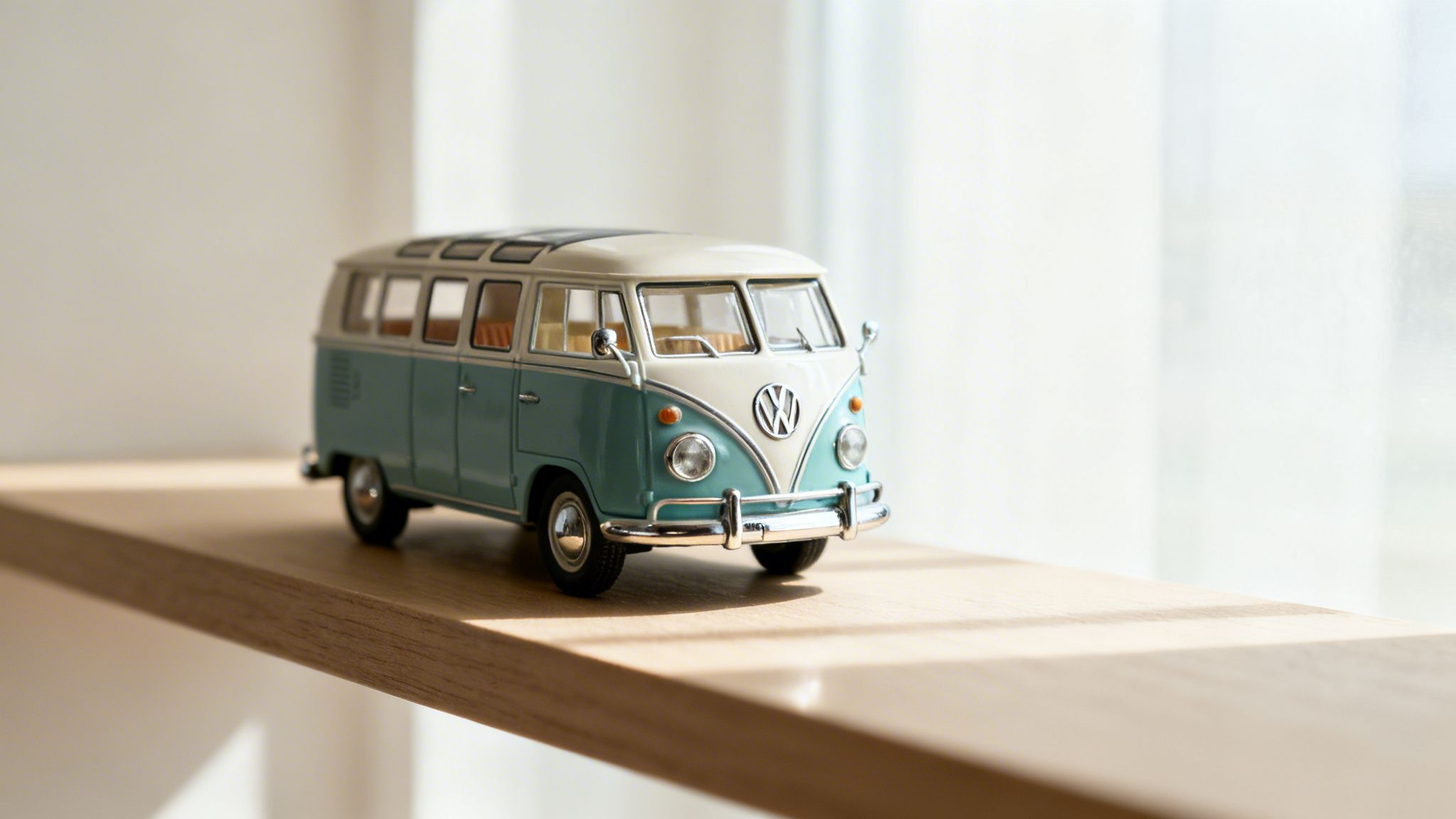
Close-up of a miniature vintage Volkswagen T1 camper van model on a sunlit shelf.

Cracking the Code on Diecast Scales

The first thing you’ll bump into is the scale, which is just a simple way of describing the model's size compared to the real deal. Getting your head around the common scales helps you figure out what’s right for your space and your collecting goals.

  • 1:18 Scale: This is the big kahuna. These large, impressive models are absolutely packed with detail—we’re talking opening doors, bonnets, and even tiny engine bays. They make for a jaw-dropping centrepiece on any shelf.

  • 1:24 Scale: A brilliant middle ground. Models in 1:24 scale have a fantastic balance of intricate detail and manageable size. They're big enough to show off all the cool features but small enough that you can build a decent collection without needing a whole new room.

  • 1:43 Scale: This is a true classic and probably the most popular scale for serious collectors. It lets you display a huge variety of models in a small space, making it easy to line up the whole history of the VW camper side-by-side.

  • 1:64 Scale: Think Matchbox or Hot Wheels. These little guys are affordable, fun, and the perfect excuse to build a massive collection. They might have less fine detail, but they’ve got a nostalgic charm all their own.

If you’re just getting your feet wet, the 1:24 and 1:43 scales are a fantastic place to start. They offer a superb collecting experience, letting you appreciate the finer points without the big footprint of the 1:18 models.

What to Look for in a Quality Licensed Model

You’ll quickly realise that not all diecast models are created equal. To make sure you’re getting a genuine collector’s piece, always look for officially licensed products. It’s your guarantee that the model was made with Volkswagen’s blessing and held to a high standard of accuracy.

A great licensed model isn't just a tiny car; it’s a faithful tribute. It nails the authentic colours, the correct badges, and all the little interior details that make you feel like you’re looking at the real van, just shrunk down.

When you’re looking to buy diecast Kombi models, here’s what separates the good from the great:

  • Factory-Accurate Paint: Does the colour match a real VW paint code from that era? The best models will perfectly replicate the exact shades, especially those iconic two-tone schemes on a Splittie.
  • Intricate Interior Details: Take a peek inside. Can you spot the tiny gear stick, the patterns on the seats, or a miniature steering wheel with the proper VW logo? Those are the signs of a premium model.
  • Authentic Wheels and Tyres: The wheels should look right for the era, right down to the hubcaps. Some high-end models even feature real rubber tyres for that extra touch of realism.
  • Crisp Badges and Logos: The Volkswagen emblem and any model scripts should be clean, sharp, and placed exactly where they belong.

A real standout for any collection is a 1962 VW Kombi Samba Bus diecast model. A quality version will have all 21 windows, the fabric-look sunroof, and that gorgeous two-tone paint job recreated perfectly. It’s a definite must-have.

The Perk of Buying from a Local Aussie Importer

When you’re ready to add a new piece to your collection, where you buy from really does matter. A quick search for "VW Kombi diecast Australia" will throw up plenty of options, but choosing a local Aussie importer like us here at VW Memorabilia has some real perks.

First off, you get your models faster. No more waiting weeks on end for international shipping to clear customs. All our Volkswagen diecast models for sale are stocked right here in Australia, so you can have your new pride and joy on display in days, not months.

Plus, you’re supporting a local, family-run business packed with fellow VW lovers! It’s all about that friendly, community spirit that makes the VW scene so special.

Styling Your Home with VW Memorabilia

That feeling you get from a van Volkswagen camper isn’t just for the open road. It's a whole vibe—that sun-drenched, laid-back coastal feeling. And the best part? You can bring that same energy right into your home. Your love for all things VW doesn't have to be parked in the garage; it can be a source of joy and unique style in your living space every single day.
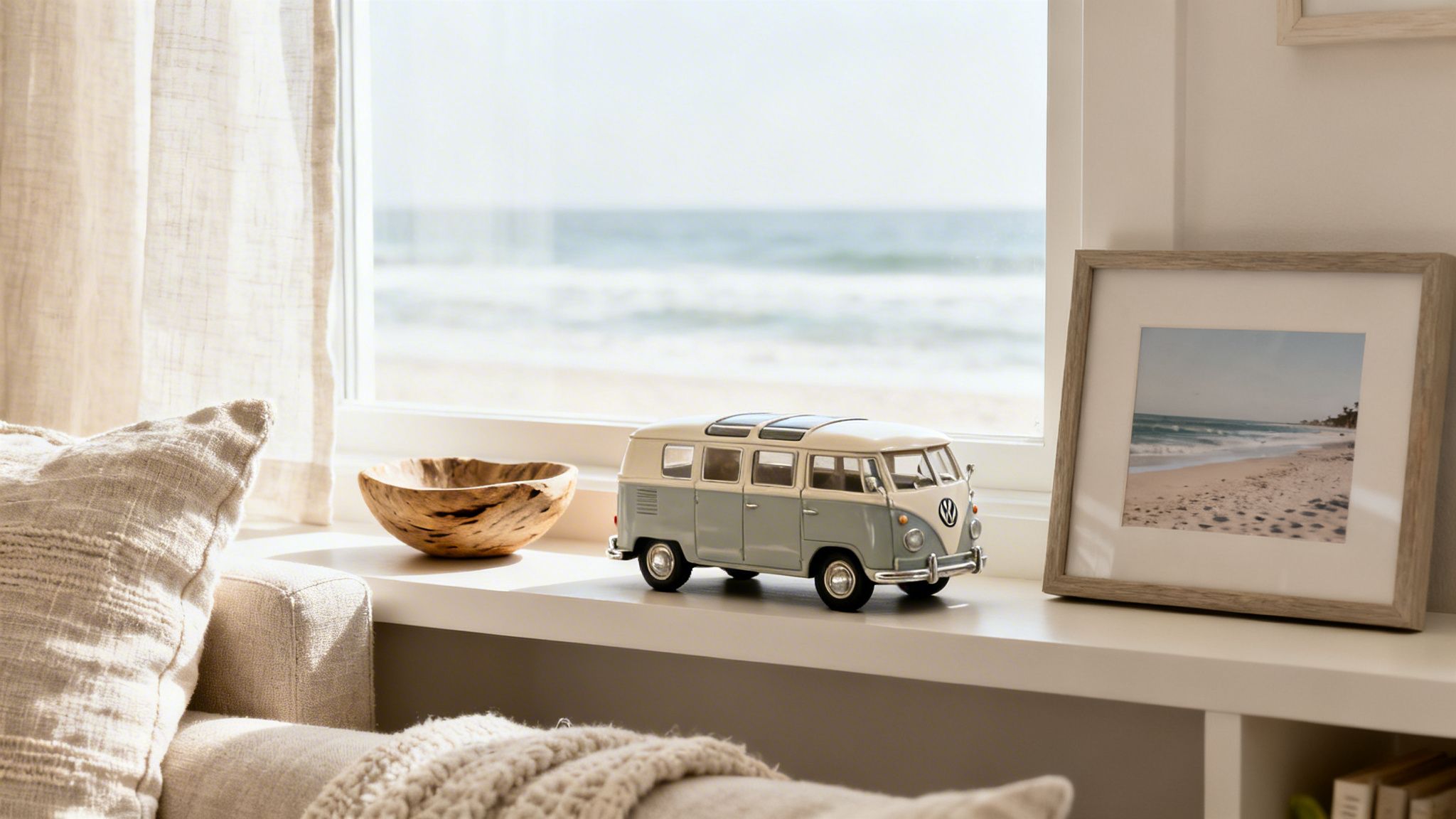
A toy Volkswagen camper van sits on a bright windowsill overlooking a sunny beach.

This isn't about sterile, cookie-cutter decorating. It's about creating a home that tells a story—your story. It’s all about weaving your passion for classic automotive design into a warm, inviting style. A beautifully made diecast model or a piece of retro wall art does so much more than just fill an empty spot; it sparks conversations and brings back great memories.

Making Your Diecast Models the Star

A quality diecast model, like a detailed VW Kombi diecast from Australia, is really a miniature work of art. It deserves to be shown off! Don’t just hide it on a shelf somewhere; make it a real feature piece. A stunning model can instantly inject character and a splash of retro colour into any room.

Here are a few simple ideas to get you thinking:

  • The Bookshelf Centrepiece: Pop a striking 1:18 or 1:24 scale model right on a main bookshelf. Sit it between your favourite books and a couple of small potted plants to create a cool little scene that naturally draws the eye.
  • The Home Office Companion: What’s better than a little reminder of freedom sitting on your desk to get you through the workday? A smaller 1:43 scale model of a classic Volkswagen Beetle model is perfect for adding personality without hogging your workspace.
  • The Hallway Welcome: Greet your guests with a bit of VW charm. A narrow shelf in the entryway with a lineup of colourful Beetle models or a classic Samba Bus is a brilliant way to make a fun first impression.

Think of your diecast model as more than a collectible. It’s a miniature sculpture that stands for adventure, freedom, and timeless style. When you give it pride of place, it lifts the mood of the entire room.

This way, your collection becomes an active part of your home's look, celebrating your passion in a way that’s both stylish and deeply personal.

Creating a Cohesive Coastal Vibe

The VW camper and the Aussie beach scene go hand in hand, which makes it the perfect match for coastal or nautical-themed decor. The real trick is to blend your VW memorabilia with other elements to create a look that feels genuinely relaxed, not just cluttered.

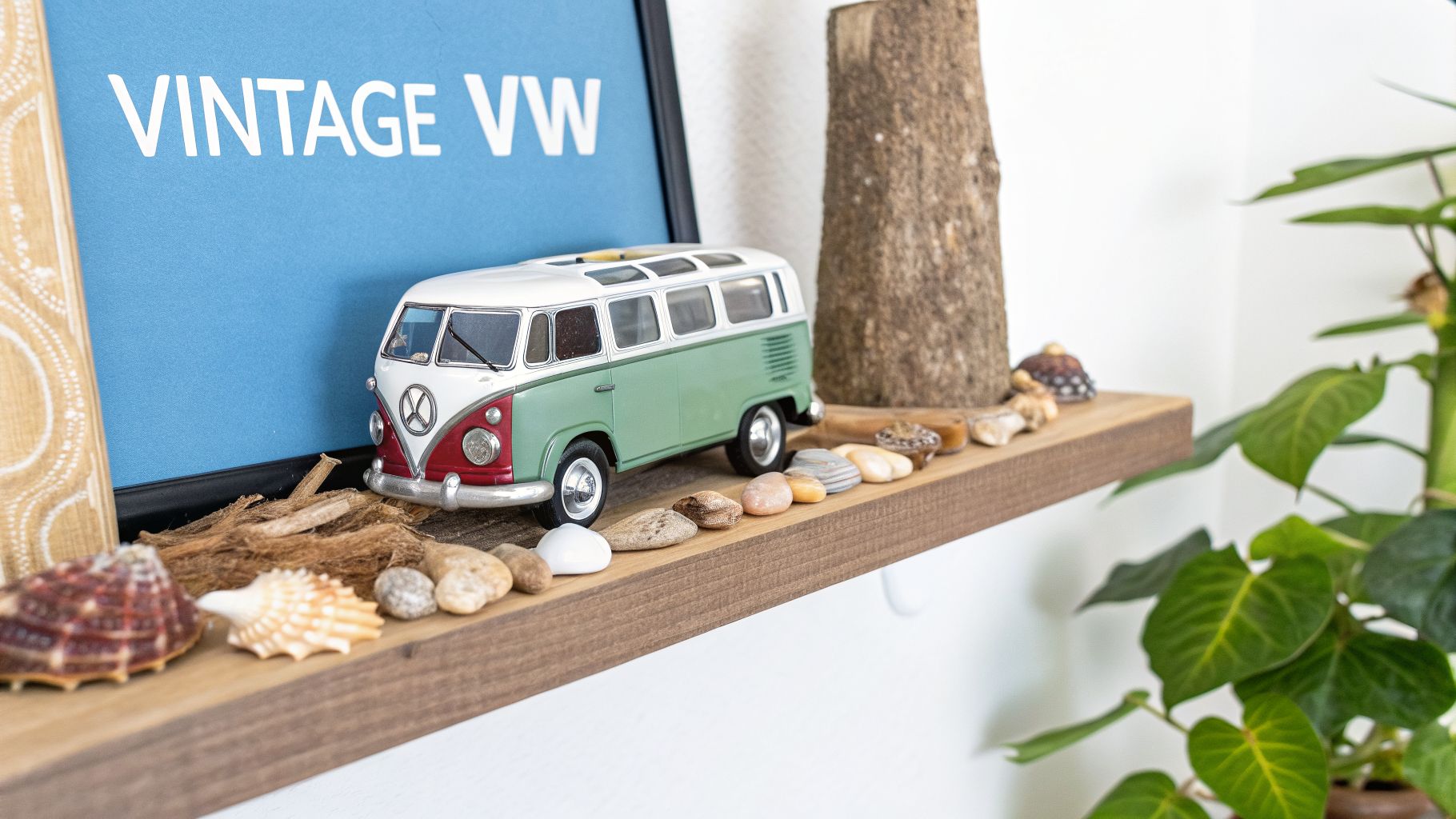
First up, think about your colour palette. Sandy whites, soft blues, and driftwood greys create the perfect backdrop for the vibrant pop of colour from a red or turquoise diecast Kombi. You can have a look through our collection of vintage home accessories for some inspiration on how to mix and match.

Look for other items that have that same nostalgic, simple feel. A vintage-style metal sign with a classic VW ad looks fantastic hanging next to a rustic photo frame holding a picture of your favourite beach. You can also mix in subtle nautical touches, like rope-wrapped vases or decorative starfish, to round out the look. The goal is to create a space that feels like a permanent holiday—a breezy, personal retreat that celebrates the things you love.

Your VW Camper Questions Answered

Still got a few questions buzzing around your head like a happy little air-cooled engine? You’ve come to the right place, mate. This is where we tackle some of the most common queries we hear from fellow enthusiasts about the iconic Volkswagen camper, collecting memorabilia, and the vibrant culture that surrounds it all.

Think of it as our friendly chat over a cuppa at Volksfest. Whether you're a seasoned collector with a cabinet full of treasures or just kicking off your journey into the world of VW, we're here to share our passion and help you along the way.

How Much Is a Classic VW Camper Worth in Australia?

This is the million-dollar question—well, not quite, but prices are certainly climbing! The market for classic VW campers in Australia is hotter than a tin roof in a Queensland summer. A van's value really comes down to the model, its condition, and how original it is.

The last decade has seen an explosion in the classic VW camper scene here. The VW Camper Club Australia logged 25,000 active classic registrations in 2023, a staggering 200% rise since 2010. A huge 45% of these are the iconic 1950-79 models used for coastal camping.

Auction houses like Pickles are reporting average sale prices for restored Splitties hitting AUD 75,000 in 2026—that’s a 250% increase from AUD 25,000 back in 2015. A clean T2 Bay isn't far behind, fetching around AUD 55,000. You can get a great feel for the history and the celebration of 70 years of the VW Campervan to understand the enduring love for these vans.

Which VW Camper Model Is Best for Collecting?

Ah, another cracking question! "Best" is always in the eye of the beholder, but a few fan favourites really stand out that every collector dreams of getting their hands on.

  • The Splittie (T1): This is the original icon. Any Splittie is a prize, but the absolute holy grail is the Samba Bus with its signature skylight windows and fabric sunroof. A detailed 1:24 or 1:18 scale Samba makes for a true centrepiece in any collection.

  • The Bay Window (T2): For so many of us, this is the van that represents the great Aussie road trip. Keep an eye out for models with classic '70s paint colours or camper-specific details like a pop-top roof.

  • The T3 Syncro: For those who love a bit of adventure, a diecast T3 Syncro represents the rugged, off-road evolution of the camper. They're a bit rarer to find but a fantastic addition to the shelf.

At the end of the day, the best model to collect is the one that puts a smile on your face. It might be a model of a Volkswagen Beetle model that reminds you of your first car, or a Kombi that looks just like one you spotted on a holiday.

What’s the Difference Between a Kombi and a Camper?

This one trips a few people up, but it's pretty simple once you break it down. Just think of it like this:

"Kombi" is the nickname for the van itself—the Volkswagen Type 2. A "Camper" is what you turn it into!

"Kombi" is just short for the German Kombinationskraftwagen, which translates to "combination vehicle." It was cleverly designed to carry both passengers and cargo. A camper, on the other hand, is a Kombi that has been fitted out with all the camping essentials like a bed, cupboards, and sometimes a small kitchen. You could buy a basic Kombi, and a third-party company (like Westfalia in Europe or local Aussie converters) would work their magic.

So, while every VW camper is a Kombi, not every Kombi is a camper. Simple as that.

Can You Still Use a Classic VW Camper for Trips Today?

Absolutely! That’s what they were built for, after all. All across Australia, you’ll find dedicated owners keeping these classics on the road, heading to the beach, music festivals like VW Nationals, and local Show & Shine events. Owning a classic does demand a bit more love and attention than a modern car—you have to get comfortable with their quirks and a much slower pace.

But that’s all part of the charm! The key is regular maintenance and becoming part of the community. There are fantastic clubs and online groups full of knowledgeable people who are always happy to share advice on keeping your classic van Volkswagen camper running sweetly. For those of us who prefer to admire them from home, a stunningly accurate diecast VW Kombi is the next best thing!


Ready to celebrate the spirit of the open road? At Volkswagen Memorabilia, we’re fellow enthusiasts passionate about bringing you the best licensed diecast models and coastal décor. Explore our collection and find the perfect piece to fuel your passion.

Find your next treasure in our online shop.
From Blank Walls to a Bay Window View: A Guide to Nostalgic VW Wall Accents for Your Living Room

G’day, mate! Had a squiz at that big, empty wall in your living room lately? It’s not just dead space, you know. It’s a massive canvas just waiting to tell a story—your story. For those of us with a bit of road trip spirit in our veins and a deep love for classic Volkswagens, wall accents are how we bring that passion indoors.

From Blank Walls to a Statement of Style

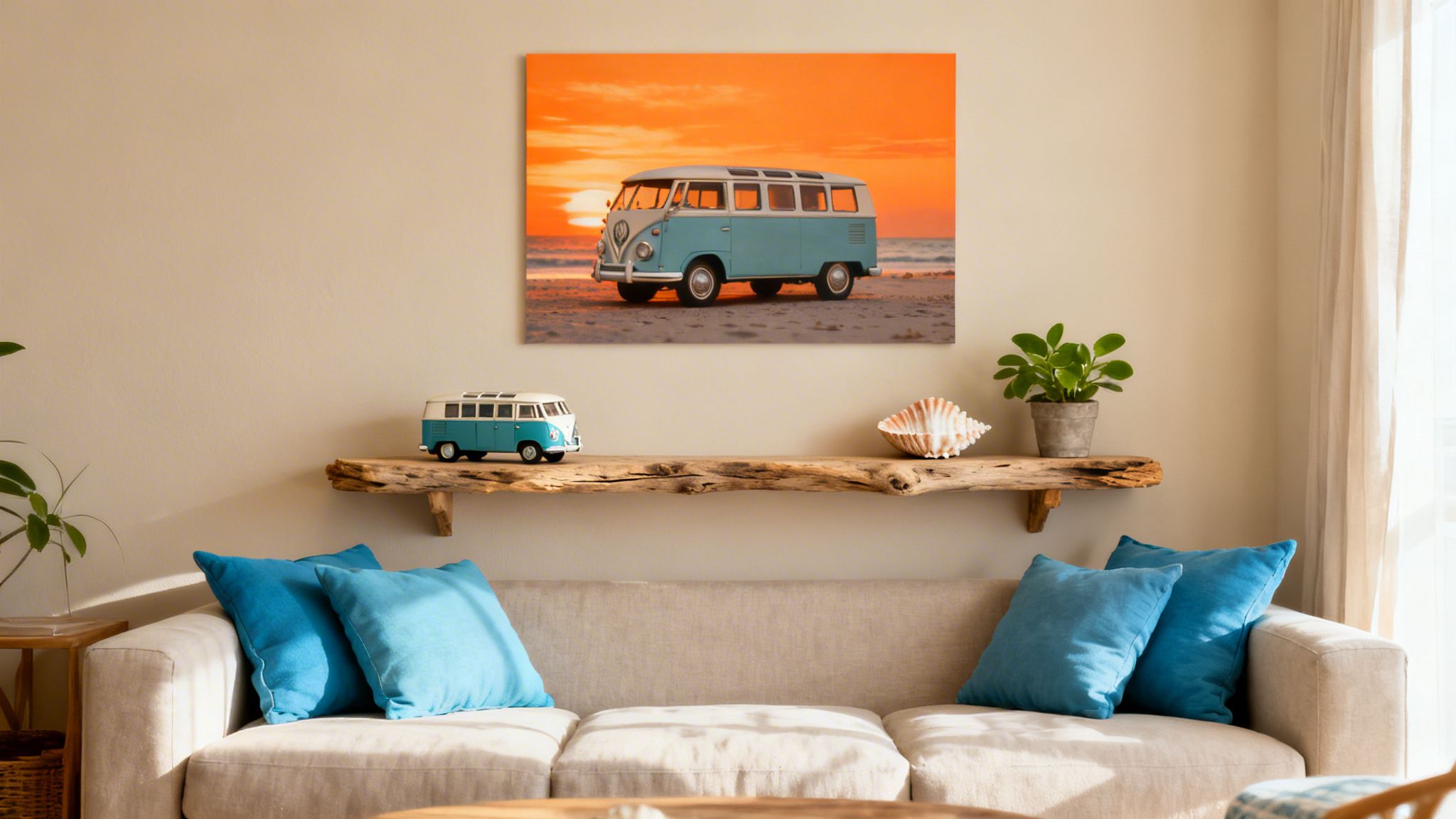
A cozy living room with a beige sofa, blue pillows, a rustic shelf, and beach-themed wall art.

Let's have a yarn about turning what you love into a real, tangible part of your home. This is about more than just whacking a nail in the wall and hanging a picture. We’re going to get into the nitty-gritty of choosing, arranging, and even lighting your wall decor to properly capture that free-wheeling vibe of a Kombi cruise down the Great Ocean Road.

It’s all about creating a space that feels like you. We’ll look at everything from picking a hero piece, like a stunning print of a 1962 Splitty, to mixing it with other elements for a look that feels both personal and wonderfully nostalgic.

Creating a Vibe That's Uniquely You

The best living room wall accent designs don’t happen by accident. They’re thoughtfully put together, like a well-restored Bug. It’s about weaving your passions into a story on your wall that makes sense and looks schmick. Luckily, the classic cool of VW culture just happens to pair perfectly with another Aussie favourite: laid-back coastal decor.

And that’s not just a gut feeling; it’s a massive trend. Across Australia, wall accents are a cornerstone of living room makeovers, especially as design tastes shift toward earthy, nature-inspired palettes. In fact, a huge number of Aussie interior designers are tipping that neutral, organic tones—think warm terracottas, muted olives, and creamy sands—are the go-to for living spaces.

This lines up beautifully with those classic surfy VW Kombi accents in rusty oranges and seafoam greens. You can get a better feel for these trends and see how our coastal home decor ideas can help bring this look home.

The goal is to make your walls the most interesting part of your home, sparking conversations and bringing back fond memories every time you walk into the room. Let's make that happen, hey?

Choosing a Hero Piece for Your Wall

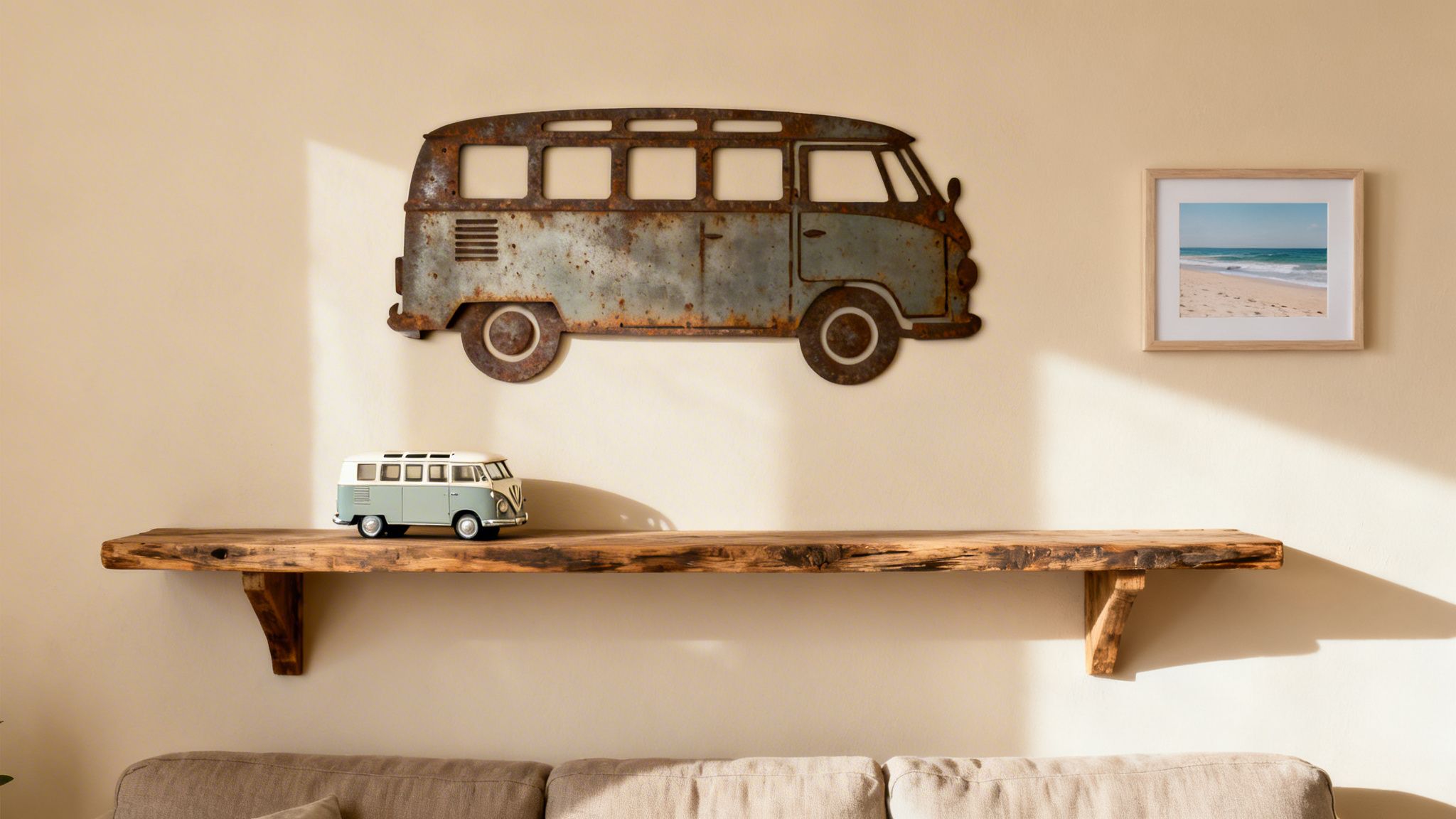
A cozy living room wall with rustic metal VW van art, a wooden shelf, and a framed beach photo.

Every great wall display starts with a hero piece. This is the anchor item that sets the tone and acts as the focal point for all your other living room wall accents. It’s the showstopper, the first thing people notice when they walk in.

For any VW enthusiast, this centrepiece should be something that truly represents your passion. It might be a sharp metal silhouette of a classic Beetle, a vibrant print of a Flower Power Kombi, or a dedicated shelf holding a prized 1:18 scale Kombi Samba Bus diecast model. It’s the piece you’ll look at every day, so make sure it's one you absolutely love.

This hero item will guide your choices for colour, style, and the overall story of your wall. Think of it as the chassis—everything else is built around it.

Finding Your Perfect Centrepiece

Choosing the right focal point is a personal decision, but a few practical considerations will ensure it works in your space. The goal is to balance an item you love with the scale and existing colours of your living room.

  • Consider the Scale of Your Wall: A large, empty wall will swallow a small print, just as a massive piece of art can overwhelm a smaller space. For a big wall, a large canvas or a substantial metal art piece makes a strong statement. On smaller walls, a detailed diecast model displayed on a floating shelf can have just as much impact. Think in metres, not just vibes!

  • Think About Visual Weight: A single, large statement piece immediately draws the eye and creates a clear focus. In contrast, a group of smaller items encourages a closer look, inviting people to explore the collection. Neither is better; they just create different effects, like the difference between spotting a lone Kombi on the highway versus a whole line-up at Volksfest.

  • Match Materials to Your Vibe: Taking a cue from modern Australian coastal design, materials like weathered metal and natural wood can add great texture. These elements complement the VW theme perfectly, giving the retro lines of a Kombi or Beetle a sun-bleached, salty-air character. Our guide to Boho wall art offers more ideas if you want to explore this style.

The best hero piece does more than just fill a space; it tells a story. It's what makes a guest stop and say, "That's fantastic, what's the story behind it?"

Don't hesitate to select an item that is a true reflection of your personality. Whether it’s a minimalist print or a quirky, colourful metal van, your hero piece is the heart of your display. Once it’s in place, you can begin adding the other pieces that complete the narrative.

Blending VW Nostalgia with Coastal Charm

Righto, you’ve picked your hero piece. It’s sitting there, ready to take centre stage. Now comes the seriously fun part—building a whole vibe around it. This is where we get creative and blend that adventurous spirit of a classic Volkswagen with the easy-going, relaxed feel of coastal decor.

Imagine pairing a bold, metallic VW van artwork with some subtle nautical touches. We're talking rustic driftwood frames holding photos of your favourite beach trips, or a small collection of seashells you've gathered over the years. It’s all about creating a personal story on your wall.

The secret to making it all work together is choosing a smart colour palette. Think of the colours you see on a perfect day down at the coast: sandy neutrals, ocean blues, and those brilliant sunset oranges. These colours can tie everything together beautifully.

Creating Your Style Recipe

You don’t need to be an interior designer to get this right. Think of it like a recipe—you just need the right ingredients. It’s about balancing different textures and scales to make sure your diecast models, wall art, and beach-found treasures all look like they belong together.

Sustainability is also becoming a huge part of how we decorate our homes. People are really starting to realise how important it is. In fact, trends show that Aussies are increasingly looking for eco-friendly décor. Pieces like hand-painted Kombi murals on recycled metal are a great example, showing a real shift towards conscious styling.

With so many Aussie home decorators now seeing wall accents as key to a wellness-focused living space, a VW-themed display is a perfect mix of feel-good nostalgia and timeless charm. For more on local trends, you can always check out Aussie design resources like Rug'n'Roll.

The trick is to create harmony without making everything match perfectly. A bit of contrast in texture—like a smooth diecast model next to a rough piece of driftwood—adds depth and makes your wall much more interesting.

Style Templates to Get You Started

To give you a head start, here are a few 'style recipes'. Use them as a starting point to cook up your own unique wall display.

VW & Coastal Wall Accent Style Recipes

Style Recipe Hero VW Accent Supporting Coastal Pieces Colour Palette
The Retro Surf Shack A colourful "Flower Power" Kombi print or metal art. A miniature surfboard, vintage-style beach signs, framed surf photos. Bright oranges, yellows, and turquoise against a white or timber backdrop.
The Coastal Explorer A detailed 1:18 scale Kombi Samba Bus diecast on a floating shelf. Old maps, a decorative compass, and jars of sand from different beaches. Deep navy blues, creamy whites, and brass or gold accents for a classic feel.
The Minimalist Beachcomber A simple, single-colour Beetle silhouette. A single piece of sculptural driftwood, a smooth sea-worn stone, black and white beach photography. Muted greys, soft whites, and natural timber tones.

These ideas are just here to spark your imagination. The best wall accents in your living room will always be the ones that tell your story.

So grab your hero piece, start layering in those coastal elements, and have some fun with it! Check out our collection of vintage home accessories for more inspiration.

Hanging Your Collection: The Nuts and Bolts

Alright, you’ve chosen your hero piece and rounded up a fantastic collection of coastal treasures. Now comes the practical part—getting it all up on the wall so it looks incredible and, more importantly, stays there. A bit of planning here makes all the difference, trust me. It’s what separates a professional-looking display from one that’s just a bit… wonky.

Before you even think about picking up a hammer, let's chat about placement. A golden rule I always stick to is hanging art at eye level. For most of us, that means the centre of your artwork or gallery arrangement should be about 145–152cm from the floor. This creates a really natural, balanced feel that just looks right.

Getting the spacing spot-on is just as important, especially when you're creating a gallery wall. You don’t want your VW memorabilia looking like it's stuck in peak hour traffic. As a good starting point, try to keep a consistent gap of around 5–8cm between each item. This gives every piece its own space to shine while still feeling like part of a cohesive collection.

Mastering the Layout and Hardware

Here’s my favourite trick for planning a layout without turning your wall into Swiss cheese: use the floor. Seriously, just lay all your pieces out and move them around until you land on an arrangement that makes you happy. Even better, trace each item onto paper, cut them out, and use a bit of painter's tape to stick the templates to the wall. You can live with it for a day or two and tweak things as much as you need.

Once you’re happy with the plan, it’s time to grab the right hardware. Please, don’t just reach for any old nail!

  • For Lightweight Prints: A simple picture hook is usually fine. I’ve even used sturdy Command strips with great success for lighter frames.
  • For Heavier Metal Art or Frames: You’ll definitely want a wall plug (sometimes called a drywall anchor) and a screw. This gives you a much more secure hold, which is essential for those precious metal Kombi silhouettes.
  • For Diecast Display Shelves: Always, always try to find a wall stud to screw into. It’s the single most secure way to hang a shelf that will be holding your prized Volkswagen diecast models.

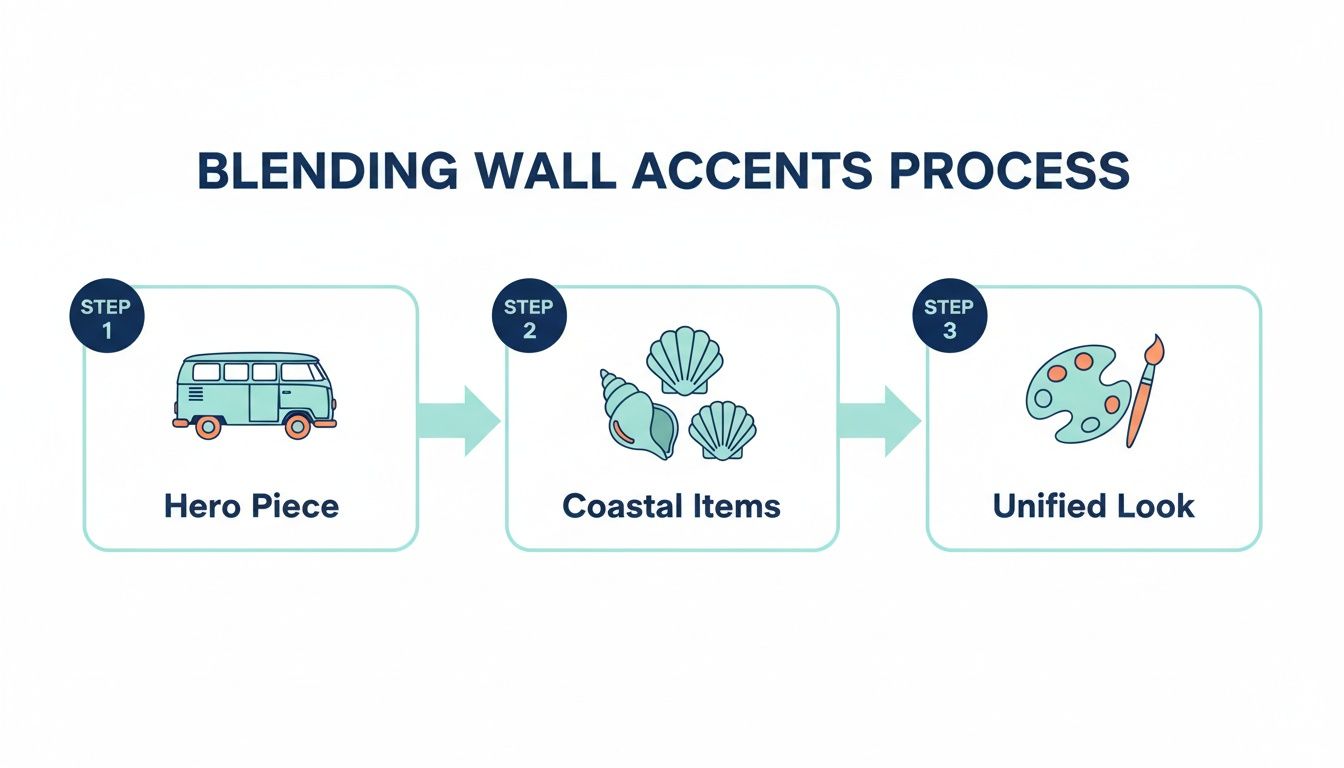
The whole idea is to blend your standout VW accent with your coastal bits and pieces to create one unified look. It’s simpler than it sounds.

A three-step infographic on blending wall accents: hero piece, coastal items, and unified look.

This process really breaks it down: start with your VW hero piece, layer in those complementary coastal items, and then tie it all together with a consistent colour scheme. The result is a display that looks both personal and professionally styled.

Let There Be Light

Finally, never underestimate the power of good lighting. The right light can take a great display and make it absolutely spectacular. It’s what will make the chrome on a diecast Volkswagen Beetle model gleam and bring out the beautiful, rich colours in a sunset beach photo.

Think of lighting as the final polish. It's the finishing touch that elevates everything. A well-placed spotlight can draw attention to a single, special piece, while softer ambient light gives the whole wall a warm, inviting glow.

Consider installing a small, adjustable spotlight on the ceiling aimed at your hero piece. For a really classy touch, a slim picture light mounted directly above a special frame can look brilliant. Honestly, even a strategically placed floor lamp that casts a warm light upwards can make your living room wall accents feel so much more dynamic and atmospheric.

How to Grow Your Wall Collection Thoughtfully

For a real enthusiast, one piece is never just one piece. It’s the beginning of a story. Building up a collection of wall accents isn’t about just covering a blank wall; it’s about curating a visual history of your passion, one find at a time. It’s for those of us who see an empty space as an opportunity.

Whether you're all in on detailed diecast models, unique VW art, or coastal treasures, the aim is to expand your display with intention. A great collection feels like it has grown with you, reflecting your adventures and tastes from the VW Nationals to a weekend cruise.

Start with What You Love

The best collections come straight from the heart. Don't just grab something because it "fits" a theme. Only add pieces that genuinely get you excited. Stumbled across a rusty old sign at a swap meet that takes you back to your first car? That’s got more soul than anything you'll find in a big-box store.

Your wall should be a reflection of you. If you're a diehard Kombi fan, maybe you focus on collecting different scales or eras. If you love the classic Beetle, perhaps you gather memorabilia that charts its evolution. Let your passion be your compass.

Grow Your Gallery Wall Organically

A truly stunning gallery wall rarely comes together overnight. The most interesting ones look like they’ve been built over years, because they usually have been. Start with your main hero piece and a couple of supporting items, then slot in new treasures as you find them.

A gallery wall is a living project. Don't hesitate to shift things around, swap pieces out, or add new finds. This keeps your display feeling fresh and exciting—just like your passion for VWs.

One great approach is to rotate items with the seasons. A sunny, beach-themed display with surfy Kombis is perfect for summer. When winter rolls in, you could switch to more rustic scenes or a classic Volkswagen Beetle model set against a moodier backdrop.

Sourcing Quality Pieces Matters

As your collection expands, the quality and authenticity of each piece become more and more important. It’s what separates a fun hobby from a truly valuable collection. That’s why getting your gear from a dedicated, licensed Australian importer like VW Memorabilia makes all the difference.

When you buy diecast Kombi models or other VW memorabilia collectibles from a trusted source, you're investing in something that lasts. You get:

  • Authentic, licensed designs that properly honour the VW heritage.
  • Durable materials and craftsmanship built to stand the test of time.
  • The confidence that comes from fast, local shipping and backing an Aussie business that shares your passion.

Thoughtfully growing your collection of wall accents for your living room is one of the most rewarding parts of being an enthusiast. It’s a journey, not a race, so enjoy every step.

FAQs: A Quick Chat About Your Wall Display

Alright, you've got some great ideas brewing and you're ready to get started. But it's totally normal to have a few last-minute questions. Think of this as a quick chat over the bonnet of a Beetle at a car show—here are a few common things we hear from fellow VW and decor lovers.

How High Should I Hang My VW Wall Art?

Getting the height just right for your wall accents in the living room is crucial. The sweet spot is to hang your piece so its centre sits at eye level. For most of us, that’s about 145–152 centimetres off the floor. This makes it comfortable to view, whether you're standing up or kicking back on the sofa.

If you’re hanging something above your sofa, a good rule of thumb is to leave around 15-20cm of clear space between the top of the couch and the bottom of your art. This little gap helps connect the two visually without making your wall feel cluttered.

Can I Mix Different Materials and Themes?

Absolutely! In fact, mixing it up is what gives a wall display real character and texture. Imagine a sleek, metal Kombi silhouette hanging next to a weathered, framed print of Bells Beach and a small wooden oar you found on your travels. That’s the kind of display that tells a story.

The trick to making a mixed collection work is to find a common thread that ties it all together.

  • Shared Colour Palette: Try sticking to a family of colours, like ocean blues, sandy whites, and rusty oranges.
  • Consistent Theme: Make sure every piece feels like it belongs to the same story, for example "Aussie Surf Trip."
  • Similar Frame Style: Using similar frames—like simple timber or clean black—can unify even the most diverse collection of art.

Don't be shy about mixing it up. A wall with varied textures feels collected and personal, not like it came straight out of a catalogue. It tells a much more interesting story.

What's the Best Way to Plan a Gallery Wall Without Making Extra Holes?

The classic dilemma! No one wants a wall that looks like Swiss cheese. The simplest way to dodge this is to lay out your entire arrangement on the floor first. Fiddle with the pieces until you land on a balance you really love.

For a truly foolproof method, grab a big roll of kraft paper.

  1. Trace each of your art pieces onto the paper and cut them out.
  2. Use a bit of painter's tape (it won’t damage your paint) to stick the paper templates onto your wall.
  3. Now, just live with it for a day or two. This lets you move things around as much as you want without making a single hole.

Once you’re 100% happy with the layout, you'll know precisely where each nail or hook needs to go. It takes a little extra time upfront, but it saves a ton of patching and painting down the track.


Ready to build your own wall of VW history? At vwmemorabilia.com.au, we’re a local Aussie importer with a passion for authentic, officially licensed collectibles. As fellow enthusiasts, we stock the gear we love. Explore our full range of Volkswagen diecast models and memorabilia and find that perfect piece to kickstart your collection today. With stock right here in Australia, you'll get it fast

Park Some Personality on Your Table: A Guide to VW-Inspired Dining Decor

G'day, fellow VW tragics! Let's have a yarn about the real heart of the home: the dining table. It's so much more than just a spot to eat, isn't it? It’s where you catch up with the family after a long day, share a laugh with mates over a good meal, and where so many brilliant memories are made.

That’s why dressing it up is such a ripper chance to inject some real personality into your space.

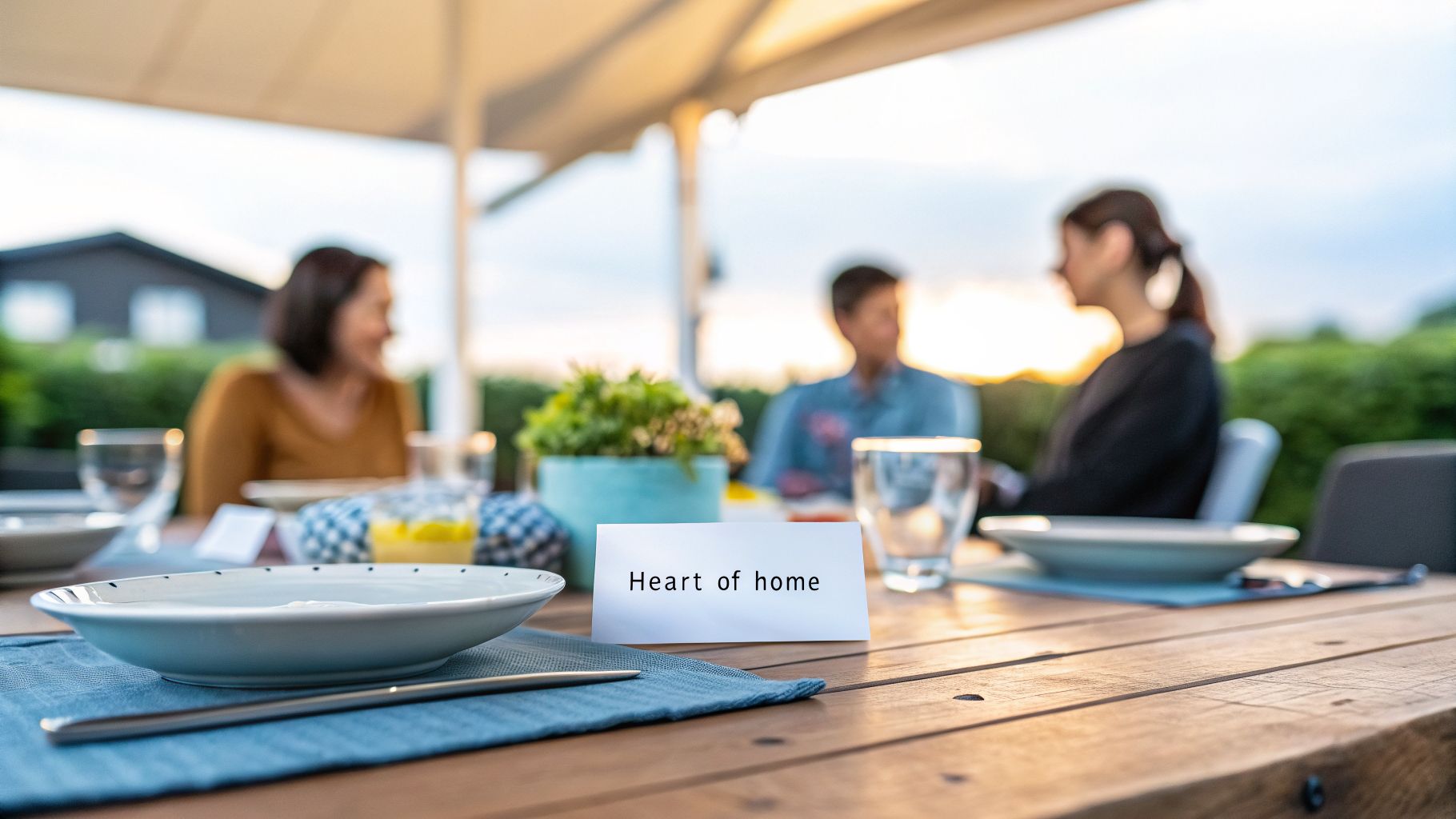
A cozy outdoor dining table setting with tableware, a plant centerpiece, and 'Heart of home' sign, with blurred guests.

Think of your table as a stage for the things you love. Whether you're a die-hard surfie who lives for the coast or a classic car nut who dreams in chrome, your table can reflect that. It’s all about creating a vibe that feels authentically you. For a VW lover, that could mean parking a favourite Volkswagen Beetle model right in the middle of the action.

Turn Your Passion Into a Centrepiece

Styling your table is really about curating a look that tells a story. It’s an opportunity to go beyond a simple vase of flowers and create something that genuinely sparks a conversation. Imagine a relaxed, coastal theme that makes every meal feel like a mini-getaway, or a fun, retro look that pays homage to the golden age of VWs.

The best dining table decor doesn’t just look good; it makes you feel something. It connects to your memories, your hobbies, and the life you love to live.

This shift towards more personal and expressive home styling is happening all across Australia. We’re investing more in our homes to make them feel special, and it shows. The Australian living and dining room market has grown to be worth a massive USD 4.8 billion. With more cash to spend, Aussies are enthusiastically putting it into quality furniture and decor that really show off their individual style.

It's clear we love creating spaces that are both functional and full of heart. So, what better place to start than the table where all the good times happen? It's the perfect spot to park a beautifully detailed Kombi Samba Bus diecast and let your love for classic Volkswagens take centre stage.

If you're not sure where to begin, don't you worry. Starting with a few key pieces can make a world of difference.

Here are a few simple, high-impact elements you can use to kick off your dining table decor journey.

Quick Swaps for Instant Table Style

Element What It Adds VW-Inspired Idea
Table Runner Creates a visual anchor and adds colour or texture. A simple jute runner for a beachy, Kombi-on-the-coast vibe.
Placemats Defines each person's space and protects the table. Round, woven placemats that mimic the shape of a VW hubcap.
Diecast Model The hero piece! Adds personality and a talking point. A bright red 1967 Beetle model for a pop of retro colour.
Small Accents Fills out the look and adds depth. A small potted succulent or a few scattered seashells.

Using just one or two of these items can completely change the feel of your table. It's all about experimenting and finding what makes you smile.

Right, let's get our toolkit sorted before we dive into the really fun part of styling. This isn't about rushing out to buy a whole new set of everything. It’s about being smart and choosing a few key, quality pieces that will become the foundation for any look you want to create.

Think of it like setting the stage for your hero piece—that stunning Volkswagen Beetle model just waiting for its moment in the spotlight.

Your first building block? A great table runner. This simple strip of fabric is an absolute powerhouse. It can add a splash of colour, bring in some much-needed texture, and create a clear visual path right down the centre of your table. It’s the road that leads the eye straight to your amazing centrepiece.

Choosing Your Base Layers

Next, let's talk placemats. They do more than just protect your table; they define each person’s individual space and add another layer of style and personality. You could match them to your runner for a really polished, cohesive look, or mix things up for a more eclectic, gathered-over-time feel. For that classic Aussie beach-shack vibe, you honestly can’t go wrong with woven rattan or jute placemats.

Speaking of which, natural materials are your best friend here. They're essential for creating that warm, relaxed atmosphere we all love. There's just something about timber, rattan, linen, and even stone that feels so right in an Australian home. These elements ground the space, providing an organic, textured base that makes everything else pop.

A strong foundation of natural textures and quality linens is like the solid, reliable engineering of a classic VW. It’s the dependable base that allows the fun, stylish exterior to truly shine.

Leaning Into Natural Materials

This love for natural warmth isn't just some fleeting trend; it’s a massive shift in how we're decorating our dining spaces. We’re seeing a huge 262% year-over-year surge in interest for darker woods, according to design industry forecasts. At the same time, over 76% of designers are pointing to natural stones like travertine as a top choice for creating sophisticated yet wonderfully relaxed settings.

Once you have these foundational elements sorted, you've created an incredibly versatile canvas. It’s a base that can easily be dressed up for a fancy dinner party or kept casual for a Sunday barbie with friends. For a few more ideas on how to weave these timeless pieces into your home, check out our collection of vintage home accessories.

Now your toolkit is prepped and ready. Let the creative magic begin!

Crafting a Centrepiece That Tells Your Story

Every great dining table needs a hero piece. This is where your personality truly gets to shine. Forget the standard vase of flowers for a moment; this is your chance to build a little narrative that gets your mates talking.

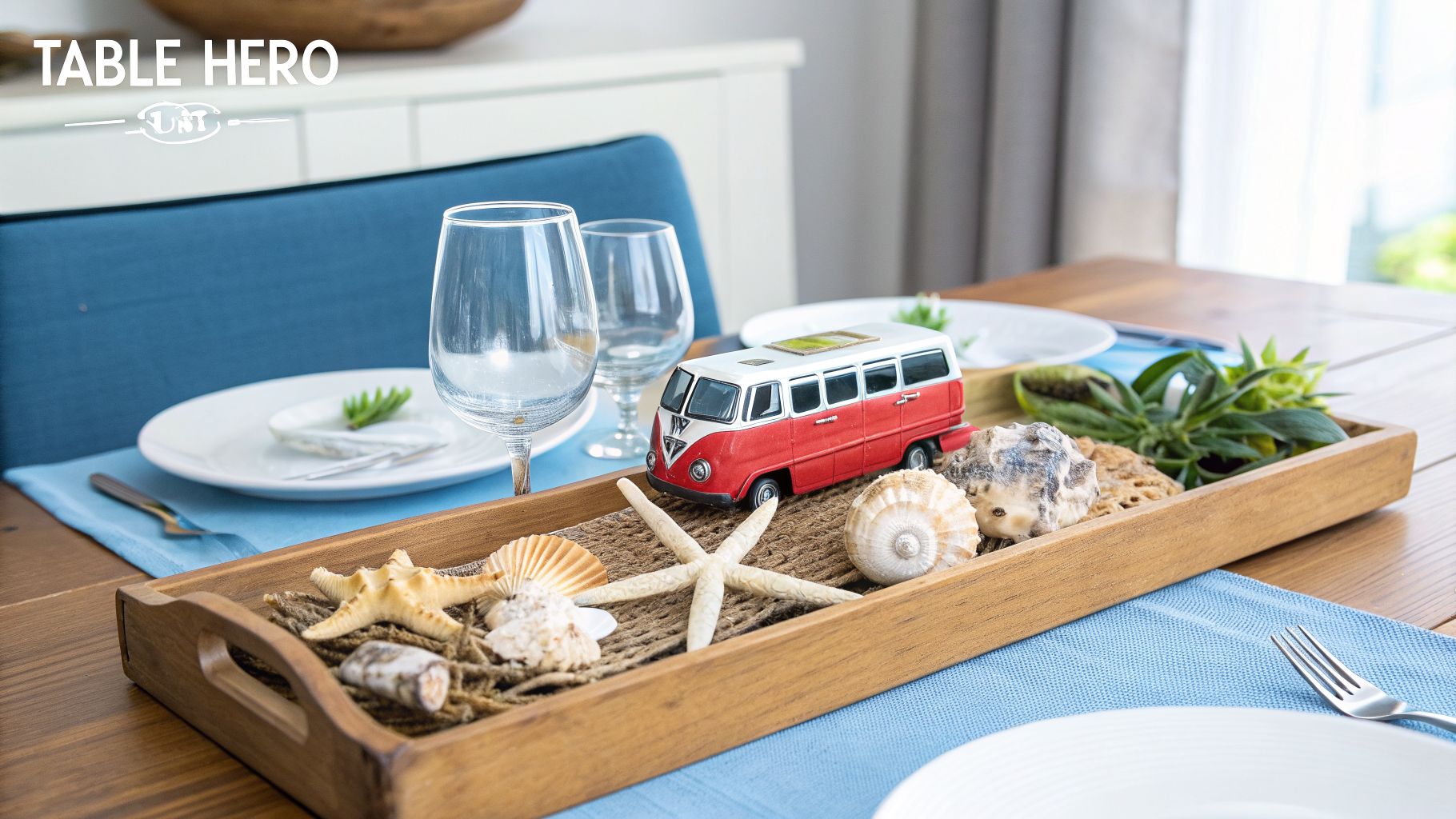
Coastal-themed dining table centerpiece with a red toy bus, starfish, seashells, and greenery on a wooden tray.

We're creating a small scene right there amongst the salt and pepper shakers. It’s an opportunity to show off what you love, and for us VW tragics, that means bringing our passion right to the table. Suddenly, the space isn't just for eating—it’s a display of your history and hobbies.

The Anchor of Your Story

The best way to pull this off is by starting with a base or a tray. Think of it as the stage for your display. A long, rustic piece of timber, a round woven tray, or even a slate platter can work wonders. This anchor is what pulls all the individual bits and pieces together into one cohesive look, stopping it from feeling like random clutter.

A tray also defines the boundaries of your centrepiece, which is incredibly practical. It means you can move the whole thing at once when it's time to clear the table for a big feed.

For a classic coastal theme, you can't go past a weathered timber tray. It instantly brings to mind driftwood washed up on the shore.

Adding Layers and Character

With your base sorted, it's time to add the layers. This is where you bring in different textures and smaller items that support your main story. For that coastal vibe, you could scatter some seashells, a few interesting pieces of sea glass, or a tangled knot of nautical rope.

These supporting actors add depth and interest, filling out the scene. The key is to choose items that feel connected and share a common theme or colour palette so it all makes sense visually.

A quick tip from experience: The goal is to enhance the view, not block it. Keep your centrepieces relatively low. You want guests to be able to see and chat with each other across the table easily. It’s about creating atmosphere, not a barrier.

You can also lean on the old designer's trick—the rule of three. Grouping items in odd numbers, like three small candles or a cluster of five seashells, is almost always more visually appealing and dynamic than even-numbered groups. It just feels more natural and less staged.

Placing Your VW Hero

Now for the main event: your hero VW model. This is the piece that ties it all together and injects that unmistakable personality. It’s the exclamation point on your design statement!

Position your diecast model as the star of the show. If you're using a long tray, you could have a stunning 1:24 scale VW Kombi Samba Bus diecast model "parked" at one end, as if it’s just pulled up to the beach. On a round tray, placing it right in the centre makes it the undeniable focal point.

Don't be afraid to let it interact with the other elements. Maybe your little Volkswagen Beetle model is nestled amongst some greenery, looking like it's on a country road trip. This little story is what makes your dining table decor unique and memorable. It’s not just a model on a table; it's a conversation starter.

Adapting Your Style for Any Occasion

The best part about getting your dining table decor just right is how easy it becomes to change things up. A great setup isn't meant to be static; it should feel alive, evolving with the seasons, holidays, and even just your mood. You don’t need to start from scratch every time—a few clever swaps are all it takes to give your everyday look a completely new feel.

Think of your table as your canvas. Your core pieces—the runner, placemats, and that hero VW model—are the foundation. Everything else is just detail.

From Summer Barbies to Festive Feasts

Let's imagine your go-to style is that breezy, coastal vibe. When summer hits and the backyard barbie becomes a weekly ritual, you can instantly dial up the energy. Switch out your neutral placemats for ones in bright, sunny colours—maybe a vibrant turquoise or a cheerful yellow. It immediately makes the whole setting feel more casual and fun.

Then, as the year winds down and Christmas is on the horizon, that same coastal setup can get a festive makeover. There's no need to hide your beloved Kombi; make it the star of the show!

Rather than packing away your everyday decor, just weave the festive spirit into what's already there. Try adding a few nautical-themed Christmas decorations—like tiny anchors or starfish ornaments—around your Kombi centrepiece. It keeps the theme uniquely yours. You get Christmas, but with a sun-kissed, Aussie twist.

This approach feels so much more personal than just pulling out generic holiday decorations. You're simply adding another layer to the story your table is already telling. For more ideas on nailing that year-round beachy feel, check out our full guide on coastal home decor ideas.

Simple Swaps with Big Impact

It’s amazing how a few small tweaks can completely shift the atmosphere. These quick changes take almost no effort but deliver huge style points:

  • Swap Your Foliage: Trade your everyday greenery for something more seasonal. Think fragrant eucalyptus branches in winter, vibrant bottlebrush for a splash of summer red, or delicate sprigs of wattle in the spring.
  • Change the Candle Colours: If candles are part of your centrepiece, switching up their colour is one of the easiest and most affordable updates you can make. Go for deep reds and greens at Christmas, or soft pastels for an Easter lunch.
  • Introduce New Textures: Drape a light, gauzy piece of fabric over your existing runner for a softer look, or add small metallic accents for a bit of festive sparkle.

By focusing on these simple, interchangeable elements, your dining table always feels fresh and exciting. It just goes to show that with a bit of creativity, your passion for VWs can be the star of any occasion, from a quiet weeknight dinner to the biggest celebration of the year.

Right, enough theory. Let's get our hands dirty and start styling. I'm going to walk you through three distinct looks you can pull together for your dining table today, each built around a classic VW model.

These aren't just about setting a table; they're about telling a story. More and more, the Aussie dining room is becoming a space for true personalisation. It's less about formal dining and more about creating a backdrop for great memories. It’s a trend you can read more about in this look at Australian dining rooms.

The Coastal Cruiser

This one is for everyone who loves that classic Aussie summer vibe—relaxed, breezy, and bathed in sunshine. It's how you bring the beach to your home, even if you're miles from the coast.

  • The Vibe: Think light, airy, and natural. It's that feeling of a lazy afternoon at a beach shack after a good surf.
  • The Palette: Stick with whites, sandy beiges, and soft blues. These colours are instantly calming and make the space feel open.
  • The Textures: This is where the look comes to life. Lay down a natural jute runner, use woven rattan placemats, and keep it simple with linen napkins.
  • The Hero VW: A surf-inspired diecast van is the only choice here. Picture a sky-blue or sea-green Kombi sitting in the middle of a timber tray, with a few seashells and a piece of weathered driftwood for company.

The Retro Road Trip

If you're ready for a blast from the past, this one's for you. It's all about the fun, freedom, and vibrant energy of the '60s and '70s—a real nod to the Flower Power era, packed with bold colour and playful character.

This look pairs perfectly with our collection of boho wall art, helping you tie that retro theme throughout the entire room.

  • The Vibe: Energetic, nostalgic, and a little bit cheeky. It’s a real conversation starter.
  • The Palette: Go bold or go home. We're talking burnt orange, mustard yellow, and avocado green. Use crisp white as a base to make those colours really pop.
  • The Textures: Look for smooth ceramics, colourful glassware, and maybe even some placemats with a great retro pattern.
  • The Hero VW: It has to be a classic Volkswagen Beetle model. A bright orange or yellow Bug parked on a simple ceramic platter adds just the right amount of vintage cool.

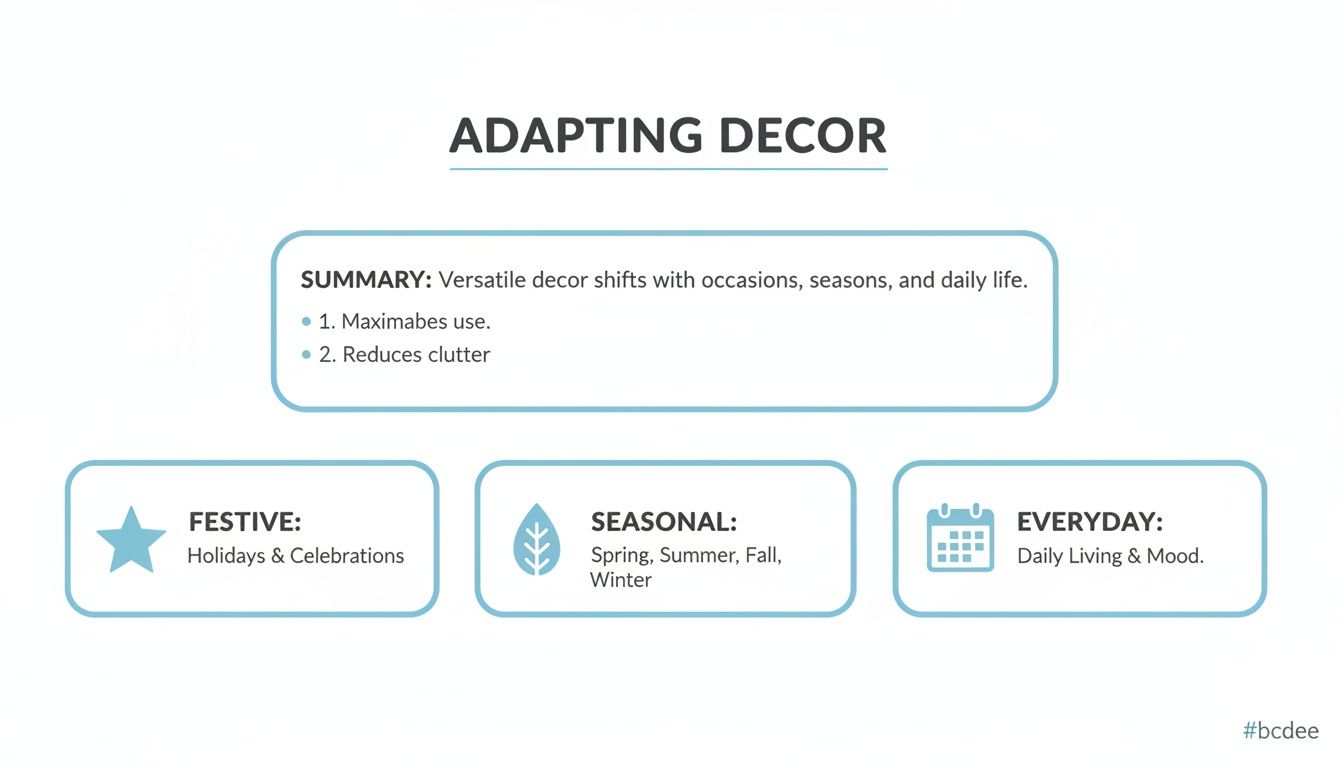
The infographic below shows just how easy it is to adapt a core look for different times of the year.

Infographic illustrating adapting decor for festive, seasonal, and everyday use, maximizing versatility.

With just a few simple swaps, your dining table can shift from a special occasion to a casual weeknight dinner without a fuss.

To help you visualise these setups, here's a quick breakdown of the core components for each theme.

Style Comparison VW-Inspired Dining Looks

Theme Key Colours Core Materials Hero VW Model
Coastal Cruiser White, Sandy Beige, Soft Blue Jute, Rattan, Linen, Timber Surf-Inspired Kombi Van
Retro Road Trip Burnt Orange, Mustard Yellow, Avocado Green Colourful Ceramics, Patterned Textiles Classic Volkswagen Beetle
Elegant Explorer Charcoal Grey, Navy, Forest Green, Gold/Brass Dark Linen, Marble, Slate, Quality Glass Premium 1:18 Kombi Samba Bus

As you can see, each style starts with a clear colour palette and a few key materials, all brought together by the perfect hero model.

The Elegant Explorer

This style is proof that diecast models can be seriously sophisticated. It's a much more refined, upscale look that takes the adventurous spirit of Volkswagen and pairs it with timeless, elegant materials.

This theme is perfect for showcasing a premium model. It’s less about playful nostalgia and more about appreciating the iconic design and engineering of a classic vehicle as a piece of art.

  • The Vibe: Polished, moody, and sophisticated. Everything feels curated and intentional.
  • The Palette: Think deeper, richer tones. Charcoal grey, deep navy, and forest green work beautifully, especially with metallic accents of brass or gold.
  • The Textures: Use a dark linen runner, slate or marble placemats, and high-quality glassware that feels good in your hand.
  • The Hero VW: This setting calls for a top-tier model. A premium 1:18 scale Kombi Samba Bus diecast in a classic two-tone scheme, like black and cream, becomes a stunning piece of sculpture on your table.

Your Dining Table Decor Questions Answered

We get asked some fantastic questions when we’re chatting with fellow VW fans and home decor lovers, whether we're at a car show like the VW Nationals or just online. When it comes to styling your dining table, there are no silly questions! Here are a few we hear all the time, along with our best advice for getting your setup looking just right.

Can My Dining Table Decor Stay Out All the Time?

Absolutely, mate! The trick is to keep it practical.

If you contain your entire centrepiece on a tray or a nice long piece of timber, it becomes one single unit. That means you can lift the whole display off in one go when it’s time for a big family dinner and pop it right back on afterwards. Simple.

A well-designed centrepiece won't get in the way of daily life, either. Just make sure it’s not so huge that it swallows the whole table. A Kombi Samba Bus diecast parked neatly on a runner leaves plenty of room for your plates and glasses.

How Do I Mix Different Styles Without It Looking Messy?

This is a great question, and one we love to tackle. The secret is to find a common thread that ties everything together. You might be a huge fan of a coastal vibe but also want to show off your love for retro VW cool. To pull it off, let one style take the lead and use the other for accents.

For instance, you could start with a coastal base—think a jute runner and woven placemats. Then, bring in pops of retro colour with your napkins or glassware. Your hero piece, a classic Volkswagen Beetle model, then becomes the focal point that cements the retro theme. It works because the overall look feels cohesive, but those little accents tell a more personal story.

Think of it like a good road trip playlist. You might have different artists and genres, but they all fit the same cruisey, open-road vibe. Your decor can do the same, blending themes that share a feeling of freedom and nostalgia.

Are Diecast Models Too Playful for an Elegant Dining Setting?

Not in the slightest! It all comes down to how you present them.

A high-quality, detailed diecast model is a piece of design history. When you place a premium 1:18 scale Kombi on a sophisticated base, like a slate platter or next to some elegant brass candlesticks, it stops looking like a toy.

Instead, it becomes a piece of sculpture. It shows an appreciation for classic lines and timeless engineering—the very essence of elegance. Choosing a model in a classic colour scheme, like a two-tone black and cream, instantly adds a mature, sophisticated feel that’s perfect for any dining table decor. It’s a brilliant way to showcase your passion with a real touch of class.


Here at VW Memorabilia, we reckon your home should be filled with things that make you smile. As proud Australian importers, we're your local source for officially licensed VW collectibles and unique decor, with fast shipping right to your door.

Ready to find the perfect hero piece for your table? Explore our full collection of diecast models and memorabilia today!

Your Ultimate Guide to Vintage VW Memorabilia

Ever walked into a room and felt an immediate sense of warmth, history, and character? That's the magic of vintage home accessories. We’re not just talking about ‘old stuff’ here, mate; we're talking about pieces that carry a story, capture the spirit of a bygone era, and infuse your space with a personality all its own, just like a classic VW.

What Makes Home Decor Feel Vintage

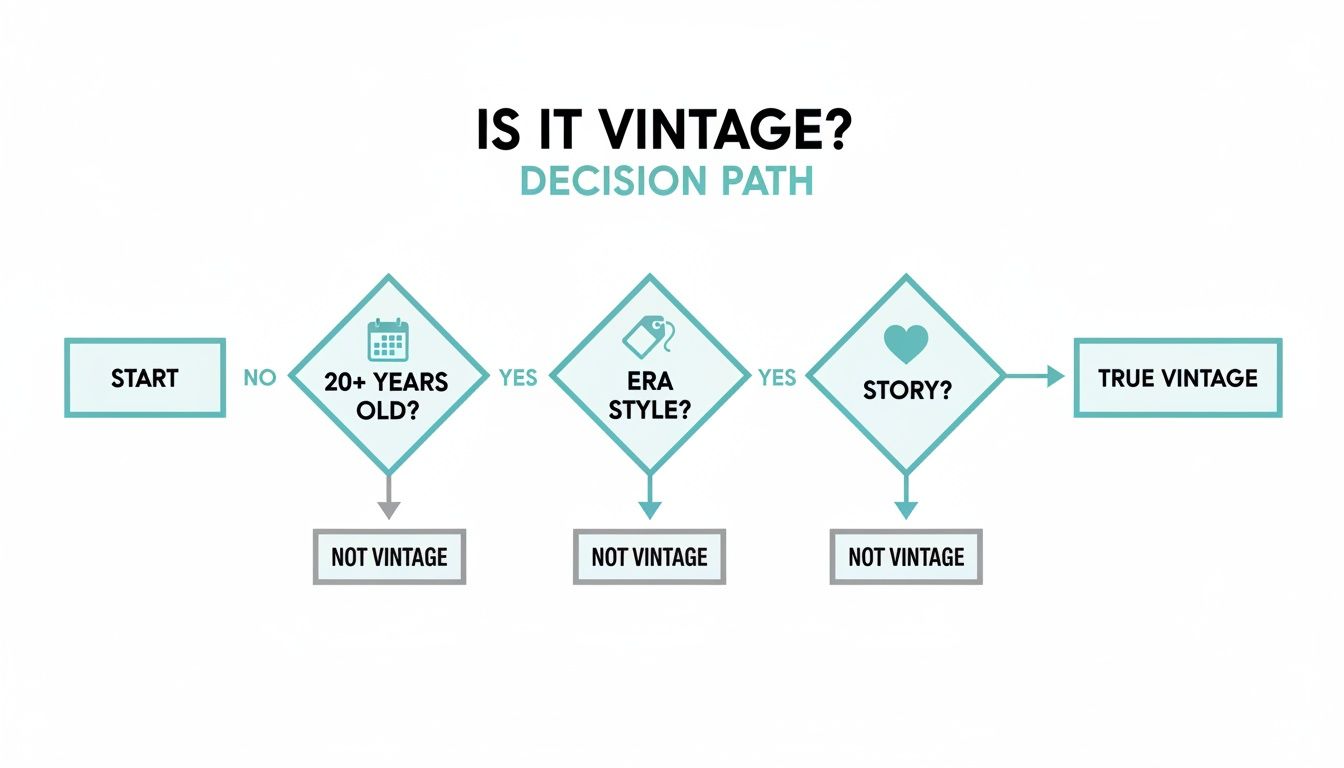
Let's get one thing straight—'vintage' is more than just a label for anything that's seen a few summers. It’s a feeling, a way of celebrating the history and style that turns a house into a home. Generally, a true vintage piece is at least 20 years old but shy of the 100-year mark (that's when it crosses into antique territory). They perfectly bottle the design and vibe of their time, whether that’s the groovy '70s or the optimistic post-war '50s.

But it’s about so much more than just age. It’s about the stories these items have gathered along the way. That weathered timber photo frame isn't just holding a picture; it's holding decades of sun-bleached beach holiday memories. A classic Volkswagen Beetle model on your shelf isn't just a toy car; it’s a tiny tribute to freedom, adventure, and truly iconic design.

Vintage style is all about curating a collection of pieces that genuinely resonate with you. Each one, from a nautical wall hanging to a diecast Kombi, should spark a little bit of joy and bring back a fond memory.

Here in Australia, our love for nostalgia is absolutely booming. The antiques and used goods market, which is where you’ll find these vintage treasures, was valued at a massive $4.8 billion in 2025, showing a solid 3.3% growth. It just goes to show how much we Aussies love filling our homes with character. You can find more details on this trend and the Australian market over at ibisworld.com.

To help you figure out if that piece you've spotted has true vintage soul, here’s a quick mental checklist.

Flowchart outlining the decision path to determine if an item is true vintage, based on age, style, and story criteria.

As you can see, an item's journey to becoming a vintage treasure really comes down to checking its age, identifying its design era, and connecting with the personal story it tells.

Defining Your Vintage VW Style

Now for the fun part: finding your groove. Are you someone who's drawn to the laid-back, sun-kissed feel of coastal decor, or do the vibrant colours of retro speak to you?

  • Coastal Vintage: Think weathered textures, deep ocean blues, and natural materials like timber and rope. This style beautifully complements our relaxed Aussie lifestyle. You can get some great ideas for creating this breezy atmosphere by incorporating a classic Kombi model into your decor.
  • Retro Revival: This is all about celebrating bold patterns, playful shapes, and giving a big nod to the mid-century. It's fun, energetic, and injects a fantastic dose of nostalgia into any room – the perfect backdrop for a classic Beetle model.

Spotting Genuine Vintage Treasures

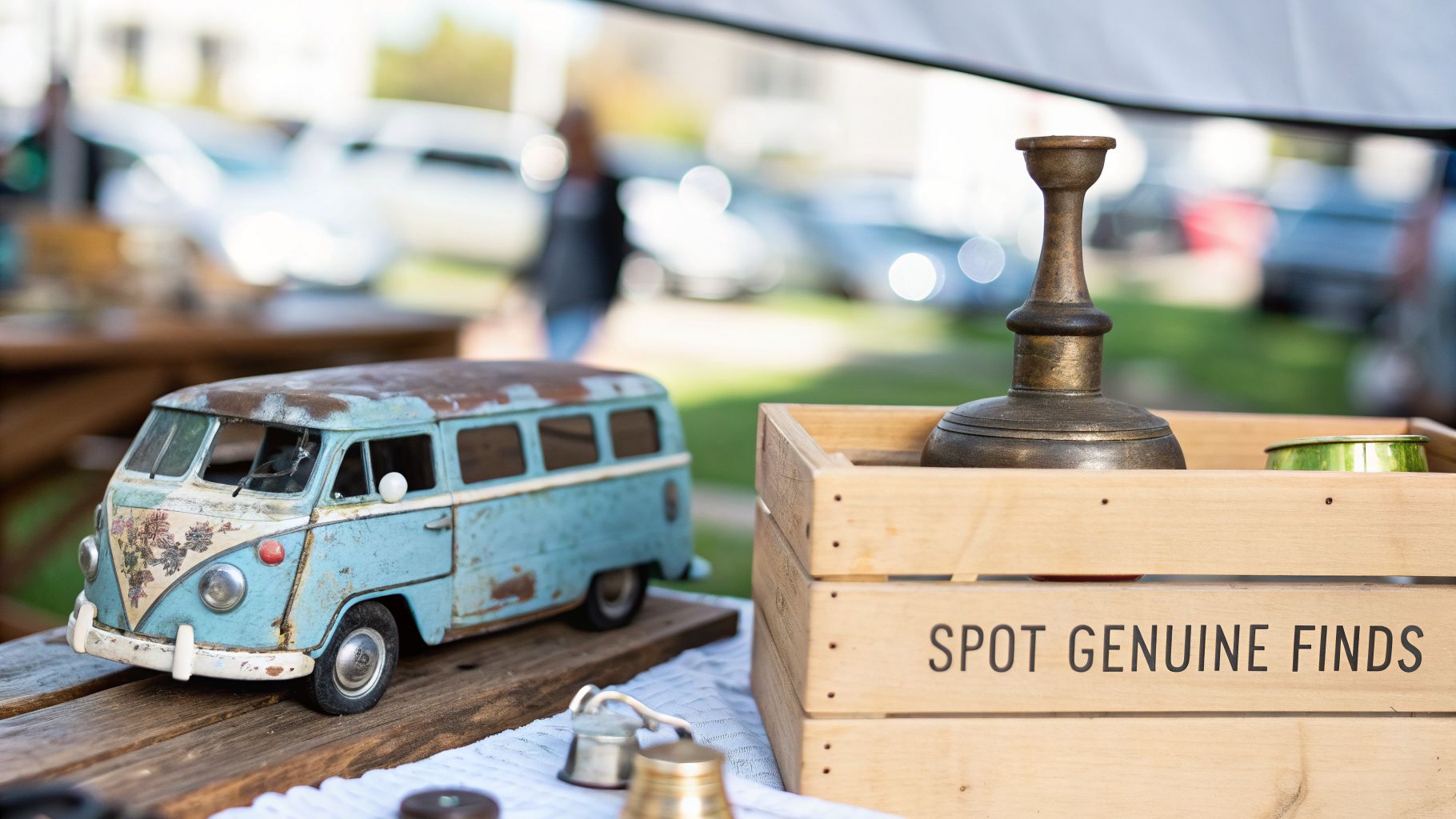
So, you’re wandering through a sunny Sunday market or scrolling through listings online, and there it is—the perfect piece of decor that just oozes character. But how can you be sure it's a genuine treasure and not just a clever, modern lookalike? Learning to spot authentic vintage home accessories is all part of the fun, and it’s a skill you can pick up quicker than you might think.

A vintage blue toy Volkswagen van and a brass candlestick in a wooden crate at a market.

Telling the real deal from a reproduction really just comes down to paying attention to a few key details. Think of yourself as a bit of a detective looking for clues. The story of an item is written all over it; you just have to know the language. It’s all about spotting those subtle signs that separate a true classic from a mass-produced piece.

The Telltale Signs of Authenticity

When you're sizing up a potential find, it pays to look closely. Genuine vintage pieces carry the marks of time with a certain grace, which looks and feels very different from items that are deliberately made to look old.

Here’s what to keep an eye out for:

  • Genuine Patina vs. Intentional Distressing: Real wear and tear happens unevenly over decades. Look for a natural patina—that soft sheen on metal from years of being handled, or the gentle fading on a painted surface where the sun has hit it. Reproductions often have uniform, almost repetitive "distressing" that just looks a bit too perfect.
  • Materials and Weight: Older items were generally made with heavier, more substantial materials. A genuine mid-century metal sign will almost certainly feel weightier than a modern aluminium version. The type of wood, the thickness of the glass, and the hardware used can also be big clues.
  • Maker's Marks: Always flip it over! Many vintage pieces have a stamp, a signature, or a logo from the manufacturer. A quick search for these marks on your phone can instantly tell you about the item's origin and approximate age.

Think about it like collecting classic cars. You wouldn't mistake a replica kit car for an original 1967 Beetle. The same principle applies to collectibles—the details matter.

The Case for Quality Licensed Reproductions

Now, does all this mean you should steer clear of anything that isn't decades old? Absolutely not. High-quality, officially licensed reproductions are a fantastic way to celebrate a specific style without the hunt or the high price tag.

Take a Volkswagen Beetle model, for instance. A pristine, officially licensed diecast model gives you a perfect, detailed replica that captures the spirit of the original car. These pieces are made with a focus on accuracy and quality, offering a flawless way to bring that nostalgic vibe into your home. The sharp paintwork and authentic branding on a new buy diecast Kombi model from a trusted source is a treasure in its own right for any collector.

In the end, building your collection is all about finding pieces you love. Whether it’s a flea market find with a rich history or a beautiful reproduction that celebrates an iconic design, the real value is in the joy and character it brings to your space.

Styling with Coastal and Retro VW Decor

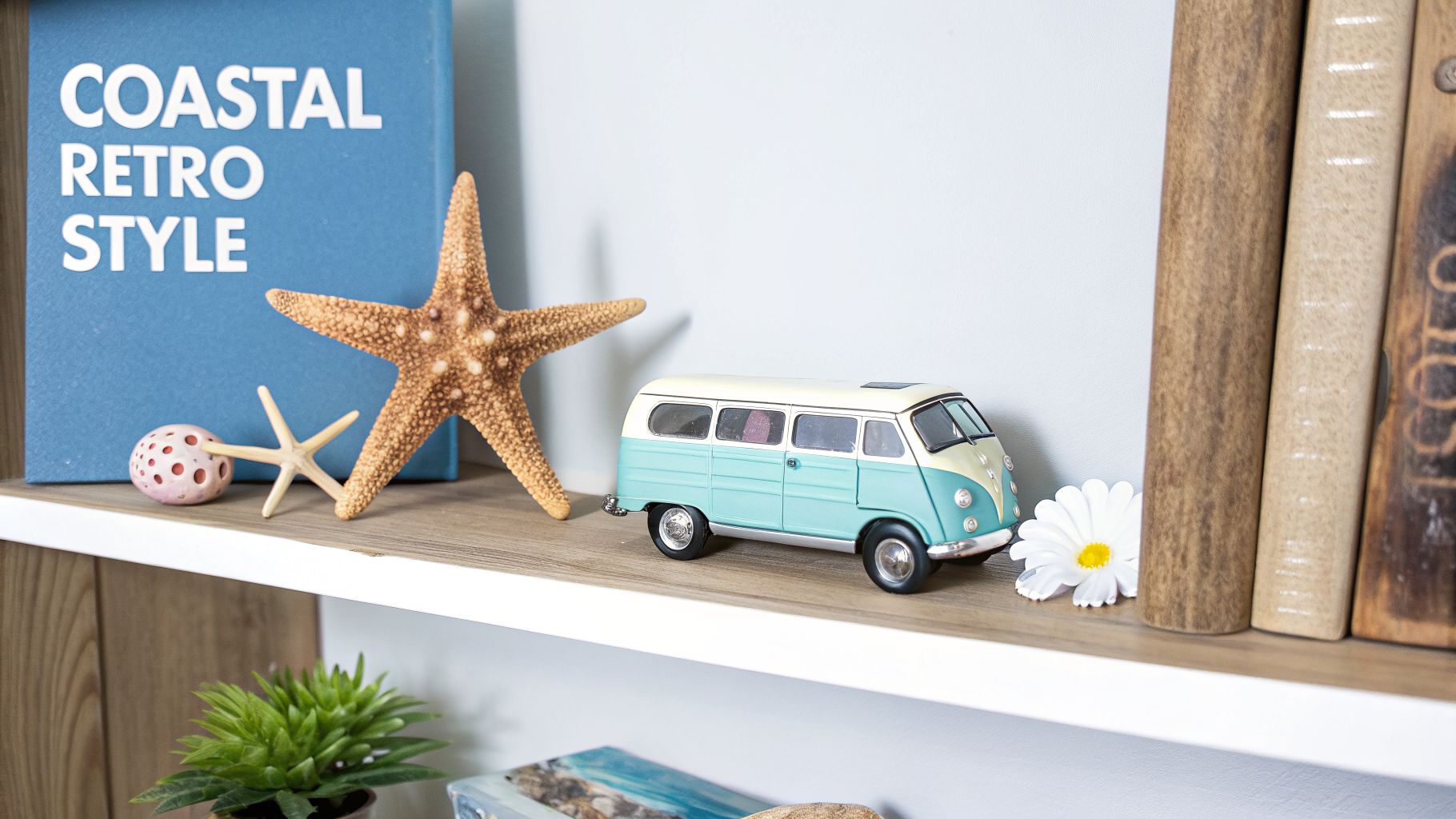
A shelf styled with coastal and retro decor, including a blue book, starfish, a toy van, and old books.

Alright, you’ve trained your eye to spot those hidden gems. Now for the fun part: bringing it all home and making it your own. Styling with vintage home accessories is less about following rigid rules and more about telling a story—your story.

Here in Australia, two aesthetics feel particularly close to our hearts: the breezy, sun-faded charm of coastal decor and the vibrant, optimistic energy of retro. And the best part? You don't have to pick a side. These two styles play together surprisingly well, especially when you use a common thread like a love for classic VWs to tie the look together.

Creating a Coastal Paradise

This style is basically a love letter to the Aussie coastline. It’s all about capturing that feeling of salty air, sandy feet, and the endless horizon. The goal is to create a space that feels like a permanent beach escape, relaxed and effortlessly cool. You’re building a look based on a foundation of light colours, natural textures, and a few perfectly placed nautical treasures.

To get the look right, start with a light and airy palette—think crisp whites, soft sea blues, and warm sandy beiges. From there, it’s all about texture. Bring in elements like weathered wood, natural rope, and soft linen to add depth and warmth. Your vintage pieces are what will truly make it sing.

  • Nautical Knots: A simple weathered timber photo frame, a small glass fishing float, or even a couple of carefully placed starfish are enough to set a coastal scene without going overboard.
  • Surf Culture: Nothing says Aussie beach life quite like a classic surf wagon. A beautifully detailed 1962 VW Kombi diecast parked on a bookshelf is the perfect nod to those iconic surfari road trips.
  • Subtle Hints: You really don't need a room full of anchors and shells. Sometimes, it’s just about capturing a feeling. For a deeper dive into this aesthetic, we've got plenty more coastal home decor ideas.

This laid-back style is a massive hit, especially in our coastal towns. Australia's home decor market was valued at a huge USD 8,708.0 million in 2024, and it’s no surprise that in hotspots like NSW and Queensland, a whopping 42% of decorators lean into vintage-inspired nautical themes. The Kombi became a true cultural icon during the 1970s Aussie surf boom, which is why it feels so authentic as a home accent today. You can read more about this growing trend in this home decor market report.

Injecting Retro Fun and Colour

If coastal style is calm and breezy, retro is its fun-loving, outspoken cousin. This look is a full-throated celebration of the '60s and '70s, defined by its bold colours, groovy patterns, and wonderfully playful attitude.

The real key to nailing retro is to just have fun with it. It’s about embracing a bit of nostalgia and not being afraid of a splash of colour. A pop of orange, a hit of turquoise, or a sunny yellow can completely transform a room’s energy.

For a retro-inspired space, let your iconic pieces do the talking. A 'Flower Power' Volkswagen Beetle model is a fantastic way to bring in that cheerful, free-spirited vibe. Just pop it on a shelf next to some geometric-print cushions, a lava lamp, or a brightly coloured art print. The goal is to create a space that feels optimistic and full of life—the kind of room that makes you want to put on a record and just chill out.

Vintage Styling Cheat Sheet

Feeling a little stuck on how to blend these looks or commit to just one? No worries. Think of this table as your quick-reference guide for mixing and matching the right elements to create a cohesive theme.

Style Element Coastal Theme Retro Theme
Colour Palette Whites, sandy beiges, soft blues, sea greens Burnt orange, mustard yellow, avocado green, turquoise
Key Textures Weathered wood, rope, linen, seagrass Velvets, plastics, shag pile, bold geometric prints
VW Accent Blue or white Kombi diecast, maybe with a surfboard 'Flower Power' Beetle, brightly coloured Kombi bus
Mood Relaxed, serene, natural, breezy Fun, optimistic, energetic, playful
Other Accents Starfish, glass floats, nautical maps, driftwood Lava lamps, abstract art, macrame hangers, funky pottery

Use this cheat sheet to pull together a look that feels authentic to you. Whether you go all-in on one style or create your own unique blend, these core elements will help guide your choices and ensure everything feels connected.

Where to Find Your Next Vintage VW Piece

The thrill of the hunt is half the fun when you’re building a collection of vintage home accessories. Knowing where to look is the key to unearthing those special pieces that really speak to you. From the buzzing atmosphere of a local car show to the curated shelves of an online specialist, your next treasure is out there waiting to be found.

The great news for Aussie collectors is that the appetite for nostalgic and unique decor is massive. In fact, the Australian home furniture market is projected to hit a whopping AUD 15.78 billion by 2035, with accessories like VW-themed metal vans and nautical frames playing a huge part in those popular coastal setups.

As sustainability becomes more important—with 55% of Aussies now considering reclaimed vintage items—the charm of an upcycled Kombi centrepiece has never been stronger. To dive deeper into these market trends, you can explore the full report from Expert Market Research.

Hitting the Pavement for Local Finds

There’s nothing quite like the feeling of discovering a gem in person. The energy at Australian VW events like Volksfest or the VW Nationals is absolutely electric, and you’ll almost always find stallholders with fantastic memorabilia up for grabs.

Keep an eye out for these spots:

  • Swap Meets & Car Shows: These are absolute goldmines for everything from original parts to quirky, handmade items and, of course, VW memorabilia collectibles. It’s the perfect place to chat with fellow enthusiasts and hear the stories behind the pieces.
  • Sunday Markets & Op Shops: You honestly never know what you’ll find! While you might have to sift through a bit more stuff, stumbling upon a classic diecast model or a retro-style frame is incredibly rewarding.

The Online Treasure Trove

For sheer convenience and a guaranteed selection, nothing beats shopping online from a trusted source. It’s where you can find a huge range of officially licensed products all in one place, without leaving home.

When you buy from a dedicated Australian importer, you're not just getting an item in a box. You're getting local stock, fast shipping, and friendly support from people who share your passion for VW culture.

When you're looking at Volkswagen diecast models for sale, paying attention to the scale is crucial. It really determines how the model will fit into your display.

A larger 1:18 scale model, for example, makes a fantastic statement piece, showing off all those intricate details up close. A smaller 1:24 scale is perfect for creating a whole scene on a shelf or desk. Understanding the difference ensures your collection looks cohesive and well-planned. By sourcing from a reliable Aussie store, you can browse a complete collection of VW diecast models and find the perfect scale and style to bring your vintage vision to life.

Caring For Your Collectible Treasures

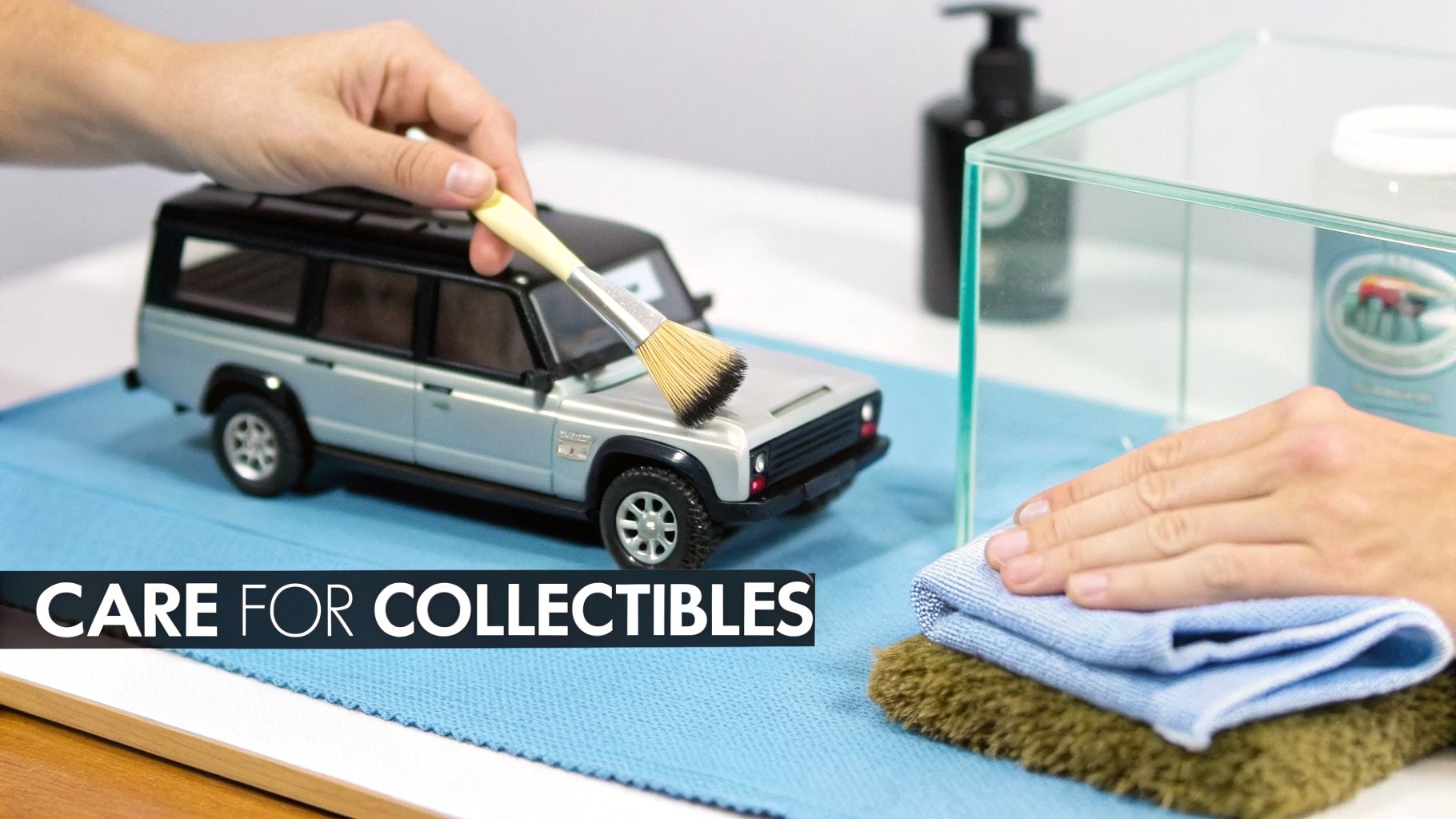
A person meticulously cleans a silver toy car with a brush, demonstrating the careful maintenance of collectibles.

Your collection of vintage home accessories and diecast models is so much more than just décor. They're little pieces of history, packed with nostalgia and personal meaning. Just as you’d service a classic Beetle to keep it running beautifully, your collectibles need a bit of TLC to stay in top nick. The right care makes sure they’ll be a source of joy for many years.

The biggest enemies of any collection are always the same: dust, direct sunlight, and moisture. Sunlight can fade the paintwork on a diecast model faster than you can say "road trip," while moisture spells trouble for metal décor and delicate finishes. It all comes down to finding the right spot and knowing how to clean them properly.

Keeping Your Diecast Models Pristine

Your prized diecast models, especially a detailed Kombi Samba Bus diecast, deserve a careful touch. Getting dust and grime off these beauties without causing damage is simple once you know the ropes.

  • For light dusting, a soft, clean makeup brush or a can of compressed air is your best friend. This is perfect for getting into tricky spots like wheel wells and window frames without scratching the precious paintwork.
  • For a deeper clean, lightly dampen a microfibre cloth with water and gently wipe the surface. Steer clear of harsh chemical cleaners at all costs—they can strip the paint and ruin delicate decals in an instant.
  • For storage, a glass-fronted cabinet is your best mate. It keeps the dust off while letting you admire your collection. If you’re storing them away, wrap each model individually in a soft, acid-free cloth to prevent scratches.

Preserving Your Coastal and Metal Decor

Those nautical treasures and metal signs that bring so much character to your space need protection, too. Thankfully, a bit of preventative care goes a very long way.

To stop tarnish from creeping in on metal décor, give it a light coat of carnauba wax (yes, the same stuff used on real cars!). This creates a clear, protective barrier against humidity and fingerprints, keeping that shine for much longer.

When it comes to coastal items like weathered timber frames or seashell arrangements, a gentle dusting is usually all that’s needed. Just be sure to keep them out of damp areas like bathrooms to prevent mould and mildew from setting in.

By taking these simple steps, you're not just cleaning your décor; you're preserving the stories and memories that make your collection of VW memorabilia collectibles so special. It's a small effort that pays off every single time you look at your treasured pieces.

Your VW Collecting FAQs Answered

Right then, let's answer some of the questions we get asked most often. Jumping into vintage collecting is a bit like planning your first big road trip—it's exciting, full of potential, but you’ve probably got a few things you're wondering about before you hit the road.

Think of this as a friendly chat over the bonnet of a classic Bug. We'll cover everything from how to get started without a massive budget to making those brilliant retro finds work with your modern decor.

How Can I Start Collecting VW Accessories on a Budget?

This is where the real fun begins! You absolutely don’t need a huge bankroll to build a collection packed with character. The secret is to start small but aim for pieces that make a big impact.

Instead of trying to find a massive, rare antique, why not look for a beautifully detailed 1:24 scale Volkswagen Beetle model? These smaller diecast models are much more affordable and are perfect for bringing a bit of life to a bookshelf or a desk. They have all the nostalgic charm of the real thing, just in a compact, budget-friendly size.

Another great way to go is to embrace high-quality reproductions of classic designs. An officially licensed metal VW sign or a brand-new diecast model gives you that authentic vintage feel without the hefty price tag of a piece from the 1960s. You get all the crisp details and a flawless finish, ready to display straight out of the box.

The most important thing is to collect what you truly love. At the end of the day, the value of your collection isn't just about money; it’s about the joy and nostalgia it brings you. A piece that puts a smile on your face is always a good investment.

What Is the Best Way to Mix Vintage Pieces with My Modern Decor?

Blending old and new is a bit of an art, but the trick is simpler than you might think. Aim for balance, not clutter. Think of your vintage home accessories as soulful accents that tell a story, rather than trying to turn your home into a museum.

A fantastic technique is to create small, curated displays, or 'vignettes'. For example, on a modern floating shelf, you could group a colourful diecast Kombi with a couple of old, weathered books and a small potted plant. The contrast between the clean lines of the shelf and the textures of your vintage items really makes your collectible pop, turning it into a genuine focal point.

Another clever trick is to use a 'colour anchor'.

  • Pick a standout colour from one of your vintage items, like the vibrant sea blue on a VW Samba Bus model.
  • Subtly repeat that same shade in small doses around the room.
  • This might be through a few scatter cushions, a throw blanket, or even a print on the wall.

This simple method ties the whole space together, creating a look that feels stylish, intentional, and thoughtfully put together.

Are Reproductions Less Valuable Than Authentic Vintage Items?

That’s a top question! It's true that a rare, original vintage piece will often have a higher monetary value for serious collectors. But the idea of 'value' is about so much more than just a price tag.

High-quality, officially licensed reproductions—like the incredible diecast models we have here at Volkswagen Memorabilia—offer tremendous value for enthusiasts and decorators. They give you a pristine, perfect version of a beloved classic, making that vintage style accessible to everyone.

Honestly, the best and most personal collections often have a healthy mix of both. You might have one or two precious, hard-to-find authentic items sitting proudly alongside a fantastic lineup of beautiful reproductions that complete the look and celebrate the spirit of the era.

How Do I Know If a VW Diecast Model Is a Quality Licensed Product?

Excellent question, and a really important one for any collector. Knowing how to spot a quality licensed product means you’re getting a piece that’s truly worthy of the VW badge.

First, always look for the official Volkswagen branding on both the packaging and the model itself. Licensed products have been given the green light by VW, which guarantees that the design, colour, and all those tiny details are accurate.

Second, check the build quality. A good VW Kombi diecast Australia model should feel solid and have a satisfying weight in your hand. Look for clean, crisp paint lines and parts that fit together properly. Your best bet is always to buy from a reputable Australian importer; it’s the surest way to know you’re getting a top-shelf collectible that does justice to the VW heritage.


Ready to find that perfect piece to start or grow your collection? Here at Volkswagen Memorabilia, we've put together a fantastic range of officially licensed VW models and coastal decor, all right here in Australia. Browse our shop today and bring a piece of that iconic, free-spirited vibe into your home.

Coastal Home Decor Ideas: Creating Your Aussie Beach House Vibe

G'day, mate! There's nothing quite like that feeling of a permanent holiday, and that's exactly what coastal home decor is all about. It’s about capturing that relaxed, sun-drenched vibe you get after a long day at the beach. The goal is to create a light, airy sanctuary using a warm, natural colour palette, textured materials like rattan and linen, and an overall feeling of effortless, breezy living.

What Is Australian Coastal Style?

When we talk about Australian coastal style, it's so much more than just scattering a few seashells on a shelf. It’s about bottling that feeling you get after a long, sunny day at the beach—relaxed, warm, and completely at ease.

It's less about literal beach themes and more about creating an atmosphere that feels like an endless summer holiday, right in your own home. Think of it as designing a personal escape that echoes the sound of gentle waves and the warmth of sand under your feet. It's the design equivalent of kicking off your thongs at the door and breathing out a happy sigh.

But not all coastal styles are created equal, eh? You’ve got a few different flavours to play with, each with its own personality. Our unique Aussie style actually borrows bits and pieces from a few of the most popular looks from around the world.

Diagram illustrating Australian coastal style influenced by Hamptons, adapting Mediterranean, and embodying beach shack.

As you can see, the Aussie take on coastal is a beautiful blend of different influences, all adapted to our unique, laid-back way of life.

Finding Your Coastal Vibe

Getting to know these styles is the key to finding the perfect vibe for your space.

  • Classic Aussie Beach Shack: This is the heart and soul of our coastal look. It’s unpretentious, comfortable, and absolutely brimming with character. Think weathered timber, comfy second-hand furniture, and personal touches that tell a story—like a classic Volkswagen Beetle model perched on a bookshelf.

  • Hamptons Style: A bit more polished and sophisticated, the Hamptons look takes its cues from the luxe beach houses of Long Island. It’s all about crisp whites, deep blues, elegant furniture, and a more structured, formal feel.

  • Mediterranean Influence: This style brings in warmer, earthier tones you’d find along the coasts of Greece and Italy. You'll see things like textured render walls, terracotta pots, and arched doorways that add a rustic, sun-baked warmth to the space.

Ultimately, the best coastal homes mix these elements to create something that feels genuinely you. It's about creating a place where every day feels a little brighter and a whole lot more serene.

Building Your Coastal Colour Palette

Right, getting the colour right is where the magic really begins. It’s the very first step in creating a coastal vibe that feels genuine and lived-in. While cool blues and crisp whites definitely have their place, the modern Aussie coastal look is warming up, drawing its cues from the sun-baked sand and rich earth of our incredible landscapes.

Forget just slapping on a coat of white paint. We’re talking about layering colours that feel grounded and deeply calming, creating a space that’s both chic and a real sanctuary from the world outside.

Embracing Warmer Neutrals

The secret to this modern style is leaning into warmer tones. For a long time, stark whites and cool greys were the go-to, but there’s been a real shift towards colours that feel more organic and welcoming. Think sandy beiges, hints of terracotta, and lovely buttery creams. These shades capture the beauty of the Australian landscape, from the red centre to the golden coastline, and designers love how they bring that sense of the outdoors in, creating a true 'sanctuary' feeling. You can see more on this beautiful evolution in Australian interior design trends on eleliving.com.au.

These colours lay the perfect foundation for all your coastal home decor ideas. They work beautifully with the natural materials we’ll get into later, like light-toned timber, rattan, and linen.

How to Layer Your Colours

Building a rich, layered look is much easier than you’d think. It's not just about the walls; it’s about letting the colour flow through your whole room.

A great coastal palette isn’t about matching everything perfectly. It’s about creating harmony between different shades and textures, just like the subtle colour shifts you see on a walk along the beach at sunrise.

Here are a few simple ways to get started:

  • Start with Your Walls: Kick things off with a base colour like a soft, sandy beige or a creamy off-white. These shades make a room feel open and bright without ever feeling cold.
  • Layer with Textiles: This is where you bring in depth. Think about cushions in a muted terracotta, a jute rug with its natural brown variations, or a throw blanket in a warm, earthy green.
  • Add Your Accent Colours: Now for the fun part! Add small pops of colour that pull everything together. This could be the deep blue of a ceramic vase, the soft green of a beautiful indoor plant, or even the cheerful pop from a vintage-inspired Volkswagen diecast model sitting on a shelf.

By layering these warm, natural colours, you’ll craft a space that feels cohesive, timeless, and perfectly in tune with that relaxed Aussie coastal lifestyle.

Right, with the walls looking fresh and sandy, it's time to furnish. This is where the magic happens and your coastal theme really comes to life, turning a house into a proper home. The goal is to pick pieces that have a relaxed, breezy feel and are as practical as they are good-looking.

Think natural textures and pure comfort. This isn't the style for anything heavy, dark, or too formal. We’re leaning into materials that just feel right being close to the water.

Diverse fabric swatches and color cards displaying a 'Coastal Palette' laid out on a wooden table.

Go For Natural Materials

To nail that authentic Aussie coastal look, stick to furniture made from light-toned timbers, rattan, and wicker. These materials bring in that essential texture and a natural warmth that works perfectly with a neutral colour palette. A great-looking rattan armchair or a light-oak coffee table can become the centrepiece of your living room, inviting everyone to kick off their shoes and unwind.

For fabrics and textiles, natural fibres are always the best choice.

  • Linen: The undisputed champion of coastal fabrics. Think breezy linen curtains that catch the afternoon sea breeze or a plush linen sofa you can really sink into.
  • Jute and Sisal: These are brilliant for rugs. They bring a robust, earthy texture underfoot that instantly grounds the whole space.
  • Cotton: It's soft, breathable, and simple to care for. Cotton is a go-to for cushions, throws, and bedding.

Choosing the right materials is all about creating that tactile, lived-in feel. Below is a quick guide to some of the key players in coastal decor.

Key Materials for Authentic Coastal Decor

Material Common Uses Coastal Appeal
Light Timber Coffee tables, dining sets, bed frames Creates a light, airy foundation that feels clean and natural.
Rattan & Wicker Armchairs, side tables, pendant lights Adds beautiful woven texture and a relaxed, handcrafted vibe.
Linen Curtains, sofa slipcovers, bedding Its soft, breathable quality is the essence of breezy, relaxed living.
Jute & Sisal Rugs, baskets, placemats Provides an earthy, robust texture that connects the indoors with the outdoors.
Cotton Cushions, throws, towels Offers soft, casual comfort that's easy to live with and care for.

By layering these different materials—a smooth timber table, a rough jute rug, and soft cotton cushions—you build a room with genuine depth. It’s this mix of textures that stops a neutral room from feeling bland and makes it feel rich and inviting.

This shift towards natural fibres is part of a much bigger trend in home design. More Aussies are choosing quality over quantity, investing in pieces that are durable and eco-friendly.

We're moving away from throwaway decor and towards items built to last, which is really changing how we approach furnishing our coastal homes. You can get more insights on how sustainability is shaping design in this fantastic read on 2026 Australian interior design trends.

At the end of the day, your furniture and textiles should make your home feel like a permanent, restful escape.

Infusing Personality with Nostalgic VW Accents

Now, this is where the fun really begins—making your coastal house feel like your home. Anyone can have a house with good style, but a home that tells your story? That's something special.

For so many of us, nothing says "Aussie coast" and endless summer road trips quite like a classic Volkswagen. You see them at shows like Volksfest and the VW Nationals, and they just radiate freedom. This is our chance to weave that passion for VWs right into your coastal decor.

A rattan chair with pillows, a blue throw, and a jute rug in a breezy coastal room.

Don't worry, we’re not turning your living room into a garage. It’s all about adding those tasteful, charming touches that spark a bit of joy and share a piece of who you are. These little accents are the perfect way to blend nostalgia with style, creating conversation starters that feel right at home amongst the driftwood and linen.

Displaying Diecast Models with Style

Your collection of VW memorabilia collectibles deserves to be seen, not hidden away in a box. A beautifully detailed diecast model is a small work of art, and it can inject a huge amount of personality into a room. Let’s move beyond boring display cases and work them right into your coastal theme.

  • Create a Curated Shelfie: Imagine placing a stunning 1962 Kombi Samba Bus diecast model on a floating timber shelf. Surround it with a couple of your favourite books, a small potted succulent, and a piece of bleached coral. The mix of textures and colours will make the model the star.
  • The Centrepiece Statement: Why not build a fantastic centrepiece for your coffee or dining table? Start with a long timber or woven tray, then arrange a few candles, a vase of native grasses, and your favourite Kombi model nestled right in the middle. It’s an instant talking point for guests.
  • A Nook of Nostalgia: Find a small nook or a corner on a bookshelf and dedicate it to your passion. You could group a few different scale models together—maybe a classic Beetle next to a Kombi—to create a mini VW show of your own.

These displays honour the iconic design of the vehicles while adding a playful, retro touch that perfectly complements the relaxed coastal vibe. It's a fantastic nod to surf culture and that feeling of freedom. For more ideas on this, check out our post on the Kombi and surfboard connection.

Beyond the Models: Wall Art and Decor

Beyond the diecast models, you can bring that V-Dub spirit to your walls and surfaces, too. This helps tie the whole theme together without overdoing it. Think about adding a cool, retro-style metal sign featuring a Kombi van in a hallway, or leaning a framed print of a Beetle at the beach against a wall on your console table.

The key is subtlety. One or two well-placed VW pieces in a room are far more effective than a dozen. It makes them feel like treasured items, each with its own story to tell.

By thoughtfully adding these accents, you infuse your home with the unique warmth and nostalgia of the Volkswagen legend. It’s the perfect finishing touch for your coastal look, making it a true reflection of the things you love.

Styling Your Home Room by Room

Let's get practical. It's one thing to yarn about colours and textures, but another to apply these coastal home decor ideas to your space. We'll walk through the house, room by room, and show you simple ways to bring that seaside feel to every corner.

A coastal-themed shelf with a vintage VW van toy, framed art, seashells, and pebbles.

The Living Room An Airy Haven

Your living room is the heart of the home, so making it feel open and inviting is key. Arrange furniture to maximise natural light and pull sofas away from the walls. This creates a more intimate seating area and lets the room breathe.

A large jute rug is your best friend here. It anchors the space, adds texture, and its sandy colour grounds the room in a coastal palette.

The Bedroom A Serene Retreat

This is your sanctuary. Create a restful vibe with soft textures and gentle light. Layer your bed with high-quality linen bedding in warm neutrals like beige, off-white, or a muted olive green for relaxed comfort.

  • Soft Lighting: Use table lamps with woven rattan or fabric shades instead of harsh overhead lights.
  • Minimal Decor: Keep surfaces clear. A stack of books, a ceramic vase, or a framed photo is enough.
  • Personal Touches: Add a beautiful throw blanket to the end of the bed for another layer of texture.

Remember, the goal is calm. Think less about 'decorating' and more about creating a space that helps you unwind.

The Kitchen and Dining Area

You don’t need a full renovation for a coastal kitchen. Small swaps make a big difference. Switch plastic placemats for woven ones and upgrade to simple, earthy ceramic dinnerware. A bowl of lemons on the counter adds a fresh pop of natural colour.

Entryways and Bathrooms

Even small spaces can make a big coastal statement. In the entryway, a timber bench with striped cotton cushions creates a welcoming spot. For bathrooms, focus on textiles—plush cotton towels, a bathmat with a subtle pattern, and hand soap in a glass dispenser.

For an authentic beach shack feel, you could even drape something fun and textural like this decorator fishing net with shells over a hook. It's a simple, effective touch.

Sourcing Decor from Local Australian Artisans

A truly Australian coastal home reflects its environment. The best way to capture that feeling is by featuring pieces from our own local talent. Choosing decor handcrafted here in Australia goes beyond just shopping local; it’s about giving your home a genuine story and sense of place.

This is how you bring real character into your space. Think of a hand-turned bowl made from Tasmanian Blackwood, a textured throw woven from Australian wool, or ceramic mugs from a potter just down the coast. These items have a direct connection to the maker and the landscape that you simply don’t get from mass-produced goods.

Why Local Craftsmanship Matters

Adding locally made items is a simple way to give your coastal decor unique character. These pieces stop being just objects and become a key part of your home’s identity.

There is a definite trend toward genuine Aussie craftsmanship, with designers and homeowners seeking out authentic pieces. The focus is on handcrafted furniture and decor made from sustainable Australian timber, stone, and fabrics. This supports our local artisans and creates homes that feel more connected to our culture. You can see more on this trend toward authentic interiors over at bodabuildinggroup.com.au.

Finding Your Authentic Aussie Pieces

Tracking down these special items is part of the fun. Here’s where to look:

  • Visit Local Markets: Weekend farmers' markets and artisan fairs are goldmines for unique, handcrafted decor.
  • Explore Regional Galleries: Small town galleries often display fantastic work from local woodworkers, ceramicists, and textile artists.
  • Connect Online: Many Australian makers now sell directly through platforms like Instagram or Etsy, giving you a direct link to their work.

By choosing locally sourced decor, you're not just decorating; you're curating a collection of stories. Each piece adds a layer of authenticity that makes your coastal home truly one-of-a-kind.

These handcrafted items pair perfectly with other thoughtful accents. If you need specific pieces to complement your artisan finds or are just looking for ideas, you can browse the great selection in our Coastal Designs & Decor collection. Mixing these elements helps you create a space that’s stylish, personal, and proudly Australian.

Your Coastal Decor Questions Answered

Got a few curly questions about creating a coastal look? No worries. This guide provides direct answers to help you finalise your decor choices.

How Can I Make a Small Apartment Feel Coastal Without Clutter?

For smaller spaces, the focus is on light and simplicity.

Use light, sandy neutral wall colours to create a sense of space. Choose functional timber furniture, ideally with built-in storage. Avoid small, scattered items and instead select a few key statement pieces like a large beach print or a piece of driftwood.

A detailed Volkswagen Beetle model on a shelf offers a point of interest without adding visual clutter.

What Is the Difference Between Coastal and Nautical Decor?

There is a clear distinction between these two styles. Think of 'coastal' as the atmosphere and 'nautical' as a specific theme.

  • Coastal Style: Captures the relaxed feeling of the seaside. Achieved with light colours, natural textures (linen, rattan), and an open, airy layout.
  • Nautical Decor: Uses literal maritime motifs. Features items like anchors, ship wheels, and strong navy-and-white colour schemes.

A coastal home aims for the broader feeling of seaside life, while nautical is more specific.

Is Coastal Decor Expensive to Achieve?

Nah, it can be a very budget-friendly style due to its emphasis on simplicity and natural elements.

Decluttering and applying a fresh coat of sandy-coloured paint makes a significant impact. Look for second-hand timber furniture that can be sanded for a raw, natural finish. Incorporate found objects like shells and driftwood from the beach.

Affordable decor accents, such as VW memorabilia collectibles, are a cost-effective way to complete the look.


Ready to find those perfect finishing touches for your coastal theme? At Volkswagen Memorabilia, we're fellow VW lovers and official Australian importers, so we get it. We stock a huge range of officially licensed VW diecast models and decor that celebrate our iconic beach culture. Because we're local, you get fast shipping on all our in-stock items. Explore the shop today and find your next treasured piece.

Powered by the Outrank tool