
What Is a Kombi Van: A Friendly Guide for Aussie Fans

Salt spray hangs in the air as a blue-and-white split-screen Kombi rattles along a coastal road, surfboards thumping gently behind the front seats. The air-cooled engine hums past the lighthouse, and everyone nearby turns to watch.

A Friendly First Look at the Iconic VW

So, what is a Kombi van? In Australian conversation, it usually means a Volkswagen Type 2, the rear-engined van that became famous as a people-mover, camper, work vehicle and surf-trip companion. The original idea was wonderfully practical, a boxy Volkswagen that could carry passengers, cargo or both, with the windowed passenger versions designed to carry up to nine occupants according to the Australian historical overview from Volkswagen Australia.

The word doesn't describe one precise model year. Australians use Kombi as a broad label for several Type 2 generations and body styles, including passenger buses, Microbuses, campers and some Transporter variants. That broad local usage can confuse first-time buyers, especially when a car-show sign says “Kombi” but the vehicle is technically a panel van, ute or later Transporter.

A classic blue and white Volkswagen Kombi van driving along a coastal road near a lighthouse.

The simple definition

At heart, a Kombi is a Volkswagen Type 2 with a cab-over layout and a rear-mounted engine. The driver sits close to the front of the vehicle, while the engine occupies the rear, leaving a remarkably useful cabin between them. That arrangement helped the van serve families, tradespeople, travellers and surfers without needing a long bonnet.

The rest of the story sits in the details. German origins explain the name, clever packaging explains the spacious cabin, and Australian surf culture explains why the vehicle became far more than a commercial van. Once you understand those three threads, the different T1, T2, T3, T4 and T5 labels become much easier to follow.

Where the Kombi Name and Shape Came From

The story starts with Dutch Volkswagen importer Ben Pon, who sketched a compact van concept in 1949. His idea drew on the Beetle's mechanical strengths but moved the bodywork towards a practical, forward-control shape. Volkswagen began building the Type 2 in March 1950, and the factory also knew it as the “Bulli”, while the vehicle was commonly identified as the Transporter in its early life, as outlined by CarsGuide's Kombi history.

The name Kombi comes from the German term Kombinationskraftwagen, meaning a combination-use vehicle. That description fitted a van that could carry people during the week, haul equipment when needed and become the basis for a camper at the weekend. A removable-seat passenger model could change character without changing its basic shell.
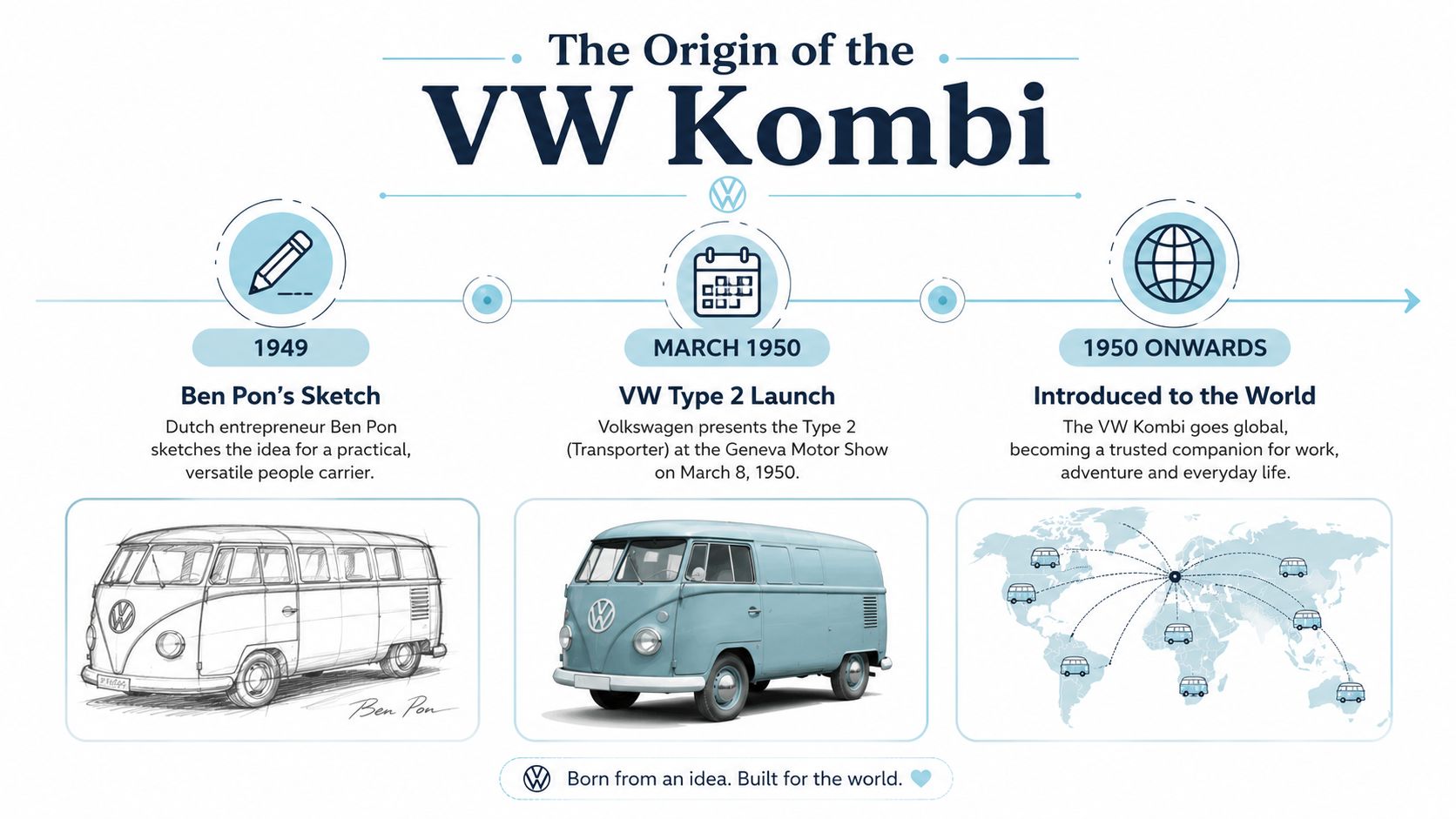
An infographic detailing the historical origin and global launch of the Volkswagen Type 2 Kombi van.

One vehicle, several names

Different markets developed their own language. “Bus” and “Samba Bus” are familiar overseas terms, while “Transporter” remains important in Volkswagen's commercial-vehicle vocabulary. In Australia, Kombi became the friendly catch-all, covering more Type 2 variations than the original narrow meaning of the word might suggest.

The shape also felt familiar because earlier commercial vehicles had already introduced the public to box-bodied utility transport. The Type 2 refined that idea with a distinctive Volkswagen identity, a compact footprint and a passenger-friendly cabin. For Australian collectors, the useful lesson is simple: read the body style and generation rather than relying on the badge alone. A windowed passenger bus, a panel van and a pickup may all be called Kombis at a local meet, but they aren't the same vehicle.

For a focused look at the model family, explore this guide to Volkswagen Type 2 memorabilia.

The Engineering Tricks That Made It Special

The Kombi's magic begins with packaging. A cab-over layout places the driver above or close to the front axle instead of behind a long bonnet. Volkswagen paired that arrangement with a rear-mounted, air-cooled flat-four engine, creating a flat and highly usable interior floor.

That layout gave the body near-vertical sides and a low loading area. Owners could fit passengers, camping gear, surfboards or trade equipment without working around a large engine bay in the nose. It also made the van an inviting starting point for camper conversions, because the cabin offered a simple, open space that could be adapted to a particular lifestyle.
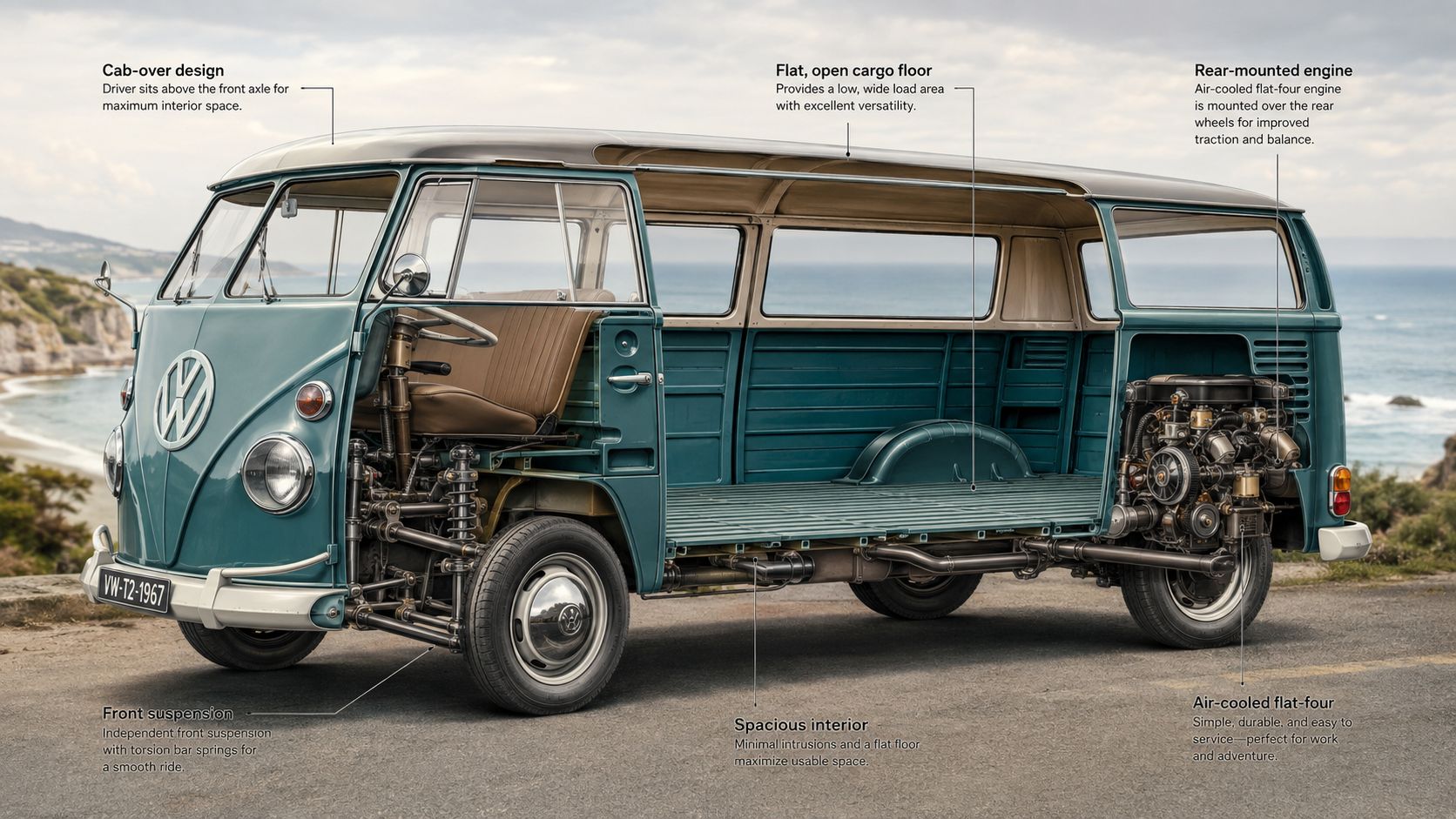
A cutaway view of a classic Volkswagen T2 van showcasing its cab-over design, interior, and rear engine layout.

Why the driving feel matters

The rear-engine arrangement changes the way the van feels from the driver's seat. The steering position gives a commanding view of the road, while the compact mechanical layout helps the vehicle feel more nimble than its upright body suggests. The simple chassis also offered plenty of scope for owners to tune, restore or adapt the van for camping and surf duty.

Suspension design played its part too. Swing-arm and torsion-bar systems kept the construction straightforward while giving the van a more forgiving ride than the plain sheet-metal shape might imply. Later improvements included synchromesh gearbox designs and fuel injection, depending on generation and specification.

Practical rule: Treat the engine layout as part of the Kombi's personality. The flat floor, rear weight bias and simple mechanicals explain why owners talk about these vans as much for their feel as for their appearance.

A collector doesn't need to memorise every mechanical variation to appreciate the engineering. Look at the way the cabin uses its footprint. That cleverness is the reason a small diecast model can still communicate so much character through its upright stance, short front end and broad side panels.

Generations and Body Styles Worth Knowing

Australian enthusiasts usually talk in T numbers, which makes car-show conversations much easier. The family tree below is a useful starting point, although exact Australian availability and specifications varied between imported, locally assembled and later Transporter versions.

Generation Years Aus Availability Key Identifying Feature
T1 Split Window 1950–1967 Early Australian imports and local assembly history Two-piece windscreen and rounded body
T2 Bay Window 1967–1979 Strong Australian presence and surf identity One-piece curved windscreen and larger body
T3 Vanagon 1979–1992 Transporter-era examples, including Australian-market variants Squarer styling and more modern cabin
T4 1990–2003 Front-engine Transporter generation Front-mounted engine and car-like nose
T5 2003–2015 Modern Transporter family Contemporary front-engine commercial design

Body styles at a glance

A passenger Kombi has side windows and rear seating. A Microbus is often used for a people-moving version, while a Samba Bus generally refers to a highly glazed, more decorative specification associated with the classic Type 2 range. A panel van removes much of the rear side glass for cargo work.

Collectors may also encounter:

  • Single Cab pickups, with one row of seating and an open tray.
  • Double Cab utes, with extra passenger seating behind the front row.
  • Westfalia campers, converted for touring and overnight travel.
  • Transporter variants, which may share the family resemblance without being a classic passenger Kombi.

Australia's terminology adds another layer. Local production and assembly gave the Type 2 a deep domestic history, and Australian sources note that the name spread across multiple body styles more broadly than it did in Germany. The safest approach is to describe the generation, body style and seating arrangement together. That prevents a T3 Transporter from being confused with a T1 passenger bus because both are called Kombis at a meet.

Kombi Culture in Australia and Beyond

Australia gave the Type 2 a special setting. The van suited beaches, campsites and long coastal drives, and Volkswagen Australia records how the Kombi became tied to surf and adventure culture on both coasts. Its shape could swallow boards and camping equipment, while the upright cabin made it easy to share a trip with mates or family.

That practical role became a visual identity. Surfboards on a roof rack, faded paint, bright curtains and a well-used interior turned the Kombi into a rolling sign of weekends away. The association with freedom grew alongside the international Flower Power image, Woodstock-era styling and counter-culture artwork, but Australian owners gave those ideas a distinctly local backdrop.

From workhorse to moving art

The Kombi's cultural life now stretches well beyond the beach. Owners bring restored and customised examples to Volksfest, VW Nationals, club gatherings and coastal show-and-shines. Some favour factory-correct finishes, while others choose lowered suspension, period accessories, roof racks or playful paint schemes.

The result is a vehicle that can be judged as transport, sculpture and personal history at the same time. A family might remember one from camping holidays, a surfer might associate it with dawn starts, and a collector might love the tiny details of a split windscreen or Samba roof.

Australia's local story is worth exploring through Kombi life in Australia, especially if your interest began with beach culture rather than mechanical history. The same emotional connection appears in films, music events, tourism imagery and beach tours, where the Kombi works as an instantly recognisable symbol of relaxed travel.

Collecting Diecast Kombis the Right Way

A good diecast Kombi captures more than a familiar silhouette. It should preserve the details that make the vehicle recognisable, including the split or bay windscreen, window arrangement, bumpers, wheels, roof equipment and period graphics.

Start with authenticity. Look for official Volkswagen licensing, clear manufacturer markings and packaging that identifies the model properly. A model described as diecast should have a metal body, while some resin replicas use plastic or composite construction. Neither is automatically wrong, but the material affects weight, handling and the type of detail you can expect.
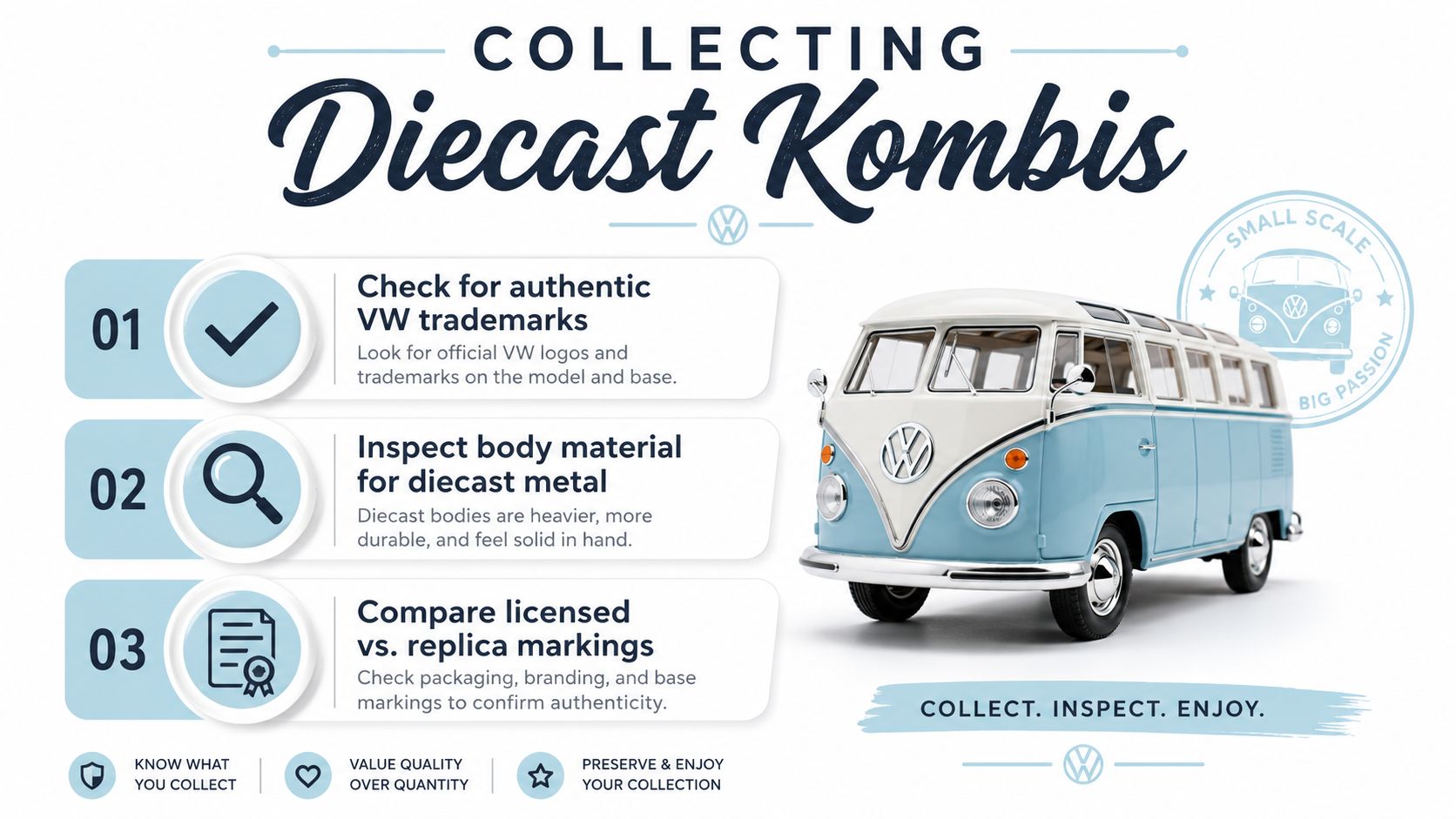
An infographic detailing three essential steps for identifying authentic diecast Volkswagen Kombi model van collectibles.

Choose the scale for the display

1:18 models suit a dedicated shelf where you want visible cabin, body and trim detail. They need more room, but they make a strong centrepiece.

1:24 is a useful middle ground for collectors who want presence without giving an entire cabinet to one vehicle. It also pairs neatly with other classic Volkswagen models.

1:32 works well for a starter collection, a desk display or a younger enthusiast's first model. It allows several colourways and body styles to sit together without overwhelming the space.

Colour matters, too. White-over-blue paint, soft seaside tones and Flower Power graphics all connect strongly with the Kombi's surf and travel identity. You could build a beach scene with miniature boards, a camper display with a road-trip theme, or a simple Volkswagen shelf pairing a Samba Bus with a Volkswagen model car collection.

A licensed model also makes a thoughtful gift for a Volkswagen fan, retirement celebration or office desk. Before buying, inspect the box, check the scale, confirm the body material and look for any certificate or licensing information supplied by the maker.

The short video below offers another visual way to appreciate the details collectors look for.

Bringing the Kombi Story Home

The Kombi began with a practical sketch, became a versatile Type 2, and found a second identity on Australian beaches. Its cab-over shape made the interior useful, its rear engine gave it a distinctive character, and its many generations created a family tree that rewards closer inspection.

That makes a diecast model more meaningful than a generic ornament. A well-chosen Volkswagen Kombi diecast in Australia can represent a particular memory, whether that's a first camping trip, a favourite surf van at a car show or a family story about an old bus that has long since disappeared.

Build a collection with a story

Start with one model that speaks to you. A Samba Bus diecast suits a display focused on classic passenger vans, while a Beetle model makes a natural companion because both vehicles share the same period charm and air-cooled Volkswagen heritage.

From there, consider a small theme:

  • A T1 and T2 pairing to show the change from split windscreen to bay window.
  • A surf display with boards, beach colours and a coastal photograph.
  • A glass-case timeline running from early Type 2 styling to later Transporter forms.
  • A gift set pairing a model with a road-trip photo book or a framed family image.

You don't need a huge collection to make an impact. Choose licensed pieces, protect the packaging where possible and keep the display away from harsh sunlight and damp conditions. The best collection feels personal, organised and easy to enjoy.


Volkswagen Memorabilia brings together officially licensed VW diecast models, Kombi and Samba Bus collectibles, Beetle models, coastal décor and thoughtful gifts for Australian enthusiasts. Visit Volkswagen Memorabilia to explore the collection and choose a Kombi model that keeps your own Volkswagen story rolling.
Light Commercial Vehicles Explained: A Practical Guide

You're standing beside a ute with a tray full of tools, or watching a courier van thread its way down a suburban lane, and someone asks a deceptively simple question: what makes a vehicle “light commercial”? The answer isn't just the badge on the grille. It comes down to how the vehicle is built, what it can carry, how it's used, and where it sits within Australia's weight and efficiency rules.

That definition includes the modern workhorse outside a building site, the enclosed van delivering parcels, and the classic Volkswagen Kombi carrying surfboards, camping gear or a small business's stock. Understanding the category makes it easier to compare payloads, licences, towing, running costs and heritage, especially when a practical work vehicle also happens to become a cultural icon.

What Counts as a Light Commercial Vehicle

A plumber's ute might spend the morning parked outside a renovation with copper pipe and tools in the tray, then head home with camping gear on the weekend. A courier's van needs a different layout, but the purpose is similar: move equipment, goods or people as part of a working routine.

A light commercial vehicle, or LCV, is generally designed around work rather than private passenger transport. In Australia's federal vehicle framework, the category includes utes, vans and heavy off-road passenger vehicles built on ladder-frame or body-on-frame construction, with a gross vehicle mass up to 4.5 tonnes and towing capacity of at least 3 tonnes, according to the Australian Government's explanation of the New Vehicle Efficiency Standard.

That formal definition sits alongside practical design clues:

  • Load-focused construction: Rear areas may be reinforced to handle tools, stock or equipment.
  • Suspension and braking: Components are selected to cope with regular payloads and commercial duty.
  • Tyres and wheels: Commercial-grade specifications often prioritise load capacity and durability.
  • Cabin layout: Panel vans and many work vans trade rear seating for enclosed cargo space.
  • Flexible use: Dual-cab utes and people-moving vans can serve a business during the week and a family on Saturday.

The word light can mislead newcomers. It describes the vehicle's position in the commercial weight system, not whether it's weak, small or incapable. A work van may have serious towing duties, while a compact ute might be easier to manoeuvre but less useful for bulky freight.

The important question is what the vehicle weighs when fully loaded, not how imposing it looks at a car show. That leads to Australia's GVM framework.

Weight Classes and How Australia Defines an LCV

Australia's central reference point is 4.5 tonnes of Gross Vehicle Mass, or GVM. GVM means the maximum permitted weight of the vehicle when it's ready for the road, including its body, fuel, passengers, accessories and payload. It isn't the same as kerb weight, which describes the vehicle before you add your working load.

Most utes and vans sit below that ceiling. Heavier vans, cab chassis models and specialised work vehicles may approach it, while vehicles above the threshold move into the heavier commercial-vehicle licensing framework. A trailer also changes the calculation, because the vehicle must remain within its own ratings while the combination must comply with towing and braking rules.

A practical weight comparison

GVM Range Typical Vehicles Licence Implication
Below 3.5 tonnes Most utes, panel vans and everyday work vans Commonly driven on a standard car licence, subject to state and territory rules
3.5 to 4.5 tonnes Heavier-duty vans, cab chassis vehicles and specialised workhorses A standard licence may still apply up to the relevant GVM, but confirm the registration and state requirements
Above 4.5 tonnes Larger commercial trucks and heavier vehicle combinations Heavy-vehicle licensing requirements generally apply

The 3.5-tonne point is also familiar to buyers comparing Australian models with European terminology. European classifications commonly distinguish lighter goods vehicles from heavier commercial categories, although local registration, licence and compliance rules still govern what you can drive here.

Towing adds another layer. A heavier trailer can require an electric brake controller, and the combination's total mass may affect licence requirements. Don't rely on a salesperson's shorthand such as “one-tonne ute” or “big van”. Check the vehicle's GVM, payload, gross combination mass and braked towing rating in the manufacturer documentation.

Practical rule: Treat the compliance plate and official specifications as the starting point. The ute's advertised towing figure doesn't tell you how much payload remains once passengers, accessories and a tow ball are included.

These ratings influence insurance, registration, body fit-outs and where the vehicle can operate. A custom service body may add useful storage while reducing available payload, so weight planning belongs at the beginning of the purchase process.

Body Types from Utes to Chassis Cabs

At a weekend job, a ute can swallow timber and ladders that would never fit inside a van. On a courier run, the priorities change: dry, secure cargo and quick access matter more than an open tray. Both vehicles are light commercial vehicles, but their body types suit different work.

Body Type Best Suited To Main Advantage Main Trade-off
Single-cab ute Tools, timber, rural work and bulky loads Open tray access and straightforward loading Less cabin space and limited weather security
Dual-cab pickup Mixed work and family use Passenger seating with useful tray capacity More cabin length can reduce tray space
Panel van Couriers, florists, trades and stock delivery Enclosed cargo with side-door access Cargo volume is fixed by the body
Cab chassis Tippers, service bodies and refrigerated units Flexible bodybuilder options Fit-out adds cost and consumes payload
Minivan or people mover Commercial passenger transport and shuttle work Flexible seating and passenger capacity Less room for bulky goods

A traditional ute is a practical choice for a tradie carrying timber, ladders or livestock. The tray accepts awkward loads, and tie-down points or a weather cover can make it more useful. Rain and opportunistic theft remain risks because the cargo area is open.

A dual-cab pickup adds rear seats for workmates or family. That makes it a useful compromise for buyers who use one vehicle during the week and weekend. The longer cabin leaves less room for tray cargo than a single-cab configuration, so check both passenger and load needs before choosing.

Panel vans keep courier parcels, flowers, tools and stock under cover. Their upright cargo area works well with shelving and drawers, while side doors make loading easier when vehicles are parked closely along a suburban street. The trade-off is fixed cargo volume. A tall item may fit easily, but an unusually wide load can defeat the van's layout.

A cab chassis arrives with the rear body still to be selected. A bodybuilder can add a tray, tipper, service module or refrigerated unit. Each addition changes the vehicle's mass, balance and remaining payload, so the fit-out should be planned before purchase.

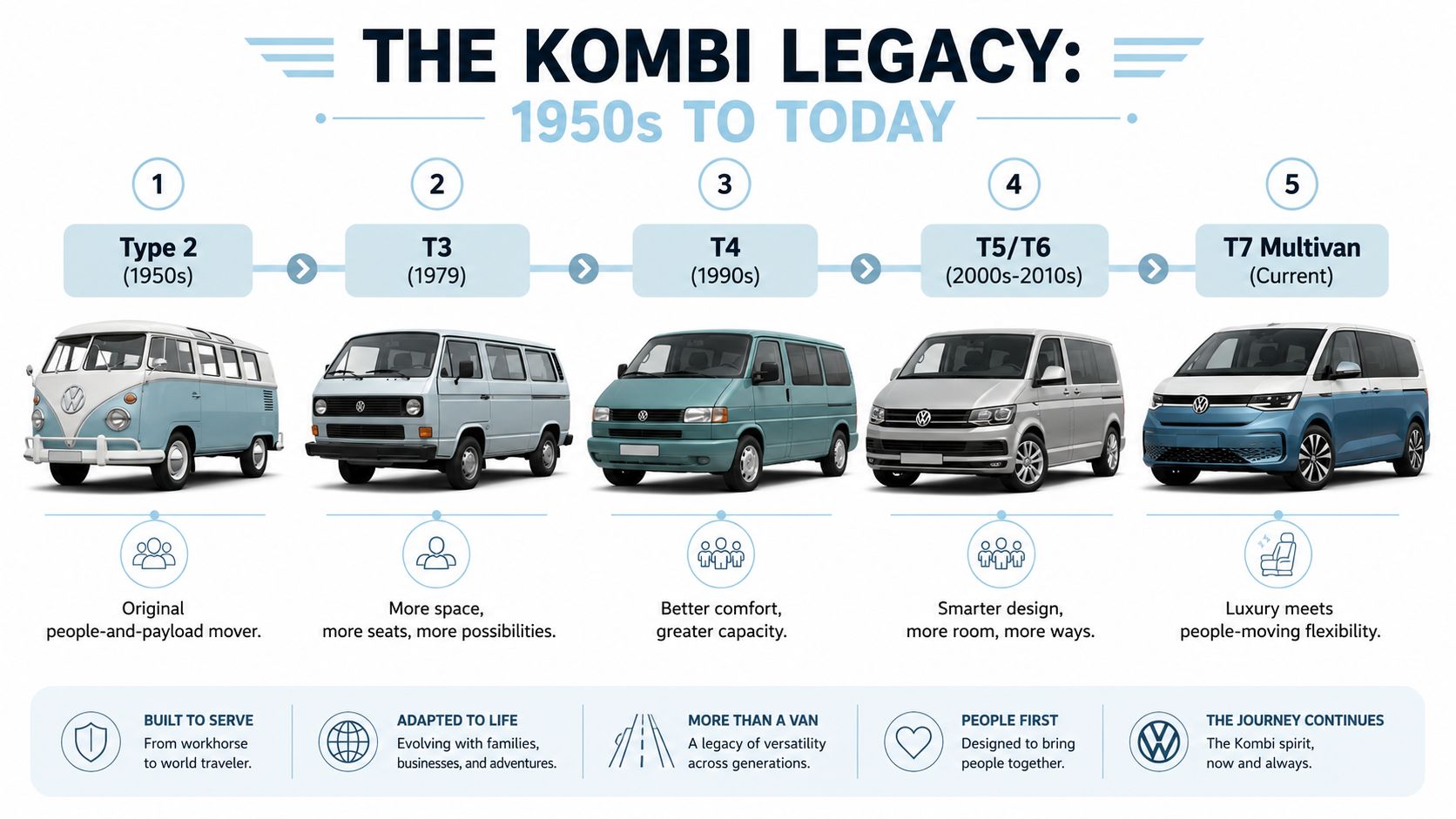
A timeline graphic showcasing the evolution of Volkswagen Kombi vans from the 1950s to the current T7 model.

The Caddy Maxi range shows how a compact van can favour urban manoeuvrability while preserving useful load space. The classic Kombi applies the same practical idea in a more nostalgic shape, carrying people, payload and personality in one adaptable package.

The Kombi Story and How an LCV Became an Icon

At a weekend car show, a Kombi might carry surfboards, camping gear or a family in period dress. Its cheerful shape can distract from the useful idea underneath: the Volkswagen Type 2 turned a simple rear-engined platform into a van, bus, pickup and people mover.

The early split-window Kombi reached Australia in the 1950s. Its upright cabin, friendly face and adaptable interior suited trades, tourism and family travel. That combination explains why the Transporter belongs in both the working-vehicle story and Australia's motoring culture.

There is a fascinating local detail behind the badge. Volkswagen Beetles weren't sold in Australia until 1954, while Australian CKD-assembled cars from 1954 to 1959 and 1968 to 1976 could lag German-built models by up to six months, according to the Volkswagen chassis reference from Club VeeDub.

The bay-window era widened the Kombi's appeal. More glass and a welcoming shape connected it with surf culture, road trips and relaxed coastal travel, yet the van still performed ordinary work. It carried tools, goods, passengers and holiday equipment, much like a practical room on wheels that could change jobs from one day to the next.

Later generations developed that formula. The T3 kept the recognisable boxy character, while the water-cooled T4 introduced a major mechanical change and expanded the Transporter's commercial role. The T5 and T6 refined capacity, comfort and fleet usefulness. The current T7 Multivan places more emphasis on flexible people moving, showing how the lineage can evolve while retaining its practical roots.

An infographic detailing Australian light commercial vehicle licensing requirements and GVM limits based on vehicle size.

A Volkswagen Type 2 heritage model reflects that dual identity. The Kombi can serve as tradesperson's transport, tourism vehicle, surf icon or restoration project, while remaining recognisable as an LCV.

That longevity drives its following. Hobbyists preserve original interiors, body lines and period details, and restorers keep the working-vehicle story visible. The Kombi became an icon because it looked friendly while carrying real people and real loads.

Licensing Rules and Emissions Standards Explained

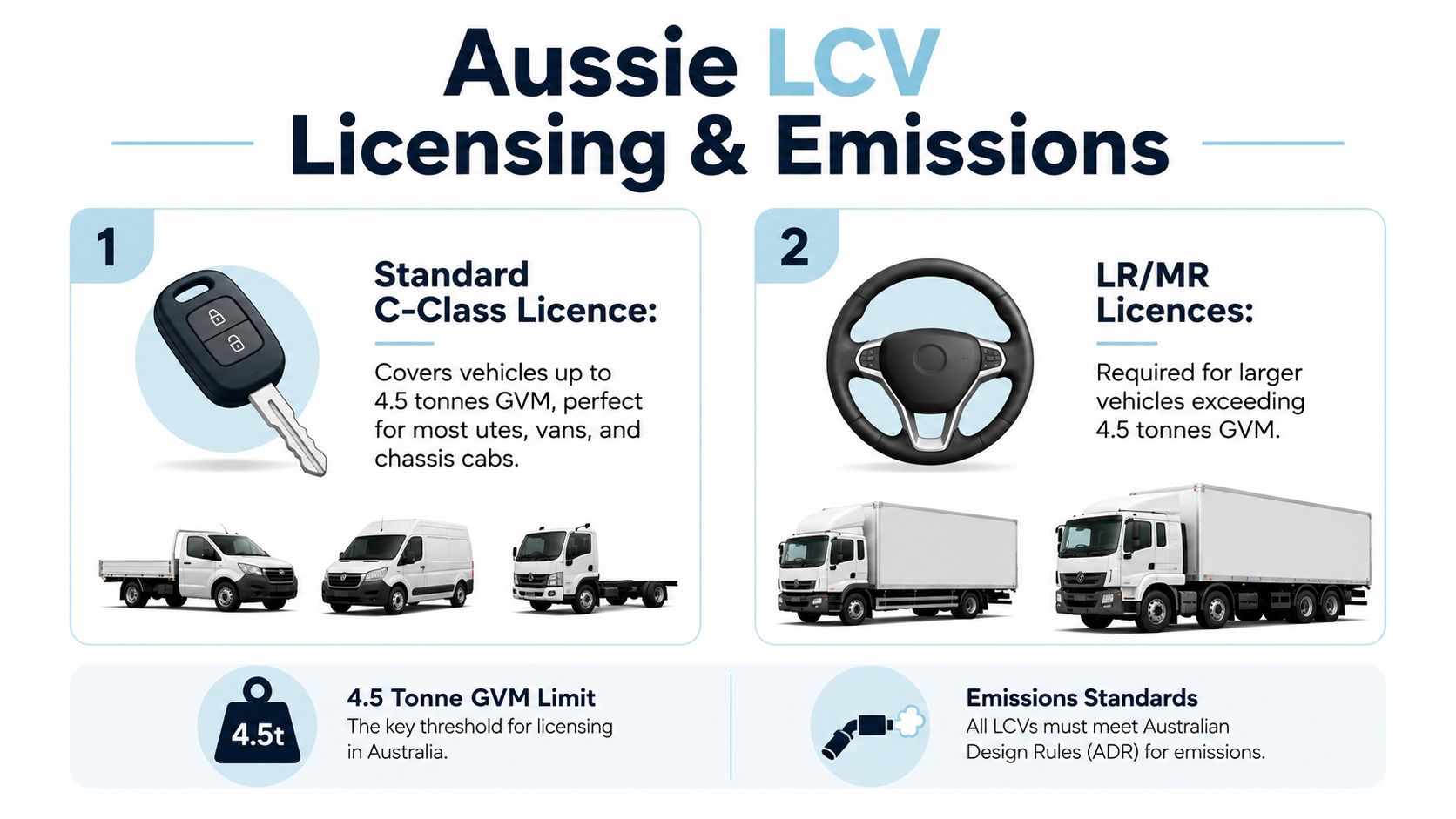
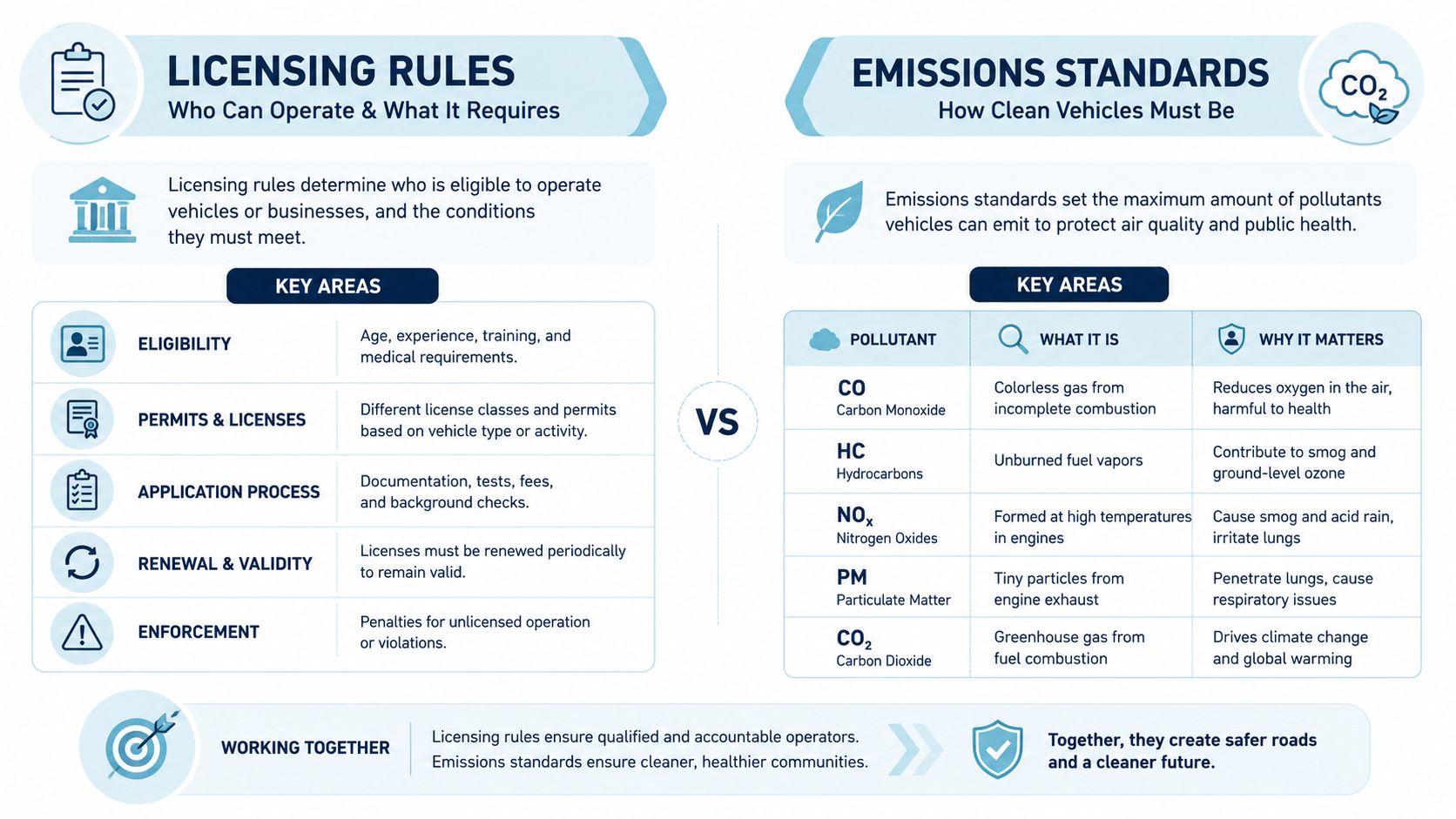
At a weekend job, the ute is loaded, a trailer is coupled and the question becomes practical: can your licence cover the whole combination? Start with the vehicle's recorded GVM, not its body style. A ute, van or chassis cab can usually be driven on a standard C-class licence while it remains within the applicable light-vehicle limit, but state and territory rules can differ once towing and vehicle combinations enter the discussion.

The 4.5-tonne GVM threshold is the practical dividing line for the federal LCV definition. Above it, drivers generally move into heavy-vehicle licensing categories such as LR or MR. A trailer can change the licensing picture even when the tow vehicle remains below that threshold, so check the relevant state transport authority before work begins.

Licence check: Match your licence to the vehicle's recorded GVM and the combination's rules. A familiar ute does not automatically make every trailer legal.

Emissions compliance now forms part of the buying decision. Australia's New Vehicle Efficiency Standard applies fleet-average CO2 targets to new vehicles, with LCVs following a separate, mass-adjusted curve. Published targets list 210 gCO2/km for LCVs in 2025, falling to 110 gCO2/km by 2029, with the figures and breakpoints set out in this Australian LCV efficiency-target summary.

The framework uses lower and upper mass breakpoints of 1,500 kg and 2,400 kg, with a reference MIRO of 2,155 kg for 2025 and 2026. In plain English, a heavier work van is assessed differently from a lighter passenger vehicle, while manufacturers still face pressure to improve fleet-average CO2 performance.

The government says the standard will roughly halve emissions from new LCVs by 2030, while preserving high-tow and high-mass use cases, according to its New Vehicle Efficiency Standard announcement.

An infographic comparing licensing rules for vehicle operators and emissions standards for vehicle pollution control measures.

For fleet buyers, diesel, petrol and electric vans each suit different jobs. Compare route length, charging access, payload, towing, downtime and servicing support. A guide to electric vans in Australia can frame that technology discussion, but the right choice still depends on the actual duty cycle.

Buying and Maintaining the Right Light Commercial Vehicle

The right LCV starts with the job, not the largest body or engine available. A plumber's van needs organised access to tools, while a lawn care specialist may need an open tray for soil, equipment and dirty loads. Measure what you carry, then calculate payload with passengers, fuel, accessories and body modifications included.

Match the vehicle to the work

Use Case Key Body Type Must-Have Feature Maintenance Priority
Plumbing or electrical service work Panel van or service-body ute Shelving, secure storage and side access Brakes, suspension and door hardware
Landscaping and rural work Single-cab ute or cab chassis Tie-downs, washable tray and suitable towing capacity Tyres, clutch and underbody inspection
Mixed work and family travel Dual-cab pickup Practical rear seating and payload discipline Scheduled servicing and tray accessories
Urban delivery Panel van Turning space, cargo organisation and easy loading Tyres, brakes and sliding-door rollers
Refrigerated or specialised transport Cab chassis Correct bodybuilder integration and load control Cooling equipment, payload and electrical systems

A new vehicle offers a current warranty, planned servicing and the opportunity to specify the body from the beginning. A used LCV can provide better value, especially when parts are readily available and the model has established resale demand. Commercial use, however, can hide wear that a short test drive misses.

Check the logbook and inspect the chassis carefully. Look at the clutch, brakes, suspension, tyres and load area, including signs of uneven wear, impact or repeated overloading. A pre-purchase inspection may find repairs concealed by a tidy exterior.

Businesses should compare finance structures such as a chattel mortgage or novated lease with professional advice. A smaller repayment does not necessarily mean a lower overall cost.

Maintenance needs to match the workload. Diesel owners should understand AdBlue requirements where fitted, while EV operators need a practical battery and charging routine. Every LCV still requires scheduled servicing, tyre checks and attention to brake wear.

A vehicle carrying light parcels will usually place less strain on its components than one loaded heavily each day. Keep the load within the vehicle's rated limits, secure it properly and treat unusual tyre, brake or suspension wear as an early warning rather than a minor nuisance.

Common Misconceptions and What to Do Next

A standard car licence doesn't mean every trailer combination is automatically covered. The vehicle's GVM, the trailer's mass, braking equipment and state or territory rules all matter. A driver who checks only the tow-ball rating can still miss a payload or combination limit.

Diesel isn't always the obvious answer, either. It can suit sustained loads and longer routes, while petrol may make sense for shorter urban work where purchase, servicing and usage patterns point in another direction. Electric powertrains can suit predictable routes with reliable charging, but payload, range and downtime still need careful planning.

GVM ratings aren't marketing fluff. They tell you how much the vehicle can legally and safely weigh when loaded, and accessories such as bull bars, canopies, roof racks and service bodies use part of that allowance. The badge doesn't define the category by itself. Mass, payload, construction and intended use do the heavy lifting.

That's why a weekend warrior in a classic Kombi and a tradesperson in a modern Transporter can share the same broad LCV story. One may carry surfboards and camping gear, the other may carry tools and stock, but both rely on a vehicle designed to combine transport with useful working capacity.

Whether you're sizing up a work van, restoring a Splittie or curious about how light commercial vehicles fit together, take the time to compare the practical figures with the heritage that makes these machines special. The best conversations often start beside a well-used van, with someone opening the doors and showing what it has carried.


Volkswagen Memorabilia offers licensed VW diecast models and memorabilia that celebrate the same Kombi, Beetle and Samba Bus heritage behind Australia's most recognisable people movers. Visit Volkswagen Memorabilia to browse VW Kombi diecast Australia favourites, Volkswagen Beetle models and thoughtful gifts for the enthusiast who still loves a van with a story.