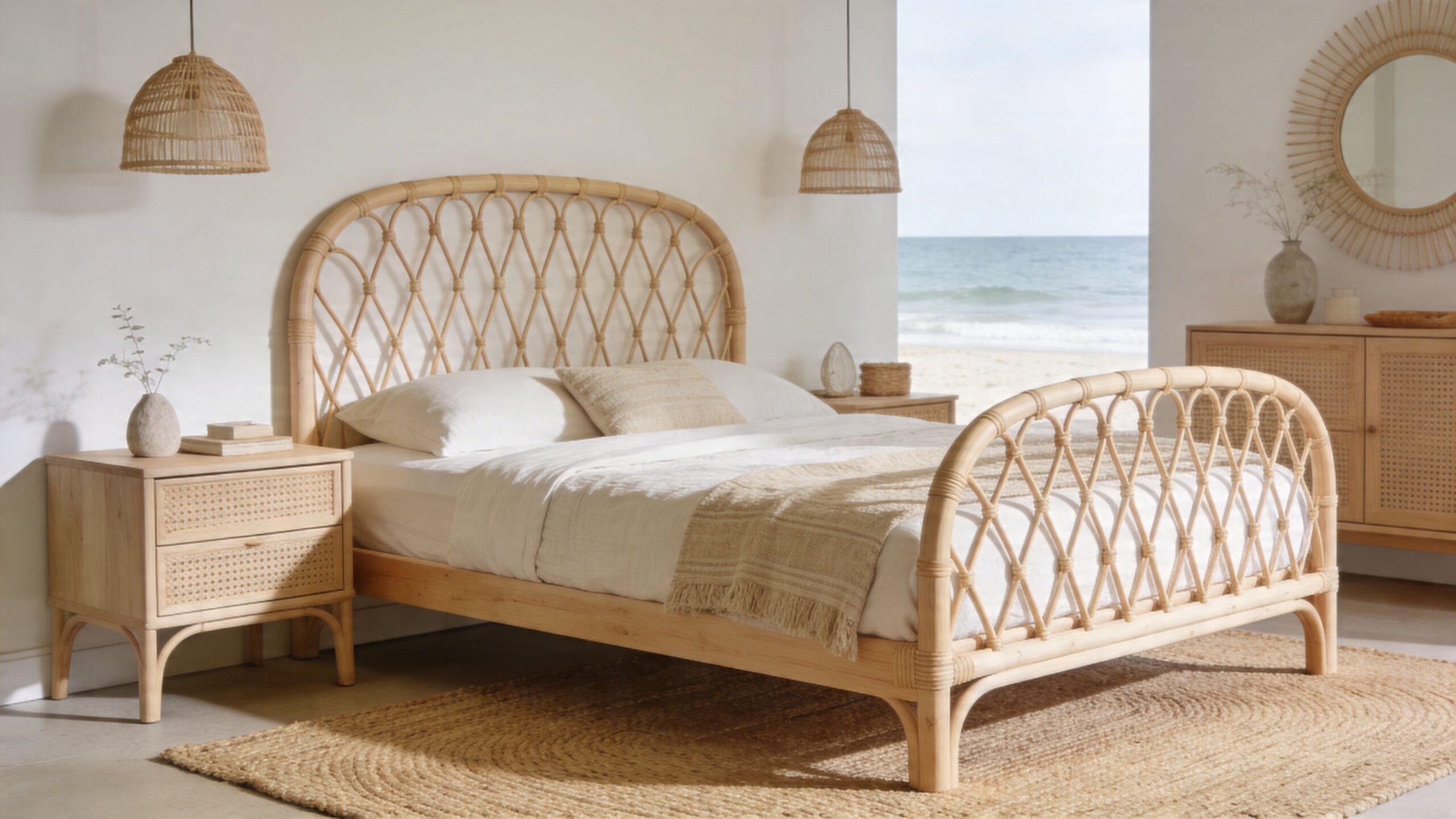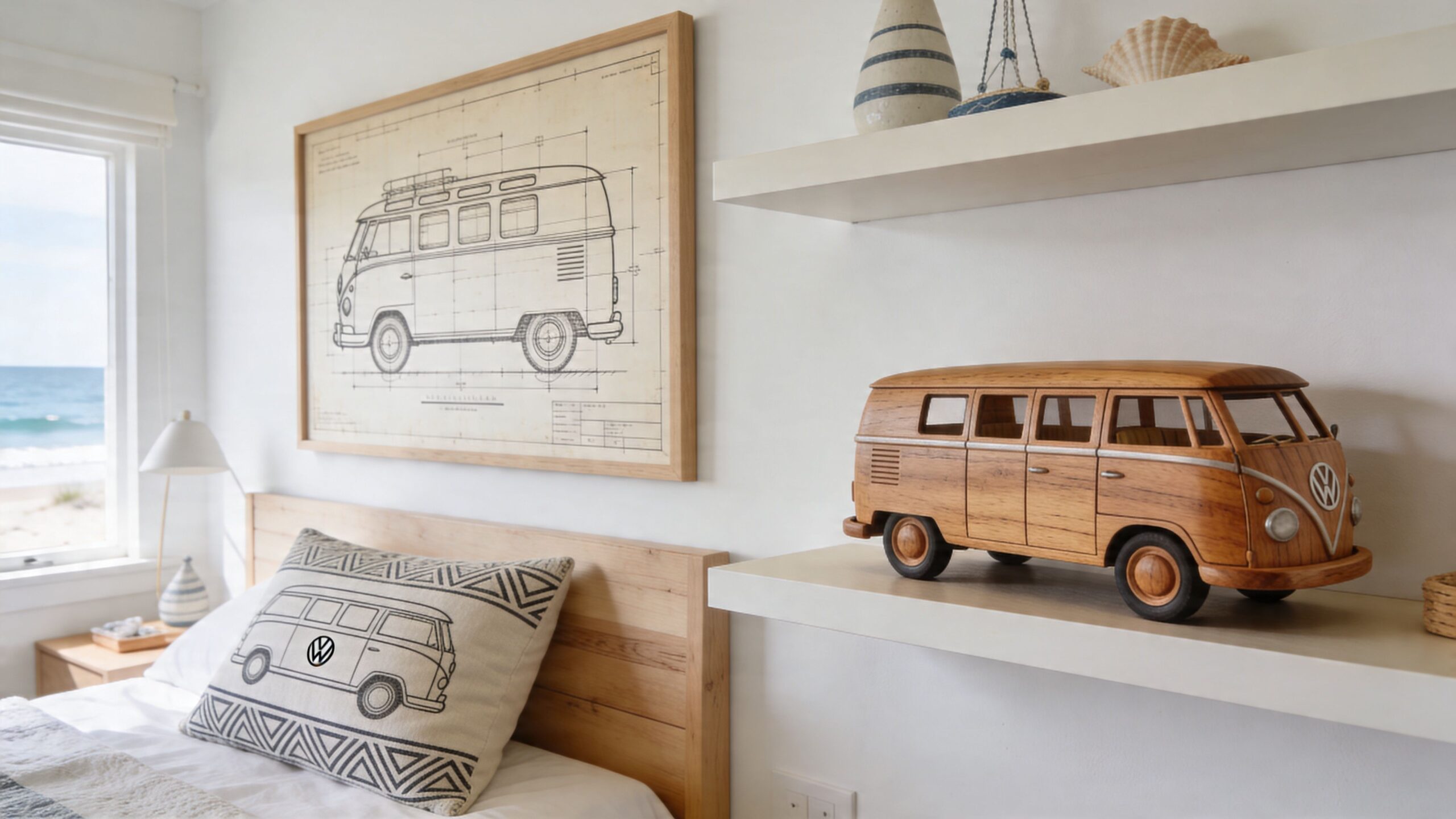

Top Beach Office Decor Ideas: VW Lover’s Guide

You shut the study door, drop into the chair, and want the room to feel a bit like an early run up the coast to a VW meet in Coolum or Byron. Salt-air calm. Old-school character. Enough order to get through the day's work.

That's the mark of a good beach office for a VW fan. It uses coastal colour, texture, and light in a way that suits the memorabilia instead of fighting it. A few well-chosen Beetle or Kombi pieces can carry plenty of personality, but the room still needs to read as an office first, not a cluttered display corner.

The trade-off is always the same. Go too hard on surf shack styling and the space starts to feel noisy. Strip it back too far and you lose the charm that makes classic Volkswagen gear worth showing off in the first place. The best result sits in the middle, with soft whites, sandy neutrals, washed blues, and natural materials giving your collection room to breathe.

That approach fits where Australian coastal interiors are heading too, with recent trend forecasts from Coral Homes favouring serenity, simplicity, and relaxed finishes over heavy theming. For collectors, that's good news. A calmer backdrop makes chrome trim, vintage badges, diecast paintwork, and retro beach artwork stand out without turning the whole room into a museum.

If your desk is flat, your wall is bare, or your shelf looks like it needs a proper run through a swap meet and back, these beach office decor ideas will help you build a space that feels personal, usable, and unmistakably VW.

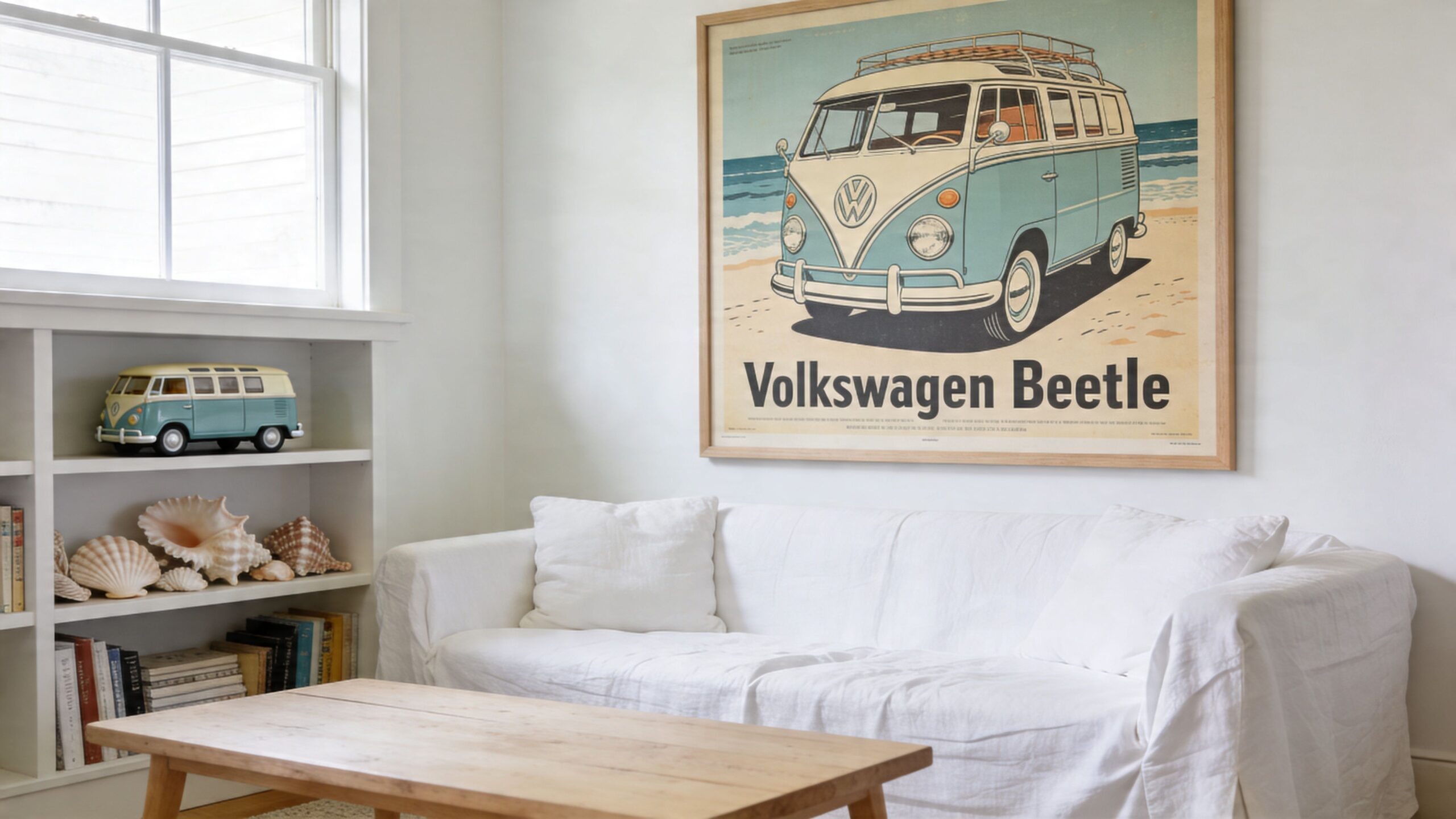
1. Vintage VW Kombi and Samba Bus Diecast Displays

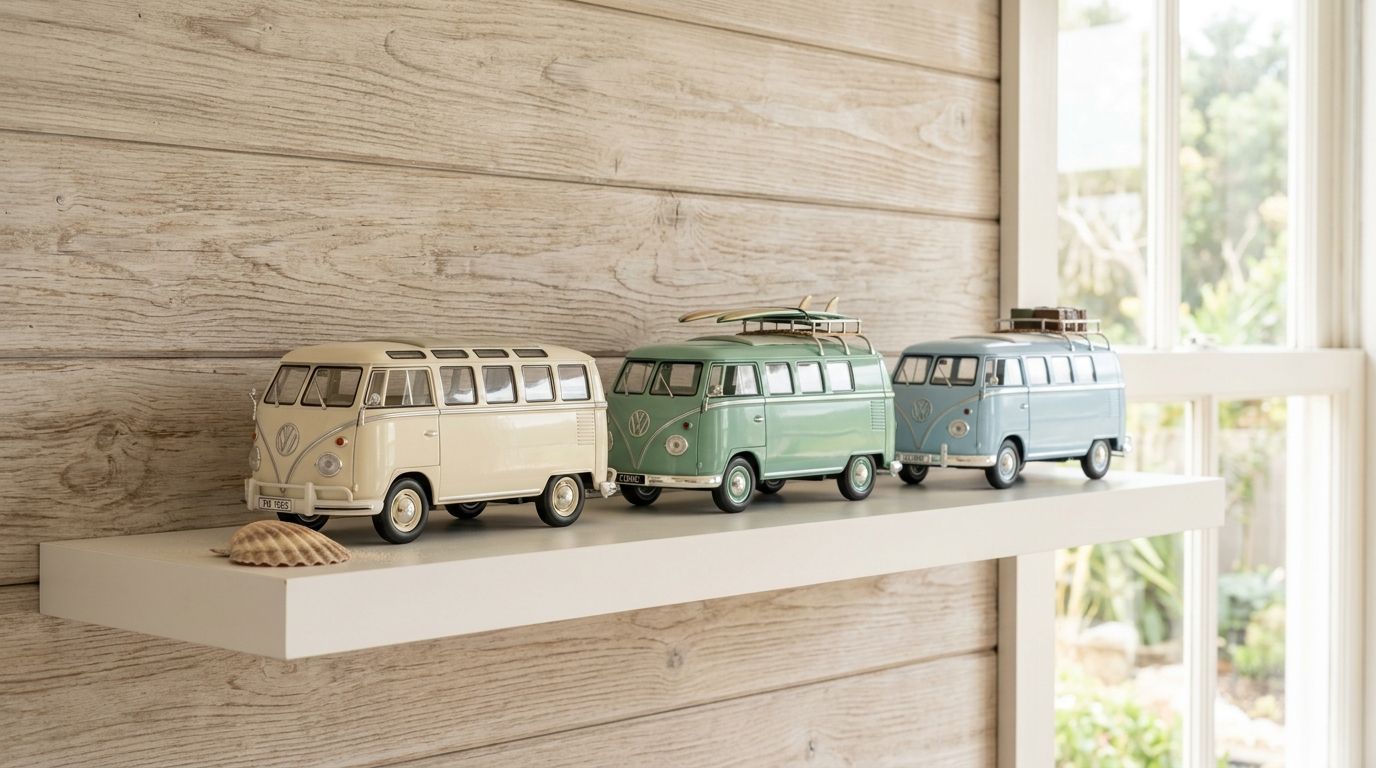
You walk into the office with a coffee, glance at the shelf, and there it is. A tidy row of Kombis and Samba Buses that feels a bit like an early morning cruise to a coastal VW show. That small setup can carry a lot of mood without crowding the room.

Diecast models work well here because they bring in nostalgia, colour, and shape on a manageable scale. For a beach office, the best displays usually stick to a narrow palette. Soft white, faded blue, sage, cream, and sandy tones sit comfortably against coastal finishes. If you own a louder piece, like a Flower Power bus or a bright split-window hero, give it space and let it do the talking.

Three vintage style miniature Volkswagen bus models displayed on a white shelf against a wood paneled wall.

Placement matters more than collectors sometimes realise. Filtered natural light gives chrome trim and curved panels a nice lift, but hard afternoon sun can fade paint and warm up plastic windows over time. In a spare room, study nook, or studio, a shelf near the light usually beats a shelf in the light.

How to make the display look intentional

Start with a simple base. A floating shelf in light timber, a slim glass-front cabinet, or a compact tiered stand all suit the coastal VW mix better than a chunky dark bookcase. The room stays airy, and the models read as part of the decor instead of a stash tipped out after a swap meet.

The other part is editing. Modern Australian coastal interiors generally look better with fewer, better-chosen objects, so keep the beach references subtle. One small driftwood piece, an old surf snapshot, or a weathered tray is plenty. Shells, rope, anchors, and ten buses on one shelf will push the room away from relaxed and straight into themed.

A few setups that work well:

  • Group by colour or body style: A row of two-tone Kombis looks calmer than a mixed shelf with every finish competing for attention.
  • Create one clear hero piece: Put the best Samba Bus slightly higher or centred, then support it with smaller models.
  • Leave negative space: Empty space around each model helps the curves stand out and keeps the shelf from feeling fussy.
  • Rotate pieces through the year: Boxed models stay cleaner, and the display stays interesting without getting overcrowded.

Practical rule: If the shelf feels busy, remove one-third of the pieces before adding anything else.

This is also one of the easiest ways to bring your collection out of storage and into daily life. A couple of well-placed diecasts from a local memorabilia shop or your own stash can give the office that familiar Australian VW club feel, without turning your workspace into a full museum wall.

2. Nautical Metal Wall Art Featuring VW Icons

You sit down at the desk, the light's good, the timber looks right, and the wall still feels flat. That's usually the moment a metal VW piece earns its keep. It gives the room a focal point straight away, and it brings a bit of grit that stops coastal decor from going too soft.

A Kombi cut-out works particularly well in a beach office because the shape already carries a bit of surf-club nostalgia. Go for seafoam, weathered white, driftwood grey, or sandy beige if you want it to sit comfortably with the rest of the room. Beetle-themed metal art suits a cleaner setup, especially if your desk, shelving, and storage already have simple lines.

Why metal works better here than another print

Metal has presence. It casts a slight shadow, catches the afternoon sun, and gives the wall some texture without asking for a whole gallery arrangement. In a home office, that means one piece can do the job of three smaller framed prints and still leave the room feeling calm.

Placement matters more than people realise. Hang it where you see it from the chair, not too high, and give it clear space around the edges. A good wall piece needs room to breathe, especially in a coastal office where the whole point is to keep things light and uncluttered.

Soft wall colours make these pieces read better. White, cream, pale blue, and light grey are the safe choices.

There's also a trade-off with metal that's worth being honest about. It can look brilliant against plaster, VJ panelling, or limewashed walls, but a heavily distressed finish can tip into café-fitout territory if the rest of the room is already busy. If you've got patterned rugs, retro signs, or a shelf of memorabilia from local VW shows, choose a simpler silhouette rather than a rusty, overworked design.

I usually prefer one strong Kombi or Beetle piece over a themed cluster. It feels more like a considered nod to Australian VW culture, the kind of thing you'd spot in a tidy corner at a club meet, rather than a wall trying to prove the point too hard. A well-chosen piece from your own collection, or from a good Australian memorabilia shop, ties the office back to the hobby without turning the space into a novelty room.

If the choice is between another generic beach print and a VW metal wall piece, the VW piece usually gives the room more identity and does more visual work.

3. Soft Furnishings with Beach and VW Themes

You roll back into the office after a Sunday coastal drive, drop into the chair, and the room should feel like the calm part of the day, not a spare bedroom with a desk shoved in the corner. Soft furnishings do that job better than people give them credit for. They take the hard edge off a workspace, cut a bit of echo, and make the VW theme feel collected rather than stuck on.

The colour mix is simple. Soft white, seafoam, faded blue, sandy beige, and sun-washed green all sit nicely in a beach office. Add VW motifs carefully and the room keeps its coastal feel. Go too loud with prints and it starts reading like a kid's surf shop.

Cream linen cushions with a small Kombi sketch work well. A light throw over the chair with a subtle Beetle pattern also works. Big prints with vans, palms, surfboards, and slogans all on the one cushion usually feel busy, especially if you already have diecast models, posters, or club-meet finds elsewhere in the room.

Natural fabrics suit this style best. Linen, cotton canvas, and textured blends have that relaxed Australian beach-house character, and they age better than shiny synthetics. They also sit comfortably with light timber, painted joinery, and older VW memorabilia that has a bit of patina.

I'd keep the ratio heavily in favour of plain pieces. One themed cushion can carry the idea. Two is often enough for a full office.

  • Start with solid colours: Cream, sand, pale blue, or washed sage give the room a calm base.
  • Use one hero VW print: A single Kombi or Beetle cushion reads cleaner than a matched set.
  • Choose washable covers: Home offices collect dust, coffee splashes, and everyday grime faster than people expect.
  • Repeat the motif once only: If the cushion has the van graphic, let the throw stay plain.

That last point matters. Repeating the same Kombi print across cushions, throws, and curtains can tip the room from nostalgic to novelty. The better approach is restraint, the same way a tidy Beetle at a car show stands out more than one covered in every accessory from the swap meet.

If you want ideas that fit that balance, have a look at VW wall accents and home decor pieces and match soft furnishings to one standout item rather than building the whole room around fabric prints.

A lightweight throw is also practical, not just decorative. Air-conditioned rooms can feel cold and a bit clinical, even in summer. A soft cotton throw on the chair back warms up the space and finishes it off without crowding the desk.

It's a small layer, but it changes the feel of the whole office.

4. Coastal Wall Shelving with Curated Collections

A good shelf does what a well-set-up Kombi display does at a local VW meet. It gives every piece room to be noticed without turning the whole scene into visual noise.

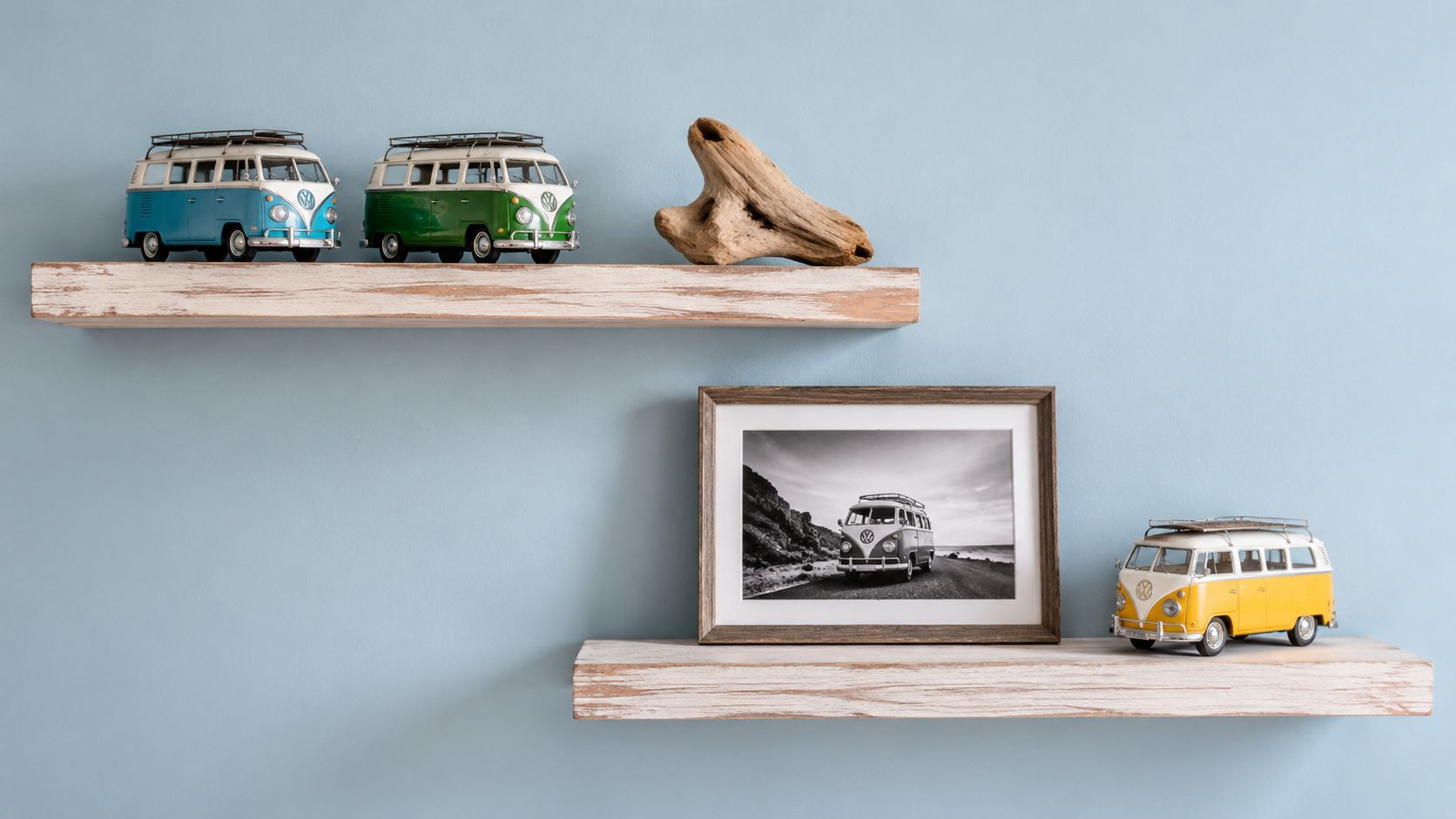
Two rustic wooden shelves on a light blue wall holding vintage Volkswagen bus toy models and decor.

In a beach office, wall shelving works best when the materials feel relaxed and sun-worn. Pale oak, whitewashed timber, and natural pine sit comfortably with sea-glass blues, sandy neutrals, and older VW pieces with a bit of history to them. If your desk or filing cabinet has a cleaner, more modern look, steel brackets can tighten up the shelf line and stop the room drifting too rustic.

The trick is curating, not just storing. A row of 1:24 Kombis arranged by colour can look brilliant in a Melbourne studio. A smaller shelf in a coastal home office might carry one Beetle model, a framed swap-meet photo, and a single shell or coral-toned object. Both approaches work because each item has space around it.

Shelf styling that stays tidy

Collectors often own more good pieces than a shelf should hold. That is where restraint pays off.

  • Build one focal point per shelf: Try one hero VW item, then support it with two or three quieter pieces.
  • Mix finishes carefully: Diecast metal, aged timber, glass, and a natural coastal element usually give enough contrast.
  • Keep some open space: Gaps make the collection feel deliberate and keep the office calmer to work in.
  • Rotate pieces by season or mood: You do not need every favourite item out at once.

I've found shelves look better when the memorabilia tells a small story. One shelf might nod to surf-trip nostalgia with a Kombi, a faded beach photo, and a simple driftwood piece. Another might feel more club-rego and car-show weekend, with a Beetle model, a badge, and a clean framed print. That sort of separation keeps a collection from blending into one busy line of objects.

If you want pieces that suit that balance, the VW wall accents and living room range for coastal-style displays is a handy place to start.

Modular shelving still makes sense here, even without overthinking it. Shelves that can be shifted, added to, or spaced differently are easier to live with as your collection changes. That matters in a working office, because today's display shelf can become tomorrow's book shelf, printer shelf, or spot for a framed photo from the last VW Nationals.

5. Nautical and Beach-Themed Photo Displays

You walk into the office, set the keys down, and the wall gives you the same feeling as rolling into a coastal VW meet just after sunrise. That is what a good photo display can do. It brings in the salt-air mood without crowding the room with more objects.

For VW people, photos carry the story better than almost anything else. Old Beetle workshop shots, a Kombi parked near the dunes, a faded beach print from an Australian road trip. Put those together with a bit of restraint and the office feels personal, settled, and easy to work in.

Keep the story clear

A Brisbane accounting office might suit neat timber frames with vintage VW brochure images and quiet Queensland beach scenes. A Gold Coast creative studio can handle a looser layout with Kombi restoration photos, surf snapshots, and one stronger hero image that pulls the wall together. Different rooms, same rule. The photos need a shared colour palette and a clear reason for being there.

Frame choice does a lot of the heavy lifting. Natural timber, brushed metal, and whitewashed finishes usually sit well in a beach office. Mix too many frame styles and the wall starts to feel like a market stall instead of a considered collection.

I usually tell people to lay the arrangement out on the floor first. It saves patching holes later, and it helps you spot when one photo is throwing the balance off.

There is a practical side to this as well. Beach-style spaces often get strong natural light, and that is great until glossy glass starts bouncing glare onto your screen. Keep reflective frames away from direct sun and opposite your monitor. If the room gets hard afternoon light, matte prints or anti-glare acrylic are often the better buy.

Renters have an easier path than they realise. Removable strips work well for lighter frames, while owners can use paper templates on the wall before hanging anything permanently. A bit of planning makes the whole display look sharper.

If you want pieces that already suit that surf-trip, car-show, coastal-office mix, the VW vintage home accessories collection for beach-inspired displays is a solid place to start.

This approach works because photos add character without eating up desk space. In a working office, that balance matters.

6. Vintage Signage and Retro Beach Posters

You walk into the office, spot a faded surf poster beside an old-school Kombi tin sign, and the room suddenly feels less like a spare study and more like a little corner of Cooly after a Saturday car show. That shift matters. Good signage sets the mood fast, especially in a coastal VW space where nostalgia is part of the appeal.

The trick is restraint. Signs and posters carry more visual punch than photos, so a small number usually works better. Three pieces often does the job. One hero print or metal sign can anchor the wall, then two supporting pieces can bring in surf culture, beach colours, or a nod to classic Beetle and Kombi travel.

I've found the best mix is one part motoring history, one part seaside attitude. A retro beach poster with sun-faded blues and sandy reds sits nicely beside vintage-style VW advertising art. That pairing feels collected, not themed to death.

Choose pieces that suit the room, not just the hobby

A home office with timber shelving and white walls can handle a distressed tin sign without feeling heavy. A cleaner commercial fit-out usually looks better with framed retro prints and just one metal piece for texture. The trade-off is simple. Too many weathered finishes and the room starts to feel like a garage wall. Too many polished frames and you lose the relaxed coastal character.

A Sunshine Coast studio might use a large beach poster as the main feature, then add a smaller Kombi sign near a bookcase. A Sydney collector with a tighter office could hang one vertical surf print beside the desk and keep the VW element on the adjacent wall so the whole setup breathes.

  • Start with a feature piece: Pick the sign or poster you want people to notice first.
  • Match the colour story: Sea blues, off-whites, faded reds, and sun-worn yellows usually sit well together.
  • Mix materials carefully: One or two metal signs add charm. More than that can make the wall feel noisy.
  • Watch the finish: Matte posters are easier in bright rooms than glossy prints.

If you want pieces that already suit that surf-trip, car-show, coastal-office mix, the VW vintage home accessories collection for retro wall styling is a handy place to start.

Character matters in a workspace, but placement matters just as much. Keep bold graphics off the wall directly behind your screen if you do long hours at the desk. Strong colours and busy lettering can pull your eye all day. Put the hero piece where you can enjoy it on breaks or when someone walks in, and the room keeps its personality without getting in the way of work.

7. Beach-Inspired Table Décor and Desk Accessories

The desktop is where beach office decor ideas can go wrong fastest. Too much stuff, and you've got nowhere to work. Too little, and the room feels unfinished. The answer sits in the middle.

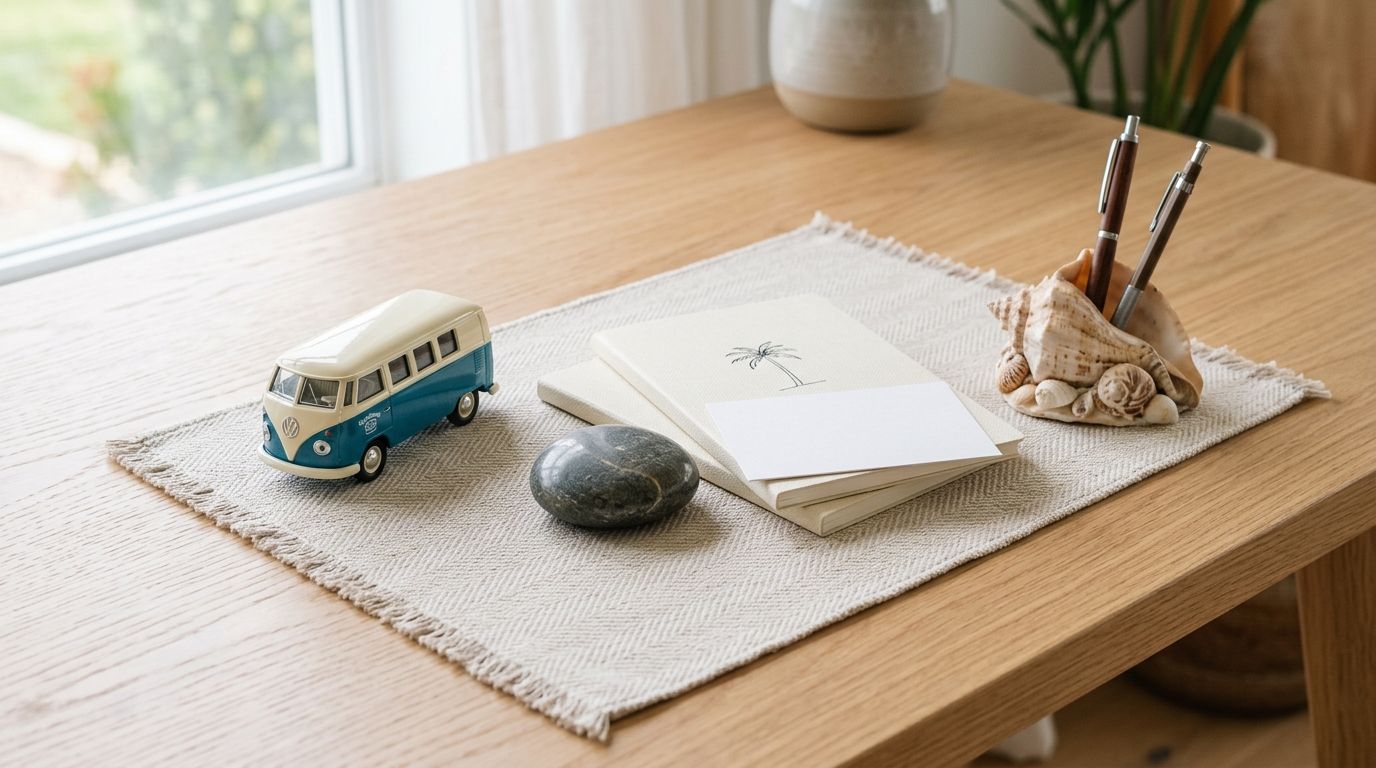
A single diecast Beetle or Kombi at the desk corner does more than a pile of novelty trinkets. Add a shell pen holder, a driftwood tray, or a simple coastal photo frame, and the desk feels personal without losing function.

A miniature Volkswagen van, a palm tree notebook, and pens in a seashell holder on a wooden desk.

What earns a spot on the desk

Every item should either help you work or make the space calmer. If it doesn't do one of those jobs, it probably belongs on a shelf instead.

A Sydney lawyer might keep one neat Kombi model, a pebble paperweight, and a timber organiser. A Melbourne designer might lean into a mini VW planter, a desk mat in sandy tones, and one small stack of reference books.

  • Keep the count low: Five to seven accessories is usually enough for a working desk.
  • Choose natural finishes: Timber, metal, stone, and shell all suit the beach look.
  • Mind the light: Put your diecast where a lamp or soft window light catches the curves.

The hidden trade-off is distraction. A desk full of collectibles can look fun for about a week, then start to feel visually noisy. You'll realise pretty quickly which pieces help the mood and which ones just take up elbow room.

This is also where gift buyers can do well. A licensed Volkswagen Beetle model or a small Kombi piece makes an easy, displayable present that doesn't ask for a full room makeover.

8. Colour Psychology and Coastal Paint Treatments

Late arvo sun hits the office wall, the cream on your Beetle diecast starts to glow, and suddenly the whole room feels more like a surf-club nook than a spare study. That shift usually comes down to paint.

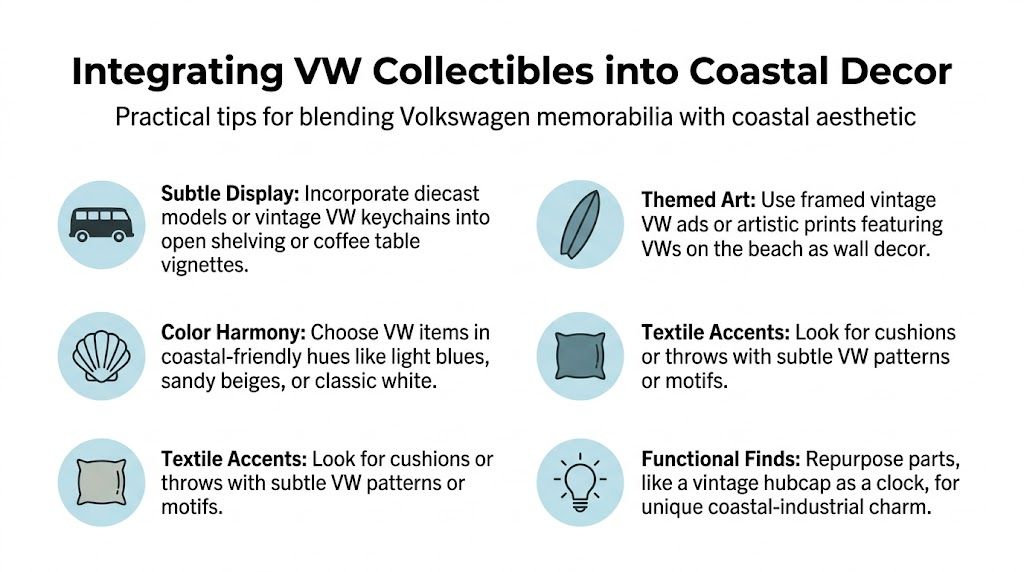
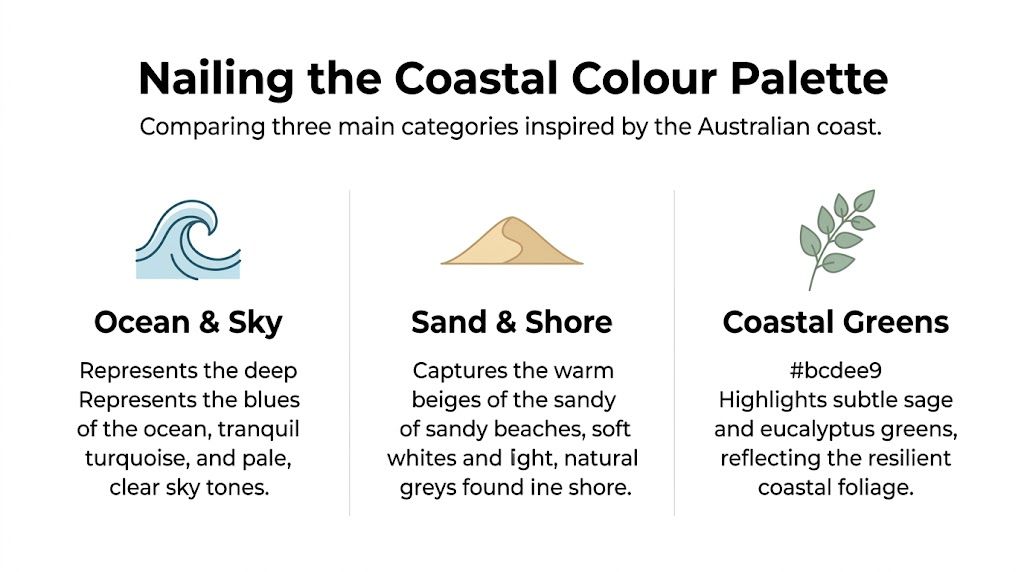
Paint sets the mood before the memorabilia even goes up. Soft whites, sandy neutrals, muted aqua tones, and washed seafoam shades all suit a coastal VW office because they calm the room and let the fun pieces do their job. A bright two-tone Kombi or a vintage sign has more presence against a quiet wall than it does against a colour shouting for attention.

Colours that work in a real office

Soft white is the reliable choice if you want flexibility. It reflects light well, keeps smaller rooms open, and won't fight with red, blue, or cream VW pieces. Sandy beige or warm stone is better if the space already has lots of white furniture, because it stops the room feeling clinical. Seafoam and pale blue can look brilliant behind timber shelving or a framed poster wall, but they need testing first. In some Australian light, especially near the coast, a cool paint can turn flat or slightly grey by mid-afternoon.

One feature wall is often enough. The wall behind the desk, display cabinet, or floating shelf usually gives you the biggest return for the least effort.

Texture matters too. Limewash, mineral paint, or a low-sheen finish can soften the room and give it that weathered beach-house feel VW fans tend to love. The trade-off is maintenance. Textured finishes hide small scuffs well, but they can be harder to patch neatly if you move shelves or swap artwork after the next VW show haul.

The wall should support the memorabilia, not compete with it.

I'd also be picky about undertones. A warm white works beautifully with cream Kombis, timber frames, and older metal signs. A blue-based white can make those same pieces feel colder and less nostalgic. Grab sample pots, paint decent-sized test patches, and check them in morning light, afternoon light, and under your desk lamp before committing.

Australian homes near the coast also deal with strong light for much of the year, so finish choice matters as much as colour. Washable paint with a durable low-sheen or satin finish usually makes more sense in a working office than flat matte, especially if the room gets salt air, dust, or plenty of sun. If you want styling ideas that already suit this softer palette, browse these coastal home décor ideas for VW-inspired spaces.

Warm lighting ties it together. A soft globe around 2700K to 3000K keeps seafoam, sand, and off-white tones relaxed and flattering. Cool office lighting can make a carefully chosen coastal palette feel like a medical fit-out, and that's no place for a lovely old Kombi display.

8-Item Beach Office Decor Comparison

Item 🔄 Implementation Complexity ⚡ Resource Requirements 📊 Expected Outcomes Ideal Use Cases ⭐ Key Advantages
Vintage VW Kombi & Samba Bus Diecast Displays Medium, requires shelves/cabinets, careful placement and dust control Moderate cost; display shelving or cases, lighting; larger scales need more space High visual nostalgia and focal interest; strong engagement with visitors Reception desks, window displays, themed meeting rooms, tourism offices Authentic licensed detail; compact yet impactful; strong collector appeal
Nautical Metal Wall Art Featuring VW Icons Low–Medium, wall mounting, anchors and planning for scale Moderate, cost varies by size and finish; secure fixings and careful delivery for large pieces High wall impact and texture; durable long-term statement Feature walls, cafés, lobbies, gallery clusters Sculptural texture; weather-resistant finishes; transforms blank walls
Soft Furnishings with Beach & VW Themes Low, no structural work, simple placement and seasonal swaps Low–Moderate, cushions, throws, quality fabrics; removable washable covers recommended Improved comfort and warmth; subtle thematic cohesion and colour infusion Lounge areas, seating zones, client meeting spaces Affordable way to add colour/pattern; washable covers; tactile comfort
Coastal Wall Shelving with Curated Collections Medium, proper anchoring, leveling, and load assessment required Moderate, shelving, brackets, installation tools; optional LED lighting Maximises vertical display; layered visual rhythm; flexible curation Compact offices, studios, retail displays, shared workspaces Flexible reconfiguration; shows mixed media; efficient use of wall space
Nautical & Beach-Themed Photo Displays Low–Medium, framing, arrangement planning, anti-glare/UV considerations Low–Moderate, prints, frames, archival materials; occasional protective glass Personalised storytelling; emotional connection; strong visual depth Hallways, meeting rooms, reception gallery walls Cost-effective high impact; easily refreshed; highly personalisable
Vintage Signage & Retro Beach Posters Low, simple hanging; large/heavy pieces need secure anchors Low–Moderate, signs/posters in tin, canvas or wood; quality affects authenticity Instant retro atmosphere and focal points; strong nostalgic appeal Feature areas, cafés, retail fronts, reception desks High nostalgia value; affordable statement pieces; wide design variety
Beach-Inspired Table Décor & Desk Accessories Low, minimal installation; requires intentional curation to avoid clutter Low, small, affordable items; occasional replacements and cleaning Personalised, functional workspace; subtle calming and tactile benefits Individual desks, meeting tables, reception counters Dual-purpose items (functional + decorative); promotes mindfulness; easy rotation
Colour Psychology & Coastal Paint Treatments Medium–High, paint/finish selection and application; may need professionals Moderate, quality paint, samples, possible contractor; lighting adjustments Cohesive calming atmosphere; improved focus and long-term wellbeing/productivity Full office refreshes, feature walls behind displays or seating Unifies aesthetic; enhances other décor; evidence-based calming effects

Your Coastal VW Escape Awaits

The best beach office setups feel like the morning after a big VW show on the coast. Salt in the air, a Kombi parked nearby, and that easy mix of nostalgia and calm that makes you want to stay a while. That is the mood worth chasing in a workspace.

A good result comes from restraint. Start with a coastal base that allows the room to function. Soft whites, sea blues, weathered timber, natural fibres. Then bring in the VW pieces with some discipline, the Kombi Samba Bus diecast you hunted down years ago, the Beetle model that reminds you of your first project car, or a sign that feels right for an old surf club office. Give each item space so it reads like part of the room, not stock piled from a swap meet.

That balance matters in real offices as much as home setups. As noted earlier, Australian fit-out trends continue to favour spaces with personality, provided they still feel organised and practical. In plain terms, themed décor works best when it earns its place. A shelf can hold diecast models and still keep reference books close. A framed poster can set the tone without shouting over the whole room. That is usually the difference between a collector's office and a cluttered spare room.

For Australian VW fans, the connection runs deeper than style. Australians first got Volkswagens as imports in late 1953, with official sales beginning in early 1954, and local assembly at Clayton in Victoria gave the market its own chapter before fully imported sales resumed from March 1977, as noted by the Club VW history of Australian Volkswagen sales. That history is why a Kombi or Beetle on display carries weight. It points to road trips up the coast, car show mornings, restoration chats over a bonnet, and the freedom these cars have always represented here.

Keep the final look simple and honest. Choose licensed pieces. Repeat colours already in the room. Mix metal, timber, linen, and glass so the space feels collected over time. If a piece does not suit the room or means nothing to you, leave it out.

If you are ready to finish the space properly, Volkswagen Memorabilia is a solid place to start. The range suits Australian collectors who want licensed diecast models, Kombi and Beetle display pieces, and coastal-friendly décor that fits a study, studio, reception area, or collector's corner without going over the top. Local stock and fast Australian shipping help too, especially when you have finally found the exact spot for that next Kombi or Beetle piece.

Van Fit Out Your VW: A Nostalgic Aussie Guide

A mate once dragged me over to a sun-faded Kombi at a country swap meet, pointed at the rust bubbles and said, “She's rough, but can't you already see the road trips?” He was right. A classic VW doesn't ask for a quick fit-out. It asks for patience, taste, and a bit of stubborn affection.

Dreaming of the Open Road in Your Classic VW

There's something different about planning a van fit out in a classic Volkswagen. A modern van can feel like a blank shell. A Kombi already has a personality before you pick up a tape measure. The curved panels, the smell of old trim, the view through that split-style glass. It all pushes you toward a build that feels less like manufacturing and more like stewardship.

Aussies haven't fallen out of love with these old buses either. By 2024, over 2,800 restored and converted VW Kombis are actively registered in Australia, and the average price for a fully fitted-out vintage model has risen to AUD $85,000 according to Volkswagen Memorabilia's VW collection and reference page. That tells you plenty. People aren't just preserving them for Sunday shows. They're building them to use, to travel, and to keep a bit of the old surf-touring spirit alive.

Why a Kombi fit-out feels different

A classic VW build rewards restraint. What works in a tall modern cargo van often looks clumsy in a Kombi. Heavy overhead lockers, chunky square cabinetry, or oversized appliances can rob the cabin of the very charm that made you buy the van in the first place.

A good vintage-focused van fit out usually leans on three things:

  • Light touch design that respects the original lines
  • Practical comfort for weekends, coastal runs, and short touring
  • Period character with modern reliability subtly incorporated

A Kombi looks happiest when the fit-out feels like it belongs there, not like it's been forced into submission by a kitchen catalogue.

The romance is real, but so is the work

Plenty of people start with the dream of striped canvas chairs, enamel mugs, and a sunrise at Crescent Head. That's the fun bit. The true craft sits underneath. You've got to think about access to the engine bay, airflow in hot weather, compact storage, and how every added piece changes the way an old VW drives.

That's why the best van fit out projects begin with honesty. Be honest about how you'll use it. Be honest about how much work you can do yourself. And be honest about whether you're building a showpiece, a weekender, or a proper little tourer with some red dust in its future.

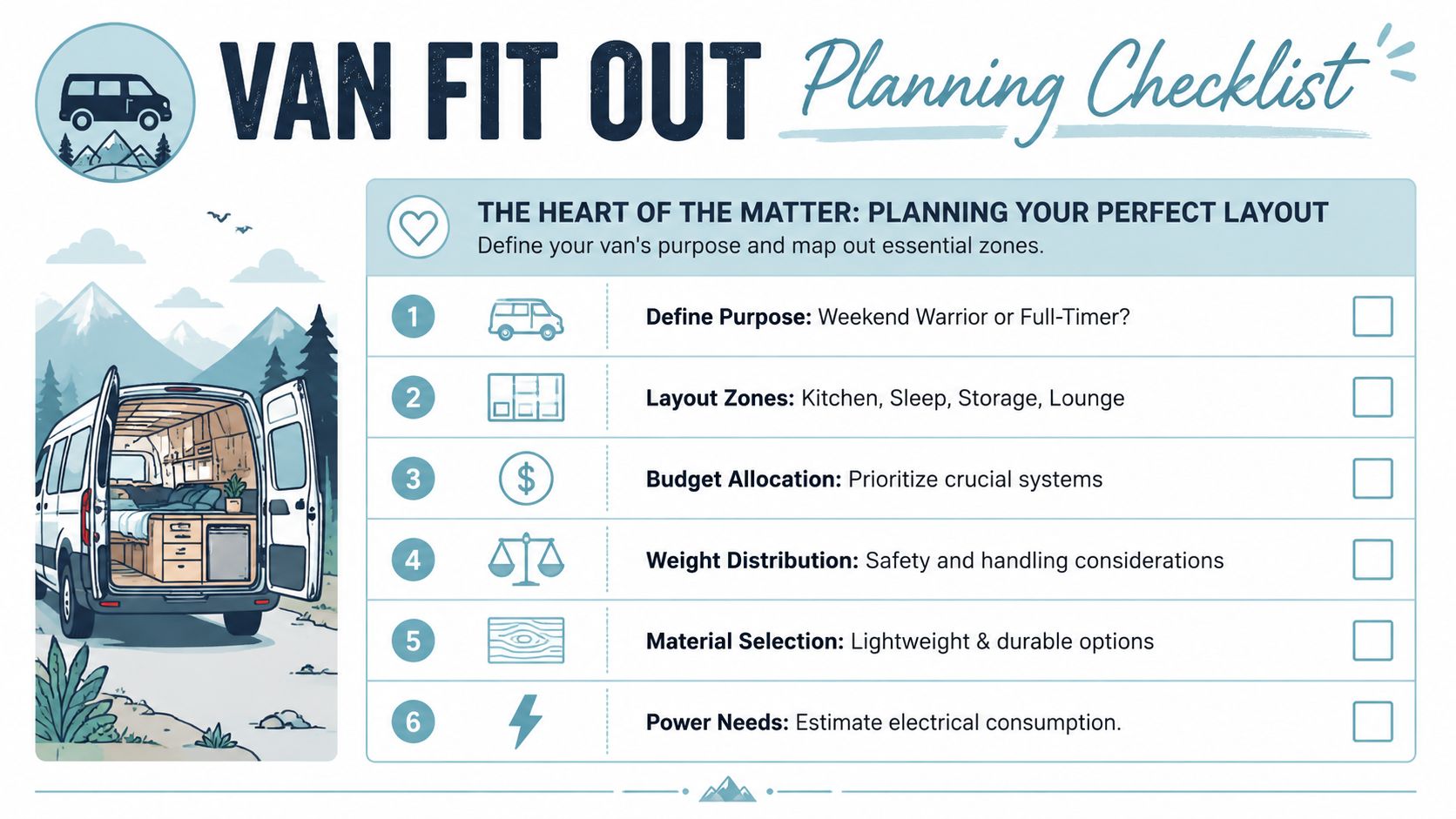
The Heart of the Matter Planning Your Perfect Layout

The smartest van fit out decisions happen before the first cut. In a classic VW, layout planning isn't just about comfort. It decides whether the van feels airy and nimble, or cramped and awkward.

A van fit out planning checklist infographic showing six essential steps for converting a camper van.

If you're pricing the job in Australia, brace yourself early. The median fit-out cost is AUD $45,000 for a full DIY build and up to AUD $95,000 for professional installations, as noted in this Australian VW reference page. That doesn't mean every build has to hit those numbers, but it does mean “I'll just throw a simple camper interior in” often turns out to be optimistic.

Start with use, not furniture

Ask the van a blunt question. What is it for?

Use case What matters most What usually gets sacrificed
Weekend beach trips Fast setup, easy bedding, simple storage Full kitchen complexity
Show-and-shine cruiser Period-correct materials, neat finishing Maximum utility
Touring weekender Power, water, organised gear access Open floor space

In a Kombi, every decision multiplies. A wider bed can steal walkway space. A fixed cabinet can make engine access annoying. Tall storage can make the cabin feel lower than it already is.

Sketch with real limits in mind

Classic VWs don't forgive sloppy measuring. The walls curve. The corners taper. The floor isn't always as true as you'd like. Cardboard templates help, painter's tape on the floor helps even more, and a scale model can be a surprisingly handy way to think through proportions before you commit to timber.

A useful planning checklist looks like this:

  1. Decide the sleeping setup. Rock-and-roll bed, fold-out platform, or simple bench-bed.
  2. Protect service access. Don't trap yourself with a pretty cabinet you have to remove for routine maintenance.
  3. Map heavy items low. Batteries, water, and dense gear should stay down low and close to the centre.
  4. Leave breathing room. A Kombi with a little open space feels twice as pleasant as one packed to the roof.

Practical rule: If a layout looks brilliant on paper but makes it hard to open, service, or clean the van, it's not brilliant yet.

Budget and payload need to talk to each other

Cost and weight are tied together more than most first-time builders realise. Premium finishes can still be heavy. Budget materials can also be heavy. The best result usually comes from choosing fewer things, but choosing them well.

Many van fit out plans go off track. Builders think in features instead of trade-offs. A second battery sounds great. So does a bigger water tank. So does extra storage. Before long, the van carries too much gear for the way it was meant to move.

Building the Bones Insulation Panelling and Flooring

Once the layout is settled, the shell work begins. This stage doesn't get the glamour of cabinetry or the buzz of wiring up lights, but it shapes how the van feels every single day.

In Australia, heat control matters. A classic VW has plenty of glass, plenty of metal, and not much mercy on a hot day. The goal with insulation isn't to turn the van into a thermos. It's to reduce radiant heat, soften temperature swings, and cut a bit of road noise without piling in unnecessary weight.

Insulation that suits an old VW

Keep it light and keep it tidy. Bulky layers can fight the Kombi's curves and make panel fitment frustrating. Thin, well-fitted insulation works better than stuffing every void with material that traps moisture or pushes trim out of shape.

Focus on these habits:

  • Clean and treat metal first. Surface rust hidden behind insulation only gets uglier with time.
  • Fit to the body shape. Small neat sections usually sit better than oversized pieces forced into corners.
  • Avoid overbuilding. Extra layers sound clever until they cost space and add weight.

A classic bus rewards neatness more than excess.

Panelling that respects the curve

Thin timber veneers can look brilliant in a Kombi, especially if you're chasing that warm, retro cabin feel. Modern lightweight boards can also work well if you want a cleaner finish and easier maintenance. Either way, template everything first. Old VW interiors rarely match side to side as neatly as you hope.

If you're choosing materials, insulation ideas for van projects can help spark finish direction, especially if you like that balance of practicality and nostalgia.

Flooring that doesn't fight the build

Flooring cops sand, wet thongs, muddy shoes, and cooking spills. It needs to be tough, easy to wipe down, and not too thick. In a Kombi, every millimetre of floor build-up affects headroom and the fit of cabinetry.

A simple comparison helps:

  • Vinyl flooring is easy to clean and suits practical touring builds.
  • Timber-look finishes bring warmth but need careful sealing.
  • Rubber-style surfaces are handy in harder-use vans, though they can feel less vintage.

The best floor is usually the one you don't worry about. If you're constantly babying it, it's probably the wrong choice for a road-going van.

The Big Three Electrics Plumbing and Gas

This is the part that scares people, and fair enough. Electrics, plumbing, and gas are where a van fit out stops being decorative and starts becoming a working system.

An organized utility wall inside a camper van displaying electrical, plumbing, and gas systems.

The best habit here is simple. Build in stages and test each stage before you hide it. According to this build-order guide for van conversions, a key benchmark is to run electrical cabling with proper wire sizing and protection after installing windows but before closing up panels. The same guide notes that small conductors are typically 1.5–6 mm², medium 10–35 mm², and large 50 mm²+. It also recommends copper pipe with brass compression fittings for gas systems, plus leak testing before use.

Electrics that stay simple and serviceable

A classic VW doesn't need a spaceship control panel. Most owners are better served by a modest, tidy setup that supports lighting, charging, a fridge if fitted, and maybe a fan or pump.

A few practical truths:

  • Run wires before panelling goes on. Retrofitting later is miserable.
  • Protect every connection. Proper crimps, heat-shrink, and strain relief matter.
  • Label circuits while you can still see them. Future-you will be grateful.
  • Keep heavy electrical gear low. That helps both access and vehicle balance.

If you're comparing storage and power options, a slimline lithium battery setup shows the kind of compact form factor many builders like for tight spaces.

Poor electrical work rarely announces itself on day one. It turns up later as voltage drop, hot connections, and maddening faults hidden behind finished walls.

Plumbing that matches the van

Plumbing in a Kombi works best when it's simple. Small tanks, short hose runs, easy drain access, and components you can reach without dismantling half the interior. Fancy systems often create more trouble than comfort in a compact vintage bus.

Good plumbing design usually means:

  • Fresh and grey water are easy to remove
  • The pump is accessible
  • The sink depth suits the cabinet below
  • Nothing blocks routine cleaning

That's the difference between a van you use often and a van you avoid because every little job feels fiddly.

A visual walkthrough helps when you're mapping services behind cabinets and panels:

Gas needs a stricter mindset

Gas is where cheerful DIY confidence needs a leash. If you're fitting a cooker or heater, treat the system like a regulated installation, not a casual weekend add-on. Copper pipe, brass compression fittings, proper support, and leak testing are the baseline, not the deluxe version.

The common failure isn't usually one dramatic blunder. It's a chain of smaller workmanship errors. A poor crimp here, a chafed wire there, an untested joint tucked behind a cupboard. That's why the cleanest van fit out builds tend to look almost boring behind the panels. Everything is sized, clipped, protected, and checked.

Staying Safe and Legal on Aussie Roads

A beautiful van that can't stay registered or insured is a very expensive shed ornament. That's why legal compliance has to sit inside the build from day one, not get bolted on later as paperwork.

In Australia, the practical gap isn't enthusiasm. It's understanding how modifications affect road legality. Seating changes, electrical installs, gas work, weight, anchorage points, and structural changes all interact with rules that can affect whether the vehicle remains roadworthy and insurable. The broader compliance discussion around VSB 14 and state or territory registration rules is often skipped in mainstream van content, even though it directly shapes what you can legally drive.

Weight is not a rough estimate

For Australian builds, one rule stands above the rest. A van fit out must comply with the manufacturer's weight ratings, including GVWR and GAWR, and builders should weigh the vehicle before and after conversion to ensure it remains registrable and insurable, as explained in this weight compliance guide.

That process matters because the final load includes more than cabinetry. It includes fluids, occupants, fixed equipment, and whatever gear you throw in for the trip. The same guide gives a practical benchmark of a 5,500 lb curb-weight van with about 1,800 lb of conversion payload, which shows how quickly available carrying capacity can disappear before water, fuel, passengers, and luggage are added.

The legal mindset that saves projects

You don't need to become an engineer overnight. You do need to stop thinking of payload and compliance as background admin.

Use this approach:

  • Check ratings early. Read the plate and understand the limits before buying materials.
  • Track additions as you build. Batteries, water, cabinetry, roof loads, and storage all add up.
  • Think about axle loads, not just total mass. Poor distribution can ruin handling.
  • Ask legal questions before cutting metal. Reversing a bad modification is far harder than planning properly.

The roadworthy van isn't the one with the most features. It's the one you can confidently register, insure, and drive across the country without a knot in your stomach.

The Fun Part Furniture Finishing and Nostalgic Styling

After the measuring, wiring, sealing, and legal homework, the soul goes in. Furniture gives the van its rhythm. The finishing touches give it its memory.

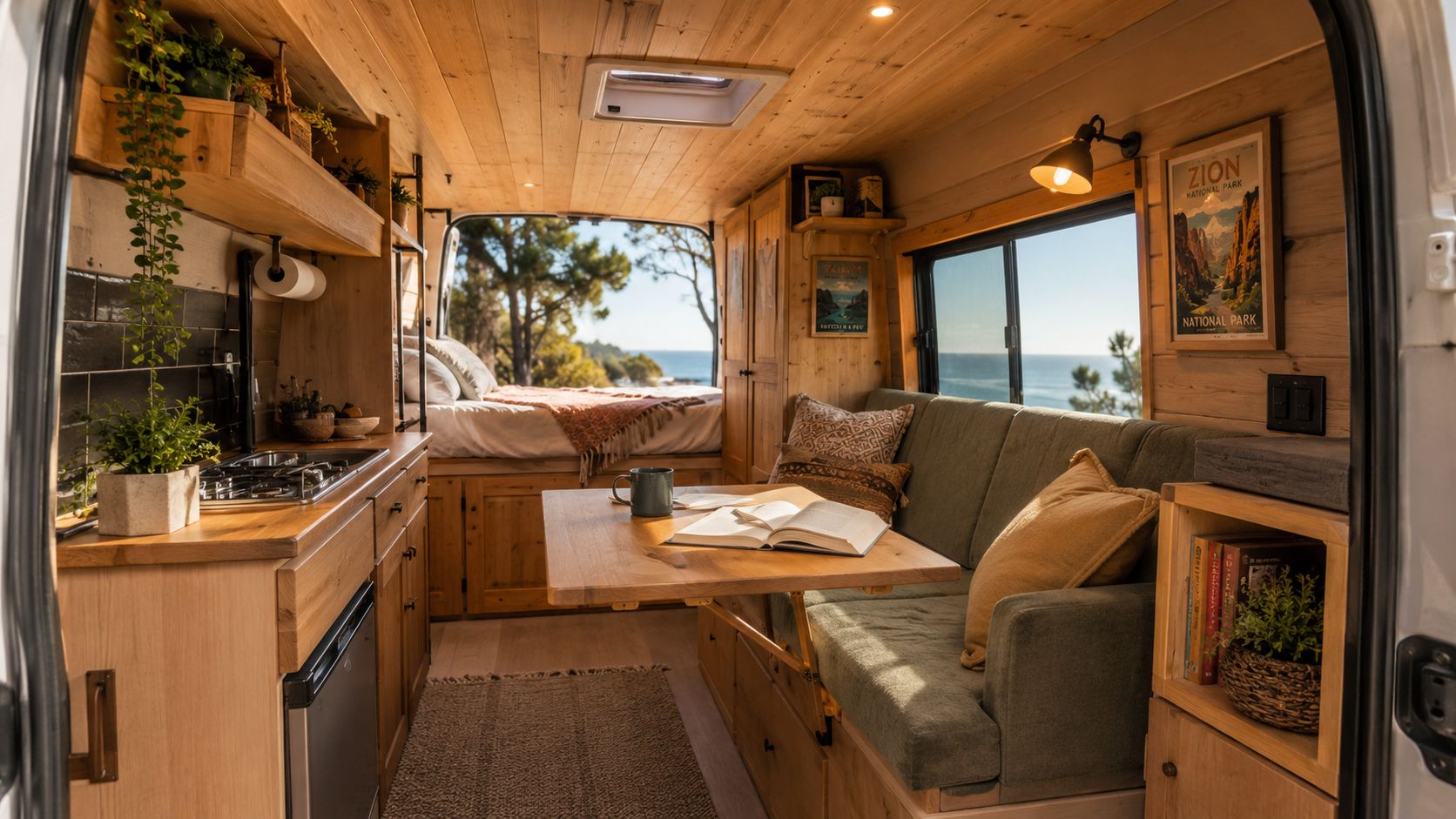
A well-sorted Kombi interior doesn't need much. A lightweight bench that doubles as storage, a bed base that's easy to lift, a small table that stows neatly, and joinery that doesn't shout over the van's original charm. Rounded edges always seem to suit these buses better than hard square forms.

A cozy, sunlit wooden camper van interior featuring a kitchen, seating area, and a bed overlooking the ocean.

Styling that feels right in a VW

The nicest classic interiors usually borrow from beach houses, old surf wagons, and honest camping gear. Think warm timber tones, muted colours, tidy curtains, simple hardware, and materials that age gracefully instead of trying to look perfect forever.

A few touches work especially well:

  • A small feature shelf for favourite VW diecast pieces or travel keepsakes
  • Vintage-style metal signs used sparingly, not plastered on every wall
  • Striped or canvas textiles that nod to old coastal camping
  • Soft warm lighting instead of harsh blue-white LEDs

Keep the furniture lighter than your ambitions

Many lovely plans tend to accumulate too much weight. Thick timber, oversized drawers, and household-style fittings can turn a nimble old bus into a sluggish one. Build furniture like boat joinery, not suburban kitchen cabinetry. Light, strong, multi-use, and easy to service.

The best part of a classic VW van fit out is that it doesn't need to be perfect to feel special. It just needs to feel lived in, cared for, and ready for another dawn run up the coast.


If you love the look and history of classic Volkswagens, Volkswagen Memorabilia is a lovely place to keep that passion going off the road as well as on it. You'll find VW memorabilia collectibles, nostalgic gifts, and display-worthy pieces for enthusiasts who adore the brand's heritage, including options that suit those seeking VW Kombi diecast Australia, a Volkswagen Beetle model, or a place to buy diecast Kombi favourites with local Australian stock and fast shipping.

Your VW-Themed Kids Travel Journal Guide

You're probably in that familiar pre-trip scramble right now. The snacks are half packed, someone's looking for a charger, and the kids are already asking whether they can bring one more toy car into the back seat. If your family road trips have ever involved a sun-faded Kombi, a cheerful Beetle, or just a deep love for old Volkswagens, there's a lovely little tradition worth adding to the glovebox. A kids travel journal.

Not the stiff, schoolish kind that feels like homework on holidays. I mean the sort of journal that catches the small things families actually remember later. The servo stop with the best vanilla slice. The yellow Beetle spotted outside a bakery in a country town. The way your child drew the family Kombi with wheels far too big and somehow got its personality exactly right.

For VW-loving families, a kids travel journal can become more than a diary. It becomes a rolling scrapbook of family stories, motoring nostalgia, and the odd bit of road dust pressed between pages. If you do it well, it feels less like a task and more like an heirloom in the making.

Capturing Road Trip Memories The VW Way

A classic VW trip has its own rhythm. You notice things differently. The drive feels slower in the best possible sense, and the journey matters as much as the destination. Kids pick up on that. They notice the split-screen van in the next lane, the surfboard on the roof rack, the sticker-covered rear window at the caravan park.

That's why a kids travel journal works so well in a VW family. It gives children a place to hold onto those tiny moments before they disappear into the blur of school terms and everyday life. Instead of asking, “Did you have fun?” weeks later, you get their version of the trip as it happened. Drawn, scribbled, stickered, and slightly sticky from a melted lolly.

A journal also suits the spirit of old Volkswagens. These cars have always invited storytelling. Families name them, wave at other owners, and build traditions around them. If your weekends already lean toward scenic drives and van life in Australia, adding a notebook to the routine feels natural.

Keep the first entry simple. Ask your child to draw the car, write where you're heading, and add one thing they hope to see on the trip.

The trick is to treat the journal like part of the adventure kit. It belongs beside the map, the sunnies, and the bag of snacks. Once kids realise it's their own record of the trip, not a parent-managed project, they usually bring far more personality to it than any adult ever could.

Choosing the Perfect Journal for Your Little Explorer

Some families do best with a neat, pre-made travel journal. Others are happier with a plain notebook and a fistful of stickers. Both work. The best choice depends less on trends and more on how your child likes to make things.

A happy young girl pointing at an open journal on a wooden table with a toy van.

Store-bought or DIY

A ready-made journal can be handy for shorter holidays. The prompts are already there, which helps children who freeze when faced with a blank page. If your trip is a long weekend away or a school holiday run up the coast, that structure can keep things moving.

A DIY journal gives you more room to match the child. One kid might want lined pages and daily notes. Another might want thick paper for drawings, ticket stubs, and leaves picked up at a picnic stop. A scrapbook, exercise book, display book, or spiral notebook can all become a strong kids travel journal.

Here's a quick way to decide:

Journal type Best for Watch out for
Pre-made prompt journal Kids who like guidance Can feel repetitive over a longer trip
Plain notebook Kids who want freedom May need parent suggestions to get started
Scrapbook or art pad Kids who draw more than they write Bulkier to pack
Binder with sleeves Families collecting maps, tickets, postcards Less convenient on the move

Why it's worth doing

There's a practical upside too. In Australia, an age-appropriate travel journal directly supports the national curriculum. Foundation to Year 2 students are expected to produce short imaginative and informative texts, while Years 3 to 6 build more detailed descriptions. That makes journaling a practical literacy exercise aligned with national educational standards across more than seven years of schooling, as outlined in this Australian curriculum travel journal overview.

So if you're weighing up whether this is just another holiday activity, it isn't. It's memory-keeping with real educational value.

What usually works best

For most VW family trips, the sweet spot is a sturdy notebook with a bit of flexibility.

  • Choose a tough cover so it survives beach bags, seat pockets, and the general chaos of family travel.
  • Leave room for keepsakes such as bakery receipts, park maps, ferry tickets, or a pressed gum leaf.
  • Pick paper that suits the child. Some like lined pages. Others need blank paper for sketches of Beetles and Kombis.

If the journal looks inviting and feels easy to use, kids are far more likely to keep reaching for it.

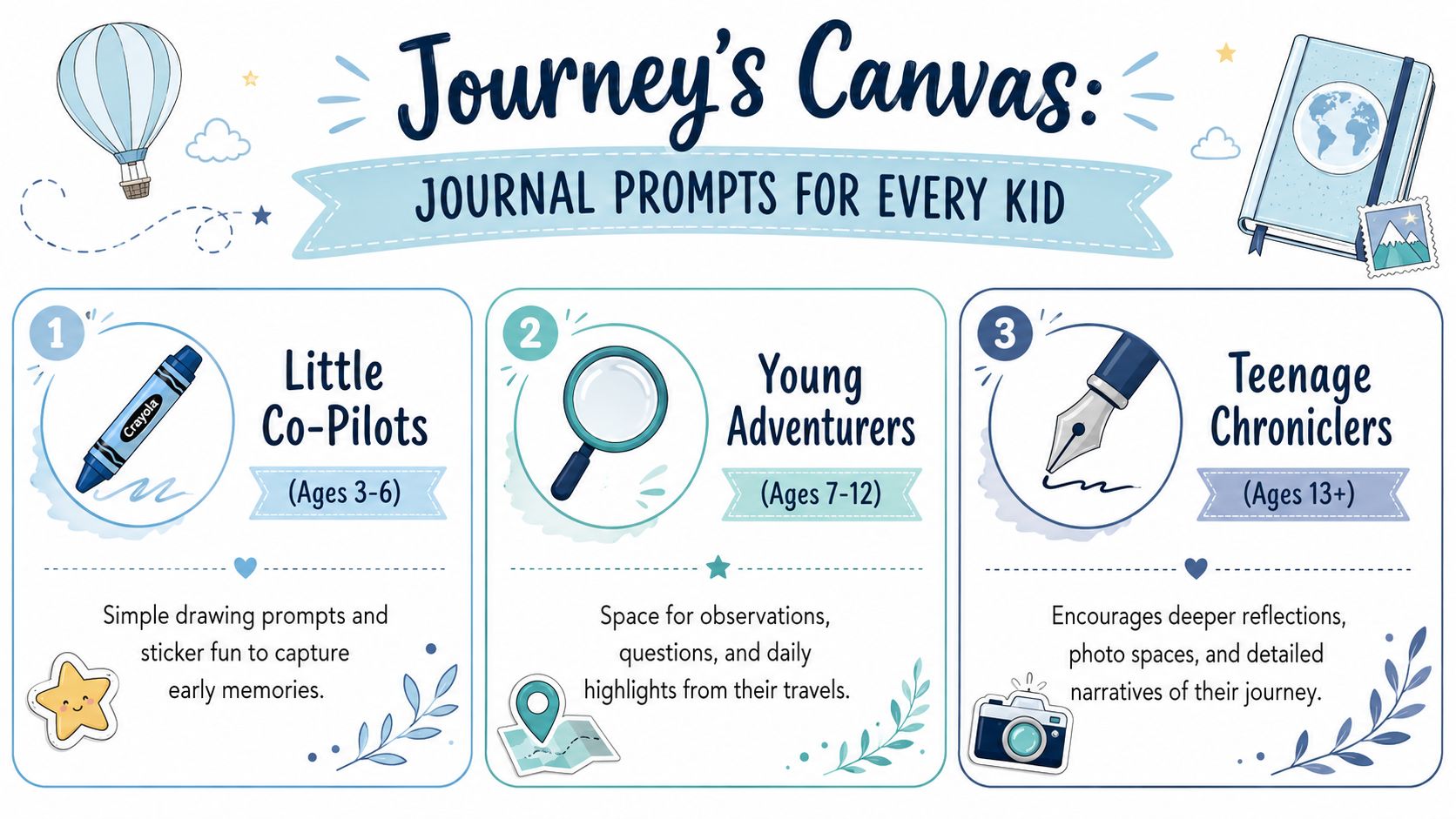
Page Prompts and Ideas for Every Age

A good kids travel journal shouldn't expect every child to respond the same way. Some kids narrate every detail of the day. Some draw one excellent picture and call it done. Some are tired, wriggly, or not interested in writing full sentences after a long drive.

An infographic titled Journey's Canvas illustrating three age-appropriate travel journal categories for children and teenagers.

Little Co-Pilots Ages 3 to 5

At this age, think visual and playful. You're not aiming for polished writing. You're building the habit of noticing.

Try pages like these:

  • Draw the day's favourite vehicle. Was it your Kombi, a tractor, or a bright old Beetle parked near the beach?
  • Sticker map page. Put one sticker where you slept, one where you stopped for lunch, and one where you saw something exciting.
  • My trip colours. Ask them to draw the colours they saw that day. Sea blue, red dirt, silver van, yellow sun.

A child who can only manage labels can still make a brilliant journal page.

Junior Cruisers Ages 6 to 9

This is the golden age for prompts. Kids in this range usually like a bit of structure, but they also want room to personalise things.

A few favourites:

  • Today we drove to…
  • The funniest thing that happened was…
  • I saw a VW that looked like…
  • Best snack of the day
  • What I'd tell a friend about this place

These children often enjoy collecting evidence. Let them tape in a postcard, draw the campsite, or rank the day's lunch stop.

A short entry done happily is better than a perfect page that never gets finished.

Road Trip Reporters 10 Plus

Older kids usually respond better when the journal respects their voice. They don't want babyish prompts. They want options.

Give them pages such as:

  • A one-paragraph review of the day's best stop
  • A sketch-and-caption spread of an interesting vehicle
  • A “three things I noticed” page
  • A reflection on what felt different about this town, road, or beach

If they're into photography, let them plan pages around printed snapshots later. A kids travel journal for an older child can feel more like a zine, field notebook, or travel log.

Making it work for reluctant writers

Some children don't want to write much at all, and that's fine. A key challenge is adapting journals for mixed-age families or reluctant writers. Practical alternatives include stickers, voice notes, and photo captions instead of full sentences, which can help pre-readers, kids with limited handwriting stamina, or children who engage better through different formats, as explored in this travel journaling adaptation guide.

Use that freedom well:

  • Photo-only pages with one caption underneath
  • Voice note QR ideas if you print a code later and stick it in
  • Sticker stories where children sequence the day with images
  • Fill-in prompts instead of open-ended writing

The best journal is the one your child will keep using.

Weaving in That Classic VW Magic

One family I know has a habit that I absolutely love. Every time they stop somewhere memorable, the kids take out a tiny diecast Kombi and set it on a rock, picnic table, or lookout rail for a quick photo. By the end of the trip, their journal is full of little “model on location” scenes. A miniature van at the Big Banana. A tiny Beetle beside a weathered jetty. A Samba Bus balanced carefully near a thermos and two lamingtons.

That's the sort of detail that turns a regular notebook into family motoring history.

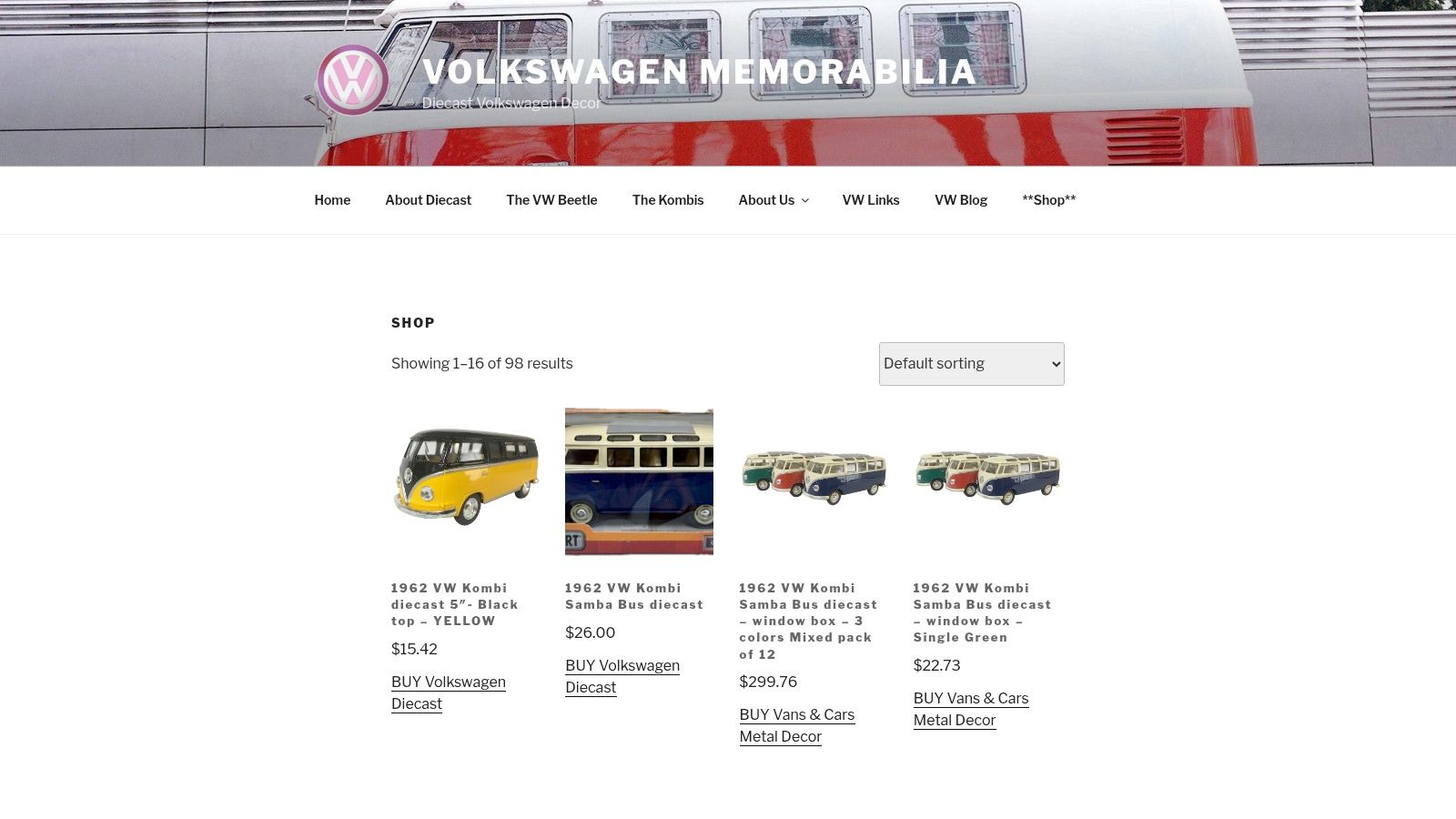
Screenshot from https://vwmemorabilia.com.au/shop/

Pages that feel properly VW

A VW-themed kids travel journal doesn't need to be complicated. It just needs a recurring thread.

You could add:

  • Kombi Kount pages where kids tally every Kombi they spot
  • Beetle Bingo with colours, roof racks, stickers, and surfboards
  • Number plate hunts beside sketches of interesting Volkswagens
  • Favourite car of the day with a quick drawing and where it was seen

For families who travel often, this becomes a lovely ritual. Australians took 119.4 million domestic overnight trips in the year to June 2024, and those trips averaged about 3.2 nights, which means there are plenty of natural chances to build a recurring journaling tradition over time, according to these ABS travel figures referenced here.

Small rituals make the book memorable

If your trip already has a VW flavour, lean into it. Add a page for the best roadside photo of the family car. Let the kids draw your dashboard. Save a little spot for sketches of hubcaps, headlights, or the steering wheel badge.

Some families also enjoy pairing the journal with inspiration from VW travel van stories, especially when they're planning coastal drives or weekend camping loops.

The more specific the page, the more vivid the memory later. “Saw a car” fades fast. “Blue Kombi outside the bakery in Bellingen” sticks.

A pocket for the good stuff

At the back of the journal, tape in an envelope or paper pocket. That's where the treasures go.

Think beyond the usual tickets. Include a beach permit, a pressed flower from a picnic stop, a postcard from a country town, or a printed photo of a favourite diecast model that travelled along for the ride. Kids love having a place for the bits adults might otherwise throw away. Years later, those scraps are often the first things everyone reaches for.

Packing and Preserving Your Road Trip Story

The best journals are easy to use while the trip is happening. If the supplies are buried under jumpers and bathers, nobody will bother. Keep it compact and ready.

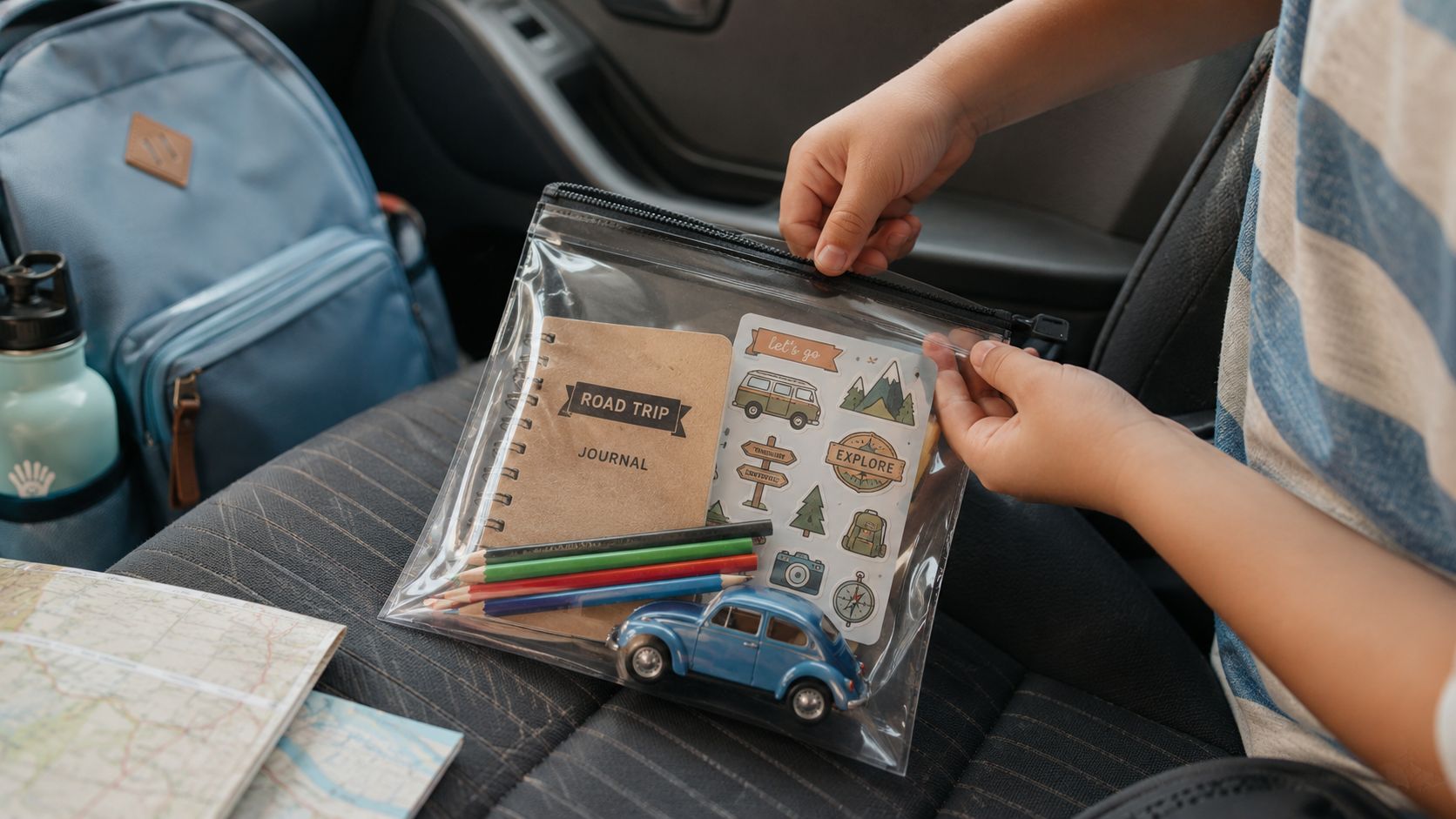
A child packing a clear travel pouch with a journal, colored pencils, and a toy car for a trip.

Build a simple car kit

A zip pouch or small tin is plenty. You don't need an art studio in the back seat.

Pack these basics:

  • Journal and pencil case with coloured pencils rather than textas, which are less likely to dry out or leak
  • Glue stick for tickets, wrappers, and postcards
  • Child-safe scissors if your kids are old enough to manage them
  • A few stickers for low-energy journaling days
  • A small clip or elastic band to keep loose pages tidy

Keep the whole lot in one place so it can be handed back quickly at a café, campsite, or ferry terminal.

Save the fragile bits properly

Once you're home, don't leave the finished journal in a heap with beach towels and charging cables. Give it the same respect you'd give any keepsake.

A few smart finishing touches help:

After the trip Why it helps
Slide delicate items into clear sleeves Protects tickets, flowers, and thin paper
Add dates to loose photos before sticking them in Makes memories easier to place later
Store the journal upright on a shelf Prevents bent corners and crushed pages
Keep it near family memorabilia Encourages people to revisit it

If you like displaying family mementos, a favourite photo from the trip can sit nicely beside the journal in something like this standing beach-themed photo frame. It's a simple way to turn the finished book into part of the home, not something hidden away in a cupboard.

Let it become part of the collection

For VW enthusiasts, that final step matters. A kids travel journal can sit beautifully near model cars, rally souvenirs, old rego plates, or beachy motoring bits and pieces. It becomes one more object with a story attached. Not bought for a shelf, but earned on the road.

Your Next Adventure Awaits

A kids travel journal's charm is that it catches family life before it slips past. Not the polished version. The genuine one. Crumbs on the seat. Wind in the car park. A child's lopsided sketch of a Beetle they swear was the best thing they saw all day.

That feels especially right for families who love Volkswagens. These cars have always carried more than luggage. They carry rituals, jokes, nicknames, and stories repeated at every barbecue and car show. A journal gives the next generation a way to join in, in their own handwriting and their own style.

You don't need a perfect trip, a perfect notebook, or children who adore writing. You just need a small habit. A few pages during the drive. A sketch at lunch. A ticket glued in before bed. Over time, those pages build something much richer than a holiday record.

When your child pulls that journal off the shelf years later, they won't just remember where you went. They'll remember how it felt to go there with you.


If you'd like to add a bit more VW character to your family's next journal, have a browse through Volkswagen Memorabilia. It's a great spot for VW memorabilia collectibles, licensed diecast favourites, and gift ideas that suit a Beetle or Kombi-loving household. For Australian buyers, local stock and fast shipping make it easier to grab those finishing touches before the next road trip rolls around.

Your Guide to the Tie Down Ratchet for VW Lovers

You know that feeling. You've found the part you've been chasing for months at a swap meet, or finally picked up a boxed Samba Bus model that still has crisp corners and unfaded artwork, and the excitement lasts right up until you look at your boot, your trailer, or the back seat and think, “Right. How do I get this home without turning it into a cautionary tale?”

That's where a good tie down ratchet earns its keep. Not as glamorous as a period-correct roof rack or as charming as a split-screen bus, but every bit as important when you're hauling something you care about.

For VW people, this stuff matters more than most. We don't just move cargo. We move memories, rare finds, restored panels, market treasures, and little pieces of history.

That Heart-in-Mouth Moment Getting Your Treasure Home

A lot of us have done the optimistic load-up. A Beetle bumper wrapped in an old blanket. A roof rack balanced “just for the drive home”. A crate of parts shoved behind the front seats of a Kombi with the quiet hope that nothing rolls, rubs, or chips.

It usually starts well. You score the item, have a yarn with the seller, grab a coffee, and then reality kicks in. The roads home aren't smooth, braking isn't gentle, and even a short trip can be enough to let something slide, tip, or knock against a painted surface.

That's why the humble tie down ratchet belongs in the same mental category as a decent tool roll and a fire extinguisher. It's not exciting until the moment you need it, and then it's the difference between a clean arrival and a very ordinary afternoon.

A mate once described it perfectly at a car show. Buying the part is the thrill. Getting it home safely is the true skill.

Practical rule: If the item would upset you to see scratched, crushed, or shifted on the first corner, secure it properly before you leave the car park.

This applies whether you're hauling a full-size panel or something smaller and sentimental. The same careful thinking that protects a vintage door card also protects a boxed diecast piece or a rare garage sign. Even aspirational browsing can trigger the transport question. One minute you're admiring a dreamy Volkswagen bus camper for sale, the next you're thinking about roof racks, trailers, and what gear you trust to hold precious cargo still.

Why VW enthusiasts need a different mindset

Classic VW bits aren't always shaped nicely. A bonnet catches wind. A bumper can swing. A boxed model can crush at the corners long before the contents are damaged. The load might not be especially heavy, but it can still be awkward, delicate, or impossible to replace.

That's why “she'll be right” doesn't cut it. Good restraint isn't just about brute strength. It's about matching the strap, the shape, and the pressure to the item in front of you.

Choosing the Right Strap for the Job

Walk into any hardware aisle and it's easy to feel a bit lost. Hooks, loops, colours, widths, handles. Some look tiny enough for a carton, others look ready for a machinery trailer. The trick is to ignore the noise and look for one thing first. Working Load Limit, or WLL.

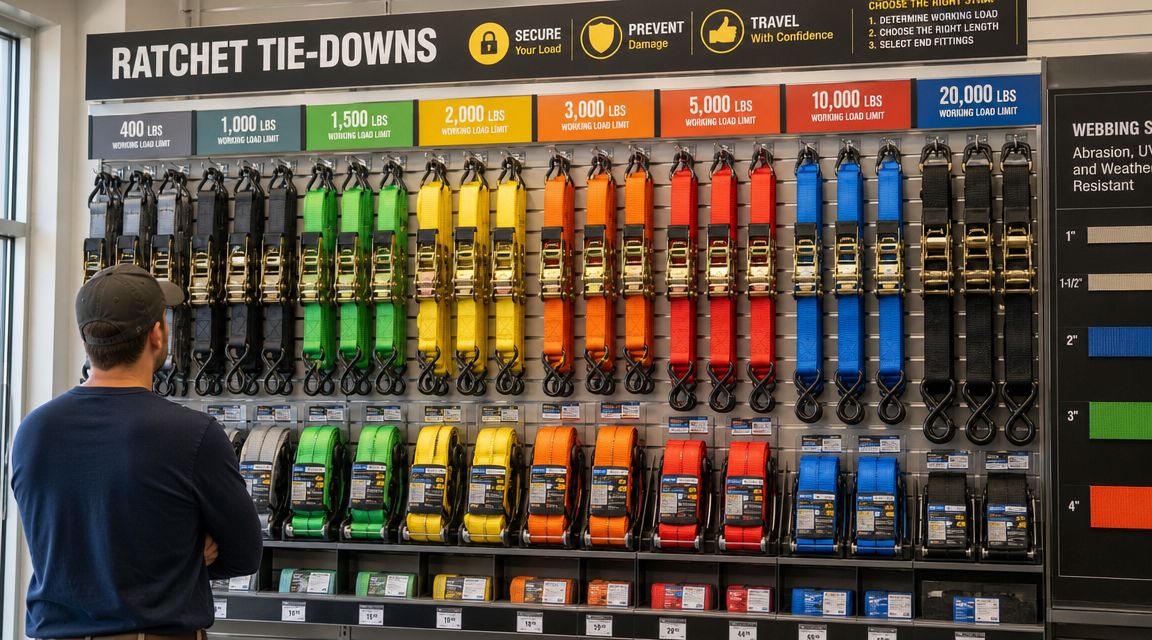
A man stands in a store looking at a wall display of various colorful ratchet tie-down straps.

In Australia, that rating is the number that matters in practical use. According to this guide to understanding working load limits, a 1-inch (25 mm) strap is often rated around 500 lb to 1,100 lb WLL, or about 225 to 500 kg, while heavier 2-inch to 4-inch straps can handle from 3,335 lb up to 5,670 lb, or about 1,500 to 2,500 kg.

WLL first, not breaking strength

This catches plenty of people out. They see a bigger number on the packet and assume that's the safe number to work with. It isn't.

The safer way to choose a tie down ratchet is to read the tag and use the WLL. That's the practical capacity you're selecting for. Breaking strength sounds impressive, but it's not the figure you should use when deciding whether the strap suits the load.

A simple VW-friendly way to choose

Here's the way I'd sort common jobs.

Job Best strap approach Why it works
Box of diecast models in a plastic tub Light-duty ratchet with gentle tension Stops sliding without crushing packaging
Loose VW magazines, banners, or soft display gear Endless or loop-style restraint Better for bundling, less metal hardware near delicate edges
Panels, wheels, heavier parts Wider strap with clearly marked WLL Spreads load better and gives more restraint confidence
Trailered mechanical bits Heavier-duty ratchet and sound anchor points More control over tension and movement

What to inspect before you buy

Not all straps feel the same in the hand, and that matters.

  • Read the tag: If the WLL isn't easy to identify, put it back.
  • Check the webbing: You want flat, tidy webbing that doesn't feel cheap or fuzzy straight off the shelf.
  • Look at the hardware: Hooks and ratchet bodies should feel solid, not flimsy.
  • Match the gear to the job: Bigger isn't always better. A heavy strap on a delicate box can be as clumsy as using vice grips for trim clips.

If you're also sourcing restoration gear, trim pieces, or transport odds and ends, it helps to think about restraint gear the same way you think about buying from a solid VW parts Australia specialist. The right item for the job saves grief later.

Buy straps the way you buy spanners. The size and quality matter less in theory than they do on the day something expensive is in your care.

The Art of a Perfect Ratchet Technique

A tie down ratchet isn't hard to use, but there is a right sequence, and getting that sequence wrong is where most frustration starts.

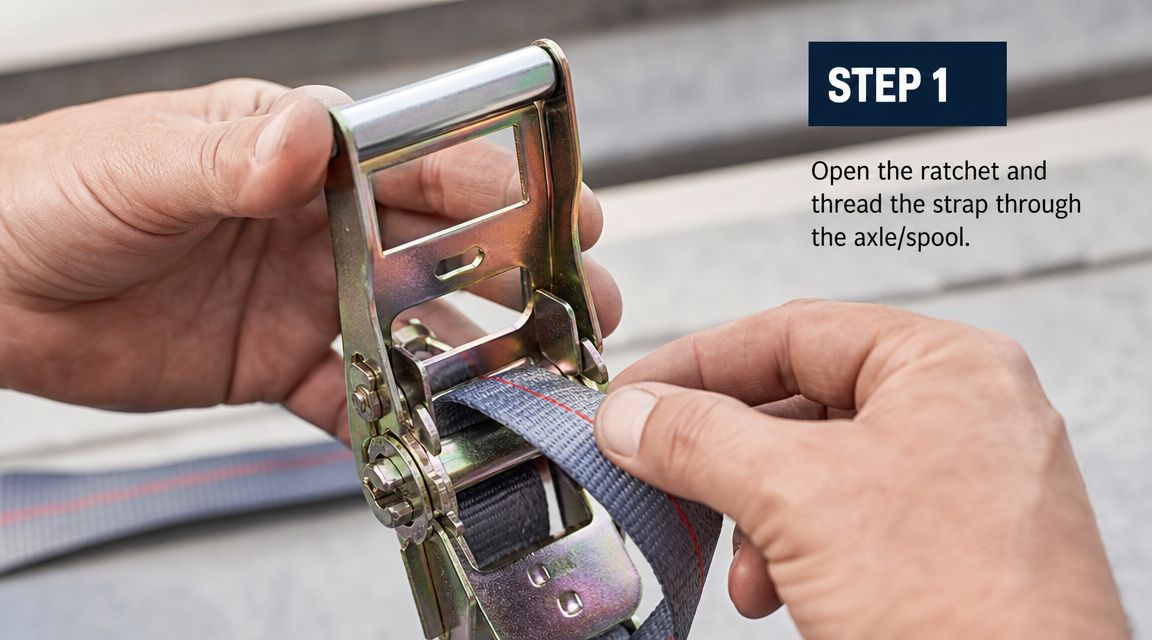
A pair of hands feeding a gray tie down strap through the metal axle of a ratchet mechanism.

The correct process is clearly laid out in this ratchet strap how-to guide. Open the ratchet, thread the webbing through the mandrel, pull the slack through by hand, pump the handle until taut, then close the ratchet fully so the pawls lock. That same guide notes that incorrect threading is the most common reason for failure.

The sequence that works

Use this rhythm every time:

  1. Open the ratchet fully so the slot in the mandrel is accessible.
  2. Feed the webbing through the mandrel from the correct side.
  3. Pull almost all slack out by hand before you start ratcheting.
  4. Pump the handle until the load is secure and stable.
  5. Close the ratchet completely so the mechanism locks properly.

Most mistakes happen before the tightening even starts. If the strap is threaded the wrong way, the mechanism won't tension properly. If you leave too much slack in, you end up winding a mess onto the mandrel.

Taut is enough

The goal isn't to flatten the cargo into submission. The goal is to stop movement.

That matters with VW gear because lots of our favourite items don't like point pressure. Fibreglass parts, old cardboard packaging, polished trim, and even some reproduction pieces can mark or deform if you get carried away with the handle.

Here's a visual refresher if you prefer seeing the motion in real time.

Keep the webbing flat

The strap should sit flat across the load. No twists. No bunching. No awkward rub points if you can help it.

A flat strap spreads pressure better and behaves more predictably on the road.

That's one of those little habits that separates a secure load from one that starts fine and gets ugly after a few roundabouts.

A Bit of Simple Maths for Total Peace of Mind

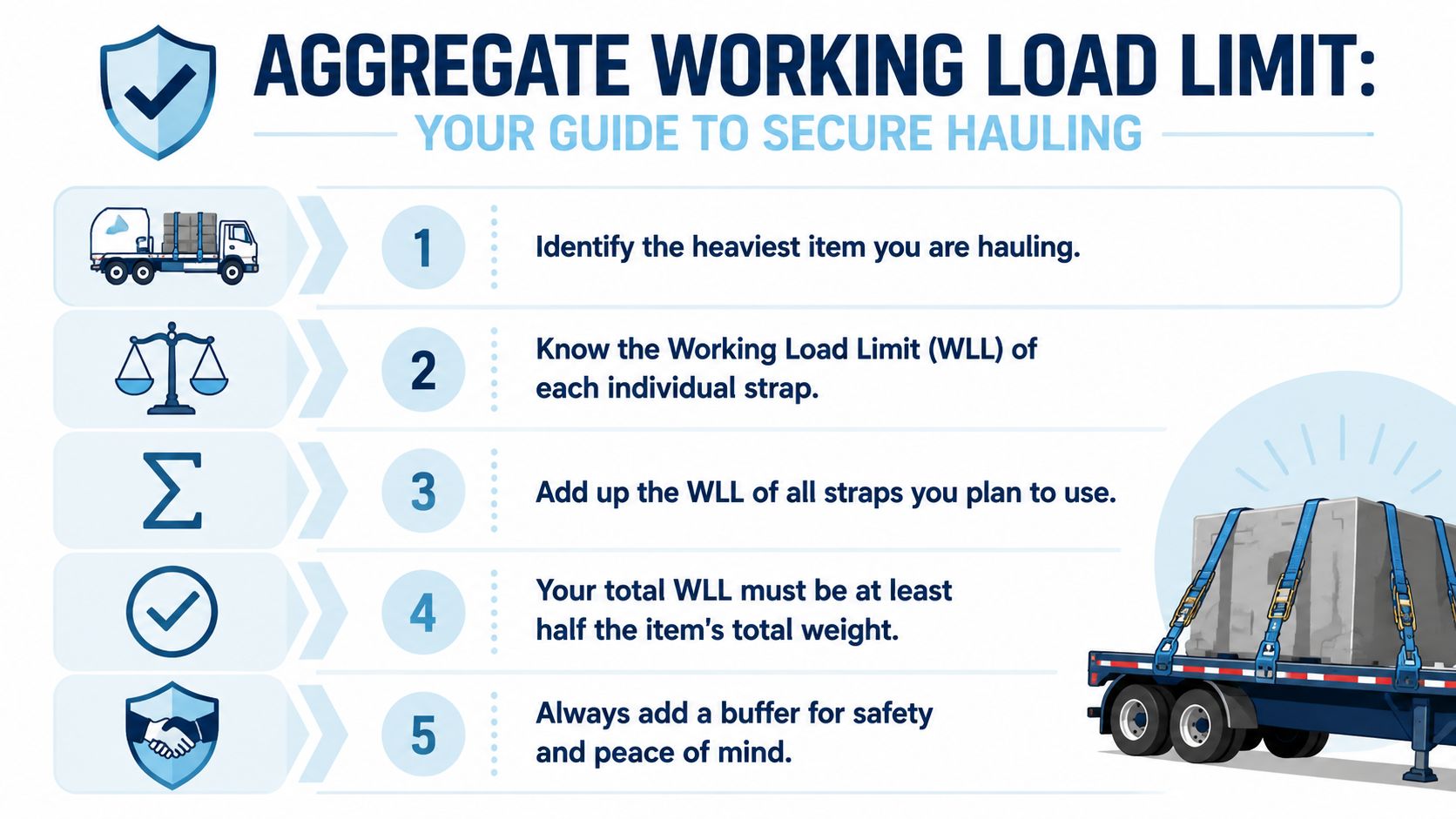
This is the part that sounds more technical than it is. The rule worth remembering is the aggregate working load limit. That means the combined WLL of the straps in the system must be enough for the load you're securing.

The benchmark given in this comprehensive guide to ratchet straps is straightforward. The aggregate WLL of your tie-downs must be at least half the mass of the load. For a 2,000 kg load, you need a combined WLL of at least 1,000 kg across all straps.

A safety infographic guide for cargo securement outlining the five steps to calculate aggregate working load limits.

How to think about it without overcomplicating things

Say you're hauling a substantial pile of VW bits on a trailer. Don't look at one strap and hope for the best. Look at every strap you're using, read each WLL tag, and add them together.

Then ask one question. Does that total meet the minimum requirement for the load?

That's the basic discipline. It turns cargo restraint from guesswork into a quick check.

A field checklist that actually helps

  • Identify the load mass: Know what you're really carrying, not what you reckon it probably weighs.
  • Read the strap tags: Use the WLL on the tag, not the larger breaking-strength figure.
  • Add the strap capacities together: You're assessing the whole restraint system.
  • Build in practicality: More restraint points can give better control of movement and better redundancy.
  • Check strap path and alignment: A strong strap doesn't help much if it's badly positioned.

More straps can do more than add capacity. They can stop rotation, reduce shifting, and give you options if the load shape is awkward.

For VW folk, that last bit matters. A stack of boxed parts behaves differently from a single engine case. A roof rack behaves differently from a wheel set. Good maths gets you legal and sensible. Good placement gets you home happy.

Common Blunders That'll Break Your Heart (and Your Gear)

The ugly stories are usually boring in hindsight. Nobody says, “I lost that rare bit because of some exotic engineering failure.” It's usually something simple. A twisted strap. Too much tension. The wrong style of tie down ratchet for the shape being carried.

Screenshot from https://vwmemorabilia.com.au/shop/

The mistakes that show up again and again

  • Over-tightening the strap: This is the heartbreak move. Too much force can crush cartons, stress fragile parts, and mark painted or plated surfaces.
  • Letting the strap twist: Twists create poor contact and can increase rubbing on edges.
  • Using hook-style straps for awkward bundling: Hooks are brilliant when you've got suitable anchor points. They're less helpful when the item itself needs to be wrapped and held neatly.
  • Ignoring loose ends: Flapping webbing can abrade, distract, and generally make a tidy job look rushed.

Endless loop straps deserve more love

One of the most useful alternatives for collectors and classic car owners is the endless loop style. According to Tegral's guide to endless ratchet tie downs, for irregular loads or bundling items where anchor points are limited, endless loop ratchet straps are often a better choice than standard hooked straps, especially where you want to avoid damage to delicate or awkwardly shaped collectibles.

That's a proper niche solution for VW people. Think bundled magazines, framed signs, stacked swap-meet finds, or a storage tub full of fragile memorabilia. An endless loop lets you secure the load to itself without introducing extra hook hardware where it isn't welcome.

What works better in practice

A hooked strap suits a trailer anchor point. An endless loop suits a bundle.

A wide strap helps with heavier, broad items. A smaller strap helps when you need control, not brute force.

The best restraint setup is the one that secures the load without becoming the thing that damages it.

That's the line to remember when you're tempted to just give the ratchet “one more click”.

Your Ultimate VW Transport Checklist

This is the sort of list worth keeping in the glovebox, especially if your weekends involve swap meets, surfboards, club runs, or the occasional lucky find that won't fit where you planned.

Before you drive off

  • Protect painted surfaces: Put a soft cloth, towel, or other non-abrasive barrier anywhere a strap or hook might touch paint, chrome, or trim.
  • Stabilise boxed models first: If you're transporting diecast, place boxed pieces inside a larger tub or crate so the strap secures the container, not the packaging itself.
  • Wrap unboxed collectibles properly: Bubble wrap and divided storage beat loose placement every time.
  • Check anchor points: Strong straps are only half the equation. The point they connect to matters just as much.

On the vehicle

Some loads need downward pressure. Others need anti-movement support more than compression.

Surf gear on a Beetle roof rack is a classic example. The straps should hold the board to the rack securely, but not so tightly that you stress the board or create odd pressure points. Likewise, a crate of memorabilia in the back of a Kombi should be prevented from sliding, not crushed into the floor.

After the first stretch of road

Loads settle. Blankets compress. Boxes shift that tiny bit. Webbing beds in.

So stop and check.

  • Recheck tension: A quick retension after the first few kilometres can make a big difference.
  • Look for rub points: If the strap has moved onto an edge, fix it before it becomes damage.
  • Secure loose tails: Tidy webbing now means less flap and less wear later.

If your trip is part of a bigger roadie, beach run, or show weekend, the same mindset carries over nicely to the broader van life Australia habit. Pack carefully, secure thoughtfully, and make the journey part of the enjoyment instead of a stress test for your gear.

Quick VW-specific checklist

Item Best habit
Painted panels Use soft protection under contact points
Boxed diecast Strap the storage tub, not the box
Unboxed models Wrap and separate before loading
Roof-rack gear Firm restraint, no over-tightening
Swap-meet bundles Consider endless loop straps for awkward shapes

A tie down ratchet isn't complicated, but it rewards care. Read the WLL tag. Thread it properly. Tighten it sensibly. Match the strap style to the item. Do those things and you'll spend more time enjoying the find than worrying about the drive home.


If you love the VW world as much as the drive itself, have a look through Volkswagen Memorabilia. It's a great spot for officially inspired VW-themed gifts, diecast models, Kombi favourites, Beetle pieces, and display-worthy collectibles with local Australian stock and friendly service. If you're hunting for a thoughtful present or the next gem for your own shelf, it's well worth a browse.

White Candle Holders: Coastal VW Decor Ideas

You know that moment when you stand back from your shelf, coffee in hand, and admire the little fleet you’ve built over the years? A tidy Beetle with those rounded guards. A bright Kombi that still feels like summer on wheels. Maybe a Samba Bus parked proudly in the centre like it owns the mantel. The models are right. The memories are right. But the display still feels a touch flat.

I had that feeling after a Show n Shine weekend, looking at a sun-faded surf photo, a couple of diecast VWs, and a bare bit of shelf timber that needed some soul. Not more clutter. Just atmosphere. Something that softened the edges and gave the whole corner that relaxed beach-house calm we all secretly want, whether we live near the coast or not.

That’s where white candle holders sneak in and do their best work. They don’t fight the colours of your Kombi. They don’t steal attention from a classic Beetle silhouette. They sit there, adding shape, light, and that breezy coastal mood that feels right at home beside old Vee-Dub memories.

Setting the Scene for Your Prized Collection

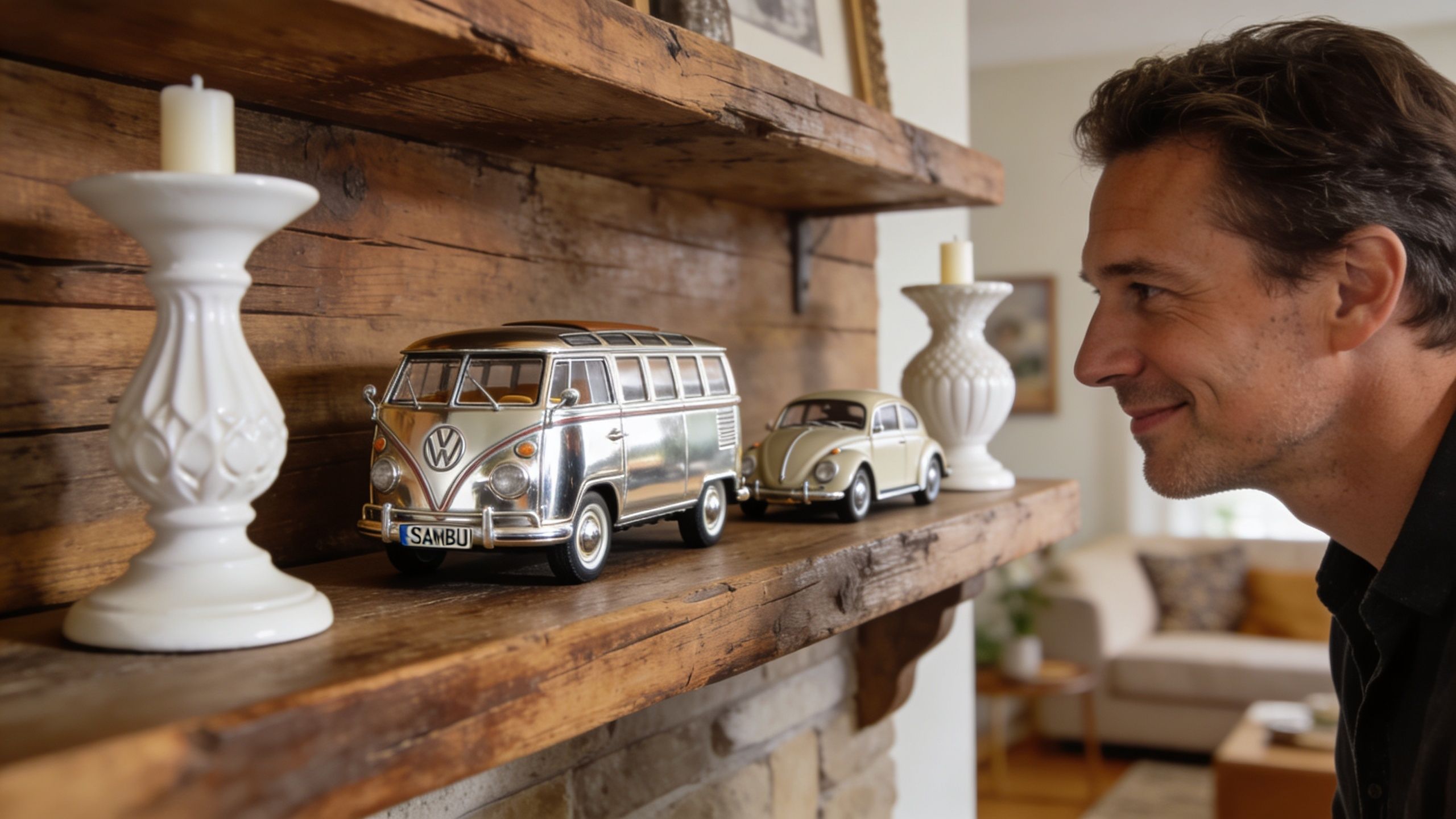
A mate of mine keeps a cream shelf above an old sideboard. On it sits a blue-and-white Kombi model, a weathered photo from a camping trip up the coast, and a stack of workshop manuals he refuses to throw out. It already had heart. What changed the whole look was adding two white candle holders at different heights, one smooth and one slightly rustic, to frame the display without boxing it in.

A man smiling at two miniature vintage Volkswagen toy cars displayed on a rustic wooden mantelpiece.

The effect was simple. The white surfaces bounced a bit more light around the shelf, the diecast paint looked richer, and the whole arrangement felt like it belonged together. It stopped looking like a few nice objects lined up after a clean-up and started feeling like a story.

A display that feels lived in

Classic Volkswagen displays work best when they suggest a life around the vehicle. A Kombi isn’t just a van. It’s road trips, surfboards, servo pies, and maps folded the wrong way. A Beetle isn’t just a shape. It’s first cars, family photos, and that unmistakable bonnet catching afternoon sun.

White candle holders help because they create breathing room. They act like the pale trim in an old beach shack. Quiet, tidy, and full of character without demanding applause.

A few styling cues make that shelf feel more natural:

  • Use uneven heights so the eye moves across the display instead of stopping at one hero piece.
  • Keep white tones soft rather than stark when you want a warmer nostalgic look.
  • Pair with timber, shells, or old books so the setup doesn’t drift into showroom-cold territory.

Practical rule: If your model car is the memory, the candle holder should be the backdrop.

If you like the idea of blending collectibles with home styling, a browse through vintage home accessories can spark plenty of display ideas without turning the room into a theme park.

Why this small touch works so well

White candle holders bring order without making things feel fussy. That matters when you’re displaying VW pieces, because the cars already have personality. Too many bold décor items and the whole shelf starts arguing with itself.

A clean white holder settles things down. It gives your collection the same feeling a well-detailed Beetle has after a wash. Calm. Crisp. Ready for a proper look.

Why White is the Perfect Colour for a VW Theme

White makes sense in a VW setting for the same reason white walls work in a surf club or a weatherboard beach house. It lets the good stuff breathe. The chrome on a Beetle catches it. The two-tone paint on a Kombi pops against it. Even a faded old postcard or a retro enamel sign looks sharper when there’s a bit of white nearby.

In Australian décor, that instinct has become mainstream. Reporting on interior trends and product mix notes that neutral-toned decorative items account for roughly 35 to 40% of decorative centrepiece sales, with white consistently the top colour choice. The same reporting says white ceramic and glass candle holders made up 42% of Adairs’ candle-holder SKUs in 2021 to 2022, promoted as “versatile” and “coastal-friendly.”

That wording says a lot. Versatile means it works with your bright Flower Power bus and your understated grey oval-window Beetle. Coastal-friendly means it carries that easy Australian beach mood without trying too hard.

White feels like the road trip itself

Think about the colours wrapped up in old VW memories here in Australia.

There’s white foam on the shoreline at first light. White sun glare off the bonnet during a long run north. White painted fibro shacks, salt-stained fences, and old milk bars near caravan parks. White belongs to the scene already. It doesn’t need to be forced in.

That’s why white candle holders feel right beside a Kombi. They echo the world the van belongs to.

White lets the cars do the talking

Collectors sometimes worry that white will feel plain. It won’t, if the rest of the display has shape and texture. White is a canvas. It gives the model room to sing.

A bright red Beetle looks more vivid against white. A pastel Kombi looks more relaxed. A cream-and-blue Samba suddenly feels like it’s parked outside a beachside café.

Here’s where white earns its keep:

Display element What white does
Bright diecast Kombi Tones down visual noise and lets paintwork stand out
Chrome details on Beetles Reflects light softly and highlights curves
Coastal props like shells or driftwood Ties them together without becoming overly nautical
Bookshelves or mantels Keeps the whole setup feeling tidy and airy

It suits both old-school and minimal spaces

Not every VW enthusiast wants a room full of loud retro colour. Some of us like the memorabilia tucked into a cleaner, more grown-up interior. White candle holders bridge both worlds. They work with a surfy corner full of texture, and they work with a modern shelf that only carries a few chosen pieces.

White isn’t the star of the display. It’s the light hitting the star.

That’s why this colour keeps turning up in beach-inspired styling and nostalgic collections alike. It gives a display polish without sanding away its personality.

Choosing the Right Holder Material and Finish

Picking a white candle holder is a bit like choosing wheels for a project car. The wrong choice isn’t always bad. It just sends the display in a different direction. Material changes mood, maintenance, and how comfortable you’ll feel placing it near your prized models.

A graphic guide explaining the aesthetic differences between ceramic, whitewashed wood, and glass white candle holders.

Ceramic for a clean classic look

Ceramic white candle holders suit neat shelves, modern sideboards, and anyone who loves a display that feels organised. They’re easy on the eye and they don’t bring too much texture into the mix.

If your diecast collection includes polished Beetles or display-ready Samba models with crisp paint lines, ceramic usually behaves well. It adds shape without visual fuss.

Best suited to:

  • Minimal interiors where you want the model’s colour to carry the scene
  • Bookshelves and office displays that need a tidy, refined finish
  • Collectors who prefer easy care and don’t want a heavily distressed look

Whitewashed wood for that beach-run warmth

This is the one that feels most like bare feet on a timber floor after a morning surf check. Whitewashed wood has grain, softness, and a bit of that weathered personality VW people tend to love.

A particularly useful option in coastal homes is whitewashed mango wood. Product information on whitewashed mango wood pillar holders notes that the lime-based whitewash creates a breathable finish that reduces mould growth risk by 20 to 30% compared with sealed varnishes. The same material notes that mango wood has a Janka hardness of 1,070 lbf, which gives it greater stability than pine.

That’s handy if your place gets sticky in summer or your display sits in a coastal room that always seems to hold a bit of salt air.

Workshop-style tip: If your display includes driftwood, shells, or vintage surf pieces, whitewashed wood usually looks like it was always meant to be there.

Glass for light and brightness

White glass holders bring a brighter feel. They suit shelves that get morning sun and displays where you want reflection and sparkle, not rustic texture. They’re especially good when the surrounding décor is already timber-heavy and needs a lighter counterpoint.

Glass can also make a smaller shelf feel less crowded because it doesn’t carry as much visual weight. The eye passes through it more easily.

A quick comparison

Material Best mood Good match for VW display Main consideration
Ceramic Sleek and orderly Beetles, clean-lined shelves, office nooks Can feel formal if everything else is too polished
Whitewashed wood Coastal and nostalgic Kombis, surf themes, rustic consoles Texture is the feature, so keep nearby pieces simple
Glass Bright and airy Smaller shelves, lighter rooms, reflective styling Shows smudges more quickly

Finish matters as much as material

Don’t stop at the base material. The finish changes everything.

A gloss white ceramic holder feels sharp and contemporary. A chalky or matte finish feels softer. Distressed whitewash adds old beach-house charm. Smooth glass feels lighter and more decorative.

When in doubt, match the finish to the story you want your VW display to tell. Restored and polished. Sun-faded and surfy. Or somewhere comfortably in between.

Matching Holders to Candles and Diecast Models

Scale matters. You wouldn’t park a giant plastic palm tree next to a beautifully detailed Beetle and call it balanced. Candle holders work the same way. The right size supports the model. The wrong size swallows it whole.

If you’ve got a modest diecast setup on a shelf, keep the holder slightly lower than the visual high point of the main model unless you’re deliberately framing it. That usually keeps the car as the hero.

Getting the proportions right

A small white tealight holder can guide the eye toward a compact Beetle model. A taller pillar holder works better when the display includes a larger Kombi or when the candle holder sits to one side as an anchor.

Try these pairings:

  • Low tealight holders beside smaller diecast pieces when you want a tidy, runway-like line of light
  • Medium holders with taper candles near books and framed photos for a more nostalgic shelf scene
  • Chunkier pillar holders beside larger vans or centre displays where the vehicle has enough presence to hold its own

One trick that works well is grouping rather than mirroring. Two holders of different heights often look more natural than a perfectly symmetrical pair.

Flame, heat, and common sense

Any display with collectibles needs a bit of care. Plastic parts, paper tags, dry timber, and boxed models don’t belong too close to an open flame. If you love the look of a real candle, give the holder clear space around it and keep the model slightly offset rather than tucked right beside the flame.

For a safer material choice, borosilicate glass white candle holders are worth noting. The material data says their coefficient of thermal expansion is lower than soda-lime glass, and that this reduces shatter risk by 70% when exposed to candle heat.

That doesn’t mean you can forget the basics. It just means the holder itself is better suited to heat changes.

Keep open flame as décor, not drama. If the setup feels crowded, switch to flameless candles and keep the ambience.

A few practical habits go a long way:

  1. Leave breathing space between the candle holder and any boxed collectible or paper item.
  2. Check stability first on narrow mantels or shelves that wobble when someone walks past.
  3. Use LED candles if the display lives in a busy family room or near curtains.
  4. Avoid oversized candles that tower over the model and pull all the focus.

If you’re styling around collectible vehicles, browsing Volkswagen model cars can help you judge scale and silhouette before you commit to a display layout.

Styling Your VW Sanctuary with Coastal and Retro Ideas

Some displays look bought. The best ones look gathered over time. A trip here, a market find there, an old photo from the glovebox, a diecast you couldn’t leave behind. White candle holders fit beautifully into that kind of setup because they connect all the odd pieces without making the arrangement feel staged.

A rustic coastal console table featuring white candle holders, seashell decorations, driftwood, and Volkswagen branded items.

The classic coastal Kombi corner

This look belongs on a console table, hallway shelf, or sunny living room nook. Start with a Kombi model in beachy colours. Add one whitewashed holder, one smoother white holder, and then bring in a few natural pieces like shell fragments, driftwood, or a shallow bowl of sand-toned stones.

The point isn’t to build a literal beach scene. It’s to hint at one. Let the holder shapes echo the vertical lines of old fence posts or jetty pylons, while the Kombi carries the story.

A setup like this works best when you keep the palette narrow:

  • White and off-white for calm
  • Faded blue or sea-glass green through the model or a small accent
  • Natural timber and shell tones to stop it feeling too sterile

The retro Beetle bookshelf display

This one feels more grown-up. Less surf shack, more favourite reading corner with a whiff of petrol nostalgia. Slide a classic Beetle model between a few stacked books, then place a pair of slim white candle holders on one side. Add a small framed black-and-white photo or an old club badge if you’ve got one.

Here, white candle holders act almost like bookends with personality. They bring shape and rhythm without crowding the shelf.

A bookshelf display works when every piece has a little air around it. If objects are touching all over the place, the nostalgia gets lost in the noise.

The flower power centrepiece

For a dining table or occasional table, go more playful. A bright Samba Bus or Kombi in the middle, fresh flowers nearby, and a ring of small white tealight holders around the edge creates a cheerful retro scene without tipping into kitsch.

The reason this works is contrast. White holds the structure together while the flowers and vehicle bring the fun. You get colour, but the display still feels tidy enough for an adult home.

A useful way to think about these three looks is this:

Style Best VW star White holder style Extra touches
Coastal Kombi corner Surfy Kombi or van Whitewashed or matte white Shells, driftwood, pale rope textures
Retro Beetle bookshelf Classic Beetle Slim ceramic or glass Books, framed photo, club keepsake
Flower power centrepiece Bright Samba or Kombi Tealight holders in white Fresh flowers, colourful napery

The shared thread is restraint. Let the model hold the memory. Let the white candle holders shape the mood.

Easy DIY Projects for a Personal Touch

VW people are makers by nature. Even if you’re not rebuilding carbies in the shed, you probably enjoy tinkering, adjusting, and giving things your own spin. That’s exactly why simple DIY work suits white candle holders so well. They’re easy to personalise without ruining the clean look that makes them useful.

A person paints the rim of a small wooden candle holder with white paint at a crafting table.

Add subtle VW-inspired detail

Take a plain ceramic or timber holder and give it one small nod to the hobby. A thin stripe in a classic Kombi blue. A tiny daisy motif for a Flower Power feel. A neat pinline around the base in red, cream, or mustard.

Keep it restrained. The charm is in the suggestion, not in turning the holder into a billboard.

Good beginner ideas include:

  • A fine painted ring around the lip or base
  • Mini retro decals used sparingly on one side
  • A distressed white finish rubbed back lightly on timber for a weathered beach look

Build a shared display base

One of the easiest projects is making a simple timber tray or base that holds both the candle holders and the diecast model together. It keeps the arrangement unified and makes it easy to move when you’re dusting or restyling the shelf.

Use reclaimed timber if you like a more relaxed finish. Paint it white, wash it back, or leave some raw timber showing through. Then place a small model and two holders together so the whole thing feels like one display piece rather than three separate objects.

A few coastal accents from shell wall art can also help if you want the finished setup to lean more beach-house than workshop.

Keep the project fun, not perfect

The best DIY décor for VW collectors has a bit of personality in it. A brushstroke that isn’t dead straight. A rubbed-back edge. A hand-painted detail that feels human. That imperfection often suits old Volkswagens better than factory-perfect gloss.

Small-maker advice: If the holder starts looking too busy, stop. White space is part of the design.

That’s true on shelves, and it’s true in the garage too.

The Perfect Gift for a Fellow VW Fan

Some gifts feel like a last-minute servo run. Others make the recipient grin before they’ve even opened the box properly. A diecast Volkswagen model paired with a well-chosen white candle holder sits firmly in the second category. It says you know what they love, but you’ve also thought about how they live with it.

A whitewashed timber holder paired with a Kombi suits the person who talks about road trips, beaches, and old camping stories. A sleeker white ceramic holder beside a Beetle model feels right for someone whose study or office shelf is neat, curated, and full of quiet nostalgia. A glass holder with a bright little van works well for gift buyers who want something cheerful and display-ready.

Why this pairing lands so well

It works because the gift doesn’t stop at the collectible. It helps create the setting for the collectible. Plenty of enthusiasts already have shelves full of treasured pieces. What they often don’t have is the little styling touch that makes those pieces feel finished.

That’s where white candle holders shine. They’re practical, attractive, and easy to blend into different homes. They suit beachy interiors, cleaner modern spaces, and retro corners with equal ease.

A thoughtful gift pairing might include:

  • A coastal-style holder with a Kombi model for the relaxed surf-culture fan
  • A slim white ceramic piece with a Beetle model for a more classic, understated look
  • A small cluster of white tealight holders with a colourful Samba for someone who loves entertaining and centrepieces

Buying local makes gifting easier

For Australian buyers, local stock matters. If you’re shopping for a birthday, Father’s Day, Christmas, or a surprise for a VW mate before the next club meet, it helps to buy from an Australian importer with local support and fast shipping. You’re not left guessing about delivery timing, and you’re dealing with people who understand the local scene.

That matters even more when the gift is specific. VW fans tend to notice details. Licensed models, good presentation, and a bit of display inspiration go a long way.

The nicest part of this whole idea is that it feels personal without becoming overblown. A simple white candle holder. A classic Volkswagen model. Together they tell a bigger story about travel, memory, and home.


If you’re ready to style your own shelf or find a gift that’ll mean something, have a look through Volkswagen Memorabilia. You’ll find officially licensed VW collectibles, coastal décor, local Australian stock, and plenty of inspiration for building a display around your favourite Beetles, Kombis, and Samba Buses.

Coastal Home Accessories Your Guide to Beach Style

A mate of mine keeps a faded blue split-screen Kombi model on the shelf above his entry table, right beside a bowl of collected shells and a weathered bit of driftwood. You walk in, catch that little scene in the morning light, and suddenly the whole house feels like a summer road trip up the coast.

That’s the magic of coastal home accessories when they’re done with heart. Not showroom-perfect. Not stiff. Just relaxed, sun-warmed, and full of stories that smell faintly of salt, old vinyl seats, and beach towels drying on the fence.

Bringing the Aussie Beach Vibe Home

You know the feeling. A classic Kombi is parked near the surf club, nose pointed toward the sea, boards on top, side windows catching the glare of a big summer afternoon. Even standing still, it looks like it’s about to head off on some carefree run up the coast.

That’s why the beach look lands so naturally in Australian homes. It isn’t just a decorating style. It’s memory. It’s weekends away, fish and chips on the bonnet, sand in the footwells, and that lovely mix of simplicity and freedom old Volkswagens seem to carry with them better than any other vehicle.

Australia gives that feeling a pretty solid foundation in everyday life. With a 25,760 km coastline and more than 85% of the population living within 50 km of the coast, beach living shapes how many Australians think about home, according to this coastal market overview citing Australian Bureau of Statistics data. No wonder so many of us lean toward interiors that feel open, breezy, and tied to the shore.

The houses that feel like holidays

Some homes get the coastal mood wrong because they chase props instead of atmosphere. They load up on anchors, signs, and novelty bits, then wonder why the room feels like a themed café.

The houses that get it right usually do something quieter.

  • They use pieces with a backstory. A shell picked up on a family trip. A rattan chair found second-hand. A little Beetle model that reminds you of your first car.
  • They leave breathing room. Coastal style likes space around objects, the same way a beach looks better with open sand than a crowded car park.
  • They mix clean surfaces with worn character. White walls, sun-bleached timber, soft linen, and one or two nostalgic pieces can do more than a room full of accessories.

Coastal style works best when the room feels lived in, not staged. A well-placed object with meaning always beats a shelf full of filler.

That’s why VW pieces fit so beautifully into this world. They already carry that road-to-the-waterline spirit. A Kombi, a Beetle, a Samba Bus. These aren’t random collectibles. They’re little symbols of movement, adventure, and unhurried days.

A beach house mood without living on the beach

You don’t need a home at Noosa or Byron to bring in this look. A suburban lounge room, a unit balcony, even a study can pick up that same easygoing tone with the right coastal home accessories and a few thoughtful nods to surf culture.

If you want ideas that lean into that mix of sea air and VW nostalgia, this collection of coastal home decor ideas is a good place to spark the imagination.

What Exactly Is the Coastal Look Anyway

The easiest way to think about the coastal look is this. It’s like bottling up a good beach day and spreading it around your house.

Not the loud bit. Not the crowded esplanade. The softer part. Pale sand, washed timber, white cotton, sea-glass blues, a bit of rope texture, and light moving across the room as if a sea breeze has just come through.

It’s a feeling before it’s a formula

Aussie coastal style isn’t meant to be too polished. It’s more relaxed than formal Hamptons decor, and it’s far less fussy than a lot of imported “beach house” looks that feel designed for magazines instead of real life.

Think of the difference like this:

Style Feels like Looks like
Aussie coastal Bare feet after a swim Linen, rattan, shell textures, faded blues, practical pieces
Formal coastal Guests arriving for drinks Crisp symmetry, sharper contrast, more decorative styling

That’s why this style suits VW lovers so well. Classic Volkswagens have never been about flash. They’re charming because they feel honest. Useful. A bit playful. They carry stories in their paint and shape.

The colours are borrowed from the shoreline

A good coastal palette usually starts with what you’d see standing on the sand.

  • Whites and creams for surf foam, cotton curtains, painted timber
  • Soft blues for shallow water and clear sky
  • Driftwood greys for weathered boards and jetty timber
  • Sandy beige and oat tones for warmth
  • Sea greens in small touches if a room needs freshness

The trick is not to use every “beachy” thing at once. A room doesn’t need to shout seaside. It just needs to suggest it.

It should feel easy, not over-decorated

If you’re a collector, this matters. The coastal look gives your treasured objects room to breathe. That means a diecast Kombi can sit on a shelf and read as part of the home, not as clutter.

Practical rule: if an item looks like it belongs near a stack of surf books, a woven basket, or a framed beach print, it’ll usually sit comfortably in a coastal room.

A shell, a lantern, a woven tray, a simple photo frame, a little white Beetle model. Separately they’re just objects. Together they create atmosphere.

That’s the heart of it. Coastal home accessories aren’t there to prove you like the beach. They’re there to make the place feel calmer, lighter, and more connected to the kind of life many of us already love.

Choosing Your Colours and Materials

A coastal room lives or dies by its surfaces. Colour sets the mood, but texture does the heavy lifting. If the materials feel synthetic, shiny, or too slick, the whole thing can lose that easy beachside charm.

The strongest coastal spaces usually start with a quiet base. White walls, chalky finishes, pale timber, natural fibres, and fabrics that look better slightly rumpled than perfectly pressed.

Start with a sun-faded palette

The safest move is to build from light neutrals and add colour in smaller doses. White or warm off-white gives you that airy foundation, then you can layer sandy taupes, soft blue, and the occasional sea-glass green.

A coastal-themed arrangement featuring coiled rope, a square white cloth, and a beige tile on blue wood.

If you’ve got a bright VW piece in mind, such as a cheerful Kombi or a flower-power Beetle model, this sort of restrained palette helps it sing without taking over the room.

A handy way to think about the colour balance is below:

Base element Best coastal direction
Walls Warm white, soft white, very pale grey
Furniture Whitewashed timber, light oak, cane, rattan
Textiles Oatmeal, cream, stone, faded blue
Accent pieces Navy in moderation, sea-glass tones, weathered metal

Natural fibres earn their place

Coastal home accessories are practical, not just pretty. Baskets, rugs, woven trays, linen cushions, and cotton throws all soften a room and bring in that beach-house ease.

Rugs are a good example. In coastal regions, high-grade jute rugs with a density over 1200 g/m² retain 85-90% of their tensile strength after simulated 5-year sunlight exposure, according to this guide to coastal decor materials. That matters in bright Australian homes where sun can punish weaker materials.

So if you’re choosing between a natural-fibre rug and a cheap glossy synthetic one, the natural option often makes more sense for both look and wear.

A coastal room should age gracefully. Faded timber, softened linen, and a natural-fibre rug often look better with time than materials that start peeling or glaring under strong light.

Choose pieces that can handle real life

Beach-inspired interiors work best when they aren’t precious. You want materials that can cope with sandy feet, open windows, and everyday use.

A simple checklist helps:

  • For seating, go for slipcovers, cotton, linen blends, or woven textures that don’t look stressed if they pick up a bit of life.
  • For storage, think cane-front cabinets, open timber shelves, and baskets that hide the loose bits without feeling heavy.
  • For accessories, favour ceramic, glass, rope, shell, timber, and metal with a slightly weathered finish.

VW memorabilia slots neatly into this material mix when you place it against the right backdrop. A little diecast bus on a chunky timber console feels intentional. The same piece on a glossy black shelf can feel disconnected.

Let contrast come from texture, not clutter

One of the nicest coastal combinations is rough against smooth. Try a woven mat under a painted side table, or a glazed shell dish next to dry driftwood. That sort of contrast keeps a room interesting without forcing it.

For VW fans, this opens up lovely display opportunities. A miniature Beetle beside a stack of old travel books. A Kombi against beadboard or pale timber. A surf van model on a tray with coral tones and glass. The palette stays calm, and the personality comes through in the details.

The Perfect Wave Adding the VW Memorabilia Twist

A coastal room with no nod to surf culture can still be lovely. But if you grew up spotting Kombis outside beaches, markets, and point breaks, it can feel like something’s missing.

The old VW van belongs in the Australian coastal imagination. It’s part vehicle, part postcard. Add one thoughtfully to a room, and suddenly the styling has a proper story.

Why the Kombi works so well indoors

The shape helps. Rounded lines, cheerful proportions, big windows, painted panels. A classic Kombi or Samba Bus already carries the same friendliness as coastal decor. It doesn’t fight the room. It loosens it up.

There’s also a real appetite for this crossover. A 2025 Australian Volkswagen Beetle Club survey found 28% of coastal residents incorporate diecast models into home displays, highlighting a niche blend of retro car culture and beach-inspired decor, as noted in this article discussing coastal-retro fusion.

That rings true because the pairing feels natural. Surf culture and Volkswagens have shared the same visual language for decades. Freedom, utility, colour, and fun.

A helpful infographic showing six creative ways to integrate vintage Volkswagen collectibles into a coastal home decor theme.

Treat memorabilia like design, not storage

The biggest mistake collectors make is displaying every favourite at once. That can work in a dedicated hobby room, but in a lounge or bedroom it usually feels crowded.

A better approach is to style VW pieces the same way you’d style ceramics or books.

  • Use one hero piece on a shelf or console. A Kombi model can do the visual work of a sculpture.
  • Build around colour. White, pale blue, cream, and muted red often sit well with coastal palettes.
  • Group by mood, not by category. A small van model beside a shell dish and a framed beach photo tells a stronger story than four unrelated collectibles lined up in a row.
  • Repeat shapes softly. Rounded vases, curved bowls, and the soft lines of a Beetle work together beautifully.

A diecast Kombi doesn’t have to look like a collector’s item. In the right setting, it reads as a tiny piece of surf history.

If you like that broader crossover between retro motoring and beach-house styling, this curation of vintage home accessories shows how well the two worlds can sit together.

The best VW pieces for coastal styling

Not every collectible suits every room. Some pieces feel too dark, too busy, or too mechanical for the softer coastal look.

These usually work best:

VW item Why it suits coastal decor
Kombi and Samba Bus diecast models They echo surf culture and have a playful silhouette
Classic Beetle models in white or softer tones Rounded shape fits relaxed, nostalgic interiors
VW wall art with beach or travel themes Adds story without needing shelf space
Small decorative metal pieces Bring contrast when the room has lots of soft texture

A good coastal room doesn’t need a lot of VW memorabilia. It just needs the right piece in the right place. Much like pinstriping on an old Beetle, a small touch, done properly, changes the whole feel.

A Room-by-Room Tour for Coastal VW Fans

Last summer, I walked into a mate’s beach house on the South Coast and knew within seconds he was one of us. Not because there was a giant VW sign shouting from the wall. It was quieter than that. A sun-faded Kombi diecast sat on a stack of surf books beside a shell bowl, and the whole room felt like a long drive to Bells with the windows down. That’s the trick in a coastal home. The Volkswagen pieces should feel lived with, not lined up like a swap-meet stall.

A cozy coastal living room featuring a white sofa, coffee table, and a vintage Volkswagen bus print.

The living room feels best with one focal point

The lounge usually carries the story of the house. If you’ve got a white sofa, sandy timber, and a few woven textures already doing the heavy lifting, one well-placed VW piece can pull the whole scene together.

A low coffee table works beautifully for this. Try a woven tray, a couple of travel books, and a single Kombi or Samba Bus model with enough detail to catch the eye when someone sits down with a cuppa. Open shelving can do the same job. A shell accent, a pale vase, one framed print, and a bus model often reads better than a shelf packed tight with collectibles.

The key is restraint. A Kombi in the living room should feel like part of the holiday mood, like an old board strapped to the roof rack outside.

A home office can show more of your motoring side

The study has room for a bit more personality. That’s often the spot where a brighter Beetle works. On a desk corner, it brings a flash of colour against timber, linen, and soft coastal blues. On a bookshelf, a Kombi tucked between travel guides and old car mags feels personal rather than decorative for decoration’s sake.

I’ve seen this done especially well with smaller displays that break up the straight lines of a work setup:

Spot VW idea Coastal pairing
Desk corner Beetle model Coral-toned notebook, timber pen tray
Bookshelf Samba Bus diecast Small shell, pale ceramic, travel titles
Wall ledge VW print or plaque Driftwood frame, soft blue accents

If you want a little wall interest without turning the room into a garage, coastal shell wall art pairs nicely with a modest VW display and keeps the mood beachy.

The bedroom likes the quieter side of nostalgia

Bedrooms suit the softer VW touches. A white or pastel Beetle on a bedside table can look right at home next to a linen-shaded lamp and a stack of books you keep meaning to finish. A small Kombi on a dresser gives off that road-trip feeling without making the room too busy.

Framed VW imagery can work here too, but keep it sparse. One beach-themed print above a chest of drawers usually feels calmer than a whole gallery wall of badges, logos, and number plates.

Small pieces shine here.

Entryways and hall tables set the tone fast

The front hall is like the first glimpse of a tidy engine bay at a car show. You know straight away whether the owner cares about the details.

A compact Kombi model beside a key bowl, a shell accent, and a family beach photo tells a lovely little story before anyone gets past the doorway. It says this house belongs to people who love the coast, love the road, and probably slow down for old Volkswagens.

Metal decor can work in these tighter spots too, especially if you’ve got a narrow wall or a small nook that needs height rather than more tabletop clutter. Keep it simple and the whole space feels relaxed.

Covered outdoor spaces can take a playful turn

A sheltered patio or enclosed veranda can carry more of that surf-club energy. This is a good place for a bus model with a beachy colourway, a VW-inspired wall piece, or a nostalgic sign that nods to road trips up the coast.

Outdoor styling still needs a light hand. A wicker chair, striped cushion, side table, and one classic Volkswagen accent usually does the job. Too many themed pieces and the area starts to feel like a souvenir shop instead of a spot for an afternoon drink after a swim.

If you’ve already found a favourite VW display piece earlier in the article, this covered outdoor corner can be the perfect home for it, especially if the rest of the space stays breezy and understated.

Finding and Caring For Your Coastal Treasures

Buying coastal home accessories is the fun part. Keeping them looking good near the coast is where a bit of know-how pays off.

Salt, humidity, and strong light don’t care whether something is decorative or collectible. They’ll wear down finishes, dull metals, and make cheap materials show their weakness fast. That’s why it helps to choose carefully from the start, especially if you’re buying VW pieces you want to keep on display.

A hand delicately touching a translucent iridescent seashell resting on a folded cream-colored linen fabric cloth

What to look for when buying

Collectors usually know the thrill of finding something that looks right in a photo, then feels flimsy when it arrives. For home styling, quality matters even more because the item has to work visually and physically in the room.

A simple buying checklist helps:

  • Licensed detail matters. A properly finished VW model usually looks cleaner and sits more proudly in a styled display.
  • Paint and trim should feel deliberate. If colours are muddy or decals look rushed, the piece won’t enhance a room.
  • Weight is often a clue. A solid diecast model generally feels more display-worthy than a very light novelty item.
  • Choose local stock when you can. An Australian seller usually makes the process smoother, especially if you want faster shipping and easier support.

For broader coastal styling, wall pieces can help anchor the look without taking up shelf space. This collection of shell wall art shows how a beach theme can stay tasteful rather than kitschy.

Metal choices matter near salt air

If you live near the ocean, hardware and decorative fittings need extra thought. In salt-laden coastal conditions, solid bronze hardware can outlast brass by 3-5 times, retaining 95% of its structural integrity after 10 years of simulated exposure, thanks to its protective oxide patina, according to this coastal hardware guide.

That’s useful beyond door handles. If you’re selecting hooks, knobs, frames, or accent hardware around your displays, bronze is the smarter long-term choice for many coastal homes.

Choose materials that can age with dignity. In beachside interiors, a finish that develops character is often better than one that tries to stay shiny forever.

Caring for diecast and decor without fuss

You don’t need a museum routine. You just need consistency.

  1. Dust lightly and often
    Use a soft cloth or gentle brush rather than anything abrasive.

  2. Keep prized models out of harsh direct sun
    Bright rooms are lovely, but permanent beam-on-the-shelf exposure can be rough on finishes over time.

  3. Wipe salty residue from nearby surfaces
    If windows stay open to sea air, shelving and frames may need a quick freshen-up now and then.

  4. Rotate displays
    This keeps rooms fresh and gives favourite pieces a rest from the brightest spots.

Local stock is worth mentioning here too. If you’re buying gifts or collecting for your own home, dealing with an Australian importer often means less waiting, less uncertainty, and easier help if you’ve got a question about what will suit your space.

Styling Your Space Through the Seasons

A good coastal interior doesn’t need a full reset every few months. It just needs a few subtle changes so the house keeps pace with the weather and the mood of the year.

Summer is the obvious one. This is the season for crisp whites, brighter blues, shell textures, striped cushions, and the more playful side of VW styling. A surf-inspired Kombi model looks right at home beside a stack of holiday reads or on a coffee table with a woven tray and sea-glass tones.

Summer and the warmer months

Keep things light and easy.

  • Swap in breezier textiles like lighter throws and pale cushion covers
  • Bring out brighter VW pieces that feel cheerful and road-trip ready
  • Use glass, shell, and rope textures to reflect the season’s freshness

Winter and cooler weather

Coastal style can still work beautifully in the colder months if you warm the edges. Think chunkier knits, deeper oat and stone tones, weathered timber, and softer lighting. In this context, a classic Beetle can sometimes suit the room better than a brightly coloured surf van.

The beach mood doesn’t disappear in winter. It just becomes quieter and more tucked in.

Season Coastal shift VW accent idea
Summer Crisper whites, brighter blues, more open styling Kombi or Samba Bus with surf feel
Cooler months Warmer neutrals, layered textiles, softer light Classic Beetle in calmer tones
Festive season Coastal whites, touches of sparkle, shell details VW-themed Christmas decorations

Christmas can still feel coastal

For VW fans, festive styling is a fun chance to lean into personality without losing the room’s overall look. A coastal Christmas tree can carry shell ornaments, sandy tones, and VW-themed decorations in a way that feels playful rather than overdone.

A Kombi ornament, a little Beetle among natural textures, or beach-inspired festive accents can keep the whole home consistent. The trick is to treat Christmas pieces the same way you treat everything else in coastal decor. Fewer, better, and chosen for mood.

Your Coastal Decor Questions Answered

A mate of mine on the Central Coast keeps a pale timber shelf above his record player. On it sits one cream ceramic bowl, a stack of sun-faded surf mags, and a little blue Kombi diecast no bigger than his hand. The room feels coastal before you even clock the model. Then you spot that tiny van and the whole space picks up that old road-trip magic, like a memory of salt on the wind and boards strapped to the roof.

That’s usually the trick people are chasing. A home that feels breezy and relaxed, with enough Volkswagen character to make it personal.

What’s the best diecast scale for shelf displays

Start with the shelf depth and what else lives there. A larger Kombi or Beetle suits a console, coffee table, or a single open shelf where it can hold the scene on its own. Smaller scales are better if you’re styling around beach finds, books, framed photos, or a coral-coloured vase.

If you want the display to feel calm, let one model lead and keep the supporting pieces low and textural.

How do I keep a VW collection from looking cluttered

One Gold Coast family solved this beautifully by splitting their collection by mood. The brighter surf Kombis went in the living room with timber, linen, and ocean prints. The quieter Beetles, mostly in softer tones, ended up in a study with old maps and worn books. Same passion, different corners of the house.

That approach works because each room gets a clear story. Rotate pieces instead of putting every favourite out at once, and mix the models with baskets, ceramics, glass, or framed beach photos so the collection feels curated.

Which VW model suits a coastal theme best

The Kombi usually wins the room. It carries all that surf-club, beach-car-park, summer-holiday nostalgia Australians know straight away, especially in soft blues, whites, or sun-washed pastels.

A classic Beetle has a different charm. It’s a little neater, a little gentler, and often suits calmer coastal spaces where you want a nod to vintage motoring without making the display too playful.

I’m buying a gift for a VW fan. Where should I start

Start with the memory, not the object.

If they talk about camping trips, beach runs, or chasing old Kombis at weekend markets, a display-worthy van model makes sense. If they once owned a Beetle, or their parents did, a Beetle model often lands with more heart. The best gifts feel like someone noticed the story behind the car, not just the badge.

For these pieces, Volkswagen Memorabilia is a brilliant spot to browse. You’ll find licensed diecast favourites, decor pieces, and gift-ready options with local Australian stock and fast shipping.

Can coastal decor work if I don’t live near the sea

Absolutely. Some of the most convincing coastal homes sit nowhere near the beach. They get the feeling right through washed timber, natural fibres, airy colours, and a few objects that suggest a life spent outdoors.

A small Kombi on a hallway shelf, a framed beach photo, and a woven tray can do more than a room full of obvious seaside signs.

What should I avoid when mixing VW memorabilia with beach styling

Too many novelty pieces in one spot will flatten the effect. If every shelf has a sign, a model car, a shell, and a bright accessory fighting for attention, the room starts to feel like a souvenir shop.

Keep the base simple. Let the coastal materials set the mood, then use one or two Volkswagen pieces to bring in personality and that free-spirited old-school charm Beetles and Kombis do so well.

Coastal Bedroom Decor: Merge Beach & VW Style

Some bedrooms look fine on paper and still feel dead once you step into them. You’ve got the bed, a couple of tables, maybe a nice lamp, and yet the room says nothing about how you live.

That’s the spot plenty of VW lovers end up in. The garage, shed, or display cabinet carries all the personality. The bedroom gets the leftovers. If your best memories involve a Kombi run up the coast, a Beetle parked near the surf, or rummaging through swap meets for the right bit of VW nostalgia, there’s no reason your sleeping space should feel like a generic furniture showroom.

Coastal bedroom decor works brilliantly for that lifestyle because it already shares the same spirit. It’s relaxed, sun-washed, practical, and a little nostalgic. Add Volkswagen character carefully and the room starts to feel less like a styled set and more like a proper retreat you’d want to wake up in.

Bringing the Aussie Coast and Classic VWs Indoors

A lot of blokes and collectors I know have the same instinct at first. They try to “theme” the room. A surfboard in the corner, a few model vans on every shelf, maybe some bold stripes, and suddenly the place feels more like a beach kiosk than a bedroom.

That’s the wrong turn.

The better approach is to treat the room like an old beach shack that’s been lived in for years by someone who happens to love Volkswagens. The coast comes first. The VW story comes through the details.

A serene bedroom with a light blue bed theme, white curtains, and panoramic views of a sandy beach.

Start with the feeling, not the collectables

Think about the rooms that stay with you after a road trip. They aren’t packed with “stuff”. They’re light, breezy, and easy to be in. Salt in the air, sun on the floorboards, maybe linen curtains moving with the breeze.

That’s the mood worth chasing.

For coastal bedroom decor, I always come back to a few essentials:

  • Light has to lead. If the room feels heavy, the whole coastal idea falls over.
  • Natural materials matter more than novelty. Timber, linen, jute, rattan. They do more lifting than any themed accessory.
  • VW pieces should look curated. One great Samba Bus model on a shelf beats a dozen random bits spread across every surface.

A good coastal VW bedroom should feel restful first and personal second. If it works the other way around, sleep suffers and the room feels busy.

Where the VW side fits naturally

Classic Volkswagens already belong in coastal spaces. Kombis, especially, sit comfortably with Australian surf culture, beach parking lots, old holiday towns, and that slow-road feeling we all know. Beetles work too, particularly in rooms that lean vintage rather than nautical.

The sweet spot is simple. Use coastal bedroom decor as the shell, then let your Volkswagen history show up in ways that feel collected over time. A framed old rally photo. A diecast bus on a floating shelf. A faded print with surf tones that picks up the room’s palette.

That’s how you bring the Aussie coast and classic VWs indoors without making the room feel forced.

Nailing the Coastal Colour Palette

Colour does most of the heavy lifting in coastal bedroom decor. Get it right and even a basic room starts feeling open and calm. Get it wrong and no amount of linen or driftwood will save it.

In Australia, coastal style isn’t some niche look. It reflects how a lot of us live. With 85% of Australians living within 50 km of the coast, coastal decor has become a dominant trend, and a 2023 Domain Home Trends Report found that 78% of coastal bedroom makeovers used soft neutral palettes while 67% used light timber furniture (A Blissful Nest).

A coastal color palette infographic featuring ocean blue, sandy beige, and soft sage green inspiration.

Build the room from the beach inward

The best palette usually starts with what you’d see standing on an Aussie shoreline.

Palette zone What it should feel like Best use in the room
Soft whites Clean, airy, sunlit Walls, ceiling, larger bedding pieces
Sandy beiges Warm, grounded, easy Rugs, throws, cushions, timber pairings
Muted blues Calm, coastal, not shouty Accent cushions, art, one statement piece
Coastal greens Subtle and natural Small accessories, prints, occasional upholstery

If you want the room to feel bigger, keep the walls in soft white or oyster-toned neutrals. If the room gets harsh afternoon light, a sandy beige or pale greyed white can soften the glare without losing the coastal look.

Don’t make every blue “beach blue”

It's common for people to overcook it. They paint a wall bright navy, add striped bedding, and suddenly the room drifts into pub-bathroom territory.

Muted blue works better than loud blue in a bedroom. Think sea haze, weathered paint, or faded denim. It gives the coastal cue without dominating the room.

For VW fans, this is also where you can sneak in personality. Instead of forcing primary colours everywhere, pull an accent from a vintage Kombi or Beetle in a restrained way:

  • Sea green works well in a ceramic lamp base or a framed print.
  • Burnt orange can lift a cushion or small artwork if the room is otherwise very neutral.
  • Cream and pastel blue suit older VW styling beautifully and sit naturally with coastal tones.

Practical rule: Choose one base neutral, one timber tone, and no more than two accent colours. That keeps the room collected rather than scattered.

A smart way to test your scheme

Before you buy anything big, gather your colours in one spot. Paint swatches, bedding fabric, a timber sample, even a photo of the VW model you want to display. Lay them together in morning and evening light.

That simple test stops a lot of expensive mistakes.

If you want more inspiration for balancing beach tones with vintage character, this guide on coastal home decor colour palette ideas is a handy place to keep the visual direction tight.

Furnishing Your Coastal VW Retreat

Furniture decides whether your room feels like a breezy coastal escape or just a pale room with beach colours. The bones matter.

Heavy dark suites usually fight the whole idea. Glossy modern pieces can feel cold. Coastal bedroom decor works best when the furniture has texture, softness, and a bit of visual breathing room.

A coastal style bedroom featuring a rattan bed frame, light wood nightstand, and ocean view scenery.

Pick one hero piece first

Most often, that’s the bed.

A rattan headboard, woven bed frame, or simple light-timber bed gives you an instant coastal anchor. Once that’s in place, the rest of the room gets easier to judge. If the bed looks too formal or too bulky, everything around it has to work harder.

A few bed styles that usually work well:

  • Rattan headboards bring texture without adding visual weight.
  • Whitewashed timber frames suit rooms that need brightness.
  • Simple oak or pine beds keep things grounded and don’t compete with memorabilia.

Bedside tables should support, not steal the show. Open-leg designs or lightly built timber pieces tend to keep the room airy. Chunky matching suites can flatten the whole look.

Texture beats decoration

One of the strongest practical lessons in coastal bedroom decor is that texture often matters more than accessories. Australian interior designers report a 92% success rate for jute or sisal rugs in coastal zones for humidity resistance, and a benchmark of 70% texture layering using materials such as jute, linen, and reclaimed timber is linked to the most serene results (Shine Rugs).

That tells you something useful. You don’t need heaps of “coastal” ornaments if the room already feels right underfoot and in the hand.

What works and what usually doesn’t

Here’s the trade-off in plain terms.

Choice Usually works Usually fails
Bed material Rattan, pine, light oak Dark heavy hardwood with ornate detailing
Storage Simple drawers, open shelving, light finishes Bulky glossy suites
Rug Jute or sisal for texture and practicality Plush synthetic pile in humid spaces
Chair or bench Cane, linen, or washed timber Chrome-heavy or ultra-modern pieces

Keep the furniture relaxed

The room shouldn’t look like every item came from the same page of a catalogue. Coastal rooms feel more believable when the pieces are slightly mixed. Maybe the bed is woven, the drawers are painted timber, and the bedside lamps bring in ceramic or cane.

That mismatch is healthy when the colours stay controlled.

A useful check is to stand at the doorway and look at the furniture as a group. If every piece shouts for attention, strip one thing back. If everything disappears, add one textured item with stronger presence, often the headboard or rug.

The room needs enough texture to feel layered, but not so many feature pieces that your eye has nowhere to rest.

For VW collectors, this matters even more. If the furniture is already loud, your diecast models and framed memorabilia won’t read as thoughtful details. They’ll just become more clutter.

Adding The VW Touch That Tells Your Story

This is the bit that separates a generic coastal room from one that actually belongs to you.

The mistake is thinking every Volkswagen item you own deserves a place in the bedroom. It doesn’t. A bedroom isn’t a swap-meet stall. The strongest coastal bedroom decor with VW influence uses fewer pieces and gives them room to breathe.

There’s a real appetite for this crossover. A Jan 2026 Houzz AU poll found that 62% of coastal decor seekers wanted retro car motifs but couldn’t find suitable ideas, and Google Trends AU data showed a 35% rise in “retro van art” searches from 2025 to 2026 (Houzz coastal bedroom ideas).

A coastal-themed bedroom featuring Volkswagen van decor, including a framed blueprint, wooden toy model, and decorative pillow.

Treat diecast models like display pieces, not toys

A good diecast Kombi or Beetle can carry a shelf on its own if you style around it properly.

Try a small vignette rather than a row of models. One Samba Bus model, one stack of books, one natural object like driftwood or coral-inspired decor, and one plant. That’s usually enough.

A few combinations that work especially well:

  • Surf shelf. A Kombi model in soft vintage tones, weathered timber behind it, and one framed beach photo.
  • Collector’s bedside display. A single Beetle model on a book stack with a ceramic lamp and no extra clutter.
  • Floating shelf trio. One VW diecast, one shell or stone object, one small artwork.

The restraint is the style.

Match the model to the room mood

Not every VW piece suits every coastal bedroom.

VW item Best room style
1962 Samba Bus diecast Relaxed surf-shack coastal rooms
Flower Power Kombi model More playful, retro coastal spaces
Classic Beetle model Vintage coastal bedrooms with softer tones
VW blueprint or print Cleaner, more pared-back rooms

If your room is calm and neutral, a colourful Kombi can become the feature. If the room already has a few stronger accents, use a cream, white, or pale blue model instead.

Use wall art with more care than you think

Framed VW prints can work beautifully in coastal bedroom decor, but scale matters. One medium print over a dresser often lands better than a whole gallery wall.

Old ad reproductions, surf trip photography, registration plates with patina, and blueprint-style art all tend to feel more grown-up than novelty signs. Keep the frames simple. Timber, white, or muted black usually sits best.

For readers who want to pull together retro accents with home styling pieces, these vintage home accessories show the sort of direction that suits this look without pushing it into kitsch.

A quick bit of moving inspiration always helps spark ideas:

The shelf test I always recommend

Before drilling holes or spreading models around, place your chosen VW items on the bed and remove half of them. Then remove one more.

What’s left is usually closer to the right answer.

If every piece has a story, the room feels personal. If every piece is visible at once, the stories blur together.

That’s the whole point. Your bedroom should hint at years of beach drives, car shows, restorations, and collecting. It shouldn’t scream them all at once.

Layering Textiles and Lighting for That Holiday Feel

A room can have the right paint and furniture and still feel a bit flat. Textiles and lighting fix that. They’re what turn a styled room into one you genuinely want to crawl into each evening.

Keep fabrics breathable and unfussy

For bedding, natural fibres nearly always win. Linen has that slightly rumpled look that suits coastal bedroom decor perfectly. Cotton works well too, especially if you prefer a cleaner finish.

The layered look doesn’t need much:

  • Base bedding in white, sand, or soft blue
  • One textured throw across the foot of the bed
  • Two or three cushions with different weaves rather than loud prints
  • A rug with natural character to stop the room feeling bare

The common trap is over-patterning. Once you’ve got a textured bedhead, a rug, and VW display pieces in the room, bold stripes and busy tropical prints can tip everything into noise.

Curtains should soften the room, not block it off

Heavy drapes fight the whole coastal idea unless you absolutely need full blackout. Sheer linen or light cotton curtains let daylight filter through and make the room feel more alive.

The effect is less about drama and more about atmosphere. Soft filtered light is what gives coastal bedrooms that easy holiday quality.

If you’re into mixing boho softness with beach tones, these boho style room ideas can help with layering without losing the clean coastal base.

Light the room in zones

One ceiling light rarely does the job well in a bedroom. It’s too harsh, and it flattens all the nice texture you’ve added.

Try this instead:

Area Best lighting approach Why it works
Bedside Warm lamp with ceramic, woven, or timber base Makes the room feel settled at night
Reading corner Floor lamp or table lamp Adds a second pool of light
Overall room Soft overhead fitting Useful when needed, not the main mood setter

A woven shade, ceramic lamp base, or timber lamp works especially well because it repeats the materials already in the room.

Soft light makes texture visible. Harsh light wipes it out.

That’s one of the biggest differences between a room that feels like a retreat and one that feels like a spare room with decent furniture.

Conclusion Your Coastal Escape Awaits

A well-done coastal bedroom decor scheme doesn’t need to be fancy. It just needs to feel honest. Light colours, natural materials, breathable fabrics, and a few carefully chosen VW touches can turn an ordinary room into something with real character.

That’s the charm of this look for Volkswagen enthusiasts. It connects two things that already belong together in Australia. Beach living and old VWs both carry that relaxed, slightly nostalgic spirit. Put them together with a bit of discipline and the room starts telling your story without looking staged.

If you’re reworking your own space, keep the order simple. Start with colour. Choose furniture with texture. Layer the bedding and lighting. Then bring in the Volkswagen pieces that mean something to you.

The final result should feel like your own beach escape. Calm enough for sleep. Personal enough to make you smile every time you walk in.

FAQ Your Quick Questions Answered

How can I use coastal bedroom decor in a small bedroom

Keep the palette light and the furniture visually open. White or sandy walls help the room feel less boxed in. Floating shelves work better than bulky cabinets if you want to display a Kombi or Beetle model without eating floor space.

Mirrors can help too, especially opposite a window or beside a dresser, because they bounce light around the room.

What are some budget-friendly coastal styling ideas

You don’t need a big spend to get the look moving. Repaint an old bedside table in a soft coastal shade. Hunt for second-hand rattan, cane, or light timber pieces. Frame your own beach photos or old VW event snaps rather than buying expensive art.

A lot of coastal character comes from texture, not price. New pillow covers, a natural fibre rug, and better curtains can shift the room fast.

How do I protect diecast models in a coastal environment

Humidity is the thing to watch near the coast. If you’ve got valuable or sentimental diecast pieces, a glass-fronted cabinet is the safest option because it reduces dust and moisture exposure.

If you prefer open shelving, make sure the room is well ventilated and keep the display away from damp corners or direct salt-heavy airflow. A soft brush for regular dusting helps, and discreet moisture absorbers can be useful behind shelves or inside cabinets.

How much VW memorabilia is too much for a bedroom

When the room starts feeling like a display room instead of a place to rest, you’ve gone too far. Most bedrooms benefit from a few standout pieces rather than a full collection dump.

Choose the models or prints with the strongest story and rotate the rest seasonally if you like.


If you’re ready to finish the room with the right pieces, have a look through Volkswagen Memorabilia. It’s a great spot for licensed VW diecast, Kombi and Beetle collectibles, and beach-friendly decor accents that suit this laid-back Australian look. Local stock and fast shipping make it easier to style the room without waiting ages, and the range suits both serious collectors and anyone after a thoughtful VW-themed gift.