

You know the moment. You've finally pulled the Kombi in beside the coast, kettle's on, camp chair's out, and the side of the van is glowing in that late-morning sun. The paint looks right, the wheels sit just so, and the whole rig feels like the road trip machine you'd pictured while tinkering in the shed. Then the heat starts leaning on you, and you realise what's missing. Not another sticker. Not a cooler. A proper patch of shade.
That's where the Fiamma F45 awning earns its keep. On a classic VW camper, it doesn't feel like a bolt-on afterthought. It feels like the final piece that turns a nice old bus into a proper touring setup. You notice it at shows, too. One Kombi has the surfboards and striped chairs. Another has the neat side cassette tucked along the flank, ready to roll out for lunch, kids, dogs, or a lazy afternoon with the door open and sandals kicked off.
If you've spent any time around the old-school VW crowd, you'll know the best builds aren't always the flashiest. They're the ones that feel lived in. The ones that make you want to go somewhere. That same easy-going spirit runs through Kombi life in Australia, where the van is part transport, part memory machine, part excuse to keep chasing sun and salt air.
The Perfect Shade for Your Classic Dub
A mate of mine rolled into a beachside campground in a tidy Bay Window, two-tone paint catching the light, roof packed for a weekend away. He had the chairs, the stove, the enamel mugs, the whole scene sorted. By lunchtime, though, everyone else had drifted under whatever shade they could find, while he was doing that awkward half-sit in the van doorway trying to dodge the sun.
Next trip, he turned up with a Fiamma F45 awning fitted. Same van. Same mugs. Totally different camp.
Suddenly the side of the Kombi became the hangout spot. The awning gave the van a front porch feeling. Kids parked themselves under it with snacks, adults stood there yarning about engines and paint codes, and the whole setup looked complete in a way that's hard to explain unless you've spent years around classic Volkswagens.
Why it suits the Kombi spirit
A classic VW isn't only about getting from A to B. It's about how you arrive, how long you stay, and whether the van makes people smile when they wander past. The F45S works in that world because it keeps the shape of the vehicle tidy when packed away, then opens up the living space when you're ready to stop.
A good camper setup doesn't shout. It just makes the day easier.
For Australian owners, that matters. A Kombi here often does double duty. It's the Sunday show car, the family nostalgia project, and the weekender that heads for the coast or the bush. An awning that feels neat on the vehicle and practical at camp lands right in the sweet spot.
More than gear on the side of a van
The best old VWs tell a story. Some stories happen on the road. Some happen on the shelf back home, in the form of memorabilia, photos, and little reminders of the life you're building around the hobby. That's why classic VW culture has always stretched beyond the driveway. It follows you home.
What Is the Fiamma F45 Awning Anyway
The simplest way to explain it is this. A Fiamma F45 awning is a side-mounted cassette awning that stays housed in its own slim case when you're driving, then winds out when you're parked. On a Kombi or campervan, that means you keep a clean side profile instead of wrestling with loose poles and fabric bags.
The version most VW owners talk about is the F45S. Fiamma describes it as its “ingenious and compact awning of Italian design,” and third-party guides widely regard it as the most popular choice in the F45 family for wall or rack mounting common on campervans, as shown on the official Fiamma F45S page.
If you've seen one fitted neatly along the side of a van, that popularity makes sense straight away.
The cassette is the clever bit
When the awning is packed away, the fabric and mechanism sit inside the cassette. That matters on a classic VW because the vehicle already has enough visual character. You don't want a clumsy-looking add-on ruining the line of the roof or the side panel.
A cassette awning suits old Volkswagens for a few practical reasons:
- It stays tidy on the road. No flapping covers, no loose storage bag.
- It's quick to deploy when you pull up for lunch or an overnight stop.
- It suits wall or rack mounting, which is why it's so often seen on campervan conversions.
- It looks integrated rather than improvised.
If you want a plain-English overview of how this style works on vans generally, have a look at this guide to a wind-out awning.
Why enthusiasts keep coming back to it
The F45S has become a benchmark because it answers a very old camper problem neatly. You want shelter, but you don't want to turn your van into a clunky caravan annex on wheels. The F45S gives you shade in a format that still suits a vehicle people care about visually.
Practical rule: On a classic VW, any accessory has to earn its place twice. It needs to work well, and it needs to look right.
That's a big reason the Fiamma F45 awning stays on the shortlist for Kombi owners who are fussy about both.
Choosing the Right F45 for Your VW Kombi
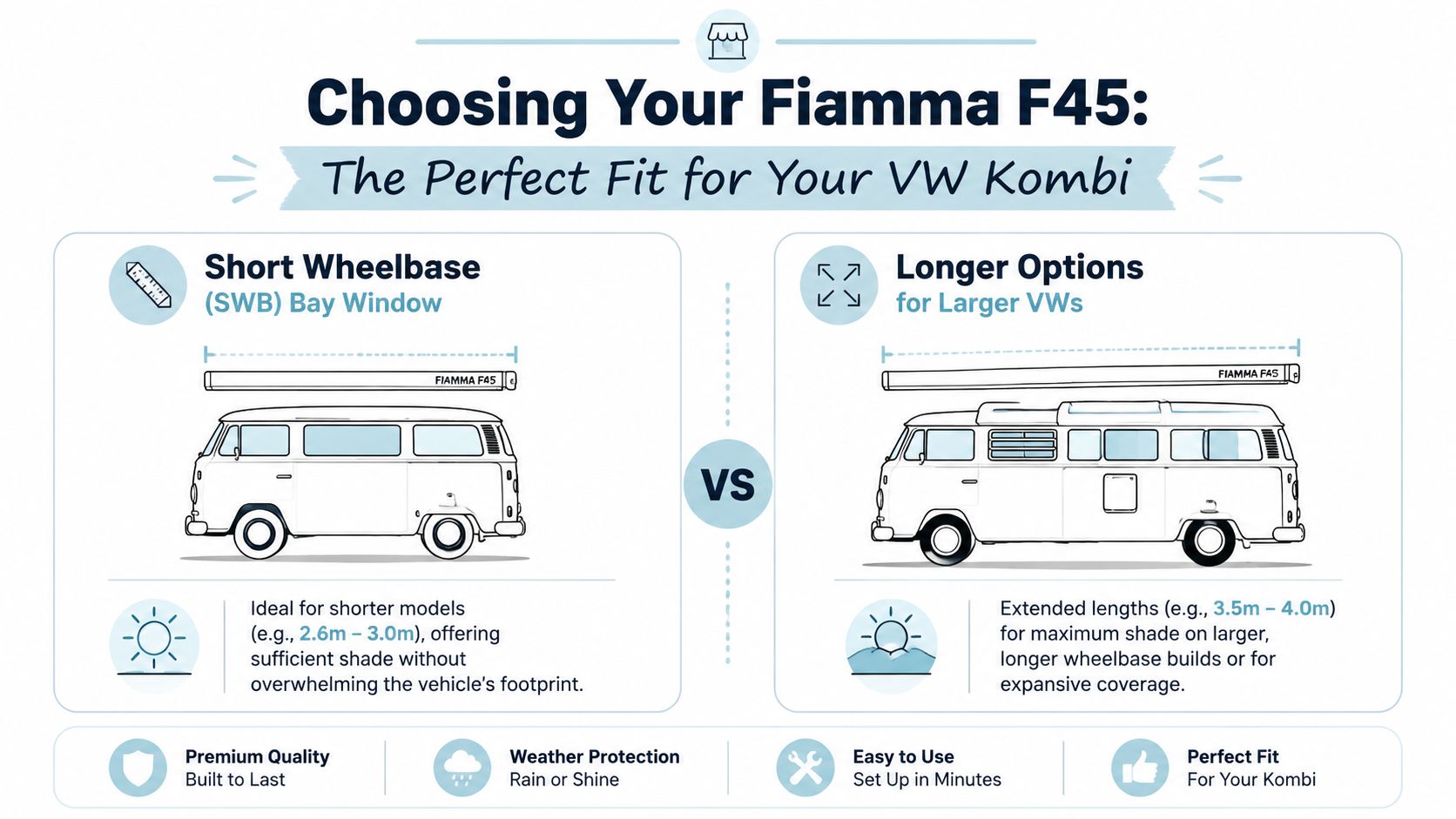
The name can throw people at first. You'd be forgiven for thinking every F45 awning must be the same size, but that isn't how the range works now. Fiamma's own model explanation says the old F45 naming originally reflected a 4.5-metre size class before becoming a model family identifier, and the modern F45S line includes options such as a 3.0-metre version for shorter-wheelbase vans, as explained in this Fiamma model history video.
That bit of history is handy because it clears up a common misunderstanding. The badge stayed. The range broadened.
What size feels right on an old VW
On a shorter classic camper, a 3.0-metre F45S makes a lot of sense. It gives useful shade without making the van look top-heavy or out of proportion. That's especially appealing on compact builds and many classic VW campervans in Australia where the charm comes from tidy dimensions, not excess.
Longer vans can carry a longer awning more comfortably, particularly if the goal is broader coverage across the side living area.
| VW setup | What usually matters most | F45 thinking |
|---|---|---|
| Shorter classic camper | Keeping the van balanced visually | A shorter F45S can look cleaner and still give solid shade |
| Longer camper build | Covering door area and camp space | A longer unit can better suit the extra body length |
| Show-focused restoration | Preserving original character | The cassette should look neat and not dominate the body |
| Touring-focused van | Day-to-day usability | Prioritise practical coverage near the main side opening |
Match the van, not just the catalogue
The trap is buying by model name alone. Kombis vary. Some have roof racks, some have pop-top arrangements, some are set up for beach weekends, others for long inland runs. The right awning is the one that suits your body length, your layout, and how you use the van.
A few things to eyeball before choosing:
- Your side opening area. You want shade where you cook, sit, and climb in and out.
- The van's proportions. A classic bus can look awkward if the cassette is visually too dominant.
- Mounting method. Side wall and rack setups each influence what feels natural on the vehicle.
- Colour pairing. Case and fabric choice can either blend in subtly or stand out against classic paint.
A lot of owners do this mentally with a miniature first. You look at a model Kombi on the shelf, study the side profile, then step outside and do the same with the actual vehicle. It's not a bad habit. The iconic slab sides of an early bus are part of the whole appeal, whether you're staring at the actual vehicle or a 1962 VW Kombi bus diecast.
Getting It Mounted on Your Classic VW
The fitting question is where many owners get nervous, and fair enough. With a classic VW, nobody wants to make a mess of good bodywork. The comforting part is that the main issue usually isn't the awning itself. It's the combination of bracket choice, van shape, door movement, and install quality.
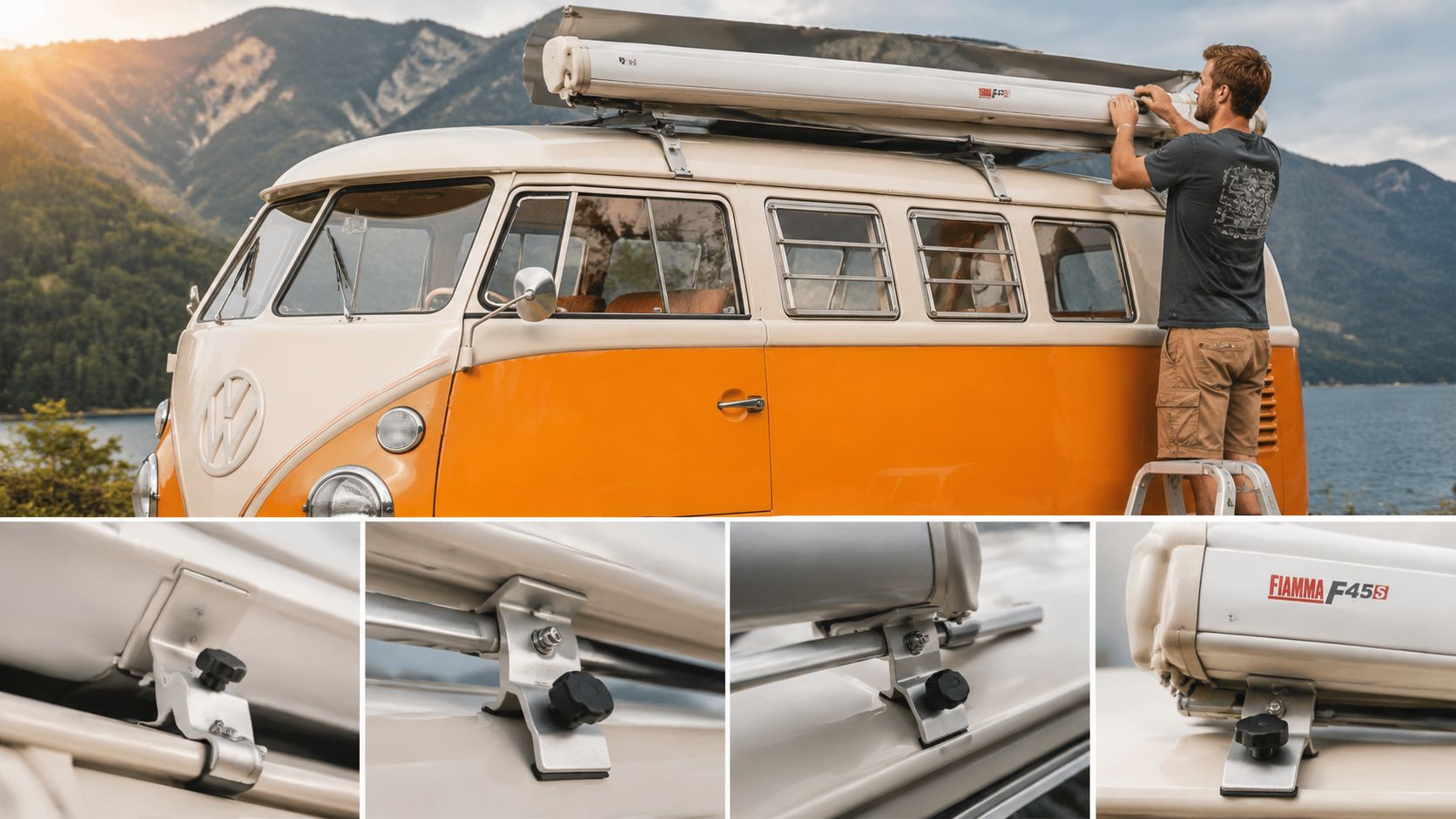
Some setups use roof racks or vehicle-specific mounts. Others do involve drilling, depending on the vehicle and hardware. That's why it pays to decide on the mounting approach before you ever pick up a tool.
Check the doors before anything else
A key installation challenge is making sure the awning sits high enough to avoid interfering with the vehicle's doors. Installation guidance often stresses checking the door's opening arc before finalising bracket position, which is especially important on VW vans with large sliding doors, as shown in this F45S installation walkthrough.
That one point saves a lot of grief.
If your sliding door or front door needs room to swing, the awning can't just go where it looks best at first glance. It has to live where the vehicle can still function properly. Open everything. Check clearances on level ground. Then think about how the body might sit at a campsite that isn't perfectly flat.
A sensible Kombi-first checklist
Before fitting a Fiamma F45 awning, work through these basics:
- Door clearance first. Open the sliding door and any relevant front doors through their full arc.
- Bracket type next. Decide whether your setup suits rack mounting, wall mounting, or a vehicle-specific adapter.
- Height matters. Higher placement can help with door clearance and headroom under the awning.
- Respect the bodywork. If you're trying to avoid unnecessary drilling, plan around the hardware that suits your van best.
- Use the right mounting gear. Generic guesses are where trouble begins.
For owners comparing bracket options and fitment ideas, these awning vehicle mounts for vans are a useful reference point.
A good visual helps before you commit to hardware:
Mounting an awning on a classic VW is less about bravery and more about patience. Measure, open the doors, step back, and only then lock in the bracket position.
Keep it usable, not just pretty
The nicest install is the one that disappears into the shape of the van until you need it. On a Kombi, that usually means the cassette follows the side cleanly, the door still works properly, and the awning covers the area you'll use at camp.
That's the sweet spot. Good form, good function, no regrets.
Using and Caring for Your Awning in Australia
Australia is kind to campers and tough on gear. Sun, dust, salt air, sudden gusts off the coast, and the odd rough road all have a say in how your awning ages. A Fiamma F45 awning can handle regular touring well, but the way you use it matters just as much as the way you fit it.
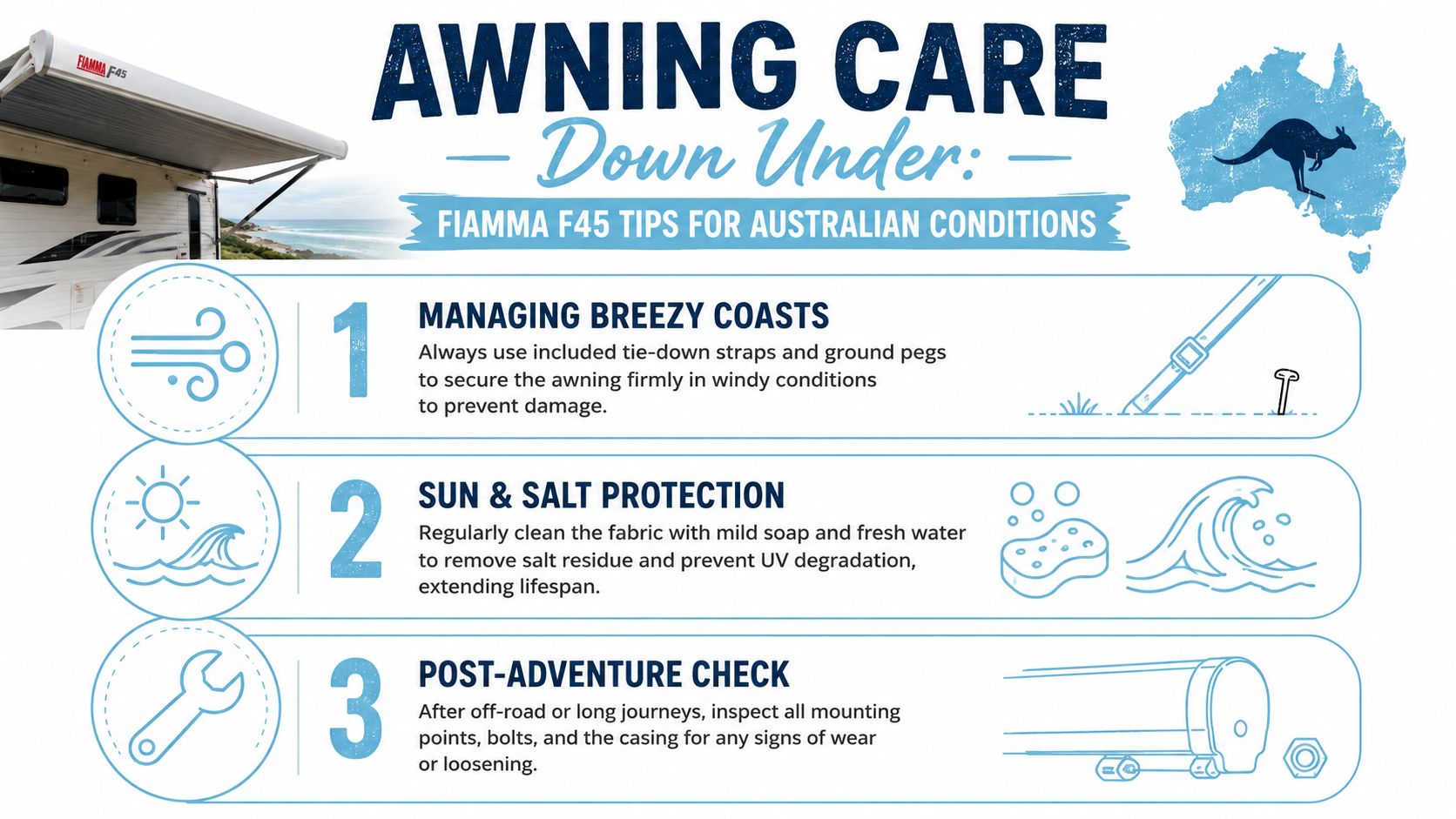
One of the best practical tips isn't flashy at all. When the awning is out, don't force the support arms perfectly straight. Fiamma's usage guidance recommends leaving a slight bend in the support arms so they can absorb gusts instead of passing the full load into the mounting points, as noted on the official F45S product guidance.
That little bit of geometry matters more than most first-time owners realise.
What to do at camp
Australian conditions reward good habits. If the breeze is freshening, treat the awning with respect.
- Peg the support feet properly. Don't leave the legs loose on hard ground and hope for the best.
- Use tie-downs when conditions call for it. Awnings are brilliant shade devices, not storm shelters.
- Watch the arm position. That slight bend helps reduce stress through the structure.
- Retract early if the weather turns. Caution beats repair work every time.
Store the awning dry when you can, and don't wait for obvious damage before checking how everything feels.
Keeping it tidy after the trip
Care isn't complicated, but it's worth doing regularly, especially after coastal runs. Salt residue, road grime, and dust all build up if you leave them there.
A simple routine works well:
- Brush off loose dirt before winding it away.
- Clean exposed surfaces with mild soap and fresh water when needed.
- Let fabric dry before long storage where possible.
- Check mounts and casing after rough roads or windy trips.
Manual living suits classic vans
There's something fitting about a manual awning on a classic Volkswagen. It slows the setup down in a good way. You park, wind it out, settle the legs, step back, and suddenly your old bus has a shady side room ready for lunch, cards, or a brew.
That's half the charm. It's not only about shelter. It's part of the ritual.
Is the Fiamma F45 Worth It for Your Build
If your Kombi mostly does short local runs and you rarely spend time outside the van once you arrive, you might not feel the need straight away. But if your classic VW is built around weekends away, club events, beach stops, and proper campground living, the Fiamma F45 awning makes a very convincing case for itself.
It suits the shape of a campervan. It's strongly associated with wall-mounted touring setups. And it has the kind of neat, established design that feels at home on a vehicle people care about. That matters when the van is both transport and passion project.
The honest trade-off
There is a trade-off, of course. An awning is an investment in usability, not only appearance. You're adding hardware, planning fitment carefully, and committing to one more thing to maintain well. For many owners, though, the payoff is immediate the first time they stop somewhere hot and realise the side of the van has become the best seat in camp.
Here's the short version:
| Worth it if you… | Maybe wait if you… |
|---|---|
| Tour regularly in your Kombi | Mostly drive to shows and head home |
| Want shade without a bulky setup | Prefer the van to stay completely bare outside |
| Care about neat, integrated accessories | Don't want to think about mounts or maintenance |
| Use the side of the van as living space | Rarely sit outside once parked |
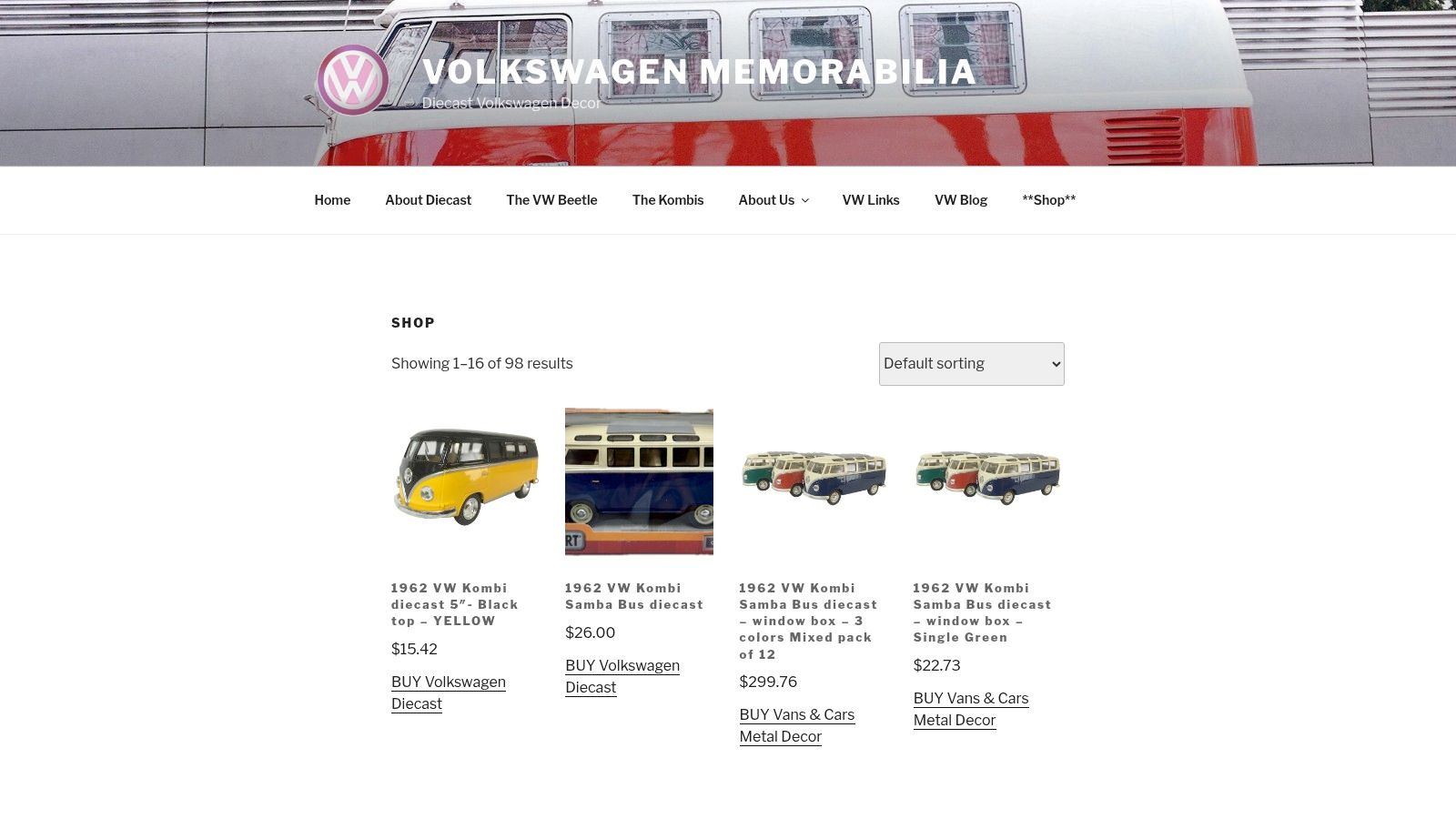
A classic VW build is never only about the destination. It's about the shape, the memories, the little details that make the whole thing feel like yours. The F45 is one of those details. Not essential for every owner, but for the right build, it feels exactly right.
If you're still building the full-size dream, there's another way to keep that Kombi spirit close every day.
Frequently Asked Questions
Is the Fiamma F45 awning a wall-mounted awning
Yes. The F45S is a side- or wall-mounted awning, which is one of the reasons it's so often associated with campervans and motorhomes built for compact touring use, as covered in the earlier model-history section.
What does F45 actually mean
Historically, the F45 name originally referred to a 4.5-metre size class before becoming a model family name. Today, the range includes different sizes, including a 3.0-metre option mentioned earlier.
Is the F45S a good fit for a classic VW Kombi
It can be, especially if your Kombi is used for touring and camping. The key is not assuming universal fit. You need to consider body shape, bracket options, rack availability, and door clearance.
Can I fit one without drilling
Sometimes, depending on the vehicle and the mounting hardware available. Some setups use racks or vehicle-specific mounts, while others may require drilling. The safest answer is to judge it by the exact van and bracket system, not by general forum chatter.
What's the biggest mistake owners make when using one
A common practical mistake is treating the awning like it should be locked dead straight and left unsupported in breezy conditions. As noted earlier, leaving a slight bend in the support arms and securing the setup properly helps reduce stress on the structure.
If you love the classic VW lifestyle, have a look through Volkswagen Memorabilia. It's a great spot to keep the passion alive with VW memorabilia collectibles, from Kombi and Beetle pieces to shelf-friendly favourites for anyone hunting VW Kombi diecast Australia, a Volkswagen Beetle model, or wanting to buy diecast Kombi gifts from local stock with fast Australian shipping. Check out their range of diecast Kombi and Beetle models in the online shop.