You're probably in that familiar spot right now. The van's packed, the kettle's rattling in the cupboard, and you're staring at a stretch of Australian coast or bush thinking, “A bit of shade out the side of the Kombi would make this perfect.”
That's where camper van awnings stop being an accessory and start feeling like part of the trip itself. They turn a parking space into a little front porch. Suddenly there's somewhere to kick off sandy thongs, lean back with a cuppa, and watch the afternoon slide by while the old VW cools down beside you.
For Kombi people, that feeling runs deeper than convenience. It's tied up in why these vans still pull at us after all these years, and why the right setup matters so much when you're chasing simple, sun-drenched weekends in a classic Volkswagen.
That Instant Verandah Feeling
I still reckon one of the best sights in motoring is a Kombi pulled up by the water with an awning stretched out like a little beachside verandah. Not fancy. Not overdone. Just enough shelter for two camp chairs, an enamel table, and a pair of salt-stiff towels drying in the breeze.
That scene fits the Kombi perfectly because the Kombi has always been more than transport. The Volkswagen Kombi's story in Australia starts in 1950, and by the 1960s it had become the “hippie van”, tied to freedom, counterculture, and adventure across late 60s and 70s Australian life. That's exactly why so many of us still smile when we hear an air-cooled engine burble into a showground.
An awning carries that same spirit. It says you're not rushing off in five minutes. You're staying long enough to make lunch, trade stories, and watch people wander over for a yarn about the first Beetle or Bay Window they ever owned.
Why the awning matters so much
A classic VW cabin is full of charm, but no one's pretending it's sprawling. Once you add bags, an eski, spare parts, and the usual road trip clutter, a bit of outside shelter changes everything. The van feels bigger without losing its cosy character.
A good awning doesn't just give you shade. It gives your Kombi a front room.
That's the bit many first-time owners don't realise. The best camper van awnings don't fight the VW lifestyle. They extend it. Morning coffee happens outside. Wet gear stays outside. Mates gather outside. The van remains the heart of camp, but the awning makes it liveable in that laid-back Aussie way we all chase.
The memory-maker beside the van
At any VW meet, you'll spot it straight away. One Kombi has an awning up and people gravitate there. Kids duck in and out. Someone's fiddling with a surfboard rack. Somebody else is telling a story that starts with, “Back in ’76…”
That's why this stuff matters. Awnings aren't only about fabric and poles. They're about creating the sort of setup that makes a classic Volkswagen feel like home.
Choosing Your Perfect Shady Spot
Some awnings are made for quick roadside tea stops. Others suit a longer camp where you want proper living space. The trick is matching the awning to how you typically travel, not how you imagine you travel on your most organised day.
In Australia, the biggest names are Fiamma, Dometic, Carefree, and Aussie Traveller, and they lead the market across roll-out, box, bag, and inflatable styles built for our UV-heavy conditions and changing winds, according to RV Daily's guide to caravan and motorhome awnings.
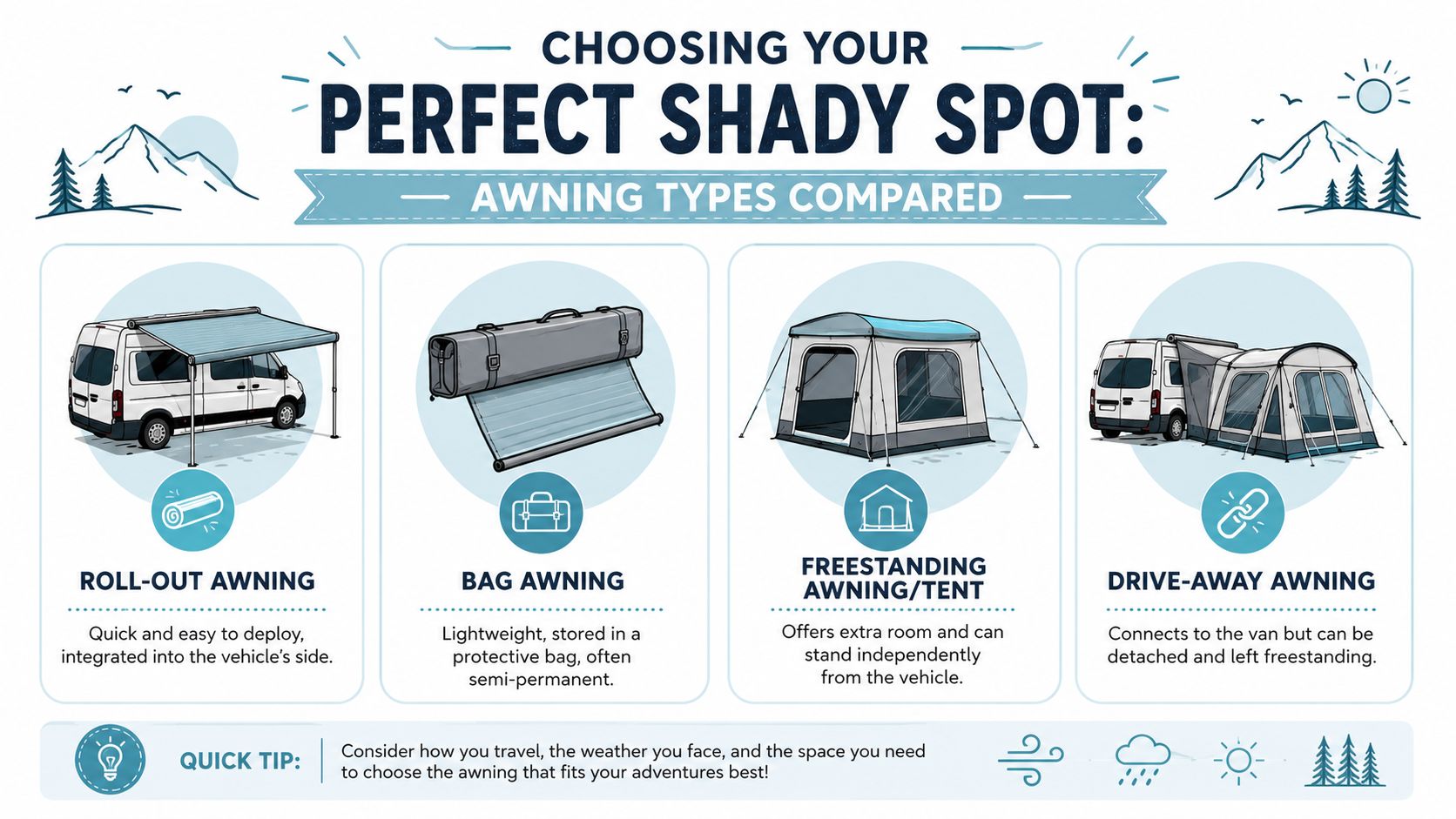
Four common styles on Aussie roads
| Type | Best for | What it feels like in use |
|---|---|---|
| Roll-out awning | Quick stops and simple touring | Like a sturdy window blind for your van. Fast, neat, and easy to live with. |
| Bag awning | Lightweight classic setups | A softer, old-school option that suits period-style vans nicely. |
| Freestanding awning or tent | Longer stays | Gives you a separate zone for gear, chairs, or extra shelter. |
| Drive-away awning | Campers who base themselves in one spot | Lets you leave the awning standing while you take the van out. |
How to choose without overthinking it
If your weekends are usually one-nighters, a roll-out makes a lot of sense. You pull in, wind it out, and you've got instant shade without turning arrival into a project.
If you like your Kombi looking period-correct, a bag awning has real charm. It doesn't feel as sleek as a cassette unit, but it suits older vans beautifully and keeps the visual style relaxed and classic.
If your trips involve staying put for a few days, cooking outside, or giving the family a bit more breathing room, freestanding and drive-away setups start looking very attractive. They create a proper camp footprint instead of just a strip of shade.
Practical rule: Buy for your most common trip, not your most ambitious holiday.
What different owners usually prefer
A simple way to think about it:
- Solo cruiser in a Bay Window. A roll-out is often the sweet spot.
- Couple doing beach weekends. Bag awning or roll-out, depending on whether style or speed matters more.
- Family with a bus full of gear. Freestanding shelter gives you room to breathe.
- Campground base-camp traveller. Drive-away design earns its keep.
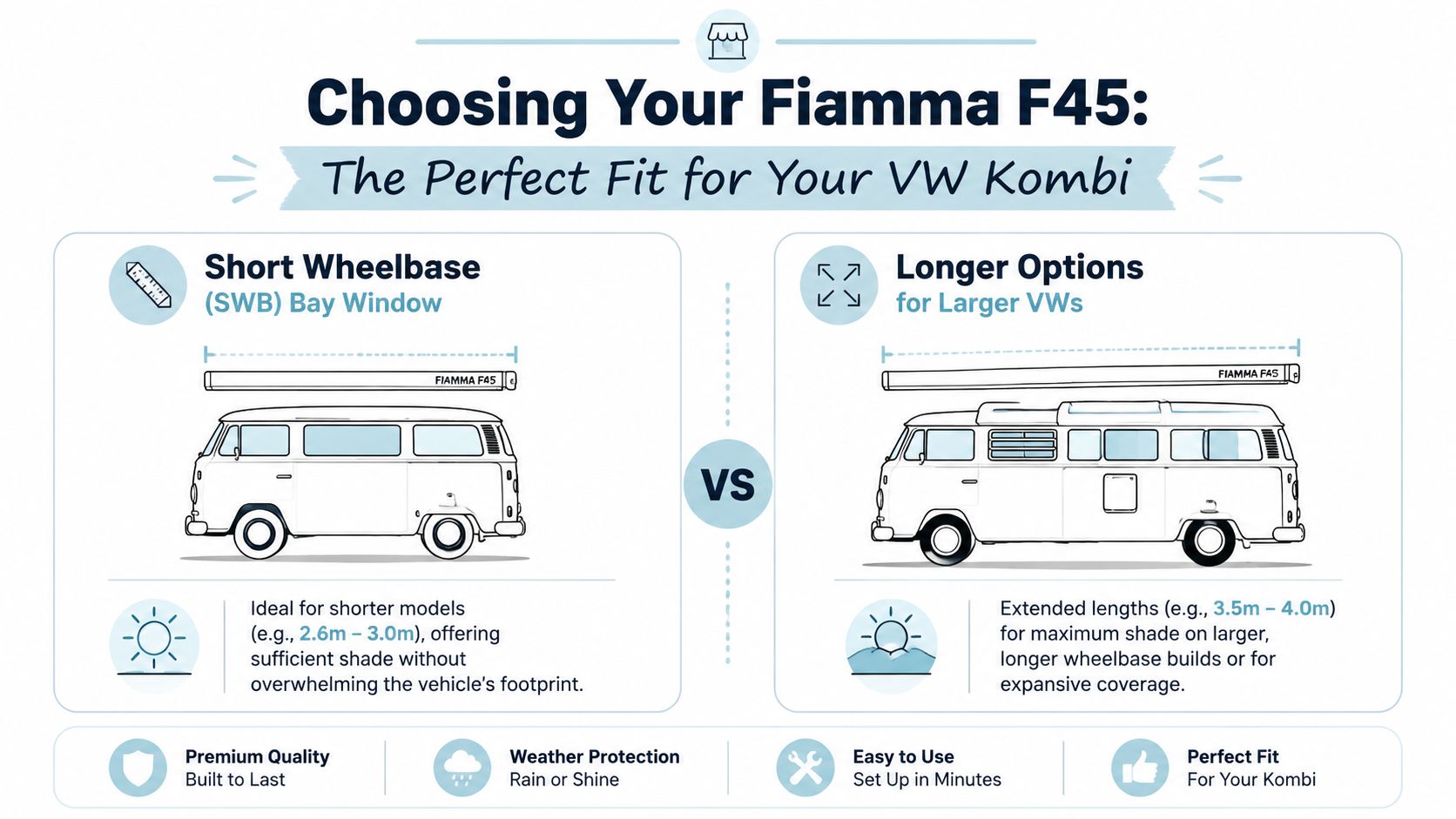
One more thing matters. Fit. A brilliant awning that doesn't suit your van's rails, gutters, or body shape becomes a headache fast. That's especially true for old Splitties and Bays, where owners usually want secure mounting without turning the body into Swiss cheese.
Will It Fit My Splitty Or Bay Window
You pull into a grassy spot at Busselton, kettle still warm from the drive down, and the first thing you notice is the wind tugging at anything loose. That is usually the moment a Kombi owner stops caring about brochure words and starts asking the key question. How does this awning attach to my van without upsetting old paint, bent gutters, or a carefully kept original body?
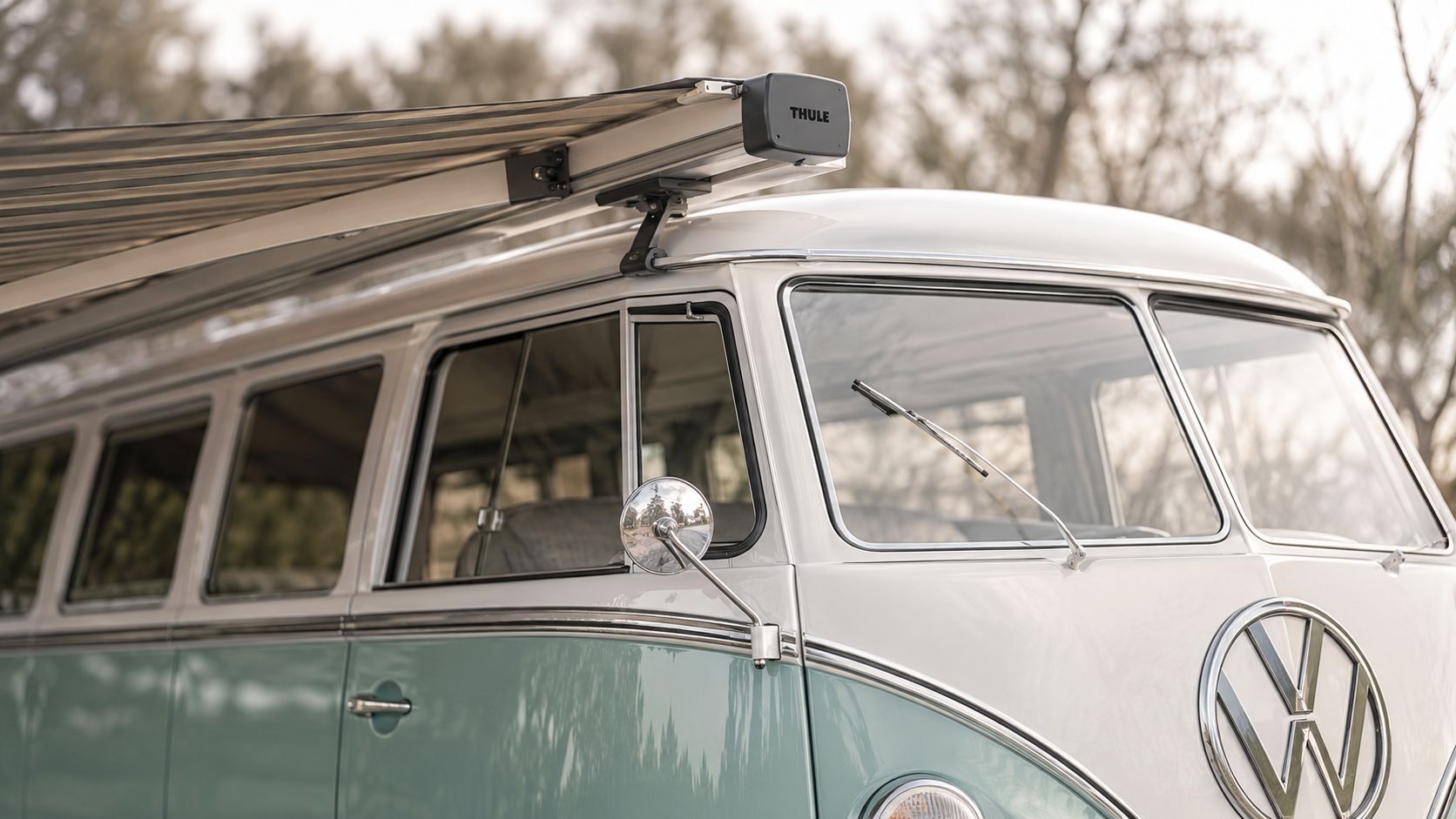
On a classic VW, fit is about more than width on a spec sheet. A Splitty, a Bay, and a later Transporter all carry their awnings a bit differently, and old buses often have their own little quirks after decades of repairs, restorations, and beach runs. Gutters might be deeper on one side, doors may sit slightly proud, and some vans wear fresh paint that you will not want rubbed raw by a poor clamp.
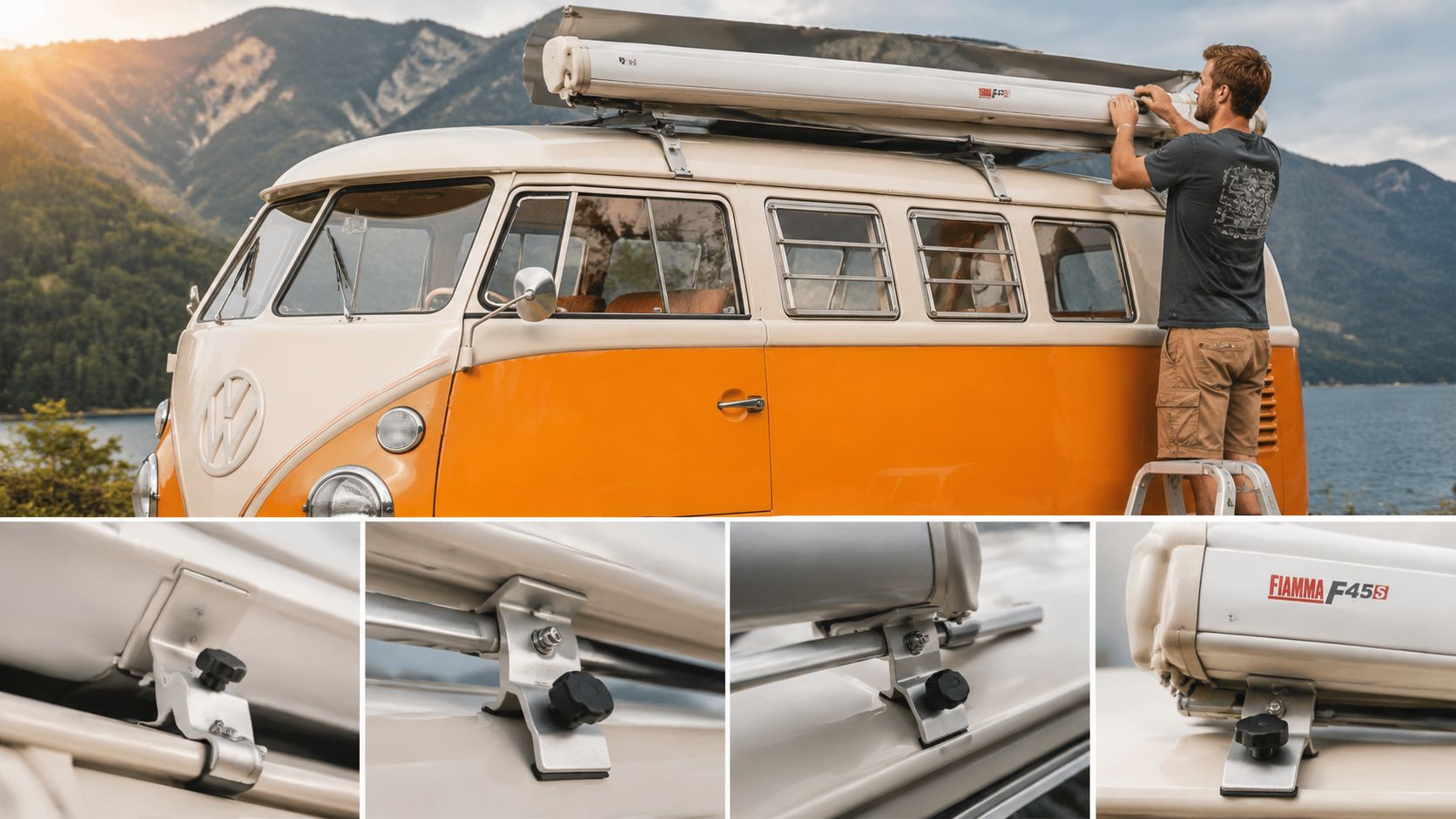
The attachment setup many VW owners end up happiest with uses a kador strip and figure of 8 channel. In plain English, the beaded kador edge slides into an awning rail or channel, then the figure of 8 piece joins that edge to the awning itself. It is a tidy system, especially for owners who want something secure but still kind to an older body.
What usually suits each VW
A Split-screen Kombi deserves a close look at the gutter before you buy anything. Early vans can vary more than people expect, particularly if they have had roof work over the years. Measure both the depth and the shape, not just the length.
A Bay Window often plays nicely with gutter-mounted setups. Plenty of Bay owners like them because they keep the van looking right and avoid turning a weekend shade solution into a permanent body modification.
A later Transporter usually gives you more straightforward mounting options thanks to rails and model-specific hardware.
A Samba or freshly restored show bus calls for the gentlest approach of the lot. Reversible fittings and paint-safe contact points are the ones worth chasing.
If you want to see what a popular side-mounted option looks like on a VW body, the Fiamma F45 awning for Volkswagen campervans is a handy reference.
The bit owners forget until camp is set
Door clearance.
I have seen lovely old buses set up with plenty of shade, only for the owner to realise the side door now catches fabric, straps, or hardware every time someone reaches for the tea tin. On a camper, that gets annoying fast. Check how the awning sits when the door is fully open, and make sure the attachment method does not turn normal van life into a shuffle.
For vans with deep gutters, a figure of 8 channel can often clip on neatly. For shallower gutters, a pole and clamp kit may give a safer, steadier hold. Either way, take a tape measure to the van itself. Do not trust memory, and do not assume every Bay or Splitty matches the next one parked beside it at the show.
A moving visual helps if you're still trying to picture how all these parts come together.
Fit first, fabric second. If the mounting does not suit your Kombi, the awning will never feel right.
Sizing It Up For Sun and Salty Air
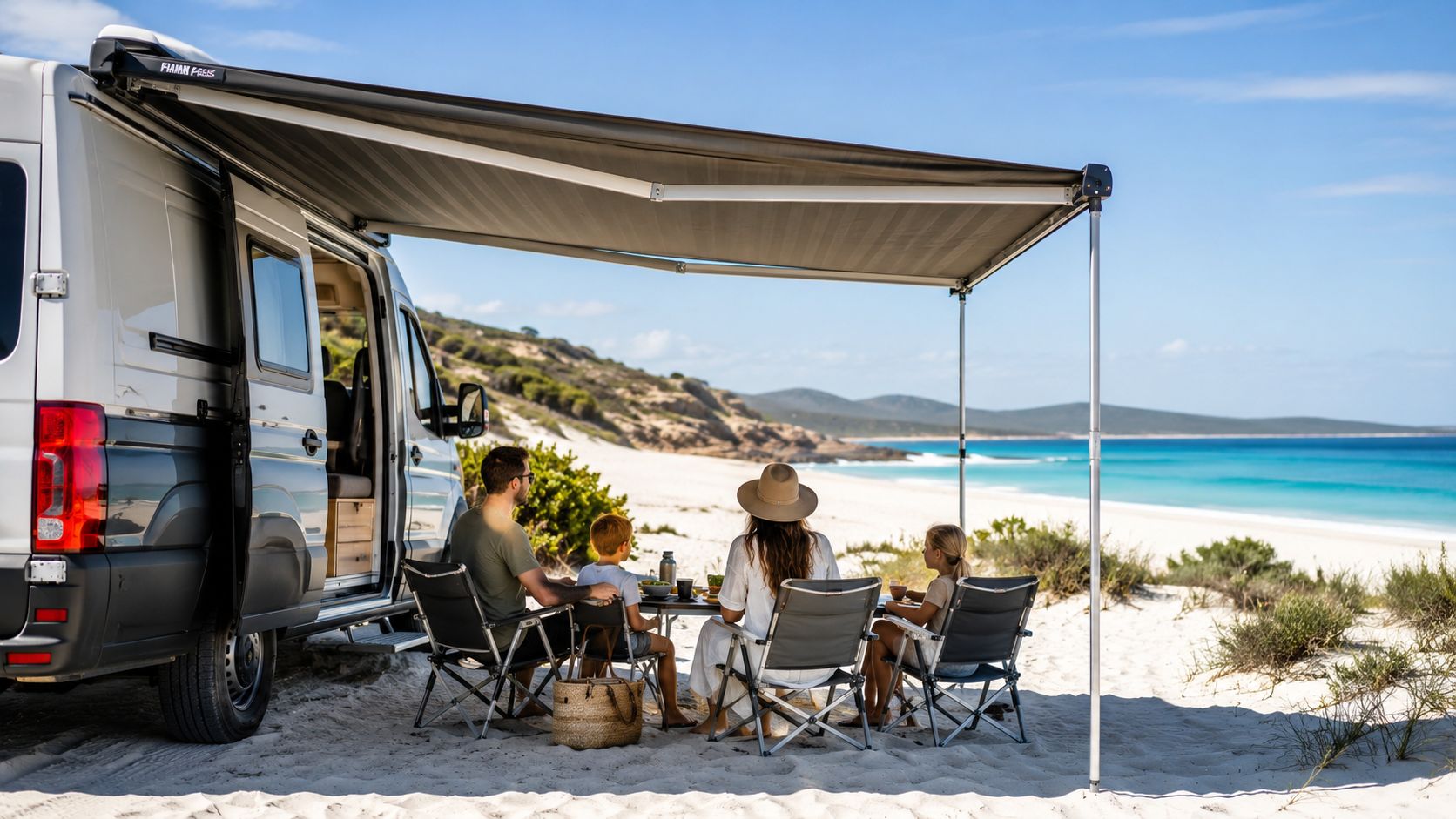
At Inverloch one summer, a mate rolled in with a tidy Bay and a bargain awning that looked the part in the morning. By mid-arvo, the fabric had gone limp in the heat, the fittings were already showing a dusty bloom from salt air, and everyone had shuffled their chairs back under the van's skinny strip of shade. That was the day he learned what plenty of VW owners learn the hard way. Aussie sun and coastal air sort the good gear from the cheap stuff very quickly.
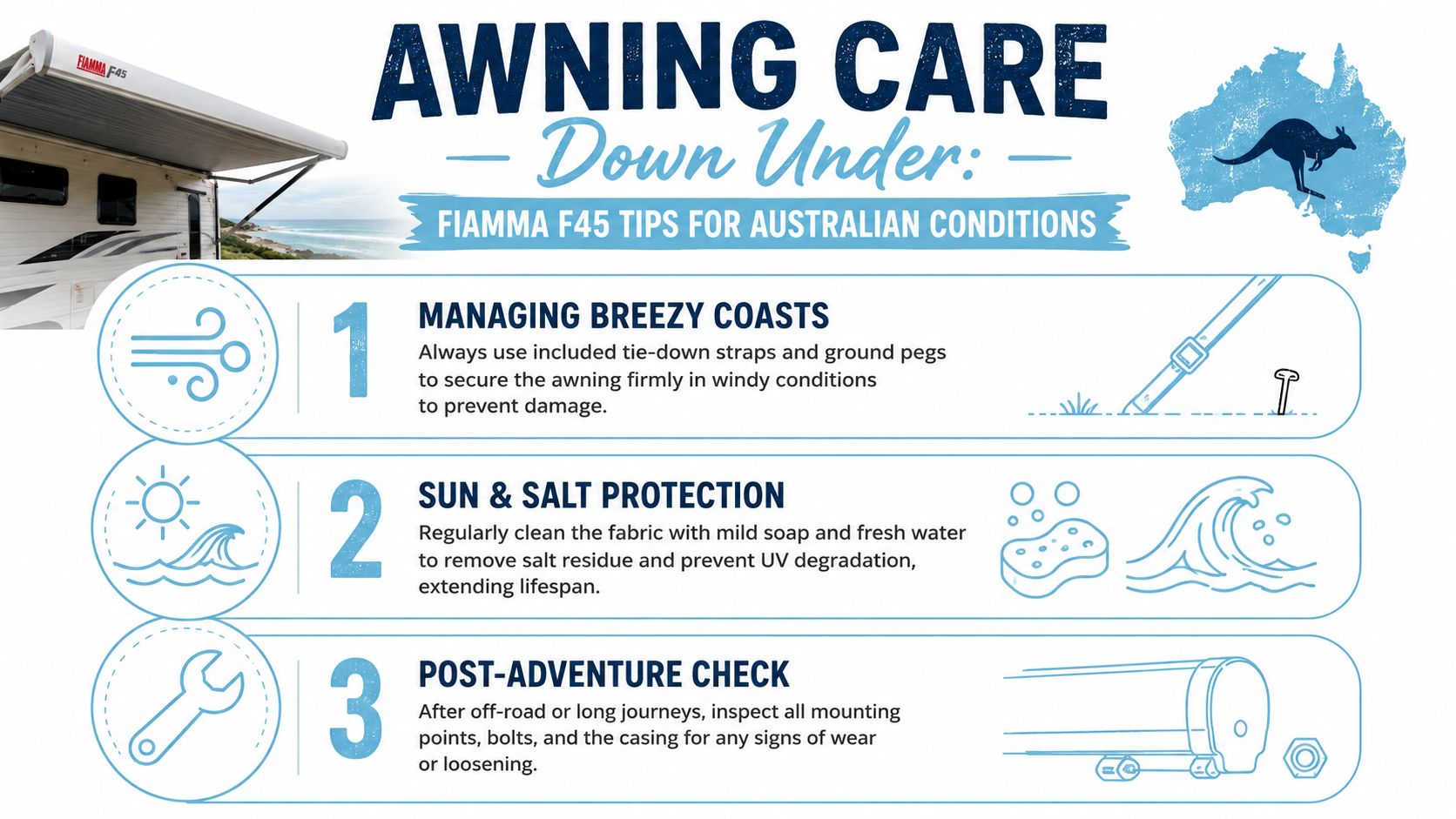
Awnings live a rough life here. They cop harsh UV, hot gusts off the beach, and salt that creeps into hinges, screws, and brackets while you are busy putting the billy on. Size matters, but material matters just as much.
What a good size looks like on an old VW
On a Splitty or Bay, a compact awning often feels better balanced than an oversized one that sticks out like a patio bolted to a surf shack. For quick overnight stops, enough cover for two chairs, the kettle, and a small table is usually plenty. If your weekends tend to turn into long, lazy camp sessions with kids, mates, or a camp kitchen spread out under the side door, the extra width starts to earn its keep.
The trick is matching the awning to how you camp. Solo tourers usually appreciate something lighter and easier to wrestle into place. Families parked up near the coast for three nights straight will usually forgive a bit more bulk if it buys proper shade and room to move.
If you want a feel for the proportions many owners like, these wind-out awning options for Volkswagen campervans show the sort of coverage that suits a classic VW without dwarfing it.
Sun, salt, and the bits that wear out first
Coastal camping is where weak hardware gets exposed. The first signs are usually small. A bit of staining on a bracket, a sticky hinge, a fastener that no longer looks happy. Leave it long enough and setup gets annoying, pack-down gets rougher, and the whole thing starts feeling tired before its time.
Aluminium frames generally cope better than cheaper steel parts in salty air, especially if the finish is decent. Fabric wants proper UV resistance too, because strong sun does more than make shade important. It also dries, fades, and weakens cloth over seasons of use. Dense fabric often feels steadier and more reassuring, though it can add weight and take up a bit more room in the van.
A quick buyer's comparison
| Priority | Better choice |
|---|---|
| Beach use | Corrosion-resistant frame and UV-rated fabric |
| Frequent solo touring | Lighter awning with easy handling |
| Long family stays | Larger covered area for chairs, cooking, and gear |
| Classic VW aesthetics | Proportions that suit the van and do not overpower it |
One good rule has never let me down. Buy for the worst day, not the best one. A pretty awning looks lovely on the grass at a car show, but a Kombi awning in Australia earns its stripes in hard sun, sea breeze, and a campsite full of sand.
A No Fuss Guide To Getting It Up
The first setup always feels like a bit of theatre. You've got the awning out, someone's offering advice they definitely haven't tested, and the pegs are rolling under the van. Then you do it properly once and realise it's much easier than it looked.
In Australia, Achtung Camper's awning guide puts single-person setup for the basic configuration at 3–5 minutes, using a strap extension system where straps go over the roof and tension down to ground pegs. That sounds about right when the gear suits the van and you're not fighting the wind.
The simple setup flow
Attach the awning properly
Slide or secure the awning into its channel or mounting point before you tension anything. A rushed start usually causes the fiddly bits later.Pull the straps over the roof
That strap system earns its keep. It keeps the setup controlled and manageable, even if you're on your own.Extend to the ground and peg out
Tension matters. Too loose and the fabric sags. Too tight and you'll make adjustments harder than they need to be.
The wind-out awning options for Volkswagen campervans give you a good feel for the sort of setup many VW owners prefer when ease and speed are high on the list.
One rookie mistake worth avoiding
Don't peg where the sliding door wants to travel.
It sounds obvious until you're tired, hungry, and trying to beat the weather. Ground pegs should sit far enough away from the van that doors can open freely and nobody catches a foot on a strap every five minutes.
A tidy setup routine
- Park with intention. Give yourself room on the awning side.
- Face the van sensibly. Think about wind and shade before you deploy.
- Peg wide, not messy. Clean lines are safer and easier to live with.
- Check tension after a few minutes. Fabric can settle once it's opened up.
Once you've done it a couple of times, setting up an awning becomes part of arriving. It's as natural as popping the kettle on.
Keeping Your Awning Shipshape
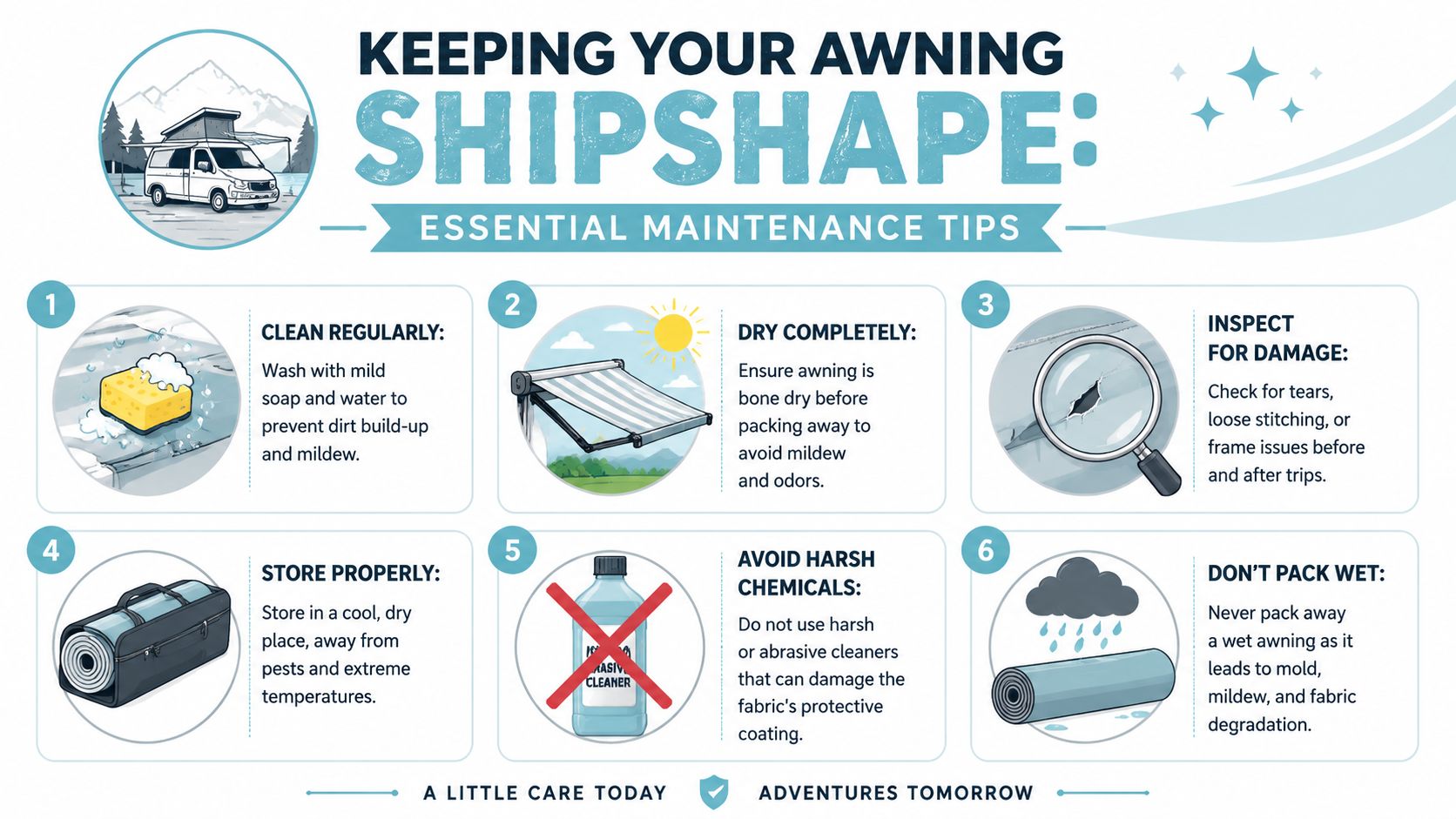
Awnings cop plenty. Dusty showgrounds, salt breeze, sudden rain, and that one pack-up where you promise yourself you'll dry it later. If you want yours to last, maintenance can't be an afterthought.
The big insider trick is drainage pitch. Plenty of owners know they should lower one side in rain, but not enough realise how important the angle really is. Carefree's awning guidance points to an optimal 10–15° tilt for heavy Australian monsoon-style rain. The same source says a flat setup increases water retention by 40% in tropical climates, and 60% of technician-reported awning failures come from mould rather than wind damage.
The maintenance habits that actually matter
That drainage pitch alone can save you grief. Water pooling stretches fabric, encourages mould, and adds load where you don't want it.
Then there are the basics, which sound dull until you've had to scrub out mildew or replace worn gear.
- Wash off salt and grime after coastal trips.
- Dry the awning completely before packing it away.
- Inspect stitching, clamps, and frame points before the next run.
- Store it clean and dry so you're not opening a musty mess next time.
Wind noise and fabric fatigue
Rain isn't the only enemy. Flapping fabric wears out faster and makes a peaceful campsite sound like a loose yacht sail. Achtung Camper notes that Anti-Flap Kits are standard inclusions for Australian-made awnings such as Queensland-made examples, using curved bars and tensioning hardware to reduce flutter and protect the vinyl fabric during frequent gusts.
That's one of those accessories owners often skip until they've had one noisy, windy night and changed their tune.
A practical care checklist
| After each trip | Before the next trip |
|---|---|
| Rinse off salt | Check for mould spots |
| Air dry fully | Inspect pegs and straps |
| Brush off debris | Look over rails or channels |
| Roll or pack neatly | Test moving parts |
Workshop wisdom: Most awnings don't fail in dramatic fashion. They get neglected in small, fixable ways until one wet weekend finishes the job.
If you want a VW-specific reference point for upkeep, the Fiamma F45 awning maintenance guide is a handy place to compare your cleaning and care routine.
Your VW Awning Buying Checklist
Last summer at a meet-up near Torquay, a mate rolled in with a lovely Bay Window and a bargain awning still in the box. By lunch, the van looked the part, but the awning legs were fighting the slope, the fabric sat too low over the slider, and the sea breeze had everyone grabbing cups before they skittered off across the grass. Same bus, same sun, very different afternoon once he swapped to a setup that suited how he camps and where he parks.
That is the checklist worth using. Not the glossy catalogue version. The practical one you run through with a cup of tea in hand, picturing your own Splitty or Bay by the beach, out west in harsh sun, or tucked into a shady holiday park.
The checklist I'd use before spending a cent
How do you use the van?
A quick one-nighter down the coast suits a simple awning you can throw up fast. A week away with the family usually calls for more covered space and a bit more structure.Will it suit your particular VW?
A Splitty, a Bay, and a later camper can all need slightly different mounting gear. Check the gutters, door clearance, roofline, and any existing rails before you buy.Does the shade match Australian conditions?
Strong sun changes the equation here. Fabric that holds up in mild weather overseas can feel ordinary after a run of bright days in an Aussie summer.How will it cope near the coast?
Salt air gets into everything. Frame finish, fittings, and hardware quality matter a lot more if your best trips involve sand, sea spray, and fish and chips in the car park.Can you put it up without turning camp setup into a project?
The best awning is the one you will use often. If it takes too long, needs too many hands, or always ends in muttering, it will stay packed away.Does it leave room for the way you live around the van?
Make sure you can still move easily through the side door, set up a table, and shuffle a couple of camp chairs under cover without feeling cramped.Will you still be happy owning it after a few trips?
A good awning needs basic care and a bit of common sense. Buy one you can clean, dry, pack, and inspect without making a fuss of it.
The VW owner's final gut check
A good awning makes the van feel settled within minutes. The kettle goes on. Wet towels get a place to hang. Someone pulls out a camp chair, and all at once the old bus feels less like transport and more like home for the weekend.
That matters with a classic Volkswagen because these vehicles already ask for a bit of patience and affection. Your awning should add to the pleasure, not pile on more jobs. It should suit the lines of the bus, cope with our hard sun, and stand up to those breezy foreshore camps that look calm until late afternoon.
If you are still torn between two options, pick the one you can see yourself using on an ordinary trip, not just on a perfect one. Practical always wins in the long run.
FAQ
Which awning type suits a classic Kombi best
For plenty of owners, a roll-out or bag awning gives the nicest mix of ease, appearance, and day-to-day usefulness. The better choice comes down to your mounting points and whether you stay put for a night or a week.
Can I fit an awning without drilling into my VW
Often, yes. Gutter-mounted systems and kador-style setups can be a tidy option for owners who want to avoid altering original bodywork.
Are camper van awnings worth it for short trips
Yes. Even a modest awning gives you quick shade, a dry patch for the camp stove, and somewhere pleasant to sit when the sun is belting down.
What matters most for Australian conditions
UV resistance, hardware that copes with salt air, and a setup that stays manageable when the weather changes quickly.
Do awnings suit Beetles too
Not in the same way they suit Kombis and campervans. Beetle owners usually enjoy that touring spirit through club days, displays, and collectible pieces rather than vehicle-mounted camping setups.
If the camper van life has you daydreaming even when the Kombi's parked at home, have a browse through Volkswagen Memorabilia. It's a cracking Australian shop for licensed VW collectibles, with local stock and fast shipping that suits collectors and gift buyers alike. You'll find Volkswagen diecast models for sale that celebrate the same charm discussed here, with plenty to suit Kombi and Beetle fans who like a little Wolfsburg soul on the shelf as well as in the driveway.