


You're probably in that familiar pre-trip scramble right now. The snacks are half packed, someone's looking for a charger, and the kids are already asking whether they can bring one more toy car into the back seat. If your family road trips have ever involved a sun-faded Kombi, a cheerful Beetle, or just a deep love for old Volkswagens, there's a lovely little tradition worth adding to the glovebox. A kids travel journal.
Not the stiff, schoolish kind that feels like homework on holidays. I mean the sort of journal that catches the small things families actually remember later. The servo stop with the best vanilla slice. The yellow Beetle spotted outside a bakery in a country town. The way your child drew the family Kombi with wheels far too big and somehow got its personality exactly right.
For VW-loving families, a kids travel journal can become more than a diary. It becomes a rolling scrapbook of family stories, motoring nostalgia, and the odd bit of road dust pressed between pages. If you do it well, it feels less like a task and more like an heirloom in the making.
Capturing Road Trip Memories The VW Way
A classic VW trip has its own rhythm. You notice things differently. The drive feels slower in the best possible sense, and the journey matters as much as the destination. Kids pick up on that. They notice the split-screen van in the next lane, the surfboard on the roof rack, the sticker-covered rear window at the caravan park.
That's why a kids travel journal works so well in a VW family. It gives children a place to hold onto those tiny moments before they disappear into the blur of school terms and everyday life. Instead of asking, “Did you have fun?” weeks later, you get their version of the trip as it happened. Drawn, scribbled, stickered, and slightly sticky from a melted lolly.
A journal also suits the spirit of old Volkswagens. These cars have always invited storytelling. Families name them, wave at other owners, and build traditions around them. If your weekends already lean toward scenic drives and van life in Australia, adding a notebook to the routine feels natural.
Keep the first entry simple. Ask your child to draw the car, write where you're heading, and add one thing they hope to see on the trip.
The trick is to treat the journal like part of the adventure kit. It belongs beside the map, the sunnies, and the bag of snacks. Once kids realise it's their own record of the trip, not a parent-managed project, they usually bring far more personality to it than any adult ever could.
Choosing the Perfect Journal for Your Little Explorer
Some families do best with a neat, pre-made travel journal. Others are happier with a plain notebook and a fistful of stickers. Both work. The best choice depends less on trends and more on how your child likes to make things.
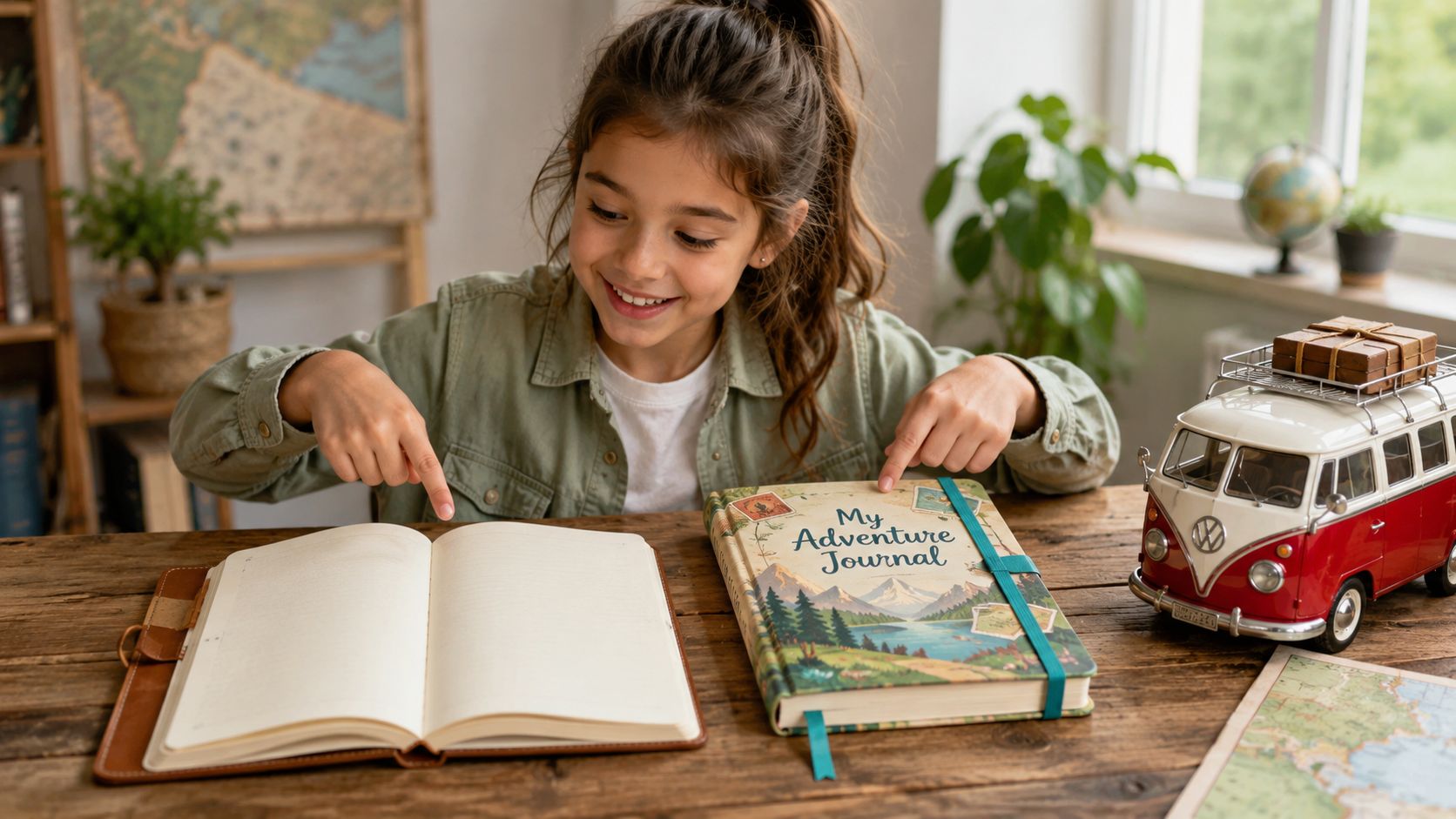
Store-bought or DIY
A ready-made journal can be handy for shorter holidays. The prompts are already there, which helps children who freeze when faced with a blank page. If your trip is a long weekend away or a school holiday run up the coast, that structure can keep things moving.
A DIY journal gives you more room to match the child. One kid might want lined pages and daily notes. Another might want thick paper for drawings, ticket stubs, and leaves picked up at a picnic stop. A scrapbook, exercise book, display book, or spiral notebook can all become a strong kids travel journal.
Here's a quick way to decide:
| Journal type | Best for | Watch out for |
|---|---|---|
| Pre-made prompt journal | Kids who like guidance | Can feel repetitive over a longer trip |
| Plain notebook | Kids who want freedom | May need parent suggestions to get started |
| Scrapbook or art pad | Kids who draw more than they write | Bulkier to pack |
| Binder with sleeves | Families collecting maps, tickets, postcards | Less convenient on the move |
Why it's worth doing
There's a practical upside too. In Australia, an age-appropriate travel journal directly supports the national curriculum. Foundation to Year 2 students are expected to produce short imaginative and informative texts, while Years 3 to 6 build more detailed descriptions. That makes journaling a practical literacy exercise aligned with national educational standards across more than seven years of schooling, as outlined in this Australian curriculum travel journal overview.
So if you're weighing up whether this is just another holiday activity, it isn't. It's memory-keeping with real educational value.
What usually works best
For most VW family trips, the sweet spot is a sturdy notebook with a bit of flexibility.
- Choose a tough cover so it survives beach bags, seat pockets, and the general chaos of family travel.
- Leave room for keepsakes such as bakery receipts, park maps, ferry tickets, or a pressed gum leaf.
- Pick paper that suits the child. Some like lined pages. Others need blank paper for sketches of Beetles and Kombis.
If the journal looks inviting and feels easy to use, kids are far more likely to keep reaching for it.
Page Prompts and Ideas for Every Age
A good kids travel journal shouldn't expect every child to respond the same way. Some kids narrate every detail of the day. Some draw one excellent picture and call it done. Some are tired, wriggly, or not interested in writing full sentences after a long drive.
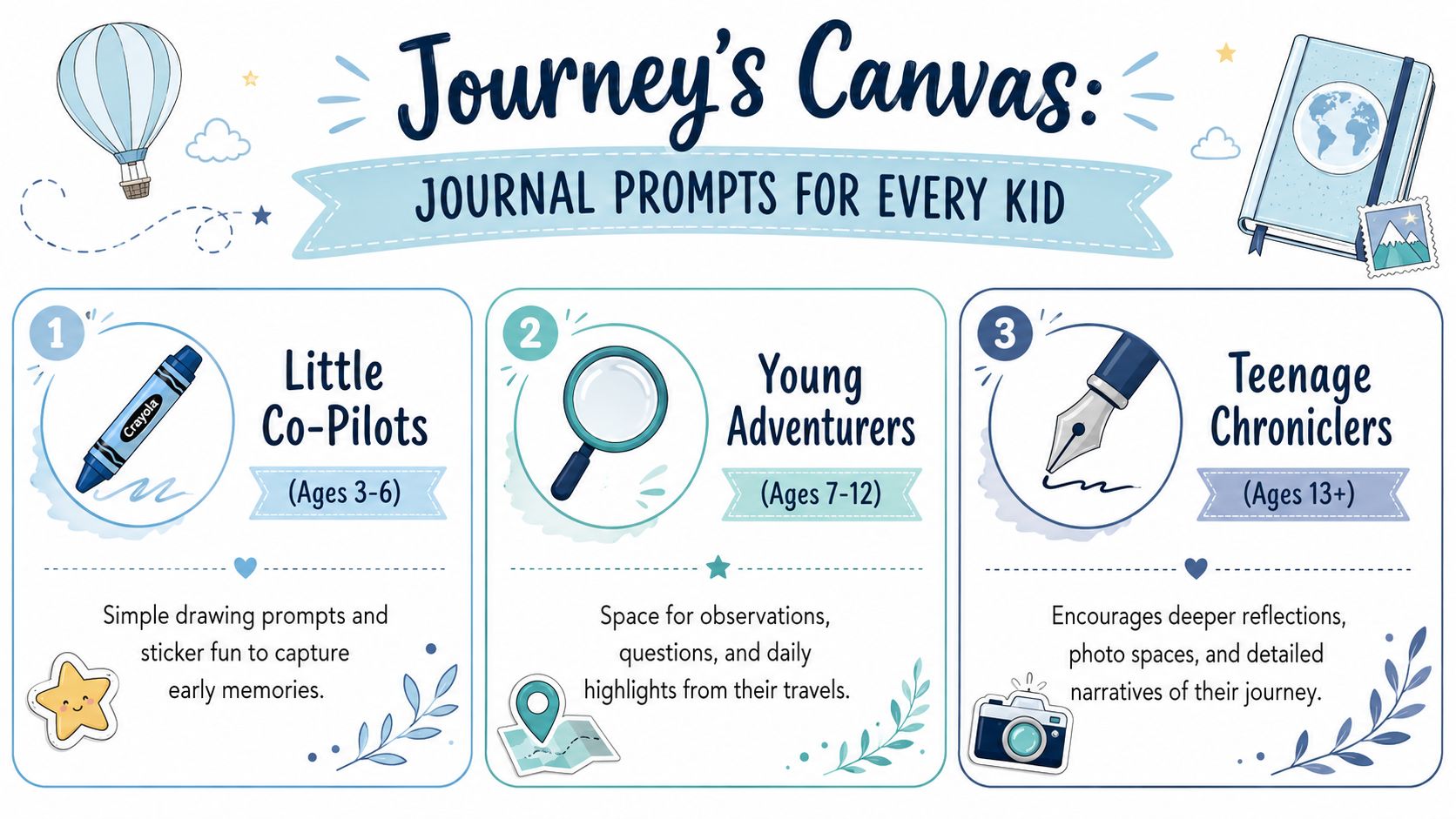
Little Co-Pilots Ages 3 to 5
At this age, think visual and playful. You're not aiming for polished writing. You're building the habit of noticing.
Try pages like these:
- Draw the day's favourite vehicle. Was it your Kombi, a tractor, or a bright old Beetle parked near the beach?
- Sticker map page. Put one sticker where you slept, one where you stopped for lunch, and one where you saw something exciting.
- My trip colours. Ask them to draw the colours they saw that day. Sea blue, red dirt, silver van, yellow sun.
A child who can only manage labels can still make a brilliant journal page.
Junior Cruisers Ages 6 to 9
This is the golden age for prompts. Kids in this range usually like a bit of structure, but they also want room to personalise things.
A few favourites:
- Today we drove to…
- The funniest thing that happened was…
- I saw a VW that looked like…
- Best snack of the day
- What I'd tell a friend about this place
These children often enjoy collecting evidence. Let them tape in a postcard, draw the campsite, or rank the day's lunch stop.
A short entry done happily is better than a perfect page that never gets finished.
Road Trip Reporters 10 Plus
Older kids usually respond better when the journal respects their voice. They don't want babyish prompts. They want options.
Give them pages such as:
- A one-paragraph review of the day's best stop
- A sketch-and-caption spread of an interesting vehicle
- A “three things I noticed” page
- A reflection on what felt different about this town, road, or beach
If they're into photography, let them plan pages around printed snapshots later. A kids travel journal for an older child can feel more like a zine, field notebook, or travel log.
Making it work for reluctant writers
Some children don't want to write much at all, and that's fine. A key challenge is adapting journals for mixed-age families or reluctant writers. Practical alternatives include stickers, voice notes, and photo captions instead of full sentences, which can help pre-readers, kids with limited handwriting stamina, or children who engage better through different formats, as explored in this travel journaling adaptation guide.
Use that freedom well:
- Photo-only pages with one caption underneath
- Voice note QR ideas if you print a code later and stick it in
- Sticker stories where children sequence the day with images
- Fill-in prompts instead of open-ended writing
The best journal is the one your child will keep using.
Weaving in That Classic VW Magic
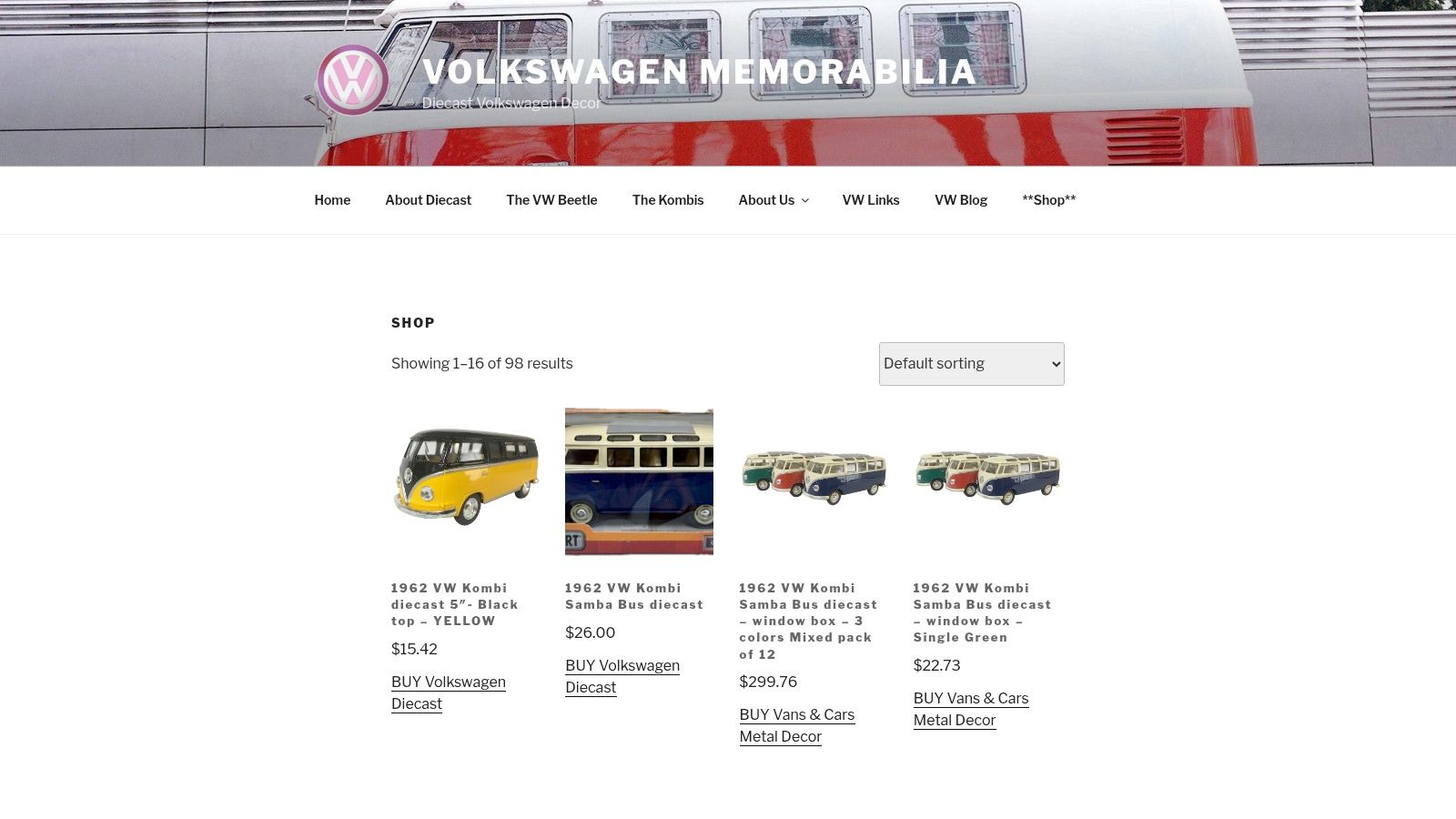
One family I know has a habit that I absolutely love. Every time they stop somewhere memorable, the kids take out a tiny diecast Kombi and set it on a rock, picnic table, or lookout rail for a quick photo. By the end of the trip, their journal is full of little “model on location” scenes. A miniature van at the Big Banana. A tiny Beetle beside a weathered jetty. A Samba Bus balanced carefully near a thermos and two lamingtons.
That's the sort of detail that turns a regular notebook into family motoring history.
Pages that feel properly VW
A VW-themed kids travel journal doesn't need to be complicated. It just needs a recurring thread.
You could add:
- Kombi Kount pages where kids tally every Kombi they spot
- Beetle Bingo with colours, roof racks, stickers, and surfboards
- Number plate hunts beside sketches of interesting Volkswagens
- Favourite car of the day with a quick drawing and where it was seen
For families who travel often, this becomes a lovely ritual. Australians took 119.4 million domestic overnight trips in the year to June 2024, and those trips averaged about 3.2 nights, which means there are plenty of natural chances to build a recurring journaling tradition over time, according to these ABS travel figures referenced here.
Small rituals make the book memorable
If your trip already has a VW flavour, lean into it. Add a page for the best roadside photo of the family car. Let the kids draw your dashboard. Save a little spot for sketches of hubcaps, headlights, or the steering wheel badge.
Some families also enjoy pairing the journal with inspiration from VW travel van stories, especially when they're planning coastal drives or weekend camping loops.
The more specific the page, the more vivid the memory later. “Saw a car” fades fast. “Blue Kombi outside the bakery in Bellingen” sticks.
A pocket for the good stuff
At the back of the journal, tape in an envelope or paper pocket. That's where the treasures go.
Think beyond the usual tickets. Include a beach permit, a pressed flower from a picnic stop, a postcard from a country town, or a printed photo of a favourite diecast model that travelled along for the ride. Kids love having a place for the bits adults might otherwise throw away. Years later, those scraps are often the first things everyone reaches for.
Packing and Preserving Your Road Trip Story
The best journals are easy to use while the trip is happening. If the supplies are buried under jumpers and bathers, nobody will bother. Keep it compact and ready.
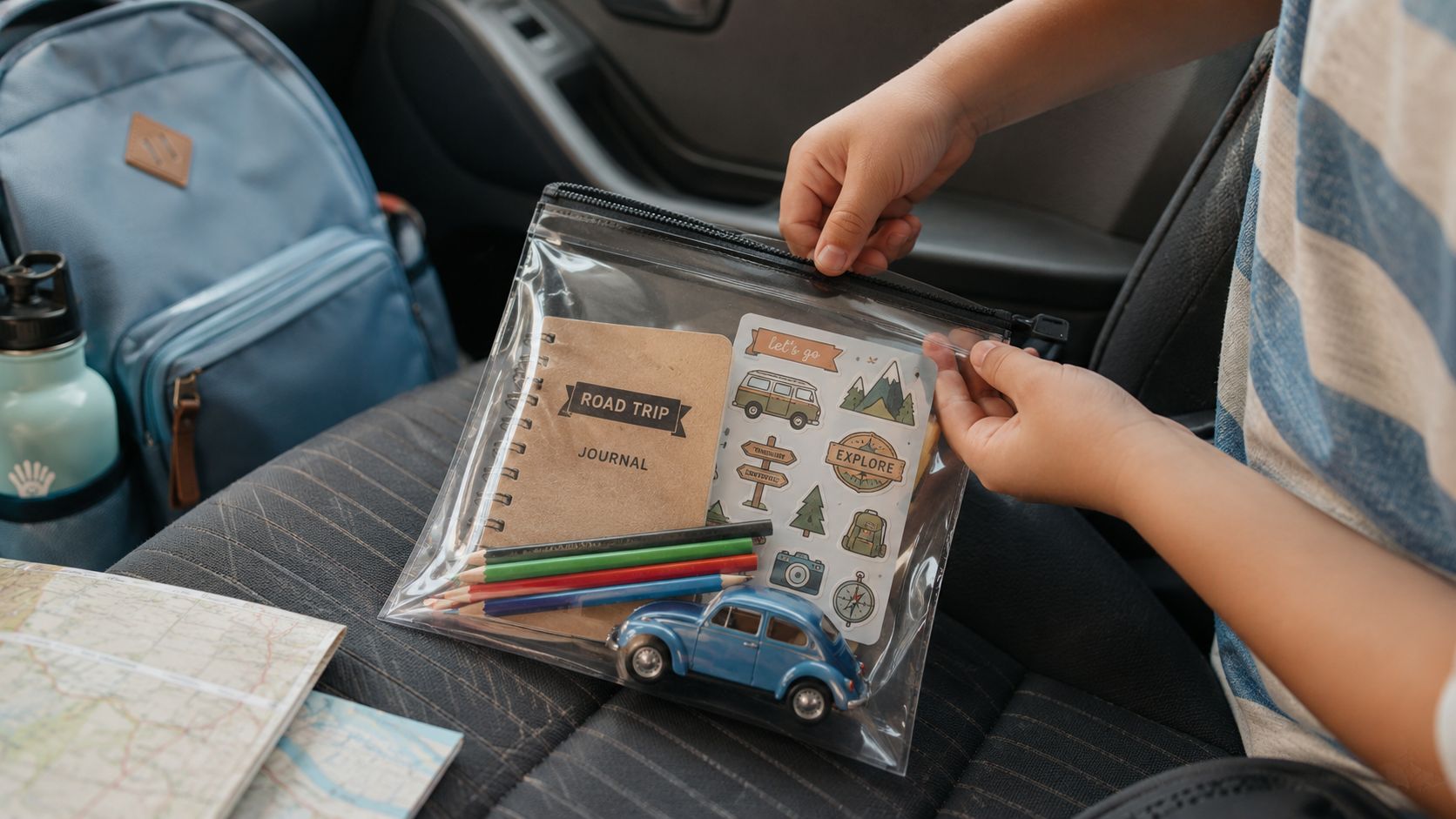
Build a simple car kit
A zip pouch or small tin is plenty. You don't need an art studio in the back seat.
Pack these basics:
- Journal and pencil case with coloured pencils rather than textas, which are less likely to dry out or leak
- Glue stick for tickets, wrappers, and postcards
- Child-safe scissors if your kids are old enough to manage them
- A few stickers for low-energy journaling days
- A small clip or elastic band to keep loose pages tidy
Keep the whole lot in one place so it can be handed back quickly at a café, campsite, or ferry terminal.
Save the fragile bits properly
Once you're home, don't leave the finished journal in a heap with beach towels and charging cables. Give it the same respect you'd give any keepsake.
A few smart finishing touches help:
| After the trip | Why it helps |
|---|---|
| Slide delicate items into clear sleeves | Protects tickets, flowers, and thin paper |
| Add dates to loose photos before sticking them in | Makes memories easier to place later |
| Store the journal upright on a shelf | Prevents bent corners and crushed pages |
| Keep it near family memorabilia | Encourages people to revisit it |
If you like displaying family mementos, a favourite photo from the trip can sit nicely beside the journal in something like this standing beach-themed photo frame. It's a simple way to turn the finished book into part of the home, not something hidden away in a cupboard.
Let it become part of the collection
For VW enthusiasts, that final step matters. A kids travel journal can sit beautifully near model cars, rally souvenirs, old rego plates, or beachy motoring bits and pieces. It becomes one more object with a story attached. Not bought for a shelf, but earned on the road.
Your Next Adventure Awaits
A kids travel journal's charm is that it catches family life before it slips past. Not the polished version. The genuine one. Crumbs on the seat. Wind in the car park. A child's lopsided sketch of a Beetle they swear was the best thing they saw all day.
That feels especially right for families who love Volkswagens. These cars have always carried more than luggage. They carry rituals, jokes, nicknames, and stories repeated at every barbecue and car show. A journal gives the next generation a way to join in, in their own handwriting and their own style.
You don't need a perfect trip, a perfect notebook, or children who adore writing. You just need a small habit. A few pages during the drive. A sketch at lunch. A ticket glued in before bed. Over time, those pages build something much richer than a holiday record.
When your child pulls that journal off the shelf years later, they won't just remember where you went. They'll remember how it felt to go there with you.
If you'd like to add a bit more VW character to your family's next journal, have a browse through Volkswagen Memorabilia. It's a great spot for VW memorabilia collectibles, licensed diecast favourites, and gift ideas that suit a Beetle or Kombi-loving household. For Australian buyers, local stock and fast shipping make it easier to grab those finishing touches before the next road trip rolls around.