


Salt spray on the windscreen, boards rattling on the roof, a kettle whistling on a camp stove beside the van. That’s how kombi life australia lives in the mind of a lot of us. Not as a museum piece, but as a moving little home pointed at the next beach.
The Enduring Call of the Open Road
A mate of mine still talks about a dawn run up the coast in an old VW bus, the kind of drive where every stop becomes part of the story. Coffee from a servo cup, sandy thongs by the sliding door, wax on the dash, and a long wait for the sun to burn the mist off the headland. The van was slow, a bit noisy, and absolutely perfect.
That’s the heart of kombi life australia. It isn’t about hurrying. It’s about stretching a trip so there’s room for surf checks, fish and chips, roadside yarns, and the odd detour because somebody said there’s a quiet break around the next bend.
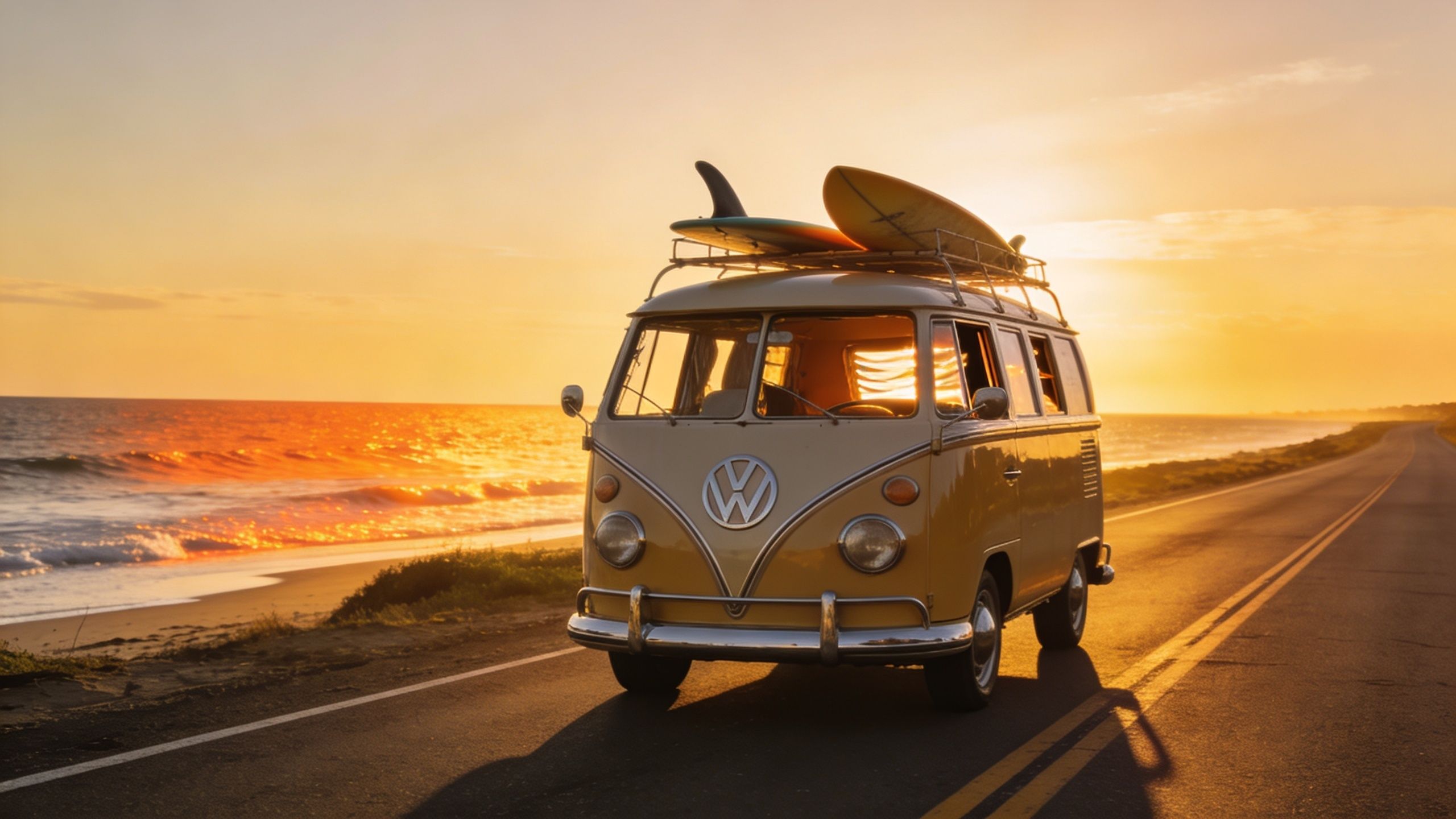
What’s lovely is that this picture isn’t just nostalgia. There’s a real, modern community still chasing that same feeling. The Van and Bus Life Survey by Nomads Around Australia found that 47% of van-lifers drive vans, with 77% based on the East Coast. The same survey found the community is primarily aged 25 to 34, and 74% earn under $50,000 annually, which says a lot about the low-cost, freedom-first pull of the lifestyle.
The road still attracts the same kind of dreamer
Some people come to it through surfing. Others through camping, photography, fishing, markets, music festivals, or a simple desire to wake up somewhere beautiful. The Kombi sits right in the middle of all that because it has always felt friendly. Not flashy. Not distant. Just open-hearted.
You see that spirit in the little habits Kombi owners share:
- Keeping things simple: A folding chair, a small stove, a good torch, and room for wet towels matters more than luxury.
- Making do creatively: Old crates become storage, curtains become privacy, and a shelf becomes a breakfast bench.
- Travelling for the feeling: The destination matters, but the stop at the bakery and the lookout with no name often matter more.
Campfire truth: The best Kombi trips are rarely the most organised ones.
Why the culture still resonates
The Kombi has always carried more than people and gear. It carries mood. Pull up in one and the whole scene changes. Strangers smile. Other VW owners wave. Someone usually has a story about one their parents had, or one they wish they’d never sold.
That emotional pull is exactly why memorabilia has such a strong place in this world. For plenty of enthusiasts, collecting a diecast Samba Bus or styling a shelf with VW pieces isn’t separate from the road-going dream. It’s another way of holding onto it. A little reminder of beach runs, campsite chatter, and the sound of an air-cooled engine settling after a long day.
How the Kombi Became an Australian Icon
Long before it became a symbol of beach towns and freedom, the Kombi earned its keep by being useful. That’s worth remembering. The Volkswagen Type 2 wasn’t loved because it tried to be glamorous. It became beloved because it worked hard, carried plenty, and asked for very little fuss in return.
In Australia, that practical streak mattered. Distances were long, weekends were outdoors, and plenty of people wanted one vehicle that could haul mates, gear, and groceries without carrying itself like a precious thing. The Kombi fit right in.
From workhorse to weekend legend
Ask older VW people about the first time they noticed Kombis becoming part of coastal life and the stories sound similar. A board poking out the back. Curtains in the windows. Somebody sleeping in it after a late gig or an early surf. It didn’t take much for the van to move from tradie duty to lifestyle hero.
By the 1970s, the Kombi had become a staple for surfing and road trips along Australia’s east and west coasts, with room for boards and mates and enough charm to feel like part of the adventure. That’s a big reason the shape still lands so strongly today. It reminds people of a looser, saltier, less polished Australia.
Why surfers and travellers took to it
It wasn’t one thing. It was a combination that hit the sweet spot.
| Feature | Why it mattered on Aussie trips |
|---|---|
| Spacious interior | Easier to throw in boards, swags, chairs, eskies, and spare clothes |
| Mechanical simplicity | Owners could tinker, patch, and maintain them without turning every issue into a drama |
| Friendly design | Rounded lines and a big glasshouse gave it personality no boxy van could match |
| Social layout | People gathered around a Kombi naturally, whether at a beach car park or camp ground |
A Kombi also invited custom touches in a way few vehicles did. Curtains, roof racks, bedding platforms, stickers, timber cabinets, painted panels. Every owner seemed to leave a fingerprint on it.
The Kombi became iconic because it gave ordinary people a way to live a little bigger on a small budget.
The Australian version of the dream
The Australian take on Kombi culture has always had its own flavour. Less autobahn, more headland. Less city chic, more sun-faded stickers and sandy floor mats. The local myth isn’t about pristine chrome under perfect lights. It’s about driving north with no fixed timetable, finding a van parked beside spinifex or surf, and knowing somebody inside is probably boiling water for tea.
That’s also why so many collectors are drawn to the surf-inspired, flower-power, and camper-style versions of VW models. They’re not only buying a miniature vehicle. They’re buying a tiny scene from Australian memory.
Heritage that still shapes what people love now
Even modern VW camper builds carry the old Kombi idea forward. Owners still want versatility, comfort, and the ability to head from weekday errands to a coastal weekend without changing vehicles. The details may be newer, but the instinct is old. Make it yours. Make it capable. Make it ready for the next trip.
That’s what keeps the Kombi from becoming a static classic. Plenty of historic cars are admired. The Kombi is different. People want to use it, talk about it, display it, photograph it, gift it, and build rooms around it.
For enthusiasts, that heritage matters when choosing memorabilia too. The pieces with the strongest pull are usually the ones that capture that lived-in spirit. A Samba Bus with bright paint. A surfy bus with character. A Beetle parked beside it on a shelf like the family car that followed the van down the coast.
The Vibrant World of Australian VW Events
Walk into a good VW meet in Australia and you’ll notice the mood before you notice the cars. People aren’t only inspecting vehicles. They’re swapping parts stories, sharing advice, comparing road-trip memories, and pointing out the little touches that make one bus different from the next.
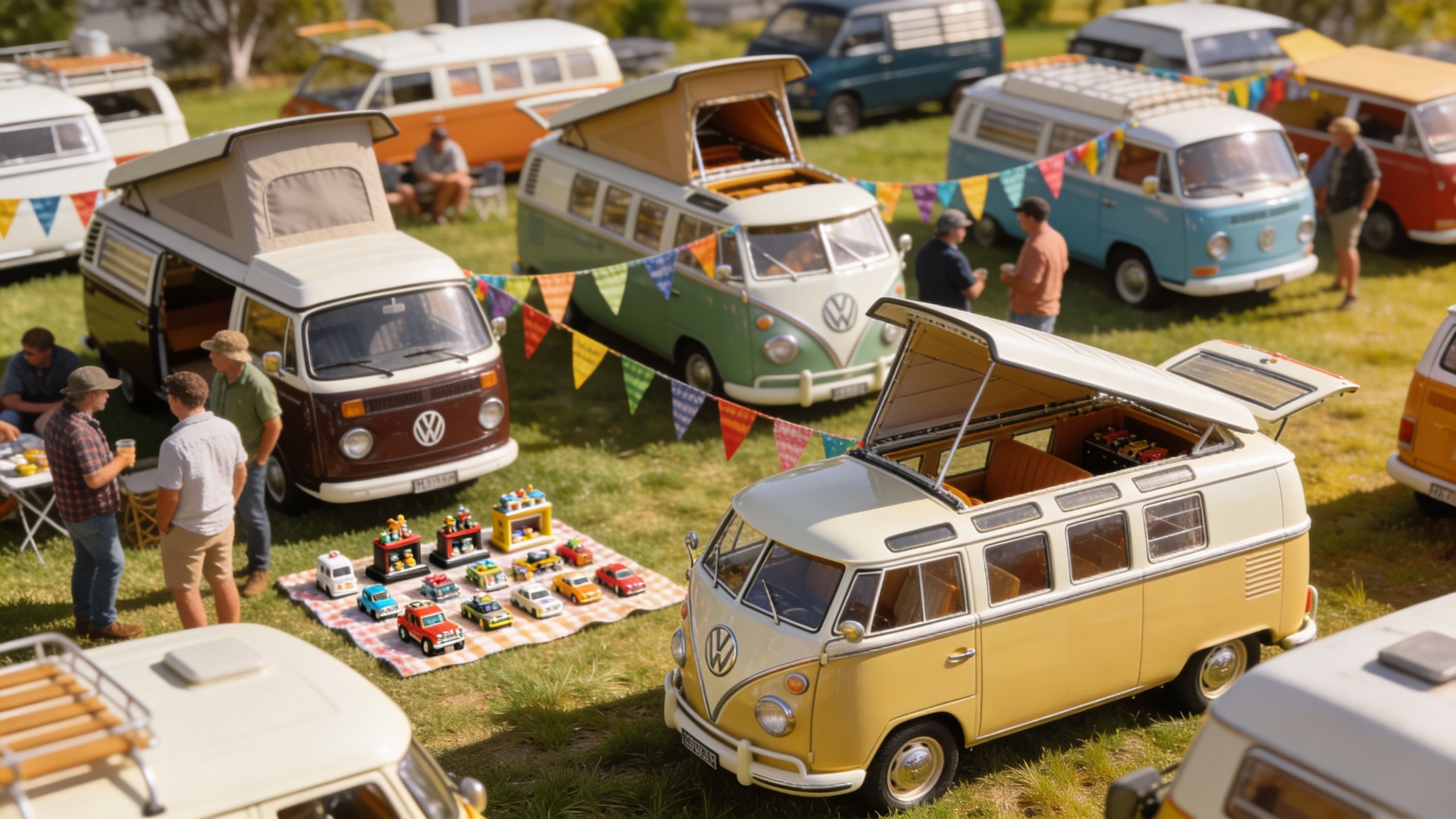
That’s why events like Volksfest, VW Nationals, local Show & Shine gatherings, and smaller club meets matter so much. They keep kombi life australia from turning into private nostalgia. They make it social. You can arrive knowing nobody and leave with three new contacts, a note about a parts supplier, and a dozen photos of vans you’d love to recreate in miniature at home.
What these gatherings feel like
The best events have a lovely mix of polish and imperfection. One Kombi will be restored so neatly it looks ready for a brochure. The next will wear its age proudly, with camping gear tucked inside and a few honest marks from years on the road.
You also get a full cross-section of the VW world:
- Restorers bringing buses and Beetles back to original glory
- Custom builders adding camping setups, wheels, racks, and touring gear
- Families introducing kids to the cars they grew up around
- Collectors hunting inspiration for the next diecast or display piece
Why the community stays strong
VW culture has always rewarded conversation. These cars and vans have character, and character invites stories. At a show, somebody will explain how they tracked down the right trim, someone else will open a sliding door to reveal a clever camping fit-out, and another owner will tell you exactly where the van first took them after restoration.
That community spirit carries into modern conversions too. Comfort upgrades are still part of the adventure mindset, not a rejection of it. For instance, the Horizon Roof imported by KombiLife Australia adds 1.9m of headroom and improves ventilation by 30%, which can lower internal temperatures by 5 to 7°C in hot Australian summers. It’s a modern answer to an old Kombi question. How do you stay out longer and travel better?
From show field to screen shelf
A lot of collectors build their display style from what they’ve seen at events. One person falls for factory-correct cream and red paint. Another leans into bright flower-power buses. Someone else goes all in on surf racks, patina, and beach props around their models.
This kind of footage captures that mood well:
Practical rule: If you’re heading to a VW event, bring a camera, a notebook, and comfortable shoes. You’ll spot display ideas, colour combinations, and model references you’d never think of at home.
What to pay attention to at a VW show
Instead of trying to see everything at once, focus on the details people often miss.
| Look for | Why it’s useful |
|---|---|
| Roof racks and accessories | They give you ideas for styling diecast displays with a real road-trip feel |
| Interior fit-outs | Great inspiration for shelf themes and camper model choices |
| Paint combinations | Helpful when choosing colours that suit a coastal room |
| Signwriting and decals | They often become the most memorable part of a bus, even in miniature |
The beauty of Australian VW events is that they welcome every kind of enthusiast. You don’t need to own a full-size Kombi to belong there. If you love the history, the shape, and the stories, you’re already part of the crowd.
Your Guide to Collecting VW Diecast Memorabilia
There’s a moment when collecting stops being casual and starts becoming personal. It might happen when you spot a miniature Samba Bus in the same two-tone paint as the van your uncle drove. Or when you find a flower-power Kombi that looks exactly right on a shelf beside old surf photos. That’s when diecast stops being a trinket and becomes a memory holder.
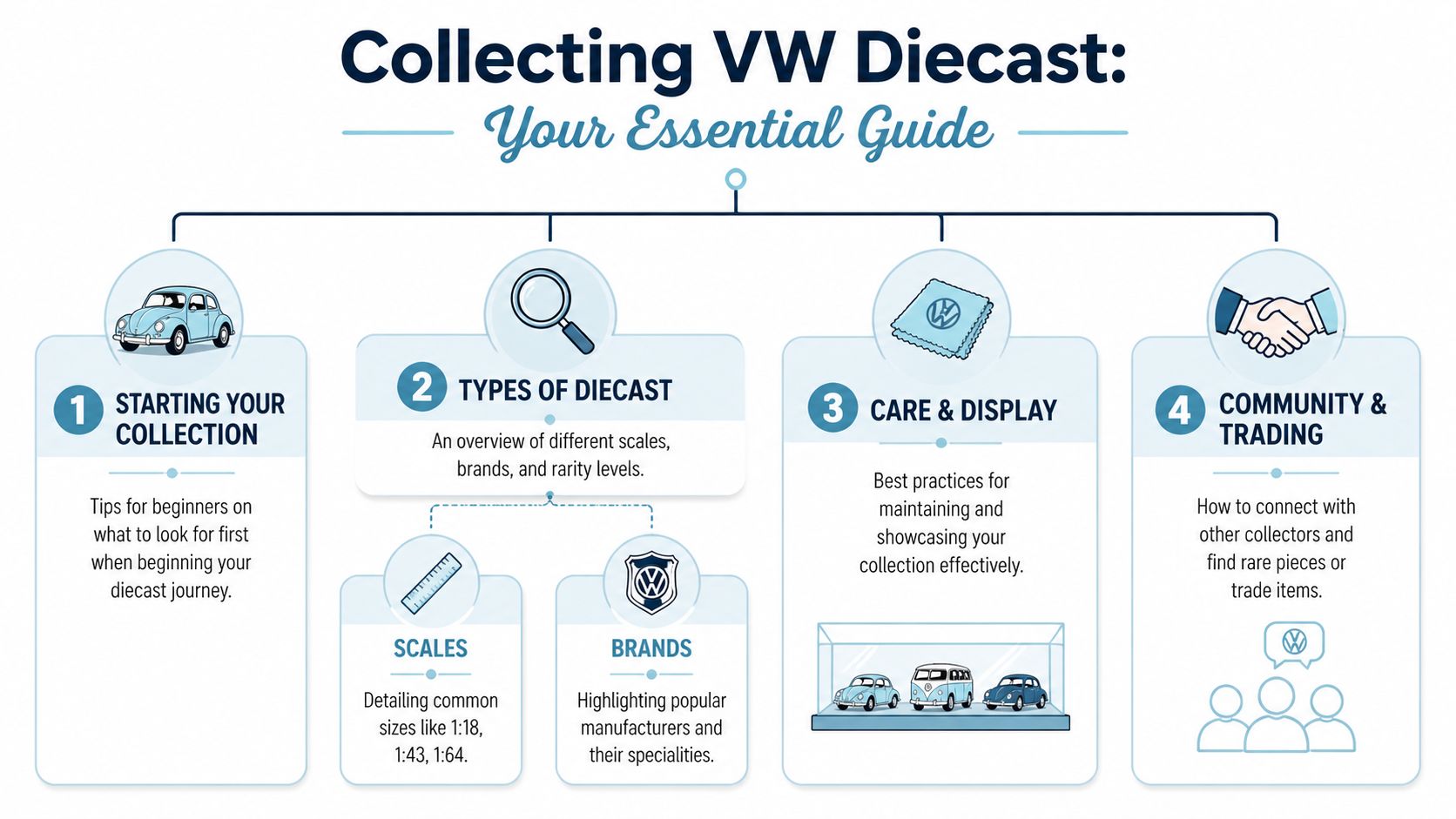
For newcomers, the easiest way to begin is to collect with a point of view. Don’t buy everything. Buy what stirs something. A classic 1962 Kombi. A Samba Bus with windows all around. A Beetle that balances out the display. A surfy van with the right colour and attitude.
Start with one theme
A focused collection looks stronger and feels more satisfying than a random pile of nice things. You’re building a little world, not filling empty space.
Try one of these approaches:
- Coastal road-trip shelf: Kombi vans, surf-inspired pieces, weathered timber, shells, old travel snaps
- Classic Volkswagen pairing: One or two Kombis with a Beetle model for contrast
- Colour-led display: Cream and blue, red and white, pastel tones, or bright flower-power pieces
- Era-based collecting: Early buses, later camper styles, then modern VW van interpretations
If you’re just starting, browsing a dedicated collection of Volkswagen model cars helps you see the range clearly and decide what kind of collector you want to be.
Understanding diecast scales
Scale is where many buyers hesitate, but it’s simpler than it sounds. Think of scale as the model’s personality in your room.
Larger scales for centrepieces
A 1:18 model has real presence. It suits a desk, bookshelf end, sideboard, or display cabinet where you want one hero piece to do the talking. On a coastal console table, a detailed Kombi in this size can carry a whole display by itself.
Mid-sized scales for flexible styling
A 1:24 model is often the sweet spot. Big enough to show off shape and detail, small enough to fit neatly into shared displays with books, framed photos, or shells and driftwood.
Smaller scales for grouped scenes
Scales like 1:32, 1:43, or 1:64 work beautifully when you want several vehicles together. They let you create a miniature convoy, a show field vibe, or a shelf that tells more than one story.
What makes a model worth buying
Not every VW model has the same magic. The good ones tend to get the essentials right.
| What to check | Why it matters |
|---|---|
| Licensed branding | It helps ensure the proportions and details feel true to the original |
| Paint finish | Clean colour application lifts the whole display |
| Window and trim detail | Samba-style buses especially rely on crisp glazing and trim lines |
| Wheels and stance | A model can have lovely paint and still look wrong if it sits awkwardly |
| Packaging condition | Important if you collect boxed pieces or buy gifts |
Buy the model you’ll still enjoy looking at after the novelty wears off. Detail matters, but character matters more.
Good first pieces for a Kombi fan
If you’re building around kombi life australia, a few types of model nearly always work.
- 1962 Kombi models: They capture the shape many people picture first when they think of classic VW van culture.
- Samba Bus diecast: Extra windows and that unmistakable silhouette make these display favourites.
- Flower Power editions: These bring in the counter-culture side of the story and suit bright coastal interiors.
- Surf-themed vans: Ideal if your collection leans toward beach heritage rather than factory purity.
- Volkswagen Beetle models: They add variety and help tell the broader VW story on the same shelf.
Displaying without cluttering
A diecast collection looks best when it can breathe. One strong model often beats five crammed together.
Try this simple display formula:
- Choose a lead piece such as a Kombi Samba Bus.
- Add one supporting item like a smaller Beetle or surf accessory.
- Use texture around it with timber, linen, or coastal elements.
- Leave space so the eye lands on the vehicle first.
A shelf should feel like a parking spot, not peak-hour traffic.
Buying locally makes the hobby easier
For Australian collectors, local stock removes a lot of the usual friction. You’re not waiting on vague overseas timelines or guessing whether a gift will arrive in time. Fast local shipping also matters when you’re buying fragile display pieces, especially around birthdays and Christmas.
There’s another benefit too. Australian-focused sellers often understand the specific appeal of coastal VW culture here. They know why surfy buses, Samba models, and nostalgic colourways resonate so strongly in local homes and collections.
A collector’s mindset that lasts
The most enjoyable collections aren’t always the biggest. They’re the ones built with affection and a bit of patience. Start with the bus that reminds you of a road trip. Add a Beetle that feels right. Build a shelf that reflects your version of VW life.
That way, each piece earns its place.
Bringing Coastal VW Charm Into Your Home
Some homes have a room that reflects who lives there. A weathered board near the door. Framed beach prints. Salt-softened colours. A model Kombi on a shelf that catches afternoon light. That mix works so well because VW memorabilia doesn’t feel forced in a coastal space. It belongs there.
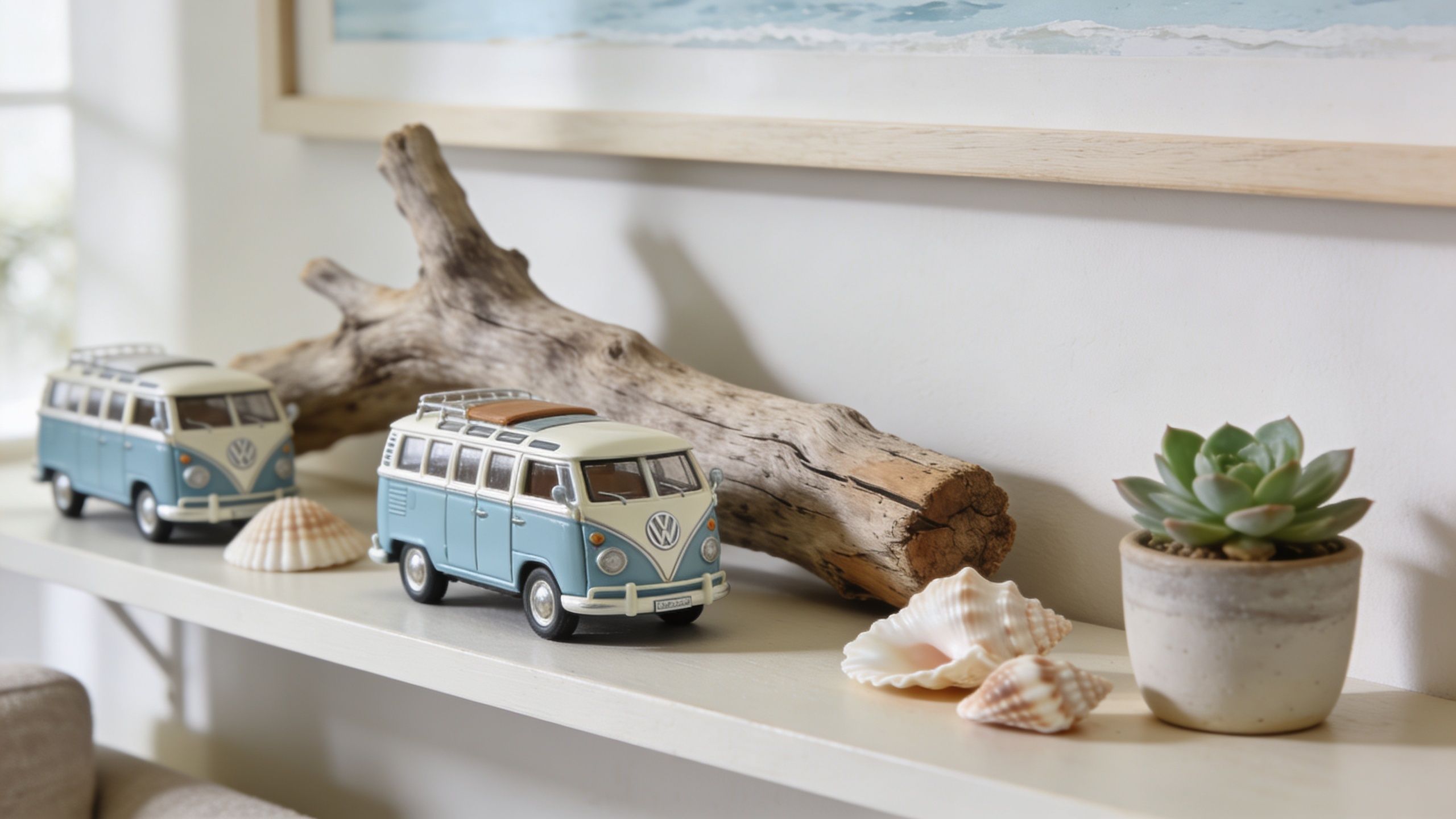
The trick is to style with restraint. You want the room to nod to the Kombi lifestyle, not shout over everything else.
Build one strong focal point
A larger Kombi model works beautifully as a centrepiece on a console, open shelf, or side table. Give it a little breathing room and pair it with objects that echo the road and the coast. A framed beach photo, a small ceramic vessel, or a few shells are often enough.
For inspiration on mixing automotive nostalgia with relaxed interiors, these coastal home décor ideas are a handy starting point.
Use colour the way old Kombis do
Classic VW colours are part of their charm. Soft blues, creams, reds, whites, and the occasional brighter pop all work well in Australian coastal interiors.
Try styling by palette:
- Blue and white: Clean, beachy, timeless
- Cream and red: More retro, warmer, slightly bolder
- Pastels: Relaxed and playful, especially with flower-power pieces
- Natural neutrals: Let the diecast paint become the colour feature in the room
Shelf ideas that don’t feel busy
A good shelf tells a story at a glance. Not a novel. Just enough to suggest a life well travelled.
| Shelf style | What to include |
|---|---|
| Surf shack corner | Kombi model, small framed wave print, piece of driftwood |
| Family nostalgia shelf | VW diecast, old holiday photo, vintage map or postcard |
| Clean coastal look | Blue-and-white bus, white ceramics, a succulent |
| Christmas variation | VW model with seasonal coastal ornaments in summer colours |
Keep your display at eye level if you want guests to notice the detail. Lower shelves often turn lovely models into background noise.
Make memorabilia feel lived with
The nicest displays usually include something personal. A photo from a road trip. A market postcard. A beach stone from a family holiday. These details stop the space from feeling like a shop window.
That matters with VW pieces because the emotional pull is such a big part of their charm. A Kombi model isn’t only decorative. It often points back to a memory, a person, or a version of freedom people still carry around.
If you’re styling a study, rumpus room, guest room, or beach house, VW memorabilia can anchor the space without dominating it. One shelf, one tray, or one corner is enough. Done well, it feels effortless.
Navigating the Realities of Full-Time Kombi Life
The romantic side of van travel is real. So are the headaches. Anyone giving a full account of kombi life australia should say both in the same breath.
The dream usually looks simple from the outside. Park near the beach, cook by the van, wake up somewhere pretty, repeat. But full-time living in a van brings paperwork, registration questions, insurance issues, and the kind of rules that can catch people off guard.
The part people don’t post about
One little-discussed reality is regulation. According to this discussion of recent van life reforms, some states now require a fixed abode for vehicle registration, and insurance premiums for nomadic vehicles can be up to 35% higher because insurers see them as higher risk.
That changes the picture fast. A van that feels like freedom on Friday can become an administrative puzzle by Monday.
A steadier way to approach the lifestyle
If you’re serious about full-time or long-term van living, go in with your eyes open. Romance helps you choose the life. Preparation helps you keep it.
A sensible checklist looks like this:
- Check registration requirements early: Don’t assume one state treats mobile living the same as another.
- Ask insurers direct questions: Be clear about how the vehicle is used, where it’s kept, and whether it’s modified.
- Keep records organised: Store receipts, modification details, and policy documents where you can access them quickly.
- Separate travel fantasy from legal reality: Loving the idea of van life doesn’t remove compliance obligations.
The best van setup in the world won’t save you from bad paperwork.
This side of Kombi culture isn’t as photogenic, but it matters. It protects your investment, your travels, and your peace of mind. If anything, facing these realities makes the lifestyle feel more authentic. The people who stay on the road longest are usually the ones who sort the practicalities before they become problems.
Your Road to Kombi Life Starts Here
Kombi culture has always been bigger than one vehicle. It’s a way of seeing travel, design, memory, and community. Some people live it on the road. Some restore old buses in the shed. Some spend Sunday mornings at VW shows. Others bring it home through a carefully chosen diecast Samba Bus, a Beetle model, or a coastal shelf that carries the whole mood of an Australian surf trip.
That’s the beauty of kombi life australia. There isn’t one doorway into it. You might start with a real van, or you might start with a miniature one on your desk. Both count.
If you’re keen to bring a little of that legend into your own space, it’s worth exploring a curated range of buses, Beetles, and camper-inspired pieces that capture its authentic charm. Collectors, gift buyers, and nostalgic VW fans can browse everything from diecast models to décor inspired by the open road through this Volkswagen bus camper collection. Buying from an Australian specialist also makes life easier, with local stock and faster shipping for pieces you prefer to have in your hands, not stuck in limbo.
Frequently Asked Questions
What makes a Kombi different from a Samba Bus
A Kombi is the broader van family people often mean when they talk about classic Volkswagen buses. A Samba Bus usually refers to the more distinctive, window-rich version that collectors love for its bright, airy look and iconic profile.
What’s the best diecast scale for beginners
A mid-sized model is often the easiest place to begin because it balances detail and display flexibility. If you want one statement piece, go larger. If you want several vehicles on one shelf, choose smaller scales.
Should I collect boxed models or display them open
That depends on what you enjoy most. Boxed collecting suits people who value packaging and gift condition. Open display suits people who want the model to become part of a room or themed shelf.
Are VW models good gifts for non-collectors
Yes, especially if the recipient has a personal link to Kombis, Beetles, surfing, road trips, or retro design. A well-chosen VW model often lands as both décor and memory.
Can home décor and diecast work together
Absolutely. VW diecast looks especially good with coastal, nautical, vintage, and beach-house styling because the colours and stories naturally overlap.
If you’re ready to find your own piece of the legend, browse Volkswagen Memorabilia for officially licensed VW diecast, Kombi and Beetle gifts, and coastal décor that captures the spirit of the open road. It’s a great place for Australian enthusiasts to shop local, enjoy fast shipping, and pick pieces that feel right at home in a collection, a gift box, or a beach-inspired room.