
Get Volkswagen Parts Australia: OEM, Aftermarket & Classic

You’re probably in that familiar spot right now. The shed door is open, the kettle’s gone lukewarm, and your Volkswagen is sitting there with one missing piece between “nearly done” and “back on the road”. Maybe it’s a Beetle waiting on a trim clip that nobody seems to list properly. Maybe it’s a Kombi with a door handle that looks right in the photo and turns out wrong in the hand. Maybe it’s a newer Amarok that needs the correct service parts without the usual guesswork.

That’s the core of volkswagen parts australia. It isn’t just buying bits. It’s the hunt, the decoding, the yarns swapped at club meets, and the little win you get when the right part finally clicks into place.

For a lot of us, that hunt doesn’t stop with the full-size car. It follows us onto workshop shelves, office desks, and lounge room displays too. The same eye that notices the proper mirror shape on a Splitty also notices when a diecast Samba Bus gets the stance just right. That’s part of the Volkswagen story in Australia. We keep them running, and we keep their spirit close.

That Unmistakable Feeling of Owning a VW

A mate of mine once spent half a Saturday chasing a rattly interior noise in an old Beetle. He was convinced the whole dash had to come out. Turned out to be one tiny loose fitting behind the trim, but by then the radio was on, the garage smelled of polish and old rubber, and three neighbours had wandered over for a stickybeak. That’s owning a VW in Australia. Even the small jobs become stories.

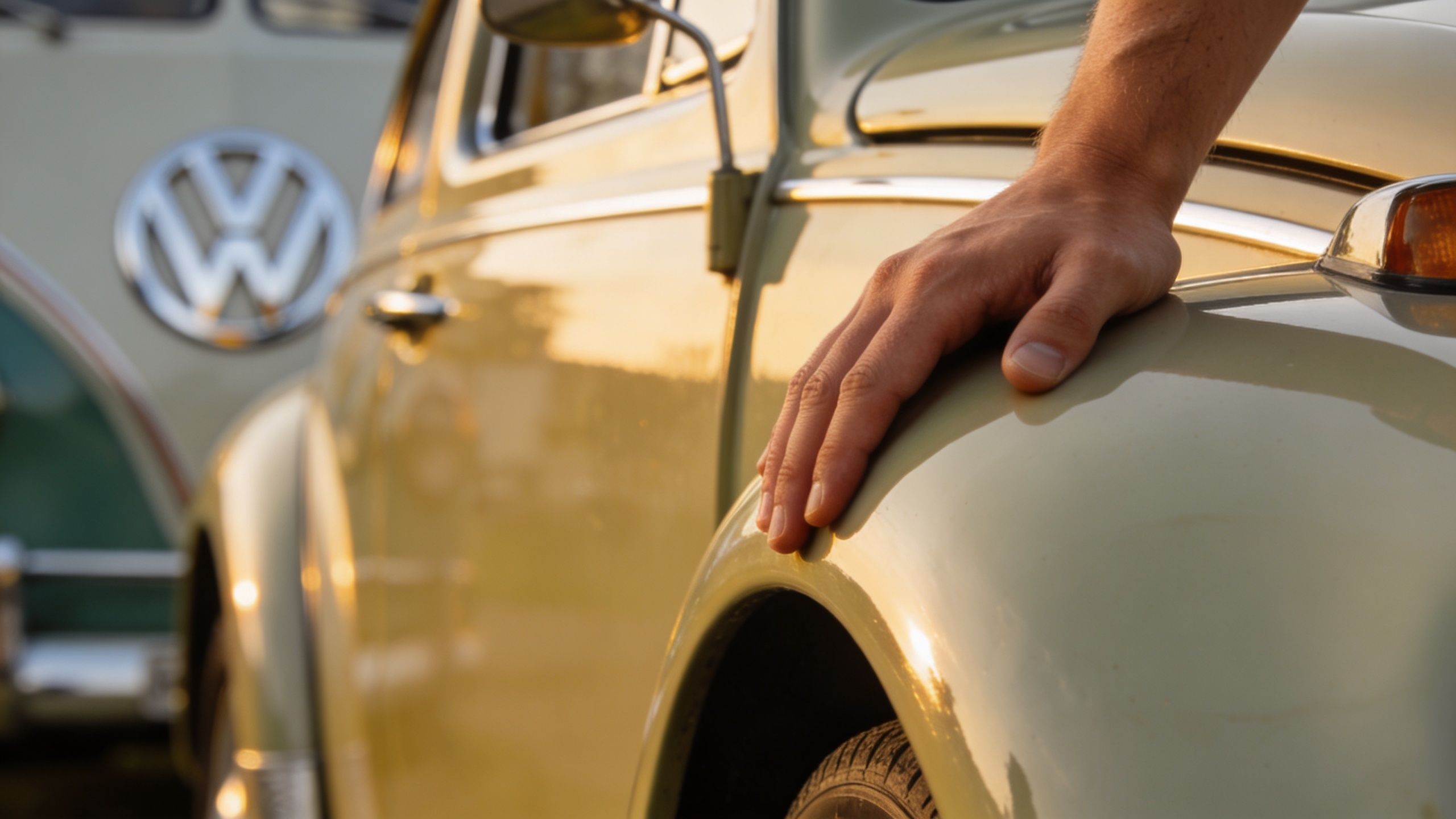
A close-up view of a person's hand resting on the smooth fender of a vintage Volkswagen car.

There’s a particular feeling you get with these cars. A Kombi parked nose-first to the beach. A Beetle cooling in the driveway after a Sunday run. A Golf GTI with that tidy, no-fuss solidity only a Volkswagen seems to do properly. They all feel like characters. They’ve got habits, quirks, and a way of getting under your skin.

The parts hunt is part of the romance

Nobody falls for a VW because it’s anonymous. You fall for the shape, the sound, the memories, and the way strangers start conversations at servo stops. Then the practical side arrives. You need a seal, a switch, a badge, a hinge, or the exact bit of trim that matches what the factory intended.

That’s when experience starts to matter.

Old Volkswagens reward patience. Rush the parts search and you usually buy the same thing twice.

In Australia, that search has its own flavour. Coastal air is hard on metal. Country miles are hard on wear items. Sun is hard on rubber, vinyl, and plastics. The right part isn’t just about fit. It’s about how that part will live in Australian conditions once you bolt it on.

The garage and the display shelf aren’t far apart

If you’ve ever restored a Kombi, you’ll know how often you pause to study details. Where the trim line sits. How the wheel finish should look. Whether the dash knobs are right for the era. That same instinct is why so many owners end up collecting VW pieces beyond the car itself.

A good model Beetle or Samba Bus isn’t separate from the hobby. It’s an extension of it. It keeps the story going when the tools are packed away and the garage light’s off.

How to Speak Fluent Volkswagen Part Numbers

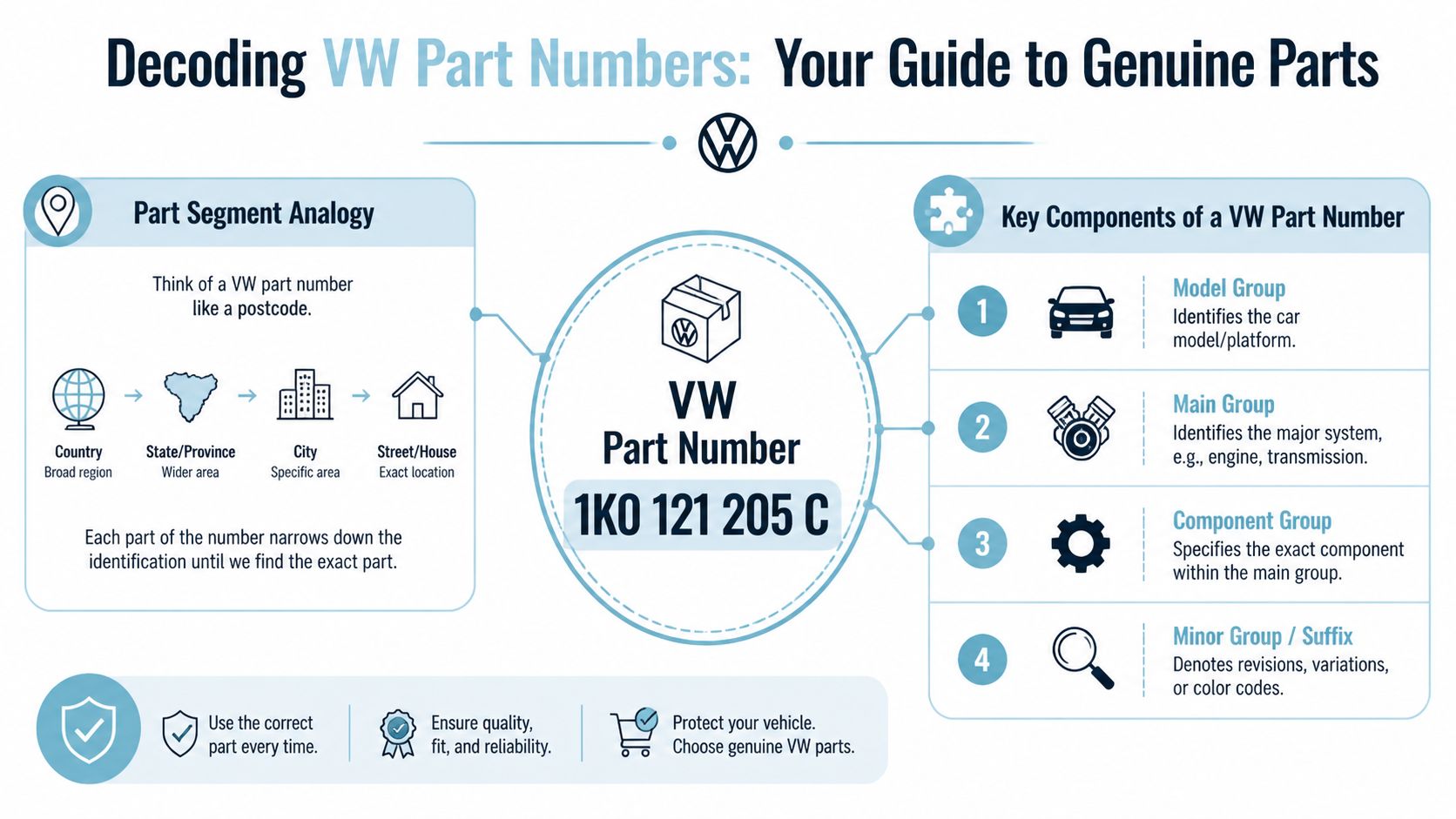
If VW part numbers have ever looked like secret code, don’t worry. They’re not random. Think of them like a postcode for car parts. Each section narrows the part down until you’re looking at one exact item, not a rough guess.

An infographic explaining the structure and meaning of Volkswagen automotive part numbers with a clear breakdown.

The basics are well established in the Club VeeDub guide to VW part numbers. Volkswagen uses a standardised 9 to 10 digit format, such as 171 819 047A. The first three digits identify the model, the fourth digit marks the main group, and the ending can show a revision or modification.

Breaking down the code

Here’s the easy way to read one:

Part number section What it usually tells you Why it matters
First three digits Model or unit code Helps match the part to the right vehicle family
Fourth digit Main group Tells you the major area, such as body or interior
Fifth and sixth digits Subgroup Narrows the search to a specific assembly
Last digits Consecutive part number Identifies the exact part itself
Final letter Modification code Can show a revision or update

That fourth digit matters more than many people realise. In the example from Club VeeDub, “8” indicates Body and Interior. If you’re searching trim, handles, seals, dash parts, or panels, this helps you stop wandering through the wrong catalogue section.

Left and right can catch you out

One of the handiest tricks is knowing that the consecutive numbers can indicate left or right-hand fitment. In Australia, that matters even more because we’re dealing with right-hand-drive cars and all the little fitment differences that come with them.

A mirror, hinge, or trim piece might look identical in a listing photo. It often isn’t.

Practical rule: Never order a left or right-specific VW part by appearance alone. Check the number first, then check the car.

Why suffix letters deserve respect

That final letter can seem small, but it can save a headache. The optional tenth character often shows a modification. That might mean a later revision, a slight design tweak, or a different finish. If you’re restoring a classic, that suffix can be the difference between “close enough” and “spot on”.

For Australian owners, this matters with anything exposed to salt air, sun, or repeated use. A later version of a part often exists because the earlier one had a weakness.

A quick workshop habit worth keeping

Before you order anything, write down:

  • The full part number from the old part if it’s legible
  • The model and year of the vehicle
  • Which side the part belongs on
  • Any suffix letter at the end
  • A photo of the mounting points for your own reference

That little checklist beats memory every time.

Your Go-To Map for VW Parts Across Australia

A mate of mine in Newcastle spent three weekends chasing a sliding-door roller for his Bay Window. The first seller swore it would fit. The second sent one from a different year. The third was an old club bloke who said, “Bring the busted one over.” Ten minutes in his shed, with a coffee going cold on the bench, the right part turned up in a tobacco tin beside a pile of old rego labels and a 1:64 Kombi model still in its blister pack. That is how VW parts hunting often works in Australia. Half detective work, half community, and a little bit of nostalgia every time.

Finding good volkswagen parts australia sources comes down to knowing which door to knock on for which job. A service item for a Golf, a proper German Beetle trim ring, and a Kombi latch with the right wear and stampings usually live in three different worlds.

Dealership parts counters

For newer Volkswagens, the dealer parts counter still earns its place. You walk in with the VIN, the part gets traced through the local catalogue, and you leave with far less guesswork than you would from a generic listing online. That scale translates to better support.

Best for:

  • Modern Volkswagens needing exact replacement parts
  • Warranty-sensitive jobs
  • Owners who want OE fit and finish

Less ideal for:

  • obscure used trim
  • bargain hunting
  • some niche classic odds and ends

Specialist VW parts suppliers

The specialist shops are where experience saves money. These suppliers know the little production changes that trip people up. They know which Beetle seal sits correctly, which Type 3 switch is close but wrong, and which “fits all” listing belongs in the bin.

You hear it in the language straight away. “Is it German-built?” “Early or late?” “Push-button or trigger handle?” Those questions can save you from buying the same part twice.

For air-cooled owners, these businesses often feel like part workshop, part archive. They keep cars on the road, but they also keep stories alive. The same owner chasing bonnet hinges for a Squareback is often the one collecting dealer brochures, enamel signs, or a little fleet of diecast buses at home. It is all the same instinct. Preserve the shape, the details, the feeling.

Wreckers and donor cars

A wrecking yard can still hand you the best find of the month. Used original German parts often beat shiny reproductions for fit, finish, and character. Handles, brackets, seat frames, vents, and odd bits of interior trim are classic wreckers territory.

Go in prepared:

  • Take your tools so you can compare old and new on the spot
  • Inspect mounting points for cracks, rust, and old repairs
  • Look past dirt but don’t ignore distortion
  • Check whether the part has been modified by a previous owner

The best donor parts feel right in your hand. You can see the age, the weight, the way the stamping was done. Anyone who has matched a survivor part to an old diecast model on the shelf knows the satisfaction. The tiny details are the whole point.

Online marketplaces

eBay, Gumtree, forums, and enthusiast classifieds can reward patience. They can also drain it. Good sellers show the part number, clear photos, and the car it came from. Rough sellers give you one blurry photo and a sentence like “should fit most VW.”

Ask for:

  1. the full part number
  2. clear close-up photos
  3. confirmation of the model it came from
  4. details of any repairs or damage

If the seller dodges those questions, keep scrolling.

Clubs and the VW community

The best parts in Australia often move privately through club circles, swap meets, and late-night messages between owners. Someone knows a bloke in Ballarat breaking a Superbug. Someone else has a shelf of early Kombi hardware wrapped in newspaper from 1998. Many coveted finds never reach public listings.

That community side is part of what makes the hobby stick. One person is hunting a fuel flap hinge. Another is chasing an old service sign or adding a Volkswagen bus camper inspiration piece to the collection in the shed. Mechanical parts and memorabilia feed the same obsession. You are not only keeping a VW alive. You are keeping its world intact.

The best VW parts source in Australia is often a person with a good memory, a crowded shed, and a shelf full of stories.

Genuine vs Aftermarket The Great VW Parts Debate

There’s no single right answer here. The right choice depends on the car, the job, and what sort of owner you are. A concours Beetle, a beach-run Kombi, and a hard-working daily driver won’t all make the same call.

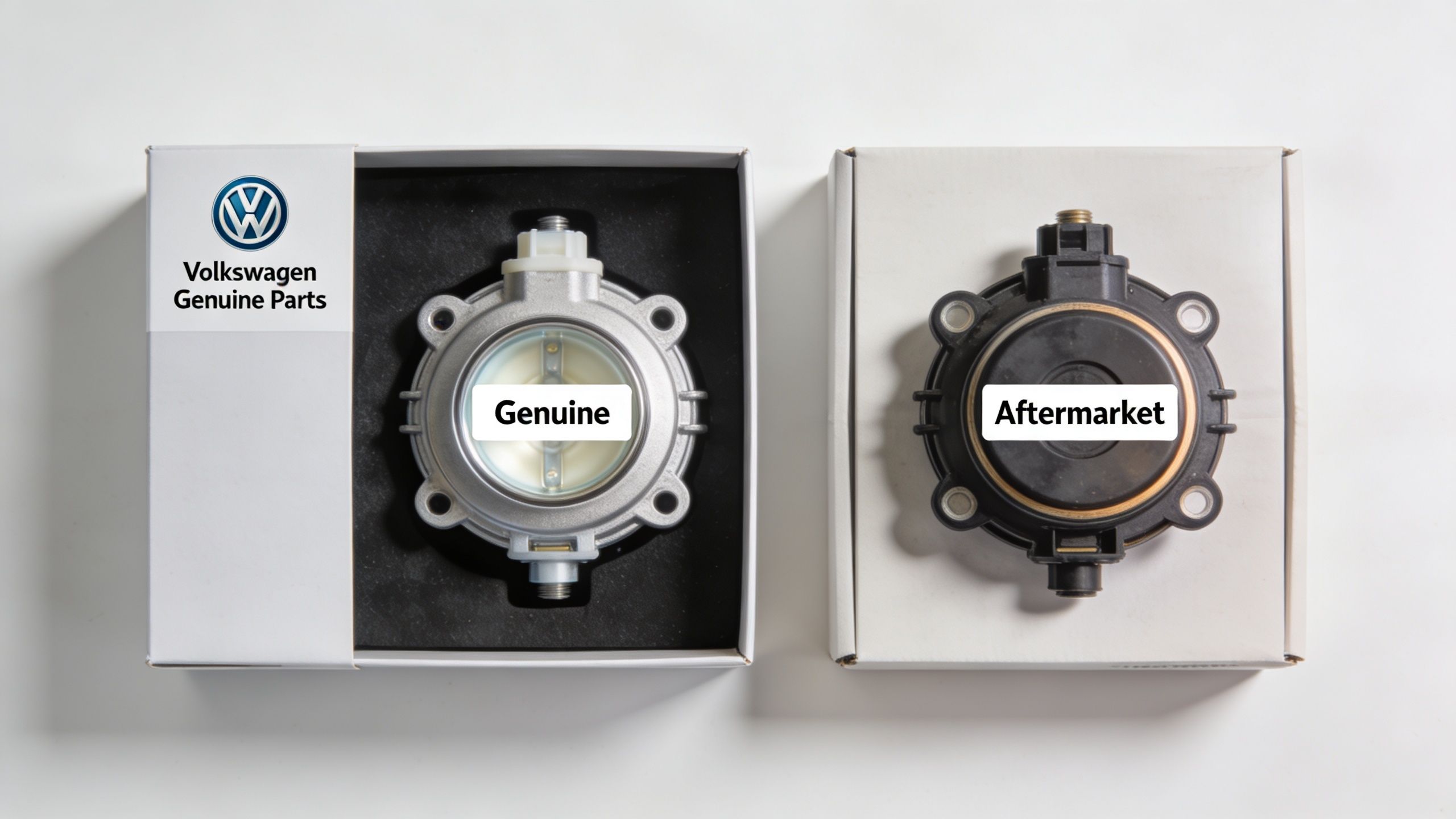
A side-by-side comparison showing a genuine Volkswagen automotive part versus an aftermarket replacement part in boxes.

Volkswagen’s own genuine parts offering in Australia comes with a clear advantage. According to Volkswagen Australia Genuine Parts information, Volkswagen Genuine Parts® carry a 2-year unlimited kilometre warranty when installed by an authorised technician.

When genuine makes the most sense

Use genuine parts when failure would ruin your weekend or your engine. That includes core mechanical items, sensitive sensors, major cooling parts, and anything that affects safety or proper system operation.

For newer cars, genuine often saves time. The fit is right, the catalogue trail is clear, and if something goes wrong you’ve got a cleaner path to support.

When aftermarket earns its keep

A quality aftermarket part can be perfectly sensible. Plenty of owners use aftermarket for consumables, cosmetic items, and non-critical bits where originality isn’t the top priority. If the supplier is reputable and the part is known to fit properly, it can be a smart move.

That’s especially true on daily drivers. Not every old Golf or Beetle needs concours-correct everything.

A simple comparison helps:

Option Best for Watch-outs
Genuine Newer cars, critical systems, factory correctness Higher cost
Aftermarket Budget-conscious repairs, non-critical items Quality varies a lot
Used original Hard-to-find classics, period-correct restorations Wear, age, hidden damage

For a visual rundown of the thinking behind parts choices, this video is worth a look:

The sensible enthusiast approach

Most seasoned VW owners don’t live at one extreme. They mix and match.

  • Engine and safety first: Buy the best part you can justify.
  • Trim and nice-to-haves second: Balance budget with originality.
  • Rare old parts: If you find a solid used original, grab it.

Buy cheap twice and you usually spend more than buying right once.

Restoration Gold for Classic Beetles and Kombis

You see it at swap meets all the time. One Beetle rolls in wearing thin original paint, stone chips on the nose, and a driver’s seat that has carried three generations. Another arrives fresh from a full rebuild, every rubber replaced, every trim piece sitting straight. Both can stop you in your tracks if the work feels honest to the car.

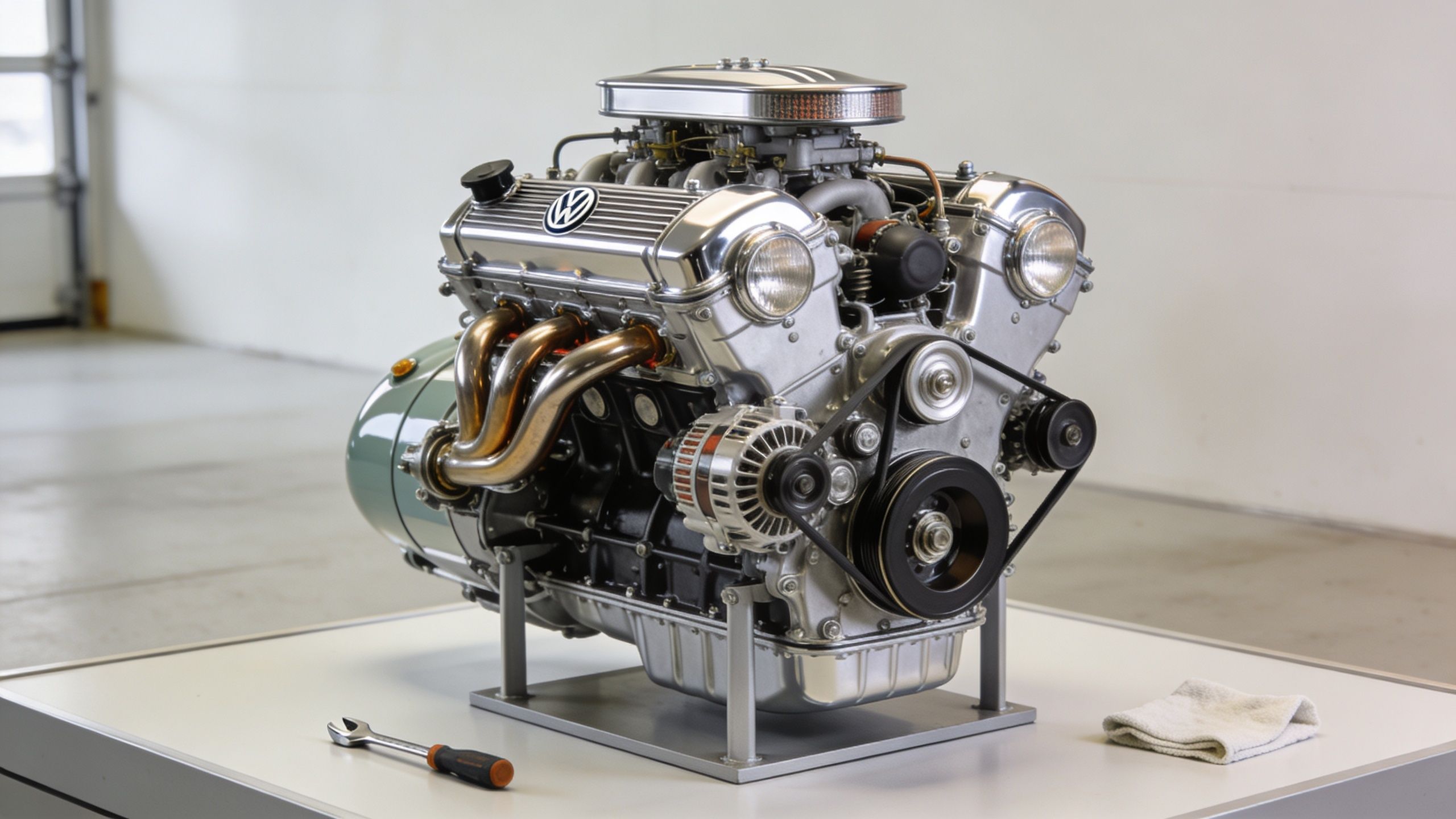
A chrome polished Volkswagen internal combustion engine displayed on a stand with a wrench and towel nearby.

A mate of mine spent half a winter sorting a Kombi rear hatch. He could have lived with a gap that looked fine from five metres away. He didn’t. He kept adjusting hinges, seals, and latch position until it shut with that familiar VW thunk. The first time it clicked home properly, the whole bus felt right again. That is the sort of victory classic Volkswagen people remember.

Start with the parts already telling the story

Before you fill a cart with replacements, pull the original bits off carefully and inspect them like artefacts. Old German handles, seat frames, latches, screws, catches, and trim often respond well to cleaning, plating, straightening, or a patient afternoon at the bench.

You save money, yes, but that is only part of it.

You also keep the car’s memory intact. A worn window winder or an original latch carries the same quiet charm as an old dealership brochure or a diecast Beetle on the garage shelf. The parts hunt and the collecting habit come from the same place. Respect for the details.

Use Australia’s VW network to your advantage

As noted earlier, Volkswagen has a serious footprint in Australia. For classic owners, that does not mean every air-cooled bracket or early Kombi trim clip is waiting in a local warehouse. It does mean the brand has a substantial local infrastructure around it, and that infrastructure is valuable when chasing parts pathways, references, old dealer knowledge, and compatible later pieces.

If your project is a Beetle and you are sorting through what is correct for a Type 1, these VW Type 1 parts references are handy for training your eye before you buy.

That matters most when a car has been “fixed” by five previous owners. A 1960s Beetle can pick up later lights, mixed fasteners, the wrong switches, and trim from entirely different years. Good restoration work often starts by spotting what should not be there.

The details that lift a restoration

Some choices shape the whole character of the car:

  • Patina or repaint
    Honest paint with good metal underneath can suit a Beetle or Kombi better than a glossy finish that erases its life.

  • Interior finishes
    Vinyl grain, seat piping, door cards, and colour tone decide whether the cabin feels period-correct or vaguely off.

  • Brightwork and trim
    Chrome needs restraint. Too perfect can look colder than the rest of the vehicle.

  • Hardware and fasteners
    Simple Volkswagens leave nowhere to hide. Wrong screws and odd clips stand out fast.

A classic Volkswagen does not need perfection. It needs the right feel.

Keep a reference on the shelf as well as the bench

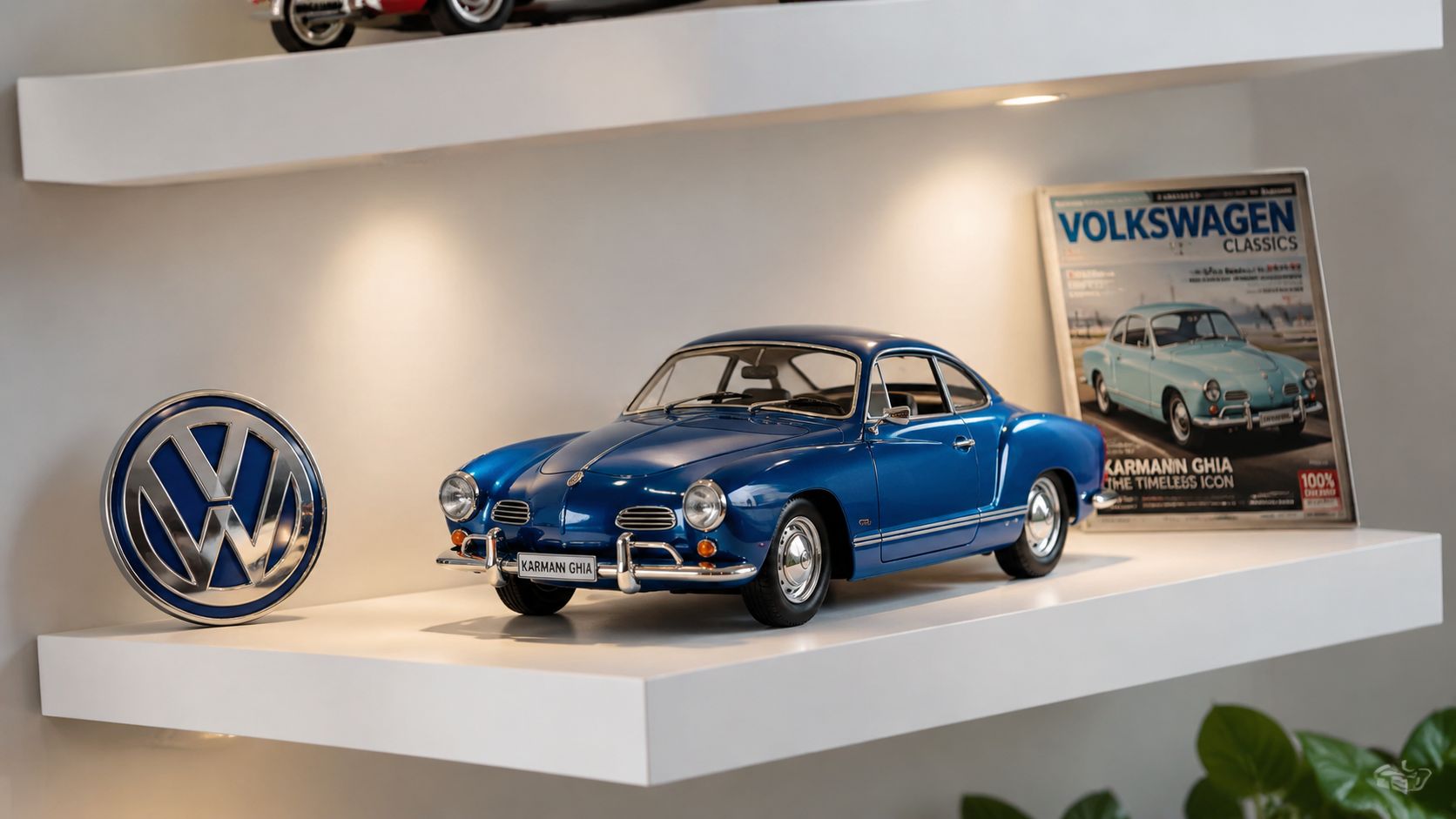
Plenty of owners do this without making a fuss about it. A well-made Beetle or Kombi model sits near the tools while the actual car is in pieces. One glance can settle an argument in your own head about stance, wheel style, trim layout, or how much visual weight a bumper should carry.

That little model is not a substitute for factory literature. It is a reminder of what made you fall for the shape in the first place. In a proper VW garage, the spares shelf and the memorabilia shelf usually belong to the same story.

From Car Parts to Collectibles The Enthusiast's Corner

There comes a point in every VW obsession where the parts shelf stops being enough. You want something that celebrates the shape, not just the spanner work. That’s where collectibles step in.

Australia’s VW parts scene mostly serves the mechanical side. According to this look at the gap in the local market from V Dubs R Us, suppliers heavily focus on functional spares, while memorabilia and collectible parts remain underserved. That rings true for anyone who’s searched for proper display pieces, retro accessories, or a faithful little Kombi for the bookshelf and ended up knee-deep in mechanical listings.

Why collectors and restorers often become the same person

It makes sense, really. The same owner who cares about the right hubcap profile on a real Beetle will care about the right window layout on a model Samba Bus. Collecting isn’t a separate hobby for a lot of VW people. It’s another expression of the same affection.

A few collectible categories fit naturally beside restoration life:

  • Diecast Beetles and Kombis for desk, garage, or study displays
  • Workshop-inspired decor that keeps the VW mood alive indoors
  • Gift pieces for birthdays, Father’s Day, retirements, or club prizes
  • Beachy VW items that suit the surf-and-coast side of Kombi culture

For people who love that crossover between motoring nostalgia and home style, pieces like Volkswagen-themed dashboard cover decor show how the visual language of old VWs can carry into everyday spaces.

A few display ideas that work

Space What suits it
Garage shelf Kombi diecast, old manuals, cleaned original parts
Home office Beetle model, framed event photo, subtle VW accent
Living room Coastal VW decor, Samba Bus piece, understated retro touches

The nice thing about collectibles is that they hold the feeling of the car even when the car’s under a cover, waiting on the next job.

Your VW Parts Questions Answered

Can I still get parts for newer Volkswagens in Australia?

Yes. Volkswagen Australia’s parts network supports current models as well as enthusiast favourites. Commercial vehicles are part of that picture too, not just passenger cars.

What about Amarok parts specifically?

They’re well supported within the same broader network. The Amarok reached 8,400 units in 2024, and that demand sits behind the same catalogue of nearly 300,000 Genuine Parts, as reported by GoAuto’s market insight on Volkswagen Australia.

Are VW clubs worth joining just for parts?

Absolutely. Even if you never buy a part directly through a club member, the advice alone is worth it. Clubs help you avoid bad buys, identify correct pieces, and meet the people who know where the hidden stock lives.

Should I restore with all genuine parts?

Not always. For critical components, genuine often makes sense. For trim, older used parts, or budget-minded jobs, a careful mix can be the smarter path.

Owning a Volkswagen in Australia has never been just about transport. It’s about memory, identity, community, and the quiet satisfaction of getting the details right. Whether you’re chasing a genuine replacement part, reviving a tired Beetle, keeping a Kombi honest, or looking for something that captures the old VW magic, you’re part of a bigger story every time you go searching.


If that VW feeling follows you out of the garage and into the rest of your life, have a look at Volkswagen Memorabilia. It’s a warm, distinctly Australian shop for VW-themed gifts, diecast models, and coastal decor, with plenty to delight Beetle lovers, Kombi fans, collectors, and gift buyers who want something with real character.

Kombi Life Australia Your Guide to the Culture

Salt spray on the windscreen, boards rattling on the roof, a kettle whistling on a camp stove beside the van. That’s how kombi life australia lives in the mind of a lot of us. Not as a museum piece, but as a moving little home pointed at the next beach.

The Enduring Call of the Open Road

A mate of mine still talks about a dawn run up the coast in an old VW bus, the kind of drive where every stop becomes part of the story. Coffee from a servo cup, sandy thongs by the sliding door, wax on the dash, and a long wait for the sun to burn the mist off the headland. The van was slow, a bit noisy, and absolutely perfect.

That’s the heart of kombi life australia. It isn’t about hurrying. It’s about stretching a trip so there’s room for surf checks, fish and chips, roadside yarns, and the odd detour because somebody said there’s a quiet break around the next bend.

A vintage yellow Volkswagen bus with surfboards on its roof parked along a coastal highway at sunset.

What’s lovely is that this picture isn’t just nostalgia. There’s a real, modern community still chasing that same feeling. The Van and Bus Life Survey by Nomads Around Australia found that 47% of van-lifers drive vans, with 77% based on the East Coast. The same survey found the community is primarily aged 25 to 34, and 74% earn under $50,000 annually, which says a lot about the low-cost, freedom-first pull of the lifestyle.

The road still attracts the same kind of dreamer

Some people come to it through surfing. Others through camping, photography, fishing, markets, music festivals, or a simple desire to wake up somewhere beautiful. The Kombi sits right in the middle of all that because it has always felt friendly. Not flashy. Not distant. Just open-hearted.

You see that spirit in the little habits Kombi owners share:

  • Keeping things simple: A folding chair, a small stove, a good torch, and room for wet towels matters more than luxury.
  • Making do creatively: Old crates become storage, curtains become privacy, and a shelf becomes a breakfast bench.
  • Travelling for the feeling: The destination matters, but the stop at the bakery and the lookout with no name often matter more.

Campfire truth: The best Kombi trips are rarely the most organised ones.

Why the culture still resonates

The Kombi has always carried more than people and gear. It carries mood. Pull up in one and the whole scene changes. Strangers smile. Other VW owners wave. Someone usually has a story about one their parents had, or one they wish they’d never sold.

That emotional pull is exactly why memorabilia has such a strong place in this world. For plenty of enthusiasts, collecting a diecast Samba Bus or styling a shelf with VW pieces isn’t separate from the road-going dream. It’s another way of holding onto it. A little reminder of beach runs, campsite chatter, and the sound of an air-cooled engine settling after a long day.

How the Kombi Became an Australian Icon

Long before it became a symbol of beach towns and freedom, the Kombi earned its keep by being useful. That’s worth remembering. The Volkswagen Type 2 wasn’t loved because it tried to be glamorous. It became beloved because it worked hard, carried plenty, and asked for very little fuss in return.

In Australia, that practical streak mattered. Distances were long, weekends were outdoors, and plenty of people wanted one vehicle that could haul mates, gear, and groceries without carrying itself like a precious thing. The Kombi fit right in.

From workhorse to weekend legend

Ask older VW people about the first time they noticed Kombis becoming part of coastal life and the stories sound similar. A board poking out the back. Curtains in the windows. Somebody sleeping in it after a late gig or an early surf. It didn’t take much for the van to move from tradie duty to lifestyle hero.

By the 1970s, the Kombi had become a staple for surfing and road trips along Australia’s east and west coasts, with room for boards and mates and enough charm to feel like part of the adventure. That’s a big reason the shape still lands so strongly today. It reminds people of a looser, saltier, less polished Australia.

Why surfers and travellers took to it

It wasn’t one thing. It was a combination that hit the sweet spot.

Feature Why it mattered on Aussie trips
Spacious interior Easier to throw in boards, swags, chairs, eskies, and spare clothes
Mechanical simplicity Owners could tinker, patch, and maintain them without turning every issue into a drama
Friendly design Rounded lines and a big glasshouse gave it personality no boxy van could match
Social layout People gathered around a Kombi naturally, whether at a beach car park or camp ground

A Kombi also invited custom touches in a way few vehicles did. Curtains, roof racks, bedding platforms, stickers, timber cabinets, painted panels. Every owner seemed to leave a fingerprint on it.

The Kombi became iconic because it gave ordinary people a way to live a little bigger on a small budget.

The Australian version of the dream

The Australian take on Kombi culture has always had its own flavour. Less autobahn, more headland. Less city chic, more sun-faded stickers and sandy floor mats. The local myth isn’t about pristine chrome under perfect lights. It’s about driving north with no fixed timetable, finding a van parked beside spinifex or surf, and knowing somebody inside is probably boiling water for tea.

That’s also why so many collectors are drawn to the surf-inspired, flower-power, and camper-style versions of VW models. They’re not only buying a miniature vehicle. They’re buying a tiny scene from Australian memory.

Heritage that still shapes what people love now

Even modern VW camper builds carry the old Kombi idea forward. Owners still want versatility, comfort, and the ability to head from weekday errands to a coastal weekend without changing vehicles. The details may be newer, but the instinct is old. Make it yours. Make it capable. Make it ready for the next trip.

That’s what keeps the Kombi from becoming a static classic. Plenty of historic cars are admired. The Kombi is different. People want to use it, talk about it, display it, photograph it, gift it, and build rooms around it.

For enthusiasts, that heritage matters when choosing memorabilia too. The pieces with the strongest pull are usually the ones that capture that lived-in spirit. A Samba Bus with bright paint. A surfy bus with character. A Beetle parked beside it on a shelf like the family car that followed the van down the coast.

The Vibrant World of Australian VW Events

Walk into a good VW meet in Australia and you’ll notice the mood before you notice the cars. People aren’t only inspecting vehicles. They’re swapping parts stories, sharing advice, comparing road-trip memories, and pointing out the little touches that make one bus different from the next.

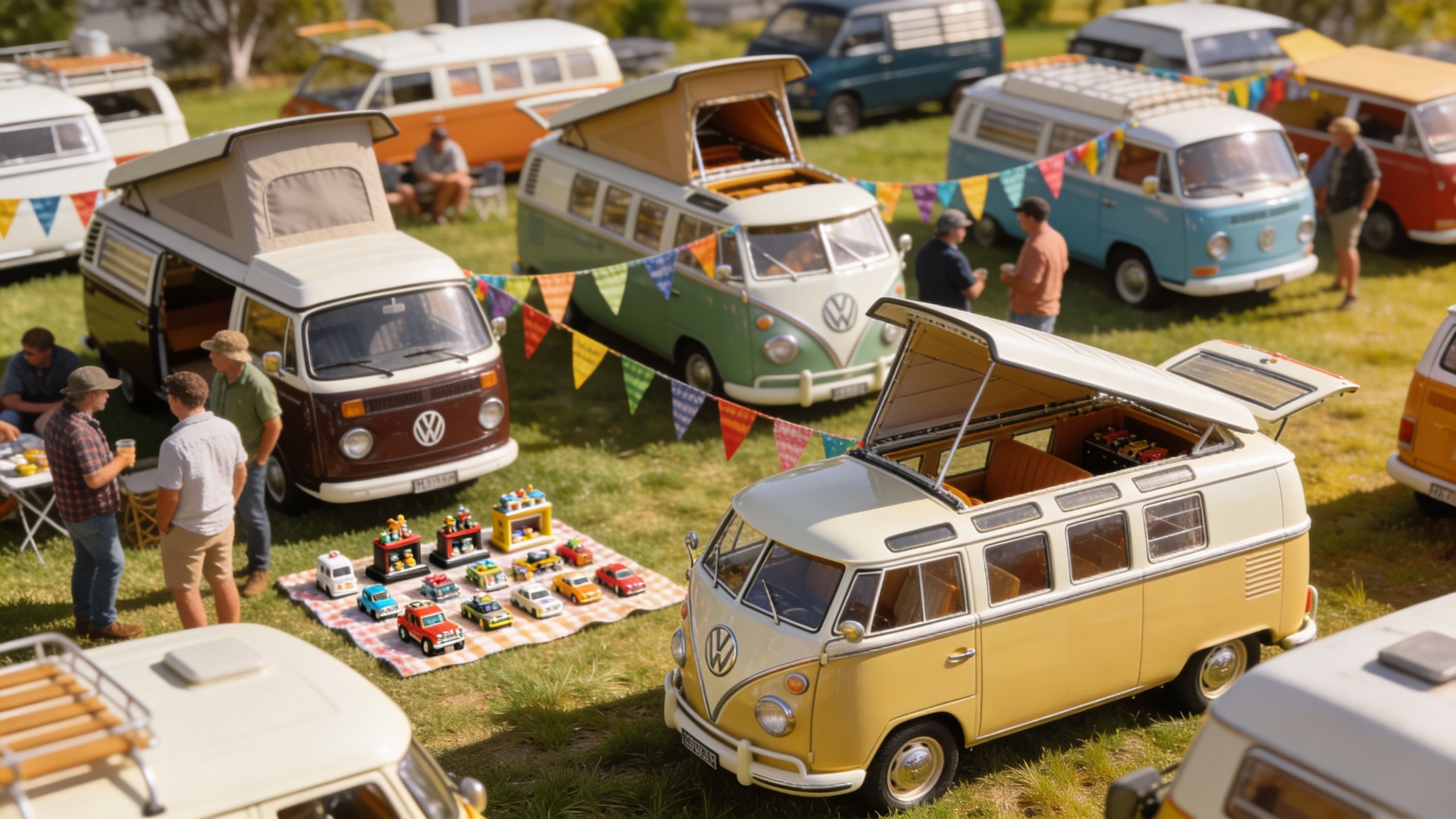
A miniature collection of vintage Volkswagen Kombi vans displayed outdoors on a sunny grass field.

That’s why events like Volksfest, VW Nationals, local Show & Shine gatherings, and smaller club meets matter so much. They keep kombi life australia from turning into private nostalgia. They make it social. You can arrive knowing nobody and leave with three new contacts, a note about a parts supplier, and a dozen photos of vans you’d love to recreate in miniature at home.

What these gatherings feel like

The best events have a lovely mix of polish and imperfection. One Kombi will be restored so neatly it looks ready for a brochure. The next will wear its age proudly, with camping gear tucked inside and a few honest marks from years on the road.

You also get a full cross-section of the VW world:

  • Restorers bringing buses and Beetles back to original glory
  • Custom builders adding camping setups, wheels, racks, and touring gear
  • Families introducing kids to the cars they grew up around
  • Collectors hunting inspiration for the next diecast or display piece

Why the community stays strong

VW culture has always rewarded conversation. These cars and vans have character, and character invites stories. At a show, somebody will explain how they tracked down the right trim, someone else will open a sliding door to reveal a clever camping fit-out, and another owner will tell you exactly where the van first took them after restoration.

That community spirit carries into modern conversions too. Comfort upgrades are still part of the adventure mindset, not a rejection of it. For instance, the Horizon Roof imported by KombiLife Australia adds 1.9m of headroom and improves ventilation by 30%, which can lower internal temperatures by 5 to 7°C in hot Australian summers. It’s a modern answer to an old Kombi question. How do you stay out longer and travel better?

From show field to screen shelf

A lot of collectors build their display style from what they’ve seen at events. One person falls for factory-correct cream and red paint. Another leans into bright flower-power buses. Someone else goes all in on surf racks, patina, and beach props around their models.

This kind of footage captures that mood well:

Practical rule: If you’re heading to a VW event, bring a camera, a notebook, and comfortable shoes. You’ll spot display ideas, colour combinations, and model references you’d never think of at home.

What to pay attention to at a VW show

Instead of trying to see everything at once, focus on the details people often miss.

Look for Why it’s useful
Roof racks and accessories They give you ideas for styling diecast displays with a real road-trip feel
Interior fit-outs Great inspiration for shelf themes and camper model choices
Paint combinations Helpful when choosing colours that suit a coastal room
Signwriting and decals They often become the most memorable part of a bus, even in miniature

The beauty of Australian VW events is that they welcome every kind of enthusiast. You don’t need to own a full-size Kombi to belong there. If you love the history, the shape, and the stories, you’re already part of the crowd.

Your Guide to Collecting VW Diecast Memorabilia

There’s a moment when collecting stops being casual and starts becoming personal. It might happen when you spot a miniature Samba Bus in the same two-tone paint as the van your uncle drove. Or when you find a flower-power Kombi that looks exactly right on a shelf beside old surf photos. That’s when diecast stops being a trinket and becomes a memory holder.

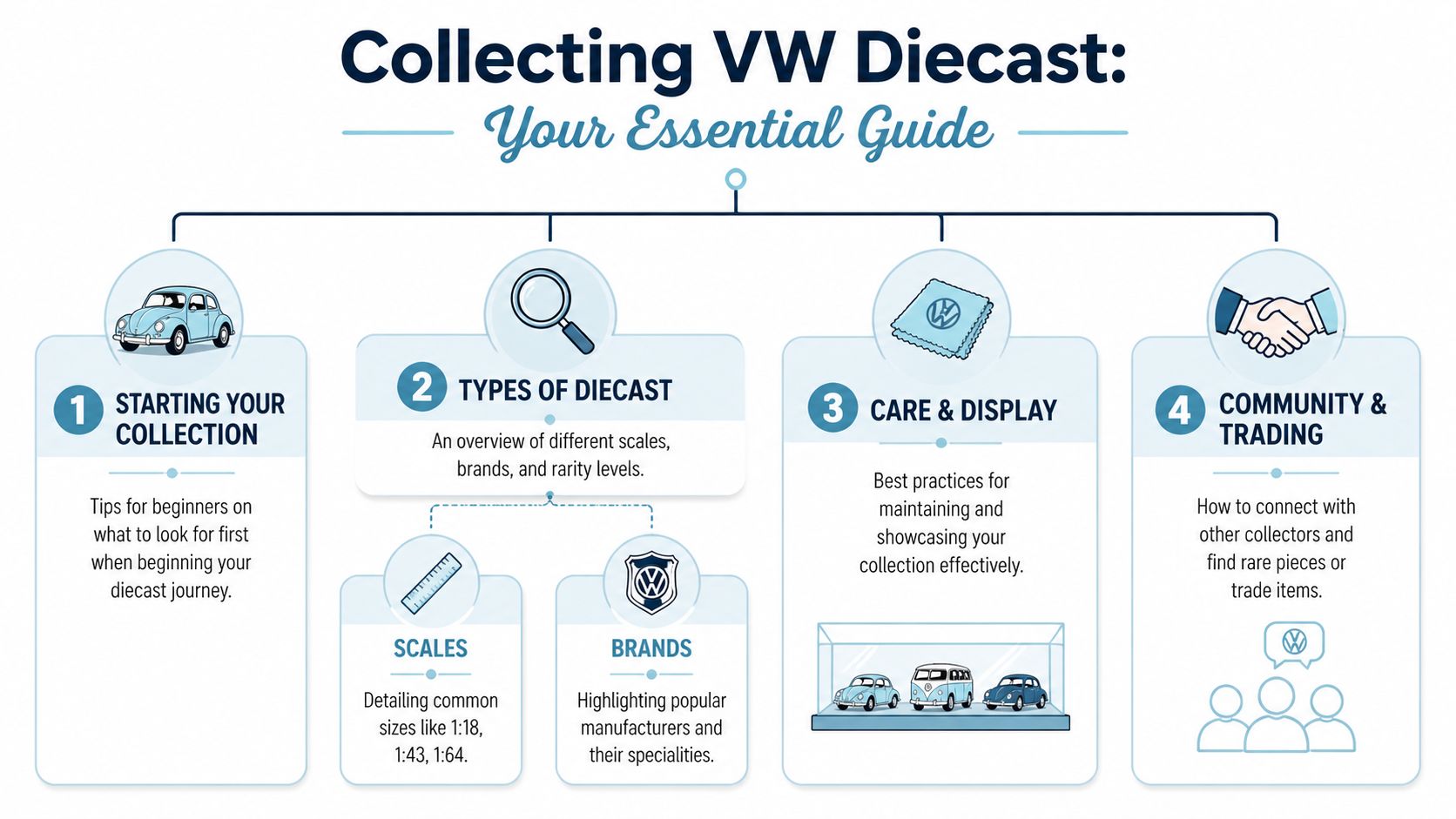
An infographic titled Collecting VW Diecast showing a guide on starting, categorizing, displaying, and trading model cars.

For newcomers, the easiest way to begin is to collect with a point of view. Don’t buy everything. Buy what stirs something. A classic 1962 Kombi. A Samba Bus with windows all around. A Beetle that balances out the display. A surfy van with the right colour and attitude.

Start with one theme

A focused collection looks stronger and feels more satisfying than a random pile of nice things. You’re building a little world, not filling empty space.

Try one of these approaches:

  • Coastal road-trip shelf: Kombi vans, surf-inspired pieces, weathered timber, shells, old travel snaps
  • Classic Volkswagen pairing: One or two Kombis with a Beetle model for contrast
  • Colour-led display: Cream and blue, red and white, pastel tones, or bright flower-power pieces
  • Era-based collecting: Early buses, later camper styles, then modern VW van interpretations

If you’re just starting, browsing a dedicated collection of Volkswagen model cars helps you see the range clearly and decide what kind of collector you want to be.

Understanding diecast scales

Scale is where many buyers hesitate, but it’s simpler than it sounds. Think of scale as the model’s personality in your room.

Larger scales for centrepieces

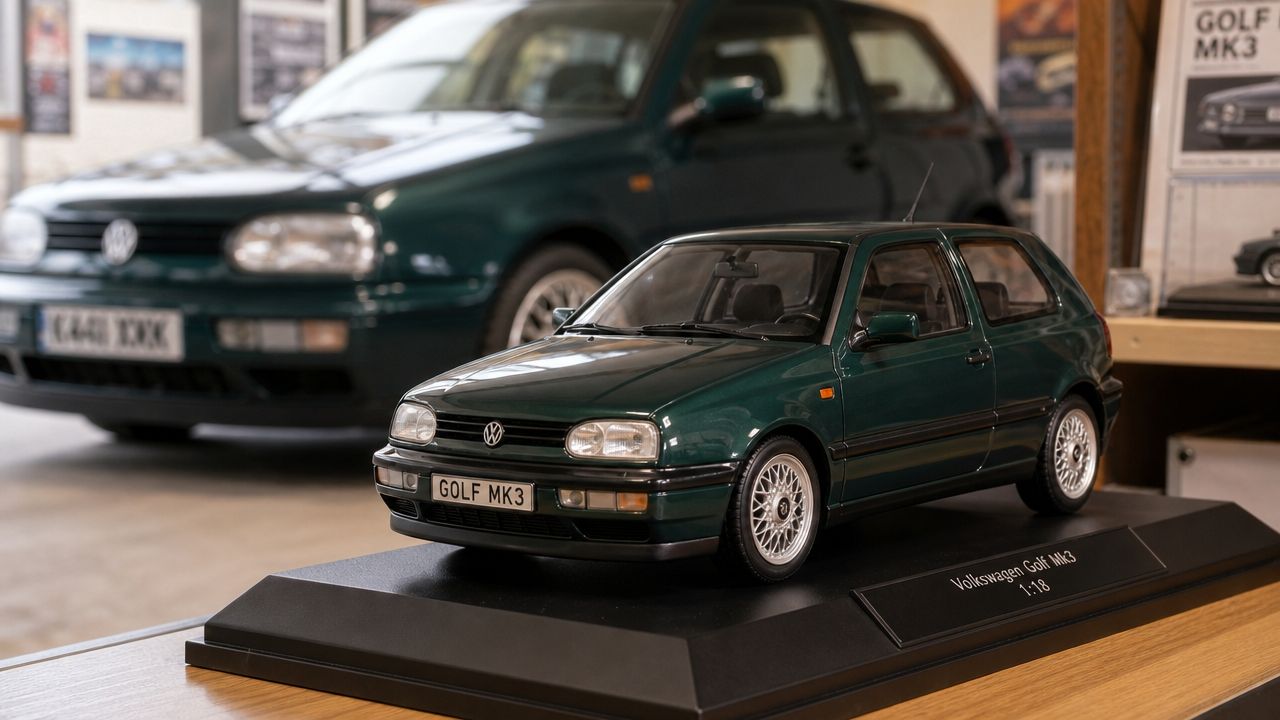
A 1:18 model has real presence. It suits a desk, bookshelf end, sideboard, or display cabinet where you want one hero piece to do the talking. On a coastal console table, a detailed Kombi in this size can carry a whole display by itself.

Mid-sized scales for flexible styling

A 1:24 model is often the sweet spot. Big enough to show off shape and detail, small enough to fit neatly into shared displays with books, framed photos, or shells and driftwood.

Smaller scales for grouped scenes

Scales like 1:32, 1:43, or 1:64 work beautifully when you want several vehicles together. They let you create a miniature convoy, a show field vibe, or a shelf that tells more than one story.

What makes a model worth buying

Not every VW model has the same magic. The good ones tend to get the essentials right.

What to check Why it matters
Licensed branding It helps ensure the proportions and details feel true to the original
Paint finish Clean colour application lifts the whole display
Window and trim detail Samba-style buses especially rely on crisp glazing and trim lines
Wheels and stance A model can have lovely paint and still look wrong if it sits awkwardly
Packaging condition Important if you collect boxed pieces or buy gifts

Buy the model you’ll still enjoy looking at after the novelty wears off. Detail matters, but character matters more.

Good first pieces for a Kombi fan

If you’re building around kombi life australia, a few types of model nearly always work.

  • 1962 Kombi models: They capture the shape many people picture first when they think of classic VW van culture.
  • Samba Bus diecast: Extra windows and that unmistakable silhouette make these display favourites.
  • Flower Power editions: These bring in the counter-culture side of the story and suit bright coastal interiors.
  • Surf-themed vans: Ideal if your collection leans toward beach heritage rather than factory purity.
  • Volkswagen Beetle models: They add variety and help tell the broader VW story on the same shelf.

Displaying without cluttering

A diecast collection looks best when it can breathe. One strong model often beats five crammed together.

Try this simple display formula:

  1. Choose a lead piece such as a Kombi Samba Bus.
  2. Add one supporting item like a smaller Beetle or surf accessory.
  3. Use texture around it with timber, linen, or coastal elements.
  4. Leave space so the eye lands on the vehicle first.

A shelf should feel like a parking spot, not peak-hour traffic.

Buying locally makes the hobby easier

For Australian collectors, local stock removes a lot of the usual friction. You’re not waiting on vague overseas timelines or guessing whether a gift will arrive in time. Fast local shipping also matters when you’re buying fragile display pieces, especially around birthdays and Christmas.

There’s another benefit too. Australian-focused sellers often understand the specific appeal of coastal VW culture here. They know why surfy buses, Samba models, and nostalgic colourways resonate so strongly in local homes and collections.

A collector’s mindset that lasts

The most enjoyable collections aren’t always the biggest. They’re the ones built with affection and a bit of patience. Start with the bus that reminds you of a road trip. Add a Beetle that feels right. Build a shelf that reflects your version of VW life.

That way, each piece earns its place.

Bringing Coastal VW Charm Into Your Home

Some homes have a room that reflects who lives there. A weathered board near the door. Framed beach prints. Salt-softened colours. A model Kombi on a shelf that catches afternoon light. That mix works so well because VW memorabilia doesn’t feel forced in a coastal space. It belongs there.

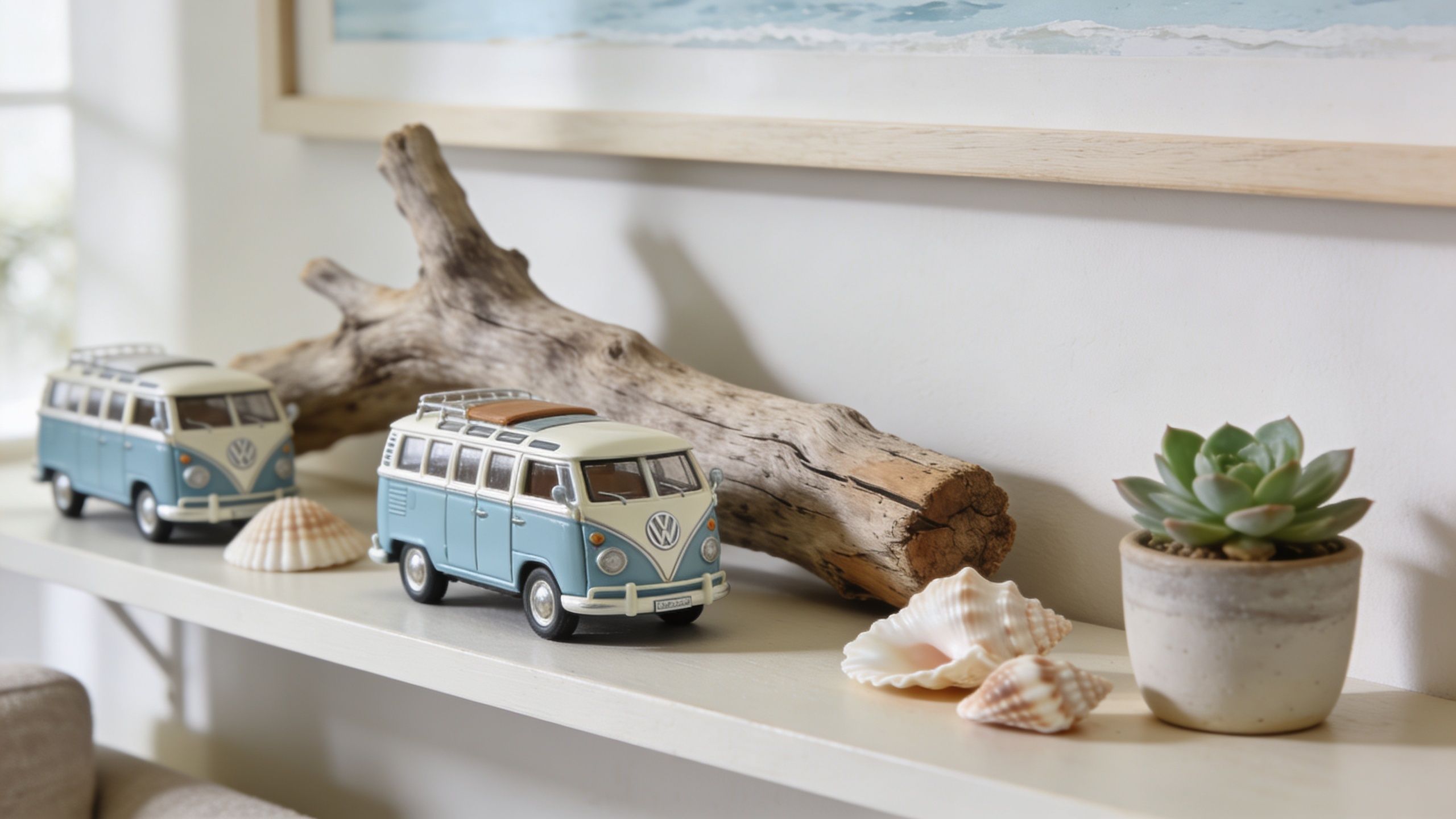
Two miniature vintage blue and white Volkswagen bus models displayed on a shelf with seashells and a succulent.

The trick is to style with restraint. You want the room to nod to the Kombi lifestyle, not shout over everything else.

Build one strong focal point

A larger Kombi model works beautifully as a centrepiece on a console, open shelf, or side table. Give it a little breathing room and pair it with objects that echo the road and the coast. A framed beach photo, a small ceramic vessel, or a few shells are often enough.

For inspiration on mixing automotive nostalgia with relaxed interiors, these coastal home décor ideas are a handy starting point.

Use colour the way old Kombis do

Classic VW colours are part of their charm. Soft blues, creams, reds, whites, and the occasional brighter pop all work well in Australian coastal interiors.

Try styling by palette:

  • Blue and white: Clean, beachy, timeless
  • Cream and red: More retro, warmer, slightly bolder
  • Pastels: Relaxed and playful, especially with flower-power pieces
  • Natural neutrals: Let the diecast paint become the colour feature in the room

Shelf ideas that don’t feel busy

A good shelf tells a story at a glance. Not a novel. Just enough to suggest a life well travelled.

Shelf style What to include
Surf shack corner Kombi model, small framed wave print, piece of driftwood
Family nostalgia shelf VW diecast, old holiday photo, vintage map or postcard
Clean coastal look Blue-and-white bus, white ceramics, a succulent
Christmas variation VW model with seasonal coastal ornaments in summer colours

Keep your display at eye level if you want guests to notice the detail. Lower shelves often turn lovely models into background noise.

Make memorabilia feel lived with

The nicest displays usually include something personal. A photo from a road trip. A market postcard. A beach stone from a family holiday. These details stop the space from feeling like a shop window.

That matters with VW pieces because the emotional pull is such a big part of their charm. A Kombi model isn’t only decorative. It often points back to a memory, a person, or a version of freedom people still carry around.

If you’re styling a study, rumpus room, guest room, or beach house, VW memorabilia can anchor the space without dominating it. One shelf, one tray, or one corner is enough. Done well, it feels effortless.

Navigating the Realities of Full-Time Kombi Life

The romantic side of van travel is real. So are the headaches. Anyone giving a full account of kombi life australia should say both in the same breath.

The dream usually looks simple from the outside. Park near the beach, cook by the van, wake up somewhere pretty, repeat. But full-time living in a van brings paperwork, registration questions, insurance issues, and the kind of rules that can catch people off guard.

The part people don’t post about

One little-discussed reality is regulation. According to this discussion of recent van life reforms, some states now require a fixed abode for vehicle registration, and insurance premiums for nomadic vehicles can be up to 35% higher because insurers see them as higher risk.

That changes the picture fast. A van that feels like freedom on Friday can become an administrative puzzle by Monday.

A steadier way to approach the lifestyle

If you’re serious about full-time or long-term van living, go in with your eyes open. Romance helps you choose the life. Preparation helps you keep it.

A sensible checklist looks like this:

  • Check registration requirements early: Don’t assume one state treats mobile living the same as another.
  • Ask insurers direct questions: Be clear about how the vehicle is used, where it’s kept, and whether it’s modified.
  • Keep records organised: Store receipts, modification details, and policy documents where you can access them quickly.
  • Separate travel fantasy from legal reality: Loving the idea of van life doesn’t remove compliance obligations.

The best van setup in the world won’t save you from bad paperwork.

This side of Kombi culture isn’t as photogenic, but it matters. It protects your investment, your travels, and your peace of mind. If anything, facing these realities makes the lifestyle feel more authentic. The people who stay on the road longest are usually the ones who sort the practicalities before they become problems.

Your Road to Kombi Life Starts Here

Kombi culture has always been bigger than one vehicle. It’s a way of seeing travel, design, memory, and community. Some people live it on the road. Some restore old buses in the shed. Some spend Sunday mornings at VW shows. Others bring it home through a carefully chosen diecast Samba Bus, a Beetle model, or a coastal shelf that carries the whole mood of an Australian surf trip.

That’s the beauty of kombi life australia. There isn’t one doorway into it. You might start with a real van, or you might start with a miniature one on your desk. Both count.

If you’re keen to bring a little of that legend into your own space, it’s worth exploring a curated range of buses, Beetles, and camper-inspired pieces that capture its authentic charm. Collectors, gift buyers, and nostalgic VW fans can browse everything from diecast models to décor inspired by the open road through this Volkswagen bus camper collection. Buying from an Australian specialist also makes life easier, with local stock and faster shipping for pieces you prefer to have in your hands, not stuck in limbo.

Frequently Asked Questions

What makes a Kombi different from a Samba Bus

A Kombi is the broader van family people often mean when they talk about classic Volkswagen buses. A Samba Bus usually refers to the more distinctive, window-rich version that collectors love for its bright, airy look and iconic profile.

What’s the best diecast scale for beginners

A mid-sized model is often the easiest place to begin because it balances detail and display flexibility. If you want one statement piece, go larger. If you want several vehicles on one shelf, choose smaller scales.

Should I collect boxed models or display them open

That depends on what you enjoy most. Boxed collecting suits people who value packaging and gift condition. Open display suits people who want the model to become part of a room or themed shelf.

Are VW models good gifts for non-collectors

Yes, especially if the recipient has a personal link to Kombis, Beetles, surfing, road trips, or retro design. A well-chosen VW model often lands as both décor and memory.

Can home décor and diecast work together

Absolutely. VW diecast looks especially good with coastal, nautical, vintage, and beach-house styling because the colours and stories naturally overlap.


If you’re ready to find your own piece of the legend, browse Volkswagen Memorabilia for officially licensed VW diecast, Kombi and Beetle gifts, and coastal décor that captures the spirit of the open road. It’s a great place for Australian enthusiasts to shop local, enjoy fast shipping, and pick pieces that feel right at home in a collection, a gift box, or a beach-inspired room.