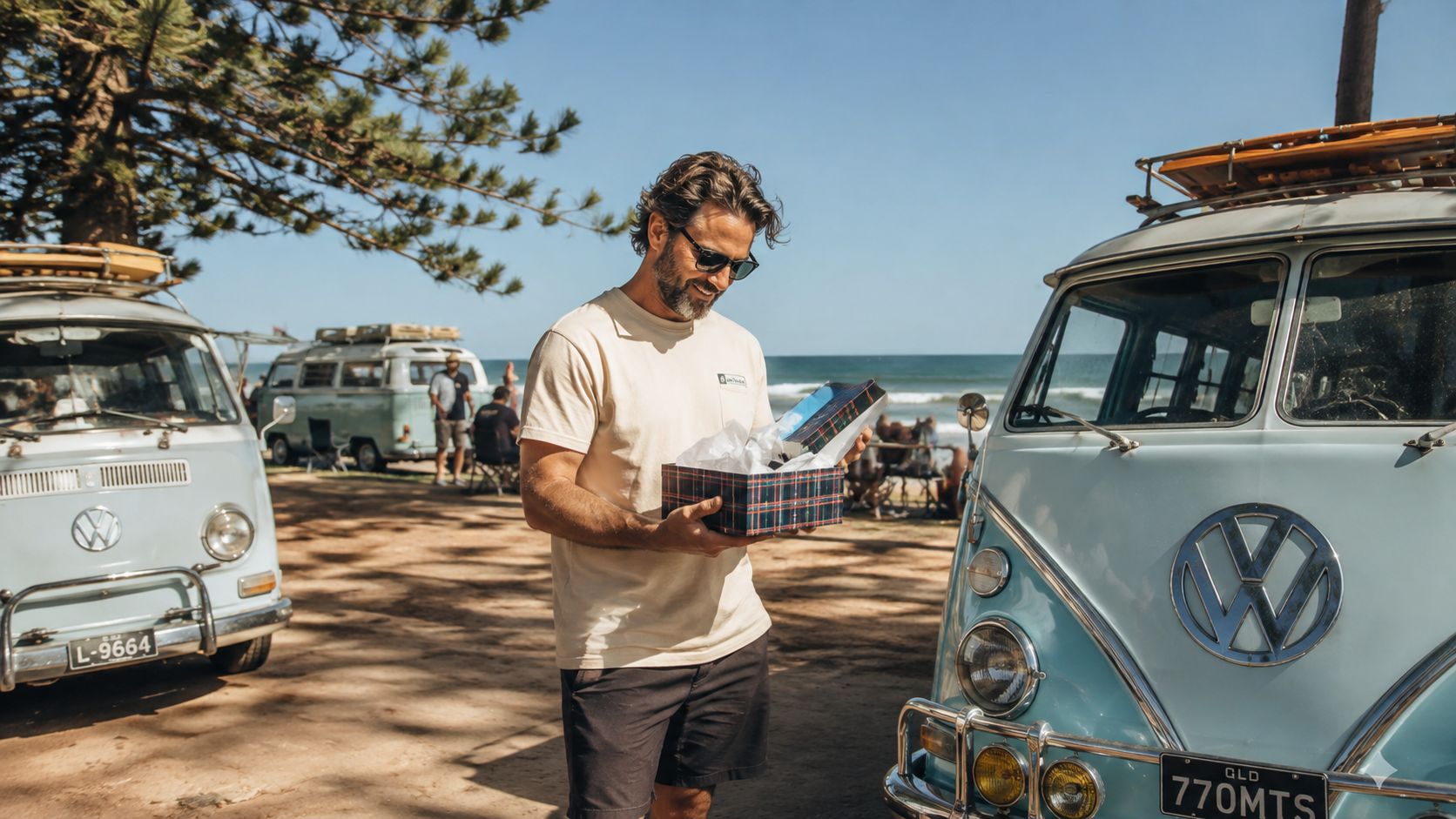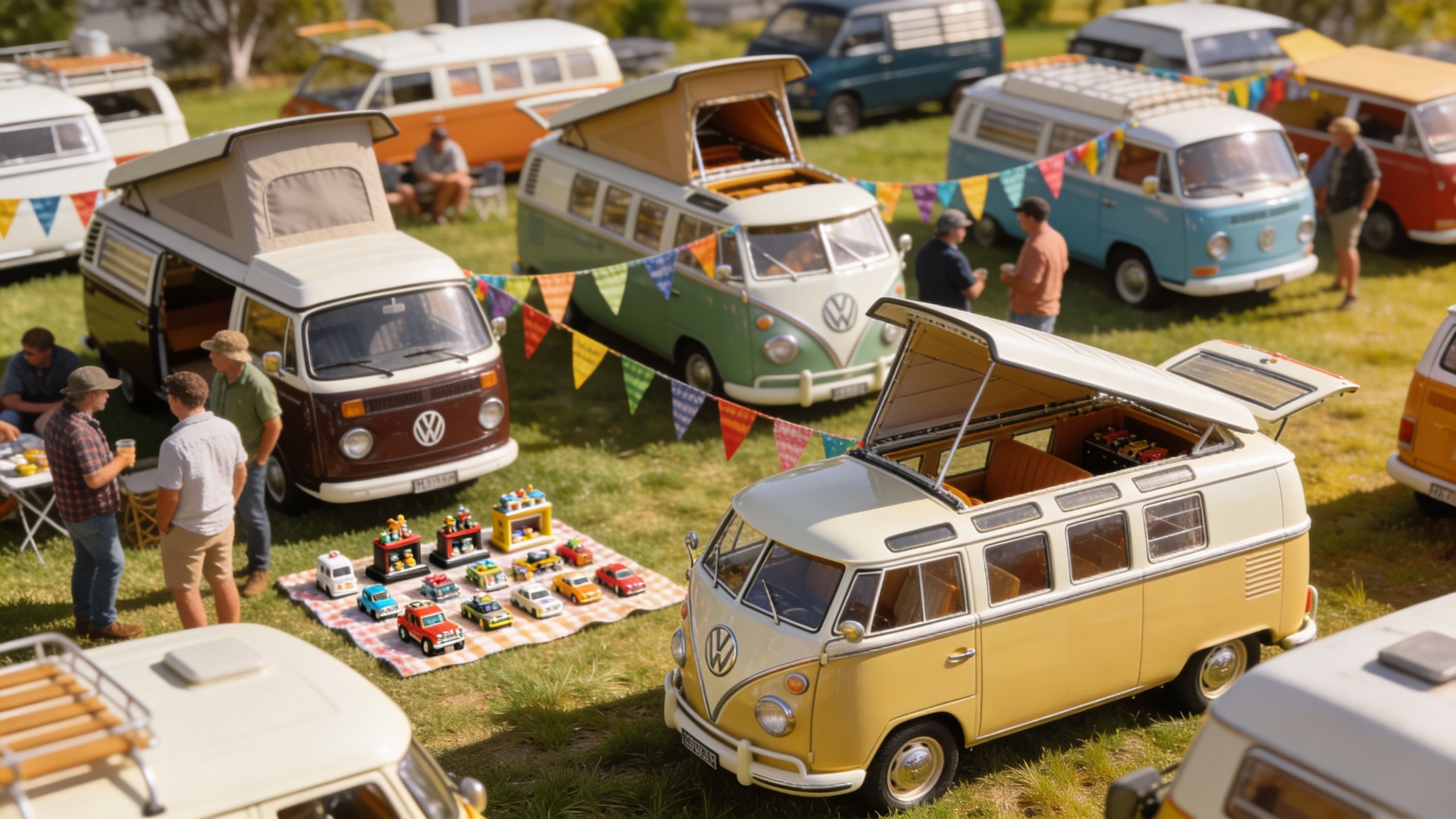
At a sunny Australian car show, a red-and-white Kombi can stop conversation from ten metres away. Someone points out the split windscreen, another admires the tiny camper interior, and a collector nearby checks whether the diecast on his table matches the van's details.
That little exchange captures the appeal of VW campervan models explained properly. These vehicles aren't one single design, and understanding the generations, camper conversions and Australian history makes both the full-sized vans and the miniatures far more rewarding.
Why VW Campervans Capture Australian Hearts
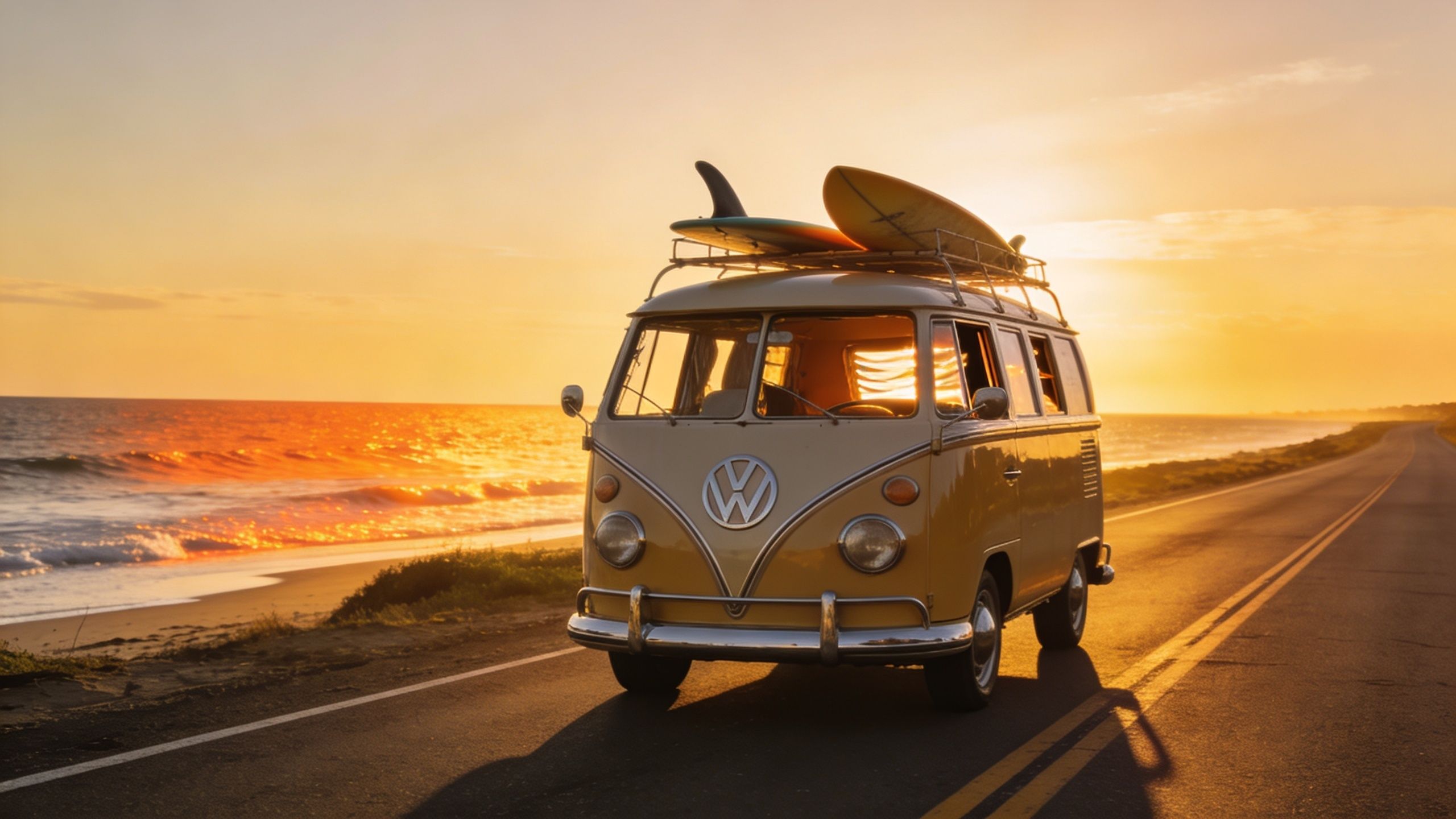
A classic Kombi doesn't arrive at a show. It gathers people around it. At Volksfest, the VW Nationals or a coastal Surf Show and Shine, you'll see enthusiasts leaning through open doors, comparing paintwork and remembering the first family holiday, surf trip or weekend escape connected with a Volkswagen van.
Volkswagen says the Kombi's origin story began in 1949, when Dutch businessman Ben Pon sketched the idea that became the Type 2. In Australia, the model found an especially warm audience as surfing grew along the east and west coasts during the 1970s, according to Volkswagen Australia's Kombi history. That combination of practical shape and relaxed coastal character gave the van a role far beyond commercial transport.
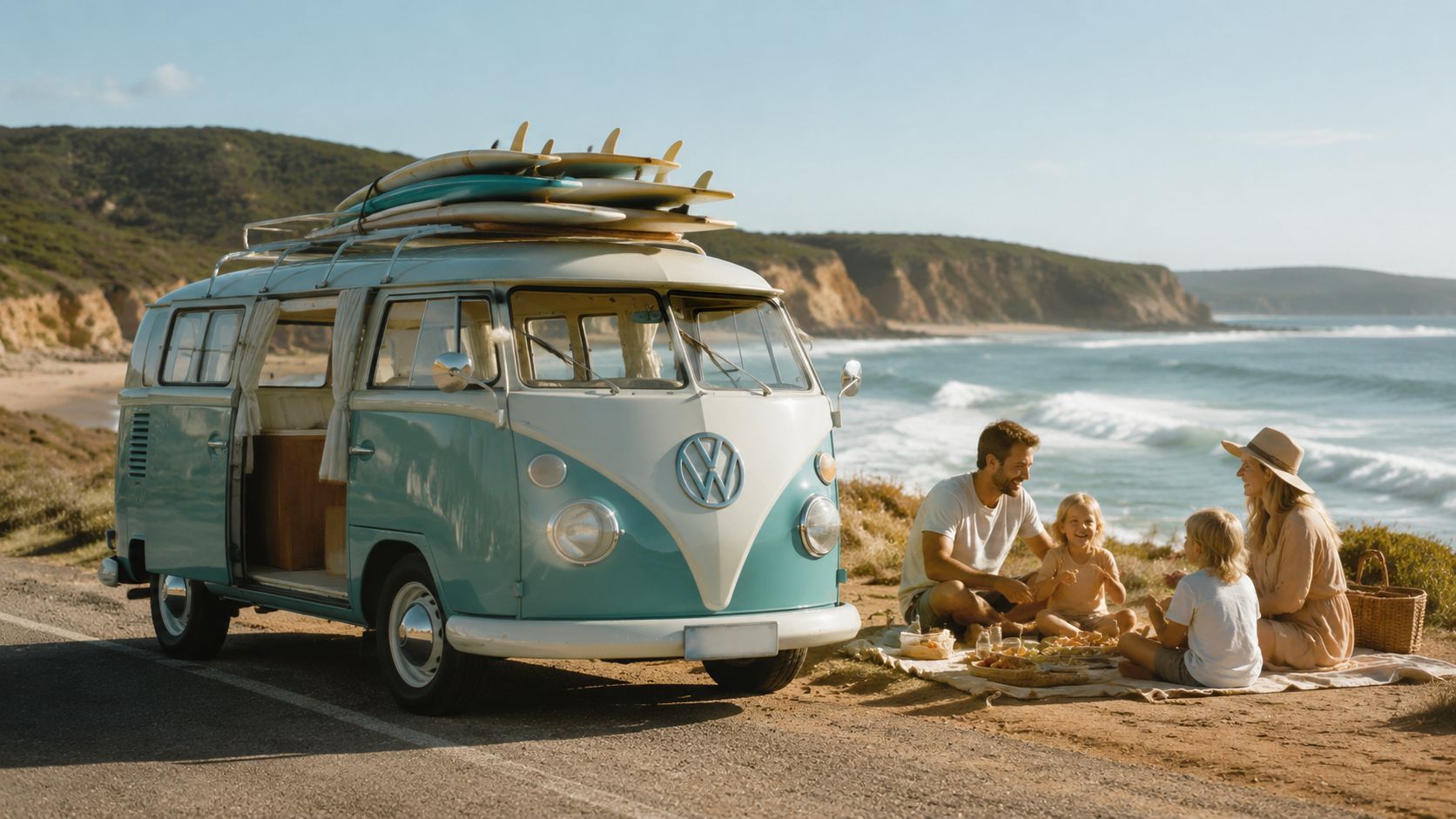
The emotional pull is easy to understand. A Kombi suggests open roads, a thermos on the tailgate and enough room for boards, blankets, children or camping gear. A Beetle brings the same friendly design language in a smaller package, while a Samba Bus adds bright trim, extra windows and a more theatrical presence.
Why model knowledge matters
At a show, a split-window T1 and a bay-window T2 might both be called “a Kombi”, but they tell different stories. The same applies to miniatures. A licensed Kombi Samba Bus diecast should reproduce the correct windscreen, roof details, bumpers and body proportions for the variant it represents.
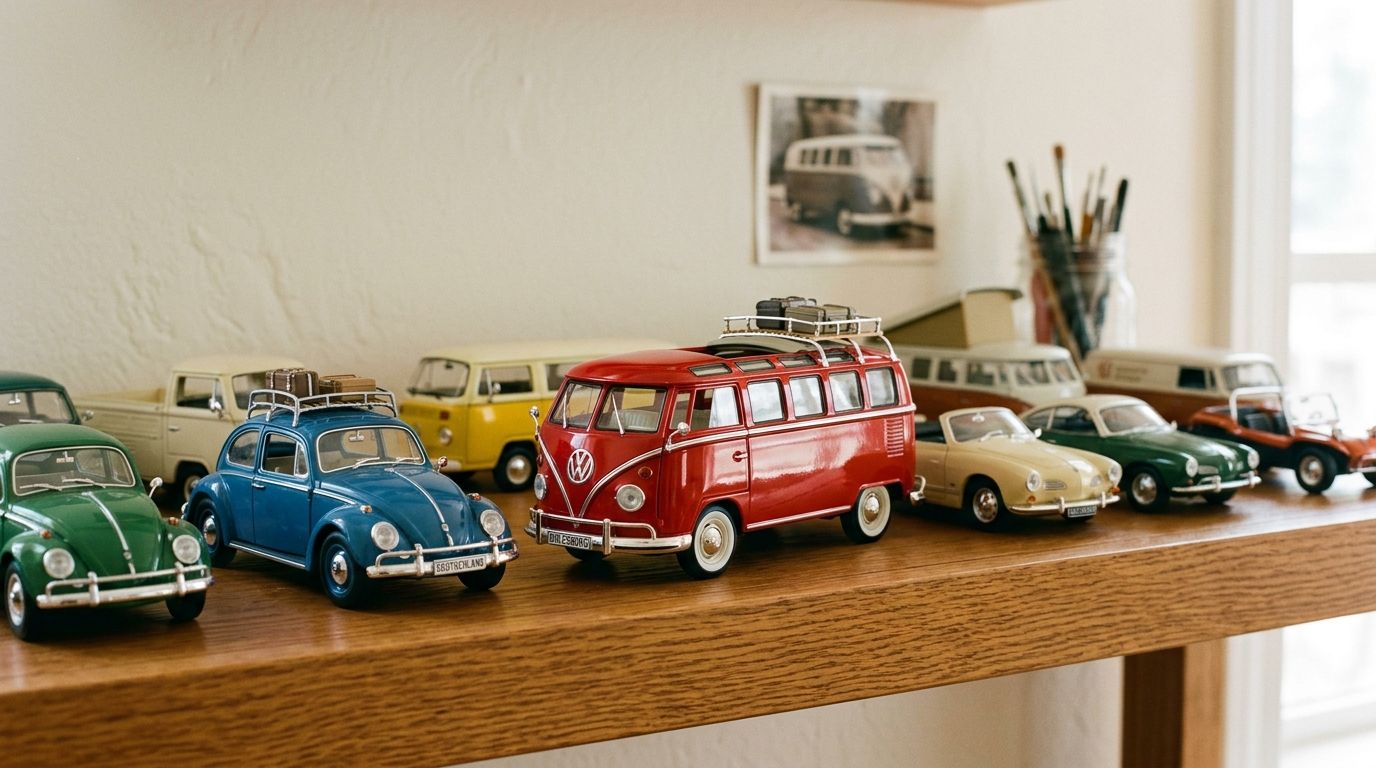
Collectors also enjoy building a visual timeline. One shelf can show the early Type 2 beside a later bay-window camper, followed by a modern Transporter-based model. The collection becomes a conversation starter, a family memory and a compact history of Australian motoring.
Collector's perspective: The best model isn't always the rarest one. It's the piece that connects with a real story, a favourite road or a van you once saw parked beside the beach.
The Kombi's Australian Manufacturing Story
The Australian Kombi story starts with a vehicle that gradually became local. Independent Australian VW history records that the first Type 2 Volkswagens reached the country in 1954 as imported kits completed locally at Clayton South. Volkswagen's Australian coverage also places Kombi assembly at the Clayton plant in Melbourne from 1964 to 1977. Between 1959 and 1968, both the Beetle and Kombi were fully manufactured in Australia before production reverted to CKD assembly, as reported by CarsGuide's Australian Kombi history.
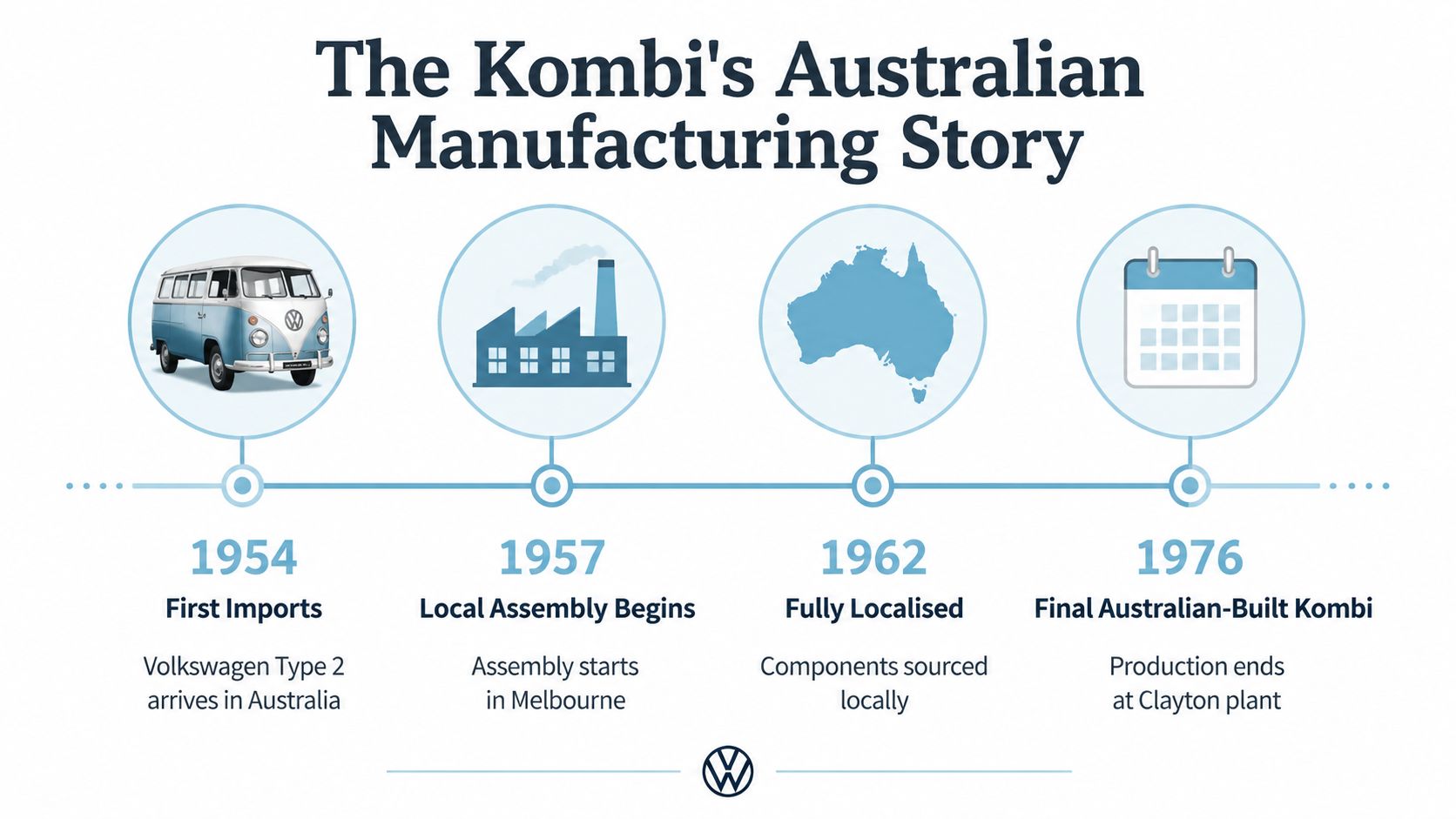
That transition matters to collectors because an Australian-linked Kombi isn't merely an overseas icon wearing local number plates. It passed through import, assembly and full manufacturing stages, creating a genuine place in the country's automotive story. A model displayed beside an Australian road-trip photograph can represent that whole journey in miniature.
From useful van to national favourite
The Kombi's commercial success reinforced its cultural visibility. Club VeeDub records 1975 as the biggest-selling year for the Kombi in Australian history, with 8,974 Kombis sold, including Microbuses. The same history records 15,479 total Volkswagens sold that year and a 43% share of the Australian 1-tonne van market. Club VeeDub also says the Kombi captured over 60% of the 1-tonne market in Australia during the 1960s and 1970s. These figures appear in the club's Australian Volkswagen sales history.
Those numbers explain why the Kombi became familiar to tradespeople, families and surfers alike. It wasn't only a counterculture symbol. It carried tools, people and holiday equipment, then became the backdrop for memories that outlasted the working life of the vehicle.
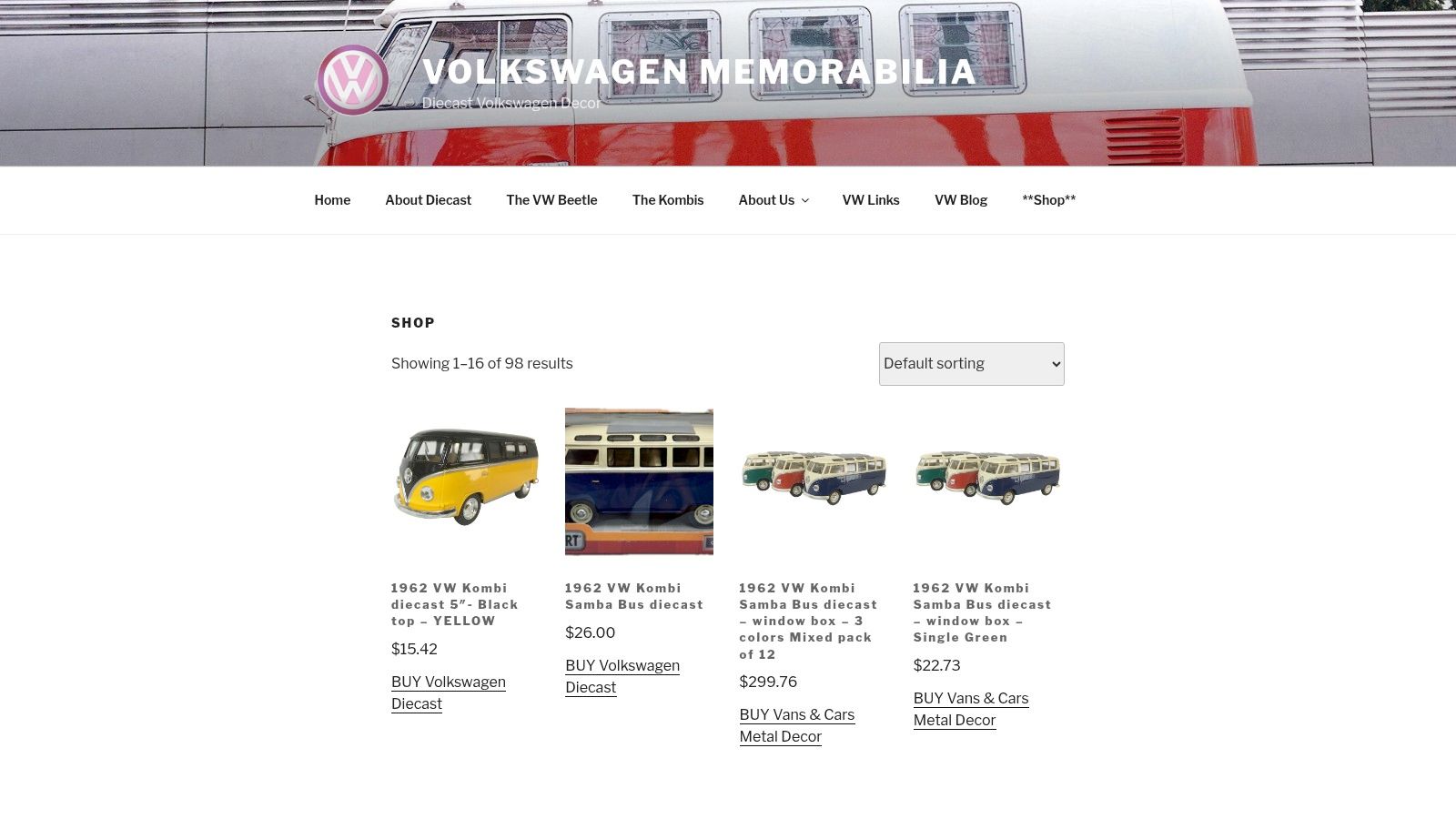
For collectors, the Volkswagen Type 2 memorabilia range makes most sense when viewed through that local lens. A miniature Samba or Microbus can stand for Australian assembly, coastal travel and the practical van that became a cultural landmark.
Identifying VW Campervan Generations at a Glance
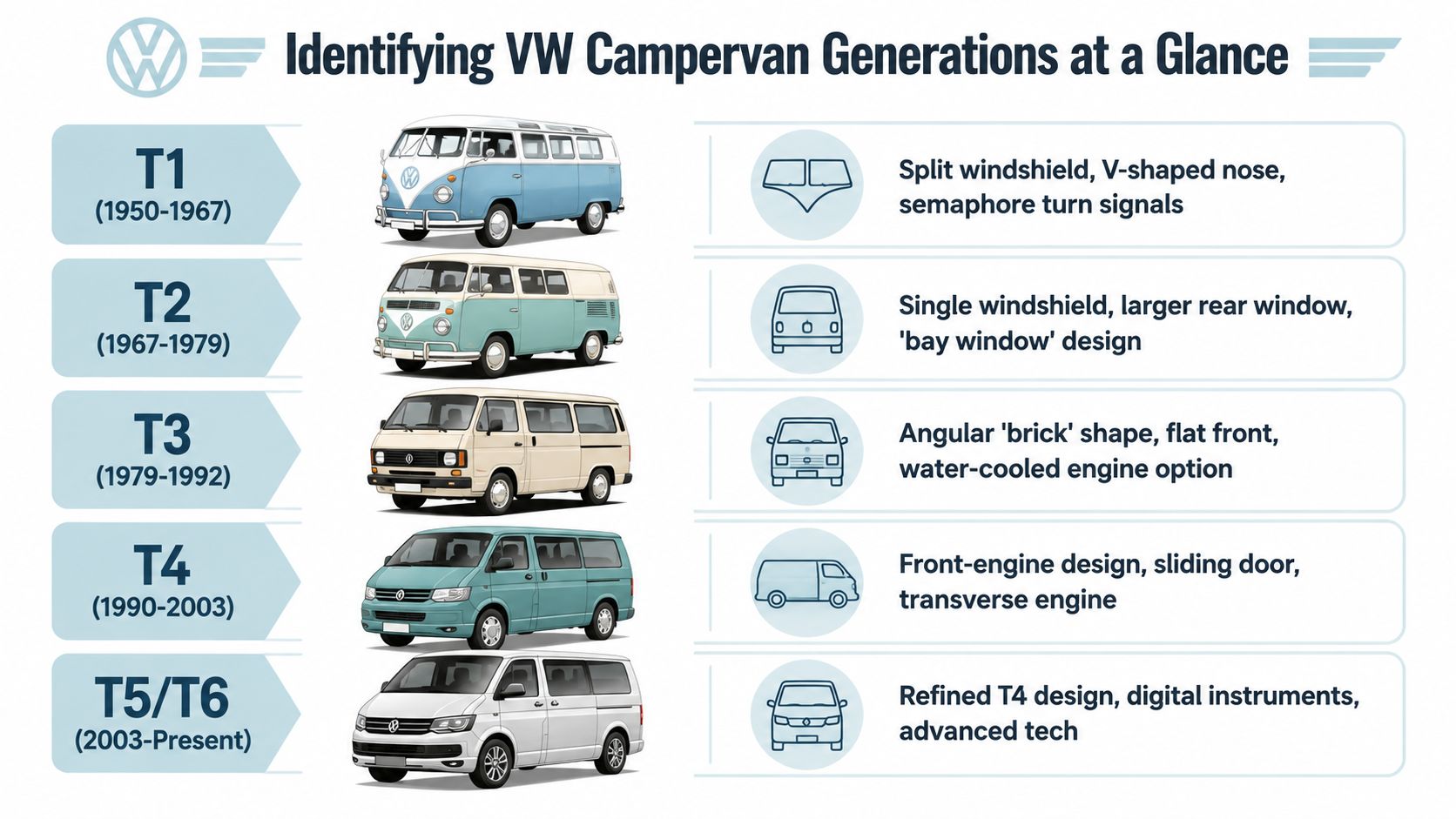
Learning the generations turns a car-show walk into a treasure hunt. Start with the nose and windscreen, then check the body shape, engine layout and window treatment. The visual changes are substantial enough that you can identify most vans before reading the badge.
| Generation | What to look for | Collector's clue |
|---|---|---|
| T1 | Split windscreen, V-shaped nose and semaphore indicators | The classic Samba Bus silhouette |
| T2 | Single windscreen, larger rear window and rounded bay-window body | A common basis for camper conversions |
| T3 | Angular, boxy “brick” shape and flat front | Later vans may use water-cooled engines |
| T4 | Front-engine layout, sliding door and more modern proportions | A major mechanical break from earlier Transporters |
| T5 and T6 | Refined van shape, modern cabin and advanced technology | Contemporary touring and conversion platforms |
The early shapes
The T1 is the one instantly recognised. Its split windscreen and V-shaped front give it a friendly, almost smiling appearance. Samba versions are especially distinctive because of their additional windows and upmarket detailing.
The T2 smooths out the face with a single windscreen and a broader bay-window design. It still feels unmistakably classic, but its proportions create a more practical platform for camper layouts.
The move to modern vans
The T3 introduces a squarer, more angular body. Its flat front changes the visual rhythm completely, while water-cooled engine options mark an important mechanical development.
The T4 moves the engine to the front and uses a transverse layout, creating a very different vehicle underneath the familiar badge. The T5 and T6 continue that modern direction with more refined interiors, digital instruments and contemporary driver technology.
A diecast collector can apply the same checklist. Look at the windscreen first, then the nose, side door and roof. If a miniature claims to be a Samba but lacks the characteristic window arrangement, the casting may represent a different variant.
For a visual reference while browsing a collection, the VW campervan generations guide offers a useful starting point.
Iconic VW Campervan Variants and What Makes Them Special
The word “camper” covers several different ideas. A factory-built camper, a dealer conversion and an owner-modified Transporter may share a body shell, but their interiors, roof fittings and historical significance can differ considerably.
The Samba Bus
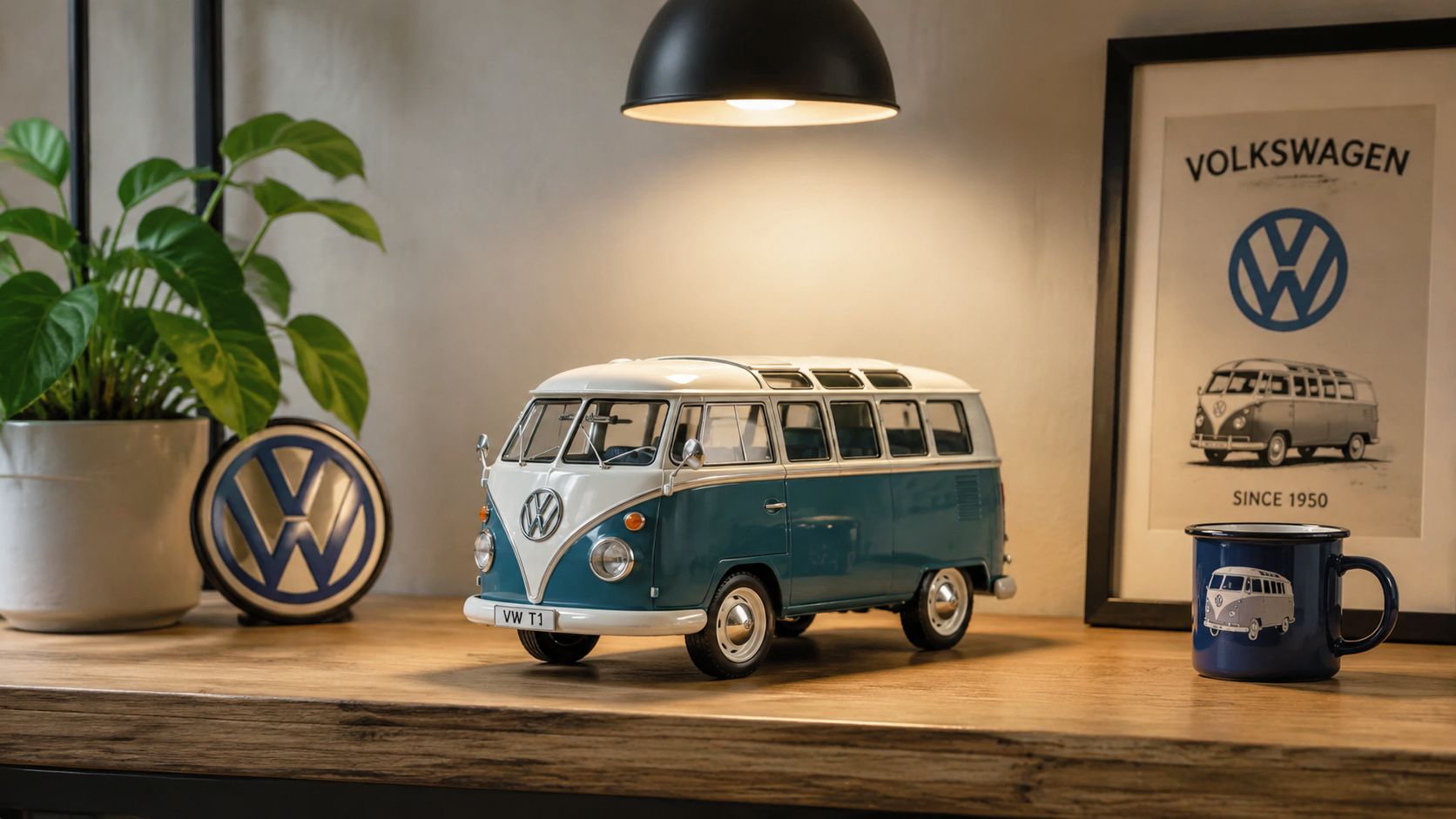
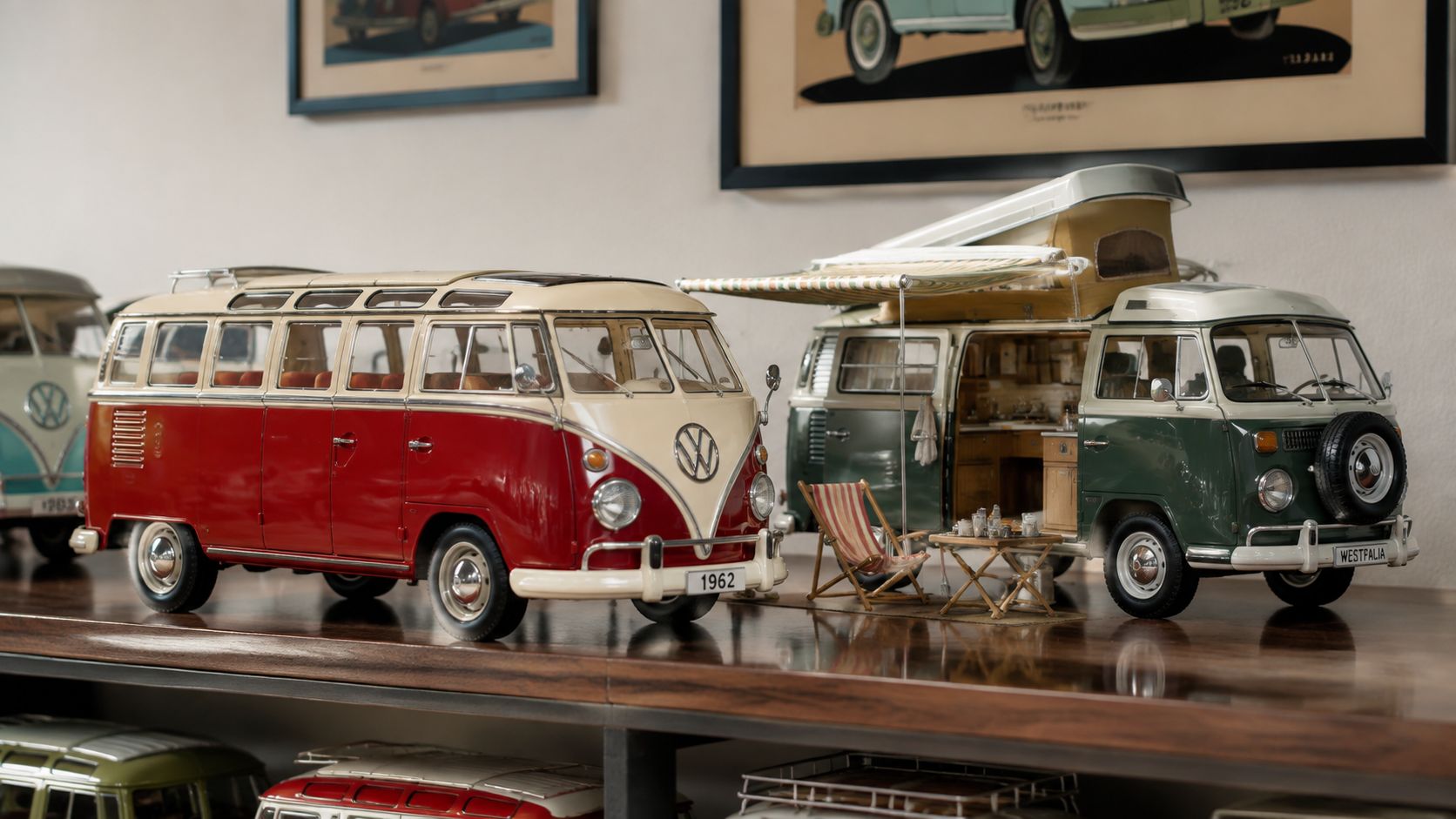
The Samba Bus is the showstopper. Its split windscreen, extra glazing, bright exterior trim and distinctive roof treatment give it a lighter, more open character than a plain panel van. In diecast form, those windows and polished details are what make the model instantly recognisable.
Westfalia conversions
A Westfalia camper is valued for its camping identity. Pop-top roofs, compact kitchens, storage and sleeping arrangements turn the Transporter into a small touring home. When inspecting a miniature, check whether the roof, awning, interior furniture and body graphics suit the claimed conversion.
Pop-top and special editions
Pop-top models appeal to owners who want a lower roof profile for everyday driving but extra headroom at camp. Flower Power variants lean into the colourful surf and festival culture associated with classic VW vans, making them particularly cheerful display pieces.
| Variant | Character | What to inspect in a diecast |
|---|---|---|
| Samba Bus | Bright, airy and highly decorative | Window count, roof details and trim |
| Westfalia | Practical camping conversion | Pop-top, interior equipment and graphics |
| Pop-top camper | Flexible everyday touring van | Roof mechanism and compact camper fittings |
| Flower Power model | Nostalgic, playful and colourful | Licensed artwork, paint quality and clean application |
The appeal comes from matching the model to its story. A restoration enthusiast may prefer mechanical and trim accuracy. A nostalgia seeker might choose a surf-themed van. A gift buyer may want the most recognisable shape, which is often a Samba Bus or classic bay-window camper.
Building Your VW Diecast Collection
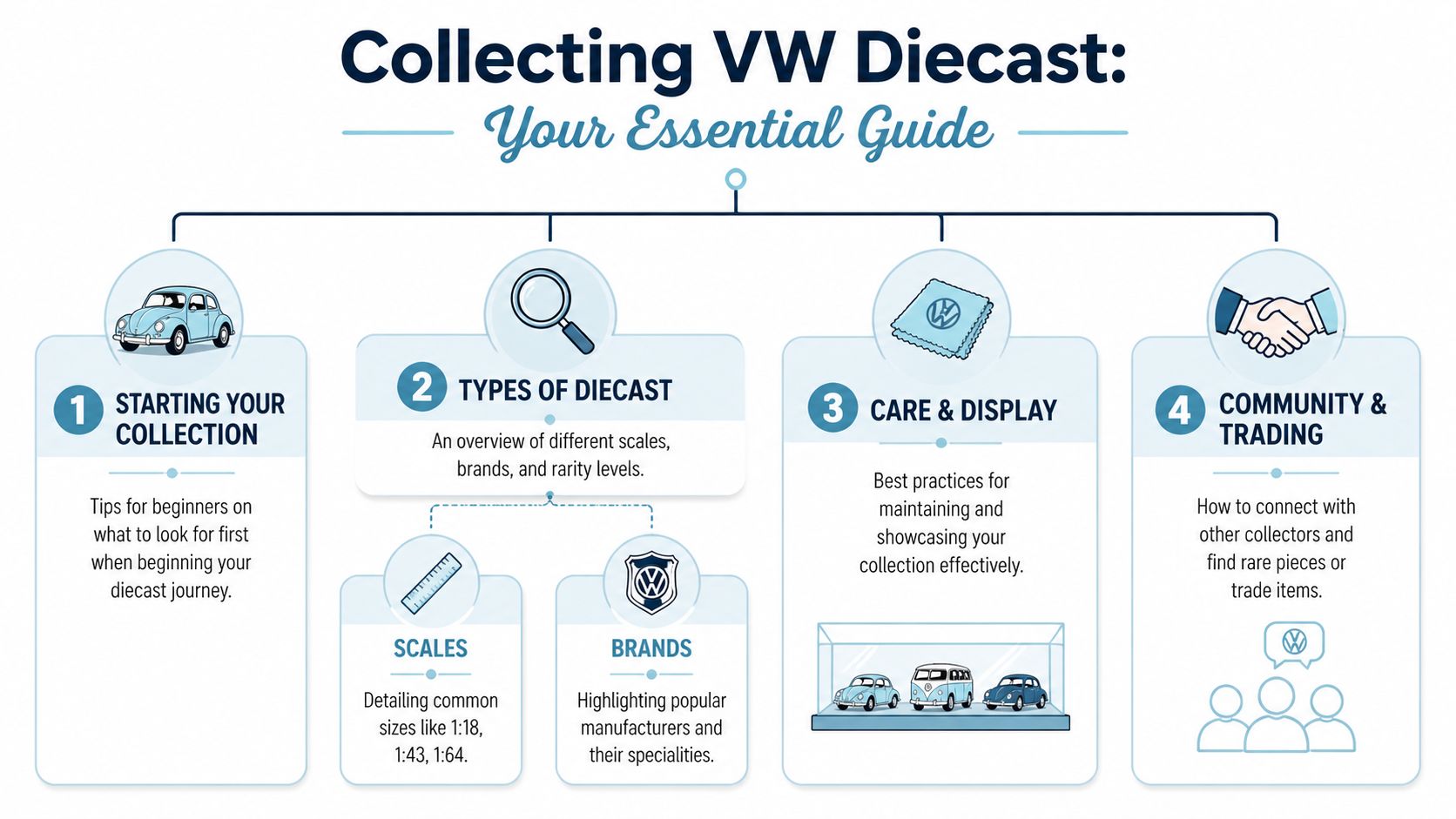
A good collection starts with a clear display plan, not an impulsive pile of boxes. Decide whether your shelf will follow generations, body styles, colours or personal memories. A row that moves from Beetle to T1, T2 and later Transporter tells a stronger story than a random assortment.
Choosing a scale
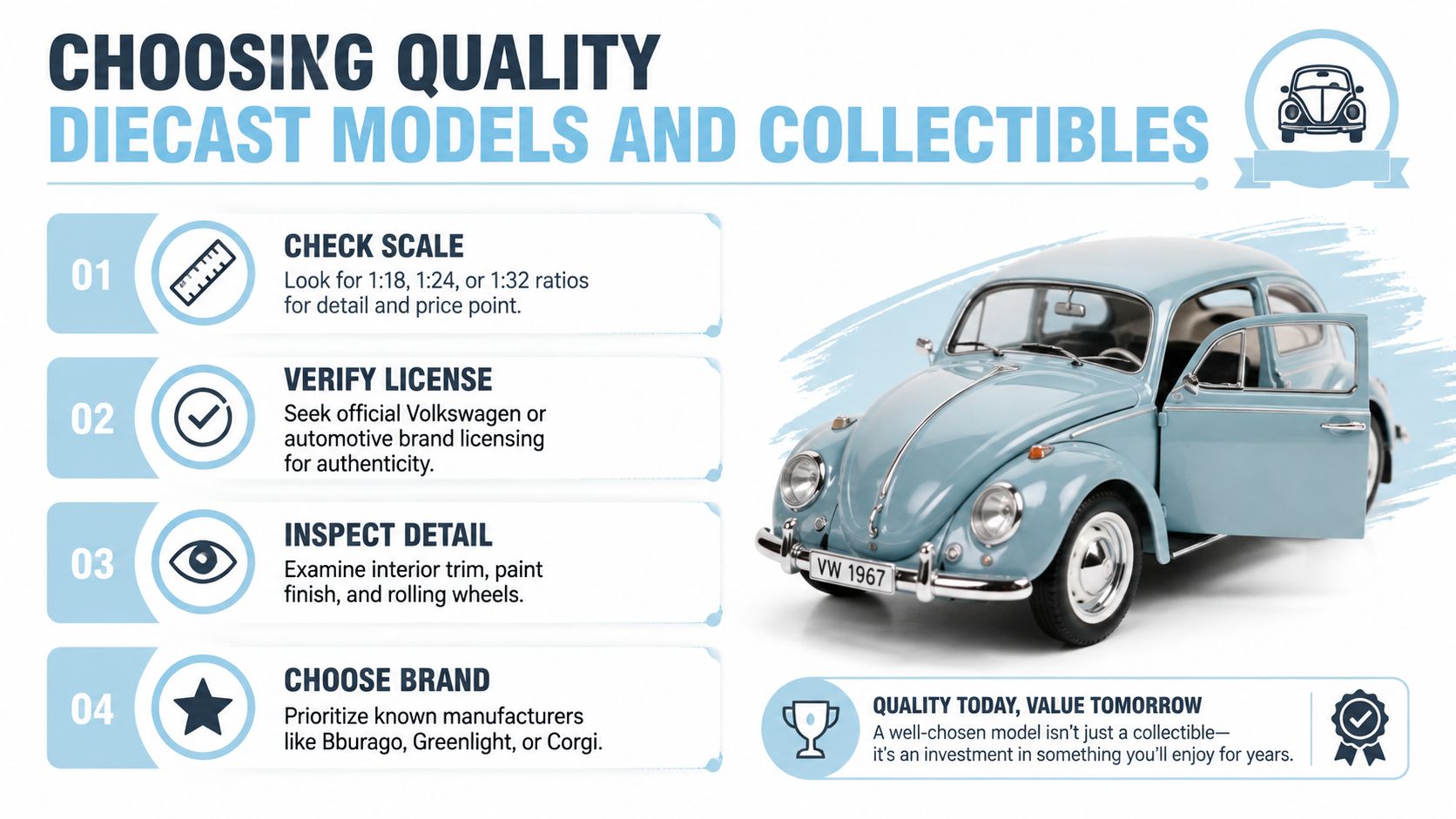
Scale affects both appearance and space. A standard 1:18 diecast model is roughly 24 to 30 cm long, while a 1:24 model is roughly 16 to 20 cm long, according to this diecast model size guide. That difference becomes obvious when you measure a cabinet shelf or try to place several vehicles together.
| Scale | Typical length | Best for | Detail level |
|---|---|---|---|
| 1:18 | Roughly 24 to 30 cm | A statement piece or detailed display | Strong visual presence |
| 1:24 | Roughly 16 to 20 cm | Shelves, gifts and mixed displays | Detailed while easier to place |
| 1:32 | Smaller than the larger display scales | Larger timelines and compact collections | More compact presentation |
Don't mix scales accidentally. A 1:18 Kombi beside a much smaller Beetle can make the display look uneven, unless the difference is deliberate and clearly labelled.
Quality checks before buying
Look closely at the body lines, paint edges, glazing and wheels. Licensed models should present the Volkswagen shape and badges with care, while cheap imitations often show rough trim, cloudy windows or inaccurate proportions.
Use these checks when comparing a model:
- Body accuracy: The roofline, bumpers and windows should match the named generation.
- Finish: Paint should look even, with graphics aligned to the body.
- Construction: Doors, wheels and other moving parts should sit neatly.
- Packaging: Keep original packaging if condition and future collectability matter to you.
- Display conditions: Avoid harsh sunlight, moisture and dusty open shelving where possible.
The Volkswagen model cars collection suits collectors who want to compare different body styles and build a coherent display without losing sight of the authentic vehicles behind them.
Practical rule: Buy the model you'll enjoy looking at every day, then organise the shelf around its story.
Finding the Perfect VW Gift or Collectible
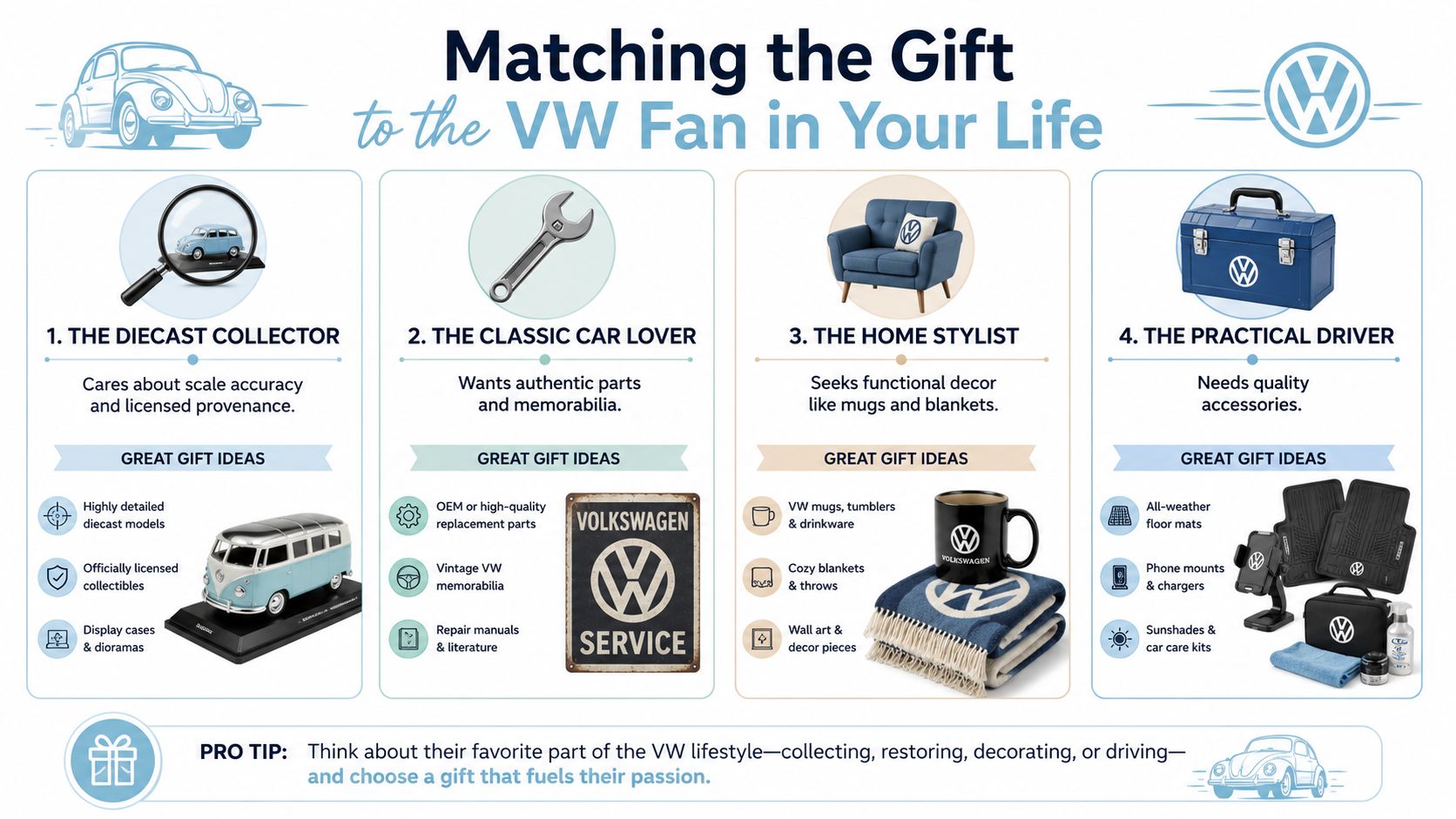
A Volkswagen gift works best when it reflects the recipient's version of VW culture. The person restoring a real Beetle may study trim and proportions, while someone raised on beach holidays may respond immediately to a colourful Kombi with surf character.
For a first purchase, a Volkswagen Beetle model offers an approachable entry point. Its rounded shape is recognisable, it pairs naturally with coastal décor and it can sit comfortably on a desk, bookshelf or bedside cabinet. A Kombi Samba Bus diecast makes a stronger centrepiece, especially for someone who remembers family holidays or owns a full-sized Type 2.
Match the gift to the enthusiast
- For the restorer: Choose a clean, accurately finished model that rewards close inspection of lights, bumpers, wheels and badges.
- For the surfer: Look for a Kombi or Flower Power design that carries the relaxed beach spirit of the vans.
- For the new collector: A smaller model or mixed pack can establish a theme without demanding a large display cabinet.
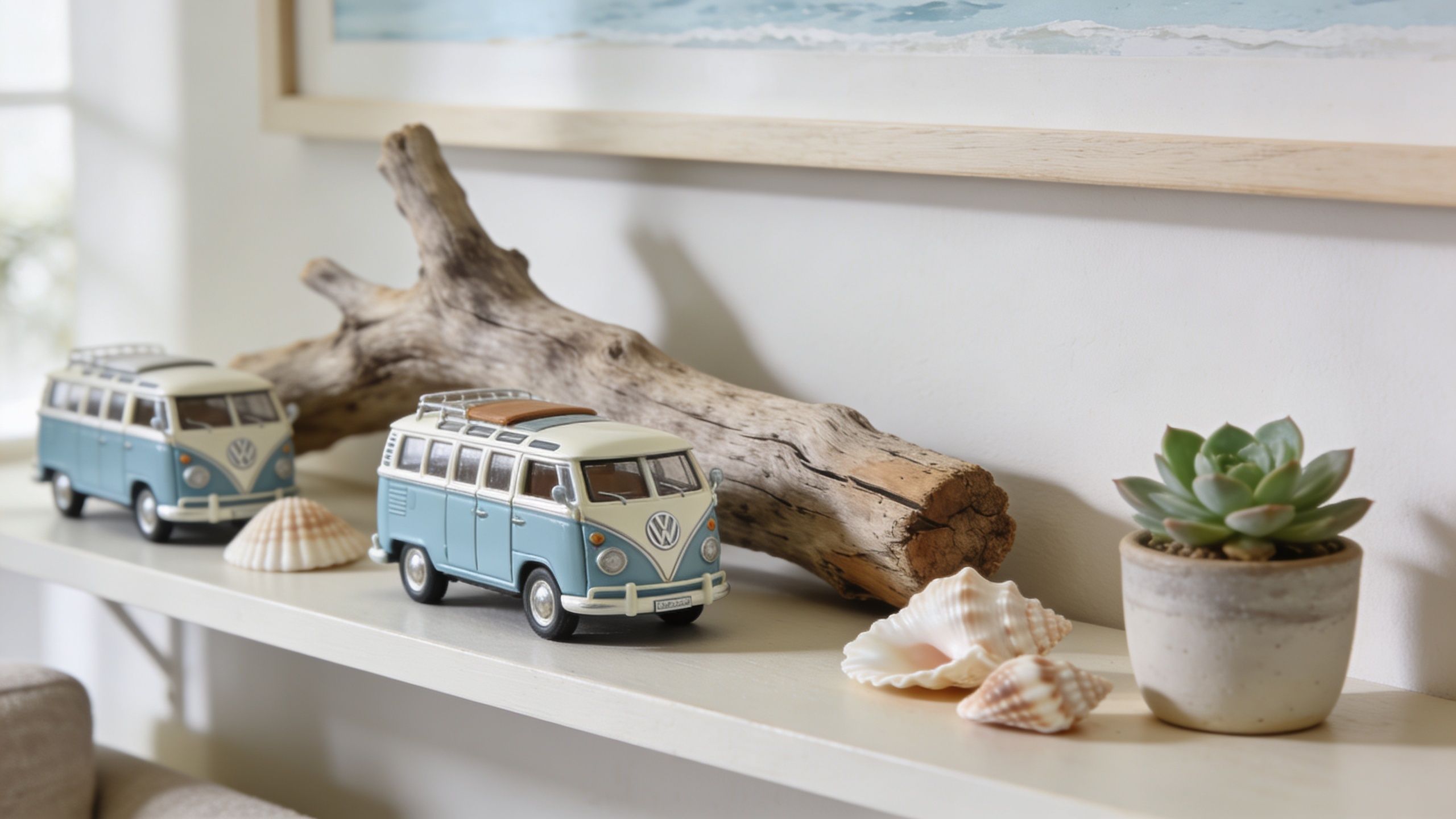
- For the home decorator: Pair a diecast van with retro automotive or coastal accents, keeping the colour palette consistent.
- For the long-time VW owner: Select a model that echoes the generation, colour or camper style they know personally.
Official licensing matters because it connects the miniature to the Volkswagen design rather than using a generic van shape. Australian buyers also benefit from choosing an importer with local stock and fast shipping, particularly when a birthday, club gathering or Christmas deadline is close. A local supplier can make product questions easier too, with support suited to Australian collectors and gift-givers.
Search terms such as VW Kombi diecast Australia, buy diecast Kombi and Volkswagen diecast models for sale can lead to many options, but don't judge solely by the photograph. Check the stated model, scale, finish, licensing and whether the product represents a Samba, Microbus, camper or another Type 2 variant.
Join the VW Community and Start Your Collection Today
The joy of VW collecting begins before the first model reaches the shelf. It starts when you ask an owner about a restoration, spot the difference between a T1 and T2 at a show, or realise that the van in an old family photograph has a story worth preserving.
The Australian connection gives the hobby extra depth. The Kombi was assembled at Clayton, sold strongly in the local market and became woven into surf culture, working life and family touring. A diecast model can't replace the smell of an old interior or the sound of a real air-cooled engine, but it can keep that memory visible every day.
Start with one meaningful piece. Choose a Samba Bus if you love classic show-car presence, a Beetle model if the rounded design brings back family memories, or a later campervan if your interest leans towards practical touring. Then visit local shows, speak with club members and let your collection grow around the stories that matter to you.
A carefully chosen display is more than decoration. It's a small Australian VW history lesson, a reminder of open roads and a welcoming invitation for the next enthusiast to stop and ask, “Which model is that?”
Volkswagen Memorabilia brings together licensed VW diecast models, including classic Kombis, Samba Buses and Beetles, alongside coastal-inspired memorabilia for relaxed Australian displays. Visit Volkswagen Memorabilia to find a meaningful collectible, start your model timeline or choose a gift for the VW enthusiast in your life.