VW Buzz Australia: 2026 Updates & Release Info

A faded orange Kombi rolled into the showgrounds with surfboards on the roof and red dust on the hubcaps. Half the crowd turned before the engine even stopped, because in Australia a VW van doesn't just arrive, it brings memories with it.

That's why the buzz around vw buzz australia feels bigger than an ordinary model launch. For plenty of us, it's not only about a new electric van. It's about seeing an old family story fire up again, this time with a battery pack under the floor and that familiar cheeky VW face looking out over the bonnet line.

The Return of a Legend to Australian Shores

You've seen the scene before. A Kombi parked near the dunes, someone boiling the billy on a little stove, sandy thongs kicked under the side door, and a kid tracing the VW badge with one finger like it's a lucky charm. The old Type 2 earned its place here because it fit our way of life. Beach trips, market runs, camping weekends, road trips that started with no fixed plan.

That's why the return of the name matters.

The ID. Buzz feels like the moment when Volkswagen stopped hinting and finally said, yes, the spirit of the Kombi belongs in modern Australia too. Not as a tribute act, and not as a plastic nostalgia exercise, but as a proper new chapter for local VW fans who've waited a long time to see this shape on our roads.

Why this one hits differently

A lot of new cars arrive with fanfare and disappear into traffic. The Buzz won't do that. It carries too much emotional baggage, in the best possible way.

  • It taps into lived memory. People remember family holidays, tradesman vans, festival weekends, and those sun-faded Kombis that seemed to be everywhere near the coast.
  • It looks like a VW van should. Friendly, upright, practical, and just a bit playful.
  • It gives old enthusiasts and new EV buyers a shared meeting point. One group comes for heritage. The other comes for fresh tech. Both end up talking about the same van.

Some cars are bought with a spreadsheet. A VW van usually gets chosen with the heart first.

That's what makes this return feel special. The old Kombi gave Australians a sense of freedom. The Buzz arrives carrying that same emotional weight, only reworked for a different era.

The VW ID Buzz in Australia What We Know So Far

At a Saturday meet, the question used to come up between sips of coffee and a walk around the old buses. “So, is the Buzz coming here, or is it another maybe?” That talk has finally shifted. Volkswagen Australia has confirmed the VW ID. Buzz and ID. Buzz Cargo for our market, with production for Australia starting in late 2024 and local deliveries scheduled for early 2025, as reported in this Australian ID. Buzz launch report.

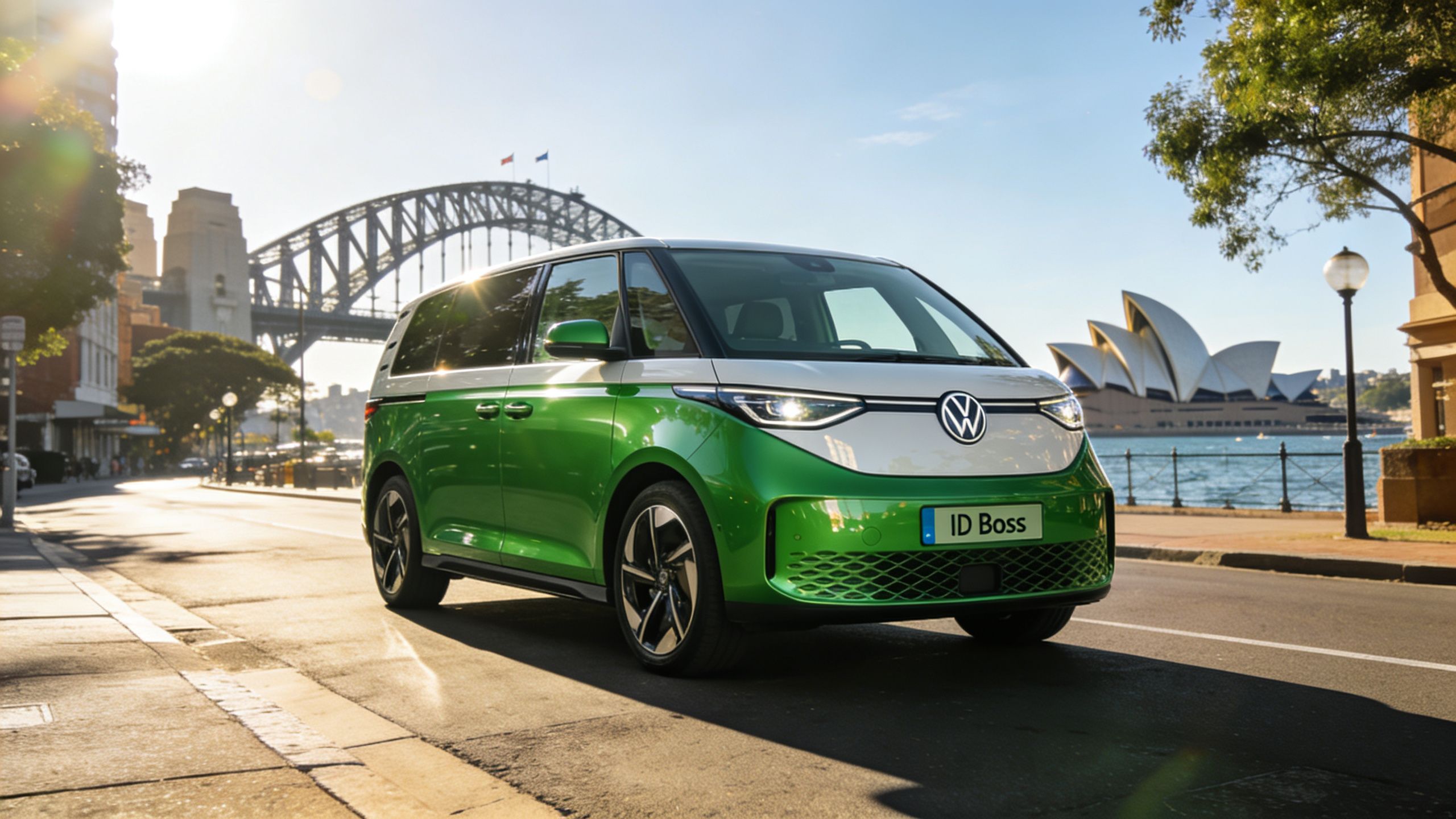
A green and white Volkswagen ID. Buzz van driving on a road near the Sydney Opera House.

That single confirmation changes the mood for Australian VW fans. The Buzz is no longer a motor show tease or a right hand drive rumour passed around at cars and coffee. It is a real local arrival, and that matters not only to buyers watching the EV space, but to collectors too. Every time Volkswagen brings back a shape with this much history behind it, the memorabilia scene wakes up. People start hunting brochures, diecast releases, dealer display pieces, and retro wall art that ties the old van to the new one.

If you want a buyer-friendly snapshot of likely costs and local expectations, this guide to Volkswagen ID Buzz Australia price is a handy place to start.

Timeline and early price signals

The early price conversation has centred on Germany, where the passenger ID. Buzz Pro starts at €64,581 in Germany, which works out to around $100,000 AUD before local costs. That figure is best treated as a reference point, not a promise. Australian taxes, on-road costs, and final local specification will shape what buyers see here.

Still, a reference point helps. It turns the chat from wishful thinking into something more grounded. If you collect modern VW models, it also gives you a sense of where the ID. Buzz will sit in the brand's story. This is not a bargain basement novelty. It is a headline vehicle, and headline vehicles usually spark stronger interest in related collectibles.

The practical details people keep asking about

Question Confirmed answer
Is it officially coming? Yes. Volkswagen Australia has confirmed it for our market.
When should it land? Early 2025, with production for Australia starting in late 2024.
What's the early price guide? The German ID. Buzz Pro starts at €64,581, roughly $100,000 AUD before local costs.

That last point is where the wider VW scene gets interesting. A new Golf might bring showroom traffic. A new electric van with Kombi blood in it brings conversation, nostalgia, and a fresh wave of interest in everything around it. The arrival of the physical vehicle often sends fans looking for smaller ways to join in, whether that is a diecast model on the shelf, an old tin sign in the garage, or a framed print that pairs a split window Kombi with the new Buzz.

For buyers, the smart move is simple. Watch the local spec sheets closely once Volkswagen locks them in. For enthusiasts and collectors, the bigger story is already underway. The Buzz has given the Australian VW community a new focal point, and you can feel that energy building before the first local deliveries even begin.

From Classic Kombi to Electric Buzz A Legacy Reimagined

The resemblance hits you first in the face. Big badge, short front, generous glass, soft curves, and that upright posture that says “pile in, we're going somewhere.” Volkswagen knew exactly what it was doing there.

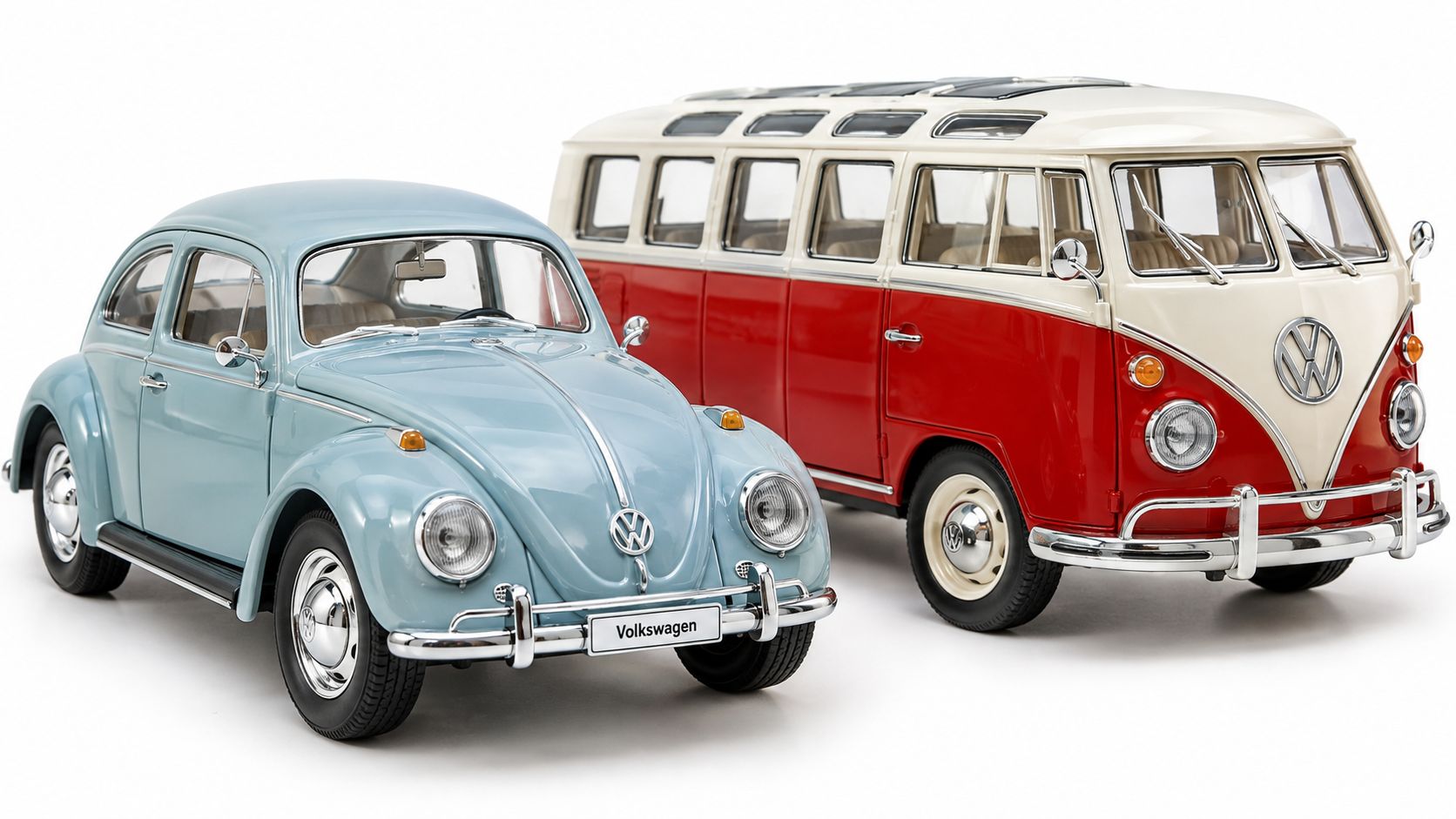
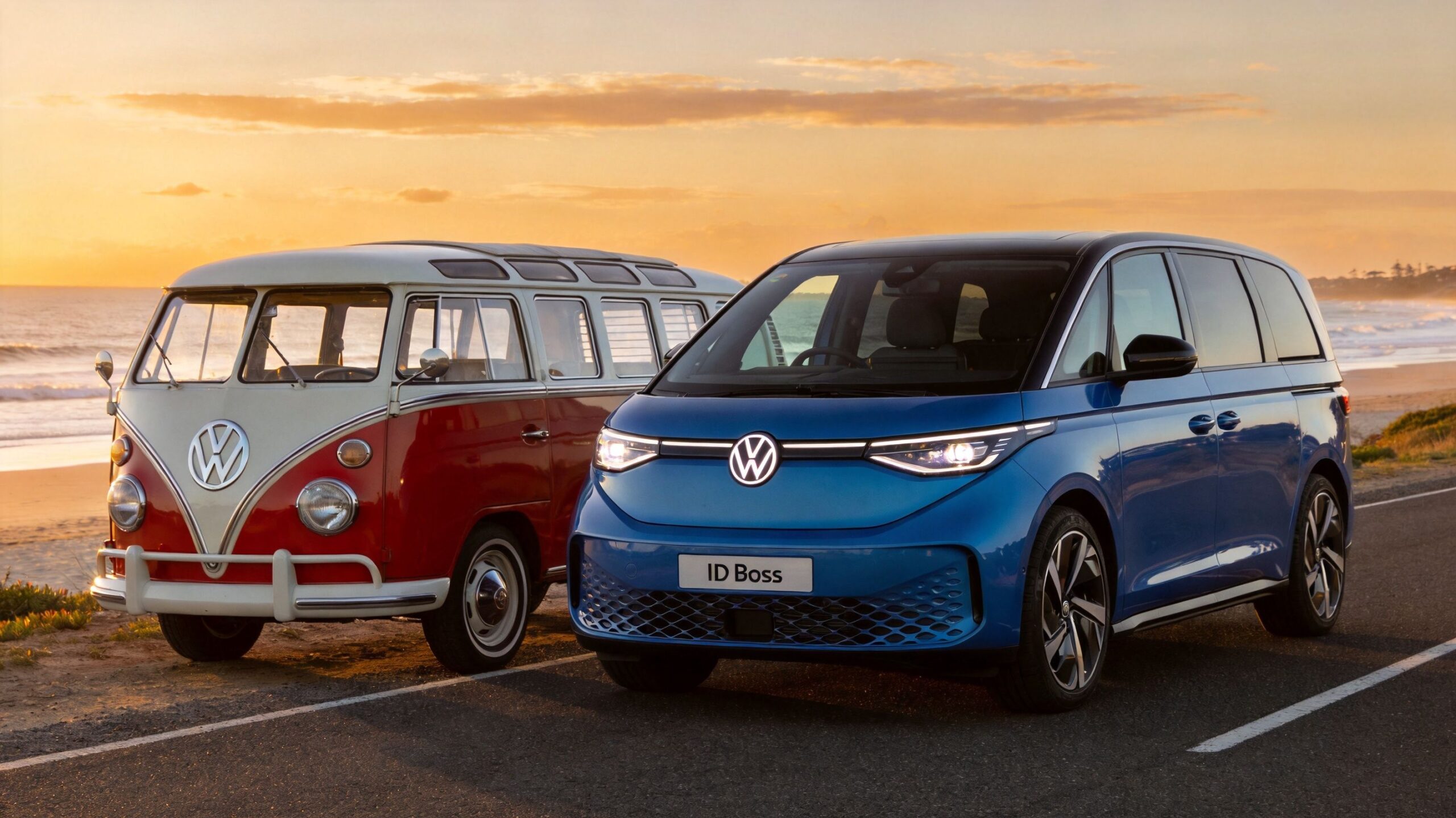
A classic red and white Volkswagen microbus parked next to a modern blue Volkswagen ID. Buzz van.

The clever bit is that the ID. Buzz doesn't try to copy the old Kombi panel for panel. It carries the mood instead. That's why it works. The old van wasn't loved because it was perfect. It was loved because it felt open, cheerful, and useful in a way few vehicles ever have.

More than a retro shape

Volkswagen's own Australian material leans into that connection. The deep tie between VW vans and Australian life helps explain why the ID. Buzz has been so eagerly awaited here, and the model's 452km range sits alongside a character that still feels linked to the classic Kombi for fans of retro style and surf-flavoured memorabilia, as shown in Volkswagen's Australian ID. Buzz brochure.

There's a similar design conversation happening across the wider electric VW family too, which is why some enthusiasts also find themselves browsing things like the VW ID 4 while they wait for more Buzz sightings on local roads.

Why collectors instantly get it

Classic VW collectors don't need a lecture on emotional design. They already know. A split-screen Kombi, a Samba, a tidy Beetle, they all carry more personality per square inch than most modern cars manage in an entire body shell.

That's why the Buzz lands so naturally with this crowd. It offers modern motoring, but it still nods to that old freedom machine identity.

A walkaround makes the connection even clearer.

The old spirit in a new form

Here's the thread joining the old Kombi and the electric Buzz:

  • Both invite people in. The design feels social rather than aggressive.
  • Both suit Australian lifestyles. Family trips, beach gear, weekend escapes, and long chats in a car park after the event.
  • Both inspire display-worthy affection. They're the kinds of vehicles people don't just own. They photograph them, restore them, and collect miniatures of them.

That last point matters more than people sometimes realise. The arrival of the van usually kicks off fresh interest in the small-scale versions too.

Celebrating an Icon Collecting VW Diecast Models

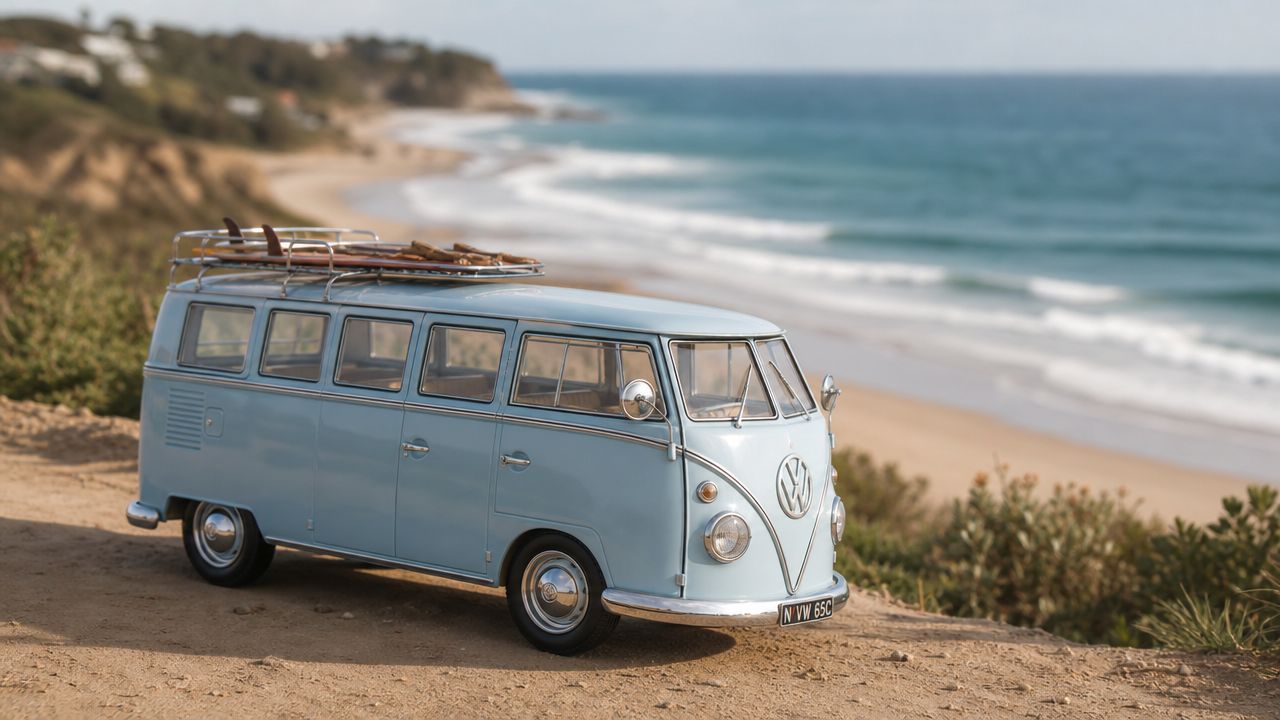
At a Sunday swap meet, you can spot the moment it happens. Someone picks up a tiny Kombi in pastel blue and white, turns it in their hands, and suddenly they are not just looking at a model. They are back on a family camping trip, parked near the beach, arguing over where the tea towels went while the sliding door clacks shut.

That is why the Buzz matters to collectors as much as drivers. A new van on Australian roads does more than stir interest in the classic models. It sends people back through the whole VW story, from split-screen favourites to fresh electric shapes, and the collecting scene wakes up with it.

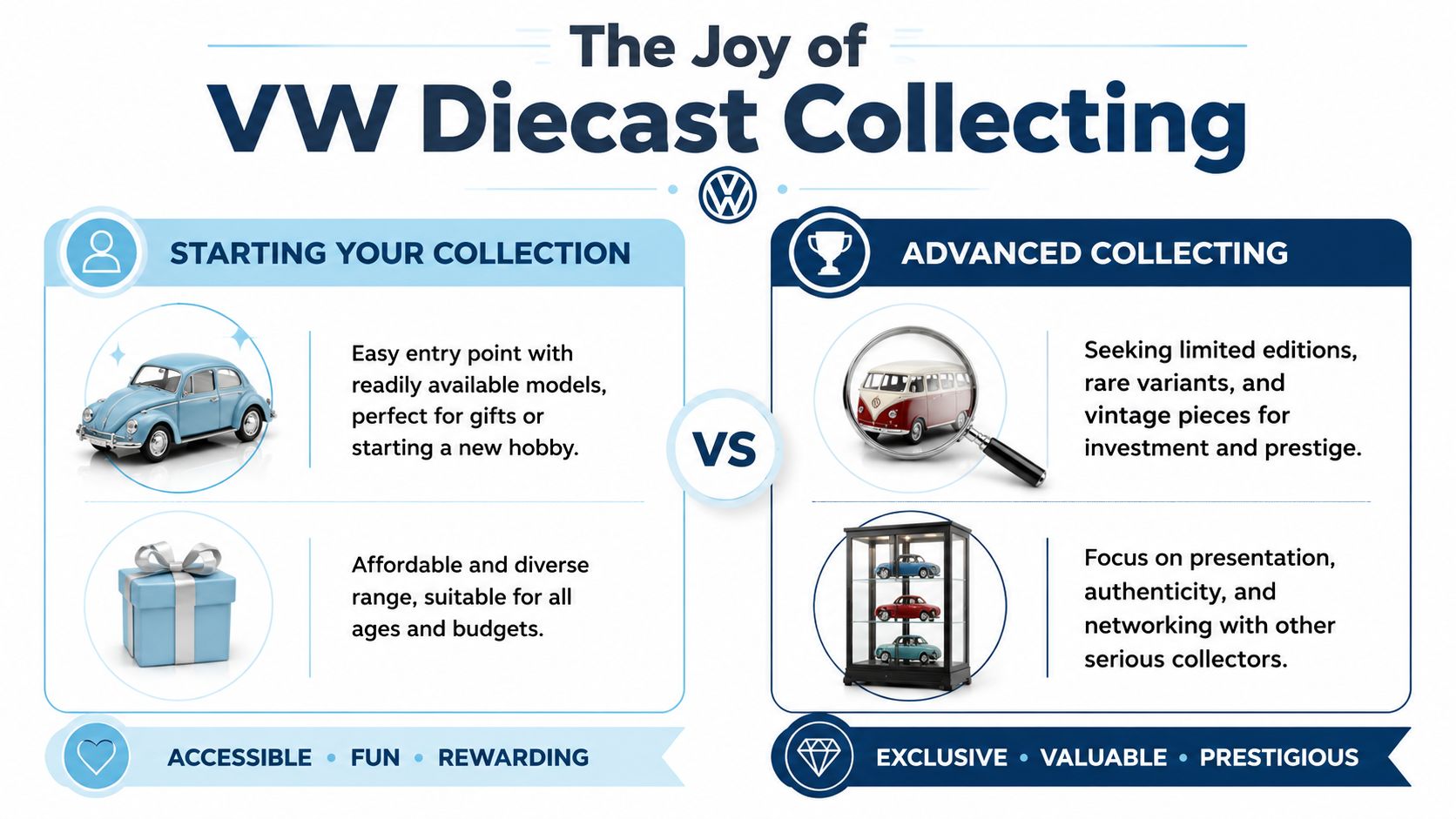
An infographic comparing starting a VW diecast car collection versus becoming an advanced collector of Volkswagen models.

A good place to start is a well-chosen range of Volkswagen model cars. One tidy piece on a shelf can do a lot. It gives the Buzz arrival a place in your home, while keeping one foot planted in the Kombi years that made so many Australians fall for VW vans in the first place.

Why diecast still matters in the age of the full-size Buzz

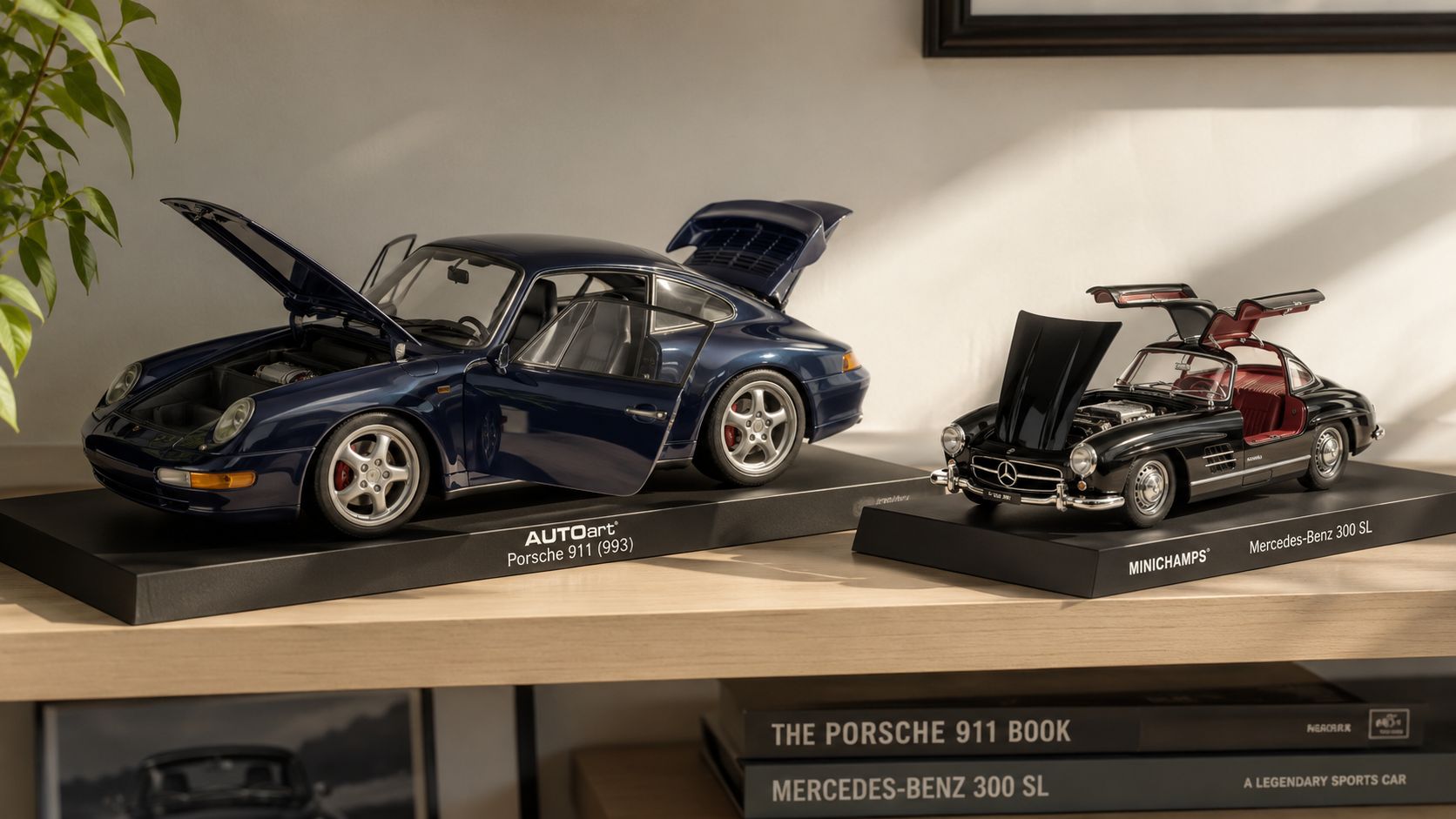
A diecast model gives you details that disappear in a scrolling photo gallery. You can study the two-tone paint, the window line, the wheels, the little badges, and the stance that makes a VW van feel friendly before it even moves.

For plenty of collectors, that is the sweet spot. You get the shape, the nostalgia, and the conversation starter without needing shed space, registration, or a restoration fund.

The arrival of the ID. Buzz adds another layer. New collectors often start with the electric van because it feels current, then drift backwards into Sambas, Beetles, and older Kombis. Long-time VW fans often do the reverse. They buy a modern Buzz model because it looks right beside the classics and marks a new chapter in the same story.

Picking your lane as a collector

Some collections begin with memory. Others begin with design, or a gift, or one lucky find at a market stall.

Collecting style What it looks like
Memory-led A classic Kombi in a colour that echoes a family van or an old beach holiday
Design-led A shelf of Beetles, Samba buses, and modern VW shapes chosen for colour and form
Event-led Models picked up at club meets, shows, and milestone VW launches
Gift-led A licensed Volkswagen Beetle model or Kombi given for birthdays, Father's Day, or Christmas

The best collections usually start with one honest reaction. “That one feels like mine.”

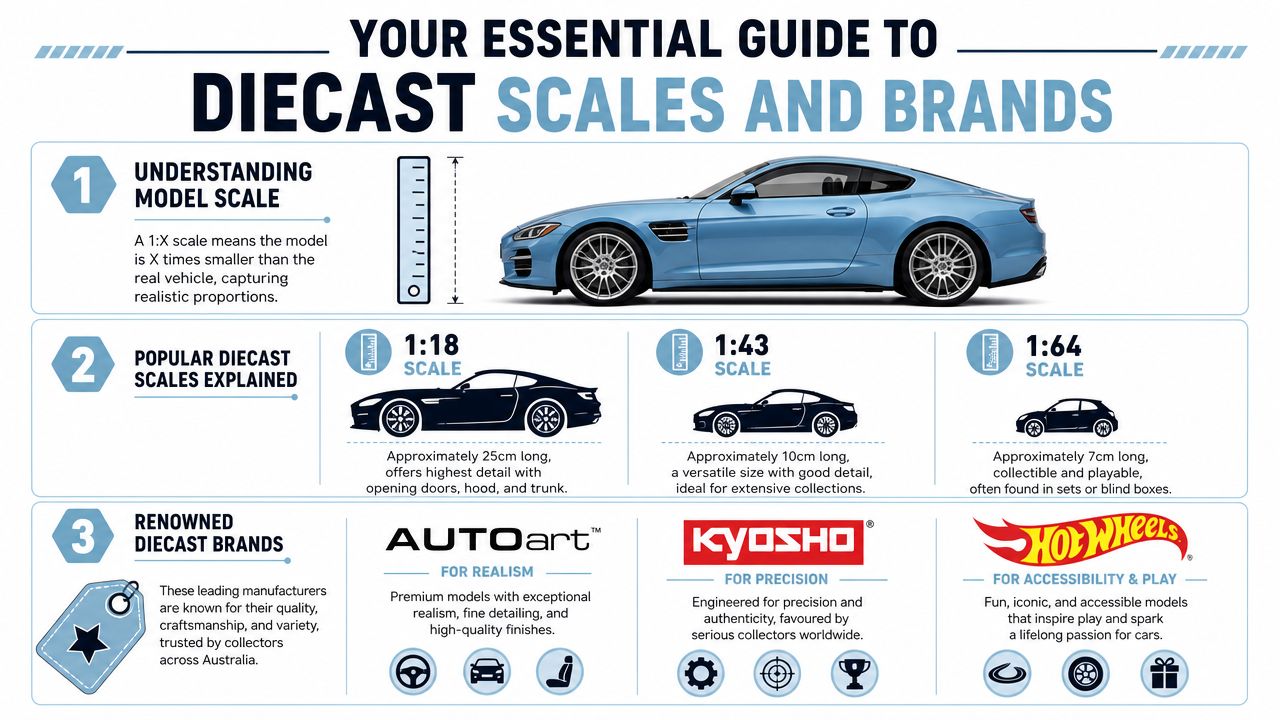
Scales that make sense in the real world

Collectors often ask whether to buy small, medium, or large scale models. The answer depends on where the model will live and how closely you want to enjoy it.

  • Smaller scales suit desks, bookshelves, and easy gifting.
  • Mid-sized models give you a nice balance of detail and display space.
  • Larger scales stand out more and reward a closer look.

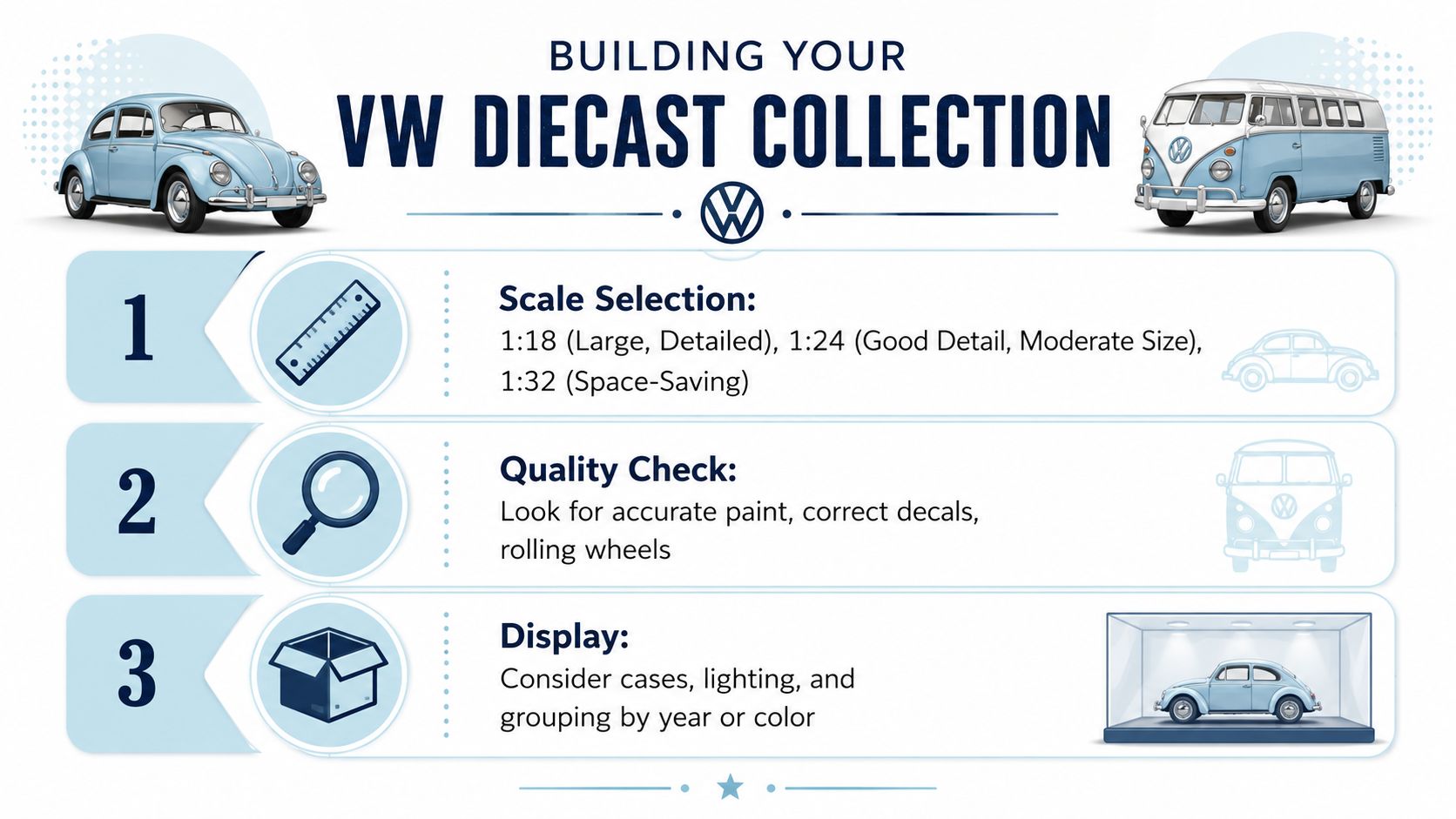
If you are searching for VW Kombi diecast Australia, buy diecast Kombi, or Volkswagen diecast models for sale, that is usually the primary decision. You are choosing not only which van you love, but how you want to celebrate this new Buzz era in your own space.

Style Your Space with Coastal and Retro VW Vibes

A VW collection doesn't have to live behind glass like a museum. Some of the best displays feel relaxed, a bit sun-washed, and properly lived in. That suits the whole Kombi spirit anyway.

A classic van model works beautifully in a coastal room because the shapes are friendly and the colours tend to play well with pale timber, white shelving, woven textures, and surf-style décor. The trick is not to overdo it. One standout piece often has more charm than a crowded shelf.

Display ideas that feel Australian

Start with a small story rather than a pile of objects. A Kombi diecast next to a framed beach photo, a shell, and an old road map feels intentional. A random cluster of ten unrelated pieces can feel like a spare-parts tray.

Try these approaches:

  • Shelf centrepiece. Use a bright Kombi or Samba Bus as the anchor on an open shelf, then keep the surrounding décor simple.
  • Study or office corner. A Volkswagen Beetle model beside motoring books and a ceramic mug gives the room some character without shouting.
  • Beach-house styling. Pair surf-inspired colours, timber, and one retro VW piece for a laid-back look that feels natural rather than staged.

Keep the palette calm and let the VW shape do the talking.

Make it feel collected, not bought in one hit

The nicest spaces build up slowly. One diecast from a show, one wall piece from a holiday, one little souvenir that reminds you of a certain day. That mix gives your room warmth.

For gift buyers, this is handy too. You don't have to solve the whole room in one purchase. A single licensed VW piece can become the starting point for someone's own corner of nostalgia.

Your Guide to Buying and Collecting VW Memorabilia

At a swap meet, you can spot the difference straight away. One table has a heap of sun-faded toy vans with wonky wheels and mystery logos. Two stalls over, someone has lined up a few properly licensed Beetles and Kombis in clean boxes, each one chosen for a reason. Guess which table collectors linger at.

That shift matters now. The Buzz has brought fresh eyes to Volkswagen culture in Australia, and those new fans often start the same way older enthusiasts did. One small model for the desk. One sign for the garage. One gift that turns into a shelf, then a cabinet, then a proper little collection with a story behind it.

A collection of die-cast Volkswagen bus and beetle toy cars displayed on shelves.

The best collections usually grow slowly. A sharp buyer picks pieces that feel true to the badge, the era, and the mood they want to capture, whether that is split-screen nostalgia, beach-town charm, or the clean new energy of the ID. Buzz.

What to check before you buy

A few simple checks save a lot of regret later.

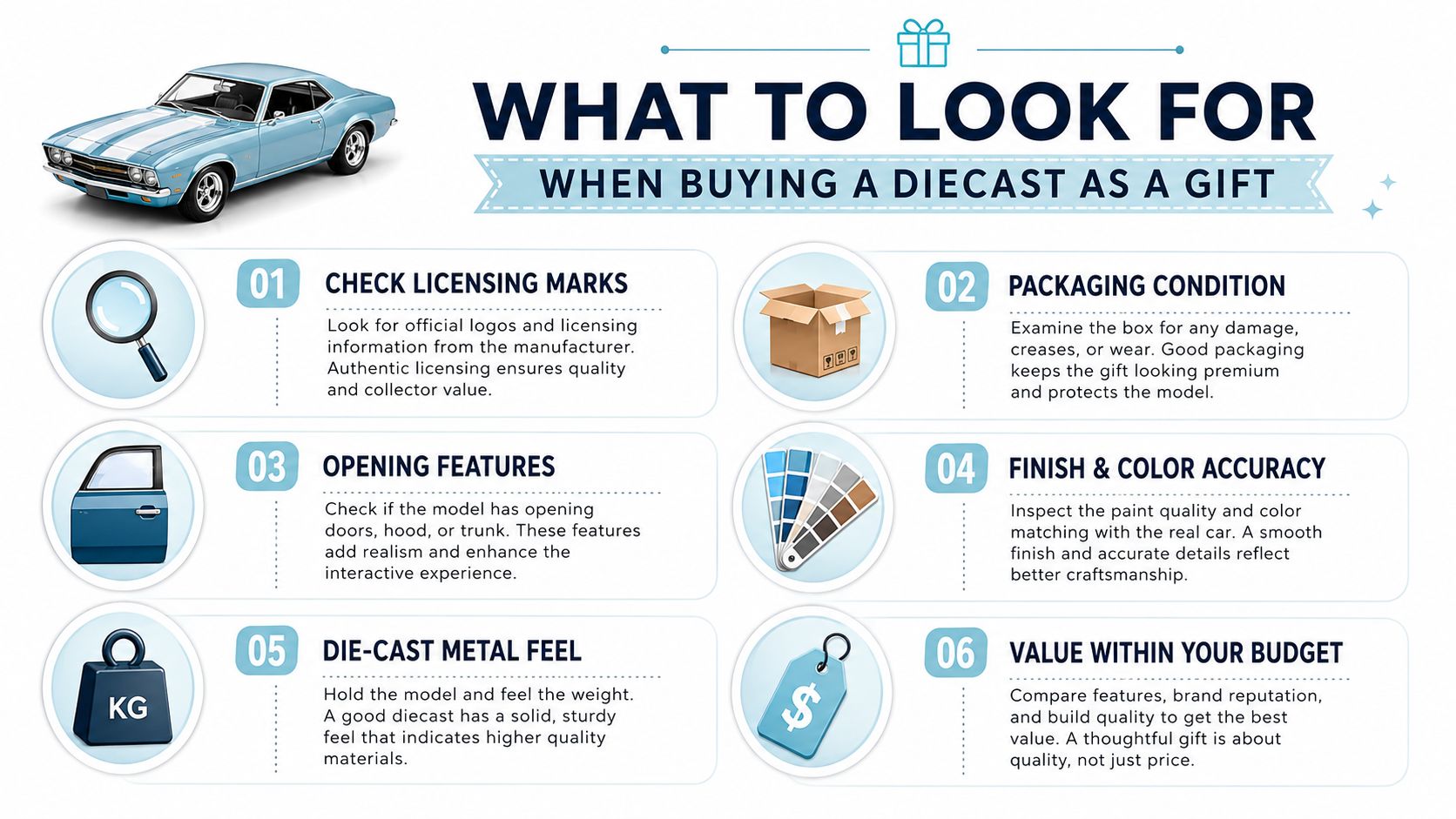
  • Licensing matters. Official Volkswagen merchandise usually gets the badge work, proportions, and colours right.
  • Finish tells you plenty. Look closely at the paint, trim lines, wheels, windows, and how neatly the model sits on a flat surface.
  • Packaging matters if you collect seriously. Crisp boxes help with gifting, display, and long-term value.
  • A clear theme looks better on the shelf. Kombis, Beetles, surf colours, or a mix of classic and electric pieces will usually look stronger than a random pile of VW-shaped odds and ends.

Why local stock helps

Australian buyers know the pain of waiting weeks for a parcel, only to have it arrive bent, delayed, or nothing like the photos. Buying from local stock cuts a lot of that nonsense out.

It also makes the hobby more enjoyable. You can grab a birthday gift without panic, sort out a prize for a club day, or add one good display piece before a weekend barbecue without wondering if it will turn up sometime next month. A local seller also tends to understand what Australian VW fans love, from Kombi beach styling to diecast pieces that suit a home office, garage, or holiday house.

Caring for a collection

You do not need glass cabinets in a special room to keep VW memorabilia looking good. You just need a few good habits and a bit of restraint.

Collecting habit Why it helps
Keep models out of harsh direct sun It helps preserve colour and finish
Dust gently and regularly Fine details stay sharp and presentable
Use stable shelves or cabinets Better for display and safer for delicate pieces
Store boxes neatly Handy for gifting, resale, or long-term care

A model picked up at the right time can carry a lot of meaning. Maybe it reminds you of the Kombi your uncle drove up the coast. Maybe it marks the moment the electric Buzz finally landed here and gave the whole VW scene a fresh jolt. That is what makes this hobby fun. You are not only buying objects. You are building your own little chapter of Volkswagen history.

Buy the piece you'll still smile at in a year. Trends fade. Good VW design doesn't.

If the return of the Buzz has you itching to bring a bit of Volkswagen charm home, have a browse through Volkswagen Memorabilia. It's a local Australian shop focused on VW-themed gifts, diecast models, and coastal décor, with handy local stock and friendly support for collectors, gift buyers, and anyone who still feels a little spark when they see a Kombi badge.

Kombi Life Australia Your Guide to the Culture

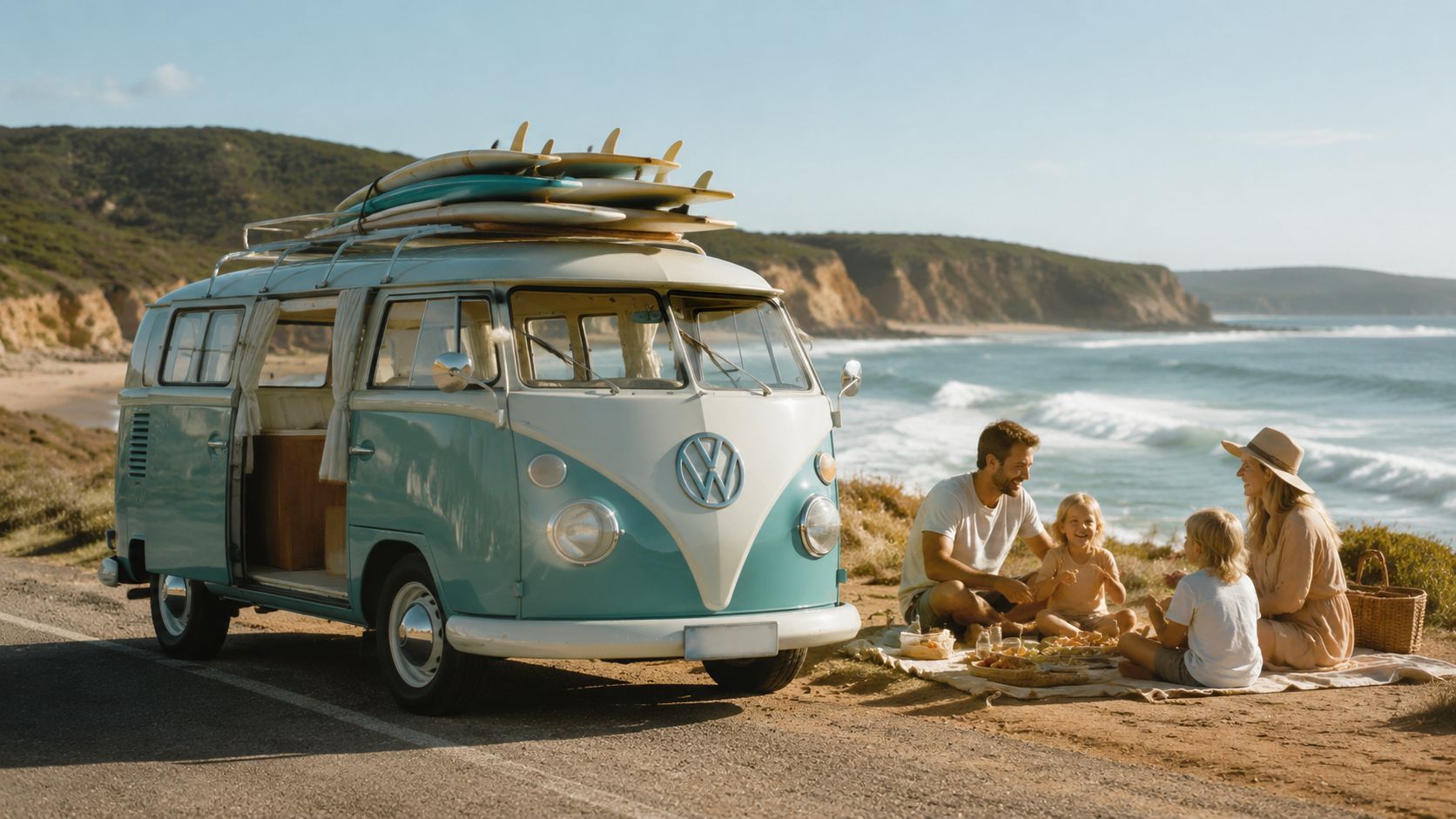
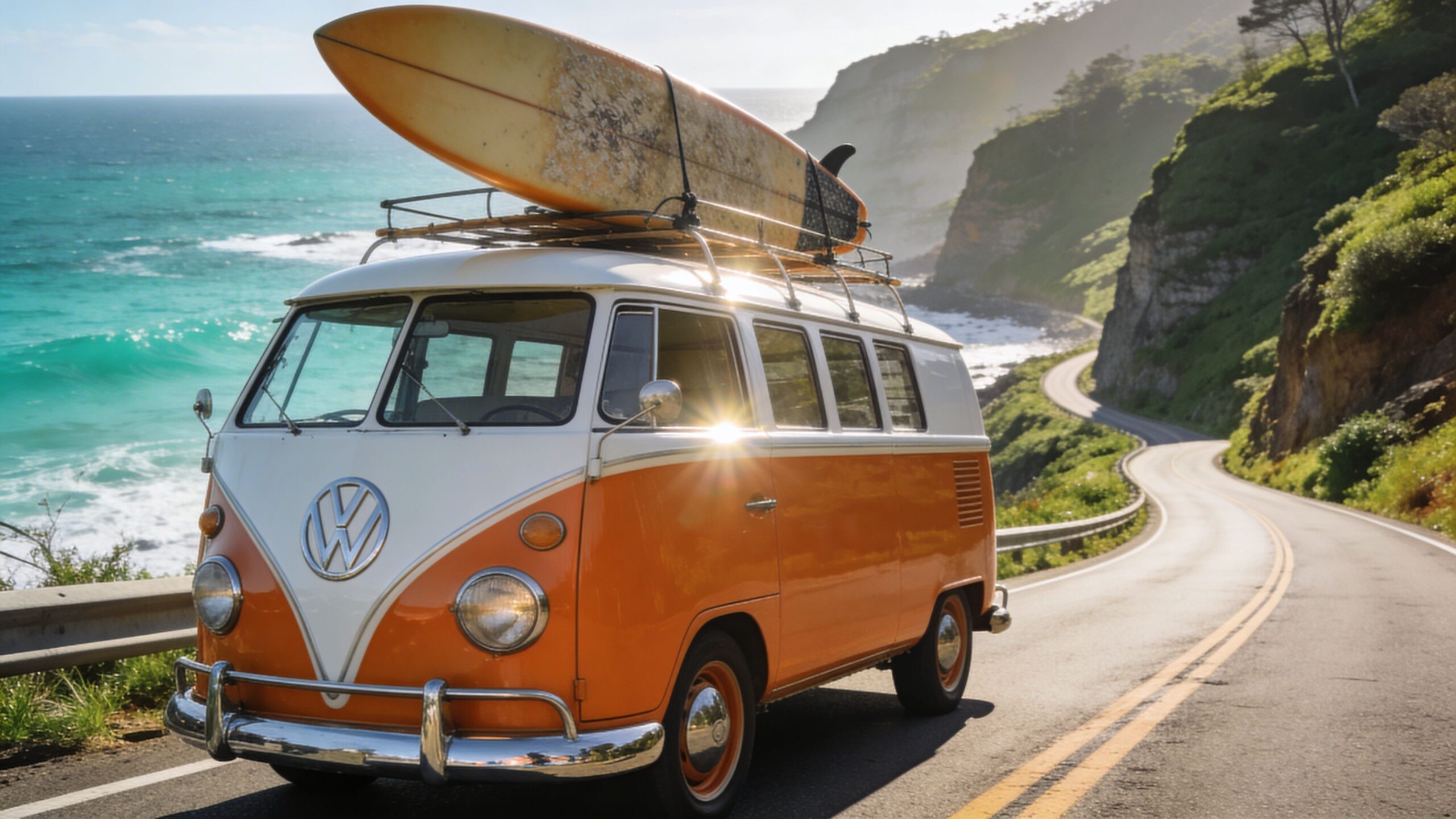
Salt spray on the windscreen, boards rattling on the roof, a kettle whistling on a camp stove beside the van. That’s how kombi life australia lives in the mind of a lot of us. Not as a museum piece, but as a moving little home pointed at the next beach.

The Enduring Call of the Open Road

A mate of mine still talks about a dawn run up the coast in an old VW bus, the kind of drive where every stop becomes part of the story. Coffee from a servo cup, sandy thongs by the sliding door, wax on the dash, and a long wait for the sun to burn the mist off the headland. The van was slow, a bit noisy, and absolutely perfect.

That’s the heart of kombi life australia. It isn’t about hurrying. It’s about stretching a trip so there’s room for surf checks, fish and chips, roadside yarns, and the odd detour because somebody said there’s a quiet break around the next bend.

A vintage yellow Volkswagen bus with surfboards on its roof parked along a coastal highway at sunset.

What’s lovely is that this picture isn’t just nostalgia. There’s a real, modern community still chasing that same feeling. The Van and Bus Life Survey by Nomads Around Australia found that 47% of van-lifers drive vans, with 77% based on the East Coast. The same survey found the community is primarily aged 25 to 34, and 74% earn under $50,000 annually, which says a lot about the low-cost, freedom-first pull of the lifestyle.

The road still attracts the same kind of dreamer

Some people come to it through surfing. Others through camping, photography, fishing, markets, music festivals, or a simple desire to wake up somewhere beautiful. The Kombi sits right in the middle of all that because it has always felt friendly. Not flashy. Not distant. Just open-hearted.

You see that spirit in the little habits Kombi owners share:

  • Keeping things simple: A folding chair, a small stove, a good torch, and room for wet towels matters more than luxury.
  • Making do creatively: Old crates become storage, curtains become privacy, and a shelf becomes a breakfast bench.
  • Travelling for the feeling: The destination matters, but the stop at the bakery and the lookout with no name often matter more.

Campfire truth: The best Kombi trips are rarely the most organised ones.

Why the culture still resonates

The Kombi has always carried more than people and gear. It carries mood. Pull up in one and the whole scene changes. Strangers smile. Other VW owners wave. Someone usually has a story about one their parents had, or one they wish they’d never sold.

That emotional pull is exactly why memorabilia has such a strong place in this world. For plenty of enthusiasts, collecting a diecast Samba Bus or styling a shelf with VW pieces isn’t separate from the road-going dream. It’s another way of holding onto it. A little reminder of beach runs, campsite chatter, and the sound of an air-cooled engine settling after a long day.

How the Kombi Became an Australian Icon

Long before it became a symbol of beach towns and freedom, the Kombi earned its keep by being useful. That’s worth remembering. The Volkswagen Type 2 wasn’t loved because it tried to be glamorous. It became beloved because it worked hard, carried plenty, and asked for very little fuss in return.

In Australia, that practical streak mattered. Distances were long, weekends were outdoors, and plenty of people wanted one vehicle that could haul mates, gear, and groceries without carrying itself like a precious thing. The Kombi fit right in.

From workhorse to weekend legend

Ask older VW people about the first time they noticed Kombis becoming part of coastal life and the stories sound similar. A board poking out the back. Curtains in the windows. Somebody sleeping in it after a late gig or an early surf. It didn’t take much for the van to move from tradie duty to lifestyle hero.

By the 1970s, the Kombi had become a staple for surfing and road trips along Australia’s east and west coasts, with room for boards and mates and enough charm to feel like part of the adventure. That’s a big reason the shape still lands so strongly today. It reminds people of a looser, saltier, less polished Australia.

Why surfers and travellers took to it

It wasn’t one thing. It was a combination that hit the sweet spot.

Feature Why it mattered on Aussie trips
Spacious interior Easier to throw in boards, swags, chairs, eskies, and spare clothes
Mechanical simplicity Owners could tinker, patch, and maintain them without turning every issue into a drama
Friendly design Rounded lines and a big glasshouse gave it personality no boxy van could match
Social layout People gathered around a Kombi naturally, whether at a beach car park or camp ground

A Kombi also invited custom touches in a way few vehicles did. Curtains, roof racks, bedding platforms, stickers, timber cabinets, painted panels. Every owner seemed to leave a fingerprint on it.

The Kombi became iconic because it gave ordinary people a way to live a little bigger on a small budget.

The Australian version of the dream

The Australian take on Kombi culture has always had its own flavour. Less autobahn, more headland. Less city chic, more sun-faded stickers and sandy floor mats. The local myth isn’t about pristine chrome under perfect lights. It’s about driving north with no fixed timetable, finding a van parked beside spinifex or surf, and knowing somebody inside is probably boiling water for tea.

That’s also why so many collectors are drawn to the surf-inspired, flower-power, and camper-style versions of VW models. They’re not only buying a miniature vehicle. They’re buying a tiny scene from Australian memory.

Heritage that still shapes what people love now

Even modern VW camper builds carry the old Kombi idea forward. Owners still want versatility, comfort, and the ability to head from weekday errands to a coastal weekend without changing vehicles. The details may be newer, but the instinct is old. Make it yours. Make it capable. Make it ready for the next trip.

That’s what keeps the Kombi from becoming a static classic. Plenty of historic cars are admired. The Kombi is different. People want to use it, talk about it, display it, photograph it, gift it, and build rooms around it.

For enthusiasts, that heritage matters when choosing memorabilia too. The pieces with the strongest pull are usually the ones that capture that lived-in spirit. A Samba Bus with bright paint. A surfy bus with character. A Beetle parked beside it on a shelf like the family car that followed the van down the coast.

The Vibrant World of Australian VW Events

Walk into a good VW meet in Australia and you’ll notice the mood before you notice the cars. People aren’t only inspecting vehicles. They’re swapping parts stories, sharing advice, comparing road-trip memories, and pointing out the little touches that make one bus different from the next.

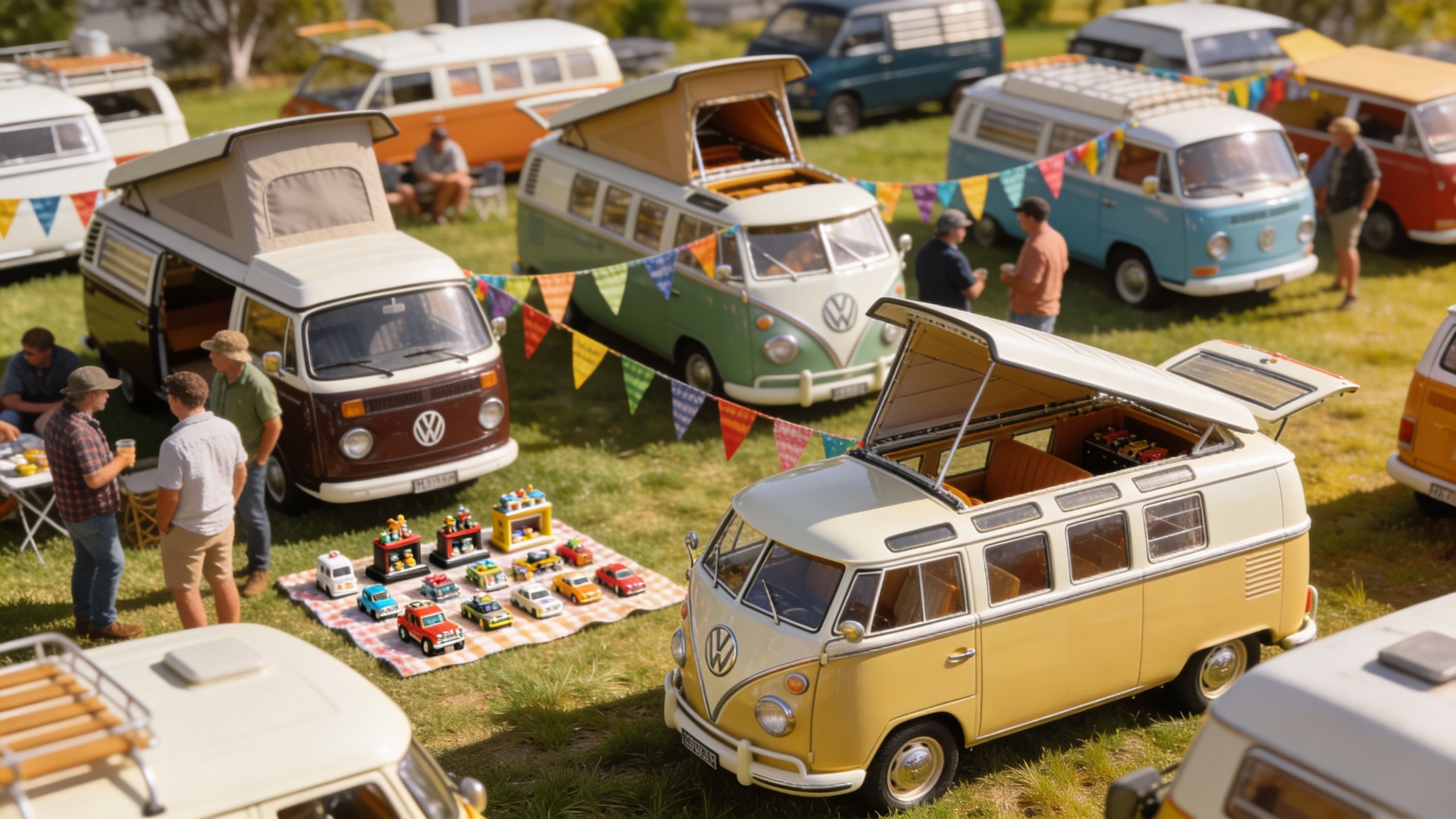
A miniature collection of vintage Volkswagen Kombi vans displayed outdoors on a sunny grass field.

That’s why events like Volksfest, VW Nationals, local Show & Shine gatherings, and smaller club meets matter so much. They keep kombi life australia from turning into private nostalgia. They make it social. You can arrive knowing nobody and leave with three new contacts, a note about a parts supplier, and a dozen photos of vans you’d love to recreate in miniature at home.

What these gatherings feel like

The best events have a lovely mix of polish and imperfection. One Kombi will be restored so neatly it looks ready for a brochure. The next will wear its age proudly, with camping gear tucked inside and a few honest marks from years on the road.

You also get a full cross-section of the VW world:

  • Restorers bringing buses and Beetles back to original glory
  • Custom builders adding camping setups, wheels, racks, and touring gear
  • Families introducing kids to the cars they grew up around
  • Collectors hunting inspiration for the next diecast or display piece

Why the community stays strong

VW culture has always rewarded conversation. These cars and vans have character, and character invites stories. At a show, somebody will explain how they tracked down the right trim, someone else will open a sliding door to reveal a clever camping fit-out, and another owner will tell you exactly where the van first took them after restoration.

That community spirit carries into modern conversions too. Comfort upgrades are still part of the adventure mindset, not a rejection of it. For instance, the Horizon Roof imported by KombiLife Australia adds 1.9m of headroom and improves ventilation by 30%, which can lower internal temperatures by 5 to 7°C in hot Australian summers. It’s a modern answer to an old Kombi question. How do you stay out longer and travel better?

From show field to screen shelf

A lot of collectors build their display style from what they’ve seen at events. One person falls for factory-correct cream and red paint. Another leans into bright flower-power buses. Someone else goes all in on surf racks, patina, and beach props around their models.

This kind of footage captures that mood well:

Practical rule: If you’re heading to a VW event, bring a camera, a notebook, and comfortable shoes. You’ll spot display ideas, colour combinations, and model references you’d never think of at home.

What to pay attention to at a VW show

Instead of trying to see everything at once, focus on the details people often miss.

Look for Why it’s useful
Roof racks and accessories They give you ideas for styling diecast displays with a real road-trip feel
Interior fit-outs Great inspiration for shelf themes and camper model choices
Paint combinations Helpful when choosing colours that suit a coastal room
Signwriting and decals They often become the most memorable part of a bus, even in miniature

The beauty of Australian VW events is that they welcome every kind of enthusiast. You don’t need to own a full-size Kombi to belong there. If you love the history, the shape, and the stories, you’re already part of the crowd.

Your Guide to Collecting VW Diecast Memorabilia

There’s a moment when collecting stops being casual and starts becoming personal. It might happen when you spot a miniature Samba Bus in the same two-tone paint as the van your uncle drove. Or when you find a flower-power Kombi that looks exactly right on a shelf beside old surf photos. That’s when diecast stops being a trinket and becomes a memory holder.

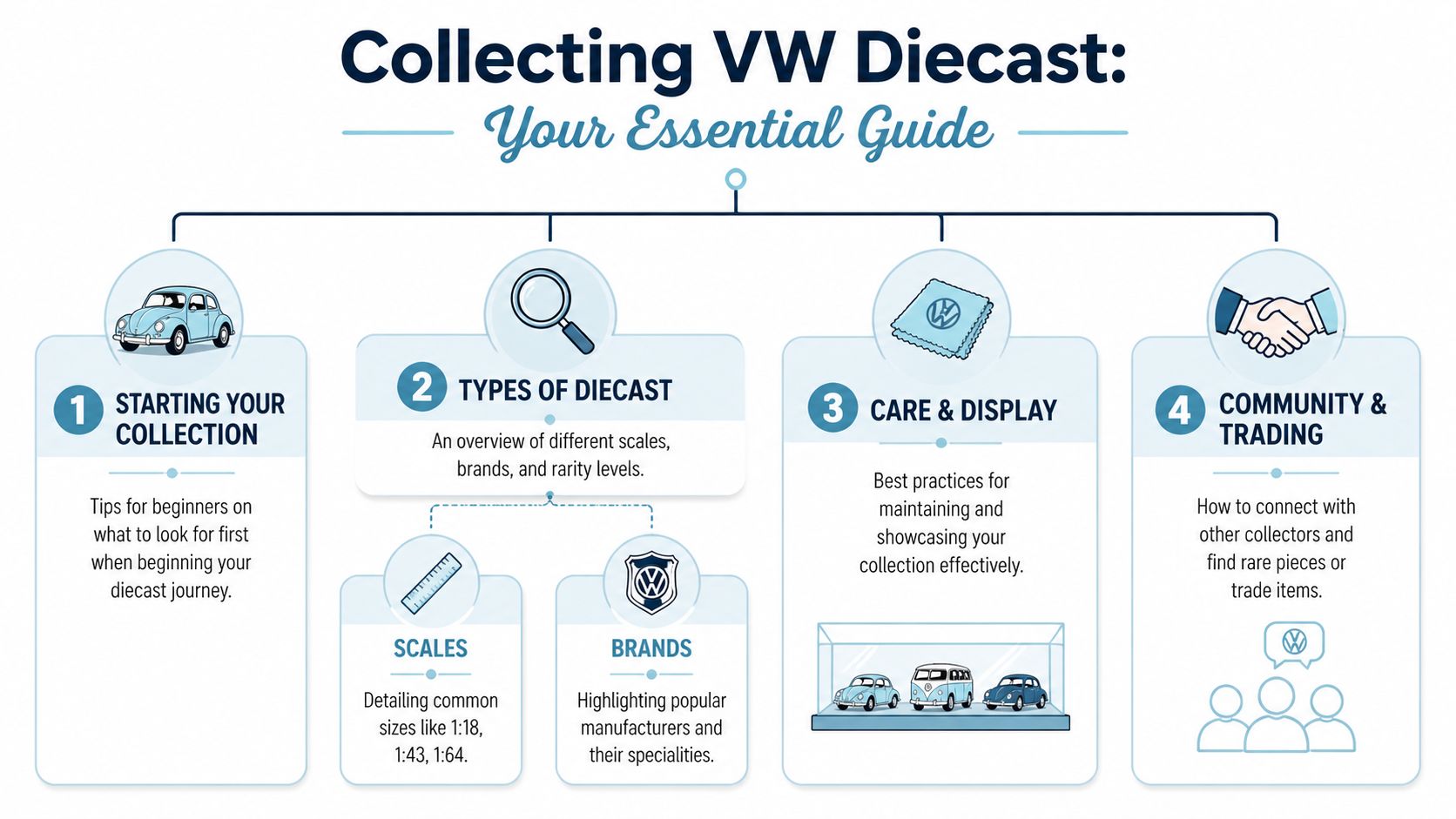
An infographic titled Collecting VW Diecast showing a guide on starting, categorizing, displaying, and trading model cars.

For newcomers, the easiest way to begin is to collect with a point of view. Don’t buy everything. Buy what stirs something. A classic 1962 Kombi. A Samba Bus with windows all around. A Beetle that balances out the display. A surfy van with the right colour and attitude.

Start with one theme

A focused collection looks stronger and feels more satisfying than a random pile of nice things. You’re building a little world, not filling empty space.

Try one of these approaches:

  • Coastal road-trip shelf: Kombi vans, surf-inspired pieces, weathered timber, shells, old travel snaps
  • Classic Volkswagen pairing: One or two Kombis with a Beetle model for contrast
  • Colour-led display: Cream and blue, red and white, pastel tones, or bright flower-power pieces
  • Era-based collecting: Early buses, later camper styles, then modern VW van interpretations

If you’re just starting, browsing a dedicated collection of Volkswagen model cars helps you see the range clearly and decide what kind of collector you want to be.

Understanding diecast scales

Scale is where many buyers hesitate, but it’s simpler than it sounds. Think of scale as the model’s personality in your room.

Larger scales for centrepieces

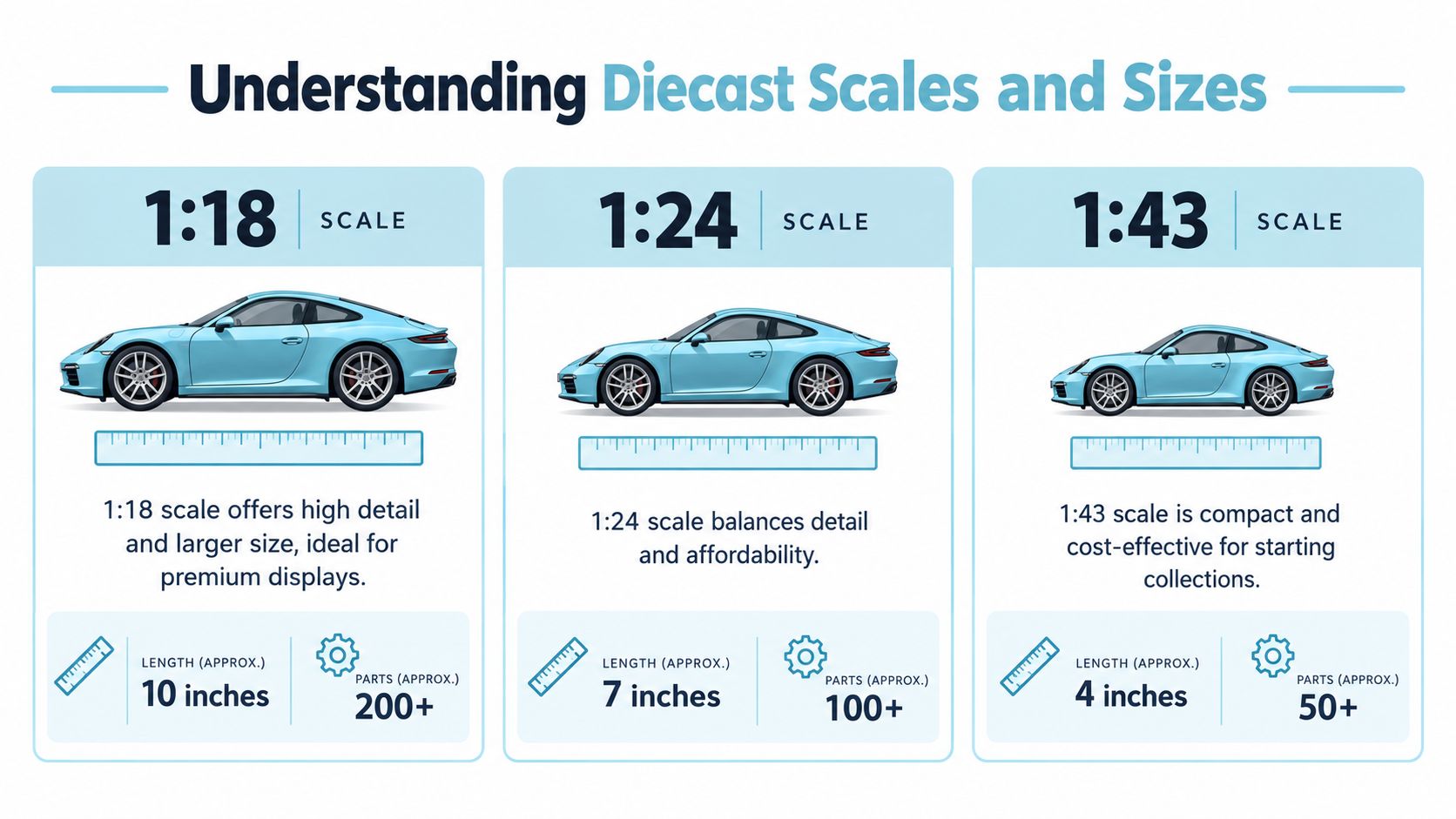
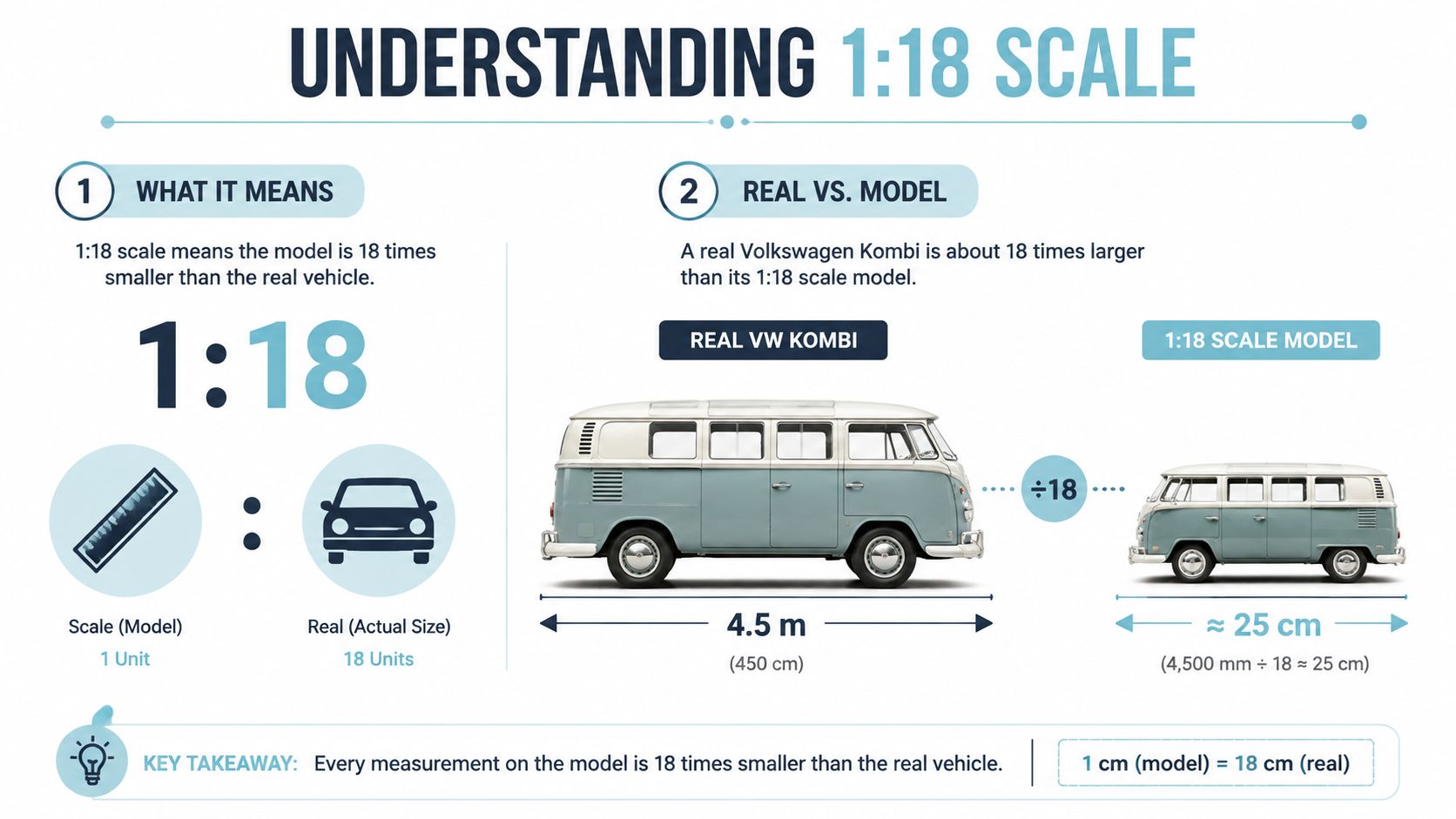
A 1:18 model has real presence. It suits a desk, bookshelf end, sideboard, or display cabinet where you want one hero piece to do the talking. On a coastal console table, a detailed Kombi in this size can carry a whole display by itself.

Mid-sized scales for flexible styling

A 1:24 model is often the sweet spot. Big enough to show off shape and detail, small enough to fit neatly into shared displays with books, framed photos, or shells and driftwood.

Smaller scales for grouped scenes

Scales like 1:32, 1:43, or 1:64 work beautifully when you want several vehicles together. They let you create a miniature convoy, a show field vibe, or a shelf that tells more than one story.

What makes a model worth buying

Not every VW model has the same magic. The good ones tend to get the essentials right.

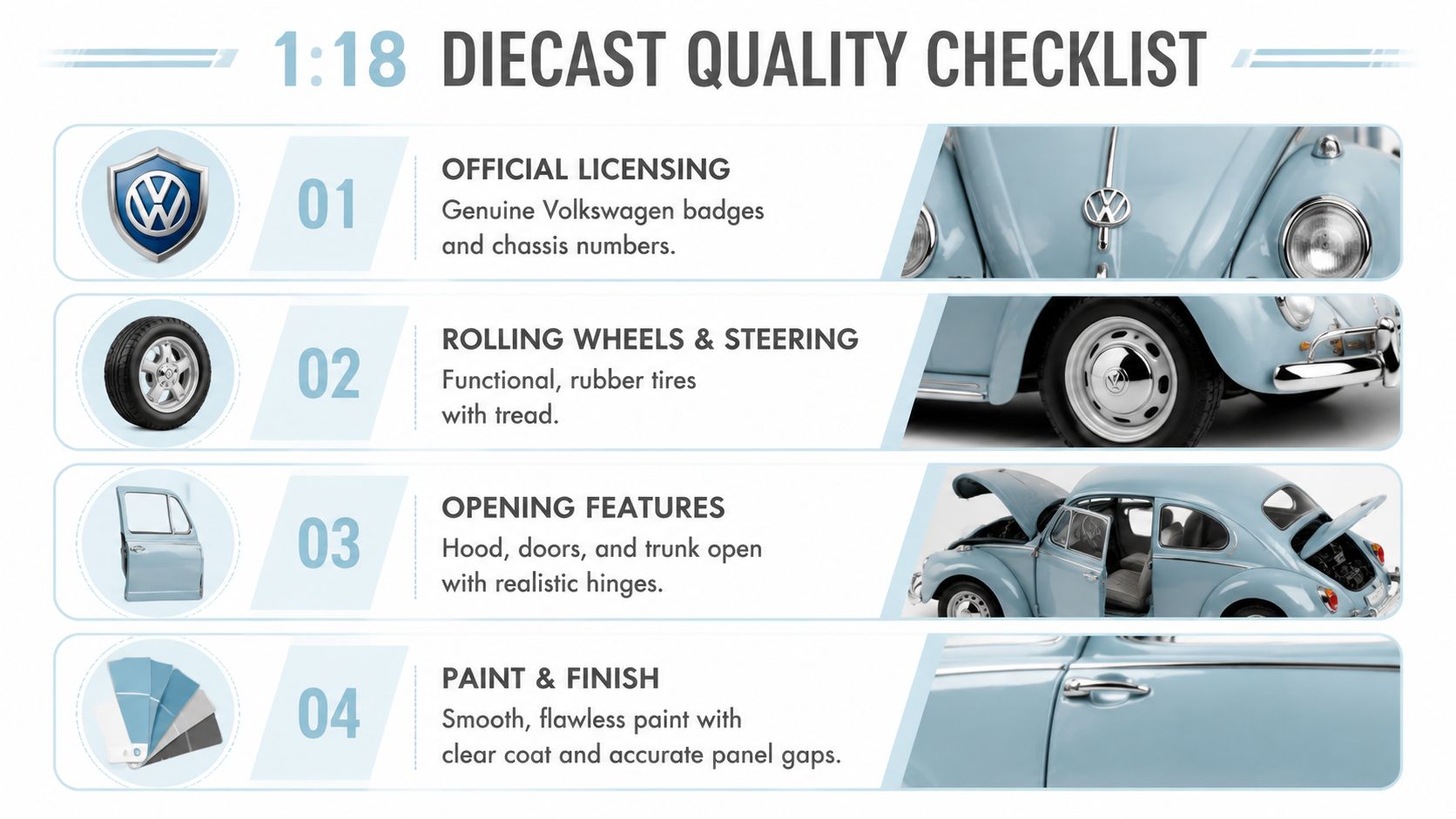
What to check Why it matters
Licensed branding It helps ensure the proportions and details feel true to the original
Paint finish Clean colour application lifts the whole display
Window and trim detail Samba-style buses especially rely on crisp glazing and trim lines
Wheels and stance A model can have lovely paint and still look wrong if it sits awkwardly
Packaging condition Important if you collect boxed pieces or buy gifts

Buy the model you’ll still enjoy looking at after the novelty wears off. Detail matters, but character matters more.

Good first pieces for a Kombi fan

If you’re building around kombi life australia, a few types of model nearly always work.

  • 1962 Kombi models: They capture the shape many people picture first when they think of classic VW van culture.
  • Samba Bus diecast: Extra windows and that unmistakable silhouette make these display favourites.
  • Flower Power editions: These bring in the counter-culture side of the story and suit bright coastal interiors.
  • Surf-themed vans: Ideal if your collection leans toward beach heritage rather than factory purity.
  • Volkswagen Beetle models: They add variety and help tell the broader VW story on the same shelf.

Displaying without cluttering

A diecast collection looks best when it can breathe. One strong model often beats five crammed together.

Try this simple display formula:

  1. Choose a lead piece such as a Kombi Samba Bus.
  2. Add one supporting item like a smaller Beetle or surf accessory.
  3. Use texture around it with timber, linen, or coastal elements.
  4. Leave space so the eye lands on the vehicle first.

A shelf should feel like a parking spot, not peak-hour traffic.

Buying locally makes the hobby easier

For Australian collectors, local stock removes a lot of the usual friction. You’re not waiting on vague overseas timelines or guessing whether a gift will arrive in time. Fast local shipping also matters when you’re buying fragile display pieces, especially around birthdays and Christmas.

There’s another benefit too. Australian-focused sellers often understand the specific appeal of coastal VW culture here. They know why surfy buses, Samba models, and nostalgic colourways resonate so strongly in local homes and collections.

A collector’s mindset that lasts

The most enjoyable collections aren’t always the biggest. They’re the ones built with affection and a bit of patience. Start with the bus that reminds you of a road trip. Add a Beetle that feels right. Build a shelf that reflects your version of VW life.

That way, each piece earns its place.

Bringing Coastal VW Charm Into Your Home

Some homes have a room that reflects who lives there. A weathered board near the door. Framed beach prints. Salt-softened colours. A model Kombi on a shelf that catches afternoon light. That mix works so well because VW memorabilia doesn’t feel forced in a coastal space. It belongs there.

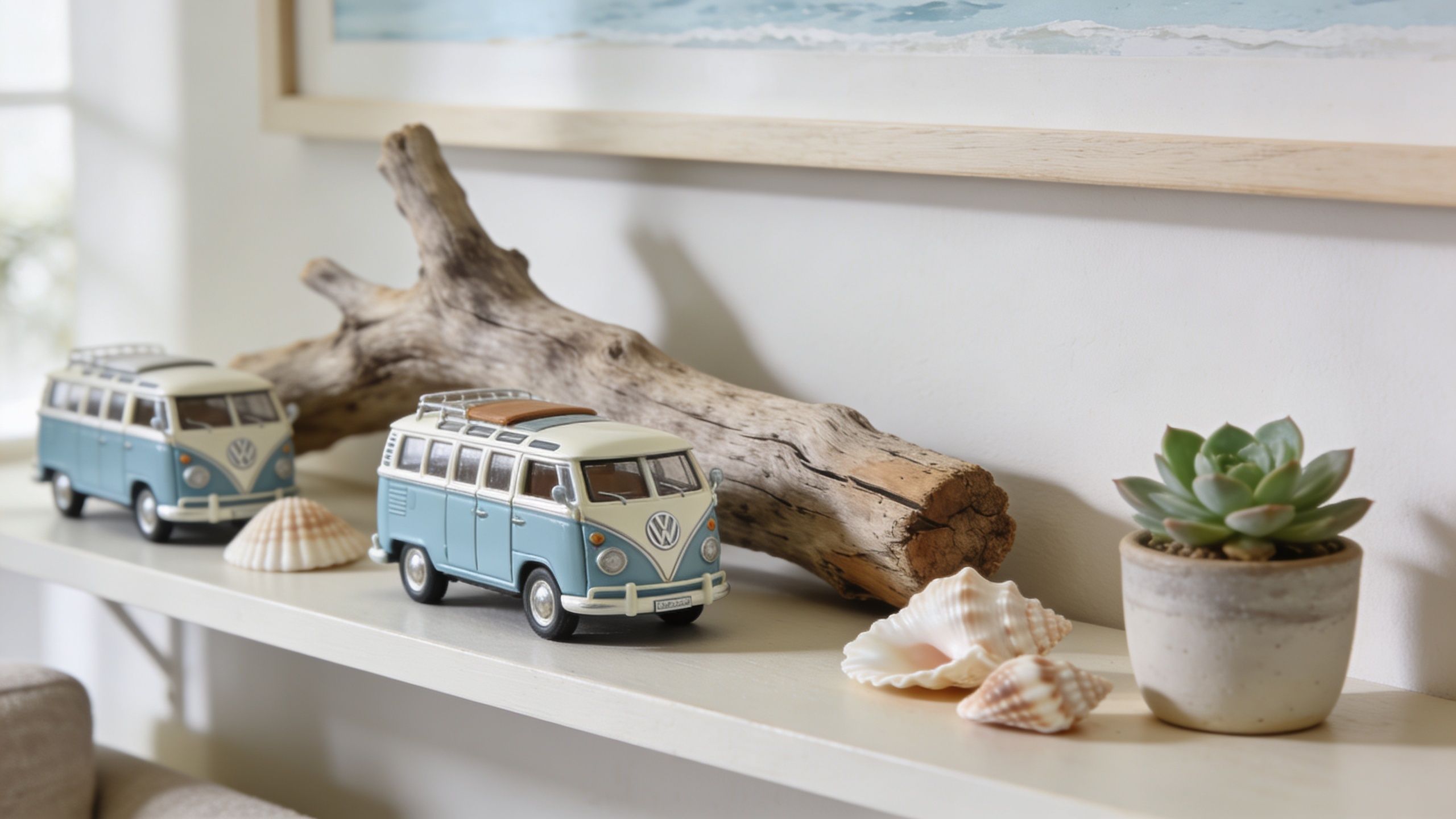
Two miniature vintage blue and white Volkswagen bus models displayed on a shelf with seashells and a succulent.

The trick is to style with restraint. You want the room to nod to the Kombi lifestyle, not shout over everything else.

Build one strong focal point

A larger Kombi model works beautifully as a centrepiece on a console, open shelf, or side table. Give it a little breathing room and pair it with objects that echo the road and the coast. A framed beach photo, a small ceramic vessel, or a few shells are often enough.

For inspiration on mixing automotive nostalgia with relaxed interiors, these coastal home décor ideas are a handy starting point.

Use colour the way old Kombis do

Classic VW colours are part of their charm. Soft blues, creams, reds, whites, and the occasional brighter pop all work well in Australian coastal interiors.

Try styling by palette:

  • Blue and white: Clean, beachy, timeless
  • Cream and red: More retro, warmer, slightly bolder
  • Pastels: Relaxed and playful, especially with flower-power pieces
  • Natural neutrals: Let the diecast paint become the colour feature in the room

Shelf ideas that don’t feel busy

A good shelf tells a story at a glance. Not a novel. Just enough to suggest a life well travelled.

Shelf style What to include
Surf shack corner Kombi model, small framed wave print, piece of driftwood
Family nostalgia shelf VW diecast, old holiday photo, vintage map or postcard
Clean coastal look Blue-and-white bus, white ceramics, a succulent
Christmas variation VW model with seasonal coastal ornaments in summer colours

Keep your display at eye level if you want guests to notice the detail. Lower shelves often turn lovely models into background noise.

Make memorabilia feel lived with

The nicest displays usually include something personal. A photo from a road trip. A market postcard. A beach stone from a family holiday. These details stop the space from feeling like a shop window.

That matters with VW pieces because the emotional pull is such a big part of their charm. A Kombi model isn’t only decorative. It often points back to a memory, a person, or a version of freedom people still carry around.

If you’re styling a study, rumpus room, guest room, or beach house, VW memorabilia can anchor the space without dominating it. One shelf, one tray, or one corner is enough. Done well, it feels effortless.

Navigating the Realities of Full-Time Kombi Life

The romantic side of van travel is real. So are the headaches. Anyone giving a full account of kombi life australia should say both in the same breath.

The dream usually looks simple from the outside. Park near the beach, cook by the van, wake up somewhere pretty, repeat. But full-time living in a van brings paperwork, registration questions, insurance issues, and the kind of rules that can catch people off guard.

The part people don’t post about

One little-discussed reality is regulation. According to this discussion of recent van life reforms, some states now require a fixed abode for vehicle registration, and insurance premiums for nomadic vehicles can be up to 35% higher because insurers see them as higher risk.

That changes the picture fast. A van that feels like freedom on Friday can become an administrative puzzle by Monday.

A steadier way to approach the lifestyle

If you’re serious about full-time or long-term van living, go in with your eyes open. Romance helps you choose the life. Preparation helps you keep it.

A sensible checklist looks like this:

  • Check registration requirements early: Don’t assume one state treats mobile living the same as another.
  • Ask insurers direct questions: Be clear about how the vehicle is used, where it’s kept, and whether it’s modified.
  • Keep records organised: Store receipts, modification details, and policy documents where you can access them quickly.
  • Separate travel fantasy from legal reality: Loving the idea of van life doesn’t remove compliance obligations.

The best van setup in the world won’t save you from bad paperwork.

This side of Kombi culture isn’t as photogenic, but it matters. It protects your investment, your travels, and your peace of mind. If anything, facing these realities makes the lifestyle feel more authentic. The people who stay on the road longest are usually the ones who sort the practicalities before they become problems.

Your Road to Kombi Life Starts Here

Kombi culture has always been bigger than one vehicle. It’s a way of seeing travel, design, memory, and community. Some people live it on the road. Some restore old buses in the shed. Some spend Sunday mornings at VW shows. Others bring it home through a carefully chosen diecast Samba Bus, a Beetle model, or a coastal shelf that carries the whole mood of an Australian surf trip.

That’s the beauty of kombi life australia. There isn’t one doorway into it. You might start with a real van, or you might start with a miniature one on your desk. Both count.

If you’re keen to bring a little of that legend into your own space, it’s worth exploring a curated range of buses, Beetles, and camper-inspired pieces that capture its authentic charm. Collectors, gift buyers, and nostalgic VW fans can browse everything from diecast models to décor inspired by the open road through this Volkswagen bus camper collection. Buying from an Australian specialist also makes life easier, with local stock and faster shipping for pieces you prefer to have in your hands, not stuck in limbo.

Frequently Asked Questions

What makes a Kombi different from a Samba Bus

A Kombi is the broader van family people often mean when they talk about classic Volkswagen buses. A Samba Bus usually refers to the more distinctive, window-rich version that collectors love for its bright, airy look and iconic profile.

What’s the best diecast scale for beginners

A mid-sized model is often the easiest place to begin because it balances detail and display flexibility. If you want one statement piece, go larger. If you want several vehicles on one shelf, choose smaller scales.

Should I collect boxed models or display them open

That depends on what you enjoy most. Boxed collecting suits people who value packaging and gift condition. Open display suits people who want the model to become part of a room or themed shelf.

Are VW models good gifts for non-collectors

Yes, especially if the recipient has a personal link to Kombis, Beetles, surfing, road trips, or retro design. A well-chosen VW model often lands as both décor and memory.

Can home décor and diecast work together

Absolutely. VW diecast looks especially good with coastal, nautical, vintage, and beach-house styling because the colours and stories naturally overlap.


If you’re ready to find your own piece of the legend, browse Volkswagen Memorabilia for officially licensed VW diecast, Kombi and Beetle gifts, and coastal décor that captures the spirit of the open road. It’s a great place for Australian enthusiasts to shop local, enjoy fast shipping, and pick pieces that feel right at home in a collection, a gift box, or a beach-inspired room.

Unique Gifts for Car Lovers: Top Ideas & Memorabilia

You know the moment. You’re standing in a shop, or scrolling late at night, trying to buy for someone who can spot a split-window at fifty metres, argue about wheel trims over a sausage roll, and still remembers the smell of hot vinyl in an old Beetle. A generic car mug won’t cut it. Neither will another keyring.

The best unique gifts for car lovers aren’t random motoring bits. They carry a story. They bring back a road trip, a family Kombi, a first project car, or the memory of seeing a line of Beetles parked nose-to-tail at a local show.

At a Show & Shine, you can see it happen in real time. One bloke leans over a diecast Kombi and says, “My old man had one in that colour.” Another points to a Beetle and starts talking about beach runs, surfboards, and long summer afternoons. That’s why Volkswagen memorabilia works so well as a gift. It isn’t just shelf filler. It taps into memory, design, and a whole slice of Australian car culture.

Finding Unique Gifts for Car Lovers in Australia

A mate of mine had this exact problem before Christmas. He needed a present for his brother, the sort of fellow who already had the tools, the books, the caps, and a garage full of opinions. Every idea felt flat until he stopped thinking about “car accessories” and started thinking about what car story mattered to him most.

That changed everything.

His brother wasn’t just into cars in a broad sense. He loved Volkswagens. Old Beetles. Sunny-window Kombis. The rounded lines, the cheeky face, the way a VW can look friendly even when it’s parked still. Once you narrow the gift to that emotional centre, the search gets easier. A well-chosen Volkswagen model car collection makes more sense than ten generic gadgets ever will.
Why the right gift feels personal

A memorable gift usually does one of three things:

  • Brings back a real memory like a first car, a family holiday, or a childhood ride.
  • Reflects the person’s taste such as surf culture, retro styling, or classic European design.
  • Gives them something they’ll keep instead of something they’ll toss in a drawer.

That’s the sweet spot with VW pieces. They’re instantly recognisable, even to people who aren’t deep in the hobby. A Beetle doesn’t need an introduction. A Kombi doesn’t need explaining. They already mean something.

A good gift says, “I know what you love.” A great one says, “I know why you love it.”

Why Volkswagen keeps coming up

Volkswagen has that rare mix of design charm and cultural weight. In Australia, the Beetle and Kombi weren’t just transport. They became part of everyday life, especially along the coast. They turned up at beaches, campsites, festivals, driveways, and car club meets. That’s why VW-themed gifts often feel warmer and more thoughtful than generic motoring merch.

If you’re shopping for a collector, a restorer, or someone who just smiles every time they see a Kombi, you’re not buying a thing. You’re buying a little piece of a life they already care about.

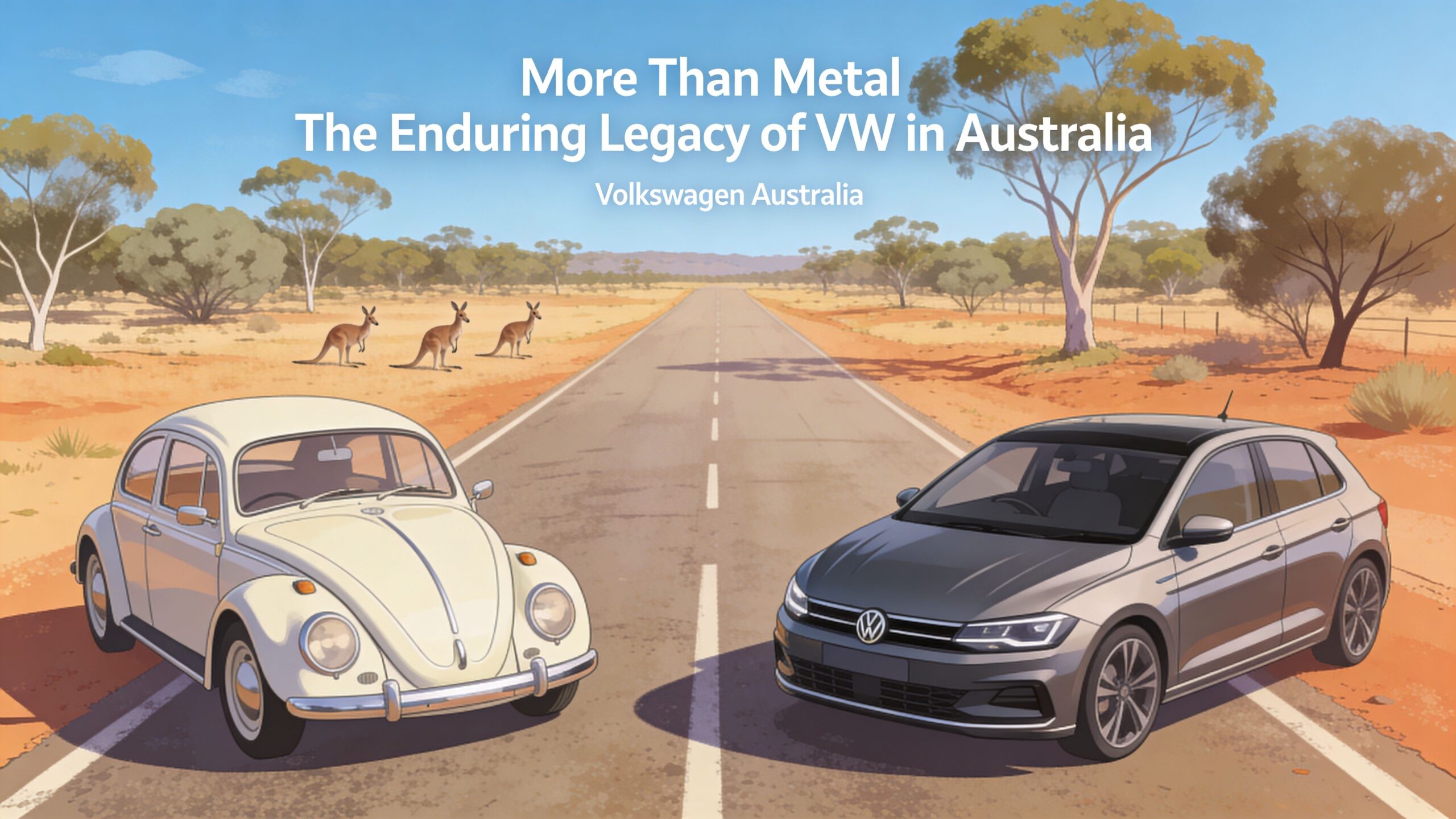
More Than Metal The Enduring Legacy of VW in Australia

The story starts in Melbourne. The first Beetles landed on Australian shores in December 1954, and from there the little car took off. According to Car and Driver’s gift guide reference, Australia has over 35,000 active Volkswagen enthusiasts across 120 clubs as of 2025, and the Beetle had reached 300,000 units sold by 1975. That kind of staying power doesn’t happen by accident.

A vintage white Volkswagen Beetle and a modern grey Volkswagen parked on an Australian outback road.

You still feel that history when you walk through a club display. The Beetle crowd tends to gather around the details. Badges, paint codes, trims, wheels, year changes. Then you drift toward the Kombis and the mood shifts. People start telling road-trip stories. Someone mentions surfboards on the roof. Someone else remembers sleeping in the back on a coastal run.

From humble import to national favourite

The Beetle earned affection because it looked different from everything else on the road. Rounded. Honest. Friendly. It didn’t have to posture. It just got on with it, and generations of Australians took to it.

The Kombi added another layer. It wasn’t only practical. It represented a slower, freer kind of motoring. Load your gear, gather your mates, point it toward the coast, and see where the day ends. That’s a strong image, and it still sticks.

For anyone styling a retro room or hunting for Volkswagen diecast models for sale, that emotional pull matters. A miniature Samba Bus isn’t just a van in scale form. It’s a symbol of a lifestyle people still admire.

Why clubs keep the spirit alive

VW culture in Australia isn’t tucked away. It’s visible, social, and welcoming. Club meets, local cruises, swap days, and big public events all keep the cars in front of people and the stories in circulation. That’s one reason memorabilia has such a loyal audience. The objects connect to a living community, not a forgotten brand chapter.

A lot of enthusiasts also have a soft spot for wagons and vans because they carry so much personality. If you’ve ever spent time around Type 2 fans, you’ll know how quickly one conversation about roof racks turns into an hour of stories. That same affection explains the appeal of pieces inspired by the classic VW station wagon and van style that collectors like to display at home.

Some marques inspire admiration. Volkswagen often inspires affection. That’s a different kind of loyalty.

What makes VW gifts land so well

For a gift buyer, this history solves a big problem. You’re not guessing. You’re choosing from a world with clear emotional anchors:

VW icon What it tends to evoke Why it works as a gift
Beetle Charm, first-car memories, classic design Easy to recognise and display
Kombi Surf culture, travel, freedom, beach life Great for coastal and retro styling
Samba Bus Collectability, nostalgia, colourful personality Strong shelf presence and conversation value

That’s why VW-themed presents often feel more thoughtful than standard motoring gifts. They already carry decades of meaning before the wrapping paper goes on.

Your Guide to Volkswagen Memorabilia Collectibles

Some gifts are made to use. Others are made to keep. Volkswagen memorabilia sits in that second camp, especially when the piece suits the recipient’s style and space. If you’re choosing between a diecast model, wall décor, or a beachy display piece, it helps to think about how they’ll live with it day to day.

There’s also a distinctly Australian angle here. As noted in Good Housekeeping’s gift guide reference, demand for VW-specific memorabilia gifts in Australia is rising among coastal enthusiasts, and many gift guides miss the connection between VW heritage and beach or nautical décor. That’s a missed opportunity, because Kombis and coastal styling belong together beautifully.

Diecast models that feel like proper collectibles

A good diecast model has presence. You pick it up and notice the shape first, then the finer details. Windows, paint, trim lines, wheels, stance. A licensed VW model should feel like a tribute to the original, not a rough cartoon of it.

Collectors often focus on familiar heroes:

  • 1962 VW Kombi
  • Samba Bus variants
  • Volkswagen Beetle models
  • Flower Power editions
  • Surf-themed vans

Some buyers want accuracy. Others want colour and personality. Both approaches are valid. A shelf with a crisp Beetle and a bright Kombi side by side often tells a better story than a row of identical pieces.

Scale matters more than many buyers expect

If the recipient is already a collector, scale is worth checking before you buy. Even if they aren’t strict about it, matching the scale of pieces on a shelf makes a display look more deliberate.

Here’s a quick comparison:

Scale Feel on display Typical appeal
1:18 Bigger, more detailed, stronger centrepiece Serious collectors and desk displays
1:24 Easier to place on shelves, balanced size Casual collectors and gift buyers
Smaller novelty scales Fun accents, lighter visual footprint Stocking fillers and mixed displays

Collector’s rule: If they already display one scale prominently, buy to match it unless you know they want a standout centrepiece.

Retro metal décor for garage, bar, or living room

Not every VW lover wants another model car. Some want atmosphere. That’s where metal signs, wall plaques, and vintage-style decorative pieces come in. They work especially well in garages, home bars, workshops, and alfresco spaces.

The trick is choosing art that suits the room rather than shouting over it. A bright Kombi sign fits a fun beachy corner. A weathered Beetle piece can look spot-on in a more muted vintage setup. If you’re after styling ideas beyond shelf collectibles, coastal-friendly vintage home accessories can help tie the whole look together.

Coastal styling is the quiet winner

VW memorabilia can be more than a collector’s hobby; in the right setting, it becomes part of the home. Think of a pale timber shelf, a blue-and-white vase, a small stack of travel books, and a diecast Kombi parked neatly beside a shell or framed beach photo. That works because the Kombi already belongs to that visual world.

A few combinations that tend to look right in Australian homes:

  • Kombi plus driftwood tones for a relaxed beach-house feel
  • Samba Bus plus white frames for a lighter coastal wall arrangement
  • Flower Power variant plus coloured glass for a playful retro nook
  • Beetle model plus old holiday photos for a nostalgic hallway shelf

Small gifts can still have weight

You don’t need a huge centrepiece to give something memorable. Fridge magnets, compact décor items, and smaller display pieces often work well when the recipient already has a crowded shelf or limited space. The point isn’t size. It’s recognition.

The best memorabilia usually prompts a story within a few seconds. If it does that, it’s done its job.

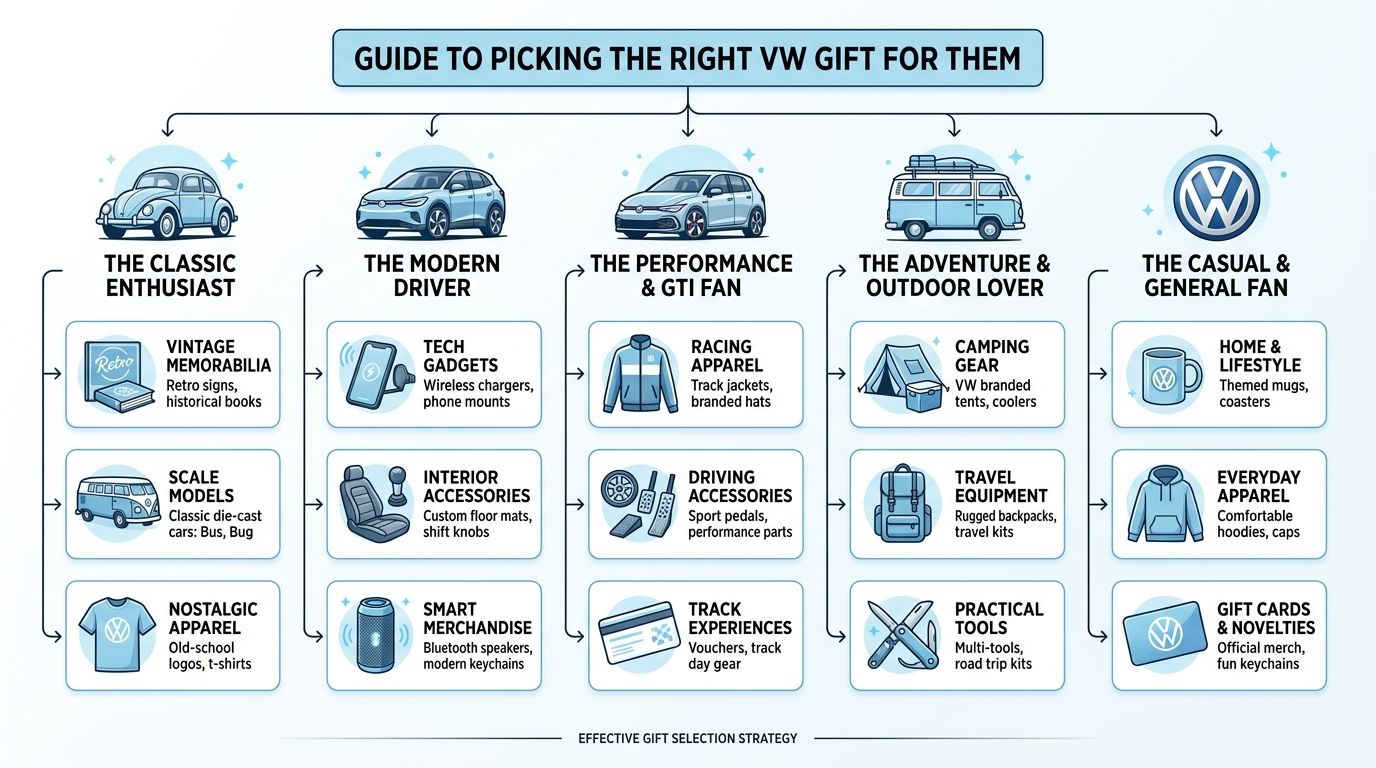
How to Pick the Right VW Gift for Them

Buying for a car lover gets easier once you stop asking, “What’s a good gift?” and start asking, “What sort of VW person are they?” The answer usually tells you where to look.

Some people love precision. Some love nostalgia. Some want their hobby in the house, not the garage. Choose for the person, not just the badge.

A flowchart guide helping people select the perfect Volkswagen themed gift based on individual personality and interests.

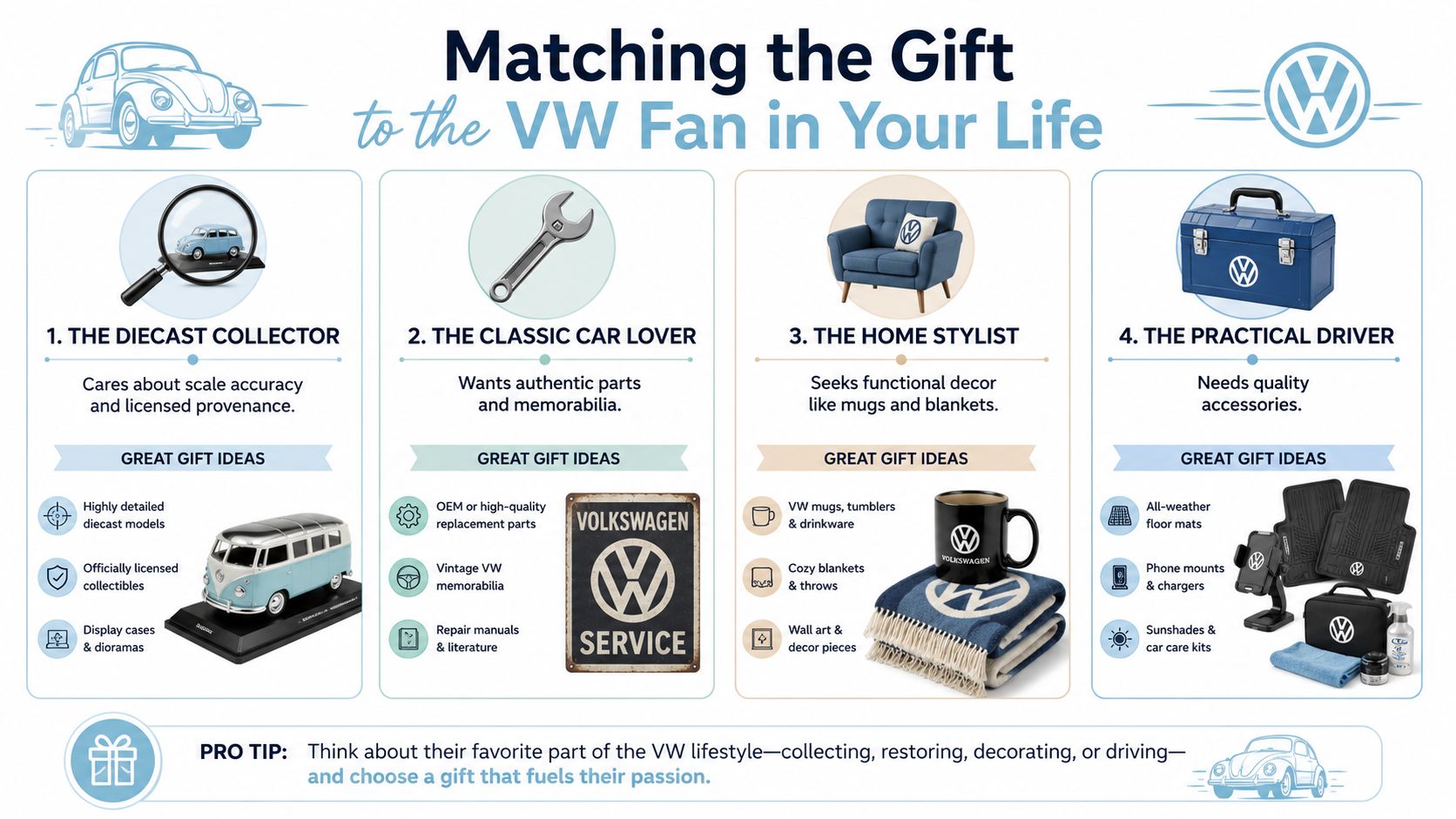
The diecast collector

You’ll know this type straight away. They notice scale, packaging, model year, and whether the colour feels right. If they already collect, don’t buy blindly. Have a quick look at their shelves first.

For this person, the safest strong options are:

  • A Beetle or Kombi in a scale they already collect
  • A Samba Bus variant with distinctive livery
  • A model that matches a car they once owned or admired

Collectors often enjoy the hunt as much as the item. That means your thought process matters. If you can say, “I picked this because it matches your other models,” you’ve probably nailed it.

The classic car restorer

Restorers are practical people, but they’re sentimental in a very specific way. They appreciate reference points, design details, and pieces that reflect the car accurately. A good model can sit on a bench, office shelf, or bookcase and keep the project spirit alive between garage sessions.

This is also the sort of person who may appreciate useful tech. An OBD II Bluetooth diagnostic scanner can make a smart gift because it plugs into a vehicle’s diagnostic port, reads real-time engine data, and works with compatible apps such as Torque Pro and Car Scanner ELM OBD2, as described in MotorTrend’s guide to gifts for car lovers. It’s especially appealing to enthusiasts who like understanding what the car is doing, not just driving it.

Buy decorative gifts for their passion. Buy diagnostic tools for their process.

The home decorator with a VW heart

This person may love Volkswagens without wanting the house to feel like a workshop. They want pieces that blend in. Softer colours. A little retro charm. Maybe a Kombi on a shelf next to books and beach finds, rather than a wall plastered with logos.

For them, think in combinations rather than single objects:

Recipient style Better gift direction Why it works
Coastal home lover Kombi model with beachy décor feel Feels relaxed and lived-in
Retro colour fan Flower Power or surfy van piece Adds personality without needing a full collection
Minimalist collector One clean Beetle model Neat display, strong shape, no clutter

The nostalgic family gift

Sometimes the right present isn’t for a hardcore collector at all. It’s for a parent, sibling, or partner who has a VW memory. Maybe they learned to drive in a Beetle. Maybe they camped in a Kombi. Maybe they had a neighbour with one parked under a carport for years.

Those gifts work best when they echo a memory:

  • Match the vehicle type first
  • Then get as close as possible on colour or era
  • Keep the presentation simple so the story stands out

A small card explaining why you chose it often means as much as the gift itself.

A quick decision checklist

Before you buy, run through these questions:

  1. Do they collect, decorate, or tinker?
  2. Are they more Beetle or Kombi?
  3. Would they prefer one standout piece or a smaller accent?
  4. Will it live in a study, lounge room, garage, or office?
  5. Are they sentimental about a specific model year, colour, or style?

If you can answer three of those clearly, you’re already close to the right gift.

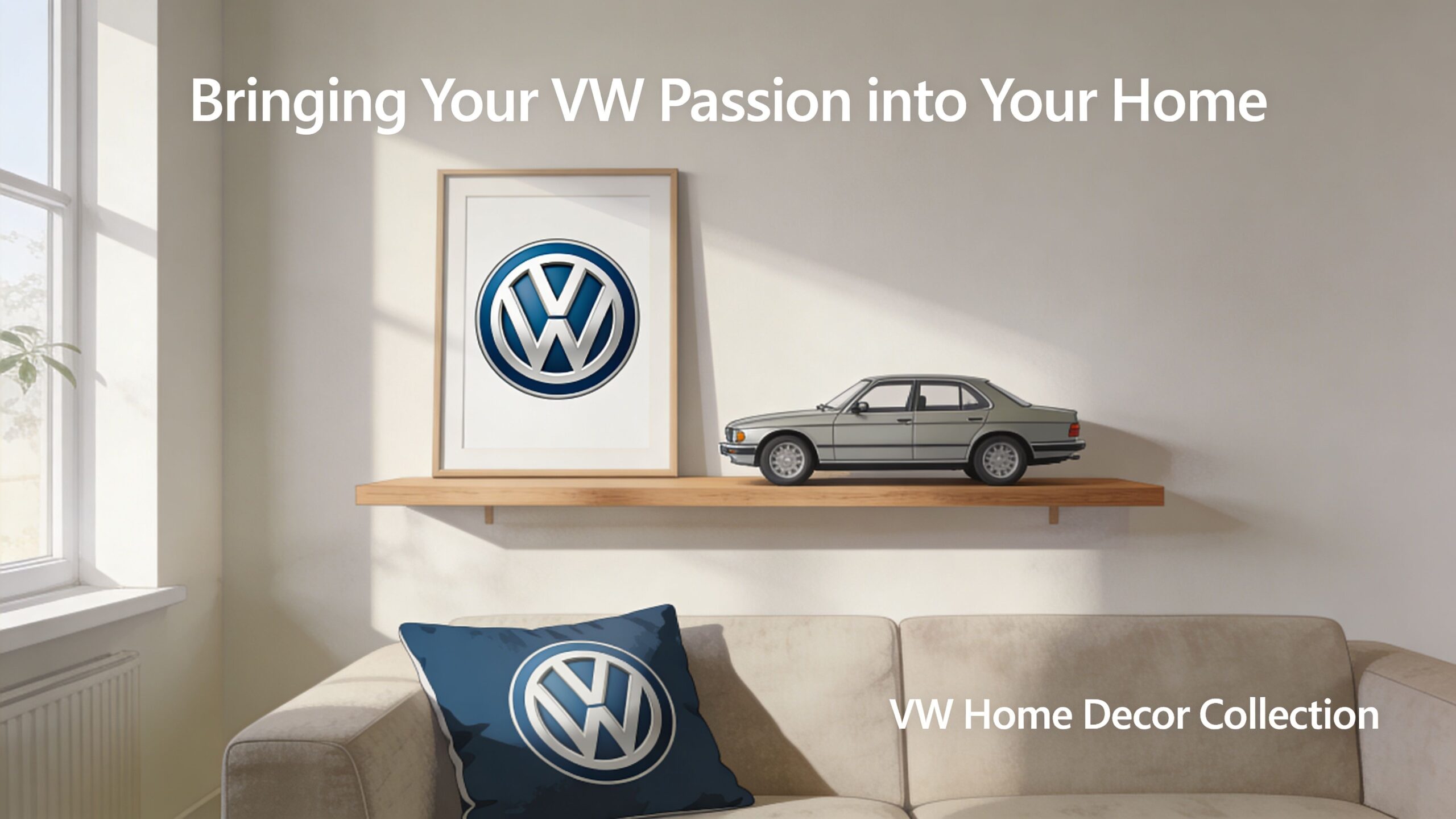
Bringing Your VW Passion into Your Home

A well-chosen VW piece shouldn’t end up hidden in a cupboard. Half the fun is living with it. The right display turns a collectible into part of the room.

A living room featuring Volkswagen themed home decor including a wall art frame, a car model, and a cushion.

Build one shelf with a clear theme

The easiest mistake is trying to show everything at once. A better approach is giving one shelf a proper identity. A Beetle shelf might use black-and-white photos, older books, and more muted tones. A Kombi shelf can lean coastal with pale timber, shells, or framed beach prints.

Keep some breathing room around the model. If every centimetre is filled, the details disappear.

Use height and texture

A display comes alive when objects sit at different levels. Put a diecast model on a small plinth or stack of books. Lean a sign or framed print behind it. Add one natural texture, like timber, rattan, or ceramic, so the metal and paint don’t feel too cold.

A few combinations work especially well:

  • Diecast Kombi plus white frame plus shell accent
  • Beetle model plus vintage book stack
  • Metal décor plus smaller desk model below
  • Seasonal VW piece mixed into a Christmas or summer display

Don’t decorate around the collectible as if it’s fragile museum stock. Style it as part of the room so it feels owned and enjoyed.

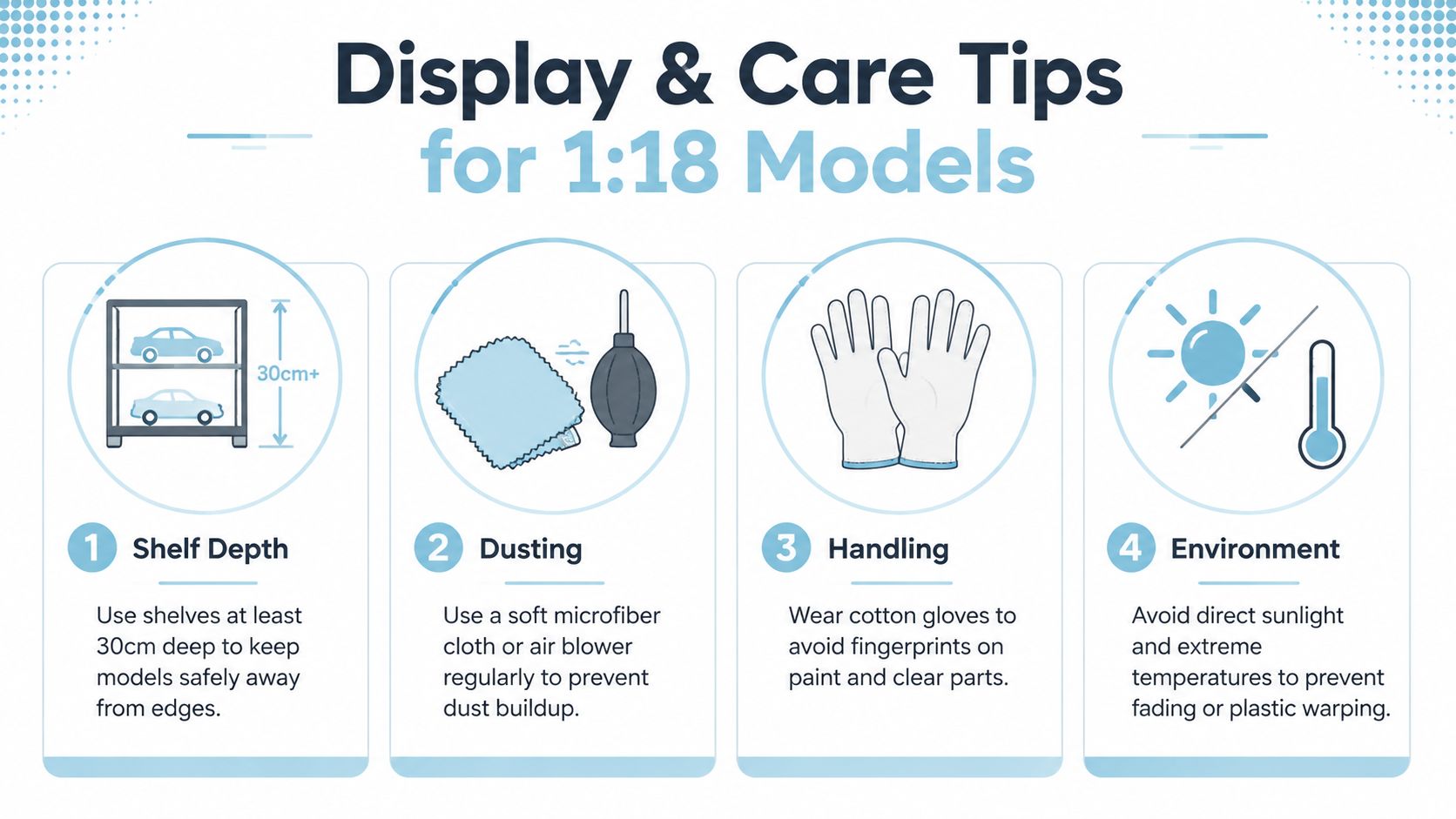
Care matters if you want it looking sharp

Collectibles age well when they’re treated properly. Dust is the obvious enemy, but sunlight can be just as rough on colour over time. Keep painted pieces out of harsh direct sun where possible, especially in bright rooms.

A simple care routine works best:

  • Dust gently with a soft dry cloth or soft brush
  • Avoid damp storage in sheds or garages
  • Keep original packaging if the recipient values collectability
  • Handle by the base rather than delicate mirrors or trim

Let the gift tell a story

The nicest displays usually reveal something about the owner. A Kombi beside a beach holiday photo. A Beetle model near an old registration plate or travel postcard. These little pairings make the room feel personal.

That’s the charm of VW memorabilia. It doesn’t just say “I like cars.” It says what kind of life and memories sit behind that love.

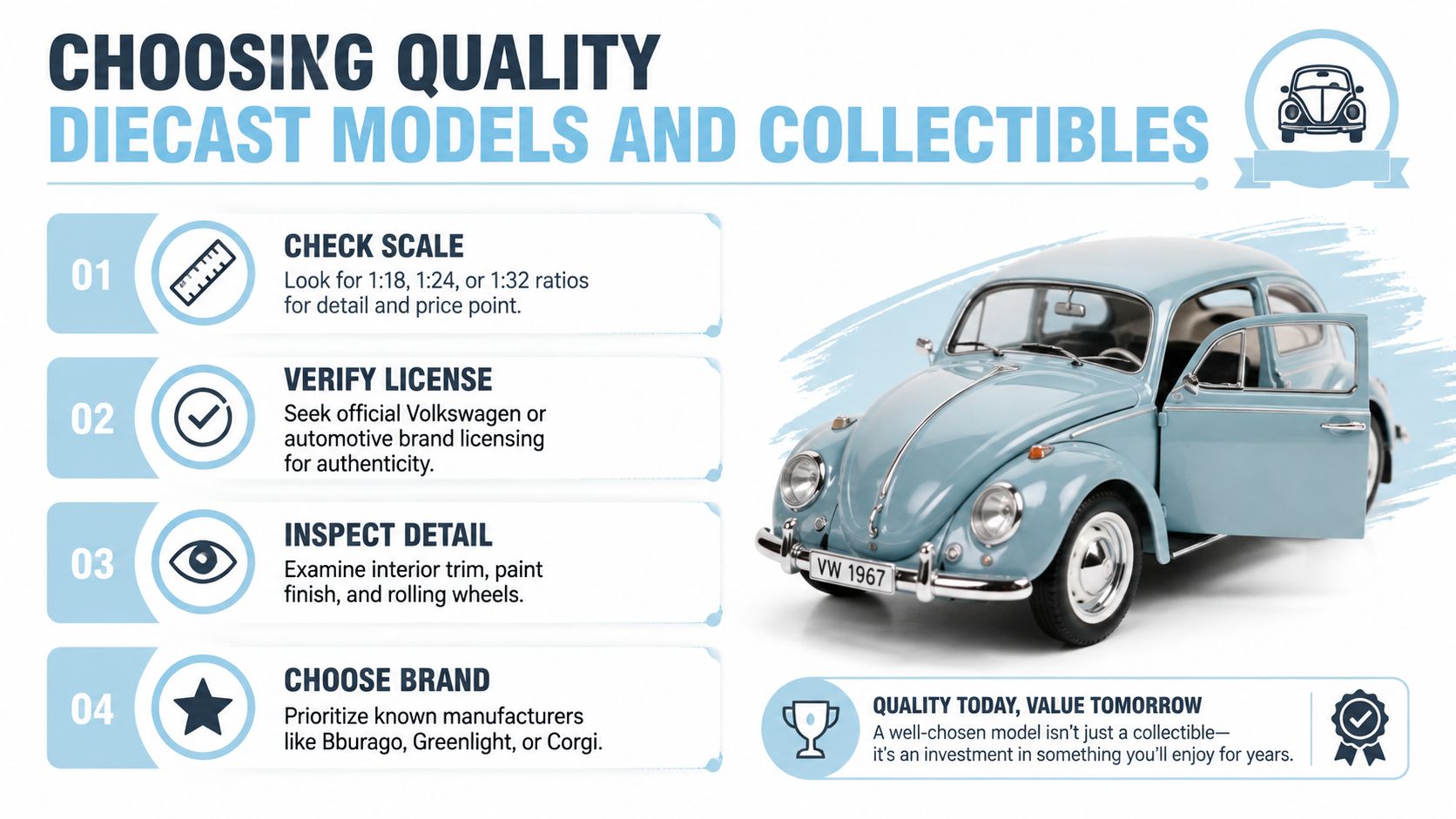
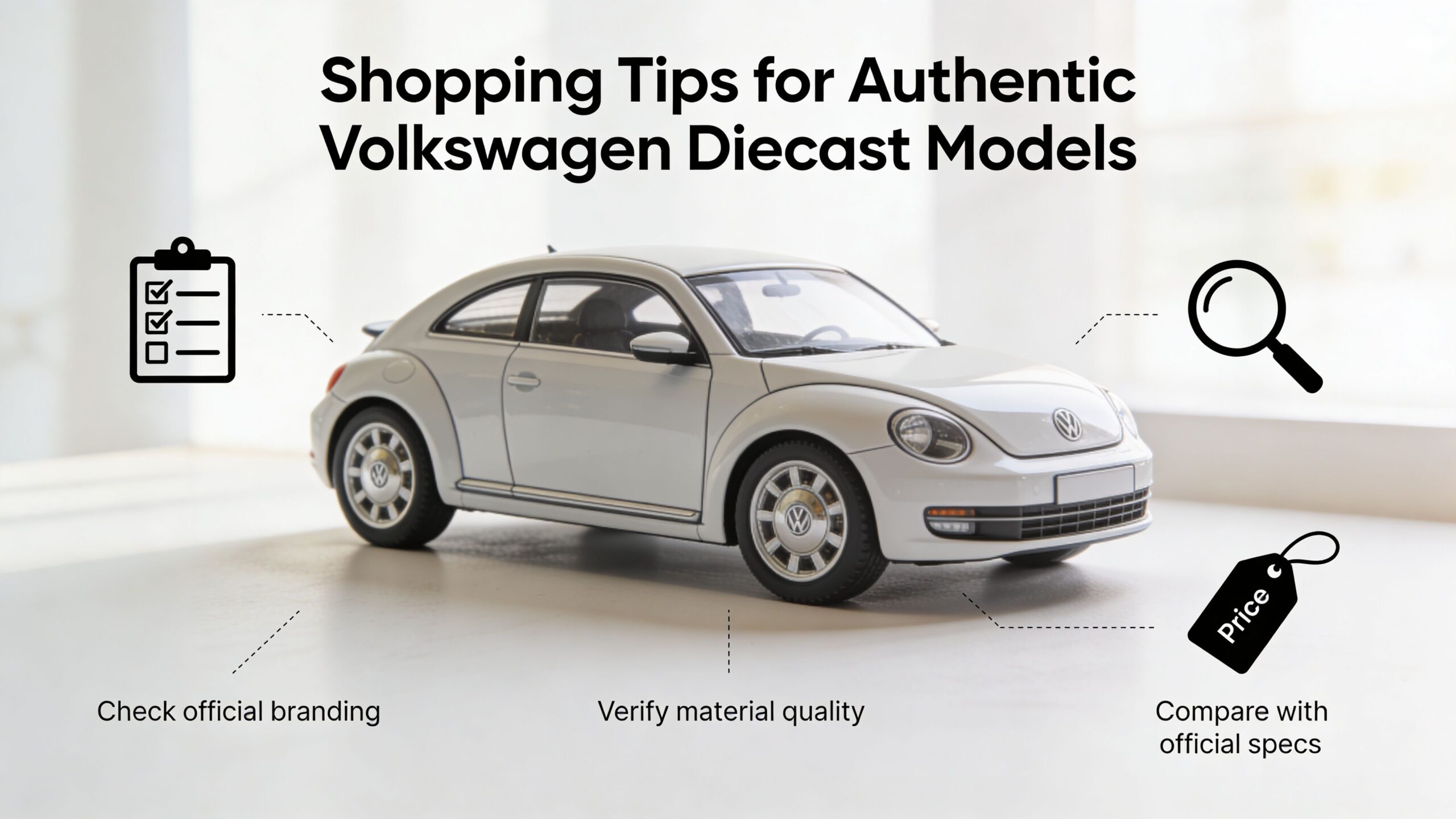
Shopping Tips for Authentic Volkswagen Diecast Models

When you’re buying a gift, authenticity matters. It affects the finish, the detailing, and how the item feels in the hand. A licensed model usually looks more convincing because the proportions, badging, and overall presentation have been treated with proper care.

A diecast Volkswagen Beetle model car displayed with tips for verifying the authenticity of collectible car models.

There’s strong interest in this area too. According to Consumer Reports’ gift guide reference, online searches in Australia for 1962 VW Kombi and Samba Bus diecast gifts have risen 40%, with demand focused on nostalgic collectibles priced under AUD 50.

What to check before you buy

A few details separate a proper collectible from a disappointing impulse buy:

  • Licensing details on the product listing or packaging
  • Clear model naming such as Beetle, Kombi, or Samba Bus
  • Crisp photos showing paint, trim, and proportions
  • Scale information if the recipient already collects by size
  • Condition notes if packaging matters to them

If a listing is vague, has poor images, or skips basic product details, treat that as a warning sign.

Why buying local helps

For Australian buyers, local stock makes the whole process easier. You can shop with more confidence when shipping is faster, support is nearby, and you’re not guessing how long a parcel will drift around in transit.

That matters even more when you’re buying for a birthday, Christmas, Father’s Day, or a club mate’s retirement gift. A present that arrives on time is already a better present.

Price isn’t the whole story

Affordable gifts can still feel thoughtful. In fact, many of the most appealing VW-themed pieces are smaller collectibles that land emotionally because they’re specific, not because they’re expensive.

Use this simple guide:

If they value… Prioritise…
Accuracy Licensing, model name, scale
Display impact Colour, size, shelf presence
Nostalgia Era, body style, surf or retro theme
Convenience Local stock and straightforward delivery

Buying tip: If you’re unsure, choose the model with the strongest story connection. Sentiment usually beats technical perfection for gift giving.

Share the Ride A Gift That Goes the Extra Mile

The best gifts for car lovers don’t just fill space. They spark memories, start conversations, and keep a favourite chapter of motoring culture close at hand. That’s especially true with Volkswagen pieces. A Beetle brings instant charm. A Kombi carries that sun-faded surf spirit Australians still adore. A well-chosen model or décor piece can feel surprisingly personal.

If you’re trying to find unique gifts for car lovers in Australia, lean toward something with meaning. Think about the car they talk about most, the era they love, or the room where the piece will live. That’s usually where the right answer is hiding.

A great VW gift doesn’t shout. It smiles back from the shelf and reminds them why they fell in love with these cars in the first place.

Your VW Gift Questions Answered

What’s the difference between 1:18 and 1:24 diecast models?

The short answer is size and presence. 1:18 models are usually larger and often suit collectors who want more visual detail. 1:24 models are easier to place on shelves and make excellent gifts when space is limited.

Scale Approx. Length (Beetle) Typical Features Best For
1:18 Larger display size More prominent detailing, stronger shelf presence Dedicated collectors, centrepiece displays
1:24 Medium display size Balanced detail and easier placement Gift buyers, casual collectors, office shelves

Are VW diecast models toys or collectibles?

Many are bought as collectibles first. Some are sturdy enough to handle gently, but licensed diecast pieces are usually better treated as display items, especially if the buyer cares about condition, paint finish, or packaging.

How do I know if a Volkswagen model is officially licensed?

Check the listing and packaging for clear licensing information and proper model naming. Good sellers usually show this plainly. If the product photos are vague or the wording feels generic, it’s worth being cautious.

What makes a VW gift feel more personal?

Matching the gift to a memory helps most. Choose a Beetle if they talk about family motoring stories or classic curves. Choose a Kombi or Samba Bus if they love surf culture, road trips, or coastal décor.

Can VW memorabilia work in a normal home, not just a garage?

Absolutely. Kombi and Beetle pieces work especially well in retro, coastal, and relaxed interiors. A single model on a shelf, sideboard, or home office desk can look stylish without turning the whole room into a car display.


If you’re ready to find a gift with a bit of heart behind it, have a look through Volkswagen Memorabilia. You’ll find licensed VW-themed diecast models, Kombi and Beetle collectibles, and coastal-inspired décor that suits Australian homes, with local stock and friendly support to make gift shopping easier.

Discover Coastal Christmas Decorations 2026

The esky’s packed, the prawns are chilling, and the nor’easter is already pushing that salty air through the house before lunch. Your tree’s up, but something feels off. The fake snow, the velvet red bows, the whole northern winter routine. It looks nice enough, sure, but it doesn’t feel like an Aussie Christmas. Not if your best December memories involve sand on the thongs, a faded beach towel on the back seat, and a classic Kombi parked nose-first toward the water.

That’s where coastal christmas decorations come into their own. They suit the season we live in. Sun on the deck. Seafood on the table. Kids running around with wet hair. And if you’re the sort of person who grins every time you spot an old Beetle or a two-tone Samba Bus at a car show, there’s a ripper way to bring that same easy-going surf spirit into your festive setup.

A beachy Christmas with a VW twist doesn’t need to look kitschy or overdone. Done well, it feels personal. A bit nostalgic. A bit salty. A bit like the best summer road trips rolled into one. Think driftwood, rope, sea-glass colours, and a carefully placed Kombi model that looks right at home among shells and soft lights.

Embrace a Sun-Kissed Aussie Christmas

Last summer, a mate of mine swapped out the usual tinsel overload for a low timber table on the patio, a bowl of mangoes, a few bits of washed driftwood, and a little retro van display beside the salads. By late arvo, with the cicadas going and the sky turning that soft gold over the coast, the whole setup looked less like “Christmas theme” and more like his family’s story.

That’s the magic of coastal christmas decorations in Australia. They don’t fight the season. They lean into it. Salt, sun, timber, faded blues, sandy whites, and those cheerful little details that make summer Christmases here feel completely our own.

A happy family enjoys a coastal Christmas picnic on a sunny sandy beach with decorative shells.

If your home already has that breezy beach-house feel, or you’re chasing ideas with a bit more surf culture baked in, these coastal home decor ideas are a handy place to spark the mood before you pull the decorations out of storage.

Why it feels right here

In Australia, this style lands so naturally because over 90% of the population lives within 50km of the sea, and 67% of coastal holidaymakers in NSW and Victoria preferred an “Aussie beach Christmas” theme in a 2023 survey, according to Statista’s Christmas decorations market overview.

That coastal pull shows up in how we decorate. We’re not trying to recreate a white Christmas. We’re styling for verandahs, open windows, outdoor lunches, and homes where a sandy colour palette makes more sense than fake frost.

Practical rule: If a decoration looks like it belongs beside sunscreen, a striped umbrella, and an old surf wagon, you’re on the right track.

Where the VW spirit fits

Classic Volkswagens slot into this look beautifully because they already carry that feeling of freedom and summer travel. A Beetle in a sunny colour. A Kombi with surf vibes. A Samba Bus parked among shells, jute, and soft blue ornaments. It doesn’t need much to tell a whole story.

That’s what makes this style so fun. You’re not just decorating a room. You’re building a little scene that feels like Australia at Christmas, with a touch of old-school VW soul.

Finding Your Coastal Christmas Style

Not every coastal setup looks the same, and that’s a good thing. Some homes suit crisp whites and polished glass. Others look best with rope, weathered timber, and bits that feel like they’ve spent a few summers by the water. If you’re adding VW pieces into the mix, your style choice matters because it changes which model, colours, and materials will feel natural rather than plonked in as an afterthought.

Three looks that work

Some people want their Christmas display to feel neat and bright, almost like a seaside hotel lobby. Others want it to feel like a beach shack that’s hosted years of Boxing Day lunches and a few surfboards leaning against the fence.

The retro surf look sits smack in the sweet spot for VW fans. It gives you permission to use bolder colours, mix old with new, and let a Kombi or Beetle become part of the decorating story instead of hiding it in a cabinet.

Which Coastal Christmas Style Are You?
Style Colour Palette Key Materials Perfect VW Diecast Match
Hamptons Luxe White, silver, pale blue, soft sand Glass, linen, polished timber, brushed metallics A clean white Beetle model
Rustic Beachcomber Driftwood grey, navy, seafoam, natural jute Rope, driftwood, shells, raw timber, woven fibres A weathered-look Kombi or classic blue van
Retro Surf Shack Aqua, coral, sunshine yellow, sea blue, red pops Bamboo, netting, vintage tins, timber, beach finds A Flower Power Samba Bus or bright two-tone Kombi

How to choose without overthinking it

Start with what your place already gives you. If your lounge room has light walls, woven textures, and simple furniture, Hamptons or Beachcomber will slide in easily. If you’ve already got old signs, surf prints, records, or garage-style shelving, retro surf is your mate.

A quick way to lock it in:

  • Look at your everyday colours. If your home lives in neutrals, don’t suddenly force neon into every corner.
  • Pick your hero object first. For VW lovers, that might be a Kombi diecast, a Samba Bus, or a Beetle model.
  • Match materials to mood. Glossy finishes feel polished. Rope and timber feel lived-in.
  • Choose one festive accent. Blue baubles, shell garlands, or striped ribbon is enough when the base style is strong.

The best themed Christmas displays don’t look “themed” at all. They look like the home owner has taste, memories, and a bit of character.

Why Retro Surf Shack wins plenty of hearts

This one’s especially good fun because it feels very Australian without trying too hard. It’s the style that suits old surf mags on the coffee table, a faded beach sign near the entry, and a little VW van nestled in among the decorations like it just rolled back from the coast.

It’s also forgiving. A polished look can feel stiff if one detail is off. Retro surf gets better with a little imperfection. That sun-faded, road-trip energy is the point.

The Perfect Palette and Natural Materials

Colour does most of the heavy lifting in coastal christmas decorations. Before you hang a single ornament, the palette tells people whether your Christmas feels calm, playful, rustic, or bright enough to echo an old beach van parked outside the servo in 1978.

Colours that feel like an Aussie December

The strongest coastal palettes usually start with the beach itself. Sandy white. Dune beige. Soft ocean blue. Seafoam green. Then you add a little life with coral, sunshine yellow, or a classic red accent that reminds you of an old Kombi door or a surf sticker that’s seen a bit of sun.

Those softer base colours matter because they let your feature pieces stand out. If you’ve got a bright VW model in the display, the neutral backdrop gives it room to shine without turning the room into a toy shelf.

A good working mix looks like this:

  • Base tones with sand, white, cream, and weathered timber
  • Cool notes in pale blue, turquoise, or sea-glass green
  • Warm pops from coral, red, or yellow used sparingly
  • Metal touches kept subtle with brushed finishes or clear glass

Materials that bring the look together

Texture is what stops coastal style from looking flat. A shell on its own can feel random. A shell beside jute rope, sun-bleached wood, linen, and matte glass suddenly feels deliberate.

For that reason, the best materials are usually the simplest ones. Driftwood has shape and history. Sea glass catches the light softly. Rope adds structure. Woven fibres stop everything from feeling too shiny or precious. If you do use shells or starfish, use them lightly and thoughtfully.

A bright diecast van works well here because it acts like a small burst of personality among all those calm materials. A red Kombi against driftwood and white linen is one of those combinations that just works.

A palette test you can do in five minutes

Grab four things from around the house and put them together on the table:

  1. something neutral
  2. something textured
  3. something glossy or reflective
  4. your VW piece

If they already look like they belong together, that’s your palette. If the model looks lost, either tone down the background or choose a different vehicle colour.

Coastal styling works best when the room feels layered, not crowded.

Creating Your Ultimate Coastal Christmas Tree

The tree is still the heart of the whole setup. You can keep a traditional green tree and dress it with beachy details, or you can go full coastal and build something a bit more original from driftwood. Both can look brilliant. The trick is choosing the version that suits your space and your patience level a week before Christmas.

Two strong options

A traditional tree gives you fullness, height, and that familiar festive glow. It’s the easier choice if you’ve got kids who love hanging ornaments or if the tree sits in the main living area and needs that classic shape.

A driftwood tree has more personality. It feels handcrafted, lighter, and far more in tune with a coastal room. It also gives your VW models and nautical ornaments more visual room because the whole structure is less dense.

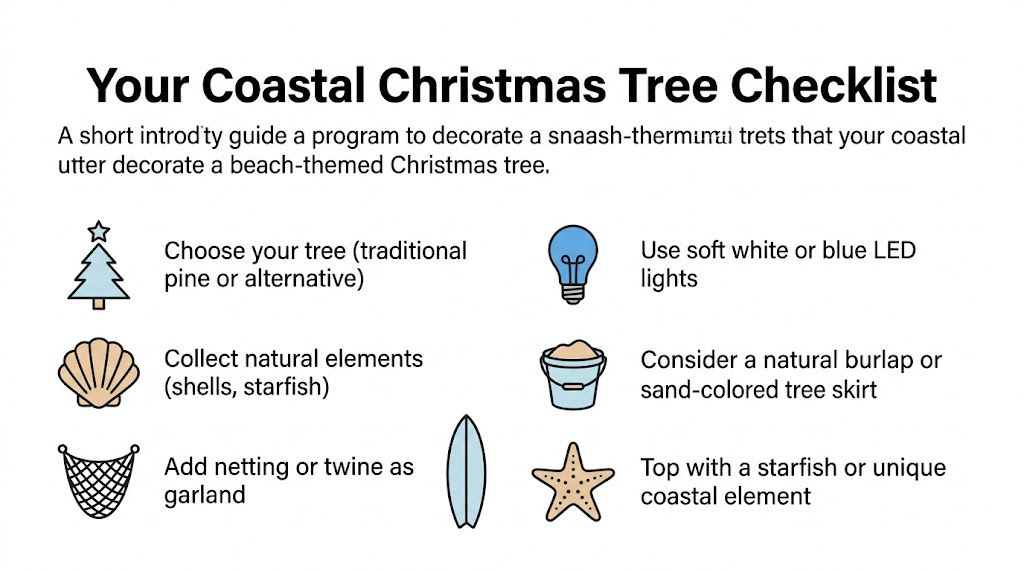
A checklist infographic illustrating how to decorate a coastal themed Christmas tree with beach inspired ornaments.

Why driftwood works so well

According to The Yellow Spectacles guide to a coastal Christmas, driftwood from Australian beaches is 30-50% lighter than inland wood but strong enough to support 5-10 kg of ornaments. The same source recommends a pyramidal form secured with jute rope, which can reduce plastic ornament use by 25% compared to traditional trees. It also notes that a 1:43 scale VW Kombi diecast model weighing around 150g works beautifully as a topper.

That’s practical, not just pretty. Lighter timber is easier to stack, hang, and reposition. Jute rope looks right with the style and keeps the whole thing feeling natural.

A simple driftwood tree build

If you want a DIY project for a sunny weekend, this is a ripper one.

  • Start with your shape. Lay the longest pieces at the bottom and work upward to a narrow top.
  • Tie as you go. Use jute rope to secure each piece rather than relying on glue alone.
  • Keep the centre open. A little negative space helps lights sparkle through it.
  • Seal if needed. If the wood will live near strong sun or open windows, a coastal-friendly varnish helps it last.
  • Add the hero piece last. Your Kombi topper or best ornament goes on when the structure is locked in.

If you’d like extra texture nearby, coastal accents like shell wall art can help tie the tree area into the rest of the room without cluttering the branches.

How to use VW models on the tree

Smaller diecast pieces work best as focal ornaments rather than filler. A 1:43 Kombi can sit proudly at the top or near the upper third of the tree. Slightly larger models are better tucked into the base, set on a small crate, or displayed beside the tree as part of a scene.

Try this arrangement:

  • a hero VW near eye level
  • blue or clear ornaments spaced around it
  • rope or net-style garland used lightly
  • warm white or soft blue LEDs
  • one unusual topper, such as the little Kombi or a starfish if the tree is traditional

It's a chance for collectors to have a bit of fun. The tree doesn’t have to be all shells and white baubles. It can nod to road trips, surf beaches, and the old-school freedom that classic Volkswagens still represent.

Deck the Halls with VW and Nautical Charm

Once the tree’s sorted, the genuine charm comes from the smaller moments around the house. The mantel. The dining table. The bookshelf that usually holds magazines and now gets a festive little makeover. These spots are where coastal christmas decorations start feeling lived in rather than staged.

The mantel scene

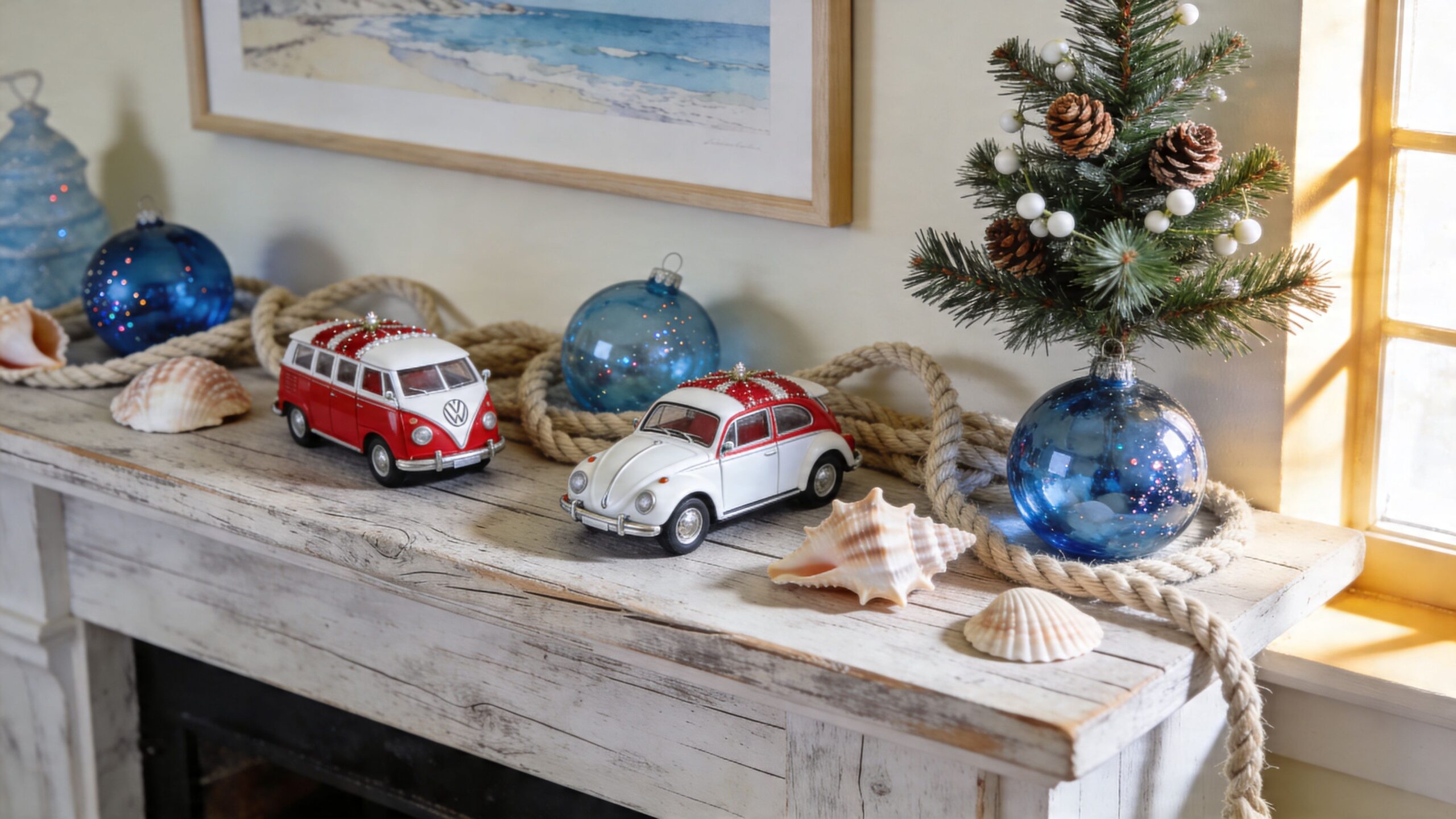
One of the best displays I’ve seen used a low driftwood garland across the mantel, with blue baubles tucked in and a bright little Samba Bus parked at one end as though it had just rolled in from the beach. A couple of shells, some soft lights, and a glass float or two did the rest. It looked relaxed, not fussy.

A rustic coastal Christmas mantel decorated with vintage VW vehicles, seashell accents, and blue holiday ornaments.

If you’re styling the wall around that area as well, a look through living room wall accents can help you keep the festive pieces connected to the room’s everyday look.

Glass floats and a retro van are a cracking pair

According to Cottage Fever’s coastal Christmas decor article, vintage glass fishing floats used by Australian fishing fleets make standout ornaments because their borosilicate glass resists corrosion in salty air. The same source advises interspersing 6-12 floats amid garlands to reduce synthetic decor by 40%, and notes they pair especially well with Flower Power VW Samba Bus models.

That combo works because both pieces carry history. The float brings a working-coast feel. The Flower Power van brings colour, nostalgia, and that carefree road-trip energy.

A good coastal vignette should feel found, not forced.

Table, shelves, and sideboards

For the Christmas table, use one standout piece in the centre and keep the rest low. A larger model vehicle can anchor the setting, while tea lights, linen, and a few shells or sprigs of coastal greenery soften the edges. You want guests to notice it, smile, and still be able to pass the prawns.

Smaller displays work well in threes:

  • A shelf trio with a VW model, a knot of rope, and a single glass float
  • A side table cluster with a candle, a shell bowl, and a Beetle model
  • An entry vignette with driftwood, a small van, and a simple festive sign

The trick is restraint. One VW piece per vignette is usually enough. Let it be the hero.

Make each room feel connected

Use repeated materials, not repeated objects. If there’s jute on the tree, bring jute to the table. If there’s sea-glass blue in the lounge room, carry that into the hallway with a bauble bowl or a ribbon detail. That way the house feels cohesive, and the VW pieces feel like part of a story rather than random collectables dropped around the place.

Crafting Your Own Coastal VW Christmas Accents

There’s something very VW about making things with your own hands. Anyone who’s spent a Sunday tinkering in the shed or cleaning up a model display gets it. A few homemade touches give your Christmas setup more character, and they don’t need to be complicated.

A shell and rope garland

This one suits a doorway, shelf edge, or the front of a buffet.

You’ll need jute or soft rope, a selection of ethically sourced shells or reclaimed decorative pieces, and a few timber beads if you want extra texture. Space the shells unevenly. That looks more natural than trying to make every gap identical. Tie loops at the ends and let the line sag a little rather than pulling it drum-tight.

The reason this works is movement. Rope softens hard edges in a room, and shells catch light without screaming for attention.

Sand-filled baubles with a mini road-trip feel

Clear baubles are perfect if you want that beach memory bottled up. Add a little clean sand, a few tiny shells, and one tiny paper tag with a handwritten beach name or holiday message. Keep it simple. Too much inside and it starts looking busy.

A few fun message ideas:

  • Christmas by the coast
  • Surf, sun, and seafood
  • Kombi season
  • Salty air, festive cheer

Give an old model a coastal refresh

If you’ve got an inexpensive older Beetle model that’s already a bit rough around the edges, it can become a fun craft project. Repaint it in a soft seafoam, sandy cream, or faded surf blue. Keep the finish slightly weathered if you want more shack-style charm.

Do it lightly. The idea isn’t to ruin a good collectable. It’s to create one playful accent piece that matches your summer display.

Sometimes the homemade item becomes the piece everyone talks about, because it has a story attached to it.

Message-in-a-bottle mantel detail

Take a clear bottle, add a little sand, a short rolled note, and maybe a strip of faded fabric tied around the neck. The note could be a Christmas wish, a family tradition, or the name of a favourite beach. Place it beside a model van and suddenly the whole vignette feels like a tiny travel tale.

DIY accents work best when they support your main display, not compete with it. Pick one or two projects and do them well.

A Sustainable Christmas The VW Way

A lot of coastal Christmas inspiration looks lovely at first glance, but there’s often a blind spot in it. People talk about collecting shells, starfish, and driftwood without much thought for where those materials come from or what happens when everyone does the same thing every season.

That’s why a more careful approach makes sense. According to My 100 Year Old Home’s beach Christmas tree ideas discussion, current coastal Christmas content often overlooks the environmental impact of sourcing natural materials. It highlights an opportunity to focus on durable, reusable decor like high-quality VW diecast collectibles as a more sustainable way to create the look while avoiding overharvesting and reducing holiday waste.

Buy once and use it for years

That idea lands well with collectors because it’s already how many of us think. A good diecast model isn’t disposable. You don’t buy it for one December and toss it in January. You bring it out each year, style it differently, and enjoy it again.

That’s a far better fit for coastal decorating than a pile of brittle plastic trinkets or random beach finds gathered without much care.

Better choices for a beach-inspired setup

A sustainable coastal display can still feel warm and full of personality:

  • Choose reusable hero pieces such as quality model vehicles, glass ornaments, and sturdy rope garlands
  • Use upcycled containers like old crates, tins, or timber trays for display bases
  • Borrow the colours of the coast rather than stripping the coast itself
  • Store things properly so they last for many Christmases

A classic Kombi or Beetle used as seasonal decor also carries emotional value. That matters. People keep sentimental pieces. They repair them, protect them, and pass them on. That’s a much better story than seasonal clutter.

Storing Your Coastal and VW Treasures for Next Year

When the leftovers are gone and the Boxing Day sun is belting down, it’s tempting to throw everything back into a tub and call it a day. Fair enough. But a little care now saves a lot of heartbreak next year, especially if your display includes delicate coastal pieces and treasured VW models.

Clean before you pack

Dust your diecast models with a soft, dry cloth or a very gentle detailing brush. Don’t scrub painted surfaces. If a shell or glass float has picked up grime or salt, wipe it down lightly and let it dry fully before boxing it up. Driftwood needs the same treatment. No moisture. No shortcuts.

Pack by material, not by room

People often come unstuck. They toss rope, metal, shells, lights, and models together, then wonder why things come out scratched or tangled.

Try this instead:

  • Models first. Store them in original boxes if you’ve still got them, or wrap them individually.
  • Glass separately. Fishing floats and baubles need padding and their own section.
  • Natural materials aired and dry. Shells, timber, and woven pieces must be completely dry before sealing.
  • Lights bundled loosely. Wind them neatly so they don’t become a summer arvo headache next year.

Label for the display you actually use

Don’t just write “Christmas” on the tub. Label it “Tree”, “Mantel”, “Table”, or “VW coastal display”. Future you will be very grateful when December gets busy again.

A well-stored collection turns decorating into a pleasure instead of a rummage. And if this year has convinced you that a beachy setup with classic Volkswagen charm is the way to go, keep the best pieces together so the tradition gets easier to rebuild each summer.


If you’re ready to build a coastal Christmas display with proper retro soul, have a browse through Volkswagen Memorabilia. It’s a great spot for officially licensed VW-themed gifts, diecast models, and beach-inspired pieces that suit Aussie homes, with local stock and fast shipping from an Australian importer. Whether you’re hunting for a classic Kombi, a colourful Samba Bus, or a gift for a VW tragic who’d rather see surf vibes than fake snow, you’ll find pieces worth bringing out year after year.

VW Travel Van: Surf Culture, History & Collecting Guide

A sun-faded Kombi rolled past me on the Great Ocean Road one bright morning, white roof, coloured body, surfboard up top, windows open to the salt air. Everyone turned to look, not because it was loud or flashy, but because a vw travel van still carries the kind of magic modern traffic rarely does.

That feeling is why these vans never really left us. They just changed shape, from road-trip companion to restoration dream to diecast treasure on a shelf.

The Enduring Call of the Open Road

I still reckon the best place to understand a Kombi is not in a museum. It is out in the sun, parked near the coast, with sandy thongs on the grass beside it and someone leaning inside for a thermos or an old wax tin.

The old van does not need to say much. Its shape says enough. Short nose. Friendly face. Plenty of glass. Room for boards, picnic gear, mates, and a plan that only gets clearer once the road starts unwinding.

A vintage orange and white VW travel van with a surfboard on top driving along a coastal road.

Along Australian coastlines, the vw travel van became more than transport. It became a backdrop to first camping trips, surf weekends, market runs, music festivals, and long drives where nobody minded arriving late. That is also why so many people who may never own a full-size Kombi still feel drawn to the shape, the colours, and the story behind it.

A lot of enthusiasts first fall in love with the idea before they ever touch the metal. They spot a split-screen at a local show. They hear stories from a parent who once slept in one near Byron. Or they stumble across old van-life nostalgia like this look at van life in Australia, and suddenly the appeal clicks.

Why this van still gets under your skin

Some classics impress you with speed. The Kombi wins people over differently.

  • It feels welcoming. The face of an old VW van looks cheerful, almost human.
  • It invites a slower pace. You do not think about lap times. You think about coast roads and bakery stops.
  • It suits Australian memories. Beaches, road trips, hand-painted signs, and a bit of harmless chaos all fit the Kombi beautifully.

A classic VW van does not just remind people of travel. It reminds them of the kind of travel where the journey was the whole point.

That is why the Kombi sits in such a sweet spot. It is practical history, surf culture, design icon, and memory machine all at once.

From Wolfsburg to Wollongong The History of the VW Van

At a country show near Wollongong a few summers back, an old fellow stood beside a dove-blue Kombi and tapped the bonnet with a grin. He said his dad used one for work during the week, then packed the kids in on Friday and headed for the coast. That is the magic of the VW van story. It began in Germany as a practical little hauler and ended up stitched into Australian family lore, then later into the shelves and display cabinets of collectors who wanted to keep a piece of that feeling.

The first spark came in 1947, when Dutch importer Ben Pon sketched a simple van after seeing motorised trolleys at the Wolfsburg factory. That sketch became the Type 2 Transporter, and the first production example rolled off the line on March 8, 1950, in dove blue, with output starting at 10 vehicles per day before rising quickly, as noted in this history of the Volkswagen Type 2 Transporter.

Infographic

The early years that shaped the legend

What made that first Transporter special was not flash or speed. It was usefulness. A baker could run deliveries in one. A tradie could load tools in another. A growing family could fit everyone inside and point the nose toward a holiday park.

Volkswagen saw demand build fast in those first years, and by October 9, 1951, the company had delivered its 100,000th Transporter. For a van born from a factory-floor sketch, that was a mighty result.

Collectors still chase those early details because they tell the whole story at a glance. The split windscreen, the upright nose, the uncluttered sides, the friendly face. A full-size Kombi turns heads at a servo. A good diecast version does much the same on a study shelf. The shape carries history beautifully.

Why Australia took to it so naturally

The T1, later nicknamed the Splittie, reached Australia in the early 1950s and settled in quickly. It suited the places Australians went. Beach towns. Country roads. Busy suburban trades. Long weekends that started with an esky, a map, and a bit of optimism.

Here, the van earned its stripes through everyday use before it became an object of nostalgia. Builders used them. Families holidayed in them. Local travellers adapted them for sleeping, cooking, and hauling gear. That lived-in history is part of why the VW van now has such strong appeal as memorabilia. People are not collecting a random old vehicle. They are collecting a memory of movement.

The camper side of the story grew early too. Westfalia conversions began in 1951, helping turn the humble Transporter into a machine for roaming. Australian owners and coachbuilders soon put their own spin on the idea with practical interiors and touring setups suited to local conditions. For readers who enjoy that chapter, this look at Volkswagen Transporter camper history is a lovely rabbit hole.

The upgrades that helped it cross long Australian miles

A van does not become beloved in Australia by looking pretty in a brochure. It has to cope with distance.

In 1954, engine displacement increased, helping reliability on longer trips. Production also moved to Hannover that year, opening the door to broader production and more body styles. Those changes mattered here. Australian owners needed a van that could handle work on Monday and a proper run out of town once the weekend arrived.

By then, the Kombi had already become more than transport. It was a working vehicle, a holiday companion, and, years later, a collectible shape people wanted to own in any form they could find, full-size, restored, weathered, or cast in miniature.

Milestone Why enthusiasts still care
1947 sketch by Ben Pon It shows the van began as a clever, human-scale idea
1950 production launch This marks the birth of the production VW travel van
1951 100,000th delivery Proof that the design connected early and fast
1954 upgrades and Hannover move Better durability and broader model variety
Early Australian imports The start of the Kombi’s local identity

The Kombi gave Australians something rare. A vehicle useful enough for ordinary life and charming enough to become a treasured model long after the original vans had parked up.

Icons of an Era Notable VW Van Models

I still remember a fellow at a car show in Kiama holding a tiny blue-and-white Samba in one hand and pointing to the full-size Kombi he had parked under a gum tree with the other. Same paint break. Same little roof windows. Same grin. That is the magic of the VW travel van story. These machines live twice, first on the road, then on the shelf.

Three miniature Volkswagen vans including a red and white classic van and two modern camper van models.

A few models always draw the crowd. The T1 Splittie has that friendly face everybody knows. The Samba Bus brings the sparkle and showroom glamour. The Westfalia-style camper carries the dream of waking up near the beach with the kettle on and the back doors open to the sea.

By 1967, more than 1.2 million T1 units had been produced globally since 1950, a measure of just how far the shape had travelled from German factory floors to Australian roads and, later, to collectors’ cabinets, as described in this history of the VW camper van.

The T1 Splittie

The T1 Splittie looks cheerful even standing still. Its split windscreen, centre bar, and neat V-shaped nose give it a face that no other van quite matches.

That mattered in Australia. Plenty of early vans began life as workers. They hauled tools, bread trays, parts, camping gear, whatever the week demanded. Then a new owner would fit curtains, toss in a mattress, and head north or south as soon as summer arrived. That working-to-wandering life is part of why the Splittie feels so honest. It earned its legend.

Collectors love it for the same reason. In miniature, the silhouette is unmistakable from across the room. Even a small diecast captures the upright nose, simple body sides, and that wonderful split screen.

The Samba Bus

If the Splittie is the people’s hero, the Samba Bus is the show pony that still turns heads before the bonnet on anything else has even clicked shut.

The skylight windows and deluxe trim give it a sense of occasion. You can almost see a family rolling along the Princes Highway, kids peering out the roof glass, picnic basket rattling in the back. On the modern collectors’ table, those same details make the Samba irresistible. Two-tone paint, polished trim, and the famous 23-window arrangement give model makers plenty to work with.

That is why a Samba often becomes the centrepiece. A shelf full of diecast Volkswagens looks good. A shelf with a Samba in the middle looks finished.

The Westfalia-inspired camper

The Westfalia-inspired camper changed the van from transport into a travelling little home. Fold-out tables, compact storage, a place to sleep. Suddenly the trip mattered as much as the destination.

That idea landed beautifully in Australia, where long coastal runs and casual weekends away suited the Kombi’s unhurried pace. Plenty of local vans were not factory Westfalias, of course, but they borrowed the spirit. Timber cupboards built by hand. A little stove wedged in neatly. Curtains sewn by someone’s mum or nan. Every conversion told a personal story, and that same character is what makes camper diecasts so appealing now.

A good camper model does more than show a body shell. It brings back the whole ritual of travel.

Later in the article, there is a useful visual reminder of how these shapes translate so well into miniature collecting.

Why these models became collecting favourites

Collectors usually chase the vans that tell their story in a single glance.

Model Signature feature Why collectors love it
T1 Splittie Split windscreen The clearest early Kombi shape
Samba Bus Deluxe window layout Rich detail and strong display presence
Westfalia-inspired camper Home-on-wheels concept Captures the feeling of the trip itself

The best diecast pieces carry more than paint and proportions. They hold memories of surf checks, roadside brekkies, and long Australian miles. For plenty of enthusiasts, that is the bridge between owning a real VW van and keeping a little piece of the journey close at hand.

More Than a Van A Symbol of Aussie Surf Culture

Dawn at Bells Beach used to have its own little procession. Salt in the air, sand already warming underfoot, and a line of Kombis rolling into the car park with boards strapped high and wax melting softly on the dash. One might be pastel blue with sun-faded curtains. Another would wear primer on one door and a hand-painted surf club sticker on the rear hatch. Before the first set arrived, the vans had already told half the story.

That is how the Kombi found its place here. Australians did not need convincing. The van suited a coastal life built around long drives, cheap weekends, and a loose plan that could change with the swell.

Why surfers and travellers made it their own

At the beach, a Kombi was never just transport. It was changing room, gear locker, lunch spot, and sometimes the bed for the night if the session ran long and the camp ground was full. You could hose the sand out later, stack a couple of mals on the roof, and point the nose toward the next break without much fuss.

That usefulness gave the van character, and character turned into culture.

You saw it in the details. Timber racks knocked together in a suburban shed. Old tea towels hung as curtains. Stickers from Wollongong, Byron, Torquay, Margaret River. A Beetle might have been the fun little runabout, but the Kombi was the mate who brought everyone along. It became part of the scenery at surf comps, beach car parks, and lazy holiday runs up the coast.

Plenty of that feeling still lives on at Australian shows and swap meets. Owners talk about their vans the way surfers talk about a favourite board. Every dent has a place name attached. Every respray hides another chapter. If you want a good example of how that affection carries into collecting, the stories behind classic VW diecast models and memorabilia make the connection plain enough.

The community behind the romance

Anyone who has spent time around old Volkswagens knows the romance comes with skinned knuckles and patient waiting. A bloke in Newcastle might spend months chasing the right indicator housing. Someone in Geelong might find the missing trim piece only after a call from another owner who remembered a dusty box at the back of a wrecking shed. That is the true heartbeat of the scene. People helping people keep these vans on the road.

The surf link matters because it gave the Kombi its most recognisable Australian image. The simpler reason it lasted is this: It welcomed a certain kind of person. The easy-going traveller. The surfer who packed light. The family happy to trade speed for stories.

That same affection explains why the Kombi shrinks so well into a collectible. A diecast Splittie with a roof rack and two-tone paint does more than copy sheet metal. It captures a whole Australian memory. Beach towels on the line, boards rattling overhead, and the long scenic road home with the windows open.

Building Your Collection A Guide to VW Diecast Models

Most of us do not have the shed space, budget, or patience for a fleet of full-size Volkswagens. Diecast collecting solves that neatly. You still get the shape, the colour, the nostalgia, and the grin every time you walk past the display.

A person adjusting a miniature red Volkswagen camper van next to a tiny beach shack model.

There is another reason diecast resonates so strongly with Kombi fans. Even though the 2024 Volkswagen Transporter Base delivers 250 Nm of torque, collector passion still leans toward the original air-cooled vans because nostalgia and design heritage carry more weight in memorabilia than modern performance figures, as outlined in this 2024 Volkswagen Transporter Base review.
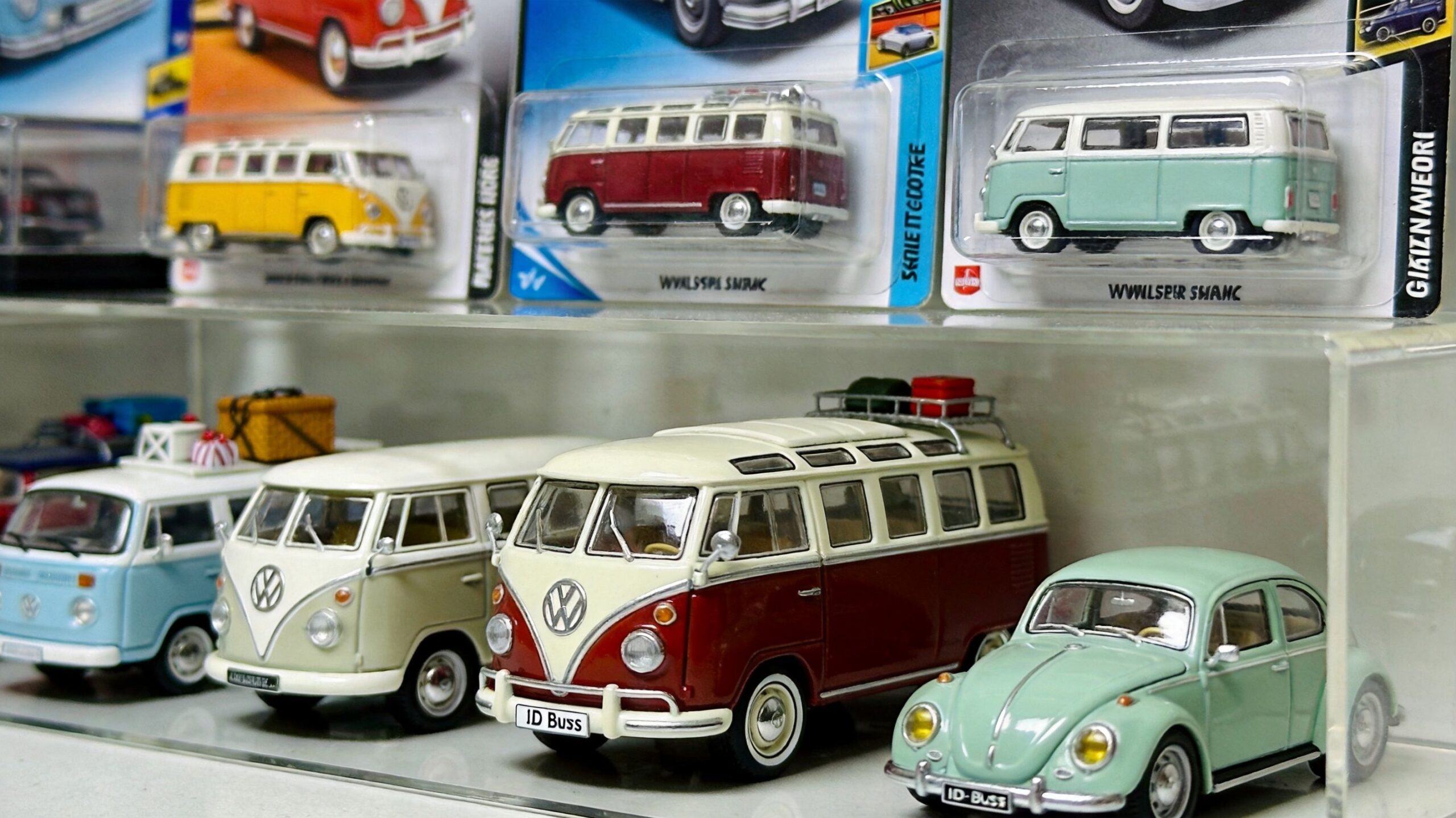
What makes a VW diecast model worth buying

Not every miniature earns a spot in the cabinet. Some look toy-like. Others capture the soul of the vehicle itself.

A good collector piece usually gets these things right:

  • Licensed shape accuracy. The nose, roofline, windows, and stance should look unmistakably Volkswagen.
  • Clean paintwork. Two-tone Kombis and Beetles need crisp separation, not fuzzy edges.

  • Useful detail. Roof racks, bumpers, wheels, mirrors, and interior colours should feel considered.
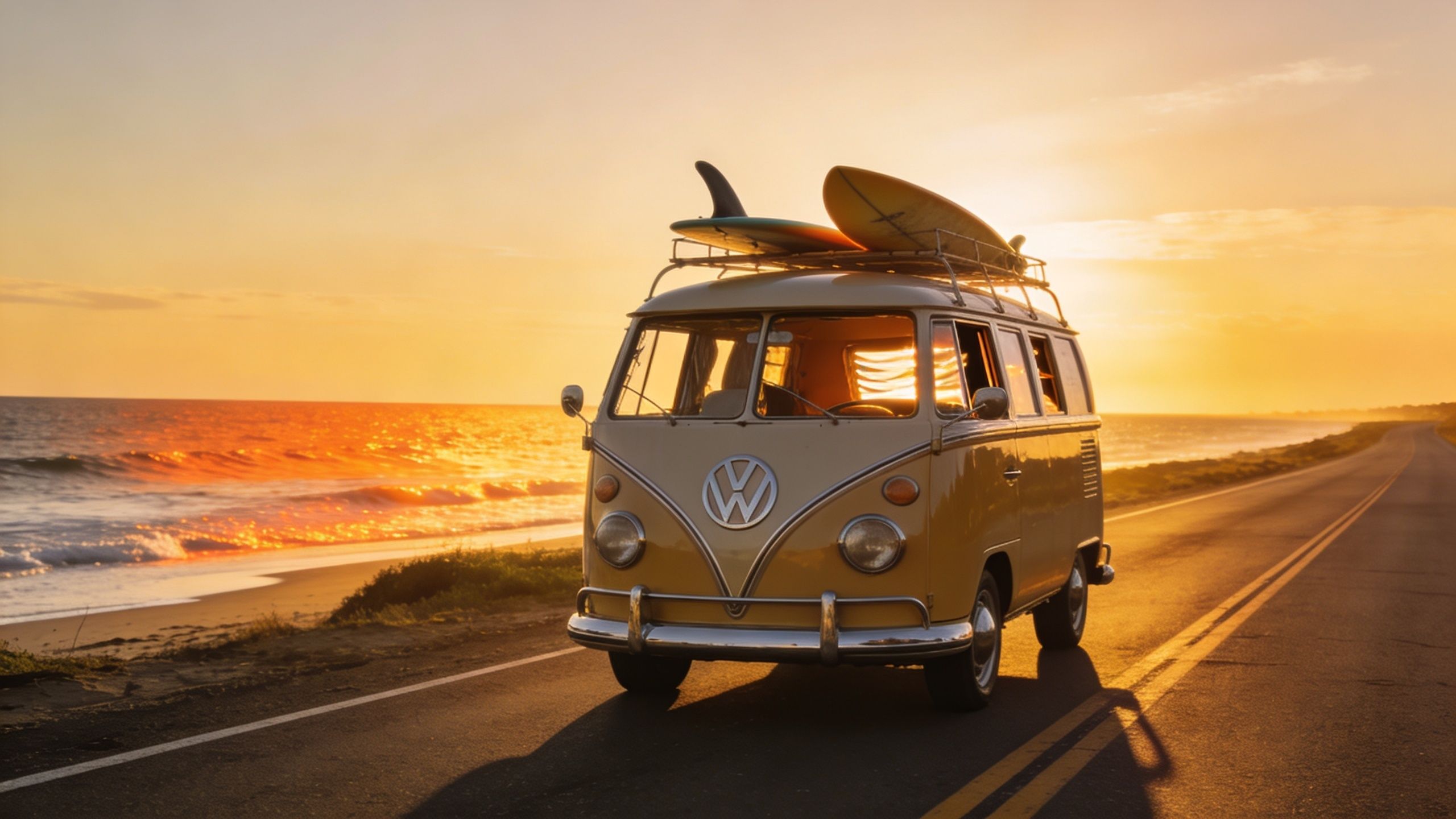
  • Character. A Samba should look deluxe. A surfy van should have charm, not clutter.

For newcomers, reading a bit more about diecast collecting basics helps make the first purchases more satisfying.

Choosing between Kombi and Beetle models

A lot of collectors think they must choose one lane. You really do not.

The best small collections often mix body styles because each model brings a different mood.

Style Best for Display personality
Kombi or Samba Bus Coastal, surf, van-life themes Relaxed, social, colourful
Volkswagen Beetle model Classic motoring nostalgia Friendly, iconic, timeless
Camper conversion models Travel storytelling displays Adventure-focused and playful

If you want a centrepiece, a 1962 VW Kombi or Samba Bus replica is hard to beat. If you want an easy entry point, a Beetle often fits smaller shelves and desks beautifully.

How to start without overthinking it

Collectors usually do better when they buy with a theme in mind. Random purchases can be fun, but a theme gives your display personality.

Three easy approaches work well:

  1. Go by era
    Build around early classics. Splittie, Samba, Beetle, and a flower-power style van make a cohesive vintage set.

  2. Go by colour
    Coastal palettes look great in a home office or living room. Cream, blue, red, mint, and orange all suit VW shapes.

  3. Go by story
    Pick pieces that remind you of travel. A camper van, a surf van, a Beetle for town days, maybe a bus with a roof rack to tie it together.

The best collection is not the biggest one. It is the one that looks like your own memories and tastes.

What to inspect before you click buy

Inspect before you click buy. Practical buying advice saves disappointment.

  • Look closely at windows and trim. Poorly fitted clear plastic or wonky chrome can spoil an otherwise nice model.
  • Check wheel stance. A Kombi should sit square and balanced.
  • Review scale and shelf space. Larger scales bring more detail, but they need room to breathe.
  • Choose local stock when you can. Australian buyers usually prefer avoiding the uncertainty that can come with overseas sourcing, especially for gifts or time-sensitive purchases.

Display ideas that make the collection sing

You do not need a giant cabinet to make Volkswagen diecast models for sale look brilliant at home.

Try these:

  • A coastal shelf with a Kombi, a small framed beach print, and a piece of driftwood.
  • A desk setup anchored by a Volkswagen Beetle model for a daily hit of colour and nostalgia.
  • A mixed-scale cabinet where a larger Samba takes centre stage and smaller vans support it.
  • A gift corner where boxed models stay pristine until birthdays or Father’s Day roll around.

Some collectors chase rarity. Others chase feeling. With VW pieces, feeling often wins, and rightly so.

Beyond the Garage Styling Your Home with VW Charm

A Volkswagen-inspired home does not need to look like a workshop. In fact, the best VW decor usually works because it feels lived-in, relaxed, and personal.

A well-chosen Kombi model can do more than fill space on a shelf. It can set the tone for the whole room. The colours bring warmth. The shape adds softness. The nostalgia makes the space feel welcoming rather than staged.

Where VW pieces work best

Living rooms and home offices are obvious spots, but they are not the only ones.

A hallway console can carry a bright little Samba and instantly make the house feel friendlier. A study shelf can use a Beetle model as a splash of colour among books and frames. Guest rooms suit VW decor especially well because the theme feels cheerful without demanding too much attention.

Pairing VW style with coastal decor

The Kombi and the Australian coast are old mates, so the styling connection feels natural.

Try pairing VW memorabilia with:

  • Weathered textures such as timber, woven baskets, or whitewashed surfaces
  • Beachy accents like shells, soft blues, sandy neutrals, and framed seaside prints
  • Retro touches including old travel tins, simple ceramic vases, or vintage-look signs

A bright red or two-tone van can work as the hero piece, while softer decor around it keeps everything balanced.

Why diecast works as decor

A diecast model has an advantage over larger themed decor. It tells the story quickly and cleanly.

One quality piece on a shelf can suggest travel, design history, surf culture, and personal memory all in a glance. That makes it ideal for people who love Volkswagen heritage but still want a tidy, stylish home.

A classic VW model earns its place in a room because it is both object and conversation starter.

Metal wall art and other vehicle-inspired decor can support that look nicely, but the miniature van often does the emotional heavy lifting. It is small, but it carries a big story.

Your VW Journey Starts Here

The Kombi’s journey began with a factory sketch and ended up woven into road trips, surf memories, restoration sheds, show grounds, and collectors’ shelves. Few vehicles travel that far in meaning.

The vw travel van still resonates because it joins useful design with optimism. It looks approachable. It invites adventure. It reminds people that travel does not have to be rushed to be worthwhile.

For some enthusiasts, that journey means chasing a full-size project. For others, it means finding the perfect VW Kombi diecast Australia collectors talk about, or tracking down a Volkswagen Beetle model that brightens a desk or display shelf. Both paths are part of the same affection for Volkswagen shape, history, and spirit.

If you have ever paused at a split-screen at a show, smiled at a Samba rolling past, or searched late at night for Volkswagen diecast models for sale, you already know the pull. The story sticks.

Sometimes owning the dream at full scale is not the point. Sometimes holding a beautifully made version of it in your hand is enough to keep the road alive.

Your VW Van Questions Answered

A bloke at a swap meet in Ballarat once held up a tiny two-tone Kombi and laughed, “Cheaper than restoring the one I sold in 1998, and a lot easier to dust.” That is the heart of these questions. For some Australians, the VW travel van is a machine with sun-faded paint and surf wax in the floor grooves. For others, it is a beautifully made diecast model on a shelf, keeping the same dream alive in smaller form.

What does “vw travel van” usually mean in Australia

In Australian VW circles, “vw travel van” usually points to the Volkswagen Type 2 family. People use it for Kombis, campers, beach vans, and road-trip buses in general. Depending on who is telling the story, it might mean a split-screen T1, a deluxe Samba, or a later camper fitted out for weekends up the coast.

Why is the Samba Bus so collectable

The Samba wins hearts quickly. Those extra skylight windows, the two-tone paint, and that cheerful face give it the sort of presence that stops people in their tracks at shows.

It also carries a bigger story. The Samba came to represent scenic drives, family holidays, surf checks, and the golden age of unhurried travel. In diecast form, all those little visual touches, window lines, trim, roof details, make it one of the most satisfying VW models to collect.

Is a diecast Kombi a good gift for a VW fan

Yes. It suits longtime collectors, former Kombi owners, Beetle lovers, and anyone who wants a dash of vintage VW character at home or in the office.

A full-size van asks for shed space, time, money, and patience. A licensed diecast Kombi gives the same grin in a package small enough for a bookshelf. That is a big part of its charm.

Is restoring a real Kombi easy in Australia

Restoring an original Kombi can be rewarding, but easy is not the word many owners would use. Rust repair, missing trim, specialist parts, and labour bills can turn a simple plan into a long-haul project.

That gap between dream and reality is one reason memorabilia matters. A good model car lets someone celebrate the shape, colour, and memories of a beloved van without spending years chasing panels and seals.

Are classic petrol VW vans still better than the ID. Buzz for rough outback touring

That depends on the trip, the support available, and what you expect from the vehicle. The linked ID. Buzz camper review covering the Australian reliability angle presents the review author’s view that the ID. Buzz camper suits sealed-road touring and lighter adventure use more naturally than hard, remote outback travel.

Classic petrol VW vans have their own limits, of course, but their old-school mechanical simplicity is part of why so many enthusiasts still romanticise the T1 and T2. That affection carries straight into the collectibles market, where the older vans remain the stars of display cases and gift tables.

What should a beginner collect first

Start with the one that makes you stop scrolling.

For plenty of collectors, that is a Samba in cream and red, or a surf-themed Kombi that looks like it belongs outside a weatherboard beach shack. For others, the first spark comes from a Beetle that reminds them of a parent, a first car, or a family holiday photo. Buy the model that stirs a memory first, then pay attention to build quality, scale, and licensing.

If you are ready to bring that road-trip spirit home, explore Volkswagen Memorabilia for officially licensed VW-themed gifts, Kombi and Samba Bus diecast models, Beetle collectibles, and coastal decor that suits Australian enthusiasts, collectors, and gift buyers alike. Local stock and friendly support make it an easy place to find a piece that feels like your own little slice of VW history.

Van Volkswagen Camper: History, Models & Collecting

More than just a van, the van Volkswagen camper is a true blue symbol of freedom and the laid-back Aussie way of life. G'day! If you're anything like us, just the sight of a classic Kombi cruising down a coastal road brings a massive smile to your face. These legendary vans have taken countless surfers, families, and explorers on unforgettable trips, from sun-drenched beaches to the rugged outback.

They represent a simpler time, a bit of nostalgia, and the pure, unadulterated joy of hitting the open road.

The Volkswagen Camper Van: An Icon of Aussie Freedom

Anyone who's been to a Volksfest or a local car show knows there’s a special kind of magic to the classic VW camper, especially the mighty Kombi. It captures that unique mix of nostalgia for the ‘60s surf scene and a deep appreciation for simple, timeless design.

It’s the smell of salt in the air, the unmistakable rumble of an old air-cooled engine, and the sight of that friendly, rounded shape heading for the horizon. It's not just about transport, mate; it’s about the memories made along the way. The Kombi, in particular, is woven into our culture—a beloved part of Australia's story of sun, sand, and adventure.

From Road Trips to Room Décor

While many of us dream of owning a road-tripping classic, that same passion has created a vibrant world for collectors. The spirit of the Volkswagen camper van is captured perfectly in high-quality memorabilia. It’s a brilliant way for us to keep that feeling of freedom close, even when we’re not on the road.

The great thing about collecting is how it connects us to the design and history we love. A well-made diecast model isn’t just a toy; it’s a miniature piece of automotive history you can hold in your hands.

This passion fits beautifully into our homes, too. A carefully chosen 1962 VW Kombi Samba Bus diecast model on a shelf or some vintage-style wall art can bring that retro, coastal colour into any room. It's about celebrating a lifestyle, not just a vehicle.

Here at VW Memorabilia, we're fellow Aussie enthusiasts and local importers who just get it. We make sure every piece of VW memorabilia and collectibles we sell is officially licensed and has that authentic spirit you're looking for. Everything is stocked right here in Australia for fast, local shipping, helping you celebrate the VW legend every single day.

A Road Trip Through VW Camper History

The story of the van Volkswagen camper is one you can almost hear—the gentle rumble of an air-cooled engine, the sound of waves crashing, and the endless promise of the open road. It’s an Aussie legend, and it's a yarn worth spinning. Let's take a look back at the golden years that cemented this van's iconic status.

It all started with the one and only Type 2 (T1), the van every enthusiast knows simply as the ‘Splittie’. Born from post-war German ingenuity, its cheerful, simple design found its true calling when it hit Australian shores in the 1960s, right as surf culture was exploding.

The Legendary Splittie and the Samba Bus

If you close your eyes and picture a classic VW camper, chances are it’s a Splittie. That split-screen windscreen, the oversized VW badge, and the friendly v-shaped front end are pure automotive poetry. They arrived on our shores seemingly purpose-built for adventure and quickly became the vehicle of choice for surfers chasing the next perfect wave.

The absolute pinnacle of the Splittie range has to be the Samba Bus. It was the luxury model of its time, decked out with those gorgeous skylight windows and a massive, full-length fabric sunroof. The Samba was made for pulling up to the beach, rolling back the roof, and soaking in the Aussie sun. Finding a real one today is a serious treasure hunt, which is why collectors absolutely adore detailed diecast models that capture that same magic.

The Splittie isn’t just a van; it’s a time machine. It whisks you back to a simpler era of freedom, community, and endless summers, a feeling captured in every single one of its classic curves.

The Kombi’s rise wasn't just a trend; it was a full-blown cultural movement. After arriving here in the mid-1950s, its popularity exploded with the '60s surf boom. By 1964, over 5,000 VW Transporters had been imported, with camper conversions making up a huge 25% of sales. As the hippie movement took hold, those numbers shot up—between 1967 and 1972, imports doubled to around 10,000 vans a year as young Aussies pointed their noses toward Byron Bay and Noosa.

A timeline showing VW Camper generations: Splittie, Bay Window, and Vanagon, with their production years.

You can really see the evolution in that timeline, from the rounded, nostalgic Splittie to the more practical, angular vans that followed.

Cruising into the 70s with the Bay Window

As the swinging sixties made way for the seventies, VW knew it was time for an update. The Type 2 (T2) 'Bay Window' rolled out in late 1967, earning its nickname from the huge, single-piece curved windscreen that replaced the famous split screen.

This was more than just a facelift; it was a smart evolution. The Bay Window was roomier, had better visibility, and featured updated mechanics that made it a far more reliable partner for those big Aussie road trips. This was the van you could confidently pack for a massive trek from Perth to Sydney without crossing your fingers and toes.

A few key upgrades made the Bay an instant hit with families and long-distance travellers:

  • A More Powerful Engine: It had a bit more grunt for climbing hills—a welcome change for anyone who's ever been stuck crawling up an incline behind an old Splittie.
  • Improved Suspension: The new setup delivered a much smoother ride, turning marathon drives into comfortable cruises instead of bone-rattling ordeals.
  • More Interior Space: Its slightly boxier body and higher roofline created more room for sleeping, cooking, and stashing gear—all essential for life on the road.

The Bay Window kept all the friendly character of its older sibling but added a healthy dose of practicality. It truly cemented the camper's place in the hearts of Aussie adventurers, perfectly suiting a generation ready to explore every last corner of this country. You can dive deeper into this lifestyle in our guide to the Volkswagen travel van.

The Modern Era of Volkswagen Campers

While our hearts will always have a soft spot for the classic Splitties and Bays, the adventure certainly didn't end in the seventies. The story of the van Volkswagen camper just kept rolling on, adapting to new times while holding onto that free-spirited core we all love.

As we headed into the 1980s, the design language started to shift. The friendly, rounded curves gave way to something a bit more modern and angular.

Enter the Type 2 (T3), which many of us know affectionately as the 'Vanagon'. With its sharper lines and bigger windows, the T3 dragged the beloved camper into a new decade. It was roomier inside and had a few more creature comforts, but the real game-changer for Aussie adventurers was the Syncro model.

Conquering the Outback with the T3 Syncro

The T3 Syncro was a genuine trailblazer. Volkswagen teamed up with Austrian specialists Steyr-Daimler-Puch to fit it with a brilliant four-wheel-drive system. This wasn't just some afterthought; it was a seriously tough 4WD setup that turned the humble camper into a proper off-road explorer.

Suddenly, those rugged tracks leading to hidden beaches and remote bush campsites were well within reach. The Syncro was perfectly suited to Australia’s tough-as-nails terrain.

  • Serious Off-Road Capability: It could handle sand, mud, and corrugated roads that would leave a standard two-wheel-drive van spinning its wheels.
  • More Powerful Engines: Later models got the water-cooled 'Wasserboxer' engines, giving them more reliable power for those long-haul trips up the coast.
  • Classic Pop-Top Freedom: It still had the iconic pop-top roof, so you could venture further afield without giving up that classic, sleep-under-the-stars camper experience.

The T3 Syncro was the perfect bridge between old-school charm and modern capability. It’s no wonder they have such a massive following today, especially among folks who love getting properly off the beaten track.

Down under, the VW camper van truly became a coastal icon in the 1970s, fitting right in with Australia's laid-back beach lifestyle. The T2 Bay Window, introduced here in 1968, was even adapted for our harsh conditions. By 1975, Aussies had bought over 15,000 of them, making up 20% of all light commercial imports that decade, according to FCAI stats. At the legendary 1971 Aquarius Festival in Nimbin, an estimated 2,000 VW campers rolled in — that was 60% of all vehicles there, sparking a van life revolution. You can dive deeper into this story with this fascinating history of the VW campervan.

The Sophisticated Campers of Today

Fast forward to today, and Volkswagen has continued to refine the camper van concept. This evolution brought us the much-loved Transporter series (T4, T5, T6) and, eventually, the luxurious Volkswagen California. These aren't just vans with a mattress in the back; they're fully integrated mobile homes designed from the ground up for comfort, convenience, and style.

The modern VW California is a testament to how far the camper has come. It takes the original promise of freedom and wraps it in a package of modern technology and comfort that Ben Pon could only have dreamed of.

Today’s California models—like the Beach, Coast, and Ocean—are packed with features that make life on the road incredibly easy. We're talking about integrated kitchens with gas cookers, clever driver-assist technologies, and smart interior layouts with two sliding doors for total flexibility. They even have digital control panels for managing everything from the heating to the electric pop-top roof.

They might look a world away from the classics, but the spirit is exactly the same: a reliable, cleverly designed vehicle that gives you the freedom to just get out and explore. In their own way, they honour the legacy of the original van Volkswagen camper by making adventure accessible to a whole new generation of road-trippers.

Your Guide to Collecting VW Camper Diecast Models

Let's be honest, while owning a full-sized classic VW is the dream for many of us, it’s not always practical. But you can still capture that timeless charm—in stunning detail—right in the palm of your hand. For so many enthusiasts, collecting diecast models is the perfect way to dive into a lifelong passion for these vans. It's a fantastic hobby that connects you to the history and spirit of these iconic vehicles, no garage required.

So, where do you even begin? The world of diecast collecting can feel a bit full-on at first, with all the different scales, brands, and details to consider. Think of this as a friendly chat, like you’d have with a mate at a car show, to get you started on a collection that brings a smile to your face.

Close-up of a miniature vintage Volkswagen T1 camper van model on a sunlit shelf.

Cracking the Code on Diecast Scales

The first thing you’ll bump into is the scale, which is just a simple way of describing the model's size compared to the real deal. Getting your head around the common scales helps you figure out what’s right for your space and your collecting goals.

  • 1:18 Scale: This is the big kahuna. These large, impressive models are absolutely packed with detail—we’re talking opening doors, bonnets, and even tiny engine bays. They make for a jaw-dropping centrepiece on any shelf.

  • 1:24 Scale: A brilliant middle ground. Models in 1:24 scale have a fantastic balance of intricate detail and manageable size. They're big enough to show off all the cool features but small enough that you can build a decent collection without needing a whole new room.

  • 1:43 Scale: This is a true classic and probably the most popular scale for serious collectors. It lets you display a huge variety of models in a small space, making it easy to line up the whole history of the VW camper side-by-side.

  • 1:64 Scale: Think Matchbox or Hot Wheels. These little guys are affordable, fun, and the perfect excuse to build a massive collection. They might have less fine detail, but they’ve got a nostalgic charm all their own.

If you’re just getting your feet wet, the 1:24 and 1:43 scales are a fantastic place to start. They offer a superb collecting experience, letting you appreciate the finer points without the big footprint of the 1:18 models.

What to Look for in a Quality Licensed Model

You’ll quickly realise that not all diecast models are created equal. To make sure you’re getting a genuine collector’s piece, always look for officially licensed products. It’s your guarantee that the model was made with Volkswagen’s blessing and held to a high standard of accuracy.

A great licensed model isn't just a tiny car; it’s a faithful tribute. It nails the authentic colours, the correct badges, and all the little interior details that make you feel like you’re looking at the real van, just shrunk down.

When you’re looking to buy diecast Kombi models, here’s what separates the good from the great:

  • Factory-Accurate Paint: Does the colour match a real VW paint code from that era? The best models will perfectly replicate the exact shades, especially those iconic two-tone schemes on a Splittie.
  • Intricate Interior Details: Take a peek inside. Can you spot the tiny gear stick, the patterns on the seats, or a miniature steering wheel with the proper VW logo? Those are the signs of a premium model.
  • Authentic Wheels and Tyres: The wheels should look right for the era, right down to the hubcaps. Some high-end models even feature real rubber tyres for that extra touch of realism.
  • Crisp Badges and Logos: The Volkswagen emblem and any model scripts should be clean, sharp, and placed exactly where they belong.

A real standout for any collection is a 1962 VW Kombi Samba Bus diecast model. A quality version will have all 21 windows, the fabric-look sunroof, and that gorgeous two-tone paint job recreated perfectly. It’s a definite must-have.

The Perk of Buying from a Local Aussie Importer

When you’re ready to add a new piece to your collection, where you buy from really does matter. A quick search for "VW Kombi diecast Australia" will throw up plenty of options, but choosing a local Aussie importer like us here at VW Memorabilia has some real perks.

First off, you get your models faster. No more waiting weeks on end for international shipping to clear customs. All our Volkswagen diecast models for sale are stocked right here in Australia, so you can have your new pride and joy on display in days, not months.

Plus, you’re supporting a local, family-run business packed with fellow VW lovers! It’s all about that friendly, community spirit that makes the VW scene so special.

Styling Your Home with VW Memorabilia

That feeling you get from a van Volkswagen camper isn’t just for the open road. It's a whole vibe—that sun-drenched, laid-back coastal feeling. And the best part? You can bring that same energy right into your home. Your love for all things VW doesn't have to be parked in the garage; it can be a source of joy and unique style in your living space every single day.

A toy Volkswagen camper van sits on a bright windowsill overlooking a sunny beach.

This isn't about sterile, cookie-cutter decorating. It's about creating a home that tells a story—your story. It’s all about weaving your passion for classic automotive design into a warm, inviting style. A beautifully made diecast model or a piece of retro wall art does so much more than just fill an empty spot; it sparks conversations and brings back great memories.

Making Your Diecast Models the Star

A quality diecast model, like a detailed VW Kombi diecast from Australia, is really a miniature work of art. It deserves to be shown off! Don’t just hide it on a shelf somewhere; make it a real feature piece. A stunning model can instantly inject character and a splash of retro colour into any room.

Here are a few simple ideas to get you thinking:

  • The Bookshelf Centrepiece: Pop a striking 1:18 or 1:24 scale model right on a main bookshelf. Sit it between your favourite books and a couple of small potted plants to create a cool little scene that naturally draws the eye.
  • The Home Office Companion: What’s better than a little reminder of freedom sitting on your desk to get you through the workday? A smaller 1:43 scale model of a classic Volkswagen Beetle model is perfect for adding personality without hogging your workspace.
  • The Hallway Welcome: Greet your guests with a bit of VW charm. A narrow shelf in the entryway with a lineup of colourful Beetle models or a classic Samba Bus is a brilliant way to make a fun first impression.

Think of your diecast model as more than a collectible. It’s a miniature sculpture that stands for adventure, freedom, and timeless style. When you give it pride of place, it lifts the mood of the entire room.

This way, your collection becomes an active part of your home's look, celebrating your passion in a way that’s both stylish and deeply personal.

Creating a Cohesive Coastal Vibe

The VW camper and the Aussie beach scene go hand in hand, which makes it the perfect match for coastal or nautical-themed decor. The real trick is to blend your VW memorabilia with other elements to create a look that feels genuinely relaxed, not just cluttered.

First up, think about your colour palette. Sandy whites, soft blues, and driftwood greys create the perfect backdrop for the vibrant pop of colour from a red or turquoise diecast Kombi. You can have a look through our collection of vintage home accessories for some inspiration on how to mix and match.

Look for other items that have that same nostalgic, simple feel. A vintage-style metal sign with a classic VW ad looks fantastic hanging next to a rustic photo frame holding a picture of your favourite beach. You can also mix in subtle nautical touches, like rope-wrapped vases or decorative starfish, to round out the look. The goal is to create a space that feels like a permanent holiday—a breezy, personal retreat that celebrates the things you love.

Your VW Camper Questions Answered

Still got a few questions buzzing around your head like a happy little air-cooled engine? You’ve come to the right place, mate. This is where we tackle some of the most common queries we hear from fellow enthusiasts about the iconic Volkswagen camper, collecting memorabilia, and the vibrant culture that surrounds it all.

Think of it as our friendly chat over a cuppa at Volksfest. Whether you're a seasoned collector with a cabinet full of treasures or just kicking off your journey into the world of VW, we're here to share our passion and help you along the way.

How Much Is a Classic VW Camper Worth in Australia?

This is the million-dollar question—well, not quite, but prices are certainly climbing! The market for classic VW campers in Australia is hotter than a tin roof in a Queensland summer. A van's value really comes down to the model, its condition, and how original it is.

The last decade has seen an explosion in the classic VW camper scene here. The VW Camper Club Australia logged 25,000 active classic registrations in 2023, a staggering 200% rise since 2010. A huge 45% of these are the iconic 1950-79 models used for coastal camping.

Auction houses like Pickles are reporting average sale prices for restored Splitties hitting AUD 75,000 in 2026—that’s a 250% increase from AUD 25,000 back in 2015. A clean T2 Bay isn't far behind, fetching around AUD 55,000. You can get a great feel for the history and the celebration of 70 years of the VW Campervan to understand the enduring love for these vans.

Which VW Camper Model Is Best for Collecting?

Ah, another cracking question! "Best" is always in the eye of the beholder, but a few fan favourites really stand out that every collector dreams of getting their hands on.

  • The Splittie (T1): This is the original icon. Any Splittie is a prize, but the absolute holy grail is the Samba Bus with its signature skylight windows and fabric sunroof. A detailed 1:24 or 1:18 scale Samba makes for a true centrepiece in any collection.

  • The Bay Window (T2): For so many of us, this is the van that represents the great Aussie road trip. Keep an eye out for models with classic '70s paint colours or camper-specific details like a pop-top roof.

  • The T3 Syncro: For those who love a bit of adventure, a diecast T3 Syncro represents the rugged, off-road evolution of the camper. They're a bit rarer to find but a fantastic addition to the shelf.

At the end of the day, the best model to collect is the one that puts a smile on your face. It might be a model of a Volkswagen Beetle model that reminds you of your first car, or a Kombi that looks just like one you spotted on a holiday.

What’s the Difference Between a Kombi and a Camper?

This one trips a few people up, but it's pretty simple once you break it down. Just think of it like this:

"Kombi" is the nickname for the van itself—the Volkswagen Type 2. A "Camper" is what you turn it into!

"Kombi" is just short for the German Kombinationskraftwagen, which translates to "combination vehicle." It was cleverly designed to carry both passengers and cargo. A camper, on the other hand, is a Kombi that has been fitted out with all the camping essentials like a bed, cupboards, and sometimes a small kitchen. You could buy a basic Kombi, and a third-party company (like Westfalia in Europe or local Aussie converters) would work their magic.

So, while every VW camper is a Kombi, not every Kombi is a camper. Simple as that.

Can You Still Use a Classic VW Camper for Trips Today?

Absolutely! That’s what they were built for, after all. All across Australia, you’ll find dedicated owners keeping these classics on the road, heading to the beach, music festivals like VW Nationals, and local Show & Shine events. Owning a classic does demand a bit more love and attention than a modern car—you have to get comfortable with their quirks and a much slower pace.

But that’s all part of the charm! The key is regular maintenance and becoming part of the community. There are fantastic clubs and online groups full of knowledgeable people who are always happy to share advice on keeping your classic van Volkswagen camper running sweetly. For those of us who prefer to admire them from home, a stunningly accurate diecast VW Kombi is the next best thing!


Ready to celebrate the spirit of the open road? At Volkswagen Memorabilia, we’re fellow enthusiasts passionate about bringing you the best licensed diecast models and coastal décor. Explore our collection and find the perfect piece to fuel your passion.

Find your next treasure in our online shop.