


You've got the shelf sorted at last. A 1:24 Kombi Samba Bus sits beside a faded photo from your first Beetle meet, but the old plastic frame looks out of place against the model's bright paint and the shell collection from last summer's coastal trip. A ceramic photo frame changes the whole scene. It adds weight, texture and a little handmade character, turning a row of VW memorabilia into a story about family, road trips and relaxed Australian living.
That pairing feels especially natural in Australia, where the Type 2 carries local history as well as surf culture. The Kombi first reached Australian buyers in 1954, and Volkswagen assembled it at the Clayton factory in Melbourne from 1964 to 1977, according to Australian Kombi history documented by CarsGuide. A ceramic frame holding a show-day snapshot or beach photograph gives that heritage a place beside your diecast collection, rather than leaving it tucked away in a drawer.
Why Ceramic Photo Frames Belong on Every VW Display Shelf
A ceramic frame has the same appeal as a well-finished diecast model. You notice its weight when you lift it, the surface catches the light differently from plastic, and small variations in glaze can make the piece feel personal. Place one beside a red-and-white Kombi, and the display gains a tactile accent that echoes the rounded bodywork and cheerful colours of classic Volkswagen design.
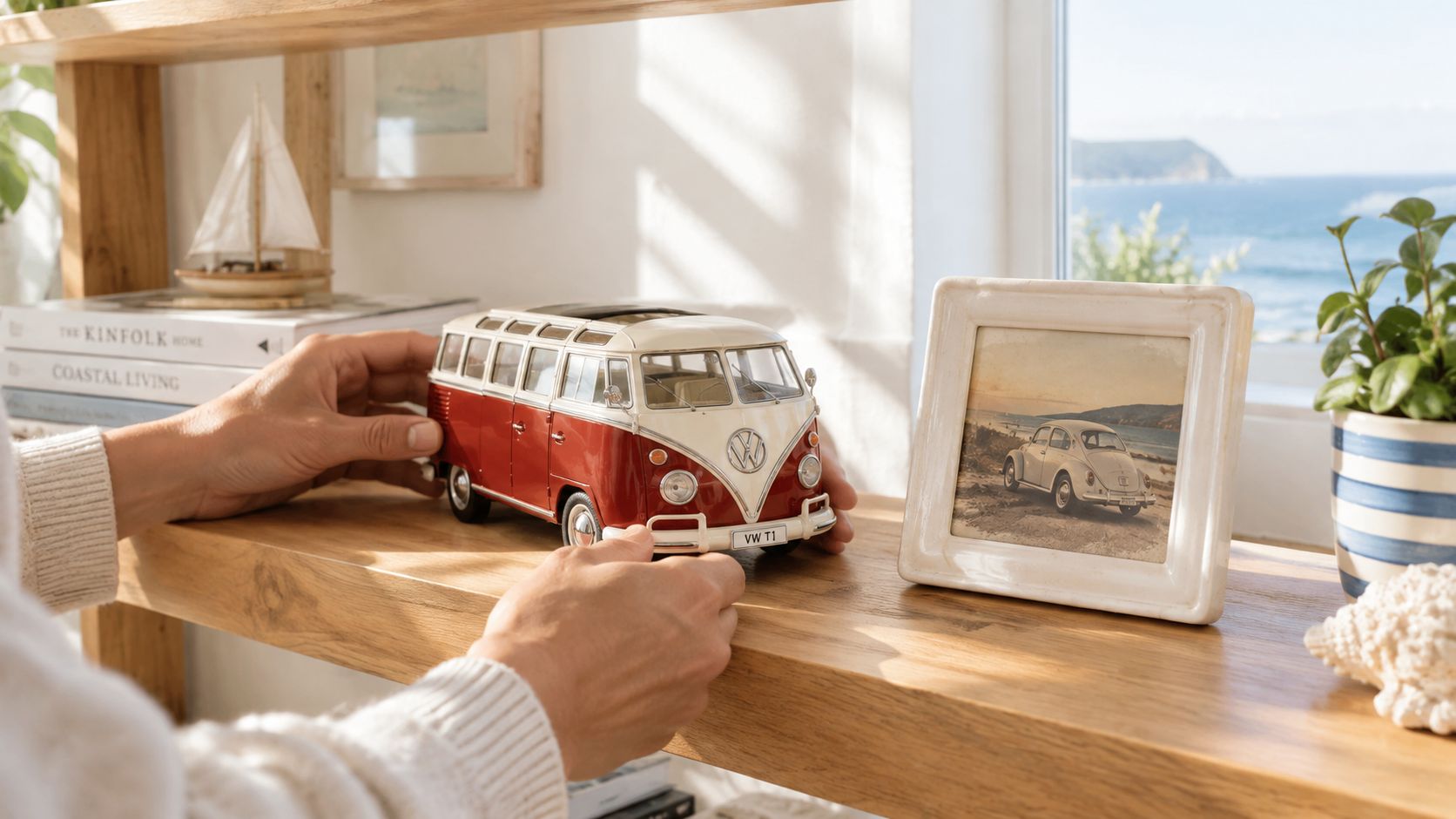
The frame also gives the eye somewhere to rest. A shelf filled only with models can look like a catalogue. Add a ceramic photo frame with a family road-trip image, a Volksfest moment or a coastal sunset, and the display starts to feel lived in. The Kombi becomes part of a memory rather than another object in a collection.
A natural fit for coastal styling
White, pale blue and sandy neutral finishes work beautifully with shells, timber, woven baskets and nautical accents. A glossy blue ceramic frame can pick up the colour of a Samba Bus, while a matte white frame lets a brightly painted Beetle remain the star. The result suits a beach house, a home office or a garage display without making the room feel like a showroom.
Practical rule: Give every model a companion object that explains why you collect it. A photo, ticket, map or small ceramic accent can tell the story better than another vehicle.
Ceramic also makes a thoughtful gift for someone who already owns plenty of Volkswagen diecast. A model celebrates the car, while the frame creates space for the owner's own memories. That combination is why ceramic photo frames sit comfortably between VW memorabilia collectibles and home décor.
Understanding Ceramic Frame Materials and Finishes
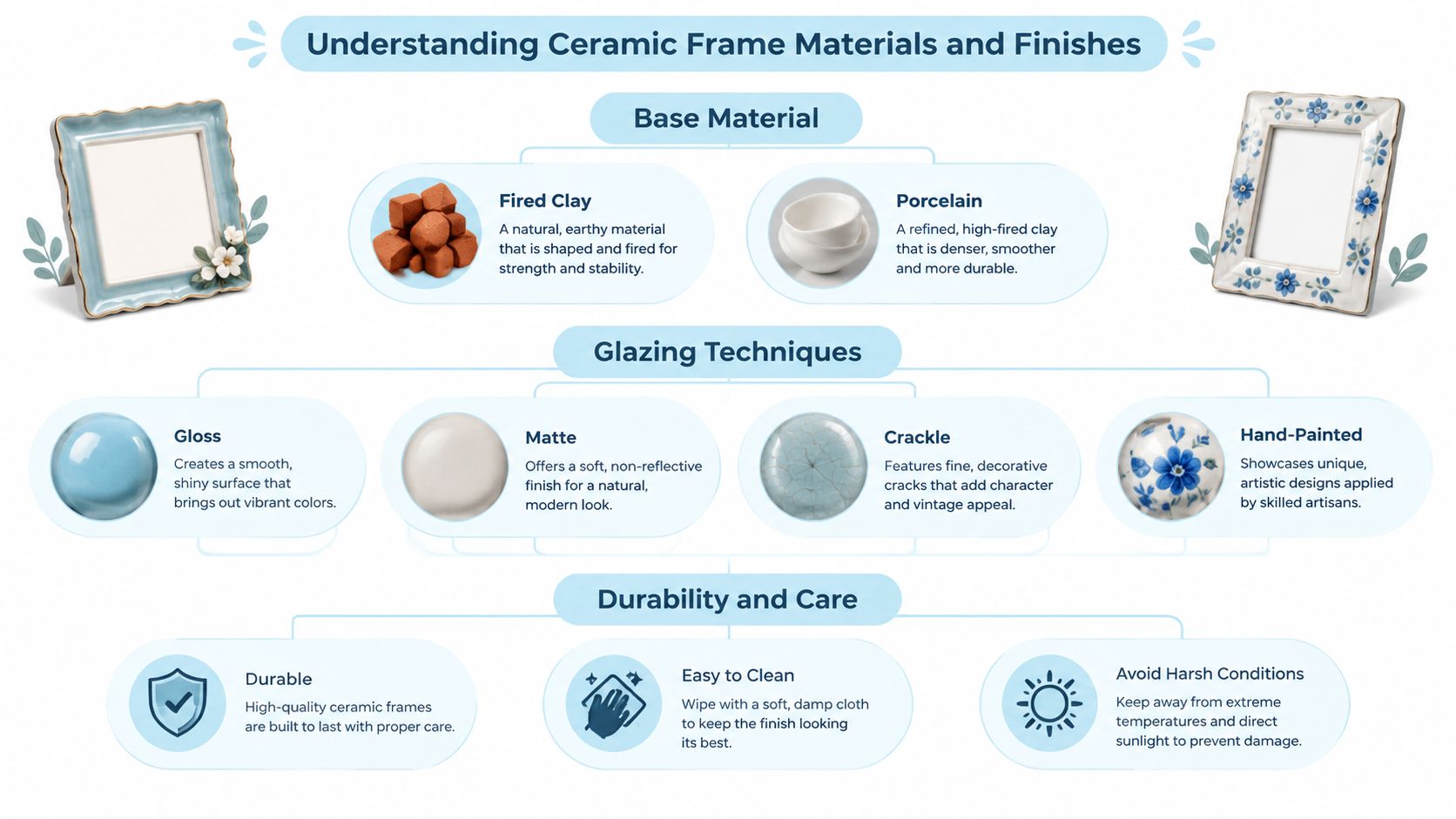
Ceramic photo frames usually begin with fired clay or porcelain. Clay tends to offer a more earthy, substantial appearance, while porcelain can produce a smoother, finer surface. Neither choice automatically guarantees quality. The frame's finish, edges, backing and firing quality matter just as much.
Read the surface before you buy
A gloss glaze reflects light and makes bold colours pop, which suits a colourful Flower Power Beetle or a display with polished metal details. Matte glaze feels quieter and more contemporary, particularly beside pale timber and linen. Crackle finishes introduce fine lines across the glaze for an aged, vintage look, while hand-painted surfaces can bring stronger personality through brush marks and irregular colour.
Kiln-firing hardens the ceramic body and fixes the glaze to the surface. For photo-ceramic imagery, the image can be glaze-sealed, which makes the finished surface highly durable and resistant to fading. Western Australian Museum conservation guidance still recommends limiting light exposure to 50 lux or less, excluding ultraviolet light where possible, and maintaining display conditions around 16 to 20 °C with 30 to 40% relative humidity for photographic materials.
Quality checks for online and market buying
Run through these checks before choosing a frame:
- Glaze coverage: Look for an even surface without bare patches, unexpected pinholes or rough pools around the edges.
- Edge finishing: The photo opening should feel smooth, with no sharp ceramic lip that could catch paper or fingertips.
- Backing strength: The easel or wall fitting should sit firmly rather than wobble under the frame's weight.
- Craft character: Hand-finished pieces may show small variations. Those differences can be attractive, but they shouldn't hide cracks or structural flaws.
Compared with a composite frame, ceramic feels more substantial and decorative. Timber brings warmth and grain, while metal offers a crisp industrial edge. Ceramic occupies the middle ground, with enough visual softness for a family photograph and enough presence to stand beside a carefully chosen Volkswagen diecast model.
Ceramic vs Timber vs Metal Frames for Collectors
Collectors usually make this decision with the shelf in mind. A light acrylic frame may be easy to move, but it can look less grounded beside a model. A heavy ceramic frame can anchor a small vignette, though you'll want to check the shelf depth and protect the surface underneath.
| Criteria | Ceramic | Timber | Metal | Acrylic |
|---|---|---|---|---|
| Shelf stability | Weighty and steady | Usually stable, depending on construction | Stable, often with a slim profile | Light and easy to shift |
| Visual character | Tactile, glazed, decorative | Warm, natural and familiar | Clean, industrial or modern | Minimal and unobtrusive |
| Moisture considerations | Glaze resists surface moisture, but protect the backing | Can respond to damp conditions and finish wear | May suit practical spaces, with attention to corrosion | Handles casual wiping but can scratch |
| Customisation | Glaze colour, shape and painted detail | Stain, paint, carving and profile | Powder coat, brushed or polished finishes | Clear or coloured options |
| Sustainability conversation | Durable object with long use potential | Reclaimed or responsibly sourced timber can be appealing | Longevity depends on construction and finish | Material choice and lifespan need careful consideration |
Match the material to the room
Choose ceramic for a display that needs a decorative focal point, especially in a coastal or retro setting. Timber suits a restoration-inspired garage, where natural grain complements tools, old signs and warm lighting. Metal works well with industrial shelving and larger vehicle displays, while acrylic is useful when the photograph should remain visually quiet.
Sustainability deserves a thoughtful answer rather than a blanket label. Australian and Asia-Pacific buyers are showing interest in FSC-certified timber, recycled materials, low-VOC finishes, bamboo and reclaimed wood, and some segments support a premium of roughly 10 to 20% for eco-friendly frame materials, as discussed in the Australia gallery-wall frame market analysis. Ceramic can be a sensible choice when you value durability and intend to keep the piece for years, but recycled or reclaimed alternatives may better suit buyers whose first priority is material sourcing.
How to Choose the Right Ceramic Photo Frame
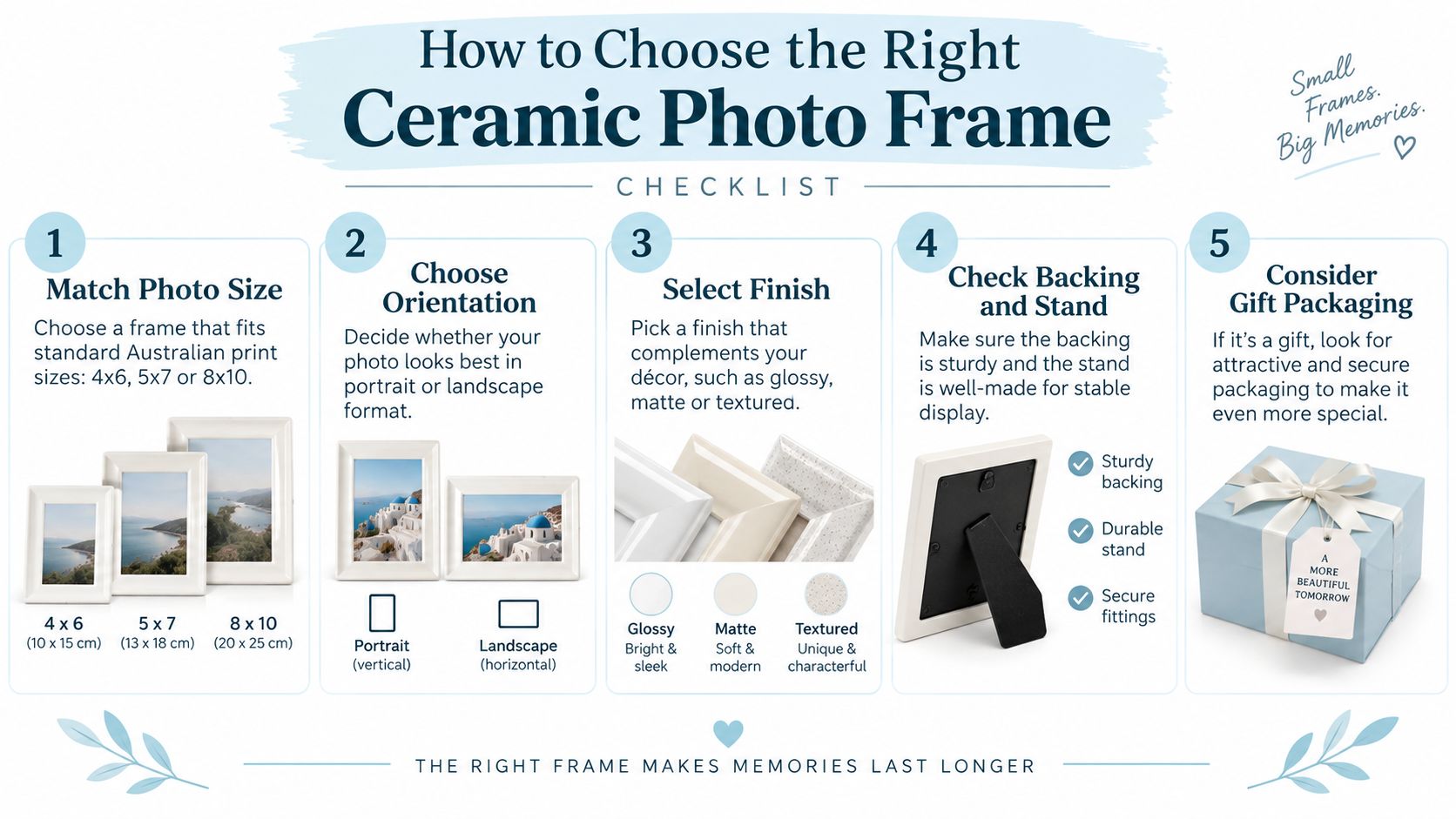
Start with the photograph, not the décor. Australian print sizes commonly include 4×6, 5×7 and 8×10, so check the frame's stated image opening rather than relying only on its outside dimensions. A wide beach scene usually needs horizontal orientation, while a portrait of a family member or a front-on Beetle photograph often looks stronger vertically.
Work through the practical details
- Measure the print: Confirm the visible photo area and allow for any overlap beneath the frame lip.
- Choose the orientation: Check whether the backing supports portrait, horizontal, or both.
- Match the finish: Blue and white glazing suits coastal décor, while cream, red or distressed finishes can complement a retro garage.
- Inspect the backing: An easel stand suits shelves and mantelpieces. Wall fittings help with gallery arrangements. Dual-purpose designs give you both options.
- Check the packaging: Ceramic needs protective wrapping and a firm outer carton for safe Australian delivery.
Glazing affects how the photograph appears. A clear, even surface should preserve colour without creating distracting reflections from a nearby window or display light. If you're buying online, read the product description carefully for the photo opening, backing style and finish. If those details aren't listed, ask before ordering.
For a diecast shelf, the frame should also relate to the model's scale. A 1:18 model is typically around 25 to 30 centimetres long, while a 1:24 model is generally around 16 to 20 centimetres, according to this Australian diecast collecting guide. A compact frame can sit comfortably beside a 1:24 Kombi, while a larger frame may need more breathing room beside a 1:18 display.
If your shelf needs a more secure presentation, browse practical display cases for models and plan the frame as a separate visual layer rather than squeezing everything into one enclosure.
Styling Your Ceramic Frames with VW Diecast and Coastal Décor
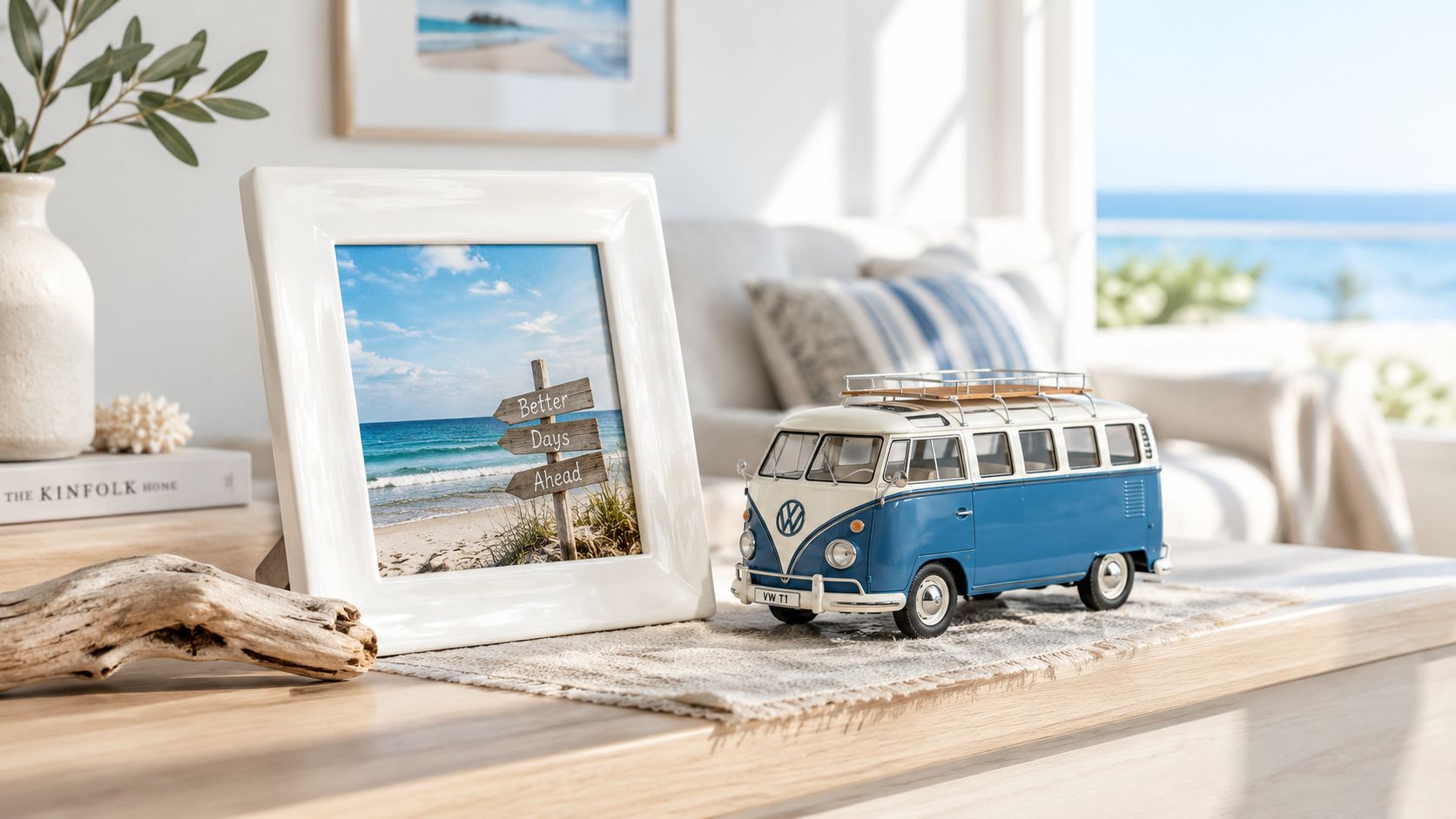
A small shelf can carry a surprising amount of personality. Set a 1:24 Kombi Samba Bus at a slight angle, place a white ceramic frame behind its rear quarter, and fill the frame with a faded beach photograph. Add a small shell dish and a piece of driftwood, but leave enough open space for the model's silhouette to read clearly.
Build the display around one hero model
Start with the largest or most meaningful item. A Samba Bus, a Volkswagen Beetle model or a surf-themed van should hold the visual centre. Place the ceramic frame slightly behind or beside it, then add one low coastal object, such as a shell or small piece of pale timber, to balance the height.
A mantelpiece arrangement can tell a broader family story. Put a Beetle model at one end, two ceramic frames with road-trip photographs near the centre, and white shell décor at the other end. Vary portrait and horizontal images so the arrangement doesn't become a rigid row.
For more ideas involving shells, nautical accents and relaxed beach styling, explore coastal home décor ideas.
Let the memories change with the season
Swap the photograph when the display needs a fresh note. A summer surf image works with blue-and-white ceramic, while a family Christmas photograph can sit in a festive frame during December. The model doesn't need to change. A new photograph can make the familiar Kombi feel connected to a different chapter.
Keep colours linked rather than identical. A red detail in the photograph can echo a red Beetle, while sandy neutrals can soften a bright diecast van. The best displays feel collected over time, not assembled from one matching set.
Caring for and Cleaning Your Ceramic Photo Frame
Dust the frame with a soft, dry microfibre cloth. Support the piece from underneath as you wipe, especially when the frame has a projecting ornament, uneven base or delicate hand-painted detail.
For marks, use a lightly damp cloth with mild soap, then wipe away residue and dry the surface. Avoid abrasive powders, rough sponges and strong chemical cleaners, which can dull a glaze or damage painted areas. Don't spray liquid directly onto the frame because moisture can reach the backing, print or easel mechanism.
Remove the photograph carefully when changing images. Lay the frame face down on a folded towel, release the backing gently and keep fingers away from the ceramic opening. If the frame feels tight, don't force the print through. Trim or replace the photograph rather than risking a chipped edge.
Bright Australian sunlight deserves attention, particularly in coastal homes with large windows. Keep the frame away from direct sun, and in tropical regions avoid persistently damp areas where humidity can affect paper, backing materials and photographs. Glaze-sealed photo imagery is durable, but sensible light and moisture control will protect the whole display.
Gift Ideas and Sourcing Ceramic Frames in Australia
A ceramic frame makes a thoughtful present for a VW enthusiast who already has shelves full of models. Pair one with a 1962 Kombi Samba Bus or a Flower Power Beetle, then add a printed family photograph so the gift feels personal rather than generic. It works for birthdays, Father's Day and Christmas, especially when the recipient enjoys both classic cars and coastal décor.
A shell-themed design can suit someone who prefers beach styling, while a colourful retro finish belongs beside a garage sign or restored Beetle photograph. For a complementary option, consider a shell photo frame that carries the coastal theme through with a lighter, nautical feel.
Australian-based importers offer practical advantages for fragile décor and collector gifts, including local stock, faster shipping and support within Australian business hours. Australia's picture-frame market was valued at USD 268 million in 2025 and is projected to reach USD 285.42 million in 2026, then USD 472.37 million by 2034, with a projected 6.5% CAGR from 2026 to 2034, according to the Australia picture-frame market benchmark. Ceramic frames sit within that broader decorative framing category, alongside the diecast and gift pieces that make a VW display feel complete.
Browse Volkswagen Memorabilia for licensed Volkswagen diecast models, Kombi Samba Buses, Beetles, coastal décor and gift-ready photo frames. Choose a ceramic accent for your display, pair it with a favourite VW model, and give an old road-trip memory the shelf space it deserves.