

You're at a sunny Aussie car show, a Kombi Samba Bus is parked two bays down, and your mates are crowding around a tablescape that's doing more work than it should. The trick isn't piling on more shells, more rope, or more blue. It's building a nautical table decor setup that feels relaxed, practical, and a bit nostalgic, the same way a well-kept Beetle feels timeless without trying too hard. That's the sweet spot, coastal living with enough restraint to keep it fresh, not souvenir-shop loud.
Introduction to Nautical Table Decor
A good nautical table starts the same way a good VW display does, with one clear idea and no clutter fighting for attention. The style itself has deep roots in Europe, where marine decoration took off in the 18th century and became especially popular in the 1800s. Dining and side tables were styled with anchors, boats, maps, lanterns, and blue-and-white palettes that still read as coastal today, which is why the look has real staying power in Australia's beach-minded homes, not just holiday rentals or summer pop-ups. History of marine decoration
That matters here because Australia is a coastal country in both lifestyle and population distribution, with about 27.2 million residents as of June 2024, and most of them living in coastal states and territories rather than inland regions, according to the ABS population estimates cited in the marine-decoration history source. In other words, the style fits the way people live, entertain, and gather. It's not a novelty. It's a natural extension of coastal living.
Practical rule: if your table looks like a seaside gift shop exploded, you've gone too far. Keep the story tight, keep the objects intentional.
A smart starting point is to think in layers, one for colour, one for texture, one for the focal point. If you want a broader coastal-home angle to pair with your table styling, the coastal home decor ideas collection is a handy companion. The best tablescapes feel like they belong at a relaxed backyard lunch after a VW run, not like they were assembled in a panic ten minutes before guests arrived.
Choosing a Coastal Colour Palette
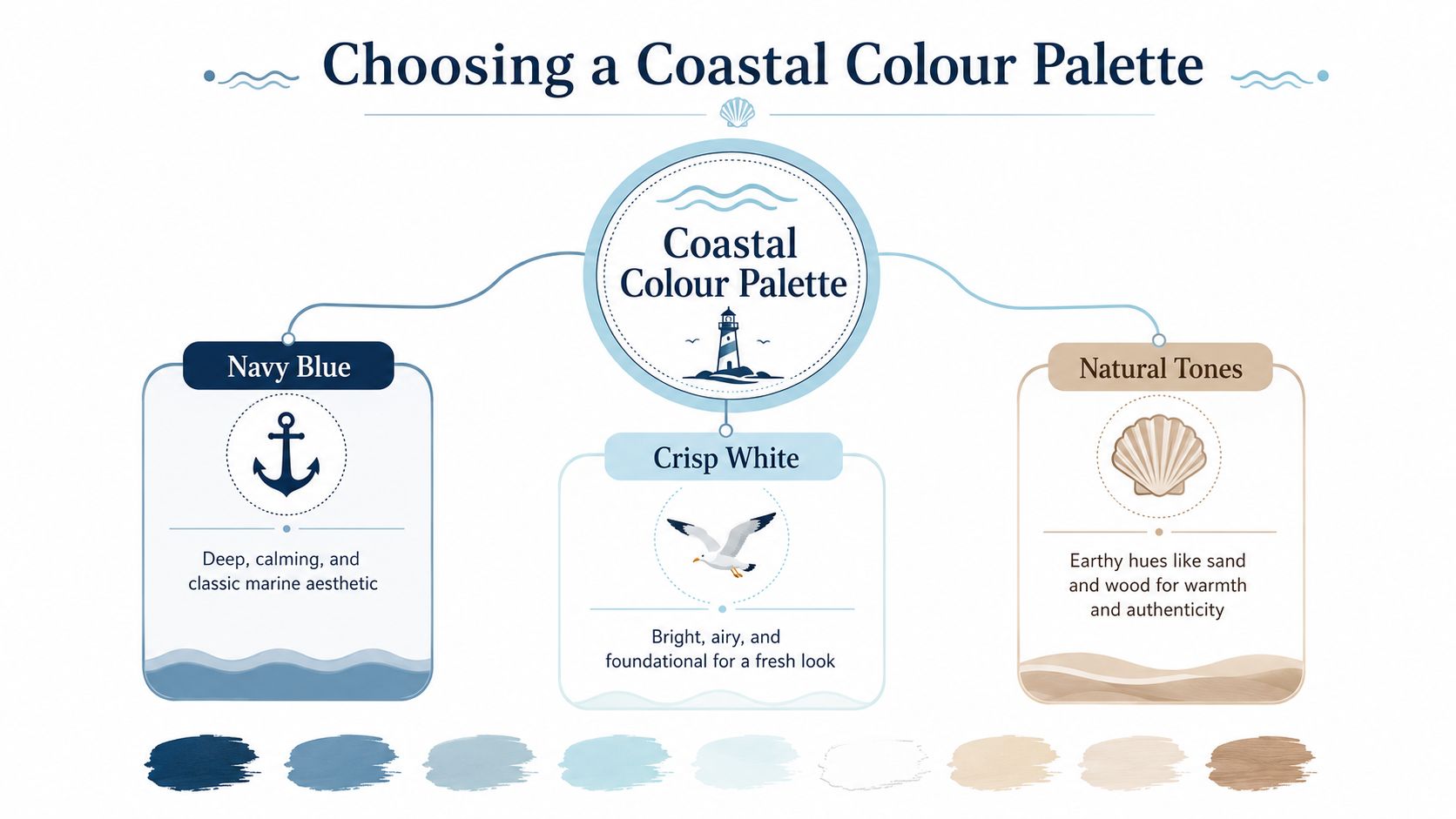
A limited palette is what makes nautical table decor look polished instead of random. If you throw every beach colour onto the table, the eye bounces around and the whole setting loses its calm. Stick to navy blue, crisp white, and natural tones, then let the materials do the rest of the work. That restrained mix is the core visual language of nautical decor, with anchors, rope, driftwood, stripes, and ocean-life imagery reinforcing the theme rather than fighting it. Nautical decor overview
How to balance the colours
Use the 60-30-10 approach as a simple visual check. Keep about 60% neutral, 30% secondary colour or texture, and 10% accent colour, while keeping the overall height low enough for easy conversation across the table. That rule comes from polished tablescape guidance, and it works because it stops the table from becoming top-heavy or visually noisy. Tablescapes as an art
For a VW collector, this palette is a gift. Navy and white frame a Volkswagen Beetle model beautifully, while a Kombi's red, cream, pastel, or surf-inspired paintwork pops against neutral linen and sand-toned pieces. The classic VW shapes already carry the nostalgia, so the table shouldn't compete with them.
Here's the simplest way to test the palette before you commit:
- Lay the textile first. Start with a white, natural, or navy base so the table reads calm from the edge of the room.
- Add one dominant tone. Navy works best if you want a crisp maritime look, while white keeps things airy.
- Reserve accent colour for the smallest items. A tiny flash of red from a VW diecast or a pale seafoam napkin keeps the eye moving without breaking the theme.
Good styling is subtraction. Every colour you remove makes the final look more confident.
If you're unsure, place your items in natural daylight and step back. If the table still looks balanced from a few metres away, the palette is doing its job.
Selecting Textures and Tableware
The table feels coastal when your hand notices the materials before your eye notices the props. That's why linen, rope, wood, and ceramic matter more than extra trinkets. A practical AU-relevant nautical setup is built around a constrained maritime material system, because tactile contrast is what makes it read as coastal rather than just blue. Table-setting in a nautical style
Build the base first
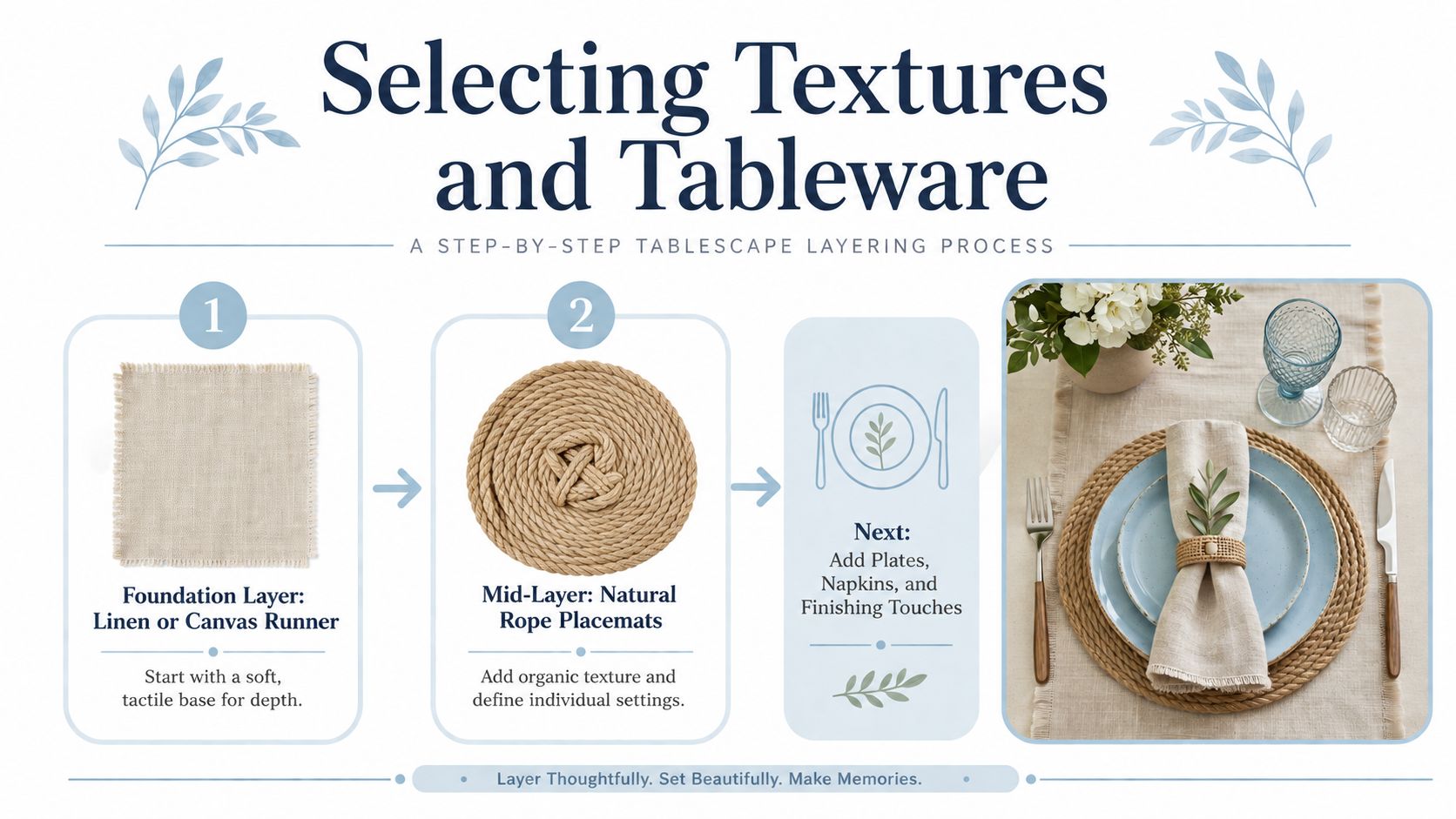
Start with a linen or canvas runner. That gives the table a soft foundation and stops the surface from feeling stark. A jute table runner is a strong choice if you want something with a bit more texture and a slightly earthier coastal feel.
Then layer in rope placemats or a woven charger if you want each setting to feel framed. Don't overdo the hard nautical cues. You're after texture, not a ship's chandlery display.
Choose tableware that supports the scene
White porcelain or blue-rimmed plates are the cleanest options because they echo the palette without stealing focus. Low-profile glassware keeps the sightline open, which matters once you add a model Kombi or a shell bowl to the centre. Brushed silver or aged brass flatware works too, but only if the finish stays quiet.
A few sharp choices beat a pile of themed objects every time:
- Linen runner. Soft, simple, and easy to style around.
- Rope placemats. Enough texture to signal coastal without shouting.
- White or blue-rimmed plates. Clean shape, classic look.
- Anchor or fish accents. Use sparingly, on napkin rings or serving pieces.
- Low glassware. Keeps the table open and conversational.
That's the whole game. Let the tactile layers do the storytelling, then place the VW memorabilia where it can be seen clearly, not buried in clutter.
Creating Centrepieces with Shells and VW Collectibles
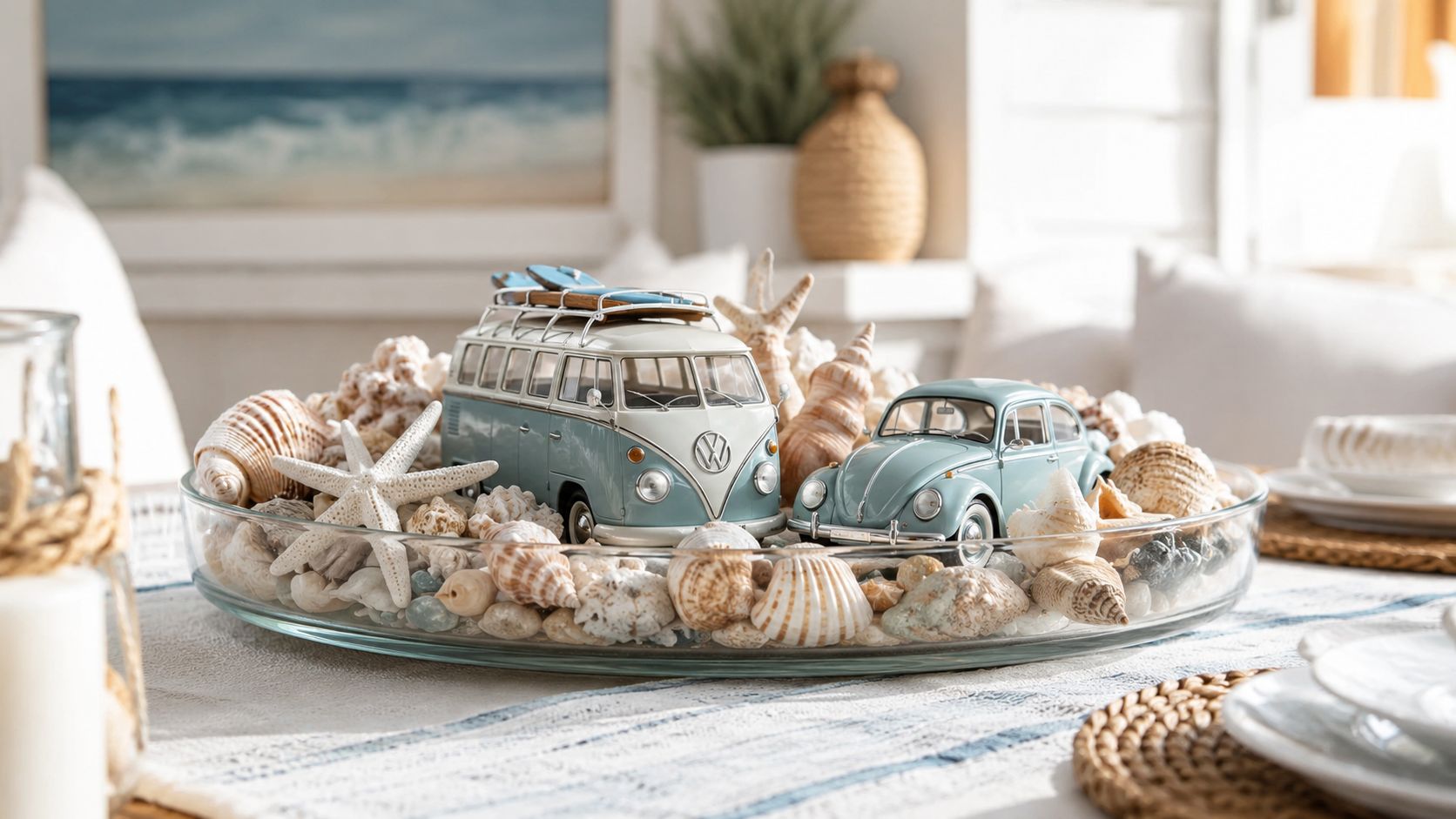
The centrepiece is where the tablescape either lands beautifully or tips into chaos. Keep it low, keep it anchored, and give the eye one clear object to settle on. A shallow glass bowl, a sand-filled vase, or a low tray gives you a base that can handle shells, driftwood, and a Kombi Samba Bus diecast without blocking the view across the table. Marine-decoration catalog categories
Build around one focal object
Marine-decor assortments are usually organised around defined product families, like model ships, lighthouses, knot frames, and nautical replicas. Use that logic at table scale. Pick one primary focal object, for example a model Kombi, a lantern, or a small ship, then support it with shells or rope rather than competing focal points.
That approach keeps the arrangement readable. If you add too many sub-themes, the table starts to feel eclectic instead of nautical. One clear story is always stronger than five weak ones.
Keep the arrangement low and balanced
Drop a few natural shells into the bowl, add a driftwood piece, then nestle the diecast slightly off-centre so it feels placed rather than staged. A starfish can work if it's secured well and doesn't look like an afterthought. If you want evening ambience, a small lantern cluster beside the bowl gives you glow without raising the height.
A simple arrangement order works best:
- Place the base. Use the tray, bowl, or sand-filled vase.
- Set the focal object. Put the Kombi Samba Bus or Beetle model where it can be seen from multiple angles.
- Add texture. Shells, driftwood, and rope come next.
- Check the height. If guests can't see each other, trim it back.
A Beetle model gives the arrangement a more compact, retro feel. A Kombi adds the surf-culture mood. Both fit the same scene, so choose the one that suits the table's personality. For a longer dining table, the dining table decor category is the neatest way to keep the styling tied together without overfilling the space.
Adapting Decor for Seasons and Budgets
The best coastal tables aren't locked to one look. They shift with the weather, the mood, and the occasion, which is exactly why they work so well for Australian homes. The modern version of the style leans toward natural textures, restrained palettes, and layered neutrals rather than loud anchor-and-shell overload, so you can keep the look current without losing the seaside feel. Coastal inspired accent table
Budget-friendly versus premium pieces
If you're building a table on a tighter budget, start with mixed shell sets, painted driftwood, linen napkins, and a single diecast focal piece. Those items give you the mood without draining the wallet. If you want a more refined finish, hand-blown glass buoys, solid brass lanterns, and heavier ceramic serveware lift the whole scene.
The smart move is to buy the pieces that work hard every time, then rotate the decorative extras. A quality runner, durable tableware, and one good focal object will outlast a drawer full of novelty bits.
Seasonal swaps that still feel nautical
Summer wants lighter energy. Think crisp whites, pale blues, seafoam accents, and a looser arrangement with more breathing room. Winter asks for deeper tones, so grey linens, storm-blue accents, and darker wood pieces make the table feel grounded without turning heavy.
Seasonal styling works best when the palette shifts, not the theme. Keep the maritime story, change the temperature.
You can also repurpose VW bits with a bit of humour and sentiment. A small Beetle key ring can work as a place marker, and a miniature van can sit beside a guest's napkin as a casual conversation starter. That's how you make the table feel personal without loading it with extra purchases.
Where to Source Durable Decor in Australia
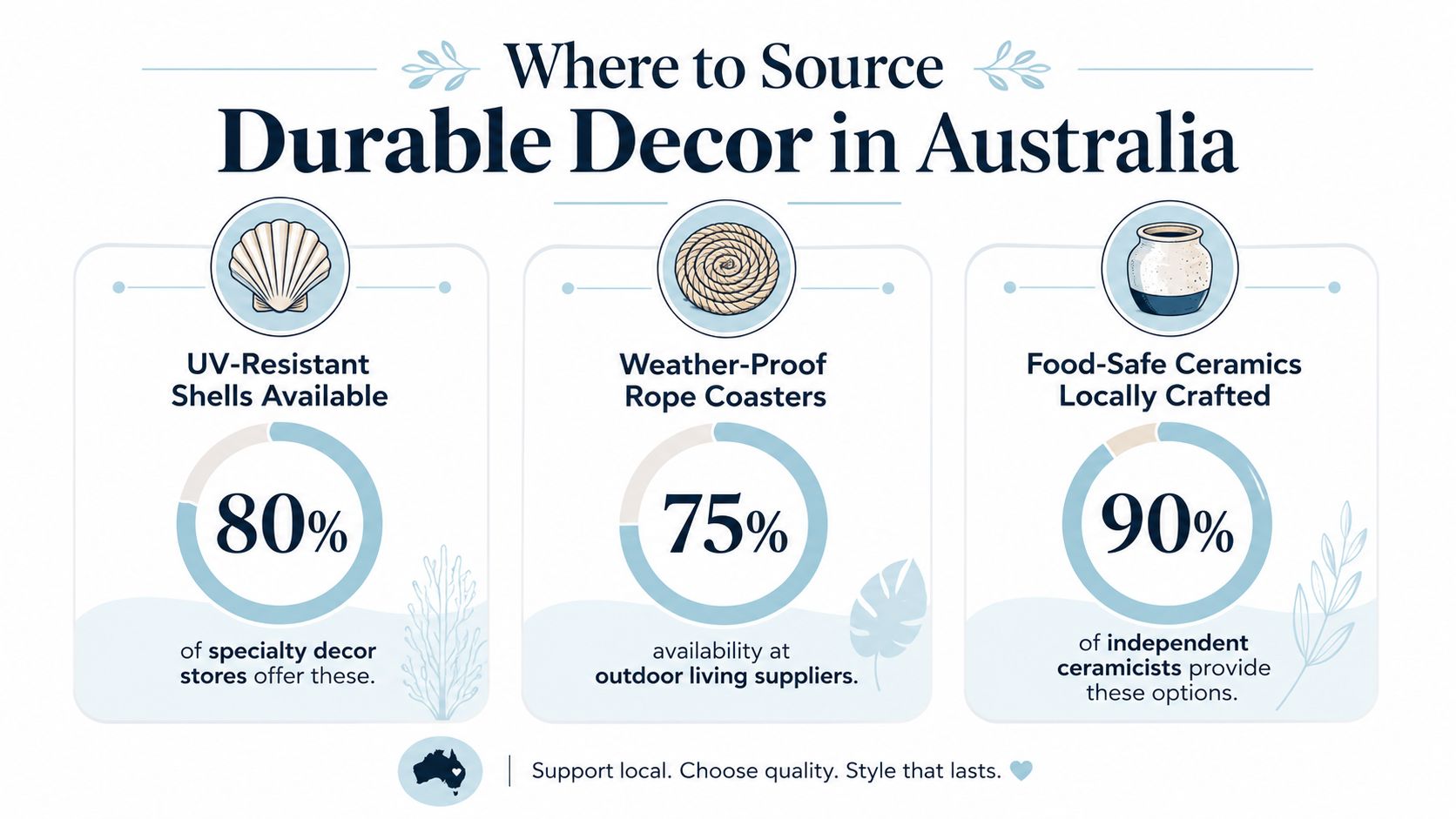
Durability is the big missing piece in most nautical decor advice, especially for Australian outdoor entertaining. Humidity, strong UV, and constant in-and-out dining demand materials that won't look tired after one season. Most guides stay on the surface, but outdoor settings need pieces that are easy to clean, stable in heat, and sensible around food. Yacht table decor beginner's guide
What to buy for Australian conditions
Choose food-safe ceramics, sealed wood, and rope pieces that can be wiped down without fuss. Shells and driftwood look right, but they need to be used as accents, not fragile centre-stage pieces that will be knocked around during service. For model cars and vans, look for finishes that won't be handled roughly or left baking in direct sun for hours.
A simple maintenance routine is enough. Rinse salt exposure off outdoor pieces, use a gentle detergent where needed, and store anything delicate inside when the weather turns rough. That's not fussy, it's sensible.
Why local sourcing helps
Australian importers have the edge because local stock reduces waiting and keeps replacement simple when you need it fast. For gift buyers and collectors, that's a real advantage, especially if you're trying to line up a table for an event or a weekend catch-up. A local source also makes it easier to match a diecast model to the rest of your decor while keeping the look cohesive.
Use the rules below when you shop:
- Outdoor settings: prioritise wipe-clean finishes and stable materials.
- Food-adjacent decor: keep ceramics and serveware clearly food-safe.
- Feature pieces: choose one strong model or lantern rather than several small distractions.
- Sun exposure: keep delicate items shaded, because UV is unforgiving.
That approach is more practical than chasing every trend piece you see online. The table needs to survive Australian conditions first, then look good second.
Bringing It All Together and Next Steps
The strongest nautical tables are built in layers. Lock in the navy, white, and natural palette, add linen and rope for texture, keep the centrepiece low, and use a VW Kombi Samba Bus or Volkswagen Beetle model as the personality piece. Once you do that, the table feels modern, coastal, and nostalgic at once, which is exactly the right mix for an Aussie home or car-show gathering.
Before you call it done, check three things, balance, sightlines, and material durability. If the arrangement feels calm from across the room and still looks good up close, you've nailed it. For more ways to finish the look with locally sourced pieces, head to Volkswagen Memorabilia and choose the accents that suit your table best.