


A mate of mine once rolled his Bay Window into a dusty servo outside a tiny outback town, smiling like he'd just won TattsLotto, only to find the bowser taped off and the next fuel stop a very long stretch away. The grin came back when he swung open the rear carrier and pulled out two full cans, because the trip was still on and the sunset camp still happened.
The Ultimate Symbol of Kombi Freedom
A classic Kombi always promises more than transport. It promises that old feeling of following the road just to see where it bends, windows open, warm air coming through the cabin, a board on the roof and a kettle rattling in the back. In Australia, that promise means long distances too, and long distances can turn romance into arithmetic very quickly when the fuel gauge starts playing games.
That's why a double jerry can holder has such a place in the touring story. It isn't glamorous hardware on its own. Yet in the life of an old VW, it becomes part of the folklore, right alongside the striped camp chairs, the enamel mugs and the map folded badly into the glovebox.

The connection between old Volkswagens and Australian road culture runs deep. The Volkswagen Beetle was formally introduced to the Australian market in 1953, with local assembly kicking off in Clayton, Victoria, just a year later, cementing its place in Australia's automotive culture, as noted in the Volkswagen Beetle history entry. Once Beetles and Kombis settled into local life, they became more than imported curiosities. They became beach cars, camping rigs, family runabouts and memory-makers.
Why this bit of gear matters
A Kombi asks you to travel with intention. You pack carefully. You listen to the engine. You pay attention to wind, heat and hills. Adding spare fuel fits that same old-school rhythm.
Practical rule: If your trip depends on one fuel stop being open, your trip needs a better backup plan.
For many VW owners, the double holder becomes the difference between staying relaxed and watching the dashboard with a knot in your stomach. It protects the spirit of the trip. That's its primary purpose.
The freedom machine in one glance
- More confidence: You can head beyond the usual town-to-town loop.
- Better trip planning: You're less tied to hoping every roadhouse is operating when you arrive.
- A stronger touring setup: The holder turns a charming classic into a more capable adventure companion.
That's why this humble accessory belongs in the same conversation as the Kombi itself. It keeps the journey open.
Choosing Your Holder Styles and Materials
Some gear suits a lifted four-wheel-drive but looks like a gate hinge bolted to the back of a Splitty. A classic VW needs practicality, yes, but it also needs a bit of visual sympathy. The right holder should look purposeful rather than clumsy.
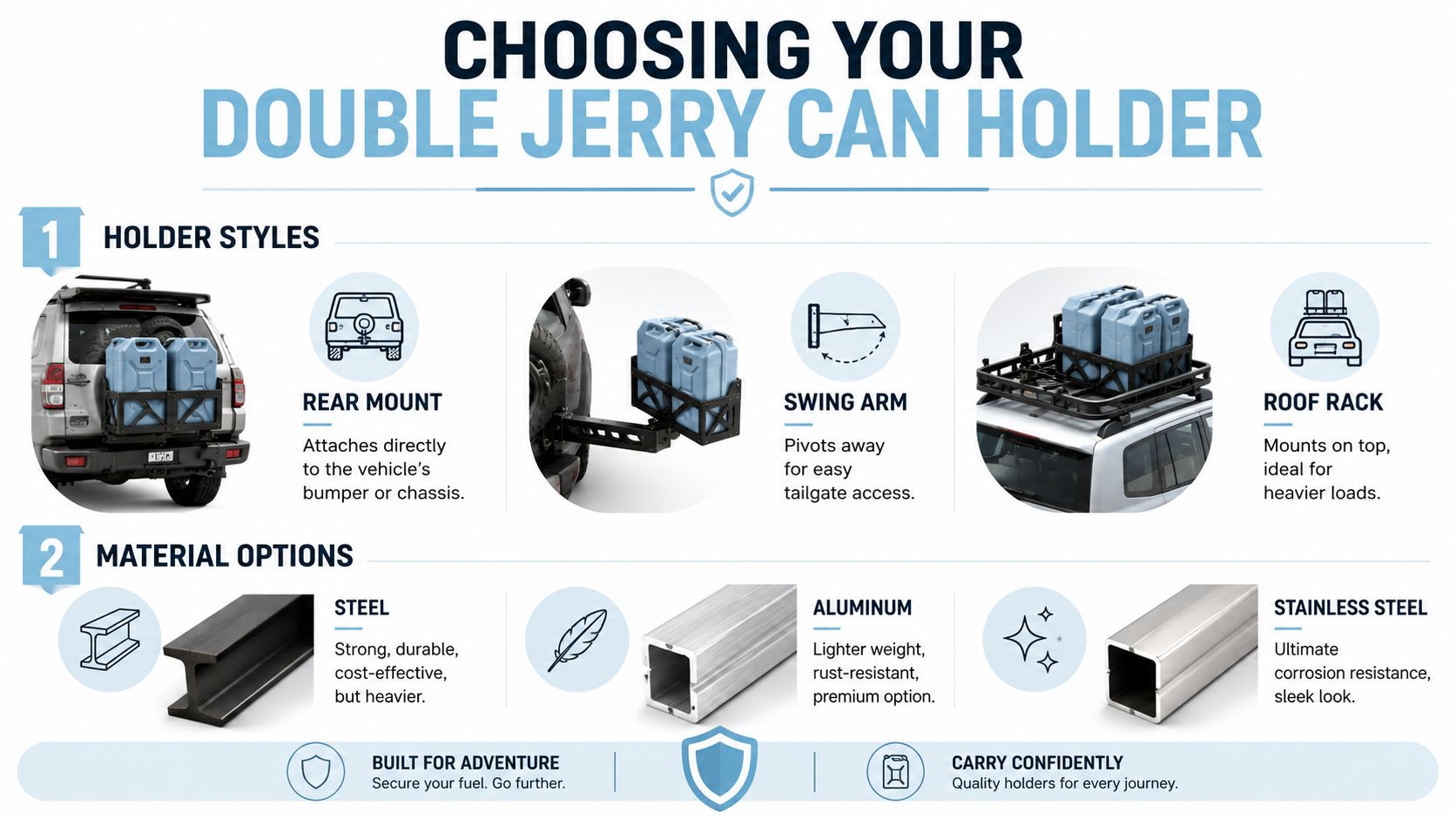
The main holder styles
Three layouts come up most often when enthusiasts talk about carrying extra fuel on touring vehicles.
| Style | Where it suits best | What to watch |
|---|---|---|
| Rear mount | Vans and utes with strong mounting points at the back | Check access to engine lids, doors and lights |
| Swing arm | Touring setups where rear access matters | Hinges and latches need to stay tight and clean |
| Roof rack mount | Vehicles already set up for roof storage | Higher lifting effort and extra weight up top |
A rear mount tends to look the most natural on a Kombi because the weight sits lower and the cans are easy to reach. It can also echo the period-correct touring look many owners love.
A swing arm setup is clever if you still need to get at the back regularly. For campers and weekenders, being able to move the carrier out of the way without unloading everything is a big win.
A roof rack mount can work, especially if your VW already wears a rack as part of its personality. Still, fuel up high changes the feel of the vehicle, and lifting full cans overhead isn't everyone's idea of a pleasant roadside stop.
Keep the clean lines of the car in mind. On a classic VW, the best accessory often looks like it belongs there even when it's doing a hard job.
Steel, aluminium or stainless steel
Material choice is where utility and style really meet.
- Steel: Tough, familiar and usually the easiest on the wallet. It suits owners who value ruggedness and don't mind a bit more heft.
- Aluminium: Lighter and naturally attractive for anyone trying to keep extra mass under control. It often feels like the smarter choice where weight matters more than brute toughness.
- Stainless steel: The polished old pro of the bunch. It offers strong corrosion resistance and a tidy finish, though it usually sits in the premium end of the conversation.
Steel is the work boot. Aluminium is the running shoe. Stainless is the nicely polished RM Williams pair you still expect to survive a bit of weather.
Matching the holder to the VW look
If your Beetle or Kombi wears original-style trim, hubcaps and soft pastel paint, a bulky industrial carrier can look out of place. If your bus is more adventure-spec, with roof rack, awning and camping gear, a sturdier black-finished holder might look spot on.
A good rule is simple:
- For touring authenticity: choose a tidy rear-mounted style with understated hardware.
- For practical camping use: prioritise access and durable construction.
- For show-and-drive pride: pick a finish that complements the vehicle's colour and period feel.
The holder shouldn't steal the scene. It should support it.
Mounting Tips for Your VW Kombi or Beetle
Classic Volkswagens are charming because they weren't designed like modern SUVs with accessories in mind. That means mounting a double jerry can holder takes more thought than just grabbing a drill and hoping for the best. On a Kombi, access matters. On a Beetle, proportions matter even more.
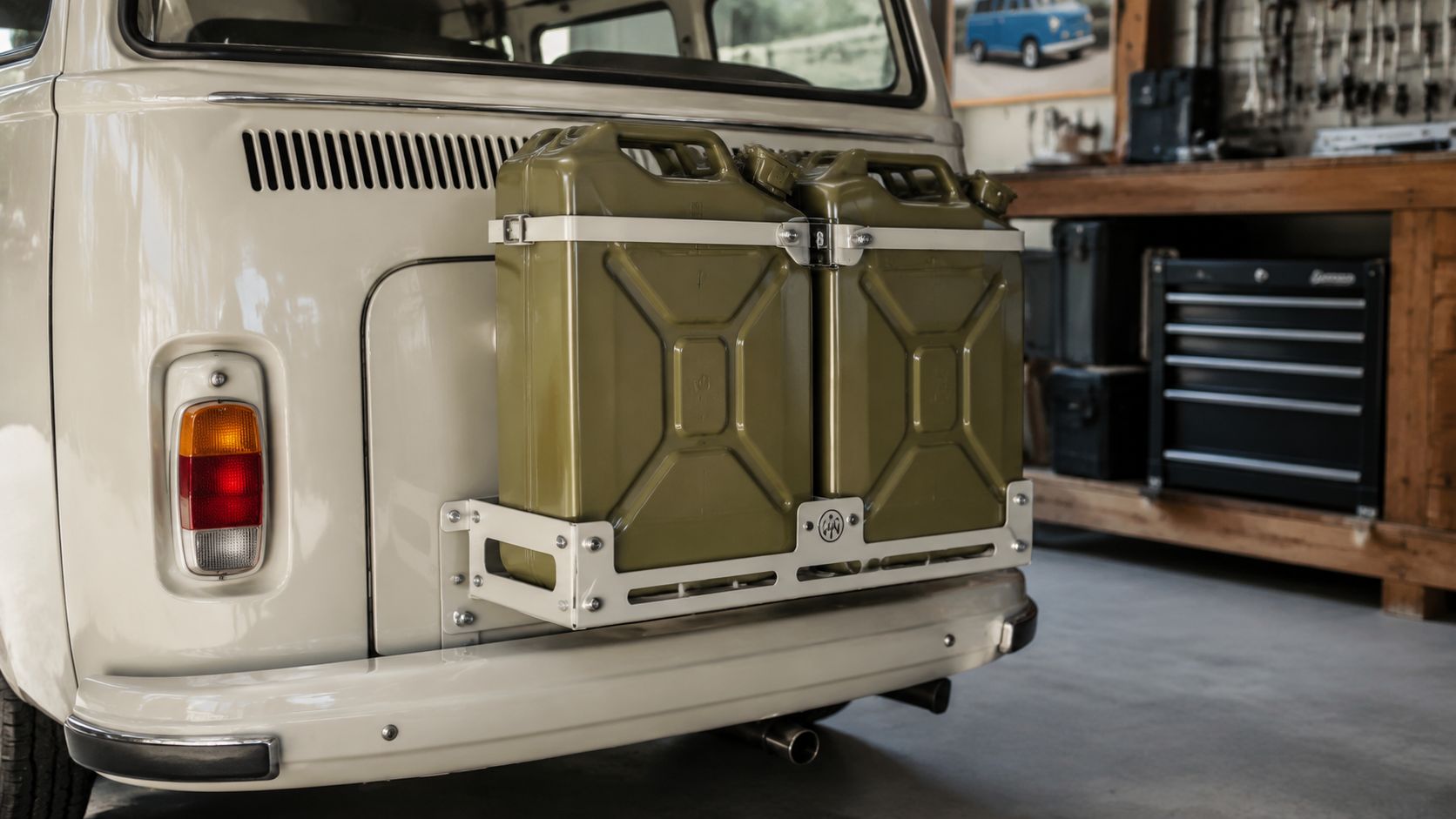
Kombi mounting points that make sense
A Type 2 gives you more room to work with, but each version has its own quirks. Split Screens and Bay Windows both reward careful placement.
For a Kombi, think about these points before you commit:
- Rear access first: If the holder blocks the engine lid or rear hatch, routine checks become a nuisance.
- Weight close to structure: Mounting should tie into strong points, not just thin body panels.
- Departure angle: If the holder sits too low, the first steep driveway or spoon drain will remind you.
A rear swing-away arrangement often suits a touring bus because it keeps fuel outside the cabin and leaves the interior free for camping gear. The trick is making sure the opened carrier still gives you enough space to work around the back of the van.
Splitty versus Bay Window
A Splitty has that wonderfully upright rear, and almost every accessory shows. That means neatness counts. A simple, symmetrical setup usually looks better than anything overbuilt.
A Bay Window can wear a slightly sturdier arrangement without looking awkward. Its broader rear profile tends to absorb the visual weight of a carrier more gracefully.
If the mount looks like an afterthought, it probably was. Take the extra time to line it up, brace it properly and check how it opens with the vehicle loaded.
Beetle solutions that respect the shape
A Beetle is trickier. You're working with one of the most recognisable silhouettes ever sold here. Hanging too much off the tail can spoil both the look and the balance.
Some owners look at spare-wheel-adjacent solutions or custom rear mounting ideas, but the same rule always applies. Don't ask thin vintage metal to do a chassis job. If you're carrying fuel externally, the support needs to be up to the task.
For owners thinking through brackets, force distribution and safe support, the ideas around high-lift jack bracket mounting options are worth browsing because they sharpen your eye for strong attachment points and sensible load paths.
Workshop checklist before first use
- Cycle every opening panel with the holder fitted and loaded as intended.
- Check latch and hinge movement after a short local drive on mixed roads.
- Inspect for flex around mounting points, especially on older bodywork.
- Retighten hardware after the first few trips because vibration will find any weakness.
The prettiest setup in the club car park means nothing if it rattles loose on corrugations. Mount it like you plan to trust it.
Sizing Capacity and Safe Fuel Transport Rules
Fuel is one area where old-car charm shouldn't lead the decision-making. The right setup has to be secure, sensible and legal. If you treat fuel carrying casually, you're gambling with the vehicle, your passengers and everyone else on the road.
A common double jerry can holder is designed around two standard 20L jerry cans, giving a total load of 40L, and many designs use gas struts to help manage weight and reduce swinging on rough ground, as described in the Kaymar Left Double Jerry Can Holder listing. That figure gives Kombi owners a straightforward mental picture of what the carrier is meant to handle. It also underlines why mounting quality matters so much.
Safe transport habits worth sticking to
You don't need drama to learn these lessons. You just need to be disciplined.
- Use approved containers: Don't carry fuel in makeshift vessels or old cans with questionable seals.
- Secure the load properly: Straps, latches and locking points should stop movement in all directions. The gear in tie-down ratchet cargo securement is a useful reminder that restraint matters just as much as the holder itself.
- Keep fuel outside the cabin: In a Beetle or Kombi, fumes and spills have no place near passengers, bedding or cooking gear.
A simple risk check before you leave
| Check | Why it matters |
|---|---|
| Seal condition | Stops leaks and vapour escape |
| Holder latch tension | Prevents bounce and side-to-side movement |
| Clearance from hot components | Reduces fire risk |
| Load balance | Helps the vehicle stay predictable on the road |
Carrying extra fuel isn't just about extending range. It's about doing it without creating the very emergency you were trying to avoid.
If you're unsure about local transport requirements for fuel where you live or travel, check the relevant state or territory guidance before the trip. Rules can differ, and this is one area where “she'll be right” doesn't belong.
Keeping Your Gear Classic Maintenance and DIY
A salty coastal breeze can make even a tidy VW owner slightly paranoid, and for good reason. Metal accessories live a hard life. They catch road grime, moisture, fuel splashes and whatever the last muddy campsite threw at them.
Small maintenance jobs that pay off
The nicest holders I've seen at shows aren't always the newest ones. They're the ones owners keep after. A rinse, a dry-off and a close look at hinges and fasteners can save a lot of grief later.
Try this routine:
- After dusty trips: Wash off grit before it starts wearing moving parts.
- After beach runs or wet roads: Dry the unit properly and check for early rust stains around bolts.
- When paint chips appear: Touch them up early, before surface rust gets a foothold.
A classic VW teaches patience. The same habit that keeps a Kombi's paint gleaming will keep a fuel carrier respectable for years.
The DIY temptation
VW people are resourceful. Someone in every club can fabricate brackets, weld tabs and make an accessory from raw stock over a weekend. That spirit is part of the culture, and it deserves a nod.
Still, a fuel carrier isn't the place for guesswork. If you're building or modifying one, strength, latch security, alignment and long-term corrosion protection all matter. So does the way the whole assembly behaves on bumpy roads. If your setup also ties into broader camping or touring storage, looking through van fit-out utility systems can help you think more cohesively about how your gear works together.
The sweet spot is simple. Build carefully if you know exactly what you're doing. Buy quality if you want confidence without experimentation. Either way, maintain it like it belongs on the vehicle, not hanging off it as an afterthought.
From Real Adventures to Timeless Collectibles
A mate of mine keeps a faded photo in his garage. It shows his orange Bay Window at a servo outside Broken Hill, two fuel cans strapped on the back, kids barefoot in the dirt, kettle already on the boil. On the shelf below sits a little diecast Samba with the same cheerful stance and the same promise of miles to come. That pairing says more about Volkswagen life than any brochure ever could. The holder carried the trip. The model kept the memory.
A double jerry can holder earns its place in that story because it speaks the language old VWs have always spoken. Go a bit farther. Stay a bit longer. Leave room for the detour to the beach, the camping spot by the river, or the gravel road that looked too good to pass by. In a Kombi or Beetle crowd, practical gear has never been separate from sentiment. The touring bits become part of the folklore.
Analysts at Market Intelo link growing interest in jerry can holders with adventure travel and off-road recreation. You can see that shift at any weekend meet. Alongside polished hubcaps and old enamel signs, there is real affection for the accessories that made these cars into freedom machines.
Why collectors get it straight away
Collectors rarely fall for perfect metal alone. They fall for a scene.
A small Kombi model with a roof rack, a fuel can, and a sun-faded paint scheme can bring back a whole chapter of life. Early starts. Hot vinyl seats. The smell of petrol and instant coffee. A stop on the side of the road while someone digs out a map and swears the campsite is only ten minutes away. The holder on the working vehicle and the miniature on the shelf belong to the same tradition. One helped write the yarn. The other keeps it within reach.
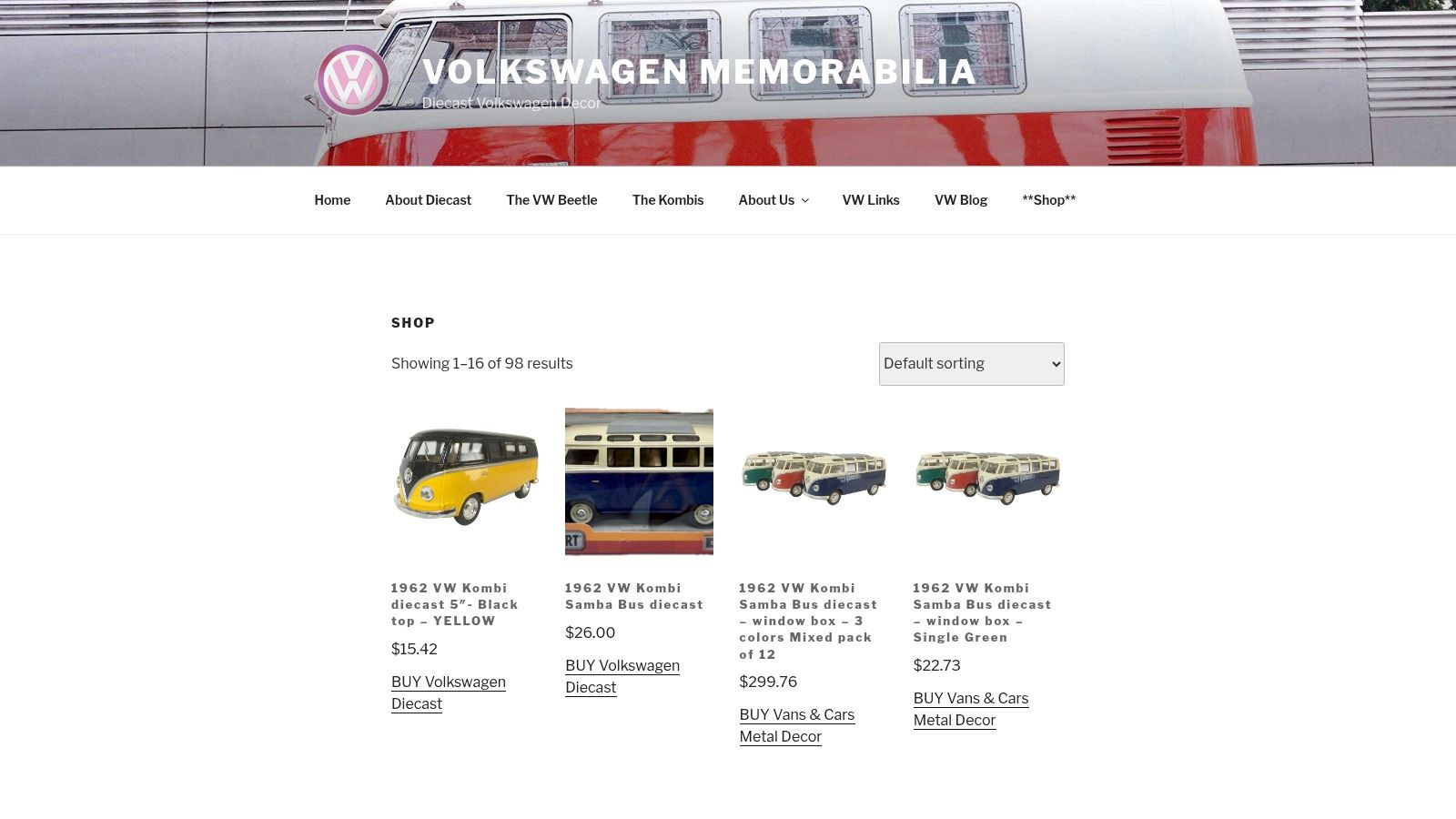
Display ideas that feel like a real VW life
- Match the model to the trip: Set a diecast Kombi beside an old campsite photo, a rally badge, or a dog-eared road map.
- Build a proper bench vignette: A Beetle model, an enamel mug, a spare key tag, and a vintage petrol tin give the shelf the feel of a shed with stories in it.
- Show the family resemblance: Mix Beetles and buses together, especially if your real-world VW history has included both.
People hunting for VW Kombi diecast Australia, Volkswagen Beetle model, buy diecast Kombi, VW memorabilia collectibles, or Volkswagen diecast models for sale are usually chasing that same spark. They want something solid in the hand that brings the road back into the room.
FAQ
Does a double jerry can holder suit every classic VW
No. Kombis usually give you more realistic mounting options. Beetles need more careful thought about access, balance, and structure.
Is a roof rack holder a good idea for a Kombi
It can work, though lifting fuel that high is a chore and the added weight changes how the van feels. Plenty of owners prefer rear-mounted setups for easier handling.
Can I build my own holder
Yes, if you know your way around fabrication and can get the mounting, latch security, and corrosion protection right. Fuel gear deserves careful work, not rough guesswork.
Why does this matter to VW collectors
Because the hardware is part of the legend. A holder, a rack, a weathered can, and a bus pointed toward the coast all belong to the same picture collectors have loved for decades.
If those road-trip scenes sound familiar, have a wander through Volkswagen Memorabilia and browse the locally stocked range of VW diecast models, Kombi pieces, Beetle collectibles, and other shelf-friendly reminders of why these old cars still tug at people's hearts.