


The tissue box is usually the last thing anyone thinks about on a carefully styled side table. There's a bright cardboard carton beside the coffee, a favourite Kombi diecast on the shelf, and perhaps a few coastal treasures gathered after a weekend by the water. The clash is small, but obvious.
A wood tissue box cover fixes that awkward detail while adding another tactile, handcrafted piece to the room. Built around the tissue boxes you buy in Australia, it can echo the warmth of timber dashboards, surf wagons and relaxed coastal interiors without competing with your Volkswagen collection.
Why a Wood Tissue Box Cover Belongs in Your VW Display
A tissue box cover earns its place when it makes an everyday object feel intentional. A plain carton can interrupt a display built around a Volkswagen Samba Bus, a Beetle replica and a few nautical accents. Timber softens that interruption. Its grain, weight and natural colour sit comfortably beside painted metal, glass, rope and weathered furniture.
The idea has plenty of retro history behind it. Tissue box covers became a significant gift and homeware category during the 1960s and 1970s, with wood among the common materials used, as described in this history of tissue packaging and decorative covers. That timing feels right for VW enthusiasts, because the decorative cover belongs to the same broad mid-century world as optimistic colours, practical design and homes styled around personality rather than uniformity.
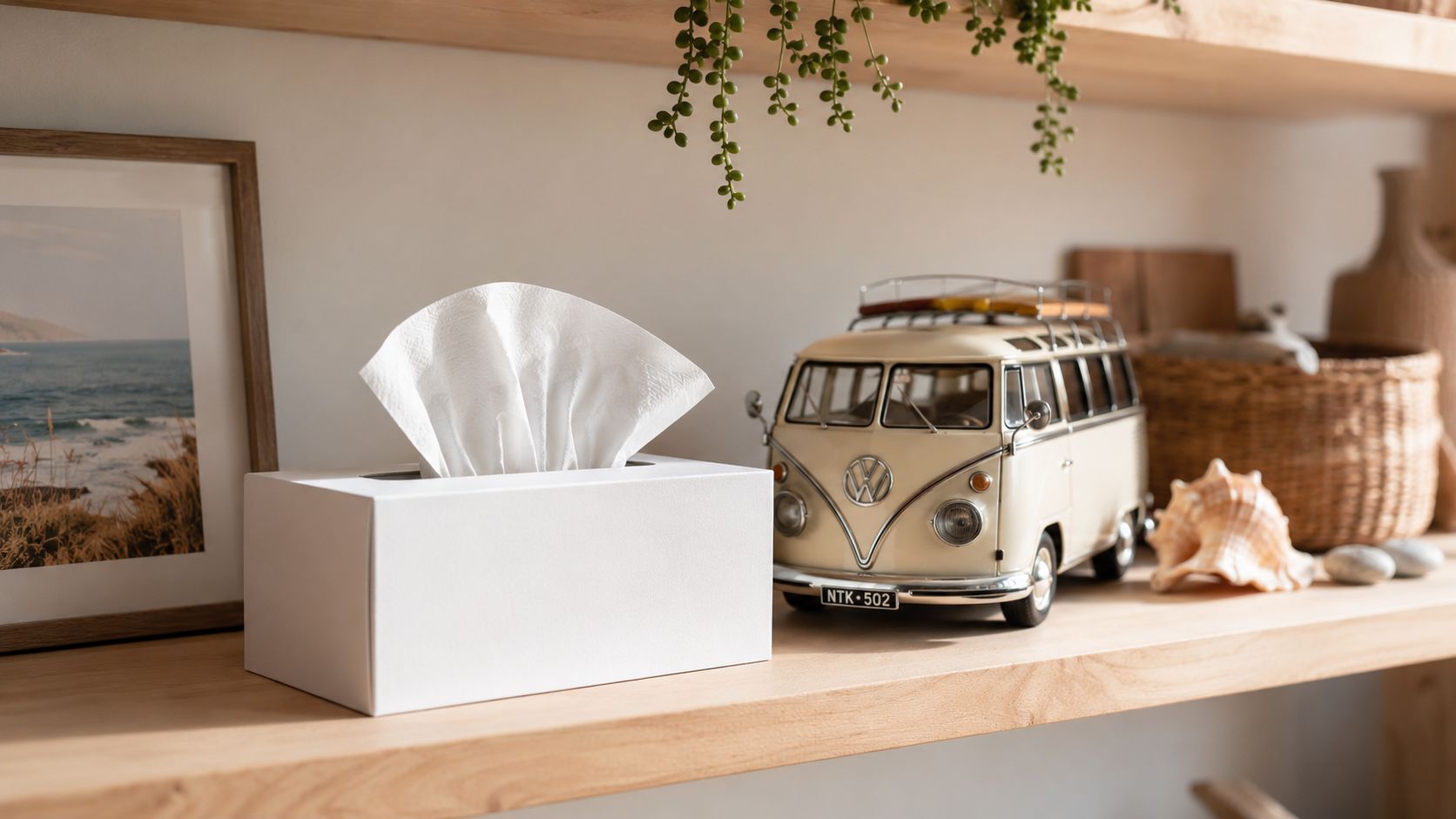
A small project with plenty of character
On a cluttered side table, a timber cover creates a visual bridge. A pale finish can pick up the cream of a classic Kombi, while a richer stain works with red Beetle paint or aged leather. Add a surfboard print, woven mat or small piece of nautical décor and the arrangement starts to feel collected rather than merely occupied.
Australian homewares retailers position tissue boxes within broader home organisation and storage ranges, not as a standalone household necessity. Marketplace listings also show a wide spread of tissue-box holder formats, which reinforces the practical point: shoppers are choosing these covers for convenience, styling and gift appeal as much as for concealment. The local market is small and fragmented, but wood tissue box covers clearly sit within Australian decorative homewares.
A handmade cover also gives collectors room to personalise. Leave the timber clear, add a discreet engraved VW motif, or paint a small panel in ocean blue. The best result doesn't look like a novelty prop. It looks like a useful piece of furniture that happens to share the same free-spirited outlook as your favourite Volkswagen.
Choosing Timber and Sizing Your Cover
Measure the tissue box before choosing timber. An external cover size of 24.5 cm × 13.5 cm × 11 cm provides a useful starting point for standard supermarket tissue boxes, as shown in this Australian marketplace sizing example. Confirm the dimensions of the box in your home, because packaging varies. Allow enough clearance for the cover to slide on and off without catching the carton.
Select stable, locally familiar timber
Tasmanian oak and Australian chestnut both suit a VW display or coastal-retro room. Tasmanian oak has a clean, adaptable surface for a clear finish or paint. Australian chestnut brings warmer grain and a more settled, nostalgic feel beside timber shelving, surf colours or a vintage Kombi model. Choose boards for straight grain, sound edges and consistent thickness, rather than colour alone.
Australian dressed-all-round stock commonly includes widths of 116 mm, 90 mm, 70 mm, 42 mm and 35 mm, according to this Australian timber sizing guide. Selecting stock close to the panel width reduces ripping and limits the small errors that accumulate across four walls.
| Timber Width | Best Use in Cover Build | Notes |
|---|---|---|
| 116 mm | Taller side panels or broad outer walls | Adds visual weight beside larger display pieces |
| 90 mm | Main side walls for many standard boxes | A practical starting width for compact covers |
| 70 mm | Narrower side sections or trim | Suits a lighter, less bulky profile |
| 42 mm | Rails, edging and small frame pieces | Useful for a defined top frame |
| 35 mm | Fine trim and decorative details | Creates a slim accent around a retro-style cover |
Match the timber width to the display. Broader walls look grounded beside a scale VW bus, while narrower stock keeps a small shelf arrangement light and uncluttered.
Control moisture before cutting
Specify timber near an in-service equilibrium moisture content of about 8 to 14%, and install it within ±2% of that target to reduce warp, shrinkage and joint failure in Australian conditions, as explained in this Australian timber moisture guide. Store the boards in the room where the finished cover will live before machining. Measure the stock rather than trusting its appearance, since a dry-looking board may still move.
Moisture above 20% creates a fundamental risk of fungal decay and mould growth in construction-grade wood products. Wet stock is a poor choice for a small precision project, because the top opening and lid fit rely on stable dimensions.
Build slightly oversize where practical, then trim for the final fit. Corner thickness adds up quickly, and dressing tolerances can turn a seemingly generous cavity into a tight fit once all four walls meet. Leave enough internal space for easy removal, especially if the cover will be handled while rearranging VW memorabilia or coastal décor.
Building the Cover from Cut to Assembly
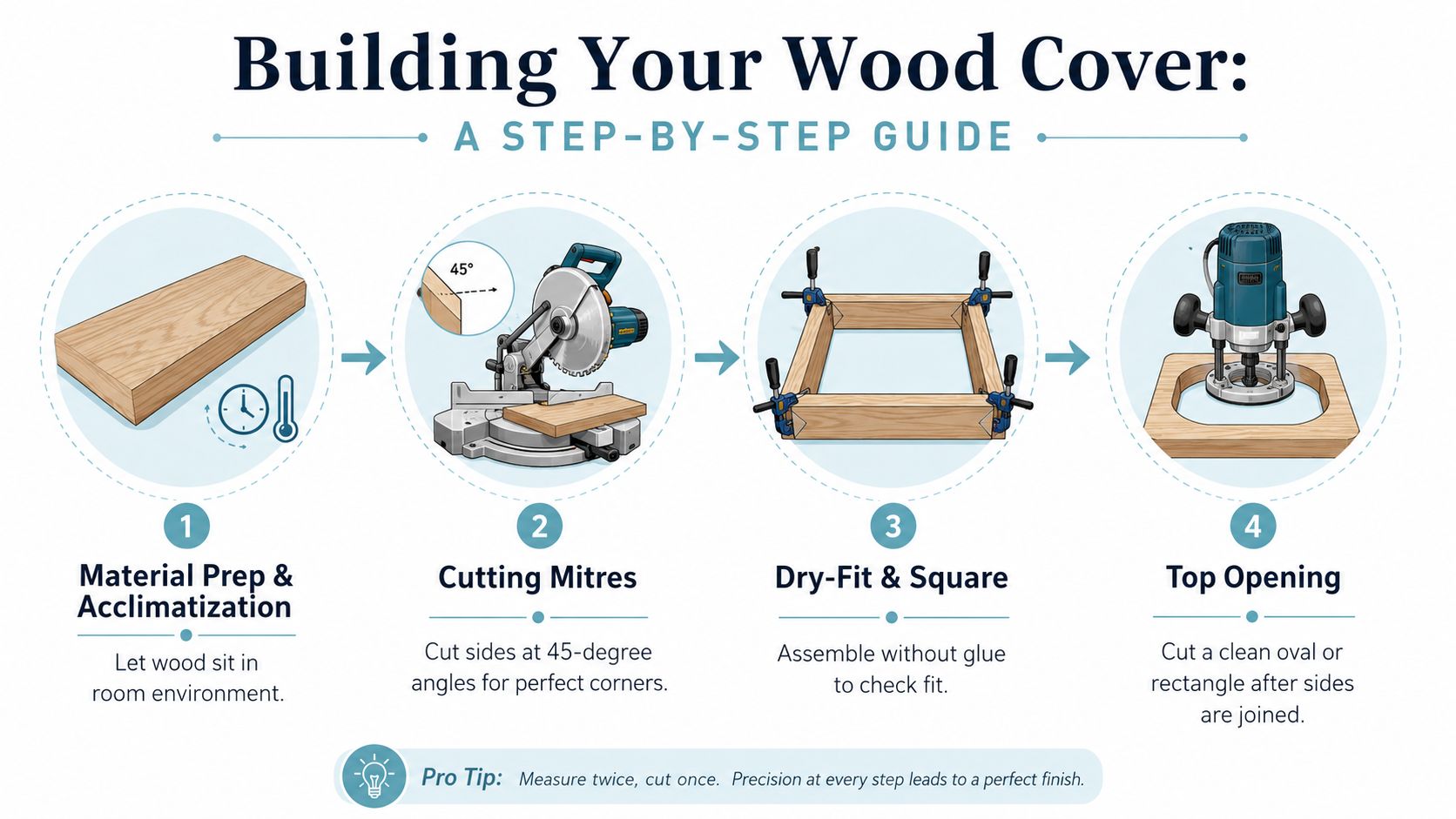
A tidy cover comes from the order of the work. Cut the panels, join the walls, check the fit, then cut the tissue opening. Cutting that aperture first can leave a polished cover that does not suit the actual tissue box or pack.
Prepare and cut the panels
Mill or buy dressed stock close to the required panel widths. Mark each piece before cutting. Mitred parts may look identical until the grain direction, colour or finish reveals a mismatch. Keep the best-looking grain for the front face, especially when the cover will sit beside a scale VW bus or a small coastal-retro display.
Cut the side walls with accurate mitres, generally aiming for 45-degree corners. Use a sharp blade, firm support and a test cut in scrap timber. Check panel thickness before cutting the final pieces, because one thicker edge can push the assembled cover out of square.
Dry-fit the walls without glue on a flat bench. A square and light clamps will show whether the corners close evenly and whether the internal cavity clears the tissue box. Correct a short panel or refine a mitre now, while the timber is still easy to adjust.
Assemble before cutting the opening
Apply a suitable woodworking adhesive sparingly to the mitres. Excess glue makes clamping untidy and can spoil a crisp finish. A band clamp or several light clamps spread pressure around the box, while short pieces of masking tape help hold the mitres in line during assembly.
Once the sides are joined and square, mark the tissue opening from the actual box. Cutting it after assembly keeps the aperture aligned with the tissue pack rather than relying on nominal measurements. Allow enough room for tissues to pull through without catching, while retaining enough material for a firm top frame.
A router and template produce a clean opening. For a straightforward rectangle or softened oval, a jigsaw followed by careful sanding is suitable. Work slowly around the corners, where rough cuts can weaken the frame or remain visible beneath the finish.
Practical rule: Dry-fit the cover around the tissue box before applying glue, then test it again before finishing. Bare timber makes fit problems easier to solve.
Sand progressively, starting only as coarse as needed to remove saw marks. Move to a finer abrasive on the visible faces and edges, then ease the sharp corners slightly. A softened edge feels better in the hand and takes oil or paint more evenly.
For a display idea that connects timber craft with VW collecting, see this shadow box shelves woodworking project. Measure the featured object, protect the grain and leave breathing room around the piece. The same approach helps a tissue box cover sit naturally among model buses, badges and coastal décor rather than looking like a separate utility item.
Finishing Options for Coastal and Retro Interiors
The finish changes the personality of the cover more than many builders expect. Clear oil keeps the piece grounded in natural timber, while paint turns it into a deliberate colour accent. In a coastal home, avoid making every surface bright white. A little grain or muted colour gives a room the relaxed, collected feel that suits old Volkswagens and surf culture.
Australian marketplace listings show wood tissue box covers priced from around AU$34 to over AU$150, with premium finishes and native timbers appearing in the mid- to premium home-decor bracket, as shown in this Australian rustic tissue box cover marketplace. A DIY build lets you spend attention where it matters, on fit, touch and a finish that belongs in your room.
| Finish Type | Best For | Durability | Maintenance |
|---|---|---|---|
| Clear oil | Natural timber and Scandinavian-coastal rooms | Good for ordinary indoor handling | Reapply when the surface looks dry |
| Whitewash | Soft beach interiors and pale furniture | Moderate, with visible grain retained | Dust gently and touch up worn areas |
| Chalk paint | Flower Power, retro and playful displays | Moderate once properly sealed | Clean with a soft damp cloth |
| Marine-grade varnish | Humid rooms and stronger surface protection | High, but more visibly coated | Wipe clean and inspect edges over time |
Match colour to the collection
Ocean blue works beside cream and white Kombi models. Surf cream keeps a darker shelf feeling open. Vintage red can echo a Beetle or a small retro sign, but use it as an accent rather than covering every surface.
A clear satin coat is often the safest compromise. It protects the timber while keeping the grain visible and doesn't introduce the heavy gloss that can make a handmade cover look like plastic. In salt-air environments, pay attention to the top opening and underside, where moisture and handling tend to collect.
For a broader styling reference, explore these coastal home décor ideas. The strongest rooms combine rough and smooth textures, rather than matching every item exactly.
Styling Your Cover with VW Memorabilia and Coastal Décor
Place the finished cover where tissues are used, then build the display around its height and visual weight. On a side table, the cover can sit behind a small Beetle model, with the car angled slightly towards the room. On a shelf, place it at one end and give a Kombi Samba Bus diecast the central position, so the practical object supports the display without stealing the story.
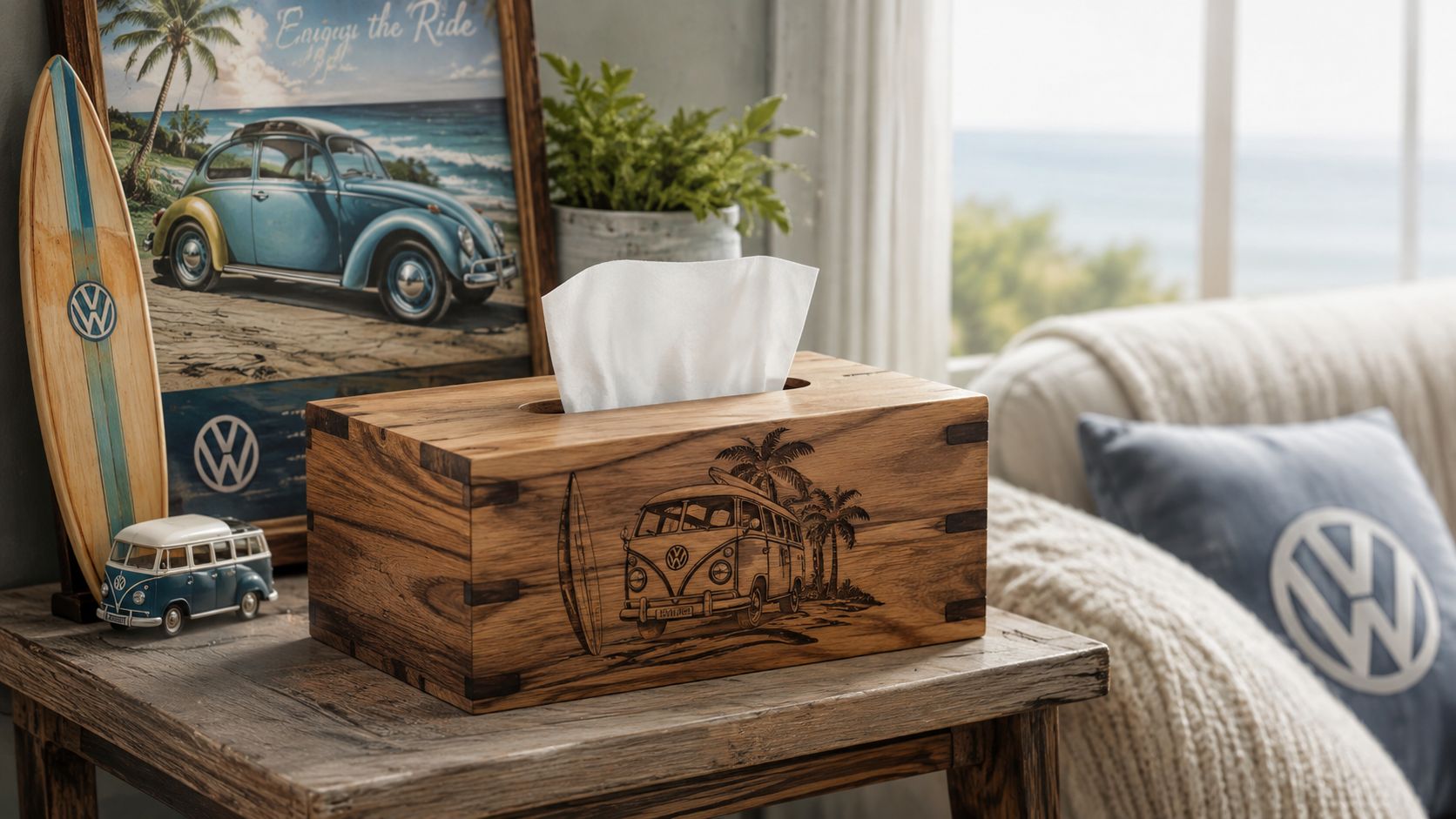
Build a relaxed display zone
Australian VW collectors and decorators often pair diecast models with coastal and natural-material décor. Wooden covers, nautical accents and surf-inspired pieces create a warm setting for metal models, especially when the room already includes woven baskets, pale linen or weathered boards.
Try one of these arrangements:
- Side table pairing: Place the tissue cover beside a licensed Kombi model, then add a small dish for keys or a length of nautical rope below the display.
- Shelf grouping: Keep the cover at one end, a Beetle replica in the centre and a smaller coastal accent at the opposite end. Vary height without crowding the cars.
- Surf corner: Combine the cover with a surfboard motif, starfish or seashell detail and a Flower Power-inspired model for a cheerful retro arrangement.
- Workshop-inspired display: Use a darker timber finish with a van model, framed garage artwork and restrained metal accessories.
The cover should remain easy to lift, clean and refill. Don't wedge it behind fragile models or place it where a tissue pull will knock into a prized vehicle. Collectors know that a display works best when it feels lived in, not sealed off from daily life.
Natural timber also balances the visual density of diecast metal. It adds warmth beneath a cool-painted vehicle and gives the eye a quiet resting point between brighter colours.
More ideas for mixing practical pieces with retro accents are collected in this guide to vintage home accessories.
Frequently Asked Questions
How should I clean a finished wood tissue box cover?
Dust it with a soft, dry cloth. For marks, use a lightly damp cloth and dry the surface straight away. Avoid soaking the timber, especially around the opening and mitred corners.
Will it fit cube-shaped or larger tissue boxes?
Only if you build the internal cavity around those dimensions. Measure the actual carton, allow clearance for easy removal and check the cover before applying a permanent finish. A cover made for standard supermarket tissue boxes won't automatically suit a cube-shaped pack.
How do I repair a small scratch?
Lightly sand the affected area in the direction of the grain, remove the dust and apply a compatible touch-up coat. Test the colour and sheen on an offcut first, particularly with whitewash or chalk paint.
Is it a good gift for a VW fan?
Yes, particularly when paired with a licensed model that reflects the recipient's taste. A Kombi Samba Bus suits a surf-loving collector, while a Volkswagen Beetle model works beautifully in a smaller office or bedside display. When buying diecast, check the scale, finish and licensing details. Australian model specialists describe licensed replicas and true-scale models as established categories in the local market, so authenticity is worth checking before purchase.
Can I display other VW models beside the cover?
Absolutely. Keep the timber finish and model colours connected, but don't make the arrangement too uniform. One hero vehicle, one useful homeware piece and a small coastal accent usually creates a more natural vignette than a crowded row of objects.
Volkswagen Memorabilia offers licensed Volkswagen diecast models, including Kombi Samba Bus and Beetle pieces, alongside coastal home décor for relaxed retro displays. Visit Volkswagen Memorabilia to find a memorable companion for your handmade wood tissue box cover and build a collection with genuine Aussie surf and VW spirit.