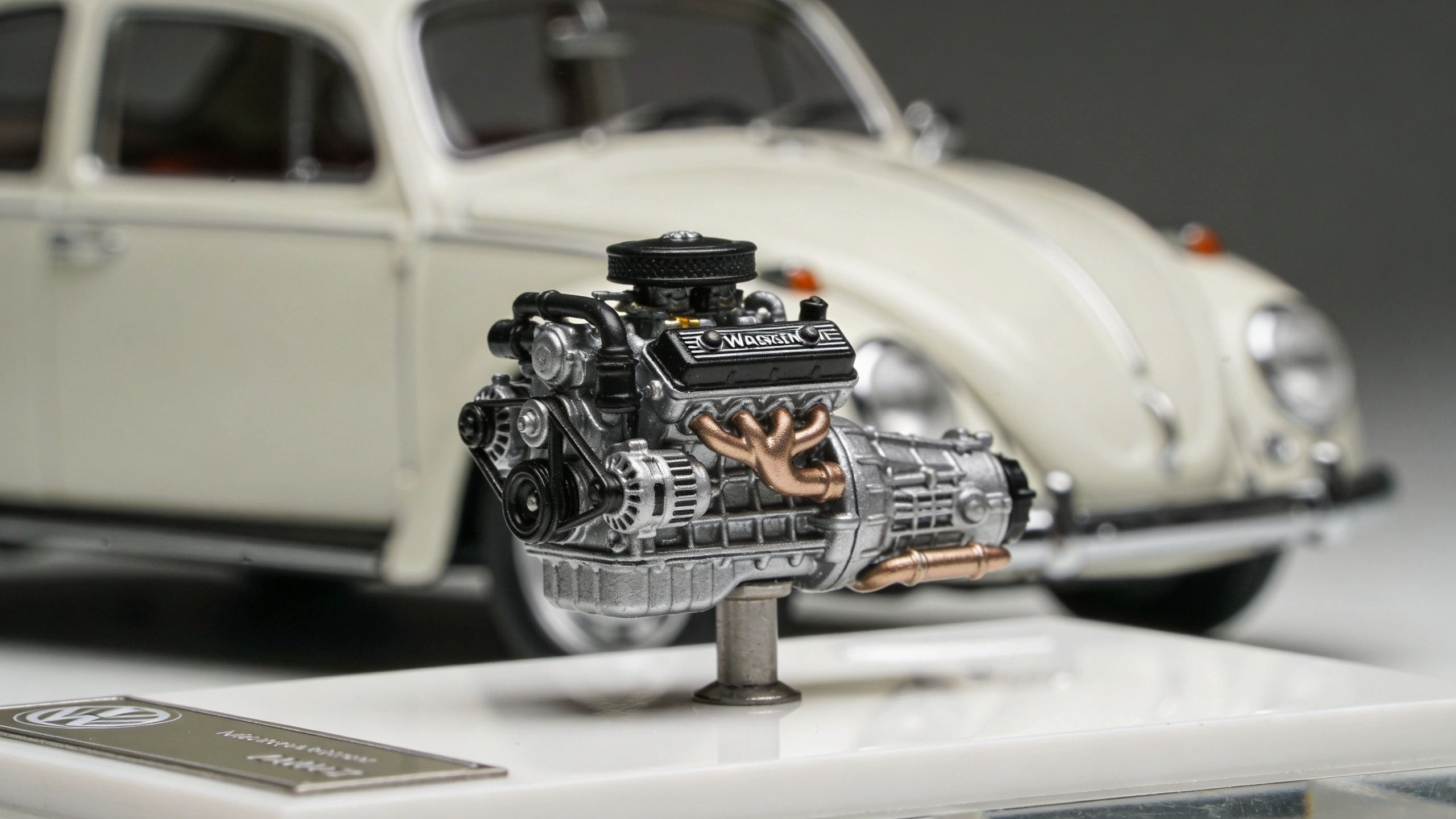
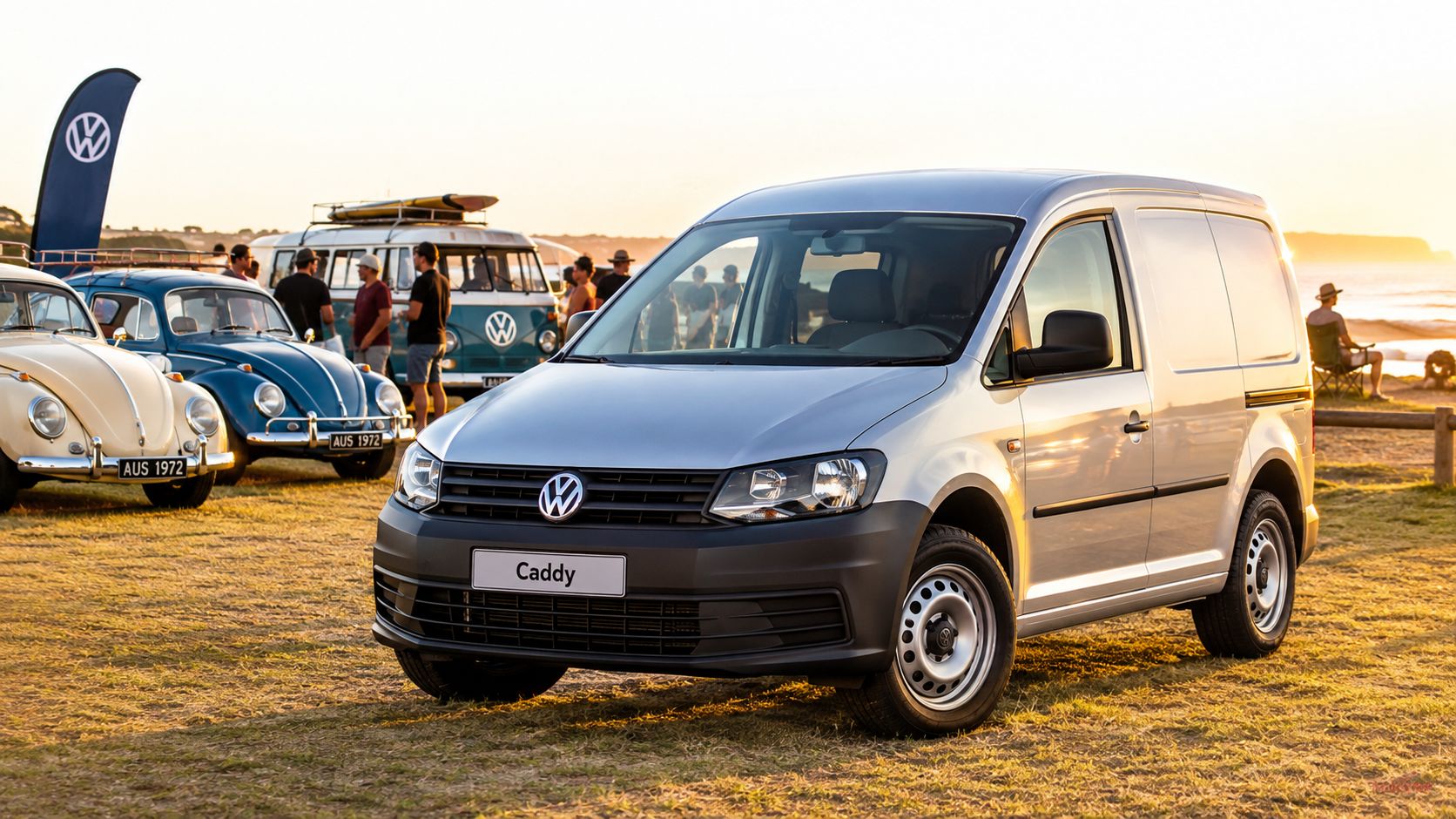
At an Australian VW gathering, the Beetles and Kombis usually draw the first wave of attention. Then a silver Caddy rolls in with camping gear, show supplies or a tradesman's tools aboard, proving that the Volkswagen family has always had room for a practical everyday hero.
Introduction to the Volkswagen Caddy Van Story
The Volkswagen Caddy van sits in an interesting corner of the VW story. It doesn't carry the instant nostalgia of a split-window Kombi or the rounded charm of a Beetle, yet it shares the same basic idea: make motoring useful, approachable and easy to live with. For Australian owners, the Caddy has become the compact workhorse that fits between a passenger car and a larger commercial van.
That middle ground matters. A city electrician may need room for tools without driving a large van through tight streets. A small delivery operator may want a flat load area but still appreciate car-like comfort. A weekend traveller may prefer the compact footprint of a Caddy California-style layout over a full-size camper. The appeal isn't about showing off. It's about choosing a vehicle that matches the job.
This guide follows the Caddy from its Australian arrival through its working life, then moves into the questions that matter to owners: how much it can carry, how its load space should be used, and what current running-cost clues tell us. It also connects the modern van to the wider VW enthusiast world, where history, local shows and diecast collecting all overlap.
A modern member of the VW family
Volkswagen heritage isn't limited to vehicles built for holidays. The Beetle carried families, the Kombi became a symbol of travel and community, and the Caddy has carried the less glamorous essentials that keep businesses moving. That makes it a natural subject for anyone who enjoys the complete VW story, not only the famous silhouettes.
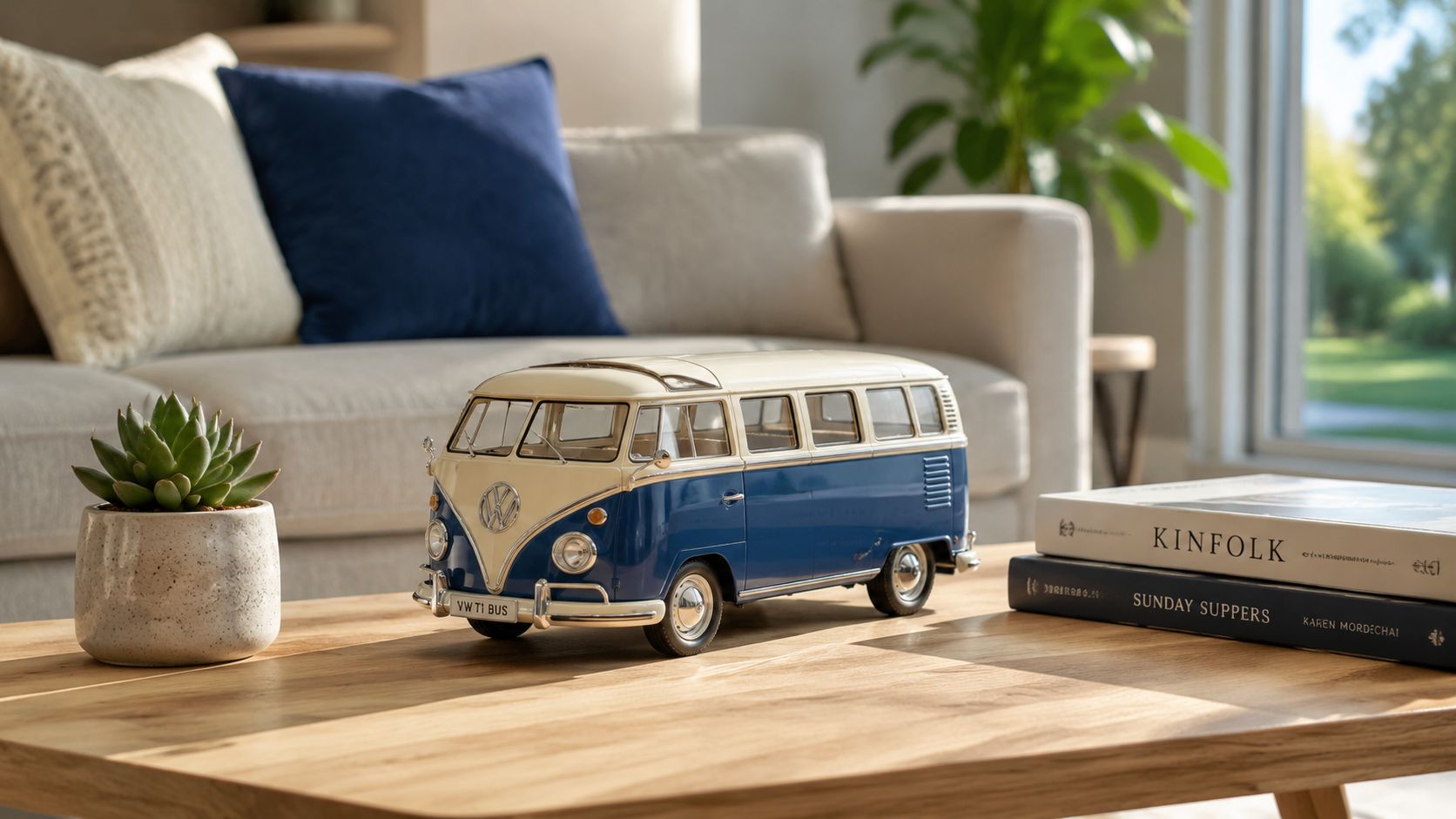
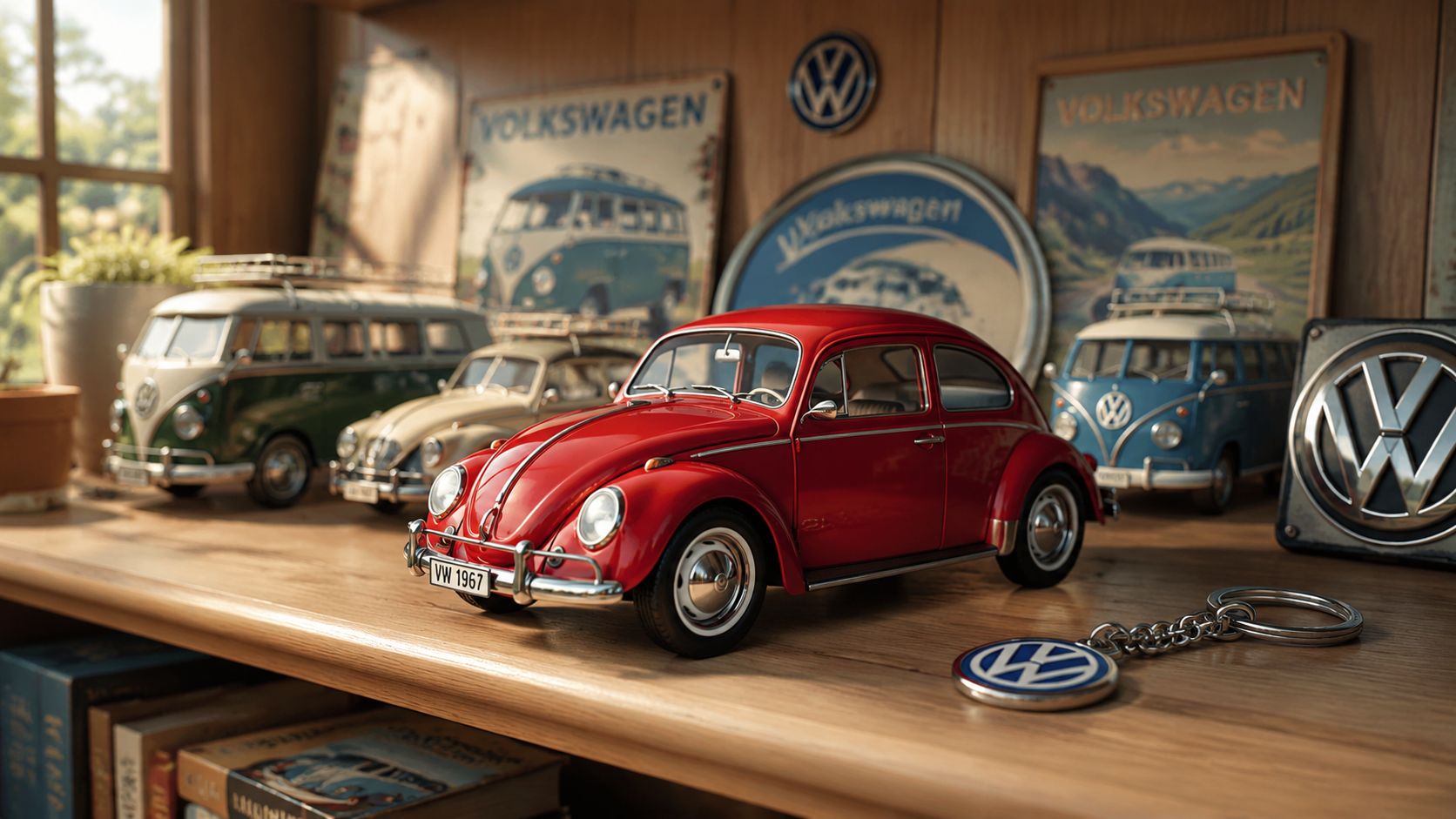
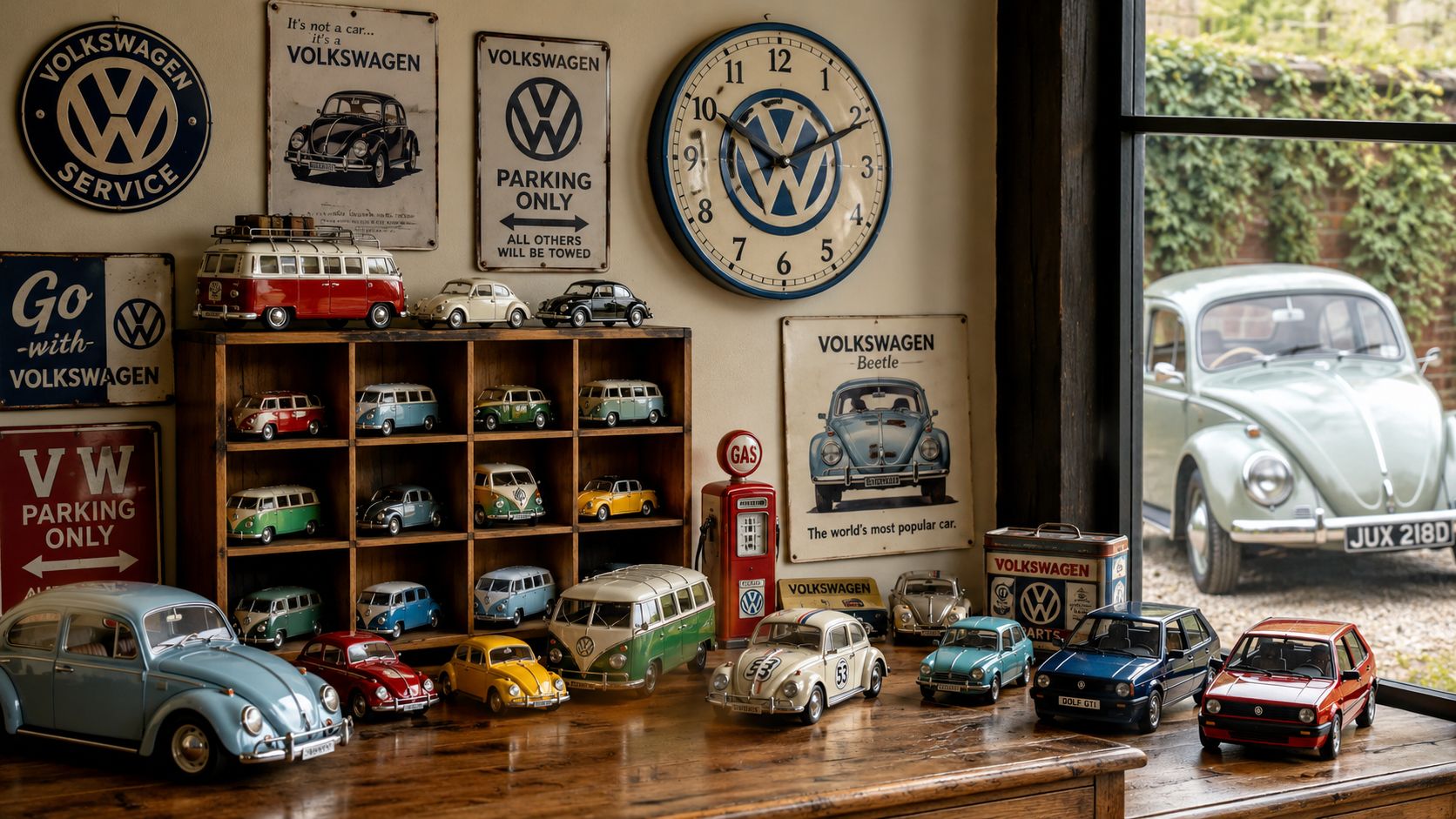
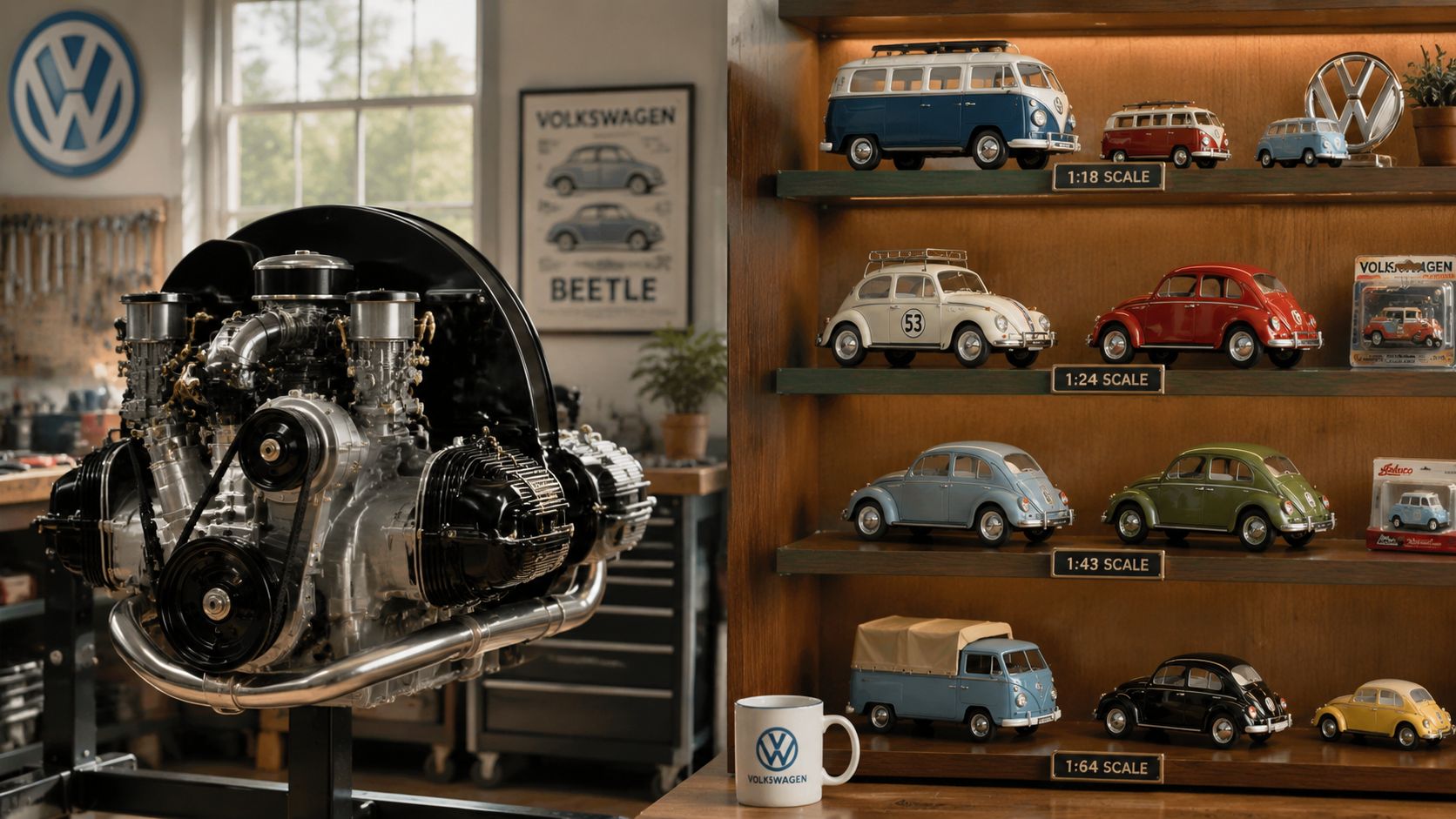
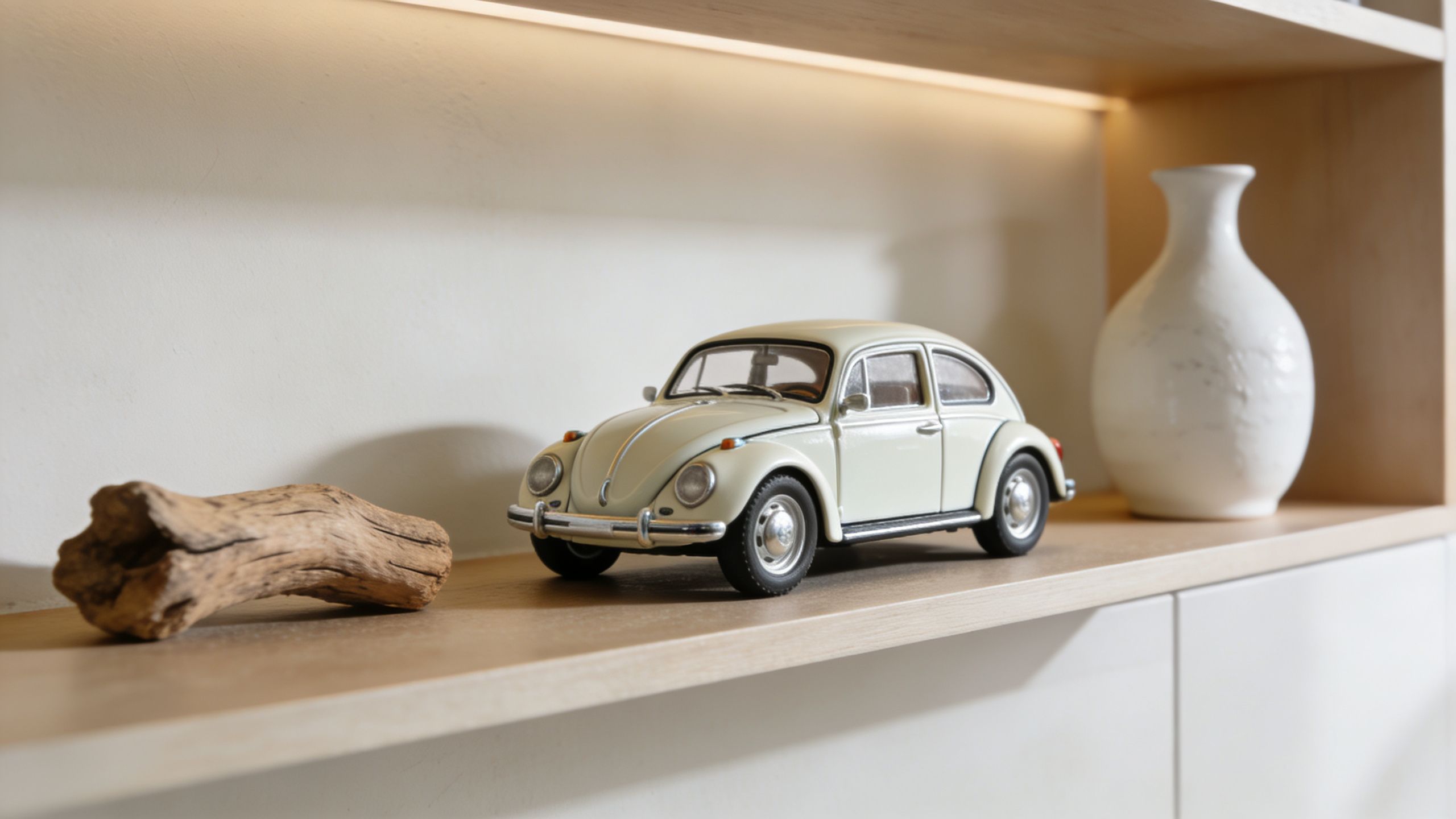
Collectors can explore that story through licensed miniatures as well. A diecast Caddy can sit beside a Volkswagen Beetle model, a Samba Bus and other VW memorabilia, creating a display that shows how the brand moved from people's-car icon to practical commercial partner.
A useful way to view the Caddy: it's the working-age cousin of the Beetle and Kombi, less theatrical but just as connected to everyday Australian life.
What Makes the Volkswagen Caddy Van Different
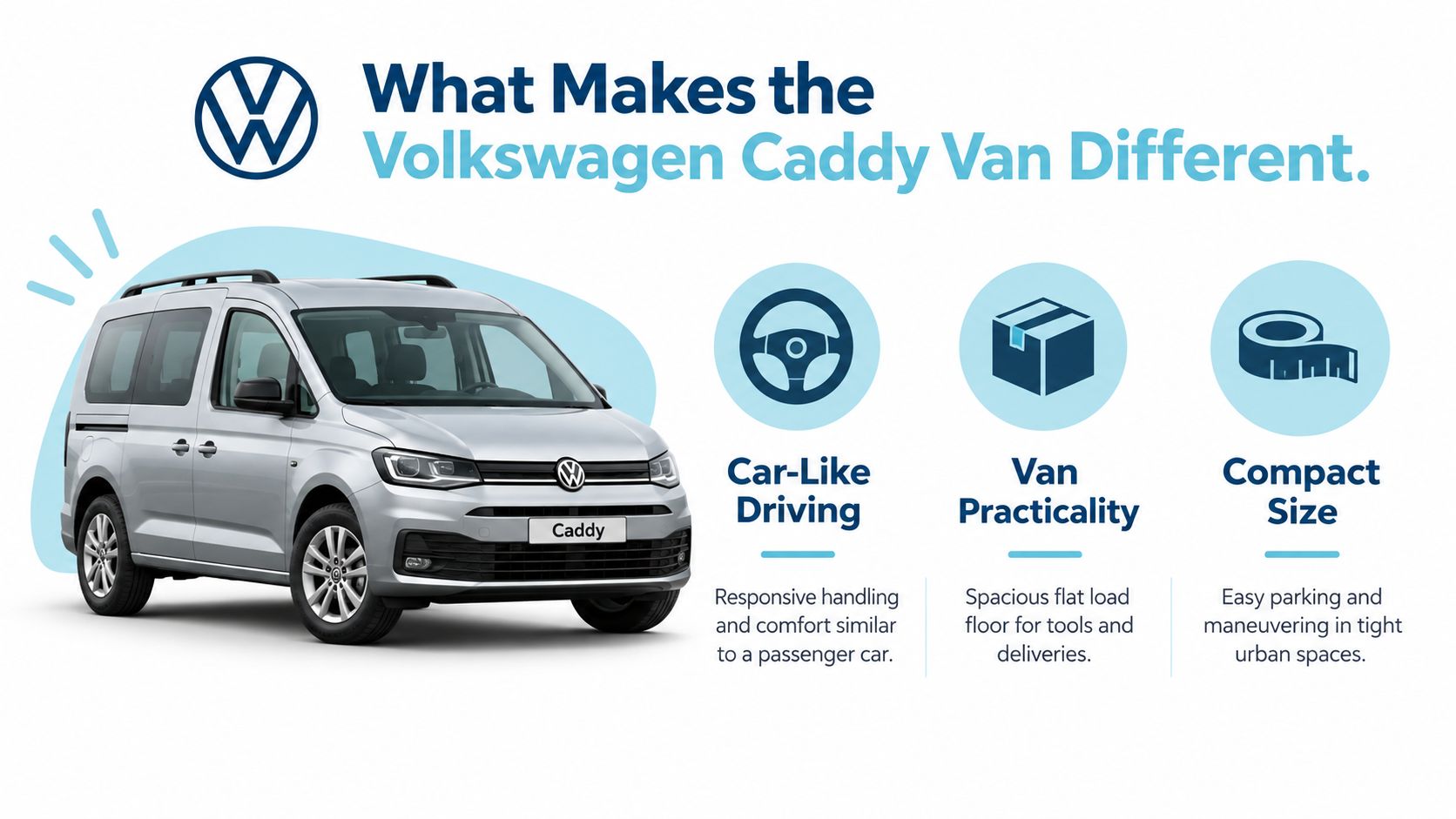
The easiest way to understand the Caddy is to place it on a size ladder. A small hatchback is the city-friendly end, the Caddy is the compact van step above it, and a Transporter or Crafter occupies the larger commercial end. The Caddy gives you a dedicated load area without the bulk of a full-size van.
That shape creates its main advantage. You sit higher than in many passenger cars, the rear load area is more useful than a conventional boot, and the vehicle remains manageable in urban streets. It's a bit like replacing a deep household cupboard with a long, accessible workbench. The available space is shaped for boxes, cases, tools and equipment rather than soft luggage.
Volume isn't the same as payload
Two measurements often confuse first-time van buyers.
- Load volume describes how much physical space is available, usually in cubic metres.
- Payload describes how much total weight the vehicle can carry, including occupants, equipment and additions.
A van may have spare floor space but be too close to its weight limit for another heavy load. The reverse can also happen, where the weight allowance looks comfortable but bulky items won't fit through the doors or within the load length.
The Caddy is offered in Cargo form for work duties, while people-focused and lifestyle variants serve different priorities. Cargo buyers usually care about flooring, access and fit-out potential. A family or leisure buyer may value seating, comfort and flexible interior use more highly.
Why small vans earn their keep
A compact van can suit a business that makes frequent short trips, particularly where parking and access matter. Plumbers, florists, mobile repairers, caterers and local couriers may not need the capacity of a larger van for every job. The Caddy's car-derived feel also makes it less intimidating for drivers who spend part of the week in passenger vehicles.
The right question isn't, “Is the Caddy big enough?” Ask instead:
- Are your regular loads mainly bulky or heavy?
- Will shelving, drawers or refrigeration equipment be installed?
- Do passengers travel with the load?
- Does the vehicle need to fit into older car parks and narrow streets?
Those answers point towards the right variant more reliably than a brochure headline. The Caddy works best when the operator respects its compact role rather than treating it like a shrunken heavy-duty van.
History and Evolution of the Caddy in Australia
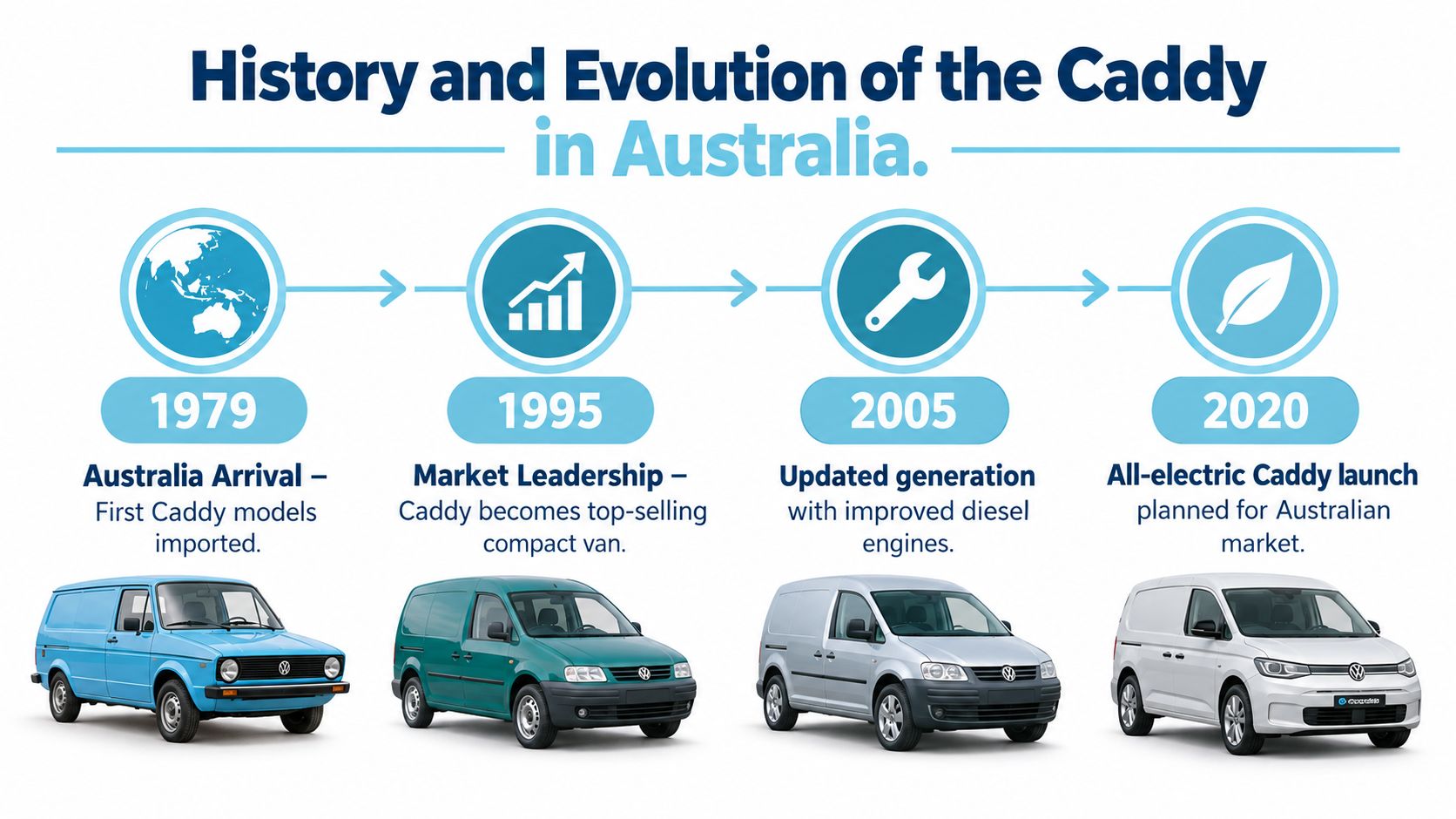
The Australian Caddy story moved quickly. The Volkswagen Caddy arrived in Australia in late 2004, and by 2007 it had captured a 42% share of the Australian small-van market, making it the segment leader, as recorded in the Volkswagen Caddy history reference. That's a significant early milestone because the model was competing with vans that already had established local reputations.
Australian buyers were introduced to 1.6-litre petrol and 1.9-litre turbo-diesel options, reflecting Volkswagen's effort to offer practical, fuel-conscious engines for commercial use. Those choices also helped define the Caddy's character. It wasn't presented as a stripped-back delivery appliance, but as a compact vehicle designed to combine sensible running with daily usability.
From new arrival to established workhorse
The Caddy stayed central to Volkswagen's Australian commercial range through the 2010s and 2020s. A ClubVW Australia history summary identifies the Caddy as the biggest-selling small van on the Australian market in 2010. Independent Australian sales tracking recorded 1,142 sales in 2024, 1,113 in 2025 and 42 year to date in 2026, showing that demand continues even though the model now operates at a much smaller volume than during its early growth period.
That history gives the Caddy a place in VW heritage displays. It represents a different kind of nostalgia, the memory of workdays, family businesses, local deliveries and road trips rather than only beach holidays. At a show, a tidy Caddy can tell visitors what Volkswagen looked like when practicality became the main attraction.
The longer VW timeline
Volkswagen's heritage stretches much further back. German Beetle production ended in stages, with Wolfsburg stopping in July 1974 as production switched to the Golf, Emden continuing until noon on 19 January 1978, and Karmann's convertible line ending on 10 January 1980, according to this documented Beetle production history.
The Caddy belongs to that same pattern of evolution. VW kept the recognisable values of sensible packaging and approachable driving, then adapted them for modern commercial needs. That's why it deserves more than a footnote in a van catalogue.
Key Generations Variants and Specs Explained
Caddy generations make more sense through their jobs than through a string of engineering codes. Earlier Australian models established the compact-van formula. Later versions refined comfort, safety, connectivity and load management. Used-van shoppers should still check the exact model year and variant, because equipment can differ substantially.
The current Australian range includes work-focused Caddy Cargo models, longer-body Maxi variants and lifestyle-oriented versions such as California. Cargo suits tools and deliveries, while Maxi gives operators more room for longer items. California-style models use the same compact platform for leisure and travel, showing how the Caddy can shift from workhorse to weekend companion.
Current figures in plain English
Australian local Caddy Cargo documentation lists a 1,797 to 2,150 mm load length, a 3.1 to 3.7 m³ load area and a 722 to 792 kg payload range, according to the Australian Caddy model documentation. Combined fuel consumption is listed at 4.9 to 6.2 L/100 km, depending on the selected model and powertrain.
| Spec | Caddy Cargo Range |
|---|---|
| Load length | 1,797 to 2,150 mm |
| Load area | 3.1 to 3.7 m³ |
| Payload | 722 to 792 kg |
| Combined fuel consumption | 4.9 to 6.2 L/100 km |
These figures provide a useful starting point, much like measuring a garage before buying shelving. They do not replace the full variant specification. A longer load floor may suit timber or event gear, while dense tools can use the payload allowance before the cargo bay looks full. Permanent racking, drawers and other equipment also reduce what remains available for daily work.
What the MY25 refresh changes
The MY25 refresh added Digital Cockpit Pro, a 10-inch infotainment screen, parking sensors, keyless go and additional safety technology, as described in Australian Caddy coverage. These changes suit a van that spends its days in traffic, loading zones and tight worksites. Parking assistance can reduce stress in confined spaces, while clearer displays and connectivity make repeated driving tasks easier.
The current Caddy also gives collectors a clear marker of VW's practical heritage. A Volkswagen Caddy Maxi diecast model captures the long-body work-and-travel character in a smaller scale, ready to sit beside nostalgic Beetle and Kombi shapes. The van carries the gear. The model preserves the story.
Payload Practicality and Real World Work Use
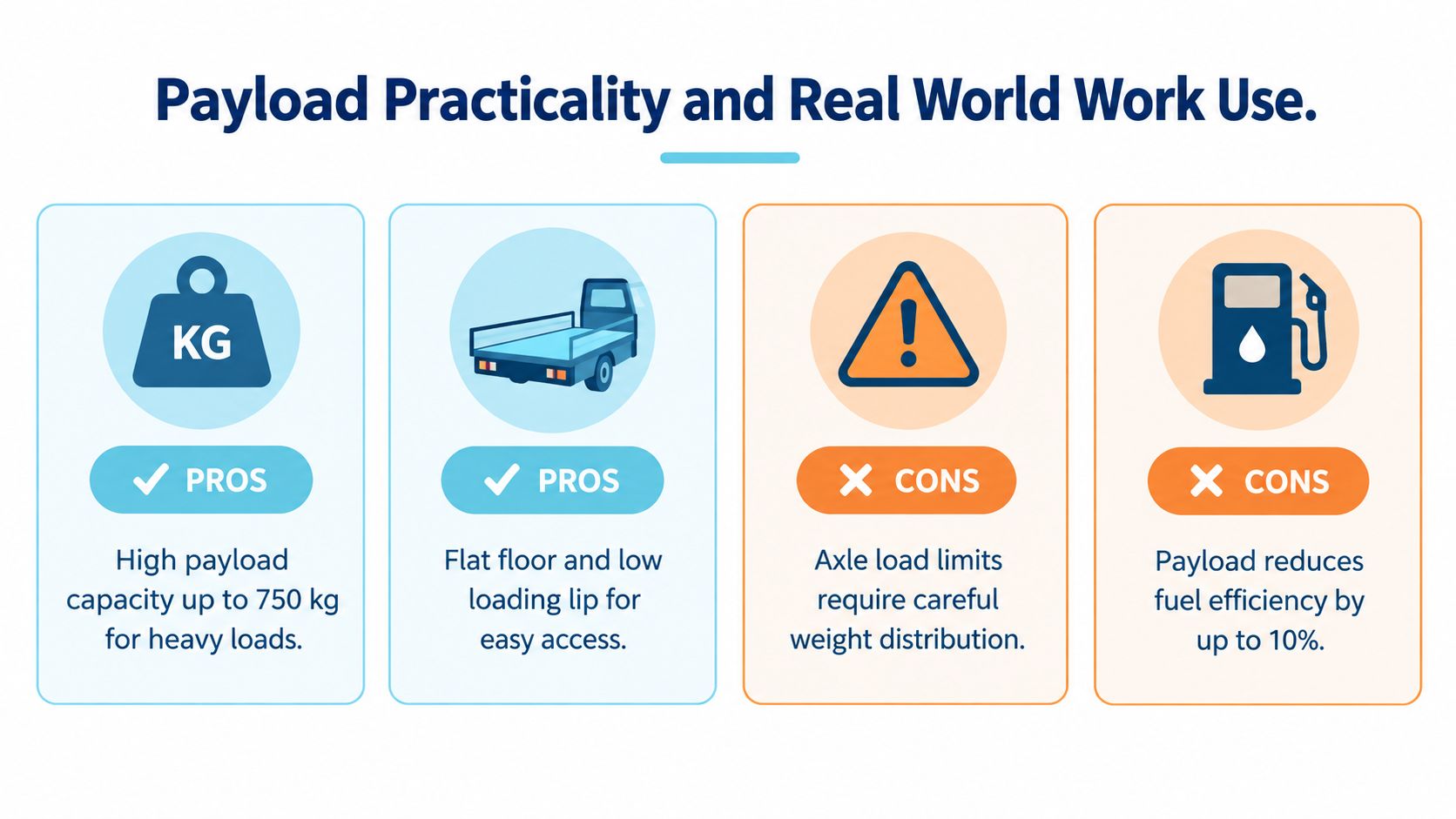
At a car show, a tidy Caddy can look ready for any job. In daily work, its usefulness depends on payload management, not cargo-bay size alone. Volkswagen defines payload as GVM minus unladen weight, and that allowance covers occupants, cargo, added structures and tow-ball down weight. The figure on the specification sheet is the van's complete carrying budget, not a box-and-tools allowance.
As noted earlier, the Cargo's published volume and payload describe a compact work envelope. The practical question is how shelving, passengers and tow-ball weight reduce what remains available. Weight distribution also matters, because a van can look half-empty while carrying too much mass in one area.
How a fit-out changes the calculation
Start with the van as delivered, then count everything that becomes part of the working vehicle:
- Shelving and drawers: Organisation adds permanent weight before the first tool is loaded.
- Tools and materials: Dense items can consume the allowance faster than their size suggests.
- Passengers: Every occupant counts, including the driver.
- Tow-ball down weight: A trailer affects the vehicle's remaining payload as well as the trailer's own limits.
- Accessories: Roof systems, barriers and protective equipment also belong in the calculation.
A tradie carrying ladders, power tools and fittings may reach the payload limit before the floor looks full. A florist may fill much of the available volume with lightweight arrangements while staying below the weight limit. The job profile decides which constraint arrives first.
Axles and load placement
The Caddy's specifications include separate front and rear axle load limits. Placing dense equipment at the very back can overload the rear axle even when the combined vehicle weight appears acceptable. Keep heavy items low, secure them properly and spread them across the load floor rather than stacking everything behind the rear axle.
Check the vehicle's compliance plate, handbook and variant-specific documentation before loading for work. A Caddy light commercial vehicle collection celebrates the van's working identity and its place in VW history, much like a diecast model preserves a familiar shape on a collector's shelf. Safe operation, however, depends on the actual vehicle, its fit-out and the load carried that day.
VW Culture Events and the Caddy Connection
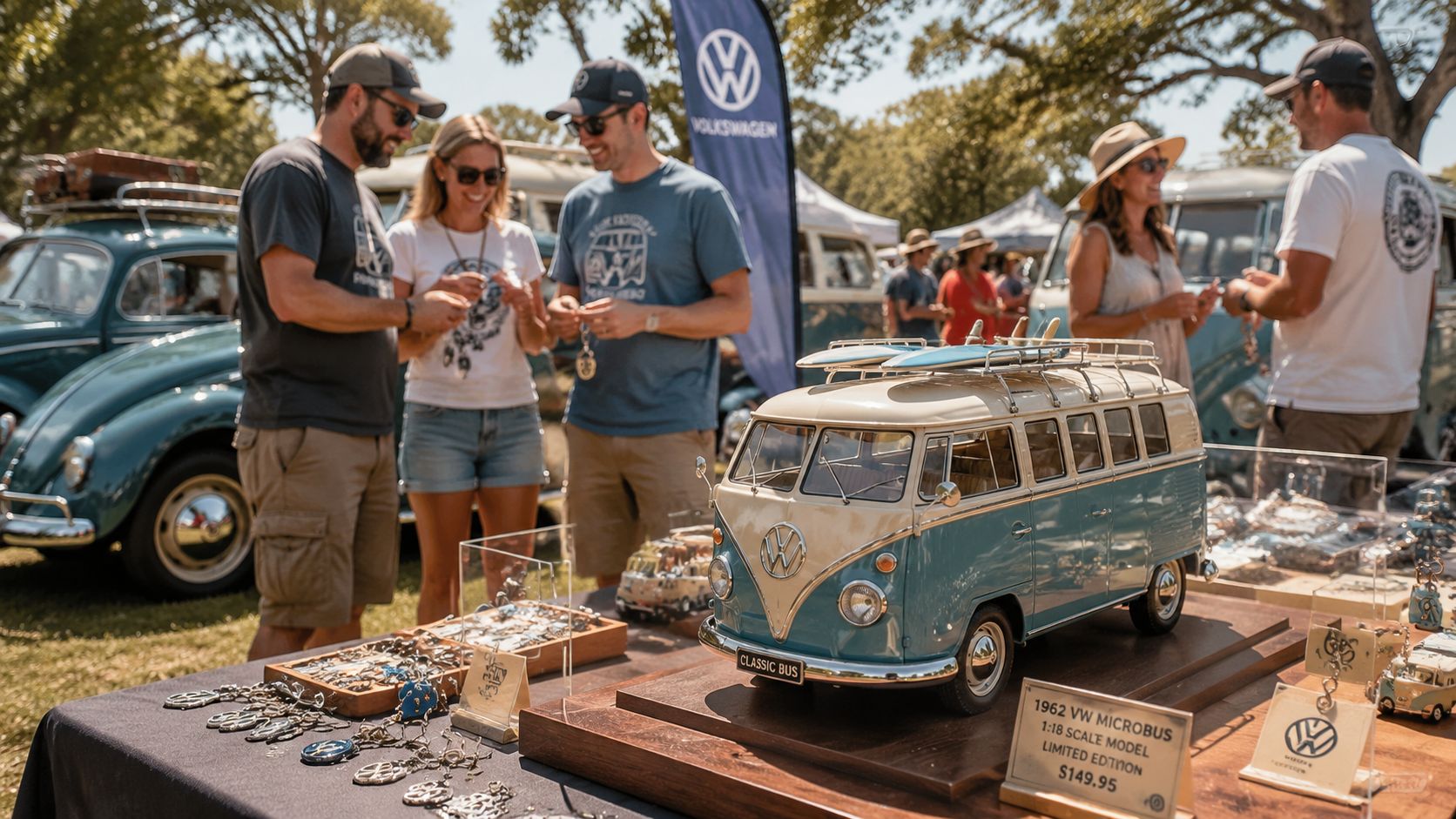
Volkswagen culture in Australia has always been bigger than any single model. Beetles, Kombis, Samba Buses, Golfs and commercial vans share the same gathering space because owners value the stories attached to them. One car may recall a first road trip, another a family business, and another years spent restoring a tired classic in a home garage.
The VW Nationals, Australia's biggest Volkswagen show, offers a clear example. It's a club-run event with a documented history dating back to 1988, when the first Nationals formed part of the Australian Bicentennial celebrations, as recorded in the VW Nationals history archive. The event's continuing format includes a car show, swapmeet, raffle draws and trophy presentation at Fairfield Showgrounds.
Where the Caddy fits in
A Caddy may arrive carrying display stands, spare parts or picnic gear, but it can also become part of the display itself. Its appeal is quieter than that of a bright Flower Power Kombi, yet enthusiasts recognise the design language and the care that goes into presenting a clean, well-kept van.
The local event mechanics make the Nationals approachable for newcomers. The 2025 listing set general admission at $10, with children under 16 entering free, show-and-shine entry at $30 and swapmeet sites at $30. Gates opened at 7:30 am, car show entry closed at 10:30 am, peer judging closed at 12:30 pm, and the trophy presentation took place at 3:00 pm, according to the 2025 VW Nationals event details.
The best part of a VW show isn't only the polished paint. It's the conversation beside the car, where someone explains how they found it, fixed it or kept its story alive.
That same spirit leads naturally into memorabilia. A collector might choose a Beetle for its shape, a Samba Bus for its travel associations and a Caddy for the practical chapter of VW history.
Collecting the Caddy and VW Diecast Models You Will Love
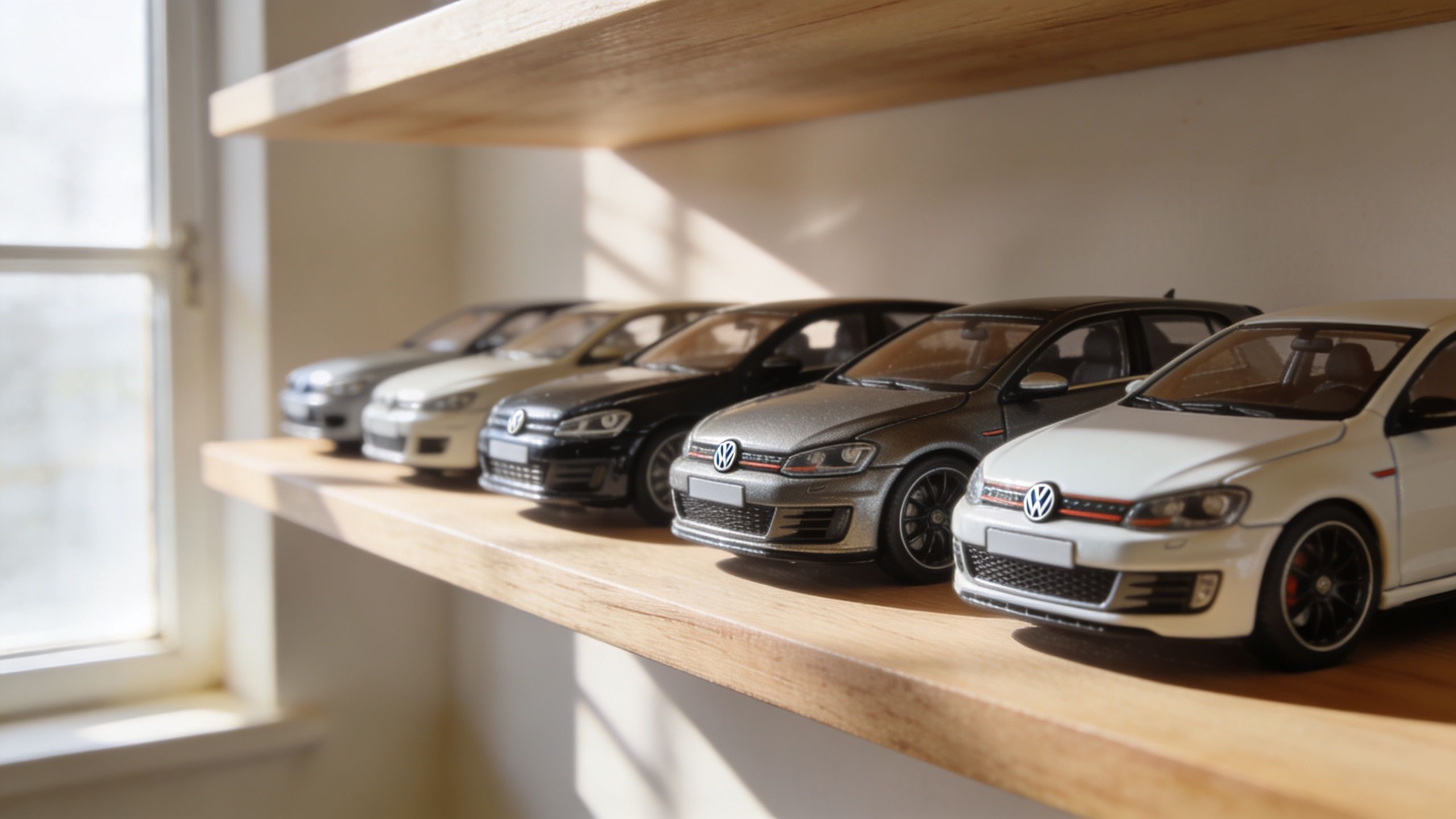
A diecast model makes the Caddy story easy to keep close, even if a full-size van isn't practical. The strongest collections usually begin with a theme rather than an impulse purchase. You might build a timeline from Beetle to Kombi to Caddy, focus on commercial vehicles, or create a display around Australian surf and travel culture.
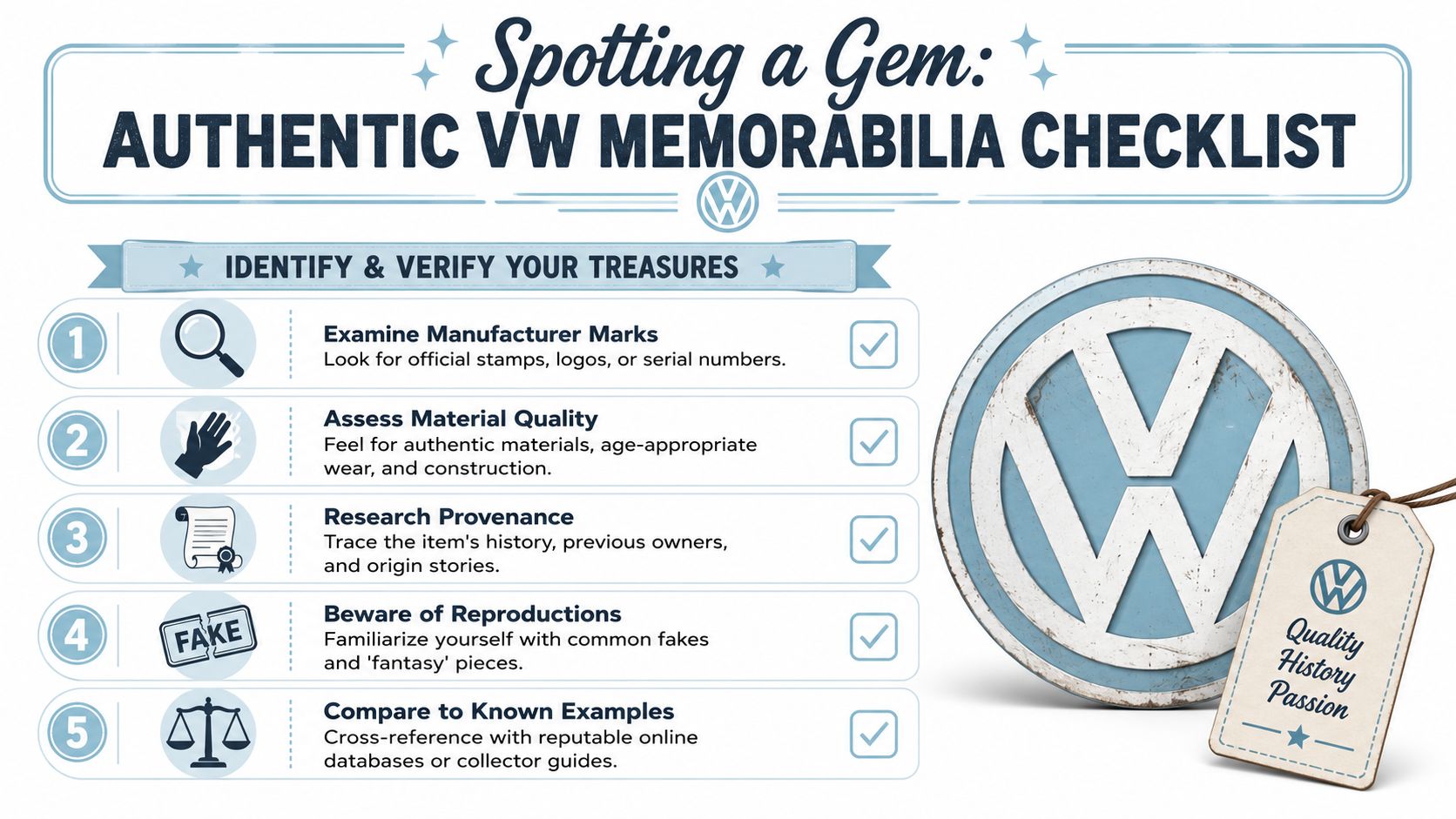
Look for officially licensed Volkswagen products, accurate badging, clean paint application, crisp glazing and a model that feels solid in the hand. Opening doors, detailed interiors and realistic wheels can add appeal, but the most important feature is consistency. A beautifully detailed model sits more comfortably in a collection when its scale and finish match the vehicles around it.
Choosing a scale
Scale affects both detail and shelf planning. A 1:18 model is typically about 23 to 30 cm long, while a 1:24 model is typically about 16.5 to 20 cm long, according to this diecast scale guide.
| Scale | Typical length | Best suited to |
|---|---|---|
| 1:18 | 23 to 30 cm | Feature displays and collectors who want a larger model |
| 1:24 | 16.5 to 20 cm | Compact shelves and balanced collections |
A 1:18 Caddy gives the body more visual presence and usually leaves more room for exterior and cabin detail. A 1:24 model takes less space, making it easier to display several vehicles together. Before buying, measure the shelf depth, allow room for dusting and check whether the model will sit beside a Beetle or Kombi without crowding the display.
Building a thoughtful display
- Start with one anchor: A Kombi Samba Bus or Beetle can establish the collection's visual identity.
- Add the working chapter: A Caddy model brings a useful contrast to classic people-movers.
- Use height carefully: A riser can make smaller models visible without hiding the cars behind them.
- Protect the finish: Keep models away from harsh direct sunlight and handle them with clean, dry hands.
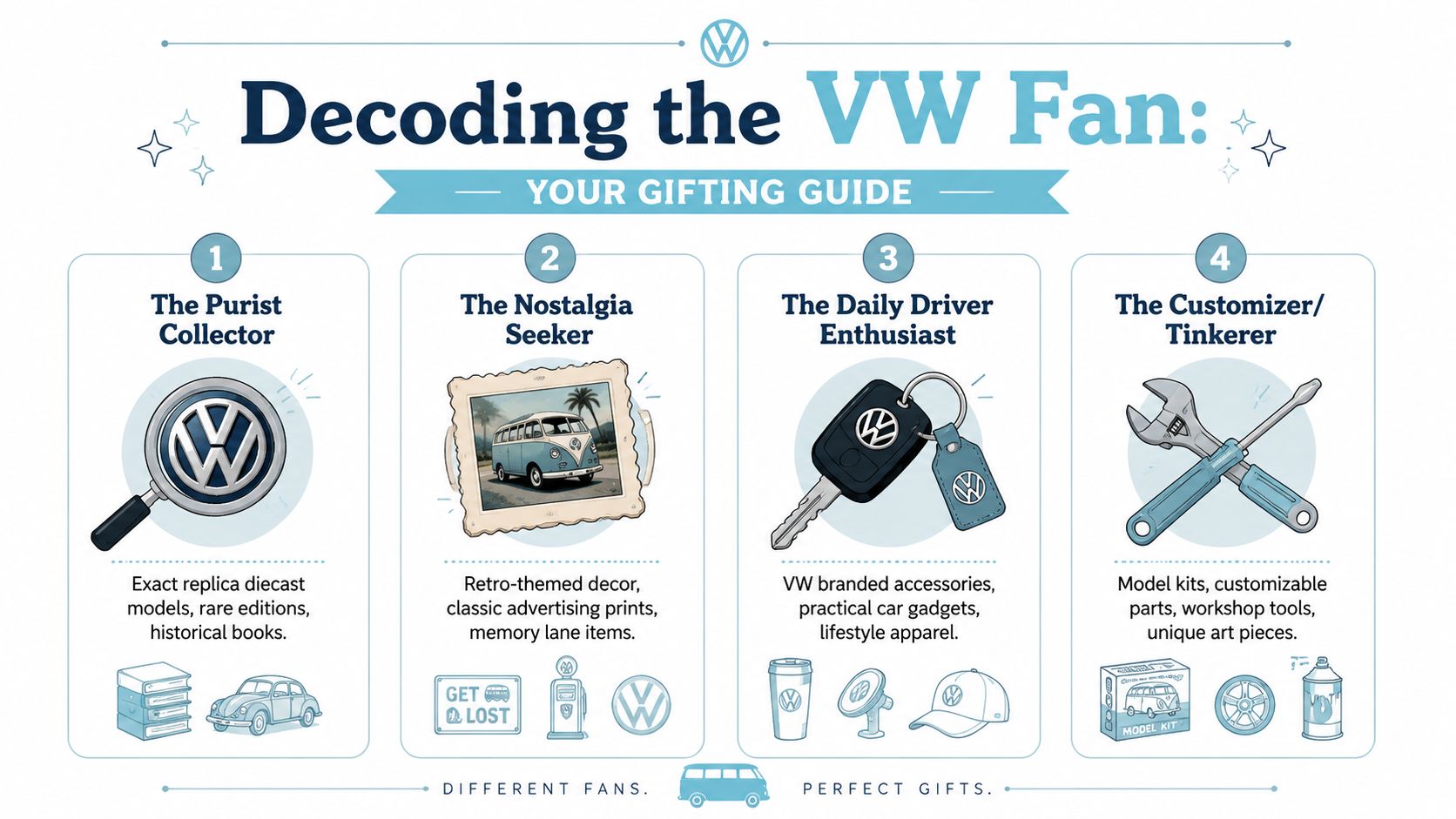
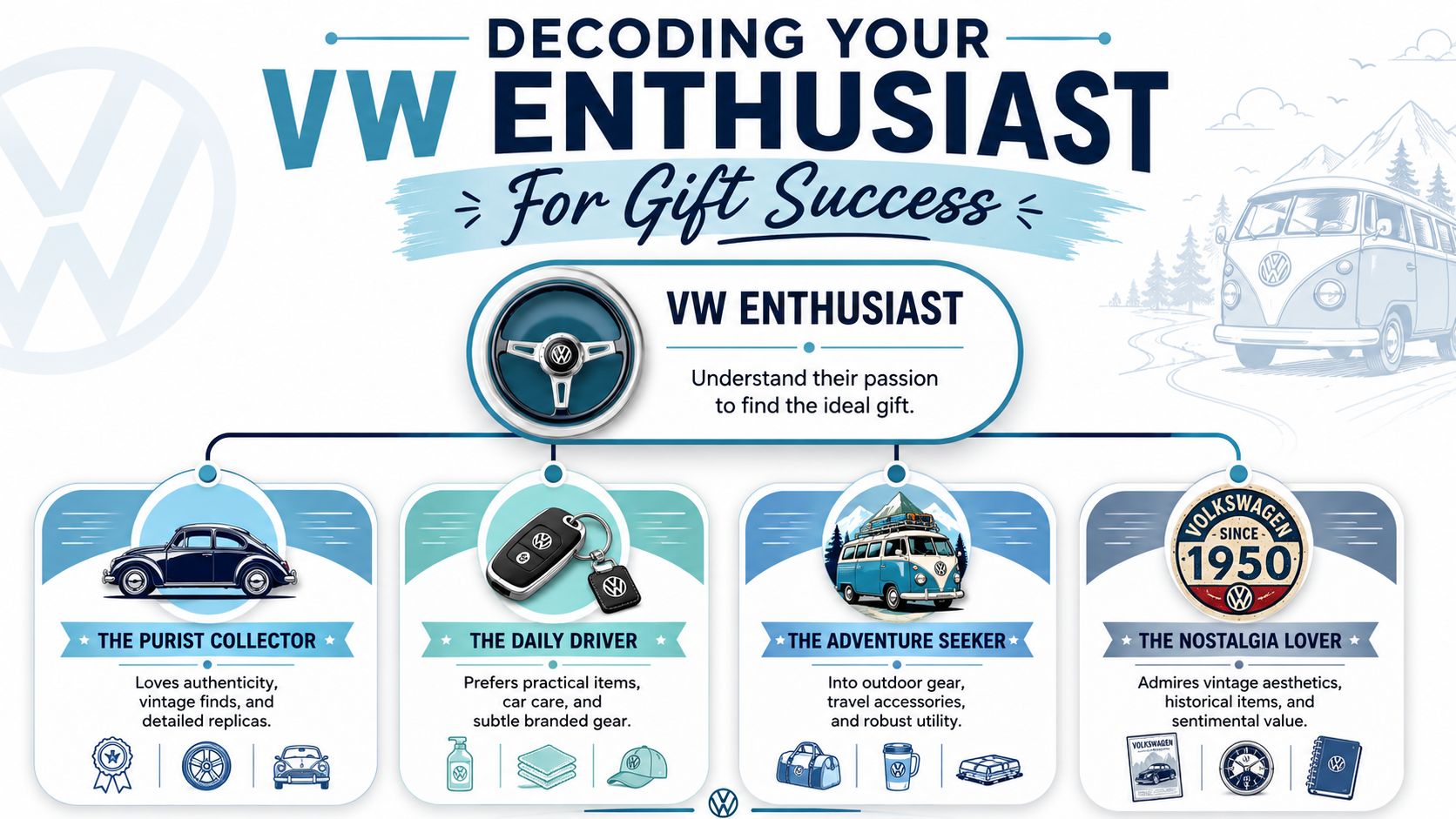
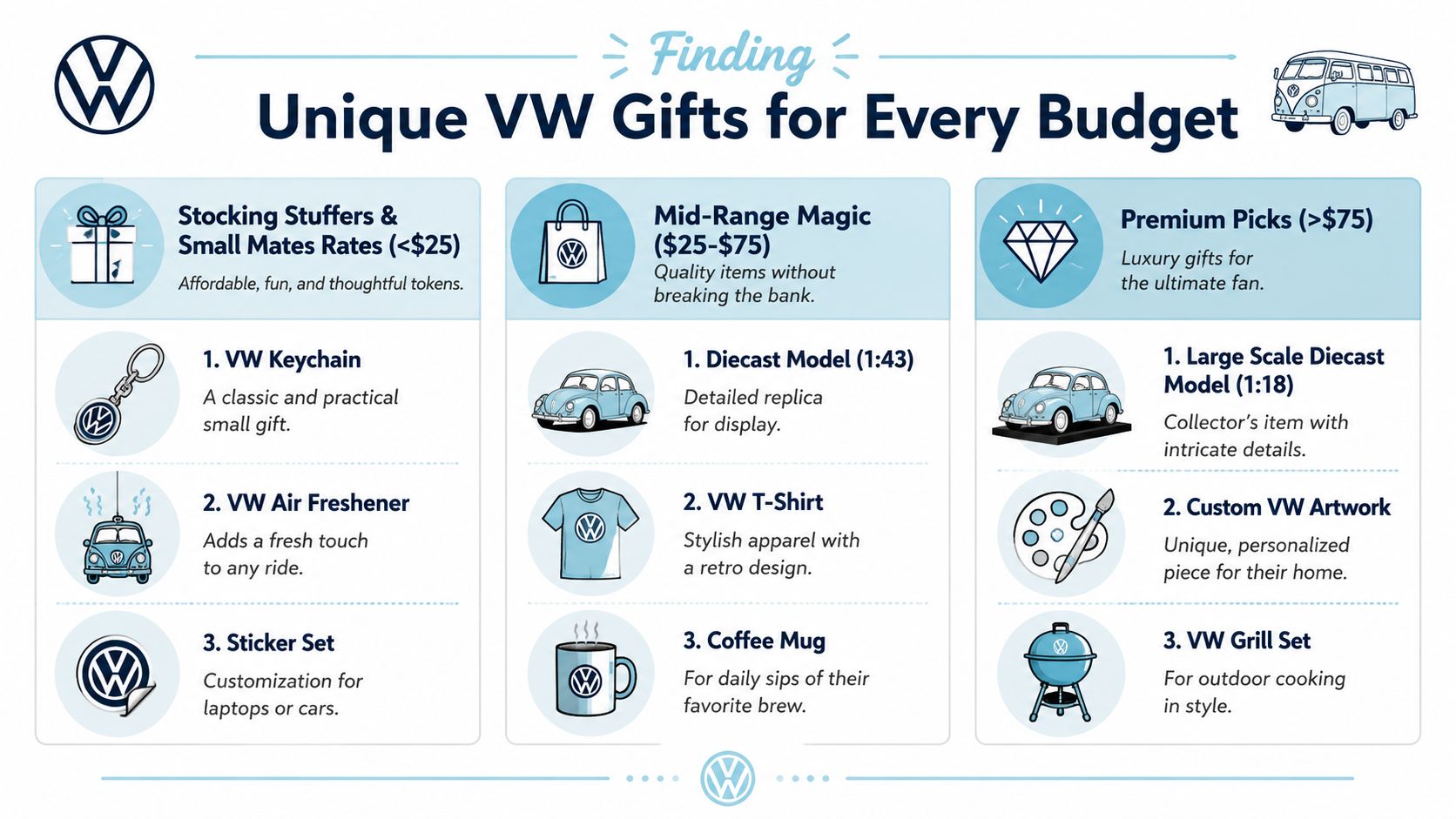
- Buy for the recipient: A Volkswagen Beetle model suits a nostalgic gift, while a Kombi or Caddy may appeal to someone who enjoys travel, work vehicles or Australian motoring culture.
Collectors looking for a broader selection can browse Volkswagen model cars and compare body styles before choosing. For VW Kombi diecast Australia, wanting to buy diecast Kombi, or comparing Volkswagen diecast models for sale, scale, licensing and display compatibility are more useful filters than choosing the largest box on the shelf.
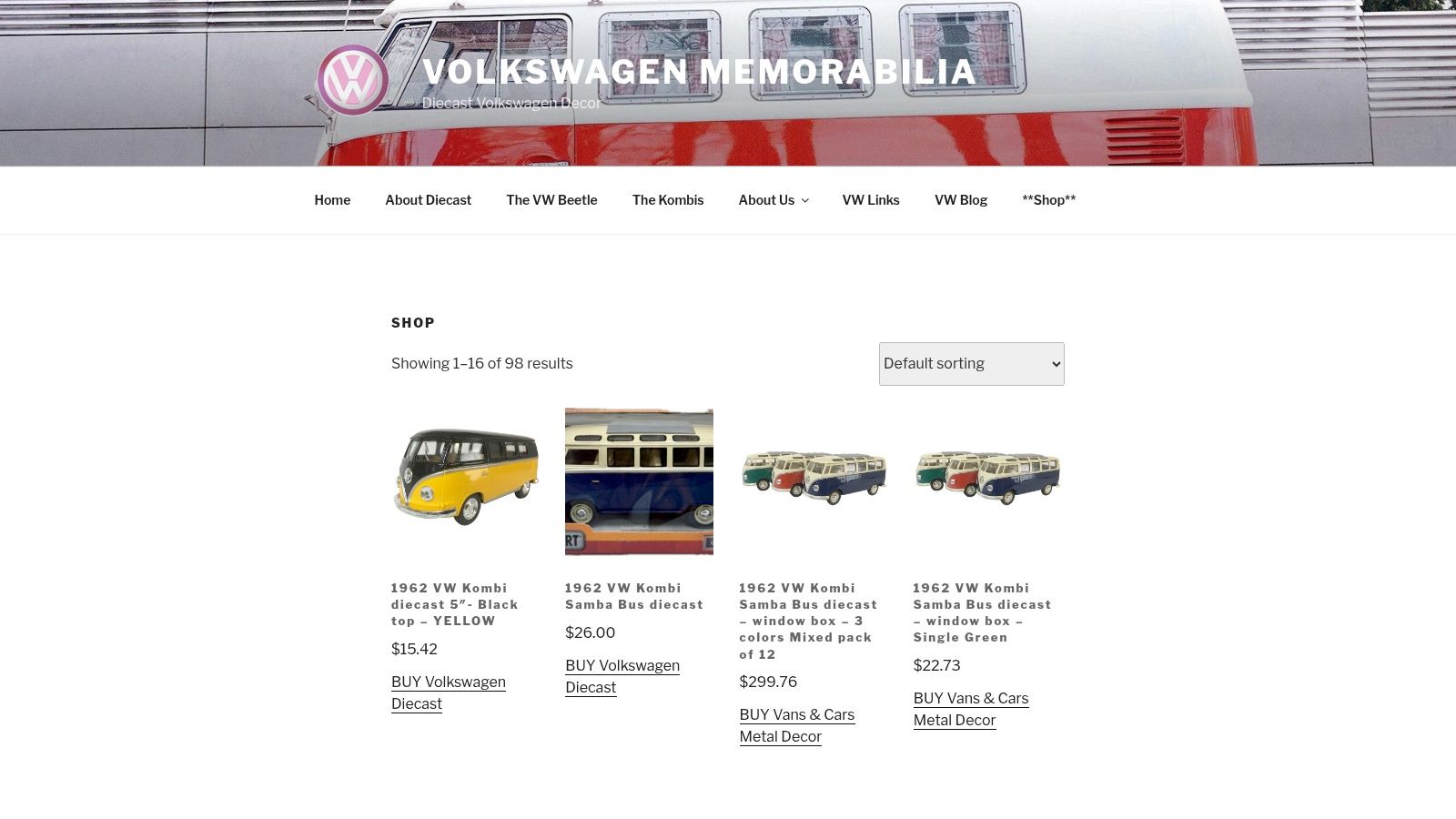
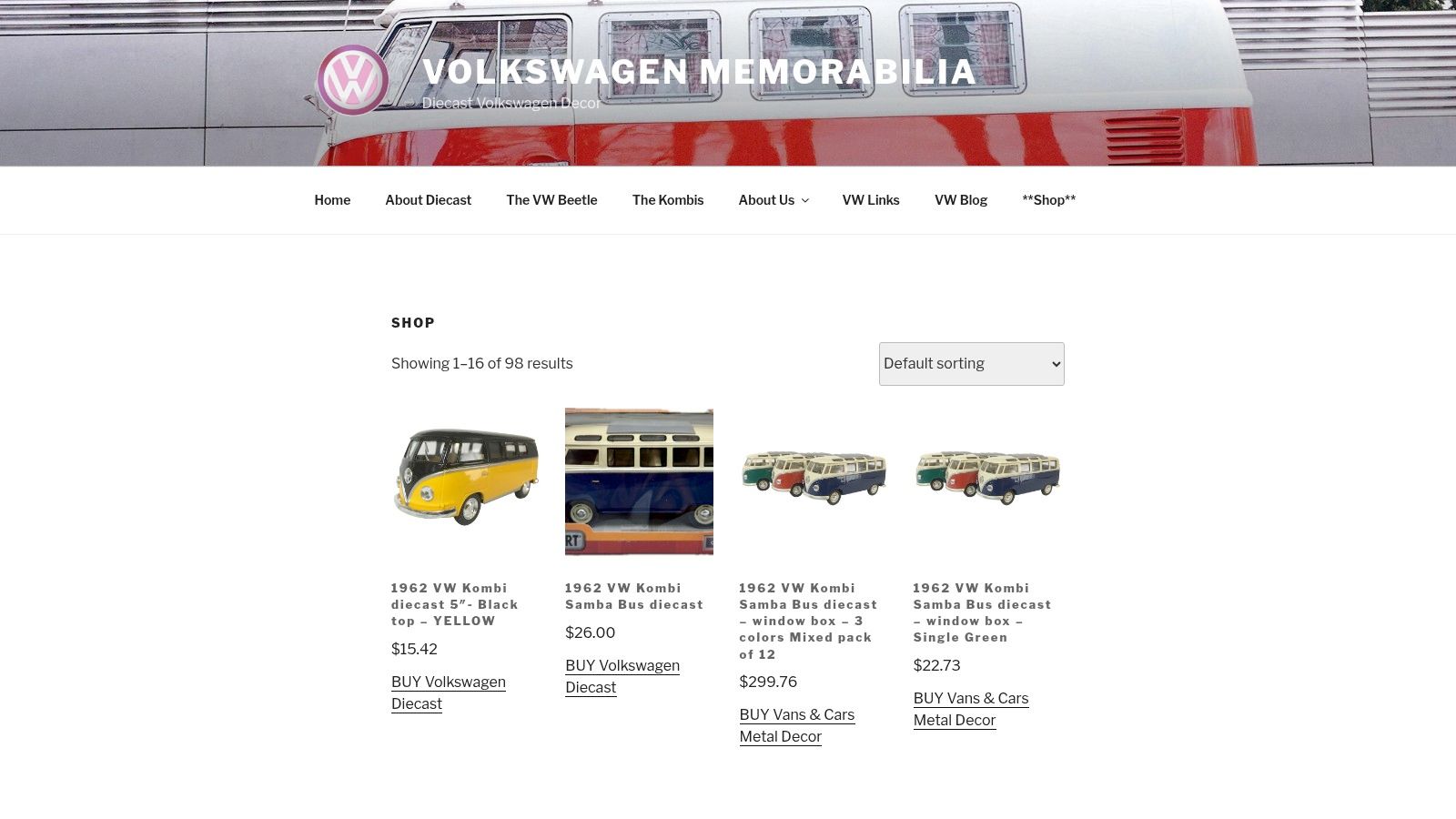
Volkswagen Memorabilia offers licensed VW diecast pieces, including Kombi Samba Bus and Beetle models, for enthusiasts, collectors and thoughtful gift buyers. Visit Volkswagen Memorabilia to find a Caddy-inspired addition or start a display that brings the wider Volkswagen story home.