
Volkswagen ID Buzz Australia Price A Complete Guide (2026)

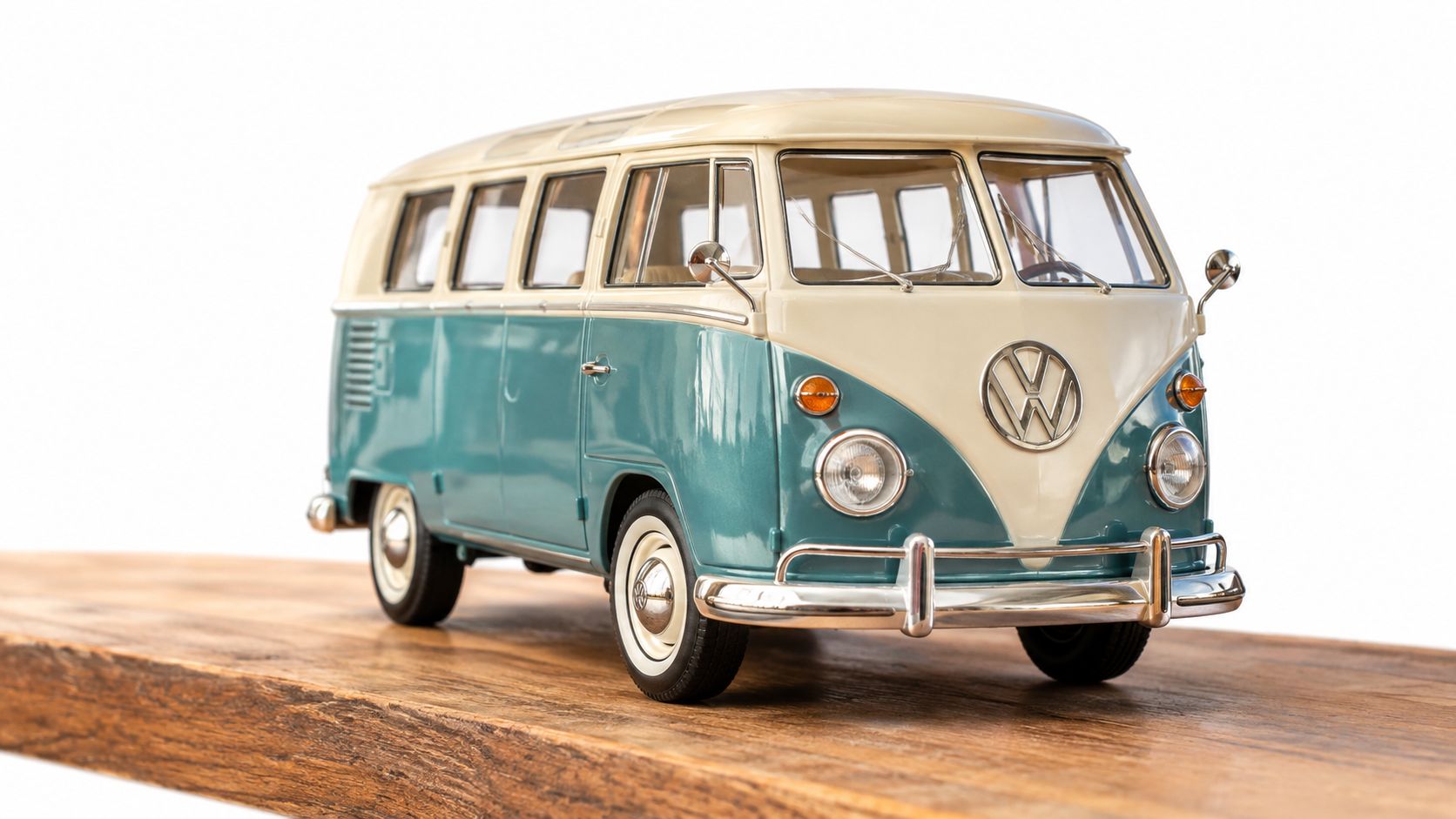
A bloke rolled into a coastal VW meet near me in a sea-blue classic Kombi just as the morning sun hit the chrome. Ten minutes later, the whole circle had shifted to one question about its electric descendant. What’s the volkswagen id buzz australia price, and is it worth it for people who love the badge, not just the brochure?

The Buzz is Back An Enthusiast's Intro to the ID.Buzz

At a VW show, you can spot the moment it happens. Someone opens a phone, flicks to a photo of the new ID.Buzz, and the circle tightens. One old hand starts talking about road trips in a tired bay-window camper. Another points at the two-tone paint and says it has the same cheeky charm as the buses parked on the grass behind us. Then someone asks the practical question every enthusiast eventually gets to. What does it cost in Australia, and does that number still feel like a Volkswagen?

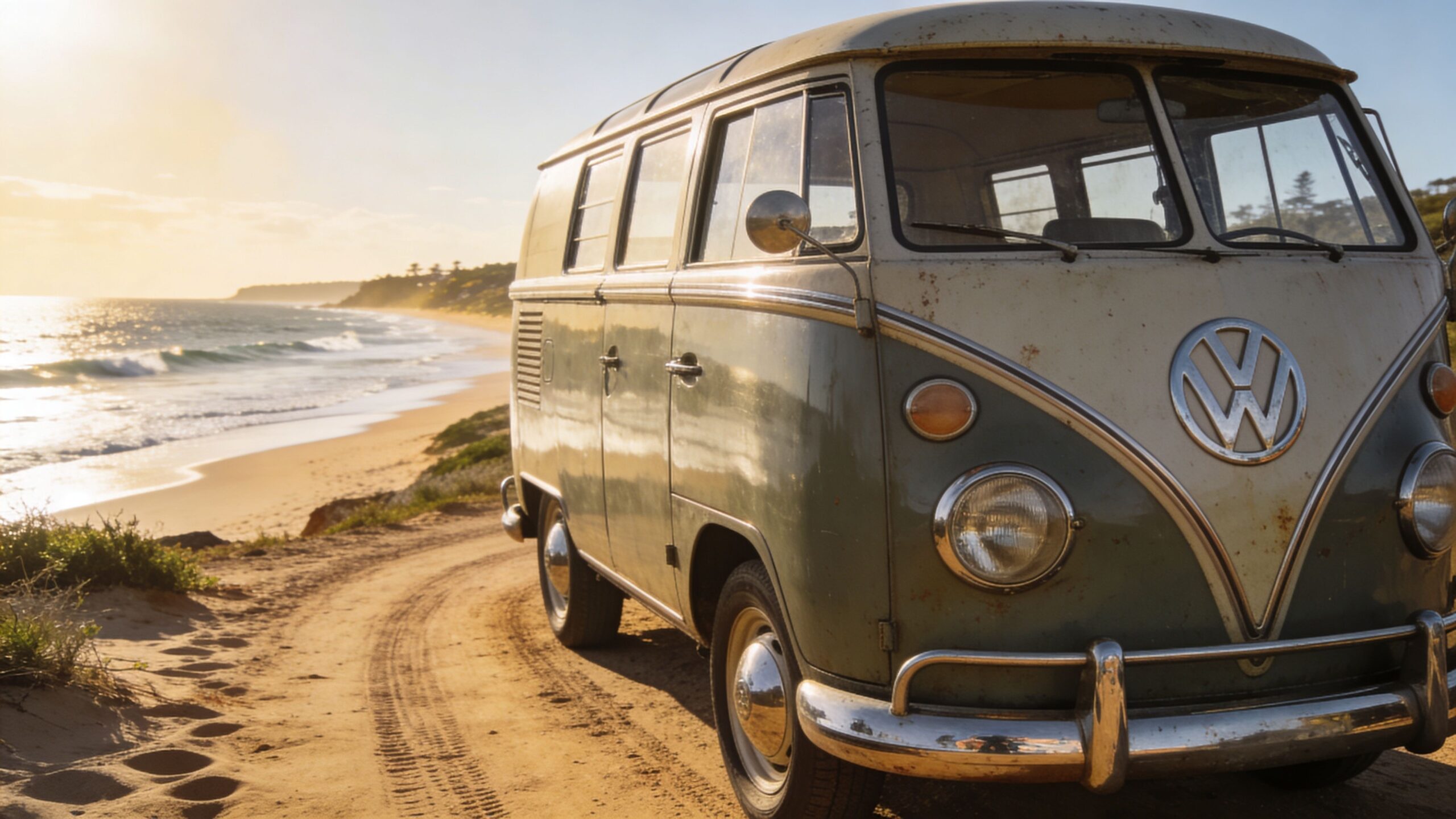
A vintage green Volkswagen van parked on a sandy beach path during a warm, sunny coastal sunset.

That question hits differently with this van. The ID.Buzz carries the same warm, upright silhouette that made generations of Kombis feel friendly before you even turned a wheel. The glassy cabin, the short nose, the bright colours. They tap straight into memory. If you have ever spent a Sunday polishing a Beetle, arguing split-screen versus bay-window, or hunting down a mint diecast Samba at a swap meet, you already know why this model has people grinning.

The price matters because heritage matters. A new people mover can be judged on seats, range, and finance repayments alone. The ID.Buzz brings another layer. Buyers are weighing a modern EV against decades of affection for the badge, the shape, and the stories attached to it.

That is why this guide takes the enthusiast route.

For plenty of VW fans, the dollars only make sense once you place the new bus beside the old dream. A classic Kombi asks for patience, storage space, and a forgiving mechanic. The ID.Buzz asks for a much bigger upfront spend, but it also offers factory warranty, everyday usability, and the rare feeling that Volkswagen has built a modern van with one eye on its own family album. If you enjoy comparing eras, this look at the Crafter camper and Kombi comparison shows how VW vans have kept changing shape while holding onto the same travel-first spirit.

The local pricing story has added to the interest. Early reactions focused on how ambitious the launch figures felt for loyal VW buyers. Later adjustments made more people stop and look again, especially those who loved the idea of an electric Kombi but could not quite square the romance with the first sticker price.

The ID.Buzz feels like the van that finally lets nostalgia and daily driving share the same garage.

That is also why collectors have taken to it so quickly. Every time Volkswagen releases a van with this much character, the shelves start filling with miniature versions. The actual car becomes a conversation piece. The diecast becomes the thing you bring home while you decide whether the full-size one belongs in your driveway.

Understanding the Official ID.Buzz Price Tag

At the local VW meet near Sandown, the loudest price debate was not about the GTX. It was about the Pro SWB. One old Kombi owner ran his hand along the Buzz’s two-tone flank, smiled, and said it looked like the first modern VW van priced close enough to move from poster dream to family spreadsheet.

That sums up the Australian ID.Buzz story rather well. The early numbers sparked plenty of chatter, then the revised local pricing gave enthusiasts a second reason to walk back into the showroom and take a proper look.

The 2026 starting prices at a glance

Here’s the range in plain terms.

Model Variant Seats / Type RRP (from) Key Feature
ID.Buzz Cargo Cargo van $69,990 Practical work-focused variant
ID.Buzz Pro SWB 5 seats $75,990 Short-wheelbase passenger model
ID.Buzz Pro LWB 7 seats $80,990 More family-friendly cabin space
ID.Buzz GTX LWB Performance passenger model $104,990 Top-spec range flagship

Those figures matter, but the true enthusiast conversation sits just underneath them. Which version feels most like the spiritual heir to the old bus?

For plenty of VW fans, it is not the range-topper. The Cargo has that stripped-back honesty. The Pro SWB carries the neat proportions that echo the classic silhouette. The Pro LWB makes the strongest case for buyers who want the nostalgia hit without giving up family duty. Price, in that sense, becomes part of personality.

If you like tracing that family resemblance across generations, this Crafter camper and Kombi comparison gives useful context for how Volkswagen’s vans have shifted from simple workhorses to lifestyle icons.

Collector’s lens: The best buy in a VW range is often the one that captures the right era, shape, and feeling, then fits real life well enough to be enjoyed often.

Why the revised pricing got attention

Volkswagen’s local adjustments changed the mood around the Buzz. Buyers who had admired it from afar started treating it less like a design statement and more like an actual purchase.

That shift matters in Australia. A Buzz is never judged only against other EVs. It gets measured against family wagons, people movers, classic van projects, and the emotional value of owning something with proper VW blood in it. A lower sticker makes that emotional calculation much easier.

Options can reshape the number quickly

The RRP is only the starting point, especially with a vehicle this tied to style and nostalgia.

Two-tone paint adds a noticeable premium. Metallic paint and the panoramic sunroof push the total higher again. Those choices are easy to understand if you have ever hunted down the exact diecast Kombi in the right colour split, with the right wheels, and the right trim. Enthusiasts rarely want the van in its most anonymous form.

That is why the official price tag deserves a careful read. On paper, it is a list of variants and starting figures. In practice, it is a menu of personalities, and every extra you choose nudges the Buzz closer to the one you have been picturing since the first concept photos landed.

Calculating Your Real Drive-Away Price

The showroom figure is the headline. The drive-away figure is the lived reality.

Anyone who collects knows the feeling. You spot a beautiful model online, then remember postage, display gear, and maybe a case to keep the dust off. Buying an ID.Buzz works the same way, just with much bigger numbers and more official paperwork.

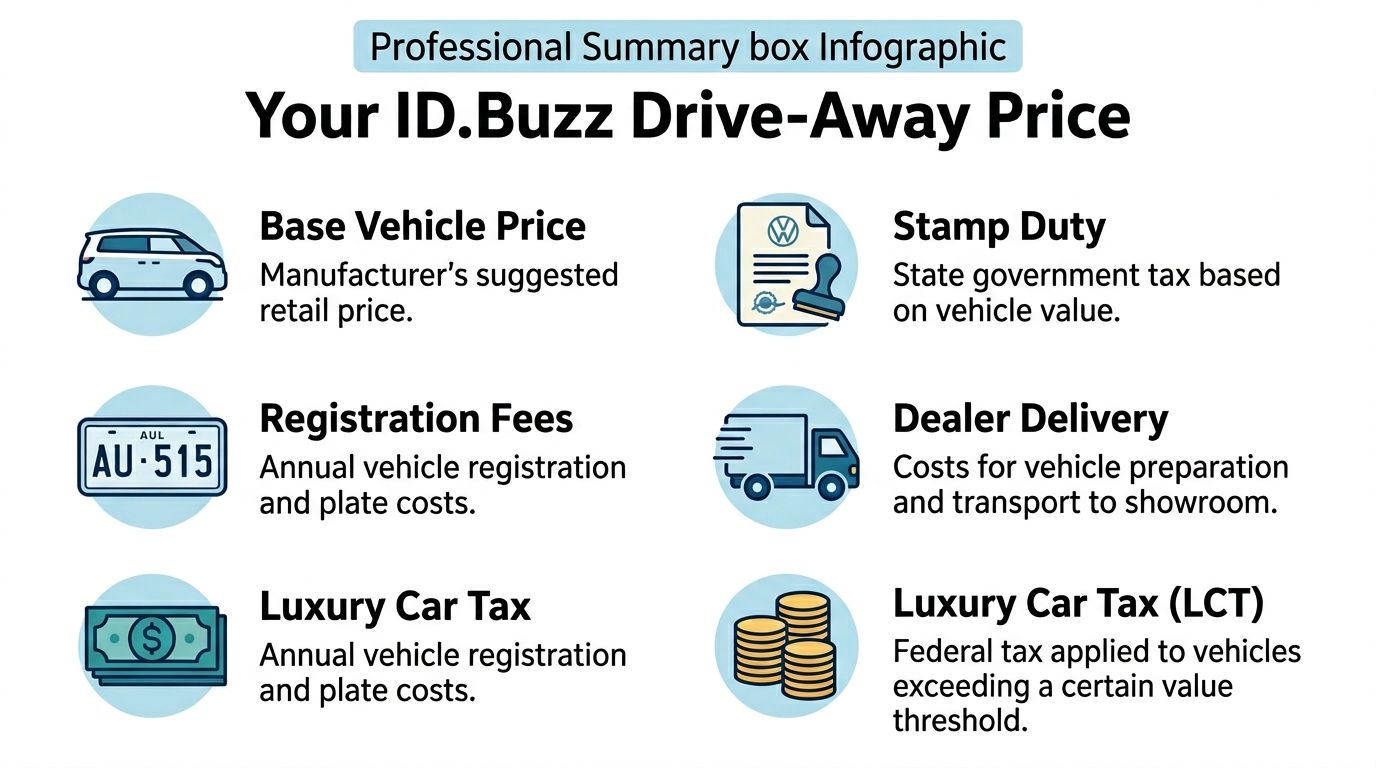
An infographic detailing the components of the drive-away price for a Volkswagen ID. Buzz vehicle in Australia.

What gets added on top

Your drive-away cost usually includes several layers beyond the advertised RRP:

  • Stamp duty based on your state or territory rules.
  • Registration for getting the vehicle legally on the road.
  • CTP insurance where it applies as part of registration arrangements.
  • Dealer delivery for preparing and supplying the vehicle.
  • Options and accessories such as the two-tone paint many buyers will want for that classic VW look.

Why two buyers can pay different final prices

The Australian market gets a bit more nuanced. National offers can make pricing look neat and uniform, but local conditions still matter. A buyer in a metro area may get a different final package from someone in a regional centre, even when the headline campaign looks identical.

Carexpert’s report on the later price cuts notes that national drive-away offers can obscure regional differences, and that dealer flexibility remains a key variable worth exploring.

That means it’s smart to ask specific questions, not just broad ones.

The questions worth asking the dealer

Before you sign anything, ask for a written breakdown that separates each cost. That keeps the conversation clear and stops the final figure feeling mysterious.

  • Ask for itemisation so you can see the base vehicle price apart from on-road costs.
  • Ask about local stock because a ready-to-deliver vehicle may differ from a factory order in colour and option mix.
  • Ask how options affect tax position if you’re near any threshold-sensitive pricing.
  • Ask whether the offer is drive-away in your postcode rather than assuming the national ad tells the full story.

Practical rule: Don’t compare one Buzz with another using only the advertised headline. Compare the signed drive-away figure, the options fitted, and your location.

For enthusiasts, the most dangerous extra is usually cosmetic. That gorgeous two-tone paint taps straight into decades of Kombi nostalgia, and resisting it won’t be easy.

How Government Incentives Can Lower Your Cost

At a VW meet in Brisbane last summer, one bloke spent half an hour admiring the two-tone ID.Buzz and another half doing novated-lease maths on his phone. That is the true Australian Buzz conversation. Heart first, spreadsheet second.

For buyers who can salary package through work, the volkswagen id buzz australia price can look very different from the figure on the windscreen. Volkswagen’s local pricing has put key Pro variants in reach of the current Fringe Benefits Tax exemption for eligible EVs under the fuel-efficient Luxury Car Tax threshold, which can change the ownership equation in a meaningful way.

The tax break enthusiasts keep talking about

The basic idea is simple. If your chosen ID.Buzz qualifies for the EV FBT exemption through a novated lease, part of the cost is treated more favourably for tax purposes than a typical petrol family mover.

That matters because the Buzz is not an impulse buy. It is the kind of vehicle people justify the way they justify a beautifully restored split-window Kombi or a shelf full of rare diecast buses. The dollars have to feel right, not just the design.

As noted earlier, the Pro models were priced with that threshold in mind. Stay within the eligible limits and the tax treatment can be far kinder than many first-time buyers expect. Load up too many options and the sums can shift quickly.

Where buyers can get caught

The trap is usually not the model itself. It is the extras.

Metallic paint, a panoramic roof, or a few tempting comfort options can push the price higher and affect eligibility, depending on how your lease is structured and what counts toward the threshold at the time you order. A dealer can tell you the list price. Your salary packaging provider should confirm how the packaged vehicle is assessed before you sign.

That is the moment to slow down and check the build sheet line by line.

Who gets the biggest benefit

A few buyers should pay especially close attention:

  • Employees with access to novated leasing through their workplace
  • Families cross-shopping the Buzz against petrol people movers
  • Long-time VW fans who want the nostalgia hit, but still need the monthly numbers to feel sensible

Collectors tend to understand this instinct better than anyone. You might happily pay more for the perfect old-school Kombi model in the right colourway, but you still want to know whether the premium is justified. The same mindset applies here. If the modern electric bus gets the tax treatment you want, the jump from dream garage to driveway can feel far less intimidating.

And if the new electric era has you looking at the wider VW story, the Volkswagen ID.4 and the brand’s broader EV direction also help explain why so many enthusiasts are treating the ID.Buzz as both a practical buy and the next chapter in a collection.

If your chosen Buzz sits close to the threshold, the option list deserves as much attention as the badge on the tailgate.

That may sound dry beside all the retro charm, but it is part of the fun for VW tragics. We have always balanced emotion with detail, whether we are hunting an original Samba, comparing hubcaps at a swap meet, or figuring out how to bring the electric Kombi home without overspending.

Estimating Your Running and Charging Costs

A mate from our local VW club took his new-school Buzz out for a Sunday coffee run a few weeks after years of driving an old air-cooled bus. The funny part was not the silence. It was the habit. He still glanced toward the servo on the corner before remembering he would top up at home that night instead.

That small change says a lot about ID.Buzz ownership in Australia. The spending does not vanish. It shifts into a pattern that feels calmer, easier to budget for, and a bit more like charging your phone than feeding a thirsty people mover.

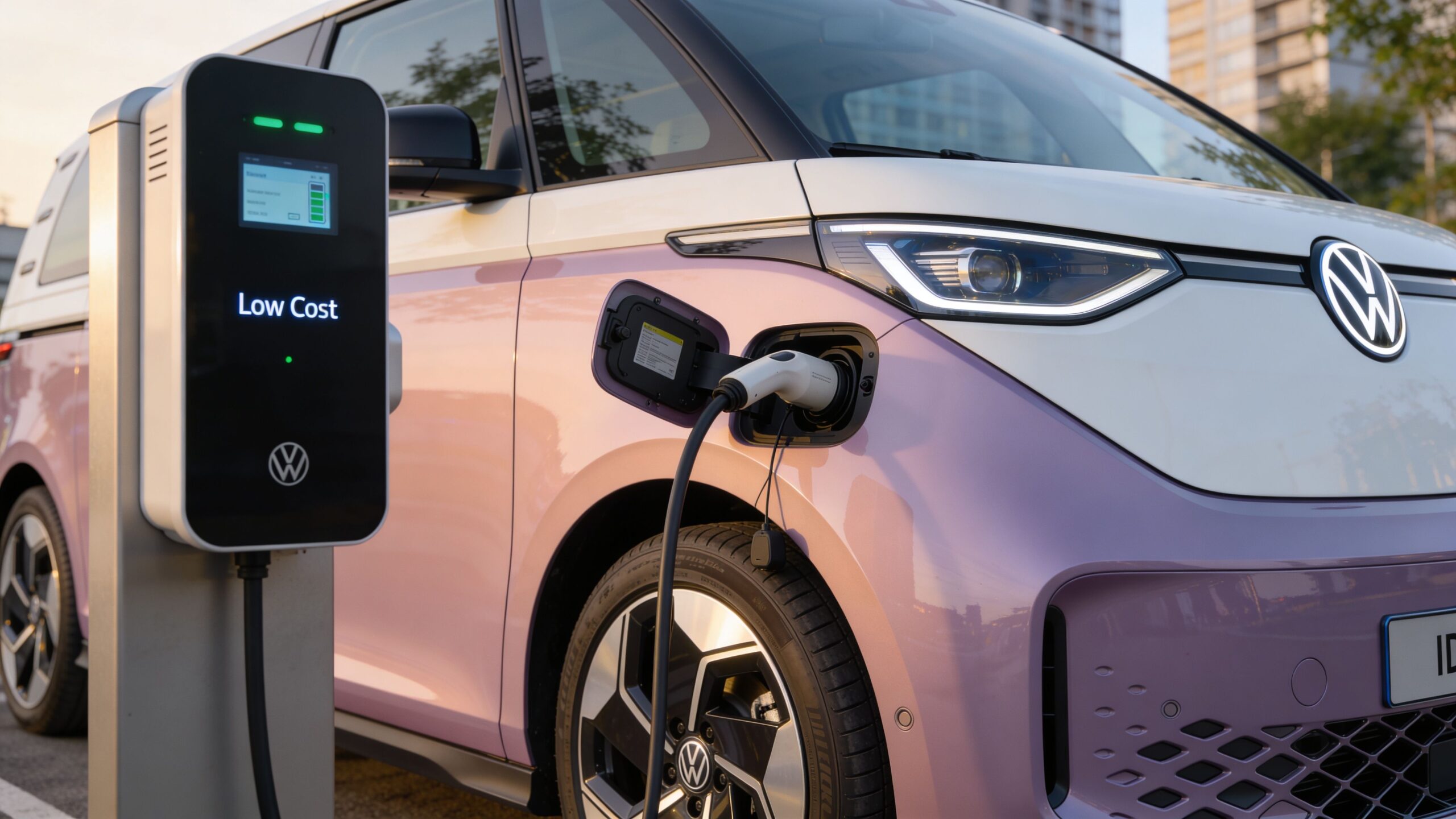
A two-tone pink and white Volkswagen ID. Buzz electric van charging at a public EV charging station.

A cost you can pin down early

One ownership figure is refreshingly clear. Chasing Cars’ ID. Buzz review notes that Volkswagen offers a capped-price servicing plan of $1,450 for six years or 90,000km.

For buyers used to older Volkswagens, that predictability feels almost strange. Anyone who has chased a mystery rattle through a classic Kombi or hunted parts before a club run will appreciate having at least one line of the ownership budget mapped out from day one.

Where the real difference shows up

Charging costs depend on how you live with the van.

A Buzz that sleeps in a garage with home charging access will usually feel cheaper and more convenient to run than one relying heavily on public chargers. Add rooftop solar to the mix and the equation gets even more appealing for families who can charge during the day or overnight on favourable electricity rates.

Public charging still matters, especially for weekends away, school holiday runs, and those long coastal drives where a Kombi has always felt most at home. As noted earlier in the article, the ID.Buzz supports fast DC charging, so road-trip stops can be practical rather than painful.

The ownership costs that deserve a proper look

The monthly picture usually comes down to a handful of variables:

  • Home charging setup, especially if you need equipment installed
  • Electricity tariff, including off-peak rates or solar use
  • Public charging habits on longer trips
  • Insurance premiums, which can vary sharply by suburb and driver profile
  • Tyres and general wear items, because the Buzz is still a sizeable family vehicle
  • Battery health over the long term, which matters more if you plan to keep it for many years

Collectors will recognise the mindset. Buying the model is only part of the story. Ultimately, the question is what ownership feels like over time, whether that is preserving a classic Type 2 or deciding if the modern electric bus suits your routine.

Here’s a walkaround video that helps bring the practical EV van experience to life:

If you enjoy seeing how Volkswagen carries the same design spirit across its electric range, the Volkswagen ID.4 overview and wider EV direction adds useful context.

The smartest way to judge ID.Buzz running costs is to compare your own habits. Daily kilometres, charging access, and trip patterns matter far more than a generic estimate.

More Than a Van It Is an Inspiration for Collectors

The most charming thing about the ID.Buzz might be what it does after you’ve parked it. It sends your mind wandering back through the whole Volkswagen story.

One minute you’re looking at a modern electric van in two-tone paint. The next you’re remembering a split-window bus from a club display, a faded beach photo from childhood, or a little diecast Beetle that sat on your desk for years. That’s the deeper appeal. The Buzz doesn’t erase the classics. It makes you appreciate them more.

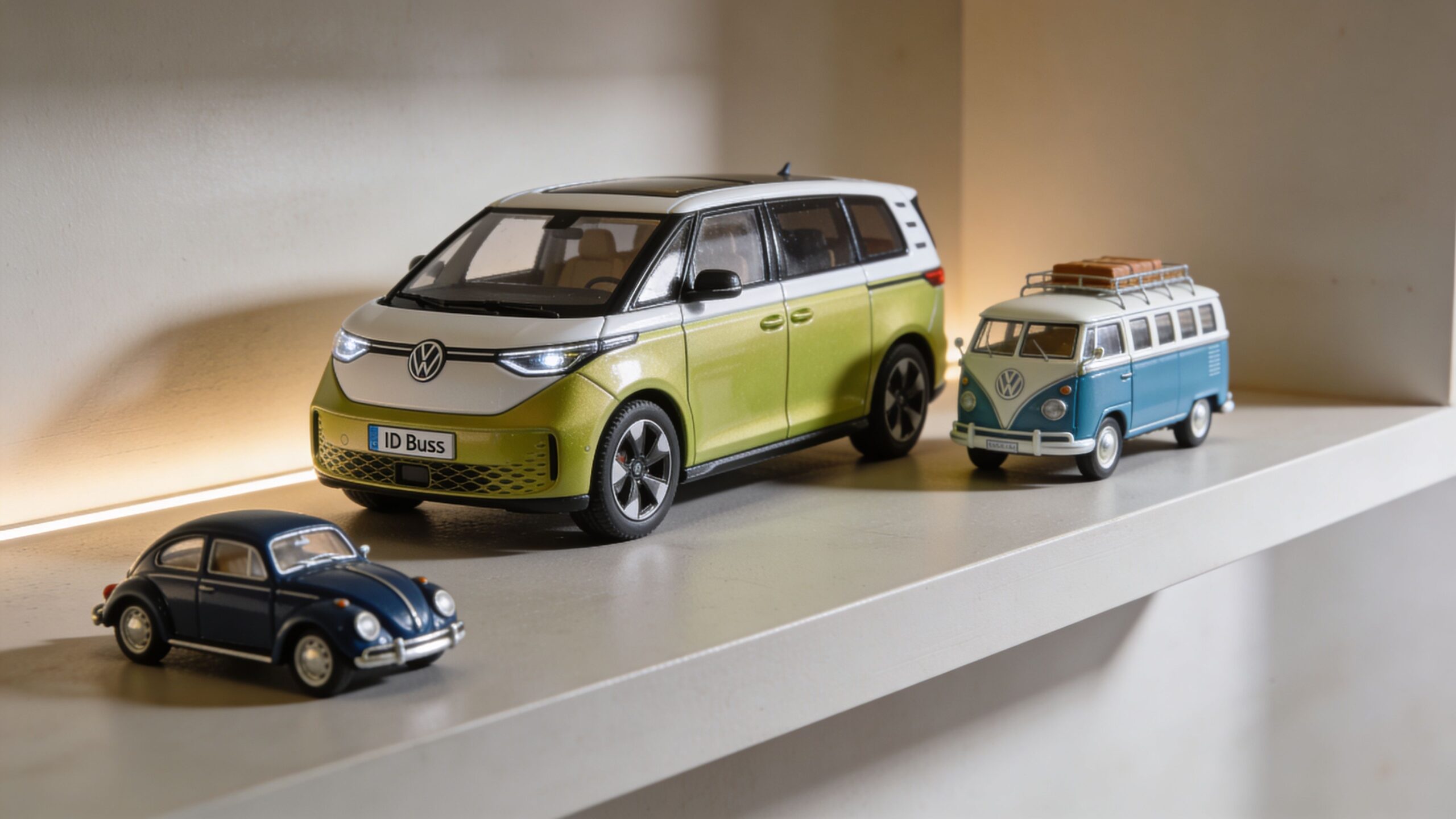
A display shelf featuring miniature Volkswagen toy cars, including a modern ID. Buzz and a classic microbus.

Why the new Buzz sparks old memories

Collectors are wired to notice continuity. The shape of the roofline, the cheerful face, the colour combinations, the way one generation nods to another. The ID.Buzz is full of those details.

That’s why so many enthusiasts respond to it with both curiosity and affection. Even if they’re not buying this particular model tomorrow, they start revisiting the classics in their own way.

A shelf that once held only a Beetle model suddenly feels like it needs a Kombi beside it. A collection focused on older buses now seems incomplete without something that hints at the electric future.

The collector’s version of ownership

For plenty of VW fans, collecting is how the passion becomes tangible. You might not have room for another full-size project vehicle. You might not be ready to order a new van. But you can still build a story in miniature.

That’s where the ID.Buzz has an oddly powerful role. It acts like a bridge piece.

  • For Kombi lovers, it refreshes interest in classic Samba Bus styling.
  • For Beetle fans, it reminds you how Volkswagen has always balanced friendliness with function.
  • For gift buyers, it makes VW memorabilia feel current again, not just nostalgic.

A good collection doesn’t freeze the past. It shows the line from then to now.

Why heritage still matters when the drivetrain changes

Some enthusiasts hesitate around EVs because the sound, feel, and rituals are different. That’s understandable. Yet heritage was never only about engines. It was about design, community, utility, and personality.

The ID.Buzz still carries those things. It still invites conversation at shows. It still makes people smile. It still connects generations of owners who might otherwise have little in common except a shared affection for the VW shape.

And that, for a collector, is gold. Not monetary gold. Storytelling gold.

Your Top Questions About Buying an ID.Buzz

There are always a few practical questions that come up after the first wave of excitement. Here are the ones most VW fans tend to ask.

Is the Australian price the same everywhere

Not always. National drive-away campaigns can make it look that way, but local dealer flexibility and regional conditions can still affect the final figure. It’s worth checking the full written quote for your postcode and dealer.

Which model feels most like the spiritual successor to a classic Kombi

That’s subjective, but many enthusiasts are drawn to the passenger Pro models because they lean hardest into the people-moving, lifestyle-friendly character that made the original bus so beloved. The Cargo has charm too, especially if you love the practical side of VW vans.

Are the options worth it

They can be, especially if the appearance matters to you. The two-tone paint is the obvious emotional choice because it taps directly into old-school Kombi flavour. Just be careful if you’re structuring the purchase around tax-sensitive pricing.

Is the real cost more than the advertised RRP

Yes. The advertised RRP is only the starting point. On-road costs, dealer delivery, registration, insurance, and any options all shape the final figure.

Does it make sense if I’m comparing it with a petrol people mover

It can, but the answer depends on how you’ll buy it and how you’ll use it. Buyers using novated leasing may see a very different ownership picture from someone paying outright. Running costs also depend on whether you mostly charge at home or rely on public charging.

Should enthusiasts wait for more deals

Some buyers will. The Australian market has already seen meaningful price adjustments, so plenty of careful shoppers will keep a close eye on timing and dealer stock. If you’re not in a hurry, patience can be part of the strategy.

Start Your Volkswagen Journey Today

The volkswagen id buzz australia price tells an interesting story. On paper, it’s a premium modern EV van. In practice, it’s also a heritage piece, a family mover, a business tool, and for many of us, the first new Volkswagen in a long time that tugs at old Kombi heartstrings.

The smart way to read the price is to look beyond the headline. The revised RRPs changed the conversation. Drive-away costs still matter. Incentives can make a major difference for the right buyer. Running costs deserve proper thought, not guesswork. And if you care about VW history, some of the value sits in that hard-to-measure sense of continuity between the original bus and this electric reboot.

That’s why the ID.Buzz has captured so much attention in Australian VW circles. It isn’t just selling transport. It’s reviving a feeling.

If you love the broader VW lifestyle, this kind of modern-versus-classic conversation sits beautifully alongside the old road-trip spirit captured in van life stories from around Australia. The inherent joy of the badge has always been bigger than one vehicle.

Whether you’re pricing a full-size ID.Buzz or enjoying what it represents, you’re part of a long, colourful Volkswagen tradition that still has plenty of road ahead.


If the new Buzz has you daydreaming about Kombis, Beetles, and everything in between, have a look at Volkswagen Memorabilia. It’s a lovely place to find officially licensed VW-themed gifts, diecast models, and collectible pieces that let you enjoy the Volkswagen story at home, on your shelf, or as a gift for another fan.

Your Ultimate Guide to the Golf GTI Mk6 in Australia

The Volkswagen Golf GTI Mk6, built between 2009 and 2013, is far more than just another hot hatch. It represents a golden era for many Aussie car fans, nailing the perfect blend of sharp performance, everyday usability, and timeless style. With its punchy 2.0-litre turbocharged engine and engaging driving feel, it quickly became a legend in Volkswagen’s performance history.

The Enduring Legend of the Golf GTI Mk6

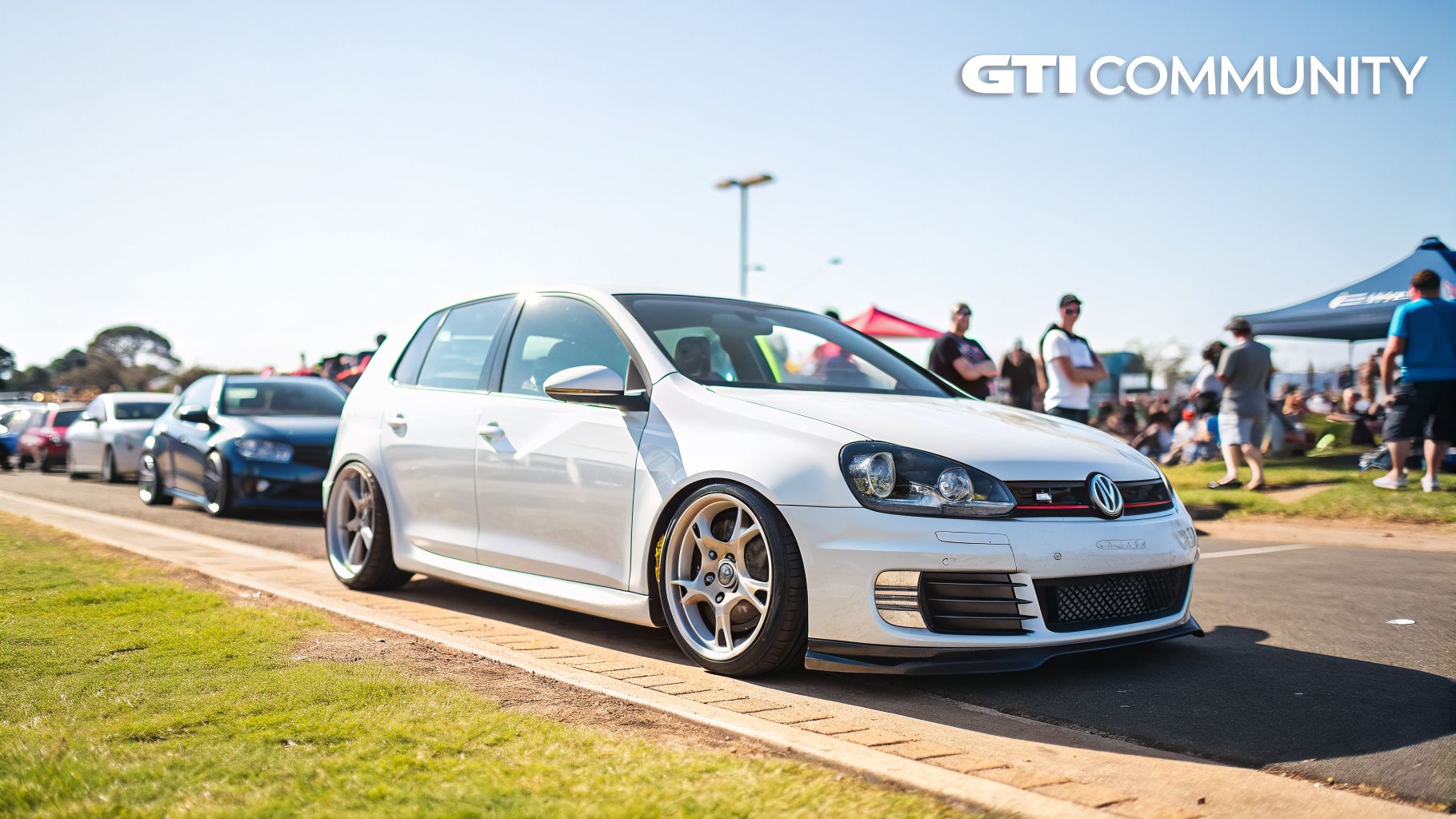
White Volkswagen Golf GTI MK6 lowered on custom wheels at an outdoor car meet.

Picture this: it’s a sunny Saturday morning at a bustling Aussie car show. You can smell the coffee and hear the friendly chatter of fellow VW fans. Right in the middle of it all, drawing admiring looks, sits a perfectly clean Volkswagen Golf GTI Mk6.

For so many of us, this car isn't just a machine. It's a cultural touchstone that defined the modern hot hatch for a generation of enthusiasts down under. The Mk6 captured a special kind of magic, blending thrilling turbocharged fun with the practicality you need for the daily grind. It was the car that could carve up a winding coastal road on Sunday and still handle the school run on Monday.

This brilliant mix of excitement and sensibility created a passionate community that stretches from Sydney to Perth. Its sharp, clean styling and that potent TSI engine still capture hearts today, cementing its spot as a true modern classic. It’s more than just a successor to the iconic Mk1; it carries on a tradition of fun and freedom that began with Volkswagen’s earliest air-cooled icons. You can feel that same spirit when you read about the beloved VW Beetle and its incredible journey.

A Legacy Beyond the Road

The passion for the Golf GTI Mk6 runs much deeper than just the driver's seat. It's about the shared stories, the club meets, and the pride of ownership. This guide is a celebration of that spirit, connecting the love for the real car to the joy of collecting its perfectly detailed diecast replicas.

For enthusiasts, the Mk6 represents a sweet spot in the GTI lineage—more refined than the Mk5 but with a raw, connected feel that some feel has softened in later models. It’s this balance that makes it so memorable.

This is for every fan who appreciates the signature red grille stripe, the classic tartan seats, and the unmistakable bark of the exhaust. We'll dive into its history, explore what makes it tick, and show you how to celebrate its legacy through the wonderful world of VW memorabilia. It's a tribute to the passion behind the badge, and we’re thrilled to have you along for the ride.

When the Volkswagen Golf GTI Mk6 rolled onto Australian shores in 2009, it had some pretty massive boots to fill. Its older brother, the Mk5, had been a smash hit, completely reigniting the country’s passion for the hot hatch. The big question on every enthusiast’s mind was simple: could VW possibly strike gold twice?

As it turned out, the Mk6 didn't just meet the hype; it confidently left it in the rearview mirror. Volkswagen didn’t reinvent the wheel. Instead, they took a long, hard look at what made the Mk5 such a legend—that brilliant blend of raw performance and daily driver polish—and dialled the refinement all the way up. The aim was to build a GTI that felt more premium and mature, but without losing a single ounce of the aggressive spirit that makes a GTI, well, a GTI.

A New Class of Polish and Performance

The design was instantly sharper, cleaner. It wasn't a revolution, but a confident evolution of the GTI look. Step inside, and the difference was even more obvious. The cabin materials took a huge leap forward, with soft-touch plastics, more elegant switchgear, and of course, those iconic tartan seats that somehow managed to feel both nostalgic and completely modern at the same time.

It felt less like a hatchback with a big engine bolted in and more like a purpose-built performance car that you could happily drive to work every single day. This was a very clever move from VW. While other hot hatches were screaming for attention with wild wings and loud paint jobs, the Mk6 offered a more sophisticated kind of thrill. It was the sort of car a professional could park at the office without raising eyebrows, then absolutely unleash on a winding back road on the weekend.

The Volkswagen Golf nameplate was already a force to be reckoned with in Australia. To put it in perspective, back in 2007, the brand sold a staggering 10,982 Golfs, making it the top-selling car from any German carmaker Down Under. The Mk6 GTI leveraged this incredible momentum, winning over enthusiasts with its punchy 2.0-litre TSI engine. It put out a healthy 157kW and 280Nm of torque, enough to launch the car from 0-100km/h in just 6.9 seconds, all while wearing that iconic red-striped grille with pride. For those interested, you can find more on Volkswagen's historical sales performance and deeper insights into their market impact.

The Perfect All-Rounder for Aussie Roads

This combination of genuine performance and everyday usability was exactly what the Australian market was after. The Mk6 GTI wasn't just quick in a straight line; its beautifully balanced chassis and sharp, precise steering made it an absolute joy on the kinds of roads we love—from the tight, twisting hairpins of a mountain pass to the flowing corners of a country B-road.

The Mk6 GTI proved you didn't have to compromise. You didn't need to choose between a fun car and a practical one. It was a master of both, giving you a driving experience that was thrilling when you wanted it and completely composed when you didn't.

It was this brilliant duality that cemented its spot in Aussie car culture. No, it wasn't the loudest or the most powerful car in its class, but it was arguably the most complete. It redefined what an Aussie hot hatch could be, proving that sophistication and pure, unadulterated fun could go hand-in-hand to create a modern classic that enthusiasts and collectors still rave about today.

Pop the bonnet on a Mk6 GTI, and you'll understand what the fuss is all about. This is where the magic happens, and it’s what gives the car its legendary character.

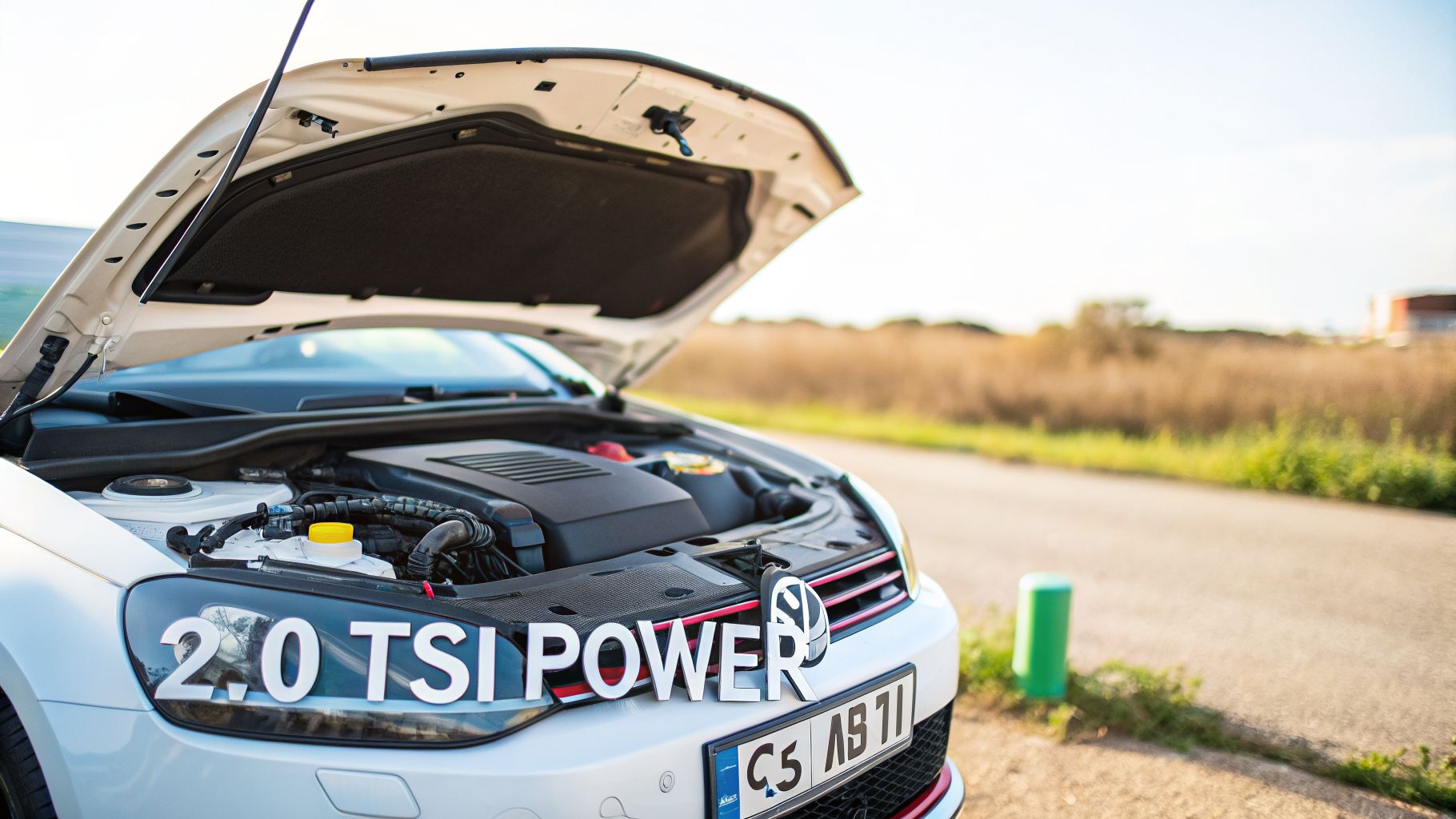
A white Volkswagen Golf GTI with its hood open, revealing the 2.0 TSI engine on a sunny day.

At its heart sits the brilliant 2.0-litre EA888 TSI engine. This turbocharged four-cylinder is the soul of the machine, delivering an eager, responsive kick that will put a smile on your face every single time. It's an engine built for real-world fun, not just impressive numbers on a spec sheet.

It’s not about overwhelming, tyre-shredding power. Instead, the EA888 is all about accessible performance that feels perfectly suited to Australian roads. It’s punchy and pulls strongly from low revs, giving you a smooth, confident surge of torque whether you’re jumping into a gap in traffic or powering out of a tight corner.

The Great Transmission Debate

How that power gets to the front wheels has always been a hot topic for GTI fans. Volkswagen gave buyers two fantastic choices, each offering a completely different driving experience. It was a tough decision back then, and it's still something enthusiasts love to debate today.

  • The 6-Speed DSG: The Direct-Shift Gearbox was a game-changer. This dual-clutch automatic delivers incredibly fast, seamless shifts that keep the engine right in its sweet spot. It's ruthlessly efficient and makes the GTI feel effortlessly quick.
  • The 6-Speed Manual: For the purists, there’s no substitute for a proper three-pedal setup. The manual in the Mk6 is a joy to use, with a crisp, mechanical feel that connects you directly to the action. There's nothing quite like the satisfaction of nailing a perfect downshift yourself.

Honestly, there's no wrong choice here. It all comes down to what you want. Do you prefer the high-tech efficiency of the DSG or the classic engagement of rowing your own gears?

More Than Just a Great Engine

But the Mk6 GTI's genius is about more than just its drivetrain. A key feature on many cars was Volkswagen’s Adaptive Chassis Control (DCC), a clever system that lets you change the car's personality with the push of a button.

Think of it as having multiple cars in one. 'Comfort' mode softens the suspension for a relaxed daily commute, soaking up bumps and rough patches. Switch it to 'Sport', and everything tightens up—the suspension gets firmer, the steering becomes weightier, and the throttle feels sharper. It instantly transforms the GTI from a comfortable hatch into a focused corner-carver.

This dual personality is what truly defines the Mk6. It’s a sophisticated and comfortable cruiser one moment and a proper back-road weapon the next.

Of course, you can't talk about a GTI without mentioning the iconic details. The 'Detroit' alloy wheels, with their distinctive polished faces, are instantly recognisable. Inside, the supportive sports seats trimmed in the classic 'Jacky' tartan fabric are a fantastic nod to the GTI's heritage, a legacy that goes all the way back to VW icons like the beloved Kombi Samba Bus.

To give you a quick snapshot, here's a look at the key specifications for the Australian-delivered Mk6 GTI.

Volkswagen Golf GTI Mk6 Key Specifications

This table gives you a quick-reference guide to the core numbers that made the Mk6 GTI a standout performer in its class.

Specification Details
Engine 2.0-litre EA888 Turbocharged Stratified Injection (TSI)
Power Output 155 kW @ 5,300–6,200 rpm
Torque 280 Nm @ 1,700–5,200 rpm
0-100 km/h 6.9 seconds (DSG and Manual)
Transmission Options 6-speed Manual or 6-speed DSG
Signature Wheels 17-inch 'Denver' or optional 18-inch 'Detroit' alloys
Interior Highlight 'Jacky' Tartan sports seats
Brakes Red-painted callipers with ventilated front discs

From its punchy engine to its sharp handling and classic styling cues, every element works together to create a complete and compelling package.

Building Your Ultimate Mk6 Diecast Collection

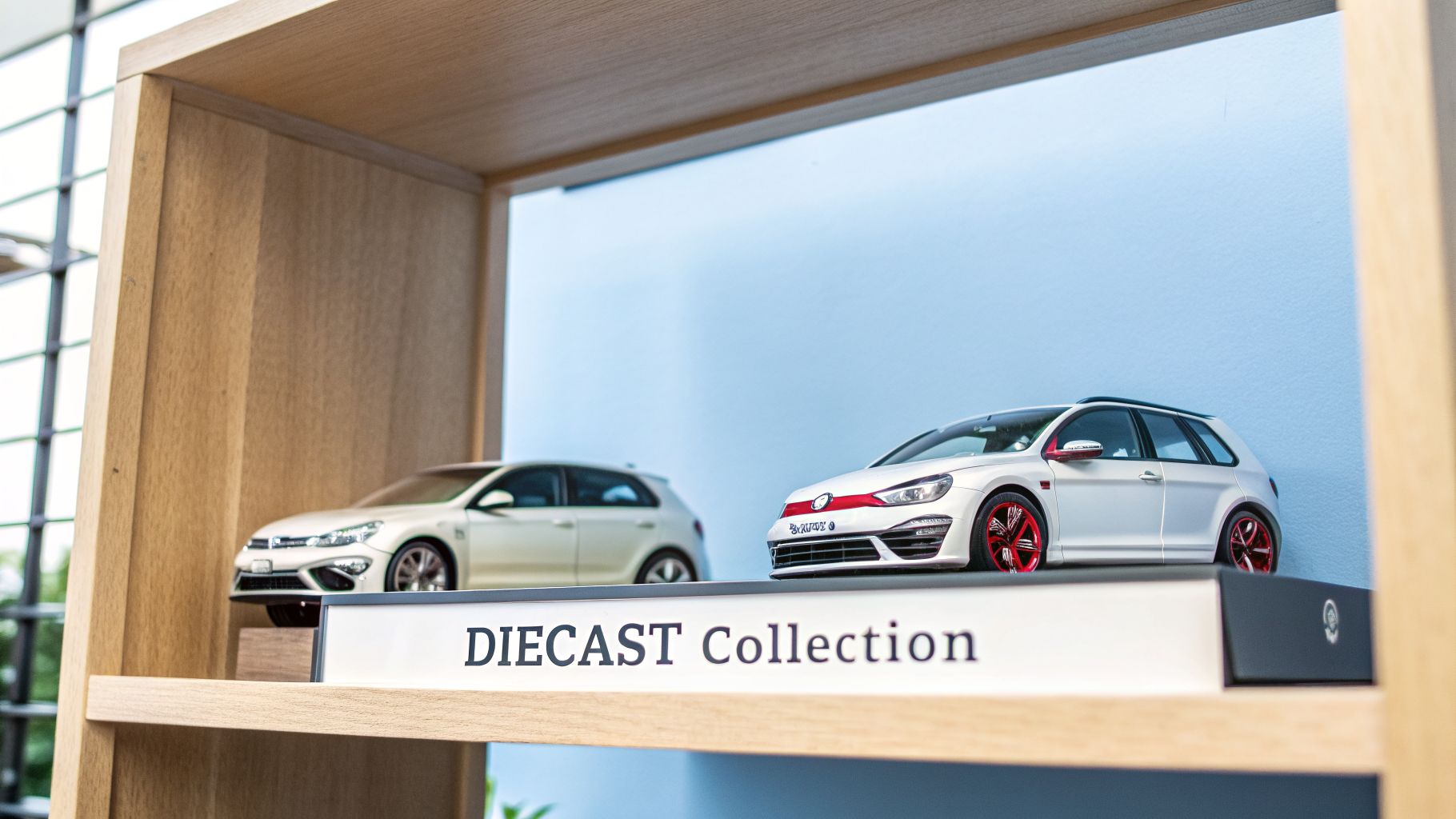
Two white diecast model cars on a display shelf, one with red wheels, against a blue background.

As the real Golf GTI Mk6 settles into its role as a modern Aussie classic, the world of diecast models is the perfect way to appreciate its clean lines and performance heritage. There's just something special about holding a perfectly scaled-down version in your hands—it’s a tangible piece of automotive history.

For plenty of us Volkswagen tragics, collecting these miniatures is a passion that runs just as deep as owning the real car. It’s your chance to build a dream garage, showcasing everything from the old air-cooled legends right through to today's heroes like the Mk6. So, let's dive into what you need to know to start or grow your own collection of these little gems.

Understanding Diecast Scales

Walking into the diecast model world for the first time can feel a bit confusing with all the different scales flying around. But it's actually pretty simple. Think of the scale as a ratio: for a 1:18 scale model, every 1 centimetre on the model represents 18 centimetres on the actual car.

Here’s a quick rundown of the most common scales you’ll come across for a Golf GTI Mk6:

  • 1:18 Scale: This is the big one, the scale for serious collectors who want maximum impact. These larger models have space for incredible detail—we're talking opening doors, bonnets, and boots, plus steerable wheels and a fully kitted-out interior and engine bay. A 1:18 Mk6 GTI makes a seriously impressive centrepiece.
  • 1:24 Scale: A brilliant middle-ground. A 1:24 model gives you fantastic detail without demanding as much shelf space as its bigger cousin. They often feature opening parts and are a popular choice for building a varied collection.
  • 1:43 Scale: This is a classic collector's scale, especially here in Australia and across Europe. It’s the perfect size to assemble a large, visually striking collection inside a display cabinet. Don't let the smaller size fool you; high-quality 1:43 models from premium brands still pack a surprising punch with their details.
  • 1:64 Scale: You’ll know this as the classic "Matchbox" or "Hot Wheels" size. These little guys are affordable, compact, and perfect for new collectors, younger fans, or anyone wanting to amass a huge variety of cars without needing a dedicated room.

Ultimately, the scale you pick really comes down to your personal goal. Do you want one or two highly-detailed hero pieces, or are you looking to build a whole fleet that tells the story of Volkswagen's history? There's no right or wrong way to do it!

What to Look For in a Quality Diecast Model

Not all diecast models are made equal. When you’re on the hunt for a Golf GTI Mk6 replica to add to your collection, a few key details will help you pick a model you'll be genuinely proud to show off.

First things first: always look for officially licensed Volkswagen products. This is your guarantee that the model was made with VW’s blessing, ensuring the shape, proportions, and badges are all spot on. Unlicensed models often just look off, with weird dimensions or incorrect details.

Next, get up close and check the finer points. The paintwork should be sharp and clean, without that bumpy "orange peel" texture. Take a look at the lights—are they just dabs of silver paint, or are they separate, clear plastic pieces? On a top-notch model, the GTI badges and VW logos will be tiny, perfectly printed decals, not clumsy blobs of paint.

A brilliant way to bring your collection to life is by creating a themed display. Picture it: your sharp, modern Golf GTI Mk6 diecast sitting next to a classic 1962 VW Kombi Samba Bus diecast. Placing them side-by-side tells a wonderful story on a single shelf—a story of Volkswagen's journey from carefree icon to performance-focused hero. It’s these creative touches that make collecting so rewarding, turning a group of models into a true celebration of VW passion.

The Reality of Owning a Mk6 GTI Today

So, you’re thinking about putting a Golf GTI Mk6 in the driveway? Great choice. It's a proper modern classic that still delivers a fantastic drive. But, like any performance car that's seen a few Aussie summers, there are a few things to keep in mind before you hand over the cash.

This isn’t a list to scare you off. Think of it more like the chat you'd have with a mate at a car meet—a friendly heads-up to help you buy a good one and enjoy years of happy motoring. Knowing what to look for changes everything; you go from crossing your fingers to confidently asking the right questions and checking the right spots.

Common Maintenance Checkpoints

Every car has its quirks, and the Mk6 GTI is no exception. The great thing is, the VW community here in Australia is massive and passionate, so these issues are incredibly well-documented. Being aware of them is the key to telling a cherished example from one that could become a bit of a project.

Here are the big ones to keep on your radar:

  • Timing Chain Tensioner: This is the one you’ll hear about most. Early Mk6 GTIs came with a timing chain tensioner that could, in a worst-case scenario, fail. A failure is catastrophic for the engine, so you absolutely must check if the updated, stronger version has been fitted. Any seller with decent service records should be able to show you the receipt for this job.
  • Intake Valve Carbon Buildup: The direct-injection engine is brilliant for performance and fuel economy, but a known side effect is carbon build-up on the intake valves over time. This chokes the engine, hurting power and efficiency. On any car with over 100,000 kilometres, you’ll want to see evidence of a 'carbon clean' in the service history.
  • Water Pump & Thermostat Housing: The factory water pump and its thermostat housing are made of plastic that can get brittle with age and heat cycles, eventually leading to leaks. It's a very common repair. When inspecting a car, have a good look around that area for any signs of pink or white crusty residue (dried coolant) or ask if the parts have already been replaced with updated versions.
  • DSG Service: If you’re eyeing up a car with the fantastic 6-speed DSG gearbox, its service history is non-negotiable. The transmission requires a fluid and filter change every 60,000 kilometres, like clockwork. A missing DSG service in the logbook is a huge red flag and a good reason to walk away.

Don’t let this list put you off. Think of it as your pre-purchase checklist. A car with records showing these have been sorted is a sign of a diligent owner and a well-cared-for machine.

Knowing these points puts you in the driver's seat during the buying process. You can inspect a car with confidence, knowing exactly where to look and what to ask. It's all part of being a responsible owner. For more general chats about the VW scene and ownership stories, feel free to check out other articles on our VW Memorabilia blog.

Unlocking Performance with Popular Modifications

The Mk6 GTI is a brilliant car right out of the box. But for many Aussie VW fans, that's just the starting point. The real fun begins when you start making it your own, and there's a huge tuning scene down under dedicated to getting a bit more performance out of this fantastic platform.

You can feel the potential simmering just beneath the surface from your very first drive. That’s why modifying the Golf GTI Mk6 is such a massive part of the ownership experience. It isn’t about correcting faults; it's all about dialling up the excitement and turning a great car into your perfect hot hatch.

Stage 1: The Gateway to More Grunt

The first stop for most owners is an ECU tune, commonly known as a "Stage 1" tune. You can think of it like a software patch for the car's engine management system. It tweaks parameters like fuel delivery, ignition timing, and turbo boost pressure to safely release the extra power VW left on the table.

This one modification can make a huge difference, often adding 20-30kW and a serious lump of extra torque. The car just feels stronger, pulling harder through every gear. A quality Stage 1 tune from a respected Aussie workshop really wakes the car up, making it feel more responsive without putting reliability at risk.

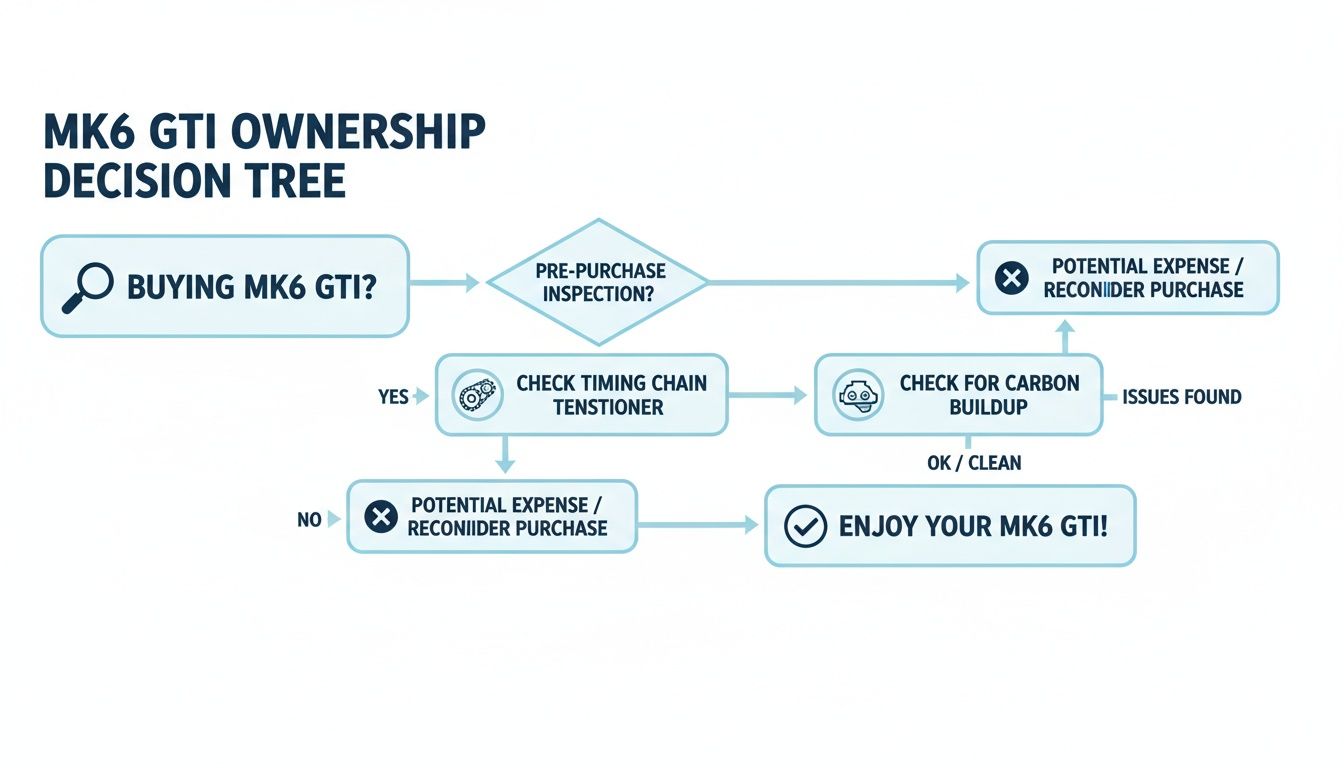
Of course, before you chase more power, you have to make sure the car is in good health. This decision tree is a great guide for the critical checks you should do before buying or modifying any Mk6 GTI.

Decision tree for MK6 GTI ownership, outlining pre-purchase inspection, timing chain, and carbon buildup checks.

Getting these basics right—especially checking that timing chain tensioner—is the key to building a reliable, high-performance car.

Beyond the Tune: Breathing and Handling

Once you get a taste of that extra grunt, it's hard to stop. The next logical steps involve hardware upgrades that help the engine breathe easier.

  • Performance Intake: Replacing the standard airbox with a high-flow intake lets the turbo gulp down more cool air. It not only helps make more power but also gives you a satisfying induction roar when you hit the accelerator.
  • High-Flow Downpipe: The downpipe connects the turbo to the rest of the exhaust. Fitting an aftermarket one with a better catalytic converter reduces backpressure, helping the turbo spool up quicker. When you combine this with a "Stage 2" tune, the Mk6 really comes alive.

It's not all about engine power, though. A balanced car is a fast car. Many owners invest in suspension parts like lowering springs or a full set of adjustable coilovers. This sharpens the handling and gives the car a tougher, more planted look.

This passion for customising the Golf GTI Mk6 is something we love in the memorabilia world. It's common for collectors to hunt down diecast models of modified GTIs, celebrating the creativity that defines the VW community. You can explore our range of Volkswagen diecast models for sale to find everything from pristine stock models to custom-tuned heroes.

Your Golf GTI Mk6 Questions Answered

We see the same questions popping up all the time at car meets and in online forums about the Golf GTI Mk6. Whether you're thinking of buying one, trying to keep yours in top shape, or just a fan of the model, here are the answers to the most common queries we hear from the Aussie VW community.

What Is a Fair Price for a Golf GTI Mk6 in Australia?

This is always the big question, isn't it? The market for the Mk6 GTI has found its groove, but the price can swing quite a bit depending on a few key things. For a solid, honest car with reasonable kilometres (think 120,000–180,000 km) and a good service history, you’ll be looking at prices between $12,000 and $18,000.

You might see mint-condition, low-kilometre cars—especially limited editions or ones with extras like the 18-inch Detroit wheels and sunroof—climb over the $20,000 mark. At the other end, cars with higher k's that need a bit of TLC can sometimes be found for under $10,000, but just be ready for some upcoming maintenance costs.

How Reliable Is the Mk6 GTI's DSG Gearbox?

The 6-speed DSG is a fantastic bit of engineering when it's looked after. It’s known for those lightning-fast shifts that make the car feel so sharp and responsive. The key to its reliability, though, comes down to one thing: regular maintenance.

The number one rule for a healthy DSG is getting the fluid and filter changed every 60,000 kilometres. Don't skip it. This is the single most important service for the gearbox's long-term health.

When issues like jerky shifts or hesitation do appear, it’s almost always because a service was missed or the mechatronics unit—the gearbox's electronic brain—is on its way out. A stamped logbook showing on-time DSG services is a huge green flag.

How Does the Mk6 Compare to the Mk5 and Mk7?

The Mk6 is really the perfect blend of its older and younger siblings. It took the raw, playful character of the Mk5 and refined it, wrapping it all in a sharper, more premium package with a much nicer interior.

Put it next to the later Mk7, and the Mk6 feels a bit more analogue and connected. The Mk7 brought in more tech and a lighter chassis, making it quicker and more efficient, but many drivers miss the slightly heavier, more hydraulic steering feel of the Mk6. Honestly, each one has its own unique charm.

What Are the Best Brands for Golf GTI Mk6 Diecast Models?

For any collector, a miniature Golf GTI Mk6 is a great way to show some appreciation for the car. If you're looking for quality, you can't go wrong with brands like Norev, Solido, or IXO Models. These manufacturers produce officially licensed models with fantastic attention to detail, right down to the correct wheel designs and tartan seat patterns.

A good diecast replica will have crisp paint, clear badges, and true-to-life proportions. We have a hand-picked selection of high-quality Volkswagen diecast models for sale right here on our site, so you can be sure you’re getting an authentic model for your collection.


Ready to celebrate the spirit of Volkswagen? Here at Volkswagen Memorabilia, we've gathered a brilliant collection of diecast models and VW-themed gifts that are perfect for any enthusiast. Click here to explore our full shop and find your next favourite piece today.