Volkswagen Type 2 History and Collecting Guide

At a sunny Australian car show, a blue-and-white Kombi rolls onto the grass and gathers a crowd before the engine has even cooled. Nearby, a tiny Samba Bus sits in a collector's display case, proving that the Volkswagen Type 2 can fill a driveway, a beach road, or a bookshelf with the same generous sense of adventure.

Why the Volkswagen Type 2 Still Captures Hearts

The Volkswagen Type 2 has a way of making strangers start talking. Someone remembers family holidays near the coast. Someone else recalls a mate's camper, a surfboard strapped to the roof, or the smell of vinyl warming in the afternoon sun. At a show, the van becomes a meeting point, with owners discussing paint shades, trim, restorations and the small details that separate one era from another.

That warmth comes from the shape itself. The upright windscreen, friendly nose, split windows and generous cabin made the Kombi instantly recognisable. It looked practical rather than aggressive, yet it carried an enormous emotional load. People associated it with weekends away, music, beach life, work, freedom and the simple pleasure of travelling with room for friends.
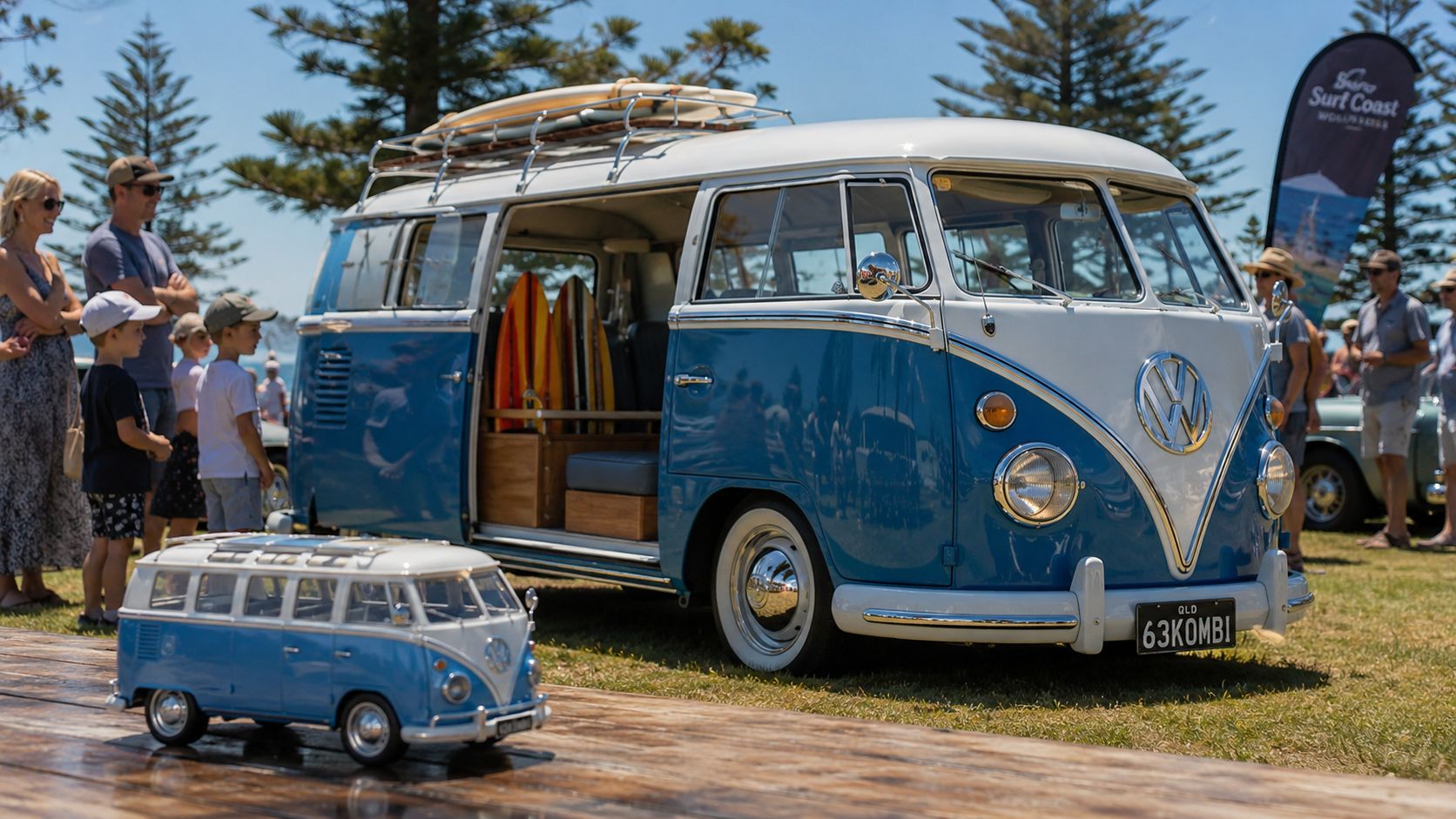
A classic blue and white Volkswagen Type 2 bus parked on grass next to a miniature model.

More than a transport van

The original Type 2 began production in March 1950 and became widely recognised as Volkswagen's second vehicle after the Beetle. Carsales' Australian history of the Combi records that the model reached Australia in 1954, with 334 Transporters sold locally that year.

That early arrival matters to collectors because the Australian Kombi story developed its own character. Local assembly, changing body styles and Australian-market components created a rich trail of variants for enthusiasts to identify. A diecast model is therefore more than a miniature van. The right one can represent a particular design era, a cultural mood or a memory that never quite left the road.

Why miniatures belong in the story

A full-size Kombi needs space, maintenance and a sympathetic owner. A licensed diecast model needs a shelf, a case and a little care. That makes collecting an approachable way to celebrate the same history, whether you're a long-time owner, a first-time buyer or searching for a thoughtful gift for a VW fan.

The best collections tell a story through colour and form. A classic Samba Bus can sit beside a Beetle, a surf-inspired van or a later Transporter, creating a small garage scene that feels personal rather than mass-produced.

The Australian Story of the Volkswagen Type 2

When the first Transporters reached Australia in 1954, they weren't just imported curiosities. Volkswagen quickly began building a local presence around them. The Type 2 was assembled from completely knocked down, or CKD, kits in Melbourne from June 1954, according to the Club VeeDub Australian chassis history.

The CKD approach brought German-pressed parts together with Australian fitting, trim and compliance work. For owners, that created a practical relationship with parts and servicing. For the company, it offered a way to adapt the vehicle to local conditions without replacing every part of the production system.
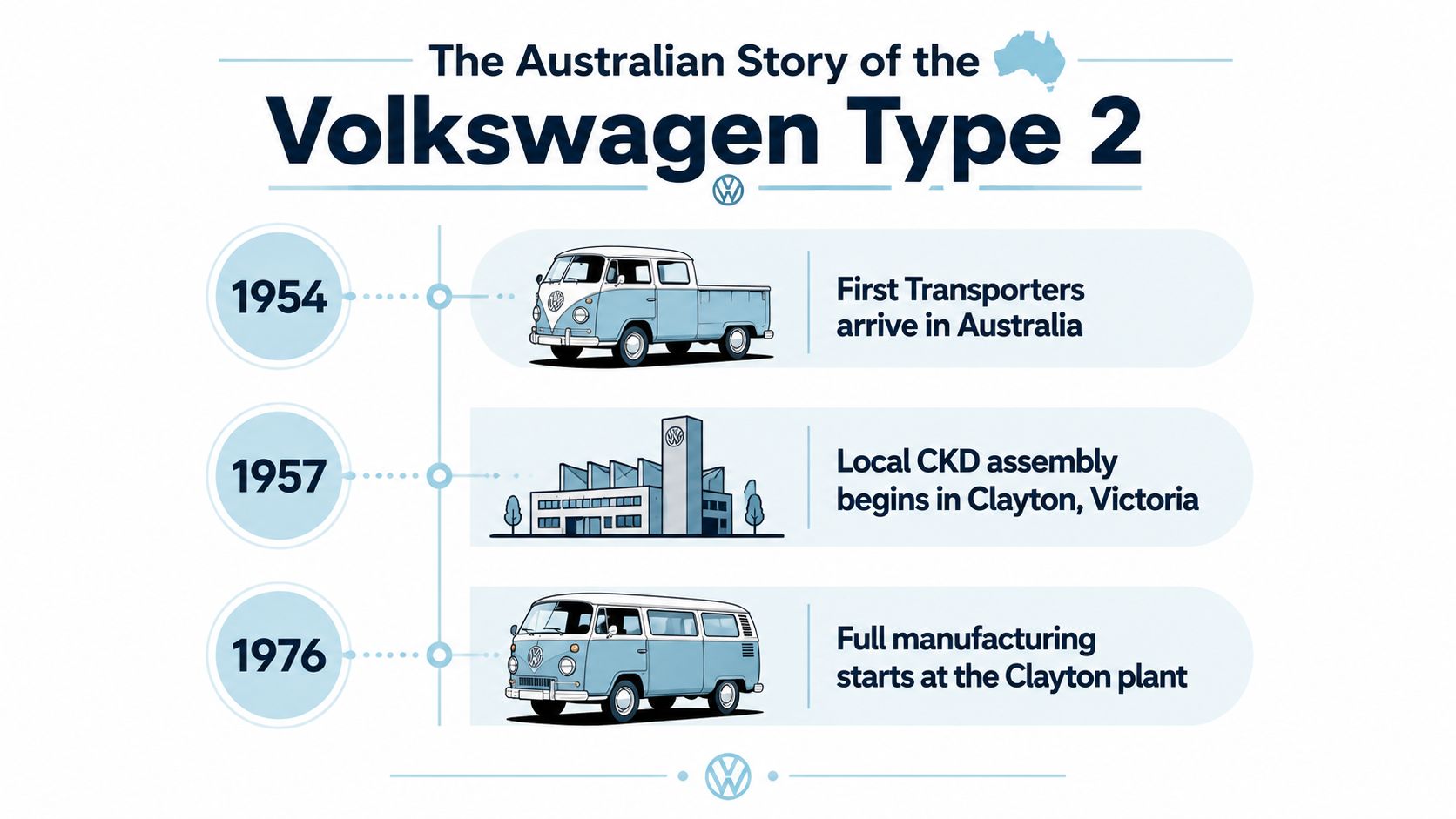
A timeline graphic showing the history of the Volkswagen Type 2 vehicle in Australia from 1954 to 1976.

From kits to Australian manufacturing

Australian production grew steadily. The first Australian stampings were made in 1959, and local content reached 75% by 1964, as documented in the Club VeeDub reference. In 1961, Australia produced its 100,000th Volkswagen, a milestone that shows how quickly the brand established itself in the local market.

The production story can look slightly different depending on how historians describe assembly and manufacturing stages. CarsGuide's account of Kombi production places Clayton assembly from 1964 to 1977, mostly using CKD kits, while Club VeeDub records Transporters as locally made from 1955 to 1976 and notes that fully imported Volkswagens followed from 1977.

For a collector, those distinctions are useful rather than confusing. They remind us that an Australian Type 2 may reflect several layers of production, from German-pressed shells to locally fitted components and later imported vehicles.

The van that businesses trusted

The Kombi also earned its reputation through work. Australian historical accounts describe Type 2s in service fleets, including vehicles associated with the Postmaster-General's Department during the 1960s. By 1975, the Kombi held more than 60% of Australia's 1-tonne market, according to Club VeeDub's historical article.

That working history gives Australian collectors another way to read the vehicle. The Kombi wasn't only a holiday icon. It was a delivery van, fleet vehicle, tradesperson's companion and dependable part of everyday life. When choosing a diecast replica, think about which story you want it to carry, a polished Samba, a practical panel van or a bright surf-themed display piece.

For a closer look at the local connection, the Kombi's Australian life offers a useful companion to the production timeline.

Key Type 2 Variants and How to Identify Them

At a show, identification often starts with the windows. The body shape gives you the broad answer, but roof details, front doors, side glass and trim help narrow down the variant.

The Split Screen, often called the T1, has the distinctive divided windscreen and an unmistakable early profile. Its production run is recorded as 1950 to 1967, with 1,477,330 Split Screen vehicles built, according to Heritage Parts Centre Australia's Type 2 history. That production scale helps explain why restorers and collectors continue to encounter a wide range of parts, specifications and condition levels.

The Bay Window followed with a broader, single-piece windscreen and a more modern body design. It still carried the same cab-forward charm, but the larger glass area changed the face and improved the driver's view. In diecast form, the windscreen and front profile are usually the quickest clues.

The Samba Bus is the jewel many collectors notice first. Look for the extensive window arrangement, raised roof section and bright detailing associated with the people-moving version. A Samba replica should make those features clear rather than hiding them behind vague “retro van” styling.

Type 2 Variant Quick Reference

Variant Production Years Key Identification Features Collector Appeal
Split Screen 1950–1967 Divided windscreen, early upright body, period-specific window layouts Strong historic identity and broad variant interest
Bay Window Later Type 2 era Single-piece windscreen, wider front glass, updated body profile Practical camper and commercial-van character
Samba Bus Commonly associated with early Split Screen styling Extensive side windows, raised roof section, bright people-mover trim Display presence and strong cultural recognition

The Transporter Combi Van collection is a helpful place to compare the familiar van shape with the different moods created by livery, colour and body style.

Reading a diecast model carefully

Collectors should compare the miniature with reference photographs from the same era. Check the number and position of windows, the shape of the bumpers, the roof treatment and the placement of badges. A model can look charming while still representing a generic interpretation rather than a faithful licensed Type 2.

Surf Culture, Hippie Freedom, and the Kombi's Cultural Legacy

A Kombi parked near an Australian beach never looks out of place. Its roof seems ready for boards, its cabin suggests a day's worth of towels and picnic gear, and its broad sides invite a hand-painted logo or a burst of colour. That visual language helped connect the Volkswagen Type 2 with surf culture and the wider idea of travelling light.

A couple stands next to a tie-dye Volkswagen van with surfboards on a beach at sunset

The van's cultural role grew because it made shared travel feel possible. Friends could load boards, guitars, camping gear and a chilly bin, then head towards the coast without needing everything to be perfectly organised. That sense of possibility turned the Kombi into a symbol, not merely a body style.

Colour became part of the message

Flower Power graphics, tie-dye finishes and surf imagery gave each van a personality. Some owners wanted a calm coastal look. Others preferred bold graphics that made the vehicle feel like a moving poster from another era. The same visual choices now shape memorabilia collecting, especially when a diecast model captures a period-inspired livery.

A 1962 Samba Bus with Flower Power decoration tells a different story from a plain commercial van. A 1967 Beetle with a surfboard brings the same coastal conversation into a smaller silhouette. These pieces work because they connect a vehicle to a setting, a soundtrack and a way of spending time.

A miniature can sit on a desk, but it can still suggest a long drive, a sandy car park or a sunset beside the water. The VW travel van range reflects that broader travel and lifestyle connection.

The following visual adds atmosphere to the history, especially for collectors building a display around surf and road-trip themes.

For many enthusiasts, that's the appeal. They aren't collecting a shape in isolation. They're keeping a little piece of beach culture, shared adventure and relaxed Australian optimism within reach.

Building Your Volkswagen Diecast Collection

A good collection usually starts with a question rather than a shopping list. Do you want to follow the Type 2 through its body changes, gather colourful lifestyle vans, pair Kombis with Beetles, or build a display around Australian coastal culture? Once you know the story, scale and quality become much easier to judge.
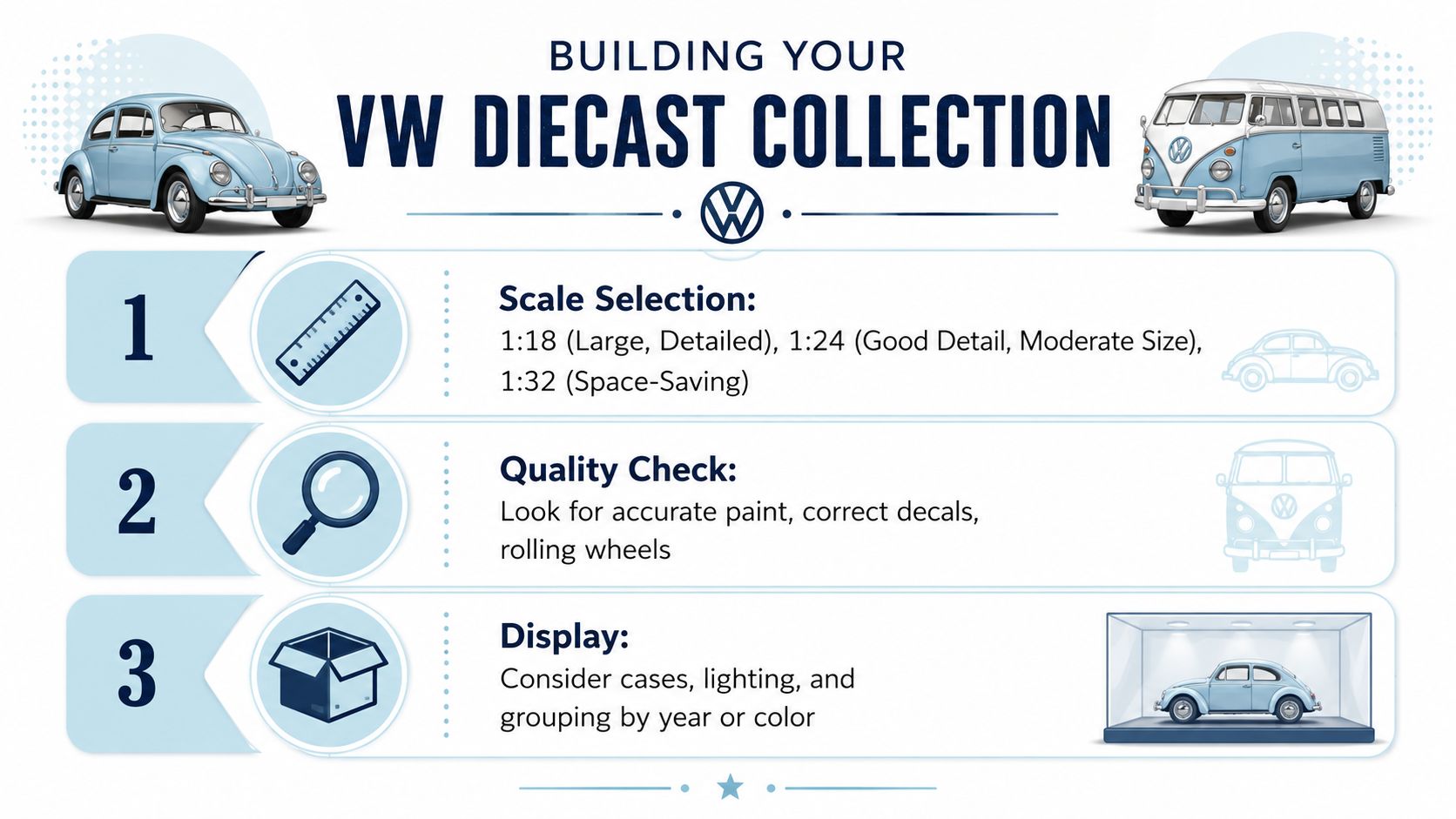
An infographic titled Building Your VW Diecast Collection featuring numbered steps for selecting scale, checking quality, and display.

Start with scale

Scale controls how much visual impact a model has and how easily it fits into your home.

  • 1:18: Choose this when the model is intended to be the centrepiece. It gives body lines, trim and interior details room to stand out, but it needs more shelf depth and display space.
  • 1:24: This is a useful middle ground for collectors who want visible detail without giving an entire cabinet to one vehicle.
  • 1:32: Pick it for a growing scene, a compact shelf or a collection that groups several vehicles together.

Don't mix scales accidentally if you're building a realistic garage display. A large Samba beside a much smaller Beetle can look intentional when the arrangement is clearly styled, but it can also make proportions feel wrong if the models are meant to represent the same scene.

Check the model before you buy

A licensed Volkswagen diecast model should communicate the design with care. Look closely at the paint coverage, badge placement, window surrounds, decals and wheel design. Rolling wheels are useful for handling and play, while opening doors or a pull-back mechanism may add interaction, depending on the model's intended style.

Collector's rule: Buy the version that represents the era and personality you love, not simply the first van with a familiar silhouette.

Packaging also matters, especially if you're buying a gift or keeping the item as a long-term collectible. Inspect the box for the Volkswagen branding and product details, then check that the model's proportions and livery match the description. Generic replicas can borrow the visual language of a Kombi, while licensed products are made to represent the brand more directly.

Protect the display

Dust and strong sunlight are the enemies of a tidy collection. A glass cabinet, acrylic case or enclosed shelf makes cleaning easier and reduces handling. Keep models away from hot windows, rotate the arrangement when you dust and retain the original packaging if storage or gifting matters to you.

Group models by era, colour, body style or story. A Samba beside a Beetle creates a classic pairing. A surf van with coastal décor gives a room a relaxed holiday feel. The strongest display isn't always the largest one. It's the one that makes visitors ask why each model is there.

VW Memorabilia Beyond Diecast Models

A miniature Kombi can anchor a collection, but it doesn't have to stand alone. Volkswagen memorabilia works especially well when the surrounding objects reinforce the same mood, whether that's coastal living, retro motoring, workshop style or relaxed road travel.

Metal van décor can add shape to a wall without needing the cabinet space required by a larger model. A framed print or photo frame can introduce colour, while fridge magnets offer a small, affordable way to mark a favourite vehicle or holiday memory. These pieces suit collectors who want their enthusiasm visible in everyday rooms rather than confined to a display case.

Building a themed corner

A coastal living room might combine a blue-and-white van motif with nautical accents, starfish, seashell pieces and simple white décor. A study or garage could lean towards vintage signage, Beetle imagery and a row of diecast vehicles grouped by colour. A man cave can handle bolder graphics, while a quieter display may suit a single Samba Bus beside a carefully chosen piece of wall art.

Seasonal decorations broaden the gift possibilities. A VW-themed Christmas piece can appeal to someone who already owns plenty of car models, while a small magnet or centrepiece suits a friend who loves the brand but has limited display space.

The important point is balance. Don't fill every surface with unrelated pieces. Choose one central vehicle, then add supporting items that echo its colours, era or travel story. That approach makes a collection feel organised and personal.

For gift buyers, match the object to the recipient's habits. A serious collector may appreciate a carefully detailed licensed model. Someone who loves beach style might prefer metal van décor or a coastal accent. A new enthusiast can start with a compact Beetle or Kombi and grow the display over time.

Where to Find Licensed Volkswagen Collectibles in Australia

The best collecting decisions begin with accurate identification. Know whether you're drawn to a Split Screen, Bay Window, Samba Bus, commercial van or a Beetle companion. Then choose a scale that suits your space, inspect the paint and decals, and decide whether the model belongs in a cabinet, a themed room or a thoughtful gift box.

Buying locally also makes practical sense for Australian collectors. An Australian importer can offer local stock, faster shipping and friendly support, which helps when you're buying a present, checking availability or trying to avoid the uncertainty of an overseas order. Local assistance is particularly welcome when a collection includes several scales, mixed packs or décor pieces that need to arrive safely.

A focused shop can also make browsing easier. Look for clear categories covering Kombi Samba Bus diecast models, Volkswagen Beetle models, vans, cars, wall décor and coastal gifts. The right range lets you compare a heritage vehicle with a surf-inspired variant without losing sight of the story behind each design.

Collecting a Volkswagen Type 2 model is a small act of preservation. It keeps Australian assembly history, surf culture, family travel and the friendly shape of the Kombi present in a form you can enjoy every day. Whether you're adding your first licensed replica or refining a display built over years, choose pieces that give the shelf a story.


Volkswagen Memorabilia offers licensed Volkswagen diecast models, including Kombi Samba Bus and Beetle designs, alongside VW-themed gifts and coastal home décor. Visit Volkswagen Memorabilia to find a meaningful piece for your display, your home or the VW enthusiast who still dreams of the next open-road adventure.
Vintage vs Retro: A Collector’s Guide for VW Fans

A bloke at a Byron Bay Cars and Coffee once held up a faded Kombi diecast, grinned, and asked if it was vintage or just “properly retro”. The answer mattered more than he expected, because one label pointed to age and originality, while the other pointed to style, and that difference changes how VW fans buy, price, and display their gear.

Criterion Vintage Retro
What it is An original item from a past era A newer item designed to look like an earlier era
Main value Age, originality, provenance Style, nostalgia, display appeal
VW example Original Kombi accessory from the era New Flower Power print or modern diecast with surf styling

A Sunny Morning and a Tricky Question

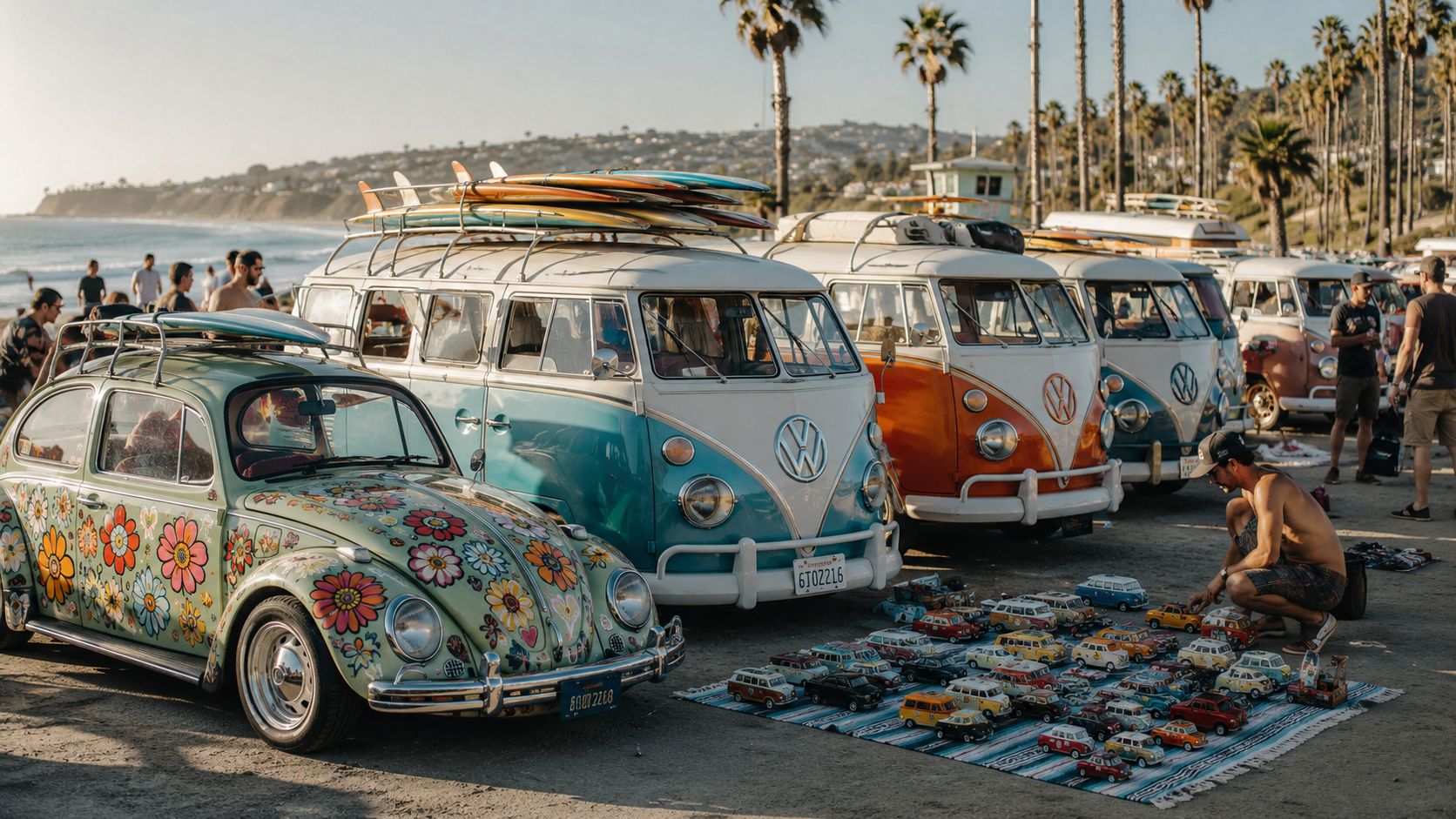
The tradie with the Eski, the bloke in the terry-towelling shirt, and the couple unloading a pair of folding chairs all stopped at the same blanket of model cars. One Beetle had period paint and honest wear, while another looked like it had rolled straight out of a surf poster. People nodded at both, then got tangled up in the same question, because VW culture loves nostalgia, but nostalgia isn't always the same thing as original history.

A scenic beachside gathering of vintage Volkswagen buses and a decorated flower-patterned Beetle with model cars.

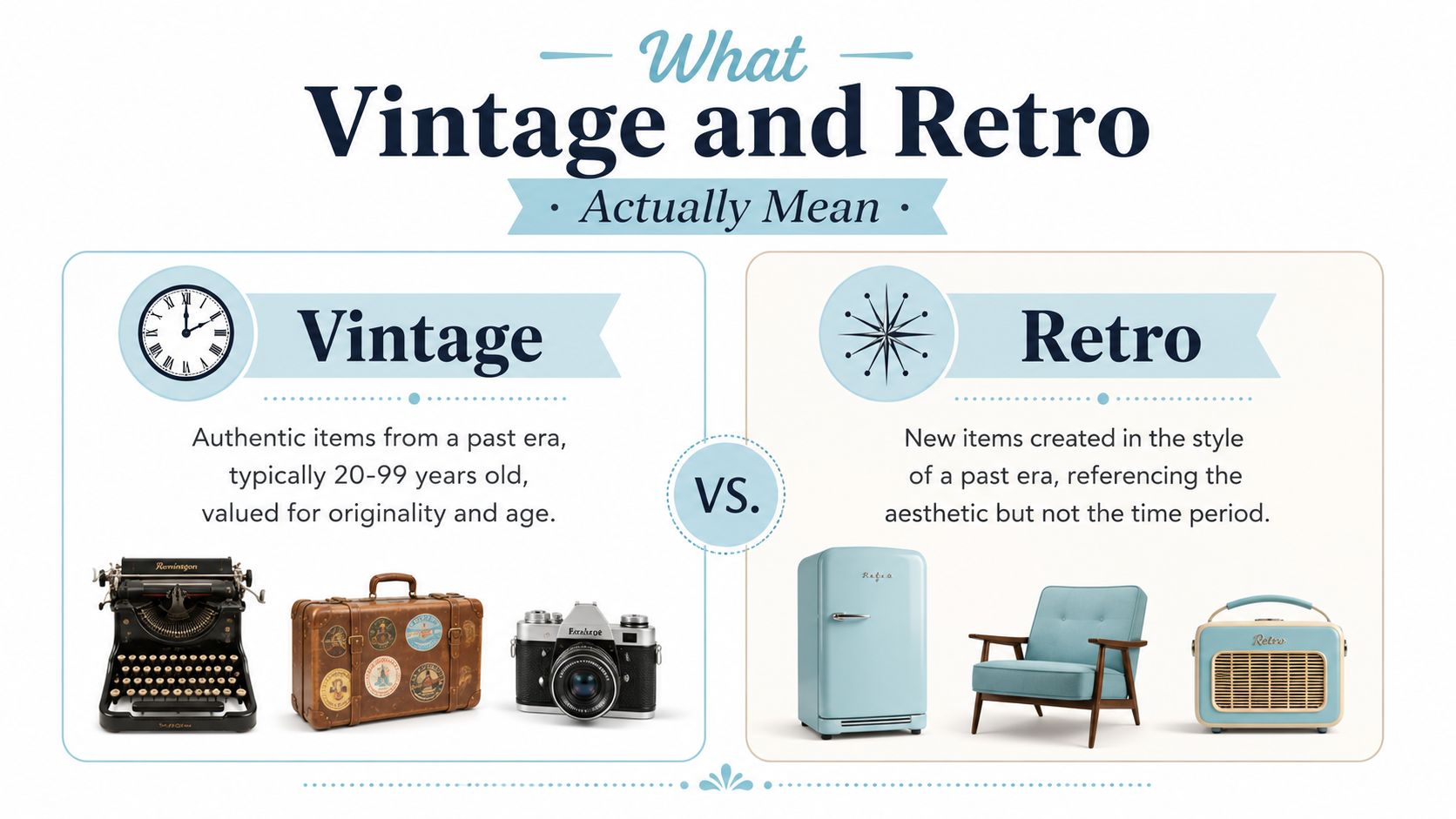
That's where collectors get caught out. A genuine period Kombi accessory, a diecast Beetle from an earlier era, and a brand-new surfy wall print can all sit happily in the same display, but they don't belong to the same category. Australian guidance commonly uses the 20-year mark for vintage, while retro stays a style label rather than an age bracket, and that distinction matters when you're deciding what belongs in the cabinet and what belongs in the beach house.

Practical rule: if the item was made in the era it celebrates, think vintage. If it was made later to evoke that era, think retro.

For VW fans, that one split changes everything. It affects whether a Kombi badge feels like a survivor, whether a Beetle print feels like a wink, and whether a gift buyer is paying for history or for vibe.

What Vintage and Retro Actually Mean

An infographic illustrating the difference between authentic vintage items and modern objects created in a retro style.

A useful shortcut is simple. Vintage means an original item from a past era, while retro means something new made to look old. Australian style guidance commonly treats vintage as starting around 20 years old, and one local source places the broader vintage band at roughly 20 to 80 years ago, with 80 years and beyond usually moving into antique territory difference between antique, vintage and retro, vintage versus retro guidance in Australia.

The age line that collectors actually use

That age line changes the way people talk at a swap meet. A 2000s VW accessory can already fit many experts' idea of vintage if it's old enough and era-authentic, while a brand-new reproduction can still be retro even if it copies a 1950s to 1980s look retro styling guidance. An antique is the clearer category still, usually meaning 100 years or more difference between antique, vintage and retro.

The other thing to keep straight is intent. Vintage items are survivors from the period they represent, with their own materials, marks, and wear. Retro items borrow the look, which is why a freshly made Kombi print can nail the mood of an old surf shack without pretending it's lived through the era itself.

A 1970s Kombi clock on original trim is a vintage object. A new Samba Bus diecast with Flower Power graphics is retro, even if it looks like it belongs on a postcard from 1974.

Vintage vs Retro Across the Things Collectors Care About

Criterion Vintage Retro
Age and era Made in the earlier period it represents Made recently, styled to echo an earlier period
Authenticity Original survivor, era-correct Inspired by the era, but not from it
Materials and condition Original materials, patina, wear, and ageing matter Modern materials, often cleaner and more uniform
Price and rarity Often tied to originality, provenance, and scarcity Usually priced for design appeal and current demand

A collector at a market stall is really asking four questions at once. Was it made in the right era? Does it carry genuine marks of age? Has anything important been swapped out? And does the asking price reflect the item's real place in the vintage or retro spectrum?

Why the same VW look can live in two different worlds

A Beetle model with original packaging from decades ago sits in a different lane from a newly produced model that copies the same curves. One is attractive because it is part of history, the other because it celebrates history in a neat, display-friendly way. The same applies to Kombi signage, wall art, and fridge magnets, which is why buyers should separate era value from visual appeal.

For deeper background on the car heritage itself, the Volkswagen logo history piece is a handy companion when you're tracing how the brand's identity has been carried across generations.

If you collect for the story, vintage usually wins. If you collect for the look and the ease of display, retro is often the smarter buy.

Volkswagen Examples You Can Actually Picture

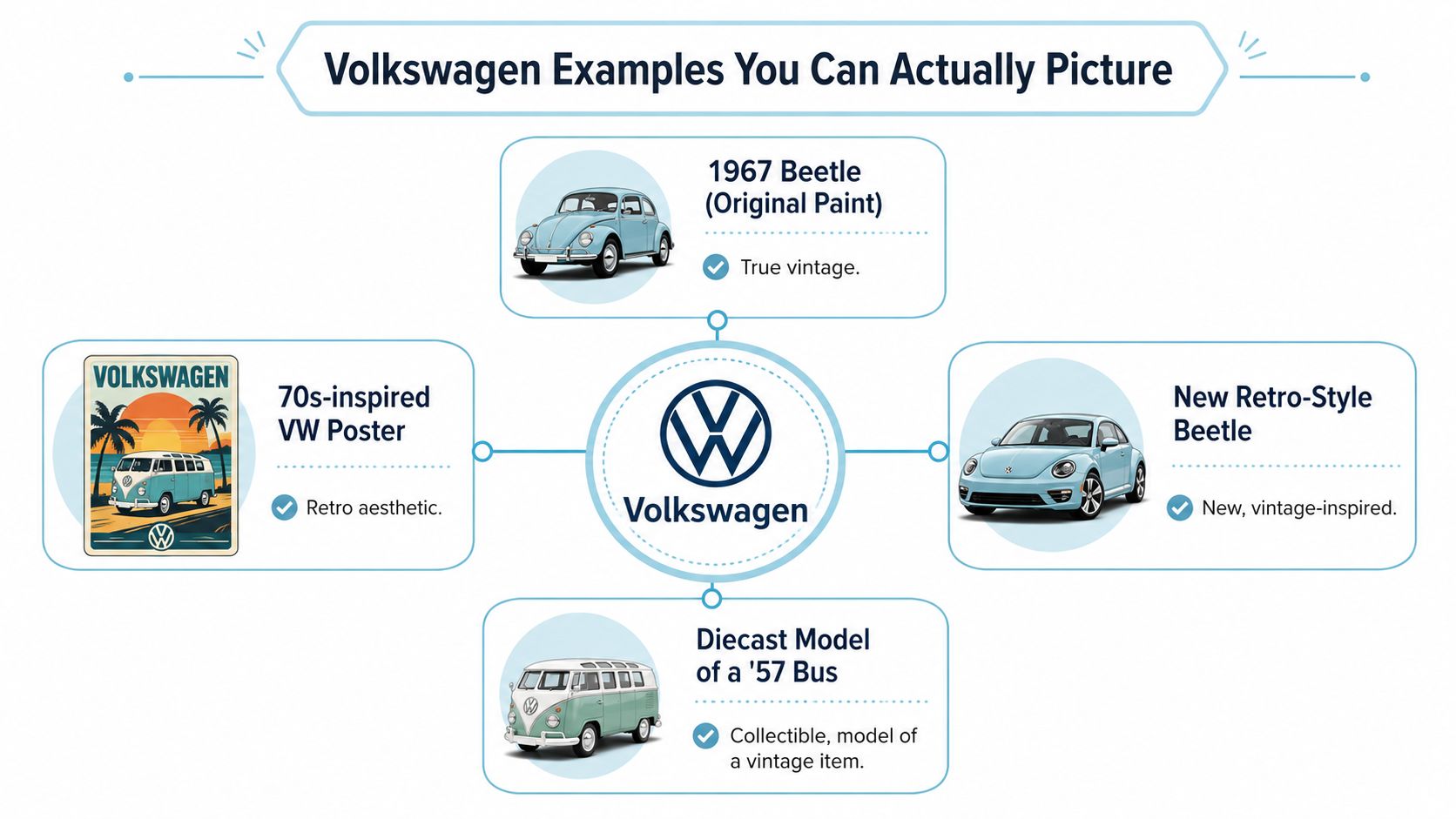
A 1967 Beetle in original paint tells a different story from a modern Beetle-themed print hanging above a sofa. The car is vintage because it's an authentic survivor from its own era, while the print is retro because it borrows the mood without being part of that time. That difference is why enthusiasts at Volksfest or VW Nationals tend to talk about authenticity with one voice and styling with another.

A diagram comparing vintage and retro Volkswagen cars, posters, and models with a central company logo.

A 1970s metal Kombi sign is also a vintage object if it dates from that period and carries the right signs of age. A new surf-themed wall print with the same beach palette is retro, even if it fits the room beautifully. Then there's the collectible middle ground, the diecast model of an old Bus, which is a modern object, but the thing it depicts may be vintage in spirit.

When reproduction gets clever

Some pieces blur the line on purpose. A reproduction built with period-correct materials and a careful eye for detail can feel more convincing than a cheap old original that's been battered beyond recognition. That doesn't make it vintage, though, because the category still rests on when it was made, not just how convincingly it looks.

A brand-new Flower Power Kombi replica is a perfect example of retro done well. It can look right on a shelf, sit comfortably beside a coffee machine, and still be unmistakably modern. That's not a knock on it, either, because retro often gives people the joyful colour and surf culture energy they want without the fragility of genuine period pieces.

Buying and Authentication Tips for Aussie Collectors

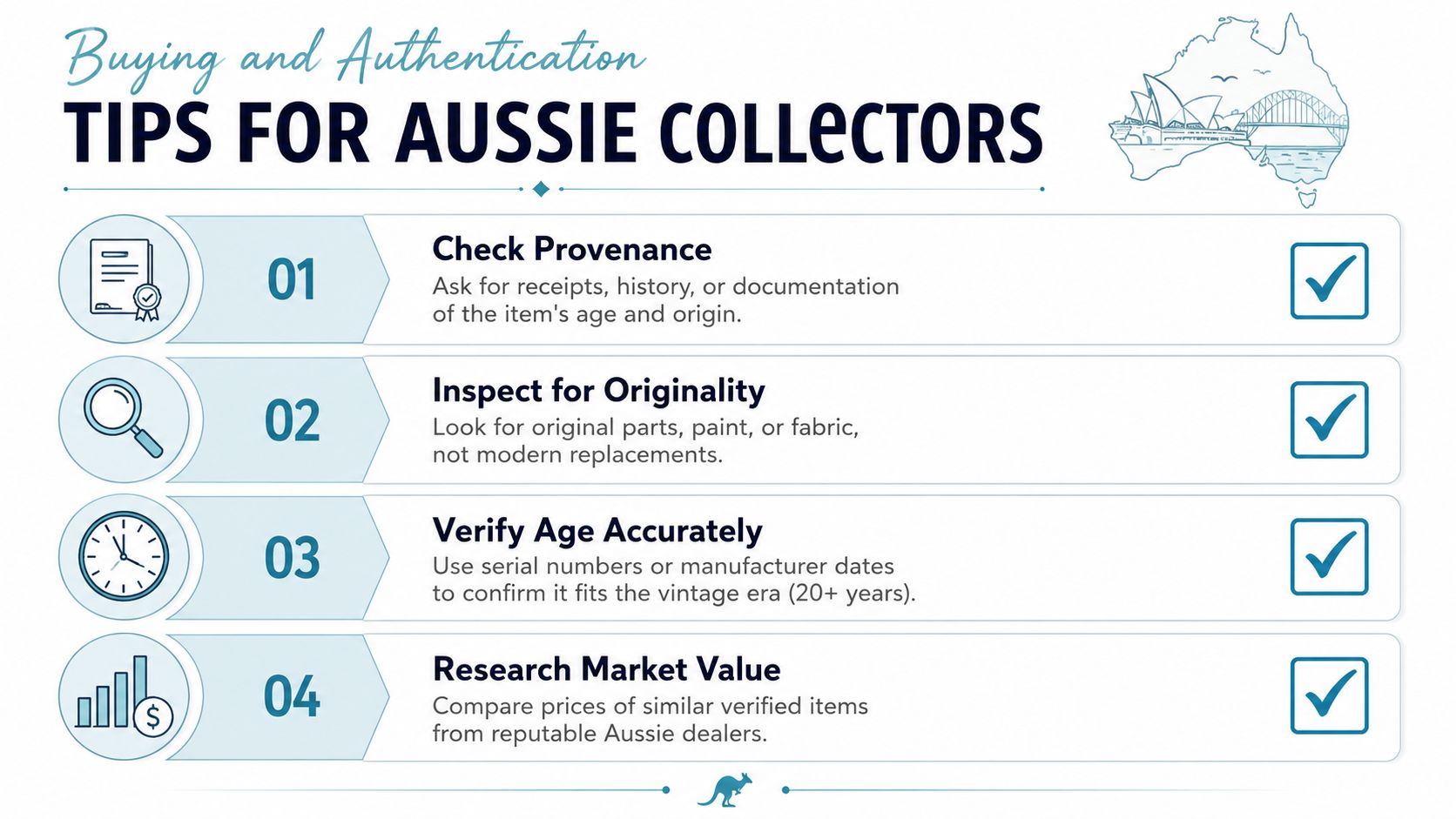
An infographic titled Tips for Aussie Collectors detailing four steps for authenticating and buying vintage items.

The first thing to check is provenance. Ask where the item came from, whether it has receipts, old photos, or family history, and whether the seller can explain how its age was established. If the story changes every time you ask, that's a warning sign.

What to inspect before you hand over the cash

  • Check for original markings: Look for maker's marks, date stamps, part numbers, or packaging details that match the claimed era.
  • Study the surfaces: Original paint, patina, and material ageing can support a vintage claim, while overly fresh finishes may point to a reproduction.
  • Read the listing carefully: Vague words like “old-style” or “classic look” often mean retro, not vintage.
  • Buy from a local importer when possible: Australian stock usually means easier support, quicker delivery, and less drama if something turns up wrong.

Why licensed models deserve close attention

On diecast, licensing and branding matter. A properly licensed model is much easier to trust as a collector's piece than an unbranded imitation that just happens to resemble a VW shape. Packaging, inserts, and inner-box details can tell you a lot about quality, especially when you're choosing a VW Kombi diecast Australia buyers can confidently display or gift.

For readers who want a broader collecting reference, the vintage Volkswagen memorabilia page is useful for seeing how era-correct pieces sit alongside modern reproductions.

If the seller can't tell you who made it, when it was made, or why it's priced the way it is, walk away and keep your flat white.

Styling Coastal and Retro Spaces with VW Memorabilia

A beach house doesn't need a museum feel, and that's where the vintage versus retro mix gets fun. A vintage Kombi sign or period petroliana piece can carry the room as a hero item, while retro diecast models, surfy van décor, and Flower Power prints soften the edges and keep things playful. The result feels collected, not staged.

Think in layers. Put one original piece with character on a wall, then build around it with newer items that echo the colour palette, whether that's faded aqua, cream, mustard, or soft red. That way the room still feels relaxed, and the old object gets space to breathe instead of being crowded by a dozen smaller bits.

For more relaxed styling ideas, the coastal home décor ideas page is a good starting point.

A simple room formula

  • Hero piece: one vintage VW item with genuine age or provenance.
  • Support pieces: retro prints, models, and small décor items in matching tones.
  • Finish: natural timber, white walls, and a few varied heights so the display feels casual.

That mix works because it mirrors the way enthusiasts live with their collections. A shelf of diecast Kombis on one side, a weathered sign on the other, and a couple of beachy accents in between can make a room feel like summer without tipping into theme-park territory.

Choosing What Suits You and Answers Worth Knowing

If you want history, chase vintage. If you want style, lean retro. That's the cleanest rule, and it holds up whether you're buying a Kombi accessory, a Beetle model, or a gift for someone who lights up at the sight of a split-window Bus.

Collectors who care about originality, provenance, and long-term satisfaction should prioritise vintage when the budget and the market make sense. A genuine survivor carries the sort of presence that a replica can't fake, and that's the appeal for people who love the story behind the object as much as the object itself. Decorators and gift buyers, on the other hand, often get more joy from quality retro pieces because they bring the VW mood home without needing conservation-level care.

A few common questions always come up at this point. Does vintage always cost more? Not always, because condition, rarity, and provenance matter, but original pieces often carry a stronger collector premium than newer reproductions. How do I spot licensed diecast? Look for branding, packaging quality, and clear maker details, because proper licensing usually leaves a trail. What suits a first-time buyer? A well-made retro piece is often the easiest win, since it gives you the look, the fun, and the flexibility to display it anywhere.

For Australian VW fans, the sweet spot is often a mix of both. Use vintage as the anchor, then add retro pieces that keep the space friendly, colourful, and easy to live with. That balance lets a collection feel personal instead of precious, which is exactly how a good Sunday morning at a car meet should feel.


If you're ready to turn the theory into a shelf, a wall, or a gift that'll get a proper grin, have a browse through Volkswagen Memorabilia. You'll find VW diecast, coastal décor, and gift ideas that suit both the vintage purist and the retro-loving Kombi tragic, all in one easy place.

VW Beetle Wall Art: A Guide for Aussie Collectors

A mate of mine once hung a Beetle silhouette above the bench in his garage, and the whole room changed. It stopped feeling like storage and started feeling like a little shrine to road trips, surf checks, and the kind of old Volkswagen memories that stick in your bones.

More Than Just a Car It Is an Icon on Your Wall

You know that feeling when a classic Bug rolls past and you spot it before you've even properly looked up? It's the roofline, the rounded guards, that friendly shape. Even in shadow, it's unmistakable.

That's why Volkswagen Beetle wall art works so well. The Beetle isn't just another old car with a fan base. It was built from 1938 to 2003, a run of 65 years, and more than 21.5 million were produced across 20 locations worldwide, according to the Volkswagen Beetle history summary. That long life gave the car a rare kind of visual staying power. People know the silhouette instantly, whether they grew up around air-cooled cars, saw one parked near the beach, or just remember playing slug bug as kids.

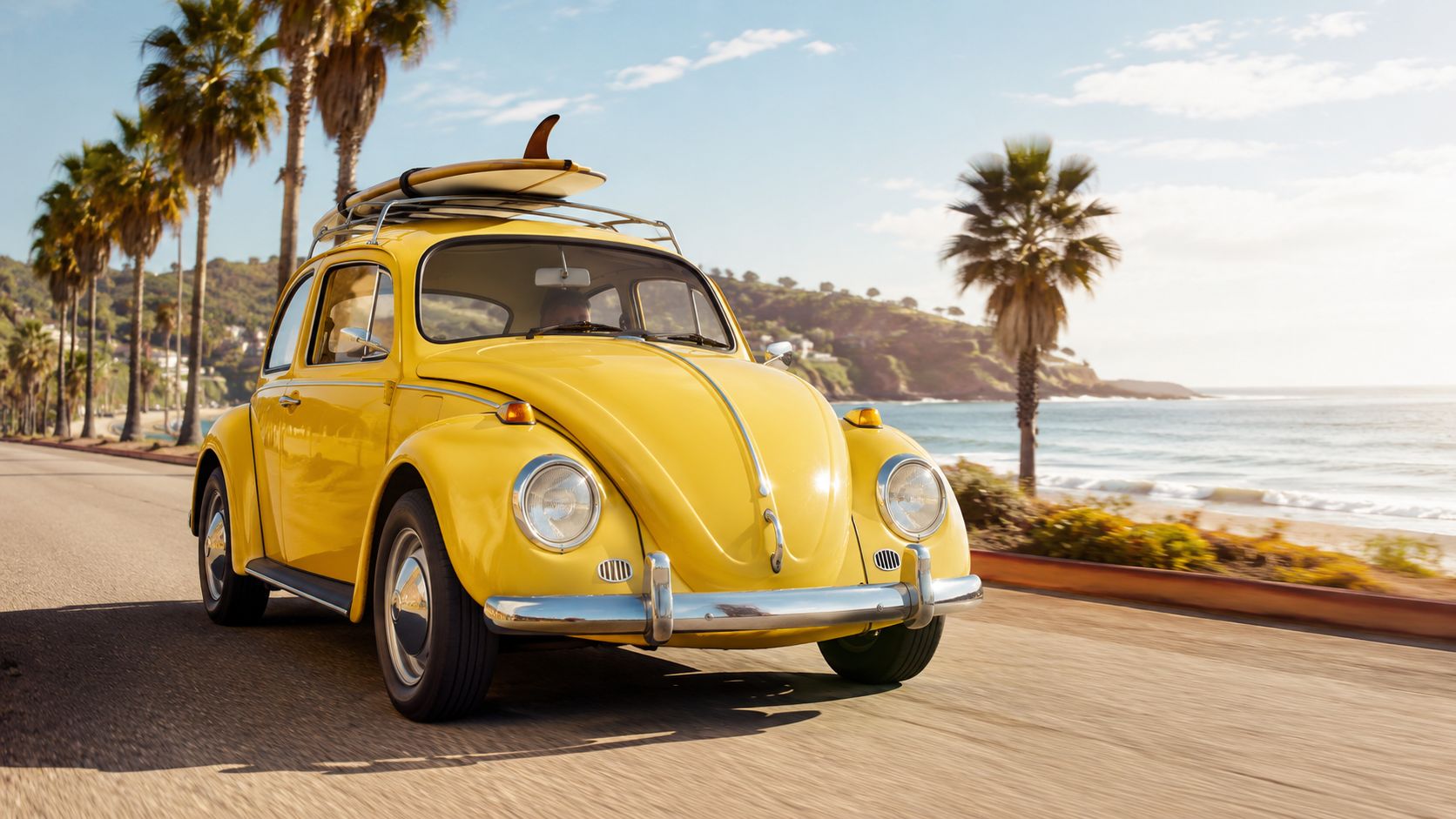
A vibrant yellow vintage Volkswagen Beetle driving along a coastal road with a surfboard on the roof.

Why the Beetle shape means something

A Falcon can look tough. A Monaro can look heroic. A Beetle looks personal. It carries nostalgia without trying too hard, which is exactly what you want on a wall at home.

That matters if you're choosing art for a lounge room, hallway, workshop, beach house, or even a home office. Good VW Beetle wall art doesn't just fill a blank patch of plasterboard. It tells visitors what you love, and it does it without needing a big speech.

The best car art feels recognised before it's examined.

If you're drawn to the story behind the Bug as much as the look of it, it's worth dipping into this VW Beetle history guide. It adds another layer to the art, because once you know the shape's journey, the piece on your wall starts to feel less like décor and more like heritage.

Exploring the Main Types of VW Beetle Wall Art

Some Beetle wall pieces feel like they belong in a clean coastal living room. Others belong above a tool chest with old number plates nearby. The trick is matching the material to the mood.

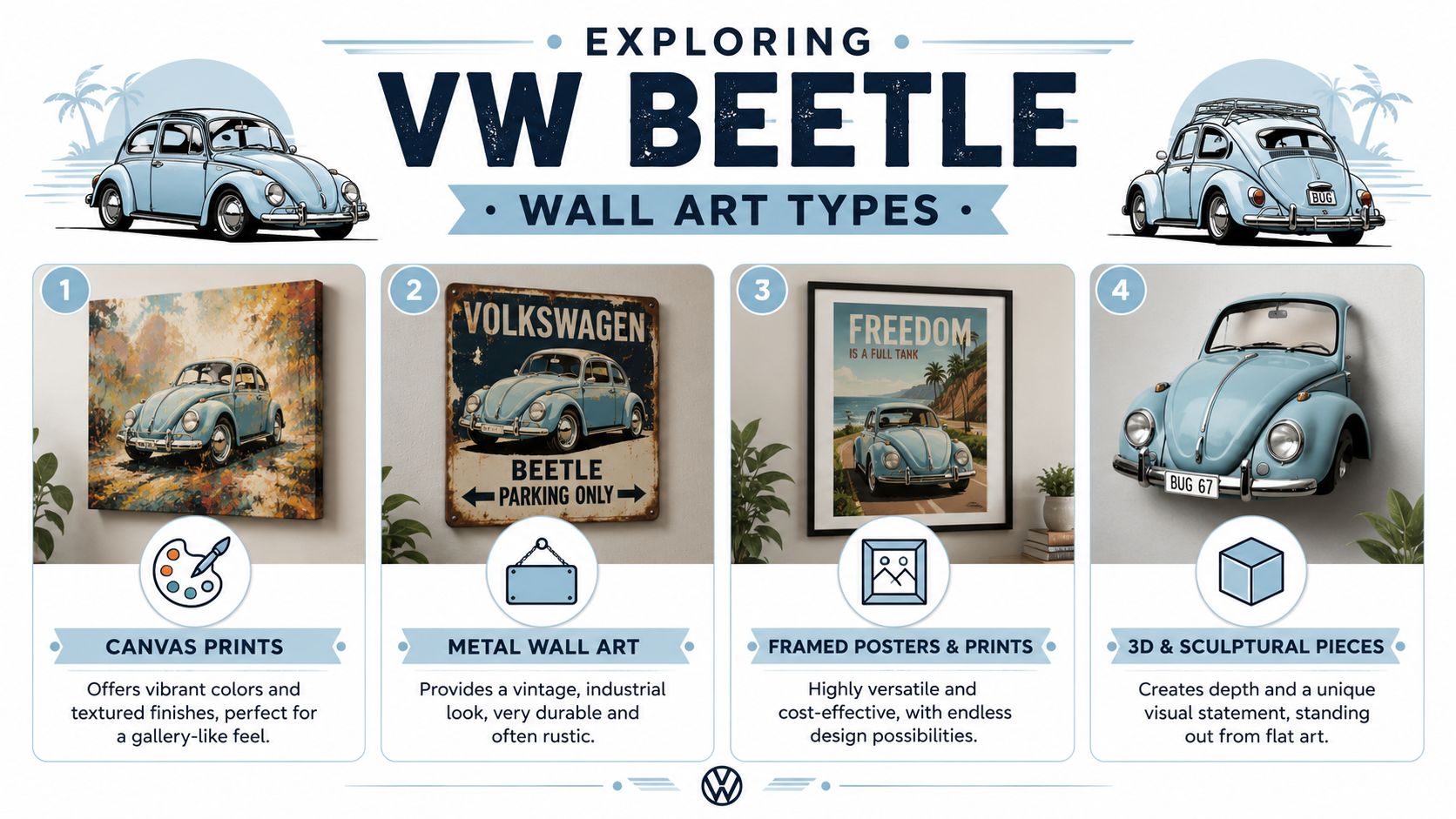
An infographic showing four different types of VW Beetle themed wall art for home decor.

Metal art for bold shape and lasting presence

If you want the Beetle's outline to do the heavy lifting, metal wall art is usually the standout. In Australia, a common specification for this style is 2 mm laser-cut steel with a powder-coated matte finish, as shown in this Beetle metal wall art product example. That detail matters in real homes. A sturdier panel hangs with more confidence, and powder coating is useful in coastal areas where moisture and salt can be rough on finishes.

A black or matte-coated Beetle silhouette can look schmick above a sofa, in an entryway, or over a workbench. It feels graphic, tidy, and grown-up.

Practical rule: If you want one large statement piece, metal usually reads cleaner than a busy print.

Framed prints and posters for character

Framed prints suit homes where you want more than just the outline. Maybe it's a surfy Flower Power Bug, an old workshop-style illustration, or a photograph with faded retro tones. This format gives you more freedom with colour.

Here's where framing makes the difference between tasteful and tacky. A simple timber, black, or white frame usually lets the Beetle artwork breathe. Overly distressed frames can push the whole thing into novelty territory unless the room already leans hard into vintage garage style.

Canvas for a softer gallery look

Canvas works best when you want the Beetle to feel artistic rather than collectible. It's less mechanical, less shiny, and often easier to blend into a living room with linen, timber, and soft coastal colours.

It won't always have the crisp edge of metal, but that's the point. Canvas can make a classic VW feel less like a sign and more like a memory.

3D and sculptural displays

This is the fun category. Some people hang a Beetle-inspired sculptural piece. Others build a mini wall display around shelves, signs, and small automotive objects. If you've got a few diecast models or beachy accessories nearby, the wall art becomes part of a bigger scene instead of a solo act.

A quick comparison helps:

Type Best for Feels like
Metal wall art Statement walls, garages, coastal homes Crisp, architectural, durable
Framed print Living rooms, hallways, offices Personal, versatile, easy to style
Canvas Softer interiors, beach houses Relaxed, artistic, warm
3D display Collector corners, shelves, feature nooks Layered, playful, conversation-starting

Choosing the Right Piece for Your Aussie Home

One of the biggest headaches isn't loving Beetle art. It's finding a piece that suits your wall and doesn't look like generic filler bought in a rush.

That problem comes up a lot with oversized pieces. Public discussion around larger Volkswagen wall art in Australia is surprisingly thin, with most of it sitting in DIY chats or one-off examples rather than practical buying guidance on materials, sizing, and mounting for home use, as reflected in this community discussion about oversized VW wall art. In plain English, plenty of people want the big hero piece, but there isn't much clear advice on how to do it properly.

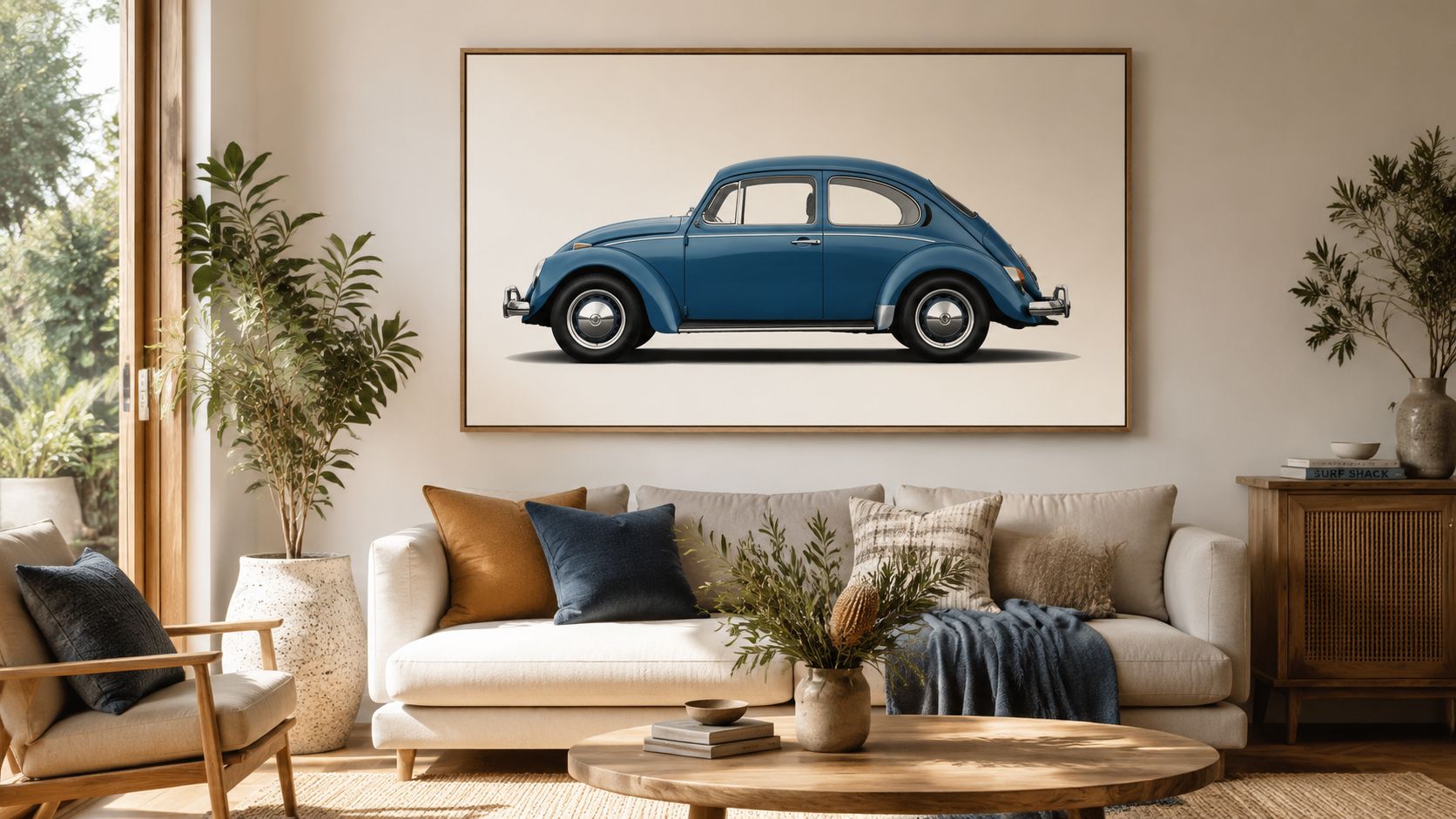
A modern living room featuring a framed VW Beetle wall art print hanging above a beige sofa.

Think wall first and art second

A Beetle piece over a sofa does a different job from one in a hallway or garage. In a lounge room, you want balance. In a workshop, you can get away with more attitude.

Use this quick decision guide:

  • For a large blank wall: Choose one confident piece with breathing room around it.
  • For a hallway: Go smaller and more deliberate, or create a sequence of related prints.
  • For a study or office: Pick art with cleaner lines and less visual noise.
  • For a garage or shed: Tin signs and metal silhouettes can handle a rougher setting.

Don't let size become a guess

Oversized VW Beetle wall art can look brilliant, but only if it has enough visual weight for the space. A tiny print on a broad wall looks lost. A huge dark piece on a narrow wall can feel cramped.

That's why many collectors sketch the wall first. Tape out the shape. Stand back. Look at it from the doorway and from the seat you use most. You'll realise quickly whether the Bug should be the star or part of a group.

If the wall art is meant to anchor the room, it should look intentional from the first glance through the door.

For homes with a beachy or vintage lean, this kind of planning pairs well with broader vintage home accessories ideas. The wall art shouldn't feel dropped in. It should feel like it belongs with the furniture, timber tones, and other pieces you already love.

A simple placement matrix

Room Best approach Common mistake
Living room One feature piece above furniture Hanging it too high
Entryway Narrow framed print or small metal silhouette Choosing something too busy
Garage Bold metal or sign-style art Treating it like indoor gallery art
Beach house Light, airy print with coastal tones Going too novelty-heavy

Styling Your Bug with Coastal and Retro Décor

The difference between cool nostalgia and kitsch usually comes down to restraint. The Beetle already carries a strong personality, so the room around it should support it, not compete with it.

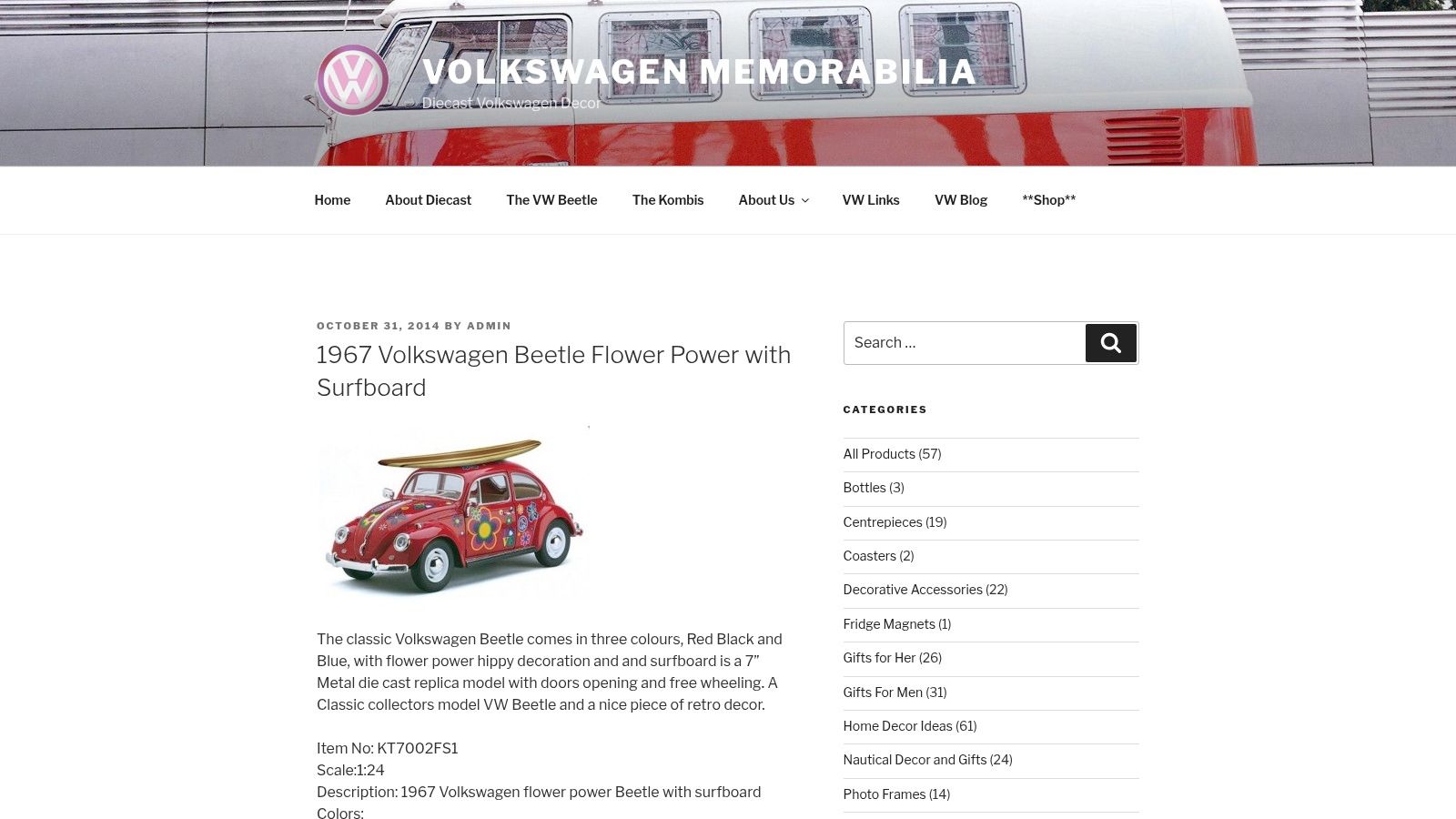
Screenshot from https://vwmemorabilia.com.au/1967-vw-beetle-flower-power-surfboard/

Recent commentary around Beetle art often celebrates the car as a creative canvas, but it rarely helps people decide how to make that look tasteful in a modern home. That gap is part of what makes VW Beetle wall art tricky for Australian interiors. You want heritage, not a room that feels like a theme café. That tension is noted in this discussion of Beetles as artistic objects and canvases.

The coastal recipe

In a coastal room, Beetle wall art works best when it feels sun-faded and easygoing. Think white walls, pale timbers, woven textures, soft blues, sandy neutrals, and one Beetle piece that nods to surf culture without shouting.

A framed print of a surfboard-toting Beetle, or a simple silhouette in matte metal, usually sits nicely with that look. Add too many signs, slogans, and novelty accessories, and the room loses its calm.

Try this combination:

  • Wall art: A Beetle print with open space around it
  • Furniture: Light timber or white finishes
  • Accent pieces: A small shell, driftwood, or beach-inspired object nearby
  • Colour palette: Keep it breezy and limited

If that's your lane, these coastal home décor ideas line up beautifully with the Bug's laid-back character.

The retro recipe

Retro styling gives you a bit more licence. Here, the Beetle can lean into mustard, teal, burnt orange, avocado, or mid-century furniture shapes. The key is choosing one or two retro notes, not turning the whole room into a costume.

A Beetle artwork with period colours can sit above a record cabinet, sideboard, or reading chair. Nearby, a diecast model or a small VW collectible on a shelf can echo the wall piece without overdoing it.

For a little inspiration in motion, this clip captures the spirit many enthusiasts are chasing with vintage VW styling.

How to avoid the kitsch trap

Most rooms go wrong in one of three ways:

  • Too many Beetles at once: One strong feature beats a dozen competing references.
  • Too much fake distressing: Let the Volkswagen design bring the history. The room doesn't need forced nostalgia everywhere.
  • No contrast: Pair car art with natural materials so it feels grounded.

Choose one nostalgic note and let it sing. Don't build a whole brass band around it.

Installation Care and Displaying Diecast Models

Hanging the piece well matters almost as much as choosing it. A beautiful Bug silhouette loses its magic fast if it sits crooked or feels flimsy on the wall.

Hanging it securely

For plasterboard, use hardware suited to the piece and the wall. For brick or masonry, use the correct anchor and take the time to mark everything carefully before drilling. If you're hanging metal art, keep it level and allow enough clearance around it so the shape reads cleanly.

A few practical habits help:

  • Check the surface: Old walls can behave differently from new ones.
  • Test the viewing height: The Beetle should sit where people naturally see it, not too close to the ceiling.
  • Mind reflected light: Glossy framed prints can catch windows and lamps in annoying ways.

Caring for metal and framed pieces

Powder-coated metal is a smart choice in humid or coastal spots, but it still benefits from a gentle wipe-down now and then. Skip harsh cleaners. A soft cloth is usually enough for regular care.

Framed prints and posters need slightly different attention. Keep them away from direct moisture, and watch rooms that cop strong afternoon sun if fading is a concern.

Turning diecast models into 3D wall art

Collectors are sure to have some fun. A Beetle print on the wall and a few Volkswagen diecast models below it can create a layered display that feels more personal than wall art alone.

Three display ideas work especially well:

  • Floating shelf pairing: Hang the art above, then place a Beetle or Kombi diecast model underneath.
  • Colour echo: Match the model's colour to a tone in the artwork.
  • Timeline display: Use a shelf to show different VW styles and let the wall piece act as the visual headline.

That approach works brilliantly for anyone who loves the look of a Volkswagen Beetle model, or is already into VW Kombi diecast Australia collecting.

The Perfect Gift for the VW Fan in Your Life

If you're buying for a VW tragic, wall art is one of those gifts that can land beautifully when you get the tone right. It says you know what they're into, but it also gives them something they'll live with every day.

The safe path is simple. Think about the room first, then the style of the person. Some people want clean metal art above a sofa. Others want a framed surfy Beetle print for the shack, the garage, or the pool room. If they already collect models, a wall piece that works with their shelf display can feel especially thoughtful.

A quick gift checklist helps:

  • Know their style: Coastal, retro, workshop, or minimalist
  • Choose the right format: Metal, framed print, canvas, or a display combo
  • Think about placement: Home office, lounge, garage, hallway
  • Keep it authentic: Aim for heritage and personality, not novelty overload

That same thinking applies if you're shopping for VW memorabilia collectibles, a buy diecast Kombi gift, or Volkswagen diecast models for sale as part of a bigger present. The best gifts feel curated, not random.

A Beetle on the wall isn't just decoration. For the right person, it's a memory trigger. It's summer air through quarter windows, the sound of an old flat-four, and the grin that still comes when a classic Bug rumbles by.


If you're hunting for a present or building out your own VW-themed corner at home, Volkswagen Memorabilia is well worth a look. It's an Australian store with local stock, fast shipping, and a range that suits both collectors and gift buyers, from diecast Beetles and Kombis to beachy home décor pieces that work beautifully in a relaxed Aussie setup. If you love officially licensed-style VW spirit, coastal styling, and pieces that feel chosen rather than churned out, it's a top spot to start.