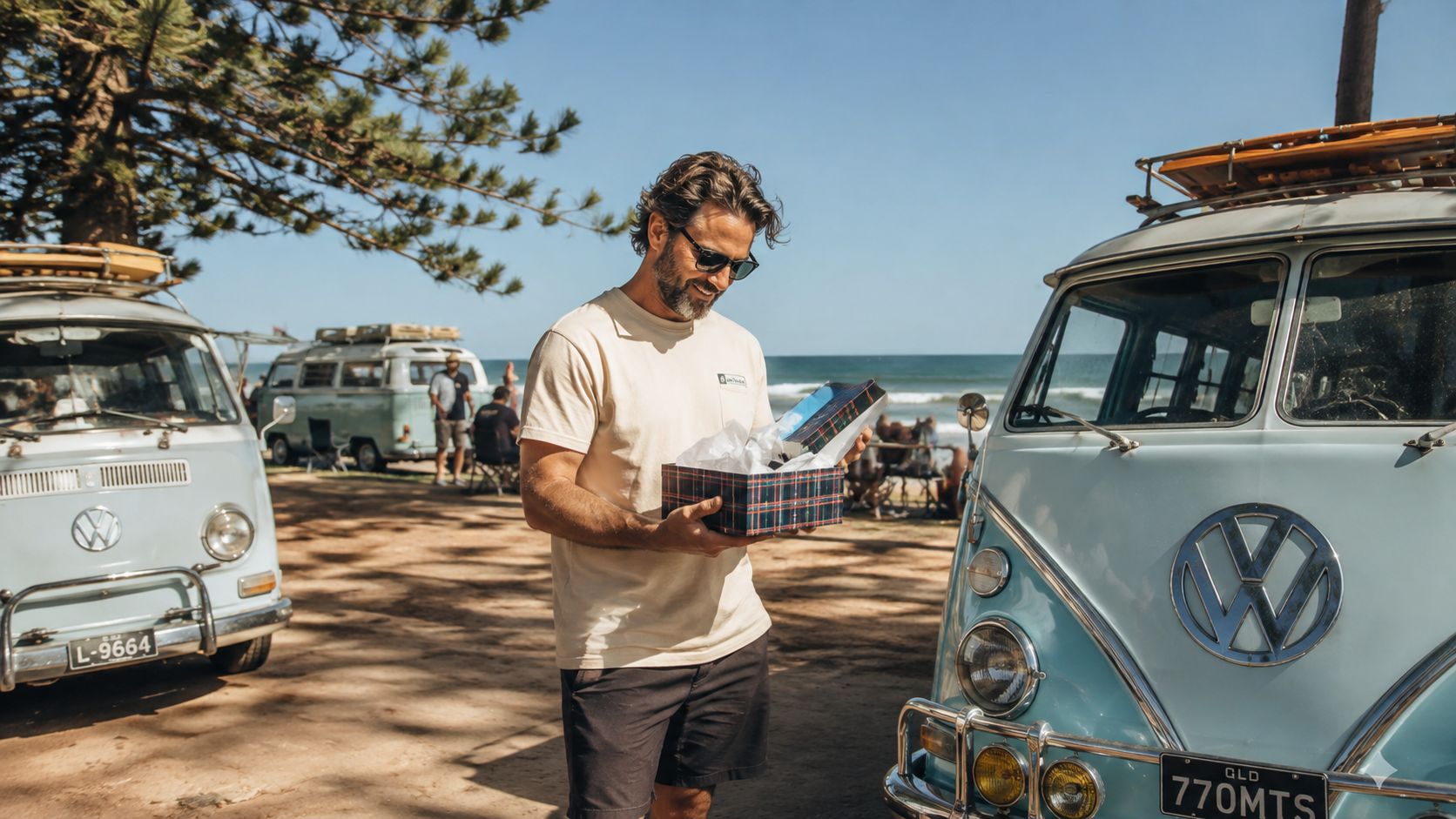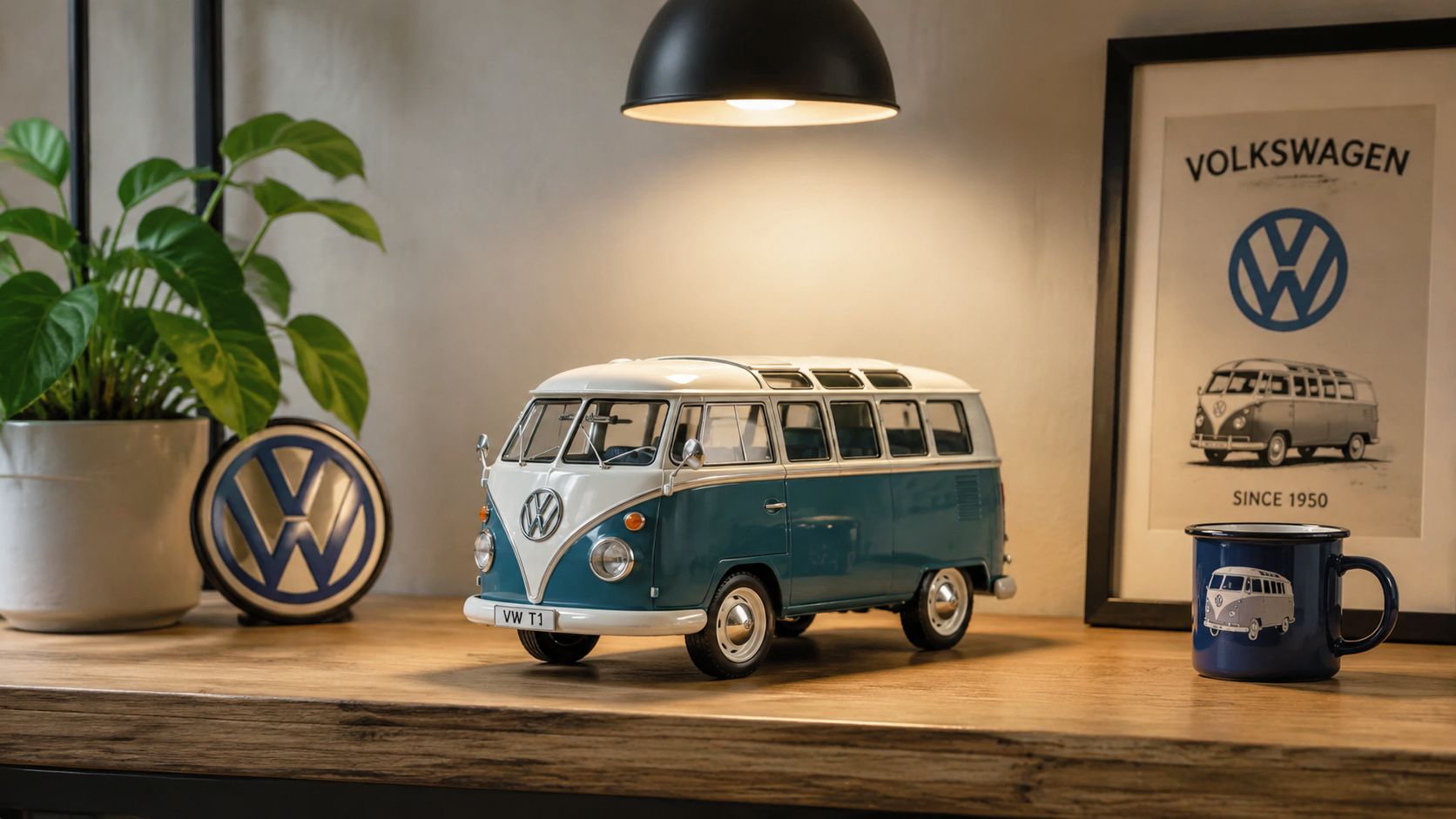
A freshly restored Country Buggy rolled past the Split-window Kombis at a sunny Australian show, its paint catching the light while half the crowd turned to follow it. Nearby, a tiny Beetle on a folding table wore the same proud stance as a full-size classic, and suddenly the conversation shifted from shiny chrome to the stories that make rare Volkswagens matter.
A Sunny Morning at Volksfest
The morning air carried the familiar mix of warm grass, coffee and the faint smell of a hard-working clutch. At a gathering such as Volksfest in Hahndorf, or a VW meet at Willowbank, the cars don't sit still like museum exhibits. They thump, rattle, gleam and gather people around them.
A row of Split-window Kombis stood nose to tail, lined up like a surf safari waiting for the coast road. Chrome bumpers flashed in the sun. A Beetle's rear-deck speakers supplied the bass, while owners leaned over engine bays discussing matching numbers, old repairs and the sort of rust that only appears after years of Australian weather.
Then someone spotted the unusual pair. A 1952 Zwitter notchback sat beside a scale diecast, and the little model suddenly made sense. Its split rear window, rounded roof and compact proportions weren't just styling details. They were clues to a particular moment in Volkswagen history, preserved on a folding table for anyone who wanted to look closer.
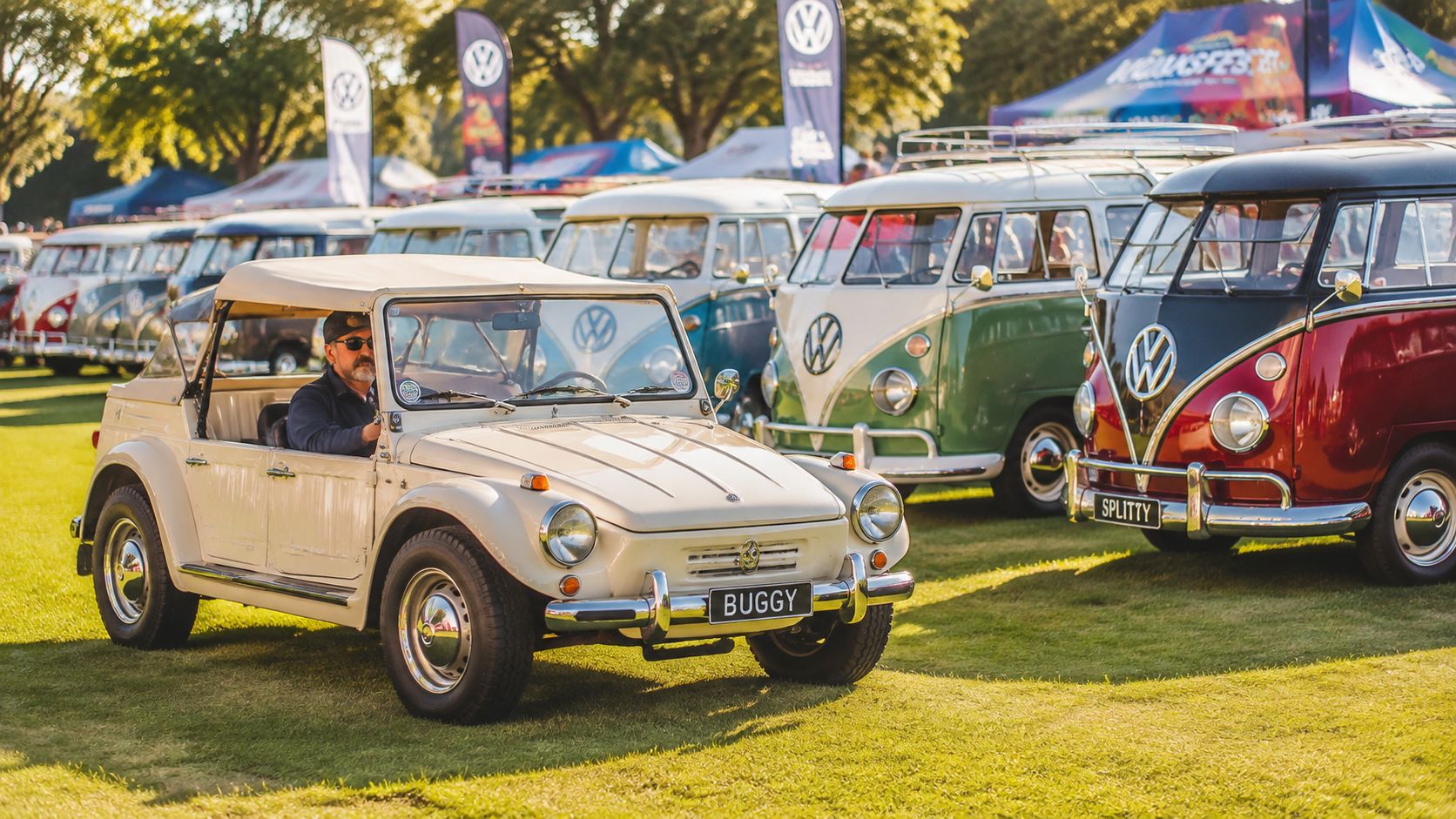
That's the charm of Australian Kombi history. Rare Volkswagen models aren't just scarce old cars. They're mates with complicated ownership stories, local quirks and a place in the community. The Australian-built Country Buggy, early Clayton Beetles, unusual Type 3s and special Kombis all tell that story in different ways.
What Makes a Volkswagen Model Rare
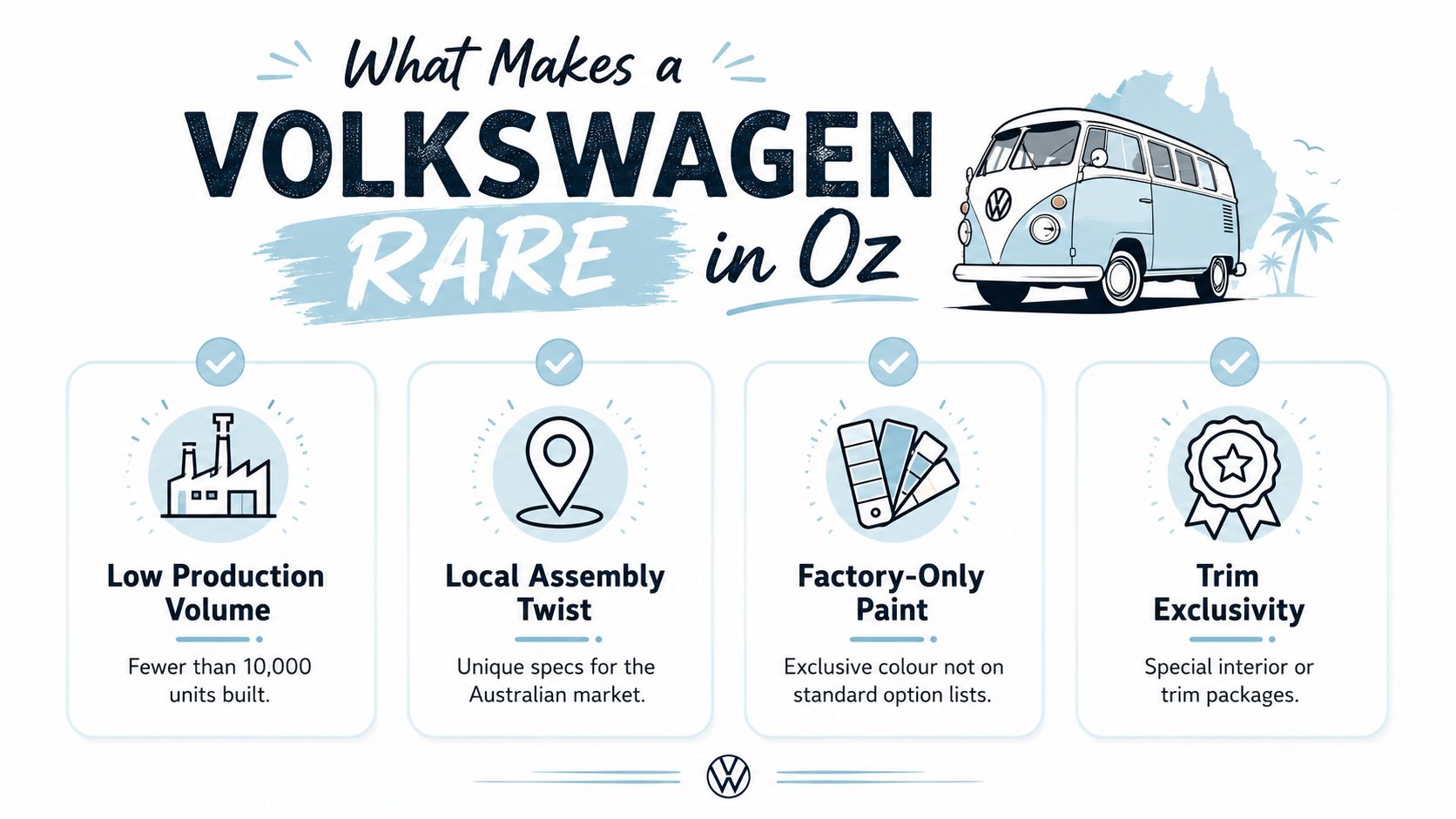
Age alone doesn't make a Volkswagen rare. A car becomes interesting when several clues come together, such as limited production, unusual specification, local assembly or documented provenance.
Start with the build story. Volkswagen assembled Beetles at Clayton, Victoria, from completely knocked-down kits, and local Beetle kit assembly ended in 1976. By 1958, the Australian plant had assembled 50,000 Beetles, a useful historical marker when comparing a Clayton car with an equivalent German-built example. The Australian story is covered in this account of rare Volkswagen history.
Then look at what makes the individual car different:
- Low production volume: A short production run narrows the pool of surviving cars, particularly when owners modified or dismantled them.
- Australian assembly: Local cars may carry market-specific details, tags and trim that aren't shared with overseas versions.
- Exclusive specification: A special body, transmission, interior or fleet package can matter more than a familiar badge.
- Provenance: A clear chain of ownership, original paperwork and known show or competition history can support authenticity.
Originality also changes the conversation. A car restored to its delivered specification may appeal to a preservation-minded collector, while a sympathetic restomod can be a brilliant driver without representing an untouched example. Neither approach is automatically wrong, but buyers need to know which one they're looking at.
Short-run editions and factory concepts sit at the sharper end of the scale. A Golf GTI 35 Edition or Polo Harlequin attracts attention because of its specific trim identity, while concept cars such as the W12 Nardo and EA489 Concept matter because they represent Volkswagen design and engineering outside normal showroom production.
For collectors, the best evidence combines the physical car with the paper trail. A vintage Volkswagen memorabilia collection can preserve the visual side of that history, but a full-size purchase still depends on records, tags and careful inspection.
Australia's Own Rare Volkswagen Treasures
The Country Buggy is the obvious place to start because it carries Australian engineering in every line. Volkswagen designed it at the Clayton plant in suburban Melbourne, began prototype testing in 1965 and launched it in 1967. One Australian motoring history records 887 units built and sold in Australia, while a more detailed production account gives 1,956 units in total, including about 400 left-hand-drive examples exported to Singapore, New Zealand, Pacific nations and the Philippines. These figures come from separate historical accounts, so collectors should state clearly which production definition they're using.
The model lasted only from 1967 to 1968 in another documented summary, and it was cancelled eight months after launch. That short life explains the Country Buggy's pull at Australian meets. It wasn't merely an old beach car. It was a local attempt to create something suited to Australian tracks, beaches and paddocks, built on a shortened Type 1 floorpan with a 1,192 cc air-cooled flat-four and rear-engine, rear-drive layout. The technical history appears in this Country Buggy reference, while the production story is also recorded by CarsGuide.
Collector's observation: The Country Buggy isn't a Beetle with a different body. Its partial parts interchangeability means restorers need to cross-reference Beetle and Kombi components rather than assume one donor family will solve every problem.
Australia's local assembly history gives other cars their flavour. Clayton Beetles, early Transporters and locally assembled Type 2s can carry Australian-market parts and trims that are increasingly difficult to replace. The first official Volkswagen sales began in early 1954, after imports arrived in late 1953. Before that, a black right-hand-drive 1946 model arrived with German immigrant Therese Hanael, a small but remarkable detail in the country's VW story. Volkswagen identifies the 1946 Beetle Type 11 as an especially iconic and rare car, with its 1.1-litre air-cooled engine producing 24.5 horsepower, as recorded in this Australian Volkswagen history.
The Kombi adds another layer. Volkswagen says the Type 2 lineage began in March 1950, and the model family later passed 11 million vehicles in total output. In Australia, Kombis were assembled at Clayton from 1964 to 1977. That local connection helps explain why Australian collectors often value the right body style, delivery history and original trim as much as the vehicle's general age.
A compact diecast Karmann Ghia model can sit comfortably beside these larger stories. It gives collectors a way to celebrate the rarer shapes, even when a full-size survivor is beyond practical ownership.
Spotting an Authentic Rare Volkswagen
A rare badge isn't enough. Before money changes hands, start with the car's identity and work outward.
Read the plates and numbers
Inspect the VIN plate, body markings and compliance documentation together. Australian-delivered cars should make sense as a group, with the details supporting the claimed build period, market and specification. A replacement plate, unclear stamping or inconsistent format doesn't prove a car is false, but it does call for deeper checking.
Match the chassis and engine numbers against the seller's paperwork. Look for restoration invoices, old registration documents, club records and photographs that show the car before recent work. A clean story is more useful than a dramatic verbal claim.
Check factory evidence
Build sheets, Kardex cards and factory records can help confirm paint, trim and mechanical details when they're available. For a Country Buggy, compare the claimed identity with recognised production information and specialist club knowledge rather than relying on a generic Beetle parts catalogue.
Reproduction plaques and re-stamped engines deserve particular caution. So do unusual colour combinations that the car supposedly carried from new. A non-original colour can be perfectly acceptable on a driver, but it shouldn't be presented as factory specification without supporting evidence.
Bring another pair of eyes
A marque specialist can spot details that photographs miss, especially around Australian assembly, body seams and period-correct hardware. The Volkswagen Club of Australia, local VW clubs and experienced specialists in Melbourne, Geelong and Sydney can provide useful context before you commit.
Practical rule: Treat rarity as a claim to verify, not a feature to take on faith.
Rare Diecast Models and Limited Editions Worth Collecting
Diecast collecting gives Australian enthusiasts a practical way to keep rare Volkswagen shapes close. The strongest displays don't rely only on famous badges. They pair familiar Beetles and Kombis with unusual body styles, local colours and historically important variants.
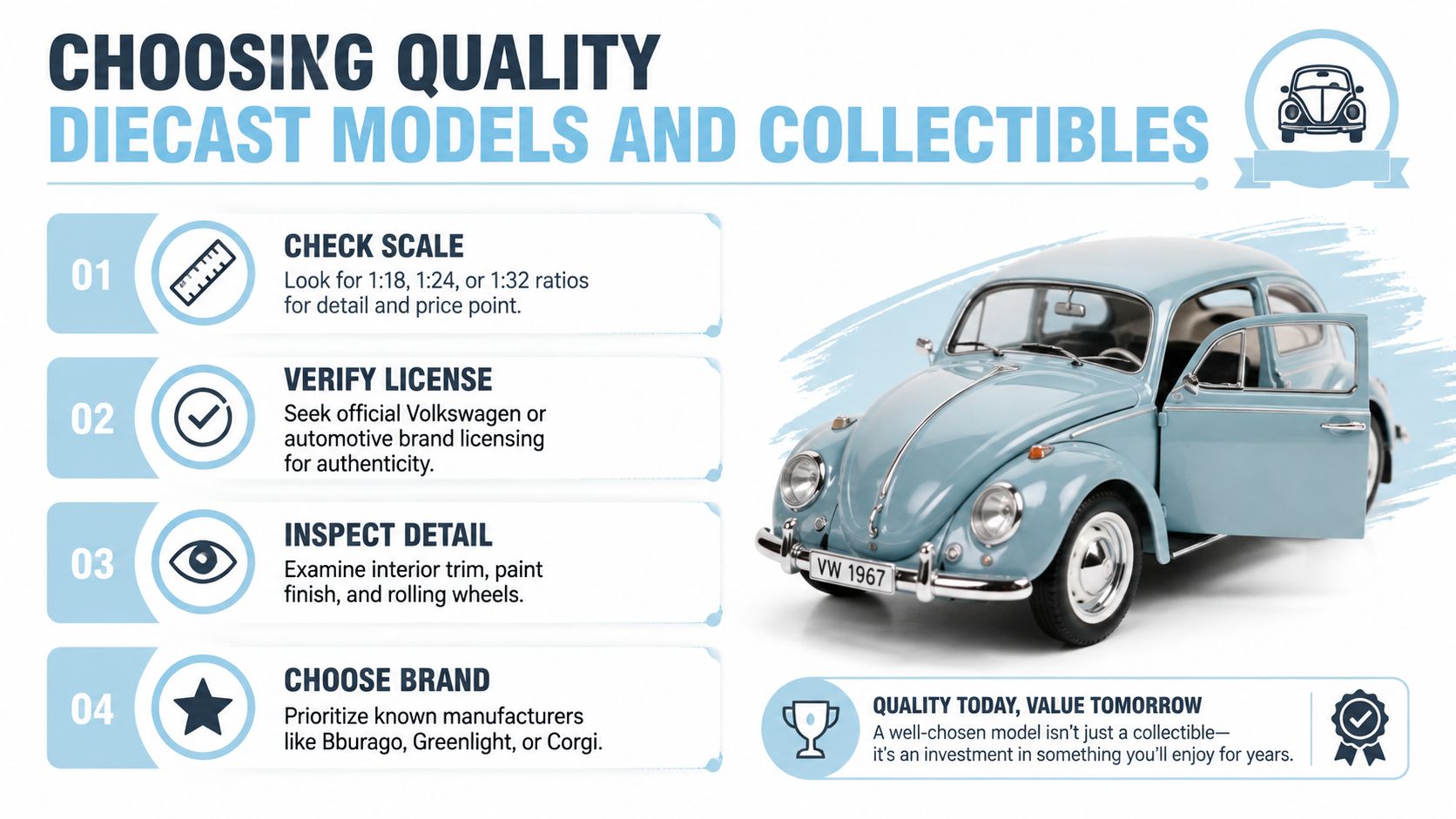
A 1:18 Volkswagen Beetle model gives the most visual presence, with room for sharper trim, wheel and interior details. A 1:24 model suits a mixed garage display, while 1:43 works well when the collection includes several generations or a long line of commercial vehicles. Smaller pieces let you tell a broader story without filling every shelf.
| Model | Scale | Maker | Why It's Collectible |
|---|---|---|---|
| Samba Bus | 1:18 | Various licensed makers | Captures the split-window touring shape and makes a strong centrepiece |
| Volkswagen Beetle | 1:24 | Various licensed makers | Easy to combine with other classic body colours and eras |
| Volkswagen Bus premium series | Various | Hot Wheels | Appeals to collectors who enjoy compact, display-friendly releases |
| Beetle variants | Small scale | Schuco Piccolo Series | Suits collectors who like distinctive miniature styling |
| Golf Country | 1:18 | AUTOart | Represents a less usual Volkswagen performance and utility theme |
| Commemorative Volkswagen editions | Various | Franklin Mint | Often chosen for presentation, detailing and gift appeal |
Collectors usually compare more than the casting. Check whether the logos are tampo-printed, whether opening panels sit neatly, whether the glazing is clear and whether the wheels match the period character. Packaging matters too, particularly when a model is intended as a gift or kept as a boxed collectible.
Limited editions can also connect a display to the wider VW story. Minichamps and Heritage Collection releases may focus on rally or concept cars, including the W12 Nardo, while Country Buggy-inspired pieces give an Australian angle to a shelf otherwise filled with German-market examples. The rarest full-size-inspired diecast doesn't need to be expensive or oversized. It needs to carry a recognisable story.
For a warm, nostalgic arrangement, place a Kombi Samba Bus beside a Beetle, then add a small surf-themed vehicle or a printed show photograph behind them. That arrangement feels more like an Australian car meet than a row of unrelated models.
Buying, Collecting and Caring for Rare VWs in Australia
The best purchases usually begin with people, not listings. Join the VW Club of Australia, regional branches and Kombi-focused forums, then attend swap meets where owners can explain a car's history face to face. Specialist dealers in Victoria and Queensland, along with auctions run by Shannons, Lloyds and Grays, can bring unusual Volkswagens into view, but every listing still needs independent checking.
For a full-size car, arrange a pre-purchase inspection before treating a seller's description as proof. Ask the inspector to examine:
- Identity numbers: Compare engine and chassis numbers with the paperwork and the claimed model.
- Air-cooled rust zones: Check heater channels, luggage shelves and battery trays carefully.
- Restoration quality: Look behind trim, under carpets and inside repaired panels for unfinished corrosion work.
- Parts originality: Separate genuine factory equipment from later replacements or attractive upgrades.
Australia's ownership pathway also includes compliance. The federal government changed import access in 2021 for older vehicles over 25 years old, creating broader pathways for classic and collectible passenger cars and vans under the relevant SEVS and RVS framework. Buyers still need to manage ROVER approvals, identity checks, documentation and VIN requirements, so a rare overseas car isn't automatically an easy road-legal purchase. The Australian older-vehicle import guidance should be read before committing to an import.
Before buying overseas: Confirm the approval and registration pathway first. A bargain shell can become a difficult project if its paperwork doesn't line up.
Diecast models need a gentler environment than a workshop. Keep them behind glass or in suitable cabinets, away from direct sunlight and unstable humidity. A felt base helps protect the display surface, while careful dusting avoids marking printed logos, clear parts or delicate mirrors.
Full-size classics benefit from dry storage, sensible fuel-system maintenance and original-part research through specialist suppliers such as Klassic Fab and VW Classic Parts. Keep a record of purchase details, restoration work, photographs and comparable auction results. Valuation references can include recent auction outcomes, Hagerty and VWCA magazine coverage, but no guide replaces an inspection of the individual car.
Collectors also need insurance that reflects the vehicle's agreed value, whether the car runs regularly or attends an occasional show. Providers such as Shannons and Lumley are familiar names in the classic-vehicle space, but policy conditions still vary, so read the storage, usage and modification requirements before signing.
Finally, remember that market depth matters. Beetles and Kombis have active Australian interest, while a very unusual model may be a long-term showpiece with fewer obvious buyers. A 1960 dual-cab Kombi sale at $155,000 was noted in Australian trade coverage, showing the strength of interest in certain rare variants, but one result doesn't establish a universal value for every rare Volkswagen. The sensible collector asks not only, “How scarce is it?” but also, “Can I maintain it, insure it and find the next owner?”
If a Country Buggy, Split-window Kombi or beautifully scaled Volkswagen Beetle model has a place in your story, explore Volkswagen Memorabilia for licensed diecast pieces and VW-themed gifts that bring Australia's classic car culture onto your shelf. Choose a Kombi Samba Bus, Beetle or surf-inspired collectible to start a display that feels right at home beside your treasured memories.