
Diecast Models Australia: A Collector’s VW Guide

A few summers ago, I watched a sun-faded Kombi roll into a beachside car meet with salt on the paint and boards on the roof. Half the crowd smiled before the engine even stopped, because in Australia a VW like that doesn't just arrive, it brings a whole bundle of memories with it.

The Magic of Holding a Memory in Your Hands

There's something wonderfully familiar about a classic Volkswagen on an Australian road. A Beetle buzzing along a coastal strip. A Kombi parked near the dunes with sandy thongs by the door. For a lot of us, these aren't just old vehicles. They're little pieces of freedom, family holidays, surf culture, first cars, and stories told over a folding chair at a car show.

That's why diecast collecting grabs people so quickly. A good model doesn't feel like a random shelf item. It feels like a memory you can hold. For VW fans, that feeling runs deep because the Kombi and Beetle have such a strong place in local culture.

The Kombi's story started long before it became an Aussie icon. The iconic Volkswagen Kombi (Type 2) originated in 1949 when Dutch businessman Ben Pon sketched the first prototype after observing VW utility vans, leading to its official debut in 1950 and its eventual status as an Australian cult classic, as noted by Volkswagen Australia's Kombi history.
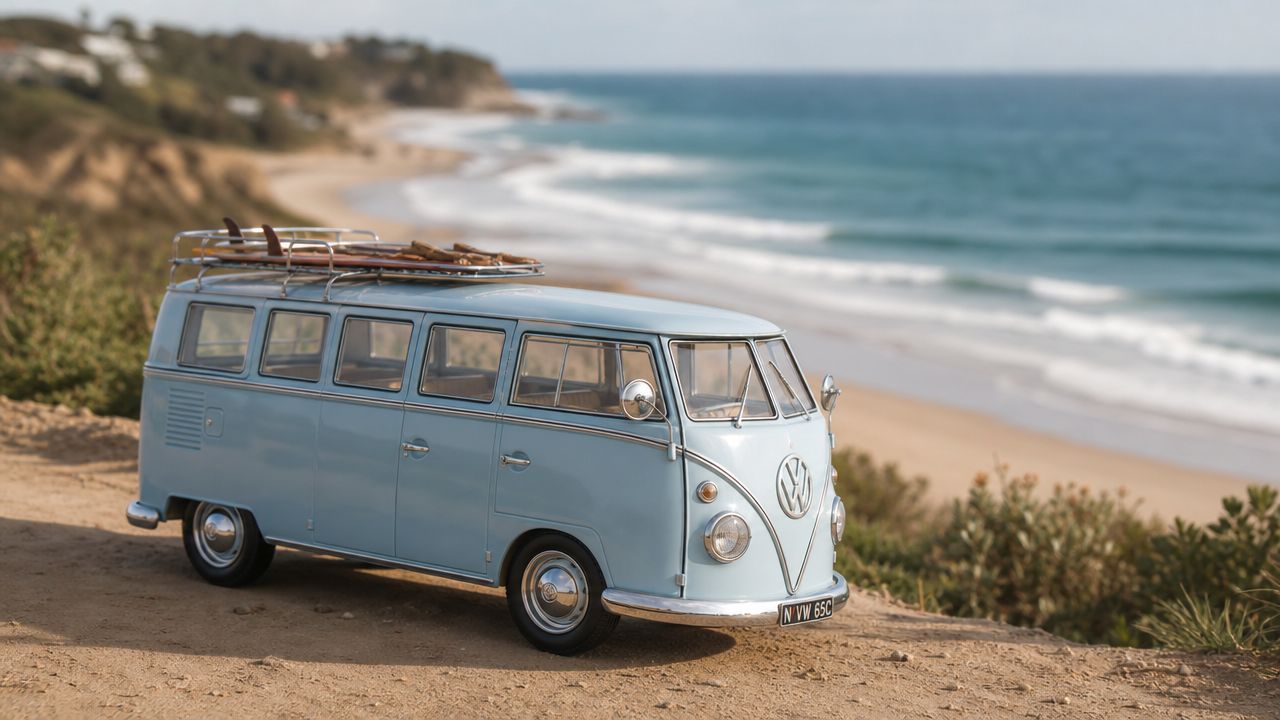
A miniature light blue Volkswagen T1 bus model parked on a cliff overlooking a sandy beach.

Why VW models feel different

Some marques inspire admiration. Volkswagens often inspire affection. That's a different thing entirely.

A diecast Samba Bus with tiny windows and bright paint can remind one collector of a real van they restored years ago. A simple Volkswagen Beetle model can remind another of a parent learning to drive. Even gift buyers who've never collected before often pick a Kombi because it instantly says summer, adventure, and easy-going style.

A well-made model car can do what a photograph sometimes can't. It gives memory weight, shape, and presence.

Why this hobby keeps growing in Australia

The local appetite for collecting is getting stronger. The Australia Diecast Model Car Market is projected to reach sales revenue of $245.6 Million by 2030, growing at a 5.2% CAGR between 2026 and 2030, reflecting strong collector demand and cultural interest, according to Cognitive Market Research's diecast model car market report.

For anyone exploring diecast models in Australia, that growth tells you something important. You're not wandering into a tiny niche. You're joining a lively hobby with plenty of fellow enthusiasts, from seasoned Volkswagen restorers to people looking for the right VW memorabilia collectibles for a birthday, Father's Day, or a home office shelf.

Your Guide to Diecast Scales and Brands

If you're new to collecting, scale is usually the first thing that causes confusion. The numbers look technical, but the idea is simple. A 1:18 model means the car is eighteen times smaller than its full-size counterpart. A 1:24 is smaller still. The second number gets bigger as the model gets smaller.

Consider photo prints as an analogy. A larger print shows more detail and has more presence on the wall. A larger-scale diecast does much the same on a shelf.
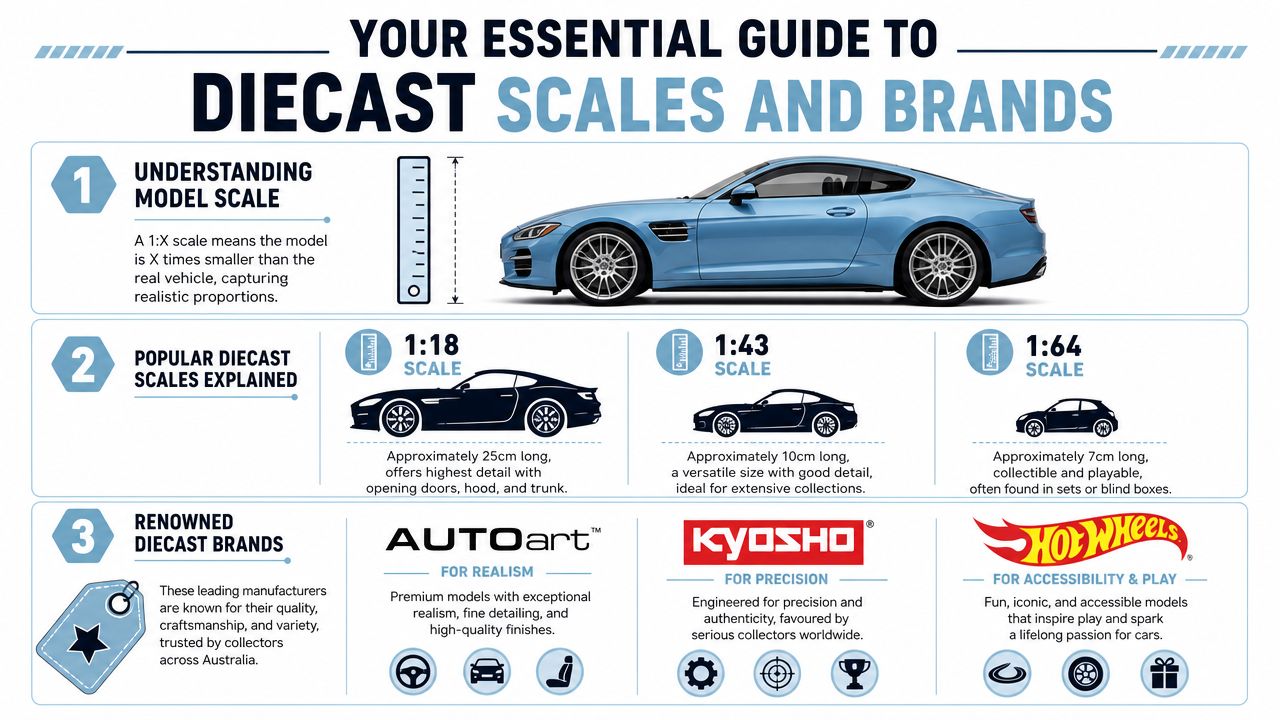
An infographic guide explaining diecast model scales and popular collector brands for hobbyists in Australia.

Why 1:18 gets so much attention

In local collecting circles, 1:18 is the most popular diecast model size among Australian collectors, driven by stronger demand and higher market activity that sustains meaningful price appreciation and trading volume, according to this Australian diecast valuation post.

That popularity makes sense when you've held one. A good 1:18 Kombi or Beetle has room for the little details collectors love, such as interior trim, badges, wheel design, and opening parts. It feels substantial without becoming awkward to display.

A quick scale comparison

Scale What it feels like Best for
1:18 Bigger presence, stronger detail Feature pieces, gifting, close-up display
1:24 A handy middle ground Home shelves, desk displays, relaxed collecting
1:43 Compact and easy to line up Wider collections in smaller spaces
1:64 Tiny and playful Casual collecting, sets, pocket-money fun

What to look for in a brand

Brand matters, but not only because of the logo on the box. It matters because different makers chase different goals.

  • Licensed accuracy: If you want a proper Volkswagen Beetle model, start with officially licensed products. They're more likely to get proportions, badging, and trim right.
  • Material quality: Better diecast pieces often use zinc alloy construction and feel solid in the hand.
  • Functional detail: Opening doors, tidy hinges, removable parts, and clean paint lines usually separate a collectible from a simple toy.
  • Model focus: Some brands lean into realism, while others favour affordability or playful design.

For VW fans, this becomes especially obvious with a VW Kombi diecast Australia search. One model may be charming but basic. Another may show off split-screen details, a more convincing cabin, and neater exterior finishing.

A beginner rule that saves regret

Practical rule: Buy the scale that suits your display space first, then compare brands within that size.

That approach stops a common mistake. New collectors often buy by impulse, then realise the model doesn't fit their cabinet, desk, or room style. If you want a more detailed primer on the basics, this guide on what a diecast model car is gives a straightforward overview before you start comparing specific Volkswagens.

Where to Find Your Next VW Diecast Model in Australia

Buying diecast in Australia is half practicality, half treasure hunt. Some collectors love the chase of finding a hidden gem in person. Others would rather compare options online with a cup of tea and a clear return policy.

Both approaches work. The trick is knowing what each one does well.
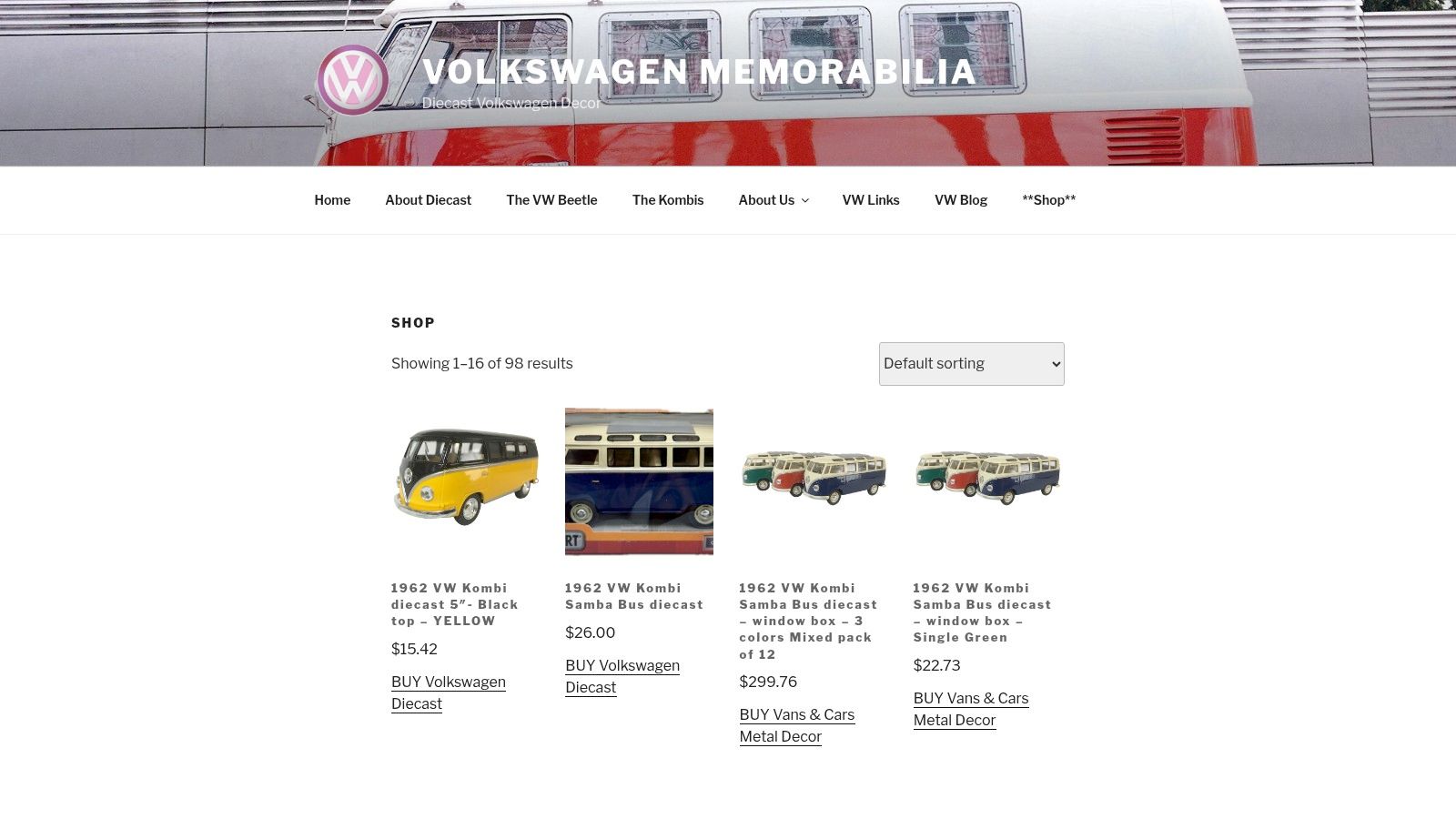
Screenshot from https://vwmemorabilia.com.au/shop/

The joy of buying in person

Physical hobby shops, swap meets, and VW events can be brilliant places to buy. You get the box in your hands, you can check the paint, and sometimes you'll find older pieces that never appear in a standard online catalogue.

Events like Volksfest or VW Nationals can be especially fun because you're already surrounded by people who understand why a particular Kombi roofline or Beetle wheel style matters. The atmosphere helps. A model bought at a great show often carries the memory of that day with it.

Still, there are trade-offs.

  • Selection varies: A local stall may have one lovely Samba Bus and nothing else in your preferred scale.
  • Condition can be mixed: Sun-faded boxes, missing mirrors, or vague model history can turn a bargain into a gamble.
  • Prices are harder to compare: At an event, you often decide on the spot.

What online shopping does better

Online stores make comparison much easier. You can check body styles, colours, scale, and stock without driving across town. That matters as the local hobby expands. As noted earlier, Australia's diecast market is on a clear growth path, and that usually means more buyers trying to source the same sought-after pieces.

For people searching Volkswagen diecast models for sale, online buying also helps with one very practical issue. You can slow down and inspect listing photos. That gives you a better shot at spotting whether the model is licensed, whether the detailing is crisp, and whether the seller understands what they're offering.

Why buying from an Australian importer helps

Local stock becomes especially valuable. An Australian importer can remove a lot of the friction that comes with overseas ordering.

Buying route Main advantage Main caution
Car shows and swap meets You can inspect the item in person Limited choice and variable condition
General marketplaces Wide range of sellers Authenticity and consistency can be patchy
Australian specialist stores Local stock and simpler shipping Range depends on the shop's focus
Overseas sellers Access to unusual releases Slower delivery and more uncertainty

If you're trying to buy diecast Kombi models without the usual hassles, local stock means fewer surprises. Shipping is generally faster, support is easier to reach, and you're not left guessing about customs issues or waiting weeks to learn whether the item matches the photos.

One option is the 1962 Volkswagen Kombi Flower Power classic bus with surfboard, which shows the kind of beachy, nostalgic styling many Australian collectors and gift buyers look for. It sits nicely at the meeting point between classic VW heritage and the relaxed surf aesthetic that makes Kombi memorabilia so appealing here.

Choosing the right place to buy

A simple way to decide is to match the purchase to your goal.

  • For a gift: A local specialist website is often the easiest path because sizing, style, and condition are clearer.
  • For a serious collector piece: In-person inspection or detailed specialist listings usually beat casual marketplace browsing.
  • For a fun shelf model: You've got more flexibility, so colour and character might matter as much as rarity.

Spotting a Gem How to Check for Quality and Authenticity

Not every diecast Volkswagen deserves shelf space. Some are cheerful little toys, and there's nothing wrong with that. But if you're collecting rather than buying a novelty, quality and authenticity matter a great deal more than a cheap price tag.

That's particularly important in Australia because authentication is a pressing need for enthusiasts as global data shows Asia Pacific is the fastest-growing region for automotive diecast, yet local resources often lack guides to distinguish premium brands from budget or counterfeit models, according to Research and Markets' model vehicle coverage.

Start with the licence

The first question is simple. Is it officially licensed by Volkswagen?

Licensed products are more likely to show the right body shape, model naming, badges, and trim. On a Kombi or Samba Bus, those details make a huge difference. If the front end looks slightly off or the proportions feel clumsy, collectors notice immediately.

Learn the signs of a better model

You don't need to be an expert restorer to tell the difference between a proper collectible and a forgettable knock-off. A careful look usually tells the story.

  • Check the casting: Better models tend to feel solid and balanced, not tinny or flimsy.
  • Inspect paint lines: Look where colours meet around windows, doors, and trim.
  • Study the windows and lights: Cloudy plastic, poor fit, or obvious glue marks usually suggest lower quality.
  • Look inside: Seats, dash detail, steering wheel shape, and interior colour all help separate premium work from generic moulding.
  • Examine moving parts: Opening doors or panels should align neatly and close properly.

If the wheels sit oddly, the logos look vague, and the interior is little more than a plastic blob, it's probably not the collectible you hoped for.

Online photos can tell you plenty

When you can't inspect a model in person, use the listing images like a checklist. Zoom in on front badges, panel gaps, and wheel detail. Check whether the seller shows the box, the underside, and close-ups of the cabin.

A seller who only shows one distant photo often leaves too many questions unanswered. A better listing usually includes multiple angles and clear product naming. That won't guarantee quality, but it gives you more to work with.

A simple authenticity checklist

Before you buy, ask yourself:

  1. Does the model name match the body style?
  2. Is Volkswagen branding presented clearly and consistently?
  3. Do the proportions look true to the original vehicle?
  4. Are there clear close-up photos of key details?
  5. Is the finish clean enough for a collector display?

For popular VW subjects, especially Beetles and Kombis, the safest mindset is this. Buy fewer pieces, but buy better ones. A shelf with three licensed, well-finished models usually brings more long-term pleasure than a crowded row of compromises.

Caring for Your Collection Display and Storage Ideas

Once you've found a model you love, the next job is keeping it looking the part. Dust, direct sun, rough handling, and damp storage can take the sparkle out of even a lovely little VW.

A few simple habits make a big difference.
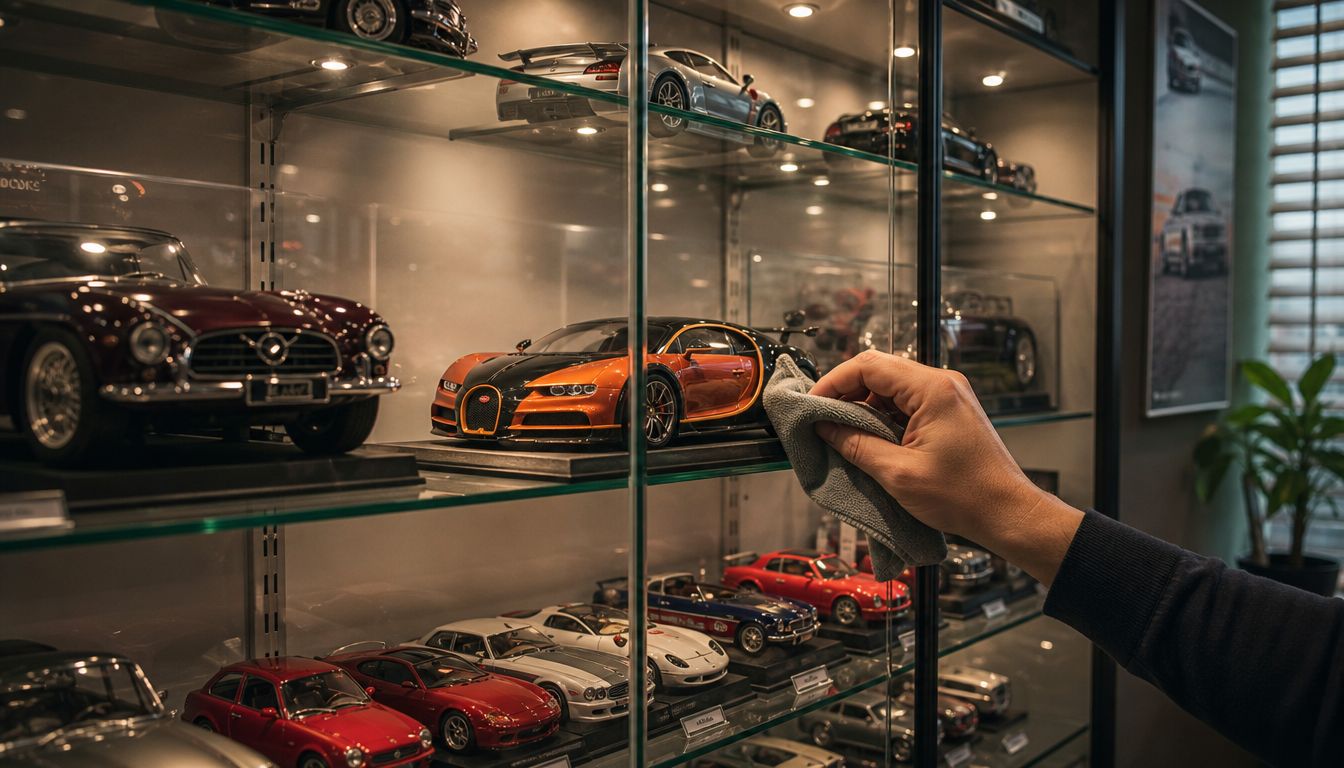
A person cleaning a high-quality diecast sports car model displayed inside a glass cabinet collection.

Everyday care that protects the finish

The easiest mistake is placing a model in a sunny spot because it looks great there at first. Bright light can dull colours over time, and dust settles quickly on roofs, mirrors, and window edges.

For most collectors, a better routine looks like this:

  • Keep it out of harsh sun: Indirect light is much kinder to paint and decals.
  • Dust gently: Use a soft brush or microfibre cloth rather than anything abrasive.
  • Handle by the base when possible: Mirrors, roof racks, and doors are often the first parts to suffer.
  • Store the box if you have room: Original packaging can be helpful for protection and resale.

Display ideas with a bit of personality

VW models suit more than one style of display. A polished cabinet works beautifully, but so does a relaxed, themed shelf that reflects the life those vehicles represent.

Display style Works well with Overall feel
Coastal shelf Kombis, surf-themed buses, pale timber Easy-going and beachy
Retro garage nook Beetles, signs, workshop-style décor Mechanical and nostalgic
Glass cabinet Licensed collector pieces Clean and organised
Desk display One standout bus or Beetle Personal and conversational

A coastal arrangement is especially fun with VWs. A Flower Power bus, a surfboard accessory, a bit of white décor, and a touch of beach texture can turn a simple shelf into a scene.

For collectors who want a tidier setup, these display cases for models are a practical way to cut down on dust while letting the details stay visible.

Cleaning technique matters

Collector habit: Clean less often, but clean carefully.

Frequent rough wiping causes more harm than patient, gentle dusting. If your model has opening doors or removable parts, move slowly and support the body while you inspect or clean it.

This video gives a handy visual sense of careful model handling and display care:

When storage becomes important

If your collection rotates with the seasons, use a dry cupboard and avoid stacking loose models together. Soft wrapping and stable shelves are far safer than tossing several pieces into one box. It's a simple step, but it helps preserve mirrors, paint, and presentation.

Joining the Aussie VW and Diecast Community

Collecting gets even better once you stop doing it alone. A shelf of Volkswagens at home is lovely, but the hobby really comes alive when you talk to people who know why a split-screen bus sparks debate, or why one Beetle colour instantly reminds them of childhood holidays.

Volkswagen has had a long runway in this country. Volkswagen sales officially began in Australia in 1953, marking the start of the brand's deep cultural presence in the country that fuels the passion for collecting today, as outlined by Shannons Club's look at the Volkswagen Beetle in Australia.

Where enthusiasts tend to gather

Some collectors find their people at major car events. Others do it from the lounge room through online groups, collector pages, and enthusiast forums. Both are worthwhile because the hobby has two sides. There's the object itself, and there's the conversation around it.

Places worth keeping an eye on include:

  • Volksfest and VW Nationals: Good for seeing real cars, meeting owners, and spotting memorabilia stalls.
  • Facebook collector groups: Handy for model identification, swap discussions, and honest opinions on new releases.
  • Classic car clubs: Often full of people who appreciate both the full-size vehicle and the miniature version.
  • Special interest communities: Kombi fans, Beetle restorers, and surf-culture collectors each bring a slightly different angle.

Why community improves your buying eye

Talking with other collectors sharpens your judgement faster than scrolling alone. You start to recognise which finishes look right, which body styles are often mislabelled, and which models people repeatedly mention with affection.

You also realise something comforting. Most collectors started exactly where you might be now, with one bus, one Beetle, or one gift purchase that unexpectedly turned into a hobby.

A few questions new collectors often ask

Is a VW model only for serious collectors

Not at all. Plenty of people buy one model because it reminds them of a car they owned, a surf trip, or a family story. That's a perfectly good reason to start.

Are Kombis more popular than Beetles

They each attract a slightly different kind of affection. Kombis often bring in surf, travel, and coastal nostalgia. Beetles tend to spark memories of everyday life, first cars, and classic design.

Should I collect one scale only

If you like a neat, unified display, sticking to one scale helps. If you're collecting for joy rather than symmetry, mixing scales is completely fine.

What makes a good gift for a VW fan

A licensed Kombi or Beetle model with a design that matches their taste usually lands well. Some people love classic factory looks. Others grin at playful surfy colourways.

The best part of diecast collecting in Australia is that it sits at the crossroads of motoring history, home display, and shared memory. It's practical enough for the detail-minded collector, and sentimental enough for the person who just wants one lovely Volkswagen on the shelf.


If you're ready to start or add to your collection, have a browse through Volkswagen Memorabilia for licensed VW-themed diecast models, Kombi and Beetle designs, and display-friendly pieces that suit Australian collectors, gift buyers, and anyone who can't resist a bit of classic Volkswagen charm.
VW Polo GTI: The Pocket Rocket’s Enduring Story

A mate rolled into Volksfest one year in a tidy Polo GTI, parked between a split-window Kombi and a chrome-smiled Beetle, and half the crowd wandered over before the engine had even settled. That’s the thing about the vw polo gti. It’s the little car in the family photo that somehow steals your attention.

The Little Car with a Big Heart

You don’t have to own one to get it.

Maybe you first noticed a Polo GTI slipping through suburban traffic with that sharp, planted stance. Maybe it was sitting low on its wheels outside a café, looking far more serious than its footprint suggested. Or maybe you heard one leave a roundabout with that familiar Volkswagen urgency and thought, “That’s no ordinary Polo.”

That reaction matters, because the Polo GTI has always lived in an interesting corner of the VW story. It doesn’t carry the same long-shadow folklore as a Beetle. It doesn’t wear the beach-born charm of a Kombi. What it does have is a different sort of pull. It feels like the clever one in the family. Compact, quick, and just cheeky enough.

Why the Polo GTI gets under your skin

The appeal isn’t only speed. It’s proportion.

A good hot hatch looks ready before it moves, and the Polo GTI has often nailed that. Short overhangs, a squat posture, and that unmistakable GTI promise that says daily commuter on paper, mischief after dark in practice. It’s the kind of car that makes an ordinary run for milk feel like you took the long way home on purpose.

Some Volkswagens charm you with nostalgia. The Polo GTI wins you over by making everyday driving feel alive.

At VW gatherings across Australia, that counts for plenty. Enthusiasts who spend weekends polishing a ’60s Beetle or hunting down a rare Kombi badge still nod with respect when a neat GTI rolls in. The badge carries weight. The size just makes it more fun.

A small Volkswagen with a proper place in the family

That’s why the Polo GTI deserves a yarn of its own.

Its story is part performance history, part practical ownership tale, and part collector’s dream. For some fans, it’s a car they drive. For others, it’s a model they display beside a Samba Bus and a classic Beetle. Either way, it belongs in the broader Volkswagen conversation.

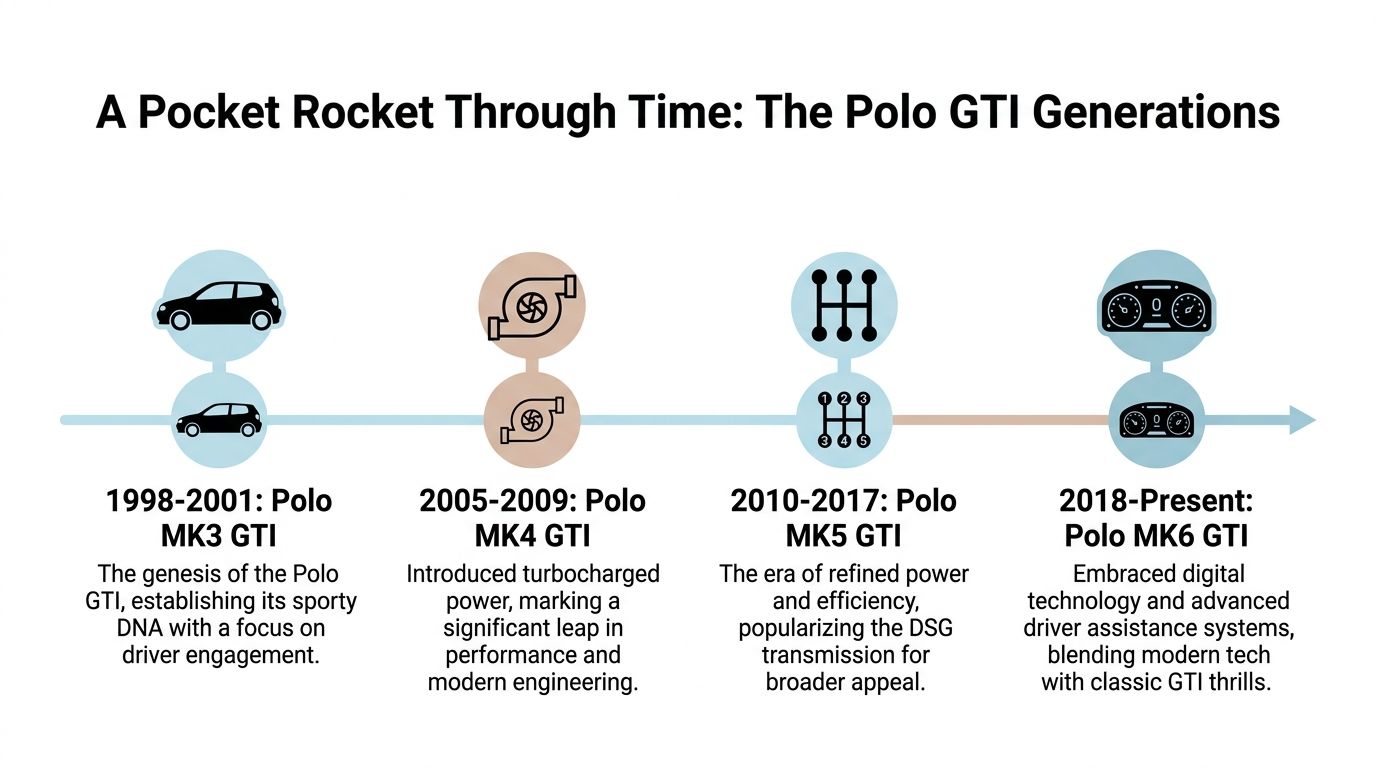
A Pocket Rocket Through Time The Polo GTI Generations

The Polo GTI didn’t become a legend in one hit. It earned it in stages, one jump in power and character at a time.

Volkswagen’s GTI philosophy reaches back more than half a century, with the original Golf GTI debuting in 1976 with respectable power for its time, and the Polo GTI became part of that wider tradition when Volkswagen expanded the GTI badge beyond the Golf. When the Polo GTI officially launched in 1995, it arrived in a limited batch of 3,000 units, which gave it a slightly special, insiders-only feel from the outset, as noted on Volkswagen UK’s 50 years of GTI history page.

The early spark

There was an earlier spark before that official launch. The Polo GTI story reaches back to 1980, when a performance-flavoured Polo appeared with a 1.3-litre engine delivering 81 horsepower, according to Premium Components’ Polo GTI history overview. It was small, modest, and a hint of what the badge could become.

A notable revival came in 1995. Volkswagen fitted a 1.6-litre inline-four with 120 horsepower, which was a 48% increase over that 1980 car, using the same source above. That wasn’t just a spec-sheet bump. It changed the attitude of the car.

Suddenly, the Polo GTI wasn’t a warm hatch with sporty intent. It was starting to feel like a proper GTI.

A timeline graphic showing the evolution of Volkswagen Polo GTI generations from 1998 to the present day.

When turbo power changed everything

The next leap gave the Polo GTI its sharper voice.

In 1999, Volkswagen introduced a 1.8-litre turbocharged engine producing 150 horsepower, a further 25% increase over the 1995 version, again documented by Premium Components. That step matters because it’s where the car started to match its badge with proper urgency. Turbo power gave the Polo GTI a stronger mid-range shove and a more modern hot hatch personality.

By 2006, the fourth-generation Polo GTI held close to that level with power comparable to its predecessor from its 1.8-litre turbocharged engine. It showed that Volkswagen wasn’t only chasing bigger numbers. It was balancing power with better fuel use and reduced emissions, while keeping the car’s essential point intact.

Then came another key moment. The 2010 fifth-generation Polo GTI reached 180 horsepower, which represented a 22% increase from the previous generation, according to the same Premium Components history. By then, nobody could dismiss the Polo GTI as the smaller sibling to the Golf GTI. It had become a serious performance hatch in its own right.

The special editions enthusiasts remember

Some models become conversation pieces even among people who already know the range well. The 2006 Polo GTI Cup Edition is one of those cars.

Volkswagen tuned it to 180 PS and gave it 17-inch wheels and larger 312mm front disc brakes. It also cut the 0-100 km/h time to 7.5 seconds compared with the standard model’s 8.2 seconds, an improvement of about 8.5%, as recorded by Volkswagen UK in its GTI heritage feature.

That sort of variant is catnip for enthusiasts. It’s the one people point at in photos, the one they mention over a coffee, the one they wish they’d bought when prices were kinder.

Collector’s note: Special GTI variants often become the cars fans remember most vividly, because they freeze a moment when Volkswagen leaned harder into the hot hatch brief.

If your affection for the GTI badge stretches beyond the Polo, there’s plenty of kinship with icons like the Golf GTI Mk 6, which shows how the broader GTI design language carried across different sizes and eras.

Where the story heads next

The Polo GTI story isn’t standing still either.

Volkswagen has announced that the electric ID.Polo GTI will have its world premiere in 2026, according to Volkswagen UK’s GTI heritage page. That matters because it signals a new chapter for the GTI badge. The hardware may change, but the intent stays familiar. Everyday usability, sharp responses, and driving pleasure in a compact package.

The Polo GTI has always been the small member of the GTI clan. It just never thought small.

Under The Bonnet What Makes The Aussie GTI Tick

Open the conversation on a modern Australian Polo GTI and people usually start with one thing. The engine.

And fair enough. The local car gets a 2.0-litre TSI turbocharged four-cylinder petrol engine making 147 kW and 320 Nm, paired with a 6-speed DSG dual-clutch automatic transmission, as listed on the Volkswagen Australia Polo GTI model page. That’s a stout package for a small front-wheel-drive hatch.

Why those numbers matter on the road

Specs can look tidy on paper and still feel flat in the seat. The Polo GTI avoids that because its torque arrives early.

Peak torque is available at low engine speeds, which is why the car feels eager without needing a dramatic build-up. Around town, that means clean step-off from lights and easy overtaking gaps. On a back road, it means you lean on the throttle and the car answers quickly instead of making you wait.

Volkswagen says the Australian car can run 0-100 km/h in 6.8 seconds. For a compact hatch with front-wheel drive, that’s properly brisk. The favorable power-to-weight ratio helps explain why the car feels punchy rather than merely quick on paper.

The clever bit in corners

Straight-line pace only gets a GTI halfway there. The other half is how it behaves when the road turns ugly, shiny, or interesting.

The Polo GTI sold here uses XDL electronic differential lock, which relies on brake-based torque vectoring to reduce understeer. In plain language, when the front end starts to push wide, the system helps tuck the car back into line. That makes the front axle feel more disciplined in quick corners and more confident in wet conditions.

Practical rule: In a front-wheel-drive hot hatch, usable grip matters as much as headline power. The Polo GTI’s XDL setup is one reason the car feels more sorted than nervous.

That’s one of those features enthusiasts appreciate more the longer they live with the car. It isn’t pub-talk glamour. It’s the hardware behaviour you notice when a greasy roundabout or damp country bend appears without warning.

VW Polo GTI generations at a glance

Not every generation maps neatly into Australian kW figures or local acceleration data, so the cleanest way to compare them is to note what’s confirmed and leave the gaps honest.

Generation (Years) Engine Power (kW) 0-100 km/h (approx.)
Early concept era (1980) 1.3-litre Not stated in verified local kW data Not stated
Revitalised official launch (1995) 1.6-litre Not stated in verified local kW data Not stated
Turbo turning point (1999) 1.8-litre turbo Not stated in verified local kW data Not stated
Fourth generation (2006) 1.8-litre turbo Not stated in verified local kW data Not stated
Fifth generation (2010) Engine details noted earlier in article history Not stated in verified local kW data Not stated
Current Australian model 2.0-litre TSI 147 kW 6.8 sec

That table tells its own story. Earlier Polo GTIs built the legend, but the current Australian car is the one with the clearest, most complete local specification picture.

The gearbox’s part in the character

The 6-speed DSG matters more than some people admit.

A good dual-clutch gearbox changes the flavour of a hot hatch. In the Polo GTI, it helps the car feel polished in weekday traffic and sharp when you’re driving with intent. You get the ease of a two-pedal setup in the city, then quick shifts when the road opens up.

For Australian buyers, that combination is part of the car’s charm. It can crawl through commuter traffic on Monday and still feel like a proper GTI on Sunday morning.

  • For daily drivers: The DSG keeps the car easy to live with in stop-start traffic.
  • For spirited runs: Quick gear changes help the engine stay in its sweet spot.
  • For mixed conditions: The broad torque spread and XDL setup work together, so the car feels composed rather than frantic.

The result is a modern vw polo gti that doesn’t need excuses. It’s quick, tidy, and engineered to make sense on Australian roads, not just on a brochure.

More Than Just a Car Why We Love The Little GTI

A Polo GTI makes sense in your head. That’s not why people fall for it.

They fall for it because it feels a bit mischievous. It’s the hatch that can sit unobtrusively in a shopping centre car park, then light up a favourite stretch of road on the way home. That split personality is pure GTI. You don’t need a huge footprint or a dramatic bodykit to know there’s fun tucked into it.

The charm is in the balance

Some performance cars ask you to make compromises before you’ve even turned the key. The Polo GTI doesn’t go looking for applause like that.

It offers the old hot hatch promise in a modern wrapper. One car, several jobs. Commute. Coast road. Weekend errand. Quick blast with no destination. The joy is that it can do all of them without feeling like it’s wearing the wrong shoes.

That said, it isn’t perfect as an Australian daily. The modern car’s lowered suspension by 15mm, its larger size compared with older versions, practical fuel use around 7L/100km, and a 4-star ANCAP rating in the 2025 update are all points noted in this Autotrader review discussing the new Polo GTI’s practical issues. For some buyers, especially families, those details matter.

Why enthusiasts still make room for it

Even with those caveats, people keep loving the thing because the character survives.

The Polo GTI still feels like a car built by people who understand that driving shouldn’t be reduced to transport. There’s a neatness to it. A compact confidence. It’s less about drama and more about response.

You forgive a lot in a car when it keeps making you smile on roads you know by heart.

That’s why it fits so naturally into the wider Volkswagen scene. A lot of VW culture isn’t about raw numbers. It’s about personality. It’s why someone who adores a patina Kombi or keeps a shelf of Beetle tin signs can still feel drawn to a sharp little GTI.

A car that suits more than the driveway

The Polo GTI also appeals to people who like their cars to spill into the rest of life.

The same owner who parks a GTI in the garage often wants that Volkswagen flavour in a study, workshop, or beach-house nook. Old rally posters. Enamel signs. Model cars. A few thoughtful pieces from a collection of vintage home accessories can carry that mood indoors without turning the room into a showroom.

That says a lot about the Polo GTI. It isn’t only transport. It becomes part of how people express their taste in Volkswagens.

And that, more than any spec, explains why the little GTI stays loved.

Collecting The Legend From Driveway to Display Shelf

A full-size Polo GTI isn’t the only way to enjoy the car. For plenty of enthusiasts, the next best thing sits on a shelf at eye level, catching the light just right.

That leap from driveway to display shelf makes perfect sense. The same details that make the full-size car appealing, stance, proportion, grille treatment, wheel design, all translate beautifully into diecast. A good model doesn’t just remind you of the car. It preserves a moment in the GTI story.

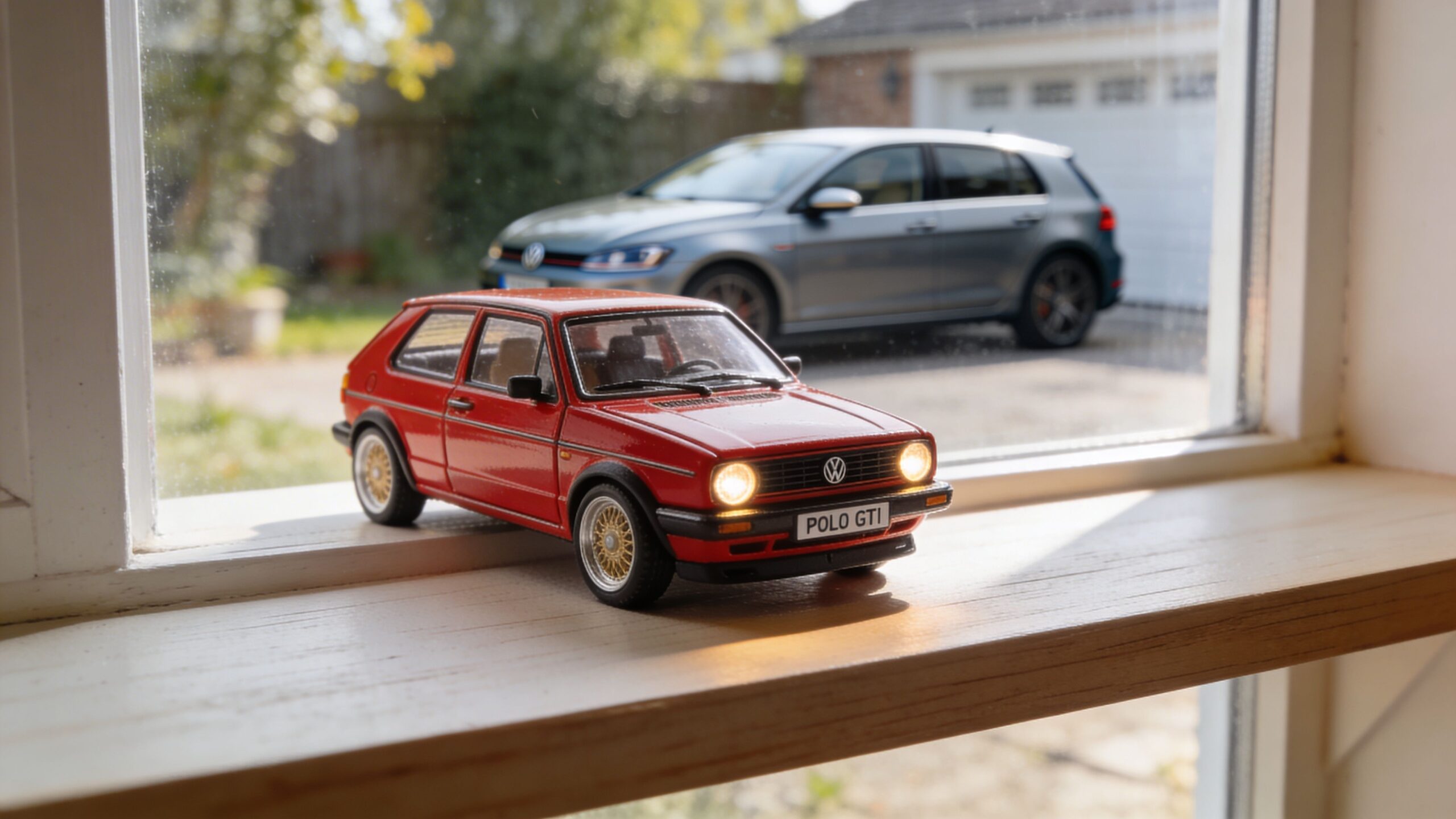
A red miniature Volkswagen Polo GTI model car parked on a white window sill in front of a real car.

Choosing your first model

Collectors often start with the car they own, the car they had, or the car they still dream about.

With the Polo GTI, scale matters. A larger model gives you more visual detail. A smaller one makes it easier to build a line-up that includes a Beetle, a Samba Bus, and a Golf GTI without needing another bookshelf.

A few simple rules help:

  • If you want detail: Go for a larger scale where wheel design, interior trim, and badging are easier to appreciate.
  • If you want a broad Volkswagen family display: Mid-sized or smaller scales let you mix eras and body styles more easily.
  • If you’re buying as a gift: Pick a colour or generation that matches the recipient’s own car or favourite period of VW history.

What quality collectors look for

A strong diecast model earns attention before you even read the box.

Look closely at panel lines, ride height, wheel finish, and whether the front end captures the GTI expression properly. On a Polo GTI, the little things do the heavy lifting. If the stance is off, the whole model feels flat.

Collectors also tend to value officially licensed pieces because they usually carry more accurate proportions and cleaner detailing. That matters if your shelf includes icons like a Beetle or Kombi and you want the Polo GTI to look like it belongs beside them.

A good model car should feel right from across the room and get better when you step closer.

Collecting with the full-size car in mind

There’s another reason Polo GTI models appeal. They’re easier to live with than the full-size equivalent.

For anyone considering ownership, long-term reliability deserves a clear-eyed look. Australian data is limited, but overseas owner reports and local RACV data suggest post-warranty maintenance can average $1,200 annually, which is about 20% above its class average, and the EA888 engine can be prone to carbon buildup in stop-start city driving common in Sydney and Melbourne, as summarised in this discussion of Polo GTI long-term ownership concerns.

That doesn’t spoil the car. It means the collectible version has its own charm. A diecast Polo GTI lets you enjoy the design, the heritage, and the badge without workshop bookings entering the conversation.

Building a display that feels personal

The best VW displays tell a story rather than ticking boxes.

You might group your shelf by body style, with a Beetle, a Kombi, and a Polo GTI showing how Volkswagen changed across generations. You might build it around colour. Or maybe you lean into an Australian coastal mood, where sporty hatchbacks sit beside surf-themed vans and beachy décor.

That kind of display pairs naturally with textured home pieces such as seashell wall art, especially if your collection lives in a study, rumpus room, or holiday house with a relaxed surf-club feel.

For many enthusiasts, that’s the sweet spot. The full-size car inspires the collection, and the collection keeps the feeling alive every day.

Show Off Your Passion VW Gift and Display Ideas

The best VW collections don’t feel cluttered. They feel curated.

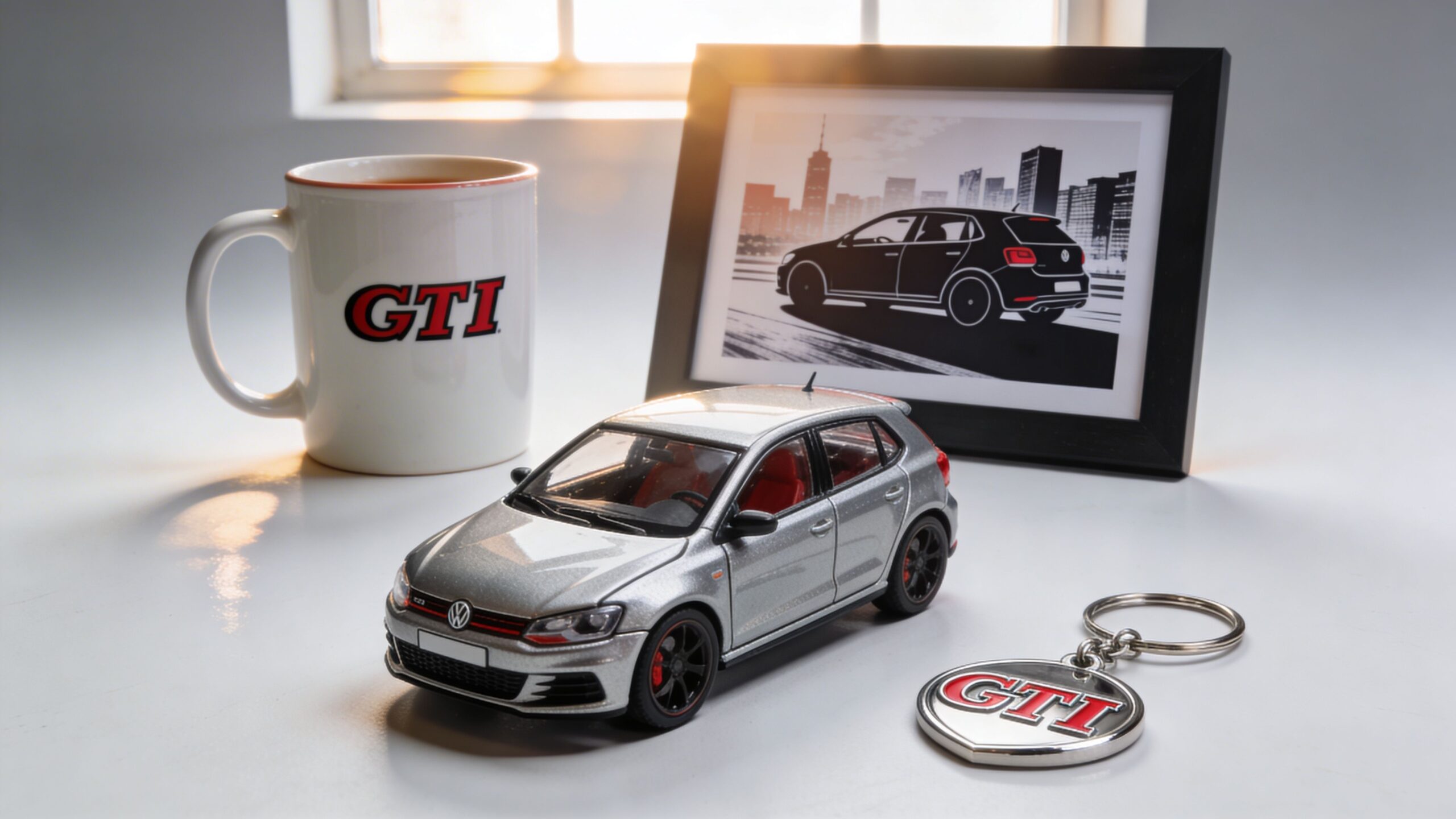
A single Polo GTI model on a desk can look smart enough on its own. Add a framed print, a mug, and one or two carefully chosen Volkswagen pieces, and suddenly you’ve got a corner of the house that says exactly what you’re into without shouting.

A silver Volkswagen Golf GTI toy car sits next to a GTI mug, a framed print, and a keychain.

Display ideas that work at home

A Polo GTI model suits more places than you might think.

On a bookshelf, it adds a sharper, modern note among older Volkswagens. In a study, it works well beside motoring books or framed event photos from Volksfest and VW Nationals. In a garage office, it becomes a neat tribute to the daily driver outside.

A few display themes tend to work especially well:

  • The GTI shelf: Pair a Polo GTI with a Golf GTI model, a keyring, and a period brochure-style print.
  • The VW family line-up: Set a Beetle, Kombi, and Polo GTI together to show the range of Volkswagen design.
  • The coastal corner: Mix VW pieces with beach-inspired décor, white tones, and natural textures for a relaxed Australian feel.

Gift ideas for different kinds of fans

Not every Volkswagen fan wants the same thing.

Some love model accuracy and will study wheel designs for ages. Others just want a piece that reminds them of their first car, their dad’s Kombi, or that one GTI they still regret selling.

That’s why VW-themed gifts work best when they match the person’s connection to the brand.

  • For the driver: Choose a Polo GTI or Golf GTI model that reflects the car they own or admire.
  • For the nostalgia lover: A classic Beetle or Kombi often lands beautifully because it taps memory first.
  • For the home decorator: Pick display-friendly pieces that blend into a study, living room, or beach-house shelf.
  • For the hard-to-buy-for mate: A small licensed VW collectible usually feels personal without being over the top.

Keep the display tidy and intentional

A display gets stronger when you give each piece room to breathe.

Use height variation. Group by era or colour. Let one centrepiece lead and keep the supporting pieces restrained. That’s often the difference between “nice collection” and “that looks fantastic”.

A Polo GTI model works especially well as a contrast piece. Put it near curvier classics like Beetles and early Kombis, and its sharper lines stand out. Place it among modern GTIs, and it becomes part of a performance story.

The most memorable VW displays feel lived-in, not staged. They reflect what the owner loves, not what a catalogue told them to buy.

That’s also why VW memorabilia makes such good gifting. It carries history, design, and personality in a form that people can live with.

Your Guide To Owning A Piece of The GTI Legend

The Polo GTI offers two kinds of pleasure. One lives in the driver’s seat. The other sits happily on a shelf.

If you’re thinking about the full-size car, buy with your eyes open. The badge carries genuine hot hatch pedigree, and the Australian model brings strong performance and smart engineering. At the same time, practical ownership deserves a careful look, especially once warranty cover is gone and running costs start to matter more than launch-day excitement.

If you’re drawn to the collectible side, the barrier is much lower and the enjoyment is immediate. A well-chosen model captures the same stance, spirit, and Volkswagen character that makes the full-size car special. It also fits beautifully into a broader collection that might include a Beetle, a Kombi Samba Bus, or a Golf GTI.

A simple way to decide

Ask yourself what part of the Polo GTI story you want to hold onto most.

  • The driving experience: Look at the full-size car with a practical ownership mindset.
  • The design and heritage: Start with a licensed diecast model.
  • The broader VW passion: Build a display that places the Polo GTI inside the larger Volkswagen family.

That’s the beauty of this little GTI. You don’t have to choose only one way to enjoy it. You can chase the keys, the model, the memories, or all three.

Frequently Asked Questions for Polo GTI Fans

Is the vw polo gti a proper GTI or just a smaller warm hatch

It’s a proper GTI in spirit and history. The badge wasn’t thrown on casually. The Polo GTI grew through performance steps over time and became Volkswagen’s compact expression of the same GTI philosophy enthusiasts already knew from the Golf.

Is a Polo GTI a good fit for Australian daily driving

For many drivers, yes. It blends compact size with lively performance and an easy automatic transmission. The trade-off is that modern versions can feel less tiny and tossable than older small hatches, and practical details like ride firmness, parking ease, and family priorities deserve thought before buying.

Should I buy the full-size car or collect the model

That depends on what part of the experience matters most to you. If you want the drive, the full-size car delivers the full GTI character. If you love the design, the badge, and the heritage but want a simpler path, a diecast model is a satisfying and lower-fuss way in.

What’s the best diecast scale for a beginner

Start with the scale that suits your space. If you want one hero piece for a desk or shelf, a larger scale often shows the details better. If you’re planning a broader Volkswagen collection with Beetles, Kombis, and GTIs together, a smaller scale can be easier to display neatly.

What should I look for in a quality Polo GTI model

Check the stance first. Then look at wheel design, paint finish, panel gaps, and whether the front end captures the GTI look properly. Licensed models are often a smart place to begin because they usually get the proportions and badging right.

Does the Polo GTI belong in a collection with classic Volkswagens

Absolutely. In fact, that contrast is part of the fun. A modern Polo GTI beside a Beetle or Samba Bus shows just how broad the Volkswagen story is. One shelf can hold nostalgia, utility, and performance all at once.

Where can Australian VW fans connect with other enthusiasts

Car shows, owners’ meets, club runs, and events like Volksfest are still the heart of it. They’re where people swap stories, compare cars, and often inspire each other’s collecting as much as their driving.


If the Polo GTI has sparked your interest, the easiest next step is to bring a piece of that Volkswagen character home. Volkswagen Memorabilia is a local Australian shop with VW-themed gifts, diecast models, and display pieces that suit collectors, classic car fans, and gift buyers alike. Whether you’re hunting for a GTI-inspired shelf piece, a Kombi Samba Bus diecast, a classic Beetle model, or coastal décor with VW spirit, you’ll find local stock, friendly support, and fast Australian shipping that makes collecting far easier.