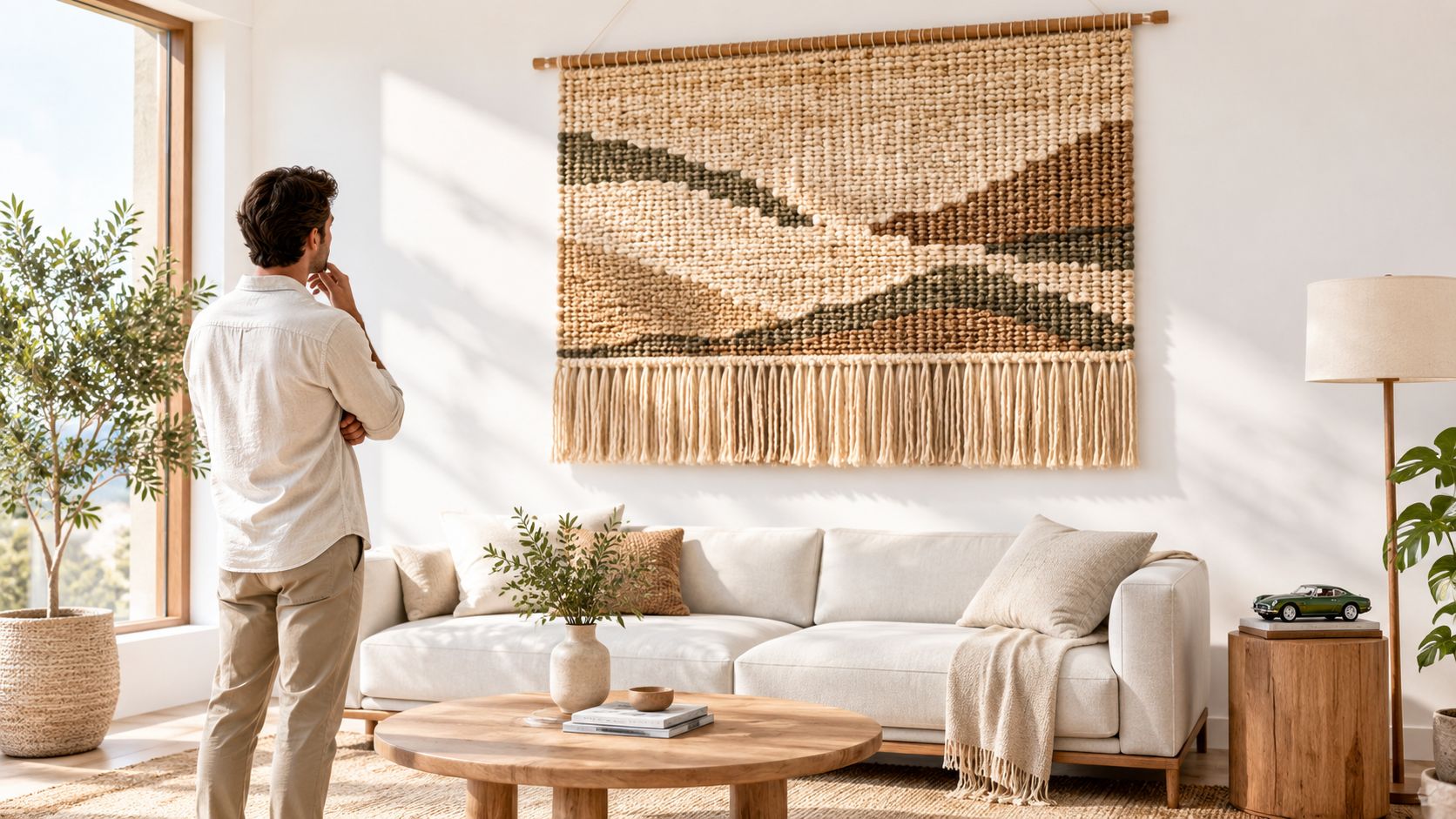

The sofa is in, the coffee table's found its spot, and there's still one broad, stubbornly blank wall staring back at you. You want the room to feel like a breezy beach house, but the last thing you need is a neon “Beach” sign beside a shelf packed with novelty shells. For a VW enthusiast, the better answer is a room with the calm of the coast and the character of a sunny surf trip in an old Kombi.
The right coastal wall art for living room styling can make that happen. Think soft horizons, weathered timber, ocean blues, and enough breathing room for a carefully chosen Volkswagen diecast model to tell its own story. The result feels less like a themed display and more like a relaxed beachside garage, collected over time by someone who knows the difference between genuine nostalgia and clutter.
Embracing the Modern Coastal Aesthetic
A classic Kombi parked near the water never needs much explaining. Its rounded silhouette, split windscreen, and cheerful paintwork already suggest open roads, salty air, and a weekend with nowhere urgent to be. Your living room can capture that mood without turning into a souvenir shop.
Modern coastal interiors favour quiet visual cues. A broad abstract seascape above the sofa can suggest the ocean through a soft horizon and layered tones, while pale timber, linen upholstery, and a single weathered accessory carry the beachside feeling through the rest of the room. A small Beetle print or restrained surf photograph can add personality without competing with the main artwork.
Australia's wall décor market is projected to grow at more than 5.6% CAGR from 2026 to 2031, with wall art identified as the most popular category and a shift towards softer coastal looks, neutral palettes, and abstract seascapes, as outlined in this Australian wall décor market overview. That direction suits VW memorabilia beautifully because both styles rely on shape, memory, and atmosphere rather than loud decoration.
Start with the feeling, not the theme
Choose art that gives you the same calm pause as looking across a beach at first light. Gentle horizon lines, sandy neutrals, faded blue, and generous negative space will sit comfortably beside a vintage-style Kombi model. Nautical details can appear as small accents, not a marching parade of anchors and ship wheels.
A floating shelf beneath the art gives your display a natural centre. Place the model slightly off-centre, leave clear space around it, and let the wall do some of the talking. More ideas for blending relaxed interiors and enthusiast pieces appear in these coastal home décor ideas.
Choosing Durable Art for Australian Climates
A beautiful print needs the right home. Australian coastal rooms can expose artwork to damp air, salt-laden conditions, and strong sunlight, so selecting the surface and frame should happen before you start drilling holes.
In coastal Queensland, sustained humidity above 70% can damage cheap canvas. In north-facing coastal homes in NSW and Victoria, UV exposure can fade dye-based inks within about 18 months, making pigment inks the preferred longevity benchmark, according to this Australian guide to surfing and seascape wall art.

Match the material to the wall
Use the room's exposure as your starting point.
- Humid coastal zones: Look for pigment-ink canvas printed on 380gsm or heavier poly-cotton, paired with kiln-dried pine framing. The substantial canvas and stable timber frame provide a more sensible foundation than bargain materials in damp conditions.
- Bright, north-facing walls: Framed prints with acrylic glazing are a practical choice where direct sun reaches the artwork. Acrylic can help create a protective barrier while keeping the piece light enough for straightforward installation.
- Shelves near windows: Keep diecast models away from persistent direct sun. A shaded wall, floating shelf, or enclosed cabinet will help protect paint finishes and small details from unnecessary exposure.
- High-moisture rooms: In Queensland homes with heavier humidity, metal prints or moisture-resistant framed works can offer a more durable alternative.
The same thinking applies to a treasured Volkswagen Beetle model. It doesn't belong on a windowsill where afternoon sun hits it every day. Place it where you can enjoy the chrome, curves, and colour without asking the finish to battle the climate.
Mastering Layout and Colour Palettes
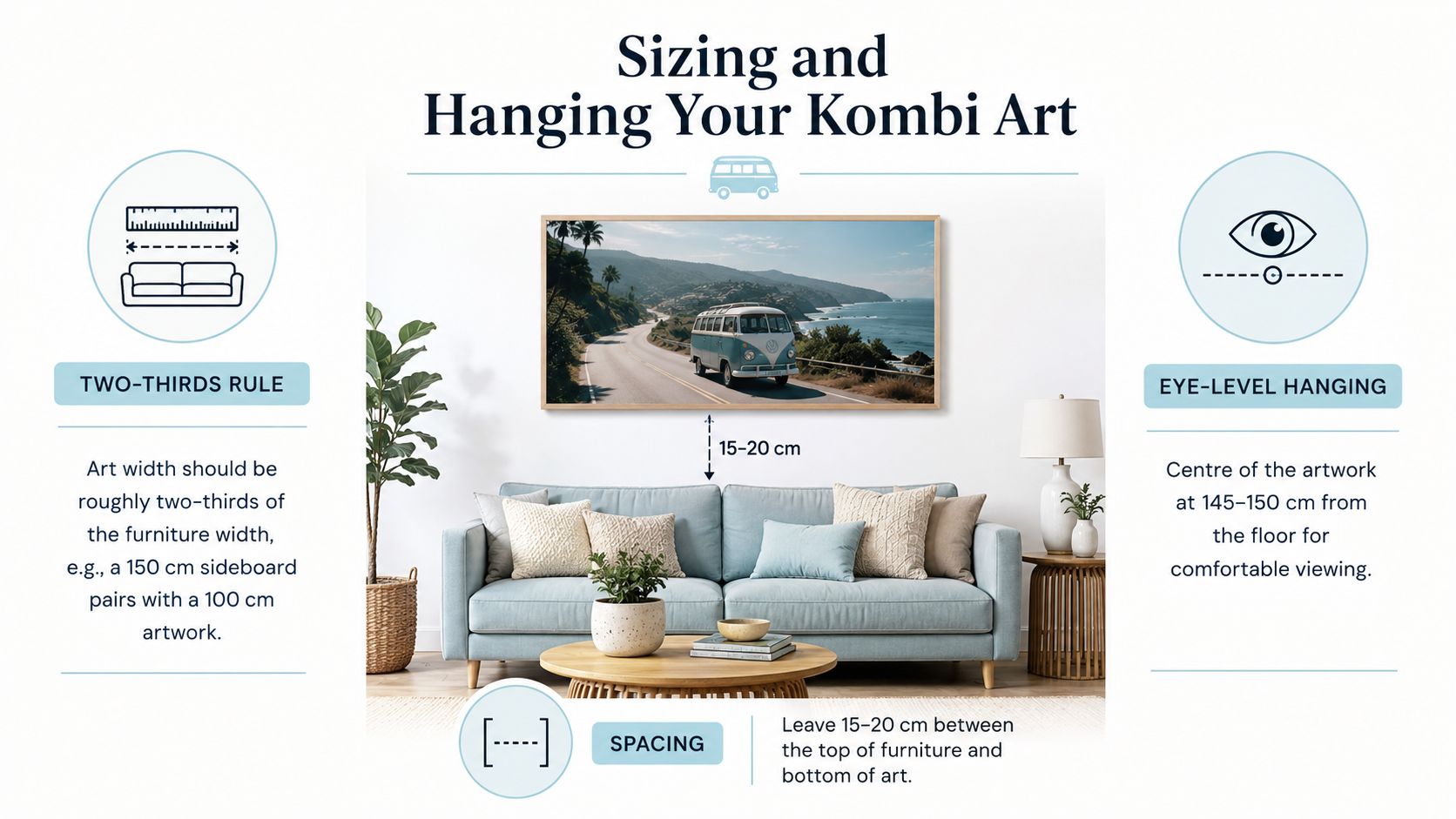
A large blank wall can make even a seasoned home mechanic hesitate. The trick is to give the wall one clear job. In an open-plan room, a broad seascape can anchor the sofa zone, while smaller pieces and a diecast display create a visual trail towards the dining or reading area.
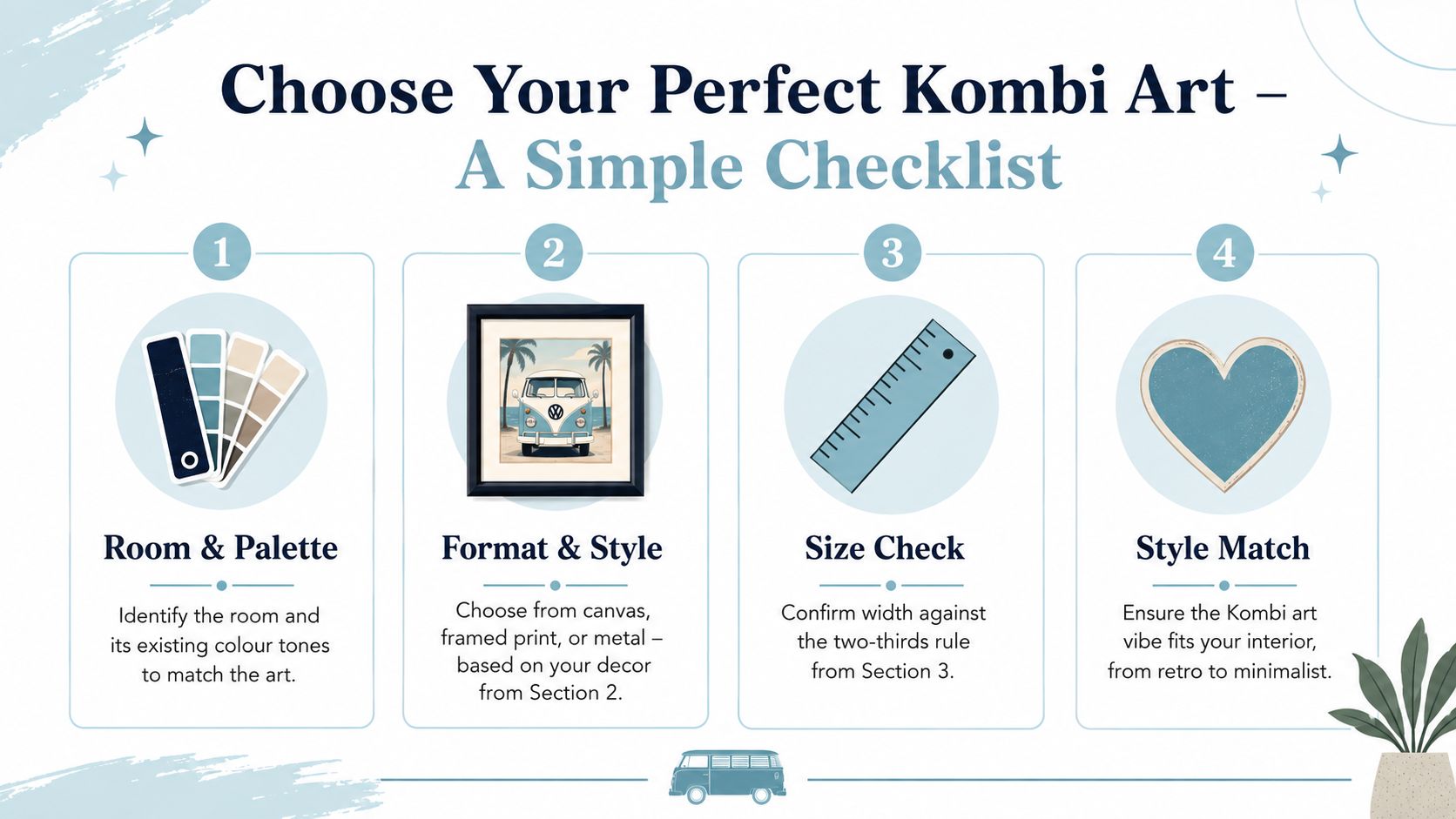
A useful Australian sizing benchmark combines one statement piece at 1500 mm or more in width for open-plan spaces with 2–3 smaller supporting pieces. The recommendation also suggests a palette of roughly 60% neutral, 30% blue or sand, and 10% contrast, as described in this coastal wall art sizing and colour guide.
Build the wall in layers
Start with the dominant work above the sofa or console. A horizontal piece usually feels settled there because its shape echoes the furniture below. Stand in the doorway, then sit in the position you typically use. If the artwork disappears against the wall, it needs more presence. If it overwhelms the furniture, choose a calmer scale or simplify the surrounding pieces.
Use the colour balance as a visual guardrail rather than a strict decorating law:
| Element | Role in the room |
|---|---|
| Neutral tones | Walls, upholstery, light timber, and the quiet background of the artwork |
| Blue or sand | Ocean references, cushions, ceramics, and smaller coastal prints |
| Contrast | A dark frame, rust-toned detail, red Beetle, or strong typographic accent |
For a gallery wall, keep the major seascape as the visual anchor. Add supporting pieces with related tones, then position the model shelf below or beside the grouping rather than squeezing everything into one tight cluster. The eye should be able to rest between each element.
Blending VW Heritage with Beachside Vibes
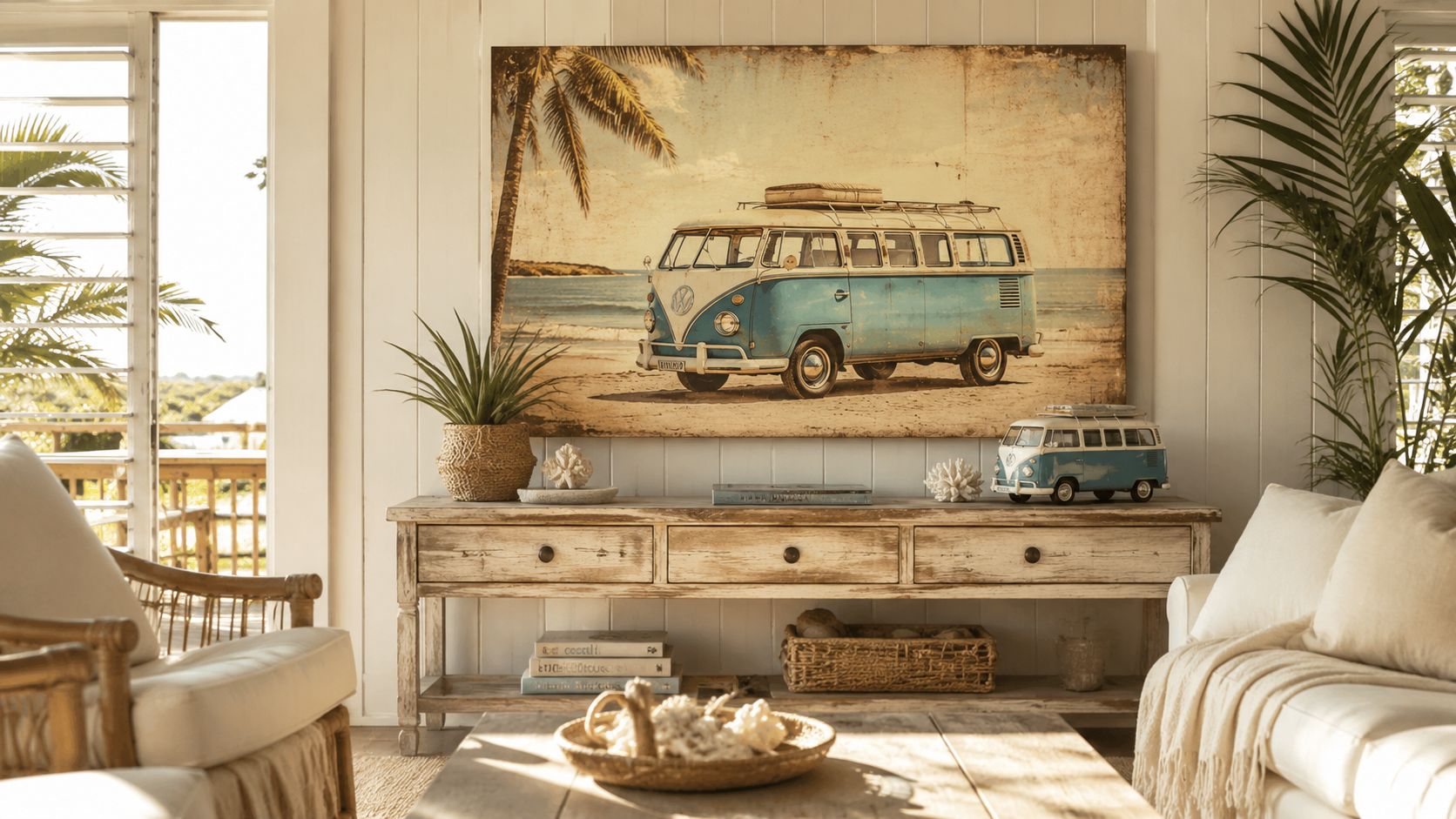
A cream Kombi on a timber shelf, an abstract seascape above it, and a few pale ceramics can make a living room feel like a tidy beachside garage. The room carries memories of surf trips, coastal roads, and sunny servo stops, while the artwork keeps the finish calm and considered. The trick is editing the collection so each piece has a clear job.

A Samba Bus diecast model sits neatly beside an abstract ocean print because both create a strong horizontal rhythm. The bus adds colour, character, and nostalgia; the artwork gives the arrangement air and a quieter coastal mood. You can find more combinations in this wall accents for living room guide. A vintage Beetle can take a gentler role on a bookcase beside travel books, a framed photograph, or a small shell piece.
Give every collectible some breathing room
In diecast collecting, 1:24 scale models are usually about 6–8 inches long and offer a useful balance of detail and display size. This makes them well suited to living-room shelves, as explained in this diecast scale guide. The model has enough presence for its body shape, wheels, windows, and paintwork to be appreciated without taking over the room.
A simple arrangement might include:
- One coastal artwork: Choose a soft abstract ocean piece as the backdrop.
- One 1:24 Kombi: Set it on a floating shelf, with the nose angled slightly into the room.
- One natural accent: Add a small shell, piece of driftwood, or pale ceramic form.
- One practical object: Use a book, framed photograph, or low planter to make the display feel lived-in.
Practical rule: Let the model be the story, not the entire sentence.
A Flower Power Kombi can add a bright, playful note to a restrained wall. A cream or muted blue model will sit more within a polished coastal palette. Leave space around the vehicle, repeat one or two tones from the artwork, and keep the overall arrangement closer to an enthusiast's home than a crowded souvenir display.
Avoiding Common Coastal Styling Mistakes
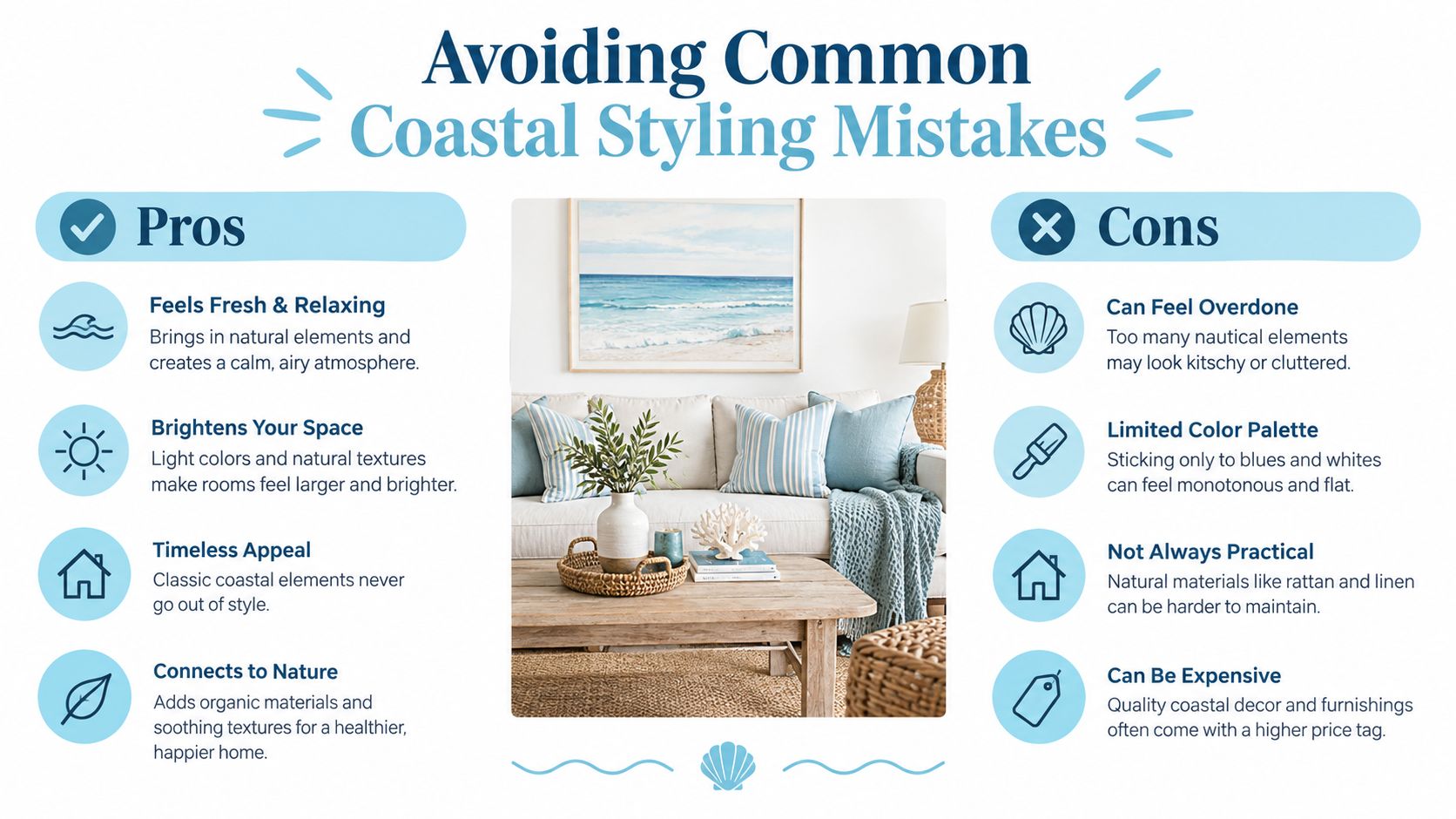
Coastal styling goes off course when every object repeats the same message. A beach sign, anchor, rope detail, shell garland, surfboard print, and nautical clock may each look appealing on their own, but together they leave no room for interpretation. The viewer sees a theme before they see your personality.
The same problem affects VW displays. A shelf crowded with several bright vehicles, signs, badges, and unrelated trinkets can bury the charm of each model. A single Kombi with a clean backdrop often feels more special than a convoy squeezed shoulder to shoulder.
Fix the display before buying more
Use this quick check when the room starts to feel busy:
- Too many literal beach references: Remove the weakest sign or ornament and keep the pieces with texture, memory, or craftsmanship.
- A model in direct sunlight: Move it to a shaded shelf or rotate the arrangement so the window no longer hits it.
- Art competing with the television: Choose quieter tones or move the focal artwork to the wall opposite the seating.
- Small pieces floating alone: Group them with a shared frame colour, shelf, or tonal connection.
- No negative space: Clear one object from each surface and reassess the room from the doorway.
Framing also changes the conversation. A casual surf photograph can look more considered in a simple timber or white frame. Likewise, a bright Volkswagen model gains sophistication when the shelf beneath it is clean, the wall art has room around it, and the rest of the décor supports rather than copies its colour.
Bringing Your Coastal Vision to Life
A great living room display should remind you why you chose each piece. Perhaps the broad ocean print recalls early mornings near the beach. Perhaps the Kombi brings back family camping trips, a first surf holiday, or the day you finally spotted the right project vehicle at a car show. Those memories give the room its character, while the coastal palette keeps the overall result calm.
Start with the wall you notice most often from the sofa. Choose the artwork that makes you want to look up, then build around it slowly. A floating shelf, a licensed Volkswagen model, and one or two natural accents can create a convincing beachside garage feeling without overwhelming the architecture.
Let the collection grow naturally
A modern display doesn't need to be finished in one afternoon. You can begin with a statement seascape, add a Kombi when the right model appears, then introduce a smaller Beetle or a framed photograph later. This approach gives the room the collected quality that makes nostalgic interiors feel genuine.
Shells and starfish work best as punctuation. A modest shell wall art accent can echo the coastal artwork without turning the wall into a literal beach scene. Keep the frames and shelf finishes related, but don't force every colour to match. A little contrast makes the display feel assembled by a person, not generated from a catalogue.
Whether you're styling a new apartment, refreshing a long-empty sofa wall, or creating a gift-worthy display for a fellow VW fan, the strongest choices combine atmosphere with meaning. Coastal wall art sets the horizon. Volkswagen memorabilia adds the open-road memory. Together, they create a room that feels relaxed, personal, and unmistakably Australian.
Volkswagen Memorabilia offers licensed VW diecast models, including Kombi Samba Bus and Beetle pieces, alongside coastal home décor for relaxed beachside displays. Visit Volkswagen Memorabilia to find a model or coastal accent that gives your living room its own sunny road-trip story.