
Coastal Wall Art for Living Room Styling

The sofa is in, the coffee table's found its spot, and there's still one broad, stubbornly blank wall staring back at you. You want the room to feel like a breezy beach house, but the last thing you need is a neon “Beach” sign beside a shelf packed with novelty shells. For a VW enthusiast, the better answer is a room with the calm of the coast and the character of a sunny surf trip in an old Kombi.

The right coastal wall art for living room styling can make that happen. Think soft horizons, weathered timber, ocean blues, and enough breathing room for a carefully chosen Volkswagen diecast model to tell its own story. The result feels less like a themed display and more like a relaxed beachside garage, collected over time by someone who knows the difference between genuine nostalgia and clutter.

Embracing the Modern Coastal Aesthetic

A classic Kombi parked near the water never needs much explaining. Its rounded silhouette, split windscreen, and cheerful paintwork already suggest open roads, salty air, and a weekend with nowhere urgent to be. Your living room can capture that mood without turning into a souvenir shop.

Modern coastal interiors favour quiet visual cues. A broad abstract seascape above the sofa can suggest the ocean through a soft horizon and layered tones, while pale timber, linen upholstery, and a single weathered accessory carry the beachside feeling through the rest of the room. A small Beetle print or restrained surf photograph can add personality without competing with the main artwork.

Australia's wall décor market is projected to grow at more than 5.6% CAGR from 2026 to 2031, with wall art identified as the most popular category and a shift towards softer coastal looks, neutral palettes, and abstract seascapes, as outlined in this Australian wall décor market overview. That direction suits VW memorabilia beautifully because both styles rely on shape, memory, and atmosphere rather than loud decoration.

Start with the feeling, not the theme

Choose art that gives you the same calm pause as looking across a beach at first light. Gentle horizon lines, sandy neutrals, faded blue, and generous negative space will sit comfortably beside a vintage-style Kombi model. Nautical details can appear as small accents, not a marching parade of anchors and ship wheels.

A floating shelf beneath the art gives your display a natural centre. Place the model slightly off-centre, leave clear space around it, and let the wall do some of the talking. More ideas for blending relaxed interiors and enthusiast pieces appear in these coastal home décor ideas.

Choosing Durable Art for Australian Climates

A beautiful print needs the right home. Australian coastal rooms can expose artwork to damp air, salt-laden conditions, and strong sunlight, so selecting the surface and frame should happen before you start drilling holes.

In coastal Queensland, sustained humidity above 70% can damage cheap canvas. In north-facing coastal homes in NSW and Victoria, UV exposure can fade dye-based inks within about 18 months, making pigment inks the preferred longevity benchmark, according to this Australian guide to surfing and seascape wall art.

A comparative graphic showing durable versus standard wall art designed for harsh Australian climates and weather conditions.

Match the material to the wall

Use the room's exposure as your starting point.

  • Humid coastal zones: Look for pigment-ink canvas printed on 380gsm or heavier poly-cotton, paired with kiln-dried pine framing. The substantial canvas and stable timber frame provide a more sensible foundation than bargain materials in damp conditions.
  • Bright, north-facing walls: Framed prints with acrylic glazing are a practical choice where direct sun reaches the artwork. Acrylic can help create a protective barrier while keeping the piece light enough for straightforward installation.
  • Shelves near windows: Keep diecast models away from persistent direct sun. A shaded wall, floating shelf, or enclosed cabinet will help protect paint finishes and small details from unnecessary exposure.
  • High-moisture rooms: In Queensland homes with heavier humidity, metal prints or moisture-resistant framed works can offer a more durable alternative.

The same thinking applies to a treasured Volkswagen Beetle model. It doesn't belong on a windowsill where afternoon sun hits it every day. Place it where you can enjoy the chrome, curves, and colour without asking the finish to battle the climate.

Mastering Layout and Colour Palettes

A large blank wall can make even a seasoned home mechanic hesitate. The trick is to give the wall one clear job. In an open-plan room, a broad seascape can anchor the sofa zone, while smaller pieces and a diecast display create a visual trail towards the dining or reading area.

A useful Australian sizing benchmark combines one statement piece at 1500 mm or more in width for open-plan spaces with 2–3 smaller supporting pieces. The recommendation also suggests a palette of roughly 60% neutral, 30% blue or sand, and 10% contrast, as described in this coastal wall art sizing and colour guide.

Build the wall in layers

Start with the dominant work above the sofa or console. A horizontal piece usually feels settled there because its shape echoes the furniture below. Stand in the doorway, then sit in the position you typically use. If the artwork disappears against the wall, it needs more presence. If it overwhelms the furniture, choose a calmer scale or simplify the surrounding pieces.

Use the colour balance as a visual guardrail rather than a strict decorating law:

Element Role in the room
Neutral tones Walls, upholstery, light timber, and the quiet background of the artwork
Blue or sand Ocean references, cushions, ceramics, and smaller coastal prints
Contrast A dark frame, rust-toned detail, red Beetle, or strong typographic accent

For a gallery wall, keep the major seascape as the visual anchor. Add supporting pieces with related tones, then position the model shelf below or beside the grouping rather than squeezing everything into one tight cluster. The eye should be able to rest between each element.

Blending VW Heritage with Beachside Vibes

A cream Kombi on a timber shelf, an abstract seascape above it, and a few pale ceramics can make a living room feel like a tidy beachside garage. The room carries memories of surf trips, coastal roads, and sunny servo stops, while the artwork keeps the finish calm and considered. The trick is editing the collection so each piece has a clear job.

A blonde woman in a bikini and shorts posing next to a vintage Volkswagen surf van.

A Samba Bus diecast model sits neatly beside an abstract ocean print because both create a strong horizontal rhythm. The bus adds colour, character, and nostalgia; the artwork gives the arrangement air and a quieter coastal mood. You can find more combinations in this wall accents for living room guide. A vintage Beetle can take a gentler role on a bookcase beside travel books, a framed photograph, or a small shell piece.

Give every collectible some breathing room

In diecast collecting, 1:24 scale models are usually about 6–8 inches long and offer a useful balance of detail and display size. This makes them well suited to living-room shelves, as explained in this diecast scale guide. The model has enough presence for its body shape, wheels, windows, and paintwork to be appreciated without taking over the room.

A simple arrangement might include:

  • One coastal artwork: Choose a soft abstract ocean piece as the backdrop.
  • One 1:24 Kombi: Set it on a floating shelf, with the nose angled slightly into the room.
  • One natural accent: Add a small shell, piece of driftwood, or pale ceramic form.
  • One practical object: Use a book, framed photograph, or low planter to make the display feel lived-in.

Practical rule: Let the model be the story, not the entire sentence.

A Flower Power Kombi can add a bright, playful note to a restrained wall. A cream or muted blue model will sit more within a polished coastal palette. Leave space around the vehicle, repeat one or two tones from the artwork, and keep the overall arrangement closer to an enthusiast's home than a crowded souvenir display.

Avoiding Common Coastal Styling Mistakes

Coastal styling goes off course when every object repeats the same message. A beach sign, anchor, rope detail, shell garland, surfboard print, and nautical clock may each look appealing on their own, but together they leave no room for interpretation. The viewer sees a theme before they see your personality.

The same problem affects VW displays. A shelf crowded with several bright vehicles, signs, badges, and unrelated trinkets can bury the charm of each model. A single Kombi with a clean backdrop often feels more special than a convoy squeezed shoulder to shoulder.
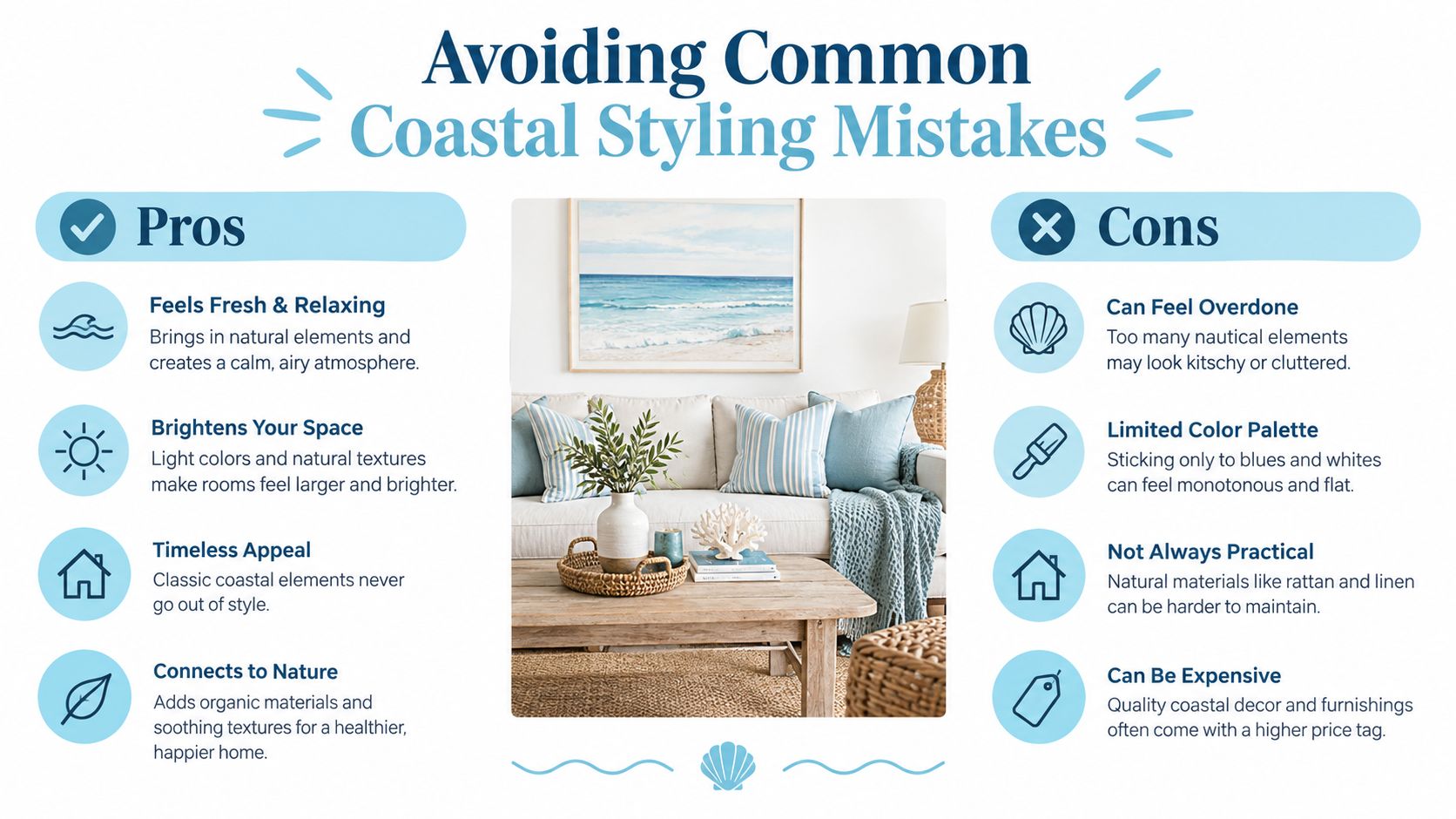
An infographic titled Avoiding Common Coastal Styling Mistakes comparing the pros and cons of coastal interior design.

Fix the display before buying more

Use this quick check when the room starts to feel busy:

  • Too many literal beach references: Remove the weakest sign or ornament and keep the pieces with texture, memory, or craftsmanship.
  • A model in direct sunlight: Move it to a shaded shelf or rotate the arrangement so the window no longer hits it.
  • Art competing with the television: Choose quieter tones or move the focal artwork to the wall opposite the seating.
  • Small pieces floating alone: Group them with a shared frame colour, shelf, or tonal connection.
  • No negative space: Clear one object from each surface and reassess the room from the doorway.

Framing also changes the conversation. A casual surf photograph can look more considered in a simple timber or white frame. Likewise, a bright Volkswagen model gains sophistication when the shelf beneath it is clean, the wall art has room around it, and the rest of the décor supports rather than copies its colour.

Bringing Your Coastal Vision to Life

A great living room display should remind you why you chose each piece. Perhaps the broad ocean print recalls early mornings near the beach. Perhaps the Kombi brings back family camping trips, a first surf holiday, or the day you finally spotted the right project vehicle at a car show. Those memories give the room its character, while the coastal palette keeps the overall result calm.

Start with the wall you notice most often from the sofa. Choose the artwork that makes you want to look up, then build around it slowly. A floating shelf, a licensed Volkswagen model, and one or two natural accents can create a convincing beachside garage feeling without overwhelming the architecture.

Let the collection grow naturally

A modern display doesn't need to be finished in one afternoon. You can begin with a statement seascape, add a Kombi when the right model appears, then introduce a smaller Beetle or a framed photograph later. This approach gives the room the collected quality that makes nostalgic interiors feel genuine.

Shells and starfish work best as punctuation. A modest shell wall art accent can echo the coastal artwork without turning the wall into a literal beach scene. Keep the frames and shelf finishes related, but don't force every colour to match. A little contrast makes the display feel assembled by a person, not generated from a catalogue.

Whether you're styling a new apartment, refreshing a long-empty sofa wall, or creating a gift-worthy display for a fellow VW fan, the strongest choices combine atmosphere with meaning. Coastal wall art sets the horizon. Volkswagen memorabilia adds the open-road memory. Together, they create a room that feels relaxed, personal, and unmistakably Australian.


Volkswagen Memorabilia offers licensed VW diecast models, including Kombi Samba Bus and Beetle pieces, alongside coastal home décor for relaxed beachside displays. Visit Volkswagen Memorabilia to find a model or coastal accent that gives your living room its own sunny road-trip story.

Shell Photo Frame Buying Guide for Coastal Homes

You're at the counter of a coastal market, or halfway through an online scroll, and a shell photo frame catches your eye. For a second, it looks perfect. Then the nagging question lands, will this feel like coastal chic in a modern room, or will it look like a tired beach house relic from the 90s?

That hesitation is fair. Shell frames can go either way, and the difference comes down to construction, scale, and styling, not some vague rule about whether shells are “in” or “out”. In Australia, they also carry real cultural weight through the La Perouse shellworking tradition, which gives the best pieces more depth than souvenir-shop tat. The frames worth buying today sit right where heritage texture meets clean, current interiors.

Here's the practical bit. A good shell frame has to do four jobs: look intentional in a modern home, be built well enough for coastal conditions, suit the photo and the room, and style out without screaming “holiday gift shop”. If it fails any one of those, skip it.

Why a Shell Photo Frame Still Belongs in a Modern Home

A shell frame belongs in a modern room when it is treated like a proper decorative object, not a souvenir left to fend for itself. Put one on a pale oak console beside linen lamps and a simple print, and it can look crisp. Bury it under yellow light with fake driftwood and a starfish, and it slides straight into tacky territory.

Why it still works

The reason shell frames still earn their place is texture. Current Australian coastal interiors favour softer, grounded materials, and coverage has pointed to neutral styles, coastal preferences, and cleaner frame choices, including floating frames, slim textured mouldings, and premium natural finishes Australian Design Review. That gives shell work room to sit comfortably, as long as the rest of the room keeps its palette calm.

The best shell frames do not try to be novelty pieces. They read as organic surface, not as a gimmick. That is the difference between a frame you keep in the main living area and one you banish to the spare room after one holiday season.

Practical rule: if the frame sits naturally with timber, linen, stone, or woven fibres, it still works. If it only makes sense beside beach props, it does not.

There is also the craft side. Shellwork tied to La Perouse has been documented for more than a century, which gives the form real standing in Australian decorative culture and keeps it from feeling like pure tourist kit Sydney Morning Herald. That history is why a well-made shell frame can feel collected, not cheesy.

For more styling references, browse coastal wall styling ideas.

What a Shell Photo Frame Is Actually Made Of

A shell frame isn't one thing, it's a stack of decisions. If you can read those layers, you'll spot quality fast and avoid the brittle souvenir jobs that won't hold up in a real house near salt air.

The structure under the shells

The most important part is the substrate, the base the shells sit on. In better frames, that base is usually wood or a wood-based composite, because the frame needs enough stability to stay flat and keep the front square. The shell layer itself is decorative, not structural, and in Australian marketplace listings the construction is typically described as natural seashells bonded to a wooden frame with a glass front Etsy listing. That matters because the shells can chip, lift, or crack if the frame is treated roughly.

Cheaper frames often cut corners with thin board, sloppy glue, or a resin-coated backing that doesn't love humidity. Premium pieces usually feel tighter at the edges, with cleaner shell placement and a backing that doesn't flex when you pick it up.

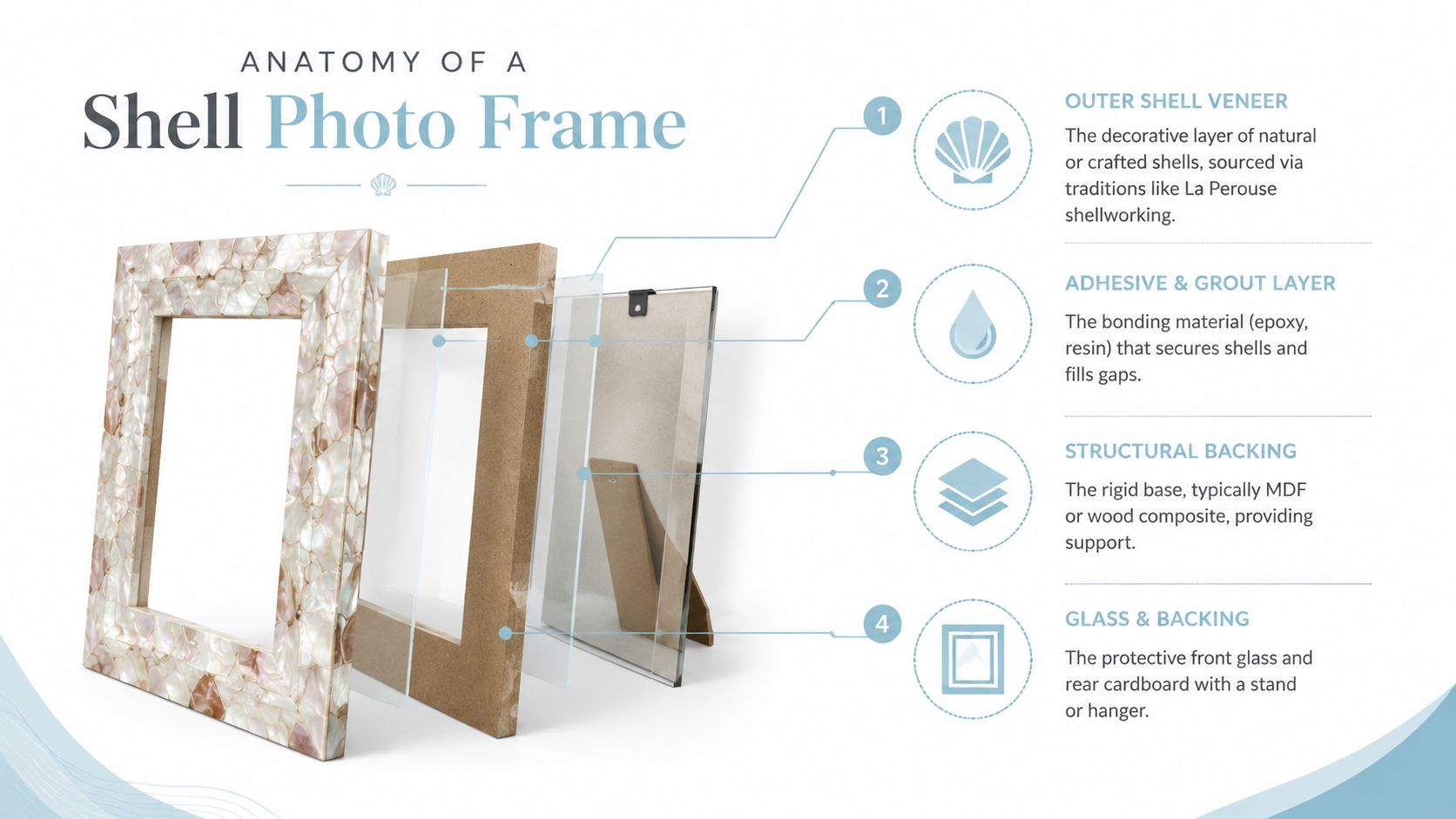
An exploded diagram showing the four layers that make up a decorative shell photo frame construction.

What each layer does

The outer layer is the shell veneer. That can be whole shells, cut pieces, or shell fragments set into a pattern. Whole shells give you chunkier texture, cut pieces look neater, and crushed shell in resin is the budget end of the market.

Beneath that is the adhesive layer, usually glue or resin. A lot of cheap frames fail, because if the adhesive is sloppy, shells don't sit cleanly and edges catch dust or moisture.

The backing is the support layer, usually hardboard or MDF, sometimes with a kickstand or D-rings. The front can be glass, acrylic, or, on some decorative pieces, no glazing at all. In a coastal home, sealed backing and decent hardware matter more than people realise, especially if the frame is going anywhere near sea air or a breezy open-plan room.

See seashell craft inspiration

Styles and Sizes Worth Knowing

Shell frames aren't one category, they're a few very different looks pretending to be the same thing. If you know which family you're looking at, you'll stop buying the wrong frame for the wrong room.

Shell Frame Style Families at a Glance

Style Typical Sizes Best Room 2026 Verdict
Classic scallop mosaic in a square timber frame Small to medium Hall tables, bedside tables Current if the rest of the room is restrained
Slim floating frame with shell inlay Small to medium, sometimes larger Living rooms, home offices Very current with Scandi-coastal styling
Chunky statement frame covered in whole shells Medium to large Holiday homes, casual informal spaces Risky, can go kitschy fast
Beach keepsake shadowbox with shells over sand Medium Bedrooms, entryways, memory corners Niche but workable if edited well
Petite 4×6 tabletop style Small Shelves, desks, gift displays Safe, but not much presence on a wall

How the styles behave in real homes

The classic scallop mosaic is the easiest to live with because it usually reads as texture first, theme second. A slim timber border keeps it from feeling overworked. I'd use it on a console, not as the centrepiece of a giant gallery wall.

The floating shell inlay is the one that feels the most 2026. It suits cleaner interiors and sits comfortably beside linen, oak, and pale stone. If you want a shell frame that doesn't shout, this is the one.

The chunky whole-shell frame is the one to watch. It can be fun in a beach shack or a relaxed family room, but it's the quickest route to kitsch if you crowd it with other seaside objects.

The bigger the frame, the more the quality shows. Anything around A3 and above needs tidy shell placement, because every uneven edge is on display. If the craftsmanship is sloppy at that size, there's nowhere to hide it.

Explore boho-inspired wall pieces

How to Choose the Right Shell Photo Frame

Buy the frame like you'd buy a chair, by checking the bones first. The prettiest shell work in the world won't save a frame that's the wrong size, badly finished, or built for a house with no humidity.

Start with scale and shell density

Match the frame to the photo and the wall. A tiny frame on a big wall just disappears, while an oversized shell frame can look shouty if the room is already busy. Then look at shell density. Sparse shell work feels cleaner and more modern, while tight coverage feels heavier and more decorative.

If you're buying for a modern Australian coastal room, choose less shell, better spacing, cleaner edges.

Check the build before the shine

Look at the moulding depth next. A frame with enough depth usually feels more substantial and tends to handle glazing better. Check the colour too. White, bone, soft sand, and pale timber are easier to style than yellowed cream or harsh glossy finishes.

Then check the front. Glass is better than flimsy plastic if you want a more polished result, while acrylic can make sense for lighter hanging. The backing should feel firm, not bendy. If it's soft board or warped MDF, walk away, especially in a coastal home where humidity can make a cheap backing misbehave.

Don't ignore the hardware

A frame can look lovely and still be a pain to hang. Flip it over and check the hanging points, stand, and closures. Cheap souvenir frames often have rough internal edges or weak hardware, and that's where the disappointment starts.

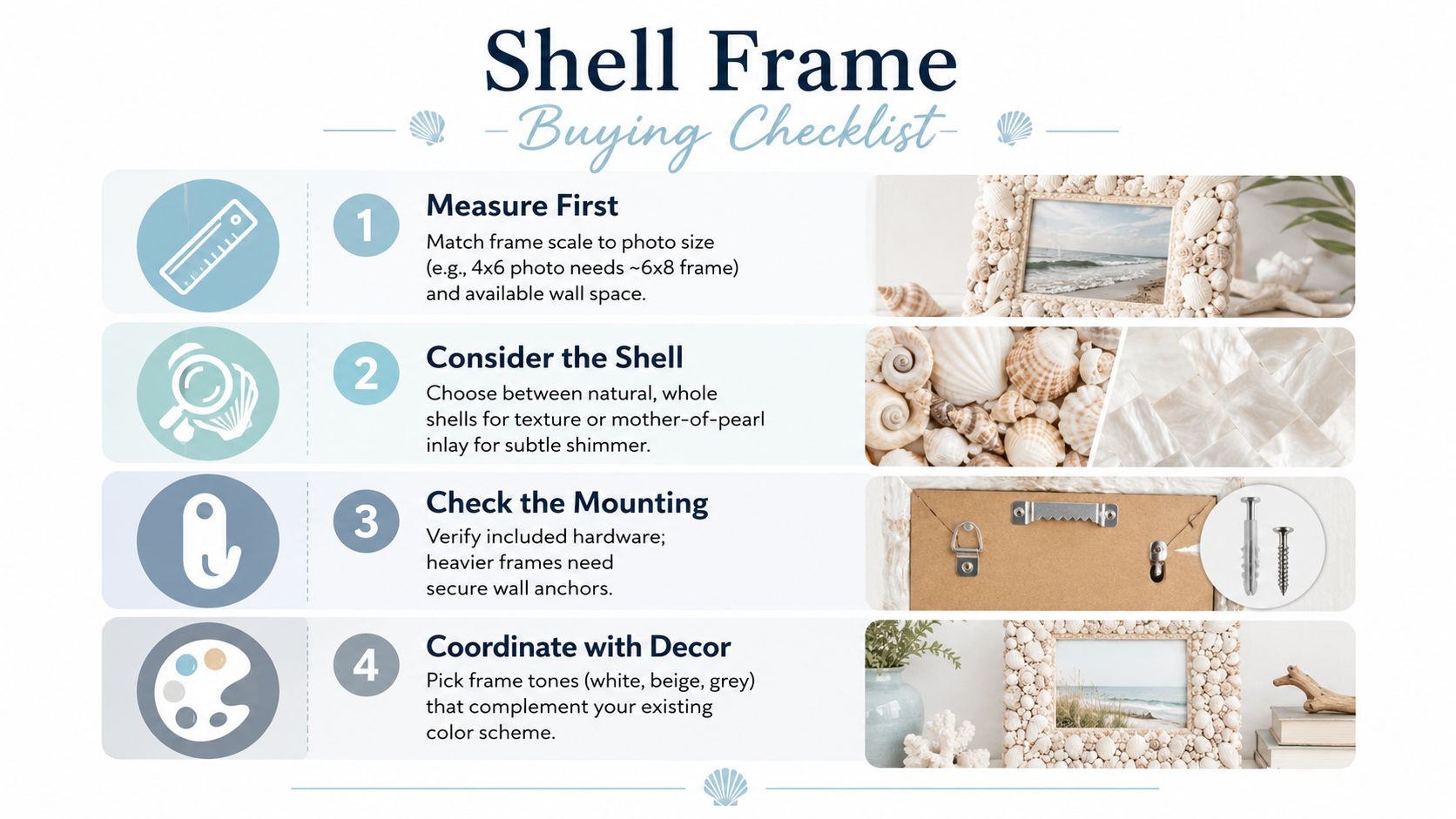
  • Measure first. Make sure the frame suits both the photo and the furniture or wall space.
  • Check shell placement. If the pieces are uneven, lifted, or gappy, you'll notice it every day.
  • Inspect the back. A sturdy backboard and solid hanging hardware matter more than a flashy front.
  • Ask yourself one question. Will this still look right in five years, or will it date itself to the moment you bought it?

A four-step buying checklist for choosing shell photo frames, including tips on sizing, style, and mounting.

Styling Shell Frames the 2026 Way

A shell frame isn't the problem. Bad styling is. Put it in the wrong company and it turns novelty fast. Put it with cleaner materials and it starts reading as coastal texture instead of souvenir clutter.

What makes it feel current

Australian coastal style now leans calmer, with neutral palettes, natural materials, and more restrained surface detail Australian Design Review. That means shell frames work best when they sit inside a quiet composition. Keep the nearby objects simple, let the shells be the texture hit, and stop there.

The easiest fix is tonal pairing. Raw oak, blackbutt, linen, ceramic, and jute all make shell work feel grounded. A dense shell frame on a pale timber console looks deliberate. The same frame next to turquoise candles and faux coral looks lost in time.

What to avoid

Don't pair shell frames with too many literal beach references. Starfish, rope knots, fisher-buoy colours, and yellowed matboard drag the whole look back into the past. If the room already has a strong print, too many small decorative objects, or shiny finishes, the shell frame will feel busier than it should.

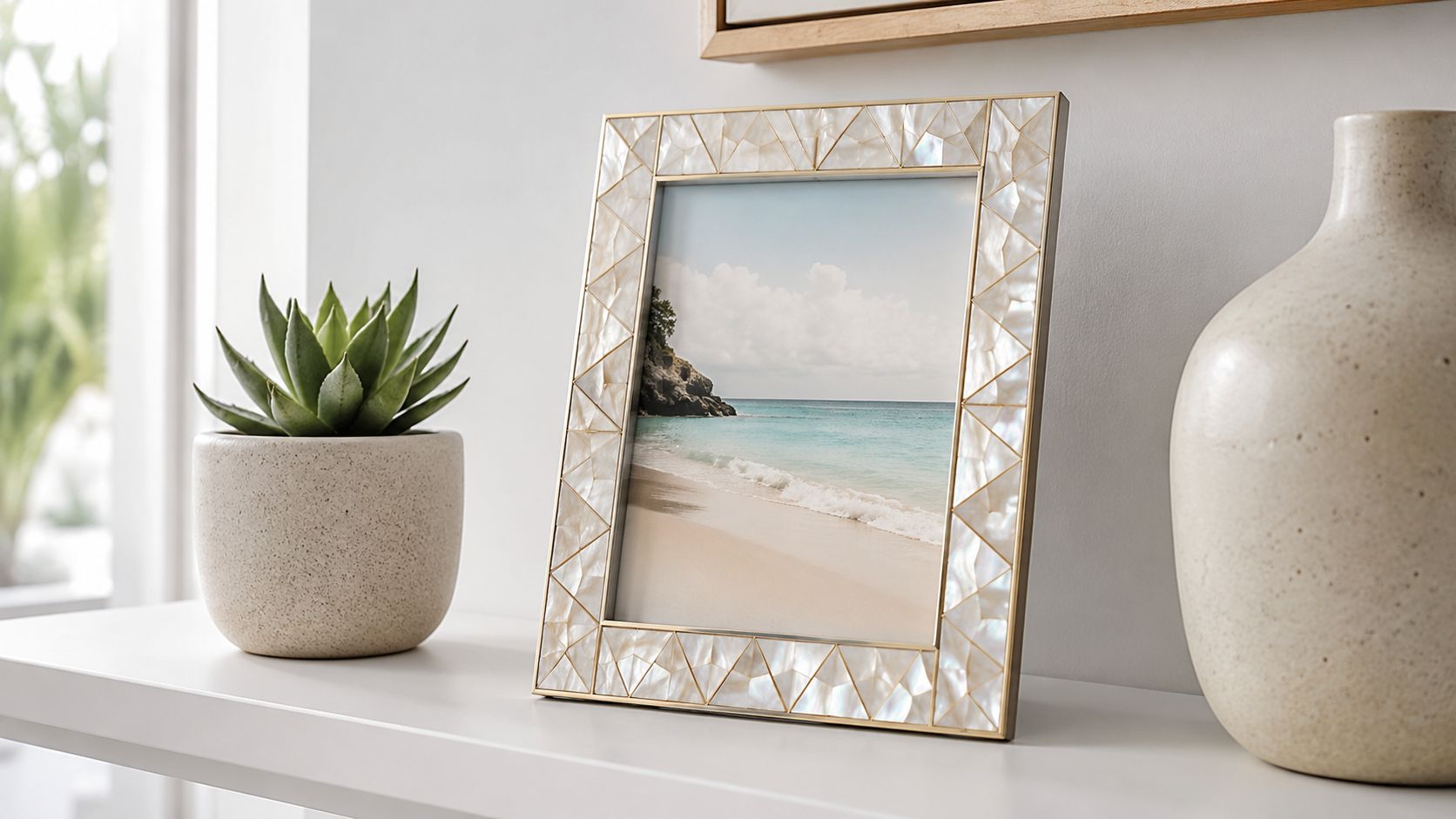
A decorative shell photo frame featuring a beach landscape picture, displayed on a shelf with decor.

A better move is to give it breathing room. One shell frame, one stack of books, one ceramic vessel, done. That's enough.

A matte white or natural linen mat also sharpens the look instantly. If the frame is heavy and textured, keep the rest of the arrangement lighter. If the shell coverage is sparse, you can lean a little harder into texture around it, but don't overdo it.

Where to Place Them in Real Rooms

A shell frame doesn't need a beach-themed room. It needs the right room and the right scale. The best placements feel calm, not obvious.

Entry, living room, bedroom, bathroom, office

On an entryway console, use one stronger frame as the hero piece. Pair it with a bowl, a lamp, or a small stack of books. That's the quickest way to make it feel considered.

In the living room, a shell frame works best as part of a mixed gallery wall rather than on its own in a large blank space. Mix it with prints, a small mirror, or a shadowbox so the texture variation feels intentional.

On a bedroom dresser, a medium frame suits best. Keep the light soft and the nearby colours quiet. Shell can look lovely in a bedroom because it has that slightly nostalgic, memory-filled feel.

The bathroom is the tricky one. It can work if the room is well-ventilated and the frame has a sealed back and decent hardware, but I wouldn't put a delicate piece directly in the splash zone. Humidity is not kind to bargain frames.

A home office is a good place for a small shell frame if you want a softer, more personal object among all the hard edges and screens. It works especially well beside a plant or a pale timber desk.

Avoid direct sun, radiators, and damp corners. Those are the places where cheap finishes age badly and shells start looking tired.

The two easiest arrangement patterns are a single hero frame on a console and a coastal gallery wall with prints, shell pieces, and one or two shadow boxes. Keep the spacing generous. Crowding kills the look.

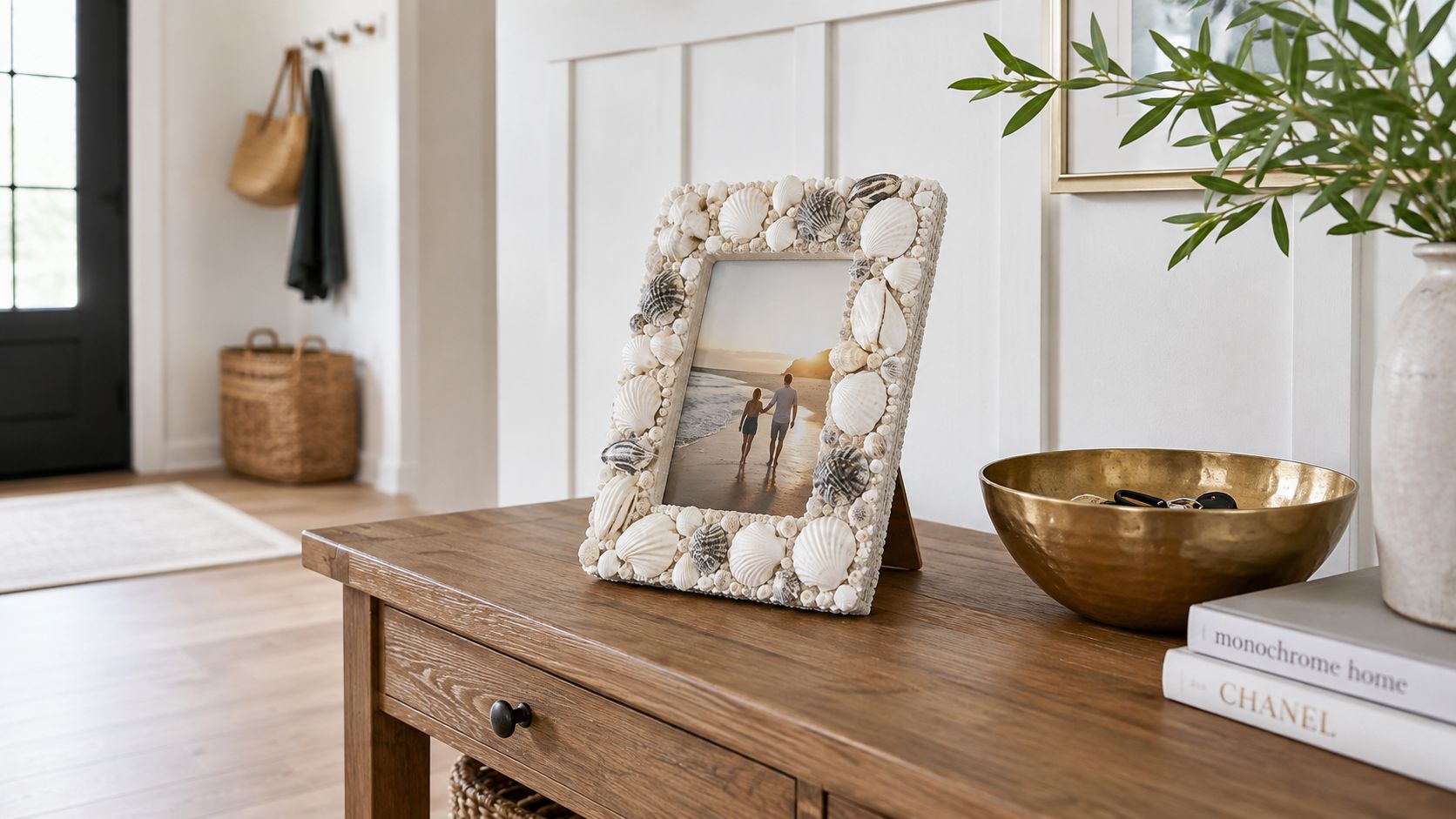
A coastal style seashell photo frame resting on a wooden console table with a brass bowl nearby.

Price, Quality and When Premium Is Worth It

Shell frames split into three honest camps, and the price usually tells you what kind of object you're getting. The market for picture frames more broadly is also splitting between mass and premium buying, with more attention on FSC-certified timber, recycled materials, and custom sizing IndexBox.

Shell Photo Frame Price Bands Compared

Price Band Shell Quality Frame Material Glass Glazing Best Use
Under $25 Often moulded or lightly applied shell look Thin board or basic composite Usually simple glass or acrylic Holiday snaps, casual gifts, low-stakes spots
$40 to $90 Better shell coverage, cleaner finish Better wood or wood composite Glass more likely Everyday display, entry tables, relaxed living rooms
$120+ Hand-applied or more refined shell work Better timber, sometimes FSC-certified Better glazing, sometimes UV-protective Wedding photos, family portraits, statement interiors

The cheapest frames are fine when you don't need longevity. A holiday photo in a beach shack laundry? No one needs to overthink that. A wedding portrait in a polished coastal living room? Spend more.

The premium tier earns its keep when the finish is cleaner, the backing is sturdier, and the timber choice feels intentional. It also makes sense when you want the frame to behave like a design object, not just a holder for a snapshot. The La Perouse craft tradition is the benchmark here, because hand-applied shell work has a real heritage of careful making behind it Sydney Morning Herald.

Care, Gifting and DIY Alternatives

Shell frames don't need fussy care, they need sensible care. Dust them with a soft brush or a dry microfibre cloth, keep them out of direct sun, and don't park them in a steamy bathroom unless they're properly sealed. Skip oils and silicone sprays, because they can make the finish cloudy or attract grime.

For gifting, shell frames work best when the recipient already likes coastal decor, family photos, or sentimental objects. A small tabletop frame is an easy housewarming choice. A cleaner, better-made frame suits a wedding or anniversary gift because it feels more permanent and less novelty-driven.

If you want to make your own, there are two straightforward routes. The fast version is a plain timber frame, collected shells, and careful glue placement around the edge. The more ambitious version is a shadow box with proper timber moulding, removable backing, and glazing, which looks far more polished if you've got the patience.

If you'd rather skip the trial-and-error and start with curated pieces that already suit a relaxed Australian home, Volkswagen Memorabilia has coastal décor and nostalgic pieces that make it easy to get the look without the weekend craft fallout.