

The afternoon light is bouncing off the sand outside, but your contemporary beachside living room feels a little too polished. The linen sofa, pale timber flooring and clean-lined coffee table look inviting, yet the room lacks the sense of history you love in an old Kombi parked beside a surf club. One well-chosen antique console, a weathered timber frame and a small piece of VW memorabilia can change that mood without turning your home into a museum.
That balance is the heart of antique home decor. You're not trying to recreate a Victorian parlour or fill every shelf with old objects. You're adding character, texture and stories to a modern Australian space. The scale of the local resale channel supports that approach, with the Australian Antique & Used Goods Retailing industry estimated at $4.9 billion in 2026 across 2,320 businesses by IBISWorld data discussed in this Australian antique furniture overview.
Bringing Antique Charm to Your Modern Home
A low coastal house near the water rarely needs more visual noise. It needs pieces that catch the eye, soften the newness of contemporary furniture and feel as though they belong to the people who live there.
Start with one anchor item. An antique console table in warm timber can sit behind a pale sofa or beneath a large mirror. Its marks, joins and uneven colour give the room a grounded quality that a brand-new flat-pack piece can't reproduce. Keep the surface edited, perhaps with a ceramic bowl, a small lamp and a framed photograph rather than a crowded collection.
Across the room, a VW Kombi metal wall sign can carry the same nostalgic energy as the console without competing with it. The Kombi's rounded silhouette works especially well against white walls, soft blue paint or natural timber. It brings the relaxed feeling of an Australian road trip into the room while the antique furniture supplies age and substance.
Practical rule: Let one antique piece and one nostalgic accent lead the room. Everything else should support them.
This pairing works because old and new play different roles. The contemporary sofa provides comfort, the antique console adds craftsmanship, and the VW detail gives the space personality. A few coastal materials, such as woven baskets, linen, rattan or driftwood, connect the pieces to the Australian setting.
The result feels collected rather than themed. It has the same appeal as a beautifully maintained Beetle or Samba Bus at a sunny show, original character alongside thoughtful updates.
Understanding Key Antique Styles in Australia
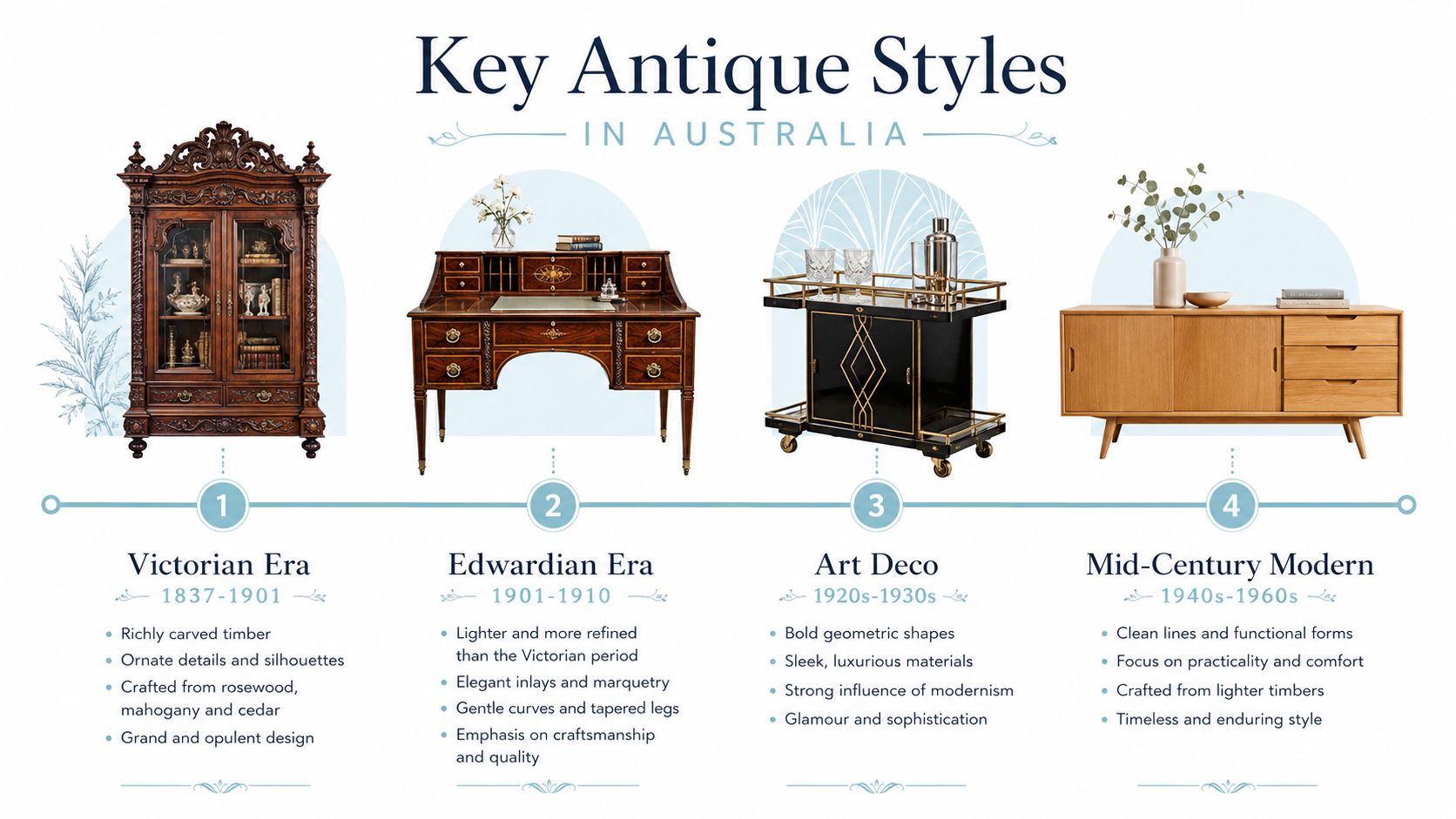
Australian antique home decor includes several visual languages, and recognising them helps you buy pieces that suit your home rather than choosing whatever looks old.
Victorian furniture is often associated with carved timber, dark finishes, turned legs and ornate detailing. A substantial cabinet or framed mirror can bring drama to a high-ceilinged home, but it may feel heavy in a compact beachside room. Look for one strong feature, then balance it with pale walls and open space.
Edwardian design generally feels lighter and more restrained. Inlaid timber, slimmer proportions and elegant lines make an Edwardian writing desk or occasional table easier to place beside contemporary furniture. Its decoration can echo the fine details found in a carefully restored classic car, refined rather than flashy.
Art Deco introduces geometry. Strong curves, stepped forms, contrasting veneers and polished surfaces suit rooms that already contain black accents, chrome or sculptural lighting. An Art Deco bar cart can become a useful serving station, while a geometric mirror can sharpen a relaxed coastal palette.
Mid-century modern is often the easiest period style to integrate. Simple steel frames, functional layouts and warm timber align naturally with modern Australian interiors. A 2023 review of Australian domestic interior design identifies 1945 to 1975 as a decisive period in the development of modern taste, which helps explain the continuing appeal of mid-century pieces in local homes. The historical context is outlined in this Australian antique-store industry review.
At markets and auctions, ask yourself three questions:
- What is the visual weight? Dark carved timber needs more breathing room than a light sideboard.
- What is the practical role? A desk, cabinet or table should still work in the way your household needs.
- What belongs to the home? A mid-century piece may suit a modern coastal floorplan, while a richly ornate cabinet might work better as a single focal point.
For a useful distinction between older design periods and later reproductions, explore this guide to vintage and retro design.
Mixing Antique Decor with Coastal and Modern Elements
The safest way to combine antique pieces with contemporary coastal furnishings is to balance age, texture and visual weight. Don't place several dark, ornate objects together and expect the room to feel breezy. Give each piece a modern neighbour.
Start with the largest shapes
Choose the room's main furniture first. A sleek sofa, modern dining table or simple bed establishes the current framework. Add an antique item with a different silhouette, such as a narrow console beside a broad sofa or a rounded mirror above a rectangular sideboard.
A weathered Victorian mirror can work beautifully with airy linen curtains. The mirror supplies the driftwood quality, while the linen creates the feeling of sea mist and filtered sunlight. Neither item needs to match exactly. They share a natural, softened finish.
Build a restrained palette
Australian coastal light can make bright white feel stark and dark timber feel dramatic. Try a foundation of warm white, sand, chalky blue or muted green, then introduce aged brass, honey timber or a small amount of black.
A classic VW palette can help. Cream, soft aqua, muted red and charcoal appear naturally in Beetle and Kombi styling, but use them as accents rather than turning the whole room into a showroom. A small aqua diecast Kombi on a shelf may be enough to connect a wall sign with a blue cushion or ceramic vase.
Repeat materials, not matching objects
Repetition creates cohesion without making the room look staged. Pair an antique timber surface with a modern timber frame. Echo aged brass in a lamp base and a small decorative object. Add woven fibre through a basket or floor mat, then leave enough clear space for each texture to register.
Think of the room like a well-sorted parts collection. Every piece can be different, but the materials and proportions need a relationship.
Use the antique as a focal point
Keep walking routes clear and avoid hiding a beautiful piece behind oversized seating. In a small apartment or compact beach house, one narrow cabinet may do more work than a cluster of small accessories.
A practical formula is simple:
- Place one antique item where the eye naturally lands.
- Add a modern object with a contrasting shape.
- Repeat one material nearby.
- Remove anything that doesn't contribute to the story.
A coastal room should feel relaxed, not unfinished. For more ideas on combining surf culture, natural textures and nostalgic details, browse these coastal home decor ideas.
How to Authenticate and Buy Antique Pieces in Australia
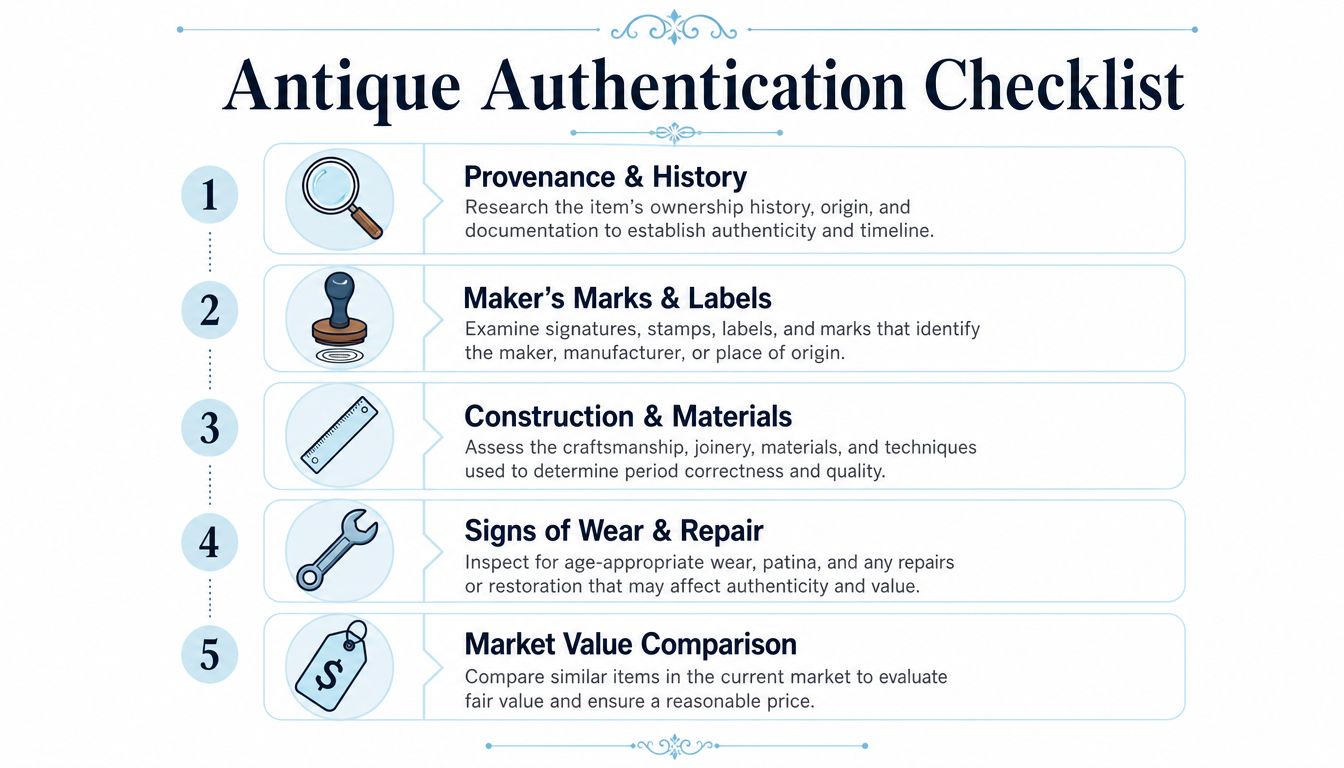
A convincing patina isn't proof of age. Reproductions can borrow distressed finishes, while genuine older pieces may contain repairs, replaced hardware or altered surfaces. Treat every purchase as a combination of research, inspection and judgement.
Ask about the object's history
Start with provenance. Ask whether the seller knows where the piece came from, whether it has an era stamp or maker's mark, and whether any previous ownership or restoration has been recorded. A confident seller should explain what they know and identify what remains uncertain.
Don't treat a missing label as automatic proof that an item isn't genuine. Small household objects and locally made furniture may never have carried a clear mark. Instead, compare the object's construction, timber, hardware and wear as a group.
Inspect materials and construction
Look underneath, behind and inside the piece. Hand-cut joinery, varied timber colour and older fasteners may support an age assessment, but no single feature settles the question. Check whether the wood type suits the claimed period and whether the back, drawers and underside appear consistent with the front.
Pay close attention to:
- Repairs: Look for replacement panels, fresh glue, mismatched stain or modern screws.
- Woodworm signs: Inspect holes and surrounding timber, especially in stored or damp furniture.
- Movement: Test doors, drawers and joints gently. A beautiful cabinet still needs to be stable.
- Finish: Check for flaking paint, powdery surfaces or strong chemical odours before bringing an item indoors.
- Safety: Painted vintage objects may contain lead and need careful handling until tested.
The practical buying gap in Australia is clear. Generic consumer checklists often skip local concerns, yet buyers need to assess age, provenance, timber type, repairs and safety in a market estimated at $4.9 billion. This buyer-focused context appears in Good Housekeeping's discussion of vintage decor questions.
Compare before negotiating
Search comparable pieces through reputable dealers, auction catalogues and regional fairs. Compare condition, documented history and materials, not just photographs. If the price reflects a famous maker or rare finish, ask what evidence supports that description.
For decorative additions that complement a carefully checked furniture purchase, see these vintage home accessories.
Caring for and Restoring Antique Home Decor
Antique furniture doesn't need constant polishing. It needs a stable environment, gentle handling and repairs that respect the original construction.
Wood responds to moisture in the air. Keep wooden antique home decor at a stable 40–60% relative humidity, because fluctuations can create shrink-swell cycles that loosen joints and lift veneer, as explained in this guide to humidity and antique furniture. In a coastal Australian home, place a calibrated hygrometer away from direct sun, air-conditioning outlets and heaters. Consistency matters more than chasing a perfect midpoint.
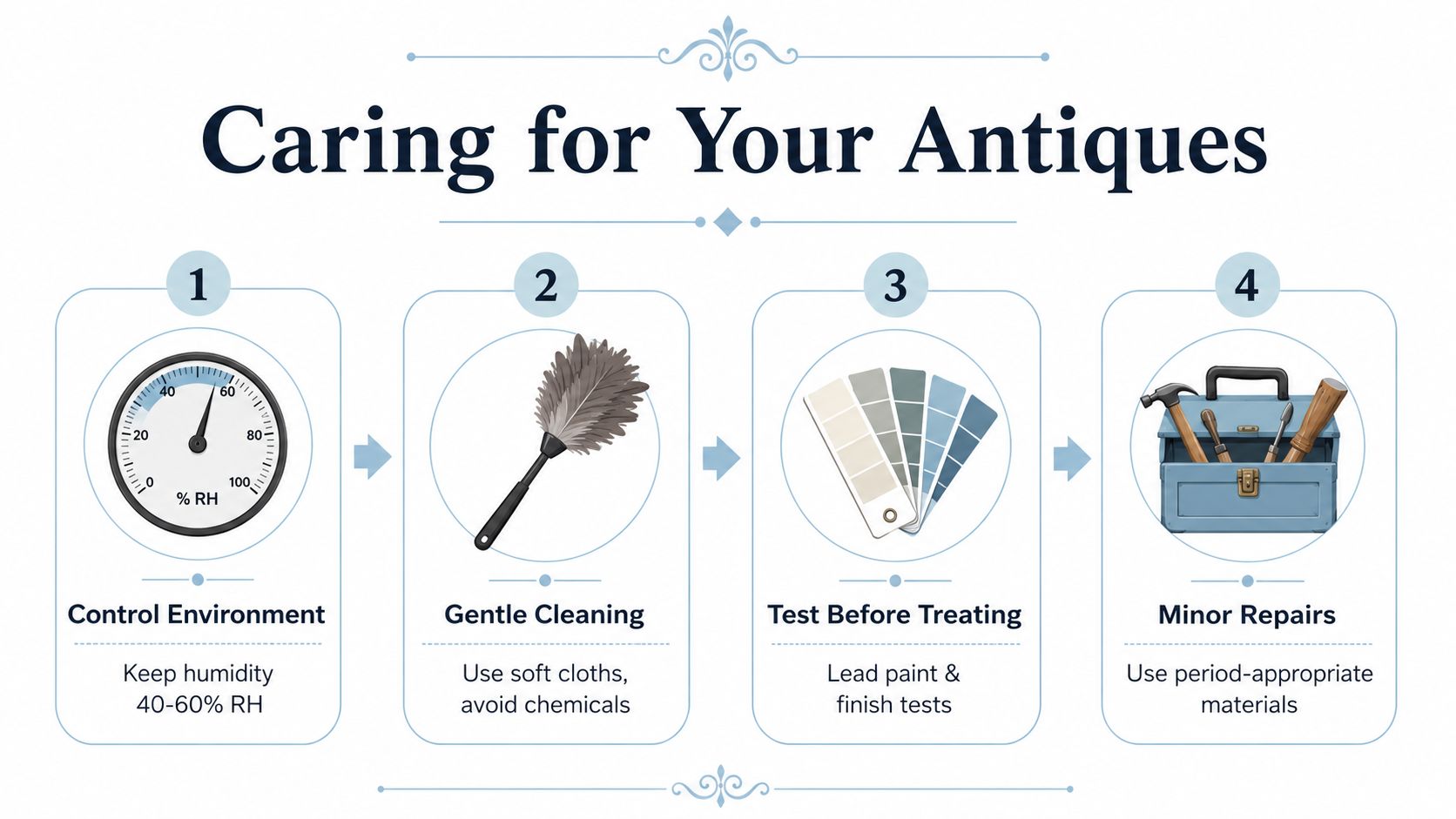
Use a soft cloth or natural-bristle brush to remove loose dust. Avoid aggressive household chemicals, soaking timber or scrubbing away a finish that may be part of the object's history. Test any cleaner on an unseen area first, and stop if colour transfers to the cloth.
Painted vintage surfaces require extra caution. Treat old paint as potentially lead-contaminated until tested, and don't dry-sand or scrape it. Wet methods and suitable test kits reduce hazardous dust, while major work should go to a conservator or restoration professional. Australian heritage guidance also favours matching traditional materials and methods and warns against over-restoration, as outlined by the National Trust's conservation guidance for heritage-home owners.
A sensible restoration order is:
- Stabilise first: Secure loose joints and stop active deterioration.
- Clean gently: Remove surface dirt without stripping character.
- Repair selectively: Match traditional materials where practical.
- Leave sound evidence alone: Old marks can contribute to value and meaning.
For collectors who enjoy the mechanical side of VW ownership, the principle is familiar. You preserve the original character, improve safety where necessary and avoid replacing every trace of age with a shiny new finish.
Room by Room Display Ideas for Antique Decor
The best displays feel lived in. They give each object a job, even when that job is just to remind you of a favourite road trip.
Entryway
A slim antique hall table can welcome visitors without narrowing the passage. Add a shallow bowl for keys, a framed coastal photograph and a small Beetle model. Keep the top mostly clear so the timber, edge profile and hardware remain visible.
A narrow wall sign above the table can introduce VW character without making the entry feel like a workshop. Choose one image or model, then repeat its colour in a cushion or vase farther inside the home.
Living room
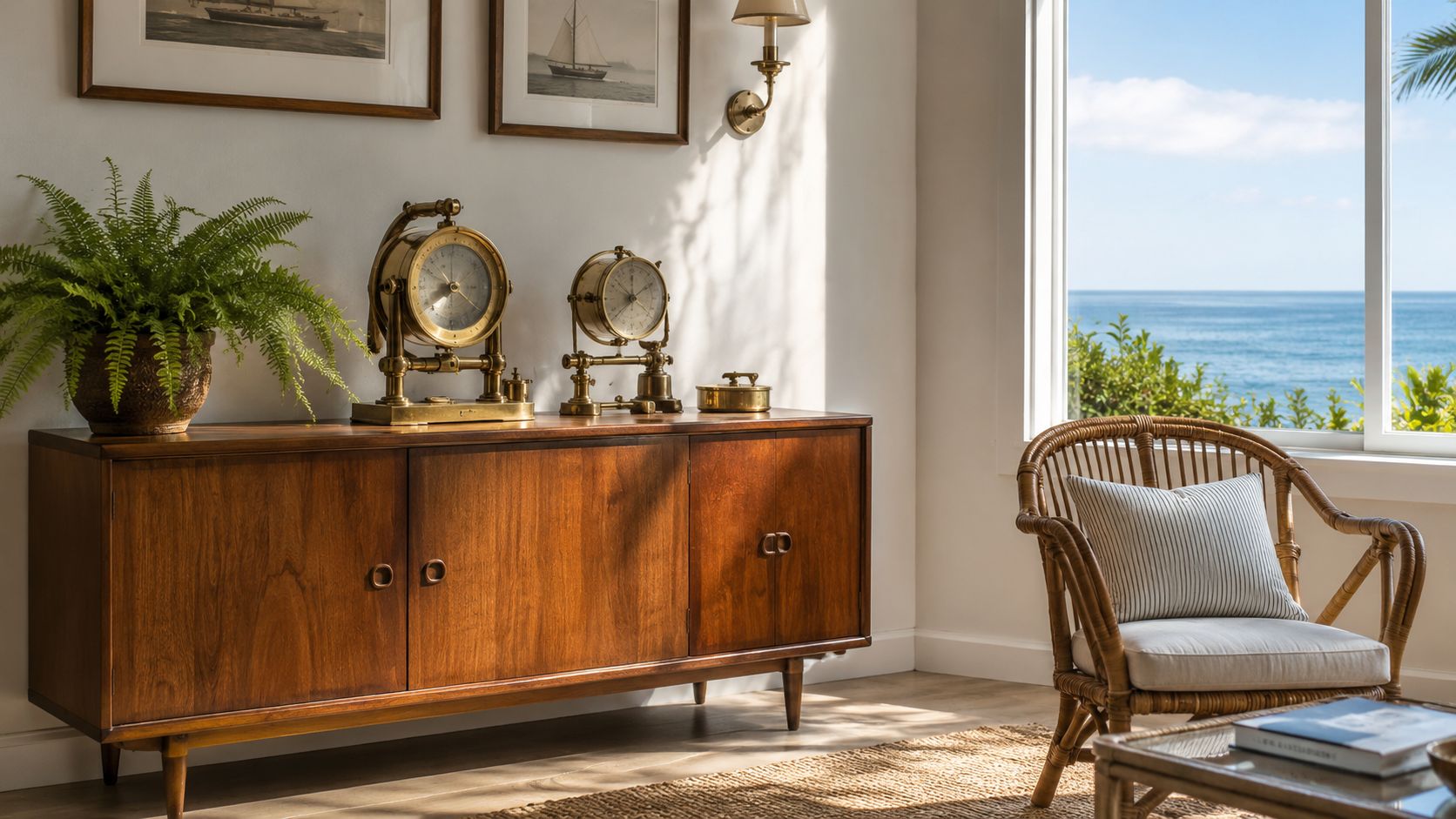
A mid-century sideboard is a natural bridge between antique home decor and contemporary seating. Place it against a light wall, then style it with a modern lamp, a few books and a single piece of maritime detail. The sideboard supplies warm timber, while surfboard-inspired art or a pale rug keeps the room open.
A Kombi Samba Bus diecast can become a small focal object. Set it on a shelf with space around it, rather than hiding it among unrelated trinkets. The model works like a miniature version of a full-size show car, its proportions and details deserve a clear viewing angle.
Dining area
An old cabinet can serve as a drinks station if its structure is sound. Place glassware inside, add a contemporary tray on top and use aged metal hardware as the decorative link. Keep liquids away from unprotected timber, and don't overload shelves that weren't designed for heavy storage.
A small VW metal sign or framed print can sit nearby, not necessarily on the cabinet. That separation helps the room feel like a home shaped by travel and collecting, rather than a single themed display.
Bedroom and study
An antique desk can create a calm reading corner beside a modern chair. Pair it with a Volkswagen Beetle model in a restrained colour and a simple task lamp. The contrast between the desk's history and the lamp's current function makes the arrangement useful, not precious.
For diecast collectors, scale affects display planning. Common scales include 1:18 and 1:24. A 1:18 model is typically about 23–30 cm long, while a 1:24 model is about 16–20 cm long, according to this diecast model scale guide. The larger scale offers more detail, while the smaller format can suit a narrower shelf.
Covered patio
Keep valuable timber and painted pieces protected from direct weather, salt spray and strong sun. A covered patio can hold a durable metal sign, a weathered stool or a small display cabinet, provided the environment remains suitable.
Think of the arrangement as a relaxed show-and-shine corner. Add a woven throw, a potted plant and one model car, then stop before the display becomes busy.
Putting Antique Decor into Action
Antique home decor works best when it reflects how you already live. Choose the period style that suits your home's light and architecture, use one or two meaningful pieces as anchors, and balance them with linen, pale timber, modern silhouettes and relaxed coastal textures.
Buy with evidence rather than excitement alone. Check provenance, construction, repairs and safety, then care for timber through a stable environment and gentle maintenance. A carefully chosen Beetle model, Kombi Samba Bus diecast or VW wall accent can add the same warmth as an heirloom table, especially when you give it room to be seen.
Explore the shop's Volkswagen diecast models for sale alongside your next antique find, and build a display that feels unmistakably Australian, personal and ready for the next coastal drive.
Volkswagen Memorabilia offers licensed VW diecast models, Kombi and Samba Bus collectibles, metal decor and coastal home accents for collectors and gift buyers. Visit Volkswagen Memorabilia to find a nostalgic piece that brings classic Volkswagen character into your modern Australian home.