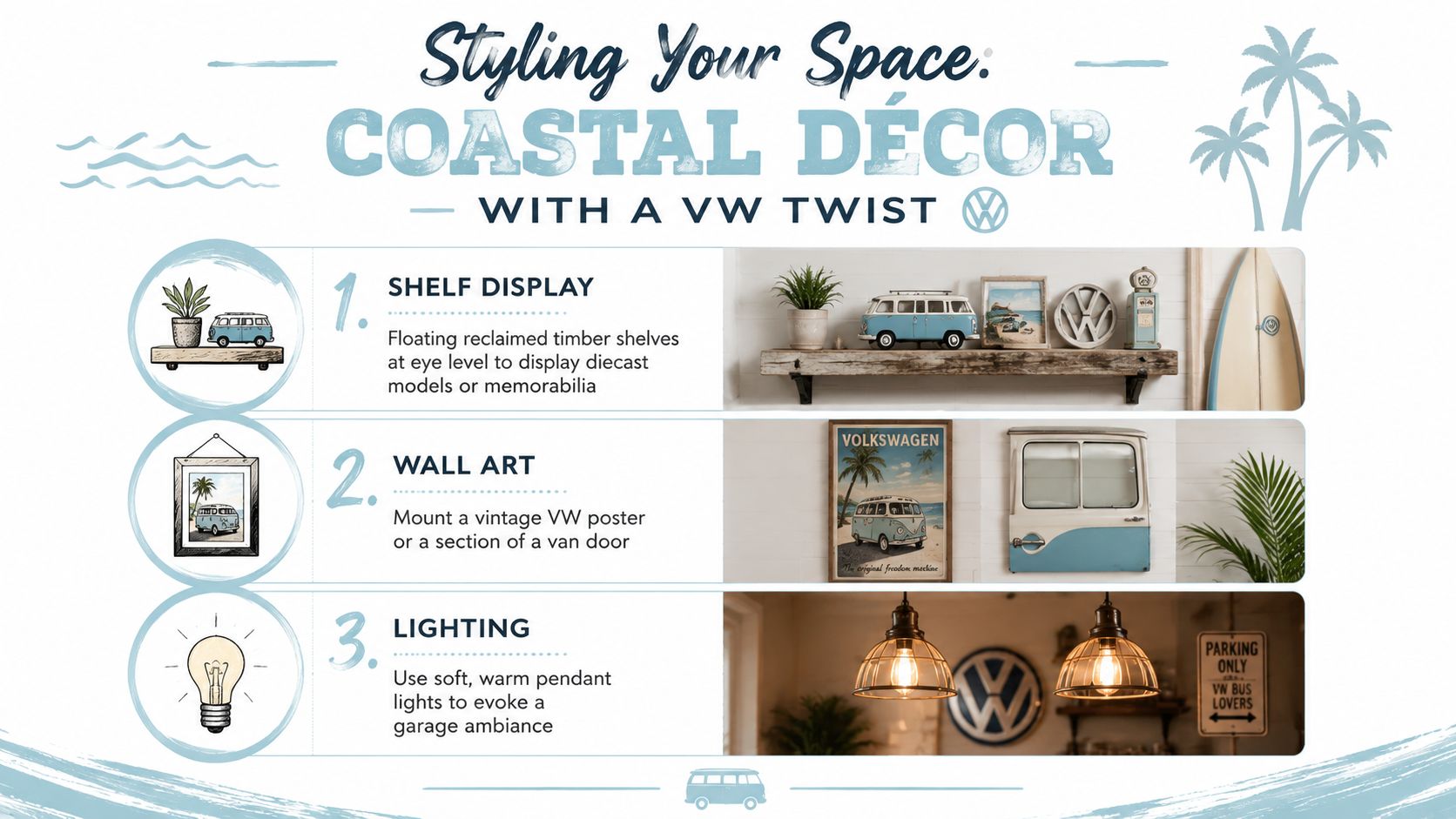

Salt spray hangs in the air as a blue-and-white split-screen Kombi rattles along a coastal road, surfboards thumping gently behind the front seats. The air-cooled engine hums past the lighthouse, and everyone nearby turns to watch.
A Friendly First Look at the Iconic VW
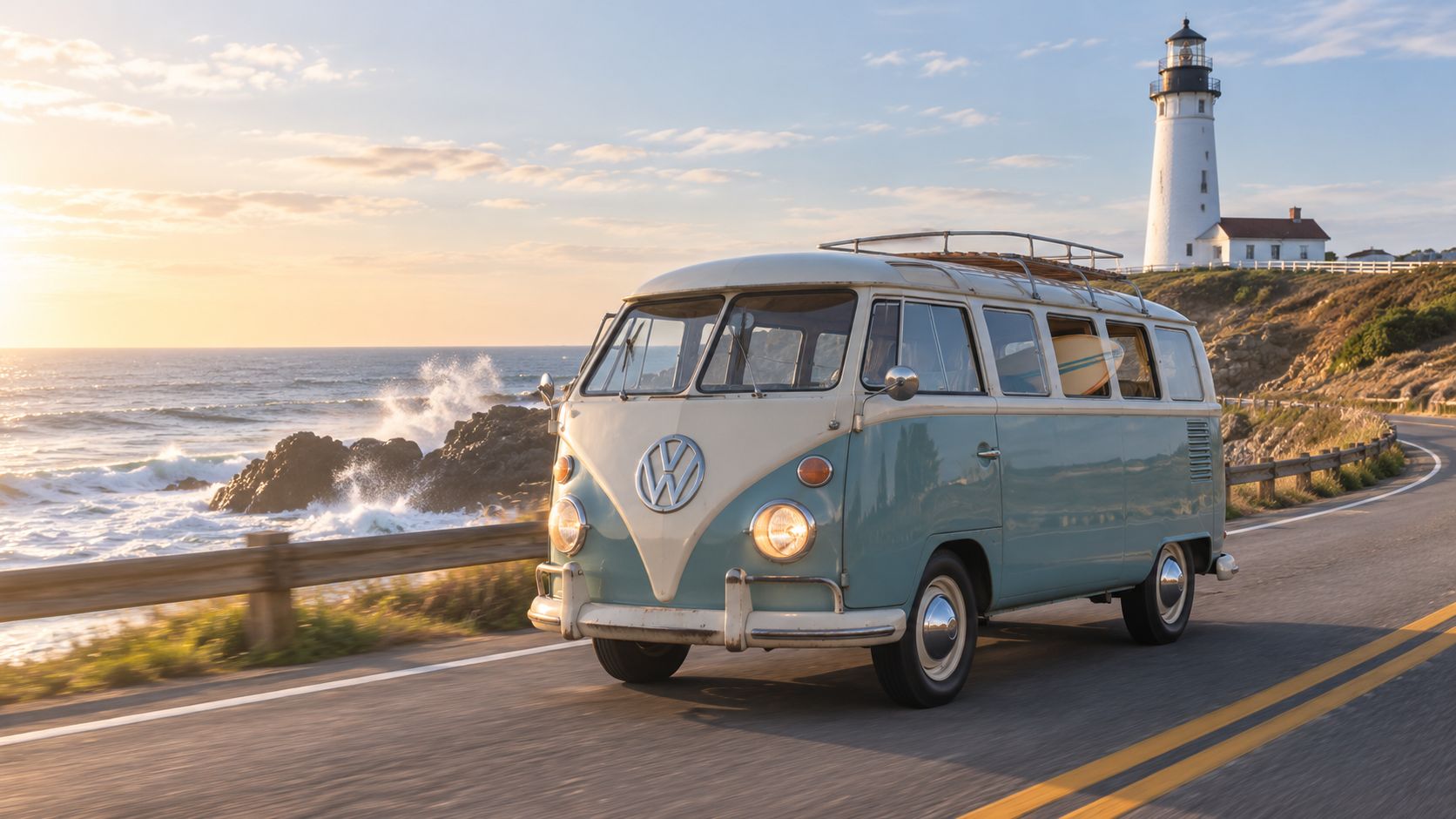
So, what is a Kombi van? In Australian conversation, it usually means a Volkswagen Type 2, the rear-engined van that became famous as a people-mover, camper, work vehicle and surf-trip companion. The original idea was wonderfully practical, a boxy Volkswagen that could carry passengers, cargo or both, with the windowed passenger versions designed to carry up to nine occupants according to the Australian historical overview from Volkswagen Australia.
The word doesn't describe one precise model year. Australians use Kombi as a broad label for several Type 2 generations and body styles, including passenger buses, Microbuses, campers and some Transporter variants. That broad local usage can confuse first-time buyers, especially when a car-show sign says “Kombi” but the vehicle is technically a panel van, ute or later Transporter.
The simple definition
At heart, a Kombi is a Volkswagen Type 2 with a cab-over layout and a rear-mounted engine. The driver sits close to the front of the vehicle, while the engine occupies the rear, leaving a remarkably useful cabin between them. That arrangement helped the van serve families, tradespeople, travellers and surfers without needing a long bonnet.
The rest of the story sits in the details. German origins explain the name, clever packaging explains the spacious cabin, and Australian surf culture explains why the vehicle became far more than a commercial van. Once you understand those three threads, the different T1, T2, T3, T4 and T5 labels become much easier to follow.
Where the Kombi Name and Shape Came From
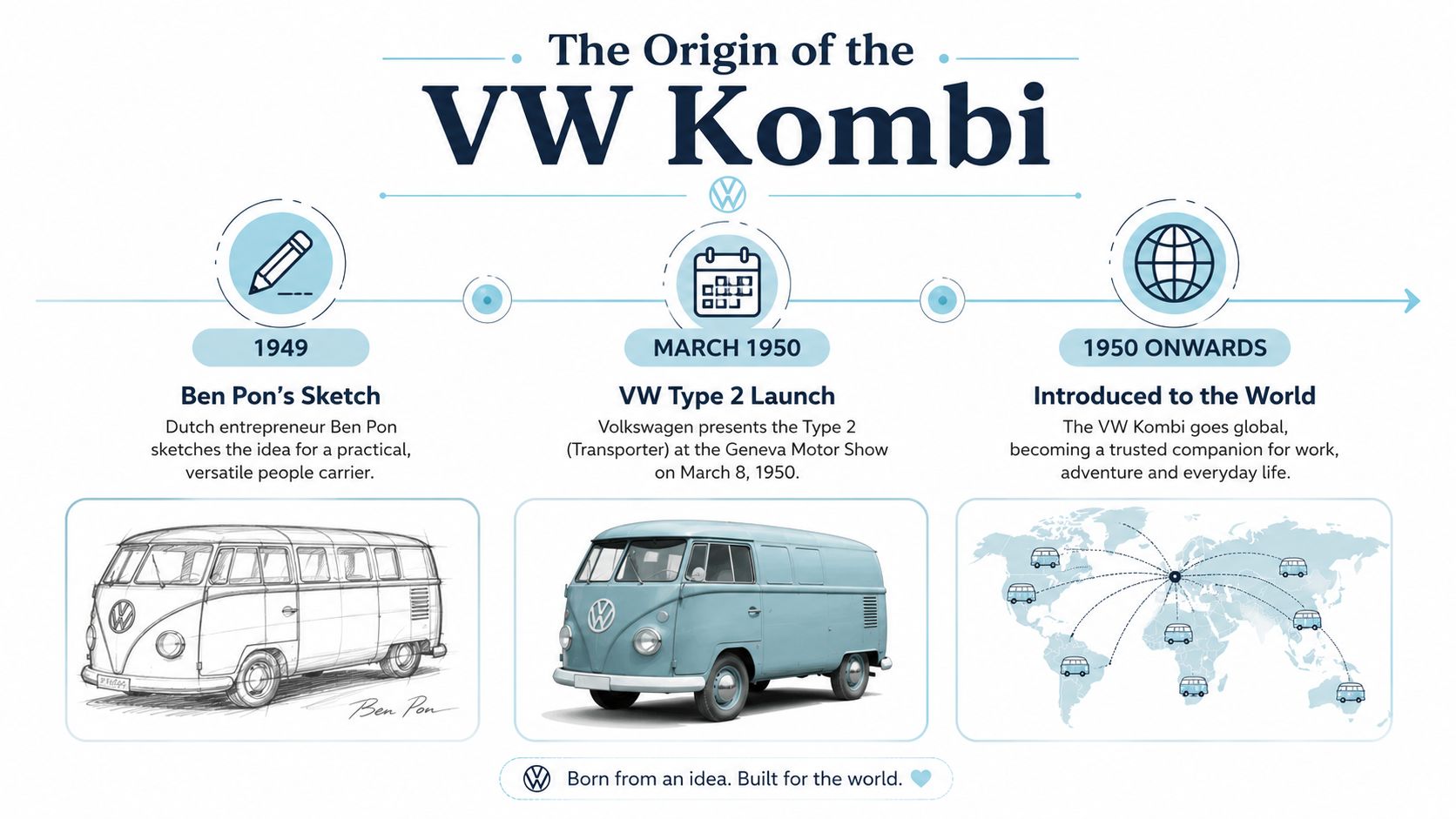
The story starts with Dutch Volkswagen importer Ben Pon, who sketched a compact van concept in 1949. His idea drew on the Beetle's mechanical strengths but moved the bodywork towards a practical, forward-control shape. Volkswagen began building the Type 2 in March 1950, and the factory also knew it as the “Bulli”, while the vehicle was commonly identified as the Transporter in its early life, as outlined by CarsGuide's Kombi history.
The name Kombi comes from the German term Kombinationskraftwagen, meaning a combination-use vehicle. That description fitted a van that could carry people during the week, haul equipment when needed and become the basis for a camper at the weekend. A removable-seat passenger model could change character without changing its basic shell.
One vehicle, several names
Different markets developed their own language. “Bus” and “Samba Bus” are familiar overseas terms, while “Transporter” remains important in Volkswagen's commercial-vehicle vocabulary. In Australia, Kombi became the friendly catch-all, covering more Type 2 variations than the original narrow meaning of the word might suggest.
The shape also felt familiar because earlier commercial vehicles had already introduced the public to box-bodied utility transport. The Type 2 refined that idea with a distinctive Volkswagen identity, a compact footprint and a passenger-friendly cabin. For Australian collectors, the useful lesson is simple: read the body style and generation rather than relying on the badge alone. A windowed passenger bus, a panel van and a pickup may all be called Kombis at a local meet, but they aren't the same vehicle.
For a focused look at the model family, explore this guide to Volkswagen Type 2 memorabilia.
The Engineering Tricks That Made It Special
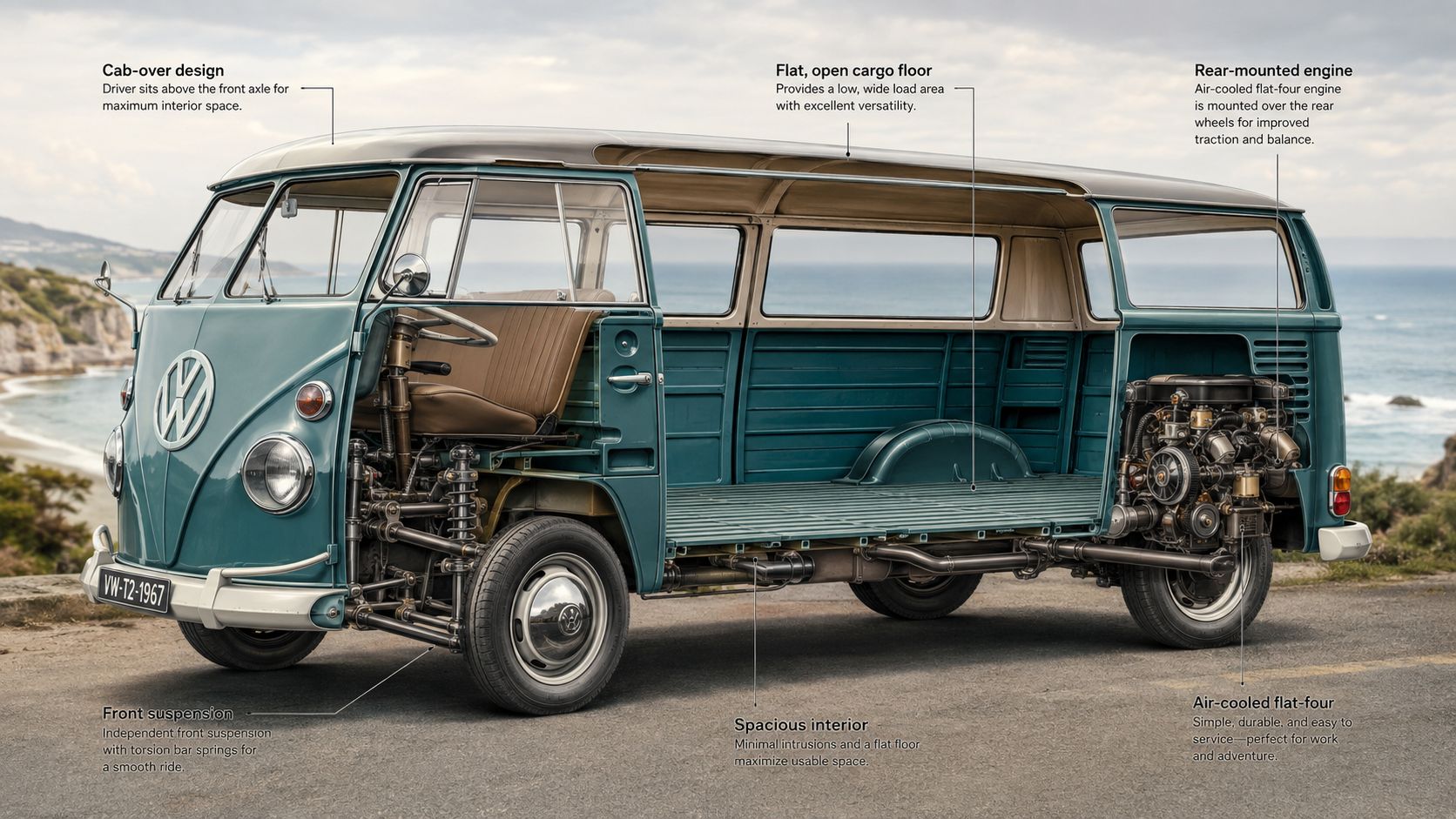
The Kombi's magic begins with packaging. A cab-over layout places the driver above or close to the front axle instead of behind a long bonnet. Volkswagen paired that arrangement with a rear-mounted, air-cooled flat-four engine, creating a flat and highly usable interior floor.
That layout gave the body near-vertical sides and a low loading area. Owners could fit passengers, camping gear, surfboards or trade equipment without working around a large engine bay in the nose. It also made the van an inviting starting point for camper conversions, because the cabin offered a simple, open space that could be adapted to a particular lifestyle.
Why the driving feel matters
The rear-engine arrangement changes the way the van feels from the driver's seat. The steering position gives a commanding view of the road, while the compact mechanical layout helps the vehicle feel more nimble than its upright body suggests. The simple chassis also offered plenty of scope for owners to tune, restore or adapt the van for camping and surf duty.
Suspension design played its part too. Swing-arm and torsion-bar systems kept the construction straightforward while giving the van a more forgiving ride than the plain sheet-metal shape might imply. Later improvements included synchromesh gearbox designs and fuel injection, depending on generation and specification.
Practical rule: Treat the engine layout as part of the Kombi's personality. The flat floor, rear weight bias and simple mechanicals explain why owners talk about these vans as much for their feel as for their appearance.
A collector doesn't need to memorise every mechanical variation to appreciate the engineering. Look at the way the cabin uses its footprint. That cleverness is the reason a small diecast model can still communicate so much character through its upright stance, short front end and broad side panels.
Generations and Body Styles Worth Knowing
Australian enthusiasts usually talk in T numbers, which makes car-show conversations much easier. The family tree below is a useful starting point, although exact Australian availability and specifications varied between imported, locally assembled and later Transporter versions.
| Generation | Years | Aus Availability | Key Identifying Feature |
|---|---|---|---|
| T1 Split Window | 1950–1967 | Early Australian imports and local assembly history | Two-piece windscreen and rounded body |
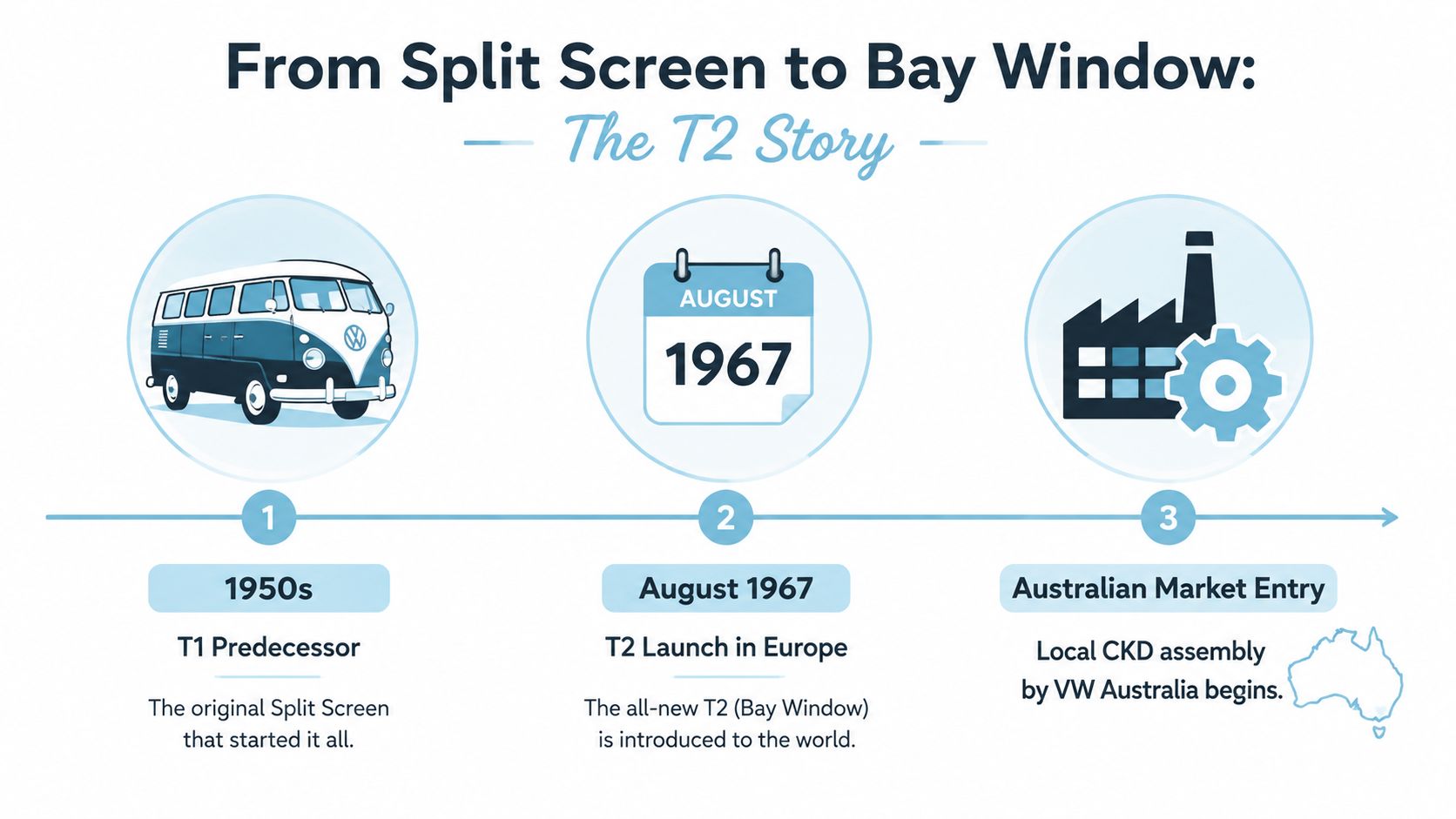
| T2 Bay Window | 1967–1979 | Strong Australian presence and surf identity | One-piece curved windscreen and larger body |
| T3 Vanagon | 1979–1992 | Transporter-era examples, including Australian-market variants | Squarer styling and more modern cabin |
| T4 | 1990–2003 | Front-engine Transporter generation | Front-mounted engine and car-like nose |
| T5 | 2003–2015 | Modern Transporter family | Contemporary front-engine commercial design |
Body styles at a glance
A passenger Kombi has side windows and rear seating. A Microbus is often used for a people-moving version, while a Samba Bus generally refers to a highly glazed, more decorative specification associated with the classic Type 2 range. A panel van removes much of the rear side glass for cargo work.
Collectors may also encounter:
- Single Cab pickups, with one row of seating and an open tray.
- Double Cab utes, with extra passenger seating behind the front row.
- Westfalia campers, converted for touring and overnight travel.
- Transporter variants, which may share the family resemblance without being a classic passenger Kombi.
Australia's terminology adds another layer. Local production and assembly gave the Type 2 a deep domestic history, and Australian sources note that the name spread across multiple body styles more broadly than it did in Germany. The safest approach is to describe the generation, body style and seating arrangement together. That prevents a T3 Transporter from being confused with a T1 passenger bus because both are called Kombis at a meet.
Kombi Culture in Australia and Beyond
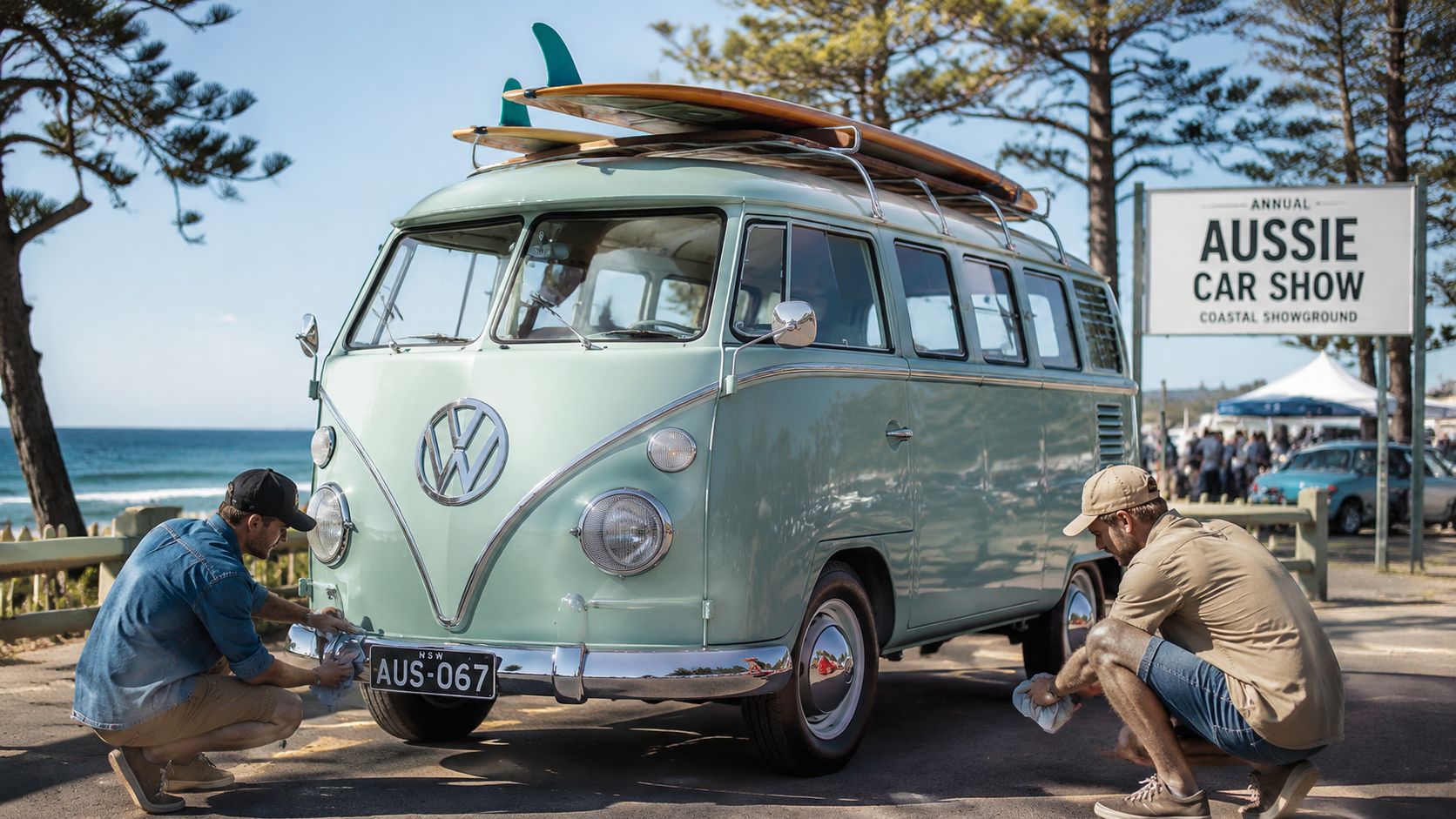
Australia gave the Type 2 a special setting. The van suited beaches, campsites and long coastal drives, and Volkswagen Australia records how the Kombi became tied to surf and adventure culture on both coasts. Its shape could swallow boards and camping equipment, while the upright cabin made it easy to share a trip with mates or family.
That practical role became a visual identity. Surfboards on a roof rack, faded paint, bright curtains and a well-used interior turned the Kombi into a rolling sign of weekends away. The association with freedom grew alongside the international Flower Power image, Woodstock-era styling and counter-culture artwork, but Australian owners gave those ideas a distinctly local backdrop.
From workhorse to moving art
The Kombi's cultural life now stretches well beyond the beach. Owners bring restored and customised examples to Volksfest, VW Nationals, club gatherings and coastal show-and-shines. Some favour factory-correct finishes, while others choose lowered suspension, period accessories, roof racks or playful paint schemes.
The result is a vehicle that can be judged as transport, sculpture and personal history at the same time. A family might remember one from camping holidays, a surfer might associate it with dawn starts, and a collector might love the tiny details of a split windscreen or Samba roof.
Australia's local story is worth exploring through Kombi life in Australia, especially if your interest began with beach culture rather than mechanical history. The same emotional connection appears in films, music events, tourism imagery and beach tours, where the Kombi works as an instantly recognisable symbol of relaxed travel.
Collecting Diecast Kombis the Right Way
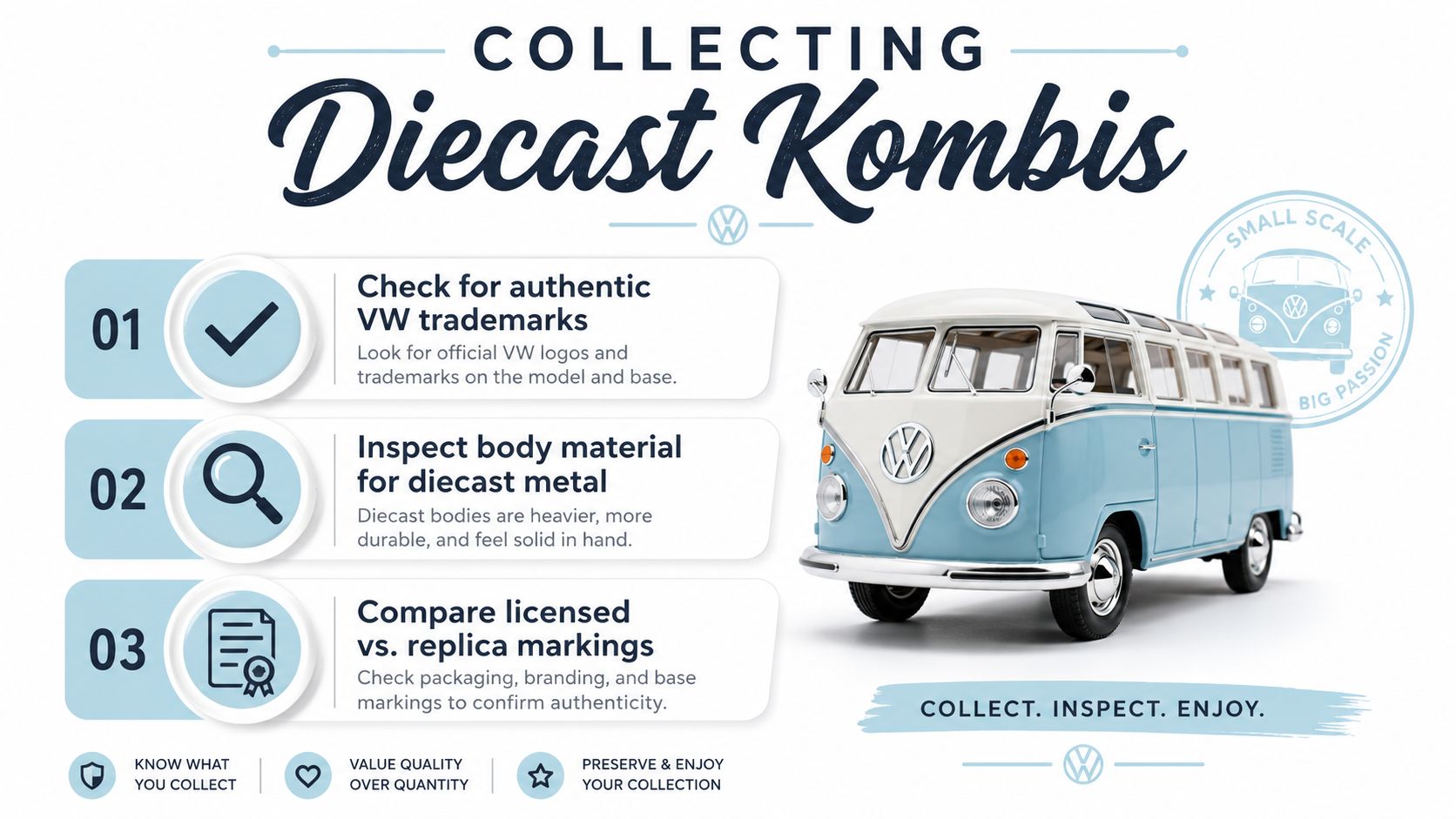
A good diecast Kombi captures more than a familiar silhouette. It should preserve the details that make the vehicle recognisable, including the split or bay windscreen, window arrangement, bumpers, wheels, roof equipment and period graphics.
Start with authenticity. Look for official Volkswagen licensing, clear manufacturer markings and packaging that identifies the model properly. A model described as diecast should have a metal body, while some resin replicas use plastic or composite construction. Neither is automatically wrong, but the material affects weight, handling and the type of detail you can expect.
Choose the scale for the display
1:18 models suit a dedicated shelf where you want visible cabin, body and trim detail. They need more room, but they make a strong centrepiece.
1:24 is a useful middle ground for collectors who want presence without giving an entire cabinet to one vehicle. It also pairs neatly with other classic Volkswagen models.
1:32 works well for a starter collection, a desk display or a younger enthusiast's first model. It allows several colourways and body styles to sit together without overwhelming the space.
Colour matters, too. White-over-blue paint, soft seaside tones and Flower Power graphics all connect strongly with the Kombi's surf and travel identity. You could build a beach scene with miniature boards, a camper display with a road-trip theme, or a simple Volkswagen shelf pairing a Samba Bus with a Volkswagen model car collection.
A licensed model also makes a thoughtful gift for a Volkswagen fan, retirement celebration or office desk. Before buying, inspect the box, check the scale, confirm the body material and look for any certificate or licensing information supplied by the maker.
The short video below offers another visual way to appreciate the details collectors look for.
Bringing the Kombi Story Home
The Kombi began with a practical sketch, became a versatile Type 2, and found a second identity on Australian beaches. Its cab-over shape made the interior useful, its rear engine gave it a distinctive character, and its many generations created a family tree that rewards closer inspection.
That makes a diecast model more meaningful than a generic ornament. A well-chosen Volkswagen Kombi diecast in Australia can represent a particular memory, whether that's a first camping trip, a favourite surf van at a car show or a family story about an old bus that has long since disappeared.
Build a collection with a story
Start with one model that speaks to you. A Samba Bus diecast suits a display focused on classic passenger vans, while a Beetle model makes a natural companion because both vehicles share the same period charm and air-cooled Volkswagen heritage.
From there, consider a small theme:
- A T1 and T2 pairing to show the change from split windscreen to bay window.
- A surf display with boards, beach colours and a coastal photograph.
- A glass-case timeline running from early Type 2 styling to later Transporter forms.
- A gift set pairing a model with a road-trip photo book or a framed family image.
You don't need a huge collection to make an impact. Choose licensed pieces, protect the packaging where possible and keep the display away from harsh sunlight and damp conditions. The best collection feels personal, organised and easy to enjoy.
Volkswagen Memorabilia brings together officially licensed VW diecast models, Kombi and Samba Bus collectibles, Beetle models, coastal décor and thoughtful gifts for Australian enthusiasts. Visit Volkswagen Memorabilia to explore the collection and choose a Kombi model that keeps your own Volkswagen story rolling.