
Boho Throw Blanket: Your Australian Guide 2026

You're on the sofa, the evening air has turned cool, and the room feels one small change away from looking finished. You open a search tab for a boho throw blanket, scroll past a dozen tasselled options, and still can't decide whether your space needs warm terracotta, faded blue, or something quiet in oatmeal.

The right throw can do more than keep your knees warm. It softens a hard-edged room, adds colour without repainting, and brings a relaxed coastal-meets-vintage mood that suits Australian homes beautifully. The trick is choosing one that works with your climate, furniture and existing textures, rather than buying the loudest pattern on the page. For a few easy ways to build that laid-back look, browse these boho style room ideas.

Why Australians Are Draping Boho Throws on Everything Right Now

Australian homes often need warmth without heavy layers. A boho throw blanket handles that job neatly, adding softness to a sofa arm, cane chair or bed without permanent changes. It suits rentals, open-plan rooms and homes where the climate shifts between bright afternoons and cooler evenings.

This style also works because it is easy to move around. Keep a cotton throw on the lounge, carry it to the verandah, then fold it over a chair when guests arrive. Choose texture and colour that look useful, not staged. For more relaxed coastal-vintage combinations, use these boho style room ideas as a practical starting point.

Australia's home textiles market was estimated at USD 2.37 billion in 2026, up from USD 2.24 billion in 2025, and is projected to reach USD 3.11 billion by 2031, with a projected 5.62% CAGR from 2026 to 2031, according to Mordor Intelligence's Australia home textiles market overview. Cotton held 40.78% of the market in 2025, while bed linen led application demand with 38.02% revenue share. For shoppers, those figures support a cotton-first approach to comfortable, natural-looking layers.

The palette that feels right here

Australian boho styling works best with sandy cream, weathered timber, ocean blue and sun-faded red. Combine those tones with practical furniture instead of matching every piece. The result has the easy nostalgia of a beachside road trip, with a subtle VW Kombi-inspired vintage mood carried through throws, cushions and small decor.

Blankets are also becoming a stronger comfort and décor category. One Australian market overview forecasts blanket growth of more than 7.41% CAGR from 2026 to 2031, while another estimates the Australia blankets and quilts market at USD 421.4 million in 2024, projecting USD 821.2 million by 2033 at a 6.9% CAGR from 2025 to 2033. These figures come from Bonafide Research's Australia blanket market overview, pointing to throws as useful comfort pieces with genuine decorative value.

What Actually Makes a Throw Boho

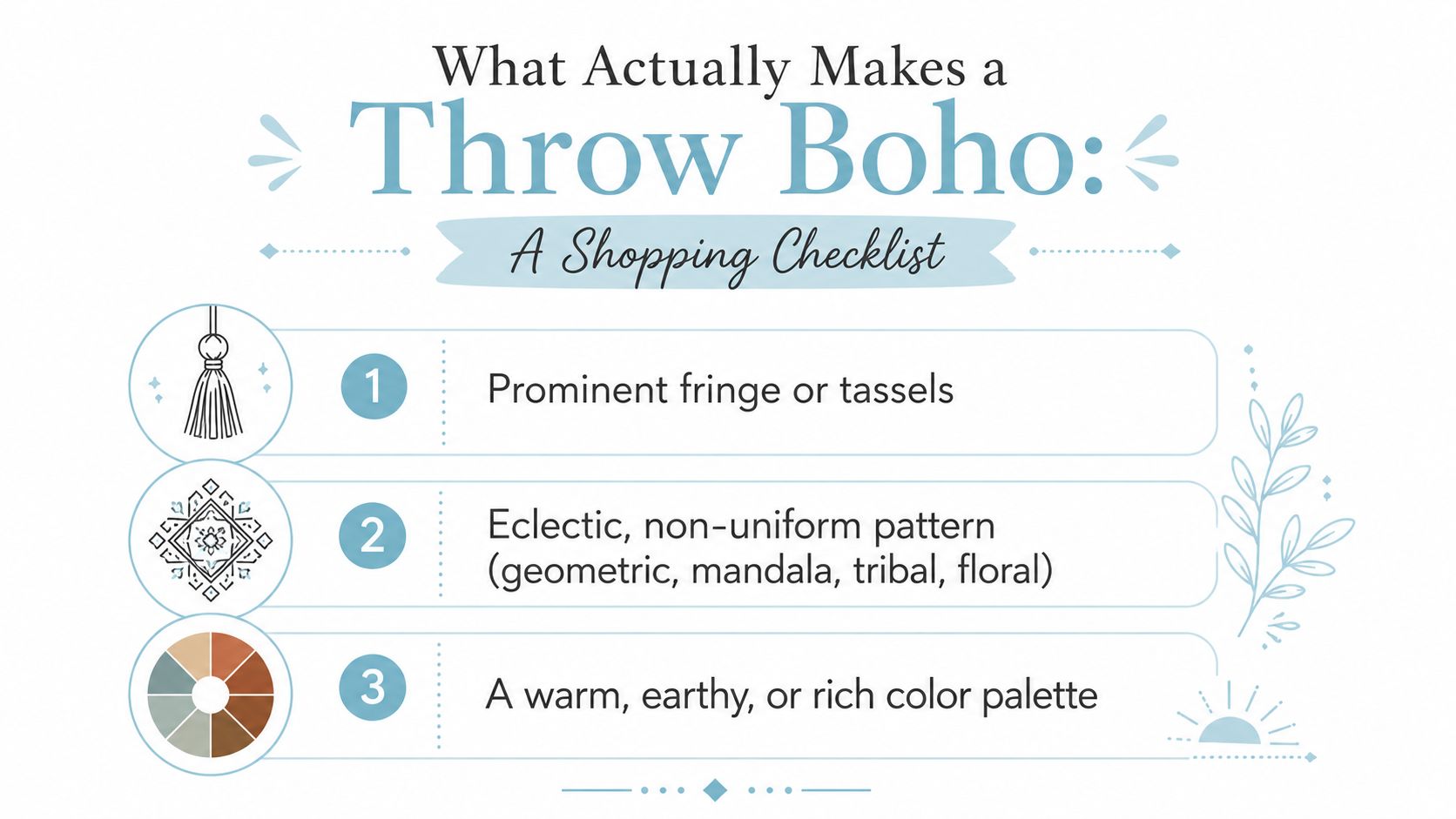
Boho isn't just "anything with tassels". A convincing boho throw blanket usually combines three visible cues: tactile edging, an eclectic pattern and a warm or sun-softened colour story.

An infographic checklist for selecting boho throw blankets, featuring three key design elements including fringe, patterns, and colors.

Use the three-cue test

  • Fringe or tassels: Look for a deliberate, visible finish rather than a barely-there stitched edge. Fringe gives a plain weave movement and makes casual draping look intentional.
  • Eclectic pattern: Geometric, mandala, tribal and floral motifs all work, especially when the design isn't perfectly uniform. A small repeating pattern can feel calmer than a giant central medallion.
  • Warm colour: Terracotta, ochre, rust, clay, camel, cream and faded navy are reliable choices. Rich colour can work too, but it needs breathing room around it.

Think of texture like travel memories on a shelf. One woven basket, a weathered timber object and a patterned textile feel collected. Add fringe, boucle, rattan, heavy pattern and several ornaments at once, and the room starts telling too many stories.

Know what boho isn't

A plain charcoal knit is practical, but it reads minimalist. A crisp white and blue cotton throw with restrained stripes leans coastal Hamptons. A boho option sits between those poles, with enough pattern and hand-finished detail to feel relaxed, personal and slightly nomadic.

Check the product photograph at a distance. If you notice only a solid block of colour, it may be a basic lounge blanket. If you notice fringe, uneven visual rhythm and earthy colour working together, you're much closer to the look.

Picking Materials That Survive Australian Weather

A throw that makes you overheat in Darwin or shiver in Hobart has missed the brief. Choose the fibre for the room's actual conditions, including hot summers, cool evenings and strong indoor air-conditioning.

Cotton is the best all-rounder for much of Australia. It breathes, handles everyday use and suits coastal rooms because its natural texture looks good slightly rumpled. Cotton-linen blends feel drier and airier, though linen creases more easily. Cotton-acrylic blends are practical, hold their colour and need less fuss, but they do not breathe as well as natural fibres.

Wool and wool blends earn their place in cooler homes or on sofas used for proper winter warmth. Wool-rich designs feel substantial and cosy. A wool-cotton blend softens that weight for homes with changing temperatures. In tropical and subtropical areas, keep wool for occasional use instead of making it the everyday sofa layer.

Match weight to the room

GSM, or grams per square metre, reveals fabric density more reliably than a product photograph. A lightweight weave suits warm rooms and outdoor entertaining. Medium weight works through the year, especially where hot afternoons give way to air-conditioned evenings. Dense, heavy construction belongs in cold bedrooms and winter lounging.

Lightweight chenille gives you softness and relaxed drape, but inspect the weave. Raised yarns can snag on rough furniture and pet claws. Recycled fibres also suit hard-working family rooms when the fabric feels comfortable and the seller clearly explains the blend.

A throw should support the room's climate as well as its style. Cotton-led coastal schemes usually look fresher with a lightly crinkled weave, timber, rattan and washed colours than with a dense synthetic pile. For a VW Kombi-inspired vintage mood, use a faded cotton throw with a small geometric pattern, then repeat its colours in a cushion or compact woven basket. The reference should feel collected, not like a themed display.

Sustainability wording needs a close read. Australian market analysis says cues including organic cotton, recycled polyester, low-impact dyes and transparent sourcing appear in over 30% of new throw launches, compared with about 10% in 2021, as reported by IndexBox's Australian modern throw blanket analysis. Use that figure as a reason to check the fibre content and sourcing details, not as proof that every product with green wording is comparable.

Material Feel Best for AU climate Care difficulty
Cotton Breathable, soft, easy-going Warm homes, coastal rooms, everyday use Low to moderate
Cotton-linen blend Dry, airy, naturally relaxed Hot summers and breezy interiors Moderate
Cotton-acrylic blend Light, smooth and practical Air-conditioned rooms and frequent use Low
Wool or wool blend Warm, springy and substantial Cool nights and colder southern homes Moderate to high
Recycled synthetic blend Often smooth and resilient Busy households and occasional outdoor use Low to moderate
Lightweight chenille Plush, soft and drapey Sheltered interiors and decorative layering Moderate

Practical rule: For most Australian living rooms, start with lightweight or medium cotton. Add wool only when the climate and your actual habits justify it.

Sizes That Actually Fit Your Furniture

Throw sizing makes more sense beside furniture than on a product page. A small blanket is roughly 100 x 150 cm, a medium option is about 130 x 180 cm, and a large throw is around 150 x 200 cm. Those are useful guides, not rigid rules, because fringe, thickness and drape change how much fabric you need.

Approximate size Best placement How to style it
100 x 150 cm Single chair, armrest or reading nook Fold lengthways and place it where someone can grab it
130 x 180 cm Sofa end or generous armchair Let one corner fall naturally, keeping the rest off the floor
150 x 200 cm Queen bed foot or broad sofa Fold into a long band for a tidy, hotel-style finish

A medium throw usually gives the most useful sofa drape. Place the centre over the back or arm, then allow one side to hang lower. Don't spread it evenly across every cushion, because that can make the room look staged and hides the furniture you chose carefully.

For a coastal room, an oversized lightweight cotton piece often photographs beautifully because it falls in soft, irregular folds. A heavy throw in a smaller size can look bulky, particularly over a narrow chair. Before adding to cart, measure the furniture width and decide whether you want coverage, warmth or a colour accent. More guidance on bed placement is available in this throw blanket for bed guide.

Three Easy Ways to Style a Boho Throw at Home

Start with one hero colour, one texture, one pattern, one natural element and one plant. That five-part rule stops boho styling from becoming a pile of competing details.

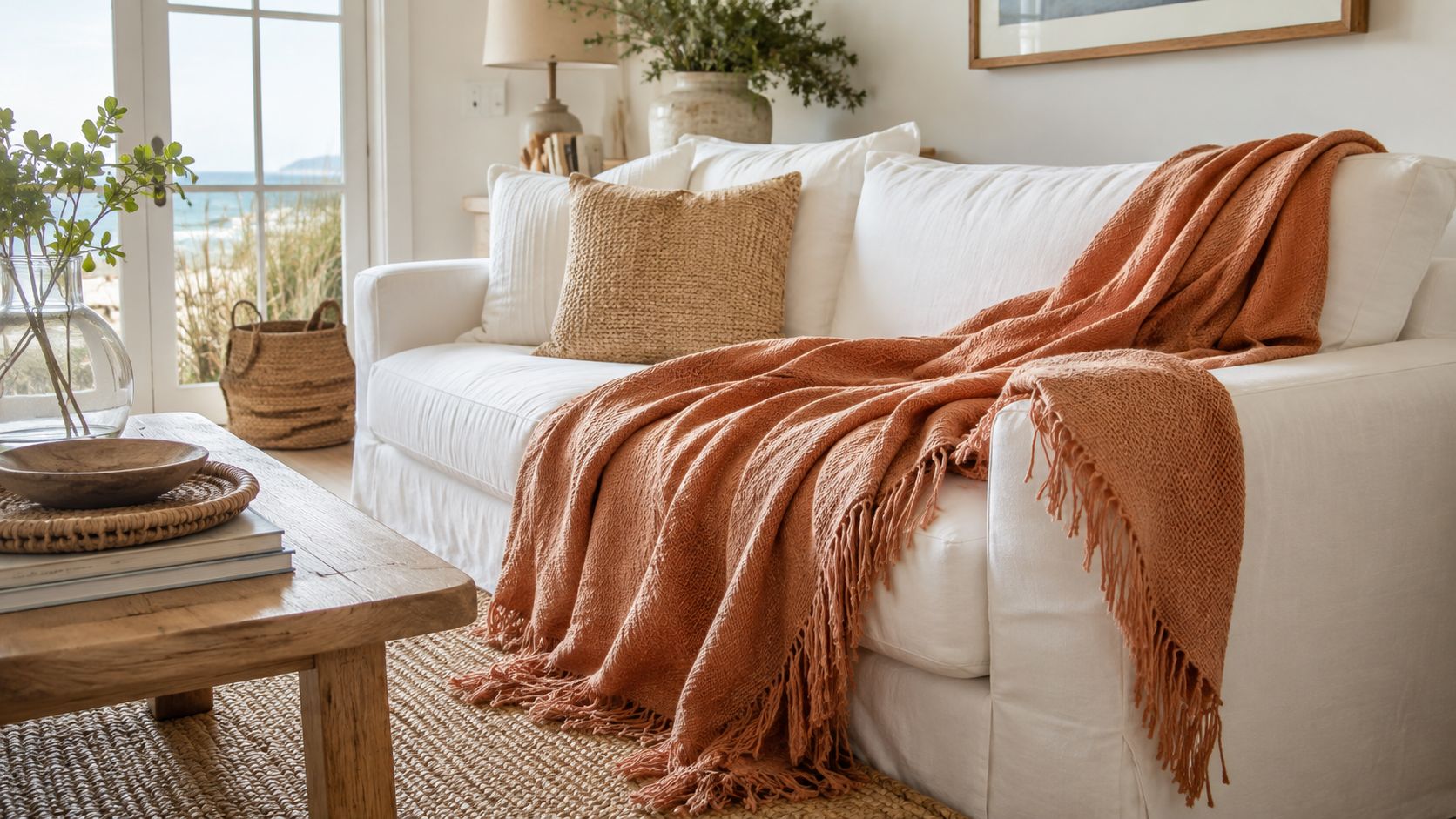
A cozy white couch decorated with a textured burnt orange throw blanket and a woven throw pillow.

Coastal living room

Use terracotta as the hero colour against white or sand-coloured linen. Add a woven cushion for texture, choose a restrained geometric pattern, bring in a rattan tray or timber stool, and finish with a leafy plant.

The throw should sit at one end of the sofa, not cover the whole thing. This keeps the coastal base light while allowing the boho detail to do the work. If the pattern is strong, keep the cushion quieter.

Vintage-inspired nook

Build the corner around a faded red or mustard throw, a cane chair, a small patterned cushion, warm timber and one hardy indoor plant. The palette recalls old travel posters and sun-baked surf culture, including the cheerful character of a vintage Kombi, without relying on novelty décor.

Use the chair as the hero rather than adding colour to every nearby object. A single throw with a soft fringe is enough to make a reading nook feel collected.

A small wall piece can reinforce the mood without crowding the seat. These boho wall art ideas can help you keep the surrounding display simple.

Layered bedroom

Choose one warm base colour, then combine a patterned throw with a quieter textured blanket. Place the boho layer across the foot of the bed, add one natural material such as timber or seagrass, and use a plant to break up the fabric.

Don't match every pattern. Let one design lead, let the other support it, and keep the sheets calm enough for both to breathe.

Caring for Your Throw Without Ruining the Tassels

Care labels aren't decorative paperwork. In Australia, household textile throws must follow the Consumer Goods (Care Labelling) Information Standard 2023, which requires a permanent, securely attached label. From 5 March 2024, labels can use English instructions, international care symbols, or both, as explained in the ACCC care-labelling guide.

The label should cover five categories: washing, bleaching, drying, ironing and professional care. Those categories matter because fringe, woven patterns, blended fibres and decorative dyes can react differently to heat, agitation and chemicals.

Wash according to construction

Cotton and durable blends may tolerate a gentle machine cycle, ideally inside a laundry bag with mild detergent. Hand-washing is the safer choice for loose weaves, heavy fringe and delicate dye work. Wool-rich throws need particular restraint because heat and agitation can encourage felting and dimensional change.

Never assume “cotton” tells you everything. The weave, finish and blend affect shrinkage and shape, which is why Australian requirements align with AS/NZS 1957:1998 and ISO 3758:2012, according to the mandatory care-labelling standard guidance.

Protect the shape and edge

Dry flat when the label allows it, especially for heavier or stretchy textiles. Hanging a wet throw from one edge can pull the body out of shape and leave the tassels uneven. Keep bleach away unless the label explicitly permits it, and don't iron across fringe.

For storage, fold rather than hang. Wool blends benefit from a clean, dry cupboard and sensible moth protection such as cedar, while cotton should be stored completely dry to avoid musty smells.

Customisation Tricks and a Smart Buying Checklist

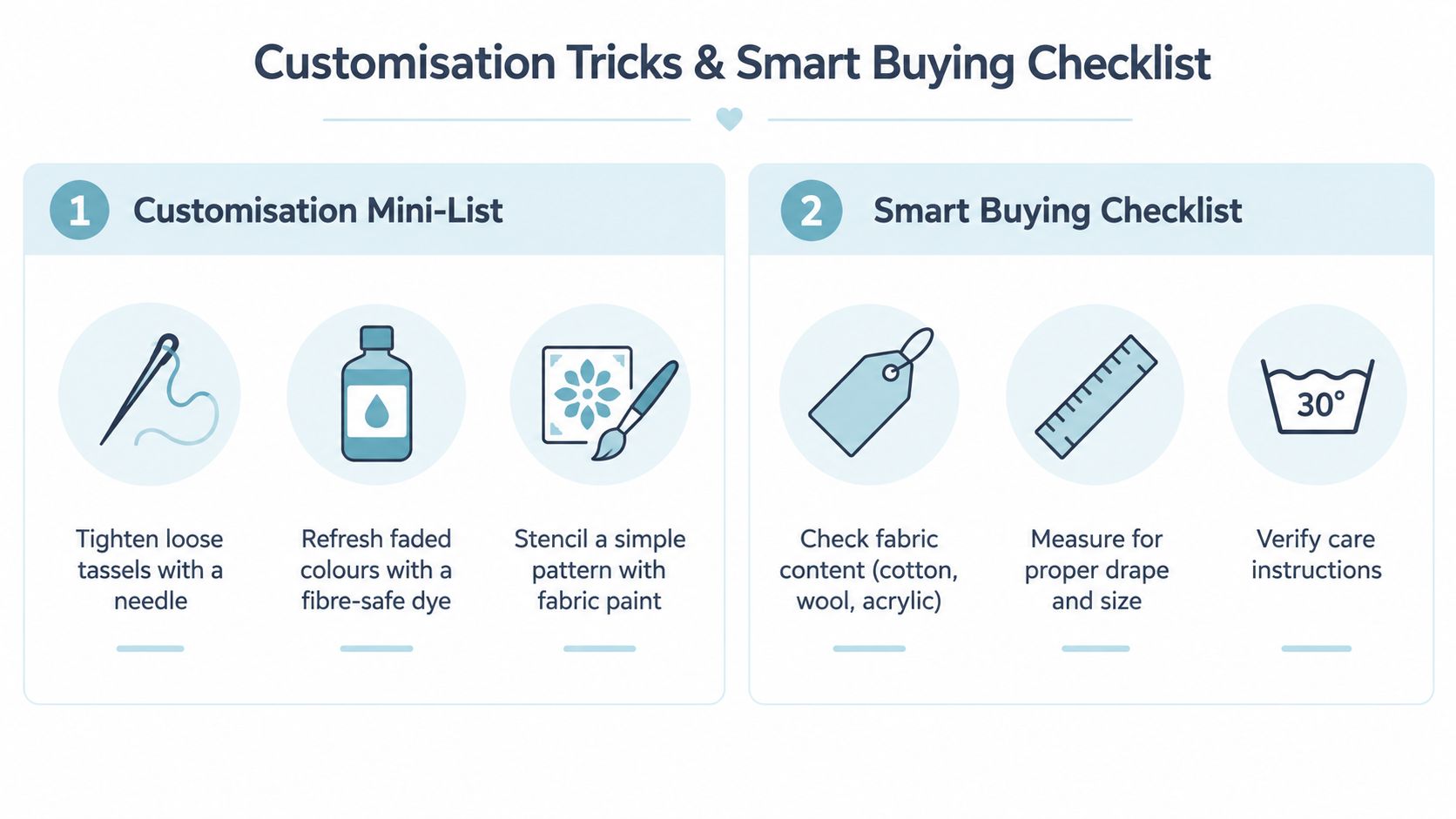
A good throw can be adjusted without turning it into a craft project. Secure a loose tassel with a needle and matching thread, refresh a tired shade with a fibre-safe dye, or stencil a small border with fabric paint. Test any dye or paint on an unseen section first, and don't alter a valuable textile before checking its care instructions.

Quick buying check

  • Inspect weave and weight: Look for a construction that matches your room, not just a flattering photograph.
  • Read the fibre blend: Cotton, wool, acrylic and recycled fibres each bring different warmth, drape and care needs.
  • Measure the destination: A chair, sofa end and queen bed need different proportions.
  • Find the care label: Clear washing, drying and finishing instructions signal a more considered product.
  • Question sustainability claims: Look for specific fibre, dye and sourcing information instead of broad eco language.

An infographic displaying tips for customizing and smart buying of home decor items like throw blankets.

A throw should support your room's mood, not force a full makeover. If your space already has rattan, timber and patterned cushions, choose a calmer weave. If the room is mostly white linen and pale walls, a sun-faded red or mustard layer can give it the spark it's missing.

Common Boho Throw Mistakes and Where to Shop in Australia

More texture does not automatically create a boho room. Put a chunky weave beside tassels, boucle cushions, a shaggy rug and busy wall art, and the result feels crowded rather than relaxed. Make one texture the feature, then keep the others quieter.

Cotton throws also vary widely. Fibre quality, weave density and GSM affect breathability, drape, washing and shape retention. For warm Australian weather, choose a thin, open cotton weave over a dense blanket, even if both labels say “cotton”.

Keep throws in rotation through summer. Australian homes use winter-weight wool, sherpa and heated options, as well as lightweight cotton and blended styles, partly because air-conditioning can leave indoor rooms cool. Overseas supply plays a substantial role in the local market, while demand for premium natural fibres is growing faster than demand for synthetics.

The common styling mistake is treating every surface as an invitation for pattern. In a relaxed coastal or VW Kombi-inspired vintage room, let the throw lead. Add a cushion, small metal sign or other decor detail that repeats its colour, then leave breathing space around the arrangement.

Visit Volkswagen Memorabilia for coastal home décor and VW-inspired pieces that pair naturally with a relaxed boho throw blanket. Browse the shop for vintage character, beachside colour and thoughtful gifts, then choose a small detail that makes your room feel collected rather than cluttered.

Coastal Home Decor Ideas: Creating Your Aussie Beach House Vibe

G'day, mate! There's nothing quite like that feeling of a permanent holiday, and that's exactly what coastal home decor is all about. It’s about capturing that relaxed, sun-drenched vibe you get after a long day at the beach. The goal is to create a light, airy sanctuary using a warm, natural colour palette, textured materials like rattan and linen, and an overall feeling of effortless, breezy living.

What Is Australian Coastal Style?

When we talk about Australian coastal style, it's so much more than just scattering a few seashells on a shelf. It’s about bottling that feeling you get after a long, sunny day at the beach—relaxed, warm, and completely at ease.

It's less about literal beach themes and more about creating an atmosphere that feels like an endless summer holiday, right in your own home. Think of it as designing a personal escape that echoes the sound of gentle waves and the warmth of sand under your feet. It's the design equivalent of kicking off your thongs at the door and breathing out a happy sigh.

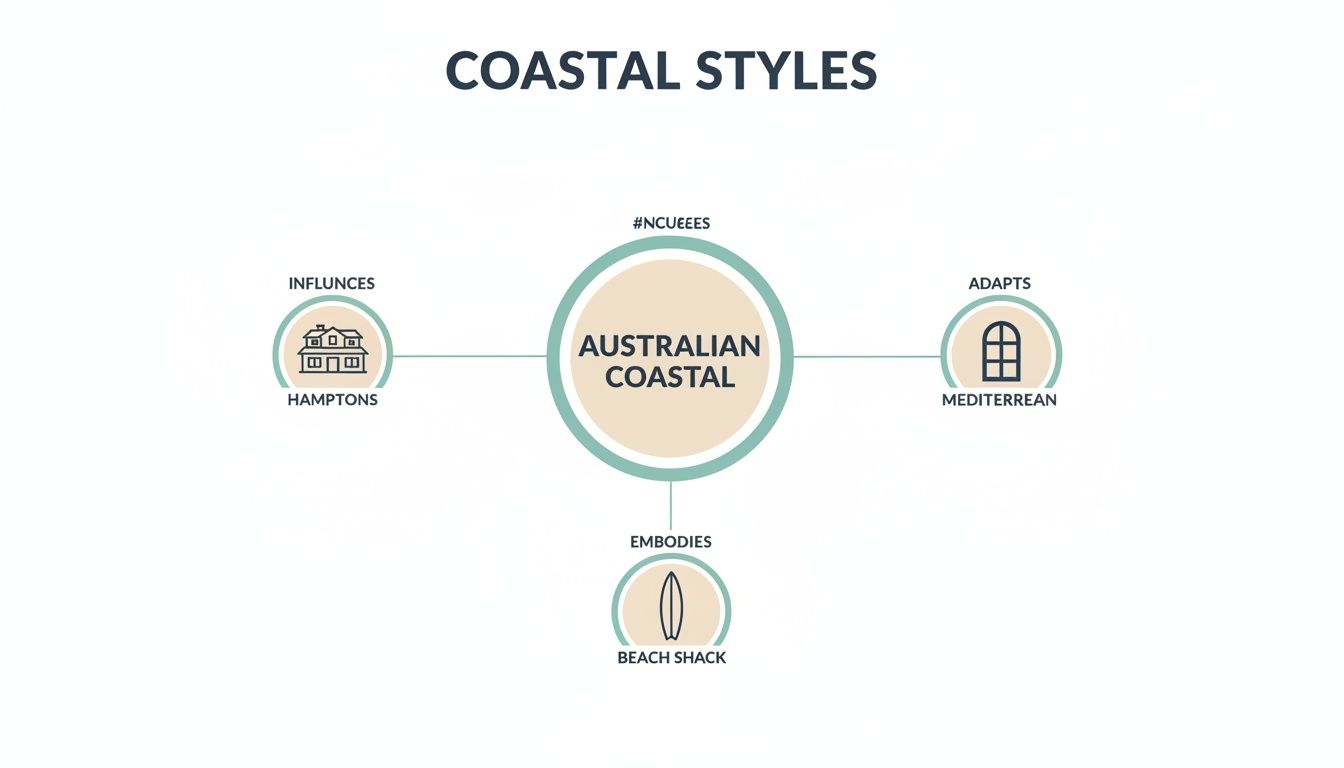
But not all coastal styles are created equal, eh? You’ve got a few different flavours to play with, each with its own personality. Our unique Aussie style actually borrows bits and pieces from a few of the most popular looks from around the world.

Diagram illustrating Australian coastal style influenced by Hamptons, adapting Mediterranean, and embodying beach shack.

As you can see, the Aussie take on coastal is a beautiful blend of different influences, all adapted to our unique, laid-back way of life.

Finding Your Coastal Vibe

Getting to know these styles is the key to finding the perfect vibe for your space.

  • Classic Aussie Beach Shack: This is the heart and soul of our coastal look. It’s unpretentious, comfortable, and absolutely brimming with character. Think weathered timber, comfy second-hand furniture, and personal touches that tell a story—like a classic Volkswagen Beetle model perched on a bookshelf.

  • Hamptons Style: A bit more polished and sophisticated, the Hamptons look takes its cues from the luxe beach houses of Long Island. It’s all about crisp whites, deep blues, elegant furniture, and a more structured, formal feel.

  • Mediterranean Influence: This style brings in warmer, earthier tones you’d find along the coasts of Greece and Italy. You'll see things like textured render walls, terracotta pots, and arched doorways that add a rustic, sun-baked warmth to the space.

Ultimately, the best coastal homes mix these elements to create something that feels genuinely you. It's about creating a place where every day feels a little brighter and a whole lot more serene.

Building Your Coastal Colour Palette

Right, getting the colour right is where the magic really begins. It’s the very first step in creating a coastal vibe that feels genuine and lived-in. While cool blues and crisp whites definitely have their place, the modern Aussie coastal look is warming up, drawing its cues from the sun-baked sand and rich earth of our incredible landscapes.

Forget just slapping on a coat of white paint. We’re talking about layering colours that feel grounded and deeply calming, creating a space that’s both chic and a real sanctuary from the world outside.

Embracing Warmer Neutrals

The secret to this modern style is leaning into warmer tones. For a long time, stark whites and cool greys were the go-to, but there’s been a real shift towards colours that feel more organic and welcoming. Think sandy beiges, hints of terracotta, and lovely buttery creams. These shades capture the beauty of the Australian landscape, from the red centre to the golden coastline, and designers love how they bring that sense of the outdoors in, creating a true 'sanctuary' feeling. You can see more on this beautiful evolution in Australian interior design trends on eleliving.com.au.

These colours lay the perfect foundation for all your coastal home decor ideas. They work beautifully with the natural materials we’ll get into later, like light-toned timber, rattan, and linen.

How to Layer Your Colours

Building a rich, layered look is much easier than you’d think. It's not just about the walls; it’s about letting the colour flow through your whole room.

A great coastal palette isn’t about matching everything perfectly. It’s about creating harmony between different shades and textures, just like the subtle colour shifts you see on a walk along the beach at sunrise.

Here are a few simple ways to get started:

  • Start with Your Walls: Kick things off with a base colour like a soft, sandy beige or a creamy off-white. These shades make a room feel open and bright without ever feeling cold.
  • Layer with Textiles: This is where you bring in depth. Think about cushions in a muted terracotta, a jute rug with its natural brown variations, or a throw blanket in a warm, earthy green.
  • Add Your Accent Colours: Now for the fun part! Add small pops of colour that pull everything together. This could be the deep blue of a ceramic vase, the soft green of a beautiful indoor plant, or even the cheerful pop from a vintage-inspired Volkswagen diecast model sitting on a shelf.

By layering these warm, natural colours, you’ll craft a space that feels cohesive, timeless, and perfectly in tune with that relaxed Aussie coastal lifestyle.

Right, with the walls looking fresh and sandy, it's time to furnish. This is where the magic happens and your coastal theme really comes to life, turning a house into a proper home. The goal is to pick pieces that have a relaxed, breezy feel and are as practical as they are good-looking.

Think natural textures and pure comfort. This isn't the style for anything heavy, dark, or too formal. We’re leaning into materials that just feel right being close to the water.

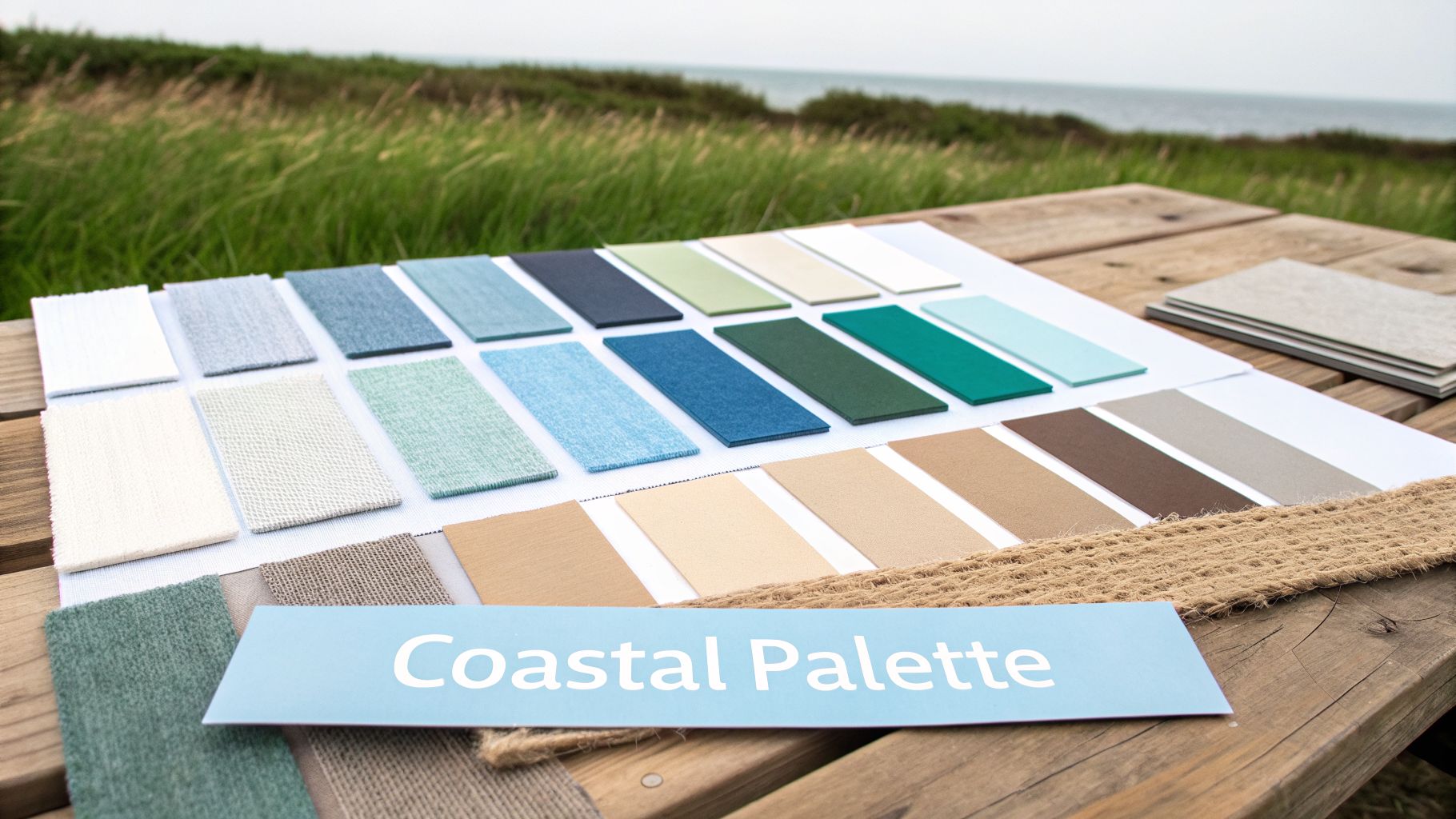
Diverse fabric swatches and color cards displaying a 'Coastal Palette' laid out on a wooden table.

Go For Natural Materials

To nail that authentic Aussie coastal look, stick to furniture made from light-toned timbers, rattan, and wicker. These materials bring in that essential texture and a natural warmth that works perfectly with a neutral colour palette. A great-looking rattan armchair or a light-oak coffee table can become the centrepiece of your living room, inviting everyone to kick off their shoes and unwind.

For fabrics and textiles, natural fibres are always the best choice.

  • Linen: The undisputed champion of coastal fabrics. Think breezy linen curtains that catch the afternoon sea breeze or a plush linen sofa you can really sink into.
  • Jute and Sisal: These are brilliant for rugs. They bring a robust, earthy texture underfoot that instantly grounds the whole space.
  • Cotton: It's soft, breathable, and simple to care for. Cotton is a go-to for cushions, throws, and bedding.

Choosing the right materials is all about creating that tactile, lived-in feel. Below is a quick guide to some of the key players in coastal decor.

Key Materials for Authentic Coastal Decor

Material Common Uses Coastal Appeal
Light Timber Coffee tables, dining sets, bed frames Creates a light, airy foundation that feels clean and natural.
Rattan & Wicker Armchairs, side tables, pendant lights Adds beautiful woven texture and a relaxed, handcrafted vibe.
Linen Curtains, sofa slipcovers, bedding Its soft, breathable quality is the essence of breezy, relaxed living.
Jute & Sisal Rugs, baskets, placemats Provides an earthy, robust texture that connects the indoors with the outdoors.
Cotton Cushions, throws, towels Offers soft, casual comfort that's easy to live with and care for.

By layering these different materials—a smooth timber table, a rough jute rug, and soft cotton cushions—you build a room with genuine depth. It’s this mix of textures that stops a neutral room from feeling bland and makes it feel rich and inviting.

This shift towards natural fibres is part of a much bigger trend in home design. More Aussies are choosing quality over quantity, investing in pieces that are durable and eco-friendly.

We're moving away from throwaway decor and towards items built to last, which is really changing how we approach furnishing our coastal homes. You can get more insights on how sustainability is shaping design in this fantastic read on 2026 Australian interior design trends.

At the end of the day, your furniture and textiles should make your home feel like a permanent, restful escape.

Infusing Personality with Nostalgic VW Accents

Now, this is where the fun really begins—making your coastal house feel like your home. Anyone can have a house with good style, but a home that tells your story? That's something special.

For so many of us, nothing says "Aussie coast" and endless summer road trips quite like a classic Volkswagen. You see them at shows like Volksfest and the VW Nationals, and they just radiate freedom. This is our chance to weave that passion for VWs right into your coastal decor.

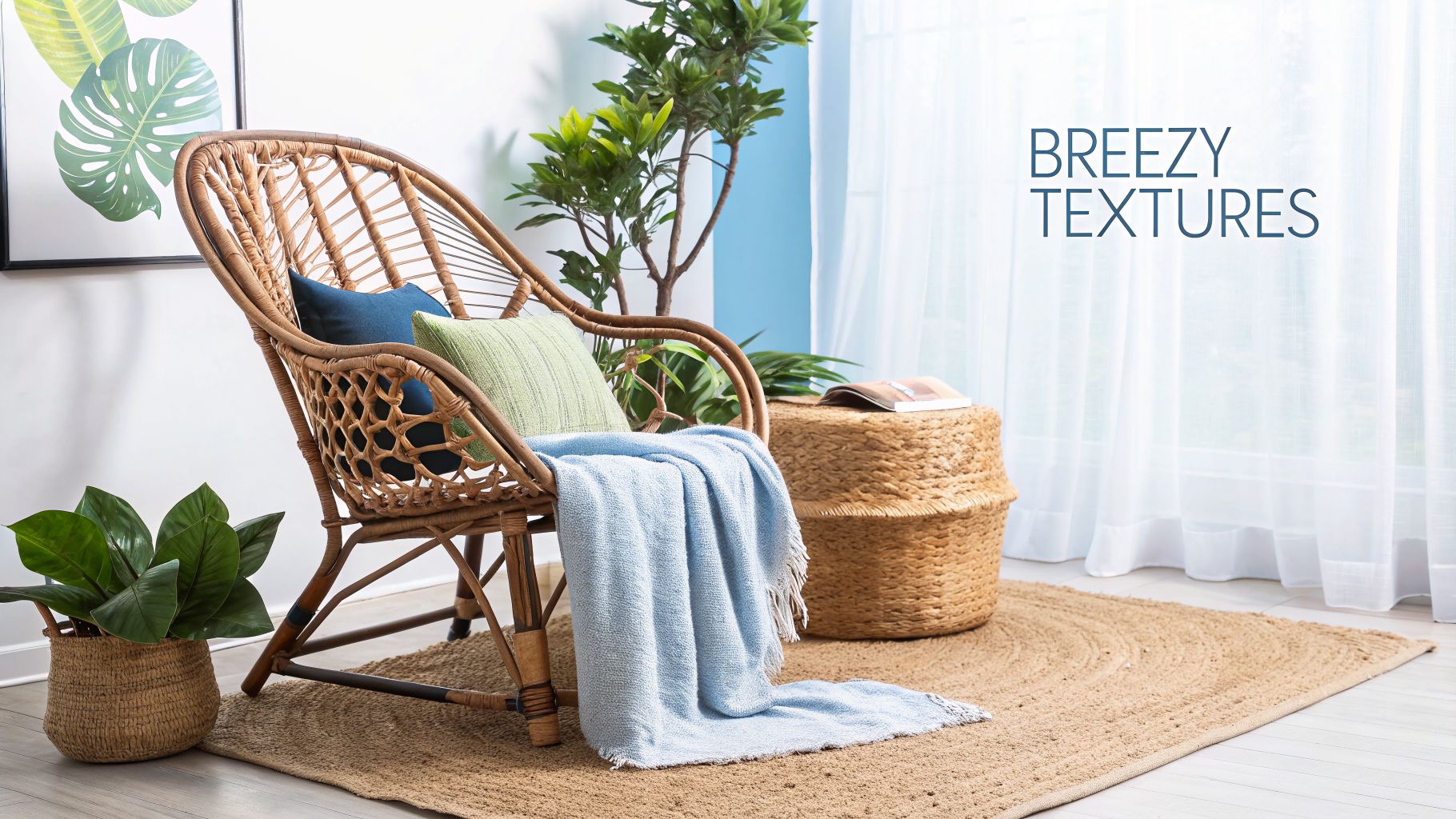
A rattan chair with pillows, a blue throw, and a jute rug in a breezy coastal room.

Don't worry, we’re not turning your living room into a garage. It’s all about adding those tasteful, charming touches that spark a bit of joy and share a piece of who you are. These little accents are the perfect way to blend nostalgia with style, creating conversation starters that feel right at home amongst the driftwood and linen.

Displaying Diecast Models with Style

Your collection of VW memorabilia collectibles deserves to be seen, not hidden away in a box. A beautifully detailed diecast model is a small work of art, and it can inject a huge amount of personality into a room. Let’s move beyond boring display cases and work them right into your coastal theme.

  • Create a Curated Shelfie: Imagine placing a stunning 1962 Kombi Samba Bus diecast model on a floating timber shelf. Surround it with a couple of your favourite books, a small potted succulent, and a piece of bleached coral. The mix of textures and colours will make the model the star.
  • The Centrepiece Statement: Why not build a fantastic centrepiece for your coffee or dining table? Start with a long timber or woven tray, then arrange a few candles, a vase of native grasses, and your favourite Kombi model nestled right in the middle. It’s an instant talking point for guests.
  • A Nook of Nostalgia: Find a small nook or a corner on a bookshelf and dedicate it to your passion. You could group a few different scale models together—maybe a classic Beetle next to a Kombi—to create a mini VW show of your own.

These displays honour the iconic design of the vehicles while adding a playful, retro touch that perfectly complements the relaxed coastal vibe. It's a fantastic nod to surf culture and that feeling of freedom. For more ideas on this, check out our post on the Kombi and surfboard connection.

Beyond the Models: Wall Art and Decor

Beyond the diecast models, you can bring that V-Dub spirit to your walls and surfaces, too. This helps tie the whole theme together without overdoing it. Think about adding a cool, retro-style metal sign featuring a Kombi van in a hallway, or leaning a framed print of a Beetle at the beach against a wall on your console table.

The key is subtlety. One or two well-placed VW pieces in a room are far more effective than a dozen. It makes them feel like treasured items, each with its own story to tell.

By thoughtfully adding these accents, you infuse your home with the unique warmth and nostalgia of the Volkswagen legend. It’s the perfect finishing touch for your coastal look, making it a true reflection of the things you love.

Styling Your Home Room by Room

Let's get practical. It's one thing to yarn about colours and textures, but another to apply these coastal home decor ideas to your space. We'll walk through the house, room by room, and show you simple ways to bring that seaside feel to every corner.

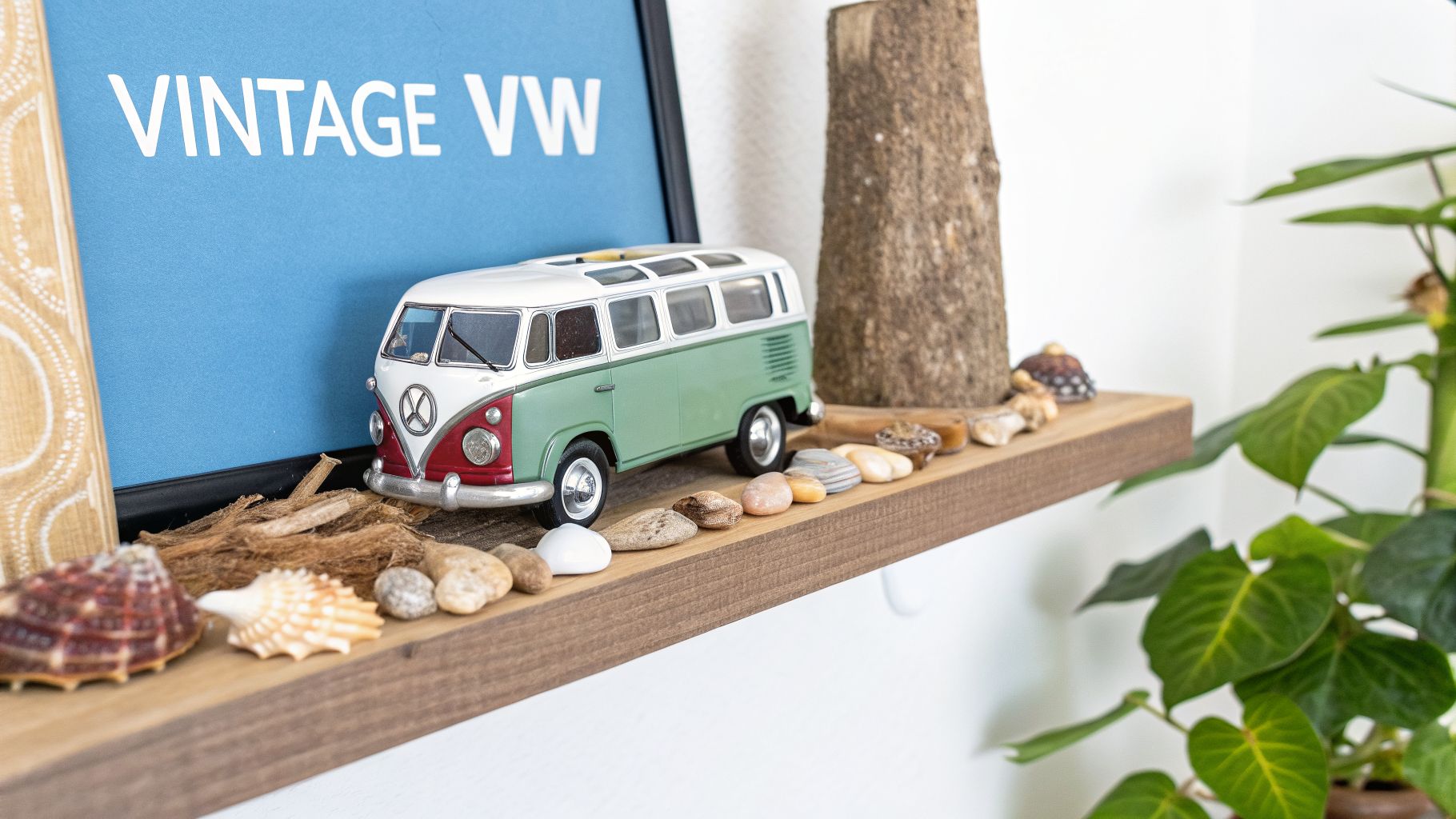
A coastal-themed shelf with a vintage VW van toy, framed art, seashells, and pebbles.

The Living Room An Airy Haven

Your living room is the heart of the home, so making it feel open and inviting is key. Arrange furniture to maximise natural light and pull sofas away from the walls. This creates a more intimate seating area and lets the room breathe.

A large jute rug is your best friend here. It anchors the space, adds texture, and its sandy colour grounds the room in a coastal palette.

The Bedroom A Serene Retreat

This is your sanctuary. Create a restful vibe with soft textures and gentle light. Layer your bed with high-quality linen bedding in warm neutrals like beige, off-white, or a muted olive green for relaxed comfort.

  • Soft Lighting: Use table lamps with woven rattan or fabric shades instead of harsh overhead lights.
  • Minimal Decor: Keep surfaces clear. A stack of books, a ceramic vase, or a framed photo is enough.
  • Personal Touches: Add a beautiful throw blanket to the end of the bed for another layer of texture.

Remember, the goal is calm. Think less about 'decorating' and more about creating a space that helps you unwind.

The Kitchen and Dining Area

You don’t need a full renovation for a coastal kitchen. Small swaps make a big difference. Switch plastic placemats for woven ones and upgrade to simple, earthy ceramic dinnerware. A bowl of lemons on the counter adds a fresh pop of natural colour.

Entryways and Bathrooms

Even small spaces can make a big coastal statement. In the entryway, a timber bench with striped cotton cushions creates a welcoming spot. For bathrooms, focus on textiles—plush cotton towels, a bathmat with a subtle pattern, and hand soap in a glass dispenser.

For an authentic beach shack feel, you could even drape something fun and textural like this decorator fishing net with shells over a hook. It's a simple, effective touch.

Sourcing Decor from Local Australian Artisans

A truly Australian coastal home reflects its environment. The best way to capture that feeling is by featuring pieces from our own local talent. Choosing decor handcrafted here in Australia goes beyond just shopping local; it’s about giving your home a genuine story and sense of place.

This is how you bring real character into your space. Think of a hand-turned bowl made from Tasmanian Blackwood, a textured throw woven from Australian wool, or ceramic mugs from a potter just down the coast. These items have a direct connection to the maker and the landscape that you simply don’t get from mass-produced goods.

Why Local Craftsmanship Matters

Adding locally made items is a simple way to give your coastal decor unique character. These pieces stop being just objects and become a key part of your home’s identity.

There is a definite trend toward genuine Aussie craftsmanship, with designers and homeowners seeking out authentic pieces. The focus is on handcrafted furniture and decor made from sustainable Australian timber, stone, and fabrics. This supports our local artisans and creates homes that feel more connected to our culture. You can see more on this trend toward authentic interiors over at bodabuildinggroup.com.au.

Finding Your Authentic Aussie Pieces

Tracking down these special items is part of the fun. Here’s where to look:

  • Visit Local Markets: Weekend farmers' markets and artisan fairs are goldmines for unique, handcrafted decor.
  • Explore Regional Galleries: Small town galleries often display fantastic work from local woodworkers, ceramicists, and textile artists.
  • Connect Online: Many Australian makers now sell directly through platforms like Instagram or Etsy, giving you a direct link to their work.

By choosing locally sourced decor, you're not just decorating; you're curating a collection of stories. Each piece adds a layer of authenticity that makes your coastal home truly one-of-a-kind.

These handcrafted items pair perfectly with other thoughtful accents. If you need specific pieces to complement your artisan finds or are just looking for ideas, you can browse the great selection in our Coastal Designs & Decor collection. Mixing these elements helps you create a space that’s stylish, personal, and proudly Australian.

Your Coastal Decor Questions Answered

Got a few curly questions about creating a coastal look? No worries. This guide provides direct answers to help you finalise your decor choices.

How Can I Make a Small Apartment Feel Coastal Without Clutter?

For smaller spaces, the focus is on light and simplicity.

Use light, sandy neutral wall colours to create a sense of space. Choose functional timber furniture, ideally with built-in storage. Avoid small, scattered items and instead select a few key statement pieces like a large beach print or a piece of driftwood.

A detailed Volkswagen Beetle model on a shelf offers a point of interest without adding visual clutter.

What Is the Difference Between Coastal and Nautical Decor?

There is a clear distinction between these two styles. Think of 'coastal' as the atmosphere and 'nautical' as a specific theme.

  • Coastal Style: Captures the relaxed feeling of the seaside. Achieved with light colours, natural textures (linen, rattan), and an open, airy layout.
  • Nautical Decor: Uses literal maritime motifs. Features items like anchors, ship wheels, and strong navy-and-white colour schemes.

A coastal home aims for the broader feeling of seaside life, while nautical is more specific.

Is Coastal Decor Expensive to Achieve?

Nah, it can be a very budget-friendly style due to its emphasis on simplicity and natural elements.

Decluttering and applying a fresh coat of sandy-coloured paint makes a significant impact. Look for second-hand timber furniture that can be sanded for a raw, natural finish. Incorporate found objects like shells and driftwood from the beach.

Affordable decor accents, such as VW memorabilia collectibles, are a cost-effective way to complete the look.


Ready to find those perfect finishing touches for your coastal theme? At Volkswagen Memorabilia, we're fellow VW lovers and official Australian importers, so we get it. We stock a huge range of officially licensed VW diecast models and decor that celebrate our iconic beach culture. Because we're local, you get fast shipping on all our in-stock items. Explore the shop today and find your next treasured piece.

Powered by the Outrank tool