

You're standing in front of a blank wall above a beachy console, holding a watery blue paint swatch in one hand and wondering whether seashell décor will look charming or straight out of a dated holiday unit. That hesitation makes sense. The best capiz shell wall art doesn't shout “beach theme”. It adds a soft glimmer, organic texture and a little movement, much like the polished details on a classic VW parked outside a coastal café.
Australian coastal interiors are heading towards warmer neutrals, natural textures and quieter references rather than literal nautical motifs, according to this Australian coastal style guide. That makes capiz a useful bridge between relaxed beach living and a more considered home, particularly when it sits beside timber, linen, rattan or a carefully chosen piece of Volkswagen memorabilia.
Why a Piece of Capiz Shell Wall Art Might Be the Coastal Touch Your Wall Is Missing
You have a blank wall above a console, a surf-coloured Beetle model nearby and a room that feels almost finished. A small shell sunburst can supply the missing detail, catching afternoon light and shifting as you move. It gives the wall depth without adding another strong pattern.
For a restrained result, choose one pearl-toned piece sized to roughly two-thirds of the console width. Keep the surrounding display to two supporting textures, such as timber and linen. Several brightly coloured shells beside anchors, ropes and oversized signs can push the room towards dated, theme-park beach style.
The useful test: If the artwork suggests the coast through texture and light, rather than spelling it out with obvious motifs, it's more likely to feel current.
That balance suits the VW-and-coastal-living mix especially well. Pair one luminous shell design with a vintage-style enamel sign and a small Beetle or Kombi model. The arrangement recalls road trips, beach towns and open-air weekends, while the warmer, quieter direction of Australian coastal design keeps the room contemporary.
Capiz also suits renters and collectors who regularly refresh a display. Its light visual presence helps a room feel open, while a round design can soften a boxy console or echo a Kombi wheel. Check the wall measurements, artwork proportions and hanging method before buying, then consider how daylight will pass across the shell.
What Capiz Shell Actually Is and Why It Shows Up on So Many Walls
Capiz shell comes from the windowpane oyster, Placuna placenta, a translucent shell associated with the Philippines. Its thin, layered structure allows light to pass through softly, which is why artisans have long used it for decorative objects that benefit from a gentle glow.
A historical IUCN review of capiz shell trade records its use as a glass substitute and names lampshades, wind chimes, boxes and other ornamental articles among its established applications. The review also notes that exports of worked capiz shells rose from just over 1 million units in 1976 to nearly 3.5 million in 1979, showing how quickly shellcraft expanded during the late 1970s.
That history explains the material's familiar look. Craftspeople press and overlap thin shell pieces to create panels, petals, rays and layered motifs. The result is a pearl-like lustre that can look milky in shade, warm in lamplight and almost watery when daylight moves across it.
Why designers keep coming back to it
Capiz offers a useful mix of qualities:
- Filtered translucency: Light reaches the shell layers without making the artwork look harsh.
- Natural variation: Subtle shifts in tone stop a pale piece from feeling completely flat or manufactured.
- Low mass: Thin shell layers can cover plenty of visual area without the density of heavy framed décor.
- Flexible colour: Pearl, cream, champagne and softly tinted finishes sit comfortably with sand, warm white, timber and sea tones.
If responsible sourcing matters to you, ask how the shell was obtained, whether it's a food-industry by-product and how the maker handles production. You can also compare the material with other coastal craft options through this guide to seashells for crafts.
Popular Styles, Shapes and Finishes to Know Before You Browse
Shopping becomes much easier once you know what each format does to a wall. A sunburst creates direction and a clear focal point. A panel behaves more like abstract art. A mobile introduces movement rather than a fixed visual block.
| Style | Common Finishes | Best Wall or Room |
|---|---|---|
| Sunburst or starburst | Natural pearl, champagne, gold-backed | Above a console, bedhead or round mirror |
| Floral or blossom cluster | Pale shell, blush, silver-backed | Bedroom, Hamptons-style room or soft coastal nook |
| Panel or framed tile | Matte white, charcoal, navy, metallic backing | Minimalist living room, hallway or dining area |
| Lantern or mobile | Natural pearl, high-gloss, mixed tones | Covered outdoor area, entryway or room needing movement |
Radial shapes for a strong centre
Sunbursts and starbursts send the eye outwards, so they're handy above furniture that already has a clear centre. A round design can soften a rectangular buffet, square artwork or straight-lined bench. It also pairs naturally with a circular mirror, tray or clock.
Softer designs for relaxed rooms
Floral and blossom clusters feel less architectural. Their irregular edges work well where you want a bedroom or reading corner to feel gentle rather than formal. Pale finishes keep the look quiet, while blush or muted colour can pick up cushions and ceramics.
Panels for a cleaner interior
Framed tiles and geometric panels suit a minimalist wall because their boundaries are easy to align. Matte shell tends to look calmer in bright rooms. High-gloss shell throws more light around, which can help a darker wall feel livelier, although it may compete with other reflective surfaces.
Lanterns and mobiles are a different proposition. They add a little motion and, where the design includes lighting, a filtered glow. Treat them as a feature rather than stacking them with several other statement objects.
Choosing the Right Size and Shape for Your Wall
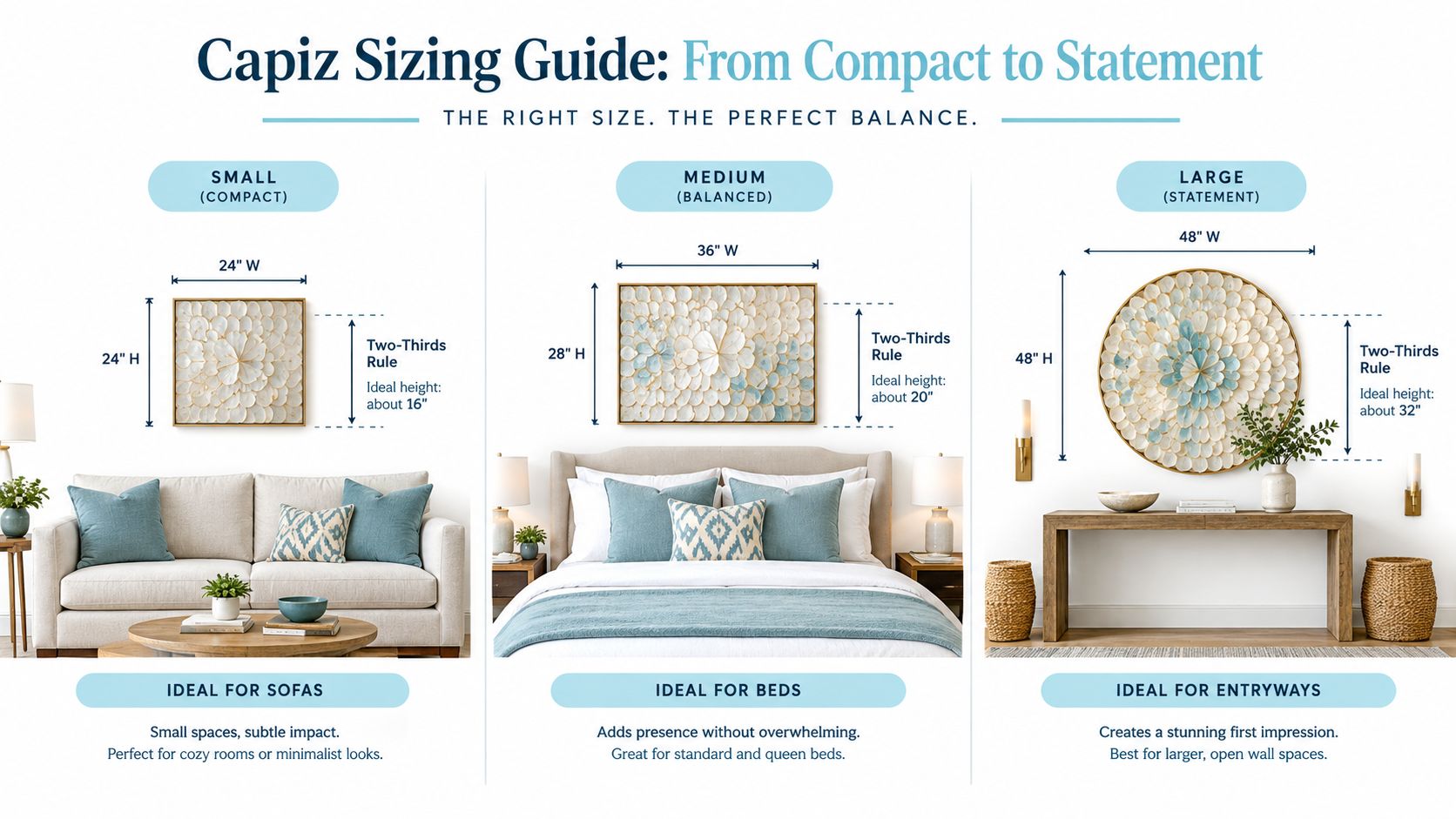
Size can make a beautiful piece look intentional or stranded. Start by measuring the available wall above the sofa, bed or console, then consider artwork that occupies roughly two-thirds to three-quarters of that width. This proportion usually gives the furniture and artwork a visual relationship without making the wall feel crowded.
A petite sunburst may disappear above a large sofa or on a tall stairwell wall. In contrast, a broad floral panel can overwhelm a narrow hallway. The same design may feel perfectly balanced above a low entry table, so judge the piece against the furniture beneath it, not the wall alone.
Match the geometry to the room
Use a rounded sunburst where the furniture feels angular or where a nearby mirror already introduces circular forms. Choose a rectangular panel for a buffet, a long console or a narrow section between windows, where its edges can reinforce the architecture.
For a wide wall, an asymmetrical cluster of two or three smaller pieces can feel more relaxed than one oversized design. Keep a consistent visual thread, such as the same shell colour or backing finish, so the arrangement looks deliberate rather than collected by accident.
Colour matters as much as dimensions. Whitewashed shells can blend into a bright white wall, while champagne, mother-of-pearl or bronze backing gives a pale room clearer definition. Hold a sample, cushion or timber finish nearby before ordering. Capiz changes character with daylight, so a colour that looks subtle online may become more noticeable beside a window.
Hanging and Caring for Capiz Shell Wall Art the Easy Way
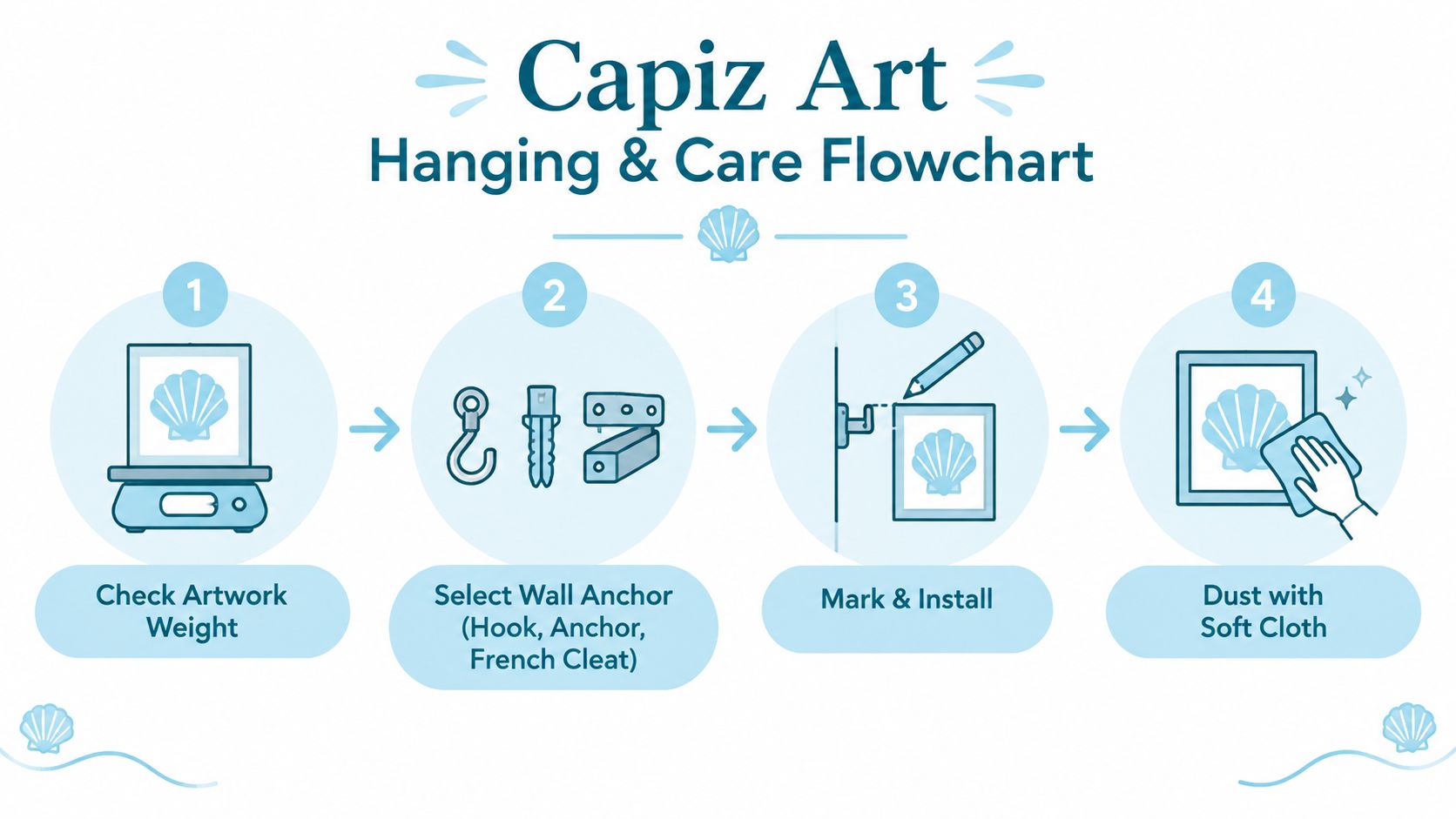
Capiz may look fragile, but a well-mounted piece can be surprisingly practical. The important detail is the backing and hanging hardware, not just the shell. Check the artwork's weight, inspect the fixing point and choose an anchor suited to the wall beneath it.
Plasterboard needs a suitable wall plug or rated hollow-wall anchor. Masonry generally calls for a solid screw and rawlplug. Larger or heavier panels may benefit from a French cleat, particularly if the backing has a broad, stable surface.
A simple hanging routine
- Check the artwork: Look for the fixing point, backing condition and stated weight.
- Choose the anchor: Match the hook, screw, plug or cleat to the wall type and load.
- Mark the centre: Hang the piece around eye level, with the centre commonly sitting near 145 to 155 centimetres from the floor.
- Check the line: Use a small spirit level before tightening everything.
For lightweight pieces, some makers recommend a tiny nail on suitable walls, while smaller capiz decorations may suit removable options such as 3M Velcro or blue tack. Jones & Co describes its Australian capiz pieces as light, supplied with a rear hook and suitable for simple mounting methods where the wall allows it. Their maker notes on capiz shell construction explain how pressed and overlapped shell layers preserve translucency while keeping the hanging load down.
Dust monthly with a soft feather duster or a hairdryer on its cool setting, held well away from the surface. If grime builds up, use a barely damp microfibre cloth and a light touch. Avoid soaking, ammonia, harsh sprays, steamy bathrooms, direct sun and exposed outdoor positions. For more shell-focused display ideas, browse shell wall art.
Styling Capiz Shell Wall Art in a 2026 Coastal or VW-Inspired Home
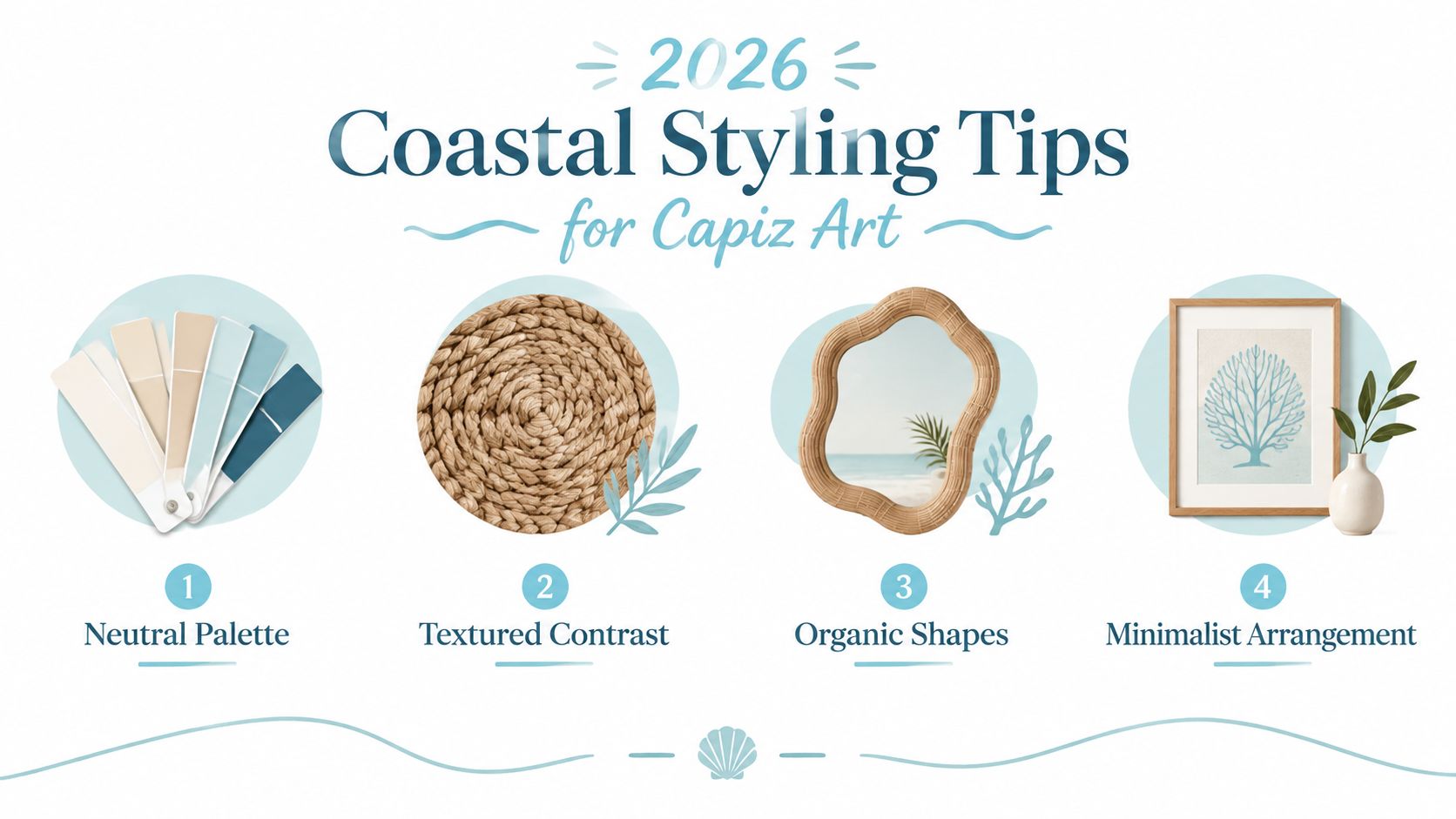
A VW-inspired coastal room works best when the references feel collected, not staged. For 2026, Australian coastal design is moving towards warm whites, sand, soft clay, deep ocean blue and muted sage. Rattan, bleached timber and brushed brass add character, while capiz brings a fine, shifting glow. Use those elements as a backdrop for the car culture and coastal memories already at home.
A pearl capiz sunburst above a low timber console can act as the quiet hero. Below it, place a compact VW model in a surf-inspired colour, a small ceramic bowl and one woven object. The car carries the nostalgia and personality. The shell contributes light and texture without competing for attention.
Keep the palette confident but easy
Warm white walls suit natural pearl and pale champagne finishes. Clay-coloured cushions stop white shell from feeling too cool, while deep ocean blue gives it a clean point of contrast. Muted sage pairs with bleached timber and aged brass, creating an earthy room rather than a collection of nautical props.
Use the same restraint with VW details. A capiz panel can sit beside a vintage-style sign, provided the wall still has open space. One statement shell piece per wall is usually enough. Repeat its rounded or organic shape with a rattan tray, curved lamp or circular mirror, much like matching the curve of a classic Kombi with softer furnishings.
Layering rule: Let the capiz provide shimmer, let timber provide warmth and let the VW piece provide the story.
A boucle cushion, linen curtain or woven basket can continue the textural conversation without introducing another shell motif. The result feels like a genuine home shaped by road trips and coastal living, rather than a themed display. For more ways to combine these references, explore these coastal home décor ideas.
Buying Checklist and Smart Questions to Ask Before You Click Add to Cart
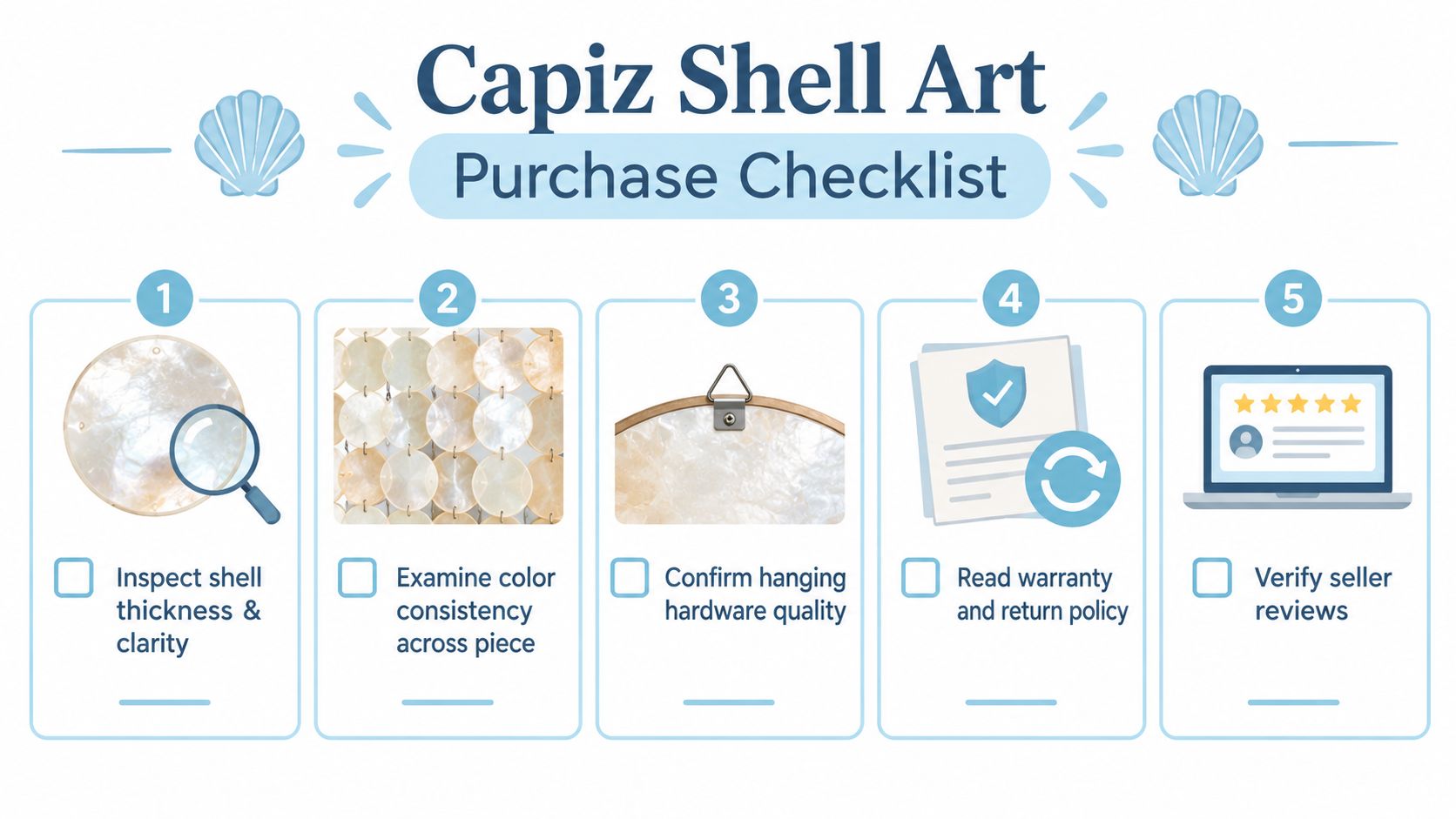
A good listing should help you understand what you're buying before the parcel arrives. Look closely at the shell clarity, thickness and consistency. Natural variation is part of the appeal, but obvious gaps, sharp edges, loose pieces or heavy reliance on surface glue can signal poor construction.
Inspect the frame and backing as carefully as the visible shell. A neat rear surface, secure fixing point and clearly stated indoor-use guidance tell you more than a glossy product photograph. If you're considering a humid room, check whether the piece is suitable for that environment rather than assuming all shell décor handles moisture well.
Questions worth asking the seller
- What is the mounting method? Confirm whether a hook, wire, cleat or other fixing is included.
- How much does it weigh? Match the load to your wall anchor, especially on plasterboard.
- Where can it be installed? Ask whether the artwork is indoor-only, suitable for a covered outdoor area or appropriate for a humid room.
- How was the shell sourced? Look for clear information about origin, responsible collection and whether the shell is a food-industry by-product.
- How is it packed? Fragile shell needs protective packaging, internal padding and a sensible returns process.
- What care instructions come with it? The seller should explain dusting, cleaning and light exposure.
- What happens if it arrives damaged? Read the return and replacement policy before committing.
Capiz is also used beyond small decorative pieces. An Australian Baresque-listed capiz wallcovering reports testing to AS ISO 9705:2003 and achieved Group 2 classification, with specific extinction less than 250 m²/kg. The listing gives a 110 cm width and lineal-metre supply format, showing that shell can appear in wider decorative lining systems where substrate preparation, seams and installation method matter. Read the Capiz Bakbak product listing for the stated technical details, and don't treat a wallcovering rating as automatic approval for a separate piece of wall art.
Classic VW design and capiz shell share an appealing quality. Both reward close looking. The curves, translucent layers and hand-finished details of shell décor can sit comfortably alongside the rounded optimism of a Beetle or the relaxed utility of a Kombi, provided the room has enough restraint to let each object breathe.
If you're building that atmosphere, Volkswagen Memorabilia offers licensed Volkswagen diecast models, Kombi Samba Bus pieces, Beetle models and coastal home décor for a display with genuine character. Visit the shop to find a considered addition for your console, shelf or VW collection, with Australian support and local shopping convenience.