

You've got the family packed, the caravan hitched and a long run of Australian highway ahead. The Amarok looks perfectly placed for the job, especially in V6 form, but the badge and 3,500 kg tow rating don't tell the whole story. Once passengers, towball mass, accessories and camping gear join the party, the ute's legal limits matter more than its brochure shine.
That's the point of this Amarok VW review. I'm looking past the glamour of the V6 and the easy five-star talking points to explain what the current Amarok means for touring families, tradies and buyers who want a premium dual-cab without getting caught short on payload.
Why the Amarok Still Matters on Aussie Roads
At a caravan park on the coast, an Amarok makes sense before anyone opens the bonnet. It has the stance, cabin comfort and towing confidence to handle a family holiday, while the tray swallows the awkward gear that never fits in the boot. Point it towards a dirt road and it feels like a genuine touring tool, not just a polished city ute wearing an adventurous costume.
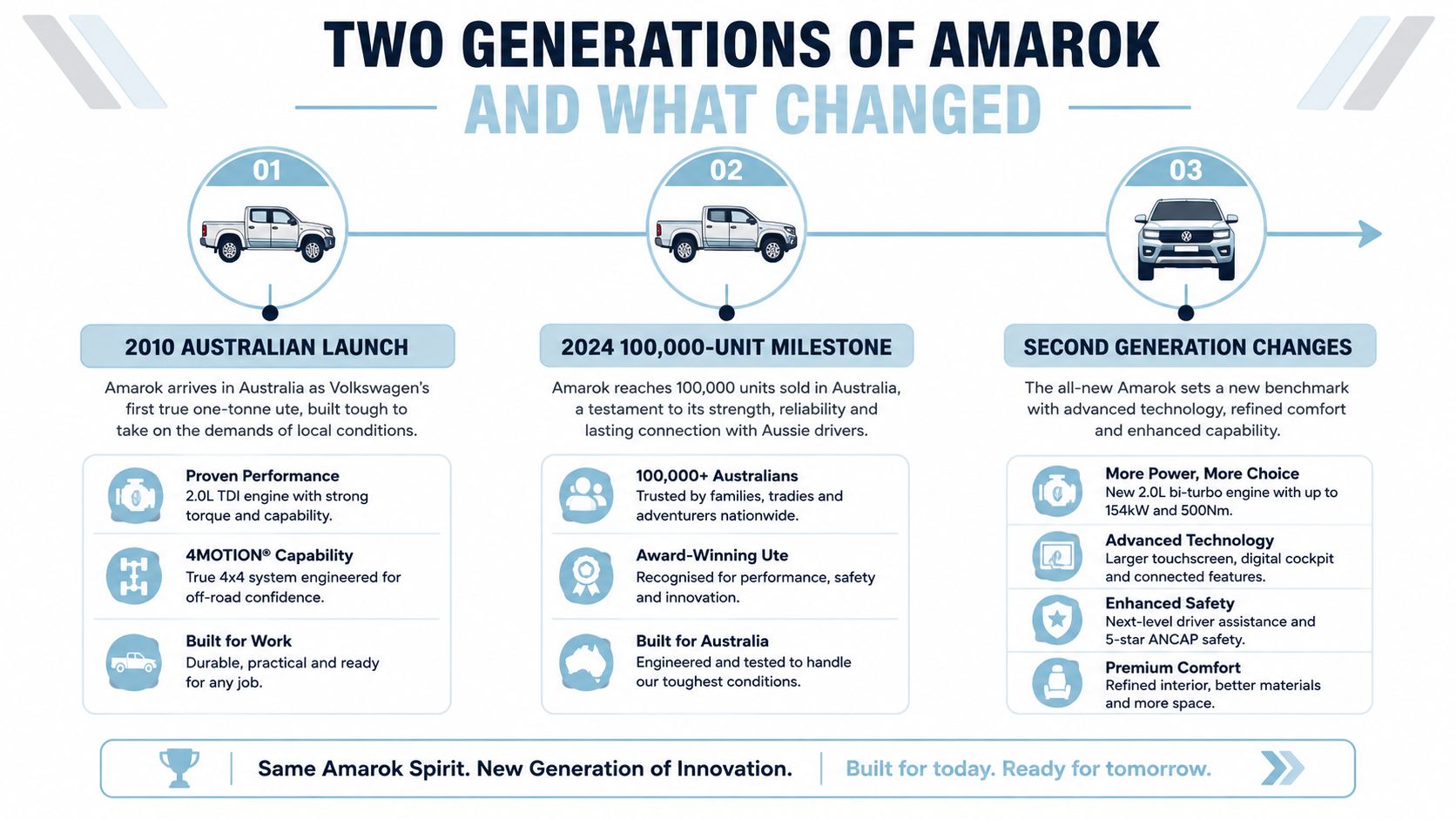
That broad usefulness explains why the Amarok has become such a familiar sight across Australia. Volkswagen launched the nameplate locally in 2010, and by 21 November 2024 it had reached 100,000 Australian deliveries, according to CarExpert's Amarok milestone report. That's a serious local run, built on buyers who wanted something more refined than a basic workhorse without giving up practical towing ability.
A ute with a particular audience
The Amarok isn't the automatic choice for every buyer. Some people want the simplest possible ute, the cheapest tyres and a cabin they won't worry about on a rough worksite. Others want a vehicle that can cover big highway distances, tow a sizeable caravan and still feel civilised when the trip ends.
That second group is where the Amarok earns its keep. It suits the couple crossing the Nullarbor, the family heading inland for a long weekend and the tradie who spends just as much time travelling between jobs as working at them. The appeal is less about being the toughest vehicle in the paddock and more about combining touring comfort, strong towing and premium presentation.
Practical rule: Don't buy an Amarok because the V6 sounds impressive at the dealership. Buy it because its comfort, towing layout and equipment match the way you'll actually use it.
The rest of the decision comes down to limits. A fully loaded caravan, four adults, a bullbar, roof gear and camping equipment can turn a generous-looking ute into a carefully managed weight equation. The Amarok is worth serious consideration, but only if you assess the whole rig rather than admiring the badge.
Two Generations of Amarok and What Changed
The easiest way to understand the Amarok is to split its Australian story into two clear stages.
Step one, understand the original
The first generation arrived locally in 2010 and built its reputation over the following years. Its Australian sales peaked at 9,290 units in 2018, a milestone recorded in CarExpert's local Amarok history. That original model became known for its strong diesel engines, comfortable road manners and distinctly European take on the dual-cab formula.
It also gave the nameplate enough time to become part of everyday Australian ute culture. You'll see older Amaroks at boat ramps, building sites and caravan parks, often still being used as intended rather than hidden away as occasional transport.
Step two, see what the second generation changed
The second-generation Amarok arrived for the current era and moved the model into a more heavily equipped, more polished space. By the end of October 2024, it had delivered 7,297 units in Australia, running about 49% ahead of the same period in 2023, according to the same Australian Amarok sales coverage. That renewed demand shows the newer vehicle hasn't relied on nostalgia for the first generation.
The change is easiest to feel in the cabin and technology. The current model brings a stronger safety package, a more modern interior and a wider spread of variants, from work-focused Core versions to luxury-leaning V6 models. It's still recognisably an Amarok, but it now targets buyers who expect their ute to double as a comfortable family car.
The wider VW Australian story
For VW enthusiasts, the Amarok sits inside a much older local history. Volkswagen began producing the Kombi in 1949, officially known as the Volkswagen Type 2 or Transporter. The first three generations covered 1950-1967, 1967-1979 and 1979-1992, with the early vans using an air-cooled, rear-mounted engine driving the rear wheels, as explained in CarPart's VW Kombi history.
Australia received Type 2 Volkswagens in 1954 as CKD kits assembled at Clayton, Victoria. Volkswagen later took over local assembly there in 1958, while Beetle assembly also began at Clayton in 1954 before ending in 1976, according to Club VeeDub's history and Retro Rides' Clayton account. The Amarok isn't a Kombi, but it carries that same useful, unmistakably VW thread into modern Australian life.
The Trim Ladder from Core to Aventura
The current Amarok range makes more sense when you stop treating the trims as a prestige ladder and ask what each one adds to your routine. Exact equipment can vary by market specification, so treat this as a practical buying guide rather than a substitute for a dealer's current build sheet.
Amarok Trim Ladder at a Glance
| Trim | Cab Style | Key Standard Features | Best Suits |
|---|---|---|---|
| Core | Dual-cab ute | Work-focused equipment and practical cabin layout | Tradies and buyers who value function first |
| Life | Dual-cab ute | More comfort and convenience equipment than Core | Daily drivers wanting a balanced entry point |
| Style | Dual-cab ute | More premium interior presentation and added technology | Families and highway commuters |
| PanAmericana | Dual-cab ute | Adventure-focused styling and higher-grade equipment | Touring buyers who want a tougher visual edge |
| Aventura | Dual-cab ute | Premium V6-oriented specification and luxury touches | Buyers chasing maximum refinement and performance |
The Core is the sensible starting point if the Amarok will spend its week carrying tools, materials or worksite grime. It gives you the basic platform without asking you to pay for presentation features that may get battered.
The Life is the trim I'd look at first for mixed use. It makes more sense when the ute is also the family car, because comfort and convenience matter every day, not just when you're parked outside a café.
Choosing the upper trims
The Style moves the Amarok closer to a premium SUV with a tray. It suits owners who spend long hours behind the wheel and care about interior finish, infotainment and the small upgrades that make a highway stint less tiring.
The PanAmericana is aimed at buyers who want touring character and a more distinctive look. It's the choice for someone who visits the coast, camps regularly and wants the ute to feel special without necessarily choosing the most expensive option.
The Aventura is the emotional purchase. It brings the strongest presentation and the V6 appeal, but it also deserves the closest payload check because high equipment levels can reduce the useful carrying margin when towing. Don't assume the top trim is automatically the best touring trim. For many owners, Life or Style will provide the better balance.
Towing and Payload on Australian Terms
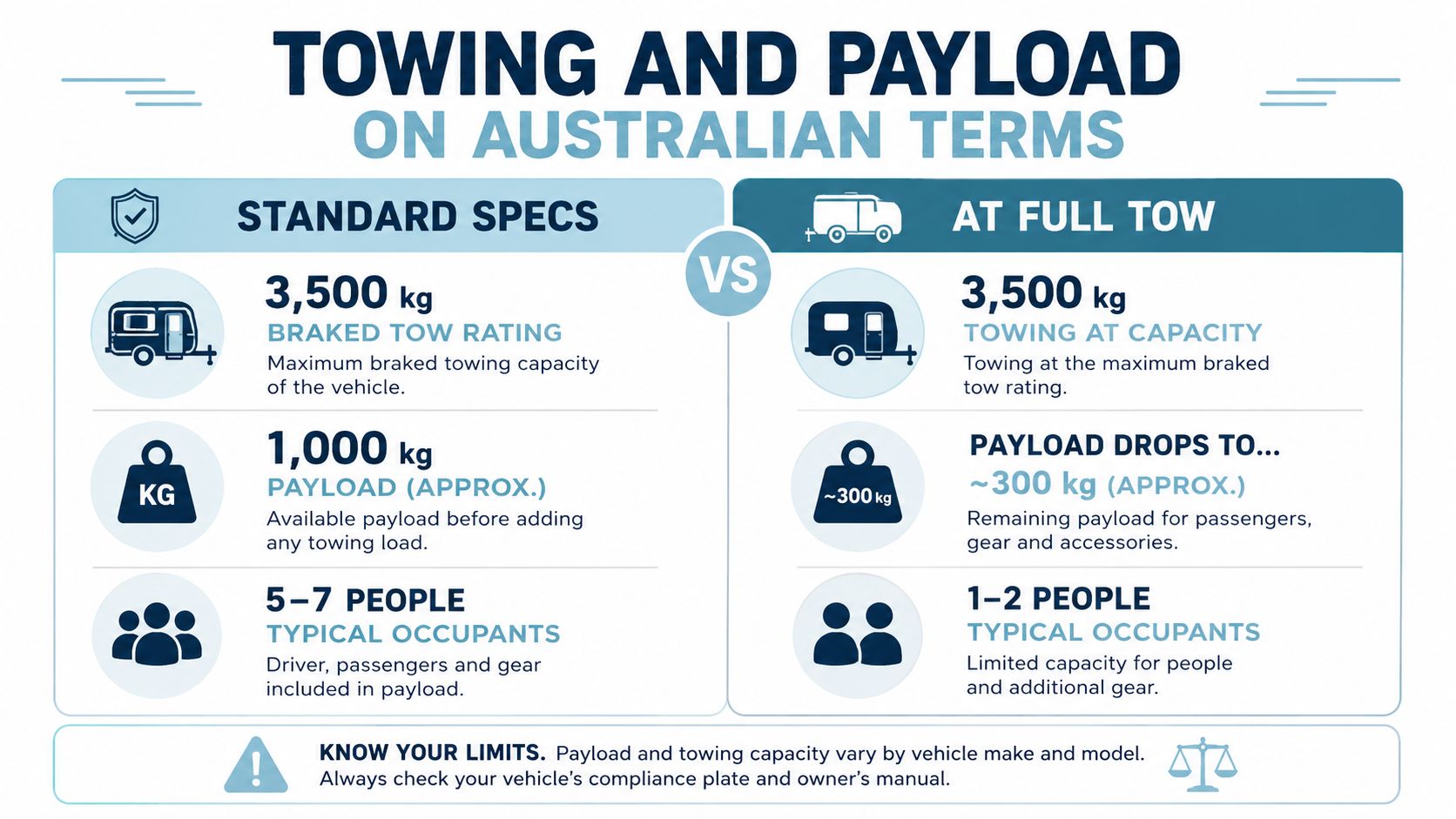
Every current Australian Amarok variant is rated to tow 3,500 kg braked, according to Volkswagen Australia's Amarok specifications. That headline figure is useful, but it's also where too many reviews stop.
At full tow, available payload varies from 401 kg to 540 kg, depending on trim, and the Aventura has the lowest payload at full tow among the listed variants, as shown in LoadMate's Australian Amarok towing data. That remaining allowance must cover occupants, luggage, accessories, towball download and anything carried in or on the ute.
What disappears from the payload
Start with the holiday kit:
- Towball download: The caravan's downward load acts on the Amarok and uses part of its payload.
- Passengers: Adults and children count, even when they're sitting inside the comfortable cabin.
- Accessories: A bullbar, winch, towbar, roof rack and touring hardware all consume capacity.
- Fuel and luggage: Food, water, recovery gear, bikes and camping equipment add up quickly.
- Tray cargo: The ute may look empty while still carrying a substantial load beneath a cover.
Gross combined mass, or GCM, is the other figure that matters. It governs the combined legal mass of the Amarok, caravan, passengers, fuel and cargo. Volkswagen states that V6 variants can combine the tow rating with a GCM of up to 6,400 kg, giving useful legal headroom for a large caravan while still carrying people and gear, as outlined in Volkswagen Australia's official model information.
Before buying: Get the loaded caravan weighed, check the towball mass, then calculate the Amarok's payload after accessories and passengers. A tow rating alone won't tell you whether your family setup is legal.
A practical example makes the issue clear. If your chosen trim leaves 401 kg at full tow, that allowance can become tight once a family, bullbar, towbar and touring equipment are included. A trim with more remaining payload may be the wiser caravan choice, even if it gives up some luxury equipment.
For work use, make sure your load is restrained properly. Quality Amarok tie-down rails can help organise tray cargo, but they don't increase the vehicle's legal payload. Treat load restraint and weight management as separate jobs.
Engines, Ride and What the V6 Really Feels Like
The local buying pattern tells you how strongly Australians respond to the V6. The Amarok's turbo-diesel V6 has been reported to outsell the cheaper four-cylinder by roughly 9:1 in Australian sales patterns, according to CarExpert's Amarok sales analysis.
That preference makes sense on the road. The V6 feels relaxed when you're overtaking a road train, climbing a long grade or pulling a caravan away from a roundabout. Its low-down shove means you don't need to work the engine hard, and the eight-speed automatic keeps the drive smooth during highway cruising.
The ride is another reason people step up from a basic ute. The Amarok settles more convincingly over corrugated dirt and feels less agricultural on long bitumen runs. It still has the suspension compromises of a vehicle designed to carry loads, but the overall impression is more composed than the cheapest dual-cab alternatives.
When the four-cylinder makes more sense
The four-cylinder isn't a foolish choice. If your Amarok mostly handles school runs, commuting, light tray work and occasional towing, it can deliver the practical shape and cabin without the V6 premium. Buyers who rarely tow a large caravan may prefer putting the saving towards a bullbar, suspension preparation, quality tyres or touring equipment.
The V6 earns its keep when your use is demanding and regular. Choose it for sustained towing, frequent highway work, heavy touring or because you value effortless performance. Don't choose it because every other owner at the dealership did.
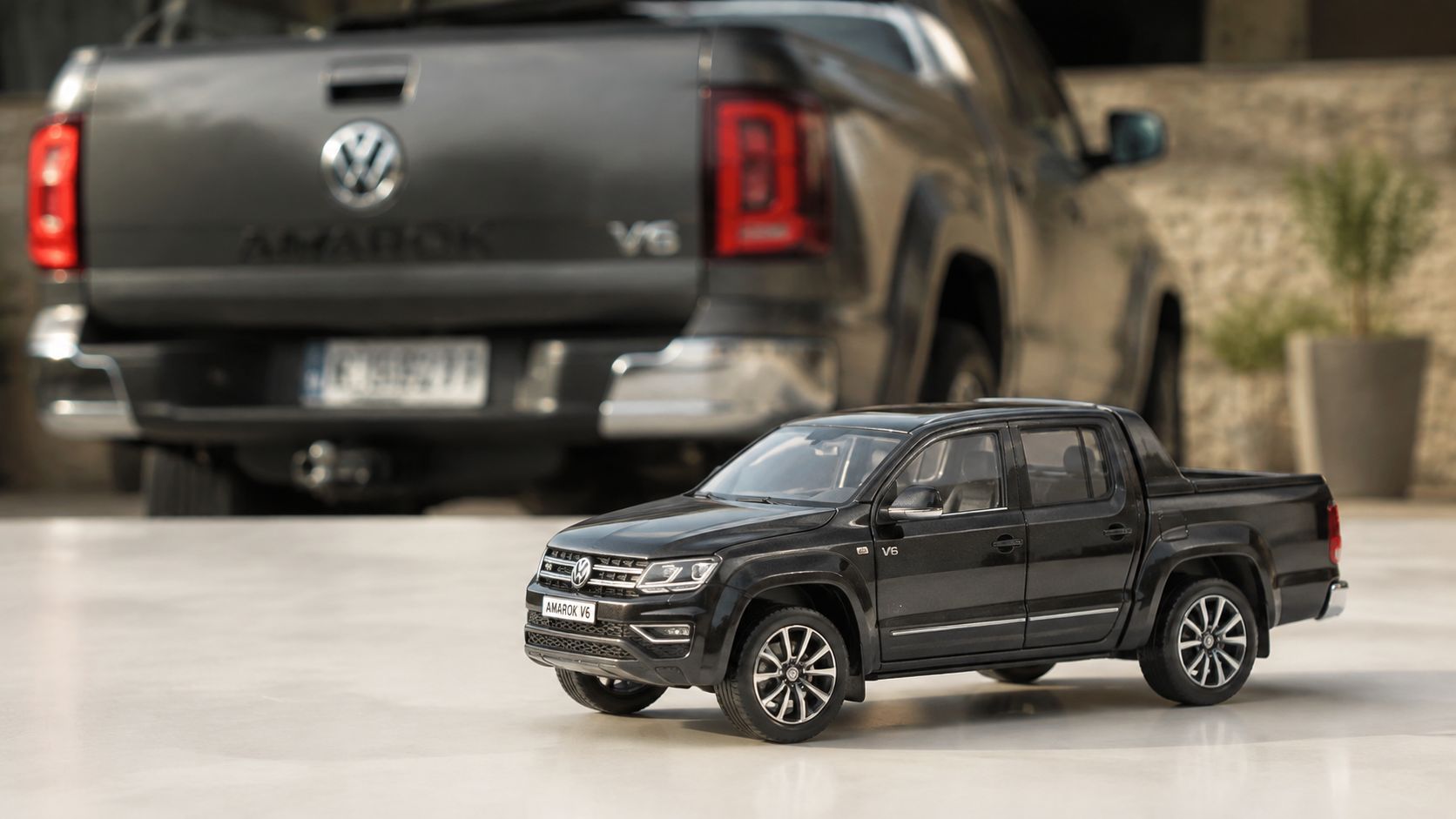
For a visual sense of the model's appeal, this Amarok V6 video is best watched after you've decided whether your own driving needs the extra engine.
Diesel ownership also requires sensible use. Buyers comparing engine choices should understand the role of a diesel particulate filter and make sure their driving pattern suits a modern diesel rather than relying on short, cold trips.
Safety, Tech and How It All Helps in Real Driving
The current Amarok carries a five-star ANCAP rating based on 2023 testing. ANCAP records 86% adult occupant protection, 93% child occupant protection, 74% vulnerable road user protection and 83% safety assist, with the assessment applying to dual-cab variants sold from May 2023, as detailed in ANCAP's Amarok safety rating.
Those figures matter because the Amarok often works as the family car. A high child occupant score is more relevant when you're loading school bags and booster seats than when you're admiring the ute at a show.
Safety features that earn their keep
The standard package includes nine airbags, autonomous emergency braking, adaptive cruise control, lane-keep assist and blind-spot monitoring, according to Australian Amarok tow-test coverage.
Each system has a different job:
- Autonomous emergency braking: Helps respond when traffic stops unexpectedly.
- Adaptive cruise control: Reduces fatigue during long highway sections by managing following distance.
- Lane-keep assist: Provides steering support when the vehicle begins to wander.
- Blind-spot monitoring: Gives extra warning when a vehicle sits beside the ute, particularly useful with a caravan attached.
The technology doesn't replace attention. Lane assistance can feel intrusive on narrow country roads, and sensors still need to be kept clean after a dusty track or wet-weather run. Good systems should support the driver, not encourage anyone to switch off their judgement.
Cabin technology in daily life
The modern dashboard makes the second-generation Amarok feel far removed from the original workhorse formula. The screen, driver display and controls give the cabin a more passenger-car feel, which helps on a long trip but can also mean more menus and electronic dependences than some traditional ute buyers want.
My recommendation is simple. Take an extended test drive, not a quick loop around the dealership. Adjust the seat, connect your phone, test the camera views and see whether the controls make sense while you're wearing work gloves or managing children in the back.
Reliability and Ownership Costs
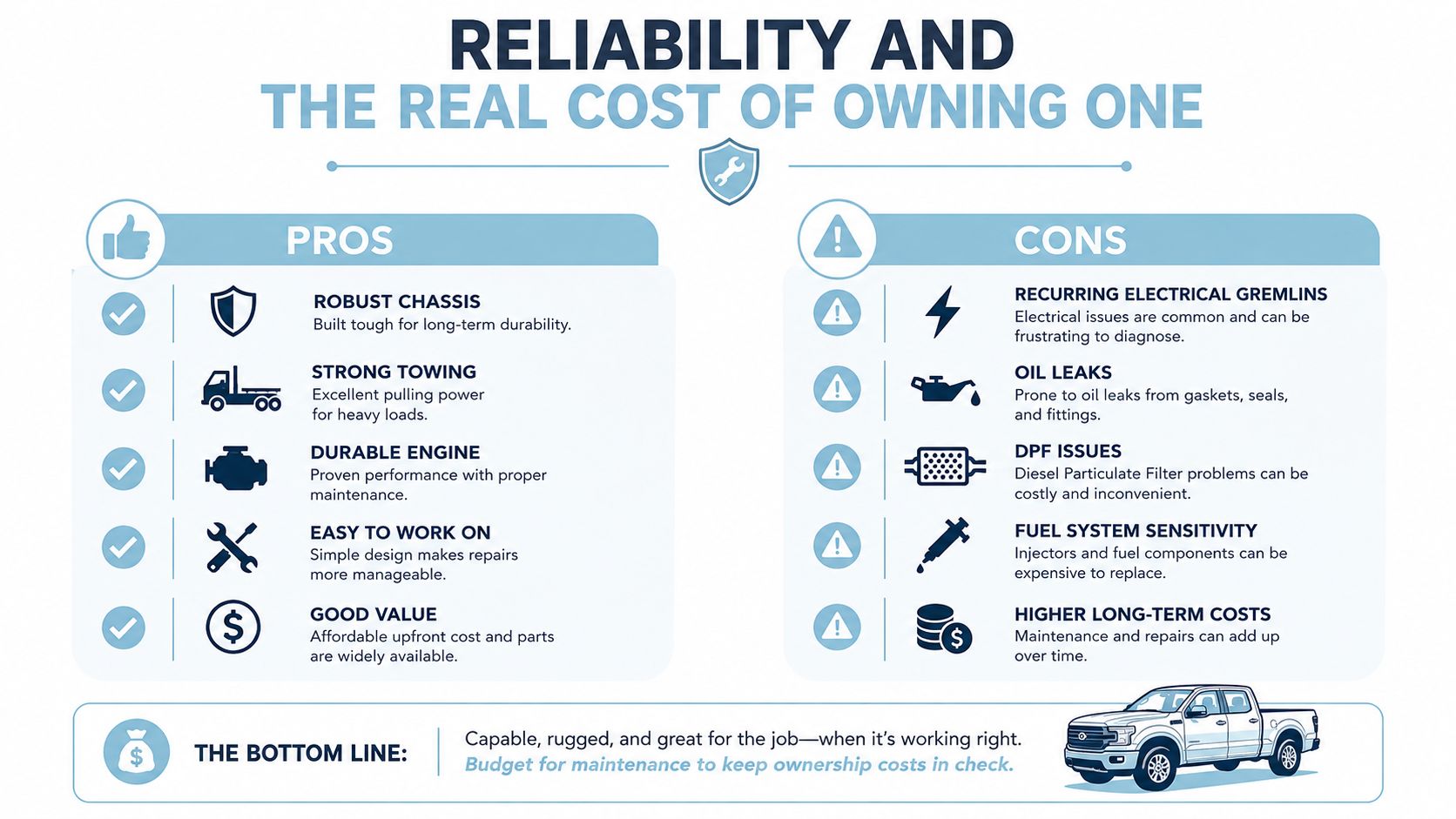
A polished cabin and premium badge do not guarantee trouble-free ownership. Owner feedback includes complaints about electrical issues, oil leaks and DPF problems, alongside praise for comfort, in the Australian first-drive discussion of the performance-oriented model by Chasing Cars.
That record does not condemn every Amarok. It does mean you should keep a repair buffer, read the warranty terms carefully and demand a proper service history before buying used. I would walk away from a ute with vague answers, missing invoices or unexplained warning lights.
Costs that can catch you
The V6 diesel has more mechanical and emissions hardware than a basic four-cylinder ute. Servicing, fluids, filters, tyres and diesel-system repairs can all push up the budget, particularly after fitting a bullbar, touring load or larger accessories. Heavy towing adds wear that headline performance figures rarely show.
Before signing, ask the dealer:
- What's covered: Confirm warranty limits and exclusions in writing.
- What's scheduled: Request the full service timetable and likely consumables.
- What's included: Check whether roadside assistance or service plans form part of the offer.
- What's been repaired: On a used vehicle, look for documented work around electrical systems, oil leaks and DPF operation.
- What's modified: Aftermarket wiring and accessories can complicate fault diagnosis.
Strong demand does not guarantee low ownership costs. A sought-after ute still needs careful maintenance.
The chassis and towing ability are genuine strengths, yet the ownership bill involves more than engine work. Electronics, emissions equipment and accessory installations deserve the same attention. If you maintain an older VW or need compatible VW parts in Australia, check the vehicle identification details and confirm suitability before ordering.
Who Should Buy One and Where VW Pride Lives On
Buy the Amarok if you want a dual-cab that works hard without making every trip feel like work. It's a strong fit for touring families, grey nomads, caravan owners who understand payload limits and premium ute buyers who want an alternative to the usual Japanese defaults.
The V6 is worth the extra spend when you tow regularly, cover big distances or want relaxed performance with a heavy load. For mostly urban driving and moderate tray duties, the four-cylinder is the sharper financial decision. A mid-range trim may also suit you better than an Aventura if carrying capacity matters more than luxury presentation.
Who should walk away
Choose something else if your priorities are absolute simplicity, the lowest possible running costs or maximum payload with every accessory fitted. Buyers who want to load a large caravan, a full family, a heavy bullbar and plenty of touring equipment without carefully checking the figures may find the Amarok too demanding.
The same goes for buyers who rarely use a ute. A wagon or SUV may offer better everyday space and easier parking without asking you to manage tray weight, towball mass and GCM.
For VW enthusiasts, the Amarok still feels connected to a much bigger story. It shares the badge with the Beetles and Kombis that built communities around weekend cruises, restoration projects and sunny show days. The old Kombi's Australian assembly history, including the Clayton years, gives local VW culture a depth that goes well beyond any single model.
That's why a well-chosen Volkswagen Beetle model, a classic Kombi Samba Bus diecast or another piece of VW memorabilia can sit comfortably beside a modern Amarok in the garage or study. Collectors can choose a 1:18 model, usually around 24-30 cm long, or a more compact 1:24 model, generally around 16-20 cm long, using the practical scale guidance in this diecast model size guide. The right scale depends on your shelf, your existing collection and whether you want one centrepiece or a whole little VW gathering.
Volkswagen Memorabilia celebrates the same Beetle, Kombi and Samba Bus spirit that makes the Amarok more than just another ute, with licensed diecast pieces and VW-themed gifts for collectors and fans. Visit Volkswagen Memorabilia to browse VW Kombi diecast Australia favourites, Volkswagen Beetle models and Volkswagen diecast models for sale, with local stock and fast shipping for Australian buyers.