

A late afternoon run along the Australian coast has a familiar soundtrack: tyres on bitumen, surfboards secured behind the seats, and the promise of a quiet campsite near the water. For many VW enthusiasts, that dream began with a Beetle or Kombi. Today, the VW Crafter van camper offers the same sense of escape with far more room, load capacity and off-grid potential.
The appeal isn't only practical. It's the meeting point between modern touring and the heritage that made the Volkswagen name special here, from the Kombi's surf culture to the Beetle's unmistakable shape. Before you choose a layout or order cabinetry, though, you need to understand what makes an Australian Crafter conversion work, and where the compromises appear.
Why the VW Crafter is the Ultimate Aussie Camper Base
A classic Kombi parked near a beach still draws a crowd because it represents freedom in its purest form. Volkswagen Australia traces the Type 2 concept back to a sketch made by Dutch businessman Ben Pon in 1949, with the Kombi later becoming part of Australian music festival and surf culture in the 1960s and 1970s. That history gives the modern Crafter an emotional head start. It may be larger and more technical, but it belongs to the same family of road-trip ideas. Volkswagen's Kombi heritage story captures that local connection well.
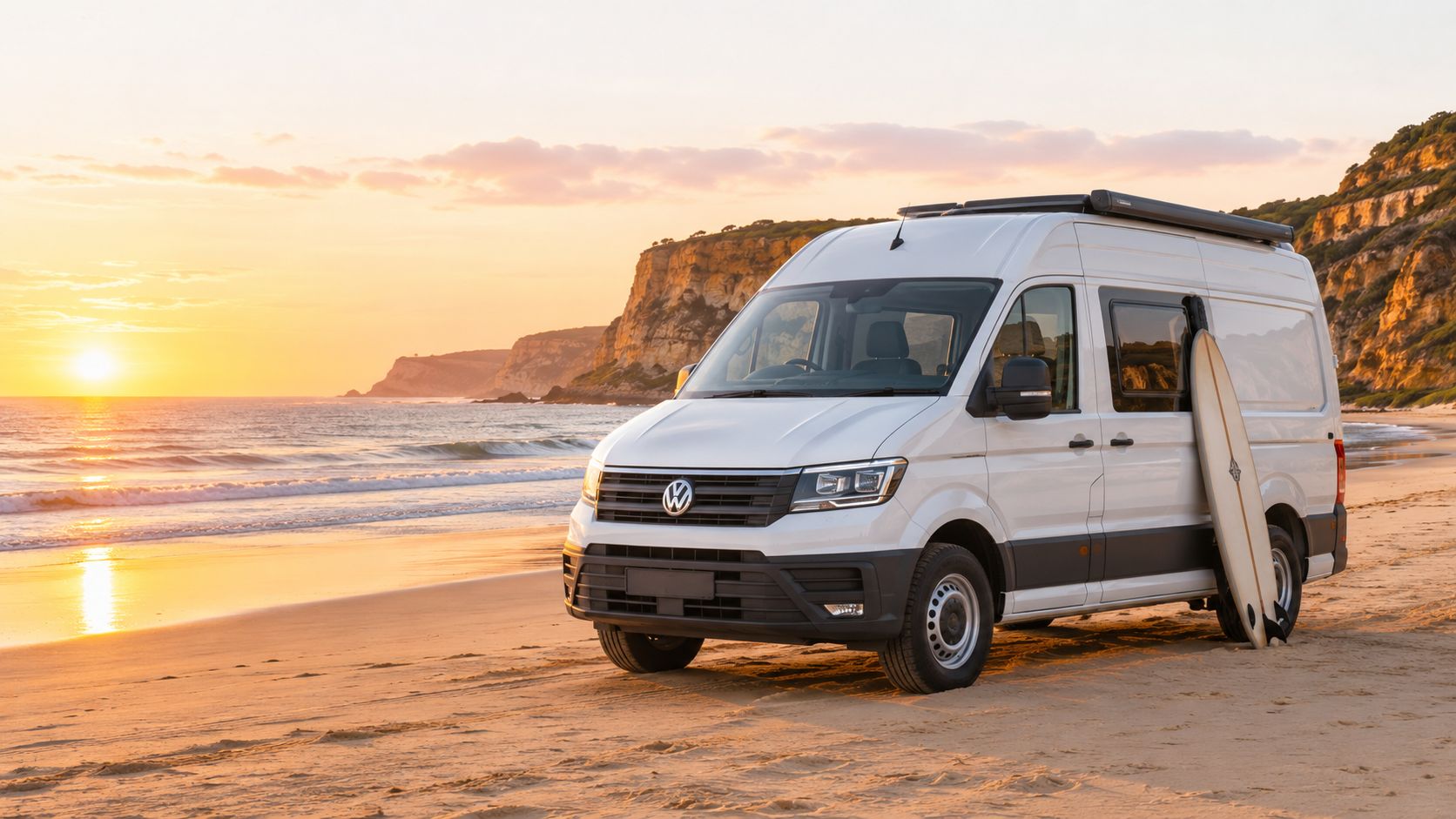
The difference is that a Crafter can support a proper touring interior rather than a clever compromise. Volkswagen Australia lists cargo volumes reaching approximately 18.4m³, depending on wheelbase and roof height, while the Australian Kampervan uses a long-wheelbase Crafter 35 all-wheel-drive platform. That gives builders room to consider a fixed bed, internal storage, a kitchen module, larger electrical equipment and space for wet-weather living. Volkswagen's Crafter specifications show why the platform attracts professional converters.
The powertrain also suits the Australian touring brief. The Kampervan brochure specifies a 2.0L bi-turbo TDI 410 producing 130kW at 3,600rpm and 410Nm at 2,000rpm, paired with 4MOTION all-wheel drive and an eight-speed automatic. That combination isn't a promise that the van will float over every track. It is a useful foundation for gravel roads, wet campsites and access routes where traction matters more than outright speed.
The size brings genuine benefits
A Crafter works best for owners who want to spend meaningful time inside the vehicle, not just sleep in it between drives. The flat load floor helps designers create practical furniture runs, while the available wheelbase and roof choices make the interior feel more like a compact motorhome than a packed-out people mover.
It also gives you room to carry the equipment that defines an Australian escape:
- Surf equipment: Boards, wetsuits and drying space need careful separation from bedding and food.
- Touring hardware: Recovery equipment, outdoor chairs and spare supplies occupy more room than a weekend checklist suggests.
- Off-grid systems: Batteries, inverters, water equipment and solar hardware all add mass as well as capability.
The large body isn't effortless, though. A long-wheelbase build can be around 6.8 metres long, and a finished camper is less convenient in tight urban parking areas than a Transporter or smaller van. The reward is a more comfortable base for extended travel. The cost is that you need to drive, park and plan it like a sizeable motorhome.
Practical rule: Choose the Crafter because you'll use its interior volume, not because a bigger van sounds impressive in a showroom.
For anyone who wants to connect modern travel with classic VW culture, a Crafter camper conversion makes a satisfying centrepiece. It carries the spirit of the old Kombi into a vehicle designed for contemporary Australian distances.
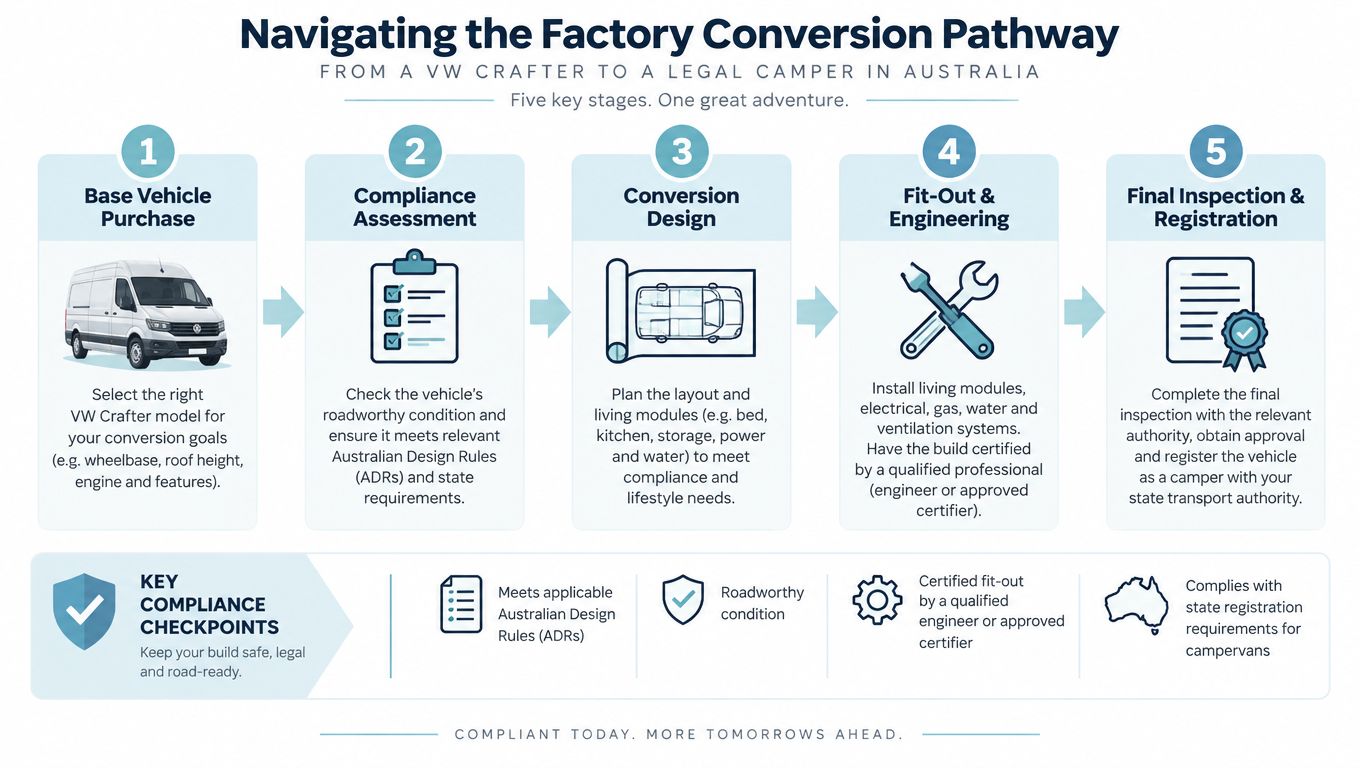
Navigating the Factory Conversion Pathway
A legal Australian camper build is decided before the first cabinet is cut. The vehicle must be assessed as one finished package, including furniture, water, batteries, appliances, passengers and touring equipment. Treating the commercial van and living fit-out as separate projects is a reliable way to create payload trouble.
The factory pathway begins with a Volkswagen Crafter TDI410 4MOTION delivery van. It is prepared for the weight and electrical demands of its final role before travelling to Jayco's Dandenong, Victoria factory for the turn-key camper fit-out. That staged process gives the build a clearer compliance trail than adding equipment piece by piece.
Start with the mass and electrical foundations
The base vehicle is upgraded to a 4300kg GVM, then receives a second vehicle battery and a 250A alternator before the habitation conversion starts. The sequence matters. Load-carrying capacity and charging provision are established before cabinets, tanks and appliances add weight. The Australian Crafter review explains this factory workflow and its purpose.
A practical build sequence is:
- Select the base vehicle. Confirm the wheelbase, drivetrain and roof configuration before drawing the furniture plan.
- Assess compliance needs. Identify roadworthiness, Australian Design Rules, electrical, gas and engineering requirements for the completed vehicle. Review the full van-for-conversion pathway before construction begins.
- Plan the interior around mass. Keep batteries, water tanks and kitchen equipment low, secure and sensibly positioned.
- Complete the professional fit-out. Use appropriately licensed trades for living modules, wiring, appliances and safety systems.
- Inspect the completed camper. Check the vehicle, supporting documents and registration requirements before a long tour.
This order addresses the common payload trap: an empty Crafter can appear to have plenty in reserve, while the completed camper has much less capacity for useful touring load. Water, bicycles, recovery equipment and personal belongings can consume the remaining allowance quickly.
Compliance isn't a paperwork afterthought
Australian conversion businesses commonly assess roadworthiness, ADR compliance, licensed electrical and gas work where applicable, plus engineering certification. Requirements vary between states and territories and depend on the work performed. Confirm the applicable registration pathway before construction, not when the van is already finished.
Fuel use also changes with the loaded vehicle and the route. Australian testing recorded 10.2L/100km for the Style and 12.1L/100km for the All-Terrain, while another test recorded 9.9L/100km and 12.9L/100km in comparable conditions. Those figures support a touring budget based on the finished van, terrain and drivetrain, rather than an empty commercial-van estimate. The Gen 2 Australian review provides the relevant launch and model context.
A weighbridge visit with the camper packed for a real trip is one of the best final checks. Weigh it with water, passengers, bikes and the gear you load for a typical trip. The diecast-Crafter appeal may start with a miniature on a shelf, but the full-size van earns its place on Australian roads only when its legal margin survives the load.
Planning Layout and Insulation for Australian Climates
Good insulation does more than keep a van warm in a southern winter. It slows heat entering through the roof and body during a hot northern afternoon, reduces condensation and makes the interior easier to live in when the weather turns. The right approach starts with treating the Crafter as a metal shell that needs careful thermal and moisture management.
Build the shell before the furniture
Use insulation materials suited to vehicle applications and install them without blocking drainage paths, service access or factory safety systems. Pay close attention to roof panels, sliding-door cavities, rear doors and the floor. A partial treatment can still help, but gaps around metal sections become uncomfortable hot or cold spots.
The floor deserves particular attention because it affects both comfort and storage. A durable insulated floor can make the cabin feel less harsh underfoot, but it also adds material and therefore weight. That mass needs to be included in the finished build calculation, just like cabinetry and battery equipment. A proper van insulation approach should balance thermal performance, moisture control, durability and payload.
Ventilation belongs in the same conversation. Insulation without airflow can trap moisture from cooking, wet clothing and sleeping. Plan controlled ventilation, window coverings and cooking extraction together, rather than adding a fan only after condensation appears.
Let the flat floor guide the layout
The Crafter's flat load floor and substantial cargo volume give designers more freedom than a compact camper, but extra space can encourage oversized furniture. The most successful layouts leave clear access through the cabin and give every major item a job.
A useful planning sequence is:
- Mark the bed first. Decide whether it runs lengthways, converts from a dinette or sits above a storage garage.
- Reserve service zones. Keep batteries, fuses, water systems and chargers accessible for inspection and repair.
- Protect the central walkway. A narrow but usable path is more valuable than an extra cabinet that makes daily movement awkward.
- Separate wet and dry gear. Give wetsuits, muddy boots and recovery equipment a ventilated zone away from bedding.
- Sketch realistic body movement. Tape the proposed furniture footprint on the floor and test how two people cook, dress and pass each other.
The Functional Control Unit is important here. Volkswagen describes it as supporting safe integration of additional electrical systems by professional converters. That doesn't remove the need for sound electrical design, correct protection or service access, but it gives a qualified builder a better base for integrating camper equipment.
A good Australian layout feels calm when the weather is poor. You can make breakfast without moving half the van, dry clothing without soaking the bed, and reach the electrical system without dismantling a cupboard. Those everyday details matter more than a long equipment list.
Evaluating Factory Options Versus Independent Builds
The factory-backed Kampervan and an independent Crafter conversion suit different owners. The factory route brings a coordinated vehicle, conversion and support pathway. An independent build offers more personal control, while the owner manages the base van, trades, engineering, compliance and final documentation.
The Australian pricing spread makes this a practical decision, not only a styling choice. Factory-backed 2026 listings place the Kampervan Style at around $174,990 and the All-Terrain at around $184,990, while some 2026 showrooms list a base commercial Crafter from about $68,600 before conversion costs. The Australian Crafter market overview shows the broad gap between a commercial base vehicle and a finished factory-backed camper.
VW Crafter Camper Build Paths Comparison
| Build Path | Pros | Cons | Price Range AUD |
|---|---|---|---|
| Factory-backed Style | Coordinated turn-key package, professional conversion pathway and clear starting specification | Less freedom to alter the layout and equipment | Around $174,990 (2026 listings) |
| Factory-backed All-Terrain | 4MOTION touring focus, finished interior and factory-backed presentation | Higher purchase price and limited personalisation compared with a ground-up build | Around $184,990 (2026 listings) |
| Independent conversion | Custom bed height, kitchen, storage, power system and finish | Owner manages compliance, trades, quality control and budget discipline | Base commercial Crafter from about $68,600 in some 2026 showrooms, before conversion work |
A commercial base price is not a finished-camper comparison. Engineering, insulation, furniture, batteries, water systems, appliances, suspension work, registration and insurance all affect the final figure. The result depends on the build's scope and quality, but the payload calculation matters just as much as the purchase price. Heavy fit-outs can leave less capacity for passengers, water, bikes and touring equipment, so every mass calculation and certification needs checking before the van reaches Australian roads.
The factory route suits owners who value compliance certainty, an integrated handover and less project management. An independent builder suits owners with a specific surf, work or long-stay layout that standard options cannot provide, provided they are ready to verify certification, axle limits and the finished mass. That hands-on choice also fits the community's diecast nostalgia: the familiar VW shape can be the starting point for a full-size van with a genuinely personal purpose.
Mastering Storage and Sleeping Solutions
A Crafter can carry plenty, but that doesn't mean it should be packed without a system. Rough tracks turn loose objects into projectiles, while an overloaded rear garage can easily compromise handling and legal payload. The best storage plan keeps heavy equipment low, restrained and close to the vehicle's central mass.
Give every item a fixed home
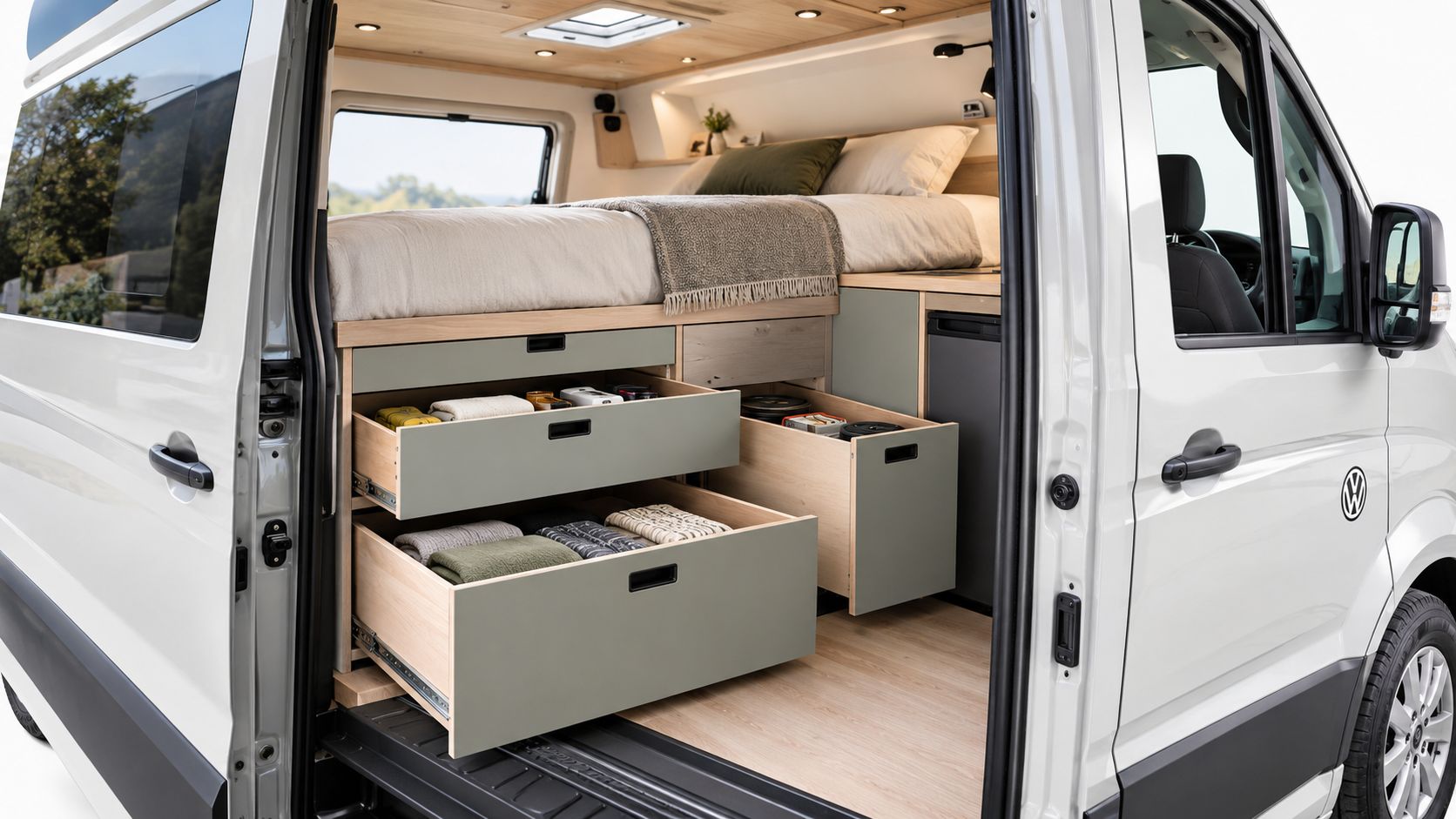
Deep drawers under a fixed bed are useful for camping tables, tools and clothing, but they become frustrating if the bed has to be cleared before every item is reached. Use shallow, labelled zones for daily supplies and reserve the least accessible compartments for equipment used only at camp.
Surf-focused owners should separate wet and dry storage. A ventilated compartment for wetsuits and towels can protect the living area, while board storage needs proper restraint and clearance from electrical equipment. Bikes deserve the same thought. They can be carried inside or outside, but either approach affects access, security, dust and the amount of room left for other touring gear.
A practical arrangement might include:
- Under-bed garage: Recovery gear, chairs, tools and bulky outdoor equipment.
- Kitchen drawers: Cooking items grouped by task, rather than by object type.
- Overhead lockers: Light clothing and bedding, with positive latches for corrugated roads.
- Entry-side storage: Shoes, wet-weather items and frequently used accessories.
- Small personal zones: One dedicated place per traveller for keys, phones and daily essentials.
Choose the bed around your routine
A fixed bed is comfortable and quick, especially for longer touring. A raised bed can create a generous garage, but lifting height and accessibility become part of daily life. A convertible dinette saves space during the day, although making the bed each night becomes a repeated chore.
Test the proposed bed with real bedding before construction. Check headroom, access to storage and whether one person can get up without disturbing the other. If you plan remote travel, allow space for food, water and spares without using the bed as a packing shelf.
The Australian Kampervan platform is upgraded to a 4300kg GVM, but that figure remains a legal ceiling, not a target to fill casually. Confirm the completed vehicle against its upgraded GVM with water, passengers, bikes and personal equipment. The Australian Kampervan review highlights why accessories and stored gear need to be included in the final assessment.
Packing advice: Weigh the van as you travel, not as it looked at handover. Your holiday load is the build that matters.
Embracing the VW Lifestyle and Community
A modern Crafter doesn't replace the romance of a Kombi. It gives that romance more space to breathe. The old vans still carry the visual language of Australian beach trips, flower power and roadside friendships, while the Crafter brings standing room, serious storage and a more capable platform for long-distance travel.
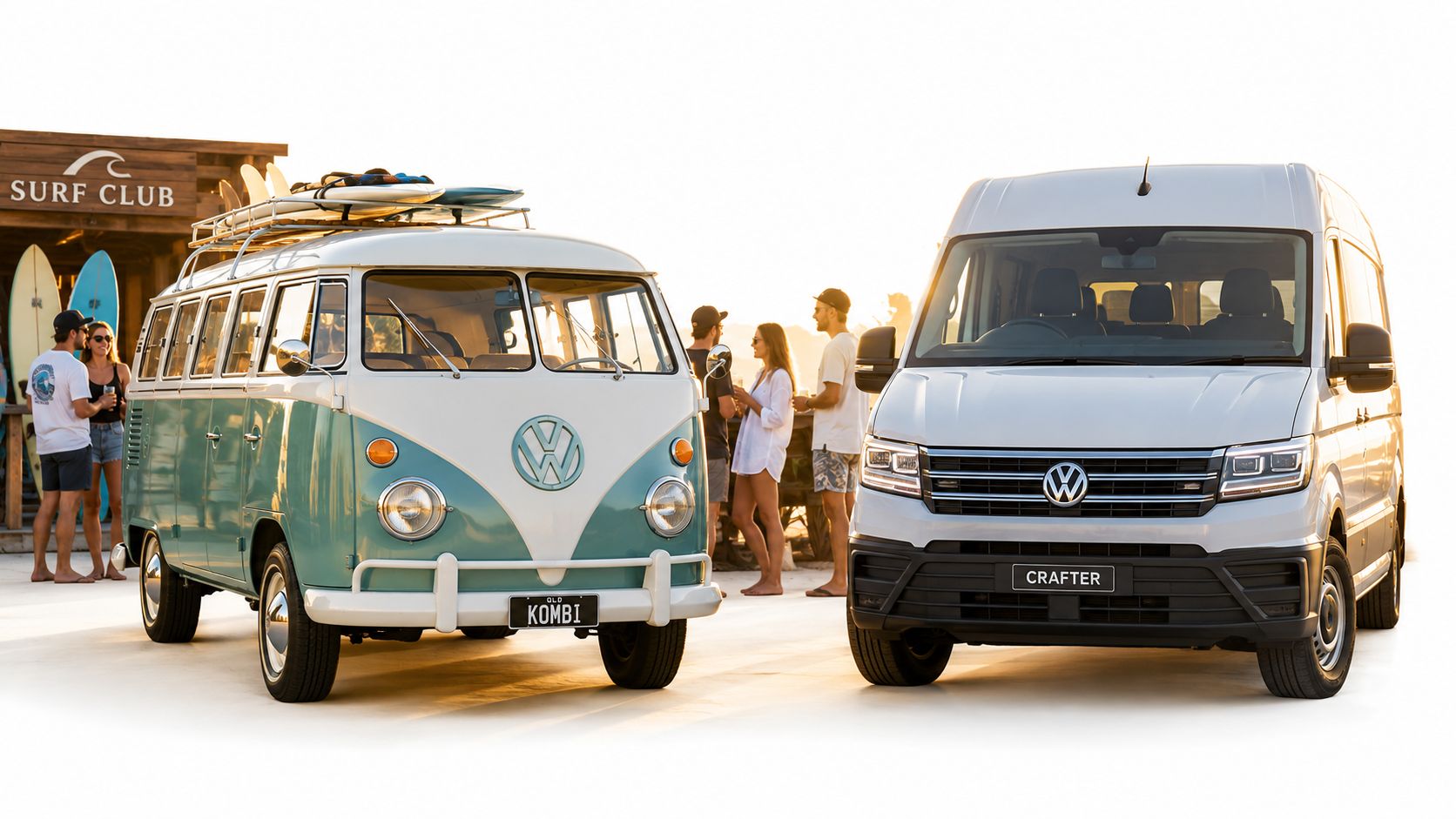
That connection is part of why a camper build feels different from an ordinary commercial vehicle project. You're not only selecting batteries and cabinetry. You're choosing how you want to arrive at a beach, a showground or a country campsite, and what story the van will tell when people gather around it.
Australian VW events keep that shared enthusiasm visible. Volksfest Australia's 2025 event included market stalls, a beer hall, live music, food trucks, cruises, a display day, show and shine and swap meet activities, with hundreds of Volkswagens on display. The Volksfest Australia event programme reflects the community spirit that makes the marque more than a badge.
A Crafter can sit beside a Beetle, a Samba Bus or a weathered Kombi and still feel at home. The shapes and technology differ, but the purpose is familiar: carry people towards a good day out.
The best way to keep that feeling around after the trip is to bring a little of it into your home, workshop or display cabinet. A licensed model can preserve the look of a favourite vehicle without asking you to find room for another full-size project.
The story also reaches back to the Beetle's distinctly Australian history. Volkswagen Australia says the first Beetles arrived with the Australian military in 1945, and Australian Beetle manufacture at Clayton ended in 1976. Volkswagen's Australian Beetle history gives collectors a strong local thread to follow, whether their passion is restoration, memorabilia or family nostalgia.
Here's a closer look at the kind of community atmosphere that keeps VW culture lively beyond the workshop.
Whether you build a full off-grid camper or just keep a classic model on the shelf, the appeal comes from the same place. Volkswagen has always made room for memories, from coastal weekends in a Kombi to a carefully planned Crafter tour across the country.
Volkswagen Memorabilia brings together licensed VW diecast models, including classic Kombi and Samba Bus pieces, Beetle models, Flower Power variants and surf-inspired vans. Visit Volkswagen Memorabilia to find a warm, nostalgic addition to your display, choose a thoughtful gift for a VW fan, and keep a little Australian road-trip spirit close at home.