

So, you've got the bug. The dream of owning a classic Volkswagen bus camper is a powerful one, and if you're here, you're already on the right track. Finding the perfect bus is all about knowing which models suit your style, where to look beyond the usual suspects, and what to check for before you hand over your hard-earned cash.
Chasing the Dream of a VW Camper
That iconic image of a classic VW Bus parked up at a sun-drenched Aussie beach? It’s a feeling we all know. It’s not just a van; it’s a symbol of freedom, of adventure, and of a life less ordinary that still pulls on our heartstrings.
For years, these campers have been a core part of the Australian story. They’ve carried us on surf trips down the coast, taken our families on unforgettable holidays, and become a ticket to escape the daily grind. It's always been about the journey itself, the stories you gather, and the memories you create. This shared love has created one of the best enthusiast communities you could ever hope to join.
A National Passion That's Still Growing
And that love affair is only getting stronger. The dream of hitting the open road has never been bigger in Australia. The number of registered campervans skyrocketed from 55,757 in 2014 to an incredible 97,701 by 2024. That's a 75.2% jump, and it’s put these iconic buses right back in the spotlight.
This boom is part of a huge national movement. The whole recreational vehicle scene was valued at $27.1 billion by 2022, and the classic VW camper holds a special, nostalgic place for anyone who loves our coasts. The growing popularity means it’s a fantastic time to begin your search, with a thriving community and more resources than ever before. The spirit of adventure is well and truly alive.
For so many of us, owning a VW Bus is that ultimate pipe dream. It’s the simple idea of packing a bag, turning the key, and just seeing where the road takes you, flower power curtains and all.
Getting there is an adventure in itself. You'll need to:
- Get to know the different models and their unique quirks.
- Figure out where to find well-loved campers from people you can trust.
- Learn what to look for so you don't end up with a money pit.
Think of this guide as your friendly co-pilot. We're here to help you navigate the whole process with the confidence of someone who's been there and done that. We’ll cover everything you need to find, inspect, and finally buy your own piece of automotive history. To get in the right headspace, check out our piece on the soul of van life in Australia and what makes it so special.
Choosing the Right VW Bus Generation for Your Adventure
So, you've decided to take the plunge. Fantastic. But which Volkswagen bus is the one for you? It's a bit like picking a travel mate for a trip up the coast—each one has its own vibe, its own strengths, and its own set of lovable quirks.
Let’s run through the main players. Think of this as a quick chat at a car show, helping you figure out which classic VW camper best fits your dream. Picking the right one is the very first step, and honestly, it’s one of the most exciting parts of the whole journey.
This flowchart gets right to the heart of it. If you’ve got a love for adventure and that timeless vintage style, then a classic camper is already calling your name.
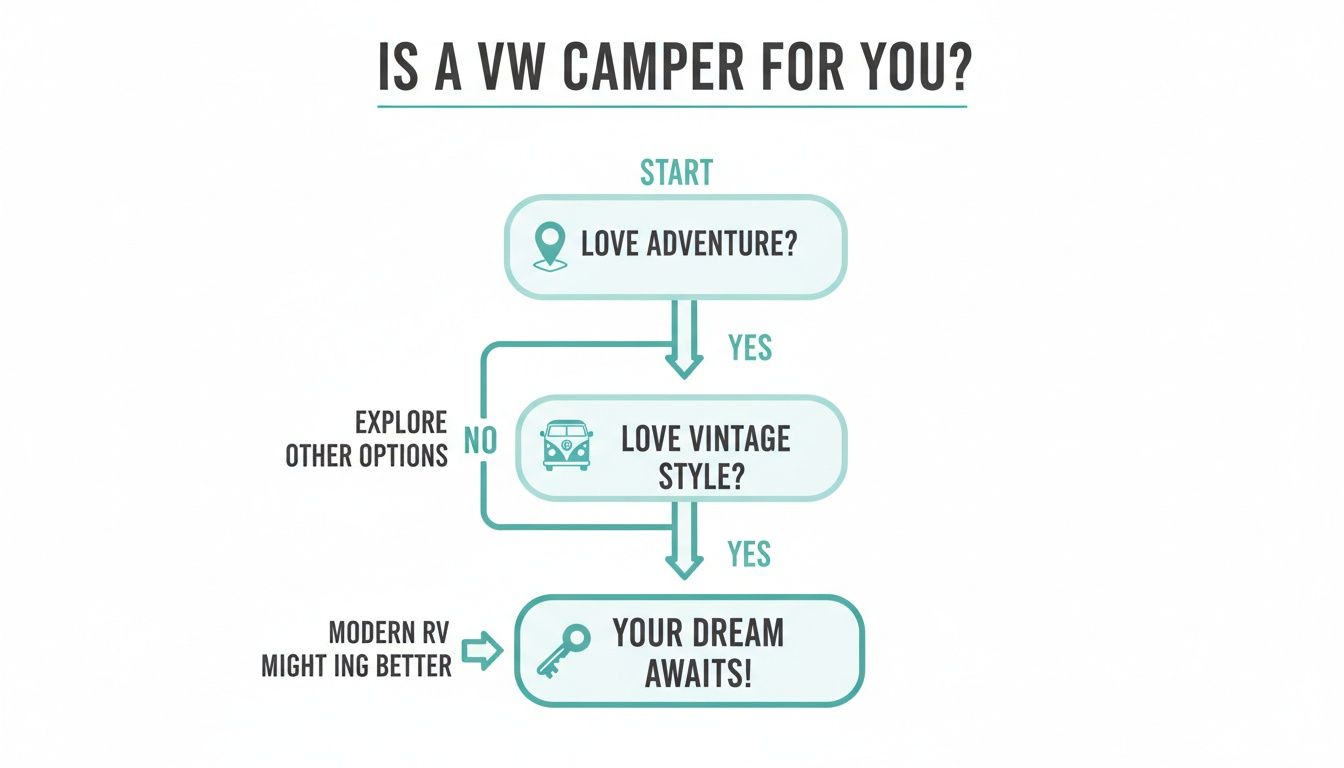
As you can see, if that sounds like you, you're in the right place. Now, let’s find your perfect match.
To give you a quick overview, here's a look at the most popular generations side-by-side.
VW Bus Generations At a Glance
| Generation | Nickname | Production Years | Key Features | Best For |
|---|---|---|---|---|
| T1 | Splittie | 1950–1967 | Split front windscreen, large VW badge, iconic V-shape front. | Collectors, weekend shows, and die-hard enthusiasts. |
| T2 | Bay Window | 1967–1979 | Single curved windscreen, more interior space, improved engine. | Classic road-trips, family adventures, and usable vintage charm. |
| T3 | Vanagon | 1979–1992 | Boxy '80s design, water-cooled engine options, spacious interior. | Long-distance touring, practical camping, and first-time owners. |
Each of these has a dedicated following, and for good reason. Now let's get into the details of what makes each one special.
The T1 'Splittie' (1950–1967): The Icon
When you close your eyes and picture a classic VW Bus, this is almost certainly it. The T1 Type 2, or the 'Splittie' as it’s universally known, is defined by its split front windscreen and that massive VW emblem on the nose. It's the original surf bus, the poster child for a whole generation, and a guaranteed head-turner.
Owning a Splittie is a true labour of love. They ooze vintage charm like nothing else and easily command the highest prices, especially the famous 21-window Samba models.
- Pros: Unbeatable retro style, highest collector value, the absolute heart of VW culture.
- Cons: The most expensive to buy and restore, slower on the road, and their simple mechanics demand a more hands-on approach.
- Price Guide: A project bus can start around $25,000, but a fully restored, show-quality Splittie can soar well past $100,000.
A Splittie is for the dedicated purist—someone who wants a prized collector's item for weekend cruises and car shows. It’s less about doing a lap of Australia and more about owning and preserving a beautiful piece of motoring history.
The T2 'Bay Window' (1967–1979): The Reliable Road-Tripper
Next in line is the T2, nicknamed the 'Bay Window' because it swapped the split screen for a large, single, curved windscreen. This is the model that truly brought the campervan dream to the masses. It’s noticeably more practical than a Splittie, with a bit more power, better brakes, and a comfier ride.
The T2 really hits the sweet spot between classic looks and genuine usability. It’s the go-to choice for so many adventurers and families who want to actually get out there and explore.
The Bay Window is the quintessential Aussie road-trip machine. It has enough of that old-school cool to turn heads, but it’s reliable enough to take you from Byron Bay to the Great Ocean Road without too much fuss.
You'll find two main versions. The 'Early Bay' (1967-1971) has its low front indicators and rounded bumpers, while the 'Late Bay' (1972-1979) sits a bit higher and features a more modern engine layout, making it slightly easier to work on.
The T3 'Vanagon' (1979–1992): The Modern Classic
Enter the T3, or Vanagon. This generation marked a shift to a more modern, angular, and boxy design. While it might lack some of the rounded charm of its predecessors, it more than makes up for it in sheer practicality and comfort. These were the first buses to offer options like water-cooled engines, power steering, and even all-wheel drive on the legendary 'Syncro' models.
For many, the T3 is a brilliant and affordable gateway into VW camper ownership. It’s roomier, more comfortable on long drives, and generally easier to live with. Don’t let the '80s styling fool you; these vans are incredibly capable and have a fiercely loyal following.
- Pros: More affordable, spacious, and comfortable for long-distance travel. Parts are generally easy to find and well-supported.
- Cons: The boxy aesthetic isn't for every classic purist, and they don't have the same iconic look as a Splittie or Bay.
- Price Guide: You can find a T3 project for under $10,000, with good, road-ready campers typically sitting in the $20,000 to $40,000 range.
Ultimately, choosing your bus comes down to you. It's about finding the one that speaks to your sense of adventure and fits how you plan to use it. And while you’re planning the big purchase, you can always start small. A beautifully crafted VW Kombi Samba Bus diecast model on your desk is the perfect bit of inspiration to keep the dream alive.
Where to Find Your Dream Volkswagen Bus Camper for Sale
You’ve decided on the generation, and now the search begins. Finding a quality Volkswagen bus camper for sale requires looking in the right places, and the best ones are not always the most obvious.
While standard online classifieds are a starting point, the most sought-after buses are often found within the dedicated VW enthusiast community. Here is where to focus your search efforts.
Online Marketplaces: The Starting Line
The major Australian online classifieds offer the widest initial selection. These platforms provide a national overview of what is available, from restoration projects to immaculate, road-ready campers.
- Carsales: As Australia’s largest vehicle marketplace, it’s a reliable place to gauge the market. We recommend setting up alerts for specific models like "VW Kombi" or "T3 camper" to receive notifications for new listings.
- Gumtree: A great source for private sales where you can uncover genuine bargains. Gumtree is also a good spot to find project buses and unique owner-built conversions not always listed on mainstream sites.
- Facebook Marketplace: Now a major centre for classic car sales. The volume is significant, so you will need to be methodical in your search to filter through the listings.
When using these sites, prioritise listings with extensive photos and clear, detailed descriptions. Vague advertisements are a potential warning sign. A passionate owner will be proud of their bus and will provide a thorough history of the work completed.
Community Hubs: Where the Best Buses Hide
Here is an insider tip: the best-maintained campers frequently change hands privately within the VW community, never reaching the open market. This is where you find buses with well-documented histories from owners who truly understand them.
Tapping into the VW club scene is like getting a backstage pass. You'll hear about campers for sale before anyone else, get honest advice from seasoned owners, and connect with people who share your passion.
Consider these community-focused avenues:
- Dedicated VW Forums: Websites like The DUB GUM and Aussie Vee Dubbers are invaluable resources. Their "For Sale" sections are monitored by the community, which holds sellers to a high standard of transparency.
- Owner Clubs and Social Media Groups: Search Facebook for groups such as "Kombi Club Australia" or "VW T3 Australia". Owners often post their buses for sale to fellow members first before advertising elsewhere.
- VW Shows and 'Show & Shine' Events: Nothing replaces an in-person inspection. Events like Volksfest, the VW Nationals, or local club meetings are ideal for networking. Owners often place a "For Sale" sign in the window, allowing you to discuss the vehicle directly and inspect it on the spot.
Engaging with the community is about more than just a transaction; it's an entry into a network of knowledgeable enthusiasts. If you are thinking about a custom build, our guide on selecting a van for conversion offers additional expert advice.
Your Essential Pre-Purchase Inspection Checklist
Alright, this is where the rubber really meets the road. It’s incredibly easy to get swept up in the romance of a classic Kombi, but a smart buy is one you make with your head, not just your heart. Think of this as a checklist from a mate who's been there, helping you figure out if that Volkswagen bus camper for sale is your dream ride or a money pit in disguise.
Working through a bus systematically gives you the power to either confidently walk away from a dud or put in a fair offer on a gem. We’ll go over the non-negotiable checks to help you sidestep those nasty, expensive surprises down the track.
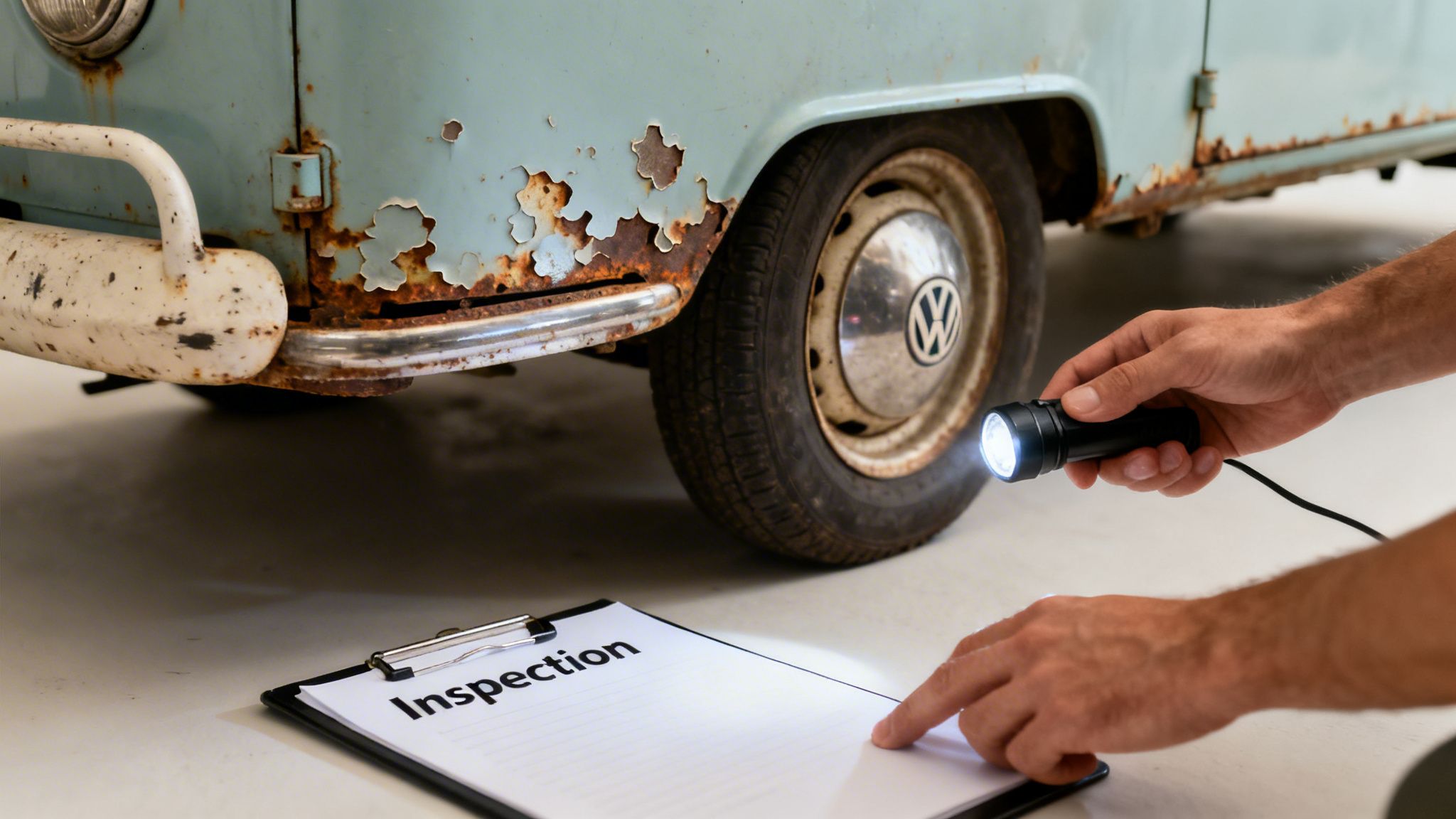
Step 1: Hunt for Rust, the Silent Killer
Before you even pop the engine lid, you need to become a rust detective. Hands down, rust is the number one enemy of these old VWs and the most expensive problem you can face. A quick, cheap paint job can hide a world of hurt, so it’s on you to look deeper.
Be sure to bring a small torch and a magnet. Slide the magnet over all the usual trouble spots; if it suddenly loses its grip, you’ve likely found a thick patch of body filler covering up some dodgy repair work.
Here’s where you need to focus your attention:
- Under the Mats: Don't be shy. Pull up every single floor mat, both in the driver's cab and throughout the living space. You’re looking for any sign of corrosion, dampness, or questionable repairs on the floor pans.
- Wheel Arches & Sills: These areas get pelted with road grime and water. Get right down on the ground and have a good, long look at them from every angle.
- Gutters: Those rain gutters running along the roofline are notorious for trapping moisture and rusting out from the inside. Keep an eye out for bubbling paint or any tell-tale brown streaks.
- Window and Door Seals: Carefully peel back the rubber seals around the windows and doors to inspect the metal underneath. Water loves to pool here and start its dirty work.
- Battery Tray: Over the years, a leaky battery can easily chew through the metal tray and the floor beneath it. Give this area a very thorough inspection.
Don’t get distracted by a fresh coat of shiny paint. Look closely for tiny bubbles or a ‘crinkly’ texture, particularly along the bottom 15 centimetres of the van. That’s a classic sign of rust brewing just below the surface.
Step 2: Get a Feel for the Engine and Mechanicals
Now it’s time to check the heart of the machine. You don’t need to be a qualified mechanic, but knowing the basic things to look and listen for is crucial. The air-cooled engines in these buses have their own unique character and sound.
If you can, try to start the bus from cold. A healthy engine should kick over without too much fuss. Let it idle and listen carefully for any loud knocking or rattling. A bit of tappet noise is pretty standard for these motors, but anything more dramatic is a serious red flag.
With the engine running, have a look for:
- Oil Leaks: A few drips are part of the charm with these old girls, but if you see significant pools forming on the ground, it points to worn seals that will definitely need sorting.
- Exhaust Smoke: Take a look at what’s coming out of the exhaust. A little puff of black smoke when it first fires up is generally fine, but constant blue smoke is bad news—it means the engine is burning oil, a sign of expensive internal wear.
- Gearbox: On your test drive, pay close attention to the gear changes. It should shift smoothly without any awful crunching sounds. If it’s hard to find a gear, you could be looking at anything from worn linkages to a major gearbox problem.
Step 3: Check the Electrics and Camper Interior
Hop inside and start flicking every switch you can find. The electrical systems are fairly basic, but you’ll want to make sure the essentials are working. Check the headlights, indicators, windscreen wipers, and of course, the horn.
Next, turn your focus to the camper-specific gear. The condition of the interior tells you a huge amount about how the bus has been treated over its life.
- Pop-Top Roof: If it has one, make sure you operate it. Does it go up and down without a fight? Check the canvas for any mould, mildew, or rips. A new pop-top canvas can be a surprisingly pricey job.
- Cabinetry and Upholstery: Open every cupboard and drawer. See how the original fit-out has held up. Is the upholstery badly torn or stained? While it might seem cosmetic, a full re-trim can really blow the budget.
- Appliances: If the bus is kitted out with a fridge, sink, or stove, ask the owner if they’re in working order. If possible, test them yourself.
And finally, always, always ask to see the paperwork. Double-check that the Vehicle Identification Number (VIN) on the registration papers matches the number stamped on the van’s chassis. This simple check confirms you’re looking at the right vehicle and can save you from a world of bureaucratic pain. Taking your time here will ensure your VW adventure gets off to a dream start, not a nightmarish one.
Budgeting for a Bus: The Real Costs of Ownership
Alright, you’ve found the one. It’s got the right look, the right feel, and you can already picture yourself cruising down the coast. Before you get swept away, let's have a real yarn about what happens after you’ve paid for it. The price tag on a Volkswagen bus camper for sale is just the start of your journey, not the whole road trip.
Getting your head around the full financial picture is the best way to make sure your dream of hitting the open road stays a dream, and doesn't turn into a financial headache. Let's pull back the curtain on the real costs of owning one of these classic beauties here in Australia, so you can plan properly.
The Upfront Costs Beyond the Purchase Price
That moment you shake hands on a price is a massive buzz, but that number isn't the final one to leave your bank account. A few other immediate costs will pop up straight away.
- Stamp Duty: This is the government's slice of the pie, a tax on the vehicle's sale price. How much you pay depends on your state and the bus's value, but there’s no getting around it.
- Registration: You can't legally drive your new home on wheels without it being registered. This is an annual fee that gets you your plates and keeps you on the right side of the law.
- Specialised Insurance: Forget a standard car policy; it simply won't do. You need specialised classic vehicle insurance. These policies usually work on an "agreed value," where you and the insurer decide on the bus's true worth. It’s peace of mind, ensuring you're properly covered if something goes wrong.
These initial bits and pieces can easily add a few thousand dollars to your purchase, so make sure you’ve got that cash ready to go.
Ongoing Running and Maintenance Costs
Once the bus is officially yours, a new set of costs roll in—the ones that keep it humming along happily. These aren't one-offs, but the regular rhythm of keeping a vintage machine on the road.
First up, fuel. Let's be blunt: these old air-cooled engines were never built for today’s fuel economy. They’re thirsty beasts, no doubt about it. But the smiles-per-gallon are completely off the charts.
Then there’s the upkeep. A classic VW needs a bit more regular TLC than your modern daily driver. You'll want to budget for:
- Regular Servicing: Get ready for more frequent oil changes and check-ups. It pays to find a mechanic who really knows their way around air-cooled VWs.
- The "Just in Case" Fund: Old cars have character, and sometimes that character includes a few unexpected hiccups. Tucking away a couple of thousand dollars in a repair fund is one of the smartest things you can do.
Think of it like this: you’re not just buying a van; you’re becoming the caretaker of a little piece of history. A bit of ongoing love and money is what keeps that history alive and rolling.
The Big One: Restoration Costs
Finally, we need to talk about restoration. A lot of the buses you'll see for sale are rolling projects, and how much you spend here can vary wildly. It all comes down to how much work is needed and how perfect you want the end result to be.
- Mechanical Refresh ($5,000 – $15,000): This sort of money will get the engine, brakes, and suspension solid and dependable. It’s about making it a reliable driver, not a show winner.
- Cosmetic & Mechanical ($20,000 – $40,000): Here you’re covering the mechanical work plus tackling rust, laying down a fresh coat of paint, and giving the interior a proper tidy-up.
- Full Nut-and-Bolt Restoration ($50,000+): This is the whole shebang. The bus is stripped back to bare metal for a finish that’s often better than when it left the factory. It's a massive undertaking, but the final product is a genuine masterpiece.
Knowing these costs doesn't take any of the magic away. It just makes you a smarter, more prepared owner. It means your VW adventure can kick off with pure excitement, not a surprise bill.
Celebrating the VW Icon Through Collectible Memorabilia
Owning a full-sized Volkswagen bus is the big dream, but it's not always a practical one. That doesn't mean the passion has to sit on the back burner. The spirit of the VW bus is just as much about celebrating its iconic design as it is about hitting the open road.
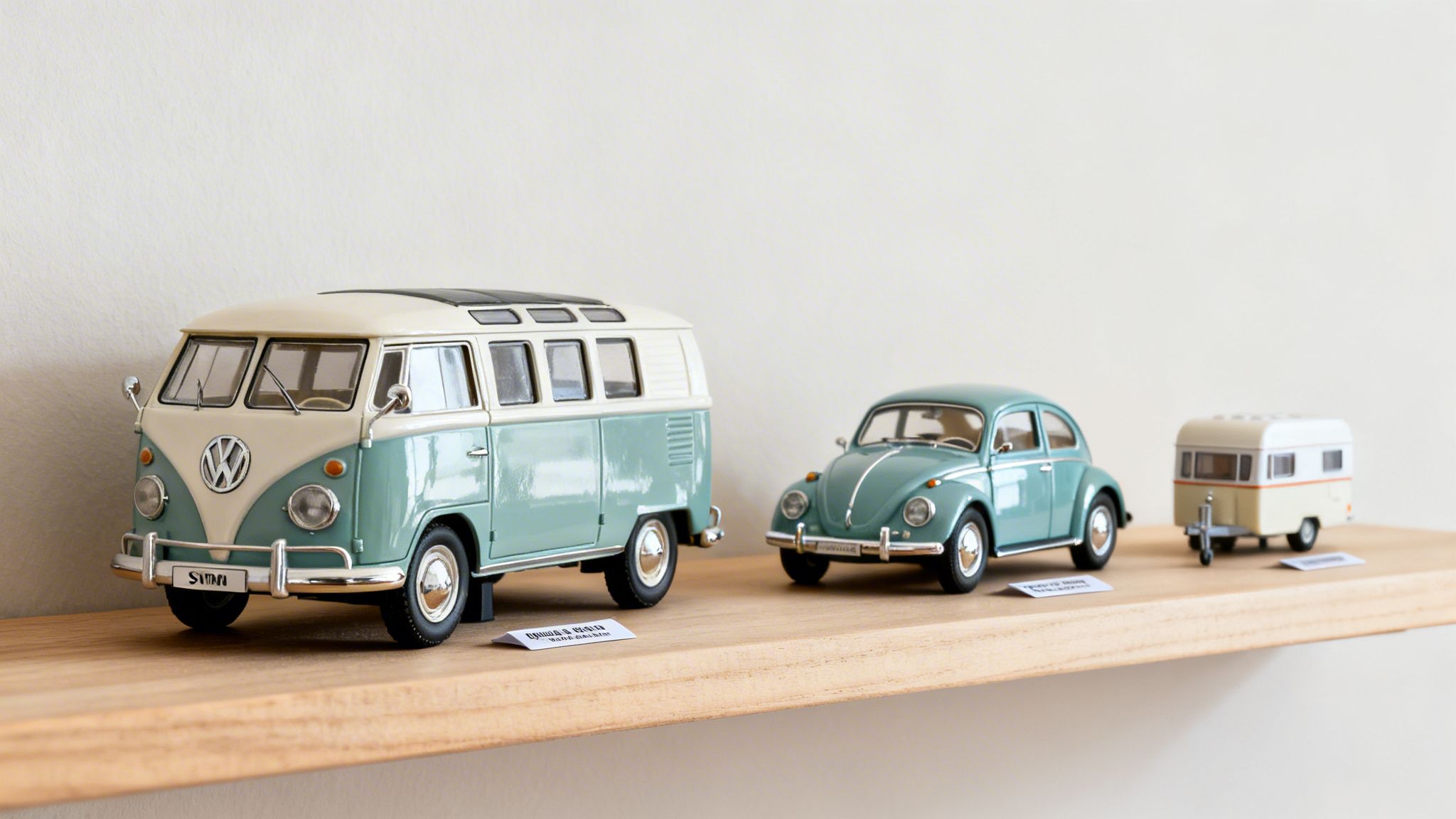
This is where collecting comes in. For many enthusiasts, a perfectly detailed diecast model is the next best thing. It’s a way to appreciate the classic lines and heritage of these vehicles right on your own shelf, keeping the dream alive with a colourful reminder of the VW community.
Your Home for VW Memorabilia in Australia
We get it because we're enthusiasts, too. Here at vwmemorabilia.com.au, we've sourced a huge range of collectibles for fellow VW fans. As a local Australian importer, we stock officially licensed VW memorabilia collectibles right here, so you get your gear quickly without the long international shipping delays.
Our online shop is a treasure trove for anyone looking to add to their collection or find the perfect gift. We have everything from stunning, highly detailed 1:18 scale models to the more compact 1:24 scale versions that are perfect for starting out. These aren't just toys; they’re miniature pieces of VW history. You'll find everything from the legendary VW Kombi Samba Bus diecast models to classic Beetle replicas that capture the feel of the originals.
Collecting diecast models is about more than just owning tiny cars. It's about building a personal display of automotive art that tells a story. Each model represents a piece of the VW legacy you can hold in your hand.
Tips for Starting Your VW Collection
Building a collection is a great way to stay connected to the VW culture, especially when you're between road trips. If you're looking to get started, here are a few simple tips:
- Find Your Focus: Decide which models you love most. Are you a fan of the classic Split-Screen Kombi, or do you prefer the timeless Beetle? Focusing on a specific model, colour, or era can give your collection a great, cohesive look.
- Create a Great Display: Don't hide your models away. A dedicated shelf, a glass cabinet, or even a simple diorama can turn your collection into a fantastic feature for your home or office.
- The Perfect Gift: If you're searching for a gift for a VW lover, a high-quality diecast model is a personal and thoughtful present that's guaranteed to be a hit.
Diving into the world of Volkswagen diecast models for sale is a brilliant way to keep your passion for these vehicles burning bright. It’s a hobby that brings a lot of joy and celebrates the enduring magic of the VW brand every single day.
A Few Common Questions About Buying a VW Camper
Jumping into the world of classic VWs is an absolute thrill, but it's totally normal to have a few questions buzzing around. We get asked these all the time, so here are some straight-up answers to help you on your journey.
What’s the Go with Insuring a Classic VW Camper in Australia?
The cost of insuring a classic VW camper can be a bit of a "how long is a piece of string" question. It really hinges on the agreed value you and the insurer decide on for your bus, your own driving record, and even where you park it at night. Generally, you can expect to budget anywhere from $400 to over $1,000 a year for a proper classic car policy. It's well worth it, as these policies protect your investment with an agreed value, which is miles better than a standard car policy.
Can I Actually Use a VW Bus as My Daily Car?
Ah, the dream! While it sounds brilliant, using a vintage Kombi for the daily grind isn't the most practical idea. These old beauties lack modern safety features, the air conditioning is a wound-down window, and power steering is, well, you. They thrive on a bit of hands-on care and are far better suited for creating memories on weekend escapes and epic road trips, not so much the stop-start traffic on the way to work.
What's the Difference Between a Kombi and a Samba?
Great question, and one that gets to the heart of VW lore! Think of 'Kombi' as the family name for the entire VW Type 2 lineup. The 'Samba Bus', however, is a very specific, top-of-the-line model that truly gets collectors' hearts racing.
You'll know a Samba when you see one. They're famous for their incredible 21 or 23 windows, including the iconic little skylight windows that line the roof, and a massive canvas sunroof perfect for sunny days. It’s this distinctive look that makes them one of the most sought-after and valuable VWs on the planet.
Are Parts for Old VW Buses Hard to Find in Australia?
You’d be surprised! Thanks to an incredible global community and some brilliant specialist suppliers right here in Australia, getting parts is easier than you might think. Of course, tracking down a super-rare piece of original trim for a 1950s Splittie can be a bit of a treasure hunt. But for most of the crucial mechanical bits for T1 and T2 buses, the parts are out there. This fantastic support network is what keeps these classic campers on the road for us all to enjoy.
Here at VW Memorabilia, we're just as passionate about these amazing vans as you are. Whether you're chasing the real deal or starting a collection of your own, we’re here to help you celebrate the VW spirit. Check out our full range of officially licensed diecast models and memorabilia to bring a bit of that magic home.