

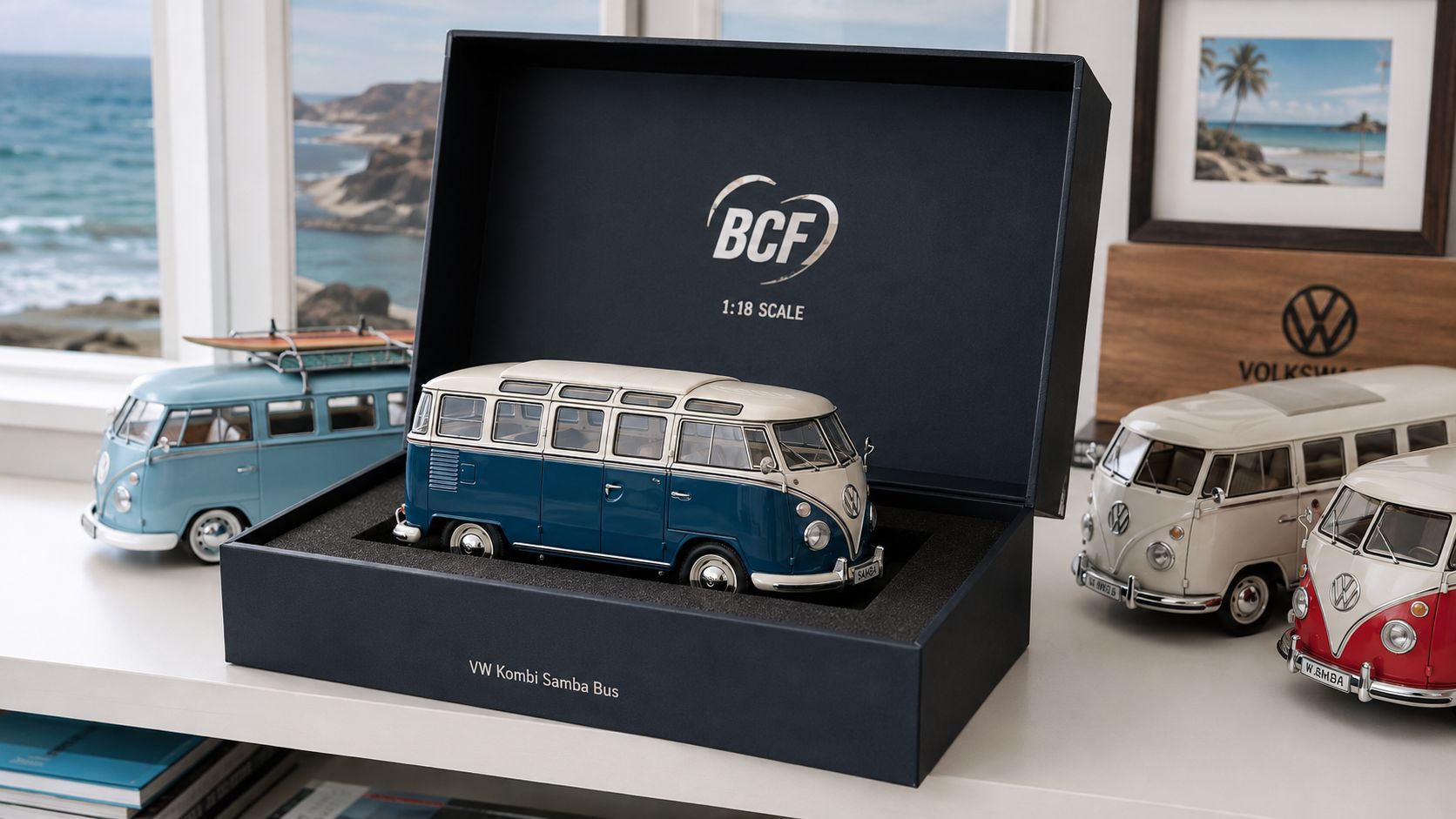
You've just come home from a sunny Volksfest weekend with a beautiful 1:18 Kombi Samba Bus diecast tucked under your arm. The model is safe for the moment, but the shelf is already crowded, the cardboard packaging is vulnerable to dust, and the old plastic tubs in the garage are hardly worthy of a little piece of Volkswagen history.
That's where BCF storage boxes become more than a practical purchase. Chosen carefully, they can protect delicate diecast models, organise a growing collection and sit comfortably among white shelving, timber accents and relaxed coastal décor. For Australian collectors, the trick is matching the box to the model, the room and the way you enjoy your Volkswagens.
Why Your VW Collection Deserves Better Storage
A collector named Mark might recognise the scene. His Beetles sit in their original boxes beneath a workbench, while a pair of Kombis share a container with old camping gear. After a humid spell, dust has found its way into the corners, one cardboard sleeve has softened and a tiny aerial has bent where another model shifted during a clean-up.
Nothing dramatic happened. That's the problem. Diecast damage often begins with ordinary handling, sunlight, dust and movement, not one spectacular accident. A model can lose its crisp presentation long before its owner realises the storage arrangement has become the weak point.
Storage should respect the story
The Beetle's Australian story gives collectors plenty to care about. Volkswagen says German migrant Karl Regel and his family brought a right-hand-drive Beetle to Sydney, making it one of the first Volkswagens registered in New South Wales. The Beetle was later manufactured at Clayton, with full local manufacture ending after 6 years, as recorded in Volkswagen's Australian Beetle history.
A model connected to that heritage deserves better than a box that collapses when another container sits on top. The same applies to the Kombi, which began in March 1950 as the Type 2. Club VW records that Volkswagen sold 4.5 million Kombis worldwide since 1950, while the Microbus launched in 1954 accounted for more than 1 million of those sales, according to its Kombi history feature.
Practical rule: Store the model as though you'll want to show it to a fellow enthusiast tomorrow, not merely find it again one day.
A well-sized BCF box gives each Volkswagen a defined home. It prevents loose items from rubbing against mirrors and bumpers, keeps the original packaging together and makes transport to a show less nerve-racking. It can also turn an untidy pile into a display system that feels deliberate, especially when the box's colour and finish suit the room.
Choosing the Right Size and Material for Your Models
Start with the model, not the box label. Measure the diecast from bumper to bumper, allow room for mirrors and other protruding details, then add clearance for a soft insert or divider. A lid that presses against a roof, aerial or surfboard accessory defeats the purpose of protective storage.
Collectors commonly use 1:18 and 1:24 scales for larger display models. A scale guide defines 1:18 as one-eighteenth of the vehicle and 1:24 as one-twenty-fourth, with typical finished lengths of about 23–30 cm for 1:18 and 16–20 cm for 1:24. Those measurements are outlined in this diecast car scale guide.
Match the internal space to the collection
Use the table as a starting point, then check the actual model because mirrors, opening doors and display plinths vary.
| Diecast Scale | Model Length | Recommended Box Size | Models Per Box |
|---|---|---|---|
| 1:18 Beetle or Kombi | About 23–30 cm | A deep, rigid box with generous side clearance | One model |
| 1:24 Beetle or Kombi | About 16–20 cm | A compact lidded box with a soft divider | One or two models, separated |
| Mixed 1:18 and 1:24 collection | Varies | Modular boxes in separate size groups | Keep scales separate |
| Small accessories and miniatures | Shorter than larger display models | Shallow divided organiser | Several, each in its own compartment |
Polypropylene-style plastic suits collectors who want a light, washable and practical container for regular handling. Look for walls that don't flex easily and lids that remain aligned after repeated opening. A reinforced box is preferable for heavier models or boxes that will be stacked.
Material choice matters more in Australian conditions than many buyers expect. A container near a bright window, in a warm garage or beside a coastal doorway faces more environmental stress than one kept in a shaded study. Choose opaque or UV-conscious materials where possible, and avoid placing any box in direct sun because the plastic feels sturdy.
For mixed collections, modular sizing beats one oversized tub. A snug box reduces shifting, while separate compartments stop a detailed Samba Bus from sharing space with loose metal signs, tools or unrelated ornaments.
Protective Features That Preserve Collectible Value
A 1962 Kombi Classical Bus with opening doors and pull-back action has moving parts that need space. A basic dust cover may keep grit away, but it won't stop the model sliding into a wall or another car during transport.
The most useful protective features work together. Foam interiors cushion, dividers prevent contact, and latching lids keep the environment closed. None replaces sensible placement, but each reduces a different risk.
Prioritise fit, closure and stability
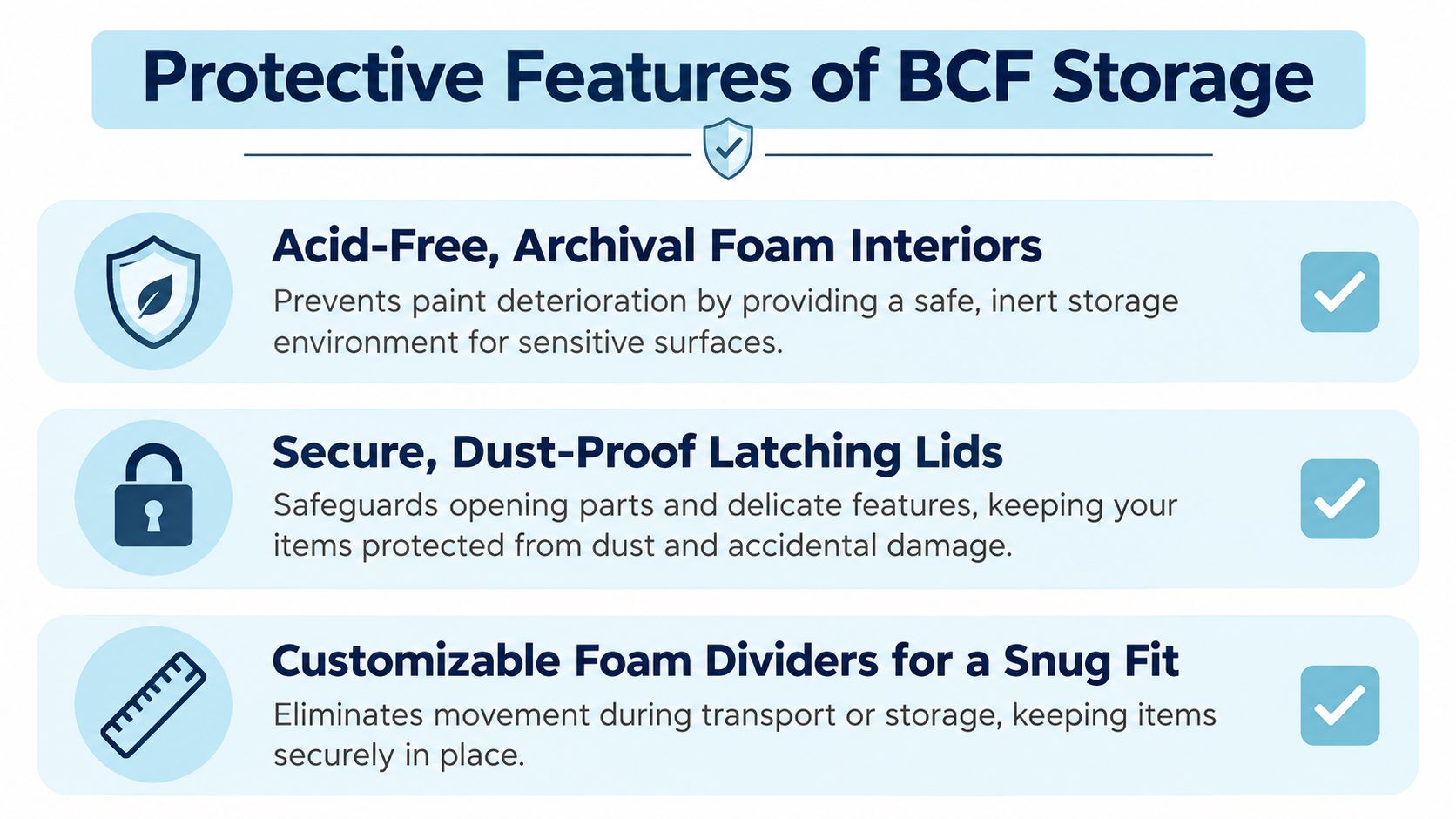
Acid-free or archival foam is a smart choice for long-term contact with painted surfaces and packaging. It should hold the model gently rather than grip it tightly. If you can hear the diecast moving when you tilt the box, add a divider or reshape the insert.
A secure latch matters during a trip to a display day. Loose lids can lift in the boot, while strong closures help keep dust and accidental knocks away from fragile features. Stackable construction also matters, but only when the lid and base transfer weight around the model rather than through it.
Ventilation requires judgement. A fully sealed container can trap moisture if a model is packed away damp, while a loosely covered box invites dust. Let models and inserts dry before closing them, and store the box in a stable indoor position rather than an overheated shed.
For a more presentation-led approach, compare a box with a dedicated display case for models. The right choice depends on whether the model is travelling, being archived or staying on show.
A useful priority order looks like this:
- Correct internal dimensions, because pressure and movement cause avoidable damage.
- A clean, stable insert, especially around mirrors, aerials and opening panels.
- A dependable latch, so the lid stays closed during handling.
- Stacking strength, if you plan to build a vertical collection.
- Clear viewing panels, when you want to identify models without opening every box.
Storage That Doubles as Coastal Home Decor
The best storage doesn't always disappear into a cupboard. In a coastal home, a crisp box on open shelving can sit beside pale timber, woven textures, shell accents and a favourite Volkswagen print without looking like garage equipment.
White and soft blue finishes complement a nautical palette, while natural-looking timber tones suit a more relaxed surf shed feel. The secret is repetition. Use similar box colours, align the fronts and leave enough breathing room for each model to read as part of the display.
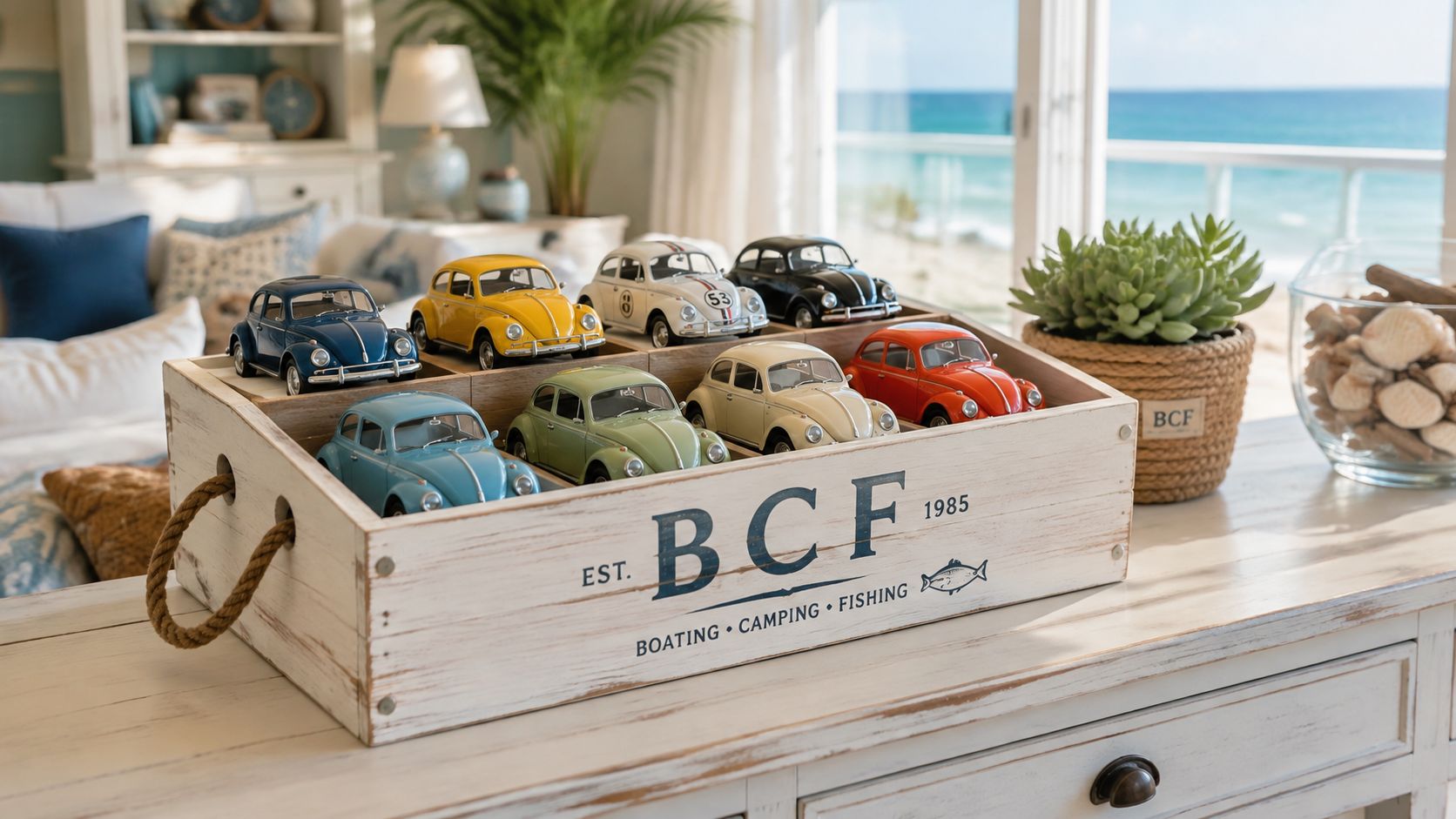
A mixed group of Flower Power Beetles can bring colour to an otherwise quiet shelf. A blue-and-white Samba Bus can anchor a vignette beside a miniature surfboard, framed beach photograph or metal Volkswagen sign. The box becomes part of the styling rather than a visual interruption.
Build a display you can change
Keep the most frequently admired models at eye level. Use closed boxes for seasonal pieces, duplicate models and packaging you want to preserve, then rotate a few favourites into the open display. That approach gives the collection movement without exposing everything at once.
For more ideas on combining practical organisation with relaxed Australian interiors, browse these coastal home décor ideas.
The same arrangement can work for a small retailer. Mixed packs of Beetles and Kombis can sit in a tidy crate near a counter, where the packaging protects stock and the colour adds a little beach-town character.
Here's a short visual reference for styling a compact collection:
Budget Versus Premium Options for Every Collector
A new collector doesn't need museum-style storage on day one. A durable, lidded plastic box with a suitable insert can protect a small group of models and make a thoughtful gift for someone beginning a Volkswagen collection.
A serious enthusiast may value different features. Premium cases can offer more refined lining, stronger closures, custom compartments and a finish suited to a study or living room. They cost more, but they also make sense when the case itself forms part of the presentation.
Spend where the risk is highest
Save on boxes for sturdy, frequently handled models that don't have fragile accessories. Spend more on limited pieces, opening-feature models, signed packaging or anything you intend to transport regularly.
| Collector profile | Sensible starting point | Upgrade when |
|---|---|---|
| New enthusiast | Simple lidded box with dividers | Models begin sharing compartments |
| Gift buyer | Neat, durable case with easy viewing | The recipient starts collecting a scale |
| Established collector | Modular boxes grouped by scale | Stacking and inventory become difficult |
| Display-focused enthusiast | Finished case that suits the room | Storage starts competing with décor |
The cheapest container isn't always the best value if it lets models rub together or forces you to replace inserts. Conversely, a premium case may be unnecessary for a spare model kept safely on a shaded shelf. Choose based on model sensitivity, handling frequency and visibility, not status.
Maintenance and Labelling for Long-Term Organisation
A storage system stays useful when the owner can clean it, identify it and put everything back correctly. Start with a soft, dry cloth for dust. If the box needs more attention, use a slightly damp cloth and dry the surfaces fully before returning the model.
Avoid harsh solvents, abrasive pads and wet foam. They can mark plastic, weaken printed packaging or leave residue near painted surfaces. Keep boxes away from direct Australian sunlight, and inspect them after hot weather for warping, brittleness, loose hinges or latches that no longer close evenly.
Give every box an identity
Place the label where you can read it without moving the container. A useful label might include:
- Model: Beetle, Kombi or Samba Bus
- Scale: 1:18 or 1:24
- Colour or edition: Include Flower Power or surf styling where relevant
- Condition: Sealed, displayed or handled
- Location: Shelf, cabinet or storage room
For a larger collection, keep a simple digital inventory with purchase details, photographs and notes about original packaging. Don't write directly on a presentation box. Use removable labels or an archival-friendly sleeve instead.
Collectors looking after older pieces can also consult this guide to collectible care and vintage home accessories. A quick inspection during each seasonal rotation helps you catch dust, moisture or loose parts before they become expensive problems.
When Traditional Storage Boxes Aren't the Best Choice
A box protects a model, but it can also hide the reason you bought it. A favourite Beetle or Samba Bus that you admire every morning may deserve a glass cabinet, open display case or custom shelf instead.
Choose protected storage for duplicates, delicate models, original packaging and pieces that travel to shows. Choose open display for sturdy favourites that bring daily joy, provided the shelf stays shaded and dust is managed.
The best collection uses both. Keep the archive secure, display the cars with the strongest stories and rotate them when the room or season changes. Your Volkswagens shouldn't vanish into a garage forever.
If you're ready to pair thoughtful storage with officially licensed VW memorabilia collectibles, visit Volkswagen Memorabilia to explore Kombi Samba Bus diecast, Volkswagen Beetle models and coastal-inspired pieces for your home. Browse the range, choose the models that belong in your collection and give each one a display or storage place worthy of its story.