


If you're setting the table for a relaxed backyard lunch, a VW club get-together, or a beachy dinner where the Kombis are as much a talking point as the food, the centre of the table does more work than most realise. A good centerpiece idea doesn't just fill space, it sets the mood, keeps the table practical, and gives collectors a way to bring their favourite Volkswagen Beetle model or VW Kombi diecast Australia piece into everyday life without making the display feel precious or stiff.
The sweet spot for Australian entertaining is a piece that feels personal, durable, and easy to move from indoor dining to alfresco use. That's where licensed VW diecast models, shells, driftwood, candles, and low coastal textures come together beautifully. The result is a display that looks right at home beside a seafood lunch, a Christmas spread, or a display bench at a show, while still feeling like proper VW memorabilia collectibles rather than generic décor.
Why VW Memorabilia and Coastal Decor Make Perfect Centerpieces
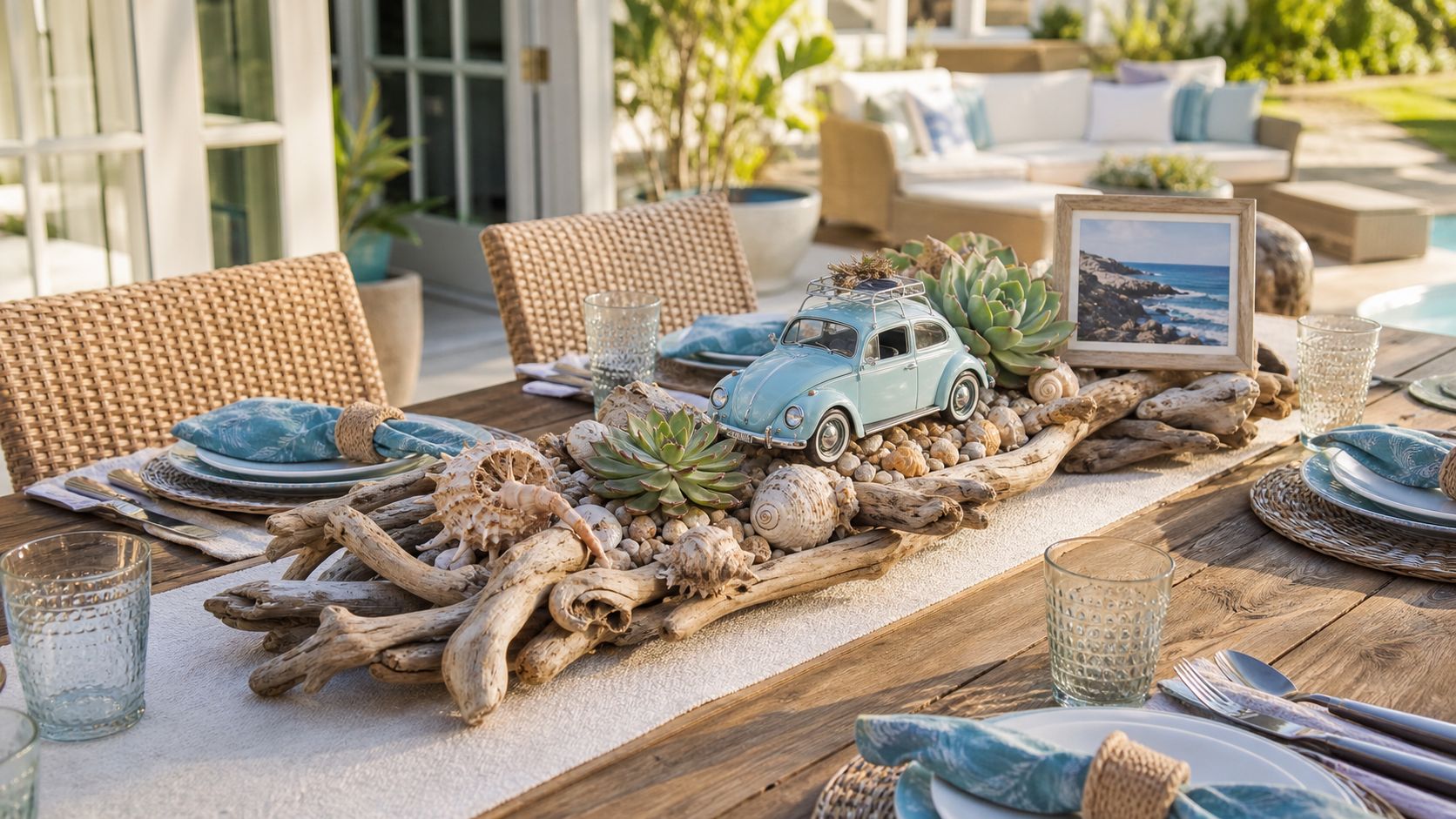
A sunny Saturday at a Volkswagens on the Beach meet gives you the whole idea in one glance. One table has a tiny blue Beetle parked on a timber board with shells around it, another has a Kombi beside a low bowl and a few bits of driftwood, and both tables feel unmistakably Australian. That blend works because the car culture side brings nostalgia and identity, while the coastal side keeps the styling relaxed, light, and easy to live with.
The bigger context matters too. The 2021 Census counted 25,422,788 people in Australia, and the Australian Bureau of Statistics reported that the population had grown by more than 8 million since 1991, while 84.3% of Australians lived in capital cities in 2021 (ABS reference). That urban, apartment-heavy reality helps explain why centrepieces need to be stylish but space-aware, especially in Sydney, Melbourne, Brisbane, Perth, and Adelaide.
For VW lovers, the emotional side is just as strong. The Beetle's history stretches back to the mid-1930s, mass production followed after the Second World War, and cumulative production eventually exceeded 21 million units worldwide (Volkswagen Beetle history reference). That kind of longevity gives a Beetle or Kombi display real nostalgic weight. Add shells, glass, or timber, and you've got a table piece that feels like a summer drive, a car show, and a coastal holiday all at once.
Browse more home styling ideas in the vintage home accessories collection
Why the mix feels so natural
The best displays borrow from both worlds. The diecast model gives the arrangement a clear hero, while the coastal materials soften the look so it doesn't read like a showroom pedestal. On a dining table, that means the piece feels warm instead of formal. On a sideboard, it feels collected instead of cluttered.
Practical rule: if the arrangement can't survive being moved from the dining table to the outdoor table without falling apart, it's too fragile for real entertaining.
Building Your Centerpiece Base and Structure
The most reliable builds follow a simple order, and that order matters more than the decorative theme. Start with the container, tray, or board, then add any foam, risers, or stabilising material, then place the larger structural items, and only after that bring in the smaller accents. If you reverse that flow, you end up lifting and repositioning delicate pieces too many times, which makes the arrangement harder to keep symmetrical and much easier to damage.
A good base should feel heavy enough to stay put but not so bulky that it swallows the table. Shallow timber trays, low mirror plates, and flat ceramic dishes work well because they give the eye a defined edge without adding height. For a diecast model, a small patch of museum wax, a discreet cradle of foam, or a hidden support under the base keeps the car from skating around when someone shifts a chair or reaches for a serving dish.
A simple assembly sequence
- Choose the container first. Pick the footprint before anything else, because the table shape should drive the display shape.
- Condition the base material. If you're using foam, sand, or driftwood, make sure it's stable and dry before you build on top of it.
- Place the anchor object. The Beetle, Kombi, or Samba Bus should go in early so everything else can be balanced around it.
- Add the finishing accents last. Shells, foliage, candles, and small collectibles are easier to place once the main structure is settled.
A technical demonstration on floral mechanics recommends building in exactly that kind of sequence, with the largest fillers and greenery going in before the finer accents, and another example shows that stems need to be driven deep into the foam for better stability. In practice, that translates neatly to collectible centrepieces too, because the anchor object belongs deep in the visual structure, not perched on top where it can wobble or tip.
Shop the model car range for display-ready Volkswagen pieces
The same logic applies to mixed tables at a car show or a long barbecue setting. One strong centrepiece can work on a small round table, but longer tables usually look better with several lower vignettes spread out so conversation stays easy and the whole display feels intentional rather than crowded.
Keep the first pass simple. If the arrangement already looks balanced before the tiny accents go in, you've built it right.
Three Centerpiece Variations for Every Occasion
The easiest way to choose a centerpiece idea is to decide what's doing the heavy lifting, the car, the natural textures, or the season. A diecast-led build feels most collectable, a beach-led build feels most relaxed, and a holiday build lets the same core pieces move through Christmas and summer entertaining without starting from scratch.
| Variation | Best for | Main look |
|---|---|---|
| Vintage VW Diecast Display | Collector tables, gift displays, show benches | Beetle or Kombi on timber or mirror with restrained coastal detail |
| Beach and Starfish Arrangement | Alfresco dining, relaxed lunches, summer entertaining | Shells, sand, driftwood, and a model VW as the focal point |
| Holiday VW Centerpiece | Christmas tables, seasonal styling, gift-ready décor | Festive greens, candles, and a heritage VW model with seasonal accents |
Vintage VW Diecast Display
This is the cleanest option if you want the model to do the talking. A 1:24 or 1:32 Beetle or Kombi sits well on a timber board or mirror base, especially when you keep the surrounding elements low and selective. A 1962 Kombi Samba Bus or 1967 Beetle with surfboard gives the display instant personality without making it feel theme-park loud.
Use one hero vehicle, a few shells, a strip of driftwood, and perhaps a low candle or succulent. The point is to frame the model, not compete with it. On a round table, keep the composition centred. On a rectangle, shift it slightly off-centre and let the negative space do some of the work.
Beach and Starfish Arrangement
This version leans hard into texture. Shells, starfish pieces, sand, and pale timber create a low, easygoing base, then the diecast model sits on top as the one deliberate man-made object. It works especially well for shared lunches and outdoor tables because the materials already read as calm and conversation-friendly.
The trick here is restraint. Too many shells turn it into a souvenir pile, and too much sand makes cleanup annoying. One VW model, a handful of larger shells, and one or two natural driftwood pieces usually read better than a crowded spread.
Holiday VW Centerpiece
For Christmas or end-of-year entertaining, keep the VW heritage visible and let the festive detail stay secondary. A Kombi in a seasonal setting, a few red or gold accents, and low greenery can carry the mood without turning the table into a crowded display shelf. The same arrangement can often be refreshed after the holidays by swapping the colour accents and keeping the base intact.
That reuse value is the real win. You don't need a new centrepiece for every event if the base is strong enough to adapt.
Sizing Your Centerpiece to Fit Any Table
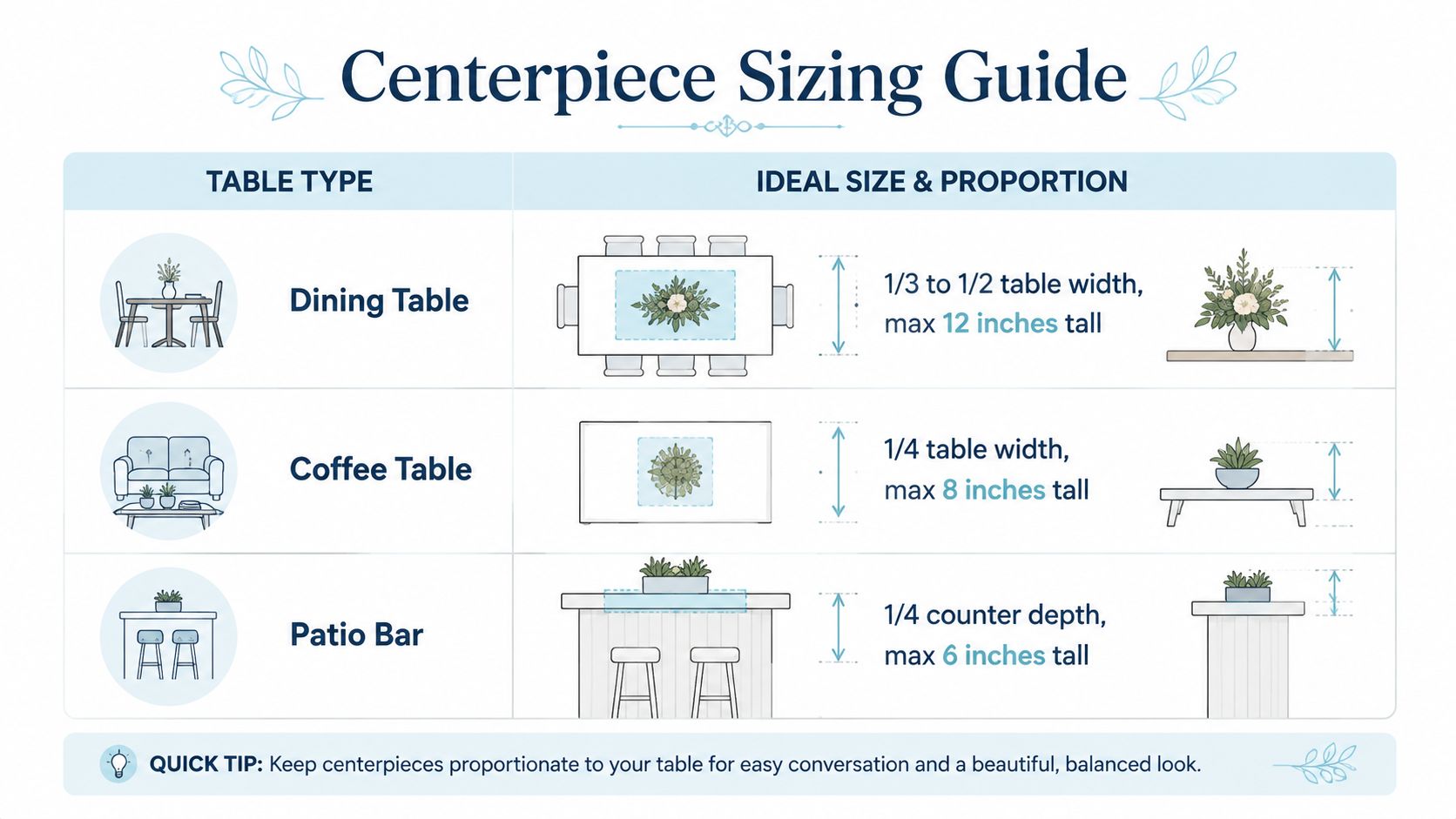
A beautiful display can still fail if it blocks conversation or overwhelms the table. For that reason, proportion matters more than novelty. One practical rule says the arrangement should be about two-thirds the length of the table (centerpiece rule reference), while another suggests using multiple smaller vignettes on longer rectangular tables rather than one oversized bowl. That approach suits Australian entertaining particularly well, because shared plates, BBQs, and alfresco meals all depend on open sightlines.
What works by table type
A dining table usually needs a low centrepiece that stays practical for serving. Some design guides recommend keeping arrangements under 12 inches for clear sightlines, and if a taller form is used, the middle should be see-through so people can still talk across it (table-centre guidance). That's why low bowls, flat trays, and loose coastal compositions work so well with VW models.
For a coffee table, scale down again. The arrangement should feel collected, not dominant, and it should leave room for mugs, books, and remotes. A patio bar or sideboard needs even more restraint because the surface depth is often shallow, so low-profile materials like shells and driftwood are a better fit than upright florals.
Unscented materials are the safer choice for food tables. A strong fragrance can fight with dinner, especially when guests are already sharing plates or sitting close together.
How to avoid the common mistakes
The most common error is building vertically just because the model itself is visually strong. A Beetle or Kombi already brings character, so the surrounding elements should support it rather than add more height. Another mistake is using one large arrangement on a long table when two or three smaller groupings would feel calmer and easier to talk across.
On round tables, central placement usually works best. On long trestle tables at car shows, repeat low vignettes at intervals so the eye travels along the table instead of hitting one dense block. That's the difference between styling and obstruction.
Sourcing Quality Diecast Models and Coastal Materials
A centerpiece only looks effortless if the components are worth using in the first place. For the diecast side, start with officially licensed Volkswagen models rather than generic lookalikes. Good pieces usually have accurate scale, clean paint, functioning doors where applicable, free-wheeling wheels, and packaging that helps protect them when you rotate them in and out of display.
Scale matters more than many buyers expect. A 1:18 model of a 4.0-metre car measures about 22.2 centimetres, while a 1:24 version is about 16.7 centimetres (scale reference). That changes everything about table footprint, storage, and whether the piece reads as a statement model or a cabinet-friendly collectible.
| Diecast Scale Comparison for Centerpiece Planning | Approximate Length for a 4m car | Best Centerpiece Use |
|---|---|---|
| 1:18 | 22.2 cm | Statement piece on larger tables and sideboards |
| 1:24 | 16.7 cm | Flexible size for dining tables and mixed vignettes |
| 1:32 | Smaller again | Best for compact displays and grouped arrangements |
What to look for before you buy
- Accurate body proportions. The Beetle or Kombi should look right from the front, side, and rear.
- Solid packaging. If you're giving it as a gift or storing it between events, packaging matters.
- Display-friendly finish. Glossy paint, clear trim, and clean detailing hold up well in a centrepiece setting.
- Size fit. A model that looks great online can be too large for a small alfresco table.
For coastal materials, keep it local and practical. Shells, small pieces of driftwood, glass, timber, and compact nautical accents all work because they don't fight the vehicle theme. You can gather some pieces naturally, then fill gaps with curated décor that matches the tone of the table rather than trying to force one style across everything.
The most efficient route is to think in layers. First choose the scale of the VW model, then match the surrounding materials to the footprint, then decide whether the arrangement needs to survive sun, breeze, or frequent movement.
Caring for and Storing Your Centerpiece Components
A reusable centrepiece pays off only if you can pack it away properly. In Australian conditions, diecast models need protection from dust, humidity, and harsh sun, while shells and driftwood need gentle cleaning and dry storage so they're ready for the next event. That's why durable materials, especially timber, glass, faux botanicals, and metal diecast models, are such a smart fit for warmer, brighter homes.
Use protective display boxes and cases to keep your models ready for rotation
The simplest system is a dedicated storage container for the whole build. Wrap fragile shells individually, separate metal models from anything abrasive, and keep any small accessories in a labelled bag so you're not hunting for bits before the next dinner or show. Original model boxes are worth keeping too, because they make transport and re-display much easier.
Seasonal rotation made simple
A display doesn't need to be static to be valuable. The same Kombi base can work for Christmas, a summer barbecue, or a coastal birthday if you swap only the accents and keep the core structure intact. That gives you more use from each component and keeps the collection feeling fresh without buying a whole new set every season.
Fresh flowers look lovely, but they're not always the best fit for outdoor entertaining or heat-heavy afternoons. Reusable décor holds up better and makes more sense when you want a centrepiece to last across multiple occasions. That's especially true if the model itself is part of your collecting story.
Store it the way you'd store a favourite diecast, not like a disposable party prop. That mindset saves breakages and keeps the whole display looking sharp for years.
If you're ready to build a centrepiece that feels right at home in an Australian dining room, on a patio table, or next to a prized Kombi display, take a look at Volkswagen Memorabilia. You'll find diecast models, coastal décor, and display pieces that make it easy to create a table with real VW character, not just a generic styling filler.