

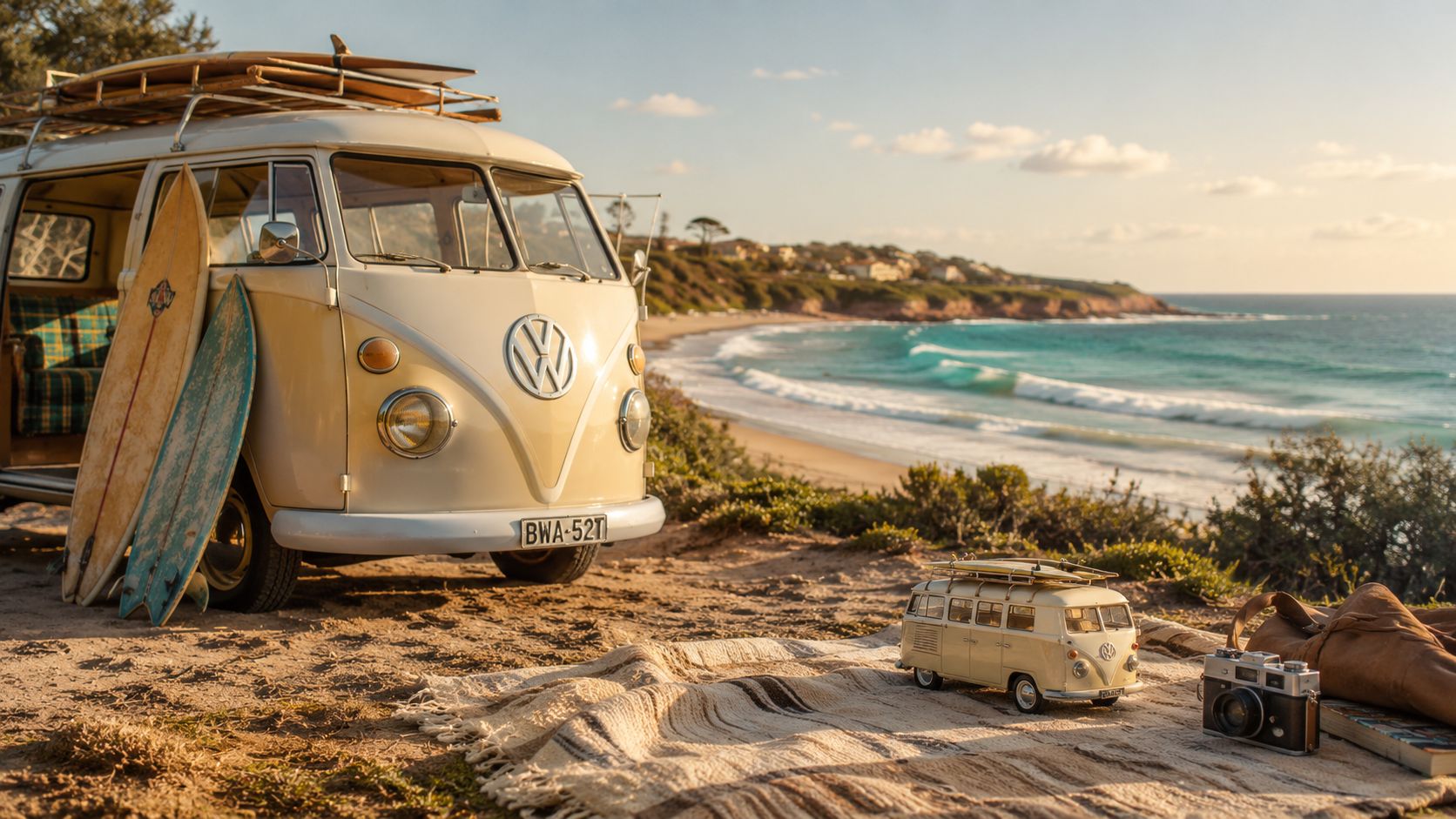
A few summers ago, I pulled up at a coastal showground and spotted an old cream Kombi with its side door open, kettle on, salt in the air, and a tiny diecast version of the same van sitting on the dash. That little pairing said everything. For plenty of us, the dream of a small camper van lives on the road and on the shelf.
The Enduring Dream of the Little Van
There's something uniquely Australian about seeing a compact van parked above the beach, boards nearby, camp chair out, and someone leaning against the nose with a cuppa. It doesn't need to be flashy. In fact, the smaller the van, the more believable the dream feels. You can picture it doing the grocery run on Tuesday and heading up the coast on Friday.
That affection isn't just nostalgia talking. The broader RV scene is substantial here. In 2022, the RV manufacturing, import, and retail sector across Australia and New Zealand generated an estimated A$4.3 billion in turnover, with more than 300,000 registered RVs on Australian roads, as noted in this RV market summary. Small camper vans sit neatly inside that wider love affair because they suit how many Australians travel. They're easier to store, more comfortable to thread through towns, and often better matched to the roads and campgrounds people really use.
Why the little van still wins hearts
For VW fans, the appeal goes deeper than convenience. A compact camper promises freedom without needing a full motorhome lifestyle. It says you can keep things simple and still have a cracking weekend away.
Small vans carry a different kind of romance. They feel less like a machine you operate and more like a mate you travel with.
That's also why the culture spills so naturally into collecting. A diecast Kombi on the shelf isn't just décor. It's a small reminder of road trips imagined, road trips remembered, and the shape that made all of it feel possible. If you enjoy that beach-and-bus spirit, the old stories gathered in Kombi Life Australia will feel very familiar.
What Exactly Makes a Camper Van Small
Ask ten enthusiasts what counts as a small camper van and you'll get ten slightly different answers. One person means a van that slips into a normal parking spot without drama. Another means something modest enough to use as a second vehicle without planning every turn like a truckie.
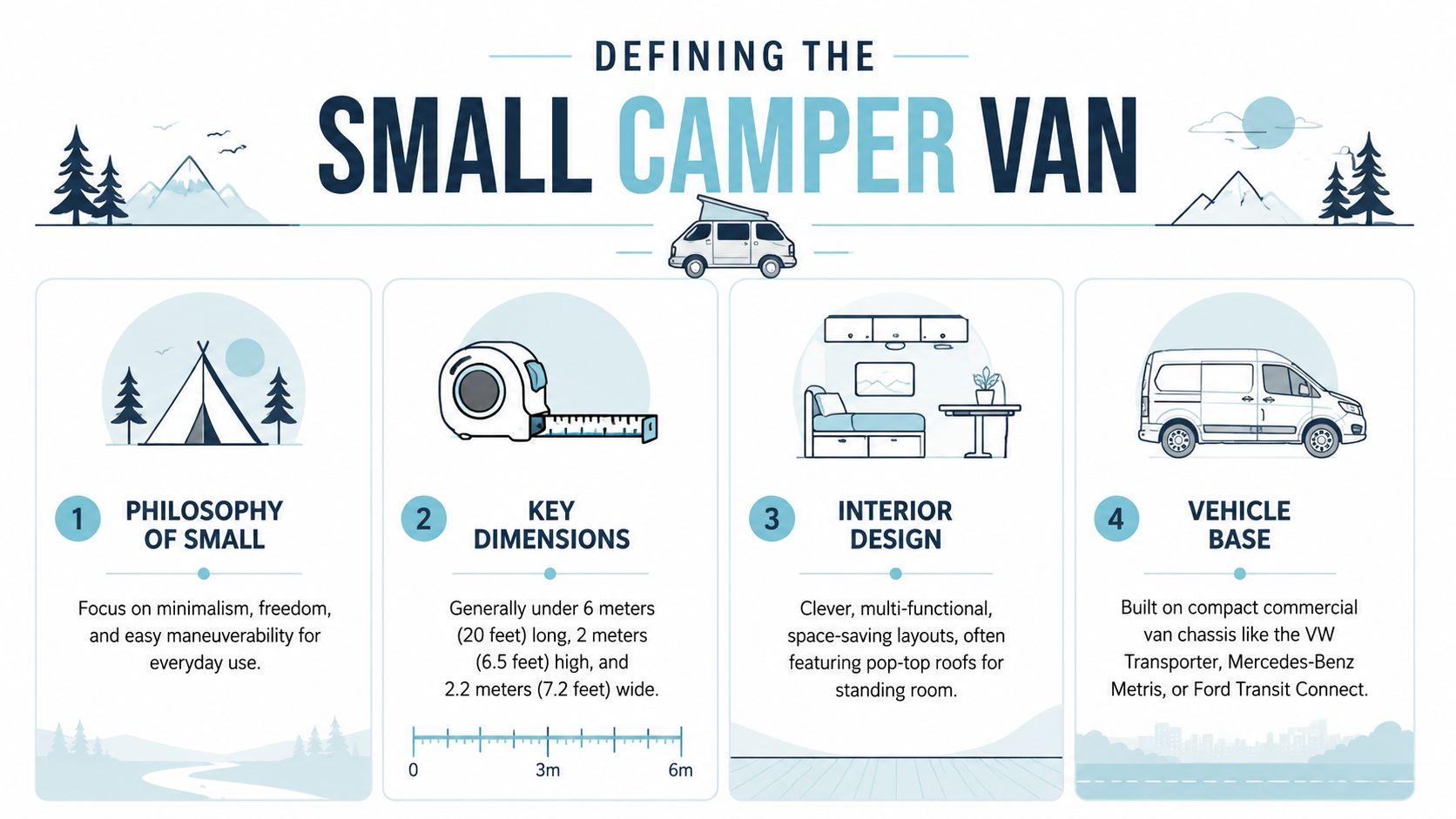
The practical test is simpler than the arguments. A small camper van is the one you'd still feel happy taking to the shops, school pickup, or a suburban servo. It's not only about dimensions. It's about how lightly the van fits into ordinary life.
The everyday-driver test
Australian motorhome guidance makes that point well. People are drawn to compact campers because they're easier to drive and park, but the primary constraints are payload, water capacity, and sleeping length, especially when you want a van that can handle weekday errands and weekend camping, as explained in this Australian motorhome discussion.
That's the trade-off in plain terms. The smaller the footprint, the more carefully you have to choose what matters.
A compact build usually works best when you value:
- Easy manoeuvring in town, at the beach, and on tighter regional roads
- Simple overnighting with a bed, basic storage, and a compact cook-up space
- Dual-purpose use so the van still feels useful when you're not travelling
- Minimal fuss instead of trying to cram every home comfort into a small shell
What small usually looks like in practice
Small camper vans often share a family resemblance, even when the badges differ. You'll see clever fold-out beds, pop-tops for standing room, swivel seats, slim cabinetry, and layouts that ask one space to do several jobs.
Here's the rough mindset that separates them from larger campers:
| Everyday question | Small camper van answer |
|---|---|
| Can I park it without stress? | Usually yes, if the build stays modest |
| Can I use it during the week? | That's often the whole point |
| Does it have every comfort? | Usually not, and that's by design |
| Is storage a compromise? | Nearly always |
Practical rule: If the van can still behave like a normal vehicle most of the week, you're probably in small camper van territory.
That's also why compact van bases have such a following among people planning a build. If that side of the hobby interests you, browsing van options for conversion is a pleasant rabbit hole all on its own.
The Volkswagen Legacy That Started It All
Long before social media filled up with neatly styled van interiors, Volkswagen had already given the world its most recognisable compact camper shape. For many of us, the story always comes back to the Kombi. Not because it was the only small van, but because it became the one people dreamed about.
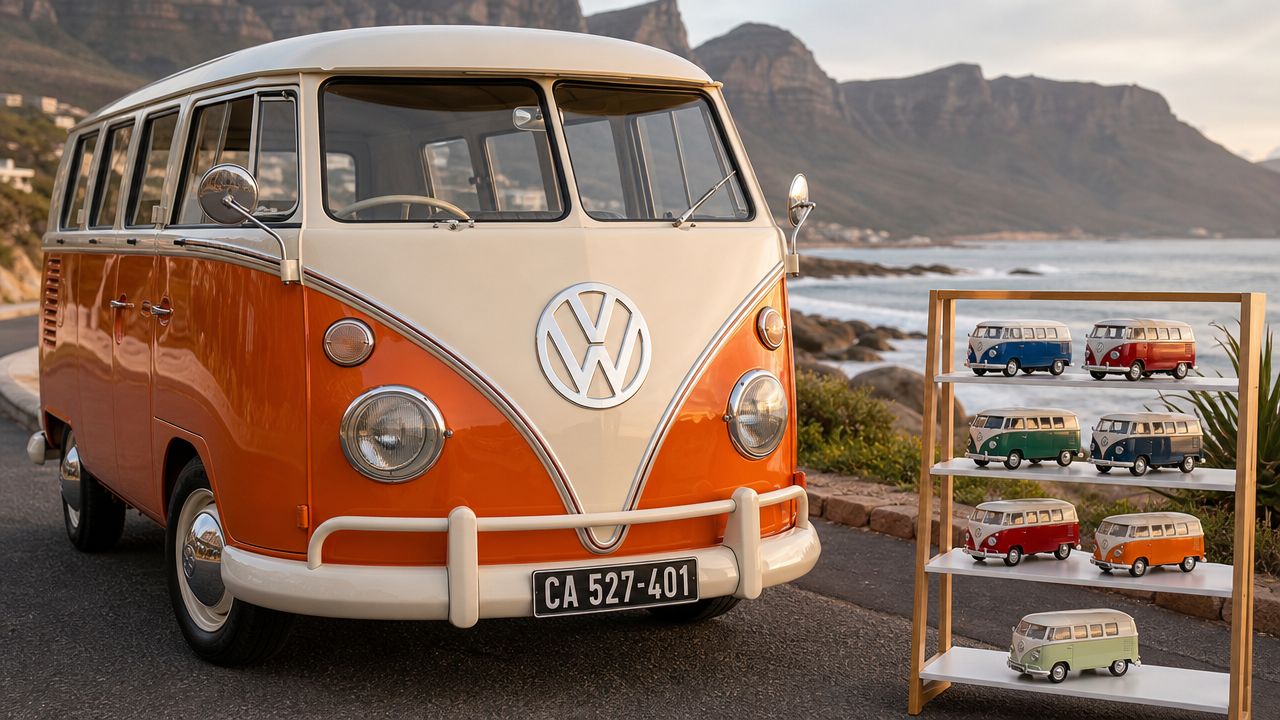
The Volkswagen Type 2 debuted in 1949, and by the 1960s and 1970s it had become a fixture of Australian surf and touring culture, helping establish the enduring template for a compact van that could be both transport and accommodation, as described in this Kombi history piece. That cultural role still matters. It's one reason the Kombi remains such a strong reference point in both restoration circles and the memorabilia world.
The van that fit the Australian mood
The Kombi made sense here in a way that still feels obvious. It was compact, cheerful, and adaptable. You could load mates, boards, gear, and a sense of optimism, then head off without needing a grand plan. That mattered in a country where road trips are part ritual, part escape.
At shows, you can still hear the same stories told in different accents. Someone's uncle had one. Someone learned to clutch-start in one. Someone remembers sleeping in one near the coast with the windows cracked open and the smell of canvas and salt hanging in the air.
A good short watch captures that spirit nicely:
Why collectors never let go of the Kombi
The Type 2 wasn't merely useful. It had character from every angle. The split-screen face, the two-tone paint, the upright stance, the simple cabin. These details made the van easy to love in full size and easy to recognise in miniature.
That's why diecast Kombis never feel like random toy cars. They feel like pocket-sized pieces of cultural memory. A well-made model preserves the charm that made the Kombi iconic, whether it's a clean factory look or a flower-power livery that recalls the freewheeling side of VW life.
For collectors searching for that unmistakable shape, this curated Volkswagen camper van collection taps directly into the design language that started it all.
Styling Your Dream Ride From Road to Shelf
One of the loveliest things about Kombi culture is that nobody leaves the van entirely alone. Even owners who swear they prefer a stock look usually have a favourite stripe, rack, curtain fabric, hubcap style, or period colour combination they can talk about for ages.
That instinct carries straight across to diecast collecting. The best models don't just copy a vehicle. They preserve a mood. A split-screen bus in soft two-tone paint says one thing. A bright flower-power Samba says another. Both belong to the same family, but they tell different stories on the shelf.
Real-world style and diecast style
Here's where the connection becomes fun for collectors.
| Real van styling cue | What it expresses | Diecast shelf appeal |
|---|---|---|
| Two-tone paint | Classic factory-era charm | Clean lines and strong display presence |
| Surf accessories | Coastal travel spirit | Adds movement and personality |
| Flower-power graphics | Playful counter-culture energy | Makes a collection feel lively |
| Roof windows and Samba detailing | Premium period character | Rewards close-up viewing |
A collector who loves understated originality might lean towards a neat, classic Kombi model with tidy trim and period-correct colouring. Someone else might want the cheerful visual punch of a 1:24 scale 1962 Volkswagen Classical Samba Bus Flower Power, because it captures the brighter, freer side of VW folklore.
How to choose a model that feels personal
Don't choose only with your eyes. Choose with your memory.
- Beach-trip nostalgia often suits a Samba Bus with airy detailing and bright colour
- Garage-restoration admiration tends to favour cleaner, more factory-style pieces
- Gift buying works best when the model reflects a story the recipient already loves
- Display balance matters if you're mixing Beetles, Kombis, and coastal décor
A strong diecast model does the same job as a good old photo. It brings the feeling back fast.
If you're building a collection rather than buying a single piece, variety helps. One classic Kombi, one playful flower-power bus, and one Beetle can create a display that feels less like a product line and more like a chapter of Volkswagen history. That's part of the pleasure in collecting VW Kombi diecast Australia enthusiasts enjoy. You're not just gathering objects. You're arranging symbols of a lifestyle.
The Practicalities of Van Life and Collecting
Dreams are better when they survive first contact with reality. Anyone serious about small camper vans learns that quickly. It's easy to fall for photos of timber benchtops, pop-top roofs, and clever little cupboards. It's more useful to ask what the van can carry, how it drives when loaded, and whether the layout suits the way you travel.
In Australia, one of the biggest technical lines in the sand is 3.5 tonnes GVM. Once the van, conversion, passengers, water, batteries, and gear push beyond that point, owners may need a different licence class and heavier-vehicle registration depending on the setup, as outlined in this Australian mini-RV guide. That single limit shapes plenty of decisions. Add one luxury, and you may lose useful payload elsewhere.
Smart questions for real vans
A practical buyer usually asks these before getting carried away:
- Rust first because cosmetic charm means little if the body needs major repair
- Mechanic support because old Volkswagens reward owners who know the right specialists
- Weight discipline because every battery, water tank, and cabinet choice has consequences
- Trip style honesty because a van built for beach weekends isn't the same as one aimed at long touring
The same mindset helps collectors
Collectors face smaller stakes, but the habits are similar. Thoughtful buying beats impulse buying. Quality beats clutter. Authenticity matters.
| Real van concern | Collector equivalent |
|---|---|
| Mechanical condition | Build quality and finish |
| Registration and compliance | Officially licensed memorabilia |
| Storage space | Display space at home |
| Ongoing maintenance | Dust control and careful storage |
Collector's note: If a model is going to live in your lounge, office, or workshop, display it like it matters. A clean shelf or case does more for a diecast Kombi than buying three extras and leaving them boxed in a cupboard.
Small homes can still hold a great collection. A narrow floating shelf, a bookcase bay, or a garage display above the workbench can turn a few well-chosen pieces into a proper talking point.
Start Your Own Volkswagen Adventure Today
Owning a real classic camper can be one of the great automotive adventures. It can also test your patience, budget, storage space, and willingness to chase parts on a Saturday morning. That's part of the charm, but it isn't the only way into the Volkswagen world.
For plenty of enthusiasts, the easier starting point is the shelf. A beautifully made Kombi or Beetle model lets you enjoy the design, the history, and the feeling straight away. You can study the lines, revisit the era, and build a display that reflects your taste, whether that's surfy, original, playful, or proudly nostalgic.
Good reasons to start with diecast
- It's accessible if a full restoration or camper build isn't realistic right now
- It still feels personal when you choose models tied to memories or favourite eras
- It makes a brilliant gift for the VW fan who already has posters, books, or garage signs
- It grows with you from one special model into a display with real character
There's a pleasing symmetry in it. A small camper van promises freedom in motion. The diecast version holds that same promise still, ready on a shelf, desk, or display cabinet until the next trip, the next show, or the next daydream.
If you've been meaning to buy diecast Kombi pieces, add a Volkswagen Beetle model, or find Volkswagen diecast models for sale from a local Australian source, starting with the model that makes you smile is usually the right move.
If you'd like to turn that Kombi daydream into something you can hold, browse Volkswagen Memorabilia for licensed VW-themed collectibles, including the main shop collection, classic Volkswagen diecast pieces, charming Kombi and Samba Bus models, the colourful 1962 Volkswagen Classical Samba Bus Flower Power, and a timeless Volkswagen Beetle model. Buying from an Australian importer means local stock, fast shipping, and friendly local support, which makes collecting a lot more enjoyable.