

At a beachside VW meet, an old Kombi rolled in with salt still clinging to the window rubbers, and half the crowd drifted over before the engine even switched off. A little later, a newer Caddy California parked beside it, and you could feel the same curiosity ripple through the grass.
The Enduring Dream of a VW Camper
Anyone who's spent time around Volkswagens in Australia knows the feeling. A Kombi doesn't just arrive. It brings a whole mood with it. You see the faded curtains, the picnic basket, the surfboard wax in the rear tray, and suddenly you're not standing in a showground anymore. You're somewhere between the coast and the next good bakery.
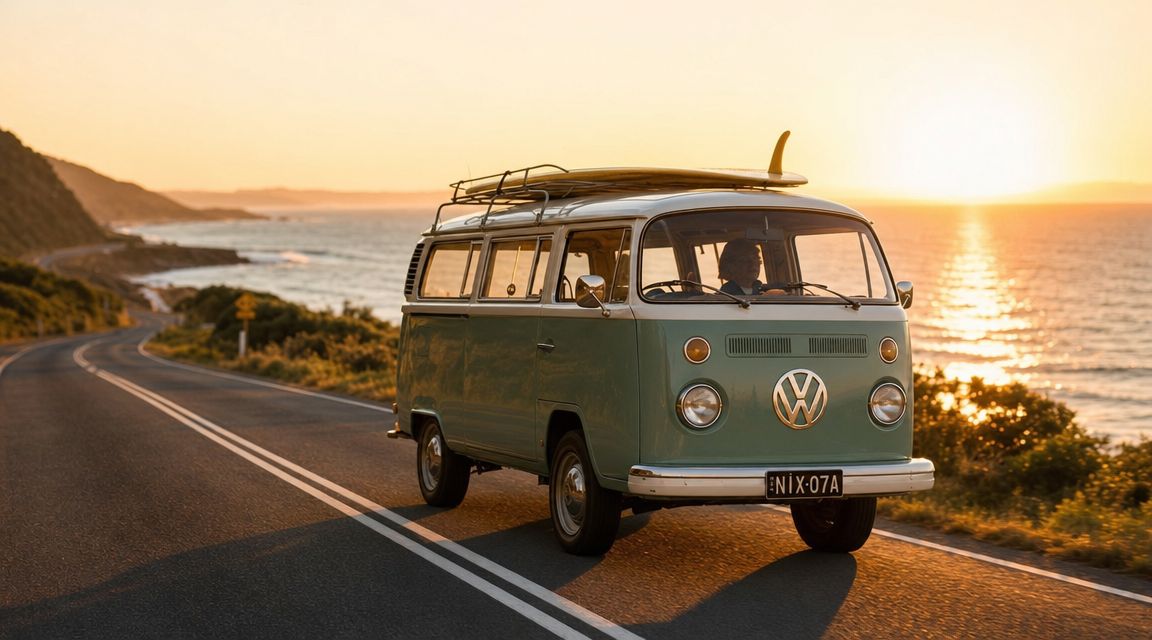
That's why the modern Caddy Volkswagen camper is such an interesting little machine. It doesn't try to be a retro tribute act. It's not pretending to be a split-window bus or a bay-window weekender. But it carries the same old VW promise. Go light, go straightforwardly, and go often.
Why the idea still grabs us
The classic Kombi spirit was never only about size or styling. It was about access. A weekend away didn't need a caravan park empire or a huge tow rig. It just needed a vehicle that felt ready for a detour.
That's where the Caddy makes sense to so many Australian buyers. It suits the sort of trips people take:
- Quick coastal escapes for one or two nights
- Regional drives where parking in town still matters
- Everyday duties during the week, then camping gear on Friday arvo
- Beach runs and national park stops where a smaller footprint feels easier to manage
A VW camper has always sold a kind of freedom. The shape changes over the decades, but the promise stays familiar.
A modern cousin, not a replacement
If you grew up loving Kombis, the Caddy can look a bit too tidy at first glance. More polished. More suburban. More sensible. Then you watch one being used properly, chairs out, rear setup organised, bed folded flat, and it clicks.
This is the same story in newer clothes.
The old buses made adventure feel communal and a bit chaotic. The Caddy California makes it feel compact, organised, and easier to fit into modern life. That difference matters. Plenty of Australian enthusiasts still want the VW camping feeling, but they also want something that can handle the grocery run, the school pickup, or the tight car spaces near the beach.
For many people, that's not losing the magic. It's finally making the magic practical.
Meet the Modern Adventurer The VW Caddy Camper
At a swap meet in Geelong last summer, a bloke parked his cream-and-white Bay Window beside a newer Caddy California. Kids drifted to the Kombi first. Their parents kept wandering back to the Caddy, peering inside, checking the bed setup, opening the tailgate, asking the same question over and over. Could you live with this every day and still nick off for a weekend down the coast?
That question explains the Caddy better than any brochure.
What the Australian Caddy California actually is
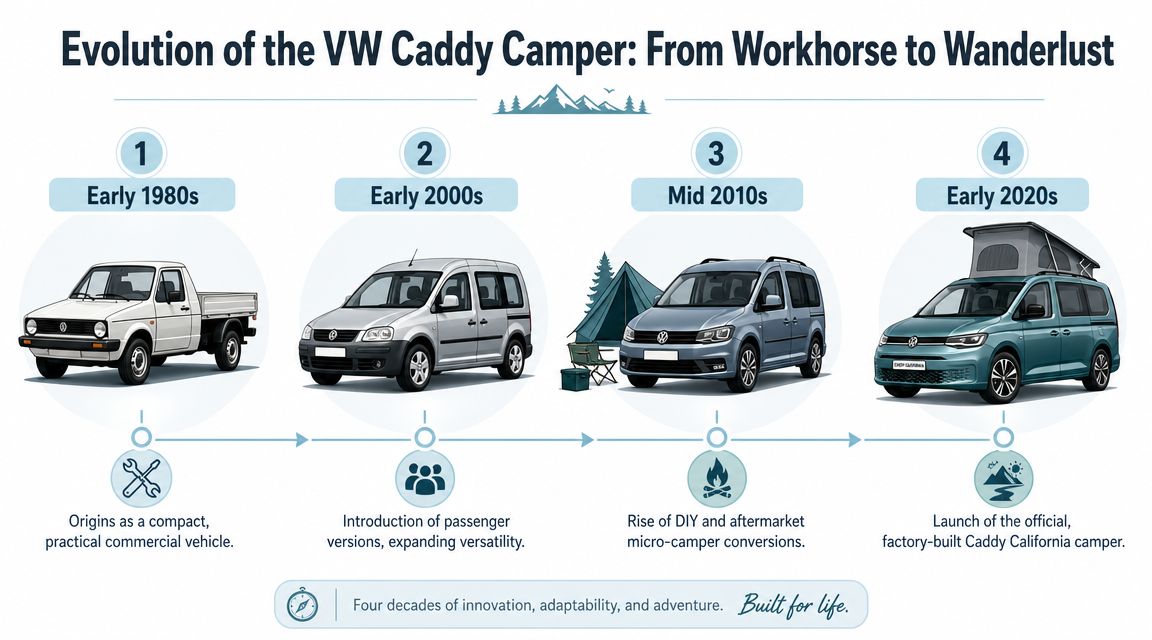
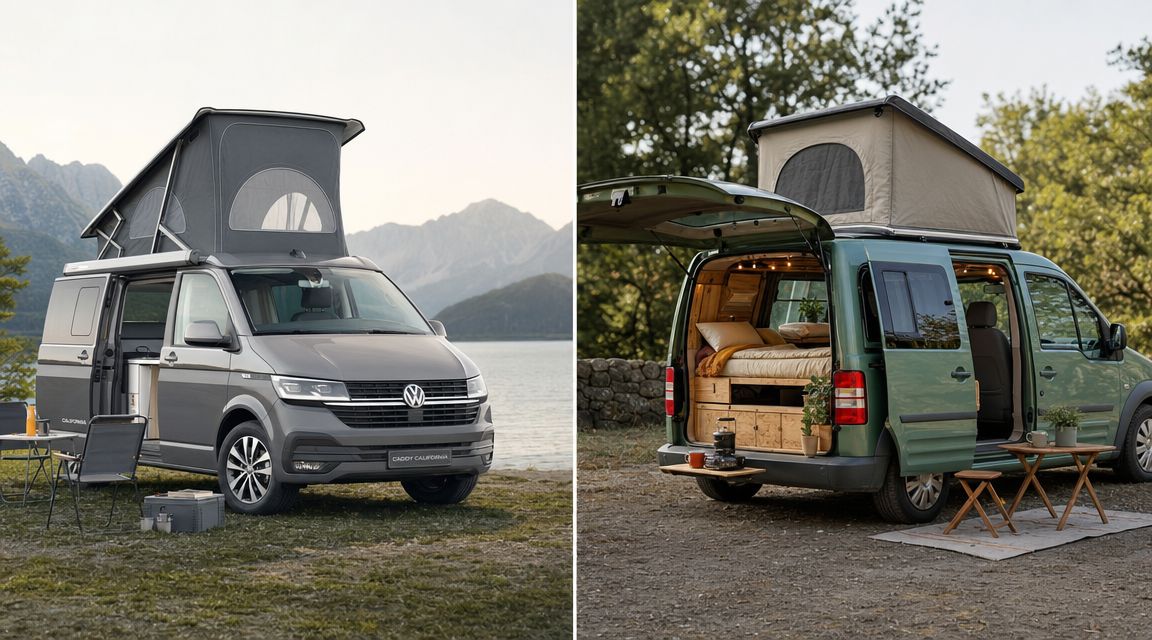
In Australia, the Caddy California arrives as a compact five-seat camper package with a foldable bed, storage bags, table and chairs, extra lighting, and ventilation in a 2+3 seating layout. The point is simple. You are not starting with an empty van and a camping shop receipt. Volkswagen has already sorted the basics into a tidy, usable setup.
That gives the Caddy its own personality. A classic Kombi always felt like an invitation to improvise. The Caddy California feels more organised, more urban, and more ready for Friday arvo without a shed full of loose gear.
The sizes and specs that matter on Aussie trips
For Australian buyers, size is half the story. A camper has to fit the trip, but it also has to fit the Woolies car park, the unit block, and the cramped beachside street with one shady spot left.
CarsGuide's Caddy California review notes that the current Maxi measures 4,835 mm long with a 2,970 mm wheelbase, a 577 kg payload, a 100 kg roof load limit, and towing ratings of 750 kg unbraked and 1,500 kg braked. It is also designed to sleep two adults and is offered here in short-wheelbase and Maxi long-wheelbase forms.
Those numbers matter once the romance wears off and the gear goes in. Bedding, an esky, a couple of bags, maybe a surfboard on top, maybe bikes out back. A camper only earns its keep if it still works when the holiday stops being hypothetical.
If you want a clearer feel for the stretched body that suits longer trips, the VW Caddy Maxi range gives a handy visual reference for the shape many enthusiasts recognise straight away.
Why the Caddy appeals beyond camping
Part of the Caddy's appeal is that it never forgot its working roots. It still carries that honest Volkswagen habit of doing ordinary jobs well. School drop-off on Tuesday. Bunnings run on Thursday. Camp chairs out at Aireys Inlet by Saturday morning.
RAC's Volkswagen Caddy and Caddy Life review lists the standard Caddy at 4,500 mm long, 1,855 mm wide, and 1,832 mm high, with passenger versions available with seven seats. The same review reports WLTP fuel economy figures of up to 53.3 mpg combined for the most efficient 2.0 TDI and 43.5 mpg combined for the 1.5 TSI petrol.
That is why the Caddy lands so well with Australians who love the old VW camping idea but live very modern lives. It carries a bit of Kombi spirit in a shape that suits tighter streets, busier weeks, and shorter escapes. The old vans taught us to chase freedom. The Caddy makes room for it in the calendar.
Factory Fresh or DIY Dream Which Caddy Camper is for You
The big question usually arrives right after the first burst of excitement. Do you buy the factory camper, or do you start with a standard Caddy and build your own version of the dream?
I've heard both stories told at shows and campgrounds. One owner loves that the California arrives sorted from the start. Another swears by a home-built setup because it suits fishing gear, a dog bed, and the exact way they travel. Both can be right. The trick is being honest about your patience, skills, and tolerance for paperwork.
What the factory route gives you
The appeal of the official Caddy California is simple. Volkswagen has already done the packaging work. The vehicle is sold as a compact camper rather than a van someone has adapted in the driveway over a few long weekends.
The current Caddy California line uses the fifth-generation MQB architecture and offers a 2.0 TDI with 122 PS and a 1.5 TSI with 116 PS. The diesel delivers 320 Nm at 1,600 to 2,500 rpm, while the petrol delivers 220 Nm at 1,500 to 3,000 rpm. Volkswagen Commercial Vehicles also notes combined-cycle figures of roughly 40.9 to 42.2 mpg, about 5.3 to 6.9 L/100 km depending on variant, in the Caddy California brochure PDF from Volkswagen Commercial Vehicles UK.
For camper use, that low-rpm torque band matters more than brochure bragging. A loaded camper feels better when it moves off cleanly and doesn't constantly ask for downshifts on inclines.
Why DIY can look easier than it is
A standard Caddy can absolutely become a charming little camper. That's part of the fun. You can tailor storage, sleeping layout, and daily usability around your life instead of a factory template.
But Australian conversions have a sting in the tail. A major consideration for DIY builders here is the true compliance burden. Australian Design Rules for seating, glazing, and cabinetry restraint are strict, and what looks cheap at first can become far less cheap once engineering approval and insurance changes enter the picture, as discussed in this Australian-focused Caddy conversion video context.
The cheapest build on video isn't always the cheapest build on the road.
That's the bit many buyers miss. Factory and DIY can start far apart in your head, then edge closer once legal and insurance realities pile up.
Caddy California vs DIY Conversion at a Glance
| Aspect | Factory Caddy California | DIY Caddy Conversion |
|---|---|---|
| Setup | Ready-made camper package from Volkswagen | Built around your own priorities |
| Interior planning | Foldable bed, storage bags, table and chairs already integrated | Can be customised for surf gear, dogs, tools, or simpler sleeping |
| Compliance | Factory solution avoids much of the owner-led modification burden | Needs careful attention to ADR-related issues and insurer requirements |
| Time | Faster path to camping | Slower, especially if plans change mid-build |
| Feel | More polished and cohesive | More personal and often more experimental |
For readers who enjoy the visual side of the Caddy story as much as the practical one, this VW Caddy van camper collection is useful for seeing how the van's lines translate into collectible form.
A walkaround helps make the factory setup feel more tangible:
Which owner each path suits
Some people should go factory without overthinking it:
- Busy buyers who want to camp soon, not after months of planning
- Drivers who value a tidy OEM feel inside and out
- Owners wary of engineering and insurance headaches
DIY suits a different crowd:
- Hands-on tinkerers who enjoy solving layout problems
- Owners with unusual cargo needs that factory packaging can't match
- People happy to research compliance properly before cutting, fitting, or wiring anything
If your camping style is light, frequent, and close to daily driving, a factory Caddy California often feels like the smoother path. If you love building as much as travelling, the DIY route can still be very satisfying. You just want open eyes before open toolboxes.
The Collector's Corner Caddy Campers in Miniature
One of the best VW displays I've seen at a local meet had a sun-faded Kombi, a tidy Beetle, and, right at the end, a little Caddy camper in silver. The old stuff drew people in first. Then the Caddy kept them there. You could watch them smile when they noticed the story on the shelf. Same holiday spirit, different generation.
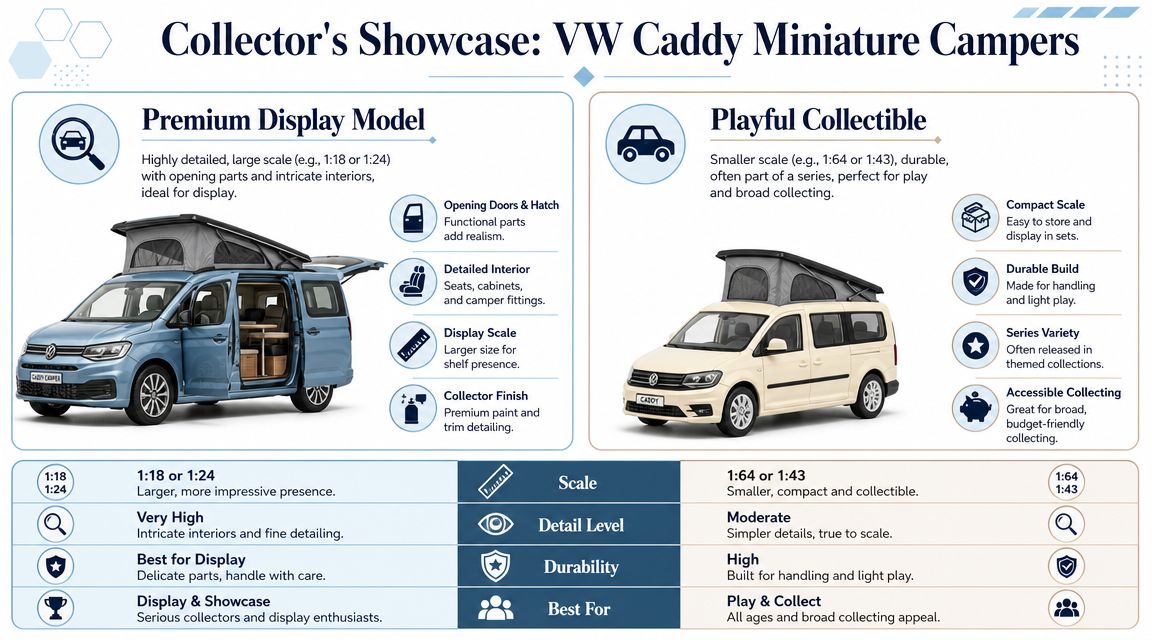
What to look for in a Caddy model
That's the charm of the Caddy in miniature. It still feels fresh in collector circles, especially beside Beetles and Kombis that have had a long head start. A good one should look like a proper camper, not just a small van with VW badges.
The details matter more than people expect. Collectors usually notice the roofline, the proportions, the trim, and whether the model hints at the clever camping setup that gives the Caddy California its character. If those cues are missing, the model can feel anonymous. If they're right, it has that lovely, instantly familiar VW honesty.
A few things are worth checking before you buy:
- Body shape that matches the right Caddy generation and wheelbase
- Cabin or rear detailing that suggests a camper fit-out rather than a plain cargo van
- Factory-style finishes instead of fantasy graphics that were never part of the actual vehicle
- Scale that suits how you collect, whether that means one centrepiece or a full VW lineup
Choosing a scale that suits your shelf
A larger model has presence. You notice the mirrors, the glasshouse, the little trim touches. It feels like something to stop and study.
Smaller scales are a different kind of fun. They let you build a whole Volkswagen family on one shelf, from the rounded old Beetle through to the beach-bred Kombi and on to the practical Caddy. If that broader story appeals to you, a range of Volkswagen model cars can help you piece the generations together without the display feeling random.
A Caddy model earns its place by showing the same clever, everyday camping spirit that made the full-size van worth a second look.
Why the Caddy belongs beside the classics
The Caddy sits beside the classics beautifully because it carries the same idea of freedom into modern life. The Kombi promised open-road adventure with sand on the floor and a surfboard out the back. The Caddy answers with a neater footprint, smarter packaging, and the kind of versatility that suits a quick coastal weekend or an overnight stop inland.
Set the two together in miniature and the family resemblance comes through fast. One speaks in nostalgia. The other speaks in practicality. Both still say Volkswagen camper.
Styling Your Space with Volkswagen Spirit
At a swap meet in Geelong last summer, one bloke had a simple display on a timber shelf. A faded photo of his family's old bay-window Kombi sat at one end. A neat little Caddy camper model sat at the other. In between, a Beetle tied the whole story together. You could read the journey in one glance. Seventies surf trips, Sunday tinkering in the shed, and the modern weekend dash up the coast in something compact and clever.
That is what a good VW display does. It gives a room a bit of travel dust, a bit of memory, and a clear sense that the Volkswagen camper spirit never really disappeared. It just changed shape.
Display ideas that feel lived-in, not staged
The best setups usually borrow from real life. Australian homes suit VW pieces especially well because the look already sits comfortably with beach culture, old motoring gear, and relaxed family spaces. A Caddy camper model looks right at home on pale timber, near sun-washed colours, a stack of road atlases, or a framed holiday snap from Lorne, Yamba, or the Mornington Peninsula.
A few themes work beautifully without trying too hard:
- The family timeline. Place a Beetle, a Kombi, and a Caddy in a loose line by era. Add one old photograph or a vintage map, and the shelf starts telling a proper Volkswagen story.
- The coastal weekender. Pair the Caddy with surf-inspired pieces, worn timber, and soft sandy tones. The result feels more like an Aussie beach shack than a collector's cabinet.
- The garage shelf. Use darker shelving, a couple of old workshop manuals, and metal accents for a display that feels like the back corner of a well-loved shed.
The Caddy earns its keep in these spaces because it brings the modern chapter into view. The Kombi carries the romance. The Caddy carries the same spirit in a shape that suits present-day roads, tighter garages, and quick escapes after knock-off on Friday.
Small styling moves that make a big difference
Good displays breathe. A shelf packed bumper to bumper loses the charm of each piece, especially when the models have distinct shapes and eras.
Try a few easy fixes:
- Raise one or two models with books or small stands
- Let one colour lead so brighter pieces do not fight each other
- Group by mood or memory instead of only by size
- Leave open space around your favourite model so it can be noticed
Collectors often spend ages picking the right diecast, then rush the shelf itself. The setting matters just as much. Warm light in the afternoon, a bit of texture from timber or linen, and one or two personal objects can make the whole arrangement feel like part of the home rather than a row of purchases.
Volkswagen Memorabilia is one local option that carries VW-themed gifts, diecast, and styling pieces in the same catalogue. That makes it easier to build a display with a bit of continuity, especially if you want the old Kombi soul and the tidy modern Caddy spirit living happily on the same shelf.
Your Guide to Finding the Perfect VW Model
A mate at a swap meet in Ballarat once picked up a little Caddy model because it reminded him of his weekday runabout. Ten minutes later he was back at the table holding a Kombi as well, grinning like he had just found the missing half of the story. That is often how VW collecting goes in Australia. You start with the shape you know, then the older legends begin calling from the shelf.
If you are hunting for the right piece, search like someone who knows the badge. Broad terms can bury the good stuff under generic toy listings, while sharper searches usually pull up models with the right scale, body style, and trim. Phrases such as VW Kombi diecast Australia, Volkswagen Beetle model, buy diecast Kombi, and Volkswagen diecast models for sale will help narrow the field faster.
Collectors drawn to the modern camper side of the story often start with a Caddy, then add the icons that gave it its spirit. A tidy little VW Kombi diecast selection or a Volkswagen Beetle model range can turn one good find into a display that feels like a family line rather than a random row of vehicles.
A few buying tips that save disappointment
- Study the photos closely so you can catch camper-specific details, wheel styles, windows, and trim.
- Read the product title line by line because scale changes the presence of a model more than many buyers expect.
- Check where the stock is based if delivery time matters to you.
- Buy with a scene in mind because a Caddy beside a Kombi or Beetle usually tells a richer VW story.
Gift buying gets easier once you know which chapter of Volkswagen history the person loves most. For someone who lights up at split screens and beach-trip memories, start with Kombi and Samba-inspired pieces. For someone whose taste runs across the whole badge, from old Bugs to newer vans, the Volkswagen gifts and collectibles range gives you more room to choose.
The best model is usually the one that sparks a memory straight away. It might be a Caddy that looks ready for a quick surf run down the coast, or a Kombi that brings back family holidays and sunburnt afternoons. Volkswagen Memorabilia carries licensed VW diecast and collectible pieces that let you follow that thread from the classic Kombi era to the newer Caddy chapter, with all the charm of VW freedom still intact.